
Maharishi Sushruta
- 27 Jun 2026
In News:
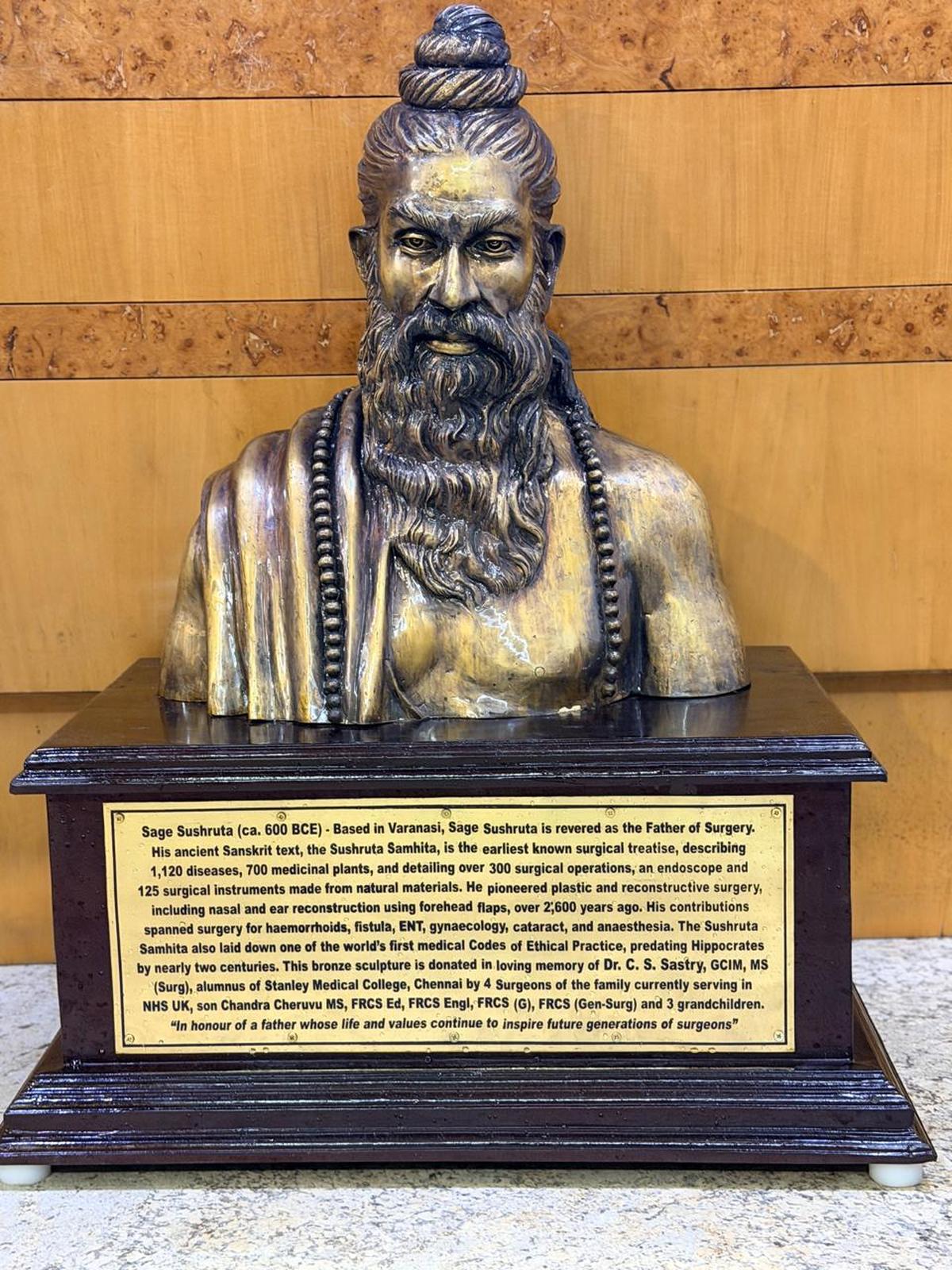
A bronze statue of Maharishi Sushruta, widely revered as the Father of Surgery, was recently unveiled at the Royal College of Surgeons of Edinburgh, United Kingdom, recognising his pioneering contributions to the development of surgery and medical science.
About Maharishi Sushruta
Maharishi Sushruta is regarded as one of the greatest physicians and surgeons of ancient India. Revered as the "Father of Surgery" and often referred to as the "Father of Indian Medicine," he made pioneering contributions to the fields of surgery, anatomy, and Ayurveda. His systematic approach to surgical practice laid the foundation for many principles that continue to influence modern medicine.
Although scholars differ regarding the exact period in which he lived, Sushruta is generally believed to have practised between 600 BCE and 1000 BCE. According to Ayurvedic tradition, he was a disciple of Lord Dhanvantari, the divine physician and the deity associated with Ayurveda. He is believed to have taught and practised medicine in Varanasi (Kashi), an important centre of learning in ancient India.
Sushruta Samhita
Sushruta's most celebrated contribution is the Sushruta Samhita, one of the foundational texts of Ayurveda and among the earliest comprehensive treatises on surgery in the world.
Composed over 2,500 years ago, the text contains 184 chapters covering various branches of medicine and surgery. It describes:
- More than 300 surgical procedures.
- Over 120 surgical instruments.
- Different types of wounds, fractures, dislocations, and their treatment.
- Detailed knowledge of toxicology, paediatrics, pharmacology, and general medicine.
- More than 100 medicinal plants, including their therapeutic properties and medicinal uses.
The text remains one of the most significant contributions to the history of medicine and Ayurveda.
Contributions to Surgery
Sushruta introduced a scientific and systematic approach to Shalya Tantra (Surgical Science), considering surgery an integral part of medical treatment.
His major contributions include:
- Development of rhinoplasty (nasal reconstruction), regarded as one of the earliest forms of plastic surgery.
- Surgical removal of bladder stones (lithotomy).
- Procedures for the removal of a dead foetus.
- Advanced methods for treating fractures, wounds, and dislocations.
- Design and use of specialised surgical instruments.
- Emphasis on cadaver dissection for understanding human anatomy.
- Use of herbal anaesthetics and systematic post-operative care.
His insistence on practical training, observation, and meticulous documentation established principles that continue to underpin surgical education.
Legacy
The influence of Maharishi Sushruta extended well beyond ancient India. His surgical techniques and medical knowledge were transmitted to other regions through translations and scholarly exchanges, contributing to the development of plastic surgery, orthopaedics, ophthalmology, and reconstructive surgery across the world.
His emphasis on scientific observation, ethical medical practice, and evidence-based treatment makes him one of the earliest pioneers of modern surgical science.
BHARATI Programme
- 27 Jun 2026
In News:
The Agricultural and Processed Food Products Export Development Authority (APEDA) has successfully concluded the first cohort of the BHARATI Programme, a flagship initiative aimed at promoting innovation and strengthening India's agri-food exports.
About BHARATI Programme
BHARATI (Bharat's Hub for Agritech, Resilience, Advancement and Incubation for Export Innovation) is a flagship startup acceleration programme launched by the Agricultural and Processed Food Products Export Development Authority (APEDA). The programme seeks to promote innovation-driven growth in India's agri-food export ecosystem by supporting technology-based startups working across the agriculture, food processing, and export value chains.
Designed as an export-focused incubation initiative, BHARATI aims to nurture 100 agri-food startups and contribute towards achieving USD 50 billion worth of exports in APEDA-scheduled products by 2030. Rather than replacing existing incubation programmes, it complements government and industry-led initiatives by helping startups become export-ready and globally competitive.
The programme is aligned with flagship national initiatives such as Atmanirbhar Bharat, Vocal for Local, Digital India, and Start-Up India.
Key Features
The BHARATI Programme focuses on promoting innovation in high-value export segments, including:
- GI-tagged agricultural products
- Organic foods
- Superfoods
- Novel processed Indian agri-food products
- Livestock products
- AYUSH products
A major emphasis is placed on the adoption of advanced technologies such as Artificial Intelligence (AI) for quality control, blockchain for product traceability, Internet of Things (IoT)-enabled cold chain management, and agri-fintech solutions. The programme also encourages innovations in sustainable packaging, logistics, and compliance with international sanitary and phytosanitary standards.
Addressing Export Challenges
BHARATI seeks to develop practical solutions to several bottlenecks affecting India's agri-food exports, including:
- Product development and value addition.
- Quality assurance and certification.
- Post-harvest losses and perishability.
- Supply chain and logistics inefficiencies.
- Export compliance and market access.
To achieve this, the programme creates a collaborative ecosystem connecting agri-food startups, technology providers, exporters, research institutions, and startups specialising in Sanitary and Phytosanitary (SPS) and Technical Barriers to Trade (TBT) standards.
Programme Structure
Selected startups undergo a three-month acceleration programme, during which they receive mentorship and support in areas such as:
- Product development.
- Export readiness.
- Regulatory compliance.
- International market access.
- Business scaling and investor engagement.
The programme equips startups with the knowledge and capabilities required to develop globally competitive export-oriented products.
Hemis Festival

- 27 Jun 2026
In News:
The Hemis Festival 2026 commenced with great religious fervour at the historic Hemis Monastery in the Leh district of Ladakh, drawing devotees, monks, and tourists from across India and abroad.
About Hemis Festival
- The Hemis Festival, also known as Hemis Tsechu, is one of the most important Buddhist festivals of Ladakh.
- It is celebrated annually at the Hemis Monastery on the 10th day of the Tse-Chu month according to the Tibetan lunar calendar.
- The festival commemorates the birth anniversary of Guru Padmasambhava (Guru Rinpoche), who is revered in Tibetan Buddhism as the Second Buddha for spreading Vajrayana Buddhism across the Himalayan region and subduing evil forces.
- According to local tradition, Guru Padmasambhava visited Ladakh in the 8th century and is believed to have protected the region from negative forces, making the festival an important occasion of spiritual renewal and thanksgiving.
Religious and Cultural Significance
- The Hemis Festival is a vibrant expression of Tibetan Buddhist traditions, symbolising the victory of good over evil, spiritual purification, and compassion. Besides its religious importance, the festival plays a vital role in preserving Ladakh's rich cultural heritage and monastic traditions.
Major Attractions
- The celebrations are centred around the Hemis Monastery, one of the largest and wealthiest monasteries of the Drukpa Kagyu school of Tibetan Buddhism. The monastery is adorned with colourful decorations, prayer flags, and religious ornaments during the festival.
- The principal attraction is the Cham Dance, a sacred masked dance performed by monks and lamas in elaborate costumes. Accompanied by drums, cymbals, and long horns, the dance symbolises the triumph of virtue over evil and narrates important episodes from Buddhist teachings.
Important Rituals
A distinctive ritual of the festival is the ceremonial destruction of a dough sculpture representing evil forces. At the conclusion of the ritual, the sculpture is broken into pieces and scattered in the four cardinal directions, symbolising the elimination of negativity and the purification of the soul.
As part of the local tradition, Chhang, a traditional fermented barley beverage of Ladakh, is served during the festivities.
Thangka Display
One of the most significant features of the Hemis Festival is the display of a giant Thangka (sacred Buddhist scroll painting) depicting Guru Padmasambhava.
This rare display takes place once every 12 years, during the Tibetan Year of the Monkey. The Thangka is richly decorated with semi-precious stones, pearls, and intricate embroidery, attracting thousands of pilgrims and tourists.
Intelligence Bureau (IB)
- 27 Jun 2026
In News:
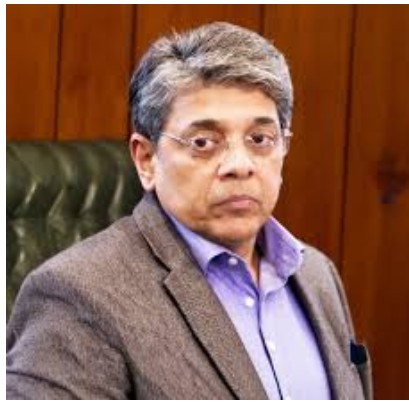
The Union Government has appointed Mahesh Dixit, a 1993-batch Indian Police Service (IPS) officer of the Andhra Pradesh cadre, as the new Director of the Intelligence Bureau (IB) for a tenure of two years. He succeeds Tapan Kumar Deka, who headed the agency for four years.
About the Intelligence Bureau (IB)
The Intelligence Bureau (IB) is India's premier domestic intelligence and internal security agency, functioning under the Ministry of Home Affairs (MHA). It is responsible for collecting, analysing, and disseminating intelligence relating to threats affecting the country's internal security and public order.
The Bureau works in close coordination with central and state intelligence agencies, law enforcement organisations, and security forces to safeguard national security.
Historical Background
The Intelligence Bureau is one of the oldest intelligence organisations in the world. Its origins are generally traced to the establishment of the Central Special Branch in 1887 during British rule. Some historical accounts also associate its beginnings with the intelligence unit established by Major General Sir Charles Metcalfe MacGregor in 1885.
Following Independence, the Intelligence Bureau became India's principal agency for internal intelligence, while the Research and Analysis Wing (R&AW) was created in 1968 to exclusively handle external intelligence.
Mandate and Functions
The Intelligence Bureau is entrusted with safeguarding India's internal security through intelligence gathering, analysis, and coordination.
Its major responsibilities include:
- Collection and dissemination of domestic intelligence.
- Counter-terrorism and counter-intelligence operations.
- Monitoring activities relating to extremism, insurgency, and secessionism.
- Assisting law enforcement agencies in preventing threats to national security.
- Protecting critical infrastructure, particularly civil aviation and other strategic installations.
- Conducting background verification for security clearances of diplomats, judges, senior government officials, and other sensitive appointments.
Composition
The Intelligence Bureau functions as a multidisciplinary organisation comprising officers drawn primarily from:
- Indian Police Service (IPS)
- Indian Revenue Service (IRS)
- Armed Forces
- Other Central and State Police Organisations
Personnel are generally inducted on deputation as well as through direct recruitment in specialised cadres.
Institutional Position
The Director of the Intelligence Bureau (DIB) is one of the country's highest-ranking intelligence officials.
The Director:
- Functions under the Ministry of Home Affairs.
- Reports directly to the Prime Minister on matters relating to national security.
- Is a member of the Strategic Policy Group (SPG).
- Serves on the Joint Intelligence Committee (JIC) under the National Security Council (NSC) framework.
Citizenship in India and Proof of Citizenship
- 27 Jun 2026
In News:
The Ministry of External Affairs (MEA) recently clarified that an Indian passport is primarily a travel document and not conclusive proof of citizenship. The clarification has gained significance in the backdrop of the ongoing Special Intensive Revision (SIR) of electoral rolls and the broader debate on citizenship verification.
Citizenship under Indian Law
- Citizenship in India is governed by the Citizenship Act, 1955, which prescribes the legal framework for acquiring, determining, and terminating citizenship.
- Unlike several countries, India does not possess a single universal document that conclusively establishes citizenship. Instead, citizenship is determined through the provisions of the Citizenship Act and established using relevant documentary evidence relating to birth, parentage, descent, registration, or naturalisation.
- The Supreme Court, in Sarbananda Sonowal v. Union of India (2005), held that the burden of proving Indian citizenship lies on the individual claiming it.
Is a Passport Proof of Citizenship?
- The Passport Manual describes an Indian passport as strong evidence of nationality, a view also recognised by the Supreme Court in Maneka Gandhi v. Union of India (1978). However, it is not conclusive proof of citizenship in the event of a legal dispute.
- Further, Section 20 of the Passports Act, 1967 empowers the Central Government to issue passports to non-citizens in public interest under exceptional circumstances. This was reflected in the 2023 Madras High Court decision permitting a stateless Sri Lankan refugee to apply for an Indian passport.
Thus, while a passport generally indicates nationality for international travel, it does not by itself conclusively determine citizenship under Indian law.
Electoral Rolls and Citizenship
- The Supreme Court, in Lal Babu Hussein v. Electoral Registration Officer (1995), held that inclusion of a person's name in the electoral roll creates a presumption of citizenship, which can be displaced only through due legal process.
- More recently, in Association for Democratic Reforms & Others v. Election Commission of India (2026), the Supreme Court upheld the constitutional validity of the Special Intensive Revision (SIR) of electoral rolls conducted by the Election Commission of India (ECI) under Article 324 of the Constitution and Section 21(3) of the Representation of the People Act, 1950.
- The Court clarified that the ECI is empowered to undertake limited citizenship inquiries only for determining electoral eligibility. Importantly, deletion of a person's name from the electoral roll does not amount to loss of citizenship, as the authority to determine citizenship rests under the Citizenship Act, 1955, and not with the Election Commission. Suspected citizenship cases must be referred to the Ministry of Home Affairs (MHA) for adjudication before elections.
Modes of Acquiring Indian Citizenship
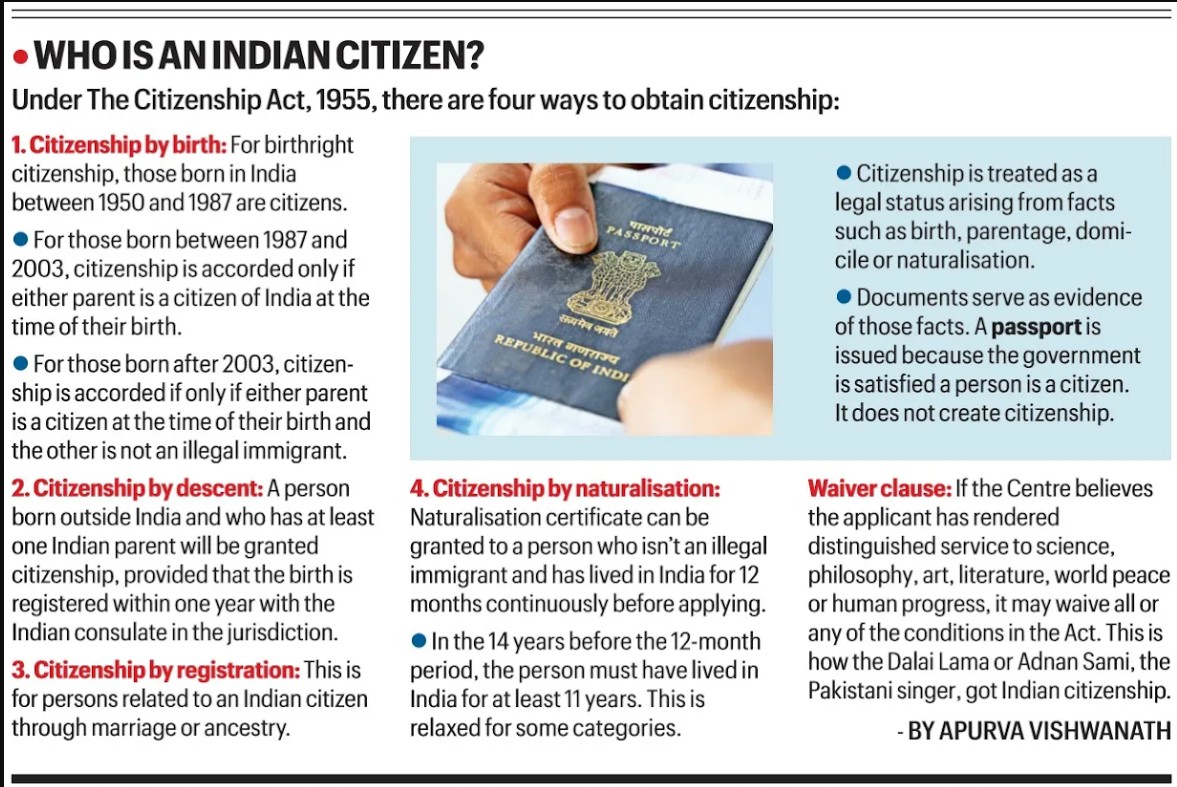
The Citizenship Act, 1955 provides five modes of acquiring citizenship:
- By Birth
- By Descent
- By Registration
- By Naturalisation
- By Incorporation of Territory
India initially followed the principle of Jus Soli (right by birth) but gradually shifted towards Jus Sanguinis (right by blood/descent) through successive amendments.
The conditions for citizenship by birth are:
- 26 January 1950 – 1 July 1987: Every person born in India became a citizen irrespective of parents' nationality.
- 1 July 1987 – 3 December 2004: At least one parent must be an Indian citizen.
- On or after 3 December 2004: One parent must be an Indian citizen and the other must not be an illegal migrant.
Citizenship by descent applies to persons born outside India to Indian parent(s), subject to mandatory consular registration for births after 3 December 2004.
Citizenship by registration and naturalisation is available to eligible Persons of Indian Origin (PIOs), spouses of Indian citizens, and foreign nationals fulfilling prescribed residency conditions, generally 12 years. India does not permit dual citizenship.
Important Amendments
- The Citizenship (Amendment) Act, 2003 introduced stricter provisions by denying citizenship by birth where one parent is an illegal migrant and strengthened provisions relating to illegal migration.
- The Citizenship (Amendment) Act (CAA), 2019 reduced the residency requirement for acquiring citizenship by naturalisation from 11 years to 5 years for Hindu, Sikh, Buddhist, Jain, Parsi, and Christian migrants from Pakistan, Bangladesh, and Afghanistan who entered India on or before 31 December 2014 after facing religious persecution.
Index of Services Production (ISP)
- 26 Jun 2026
In News:
The Ministry of Statistics and Programme Implementation (MoSPI) is set to launch the Index of Services Production (ISP) in July 2026. The new index is expected to become India's first high-frequency indicator for measuring the performance of the services sector, similar to the Index of Industrial Production (IIP) for industry.
About the Index of Services Production (ISP)
The Index of Services Production (ISP) is a short-term economic indicator that measures changes in the real output of service-producing industries over time relative to a specified base year. It is being developed with 2024–25 as the proposed base year and will primarily use Goods and Services Tax (GST) data to capture economic activity in the formal services sector.
The objective of the ISP is to provide timely information on the growth and performance of India's services sector, which contributes the largest share to the country's Gross Value Added (GVA). The index is expected to improve short-term economic assessment and strengthen evidence-based policymaking.
Data Sources
The ISP will draw information from multiple administrative and statistical databases to ensure comprehensive coverage of service-sector activities.
Its principal data sources include:
- Administrative data for sectors such as air transport, railways, banking, and insurance.
- GST data for wholesale and retail trade, hospitality, road and water transport, warehousing, telecommunications, real estate, information technology services, professional services, and entertainment.
- Annual Survey of Incorporated Services Sector Enterprises (ASISSE) data for health and education services, which will be incorporated in subsequent phases.
Since the index is largely based on GST-registered enterprises, it will primarily reflect the performance of the formal services sector.
Key Features
- Base Year: 2024–25.
- Developed by the Ministry of Statistics and Programme Implementation (MoSPI).
- Measures changes in the volume of output rather than price changes.
- Sectoral weights are assigned based on each sector's contribution to Gross Value Added (GVA) as reported in the National Accounts Statistics (NAS).
- Designed to complement existing indicators such as the Index of Industrial Production (IIP) and national income estimates.
Doctrine of Constructive Res Judicata

- 26 Jun 2026
In News:
The Supreme Court has recently reiterated that the doctrine of constructive res judicata, embodied in Explanation IV to Section 11 of the Code of Civil Procedure (CPC), 1908, is intended to prevent parties from litigating disputes in a piecemeal manner and to ensure finality in judicial proceedings.
What is Res Judicata?
The doctrine of Res Judicata is a well-established legal principle that originated in the English Common Law system. The Latin term res judicata literally means "a matter already judged." It is also referred to as the doctrine of claim preclusion.
The principle provides that once a competent court has finally decided a dispute between the same parties, the same matter cannot be litigated again before the same or another court. This prevents repeated lawsuits on identical issues and ensures certainty and finality in the administration of justice.
In India, the doctrine is codified under Section 11 of the Code of Civil Procedure (CPC), 1908, and is applicable to both civil and criminal proceedings, though its operation differs according to the nature of the proceedings.
What is Constructive Res Judicata?
- Constructive Res Judicata is an extension of the doctrine of res judicata. It bars not only issues that were actually decided in an earlier suit but also issues that could and ought to have been raised during the earlier proceedings but were deliberately or negligently omitted.
- Thus, a party cannot file a fresh suit based on the same cause of action by raising new grounds that were available at the time of the earlier litigation. The law treats such omitted issues as if they had already been adjudicated.
- The doctrine derives its statutory basis from Order II Rule 2 read with Section 11 of the CPC, particularly Explanation IV to Section 11.
Explanation IV of Section 11
Explanation IV states:
"Any matter which might or ought to have been made a ground of defence or attack in a former suit shall be deemed to have been a matter directly and substantially in issue in such suit."
This legal fiction ensures that parties present their entire case in one proceeding rather than splitting their claims across multiple suits.
Essential Conditions
The doctrine of constructive res judicata applies when the following conditions are satisfied:
- The parties in both proceedings are the same or claim under the same parties.
- The subject matter of both proceedings is substantially identical.
- The issue raised in the subsequent suit could and ought to have been raised in the earlier proceeding.
- The earlier case was decided by a court of competent jurisdiction.
- The earlier decision attained finality and was decided on its merits.
Objectives
The doctrine seeks to:
- Prevent multiplicity of litigation.
- Ensure finality of judicial decisions.
- Avoid abuse of the judicial process.
- Promote judicial economy and efficient use of court resources.
- Protect parties from repeated litigation over the same dispute.
Pradhan Mantri Rashtriya Bal Puraskar (PMRBP)
- 26 Jun 2026
In News:
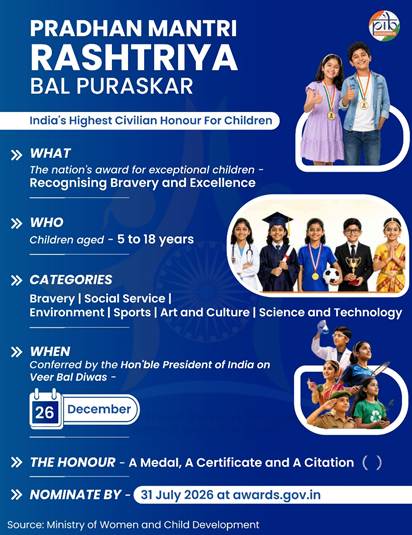
The Ministry of Women and Child Development has invited nominations for the Pradhan Mantri Rashtriya Bal Puraskar (PMRBP), India's highest civilian honour for children, recognising exceptional achievements in various fields.
About Pradhan Mantri Rashtriya Bal Puraskar (PMRBP)
- The Pradhan Mantri Rashtriya Bal Puraskar (PMRBP) is India's premier national award instituted to honourchildren between the ages of 5 and 18 years who have demonstrated exceptional courage, innovation, talent, resilience, leadership, or outstanding service to society.
- Introduced in 2019, the award seeks to recognise young achievers who have made remarkable contributions in diverse fields and inspire other children to pursue excellence and nation-building.
- The award is presented annually by the President of India in New Delhi on 26 December, observed as Veer Bal Diwas.
Veer Bal Diwas
Veer Bal Diwas is observed every year on 26 December to commemorate the supreme sacrifice of Sahibzada Zorawar Singh and Sahibzada Fateh Singh, the younger sons of the tenth Sikh Guru, Guru Gobind Singh, who displayed extraordinary courage and steadfastness in the face of persecution.
Award Categories
The PMRBP recognises outstanding achievements in six categories:
- Bravery
- Social Service
- Environment
- Sports
- Art and Culture
- Science and Technology
Eligibility and Selection
The award is open to children aged between 5 and 18 years who have demonstrated exceptional achievements or acts of courage with a lasting social impact.
Children may be nominated in more than one category, although each achievement is evaluated separately. While the award is generally not conferred posthumously, exceptional cases may be considered.
An Expert Committee evaluates the nominations based on the significance, originality, impact, and excellence of the achievements.
Award Components
The award comprises:
- A Medal
- A Certificate
- A Citation
Approximately 25 children are selected every year for their outstanding accomplishments.
Nodal Ministry
- Ministry of Women and Child Development (MoWCD)
The Ministry administers the award and oversees the nomination and selection process in consultation with the Expert Committee.
Objectives
The Pradhan Mantri Rashtriya Bal Puraskar aims to:
- Recognise exceptional achievements of children across diverse fields.
- Encourage innovation, creativity, courage, and leadership among young citizens.
- Inspire children to contribute positively to society and nation-building.
- Promote a culture of excellence, social responsibility, and public service.
16th-Century Vijayanagara Inions Unearthed in Seshachalam Forest

- 26 Jun 2026
In News:
The Archaeological Survey of India (ASI) has discovered three 16th-century inions belonging to Vijayanagara king Sadasivaraya in the Seshachalam Forest of Tirupati district, Andhra Pradesh.
About the Discovery
- The newly discovered inions have been precisely dated to 31 July 1554 CE and are engraved in Telugu, Tamil, and Kannada, reflecting the linguistic diversity and administrative inclusiveness of the Vijayanagara Empire.
- The inions primarily record the religious activities of King Sadasivaraya, who visited Papavinasa on a pilgrimage and commissioned the construction of a Shiva temple and a monastery (Mutt) during his visit.
Key Findings
The inions throw light on several aspects of Vijayanagara administration and religious patronage:
- They record the construction of a Shiva temple and Mutt at Papavinasa under the patronage of King Sadasivaraya.
- They mention the assignment of tax revenues (Kaanika) and land grants from two villages to finance daily worship, food offerings (Naivedya), and temple maintenance at the GudimallamParasurameswara Temple.
- The inions also refer to SadasivaBasavanna Odeya, a disciple of LingannaVodaya of Bendekeri, and Peddayya, son of Chembhaperiya, who served as the composer and temple accountant.
These records provide valuable insights into the financial management and institutional support extended to temples during the Vijayanagara period.
Historical Significance of Gudimallam Temple
The inions reaffirm the importance of the GudimallamParasurameswara Temple, widely regarded as India's oldest surviving Shiva temple, dating back to the 2nd century BCE.
The discovery establishes that the shrine continued to receive direct royal patronage, land grants, and financial support under the Vijayanagara rulers despite the growing prominence of nearby pilgrimage centres such as Tirumala. It highlights the continuity of Shaivite worship and the preservation of ancient sacred sites during the medieval period.
Vijayanagara Empire (1336–1646 CE)
The Vijayanagara Empire was one of the greatest empires of medieval South India. It was founded in 1336 CE by Harihara I and Bukka Raya I of the Sangama Dynasty on the banks of the Tungabhadra River. The empire served as a major political, cultural, and economic power for over three centuries.
The empire was ruled successively by four dynasties:
- Sangama
- Saluva
- Tuluva
- Aravidu
Its golden age was witnessed during the reign of Krishnadevaraya (Tuluva Dynasty), who is remembered for his military successes, efficient administration, literary contributions, and patronage of the Ashtadiggajas, the celebrated group of eight Telugu scholars. He also authored the famous Telugu work Amuktamalyada.
Administration
The Vijayanagara administration was characterised by the Nayankara (Amara-Nayaka) System, under which military chiefs were granted Amaram (land assignments) in return for maintaining troops, collecting revenue, and rendering military service to the king. This decentralised system played a crucial role in maintaining the empire's vast territorial control.
Art and Architecture
The empire marked the culmination of the Dravidian style of temple architecture. Important architectural features included:
- Massive Raya Gopurams
- Ornate monolithic pillars
- Spacious Kalyana Mandapas
- Intricately carved temple complexes
Prominent examples include the Vittalaswamy Temple and the Hazara Rama Temple at Hampi, a UNESCO World Heritage Site.
Foreign Accounts
The prosperity and cosmopolitan nature of the empire have been documented by several foreign travellers and envoys, including:
- Ibn Battuta (Morocco)
- Nicolo de Conti (Italy)
- Abdur Razzak (Persia)
- Domingo Paes (Portugal)
Their accounts describe the empire's flourishing trade, urban planning, military strength, and immense wealth.
Decline
The empire suffered a decisive setback after the Battle of Talikota (Rakshasi-Tangadi) in 1565, where the combined forces of the Deccan Sultanates defeated the Vijayanagara army. Although the empire continued under the Aravidu Dynasty, it gradually declined, bringing an end to one of the most remarkable phases of South Indian history.
Seismic Doublet (Doublet Earthquake)
- 26 Jun 2026
In News:
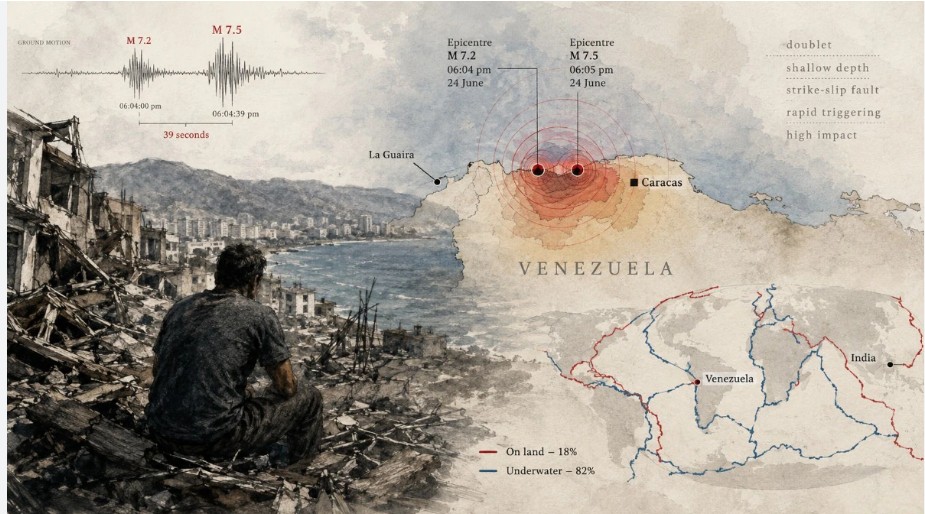
The Government of Venezuela has declared a nationwide State of Emergency after two powerful earthquakes of magnitude 7.2 and 7.5 struck off its north-central coast within a short interval. The rare seismic doublet caused extensive damage to infrastructure and significant loss of life.
What is a Seismic Doublet?
A Seismic Doublet (or Doublet Earthquake) refers to the occurrence of two earthquakes of nearly equal magnitude that strike close together in both time and location.
Unlike a typical mainshock-aftershock sequence, where the aftershocks are significantly weaker than the main earthquake, a seismic doublet involves two major earthquakes of comparable intensity. The second earthquake is not merely an aftershock but an independent large event triggered by stress transferred from the first rupture.
Mechanism
When the first earthquake occurs, it does not completely release the accumulated tectonic stress along a fault. Instead, part of this stress is rapidly transferred to a neighbouringfault segment or an asperity (a strongly locked patch of rock along a fault).
If the adjacent fault is already close to failure, the additional stress may trigger another major rupture within a short period, resulting in a seismic doublet.
Why is Venezuela Highly Earthquake-Prone?
Venezuela is situated along the active boundary between the Caribbean Plate and the South American Plate, making its northern region highly susceptible to earthquakes.
- The Caribbean Plate moves eastward relative to the South American Plate at a rate of approximately 20 mm per year.
- The movement is accommodated through a network of east-west trending strike-slip faults across northern Venezuela.
- These faults periodically accumulate stress due to friction and release it through powerful earthquakes.
Many earthquakes in Venezuela are shallow-focus earthquakes, meaning they originate close to the Earth's surface. As a result, seismic waves lose little energy before reaching the surface, leading to greater destruction.
What is a Strike-Slip Fault?
A strike-slip fault is a type of fault in which blocks of rock move horizontally past one another due to shear stress.
- The movement is predominantly lateral rather than vertical.
- It commonly occurs along transform plate boundaries.
- Sudden movement along these faults generates shallow and often destructive earthquakes.
Relevance to India
India is among the world's most earthquake-prone countries due to the ongoing convergence of the Indian Plate with the Eurasian Plate.
The collision has created the Himalayan mountain system, where enormous tectonic stress continues to accumulate, making the region vulnerable to major earthquakes.
Areas falling under Seismic Zone V (Very High Risk Zone) include:
- Himalayan States
- North-Eastern India
- Parts of Gujarat
- Andaman & Nicobar Islands
Given the presence of highly stressed fault systems, earthquake doublets cannot be ruled out in tectonically active regions, highlighting the importance of continuous seismic monitoring, earthquake-resistant infrastructure, and disaster preparedness.
In News:
The Government of Venezuela has declared a nationwide State of Emergency after two powerful earthquakes of magnitude 7.2 and 7.5 struck off its north-central coast within a short interval. The rare seismic doublet caused extensive damage to infrastructure and significant loss of life.
What is a Seismic Doublet?
A Seismic Doublet (or Doublet Earthquake) refers to the occurrence of two earthquakes of nearly equal magnitude that strike close together in both time and location.
Unlike a typical mainshock-aftershock sequence, where the aftershocks are significantly weaker than the main earthquake, a seismic doublet involves two major earthquakes of comparable intensity. The second earthquake is not merely an aftershock but an independent large event triggered by stress transferred from the first rupture.
Mechanism
When the first earthquake occurs, it does not completely release the accumulated tectonic stress along a fault. Instead, part of this stress is rapidly transferred to a neighbouringfault segment or an asperity (a strongly locked patch of rock along a fault).
If the adjacent fault is already close to failure, the additional stress may trigger another major rupture within a short period, resulting in a seismic doublet.
Why is Venezuela Highly Earthquake-Prone?
Venezuela is situated along the active boundary between the Caribbean Plate and the South American Plate, making its northern region highly susceptible to earthquakes.
- The Caribbean Plate moves eastward relative to the South American Plate at a rate of approximately 20 mm per year.
- The movement is accommodated through a network of east-west trending strike-slip faults across northern Venezuela.
- These faults periodically accumulate stress due to friction and release it through powerful earthquakes.
Many earthquakes in Venezuela are shallow-focus earthquakes, meaning they originate close to the Earth's surface. As a result, seismic waves lose little energy before reaching the surface, leading to greater destruction.
What is a Strike-Slip Fault?
A strike-slip fault is a type of fault in which blocks of rock move horizontally past one another due to shear stress.
- The movement is predominantly lateral rather than vertical.
- It commonly occurs along transform plate boundaries.
- Sudden movement along these faults generates shallow and often destructive earthquakes.
Relevance to India
India is among the world's most earthquake-prone countries due to the ongoing convergence of the Indian Plate with the Eurasian Plate.
The collision has created the Himalayan mountain system, where enormous tectonic stress continues to accumulate, making the region vulnerable to major earthquakes.
Areas falling under Seismic Zone V (Very High Risk Zone) include:
- Himalayan States
- North-Eastern India
- Parts of Gujarat
- Andaman & Nicobar Islands
Given the presence of highly stressed fault systems, earthquake doublets cannot be ruled out in tectonically active regions, highlighting the importance of continuous seismic monitoring, earthquake-resistant infrastructure, and disaster preparedness.
Anthropological Survey of India (AnSI)
- 25 Jun 2026
In News:
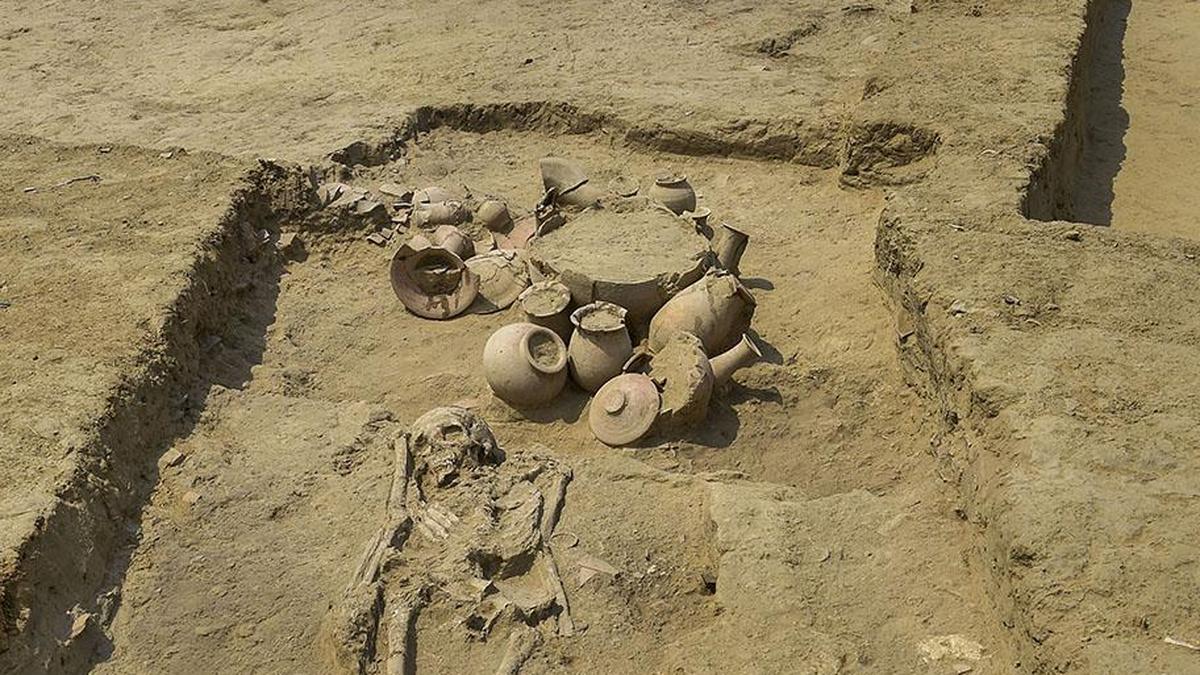
The Archaeological Survey of India (ASI) has recently handed over human skeletal remains excavated from the Harappan site of Rakhigarhi in Haryana to the Anthropological Survey of India (AnSI) for detailed anthropological, bio-archaeological, and scientific research. The study is expected to provide valuable insights into the ancestry, health, lifestyle, and population history of the Indus Valley Civilization.
About the Anthropological Survey of India (AnSI)
The Anthropological Survey of India (AnSI) is the premier government-funded institution dedicated to anthropological research in India. It is the only Central Government research organisation exclusively engaged in anthropological studies under the Ministry of Culture.
Established in 1945 under the leadership of Dr. S.C. Roy, a pioneering Indian anthropologist, AnSI was initially tasked with documenting and studying India's tribal and caste communities. Over the decades, its mandate has expanded considerably to encompass the biological, cultural, linguistic, and social diversity of the entire Indian population.
Headquarters: Kolkata, West Bengal.
Objectives
AnSI works towards understanding India's diverse human populations through scientific research and documentation. Its major objectives include:
- Conducting biological and cultural anthropological research on India's tribes and other communities.
- Examining, preserving, and analysing ancient and modern human skeletal remains.
- Documenting and conserving India's tribal arts, crafts, and cultural heritage.
- Providing training in anthropology and publishing research findings for academic and policy use.
Major Areas of Research
Over the years, AnSI has evolved into a multidisciplinary research institution. While its early work focused mainly on the ethnographic study of tribal societies—their social organisation, kinship systems, religious beliefs, and economic life—it now undertakes research across a much wider spectrum.
Its areas of study include biological anthropology, cultural anthropology, social anthropology, medical anthropology, linguistic anthropology, human genetics, archaeology, tribal studies, and bio-archaeology. It also studies rural and urban populations, marginalised communities, and the Indian diaspora to understand the country's evolving social landscape.
Organisational Structure
To facilitate region-specific research, AnSI operates through its headquarters in Kolkata and several regional centres located across the country, including Delhi, Lucknow, Shillong, and Pune.
The organisation brings together experts from multiple disciplines such as anthropology, archaeology, sociology, linguistics, and human biology, enabling comprehensive research on India's cultural and biological diversity.
Publications
AnSI disseminates its research through several scholarly publications, including:
- Journal of the Anthropological Survey of India
- Occasional Papers
- Monographs and technical research reports
Ambubachi Mela
- 25 Jun 2026
In News:
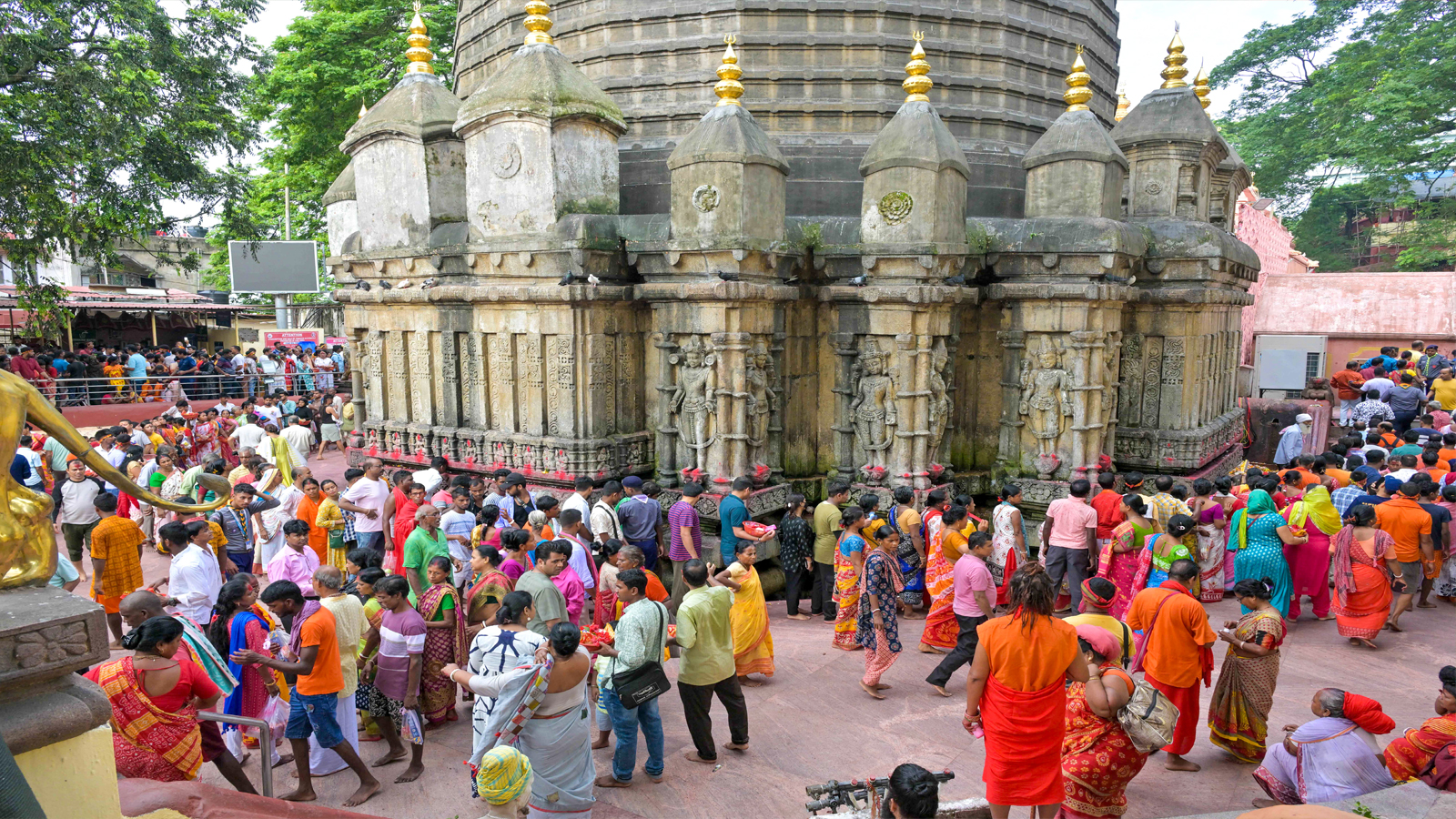
The annual Ambubachi Mela, one of the largest and most significant religious gatherings in eastern India, commenced at the revered Kamakhya Temple in Guwahati, Assam, attracting lakhs of devotees, ascetics, and Tantric practitioners from across India and abroad.
About Ambubachi Mela
Ambubachi Mela is an annual Hindu festival celebrated during the monsoon season, usually in June, at the Kamakhya Temple. The festival marks the annual menstruation of Goddess Kamakhya, symbolising the creative and regenerative powers of nature.
During this period, the temple remains closed for three days, as it is believed that the Goddess undergoes her annual menstrual cycle. The temple reopens on the fourth day after elaborate purification rituals, drawing large numbers of pilgrims seeking blessings.
The festival is deeply associated with fertility, womanhood, agricultural prosperity, and the onset of the monsoon. The word 'Ambubachi' literally means "water flowing,"symbolising both the rains and the fertility of the Earth.
Religious Significance
- Celebrates the divine feminine and the fertility of Mother Earth.
- Closely associated with the arrival of the southwest monsoon and the beginning of the agricultural season.
- Considered one of the most important festivals of Tantric Shaktism.
- Attracts Tantric practitioners, Aghori sadhus, ascetics, and devotees from across the country.
- Devotees receive the sacred Angodak (holy water) and Angabastra (cloth believed to have been sanctified during the Goddess's menstruation) as blessings after the temple reopens.
Kamakhya Temple
The Kamakhya Temple is one of the most revered shrines dedicated to Goddess Shakti and is regarded as one of the oldest and most sacred centres of Tantric worship in India.
It is believed to be one of the 51 Shakti Peethas, where the yoni (womb and generative organ) of Goddess Sati is said to have fallen according to Hindu mythology.
Location
- Situated atop Nilachal Hill in Guwahati, Assam.
- Overlooks the southern bank of the Brahmaputra River.
Key Features
- One of the foremost centres of Tantric Shaktism.
- Unlike many Hindu temples, the sanctum does not contain an idol; instead, worship is offered to a natural rock fissuresymbolising the divine feminine, continuously fed by an underground spring.
- Holds immense religious significance for both Shakta and Tantric traditions.
Temple Architecture
The Kamakhya Temple exhibits a distinctive architectural style known as the Nilachala Style, which blends:
- Traditional Nagara architecture.
- Saracenic (Mughal) architectural influences.
This unique fusion makes it one of the most distinctive temple structures in India.
Architectural Features
- The only temple in Assam with a fully developed ground plan.
- Comprises five principal chambers:
- Garbhagriha (sanctum sanctorum)
- Antarala (vestibule)
- Jagamohan (assembly hall)
- Bhogmandir (offering hall)
- Natmandir (dance and music hall)
- Each chamber possesses a distinct superstructure:
- The main shrine is crowned with a modified Saracenic dome.
- The Antarala features a two-tiered roof.
- The Bhogmandir has five domes resembling the main temple.
- The Natmandir has a shell-shaped roof with an apsidal end, resembling traditional Assamese Namghars (prayer halls).
Nirbhay Chetna Initiative
- 25 Jun 2026
In News:
The Union Government has launched Nirbhay Chetna to sensitise over 17.5 lakh elected male representatives of Panchayati Raj Institutions (PRIs) on gender equality, women's safety, and gender-responsive governance across rural India.
About Nirbhay Chetna Initiative
- Nirbhay Chetna is a flagship gender-sensitisationprogramme launched under the broader Nirbhay Raho initiative. It is the first-of-its-kind national initiative implemented through the Nirbhaya Fund to engage elected male representatives in promoting women's safety and gender equality at the grassroots level.
- The initiative recognises that achieving gender-responsive governance requires the active participation of both women and men in local self-government institutions.
- Nodal Ministry: Ministry of Panchayati Raj
- Objectives: The initiative aims to:
- Promote gender-sensitive governance in Panchayati Raj Institutions.
- Sensitise elected male representatives on women's rights, dignity, and safety.
- Foster accountability and community leadership for preventing gender-based violence.
- Encourage inclusive decision-making and equal participation of women in local governance.
- Strengthen grassroots efforts towards creating safer and more equitable rural communities.
- Key Features
- Implemented under the Nirbhaya Fund, dedicated to initiatives for women's safety and security.
- Targets over 17.5 lakh elected male representatives across Panchayati Raj Institutions.
- Focuses on behavioural change through awareness, dialogue, and leadership development.
- Promotes collaboration among Panchayats, government agencies, and local communities to address gender issues.
- Seeks to institutionalise gender-responsive practices in rural governance.
Capacity-Building Mechanism
A nationwide network of 28,500 Master Trainers is being developed at:
- State level
- District level
- Block level
These trainers will conduct structured awareness and training programmes to sensitise male elected representatives across the country.
Components of the Nirbhay Raho Initiative
1. Nirbhay Chetna
- Sensitises elected male representatives on:
- Gender equality
- Women's safety and security
- Prevention of gender-based violence
- Gender-responsive governance
2. Nirbhay Netri
Focuses on empowering elected women representatives through:
- Capacity building
- Leadership development
- Legal literacy and awareness
- Strengthening participation in Panchayati Raj Institutions
3. Nirbhay Drishti
Aims to enhance rural safety infrastructure by:
- Installing CCTV cameras at strategic public locations in Panchayats.
- Promoting technology-enabled surveillance to improve women's safety.
- Supporting safer public spaces in rural areas.
Expected Outcomes
The initiative seeks to:
- Build gender-sensitive leadership within Panchayati Raj Institutions.
- Improve the implementation of women-centric government schemes.
- Strengthen community ownership of women's safety initiatives.
- Encourage greater participation of women in local governance.
- Foster safer, inclusive, and equitable rural communities through behavioural and institutional change.
Project Nimbus

- 25 Jun 2026
In News:
Growing global protests against Project Nimbus have reignited debates over the ethical use of Artificial Intelligence (AI), cloud computing, and the role of Big Tech companies in military and government operations. Student groups, technology employees, and human rights activists have questioned whether advanced AI tools supplied under the project are being used in the ongoing Israel–Gaza conflict.
About Project Nimbus
- Project Nimbus is a USD 1.2 billion cloud-computing agreement, announced in 2021, between the Israeli government and two global technology companies—Google Cloud Platform (GCP) and Amazon Web Services (AWS).
- Its primary objective is to modernize and digitize Israel's public-sector digital infrastructure by migrating government databases, applications, and computing systems to secure domestic cloud platforms.
- The project is designed to improve the efficiency, security, and scalability of government digital services while ensuring that sensitive government data remains within Israel.
Key Features
- Signed in 2021 with an estimated value of USD 1.2 billion.
- Jointly implemented by Google Cloud and Amazon Web Services (AWS).
- Provides cloud infrastructure for Israeli government ministries, public agencies, and defence-related institutions.
- Establishes localized cloud data centres within Israel to ensure data sovereignty.
- Includes long-term cloud storage, computing power, cybersecurity support, and AI-based analytical services.
Technological Capabilities
Project Nimbus provides a wide range of advanced cloud and Artificial Intelligence services, including:
- High-performance cloud computing.
- Large-scale data storage and management.
- Machine learning and AI model development.
- Facial detection and image recognition.
- Automated image categorization.
- Object detection and tracking.
- Speech recognition and language processing.
- Sentiment analysis and predictive analytics.
These technologies are generally classified as dual-use technologies, meaning they can serve both civilian and military purposes.
Sovereign Non-Restriction Clause
Leaked contract documents indicate that Project Nimbus contains a Sovereign Non-Restriction Clause, under which:
- Google and Amazon cannot suspend or deny cloud services to Israeli government entities due to external political pressure or internal corporate policy changes.
- Critical government operations remain insulated from service disruptions.
- Data processing, storage, and server administration are maintained within Israel to strengthen national control over government data.
Concerns and Controversies
Project Nimbus has attracted significant international criticism due to several concerns:
- Potential military use: Critics allege that AI-powered surveillance and image-analysis tools could support military operations and targeting in conflict zones.
- Human rights concerns: Activists argue that advanced surveillance capabilities may be used to monitor Palestinians in occupied territories.
- Lack of transparency: The exact deployment and end-use of AI services under the project remain largely undisclosed.
- Corporate ethics: Employees and civil society groups have accused Big Tech companies of indirectly facilitating geopolitical conflicts by providing foundational digital infrastructure.
- Dual-use dilemma: Technologies intended for civilian governance can also be adapted for intelligence gathering and military applications.
Google and Amazon's Position
Google and Amazon have consistently stated that:
- Project Nimbus is intended to provide commercial cloud services to government agencies.
- The contract is not designed for classified weapons systems or intelligence operations.
- Their services comply with contractual obligations and applicable laws.
North-East India as "Ashtalakshmi"
- 25 Jun 2026
In News:
The Government of India has highlighted the remarkable transformation of the North-Eastern Region (NER) over the last twelve years (2014–2026). Through sustained investments in infrastructure, connectivity, social development, clean energy, and governance, the region has witnessed a paradigm shift from being a geographically isolated frontier to becoming a strategic growth hub. Recognised as "Ashtalakshmi", the North-East is now central to India's Act East Policy and the vision of Viksit Bharat, serving as India's gateway to Southeast Asia.
Why is the North-East Called "Ashtalakshmi"?
The term Ashtalakshmi originates from Hindu tradition, where Goddess Lakshmi manifests in eight forms representing prosperity, abundance, and well-being. Similarly, India's North-East comprises eight states—Arunachal Pradesh, Assam, Manipur, Meghalaya, Mizoram, Nagaland, Sikkim, and Tripura—each endowed with unique cultural, ecological, agricultural, and strategic strengths.
The Government uses this symbolism to project the region as a collective source of national prosperity. The terminology also reflects a strategic shift in policy—from viewing the North-East merely as a border region constrained by the "tyranny of distance" to recognising it as India's Gateway to ASEAN and an important pillar of regional integration.
Strategic Importance of the North-East
The North-East occupies a unique geopolitical position and plays a critical role in India's security, economy, and diplomacy.
Its importance stems from:
- Sharing international borders with Bangladesh, Bhutan, China, Myanmar, and Nepal, making it strategically significant for border management.
- Acting as India's land bridge to Southeast Asia under the Act East Policy.
- Possessing rich natural resources including hydropower, forests, biodiversity, bamboo, tea, spices, horticultural crops, and organic farming potential.
- Serving as a crucial region for India's Indo-Pacific strategy, regional connectivity, and cross-border trade.
Major Drivers of Transformation
1. Connectivity Revolution: Bridging the Geographic Divide
For decades, poor connectivity remained the biggest obstacle to the region's development. The past decade has witnessed unprecedented investments aimed at overcoming geographical isolation through integrated transport and digital infrastructure.
Road Connectivity
- Road infrastructure has expanded significantly, with the National Highway network increasing from 10,905 km in 2014 to over 16,200 km in 2026.
- Flagship programmes such as BharatmalaPariyojana and Pradhan Mantri Gram Sadak Yojana (PMGSY) have enhanced rural connectivity, improved market access, strengthened border infrastructure, and facilitated tourism and disaster response.
Railway Modernisation
- Rail connectivity has expanded through broad-gauge conversion, new railway lines, and extensive electrification.
- Arunachal Pradesh, Meghalaya, Mizoram, Nagaland, and Tripura have achieved 100% railway electrification, while Assam is close to full electrification. This transition has reduced dependence on diesel traction, improved operational efficiency, and promoted environmentally sustainable transportation.
Landmark Infrastructure Projects
Several iconic engineering projects have transformed connectivity across the region.
- Bogibeel Bridge (Assam): India's longest rail-cum-road bridge, significantly improving connectivity between Assam and Arunachal Pradesh while strengthening defence logistics.
- Noney Bridge (Manipur): The world's tallest railway pier bridge, forming part of the Jiribam–Imphal railway project.
- Sela Tunnel (Arunachal Pradesh): Provides all-weather access to Tawang and enhances military preparedness along the India-China border.
Air Connectivity
- The UDAN Scheme has substantially improved regional air connectivity. Operational airports increased from 9 in 2014 to 17 in 2026, making air travel more affordable and accessible while promoting tourism, trade, healthcare access, and emergency services.
Inland Waterways
- The number of National Waterways in the region has increased from one in 2014 to twenty in 2024, reviving the Brahmaputra and Barak river systems for cargo transportation, river tourism, and multimodal logistics.
Digital Connectivity
- Digital inclusion has expanded rapidly with over 6,350 Gram Panchayats becoming service-ready for high-speed broadband, facilitating e-governance, telemedicine, online education, digital banking, and entrepreneurship.
2. Strategic Integration through the Act East Policy
The Act East Policy has fundamentally altered the strategic significance of the North-East by positioning it as India's gateway to Southeast Asia.
- Major cross-border connectivity projects such as the India–Myanmar–Thailand Trilateral Highway and the Kaladan Multi-Modal Transit Transport Project are expected to deepen India's economic integration with ASEAN by creating faster and more efficient land and maritime trade routes.
- The development of Integrated Check Posts (ICPs), particularly at Moreh (Manipur), has streamlined customs, immigration, and border trade. Simultaneously, Border Haats such as Kamalasagar and Bholaganj have revived traditional cross-border commerce while strengthening local livelihoods and people-to-people ties.
Together, these initiatives are transforming the North-East from India's peripheral frontier into an important regional trade and logistics corridor.
3. Policy Support and Institutional Framework
The transformation of the North-East has been supported by targeted policy interventions and dedicated institutional mechanisms.
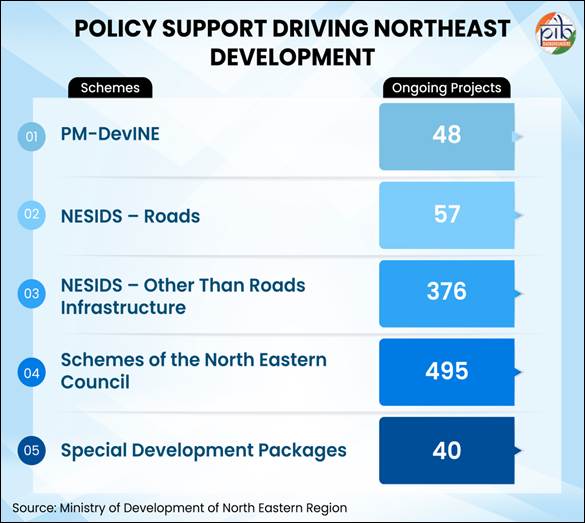
PM-DevINE
The Prime Minister's Development Initiative for North East Region (PM-DevINE) is a 100% Centrally Funded Scheme aimed at financing high-impact infrastructure, social development, livelihood generation, and tourism projects.
North East Special Infrastructure Development Scheme (NESIDS)
Launched in 2017–18 and extended until March 2026, NESIDS supports infrastructure development through two components:
- NESIDS-Roads, focusing on connectivity and strategic road infrastructure.
- NESIDS-Other Than Roads Infrastructure (OTRI), supporting projects related to healthcare, education, power, drinking water, bridges, and public infrastructure.
North Eastern Council (NEC)
The North Eastern Council continues to function as the region's apex planning body by promoting bamboo-based industries, tourism, entrepreneurship, livelihood generation, and regional planning.
Dedicated Budgetary Support
Recognising the strategic importance of the region, all non-exempted Central Ministries are mandated to allocate at least 10% of their annual budget for the development of the North-East under the guiding principle of "Act East, Act Fast, Act First."
4. Energy Security and Green Growth
The North-East is central to India's renewable energy ambitions due to its vast hydropower and natural gas resources.
- Major projects include the 2,880 MW Dibang Multipurpose Project in Arunachal Pradesh, which will become India's tallest dam, and the 2,000 MW Subansiri Lower Hydroelectric Project located on the Assam–Arunachal Pradesh border. These projects are expected to improve energy security, flood moderation, irrigation, and regional development.
- Complementing hydropower development is the 1,656 km North East Gas Grid, which connects all eight states with the national gas network. The project includes Asia's longest underwater hydrocarbon pipeline beneath the Brahmaputra River, enabling cleaner energy access while promoting industrial growth.
5. Human Development and Social Infrastructure
Alongside infrastructure, significant investments have been made in improving quality of life and human development.
- Under the Jal Jeevan Mission, Arunachal Pradesh and Mizoram have achieved 100% Functional Household Tap Water Connections, while all eight states have attained Open Defecation Free (ODF) status.
- Housing infrastructure has expanded through Pradhan Mantri Awas Yojana (PMAY), under which over 31 lakh houses have been constructed with integrated access to electricity, LPG, sanitation, and drinking water.
- Healthcare infrastructure has improved considerably through the operationalisation of AIIMS Guwahati, approval of 12 new medical colleges, and expansion of tertiary healthcare facilities.
- Educational opportunities have also expanded with the establishment of IITs, NITs, and Eklavya Model Residential Schools (EMRS), improving access to quality education in remote areas.
6. Agricultural Diversification and Rural Prosperity
The North-East is gradually transitioning from subsistence agriculture to a high-value, market-oriented economy.
Fisheries and Livestock
Inland fish production has increased by 68% over the last decade, with Assam contributing nearly 70% of regional production. This growth has been supported by the Pradhan Mantri Matsya Sampada Yojana, distribution of 3,823 Kisan Credit Cards, and establishment of 501 Fish Farmer Producer Organisations (FFPOs).
Milk and egg production have also witnessed steady growth, supported by the establishment of the region's first Cattle IVF Laboratory in Guwahati for genetic improvement.
Organic Farming and GI Products
The Mission Organic Value Chain Development for North Eastern Region (MOVCDNER) has integrated over 2.36 lakh hectares under certified organic farming. The region also possesses 89 Geographical Indication (GI)-tagged products, including Lakadong Turmeric, Naga King Chilli, Muga Silk, Chak-Hao Black Rice, Queen Pineapple, and Sikkim Large Cardamom, enhancing export potential and farmers' incomes.
Agarwood Economy
The North-East hosts nearly 90% of India's 150 million agarwood trees, with Tripura alone possessing an estimated market potential of ?2,000 crore, making agarwood a promising export commodity.
Brand North East
The Ministry of Development of North Eastern Region (MDoNER) has launched the Brand North East initiative to develop state-specific value chains through flagship missions such as the Kiwi Mission (Arunachal Pradesh), Coffee Mission (Nagaland), Ginger Mission (Mizoram), Queen Pineapple Mission (Tripura), Muga Silk Mission (Assam), Organic Food Mission (Sikkim), and Lakadong Turmeric Mission (Meghalaya). The initiative aims to transform the region into a globally competitive, export-oriented economy.
Ammonia (NH?)
- 24 Jun 2026
In News:
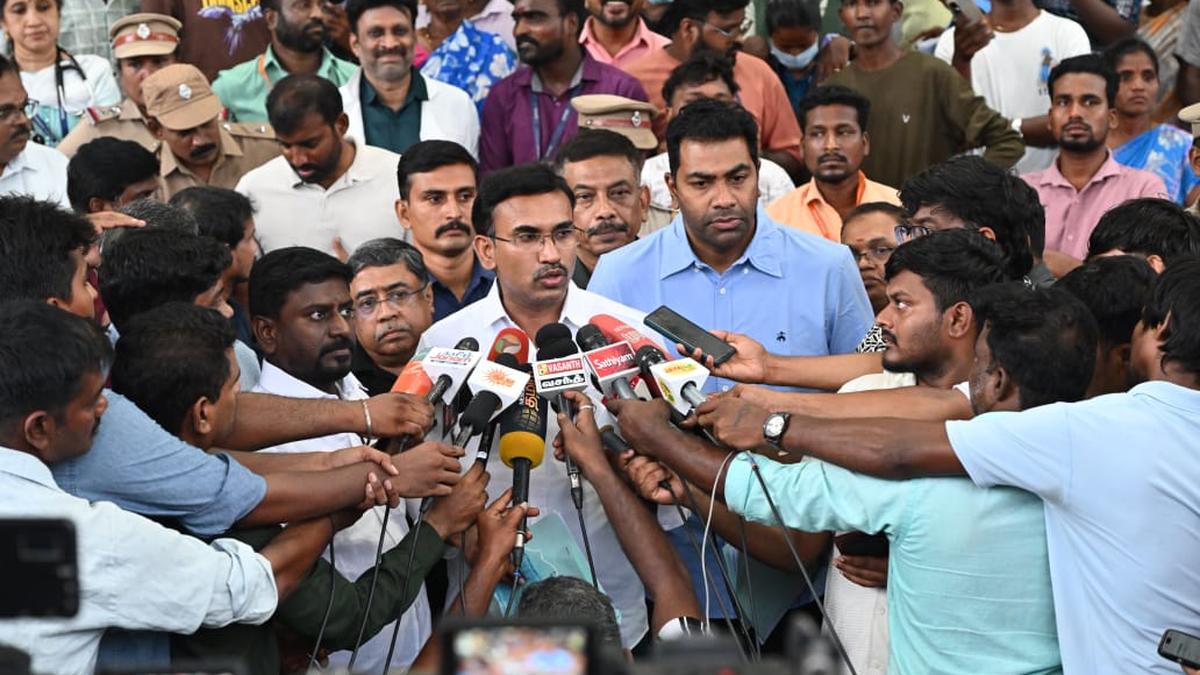
An ammonia gas leak at a seafood processing and export unit in Tiruvallur district, Tamil Nadu, affected several people, highlighting concerns regarding industrial safety and hazardous chemical handling.
About Ammonia
Ammonia (NH?) is a colourless, pungent-smelling gas composed of one nitrogen atom and three hydrogen atoms. It is an important industrial chemical and a naturally occurring compound in the environment.
Ammonia is highly soluble in water, forming aqueous (liquid) ammonia. When exposed to air, liquid ammonia rapidly vaporizes back into a gas.
Occurrence
Ammonia occurs naturally in:
- The nitrogen cycle, where it is produced by soil microorganisms.
- The decomposition of plants, animals, and organic matter.
- Small quantities within the human body as a product of normal metabolic processes.
Industrial Production
Commercial ammonia is primarily manufactured through the Haber–Bosch Process, in which nitrogen (N?) from air reacts with hydrogen (H?) under high temperature and pressure in the presence of an iron catalyst.
Uses
Ammonia has diverse industrial applications:
- Agriculture: Primary raw material for nitrogenous fertilizers such as ammonium nitrate and urea.
- Refrigeration: Widely used as an industrial refrigerant, especially in cold storage and food processing industries.
- Water Treatment: Used as a purifier and pH regulator.
- Chemical Industry: Manufacture of plastics, explosives, synthetic fibres, dyes, pharmaceuticals, and cleaning agents.
- Food Industry: Used in refrigeration systems for seafood and food storage facilities.
Health Effects
Exposure to high concentrations of ammonia can cause:
- Irritation of the eyes, skin, nose, and throat.
- Coughing, breathing difficulty, and lung irritation.
- Chemical burns upon prolonged exposure.
- Severe exposure may lead to respiratory distress and pulmonary damage.
Biochar
- 24 Jun 2026
In News:
Recent studies have shown that Biochar can increase crop productivity by 10–30% and improve soil water-holding capacity by 10–25%, particularly in nutrient-deficient and semi-arid soils, highlighting its potential for sustainable agriculture and carbon sequestration.
What is Biochar?
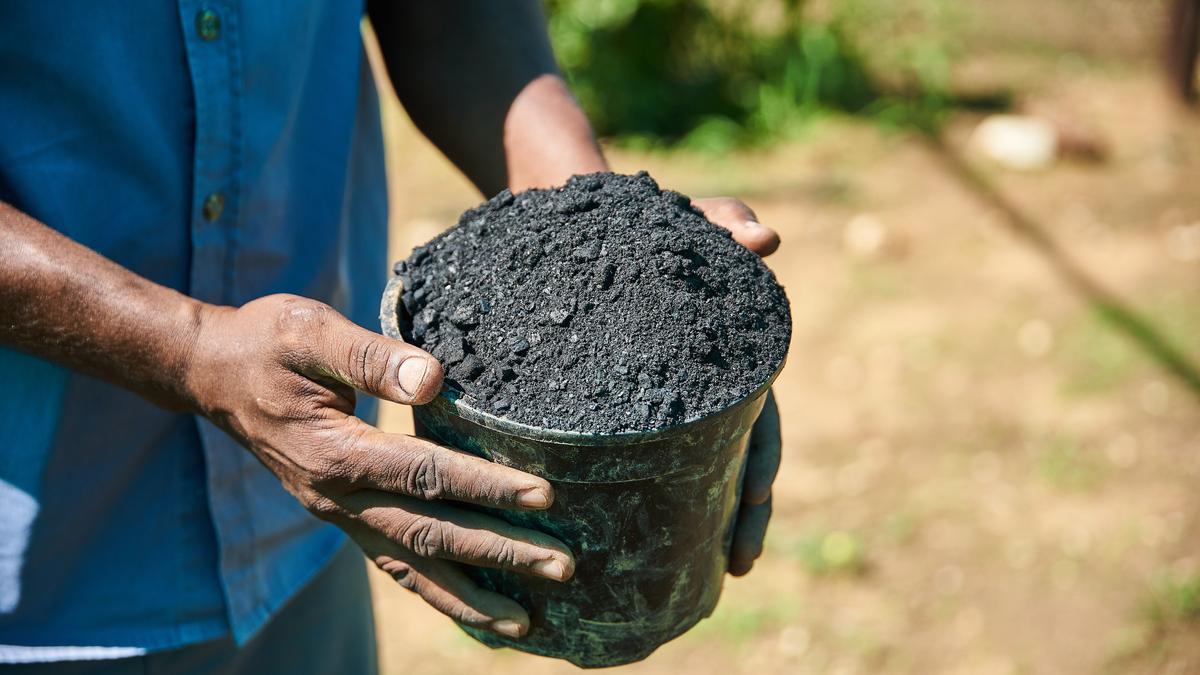
Biochar is a carbon-rich, porous material produced by heating biomass or agricultural residues under low-oxygen (oxygen-limited) conditions, a process known as pyrolysis.
It is generally prepared by heating crop residues at 400°C–600°C in a kiln or similar structure in the absence of oxygen, converting agricultural waste into a stable form of carbon while minimizing emissions.
Key Characteristics
- Produced through pyrolysis (low or no oxygen).
- Derived from agricultural residues, forestry waste, and other biomass.
- Highly porous with a large surface area.
- Rich in stable carbon, making it resistant to decomposition.
- Can retain carbon in soil for 100–1,000 years, making it an effective long-term carbon sink.
Applications of Biochar
1. Agriculture: Biochar improves soil fertility, enhances water retention, increases nutrient availability, promotes beneficial microbial activity, and improves soil structure. It is particularly effective in rainfed, semi-arid, and nutrient-poor soils, leading to higher crop productivity.
2. Climate Change Mitigation: By storing stable carbon in soils for centuries, biochar serves as a carbon sequestration technology, reducing atmospheric carbon dioxide and supporting climate change mitigation.
3. Industrial Applications: Modified biochar can adsorb carbon dioxide (CO?) from industrial exhaust gases and is being explored for carbon capture applications, although its efficiency is currently lower than conventional carbon capture technologies.
4. Construction Sector: Biochar can be incorporated into construction materials such as concrete and bricks, reducing their carbon footprint while acting as a stable carbon sink.
5. Wastewater Treatment: Due to its high porosity and adsorption capacity, biochar can remove pollutants, heavy metals, dyes, and organic contaminants from wastewater, providing a low-cost treatment option.
Advantages
- Converts agricultural waste into a value-added product.
- Reduces crop residue burning and associated air pollution.
- Improves crop yield by 10–30%.
- Enhances soil water-holding capacity by 10–25%.
- Supports soil biodiversity and microbial activity.
- Sequesters carbon for 100–1,000 years.
- Promotes sustainable and climate-resilient agriculture.
Sarvam AI & India's Sovereign AI Ecosystem
- 24 Jun 2026
In News:
Bengaluru-based Sarvam AI became India's first dedicated full-stack Artificial Intelligence (AI) startup to achieve unicorn status (valuation exceeding USD 1 billion), marking a major milestone for India's deep-tech ecosystem and indigenous AI capabilities.
What is a Unicorn?
- A Unicorn is a privately held startup valued at more than USD 1 billion.
- As of June 2026, India has 131 unicorns, making it the third-largest unicorn ecosystem globally after the United States and China.
- Recent unicorns such as Sarvam AI, Neysa, Skyroot, KreditBee, and Porter reflect India's growing strength in deep-tech sectors, particularly Artificial Intelligence and Space Technology.
About Sarvam AI
Sarvam AI is an Indian AI startup focused on building a sovereign AI ecosystem, aiming to reduce India's dependence on foreign AI platforms and develop indigenous AI technologies suited to Indian languages and use cases.
Key Initiatives
1. India's Indigenous Large Language Model (LLM)
Under the IndiaAI Mission, Sarvam AI has been selected to develop India's first indigenous Large Language Model (LLM).
The company is developing three models:
- Sarvam-Large – Advanced reasoning and complex AI tasks.
- Sarvam-Small – Optimized for real-time applications.
- Sarvam-Edge – Designed for on-device AI applications.
These models are expected to scale up to 70 billion parameters.
2. Frontier AI Models
At the IndiaAI Impact Summit 2026, Sarvam AI introduced:
- Sarvam-30B
- 30-billion parameter model.
- Optimized for conversational AI.
- 32,000-token context window.
- Sarvam-105B
- 105-billion parameter model.
- Designed for advanced reasoning and multi-step problem-solving.
- 128,000-token context window.
3. Enterprise AI Platforms
- Sarvam Samvaad
- Enterprise conversational AI platform.
- Integrates with organizational data and business tools to generate insights and automate workflows.
- Sarvam Dub
- AI-powered multilingual dubbing platform.
- Supports zero-shot voice cloning and cross-lingual speech generation.
4. Population-Scale AI Applications
Sarvam AI developed "Vikram", a multilingual AI chatbot named after Vikram Sarabhai.
Its AI voice agents have been deployed by the Ministry of Agriculture & Farmers Welfare to collect high-quality agricultural data from approximately 17 million farmers, demonstrating AI applications at population scale.
Sickle Cell Disease (SCD) & National Sickle Cell Anaemia Elimination Mission (NSCEM)
- 24 Jun 2026
In News:
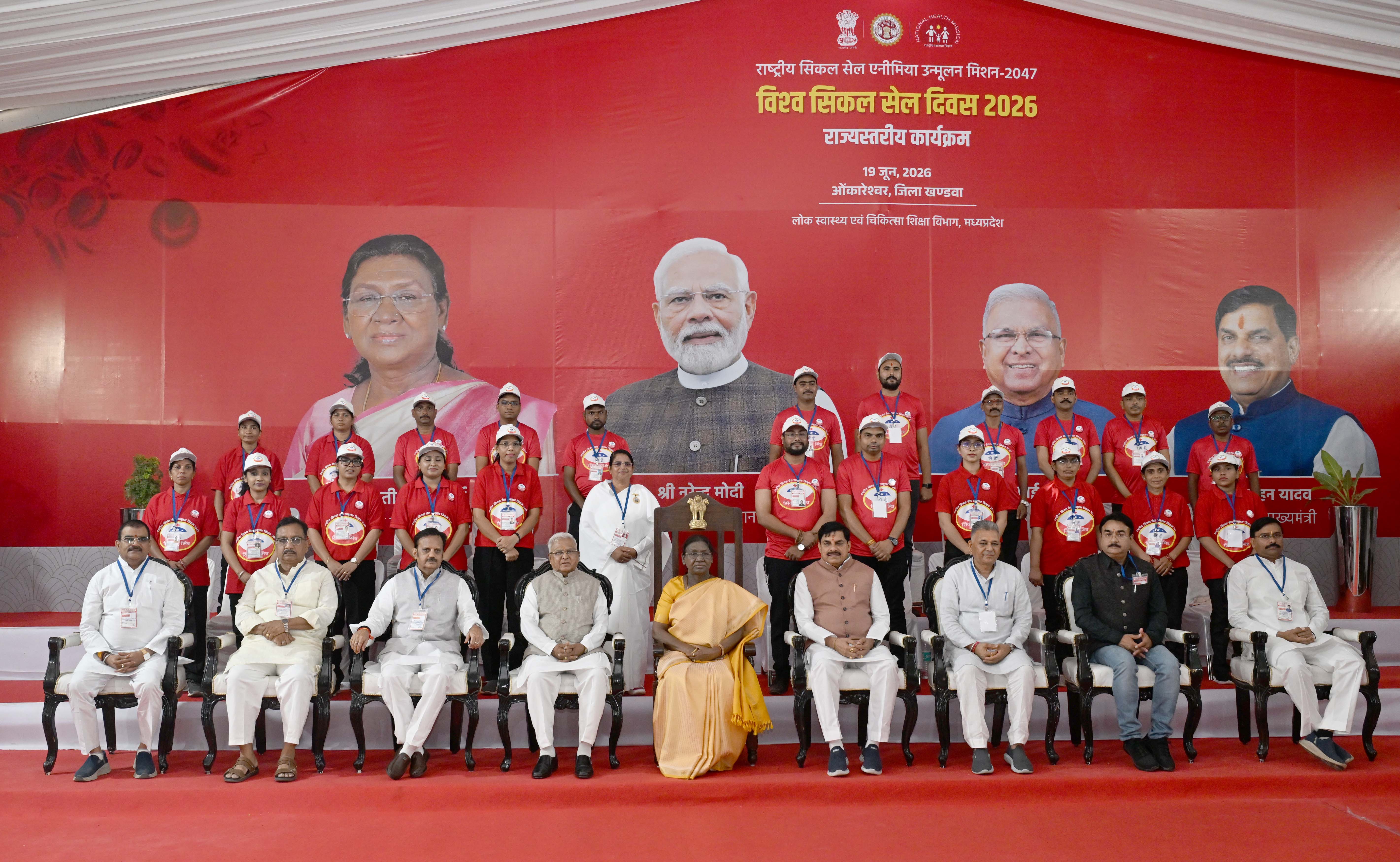
On International Sickle Cell Day (19 June) 2026, the President of India reaffirmed the country's commitment to eliminate Sickle Cell Disease (SCD) by 2047 under the National Sickle Cell Anaemia Elimination Mission (NSCEM).
International Sickle Cell Day
- International Sickle Cell Day is observed annually on 19 June to raise awareness about Sickle Cell Disease (SCD) and promote early diagnosis, treatment, prevention, and equitable healthcare access.
- The United Nations General Assembly (UNGA) designated 19 June as International Sickle Cell Day through a resolution adopted on 22 December 2008, recognizing SCD as a major global public health challenge and one of the world's most significant inherited genetic disorders.
- Theme (2026):"Closing the Survival Gap: Equity in Sickle Cell Disease."
What is Sickle Cell Disease (SCD)?
Sickle Cell Disease (SCD) is a hereditary genetic blood disorder caused by a mutation in the HBB (beta-globin) gene, resulting in the production of abnormal haemoglobin (Haemoglobin S). Instead of their normal biconcave shape, red blood cells become rigid, sticky, and sickle (crescent)-shaped, impairing blood flow and oxygen delivery.
The disease follows an autosomal recessive inheritance pattern, meaning an individual develops SCD only after inheriting two defective genes (one from each parent). Individuals carrying only one mutated gene possess the Sickle Cell Trait and are generally asymptomatic but can transmit the gene to their offspring.
Health Impact
Abnormally shaped red blood cells obstruct small blood vessels, leading to vaso-occlusive crises, severe pain episodes, chronic anaemia, organ damage, recurrent infections due to splenic dysfunction, and reduced life expectancy. Symptoms generally begin at 5–6 months of age as fetal haemoglobin declines.
Treatment
Management focuses on reducing complications through:
- Hydroxyurea therapy (increases fetal haemoglobin production).
- Pain management and adequate hydration.
- Blood transfusions for severe complications.
- Vaccination and antibiotics to prevent infections.
National Sickle Cell Anaemia Elimination Mission (NSCEM)
Launched in 2023, the National Sickle Cell Anaemia Elimination Mission aims to eliminate Sickle Cell Disease as a public health problem in India by 2047, with a special focus on tribal populations, where disease prevalence is highest.
The Mission is implemented jointly by the Ministry of Health & Family Welfare and the Ministry of Tribal Affairs under the National Health Mission (NHM) across 17 high-focus States.
Key Features
- Mission period: 2023–2026 (screening phase).
- Screening target: Approximately 7 crore individuals aged 0–40 years.
- Focus areas include:
- Universal screening and early diagnosis.
- Genetic counselling.
- Timely treatment and follow-up.
- Public awareness and prevention.
- Strengthening healthcare infrastructure.
Green Hydrogen Certification Portal (GHCI)
- 24 Jun 2026
In News:
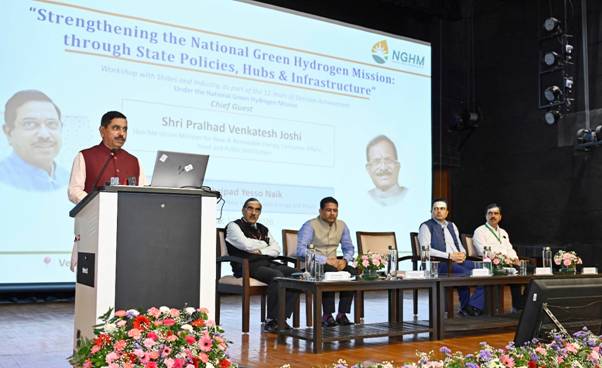
The Union Ministry of New and Renewable Energy (MNRE) launched the Green Hydrogen Certification Portal of India (GHCI) during a national workshop on the National Green Hydrogen Mission (NGHM). The portal will facilitate transparent certification and regulatory compliance under the Green Hydrogen Certification Scheme of India (GHCI Scheme).
Green Hydrogen Certification Portal (GHCI)
The Green Hydrogen Certification Portal is a digital platform developed by the Ministry of New and Renewable Energy (MNRE) to implement the Green Hydrogen Certification Scheme of India.
The portal aims to:
- Ensure transparent certification of Green Hydrogen.
- Facilitate regulatory compliance for producers.
- Standardize certification to build domestic and international market confidence.
- Promote traceability and credibility of India's green hydrogen ecosystem.
National Green Hydrogen Mission (NGHM)
Launched in January 2023, the National Green Hydrogen Mission seeks to establish India as a global hub for the production, utilization, and export of Green Hydrogen and its derivatives. The mission aims to reduce dependence on fossil fuels, strengthen energy security, promote indigenous manufacturing, and accelerate India's transition towards a low-carbon economy.
Three Pillars of the Mission
The mission is built around three strategic pillars:
- Demand Creation: Development of domestic and export markets for green hydrogen.
- Supply-side Incentives: Incentives for green hydrogen production and electrolyser manufacturing.
- Enabling Ecosystem: Development of infrastructure, R&D, standards, certification, and supportive policy frameworks.
Targets by 2030
|
Target |
Details |
|
Green Hydrogen Production |
5 Million Metric Tonnes (MMT) annually |
|
Renewable Energy Capacity |
125 GW |
|
Investment Mobilisation |
?8 lakh crore |
|
CO? Emission Reduction |
50 MMT annually |
|
Objective |
Enhance energy security and reduce fossil fuel imports |
Major Components
Key initiatives under the mission include:
- Strategic Interventions for Green Hydrogen Transition (SIGHT) Programme
- Incentives for electrolyser manufacturing and hydrogen production
- Green Hydrogen Certification Framework
- Research & Development (R&D) Roadmap
- Development of standards, testing and certification infrastructure
- Creation of hydrogen hubs and supporting infrastructure
State-Level Progress
To support implementation:
- 6 States have notified dedicated Green Hydrogen Policies.
- 7 States have incorporated hydrogen into existing energy/industrial policies.
- 4 States are in the process of formulating dedicated policies.
Samriddh Gram
- 12 Jul 2026
In News:
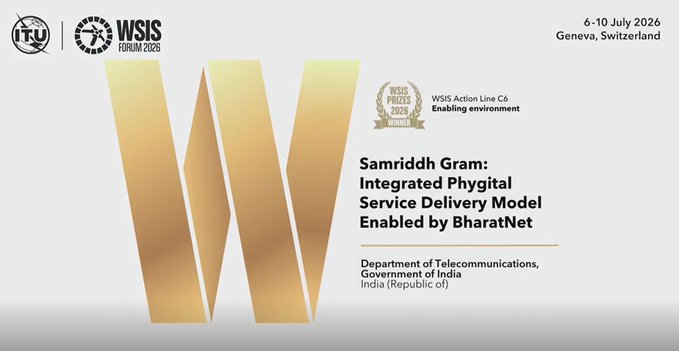
The Department of Telecommunications (DoT) has won the World Summit on the Information Society (WSIS) Prizes 2026 under Action Line C6 – Enabling Environment for its flagship Samriddh Gram initiative, recognising India's efforts in promoting inclusive rural digital transformation.
What is Samriddh Gram?
Samriddh Gram is a flagship rural digital transformation initiative of the Department of Telecommunications (DoT) built on the BharatNet network. It adopts a "phygital" (physical digital) service delivery model that combines robust digital infrastructure with on-ground service centres to improve access to essential public and commercial services in rural areas.
The initiative seeks to transform villages into digitally empowered communities by integrating connectivity, technology and assisted service delivery.
Objectives
The primary objective of Samriddh Gram is to bridge the rural digital divide by providing seamless access to education, healthcare, agriculture, financial services, e-governance and entrepreneurship opportunities through a unified digital ecosystem.
The initiative also supports the broader goals of Digital India, inclusive growth and last-mile service delivery.
Key Features
At the core of the programme are Samriddhi Kendras, which function as village-level one-stop service centres delivering integrated phygital services. These centres combine reliable telecom connectivity, digital platforms and assisted physical support to ensure that citizens can easily access government and private services.
The initiative provides a comprehensive range of services across multiple sectors:
- Education & Skill Development: Smart classrooms, AR/VR-enabled learning and digital skill training aligned with government programmes.
- Agriculture: IoT-based soil testing, drone-assisted farming and smart irrigation solutions.
- Healthcare: Telemedicine, Health ATMs and emergency healthcare support.
- e-Governance: Assisted access to government services, documentation and grievance redressal.
- E-Commerce: Integration with the Open Network for Digital Commerce (ONDC) and digital marketplaces to promote rural entrepreneurship.
- Financial Inclusion: Digital banking services and digital payment facilities.
The digital backbone of the programme is provided through BharatNetFibre-to-the-Home (FTTH) connectivity, supported by Village Area Networks (VANs) and public Wi-Fi hotspots.
Navi Mumbai Airport Notified as an Authorised Drug Import Entry Point
- 12 Jul 2026
In News:
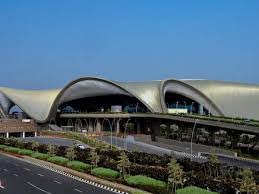
The Union Ministry of Health and Family Welfare has notified Navi Mumbai International Airport as an authorised entry point for the import of drugs into India. The move aims to strengthen pharmaceutical logistics, improve supply chain efficiency and facilitate trade while ensuring regulatory oversight.
What is the Recent Notification?
The notification has been issued under the Drugs and Cosmetics Act, 1940, after consultation with the Drugs Technical Advisory Board (DTAB).
To operationalise the decision, the Central Government amended Rule 43A of the Drugs Rules, 1945, adding Navi Mumbai International Airport to the list of approved locations through which pharmaceutical products can be imported into India.
With this amendment, the number of authorisedroad, rail, sea and air entry points for drug imports has increased to 42.
Key Features
The inclusion of Navi Mumbai Airport is expected to improve the movement of imported pharmaceutical consignments by providing an additional logistics gateway. It will reduce congestion at existing entry points, diversify import routes and enhance supply-chain resilience.
The new facility is expected to facilitate quicker customs clearance, improve transportation efficiency and strengthen pharmaceutical distribution networks across western India.
Drugs Technical Advisory Board (DTAB)
The Drugs Technical Advisory Board (DTAB) is a statutory body constituted under the Drugs and Cosmetics Act, 1940.
It serves as the highest technical advisory body on matters relating to the regulation of drugs and cosmetics in India. The Board advises the Central and State Governments on technical issues concerning the administration and implementation of the Act and the Rules framed thereunder.
IMAT-05: Fifth Integrated Main Parachute Airdrop Test for Gaganyaan Mission

- 12 Jul 2026
In News:
The Indian Space Research Organisation (ISRO) successfully conducted the fifth Integrated Main Parachute Airdrop Test (IMAT-05) for the Gaganyaan Mission at the Aerial Delivery Research and Development Establishment (ADRDE) drop zone in Sheopur, Madhya Pradesh. The test marks another significant milestone in validating the crew module's safe recovery system ahead of the upcoming uncrewed G1 mission.
What is IMAT-05?
The Integrated Main Parachute Airdrop Test (IMAT-05) is a high-altitude structural qualification test designed to validate the main parachute system of the Gaganyaan Crew Module under the most demanding re-entry conditions. It simulates the extreme aerodynamic forces experienced by the crew capsule during atmospheric re-entry before its splashdown in the sea.
The test was jointly planned and executed by the Indian Space Research Organisation (ISRO) and the Aerial Delivery Research and Development Establishment (ADRDE), a laboratory under the Defence Research and Development Organisation (DRDO).
Objective
The primary objective of IMAT-05 was to verify the structural integrity, deployment sequence, aerodynamic performance and safety margins of the main parachute system under maximum design loads expected during the Gaganyaan G1 uncrewed demonstration mission.
Key Features of the Test
The test involved dropping a dummy payload, equivalent in mass to the actual crew module, from an altitude of 2.5 km using an Indian Air Force IL-76 heavy transport aircraft.
The Gaganyaan Crew Module uses an integrated 10-parachute deceleration system, designed to gradually reduce the capsule's velocity before ocean landing.
The system comprises:
- 2 Apex Cover Separation Parachutes to jettison the protective cover over the parachute compartment.
- 2 Drogue Parachutes to stabilize the descending capsule and reduce its initial speed.
- 3 Pilot Parachutes to extract the main parachutes from the capsule.
- 3 Main Parachutes that sequentially deploy to reduce the crew module to a safe splashdown velocity.
A major highlight of IMAT-05 was the successful validation of the disreefing sequence, a controlled deployment mechanism in which the main parachutes inflate in stages rather than opening instantaneously. This significantly reduces structural stress on the parachute canopy and suspension lines under extreme aerodynamic loads.
Cyanobacteria: Nature's Ancient Microbes for Sustainable Water Purification
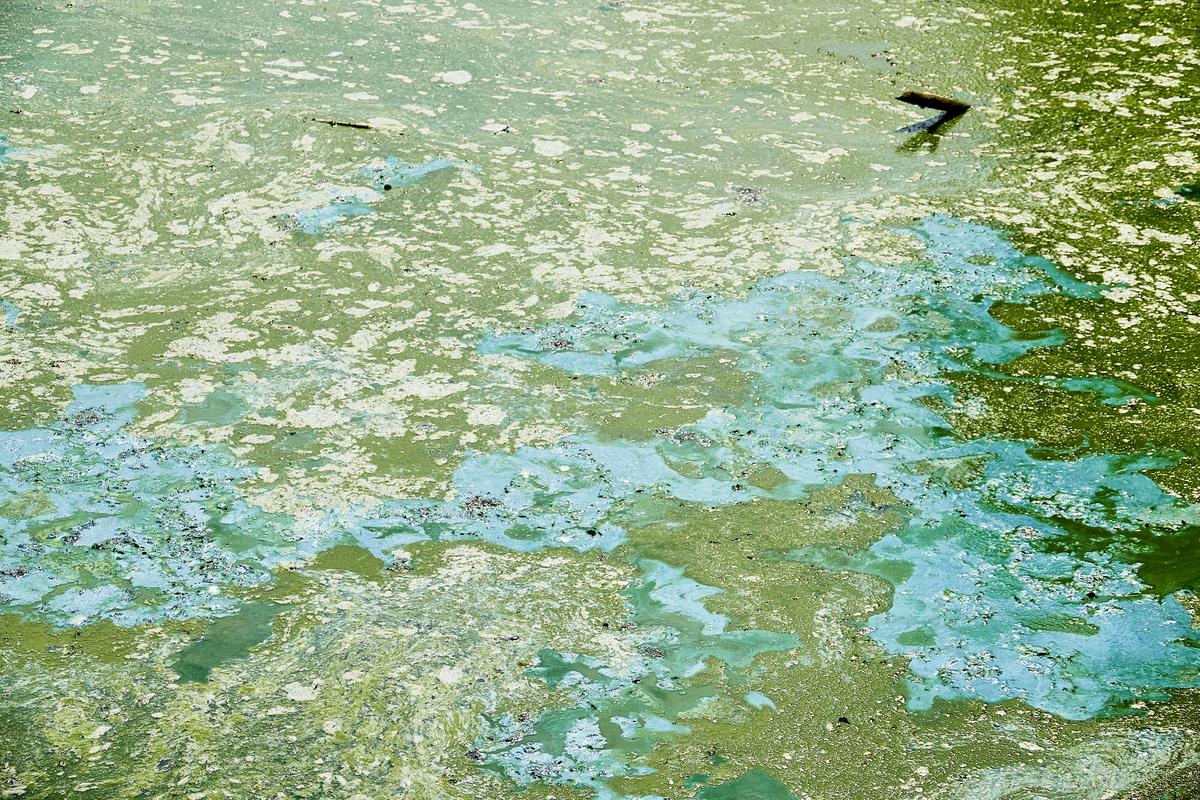
- 12 Jul 2026
In News:
Researchers from IIT Guwahati have demonstrated that cyanobacteria (blue-green algae) can effectively remove lead from contaminated water, highlighting their potential as an eco-friendly and cost-effective solution for heavy metal remediation.
What are Cyanobacteria?
Cyanobacteria, commonly known as blue-green algae, are microscopic photosynthetic prokaryotic organisms found naturally in aquatic environments. They are among the oldest known life forms on Earth, with fossil records dating back more than 3.5 billion years, and are believed to have played a crucial role in oxygenating the Earth's atmosphere.
These organisms occur in freshwater, brackish water and marine ecosystems, where they contribute significantly to primary productivity.
Characteristics of Cyanobacteria
Cyanobacteria are autotrophic organisms, producing their own food through photosynthesis using sunlight. Unlike algae, they possess a prokaryotic cell structure, lacking a true nucleus and membrane-bound organelles.
They reproduce asexually, primarily through transverse binary fission. While some species occur as solitary cells, others form colonies or filamentous structures.
Under warm, nutrient-rich conditions, cyanobacteria multiply rapidly and form cyanobacterial blooms, particularly in slow-moving water bodies enriched with nutrients from agricultural runoff or sewage. Certain species produce cyanotoxins, which can adversely affect aquatic ecosystems, livestock and human health.
Role in Water Purification
The recent study demonstrates that cyanobacteria can absorb and accumulate lead, a toxic heavy metal, from contaminated water through the process of biosorption. This makes them promising candidates for bioremediation, an environmentally sustainable approach that uses living organisms to remove pollutants from the environment.
Compared to conventional chemical treatment methods, cyanobacteria-based remediation is relatively inexpensive, eco-friendly and suitable for treating industrial wastewater contaminated with heavy metals.
Astra Mk 1 Missile
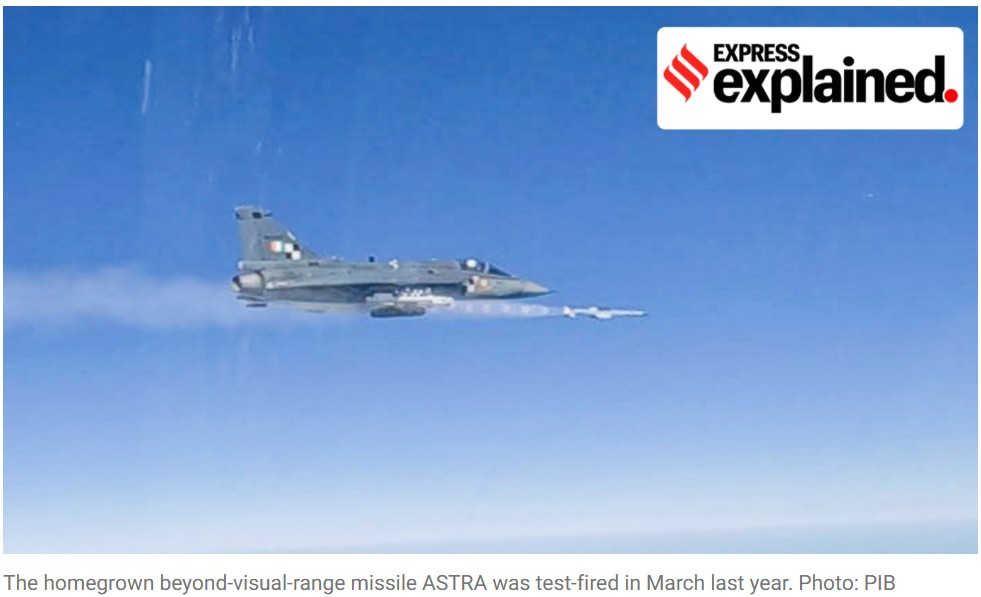
- 12 Jul 2026
In News:
During the India–Indonesia Bilateral Summit in Jakarta, the two countries signed a landmark defence agreement for the supply of the indigenously developed Astra Mk 1 Beyond-Visual-Range Air-to-Air Missile (BVRAAM). The deal marks a significant milestone in India's growing defence exports and strengthens strategic defence cooperation between the two countries.
What is the Astra Mk 1 Missile?
The Astra Mk 1 is India's first indigenously developed Beyond-Visual-Range Air-to-Air Missile (BVRAAM), designed to engage and destroy highly manoeuvrable enemy aircraft before they enter visual combat range. Developed by the Defence Research and Development Organisation (DRDO) in partnership with Bharat Dynamics Limited (BDL), the missile significantly enhances the long-range air combat capability of the Indian Air Force.
Its primary objective is to provide fighter aircraft with stand-off strike superiority, enabling pilots to neutralize hostile aerial targets from safe distances.
Key Features
- The Astra Mk 1 is an all-weather, supersonic missile capable of intercepting highly agile aircraft at speeds of up to Mach 4.5.
- It operates across a wide altitude envelope ranging from sea level to 20 km and has an effective engagement range of approximately 80–110 km, depending on launch conditions.
- The missile employs a three-stage guidance system for enhanced accuracy. During the initial phase, it navigates using an inertial navigation system. In the mid-course phase, it receives continuous radio frequency updates from the launch aircraft, enabling course corrections against manoeuvring targets. In the terminal phase, an Active Radio Frequency (RF) seeker autonomously locks onto the target, maintaining effectiveness even in electronic warfare environments.
- Powered by a single-pulse smokeless solid-fuel rocket motor, Astra leaves minimal visible smoke, thereby reducing the chances of revealing the launch aircraft's position.
Platform Integration
The Astra Mk 1 is fully operational on the Sukhoi Su-30 MKI fleet of the Indian Air Force. Integration is currently underway with India's indigenous LCA Tejas Mk 1A and the Rafale fighter aircraft, expanding its operational versatility across multiple combat platforms.
Evolution of the Astra Missile Family
Building upon the success of the Mk 1, DRDO is developing advanced variants to further strengthen India's aerial strike capability.
The Astra Mk 2 is expected to have an engagement range of around 200 km and will employ a dual-pulse solid rocket motor, enabling the missile to regain energy during the terminal phase and improve interception capability against highly manoeuvrable targets.
The Astra Mk 3, also known as Gandiva, is currently under development and will incorporate Solid Fuel Ducted Ramjet (SFDR) technology. This propulsion system will provide sustained thrust throughout flight, extending the missile's interception range to over 350 km, placing it among the world's longest-range air-to-air missiles.
ULLAS (Understanding Lifelong Learning for All in Society) Initiative
- 11 Jul 2026
In News:
Uttarakhand has been declared India's sixth fully literate State under the National Education Policy (NEP) 2020 through the ULLAS (Understanding Lifelong Learning for All in Society)programme. The achievement reflects India's continued efforts to promote adult literacy and lifelong learning.
About ULLAS Programme
ULLAS (Understanding Lifelong Learning for All in Society), also known as the Nav Bharat SaakshartaKaryakram (New India Literacy Programme), is a Centrally Sponsored Scheme launched by the Ministry of Education. It aligns with the vision of NEP 2020 by transforming adult education into a lifelong learning movement.
Implemented during 2022–2027, the programme aims to educate non-literate adults aged 15 years and above who could not complete formal schooling. Moving beyond conventional literacy, ULLAS focuses on developing functional literacy, numeracy and essential life skills required for active participation in society.
Objectives
The programme seeks to provide Foundational Literacy and Numeracy (FLN) to 5 crore adult learners over five years, targeting 1 crore learners annually through the Online Teaching, Learning and Assessment System (OTLAS).
It also promotes community participation and volunteerism, encouraging citizens to contribute towards building a literate society while fostering the spirit of Kartavya Bodh (sense of civic duty).
Key Features
ULLAS provides learning through both physical and digital modes. Learners can access educational content in regional languages through the DIKSHA Portal, the ULLAS Mobile App, and other digital platforms.
The programme establishes Samajik Chetna Kendras (Social Awareness Centres) by utilizing schools, village libraries and Panchayat buildings as community learning centres.
To ensure inclusivity, learning materials are available in 27 languages and local dialects, enabling wider participation across the country.
Progress is assessed through the Foundational Literacy and Numeracy Assessment Test (FLNAT), conducted twice annually. Successful learners receive literacy certificates jointly issued by the National Institute of Open Schooling (NIOS) and the Department of School Education and Literacy (DoSEL).
The programme also connects newly literate adults with Jan Shikshan Sansthans (JSS) to facilitate vocational training and improve local employment opportunities.
Components of ULLAS
ULLAS is built around five major components:
- Foundational Literacy and Numeracy (FLN) to develop reading, writing and numeracy skills.
- Critical Life Skills, including digital literacy, financial literacy, legal awareness, healthcare, family welfare and childcare.
- Basic Education, providing equivalency with formal school education.
- Vocational Skills to improve employability and livelihood opportunities.
- Continuing Education, covering subjects such as arts, science, technology, culture, sports and lifelong learning.
States/UTs Achieving 95% or More Literacy under ULLAS
As of 2026, the States and Union Territories declared fully literate under ULLAS include:
- Ladakh (UT) – 2024
- Mizoram – 2025
- Goa – 2025
- Tripura – 2025
- Himachal Pradesh – 2025
- Chandigarh (UT) – 2025
- Andaman & Nicobar Islands (UT) – 2026
- Sikkim – 2026
- Uttarakhand – 2026
World Population Day 2026

- 11 Jul 2026
In News:
World Population Day was observed on 11 July 2026 with the theme "Realizing the hopes and aspirations of young people – today and for the future." The observance highlights the importance of empowering young people to make informed choices regarding education, employment, relationships and parenthood while addressing global demographic challenges.
About World Population Day
World Population Day is observed every year on 11 July to raise awareness about population-related issues and their implications for sustainable development, health, gender equality and economic growth.
The observance traces its origin to 11 July 1987, when the world's population reached approximately five billion, drawing global attention to the consequences of rapid population growth. Recognising the growing significance of demographic issues, the United Nations Development Programme (UNDP) established World Population Day in 1989.
The day encourages dialogue on critical issues such as maternal health, reproductive rights, gender equality, poverty, migration, unemployment, education and access to essential public services.
Theme for 2026
The 2026 theme is "Realizing the hopes and aspirations of young people – today and for the future."
The theme is based on the report "Lives, Choices and Futures: What Young People Want and What Shapes Their Decisions About Relationships and Parenthood." The report draws upon the views of more than 108,000 internet-connected adults aged 18–39 across 73 countries, highlighting the aspirations and challenges faced by young people while making decisions about family life and parenthood.
Global Population Trends
Global population growth has accelerated rapidly over the past two centuries. While humanity took thousands of years to reach one billion, the global population expanded nearly sevenfold thereafter.
The world population crossed seven billion in 2011 and is projected to reach approximately 8.5 billion by 2030 and 9.7 billion by 2050, reflecting continued demographic expansion, particularly in developing regions.
India's Population Scenario
With a population of around 1.4 billion, India remains one of the world's most populous countries, accounting for nearly 17% of the global population.
According to demographic projections, India's population is expected to peak at around 1.7–1.9 billion between the 2060s and 2080s, after which it is likely to stabilise and gradually decline as fertility rates continue to fall.
India's youthful population presents a significant demographic dividend, but realizing this opportunity requires sustained investment in education, healthcare, skill development, employment generation and gender equality.
Australia–India Partnership on Cyber, Critical Technologies and Supply Chains (PACTS)
- 11 Jul 2026
In News:
India and Australia have launched the Australia–India Partnership on Cyber, Critical Technologies and Supply Chains (PACTS) to deepen bilateral cooperation in cyber security, critical technologies, resilient supply chains, digital resilience and defence research.
The partnership replaces the 2020 Framework Arrangement on Cyber and Cyber Enabled Critical Technology Cooperation, reflecting the expanding strategic relationship between the two countries.
What is PACTS?
The Partnership on Cyber, Critical Technologies and Supply Chains (PACTS) is a comprehensive bilateral framework designed to strengthen cooperation in emerging technologies, cyber resilience, trusted supply chains and defence innovation. It seeks to enhance both countries' capacity to address evolving geopolitical, technological and economic challenges while contributing to a secure and resilient Indo-Pacific.
The partnership will be jointly overseen by India's Deputy National Security Advisor and Australia's Deputy Secretary of the International and Security Group in the Department of the Prime Minister and Cabinet.
Key Pillars of PACTS
1. Supply Chain Resilience and Diversification:
The partnership seeks to build secure, trusted and diversified supply chains for critical technologies and strategic sectors. Both countries will also strengthen cooperation on undersea cable security through the Quad Partnership for Cable Connectivity and Resilience, recognising the strategic importance of submarine communication infrastructure.
The National Security Council Secretariat (NSCS) is the lead agency on the Indian side.
2. Critical Technologies:
India and Australia will deepen collaboration in emerging technologies, including Artificial Intelligence (AI), space technologies, telecommunications, biotechnology and advanced materials. The objective is to promote innovation, technological self-reliance and trusted technology ecosystems.
The Indian lead agency is the National Security Council Secretariat (NSCS).
3. Cyber Security:
The cyber pillar focuses on enhancing cooperation against cybercrime, improving cyber resilience and protecting critical infrastructure. The two countries will establish a streamlined bilateral cyber cooperation mechanism, expand dialogue on cybersecurity and data governance, and develop a Cyber Technology Skill Incubator to build skilled human resources.
The Cyber Diplomacy Division of the Ministry of External Affairs (MEA) is the nodal agency for India.
4. Digital Resilience:
The partnership promotes cooperation in Digital Public Infrastructure (DPI) across the Indo-Pacific region. It aims to support partner countries through capacity-building programmes and pilot projects based on India's successful DPI model, while also encouraging resilient digital infrastructure and clean technology solutions.
The Oceania Division of the Ministry of External Affairs leads this pillar.
5. Defence Research Collaboration:
India and Australia will strengthen cooperation between Australia's Defence Science and Technology Group (DSTG) and India's Defence Research and Development Organisation (DRDO). The partnership also encourages collaboration between defence start-ups and joint research in areas such as maritime surveillance, advanced materials and emerging defence technologies.
The Ministry of Defence is the lead agency from India.
Pinaka Long Range Guided Rocket (LRGR)
- 11 Jul 2026
In News:
The Defence Research and Development Organisation (DRDO) successfully conducted a test of the Pinaka Long Range Guided Rocket (LRGR) at the Integrated Test Range (ITR), Chandipur, Odisha, validating its minimum strike range of 60 km with high precision. Earlier trials had already demonstrated its maximum strike range of 120 km.
What is the Pinaka Long Range Guided Rocket (LRGR)?
The Pinaka LRGR is an indigenously developed precision-guided artillery rocket designed to engage enemy positions, artillery batteries, bunkers, logistics hubs and other high-value targets deep inside hostile territory from a stand-off distance. It is the latest guided variant of the Pinaka Multi-Barrel Rocket Launcher (MBRL) system, significantly enhancing the Indian Army's long-range precision strike capability.
The rocket has an operational strike range of 60–120 km, providing flexibility to accurately engage targets at varying distances.
Key Features
A major achievement of the recent test was the successful engagement of a target at the minimum operational range of 60 km. Unlike long-range firing, striking closer targets requires the rocket to shed excess energy and execute steep in-flight manoeuvres, demonstrating the system's precision and confirming the absence of any significant dead zone within its operational envelope.
The Pinaka LRGR was launched from an existing in-service Pinaka launcher, proving that the same launcher platform can deploy different variants of the Pinaka rocket family without requiring separate launch systems. This enhances operational flexibility and reduces logistics requirements.
The truck-mounted launcher offers excellent battlefield mobility and employs the "shoot-and-scoot" concept, enabling rapid firing followed by immediate relocation to avoid enemy counter-battery fire.
Each Pinaka launcher can fire 12 rockets in about 44 seconds, while a battery of six launchers can launch 72 rockets, saturating nearly one square kilometre with concentrated firepower.
Development
The Pinaka LRGR has been designed by the Armament Research and Development Establishment (ARDE), Pune, in collaboration with the High Energy Materials Research Laboratory (HEMRL). Technical support was also provided by the Defence Research and Development Laboratory (DRDL) and the Research Centre Imarat (RCI), all laboratories under the DRDO.
Geneva Conventions & the "Hummus Trail" Controversy
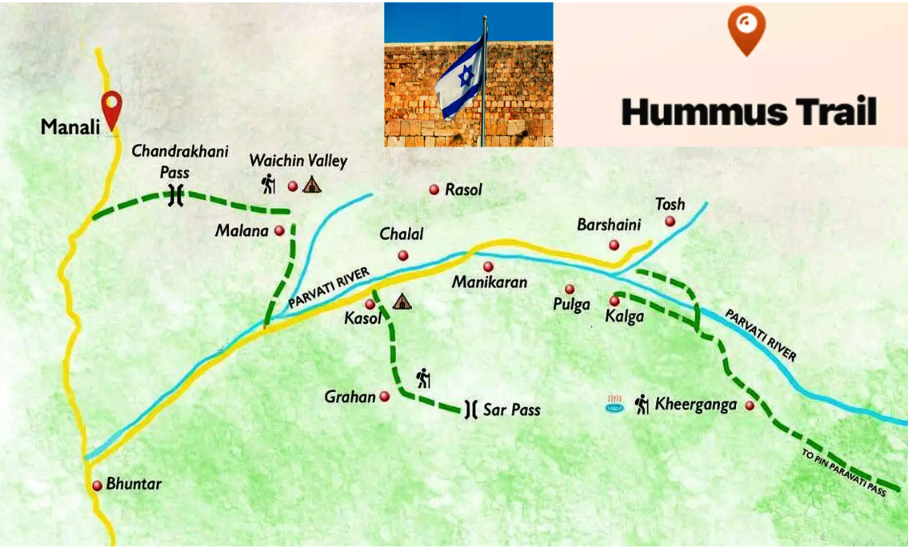
- 11 Jul 2026
In News:
The Geneva Conventions of 1949 have come into focus following the "Hummus Trail" controversy, after the Hind Rajab Foundation (HRF) filed a legal petition seeking the arrest of an Israeli soldier vacationing in Himachal Pradesh over alleged war crimes committed in Gaza. The incident has raised questions regarding India's obligations under International Humanitarian Law (IHL) and the principle of universal jurisdiction.
What is the Hummus Trail?
The Hummus Trail is an informal term describing a network of Indian destinations that are popular among young Israeli travellers, particularly those who have recently completed their mandatory military service. Inspired by the earlier Hippie (Hashish) Trail, it includes destinations such as Kasol, Dharamkot, Rishikesh, Pushkar, Goa, Hampi, Gokarna, Kodaikanal, and the Andaman & Nicobar Islands.
Many of these visitors undertake the Tiul Gadol ("Big Trip"), a traditional post-military journey lasting from six months to a year, often supported by post-service financial benefits. India receives nearly 80,000 Israeli tourists annually, and in 2026, Israel allocated 4 million New Israeli Shekels (NIS) to strengthen tourism cooperation with India.
Geneva Conventions, 1949
The Four Geneva Conventions of 1949, together with their Additional Protocols, form the foundation of International Humanitarian Law (IHL). They establish humanitarian rules applicable during armed conflicts by protecting persons who are not, or are no longer, participating in hostilities.
- First Geneva Convention: Protects wounded and sick members of armed forces on land.
- Second Geneva Convention: Protects wounded, sick and shipwrecked military personnel at sea.
- Third Geneva Convention: Protects prisoners of war.
- Fourth Geneva Convention: Protects civilians during armed conflict and defines grave breaches, including wilful killing, torture, unlawful deportation and extensive destruction of property not justified by military necessity.
Universal Jurisdiction
One of the most significant features of the Geneva Conventions is the principle of universal jurisdiction. It obligates every State Party to search for, prosecute or extradite persons accused of committing grave breaches, irrespective of the nationality of the accused or the victims, and regardless of where the alleged offence occurred.
This principle seeks to ensure that perpetrators of serious violations of international humanitarian law do not escape accountability by crossing national borders.
India's Legal Framework
India incorporated its obligations under the Geneva Conventions through the Geneva Conventions Act, 1960.
The Act criminalises acts classified as grave breaches under the Geneva Conventions and empowers Indian authorities to prosecute individuals accused of such offences if they are found within Indian territory, irrespective of their nationality or the place where the alleged crime was committed.
Apart from criminal prosecution, the Government of India also retains sovereign powers under immigration laws to deport foreign nationals when considered necessary in the national interest.
Significance
The controversy highlights the increasing importance of international humanitarian law in domestic legal systems. It also underscores the practical relevance of universal jurisdiction, which allows national courts to deal with certain international crimes irrespective of territorial or nationality links.
For India, the issue presents a delicate diplomatic challenge. While maintaining strong strategic relations with Israel, India must also uphold its international legal commitments under the Geneva Conventions and navigate evolving global legal proceedings, including the ongoing case instituted by South Africa against Israel before the International Court of Justice (ICJ).
Prambanan Temple

- 10 Jul 2026
In News:
The Prime Minister of India, along with the President of Indonesia, recently visited the Prambanan Temple, a UNESCO World Heritage Site, in Yogyakarta, Indonesia, highlighting the centuries-old civilizational and cultural links between India and Southeast Asia.
About Prambanan Temple
The Prambanan Temple is the largest Hindu temple complex in Indonesia, located in Sleman Regency, Yogyakarta, on the island of Java. Known locally as Roro Jonggrang (Temple of the Slender Virgin), it is one of the finest examples of Hindu temple architecture in Southeast Asia.
Constructed during the 9th century CE by the Sanjaya Dynasty, the temple symbolizes the flourishing of Hindu culture in ancient Java. It is dedicated to the Hindu Trimurti—Lord Shiva (the Destroyer), Lord Vishnu (the Preserver), and Lord Brahma (the Creator).
Recognising its outstanding cultural value, UNESCO inscribed Prambanan as a World Heritage Site in 1991.
Architectural Features
Prambanan reflects a remarkable fusion of indigenous Javanese architectural traditions and the South Indian Pallava style, illustrating the spread of Indian cultural influences across Southeast Asia.
The temple complex comprises 240 temples, with the central sacred compound containing eight principal temples and eight smaller shrines built on a raised platform.
Among these, the Shiva Temple is the largest and most prominent, rising to a height of 47 metres, making it one of the tallest Hindu temples in Southeast Asia. The other principal temples are dedicated to Vishnu and Brahma.
The galleries surrounding the temples are adorned with beautifully carved bas-reliefs depicting episodes from the Ramayana, showcasing the enduring influence of Indian epics on Southeast Asian art and culture.
Although primarily a Hindu religious complex, the Prambanan region also contains several Buddhist temples, reflecting the harmonious coexistence of Hinduism and Buddhism in ancient Java.
TribeX Platform
- 10 Jul 2026
In News:
The Ministry of Tribal Affairs has launched TribeX, India's first dedicated digital learning platform for preserving, promoting and disseminating tribal arts, languages, culture, traditional knowledge and indigenous skills through technology-enabled education.
What is TribeX?
TribeX is a first-of-its-kind digital learning and knowledge platform designed to document, preserve and promote India's rich tribal heritage. It serves as a comprehensive digital ecosystem that combines education, skill development and cultural preservation by offering structured academic programmes alongside a digital repository of tribal knowledge.
The platform has been developed to safeguard India's diverse tribal traditions while making them accessible to learners, researchers and the wider public through digital technologies.
Key Features
TribeX functions as an integrated digital learning platform, offering free certificate courses and UGC-recognised Post Graduate Diploma programmes in tribal languages, traditional art forms, handicrafts, handloom, indigenous knowledge systems and cultural practices.
It currently provides 20 free certificate courses covering a wide range of tribal crafts, paintings, artefacts, handloom traditions and traditional musical instruments, thereby promoting skill development and cultural awareness.
A major component of TribeX is its Digital Repository, which documents and preserves tribal languages, oral traditions, performing arts, cultural practices and indigenous knowledge systems for future generations.
The platform also incorporates a Learning Management System (LMS) and a Repository Management System, enabling structured learning, digital content management, learner progress tracking and secure access to educational resources.
Another important feature is the Heritage Archive, which contains more than 5,000 multimedia resources, including audio recordings, videos and literature documenting tribal festivals, folklore, socio-cultural practices and oral traditions from across India.
Indiahandmade: Digital Marketplace for India's Handloom & Handicraft Sector
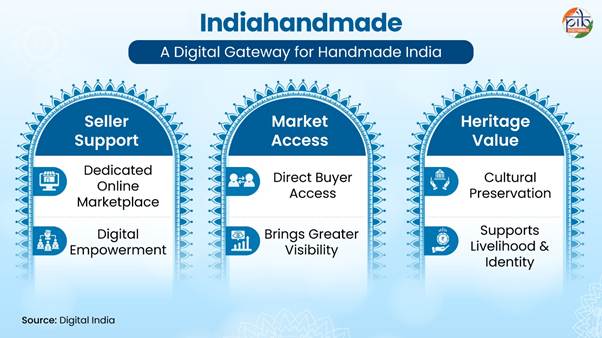
- 10 Jul 2026
In News:
Indiahandmade is gaining attention as a flagship initiative under the Digital Indiaprogramme to digitally empower artisans and weavers by providing them with direct market access, thereby promoting traditional crafts, rural livelihoods and India's cultural heritage.
What is Indiahandmade?
Indiahandmade is a dedicated digital marketplace launched in 2023 by the Digital India Corporation under the Ministry of Textiles. The platform connects handloom weavers, handicraft artisans and producer organisations directly with buyers across the country, eliminating multiple intermediaries and enabling artisans to participate in the digital economy.
It forms an important component of the Government's efforts to strengthen Atmanirbhar Bharat, promote Digital India, and preserve India's traditional crafts through technology-enabled market access.
Need for the Platform
India possesses one of the world's largest traditional craft sectors, with nearly 64.66 lakh handloom and handicraft artisans. The sector is a major source of rural employment and women's empowerment, with women constituting about 71% of handloom weavers and 64% of total artisans.
Despite its cultural and economic importance, artisans often face challenges such as dependence on intermediaries, limited market reach, inadequate branding and low price realization. Indiahandmade seeks to bridge these gaps by creating a trusted digital marketplace connecting producers directly with consumers.
Key Features
The platform enables artisans and weavers to market a wide range of handmade products, including apparel, home décor, furnishings, paintings, furniture, jewellery, stationery, musical instruments, bags, footwear and religious items.
A distinctive feature of Indiahandmade is its promotion of Geographical Indication (GI)-tagged products and One District One Product (ODOP) items. Products showcased include Banarasi silk, Chanderi silk, Ikat, Pashmina shawls, Dokra crafts, Tangail sarees, Aipan art and terracotta products, thereby strengthening regional identity and traditional craftsmanship.
To improve consumer confidence, the platform provides secure digital payments, free shipping, purchase protection, buyer support, and a simplified onboarding process for artisans, weavers and producer organisations.
Natural History Museum (Mizoram) Declared as India's 21st Designated Repository
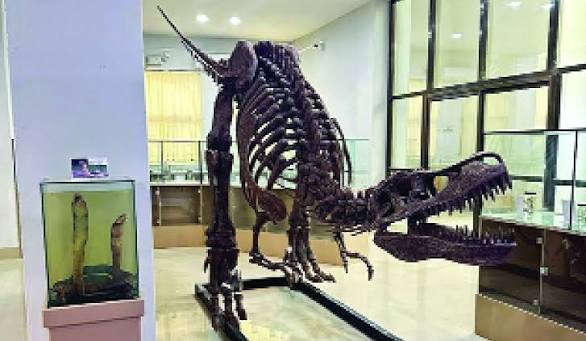
- 10 Jul 2026
In News:
The Ministry of Environment, Forest and Climate Change (MoEFCC), on the recommendation of the National Biodiversity Authority (NBA), has notified the Natural History Museum (NHM), Mizoram as India's 21st Designated Repository under the Biological Diversity Act, 2002.
What are Designated Repositories?
Designated Repositories are institutions officially recognized under the Biological Diversity Act, 2002 for the safe preservation, maintenance and authentication of biological specimens accessed under the provisions of the Act. They serve as permanent scientific repositories for biological materials, ensuring proper documentation, traceability and long-term availability for research, taxonomy and conservation.
These repositories also preserve voucher specimens and type specimens of newly discovered species, which serve as standard references for species identification and future scientific studies.
Natural History Museum (NHM), Mizoram
The Natural History Museum (NHM) was established in 2022 under Mizoram University, a Central University. Situated within the Indo-Burma Biodiversity Hotspot, the museum occupies a region recognized globally for its exceptional biological diversity and high level of endemism.
As a Designated Repository, NHM will preserve authenticated specimens of important plant and animal groups, including pteridophytes, macrofungi, reptiles, amphibians, freshwater fishes, moths, beetles and butterflies. It will also function as the official repository for type specimens of newly discovered species from the region, thereby strengthening taxonomic research and biodiversity documentation.
Significance
The designation of NHM as India's 21st Designated Repository strengthens the country's biodiversity governance framework by expanding scientific infrastructure for ex situ conservation. The repository will facilitate accurate species identification, long-term preservation of biological resources and ecological restoration following habitat degradation, natural disasters or species decline.
The initiative is particularly significant because Mizoram and the North-Eastern Region together support more than 7,500 species of flowering plants and over 2,000 faunal species, making the region one of India's richest biodiversity landscapes.
The notification also advances National Biodiversity Target 4 under India's National Biodiversity Strategy and Action Plan (NBSAP) 2024–2030 and contributes to the implementation of the Kunming–Montreal Global Biodiversity Framework, which emphasizes strengthening ex situ conservation alongside in situ conservation.
National Academic Depository (NAD)
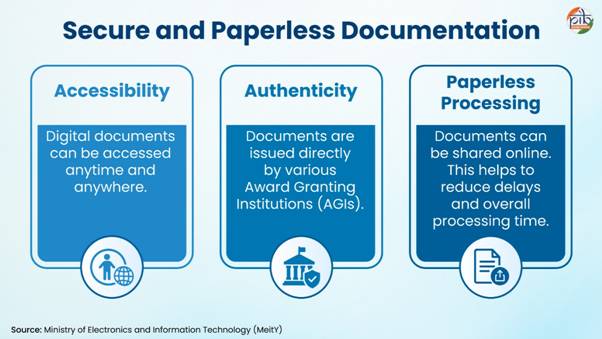
- 10 Jul 2026
In News:
The National Academic Depository (NAD) is receiving renewed attention as India advances towards a secure, paperless and interoperable academic record management system, in line with the objectives of the National Education Policy (NEP) 2020 and Digital India.
What is the National Academic Depository (NAD)?
The National Academic Depository (NAD) is a nationwide digital framework for storing, issuing, verifying and authenticating academic credentials such as degrees, diplomas, certificates, marksheets and evaluation reports. It aims to replace paper-based academic records with authenticated digital credentials that can be securely accessed throughout a student's lifetime.
Since 2020, NAD has been implemented through DigiLocker, which serves as the operational platform for issuing, storing and sharing digital academic documents.
Need for NAD
India has one of the world's largest education ecosystems, comprising nearly 14.71 lakh schools, 1,420 universities, 53,583 colleges, 16,795 standalone institutions, and 280 research and development institutes. These institutions generate millions of academic records every year.
The traditional paper-based system is costly, time-consuming and prone to loss, damage, forgery and delays in verification. As educational reforms increasingly promote student mobility and flexible learning pathways, there is a growing need for a secure and interoperable digital repository that allows seamless access to verified academic records.
Objectives
The National Academic Depository seeks to:
- Provide lifelong digital access to authenticated academic credentials.
- Enable secure, paperless storage and sharing of academic records.
- Facilitate instant verification by educational institutions, employers, banks and government agencies.
- Eliminate fake certificates and reduce document forgery.
- Support credit mobility and flexible learning under NEP 2020.
Governance and Institutional Framework
The Ministry of Education is the parent ministry responsible for the National Academic Depository, while the University Grants Commission (UGC) functions as the nodal agency for its implementation through DigiLocker.
NAD operates through a coordinated digital framework in which educational institutions upload verified academic records, while students retain lifelong ownership and control over their credentials.
Digital documents issued through NAD enjoy the same legal validity as physical documents under the Information Technology Act, 2000.
Integration with National Digital Education Ecosystem
NAD has been integrated with several flagship digital initiatives to promote seamless academic mobility and verification.
These include:
- DigiLocker
- APAAR (Automated Permanent Academic Account Registry)
- Academic Bank of Credits (ABC)
- e-Sanad for attestation and apostille services
This integration enables secure storage, credit transfer, verification and international authentication of academic records.
Significance
The National Academic Depository represents a major step towards digital governance in education. It simplifies academic record management, reduces administrative burden, accelerates admissions and recruitment processes, and enhances transparency by enabling instant verification of authentic documents.
The platform also supports the implementation of Multiple Entry-Multiple Exit (MEME), the National Credit Framework (NCrF) and the Academic Bank of Credits (ABC) envisioned under the National Education Policy 2020. By promoting interoperability and lifelong learning, NAD aligns India's education system with global best practices in digital credential management.
Legal Framework
The functioning of NAD is supported by a robust legal framework:
- Information Technology Act, 2000 provides legal recognition to electronic records and digital signatures.
- Digital Locker Rules, 2016 ensure that digital documents are shared only with the explicit consent of the user.
- National e-Authentication Framework enables secure identity verification and authentication during document access and sharing.
Quantum Computing & Quantum Error Correction (QEC)

- 09 Jul 2026
In News:
Recent advances in Quantum Error Correction (QEC) by companies such as Google, coupled with progress under India's National Quantum Mission (NQM), have renewed global interest in quantum computing. These developments are expected to accelerate the transition from today's Noisy Intermediate-Scale Quantum (NISQ) systems to fault-tolerant quantum computers, unlocking transformative applications in cryptography, climate modelling, drug discovery and materials science.
What is Quantum Computing?
Quantum computing is an emerging field that harnesses the principles of quantum mechanics to solve computational problems that are beyond the practical capabilities of classical computers. Unlike classical computers, which process information using bits that exist either as 0 or 1, quantum computers use quantum bits (qubits). Owing to quantum phenomena such as superposition and entanglement, qubits can process multiple possibilities simultaneously, enabling exponential speed-ups for certain classes of problems.
Principles of Quantum Computing
Quantum computing relies on three fundamental principles.
- Superposition: A qubit can exist in multiple states simultaneously until it is measured, allowing parallel computation.
- Entanglement: Two or more qubits become intrinsically linked so that the state of one is correlated with the other, regardless of the distance between them.
- Interference: Quantum algorithms amplify correct computational paths while cancelling incorrect ones, improving the probability of obtaining the right solution.
Together, these principles enable massive parallelism, making quantum computers particularly powerful for optimisation, simulation and cryptographic applications.
Types of Qubits
Several physical technologies are being explored for building quantum computers.
- Superconducting qubits – Based on Josephson junctions operating at temperatures close to absolute zero (used by Google's Willow processor).
- Quantum Dot qubits – Semiconductor-based qubits made from materials such as silicon or germanium.
- Trapped Ion qubits – Individual charged atoms confined using electromagnetic fields.
- Photonic qubits – Encode quantum information using photons.
- NMR qubits – Based on nuclear spins and used in the first quantum computer demonstration in 1998.
Quantum Key Distribution (QKD)
Quantum Key Distribution (QKD) is a secure communication technique that uses quantum properties of photons to exchange encryption keys. Any attempt to intercept the communication disturbs the quantum state, immediately revealing the presence of an eavesdropper. This makes QKD one of the most secure methods for transmitting cryptographic keys.
The Noise Problem in Quantum Computing
The biggest challenge in quantum computing is decoherence, where interactions with the surrounding environment—such as heat, electromagnetic radiation or vibration—destroy the fragile quantum state of qubits.
Current NISQ devices remain highly error-prone despite operating at temperatures close to absolute zero (-273°C). Their error rates remain significantly higher than those of classical computers. In addition, imperfections in lasers, microwave pulses and control systems introduce further computational errors.
Quantum Error Correction (QEC)
Quantum Error Correction (QEC) is a technique that combines multiple physical qubits to create a more reliable logical qubit capable of preserving quantum information despite individual errors.
A major breakthrough occurred when researchers demonstrated that once the error rate of physical qubits falls below a critical threshold, increasing the number of qubits actually reduces the overall error rate instead of increasing it. Google's Willow processor demonstrated this principle by successfully suppressing encoded errors, marking an important step towards practical fault-tolerant quantum computers.
India's National Quantum Mission (NQM)
The National Quantum Mission (NQM) was approved by the Government of India in April 2023 with the objective of making India a global leader in quantum technologies by 2031.
The mission seeks to develop intermediate-scale quantum computers with 50–1,000 qubits, establish a 2,000-km satellite-based quantum communication network, deploy Quantum Key Distribution (QKD) systems, advance quantum sensing and metrology, and promote indigenous development of quantum materials, devices, hardware and software.
To accelerate innovation, the mission has established four Thematic Hubs (T-Hubs) and supports quantum start-ups through innovative financing mechanisms such as Optionally Convertible Debt (OCD).
India has already achieved a significant milestone by developing an indigenous 1,000-km quantum communication network through the Department of Science and Technology (DST) in collaboration with QNu Labs, achieving half of its long-term communication target.
Mission Drishti: India's First OptoSAR Earth Observation Satellite
- 09 Jul 2026
In News:
Bengaluru-based space start-up GalaxEye recently announced that communication has been lost with Mission Drishti, the world's first OptoSAR satellite and India's largest privately built Earth observation satellite. The mission marked a significant milestone in India's private space sector by integrating optical and radar imaging technologies into a single satellite.
What is Mission Drishti?
Mission Drishti is a 190-kg Earth observation satellite developed by GalaxEye, a Bengaluru-based deep-tech space start-up. It is the world's first operational OptoSAR satellite, integrating Electro-Optical (EO) and Synthetic Aperture Radar (SAR) sensors on a single compact platform.
The satellite was launched on 3 May 2026 aboard a SpaceX Falcon 9 rocket from Vandenberg Space Force Base, California (USA).
The mission aims to establish a sovereign, all-weather Earth observation capability for India by enabling uninterrupted monitoring of strategic land and maritime regions irrespective of cloud cover or darkness.
Key Features
The defining innovation of Mission Drishti is its OptoSAR technology, which combines the strengths of optical and radar imaging in a single payload.
Optical cameras provide high-resolution visual imagery but are ineffective during cloud cover or at night. In contrast, Synthetic Aperture Radar (SAR) actively transmits microwave signals, allowing it to capture images through clouds, fog, rain and darkness. By integrating both sensors, OptoSAR enables simultaneous collection of complementary datasets from the same location and time, improving accuracy and eliminating alignment errors that occur when images are obtained from separate satellites.
The satellite's hybrid imagery will be commercially distributed through NewSpace India Limited (NSIL) for domestic and international users.
Char Kaman, Hyderabad: Qutb Shahi Heritage Set for Restoration
- 09 Jul 2026
In News:
The Telangana Government has announced the restoration of the Char Kaman (Four Gateways) located around the Charminar in Hyderabad. Administrative approval has been granted to appoint consultants and initiate conservation work aimed at preserving these important monuments of the Qutb Shahi period.
What is Char Kaman?
Char Kaman refers to the four monumental ornamental gateways constructed around the Charminar in Hyderabad. Built during the Qutb Shahi period, these arches formed the ceremonial entrances to the old city and enclosed a large public square that served as the entrance to the Qutb Shahi Palace complex.
At the centre of this square stood the Char-Su-Ka-Houz (Gulzar Houz), a freshwater fountain situated at the intersection of the four gateways. Each gateway was built with three storeys, and the upper chambers were originally used by royal guards.
Historical Background
The Charminar was constructed between 1589 and 1591 by Muhammad Quli Qutb Shah, the fifth ruler of the Qutb Shahi dynasty. The Char Kaman were built a few years later, around 1594, to complement the city's planned urban layout. Together, the Charminar, Char Kaman and the palace complex formed the ceremonial and administrative centre of the newly founded city of Hyderabad.
The Four Gateways
The four gateways are located around Gulzar Houz, each facing one of the cardinal directions:
- Machli Kaman – North
- Charminar Kaman – South
- Kali Kaman – East
- Sher-e-Batil (Kaman Sher Dil) – West
Originally, these gateways had different names:
- Daulat Khana-e-Ali (West)
- Naqqar Khana (East)
- The enclosed central space was known as Jilau Khana, which functioned as the royal vestibule.
Over time, the present names gradually came into common usage. The Machli Kaman derives its name from a ceremonial fish-shaped decoration displayed during the lunar New Year, while Kali Kaman literally means the "Black Arch."
Historical Significance
The Char Kaman formed an integral part of Hyderabad's royal urban design and served important ceremonial and administrative functions. Nobles and officials assembled within the enclosed square before proceeding for audiences with the ruler. Besides regulating access to the royal precincts, the gateways symbolised the grandeur of the planned capital established by the Qutb Shahi rulers.
Today, the Char Kaman, together with the Charminar and Gulzar Houz, constitute one of the finest surviving examples of Deccan-Islamic urban planning.
Restoration Plan
The proposed conservation project focuses on restoring the structural stability of the gateways while preserving their original architectural features. The work includes structural repairs, conservation of heritage elements and improvement of the overall physical condition of the monuments without compromising their historical authenticity. The initiative aims to address deterioration caused by urbanisation, pollution and ageing, while promoting heritage conservation in Hyderabad's historic core.
Guwahati Declaration
- 09 Jul 2026
In News:
The BRICS nations adopted the Guwahati Declaration at the BRICS Heads of Anti-Drug Agencies Meeting held in Guwahati, Assam, reaffirming their commitment to strengthen cooperation against illicit drug trafficking and transnational organised crime.
What is the Guwahati Declaration?
The Guwahati Declaration is a joint commitment adopted by BRICS member countries to enhance international cooperation in preventing and combating illicit drug trafficking and its links with organised transnational crime. The declaration was adopted during the two-day BRICS Heads of Anti-Drug Agencies Meeting, hosted by India under its 2026 BRICS Chairship, whose theme was "Building for Resilience, Innovation, Cooperation and Sustainability."
The meeting brought together anti-drug agencies from Brazil, China, Ethiopia, India, Indonesia, Iran, Russia and the United Arab Emirates to discuss coordinated strategies for tackling the growing global narcotics trade.
Key Features of the Declaration
The declaration emphasizes stronger collaboration among BRICS members through timely exchange of information, intelligence and best practices, consistent with national laws and international obligations. It also encourages the use of innovative technologies, digital tools and data-driven approaches to strengthen law enforcement and regulatory mechanisms against drug trafficking.
Recognising that enforcement alone is insufficient, the declaration also calls for measures to reduce drug demand, promote healthy lifestyles, and protect children and young people through evidence-based, people-centric interventions.
About BRICS
BRICS is an intergovernmental grouping of major emerging economies that promotes cooperation in areas such as economic development, trade, finance, technology, security and global governance.
The term "BRIC" was coined by Jim O'Neill, an economist at Goldman Sachs, in 2001. The grouping was formally established with Brazil, Russia, India and China, while South Africa joined in 2010, giving rise to BRICS.
The grouping expanded in 2024 with the inclusion of Egypt, Ethiopia, Iran, Saudi Arabia and the United Arab Emirates, followed by Indonesia in 2025, taking the total membership to 11 countries.
In 2025, BRICS also introduced the category of Partner Countries, comprising Belarus, Bolivia, Cuba, Kazakhstan, Malaysia, Nigeria, Thailand, Uganda, Uzbekistan and Vietnam.
Collectively, BRICS countries account for approximately 49.5% of the world's population, around 40% of global GDP, and nearly 26% of global trade, making it one of the most influential groupings of emerging economies.
World Bank Country Income Classification 2027
- 09 Jul 2026
In News:
The World Bank Group Country Income Classifications for Fiscal Year 2027 (released in July 2026) retained India in the Lower-Middle-Income category, a position it has held since 2009. In contrast, Sri Lanka, Vietnam and the Philippines were upgraded to the Upper-Middle-Income category.
What is the World Bank Country Income Classification?
The World Bank classifies economies every year on 1 July into four income groups based on their Gross National Income (GNI) per capita of the previous calendar year. The classification serves as an operational and analytical tool for development financing and cross-country comparison rather than a measure of overall development.
To improve comparability, GNI per capita is calculated using the Atlas Method, which smoothens the effects of exchange-rate fluctuations and inflation by averaging exchange rates over time. The income thresholds are revised annually using the Special Drawing Rights (SDR) deflator to account for global inflation.
Income Classification (FY 2027)
- Low Income: USD 1,175 or less
- Lower-Middle Income: USD 1,176–4,635
- Upper-Middle Income: USD 4,636–14,375
- High Income: Above USD 14,375
India's GNI per capita stood at USD 2,760 (2025), keeping it within the Lower-Middle-Income category.
Key Highlights
The latest classification reflects continued improvements in the global income landscape. While nearly 30% of economies were classified as low income in 1987, the share has declined to 11% by 2026.
This year, Sri Lanka, Vietnam, the Philippines, Jordan and Micronesia moved from the Lower-Middle-Income to the Upper-Middle-Income category, while Togo graduated from Low Income to Lower-Middle Income.
Vietnam and the Philippines achieved the upgrade through sustained export-led industrial growth, while Sri Lanka recovered from its recent economic crisis through the revival of tourism and financial services. Jordan and Togo benefited largely from revised statistical methodologies and updated national accounts.
Why Does India Continue to Remain a Lower-Middle-Income Economy?
Despite being one of the world's fastest-growing major economies, India's per capita income remains relatively low because of its large population, which dilutes gains in aggregate national income.
Significant regional disparities also persist. High-income States such as Tamil Nadu, Maharashtra and Gujarat coexist with relatively poorer States like Bihar and Uttar Pradesh, lowering the national average.
Another structural challenge is the dominance of the informal sector, where nearly 85% of the workforce is employed. Low labour productivity, disguised unemployment in agriculture and limited formal employment constrain growth in average incomes.
India also entered the Lower-Middle-Income category only in 2009. Historically, moving into the next income bracket requires sustained high economic growth over several decades.
SpudCell: A Milestone in Synthetic Biology
- 08 Jul 2026
In News:
Researchers in the United States have developed SpudCell, a laboratory-made synthetic cell constructed entirely from non-living chemical components. The artificial cell can grow, replicate its DNA, divide and undergo Darwinian evolution, representing a major breakthrough in synthetic biology.
What is SpudCell?
SpudCell is a synthetic (artificial) cell created entirely from non-living chemicals, unlike conventional biotechnology, which modifies existing living organisms.
The artificial cell mimics several essential characteristics of life, including growth, DNA replication, cell division and natural selection. However, it is not a fully living organism, as it depends on externally supplied nutrients and molecular machinery to survive.
Key Features
SpudCell has been designed to imitate fundamental biological processes through engineered chemical systems.
- Constructed from a liposome (artificial lipid membrane) that functions as the cell membrane.
- Contains a cell-free protein synthesis system (PURE system) capable of producing proteins from a synthetic DNA genome.
- Uses a minimal artificial genome of approximately 90,000 base pairs.
- Produces the alpha-hemolysin protein, which forms molecular pores enabling nutrient uptake through fusion with smaller lipid vesicles.
- Replicates its DNA using specialised copying enzymes.
- Divides into daughter cells through physical pressure and mechanical stress, rather than using a natural cytoskeleton.
- Demonstrates Darwinian evolution, where genetically advantageous variants reproduce more efficiently and outcompete others.
How Does SpudCell Function?
The artificial cell follows a simplified life cycle:
- Growth: Absorbs nutrients through membrane pores formed by alpha-hemolysin proteins.
- Protein Synthesis: The PURE system translates genetic information into functional proteins.
- DNA Replication: The synthetic genome is accurately copied before division.
- Cell Division: Mechanical forces generated by protein crowding split the enlarged cell into two daughter cells.
- Evolution: Beneficial genetic mutations improve nutrient uptake, allowing faster reproduction and natural selection.
Why is SpudCell Not Considered Fully Alive?
Although SpudCell exhibits several life-like properties, it lacks complete biological autonomy.
It still depends on:
- External supply of nutrients.
- Externally provided ribosomes and molecular machinery.
- Laboratory-controlled conditions for survival.
Unlike natural cells, it cannot independently maintain metabolism or reproduce indefinitely.
Significance
SpudCell represents a landmark achievement in synthetic biology, demonstrating that fundamental characteristics of life can be recreated from entirely non-living components.
Its potential applications include:
- Development of programmable drug delivery systems.
- Precision medicine and targeted therapeutics.
- Sustainable industrial biomanufacturing.
- Environmental remediation using engineered artificial cells.
- Better understanding of the origin and evolution of life.
- Advancing synthetic biology and bioengineering research.
Viksit UDAN: Next Phase of India's Regional Connectivity Scheme
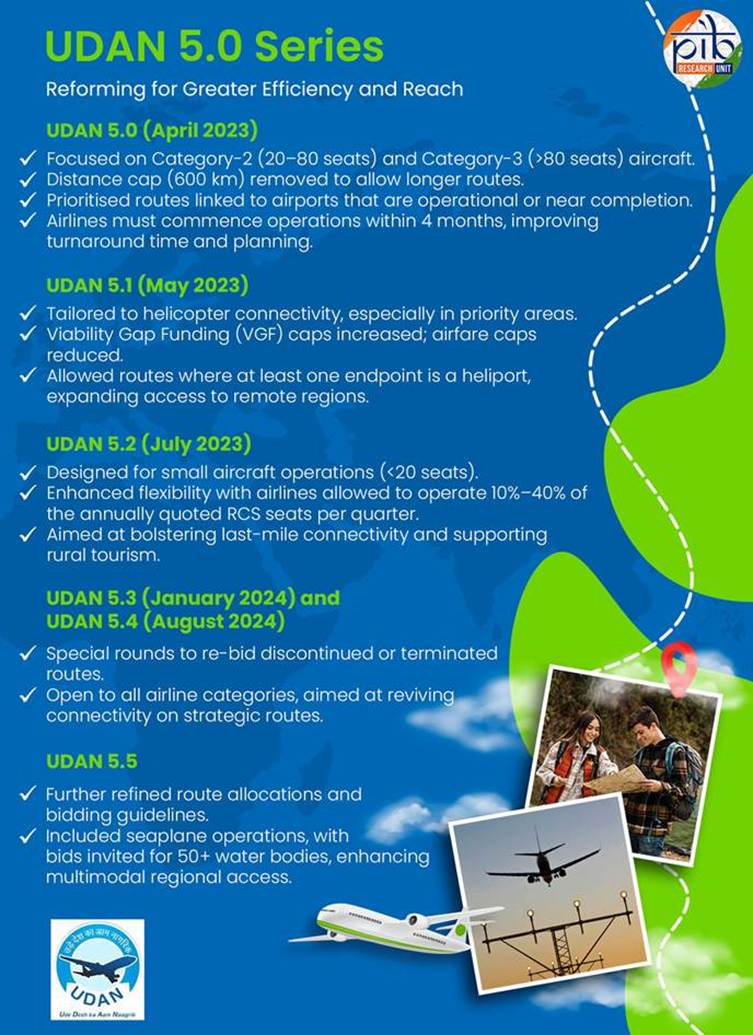
- 08 Jul 2026
In News:
The Prime Minister recently launched Viksit UDAN, the next phase of the Regional Connectivity Scheme (RCS)-UDAN, in Rajasthan. Earlier, in March 2026, the Union Cabinet approved the Modified UDAN Scheme, which serves as the framework for this expanded phase. The initiative aims to strengthen regional air connectivity, develop world-class aviation infrastructure and support the vision of Viksit Bharat 2047.
What is Viksit UDAN?
Viksit UDAN is the modified version of the Regional Connectivity Scheme (UDAN), originally launched in October 2016 under the National Civil Aviation Policy (NCAP), 2016. It seeks to make air travel affordable, accessible and inclusive, while extending aviation services to Tier-2 and Tier-3 cities, hilly regions, islands, remote areas and aspirational districts.
The scheme will be implemented from FY 2026–27 to FY 2035–36 with a total budgetary support of ?28,840 crore.
Key Features
The modified scheme focuses on expanding regional aviation infrastructure while ensuring long-term operational sustainability.
- 100 airports will be developed from existing unserved airstrips with an investment of ?12,159 crore.
- Around 441 aerodromes will receive Operation and Maintenance (O&M) support for three years to ensure viability.
- 200 modern helipads will be developed in hilly, remote, island and aspirational regions to improve connectivity and emergency services.
- Viability Gap Funding (VGF) of ?10,043 crore will be provided to airlines for ten years, with support gradually reduced after the third year.
- Airports will be developed through the Challenge Mode, encouraging timely execution, innovation and quality infrastructure.
- The scheme also promotes indigenous aviation by encouraging the use of HAL Dhruv helicopters and HAL Dornier aircraft for regional operations.
Expected Impact
Viksit UDAN is expected to deepen regional connectivity and stimulate balanced economic development. Improved air connectivity is likely to boost tourism, trade, investment, healthcare access, disaster response and employment generation, particularly in underserved regions. By connecting remote areas with the national aviation network, the scheme seeks to make aviation a catalyst for inclusive growth.
About the UDAN Scheme
UDAN (Ude Desh ka Aam Naagrik) is the flagship regional connectivity programme of the Ministry of Civil Aviation, launched in 2016 under the National Civil Aviation Policy (NCAP), 2016. The Airports Authority of India (AAI) is the nodal implementing agency.
The scheme operates through a market-driven model supported by Viability Gap Funding (VGF), which helps airlines operate on commercially unviable regional routes while maintaining affordable airfares. The scheme is further supported through concessions such as reduced airport charges and lower VAT on Aviation Turbine Fuel (ATF) by participating States.
Since its launch, India's airport network has expanded significantly, increasing from 74 airports in 2014 to 159 airports in 2024. Over successive phases, UDAN has broadened its scope—from connecting underserved airports to including helipads, tourism routes, North-Eastern and island regions, and seaplane operations.
Global Passport Index (GPI)
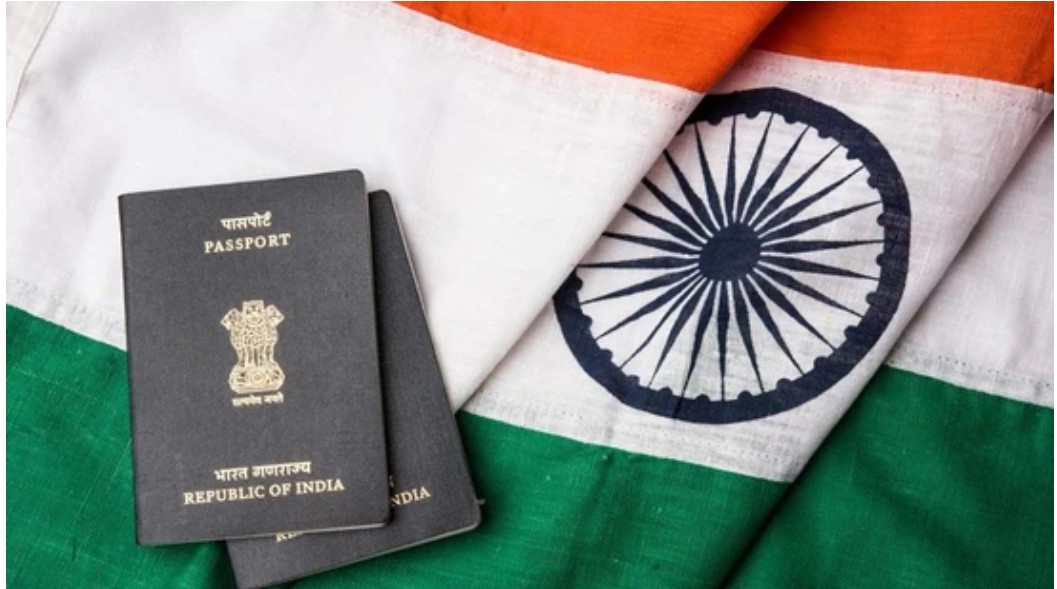
- 08 Jul 2026
In News:
India's ranking in the Global Passport Index (GPI) 2026 has slipped to 125th, down one position from the previous year. The index assesses not only the international travel freedom offered by a passport but also the opportunities it provides for living, working and investing abroad.
What is the Global Passport Index?
The Global Passport Index (GPI) is an annual ranking published by Global Citizen Solutions (GCS), a residency and citizenship advisory firm. Unlike conventional passport rankings that focus mainly on visa-free travel, the GPI provides a broader assessment by evaluating the overall value of a passport in terms of mobility, investment opportunities and quality of life.
The index measures passports across three broad parameters:
- Enhanced Mobility (50%) – Visa-free access, visa-on-arrival and ease of international travel.
- Investment (25%) – Business environment and investment opportunities available to passport holders.
- Quality of Living (25%) – Indicators such as healthcare, education, human development, safety and environmental quality.
The rankings are based on 14 indicators using data from organisations such as the World Bank, World Economic Forum (WEF) and the Sustainable Development Report.
Key Highlights of GPI 2026
The top-ranked passports in 2026 are those of Sweden, Switzerland, Finland, Germany, Denmark and the Netherlands, reflecting their strong performance across all three dimensions.
India is ranked 125th, indicating relatively lower performance not only in international mobility but also in investment opportunities and quality-of-life indicators.
Significance
The Global Passport Index provides a more comprehensive assessment of passport strength than traditional mobility rankings. It highlights that the value of a passport depends not only on visa-free travel but also on the economic opportunities, living standards and global competitiveness associated with the issuing country. For policymakers, the index serves as an indicator of India's progress in areas such as economic development, governance, human capital and international engagement.
eSARAS: Digital Marketplace for Women Self-Help Groups
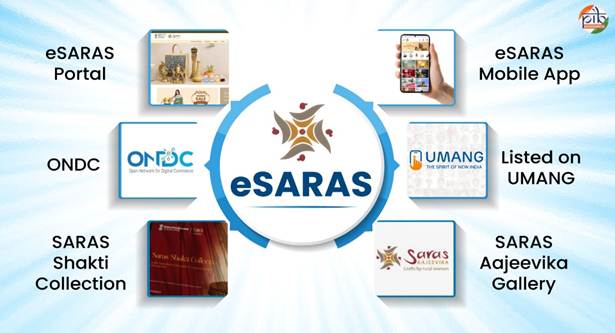
- 08 Jul 2026
In News:
The eSARAS platform is emerging as a key initiative for promoting women-led rural entrepreneurship, preserving India's traditional crafts and strengthening digital commerce under the Deendayal Antyodaya Yojana–National Rural Livelihood Mission (DAY-NRLM).
What is eSARAS?
eSARAS is the official e-commerce platform developed by the Ministry of Rural Development under the Deendayal Antyodaya Yojana–National Rural Livelihood Mission (DAY-NRLM). It serves as a dedicated online marketplace for products manufactured by Women Self-Help Groups (SHGs) and their federations across India.
The platform connects rural producers directly with consumers, eliminating intermediaries and enabling wider market access for women-led enterprises.
Objectives
The platform aims to:
- Promote women-led rural entrepreneurship.
- Provide nationwide market access to SHG products.
- Increase income opportunities for rural women.
- Preserve India's traditional handicrafts and handloom products.
- Promote digital inclusion and financial empowerment.
- Strengthen sustainable rural livelihoods.
Key Features
eSARAS supports women entrepreneurs by providing end-to-end market linkage services.
Its major features include:
- Exclusive marketplace for Women SHGs and their federations.
- Direct business-to-consumer (B2C) marketing platform.
- Support for branding, packaging, processing, logistics and shipping.
- Digital platform accessible across India.
- Promotes authentic handmade and indigenous products.
The platform caters to a wide range of rural artisans, including:Weavers, Potters, Marble artisans, Pashmina producers, Women-led cooperatives, and Other traditional craft clusters
Product Categories
eSARAS offers a diverse range of products such as:
- Home décor and lifestyle products
- Apparel and fashion accessories
- Personal care products
- Food and processed food items
- Toys and children's products
- Traditional handicrafts and handloom products
Some notable products include:Chanderi sarees, Pashmina products, Marble handicrafts, Handmade rural crafts
Platform Evolution
|
Platform Evolution |
Detail |
|
eSARAS Portal Launch |
e-Commerce portal https://www.esaras.in/ launched for better and more effective marketing of Saras products |
|
eSARAS Mobile App Launch |
Mobile app launched alongside the eSARAS Fulfilment Centre. It is used for processing, packaging and shipping of products. |
|
ONDC |
SHG products made available across 11 buyer apps (20 crore buyers on ONDC platform) with 800 handcrafted products listed |
|
UMANG |
eSARAS listed on UMANG; platform now serves 2,572 services with 796.69 crore transactions (June 2026) |
|
SARAS Shakti Collection |
Premium curated gift collection launched at Rashtriya Gramin Vikas Sammelan 2026 for institutional and corporate markets |
|
SARAS Aajeevika Gallery |
Permanent retail gallery established at Baba Kharak Singh Marg, New Delhi, showcasing curated SHG products. |
About DAY-NRLM
The Deendayal Antyodaya Yojana–National Rural Livelihood Mission (DAY-NRLM) is the flagship rural poverty alleviation programme of the Ministry of Rural Development.
It seeks to reduce rural poverty by organising poor households into Self-Help Groups (SHGs) and enabling them to access sustainable livelihood opportunities through self-employment, skill development and financial inclusion.
Objectives
- Mobilise poor rural households into SHGs.
- Promote women's financial inclusion.
- Facilitate access to institutional credit.
- Strengthen rural livelihoods through entrepreneurship.
- Enhance household income and reduce poverty.
- Build strong community-based institutions for long-term socio-economic development.
Cancer as a Notifiable Disease
- 08 Jul 2026
In News:
The Government of Telangana has declared cancer a notifiable disease, making it mandatory for all public and private healthcare facilities to report every diagnosed cancer case to a designated state portal within one month. The initiative aims to improve cancer surveillance, generate reliable epidemiological data and strengthen evidence-based public health planning.
What is a Notifiable Disease?
A notifiable disease is a disease that is mandatorily reported by healthcare providers to government authorities under the law. Disease notification enables continuous surveillance, early detection, monitoring of disease trends and timely public health interventions.
In India, the Epidemic Diseases Act, 1897 provides the legal framework for disease notification, while State Governments determine which diseases are notified within their jurisdictions.
Commonly notified diseases include Tuberculosis, Dengue, Malaria, Cholera, Hepatitis, Measles and Polio. During the COVID-19 pandemic, COVID-19 was declared a notifiable disease across the country.
Telangana's New Initiative
Under the new policy:
- Every diagnosed cancer case must be reported within one month.
- Reporting is mandatory for both government and private healthcare institutions.
- The data will be validated by the Centre of Excellence – MNJ Cancer Hospital, Hyderabad.
- Validated information will be integrated with the National Cancer Registry Programme (NCRP) under the Indian Council of Medical Research (ICMR).
- The initiative seeks to accurately map cancer incidence, mortality and geographical distribution across the State.
Why is this Initiative Important?
India currently does not classify cancer as a nationally notifiable disease. Consequently, reliable nationwide cancer surveillance remains limited.
The present system relies primarily on:
- Population-Based Cancer Registries (PBCRs), which estimate cancer incidence within defined populations.
- Hospital-Based Cancer Registries (HBCRs), which collect information from hospitals for clinical and research purposes.
However, these registries collectively cover only 10–16% of India's population and are largely concentrated in urban and public-sector institutions, resulting in significant under-reporting, particularly from the private healthcare sector.
Recognising this gap, 17 States, including Telangana, have independently notified cancer under their respective public health frameworks.
National Cancer Registry Programme (NCRP)
The National Cancer Registry Programme (NCRP) was launched by the Indian Council of Medical Research (ICMR) in 1981 to systematically collect, analyse and disseminate data on cancer incidence, mortality and survival across India.
It functions through two major components:
- Population-Based Cancer Registries (PBCRs) – Monitor cancer occurrence in defined populations.
- Hospital-Based Cancer Registries (HBCRs) – Record detailed clinical information on patients treated in hospitals.
The programme is implemented by the National Centre for Disease Informatics and Research (NCDIR), Bengaluru, under the ICMR.
Concerns with Existing Cancer Surveillance
Despite continuous improvements, several challenges persist:
- Limited population coverage (10–16%).
- Under-reporting from the private healthcare sector.
- Urban-centric registry network with inadequate rural representation.
- Delayed reporting affecting policy formulation.
- Incomplete mortality and survival statistics.
These limitations hinder accurate estimation of India's cancer burden and resource allocation.
Cancer Burden in India
According to the Global Cancer Observatory (GLOBOCAN), affiliated with the World Health Organization (WHO):
- India recorded approximately 1.41 million cancer cases in 2022.
- The number is projected to increase to nearly 2.46 million by 2045, representing a rise of over 74%.
The increase is attributed to:
- Ageing population.
- Rising life expectancy.
- Lifestyle changes.
- Urbanisation.
- Increased prevalence of risk factors such as tobacco use, obesity and physical inactivity.
Sub-Orbital Launch Vehicle for Experiment (SOLVE)
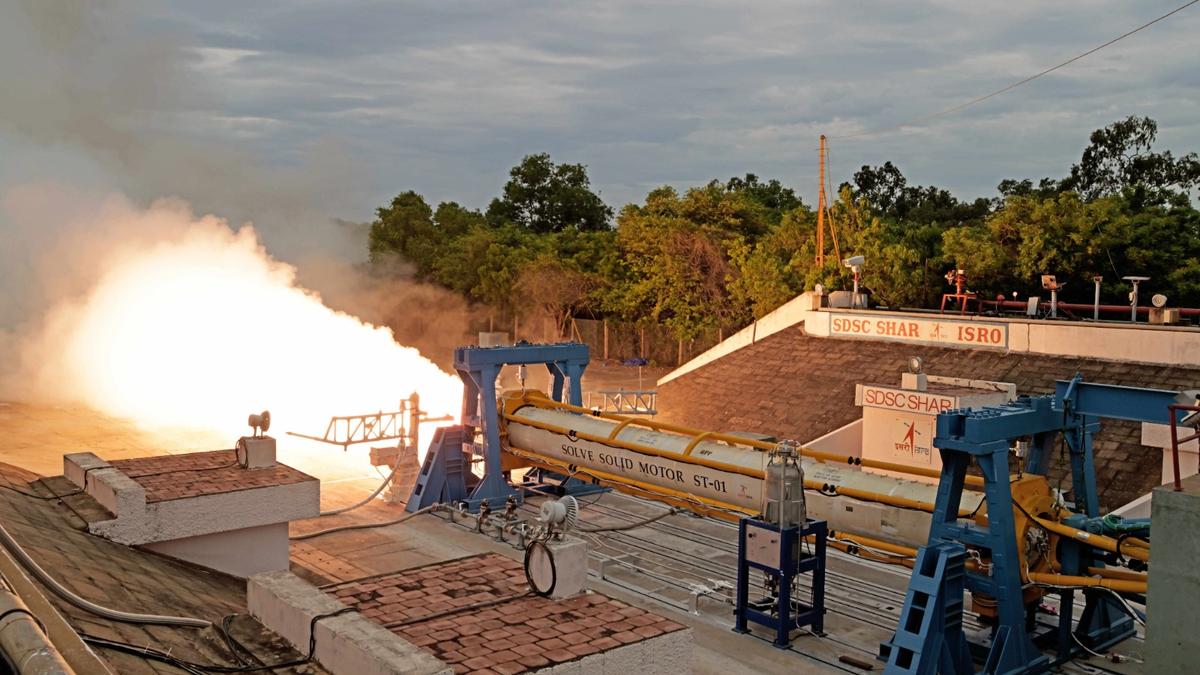
- 07 Jul 2026
In News:
The Indian Space Research Organisation (ISRO) has successfully conducted the first ground test of the Sub-Orbital Launch Vehicle for Experiment (SOLVE) solid motor at the Static Test Facility, Satish Dhawan Space Centre (SDSC), Sriharikota. The successful test marks a significant milestone in validating critical technologies for India's Gaganyaan Human Spaceflight Mission.
What is SOLVE?
The Sub-Orbital Launch Vehicle for Experiment (SOLVE) is a specialised test platform developed by ISRO to validate the deceleration and recovery systems of the Gaganyaan Crew Module under realistic flight conditions before undertaking human spaceflight.
Unlike an orbital launch vehicle, SOLVE performs sub-orbital missions, reaching lower altitudes without entering Earth's orbit. These missions are intended to test critical systems that ensure the safe return of astronauts.
Key Features
- Developed specifically for Gaganyaan qualification tests.
- Carries the Crew Module to an altitude of 10–17 km before separation.
- Designed to validate the Integrated Parachute Deceleration System.
- Uses a solid propulsion stage derived from the PSLV Strap-on Motor, with modifications to meet human spaceflight requirements.
- Incorporates:
- Slow burn-rate solid propellant for controlled performance.
- Straight nozzle configuration.
- Secondary Injection Thrust Vector Control (SITVC) for improved flight stability and control.
How the Test Mission Works
During a SOLVE mission:
- The launch vehicle carries the Crew Module to an altitude of 10–17 km.
- The Crew Module separates from the vehicle.
- A carefully sequenced parachute deployment system is activated.
- A total of 10 parachutes deploy in different stages to progressively reduce the module's speed.
- The Crew Module finally performs a safe splashdown in the sea, simulating the recovery phase of the Gaganyaan mission.
These tests help verify the reliability of the deceleration system under different flight conditions before astronauts are flown.
About the Gaganyaan Mission
Gaganyaan is India's first indigenous human spaceflight programme, aimed at demonstrating the country's capability to safely send humans into space and return them to Earth.
Objectives
- Demonstrate India's indigenous capability to undertake human spaceflight.
- Send a crew of three astronauts into Low Earth Orbit (LEO) at an altitude of approximately 400 km.
- Keep the crew in orbit for about three days before ensuring their safe return through splashdown and recovery.
- Promote scientific research by conducting microgravity experiments.
- Lay the foundation for a long-term Indian human space exploration programme, including future space stations and deep-space missions.
Pandavani
- 07 Jul 2026
In News:
Renowned Pandavani exponent Teejan Bai, who popularised Chhattisgarh's traditional storytelling art on national and international platforms, recently passed away. She played a transformative role in bringing this unique oral folk tradition to global recognition and was one of India's most celebrated folk artists.
What is Pandavani?
Pandavani is a traditional oral storytelling and musical performance tradition originating from Chhattisgarh. The word "Pandavani" literally means "the story of the Pandavas" and revolves around episodes from the Mahabharata, particularly highlighting the lives, struggles and heroism of the Pandava brothers.
Blending music, narration, acting and improvisation, Pandavani occupies a unique place among India's folk performing arts. Unlike classical theatre, it is centred on the expressive abilities of a single lead performer, who narrates the epic while portraying multiple characters through changes in voice, facial expressions and dramatic gestures.
Features of Pandavani
The performance combines storytelling with music and theatrical elements, making it a powerful medium of oral tradition.
Some of its important features include:
- Narration is based on episodes from the Mahabharata, especially the exploits of the Pandavas.
- A single lead performer narrates, sings and enacts different characters.
- Accompanied by musicians playing instruments such as the harmonium, tabla, dholak and manjira.
- The performer usually carries a tambura or ektara, which serves both as a musical instrument and a symbolic prop.
- During the performance, the tambura may represent a bow, mace, sword, chariot or other objects, depending on the scene being enacted.
- The narration often includes improvisation, audience interaction and spontaneous dramatic expression.
Styles of Pandavani
Pandavani is traditionally performed in two distinct styles:
Vedamati Style
- The performer remains seated throughout the performance.
- Greater emphasis is placed on simple narration and singing.
- Dramatic enactment is minimal, with the focus on the oral narration of the epic.
Kapalik Style
- The performer moves across the stage, enacting various characters and battle scenes.
- Uses dramatic gestures, voice modulation and expressive acting.
- The tambura is creatively used as different symbolic objects during the performance.
- This style is more theatrical and visually engaging.
Teejan Bai's Contribution
Teejan Bai is widely regarded as the greatest exponent of the Kapalik style of Pandavani. She broke traditional gender barriers by performing a style that was historically dominated by male artists and transformed Pandavani into a globally recognised folk art form.
Her contributions include:
- PopularisedPandavani across India and internationally.
- Revitalised interest in Chhattisgarh's folk traditions.
- Inspired generations of women artists to enter the field.
- Elevated an oral folk tradition to national cultural prominence.
Another noted contemporary exponent of Pandavani is Ritu Verma.
Matcha Tea
- 07 Jul 2026
In News:
An Assam tea estate has sold India's first commercially produced matcha tea, marking a significant diversification of the Indian tea industry beyond conventional black and green teas. The initiative reflects the growing demand for premium specialty teas in domestic and international markets and opens new avenues for value addition in the tea sector.
What is Matcha Tea?
Matcha is a finely ground green tea powder prepared from specially cultivated shade-grown leaves of Camellia sinensis, the same plant species used to produce black, green, oolong and white teas. Unlike conventional green tea, where the leaves are infused in hot water and discarded, matcha is whisked into water and consumed entirely, resulting in higher intake of nutrients and bioactive compounds.
The practice of consuming powdered tea originated in China during the Song Dynasty and was later introduced to Japan by Zen Buddhist monks, where it evolved into an integral part of the Japanese tea ceremony. Today, Japan remains the world's leading producer of high-quality matcha.
How is Matcha Produced?
The distinctive quality of matcha lies in its unique cultivation and processing method.
- Tea plants are shade-grown for about 3–4 weeks before harvest, with nearly 90% of sunlight blocked.
- Reduced sunlight increases the concentration of chlorophyll and L-theanine (an amino acid), giving the leaves their vibrant green colour and characteristic umami flavour.
- Only the young, tender leaves are harvested.
- The leaves are steamed immediately to prevent oxidation, preserving their green colour.
- After drying and removing stems and veins, the processed leaves are known as tencha.
- The tencha is then slowly stone-ground into an ultra-fine green powder called matcha.
Why is Matcha Different from Regular Green Tea?
Unlike ordinary green tea, which is prepared by steeping leaves in hot water, matcha is consumed as the whole leaf in powdered form. As a result, it provides higher concentrations of:
- Antioxidants (especially catechins such as EGCG)
- Chlorophyll
- L-theanine
- Natural caffeine
- Vitamins and minerals
This combination has made matcha popular as a functional beverage in the global health and wellness market.
India–Southeast Asia (I-2SEA) Submarine Cable System
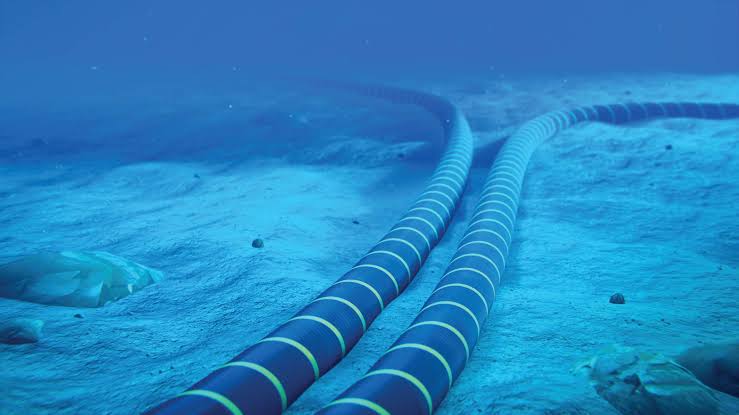
- 07 Jul 2026
In News:
A consortium comprising Microsoft, Singtel, Tata Communications and Lightstorm has signed agreements to develop the India–Southeast Asia (I-2SEA) Submarine Cable System, a major digital infrastructure project connecting India, Malaysia and Singapore. Expected to be operational by Q4 2029, it seeks to meet the growing demand for Artificial Intelligence (AI), cloud computing and hyperscaler connectivity across the India–Southeast Asia corridor.
What is the I-2SEA Submarine Cable System?
The I-2SEA is an approximately 3,600-km submarine fibre-optic cable system that will connect India's east coast with Southeast Asia through a carrier-neutral landing infrastructure. It is designed to provide high-capacity, low-latency and resilient digital connectivity for AI, cloud services and enterprise data traffic.
Submarine cables are undersea fibre-optic cables that transmit data using light signals and carry nearly 99% of global international internet and telecommunications traffic, making them the backbone of the global digital economy.
Key Features
- Connects India, Malaysia and Singapore, strengthening regional digital connectivity.
- Dual landing stations in India at Machilipatnam (Andhra Pradesh) and South Chennai (Tamil Nadu).
- Machilipatnam offers the shortest subsea route to Hyderabad, enabling faster connectivity to India's growing AI and data centre ecosystem.
- Provides onward connectivity to Mumbai and over 80 data centres through Lightstorm's terrestrial fibre network.
- Features carrier-neutral landing infrastructure, allowing multiple telecom operators and service providers to use the network.
- Uses interoperable cable architecture, ensuring seamless integration with various international networks.
- Incorporates deep cable burial to protect against damage from anchors, fishing activities and natural hazards.
- Integrated with Lightstorm's SmartNet AI Fabric and Polarin platform for intelligent network management and real-time monitoring.
Purpose
The project has been designed to address the rapid growth in international data traffic driven by AI and cloud computing. It will support:
- Hyperscalers and cloud service providers.
- GPU infrastructure for AI model training and inference.
- High-performance computing workloads.
- Enterprises requiring high-capacity, low-latency digital connectivity.
Hamburg Sustainability Conference (HSC) 2026
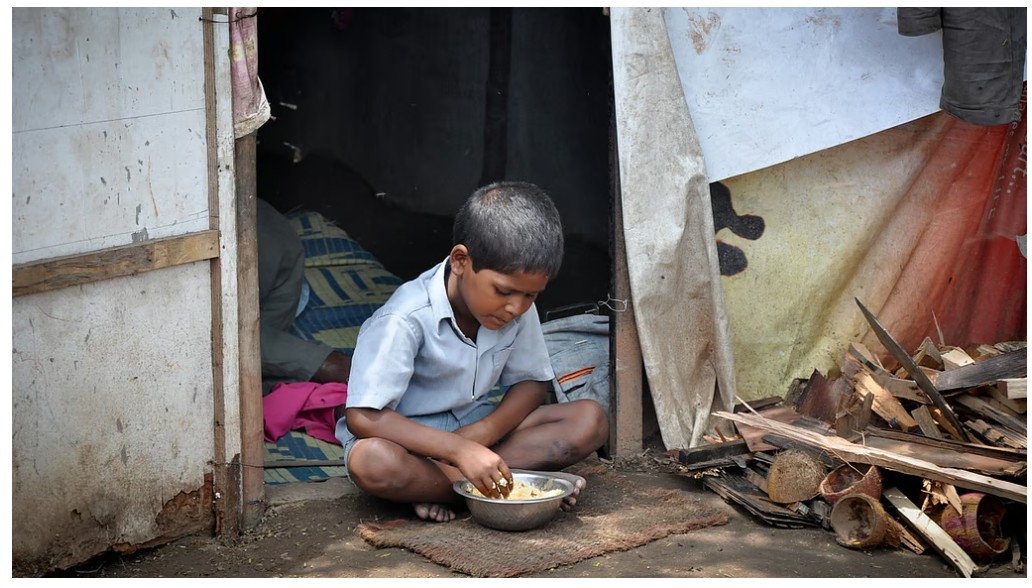
- 30 Jun 2026
In News:
The United Nations Sustainable Development Solutions Network (SDSN) released the Sustainable Development Report (SDR) 2026 during the Third Hamburg Sustainability Conference (HSC) 2026, where India improved its ranking to 94th in the global Sustainable Development Goals (SDG) Index.
About the Hamburg Sustainability Conference (HSC)
- The Hamburg Sustainability Conference (HSC) is an international multi-stakeholder platform that seeks to accelerate progress towards achieving the United Nations Sustainable Development Goals (SDGs) by fostering practical cooperation among governments, businesses, financial institutions, civil society, academia, and international organisations.
- The conference aims to strengthen partnerships between the Global North and the Global South, promote sustainable economic development, and build collaborative solutions to emerging global challenges such as climate change, digital transformation, geopolitical conflicts, and sustainable finance.
- The inaugural conference was held in October 2024, while the 2026 edition marks its third annual session.
- The theme of HSC 2026 is "Together we co-create sustainable development."
Major Focus Areas
The conference discussions are organised around three broad pillars:
- Resilient Economies, Technology and the Future of Our Planet, focusing on industrial decarbonisation, sustainable investments, responsible Artificial Intelligence, and digital transformation.
- Risk, Uncertainty and Conflict, addressing the impact of geopolitical tensions on global supply chains, food security, energy security, and critical minerals.
- Ensuring the Future of Human Collaboration, which seeks to strengthen multilateral cooperation and bridge the trust deficit between developed and developing countries.
Sustainable Development Report (SDR) 2026
- The Sustainable Development Report is published annually by the United Nations Sustainable Development Solutions Network (SDSN).
- It assesses countries' progress towards achieving the 17 Sustainable Development Goals (SDGs) adopted under the 2030 Agenda for Sustainable Development.
- The report ranks countries using the SDG Index, which measures performance across social, economic, and environmental indicators.
India's Performance
India has continued to improve its position in the SDG Index.
|
Year |
Global Rank |
|
2015 |
112 |
|
2025 |
99 |
|
2026 |
94 |
India's SDG Score in 2026 stands at 68.3 out of 100, reflecting an improvement of 18 positions since 2015.
Key Achievements
The report recognises India's progress in several areas, particularly:
- Expansion of rural electrification under SDG 7 (Affordable and Clean Energy).
- Rapid improvement in digital connectivity under SDG 9 (Industry, Innovation and Infrastructure).
- Overall improvement in SDG performance compared to many other emerging economies.
Major Challenges
Despite improvements, the report highlights that India continues to face significant developmental challenges.
Key concerns include:
- Only about 3% of SDG targets are currently on track for achievement by 2030.
- Rising levels of child wasting, stunting, and undernourishment, affecting progress under SDG 2 (Zero Hunger).
- Increasing adult obesity, indicating the growing burden of malnutrition in all its forms.
- Higher per capita carbon dioxide (CO?) emissions and continued deterioration in air quality, affecting progress under SDGs 13, 14, and 15.
- Declining scores on press freedom and institutional indicators, posing challenges under SDG 16 (Peace, Justice and Strong Institutions).
About the Sustainable Development Solutions Network (SDSN)
The United Nations Sustainable Development Solutions Network (SDSN) is a global initiative launched by the United Nations in 2012 to mobilise scientific expertise, academic institutions, businesses, and civil society in support of the implementation of the Sustainable Development Goals (SDGs) and the Paris Agreement on Climate Change.
The network promotes evidence-based policy solutions, publishes the annual Sustainable Development Report, and supports governments in designing strategies for sustainable development.
Murchison Widefield Array (MWA) & SMART Pulsar Survey

- 30 Jun 2026
In News:
Astronomers have recently discovered a new millisecond pulsar using the Murchison Widefield Array (MWA) as part of the ongoing Southern-sky MWA Rapid Two-metre (SMART) survey. The discovery is expected to enhance our understanding of neutron stars and support future radio astronomy missions.
About Murchison Widefield Array (MWA)
The Murchison Widefield Array (MWA) is a low-frequency radio telescope located at the Murchison Radio-astronomy Observatory (MRO) in Western Australia, which also hosts the future Square Kilometre Array-Low (SKA-Low).
It is an international collaboration involving 20 research institutions from Australia, Canada, China, Japan, and the United States, led by Curtin University, Australia.
The telescope consists of 4,096 spider-like antennas that operate in the 70–300 MHz frequency range. It is designed with a very wide field of view, high angular resolution, nanosecond time resolution, and digital pointing capability, enabling it to rapidly scan large portions of the sky and detect faint or short-lived cosmic phenomena.
Major Scientific Applications
The MWA is used to study a wide range of astrophysical phenomena, including:
- The Epoch of Reionization, when the first stars and galaxies formed.
- Structure and evolution of galaxies and galaxy clusters.
- The Sun and space weather, including solar flares and coronal mass ejections.
- Transient radio sources such as pulsars and Fast Radio Bursts (FRBs).
- The interstellar medium and cosmic magnetic fields.
Southern-sky MWA Rapid Two-metre (SMART) Survey
The SMART Survey is an ongoing pulsar search programme using the MWA to identify previously unknown pulsars in the Southern Hemisphere.
It is the only pulsar survey currently operating at low radio frequencies (140–170 MHz) in the Southern Hemisphere. Once completed, the survey is expected to discover hundreds of new pulsars and will provide an important reference database for future observations with the Square Kilometre Array (SKA-Low).
Square Kilometre Array (SKA)
The Square Kilometre Array (SKA) is an international project to build the world's largest and most sensitive radio telescope for exploring the universe.
The telescope is being developed across two continents:
- SKA-Low in Australia
- SKA-Mid in South Africa
Its operational headquarters are located in the United Kingdom, while construction officially commenced on 5 December 2022.
The SKA aims to investigate some of the most fundamental questions in astronomy, including the origin of the Universe, formation and evolution of galaxies, cosmic magnetism, and the search for extraterrestrial life.
India became a member of the SKA project in December 2022.
What are Pulsars?
Pulsars are rapidly rotating neutron stars that emit highly regular beams of electromagnetic radiation, primarily in the radio wavelength.
Neutron stars are extremely dense remnants formed after the gravitational collapse of massive stars during a supernova explosion. Although they possess masses between 1.18 and 1.97 times that of the Sun, they are only about 20 km in diameter, making them among the densest known objects in the Universe.
Pulsars possess extremely strong magnetic fields, which channel charged particles towards the magnetic poles, producing narrow beams of radiation. Since the magnetic axis is usually inclined relative to the rotational axis, these beams sweep across space like a lighthouse. When the beam points toward Earth, it is detected as a pulse of radiation.
The interval between successive pulses—ranging from milliseconds to several seconds—is known as the pulsar period.
LineShine Supercomputer
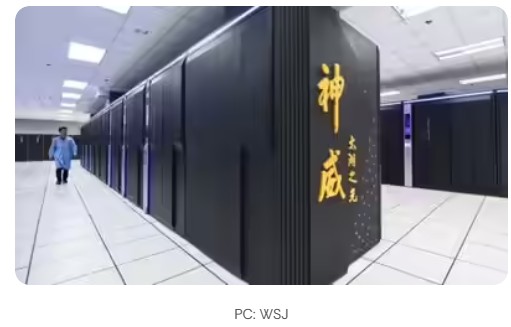
- 30 Jun 2026
In News:
China's LineShine supercomputer has topped the latest TOP500 rankings, replacing the United States' El Capitan as the world's fastest publicly ranked supercomputer. The achievement marks China's growing leadership in high-performance computing despite restrictions on advanced semiconductor technologies.
What is the TOP500 List?
The TOP500 is the globally accepted ranking of the world's most powerful supercomputers. Published twice every year since 1993, it evaluates supercomputers using the High Performance LINPACK (HPL) benchmark, which measures a system's ability to solve large-scale mathematical computations at high speed.
The ranking serves as the global benchmark for assessing advances in High-Performance Computing (HPC) and is widely used by governments, research institutions, and industry.
About LineShine
LineShine is located at the National Supercomputing Center, Shenzhen (China) and has achieved a computing performance of approximately 2.19 exaflops, enabling it to perform more than two quintillion (2 × 10¹?) calculations per second.
Its entry into the TOP500 expands the number of exascale supercomputers worldwide from four to five. It is also the first time that Asia, North America, and Europe simultaneously host publicly ranked exascale computing systems.
Key Features
One of LineShine's most distinctive features is that it operates entirely on general-purpose Central Processing Units (CPUs) without relying on Graphics Processing Units (GPUs). It is the first CPU-only supercomputer to exceed the two-exaflop performance mark, demonstrating the continued potential of CPU-based architectures for scientific computing.
The system also reflects the growing convergence of High-Performance Computing (HPC) and Artificial Intelligence (AI), enabling both traditional numerical simulations and AI-driven computational workloads on a single platform.
Applications
LineShine supports a wide range of advanced scientific and engineering applications, including:
- AI-assisted weather forecasting.
- Rainfall prediction across East Asia.
- Atomic-scale simulations of magnetic and advanced materials.
- Large-scale scientific modelling and engineering research.
- Artificial Intelligence and machine learning applications.
India's Shipbuilding Sector
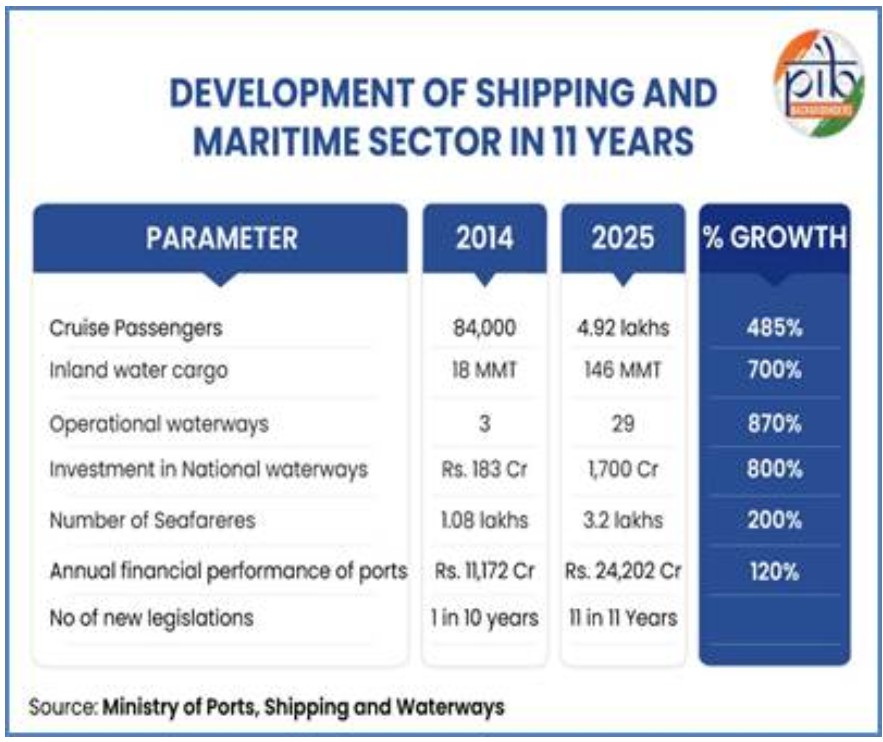
- 30 Jun 2026
In News:
According to the United Nations Conference on Trade and Development (UNCTAD), India emerged as the world's largest ship recycling nation in 2025, achieving a key target under the Maritime India Vision (MIV) 2030 ahead of schedule. Simultaneously, growing cooperation with South Korea is expected to accelerate India's ambition of becoming a global shipbuilding hub.
Current Status of India's Shipbuilding Sector
India has made significant progress in ship recycling, increasing its global share from 30.1% in 2024 to 35.4% in 2025 by recycling 2.99 million Gross Tonnes (GT) of ships. Building on this success, the Government aims to transform India into a leading shipbuilding nation under the Maritime India Vision (MIV) 2030 and Maritime Amrit Kaal Vision 2047, with the target of becoming one of the world's top 10 shipbuilding nations by 2030 and top five by 2047.
Despite handling nearly 95% of India's trade volume through maritime transport, the country accounts for less than 1% of global shipbuilding output, highlighting the need for large-scale capacity expansion and technological advancement.
Government Initiatives
To strengthen the sector, the Government has introduced several policy measures:
- Shipbuilding Financial Assistance Scheme (SBFAS): Provides financial assistance ranging from 15% to 25% of vessel cost to improve the competitiveness of Indian shipyards.
- Shipbuilding Development Scheme (SbDS): Supports the establishment of greenfield shipbuilding clusters, modernisation of existing shipyards, and creation of an India Ship Technology Centre at the Indian Maritime University.
- Maritime Development Fund (MDF): A dedicated ?25,000 crore fund comprising the Maritime Investment Fund (MIF) and Interest Incentivisation Fund (IIF) to facilitate long-term financing.
- Ship-breaking Credit Note Scheme: Grants ship owners a credit equivalent to 40% of the scrap value of recycled ships, which can be utilised while constructing new ships in Indian shipyards.
- Green Tug Transition Programme (GTTP) and Harit Nauka Guidelines: Promote construction of environmentally sustainable vessels using alternative fuels such as LNG, hydrogen, methanol, and battery-electric propulsion.
India has also aligned its ship recycling industry with the Hong Kong International Convention for the Safe and Environmentally Sound Recycling of Ships through the Recycling of Ships Act, 2019.
India–South Korea Cooperation
South Korea, one of the world's leading shipbuilding nations, is expected to play a key role in India's maritime transformation.
Areas of collaboration include:
- Development of India's first mega greenfield shipyard at Thoothukudi under the India–Republic of Korea (ROK) Comprehensive Framework.
- Technology transfer in advanced ship design, automation, green propulsion, and construction of specialised vessels.
- Localisation of marine equipment manufacturing through the Korea Marine Equipment Association (KOMEA).
- Cooperation in naval shipbuilding under the Make in India initiative.
- Skill development and research partnerships involving the Indian Maritime University (IMU) and Korea Maritime & Ocean University (KMOU).
Challenges
Despite policy support, India's shipbuilding industry continues to face several structural challenges:
- High cost of capital and limited access to long-term finance.
- Heavy dependence on imported marine equipment and specialised shipbuilding-grade steel.
- Inadequate large dry docks and modern shipbuilding infrastructure.
- Weak domestic demand for Indian-built commercial vessels.
- Limited share in the global Maintenance, Repair and Operations (MRO) market.
- Shortage of skilled manpower in advanced marine engineering and green shipbuilding technologies.
- Regulatory delays and procedural bottlenecks affecting investment.
Way Forward
To emerge as a global shipbuilding hub, India needs to adopt an integrated cluster-based development model similar to South Korea's Ulsan model, linking shipyards with ancillary industries, research institutions, and training centres. Greater localisation of critical components, effective technology transfer through international partnerships, integration of ship recycling with domestic shipbuilding, promotion of green vessels, and strict implementation of the Right of First Refusal (RoFR) policy for Indian-built ships can significantly strengthen the sector. Expanding domestic shipbuilding capacity while leveraging India's leadership in ship recycling will help create a globally competitive and sustainable maritime ecosystem.
BRICS Space Cooperation
- 30 Jun 2026
In News:
During the BRICS Heads of Space Agencies Meeting held in Bengaluru under India's BRICS Chairship 2026, the Union Minister of Earth Sciences proposed the concept of a "BRICS Space Economy", calling for deeper collaboration to make space a catalyst for innovation, entrepreneurship, investment, and sustainable development.
About the BRICS Heads of Space Agencies Meeting
The meeting was hosted by the Indian Space Research Organisation (ISRO) and brought together the heads of space agencies and senior officials from Brazil, China, Egypt, Ethiopia, India, Indonesia, Iran, Russia, South Africa, and the United Arab Emirates.
The primary objective was to review the progress of existing BRICS space cooperation and identify new avenues for harnessing space technology to address shared developmental and global challenges. The meeting reflected the growing importance of space diplomacy and scientific collaboration among emerging economies.
Key Areas of Discussion
The deliberations focused on strengthening cooperation in several priority areas, including:
- Space sustainability and responsible use of outer space.
- Development of debris-free and environmentally sustainable space missions.
- Expansion of the BRICS Remote Sensing Satellite Constellation.
- Greater participation of the newly inducted BRICS members in space initiatives.
- Establishment of a proposed BRICS Space Council to institutionalise long-term cooperation.
The member countries also explored opportunities for collaboration in disaster management, Earth observation, satellite data sharing, capacity building, scientific research, and knowledge exchange, with the aim of improving resilience against natural disasters and supporting sustainable development.
India's Space Ecosystem
During the meeting, India highlighted the rapid growth of its space sector, particularly the emergence of a vibrant NewSpace ecosystem driven by private industries and startups.
India also showcased several recent achievements, including:
- Chandrayaan-3, which successfully demonstrated a soft landing near the Moon's south polar region.
- Aditya-L1, India's first dedicated solar mission.
- Progress towards the Gaganyaan Mission, India's first human spaceflight programme.
These achievements underline India's growing capabilities in scientific research, space exploration, and commercial space activities.
What is the Proposed BRICS Space Economy?
The proposed BRICS Space Economy envisions moving beyond conventional cooperation towards joint innovation, co-development, and commercial collaboration among BRICS countries.
The initiative seeks to promote:
- Joint development of space technologies.
- Investment and entrepreneurship in the space sector.
- Sharing of satellite data and scientific expertise.
- Responsible and sustainable space operations.
- Stronger partnerships in emerging areas of the global space economy.
It also aims to create a collaborative framework where member countries can collectively leverage their technological strengths to enhance economic growth and address developmental challenges.
Medical Innovations Patent Mitra Initiative

- 06 Jul 2026
In News:
The National Medical Commission (NMC) has advised all medical colleges and healthcare institutions to utilize the Indian Council of Medical Research (ICMR)'s Medical Innovations Patent Mitra platform to promote patenting and commercialization of indigenous medical innovations.
About Medical Innovations Patent Mitra Initiative
The Medical Innovations Patent Mitra is a centralized, expert-driven digital platform developed by the Indian Council of Medical Research (ICMR) to provide end-to-end support for protecting, managing, and commercializing medical innovations developed by researchers, clinicians, faculty, students, and startups.
The initiative aims to bridge the gap between medical research and commercialization by providing comprehensive intellectual property (IP) assistance and removing financial and procedural barriers to patent filing.
Objectives
- Promote innovation and patent culture in India's healthcare sector.
- Facilitate protection of biomedical research through intellectual property rights.
- Support commercialization of indigenous healthcare technologies.
- Reduce financial and legal barriers associated with patent filing.
- Strengthen India's medical innovation ecosystem.
Key Features
The platform provides 100% government-funded support for the complete patent lifecycle, including patent filing, legal drafting, patent prosecution, examination responses, hearings, and maintenance fees, eliminating out-of-pocket expenses for eligible innovators.
It offers expert assistance through intellectual property professionals and medical experts, who conduct prior-art searches, evaluate the novelty of inventions, and prepare high-quality patent applications to improve the chances of successful patent grants.
The initiative supports a broad range of innovators, including:
- ICMR intramural and extramural research projects
- Faculty, clinicians, researchers, and students of recognized medical colleges and institutions
- DPIIT-recognized biomedical startups
- Independent medical innovators and research institutions
The platform also manages the entire patent prosecution process by responding to examination reports, handling patent opposition proceedings, and maintaining intellectual property portfolios.
In addition, Patent Mitra facilitates technology transfer by connecting innovators with pharmaceutical companies, medical device manufacturers, and industry partners for licensing and commercialization of healthcare innovations.
Specialised Investment Fund (SIF)Specialised Investment Fund (SIF)
- 06 Jul 2026
In News:
The Specialised Investment Fund (SIF) category has witnessed rapid investor adoption, with Assets Under Management (AUM) crossing ?13,814 crore, indicating growing interest in this new investment framework introduced by the Securities and Exchange Board of India (SEBI).
About Specialised Investment Fund (SIF)
The Specialised Investment Fund (SIF) is a new investment product introduced by SEBI to bridge the gap between traditional mutual funds and Portfolio Management Services (PMS). The framework has been notified through amendments to the SEBI (Mutual Funds) Regulations, 1996.
SIF offers greater investment flexibility than conventional mutual funds while remaining more accessible than PMS, thereby catering to sophisticated investors with higher risk appetite and larger investment capacity.
Key Features
The minimum investment required in a Specialised Investment Fund is ?10 lakh per investor. While investors can invest through Systematic Investment Plans (SIPs) and withdraw through Systematic Withdrawal Plans (SWPs), the prescribed minimum investment threshold must be maintained.
SIFs can be structured as:
- Open-ended funds
- Closed-ended funds
- Interval funds
Investment Strategies
SEBI has permitted three broad categories of investment strategies under the SIF framework:
Equity-Oriented Strategies
- Equity Long-Short Fund
- Equity Ex-Top 100 Long-Short Fund
- Sector Rotation Long-Short Fund
Debt-Oriented Strategies
- Debt Long-Short Fund
- Sectoral Debt Long-Short Fund
Hybrid Strategies
- Active Asset Allocator Long-Short Fund
- Hybrid Long-Short Fund
Currently, only one investment strategy is permitted under each category for every Specialised Investment Fund.
Eligibility Criteria for Asset Management Companies (AMCs)
SEBI has prescribed two alternative routes for Asset Management Companies (AMCs) to establish an SIF.
Under the first route, the AMC must:
- Have been operational for at least three years, and
- Maintain an average Assets Under Management (AUM) of ?10,000 crore during the immediately preceding three years.
Under the second route, the AMC must:
- Appoint a Chief Investment Officer (CIO) with at least 10 years of experience and experience in managing assets worth ?5,000 crore or more.
- Appoint an additional fund manager with a minimum of three years' experience managing assets worth ?500 crore.
MANAS (Madak Padarth Nishedh Asoochna Kendra)
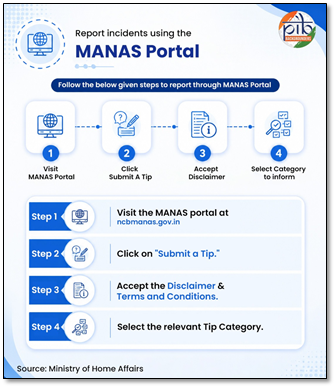
- 06 Jul 2026
In News:
To strengthen India's fight against drug abuse and narcotics trafficking, the Government has expanded technology-enabled citizen participation through MANAS (Madak Padarth Nishedh Asoochna Kendra), the National Narcotics Helpline under the Narcotics Control Bureau (NCB).
About MANAS
MANAS (Madak Padarth Nishedh Asoochna Kendra) is India's National Narcotics Helpline, launched on 18 July 2024 by the Narcotics Control Bureau (NCB) under the Ministry of Home Affairs (MHA).
The platform enables citizens to confidentially report drug-related offences while also providing access to counselling and de-addiction support. It combines digital technology, citizen participation, and inter-agency coordination to strengthen the country's anti-narcotics ecosystem and support the vision of a Nasha Mukt Bharat.
Objectives
- Encourage citizen participation in combating drug trafficking.
- Facilitate confidential reporting of narcotics-related crimes.
- Strengthen coordination among anti-narcotics agencies.
- Provide counselling and rehabilitation support for persons affected by substance abuse.
- Improve intelligence gathering through digital monitoring and analytics.
Key Features
MANAS allows citizens to anonymously report activities such as drug trafficking, peddling, illegal cultivation of narcotic crops, and other narcotics-related offences, ensuring that the identity of the informant remains confidential.
The platform has been developed in collaboration with the Digital India Corporation and is accessible through multiple channels, including:
- National Helpline: 1933
- Official MANAS portal
- UMANG application
For individuals suffering from substance addiction, MANAS provides access to counselling and rehabilitation services. Calls related to de-addiction are seamlessly transferred to the Ministry of Social Justice and Empowerment's National Helpline (14446).
The platform employs digital ticket generation, workflow management, case tracking, and real-time data analytics, enabling authorities to identify emerging drug hotspots, improve response time, and enhance operational efficiency.
Institutional Linkages
MANAS integrates citizens with the country's anti-drug enforcement network by connecting reports to:
- 30 Narcotics Control Bureau (NCB) Zonal Units
- 36 State and Union Territory Anti-Narcotics Task Forces (ANTFs)
This facilitates faster intelligence sharing, coordinated investigations, and timely enforcement action.
LokOS Platform
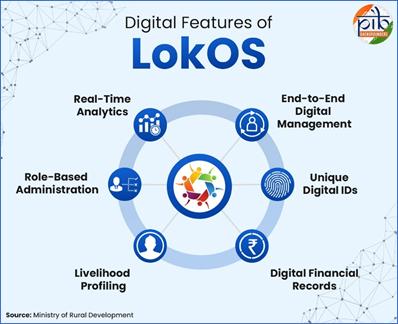
- 06 Jul 2026
In News:
The LokOS platform has significantly expanded its reach across India, enabling large-scale digital transformation of Self-Help Groups (SHGs) and other Community-Based Organizations (CBOs) under the Deendayal Antyodaya Yojana–National Rural Livelihoods Mission (DAY-NRLM).
About LokOS Platform
LokOS (Lok = People, OS = Operating System) is a web- and mobile-based digital platform developed under DAY-NRLM to facilitate end-to-end digital management of Self-Help Groups (SHGs) and Community-Based Organizations (CBOs).
It serves as a unified digital operating system for creating, managing, monitoring, and strengthening community institutions while promoting transparency, financial inclusion, and efficient implementation of rural livelihood programmes.
Objectives
- Digitally manage community institutions under DAY-NRLM.
- Improve governance, transparency, and accountability.
- Strengthen women-led rural enterprises and financial inclusion.
- Enable real-time monitoring and data-driven policymaking.
- Support implementation of the Lakhpati Didi initiative through digital beneficiary tracking.
Key Features
- The web application enables administrators, e-bookkeepers, and transaction approvers to create and manage Self-Help Groups (SHGs), Village Organizations (VOs), Cluster Level Federations (CLFs) and their members.
- The mobile application facilitates field-level recording and management of community activities, allowing real-time data collection and updates.
- LokOS provides end-to-end digital management by registering community institutions, maintaining member databases, and generating Aadhaar- and bank-linked digital identities for organizations and beneficiaries.
- The platform records savings, internal lending, loan repayments, and other financial transactions, thereby improving financial transparency and record keeping.
- It also captures livelihood profiling of members, enabling convergence with government welfare schemes and better livelihood planning.
- Role-based access ensures secure user management, approvals, monitoring, and reporting at village, block, district, state, and national levels. In addition, real-time dashboards and one-click analytical reports support evidence-based decision-making.
Coverage
The platform has been rolled out across 34 States and Union Territories, enabling nationwide digital integration of:
- Self-Help Groups (SHGs)
- Village Organizations (VOs)
- Cluster Level Federations (CLFs)
- SHG members
Delhi Electric Vehicle (EV) Policy, 2026
- 06 Jul 2026
In News:
The Government of Delhi has notified the Delhi Electric Vehicle (EV) Policy, 2026, a comprehensive roadmap aimed at accelerating the transition to zero-emission mobility and reducing vehicular pollution in the National Capital Territory.
About Delhi EV Policy, 2026
- The Delhi EV Policy, 2026 is the capital's new electric mobility framework that will remain in force from 1 July 2026 to 31 March 2030. Unlike the previous policy, it exclusively promotes Battery Electric Vehicles (BEVs) and does not provide incentives or tax concessions for strong hybrid vehicles.
- The policy seeks to reduce air pollution, expand electric mobility, strengthen charging infrastructure, and position Delhi as a leader in sustainable urban transport.
Need for the Policy
Vehicular emissions remain one of the major contributors to Delhi's deteriorating air quality. According to the Delhi Transport Department, commercial goods vehicles contribute about 33% of vehicular pollution, while two- and three-wheelers together account for nearly 46%. Since these segments dominate urban mobility, the policy focuses on accelerating their electrification.
Major Features
- The policy provides phased financial incentives to encourage EV adoption. Electric two-wheelers are eligible for subsidies of ?30,000 in the first year, reducing to ?20,000 and ?10,000 over the following two years. Electric auto-rickshaws receive subsidies of ?50,000, ?40,000 and ?30,000 respectively during the three-year incentive period.
- Eligible battery electric vehicles receive a 100% exemption from road tax and registration fees, although this benefit for passenger cars is restricted to vehicles costing up to ?30 lakh (ex-showroom).
- A dedicated digital subsidy portal enables online applications within 30 days of purchase, with subsidies transferred through Direct Benefit Transfer (DBT) within 60 days.
Key Regulatory Measures
The policy introduces a phased transition towards complete electrification of high-polluting vehicle categories.
- From 1 January 2027, only electric L-5 passenger auto-rickshaws and N1 category light goods carriers will be eligible for fresh registration.
- From 1 April 2028, registration of new petrol and CNG-powered two-wheelers will cease, permitting only electric models.
- Institutional schools are required to progressively electrify their bus fleets by achieving 10% conversion within two years, 20% within three years, and 30% by March 2030.
To prevent misuse of subsidies, beneficiaries cannot sell or register subsidised electric vehicles outside Delhi for three years.
Charging Infrastructure and Digital Support
- The policy envisages expanding Delhi's public charging ecosystem to nearly 32,000 charging points, supported through the PM e-Drive initiative. It also proposes dedicated residential electricity connections and lower off-peak charging tariffs in coordination with power distribution companies.
- Grid strengthening will be undertaken by Delhi Transco Limited (DTL) to ensure reliable electricity supply for large-scale EV adoption.
Challenges
Despite its ambitious vision, the policy faces several implementation challenges. Excluding strong hybrid vehicles has drawn criticism from automobile manufacturers, who view hybrids as an important transitional technology. The relatively higher upfront cost of electric vehicles may discourage lower-income groups such as auto-rickshaw drivers and delivery operators without adequate financing support.
Rapid growth in EV charging demand also requires significant investment in electricity distribution infrastructure. Effective implementation will depend upon timely expansion of charging facilities, stable power supply, affordable financing, and efficient subsidy disbursal.
Significance
The Delhi EV Policy, 2026 represents one of India's most ambitious state-level electric mobility initiatives. By combining financial incentives, regulatory mandates, digital governance and infrastructure development, it seeks to reduce urban air pollution, lower greenhouse gas emissions, strengthen the electric vehicle ecosystem, and promote sustainable urban transport.
Borjuli Wetland
- 05 Jul 2026
In News:
The Borjuli Wetland in Sonitpur district, Assam, has been notified as a Biodiversity Heritage Site (BHS) to conserve Oryza rufipogon, a wild rice species regarded as the evolutionary ancestor of cultivated rice.
Borjuli Wetland
- The Borjuli Wetland is a biologically rich freshwater marsh and swamp ecosystem located in the floodplains of the Brahmaputra River in Sonitpur district, Assam.
- Fed by seasonal monsoon runoff and local water channels, it functions as a natural gene pool for several native plant species, particularly wild rice.
- The wetland is globally significant because it harbours Oryza rufipogon, the wild progenitor of cultivated rice (Oryza sativa). Over centuries, this wild species has naturally evolved resistance to several pests, diseases, flooding and saline conditions, making it an invaluable genetic resource for developing climate-resilient and high-yielding rice varieties.
- The site serves as an in-situ conservation area, where species are protected within their natural habitat. The conservation programme is supported by the ICAR–National Bureau of Plant Genetic Resources (ICAR-NBPGR) and the Assam State Biodiversity Board, enabling long-term preservation of genetic diversity essential for food security and sustainable agriculture.
Biodiversity Heritage Sites (BHS)
A Biodiversity Heritage Site (BHS) is a unique and ecologically important area notified for conserving rich biological diversity, rare species, traditional crop varieties, wild relatives of cultivated plants, sacred groves, wetlands and other ecologically fragile ecosystems.
BHSs are notified by State Governments under Section 37 of the Biological Diversity Act, 2002, in consultation with local bodies and Biodiversity Management Committees (BMCs).
Unlike National Parks or Wildlife Sanctuaries, declaration as a Biodiversity Heritage Site does not extinguish community ownership or traditional livelihood rights. Instead, it promotes conservation through community participation while encouraging the sustainable use of biological resources.
The sites are technically guided by the National Biodiversity Authority (NBA) and managed through local Biodiversity Management Committees to ensure long-term ecological conservation.
Employees' Provident Funds (EPF) Scheme, 2026
- 05 Jul 2026
In News:
The Ministry of Labour and Employment has notified the Employees' Provident Funds (EPF) Scheme, 2026, replacing the EPF Scheme, 1952, under the Code on Social Security, 2020. The new framework seeks to modernise provident fund administration while ensuring continuity of retirement benefits for employees.
About EPF Scheme, 2026
The Employees' Provident Funds (EPF) Scheme, 2026 is India's new statutory retirement savings framework administered by the Employees' Provident Fund Organisation (EPFO) under the Ministry of Labour and Employment. It replaces the seven-decade-old EPF Scheme, 1952, while implementing the provisions of the Code on Social Security, 2020.
The primary objective of the scheme is to provide long-term financial security to employees through compulsory retirement savings, improve ease of compliance, and promote digital governance.
Key Features
The new scheme ensures seamless continuity for existing EPF subscribers. Current members automatically continue under the new framework without requiring fresh registration or transfer of accumulated balances.
The contribution structure largely remains unchanged. Both employer and employee continue to contribute 12% of wages (10% for notified establishments). However, the mandatory contribution is calculated only up to the statutory wage ceiling of ?15,000 per month, limiting compulsory contributions to ?1,800 each from the employer and employee.
Employees may voluntarily contribute beyond the statutory wage ceiling or above the prescribed contribution rate. Employers may also make matching voluntary contributions, which can subsequently be modified or discontinued without affecting the mandatory contribution.
Withdrawal Provisions
The scheme simplifies the earlier 13 withdrawal categories into three broad heads:
- Essential Needs – illness, education and marriage.
- Housing Needs – purchase or construction of a house, home loan repayment and renovation.
- Special Circumstances – specified emergencies.
To preserve retirement security, members must maintain a minimum balance equal to 25% of total contributions as a retirement corpus, while the remaining eligible balance can be withdrawn subject to prescribed conditions.
Some important withdrawal provisions include:
- Illness: Up to 100% of the eligible balance after 12 months of membership.
- Education: Permitted after 12 months, with a maximum of 10 withdrawals.
- Marriage: Up to 100% of the eligible balance, subject to a maximum of five withdrawals.
- Housing: Up to 75% of the accumulated balance after 12 months, with a maximum of five withdrawals.
Digital Governance and Compliance
A major feature of the new framework is the emphasis on digital service delivery. Aadhaar-linked Universal Account Number (UAN), PAN and bank account integration will facilitate faster claim settlement, portability and online services.
EPFO is also expanding digital services through UPI-based withdrawals and WhatsApp-based member services, making provident fund management more accessible.
Employers are required to submit Aadhaar, PAN, UAN, wage details and monthly statutory returns electronically, strengthening transparency and compliance.
Protection for Contract Workers
The scheme introduces the concept of a Principal Employer, making the principal employer ultimately responsible for provident fund contributions if contractors fail to deposit them. This provision strengthens social security coverage for contract workers and improves accountability.
International Workers
Existing provisions relating to international workers continue without change, ensuring uninterrupted provident fund coverage for employees already enrolled under international social security arrangements.
Significance
The EPF Scheme, 2026 modernises India's retirement savings framework by combining continuity of benefits with greater flexibility, digital governance and simplified procedures. It strengthens employee welfare, improves compliance, protects contract workers, and facilitates easier access to provident fund services while safeguarding long-term retirement savings. The scheme also marks an important step towards the comprehensive implementation of the Code on Social Security, 2020.
Vikram-1 Rocket

- 05 Jul 2026
In News:
India's first privately developed orbital-class rocket, Vikram-1, is set for its maiden launch, marking a major milestone in the country's expanding private space sector.
About Vikram-1 Rocket
Vikram-1 is India's first privately developed orbital launch vehicle, designed and developed by Skyroot Aerospace, a Hyderabad-based space startup. Named after Dr. Vikram Sarabhai, the father of the Indian space programme, the rocket represents India's growing capabilities in commercial space launch services following the opening of the space sector to private participation.
Key Features
Vikram-1 is a multi-stage orbital launch vehicle standing approximately seven storeys tall. It follows a four-stage configuration, where the first three stages are powered by solid-fuel propulsion to provide the initial thrust required for ascent.
The fourth stage employs a cluster of four Raman engines, which are hypergolic liquid engines. These engines use Monomethyl Hydrazine (MMH) as fuel and Nitrogen Tetroxide (NTO) as the oxidiser, igniting spontaneously upon contact to enable precise orbital insertion and manoeuvring.
The rocket features an all-carbon composite structure, reducing weight while improving strength. It also incorporates 3D-printed rocket engines, high-thrust solid rocket motors, advanced avionics for real-time navigation and guidance, and ultra-low-shock pneumatic stage separation systems.
Payload Capacity
Vikram-1 is specifically designed for the rapidly growing small satellite launch market.
- 350 kg payload to Low Earth Orbit (LEO)
- 260 kg payload to Sun-Synchronous Orbit (SSO)
It is capable of deploying multiple satellites in a single mission, making it suitable for commercial satellite constellations.
Major Innovations
The launch vehicle has been designed with an emphasis on simplicity, reliability and rapid deployment. It is capable of being prepared for launch within 24 hours from different launch locations, offering greater operational flexibility.
Key technological innovations include:
- All-carbon composite airframe
- Indigenous propulsion systems
- 3D-printed engines
- Hypergolic Raman upper-stage engines
- Ultra-low-shock pneumatic separation mechanism
- Advanced onboard guidance, navigation and control systems
Marburg Virus Disease
- 05 Jul 2026
In News:
The World Health Organization (WHO) recently confirmed a case of Marburg Virus Disease (MVD) in Uganda, highlighting the continued threat posed by emerging zoonotic diseases in Africa.
About Marburg Virus Disease (MVD)
- Marburg Virus Disease (MVD), formerly known as Marburg haemorrhagic fever, is a severe viral haemorrhagic fever caused by the Marburg virus, a highly virulent zoonotic pathogen belonging to the Filoviridae family—the same family that includes the Ebola virus.
- The disease affects both humans and non-human primates (chimpanzees, gorillas and monkeys). It derives its name from the German city of Marburg, where the first known outbreak occurred in 1967 among laboratory workers handling infected African green monkeys imported from Uganda.
- The virus is primarily found in sub-Saharan Africa, where sporadic outbreaks continue to occur.
Transmission
The natural reservoir of the Marburg virus is the Egyptian fruit bat (Rousettus aegyptiacus). Human infections usually occur following prolonged exposure to bat-inhabited caves or mines.
Once a person becomes infected, the virus spreads through direct contact with infected blood, saliva, vomit, urine, faeces and other bodily fluids. Transmission may also occur through contaminated clothing, bedding, medical equipment or other objects exposed to infectious body fluids.
Importantly, Marburg virus is not airborne and does not spread through casual social contact. Infection requires direct exposure to infected body fluids or contaminated materials.
Clinical Features
The incubation period ranges from 2 to 21 days.
Early symptoms include:
- High fever
- Chills
- Severe headache
- Muscle pain
- Skin rash
- Chest pain and sore throat
- Nausea, vomiting and diarrhoea
As the disease progresses, patients may develop haemorrhage, liver failure, delirium, shock and multi-organ dysfunction. Death, when it occurs, usually results from massive blood loss, circulatory shock and multiple organ failure, generally within 8–9 days after symptom onset.
The average case fatality rate is around 50%, although previous outbreaks have recorded fatality rates ranging from 24% to 88%, depending on the quality of medical care.
Treatment
At present, no licensed vaccine or specific antiviral treatment is available for Marburg Virus Disease.
Management is primarily supportive and includes:
- Intravenous fluids and electrolyte replacement
- Maintenance of oxygenation and blood pressure
- Treatment of secondary infections
- Pain management and intensive supportive care
Early diagnosis, isolation of patients and strict infection prevention and control measures are critical for limiting outbreaks.
Unlocking Growth in Tourism and Hospitality Sector
- 05 Jul 2026
In News:
NITI Aayog, in collaboration with the Ministry of Tourism, has released the report "Unlocking Growth in Tourism and Hospitality Sector". The report recommends comprehensive regulatory, infrastructure and policy reforms to transform India from a volume-driven tourism market into a high-value, investment-led global tourism destination.
Current Status of India's Tourism Sector
Tourism has emerged as one of India's fastest-growing service sectors and a significant contributor to economic growth and employment.
Globally, the travel and tourism sector contributed nearly 10% of global GDP in 2024, supporting one in every ten jobs worldwide. By 2035, the sector is projected to contribute USD 16.5 trillion, growing at around 3.5% annually.
In India, the tourism sector contributed ?15.73 lakh crore (5.22% of GDP) during FY 2023-24 and supported nearly 84.6 million jobs, making it one of the country's largest employment generators. Domestic tourism remains the biggest strength, recording nearly 2.9 billion domestic tourist visits in 2024. However, Foreign Tourist Arrivals (FTAs) stood at only 9.95 million, giving India a global market share of less than 1.5%.
According to the World Economic Forum's Travel & Tourism Development Index (TTDI) 2024, India ranks 6th in Natural Resources and 9th in Cultural Resources, but only 39th overall, reflecting significant policy and infrastructure gaps.
Major Challenges
The report identifies both demand-side and supply-side constraints limiting India's tourism potential.
On the demand side, India's restrictive visa regime remains a major obstacle. India scores 38.14 on the UN Tourism Visa Openness Index, below both the global and Asia-Pacific averages. The report also highlights complex e-visa procedures, payment failures, fragmented traveller interfaces and weak destination marketing, which reduce repeat international visits.
Supply-side constraints are equally significant. Hotel projects typically require 36–48 months for completion compared to 12–18 months in many ASEAN countries. Developers often require 50–60 different approvals, increasing project costs and delaying investments. Restrictive building regulations, fragmented interstate transport rules, overlapping taxes, and prolonged environmental and Coastal Regulation Zone (CRZ) clearances further discourage investment.
Key Recommendations
The report recommends a comprehensive package of reforms to improve the Ease of Doing Business in tourism.
Regulatory Reforms
- Integrate approvals through the National Single Window System (NSWS).
- Introduce a single health trade licence and single liquor licence for hotels.
- Eliminate the requirement for police-issued Eating House Licences.
Visa and Travel Reforms
- Introduce a 90-day multiple-entry Visa-on-Arrival for selected countries.
- Simplify the e-Visa system through fewer application fields, improved payment gateways and a unified traveller profile.
- Extend the validity of the All India Tourist Permit (AITP) from 90 days to five years and remove overlapping state entry taxes.
Infrastructure Reforms
- Increase permissible Floor Area Ratio (FAR) and liberalise building byelaws.
- Raise the room limit for registered homestays from 6 to 9 rooms.
- Create dedicated State Expert Appraisal Committees (SEACs) for faster environmental clearances.
- Digitise High Tide Line (HTL) and Low Tide Line (LTL) maps to expedite CRZ approvals.
Government Initiatives
India has already launched several initiatives to promote tourism, including:
- Swadesh Darshan Scheme
- Swadesh Darshan 2.0
- PRASHAD Scheme
- Dekho Apna Desh
- Incredible India Campaign
- National Digital Tourism Mission (NDTM)
- NIDHI Portal
- Utsav Portal
- Ek Bharat Shreshtha Bharat
- Loan Guarantee Scheme for COVID Affected Tourism Service Sector (LGSCATSS)
Significance
Implementing these reforms can significantly enhance India's global competitiveness, attract greater private investment, generate employment, increase foreign exchange earnings and strengthen regional development. Improved connectivity, simplified regulations and faster approvals would particularly benefit hospitality, transport, handicrafts, MSMEs and rural tourism.
With its unmatched cultural heritage, biodiversity and natural resources, India possesses enormous untapped tourism potential that can become a major engine of inclusive economic growth.
16th India–Japan Annual Summit
- 04 Jul 2026
In News:
The 16th India–Japan Annual Summit was held in New Delhi, where both countries reviewed the progress of their Special Strategic and Global Partnership and announced several initiatives to deepen cooperation in defence, economic security, clean energy, artificial intelligence (AI), resilient supply chains, and the Indo-Pacific.
Key Outcomes of the Summit
A major highlight of the summit was the agreement in principle on the UNICORN (Unified Complex Radio Antenna) Mast, marking the first-ever India–Japan defence co-development project. Both sides also agreed to expand cooperation in defence equipment, maritime security, naval Maintenance, Repair and Overhaul (MRO), Maritime Domain Awareness (MDA), and joint military exercises, besides convening the 4th India–Japan 2 2 Ministerial Meeting later in 2026.
Economic security emerged as another key pillar of cooperation. Both countries adopted the India–Japan Joint Declaration on Economic Security Cooperation, focusing on semiconductors, critical minerals, ICT, pharmaceuticals, and clean energy while building resilient and diversified supply chains to reduce dependence on any single country. They also agreed to accelerate the review of the Comprehensive Economic Partnership Agreement (CEPA) and work towards achieving the target of ¥10 trillion in Japanese investments in India. A USD 10 billion investment package was also announced to strengthen industrial collaboration.
The summit witnessed significant progress in clean energy cooperation. The two countries adopted a Joint Statement on Energy Resilience, launched the India–Japan Cooperative Biogas for Growth (CBG) Initiative, and expanded collaboration in green hydrogen, clean ammonia, solar photovoltaic technologies and civil nuclear energy. Japan also reiterated its support for India's membership of the International Energy Agency (IEA). In the digital domain, the launch of the India–Japan AI Strategic Dialogue and the adoption of a Joint Statement on AI Cooperation marked the beginning of structured collaboration on trusted AI, resilient digital infrastructure and responsible AI governance.
Both countries reaffirmed their commitment to a Free and Open Indo-Pacific (FOIP) aligned with India's Indo-Pacific Oceans Initiative (IPOI) and MAHASAGAR vision. They pledged greater cooperation through the Quad, ASEAN and BIMSTEC, supported freedom of navigation under UNCLOS, backed UN Security Council reforms, and announced a new India–Japan–Philippines 1.5 Track Dialogue to strengthen maritime security cooperation.
India–Japan Relations
India and Japan share centuries-old civilisational ties rooted in Buddhism, while diplomatic relations were established in 1952. Bilateral ties have steadily evolved through the Global Partnership (2000), Annual Summit mechanism (2006), Comprehensive Economic Partnership Agreement (2011), and the Special Strategic and Global Partnership (2014). Today, cooperation spans defence, trade, infrastructure, technology, connectivity and people-to-people exchanges. Japan is India's fifth-largest source of FDI and its largest bilateral development partner through Official Development Assistance (ODA), supporting projects such as the Mumbai–Ahmedabad High-Speed Rail, Delhi Metro and North-East connectivity. The two countries also collaborate in emerging technologies, semiconductors, AI, and the ISRO–JAXA Lunar Polar Exploration (LUPEX) mission.
Challenges
Despite growing strategic convergence, bilateral trade remains below potential, infrastructure projects continue to face implementation delays, and Indian exports encounter non-tariff barriers in Japan. Differences over Russia, language barriers affecting skilled workforce mobility, and constraints on defence technology transfer have also limited the pace of cooperation.
Significance
The 16th India–Japan Annual Summit reflects the transformation of bilateral ties into a comprehensive strategic partnership anchored in defence cooperation, trusted technology, resilient supply chains, clean energy and Indo-Pacific security. As both countries seek to address emerging geopolitical and economic challenges, their partnership is poised to play an increasingly important role in promoting a free, open and rules-based Indo-Pacific, strengthening India's Atmanirbhar Bharat vision, and contributing to regional stability and sustainable economic growth.
VIJAY Roadmap
- 04 Jul 2026
In News:
The Chief of the Army Staff (COAS), General Dhiraj Seth, recently unveiled the "VIJAY" Roadmap for the modernization of the Indian Army. Aligned with the Ministry of Defence's "Decade of Transformation" (2023–2032), the roadmap seeks to build a digitised, technology-driven, self-reliant, and multi-domain capable force to meet future security challenges.
About the VIJAY Roadmap
The VIJAY Roadmap is a comprehensive strategic blueprint for transforming the Indian Army from a conventional force into a modern, network-centric military capable of operating across land, cyber, space, electronic and hybrid warfare domains. It emphasizes rapid capability development, integration of advanced technologies, and greater synergy among the armed forces.
The roadmap draws inspiration from the Prime Minister's vision that "JAI leads to VIJAY", with "Jai Hind" and "Jai Bharat" serving as its guiding ethos. It also builds upon the broader objectives of Atmanirbhar Bharat and Viksit Bharat 2047.
Five Pillars of the VIJAY Roadmap
The roadmap is structured around five interconnected pillars:
- V – Vigilance: Focuses on maintaining high operational readiness and continuous surveillance along India's borders through advanced sensors, night-vision systems and rapid response capabilities.
- I – Innovation and Transformation: Promotes the adoption of emerging technologies such as Artificial Intelligence (AI), drones, satellites, digital networks and electronic warfare systems, alongside modern military doctrines to enhance combat effectiveness.
- J – Jointness and Integration: Strengthens coordination among the Army, Navy and Air Force, while promoting integrated theatre commands and a Whole-of-Nation approach involving civil and military institutions.
- A – Atmanirbharta: Reinforces self-reliance in defence by prioritising indigenous research, development and procurement under the principle of "Winning Our Wars with Indigenous Solutions."
- Y – Yodha First: Places soldiers at the centre of reforms through improved training, technological skilling, welfare measures, healthcare, career development, and enhanced support for Agniveers, veterans and Veer Naris.
Key Features
The roadmap envisages the integration of drones, satellites, battlefield sensors, communication networks and AI-enabled systems into a common operational framework, enabling faster decision-making and enhanced situational awareness.
It also aims to accelerate force restructuring, replace obsolete military equipment with next-generation indigenous technologies, strengthen multi-domain operational capabilities, and deepen collaboration with India's growing defence industrial ecosystem.
About the Decade of Transformation (2023–2032)
The Decade of Transformation (2023–2032) is the Ministry of Defence's long-term vision to modernise India's armed forces through technological advancement, organisational reforms, jointness among the services, indigenous defence manufacturing, and capability enhancement to address emerging security challenges.
Delegation of Financial Powers to DRDO (DFP-2026)
- 04 Jul 2026
In News:
The Ministry of Defence has released the Delegation of Financial Powers to DRDO (DFP-2026) to provide greater financial autonomy to the Defence Research and Development Organisation (DRDO), with the objective of accelerating indigenous defence research, development and innovation.
About DFP-2026
The Delegation of Financial Powers to DRDO (DFP-2026) is a revised financial governance framework that empowers DRDO with enhanced financial decision-making authority for defence research and development projects. It aims to reduce procedural delays, improve project execution, and facilitate the timely development and induction of indigenous defence technologies.
The framework seeks to strengthen India's Atmanirbhar Bharat vision in the defence sector by enabling faster approvals, greater operational flexibility, and improved financial efficiency.
Key Features
DFP-2026 provides greater financial autonomy to DRDO laboratories and project authorities, allowing quicker approval and execution of research and development programmes.
Its major features include:
- Enhanced Financial Delegation: Higher financial powers for faster approval and implementation of defence R&D projects.
- Dedicated Funding for Trials: Separate financial provisions for testing, evaluation and user trial campaigns of defence systems.
- Support for Early-Stage Research: Funding for pre-project research activities to encourage innovation before formal project sanction.
- Separate Funding Streams: Independent financial schedules for Extra-Mural Research Projects (EMRPs) and Defence Innovation Accelerator–Centres of Excellence (DIA-CoEs) to strengthen collaboration with academia, industry and startups.
- Improved Financial Governance: Simplified procedures with greater accountability and transparency in utilisation of research funds.
About DRDO
The Defence Research and Development Organisation (DRDO) is India's premier defence research agency functioning under the Ministry of Defence.
Established in 1958, DRDO is responsible for the design, development and evaluation of defence technologies and systems required by the Indian Armed Forces. It works across diverse domains including missiles, aeronautics, combat vehicles, naval systems, electronics, cyber technologies, artificial intelligence, life sciences and advanced materials.
Significance
The DFP-2026 framework is expected to significantly reduce administrative delays in defence research by providing greater financial flexibility to DRDO. By supporting early-stage innovation, dedicated testing infrastructure and stronger collaboration with academia, startups and industry, it will accelerate the development of indigenous defence technologies, strengthen the domestic defence industrial ecosystem, and contribute to the objectives of Atmanirbhar Bharat and enhanced national security.
SHE-LEAPS Platform
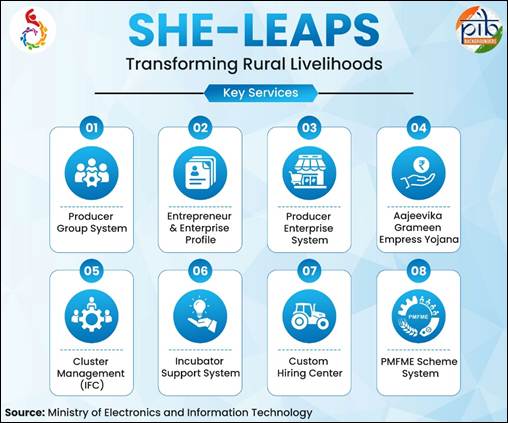
- 04 Jul 2026
In News:
The Government of India recently launched the SHE-LEAPS Platform to strengthen women-led rural entrepreneurship and accelerate the Lakhpati Didi initiative through digital monitoring and data-driven enterprise development.
About SHE-LEAPS Platform
SHE-LEAPS stands for Self-Help Entrepreneur–Livelihoods and Enterprise Application for Prosperity and Sustainability. It is a digital platform designed to empower women associated with Self-Help Groups (SHGs) by supporting enterprise creation, monitoring, and performance tracking.
Launched during the Rashtriya Gramin Vikas Sammelan, the platform aims to strengthen women-led rural enterprises by providing real-time data for better governance, planning, and policy interventions. It supports both farm and non-farm enterprises, thereby promoting diversified livelihood opportunities and sustainable rural economic growth.
The mobile application has been developed by the Digital India Corporation and is being implemented under the LokOS platform. Its nationwide rollout will cover all 34 States and Union Territories, supporting the State Rural Livelihood Missions (SRLMs) in promoting women entrepreneurship.
Objectives
The platform seeks to:
- Empower women entrepreneurs associated with Self-Help Groups across rural India.
- Strengthen women-led enterprises and support the Lakhpati Didi initiative.
- Integrate rural producers with formal value chains and markets.
- Enhance financial inclusion of SHG households.
- Promote data-driven entrepreneurship and evidence-based policymaking.
Key Features
SHE-LEAPS enables real-time monitoring of women-led enterprises by capturing operational data across different sectors and tracking the complete livelihood journey of beneficiaries.
Its major features include:
- Real-time tracking of enterprise performance and livelihood outcomes.
- Support for both farm-based and non-farm rural enterprises.
- Digital monitoring to improve transparency and governance.
- Data analytics for better planning, targeted interventions, and policy formulation.
- Integration with existing rural livelihood ecosystems to strengthen market linkages and enterprise sustainability.
About Lakhpati Didi Initiative
The Lakhpati Didi Initiative is a flagship programme under the Deendayal Antyodaya Yojana–National Rural Livelihoods Mission (DAY-NRLM) aimed at enabling women Self-Help Group members to achieve an annual household income of at least ?1 lakh through diversified livelihood activities, entrepreneurship, skill development, and financial inclusion.
Centralised IT-Enabled System (CITES) Project
- 04 Jul 2026
In News:
The Employees' Provident Fund Organisation (EPFO) recently completed a nationwide database consolidation under its Centralised IT-Enabled System (CITES) project, marking a major step towards modernising EPFO's digital service delivery.
About Centralised IT-Enabled System (CITES)
The Centralised IT-Enabled System (CITES) is EPFO's flagship digital transformation initiative aimed at creating a unified, technology-driven platform for provident fund services. Designed by the Centre for Development of Advanced Computing (C-DAC), the project seeks to automate service delivery, simplify claim processing, and improve efficiency through rule-based digital workflows.
The project replaces multiple regional databases with a single national database, enabling seamless access to EPFO services across the country.
Key Features
CITES introduces a centralized architecture that integrates all EPFO records into a single platform, allowing members to access services from any EPFO office irrespective of their place of employment.
Some of its major features include:
- Single National Database: Consolidates all EPFO records into one centralized system.
- Online Service Delivery: Enables digital KYC updates, member profile management, and various EPFO services through an online interface.
- Faster Claim Processing: Simplifies PF transfers, maintains accurate service history, and facilitates quicker claim settlements.
- Anywhere Service: Members and beneficiaries can approach any EPFO office across India for grievance redressal and assistance.
- Universal Account Number (UAN) Integration: Existing UAN and password remain valid for accessing the new platform.
- Unified Member Records: Displays all previous Member IDs linked to a single Aadhaar-based UAN, ensuring continuity of employment records.
- Electronic Claim Management: EPFO offices can process claims and communicate queries electronically, reducing paperwork and delays.
About Employees' Provident Fund Organisation (EPFO)
The Employees' Provident Fund Organisation (EPFO) is a statutory body under the Ministry of Labour and Employment responsible for administering India's social security schemes for organised sector workers.
It was established in 1952 under the provisions of the Employees' Provident Funds and Miscellaneous Provisions Act, 1952.
EPFO administers three major social security schemes:
- Employees' Provident Fund (EPF) Scheme, 1952
- Employees' Pension Scheme (EPS), 1995
- Employees' Deposit Linked Insurance (EDLI) Scheme, 1976
Taal Volcano Produces Brief Phreatomagmatic Eruption
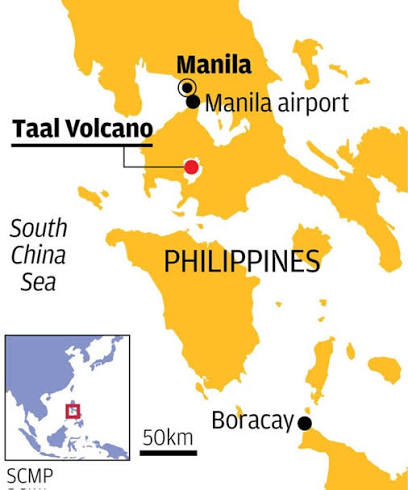
- 03 Jul 2026
In News:
The Taal Volcano in the Philippines recently witnessed a four-minute phreatomagmatic eruption, producing a 450-metre-high ash-and-steam plume. The eruption was triggered by the interaction of rising magma with water and was accompanied by volcanic tremors and gas emissions, prompting authorities to maintain close surveillance.
About Taal Volcano
Taal Volcano is located in Batangas Province, about 70 km south of Manila, and is among the most active volcanoes in the Philippines. It forms part of the Pacific Ring of Fire, one of the world's most tectonically active regions, and has recorded at least 38 eruptions over the last 450 years.
It is classified as a complex volcano by the Philippine Institute of Volcanology and Seismology (PHIVOLCS) because it consists of multiple volcanic centres, craters, cones, and stratovolcanoes, rather than a single volcanic cone.
Geological Features
Taal's present landscape is the result of repeated volcanic activity over thousands of years.
- A large caldera was formed by massive eruptions between 140,000 and 5,380 BCE.
- The caldera is now occupied by Taal Lake, covering nearly 265 sq. km.
- At the centre of the lake lies Volcano Island (about 24 sq. km).
- The island contains the Main Crater, within which lies Crater Lake.
- Inside Crater Lake is Vulcan Point, a rare geological feature—a rocky islet inside a lake, which itself lies on an island within another lake.
What is a Stratovolcano?
A stratovolcano (composite volcano) is a steep-sided volcano formed by successive layers of lava flows, volcanic ash, pyroclastic material, and rock fragments.
Key characteristics include:
- Highly viscous magma.
- Predominantly explosive eruptions.
- Commonly associated with subduction zones.
Examples: Taal, Mount Fuji, Mount St. Helens, and Mount Vesuvius.
What is a Phreatomagmatic Eruption?
A phreatomagmatic eruption occurs when magma comes into direct contact with water, such as groundwater, crater lakes, seawater, or water-rich rocks.
The sudden conversion of water into steam generates powerful explosions, fragmenting both magma and surrounding rocks and ejecting ash, steam, volcanic gases, and pyroclastic materials.
Key features include:
- Highly explosive despite relatively small magma volumes.
- Dense ash plumes and base surges.
- Associated with volcanic lightning, ballistic projectiles, and ashfall.
- Common in volcanoes containing crater lakes or abundant groundwater.
Types of Volcanic Eruptions
|
Type |
Primary Cause |
Main Products |
|
Magmatic |
Gas pressure within magma |
Lava, ash, volcanic gases |
|
Phreatic |
Heating of groundwater without fresh magma |
Steam and rock fragments |
|
Phreatomagmatic |
Direct interaction of magma with water |
Steam, ash, fragmented magma and pyroclastic materials |
Pacific Ring of Fire
The Pacific Ring of Fire is a horseshoe-shaped tectonic belt surrounding the Pacific Ocean.
- Contains nearly 75% of the world's active volcanoes.
- Accounts for about 90% of global earthquakes.
- Formed mainly due to plate subduction along convergent plate boundaries.
Countries located along the Ring of Fire include Japan, the Philippines, Indonesia, New Zealand, Chile, Peru, Mexico, and the western coast of the United States.
Why is Taal Volcano Highly Hazardous?
Taal is considered one of the world's most dangerous volcanoes because of its frequent explosive eruptions, crater lake, and dense human settlements surrounding Taal Lake.
Major hazards include:
- Ashfall.
- Pyroclastic density currents.
- Volcanic gases.
- Ballistic projectiles.
- Earthquakes and ground deformation.
- Lahars during heavy rainfall.
Transcaspian Marinka (Schizothorax pelzami)
- 03 Jul 2026
In News:
The Sangon clan of Arunachal Pradesh has launched a community-led initiative to conserve the Transcaspian Marinka (Schizothorax pelzami), a Himalayan ray-finned fish that holds ecological as well as cultural significance. The initiative aims to protect the species while preserving traditional conservation practices.
About Transcaspian Marinka
- The Transcaspian Marinka (Schizothorax pelzami) is a freshwater ray-finned fish belonging to the genus Schizothorax under the family Cyprinidae (carps and minnows).
- It is locally known as 'Ngarsing' in the Nyishi language of Arunachal Pradesh.
- The species inhabits freshwater rivers, streams, springs, and qanats (traditional underground water channels), where it occupies a benthopelagic niche, living and feeding close to the riverbed as well as in the water column.
- Although primarily distributed in Afghanistan, Turkmenistan, and Iran, populations are also reported from parts of the eastern Himalayas.
- Conservation Status: IUCN Red List: Least Concern (LC)
About Ray-Finned Fishes (Actinopterygii)
- The ray-finned fishes (Actinopterygii) constitute the largest and most diverse class of fishes, accounting for nearly half of all living vertebrate species.
- Their fins are supported by slender bony rays rather than fleshy lobes, enabling remarkable adaptability across diverse aquatic habitats.
- They inhabit a wide range of ecosystems, including high-altitude lakes and rivers, desert springs, subterranean caves, and coastal waters. Many species undertake long-distance migrations, while others possess specialised sensory systems such as vision, mechanoreception, chemoreception, electroreception, and magnetic reception, allowing them to navigate and respond effectively to their environment.
PaleoIndia Portal
- 03 Jul 2026
In News:
The Union Minister of Environment, Forest and Climate Change recently launched the PaleoIndia Portal, a first-of-its-kind national digital platform for documenting and preserving India's fossil heritage.
About PaleoIndia Portal
- The PaleoIndia Portal is a national digital repository developed jointly by the Zoological Survey of India (ZSI) and the National Centre for Sustainable Coastal Management (NCSCM), Chennai, using dynamic geological maps provided by the Geological Survey of India (GSI).
- The portal aims to create a comprehensive database of India's paleontological wealth by documenting fossil records from all 28 States and 8 Union Territories.
- It currently hosts information on more than 5,000 fossil specimens, covering a wide range of extinct organisms, including mammals, reptiles, birds, fishes, amphibians, molluscs, arthropods, echinoderms, foraminifera, and ichnofossils (trace fossils).
- A notable feature of the portal is its real-time data upload system, which enables researchers, field scientists, and citizen scientists to contribute fossil discoveries, thereby strengthening the documentation and conservation of India's paleontological heritage.
National Centre for Sustainable Coastal Management (NCSCM)
- The National Centre for Sustainable Coastal Management (NCSCM) is an autonomous institution established by the Ministry of Environment, Forest and Climate Change (MoEF&CC) in 2011 to support the conservation, protection, rehabilitation, and sustainable management of India's coastal ecosystems.
- Headquartered in Chennai, Tamil Nadu, the Centre provides scientific and policy support to the Union and State Governments on matters relating to Integrated Coastal Zone Management (ICZM).
- Its work includes coastal vulnerability assessments, environmental impact assessments, mapping of Ecologically Sensitive Areas (ESAs), and preparation of Integrated Coastal Zone Management plans.
- The Centre functions through six specialised research divisions covering Geospatial Sciences and GIS, Integrated Social Sciences and Economics, Coastal Environmental Impact Assessment, Conservation of Coastal and Marine Resources, Knowledge, Governance and Policy, and Futuristic Research & Integrated Island Management.
UNICORN (Unified Complex Radio Antenna) Mast
- 03 Jul 2026
In News:
At the 16th India–Japan Annual Summit held in New Delhi (July 2026), India and Japan announced their first-ever joint defence co-development project to manufacture the UNICORN (Unified Complex Radio Antenna) Mast for the Indian Navy. The project follows the Memorandum of Implementation (MoI) signed between the two countries in 2024 for the co-development of the system.
About UNICORN Mast
The UNICORN (Unified Complex Radio Antenna) Mast, also known as NORA-50, is a next-generation integrated communication and radar mast designed for modern naval warships. Developed by Japan, it combines multiple communication systems and radar antennas into a single integrated mast, replacing the conventional arrangement of several externally mounted antennas.
This integrated design significantly reduces the Radar Cross Section (RCS) of a warship, thereby improving its stealth capabilities, survivability, and operational effectiveness in modern maritime warfare. The system also provides secure, high-performance communication and supports network-centric naval operations in electronically contested environments.
Key Features
The UNICORN mast incorporates advanced stealth antenna technology and offers several operational advantages:
- Integrates multiple communication and radar antennas into a single mast.
- Reduces the Radar Cross Section (RCS), enhancing stealth.
- Improves secure voice and data communication.
- Minimises electromagnetic interference between communication systems.
- Enhances survivability and tactical evasion capabilities during naval operations.
- Supports advanced network-centric and digitally integrated warfare.
India–Japan Defence Collaboration
The project marks a major milestone in India–Japan defence cooperation, as it is the first joint defence manufacturing initiative between the two countries. Under the collaboration:
- Bharat Electronics Limited (BEL) will manufacture the UNICORN mast in India.
- Japanese partners will provide advanced design and technological expertise.
- India will undertake system integration, production, and installation on future Indian Navy warships.
The initiative also makes India the second Asian country, after the Philippines, to receive Japanese defence technology.
Significance for India
The project aligns closely with the 'Make in India' and Atmanirbhar Bharat initiatives by strengthening indigenous defence manufacturing and promoting technology transfer. The UNICORN mast is expected to gradually replace the Indian Navy's existing Advanced Composite Communication System (ACCS)-based external communication infrastructure with a more secure and stealth-oriented integrated system.
Strategically, the project enhances India's maritime domain awareness, strengthens naval operational capability, and deepens defence-industrial cooperation with Japan. It also reflects the growing strategic convergence between the two countries in promoting a free, open, inclusive, and rules-based Indo-Pacific, while contributing to regional maritime security and technological self-reliance.
UN Sustainable Development Report 2026
- 03 Jul 2026
In News:
India ranked 94th out of 167 countries in the 2026 Sustainable Development Goals (SDG) Index, achieving its highest-ever position with a score of 68.3/100, according to the Sustainable Development Report (SDR) 2026 released by the UN Sustainable Development Solutions Network (SDSN) during the Hamburg Sustainability Conference 2026.
About the Sustainable Development Report (SDR)
- The Sustainable Development Report (SDR) is an annual global assessment published by the United Nations Sustainable Development Solutions Network (SDSN).
- It evaluates countries' progress towards achieving the 17 Sustainable Development Goals (SDGs) adopted under the 2030 Agenda for Sustainable Development.
- The report uses the SDG Index to measure national performance based on a wide range of social, economic, environmental, and governance indicators.
Key Global Findings
- The report highlights that none of the 17 Sustainable Development Goals are currently on track to be achieved globally by 2030. Only 16.5% of SDG targets are progressing as required, while nearly half show only marginal progress and several have regressed since 2015.
- The Nordic countries continue to dominate the rankings, with Finland securing the first position, followed by Sweden and Denmark. At the other end of the index, South Sudan, the Central African Republic, and Chad occupy the lowest ranks due to prolonged conflict, political instability, and weak institutions.
- Globally, the greatest challenges remain in Zero Hunger (SDG 2), Sustainable Cities (SDG 11), Life Below Water (SDG 14), Life on Land (SDG 15), and Peace, Justice and Strong Institutions (SDG 16).
India's Performance
- India has emerged as one of the fastest-improving major economies, climbing 18 positions since the adoption of the SDGs in 2015—from 112th to 94th. However, it continues to rank behind several South Asian neighbours, including Bhutan, Nepal, Maldives, and Sri Lanka.
- The report projects that only 33.3% of India's SDG targets are likely to be achieved by 2030, while progress on many indicators remains slow.
- The most significant challenge continues to be SDG 2 (Zero Hunger). India continues to record high levels of child wasting (19%), child stunting (29.3%), and undernourishment (12%), indicating persistent nutritional concerns.
- The report also identifies major challenges in Good Health and Well-being (SDG 3), Gender Equality (SDG 5), Sustainable Cities (SDG 11), Life Below Water (SDG 14), Life on Land (SDG 15), and Peace, Justice and Strong Institutions (SDG 16).
- On the environmental front, India has shown deterioration in Responsible Consumption and Production (SDG 12) and Climate Action (SDG 13), largely due to increasing carbon emissions from fossil fuel use and cement production.
- Despite these challenges, the report acknowledges India's notable achievements in expanding electricity access (SDG 7) and improving mobile broadband and internet connectivity (SDG 9), reflecting significant progress in infrastructure and digital inclusion.
Sustainable Development Goals (SDGs)
The Sustainable Development Goals (SDGs) comprise 17 global goals and 169 targets, adopted by all 193 United Nations Member States in 2015 under the 2030 Agenda for Sustainable Development. The goals seek to eradicate poverty, reduce inequality, protect the environment, and promote inclusive and sustainable development through the guiding principle of "Leave No One Behind."
The SDGs evolved from earlier international initiatives, including the Brundtland Commission Report (1987), the Millennium Development Goals (2000), the Johannesburg Declaration (2002), and the Rio 20 Conference (2012).
India's Institutional Framework for SDG Implementation
India has established a comprehensive institutional mechanism for monitoring SDG progress.
- NITI Aayog serves as the nodal agency for SDG implementation and publishes the SDG India Index, encouraging cooperative and competitive federalism among States and Union Territories.
- The Ministry of Statistics and Programme Implementation (MoSPI) monitors progress through the National Indicator Framework (NIF) comprising 277 indicators.
- The Ministry of Panchayati Raj promotes localisation of SDGs through the Local Indicator Framework (LIF) and the Panchayat Advancement Index (PAI), which evaluates over 2.5 lakh Gram Panchayats across nine thematic areas.
Mount Erebus

- 02 Jul 2026
In News:
Mount Erebus, the world's southernmost active volcano, has recently drawn attention for its unique geological features. Besides possessing a permanent lava lake, it is the only known volcano that emits microscopic crystals of pure gold into the atmosphere during volcanic activity.
About Mount Erebus
Mount Erebus is a stratovolcano situated on the western half of Ross Island in the Ross Sea, Antarctica. It is the southernmost active volcano on Earth and the second-highest volcano in Antarctica, rising to 3,794 metres (12,448 feet) above sea level after Mount Sidley.
Unlike volcanoes located along plate boundaries, Mount Erebus is an intraplate volcano belonging to the McMurdo Volcanic Group. It is situated within the Terror Rift, a part of the West Antarctic Rift System. Although Antarctica itself is not a major tectonic plate boundary, the volcano is associated with the broader tectonic processes linked to the Pacific Ring of Fire.
One of the most remarkable features of Mount Erebus is its persistent lava lake, which has remained continuously active since at least 1972. Such permanent lava lakes are extremely rare, making Erebus one of only a handful of volcanoes worldwide with this phenomenon. Most of its eruptions are Strombolian in nature, characterised by relatively mild but frequent explosive bursts that eject incandescent volcanic bombs and lava fragments around the crater.
Unique Feature
Mount Erebus is the only known volcano in the world that naturally releases microscopic crystals of pure gold into the atmosphere. These tiny gold particles, carried by volcanic gases, are dispersed over considerable distances by prevailing winds, making the volcano geologically unique.
Gitchaknakana

- 02 Jul 2026
In News:
An international team of taxonomists has discovered a new genus and species of blind, aquifer-dwelling fish, Gitchaknakana, from a dug-out well in Assam. The discovery marks the first record of a subterranean (aquifer-dwelling) fish from Northeast India and the Eastern Himalayan region, significantly expanding the known distribution of India's underground freshwater biodiversity.
About Gitchaknakana
Gitchaknakana is a newly identified blind subterranean fish belonging to a new genus within the family Cobitidae (true loaches). The species is highly specialised for life in underground aquifers and was found in extremely low numbers in a single dug-out well. To safeguard the vulnerable population, the exact collection site has not been disclosed.
The name 'Gitchak' is derived from the Garo language, meaning 'red', referring to the fish's striking reddish colour when alive, while 'na-tok kana' means 'blind fish', reflecting the complete absence of eyes.
Habitat and Adaptations
The species is phreatobitic, meaning it spends its entire life in groundwater aquifers. Such subterranean habitats are characterised by complete darkness, stable temperatures, and limited food availability.
Like many cave and groundwater-dwelling fishes, Gitchaknakana exhibits remarkable evolutionary adaptations, including:
- Complete absence of functional eyes.
- Adaptation to permanent underground aquatic habitats.
- Highly specialised morphology suited to low-light and nutrient-poor environments.
These adaptations make subterranean fishes among the most evolutionarily distinct freshwater vertebrates.
Ecological Significance
The discovery provides the first definitive evidence that the Eastern Himalayas support highly specialisedsubterranean aquatic fauna. Earlier, such unique groundwater fishes were primarily known from the lateritic landscapes of the Western Ghats, particularly Kerala, where species such as the Blind Catfish (Horaglaniskrishnai) occur.
The finding considerably expands scientific understanding of India's hidden freshwater biodiversity and evolutionary history.
Conservation Concerns
The discovery also highlights the fragile nature of subterranean ecosystems. Species inhabiting underground aquifers generally have:
- Extremely restricted geographical distribution.
- Small population sizes.
- High vulnerability to groundwater extraction and pollution.
- Limited ability to recolonise disturbed habitats.
Researchers have also expressed concern over another cave-dwelling fish, Neolissochiluspnar, a cave mahseer from Meghalaya regarded as the world's largest cavefish, which faces increasing pressure from the international aquarium trade despite limited information on its population status.
Ayushman Sarathi
- 02 Jul 2026
In News:
The Union Minister of Health and Family Welfare recently launched 'Ayushman Sarathi', the official WhatsApp chatbot for the Ayushman Bharat Pradhan Mantri Jan Arogya Yojana (AB PM-JAY). The chatbot aims to provide citizens with easy, secure, and real-time access to various PM-JAY services through a familiar digital platform.
About Ayushman Sarathi
Ayushman Sarathi is a secure, API-based digital public health interface that operates on WhatsApp. Developed by the National Health Authority (NHA) under the Ministry of Health and Family Welfare (MoHFW), it enables beneficiaries to access PM-JAY services through simple, automated conversations on their mobile phones without visiting government offices or call centres.
The initiative seeks to improve accessibility to healthcare services, particularly for senior citizens, rural populations, and digitally underserved communities, by delivering citizen-centric services through a widely used messaging platform.
Key Features
The chatbot offers a wide range of services related to Ayushman Bharat PM-JAY, allowing beneficiaries to manage their health cards and access scheme-related information conveniently.
Its major features include:
- Checking eligibility under AB PM-JAY.
- Applying for new Ayushman Cards.
- Downloading digital health cards.
- Completing eKYC verification and updating beneficiary details.
- Locking or unlocking PM-JAY cards to prevent misuse or identity fraud.
- Managing the Ayushman Vaya Vandana Card for senior citizens aged 70 years and above.
- Viewing available insurance balance and treatment history.
- Locating nearby empanelled government and private hospitals.
- Registering, tracking, or withdrawing grievances and providing feedback on hospital services.
The chatbot is available 24×7 and can be accessed by sending "Hi" to the official WhatsApp number or by scanning the QR code issued by the National Health Authority.
Nodal Agency
- Ministry: Ministry of Health and Family Welfare (MoHFW)
- Implementing Agency: National Health Authority (NHA)
The Ayushman Sarathi Chatbot represents another important step in strengthening India's Digital Public Health Infrastructure. By leveraging the widespread use of WhatsApp, the platform simplifies access to government healthcare services without requiring users to install additional applications. It enhances transparency, improves grievance redressal, enables real-time beneficiary support, and strengthens monitoring of healthcare delivery. The initiative is expected to bridge the digital divide, particularly in rural and underserved regions, while making the implementation of Ayushman Bharat Pradhan Mantri Jan Arogya Yojana (AB PM-JAY) more accessible, efficient, and citizen-centric.
Aldabra Giant Tortoise
- 02 Jul 2026
In News:
During his visit to Seychelles, the Prime Minister of India met Jonathan, an Aldabra Giant Tortoise estimated to be 194 years old. Recognised by the Guinness World Records as the world's oldest living land animal, Jonathan has become a global symbol of longevity and wildlife conservation.
About Aldabra Giant Tortoise
The Aldabra Giant Tortoise (Aldabrachelys gigantea) is the second-largest living land tortoise in the world after the Galápagos Giant Tortoise. Endemic to the Aldabra Atoll of Seychelles in the western Indian Ocean, it is among the longest-living vertebrates, with many individuals surviving beyond 100 years and some believed to exceed 150 years.
The species is entirely terrestrial and inhabits diverse ecosystems such as scrub forests, mangrove swamps, coastal dunes, beaches, and grasslands (platins). Through continuous grazing, these tortoises create a unique vegetation type known as "tortoise turf," making them important ecosystem engineers.
Key Features
- Scientific Name:Aldabrachelys gigantea (formerly Geochelone gigantea)
- Distribution: Endemic to Aldabra Atoll, Seychelles
- Habitat: Scrub forests, mangroves, coastal dunes, beaches and grasslands
- Size: Can exceed 120 cm in length and weigh over 250 kg
- Appearance: Dark grey to black body with a highly domed shell, long neck, thick scaled legs and a small pointed head
- Diet: Herbivorous; feeds mainly on grasses, leaves, shrubs, herbs and fruits
- Lifespan: Frequently exceeds 100 years, with some individuals living over 150 years
Conservation Status
- IUCN Red List:Vulnerable (VU)
Jonathan – World's Oldest Living Land Animal
Jonathan is an Aldabra Giant Tortoise residing on the island of Saint Helena. Estimated to have been born around 1832, he is officially recognised by the Guinness World Records as the oldest living land animal, with an estimated age of 194 years.
White-Rumped Vulture

- 02 Jul 2026
In News:
A captive-bred, radio-tagged White-Rumped Vulture (Gyps bengalensis), released earlier this year in the Mudumalai Tiger Reserve (Tamil Nadu), recently died due to electrocution, highlighting the persistent threats faced by one of India's most critically endangered scavenger birds.
About White-Rumped Vulture
The White-Rumped Vulture (Gyps bengalensis) is a species of Old World vulture native to South and Southeast Asia. It is one of the three resident Gyps vultures that suffered a catastrophic population decline in the Indian subcontinent due to the veterinary use of the anti-inflammatory drug Diclofenac.
The species is also commonly known as the Indian White-backed Vulture or Oriental White-backed Vulture and plays a crucial ecological role by rapidly disposing of animal carcasses, thereby preventing the spread of diseases.
Habitat and Distribution
- The White-Rumped Vulture is primarily found in plains, though it may occasionally occur in hilly regions. It commonly inhabits villages, agricultural landscapes, and urban fringes, where livestock carcasses are readily available.
- Its geographical distribution extends across:India, Pakistan, Bangladesh, Nepal, Bhutan, Myanmar, Thailand, Laos, Cambodia, and Southern Vietnam.
Physical Characteristics
The species possesses several adaptations suited for scavenging:
- Bare, unfeathered head and neck that remain clean while feeding.
- Broad wings adapted for soaring flight.
- Short tail.
- Adults have dark blackish plumage, a white neck ruff, and a distinctive white patch on the lower back and upper tail, giving the species its name.
- Males and females are almost equal in size.
Food Habits
The White-Rumped Vulture is an obligate scavenger, feeding almost exclusively on the carcasses of dead animals, particularly livestock. By efficiently removing carcasses from the environment, it performs an important ecosystem service in maintaining environmental sanitation and reducing the risk of zoonotic diseases.
Major Threats
The species continues to face several conservation challenges:
- Veterinary use of Diclofenac, which causes fatal kidney failure in vultures.
- Electrocution and collision with power transmission lines.
- Habitat degradation and loss of nesting sites.
- Decline in food availability.
- Accidental poisoning and environmental contamination.
Conservation Status
- IUCN Red List: Critically Endangered (CR)
- Wildlife (Protection) Act, 1972: Schedule I (Highest level of legal protection)
Conservation Measures
India has undertaken several initiatives for vulture conservation, including:
- Ban on veterinary use of Diclofenac.
- Promotion of the safer alternative drug Meloxicam.
- Establishment of Vulture Conservation Breeding Centres.
- Creation of Vulture Safe Zones.
- Monitoring through radio-tagging and satellite telemetry.
- Awareness programmes to reduce anthropogenic threats.
SamagraShishu Bal SwasthyaKaryakram (SSBSK)
- 01 Jul 2026
In News:
The Union Minister of Health and Family Welfare recently launched the SamagraShishu Bal SwasthyaKaryakram (SSBSK), a comprehensive national programme aimed at providing a seamless continuum of healthcare for children from birth to 36 months of age through integrated home and community-based services.
About SamagraShishu Bal SwasthyaKaryakram (SSBSK)
The SamagraShishu Bal SwasthyaKaryakram (SSBSK) is a unified national programme that seeks to provide comprehensive care during the first three years of a child's life, a period considered critical for survival, growth, and development.
The programme integrates the existing Home-Based Newborn Care (HBNC) and Home-Based Care for Young Child (HBYC) into a single, comprehensive framework, ensuring continuity of care from birth up to 36 months.
By adopting a life-cycle approach, SSBSK strengthens preventive, promotive, curative, and developmental interventions through coordinated efforts at the household, community, and health facility levels.
Key Features
A major feature of SSBSK is its risk-stratified approach, under which newborns and children identified as "at-risk"—such as those with low birth weight, prematurity, delayed initiation of breastfeeding, or other medical vulnerabilities—receive enhanced monitoring and follow-up.
Under the programme:
- At-risk newborns will receive up to nine home visits during the first 42 days of life.
- At-risk children will receive up to eight home visits until they attain 36 months of age.
The programme also strengthens community-based service delivery by introducing:
- Well-Baby Sessions during every Village Health, Sanitation and Nutrition Day (VHSND).
- A monthly ShishuShivir at Ayushman Arogya Mandirs for regular child health assessment and counselling.
Maternal Mental Health
Recognising the importance of maternal well-being in child development, SSBSK incorporates post-partum maternal mental health screening as an integral component of community-based care.
Accredited Social Health Activists (ASHAs) will conduct early screening for mental health concerns among mothers and facilitate timely referral for appropriate assessment, counselling, and treatment whenever required.
Early Childhood Development
The programme mainstreams the concept of Nurturing Care for Early Childhood Development (ECD) by promoting:
- Responsive caregiving.
- Early learning opportunities.
- Age-appropriate play.
- Parent–child interaction to support cognitive, emotional, and social development.
Technology and Digital Integration
SSBSK places significant emphasis on digital health technologies to improve monitoring, follow-up, and continuity of care.
The programme incorporates:
- Decision Support Systems (DSS).
- Child-wise digital tracking.
- Referral and alert mechanisms.
- Risk-based follow-up of vulnerable children.
These digital systems will be integrated with several existing health platforms, including:
- JANANI Portal.
- U-WIN Portal.
- MPCDSR Portal.
- RBSK 2.0 Portal.
- POSHAN Tracker.
The integration will be enabled through Ayushman Bharat Health Account (ABHA) and Baal-ABHA IDs, ensuring seamless exchange of health information across programmes.
Inclusive Strategy
Recognising the challenges of urban healthcare delivery, SSBSK incorporates tailored strategies to strengthen home-based child healthcare services in:
- Urban slums.
- Migrant settlements.
- Other underserved and vulnerable communities.
This approach seeks to ensure equitable access to healthcare irrespective of place of residence.
Unified Health Interface (UHI)
- 01 Jul 2026
In News:
The Union Minister of Health and Family Welfare recently launched the Unified Health Interface (UHI), a key digital platform under the Ayushman Bharat Digital Mission (ABDM) aimed at creating an interoperable, inclusive, and citizen-centric digital healthcare ecosystem.
About Unified Health Interface (UHI)
The Unified Health Interface (UHI) is an interoperable digital network developed under the Ayushman Bharat Digital Mission (ABDM). It serves as the service layer of ABDM, enabling seamless interaction between patients and healthcare providers through multiple digital health applications.
The platform seeks to eliminate information asymmetry, improve access to healthcare services, and provide citizens with a wider choice of verified healthcare providers without restricting them to a single application or platform. By adopting an open-network model, UHI allows different health applications to communicate with one another through common digital protocols.
How Does UHI Work?
UHI functions through open protocols operating on the ABDM Gateway, which has been developed and is maintained by the National Health Authority (NHA).
When a citizen searches for a healthcare service using any UHI-enabled application, the request is transmitted through the ABDM Gateway to all registered healthcare providers on the network. The entire process—from discovering a healthcare provider and booking an appointment to receiving healthcare services—is carried out through a common interoperable framework, irrespective of the application being used.
The platform is integrated with key components of the Ayushman Bharat Digital Mission:
- Ayushman Bharat Health Account (ABHA) serves as the unique patient identifier.
- Healthcare Professionals Registry (HPR) verifies registered healthcare professionals.
- Health Facility Registry (HFR) authenticates healthcare institutions.
- Health Information Exchange (HIE) enables secure, consent-based sharing of health records.
Key Objectives
The Unified Health Interface has been designed with four major objectives:
- Interoperability: Enables patients and healthcare providers to use any UHI-enabled application for accessing or delivering healthcare services without platform dependency.
- Fair Discoverability: Ensures that every verified healthcare provider—irrespective of size, location, or digital platform—has an equal opportunity to be discovered by patients.
- Verification and Trust: Allows participation only by healthcare professionals and facilities verified through the HPR and HFR, thereby ensuring authenticity and trust.
- Open Protocols: Provides publicly accessible technical standards that allow developers to build innovative health applications in multiple languages and across different devices.
PM Family Care Tracker (PM-FCT)
- 01 Jul 2026
In News:
The Union Home and Cooperation Minister recently launched the PM Family Care Tracker (PM-FCT) as a pilot project in Gujarat. The digital platform aims to strengthen maternal and child health, nutrition, and family welfare through integrated monitoring and timely delivery of government welfare services.
About PM Family Care Tracker (PM-FCT)
The PM Family Care Tracker (PM-FCT) is a family-centric digital platform designed to ensure that pregnant women, mothers, children, and adolescents receive all eligible government benefits through continuous monitoring, real-time tracking, and timely intervention.
Unlike existing systems that maintain separate records for different welfare schemes, PM-FCT adopts a single integrated family-based approach, enabling authorities to monitor the health, nutrition, education, and welfare status of every family member through one digital interface.
The platform digitally tracks the complete life cycle of a child—from pregnancy to 18 years of age—while facilitating seamless delivery of health and social welfare services.
Key Features
The platform provides end-to-end digital monitoring of major health and development milestones, including:
- Antenatal and postnatal care.
- Immunisation schedules.
- Nutrition and growth monitoring.
- School enrolment and attendance.
- Adolescent health services.
It also offers Digital Health Passports for individuals and families, integrated dashboards for government departments, and automated alerts to improve service delivery.
For instance, if a child misses a scheduled vaccination or drops out of school, the system automatically generates alerts that are sent to local officials, public representatives, and community volunteers, enabling timely intervention.
Integrated Digital Governance
PM-FCT seeks to improve convergence among multiple government departments by integrating information from:
- Birth and death registration systems.
- Health databases.
- Nutrition programmes.
- Education records.
- Family welfare databases.
This integrated approach is expected to minimise duplication, improve coordination, and ensure that eligible beneficiaries receive services without delay.
Objectives
The initiative aims to:
- Improve maternal and child health outcomes.
- Ensure timely delivery of welfare benefits.
- Reduce Maternal Mortality Ratio (MMR) and Infant Mortality Rate (IMR).
- Address child malnutrition through continuous monitoring.
- Reduce service delivery gaps through real-time digital tracking.
- Promote evidence-based decision-making and targeted interventions.
Pilot Implementation
The pilot phase will initially be implemented in Gandhinagar district, Gujarat. Based on its performance and outcomes, the platform is proposed to be expanded across Gujarat and subsequently replicated in other States.
3D-Printed Artificial Reefs
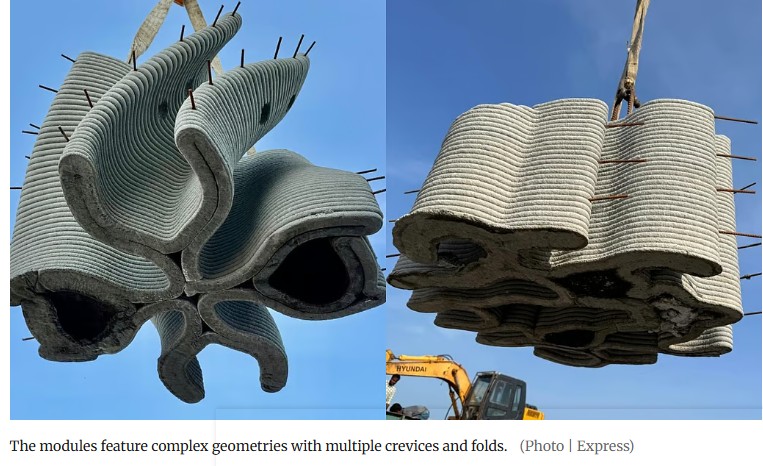
- 01 Jul 2026
In News:
Tamil Nadu is set to deploy India's first 3D-printed artificial reef modules off the Ramanathapuram coast under the second phase of the Pradhan Mantri Matsya Sampada Yojana (PMMSY).
About India's First 3D-Printed Artificial Reefs
- The pilot project involves the deployment of six newly designed artificial reef modules in coastal waters to evaluate their structural durability and ecological performance under local marine conditions. Based on the results, the technology may be adopted for larger-scale reef restoration programmes.
- The project is being implemented by the Tamil Nadu Department of Fisheries in collaboration with the Visakhapatnam Regional Centre of the ICAR–Central Marine Fisheries Research Institute (CMFRI). The reef modules have been developed by Tvasta, an IIT Madras-incubated startup, with each module weighing approximately one tonne.
- Unlike conventional reinforced concrete reefs, the new modules are manufactured without iron reinforcement using advanced 3D-printing technology. Their intricate design incorporates numerous crevices, folds, cavities, and textured attachment surfaces, increasing porosity and providing ideal habitats for corals, sponges, algae, fish, and other reef-associated organisms.
- The initiative forms part of a broader artificial reef programme covering 213 sites across Tamil Nadu and is jointly funded by the Central and State Governments in a 60:40 ratio.
What are 3D-Printed Artificial Reefs?
- 3D-printed artificial reefs are specially designed underwater structures created to restore marine ecosystems where natural coral reefs have been damaged or degraded.
- They use additive manufacturing (3D printing) techniques to produce highly customised reef structures that closely resemble natural reef habitats.
- Compared to traditional artificial reefs, 3D printing allows greater flexibility in designing species-specific habitats with varying cavity sizes, complex surface textures, and intricate geometries that encourage the settlement and growth of diverse marine organisms.
Ecological Importance
These artificial reefs serve multiple ecological functions:
- Provide shelter, breeding grounds, and nursery habitats for marine organisms.
- Promote colonisation by corals, sponges, algae, crustaceans, molluscs, and reef fishes.
- Enhance marine biodiversity and restore degraded coastal ecosystems.
- Increase fish biomass, thereby supporting sustainable fisheries and improving the livelihoods of fishing communities.
- Reduce ecological pressure on natural coral reef ecosystems.
Challenges
Despite their potential, the long-term success of artificial reefs depends upon several factors, including:
- Structural durability in marine conditions.
- Use of environmentally safe and non-toxic construction materials.
- Appropriate site selection and deployment.
- Continuous ecological monitoring to assess biodiversity recovery and ecosystem functioning.
Artificial reefs may not always achieve the intended ecological outcomes if these factors are not carefully addressed.
Pradhan Mantri Matsya Sampada Yojana (PMMSY)
The Pradhan Mantri Matsya Sampada Yojana (PMMSY) was launched on 10 September 2020 to usher in a Blue Revolution by promoting sustainable, inclusive, and responsible development of India's fisheries sector.
The scheme seeks to increase fish production and productivity, modernise fisheries infrastructure, strengthen post-harvest management, improve quality standards, and enhance the incomes of fishers and fish farmers.
Initially approved with an outlay of ?20,050 crore for the period 2020–21 to 2024–25, the scheme has now been extended until 2025–26.
PMMSY comprises:
- Central Sector Scheme – fully funded by the Central Government.
- Centrally Sponsored Scheme – implemented by States with shared funding.
The programme supports fisheries infrastructure, climate-resilient coastal villages, women-led fisheries enterprises, biofloc technology, digital fisheries platforms, and sustainable aquaculture practices.
Achievements of PMMSY
Since its launch, PMMSY has significantly strengthened India's fisheries sector:
- Fish production increased to 195 lakh tonnes in 2024–25.
- Fisheries exports have expanded substantially.
- Approximately 58 lakh livelihoods have been generated.
- More than 99,000 women have been economically empowered through fisheries-related activities.
Anemia Mukt Bharat (AMB) Abhiyaan
- 01 Jul 2026
In News:
The Ministry of Health and Family Welfare has released the Anemia Mukt Bharat (AMB) Abhiyaan Operational Guidelines, marking eight years of the flagship initiative. The revised guidelines introduce a strengthened strategy aimed at accelerating India's efforts to reduce anemia through improved screening, treatment, digital monitoring, and community participation.
What is Anemia Mukt Bharat (AMB)?
Launched in 2018 under the National Health Mission (NHM), Anemia Mukt Bharat (AMB) is the Government of India's flagship programme to reduce the prevalence of anemia through a life-cycle approach. The programme addresses both nutritional and non-nutritional causes of anemia by targeting vulnerable population groups through preventive, diagnostic, and therapeutic interventions.
Key Highlights of the Revised Operational Guidelines
The revised guidelines mark a significant shift in India's anemia control strategy by moving from prophylactic (preventive) care towards therapeutic care, emphasising early diagnosis, active case management, and continuous follow-up.
A major reform is the expansion of the earlier 6×6×6 strategy into a 7×7×7 framework by introducing:
- 7th Beneficiary Group:Low Birth Weight (LBW) babies (0–6 months) to break the intergenerational cycle of anemia.
- 7th Intervention:"Eating Right", promoting regular consumption of diversified, iron-rich diets.
- 7th Institutional Mechanism: A digitally integrated Monitoring and Evaluation Framework to improve accountability and programme monitoring.
The programme also adopts the T4 Strategy—Test, Treat, Talk and Track—replacing the earlier T3 (Test, Treat, Talk) model. The addition of "Track" ensures systematic referral, follow-up, and continuity of care for beneficiaries.
For severe anemia and cases unresponsive to oral iron therapy, particularly among pregnant and lactating women, the guidelines institutionaliseIntravenous Iron Therapy using Ferric Carboxymaltose (FCM) and Iron Sucrose as standard treatment options.
Digital Integration
To strengthen programme implementation, a centralized Anemia Mukt Bharat Portal will integrate data from multiple health platforms, including:
- JANANI Portal (maternal health screening)
- RBSK Portal (Rashtriya Bal SwasthyaKaryakram)
- U-WIN Portal (Universal Immunization Programme)
This integrated digital architecture will facilitate real-time monitoring, beneficiary tracking, and evidence-based decision-making.
Major Interventions under AMB
The programme adopts a comprehensive strategy to address anemia across different stages of life. Key interventions include:
- Prophylactic Iron-Folic Acid (IFA) supplementation through age-specific, colour-coded tablets and syrups.
- Biannual deworming under the National Deworming Day (NDD) conducted every year on 10 February and 10 August for children and adolescents, while pregnant women receive deworming during the second trimester through antenatal care.
- Food fortification by promoting iron and folic acid-fortified foods in government nutrition programmes.
- Screening and treatment of non-nutritional causes of anemia such as malaria, haemoglobinopathies (including Sickle Cell Disease), and fluorosis.
- Community mobilisation through Jan Bhagidari and Jan Chetna campaigns to promote behavioural change and awareness.
What is Anemia?
Anemia is a condition in which the blood has insufficient healthy red blood cells or haemoglobin to adequately transport oxygen to body tissues. Although iron deficiency is the most common cause, anemia may also result from deficiencies of folate, Vitamin B12, and Vitamin A, as well as chronic diseases and inherited blood disorders.
According to the World Health Organization (WHO):
- Women of reproductive age are considered anaemic when haemoglobin is below 12 g/dL.
- Children below five years are considered anaemic when haemoglobin is below 11 g/dL.
Health Impacts
Anemia has serious consequences across all age groups. It causes fatigue, reduced physical capacity, impaired cognitive development, weakened immunity, and lower productivity.
Among pregnant women, anemia significantly increases the risk of:
- Maternal mortality.
- Premature delivery.
- Low Birth Weight (LBW) babies.
- Perinatal mortality.
The condition disproportionately affects:
- Children below five years.
- Adolescent girls.
- Pregnant and postpartum women.
Extent of the Problem
According to NFHS-5, anemia continues to be a major public health challenge in India:
- 67.1% of children below five years.
- 59.1% of adolescent girls (15–19 years).
- 57.0% of women (15–49 years).
- 52.2% of pregnant women.
Globally, the WHO estimates that anemia affects:
- 40% of children aged 6–59 months.
- 37% of pregnant women.
- 30% of non-pregnant women aged 15–49 years.
Kudankulam Nuclear Power Project (KKNPP)
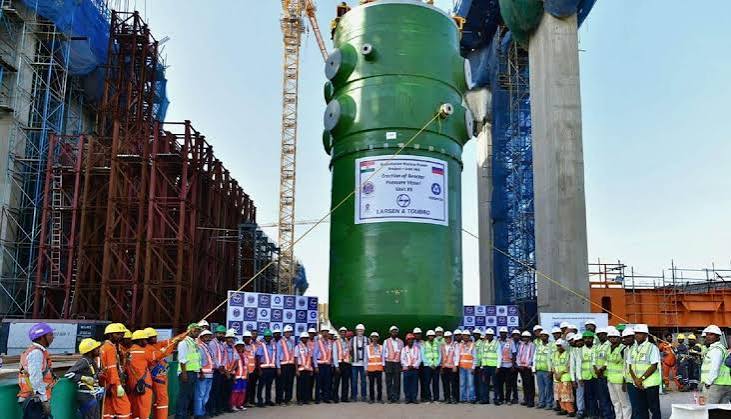
- 23 Jun 2026
In News:
The Nuclear Power Corporation of India Limited (NPCIL) successfully installed the Reactor Pressure Vessel (RPV) at Unit-5 of the Kudankulam Nuclear Power Project (KKNPP) in Tamil Nadu, marking a major milestone in India's nuclear energy expansion. The installation followed clearance from the Atomic Energy Regulatory Board (AERB) and was carried out with technical support from Russia's Rosatom.
About Kudankulam Nuclear Power Project (KKNPP)
- The Kudankulam Nuclear Power Project (KKNPP) is India's largest nuclear power project, located in Tirunelveli district, Tamil Nadu.
- It is being developed by the Nuclear Power Corporation of India Limited (NPCIL) under a long-standing India–Russia Intergovernmental Agreement signed in 1988.
- The project is being constructed in phases with six units, each employing Russian-designed VVER-1000 (Water-Water Energetic Reactor) technology—a type of Pressurized Water Reactor (PWR) that uses light water as both coolant and neutron moderator.
Recent Development
- NPCIL completed the installation of the Reactor Pressure Vessel (RPV) at Unit-5, one of the most critical milestones in reactor construction.
- The installation was executed using the 'open-top' installation method, where heavy reactor equipment is lowered into the reactor building before the containment dome is installed.
- The activity was undertaken with technical assistance from Rosatom and its engineering arm Atomstroyexport (ASE) after obtaining the necessary approvals from the Atomic Energy Regulatory Board (AERB).
Reactor Pressure Vessel (RPV)
- The Reactor Pressure Vessel (RPV) is the core component of a nuclear reactor, often referred to as its "heart." It is a massive steel vessel weighing around 320 tonnes and houses the reactor core, where controlled nuclear fission takes place to generate heat for electricity production.
Significance
The operational Units 1 and 2 of Kudankulam have already generated over 127 billion kWh of electricity, avoiding more than 112 million tonnes of CO? emissions while reducing dependence on coal-based power generation.
Once all six units become operational, the project will achieve a total installed capacity of 6,000 MWe, making Kudankulam one of India's largest nuclear power hubs. The project will play a crucial role in enhancing energy security, expanding the share of clean baseload power, and supporting India's target of achieving 100 GW of nuclear power capacity by 2047 under the Nuclear Energy Mission for Viksit Bharat.
The project also exemplifies the strategic depth of India–Russia cooperation in the field of civilian nuclear energy.
REWARD Programme
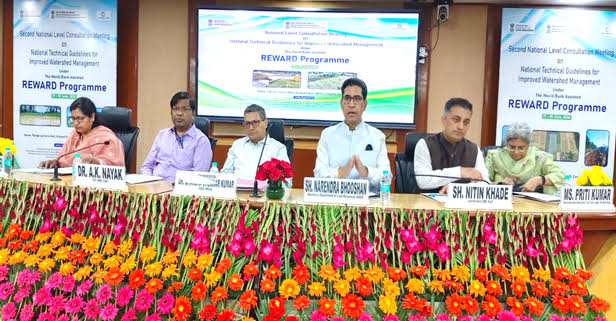
- 23 Jun 2026
In News:
The National Rainfed Area Authority (NRAA) convened a meeting to deliberate on the Draft National Technical Guidelines (NTG) for Improved Watershed Management under the REWARD Programme, aimed at promoting climate-resilient and science-based watershed development.
What is the REWARD Programme?
The REWARD (Rejuvenating Watersheds for Agricultural Resilience through Innovative Development) Programme is a World Bank-assisted watershed development programme implemented by the Department of Land Resources (DoLR), Ministry of Rural Development, in collaboration with the States of Karnataka and Odisha.
Implemented during 2021–2026, the programme seeks to modernize watershed management by integrating scientific approaches, strengthening institutional capacity, and enhancing climate resilience in rainfed agricultural areas.
Objectives
The programme aims to:
- Strengthen the capacity of national and state institutions for improved watershed management.
- Enhance the resilience of farmers to climate change.
- Promote sustainable agricultural practices and support value-chain development in selected watersheds.
- Introduce modern, science-based watershed management techniques.
Implementation Mechanism
The REWARD Programme is financed through the World Bank's Program-for-Results (PforR) financing instrument. Under this model, financial assistance is released based on the achievement of Disbursement Linked Indicators (DLIs), ensuring that funding is directly linked to measurable outcomes and institutional performance.
Key Result Areas
The programme focuses on two major result areas:
- Strengthening institutions and policy frameworks for watershed development.
- Science-based watershed management to improve climate resilience, natural resource conservation, and sustainable livelihoods.
Mombasa Declaration
- 23 Jun 2026
In News:
Fifteen countries from Africa, Asia, Europe, the Caribbean, and the Pacific adopted the Mombasa Declaration during the 11th Our Ocean Conference (OOC) 2026 in Mombasa, Kenya, to strengthen global efforts against Illegal, Unreported and Unregulated (IUU) Fishing.
What is the Mombasa Declaration?
The Mombasa Declaration is a multilateral commitment adopted by 15 countries to enhance transparency, strengthen international cooperation, and improve governance in the fisheries sector to combat Illegal, Unreported and Unregulated (IUU) fishing.
Named after the host city of Mombasa (Kenya), the declaration seeks to improve monitoring of fishing activities by promoting greater access to information on fishing vessels, ownership, licensing, and cross-border data sharing.
Objectives
The declaration aims to:
- Combat Illegal, Unreported and Unregulated (IUU) fishing.
- Improve transparency in fisheries governance.
- Strengthen international cooperation and information sharing.
- Enhance monitoring, compliance, and enforcement mechanisms.
- Protect marine ecosystems and ensure sustainable fisheries.
Key Features
The declaration calls upon participating governments to:
- Improve access to information on fishing vessels, ownership, and licensing.
- Strengthen data sharing among countries for better monitoring of fishing activities.
- Modernize vessel registries and publish fishing authorizations.
- Support the Global Charter for Fisheries Transparency, which contains 10 policy principles for improving fisheries governance through low-cost institutional reforms.
The declaration was signed by Belgium, Cameroon, Chile, the Dominican Republic, France, Gambia, Ghana, Guinea, Liberia, Panama, Papua New Guinea, Peru, Republic of the Congo, Somalia, and South Korea.
Why is IUU Fishing a Concern?
Illegal, Unreported and Unregulated (IUU) fishing undermines sustainable fisheries management by depleting fish stocks, damaging marine biodiversity, distorting markets, and threatening the livelihoods and food security of millions of people dependent on fisheries. It also causes significant economic losses and weakens maritime governance.
Our Ocean Conference (OOC)
The Our Ocean Conference (OOC) is a global platform launched in 2014 by the U.S. Department of State under the leadership of former U.S. Secretary of State John Kerry. It brings together governments, international organizations, businesses, civil society, and academia to mobilize commitments for ocean conservation and sustainable use of marine resources.
The conference focuses on six priority areas:
- Marine Protected Areas (MPAs)
- Sustainable Blue Economy
- Climate Change
- Maritime Security
- Sustainable Fisheries
- Marine Pollution
Since its inception, the conference has generated over 2,600 commitments worth more than USD 160 billion.
The 11th Our Ocean Conference (2026) was held in Mombasa, Kenya, marking the first time the conference was hosted on the African continent, under the theme "Our Ocean, Our Heritage, Our Future."
Exercise Pitch Black 2026
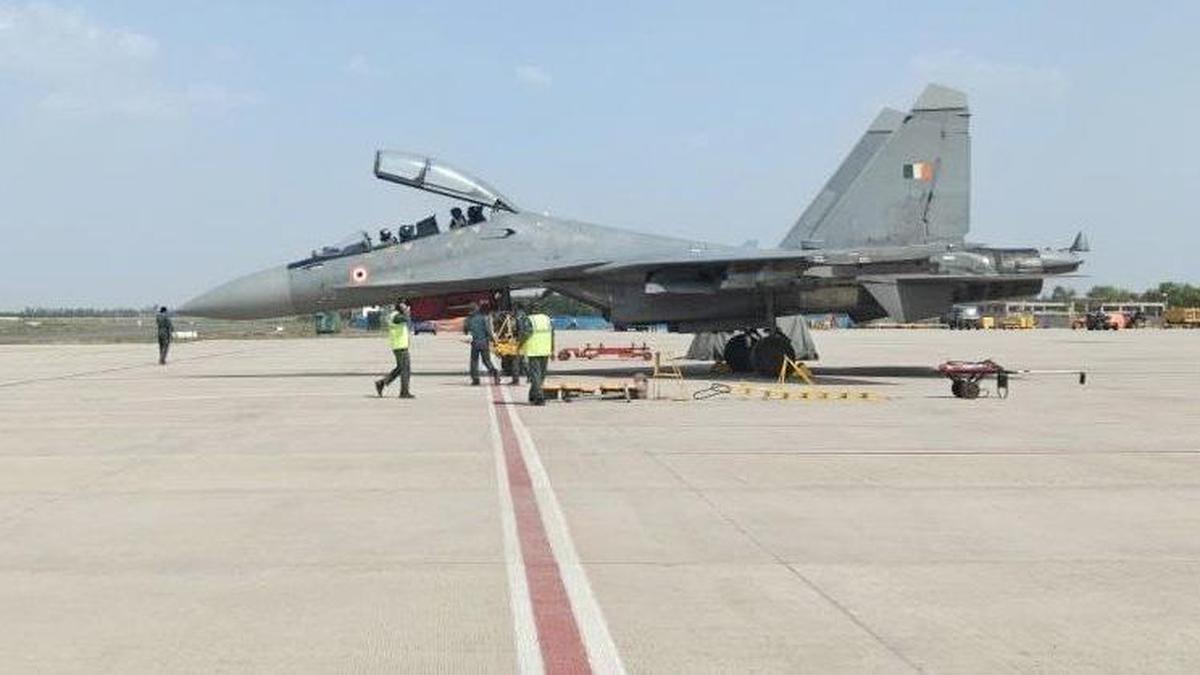
- 23 Jun 2026
In News:
The Indian Air Force (IAF) will participate in Exercise Pitch Black 2026, a major multinational air combat exercise hosted by the Royal Australian Air Force (RAAF) in Australia's Northern Territory.
About Exercise Pitch Black
Exercise Pitch Black is the largest multinational air combat exercise conducted by the Royal Australian Air Force (RAAF). Held biennially, it brings together air forces from across the Indo-Pacific and other partner nations to undertake realistic, high-intensity air warfare training in a complex operational environment.
The 2026 edition is scheduled from 20 July to 7 August 2026 in Australia's Northern Territory.
Objectives
The exercise aims to:
- Enhance operational interoperability among participating air forces.
- Strengthen military cooperation and coordination.
- Improve capabilities in high-intensity air combat operations.
- Promote the exchange of best practices, tactics, techniques, and procedures (TTPs).
Key Features
Exercise Pitch Black 2026 will involve:
- More than 100 aircraft and thousands of military personnel.
- Advanced air combat tactics, mission planning, and integrated operational training.
- Realistic scenarios involving offensive and defensive air operations, multinational coordination, and complex mission execution.
The exercise will witness participation from over 19 countries, including India, Australia, the United States, the United Kingdom, Japan, France, Indonesia, Singapore, South Korea, Canada, and several other Indo-Pacific partners.
India–Australia Defence Exercises
|
Exercise |
Service |
|
Pitch Black |
Air Force |
|
AUSTRA HIND |
Army |
|
AUSINDEX |
Navy |
|
MALABAR |
Multilateral Naval Exercise (India, USA, Japan & Australia) |
Kanchan Devi Committee
- 23 Jun 2026
In News:
The Supreme Court-appointed Kanchan Devi Committee has come under scrutiny after environmental experts and former officials sought its restructuring, citing concerns over its composition and its ability to independently review the protection framework for the Aravalli Range.
What is the Kanchan Devi Committee?
The Kanchan Devi Committee is an expert committee constituted by the Supreme Court on 25 May 2026 to review its earlier judgment concerning the protection and classification of the Aravalli Range. The committee has been tasked with examining the existing legal and administrative framework governing the Aravallis and recommending measures for effective environmental conservation, forest demarcation, and sustainable land-use management.
Objectives
The committee aims to:
- Review the existing framework for Aravalli conservation.
- Recommend measures for forest identification and demarcation.
- Suggest strategies for sustainable land-use planning.
- Balance environmental protection with developmental requirements.
Concerns Raised
Environmental experts and former officials have questioned the present composition of the committee.
Major concerns include:
- Absence of independent experts in ecology, hydrology, wildlife conservation, GIS, and public health.
- Potential conflict of interest, as the committee largely functions within the same administrative framework that earlier determined Aravalli boundaries.
- Overrepresentation of bureaucrats, with limited participation from multidisciplinary scientific experts.
- Insufficient representation of experts familiar with mining and ecological challenges in Haryana and Rajasthan.
- Concern that any reassessment of Aravalli protection should be undertaken only after completing forest identification under the Godavarman framework.
Significance
The committee's recommendations will have significant implications for the future management of the Aravalli Range, one of the world's oldest fold mountain systems. Its findings could shape policies relating to forest conservation, groundwater recharge, biodiversity protection, desertification control, and regulation of mining, quarrying, and urban expansion.
The debate surrounding the committee also highlights the importance of scientific expertise, transparency, and institutional independence in environmental governance and judicially supervised conservation efforts.
New Development Bank (NDB)

- 22 Jun 2026
In News:
Uzbekistan has officially joined the New Development Bank (NDB) as its 10th member, becoming the first Central Asian country to join the BRICS-led multilateral development bank.
What is the New Development Bank (NDB)?
The New Development Bank (NDB) is a multilateral development bank established by the BRICS countries—Brazil, Russia, India, China, and South Africa—to mobilize resources for infrastructure and sustainable development projects in BRICS nations and other Emerging Market and Developing Economies (EMDEs).
The decision to establish the bank was taken during the 6th BRICS Summit held in Fortaleza, Brazil (2014), and the bank became operational in 2015. Its headquarters are located in Shanghai, China.
Capital Structure
The NDB has an authorized capital of USD 100 billion, with an initial subscribed capital of USD 50 billion, contributed equally by the five founding BRICS members. The equal contribution reflects the bank's commitment to balanced ownership and governance.
Governance Structure
Unlike traditional multilateral financial institutions such as the World Bank, the NDB follows a more equitable governance model.
- Every member country has one vote, ensuring equal representation.
- No member enjoys veto power, promoting collective decision-making.
- Voting rights are not directly linked to capital contribution.
- However, the combined voting share of the five founding BRICS members must remain above 55%, preserving the institution's original character.
Membership
Membership of the NDB is open to all member states of the United Nations, subject to the provisions of its Articles of Agreement.
Current Members
- Founding Members: Brazil, Russia, India, China, South Africa
- Bangladesh (2021)
- United Arab Emirates (2021)
- Egypt (2023)
- Algeria (2025)
- Uzbekistan (2026)
Additionally, Uruguay, Colombia, and Ethiopia have been approved for membership and will become full members after completing the accession process.
Varya AI Model
- 22 Jun 2026
In News:
The Ministry of Electronics and Information Technology (MeitY) has unveiled "Varya", India's first indigenous distilled video story-generating Artificial Intelligence (AI) model, aimed at making advanced generative AI affordable, efficient, and culturally relevant.
What is Varya?
Varya is an indigenous foundation AI model designed to generate high-quality videos from text prompts (text-to-video) and images (image-to-video). Developed by Avataar, an AI-native transformation company, the model uses AI model distillation to deliver faster and cost-effective video generation while preserving high-quality outputs.
The platform enables users to transform simple ideas, written prompts, or uploaded images into engaging digital stories, thereby democratizing access to advanced generative AI technologies.
Objective
Varya aims to make high-end generative AI accessible across India by significantly reducing computational costs, hardware requirements, and language barriers. It seeks to promote inclusive AI adoption among educators, students, entrepreneurs, MSMEs, and content creators.
Key Features
A major innovation of Varya is its use of AI model distillation, a technique that compresses a large AI model into a smaller and more efficient version without substantial loss of performance. As a result, the model generates high-quality videos in only four inference steps, compared to nearly fifty steps required by conventional models.
The platform offers:
- Text-to-video and image-to-video generation.
- Low-cost video creation at approximately ?0.48 per second.
- Ability to extend short videos into long-form narratives through an "Idea → Video → Story" workflow.
- Strong Indian cultural contextualization, accurately depicting regional festivals, attire, food habits, languages, and everyday life.
AI Model Distillation
Model Distillation is a machine learning technique in which a large, complex AI model (teacher model) transfers its knowledge to a smaller, lightweight model (student model). The distilled model retains much of the original model's performance while requiring significantly lower computational resources, making deployment faster, cheaper, and more energy-efficient.
Abhigyan App
- 22 Jun 2026
In News:
The Union Home Minister launched the Abhigyan App in New Delhi to strengthen technology-driven policing and improve real-time access to criminal records for law enforcement agencies across the country.
What is the Abhigyan App?
The Abhigyan App is a centralized mobile platform developed by the National Crime Records Bureau (NCRB) to enable police personnel to access and utilize crime-related data efficiently in the field. It aims to enhance investigation, identification of criminals, and evidence-based policing by providing instant access to a nationwide database of criminal records.
The application forms part of the Government's broader initiative to modernize policing through digital technologies and integrated criminal information systems.
Key Features
The app enables field-level police personnel to securely access a vast repository of criminal records directly through their smartphones, reducing dependence on manual verification.
Its major features include:
- Real-time fingerprint identification linked to a centralized national database.
- Two-step authentication to ensure secure access.
- Fast identification of suspects with high portability and ease of use.
- Access to millions of criminal records from a single platform.
During the demonstration, fingerprints were successfully matched with the national database in approximately 35 seconds, enabling quicker identification during investigations.
Link with NAFIS
The Abhigyan App is integrated with the National Automated Fingerprint Identification System (NAFIS), India's centralized fingerprint database.
NAFIS stores the fingerprint records of accused persons, convicts, and prison inmates on a unified digital platform, enabling rapid identification and seamless sharing of fingerprint data among law enforcement agencies across the country.
National Crime Records Bureau (NCRB)
The National Crime Records Bureau (NCRB) was established in 1986 as the national repository of crime and criminal-related information. It functions under the Ministry of Home Affairs (MHA) and is headquartered in New Delhi.
The Bureau was established based on the recommendations of:
- Tandon Committee
- National Police Commission (1977–1981)
- Task Force of the Ministry of Home Affairs
NCRB is responsible for maintaining national crime databases, supporting criminal justice administration, and developing technology-driven policing solutions such as NAFIS and the Crime and Criminal Tracking Network & Systems (CCTNS).
BGP Hijacking
- 22 Jun 2026
In News:
Following the temporary blocking of Telegram in India, the platform's founder Pavel Durov alleged that its global accessibility was being affected through Border Gateway Protocol (BGP) hijacking, bringing renewed attention to one of the Internet's most significant routing vulnerabilities.
What is BGP Hijacking?
Border Gateway Protocol (BGP) Hijacking is a cyber incident in which Internet traffic is maliciously or accidentally redirected by falsely advertising ownership of IP address ranges. It exploits weaknesses in the Border Gateway Protocol (BGP), the protocol responsible for routing data between large networks across the Internet.
The Internet consists of thousands of independent networks called Autonomous Systems (AS), operated by Internet Service Providers (ISPs), telecom companies, cloud providers, and large organizations. These Autonomous Systems exchange routing information through BGP, allowing data to travel efficiently across the global Internet.
How Does BGP Hijacking Work?
BGP operates largely on a system of mutual trust, where Autonomous Systems accept routing announcements made by other networks.
During a BGP hijack, a rogue or misconfigured Autonomous System falsely announces that it has the best route to a particular IP address range. Since BGP generally prefers more specific IP prefixes or shorter routing paths, other networks may begin forwarding traffic through the rogue network instead of the legitimate destination.
As a result, Internet traffic intended for a genuine service is diverted, leading to disruption or unauthorized interception.
Key Features
BGP hijacking exploits several characteristics of Internet routing:
- Route Preference: BGP prioritizes more specific prefixes and shorter paths, making false advertisements highly effective.
- Traffic Blackholing: Diverted traffic may simply be discarded, resulting in denial of service and making websites or applications inaccessible.
- Man-in-the-Middle (MitM) Attacks: Instead of dropping traffic, attackers may intercept, monitor, or manipulate data before forwarding it to its intended destination.
- Rapid Global Propagation: Since Autonomous Systems continuously exchange routing information, a false routing announcement can spread globally within minutes, affecting users across multiple countries.
Implications
BGP hijacking poses a significant threat to the stability and security of the global Internet. It can cause widespread service disruptions, interrupt access to major websites and digital platforms, and create opportunities for cyber espionage and data theft. If intercepted traffic is not encrypted, attackers may obtain sensitive information such as login credentials and confidential communications. Such incidents also have implications for national cybersecurity, critical infrastructure protection, financial systems, and digital sovereignty.
Reciprocal Exchange of Logistics Agreement (RELOS)
- 22 Jun 2026
In News:
The India–Russia Reciprocal Exchange of Logistics Agreement (RELOS), also known as the Logistics Support Agreement (LSA), became operational in January 2026, strengthening defence cooperation by enabling reciprocal logistical support during agreed military activities.
What is RELOS?
The Reciprocal Exchange of Logistics Agreement (RELOS) is a bilateral logistics support agreement between India and Russia that establishes a standardized framework for the reciprocal use of each other's military bases, ports, and airfields for logistical support. It is a non-offensive administrative and technical arrangement intended to facilitate refuelling, replenishment, maintenance, and other logistical services during mutually agreed military engagements.
The agreement was signed on 18 February 2025 in Moscow and entered into force in January 2026.
Objectives
The primary objective of RELOS is to simplify logistical cooperation between the armed forces of both countries by replacing time-consuming case-by-case approvals with a standardized mechanism. This enhances operational efficiency, reduces administrative delays, and extends the operational reach of Indian and Russian naval and air assets.
Key Features
The agreement can be activated only during mutually agreed activities, including:
- Joint military exercises.
- Military training.
- Humanitarian Assistance and Disaster Relief (HADR) operations.
- Official port visits and naval deployments.
Under the agreement, both countries can access a wide range of logistical services such as:
- Fuel, petroleum, oils and lubricants (POL).
- Food, fresh water and accommodation.
- Transport and storage facilities.
- Medical assistance.
- Maintenance, repair, calibration and spare parts support.
A notable provision is the administrative ceiling of 3,000 military personnel, which merely facilitates logistical planning for large temporary deployments during exercises. It does not permit permanent deployment or stationing of troops.
Importantly, the agreement contains a strict non-basing clause, explicitly prohibiting the establishment of permanent military bases or long-term deployment of troops or military assets on each other's territory.
The agreement has an initial validity of five years, after which it may be reviewed or modified by mutual consent.
RBI Surplus Transfer to the Government & Economic Capital Framework (ECF)
- 21 Jun 2026
In News:
The Reserve Bank of India (RBI) approved a record surplus transfer of ?2.87 lakh crore to the Union Government for FY 2025–26, the highest ever, surpassing the previous record of ?2.11 lakh crore. The transfer has renewed debate on the RBI's expanding fiscal role, central bank independence, and fiscal federalism.
What is RBI Surplus Transfer?
- The Reserve Bank of India earns income from interest on government securities, foreign exchange reserves, liquidity management operations, and returns on its investments.
- After meeting its operational expenses and maintaining the prescribed risk buffers under the Economic Capital Framework (ECF), the remaining surplus is transferred to the Government of India as non-tax revenue.
- Traditionally, annual transfers ranged between ?30,000 crore and ?65,000 crore. However, following the adoption of the revised Economic Capital Framework in 2019, surplus transfers have increased substantially, reaching ?2.11 lakh crore in FY24 and ?2.87 lakh crore in FY26.
Economic Capital Framework (ECF)
- The Economic Capital Framework (ECF) was recommended by the Bimal Jalan Committee and adopted by the RBI in 2019. It provides a transparent and rule-based mechanism for determining the level of capital and risk buffers the RBI should maintain before transferring surplus to the government.
- The framework seeks to balance financial stability with the government's fiscal requirements by ensuring that the RBI retains adequate resources to absorb potential financial, monetary, and exchange rate risks.
Major Components of the ECF
|
Component |
Provision |
|
Contingent Risk Buffer (CRB) |
4.5%–7.5% of the RBI balance sheet to absorb monetary and financial stability risks. |
|
Contingency Fund (CF) |
5.5%–6.5% of the balance sheet to meet unforeseen losses; surplus beyond this can be transferred. |
|
Economic Capital (including CGRA) |
20.8%–25.4% of the balance sheet, covering capital, reserves, and revaluation balances. |
|
Review Cycle |
Every five years; first review undertaken in 2025. |
Why has the Surplus Increased?
The sharp increase reflects the rapid expansion of the RBI's balance sheet, which grew by 20.6% to ?91.97 lakh crore by March 2026. Higher income from foreign exchange reserve management, government securities, and gold and foreign asset rebalancing significantly boosted the central bank's earnings, enabling a larger surplus transfer while remaining within the ECF-prescribed risk buffer limits.
Significance
The record dividend strengthens the Union Government's fiscal position by providing substantial non-tax revenue, thereby supporting fiscal consolidation and reducing dependence on market borrowings. Lower government borrowing helps moderate Government Security (G-Sec) yields, easing financing costs across the economy. It also creates fiscal space to sustain capital expenditure on infrastructure while adhering to Fiscal Responsibility and Budget Management (FRBM) targets.
Energy Transition Index (ETI) 2026

- 21 Jun 2026
In News:
India improved its position by two places to rank 70th in the Energy Transition Index (ETI) 2026, released by the World Economic Forum (WEF), reflecting progress in balancing energy security, sustainability, and affordability while advancing towards a cleaner energy system.
What is the Energy Transition Index (ETI)?
The Energy Transition Index (ETI) is an annual global assessment published by the World Economic Forum (WEF) to evaluate how effectively countries are progressing towards secure, sustainable, equitable, and resilient energy systems. Besides measuring the current performance of a country's energy system, the index also assesses the readiness of its policy, financial, institutional, and infrastructure ecosystem to support the energy transition.
The ETI score is calculated on a 0–100 scale, where 100 represents the highest level of performance.
Methodology
The index is based on two broad sub-indices:
- System Performance (60%), which assesses the current energy system across three equally weighted dimensions:
- Energy Security
- Environmental Sustainability
- Energy Equity (Affordability and Access)
- Transition Readiness (40%), which evaluates a country's preparedness to accelerate the energy transition through:
- Core Enablers: Regulation, political commitment, finance and investment.
- Enabling Factors: Innovation, infrastructure, education, and human capital.
Key Findings of ETI 2026
The Nordic countries continued to dominate the rankings, with Sweden, Finland, and Denmark retaining the top three positions globally owing to their advanced clean energy systems and supportive policy frameworks.
Among major economies, Singapore registered one of the largest improvements by climbing 10 places to 42nd, driven by stronger regulatory reforms and political commitment towards clean energy.
Six G20 economies featured among the global top twenty:
- Germany – 9th
- France – 10th
- United Kingdom – 11th
- China – 14th
- Brazil – 17th
- United States – 19th
India improved its ranking from 72nd to 70th, reflecting gradual progress in expanding renewable energy, improving energy access, and strengthening the policy framework supporting the clean energy transition.
Drunix Platform
- 21 Jun 2026
In News:
The National Payments Corporation of India (NPCI) has launched Drunix, an enterprise-grade Distributed Ledger Technology (DLT) platform to support large-scale deployment of blockchain-based applications, digital assets, and tokenization ecosystems.
What is Drunix?
Drunix is an enterprise-grade private blockchain framework developed by NPCI to enable organizations to build, deploy, and scale tokenization platforms, digital asset ecosystems, and multi-organization blockchain networks.
Built as a high-performance enhanced fork of Hyperledger Fabric, Drunix is designed to deliver high scalability, low latency, and optimized performance, making it suitable for enterprise applications as well as public digital infrastructure. The platform aims to facilitate secure, interoperable, and large-scale blockchain adoption across sectors.
Key Features
Drunix has been developed with a focus on enterprise deployment and offers:
- High scalability for large-volume transactions and enterprise networks.
- Support for tokenization of digital and real-world assets.
- Creation of multi-organization blockchain ecosystems with secure data sharing.
- Optimized performance for public infrastructure and financial applications.
- Enterprise-grade security and interoperability.
- Built on an enhanced version of Hyperledger Fabric, an open-source blockchain framework developed under the Linux Foundation.
What is Blockchain Technology?
Blockchain, also known as Distributed Ledger Technology (DLT), is a decentralized digital ledger that records transactions across multiple computers, ensuring transparency, security, and tamper resistance without relying on a central authority.
Instead of maintaining a single centralized database, every participating node maintains a synchronized copy of the ledger, making records highly secure and verifiable.
Key Features of Blockchain
- Distributed Ledger: Data is stored simultaneously across multiple nodes in a peer-to-peer network.
- Immutability: Once recorded, data cannot be altered easily due to cryptographic hashing.
- Security: Transactions are protected using cryptography, hashing, and digital signatures.
- Consensus Mechanism: Transactions are validated only after agreement among participating nodes.
- Decentralization: No single entity exercises complete control over the network.
The Dancing Girl of Mohenjo-daro

- 21 Jun 2026
In News:
The National Council of Educational Research and Training (NCERT) announced that it will replace a retouched image of the iconic 'Dancing Girl' of Mohenjo-daro in its new Class 9 Art textbook, following criticism from historians and archaeologists regarding the alteration of a significant cultural artifact.
About the Dancing Girl of Mohenjo-daro
The Dancing Girl is one of the finest surviving examples of Indus Valley (Harappan) art and among the most celebrated archaeological discoveries from the Bronze Age. The bronze statuette, measuring about 10.5 cm (4 inches) in height, depicts a slender young female figure and is regarded as an enduring symbol of the artistic excellence and metallurgical skills of the Harappan Civilization.
The figurine was discovered in 1926 during excavations at Mohenjo-daro (present-day Sindh, Pakistan) by John Marshall, who named it the "Dancing Girl" because its posture resembled that of contemporary nautch dancers. It is generally dated to around 2500 BCE (approximately 2700–2100 BCE).
Today, the original artifact is preserved in the National Museum, New Delhi.
Key Features
The sculpture is notable for its remarkable realism and artistic sophistication.
Its distinctive features include:
- A natural contrapposto posture, with body weight resting mainly on one leg, giving the figure a dynamic and lifelike appearance.
- The right hand is placed on the hip, while the left arm hangs freely by the side.
- The left arm carries about 24 bangles, whereas the right arm bears only four bangles and a bracelet, reflecting asymmetrical ornamentation.
- A cowry-shell necklace adorns the neck.
- Hair is arranged in a coiled bun at the back of the head.
- The upward-tilted face conveys confidence and individuality.
Artistic and Historical Significance
The statuette is an outstanding example of the lost-wax (cire perdue) casting technique, demonstrating the advanced metallurgical knowledge of the Harappans. Crafted from a copper-tin bronze alloy, it reflects sophisticated understanding of alloy preparation and bronze casting.
Unlike the majority of Harappan human figurines, which were made of terracotta, the Dancing Girl is a free-standing bronze sculpture, making it unique within the corpus of Indus Valley art.
Although traditionally identified as a dancer, scholars have also interpreted the figure as representing a warrior, a young woman, or an individual of particular social or ethnic identity, indicating that its precise cultural significance remains open to interpretation.
Bharat Climate Observation Network
- 21 Jun 2026
In News:
The Indian Institute of Tropical Meteorology (IITM), Pune and the Aryabhatta Research Institute of Observational Sciences (ARIES), Nainital have signed a long-term Memorandum of Understanding (MoU) to establish a climate observation station in the Himalayan region under the Bharat Climate Observation Network (BCON).
What is the Bharat Climate Observation Network (BCON)?
The Bharat Climate Observation Network (BCON) is a national climate observation initiativeconceptualised and implemented by the Indian Institute of Tropical Meteorology (IITM) under the Ministry of Earth Sciences (MoES). It aims to establish a high-precision, long-term climate monitoring network across India to generate reliable observational data for climate research, modelling, and policymaking.
The proposed Himalayan observation station will strengthen climate monitoring in one of the world's most climate-sensitive regions and improve understanding of mountain ecosystems and regional climate variability.
Key Functions
BCON is designed to create a comprehensive observational framework by monitoring multiple components of the Earth's climate system. It will:
- Monitor meteorological parameters such as temperature, rainfall, humidity, wind, and pressure.
- Measure climate-active trace gases, including greenhouse gases (GHGs) and Short-Lived Climate Forcers (SLCFs).
- Observe atmospheric chemistry and soil moisture, enabling a better understanding of climate processes.
- Develop a national climate database for detecting long-term climate trends and supporting evidence-based policymaking.
Significance
The high-quality datasets generated through BCON will serve as an important scientific resource for climate change research, enabling more accurate assessment of India's changing climate.
The network will also provide critical observational data for the validation and benchmarking of Earth System Models (ESMs), including India's first indigenous Earth System Model (IITM-ESM). Improved model validation will enhance simulations of the Indian climate, strengthen future climate projections, and support disaster risk reduction, climate adaptation, and sustainable development planning.
The establishment of observation stations in ecologically sensitive regions such as the Himalayas is particularly significant, as these regions are highly vulnerable to climate change and influence India's monsoon, river systems, and water security.
Order of the White Double Cross, 1st Class

- 20 Jun 2026
In News:
The Prime Minister of India was conferred The Order of the White Double Cross, First Class, the highest civilian state honour of the Slovak Republic, in recognition of his exceptional contribution to strengthening India–Slovakia bilateral relations and promoting mutual cooperation.
About the Order of the White Double Cross
The Order of the White Double Cross (Rad Bielehodvojkríža) is the highest state decoration of the Slovak Republic, awarded primarily to foreign nationals who have rendered outstanding services in strengthening relations between Slovakia and their home country, or who have significantly enhanced the international standing and interests of Slovakia.
The award was instituted on 1 March 1994, shortly after the peaceful dissolution of Czechoslovakia (popularly known as the Velvet Divorce) in 1993, which resulted in the creation of the independent Slovak Republic.
Key Features
- The Order is divided into civil and military divisions and comprises three classes, with the First Class being the highest and most prestigious distinction.
- The decoration is conferred exclusively by the President of the Slovak Republic, generally during state visits or on the recommendation of the Slovak government.
- Its insignia prominently features the White Double Cross, the central symbol of Slovakia's national coat of arms, placed on a red enamel background and encircled by a golden laurel wreath, symbolisinghonour and achievement.
Significance
The conferment of Slovakia's highest state honour reflects the growing strategic partnership between India and Slovakia. It recognizes India's expanding engagement with Central Europe and underscores cooperation in areas such as trade, defence, technology, innovation, and multilateral diplomacy. The award also highlights the importance Slovakia attaches to strengthening bilateral ties with India.
Major State Honours Conferred on the Prime Minister of India (2026)
|
Country |
Highest State Honour |
|
Slovak Republic |
The Order of the White Double Cross, First Class |
|
Dominica |
Dominica Award of Honour |
|
Guyana |
The Order of Excellence |
|
Barbados |
Honorary Freedom of Barbados |
Planetary Climate Vital Signs Report 2026
- 20 Jun 2026
In News:
The Planetary Climate Vital Signs Report 2026, released during the Bonn Climate Change Conference (SB64), warns that all major planetary climate indicators have deteriorated since the IPCC Sixth Assessment Report (AR6), indicating an accelerating global climate crisis.
What is the Planetary Climate Vital Signs Report 2026?
- The Planetary Climate Vital Signs Report 2026 is a global scientific assessment published in the journal Earth System Science Data by nearly 70 scientists from 17 countries.
- It provides updated measurements of key climate indicators between successive IPCC assessment cycles, enabling policymakers to monitor real-time changes in global warming, greenhouse gas emissions, ocean warming, and climate extremes.
- Unlike the periodic IPCC assessments, the report serves as an interim scientific update, tracking the changing state of the Earth's climate system.
Key Findings
The report concludes that all 11 major climate indicators assessed have worsened since the IPCC AR6, confirming that climate change is accelerating.
Among the most significant findings:
- Marine heatwaves recorded the fastest deterioration, increasing by 1%, making them the most rapidly worsening climate indicator.
- Earth's Energy Imbalance (EEI) increased by 8%, indicating greater accumulation of heat within the Earth's climate system.
- Human-induced global warming reached 1.37°C above pre-industrial levels in 2025, while maximum daily temperatures continued to rise.
- Global greenhouse gas emissions reached a record 58.8 billion tonnes of CO?-equivalent, driven primarily by fossil fuel combustion.
- At the present rate of warming, the world could breach the Paris Agreement's 1.5°C threshold within approximately four years.
- During 2016–2025, average land temperatures increased by 1.81°C, while ocean temperatures rose by 1.03°C, reflecting the growing influence of anthropogenic climate change.
- The Indian Ocean is projected to experience 220–250 marine heatwave days annually by 2100, compared to about 20 days historically, indicating a profound shift in oceanic conditions.
Implications
The report warns that rising temperatures will intensify heatwaves, droughts, floods, wildfires, and extreme weather events, increasing socio-economic and ecological vulnerabilities worldwide.
Agriculture and food security are expected to face growing challenges due to declining crop productivity, altered rainfall patterns, and increased climate variability. Persistent marine heatwaves threaten coral reefs, fisheries, marine biodiversity, and coastal livelihoods, while the warming Indian Ocean could disrupt the South Asian monsoon, intensify tropical cyclones, reduce water security, and increase heat stress across the Indian subcontinent.
Turquoise Nexus Initiative
- 20 Jun 2026
In News:
Turkey's COP31 Presidency (2026) and the Food and Agriculture Organization (FAO) have launched the Turquoise Nexus Initiative (TNI) to integrate food security, water management, and climate adaptation into national climate action plans and strengthen climate resilience in the agriculture sector.
What is the Turquoise Nexus Initiative (TNI)?
The Turquoise Nexus Initiative (TNI) is a global initiative aimed at promoting an integrated food–water–climate nexus approach by incorporating food security, sustainable water management, and climate adaptation into countries' Nationally Determined Contributions (NDCs) under the Paris Agreement.
Jointly unveiled by Turkey's COP31 Presidency and the Food and Agriculture Organization (FAO), the initiative seeks to support developing countries in designing farmer-centric climate strategies, mobilizing climate finance, and building resilient agrifood systems.
The initiative has been proposed under the Food and Agriculture for Sustainable Transformation (FAST) Partnership, making it part of the broader global effort to strengthen the role of agriculture in climate action.
Objectives
The initiative seeks to:
- Integrate food security, water resources, and climate adaptation into national climate policies.
- Align Nationally Determined Contributions (NDCs) with sustainable agricultural development.
- Promote farmer-inclusive climate action.
- Improve access to climate finance for agriculture and water resilience.
- Strengthen the resilience of agrifood systems against climate change.
FAST Partnership
The Food and Agriculture for Sustainable Transformation (FAST) Partnership is a multi-stakeholder global initiative launched by the COP27 Presidency in 2022 at Sharm el-Sheikh, Egypt.
It aims to accelerate the transformation of agriculture and food systems by 2030 while contributing to climate mitigation, adaptation, food security, and sustainable development. FAST has emerged as one of the most consistent COP-to-COP mechanisms focusing exclusively on agrifood systems within the UN climate process.
Its work is built around three pillars:
- Access to Finance: Enhancing countries' capacity to mobilize climate finance and investment for agriculture.
- Knowledge and Capacity: Developing analytical tools, voluntary guidelines, and strengthening institutional capacities.
- Policy Support and Dialogue: Mainstreaming agriculture and food systems into national and international climate policies.
Significance
The Turquoise Nexus Initiative recognizes that food security, water security, and climate resilience are deeply interconnected. By integrating these sectors into national climate planning, it seeks to improve policy coherence, enhance adaptation efforts, strengthen farmer livelihoods, and facilitate greater climate finance for developing countries. The initiative also complements global efforts under the Paris Agreement, Sustainable Development Goals (SDGs), and the UNFCCC to build climate-resilient and sustainable agrifood systems.
Commissioning of INS Dunagiri, INS Sanshodhak& INS Agray

- 20 Jun 2026
In News:
The Indian Navy is set to commission three indigenously built frontline platforms—INS Dunagiri, INS Sanshodhak, and INS Agray—at Kolkata, reinforcing India's indigenous defence manufacturing capabilities and strengthening maritime security under the vision of Aatmanirbhar Bharat.
Overview
The commissioning of these three warships marks another milestone in India's indigenous shipbuilding programme. Each platform has been designed for a specialised role, ranging from multi-role combat operations and anti-submarine warfare to hydrographic surveys, thereby enhancing the Navy's operational readiness across the Indian Ocean Region (IOR).
INS Dunagiri
INS Dunagiri is the fifth Project 17A stealth frigate, designed by the Warship Design Bureau (WDB) of the Indian Navy and built by Garden Reach Shipbuilders & Engineers Ltd. (GRSE), Kolkata.
As an advanced multi-role stealth warship, it is equipped with BrahMos supersonic surface-to-surface missiles, the Medium Range Surface-to-Air Missile (MRSAM) system, and modern sensors capable of undertaking anti-air, anti-surface, and anti-submarine warfare. The frigate significantly enhances the Navy's blue-water combat capability and fleet defence.
INS Sanshodhak
INS Sanshodhak is the fourth Survey Vessel (Large) inducted into the Indian Navy. It is designed to conduct coastal and deep-sea hydrographic surveys, besides collecting oceanographic and geophysical data for both defence and civilian purposes.
The vessel is equipped with advanced survey technologies, including Autonomous Underwater Vehicles (AUVs) and Remotely Operated Vehicles (ROVs), enabling accurate seabed mapping, navigation support, and maritime infrastructure planning.
INS Agray
INS Agray is the fourth Arnala-class Anti-Submarine Warfare Shallow Water Craft (ASW-SWC), specifically designed for operations in shallow coastal and littoral waters.
The vessel is equipped with lightweight torpedoes, indigenous anti-submarine rocket launchers, and shallow-water sonar systems to detect and neutralize underwater threats. It will play an important role in coastal defence, maritime surveillance, and anti-submarine operations.
Etalin Hydroelectric Project
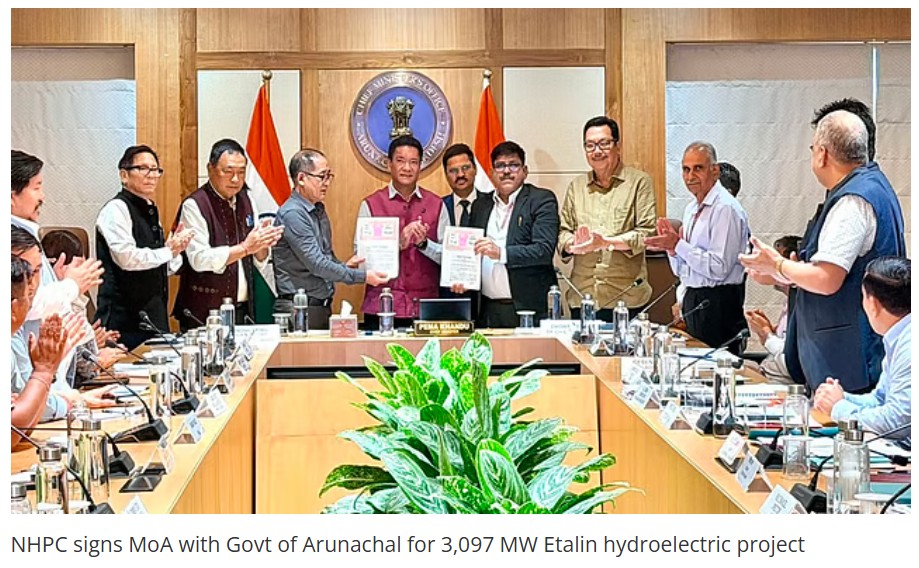
- 20 Jun 2026
In News:
NHPC Limited has signed a Memorandum of Agreement (MoA) with the Government of Arunachal Pradesh for the development of the 3,097 MW Etalin Hydroelectric Project, one of India's largest proposed hydropower projects.
About the Etalin Hydroelectric Project
The Etalin Hydroelectric Project is a 3,097 MW hydropower project proposed in the Dibang Valley district of Arunachal Pradesh. It will be constructed on the Dri and Talo rivers, both tributaries of the Dibang River, and is among the largest hydropower projects in India in terms of installed capacity.
The project will be developed as two run-of-the-river (RoR) hydroelectric schemes, involving the construction of concrete gravity dams on the Dri and Talo rivers. Water from both reservoirs will be diverted to an underground powerhouse located near the confluence of the two rivers, close to Etalin village.
The project is expected to generate approximately 12,752 GWh (12.75 BU) of electricity annually, contributing significantly to India's renewable energy capacity and energy security.
Implementation Framework
The project is being implemented by NHPC Limited (formerly National Hydroelectric Power Corporation) under the Build, Own, Operate and Transfer (BOOT) model.
Under the agreement:
- NHPC will develop, own, and operate the project.
- The lease period will be 40 years from the Commercial Operation Date (COD).
- After completion of the lease period, the project will be transferred to the Government of Arunachal Pradesh.
Environmental and Social Significance
The project is located within the Dibang Valley, one of the richest biogeographical regions of the Himalayan biodiversity zone and part of a globally recognisedmega-biodiversity hotspot. The region supports rich flora and fauna and is ecologically sensitive.
The area is predominantly inhabited by the Idu Mishmi, a Particularly Vulnerable Tribal Group (PVTG) of Arunachal Pradesh, whose traditional livelihoods and cultural practices are closely linked to the surrounding forests and river ecosystems.
Given its ecological sensitivity, the project has attracted attention regarding biodiversity conservation, forest diversion, and sustainable development, highlighting the need to balance renewable energy generation with environmental protection and tribal rights.
Exercise Khaan Quest 2026
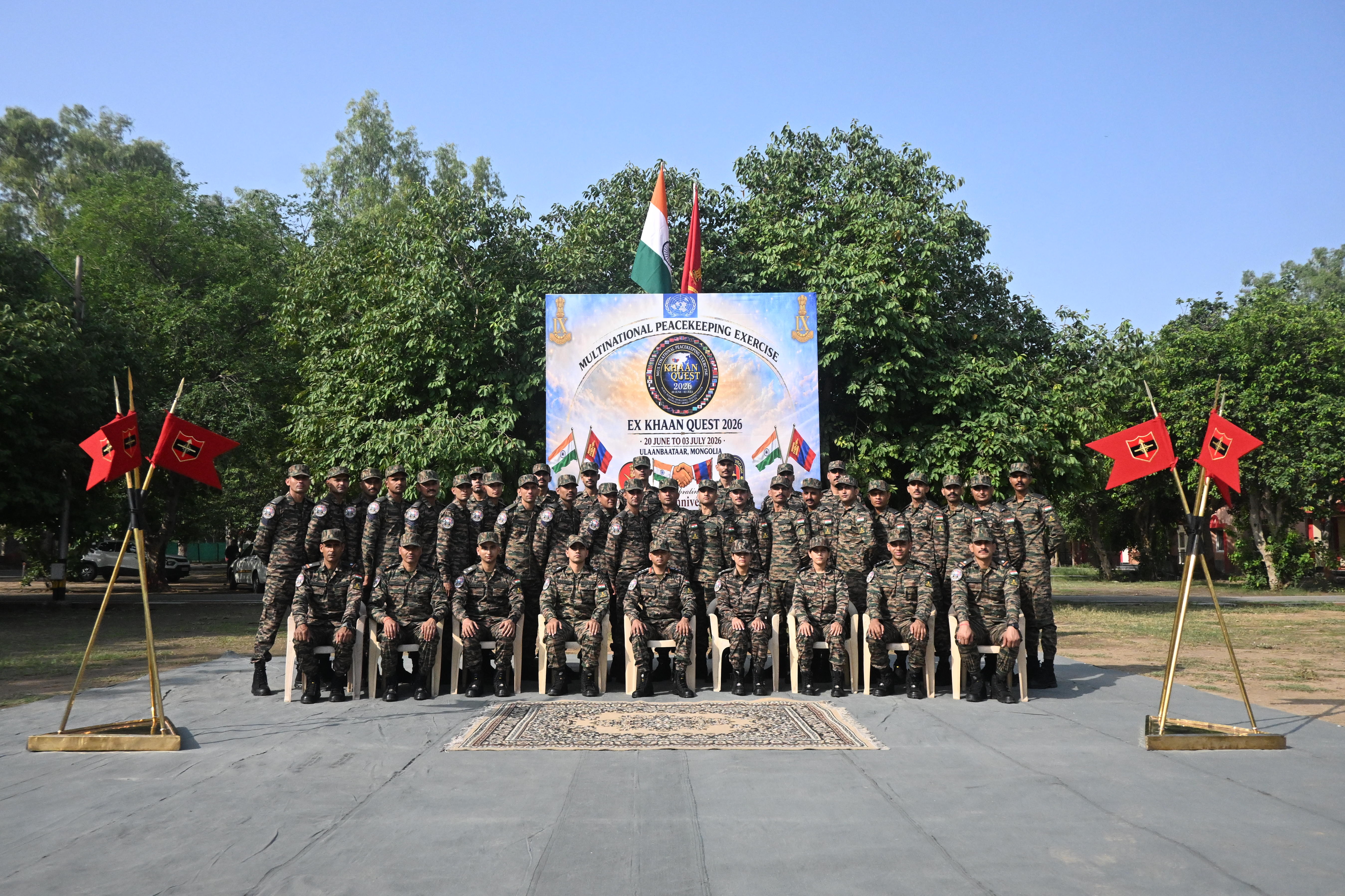
- 19 Jun 2026
In News:
An Indian Army contingent is participating in Exercise Khaan Quest 2026, a multinational peacekeeping exercise being held in Mongolia from 20 June to 3 July 2026.
About Exercise Khaan Quest
Exercise Khaan Quest is an annual multinational joint military exercise hosted by the Mongolian Armed Forces and co-sponsored by the U.S. Indo-Pacific Command (formerly U.S. Pacific Command). The exercise aims to enhance interoperability, coordination, and cooperation among participating armed forces during United Nations peacekeeping operations.
It is conducted in accordance with Chapter VII of the United Nations Charter, which deals with collective measures to maintain or restore international peace and security.
Background
- The exercise was launched in 2003 as a bilateral exercise between the United States and Mongolia.
- From 2006 onwards, it evolved into a multinational peacekeeping exercise.
- The 2026 edition is the 23rd iteration of the exercise.
Exercise Khaan Quest 2026
- Venue: Five Hills Training Area, Ulaanbaatar, Mongolia.
- Duration: 20 June – 3 July 2026.
- Indian Contingent:40 personnel, including troops from a battalion of the JAT Regiment along with personnel from other Arms and Services.
Major Areas of Training
The exercise focuses on United Nations peace support operations through:
- Joint operational planning.
- Static and mobile checkpoint operations.
- Cordon and search operations.
- Area domination patrols.
- Evacuation of civilians from hostile areas.
- Counter-Improvised Explosive Device (Counter-IED) drills.
- Combat first aid.
- Casualty evacuation (CASEVAC).
The participating countries also exchange best practices, tactics, techniques, and procedures (TTPs) for multinational peacekeeping operations.
Korea District's '5% Model' for Groundwater Conservation
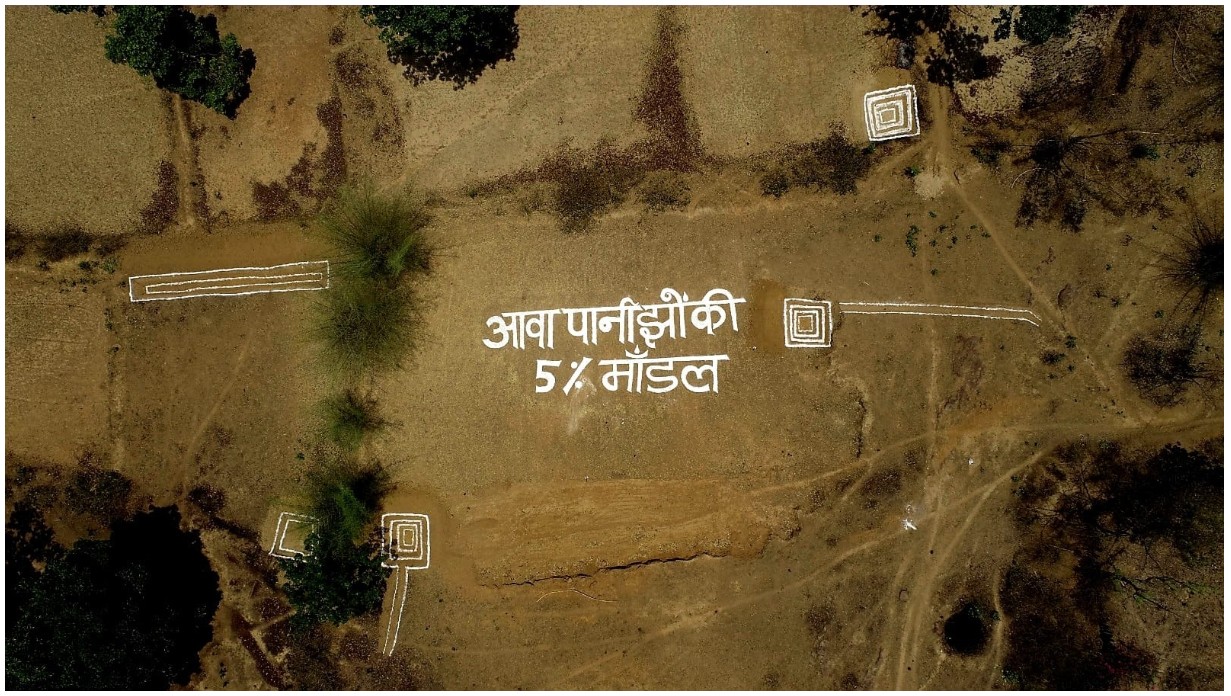
- 19 Jun 2026
In News:
The Korea district of Chhattisgarh has emerged as a model for community-led groundwater conservation through its innovative '5% Model', implemented under the Jal Sanchay Jan Bhagidari initiative. The model has significantly improved groundwater levels while strengthening climate resilience and water security.
What is the '5% Model'?
The '5% Model' is a participatory water conservation initiative that encourages farmers to reserve 5% of their agricultural land for constructing soak pits. These structures facilitate rainwater infiltration, thereby:
- Recharging groundwater aquifers.
- Improving soil moisture.
- Reducing surface runoff.
- Enhancing water availability during dry periods.
The initiative demonstrates how community participation can transform decentralized rainwater harvesting into a large-scale water conservation movement.
Key Features
- Community Participation: The number of soak pits increased from 2,000 to nearly 30,000 within one year across farms, kitchen gardens, and residential backyards.
- '30–40 Model': Construction of 30 ft × 40 ft contour trenches on barren land to capture and retain rainwater runoff.
- Funding: Implemented largely through the Mahatma Gandhi National Rural Employment Guarantee Scheme (MGNREGS), locally branded as the Viksit Bharat–Guarantee for Rozgar and Ajeevika Mission (Gramin).
- Community Mobilisation:
- Neer Nayikas (women volunteers) promote household-level awareness on water conservation.
- Jal Doots (youth volunteers) undertake watershed mapping, desilting activities, and awareness campaigns through street plays.
- Local Campaign: Popularly known as "Aawa Paani Jhonki", meaning "Let's Catch the Rain" in the local Sargujia dialect.
Impact
The initiative has produced measurable improvements in groundwater availability.
According to the Central Ground Water Board (CGWB):
- Post-monsoon groundwater level improved from 6.6 metres Below Ground Level (BGL) in 2024 to 3.89 metres BGL in 2025, indicating substantial groundwater recharge.
The improved groundwater availability has also supported the implementation of the Jal Jeevan Mission, particularly in villages where drinking water supply had earlier been constrained due to depleted aquifers.
Significance
The Korea model highlights the importance of community participation, rainwater harvesting, and watershed management in addressing water scarcity. It demonstrates an effective convergence of MGNREGS, groundwater conservation, and climate adaptation while contributing to sustainable agriculture, water security, and rural livelihoods. The model offers a scalable framework for other drought-prone regions seeking to enhance groundwater recharge through low-cost, decentralized interventions.
Amoebic Meningoencephalitis
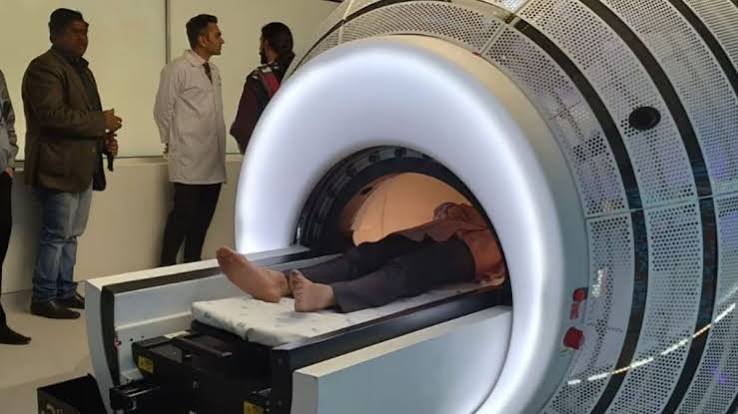
- 19 Jun 2026
In News:
Kerala has reported a sharp rise in Amoebic Meningoencephalitis (AM), a rare but often fatal brain infection caused by free-living amoebae present in contaminated water. While India had reported only around two dozen cases of Primary Amoebic Meningoencephalitis (PAM) between 1971 and 2023, multiple cases and deaths in 2026 have raised concerns regarding water quality, climate change, and public health preparedness.
What is Amoebic Meningoencephalitis?
Amoebic Meningoencephalitis is a severe infection of the brain and central nervous system caused by free-living amoebae naturally found in warm freshwater, soil, and dust. The disease occurs when contaminated water enters the nose, allowing the amoebae to migrate to the brain through the olfactory nerve. It is not transmitted through drinking contaminated water or from person to person.
Types
There are two major forms:
- Primary Amoebic Meningoencephalitis (PAM):
- Caused by Naegleria fowleri, popularly known as the "brain-eating amoeba."
- Characterized by rapid progression and very high fatality.
- Granulomatous Amoebic Encephalitis (GAE):
- Caused mainly by Acanthamoeba species.
- Develops more gradually and predominantly affects elderly and immunocompromised individuals.
Recent cases in Kerala indicate a shift from PAM to GAE, with Acanthamoeba emerging as the dominant pathogen.
Risk Factors
Several environmental and socio-economic factors contribute to the increasing incidence:
- Warm tropical climate favouring amoeba growth.
- Poor water quality and contamination of freshwater bodies.
- High coliform bacterial contamination, providing food for Acanthamoeba.
- Stagnant and vegetated water bodies.
- Contamination of wells due to the proximity of toilet pits in densely populated areas.
Transmission and Symptoms
Transmission occurs when contaminated water enters the nose during activities such as swimming, diving, or bathing in freshwater bodies.
Symptoms include:
- Fever
- Severe headache
- Nausea and vomiting
- Neck stiffness
- Seizures
- Hallucinations
- Coma
Without prompt treatment, the infection may rapidly become fatal.
Kerala's Response
In 2024, Kerala became the first Indian State to formulate a dedicated Standard Operating Procedure (SOP) and treatment protocol for Amoebic Meningoencephalitis. The protocol focuses on:
- Early diagnosis.
- Rapid initiation of treatment.
- Standardized clinical management.
- Improved survival outcomes through coordinated public health response.
Smart Seed Coating Technology
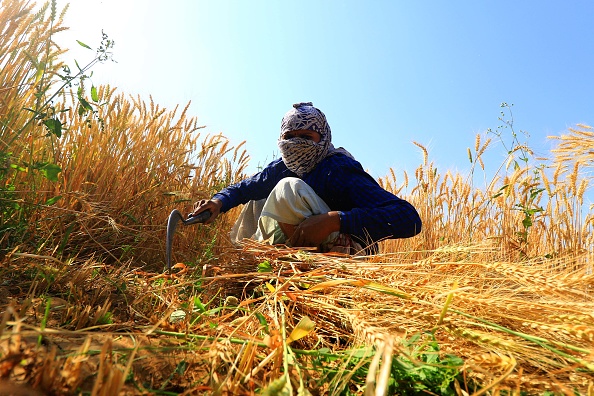
- 19 Jun 2026
In News:
The ICAR–Indian Institute of Oilseeds Research (ICAR-IIOR), Hyderabad has developed an innovative Smart Seed Coating Technology to improve seed germination, enhance crop productivity, and strengthen climate resilience, particularly in rainfed agriculture.
What is Smart Seed Coating Technology?
Smart Seed Coating Technology is a biopolymer-based seed enhancement technology that forms a biodegradable multifunctional coating around seeds. Developed by ICAR-IIOR, it acts as a carrier for essential biological and nutritional inputs, ensuring their targeted delivery at the seed-soil interface during the initial stages of crop growth.
The technology is designed to improve seed germination, seedling vigour, nutrient-use efficiency, and stress tolerance, thereby enhancing overall crop establishment and productivity.
Key Features
- Utilisesbiodegradable biopolymers to create a protective multifunctional coating around seeds.
- Acts as a delivery platform for:
- Beneficial microorganisms
- Nutrients and micronutrients
- Crop protection agents
- Creates a favourablemicroenvironment around the seed, promoting:
- Faster germination
- Better root development
- Stronger seedling growth
- Enhanced tolerance to biotic and abiotic stresses
- Can be customized for a wide range of crops, including:
- Cereals
- Millets
- Pulses
- Vegetables
- Horticultural crops
- Particularly suitable for rainfed farming systems.
52nd G7 Summit Outreach Session (2026)
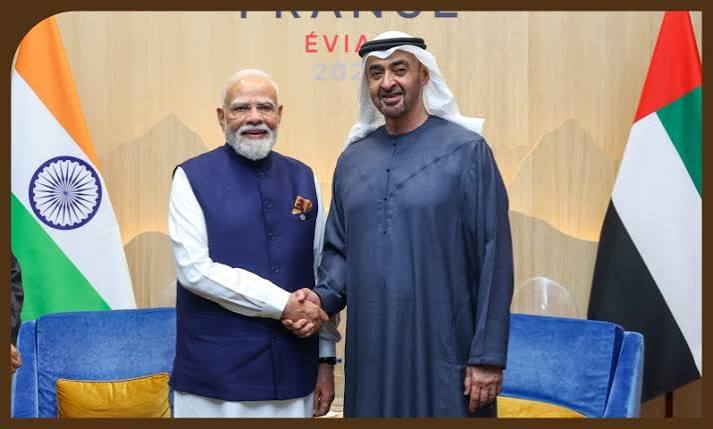
- 19 Jun 2026
In News:
The Prime Minister of India participated in the 52nd G7 Summit Outreach Session held at Évian, France, under the theme "Forging New Partnerships and Rebuilding International Solidarity." India used the platform to advocate the interests of the Global South, address the global trust deficit, and strengthen bilateral ties with Canada, the United Kingdom, and the United Arab Emirates (UAE).
India's Key Message at the G7 Outreach Session
- India emphasized that the world today faces a deficit of trust rather than a deficit of resources and called for rebuilding international cooperation based on mutual trust, equality, and shared responsibility.
- Highlighting the aspirations of the Global South, India argued that developing countries seek equitable participation in global governance rather than a traditional donor-recipient relationship.
- India also showcased its development partnership with Africa, underlining the principles of South-South Cooperation and demand-driven development assistance.
Major Bilateral Outcomes
India–Canada
- Both countries agreed to expedite negotiations on the Comprehensive Economic Partnership Agreement (CEPA) with the objective of concluding it by 2026.
- Negotiations will begin on a General Security of Information Agreement (GSOIA) to strengthen defence and intelligence cooperation.
- India supported Canada's candidature as a Dialogue Partner of the Indian Ocean Rim Association (IORA).
- The two sides advanced cooperation in civil nuclear energy, including a CAD 2.6 billion uranium supply agreement between Cameco and India's Department of Atomic Energy for the period 2027–2035.
- Announcement of "Raisina Americas", a Track-1.5 geopolitical dialogue platform.
India–United Kingdom
- Leaders reviewed progress under the India–UK Vision 2035 roadmap.
- Reaffirmed commitment to early implementation of the Comprehensive Economic and Trade Agreement (CETA), with emphasis on technology, defence, education and economic cooperation.
India–United Arab Emirates (UAE)
- Both countries emphasized ensuring free and uninterrupted navigation through the Strait of Hormuz, given the evolving security situation in West Asia.
- India invited the UAE President to participate in the 18th BRICS Summit, to be hosted by India later in 2026.
About the G7
- The Group of Seven (G7) is an informal grouping of the world's major advanced economies.
- Originally established as the G6 in 1975 following the 1973 oil crisis, it comprised France, Germany, Italy, Japan, the United Kingdom, and the United States. Canada joined in 1976, creating the G7. Russia joined in 1998, forming the G8, but its membership was suspended in 2014 following the annexation of Crimea.
- The European Union (EU) participates as a non-enumerated member, represented by the Presidents of the European Council and the European Commission.
- Unlike organizations such as the United Nations or NATO, the G7 is an informal forum with no treaty, permanent secretariat, or headquarters. The presidency rotates annually among member countries, which host the summit and determine the agenda.
- Although G7 countries account for only about 10% of the global population, they contribute approximately 43% of the world's nominal GDP, making the grouping highly influential in global economic governance. To broaden representation, G7 presidencies invite countries such as India, Brazil, and South Africa to participate in Outreach Sessions.
Joint Crediting Mechanism

- 18 Jun 2026
In News:
India and Japan have adopted the Rules of Implementation for the Joint Crediting Mechanism (JCM) under Article 6.2 of the Paris Agreement, operationalising bilateral cooperation on carbon markets and low-carbon technologies.
What is the Joint Crediting Mechanism (JCM)?
- The Joint Crediting Mechanism (JCM) is a bilateral carbon credit mechanism proposed by the Government of Japan and officially launched in 2013.
- It promotes the deployment of advanced decarbonisation technologies, products, systems, and infrastructure in partner countries through Japanese investment, while contributing to sustainable development and greenhouse gas (GHG) emission reductions.
- Implemented in accordance with Article 6 of the Paris Agreement, the mechanism enables participating countries to generate and share carbon credits from verified emission reduction projects, thereby supporting the achievement of their respective Nationally Determined Contributions (NDCs).
- India is among the 31 partner countries participating in the JCM.
How does the JCM Work?
Under the mechanism:
- Japan provides financial support and advanced low-carbon technologies to partner countries.
- Emission reduction projects are jointly implemented and monitored.
- Verified reductions in greenhouse gas emissions generate carbon credits.
- The credits are shared between Japan and the partner country based on agreed rules, helping both countries achieve their NDC commitments under the Paris Agreement.
The JCM functions within the framework of the United Nations Framework Convention on Climate Change (UNFCCC) and complements existing international carbon market mechanisms such as the Clean Development Mechanism (CDM) and Joint Implementation (JI).
Priority Sectors
The India–Japan JCM focuses on sectors with significant decarbonisation potential, including:
- Renewable energy with energy storage
- Sustainable Aviation Fuel (SAF)
- Compressed Biogas (CBG)
- Green Hydrogen
- Green Ammonia
- Hard-to-abate industrial sectors
Wind Turbine Supply Chain Management Portal
- 18 Jun 2026
In News:
The Ministry of New and Renewable Energy (MNRE) has launched India's first Wind Turbine Supply Chain Management Portal to strengthen the domestic wind energy manufacturing ecosystem, improve supply chain transparency, and support India's clean energy transition.
About the Wind Turbine Supply Chain Management Portal
The Wind Turbine Supply Chain Management Portal is India's first dedicated digital platform developed to streamline the wind energy supply chain by connecting manufacturers, suppliers, and other stakeholders on a common platform. It has been developed under the aegis of the Ministry of New and Renewable Energy (MNRE) with the support of the Indian Wind Turbine Manufacturers Association (IWTMA).
The portal aims to improve supply chain efficiency, enhance domestic manufacturing capabilities, reduce import dependence, and strengthen India's position as a global hub for wind energy equipment.
Key Features
- Supply Chain Visibility: Provides end-to-end visibility across the wind energy manufacturing ecosystem.
- ALMM Integration: Facilitates compliance with the Approved List of Models and Manufacturers (ALMM) framework, promoting domestic sourcing.
- Supplier Discovery: Enables identification and qualification of component suppliers.
- Stakeholder Collaboration: Improves coordination among manufacturers, suppliers, developers, and policymakers.
- Export Readiness: Enhances the competitiveness of Indian manufacturers in global markets by strengthening supply chain resilience.
What is Wind Energy?
Wind energy is a renewable source of energy that converts the kinetic energy of moving air into electricity using wind turbines. The rotating blades of a wind turbine drive a generator, which produces electrical energy without emitting greenhouse gases during operation.
Wind Energy Potential in India
India possesses significant wind energy potential, particularly along its western and southern coasts.
Major wind energy-producing and high-potential States include:
- Gujarat (highest estimated potential)
- Tamil Nadu
- Karnataka
- Rajasthan
- Maharashtra
- Telangana
- Madhya Pradesh
Artemis III Mission

- 18 Jun 2026
In News:
NASA has announced the four-member crew and revised mission profile for Artemis III, which is now scheduled for 2027 as a Low Earth Orbit (LEO) mission to validate critical technologies required for future human lunar landings. The first crewed lunar landing under the Artemis programme is now planned under Artemis IV (2028).
What is Artemis III?
Artemis III is part of NASA's Artemis Programme, which aims to establish a sustained human presence on the Moon and serve as a stepping stone for future human missions to Mars.
Originally conceived as the mission to return astronauts to the lunar surface, Artemis III has been redesigned into a two-week Low Earth Orbit technology demonstration mission. The mission will test key systems such as rendezvous, docking, life-support systems, software, and spacecraft interoperability, thereby reducing risks before undertaking crewed lunar landings.
Mission Profile
The mission will be launched aboard NASA's Space Launch System (SLS) rocket carrying the Orion spacecraft.
During the mission, Orion will dock with two commercial Human Landing Systems (HLS):
- Blue Moon lander developed by Blue Origin.
- Starship Human Landing System developed by SpaceX.
The mission will validate docking procedures and operational compatibility between these spacecraft before they are deployed for lunar missions.
Crew of Artemis III
The mission will comprise an international crew of four astronauts:
- Commander: Randy Bresnik (NASA)
- Pilot: Luca Parmitano (European Space Agency) – first ESA astronaut assigned to an Artemis mission
- Mission Specialists: Frank Rubio (NASA) and Andre Douglas (NASA)
What is Low Earth Orbit (LEO)?
Low Earth Orbit (LEO) refers to orbits located approximately 500–2,000 km above Earth's surface. Satellites in LEO have shorter orbital periods, lower communication latency, and are widely used for Earth observation, scientific research, navigation, and human spaceflight, including the International Space Station (ISS).
Significance of Artemis III
The revised mission prioritizes the validation of technologies essential for deep-space exploration before attempting a lunar landing. Successful demonstration of spacecraft docking, life-support systems, and commercial lunar landers will enhance mission safety and reduce operational risks.
Strategically, the Artemis Programme reinforces international collaboration through participation by agencies such as the European Space Agency (ESA) while strengthening the role of commercial space companies. It also supports the broader objective of maintaining leadership in human space exploration amid increasing global competition and advancing preparations for future missions to the Moon and eventually Mars.
World Day to Combat Desertification and Drought 2026
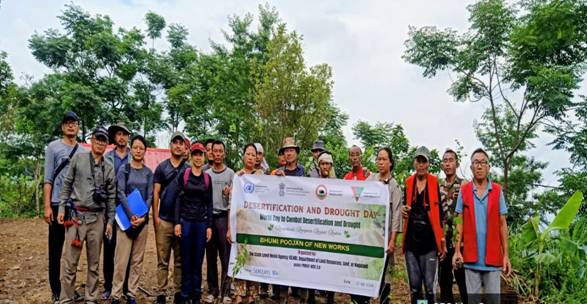
- 18 Jun 2026
In News:
The World Day to Combat Desertification and Drought (17 June)was observed across the project areas of the Watershed Development Component of Pradhan Mantri Krishi Sinchayee Yojana (WDC-PMKSY 2.0) to promote sustainable land management, watershed conservation, and restoration of degraded landscapes.
World Day to Combat Desertification and Drought
- The United Nations General Assembly (UNGA) declared 17 June as the World Day to Combat Desertification and Drought in 1994 to commemorate the adoption of the United Nations Convention to Combat Desertification (UNCCD)—the only legally binding international agreement linking environment, sustainable land management, and development.
- The day seeks to raise awareness about land degradation, promote Land Degradation Neutrality (LDN), and encourage sustainable management of land resources. It emphasizes that desertification, driven by human activities and climate change, is preventable and reversible.
- Theme 2026:"Rangelands: Recognize. Respect. Restore."—aligned with the International Year of Rangelands and Pastoralists (IYRP) 2026, led by the FAO and UNCCD.
What are Rangelands?
Rangelands are extensive natural landscapes comprising grasslands, shrublands, deserts, and tundras, primarily used for livestock grazing.
- Cover 54% of the Earth's land surface.
- Contribute nearly 16% of global food production.
- Support the livelihoods of around 2 billion people, especially pastoralists and indigenous communities.
- In India, they cover about 1.21 million sq. km, with nearly 40% of the country's land used for grazing.
- India's grassland area declined from 18 million hectares (2005) to 12 million hectares (2015), while less than 5% of grasslands are under protected areas.
Besides supporting livestock, rangelands function as carbon sinks, conserve biodiversity, regulate water cycles, and prevent soil erosion.
Watershed Development Component of PMKSY 2.0 (WDC-PMKSY 2.0)
Originally launched as the Integrated Watershed Management Programme (IWMP) in 2009–10, it was integrated with Pradhan Mantri Krishi Sinchayee Yojana (PMKSY) in 2015–16. The present phase, WDC-PMKSY 2.0, covers the period 2021–2026.
Implemented by the Department of Land Resources (DoLR), Ministry of Rural Development, the scheme aims to restore 49.50 lakh hectares of degraded and rainfed land.
Its objectives include:
- Restoration of degraded landscapes and ecological balance.
- Enhancement of groundwater recharge and agricultural productivity.
- Promotion of diversified farming systems and livelihood opportunities.
- Springshed rejuvenation, especially in Himalayan regions.
- Use of GIS and Remote Sensing for scientific watershed planning.
Desertification in India
Desertification refers to land degradation in arid, semi-arid and dry sub-humid regions due to climatic variations and human activities; it does not imply the expansion of existing deserts.
According to the Desertification and Land Degradation Atlas of India (Space Applications Centre, ISRO), about 29.7% of India's Total Geographical Area (TGA) is undergoing land degradation.
Major causes include:
- Water erosion (largest contributor)
- Vegetation degradation
- Wind erosion
- Salinity and alkalinity caused by improper irrigation practices
Major Initiatives
Global: UNCCD, Bonn Challenge, Great Green Wall Initiative, G20 Global Land Initiative, and SDG Target 15.3 (Land Degradation Neutrality by 2030).
India: Commitment to restore 26 million hectares of degraded land by 2030 (UNCCD COP14), Aravalli Green Wall Project, Desert Development Programme (DDP), National Mission for a Green India (GIM), and WDC-PMKSY 2.0.
GRAPES-3 Telescope
- 18 Jun 2026
In News:
Researchers from Mumbai, Kochi, and Japan have used the GRAPES-3 Telescope to study how Earth's upper atmospheric temperature and the Sun's magnetic field influence cosmic ray muons—high-energy subatomic particles produced when cosmic rays interact with Earth's atmosphere. The findings improve understanding of space weather, atmospheric processes, and cosmic ray propagation.
What is GRAPES-3?
Gamma Ray Astronomy PeVEnergieS phase-3 (GRAPES-3) is a high-energy cosmic ray observatory designed to investigate the origin, acceleration, and propagation of cosmic rays by detecting Extensive Air Showers (EAS) produced when high-energy cosmic rays or gamma rays enter Earth's atmosphere.
Besides cosmic ray studies, the facility also investigates solar activity, space weather, and thunderstorm-related phenomena through the observation of cosmic ray muons.
Key Features of GRAPES-3
- Location: Ooty, Tamil Nadu.
- Operated by: Tata Institute of Fundamental Research (TIFR).
- Detects primary cosmic rays and gamma rays in the tera-electronvolt (TeV) to peta-electronvolt (PeV) energy range.
- Uses an array of plastic scintillator detectors and a large-area muon detector based on proportional counters.
- Measures Extensive Air Showers produced by high-energy particles entering Earth's atmosphere.
What are Cosmic Rays?
- Cosmic rays are high-energy charged particles originating from outer space that continuously bombard the Earth from all directions. They are among the most energetic particles in the Universe and were discovered over a century ago.
- When these primary cosmic rays collide with atmospheric molecules, they generate Extensive Air Showers, producing secondary particles such as:Muons, Electrons, Photons, Protons, and Neutrons
- These secondary particles travel towards Earth's surface at nearly the speed of light.
What are Muons?
Muons are unstable, charged elementary particles belonging to the lepton family, similar to electrons but approximately 200 times heavier. They are produced in large numbers during cosmic ray interactions with the atmosphere and can penetrate deep into matter, making them useful for studying atmospheric changes, solar activity, geological structures, and space weather.
Significance of the Study
The study demonstrates that variations in the Sun's magnetic field and the temperature of the upper atmosphere influence the number of muons reaching Earth. Continuous monitoring of these variations through GRAPES-3 enhances understanding of:
- Space weather and solar storms.
- Solar-terrestrial interactions.
- Atmospheric dynamics.
- Behaviour of high-energy cosmic particles.
- Potential impacts on satellite communication, navigation systems, and power infrastructure.
India–Estonia Relations
- 17 Jun 2026
In News:
The Estonian Government and leading technology companies have expressed interest in expanding cooperation with India in key areas such as cybersecurity, defence, artificial intelligence (AI), digital governance, and trade, reflecting the growing strategic convergence between the two countries.
India–Estonia Relations
India first recognisedEstonia in 1921, following its admission to the League of Nations. After Estonia regained independence following the dissolution of the Soviet Union, India re-established diplomatic relations in September 1991.
The bilateral relationship has increasingly focused on digital transformation, cybersecurity, innovation, trade, and emerging technologies. In 2024, the two countries held the first India–Estonia Cyber Dialogue, recognising Estonia's global leadership in e-governance and digital public services and India's success in building Digital Public Infrastructure (DPI).
Areas of Cooperation
- Cybersecurity & Digital Governance: Collaboration in cyber resilience, e-governance, digital identity, and digital public infrastructure.
- Artificial Intelligence (AI): Joint research, AI applications, innovation, and startup partnerships.
- Defence& Security: Cooperation in defence technologies, cyber defence, and strategic security.
- Trade & Investment: Expanding bilateral trade, technology partnerships, and investment opportunities.
- Innovation & Start-ups: Strengthening collaboration between India's digital ecosystem and Estonia's globally recognised startup ecosystem.
Economic Relations
- Bilateral merchandise trade (2025): €139.3 million
- Services trade (2025): €66.4 million
- Indian FDI in Estonia (December 2025): €13.6 million
- Estonian FDI in India (2000–2025): €4.15 million
About Estonia
Estonia is the northernmost of the three Baltic States, located in Northeastern Europe.
- Borders: Russia (East) and Latvia (South).
- Water Bodies: Gulf of Finland (North), Baltic Sea (West), and Lake Peipus (East).
- Maritime Neighbours: Finland and Sweden.
- Capital:Tallinn.
- Government: Parliamentary Republic.
- Highest Point:SuurMunamägi (318 m).
- Major Rivers:Narva, Pärnu, Pedja, and Kasari.
- Islands: Around 1,500 islands and islets, with Saaremaa and Hiiumaa being the largest.
Historical Background
Estonia declared independence in 1918 after centuries of rule by Denmark, Sweden, and the Russian Empire. It was incorporated into the USSR in 1940 and regained independence in 1991 following the collapse of the Soviet Union.
Since independence, Estonia has transformed into a technologically advanced democracy and is a member of:
- European Union (EU)
- Eurozone
- North Atlantic Treaty Organization (NATO)
- Nordic-Baltic Eight (NB8)
Significance for India
Estonia's expertise in digital governance, cybersecurity, AI, and e-governance complements India's strengths in Digital Public Infrastructure, fintech, and digital inclusion. Enhanced cooperation can deepen India's engagement with the Baltic region, diversify technology partnerships, and strengthen collaboration in emerging technologies and cyber resilience.
Draft Andaman and Nicobar Islands Tribal Councils Election Rules 2026
- 17 Jun 2026
In News:
The Andaman and Nicobar Islands Administration has released the Draft Andaman and Nicobar Islands Tribal Councils (Preparation of Electoral Rolls and Conduct of Elections) Rules, 2026, proposing a formal electoral framework for the Nicobarese Tribal Councils. The proposal has generated opposition among the Nicobarese community, which fears that it could undermine their customary system of self-governance.
Who are the Nicobarese?
The Nicobarese are a Scheduled Tribe (ST) inhabiting the Nicobar group of islands, with a population of around 30,000. They are represented through seven Tribal Councils, including those of Car Nicobar, Nancowry, Kamorta, Teressa, Little Nicobar, and Great Nicobar. Their traditional governance is rooted in the Tuhet (extended kinship group) system and community consensus.
Key Provisions of the Draft Rules
The draft seeks to institutionalise a formal electoral system for Tribal Councils by:
- Prescribing a fixed five-year tenure for Village and Island Tribal Councils.
- Introducing electoral constituencies, electoral rolls, and formal procedures for nomination, scrutiny and withdrawal of candidates.
- Providing for the election of 5–9 Village Captains, direct election of the Chief Captain, while First Captains elect the Vice-Chief Captain.
- Reserving seats and leadership positions for women in Village and Island Tribal Councils.
- Retaining the administrative veto under the Nicobar Islands Tribal Council Regulation, 2009, enabling the Deputy Commissioner/Assistant Commissioner to invalidate council decisions considered prejudicial to public order or peace.
Traditional Nicobarese Governance
The Nicobarese follow a consensus-based governance model rather than periodic electoral competition.
- Every village is governed by a Village Council headed by a First Captain, assisted by a Second and Third Captain, generally chosen through community consensus or secret ballot whenever required.
- The Island Tribal Council comprises the First Captains of constituent villages, who elect the Chief Captain and Vice-Chief Captain.
- Leadership is based on community acceptance, merit, education, administrative ability, and trust rather than fixed electoral cycles.
- The captaincy system dates back to the 16th century and was later formalised by the British in the late nineteenth century.
- Tribal Councils received statutory recognition through the Andaman and Nicobar Islands (Protection of Aboriginal Tribes) Regulation, 1956 and the Nicobar Islands Tribal Council Regulation, 2009.
Concerns
The Nicobarese Tribal Councils argue that the proposed reforms may:
- Weaken the traditional Tuhet-based consensus system.
- Increase bureaucratic control over indigenous self-governance.
- Dilute the authority of customary institutions through formal electoral procedures.
- Strengthen administrative oversight because of the existing veto powers under the 2009 Regulation.
- Be linked to the proposed Great Nicobar Development Project, potentially reducing institutional resistance to large-scale development projects.
- Create legal concerns since the Andaman and Nicobar Islands, being a Union Territory, lie outside the Fifth Schedule, limiting constitutional safeguards available to tribal self-governance.
Way Forward
Electoral reforms should balance constitutional values of transparency, accountability and gender inclusion with the preservation of indigenous governance traditions. Institutional changes should be undertaken through Free, Prior and Informed Consent (FPIC) and extensive consultation with Tribal Councils. A hybrid governance model, drawing inspiration from the Panchayats (Extension to Scheduled Areas) Act, 1996 (PESA), could strengthen democratic accountability while preserving the Tuhet-based customary governance system and ensuring that governance reforms remain independent of developmental or strategic projects.
Transformation of India's Agriculture Sector (2014–2026)
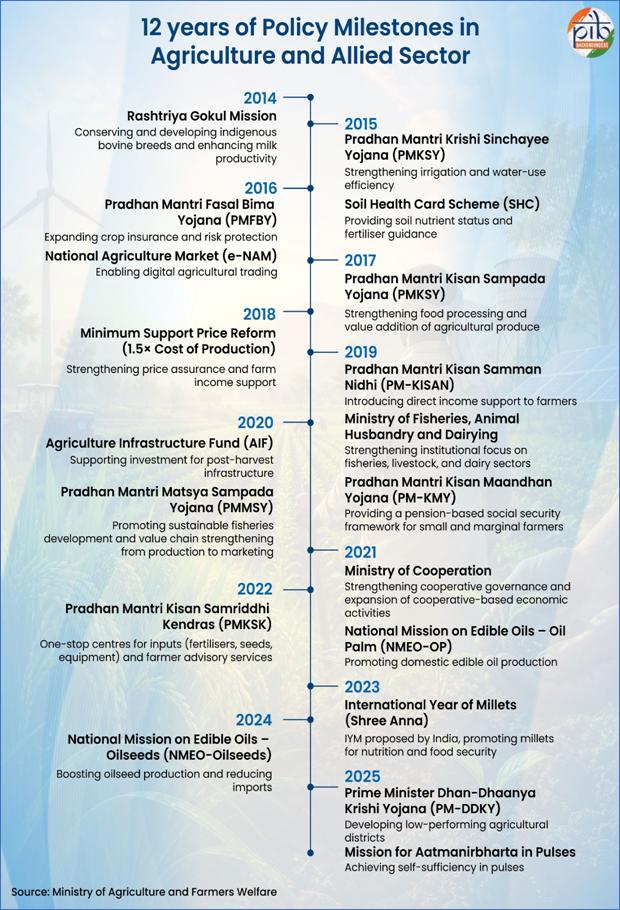
- 17 Jun 2026
In News:
The Press Information Bureau (PIB) has released a report highlighting the transformation of India's agricultural sector over the past twelve years. The report emphasizes the shift from welfare-oriented interventions to a comprehensive strategy focusing on productivity, farmer income, market access, digital agriculture, climate resilience, and value addition.
Current Status of Indian Agriculture
- Agriculture and allied sectors continue to be a cornerstone of the Indian economy, contributing around 18% of Gross Value Added (GVA).
- Sectoral GVA increased from ?20.9 lakh crore (2014–15) to ?48.7 lakh crore (2023–24), while budgetary allocation rose from ?27,663 crore (2013–14) to ?1.41 lakh crore (2026–27), reflecting sustained public investment.
Major Achievements
Food Security & Crop Production
- Foodgrain production increased from 265.05 MT (2013–14) to 357.73 MT (2024–25).
- India became the world's largest rice producer, with production increasing by 42.38% since 2014–15.
- Wheat production reached a record 117.94 MT (2024–25).
- Oilseed production rose to 42.99 MT, reducing edible oil import dependence from 63.2% (2015–16) to 56.25% (2023–24).
- Horticulture now contributes nearly 37% of crop sector Gross Value Output.
Farmer Welfare
- PM-KISAN provides ?6,000 annually through Direct Benefit Transfer (DBT) to over 9.44 crore farmers.
- PM Fasal Bima Yojana (PMFBY) insures over 4 crore farmers annually, covering the entire crop cycle.
- PM-Kisan Maandhan Yojana provides a ?3,000 monthly pension after the age of 60; 24.95 lakh farmers enrolled.
- Minimum Support Price (MSP) is announced for 22 mandated crops, and since 2018–19, MSP has been fixed at at least 50% above the cost of production.
Agricultural Infrastructure & Market Reforms
- e-NAM has integrated 1,656 mandis, with 1.8 crore farmers and 4,724 FPOs registered.
- Agriculture Infrastructure Fund (AIF) has sanctioned ?84,202 crore for 1.68 lakh projects, mobilising investments of ?1.33 lakh crore.
- 41 Mega Food Parks are operational, strengthening post-harvest management and value addition.
- Ground Level Credit increased from ?7.30 lakh crore (2013–14) to ?28.67 lakh crore (2024–25).
Technology & Sustainable Agriculture
- Under the Digital Agriculture Mission, 7.63 crore Farmer IDs and 23.5 crore digitised crop plots have been created.
- PM-KUSUM has facilitated installation of 10 lakh standalone solar pumps and solarisation of 13 lakh grid-connected pumps.
- 26 crore Soil Health Cards issued.
- 2,996 climate-resilient crop varieties released and 448 climate-resilient villages developed.
- Namo Drone Didi Scheme promotes precision agriculture and women-led agri-entrepreneurship.
Allied Sectors
- India remains the world's largest milk producer, with production increasing to 247.87 MT.
- Fisheries production doubled to 19.78 MT under PM Matsya Sampada Yojana (PMMSY).
- Honey production increased from 0.081 MT to 0.152 MT, while ethanol procurement reached 904 crore litres, achieving 20% blending.
Challenges
Major concerns include price volatility, limited MSP coverage beyond cereals, climate change, water stress, fragmented landholdings, regional disparities in institutional credit, and degradation of soil health. Small and marginal farmers (about 86% of operational holdings) remain particularly vulnerable to market and climatic shocks.
Way Forward
Priority should be given to expanding PM-KISAN and PMFBY, strengthening e-NAM, FPOs, and post-harvest infrastructure through AIF, promoting climate-resilient agriculture, digital advisory services, precision farming, and sustainable practices under PMKSY, PM-KUSUM, PKVY, and the National Mission on Natural Farming (NMNF) to improve farmer incomes and agricultural resilience.
India's Progress Towards Universal Health Coverage (UHC)
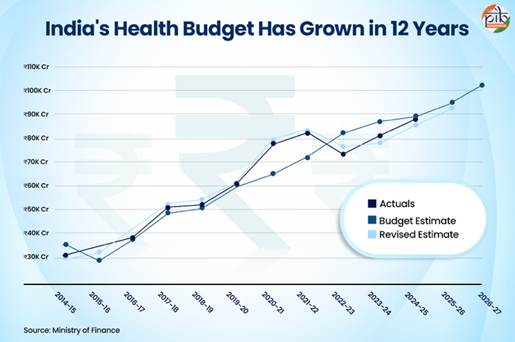
- 17 Jun 2026
In News:
India's progress towards Universal Health Coverage (UHC) has come into focus following the National Statistical Office (NSO) 2025 Survey, which reported increased utilisation of public healthcare facilities, lower out-of-pocket expenditure (OOPE), and improved access to affordable healthcare, driven by initiatives such as Ayushman Bharat and the National Health Mission (NHM).
What is Universal Health Coverage (UHC)?
According to the World Health Organization (WHO), Universal Health Coverage ensures that all individuals receive quality health services they need without suffering financial hardship. It encompasses promotive, preventive, curative, rehabilitative, and palliative healthcare.
India's Achievements towards UHC
India has significantly strengthened its healthcare ecosystem through expanded insurance coverage, digital health, public health infrastructure, and disease control programmes.
Universal Health Coverage & Insurance
- Ayushman Bharat-Pradhan Mantri Jan Arogya Yojana (AB-PMJAY) provides health insurance cover of ?5 lakh per family per year to 12 crore vulnerable families.
- 44.14 crore Ayushman Cards issued and 12.03 crore hospitalisations funded.
- Ayushman Bharat Vay Vandana (2024) extends coverage to all citizens aged 70 years and above; by June 2026, 1.20 crore senior citizens had enrolled.
Primary Healthcare
- Over 1.86 lakh Ayushman Arogya Mandirs (AAMs) provide 12 comprehensive healthcare services.
- AAMs have recorded 540 crore cumulative footfalls, strengthening preventive and primary healthcare.
Health Infrastructure
- Under PM-Ayushman Bharat Health Infrastructure Mission (PM-ABHIM):
- 744 Integrated Public Health Laboratories
- 631 Critical Care Hospital Blocks approved in districts with populations above 5 lakh.
- During COVID-19, India administered over 220 crore vaccine doses and expanded ICU beds from 2,168 to 1.45 lakh.
Disease Control & Public Health
- Mission Indradhanush vaccinated 5.46 crore previously unvaccinated children; the zero-dose child population declined to 0.06% (April 2026).
- PM TB Mukt Bharat Abhiyaan screened 20 crore people.
- Malaria mortality declined by 78%, while mother-to-child HIV transmission fell by 74.5% since 2010.
Digital Health
- 20.49 crore ABHA IDs created under the Ayushman Bharat Digital Mission (ABDM).
- eSanjeevani has delivered 47 crore teleconsultations.
- U-WIN digitally tracks immunisation of 11.87 crore children and 3.96 crore pregnant women.
- AI-based initiatives such as MadhuNetrAI and Cough Against TB are improving early disease detection.
Affordable Healthcare
- Over 18,000 Jan Aushadhi Kendras provide medicines at 50–90% lower prices.
- 255 AMRIT Pharmacies have helped patients save ?8,400 crore.
- PM National Dialysis Programme has delivered 4 crore free haemodialysis sessions.
Major Challenges
Despite notable progress, several structural challenges remain:
- Public health expenditure remains below the National Health Policy (2017) target of 2.5% of GDP.
- Non-Communicable Diseases (NCDs) account for 60% of all deaths.
- Persistent regional disparities, governance gaps, and shortages of healthcare professionals.
- 65% of PM-JAY beneficiaries reportedly incurred out-of-pocket expenditure in private hospitals, indicating implementation gaps.
- India still lacks a comprehensive Right to Health legislation.
Way Forward
India should increase public health expenditure to 2.5–3% of GDP, strengthen primary healthcare through Ayushman Arogya Mandirs, expand AI-enabled diagnostics and drone-based healthcare delivery, deepen digital integration through ABHA and U-WIN, improve regulation of empanelled hospitals under PM-JAY, and enact a Right to Health framework to ensure equitable, affordable, and accountable healthcare delivery.
Giant’s Causeway
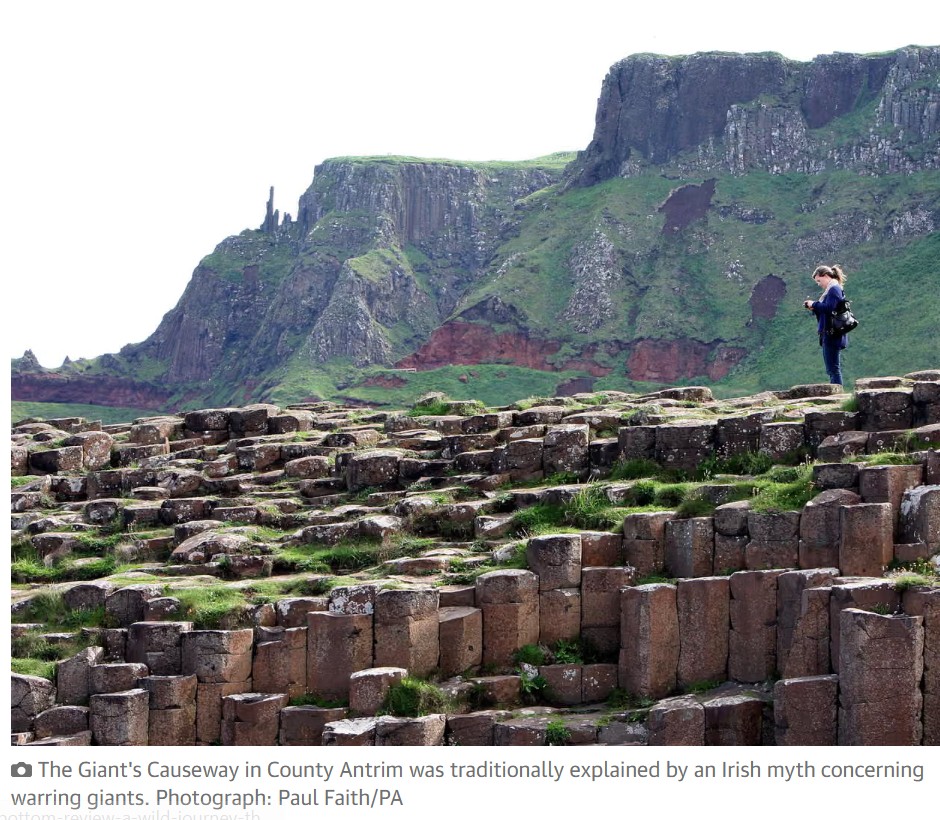
- 17 Jun 2026
In News:
A recent geochronological study has revealed that the Giant's Causeway in Northern Ireland was formed over about 5.5 million years, nearly 8 million years shorter than previous estimates. The findings improve scientific understanding of one of the world's most iconic volcanic landscapes.
About Giant's Causeway
- The Giant's Causeway is a spectacular volcanic landform located along the Antrim Plateau on the northeastern coast of Northern Ireland. It comprises nearly 40,000 interlocking basalt columns extending over about 6 km of coastline. Most of the columns are hexagonal, though some have four, five, seven or eight sides. Their stair-like appearance gave rise to the name "Giant's Causeway."
- Recognised for its exceptional geological significance, it was designated a UNESCO World Heritage Site in 1986.
Formation of the Giant's Causeway
The basalt columns were formed during the Paleogene Period, around 50–60 million years ago, when intense volcanic activity affected the region.
The formation process involved:
- Extensive volcanic eruptions that produced large volumes of basaltic lava.
- The molten basalt rose through chalk beds, creating a vast volcanic plateau.
- As the lava cooled, it contracted, producing fractures known as columnar joints.
- Continued cooling caused the lava to shrink further, resulting in the development of tall, closely packed polygonal basalt columns.
- Rapid cooling led to greater contraction, producing the characteristic well-defined hexagonal columns visible today.
The latest research suggests that the volcanic processes responsible for this landscape occurred over approximately 5.5 million years, rather than the previously estimated 13.5 million years, indicating a much shorter but geologically significant volcanic episode.
Geological Significance
The Giant's Causeway is one of the world's finest examples of columnar jointing, demonstrating how cooling and contraction of basaltic lava produce regular polygonal rock columns. It provides valuable evidence for understanding igneous processes, volcanic evolution, and the geological history of the North Atlantic Igneous Province
Netra Airborne Early Warning and Control (AEW&C) System
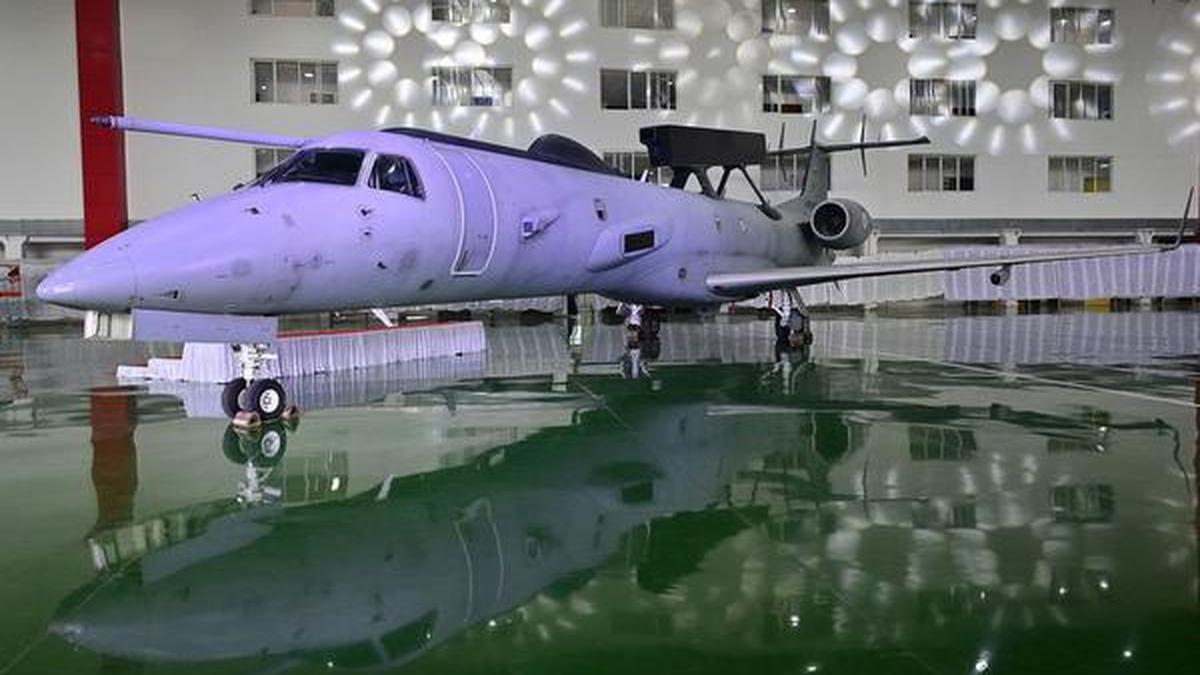
- 28 Jun 2026
In News:
India's indigenous Netra Airborne Early Warning and Control (AEW&C) system has received Final Operational Clearance (FOC), making it fully operational for deployment by the Indian Air Force (IAF).
About Netra AEW&C
Netra is India's first indigenously developed Airborne Early Warning and Control (AEW&C) system, designed by the Centre for Airborne Systems (CABS) under the Defence Research and Development Organisation (DRDO). It serves as an airborne surveillance, command-and-control and battle-management platform, providing the Indian Air Force with real-time situational awareness during military operations.
With the development of Netra, India became the fifth country, after the United States, Russia, Israel and China, to possess an indigenous AEW&C capability.
How It Works
The system is mounted on the Embraer EMB-145I aircraft and functions as an "eye in the sky." Its Active Electronically Scanned Array (AESA) radar continuously scans the surrounding airspace to detect, identify and track hostile aircraft, missiles and selected maritime targets over long distances. The information is processed onboard and transmitted securely to fighter aircraft, air-defence systems and ground command centres, enabling rapid operational decision-making.
Key Features
Netra is equipped with an AESA radar, Identification Friend or Foe (IFF) system, Electronic Support Measures (ESM), Communication Support Measures (CSM), mission computers, secure communication links and self-protection systems. Together, these systems enable long-range surveillance, target tracking, electronic intelligence and airborne command-and-control during combat operations.
Operational Importance
Netra acts as a force multiplier by providing early warning of aerial threats, enhancing situational awareness and supporting network-centric warfare. It coordinates fighter aircraft, guides interception missions, strengthens air-defence operations and significantly improves India's ability to monitor its airspace without depending solely on ground-based radars.
Background
India's airborne surveillance programme began in the 1980s under Project Guardian, which used a modified HS-748 Avro aircraft. The programme suffered a setback following the 1999 Arakkonam crash, but was revived in 2004, eventually leading to the successful development of the Netra AEW&C system.
Significance
Netra has already demonstrated its operational effectiveness during the 2019 Balakot air strikes and Operation Sindoor (2025) by enhancing surveillance, battlefield awareness and command-and-control capabilities. Since the system is developed indigenously, India retains complete control over its software, source codes and future upgrades, reducing dependence on foreign manufacturers and strengthening defence self-reliance under the Atmanirbhar Bharat initiative.
The Cabinet Committee on Security (CCS) has approved six upgraded Netra Mk-1A systems, while the upcoming Netra Mk-2, to be mounted on the Airbus A321 platform, is expected to significantly expand India's airborne surveillance capability.
e-Sushrut@Clinic
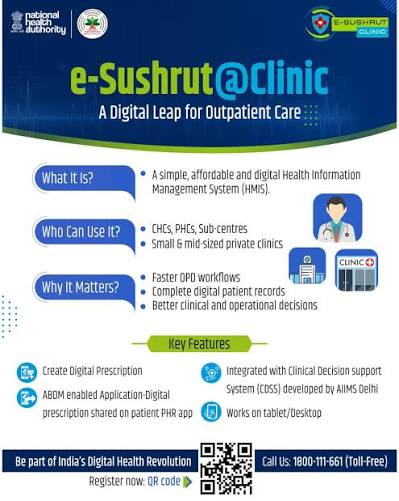
- 28 Jun 2026
In News:
The Union Ministry of Health is set to launch e-Sushrut@Clinic, a cloud-based Hospital Management Information System (HMIS) aimed at enabling small and medium healthcare facilities to adopt affordable digital healthcare solutions and strengthen the Ayushman Bharat Digital Mission (ABDM) ecosystem.
About e-Sushrut@Clinic
- e-Sushrut@Clinic is a lightweight, cloud-based HMIS developed by the Centre for Development of Advanced Computing (C-DAC).
- It is specifically designed for outpatient clinics, primary health centres (PHCs), Health and Wellness Centres (HWCs), sub-centres, private clinics, and medium-sized healthcare facilities.
- The platform caters to a wide range of healthcare professionals, including general practitioners, specialists, pharmacists, nurses, laboratory technicians, allied health workers, and clinic administrators.
- It is a simplified version of the flagship e-Sushrut HMIS, which is already operational in 17 AIIMS and over 4,000 healthcare facilities across India.
- The initiative seeks to reduce dependence on manual record-keeping and eliminate the need for costly IT infrastructure, making healthcare digitisation accessible to smaller establishments.
Key Features
- Comprehensive Digital Clinic Management: Supports patient registration, outpatient management, electronic preions, billing, pharmacy, nursing services, MIS reporting, and digital health records.
- Cloud-Based Architecture: Can be accessed through laptops or mobile devices without requiring dedicated servers or advanced technical expertise.
- ABDM Integration: Seamlessly integrates with the Ayushman Bharat Digital Mission, including the Health Facility Registry (HFR), Health Professional Registry (HPR), and ABHA-enabled digital health ecosystem.
- Easy Onboarding: Healthcare providers can register through HFR/HPR or complete registration directly on the platform.
- Clinical Decision Support: Incorporates AIIMS-developed Clinical Decision Support Systems (CDSS) for hypertension and diabetes to assist doctors in diagnosis and treatment.
- Speech-to-Text Functionality: Enables faster and more efficient clinical documentation.
- Online and Offline Operations: Ensures uninterrupted clinic management even in areas with limited internet connectivity.
- Affordable Pricing: Available at ?499 per month for up to five users. Under the partnership between the National Health Authority (NHA) and C-DAC, eligible users receive a ?200 monthly subsidy, reducing the effective subion cost to ?299 per month. Additional users can be added at ?50 per month, while the first three months are offered free of cost.
Implementation and Future Roadmap
- More than 800 healthcare facilities have already adopted the platform, generating over 680 digital health records during the initial rollout.
- Under the collaboration between NHA and C-DAC:
- NHA will provide cloud hosting, SMS services, customer support, and ecosystem integration.
- C-DAC will be responsible for software maintenance, upgrades, and nationwide expansion.
- The initiative is expected to accelerate the digitisation of primary healthcare institutions and deepen the reach of India's digital health ecosystem under the Ayushman Bharat Digital Mission (ABDM).
Bharat Taxi
- 28 Jun 2026
In News:
The Union Home Minister recently launched Bharat Taxi, India's first cooperative-led, driver-owned ride-hailing platform, in Gujarat.
About Bharat Taxi
- Bharat Taxi is India's first cooperative-model ride-hailing platform registered under the Multi-State Cooperative Societies Act, 2002.
- It is a government-supported initiative developed under the Ministry of Cooperation with technical support from the National e-Governance Division (NeGD).
- Unlike conventional cab aggregators, Bharat Taxi follows a cooperative ownership model in which drivers, referred to as "Sarathis", are shareholders and members of the cooperative rather than merely service providers.
- The platform has been developed by Sahkar Taxi Cooperative Limited with support from eight major cooperative institutions—NCDC, GCMMF (Amul), NDDB, NAFED, IFFCO, KRIBHCO, NABARD and NCEL.
Key Features
- Bharat Taxi operates on a driver-owned cooperative model, enabling drivers to purchase shares and participate in the management of the platform.
- The platform follows a zero-commission policy, ensuring that the entire fare collected from passengers is transferred directly to the driver.
- It also adopts transparent pricing, eliminating surge pricing during periods of high demand.
- The platform is integrated with India's digital public infrastructure, including DigiLocker, UMANG and API Setu, to facilitate seamless digital verification and service delivery.
- It complies with the Government of India's data protection and cybersecurity standards and provides drivers with access to loans, insurance and business expansion opportunities through the cooperative ecosystem.
Significance
Bharat Taxi seeks to strengthen the cooperative movement by extending it to the digital platform economy. The initiative aims to improve drivers' incomes by eliminating intermediary commissions, promote transparent pricing for consumers, and provide greater social security and financial inclusion to drivers. It also supports the vision of "Sahkar Se Samriddhi" by demonstrating how cooperative institutions can participate in the digital economy.
World's First Nuclear Heat-Based Hydrogen Production Facility
- 28 Jun 2026
In News:
The Department of Atomic Energy (DAE) has inaugurated the world's first hydrogen production facility based on the Copper–Chlorine (Cu–Cl) thermochemical cycle, utilizing nuclear process heat from the Fast Breeder Test Reactor (FBTR) at IGCAR, Kalpakkam (Tamil Nadu).
About the Facility
The facility is a technology demonstrator that produces carbon-free hydrogen using nuclear heat instead of relying primarily on electricity for conventional water electrolysis. It has been jointly established by the Bhabha Atomic Research Centre (BARC) and the Indira Gandhi Centre for Atomic Research (IGCAR). The Cu–Cl thermochemical process has been developed indigenously by BARC, while IGCAR integrated the technology with the Fast Breeder Test Reactor.
The project marks the first successful integration of nuclear process heat with hydrogen production, demonstrating the potential of advanced nuclear reactors for clean hydrogen generation.
Objectives
The facility aims to expand the role of India's three-stage nuclear power programme beyond electricity generation by enabling industrial-scale hydrogen production. It also seeks to strengthen India's clean energy transition, energy security and low-carbon development through indigenous technology.
How the Cu–Cl Thermochemical Cycle Works
The process uses a series of chemical reactions involving copper and chlorine compounds to split water into hydrogen and oxygen. High-temperature process heat from the Fast Breeder Test Reactor (FBTR) drives the reactions, while only a small amount of low-voltage electrolysis is required to regenerate the reactants, making the process more energy-efficient than conventional electrolysis.
Key Features
The facility is powered by FBTR, India's only operational sodium-cooled Fast Breeder Test Reactor. The Cu–Cl cycle operates at a maximum temperature of about 530°C, considerably lower than the Sulfur–Iodine thermochemical cycle, which requires temperatures above 850°C. The electrolysis stage requires only 0.5–1.0 volts, reducing electricity consumption. Unlike renewable-based hydrogen production, the nuclear-powered system can operate continuously, ensuring round-the-clock hydrogen generation.
Significance
The project demonstrates India's leadership in advanced nuclear technology and clean hydrogen production. It provides a pathway for decarbonizing industries such as steel, refineries and chemicals, supports the production of green ammonia for fertilizers, and promotes hydrogen use in transport and energy storage. It also reinforces the objectives of Atmanirbhar Bharat, strengthens India's three-stage nuclear programme and showcases the successful commercialization of indigenous nuclear technologies.
GPS Aided GEO Augmented Navigation (GAGAN)
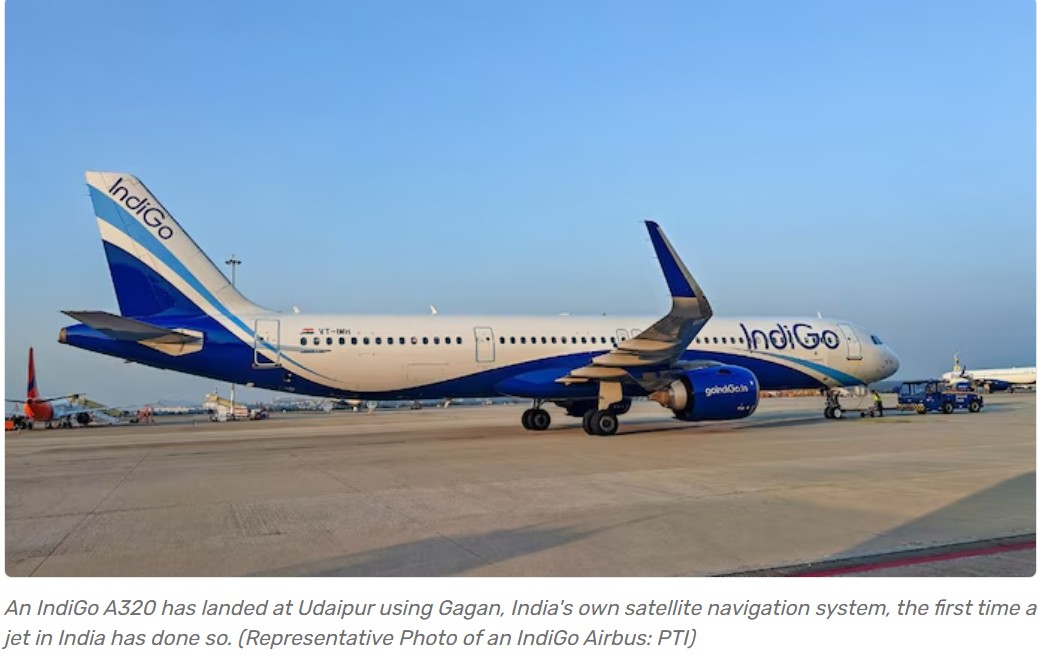
- 28 Jun 2026
In News:
Recently, under the supervision of the Directorate General of Civil Aviation (DGCA), a private jet landed using GPS Aided GEO Augmented Navigation (GAGAN) for the first time in India, marking an important milestone in the adoption of satellite-based navigation for civil aviation.
About GAGAN
GPS Aided GEO Augmented Navigation (GAGAN) is India's Satellite-Based Augmentation System (SBAS), jointly developed by the Airports Authority of India (AAI) and ISRO. It enhances the accuracy, integrity and reliability of GPS signals, enabling aircraft to navigate and land with greater precision, particularly where conventional ground-based navigation systems are limited.
Objectives
GAGAN aims to provide highly accurate satellite-based navigation services for civil aviation, improve air traffic management across Indian airspace, and ensure seamless navigation by remaining interoperable with other international SBAS networks.
How GAGAN Works
GAGAN functions through an integrated ground segment and space segment. A network of 15 Indian Reference Stations (INRES) continuously monitors GPS signals and detects errors caused by ionospheric disturbances, satellite orbit deviations and clock inaccuracies. These observations are processed at the Indian Master Control Centre (INMCC), which generates correction and integrity messages. The corrections are then transmitted through the Indian Land Uplink Station (INLUS) to geostationary satellites, which broadcast the corrected navigation signals to aircraft equipped with compatible receivers.
The space segment comprises the geostationary satellites GSAT-8 (2011), GSAT-10 (2012) and GSAT-15 (2015), each carrying GAGAN payloads to relay these correction messages over the Indian region.
Significance
GAGAN significantly improves the accuracy and safety of aircraft navigation and precision landings, particularly during poor weather conditions. It enhances air traffic management, reduces dependence on costly ground-based navigation aids, optimizes flight paths to save fuel, and aligns India's aviation infrastructure with global satellite-based navigation standards.
US Attacks on Ships with Indian Crew
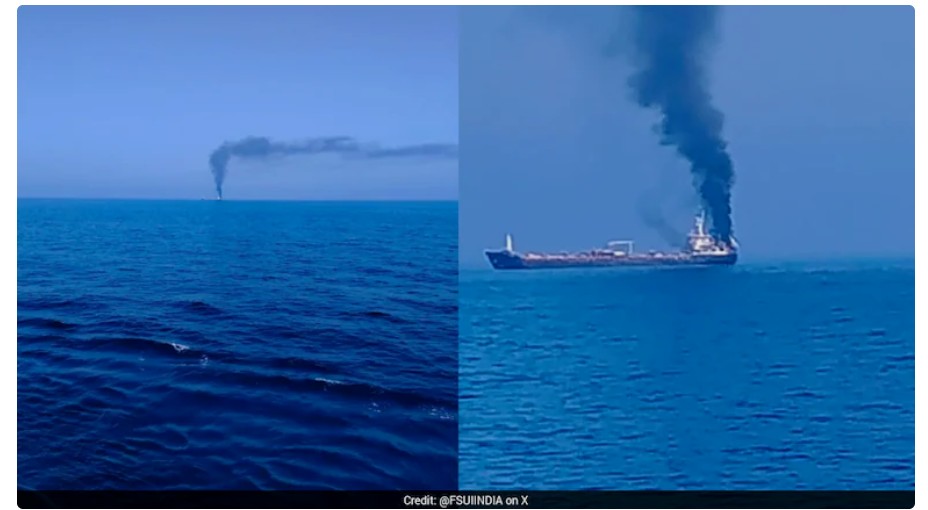
- 16 Jun 2026
In News:
India has strongly condemned a series of military strikes by the US Central Command (CENTCOM) on commercial oil tankers carrying Indian seafarers in the Gulf of Oman and the Strait of Hormuz. Following the death of three Indian nationals in one of the attacks, India summoned the US Chargé d'Affaires to lodge a strong diplomatic protest and called for an immediate cessation of attacks on commercial shipping.
What Happened?
The attacks are linked to the US enforcement of a maritime blockade targeting vessels allegedly transporting Iranian oil in violation of US sanctions.
Three merchant vessels with Indian crew were attacked:
|
Vessel |
Details |
Outcome |
|
MT Marivex |
Oil tanker with 24 Indian seafarers targeted south of the Strait of Hormuz. |
Vessel caught fire; all crew members were rescued. |
|
MT Settebello |
Palau-flagged tanker allegedly carrying Iranian oil. |
Attack resulted in the death of three Indian seafarers and evacuation of the remaining crew. |
|
M/T Jalveer |
Guinea-Bissau-flagged tanker transporting oil through the Gulf of Oman. |
CENTCOM admitted firing two Hellfire missiles into the engine room after alleging non-compliance with its directions. All 20 Indian crew members were reported safe. |
International Maritime Law
The incidents have renewed debate over the legality of using force against commercial shipping.
- Freedom of Navigation (UNCLOS): The United Nations Convention on the Law of the Sea (UNCLOS) guarantees freedom of navigation and the right of innocent passage for commercial vessels through international waters and strategic straits such as the Strait of Hormuz, subject to international law.
- Sanctions vs. Use of Force: While countries may enforce sanctions through inspections, interception or other lawful measures, the use of lethal military force against neutral civilian merchant vessels raises complex issues under international maritime and humanitarian law.
- Diplomatic Demarche: Summoning a foreign diplomat is a formal diplomatic mechanism used to register strong protest while maintaining diplomatic engagement.
Implications for India
The incidents underscore India's growing vulnerability to geopolitical tensions in West Asia, where thousands of Indian seafarers serve aboard international merchant vessels.
- Creates diplomatic challenges in balancing the India–US strategic partnership with the protection of Indian nationals overseas.
- Heightens security risks for Indian seafarers operating in the Gulf of Oman and Strait of Hormuz.
- May discourage recruitment of seafarers, leading to workforce shortages and higher operating costs.
- Escalates war-risk insurance premiums, freight charges and global energy transportation costs, affecting India's energy security and import bill.
- Reinforces the need for secure Sea Lines of Communication (SLOCs) and freedom of navigation in the Indo-Pacific.
Way Forward
India is likely to continue pursuing diplomatic engagement, strengthening maritime safety mechanisms, and coordinating with regional partners to safeguard its seafarers and commercial interests. At the international level, ensuring respect for UNCLOS, protecting civilian shipping, and promoting dialogue remain essential for preserving stability in one of the world's most critical maritime corridors.
Supreme Court Invokes Article 142 to Quash POCSO Conviction
- 16 Jun 2026
In News:
The Supreme Court invoked its extraordinary powers under Article 142 of the Constitution to set aside the conviction of a man under the Protection of Children from Sexual Offences (POCSO) Act, 2012, noting that the victim had subsequently attained majority, married him, and the continuation of the conviction would not serve the ends of justice.
The Court clarified that the decision was based on the peculiar facts of the case and should not be treated as a precedent for similar cases.
Article 142 of the Constitution
- Article 142 empowers the Supreme Court to pass any decree or order necessary for doing "complete justice" in any matter pending before it. Such orders are binding throughout India and are enforceable in the same manner as decrees of a civil court.
- While Article 142 grants wide discretionary powers, the Court has consistently held that these powers cannot ordinarily override substantive statutory provisions and must be exercised sparingly and in exceptional circumstances to ensure justice.
Protection of Children from Sexual Offences (POCSO) Act, 2012
The POCSO Act, 2012 is a comprehensive legislation enacted to protect children below 18 years from sexual assault, sexual harassment, and pornography, while ensuring child-friendly procedures for reporting, investigation, and trial. The Act was enacted following India's obligations under the UN Convention on the Rights of the Child (UNCRC), ratified in 1992.
Key Features of the POCSO Act
- Gender-neutral legislation: Protects both boys and girls from sexual offences.
- Child-friendly justice system: Provides special procedures for recording statements, investigation, evidence, and trial to minimise trauma.
- POCSO Rules, 2020: Strengthen implementation through institutional safeguards, reporting mechanisms, and victim support services.
- Confidentiality of identity:Section 23 prohibits disclosure of any information that may reveal the identity of the child victim, including by the media.
- Mandatory reporting:Sections 19–22 make it mandatory for any person having knowledge or reasonable suspicion of an offence to report it to the authorities.
- Stringent punishments: Prescribes graded penalties depending on the gravity of the offence. The Protection of Children from Sexual Offences (Amendment) Act, 2019 introduced harsher punishments, including the death penalty for certain aggravated penetrative sexual assaults.
Significance of the Judgment
The judgment highlights the Supreme Court's constitutional responsibility to balance strict statutory mandates with the broader objective of doing complete justice in exceptional cases. At the same time, the Court reaffirmed that POCSO is a welfare legislation enacted to protect children and that the exercise of powers under Article 142 cannot dilute the legislative intent or undermine child protection. By emphasizing that the ruling is confined to the unique facts of the case, the Court sought to preserve the deterrent purpose and integrity of the POCSO framework.
Delimitation of Parliamentary Constituencies

- 16 Jun 2026
In News:
The Economic Advisory Council to the Prime Minister (EAC-PM) has released a working paper proposing a targeted approach to the next delimitation exercise. Instead of relying solely on population, it recommends using multiple demographic and electoral indicators while broadly retaining the existing proportion of Lok Sabha seats among large States.
What are the Recommendations?
The EAC-PM paper suggests that the upcoming delimitation should move beyond a uniform population-based formula and adopt a multi-factor methodology to improve representational equity.
The study analysedLok Sabha election data (2009–2024) and found that constituency size alone does not adequately explain representation. It recommends that the Delimitation Commission consider five additional compositional features while deciding whether a constituency should be split:
- Urban population share
- Scheduled Caste (SC) population share
- Scheduled Tribe (ST) population share
- Linguistic polarisation
- Linguistic diversity
According to the paper, delimitation should be undertaken only after:
- A fresh booth rationalisation exercise,
- Publication of 2027 Census data, and
- Availability of gender-disaggregated electoral statistics to improve accuracy.
The proposed model also indicates that all major States could witness nearly a 50% increase in Lok Sabha seats while broadly preserving the existing inter-state proportion of representation.
What is Delimitation?
Delimitation is the process of redrawing the boundaries of Lok Sabha and State Legislative Assembly constituencies to ensure that each constituency represents a nearly equal population, thereby upholding the democratic principle of "one person, one vote, one value." It also involves the allocation of seats among States based on constitutional provisions.
Constitutional and Legal Framework
|
Provision |
Details |
|
Article 82 |
Parliament shall enact a Delimitation Act after every Census for readjustment of Lok Sabha seats. |
|
Article 170 |
Provides for readjustment of seats and constituencies in State Legislative Assemblies. |
|
Delimitation Commission |
Independent statutory body appointed by the Central Government. |
|
Composition |
Chairperson (Serving/Retired Supreme Court Judge), Chief Election Commissioner (or nominee), and State Election Commissioners of the concerned States. |
|
Nature of Orders |
Have the force of law, cannot be challenged in any court, and cannot be modified by Parliament or State Legislatures. |
History of Delimitation
- India has constituted the Delimitation Commission four times—1952, 1963, 1973, and 2002.
- The 42nd Constitutional Amendment Act, 1976 froze the allocation of Lok Sabha seats among States based on the 1971 Census to ensure that States successfully implementing population control measures were not disadvantaged through reduced parliamentary representation.
- The 84th Constitutional Amendment Act, 2001 extended this freeze until the first Census conducted after 2026. Consequently, while the 2002 Delimitation Commission redrew constituency boundaries using the 2001 Census, the inter-state allocation of Lok Sabha seats continues to be based on the 1971 Census.
Great Nicobar Island Project
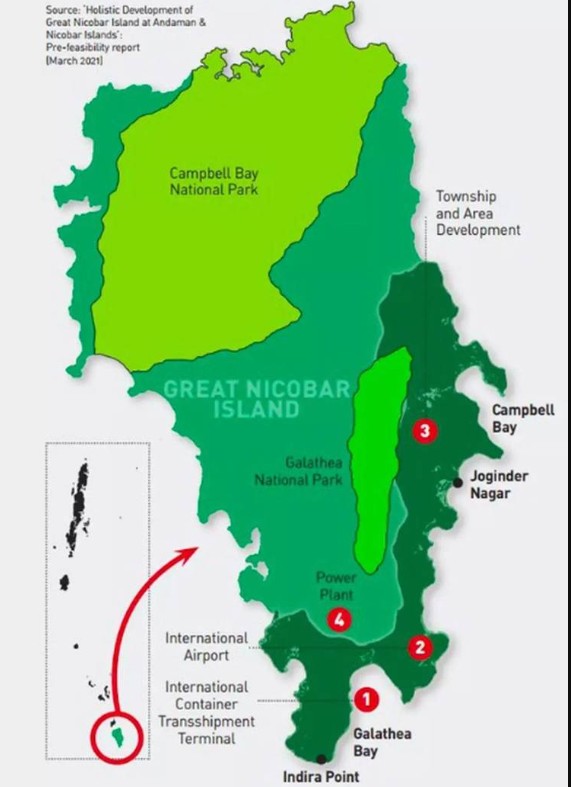
- 16 Jun 2026
In News:
The Andaman and Nicobar Islands Administration has notified the Rehabilitation and Resettlement (R&R) Census for families likely to be affected by the trunk infrastructure component of the Great Nicobar Island Project, marking the commencement of the project's implementation phase.
About the Great Nicobar Island Project
The Great Nicobar Island Project is a flagship infrastructure initiative aimed at transforming Great Nicobar Island into a strategic economic and maritime hub in the Bay of Bengal. Estimated at ?92,000 crore, the project has a long-term implementation timeline extending up to 2050. It seeks to combine economic development with enhanced maritime security and regional connectivity in the Indo-Pacific.
The trunk infrastructure, comprising the main road network and associated public utilities, constitutes the first phase of the project. The ongoing R&R Census aims to identify and verify families affected by this component to facilitate rehabilitation and resettlement in accordance with applicable laws.
Major Components
- International Container Transhipment Port
- Greenfield International Airport
- Power Generation Infrastructure
- Greenfield Township with tourism and urban infrastructure
- Defence and strategic infrastructure
Strategic Significance
The project is envisioned as a model of frontier infrastructure development in ecologically sensitive and strategically important regions. Located near the Malacca Strait, one of the world's busiest Sea Lines of Communication (SLOCs), Great Nicobar occupies a critical position in the Indo-Pacific. The project is expected to:
- Strengthen India's maritime security and naval logistics.
- Enhance India's role in regional transhipment and global supply chains.
- Boost connectivity under the SAGAR (Security and Growth for All in the Region) vision.
- Promote economic development and employment through tourism and port-led growth.
Concerns
Despite its strategic benefits, the project has generated significant environmental and social concerns:
- Potential displacement and livelihood impacts on the Nicobarese and the Shompen, particularly the vulnerable Shompen Tribal Reserve.
- Ecological risks to one of India's richest biodiversity hotspots, including tropical rainforests, mangroves, coral reefs and endemic species.
- Concerns regarding deforestation, habitat fragmentation and increased human intervention in a fragile island ecosystem.
- In 2024, the Public Investment Board (PIB) observed that the proposed transhipment port lacked clearly defined strategic objectives; however, the Ministry of Defence subsequently reaffirmed the project's strategic importance for national security and regional development.
Way Forward
The project's long-term success will depend on balancing strategic infrastructure development with ecological conservation and the constitutional rights of indigenous communities. Transparent rehabilitation, rigorous environmental safeguards, continuous stakeholder consultation, and sustainable development practices will be essential to ensure that national security objectives are achieved without compromising the island's unique ecological and cultural heritage.
Credit Guarantee Scheme for Micro Finance Institutions 2.0
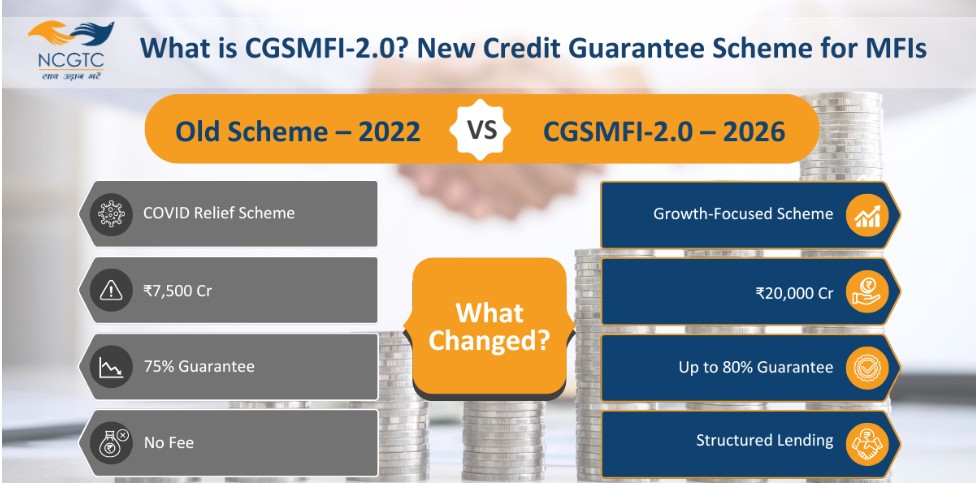
- 16 Jun 2026
In News:
The Government of India has extended the Credit Guarantee Scheme for Micro Finance Institutions (CGSMFI-2.0) till 31 August 2026 or until guarantees worth ?20,000 crore are issued, whichever is earlier. It has also increased the maximum loan limit for large NBFC-MFIs/MFIs from ?300 crore to ?1,000 crore (subject to 20% of AUM). As of now, ?770 crore of loans have been sanctioned under the scheme.
About CGSMFI-2.0
Launched in March 2026, CGSMFI-2.0 is a government-backed credit guarantee scheme that provides guarantee coverage to Member Lending Institutions (MLIs) for loans extended to NBFC-MFIs and other eligible MFIs. These institutions, in turn, provide microcredit to eligible borrowers as per the RBI's microfinance norms. The scheme is implemented through the National Credit Guarantee Trustee Company Ltd. (NCGTC) using an automatic approval mechanism, reducing the credit risk for lenders and encouraging greater flow of institutional finance to the microfinance sector.
Key Features
- Extended till 31 August 2026 or guarantee issuance of ?20,000 crore, whichever is earlier.
- Funds can be used only for incremental lending to eligible microfinance borrowers.
- Loans must be disbursed within three months and have a maximum tenure of three years, including a one-year moratorium.
- To ensure balanced credit distribution, MLIs must allocate at least 5% of total loans to small MFIs and 10% to medium MFIs.
Differential Guarantee Coverage
|
Category |
AUM |
Guarantee Coverage |
|
Small MFI |
Less than ?500 crore |
80% |
|
Medium MFI |
?500 crore to < ?2,000 crore |
75% |
|
Large MFI |
?2,000 crore and above |
70% |
The earlier scheme provided a uniform 75% guarantee, whereas CGSMFI-2.0 offers higher protection to smaller institutions to improve credit access in underserved areas.
Loan Limits
|
Category |
Maximum Loan Limit |
|
Small MFI |
?100 crore |
|
Medium MFI |
?200 crore |
|
Large MFI |
?1,000 crore (revised from ?300 crore), subject to 20% of AUM |
Microfinance Institutions (MFIs)
MFIs are financial intermediaries that provide small, collateral-free loans and financial services to low-income households, particularly in rural and semi-urban areas, thereby promoting financial inclusion, livelihood generation, and women’s empowerment. They function primarily as NBFC-MFIs or cooperative/NGO-led institutions.
Key features include:
- Target beneficiaries: Low-income households, women, small entrepreneurs, and informal workers.
- Loan size: Generally ?5,000–?1,00,000.
- Delivery models: Joint Liability Groups (JLGs) and Self-Help Groups (SHGs).
- Regulation:RBI regulates NBFC-MFIs, while NABARD supports and refinances the SHG-Bank Linkage Programme.
GI-Tagged Tezpur Litchi
- 15 Jun 2026
In News:
The Agricultural and Processed Food Products Export Development Authority (APEDA) facilitated the first international export consignment of GI-tagged Tezpur Litchi from Assam to Dubai, marking a significant step in promoting agricultural exports from Northeast India.
About Tezpur Litchi
- Tezpur Litchi is a premium variety of Litchi chinensis that received the Geographical Indication (GI) tag for its unique quality and geographical origin.
- It is primarily cultivated in Tezpur and adjoining areas of Sonitpur district, Assam.
- The fruit is known for its bright red rind, translucent juicy pulp, pleasant aroma, high pulp-to-seed ratio, and exceptional sweetness. Major local varieties include Bombaya, Bilati, Elaichi, Piyaji, and Sahi.
Cultivation Conditions
- Tezpur Litchi thrives in the humid subtropical climate of Assam and grows best in deep, well-drained alluvial or loamy soils enriched by the Brahmaputra basin. Frost-free winters and warm, humid summers are ideal for flowering and fruit development.
Significance
The successful export to Dubai opens new international market opportunities for farmers and highlights the export potential of GI-tagged products from Northeast India. It is expected to enhance farmers' incomes through better price realization, encourage quality production, and strengthen India's agricultural exports under the government's 'Vocal for Local' and 'One District One Product (ODOP)' initiatives.
Made in India Airbus C-295
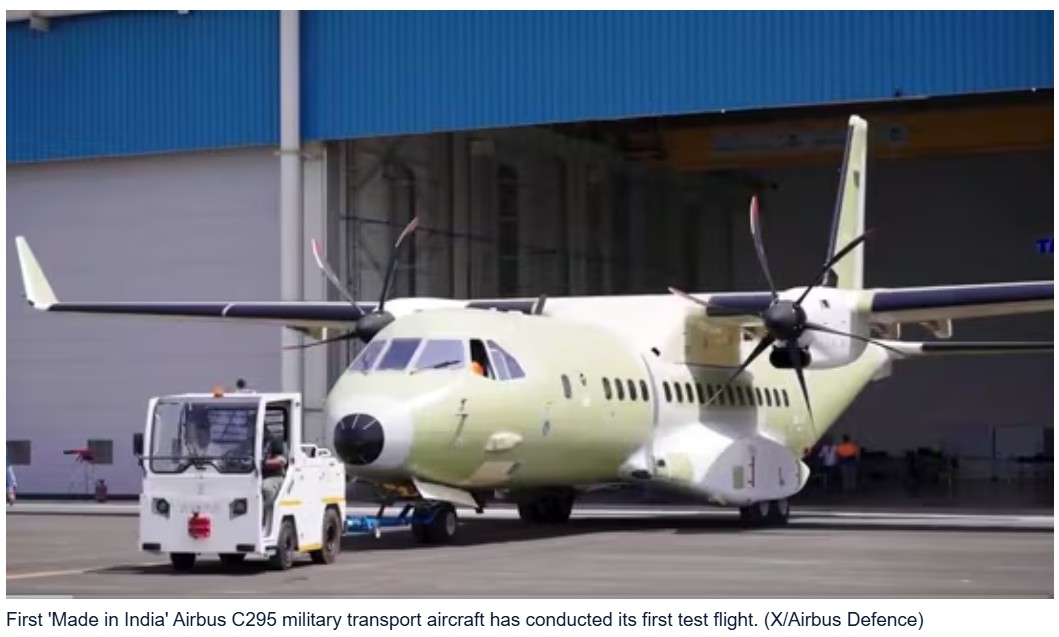
- 15 Jun 2026
In News:
The first Made in India Airbus C-295 military transport aircraft successfully completed its maiden test flight from the Final Assembly Line (FAL) in Vadodara, Gujarat, marking a major milestone in India's defence manufacturing capabilities.
About C-295
The Airbus C-295 is a twin-turboprop tactical military transport aircraft designed to replace the Indian Air Force's ageing Avro HS-748 fleet. It is capable of operating in high-altitude, harsh terrains, and Short Take-Off and Landing (STOL) conditions, making it suitable for border operations and humanitarian missions.
Manufacturing Programme
The aircraft is being procured under a ?21,935 crore contract for 56 aircraft.
- 16 aircraft are being delivered in fly-away condition from Airbus, Spain.
- The remaining 40 aircraft are being manufactured in India through a partnership between Airbus Defence and Space and Tata Advanced Systems Limited (TASL) at Vadodara.
The project is India's first large-scale military aircraft manufacturing programme led by the private sector, supporting the objectives of 'Make in India' and Aatmanirbhar Bharat.
Key Features
- Twin-turboprop tactical transport aircraft with STOL (Short Take-Off and Landing) capability.
- Can operate from short, semi-prepared and unpaved airstrips.
- Suitable for troop transport, cargo movement, medical evacuation (Medevac), disaster relief, paratrooper operations and maritime surveillance.
- Over 85% of the structural components of the 40 Indian-built aircraft will be manufactured domestically, including more than 13,000 parts.
SAPLING Dialogue 2026

- 15 Jun 2026
In News:
The Ministry of Food Processing Industries (MoFPI), in collaboration with the World Bank Group, organised the SAPLING Dialogue 2026 in Ahmedabad, Gujarat, to strengthen food processing and value addition across South Asia.
About SAPLING
- South Asian Policy Leadership for Improved Nutrition and Growth (SAPLING) is a World Bank-led multi-stakeholder platform that promotes policy reforms, investment mobilisation and Agri-Tech adoption to build resilient food systems. It complements the AgriConnect Initiative, which aims to benefit 300 million farmers by 2030 through improved infrastructure and policy support.
- Theme: "Unlocking Value: Advancing Food Processing for Employment Generation and Sustainable Growth in South Asia."
Key Highlights
- The dialogue underscored the need to shift the focus from agricultural production to value addition, recognising food processing, logistics and integrated supply chains as the next engines of agricultural growth.
- A major concern highlighted was post-harvest losses exceeding 30% in South Asia, which can be addressed through Farm-to-Factory integration, expansion of cold-chain infrastructure, improved storage and smart packaging.
- During the event, the report "Assessment of the Level of Food Processing in India" was released.
- It noted that the share of food processing in India increased from 10% in 2016 to nearly 17% in 2023.
- The report also identified substantial untapped potential in processing fruits, vegetables and dairy products, which can enhance farmers' incomes, reduce wastage and boost agricultural exports.
Foreign Currency Non-Resident (Bank)

- 15 Jun 2026
In News:
The RBI has introduced a special FCNR(B) deposit window with a concessional forex swap facility to encourage foreign currency inflows, strengthen foreign exchange reserves, and support rupee stability.
About FCNR(B) Deposits
- FCNR(B) is a fixed-term foreign currency deposit account maintained with Indian banks by:
- Non-Resident Indians (NRIs)
- Overseas Citizens of India (OCIs)
- Persons of Indian Origin (PIOs)
- Deposits are maintained in designated foreign currencies, protecting depositors from exchange rate risk.
- Permitted currencies include:
- US Dollar (USD)
- Pound Sterling (GBP)
- Euro (EUR)
- Japanese Yen (JPY)
- Australian Dollar (AUD)
- Canadian Dollar (CAD)
Objective
- Mobilise stable foreign currency resources for Indian banks.
- Strengthen India's capital account and foreign exchange reserves.
- Offer overseas Indians a tax-efficient investment avenue without rupee depreciation risk.
RBI's Special Forex Swap Facility
- Available for fresh FCNR(B) deposits of 3–5 years.
- Banks sell the foreign currency mobilised through FCNR(B) deposits to the RBI at the prevailing FBIL Reference Rate.
- Simultaneously, the RBI agrees to sell back the same amount of foreign currency to banks at maturity.
- Since the swap is conducted at par, the RBI bears the forward premium, significantly reducing banks' hedging costs.
Key Features
- Tenure: 3–5 years.
- Exchange Rate Risk: Nil for depositors, as deposits are held in foreign currency.
- Tax Benefit: Interest earned is exempt from income tax in India for eligible non-residents.
- CRR & SLR Exemption: Fresh deposits under the special window are exempt from Cash Reserve Ratio (CRR) and Statutory Liquidity Ratio (SLR) requirements, improving banks' lending capacity.
- Interest Rates: Linked to international benchmark rates and generally lower than domestic rupee fixed deposits. Banks may offer higher rates to remain competitive with overseas investment options.
FCNR(B) vs NRE vs NRO Accounts
|
Feature |
FCNR(B) |
NRE |
NRO |
|
Currency |
Foreign Currency |
Indian Rupee |
Indian Rupee |
|
Exchange Rate Risk |
No |
Yes |
Yes |
|
Source of Funds |
Overseas Income |
Overseas Income |
Indian Income & Overseas Income |
|
Repatriability |
Fully Repatriable |
Fully Repatriable |
Limited (subject to RBI rules) |
|
Tax on Interest |
Exempt |
Exempt |
Taxable |
RBI Holds Repo Rate and Lowers GDP Growth Forecast

- 15 Jun 2026
In News:
The RBI's Monetary Policy Committee (MPC) kept the policy repo rate unchanged at 5.25%, retained a Neutral policy stance, revised the FY27 growth and inflation outlook, and announced measures to boost foreign capital inflows and support the rupee.
Key Highlights
- Policy Rates (Unchanged):
- Repo Rate: 5.25%
- Standing Deposit Facility (SDF): 5.00%
- Marginal Standing Facility (MSF): 5.50%
- Bank Rate: 5.50%
- GDP Growth (FY27): Revised down to 6.6% (from 6.9%).
- Inflation (FY27):
- Headline CPI: 5.1% (up by 50 bps).
- Core Inflation: 4.7%.
- Policy Stance: Continued Neutral, enabling a data-driven approach to future rate decisions.
Key Risks Identified
- Global Uncertainty: Geopolitical tensions and crude oil averaging USD 110/barrel (Apr–May 2026) have raised input costs.
- Climate Risks: Forecast of a sub-normal Southwest Monsoon and emerging El Niño pose risks to agriculture and food inflation.
- Second-Round Inflation: RBI cautioned against food and fuel price shocks feeding into wages and inflation expectations.
Measures to Attract Foreign Capital & Stabilise the Rupee
- Tax Relief: Waiver of 12.5% LTCG tax and interest income tax on FPIs investing in Government Securities (effective 1 April 2026).
- Expanded Fully Accessible Route (FAR): Included 15-, 30-, and 40-year G-Secs and Sovereign Green Bonds, allowing unrestricted FPI investment.
- FPI Liberalisation: Removed short-term, concentration, and security-wise limits under the General Route, while retaining overall ceilings (6% for Central G-Secs; 2% for State G-Secs).
- NRI/OCI Reforms: Increased investment limits in listed equities; similar treatment extended to eligible Persons Resident Outside India (PROIs).
- Forex Support: Concessional forex swap facility and FCNR(B) hedging support extended till 30 September 2026.
- Export Realisation: Timeline reduced from 15 months to 9 months to improve forex liquidity.
- Forex Policy: RBI reiterated that it does not target a fixed exchange rate and will use its foreign exchange reserves to curb excessive rupee volatility.
Logistics Port Performance Index
- 31 May 2026
In News:
The Ministry of Ports, Shipping and Waterways (MoPSW) has launched the Logistics Port Performance Index (LPPI) for FY 2024–25 along with four major digital initiatives aimed at improving governance, operational efficiency and ease of doing business in India's maritime sector. These initiatives are expected to support India's ambition of becoming a globally competitive maritime and logistics hub under the Maritime India Vision 2030 and Maritime Amrit Kaal Vision 2047.
What is the Logistics Port Performance Index (LPPI)?
The Logistics Port Performance Index (LPPI) is a national benchmarking framework developed under the Sagar Aankalan initiative to assess, compare and improve the operational efficiency of Indian ports. It introduces a standardized performance assessment mechanism that enables ports to benchmark themselves against national best practices while encouraging continuous operational improvement.
Unlike conventional ranking systems, the LPPI evaluates not only the present performance of ports but also their year-on-year progress, thereby promoting sustained efficiency gains rather than one-time achievements. The framework supports evidence-based policymaking and facilitates healthy competition among ports.
Objectives
- Establish a uniform national benchmark for port performance.
- Improve cargo handling efficiency and reduce logistics costs.
- Promote transparency, accountability and data-driven governance.
- Strengthen India's competitiveness in global maritime trade.
- Support integrated multimodal logistics under the PM Gati Shakti National Master Plan.
- Contribute to the goals of Maritime India Vision 2030 and Maritime Amrit Kaal Vision 2047.
Assessment Parameters
The LPPI evaluates ports across three cargo segments:
- Dry Bulk Cargo
- Liquid Bulk Cargo
- Container Cargo
Performance is measured using key operational indicators such as:
- Cargo handled
- Vessel Turnaround Time (VTT)
- Berth Idle Time
- Pre-Berthing Waiting Time (PBWT)
- Container Dwell Time
- Ship Berth Day Output
A distinctive feature of the index is that it gives equal weightage (50:50) to:
- Absolute operational performance.
- Improvement over the previous year.
This approach incentivises both efficiency and continuous reform.
Top Performing Ports (FY 2024–25)
- Dry Bulk Cargo (>5 MillionTonnes):Paradip Port Authority
- Liquid Bulk Cargo:Sikka Port and Terminals
- Container Cargo (>0.5 Million TEUs):Mundra Port
- Second among Major Container Ports:Jawaharlal Nehru Port Authority (JNPA)
Major Digital Initiatives Launched
To complement the LPPI, the Directorate General of Shipping introduced four digital platforms to improve service delivery and transparency across the maritime ecosystem.
1. 24×7 Grievance Redressal Module (e-Navik Platform)
- Enables round-the-clock grievance registration and monitoring for seafarers.
- Enhances transparency and accountability in grievance resolution.
2. Ship Registration Module (e-Samudra Platform)
- Digitises the ship registration process.
- Reduces paperwork and processing time while improving ease of doing business.
3. Medical Practitioner Module
- Creates a digital registry of authorised medical practitioners conducting medical examinations of seafarers.
- Improves standardisation and regulatory compliance.
4. Unified Ship Recycling Credit Note Module
- Integrated portal supporting the Ship Recycling Credit Scheme.
- Ship owners recycling vessels at Hong Kong Convention-compliant Indian ship recycling yards receive a credit note equal to 40% of the vessel's scrap value, which can be redeemed against new shipbuilding projects in India.
- The initiative forms part of the Government's ?70,000-crore Maritime Development Package (2025) to promote domestic shipbuilding and green ship recycling.
Significance for India
- Improves port productivity and operational efficiency.
- Reduces logistics costs and vessel turnaround time.
- Encourages digital governance in the maritime sector.
- Supports sustainable ship recycling and indigenous shipbuilding.
- Enhances India's integration with global supply chains.
- Strengthens India's position as a leading maritime and logistics nation under the Blue Economy framework.
India-China 35th WMCC Meeting
- 31 May 2026
In News:
India and China recently held the 35th meeting of the Working Mechanism for Consultation and Coordination on India-China Border Affairs (WMCC) in Beijing. The discussions focused on maintaining peace along the Line of Actual Control (LAC) and advancing efforts towards the normalisation of bilateral relations.
Key Highlights of the WMCC Meeting
The meeting served as an important diplomatic platform to address ongoing border-related issues and strengthen coordination mechanisms between the two countries.
- Focus Areas of Discussion:
- Border delimitation and clarification of the LAC.
- Border management and confidence-building measures.
- Mechanism building for sustained dialogue.
- Cross-border cooperation initiatives.
- Peace and Stability:Both sides expressed satisfaction over the progress made in maintaining peace and tranquillity along the LAC, recognising that stability at the border is essential for improving overall bilateral relations.
- Trans-border Rivers Mechanism:India emphasised the need for an early meeting of the Expert Level Mechanism on Trans-border Rivers, highlighting its strategic and ecological importance, particularly in the context of water sharing and data exchange.
- Special Representatives (SR) Talks:Both countries agreed to actively prepare for the 25th round of Special Representatives (SR) talks on the boundary question, which will be hosted in China.
India-China Border: An Overview
India shares a 3,488 km-long border with China, spanning multiple states and union territories:
- Ladakh: 1,597 km
- Himachal Pradesh: 200 km
- Uttarakhand: 345 km
- Sikkim: 220 km
- Arunachal Pradesh: 1,126 km
The Line of Actual Control (LAC) emerged after the 1962 India-China War and functions as the de facto boundary between the two countries.
- India considers the LAC to be 3,488 km long, while China estimates it at approximately 2,000 km.
- The boundary remains undemarcated, and efforts to clarify and confirm its alignment are ongoing.
- The Indo-Tibetan Border Police (ITBP) is the primary force responsible for guarding the India-China border.
Sectors of the India-China Border
- The India-China border is divided into three sectors, each with distinct geographical and historical characteristics:
|
Sector |
Bordering States/UTs |
Key Dispute & Historical Claims |
|
Western |
Ladakh |
Dispute centred on Aksai Chin. India bases its claim on the Johnson Line (1865), while China relies on the McDonald Line (1893). |
|
Middle |
Himachal Pradesh, Uttarakhand |
Least contentious sector; the only region where both countries have exchanged maps. |
|
Eastern |
Sikkim, Arunachal Pradesh |
Dispute revolves around the McMahon Line (1914 Simla Convention). China rejects this line and claims Arunachal Pradesh as "South Tibet" |
India's First Indigenous Hydrogen Train
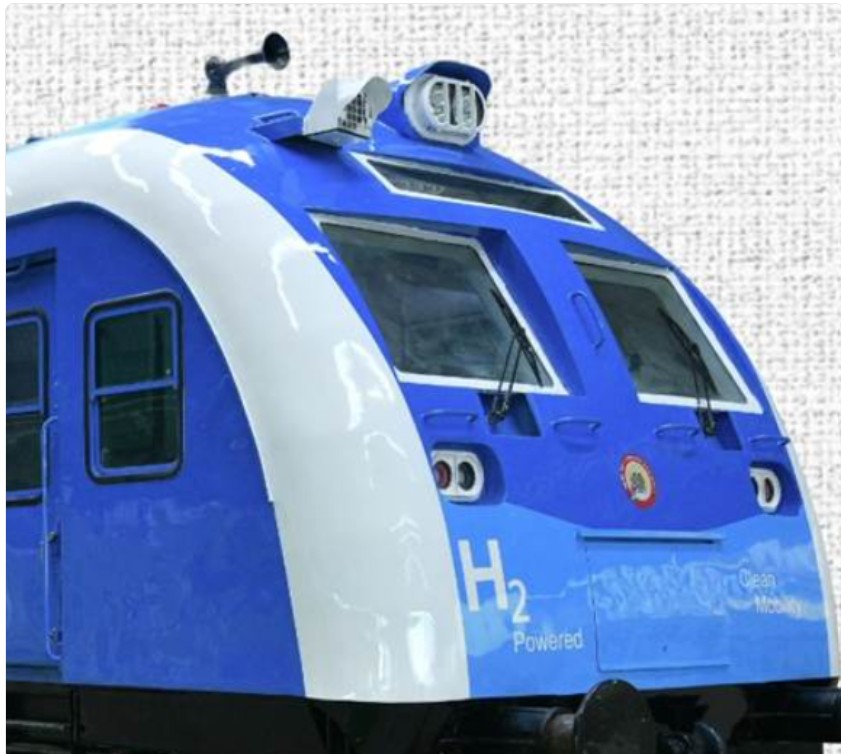
- 31 May 2026
In News:
Indian Railways has approved the operational rollout of India's first indigenous Hydrogen Fuel Cell-based train on the Jind–Sonipat section in Haryana. Developed by the Research Designs and Standards Organisation (RDSO), the train marks a significant milestone in India's transition towards clean, indigenous and sustainable rail transportation.
About the Hydrogen Fuel Cell Train
The hydrogen train is a 10-car passenger trainset powered entirely by a Hydrogen Fuel Cell Propulsion System, making it India's first indigenously developed hydrogen-powered train. Unlike conventional diesel locomotives, it does not burn fossil fuels. Instead, it generates electricity through an electrochemical reaction between compressed hydrogen stored onboard and oxygen from the atmosphere. The electricity produced powers the train's 1,200 kW propulsion system, while the only by-products released are water vapour and heat, making it a zero tailpipe emission mode of transport.
The project has been developed by the Research Designs and Standards Organisation (RDSO), the research and standards-setting body of Indian Railways, and supports the Railways' objective of achieving Net Zero Carbon Emissions by 2030.
How Does a Hydrogen Fuel Cell Work?
A hydrogen fuel cell converts the chemical energy of hydrogen directly into electrical energy without any combustion process.
The working mechanism involves the following steps:
- Hydrogen Storage: Compressed hydrogen is stored in onboard high-pressure tanks.
- Electrochemical Reaction: Hydrogen reacts with oxygen from the atmosphere inside the fuel cell stack across a specialised membrane.
- Electricity Generation: The reaction produces electricity, which powers the traction motors and onboard electrical systems.
- By-products: The only emissions are water vapour and heat, making the technology environmentally friendly.
Unlike batteries, fuel cells continue generating electricity as long as hydrogen fuel is supplied.
Key Features
The hydrogen train incorporates several technological and operational innovations:
- Pilot Route: Jind–Sonipat section in Haryana.
- Train Configuration: Indigenous 10-car passenger trainset.
- Propulsion System: 1,200 kW Hydrogen Fuel Cell.
- Maximum Operational Speed: 75 kmph.
- Refuelling Infrastructure: Dedicated hydrogen production, compression and refuelling facility at Jind station.
- Maintenance Base: Dedicated workshop at Shakurbasti.
- Safety Measures: Hydrogen leak detectors, flame detectors, automated monitoring systems, standby compressors and RDSO-approved Standard Operating Procedures (SOPs).
- Operational Monitoring: Initial operations will be supervised by trained technical personnel to ensure safety and performance.
Significance
The launch of the hydrogen train represents an important step in the decarbonisation of Indian Railways, particularly on non-electrified railway routes, where diesel locomotives continue to operate. Hydrogen fuel cell technology offers a clean alternative by eliminating carbon emissions at the point of use while reducing dependence on imported fossil fuels.
The project also complements the objectives of the National Green Hydrogen Mission, promotes indigenous technological capabilities under Atmanirbhar Bharat, and strengthens India's commitment towards achieving its climate goals. If the pilot project proves successful, hydrogen-powered trains could be deployed on other non-electrified routes where complete railway electrification is economically challenging.
Challenges
Despite its potential, hydrogen rail technology faces several constraints:
- High production cost of green hydrogen due to expensive electrolysers and renewable energy requirements.
- Limited hydrogen production, storage and transportation infrastructure.
- High initial capital investment for refuelling stations and fuel cell technology.
- Hydrogen is highly flammable, necessitating stringent safety standards and continuous monitoring.
- Long-term commercial viability depends on reducing hydrogen production costs and improving fuel cell efficiency.
Judiciary’s Role in Complete Justice
- 31 May 2026
In News:
The Supreme Court of India, while taking suo motu cognisance of two fatal road accidents, held that the Right to Safe Travel on National Highways forms an integral part of the Right to Life under Article 21 of the Constitution. Invoking its extraordinary powers under Article 142, the Court issued directions aimed at strengthening road safety and ensuring accountability of highway authorities. The judgment has once again brought into focus the Supreme Court's constitutional role in delivering "complete justice."
What is the Doctrine of Complete Justice?
The doctrine of complete justice is a unique constitutional power vested exclusively in the Supreme Court under Article 142. Unlike ordinary judicial powers that operate within the boundaries of statutory law and procedural rules, Article 142 empowers the Court to pass any decree or order necessary to ensure that justice is fully achieved in matters pending before it.
This extraordinary jurisdiction acts as a constitutional safety valve, enabling the Court to bridge legislative gaps, remedy exceptional situations, and protect constitutional rights where existing laws prove inadequate. Rather than being confined to procedural technicalities, the Court is empowered to uphold substantive justice in accordance with the spirit of the Constitution.
Constitutional Framework Governing Complete Justice
The Supreme Court's exercise of complete justice is rooted in a combination of constitutional provisions that collectively strengthen its role as the guardian of fundamental rights.
- Article 142 grants the Supreme Court the authority to pass any order necessary for doing complete justice in any matter before it. This power is unique to the apex court and cannot ordinarily be curtailed by statutory limitations.
- Article 21, which guarantees the Right to Life and Personal Liberty, has been interpreted expansively over the years to include several derivative rights such as the right to livelihood, clean environment, education, privacy and, most recently, the right to safe travel on National Highways.
- Article 141 provides that the law declared by the Supreme Court is binding on all courts in India. Consequently, principles evolved while exercising Article 142 become authoritative precedents unless modified by a larger Bench or constitutional amendment.
- While Article 226 empowers High Courts to enforce fundamental rights through writ jurisdiction, it does not confer powers equivalent to Article 142. High Courts remain bound by statutory limitations and cannot exercise the same broad residuary jurisdiction available to the Supreme Court.
Judicial Recognition of Safe Highways as a Fundamental Right
Road accidents remain one of India's gravest public safety challenges, claiming over 1.7 lakh lives annually. Treating road safety as merely an administrative responsibility has often resulted in fragmented implementation and weak accountability.
Recognising this reality, the Supreme Court held that safe mobility is inseparable from the constitutional guarantee of life and dignity under Article 21. By declaring safe travel on National Highways a fundamental right, the Court transformed road safety from a policy objective into a constitutional obligation.
The judgment places a greater responsibility on governments, highway authorities and implementing agencies to ensure scientifically designed roads, effective enforcement of traffic laws, emergency medical response systems and continuous monitoring of highway safety standards.
Significance of the Doctrine of Complete Justice
The power under Article 142 has played a transformative role in the evolution of Indian constitutional jurisprudence. It enables the Supreme Court to respond effectively when statutory law fails to address emerging social realities or when procedural barriers prevent justice.
The doctrine allows the Court to protect fundamental rights even in situations where legislation is silent or inadequate. It has often served as a mechanism for advancing constitutional morality and adapting legal principles to changing societal needs.
Another important contribution of Article 142 lies in its ability to ensure effective implementation of constitutional values. By issuing binding directions in areas such as environmental protection, gender justice, police reforms and now road safety, the Court has sought to strengthen governance where executive action has been insufficient.
The recognition of safe highways as a constitutional right illustrates how judicial interpretation can convert public welfare objectives into enforceable constitutional guarantees.
Sample Registration System (SRS) Statistical Report 2024
- 31 May 2026
In News:
The Office of the Registrar General & Census Commissioner, under the Ministry of Home Affairs, has released the Sample Registration System (SRS) Statistical Report 2024, which reveals that India's Total Fertility Rate (TFR) has declined to 1.9, falling below the replacement level of 2.1 for the first time. The report highlights significant improvements in maternal and child health while also signalling the beginning of a new demographic challenge marked by population ageing and regional disparities.
About the Sample Registration System (SRS)
- The Sample Registration System (SRS) is India's largest continuous demographic survey and serves as the country's most reliable source of annual estimates on fertility and mortality.
- Conducted by the Office of the Registrar General & Census Commissioner under the Ministry of Home Affairs, the survey provides annual estimates of the Birth Rate, Death Rate, Infant Mortality Rate (IMR), Under-Five Mortality Rate (U5MR), Total Fertility Rate (TFR) and other demographic indicators between two Census operations.
- The 2024 report is based on the 2011 Census sampling frame and covers nearly 8.9 million individuals across 8,839 sample units, making it the principal macro-level demographic database for policy formulation.
India's Demographic Profile: Major Findings
- The report indicates that India has entered an advanced stage of demographic transition. The Total Fertility Rate (TFR) has declined to 1.9, significantly below the replacement level of 2.1, suggesting that Indian families are opting for fewer children. This decline is accompanied by a continuous fall in the Crude Birth Rate (CBR) from 21.0 in 2014 to 18.3 in 2024, while the Crude Death Rate (CDR) has stabilised at 6.4.
- The report also reflects substantial progress in public health outcomes. The Infant Mortality Rate (IMR) has fallen to 24 deaths per 1,000 live births, compared to 30 in 2019, while the Under-Five Mortality Rate (U5MR) has declined to 28 per 1,000 live births. These improvements are largely attributed to expanded immunisation coverage, institutional deliveries, improved neonatal care and better access to healthcare facilities.
- A notable achievement is the expansion of institutional healthcare, with 95.4% of all deliveries now taking place in hospitals or recognised healthcare institutions, indicating significant progress in maternal healthcare services.
- The report also reveals important demographic shifts. Children (0–14 years) now constitute 24% of the population, whereas the working-age population(15–59 years) accounts for 66.4%, reinforcing India's demographic dividend. Simultaneously, the elderly population (60 years and above) has increased to 9.7%, indicating the gradual onset of population ageing. Reflecting broader social transformation, the mean age at effective marriage for women has risen to 23.1 years, suggesting greater female educational attainment and delayed childbearing. The Sex Ratio at Birth (2022–24 average) has marginally improved to 918 females per 1,000 males, though it remains below the natural level.
What Do These Trends Indicate?
The findings indicate that India is progressing through the late stage of the Demographic Transition Model (DTM), characterised by low birth rates, low death rates and slowing population growth. Unlike previous decades when population explosion dominated policy discourse, India is now gradually shifting towards concerns related to ageing, labour force sustainability and social security.
The expansion of the working-age population presents a valuable demographic dividend. If complemented with quality education, skill development and employment generation, it can significantly accelerate economic growth and improve productivity. However, this demographic advantage is time-bound and requires effective policy intervention before the population begins ageing rapidly.
The report also reflects the positive outcomes of investments in public health. The sharp increase in institutional deliveries and the decline in infant and child mortality demonstrate the success of initiatives such as improved maternal healthcare, immunisationprogrammes and strengthened primary healthcare infrastructure.
Emerging Challenges
Despite encouraging national averages, the report highlights considerable regional disparities. Southern states such as Kerala and Tamil Nadu have already entered an advanced demographic stage with very low fertility levels, while several northern and central states continue to record relatively higher fertility and infant mortality rates. For instance, Kerala records an IMR of only 8, whereas Chhattisgarh reports an IMR of 36, revealing significant inequalities in healthcare outcomes and human development.
The report also exposes persistent rural-urban disparities. Rural areas continue to experience higher infant mortality and comparatively lower access to quality healthcare infrastructure than urban centres, indicating the need for stronger primary healthcare systems in underserved regions.
Another emerging concern is the rapid decline in fertility. Although lower fertility reflects improved education and healthcare, sustained fertility below replacement level could eventually reduce the size of the labour force and increase the old-age dependency ratio. States such as Delhi (TFR 1.2) and Kerala (TFR 1.3) already face the prospect of accelerated population ageing.
Equally concerning is the finding that 45.5% of deceased individuals received no medical attention before death, pointing to deficiencies in geriatric care, palliative care and end-of-life healthcare services.
Quad Foreign Ministers’ Meeting 2026
- 30 May 2026
In News:
The 11th Quad Foreign Ministers' Meeting was held in New Delhi amid growing geopolitical tensions in the South China Sea, Taiwan Strait, and Strait of Hormuz. The four Quad countries—India, the United States, Japan, and Australia—announced several new initiatives on maritime security, critical minerals, energy security, emerging technologies, and disaster response, reaffirming their commitment to a free, open, inclusive, and rules-based Indo-Pacific.
About the Quad
- The Quadrilateral Security Dialogue (Quad) is an informal strategic partnership comprising India, the United States, Japan, and Australia.
- It aims to promote a free, open, inclusive, prosperous, and resilient Indo-Pacific, based on respect for international law, freedom of navigation, territorial integrity, and peaceful resolution of disputes.
- The grouping originated as a humanitarian coordination mechanism following the 2004 Indian Ocean Tsunami, was first proposed by former Japanese Prime Minister Shinzo Abe in 2007, and was revived in 2017 in response to the changing strategic environment in the Indo-Pacific.
- At the 2021 Leaders' Summit, the Quad adopted the "Spirit of the Quad", reaffirming its commitment to democratic values, rule of law, and a region free from coercion.
- Some of its key initiatives include the Malabar Naval Exercise, Quad-at-Sea Ship Observer Mission, Indo-Pacific Partnership for Maritime Domain Awareness (IPMDA), and growing cooperation through the Quad Plus format with countries such as South Korea, New Zealand, and Vietnam.
Key Outcomes of the 11th Quad Foreign Ministers' Meeting
The meeting significantly expanded cooperation across security, economic resilience, technology, and humanitarian assistance.
Maritime and Security Cooperation
- The Quad launched the Indo-Pacific Maritime Surveillance Collaboration (IPMSC) to improve Maritime Domain Awareness (MDA) through information sharing and coordinated surveillance, with an initial focus on the Indian Ocean Region (IOR).
- It also expanded the Indo-Pacific Partnership for Maritime Domain Awareness (IPMDA) by developing a Common Operating Picture (COP) to integrate real-time maritime information across the Indo-Pacific.
- India will host the next Quad-at-Sea Ship Observer Mission, while Australia will organise the Quad Counterterrorism Tabletop Exercise (2026) focusing on state-sponsored terrorism and the misuse of Unmanned Aerial Vehicles (UAVs).
Economic Security and Supply Chain Resilience
- Recognising the strategic importance of critical minerals and secure supply chains, the Quad adopted the Quad Critical Minerals Initiative Framework to coordinate investments in mining, processing, recycling, and resilient supply chains.
- The partners also launched the Quad Initiative on Indo-Pacific Energy Security, committing over USD 25 million for technology collaboration, energy market analysis, emergency response, and resilient energy supply chains.
- Further, under the Ports of the Future Partnership, the Quad will work with Fiji to upgrade port infrastructure and committed to connecting all Pacific Island Forum countries through resilient undersea cable networks by 2026, strengthening regional digital connectivity.
Critical and Emerging Technologies
Technology cooperation emerged as another major pillar of the Quad.
The members agreed to collaborate on:
- Next-generation (6G) communication standards and Open RAN technologies.
- A Digital Identity Standards "Translation Guide" to enable cross-border interoperability.
- The AI-ENGAGE Initiative, under which over USD 6 million has been allocated for research using Artificial Intelligence, robotics, and remote sensing to improve agricultural productivity, pest management, and food security across the Indo-Pacific.
Humanitarian Assistance and Disaster Relief (HADR)
- Building on lessons from the 2025 Honolulu Tabletop Exercise, the Quad strengthened its disaster response architecture by enhancing coordination mechanisms for emergency response.
- The grouping also committed over USD 50 million to train health professionals, improve preparedness for disease outbreaks, and strengthen humanitarian assistance and disaster relief (HADR) capabilities across the Indo-Pacific.
Significance of the Quad for India
For India, the Quad has evolved into a crucial platform that complements its Act East Policy, Indo-Pacific Oceans Initiative (IPOI), and vision of SAGAR (Security and Growth for All in the Region).
It helps India:
- Counter China's growing strategic presence and the "String of Pearls" strategy in the Indian Ocean.
- Strengthen Maritime Domain Awareness through initiatives like IPMSC and IPMDA.
- Diversify critical mineral and technology supply chains under the global China 1 strategy.
- Enhance cooperation in AI, semiconductors, cyber security, telecommunications, and clean energy.
- Deepen defence interoperability while preserving India's policy of Strategic Autonomy, as the Quad is not a military alliance.
National e-Governance Service Delivery Assessment
- 30 May 2026
In News:
The Department of Administrative Reforms and Public Grievances (DARPG) has launched the National e-Governance Service Delivery Assessment (NeSDA) 2025 Portal to assess the quality and effectiveness of online public service delivery across States, Union Territories (UTs), and selected Central Ministries. The portal aims to strengthen digital governance by enabling standardized assessment, benchmarking, and continuous improvement in service delivery.
What is NeSDA?
- The National e-Governance Service Delivery Assessment (NeSDA) is a biennial assessment framework developed by DARPG to evaluate the maturity and effectiveness of e-governance services from a citizen-centric perspective.
- It is based on the Online Service Index (OSI) of the UN e-Government Survey, but has been adapted to India's federal governance structure.
- Rather than ranking governments solely on the number of services available online, NeSDA assesses how effectively these services are delivered, focusing on their accessibility, usability, transparency, and overall user experience.
- It also serves as a national benchmarking exercise, encouraging States, UTs, and Central Ministries to adopt best practices and bridge gaps in digital governance.
Key Features of NeSDA 2025
- NeSDA 2025 expands both the scope and depth of assessment. It evaluates State, UT, City, and Central Ministry portals, along with dedicated service portals, thereby covering the complete digital service delivery ecosystem.
- The framework assesses Government-to-Citizen (G2C) and Government-to-Business (G2B) services across major sectors such as finance, labour and employment, education, local governance, utility services, social welfare, health, agriculture, home security, environment, tourism, public grievance, and transport.
- A notable addition in NeSDA 2025 is the inclusion of services offered by the Ministry of Corporate Affairs, reflecting the increasing emphasis on digital business governance.
- To ensure uniform evaluation, the framework proposes assessment of 59 mandatory services for every State and Union Territory and 43 mandatory services for Central Ministries and Departments.
Assessment Parameters
The assessment examines the overall maturity of digital governance through multiple dimensions. It evaluates whether online services are accessible, easy to use, secure, and privacy-compliant, while also assessing end-to-end digital service delivery, integrated service delivery, status tracking, Open Government Data (OGD), e-participation, and the adoption of emerging technologies such as Artificial Intelligence. This comprehensive approach ensures that governments focus not only on digitization but also on the quality of citizens' digital experience.
Significance
NeSDA has emerged as an important instrument for promoting good governance and cooperative federalism by enabling evidence-based comparison of digital service delivery across governments.
It helps identify implementation gaps, encourages the adoption of best practices, and improves accountability through measurable performance indicators.
The launch of the NeSDA 2025 Portal will further streamline online data collection, stakeholder consultations, capacity-building programmes, and periodic reviews.
As India expands its Digital Public Infrastructure, NeSDA complements flagship initiatives such as Digital India, Ease of Living, and Minimum Government, Maximum Governance by ensuring that public services are not only digitized but are also citizen-friendly, inclusive, transparent, and efficient.
Memflation

- 30 May 2026
In News:
The global semiconductor industry is witnessing a phenomenon called 'Memflation', resulting in a shortage of conventional memory chips and a sharp rise in their prices. In India, this has led to a shortage of entry-level smartphones (?10,000–?15,000) as semiconductor manufacturers divert production capacity towards High Bandwidth Memory (HBM) required for Artificial Intelligence (AI) infrastructure. At the same time, global semiconductor revenues are projected to cross $1.3 trillion in 2026, a 64% increase over 2025, driven largely by AI-led demand.
What is Memflation?
Memflation is a term coined by Gartner to describe the structural inflation in semiconductor memory prices caused by the rapid expansion of AI infrastructure. The extraordinary demand for AI chips and advanced memory has diverted manufacturing resources away from conventional memory components, creating shortages and driving up prices for consumer electronics.
Unlike temporary supply disruptions, memflation represents a long-term structural shift in the semiconductor industry, where production is increasingly aligned with high-margin AI applications rather than mass-market consumer devices.
What is Driving Memflation?
The primary factor behind memflation is the global AI boom, which has significantly increased demand for High Bandwidth Memory (HBM) used in AI accelerators and data centres. Since manufacturing one HBM chip requires 2–3 times more wafer capacity than conventional memory chips, semiconductor manufacturers are allocating a larger share of fabrication resources to AI-related products.
Other contributing factors include:
- Production Shift: Major companies such as Micron Technology are prioritising high-margin AI memory and enterprise chips over consumer memory.
- Pre-emptive Stockpiling: Fearing tariffs and future price increases, companies accumulated large inventories during 2025–26, further tightening global supplies.
- Limited Manufacturing Capacity: Semiconductor fabrication and advanced packaging require enormous capital investment and years to expand, preventing quick supply-side responses.
Role of DRAM, NAND and HBM
The current shortage primarily affects conventional memory technologies used in consumer electronics.
- DRAM (Dynamic Random Access Memory): Temporary memory used by processors in smartphones, laptops and computers for active operations.
- NAND Flash Memory: Non-volatile storage that retains data even when power is switched off and is widely used in smartphones, SSDs and storage devices.
- High Bandwidth Memory (HBM): Advanced stacked memory offering significantly higher speed and bandwidth, primarily used in AI processors, GPUs and high-performance computing.
The rapid shift towards HBM production has reduced the availability of DRAM and NAND, thereby increasing their prices.
Impact on India
India is among the most vulnerable countries because it depends heavily on imported semiconductor components while having a highly price-sensitive consumer market.
The immediate consequences include:
- Shortage of smartphones priced below ?10,000–?15,000.
- Increase in smartphone prices by 15–20% for several brands.
- Rising production costs for entry-level laptops and consumer electronics.
- Smartphone manufacturers increasingly prioritising premium devices over budget models due to higher profitability.
- Greater dependence on global semiconductor supply chains.
Global Implications
Memflation is affecting both technology producers and consumers across the world.
- DRAM prices are expected to rise by nearly 125%, while NAND flash prices could increase by around 243%.
- The semiconductor industry is projected to expand from over $1.3 trillion in 2026 to nearly $1.6 trillion by 2027, with AI emerging as its principal growth driver.
- Rising memory prices are delaying enterprise IT upgrades, increasing hardware costs, and disrupting non-AI technology markets.
- Analysts expect supply constraints and elevated prices to continue through 2026–27, with gradual normalisation only after new fabrication capacities become operational.
150 Years of the Indian Association for the Cultivation of Science (IACS)
- 30 May 2026
In News:
The Indian Association for the Cultivation of Science (IACS) celebrated 150 years of its establishment. To mark the occasion, the Government inaugurated the Plasma Enhanced Chemical Vapor Deposition (PECVD) system for fabricating India's first amorphous silicon solar cell and launched RETINA (Research Entrepreneurship for Translation, Innovation and NAvigation), a centre dedicated to translating scientific research into innovation, startups, and societal applications.
Indian Association for the Cultivation of Science (IACS)
Founded in 1876 by Dr. Mahendralal Sircar, IACS is recognised as the first research institution in Asia established by Indians for the promotion of modern science through original research. Established during British rule, the institute played a pioneering role in fostering scientific temper and indigenous research at a time when scientific education in India was limited.
Key Features
- Established by Dr. Mahendralal Sircar with the vision of promoting original scientific research in India.
- Pandit Iswar Chandra Vidyasagar and Kesab Chandra Sen were members of its first Board of Trustees.
- Became the workplace of eminent Indian scientists such as: Jagadish Chandra Bose, Meghnad Saha, S.N. Bose, and Sir C.V. Raman
- Today, IACS undertakes cutting-edge research in physics, chemistry, biological sciences, materials science, nanotechnology, quantum materials, artificial intelligence, battery technologies, and environmental science.
IACS and the Raman Effect
One of the institute's greatest contributions to science was the discovery of the Raman Effect by Sir C.V. Raman, for which he received the Nobel Prize in Physics in 1930—the first Nobel Prize in Science awarded to an Indian.
What is the Raman Effect?
The Raman Effect refers to the inelastic scattering of light by molecules.
- When monochromatic light strikes a substance, most photons are scattered without any change in energy (Rayleigh scattering).
- A very small fraction exchanges energy with molecules and emerges with different wavelengths, producing the Raman Effect.
Applications
The discovery laid the foundation for Raman Spectroscopy, which is extensively used in:
- Chemical and pharmaceutical analysis
- Medical diagnostics
- Forensic science
- Materials characterization
- Nanotechnology and semiconductor research
New Initiatives Launched
1. Plasma Enhanced Chemical Vapor Deposition (PECVD) System
The newly inaugurated PECVD system is India's first indigenous facility for fabricating amorphous silicon (a-Si) solar cells.
Significance
- Uses plasma to deposit thin semiconductor films at relatively low temperatures.
- Enables production of lightweight, flexible, and cost-effective solar cells.
- Strengthens India's indigenous capability in renewable energy technologies and advanced semiconductor manufacturing.
- Supports the objectives of Atmanirbhar Bharat and clean energy transition.
2. RETINA (Research Entrepreneurship for Translation, Innovation and NAvigation)
RETINA has been established to bridge the gap between fundamental scientific research and commercial innovation.
It aims to:
- Promote technology transfer from laboratories to industry.
- Support startups and entrepreneurship based on scientific discoveries.
- Encourage industry-academia collaboration.
- Develop solutions for societal challenges in healthcare, clean energy, advanced materials, and sustainability.
Bundibugyo Virus Outbreak
- 30 May 2026
In News:
The World Health Organization (WHO) declared the Bundibugyo Ebola Virus Disease (BVD) outbreak in the Democratic Republic of the Congo (DRC) and Uganda as a Public Health Emergency of International Concern (PHEIC).
The outbreak has drawn global attention because, unlike the Zaire strain of Ebola, there is currently no licensed vaccine or specific treatment for the Bundibugyo virus, exposing serious gaps in global preparedness against emerging infectious diseases.
What is Bundibugyo Virus?
- Bundibugyo virus is one of the six species of the Orthoebolavirus genus that causes Ebola Virus Disease (EVD).
- It is a zoonotic disease, with fruit bats believed to be its natural reservoir. Human infection occurs through contact with infected wildlife such as bats and non-human primates, while subsequent transmission takes place through direct contact with the blood, body fluids, or contaminated objects of infected individuals. Healthcare workers and people participating in unsafe burial practices are particularly vulnerable to infection.
- The virus has an incubation period of 2–21 days, and infected individuals become contagious only after symptoms appear.
- Initial symptoms such as fever, fatigue, headache, muscle pain, and sore throat resemble common febrile illnesses like malaria, making early diagnosis difficult.
- In severe cases, patients develop gastrointestinal complications, multi-organ failure, and haemorrhagic manifestations.
- Previous outbreaks in Uganda and the DRC have reported case fatality rates ranging from 30% to 50%. Diagnosis requires laboratory confirmation through RT-PCR and antigen or antibody-based tests.
Ebola Virus Disease:
- Ebola Virus Disease is a rare but highly fatal viral haemorrhagic fever first identified in 1976 near the Ebola River in the DRC.
- Of the six known Orthoebolavirus species, Ebola virus, Sudan virus, Bundibugyo virus, and Taï Forest virus infect humans, while Reston and Bombali viruses have not caused human disease.
- Although WHO has approved monoclonal antibody therapies such as Ansuvimab and Inmazeb, and vaccines like Ervebo, Zabdeno, and Mvabea, these are effective only against the Zaire Ebola virus.
- No approved vaccine or targeted therapy currently exists for Bundibugyo or Sudan virus disease, making supportive care, rapid case detection, isolation, contact tracing, infection prevention, and safe burial practices the primary means of controlling outbreaks.
Why has vaccine development been delayed?
The Bundibugyo outbreak highlights a classic case of market failure in global health. Vaccine development is scientifically complex, expensive, and requires high-containment Biosafety Level-4 (BSL-4) laboratories and lengthy clinical trials. Since Bundibugyo outbreaks are infrequent and largely confined to low-income African countries with limited purchasing power, pharmaceutical companies have little commercial incentive to invest in vaccine research. Consequently, diseases with high public health risks but limited market demand continue to remain neglected, despite posing significant pandemic threats.
Mission Queen Pineapple
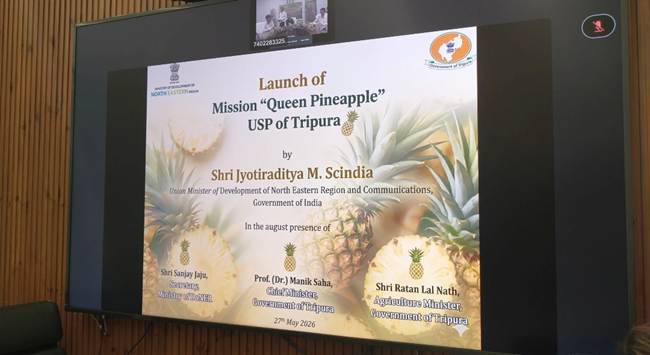
- 29 May 2026
In News:
Recently, the Ministry of Development of North Eastern Region (MDoNER) has launched Mission Queen Pineapple.
The mission aims to transform Tripura’s Geographical Indication (GI)-tagged Queen Pineapple into a globally competitive horticultural brand by developing an integrated value chain encompassing production, processing, value addition, marketing, and waste utilisation.
About Mission Queen Pineapple
Mission Queen Pineapple is a flagship initiative of the Ministry for Development of North Eastern Region (MDoNER) designed to promote Tripura’s Unique Selling Proposition (USP)—the renowned Queen Pineapple.
The mission has been conceived as a three-year implementation roadmap covering the period from Q2 FY 2026 to Q4 FY 2028. Its primary objective is to establish a comprehensive and integrated pineapple value-chain ecosystem that connects farmers with processing industries, logistics networks, domestic markets, and export opportunities.
A distinguishing feature of the mission is its emphasis on circular economy principles, where agricultural waste, particularly discarded pineapple leaves, will be converted into commercially valuable products such as natural fibres, handicrafts, textiles, biodegradable products, and other value-added materials. This approach seeks to minimise waste while creating additional income opportunities for farmers and rural entrepreneurs.
Objectives of the Mission
The mission seeks to address structural bottlenecks that have limited the commercial potential of Tripura’s pineapple industry. Its major objectives include:
- Developing an integrated farm-to-market value chain.
- Improving post-harvest handling, storage, and transportation.
- Promoting food processing and value addition.
- Enhancing domestic and international market access.
- Encouraging entrepreneurship and agro-based industries.
- Generating additional livelihoods through utilisation of pineapple biomass.
- Increasing farmers' income through better price realisation.
By integrating production with processing and marketing, the mission aims to transform pineapple cultivation into a sustainable engine of rural economic growth.
Queen Pineapple: Tripura’s Signature Fruit
The Queen Pineapple is one of India's finest pineapple varieties and is widely recognised for its superior quality. It is a spiny, golden-yellow variety distinguished by its:
- Sweet taste.
- Pleasant aroma.
- Juicy flesh.
- Low fibre content.
- Rich nutritional value.
It contains essential Vitamins A, B, and C, along with minerals such as calcium, magnesium, potassium, and iron, making it nutritionally rich.
The fruit possesses Total Soluble Solids (TSS) ranging between 13 and 17.2° Brix, indicating high sweetness, while its acidity ranges between 0.6–0.8%, providing a balanced sweet-tart flavour that makes it highly suitable for fresh consumption as well as processing.
Recognising its unique geographical characteristics and reputation, the Queen Pineapple received the Geographical Indication (GI) Tag in 2015. It is also the State Fruit of Tripura, symbolising the state's horticultural identity.
Sanchi Stupa

- 29 May 2026
In News:
- India has decided to send the sacred relics of Lord Buddha's two foremost disciples—Sariputra and Maudgalyayana—from the Sanchi Stupa to Mongolia.
- The initiative aims to strengthen India's civilizational ties with Mongolia, promote Buddhist heritage, and reinforce cultural diplomacy under the shared legacy of Buddhism.
- The relics, revered by Buddhists across the world, symbolize India's role as the birthplace of Buddhism and underscore the country's efforts to preserve and globally showcase its rich cultural heritage.
Sanchi Stupa: A Symbol of India's Buddhist Heritage
The Sanchi Stupa, located in Madhya Pradesh, is one of the oldest and best-preserved Buddhist monuments in the world. It was originally commissioned by Emperor Ashoka in the 3rd century BCE following his conversion to Buddhism after the Kalinga War.
The construction of the Great Stupa is believed to have been supervised by Ashoka's wife, Devi, who hailed from nearby Vidisha. The expansion and embellishment of the Sanchi complex in subsequent centuries received considerable patronage from the prosperous mercantile community of Vidisha, contributing to its development as a major centre of Buddhist learning and pilgrimage.
Unlike many other Buddhist monuments, Sanchi remained an important religious site for several centuries, preserving valuable evidence of the evolution of Buddhist architecture and art from the Mauryan period to the Gupta era.
Sacred Relics of Sariputra and Maudgalyayana
The Sanchi Stupa enshrines the sacred relics of Sariputra and Maudgalyayana, two of the closest and most revered disciples of Lord Buddha.
- Sariputra is regarded as the foremost disciple renowned for his profound wisdom (Prajna).
- Maudgalyayana (Mahamoggallana) is remembered for his exceptional spiritual attainments and mastery of supernatural powers.
These relics are among the most sacred objects in Buddhist tradition and attract immense reverence from Buddhist communities across Asia.
The decision to temporarily send these relics to Mongolia reflects India's commitment to promoting international Buddhist cooperation and strengthening people-to-people ties with Buddhist-majority nations.
Architectural Features of the Sanchi Stupa
The Great Stupa at Sanchi represents one of the finest examples of early Buddhist architecture.
The monument is enclosed by a massive stone railing with four elaborately carved gateways (Toranas) facing the cardinal directions. These gateways are adorned with intricate sculptures depicting scenes from the life of the Buddha, Jataka tales, symbols of Buddhism, and contemporary social life. Since the Buddha was initially represented through symbols rather than human form, the carvings prominently feature motifs such as the Bodhi Tree, empty throne, footprints, wheel (Dharmachakra), and stupa.
The structural components of the stupa carry deep symbolic significance:
- Anda (Hemispherical Dome): Represents the cosmic mound and symbolizes the universe as well as the Parinirvana of the Buddha.
- Harmika: A square railing placed above the dome representing the sacred world mountain (Mount Meru).
- Yashti: The central mast symbolizing the cosmic axis connecting heaven and earth.
- Chatras (Umbrellas): Multiple umbrella discs mounted on the mast symbolize spiritual sovereignty, protection, and the various heavenly realms (Devaloka).
Together, these architectural elements reflect Buddhist cosmology and spiritual philosophy.
Rediscovery and Conservation
Following the decline of Buddhism in India, the Sanchi complex gradually fell into neglect. It remained largely abandoned until it was rediscovered by British officer Henry Taylor in 1818.
Later, Alexander Cunningham, often regarded as the father of Indian archaeology, conducted the first systematic survey and excavations at Sanchi in 1851, laying the foundation for its scientific conservation.
Today, the monument is one of India's most important archaeological sites and has been recognized as a UNESCO World Heritage Site since 1989.
Humboldtianairiana

- 29 May 2026
In News:
In a significant contribution to India's biodiversity documentation, researchers have discovered a new evergreen tree species in the southern Western Ghats of Kerala and named it Humboldtianairiana in honour of noted scientist Prof. G. Madhavan Nair.
The discovery highlights the immense biological richness of the Western Ghats, one of the world's eight “hottest hotspots” of biodiversity, and reinforces the need for continued taxonomic research and conservation of endemic flora.
About Humboldtianairiana
Humboldtianairiana belongs to the genus Humboldtia, a group of flowering plants largely restricted to the Western Ghats and known for their high levels of endemism. The newly discovered species is a medium-sized evergreen tree growing between 5 and 8 metres in height.
Researchers identified several distinctive morphological features that differentiate it from other members of the genus. These include:
- A unique warty pale-brown bark with a creamy-white blaze.
- Angled and glabrous branchlets.
- Distinctly shorter and sparsely hairy stipules and appendages.
- Larger flowers with comparatively longer pedicels.
- Elliptic-oblong fruits possessing a shorter beak.
These stable and distinguishing characteristics enabled scientists to classify it as a new species.
Endemism and Conservation Significance
One of the most important aspects of Humboldtianairiana is its highly restricted distribution. The species is strictly endemic to Kerala and is currently known only from the Agasthyamala Biosphere Reserve, where it occurs at an elevation of approximately 300 metres.
Such narrow endemism makes newly discovered species particularly vulnerable to habitat degradation, climate change, invasive species, and anthropogenic disturbances. The discovery therefore highlights the need for detailed population assessments, ecological studies, and conservation planning to ensure the long-term survival of the species.
The finding also underscores the importance of taxonomic research in identifying and documenting India's biological wealth, which forms the basis for effective conservation policies.
Shendurney Wildlife Sanctuary: A Biodiversity Hotspot
The discovery site, Shendurney Wildlife Sanctuary, is located in the southern part of the Western Ghats in Kerala and forms an integral component of the Agasthyamala Biosphere Reserve, recognized for its exceptional levels of biodiversity and endemism.
The sanctuary is characterized by rugged hilly terrain interspersed with ravines and supports diverse ecosystems. Its major rivers include the Shendurney, Kazhuthuruthy, and Kulathupuzha, which eventually merge to form the Kallada River.
The region supports a variety of vegetation types, including:
- Tropical evergreen forests
- Semi-evergreen forests
- Moist deciduous forests
These ecosystems provide habitat for numerous endemic and threatened plant and animal species, making the sanctuary an important centre for conservation and ecological research.
National Health Accounts (NHA) Estimates for India 2022-23
- 29 May 2026
In News:
The Ministry of Health and Family Welfare recently released the National Health Accounts (NHA) Estimates for India 2022–23, highlighting significant improvements in public health financing, increased government investment in healthcare, and a decline in the financial burden borne by households. The report reflects India's sustained efforts to strengthen its health system and move towards the goals of Universal Health Coverage (UHC) envisaged under the National Health Policy, 2017 and the Sustainable Development Goals (SDGs).
What are National Health Accounts?
The National Health Accounts (NHA) provide a comprehensive and systematic assessment of health expenditures incurred by the government, households, private sector, insurance providers, and external agencies. Released annually, the estimates offer a time-series analysis of healthcare financing patterns in the country.
The NHA Estimates 2022–23 represent the 10th edition of the series that began in 2013–14. They are prepared by the National Health Accounts Technical Secretariat (NHATS) under the National Health Systems Resource Centre (NHSRC), Ministry of Health and Family Welfare, using the internationally accepted System of Health Accounts (SHA) 2011 framework developed by international organizations such as the OECD, WHO, and Eurostat.
Rising Public Investment in Healthcare
One of the most significant findings of the report is the steady increase in government expenditure on healthcare over the past decade.
Government Health Expenditure (GHE) increased from ?1.30 lakh crore in 2013–14 to ?3.85 lakh crore in 2022–23, reflecting a nearly three-fold rise in public spending. The share of government health expenditure in GDP also increased from 1.15% in 2013–14 to 1.43% in 2022–23, which stands at 1.48% according to the revised GDP series with base year 2022–23.
Similarly, the share of health expenditure in total government expenditure rose from 3.78% to 4.89% during the same period, indicating greater prioritization of healthcare within public budgets.
Increased Per Capita Health Spending
The report reveals a substantial rise in per capita government health expenditure. Between 2013–14 and 2022–23, per capita spending increased from ?1,042 to ?2,786, representing a nearly 2.7-fold increase.
This increase reflects expanded investments in health infrastructure, primary healthcare services, disease control programmes, insurance coverage, and public health interventions across the country.
Declining Out-of-Pocket Expenditure
A major achievement highlighted in the report is the decline in Out-of-Pocket Expenditure (OOPE) by households, which remains a key indicator of financial protection in healthcare.
OOPE as a share of total health expenditure declined significantly from 64.2% in 2013–14 to 43.4% in 2022–23. This reduction suggests that government-funded schemes and insurance mechanisms are increasingly protecting citizens from catastrophic health expenditures.
The decline is particularly important in a country where healthcare-related expenses have historically pushed millions of households into poverty.
Expansion of Social Security and Health Insurance
The report also records a significant increase in Social Security Expenditure (SSE), which includes government-funded health insurance programmes such as Ayushman Bharat–Pradhan Mantri Jan Arogya Yojana (AB PM-JAY), social health insurance schemes, and medical reimbursements for government employees.
The share of SSE in total health expenditure increased from 6% in 2013–14 to 9.9% in 2022–23.
At the same time, the contribution of private health insurance rose from 3.4% to 9.2%, indicating increasing insurance penetration and risk pooling in the healthcare sector.
Strengthening Primary Healthcare
The report highlights a major increase in spending on primary healthcare, which forms the foundation of an effective health system. Government expenditure on primary healthcare increased from ?0.5 lakh crore in 2013–14 to ?1.4 lakh crore in 2022–23, more than doubling over the decade.
This reflects the government's focus on preventive, promotive, and community-based healthcare through initiatives such as Ayushman Arogya Mandirs (formerly Health and Wellness Centres), maternal and child health programmes, immunisation drives, and disease prevention strategies.
SARTHAK Public Distribution System (PDS) Scheme
- 29 May 2026
In News:
In a major step towards strengthening food security and improving the efficiency of welfare delivery, the Cabinet Committee on Economic Affairs (CCEA), chaired by the Prime Minister, has approved the SARTHAK Public Distribution System (PDS) Scheme.
The scheme seeks to modernise India's Public Distribution System by integrating technology, streamlining administrative processes, and enhancing transparency in the implementation of the National Food Security Act (NFSA), 2013.
What is SARTHAK PDS?
SARTHAK PDS stands for Scheme for Assistance in Ration Transport and Handling-Income with Automation in Public Distribution System. It has been conceived as an umbrella programme that consolidates two existing schemes into a unified framework:
- Assistance to State Agencies for Intra-State Movement of Foodgrains and Fair Price Shop (FPS) Dealers' Margin under NFSA, and
- Scheme for Modernization and Reforms through Technology in Public Distribution System (SMART-PDS).
By merging these initiatives, the government aims to create a single administrative and financial structure that supports both the physical movement of food grains and the technological transformation of the PDS ecosystem. The scheme is approved to continue until March 2031, ensuring long-term institutional support for food security reforms.
Strengthening the National Food Security Architecture
India's Public Distribution System is one of the world's largest food security programmes, serving millions of beneficiaries through an extensive network of Fair Price Shops. However, challenges such as leakages, delays, duplication of records, and monitoring inefficiencies have historically affected its effectiveness.
SARTHAK PDS seeks to address these concerns by creating a digitally integrated, transparent, and data-driven system that can facilitate efficient distribution, improve accountability, and strengthen implementation of the National Food Security Act.
Technology-Driven Transformation
A key feature of SARTHAK PDS is the extensive use of emerging technologies to modernise food grain distribution.
The scheme proposes the adoption of:
- Artificial Intelligence (AI)
- Machine Learning (ML)
- Natural Language Processing (NLP)
- Blockchain Technology
These technologies will be used to optimise supply chain management, improve beneficiary authentication, detect anomalies, minimise leakages, and enhance operational efficiency across the PDS network.
The use of AI-enabled analytics can help identify distribution gaps, forecast demand patterns, and improve decision-making, while blockchain-based systems can enhance transparency and traceability in food grain movement.
Unified Data Architecture and Real-Time Monitoring
One of the most significant reforms under SARTHAK PDS is the creation of unified databases and standardised digital architecture across states and Union Territories.
This integrated platform will enable:
- Real-time monitoring of food grain movement.
- Better coordination among stakeholders.
- Seamless data sharing across agencies.
- Improved beneficiary management.
- Enhanced transparency and accountability.
The scheme also envisages the establishment of State Command and Control Centres, which will use data-based oversight mechanisms to monitor operations and improve responsiveness.
Improved Governance and Grievance Redressal
To make the system more citizen-centric, SARTHAK PDS will incorporate AI-enabled grievance redressal mechanisms capable of processing complaints more efficiently and identifying recurring issues. This is expected to reduce delays in service delivery and improve beneficiary satisfaction.
Further, the introduction of ISO-certified process frameworks aims to strengthen transparency, operational security, quality assurance, and sustainability of PDS operations. Standardised procedures across states will help ensure uniform service delivery and reduce administrative inconsistencies.
PM-AJAY Portal and AJAY Mobile App
- 28 May 2026
In News:
In a significant step towards strengthening digital governance and improving welfare delivery, the Ministry of Social Justice and Empowerment has launched the PM-AJAY Portal and the AJAY Mobile App under the Pradhan Mantri Anusuchit Jaati Abhyuday Yojana (PM-AJAY). The initiative aims to fully digitise grassroots-level planning, implementation, monitoring, and beneficiary management under the scheme, thereby enhancing transparency, accountability, and efficiency in the socio-economic development of Scheduled Caste (SC) communities.
The launch reflects the government's broader vision of leveraging technology to improve service delivery, ensure real-time monitoring, and promote evidence-based policymaking in social sector programmes.
About PM-AJAY
The Pradhan Mantri Anusuchit Jaati Abhyuday Yojana (PM-AJAY) is a Centrally Sponsored Scheme (CSS) implemented by the Ministry of Social Justice and Empowerment. It was introduced by rationalising and merging earlier schemes aimed at Scheduled Caste development.
The scheme seeks to improve the socio-economic conditions of Scheduled Castes through targeted interventions focused on poverty reduction, livelihood generation, skill development, infrastructure creation, and enhancement of human development indicators in SC-dominated areas.
Its broader objective is to enable inclusive growth by ensuring that historically disadvantaged communities have access to economic opportunities, quality infrastructure, education, and sustainable livelihoods.
PM-AJAY Portal: A Unified Digital Governance Platform
The newly launched PM-AJAY Portal serves as a central digital database and coordination platform integrating all components of the scheme. It aims to replace fragmented and paper-based processes with a transparent, technology-driven ecosystem.
A key feature of the portal is its comprehensive dashboard, which tracks socio-economic progress across more than 47,000 Scheduled Caste-majority villages and monitors the implementation of benefits reaching over 40 lakh beneficiaries. The dashboard provides real-time monitoring at the national, state, district, and local levels, facilitating data-driven decision-making and improved accountability.
Integration of the Three Components of PM-AJAY
The portal brings together all three major components of the scheme under a single digital architecture.
Adarsh Gram Component
Under this component, traditional paper-based planning will be replaced with digital Village Development Plans (VDPs). The progress of villages will be assessed through monitoring of 50 socio-economic indicatorsacross 10 development domains, enabling systematic tracking of development outcomes and identification of gaps.
Grant-in-Aid for Skilling and Employment
The portal functions as a comprehensive Management Information System (MIS) for this component. It tracks financial allocations, livelihood assistance, beneficiary registration, skill training programmes, placement outcomes, and employment generation activities. This will improve transparency in fund utilisation and facilitate better monitoring of livelihood interventions.
Hostel Component
The digital platform also supports the implementation of hostels for Scheduled Caste students in educational institutions. It enables online proposal submission, project monitoring, inspections, and verification through geo-tagged and time-stamped photographs, ensuring transparency in construction, renovation, and maintenance activities.
AJAY Mobile App: Extending Governance to the Last Mile
The AJAY Mobile App has been developed as a unified mobile platform that extends the functionalities of both the earlier PMAGY and PM-AJAY portals. The app enables stakeholders, field officials, and beneficiaries to access scheme-related services through a user-friendly mobile interface.
The app facilitates:
- Real-time reporting from the field.
- Mobile-based monitoring of development projects.
- Beneficiary-centric service delivery.
- Faster data collection and verification.
- Improved transparency and accountability.
- Strengthened digital governance at the grassroots level.
By enabling instant access to information and field-level updates, the app reduces administrative delays and enhances responsiveness.
Significance
The PM-AJAY Portal and AJAY Mobile App represent a major step towards digital inclusion, social justice, and evidence-based governance. By integrating planning, implementation, monitoring, and evaluation onto a single platform, the initiative is expected to improve scheme effectiveness, ensure better targeting of benefits, and strengthen the socio-economic empowerment of Scheduled Castes.
The initiative also aligns with the principles of Digital India, Minimum Government-Maximum Governance, and outcome-based public service delivery.
Sample Registration System (SRS) Statistical Report 2024
- 28 May 2026
In News:
The Sample Registration System (SRS) Statistical Report 2024 highlights a major epidemiological transition in India, with Non-Communicable Diseases (NCDs) accounting for 60% of all deaths during 2022–2024, up from 52.8% during 2015–2017. The findings indicate that chronic diseases have firmly overtaken communicable diseases as the country's principal public health challenge, reflecting patterns increasingly observed in middle- and high-income economies.
India's Epidemiological Transition
The report demonstrates a steady shift from infectious diseases towards chronic and lifestyle-related illnesses. While the combined share of communicable diseases, maternal conditions, perinatal disorders, and nutritional deficiencies declined from 22% in 2015–2017 to 19.7% in 2022–2024, deaths due to NCDs increased significantly.
This transition is driven by rapid urbanisation, changing dietary habits, sedentary lifestyles, population ageing, environmental factors, and improved control over many infectious diseases. However, India continues to face a “double burden of disease”, where communicable diseases persist alongside a rapidly growing NCD burden.
Cardiovascular Diseases: The Biggest Killer
Among all NCDs, cardiovascular diseases (CVDs) emerged as the leading cause of mortality, accounting for 32.1% of all deaths, compared to 27.1% in 2015–2017. The situation is particularly concerning in the economically productive 30–69 years age group, where cardiovascular diseases account for 37.3% of deaths.
Health experts have noted a worrying increase in heart-related illnesses among adults in their thirties and forties. This trend has significant economic implications because it affects a large segment of the workforce, leading to productivity losses, rising healthcare costs, and increased social dependency.
Other major causes of death include:
- Cancer and other neoplasms
- Chronic respiratory diseases
- Digestive diseases
- Respiratory infections
Each of these contributes more than 5% of total mortality.
Demographic Dividend Under Pressure
The report raises concerns about the impact of premature mortality on India's demographic advantage. While 69.3% of deaths occur among individuals aged 55 years and above, the 30–44 years age group accounts for 19.5% of all deaths.
This trend assumes greater significance as India's Total Fertility Rate (TFR) continues to decline, with several states already below the replacement level of 2.1 children per woman. Premature deaths among working-age adults can undermine economic growth and reduce the benefits of the country's demographic dividend.
Rural, Urban and Gender Dimensions
NCDs remain more prevalent in urban areas, where they account for 64.8% of all deaths, compared to 58.8% in rural areas. Similarly, NCDs account for 62.3% of deaths among men and 56.9% among women.
However, the report reveals that NCDs are increasingly becoming the dominant cause of death even among rural populations and women, indicating the deep penetration of lifestyle-related risk factors beyond urban centres.
Mental Health Concerns Among Youth
A particularly alarming finding is that suicide remains the leading cause of death among the 15–29 years age group. Suicides accounted for 19% of deaths in this cohort, up from 16.3% in 2015–2017.
The rise reflects growing mental health challenges linked to unemployment, academic pressure, financial stress, social isolation, and changing societal dynamics. The trend underscores the need for stronger mental health services, awareness campaigns, and community-based interventions.
Regional Variations
The report highlights significant regional disparities. In the Empowered Action Group (EAG) States and Assam—comprising Bihar, Jharkhand, Madhya Pradesh, Chhattisgarh, Odisha, Rajasthan, Uttar Pradesh, Uttarakhand, and Assam—NCDs account for 53.9% of all deaths. In contrast, non-EAG states record a much higher NCD mortality share of 63.5%.
These differences largely reflect varying levels of urbanisation, healthcare access, socioeconomic development, and demographic ageing across regions.
Government Response: National Programme for Prevention and Control of NCDs
Recognising the growing challenge, the Government of India launched the National Programme for Prevention and Control of Non-Communicable Diseases (NP-NCD) in 2010 across 100 districts in 21 states during the Eleventh Five-Year Plan. The programme was subsequently expanded and integrated into the National Health Mission (NHM) in 2013–14.
The programme focuses on:
- Prevention and early detection of NCDs.
- Screening for diabetes, hypertension, and common cancers.
- Health promotion and behavioural change.
- Strengthening healthcare infrastructure and referral systems.
Article 142
- 28 May 2026
In News:
In a landmark judgment in In Re: Phalodi Accident vs National Highways Authority of India & Others (2025), the Supreme Court of India invoked its extraordinary powers under Article 142 of the Constitution to declare the Right to Safe Travel on National Highways as an integral component of the Right to Life under Article 21. Taking suo motu cognisance of two fatal road accidents in November 2025 that claimed 34 lives, the Court held that the maintenance of safe and motorable roads is not merely an administrative responsibility but a constitutional obligation of the State. The ruling marks a significant expansion of the jurisprudence surrounding Article 21 and reinforces the judiciary's role in ensuring “complete justice.”
Article 142: The Constitutional Instrument of Complete Justice
Article 142(1) empowers the Supreme Court to pass any decree or order necessary for doing “complete justice” in any matter before it. Often described as the Constitution's “safety valve,” this provision enables the Court to bridge legislative or procedural gaps when existing laws fail to provide an adequate remedy.
Unlike powers derived from ordinary statutes, Article 142 is an inherent constitutional authority vested exclusively in the apex court. In Delhi Judicial Service Association vs State of Gujarat (1991), the Supreme Court clarified that statutory limitations cannot curtail its powers under Article 142. Similarly, in Canara Bank vs Debasis Das (2003), the Court emphasized that substantive justice and principles of natural justice must prevail where rigid legal procedures prove inadequate.
The Court has also distinguished its powers from those of High Courts. In Anil Kumar Jain vs Maya Jain (2009), it held that the powers of High Courts under Article 226 are not co-extensive with the extraordinary residuary jurisdiction conferred upon the Supreme Court under Article 142. While High Courts operate within defined constitutional and statutory limits, Article 142 allows the Supreme Court to address emerging challenges and evolving societal needs where legal frameworks remain insufficient.
Highway Safety as a Constitutional Mandate
The judgment draws attention to India's alarming road safety crisis. Although National Highways constitute only about 2% of the country's road network, they account for nearly 30% of all road fatalities. Recognising this disproportionate burden, the Court elevated road safety from a policy objective to a justiciable constitutional right under Article 21.
The ruling is expected to strengthen governmental efforts to achieve the target of reducing road accident deaths by 50% by 2030 through the 4Es framework—Education, Engineering, Enforcement, and Emergency Medical Services. It also reinforces the accountability of road-owning agencies, particularly in ensuring timely maintenance, hazard removal, and adherence to safety standards.
Debate on Judicial Activism and Overreach
The expansive use of Article 142 has long generated debate. Critics argue that frequent judicial intervention risks undermining the doctrine of separation of powers by allowing courts to enter domains reserved for the legislature and executive. They contend that broad judicial directives may transform the Court into a de facto law-making body.
Supporters, however, view Article 142 as an essential tool of judicial activism that enables the Constitution to respond to rapidly changing social realities. They argue that when legislative or executive action is inadequate to protect fundamental rights, the judiciary must intervene as the guardian of constitutional values.
Acknowledging these concerns, the Supreme Court itself has repeatedly emphasized restraint. In Hitesh Bhatnagar vs Deepa Bhatnagar (2011), it held that Article 142 should be exercised with extraordinary care and caution due to its exceptional nature.
Vaccinium Piliferum
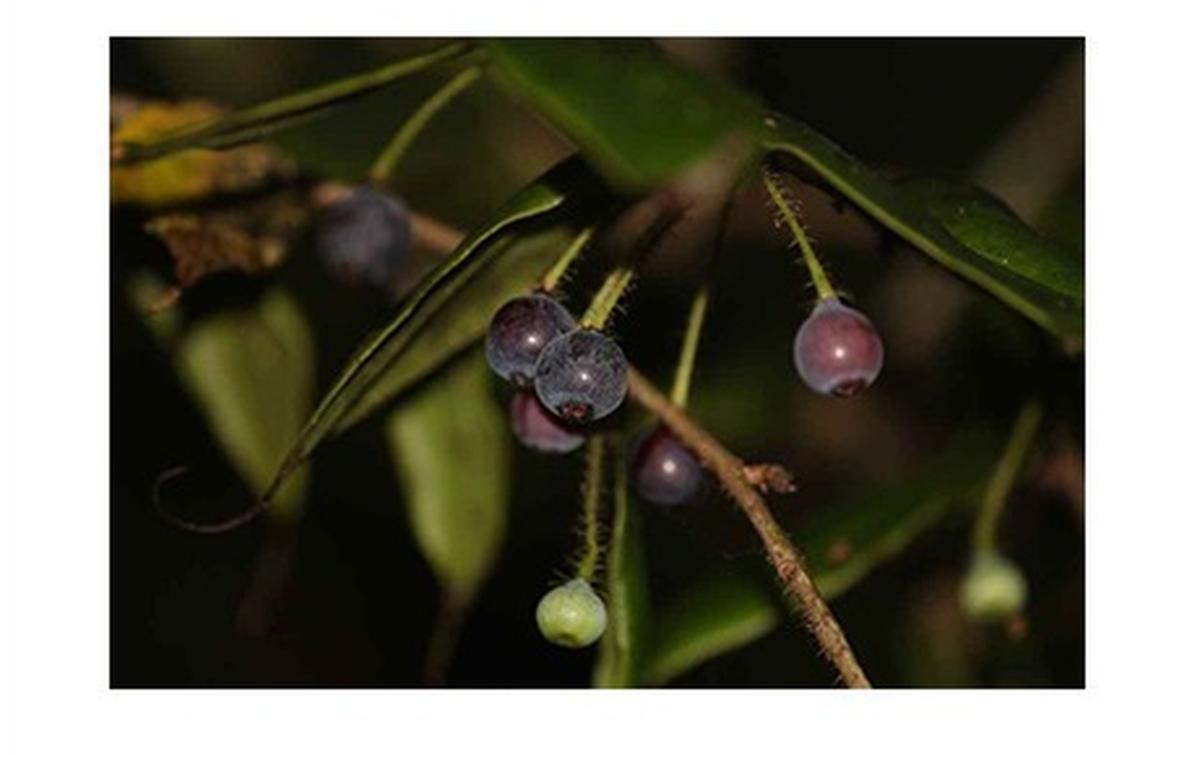
- 28 May 2026
In News:
In a significant botanical discovery, researchers have rediscovered Vaccinium piliferum, a rare and endangered wild blueberry species, in the remote forests of Vijoynagar in Arunachal Pradesh's Changlang district after nearly 188 years. The species was last documented in 1836 during the colonial era and had remained unrecorded in scientific literature since then.
About Vaccinium piliferum
Vaccinium piliferum is a rare wild relative of cultivated blueberries and belongs to the Ericaceae family, commonly known as the heath family. This family includes economically and ecologically important plants such as blueberries, cranberries, bilberries, rhododendrons, and heathers.
The genus Vaccinium is globally recognized for its edible berry-producing species and their nutritional as well as medicinal value. Wild relatives such as Vaccinium piliferum are particularly important because they serve as reservoirs of genetic diversity that can help improve cultivated varieties through breeding programmes.
Conservation Status
The species is currently classified as Endangered by the International Union for Conservation of Nature (IUCN).
Its endangered status reflects:
- Restricted geographical distribution.
- Small and fragmented populations.
- Habitat degradation and ecological disturbances.
- Limited scientific documentation and monitoring.
The rediscovery provides an opportunity to undertake detailed population assessments, habitat mapping, and long-term conservation planning to ensure the survival of the species.
Ecological and Scientific Significance
The rediscovery of Vaccinium piliferum has significance beyond taxonomy.
A. Indicator of Eastern Himalayan Biodiversity
The finding reinforces the status of the Eastern Himalayas as a global biodiversity hotspot characterized by:
- High species richness.
- High levels of endemism.
- Diverse climatic and ecological zones.
- Presence of numerous rare and threatened species.
B. Genetic Resource for Agriculture
Wild relatives of crop plants are increasingly recognized as valuable genetic resources. They often possess traits such as:
- Disease resistance.
- Pest tolerance.
- Adaptation to climatic stress.
- Improved nutritional characteristics.
Such traits may become increasingly important for developing climate-resilient agricultural systems.
C. Need for Habitat Conservation
The discovery also highlights the importance of conserving remote forest ecosystems, particularly in northeastern India, where many species remain poorly documented and vulnerable to habitat loss.
Blueberries: An Overview
Blueberries belong to the genus Vaccinium under the Ericaceae family and are among the most economically important berry crops worldwide.
Major Types of Blueberries
- Lowbush Blueberry (Vaccinium angustifolium)
- Highbush Blueberry (Vaccinium corymbosum)
- Bilberry or Forest Blueberry (Vaccinium myrtillus)
These species are widely cultivated in North America and Europe and are increasingly gaining commercial importance globally.
Climatic and Soil Requirements
Blueberries require specific environmental conditions for growth.
Climate
- Prefer relatively cool climates.
- Require 150–1200 chill hours to break dormancy.
- Excessively low temperatures can damage shoots and flower buds.
- Moderate temperatures are essential for flowering and fruit development.
Soil
Blueberries thrive in:
- Well-drained soils.
- Acidic conditions (low pH).
- Sandy loam texture.
- High organic matter content (above 3%).
Their sensitivity to soil and climatic conditions makes them useful indicators of ecosystem health.
Nutritional Importance of Blueberries
Blueberries are widely regarded as a "superfood" because of their rich nutritional profile.
They contain:
- Vitamin C.
- Vitamin K.
- Dietary fiber.
- Manganese.
- Polyphenols and anthocyanins.
These compounds possess strong antioxidant properties that help neutralize free radicals and may contribute to improved cardiovascular, neurological, and metabolic health.
Babesia
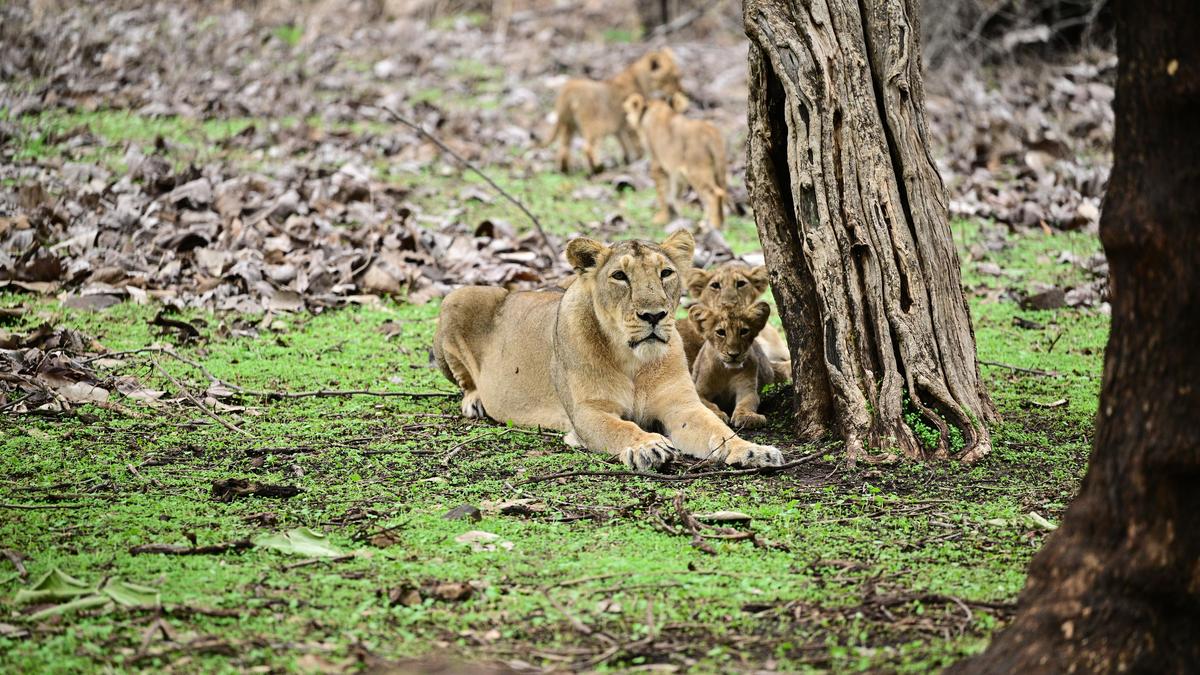
- 28 May 2026
In News:
The recent death of lion cubs in the Gir landscape of Gujarat has drawn attention to the growing challenge of wildlife diseases and the need for robust disease surveillance in protected areas. Authorities suspect that the deaths were linked to a Babesia infection, although laboratory confirmation was awaited at the time of reporting. The incident is significant because Gir is the world's only natural habitat of the Asiatic lion, making any disease outbreak a matter of national and global conservation concern.
What is Babesia?
- Babesia is a genus of microscopic protozoan parasites that infect the red blood cells (RBCs) of animals and humans, causing a disease known as babesiosis.
- The parasite is transmitted primarily through the bite of infected ticks, especially ticks belonging to the Ixodes genus (deer ticks), which are also known for spreading Lyme disease.
- Once inside the host, Babesia parasites invade and multiply within red blood cells, leading to their destruction. As a result, infected animals may suffer from anemia, fever, weakness, lethargy, and reduced immunity. The disease is much more common in animals than in humans and frequently affects cattle, dogs, deer, and other mammals.
- The geographical distribution of Babesia extends across the Americas, Europe, and parts of Asia, particularly in regions where tick populations are abundant.
Symptoms and Impact of Babesiosis
The severity of babesiosis varies depending on the host species, age, and immune status. While many infected individuals may remain asymptomatic or show only mild symptoms, severe infections can lead to:
- High fever
- Severe anemia due to destruction of RBCs
- Weakness and fatigue
- Respiratory distress
- Kidney and liver dysfunction
- Cardiac complications
- Blood clotting abnormalities (coagulopathy)
In wildlife populations, young animals and individuals with weakened immunity are particularly vulnerable.
Importantly, babesiosis is generally not contagious from one individual to another. Transmission occurs mainly through infected ticks. Rarely, the parasite may be transmitted from a pregnant mother to her offspring.
Why is the Incident Significant?
The deaths have renewed concerns about disease vulnerability among Asiatic lions. According to the 2025 lion census,Gujarat is home to approximately 891 Asiatic lions, all concentrated within the Gir landscape and adjoining regions. This concentration creates a unique conservation challenge because any major disease outbreak, natural disaster, or ecological disturbance could threaten the entire wild population of the species.
Wildlife experts have emphasized that Babesia is not a new pathogen in the Gir ecosystem and has existed at low levels among livestock and wildlife for years. However, changing environmental conditions, increasing wildlife densities, interactions with domestic animals, and climate-related factors can increase disease risks. Experts have also cautioned against other pathogens such as Canine Distemper Virus (CDV), which previously caused significant lion mortality and, when combined with Babesia infections, can pose a serious threat to lion populations.
Treatment and Management of Babesiosis
Babesiosis is generally treated using antimicrobial and antiparasitic drugs. The most commonly recommended treatment involves a combination of:
- Atovaquone (antiparasitic drug)
- Azithromycin (antibiotic)
In wildlife settings, however, prevention through vector control, surveillance, and early detection remains more effective than treatment after widespread infection.
PM-WANI (Prime Minister’s Wi-Fi Access Network Interface)
- 27 May 2026
In News:
The Department of Telecommunications (DoT) has introduced a series of citizen-centric reforms under the PM-WANI (Prime Minister’s Wi-Fi Access Network Interface) framework to make public Wi-Fi access simpler, more affordable, and widely accessible. The upgrades aim to accelerate broadband penetration and strengthen India's digital public infrastructure ecosystem.
What is PM-WANI?
Launched in December 2020, PM-WANI is a nationwide framework designed to expand affordable broadband access through a decentralized network of public Wi-Fi hotspots. It seeks to democratize internet access by enabling small shops, tea stalls, local businesses, and community establishments to act as internet access points without requiring a telecom licence.
The initiative is implemented by the Department of Telecommunications under the Ministry of Communications.
How Does the PM-WANI Ecosystem Function?
The framework operates through a distributed architecture comprising four components:
- Public Data Offices (PDOs) serve as the last-mile Wi-Fi providers that purchase internet bandwidth from telecom or internet service providers and offer Wi-Fi services to users.
- Public Data Office Aggregators (PDOAs) provide backend support such as authentication, accounting, and network management for multiple PDOs.
- App Providers offer mobile applications through which users can discover nearby Wi-Fi hotspots and access services.
- The Central Registry, maintained by Centre for Development of Telematics, ensures interoperability among all stakeholders.
A key feature of the framework is that PDOs require no licence, no registration and no fee, thereby reducing entry barriers and encouraging widespread participation.
Recent Reforms and Upgrades
To improve user experience, the government has introduced several enhancements.
A major upgrade allows users to connect laptops and other devices by simply scanning a QR code through an already authenticated smartphone, eliminating cumbersome login procedures.
The framework also encourages operators to introduce affordable short-duration "sachet" plans of 15, 30 and 60 minutes, making internet access more convenient for travellers, students and occasional users.
Additionally, standardized hotspot naming conventions incorporating PM-WANI branding have been introduced to help users easily identify authentic and secure public Wi-Fi networks.
Quad Critical Minerals Initiative Framework
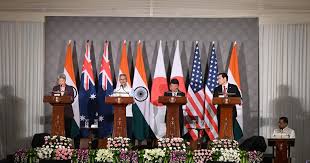
- 27 May 2026
In News:
On the sidelines of the 11th Quad Foreign Ministers’ Meeting, the Quad nations—India, the United States, Japan and Australia—unveiled the Quad Critical Minerals Initiative Framework. The initiative, along with a parallel India–US critical minerals partnership, marks a significant step towards securing strategic mineral supply chains and reducing vulnerabilities in emerging technology sectors.
What is the Quad Critical Minerals Initiative?
- The Quad Critical Minerals Initiative is a strategic economic and supply-chain cooperation framework aimed at ensuring reliable access to critical minerals and rare earth elements required for modern industries and national security.
- The initiative reflects the Quad's evolution from a security-focused grouping to a broader platform for economic resilience, technology cooperation and strategic infrastructure development in the Indo-Pacific.
- Its primary objective is to create diversified, secure and resilient supply chains by reducing excessive dependence on any single source, particularly China, which currently dominates the global processing and export of several critical minerals and rare earth elements.
Key Features
- The framework envisages the mobilization of nearly USD 20 billion through public funding, concessional finance and private investment to strengthen critical mineral ecosystems across Quad countries.
- It covers the entire value chain—from mineral exploration and mining to processing, refining, manufacturing inputs and recycling. The initiative also promotes the development of a circular economy through the recovery of strategic minerals from electronic waste and industrial scrap.
- To facilitate seamless cooperation, member countries intend to harmonize regulatory standards, customs procedures and environmental norms. The framework also incorporates national security safeguards through coordinated export controls and monitoring mechanisms to prevent strategic resources from reaching hostile actors.
- Projects supported under the initiative will largely be located within Quad countries and managed by companies based in member states, ensuring strategic ownership and supply security.
Strategic Significance
The initiative is driven by growing concerns regarding China's overwhelming dominance in critical mineral supply chains. China controls a substantial share of global rare earth processing and has increasingly used export restrictions as a strategic tool.
By diversifying supply sources, the Quad seeks to reduce the risk of supply disruptions that could affect key sectors such as electric vehicles, renewable energy, semiconductors, telecommunications and defence manufacturing.
The framework also complements emerging India–US cooperation in critical minerals, leveraging India's growing processing capabilities and manufacturing potential alongside American financing and technological strengths.
CLEAR Technology
- 27 May 2026
In News:
Researchers at the Jawaharlal Nehru Centre for Advanced Scientific Research, Bengaluru, have developed an innovative protein imaging platform called CLEAR (Cleavable Light-Erased Antibody Reporter). The technology enables scientists to visualize and map a large number of proteins within the same biological sample using a single fluorescent marker, overcoming major limitations of conventional imaging techniques.
Why is Protein Imaging Important?
Proteins are the functional molecules that regulate virtually every biological process within cells. Understanding where proteins are located, how they interact, and how their distribution changes during disease is crucial for deciphering cellular behavior.
In diseases such as cancer, the spatial arrangement of proteins within tissues often determines how tumors grow, evade immunity, and respond to treatment. Therefore, high-resolution protein mapping has become an essential tool in modern biomedical research.
What is CLEAR Technology?
CLEAR (Cleavable Light-Erased Antibody Reporter) is a next-generation multiplex spatial protein imaging platform designed to visualize numerous proteins within the same tissue or cell sample while preserving their spatial organization.
Unlike conventional imaging methods that require multiple fluorescent colours for different proteins, CLEAR repeatedly uses a single fluorescent channel through a unique "erase-and-rewrite" mechanism. This allows scientists to build highly detailed molecular maps without being constrained by the limited number of fluorescent colours detectable by microscopes.
How Does CLEAR Work?
The technology is based on a cyclic imaging process.
Initially, specialized antibodies linked to fluorescent markers through light-sensitive chemical bonds are introduced into a tissue sample. These antibodies bind to specific target proteins, and the sample is imaged under a microscope.
Once imaging is completed, the fluorescent signal is removed by exposing the sample to a gentle pulse of 365 nm LED light. The light breaks the photosensitive linker, effectively erasing the fluorescence without damaging the biological specimen.
The sample then becomes available for a new round of protein labeling and imaging using the same fluorescent channel. By repeating this cycle multiple times, researchers can generate highly detailed spatial maps containing information on numerous proteins within a single specimen.
Key Features
One of the most important strengths of CLEAR is its high-plex multiplexing capability. It allows visualization of a much larger number of proteins than conventional fluorescence microscopy.
The technology is also notable for its live-cell compatibility. Traditional multiplex imaging often requires harsh chemicals or heat treatments to remove fluorescent signals, which can damage tissues and cells. CLEAR relies on gentle light-based erasure, preserving biological integrity.
Another major advantage is its ability to capture the precise spatial distribution of proteins within tissues. Such spatial information is critical for understanding cellular communication, tumor microenvironments, and disease progression.
By repeatedly utilizing a single fluorescent channel, CLEAR also reduces dependence on expensive multi-laser imaging systems, improving cost efficiency and workflow speed.
Significance for Cancer Research
Cancer is not merely a collection of abnormal cells but a complex ecosystem involving tumor cells, immune cells, blood vessels, and surrounding tissues. Understanding this microenvironment requires the simultaneous mapping of multiple proteins.
CLEAR enables researchers to:
- Identify protein interaction networks within tumors.
- Understand mechanisms of cancer progression and metastasis.
- Study immune cell infiltration and tumor immune evasion.
- Discover novel diagnostic biomarkers.
- Improve precision medicine and targeted therapies.
The technology can help researchers develop more personalized treatment approaches based on detailed molecular characteristics of individual tumors.
India’s First National Report on the Nagoya Protocol
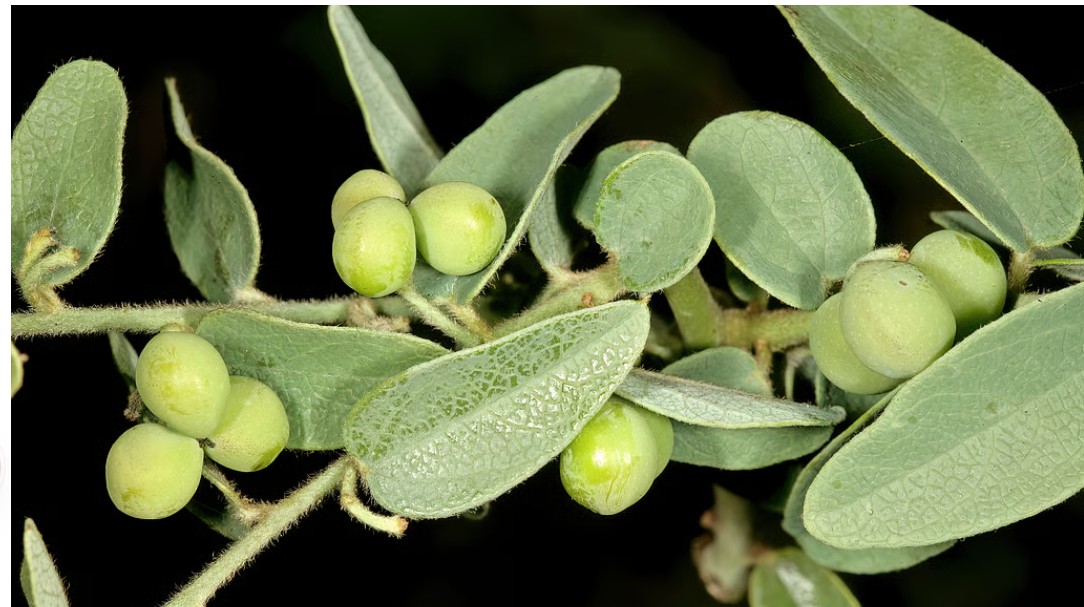
- 27 May 2026
In News:
The Ministry of Environment, Forest and Climate Change (MoEFCC) has released insights from India’s First National Report on the Nagoya Protocol on Access and Benefit Sharing (ABS). The report highlights India's progress in implementing a transparent and equitable framework for the utilization of biological resources while ensuring that benefits arising from their use reach local communities and traditional knowledge holders.
Understanding the Nagoya Protocol
- The Nagoya Protocol on Access to Genetic Resources and the Fair and Equitable Sharing of Benefits Arising from their Utilization is a supplementary agreement to the Convention on Biological Diversity. It was adopted in 2010 and came into force in 2014.
- The protocol seeks to ensure that countries and communities providing biological resources receive a fair share of the benefits generated from their commercial or research utilization.
- It aims to balance biodiversity conservation with economic development and scientific innovation.
- The framework rests on three core principles: Prior Informed Consent (PIC), Mutually Agreed Terms (MAT), and Fair and Equitable Benefit Sharing.
- It also protects traditional knowledge associated with biological resources and seeks to prevent biopiracy through international compliance mechanisms.
India's Performance under the Nagoya Protocol
- The report highlights India's robust implementation of the Access and Benefit Sharing framework between 2017 and 2025.
- During this period, India granted more than 12,800 ABS approvals, reflecting the growing use of biological resources for research, pharmaceuticals, agriculture, biotechnology, and industrial applications. The National Biodiversity Authority (NBA) and State Biodiversity Boards have played a central role in processing these approvals.
- A particularly notable achievement is India's dominance in the issuance of Internationally Recognized Certificates of Compliance (IRCCs). With over 3,500 certificates, India accounts for more than 60% of all such certificates issued globally, indicating strong compliance with international biodiversity governance standards.
- The ABS mechanism has also generated substantial economic benefits. Revenue collections exceeding ?216 crore have been realized, with a significant share already transferred to local communities, conservers, and biodiversity stakeholders. These funds support conservation activities, livelihood enhancement, and habitat restoration efforts.
Community-Based Biodiversity Governance
A major strength of India's ABS framework is its decentralized institutional architecture.
- The country has established a vast network comprising the National Biodiversity Authority, State Biodiversity Boards, and more than 2.76 lakh Biodiversity Management Committees (BMCs) functioning at the local level. These institutions play a critical role in documenting biological resources, safeguarding traditional knowledge, and facilitating benefit-sharing arrangements.
- The report also highlights extensive capacity-building efforts, including thousands of training programmes and workshops aimed at strengthening awareness among local communities, government officials, scientists, and biodiversity managers.
High-Level Committee on Demographic Change
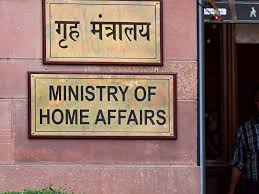
- 27 May 2026
In News:
The Union Ministry of Home Affairs (MHA) has constituted a High-Level Committee to examine demographic changes arising from illegal immigration and other abnormal factors. The committee has been tasked with conducting a scientific assessment of demographic shifts and recommending policy measures to address their implications for national security, governance, resource allocation, and socio-cultural stability.
Background
Concerns regarding demographic changes linked to illegal migration have been particularly pronounced in border states such as Assam, West Bengal, Meghalaya, Tripura, and parts of Jharkhand. The issue has long featured in debates relating to border management, indigenous rights, internal security, and electoral integrity.
The committee comes at a time when India is preparing for the 2027 Census, making updated demographic assessment increasingly important.
Composition and Mandate
The committee is chaired by Justice Prakash Prabhakar Navlekar, former Supreme Court judge and former Lokayukta of Madhya Pradesh. It also includes the Census Commissioner and other experts.
The panel has been directed to submit its report within one year (by May 2027), with provision for a six-month extension if required.
Its key responsibilities include:
- Conducting a data-driven assessment of demographic changes linked to illegal immigration and abnormal migration patterns.
- Studying demographic variations across religious and social groups in regions showing unusual population trends.
- Recommending mechanisms for Centre–State coordination on demographic management.
- Suggesting institutional frameworks for identification, detention, and deportation of undocumented migrants.
- Strengthening border management, identity verification systems, and migration-monitoring mechanisms.
Why is the Study Important?
Internal Security and Sovereignty
Illegal migration across porous borders has long been viewed as a security concern. In Sarbananda Sonowal v. Union of India, the Supreme Court observed that large-scale illegal migration into Assam amounted to "external aggression" and invoked Article 355 of the Constitution.
Migration corridors are also vulnerable to exploitation by networks involved in:
- Human trafficking
- Arms smuggling
- Cross-border crime
- Potential infiltration by extremist elements
Protection of Indigenous Communities
Several tribal and indigenous regions, particularly in the Northeast and parts of Jharkhand, have expressed concerns regarding demographic pressures on land ownership, cultural identity, and political representation.
Protective mechanisms such as the Santhal Pargana Tenancy Act, 1876, and constitutional safeguards under the Fifth and Sixth Schedules seek to protect tribal interests. A demographic assessment may help evaluate the effectiveness of these protections.
Socio-Economic Pressures
Population growth beyond natural demographic trends can place pressure on: housing, healthcare, education, employment opportunities, and public infrastructure. Such pressures can contribute to social tensions and competition over limited resources.
Electoral Integrity
Concerns have also been raised regarding the alleged acquisition of identity documents by undocumented migrants. Accurate demographic data is considered essential for maintaining the integrity of electoral rolls and democratic processes.
Constitutional and Legal Framework
- Article 355: Article 355 imposes a duty on the Union to protect States against:External aggression and Internal disturbance. This provision is frequently cited in discussions concerning illegal immigration and border security.
- Citizenship Act, 1955: The Act provides the legal framework for acquisition and termination of Indian citizenship. Section 6A was inserted following the Assam Accord to address citizenship issues specific to Assam.
- Foreigners Act, 1946: The Act empowers the government to identify, regulate, detain, and deport foreigners. It places the burden of proof on the individual to establish Indian citizenship.
- Fifth and Sixth Schedules: These constitutional provisions safeguard tribal autonomy, land rights, and cultural identity in designated tribal regions.
Important Judicial Developments
- Sarbananda Sonowal v. Union of India (2005): The Supreme Court held that unchecked illegal migration into Assam constituted a threat to national security and invoked Article 355.
- Assam SanmilitaMahasangha v. Union of India (2014): The Court directed a time-bound update of the National Register of Citizens (NRC) in Assam to identify undocumented migrants.
Key Committee and Commission Reports
- Lt. Gen. S.K. Sinha Report (1998): Highlighted the security implications of demographic changes in border regions and their impact on national integration.
- Upamanyu Hazarika Commission (2015): Warned about demographic shifts affecting indigenous populations in Assam.
- Madhukar Gupta Committee (2016): Recommended the Comprehensive Integrated Border Management System (CIBMS), emphasizing technology-driven border surveillance through sensors, thermal imagers, and smart monitoring systems.
India's Broader Demographic Context
Declining Fertility
According to recent demographic estimates:
- India's Total Fertility Rate (TFR) has fallen below replacement level.
- NFHS-5 estimates place TFR at approximately 2.0.
- SRS data indicate a further decline to around 1.9.
This suggests long-term population stabilization.
Regional Demographic Divide
A significant North-South demographic divide is emerging:
- Southern states such as Kerala and Tamil Nadu have very low fertility rates and aging populations.
- Northern states such as Bihar and Uttar Pradesh continue to have relatively higher fertility rates and younger populations.
Demographic Dividend Window
India currently enjoys a demographic advantage with a median age of around 28 years. However, this window is expected to narrow as the elderly population grows substantially by 2050.
Electrolyte Engineering for Advanced Aqueous Zinc-Ion Batteries (AZIBs)
- 29 Jun 2026
In News:
Scientists at the Institute of Nano Science and Technology (INST), Mohali, an autonomous institute under the Department of Science & Technology (DST), have developed a novel electrolyte additive (BDIM) that significantly improves the performance, safety and lifespan of Aqueous Zinc-Ion Batteries (AZIBs), offering a promising alternative to lithium-ion batteries.
About the Research
Researchers have developed a new electrolyte additive called 1,3-bis (1,3-dicarboxypropyl)-1H-imidazole-3-ium chloride (BDIM), which improves the stability of the zinc anode by regulating the Inner Helmholtz Plane (IHP)—the interfacial region where electrochemical reactions occur.
Unlike expensive battery redesigns, the innovation focuses on electrolyte interface engineering, making it a cost-effective and scalable solution for next-generation rechargeable batteries.
Why are Aqueous Zinc-Ion Batteries (AZIBs) Important?
AZIBs are emerging as a promising alternative to lithium-ion batteries because they are:
- Safer due to non-flammable water-based electrolytes.
- Low-cost owing to the abundance of zinc.
- Environment-friendly and sustainable.
- Suitable for grid-scale and renewable energy storage.
However, their commercialization has been limited due to:
- Zinc dendrite formation.
- Hydrogen Evolution Reaction (HER).
- Corrosion of the zinc anode.
- Poor cycling stability.
How Does BDIM Work?
The BDIM additive selectively adsorbs on the zinc surface and occupies the Inner Helmholtz Plane (IHP).
This prevents water molecules from directly interacting with the zinc surface, thereby:
- Suppressing Hydrogen Evolution Reaction (HER).
- Reducing corrosion.
- Preventing zinc dendrite formation.
- Improving battery stability and lifespan.
The researchers also employed Ultramicroelectrode (UME) and Fast-Scan Cyclic Voltammetry (FSCV) techniques to better understand zinc deposition and interfacial charge-transfer mechanisms.
Applications
The technology has significant potential in:
- Grid-scale energy storage.
- Renewable energy integration.
- Backup power systems.
- Long-duration stationary energy storage.
- Safer and affordable rechargeable batteries.
By increasing battery life and reducing degradation, it can lower maintenance costs and improve the reliability of clean energy infrastructure.
Project BRAHMANK of Border Roads Organisation (BRO)
- 29 Jun 2026
In News:
Project BRAHMANK of the Border Roads Organisation (BRO) celebrated its 16th Raising Day on 29 June 2026 at Ranaghat, Arunachal Pradesh, marking sixteen years of developing strategic road infrastructure and improving connectivity in India's northeastern border areas.
About Project BRAHMANK
- Project BRAHMANK is one of the strategic infrastructure projects of the Border Roads Organisation (BRO).
- It was raised on 29 June 2011 at Ranaghat (East Siang district), Arunachal Pradesh, and became fully operational on 3 December 2011.
- The project is responsible for the construction, upgradation and maintenance of strategic road infrastructure in Siang, East Siang, West Siang, Upper Siang and Shi-Yomi districts of Arunachal Pradesh, besides parts of Dhemaji district in Assam.
- It plays a crucial role in enhancing military mobility while improving connectivity for remote border communities.
Key Achievements
Project BRAHMANK currently maintains:
- 811 km of strategic roads.
- Around 86 bridges, ranging from culverts to major steel and arch bridges.
Some notable engineering achievements include:
- 100-metre Steel Arch Bridge over Siyom Nallah.
- 165-metre Prestressed Concrete (PSC) Bridge over Simang Nallah on the Along–Yingkiong Road.
During FY 2025–26, the project achieved significant milestones:
- Construction of 13 new bridges with a cumulative span of 390 metres.
- Blacktopping of 61 km of roads to National Highways Double Lane (NHDL) specifications.
- Development of helipads to strengthen strategic connectivity in remote areas.
About the Border Roads Organisation (BRO)
- Established: 7 May 1960
- Parent Ministry: Ministry of Defence
- Headquarters: New Delhi
- Motto: "Shramena Sarvam Sadhyam" (Everything is Achievable Through Hard Work)
Functions
- Construction and maintenance of strategic roads, bridges, tunnels and airfields.
- Development of border infrastructure in difficult terrain.
- Supporting military logistics and border management.
- Assisting in disaster relief and national development projects.
Rural Internal Audit Portal
- 29 Jun 2026
In News:
The Union Minister for Rural Development launched the Rural Internal Audit Portal during the Rashtriya Gramin Vikas Sammelan at Pusa Campus, New Delhi, to strengthen transparency, accountability and efficiency in the implementation of rural development programmes.
About the Rural Internal Audit Portal
- The Rural Internal Audit Portal is a unified digital platform for end-to-end management of risk-based and compliance audits under the Ministry of Rural Development.
- It has been conceived by the Office of the Chief Controller of Accounts (CCA), Ministry of Rural Development, and developed in collaboration with the National Informatics Centre (NIC).
- The portal digitizes the entire internal audit lifecycle, from audit planning to monitoring compliance and Action Taken Reports (ATRs).
Objectives
The portal aims to strengthen internal audit systems by:
- Digitizing and simplifying the audit process.
- Creating a centralized repository of audit records and Action Taken Reports (ATRs).
- Enabling risk-based audit planning for better prioritization.
- Automating audit reports and standardizing documentation.
- Facilitating real-time monitoring of audit progress and compliance.
- Leveraging data analytics and emerging technologies to identify implementation gaps and systemic risks.
Key Features
The platform offers a comprehensive digital audit ecosystem with features such as:
- End-to-End Digital Audit Management covering audit planning, execution and reporting.
- Centralized Audit Repository for audit observations, reports and compliance records.
- Role-Based Access Control for auditors, auditees, State Governments, programme divisions and approving authorities.
- Real-Time Dashboards to monitor audit coverage, pending observations and compliance status.
- Geospatial (Map View) Monitoring for visualizing audit activities across India.
- Multilingual and User-Friendly Interface for wider accessibility.
- AI and Advanced Analytics Integration for future risk assessment, audit prioritization and decision support.
Technology Architecture
The portal is built using modern digital infrastructure to ensure security and reliability.
It incorporates:
- Git-based version control systems.
- Continuous Integration/Continuous Deployment (CI/CD) workflows.
- Secure API-based integration.
- Role-based access control.
- Centralized monitoring systems.
- Automated exception handling.
- Disaster recovery protocols.
Kisan Sarathi Platform
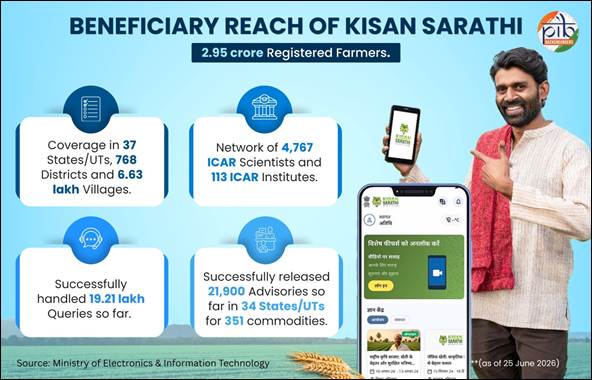
- 29 Jun 2026
In News:
The Kisan Sarathi Platform has expanded its digital agricultural services by providing farmers with access to 610 Central and State Government schemes, along with real-time agro-advisories, weather information, market intelligence and expert consultations, strengthening India's digital agricultural extension system.
About Kisan Sarathi
- Launched in July 2021, Kisan Sarathi is India's largest integrated digital agro-advisory platform.
- It is a joint initiative of the Ministry of Electronics & Information Technology (MeitY) and the Ministry of Agriculture & Farmers' Welfare, implemented by the Indian Agricultural Statistics Research Institute (IASRI) and the Digital India Corporation (DIC).
- The platform is powered by the Interactive Information Dissemination System (IIDS), enabling two-way communication between farmers and experts and facilitating the transfer of scientific knowledge from lab to land.
Key Features
Kisan Sarathi acts as a one-stop platform by integrating:
- 730 Krishi Vigyan Kendras (KVKs)
- 100 ICAR Institutes
- 65 Agricultural Universities
It offers:
- Personalized crop advisories.
- Expert consultation in 13 regional languages.
- Weather forecasts and mandi prices.
- Information on 610 government schemes (including 102 Central schemes).
- Advisories covering crops, livestock, fisheries and allied sectors.
- Video consultations, farmer training and push alerts.
The platform is integrated with Kisan Call Centre, Common Service Centres (CSCs), IMD, MyScheme Portal and BHASHINI, making agricultural services available through mobile app, web portal, WhatsApp and call centres.
Interactive Information Dissemination System (IIDS)
The IIDS is the technological backbone of Kisan Sarathi. It enables seamless communication between farmers and agricultural experts through voice calls, video calls, text messages, images and video sharing.
Key Functions
- Two-way interaction between farmers and experts.
- Personalized advisories based on farmer requirements.
- Subion-based advisory services.
- Storage of farmer interaction history.
- Expert access to farmer profiles and previous consultations.
Unique Features
The system follows the Know Your Farmer (KYF) approach, wherein farmers' queries are routed to the most relevant domain experts. It also maintains a knowledge database and stores query history, enabling more accurate, personalized and context-specific advisories.
Coverage (As of 25 June 2026)
- Available in 37 States/UTs
- Covers 768 districts and 6.63 lakh villages
- 2.95 crore registered farmers, including 56.16 lakh women
- Network of 4,767 ICAR scientists and 113 ICAR institutes
- 19.21 lakh farmer queries addressed
- 21,900 advisories issued covering 351 commodities
Exercise RIMPAC 2026

- 29 Jun 2026
In News:
The United States has launched Exercise Rim of the Pacific (RIMPAC) 2026, the world's largest multinational maritime exercise, being conducted from 24 June to 31 July 2026 around the Hawaiian Islands.
About Exercise RIMPAC
- The Rim of the Pacific (RIMPAC) is the world's largest international maritime exercise, hosted by the U.S. Navy's Pacific Fleet and conducted biennially (every two years) in and around the Hawaiian Islands.
- Since its inception in 1971, the exercise has served as a premier platform for strengthening military cooperation, improving interoperability among participating armed forces, and promoting stability across the Indo-Pacific region.
- It enables participating countries to train together in complex maritime operations while fostering trust, defence diplomacy and collective preparedness.
RIMPAC 2026: Key Highlights
The 30th edition of RIMPAC is being conducted under the theme "Partners: Integrated and Prepared." The exercise witnesses participation from 31 countries, involving over 25,000 military personnel, around 40 surface ships, 5 submarines, and nearly 140 aircraft, making it one of the largest multinational military exercises in the world.
The exercise includes a broad spectrum of operations such as:
- Anti-submarine warfare
- Air defence operations
- Missile and gunnery exercises
- Amphibious assault operations
- Mine countermeasure operations
- Maritime interdiction
- Humanitarian Assistance and Disaster Relief (HADR)
- Search and Rescue (SAR)
- Explosive Ordnance Disposal (EOD)
These activities are designed to enhance operational readiness and interoperability among participating navies and armed forces.
India's Participation
- India has been participating in RIMPAC since 2014, reflecting its growing role in the Indo-Pacific maritime architecture.
- The participation of the Indian Navy demonstrates India's commitment to enhancing naval cooperation, improving interoperability with partner countries, and contributing towards a free, open, inclusive and rules-based Indo-Pacific.
- The exercise also complements India's maritime initiatives such as SAGAR (Security and Growth for All in the Region) and the Indo-Pacific Oceans Initiative (IPOI).
Significance of RIMPAC
RIMPAC has evolved beyond a naval exercise into an important platform for strategic cooperation and maritime governance.
- Enhancing Collective Maritime Security: The exercise strengthens the ability of participating nations to respond jointly to conventional and non-conventional maritime threats, including piracy, maritime terrorism, illegal fishing and other security challenges.
- Improving Interoperability: Joint training enables armed forces from different countries to operate together using common operational procedures, communication systems and tactical doctrines, thereby improving effectiveness during multinational operations.
- Promoting a Rules-Based Indo-Pacific: RIMPAC supports the vision of a free, open and rules-based Indo-Pacific, encouraging adherence to international law, freedom of navigation and peaceful resolution of maritime disputes.
- Strengthening Defence Diplomacy: The exercise builds confidence among participating nations through military-to-military engagement, fostering long-term strategic partnerships and regional stability.
- Enhancing Disaster Response Capabilities: Regular Humanitarian Assistance and Disaster Relief (HADR) drills improve coordination among participating countries during natural disasters and humanitarian emergencies, which are common across the Indo-Pacific region.
Night Vision Devices (NVDs)

- 14 Jun 2026
In News:
India is rapidly enhancing its night-combat preparedness through the induction of advanced Night Vision Devices (NVDs) and expansion of indigenous electro-optics manufacturing. Recent initiatives include a ?659.47 crore contract for Netro NW 3000 Gen-III night sights and the inauguration of a dedicated electro-optics production facility by Bharat Electronics Limited in Andhra Pradesh.
What are Night Vision Devices?
Night Vision Devices (NVDs) are advanced optoelectronic systems that enable soldiers to detect, observe and engage targets in low-light or no-light conditions. They are deployed as:
- Weapon-mounted sights
- Helmet-mounted goggles
- Handheld devices
- Sensors on armoured vehicles and aircraft
NVDs provide a critical operational advantage in modern warfare, especially during night operations and adverse weather conditions.
Working Principles
Image Intensification
This technology amplifies available ambient light from sources such as:
- Moonlight
- Starlight
- Infrared illuminators
The incoming photons are converted into electrons within an Image Intensifier Tube (IIT), multiplied several thousand times, and then converted back into a visible image, usually green or white.
Thermal Imaging
Thermal systems do not depend on ambient light. Instead, they detect infrared heat signatures emitted by:
- Human bodies
- Vehicle engines
- Weapons
This allows target detection through darkness, smoke, dust, fog and vegetation cover.
Key Features of Modern NVDs
Advanced Generational Technology
Modern Generation III and Generation IV systems offer:
- Higher sensitivity
- Better signal-to-noise ratio
- Improved target recognition
- Automatic gating against bright flashes
Fused Sensor Technology
Advanced military systems combine:
- Thermal imaging
- Image intensification
to provide a composite battlefield picture, enhancing situational awareness.
Augmented Reality Integration
Modern combat goggles can display:
- Digital maps
- Friendly force locations
- Target information
- Navigation data
directly within the soldier's field of view.
India's Expanding Indigenous Capability
Netro NW 3000 Night Sights
The Ministry of Defence has contracted Indian firms MKU Limited and Medbit Technologies for the supply of nearly 29,762 Netro NW 3000 Gen-III night sights for SIG-716 assault rifles, significantly improving infantry night-fighting capability.
Armoured and Aviation Platforms
Indigenous thermal sights are being integrated into:
- BMP-2M Infantry Combat Vehicles
- HAL Prachand
- HAL Light Utility Helicopter
The Indian Air Force has also inducted Netro NB-3100 Gen-III aviation night vision goggles for helicopter operations.
BEL's Electro-Optics Facility
A new ?362 crore electro-optics manufacturing facility established by Bharat Electronics Limited at Nimmaluru, Andhra Pradesh will produce:
- Night Vision Devices
- Infrared missile seekers
- Electro-optical sensors
- Anti-drone systems
The facility is expected to reduce import dependence and strengthen defence self-reliance.
National SC-ST Hub Scheme
- 14 Jun 2026
In News:
The National SC-ST Hub (NSSH) Scheme is a flagship initiative of the Ministry of MSME aimed at promoting entrepreneurship and enhancing the participation of Scheduled Caste (SC) and Scheduled Tribe (ST) entrepreneurs in India's economic growth process. The scheme is playing a significant role in fostering inclusive development, self-reliance, and equitable access to business opportunities.
About the Scheme
Launched in October 2016, the scheme seeks to build the entrepreneurial capacity of SC/ST communities and facilitate their integration into the mainstream MSME ecosystem.
The scheme is implemented by the National Small Industries Corporation Limited (NSIC) under the Ministry of Micro, Small and Medium Enterprises.
Objectives
The scheme aims to:
- Promote an entrepreneurial culture among SC/ST communities.
- Enhance the competitiveness and capacity of SC/ST-owned MSMEs.
- Facilitate greater participation of SC/ST enterprises in public procurement.
- Improve access to credit, markets, technology, and skill development.
Key Support Provided
Under NSSH, SC/ST entrepreneurs receive support for:
- Purchase of plant and machinery.
- Capacity building and entrepreneurship training.
- Market linkages and vendor development.
- Participation in domestic and international exhibitions.
- Credit facilitation and financial assistance.
- Udyam Registration support.
- Onboarding on the Government e-Marketplace (GeM) platform.
Major Functions
A key objective of the scheme is to facilitate SC/ST-owned enterprises in securing a share of the 4% procurement target earmarked for them in purchases made by Central Ministries, State Governments, CPSEs and other government agencies.
The scheme also:
- Works with industry associations to promote participation in public procurement.
- Facilitates vendor development programmes with CPSEs.
- Provides mentoring and handholding support.
- Organizes entrepreneurship and skill-development programmes.
- Shares SC/ST MSME databases with procuring agencies to increase procurement opportunities.
- Conducts outreach and awareness campaigns across the country.
Dark Patterns

- 14 Jun 2026
In News:
A recent report estimates that Indian consumers lose between ?25,000 crore and ?28,000 crore annually due to deceptive online practices known as dark patterns. As digital commerce expands rapidly, concerns are growing over the use of manipulative interface designs that undermine informed consumer choice and fair market practices.
What are Dark Patterns?
- Dark patterns, also known as deceptive patterns, are user-interface designs deliberately created to manipulate or mislead users into making decisions that primarily benefit the service provider rather than the consumer.
- The term was coined by Harry Brignull in 2010.
- These design tactics exploit human psychology and cognitive biases, nudging users towards actions such as unintended purchases, subions, data sharing, or acceptance of unfavorable terms and conditions.
- Dark patterns can appear across:E-commerce websites, Mobile applications, Online forms ,Subion services, Digital advertisements, Email campaigns
How Do Dark Patterns Work?
Dark patterns leverage behavioral tendencies such as:
- Fear of missing out (FOMO)
- Inertia and default bias
- Social pressure
- Confusion through complex wording
- Information asymmetry
Their objective is to influence user behavior without explicit coercion, often reducing transparency and informed consent.
Regulatory Framework in India
- To address such practices, the Central Consumer Protection Authority (CCPA) notified the Guidelines for Prevention and Regulation of Dark Patterns, 2023.
- The guidelines identify 13 specific dark patterns, including:False Urgency, Basket Sneaking, Confirm Shaming, Forced Action, Subion Trap, Interface Interference, Bait and Switch, Drip Pricing, Disguised Advertisements, Nagging, Trick Wording, SaaS Billing, Rogue Malware
- These practices are recognized as unfair trade practices under India's consumer protection framework.
Common Types of Dark Patterns
False Urgency
Users are pressured into making quick decisions through artificial scarcity claims such as:
- "Only 1 item left!"
- "Offer ends in 5 minutes!"
These tactics exploit fear of missing out and discourage careful decision-making.
Basket Sneaking: Additional products, warranties, insurance
DNA Testing, Right to Privacy and Paternity Disputes
- 14 Jun 2026
In News:
Recently, the Supreme Court upheld a trial court's order directing a DNA test in a paternity dispute, revisiting the delicate balance between a child's right to know their biological parentage and an individual's fundamental Right to Privacy. The case highlights the evolving judicial approach towards scientific evidence, personal autonomy, and family law.
Constitutional and Legal Context
Following the landmark Justice K.S. Puttaswamy v. Union of India, the Right to Privacy was recognized as a fundamental right under Article 21 of the Constitution. Consequently, compulsory DNA testing is now viewed not merely as an evidentiary tool but also as an intrusion into bodily autonomy and informational privacy.
At the same time, courts have recognized that a child may have a legitimate interest in establishing biological identity, inheritance rights, emotional closure, and legal status.
Presumption of Legitimacy
Traditionally, Indian law protects children born during a valid marriage through a strong legal presumption of legitimacy.
- Section 112 of the Indian Evidence Act, 1872 (now Section 116 of the Bharatiya Sakshya Adhiniyam, 2023) presumes that a child born during a valid marriage is legitimate.
- This presumption can be rebutted only if the husband proves "non-access" during the period of conception.
The provision aims to protect children from social stigma and preserve family stability.
Evolution of Supreme Court Jurisprudence
- Goutam Kundu v. State of West Bengal (1993): The Supreme Court held that DNA and blood tests cannot be ordered routinely. A party disputing paternity must first establish a strong prima facie case of non-access before such tests are considered.
- Banarsi Dass v. Teeku Dutta (2005): The Court reiterated that DNA testing should remain an exceptional remedy and not become a routine judicial practice.
- Nandlal WasudeoBadwaik v. Lata Nandlal Badwaik (2014): The Court adopted a more scientific approach, holding that where a conflict arises between legal presumptions and conclusive scientific evidence, scientific truth should prevail.
- Rohit Shekhar v. Narayan Dutt Tiwari (2014): The Supreme Court prioritized the child's right to establish biological parentage and directed DNA testing despite objections based on privacy, recognizing the importance of identity and legitimacy.
- Ivan Rathinam v. Milan Joseph (2025): The Court clarified that neither an unrestricted right to demand DNA testing nor an absolute privacy shield can be accepted. Instead, courts must determine whether there is an "eminent need" for the test and balance competing rights on a case-by-case basis.
Present Judicial Position
The current approach seeks to balance:
- Child's right to identity and parentage.
- Right to dignity and psychological closure.
- Right to inheritance and legal recognition.
Versus
- Right to privacy under Article 21.
- Bodily autonomy.
- Protection from unnecessary intrusion.
Thus, DNA testing is neither automatically granted nor automatically denied. Courts apply the principle of proportionality and assess whether the interests of justice justify the intrusion into privacy.
Significance
The issue reflects the growing intersection of:
- Constitutional rights.
- Family law.
- Scientific evidence.
- Privacy jurisprudence.
It also demonstrates how courts are increasingly moving from rigid legal presumptions towards a balanced framework that accommodates both technological advances and fundamental rights.
Pradhan Mantri SurakshitMatritva Abhiyaan (PMSMA)
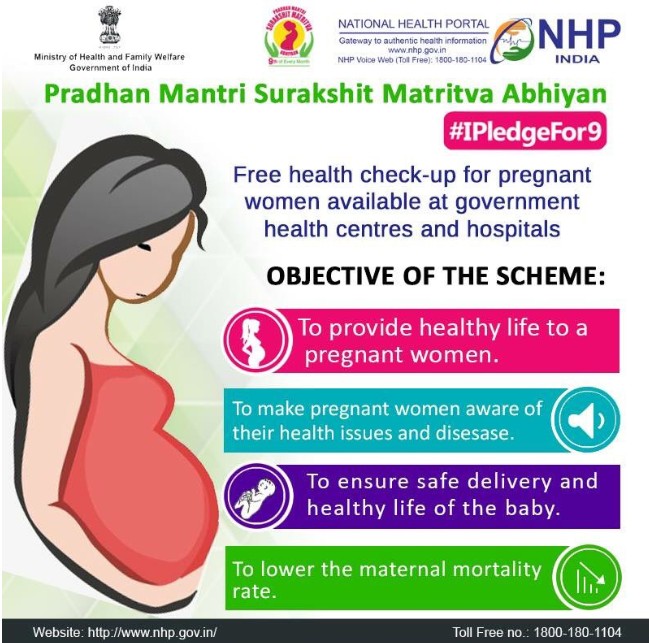
- 14 Jun 2026
In News:
The Government of India recently marked 10 years of the Pradhan Mantri SurakshitMatritva Abhiyaan (PMSMA) under the theme “10 Years of PMSMA – A Decade of Care.” Launched on 9 June 2016, PMSMA is a flagship maternal healthcare initiative aimed at ensuring safe pregnancy, reducing maternal and neonatal mortality, and improving access to quality antenatal care.
About PMSMA
PMSMA provides free, comprehensive and specialist-led antenatal care (ANC) services to pregnant women, particularly during the second and third trimesters, at designated government health facilities on the 9th day of every month.
The programme focuses on:
- Early identification of high-risk pregnancies.
- Timely referral and intervention.
- Improved maternal and newborn health outcomes.
- Universal access to quality antenatal services.
Extended PMSMA
To strengthen maternal healthcare further, the government launched Extended PMSMA (E-PMSMA) in January 2022.
Under this initiative:
- High-Risk Pregnancies (HRPs) are identified and line-listed.
- Pregnant women are individually tracked up to 45 days after delivery.
- SMS-based monitoring and follow-up mechanisms are used.
- ASHA workers provide additional support and counselling.
Major Achievements
Over the last decade, PMSMA has emerged as one of the world's largest targeted antenatal care programmes:
- More than 7.5 crore antenatal check-ups conducted.
- Nearly 1.2 crore high-risk pregnancies identified.
- Improved early risk detection and referral systems.
Maternal and Child Health Outcomes
India has witnessed substantial improvements in maternal and child health indicators:
Maternal Mortality
- Maternal Mortality Ratio (MMR) declined from 130 per lakh live births (2014–16) to 87 per lakh live births (2022–24).
- India has achieved an 86% decline in maternal mortality since 1990, significantly higher than the global average decline of 48%.
Child Health
- Under-Five Mortality Rate declined by 79% since 1990.
- Neonatal mortality declined by 70% during the same period.
NFHS Indicators
According to recent National Family Health Survey (NFHS) data:
- Institutional deliveries: 90.6%
- Antenatal care coverage: 95.9%
- Women receiving at least four ANC visits: 65.2%
- First-trimester ANC registration: 76.2%
These improvements reflect stronger maternal healthcare systems and greater utilization of institutional health services.
BHAVYA Portal for Bharat Audyogik Vikas Yojana
- 13 Jun 2026
In News:
Recently, the Union Minister of Commerce and Industry launched the BHAVYA Portal to facilitate the implementation of the Bharat Audyogik Vikas Yojana (BHAVYA), a flagship programme aimed at creating world-class industrial infrastructure across India.
What is BHAVYA?
The Bharat Audyogik Vikas Yojana (BHAVYA) is a major industrial infrastructure initiative designed to develop 100 investment-ready, plug-and-play industrial parks across the country over a period of six years.
With a total outlay of ?33,660 crore, the scheme seeks to strengthen India's manufacturing ecosystem, attract investments, generate employment, and enhance global competitiveness.
BHAVYA Portal
The newly launched BHAVYA Portal will function as a single digital platform for:
- Submission of Detailed Project Reports (DPRs).
- Project appraisal and evaluation.
- Monitoring and implementation.
- Real-time progress tracking.
It aims to improve transparency, efficiency, and coordination between the Centre, States, and implementing agencies.
Key Features of the Scheme
Implementing Agency
The National Industrial Corridor Development Corporation (NICDC) has been designated as the Project Management Agency for implementation and monitoring.
Competitive Selection Model
States and Union Territories will compete by submitting proposals based on:
- Industrial strengths.
- Availability of land.
- Investor demand.
- Infrastructure readiness.
- Sectoral potential.
Centre–State Partnership
Land will be provided by State Governments, while infrastructure development will be supported through a 51:49 partnership model involving the Government of India and States.
Flexible Park Size
Industrial parks may vary from:
- 25 acres in hilly regions, North-Eastern States and smaller Union Territories.
- Up to 1,000 acres near major urban and industrial centres.
Plug-and-Play Infrastructure
The parks will offer ready-to-use industrial facilities, including:
- Assured water and power supply.
- Road and rail connectivity.
- Clear land titles.
- Digital single-window clearances.
- Air connectivity wherever feasible.
To improve product quality and export competitiveness, testing and certification facilities will be developed in collaboration with:
- Bureau of Indian Standards (BIS)
- Export Inspection Agency (EIA)
- Food Safety and Standards Authority of India (FSSAI)
Significance
BHAVYA is expected to:
- Boost manufacturing and industrialization.
- Attract domestic and foreign investments.
- Generate large-scale employment.
- Improve ease of doing business.
- Strengthen India's position in global value chains.
- Support the vision of Viksit Bharat 2047.
The scheme complements initiatives such as industrial corridors, Make in India, PM Gati Shakti, and logistics modernization by creating integrated industrial ecosystems.
NZP Saathi App
- 13 Jun 2026
In News:
The National Zoological Park has launched the NZP Saathi App along with self-ticketing kiosks as part of its digital transformation initiative aimed at enhancing visitor experience, accessibility, and awareness of wildlife conservation.
What is NZP Saathi?
NZP Saathi is an interactive mobile-based digital zoo guide that acts as a virtual companion for visitors. Developed by the National Zoological Park, New Delhi, the application integrates navigation, visitor services, and educational content into a single platform.
Key Features
The app is available on both Android and iOS platforms and offers:
- Real-time GPS-enabled navigation within the zoo.
- Interactive digital maps showing:
- Animal enclosures
- Drinking water facilities
- Washrooms
- Medical rooms
- Battery-operated buggy stops
- Emergency exits
To cater to different visitor preferences, the app provides four thematic tours:
- Express Tour – Covers major attractions in limited time.
- Family Tour – Child-friendly and relaxed route.
- Grand Zoo Tour – Comprehensive route covering all exhibits.
- My Tour – Personalized itinerary based on visitor preferences.
Integration with Self-Ticketing Kiosks
The app complements newly introduced self-ticketing kiosks that enable:
- Digital ticket booking.
- UPI-based cashless payments.
- Quick entry through automated ticket generation.
- Access through free on-site Wi-Fi connectivity.
Gallantry Awards

- 13 Jun 2026
In News:
Recently, President Droupadi Murmu conferred 51 Gallantry Awards during Phase-I of the Defence Investiture Ceremony 2026 at Rashtrapati Bhavan. Among the recipients of the Kirti Chakra was Prasanth Balakrishnan Nair, an Indian Air Force officer and one of the four astronaut-designates selected for the Gaganyaan mission.
About Gallantry Awards
Gallantry Awards are India's highest civilian military decorations awarded to personnel of the Armed Forces, Central Armed Police Forces (CAPFs), and State/UT Police Forces for exceptional courage, bravery, and sacrifice in the line of duty.
These awards are announced twice annually:
- Republic Day
- Independence Day
Categories of Gallantry Awards
India's gallantry awards are broadly divided into wartime and peacetime categories.
Wartime Gallantry Awards (Instituted in 1950)
- Param Vir Chakra – Highest wartime gallantry award.
- Maha Vir Chakra – Second-highest wartime gallantry award.
- Vir Chakra – Third-highest wartime gallantry award.
These were instituted on 26 January 1950 with retrospective effect from 15 August 1947.
Peacetime Gallantry Awards
Originally instituted in 1952 as Ashoka Chakra Class I, II and III, they were renamed in 1967 as:
- Ashoka Chakra – Highest peacetime gallantry award.
- Kirti Chakra – Second-highest peacetime gallantry award.
- Shaurya Chakra – Third-highest peacetime gallantry award.
Defence Investiture Ceremony 2026 (Phase-I)
A total of 51 Gallantry Awards were presented:
- Kirti Chakra: 7 awards (including 2 posthumous)
- Vir Chakra: 15 awards (including 3 posthumous)
- Shaurya Chakra: 29 awards (including 1 posthumous)
Significance
Gallantry Awards recognize extraordinary courage in combat and non-combat situations and serve as a symbol of national gratitude towards personnel who display exceptional devotion to duty and sacrifice.
The inclusion of a Gaganyaan astronaut-designate among the awardees also highlights the growing integration of India's defence, aviation, and space sectors in advancing national capabilities.
Bonn Climate Conference 2026

- 13 Jun 2026
In News:
The Bonn Climate Conference 2026, officially known as the 64th Sessions of the Subsidiary Bodies (SB64) under the United Nations Framework Convention on Climate Change, is being held in Bonn. As the principal mid-year climate negotiation platform, it serves as a technical and preparatory meeting ahead of the annual COP summit, helping translate political commitments into actionable frameworks.
Key Focus Areas
A major issue at SB64 has been the demand by health advocacy groups, led by the Global Climate and Health Alliance, to increase public adaptation finance from the COP26 goal of $40 billion annually to $120 billion annually by 2035. The demand reflects growing concerns over climate-induced health risks, extreme weather events, and the vulnerability of developing countries.
The conference also witnessed renewed calls for developed countries to publish clear national roadmaps for transitioning away from fossil fuels in line with the 1.5°C temperature goal under the Paris Agreement.
Major Discussions
- Adaptation and Climate Resilience: Negotiations focused on strengthening adaptation efforts, particularly in vulnerable regions facing increasing climate-related disasters, food insecurity, and public health challenges.
- Belém Adaptation Indicators: Technical discussions began on operationalizing the 59 Belém Adaptation Indicators adopted at COP30. These indicators aim to establish measurable benchmarks for assessing global adaptation progress.
- Agriculture and Food Security: Deliberations continued under the Sharm el-Sheikh Joint Work on Agriculture and Food Security, focusing on enhancing climate resilience in agricultural systems and safeguarding food security.
Just Transition
Countries discussed the implementation of the Just Transition Mechanism agreed upon at COP30. The mechanism seeks to facilitate capacity-building, technology transfer, and support for workers and communities affected by the transition to low-carbon economies.
Death Anniversary of Birsa Munda
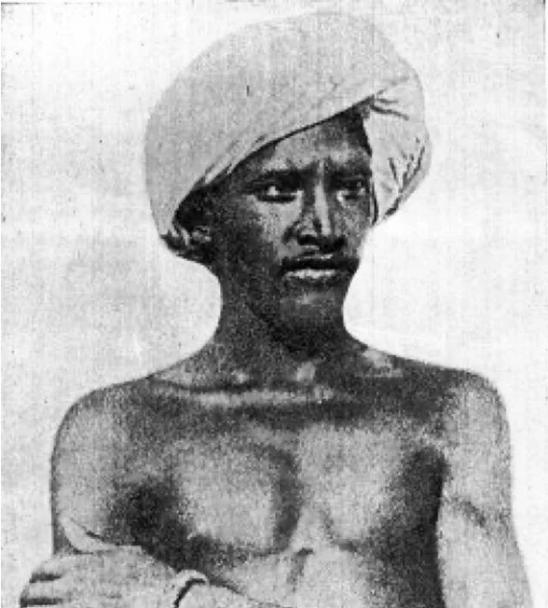
- 13 Jun 2026
In News:
The Prime Minister paid tribute to Birsa Munda on his Martyr's Day (9 June), commemorating one of the most influential tribal leaders of India's anti-colonial struggle.
Early Life
Birsa Munda was born on 15 November 1875 in the Chotanagpur region (present-day Jharkhand) and belonged to the Munda Tribe. He emerged as a tribal freedom fighter, socio-religious reformer and symbol of indigenous resistance against colonial exploitation.
Resistance Against Colonial Rule
Birsa mobilized tribal communities against:
- British colonial administration
- Exploitative landlords and moneylenders
- Forced labour (Beth Begari)
- Missionary influence
- Alienation of tribal lands
His movement drew inspiration from the earlier Sardari Larai (Sardar Movement), which opposed the erosion of tribal land rights in Chotanagpur.
Defence of Tribal Land Rights
A central objective of Birsa's movement was the protection of the traditional Khuntkatti system, a customary tribal land tenure arrangement that recognized collective ownership and hereditary rights of tribal communities over land.
He strongly opposed the transfer of tribal land to outsiders, known as Dikus, and demanded restoration of traditional self-governance.
Ulgulan Movement
Birsa led the famous Ulgulan (Great Tumult) Movement during 1899–1900. The movement sought to:
- End British rule.
- Restore tribal self-rule.
- Protect tribal land rights.
- Resist exploitation by Dikus.
His slogan:
"Abua Raj Ete Jana, Maharani Raj Tundu Jana"(Let our rule be established and the Queen's rule end)
became a powerful expression of tribal assertion and anti-colonial resistance.
Religious and Social Reform
Birsa advocated social reform, moral discipline and cultural revival among tribal communities. His teachings led to the emergence of the Birsait faith community, which emphasized tribal identity, social cohesion and resistance to social evils.
Death and Legacy
Birsa Munda was arrested by the British and died in Ranchi Jail on 9 June 1900 at the age of 25. The official cause of death was recorded as cholera.
His struggle significantly influenced later tribal protection laws, particularly the Chotanagpur Tenancy Act, 1908, which restricted the transfer of tribal land to non-tribals.
Contemporary Recognition
To honour his contributions and the role of tribal communities in India's history, the Government of India observes 15 November as Janjatiya Gaurav Divas.
U.S. Proposed Additional Tariffs on India under Section 301
- 12 Jun 2026
In News:
The United States Trade Representative (USTR) has proposed an additional 12.5% tariff on imports from India and 53 other economies following an investigation under Section 301 of the U.S. Trade Act of 1974. The proposal is linked to concerns regarding the alleged import of goods produced through forced labour in global supply chains. The tariffs are currently at the proposal stage and have not yet been finalized.
What is Section 301 of the U.S. Trade Act, 1974?
Section 301 is a trade enforcement mechanism that empowers the United States to investigate and respond to foreign trade practices considered unjustifiable, unreasonable, or discriminatory and that burden U.S. commerce.
Under this provision, the U.S. President and the Office of the United States Trade Representative (USTR) can impose tariffs, trade restrictions, or other retaliatory measures against trading partners. The provision is often viewed as controversial because it allows unilateral action outside the multilateral dispute settlement framework of the World Trade Organization.
India's Position
India has rejected any suggestion that forced labour is prevalent within its domestic regulatory framework. The country prohibits forced labour through:
- Article 23 of the Constitution of India (Right against Exploitation).
- Bonded Labour System (Abolition) Act, 1976.
India has maintained that concerns raised by the U.S. largely relate to complex international supply chains rather than domestic labour practices. New Delhi remains engaged in discussions with Washington on the issue.
Potential Impact on India
If implemented, the additional tariff could affect India's export competitiveness in the U.S. market.
Labour-Intensive Sectors at Risk
Industries that may face significant pressure include:
- Textiles and garments
- Carpets
- Leather products
- Brassware and handicrafts
Impact on Manufacturing Exports
Higher tariff burdens could also affect:
- Automobiles
- Electronics
- Engineering goods
Supply Chain Adjustments
The measure may encourage Indian firms to reduce dependence on imported inputs originating from countries facing forced-labour scrutiny, particularly within global manufacturing networks. Such adjustments could increase production costs in the short term.
India’s 7th Regional Meteorological Centre at Jammu
- 12 Jun 2026
In News:
The India Meteorological Department (IMD) has inaugurated its 7th Regional Meteorological Centre (RMC) at Jammu, marking a significant step towards strengthening weather forecasting and disaster preparedness in the Himalayan region. The government has also announced the establishment of another RMC at Lucknow.
Background
Prior to this expansion, IMD operated through six Regional Meteorological Centres located at:Mumbai, Chennai, New Delhi, Kolkata, Nagpur, and Guwahati
These centres serve as regional hubs for weather forecasting, climate services, and disaster early-warning systems.
Coverage and Functions
- The newly established RMC Jammu will cater to Jammu & Kashmir, Ladakh, and Himachal Pradesh, while the proposed Lucknow RMC will serve Uttar Pradesh and Uttarakhand.
- The centre will strengthen monitoring and forecasting of weather-related hazards such as:Flash floods, Cloudbursts, Landslides, Avalanches, Heavy snowfall, and Thunderstorms
- It will provide specialized forecasts at regional, district, city, tourist destination, and mountain levels, along with advisories for pilgrims, farmers, transport operators, and disaster management agencies.
Significance
The establishment of RMC Jammu is particularly important given the vulnerability of the Himalayan region to extreme weather events and climate-related disasters. It will enhance:
- Early warning and disaster preparedness.
- Himalayan weather and climate services.
- Agricultural and tourism advisories.
- Support for infrastructure planning and transportation.
- Scientific understanding of mountain meteorology.
The initiative also strengthens India's meteorological infrastructure and contributes to more localized and impact-based weather forecasting.
About India Meteorological Department (IMD)
The India Meteorological Department (IMD) is the national meteorological service of India.
- Established: 1875
- Ministry: Ministry of Earth Sciences
- Headquarters: New Delhi
- Functions: Weather forecasting, climate monitoring, seismology, cyclone warnings, and meteorological services.
4 years of Jan Samarth Portal
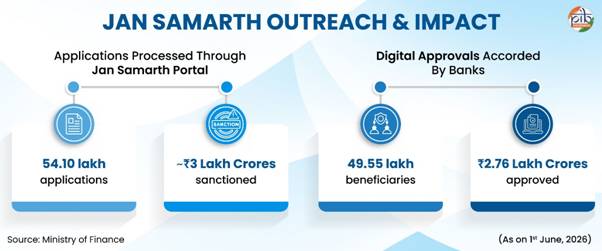
- 12 Jun 2026
In News:
Launched in June 2022, the Jan Samarth Portal has emerged as a comprehensive single-window digital platform for accessing government-sponsored credit-linked schemes. Designed to simplify the loan delivery process, the portal connects beneficiaries, lending institutions, and government schemes through a technology-driven ecosystem, thereby expanding access to institutional credit across the country.
Objective
The portal was created to streamline access to credit-linked government schemes, reduce procedural complexities, and improve financial inclusion through a transparent and digital application process. It aims to ensure that eligible beneficiaries can easily identify suitable schemes and obtain loans without navigating multiple agencies.
Key Features
Jan Samarth serves as a unified gateway for 16 credit-linked Central Government schemes covering sectors such as:
- Agriculture and Agri-Infrastructure
- MSMEs and Business Activities
- Livelihood Promotion
- Housing
- Renewable Energy
The platform caters particularly to entrepreneurs, women-led enterprises, agri-entrepreneurs, start-ups, and small businesses, especially in rural areas and Tier-2 and Tier-3 towns.
To improve accessibility, the portal is available in eight languages—English, Hindi, Gujarati, Telugu, Tamil, Marathi, Bengali, and Kannada.
Digital Integration
A major strength of Jan Samarth is its integration with key national databases, including:
- UDYAM
- UIDAI
- AgriStack
- DPIIT Startup Portal
- CBDT
- GST Network
- CGTMSE
These integrations facilitate faster verification, reduce paperwork, and improve loan processing efficiency.
Lending Ecosystem
The platform has onboarded 269 Member Lending Institutions, including:
- Public Sector Banks
- Private Sector Banks
- NBFCs
- Regional Rural Banks
- Small Finance Banks
- Cooperative Banks
- All-India Financial Institutions
This broad institutional network enhances credit accessibility across regions and sectors.
Maulana Barkatullah Bhopali
- 12 Jun 2026
In News:
Recently, the Executive Council of Barkatullah University approved a proposal to rename the institution, bringing renewed attention to the legacy of Maulana Barkatullah Bhopali, one of the most significant yet lesser-known figures of India's freedom struggle.
Early Life and Ideological Foundations
- Born on 7 July 1854 in Bhopal, Maulana Barkatullah was a scholar, journalist and revolutionary who dedicated his life to securing India's independence from British rule.
- Educated in Bhopal, Bombay and later England, he became deeply involved in anti-colonial activism while teaching Arabic and Persian in Liverpool.
- A firm believer in Hindu-Muslim unity, Barkatullah argued that British colonial exploitation affected all Indians irrespective of religion and that national liberation required a united struggle against colonial rule.
Globalizing India’s Freedom Struggle
Unlike many nationalist leaders who operated within India, Barkatullah spent most of his life abroad building international support for Indian independence. His activities extended across Asia, Europe and North America, making him one of the earliest architects of a global anti-colonial network.
His revolutionary work sought to transform India's freedom movement from a domestic political struggle into an international campaign against British imperialism.
Provisional Government of India in Kabul (1915)
A landmark contribution came on 1 December 1915, when Barkatullah helped establish the Provisional Government of India in Kabul, often regarded as India's first Government-in-Exile.
Its leadership included:
- Raja Mahendra Pratap – President
- Maulana Barkatullah Bhopali – Prime Minister
- Maulana Ubaidullah Sindhi – Home Minister
The government aimed to secure international support for India's liberation and challenge British authority during the First World War.
Association with the Ghadar Movement
- Barkatullah was a prominent leader of the Ghadar Party, established in 1913. The party advocated armed revolution against British rule and sought to inspire uprisings within the British Indian Army.
- During the First World War, he collaborated with Germany and attempted to mobilize Indian prisoners of war and expatriates to support the anti-colonial struggle.
International Outreach
- In 1919, Barkatullah met Vladimir Lenin in Moscow to seek international support for India's independence movement. His diplomatic efforts reflected the global dimension of India's anti-colonial struggle long before independence became a mass movement.
Legacy and Significance
Maulana Barkatullah's contributions were significant in three respects:
- He served as the Prime Minister of India's first Government-in-Exile.
- He internationalized the Indian freedom movement through global advocacy and diplomacy.
- His revolutionary efforts influenced later movements, including those associated with Subhas Chandra Bose and the Indian National Army.
Despite constant surveillance and exile, he remained committed to India's freedom until his death in San Francisco in 1927, where he was attending a Ghadar Party gathering.
e-Jagriti Platform
- 12 Jun 2026
In News:
The e-Jagriti platform, an AI-enabled initiative of the Department of Consumer Affairs, was awarded the Silver Award at the National Awards for e-Governance 2026, recognizing its contribution to digital transformation in consumer dispute redressal. The platform represents a major step towards creating a transparent, paperless, and technology-driven consumer justice ecosystem in India.
What is e-Jagriti?
Launched on 1 January 2025, e-Jagriti is an integrated digital platform designed to modernize the consumer dispute resolution framework across the country. It seeks to replace physical paperwork and fragmented processes with a unified virtual system, enabling consumers to file, track, and resolve complaints online.
Developed by the Department of Consumer Affairs under the Ministry of Consumer Affairs, Food and Public Distribution, the platform aims to reduce pendency, improve efficiency, and democratize access to consumer justice for citizens, including Non-Resident Indians (NRIs).
Key Features
A major strength of e-Jagriti is the integration of four legacy consumer grievance systems—OCMS, e-Daakhil, NCDRC CMS, and CONFONET—into a single cloud-based platform.
The system incorporates advanced technologies such as:
- AI-powered chatbot assistance.
- Voice-to-text complaint filing.
- Real-time case tracking dashboards.
- Automated data analytics for judicial and administrative monitoring.
The platform also offers a fully digital payment ecosystem integrated with Bharat Kosh, PayGov, and SBI ePay, ensuring seamless online filing and fee payment.
Virtual Consumer Courts
e-Jagriti promotes virtual hearings through integrated video-conferencing facilities and digital document exchange mechanisms. It supports proceedings across the National Consumer Disputes Redressal Commission (NCDRC) and all State Consumer Commissions, reducing costs and improving accessibility.
The platform has also enabled NRIs from countries such as the USA, UK, UAE and Canada to file and pursue consumer complaints remotely, without visiting India.
UN Military Gender Advocate of the Year Award 2025
- 11 Jun 2026
In News:
Recently, Major Abhilasha Barak of the Indian Army was conferred the prestigious United Nations Military Gender Advocate of the Year Award, becoming the third Indian peacekeeper to receive this global recognition.
About the Award
The UN Military Gender Advocate of the Year Award is an annual international honour instituted in 2016 by the United Nations Department of Peace Operations (DPO) through its Office of Military Affairs.
The award recognizes military peacekeepers who have made outstanding contributions to advancing the principles of United Nations Security Council Resolution 1325 (UNSCR 1325) on Women, Peace and Security.
It aims to promote the integration of gender perspectives into peacekeeping operations and ensure that the security, protection, and humanitarian needs of women and girls are adequately addressed in conflict zones.
Key Features
- Awarded annually to an individual military peacekeeper serving in UN missions.
- Candidates are nominated by Force Commanders and Heads of UN Peacekeeping Missions.
- Recognizes innovations such as:
- Gender-responsive peacekeeping.
- Mixed-gender patrols.
- Community engagement initiatives.
- Capacity-building and awareness programmes.
- Provides a global platform for sharing best practices in gender-sensitive peacekeeping.
Major Abhilasha Barak
Major Abhilasha Barak is an officer of the Indian Army currently serving with the United Nations Interim Force in Lebanon (UNIFIL).
She serves as:
- Engagement Team Commander, leading interactions with local communities.
- Gender Focal Point, acting as a bridge between UN military leadership and local women's groups.
Her contributions include:
- Addressing gender-specific security concerns.
- Improving outreach to women and vulnerable communities.
- Promoting inclusive community safety mechanisms.
- Strengthening humanitarian coordination and resource distribution.
Her work has helped enhance trust between local communities and UN peacekeepers in a sensitive conflict-affected region along the Blue Line between Lebanon and Israel.
Indian Recipients of the Award
India has emerged as a significant contributor to gender-responsive peacekeeping:
|
Year |
Awardee |
Mission |
|
2019 |
Major Suman Gawani |
UN Mission in South Sudan (UNMISS) |
|
2023 |
Major Radhika Sen |
UN Stabilization Mission in DR Congo (MONUSCO) |
|
2025 |
Major Abhilasha Barak |
UN Interim Force in Lebanon (UNIFIL) |
Ease of Doing Business
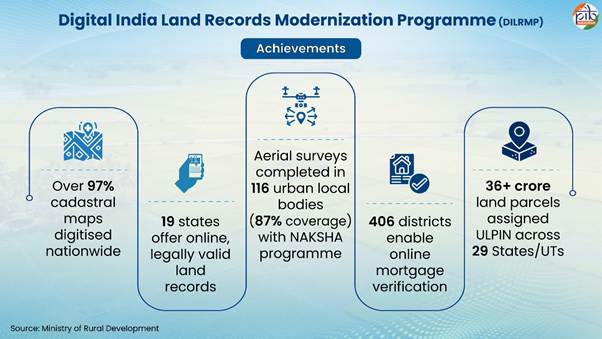
- 11 Jun 2026
In News:
India has undertaken a comprehensive transformation of its business and regulatory framework over the last decade, shifting from a compliance-heavy administrative system to a digital, trust-based and facilitation-oriented governance model.
Led by the Department for Promotion of Industry and Internal Trade (DPIIT) and supported by multiple ministries, these reforms aim to reduce compliance burdens, improve investor confidence, encourage entrepreneurship and enhance India's global competitiveness.
The reforms form a critical component of India's broader vision of building a Viksit Bharat by 2047 through digital governance, streamlined regulations, transparent administration and efficient service delivery.
India's Progress in Global Competitiveness
The impact of these reforms is reflected in India's improved performance across various global governance and competitiveness indicators.
- India's rank in the World Bank's Ease of Doing Business Index improved dramatically from 142nd in 2014 to 63rd in 2019, one of the fastest improvements globally. Similarly, India's ranking in the IMD World Competitiveness Ranking improved from 43rd in 2021 to 41st in 2025.
- The country has also been placed in the top-tier Group A category of the World Bank's GovTech Maturity Index in 2020, 2022 and 2025, reflecting significant progress in digital governance. Furthermore, the UN E-Government Survey has recognized India's strong performance in online public services, telecommunications infrastructure and human capital.
Simplifying Business Entry and Formalisation
A major focus of reforms has been reducing barriers to starting and operating businesses.
Startup India
- The Startup India initiative has significantly expanded India's startup ecosystem. The number of recognized startups increased from 502 in 2016 to more than 2.23 lakh in 2026, generating over 23.3 lakh jobs.
- Notably, nearly 48% of recognized startups have at least one woman director or partner, highlighting increasing inclusivity.
SPICe and MCA21
- The SPICe (Simplified Proforma for Incorporating Company Electronically Plus) system integrated ten separate incorporation procedures into a single online application, significantly reducing the time and cost involved in starting a business.
- The MCA21 Version 3.0 platform processed 3.84 crore filings between 2021 and 2025, with most approvals granted through Straight Through Processing (STP), reducing human intervention and delays.
Udyam Registration Portal
- Launched in 2020, the Udyam Portal provides a free, paperless, self-declaration-based registration system for MSMEs.
- Monthly registrations increased from about 10,000 in 2020 to over 8.58 lakh in 2026, promoting formalisation and improving access to government support.
Land and Property Reforms
- Land administration has traditionally been one of the most challenging aspects of doing business in India. Significant reforms have therefore focused on digitisation and transparency.
Digital India Land Records Modernization Programme (DILRMP)
- The Digital India Land Records Modernization Programme (DILRMP) has digitized 97.37% of cadastral maps and assigned Unique Land Parcel Identification Numbers (ULPINs) to more than 36 crore land parcels.
- ULPIN is often referred to as the "Aadhaar for Land" because it provides a unique identity to each land parcel, reducing disputes and improving transparency.
National Generic Document Registration System (NGDRS)
- The NGDRS seeks to standardize and digitize property registration processes across states. However, implementation remains uneven and is currently limited to a relatively small number of States and Union Territories.
Single-Window Clearances and Regulatory Simplification
National Single Window System (NSWS)
The National Single Window System (NSWS) acts as a unified digital platform for investors by integrating approvals from:
- 32 Central Ministries and Departments
- 34 States and Union Territories
The system has facilitated more than 8.29 lakh approvals and clearances, significantly reducing procedural complexity.
PARIVESH 2.0
The PARIVESH platform has transformed environmental clearances through digital processing and monitoring. Clearance timelines have reportedly been reduced to approximately 64 days, improving project execution while maintaining environmental safeguards.
Strengthening Market Access and Logistics
Government e-Marketplace (GeM)
The Government e-Marketplace (GeM) has revolutionized public procurement by creating a transparent digital marketplace for government purchases.
Key achievements include:
- Cumulative procurement exceeding ?18.4 lakh crore
- Procurement worth nearly ?5 lakh crore in FY 2025–26
- Around 68% of orders sourced from Micro and Small Enterprises (MSEs)
PM Gati Shakti
- The PM Gati Shakti National Master Plan integrates planning across 58 ministries and all States and Union Territories through over 3,199 GIS layers.
- The platform has evaluated 352 infrastructure projects worth approximately ?16.1 lakh crore, promoting integrated infrastructure development and reducing logistics costs.
Logistics Performance
- India's rank in the World Bank Logistics Performance Index improved from 54th in 2014 to 38th in 2023.
- The Logistics Data Bank (LDB) 2.0 now tracks nearly 100% of EXIM containers, covering around 95 million container movements, thereby improving supply chain visibility and efficiency.
Expanding Credit Access and Digital Financial Infrastructure
Credit Support to MSMEs
- The Credit Guarantee Fund Trust for Micro and Small Enterprises (CGTMSE) has extended guarantees worth approximately ?9.34 lakh crore, supporting easier access to credit for MSMEs.
- Under the Pradhan Mantri Mudra Yojana (PMMY), more than 57 crore loans amounting to ?40.07 lakh crore have been sanctioned since 2015.
- Importantly, women account for nearly 60% of Mudra loan beneficiaries, highlighting the scheme's role in promoting financial inclusion.
UPI Revolution
- India's digital payments ecosystem has witnessed unprecedented growth through Unified Payments Interface (UPI).
- Transactions increased from around 2 crore in FY 2016–17 to over 24,162 crore transactions in FY 2025–26, with a transaction value exceeding ?314 lakh crore, making UPI the world's largest real-time payment system.
GST Reforms
The implementation of Goods and Services Tax (GST) has simplified indirect taxation by creating a unified national market.
Key indicators include:
- GST taxpayer base increasing from about 60 lakh to 1.64 crore
- Processing of ?107.64 lakh crore in tax payments
- Generation of 188.27 crore e-Way Bills in FY 2025–26
Emerging Reforms and Open Digital Commerce
India has also focused on reducing compliance burdens through trust-based governance.
Labour Reforms
The Labour Codes introduced:
- Risk-based inspections
- Randomized web-based allocation of inspections
- Transformation of inspectors into Inspector-cum-Facilitators
These measures seek to reduce discretionary powers and improve compliance support.
Consent to Operate Reforms
Revisions to industrial consent guidelines have made the Consent to Operate (CTO) valid until cancelled in many cases, eliminating the burden of repeated renewals.
Open Network for Digital Commerce (ONDC)
The Open Network for Digital Commerce (ONDC) is democratizing e-commerce by reducing platform monopolies.
The network has onboarded:
- Over 7.64 lakh sellers
- Across more than 616 cities
This has improved market access for small retailers and MSMEs.
Challenges Ahead
Despite substantial progress, several challenges remain:
- Uneven implementation of reforms across States and districts.
- Delays in insolvency resolution due to tribunal bottlenecks.
- Legacy land record discrepancies affecting property transactions.
- Digital literacy and language barriers for rural enterprises.
- Variations in local-level administrative capacity.
These issues continue to affect the uniform implementation of reforms across the country.
Way Forward
Further improvements can be achieved through:
- Faster disposal of insolvency cases under the Insolvency and Bankruptcy framework.
- Expansion of the District Business Reform Action Plan (D-BRAP).
- Wider adoption of Trade Receivables Discounting System (TReDS) to improve MSME liquidity.
- Continued decriminalization of minor business offences under the Jan Vishwas Act framework.
- Strengthening export promotion initiatives and integration into global value chains.
Project 18 (P-18)

- 11 Jun 2026
In News:
India's Project 18 (P-18) is the Indian Navy's proposed Next-Generation Destroyer (NGD)programme, envisioned as the successor to the Visakhapatnam-class destroyer. The project aims to develop some of the most powerful and technologically advanced surface combatants ever built in India, significantly enhancing the Navy's blue-water capabilities.
About the Programme
The programme is being overseen by the Indian Navy's Warship Design Bureau (WDB) in collaboration with Mazagon Dock Shipbuilders Limited (MDL) and Garden Reach Shipbuilders & Engineers (GRSE).
The P-18 class is envisaged as a fleet of multi-role stealth destroyers capable of undertaking air defence, anti-surface, anti-submarine, and land-attack missions.
Key Features
With an estimated displacement of over 13,000 tonnes, Project 18 ships will be among the largest warships ever operated by India. Since warships exceeding 10,000 tonnes are generally classified as cruisers, Project 18 could effectively mark India's entry into the cruiser-class category.
The vessels are expected to feature:
- Advanced Integrated Electric Propulsion (IEP) powered by gas turbines and diesel generators.
- Extensive automation, reducing crew requirements by 25–30% compared to existing destroyers.
- Advanced stealth features and network-centric warfare capabilities.
Advanced Weapon Systems
Each vessel is expected to be equipped with 114 Vertical Launch System (VLS) cells, capable of deploying a diverse range of indigenous missile systems, including:
- BrahMos and BrahMos Next Generation
- Long-Range Land Attack Cruise Missiles (LR-LACM)
- Precision-Guided Long-Range Surface-to-Air Missiles (PGLRSAM)
- Short-Range Surface-to-Air Missiles (SRSAM)
- SMART anti-submarine weapon system
Future Warfare Capabilities
Project 18 is being designed with emerging warfare requirements in mind. The ships are expected to operate:
- Unmanned Underwater Vehicles (UUVs)
- Kamikaze/loitering drones
- Advanced anti-submarine systems
- Mine-detection and surveillance platforms
The destroyers are also expected to be equipped with next-generation radar systems capable of 360-degree surveillance and detection of threats up to 500 km away.
India Showcases Carbon Credit Trading Scheme (CCTS) at WTO Trade and Environment Week 2026
- 11 Jun 2026
In News:
On World Environment Day 2026, India showcased its Carbon Credit Trading Scheme (CCTS) and renewable energy standardization efforts at the WTO Trade and Environment Week in Geneva. The event highlighted India's progress towards a low-carbon economy, clean energy transition, and achievement of its Nationally Determined Contributions (NDCs) under the Paris Agreement.
India's Climate Achievements
India emphasized that its climate strategy is guided by the principles of Equity and Common but Differentiated Responsibilities and Respective Capabilities (CBDR-RC) under the UNFCCC framework.
Notably, India has achieved key climate targets ahead of schedule:
- Non-fossil fuel-based installed power capacity reached 53.21% in March 2026, surpassing the NDC target of 50% by 2030.
- Emissions intensity of GDP declined by 37.38% between 2005 and 2022, exceeding the target of 33–35% reduction by 2030.
Carbon Credit Trading Scheme (CCTS)
- The Carbon Credit Trading Scheme (CCTS) forms the foundation of India's Indian Carbon Market (ICM). It was notified by the Ministry of Power in 2023 under the Energy Conservation Act, 2001.
- The scheme seeks to establish a national electronic carbon credit trading platform and promote market-based mechanisms for reducing greenhouse gas emissions.
Key Features
- Operates on a Cap-and-Trade Model.
- Entities exceeding prescribed emission reduction targets earn Carbon Credit Certificates (CCCs).
- 1 Carbon Credit Certificate = 1 tonne of CO? equivalent emissions reduced or avoided.
- Includes both compliance and offset mechanisms.
Institutional Framework
- Administrator: Bureau of Energy Efficiency (BEE)
- Market Regulator: Central Electricity Regulatory Commission (CERC)
- Registry: Grid Controller of India Limited (GRID-INDIA)
Green Hydrogen Standardisation
India also showcased progress under the National Green Hydrogen Mission, highlighting the notified emission thresholds and technical criteria for classifying hydrogen as "Green Hydrogen."
These standards aim to:
- Ensure transparency and credibility.
- Provide certainty for investors and producers.
- Support the development of a robust green hydrogen ecosystem.
Land Port Management System

- 11 Jun 2026
In News:
The Union Home Minister launched the Land Port Management System (LPMS) on 9 June 2026 as a major step towards technology-enabled smart border management, trade facilitation, and secure cross-border movement of goods and passengers.
What is LPMS?
LPMS is a state-of-the-art digital platform developed to integrate operations across India's land ports into a unified system. It enables secure and real-time exchange of logistics, regulatory, and operational information, bringing land ports on par with the digital systems used at airports and seaports.
Key Features
- Provides end-to-end digital processing of cargo and passenger movement.
- Enables:
- Slot booking
- Online payments
- Cargo tracking
- Single-window clearances
- Facilitates seamless coordination among government agencies and private stakeholders.
- Reduces delays, improves transparency, and enhances operational efficiency.
- Integrated with major national digital platforms such as:
- ICEGATE (Indian Customs Electronic Gateway)
- ULIP (Unified Logistics Interface Platform)
- Motor Vehicle Ecosystem
Significance
LPMS is expected to:
- Strengthen border security and surveillance.
- Improve ease of cross-border trade.
- Enhance transparency and efficiency in border operations.
- Support regional connectivity and economic integration.
- Contribute to the vision of Viksit Bharat 2047 through smart infrastructure and digital governance.
Land Ports Authority of India (LPAI)
The Land Ports Authority of India (LPAI) is a statutory body under the Department of Border Management, Ministry of Home Affairs.
Functions
- Develops and manages Integrated Check Posts (Land Ports).
- Facilitates trade, passenger movement, connectivity, and regional cooperation across India's international borders.
Present Coverage
LPAI currently operates 15 land ports along India's borders with:
- Pakistan
- Nepal
- Bhutan
- Bangladesh
- Myanmar
Digital India BHASHINI Division (DIBD)
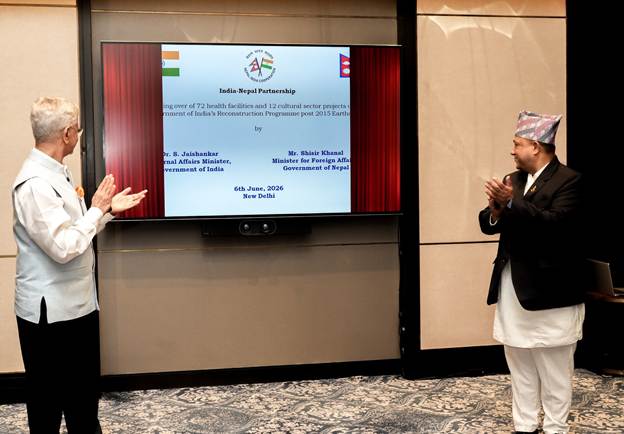
- 10 Jun 2026
In News:
Recently, the Digital India BHASHINI Division (DIBD) signed a Memorandum of Understanding (MoU) with Kathmandu University Centre for Digital Public Infrastructure and Artificial Intelligence to strengthen cooperation in multilingual AI, Digital Public Infrastructure (DPI), and language technologies. The partnership reflects India's growing role in promoting digital public goods and AI-driven governance beyond its borders.
What is the Digital India BHASHINI Division?
- The Digital India BHASHINI Division (DIBD) functions under the Digital India Corporation, which operates under the Ministry of Electronics and Information Technology (MeitY).
- It serves as India's flagship initiative for AI-driven multilingual digital inclusion and language technology development.
- At its core is the BHASHINI platform (BHASHaINterface for India), which seeks to bridge India's linguistic diversity by making digital services accessible in multiple Indian languages through Artificial Intelligence and Natural Language Processing (NLP).
Key Features
- Through the National Hub for Language Technology (NHLT), BHASHINI provides scalable speech and text-based AI solutions for governance, public service delivery, education, and digital platforms.
- The initiative promotes open-source innovation, multilingual AI research, dataset creation, startup support, and academic collaboration.
- The platform has emerged as a critical component of India's Digital Public Infrastructure ecosystem by enabling seamless communication across languages and improving digital accessibility.
Scale and Reach
BHASHINI has witnessed significant adoption across government platforms and digital services:
- Powers more than 800 government websites.
- Processes over 15 million AI inferences daily.
- Supports 36 Indian text languages.
- Supports 23 Indian voice languages.
- Provides capabilities in 35 international languages.
The platform also makes AI and NLP resources available in the public domain for MSMEs, startups, researchers, and innovators, fostering the development of indigenous language technologies.
Economic Advisory Council to the Prime Minister (EAC-PM)
- 10 Jun 2026
In News:
Recently, the Prime Minister chaired a meeting of the Economic Advisory Council to the Prime Minister (EAC-PM), highlighting the body's role in providing expert economic inputs to the highest levels of policymaking.
What is the EAC-PM?
- The EAC-PM is an independent advisory body constituted to provide advice on economic and related issues directly to the Prime Minister.
- It serves as a platform through which eminent economists and experts offer informed perspectives on key economic challenges and policy priorities facing the country.
- The Council's recommendations are advisory in nature and not binding on the Government, allowing it to function as an independent source of expert opinion.
Functions and Mandate
- The Terms of Reference of the EAC-PM include analysing economic and other issues referred to it by the Prime Minister and providing recommendations thereon.
- It examines matters of macroeconomic importance, identifies emerging challenges and opportunities, and presents its views to the Prime Minister.
- The Council may undertake studies either suo motu or on issues referred by the Prime Minister or other stakeholders. It can also perform any additional tasks assigned by the Prime Minister from time to time.
- Beyond policy advice, the EAC-PM contributes to fostering greater public understanding of economic issues through research papers, reports and analytical studies.
Composition
- The EAC-PM is headed by a Chairperson and comprises eminent economists and experts as members. It is supported by a team of officials and administrative staff.
- There is no fixed statutory strength for the Council, and its composition may vary over time based on requirements.
- For administrative, logistical and budgetary support, NITI Aayog acts as the nodal agency for the Council.
Panchayat Advancement Index (PAI) Wins Gold Award at National Awards for e-Governance 2026
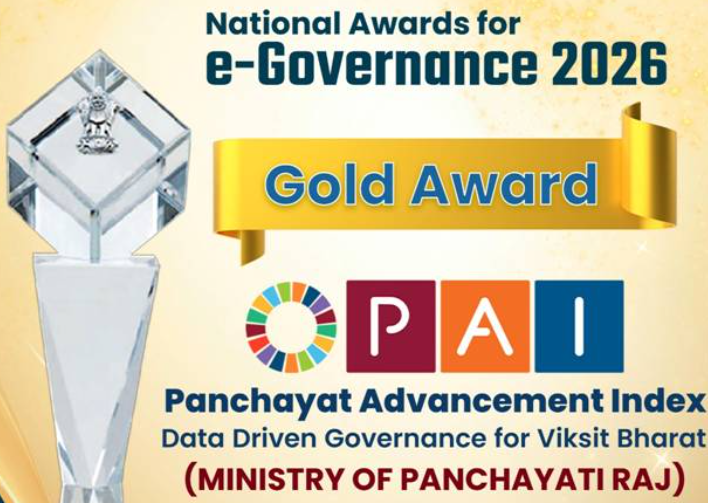
- 10 Jun 2026
In News:
The Panchayat Advancement Index (PAI), a flagship initiative of the Ministry of Panchayati Raj, has been awarded the Gold Award at the National Awards for e-Governance (NAeG) 2026 under the category “Digital Transformation through the Use of Data Analytics in Digital Platforms.”
The recognition reflects India's growing emphasis on data-driven governance and evidence-based policymaking at the grassroots level.
What is the Panchayat Advancement Index?
- The Panchayat Advancement Index (PAI) is India's first comprehensive, analytics-based framework for evaluating the performance of Gram Panchayats across the country.
- Developed by the Ministry of Panchayati Raj, it serves as a standardized report card for rural local bodies, enabling objective assessment of development outcomes and governance performance.
- Under its latest PAI 2.0 version, the platform assesses more than 6 lakh Gram Panchayats using over 150 indicators and 230 data points.
- The index is aligned with the Localisation of Sustainable Development Goals (LSDGs) and evaluates Panchayats across nine themes, including poverty reduction, health, child welfare, water security, environmental sustainability, infrastructure, social protection, good governance, and women-centric development.
- By generating composite scores and performance rankings, the index helps identify developmental gaps, promote accountability, and facilitate better targeting of government resources and interventions.
About the National Awards for e-Governance
- The National Awards for e-Governance, instituted in 2003, are India's premier awards recognizing excellence in digital governance and public service delivery.
- Presented annually by the Department of Administrative Reforms and Public Grievances (DARPG) in coordination with the Ministry of Electronics and Information Technology (MeitY), the awards encourage innovative technology-driven solutions that improve governance outcomes.
- The 2026 edition was organized around the theme “Viksit Bharat 2047: AI-Enabled, Data-Driven and Secure Digital Governance.” Along with a trophy and citation, the Gold Award carries a ?10 lakh incentive to support further technological enhancement of the platform.
E85 Fuel
- 10 Jun 2026
In News:
On World Environment Day 2026, the Union Minister for Petroleum and Natural Gas launched E85 fuel at an IndianOil retail outlet in New Delhi, marking a significant step in India's transition towards a structured flex-fuel ecosystem. The rollout has begun across 48 retail outlets of Public Sector Oil Marketing Companies (OMCs) and is targeted to expand to 500 outlets by December 2026 and 5,000 outlets by December 2027.
What is E85 Fuel?
E85 is a high-ethanol blended fuel containing:
- 80–85% Ethanol
- 14–19% Petrol
It is specifically designed for Flex-Fuel Vehicles (FFVs), which can operate on multiple ethanol-petrol blends ranging from E20 to E100. Unlike conventional petrol vehicles, E85 can only be used in specially designed flex-fuel engines.
Why is E85 Important?
The introduction of E85 represents the next phase of India's ethanol blending programme. Having already achieved the 20% ethanol blending target (E20) five years ahead of schedule, India is now seeking to deepen ethanol penetration in the transport sector.
The initiative seeks to:
- Enhance energy security by reducing crude oil imports.
- Promote cleaner transportation fuels.
- Increase farmer incomes through greater demand for ethanol feedstocks.
- Support India's climate commitments through lower carbon emissions.
The government estimates that wider adoption of E85 and FFVs could raise India's aggregate ethanol blending level to nearly 26% by 2030-31.
Key Benefits of E85 Fuel
Economic Benefits
E85 is priced nearly ?20 per litre lower than conventional petrol, allowing consumers to directly benefit from the lower cost of domestically produced ethanol.
The broader ethanol programme has already delivered significant gains:
- Ethanol blending increased from 1.53% in 2014 to 20% in 2026.
- Foreign exchange savings exceeding ?1.84 lakh crore.
- Substitution of nearly 302 lakh metric tonnes of crude oil imports.
Environmental Benefits
E85 offers substantial environmental advantages:
- Around 61% reduction in lifecycle greenhouse gas emissions compared to petrol.
- Potential annual reduction of 66.4 lakh metric tonnes of CO? emissions through large-scale adoption.
- Near-zero particulate matter emissions due to cleaner combustion.
- Improved urban air quality and reduced pollution levels.
Technical Advantages
Ethanol possesses a Research Octane Number (RON) of about 108, considerably higher than conventional petrol.
This results in:
- Superior knock resistance.
- Higher engine compression ratios.
- Optimized ignition timing.
- Improved engine efficiency and performance.
Flex-Fuel Vehicles (FFVs): The Backbone of E85 Adoption
Flex-Fuel Vehicles are capable of operating on varying ethanol blends from E20 to E100 without requiring major modifications.
Their advantages include:
- Fuel flexibility.
- Lower running costs.
- Utilization of existing fuel distribution infrastructure.
- Lower acquisition cost compared to many electric vehicles.
Unlike electric vehicles that rely heavily on imported batteries and critical minerals, FFVs run on ethanol produced domestically from agricultural feedstocks such as sugarcane and food grains.
Benefits for Farmers and the Rural Economy
The E85 initiative strengthens the government's vision of transforming farmers from "Annadatas" (food providers) into "Urjadatas" (energy providers).
Government estimates suggest that if 50% of new two-wheelers and four-wheelers adopt flex-fuel technology:
- Ethanol demand could exceed 312 crore litres annually.
- Nearly ?12,403 crore could flow directly to farmers.
- Foreign exchange savings could reach ?15,151 crore annually.
Thus, E85 has the potential to create a strong linkage between agriculture, energy security and rural prosperity.
Lessons from the Brazil Model
India's flex-fuel strategy draws inspiration from Brazil, which has successfully adopted ethanol-based mobility over several decades.
Key features of Brazil's experience include:
- Extensive use of high-ethanol blended fuels.
- More than 80% of the country's light vehicle fleet operating on flex-fuel technology.
- Demonstrated long-term viability of ethanol as a transport fuel.
Brazil's experience highlights the potential of ethanol to reduce dependence on fossil fuel imports while supporting domestic agricultural production.
Addressing Common Misconceptions
The government has clarified several concerns regarding ethanol-blended fuels:
- E85 is intended only for flex-fuel vehicles, not ordinary petrol vehicles.
- Since the nationwide adoption of E20 fuel, no engine failures attributable to ethanol blending have been reported.
- E20-compatible vehicles often demonstrate improved acceleration and driving performance.
- Usage of ethanol-blended fuel does not affect vehicle insurance validity.
NASA’s MAVEN Mission Ends
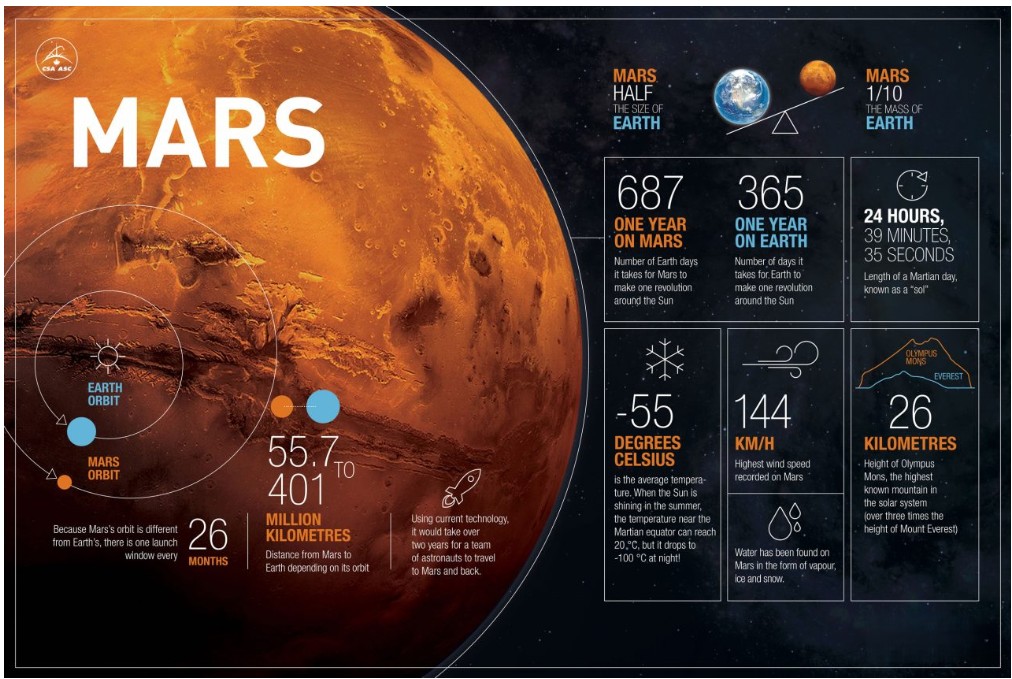
- 10 Jun 2026
In News:
NASA’s Mars Atmosphere and Volatile Evolution (MAVEN) mission, the first spacecraft dedicated exclusively to studying the Martian atmosphere, has officially concluded after more than 11 years in orbit around Mars. Launched in 2013 and entering Martian orbit in 2014, MAVEN far exceeded its planned one-year mission life and became one of the most successful Mars exploration missions.
Why was MAVEN important?
MAVEN was designed to investigate how Mars lost much of its atmosphere and water over billions of years, helping scientists understand how the planet transformed from a potentially habitable world into the cold, dry planet.
Key Contributions
Understanding Atmospheric Loss
- Demonstrated that solar wind and solar storms continuously strip atmospheric particles from Mars.
- Established a direct link between solar activity and atmospheric escape.
- Provided crucial evidence explaining the long-term thinning of the Martian atmosphere.
Discovery of New Auroras
- Detected previously unknown types of Martian auroras, including proton auroras.
- Improved understanding of interactions between the Sun and planetary atmospheres.
Evidence of Atmospheric Sputtering
- Measured the escape of atmospheric gases such as argon.
- Confirmed atmospheric sputtering as a major mechanism responsible for atmospheric erosion.
Dust Storm and Water Loss Studies
During the global dust storm of 2018, MAVEN observed that dust-driven heating lifted water vapour to higher altitudes, where it was broken down by solar radiation and lost to space. This explained periodic spikes in water loss from Mars.
Additional Scientific Contributions
- Studied Mars’ ionosphere and magnetosphere.
- Observed the interstellar comet 3I/ATLAS using ultraviolet and multi-wavelength instruments.
- Served as an important communication relay for Mars rover missions.
End of the Mission
NASA lost contact with MAVEN in December 2025 after the spacecraft experienced an anomaly and entered an unrecoverable state. The mission was officially declared concluded in 2026.
Software Technology Parks of India (STPI)
- 09 Jun 2026
In News:
Recently, the Software Technology Parks of India (STPI) celebrated its 35th Foundation Day and organized the STPI Tech Summit 2026: India's Next Leap in New Delhi. The event highlighted STPI's contribution to India's transformation into a global information technology and innovation hub.
About STPI
- Software Technology Parks of India is a premier Science and Technology organization established in 1991 under the Ministry of Electronics and Information Technology (MeitY).
- It was created primarily to promote software exports and support the growth of India's IT and IT-enabled Services (IT/ITES) sector.
- Since its inception, STPI has played a crucial role in positioning India as a leading global destination for software development, IT services, and digital innovation.
- It implements the Software Technology Park (STP) Scheme and the Electronics Hardware Technology Park (EHTP) Scheme, which provide an enabling environment for technology enterprises engaged in exports.
Objectives and Functions
- The core objective of STPI is to facilitate and promote software and IT-enabled service exports from India.
- It acts as a single-window support system for technology companies by providing infrastructure, regulatory facilitation, and export-related services.
- STPI assists firms in software development and export activities while ensuring compliance with customs regulations, foreign exchange requirements, and other statutory obligations. Through these services, it has significantly contributed to the growth of India's IT export ecosystem.
Key Services Provided by STPI
- Infrastructure Support: STPI provides ready-to-use plug-and-play office spaces equipped with advanced IT infrastructure, enabling startups and export-oriented units to establish operations with minimal initial investment.
- Customs and Regulatory Facilitation: It facilitates duty-free import of capital goods, equipment, consumables, and other inputs required for software export activities. STPI also assists enterprises in complying with customs and export-related regulations.
- Statutory Compliance Support: The organization helps companies meet various export obligations and regulatory requirements related to foreign exchange management and international trade.
- Advisory and Consultation: STPI provides guidance on export procedures, tax incentives, regulatory compliance, and business expansion strategies for technology companies.
Role in India's Startup Ecosystem
In recent years, STPI has expanded its mandate beyond software exports and emerged as an important pillar of India's innovation ecosystem.
It promotes entrepreneurship through initiatives such as:
- Centres of Entrepreneurship (CoEs)
- Next Generation Incubation Scheme (NGIS)
These programmes support startups working in emerging technologies by providing incubation facilities, mentorship, industry linkages, funding support, and market access opportunities. Through a network of innovation centres across the country, STPI is helping nurture technology-driven startups beyond major metropolitan cities.
Jai Prakash Narayan Bird Sanctuary
- 09 Jun 2026
In News:
India recently achieved a significant milestone in wetland conservation with the designation of Jai Prakash Narayan Bird Sanctuary, popularly known as Surha Tal, as the country's 100th Ramsar Site. The recognition highlights India's growing commitment to wetland conservation and biodiversity protection under the Ramsar Convention.
About Jai Prakash Narayan Bird Sanctuary (Surha Tal)
- Located in Uttar Pradesh, Surha Tal is a natural perennial oxbow lake situated in the middle stretch of the Ganga River Basin.
- The lake was originally formed from a meander of the Ganga River and receives freshwater inflow through three channels.
- The wetland comprises a mosaic of floodplains, marshes, seasonally inundated areas, and rice paddies, creating a highly productive ecosystem that supports rich biodiversity. Owing to its ecological importance, it serves as a crucial wintering and stopover habitat for migratory birds travelling along the Central Asian Flyway.
- The sanctuary is renowned for its avifaunal diversity and attracts a large number of resident and migratory bird species every year.
Biodiversity Significance
- Beyond birdlife, the wetland supports a diverse range of flora and fauna: 221 plant species , 66 fish species, 7 reptile species, 3 amphibian species.
- Among the notable aquatic species are Wallago attu and Bagariusbagarius, both classified as Vulnerable.
The rich biodiversity and ecological productivity of the wetland make it an important freshwater ecosystem within the Ganga basin.
Ramsar Convention on Wetlands
The Ramsar Convention on Wetlands is an international treaty dedicated to the conservation and sustainable use of wetlands.
It was:
- Adopted in 1971 in Ramsar
- Came into force in 1975
- The first intergovernmental treaty focused exclusively on a specific ecosystem—wetlands.
Three Pillars of the Convention
The Convention is based on three core principles:
- Conservation of wetlands of international importance.
- Promotion of the wise use of all wetlands.
- International cooperation on shared wetlands, river basins, and migratory species.
Currently, the Convention has 172 Contracting Parties (signatory countries).
India and the Ramsar Convention
- India became a party to the Ramsar Convention in 1982. The country's first Ramsar Sites were: Chilika Lake and Keoladeo National Park
- With the inclusion of Surha Tal, India now has 100 Ramsar Sites, reflecting the increasing emphasis on wetland conservation as part of environmental sustainability, biodiversity protection, and climate resilience strategies.
Significance of the Designation
The designation of Surha Tal as India's 100th Ramsar Site is significant because it:
- Strengthens conservation efforts in the Ganga basin.
- Enhances protection of migratory bird habitats along the Central Asian Flyway.
- Promotes sustainable management of freshwater ecosystems.
- Contributes to biodiversity conservation and climate resilience.
- Reinforces India's international commitments under the Ramsar Convention.
Jan Samarth Portal
- 09 Jun 2026
In News:
Recently, the Jan Samarth Portal completed four years of its journey as a flagship digital platform aimed at improving access to credit-linked government schemes. Launched in 2022, the portal represents a significant step towards digital governance, financial inclusion, and seamless credit delivery by integrating beneficiaries, lending institutions, and government agencies onto a single platform.
About Jan Samarth Portal
- Jan Samarth is a unique digital platform for credit-linked government schemes, conceptualized with the twin objectives of expanding the reach of government-sponsored schemes and streamlining the credit delivery process.
- It serves as a one-stop platform connecting beneficiaries, financial institutions, Central and State Government agencies, and nodal agencies.
- By bringing multiple stakeholders of the financial ecosystem together, the portal seeks to promote inclusive development, improve access to institutional finance, and enhance the ease of doing business.
Key Features
- The portal functions as a digital marketplace with a user-friendly interface integrated with multiple centralized databases, enabling end-to-end digital processing of loan applications.
- Applicants can access the portal on a 24×7 basis, check their eligibility, submit applications online, and choose from a wide network of lending institutions.
- The system includes an inbuilt rule-based engine that automatically assesses eligibility and facilitates quicker processing of applications.
- A major feature of the platform is its single-window access to 15 credit-linked Central Government schemes and 254 Member Lending Institutions (MLIs), including all Public Sector Banks. Once an applicant submits an application, the portal checks eligibility, provides an in-principle sanction, and forwards the application to the selected bank branch.
- The portal also keeps applicants informed at every stage of the loan journey, reducing the need for repeated physical visits to bank branches.
- To ensure accessibility, it is available in eight Indian languages, making it particularly useful for rural and underserved populations.
- Additionally, Jan Samarth provides a dedicated grievance redressal mechanism for both beneficiaries and participating banks.
Significance
Jan Samarth represents an important innovation in India's digital public infrastructure for finance. By simplifying access to government-backed credit schemes, it reduces information asymmetry, enhances transparency, and improves credit penetration among individuals, entrepreneurs, students, farmers, and other eligible beneficiaries.
The portal contributes to broader national objectives such as financial inclusion, Digital India, ease of living, and inclusive economic growth. It also supports efficient delivery of welfare and development schemes by leveraging technology to connect citizens directly with institutional credit.
United Nations Security Council (UNSC)

- 09 Jun 2026
In News:
The United Nations General Assembly (UNGA) recently elected five countries as non-permanent members of the United Nations Security Council (UNSC) for a two-year term beginning on 1 January 2027. The newly elected members are Austria, Portugal, Trinidad and Tobago, Zimbabwe, and Kyrgyzstan.
- The election is particularly significant for Kyrgyzstan, which will serve on the Security Council for the first time since becoming a member of the United Nations in 1992. These countries will join Bahrain, Colombia, the Democratic Republic of Congo, Latvia, and Liberia, which were elected earlier and will continue serving through 2027.
United Nations Security Council (UNSC)
- The United Nations Security Council was established in 1945 under the United Nations Charter and is one of the six principal organs of the United Nations.
- It bears the primary responsibility for maintaining international peace and security.
- Unlike other UN organs, the Security Council possesses unique authority because its decisions are legally binding on all UN member states under the UN Charter.
Composition of the UNSC
The Security Council consists of 15 members:
- Permanent Members (P5): The five permanent members possess the power of veto: China, France, Russia, United Kingdom, and United States
- Non-Permanent Members: The remaining 10 seats are filled through elections conducted by the UN General Assembly for two-year terms.Regional distribution of non-permanent seats is as follows:
- 5 seats: African and Asia-Pacific States
- 1 seat: Eastern European States
- 2 seats: Latin American and Caribbean States
- 2 seats: Western European and Other States
Election Process
Non-permanent members are elected annually by the UN General Assembly through a secret ballot.
Key features include:
- Candidates require a two-thirds majority of members present and voting.
- The requirement applies even when a candidate is unopposed.
- Five non-permanent seats are renewed every year, ensuring continuity in the Council's functioning.
Importance of the Security Council
The UNSC performs several critical functions:
- Maintenance of international peace and security.
- Investigation of disputes and conflicts.
- Imposition of sanctions.
- Authorization of peacekeeping operations.
- Approval of military action when necessary.
- Recommendation of the UN Secretary-General to the General Assembly.
Its resolutions are binding on all member states, making it the most powerful organ within the UN system.
Immigration and Foreigners (Amendment) Rules, 2026
- 09 Jun 2026
In News:
The Ministry of Home Affairs (MHA) has notified the Immigration and Foreigners (Amendment) Rules, 2026, amending provisions of the Immigration and Foreigners Rules, 2025. The amendments aim to strengthen immigration monitoring, improve compliance by foreign nationals, and streamline administrative procedures through digital mechanisms.
Key Changes
- A major change is the removal of the earlier 14-day grace period available after the expiry of the 180-day stay limit.
- Foreign nationals seeking to stay beyond 180 days must now apply for registration or extension before the expiry of their permitted stay.
- The amendment also introduces a digital appeals mechanism, allowing foreigners to challenge immigration-related orders before the Bureau of Immigration.
- Appeals must be filed within 30 days, and authorities are required to dispose of them within 60 days, ensuring a time-bound and transparent process.
- In addition, the rules provide relief for certain mixed-nationality families by relaxing birth-reporting requirements where one parent is an Indian citizen and the child retains Indian nationality. Reporting procedures for hospitals and institutions accommodating foreign nationals have also been updated.
Significance
The amended rules seek to strengthen India's immigration management system by ensuring better tracking of foreign nationals, reducing the risk of overstays, and enhancing border security. The introduction of an online appeals system improves transparency and efficiency in immigration administration while balancing regulatory oversight with procedural safeguards.
Navachar Mantra Initiative
- 08 Jun 2026
In News:
The Navachar Mantra initiative was recently launched by the Ministry of Skill Development and Entrepreneurship (MSDE) to strengthen grassroots entrepreneurship and promote innovation-led growth across India.
- It aims to identify, nurture, and scale promising innovators and early-stage entrepreneurs, particularly from Tier-2 and Tier-3 cities, aspirational districts, and underserved regions.
- The programme is being implemented by the National Institute for Entrepreneurship and Small Business Development (NIESBUD), with the Foundation for Innovation and Technology Transfer (FITT), IIT Delhi serving as the technical knowledge partner.
Key Features
- Navachar Mantra seeks to create a structured support ecosystem for innovators working in sectors such as Agritech, HealthTech, EdTech and Skilling, Climate and Sustainability, Rural Commerce, and MSME Enablement.
- Selected innovators will gain access to policymakers, industry leaders, investors, and domain experts, enabling them to strengthen business models and scale their ventures.
- The initiative includes a year-long engagement programme comprising mentorship, innovation showcases, investor interactions, and capacity-building sessions.
- Participants will also receive support in areas such as market access, intellectual property rights, regulatory compliance, fundraising, and scaling strategies.
- A major focus of the programme is inclusivity, ensuring that innovators from smaller towns and rural areas receive mentorship, visibility, and growth opportunities.
- It also aims to provide national recognition through innovation showcases, digital campaigns, and ecosystem events.
Significance
Navachar Mantra represents an important step towards strengthening India's innovation ecosystem by connecting grassroots innovators with government, academia, industry, and investment networks. By encouraging local solutions to local challenges, it seeks to contribute to the vision of an innovation-driven and entrepreneurial Viksit Bharat.
Tylosaurus rex

- 08 Jun 2026
In News:
Paleontologists have identified a new species of giant marine reptile, Tylosaurus rex, after re-examining previously misidentified fossils. Dubbed the “T. rex of the sea,” it was one of the most formidable marine predators of the Late Cretaceous Period, living around 80 million years ago.
About Tylosaurus rex
Tylosaurus rex is a species of mosasaur, a group of giant carnivorous marine reptiles that dominated the oceans during the age of dinosaurs. Although it shares the title "rex" with Tyrannosaurus rex, it lived millions of years before the land-based dinosaur evolved.
Habitat and Distribution
- Inhabited the Western Interior Seaway, a vast inland sea that divided North America during the Cretaceous Period.
- Fossils have mainly been found in Texas and Kansas.
Key Features
- Largest known specimen ("Bunker") measured 13.2 metres in length.
- Skull length reached 1.7 metres.
- Possessed fine serrated teeth adapted for slicing flesh.
- Had powerful jaws, strong neck muscles, paddle-like flippers, and a muscular tail.
- Closest living relatives are monitor lizards, including the Komodo dragon.
Evolutionary Significance
Mosasaurs evolved from small terrestrial lizards that adapted to marine life, becoming dominant ocean predators during the final 30 million years of the dinosaur age.
Importance of the Discovery
The identification of Tylosaurus rex demonstrates how re-examination of old fossil collections using modern techniques can reveal previously unknown species. As an apex predator, it provides valuable insights into the food webs, biodiversity, and ecology of prehistoric marine ecosystems.
Isobutanol
- 08 Jun 2026
In News:
Following the success of E20 petrol (20% ethanol blending), the Government of India is likely to introduce a mandate for blending isobutanol with diesel by the end of 2026. Since diesel consumption in India is nearly twice that of petrol, the move is expected to significantly enhance energy security, reduce crude oil imports, lower the import bill, and support transport-sector decarbonisation.
What is Isobutanol?
Isobutanol (Isobutyl Alcohol) is an alcohol with the chemical formula C?H??O and one of the four isomers of butanol.
Key Properties
- Colourless, flammable liquid with a characteristic odour.
- Moderately soluble in water.
- Can be produced from biomass through fermentation.
- Less corrosive and less hygroscopic than ethanol.
- Compatible with existing fuel transport and storage infrastructure.
- Suitable as a biofuel for internal combustion engines.
Uses
- Solvent in flavour, fragrance, pharmaceutical, and pesticide industries.
- Used in paints, lacquers, primers, and chemical manufacturing.
- Approved food additive.
- Renewable biofuel derived from plant sources.
Significance of Diesel–Isobutanol Blending
- Reduces dependence on imported crude oil.
- Strengthens India's energy security.
- Supports decarbonisation of the transport sector.
- Promotes biofuel production and rural economic opportunities.
- Expected to have a greater impact than petrol blending due to higher diesel consumption.
Link with Ethanol Blending Programme
India’s ethanol blending programme has expanded from about 1% a decade ago to nearly 20% (E20) today.
Key developments:
- Helped reduce crude oil imports significantly.
- Government has proposed standards for E85 (85% ethanol) and E100 (near-pure ethanol) vehicles.
- Vehicle emission norms are being amended to facilitate higher ethanol blends and alternative fuels.
Related Transport Sector Reforms
The government is simultaneously promoting:
- Electric heavy-duty vehicles through truck-trailer interchangeability and battery-swapping ecosystems.
- Hydrogen mobility, including hydrogen bus services on Delhi–Noida and Delhi–Faridabad routes.
- Multi-Lane Free Flow (MLFF) barrier-free tolling systems.
- Advanced traffic management systems to improve highway efficiency.
Yellow-Throated Marten

- 08 Jun 2026
In News:
The recent first sighting of the Yellow-Throated Marten (Martes flavigula) in Kaziranga National Park highlights the ecological richness of the protected area and reflects the success of Assam's conservation efforts. The discovery expands the known mammalian diversity of the park and indicates the presence of healthy forest ecosystems capable of supporting a wide range of wildlife.
About Yellow-Throated Marten
The Yellow-Throated Marten, also known as Kharza, is the largest of the Old World martens and belongs to the Mustelidae family, which includes otters, badgers, ferrets, and wolverines.
Distribution and Habitat
- Found across the Himalayas, Northeast India, China, Russia, the Korean Peninsula, Southeast Asia, and Indonesia.
- Occupies diverse habitats including coniferous forests, broad-leaved forests, montane forests, tropical forests, shrublands, swamps, and high-altitude regions.
Key Features
- Scientific Name: Martes flavigula
- Body length: 50–72 cm (adult males).
- Distinctive bright yellow or golden throat and chest.
- Dark brown to black head and tail.
- Agile, fearless, and primarily diurnal.
- Omnivorous, feeding on small mammals, birds, insects, fruits, and honey.
Conservation Status
- IUCN Red List: Least Concern (LC)
India’s First Flex-Fuel Passenger Vehicle

- 08 Jun 2026
In News:
India recently marked a significant milestone in its clean mobility journey with the launch of its first flex-fuel passenger vehicle, developed by Maruti Suzuki. The initiative supports India's broader objectives of enhancing energy security, reducing crude oil imports, promoting ethanol use, and advancing sustainable transportation.
What is a Flex-Fuel Vehicle (FFV)?
A Flex-Fuel Vehicle (FFV) is equipped with an internal combustion engine capable of operating on varying blends of petrol and ethanol. Unlike conventional vehicles, FFVs can seamlessly run on fuels ranging from E20 (20% ethanol) to E100 (100% ethanol).
The vehicle uses a fuel composition sensor that continuously detects the ethanol-petrol ratio and sends this information to the Engine Control Unit (ECU). The ECU automatically adjusts fuel injection and ignition timing to ensure efficient combustion and optimal engine performance regardless of the fuel blend.
Key Features
- Compatible with ethanol-petrol blends from E20 to E100.
- E85 has been identified by NITI Aayog and Bureau of Indian Standards as the standard mono-fuel specification for FFVs.
- Ethanol-based FFVs are viewed as a cleaner alternative to conventional fossil-fuel vehicles due to lower lifecycle emissions.
- Ethanol can be produced domestically from feedstocks such as broken grains, agricultural residues, bamboo, and seaweed, reducing dependence on imported crude oil.
Supporting Ecosystem
To promote adoption, the government plans a phased rollout of FFV-compatible fuel infrastructure, beginning with key corridors such as Delhi-NCR and Mumbai–Pune–Nagpur. The network is expected to expand significantly over the next few years through dedicated ethanol dispensing facilities and supportive policy measures.
Significance
The launch of India's first flex-fuel passenger vehicle represents an important step in the country's energy transition strategy. It complements the Ethanol Blending Programme, supports rural income generation through biofuel production, reduces greenhouse gas emissions, and contributes to the vision of an Atmanirbhar Bharat by promoting domestically produced alternative fuels.
Prime Minister Research Chair (PMRC) Scheme 2026

- 07 Jun 2026
In News:
The Department of Higher Education, Ministry of Education, Government of India, opened applications for the Prime Minister Research Chair (PMRC) Scheme 2026 from June 1, 2026, on the PMRC Portal (pmrc.education.gov.in). The scheme is a flagship national initiative to attract accomplished Indian-origin researchers back to India.
About the PMRC Scheme
- The PMRC Scheme is a prestigious talent-repatriation and research architecture that creates a direct pathway for top-tier researchers of Indian origin — working in globally renowned foreign universities, private laboratories, and tech industries — to take up high-level research positions in premier Indian institutions.
- Eligible applicants include Indian Nationals working abroad, OCI cardholders, and Persons of Indian Origin with outstanding achievements in research, innovation, and technology.
- The scheme aims to reverse the outflow of high-skilled talent, integrate global expertise into India's scientific pipeline, accelerate domestic breakthroughs in critical technology sectors, and position India as an advanced global research hub in alignment with the Viksit Bharat vision.
- Estimated funding is approximately ?200 crore, covering multi-year research grants, relocation allowances, competitive fellowships, and laboratory infrastructure.
Three-Tier Fellowship Structure
- The scheme provides engagement under three categories: Young Research Fellows for early-career researchers; Senior Research Fellows for experienced researchers and industry experts; and Research Chairs for globally accomplished research leaders and technology pioneers.
13 Priority Thematic Areas
Research proposals must align with 13 national priority sectors: Advanced Computing (AI, Quantum Computing & Supercomputing), Semiconductors, Energy, Sustainability & Climate Change, Cybersecurity, Healthcare & MedTech, Biotechnology, Advanced Materials & Critical Minerals, Space &Defence, Next-Generation Communications, Manufacturing & Industry 4.0, Agri & Food Technologies, Blue Economy, and Atomic Energy.
Institutional Architecture
- Seven Lead Institutions have been designated for thematic implementation: IIT Delhi, IIT Bombay, IIT Madras, IIT Kanpur, IIT Hyderabad, IIT (ISM) Dhanbad, and IISc Bengaluru.
- Host Institutions must be government HEIs ranked in the Top 100 of NIRF Overall or Engineering categories, or Top 50 in the NIRF Research category, along with national laboratories under DST, DBT, ICMR, and CSIR.
Governance
- Selection of fellows and proposals is overseen by an Empowered Committee chaired by the Principal Scientific Advisor (PSA) to the Government of India, ensuring rigorous, independent, and mission-aligned evaluation.
Khet Bachao Abhiyan
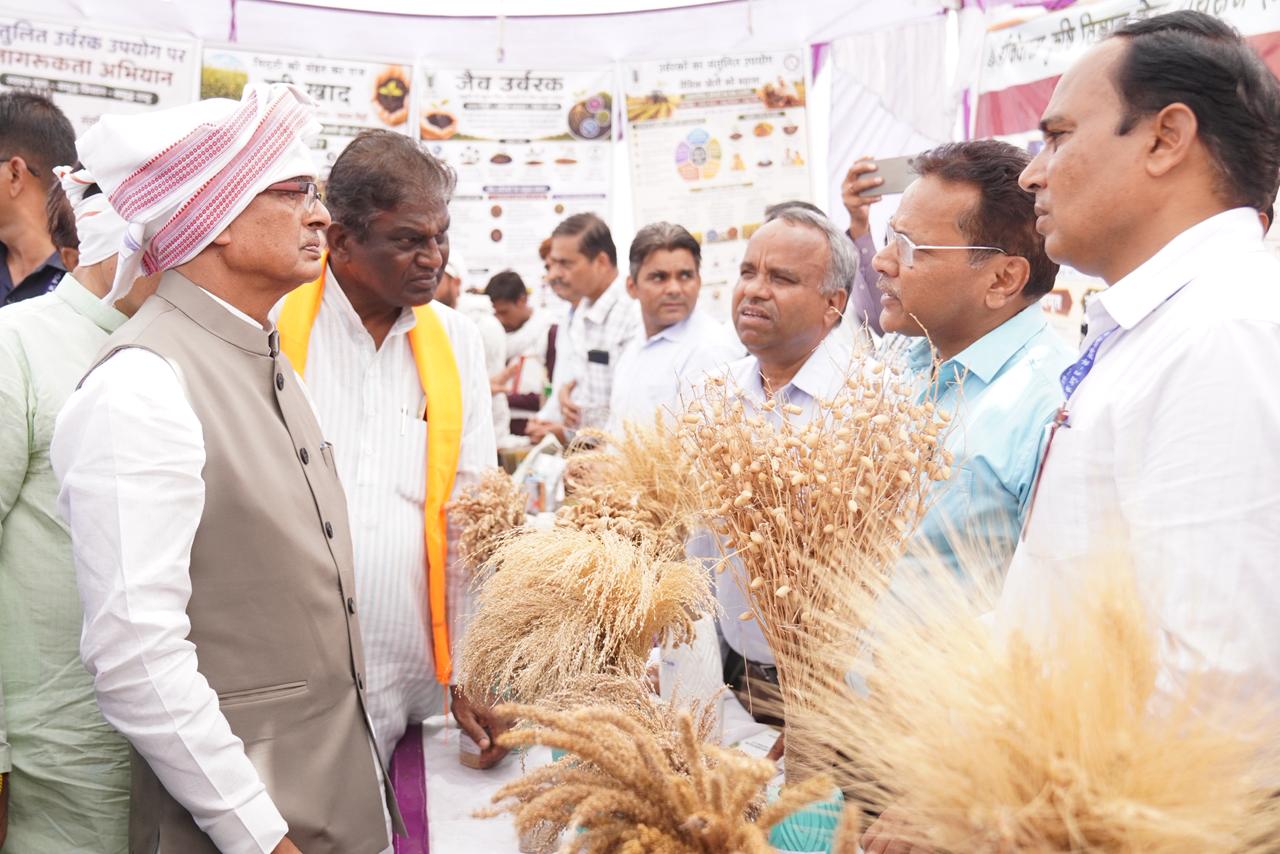
- 07 Jun 2026
In News:
Union Minister for Agriculture & Farmers Welfare and Rural Development launched the nationwide 'Khet Bachao Abhiyan' on June 1, 2026, from Ramasiya village in Raisen district of Madhya Pradesh. The campaign will run across the country from June 1 to June 30, 2026.
Core Message
- The campaign is built on the principle: "Save the Soil, Save Farming, Save Farmers." The campaignemphasised that excessive use of chemical fertilisers reduces soil fertility and destroys beneficial microorganisms in the soil, directly affecting agricultural productivity and increasing cultivation costs. Also, noted that the government provides fertilisers at subsidised rates, but this must not encourage overuse — sustainable agriculture depends on judicious, balanced application.
Key Activities and Focus Areas
- Soil Health and Balanced Nutrition: The campaign promotes soil testing and Soil Health Cards so that fertiliser application is based on the actual nutrient requirements of the land. Every farmer must have a Soil Health Card, which will reduce cultivation costs, enhance productivity, and help maintain long-term soil fertility.
- Scientific Farming Demonstrations: Special field demonstrations will be organised for soybean, paddy, and pulse crops. Farmers will be trained in the use of improved seeds, scientific sowing methods, modern technologies such as laser levellers, and water-efficient farming practices.
- Natural Farming and Water Conservation: The campaign actively promotes natural farming, green manure use, water conservation, seed treatment, improved seeds, and modern sowing techniques aligned with local agro-climatic conditions.
- Anti-Counterfeit Awareness: The campaign will create awareness against counterfeit fertilisers, pesticides, and seeds, which are a significant menace to farmers' investment and crop yields.
- Government Scheme Access: Farmers will be helped to access PM-Kisan Samman Nidhi, the Crop Insurance Scheme, Kisan Credit Card, and farm mechanisationprogrammes through the outreach activities.
- Village-Level Outreach Mechanism Agricultural scientists, experts from agricultural universities, Krishi Vigyan Kendra officials, agriculture department teams, and public representatives will visit villages across the country to educate farmers and provide technical support. Regular training programmes will be conducted with Krishi Vigyan Kendras and expert institutions. The campaign also connects women through Self-Help Groups to income-generation and self-employment opportunities, embedding women's empowerment within the agricultural transformation agenda.
India's First Blue Bond

- 07 Jun 2026
In News:
Recently, Sagarmala Finance Corporationannounced plans to issue India's first-ever blue bond to diversify funding sources and support maritime and coastal infrastructure development.
Key Details of the Issuance
- The issue is structured as a ?500 crore base with a greenshoe option of ?500 crore, totalling up to ?1,000 crore.
- The bond will carry a 10-year tenor and is aimed at ESG-focused investors seeking exposure to India's maritime infrastructure.
- No fixed launch date has been set — issuance will proceed "when the market is conducive and yields stabilise." Sagarmala carries an AA credit rating from CARE and India Ratings, on par with top-rated PSU bonds.
About Blue Bonds
- A blue bond is a debt instrument used to raise funds specifically for projects linked to oceans, seas, coasts, rivers, and water-based ecosystems, targeting investors with an environmental mandate.
- Unlike green bonds — which fund broader climate and environmental projects such as solar and wind energy — blue bonds are exclusively tied to ocean, coastal, and maritime activities.
- Globally, just over $15 billion in blue bonds had been issued by mid-2025, according to World Bank data. In 2020, the Bank of China issued Asia's first blue bond.
- The world's first sovereign blue bond was issued by Seychelles in 2018 with World Bank support. Belize used a debt-for-ocean swap in 2021 for marine conservation.
About Sagarmala Finance Corporation
- Established in 2016 under the Ministry of Ports, Shipping and Waterways, Sagarmala Finance Corporation received its NBFC licence in June 2025.
- It also administers the government's ?25,000 crore Maritime Development Fund, which includes a ?5,000 crore Interest Incentivisation Fund for providing interest subsidies to borrowers.
- Sagarmala plans to raise as much as ?10,000 crore in FY2027 to finance greenfield and brownfield ports, last-mile port connectivity, shipbuilding, inland waterways, and coastal road networks. It is also seeking a ?2,000 crore equity infusion from the government to maintain a healthy debt-to-equity ratio.
India's Blue Economy Context
India's blue economy — encompassing fisheries, shipping, offshore energy, and coastal tourism — contributes approximately 4% to GDP and supports around 4 million livelihoods. India's long coastline, large fishing communities, and climate-vulnerable coastal regions make blue bonds particularly relevant. The bond proceeds will fund ports, port connectivity, shipbuilding, inland waterways, and coastal road networks — sectors central to India's maritime ambitions under the SagarmalaProgramme.
RudraM-II Missile

- 07 Jun 2026
In News:
Recently, DRDO and the Indian Air Force (IAF) successfully conducted flight-tests of the RudraM-II Air-to-Surface Missile from an airborne platform. The tests were conducted under extreme release conditions, with critical trajectory data establishing the capability of all subsystems. The missiles were guided to a predefined target with pin-point accuracy, with all test objectives confirmed through flight data captured by the Integrated Test Range (ITR), Chandipur.
About RudraM-II
- RudraM-II is an indigenously developed solid-propelled, air-launched anti-radiation missile designed for the Air-to-Surface role, intended to detect, track, and neutralise enemy radar installations, communication assets, and other radio frequency-emitting components of adversary air defence systems.
- It has been developed by Research Centre Imarat (RCI), Hyderabad, as the nodal DRDO laboratory, in collaboration with sister labs including the Defence Research and Development Laboratory, High Energy Materials Research Laboratory, Armament Research & Development Establishment, and ITR.
- Development cum Production Partners include Hindustan Aeronautics Limited (HAL), Regional Centre for Military Airworthiness, and Missile System Quality Assurance Agency.
Key Technical Specifications
- RudraM-II reaches a peak speed of Mach 5.5, classifying it as a hypersonic-class weapon.
- It can strike targets at a range of approximately 300 km and carries a warhead of up to 200 kg.
- It can be deployed from Sukhoi fighter aircraft operating at altitudes between 3 and 15 km.
- The missile employs a hybrid navigation system combining an inertial navigation system (INS), GPS, and a sophisticated passive homing head that detects and classifies radio frequency emissions across a wide frequency band — enabling it to autonomously home in on active radar and communication targets.
What is an Anti-Radiation Missile?
Anti-radiation missiles (ARMs) are a specialised class of precision-guided munitions designed to home in on electromagnetic emissions — primarily radar and communication signals — used by enemy air defence networks. By targeting these emission sources, ARMs can blind or degrade an adversary's air defence umbrella before or during an air campaign, significantly enhancing the survivability of friendly aircraft. RudraM-II is intended to eventually replace the older Russian-origin Kh-31 anti-radiation missiles currently in IAF service.
Mission "Senehjori"
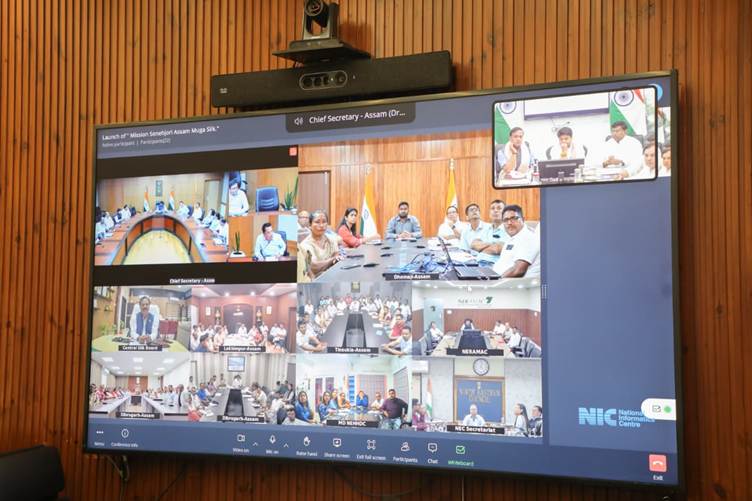
- 07 Jun 2026
In News:
Recently, Union Minister for Development of North Eastern Region (MDoNER), along with the Chief Minister of Assam, launched Mission "Senehjori" — Assam Muga Silk USP — a comprehensive cluster-based initiative aimed at transforming Assam's unique Muga silk sector into a globally competitive, high-value luxury textile ecosystem.
About Muga Silk
Muga silk is the world's only naturally golden silk and India's first Geographical Indication (GI)-tagged silk. Assam accounts for 90% of the world's Muga silk production, and the sector supports nearly 2.6 lakh rearer and weaver families across the state. Despite its rarity, global recognition, and exceptional durability, the sector remains significantly under-monetised — producers currently earn only ?18,000–21,000 per year from Muga silk. Mission Senehjori is designed to bridge this value gap.
About Mission Senehjori
Anchored by MDoNER in convergence with the Government of Assam, Central Silk Board, Ministry of Textiles, and other Central Ministries, the Mission adopts a "whole-of-government" approach. It has an estimated investment of ?396–411 crore over three years, including ?136–151 crore from MDoNER.
The Mission seeks to strengthen the entire Muga silk value chain — from host-plant cultivation and silkworm seed production to reeling, weaving, branding, export promotion, digital traceability, and tourism — under the unified brand identity "Senehjori."
Cluster-Based Approach
The Mission covers major Muga silk producing districts: Jorhat, Sivasagar, Lakhimpur, Dhemaji, Dibrugarh, Tinsukia, Majuli, and Sualkuchi. It envisages strengthening host plant ecology, establishing modern reeling infrastructure, promoting Farmer Producer Organisations (FPOs) and Common Facility Centres (CFCs), enforcing GI authentication, and building global market access.
Key Targets by 2028
The Mission aims to establish five modernised Muga reeling units and a Muga Spun Mill; create 30 FPOs and over 1,180 Farmer Interest Groups; regenerate 5,000 hectares of Som and Soalu host plants; authenticate over 80% of traded Muga silk through GI-linked systems; create digital traceability mechanisms for more than 8,000 households; and expand Muga silk exports to over 2,000 kg annually.
Cultural Economy
Mission Senehjori also promotes Assam's cultural economy through development of a Muga Silk Trail, establishment of a Silk Tourism Park, and organisation of annual Muga Utsav festivals — positioning Assam as a premier destination for silk heritage tourism.
Giant Malabar Squirrel

- 04 Jun 2026
In News:
The recent sighting of a Giant Malabar Squirrel in the Devpur forest areaof Chhattisgarh's Barnawapara forest has drawn attention to one of India's most striking and largest arboreal mammals.
About the Giant Malabar Squirrel
- The Giant Malabar Squirrel, also known as the Indian Giant Squirrel, is a large, multicoloured tree squirrel endemic to India. Its scientific name is Ratufa indica, and it is considered one of the largest squirrel species in the world.
- The species is predominantly distributed across the Western Ghats, Eastern Ghats, and the Satpura Range, inhabiting tropical deciduous, semi-deciduous, and evergreen forests at elevations ranging from 180 to 2,300 metres.
- It is also the State Animal of Maharashtra, where it is popularly known as Shekru.
Habitat and Behaviour
- The Giant Malabar Squirrel is a highly arboreal species, spending most of its life in the forest canopy. It moves with remarkable agility, often leaping between trees over distances of up to six metres. Instead of descending to the ground frequently, it relies on interconnected tree canopies for movement and survival.
- The species generally takes shelter in tree hollows and constructs nests high above the ground. Unlike many other squirrels, it is usually solitary, coming together mainly during the breeding season.
- An interesting defensive behaviour displayed by the species is that when threatened, it often remains motionless or flattens itself against a tree trunk rather than attempting to flee immediately. This camouflage strategy helps it avoid predators.
Physical Characteristics
- The Giant Malabar Squirrel is renowned for its striking appearance and vibrant colouration. Its body length ranges from 254 to 457 mm, while the tail is usually longer than the body itself.
- The species exhibits multiple colour patterns, typically featuring combinations of:Black, Brown, Deep red or maroon, Cream or dirty white patches.
- Other notable features include:pink lips and nose, Bright brown eyes, Short rounded ears, Large powerful claws, expanded inner paws adapted for gripping tree bark and branches.
- Its long, bushy tail is generally light brown with a creamy-white tip, aiding balance while navigating the forest canopy.
Ecological Importance
- As a canopy-dwelling herbivore and frugivore, the Giant Malabar Squirrel plays an important role in forest ecosystem functioning. By feeding on fruits, seeds, flowers, bark and nuts, it contributes to seed dispersal and supports forest regeneration.
- Its presence is also considered an indicator of healthy forest ecosystems with well-connected tree canopies and adequate habitat quality.
Conservation Status
The Giant Malabar Squirrel is currently classified as "Least Concern" on the IUCN Red List, indicating that its population remains relatively stable across its range. However, localized threats such as:Habitat fragmentation, Deforestation, Forest fires, Infrastructure development, can affect populations in specific regions.
The recent sighting in Chhattisgarh highlights the importance of conserving forest corridors and monitoring wildlife populations beyond their traditionally recognized habitats.
Delhi HC recognises Right to Be Forgotten

- 04 Jun 2026
In News:
In a landmark judgment, the Delhi High Court has recognized the Right to be Forgotten (RTBF) as an intrinsic part of the Right to Privacy under Article 21 of the Constitution. The ruling marks a significant development in India's evolving privacy jurisprudence by affirming that individuals have the right to seek the removal or masking of personal information from the digital domain when its continued availability no longer serves a legitimate public interest.
What is the Right to be Forgotten?
- The Right to be Forgotten (RTBF) enables individuals to request the removal, de-indexing, or restriction of access to personal information available online when such information becomes outdated, irrelevant, excessive, misleading, or disproportionately affects their privacy and dignity.
- The concept gained international recognition through the landmark Google Spain v. AEPD and Mario Costeja González (2014) judgment of the Court of Justice of the European Union (CJEU). The court held that search engines can be required to remove links to personal information that is no longer relevant or necessary, thereby establishing the foundation of the RTBF in the digital age.
Constitutional Basis in India
- The Delhi High Court held that the RTBF flows from the broader Right to Privacy, which was recognized as a fundamental right by the Supreme Court in Justice K.S. Puttaswamy v. Union of India (2017). Since privacy is an integral part of Article 21 (Right to Life and Personal Liberty), individuals possess a constitutional right to control the dissemination of their personal information.
- Importantly, the Court observed that even in the absence of a specific statutory framework governing RTBF, constitutional courts possess the authority to recognize and enforce the right to protect individual dignity, autonomy and informational privacy.
Key Directions Issued by the Court
- The judgment directs authorities, search engines, and legal databases to take active steps to protect privacy rights. The Court ordered the masking of personal identifiers and directed search engine operators such as Google to disable name-based search functionality in specified cases.
- A significant feature of the ruling is that these de-indexing directions are intended to operate globally, ensuring that protected information does not remain accessible through alternative search domains.
- The Court also clarified that individuals who have been:Acquitted, Discharged, Granted relief through quashing of proceedings, or Involved in matters that have been settled, have a legitimate claim to ensure that such outcomes are accurately reflected online and that outdated adverse information does not continue to define their digital identity.
Balancing Privacy and Open Justice
A key issue before the Court was balancing the principle of open justice with the individual's right to privacy.
The Court emphasized that open justice promotes transparency and public accountability in judicial proceedings. However, transparency does not require that a citizen's name remain permanently searchable through commercial search engines.
Accordingly:
- Personal identifiers may be masked in publicly accessible judgments.
- Legal reasoning, judicial findings, and conclusions must remain available.
- Unredacted records can be preserved for legitimate legal, academic, and judicial purposes.
Thus, the Court attempted to strike a balance between public access to judicial records and an individual's right to move beyond past legal proceedings.
Limitations and Exceptions
The Court made it clear that the RTBF is not an absolute right. Relief may be denied where larger public interest outweighs privacy concerns.
The Court indicated that protection may not be available in cases involving:
- Convictions for offences against women and children,
- Serious criminal offences,
- Cases involving corruption,
- Breach of public trust by public servants,
- Elected representatives,
- Persons holding fiduciary positions.
In such situations, public interest, accountability, and transparency may take precedence over privacy claims.
Prison Statistics India Report 2024
- 04 Jun 2026
In News:
The latest Prison Statistics India 2024 report released by the National Crime Records Bureau (NCRB) reveals that while India's prison occupancy rate declined to a decade-low of 112.7%, overcrowding continues to remain a major structural challenge. The crisis is driven primarily by a disproportionately large population of undertrial prisoners, inadequate prison infrastructure, staff shortages, and delays in the criminal justice system.
Key Findings of Prison Statistics India 2024
India had 1,333 prisons with a sanctioned capacity of about 4.53 lakh inmates at the end of 2024. However, the actual prison population exceeded 5.11 lakh, resulting in continued overcrowding. More than half of the States and Union Territories reported occupancy rates above 100%.
Among major States/UTs:
- Delhi recorded the highest occupancy rate at 194.6%.
- Meghalaya (163.5%), Jammu & Kashmir (148.3%) and Madhya Pradesh (147.1%) also witnessed severe overcrowding.
- Jammu & Kashmir's occupancy rate increased from 78% in 2015 to over 148% in 2023-24.
- States such as Chhattisgarh and Uttar Pradesh have shown improvement, with Chhattisgarh reducing occupancy from 234% in 2015 to 127.6% in 2024.
Although prison capacity increased by 24% between 2015 and 2024, driven by renovations in 2,268 prisons and construction of 120 new prisons, capacity expansion has not kept pace with the growth in inmate population.
Undertrials: The Core Reason for Overcrowding
The most significant contributor to prison overcrowding is the high share of undertrial prisoners, who constituted nearly 73% of all inmates in 2024. Although lower than the pandemic peak of 77% in 2021, it remains substantially higher than pre-COVID levels. In contrast, the share of convicts declined from 32% in 2016 to 26.6% in 2024.
The problem is particularly acute in:
- Delhi and Bihar, where over 87% of prisoners are undertrials.
- Around 14 States/UTs have undertrial shares higher than the national average.
A worrying aspect is prolonged detention. While nearly 70% of undertrials were incarcerated for less than one year, over 9,000 undertrials (2.4%) have spent more than five years in prison without conviction.
Concerns Associated with Prison Overcrowding
Prison overcrowding raises serious constitutional, legal and humanitarian concerns.
- Violation of Article 21: The Supreme Court in Hussainara Khatoon v. State of Bihar (1979) held that the right to speedy trial is an integral part of Article 21. Excessive detention of undertrials effectively converts pre-trial custody into punishment, violating the principle of "innocent until proven guilty".
- Erosion of Human Dignity: In Sunil Batra v. Delhi Administration (1980), the Supreme Court affirmed that prisoners retain fundamental rights. Overcrowded prisons often lead to inadequate sanitation, healthcare, privacy and living conditions, undermining human dignity.
- Failure of Bail Jurisprudence: The principle that "Bail is the rule, Jail is the exception" is often not reflected in practice. Poor prisoners frequently remain incarcerated because they cannot furnish sureties or pay bail amounts. The 268th Law Commission Report (2017) identified poverty as a major barrier to obtaining bail.
- Administrative and Health Challenges: Overcrowding increases the spread of diseases such as tuberculosis and HIV. The situation is aggravated by a 46.4% vacancy rate in sanctioned medical staff posts. Simultaneously, prison administrations face severe personnel shortages, with nearly half of sanctioned posts vacant in several States. Delhi and Jammu & Kashmir have vacancy levels exceeding 60%.
- Socio-Economic Impact: Around 86.3% of prisoners belong to the economically productive age group (18–50 years). Prolonged detention often removes breadwinners from households, deepening poverty among already marginalized communities, particularly SCs, STs and OBCs.
Government Initiatives and Reforms
Bharatiya Nagarik Suraksha Sanhita (BNSS), 2023
- Section 479 mandates release on bond for first-time offenders who have completed one-third of the maximum prescribed sentence.
- Prison authorities are required to proactively seek release of eligible undertrials.
Model Prisons and Correctional Services Act, 2023
- Replaces the colonial-era Prisons Act, 1894.
- Focuses on correction, rehabilitation and reintegration rather than mere punishment.
Other Measures
- Model Prison Manual, 2016
- Prisons Development Fund (2018)
- E-Prisons Project under the Inter-operable Criminal Justice System (ICJS)
- Support to Poor Prisoners Scheme for financially disadvantaged undertrials.
Beaufort Castle
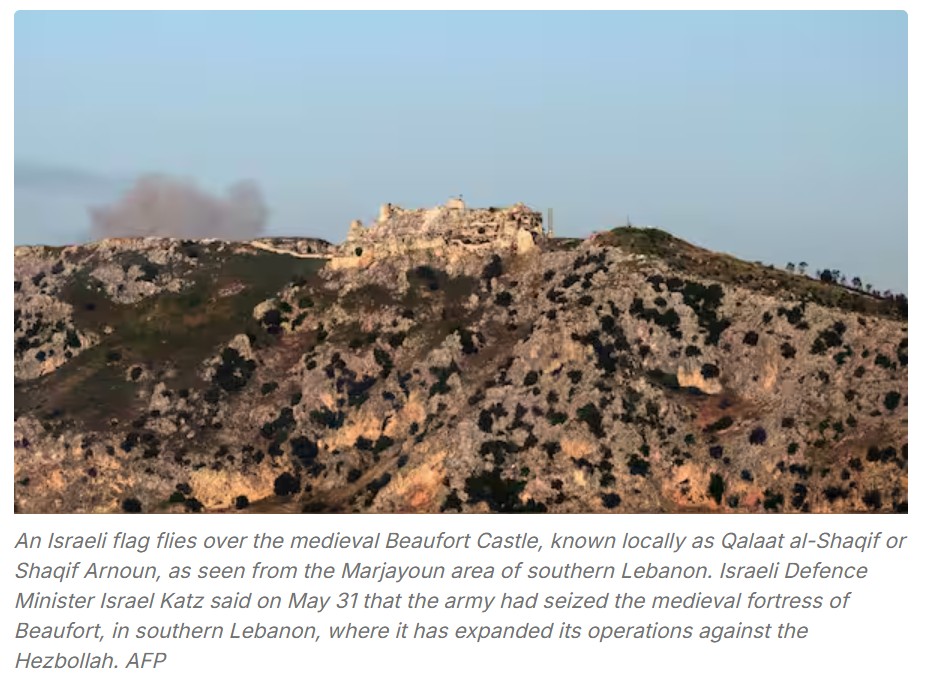
- 04 Jun 2026
In News:
Amid the ongoing tensions in West Asia, Israel's recent capture of Beaufort Castle and the surrounding strategic ridge in southern Lebanon has once again brought attention to one of the region's most historically and militarily significant fortresses. Perched atop a rocky hill overlooking southern Lebanon, Beaufort Castle has for centuries served as a symbol of military power, territorial control, and strategic dominance.
About Beaufort Castle
- Beaufort Castle, known locally as Qalaat al-Shaqif ("Castle of the High Rock"), is a medieval fortress located near the city of Nabatieh in southern Lebanon.
- Situated only about 14.5 km from the Israeli border, the castle occupies a commanding hilltop position that offers extensive views of the surrounding landscape.
- Constructed by the Crusaders during the 12th century, the fortress subsequently passed through the hands of various rulers, including Muslim dynasties, the Mamluks, and the Ottomans. Today, it remains one of the best-preserved examples of medieval military architecture in the Near East.
- Architecturally, the castle consists of a high castle and a low castle, reflecting its defensive role during the medieval era. Its massive stone fortifications, elevated position, and commanding visibility made it an ideal military stronghold capable of monitoring troop movements and protecting surrounding territories.
Strategic Importance
The strategic value of Beaufort Castle stems primarily from its geography. The fortress overlooks:
- Large parts of southern Lebanon,
- The fertile Litani River Valley,
- Key transportation routes in the region,
- Parts of northern Israel.
This commanding vantage point allows military forces to monitor movement across a wide area, making the site highly valuable for surveillance, defence, and military operations. Control over the castle provides tactical advantages in any conflict involving southern Lebanon and northern Israel.
Its location near the Israeli border also places it at the centre of the long-standing security dynamics between Israel, Lebanon, and armed groups operating in the region.
Indopottia Himalayensis
- 04 Jun 2026
In News:
Scientists from the Botanical Survey of India (BSI) have discovered a new moss species, Indopottia himalayensis, in the high-altitude forests of Uttarakhand's Western Himalayas. The discovery is significant as it is only the third known species of the genus Indopottia worldwide, with the other two species found in the Western Ghats of India and Thailand.
About Indopottia himalayensis
- It is an entirely terrestrial moss that grows on soil-covered rocks.
- It reaches about 13 mm in height and is characterized by a rounded stem and a single upright cylindrical spore capsule.
- The capsule has a distinctive lid that bends sideways when dry, while its leaves lack the transparent bulging cells found in closely related species. These unique features helped scientists identify it as a new species.
- The discovery is significant from a biogeographical and evolutionary perspective. The presence of species belonging to the same genus in the Himalayas, Western Ghats, and Thailand suggests ancient ecological linkages and dispersal pathways across South and Southeast Asia.
- It also highlights the Himalayas as a repository of still-undiscovered biodiversity and reinforces the need for continued scientific exploration and conservation.
Mosses (Bryophytes): An Overview
- Mosses are small, non-vascular, spore-bearing plants belonging to the division Bryophyta. They are among the earliest plants to colonize land and are found across the world except in salt-water environments. Despite their simple structure, mosses have successfully adapted to diverse habitats ranging from damp forests and mountain slopes to deserts, volcanic regions, and even Antarctica.
- The major types of mosses include:Peat Moss (Sphagnum), Granite Moss, True Mosses
- Ecologically, mosses play a vital role in soil formation, moisture retention, nutrient cycling, and carbon sequestration. They also act as sensitive indicators of environmental change and ecosystem health.
The discovery of Indopottia himalayensis therefore goes beyond the addition of a new species to science. It underscores the ecological importance of bryophytes, enriches India's biodiversity records, and highlights the need to conserve fragile Himalayan ecosystems that continue to reveal new forms of life.
Nausena Shaurya Vatika
- 03 Jun 2026
In News:
Union Defence Minister, along with the Uttar Pradesh Chief Minister, recently inaugurated Nausena Shaurya Vatika in Lucknow. The museum has been established to showcase the legacy, operational achievements, and maritime capabilities of the Indian Navy while fostering maritime awareness among citizens.
About Nausena Shaurya Vatika
Nausena Shaurya Vatika is an open-air naval museum and interpretation centre developed jointly by the Indian Navy and the Government of Uttar Pradesh.
- Location: Lucknow
- Cost: ?19 crore
- Area: More than 2 acres
- Developed as: Phase-II of the Nausena Shaurya Sangrahalaya (Naval Memorial Museum)
The museum seeks to educate the public about India's maritime history, naval warfare capabilities, and the strategic importance of sea power in national security.
Major Attractions
INS Gomati Exhibit
The museum prominently displays artefacts and weapon systems from INS Gomati, which was decommissioned on 29 May 2022 after 34 years of distinguished service.
Key exhibits include:AK-726 Naval Gun, ZIF-101 Surface-to-Air Missile Launcher ,Surface-to-Surface Anti-Ship Missiles, Surface-to-Air Missiles, Shipborne Radar Systems, Torpedo Launchers, Anchors and Ship Masts, Other operational naval equipment.
TU-142M Walkthrough Museum
Another major attraction is the walkthrough exhibit of the TU-142M, a retired long-range maritime reconnaissance aircraft that played a crucial role in surveillance, anti-submarine warfare, and maritime security.
Strategic Significance
The museum serves as a platform to enhance public understanding of:
- India's maritime heritage.
- The role of the Indian Navy in safeguarding national interests.
- Naval modernization and maritime security.
- India's growing strategic role in the Indian Ocean Region (IOR).
During the inauguration, the Defence Minister highlighted the Navy's operational effectiveness, noting that during Operation Sindoor, the Indian Navy effectively confined the Pakistani Navy to its ports, underscoring India's maritime strength and deterrence capabilities.
Samadhan Didi

- 03 Jun 2026
In News:
- In a major step towards strengthening digital governance, ease of access to public services, and citizen-centric administration, the Government of India has launched Samadhan Didi, an Artificial Intelligence (AI)-enabled chatbot designed to simplify the process of lodging grievances against government departments.
- Developed by the Department of Administrative Reforms and Public Grievances (DARPG) in collaboration with Bhashini, the initiative seeks to make grievance redressal more accessible, inclusive, and efficient, particularly for citizens who face language, literacy, or procedural barriers.
What is Samadhan Didi?
- Samadhan Didi is a voice-based, multilingual grievance registration assistant powered by Artificial Intelligence. Unlike conventional grievance portals that require citizens to identify the correct ministry, department, category, or sub-category before filing a complaint, Samadhan Didi enables users to simply describe their issue in everyday language.
- The chatbot analyses the grievance, seeks clarifications when necessary, automatically categorises the complaint, identifies the appropriate authority, and forwards it to the concerned department. This significantly reduces procedural complexity and ensures that complaints reach the correct government agency without requiring citizens to understand bureaucratic structures.
- A notable feature of the platform is its ability to accept voice-based complaints in all 22 Scheduled Languages of India, with efforts underway to expand support to additional regional and local languages. The platform has been developed within secure government infrastructure, ensuring data privacy and protection.
Integration with CPGRAMS
- Samadhan Didi has been integrated with the Centralized Public Grievance Redress and Monitoring System (CPGRAMS), India's flagship online grievance redressal platform.
About CPGRAMS
- CPGRAMS is a 24×7 online platform that enables citizens to lodge complaints relating to public service delivery and governance issues. It is developed and monitored by DARPG under the Ministry of Personnel, Public Grievances and Pensions.
- Key features include:
- A single-window grievance portal connected to all Union Ministries, Departments, and State Governments.
- Role-based access for government officials to process and resolve grievances.
- Availability through a dedicated mobile application and integration with the UMANG platform.
- Facility to track complaints using a unique registration number.
- Mandatory resolution of grievances within a maximum period of 21 days.
- Provision for citizens to file an appeal if dissatisfied with the response of the Grievance Officer.
Zero Coupon Zero Principal Instrument
- 03 Jun 2026
In News:
In a significant move to deepen social finance and strengthen the social sector ecosystem, the Ministry of Corporate Affairs (MCA) has permitted eligible companies to channel a portion of their Corporate Social Responsibility (CSR) expenditure through Zero Coupon Zero Principal (ZCZP) Instruments. The decision creates a new market-based mechanism for directing CSR funds towards social development projects while enhancing transparency and accountability in philanthropic financing.
What are Zero Coupon Zero Principal (ZCZP) Instruments?
A Zero Coupon Zero Principal (ZCZP) Instrument is a unique financial instrument issued by a Not-for-Profit Organisation (NPO) that carries:
- No interest payments (zero coupon)
- No repayment of principal (zero principal)
Unlike conventional bonds or debentures, investors or subscribers do not receive any financial return. Instead, the instrument functions as a structured philanthropic contribution routed through a regulated market framework.
ZCZP instruments are listed on the Social Stock Exchange (SSE) and enable NPOs to mobilise resources for specific social projects and developmental activities.
Key Features of ZCZP Instruments
- Issued exclusively by eligible Not-for-Profit Organisations (NPOs).
- Listed on the Social Stock Exchange (SSE) to facilitate transparent fundraising.
- Funds are raised for clearly defined projects or activities.
- Projects must be completed within the timeframe specified in the fundraising documents.
- Issued only in dematerialised (electronic) form.
- Non-transferable and cannot be traded by the original subscriber during the tenure of the instrument.
- Designed as a philanthropic rather than investment-oriented financial product.
The instrument thus combines the transparency and governance standards of capital markets with the objectives of social development and charitable funding.
Link with Corporate Social Responsibility (CSR)
- The MCA's recent decision allows companies to deploy part of their mandatory CSR obligations through ZCZP instruments, creating a new avenue for corporate participation in social development.
What is Corporate Social Responsibility (CSR)?
Corporate Social Responsibility refers to a business approach through which companies voluntarily or mandatorily contributes towards social welfare, environmental sustainability, and community development.
CSR seeks to ensure that businesses operate in ways that generate positive societal outcomes while maintaining ethical and sustainable practices.
Legal Framework
- CSR is governed under Section 135 of the Companies Act, 2013.
- Eligible companies are required to spend: 0RAt least 2% of the average net profits of the preceding three financial years on CSR activities.
- The permissible CSR activities are specified under Schedule VII of the Companies Act, 2013, covering areas such as: education, healthcare, rural development, environmental sustainability, skill development, gender equality, disaster management, social welfare initiatives.
5G Network Slicing

- 03 Jun 2026
In News:
Bharti Airtel launched "Priority Postpaid" — India's first commercial deployment of a consumer-facing 5G network slicing service — sparking a regulatory debate on net neutrality and prompting scrutiny from TRAI, the Department of Telecommunications (DoT), and Parliament.
What is 5G Network Slicing?
- 5G network slicing is an architecture that divides a single physical standalone 5G network into multiple isolated virtual networks ("slices"), each delivering customised Quality of Service (QoS) including guaranteed speeds, latency, and processing power — to specific user groups.
- It uses Software-Defined Networking (SDN) and Network Functions Virtualization (NFV) to achieve this without building separate physical infrastructure. Crucially, slices are content-agnostic — they do not prioritise specific apps or websites; they prioritise the overall connection quality of designated users. Network slicing is already deployed in markets such as Singapore, the US, the UK, and Malaysia.
Airtel's Priority Postpaid: How It Works
- At congested locations like concerts, railway stations, and busy urban areas, a Priority Postpaid subscriber gets a reserved bandwidth slice while all other users compete for what remains.
- Airtel argues the service is content-neutral — involving no blocking, throttling, content-specific prioritisation, zero-rating, or preferential treatment of any application.
- On current network load, 5G utilisation during busy hours sits at approximately 38%, with postpaid traffic at 4% — expected to rise only to 6% after Priority Postpaid is introduced.
Significance and Policy Implications
Network slicing enables telecom operators to generate premium revenue from postpaid subscribers while potentially improving overall network efficiency. However, the risk of a two-tier internet — where high-paying users enjoy consistent speeds while prepaid users (the majority of India's telecom subscribers) face degraded experience during congestion — raises fundamental equity concerns. India's net neutrality framework may require formal updating to explicitly address service-level differentiation enabled by 5G architecture.
Sakura Science Programme 2026
- 03 Jun 2026
In News:
The Department of School Education & Literacy (DoSEL), Ministry of Education, recently flagged off a contingent of 56 Indian school students for a week-long visit to Japan under the Sakura Science Programme 2026. The initiative seeks to expose talented young students to Japan’s advanced scientific ecosystem, promote international academic exchange, and strengthen educational and cultural ties between India and Japan.
About the Sakura Science Programme
- The Sakura Science Programme is an international youth exchange initiative funded and implemented by the Japan Science and Technology Agency. Originally launched as the Japan-Asia Youth Exchange Program in Science, it invites promising young students from different countries to Japan for short-term educational visits focused on science, technology, innovation, and cultural understanding.
- Participating Countries (May 2026 Batch)
- The 2026 programme includes students from:India, Ghana, Nigeria, and South Africawith Japan serving as the host nation.
Objectives of the Programme
The programme aims to:
- Broaden the intellectual horizons of young learners.
- Encourage scientific curiosity and innovation.
- Provide exposure to cutting-edge science and technology.
- Promote international cooperation and people-to-people connections.
- Strengthen bilateral relations between participating countries and Japan.
- Foster appreciation of Japan’s cultural heritage and social systems.
Key Features
Experiential Scientific Learning
- Students spend approximately one week in Japan, where they gain hands-on exposure to:Advanced laboratories, Research institutions, Universities, Technology and innovation hubs
- The programme emphasizes experiential learning rather than classroom-based instruction, allowing students to directly interact with scientific infrastructure and researchers.
Merit-Based Selection
- In India, participants are selected from government schools and are primarily meritorious students who have qualified under the National Means-cum-Merit Scholarship Scheme (NMMS).
- The programme thus provides international opportunities to talented students from relatively under-resourced backgrounds.
India’s Participation
Since India joined the programme in 2016, it has developed into an important avenue of educational cooperation between India and Japan.
Supreme Court Upholds GST on Online Gaming

- 02 Jun 2026
In News:
In a significant judgment with implications for India's rapidly growing digital gaming industry, the Supreme Court has upheld the constitutional validity of levying Goods and Services Tax (GST) on organised online gaming involving money stakes. The Court rejected challenges against the GST levy on actionable claims arising from online gaming and fantasy sports, affirming that such activities fall within the category of betting and gambling for taxation purposes.
The ruling provides legal clarity to the GST framework governing online gaming and reinforces the powers of both the Union and State governments to regulate gaming activities involving monetary stakes.
Background of the Case
Several online gaming and fantasy sports platforms had challenged the imposition of GST on online money gaming, arguing that games involving substantial skill should not be treated on par with gambling activities. The petitioners contended that fantasy sports and skill-based games differ fundamentally from games of chance and therefore should not attract the same tax treatment.
However, the Supreme Court rejected these arguments and upheld the legislative framework introduced through amendments to the GST law.
Actionable Claims and GST
A key issue before the Court concerned the taxation of actionable claims.
An actionable claim refers to a legally enforceable claim to:
- An unsecured debt, or
- A beneficial interest in movable property not in the claimant’s possession.
Under the GST framework, actionable claims relating to:
- Lottery,
- Betting,
- Gambling,
- Casinos,
- Horse racing, and
- Online money gaming
can be brought within the taxation regime.
The Court held that online gaming transactions involving monetary stakes generate actionable claims that can legitimately be subjected to GST.
Online Gaming as Betting and Gambling
The Court observed that online gaming activities involving staking money on uncertain outcomes constitute betting and gambling for the purpose of taxation.
Accordingly, it upheld the levy of 28% GST on online gaming bets, affirming the government's authority to tax such transactions under the GST regime.
Skill vs Chance: Court’s Clarification
One of the most important aspects of the judgment is the distinction drawn between the nature of the game and the act of wagering.
The Court clarified that:
- Even if a game involves substantial skill,
- The act of staking money on an uncertain outcome can still bring the activity within the ambit of betting and gambling.
Thus, the presence of skill does not automatically exempt an activity from taxation or regulation when monetary stakes are involved.
Rummy and Poker
The Court also upheld statutory restrictions on online games such as:
- Rummy
- Poker
when played for a wager, bet, money, or other stakes.
It rejected the argument that games traditionally recognised as skill-based should automatically remain outside the scope of betting and gambling laws when played for money.
States’ Regulatory Powers
The judgment reaffirmed the constitutional authority of States to regulate or prohibit online gaming involving betting and wagering.
The Court emphasized that States have a legitimate responsibility to safeguard:
- Public order,
- Public health,
- Social well-being, and
- Consumer protection.
The Court acknowledged growing concerns regarding online gaming addiction, financial distress, and social harms associated with wagering-based digital platforms.
Significance of the Judgment
The ruling establishes a clear legal distinction between playing a game and betting on a game, strengthening the GST framework governing online gaming. It provides certainty for tax administration, reinforces regulatory oversight over money gaming platforms, and underscores the State's role in balancing technological innovation with public welfare concerns.
UN Adds Israel and Russia to Sexual Violence Blacklist
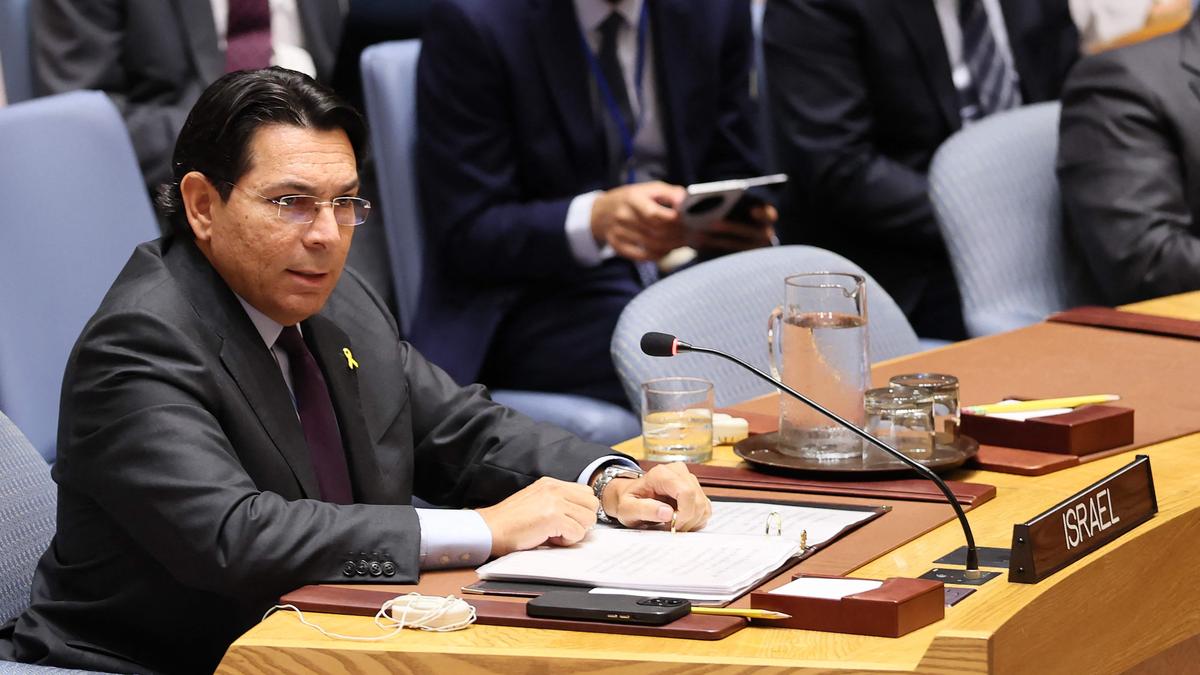
- 02 Jun 2026
In News:
The United Nations (UN) has added Israel and Russia to its annual blacklist of parties responsible for conflict-related sexual violence (CRSV). The move comes through the UN Secretary-General’s annual report on conflict-related sexual violence, which documents patterns of sexual violence linked to armed conflicts across the world. The development is significant because Hamas had already been included in the list following the October 2023 attacks that triggered the Gaza conflict.
What is Conflict-Related Sexual Violence (CRSV)?
Conflict-related sexual violence refers to acts such as:
- Rape
- Sexual slavery
- Forced prostitution
- Forced pregnancy
- Enforced sterilisation
- Other forms of sexual violence directly or indirectly linked to armed conflict
The United Nations recognises CRSV as a grave violation of International Humanitarian Law (IHL), International Human Rights Law, and, in certain circumstances, a war crime, crime against humanity, or an act constituting genocide.
UN Conflict-Related Sexual Violence Blacklist
The blacklist forms part of the annual report prepared by the United Nations Secretary-General on conflict-related sexual violence. It identifies parties for whom credible information exists indicating patterns of sexual violence during armed conflicts.
Being included on the list does not automatically trigger sanctions, but it carries significant diplomatic and reputational consequences. Repeated offenders may face restrictions affecting participation in UN peacekeeping activities and increased international scrutiny.
Why Were Israel and Russia Listed?
Israel
The UN report verified 31 cases involving Palestinian men, women and children from Gaza and the occupied West Bank between 2023 and 2025. These cases included allegations of sexual violence occurring during detention, interrogation and military operations. Based on verified patterns, Israel was included in the blacklist.
Russia
Russia was listed for conflict-related sexual violence committed in the context of the ongoing conflict in Ukraine. The report documented incidents attributed to Russian armed and security forces involving sexual violence against civilians and detainees.
Global Scale of the Problem
The latest UN report highlights the continuing prevalence of conflict-related sexual violence across multiple conflict zones.
Key Data and Facts
- The report recorded nearly 10,000 verified cases of conflict-related sexual violence worldwide during the last year.
- The annex to the report lists 77 parties responsible for patterns of conflict-related sexual violence.
- Of these, 62 are non-state actors, demonstrating the growing role of armed groups in perpetrating such violations.
- The blacklist includes state forces, militias, insurgent groups, terrorist organisations and other armed actors operating in conflict zones.
Birth Anniversary of Lokmata Ahilyabai Holkar
- 02 Jun 2026
In News:
Prime Minister Narendra Modi recently paid tribute to Ahilyabai Holkar on her birth anniversary, remembering her wisdom, compassion, administrative excellence, and unwavering commitment to public welfare. Revered as “Lokmata” (Mother of the People), Ahilyabai Holkar remains one of India's most celebrated women rulers and a timeless symbol of inclusive governance, social reform, and cultural renaissance.
Early Life and Rise to Power
- Ahilyabai Holkar was born on 31 May 1725 in Chondi, in present-day Maharashtra. In 1733, she married Khanderao Holkar, the son of Malhar Rao Holkar, ruler of Malwa and founder of the Holkar dynasty.
- Her life took a dramatic turn when Khanderao Holkar died during the Siege of Kumher Fort in 1745. Although she intended to commit sati, Malhar Rao Holkar prevented her from doing so and instead trained her in military affairs, administration, and statecraft. Following the death of Malhar Rao Holkar in 1766 and her son Male Rao Holkar in 1767, Ahilyabai assumed the reins of the Malwa kingdom and became the ruler of Indore in 1767.
- She appointed Tukoji Rao Holkar as commander of her army and shifted the capital of the Holkar state to Maheshwar, which emerged as a major centre of administration, trade, and culture.
Contributions to Governance and Society
Ahilyabai Holkar's reign is widely regarded as a golden period of peace, prosperity, and welfare-oriented governance. She emphasized justice, efficient administration, and public welfare, earning immense respect from her subjects.
A pioneering social reformer, she promoted:
- Women's education
- Widow remarriage
- Opposition to harmful social practices such as sati
- Welfare and upliftment of marginalized communities, including the Bhil and Gond tribes and lower castes
Her governance reflected a rare combination of social sensitivity and administrative efficiency, making her one of the earliest champions of inclusive development in India.
Cultural and Religious Legacy
Ahilyabai Holkar played a transformative role in preserving India's civilizational heritage. During the 18th century, she undertook the reconstruction and restoration of several important Hindu pilgrimage sites.
Her most notable achievements include:
- Reconstruction of the Kashi Vishwanath Temple
- Restoration of the Somnath Temple
Both temples are among the most revered Jyotirlingas of Lord Shiva. She also sponsored the construction and renovation of numerous temples, ghats, wells, and dharamshalas across the Indian subcontinent.
A great patron of arts and literature, she supported scholars and poets such as:
- Khushali Ram
- Moropant
- Anantaphandi
Economic Contributions
Ahilyabai transformed Maheshwar and Indore into thriving centres of commerce and trade. She actively promoted the Maheshwari weaving industry, leading to the emergence of the famous Maheshwari Sarees, which today enjoys Geographical Indication (GI) tag recognition.
6 Years of PM SVANidhi Scheme
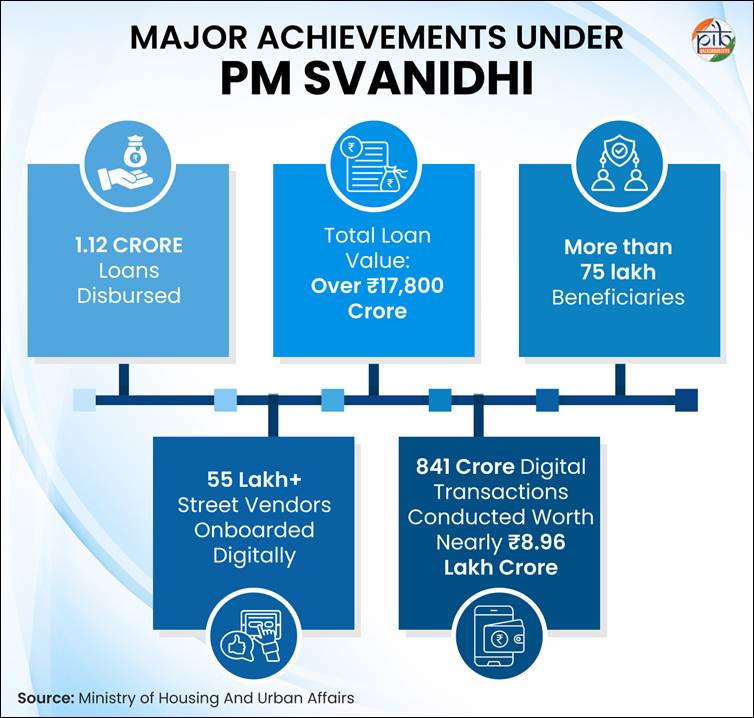
- 02 Jun 2026
In News:
The Prime Minister Street Vendor’s AtmaNirbhar Nidhi (PM SVANidhi) scheme completed six years on 1 June 2026, marking a significant milestone in India's efforts to promote financial inclusion, urban livelihoods, and social security for street vendors.
Launched in June 2020 by the Ministry of Housing and Urban Affairs (MoHUA) in collaboration with the Department of Financial Services (DFS), the scheme was introduced during the Covid-19 pandemic to provide much-needed working capital support to street vendors whose livelihoods had been severely disrupted.
About PM SVANidhi
PM SVANidhi is a Central Sector Scheme and India's first dedicated micro-credit programme for street vendors. It provides collateral-free working capital loans through the formal banking system, reducing dependence on informal moneylenders while promoting entrepreneurship and financial inclusion.
Key Features
|
Component |
Details |
|
Working Capital Loans |
Progressive collateral-free loans of ?15,000, ?25,000 and ?50,000 |
|
Interest Subsidy |
7% annual interest subsidy for timely or early repayment |
|
Digital Incentives |
Cashback rewards for digital transactions |
|
Credit Expansion |
UPI-linked RuPay Credit Cards up to ?30,000 for eligible beneficiaries |
|
Capacity Building |
Training in financial literacy, digital literacy, and food safety & hygiene (with FSSAI) |
|
Extended Timeline |
Scheme extended till March 2030, targeting 1.15 crore vendors, including 50 lakh new beneficiaries |
The Small Industries Development Bank of India (SIDBI) serves as the technical and implementation partner and manages the Credit Guarantee Trust Fund.
‘SVANidhi se Samriddhi’: Beyond Credit to Comprehensive Welfare
To convert financial inclusion into holistic socio-economic empowerment, MoHUA launched the SVANidhi se Samriddhi initiative.
The programme maps the socio-economic profile of vendor households and links them with major welfare schemes, including:
- Pradhan Mantri Jeevan Jyoti Bima Yojana (PMJJBY)
- Pradhan Mantri Suraksha Bima Yojana (PMSBY)
- PM Jan Dhan Yojana
- Building and Other Construction Workers (BoCW) Registration
- PM Shram Yogi Maandhan Yojana
- One Nation One Ration Card (ONORC)
- Janani Suraksha Yojana (JSY)
- PM Matru Vandana Yojana (PMMVY)
Six Years of Impact: Key Achievements
The scheme has emerged as one of India's most successful urban livelihood interventions:
- More than 1.12 crore loans sanctioned to over 75.5 lakh street vendors.
- Nearly 95% beneficiaries accessed formal institutional credit for the first time.
- Around 30% beneficiaries secured additional formal credit, reflecting improved creditworthiness.
- Beneficiary incomes increased by an average of 20% annually.
- 46% of beneficiaries are women, promoting women's economic empowerment.
- Nearly 70% belong to marginalized communities, enhancing social inclusion.
- More than 55 lakh vendors digitally onboarded.
- Vendors have collectively undertaken over 841 crore digital transactions.
- Under SVANidhi se Samriddhi, over 50 lakh vendor families have been socio-economically profiled and linked to more than 1.52 crore welfare benefits across eight flagship schemes.
Significance
PM SVANidhi has evolved from a pandemic relief initiative into a powerful instrument for financial inclusion, digital empowerment, entrepreneurship development, and social security expansion. By integrating credit access with welfare convergence, the scheme exemplifies the government's approach to inclusive urban development and grassroots economic empowerment.
Shangri-La Dialogue
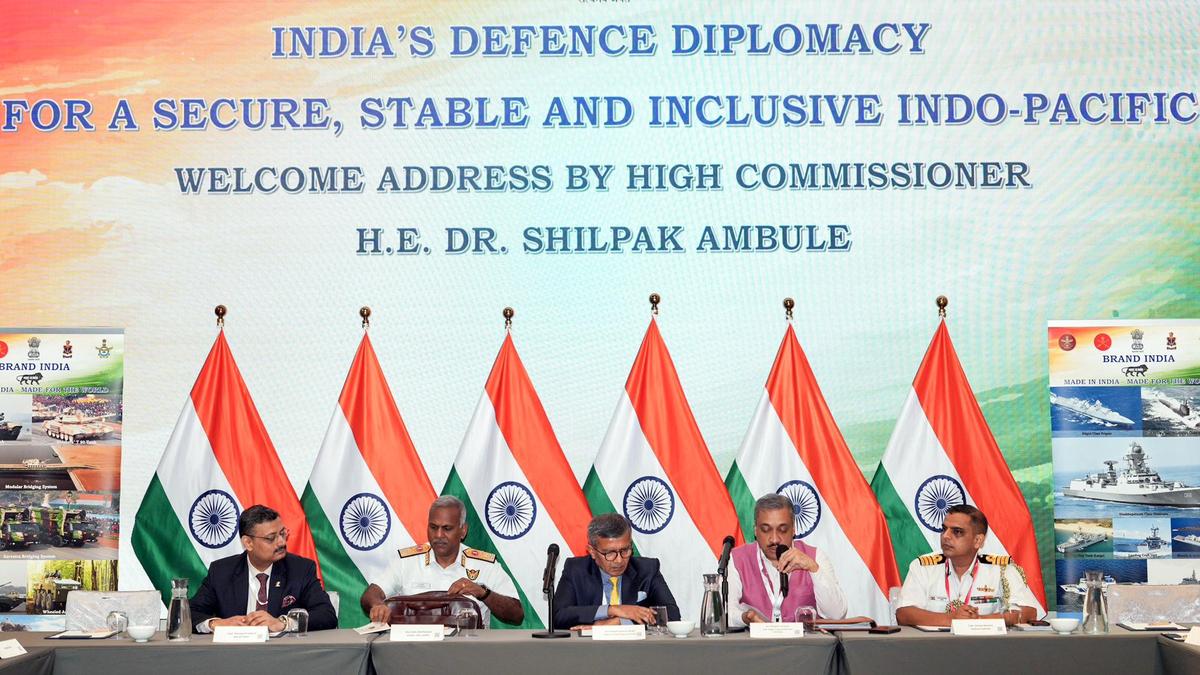
- 02 Jun 2026
In News:
The Shangri-La Dialogue 2026, held in Singapore, served as a major platform for advancing defence diplomacy and addressing emerging security challenges in the Indo-Pacific. On the sidelines of the summit, India’s Defence Secretary held a series of high-level bilateral engagements with defence leaders from various countries, focusing on strengthening defence partnerships, enhancing maritime security cooperation, promoting defence industrial collaboration, and ensuring a free, open, and rules-based Indo-Pacific.
About the Shangri-La Dialogue
Also known as the Asia Security Summit, the Shangri-La Dialogue is Asia’s premier defence and security forum. Since its inception in 2002, it has evolved into the most influential multilateral security dialogue in the Asia-Pacific region.
The summit is held annually at the Shangri-La Hotel, Singapore, and is organized by the International Institute for Strategic Studies (IISS), London, in collaboration with the Ministry of Defence of Singapore.
The dialogue brings together:
- Defence Ministers
- Military Chiefs
- Policymakers
- Strategic Experts
- Security Practitioners
from across the world to deliberate on regional and global security issues.
Agenda and Significance
- The agenda reflects the evolving security environment of the Indo-Pacific and covers both traditional and non-traditional security concerns.
Traditional Security Issues
- Maritime disputes
- Military modernization
- Defence partnerships
- Regional power balance
- Strategic competition
Non-Traditional Security Issues
- Terrorism
- Cybersecurity
- Climate change
- Disaster response
- Emerging technologies
India’s Participation and Engagements
India has been a regular and prominent participant in the Shangri-La Dialogue, represented by the Defence Minister, Chief of Defence Staff, Service Chiefs, or senior defence officials.
At the 2026 Dialogue, the Defence Secretary utilized bilateral meetings to deepen cooperation with key partners in the Indo-Pacific. Discussions focused on:
- Strengthening bilateral defence relations.
- Expanding maritime security cooperation.
- Enhancing military-to-military exchanges.
- Promoting defence technology and industrial collaboration.
- Supporting regional stability and freedom of navigation.
- Addressing common security challenges in the Indo-Pacific.
These engagements align with India’s vision of a free, open, inclusive and rules-based Indo-Pacific, consistent with its broader strategic initiatives such as SAGAR (Security and Growth for All in the Region) and the Indo-Pacific Oceans Initiative.
Importance for India
The Shangri-La Dialogue provides India with an important platform to:
- Advance defence diplomacy.
- Build strategic partnerships.
- Shape regional security discourse.
- Promote maritime cooperation.
- Enhance defence industrial partnerships.
- Reinforce its role as a net security provider in the Indian Ocean Region.
The forum also complements India's growing engagement with regional groupings such as the Association of Southeast Asian Nations and the Quadrilateral Security Dialogue.
India's First SkyCast System
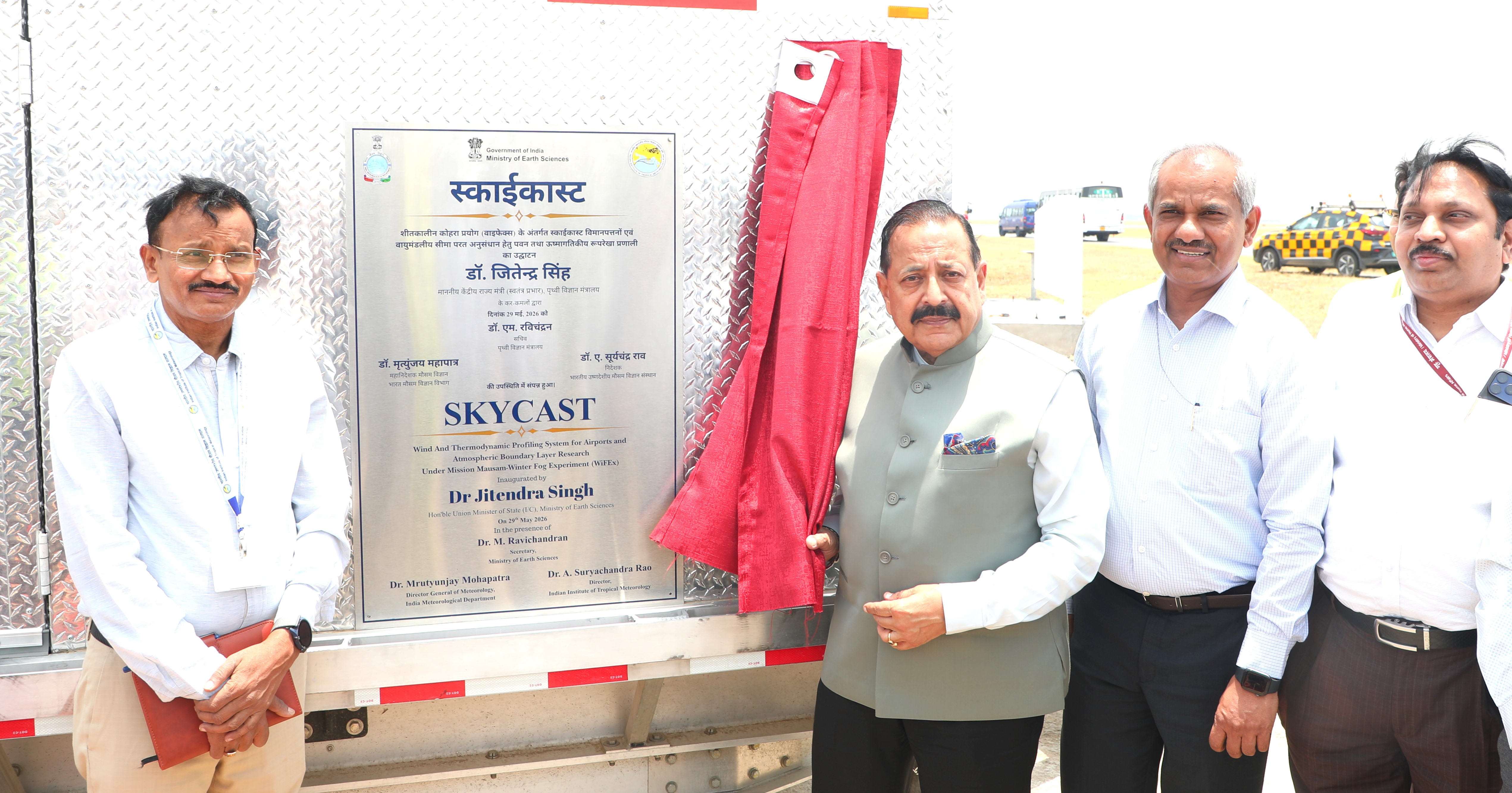
- 01 Jun 2026
In News:
- In a major boost to aviation safety and weather forecasting, Union Minister Dr. Jitendra Singh inaugurated India’s first SkyCast System at Indira Gandhi International (IGI) Airport, New Delhi.
- Developed under the Ministry of Earth Sciences’ (MoES) Mission Mausam, SkyCast is a next-generation integrated atmospheric remote sensing system designed to provide real-time weather intelligence for aviation operations.
- Its deployment marks India's entry into an era of “fog-free, weather-smart aviation” and makes India the 19th country in the world to possess such advanced aviation weather monitoring infrastructure.
What is SkyCast?
- SkyCast is a comprehensive aviation weather intelligence framework that integrates real-time observations of fog, aerosols, turbulence, moisture, visibility, wind and atmospheric conditions into a single operational platform.
- Its primary objective is to reduce flight delays, cancellations and diversions caused by adverse weather while enhancing safety during critical take-off and landing operations.
- The system emerged from the Winter Fog Experiment (WiFEX), jointly launched by the Indian Institute of Tropical Meteorology (IITM) and the India Meteorological Department (IMD) at IGI Airport in 2015, which generated valuable insights into fog formation, aerosol-cloud interactions and visibility reduction.
Key Technological Components
SkyCast integrates multiple state-of-the-art atmospheric observation systems:
- Radar Wind Profiler (RWP): Measures wind speed, wind direction, turbulence, vertical velocity and boundary-layer dynamics.
- SODAR (Sonic Detection and Ranging): Monitors lower atmospheric wind structures.
- Microwave Radiometer: Provides temperature and humidity profiles.
- Ground-based Fog Aerosol Spectrometer (GFAS): Analyses fog droplets, aerosols and aerosol-fog interactions, particularly relevant for Delhi’s pollution-driven fog conditions.
- CL61 Lidar-based Ceilometer: Continuously tracks the vertical structure, density and evolution of fog.
Key Features
- Continuous monitoring of atmospheric conditions up to nearly 3 km altitude above the airport.
- Real-time assessment of fog, turbulence, visibility and moisture conditions.
- Nowcasting and early-warning capability within a 3-hour forecasting window.
- Supports pilots, airlines, airport operators and air traffic management agencies with precise weather intelligence.
- Generates high-quality atmospheric data for improved weather prediction models and AI-enabled forecasting systems.
Significance
- Aviation Safety and Efficiency: SkyCast enables pilots to make informed landing and take-off decisions, reducing operational disruptions and enhancing passenger safety. It is expected to significantly reduce weather-induced delays and diversions, particularly during Delhi’s winter fog season.
- Strengthening Mission Mausam: SkyCast is a major component of Mission Mausam, the Government of India’s ?2,000 crore initiative launched to make India a “Weather-Ready and Climate-Smart Nation.” The mission focuses on improving weather observations, forecasting accuracy, AI-enabled prediction systems and disaster resilience.
Wider Applications
Beyond aviation, SkyCast data will support:
- AI-enabled weather forecasting,
- Urban weather prediction,
- Pollution management,
- Transport advisories,
- Disaster preparedness and response.
Future Expansion
Following IGI Airport, the next SkyCast facility will be established at Jewar Airport, with plans for expansion across major airports in India.
NITI Aayog’s “Future of India’s Semiconductor Industry” Roadmap
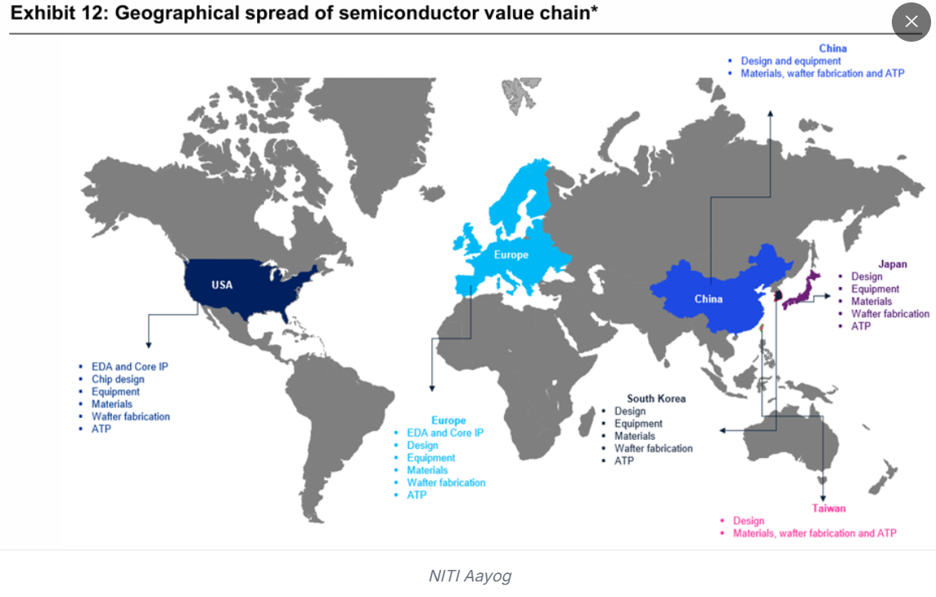
- 01 Jun 2026
In News:
Recognising semiconductors as the foundation of national security, digital sovereignty, economic resilience, AI infrastructure, defence systems, telecommunications, healthcare technologies, automobiles, and advanced manufacturing, NITI Aayog’s Frontier Tech Hub has released India’s first comprehensive 10-year roadmap titled “Future of India’s Semiconductor Industry.” The roadmap envisions building a USD 120–150 billion domestic semiconductor value chain by 2035, transforming India from a major chip consumer into an indispensable global semiconductor player.
Why the Roadmap is Important
India currently faces extreme strategic vulnerability, with 90–95% of its semiconductor demand met through imports. Between FY17 and FY25, semiconductor imports cost the country nearly USD 150 billion, and if current trends continue, the annual import bill could rise to USD 240 billion by 2035. At the same time, India’s domestic semiconductor market is projected to reach USD 200 billion by 2035, driven by rapid growth in electronics manufacturing, electric vehicles (EVs), AI systems, data centres, telecom equipment and digital infrastructure.
India’s Strategic Approach: Beyond the Wafer Race
Instead of competing directly in the highly capital-intensive cutting-edge wafer fabrication race, the roadmap advocates a “More-than-Moore” strategy, focusing on areas where India can build sustainable competitive advantages:
- Advanced Packaging and OSAT (Outsourced Semiconductor Assembly and Test)
- Compound Semiconductors
- Wide-Bandgap Materials (SiC and GaN)
- Advanced Semiconductor Design and Design IP
- AI-Native Chip Design
The roadmap aims to position India among the top global destinations for advanced packaging and OSAT, emerge as a major supplier of wide-bandgap semiconductors, and create more than 100 advanced semiconductor design IPs by 2035.
Key Strengths and Opportunities
India possesses several structural advantages:
- Houses 20% of the global semiconductor design workforce.
- Benefits from the China 1 strategy and global supply-chain diversification.
- Can leverage growing partnerships with the US, Japan and the European Union.
- Rising EV adoption creates demand for SiC and GaN power devices.
- Backed by India Semiconductor Mission (ISM) 2.0, which shifts focus from ecosystem creation to ecosystem deepening.
Major Challenges
Despite the opportunity, significant barriers remain:
- USD 135–180 billion investment requirement over the next decade.
- A modern semiconductor fab requires over USD 5 billion, while leading-edge facilities can exceed USD 15 billion.
- Long gestation periods of 4–5 years before production begins.
- Shortage of specialized fabrication, materials and cleanroom talent.
- High requirements of ultra-pure water and uninterrupted electricity.
- Strong market dominance of established East Asian semiconductor ecosystems.
Five Pillars of the Roadmap
The strategy is built around five mutually reinforcing pillars:
- Pioneering Frontier R&D and Design IP
- Policy and Investment Mobilisation
- Production through Advanced Packaging and Compound Semiconductors
- People and Talent Development
- Partnerships with Trusted Nations and Global Industry
The roadmap marks India's transition from ecosystem creation to ecosystem deepening, focusing on design leadership, advanced packaging, compound semiconductors, talent development, R&D and trusted global partnerships. By leveraging its design strengths and targeting high-value segments rather than the traditional wafer race, India seeks to capture 10–13% of the global semiconductor market by 2035 while strengthening its technological sovereignty and advancing the vision of Viksit Bharat 2047.
National Family Health Survey–6 (NFHS-6)
- 01 Jun 2026
In News:
The Ministry of Health and Family Welfare (MoHFW) has released the National Family Health Survey–6 (NFHS-6) (2023–24), conducted by the International Institute for Population Sciences (IIPS), Mumbai across 715 districts covering nearly 6.79 lakh households. As India’s most comprehensive health and demographic survey, NFHS-6 provides district-level evidence for policy formulation, monitoring of welfare schemes, and tracking progress towards the Sustainable Development Goals (SDGs).
Major Gains Recorded
Maternal and Child Health
India has made significant progress towards safe motherhood and improved healthcare access:
- Institutional deliveries increased from 88.6% to 90.6%.
- Antenatal Care (ANC) coverage rose from 92.6% to 95.9%.
- Women receiving ANC in the first trimester increased from 70% to 76.2%.
- Mothers receiving at least four ANC visits increased from 58.5% to 65.2%.
- Skilled birth attendance improved from 89.4% to 91.3%.
- Postnatal care within two days of delivery rose from 79.1% to 85.3%.
Child Nutrition and Immunisation
The survey reflects encouraging improvements in child health outcomes:
- Stunting declined from 35.5% to 29.3% (17% reduction).
- Severe wasting reduced from 7.7% to 5.2% (32% reduction).
- Children aged 6–8 months receiving complementary feeding increased from 45.9% to 59.5%.
- Full immunisation among children aged 12–23 months increased from 83.8% to 87.1%.
- Rotavirus vaccine coverage more than doubled from 36.4% to 85.4%.
- Coverage of the second dose of measles vaccine rose from 58.6% to 71.8%.
- 95.6% of vaccinations were administered through public health facilities, demonstrating strong public trust.
Family Planning and Financial Protection
- India’s Total Fertility Rate (TFR) remains stable at 2.0, below the replacement level of 2.1.
- Contraceptive Prevalence Rate (CPR) increased from 66.7% to 69.1%.
- Household health insurance coverage rose sharply from 41.0% to 60.2%, driven largely by Ayushman Bharat–PMJAY and related initiatives.
Women’s Empowerment
- Women who have ever used the internet increased from 33.3% to 64.3%.
- Women operating their own bank accounts increased from 78.6% to 89.0%.
- Women owning and using a mobile phone rose from 53.9% to 63.6%.
Key Challenges
Despite the progress, NFHS-6 highlights several emerging concerns:
- 12.9% of children aged 12–23 months are still not fully immunised.
- Only 37.8% of pregnant women consumed Iron-Folic Acid supplements for the recommended 180 days.
- Rising burden of Non-Communicable Diseases (NCDs) and lifestyle-related disorders.
- Growing dual burden of malnutrition, with persistent undernutrition coexisting alongside rising overweight and obesity among adults.
- Caesarean section deliveries increased sharply from 21.5% to 27.2%, requiring closer monitoring.
Government Initiatives Driving Progress
Key schemes contributing to these gains include Janani Suraksha Yojana (JSY), Janani Shishu Suraksha Karyakram (JSSK), Pradhan Mantri SurakshitMatritva Abhiyan (PMSMA), SUMAN, POSHAN Abhiyaan, Saksham Anganwadi and POSHAN 2.0, Universal ImmunisationProgramme, U-WIN, Mission Parivar Vikas, and Ayushman Bharat–PMJAY.
NFHS-6 presents a picture of accelerated improvements in maternal health, child nutrition, immunisation, women’s empowerment and financial protection, reaffirming India's progress towards SDGs and Universal Health Coverage. However, rising NCDs, obesity, incomplete immunisation, and nutritional challenges indicate that future health policy must move beyond access and focus on preventive healthcare, behavioural change, nutrition security, and quality health outcomes.
Chandrayaan-2 Detects Possible Subsurface Ice Near the Moon’s South Pole
- 01 Jun 2026
In News:
India’s Chandrayaan-2 mission has provided fresh evidence suggesting the presence of subsurface water ice beneath the lunar south polar region, a discovery with significant implications for future lunar exploration and long-term human presence on the Moon. The findings, published by scientists from the Physical Research Laboratory (PRL), Ahmedabad, are based on observations made by the Dual Frequency Synthetic Aperture Radar (DFSAR) onboard the Chandrayaan-2 orbiter.
Launched by ISRO in July 2019, Chandrayaan-2 was India’s second lunar mission. While the Vikram lander lost communication during its landing attempt, the orbiter has continued to function successfully, generating valuable scientific data about the Moon.
DFSAR: A Unique Lunar Radar Instrument
The DFSAR is the first fully polarimetric synthetic aperture radar designed specifically for lunar studies. Operating in both L-band and S-band microwave frequencies, it can penetrate beneath the lunar surface and detect variations in subsurface composition, making it particularly useful for identifying water ice deposits hidden beneath layers of regolith.
Study and Methodology
The research focused on doubly shadowed craters situated within the Moon’s Permanently Shadowed Regions (PSRs) near the south pole. These regions never receive direct sunlight and maintain extremely low temperatures of about 25 Kelvin (-248°C), creating ideal conditions for the long-term preservation of water ice.
Scientists analysed radar data using two important parameters:
- Circular Polarization Ratio (CPR) > 1
- Degree of Polarization (DOP) < 0.13
Such radar signatures are considered potential indicators of volumetric scattering, a phenomenon commonly associated with subsurface ice deposits.
Key Findings
The study identified radar evidence suggesting possible subsurface ice beneath four doubly shadowed craters. The strongest indication came from a 1.1-km-wide crater located within the larger Faustini crater.
An additional clue emerged from the crater’s lobate-rim morphology, a geological feature that may indicate that the impact event penetrated an ice-rich subsurface layer. This strengthens the hypothesis that water ice could exist beneath the lunar surface rather than merely as surface frost.
Significance of the Discovery
The presence of water ice on the Moon has immense scientific and strategic importance:
- Supports future human missions by providing a potential source of drinking water.
- Can be split into hydrogen and oxygen for rocket fuel and life-support systems.
- Helps identify suitable sites for future lunar landers and bases.
- Advances understanding of the Moon’s geological and climatic history.
- Strengthens India's contribution to global lunar science and exploration.
Insolvency and Bankruptcy Code (IBC) completes 10 years
- 01 Jun 2026
In News:
The Insolvency and Bankruptcy Code (IBC), 2016 has completed a decade since its enactment, emerging as one of India's most significant economic and institutional reforms. Enacted on the recommendations of the Bankruptcy Law Reforms Committee (2015) chaired by T.K. Viswanathan, the Code consolidated multiple fragmented insolvency laws into a unified, creditor-driven and time-bound framework. It fundamentally shifted India from a “debtor-in-possession” model to a “creditor-in-control” regime, thereby strengthening credit discipline, improving recovery mechanisms and enhancing investor confidence.
Key Achievements of IBC
Over the last ten years, IBC has significantly transformed India's financial landscape:
- ?4.32 lakh crorerealised for creditors through resolution processes till March 2026.
- Recovery value reached 167% of liquidation value and 95% of fair value.
- Gross NPA ratio of Scheduled Commercial Banks declined sharply from 11.8% (2017) to 2.1% (September 2025), a 12-year low.
- More than 30,000 cases involving nearly ?14 lakh crore were resolved at the pre-admission stage, demonstrating the Code’s strong deterrent effect.
- 58% of closed cases resulted in successful rescue of firms rather than liquidation.
- Resolution timelines reduced from 6–8 years (pre-IBC) to around 2 years.
- S&P Global Ratings upgraded India’s insolvency framework from Group C to Group B.
- According to RBI, IBC accounted for ?0.54 lakh crore (52.4%) of total recoveries made by banks through various recovery channels in 2024–25.
Institutional Framework and Process
The IBC ecosystem is anchored by:
- Insolvency and Bankruptcy Board of India (IBBI) – regulator.
- National Company Law Tribunal (NCLT) and Debt Recovery Tribunal (DRT) – adjudicating authorities.
- Insolvency Professionals (IPs) – manage resolution proceedings.
- Information Utilities (IUs) – maintain authenticated financial information.
The Corporate Insolvency Resolution Process (CIRP) begins upon default, followed by a moratorium, constitution of the Committee of Creditors (CoC), and approval of a resolution plan by 66% voting share. The Code prescribes a maximum timeline of 330 days for resolution.
Recent Reforms
The IBC (Amendment) Act, 2026 introduced:
- Creditor-Initiated Insolvency Resolution Process (CIIRP) requiring approval of 51% financial creditors.
- Strengthening of the Clean Slate Principle.
- Greater powers for the CoC during liquidation.
- Clarification that government dues are not secured debt.
- Penalties for frivolous filings and fraudulent transactions.
Persistent Challenges
Despite its success, several concerns remain:
- Average resolution time has increased to 744 days, far exceeding the statutory limit of 330 days.
- Recovery against admitted claims declined to 23% in FY26 from 46% in FY25, leading to large creditor haircuts.
- Shortage of NCLT members and infrastructure bottlenecks.
- Complex insolvency cases in the real-estate sector, involving thousands of homebuyers.
- Delays in post-resolution approvals and credit access for resolved firms.
Way Forward
Strengthening NCLT capacity, institutionalising mediation, adopting the UNCITRAL Model Law on Cross-Border Insolvency, improving accountability of insolvency professionals, and focusing on enterprise value maximisation are critical for enhancing the effectiveness of the Code.
ESIC Launches Centralised Digital Patient Feedback System
- 06 Jun 2026
In News:
The Employees' State Insurance Corporation (ESIC), under the Ministry of Labour and Employment, has rolled out a nationwide Centralised Online Patient Feedback System across all its hospitals and dispensaries, aimed at improving healthcare quality, transparency, and institutional accountability.
About ESIC
- Established in 1948 under the ESI Act, ESIC is an autonomous body under the Ministry of Labour and Employment.
- It provides comprehensive social security and healthcare coverage to workers in the organised sector and their dependents. Its healthcare network spans hospitals, dispensaries, and outpatient facilities across India, serving crores of insured persons (IPs) and their families.
About the System
- The new platform is an omnichannel digital public grievance and quality-assurance tool that enables ESIC beneficiaries to instantly rate their healthcare experience.
- It helps hospital administration track service benchmarks and address operational deficiencies in real time.
- It empowers insured persons to share healthcare experiences, raise specific concerns, and provide actionable suggestions for institutional improvement across three core parameters: cleanliness of facilities, behaviour of medical staff, and availability of prescribed medicines.
How it Works
The system operates through three feedback channels. First, automated SMS links are sent directly to the insured person's registered mobile number immediately after they avail services through the ESIC Health Information System (Dhanwantri Module). Second, on-site QR codes are displayed on customised multilingual posters at all OPDs and hospital locations, which patients can scan with their mobile devices. Third, feedback can be submitted directly through the official ESIC website.
To ensure data authenticity and prevent duplicate or fraudulent entries, patients enter their IP Number, which triggers an OTP verification process before feedback submission — a process that can be completed within seconds.
Key Features
The system incorporates role-based digital dashboards operating at three administrative tiers: headquarters level, regional offices level, and local ESI health facilities level. This enables continuous, real-time performance monitoring across the entire ESIC network. The platform features full multilingual support to eliminate language barriers and encourage participation among India's diverse working-class beneficiary pool.
A critical automated escalation mechanism ensures that any service rating falling below 3 out of 5 is automatically flagged and routed to local administrative dashboards for immediate corrective action. Additionally, the platform supports performance ranking of all ESIC healthcare facilities, fostering healthy institutional competition and continuous improvement.
Significance
This initiative represents a significant shift from passive grievance redressal to proactive, data-driven quality management in public sector healthcare delivery. By converting patient feedback into instant digital alerts, the system enables swift gap identification and correction. The continuous generation of patient satisfaction data will help rank ESI hospitals, promoting accountability and service improvement. The multilingual, mobile-first design ensures inclusivity for a widely dispersed, multi-lingual workforce.
The launch aligns with the broader Digital India initiative and the government's push to leverage technology for improving public service delivery — particularly for the organised sector workforce that forms the backbone of India's industrial economy.
Blue Micromoon

- 06 Jun 2026
In News:
Recently, skywatchers witnessed a rare Blue Micromoon, a simultaneous occurrence of a Blue Moon and a Micromoon. NASA described it as the farthest, smallest, and dimmest full Moon of 2026, with the next Blue Micromoon not expected until 2053.
What Is a Blue Micromoon?
A Blue Micromoon is the rare coincidence of two distinct lunar phenomena:
- A Blue Moon refers to the second full moon occurring within a single calendar month. Because the interval between two full moons averages about 29.5 days — slightly shorter than most calendar months — every two to three years a calendar year includes 13 full moons, producing this "extra" full moon.
- A Micromoon occurs when a full moon coincides with apogee — the farthest point in the Moon's elliptical orbit around Earth. The opposite of a micromoon is a supermoon, which occurs when a full moon reaches perigee, or its closest point to Earth.
Why Doesn't It Look Blue?
Despite the name, the moon does not appear blue. The name has nothing to do with the moon's colour — it appears as a warm orange near the horizon due to atmospheric scattering. A genuinely bluish tint can only appear when rare atmospheric conditions — such as volcanic ash or dense smoke — scatter red wavelengths of light.
Key Orbital Mechanics
The Moon's orbit around Earth is elliptical, completing one cycle every 27.3 days. Because the orbit is not a perfect circle, the Moon's distance from Earth varies continuously. When the fully illuminated phase coincides with the orbital extreme of apogee, the angular diameter of the lunar disk appears compressed — about 7% smaller than an average full moon. The coincidence of this orbital position with the calendar anomaly of a Blue Moon is what makes the Blue Micromoon so rare.
Rarity
The next Blue Micromoon will not be seen until at least July 2053, making this a phenomenon with a gap of approximately 27 years. A standard Blue Moon recurs every 2–3 years; a Micromoon is more common on its own; but their simultaneous alignment is exceedingly infrequent.
Operation Mule Hunt 1.0
- 06 Jun 2026
In News:
Gujarat Police recently concluded Operation Mule Hunt 1.0, a statewide crackdown on cyber fraud that uncovered cyber fraud transactions worth approximately ?2,289 crore, led to 565 FIRs, 638 arrests, and action against 913 mule accounts linked to 4,052 cybercrime cases across India, including 491 cases within Gujarat. Building on this success, Gujarat launched Operation Mule Hunt 2.0 from June 2, 2026, for a more aggressive second phase targeting mule-account networks.
What are Mule Accounts?
A mule account is a bank account used to receive, transfer, and conceal proceeds of cybercrime. The person operating such an account is a "money mule." Transnational cybercriminals exploit accounts of shell companies and individuals as mule accounts, taking advantage of bulk payout facilities provided by banks. Account holders sometimes knowingly rent or sell access to their accounts in exchange for commissions, while others are unwitting participants.
Operation Mule Hunt 1.0: Execution
- The operation was led by Gujarat Police's Cyber Centre of Excellence (CCE), with support from police commissionerates, range offices, Local Crime Branch units, and cyber police stations across the state.
- Intelligence inputs were compiled from the Indian Cyber Crime Coordination Centre (I4C), the National Cyber Crime Reporting Portal (NCRP), the Samanvay coordination portal, and the national cybercrime helpline 1930. District-level nodal officers coordinated field response teams, while banks were brought into a structured framework for real-time sharing of transaction-related alerts.
Impact on Criminal Networks
The operation produced measurable disruption to cybercrime syndicates' financial exit routes. Monthly cheque withdrawals linked to suspicious transactions fell from ?126 crore to ?25 crore — an 80% decline. First-layer mule accounts, where fraudulent funds are initially deposited, fell by 30% between August and December 2025, and ATM-based cash withdrawals saw a 66% reduction. These figures indicate that targeting mule accounts directly weakens the operational infrastructure of cybercrime networks.
Institutional and Technological Response
To build systemic resilience against mule accounts, the Indian Digital Payment Intelligence Corporation (IDPIC) — under RBI guidelines — is implementing an AI-based risk-scoring system through a platform called mulehunter.ai. Under this framework, each banking transaction will be classified as low, medium, or high risk, enabling banks to proactively identify and act on suspicious accounts. IDPIC serves as the nodal agency for sharing intelligence on suspicious accounts across the banking system.
Broader Context
Cyber fraud through mule accounts represents a major threat to India's digital financial ecosystem. The I4C under the Ministry of Home Affairs coordinates national-level cybercrime response, while the 1930 helpline and NCRP serve as citizen-facing reporting mechanisms. The PMLA, 2002 and IT Act, 2000 provide the primary legal framework for prosecution in such cases.
Right to Be Forgotten
- 06 Jun 2026
In News:
Recently, Justice Sachin Datta of the Delhi High Court delivered a landmark 144-page judgment in Laksh Vir Singh Yadav v. Union of India & Connected Matters,recognising the Right to Be Forgotten (RTBF) as an integral facet of the fundamental right to privacy under Article 21 of the Constitution.
Constitutional Basis
The right to privacy was recognised as a fundamental right under Article 21 by the Supreme Court in Justice K.S. Puttaswamy v. Union of India (2017). Building on this, the Delhi HC held that RTBF protects individuals from "perpetual exposure" to past events that no longer serve a legitimate public purpose. Significantly, the court held that this right must be actively protected even in the absence of specific legislation — the Digital Personal Data Protection Act, 2023 touches on related concepts but does not fully codify RTBF.
Global Precedent
The RTBF was first recognised internationally by the Court of Justice of the European Union (CJEU) in the 2014 Google Spain case, which held that search engines must remove information that is no longer relevant upon request. India's Delhi HC has now established a comparable framework through constitutional interpretation.
Key Directions Issued
- The court directed Google LLC and other search engine operators to de-index relevant content, judgments, orders, and associated reportage from name-based search results within two weeks in cases where relief was granted.
- Indian Kanoon was directed to restrict name-based search functionality while continuing to permit access through case numbers, citations, court details, and dates.
- MeitY was directed to ensure compliance by intermediary platforms and file a compliance affidavit before the court.
- On territorial scope, the court held that de-indexing directions shall operate globally across all versions and domains of the search engine concerned, to protect informational privacy rights under Article 21.
Masking vs. De-indexing
- The court recognised masking as a remedy distinct from de-indexing. Personal identifiers may be masked in publicly accessible digital versions of judicial records, but legal reasoning, findings, and conclusions must remain intact, with unredacted records preserved for legitimate legal purposes.
Balancing Open Justice and Dignity
- The court observed that while judicial transparency remains important, the continued association of an individual's name with judicial records online can disproportionately affect privacy, dignity, and reputation once proceedings have concluded. Open justice ensures transparency — not the perpetual commercial amplification of personal legal struggles.
Exemptions and Limits
The right is not absolute. Relief may be denied in cases involving convictions for offences against women or children, breach of public trust by public servants or elected representatives, and matters of continuing public interest. The court also rejected a plea by a public figure seeking removal of content on past misconduct, holding that RTBF cannot be used as a tool for "selective erasure" of a public figure's conduct.
MAHA Water Mission
- 06 Jun 2026
In News:
The Union Minister of Science & Technology recently launched the MAHA Water Mission, a national platform designed to bridge the gap between scientific research and on-ground water solutions across India.
About MAHA Water Mission
- The Mission has been conceived as a national innovation platform to accelerate technology development in the water sector by connecting science, entrepreneurship, industry, academia, and grassroots action.
- Its core objective is to support innovations from laboratory research through to field deployment, generating both scalable and localised solutions to strengthen India's long-term water security.
- The mission will support technology development, field validation, and deployment to address India's most critical water challenges across five priority themes: water resource assessment and sustainable management; drinking water access and quality; water quality and ecological health; water use efficiency and circular economy; and climate resilience and adaptation.
Institutional and Financial Structure
- The mission carries a projected outlay of ?200 crore over five years, jointly contributed by the Anusandhan National Research Foundation (ANRF) and the Ministry of Jal Shakti.
- This joint funding structure is significant as it brings together India's apex research funding body with the nodal ministry for water governance, ensuring both scientific rigour and policy relevance.
- The programme will support multidisciplinary consortia comprising universities, national laboratories, research organisations, startups, MSMEs, and industry partners.
- Selected consortia will be eligible for up to ?20 crore in support to undertake end-to-end activities — from technology development and field assessment to validation and deployment of high-impact water solutions.
Why This Matters
- India faces an acute and compounding water crisis. It is home to 18% of the world's population but holds only 4% of its freshwater resources.
- Groundwater depletion, erratic monsoons due to climate change, industrial and agricultural pollution, and inadequate urban water infrastructure collectively threaten both drinking water access and food security.
- Despite significant policy attention — through schemes like Jal Jeevan Mission and Atal Bhujal Yojana — a dedicated innovation pipeline translating research into field-ready solutions has been largely absent. The MAHA Water Mission addresses this critical gap.
- By bringing together startups and MSMEs alongside established research institutions, the mission also aims to build a domestic water-technology industry, reducing dependence on imported solutions and creating employment in a high-priority sector.
- The circular economy focus within its priority themes signals a shift toward water recycling and reuse — essential for a water-scarce country with a growing urban population.
Alignment with Broader Policy Framework
The mission complements existing government programmes: Jal Jeevan Mission (rural drinking water), AMRUT (urban water infrastructure), Atal Bhujal Yojana (groundwater management), and the National Water Policy. The involvement of ANRF — established under the ANRF Act, 2023 — reflects the government's intent to use its new apex research funding architecture to address strategic national challenges.
Design Linked Incentive (DLI) Scheme

- 05 Jun 2026
In News:
Union Minister for Electronics and IT Ashwini Vaishnaw stated, that India's Design Linked Incentive (DLI) scheme is delivering encouraging results, citing the development of India's first Edge AI System-on-Chip (SoC) — NETRA A2000 — by Thiruvananthapuram-based fabless semiconductor startup Netrasemi as a key milestone.
The NETRA A2000 Achievement
- Netrasemi designed India's first flagship AI System-on-Chip, the NETRA A2000, at the advanced 12nm technology node. The chip has completed successful silicon bring-up — a critical stage that validates chip functionality after fabrication — and is now moving toward commercial production.
- It is designed to support smart vision devices and real-time AI applications across sectors such as surveillance, automotive, robotics, and drones. The SoC integrates Netrasemi's proprietary Neural Processing Unit (NPU), Vision Processing Unit (VPU), Image Signal Processor (ISP), crypto engines, and specialised hardware acceleration IP cores, and was fabricated at TSMC using its 12nm process technology.
- Netrasemi was one of the first four startups selected for ?15 crore DLI support in 2023 by MeitY, and has raised ?125 crore in total funding to date.
About the DLI Scheme
- The Design Linked Incentive (DLI) Scheme is implemented by the Ministry of Electronics and Information Technology (MeitY) under the broader Semicon India Programme.
- It is a key instrument in advancing India's ambition to develop a strong fabless semiconductor capability — i.e., companies that design chips without owning fabrication facilities.
- The nodal agency for implementation is C-DAC (Centre for Development of Advanced Computing).
- The scheme aims to reduce India's import dependence in semiconductors, strengthen supply chain resilience, and enhance domestic value addition across the full chip lifecycle — from design and development to deployment — covering Integrated Circuits (ICs), Chipsets, Systems-on-Chip (SoCs), Systems, and IP Cores.
Eligibility and Financial Incentives
- Startups and MSMEs are eligible for both financial incentives and design infrastructure support. Other domestic companies are eligible for financial incentives for deploying semiconductor designs.
- The scheme operates through two incentive tracks. Under the Product Design Linked Incentive, eligible entities receive reimbursement of up to 50% of eligible expenditure, capped at ?15 crore per application.
- Under the Deployment Linked Incentive, incentives of 4–6% of net sales turnover are provided for five years, capped at ?30 crore per application, with a minimum cumulative net sales requirement of ?1 crore for startups/MSMEs and ?5 crore for other domestic companies over the first five years.
Project UDAYAK
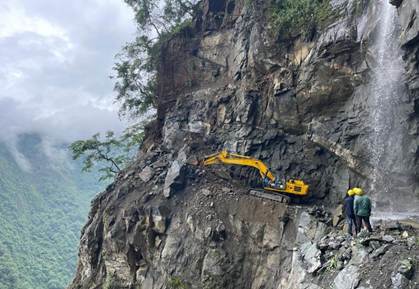
- 05 Jun 2026
In News:
The Border Roads Organisation (BRO) celebrated the 37th Raising Day of Project UDAYAK, at Doomdooma, Assam, marking over three decades of strategic infrastructure development in India's northeastern frontier.
About Project UDAYAK
Established in 1989, Project UDAYAK is a specialised territorial wing of the BRO, which functions under the Ministry of Defence. It is tasked with the development and maintenance of strategic road infrastructure across some of the most remote and geographically challenging terrains in India. The project currently manages over 1,457 km of strategic roads.
Area of Responsibility
The project operates in the easternmost regions of Arunachal Pradesh and parts of Assam, covering the districts of Anjaw, Lohit, Dibang Valley, Longding, Tirap, and Changlang. It manages road infrastructure along two highly sensitive international boundaries — the Line of Actual Control (LAC) with China and the Indo-Myanmar border — making it central to India's border security architecture in the northeast.
37th Raising Day Highlights
The Raising Day was marked by a Swachhata Abhiyan, road safety awareness campaigns, a run and walkathon, and medical and dental camps for nearby communities. Internal activities including SainikSammelan and troop interactions were conducted to strengthen camaraderie among personnel, reflecting the project's dual commitment to operational excellence and community welfare.
Strategic Significance
Project UDAYAK occupies a critical position in India's national security calculus for several reasons.
- First, connectivity along the LAC is essential for the Indian Army's logistics, rapid troop mobilisation, and supply chains — an area where China has historically held an advantage due to its superior infrastructure on the Tibetan plateau.
- Second, the Indo-Myanmar border region is prone to insurgency and illegal trafficking; road and fencing infrastructure directly aids security forces in surveillance and response.
- Third, beyond security, the roads and bridges built by the project connect isolated tribal communities to markets, healthcare, and education, accelerating socio-economic integration of border populations with the national mainstream.
About BRO
The Border Roads Organisation was established in 1960 and operates under the Ministry of Defence. It is responsible for the construction and maintenance of road infrastructure in border areas and strategically sensitive regions across India and friendly neighbouring countries. BRO's work is considered integral to both national security and the development of remote areas.
India-Oman Comprehensive Economic Partnership Agreement (CEPA)
- 05 Jun 2026
In News:
The India-Oman Comprehensive Economic Partnership Agreement (CEPA), signed in December 2025, has come into force at a critical juncture, as disruptions in the Strait of Hormuz due to continuing regional conflict have raised serious concerns over global trade, energy supplies, and freight costs across West Asia.
India-Oman Bilateral Relations: Overview
- India and Oman share one of the oldest maritime and commercial partnerships in the Indian Ocean region. Oman is India's oldest strategic partner in the Gulf, and their relationship has evolved into a comprehensive engagement covering trade, energy, defence, connectivity, and people-to-people ties.
- Nearly 700,000 Indians reside in Oman, making the Indian diaspora the Sultanate's largest expatriate community and a vital bridge between the two nations. Bilateral trade stood at USD 11.18 billion in FY 2025-26.
- India imports crude oil, LNG, fertilisers, methanol, and ammonia from Oman, while exporting machinery, petroleum products, iron and steel, rice, ceramics, and engineering goods. Strategically, the two countries cooperate in maritime security and counter-piracy operations, and Oman provides India logistical access to the Duqm Port, enhancing India's presence in the western Indian Ocean.
Why Oman Matters More Now: The Hormuz Factor
- The Strait of Hormuz is one of the world's most critical maritime chokepoints, through which a substantial portion of global oil and gas trade passes. Ongoing regional conflict has driven up freight costs and disrupted trade flows across West Asia. India-UAE trade, which had crossed $100 billion in the previous financial year, reportedly declined by approximately 35% in April 2026 due to port disruptions.
- Oman offers a strategic advantage in this scenario: unlike many Gulf states whose ports depend on Hormuz access, a significant portion of Oman's coastline lies along the Gulf of Oman and the Arabian Sea — outside the strait. Key ports such as Salalah and Duqm therefore remain accessible even during Hormuz disruptions, making Oman an indispensable partner for India's trade and energy continuity.
Key Provisions of the CEPA
The CEPA is a comprehensive free trade agreement aimed at deepening economic integration. Its major features include: Oman has granted zero-duty access on 98% of tariff lines, covering approximately 99% of India's exports. Prior to the agreement, some Indian goods attracted duties of up to 100% in Oman. The deal aims to diversify trade beyond traditional energy cooperation, enhance investment flows, and strengthen supply chain integration.
- Energy Security: India's energy imports from Oman — crude oil, LNG, fertilisers, methanol, and ammonia — were valued at over $7.2 billion in FY 2025-26. Stable access to Omani supplies significantly reduces India's vulnerability to geopolitical disruptions in the region.
- Export Opportunities: Sectors likely to benefit include machinery and engineering goods, petroleum products, steel and iron, rice and agricultural products, electronics, and consumer goods. Notably, Oman's electronics imports are estimated at around $3 billion annually while India's exports in this segment remain modest, indicating significant untapped potential.
Index of Industrial Production and Revision of Base Year
- 05 Jun 2026
In News:
Recently, the government released India's revised Index of Industrial Production (IIP) series with 2022-23 as the new base year (replacing 2011-12), alongside April 2026 industrial output data showing a slowdown in growth.
April 2026 Performance
IIP growth slowed to 4.9% in April 2026, down from 5.8% in April 2025. Of the four sectoral indices, three grew at a slower pace and one contracted. Mining and quarrying recorded a sharp decline of over 5% year-on-year. Manufacturing sector output grew at 6.2%, marginally slower than 6.3% in the corresponding month of 2025.
Within manufacturing — which constitutes approximately 75% of the IIP basket — six industries contracted. Notable contractions include: coke and refined petroleum products (–0.4%), wearing apparel (–7%), and wood products other than furniture (–12.5%, the steepest decline). On the positive side, electrical equipment output surged 19.2%.
Use-Based Classification (April 2026)
Under use-based classification, IIP tracks six categories: primary goods, capital goods, intermediate goods, infrastructure/construction goods, consumer durables, and consumer non-durables. Growth slowed in three categories — primary goods (0.8%), consumer durables (4.3%), and consumer non-durables (2.8%) — compared to April 2025. However, capital goods output growth accelerated sharply to 16% and infrastructure/construction goods to 7.1%, signalling continued momentum in investment activity. Intermediate goods grew at 7.7%, slightly faster than the previous year.
Revised IIP Series: Key Changes
The base year revision to 2022-23 is the latest in a broader statistical overhaul of major macroeconomic indicators in 2026, following the GDP revision. The index value for the base year is set to 100, against which subsequent growth is measured.
Key changes in the new series:
- Expanded product basket: The revised IIP now covers 1,042 products mapped to 463 item groups, up from 839 items and 407 item groups in the old series, improving representativeness.
- Broadened sectoral coverage: Beyond the traditional categories of mining and quarrying, manufacturing, and electricity, the new series incorporates gas supply, water supply, sewerage, and waste management activities.
- Improved granularity: The mining sector index now separately classifies fuel minerals, metallic minerals (including rare earth minerals), and non-metallic minerals (including minor minerals). Electricity generation is now disaggregated into renewable and non-renewable sources, enabling sharper tracking of India's green energy transition.
- Revised weights: Sector and industry weights have been realigned with the updated Gross Value Added (GVA) 2022-23 series, ensuring the index better reflects the current structure of India's economy.
- Linkage formula: A bridging formula has been provided to maintain comparability between the old and new series.
About IIP
IIP is a monthly macroeconomic indicator published by the National Statistical Office (NSO) under MoSPI. It measures short-term changes in the volume of industrial production and serves as a high-frequency barometer of industrial health — critical because GDP data is released only quarterly. It informs RBI monetary policy, government fiscal decisions, and analyst forecasts of economic momentum.
Doctrine of Promissory Estoppel
- 05 Jun 2026
In News:
Recently, a Supreme Court bench of Justice J.B. Pardiwala and Justice K.V. Viswanathan, in State of Himachal Pradesh v. M/s Kundlas Loh Udyog, ruled that the doctrine of promissory estoppel cannot be invoked to claim a benefit under a government policy that was never intended for a specific class of industrial unit.
Background of the Case:
The respondent company, an existing industrial unit established in 2005–06 engaged in metal processing and stamping, undertook substantial expansion in 2020, increasing plant and machinery by 88.69% and generating additional employment. It claimed concessional electricity tariff benefits under Himachal Pradesh's Industrial Policy, 2019, arguing that the term "eligible enterprises" in Clause 16(a) covered existing industries undergoing expansion. The Himachal Pradesh High Court ruled in the company's favour. The State appealed to the Supreme Court.
The Supreme Court set aside the High Court's order, holding that the policy was exclusively intended for new industrial enterprises, not existing ones. Extending the benefit would also create double benefit, since the respondent had already availed a 15% rebate on energy charges under Clause 16(b) of the same policy.
What is the Doctrine of Promissory Estoppel?
Promissory estoppel is an equitable legal doctrine that prevents a promisor from reneging on a promise when the promisee has reasonably relied on it and suffered a detriment as a result. It operates not within the strict law of contract or evidence but on broader principles of fairness, justice, and good conscience. Under Indian law, it can function not merely as a defence but also as an independent cause of action.
Key requirements for invoking the doctrine: (i) a clear, unequivocal, and unambiguous promise; (ii) the promisee must have acted in reliance on the promise; and (iii) the promisee must have altered their position — through investments, liabilities, or rearrangement of affairs — on the faith of the representation. Actual detriment need not be proven; alteration of position suffices.
Landmark Precedent:
- In ChhaganlalKeshavalal Mehta v. Patel Narandas Haribhai (1981), the Supreme Court had first laid down a checklist: a clear promise, reasonable reliance by the plaintiff, and resultant loss.
Key Principles Laid Down (2026 Judgment):
Drawing from IFGL Refractories Ltd. v. Orissa State Financial Corporation (2026), the Court consolidated the following principles:
- The doctrine applies with full force against the State, its departments, statutory bodies, and instrumentalities under Article 12.
- Where the State frames industrial incentive schemes to attract investment, representations therein become enforceable once entrepreneurs act upon them and satisfy eligibility conditions.
- The State may ordinarily modify or revoke an exemption under the same power it granted it, but promissory estoppel may preclude such withdrawal, subject to equity and public interest.
- The doctrine cannot be used to claim benefits never intended for that class of industry — the promise must correspond to what was actually offered.
- The ultimate object of the doctrine is to prevent manifest injustice and ensure governmental consistency and fairness.
Significance for Governance:
This ruling underscores that while the State cannot arbitrarily retreat from representations it has made to investors, citizens cannot stretch the scope of a policy beyond its intended beneficiaries using equitable doctrines. It balances investor protection with fiscal discipline and sound public policy.
Public Accounts Committee
- 26 May 2026
In News:
Lok Sabha Speaker Om Birla formally reconstituted four parliamentary committees for the 2026–27 financial year, with terms expiring on April 30, 2027. Congress leader KC Venugopal was reappointed as Chairperson of the Public Accounts Committee (PAC).
- The BJP raised objections regarding the committee's perceived inclination to take up issues suo motu — on its own initiative — without prior referral, highlighting a potential divergence in understanding the scope and operational autonomy of the PAC.
- The panel also expressed concern over pending Action Taken Notes and a heavy backlog in the Audit Para Monitoring System.
What is the PAC?
- The Public Accounts Committee is the oldest parliamentary committee in India, established in 1921 under British rule.
- It is constituted every year and serves as Parliament's primary instrument for scrutinising government finances after funds have been spent.
- Its core purpose is to audit the revenue and expenditure of the Government of India, ensuring that public funds are spent efficiently, legally, and in accordance with Parliamentary intent.
Composition and Membership
- The PAC consists of 22 members — 15 from Lok Sabha and 7 from Rajya Sabha. The Chairperson is appointed by the Speaker from amongst Lok Sabha members and is, by convention, drawn from the principal Opposition party. This tradition was formally established in 1967–68, when the Speaker for the first time appointed a member of the Opposition as Chairperson.
- Importantly, ministers cannot be members of the PAC, preserving the committee's independence from the executive. Each member serves a term of one year.
Functions of the PAC
- Examining CAG Reports — The PAC scrutinises the reports of the Comptroller and Auditor General (CAG) of India on government expenditure. The CAG acts as the eyes and ears of Parliament, and the PAC acts as the enforcement arm that follows up on audit findings.
- Ensuring Proper Utilisation of Funds — It verifies that money sanctioned by Parliament has been spent for the purposes for which it was granted — no more, no less.
- Investigating Irregularities — The committee investigates financial irregularities, losses, and inefficiencies in government spending, and can call senior government officials and even heads of regulatory bodies to depose before it.
- Action Taken Notes (ATNs) — Ministries and departments are required to submit ATNs explaining what action they have taken on the PAC's recommendations. Pending ATNs represent a significant accountability gap, which the reconstituted committee has flagged as a priority concern.
Information Agents

- 26 May 2026
In News:
At its annual developer conference (Google I/O 2026), Google unveiled Information Agents, a feature built into Search that monitors the web on behalf of users. It represents one of the most significant shifts in how search engines interact with information since Google's founding.
What is an Information Agent?
An information agent is a computational software entity, a type of intelligent agent — that may access one or multiple, distributed, and heterogeneous information sources and proactively acquires, mediates, and maintains relevant information on behalf of its users.
The core purpose of information agents is to cope with the difficulties associated with information overload — the problem of too much data being available for a user to process and monitor manually.
How Information Agents Work — Key Capabilities
- Semantic Brokering of Information: Information agents go beyond simple retrieval. They semantically broker information by providing pro-active resource discovery, resolving the information impedance between information consumers and providers, and offering value-added information services and products to the user or other agents.
- Continuous Background Monitoring: Unlike traditional search tools that respond only when prompted, Google's information agents operate continuously — 24/7 — tracking topics a user has expressed interest in and pushing relevant updates proactively.
- Multi-Source Synthesis: The information sources accessible to agents may be of many types, including traditional databases, websites, and even other information agents — enabling a layered, interconnected web of intelligence gathering.
Illustrative Example
A user who has heard about a researcher proposing something called "agent-oriented programming" asks the agent to investigate. After carefully searching various sources, the agent returns not just with a relevant technical report, but also the name and contact details of the researcher involved — without the user having to visit a single website manually.
In Google's current implementation, similar scenarios play out in everyday life: a user tracking housing markets, flight prices, stock movements, or sports events simply sets a goal, and the agent does the continuous monitoring, notifying the user only when something relevant occurs.
Google's Implementation at I/O 2026
- How to Use It: Users open AI Mode in Google Search, enter a natural language prompt describing what they want to track, and the agent begins monitoring. Push notifications are sent when relevant updates are found. Active agents are visible in the AI Mode history, where users can manage, refine, or deactivate them.
- Rollout: Information agents will first be available to Google AI Pro and Ultra subscribers in the US during summer 2026, before expanding to additional markets.
- Beyond Google Alerts: The feature is considered the next evolution of Google Alerts (launched in 2003), but goes significantly further — rather than merely flagging keyword mentions, it synthesises information, explains context, compares perspectives, and offers actionable insights.
Concerns Raised
- Privacy: Always-on AI monitoring means users must share deeply personal data — budgets, schedules, preferences, locations — to get relevant results. This creates large pools of sensitive information concentrated within a single platform, raising serious data sovereignty concerns.
- Web Infrastructure: Since AI agents retrieve and summarise content without users visiting source websites, independent publishers and smaller platforms stand to lose significant web traffic — threatening the advertising-based economic model that sustains most of the open web.
- Centralisation: Critics warn that if a single platform becomes the primary gateway through which users access and filter online information, it could lead to dangerous centralisation of the internet — with Google acting as both the librarian and the library.
Significance
Information agents represent a paradigm shift from reactive search (user asks → engine responds) to proactive intelligence (agent monitors → agent informs). While they promise to dramatically reduce information overload, they simultaneously raise profound questions about privacy, the sustainability of independent web publishing, and the concentration of power in the hands of a few Big Tech platforms.
Padma Awards 2026
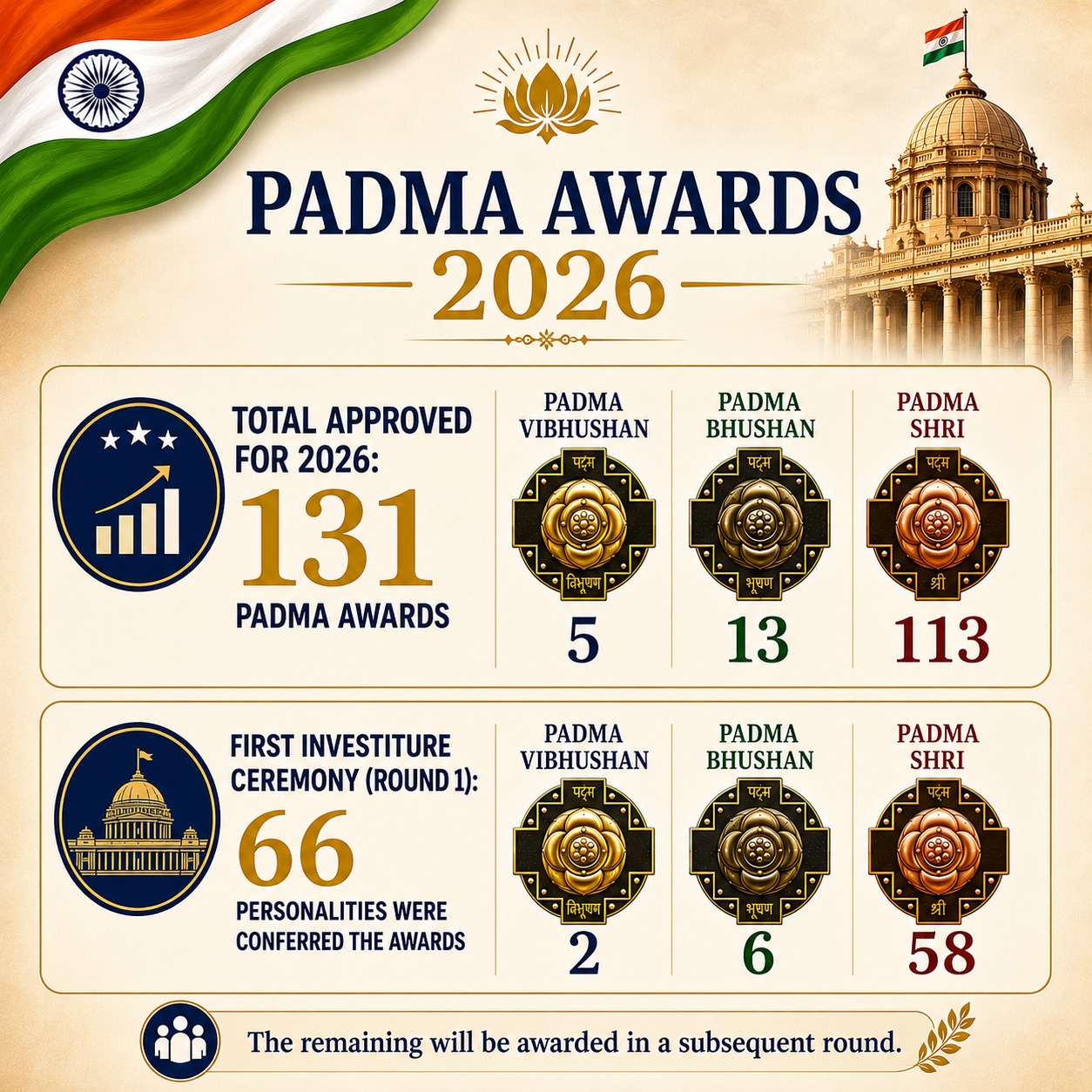
- 26 May 2026
In News:
President Droupadi Murmu today conferred Padma Awards to 66 eminent personalities for the year 2026 at the first Civil Investiture Ceremony held at Rashtrapati Bhavan.
About Padma Awards:
The Padma Awards are among the highest civilian honours of India, announced annually on the eve of Republic Day. They are designed to recognise works of distinction and celebrate exceptional achievements or service where an element of public service is involved. The awards are structured into three distinct tiers:
- Padma Vibhushan is conferred for exceptional and distinguished service — the highest of the three tiers.
- Padma Bhushan is conferred for distinguished service of a high order.
- Padma Shri is conferred for distinguished service in any specific field.
History
- The Government of India instituted two civilian awards in 1954 — the Bharat Ratna and the Padma Vibhushan. Originally, the Padma Vibhushan was classified into three tiers: Pahela Varg (First Class), Dusra Varg (Second Class), and Tisra Varg (Third Class). These were subsequently renamed as the Padma Vibhushan, Padma Bhushan, and Padma Shri via a Presidential Notification issued on January 8, 1955.
- The awards have been announced every year since their inception, except for brief suspensions during 1978–1979 and 1993–1997.
Process of Selection
- Open Nominations — The nomination process is heavily democratised and open to the general public. Citizens can nominate inspiring individuals, and self-nomination is also explicitly permitted.
- The Evaluating Committee — All entries are screened by the Padma Awards Committee, which is constituted by the Prime Minister every year. The panel is headed by the Cabinet Secretary and includes the Union Home Secretary, the Secretary to the President, and four to six eminent public personalities.
- Final Approval — The committee's recommendations are submitted directly to the Prime Minister and the President of India for final executive clearance.
Eligibility Criteria
- All individuals, without any distinction of race, occupation, position, or sex, are fully eligible for these awards. However, government servants — including professionals working with Public Sector Undertakings (PSUs) — are generally not eligible. Notably, doctors and scientists are completely exempt from this restriction and remain eligible based on their research, advancements, or clinical service.
Key Features
- Disciplines Covered — Awards are distributed across fields including Art, Social Work, Public Affairs, Science & Engineering, Trade & Industry, Medicine, Literature & Education, Civil Service, and Sports.
- Annual Cap — The maximum number of awards in a single year cannot exceed 120. This cap, however, excludes posthumous awards and those presented to NRIs, Foreigners, or Overseas Citizens of India (OCIs).
- Posthumous Clause — The award is normally not conferred posthumously. However, in highly deserving or exceptional cases, the government can break this convention.
- Five-Year Elapsing Rule — A recipient can only be upgraded to a higher tier if at least five years have elapsed since the conferment of their earlier category. The Awards Committee may relax this rule in extraordinary circumstances.
- Not a Title — In accordance with Article 18 of the Constitution of India, these awards do not amount to a title and cannot be used as a prefix or suffix to the awardee's name. Any commercial or public misuse forfeits the honour.
- Presentation Insignia — Recipients receive a Sanad (a formal certificate) signed directly by the President of India, along with a primary medallion and a small wearable replica for ceremonial state functions.
Oreshnik — Russia's Hypersonic Ballistic Missile
- 26 May 2026
In News:
The Ukrainian President recently confirmed that Russia used the Oreshnik missile during a mass drone and missile attack on Kyiv. This marks the third reported use of the weapon in the Russia-Ukraine war. It was first deployed in November 2024 to strike the Ukrainian city of Dnipro.
What is the Oreshnik?
- It is a Russian-made intermediate-range hypersonic ballistic missile, believed to be derived from the RS-26 Rubezh ballistic missile system. Its name means "hazel tree" or "hazelnut tree" in Russian. It is capable of carrying both nuclear and conventional warheads.
Key Technical Specifications
- The missile is estimated to be 15 to 18.5 metres long with a diameter of approximately 1.9 metres. It travels at Mach 10 — roughly 2.5 to 3 kilometres per second — and has a reported range of 5,000 kilometres. It is launched from a mobile transporter-launcher and carries 6 to 8 warheads via MIRV technology.
Defining Features
- Multiple Independently Targetable Re-entry Vehicles (MIRVs): The Oreshnik carries 6 to 8 warheads, each capable of being directed at a different target simultaneously. This multi-warhead capability complicates air defence interception and is typically associated with longer-range intercontinental ballistic missiles — making it unusual for an intermediate-range system.
- Hypersonic Speed: Travelling at Mach 10 — approximately ten times the speed of sound — the missile is extremely difficult to intercept using existing air defence systems.
- Mobile Launch Platform: Being mounted on a mobile transporter and launcher enables rapid deployment and concealment, making it harder to detect and neutralise before launch.
Strategic Range & Reach
- With a reported range of 5,000 km, the Oreshnik can strike targets across all of Europe and potentially reach the west coast of the United States — giving it significant strategic depth well beyond the immediate theatre of the Russia-Ukraine conflict.
BHAVYA Scheme
- 26 May 2026
In News:
Union Commerce Minister Piyush Goyal recently announced the launch of guidelines for the BHAVYA Scheme under which the Centre plans to develop 100 industrial parks across the country.
The scheme carries a financial outlay of ?33,660 crore and aims to create manufacturing and investment hubs through plug-and-play industrial parks in partnership with state governments.
Key Objectives
- Develop 100 investment-ready, world-class industrial parks over six years (2026–27 to 2031–32)
- Support Make in India and PM GatiShakti by creating integrated manufacturing zones
- Promote cluster-based industrial development, enabling manufacturers, suppliers, and service providers to operate in proximity — strengthening domestic supply chains and employment
Rollout Plan
- Applications for 20 parks will be invited in the first two months, followed by another 30 parks in the next two months, while the remaining 50 parks will be taken up in a subsequent phase. Goyal expects 50 parks to be operationalised within three years.
Financial Support
- Industrial parks will range from 100 to 1,000 acres, with financial assistance of up to ?1 crore per acre for infrastructure development. Support will cover internal roads, underground utilities, drainage systems, common treatment facilities, warehousing, testing labs, and worker housing.
- For proposals involving private sector partnerships, the Centre would provide assistance of ?50 lakh per acre. External infrastructure support of up to 25% of the project cost has also been proposed to improve connectivity with transport and logistics networks.
Implementation Framework
- The parks will be developed under the National Industrial Corridor Development Programme (NICDP) framework in partnership with states and private sector players. The National Industrial Corridor Development Corporation (NICDC), under DPIIT, will anchor implementation.
- States are required to set up Special Purpose Vehicles (SPVs) under the Companies Act, 2013, notify planning authorities, and establish single-window clearance systems for faster approvals.
Project Selection
Project selection will be carried out through a challenge-based process focused on investment-ready and reform-oriented proposals. States offering better facilities such as land, water, and power are likely to attract more investors. Rajasthan, Maharashtra, West Bengal, and Haryana have already shown interest.
Special Provisions
- Hilly states, NE states, UTs, and smaller states: Minimum land requirement reduced to 25 acres (vs. 100 acres for other states)
- Eligible for both greenfield and brownfield industrial parks
- Parks aligned with PM GatiShakti National Master Plan for multimodal connectivity and last-mile access
- Provisions for green energy and sustainable resource use
Significance
The BHAVYA Scheme is positioned as a major ease-of-doing-business initiative, providing pre-approved land, ready infrastructure, and integrated services to help industries begin operations faster — directly boosting India's manufacturing competitiveness and investment attractiveness.
Chandrayaan-3 Hop Experiment
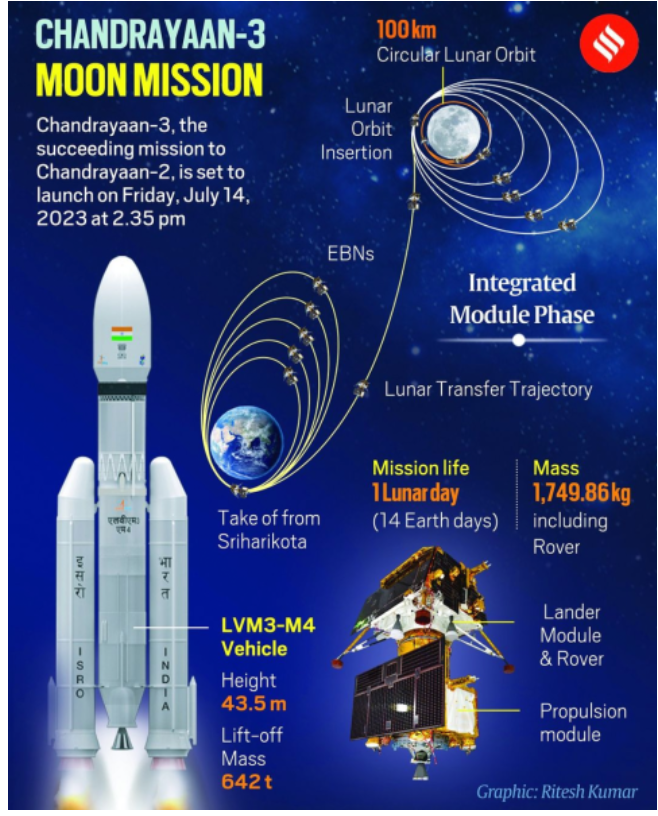
- 25 May 2026
In News:
Findings from the Chandrayaan-3 Vikram lander's "hop" experiment, published in The Astrophysical Journal in April 2026, demonstrate significant heterogeneity in the Moon's surface composition at local scales — challenging previous assumptions about lunar soil uniformity and providing India's first in-situ geotechnical data from the lunar south polar region.
The Hop Experiment:
On 2 September 2023, engineers reignited Vikram's engines to perform a short vertical hop of approximately 50 centimetres using residual propellant. The manoeuvre was initially designed to validate re-ignition capabilities for future sample-return missions, but the engine exhaust inadvertently stripped away the top three centimetres of loose lunar dust, exposing denser material beneath — providing a unique opportunity to study subsurface regolith properties at the south pole for the first time.
The Chandra's Surface Thermophysical Experiment (ChaSTE) — equipped with temperature sensors and a heating probe that penetrated the regolith — was then redeployed at the new post-hop location, measuring thermal profiles during the twilight transition (16:25–17:30 lunar local time), a slow cooling period lasting hours due to the Moon's month-long day-night cycle.
Key Scientific Findings
Two-Layer "Cake-Like" Structure
The Moon's surface at the south pole exhibits a distinct, two-layer structure within the top few centimetres — not a uniform pile of dust as previously assumed.
Upper Layer (0–6 cm) — The "Fluffy Thermal Blanket": The top layer is hyper-porous and highly cohesive, behaving like loose flour near the surface. Bulk density increases dramatically from 750 kg/m³ at the surface to 1,600 kg/m³ at a depth of just 6.5 cm — where the material becomes significantly stiffer, behaving more like damp clay.
Thermal Behaviour:ChaSTE captured a sharp temperature drop after 17:00 lunar local time, as the absence of an atmosphere allows heat to radiate rapidly into space once the Sun's rays are blocked by local shadows — demonstrating how the hyper-porous top layer functions as a critical thermal insulator.
Supporting Evidence: 3D simulations using Chandrayaan-2's OHRC (Orbiter High Resolution Camera) high-resolution imagery confirmed the regolith's layered stratigraphy.
What is Lunar Regolith?
Scientists emphasise that the Moon's surface layer is more accurately termed "lunar regolith" rather than "lunar soil" — it consists of shattered rock fragments and jagged glass-like shards formed by billions of years of micrometeorite bombardment. Unlike terrestrial soil, it lacks organic material or water-formed minerals, and its jagged, angular particles create unusual mechanical properties — high cohesion yet extreme looseness at the surface.
Why It Matters: Five Implications
- Water-Ice Storage: The hyper-porous top layer is particularly significant for trapping water-ice molecules in the subsurface — critical for assessing the viability of in-situ resource utilisation (ISRU) at lunar south polar bases.
- Future Lunar Base Planning: The dramatic density gradient within just 6.5 cm means that drilling, foundation engineering, and habitat construction at the lunar south pole will require significantly different approaches than originally modelled — directly informing NASA's Artemis programme and ISRO's own lunar ambitions.
- Rocket Plume-Surface Interaction: Understanding how engine exhaust erodes the regolith is essential for safe landing zone design for future crewed and cargo missions — preventing landing struts from sinking into loose surface material.
- Sample Return Missions: The hop experiment validates critical engine re-ignition capabilities, setting a precedent for future sample-return missions.
- Chandrayaan-4 Design Inputs: India's upcoming Chandrayaan-4 mission — designed for lunar sample collection and return — will directly incorporate these findings in its lander design and landing site selection.
Actinarctusodissi

- 25 May 2026
In News:
An international team including researchers from the CSIR-National Institute of Oceanography (CSIR-NIO), the University of Minho, Portugal, and the Academy of Scientific and Innovative Research (AcSIR) discovered a new species of tardigrade in the shallow marine waters of the Bay of Bengal, near the coastal region of Markandi, Odisha. This marks the first time in 43 years that a new member of the elusive Actinarctus genus has been identified — a landmark moment for India's marine biodiversity documentation.
About Actinarctusodissi
- The new tardigrade has been officially named Actinarctusodissi, with "odissi" chosen to honour the famous traditional classical dance form originating from Odisha, where the tiny animal was unearthed.
- Researchers collected sand samples from the ocean floor at a depth of 14 metres in shallow marine waters off the Odisha coast.
- The study was published in the journal Marine Biodiversity (Springer Nature). The new species belongs to the family Tanarctidae under Heterotardigrada, and can be distinguished from its congeners by the structure and ornamentation of the dorsal body cuticle, shape and arrangement of lateral epicuticular alae (wing-like flaps), structure and length of the leg IV sensory organ, and the presence of Van der Land's organ in cephalic and leg sensory organs.
Unique morphological features:
- A dome-shaped body surrounded by transparent, wing-like flaps called alae, supported by translucent pillars
- Noticeably shorter lateral wings compared to other members of the genus
- Blunt-tipped sensory appendages (rather than sharp ones)
- Back uniquely heavily sculptured with tiny, trombone-shaped pillars
- Simple, un-split sensory organs on back legs, shorter than those of its congeners
What are Tardigrades?
Tardigrades — colloquially known as "water bears" or "moss-piglets" — are microscopic animals, typically 0.05 mm–1.2 mm in body length. About 1,300 species have been identified globally. They are bilaterally symmetrical, segmented organisms with four pairs of legs, each ending in four to eight claws, feeding on plant cell fluids, animal cell fluids, and bacteria.
Marine tardigrades account for 17% of all known tardigrade species — a category that remains among the most understudied in global marine biodiversity.
Their most remarkable trait is extreme environmental resilience: they can survive punishing heat, freezing cold, ultraviolet radiation, and even the vacuum of outer space. Under unfavourable conditions, they enter a state of suspended animation called the "tun" state — during which the body desiccates and metabolism drops to as low as 0.01% of its normal rate. Tardigrades can survive as tuns for years or even decades, making them candidates for research in astrobiology, cryptobiosis, and pharmaceutical biotechnology.
Scientific and Policy Significance
Marine tardigrades from Indian waters represent an important but largely overlooked component of regional biodiversity, and every new record contributes significantly to understanding their distribution and taxonomy. The discovery highlights the hidden diversity of marine meiofauna in the Indian subcontinent.
The discovery carries broader implications:
- Biodiversity documentation: India's coastal and deep-sea environments remain significantly under-surveyed. The Actinarctusodissi find demonstrates that major taxonomic discoveries remain possible even in relatively shallow, accessible coastal zones — underlining the case for sustained marine biological surveys under India's Deep Ocean Mission.
- Biotechnology potential: Tardigrades' extraordinary survival mechanisms — particularly cryptobiosis and DNA repair under extreme stress — are of active interest to pharmaceutical research, space biology, and materials science. India's discovery of a new marine species adds to the genetic and biochemical resource pool accessible for future research.
- CSIR-NIO's Role: The involvement of CSIR-NIO — India's premier oceanographic research institution based in Goa — highlights the institution's expanding contribution to marine taxonomy beyond its traditional focus on physical and chemical oceanography.
I4C Advisory on iPhone Phishing

- 25 May 2026
In News:
The National Cybercrime Threat Analytics Unit (NCTAU) of the Indian Cybercrime Coordination Centre (I4C) under the Ministry of Home Affairs issued a nationwide advisory warning iPhone users about a sophisticated "hybrid cybercrime" campaign targeting people whose devices have been lost or stolen. The advisory highlights the growing convergence of physical theft with digital fraud — a new frontier in cybercrime requiring urgent public awareness.
The Modus Operandi: A Three-Stage Attack
Unlike mass phishing campaigns sent indiscriminately, this campaign focuses on a narrower group: people whose iPhones have recently been lost or stolen. The perpetrators may already possess the physical device, making the attack more dangerous because the phishing attempt is not random — it is linked to a real incident in the victim's life.
- Stage 1 — Targeted Victim Selection: Criminals identify individuals with recently lost or stolen iPhones, exploiting the psychological vulnerability of device loss — photos, contacts, bank-linked apps, and personal data.
- Stage 2 — Phishing SMS Delivery: Attackers impersonate Apple Support and exploit victims' urgency by sending fraudulent SMS messages containing phishing links. The messages closely resemble legitimate "Find My iPhone" or Apple Support notifications, typically sent from numeric SMS headers, claiming the lost device has been temporarily switched off or that urgent action is required to erase contacts, media, and other data.
- Stage 3 — Credential Theft and Account Takeover: The phishing links redirect users to fake websites designed to closely resemble legitimate Apple or iCloud login pages. Victims are prompted to enter their Apple ID credentials, followed by One-Time Passwords (OTPs) or two-factor authentication codes sent by Apple. Once obtained, perpetrators gain unauthorised access to the victim's iCloud account, remove the Apple ID linked to the stolen device, disable 'Find My iPhone,' and bypass security protections. The stolen device can then be resold or reused without restrictions.
What is Phishing?
Phishing is a social engineering cyberattack that uses deceptive messages from seemingly legitimate sources to trick victims into revealing sensitive information — login credentials, passwords, OTPs, or financial data. Modern phishing employs domain spoofing, fake websites, generative AI-crafted messages, and SMS-based smishing to maximise credibility and urgency. It commonly supports downstream crimes like account takeovers, ransomware attacks, and financial fraud.
About I4C: India's National Cybercrime Architecture
The Indian Cybercrime Coordination Centre (I4C) was established under the Ministry of Home Affairs as a nodal agency to coordinate India's fight against cybercrime. Its key components include:
- National Cybercrime Threat Analytics Unit (NCTAU) — threat identification and advisory issuance
- National Cybercrime Reporting Portal (NCRP) — centralised complaint platform
- National Toll-Free Helpline '1930' — citizen assistance for financial cyber fraud
- CyberDost — social media handle for cyber safety awareness
- Pratibimb — geospatial crime mapping platform for law enforcement
- Citizen Financial Cyber Fraud Reporting System — near-real-time fraud reporting and fund-siphoning prevention
- Cyber Crime Volunteers Program — citizen engagement in cybercrime prevention
Protective Measures Advised
I4C recommended the following safeguards:
- Approach any SMS links related to lost or stolen devices with healthy scepticism, particularly when messages originate from unfamiliar, numeric, or international identifiers.
- Never enter Apple ID credentials or OTPs on pages accessed through SMS links.
- Always access Apple services directly through the official website or the device itself.
- Keep "Find My iPhone" enabled and regularly update recovery contact information.
- Report suspicious messages to 1930 or via the NCRP portal.
Ayushman Bharat Digital Mission (ABDM)
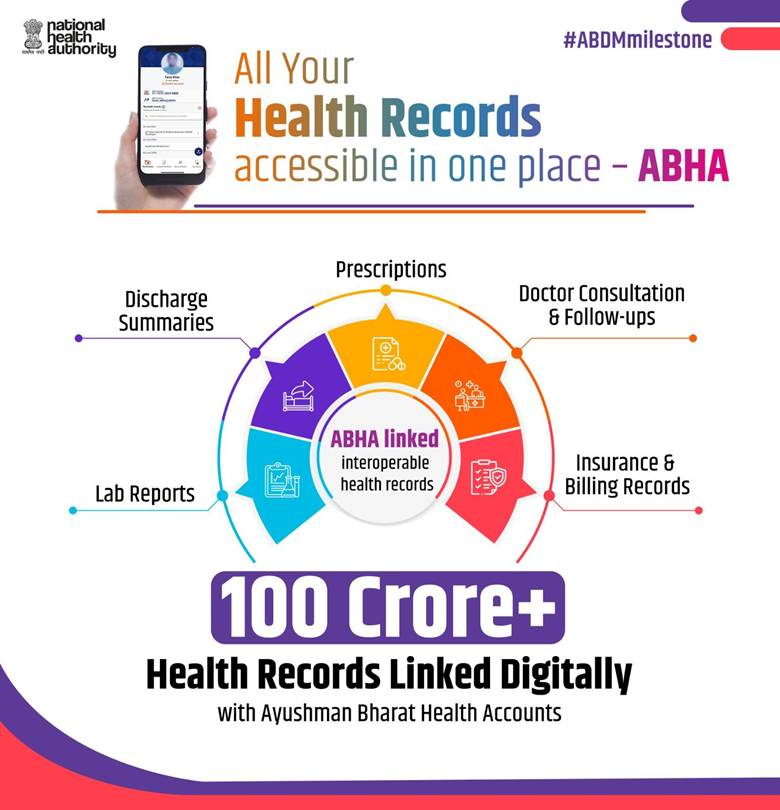
- 25 May 2026
In News:
The Ayushman Bharat Digital Mission (ABDM), implemented by the National Health Authority (NHA) under the Ministry of Health and Family Welfare, has achieved a landmark milestone with over 100 crore health records successfully linked with Ayushman Bharat Health Accounts (ABHA). The achievement positions ABDM as one of the world's largest digital health ecosystems — a defining moment for India's Digital Public Infrastructure (DPI) in healthcare.
Scale and Speed of Achievement
ABDM doubled the number of linked health records from 50 crore in February 2025 to over 100 crore in just 15 months, with nearly 10 crore health records now being added every two to three months. From fewer than 1,000 linked records during its initial phase, the mission has evolved into a continental-scale digital health infrastructure.
More than 450 public and private health technology solutions have successfully integrated with the ABDM ecosystem, accelerating digitisation and seamless exchange of health records across healthcare facilities nationwide.
State-Wise Performance
Uttar Pradesh has emerged as the leading contributor with over 15.03 crore ABHA-linked health records, followed by Andhra Pradesh with over 11.95 crore. Bihar, Rajasthan, and Gujarat have linked over 7.37 crore, 6.32 crore, and 4.77 crore records respectively.
Key Government Platforms Contributing to the Milestone
Major contributing programmes and platforms include the NCD Programme and CoWIN (MoHFW), PM-JAY, UP's eKavach platform, AP's health programmes, the Reproductive and Child Health (RCH)programme, eHospital (NIC), eSushrut (C-DAC), Gujarat's TeCHO platform, and Rajasthan's iHMS platform.
Key Components of ABDM
The mission operates through six digital building blocks:
- ABHA (Ayushman Bharat Health Account): A 14-digit unique health ID enabling citizens to securely link and access health records across hospitals, clinics, labs, and pharmacies.
- Healthcare Professionals Registry (HPR): Comprehensive repository of all healthcare professionals across modern and traditional medicine systems.
- Health Facility Registry (HFR): Registry of all public and private health facilities — hospitals, clinics, diagnostic labs, pharmacies.
- HIE-CM (Health Information Exchange and Consent Manager): Enables consent-based, secure sharing of health records — placing data sovereignty with the citizen.
- Unified Health Interface (UHI): Open protocol enabling interoperability across digital health service applications.
- National Health Claims Exchange (NHCX):Standardises health claim information exchange between payers, providers, and beneficiaries — streamlining insurance claim processing.
Significance
ABDM represents a pivotal application of India's DPI model — the same stack of interoperable, consent-based, open-protocol infrastructure that powers UPI in payments and Aadhaar in identity — now applied to healthcare data. The milestone has several transformative implications:
- Continuity of Care: Longitudinal digital health records empower citizens with secure, consent-based access to their health information — enabling seamless record sharing across providers and eliminating dependence on physical documents.
- Insurance Efficiency: NHCX integration reduces claim processing delays and fraud — a critical reform for PM-JAY's effective implementation at scale.
- Public Health Surveillance: Aggregated, anonymised ABHA-linked data can power population-level disease surveillance, NCD monitoring, and health planning — aligning with India's One Health Mission and post-pandemic preparedness frameworks.
- Global DPI Leadership: India's ABDM model — open, interoperable, consent-driven, and rapidly scalable — is increasingly cited by the WHO and G20 as a replicable template for low- and middle-income countries building digital health infrastructure.
Myopia
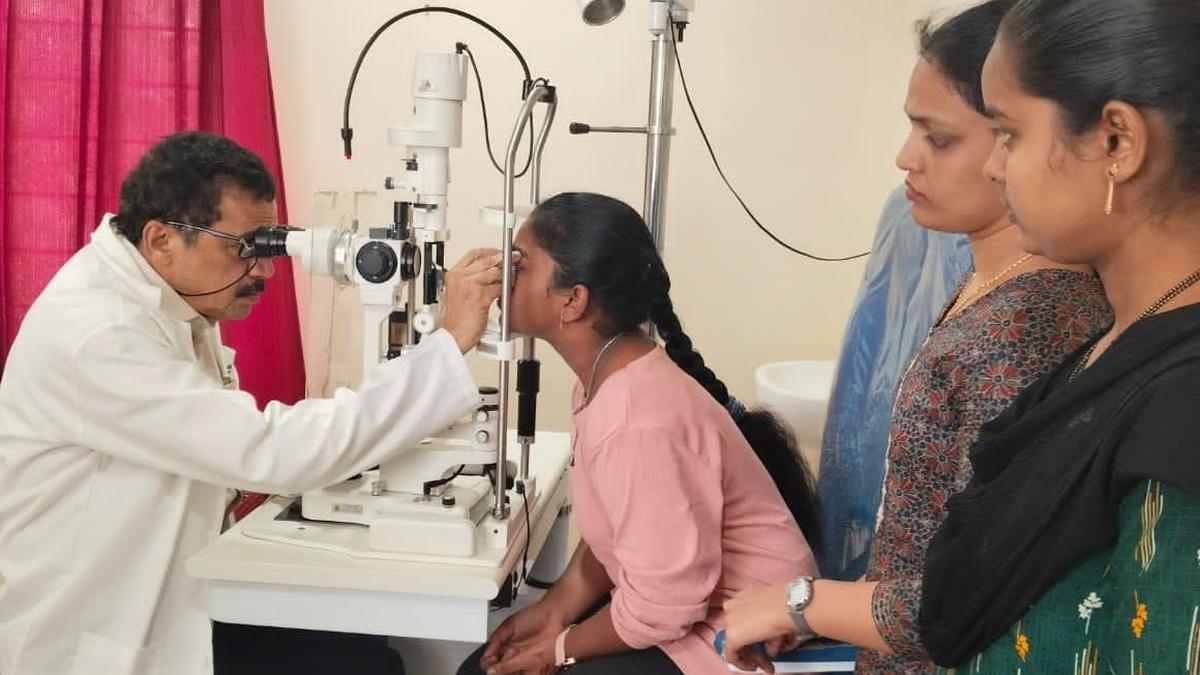
- 25 May 2026
In News:
The global prevalence of myopia has surged from 22.9% in 2000 to an estimated 34% in 2020 and is expected to reach 50% by 2050, affecting nearly 5 billion people — making it one of the most pressing public health challenges of the 21st century. Once regarded as a benign, correctable refractive error, myopia is now recognised as a progressive, potentially sight-threatening condition with significant socioeconomic consequences.
What is Myopia?
- Myopia — commonly known as nearsightedness — is a refractive error in which close objects appear clear while distant objects appear blurry.
- It occurs when the eyeball is elongated from front to back, causing incoming light to focus in front of the retina rather than directly on it. The longer the eyeball, the more severe the nearsightedness.
- Eye experts attribute myopia to a combination of hereditary and environmental factors. It typically begins in childhood or adolescence, worsening progressively until adulthood when it may stabilise.
The Scale of the Crisis
- Researchers predict that by 2050, 4,758 million people (49.8% of the world population) will be myopic, and 938 million will have high myopia — a severe form carrying significantly elevated risks of permanent vision loss.
- High myopia raises the risk of serious ocular diseases such as myopic macular degeneration (MMD), retinal detachment, glaucoma, and cataract — conditions that can cause irreversible blindness.
- Myopia's prevalence has dramatically increased in recent decades, now affecting as much as 88% of the population in some Asian countries — though its growing prevalence is by no means an exclusively regional trend.
Why is it Rising so fast? The "Changing Childhood" Factor
The sharp rise in myopia prevalence is strongly linked to urbanisation-driven lifestyle changes — particularly among children:
- Increased near-work activity: Prolonged screen time, reading, and digital device use force the eye to focus at short distances for extended periods — a key risk factor for axial elongation of the eyeball.
- Reduced outdoor time: Health officials increasingly highlight that children need more outdoor time as a countermeasure — natural light exposure and distant vision are believed to stimulate dopamine release in the retina, which inhibits excessive eye elongation.
- Earlier onset: As the number of people with myopia increases, the age of onset is decreasing — a critical concern since earlier onset leads to greater lifetime myopic progression and higher risk of complications.
- In South Asia, urban children show a 2–3 fold higher prevalence of myopia compared to rural children, predominantly due to increased near-work activity in urban school environments.
India's Burden
South Asia — comprising India, Pakistan, Bangladesh, and six other countries — hosts 23% of the world's population but bears a disproportionately large 30% share of global visual impairment. Uncorrected refractive errors, predominantly myopia, account for as much as 63% of visual impairment in the region — far exceeding the global average of 50%. India's rapid urbanisation, competitive education culture, and explosive growth in screen time among children are accelerating this trajectory.
Treatment and Prevention
- Corrective options: Glasses and contact lenses remain the primary correction tools. Negative (minus) powered lenses diverge light before it enters the eye, compensating for the elongated eyeball. Refractive surgeries (LASIK, PRK) are available for adults.
- Myopia control strategies — aimed at slowing progression rather than merely correcting existing refractive error — include orthokeratology (overnight contact lenses), low-dose atropine eye drops, and multifocal lenses. However, access to these therapies remains highly unequal globally.
The most cost-effective intervention remains behavioural: increasing children's daily outdoor exposure to at least 90–120 minutes and reducing near-screen time — a public health message with direct policy implications for India's school education and digital learning frameworks.
Rupee at Historic Lows: RBI's Multi-Pronged Currency Defence in 2026

- 24 May 2026
In News:
The Indian Rupee has faced persistent downward pressure, depreciating significantly against the US Dollar — piercing the 96.86 mark per USD to hit a new historic low, driven by rising crude oil prices, geopolitical strain from the West Asia conflict, and strong foreign fund outflows from Indian equity markets. In response, the RBI has deployed a multi-pronged intervention architecture — combining spot market dollar sales, forex swap auctions, and liquidity management tools.
The Triggers Behind Rupee Depreciation
- Geopolitical shock: Escalation of the US-Iran conflict pushed crude oil prices sharply higher — directly worsening India's import bill, as India imports approximately 87% of its crude requirements.
- Capital outflows: Foreign Portfolio Investors (FPIs) pulled capital from Indian equity markets amid global risk-off sentiment.
- Dollar strength: A stronger US Dollar globally — driven by elevated US Federal Reserve rates — exerted broad emerging market currency pressure.
RBI's Intervention Toolkit: 2026 Deployment
1. Spot Market Dollar Sales: The RBI has been selling dollars at an estimated pace of USD 1 billion per day in recent trading sessions to curb excessive depreciation. However, this drains rupee liquidity from the banking system — a side effect the RBI manages through Sterilised Interventions, using Open Market Operations (OMOs) to simultaneously inject rupees back via government bond purchases.
2. USD 5 Billion Buy-Sell Swap Auction: The RBI announced a USD 5 billion USD/INR buy-sell swap auction for a tenor of three years, aiming to ease prolonged cash tightness within the banking network caused by its heavy forex market interventions.
Mechanics: Banks sell dollars to the RBI now (receiving rupees at spot rate) and agree to buy them back at a pre-determined rate plus premium after three years. This is expected to inject ?42,000–43,000 crore of durable rupee liquidity back into the banking system.
Market participants noted the swap will be good for bonds by maintaining surplus liquidity, and should also cool forward premiums — reducing hedging costs that had been rising for two weeks — though the impact on the INR spot rate is expected to be broadly neutral.
3. Pre-Market Interventions:The RBI recently used off-market mechanics of selling dollars through state-run banks, driving a 70-paise intraday rally that pushed the rupee back from near-97 levels to an opening rate of 96.30.
4. Net Open Position (NOP) Cap: The RBI implemented a strict Capital Flow Management measure — capping banks' Net Open Position in foreign currencies at USD 100 million per day — forcing banks to unwind excess dollar holdings and increasing dollar supply in the forex market.
Historical Parallels: Crisis Playbook
India has navigated severe currency stress before through unconventional tools:
- 1998 (Post-nuclear test sanctions): Issued Resurgent India Bonds (RIBs) — raising ~USD 4.2 billion from NRIs.
- 2013 (Taper Tantrum): RBI Governor Raghuram Rajan opened a special FCNR(B) deposit window with subsidised hedging rates — mobilising USD 26 billion in weeks, instantly stabilising the rupee.
Jeevan App &SHATAYU Dashboard
- 24 May 2026
In News:
The Ministry of Social Justice and Empowerment (MoSJE) officially launched the JEEVAN mobile application and the SHATAYU geriatric caregiver dashboard during a National Workshop in New Delhi — a significant policy intervention as India confronts the demographic reality of a rapidly ageing population. Both platforms are developed and managed by the Department of Social Justice and Empowerment.
The Demographic Imperative
India's elderly population (60 ) currently stands at approximately 149 million (2024) and is projected to reach 347 million by 2050 — nearly doubling its share of the total population. This demographic shift poses structural challenges: fragmented welfare delivery, an unorganised caregiving sector, social isolation, inadequate healthcare access, and digital exclusion of senior citizens. JEEVAN and SHATAYU are designed as twin digital solutions to these intersecting vulnerabilities.
JEEVAN: Joint Elderly Empowerment & Virtual Assistance Network
JEEVAN is a citizen-facing, single-window mobile application engineered specifically for senior citizens, with four core functions:
- Unified Welfare Gateway: Aggregates all active Central and State Government schemes, pension benefits, and healthcare entitlements for seniors — eliminating the need for elderly users to navigate multiple departmental portals.
- SOS Emergency Matrix: A simplified, high-visibility one-touch panic button that directly connects elderly users to local emergency services, medical networks, and the national elder helpline — critical for seniors living alone or in low-support environments.
- Institutional Home Locator: Provides geo-tagged, verified listings of all MoSJE-supported senior citizen welfare homes and day-care centres — enabling families to make informed placement decisions.
- Elder-Centric Accessibility Design: Built with large text fonts, voice-assisted navigation, and simplified screen interactions — explicitly addressing the sensory and motor limitations of older users, a dimension typically ignored in mainstream app design.
SHATAYU: Senior Holistic Care Assistance and Training For Your Utility
SHATAYU is a centralised, data-driven national dashboard targeting the supply side of India's eldercare ecosystem — the geriatric caregiver workforce:
- District-Level Micro-Mapping: Enables real-time visibility of verified geriatric caregivers available within specific districts and states — allowing both families and state planners to identify and address care-supply gaps geographically.
- Standardised Training Trackers: Monitors caregiver skill progression, certification benchmarks, and training completion — formalising what has historically been an informal, unregulated domain.
- Care-Economy Integration Hub: Aggregates data from NGOs, medical skill councils, and ecosystem partners to balance supply-demand in the eldercare labour market — directly supporting India's emerging care economy framework.
- Verified Service Directory: Maintains a secure backend with validated caregiver credentials, background checks, and legal compliance records — addressing the safety and trust deficit that has long deterred families from accessing formal care services.
Policy Context
Both platforms align with the Maintenance and Welfare of Parents and Senior Citizens (Amendment) Act, 2019, which expanded the state's obligations toward elderly welfare, and the National Policy for Senior Citizens framework. They also complement existing schemes under ATAL VAYO ABHYUDAY YOJANA (AVYAY) — the umbrella scheme for senior citizen welfare under MoSJE.
SHATAYU's data-driven approach is particularly significant for Skill India Mission targeting — by exposing district-level caregiving deficits, it enables the National Skill Development Corporation (NSDC) and healthcare skill councils to direct specialised geriatric care training camps to underserved rural and semi-urban regions.
Multilateral Exercise PRAGATI 2026
- 24 May 2026
In News:
The multilateral military exercise PRAGATI 2026 commenced at Umroi Military Station, Meghalaya, with 12 friendly nations participating alongside India — marking a significant step in India's evolving role as a Preferred Security Partner in the Indian Ocean Region (IOR) and a concrete expression of its Neighbourhood First and Act East foreign policy doctrines.
What is PRAGATI?
- PRAGATI stands for Partnership of Regional Armies for Growth and Transformation in the Indian Ocean Region, a premier multinational military exercise conducted under the core principles of mutual respect, equality, and shared regional security.
- It provides a unified institutional platform for regional armies to exchange battlefield experiences, harmonise tactical doctrines, and establish joint response mechanisms against contemporary security threats.
Participating Nations
- India hosts 12 friendly nations: Bhutan, Cambodia, Indonesia, Laos, Malaysia, Maldives, Myanmar, Nepal, Philippines, Seychelles, Sri Lanka, and Vietnam — a grouping that reflects India's strategic geography, spanning South Asia, Southeast Asia, and the Indian Ocean island states.
Key Features of PRAGATI 2026
- Operational Focus: The two-week exercise concentrates on counter-terrorism (CT) and counter-insurgency (COIN) operations in semi-mountainous and jungle terrain — the precise operational environment that characterises India's northeastern frontier and large parts of Southeast Asia's security landscape.
Training Modules:
- Joint command planning exercises and tactical-level field drills
- Coordinated live-fire simulation operations designed to improve adaptability, endurance, and tactical proficiency
- Intelligence synchronisation — developing real-time, secure intelligence-sharing frameworks in multinational operational environments — a critical capacity gap in regional CT cooperation
Atmanirbhar Bharat Exposition: PRAGATI 2026 uniquely incorporates a defence-tech showcase where Indian domestic companies display indigenous weapons, tactical gear, and military innovations — integrating defence diplomacy with defence export promotion under the Atmanirbhar Bharat framework.
Strategic Significance
- Preferred Security Partner: PRAGATI operationalises India's stated ambition of being the net security provider in the IOR — a role articulated in the SAGAR (Security and Growth for All in the Region) doctrine and the Indo-Pacific Oceans Initiative (IPOI). Training together builds practical interoperability for real-world crisis response, whether counter-terrorism, HADR, or maritime security operations.
- Geopolitical Positioning: The participant list is deliberately IOR-centric — covering India's immediate neighbourhood (Bhutan, Nepal, Maldives, Sri Lanka), ASEAN partners (Cambodia, Indonesia, Laos, Malaysia, Myanmar, Philippines, Vietnam), and strategic island states (Seychelles). This grouping mirrors the geography of China's expanding maritime footprint — making PRAGATI an implicit instrument of India's IOR balancing strategy.
- Northeast India as a Strategic Hub: The choice of Umroi, Meghalaya as the host location is symbolically and operationally significant — it demonstrates India's confidence in its northeastern security infrastructure and reflects the region's growing importance as India's gateway to Southeast Asia under the Act East Policy.
- Doctrine Building: By harmonising tactical doctrines across 13 armies with varying equipment, languages, and command cultures, PRAGATI contributes to building a regional security architecture that is India-led but genuinely multilateral — a format increasingly preferred by smaller IOR states as an alternative to great-power dependency.
Agni-1 Missile
- 24 May 2026
In News:
India successfully test-launched the Short Range Ballistic Missile (SRBM) Agni-I from the Integrated Test Range (ITR), Chandipur, Odisha, under the aegis of the Strategic Forces Command (SFC). The Ministry of Defence confirmed that the launch validated all operational and technical parameters. The test was conducted as part of a routine training exercise — signalling operational readiness rather than a developmental milestone.
About Agni-I: Key Features
- Type: Single-stage, solid-fuel Short Range Ballistic Missile (SRBM)
- Range: 700–1,200 km (heavier payload reduces range; lighter payload enables MRBM-class reach)
- Propulsion: Solid-propellant booster derived from ISRO's SLV-3 technology
- Warhead: Nuclear-capable; also carries conventional warheads
- Mobility: Deployable via rail-based platforms and road-mobile Transporter Erector Launchers (TELs) — enabling survivable second-strike positioning
- Induction: First deployed by the Indian Army's Strategic Forces Command in 2007
- Origin: Developed under India's Integrated Guided Missile Development Programme (IGMDP), 1983 — the landmark initiative that also produced Prithvi, Trishul, Akash, and Nag
The Agni Family: India's Strategic Backbone
The Agni series constitutes the core of India's nuclear triad's land-based component, spanning a comprehensive strike envelope:
|
Missile |
Type |
Range |
|
Agni-I |
SRBM/MRBM |
700–1,200 km |
|
Agni-II |
MRBM |
~2,000 km |
|
Agni-III |
IRBM |
~3,000 km |
|
Agni-IV |
IRBM |
~3,500–4,000 km |
|
Agni-V |
ICBM |
>5,000 km |
|
Agni Prime |
MRBM |
~1,000–2,000 km (advanced) |
Critical Context: MIRV Test and Escalating Capability
- The Agni-I test follows another significant achievementwhen India successfully flight-tested an advanced Agni missile fitted with a Multiple Independently Targetable Re-entry Vehicle (MIRV) system from Dr APJ Abdul Kalam Island, Odisha. The missile carried multiple payloads directed at different targets spatially distributed across a large area of the Indian Ocean Region, tracked by multiple ground-based and ship-mounted stations throughout the trajectory.
- MIRV capability i.e. the ability to deliver multiple warheads from a single missile to strike different targets simultaneously, is considered a quantum leap in strategic deterrence, as it exponentially complicates an adversary's missile defence calculations.
Strategic Significance
- Credible Minimum Deterrence: Regular Agni series tests are essential for maintaining operational readiness and validating deterrent credibility — particularly in the context of India's No First Use (NFU) nuclear doctrine, which requires assured second-strike capability. A road-mobile, solid-fuelled missile like Agni-I is ideally suited for survivable second-strike posturing.
- Layered Deterrence: The twin tests — Agni-I (short-range battlefield deterrence) and MIRV-equipped Agni (strategic deterrence at intercontinental scale) — within weeks of each other demonstrate India's full-spectrum deterrence architecture, covering both tactical and strategic nuclear scenarios.
- Geopolitical Signalling: These tests reinforce India's strategic deterrence posture at a time of heightened regional security tensions — including continued Pakistani nuclear modernisation, China's expanding ICBM arsenal, and the post-Pahalgam crisis security environment in South Asia.
Sanghmitra Patrol Vessel

- 24 May 2026
In News:
The Indian Navy's next-generation offshore patrol vessel 'Sanghmitra' was recently launched at Garden Reach Shipbuilders & Engineers (GRSE), Kolkata, marking a significant milestone in India's indigenisation of naval platforms and the country's growing blue-water maritime ambitions.
About the Vessel
- Type: Next Generation Offshore Patrol Vessel (NGOPV)
- Shipyard: Garden Reach Shipbuilders & Engineers (GRSE), Kolkata, a Defence Public Sector Undertaking (DPSU) under the Ministry of Defence.
- Programme Scale: Sanghmitra is part of India's ambitious programme to construct 11 NGOPVs simultaneously across two shipyards — reflecting the Navy's push for large-scale, parallel indigenous naval construction.
- Name: Named after Sanghmitra, the daughter of Emperor Ashoka, who played a pivotal role in spreading Buddhism to Sri Lanka — a name symbolising India's civilisational outreach and maritime heritage in the Indian Ocean Region.
- Crest Design: Features the constellation Ursa Major and a red-and-white lighthouse — symbols of navigation, maritime vigilance, and enduring guidance.
Technical Specifications
- Length: ~113 metres
- Beam (Width): 14.6 metres
- Displacement: 3,000 tonnes
- Endurance: 8,500 nautical miles at a cruising speed of 14 knots
- Maximum Speed: 23 knots
- Crew Accommodation: Designed for extended blue-water patrol operations with modern habitability standards.
Operational Capabilities
The NGOPV platform is designed for a wide spectrum of missions across the full conflict spectrum:
- Maritime Surveillance: Intelligence gathering and domain awareness in India's areas of interest — including the Exclusive Economic Zone (EEZ), which spans over 2.37 million sq km.
- Search and Rescue (SAR): Rapid response to maritime distress situations in the Indian Ocean Region.
- Protection of Offshore Assets: Security of oil rigs, underwater pipelines, and strategic maritime infrastructure.
- Humanitarian Assistance and Disaster Relief (HADR): Rapid deployment during natural disasters — a growing operational priority given India's increasing HADR footprint in the IOR.
- Anti-Piracy Operations: Sustained presence in piracy-prone corridors including the Gulf of Aden and the western Arabian Sea.
Strategic Significance
Atmanirbhar Bharat in Defence: GRSE's construction of Sanghmitra underscores India's accelerating naval indigenisation under the Atmanirbhar Bharat initiative. GRSE has previously built frigates, corvettes, landing craft, and fast attack crafts — establishing itself as a frontline warship builder. India's Defence Acquisition Procedure (DAP) 2020 mandates preference for indigenously designed, developed, and manufactured (IDDM) platforms — the NGOPV programme is a direct expression of this policy.
Indian Ocean Strategy: The 11-vessel NGOPV programme significantly enhances India's persistent maritime presence across the IOR at a time of heightened strategic competition — with China's expanding naval footprint through its String of Pearls strategy placing India's maritime neighbourhood under pressure. OPVs, by virtue of their endurance and multi-role capability, are ideally suited for grey-zone operations — below the threshold of conflict but above mere diplomatic signalling.
Naming Significance: The choice of Sanghmitra — a historical figure who carried India's civilisational influence across the Indian Ocean to Sri Lanka — is symbolically deliberate, reflecting India's conception of the IOR as a historically connected civilisational space rather than a purely contested strategic domain.
Suryastra: India's Indigenous Multi-Calibre Rocket System
- 23 May 2026
In News:
India achieved a major milestone in indigenous defence technology after private defence firm Nibe Limited successfully tested the long-range Suryastra rocket system at the Integrated Test Range (ITR), Chandipur, Odisha. Trials included both the 150 km and 300 km strike-range variants, both delivering highly accurate strikes with minimal error.
What is Suryastra?
- Suryastra is India's first indigenous universal multi-calibre rocket launcher system — a fully guided, precision rocket artillery platform designed for long-range strategic strikes.
- Developed by Pune-based Nibe Limited in collaboration with Israel's Elbit Systems, based on Elbit's PULS (Precise & Universal Launching System) technology.
- Mounted on a highly mobile 6×6 Tatra truck, enabling rapid deployment and shoot-and-scoot survivability against counter-battery fire.
- Mission profile: precision strikes against enemy command centres, radar installations, logistics hubs, and military infrastructure deep inside hostile territory.
Technical Specifications
- Multi-calibre, Modular Design: Uses interchangeable modular pods capable of firing:
- 122 mm rockets — shorter-range battlefield engagements
- 306 mm EXTRA missiles — range up to 150 km
- 370 mm Predator Hawk missiles — range up to 300 km
- SkyStriker loitering munitions (suicide drones) — range up to 100 km
- Precision: The 150 km variant achieved a Circular Error Probable (CEP) of 1.5 metres; the 300 km variant struck within 2 metres of the target — exceptional accuracy for long-range guided rocket artillery.
- Fire Control: Integrates GPS, inertial navigation, and digital ballistic computation for all-weather, day-night precision targeting.
- Semi-automated reload reduces crew exposure during operations.
Strategic Significance
- Operational Depth: The 300 km strike range allows India's military to engage high-value strategic targets deep inside enemy territory while keeping personnel and equipment outside conventional artillery range — a critical operational advantage in mountainous or contested border terrains.
- Multi-domain Lethality: The inclusion of loitering munitions (SkyStriker) alongside conventional rockets gives Suryastra a hybrid character — combining saturation fire with precision drone strike capability in a single platform, mirroring doctrinal lessons from the Ukraine and Nagorno-Karabakh conflicts.
- Atmanirbhar Bharat Validation: Private companies like Nibe are now stepping up to build missile platforms, drones, and advanced electronics — reducing India's reliance on imports and demonstrating the maturation of India's private defence-industrial ecosystem.
- Comparative Context:Suryastra's capability profile places it alongside systems like the US M270 MLRS and Russia's BM-30 Smerch, but with the added distinction of being indigenously integrated and domestically produced — a significant leap for a country historically dependent on imported artillery.
Policy Context
The Suryastra test aligns with India's Defence Acquisition Procedure (DAP) 2020, which prioritises indigenously designed, developed, and manufactured (IDDM) systems. India's Defence Production and Export Promotion Policy (DPEPP) 2020 targets defence exports of USD 5 billion by 2025 — systems like Suryastra, once inducted, could form the core of India's emerging guided rocket artillery export portfolio
Arunachal Kiwi Mission

- 23 May 2026
In News:
Union Minister for Development of North Eastern Region (DoNER), Shri Jyotiraditya Scindia, launched the "Arunachal Kiwi: The USP of Arunachal Pradesh" — a Cluster-based Kiwi Cultivation and Value Chain Development Mission — in New Delhi. With a financial outlay of approximately ?167 crore, the mission is designed through a whole-of-government and convergence-led approach, marking a significant step in building globally competitive agricultural value chains rooted in the Northeast's natural strengths.
Why Kiwi for Arunachal Pradesh?
- Arunachal Pradesh is India's largest kiwi-producing state and the first state in the country to receive organic kiwi certification under the Mission Organic Value Chain Development for North East Region (MOVCD-NER) in 2020.
- The state's high-altitude, organic agro-climatic conditions are ideal for producing premium-grade Hayward and Allison cultivars of kiwi — varieties with high domestic and export market value.
- Kiwi (Actinidia deliciosa, also called Chinese Gooseberry) thrives between 900–1,600 metres above mean sea level in warm, humid climates with well-distributed annual rainfall of around 150 cm and 700–800 chilling hours during winter — conditions naturally present across Arunachal's hill terrain.
- The fruit is a rich source of Vitamins B and C and minerals including phosphorus, potassium, and calcium, placing it in growing demand in health-conscious domestic and global markets.
Four Strategic Pillars of the Mission
The Arunachal Kiwi Mission is anchored on four pillars:
- Convergence: Integration of schemes across multiple ministries and departments to eliminate fragmented implementation and maximise fund utilisation.
- Value Addition: Moving beyond raw fruit production toward processed kiwi products — juices, jams, dried kiwi, nutraceuticals — to enhance farmer income and reduce post-harvest losses.
- Branding: Developing a distinct, recognisable identity for Arunachal kiwi in domestic and global markets — leveraging its organic certification as a premium differentiator.
- Market Integration: Creating structured supply chain linkages connecting farmers to retail, e-commerce, institutional buyers, and export channels.
Northeast's Unique Product Strategy: One State, One USP
The Arunachal Kiwi Mission is part of a broader DoNER strategy to identify one flagship agricultural or cultural product per Northeastern state with a distinct Unique Selling Proposition (USP):
- Mizoram — Ginger
- Nagaland — Coffee
- Sikkim — Organic Farming
- Manipur — Polo Heritage
- Assam — Muga Silk
- Meghalaya — Lakadong Turmeric
- Arunachal Pradesh — Kiwi
This state-specific, product-anchored approach reflects a shift from generic rural development to competitive, brand-led agricultural specialisation — a model aligned with global agri-value chain thinking.
Policy Context
The mission converges with several existing schemes:
- MOVCD-NER — organic value chain development specific to the Northeast.
- PM-KISAN and Pradhan Mantri Kisan SAMPADA Yojana — for farmer income support and food processing infrastructure.
- One District One Product (ODOP) — for cluster-level product specialisation.
- Agricultural Export Policy 2018 — for integrating Indian agricultural produce into global value chains.
UMMID Programme
- 23 May 2026
In News:
Union Minister Dr. Jitendra Singh dedicated the UMMID (Unique Methods of Management of Inherited Disorders)Programme for Rare Genetic Disorders to the Nation at Prithvi Bhawan, New Delhi.
What is UMMID?
- Nodal Ministry: Department of Biotechnology (DBT), Ministry of Science & Technology.
- Nature: India's first comprehensive national initiative addressing inherited and rare genetic disorders through an integrated, multi-pronged public health approach.
- Policy linkage: Supports implementation of the National Policy for Rare Diseases (NPRD) 2021 by creating structured care pathways for affected patients.
Three Pillars of UMMID
- NIDAN Kendras: Nearly 30 NIDAN Kendras have been established for advanced genetic diagnostics and counselling, ensuring genomic healthcare reaches beyond metropolitan centres to ordinary citizens.
- Outreach in Aspirational Districts: Targeted screening and awareness programmes in underserved and aspirational district populations — addressing the equity gap in rare disease detection.
- Specialised Training Centres: Capacity-building for clinicians, genetic counsellors, and healthcare professionals — addressing the long-standing knowledge deficit around rare disorders in mainstream medical practice.
Key Achievements
- The programme has benefited nearly three lakh individuals through screening and diagnostic services.
- Services span prenatal and newborn screening, genetic counselling, diagnostics, clinician training, and community outreach — all under one unified public health model.
- The UMMID Dashboard launched alongside will enable real-time nationwide monitoring of programme reach and outcomes.
Why It Matters: The Silent Burden
- Inherited and rare genetic disorders remained neglected for decades because diagnosis was difficult, treatment inaccessible, and medicines either unavailable or prohibitively expensive.
- Families often spend years moving from hospital to hospital in search of a diagnosis — imposing enormous emotional, social, and financial hardship despite affecting comparatively smaller populations.
- India's vast genetic diversity compounds the challenge, requiring robust ecosystem-level responses rather than isolated interventions.
Fourth India-Africa Forum Summit (IAFS-IV)

- 23 May 2026
In News:
- The Fourth India-Africa Forum Summit (IAFS-IV), scheduled in New Delhi, has been postponed due to concerns over the spread of the Ebola Virus Disease (EVD) in parts of Africa.
- The summit was to be held after a gap of 11 years — the longest inter-summit interval since IAFS's establishment.
About the Ebola Outbreak
- The WHO has declared the latest Ebola outbreak in the Democratic Republic of Congo (DRC) a Public Health Emergency of International Concern (PHEIC) — the DRC's 17th Ebola outbreak.
- The outbreak has caused approximately 139 deaths with around 600 suspected cases, with the first case now confirmed in South Kivu province, controlled by Rwanda-backed M23 rebels.
- Containment efforts have been severely hampered by ongoing armed conflict in eastern DRC.
- India issued a health advisory for travellers arriving from or transiting through Ebola-affected countries; the Union Health Secretary chaired a high-level review with health secretaries of all states and UTs to assess preparedness.
About India-Africa Forum Summit (IAFS)
- Established: 2008 — the apex institutional platform for India-Africa dialogue and cooperation.
- Previous Summits: IAFS-I (2008, New Delhi) → IAFS-II (2011, Addis Ababa) → IAFS-III (2015, New Delhi).
- Purpose: Strengthens political dialogue, trade, investment, technology transfer, capacity building, and people-to-people ties between India and the 55 African Union member states.
- Reflects: Commitment to South-South cooperation, inclusive development, multilateralism, and sustainable partnerships.
Note: Ebola has twice disrupted India-Africa summitry — the IAFS-III was also delayed from 2014 to 2015 partly due to the West African Ebola epidemic.
Significance of IAFS-IV (What Was at Stake)
- IAFS-IV was expected to announce India's next 10-year Africa engagement roadmap, building on the USD 29 billion in Lines of Credit and 50,000 scholarships committed at IAFS-III.
- The summit coincided with India's growing strategic interest in Africa for critical minerals, maritime security (Indian Ocean Region), food security partnerships, and UN Security Council reform support.
- Africa's 54-member bloc is India's largest voting bloc in multilateral forums — including the UN, WTO, and Commonwealth.
About Ebola Virus Disease (EVD)
- Caused by the Ebola virus (genus Ebolavirus); transmitted through direct contact with blood or body fluids of infected persons.
- Incubation period: 2–21 days; symptoms include fever, weakness, vomiting, diarrhoea, and unexplained bleeding.
- WHO has noted a low global risk but warns that a vaccine could take nine months to deploy at scale.
- No established cure exists; treatment remains supportive; the rVSV-ZEBOV vaccine (Ervebo) has been used in outbreak response since 2019.
RAINMUMBAI
- 22 May 2026
In News:
The National Commodity Derivatives Exchange Limited (NCDEX) announced RAINMUMBAI as India's first SEBI-approved exchange-traded weather derivatives contract, with trading set to commence on 29 May 2026. The launch represents the emergence of a new climate-linked asset class in India and a significant step in strengthening the country's climate risk management ecosystem.
What are Weather Derivatives?
Weather derivatives are financial contracts that derive value from weather variables — such as rainfall, temperature, snowfall, or wind speed — rather than from conventional financial assets. Unlike traditional insurance products, weather derivatives are settled purely on observed weather data and do not require physical loss assessment, enabling faster settlement and greater operational efficiency. They are widely used globally in agriculture, power, construction, logistics, tourism, and energy — sectors where revenues are significantly impacted by weather variability. Their inclusion in India's financial architecture became possible after weather derivatives were formally included in the Securities Contracts (Regulation) Act, 1956 (SCRA) in 2024, clearing the regulatory pathway for their exchange-traded launch.
About RAINMUMBAI
RAINMUMBAI was developed in collaboration with IIT Bombay and is based on a scientifically structured Cumulative Deviation Rainfall (CDR) metric, which measures the deviation of actual rainfall from Mumbai's Long Period Average (LPA) during the monsoon months of June to September. Built using daily rainfall data benchmarked against a robust 30-year historical dataset (1991–2020 LPA), the framework ensures transparency, consistency, and reliability.
Underlying data will be sourced from IMD surface rainfall observations and Automatic Weather Stations (AWS) at Santacruz and Colaba — two of Mumbai's principal weather monitoring points. The contract is cash-settled, with a base price of ?50 per millimetre of rainfall, a tick size of 1 mm, and a maximum order size of 50 lots. Trading hours are Monday to Friday, 10:00 a.m. to 11:30/11:55 p.m.
Who Benefits?
The futures contract is designed for a broad range of stakeholders with financial exposure to rainfall fluctuations — farmers, construction companies, power utilities, logistics operators, and banks with agricultural loan portfolios. For farmers, it provides a market-based hedge against crop losses from deficient or excess rainfall, without the documentation burden associated with traditional crop insurance. For banks, it offers a tool to hedge the credit risk embedded in agriculture-linked loan portfolios — a significant concern given India's monsoon-dependent rural economy.
Institutional Architecture
The NCDEX-IMD MoU signed in December 2025 gave NCDEX access to IMD's historical and real-time weather data, enabling development of statistically validated weather indices that form the foundation of weather-linked futures contracts. NCDEX — established in 2003, headquartered in Mumbai, and regulated by SEBI — primarily focuses on agricultural commodity derivatives including wheat, sugar, spices, and cotton.
The RAINMUMBAI initiative is explicitly city-specific and monsoon-specific for now, but the underlying CDR framework can be scaled to other cities and weather parameters — potentially unlocking India's first temperature or wind-based derivatives in future iterations.
Ammonium Sulphate for Paddy
- 22 May 2026
In News:
The Indian Council of Agricultural Research (ICAR) has recommended the use of ammonium sulphate for paddy cultivation as a low-cost fertilizer option to help farmers improve crop nutrition and maintain soil fertility. The recommendation comes amid growing concerns over India's heavy dependence on urea, fertilizer import disruptions from West Asia, and widespread sulphur deficiency in Indian agricultural soils.
What is Ammonium Sulphate?
Ammonium sulphate — chemical formula (NH?)?SO? — is an inorganic, water-soluble mineral fertilizer produced by reacting ammonia with sulphuric acid. It is also recovered as a valuable industrial byproduct from coke-oven gases in steel plants and from the manufacture of caprolactam (used in nylon production) and other metallurgical and chemical processes. This dual origin — direct synthesis and industrial recovery — makes it a resource-efficient fertilizer with significant circular economy value.
Its key nutritional composition: 21% Nitrogen (in the ammonium form) and 24% Sulphur (as active sulphate) — making it one of the richest dual-nutrient fertilizers available.
Why Ammonium Sulphate for Paddy?
Rice farmers frequently apply ammonium sulphate to flooded soils since nitrate-based fertilizers are a poor choice for waterlogged paddy fields due to denitrification losses — the microbial conversion of nitrates into nitrogen gas under anaerobic conditions. The ammonium form of nitrogen in ammonium sulphate is more stable in flooded, oxygen-deficient paddy soils, making it agronomically superior to urea in such conditions.
Additionally, paddy cultivation in India is heavily concentrated in alkaline and sulphur-deficient soils across states like Uttar Pradesh, Punjab, and Haryana. Ammonium sulphate addresses both challenges simultaneously — its acidifying effect lowers soil pH in alkaline soils while replenishing sulphur, which is increasingly becoming a deficient macronutrient in Indian farmlands due to the shift away from sulphur-containing fertilizers.
Sulphur plays a critical role in protein synthesis, chlorophyll formation, oil content in oilseeds, and quality parameters of cereals — making sulphur nutrition essential for both yield and produce quality.
The Urea Problem: Why a Shift is Needed
India's fertilizer economy is dangerously skewed toward urea, which accounts for the bulk of nitrogen fertilizer consumption. This creates multiple structural problems: fiscal pressure through enormous subsidies (urea is the most heavily subsidised fertilizer), soil nutrient imbalance (urea provides only nitrogen, exacerbating sulphur and other micronutrient deficiencies), and import vulnerability (India imports significant quantities of urea and its feedstocks).
Fertilizer imports from West Asian suppliers including Saudi Arabia, Qatar, UAE, Oman, and Israel are facing major shipping and logistics disruptions due to ongoing regional conflict in 2026 — making diversification of India's fertilizer basket both an agronomic and a strategic food security imperative.
Broader Applications of Ammonium Sulphate
Beyond agriculture, ammonium sulphate finds use across several industries: water treatment (as a coagulation aid), food processing (as a dough conditioner and food additive approved under FSSAI standards), pharmaceuticals (protein precipitation in biologics manufacturing), and textile processing (in dyeing and printing). Its multisectoral utility underscores its importance as an industrial chemical beyond the farm
Blue Straggler Star

- 22 May 2026
In News:
In a breakthrough that could reshape astronomers' understanding of how stars evolve, researchers have made the world's first confirmed discovery of a blue straggler star hosting a brown dwarf companion in an extraordinarily compact binary system. The findings have been published in the prestigious journal Monthly Notices of the Royal Astronomical Society: Letters.
The Research Team: India's Scientific Institutions at the Forefront
Scientists from Gauhati University (supported under the INSPIRE programme of the Department of Science and Technology), the Indian Institute of Astrophysics (IIA), Bengaluru, the Aryabhatta Research Institute of Observational Sciences (ARIES), Nainital, and the INAF-Catania Astrophysical Observatory, Italy collaborated on the discovery. The study demonstrates how innovative analysis of archival astronomical data can yield landmark discoveries without requiring new or expensive observational facilities — a significant lesson for India's growing space science community.
What are Blue Straggler Stars?
Blue Straggler Stars (BSS) are anomalous stellar objects found in old, dense stellar systems such as globular and open star clusters. In a cluster, all stars are expected to be of roughly similar age — meaning they should evolve at comparable rates. Yet blue stragglers appear brighter, hotter, and bluer than their peers, defying the standard stellar evolution timeline. Instead of cooling and expanding as expected at a certain stage, they remain on — or even extend beyond — the main sequence.
Three formation mechanisms are hypothesised: the star accretes mass from a companion (mass transfer); two stars directly merge; or a third star facilitates mass transfer through gravitational perturbations — known as Kozai-Lidov oscillations.
The Historic Discovery
The team found that the binary system has an exceptionally short orbital period of approximately 5.6 hours (0.234 days) and contains the lightest companion ever detected around a blue straggler, with a mass of approximately 0.056 times the mass of the Sun — placing it firmly below the hydrogen-burning limit.
This companion is a brown dwarf — an object too massive to be classified as a planet, but too small to ignite nuclear fusion and become a true star. The study reveals the shortest-period binary system discovered inside the so-called "brown dwarf desert" — a region in stellar science where such companions are considered extremely rare.
Formation Pathway: The Triple-Star Origin
The researchers propose that the system originated as a hierarchical triple-star system — with an inner binary containing a brown dwarf companion and an outer evolved tertiary star. Mass transfer and Kozai-Lidov oscillations induced orbital excitation and merger of the progenitor and the tertiary star, forming the blue straggler. Subsequent tidal dissipation then circularised the inner orbit, producing the present-day compact BSS-BD binary with a short-period, nearly circular orbit.
Scientific Significance
The discovery has multi-layered implications for astronomy. It refines theoretical models of stellar evolution, binary interactions, and substellar object formation — models that underpin data interpretation from both ground-based observatories and space telescopes globally. It also advances understanding of how extreme stellar environments affect orbital dynamics and evolutionary pathways — essential for modelling the long-term structure of the universe.
Ayush Anudan Portal
- 21 May 2026
In News:
Union Minister of State (IC) for Ayushlaunched the Ayush Anudan Portal at Kartavya Bhawan, New Delhi, a significant step towards strengthening digital governance and enhancing transparency in the Ayush sector. The portal is developed under the Ayush Grid initiative, the Ministry's overarching digital transformation framework.
What is the Ayush Anudan Portal?
The portal is developed by the Ministry of Ayush under the Ayush Grid initiative, marking a major milestone in streamlining the submission, processing, approval, and monitoring of funding proposals under various Central Sector Schemes of the Ministry.
The Central Sector Schemes covered under this portal include:
- Ayurgyan (research and innovation in Ayush systems)
- Ayurswasthya (health promotion through Ayush)
- Conservation, Development and Sustainable Management of Medicinal Plants
- International Co-operation
- Promotion of Information, Education and Communication (IEC)
The primary objective of this portal is to ensure 100% transparency, efficiency, accountability and easy accessibility in the grant management process.
Key Features
- Paperless Governance: The portal enables organisations and institutions to submit funding proposals entirely through an online process, eliminating dependency on manual and paper-based systems.
- Scheme-Wise Application Management: The platform categorises, processes, and monitors proposals according to the specific requirements of each Central Sector Scheme — ensuring targeted and structured grant disbursement.
- Real-Time Tracking: A real-time application tracking mechanism allows both applicants and officials to monitor proposal status at every stage of processing — bringing process visibility that was previously absent in grant administration.
- NGO Darpan Integration: Integration with the NGO Darpan Portal facilitates seamless authentication and verification of applicant organisations, making the validation process faster, automated, credible, and error-free. NGO Darpan, managed by NITI Aayog, is the central government's registry of civil society organisations.
- Single-Window Access: The portal is accessible through the My Ayush Integrated Services Portal (MAISP) — the Ministry's single-window digital platform — ensuring integration with the broader Ayush digital ecosystem.
Ayush Grid: The Broader Digital Framework
- Ayush Grid is a visionary digital initiative of the Government of India aimed at establishing an integrated, transparent, and citizen-centric digital ecosystem for the Ayush sector through modern technology.
- It is compliant with the Ayushman Bharat Digital Mission (ABDM) architecture and has already produced digital platforms across education, research, healthcare services, medicinal plant administration, drug regulation, capacity building, and global outreach.
- The Anudan Portal represents the grant management pillar of this ecosystem — a critical component since much of Ayush sector R&D, institution-building, and medicinal plant conservation is funded through central grants to universities, hospitals, research bodies, and NGOs.
Significance
The launch reflects a broader policy shift in governance: moving from discretionary and opaque grant allocation toward rules-based, technology-mediated, and auditable fund flows. For the Ayush sector — which encompasses Ayurveda, Yoga, Naturopathy, Unani, Siddha, and Homoeopathy — this is particularly significant given the sector's expanded role post-COVID and its growing international visibility through initiatives like the WHO Global Centre for Traditional Medicine (GCTM) in Jamnagar, Gujarat
MAVEN Discovers Zwan-Wolf Effect on Mars

- 21 May 2026
In News:
In December 2023, scientists examining data from NASA's MAVEN (Mars Atmosphere and Volatile Evolution) mission stumbled upon something completely unexpected — observations of an atmospheric effect never before seen in Mars' atmosphere. A new study published in Nature Communications now provides the first comprehensive observations of the Zwan-Wolf effect in Mars' atmosphere — a phenomenon previously believed exclusive to planetary magnetospheres like Earth's.
What is the Zwan-Wolf Effect?
Discovered in 1976, the Zwan-Wolf effect describes a process in which charged particles are squeezed and redistributed along magnetic structures called flux tubes — much like toothpaste being pressed through a tube. When the solar wind — a continuous stream of charged particles emanating from the Sun — approaches a planet's magnetic boundary, it becomes compressed near those boundaries. This creates a pressure gradient that pushes charged particles along magnetic field lines, leaving a region of lower particle density near the stream.
On Earth, this mechanism plays a crucial role in deflecting solar wind and protecting the planet's surface. Until now, it had only been documented within planetary magnetospheres, never in an atmosphere.
The Discovery: Why Mars Makes It Surprising
Unlike Earth, Mars lacks a global magnetic field, which significantly impacts how it interacts with solar wind and space weather. Instead, Mars possesses only an induced magnetosphere — generated by the interaction of solar wind with its ionosphere — that can vary dramatically in size and shape during large solar weather events.
MAVEN detected the Zwan-Wolf effect within Mars' ionosphere — less than 200 km above the surface — where a substantial number of electrically charged particles reside. The detection occurred during a powerful solar storm in December 2023, which appears to have amplified the effect to detectable levels.
Based on their findings, the Zwan-Wolf effect may be occurring constantly in the Martian ionosphere but at levels undetectable by MAVEN's instrumentation — the solar storm effectively made the invisible visible.
Scientific Significance
The discovery carries multiple implications.
- First, it demonstrates that solar wind interactions in unmagnetised planetary atmospheres are far more complex than previously modelled.
- Second, understanding the Zwan-Wolf effect at Mars offers new insight into how this phenomenon might occur at similarly unmagnetised bodies such as Venus and Saturn's moon Titan.
- Third, it advances understanding of Mars' atmospheric loss — MAVEN has already established that Mars lost approximately two-thirds of its early atmosphere to space, a process central to why the planet transitioned from a potentially habitable, water-bearing world to the cold desert observed today.
About MAVEN
Launched in November 2013 and arriving at Mars in September 2014, MAVEN is the first spacecraft mission dedicated to surveying Mars' upper atmosphere. It carries three instrument packages — studying solar wind impacts on the ionosphere, ultraviolet activity in the upper atmosphere, and atmospheric composition through mass spectrometry. Notably, MAVEN lost contact with ground stations on 6 December 2025, and NASA launched an anomaly review board in February 2026 to assess its condition and likelihood of recovery — making this discovery among its potentially final scientific contributions.
SHE-MART Initiative
- 21 May 2026
In News:
The Ministry of Rural Development (MoRD) has initiated a nationwide roadmap for women-led rural marketing ecosystems through the SHE-MART (Self Help Entrepreneurs–Marketing Avenues for Rural Transformation) initiative announced in the Union Budget 2026. A two-day National Consultationorganised by Deendayal Antyodaya Yojana–National Rural Livelihoods Mission (DAY-NRLM) was held in Bhubaneswar, hosted by the Odisha Livelihoods Mission under the state's Mission Shakti Department, to finalise operational guidelines for national rollout.
What is SHE-MART?
SHE-MART is a Government of India initiative under DAY-NRLM to create community-owned, women-led retail and aggregation platforms at the cluster-level federation of Self-Help Groups (SHGs). Unlike conventional subsidy-driven retail outlets, SHE-MARTs are envisioned as decentralised, professionally managed enterprise ecosystems that provide SHG members direct, structured access to formal markets — without intermediaries.
Products supported under SHE-MARTs include SHG-made goods across sectors: handicrafts, textiles, food products, agricultural produce, and value-added processed items.
Key Features
- Community Ownership: Retail outlets are owned and managed by women's collectives within cluster-level federations — ensuring governance remains with the community rather than external agencies.
- Market Integration: SHE-MARTs provide permanent retail infrastructure and aggregation points, reducing dependence on informal and exploitative marketing channels.
- Economic Value Chain Progression: The initiative explicitly aims to shift women from income generation to enterprise ownership — transforming SHG members from earners to business owners with control over branding, pricing, and distribution.
- Convergence with VB-GRAM-G: The consultation highlighted significant convergence opportunities between SHE-MARTs and the VB-GRAM-G initiative — particularly in women-centric infrastructure development, demand generation, and market support systems.
- Technology Integration: Discussions covered technology-enabled business processes, monitoring mechanisms, and professional retail management systems while preserving community governance.
Institutional Context and Strategic Vision
The consultation brought together Senior officials from State Rural Livelihoods Missions (SRLMs), NABARD, financial institutions, development practitioners, and sector experts. The MoRD Additional Secretary emphasised that SHE-MARTs must evolve as community-owned platforms rather than subsidy-dependent structures — a critical design principle distinguishing this initiative from earlier rural retail schemes.
Odisha's experience through Mission Shakti in building decentralised women-led enterprise ecosystems was highlighted as a replicable model for other states.
The Ministry reaffirmed its overarching target of creating three crore additional LakhpatiDidis by 2029 — women SHG members earning over ?1 lakh annually — with SHE-MARTs serving as a critical vehicle for scaling enterprise incomes beyond basic livelihood support.
Genomic Mapping of Pangolin Trafficking

- 21 May 2026
In News:
A landmark study published in the journal PLOS Biology has developed a DNA-based genomic reference map capable of tracing the geographic origin and trafficking routes of illegally traded pangolins with remarkable precision. The findings have significant implications for wildlife crime enforcement, including in India.
The Scientific Breakthrough
Pangolins account for nearly a third of all recorded international wildlife seizures in recent years, making them the world's most heavily trafficked mammals. Despite this, forensic tracing has long been hampered by the difficulty of extracting usable DNA from degraded pangolin samples confiscated at borders.
The research team overcame this barrier by employing a gene-capture method to recover usable genomic information from degraded samples. The team sequenced DNA from more than 700 samples — drawn from museum collections, field sites, bushmeat markets, and international trade seizures — covering Sunda, Chinese, and white-bellied pangolins. Using genetic data from specimens of known geographic origin, they constructed a genomic reference map capable of tracing each trafficked individual back to its source population.
A key innovation was the development of a single gene-capture kit that works across all eight pangolin species and on degraded museum specimens, making genomic tracing more accessible, scalable, and practical for real-world conservation and forensic use.
Global Poaching Hotspots Identified
The data revealed several hotspots of illegal pangolin collection, including southwestern Cameroon, Myanmar, and multiple locations across Africa. The genetic record also tracks major trade routes across the borders of China and between Indonesian islands.
A particularly significant finding for India: the genomic data exposed an active illicit wildlife network originating from northeastern India — around Arunachal Pradesh and Assam — and potentially Bhutan, directly supplying Yunnan province in China. This makes India's northeastern biodiversity corridor a critical front in the global battle against wildlife trafficking.
Dismantling the Domestic-International Divide
One of the study's most consequential revelations is that domestic pangolin trade is largely local but overlaps with the same sourcing regions that supply international trafficking — revealing a connected supply chain rather than separate markets. This disproves the earlier assumption that local and global pangolin trafficking operate independently.
About Pangolins: Conservation Context
There are eight pangolin species globally — four African (Black-bellied, White-bellied, Giant Ground, Temminck's Ground) and four Asian (Indian, Philippine, Sunda, Chinese). All eight are listed under Appendix I of CITES, prohibiting commercial trade. On the IUCN Red List, the Indian Pangolin (Manis crassicaudata) is Endangered, while the Chinese Pangolin (Manis pentadactyla) — found in India's Northeast — is Critically Endangered. Both species receive the highest domestic legal protection under Schedule I of the Wildlife (Protection) Act, 1972.
Pangolins are ecologically vital — their digging aerates soil and controls ant and termite populations — but biologically vulnerable. Females produce only a single offspring at a time, meaning population recovery after depletion is extremely slow. Their defensive instinct of rolling into a ball, effective against natural predators, makes them trivially easy for poachers to collect by hand.
ULPGM-V3
- 21 May 2026
In News:
The Defence Research and Development Organisation (DRDO) successfully conducted flight trials of the Unmanned Aerial Vehicle Launched Precision Guided Missile Version 3 (ULPGM-V3) at the National Open Area Range (NOAR), Kurnool, Andhra Pradesh. The trials were carried out in the Anti-armour configuration, marking a significant milestone in India's indigenous drone-based precision strike capability.
About ULPGM-V3
ULPGM-V3 is an advanced drone-launched precision guided missile capable of engaging both surface and aerial targets. It is an upgraded version of the earlier ULPGM-V2, developed and delivered by DRDO. The missile was tested in two operational modes:
- Air-to-Ground mode — primarily for destroying tanks and armoured vehicles, as well as fortified bunkers.
- Air-to-Air mode — for targeting hostile drones, helicopters, and other airborne threats.
The missile was launched from an indigenously developed UAV built by NewSpace Research Technologies, Bengaluru — a domestic start-up — underscoring India's growing defence-industrial ecosystem. Development-cum-Production Partners (DcPPs) Adani Defence and Bharat Dynamics Limited (BDL), Hyderabad, along with 30 MSMEs and start-ups, contributed to the project.
Key Technical Features
- Precision Targeting: Equipped with a high-definition dual-channel seeker, the missile can engage a wide range of targets with high accuracy across varying terrain types.
- All-Weather Operations: ULPGM-V3 possesses full day-and-night operational capability, ensuring reliability under adverse visibility conditions.
- Terrain Versatility: Deployable in both plain terrains and high-altitude regions — a critical requirement given India's operational theatres in Ladakh and the northeastern highlands.
- Real-Time Guidance: A two-way data link enables post-launch target updates and mid-course aim-point corrections, making the missile highly responsive to dynamic battlefield conditions.
Three Modular Warhead Options
One of ULPGM-V3's defining features is its modular warhead architecture, offering mission-specific lethality:
- Anti-armour warhead — designed to neutralise modern armoured vehicles protected by Rolled Homogeneous Armour (RHA) combined with Explosive Reactive Armour (ERA), the two principal passive protection systems on contemporary main battle tanks.
- Penetration-cum-Blast warhead — optimised for destroying fortified structures and underground bunkers.
- Pre-fragmentation warhead — designed for area suppression and high-lethality anti-personnel effects.
Collaborative Development
The missile was jointly developed by six DRDO laboratories: Research Centre Imarat (RCI), Defence Research and Development Laboratory (DRDL), Terminal Ballistics Research Laboratory (TBRL), High-Energy Materials Research Laboratory (HEMRL), Integrated Test Range (ITR), and Defence Electronics Research Laboratory (DLRL). DRDO is actively pursuing integration of ULPGM weapons with long-range, high-endurance UAVs from multiple Indian companies.
Strategic Significance
The ULPGM-V3 trial is significant across several dimensions. First, it advances India's loitering and precision strike from unmanned platforms, a defining feature of modern warfare demonstrated in conflicts in Ukraine, Nagorno-Karabakh, and West Asia. Second, it reflects the maturation of India's defence start-up ecosystem — a UAV built by a private Indian start-up launching a DRDO missile represents genuine civil-military industrial integration. Third, the modular warhead design offers the Indian Army and Air Force operational flexibility across counter-armour, counter-infrastructure, and counter-drone missions.
SMILE Mission
- 20 May 2026
In News:
Recently, the SMILE spacecraft lifted off on a Vega-C rocket from Europe's Spaceport in French Guiana, marking the successful launch of one of the most ambitious international space science collaborations in recent years — and a landmark moment in China-Europe scientific cooperation.
What is SMILE?
SMILE stands for Solar wind Magnetosphere Ionosphere Link Explorer. It is the first mission-level, all-round, in-depth collaborative space science exploration project between the Chinese Academy of Sciences (CAS) and the European Space Agency (ESA), selected from a pool of 13 candidate missions proposed under a joint ESA-CAS call in 2015 and adopted into ESA's Science Programme in 2019.
SMILE's core objective is to study how Earth's magnetosphere — the planet's invisible magnetic shield — responds to the continuous bombardment of charged particles and radiation from the Sun, collectively called the solar wind. It will make the world's first X-ray observations of Earth's magnetic shield and use an ultraviolet camera to watch the northern lights non-stop for 45 hours at a time.
Orbit and Technical Specifications
SMILE will be placed in a highly inclined 73-degree, highly elliptical orbit, reaching approximately 121,000 km above the North Pole at apogee — about a third of the distance to the Moon. This vantage point allows continuous, uninterrupted observation of the magnetosphere's entirety during each orbit. Following launch, SMILE will spend around one month travelling to its operational orbit, with scientific data collection expected to officially begin in September 2026. The spacecraft weighs approximately 2,300 kg and has a nominal mission lifetime of three years.
Four Scientific Instruments
The mission carries four complementary instruments operating across X-ray and ultraviolet wavelengths, combining both remote sensing and in situ measurements:
- Soft X-ray Imager (SXI) — developed by ESA (University of Leicester/UKSA): It detects X-rays produced when heavy ions in the solar wind collide with neutral particles in Earth's exosphere through a process called solar wind charge exchange (SWCX), yielding the first global X-ray images of Earth's magnetosphere.
- Ultraviolet Aurora Imager (UVI) — jointly contributed by ESA and CAS: captures continuous ultraviolet imagery of auroral activity across polar regions.
- Light Ion Analyser (LIA) — developed by CAS: measures properties and behaviour of solar wind ions in situ near Earth.
- Magnetometer — developed by CAS: records magnetic field variations along SMILE's orbit.
Why It Matters: Space Weather and Civilisational Risk
Earth's magnetosphere is not merely a scientific curiosity — it is the essential shield that makes life possible. Without it, solar radiation would strip away the atmosphere and irradiate the surface. Understanding its dynamics has urgent practical implications: geomagnetic storms triggered by intense solar activity can disrupt power grids, satellite communications, GPS navigation, and aviation systems — risks that grow as human civilisation becomes more technologically dependent.
Barda Wildlife Sanctuary
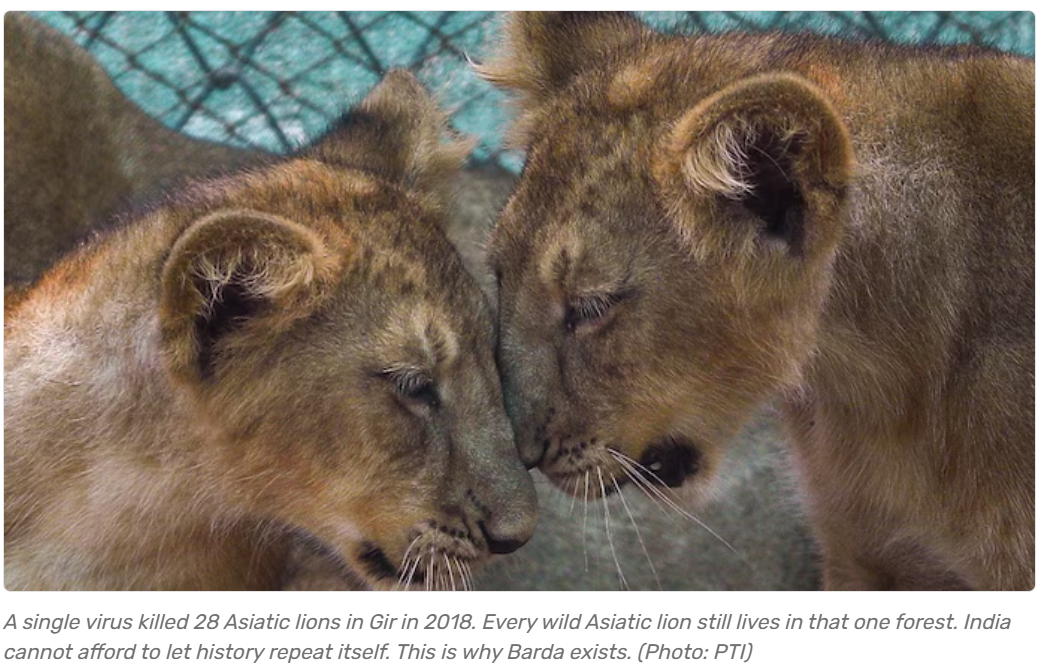
- 20 May 2026
In News:
With the 16th Asiatic Lion Census (May 2025) recording 891 lions in Gujarat — a 32% rise from 674 in 2020 — conservation attention has sharply shifted to Barda Wildlife Sanctuary as India races to establish a second, genetically secure habitat for Panthera leo persica, the world's last surviving population of wild Asiatic lions.
The Single-Point-of-Failure Problem
Every wild Asiatic lion on Earth inhabits a single forest — Gir, Gujarat. This geographic concentration represents one of conservation science's most dangerous configurations: a single point of failure. The consequences became starkly visible in 2018, when Canine Distemper Virus, spread by feral dogs on Gir's periphery, killed 28 lions within weeks. Had the outbreak spread further, it could have triggered a species-level extinction event.
Gir covers just 1,412 sq km. Of the 891 lions counted in 2025, over 507 now live outside the Gir Protected Area — on farmland, near open wells, and along railway tracks — creating dangerous human-wildlife conflict. Population growth, paradoxically, has amplified vulnerability rather than reduced it.
About Barda Wildlife Sanctuary
- Located in the Barda Hills of Gujarat, approximately 100 km west of Gir near the coastal city of Porbandar, Barda Wildlife Sanctuary spans 192.31 sq km of rugged, semi-arid terrain in the Saurashtra region.
- Known locally as Jam Barda, it was historically a private hunting ground for the royal families of Jamnagar and Porbandar. The sanctuary is drained by the Bileshvary and Joghri rivers, with Khambala and Fodara dams within its landscape. Local communities including Maldharis, Bharvads, Rabaris, and Gadhvis inhabit surrounding areas.
- Its flora encompasses approximately 650 plant and tree species including Babul, Bamboo, Amli, and Jamun, alongside medicinal plants. Fauna includes leopards, wolves, sambar deer, chinkara, hyenas, nilgai, and diverse avifauna such as crested serpent eagles.
Conservation Milestones
Lions had been absent from Barda since 1879 — a silence of 143 years. The Gir-Barda Project was initiated in 1979 to restore the sanctuary as a satellite lion habitat. After sustained ecological restoration, a male lion walked in independently in 2023. Five lionesses were subsequently translocated under scientific supervision, bred naturally, and produced 11 cubs. The 2025 census recorded 17 lions at Barda.
It has since been designated Satellite Population 8 under Project Lion — PM Modi's ?2,927 crore national conservation programme — making Barda the first fully protected satellite lion habitat in Gujarat.
Scientific Interventions
Prey base restoration was the immediate priority. Early surveys found only 119 chital (spotted deer) across Barda. The Gujarat Forest Department employed the Boma technique — an African method using funnel-shaped canvas enclosures to gently herd animals — to translocate chital from Gir (where population exceeds 90,000), avoiding the risks of capture myopathy associated with chemical tranquilisers.
Genetic vulnerability poses an equally serious long-term threat. Historical hunting reduced Asiatic lions to fewer than 50 individuals in the early 20th century, causing severe genetic bottlenecks. Scientists are now deploying satellite telemetry and targeted relocations to maximise genetic diversity within Barda's pride, strengthening disease resistance and reproductive viability.
On World Lion Day 2025, Gujarat announced ?180 crore for Barda's development, including a ?75 crore safari park.
Broader Policy Context
India is hosting the first-ever IBCA (International Big Cat Alliance) Summit in New Delhi on 1–2 June 2026, underscoring the global significance of big cat conservation. Union Environment Minister Bhupender Yadav recently reiterated the scientific consensus: one forest is categorically insufficient to secure the species' future.
Jaggery Production
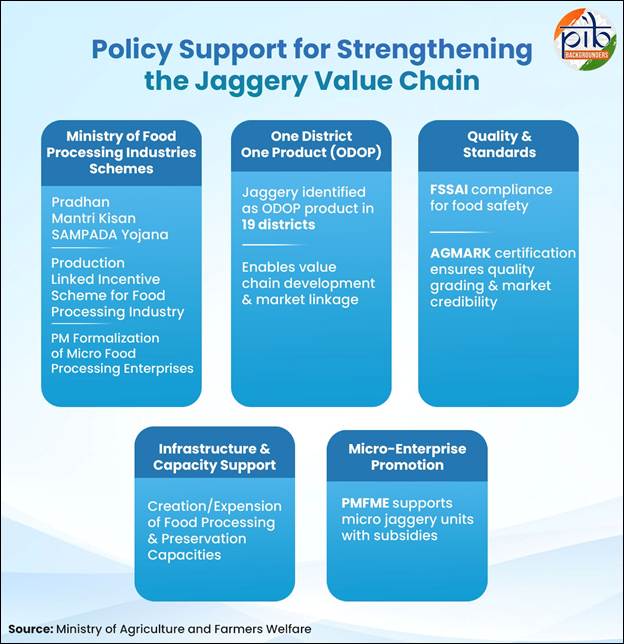
- 20 May 2026
In News:
The Ministry of Food Processing Industries (MoFPI) recently highlighted India's dominant position in global jaggery production, underscoring the sector's nutritional, economic, and export significance through a PIB release titled "The Superfood Sweetener."
India's Global Leadership
- India accounts for over 70% of global jaggery production, cementing its status as the world's largest natural sweetener producer. Nearly 20–30% of the country's total sugarcane output — estimated at 444.9 million tonnes in 2024–25 — is diverted towards jaggery making. The sector supports approximately 2.5 million rural livelihoods through decentralised cottage industries, low-cost processing, and small-scale entrepreneurship.
- In terms of state-wise production, Uttar Pradesh leads with 48.5% of total output, followed by Maharashtra (24.1%) and Karnataka (10.5%), with other contributors including Gujarat, Tamil Nadu, Bihar, and Uttarakhand.
What is Jaggery?
- Commonly known as gur, jaggery is a traditional, unrefined natural sweetener produced by concentrating sugarcane juice without chemical refining. Unlike white sugar, it retains essential minerals — calcium, magnesium, potassium, phosphorus, sodium, iron, zinc, copper, and manganese — along with trace vitamins including folic acid, B-complex, and vitamins A, C, D, and E. A good-quality jaggery contains over 70% sucrose, with approximately 5% mineral content.
- Its iron content (10–13 mg per 100 g) supports haemoglobin levels, making it valuable in addressing anaemia — a critical public health challenge in India.
- Its history dates to the Vedic period (1400–1000 BCE), with the word "sugar" itself derived from the Sanskrit sarkara, reflecting deep civilisational roots.
Export Performance
Jaggery exports have recorded impressive growth — rising by 106.5% in value (from USD 197 million in 2015–16 to USD 406.8 million in 2024–25) and 61.2% in volume. Major export destinations include Indonesia, the USA, the UAE, Nigeria, and Nepal. During April–January 2025–26, exports further grew by 15.9% in value year-on-year, reflecting strong and sustained international demand for natural sweeteners.
Government Policy Support
Several central schemes promote the jaggery sector:
- Pradhan Mantri Kisan SAMPADA Yojana (PMKSY): Five jaggery processing units approved with grants-in-aid of ?17.07 crore.
- PM Formalization of Micro Food Processing Enterprises (PMFME) Scheme: 3,528 jaggery-based micro units supported with subsidies totalling ?102.31 crore, including 50% branding and marketing assistance to FPOs, SHGs, and cooperatives.
- One District One Product (ODOP): Jaggery identified as an ODOP product in 19 districts, facilitating value chain development.
- AGMARK Certification: Ensures quality standardisation, market credibility, and export readiness.
GI-Tagged Jaggery Varieties
India's rich regional diversity is reflected in its Geographical Indication (GI)-tagged jaggery products: Kolhapur Jaggery (Maharashtra) — prized for golden colour and high sucrose; Muzaffarnagar Gur (Uttar Pradesh) — export-oriented, made from high-quality cane; and Marayoor and Central Travancore Jaggery (Kerala) — recognised for purity, medicinal value, and traditional processing methods.
India-Italy Special Strategic Partnership

- 20 May 2026
In News:
Prime Minister Narendra Modi and Italian Premier Giorgia Meloni, during Modi's official visit to Italy, co-authored a joint op-ed titled "A Strategic Partnership for the Indo-Mediterranean", outlining an expanded roadmap for bilateral cooperation. The two nations formally elevated their relationship to a Special Strategic Partnership — a significant diplomatic milestone grounded in shared democratic values and complementary economic strengths.
The Indo-Mediterranean: A New Strategic Concept
The joint op-ed introduced the geopolitical concept of the "Indo-Mediterranean" — a corridor linking the Indian Ocean to Europe through trade, technology, energy, data, and ideas. Both nations occupy strategic positions at the intersection of two globally critical economic hubs: India in the Indo-Pacific and Italy in the Mediterranean. The leaders argued these regions must no longer be viewed as separate spheres but as increasingly interconnected spaces shaping global dynamics.
Key Pillars of Cooperation
- Trade and Economy: India and Italy have set an ambitious target of exceeding €20 billion in bilateral trade by 2029. Priority sectors include defence and aerospace, clean technologies, machinery, automotive components, chemicals, pharmaceuticals, textiles, agri-food, and tourism. The ongoing EU-India Free Trade Agreement negotiations provide an enabling multilateral framework for this goal. Currently, over 1,000 businesses from each country operate in the other's territory.
- Digital Infrastructure and AI: India's Digital Public Infrastructure (DPI) model has found resonance globally, particularly in the Global South. Italy and India committed to responsible, human-centred AI development — combining India's digital scale with Italy's ethical and industrial expertise. Both leaders underscored that technology must not undermine fundamental rights or manipulate democratic processes. This commitment aligns with the outcomes of the AI Impact Summit 2026 held in New Delhi and Italy's ongoing G7 Presidency.
- Defence, Space, and Energy: Cooperation was outlined in security of critical maritime routes, renewable energy, hydrogen technologies, smart grids, and resilient infrastructure. Both nations also affirmed collaborative participation in key India-led multilateral initiatives — the International Solar Alliance (ISA), the Coalition for Disaster Resilient Infrastructure (CDRI), and the Global Biofuels Alliance (GBA).
- IMEC: India and Italy reaffirmed commitment to the India-Middle East-Europe Economic Corridor (IMEC), announced at the G20 Summit in New Delhi in September 2023, as a transformative connectivity project linking the regions through transport, digital networks, energy systems, and supply chains.
Civilisational Resonance
The leaders drew a cultural parallel between India's VasudhaivaKutumbakam ("The world is one family") and Italy's humanist Renaissance tradition — both emphasising human dignity and the unifying power of culture. This civilisational alignment reinforces the depth of the partnership beyond mere transactional diplomacy.
National One Health Mission
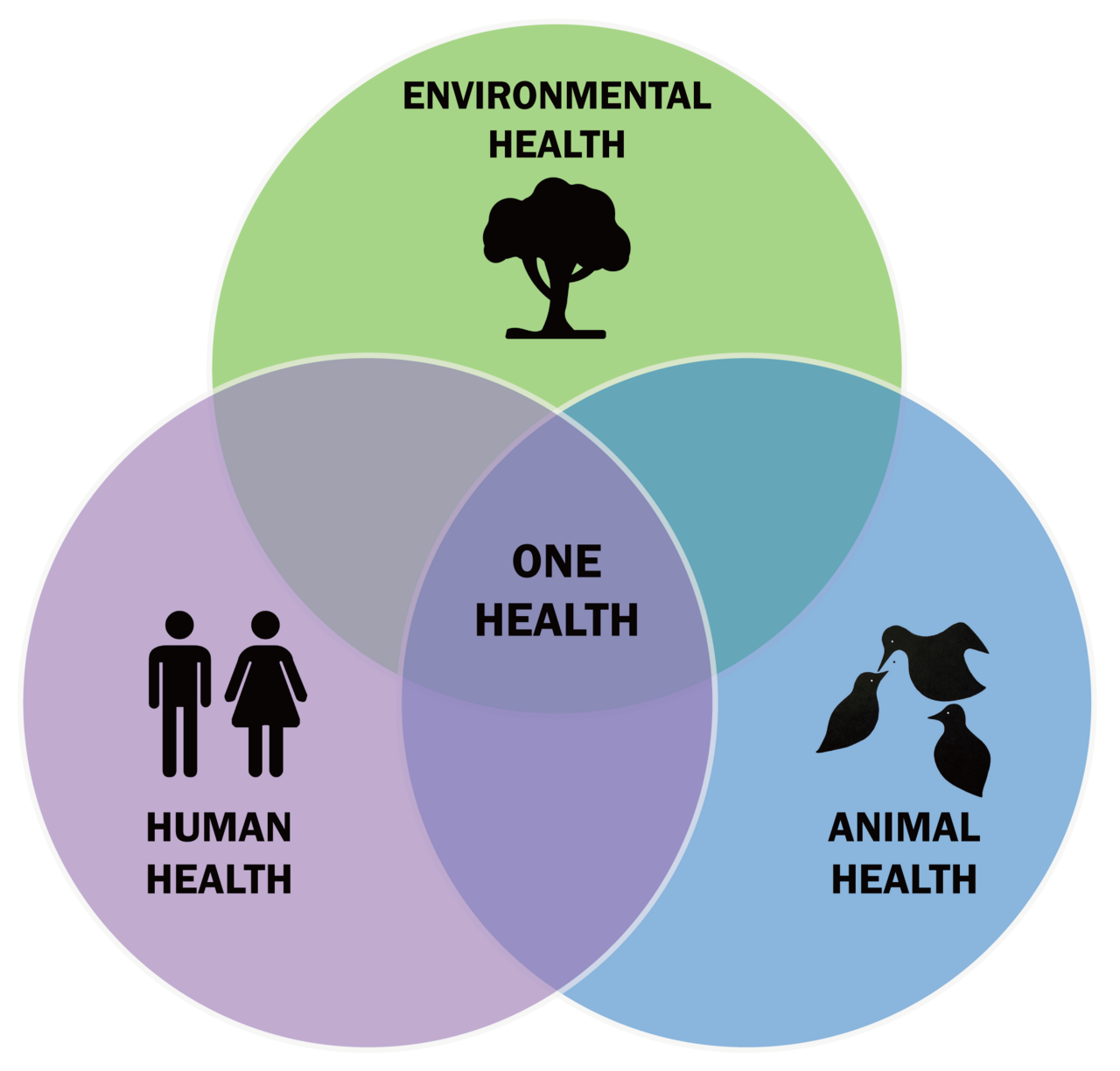
- 20 May 2026
In News:
The Fifth Meeting of the Scientific Steering Committee (SSC) on the National One Health Mission (NOHM) was held at Kartavya Bhavan, New Delhi, under the chairmanship of Prof. Ajay K. Sood, Principal Scientific Adviser (PSA) to the Government of India.
About the National One Health Mission
- Established with Cabinet approval in February 2024, following the recommendation of the 21st PM-STIAC (Prime Minister's Science, Technology and Innovation Advisory Council), the NOHM represents India's most ambitious attempt at building an integrated disease control and pandemic preparedness architecture. The mission adopts a collaborative, multidisciplinary approach — uniting human, animal, and environmental health systems under one coordinated framework.
- The nodal implementing agency is the Indian Council of Medical Research (ICMR) under the Department of Health Research (DHR), while strategic oversight rests with the Office of the Principal Scientific Adviser (OPSA). The mission currently engages more than 16 Central Ministries and Departments, including the Ministries of Health, Environment, Earth Sciences, Agriculture, and Ayush.
Governance Structure
The mission operates through a two-tiered governance model:
- The Executive Committee, chaired by the Minister of Health and Family Welfare with the PSA as Vice-Chair, provides overall policy guidance. Member (Health), NITI Aayog serves as a permanent invitee, while secretaries of stakeholder departments and two states (on a rolling basis) are members.
- The Scientific Steering Committee, chaired by the PSA, provides scientific direction and oversight. It includes Secretaries and Directors General of all stakeholder departments alongside two rotating state representatives.
Key Outcomes of the Fifth SSC Meeting
- The Committee released proceedings of two major events: the National One Health Assembly (November 2025) and the Workshop on Operational Frameworks for One Health held at Nagpur, which brought together States and Union Territories to align governance structures with NOHM objectives.
- Discussions covered short-, medium-, and long-term One Health priorities, with emphasis on integrated surveillance, laboratory strengthening, AI-enabled pathogen detection, cross-sectoral data sharing, and development of medical countermeasures.
- Updates were also presented by key advisory work streams, including those on BSL-3/4 Laboratories, Technology-Enhanced Surveillance, Data Integration, and Medical Countermeasures. Notably, India is developing a national network of high-security laboratories — currently 22 BSL-3/4 facilities — with a new BSL-4 facility foundation-laid in Gujarat in January 2026.
Significance and Global Linkages
The mission aligns with the One Health Joint Plan of Action (OH JPA) 2022–2026 of the Quadripartite alliance — FAO, UNEP, WHO, and WOAH — reflecting India's commitment to global health security norms. It also complements the existing National One Health Programme for Prevention and Control of Zoonoses (NOHP-PCZ) under the NCDC umbrella scheme.
India's first State/UT engagement workshop (June 2025, New Delhi) saw participation from 27 States and UTs — underscoring the federal dimension of health governance.
Anaimangalam Copper Plates

- 19 May 2026
In News:
During Prime Minister Narendra Modi's recent visit to the Netherlands, the Dutch government formally returned the Anaimangalam Copper Plates — also called the Leiden Plates — to India. The repatriation marks a significant diplomatic achievement and revives interest in one of South Asia's most powerful medieval empires.
Historical Significance
The Anaimangalam Copper Plates are a set of 21 inscribed copper sheets dating to the reign of Emperor Rajaraja Chola I (985–1014 CE) and his son Rajendra Chola I. Together, they weigh approximately 30 kg and are bound by a bronze ring bearing the royal seal of Rajendra Chola I. The plates are bilingual — early plates carry Sanskrit text tracing the Chola royal genealogy and invoking divine legitimacy, while the majority are in Tamil, recording administrative and grant-related details.
The Tamil section is of particular historical import: it documents Rajaraja Chola I's grant of land revenues from villages near Anaimangalam in Tamil Nadu to the Chudamani Vihara, a Buddhist monastery at the bustling port of Nagapattinam. Crucially, this monastery had been built by Sri Mara Vijayotunga Varman, the ruler of the Srivijaya kingdom — a maritime empire centred in present-day Indonesia. Although the grant was originally a verbal order of Rajaraja, Rajendra later had it formally engraved on copper to ensure its preservation — an act reflecting the period's administrative sophistication.
Why It Matters: Heritage, Trade and Pluralism
The plates offer rare primary evidence of the Chola Empire's cosmopolitan character. At their peak, the Cholas dominated South India, Sri Lanka, and launched naval campaigns across Southeast Asia. Their reign saw flourishing Indian Ocean trade networks, cross-cultural patronage, and — as these plates demonstrate — active religious pluralism, with a Hindu king endowing land revenues for a Buddhist monastery constructed by a foreign ruler.
This makes the Anaimangalam Copper Plates a unique document at the intersection of diplomacy, religion, and commerce across medieval Asia.
Colonial Displacement and Repatriation
The plates' displacement began around 1700 CE when Dutch missionary Florentius Camper acquired them during the Dutch East India Company's (VOC) control of Nagapattinam. They subsequently reached the Leiden University Library in the Netherlands, where they remained for over three centuries — accessible to scholars but not the general public.
India's systematic repatriation drive, strengthened since 2012, received a significant boost when the UNESCO Intergovernmental Committee (2023) validated India's claim as the country of origin and recommended bilateral talks. The Netherlands' decision to return the plates is a direct outcome of this sustained diplomatic engagement.
Bhojshala Temple
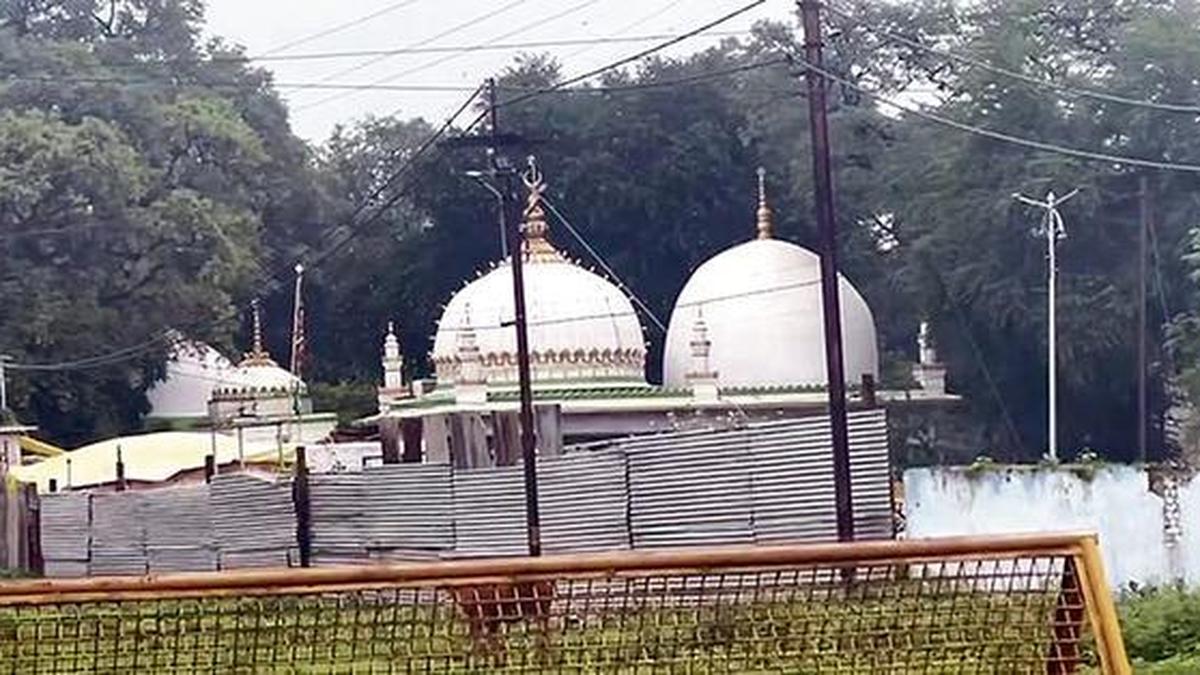
- 19 May 2026
In News:
The Indore Bench of the Madhya Pradesh High Court issued a landmark judgment declaring the disputed 11th-century Bhojshala-Kamal Maula Mosque complex in Dhar district fundamentally a Hindu temple dedicated to Goddess Vagdevi (Saraswati). In doing so, the High Court quashed a 2003 Archaeological Survey of India (ASI) arrangement that allowed shared worship (Tuesdays for Hindus, Fridays for Muslims) and transferred administrative stewardship to the ASI.
Core Historical Background of the Complex
The Bhojshala complex represents a critical site of medieval architecture, epigraphy, and educational heritage.
- The Paramara Legacy: The complex is historically tied to Raja Bhoj (1010–1055 CE) of the Paramara dynasty, a celebrated polymath and patron of arts and Sanskrit literature. He established the site as a premier university (Bhojshala) and temple dedicated to Vagdevi.
- Epigraphical Significance: The site houses unique Sarpabandha (serpentine chart) pillar inions containing grammatical tools like the Sanskrit alphabet and tenses. Additionally, walls feature ancient Prakrit odes honoring the Kurma-Avatara (tortoise incarnation of Vishnu) and theatrical dramas composed by the royal tutor Madana.
- The Vagdevi Idol: A highly sophisticated 11th-century white marble sculpture of Goddess Saraswati was excavated from the site in the late 19th/early 20th century and is currently housed in the British Museum, London.
- The Mosque Conversion Claim: The Muslim community identifies the site as the Kamal Maula Mosque, attributing its foundation to Hazrat Maulana Kamaluddin Chishti around 1306–1307 CE. Historical records like the Imperial Gazetteer of India (1908) corroborate that the mosque was built by reusing structural elements (basalt pillars and carved stone slabs) from a pre-existing Hindu temple.
Key Legal and Constitutional Dimensions
The high court's judgment introduces critical interpretations of Indian statutory and constitutional law:
1. Decoupling from the Places of Worship Act, 1991
The primary defense argued that the Places of Worship (Special Provisions) Act, 1991, freezes the religious character of any place of worship as it existed on August 15, 1947.
The High Court rejected this, clarifying that Section 4(3)(a) of the 1991 Act explicitly excludes any ancient and historical monument covered under the Ancient Monuments and Archaeological Sites and Remains (AMASR) Act, 1958. Because the Bhojshala complex had been declared a protected monument since 1904, it is exempt from the 1991 freeze, leaving its religious character open to judicial determination based on historical truth.
2. Application of the "Ayodhya Framework" and Preponderance of Probabilities
Instead of treating this as a property title suit (like the Babri Masjid case), the court addressed it as a Writ Petition under Article 226 seeking the enforcement of the fundamental right to worship (Article 25).
The Bench applied the 10 core judicial principles from the Supreme Court's 2019 Ayodhya Verdict, establishing that:
- The standard of proof is the preponderance of probabilities rather than mathematical certainty.
- Architectural and scientific evidence (like the 2,189-page ASI report detailing 1,700 artifacts and reused temple columns) holds strong evidentiary weight.
- The legal "pious purpose" and continuity of Hindu worship at the core of the deity's endowment are never legally extinguished by the physical destruction of an idol or subsequent architectural modifications.
Public Health Emergency of International Concern
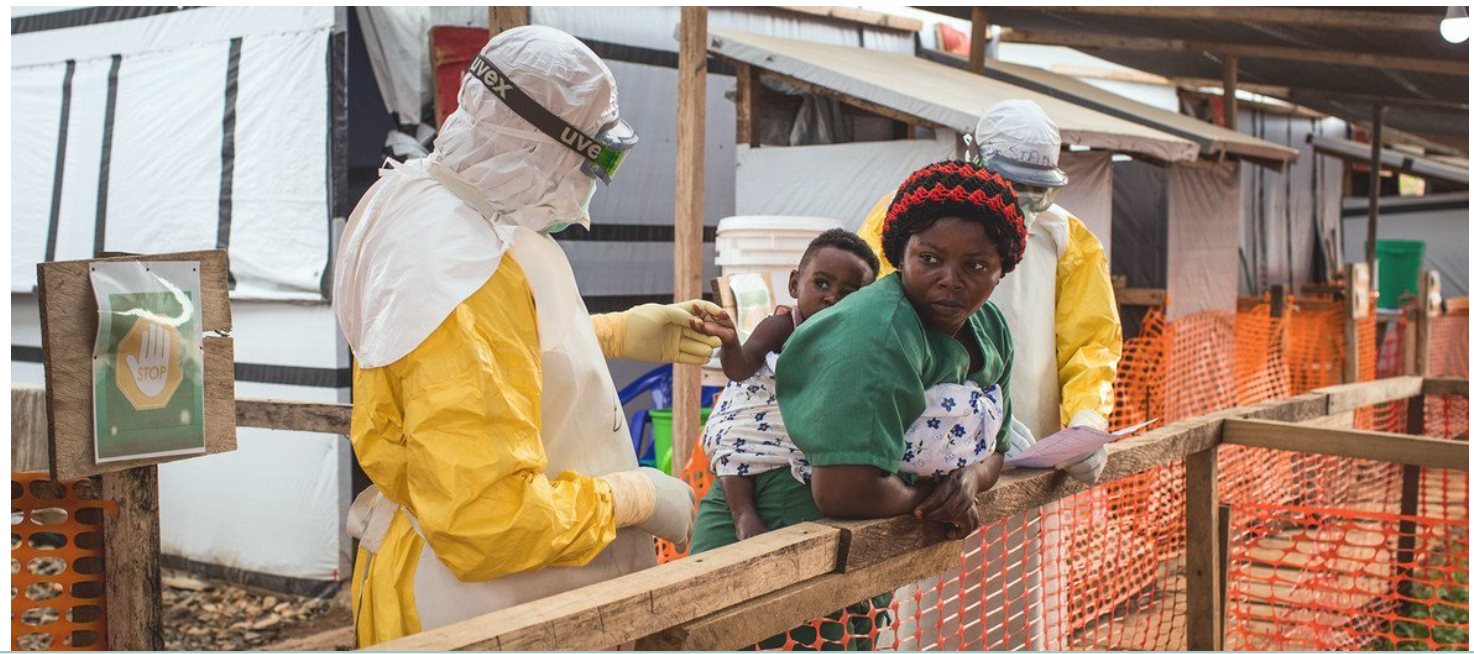
- 19 May 2026
In News:
The World Health Organization (WHO) declared the ongoing Ebola outbreak in the Democratic Republic of the Congo (DRC) and Uganda a Public Health Emergency of International Concern (PHEIC). Triggered by rising cases, cross-border transmission, and the specific complexities of the Bundibugyo strain—for which no approved vaccines or specific treatments currently exist—the announcement emphasizes global health vulnerability.
What is a Public Health Emergency of International Concern (PHEIC)?
A PHEIC is a formal declaration by the WHO, representing its highest level of global health alert. It signifies an extraordinary event determined to constitute a public health risk to other states through the international spread of disease, potentially requiring a coordinated international response.
Key Institutional Features:
- Governance and Mandate: It is bound by the International Health Regulations (IHR), legally requiring involved state parties to respond promptly.
- The Decision-Making Body: Declarations are determined by the IHR Emergency Committee, an expert group constituted in the aftermath of the 2002–2004 Severe Acute Respiratory Syndrome (SARS) outbreak.
- Review Cycle: The declaration is reassessed on a tri-monthly (three-month) basis and renewed based on evolving epidemiological data.
- Scope Beyond Infections: Uniquely, a PHEIC can be triggered not just by infectious biological pathogens, but also by public health hazards arising from chemical agents or radioactive materials.
- Exceptional Powers: Certain critical disease outbreaks can be fast-tracked and declared a PHEIC directly by the WHO Director-General without prior consensus or approval from the broader IHR framework.
The International Health Regulations (IHR): Evolution and Mandate
The IHR functions as the governing legal instrument for global epidemiological surveillance and response.
- Origin: The Health Assembly (the apex decision-making organ of the WHO) initially adopted the IHR in 1969 to prevent cross-border disease spread.
- The 2005 Revisions: Following the highly disruptive, chaotic global outbreak of SARS (2002–2004), the framework underwent a massive overhaul. The IHR (2005) was adopted at the 58th World Health Assembly.
- Jurisdiction: It acts as a binding international agreement across 196 signatory countries committed to upholding global health security, with the WHO designated as the central coordinating body.
Eublepharisjhuma
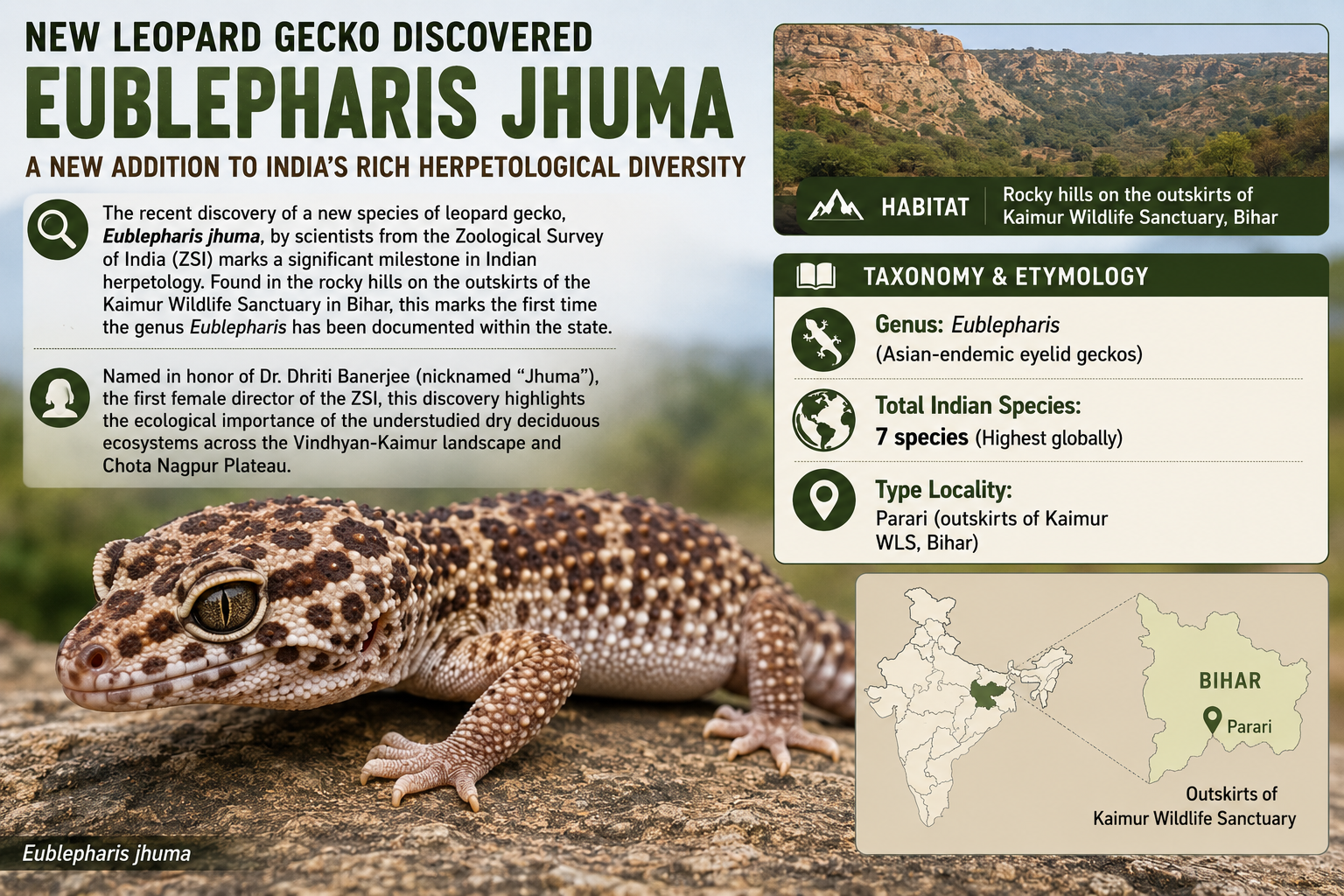
- 19 May 2026
In News:
The recent discovery of a new species of leopard gecko, Eublepharisjhuma, by scientists from the Zoological Survey of India (ZSI) marks a significant milestone in Indian herpetology. Found in the rocky hills on the outskirts of the Kaimur Wildlife Sanctuary in Bihar, this marks the first time the genus Eublepharis has been documented within the state.
Named in honor of Dr. Dhriti Banerjee (nicknamed "Jhuma"), the first female director of the ZSI, this discovery highlights the ecological importance of the understudied dry deciduous ecosystems across the Vindhyan-Kaimur landscape and Chota Nagpur Plateau.
Taxonomy & Etymology
- Genus:Eublepharis (Asian-endemic eyelid geckos)
- Total Indian Species: 7 species (Highest globally)
- Type Locality:Parari (outskirts of Kaimur WLS, Bihar)
Morphological and Genetic Distinctiveness
Initially mistaken for its central Indian relative, Eublepharissatpuraensis, comprehensive physical and mitochondrial DNA sequencing confirmed E. jhuma as a phylogenetically independent lineage, showing a 6.9% to 7.8% genetic divergence from its closest relatives. This divergence suggests a history of allopatric speciation (evolution driven by geographic isolation) shaped by deep-time geological forces acting across India's plateau systems.
Unique Physical Adaptations
- Scale Architecture: Reaching up to 14 cm in body length, its dark brown dorsum (back) features large, flat, bumpy, tubercle-like scales with unusually wide gaps between them.
- Locomotive Efficiency: It possesses an elevated number of tiny, textured ridges (lamellae) under its fourth toe, providing crucial gripping power on steep, rocky terrains.
- Tail Regeneration: It features 12 to 13 pre-cloacal pores near its tail. Unique to this species, if its tail drops and regrows, the replacement scales grow back in a flat, rectangular configuration rather than the standard circular layout seen in related species.
Conservation Status and Systemic Threats
While newly discovered and currently marked as Not Assessed (NE) on the IUCN Red List, the species faces immediate anthropogenic pressures:
- Exotic Wildlife Trafficking: Leopard geckos are highly sought after in international and domestic exotic pet markets due to their calm demeanor and unique color patterns.
- Habitat Fragmentation: The unique habitat of the Kaiser range is structurally isolated from the main sanctuary forest by agricultural fields, making the species highly vulnerable to quarrying, forest fires, pollution, and roadkill.
Legal Protection Framework
In India, all leopard gecko species are protected under Schedule I of the Wildlife Protection Act, 1972 (as updated by the Amendment Act of 2022). This legal baseline mandates top-priority protection, making hunting, trade, or domestic captivity strictly illegal.
Singapore Emerges as India’s Second-Largest Export Destination
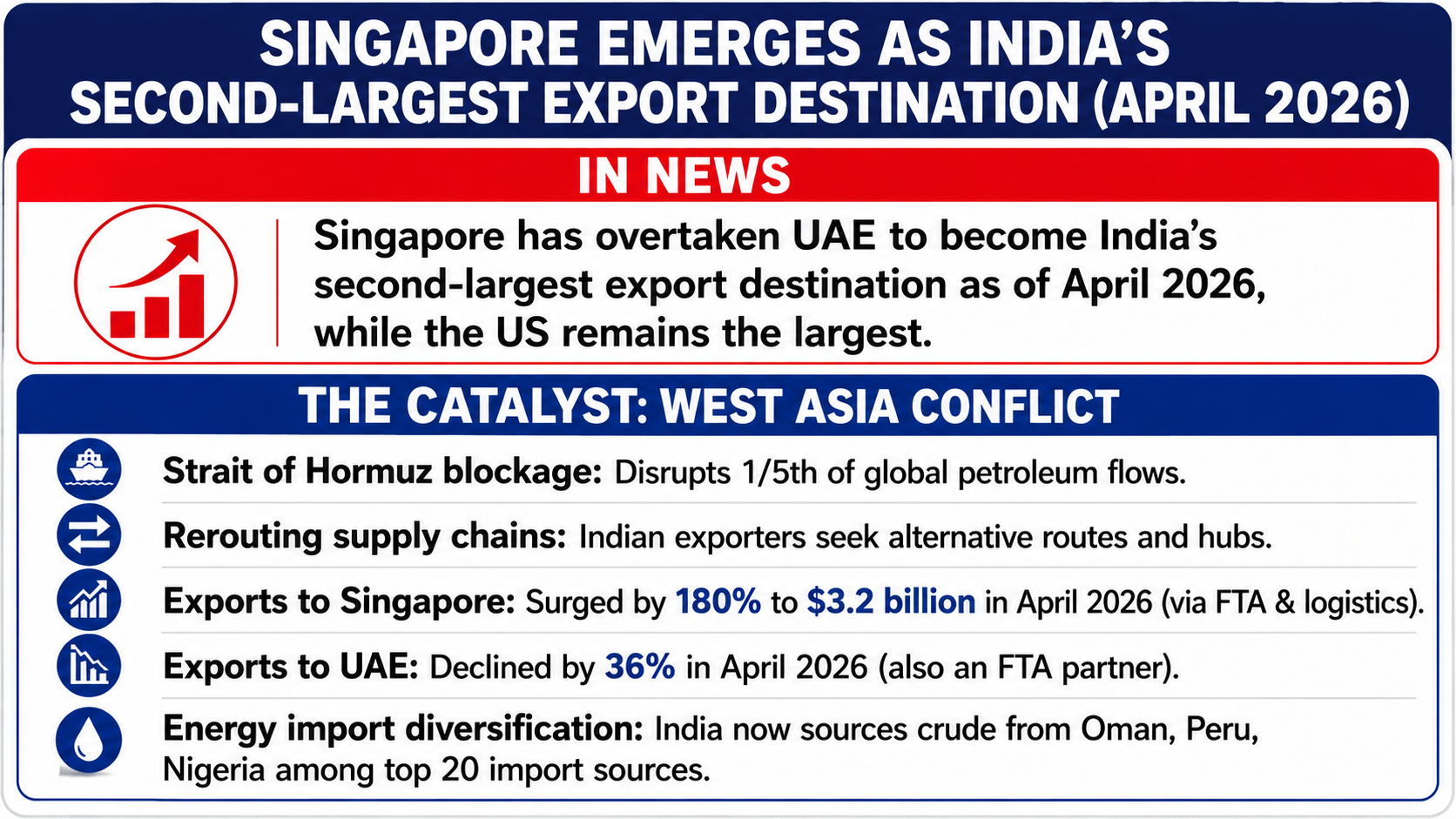
- 19 May 2026
In News:
The protracted West Asia conflict has triggered systemic shocks in global supply chains, driving a significant structural shift in India’s external trade dynamics. In an unprecedented realignment, Singapore has overtaken the United Arab Emirates (UAE) to become India’s second-largest export destination as of April 2026, while the United States continues to retain the pole position.
The Catalyst: Geopolitical Disruptions in West Asian Trade
The primary driver behind this shift is the logistical blockage of the Strait of Hormuz—a critical maritime choke point between Iran and Oman that historically facilitates a fifth of global petroleum flows.
- Rerouting Supply Chains: The trade paralysis in the Gulf has forced Indian exporters to aggressively seek alternative routes and transshipment hubs.
- The Contrast in FTA Partners: Leveraging its world-class logistics infrastructure and the bilateral Free Trade Agreement (FTA), India's exports to Singapore surged exponentially by 180% to reach $3.2 billion in April 2026. Conversely, exports to the UAE (another key FTA partner) witnessed a sharp decline of 36%.
- Energy Import Diversification: To insulate itself from Middle Eastern energy shocks, India has altered its crude oil sourcing, integrating non-traditional suppliers like Oman, Peru, and Nigeria into its top 20 import sources.
Macroeconomic Strain on the Indian Economy
The enduring global energy supply crisis has severely impacted India's macroeconomic indicators:
- Currency Depreciation: Widening import bills have drained foreign exchange reserves, causing the Indian rupee to depreciate by 5.2% against the US Dollar since February 2026, touching multiple record lows.
- Fiscal Interventions: To defend the domestic currency and curb non-essential imports, the Government of India has hiked import duties on precious metals. Furthermore, oil marketing companies (OMCs) were permitted to increase retail petrol and diesel prices for the first time in four years to check domestic consumption.
India-Singapore Economic Matrix
- Bilateral Trade Scale: Expanded from USD 6.7 billion (FY 2004-05) to USD 34.3 billion (FY 2024-25) via the Comprehensive Economic Cooperation Agreement (CECA). Singapore is currently India’s 6th largest trading partner.
- FDI Inflows: Singapore stands as India’s largest source of Foreign Direct Investment, bringing in USD 14.94 billion in FY 2024-25.
Deeping Institutional and Fintech Integration
The trade surge is underpinned by a robust framework of institutional mechanisms and digital financial architecture established between the two nations:
- Institutional Presence: Facilitating cross-border capital, Invest India set up a dedicated office in Singapore (September 2024), matched by the Singapore Business Federation opening its debut Indian office in Bengaluru (November 2025).
- Fintech Leadership: The operationalization of the UPI-PayNow Linkage created India's first cross-border Person-to-Person (P2P) payment facility, significantly slashing the cost of remittances.
- Digital Trade Architecture: Bilateral trade finance has been modernized through the GIFT Connect linkage (unifying liquidity between the NSE and SGX for NIFTY products), ONDC-Proxtera connectivity for MSME retail trade, and the TradeTrust framework for interoperable electronic Bills of Lading (eBLs).
Sonerilaroxburghii

- 18 May 2026
In News:
Joint research teams from the Botanical Survey of India (BSI) and the University of Calicut have discovered a new species of flowering plant named Sonerilaroxburghii from the southern Western Ghats of Kerala. The discovery, published in the peer-reviewed international journal Annales Botanici Fennici, highlights the high level of hidden endemism that characterizes this global biodiversity hotspot.
Botanical Profile and Taxonomy
- Scientific Classification: Belongs to the highly diverse Sonerila genus, nested within the Melastomataceae (flowering plant) family.
- Etymology: Named in honor of the legendary Scottish botanist William Roxburgh (1751–1815), widely revered as the "Father of Indian Botany" and one of the earliest pioneering scientists to systematically document the Sonerila genus during his tenure at the Royal Botanic Garden, Calcutta.
Morphological Characteristics
The plant can be distinguished from allied taxa (such as S. grandiflora and S. sadasivanii) by several distinct physical characteristics:
- Growth Form: It is a delicate tropical herb with straight, terete (rounded/smooth) stems growing up to 60 cm in height.
- Floral Architecture: Produces distinct light pink flowers arranged in terminal 3-to-10-flowered scorpioid cymes, featuring obscurely 6-ribbed hypanthia and acuminate-to-rostrate anthers.
- Foliage Structure: Possesses smooth, flattened lanceolate-to-elliptic leaf surfaces that show a cuneate (wedge-shaped) and attenuate base, gradually tapering directly toward the stem.
Geographical Distribution and Specialized Habitat
- Geographical Location: Discovered exclusively within the Mankulam (Mankulam Reserve Forest) and Kallar areas of the Idukki district in Kerala.
- Altitudinal Zonation: Restricted to high-altitude ecosystems, thriving at elevations ranging strictly between 1,380 and 1,480 meters above mean sea level.
- Micro-Climate Niches: Highly adapted to moist, high-altitude rocky surfaces, dripping cliffs, and shola-grassland ecotones where micro-climatic humidity remains constantly high.
Conservation Status and Ecological Vulnerabilities
IUCN Red List Classification: Critically Endangered (CR)
- Due to its highly localized geographical distribution and exceptionally small, fragmented wild populations, researchers have categorized the species as Critically Endangered.
Primary Ecological Threats
The discovery underscores an alarming trend of environmental degradation within the Western Ghats:
- Habitat Fragmentation: Severe encroachment driven by commercial cash-crop plantations, land-use conversion, and expanding unregulated infrastructure.
- Anthropogenic Pressures: Growing tourism footprints and illegal soil/rock quarrying activities within laterite-rich, ecologically fragile hill systems.
- Climate Change Multipliers: Highly localized, ephemeral herbs like Sonerila are acutely vulnerable to rainfall shifts and flash droughts, which disrupt their specialized moisture-reliant life cycles.
Operation RAGEPILL and the Captagon Narcotic Threat
- 18 May 2026
In News:
The Narcotics Control Bureau (NCB), in coordination with international enforcement agencies, executed Operation RAGEPILL. This landmark operation resulted in India’s first-ever seizure of Captagon—amounting to 227.7 kg of tablets and powder valued at approximately ?182 crore—effectively busting a sophisticated transnational syndicate attempting to weaponize India as a narco-transit pipeline.
Operation RAGEPILL: Modus Operandi and Seizure Dynamics
The multi-jurisdictional operation exposed a highly organized logistics chain connecting West Asia, India, and the Gulf region:
- The Domestic Nexus: Acting on foreign intelligence, the NCB first raided a residential hideout in Neb Sarai, New Delhi, seizing 31.5 kg of Captagon tablets meticulously hidden inside a commercial chapati-cutting machine. A Syrian national overstaying his tourist visa was arrested as the central logistics coordinator.
- The Domestic Manufacturing Angle: Further investigation revealed that the seized tablets were actively pressed within a leased herbal pharmaceutical facility in Dehradun, Uttarakhand, highlighting attempts by syndicates to exploit local manufacturing setups.
- The Maritime Pipeline: Interrogations led to a secondary breakthrough at Mundra Port, Gujarat, where the NCB intercepted 196.2 kg of high-grade Captagon powder imported directly from Syria, cleverly concealed within a cargo consignment declared as "sheep wool."
- The Intended Destination: The entire contraband chain was slated for onward transshipment to the Gulf region, primarily Jeddah, Saudi Arabia.
Profile of Captagon: Genesis and Chemical Architecture
- Original Formulation: Developed in Germany during the 1960s and 1970s, "Captagon" was the brand name for Fenethylline—a synthetic co-drug linking amphetamine and theophylline. It was initially indicated to treat Attention Deficit Hyperactivity Disorder (ADHD), narcolepsy, and depression.
- Metabolic Function: Once ingested, the human body metabolizes fenethylline into two independent active stimulants: amphetamine (which stimulates central nervous system alertness) and theophylline (a bronchodilator structurally similar to caffeine).
- The Modern Illicit Variant: Due to its highly addictive nature and severe psychological risks, medical production was halted and globally banned in the 1980s. Modern illicit Captagon pills—often stamped with a distinct double crescent moon logo (known in Arabic street slang as Abu Hilalain)—no longer contain pure fenethylline. Instead, they are highly toxic, clandestine cocktails of amphetamines, methamphetamine, caffeine, and industrial chemical fillers.
Socio-Economic Aliases
- "Poor Man's Cocaine": Dubbed so due to its low production cost relative to its immense retail street value, making it highly accessible and widely abused among young adults across the Middle East and North Africa (MENA) region.
Geopolitical and Geostrategic Implications
The Narco-Sovereignty of the Levant
Syria has evolved into the undisputed global epicenter of illicit Captagon manufacturing. The trade has transformed into a multi-billion-dollar shadow economy, generating revenues that outpace legitimate state exports. This narco-capitalism provides a parallel stream of funding for state-aligned entities, militias, and transnational criminal cartels operating in conflict-torn zones.
Containerized Trade as a Transnational Vulnerability
The tactical use of Mundra Port echoes a broader, alarming global trend where syndicates exploit heavy commercial maritime trade to camouflage synthetic narcotics. This pattern was mirrored in another major NCB interdiction involving 349 kg of cocaine routed through commercial cargo from Ecuador into Mumbai, demonstrating the increasing pressure on India's port security architecture.
Internal Security Architecture of India
Statutory and Institutional Framework
- The NDPS Act, 1985: Captagon’s chemical ingredients (Amphetamines and Fenethylline) are classified as strictly prohibited psychotropic substances under the Narcotic Drugs and Psychotropic Substances Act, 1985. It is also globally restricted under Schedule II of the UN Convention on Psychotropic Substances, 1971.
- The Narcotics Control Bureau (NCB): Operating under the Ministry of Home Affairs (MHA), the NCB acts as the apex coordinating and intelligence-gathering nodal agency, working to fulfill the state's vision of a "Drug-Free India" (Nasha Mukt Bharat).
Evolving Law Enforcement Strategies
- The Shift to "Narco-Purging": India's enforcement strategy is pivoting from localized consumer-level drug policing toward dismantling multi-layered transnational cartels, mapping financial hawala trails, and invoking the strict asset-seizure clauses of the PIT-NDPS Act, 1988.
- Collaborative Security: The operation establishes the absolute necessity of real-time, cross-border maritime and intelligence collaboration between the NCB, the Directorate of Revenue Intelligence (DRI), Indian Coast Guard, and foreign drug enforcement directorates.
- Tech-Driven Interdiction: The MHA's deployment of the MANAS Helpline (1933) and integrated data systems are increasingly augmented by AI-driven risk-analysis tools at major container freight stations to red-flag anomalous cargo vectors originating from high-risk geopolitical corridors.
Committee on Empowerment of Women
- 18 May 2026
In News:
Lok Sabha Speaker Om Birla has reconstituted the Parliamentary Committee on Empowerment of Women for the legislative year 2026–27. Senior leader and Lok Sabha MP Dr. Daggubati Purandeswari has been appointed as the Chairperson of this crucial bicameral panel, which features prominent lawmakers across party lines (including Sudha Murty, P.T. Usha, and Swati Maliwal).
Evolution and Institutional Genesis
- Origin: The committee was established on April 29, 1997, during the 11th Lok Sabha.
- Historical Trigger: Its creation was driven by two identical resolutions moved in both Houses of Parliament on International Women’s Day (March 8, 1996), highlighting a dedicated focus on improving the status of women in India.
Structural Composition and Tenure
- Nature: It is a Joint Parliamentary Committee (JPC), bringing together members from both the Lower and Upper Houses of Parliament.
- Total Membership: It consists of 30 Members.
- Bicameral Breakdown:
- 20 Members are nominated by the Speaker from the Lok Sabha.
- 10 Members are nominated by the Chairman from the Rajya Sabha.
- Tenure: The term of the committee cannot exceed one year. It is reconstituted annually to bring fresh perspectives while maintaining continuous legislative oversight.
- Cross-Party Mandate: Members are expected to operate as a cohesive, non-partisan unit, rising above political affiliations to work collectively toward gender equity.
Core Functions and Statutory Mandate
The committee holds broad investigative and oversight powers under the rules of parliamentary procedure:
- Oversight of the National Commission for Women (NCW): It evaluates the statutory reports submitted by the NCW and suggests legislative and executive measures to improve the status and conditions of women.
- Constitutional Safeguards & Dignity: It reviews measures implemented by the Union Government to guarantee equality, status, and dignity for women in all spheres of public and private life.
- Representation & Affirmative Action: It monitors government initiatives aimed at securing comprehensive education and adequate representation for women in legislative bodies, public services, and other employment sectors.
- Appraisal of Welfare Welfare Schemes: It assesses the efficiency, grass-roots reach, and execution of central welfare programs and gender-responsive budgets dedicated to women.
- Implementation Auditing: It reviews Action Taken Reports (ATRs) from the Union Government and Union Territory administrations concerning prior recommendations made by the committee.
Constitutional and Statutory Alignment
The work of this committee gives functional teeth to several constitutional directives:
- Article 15(3): Enables the State to make special provisions for women.
- Articles 39(a) and 39(d): Mandate equal livelihood opportunities and equal pay for equal work.
- Article 42: Mandates just, humane working conditions and maternity relief.
- Article 51A(e): Enforces the Fundamental Duty to renounce practices derogatory to the dignity of women.
Core Institutional Challenges
While a key driver of policy oversight, the committee encounters structural constraints common to many parliamentary panels:
- Its findings and observations are purely advisory and not legally binding on the executive.
- It depends on administrative ministries to submit timely data and implement its recommendations, which often leads to bureaucratic delays.
- The wide scope of cross-cutting issues (safety, tech-driven economies, digital divide) must be evaluated within a limited one-year operational tenure.
Strategic Link: "Women-Led Development"
During recent national deliberations, the committee's focus has evolved from simple "women's welfare" to driving "Women-Led Development"—a key target for India's Viksit Bharat roadmap. Modern priorities focus heavily on closing the gender digital divide, scaling up women's participation in STEM fields, ensuring digital safety, and optimizing Gender Responsive Budgeting to make economic allocations transparently benefit women.
UNFF 21 and the Global Forest Goals Report 2026
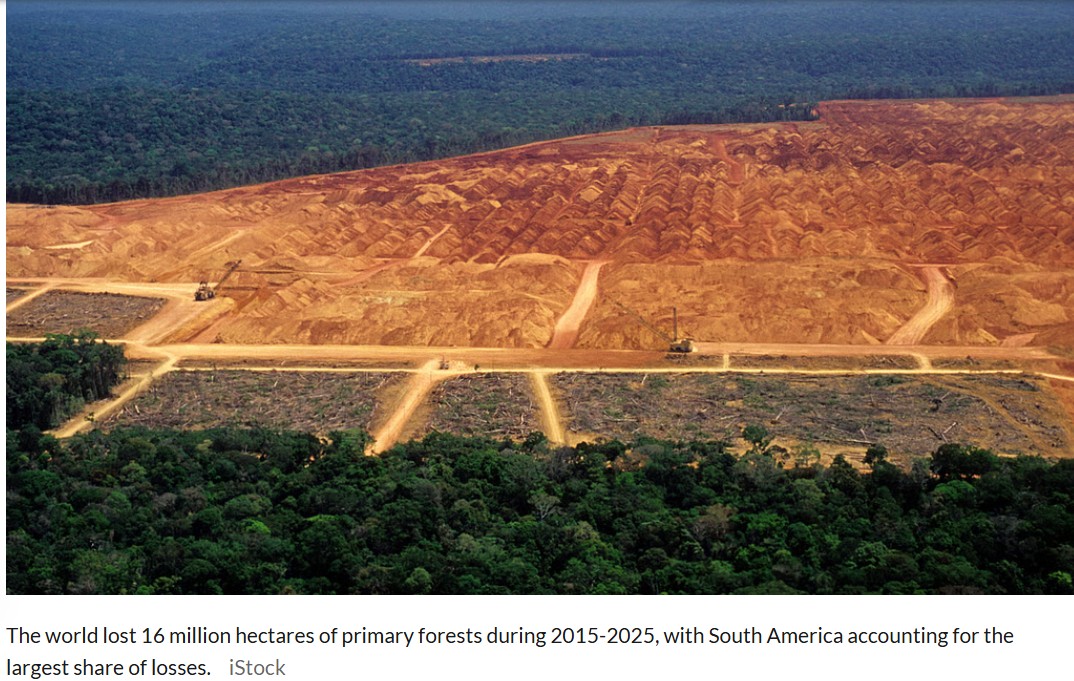
- 18 May 2026
In News:
The Global Forest Goals Report 2026 was launched during the 21st session of the United Nations Forum on Forests (UNFF21) at the UN Headquarters in New York. The report provides a critical stocktake of the world's progress toward implementing the UN Strategic Plan for Forests 2017–2030 and its 6 Global Forest Goals (GFGs), warning that the world remains off-track to reverse forest loss by 2030.
Key Findings: State of Global Forests & Emergence of New Drivers
Sharp Decline in Forest Cover
- Overall Loss: Global forest area shrank from 4.18 billion hectares in 2015 to 4.14 billion hectares in 2025—a net loss of more than 40 million hectares over the decade.
- Annual Net Depletion: The world is losing an average of 4.12 million hectares of forest every year.
- Primary Forest Crisis: Around 16 million hectares of primary forests (unprecedented reservoirs of biodiversity and carbon storage) were destroyed. South America (particularly the Amazon) and Africa recorded the steepest regional losses.
Primary Drivers of Forest Loss
- Agricultural Expansion: Continues to be the largest absolute driver of global deforestation.
- Fuelwood & Charcoal Demand: The 2026 report specifically flags the surging demand for woodfuel (fuelwood and charcoal) as a major emerging driver of forest degradation, particularly across Sub-Saharan Africa and parts of Asia.
The Poverty-Energy Nexus: The report explicitly links fuelwood dependence to deep-rooted poverty and inadequate access to clean energy alternatives. In low-income regions, communities rely heavily on biomass for basic cooking and heating, compounding structural vulnerabilities like weak land tenure and institutional capacity.
Climate-Linked Multipliers
Forests are trapped in a vicious cycle. Anthropogenic degradation weakens their capacity to act as vital carbon sinks, while climate-induced pressures—including severe droughts, wildfires, heatwaves, pests, and diseases—further accelerate forest mortality.
Progress and Implementation Gaps (The 2030 Targets)
The report evaluates the 26 performance targets nested under the 6 Global Forest Goals, revealing highly uneven progress:
- Status Matrix:7 targets are broadly met, 17 are partially achieved, and 2 targets are completely off-track.
- The Off-Track Targets: Reversing net global forest cover loss (Target 1.1) and eradicating extreme poverty for all forest-dependent people (Target 2.1) have stalled or reversed.
- The Restoration Deficit: While 91 countries pledged to restore nearly 190 million hectares of forest under global pacts, only 44 million hectares had actually been restored by 2025.
- The Bright Spot:Asia has led global restoration initiatives, successfully rehabilitating over 31 million hectares (accounting for 42.2% of its total regional pledged area).
Institutional Framework: United Nations Forum on Forests (UNFF)
- Establishment: Founded in the year 2000 by the UN Economic and Social Council (ECOSOC).
- Type and Headquarters: High-level intergovernmental body headquartered in New York, USA.
- Membership Structure: Universal membership comprising all UN Member States and specialized agencies on an equal basis. India is a founding member and continues to play a proactive role in shaping global forest policy.
- Session Cycle: The forum meets annually, alternating between Technical Discussions in odd years and Policy Dialogue/Decision-making in even years (such as this 2026 session).
- Financial Arm: Operates the Global Forest Financing Facilitation Network (GFFFN), which helps developing nations mobilize resources, secure technical aid, and share best governance practices.
Core Mandate of UNFF
- Political Mobilization: Strengthening long-term global political commitment to sustainable forest management (SFM) and conservation worldwide.
- Policy Dialogue: Facilitating structural policy dialogue among countries, international organizations, and major stakeholder groups.
- International Cooperation: Promoting international, financial, and technical cooperation to bridge implementation gaps in developing nations.
- Legal and Institutional Frameworks: Considering future options for international forest policy, including the development of legally binding frameworks.
Policy Recommendations and Relevance to India
Global Strategic Interventions
- Deforestation-Free Supply Chains: Enforcing strict international standards for key commodities that drive land clearing, such as timber, palm oil, soy, beef, and cocoa.
- Universal Clean Cooking Access: Scaling up cleaner energy alternatives to directly displace rural reliance on woodfuel and charcoal.
- Empowered Forest Governance: Enhancing local community land-tenure security, scaling up community-led forestry, and clamping down on illegal timber trading.
Significance for India
This report highlights the critical friction between development, poverty alleviation, and conservation:
- Clean Energy Mitigation: The report’s focus on replacing fuelwood aligns perfectly with India's domestic success via Pradhan Mantri Ujjwala Yojana (PMUY), showing how socio-economic development directly prevents localized forest degradation.
- Restoration Targets: India's baseline forest and tree cover sits at approximately 25.17% (as per recent state reports), against a national target of 33%. Furthermore, under the international Bonn Challenge, India has committed to restoring 26 million hectares of degraded and deforested land by 2030.
- Institutional Blueprints: India's domestic strategies, including the National Mission for a Green India (GIM), the Compensatory Afforestation Fund (CAMPA), and Joint Forest Management (JFM) committees, serve as real-world examples of the multi-sectoral institutional cooperation urged by UNFF21.
Withholding Tax on FPIs
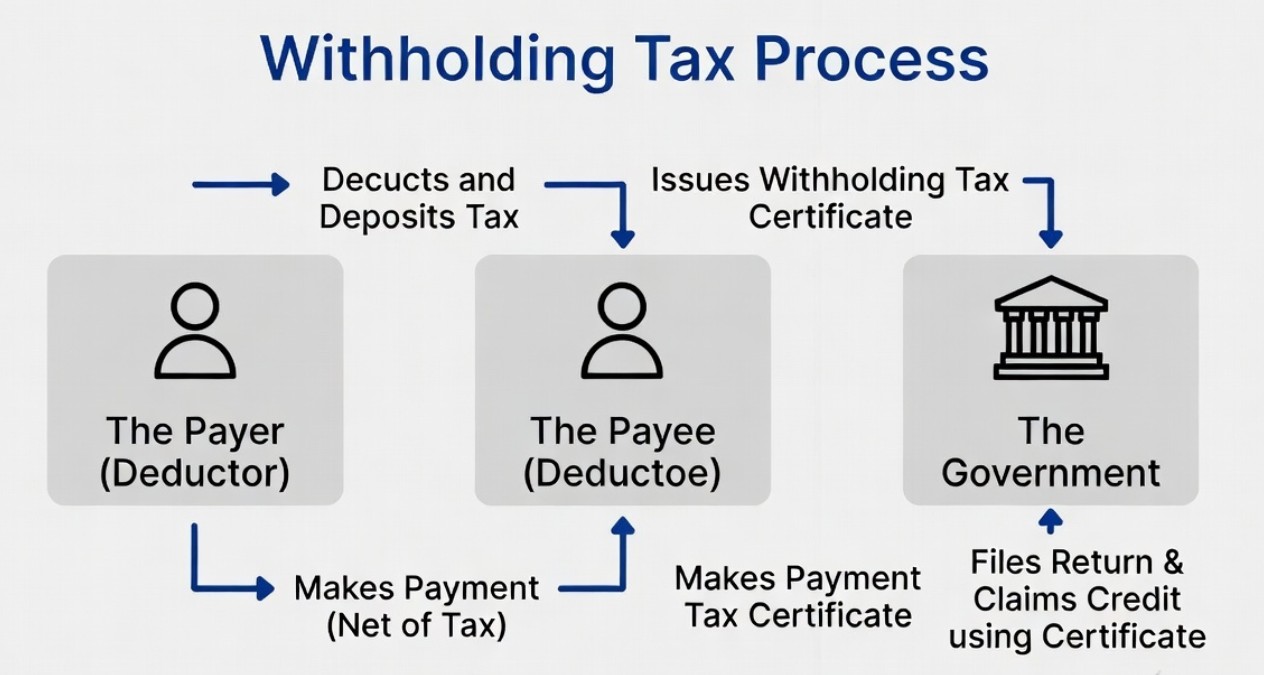
- 18 May 2026
In News:
The Government of India is considering a sharp reduction in the Withholding Tax (WHT) rate on Foreign Portfolio Investors (FPIs) from 20% back to the previous concessional rate of 5%. This move follows the expiration of the concessional window under Section 194LD of the Income Tax Act in mid-2023, which effectively caused the rate to revert to 20%, positioning India as a high-tax jurisdiction for global bond investors.
The primary trigger for this policy reconsideration is the need to arrest capital outflows that have eroded India’s foreign exchange reserves by nearly USD 38 billion since March 2026, driven by heightened geopolitical uncertainties (such as conflicts in West Asia) and a sharp surge in global crude oil prices.
Understanding Withholding Tax (WHT)
Withholding Tax, analogous to Tax Deducted at Source (TDS) under domestic tax law, is a mechanism where the payer of an income item deducts tax at the source before remitting the remaining net balance to the recipient.
International Withholding Tax
This applies specifically when a payer within one country makes payments (such as interest, dividends, or royalties) to a non-resident recipient in another country. It serves as a vital tool for source-based taxation, ensuring advance revenue collection and reducing the risk of cross-border tax evasion.
The Core Mechanism (As Illustrated Above):
- The Payer (Deductor): Deducts the statutory tax percentage from the gross amount due and deposits this tax directly with the Government.
- The Payee (Deductoe): Receives the net payment (net of tax) alongside a Withholding Tax Certificate issued by the payer.
- The Government: Receives the advance tax collection. The Payee subsequently files a tax return in India and claims tax credits using the issued certificate.
General WHT Classification by Income Type
WHT spans across several distinct asset and income streams, each governed by independent threshold limits and criteria:
- Salaries: Deducted monthly by employers based on progressive annual income tax slabs.
- Interest Income: Banks deduct tax at source on fixed deposits and other debt instruments once earnings cross predefined annual thresholds.
- Professional & Technical Fees: Applied to payments made to freelance contractors, consultants, legal experts, or engineers.
- Rent & Royalties: Imposed on high-value commercial or residential lease payments and intellectual property payouts.
- Dividends: Companies withhold a designated percentage when distributing corporate profits to domestic or foreign shareholders.
Economic Implications: High WHT vs. The Concessional 5% Rate
Challenges of the 20% WHT Regime (Yield Compression & Capital Flight)
- Reduction in Net Yields: A 20% WHT directly reduces the risk-adjusted post-tax returns for FPIs on government securities (G-Secs) and corporate bonds, weakening the power of long-term compounding.
- Liquidity & Transactional Bottlenecks: It locks up foreign investor capital at the source, constraining immediate capital available for reinvestment.
- High Compliance and Regulatory Friction: To mitigate the high 20% rate, FPIs are forced to seek relief via Double Taxation Avoidance Agreements (DTAAs). This process involves complex, paperwork-heavy administrative processes to claim tax credits in their home jurisdictions.
- Delayed Index Integration: Higher interest tax structures act as an operational deterrent, dragging down India's competitive edge just as the nation integrates into major global bond indices.
Macroeconomic Significance of Slashing WHT to 5%
- Boosting Forex Inflows: Restoring the 5% concessional rate is projected to unlock USD 45–50 billion of stable inflows over 2 years from patient, long-term institutional capital, such as global pension funds, sovereign wealth funds, and endowments.
- Stabilizing the Indian Rupee: Enhanced FPI debt inflows will help defend against external vulnerabilities, counter heavy capital flight, and rebuild the USD 38 billion cushion lost from forex reserves.
- Deepening Sovereign Debt Markets: Lowering tax frictions satisfies a long-standing demand of global investors, boosting liquidity in the Indian sovereign debt market and smoothing India’s inclusion and weight scaling in global bond indices.
- Reducing Sovereign Borrowing Costs: Increased foreign demand for Indian government securities compresses domestic bond yields, lowering the cost of borrowing for the government and supporting fiscal management.
India’s 1st Satellite-Tagged Ganges Soft-shell Turtle

- 17 May 2026
In News:
In a pioneering move for freshwater conservation, India’s first satellite-tagged Ganges soft-shell turtle (Nilssonia gangetica) was released into the Kaziranga National Park and Tiger Reserve in Assam. This landmark event, which coincided with Endangered Species Day on May 15, 2026, represents a significant technological and scientific leap in monitoring aquatic wildlife within the Brahmaputra river basin.
The project was executed by the Wildlife Institute of India (WII) under the Ministry of Environment, Forest and Climate Change (MoEFCC), in collaboration with the Assam Forest Department and with funding from the National Geographic Society. Under veterinary supervision, a healthy adult turtle was fitted with a satellite transmitter and released along the northern bank of the Brahmaputra River.
The Satellite-Tagging Initiative: Objectives and Significance
Freshwater ecosystems face severe ecological pressures, yet riverine reptiles historically receive less conservation tracking compared to terrestrial megafauna. Satellite telemetry bridges this critical data gap.
- Tracking Spatial Dynamics: The primarily objective of the initiative is to map the turtle's precise seasonal movement patterns and home range within highly dynamic river corridors.
- Identifying Critical Micro-Habitats: The telemetry data will allow scientists to pinpoint essential nesting, breeding, and basking grounds, allowing for targeted spatial protections rather than broad, unmanageable mandates.
- Informed Active Management: In a river basin heavily impacted by shifting sandbanks and seasonal floods, real-time data ensures that habitat management strategies remain adaptive and scientifically robust.
Species Profile:
The Ganges soft-shell turtle is a large, freshwater species native to the northern plains of the Indian subcontinent, distributed across the Indus, Ganga, Brahmaputra, Narmada, and Mahanadi river systems.
Morphological and Behavioral Traits
It is uniquely distinguished from other riverine turtles by prominent, arrowhead-shaped markings on the dorsal surface of its head. It possesses an oval, green carapace with compressed, flexible edges that enable rapid underwater locomotion. It features an elongated neck and a tube-like snout adapted for breathing while remaining submerged or buried in turbid, muddy riverbeds.
Ecological Role
As an omnivorous apex predator and apex scavenger within riverine food webs, the species performs a crucial regulatory role. By feeding on dead, decaying organic matter and carrion, it acts as a natural biological filter, maintaining water quality and preventing the proliferation of pathogens across the aquatic ecosystem.
Threat Matrix
Despite its historical distribution, populations are declining rapidly due to a combination of anthropogenic stressors:
- Habitat Destruction: Severe riverbed degradation caused by commercial sand mining and large-scale bank alterations.
- Exploitation: Persistent illegal poaching for its meat and calipee (the fatty cartilage layer prized in traditional medicine and exotic cuisine markets).
- Bycatch Mortality: Incidental drowning resulting from entanglement in commercial fishing nets.
Legal and Conservation Status
The species is afforded the highest tiers of domestic and international protection:
- Wildlife Protection Act (WPA), 1972: Schedule I (affording it absolute legal protection and the highest penalties for wildlife crimes).
- IUCN Red List Status: Endangered.
- CITES: Appendix I (prohibiting all international commercial trade).
Assam and Kaziranga: A Global Freshwater Turtle Hotspot
The release highlights the unique ecological position of Northeast India. Assam functions as one of Asia's richest turtle habitats, supporting 21 distinct turtle species. This high concentration renders the region a global priority zone for freshwater chelonian conservation.
The Kaziranga landscape alone—a 1,302 square kilometer floodplain ecosystem recognized as a UNESCO World Heritage Site—hosts five of India’s eight known soft-shell turtle species. Its intricate matrix of rivers, wetlands (beels), and seasonal alluvial grasslands offers an ideal sanctuary for testing next-generation wildlife tracking technologies.
India’s Water Scarcity
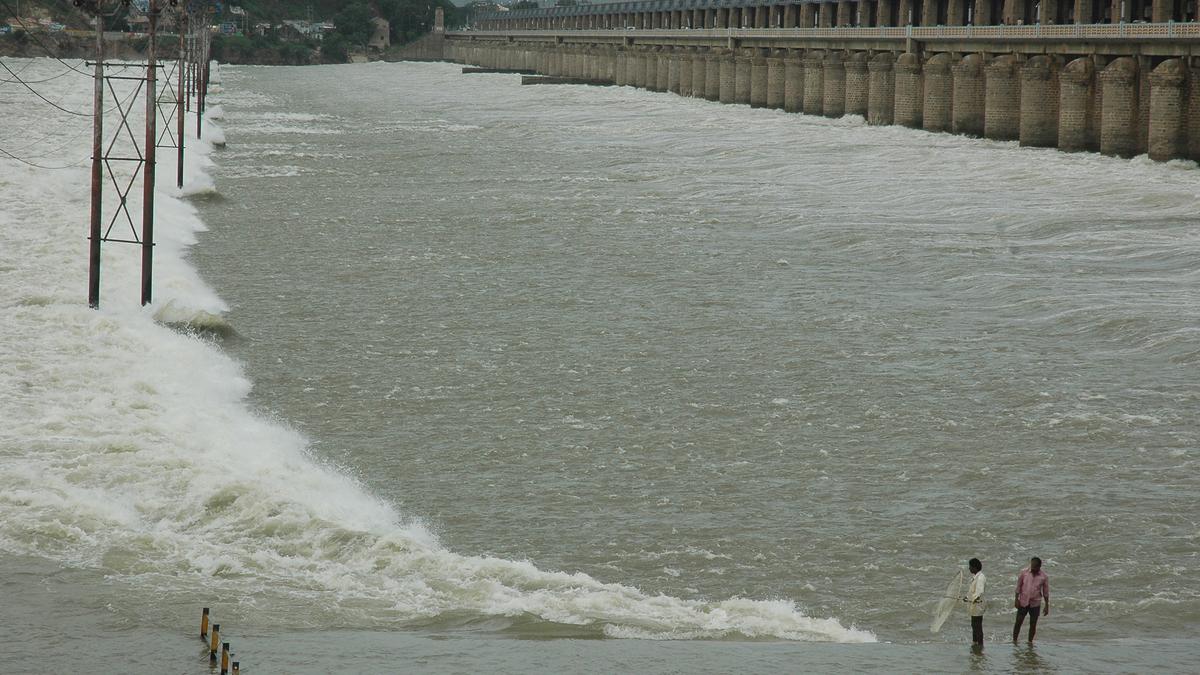
- 17 May 2026
In News:
India faces a severe structural challenge: it supports nearly 18% of the global population with only 4% of the world's freshwater resources, leaving over 600 million people under high-to-extreme water stress. Per capita water availability has plummeted from over 5,000 cubic meters in 1947 to nearly 1,400 cubic meters today, dangerously close to the official water-scarcity threshold<1,000m3. Achieving UN Sustainable Development Goal 6 (Clean Water and Sanitation) requires bridging deep institutional gaps and managing a rapidly depleting resource.
Key Drivers of Water Scarcity
- Precipitation and Usability Gaps: India receives nearly 4,000 Billion Cubic Metres (BCM) of annual rainfall, but only 1,123 BCM is utilisable. This is due to highly seasonal monsoons (70% falling in 3–4 months) and inadequate infrastructure. In April 2026, the Central Water Commission (CWC) reported that water levels in 166 major reservoirs dropped below 45% of capacity, with the southern region hit hardest.
- The Groundwater Crisis: India accounts for 25% of global groundwater extraction. The Central Ground Water Board (CGWB) classifies 14% to 17% of assessment units as "over-exploited," particularly in Punjab, Haryana, and Rajasthan.
- Agricultural Dominance: Agriculture consumes 85–90% of freshwater, driven by water-intensive crops like paddy and sugarcane. Free or heavily subsidized electricity encourages unrestricted 24/7 pumping. This inefficient resource use risks causing a 6% loss in India's GDP by 2050.
- Urban Inefficiencies & Pollution: Unplanned urbanization blocks natural aquifer recharge zones, pushing cities toward "Day Zero" scenarios. Concurrently, aging distribution networks lose up to 40% of piped water to leakages. On the quality front, nearly 70% of surface water is contaminated by untreated industrial and domestic waste.
Constitutional and Institutional Architecture
Water governance is shared between the Union and the States under the Indian Constitution:
- State List (Entry 17): Gives states control over water supply, irrigation, and storage.
- Union List (Entry 56): Empowers the Center to regulate inter-state rivers in the public interest.
- Article 262: Authorizes Parliament to adjudicate inter-state river disputes, bypassing court jurisdictions via specialized Tribunals (e.g., Cauvery, Krishna).
- Directives & Duties: Article 48A (State) and Article 51A(g) (Citizens) mandate the protection of rivers and lakes.
- Nodal Agencies: The Ministry of Jal Shakti oversees national missions alongside the CWC (surface water) and CGWB (groundwater). Core initiatives include the National Water Policy (2012), Pradhan Mantri Krishi Sinchayee Yojana (PMKSY), Jal Jeevan Mission (JJM), and the Jal Shakti Abhiyan.
Strategic Roadmap for Sustainable Water Governance
1. Transition to a Circular Water Economy: Deploy Membrane Bioreactors (MBR) in commercial and industrial sectors to treat greywater for non-potable reuse. Municipalities should mandate the sale of treated urban sewage to nearby thermal power plants and industries, preserving freshwater for drinking.
2. Community-Led Groundwater Management: Empower Gram Panchayats to draft localized water budgets that align crop cultivation with annual aquifer recharge cycles. Scale up the Jal Sanchay Jan Bhagidari initiative to build decentralized recharge structures like check dams and recharge shafts.
3. Agricultural Transformation: Accelerate the shift from flood irrigation to micro-irrigation (drip and sprinklers) under PMKSY to improve water efficiency by up to 60%. Provide policy and price incentives for farmers in water-stressed regions to switch from paddy to climate-resilient alternatives like millets and pulses.
4. Deploy Smart Water Infrastructure: Equip major urban areas with SCADA (Supervisory Control and Data Acquisition) systems for real-time flow monitoring and immediate leak detection. Install smart volumetric meters in residential complexes to curb wasteful consumption through usage-based billing.
5. Implement Nature-Based Solutions (NbS): Integrate green infrastructure, such as urban wetlands, permeable pavements, and intensive afforestation catchments, to regulate runoff. Expand Mission Amrit Sarovar to restore traditional water bodies, creating ecological buffers that recharge groundwater tables naturally.
India’s Rising Leadership in Global Telecom Governance and the ITU

- 17 May 2026
In News:
India is rapidly positioning itself as a central pillar in global digital cooperation and telecommunications policy. At the International Telecommunication Union (ITU) Council meeting held in Geneva, Switzerland, an Indian delegation led by the Department of Telecommunications (DoT) actively advanced India's strategic leadership in the global information and communication technology (ICT) ecosystem.
Key Developments in India-ITU Engagements
- Hosting the Plenipotentiary Conference-2030 (PP-2030): The ITU Council accepted India’s formal proposal to host the ITU Plenipotentiary Conference in 2030. This decision marks a significant milestone in India's role in shaping future digital frameworks. The proposal is expected to receive final ratification at the upcoming ITU PP-2026 scheduled for November in Doha, Qatar.
- ITU Council Re-election and Leadership Bids: India is actively seeking re-election to the ITU Council, a body it has served on continuously since 1952. Furthermore, India has strongly canvassed for its candidate, Dr. Revathi Mannepalli, for the post of Director of the Radiocommunication Bureau (BR). If elected, she will be the first woman to lead this bureau, reflecting India's vision of inclusive digital growth and universal spectrum equity.
- Voluntary Strategic Contributions: Underscoring its commitment, India announced voluntary financial contributions aimed at executing World Telecommunication Standardization Assembly (WTSA) resolutions. These funds will target emerging domains like 6G, Artificial Intelligence (AI), Digital Public Infrastructure (DPI), and Sustainable Digital Transformation.
About the ITU
Founded in 1865 originally as the International Telegraph Union, the ITU is the United Nations' specialized agency for ICTs. Headquartered in Geneva, Switzerland, it is the oldest surviving international organization within the UN system.
Membership Structure
The ITU maintains a unique public-private partnership structure comprising:
- 194 Member States possessing treaty-voting powers.
- Over 1,000 Sector Members, including major private technology conglomerates (such as Google, Apple, and Jio), academia, and regional telecom bodies.
Core Governance: The ITU Council
The ITU Council serves as the organization’s primary governing body between Plenipotentiary Conferences. It consists of 48 elected Member States that meet annually in Geneva. The Council is responsible for overseeing the ITU's overarching strategy, policy frameworks, budget allocations, and rigorous financial controls.
The Three Operational Pillars of the ITU
The ITU distributes its functions across three core specialized sectors, each designed to ensure cohesive global connectivity:
- ITU-R (Radiocommunication Sector): Focuses on spectrum and orbits. It manages the international radio-frequency spectrum and satellite orbit resources. This is essential to prevent signal interference across cross-border communication systems, space broadband, aviation, and next-generation mobile technologies.
- ITU-T (Telecommunication Standardization Sector): Focuses on global technical standards. It develops international recommendations to ensure that communication networks and frontier technologies (including 5G/6G, Artificial Intelligence, and the Internet of Things) interconnect seamlessly across boundaries.
- ITU-D (Telecommunication Development Sector): Focuses on bridging the global digital divide. It facilitates equitable digital access by offering technical assistance, capacity building, and digital infrastructure support to developing and least-developed nations.
Common Criteria Development Board (CCDB)
- 17 May 2026
In News:
Recently, India has been nominated as the Chair of the Common Criteria Development Board (CCDB). Confirmed during the first quarter meeting of the Common Criteria Recognition Arrangement (CCRA) in Tokyo, Japan, India's leadership term spans a two-year duration from April 2026 to April 2028. This elevated responsibility reflects global recognition of India's robust digital governance frameworks and technical competence in the information technology (IT) security evaluation domain.
Institutional Framework: CCRA and CCDB
To fully comprehend the mechanism of this global body, it is essential to distinguish between the parent arrangement and its technical wing:
- Common Criteria Recognition Arrangement (CCRA):
- This is a foundational international treaty established to enable cross-border mutual recognition of IT security certificates.
- By standardizing security claims, the CCRA removes the need for redundant, expensive re-certification when a product is traded internationally.
- The arrangement comprises 38 member nations, sub-divided into 20 certificate-authorizing nations (which evaluate and issue certificates) and 18 certificate-consuming nations (which recognize and accept those certificates).
- Common Criteria Development Board (CCDB):
- While other high-level committees within the CCRA framework handle administrative and policy mandates, the CCDB functions as the technical core and engine of the arrangement.
- It is directly tasked with managing the international work program for the development and evolutionary maintenance of the Common Criteria (ISO/IEC 15408) and the Common Methodology for Information Technology Security Evaluation (CEM).
Architecture of Global IT Product Evaluation
The CCDB regulates how global governments and organizations assess cybersecurity protections embedded in software and hardware architectures. Its critical operational components include:
- Standardization: Defining rigorous evaluation methodologies that determine the baseline security parameters of widely used commercial IT products, including firewalls, operating systems, smart cards, and hardware security modules.
- Portal Management: Maintaining the integrity and functional reliability of the Common Criteria Portal. This portal serves as the definitive "single source of truth" and an authoritative global repository for all certified secure IT products.
- Technical Working Groups: Coordinating specialized technical divisions to formulate updated security baselines, ensuring that evaluation methods remain resilient against rapidly evolving and sophisticated cyber threats.
India’s Role and Institutional Nodal Agencies
India’s engagement with this international framework is deep-rooted. The country joined the CCRA on September 16, 2013, as a Certificate Authorizing Nation, empowering it to evaluate IT infrastructure and issue internationally valid certificates.
India participates in this framework through a coordinated approach by two pivotal domestic entities:
- Ministry of Electronics and Information Technology (MeitY): Acting as the apex policy-formulating ministry guiding digital governance, tech regulation, and cyber resilience initiatives.
- Standardisation Testing and Quality Certification (STQC) Directorate: An attached office under MeitY, the STQC acts as the official national Certification Body for IT security evaluations. It underpins India's functional contributions by operating independent, licensed laboratories that evaluate tech assets under the Common Criteria framework.
Under-the-Skin Immunotherapy for Lung Cancer
- 17 May 2026
In News:
- In a major advancement for oncological care, Swiss pharmaceutical company Roche has launched India’s first under-the-skin (subcutaneous) immunotherapy drug, Tecentriq SC (atezolizumab).
- Approved by the Central Drugs Standard Control Organisation (CDSCO), this formulation marks a significant departure from traditional intravenous (IV) cancer treatments.
- Given that lung cancer is among the most prevalent malignancies in India—with approximately 80,000 to 81,000 new cases diagnosed annually, frequently at advanced stages—this clinical innovation is poised to reshape cancer management frameworks.
Mechanism of Action: Re-engineering Immunotherapy
Tecentriq SC functions by targeting and blocking the Programmed Death-Ligand 1 (PD-L1) protein. Cancer cells often express PD-L1 to suppress the host immune response and evade detection by T-cells. By inhibiting this specific interaction, atezolizumab removes the biochemical "off-signal," effectively allowing the body's native immune system to identify, target, and dismantle tumor cells.
To achieve rapid delivery under the skin, Tecentriq SC integrates Halozyme Therapeutics' Enhanze drug delivery technology. This process utilizes recombinant human hyaluronidase PH20 (rHuPH20), an enzyme that temporarily enhances permeability in the subcutaneous tissue, enabling the medication to disperse rapidly into the bloodstream.
Clinical Efficacy, Suitability, and Medical Advantages
The drug is indicated for the treatment of adult patients presenting with:
- Adjuvant Non-Small Cell Lung Cancer (NSCLC) (early-stage post-surgical treatment)
- Metastatic NSCLC (advanced-stage, spreading cancer)
As NSCLC accounts for nearly 80% to 85% of all lung cancer occurrences in India, the therapeutic scope of this innovation is broad. However, treatment suitability requires precise diagnostics. Patients must display high levels of PD-L1 expression on their tumor cells, making approximately half of the diagnosed NSCLC cohort eligible for this targeted, and occasionally chemotherapy-free, monotherapy.
Medical benefits include:
- Drastic Time Reduction: Administration drops from several hours of IV infusion to a localized injection (typically in the thigh) lasting roughly 7 minutes, reducing treatment time by approximately 80%.
- Enhanced Patient Well-being: Subcutaneous administration eliminates the physical distress and pain of finding viable veins in frail individuals. Shorter clinic stays also alleviate travel fatigue and emotional stress for both patients and caregivers.
- Improved Compliance: Streamlined administration enhances adherence to treatment schedules, crucial for positive long-term clinical outcomes.
Socio-Economic Realities and Health Economics
While clinically transformative, the introduction of Tecentriq SC highlights the persistent challenge of affordability in tertiary healthcare.
- Financial Implications: The maximum retail price is set at ?3.7 lakh per vial/dose. With a standard treatment regimen requiring roughly six cycles administered every 21 days, the cumulative expenditure poses a heavy financial burden on the average Indian family.
- Mitigation and Access Pathways: To alleviate this financial strain, Roche has introduced a patient assistance mechanism called the "Blue Tree" program, which offers financial support and Equated Monthly Instalment (EMI) options. Crucially, the drug has been integrated into the Central Government Health Scheme (CGHS), providing substantial relief to eligible public sector beneficiaries. Furthermore, medical experts point out that despite a slightly higher baseline cost for the subcutaneous drug formulation over its IV counterpart, the overall economic impact balances out by eliminating hospital bed charges, prolonged day-care monitoring fees, and ancillary costs.
Significance for India's Healthcare Infrastructure
For a developing nation grappling with an escalating non-communicable disease (NCD) burden, the deployment of subcutaneous immunotherapy has profound systemic implications:
- Optimization of Healthcare Resources: Because Tecentriq SC can be safely administered by trained nursing staff in outpatient departments, one infusion station can treat up to five patients in the time previously occupied by a single IV recipient. This dramatically increases patient throughput.
- Decentralization of Oncology Care: By mitigating the need for specialized, complex intravenous infrastructure, this model facilitates the shift of cancer care from overburdened tertiary hospitals in metropolitan zones to localized daycare centers, advancing the objective of equitable healthcare distribution.
‘Lion’ Species Spotlight Programme
- 16 May 2026
In News:
The Union Ministry of Environment, Forest and Climate Change (MoEFCC) inaugurated the ‘Lion’ Species Spotlight Programme at Sasan Gir, Gujarat. Serving as a crucial technical curtain-raiser ahead of the International Big Cat Alliance (IBCA) Summit, this forum highlights India's field leadership in protecting the Asiatic Lion (Panthera leo persica), a critical apex predator.
Biological Profile and Key Distinctive Characteristics
The Asiatic Lion is a genetically distinct subspecies and stands as the only wild lion population existing outside the African continent.
Morpho-Behavioral Distinctions
- Longitudinal Belly Fold: The most definitive physical trait of the Asiatic Lion is a prominent, longitudinal fold of skin running along its abdomen, which is highly rare or absent in African lions.
- Mane Density: Shorter and more moderate compared to African males, leaving the ears of the Asiatic male clearly visible.
- Size and Coloration: Slightly smaller than African lions (males: 160–190 kg; females: 110–120 kg). The fur ranges from ruddy-tawny to sandy or buff-grey, often with a distinctive silvery sheen.
- Social Structure: They live in smaller prides. Males exhibit more solitary or tightly paired bachelor behavior, associating with females primarily for mating or large kills.
Geographic Distribution and Population Dynamics
Spatial Matrix & The Greater Gir Landscape
- Current Abode: The Gir National Park and Wildlife Sanctuary in Gujarat’s Saurashtra region remains its exclusive primary natural habitat globally. The ecosystem consists of dry deciduous forests and open, thorny grassy scrublands.
- Range Expansion: Due to successful conservation and community protection, the population has expanded into the Greater Gir Landscape, covering adjacent human-dominated districts like Amreli, Bhavnagar, and Gir Somnath.
- The "Second Home" Insurance: To safeguard the species against localized, catastrophic threats like forest fires or viral epidemics (e.g., Canine Distemper Virus), the government is developing the Barda Wildlife Sanctuary as a second home for natural dispersal.
Demographic Trends
- According to the 16th Lion Population Estimation, the wild population has successfully grown to 891 individuals, marking a robust 32% population increase over the previous census baseline.
Statutory Protection and Legal Safeguards
The Asiatic Lion is protected under the highest tiers of domestic and international wildlife legislation:
- Wild Life (Protection) Act, 1972: Categorized under Schedule I, granting it maximum statutory protection against hunting, poaching, and habitat alteration.
- IUCN Red List of Threatened Species: Listed globally as Vulnerable, reflecting its status as a single, geographically restricted wild population.
- CITES: Classified under Appendix I, strictly prohibiting any commercial international trade of the species, its body parts, or derivatives.
Strategic Conservation Paradigms: Project Lion
Launched in 2020, ‘Project Lion’ focuses on a landscape-based conservation strategy divided into three core operational areas:
- Habitat Restoration: Systematically clearing invasive alien plant species from the dry deciduous scrublands and managing local water holes to strengthen the wild ungulate prey base.
- Eco-Medicine & Wildlife Health: Establishing state-of-the-art veterinary centers, mobile health vans, and strict disease surveillance networks to prevent epidemiological shocks.
- Community-Led Conservation: Investing in local communities through programs like the Gadhvi network (local wildlife trackers) to foster human-wildlife co-existence, minimize retaliatory conflicts, and secure traditional migratory corridors.
Ecological Significance
As an apex predator, the Asiatic Lion is vital for regulating the population density of large herbivores (nilgai, sambar, chital). By preventing overgrazing, these big cats maintain the health of the Saurashtra dry deciduous forest ecosystem, protect native forest cover, and secure localized soil and water tables.
Mizoram Ginger Mission
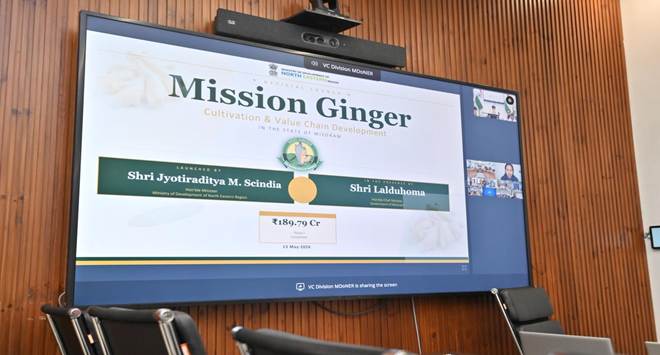
- 16 May 2026
In News:
The Ministry of Development of North Eastern Region (MDoNER), along with the Government of Mizoram, has launched the ?189.79 crore Mizoram Ginger Mission (also designated as the Mizoram Ginger Unique Selling Proposition (USP) – Sustainable Cultivation & Value Chain Development Project).
The initiative utilizes a multi-ministerial convergence model to move away from fragmented departmental schemes. It pools the administrative resources of the Ministries of Agriculture & Farmers Welfare, Rural Development, and Food Processing Industries, alongside critical institutional stakeholders like NABARD (rural credit and cooperative development), ICAR (scientific inputs), and APEDA (export protocols and international logistics).
Core Economic Rationale: Quality vs. Value Disparity
The Superior Quality Profile
Mizoram holds a distinct natural edge in ginger cultivation, leading NITI Aayog to designate it as the “Ginger Capital of India.”
- Genetic Advantage: The state grows indigenous, premium varieties—most notably Thingpui and Thinglaidum—both of which secured Geographical Indication (GI) certification.
- Chemical Distinctiveness: Mizo ginger is premium, pharma-grade ginger due to its exceptionally high oleoresin content of 6% to 8% (the concentrated compound responsible for flavor, aroma, and medicinal properties). This is more than double the global baseline average of approximately 3%.
The Price Disparity Paradox
Despite producing world-class agricultural raw materials, local cultivators face severe market exploitation:
- The Valuation Gap: Farmers traditionally receive just ?8 to ?15 per kg at the farm gate. In contrast, the processed commodity commands upwards of ?500 per kg on international retail shelves.
- The Cause: This gap stems from high post-harvest handling losses, a complete lack of regional processing units, and a dependence on long networks of informal middlemen.
Structural Interventions: The Four Strategic Pillars
To build a sustainable agrobusiness ecosystem, the project operates as a structural "movement" built on four functional pillars:
- Convergence: Aligning existing central public funds (such as a dedicated ?30.13 crore allocation via the North Eastern Council’s Focused Development Component) to build infrastructure efficiently.
- Value Addition: Transitioning the local economy from selling raw, perishable ginger to manufacturing high-margin derivatives like dried ginger flakes, fine powders, and distilled pharmaceutical oleoresins.
- Branding: Marketing the product globally based on its certified origin, low fiber content, high chemical potency, and chemical residue-free composition.
- Market Integration: Directly connecting local farmers with institutional pharmaceutical houses, nutraceutical enterprises, and international buyers.
Hub-and-Spoke Infrastructure Layout
To manage logistical challenges in the hilly terrain, the mission deploys a coordinated Hub-and-Spoke model to support nearly 20,000 farming households:
- The Core Processing Hub: Established at Mualkawi in the Champhai District, this central facility handles advanced high-tech processing, mechanized peeling, industrial dehydration, and extraction.
- The Spoke Centers: Three dedicated satellite units are positioned at Tualcheng, Vaphai, and Zotlang to handle initial sorting, cleaning, grading, and slicing. This primary processing reduces transport weight and minimizes post-harvest rot.
- Ancillary Focus Areas: The project integrates more than 30 targeted interventions covering field mechanization, the introduction of solarized storage units, strict food safety controls, and blockchain-backed farm-to-fork traceability.
Macro Policy Implications: "Brand North East"
The mission is an operational component of MDoNER's broader "Brand North East" regional development strategy. This macro policy assigns specific agro-climatic Unique Selling Propositions (USPs) to individual states to foster specialized production:
- Sikkim: India's premier 100% Organic State.
- Meghalaya: Global hub for high-curcumin Lakadong Turmeric.
- Tripura: Mass export center for Queen Pineapple.
- Arunachal Pradesh: Large-scale commercialization of Kiwi fruit.
- Nagaland: High-altitude, specialty Coffee plantations.
- Mizoram: Globally integrated source for premium Pharma-Grade Ginger.
Through this structured value-chain integration, the mission aims to "disintermediate the intermediary" via robust Farmer Producer Organizations (FPOs), targeting a six-fold increase in net income realization for local farmers while exporting directly into quality-sensitive markets across South-East Asia, the Middle East, and Europe.
Coal Gasification Scheme
- 16 May 2026
In News:
The Union Cabinet approved the “Scheme for Promotion of New Surface Coal/Lignite Gasification Projects for Production of Syngas and Downstream Products” with a financial outlay of Rs. 37,500 crore.
This initiative represents a strategic shift in India’s energy policy: shifting away from the direct combustion of solid fossil fuels toward advanced thermochemical conversion. Amid rising geopolitical supply chain vulnerabilities in West Asia, the scheme aims to reduce India’s high-value hydrocarbon and chemical import bill, which reached approximately Rs. 2.77 lakh crore in FY2025 for substitutable commodities alone.
Understanding the Technology: Coal Gasification and Syngas
- Coal gasification is a high-temperature, high-pressure thermo-chemical process rather than conventional burning.
- Instead of directly combusting coal to generate steam for electricity, gasification subjects coal or lignite to a controlled, oxygen-lean atmosphere with steam. This breaks down the molecular bonds of the hydrocarbon chain, triggering partial oxidation.
- The primary output of this process is Synthesis Gas (Syngas), a gas mixture composed mostly of Carbon Monoxide (CO) and Hydrogen (H2).
The Surface vs. Underground Distinction
- Surface Gasification: The primary focus of this Cabinet-approved scheme. Coal is extracted via traditional mining methods and processed above ground in highly engineered industrial reactors.
- Underground Coal Gasification (UCG): Involves gasifying coal in situ while it is still buried deep within unmined seams by injecting air or oxygen through injection wells and drawing the generated syngas to the surface through production wells.
Industrial Applications of Syngas
Once generated, syngas serves as a versatile chemical feedstock that can be converted into several downstream industrial products:
- Fertilizers: Providing the basic chemical components needed to manufacture Ammonia and Urea.
- Alternative Fuel and Energy: Processing into Synthetic Natural Gas (SNG), Methanol, Ethanol, and Dimethyl Ether (DME).
- Industrial Chemicals: Generating crucial inputs like Ammonium Nitrate (essential for civil explosives and mining infrastructure).
- Hydrogen Economy: Serving as an alternative source for pure industrial Hydrogen extraction.
Salient Features and Financial Architecture of the Scheme
The operational and financial mechanics of the scheme are designed to mitigate risks for private and public sector investments in this capital-intensive sector:
- Target Capacity: The scheme explicitly targets the gasification of approximately 75 MillionTonnes (MT) of coal and lignite. This will serve as a core pillar to achieve the broader national cumulative target of 100 MT by 2030 set under the National Coal Gasification Mission (2021).
- Incentive Outlay and Capital Subsidy: Out of the Rs. 37,500 crore framework, the government provides a fiscal grant capped at a maximum of 20% of the total cost of Plant and Machinery.
- Milestone-Linked De-risking: To prevent capital hoarding and project delays, the financial incentive is disbursed in four equal installments, each tied to the verifiable achievement of specific physical project milestones.
- Equitable Allocation Caps: To prevent market monopolization and encourage diverse participation, the financial guidelines enforce strict upper thresholds:
- Capped at Rs. 5,000 crore for any single gasification project.
- Capped at Rs. 9,000 crore for any single downstream product category (with explicit exemptions granted to Synthetic Natural Gas and Urea).
- Capped at Rs. 12,000 crore for any single corporate entity group across all bids under the scheme.
- Co-existence of Incentives: The policy does not restrict operations; these fiscal benefits are in addition to, and independent of, any incentives gained under the commercial coal mining regime or other state and central line ministries.
- Technology Agnosticism with an Indigenous Focus: While the guidelines remain technology-neutral, the selection framework prioritizes the deployment of domestic engineering capabilities to reduce reliance on foreign Engineering, Procurement, and Construction (EPC) contractors.
- Competitive Bidding Design: Projects will be awarded through a transparent bidding mechanism. Bids will be evaluated using an objective benchmarking framework that evaluates project cost, raw coal input requirements, and net syngas output efficiency.
Policy Reform: Long-Term Fuel Security
A key obstacle for capital-intensive energy projects has been the risk of fuel supply disruptions. To address this, the government introduced a major structural reform alongside the financial package:
- 30-Year Coal Linkage Tenure: Under the "Production of Syngas leading to Coal Gasification" sub-sector within the Non-Regulated Sector (NRS) linkage auction framework, the government extended the guaranteed coal linkage tenure up to 30 years.
- This policy reform aligns fuel availability with the typical operational lifespan of an advanced chemical plant, offering long-term regulatory certainty to de-risk institutional investments.
Strategic, Economic, and Fiscal Benefits
The implementation of the Surface Coal Gasification scheme offers several multi-dimensional benefits for India's macroeconomy:
Macroeconomic and Import Substitution
India holds one of the largest resource bases globally, with 401 billion tonnes of estimated coal reserves and 47 billion tonnes of lignite reserves. Solid coal accounts for over 55% of the country's primary energy mix.
Despite this abundance, India remains highly vulnerable to global supply chain shocks due to its heavy reliance on chemical imports. Surface gasification allows India to utilize its abundant domestic solid fuels to substitute for high-value imported commodities:
- Natural Gas: Substituting for Liquefied Natural Gas (LNG), where India currently imports over 50% of its domestic requirements.
- Industrial Feedstocks: Reducing foreign dependence on Ammonia (nearly 100% imported) and Methanol (extensively imported at 80% to 90% of total consumption).
- Agricultural Security: Boosting self-reliance in Urea, where import dependencies still hover around 20%.
Capital Mobilization and Employment Generation
- The state’s initial Rs. 37,500 crore fiscal layout is projected to function as multiplier seed capital, expected to mobilize private and public investments worth Rs. 2.5 to 3.0 lakh crore across 25 planned industrial projects.
- Furthermore, this industrial shift is expected to generate approximately 50,000 direct and indirect jobs, diversifying employment in India’s underdeveloped, coal-bearing geographic regions.
Fiscal Gains for the State
- Far from being a net drain on the exchequer, the industrial utilization of the targeted 75 MT of coal and lignite is projected to generate Rs. 6,300 crore in annual mineral revenue through standard royalties and mining levies, supplemented by long-term Goods and Services Tax (GST) collections from high-value downstream chemical sales.
Delhi Ridge Ecosystem
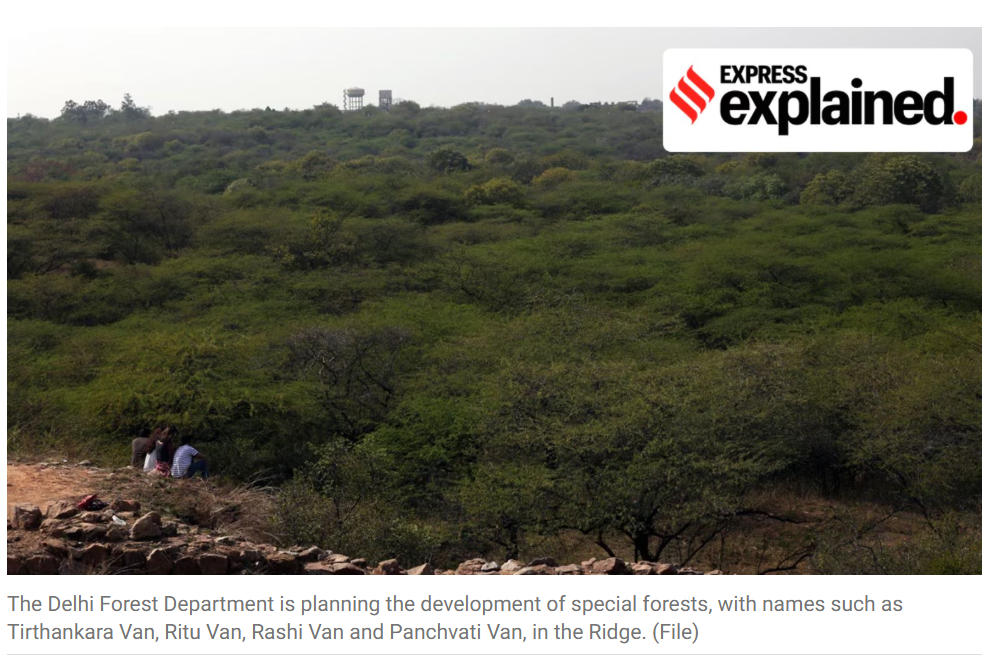
- 16 May 2026
In News:
The Delhi government has officially notified approximately 670 hectares of Delhi’s Central Ridge as a "Reserved Forest" under Section 20 of the Indian Forest Act, 1927. This statutory declaration grants this highly fragmented urban eco-sensitive zone the highest tier of domestic legal protection.
Geomorphology and Zonal Classification
Geographical Profile
- Origin: The northernmost extension of the ancient Aravalli Range, which stands as one of the world's oldest fold mountain systems.
- Topography: Spans 35 km across Delhi; characterized by undulating terrain, highly weathered quartzitic rocks, and thin, nutrient-poor topsoil.
- Macro-Climate Function: Acts as a critical natural barrier shielding Delhi from the hot, dry desert winds (Loo) blowing in from Rajasthan.
The Four Distinct Zones
Spread over nearly 8,000 hectares, the ridge is divided into four non-contiguous zones:
- Northern Ridge (Kamla Nehru): The smallest patch; holds immense historical value tied to the 1857 Uprising.
- Central Ridge: Covers ~864 hectares; 670 hectares of this specific zone were recently notified as a Reserved Forest.
- South-Central Ridge (Mehrauli): Contains ecologically vital patches like Sanjay Van.
- Southern Ridge (Asola Bhatti): The largest contiguous section; contains the Asola Bhatti Wildlife Sanctuary and bears deep scars from historic, unregulated quartzite and sand mining.
Ecological Significance: "The Green Lungs"
- Climate Regulation: Functions as Delhi’s primary carbon sink and oxygen provider, mitigating the Urban Heat Island (UHI) effect and absorbing particulate matter PM2.5and PM10.
- Native Vegetation Type: Classified as a Tropical Dry Deciduous and Thorny Scrub Forest. Native, drought-resilient flora includes Dhauk (Anogeissus pendula), Salai, Palash, and native Babul.
- Ecosystem Engineers: Native termites maintain soil health by recycling nutrients and improving moisture retention. Experts strongly oppose chemical anti-termite plans, warning they destroy this crucial "living soil."
Legal Framework: Reserved Forests
Reserved Forests represent the baseline of strict statutory conservation in India's environmental jurisprudence.
- Statutory Standing: Notified under Section 20 of the Indian Forest Act, 1927. They enjoy the highest degree of statutory protection for state-managed forests and account for 55.1% of India's total Recorded Forest Area (RFA).
- The Governance Rule: They operate under a Prohibited-by-Default regime. All human activities (such as cattle grazing, hunting, and timber extraction) are barred unless explicitly permitted through a written order by a designated Forest Officer. This stands in contrast to Protected Forests, where activities are generally permitted unless explicitly banned.
- Settlement of Rights: Before final notification under Section 20, a Forest Settlement Officer must legally investigate, adjust, or extinguish any existing customary or land rights claimed by local communities to ensure undisputed state boundaries.
- Administrative Authority: Reserved Forests are declared and managed exclusively by State and UT Governments. This differentiates them from National Parks and Sanctuaries, which fall under the stricter mandates of the Central Wildlife (Protection) Act, 1972.
Major Threats and Restoration Dilemmas
- Invasive Alien Species: The colonial-era introduction of Vilayati Kikar (Prosopis juliflora) has resulted in a severe ecological crisis. This invasive weed aggressively outcompetes other flora, depletes groundwater reserves with its deep roots, and forms a dense canopy that chokes out native Aravalli flora.
- Urban Encroachment: Infrastructure sprawl, road widening, and illegal settlements cause severe habitat fragmentation, breaking contiguous wildlife corridors into isolated patches.
- The "Native" Plantation Dilemma: Municipal drives frequently plant popular Indian trees like Mango, Jamun, and Shisham. Because these species are water-intensive and unsuited to the rocky, arid terrain, the plantations fail the moment artificial irrigation stops.
- Commercialization Bias: The Forest Research Institute (FRI) Working Plan (2026-27) faces criticism for treating the Ridge as a commercial timber plantation (focusing on timber volume increments) rather than an irreplaceable biodiversity hotspot.
- Artificial Landscaping: Creating themed public parks (Tirthankara Van, Panchvati Van) involving hardscaping violates the Forest (Conservation) Act, 1980. Furthermore, ultra-dense plantation models like the Miyawaki Method are ecologically incompatible with the Ridge's natural dry-scrub ecosystem.
Way Forward
- Scientific Rewilding: Shift focus from commercial silviculture to genuine ecological restoration by systematically clearing Vilayati Kikar and replanting native Dhauk, Salai, and local wild lianas.
- Strict Enforcement: Leverage digital geofencing and zero-tolerance policies to protect the newly notified 670 hectares of Central Ridge from municipal encroachment and hardscape development.
- Soil Conservation: Halt chemical interventions against native termites to preserve the soil microbiome, allowing natural nutrient cycling and moisture retention to continue.
- Trans-boundary Management: Collaborate across state lines with Haryana and Rajasthan to establish a contiguous Aravalli ecological corridor, structurally halting the expansion of the Thar Desert.
Periodic Labour Force Survey 2025
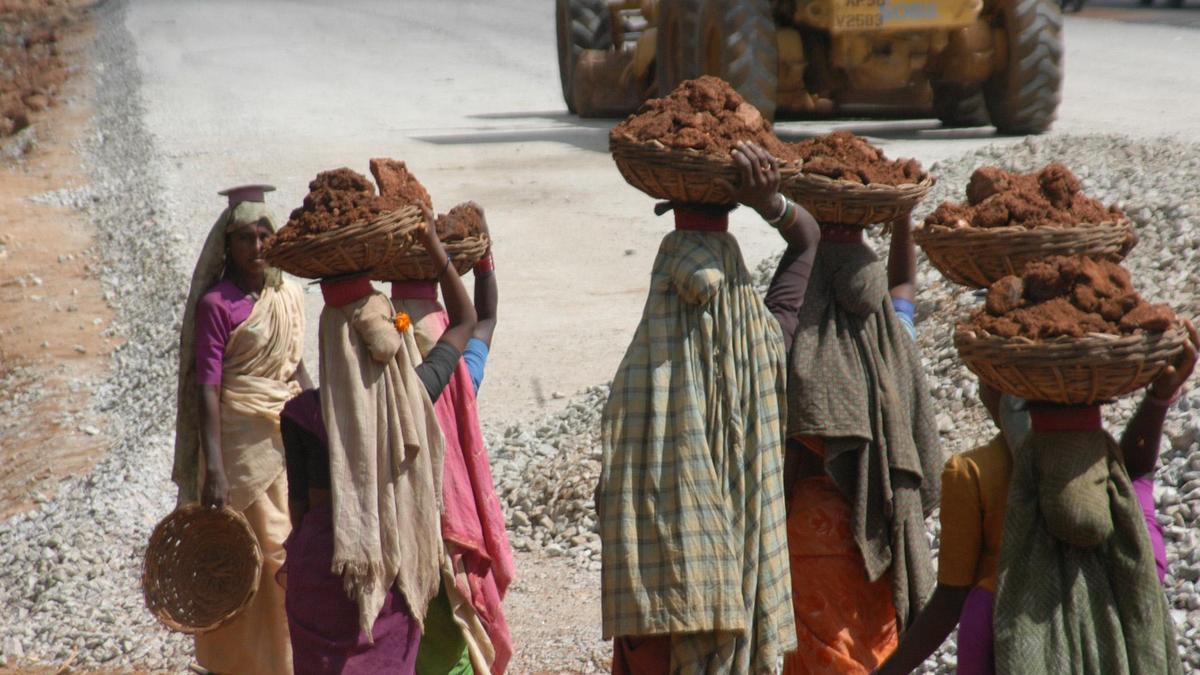
- 16 May 2026
In News:
The National Statistical Office (NSO) under the Ministry of Statistics and Programme Implementation (MoSPI) released the Annual Report of the Periodic Labour Force Survey (PLFS) 2025. This marks a significant methodological transition as the first comprehensive report based on the calendar year (January–December 2025) as the survey period.
Core PLFS Analytical Framework
The health of the labor ecosystem is evaluated using three foundational pillars and two distinct time frameworks:
Key Metrics
Labour Force Participation Rate (LFPR) = Employed Unemployed Total Population × 100
Worker Population Ratio (WPR) = Employed Total Population × 100
Unemployment Rate (UR) = Unemployed Total Population × 100
Time-Tested Frameworks
- Usual Status (ps ss): Based on the activity status over the preceding 365 days. Measures long-term, stable structural trends by combining Principal Status (ps) and Subsidiary Status (ss).
- Current Weekly Status (CWS): Based on a 7-day reference window (employed if worked ≥hour on any day). Key Update: Since January 2025, NSO provides monthly all-India estimates and quarterly bulletins for both rural and urban areas under CWS to track short-term fluctuations.
Key Findings of PLFS 2025: Data and Facts
Headline Employment Data
- Stable LFPR & UR: Overall LFPR stands at 59.3%, while the Unemployment Rate (UR) declined marginally to 3.1%.
- WPR & Total Employed: WPR reached 57.4%, translating into approximately 61.6 crore employed Indians (41.6 crore males and 20.0 crore females).
Structural Fractures & Core Challenges
- The Gender Fault Line: A stark gap persists between Male LFPR (79.1%) and Female LFPR (40.0%).
- Barriers:44.4% of females remain out of the labor force due to childcare and home-making commitments. Conversely, 69.8% of males cite continuing studies.
- Time Deficit: Urban self-employed men log 17.5 more hours weekly than their female counterparts, restricting female income capacity.
- The Youth "NEET" Crisis: While youth unemployment (15–29 years) improved to 9.9%, urban youth face a severe bottleneck at 13.6% (vs. 8.3% in rural areas). Alarmingly, 25.0% of youth fall into the NEET (Not in Employment, Education, or Training) category, highlighting a massive underutilization of the demographic dividend.
- The Technical Skill Void: While 67.8% of the population (aged 15 ) has attained at least a secondary level of education (average formal schooling: 10.0 years), only 4.2% of the workforce (15–59 years) has formal vocational or technical training.
Sectoral Realignment & Earnings
- Shift toward Formalization: Self-employment dropped to 56.2%, while regular wage/salaried employment rose to 23.6%, signaling a modest shift toward formal contracts.
- Sectoral Transitions: Agriculture dependency decreased to 43.0%, with workers transitioning into Manufacturing (12.1%) and Services (13.1%). Young women are increasingly driving this shift away from agriculture.
- Wage Growth & Parity Deficit: Nominal earnings for females grew faster than males (Self-employment: 8.8%; Regular salaried: 7.2%). However, the absolute gap remains high: women in salaried roles still earn only about 76% of male earnings.
Key Structural Bottlenecks Identified
- Low-Quality Female Integration: A significant chunk of rising female participation remains locked in unpaid family labor or low-yield rural activities.
- High Informality: Nearly 85-90% of India's total workforce remains informal, lacking statutory social security (PF/ESI).
- Premature De-industrialization Threat: The slow pace of high-quality manufacturing job creation risks pushing labor back into agriculture during economic shocks.
- Regional Imbalances: Disparities persist between industrialized southern/western states and high-underemployment eastern states (e.g., Bihar, UP).
Way Forward / Policy Imperatives
- De-burdening the Female Workforce: Invest in affordable, high-quality community crèches and elderly care centers (aligned with the Code on Social Security, 2020). Promote remote/hybrid models in formal sectors to prevent female dropout.
- Apprenticeship-Linked Higher Education: Restructure university degrees to make the final year a mandatory, industry-paid internship to eliminate the skill-employment mismatch.
- Overhauling Vocational Infrastructure: Re-align ITIs with Production Linked Incentive (PLI) sectors. Create vocational hubs focused on growing Manufacturing (12.1%) and Service (13.1%) segments.
- SME Formalization Incentives: Provide tax and regulatory fiscal incentives to MSMEs that transition contract workers into regular salaried positions with formal social security covers.
- Agro-Industrialization: Establish Integrated Agro-Processing Clusters locally. Moving rural labor from subsistence farming to sorting, grading, and packaging stabilizes year-round income and checks distress migration.
Intellectual Property Catalyst Initiative
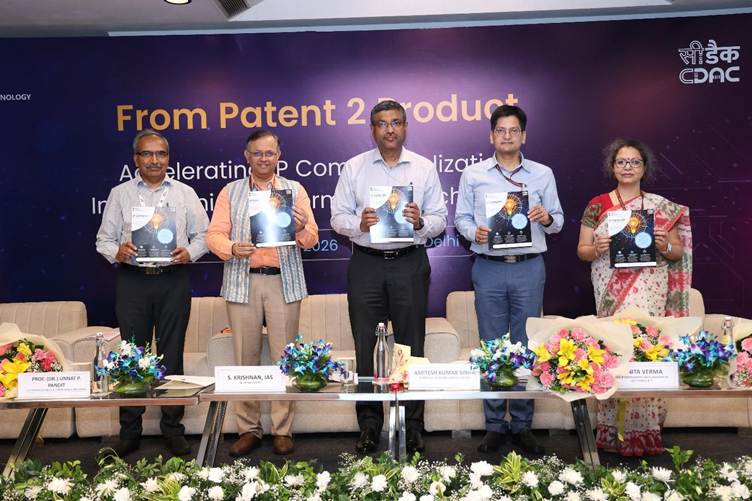
- 15 May 2026
In News:
The Ministry of Electronics and Information Technology (MeitY), Government of India, recently inaugurated a one-day national conference titled “From Patent to Product: Accelerating IP Commercialization in Electronics & IT” at the India Habitat Centre, New Delhi. During this event, the government officially unveiled the Intellectual Property (IP) Catalyst Initiative along with its dedicated, unified online gateway and digital platform hosted at cipie.in.
Institutional Framework and Core Objectives
The IP Catalyst Initiative is an institutional framework designed to convert technological ingenuity into domestic economic value.
Institutional Structure
- Nodal Ministry: Ministry of Electronics and Information Technology (MeitY).
- Implementing Agency: Centre for Development of Advanced Computing (C-DAC), Pune.
- Target Beneficiaries:MeitY-supported organizations, grantee institutions, academic research laboratories, early-stage startups, MSMEs, and domestic industrial enterprises.
Core Objectives
The initiative targets a traditional weakness in India's public research infrastructure: the gap between laboratory innovation and commercial viability.
- End-to-End Lifecycle Support: It establishes a digital and administrative framework that covers the entire innovation lifecycle—spanning fundamental research, domestic patent generation, multi-jurisdictional licensing, and final marketplace deployment.
- Breaking Institutional Silos: It builds a collaborative bridge connecting public R&D facilities with market-ready industry players, facilitating faster commercial adoption of state-backed innovations.
- Paradigm Shift in IP Management: The initiative aims to shift the domestic technology landscape from a traditional, volume-based "Patent Filing" mindset toward an economic, value-driven "Patent àProductàProfit" model. This ensures that publicly-funded R&D generates direct financial and strategic value rather than remaining underutilized in laboratory archives.
Structural Features and Support Mechanisms
The IP Catalyst Initiative provides structural, financial, and analytical support through its digital platform to address specific challenges faced by innovators:
Financial and Advisory Facilitation
- Domestic Filing Subsidies: The initiative offers direct financial assistance to cover IP filing expenses incurred by MeitY-affiliated laboratories and authorized grantee institutions.
- Global Market Protection: Recognizing the high cost of cross-border legal compliance, it provides international patent filing support tailored specifically for eligible startups and MSMEs.
- Prior-Art and Analytics: It provides access to expert IP advisory services and prior-art search tools, enabling innovators to verify the novelty and strength of their inventions prior to filing.
Commercialization and Technology Transfer
- Technology Maturity Mapping: The framework incorporates tools to evaluate Technology Readiness Levels (TRL) and maturity assessments, ensuring technologies are viable before market entry.
- IP Valuation Frameworks: It provides standardized IP valuation methodologies to help innovators determine the financial value of their intellectual property during commercial negotiations.
- Licensing and Transfer Channels: The initiative offers administrative and legal support to manage technology transfer agreements and complex licensing frameworks between researchers and commercial buyers.
Ecosystem Integration and Prototyping
- National Technology Repository: The digital platform (cipie.in) acts as a central repository for technologies developed via MeitY-funded research, giving startups and MSMEs an accessible catalog of indigenous solutions.
- Prototype-to-Product Scaling: Beyond basic registration, the initiative supplies strategic and physical support systems to guide innovators through engineering adjustments, shifting a prototype into a mass-manufacturable product.
PCOS renamed as PMOS
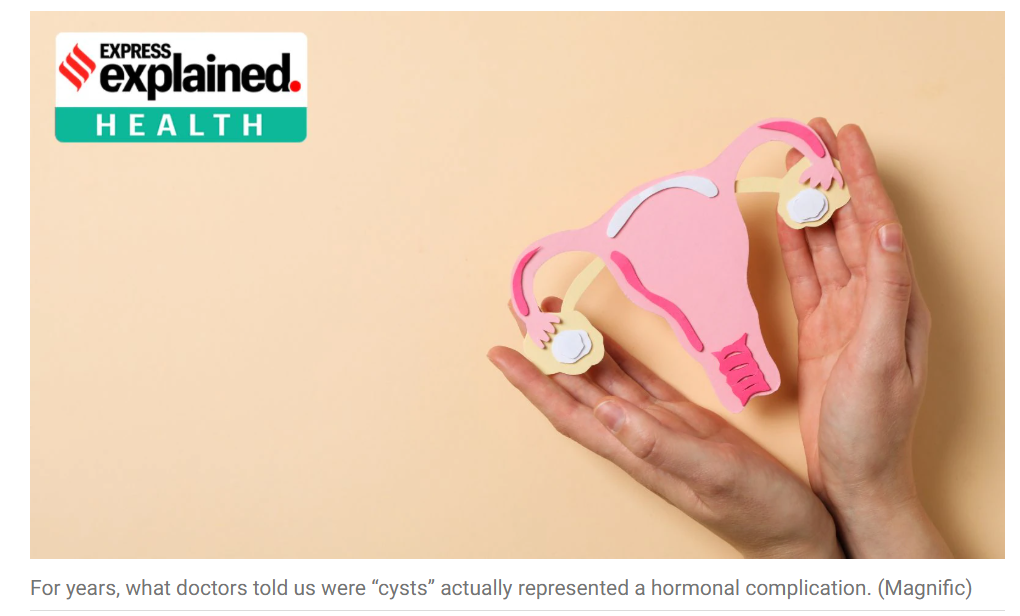
- 15 May 2026
In News:
In a landmark development for global public health and endocrinology, Polycystic Ovary Syndrome (PCOS) has been officially renamed Polyendocrine Metabolic Ovarian Syndrome (PMOS).
Key Administrative and Timeline Details
- Origin: Published in The Lancet, this transition is the culmination of a 14-year global consensus process led by institutions such as Monash University.
- Global Collaboration: The effort involved 56 international clinical organizations and survey data from over 14,000 patients and healthcare practitioners across six continents.
- Implementation Plan: The new nomenclature features a three-year progressive global rollout.
- Clinical Impact: The update does not immediately alter established diagnostic criteria (e.g., Rotterdam criteria) or treatment protocols. Instead, it builds a comprehensive, multi-systemic framework for future screening, diagnosis, and therapeutic management.
Structural Deficiencies of the Legacy Term (PCOS)
The historical designation, Polycystic Ovary Syndrome, introduced several clinical and communication bottlenecks that severely impacted patient care:
- The Pathological Misnomer: The term "polycystic" is scientifically inaccurate. Ultrasonography reveals that affected individuals do not possess abnormal, fluid-filled cysts. Instead, the observed morphology corresponds to arrested follicles—immature ovarian structures that stall midway through their physiological development due to a disrupted maturation process, preventing normal ovulation.
- Organ-Centric Misconception: By focusing entirely on the ovaries, the name "PCOS" reduced a complex, long-term systemic endocrine disorder to an isolated gynecological disease.
- The Diagnostic Delay: This localized definition created massive diagnostic blind spots. Approximately 70% of affected individuals globally remain undiagnosed, often enduring years of fragmented care and missed windows for early preventive interventions.
- Socio-Cultural Stigma: In many traditional societies, anchoring a multi-system metabolic disorder exclusively to reproductive and ovarian health inadvertently heightens the psychological distress and social stigma surrounding fertility, body weight, and associated skin changes.
Anatomy of the New Nomenclature: PMOS Explained
The updated term, Polyendocrine Metabolic Ovarian Syndrome, systematically breaks down the complex biological architecture of the condition:
Polyendocrine
This underscores the complex interplay of multiple hormone-producing pathways. The condition is driven by coordinated disruptions in several hormonal systems, including:
- Elevated androgens (male hormones) that disrupt steroidogenesis.
- Imbalances in luteinizing hormone (LH) and follicle-stimulating hormone (FSH).
- Neuroendocrine and stress-related hormonal dysregulations.
Metabolic
This acknowledges that insulin resistance and metabolic dysfunction are central pathophysiological drivers of the syndrome, rather than secondary complications. Elevated insulin triggers increased ovarian androgen secretion and significantly elevates the risk of long-term cardiometabolic morbidities.
Ovarian
This element preserves the reproductive health dimension, ensuring that chronic anovulation, menstrual irregularities, and implications for fertility remain addressed within the clinical framework.
Pathophysiology and Multi-Dimensional Risk Factors
The development of PMOS is driven by an intricate mix of fixed and modifiable elements:
- Genetic and Neuroendocrine Drivers: Strong hereditary links intertwined with disruptions in the brain-ovary signaling pathways (specifically the altered pulsatility of Gonadotropin-Releasing Hormone or GnRH).
- Modifiable Lifestyle Factors: Sedentary behavior, high-glycemic diets, and obesity aggravate insulin resistance, creating a feedback loop that worsens hormonal imbalances.
Clinical Characterization and Systemic Manifestations
PMOS is a chronic, multifaceted disorder affecting women of reproductive age. It presents a comprehensive array of symptoms across diverse biological systems:
- Reproductive and Gynecological: Chronic anovulation, highly irregular or absent menstrual cycles, and infertility. It also carries an elevated long-term risk of endometrial cancer due to prolonged unopposed estrogen exposure.
- Metabolic and Cardiometabolic: Impaired glucose tolerance, Type 2 diabetes, gestational diabetes, hypertension, dyslipidemia (abnormal cholesterol and triglyceride profiles), and Metabolic Dysfunction-Associated Steatotic Liver Disease (MASLD/fatty liver).
- Dermatological and Physical: Clinical hyperandrogenism presenting as hirsutism (excessive facial and body hair), severe treatment-resistant acne, male-pattern hair loss, and rapid weight gain.
- Psychological: Significant associations with anxiety, depression, mood swings, and eating disorders driven by both hormonal fluctuations and body image distress.
Metabolic Significance in the Indian Context
The transition to PMOS carries immense public health relevance for India, where the condition affects an estimated 16% to 18% of women of reproductive age.
The Thrifty Genotype Hypothesis
The Indian population carries a genetic predisposition known as the "thrifty genotype"—an evolutionary adaptation designed to conserve energy and store fat efficiently during periods of famine. In modern, urbanized environments characterized by sedentary routines and caloric excess, this genotype triggers heightened insulin resistance, rising obesity rates, and a sharp vulnerability to Type 2 diabetes.
The Paradox of "Lean PMOS"
Indian women frequently develop metabolic complications at a much younger age and at lower Body Mass Index (BMI) thresholds compared to Western populations. Under the old framework, individuals with "lean PCOS" (normal or low body weight) were frequently missed because they lacked the stereotypical physical signs of metabolic distress. The explicit inclusion of "metabolic" in PMOS ensures early screening for blood sugar, blood pressure, and lipid profiles in non-obese patients.
Evolving Management Frameworks: Modern vs. Traditional Paradigms
The recognition of PMOS as a systemic endocrine-metabolic disease is transforming the therapeutic landscape, shifting nutrition and lifestyle modification from supportive care to core clinical interventions.
Conventional Pharmacotherapy
- Metformin: An insulin sensitizer used to combat metabolic dysfunction and restore spontaneous ovulation.
- Oral Contraceptive Pills (OCPs): Prescribed to regulate menstrual cycles and suppress excess androgen levels.
- Advanced Metabolic/Fertility Options: The clinical shift has paved the way for utilizing modern metabolic treatments (such as GLP-1 receptor agonists/semaglutides) alongside advanced assisted reproductive technologies (IUI/IVF) for managing complex anovulatory infertility.
The Shift Toward Traditional and Herbal Paradigms
Due to the side effects associated with long-term reliance on synthetic drugs (e.g., gastrointestinal distress from Metformin or thromboembolic risks with specific OCPs), a notable research paradigm shift is underway toward traditional, complementary, and herbal medicines.
Natural supplements such as Myo-inositol are increasingly integrated to improve insulin sensitivity with fewer adverse effects. This highlights the growing need for integrative, evidence-based medicine that combines targeted lifestyle adjustments, metabolic therapies, and holistic care pathways to manage this chronic condition.
Kimberley Process (KP)
- 15 May 2026
In News:
Recently, India commenced the Kimberley Process (KP) Intersessional Meeting in Mumbai, marking its third tenure as the Chair of this critical global body. As the world’s leading hub for diamond cutting and polishing—where 14 out of every 15 diamonds are processed—India’s leadership is pivotal in shaping the future of ethical trade.
What is the Kimberley Process (KP)?
The Kimberley Process is a multi-stakeholder international initiative that brings together governments, the diamond industry, and civil society.
- Genesis: The initiative was sparked in May 2000 in Kimberley, South Africa, following global outcry over "blood diamonds." It was formally launched in January 2003 under UN General Assembly Resolution 55/56.
- Mission: Its primary mandate is to eradicate the trade in "conflict diamonds"—defined as rough diamonds used by rebel movements or their allies to finance armed conflict aimed at undermining legitimate governments.
- India’s 2026 Chairship: Having assumed office on January 1, 2026, India has adopted the theme of the "3Cs": Credibility, Compliance, and Consumer Confidence.
Kimberley Process Certification Scheme (KPCS)
The KPCS is the operational "engine" of the process, acting as a rigorous regulatory "passport" for rough diamonds.
- Core Requirements: Every shipment of rough diamonds crossing an international border must be transported in a tamper-resistant container and accompanied by a government-validated Kimberley Process Certificate.
- Exclusionary Principle: To maintain the integrity of the chain, member states are strictly prohibited from trading rough diamonds with any non-member or any participant that fails to meet the scheme's minimum requirements.
- Legislative Mandate: Participants are required to implement national laws and internal controls to prevent smuggling and ensure the legality of the supply chain.
India’s 2026 Agenda: Digitalization and Reform
As the Chair, India is steering the KP toward modernization to meet the challenges of the 21st-century digital economy.
- Blockchain Integration: A major priority of the Mumbai Intersessional is the transition toward digital, tamper-proof certificates. By utilizing blockchain technology, India aims to provide real-time traceability, significantly reducing the risk of document fraud.
- Ad Hoc Committee on Review and Reform (AHCRR): India is leading discussions to broaden the definition of conflict diamonds. While the current definition focuses on rebel groups, there is a growing global demand to include broader human rights violations.
- Technical Cooperation: India is focusing on capacity building for African diamond-producing nations, ensuring that the legitimate diamond trade continues to support the livelihoods of millions.
Key Functions of the Kimberley Process
Beyond certification, the KP performs several systemic functions:
- Periodic Peer Reviews: Working groups conduct on-site visits to member countries to verify compliance.
- Statistical Accountability: Member states are obliged to share detailed trade and production data to maintain transparency.
- Market Stabilization: By filtering out illicit diamonds, the KP ensures the stability of the legitimate market, protecting the economy of countries where diamonds are a major export.
Justice Aravind Kumar Committee
- 15 May 2026
In News:
Chief Justice of India (CJI) Surya Kant announced a landmark initiative to overhaul the Indian judiciary's physical and technological backbone. By constituting the high-powered Judicial Infrastructure Advisory Committee (JIAC), the Supreme Court has signaled a decisive shift toward solving the chronic infrastructural gaps that have long hampered the delivery of justice.
Structural Composition and Leadership
The committee is designed as a multi-disciplinary expert panel, blending judicial wisdom with administrative and technical expertise.
- Chairperson:Justice Aravind Kumar (Judge, Supreme Court of India).
- Judicial Members:
- Justice Debangsu Basak (Calcutta High Court)
- Justice Ashwani Kumar Mishra (Punjab and Haryana High Court)
- Justice Somasekhar Sundaresan (Bombay High Court)
- Technical & Administrative Members:
- Director General of the Central Public Works Department (CPWD).
- Secretary General of the Supreme Court of India (serving as Member Secretary).
A Visionary Mandate: Seven Focus Areas
The primary objective of the Justice Aravind Kumar Committee is to create a blueprint for a unified, pan-India judicial ecosystem. To achieve this, the committee has identified seven key focus areas:
- Systemic Constraints: Identifying physical and procedural bottlenecks faced by judges and court staff.
- Litigant & Lawyer Facilities: Improving basic amenities such as waiting areas, accessible toilets, and dedicated chambers for bar members.
- Digital Transformation (e-Courts): Strengthening virtual and hybrid hearing infrastructures to bridge the digital divide between urban and rural courts.
- Technological Integration: Implementing cutting-edge tools (AI-assisted research, automated case management) to accelerate case disposal.
- Modern Court Complexes: Overseeing the design of sustainable, accessible, and 21st-century-ready buildings.
- Economic Alignment: Quantifying the fiscal requirements for judicial modernization.
- Institutional Synergy: Ensuring seamless coordination between the Judiciary, Central Government, and State Governments.
Strategic Funding and Economic Coordination
One of the committee's most significant features is its direct link to national economic policy.
- Projected Investment: The committee seeks a massive allocation of ?40,000–?50,000 crore. This represents one of the largest single-project investments in judicial history, aimed at treating judicial infrastructure as a vital component of national infrastructure.
- Collaboration with PM-EAC: The panel is tasked with submitting its detailed findings and specific funding requirements to Sanjeev Sanyal, a member of the Economic Advisory Council to the Prime Minister (EAC-PM), by August 31, 2026. This ensures that judicial requirements are integrated into the central government's budgetary planning.
Why This Matters: The State of Indian Judiciary
The constitution of this committee comes at a critical juncture. As of March 2026, the Supreme Court's case pendency reached a record high of over 93,000 cases, with millions more pending in subordinate courts.
- The Infrastructure-Pendency Link: Research consistently shows that case delays are often caused by "non-legal" factors, such as a lack of courtrooms for new judges, poor digital connectivity for remote hearings, and inadequate storage for physical records.
- Tribunal Crisis: Many specialized tribunals currently operate from inadequate rented spaces or hotel complexes (e.g., Hotel Samrat in New Delhi), compromising the dignity and efficiency of the legal process.
Bharat Maritime Insurance Pool (BMIP)
- 15 May 2026
In News:
The Department of Financial Services (DFS) recently inaugurated the Bharat Maritime Insurance Pool (BMIP), marking a watershed moment in India’s maritime and financial history. Amidst escalating geopolitical tensions in West Asia and the Red Sea, this domestic insurance mechanism is designed to insulate Indian maritime trade from global supply chain disruptions.
Strategic Framework and Financial Structure
The BMIP is a robust domestic insurance ecosystem designed to reduce India's reliance on international Protection and Indemnity (P&I) clubs and foreign reinsurers.
- Financial Capacity: The pool is launched with a total capacity of $1.5 billion.
- Sovereign Backstop: A critical feature is the sovereign guarantee of $1.4 billion (approx. ?12,980 crore). This government guarantee ensures that the pool remains solvent even in the event of catastrophic losses.
- Claim Settlement Mechanism:
- Layer 1: Claims up to $100 million are met through the pooled capacity of domestic members.
- Layer 2: Claims exceeding the pooled capacity, after exhausting existing reserves and private reinsurance arrangements, are backed by the Sovereign Guarantee.
Core Objectives and Coverage
The primary mandate of the BMIP is to provide uninterrupted insurance coverage for Indian-flagged or Indian-controlled vessels, as well as international ships trading with Indian ports.
- Risk Spectrum: The pool offers comprehensive coverage across four critical maritime domains:
- Hull and Machinery: Physical damage to the ship’s structure and equipment.
- Cargo: Protection against loss or damage to goods being transported.
- Protection and Indemnity (P&I): Third-party liabilities, including environmental damage (oil spills) and injury to crew.
- War Risk: Coverage for damages arising from hostilities, sabotage, or piracy—a vital component given current West Asian crises.
Operational Governance
The BMIP operates as a collective of domestic insurance companies, ensuring that premium outflows remain within the Indian economy (reducing invisible service imports).
- Pool Administrator: The General Insurance Corporation of India (GIC Re) has been designated as the administrator, leveraging its expertise in global reinsurance.
- Underwriting Committee (UC): A specialized committee has been formed to ensure that risks are assessed with technical precision and consistency.
- Governing Body: A high-level governing body oversees the pool’s functionality and provides the final approval for invoking the sovereign guarantee.
- The Reinsurance Model: Domestic pool members issue policies using their combined capacity. The risks are then shared among all members in proportion to their committed capacity, creating a diversified risk-sharing model.
India’s First AI-Enabled Block-Level Monsoon Forecasting System
- 14 May 2026
In News:
In a landmark shift toward precision meteorology, the India Meteorological Department (IMD) recently launched the country's first Artificial Intelligence (AI)-enabled block-level monsoon forecasting system. This technological leap, aims to transform traditional weather forecasting into hyperlocal, actionable intelligence.
Structural Framework and Collaboration
The system is the result of an inter-institutional synergy between India's premier atmospheric science bodies:
- Lead Agency: India Meteorological Department (IMD).
- Collaborators: The Indian Institute of Tropical Meteorology (IITM), Pune, and the National Centre for Medium Range Weather Forecasting (NCMRWF).
- Methodology: The system utilizes a "Hybrid Approach," integrating traditional Numerical Weather Prediction (NWP) models—which rely on physical atmospheric equations—with advanced Machine Learning algorithms to refine accuracy and reduce computational lag.
Technical Features and Forecasting Logic
The new system departs from broad regional forecasts to provide Hyperlocal Impact-based Services.
- Temporal Precision: The model generates probabilistic forecasts of monsoon progression every Wednesday, providing outlooks up to four weeks in advance.
- Reliability: It maintains a remarkably narrow error margin of approximately four days, allowing for high-confidence planning.
- The "Onset" Criteria: Unlike general rainfall predictions, this model defines a successful monsoon onset based on a specific dual-metric:
- A continuous five-day rainfall spell.
- The absence of any prolonged dry spells within the subsequent 30 days.
Geographic Coverage and Strategic Focus
The initial rollout of the system is strategically targeted to maximize socio-economic impact.
- Current Scope: The system presently covers 3,196 blocks across 15 States and one Union Territory.
- Priority Zones: The coverage is largely concentrated in rainfed agricultural regions. In these areas, the timing of sowing is entirely dependent on the precise onset of the monsoon, making hyperlocal data a life-saving asset for farmers.
- Future Expansion: The IMD plans a phased expansion to eventually cover every administrative block in India, ensuring universal access to AI-driven weather alerts.
Dissemination and Last-Mile Connectivity
Recognizing that data is only useful if it reaches the end-user, the IMD has established a multi-channel dissemination strategy:
- Digital Platforms: Real-time updates via dedicated mobile applications and SMS alerts.
- Human Networks: Integration with local agricultural extension networks and Krishi Vigyan Kendras (KVKs) to interpret data for illiterate or semi-literate farmers.
National Florence Nightingale Awards 2026
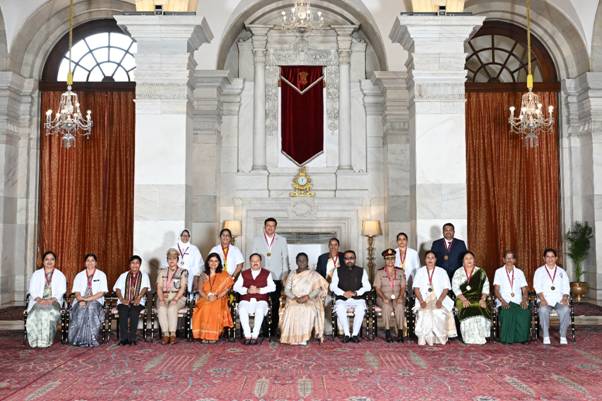
- 14 May 2026
In News:
On May 12, 2026, coinciding with International Nurses Day, the President of India, Smt. Droupadi Murmu, conferred the National Florence Nightingale Awards for the year 2026 at a ceremony in Rashtrapati Bhavan. This prestigious recognition serves as a testament to the indispensable role of nursing professionals in India’s healthcare architecture, aligning with the 2026 global theme: "Our Nurses. Our Future. Empowered Nurses Save Lives."
Institutional Framework of the Award
The National Florence Nightingale Award is the highest national honor for nursing professionals in India.
- Genesis: Instituted in 1973 by the Ministry of Health and Family Welfare, the award aims to recognize meritorious services rendered by nursing personnel to society.
- Eligibility: The awards are presented to a wide spectrum of health workers, including Registered Nurses, Midwives, Auxiliary Nurse Midwives (ANMs), and Lady Health Visitors. These professionals serve across Central and State Governments, Union Territories, and voluntary organizations.
- Components of the Award: Each recipient is honored with a Certificate of Merit, a Medal, and a cash prize of ?1,00,000.
Highlights of the 2026 Award Ceremony
A total of 15 nursing professionals were honored this year for their exemplary service, particularly in challenging and remote terrains.
- Geographic Diversity: The awardees represented a broad cross-section of India, including professionals from Ladakh, Lakshadweep, Sikkim, Mizoram, Kerala, and Maharashtra.
- Notable Awardees:
- Ms. Kulwinder Parhi (ANM, Ladakh): Recognized for nearly 30 years of service in high-altitude, extreme-weather regions, providing care to both civilians and troops.
- Ms. Aysha Beebi K (Nurse, Lakshadweep): Honored for conducting a critical, life-saving midnight delivery on a remote island during an emergency.
- Major Gen Lissamma P V (IHQ of MoD, Army): Additional Director General of the Military Nursing Service, recognized for her leadership and distinguished service in military healthcare.
- Dr. Sharwan Kumar Dhaka (Nurse, Delhi): Commended for his outreach in public health services and extensive contribution to vaccination drives in underserved communities.
The Legacy of Florence Nightingale
The award is named after Florence Nightingale (1820–1910), the British social reformer and statistician who is widely regarded as the founder of modern nursing.
- The Crimean War: Nightingale rose to prominence for her management of nurses during the Crimean War, where she organized care for wounded soldiers in Constantinople (Istanbul). Her habit of making rounds at night earned her the moniker "The Lady with the Lamp."
- Scientific Contribution: She was a pioneer in using statistical graphics to demonstrate that most deaths in the war were due to poor sanitation rather than battle wounds.
- Educational Impact: In 1860, she established the Nightingale School of Nursing at St. Thomas’ Hospital in London, the first scientifically based nursing school in the world.
- Historical Milestone: She was the first woman to be awarded the Order of Merit (1907).
Indian Ocean Rim Association

- 14 May 2026
In News:
Recently, the Ministry of External Affairs (MEA), in collaboration with the Indian Council of World Affairs (ICWA) and the Indian Ocean Rim Association (IORA) Secretariat, hosted the 10th Indian Ocean Dialogue (IOD) in New Delhi. Held under the theme "Indian Ocean Region in a Transforming World," the dialogue underscored India's pivotal role as the current IORA Chair (2025–2027).
What is IORA?
Established in 1997 (originally as the Indian Ocean Rim Initiative), IORA is the premier intergovernmental organization for regional cooperation among littoral states of the Indian Ocean.
- Evolution: Formerly known as IOR-ARC, it has evolved into a robust platform for 23 Member States and 12 Dialogue Partners.
- Geographic Breadth: It spans five continents, including members like India, Indonesia, and Thailand (Asia), South Africa and Mauritius (Africa), Australia (Oceania), and France (Europe—via its overseas territories).
- Governance: The Council of Foreign Ministers (COM) serves as the apex decision-making body, meeting annually. The Secretariat is headquartered in Ebène, Mauritius, currently led by Secretary-General Sanjeev Ranjan (appointed in 2025).
The 10th Indian Ocean Dialogue: Key Highlights
The 10th edition focused on India's chairship priority: “Innovation, Openness, Resilience, and Adaptability.” Unlike formal summits, the IOD is a Track 1.5 forum, bringing together government officials, scholars, and policy experts for open, constructive debate.
- Vision MAHASAGAR: India reiterated its commitment to Mutual and Holistic Advancement for Security and Growth Across Regions (MAHASAGAR). This vision expands traditional security to include climate resilience and digital connectivity.
- Economic Integration: Discussions prioritized the Blue Economy, emphasizing sustainable fisheries and marine biotechnology as drivers of GDP for island nations.
- Social Inclusion: A notable highlight from the 2026 session was the focus on Nari Shakti (Women’s Empowerment), with reports indicating a 340% increase in women’s participation in the maritime sector since 2020.
The Six Priority Pillars of Cooperation
To achieve "balanced development," IORA operates through six distinct priority areas, which formed the core agenda of the 10th Dialogue:
- Maritime Safety and Security: Addressing piracy, drug trafficking, and ensuring freedom of navigation.
- Trade and Investment: Reducing barriers to enhance the flow of goods and services.
- Fisheries Management: Promoting sustainable practices to prevent overexploitation.
- Disaster Risk Management: Establishing regional early-warning systems for tsunamis and cyclones.
- Blue Economy: Sustainable use of ocean resources for economic growth.
- Tourism and Cultural Exchanges: Strengthening the "Indian Ocean identity."
Strategic Significance: Why the Indian Ocean Matters
The Indian Ocean is often called the "Global Lifeline," and the 10th Dialogue highlighted several modern realities:
- Energy Security: Approximately 80% of global seaborne oil trade passes through the region's chokepoints (Strait of Hormuz, Malacca, and Bab-el-Mandeb).
- Digital Connectivity: Over 90% of global internet traffic is carried via undersea fiber-optic cables on the Indian Ocean floor.
- Geopolitical Balancing: IORA provides a leadership platform for India that remains distinct from other groupings like the Quad or BRICS, specifically focusing on the unique needs of Global South littoral states.
MelanoserisPendryi
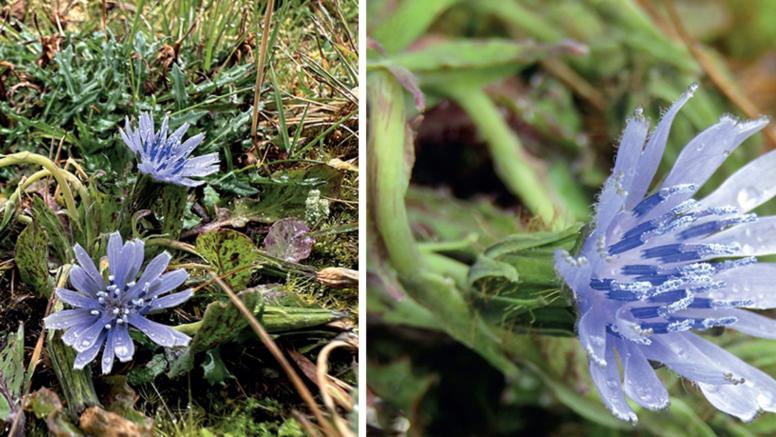
- 14 May 2026
In News:
In a significant contribution to India’s botanical diversity, a team of researchers from the University of Calcutta and the University of Kashmir has discovered a new plant species, Melanoserispendryi, in the high-altitude alpine regions of the Sikkim Himalayas. This discovery, published in 2026, highlights the ecological richness of the Eastern Himalayas, a global biodiversity hotspot, and provides critical data for conservation efforts in fragile mountain ecosystems.
Taxonomic Classification and Global Distribution
The newly identified species belongs to the Asteraceae family (commonly known as the daisy or sunflower family), specifically under the genus Melanoseris.
- Genus Characteristics: The genus Melanoseris is distributed across a wide geographical range stretching from Iran to Southern Central China, extending into Northern Central Indo-China and Java.
- Indian Context: In India, approximately 16 species of Melanoseris have been documented, primarily concentrated across the Himalayan belt and the Northeastern states.
- Etymology: The species name pendryi honors David C. Pendry, a renowned botanist noted for his extensive work on the flora of the Himalayas and Nepal.
Habitat and Environmental Adaptation
Melanoserispendryi is uniquely adapted to thrive in the harsh, low-oxygen environments of the Sikkim Himalayas, specifically at altitudes exceeding 4,000 meters above sea level.
- Geographic Niche: It is primarily found in the moist alpine grasslands of Eastern Sikkim, often growing in close proximity to cushionoid shrubs like Rhododendron campanulatum.
- Resilience Mechanisms: To survive extreme cold and high-velocity winds, the plant grows close to the ground (prostrate habit) and utilizes a fleshy, branching root system that stores essential nutrients and moisture.
- Growth Cycle: The plant is a perennial herb that flowers from August to October, producing fruits shortly after in September and October.
Distinctive Morphological Features
What sets M. pendryi apart from its close relatives (such as M. lessertiana) are its unique floral and seed structures, which were previously unknown in this genus.
- The "Bearded" Petals: The species features striking lavender-colored petals (ligules). Uniquely, the undersides (ventral surface) of these petals are covered in long, white ciliate hairs, a feature that has led some to describe it as the "flower with a beard."
- Reproductive Anatomy: It possesses a shorter reproductive tube and a distinctly stout, compressed seed structure (cypsela).
- Physical Stature: The plant is relatively small, reaching a height of only 5–18 cm, including the peduncle. Its stem is often purplish and may be glabrous (smooth) or slightly hairy at the base.
Conservation Status and Ecological Threats
Despite its recent discovery, researchers have raised urgent concerns regarding the survival of Melanoserispendryi. Based on IUCN Red List criteria, scientists have proposed classifying the species as Critically Endangered.
- Tourism Pressure: The high-altitude regions of Sikkim are increasingly accessible to tourists, leading to habitat trampling and soil compaction.
- Grazing Pressure: Competitive land use for livestock grazing in alpine meadows poses a direct threat to the sparse populations of this plant.
- Climate Change: As a high-altitude specialist, M. pendryi is highly vulnerable to "mountain-top extinction," where rising temperatures force species to migrate upward until no suitable habitat remains.
National Panchayat Awards 2025
- 14 May 2026
In News:
The Ministry of Panchayati Raj recently announced the winners of the National Panchayat Awards (NPA) 2025, a cornerstone initiative designed to recognize and incentivize Panchayati Raj Institutions (PRIs) that have excelled in localizing Sustainable Development Goals (SDGs).
Core Framework and Objectives
The National Panchayat Awards are conferred annually to foster a spirit of healthy competition among PRIs. The primary goal is to promote inclusive, participatory, and sustainable rural development.
- Incentivization Scheme: The awards are implemented under the Incentivization of Panchayats (IoP) scheme, which is a central component of the Rashtriya Gram Swaraj Abhiyan (RGSA)—a Centrally Sponsored Scheme.
- Alignment with Global Goals: Since the 2023 revamp, the framework has been strictly aligned with the nine themes of Localization of Sustainable Development Goals (LSDGs). This shift ensures that the assessment of a Panchayat's performance is holistic, data-driven, and transparent.
Key Award Categories and Winners
A total of 42 Panchayats were selected for the 2025 cycle from 17 States and Union Territories. The awards are broadly divided into two prestigious categories:
A. Deen Dayal Upadhyay Panchayat Satat Vikas Puraskar (DDUPSVP)
This category focuses on Gram Panchayats (GPs) that have shown exceptional performance in specific thematic areas.
- Thematic Focus: It evaluates performance across 9 LSDG themes, including Poverty-free and Enhanced Livelihoods, Healthy Panchayat, Water Sufficient Panchayat, Clean and Green Panchayat, and Women-friendly Governance.
- Selection Mechanism: Winners are determined based on their Panchayat Advancement Index (PAI) 2.0 scores.
- Scale of Recognition: 34 Gram Panchayats were selected in this category for Ranks 1, 2, and 3 across different themes.
B. Nanaji Deshmukh Sarvottam Panchayat Satat Vikas Puraskar (NDSPSVP)
Unlike the thematic focus of DDUPSVP, this award recognizes the best-performing Panchayats overall at all three tiers of the PRIs.
- Distribution: Eight Panchayats were honored, comprising three District Panchayats, two Block Panchayats, and three Gram Panchayats.
- Top Honorees:
- Best District Panchayat:Sepahijala (Tripura) secured the first rank, followed by Ganjam (Odisha) and Coimbatore (Tamil Nadu).
- Best Block Panchayat:Harippad (Kerala) stood first.
- Best Gram Panchayat: New Napam (Assam) was recognized as the top-performing village unit.
State-wise Performance Trends
The 2025 awards highlight the regional excellence in rural administration. Karnataka emerged as the leading state, securing the highest number of awards with 6 winning Panchayats. This was followed closely by Andhra Pradesh and Odisha, each securing 5 awards. Other states like Maharashtra, Tripura, and Kerala also showed strong representation across various thematic rankings.
Financial Incentives and Empowerment
To ensure that recognition translates into further development, the awards carry significant financial incentives. These funds are intended to be utilized by the winning Panchayats for furthering their developmental projects:
- Grant Range: Incentives range from ?50 lakh to ?5 crore per awardee.
- Tier-based Funding: The amount varies depending on the tier (Gram, Block, or District) and the specific category of the award. For instance, the top District Panchayat (Sepahijala) is set to receive ?5 crore, while thematic Gram Panchayat winners typically receive ?1 crore for the first rank.
Special Recognition for Emerging Challenges
In addition to the main categories, the Ministry also utilizes the National Panchayati Raj Day (April 24) to highlight specialized achievements:
- Climate Action Special Panchayat Award (CASPA): Encouraging environmental stewardship.
- Atma Nirbhar Panchayat Special Award (ANPSA): Recognizing self-reliance in local economy and infrastructure.
- Panchayat Kshamta Nirman SarvottamSansthan Puraskar: Awarded to institutions facilitating capacity building for PRIs.
Global Forest Goals Report 2026
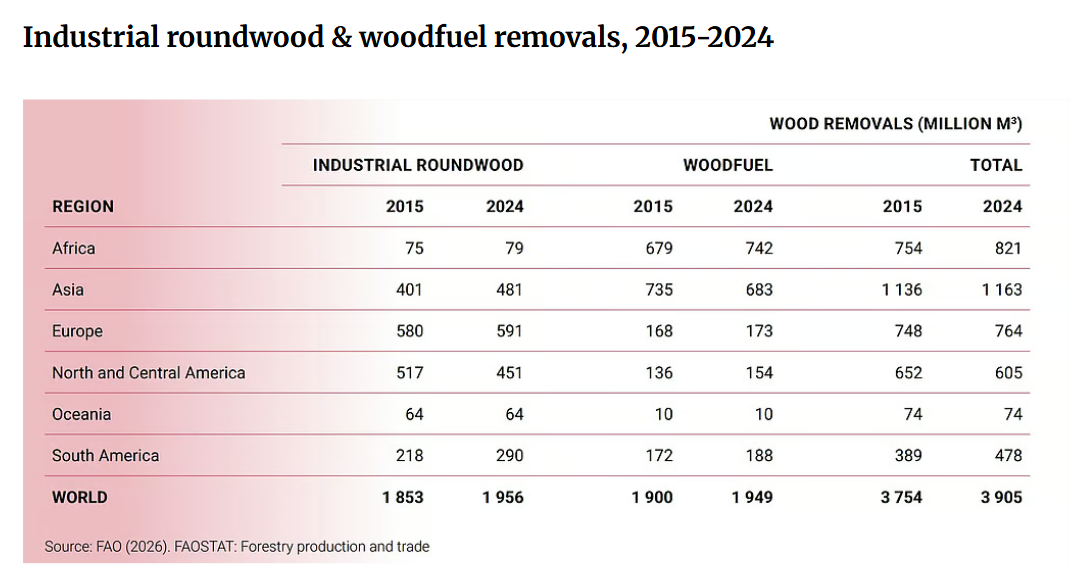
- 13 May 2026
In News:
A landmark United Nations assessment, the Global Forest Goals Report 2026, has sounded a critical alarm regarding the state of the world’s terrestrial ecosystems. Prepared by the UN Department of Economic and Social Affairs (UNDESA) and the UN Forum on Forests Secretariat, the report highlights a shift in the drivers of environmental decline. While agricultural expansion remains the primary cause of deforestation, the rising demand for fuelwood and charcoal has emerged as a dominant driver of forest degradation, particularly across Africa and Asia.
The State of Global Forest Cover: 2015–2025
The report provides a sobering quantitative analysis of a decade of forest loss. Global forest cover has diminished from 4.18 billion hectares in 2015 to 4.14 billion hectares in 2025, representing a staggering net annual loss of 4.12 million hectares.
Perhaps most concerning is the fate of primary forests—undisturbed, biodiverse ecosystems that are essential for climate regulation. The world lost nearly 16 million hectares of primary forests in just ten years, with South America witnessing the most severe decline. This loss is irreversible in human timescales, as primary forests harbor unique genetic diversity and sequester significantly more carbon than secondary or plantation forests.
Emerging Drivers: The Fuelwood and Energy Poverty Nexus
While the conversion of forests for large-scale agriculture (industrial soy, palm oil, and cattle ranching) continues to lead in total deforestation, forest degradation—the thinning of forest density and health—is now increasingly driven by the energy needs of the poor.
- Sub-Saharan Africa and Asia: In these regions, a lack of access to clean cooking fuels (like LPG or electricity) forces millions to rely on wood and charcoal.
- The Vicious Cycle of Energy Poverty: Dependence on fuelwood creates a direct link between poverty and environmental decline. As forests are thinned for fuel, the ecosystem’s ability to provide services (water regulation, soil fertility) diminishes, further impoverishing the communities that depend on them.
- Charcoal Production: The report identifies charcoal as an especially destructive commodity, as its production is often inefficient and unregulated, leading to the rapid depletion of hardwood species.
Intensifying Environmental Pressures
The report stresses that forests are no longer just fighting human encroachment; they are also battling a changing climate. Abiotic and biotic stressors are accelerating degradation:
- Extreme Weather: Prolonged droughts and heatwaves are weakening tree resilience.
- Natural Disasters: An increase in the frequency and intensity of wildfires is turning forests from carbon sinks into carbon sources.
- Biological Threats: Rising temperatures have expanded the range of pests and diseases, devastating vast tracts of temperate and tropical forests alike.
The Restoration Gap: Pledges vs. Reality
A significant portion of the report is dedicated to the "Restoration Gap." While global awareness has led to ambitious pledges, implementation remains sluggish:
- The Deficit: 91 countries pledged to restore 190 million hectares of forest by 2025. However, only 44 million hectares—less than a quarter—have actually been restored.
- Asia as a Silver Lining: Asia has emerged as a global leader in forest recovery, accounting for the highest restoration performance. The region successfully restored over 31 million hectares, achieving 42.2% of its pledged area. This success is largely attributed to large-scale afforestation programs in countries like China and India.
National Technology Day 2026

- 13 May 2026
In News:
On May 11, 2026, India celebrated National Technology Day, marking the 28th anniversary of the historic Pokhran-II nuclear tests. Recalling the events of 1998, the Prime Minister described the tests as a defining symbol of India’s scientific excellence and strategic self-reliance. This day serves not only as a tribute to past achievements but as a roadmap for India’s technological trajectory toward becoming an Aatmanirbhar Bharat (Self-reliant India).
Historical Significance: Operation Shakti (1998)
National Technology Day commemorates Operation Shakti, conducted at the Pokhran Test Range in Rajasthan under the leadership of then-Prime Minister Atal Bihari Vajpayee and the technical guidance of Dr. APJ Abdul Kalam.
- The Nuclear Milestone: On May 11, 1998, India successfully conducted a series of five nuclear tests. This followed the 1974 Operation Smiling Buddha (Pokhran-I), officially establishing India as a nuclear-weapon state and reinforcing its strategic autonomy on the global stage.
- A Triple Triumph: The significance of May 11, 1998, extends beyond nuclear physics. On the same day, India achieved two other major milestones:
- The successful test-firing of the Trishul surface-to-air missile.
- The maiden flight of Hansa-3, India’s first indigenous composite aircraft.
- Institutionalization: Recognizing these multifaceted breakthroughs, May 11 was officially declared National Technology Day in 1999.
Theme 2026: Responsible Innovation for Inclusive Growth
The theme for 2026, “Responsible Innovation for Inclusive Growth,” reflects India’s current focus on balancing rapid technological advancement with ethical considerations and social equity. It underscores the vision that innovation must not only be cutting-edge but must also bridge the digital divide and reach the last mile of society.
The New Technological Frontier: Major Missions
India has transitioned from traditional strategic technology to emerging and disruptive fields. The government has launched several "Mission Mode" projects to secure leadership in the 4th Industrial Revolution:
- Strategic Missions: The National Quantum Mission and India Semiconductor Mission 2.0 aim to build indigenous capabilities in high-compute and hardware manufacturing, reducing dependence on global supply chains.
- Exploratory Missions: The Deep Ocean Mission is exploring the "Blue Economy," while the Anusandhan National Research Foundation (ANRF) has been established to provide a unified funding and regulatory framework for R&D across the country.
- Policy Support: The Vigyan Dhara Scheme and the National Mission on Interdisciplinary Cyber-Physical Systems are fostering a culture of research and interdisciplinary collaboration.
- Sector-Specific Innovations: Programs like iDEX (Innovation for Defence Excellence) and Biotech-KISAN are successfully bridging the gap between laboratories and the field, empowering both the defense sector and the farming community.
25 Years of Pradhan Mantri Gram Sadak Yojana
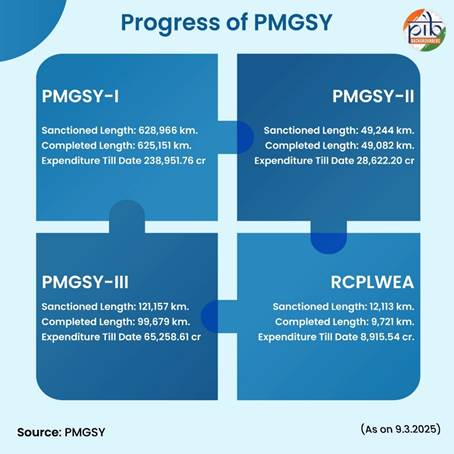
- 13 May 2026
In News:
The Union Ministry of Rural Development recently marked the Silver Jubilee of the Pradhan Mantri Gram Sadak Yojana (PMGSY) in Bhairunda, Madhya Pradesh. This milestone was distinguished by the national launch of PMGSY-IV, a strategic evolution of India’s flagship rural infrastructure program. Since its inception in 2000, PMGSY has transitioned from a basic connectivity project into a high-tech engine for socio-economic transformation, bridging the rural-urban divide and fostering a "Viksit Bharat."
The Evolution of a Rural Lifeline (2000–2024)
PMGSY began as a Centrally Sponsored Scheme to provide all-weather road connectivity to unconnected rural habitations. Over two and a half decades, its scope has expanded through distinct phases:
- Phase-I (2000): Focused on establishing the first link for previously isolated habitations.
- Phase-II (2013): Shifted the objective toward upgrading existing rural routes to streamline the movement of goods and people to service hubs.
- RCPLWEA (2016): A specialized vertical for 44 districts affected by Left Wing Extremism (LWE). By facilitating the mobility of security forces and integrating underserved populations, this initiative is a cornerstone in the goal to make India "Naxal-free" by March 2026.
- Phase-III (2019): Focused on "Through Routes" that link villages to critical social infrastructure like Gramin Agricultural Markets (GrAMs), hospitals, and schools. As of late 2025, over 80% of the 1,25,000 km target has been met.
PMGSY-IV (2024–2029): The Next Frontier
Launched with a financial outlay of ?70,125 crore, Phase IV aims to construct 62,500 km of roads to connect 25,000 remaining unconnected habitations.
New Connectivity Criteria
Eligibility for Phase IV is based on Census 2011 data:
- Plain Areas: Habitations with a population of 500 .
- NE & Himalayan States/UTs: Habitations with a population of 250 .
- Special Categories: Tribal (Schedule V) areas, Aspirational Districts/Blocks, and desert areas.
Convergence and Inclusion
PMGSY-IV is intricately linked with tribal development schemes such as PM-JANMAN and the Dharti Aaba Janjatiya Gram Utkarsh Abhiyan, ensuring that the most marginalized tribal settlements receive priority connectivity.
Digital Governance and Quality Assurance
The success of PMGSY is anchored in its rigorous Three-Tier Quality Control mechanism, which ensures that infrastructure is both durable and transparently built:
- First Tier: Internal quality control by state executing agencies.
- Second Tier: Monitoring by independent State Quality Monitors (SQM).
- Third Tier: Oversight by National Quality Monitors (NQM) under the National Rural Infrastructure Development Agency (NRIDA).
Technology acts as a force multiplier in this framework. The OMMAS (Online Management, Monitoring, and Accounting System) provides real-time tracking, while the e-MARG platform monitors maintenance during the 5-year Defect Liability Period, linking contractor payments directly to road performance. Furthermore, all alignments are now mapped via the PM Gati Shakti portal and the PMGSY Gram Sadak Survey App to prevent infrastructure overlap.
Green Technology and Sustainability
Aligning with global climate goals, PMGSY-IV mandates the use of "Green Technologies." As of mid-2025, over 1.24 lakh km of roads have been constructed using:
- Waste Utilization: Waste plastic, fly ash, and construction debris.
- Cold Mix Technology: Reduces the carbon footprint by eliminating the need to heat bitumen.
- Full Depth Reclamation (FDR): Recycles existing road base, reducing the need for stone aggregate mining.
- Bio-Engineering: Use of geosynthetics and cell-filled concrete to stabilize roads in flood-prone and mountainous terrains.
Jute Crop Information System
- 13 May 2026
In News:
India’s jute sector, historically a cornerstone of the rural economy in the eastern states, is undergoing a profound digital transformation. Spearheaded by the National Jute Board (NJB), the implementation of the Jute Crop Information System (JCIS) marks a shift from fragmented, manual monitoring to a sophisticated, evidence-based technological framework.
Launched in 2023, JCIS is a collaborative endeavor involving the Indian Space Research Organisation (ISRO), the Jute Corporation of India (JCI), and the NJB. This platform addresses long-standing structural limitations in the sector by integrating space technology with ground-level intelligence.
The Technological Architecture: BHUVAN JUMP and PATSAN
The JCIS ecosystem is built upon two specialized digital pillars that synchronize field data with satellite observations:
- BHUVAN JUMP: A dedicated mobile application used by field personnel for on-ground monitoring. It facilitates the large-scale collection of geo-tagged field data, ensuring that every data point is linked to a specific geographic coordinate for scientific validation.
- PATSAN (Prospective Assessment of Jute Using Mobile App-Based Field Observations): A web-based analytics dashboard that serves as a command center for officials. It provides near real-time surveillance, vegetation indices, and crop-related assessments, enabling stakeholders to make data-driven policy decisions.
Addressing Structural Limitations
Before the introduction of JCIS, the jute industry faced several systemic challenges:
- Fragmented Estimates: Area and yield assessments were often based on manual, non-standardized reports, leading to inconsistencies and delayed responses.
- Data Silos: Satellite data, weather analytics, and field inputs operated independently, preventing a holistic view of crop health.
- Vulnerability to Disasters: A lack of real-time detection for floods and droughts resulted in significant crop and quality losses.
Key Features and Operational Impact
The JCIS framework has introduced a "Smart-Sampling" approach to agricultural management through several high-tech interventions:
- Geospatial Smart-Sampling: The system supports Crop Cutting Experiments (CCEs) by combining satellite-derived crop maps with robust statistical sampling. This has drastically improved the accuracy of yield estimation and production modeling.
- Flood Impact Modeling: Using satellite data and field validation, the NJB can now generate quantitative models to estimate yield and quality losses in flood-affected regions, facilitating objective insurance and relief assessments.
- Early Warning Systems: The integration of weather analytics allows the platform to issue district-level alerts regarding rainfall variations, dry spells, and temperature fluctuations, supporting proactive planning.
- I-CARE Field Network: Leveraging its extensive field network, the NJB has institutionalized the use of technology at the grassroots level, ensuring that the transition is not just top-down but deeply embedded in field operations.
National Mission for Sustainable Agriculture
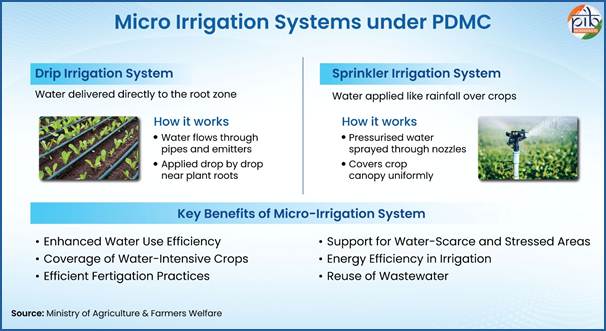
- 13 May 2026
In News:
Under the updated framework of the National Mission for Sustainable Agriculture (NMSA), a transformative target has been set: bringing 100 lakh hectares under micro-irrigation over the five-year period from 2025-26 to 2029. This initiative underscores the critical shift from traditional irrigation to precision water management as a cornerstone of national food security.
Evolution and Institutional Framework
- Launched in 2014-15 as one of the eight missions under the National Action Plan on Climate Change (NAPCC), NMSA was designed to mitigate the adverse impacts of weather variability on Indian farming. Since the fiscal year 2022-23, the mission has been integrated into the umbrella scheme of Pradhan Mantri Rashtriya Krishi Vikas Yojana (PMRKVY).
- Operated by the Ministry of Agriculture and Farmers Welfare, the mission acts as a strategic intervention to ensure that agricultural productivity does not come at the cost of environmental degradation.
Strategic Interventions: The Four Pillars of NMSA
The mission employs a multi-pronged strategy to enhance water-use efficiency, improve soil health, and build climate-resilient farming systems:
1. Per Drop More Crop (PDMC): Precision in Water Management
The PDMC initiative is the primary vehicle for achieving the newly set 100 lakh hectare target. By promoting micro-irrigation technologies—specifically drip and sprinkler systems—it aims to maximize crop productivity per unit of water used. This is vital for India, where agriculture consumes nearly 80% of the country’s freshwater resources.
2. Rainfed Area Development (RAD): Diversifying Risks
Recognizing that nearly 60% of India’s cultivated area is rainfed, RAD encourages Integrated Farming Systems (IFS). This approach integrates crops with livestock, fisheries, and horticulture, providing farmers with multiple income streams and a buffer against localized crop failures caused by erratic rainfall.
3. Soil Health Management (SHM): Sustaining the Foundation
Supported by the SHC Scheme, SHM focuses on the scientific testing of soil to promote balanced nutrient application. By discouraging the overuse of chemical fertilizers, it protects long-term soil fertility and reduces the input costs for small and marginal farmers.
4. Climate Change Monitoring and Networking (CCSAMMN)
The CCSAMMN component serves as the mission’s intellectual backbone. It facilitates a bidirectional flow of information: translating high-level scientific research into actionable data for farmers, while feeding grassroots field observations back to research establishments.
One Case One Data Initiative
- 12 May 2026
In News:
In a major leap toward "Justice 2.0," the Chief Justice of India (CJI) recently unveiled two transformative digital tools: the 'One Case One Data' initiative and an AI-powered chatbot named 'Su Sahay'. These projects, spearheaded by the Supreme Court of India, represent a strategic move to leverage technology to reduce judicial delays, enhance transparency, and simplify the legal process for the common citizen.
About the Initiative:
The 'One Case One Data' initiative is a flagship digital infrastructure project aimed at ending the era of data fragmentation within the Indian legal system. Historically, records at the Taluka, District, High Court, and Supreme Court levels often existed in silos, leading to administrative hurdles during appeals or transfers.
Core Objectives and Mechanics
The primary goal is to establish a National Case Management System that acts as a "single source of truth" for every legal matter in the country.
- Multi-Level Integration: The system synchronizes data across all tiers of the judiciary, ensuring that a development in a lower court is instantly updated across the entire national network.
- Interconnected Tracking: It allows judges and lawyers to track a case’s entire history—from its first filing to its current status—through a seamless digital trail.
- Efficiency and Transparency: By eliminating the need for manual record-gathering and physical movement of files, the initiative significantly reduces the time required for case processing.
‘Su Sahay’ AI Chatbot: Making Justice Accessible
While 'One Case One Data' focuses on backend infrastructure, 'Su Sahay' is a front-end innovation designed specifically for litigants and the general public. Developed by the National Informatics Centre (NIC) in collaboration with the Supreme Court Registry, this AI-powered chatbot is integrated directly into the Supreme Court’s official website.
Bridging the Information Gap
- Litigant-Centric Guidance: The chatbot provides step-by-step assistance for complex procedures such as filing processes, understanding court protocols, and checking case statuses.
- 24/7 Digital Helpdesk: As a real-time assistance tool, it functions as a round-the-clock helpdesk, minimizing the need for citizens to make physical visits to court premises or navigate difficult telephonic inquiries.
- User-Friendly Interface: By using a simple, conversational format, 'Su Sahay' demystifies legal jargon, making it easier for non-experts to interact with the highest court in the land.
VB—G RAM G Act, 2025
- 12 May 2026
In News:
In a transformative shift for India’s rural landscape, the Central Government has notified that the Viksit Bharat—Guarantee for Rozgar and Ajeevika Mission (Gramin), or VB–G RAM G, will officially replace the Mahatma Gandhi National Rural Employment Guarantee Act (MGNREGA) starting July 1, 2026.
This legislative overhaul aims to pivot from a demand-driven "survival" model toward a productivity-linked framework aligned with the Viksit Bharat @2047 vision. By integrating wage employment with high-impact asset creation, the mission seeks to build long-term economic resilience in rural India.
The Statutory Guarantee: Expanding the Safety Net
The VB—G RAM G Act, 2025 strengthens the rights of rural workers by enhancing the legal entitlement to employment.
- 125 Days of Work: The statutory guarantee has been increased from 100 days to 125 days of unskilled manual work per financial year for every rural household.
- Legal Protections: The Act retains critical safeguards, such as the Unemployment Allowance (payable if work is not provided within 15 days of demand) and a Transport Allowance (an additional 10% of the wage rate if the worksite is beyond a 5 km radius).
- Wage Security: Wages are strictly mandated to be paid weekly (or within a maximum of 14 days) directly via Direct Benefit Transfer (DBT).
Thematic Focus: Productive Asset Creation
Unlike its predecessor, which often faced criticism for creating "ephemeral" or temporary assets, VB–G RAM G restricts projects to four strategic "Thematic Work Domains" to ensure the creation of durable infrastructure:
- Water Security: Prioritizing groundwater recharge and irrigation.
- Core Rural Infrastructure: Roads, markets, and connectivity.
- Livelihood Infrastructure: Facilities that directly support income generation (e.g., storage, processing units).
- Extreme Weather Mitigation: Specifically designed works to build climate resilience against floods and droughts.
A New Financial & Planning Architecture
The mission introduces a revised funding and planning mechanism to foster a more disciplined "Centrally Sponsored" partnership:
- Fund Sharing Ratio:
- 90:10 for North-Eastern and Himalayan States.
- 60:40 for other States and UTs with legislatures.
- 100% Central funding for UTs without legislatures.
- Agricultural Season Pause: To prevent labor shortages during critical farming periods, States must notify a 60-day pause annually during peak sowing and harvesting seasons.
- The Viksit Gram Panchayat Plan (VGPP): Every project must originate from a participatory, evidence-based plan integrated with the PM Gati Shakti National Master Plan. This ensures that local development aligns with national logistics and infrastructure priorities.
Technological Integration & Monitoring
The Act leverages "Next-Gen" technology to enhance transparency and curb leakages:
- Attendance & Transactions: Mandatory Face Authentication for worker attendance and biometric authentication for all financial transactions.
- Geospatial Tracking: Real-time monitoring of work sites using geospatial technology and GPS-linked data.
- Viksit Bharat National Rural Infrastructure Stack: A unified digital repository that tracks all assets created under the mission for better maintenance and accountability.
PM MITRA Park
- 12 May 2026
In News:
In a significant stride toward making India a global textile powerhouse, the Prime Minister recently inaugurated the nation's first PM MITRA (Pradhan Mantri Mega Integrated Textile Region and Apparel) Park in Warangal, Telangana. This initiative is the cornerstone of the government's "5F" vision—Farm to Fiber to Factory to Fashion to Foreign—aiming to create a self-reliant and internationally competitive textile sector.
Vision and Institutional Framework
The PM MITRA scheme, overseen by the Ministry of Textiles, is designed to overcome the fragmented nature of India’s traditional textile industry. By consolidating the entire value chain—from spinning and weaving to processing and garmenting—into a single geographical zone, the mission seeks to eliminate logistical inefficiencies and reduce the carbon footprint of production.
Implementation Model
These parks are developed through a Special Purpose Vehicle (SPV), a collaborative entity owned by both the State Government and the Government of India. This Public-Private Partnership (PPP) model ensures that the government provides the regulatory and financial foundation, while private players bring in operational efficiency and innovation.
Strategic Geographical Footprint
The government has approved the establishment of seven PM MITRA Parks across the country, strategically located to leverage regional strengths:
- Southern India: Virudhunagar (Tamil Nadu), Warangal (Telangana), and Karnataka.
- Western India: Gujarat and Maharashtra.
- Central & Northern India: Madhya Pradesh and Lucknow (Uttar Pradesh).
These sites can be developed as either Greenfield projects (entirely new infrastructure) or Brownfield projects (upgrading existing facilities).
Key Features and Infrastructure Design
A PM MITRA Park is more than just a manufacturing zone; it is a world-class industrial ecosystem designed with specific land-use allocations to ensure holistic growth:
- Manufacturing Core: 50% of the area is dedicated to pure manufacturing activities.
- Support Utilities: 20% of the land is earmarked for essential utilities, such as power, water, and effluent treatment.
- Commercial Growth: 10% of the area is reserved for commercial development to support business operations and logistics.
The Integrated Value Chain
By integrating spinning, weaving, dyeing, printing, and apparel manufacturing in one location, the parks drastically reduce transport time and costs. This "plug-and-play" infrastructure allows manufacturers to scale quickly without the burden of building individual support systems.
Financial Incentives and Capital Support
To attract investment and ensure the viability of these mega-projects, the Ministry of Textiles provides substantial financial backing:
- Greenfield Projects: Financial assistance of up to ?800 crores per park.
- Brownfield Projects: Support of up to ?500 crores per park.
- State Contribution: Respective State Governments are responsible for providing encumbrance-free land (at least 1,000 acres) and ensuring augmented utility infrastructure like roads and power.
Kerala’s Draft Oil Spill Contingency Plan and the National Framework
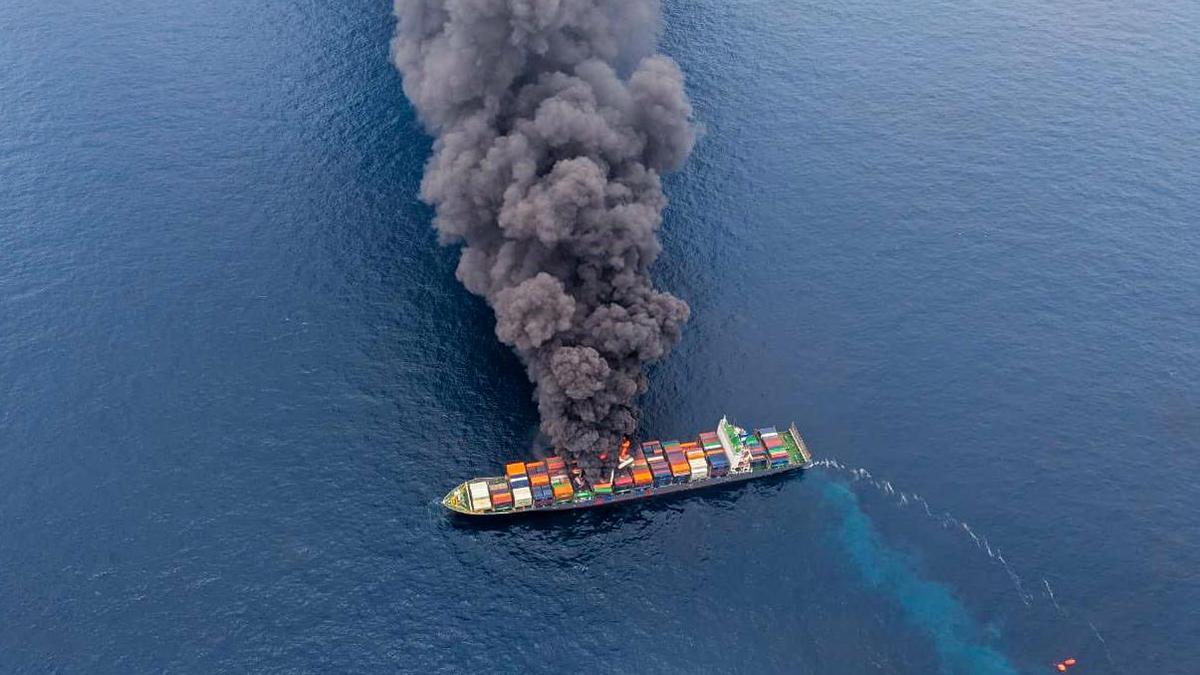
- 12 May 2026
In News:
In response to increasing maritime risks and recent disasters involving vessels like the MSC Elsa 3 and MV Wan Hai 503, Kerala has finalized its draft Oil Spill Contingency Plan (OSCP). Designed to safeguard the state’s 590 km coastline, this plan aligns with the newly updated National Oil Spill Disaster Contingency Plan (NOS-DCP) 2024, marking a significant step toward maritime environmental security and disaster resilience.
Kerala’s OSCP: A Localized Strategy for a Fragile Coastline
Kerala’s draft plan is a specialized regional adaptation of national guidelines, focusing on the state's unique ecological and geographical needs.
1. Scope and Jurisdiction: The OSCP is designed to manage spills occurring within 12 nautical miles (India’s Territorial Waters). Recognizing the interconnectedness of Kerala’s water bodies, the plan uniquely extends its reach 40 km into inland riverine systems that are influenced by tidal actions, ensuring a holistic "ridge-to-reef" protection strategy.
2. Environmental Sensitivity Index (ESI) Mapping: A cornerstone of the plan is the ESI mapping, which identifies vulnerable marine ecosystems. This allows authorities to prioritize the protection of:
- Mangrove forests and coastal wetlands.
- Fish breeding grounds, which are vital for the state’s blue economy.
3. Technological and Scientific Interventions: The state will utilize hydrodynamic and oil spill modeling to predict the movement of hazardous cargo. This was prompted by the sinking of the MSC Elsa 3, which resulted in the loss of calcium carbide and plastic nurdles—pollutants that behave differently than traditional oil and require specialized recovery techniques.
4. Shoreline Response and Management: The plan establishes a clear chain of command for clean-up operations. It incorporates Net Environmental Benefit Analysis (NEBA), a scientific process used to weigh the advantages and disadvantages of different response options (e.g., using dispersants versus manual cleaning) to ensure the intervention does not cause more harm than the spill itself.
NOS-DCP 2024
Kerala’s efforts are anchored in the National Oil Spill Disaster Contingency Plan (NOS-DCP), India’s apex policy framework for marine pollution.
The Tiered Response Mechanism
The 2024 updates have refined the "Trigger Points" for different spill sizes to ensure a streamlined response:
- Tier 1 (Small): Handled by individual ports or oil facilities (Up to 700 tonnes).
- Tier 2 (Medium): Managed using regional resources and District Administration (700 to 10,000 tonnes).
- Tier 3 (Large): Classified as a National Disaster, requiring the Indian Coast Guard (ICG) and national-level authorities (Over 10,000 tonnes).
Recent National Enhancements
- Integrated Digital Tracking: Leveraging INCOIS (Hyderabad) models and the Online Oil Spill Advisory (OOSA) system, authorities can track oil trajectories using real-time satellite imagery and Automatic Identification Systems (AIS).
- HNS Preparedness: With a rise in chemical transport, there is an increased focus on Hazardous and Noxious Substances (HNS).
- Sustainable Dispersants: The 2024 guidelines approved "low-toxicity" chemical dispersants to minimize the ecological footprint on marine life.
- Green Energy Inclusion: For the first time, response protocols have been added for the offshore wind energy sector within India’s Exclusive Economic Zone (EEZ).
Institutional Framework and Coordination
The success of these plans depends on seamless inter-agency cooperation:
- Indian Coast Guard (ICG): The Central Coordinating Authority responsible for the National Inventory of pollution response equipment.
- Directorate General of Shipping: Oversees legal issues, salvage operations, and international regulations.
- Ministry of Environment (MoEFCC): Identifies and prioritizes Environmentally Sensitive Areas (ESAs).
- State Governments: Responsible for shoreline clean-up and local coordination within their jurisdiction.
SEHAT Mission
- 12 May 2026
In News:
In a landmark shift toward preventive healthcare, the Union Ministers of India recently launched the ‘SEHAT Mission’ (Science Excellence for Health through Agricultural Transformation) in New Delhi. This initiative represents the first formal convergence of India’s agricultural and medical sectors, aiming to address the twin challenges of persistent malnutrition and the escalating burden of Non-Communicable Diseases (NCDs).
The Philosophy: From Reactive Treatment to Proactive Nutrition
For decades, India’s healthcare strategy has been largely reactive—focusing on the treatment of diseases. The SEHAT Mission seeks to overhaul this paradigm by adopting a "whole-of-government" approach. By shifting the focus to "preventive nutrition," the mission bridges the gap between what is grown on the farm and what is required for public health.
The mission is driven by a joint national partnership between two of India’s premier scientific bodies:
- Indian Council of Agricultural Research (ICAR): Providing the technical expertise in crop science and farming systems.
- Indian Council of Medical Research (ICMR): Offering clinical insights into nutritional requirements and disease prevention.
Core Pillars and Scientific Framework
The mission is built upon the vision of “Healthy Food, Healthy Farms, and a Healthy India.” To achieve this, it employs several scientific and strategic interventions:
- Bio-fortification of Crops: Rather than relying solely on external supplements, the mission promotes the development of crop varieties naturally enriched with essential micronutrients such as iron, zinc, and Vitamin A. This ensures that nutritional security is embedded within the primary food source.
- Revival of Traditional and Nutri-Cereals: There is a renewed emphasis on climate-resilient millets (Sri Anna), including Kodo, Kutki, Ragi, Jowar, and Bajra. These grains are not only sustainable to grow but are also nutrient-dense compared to traditional staples like polished rice and wheat.
- Integrated Farming Systems (IFS): The mission encourages rural households to move beyond monoculture. By integrating crop cultivation with animal husbandry, fisheries, and beekeeping, the initiative ensures that farming families have access to a diverse and balanced diet.
- Food as Medicine for NCDs: With lifestyle diseases like diabetes, hypertension, and certain cancers on the rise, the SEHAT Mission focuses on research-backed dietary solutions. It explores how specific agricultural products can function as preventive "medicine" to manage and mitigate these chronic conditions.
- The ‘One Health’ Approach: Recognizing that human health is inextricably linked to animal and environmental health, the mission facilitates joint planning between medical and agricultural scientists to monitor zoonotic threats and environmental contaminants.
Safeguarding the Producers: Farmer Health and Safety
A unique aspect of the SEHAT Mission is its focus on the health of the farmers themselves. Scientific interventions are being designed to reduce the risks associated with pesticide exposure and the handling of hazardous agricultural chemicals. By improving the health and safety of the primary producer, the mission ensures the sustainability of the entire food value chain.
Technological Integration and Policy Support
To ensure the mission's objectives are met with precision, the government is leveraging data-driven governance. This includes:
- Real-time Dashboards: For monitoring nutritional outcomes across different regions.
- Science-Based Policy Support: Aligning agricultural production targets with the specific nutritional requirements of the Indian population.
Psyche Spacecraft

- 11 May 2026
In News:
In a significant milestone for deep-space exploration, NASA’s Psyche spacecraft recently captured a rare and striking crescent view of Mars from a distance of approximately 5 million kilometers. This imaging feat occurred during a critical gravity-assist maneuver, where the spacecraft utilized the Red Planet's gravitational pull to slingshot itself toward its ultimate destination: the metal-rich asteroid, 16 Psyche.
Mission Overview and Timeline
Launched on October 13, 2023, the Psyche mission represents NASA’s first endeavor to explore a world that is not made of rock or ice, but largely of metal.
- Journey to the Belt: The spacecraft is currently navigating toward the outer main asteroid belt between Mars and Jupiter.
- Arrival and Orbit: The gravity of Asteroid Psyche is expected to capture the spacecraft in late July 2029.
- Scientific Operations: The primary mission is slated to begin in August 2029. The spacecraft will spend roughly two years in orbit, performing comprehensive mapping, surface photography, and composition analysis.
The Target: Asteroid 16 Psyche
Scientists believe that Asteroid Psyche might be the exposed nickel-iron core of an early planet—a "planetesimal"—that lost its rocky outer layers due to violent collisions billions of years ago. By studying it, researchers hope to gain a "look inside" the cores of terrestrial planets like Earth, which are otherwise unreachable due to extreme heat and pressure.
Spacecraft Features and Propulsion
The Psyche spacecraft, roughly the size of a small van, incorporates cutting-edge deep-space technology:
- Solar-Electric Propulsion: Unlike traditional chemical rockets, Psyche utilizes Xenon gas as propellant. This system uses electricity from solar arrays to accelerate xenon ions, creating a gentle but consistent thrust that allows the craft to gain immense speed over time.
- Efficiency: This propulsion method is highly efficient for long-duration missions, allowing for greater payload capacity and more precise orbital maneuvering.
Scientific Payload: The Instruments of Discovery
To decode the history of the asteroid, the spacecraft carries a suite of high-precision instruments:
- Magnetometer: Designed to detect if the asteroid possesses a remnant magnetic field. Finding such a field would strongly indicate that the asteroid was once the core of a molten planet.
- Gamma-Ray and Neutron Spectrometer: This instrument allows scientists to identify the specific chemical elements (such as iron, nickel, and silicon) that comprise the asteroid's surface material by measuring the energy of particles rebounding from it.
- Multispectral Imager: Comprising a pair of identical cameras with telescopic lenses, this tool will photograph the surface in various wavelengths of light to reveal its topography and geological features.
Strategic Significance for Space Science
The Psyche mission is a prime example of "Discovery Class" missions aimed at fundamental questions of planetary origin. It highlights:
- Origin of Life and Earth: Understanding how planetary cores form is essential to understanding why Earth developed a magnetic field, which shields us from lethal solar radiation.
- Innovation in Interplanetary Navigation: The successful imaging of Mars during the gravity assist demonstrates the precision of modern deep-space navigation and the utility of planetary flybys to save fuel and increase mission longevity.
India–Vietnam Strategic Partnership
- 11 May 2026
In News:
In May 2026, the bilateral relationship between India and Vietnam reached a historic milestone as both nations elevated their ties to an Enhanced Comprehensive Strategic Partnership during the state visit of Vietnamese President Tô Lâm to India. This elevation reflects a deep-seated convergence of interests regarding Indo-Pacific stability, maritime security, and the pursuit of strategic autonomy in an increasingly multipolar world.
The Strategic Backbone: Defence and Maritime Security
Defence cooperation has transitioned from mere buyer-seller interactions to a robust strategic pillar. The partnership is defined by a mutual commitment to a "free, open, and rules-based Indo-Pacific."
- Capacity Building: India continues to provide advanced training assistance and defence financing to Vietnam.
- Asset Transfers: The transfer of military assets, such as the INS Kirpan, serves as a symbol of India’s commitment to enhancing Vietnam’s maritime patrol capabilities.
- Maritime Domain Awareness (MDA): Both nations have intensified cooperation in maritime security to counter common challenges in the South China Sea, ensuring the protection of Sea Lines of Communication (SLOCs).
Economic Resilience and Trade Expansion
Economic engagement is being leveraged as a tool for strategic resilience. As both nations seek to de-risk their supply chains, trade has become a primary vehicle for integration.
- Trade Volume: Bilateral trade has officially surpassed the $16 billion mark.
- Vision 2030: A roadmap has been established to scale this trade to $25 billion by 2030, focusing on diversifying the basket of goods and services.
- Critical Sectors: New avenues for cooperation have opened in critical minerals, green energy, and the development of a resilient economic architecture to withstand global market volatility.
Vietnam’s Role in India’s ‘Act East’ Policy
Vietnam stands as a central pillar of India’s Act East Policy and its broader Indo-Pacific Oceans Initiative (IPOI).
- ASEAN Linkage: As one of the most vibrant economies in Southeast Asia, Vietnam acts as a gateway for India’s deeper engagement with the ASEAN bloc.
- Strategic Balancing: The partnership contributes to regional balancing alongside powers like Japan, Australia, and the US. Notably, both India and Vietnam maintain strategic autonomy, choosing to collaborate based on shared principles rather than joining formal military alliance systems.
Emerging Technology and Connectivity
The "Enhanced" nature of the partnership in 2026 emphasizes the transition into high-technology domains:
- Emerging Tech: Joint ventures in semiconductors, AI, and telecommunications are being prioritized.
- Connectivity: Improving physical and digital connectivity remains a priority to facilitate smoother movement of goods and people between the two regions.
- Space Cooperation: Collaborative efforts in satellite tracking and remote sensing for disaster management and resource mapping.
Solid Waste Management (SWM) Rules, 2026
- 11 May 2026
In News:
The Solid Waste Management (SWM) Rules, 2026, which came into effect on April 1, 2026, were intended to be a watershed moment for India’s environmental governance. However, the framework has sparked a nationwide debate regarding the "Centralisation Reflex" of the Union government. While the rules aim for uniformity, critics argue they overlook the principles of subsidiarity and federalism, potentially prioritizing bureaucratic compliance over actual ecological restoration.
The Scale of India’s Ecological Emergency
India is currently grappling with a waste crisis that has evolved into a multi-dimensional ecological emergency. Centralized management has often failed to address the granular realities of this crisis:
- Fiscal Inefficiency: Currently, 40%–50% of municipal budgets are drained by secondary transport (moving waste to distant landfills) rather than processing it at the source.
- The Landfill Menace: Urban centers are ringed by "mountains of methane." The 2024 fires in Kochi and Delhi underscored the catastrophic air pollution and greenhouse gas emissions stemming from these legacy dumpsites.
- Urban and Rural Clogging: In cities like Bengaluru and Mumbai, plastic-clogged drains were identified as the primary driver of the 2025 monsoon floods. Meanwhile, rural India is facing a new crisis: a surge in e-waste and hazardous pesticide containers without any localized collection mechanisms.
- Water Contamination: Toxic leachate from landfills adjacent to water bodies—visible in the hyacinth-choked lakes of Bengaluru—is leading to irreversible nutrient loading and groundwater poisoning.
The Centralisation Reflex: Why Top-Down Models Persist
The 2026 Rules lean heavily toward a "one-size-fits-all" technocratic vision. This centralization is driven by several institutional beliefs:
- The Incapacity Argument: A prevailing assumption that Gram Panchayats and Urban Local Bodies (ULBs) lack the technical competence to manage waste, leading the Centre to design a single operational blueprint for both a metropolis like Mumbai and a remote Himalayan village.
- Trust Deficit: The mandate for a centralized online portal managed by the Central Pollution Control Board (CPCB) forces local bodies to act as mere "data suppliers" rather than autonomous governors.
- Judicialised Administration: To meet court-mandated timelines and avoid litigation, the Centre creates rigid, uniform standards that are easier to defend legally but difficult to implement administratively at the grassroots level.
- Atrophy of Local Expertise: By shifting decision-making to New Delhi, local bodies lose the opportunity to "learn by doing," becoming dependent on central instructions rather than developing indigenous composting or recycling models.
Implications for Governance and Federalism
The shift toward centralized control carries significant risks for India’s democratic and administrative fabric:
- Blurred Accountability: When a village fails to manage waste based on a design made in Delhi, officials often engage in a "blame game"—local bodies cite a lack of funds, while the Centre alleges poor implementation.
- Erosion of the State List: Sanitation and public health are State subjects under the Seventh Schedule. The 2026 Rules effectively reduce States to mere implementing agencies, stifling their ability to act as "policy laboratories."
- Unproductive Compliance: The current system prioritizes "paper-based compliance." Sanitation workers are frequently diverted from street-level waste management to perform data entry for central dashboards.
- Fiscal Stress: New mandates often arrive without formula-based financing, forcing small local bodies to purchase expensive equipment they cannot maintain, leading to the quiet evasion of the rules.
A Decentralised Way Forward: The Path to Subsidiarity
To transform the SWM Rules, 2026, from a technocratic exercise into a successful ecological tool, the following reforms are essential:
- Embrace Subsidiarity: Authority must shift to the lowest level of governance—the Ward and Gram Sabha. Decisions should be made by those closest to the waste generation, utilizing local knowledge and informal worker networks.
- State-Led Policy Laboratories: States should be allowed to frame their own rules for a five-year period to test novel solutions, such as Kerala’s model of Self-Help Group-led composting.
- Phased and Tiered Rollout: Strict, high-tech compliance should be prioritized for megacities (population >1 crore), while rural hamlets should be allowed to adopt simplified, nature-based processing models.
- Shared Federal Data Platforms: The CPCB portal should evolve from a "monitoring tool" into a "service platform" where local bodies can customize dashboards for their own specific governance needs.
- Predictable Financing: Every new obligation mandated by the Rules must be backed by statutory, formula-based financial transfers to ensure local bodies are not set up for failure.
Cyrtodactylus varadgirii

- 11 May 2026
In News:
In a significant boost to urban biodiversity records, wildlife enthusiasts and researchers recently spotted the relatively uncommon gecko species, Cyrtodactylus varadgirii, within the Aarey forest of Mumbai. Commonly known as Giri’s Geckoella, this elusive reptile has long been considered a "disappearing resident" of the city's green lungs. Its recent sighting underscores the critical role that urban forests play as refugia for endemic wildlife amidst rapid metropolitan expansion.
Taxonomy and Discovery
The species belongs to the Gekkonidae family and was formally described in 2016. It is named in honor of the renowned Indian herpetologist Dr. Varad Giri, acknowledging his extensive contributions to the study of Indian reptiles. While it was once grouped with other similar geckos, detailed morphological and genetic analysis established it as a distinct species.
Biological and Behavioral Characteristics
Cyrtodactylus varadgirii is a specialized ground-dwelling reptile with distinct life-history traits:
- Nocturnal and Terrestrial: Unlike common house geckos that climb walls, this species is terrestrial. It is primarily active at night, navigating the forest floor.
- Diet and Habitat: It is strictly insectivorous, playing a vital role in controlling insect populations. It resides primarily in dense leaf litter, which provides both camouflage and hunting grounds.
- Adaptability: One of its most unusual features is its presence in both pristine natural habitats and human-modified landscapes. It has been recorded in urban green spaces and open areas, marking a departure from many of its close relatives who are restricted to deep forests.
Geographical Distribution
Giri’s Geckoella is endemic to India, with a distribution range covering parts of:
- Western India: Primarily Maharashtra (including Mumbai and the northern Western Ghats) and Gujarat.
- Central India: Recorded in parts of Madhya Pradesh.
Despite this relatively wide distribution across three states, the species remains "poorly known" due to a lack of long-term ecological studies. Most sightings are recorded during the monsoon season, when increased moisture levels likely drive activity or visibility.
Conservation Significance and Challenges
The rediscovery of the gecko in Aarey Forest is particularly relevant for environmental governance and conservation biology:
- Urban Biodiversity: Its survival in a city like Mumbai highlights the resilience of certain endemic species, provided their micro-habitats (like leaf litter and soil quality) remain undisturbed.
- Data Deficiency: There is a significant gap in the "natural history" of the species. Beyond occurrence records, little is known about its breeding cycles, population density, or specific threats.
- Habitat Fragmentation: As a terrestrial gecko dwelling in leaf litter, it is highly vulnerable to forest fires, land clearing, and the "beautification" of parks which involves removing natural debris.
Orbital Data Centres and the Pathfinder Mission

- 11 May 2026
In News:
In a landmark collaboration that signals a paradigm shift in space-based technology, Bengaluru-based satellite startup Pixxel and Indian AI firm Sarvam AI have partnered to develop Pathfinder. Scheduled for launch by the final quarter of 2026, Pathfinder is set to be India’s first “orbital data centre” satellite. This mission represents a move toward decentralized, space-based computing, aimed at overcoming the physical and economic constraints of terrestrial AI infrastructure.
What is an Orbital Data Centre?
Traditionally, satellites function as data collectors; they capture high-resolution imagery or signals and transmit these massive raw files to ground stations for processing. This creates a significant "bandwidth bottleneck."
An Orbital Data Centre utilizes edge computing, placing high-performance hardware—specifically data-centre-grade Graphics Processing Units (GPUs)—directly into Low Earth Orbit (LEO). Instead of sending raw data back to Earth, the satellite processes the information in space, transmitting only "actionable insights" or finished analysis to the ground.
The Strategic Significance of Space-Based Computing
The shift from Earth to orbit is driven by several critical factors:
- Overcoming Terrestrial Constraints: Ground-based data centres are increasingly burdened by high land costs and the massive water requirements for cooling. Furthermore, the energy consumption of generative AI is hitting the limits of local power grids.
- Continuous Energy Supply: In specific orbits, solar power is effectively continuous. This provides a source of "free" electricity, making space an economically attractive location for high-intensity computation.
- Solving Data Bottlenecks: Hyperspectral imaging generates enormous datasets. Processing this data in-situ (at the source) eliminates the expensive and slow downlink of high-resolution files.
- Scalability and Commercial Viability: Emerging launch capabilities, such as high-payload rockets and the potential for large constellations (100–500 satellites), suggest that space-based computing could eventually rival terrestrial cloud infrastructure.
The Pathfinder Mission: India’s Technology Demonstrator
Pathfinder is a 200-kg class satellite designed to validate the technical feasibility of in-orbit data processing.
Key Components & Objectives:
- Datacentre-grade GPUs: It will carry high-performance GPUs similar to those used in Earth-based AI clusters.
- Hyperspectral Payloads: The satellite will feature Pixxel’s flagship hyperspectral camera, providing high-fidelity Earth observation data.
- Sovereign AI Backbone: Sarvam AI will integrate full-stack language models and an AI inference platform. This allows for AI training and inference to occur entirely within the satellite’s systems.
- Manufacturing: The craft is being built at Gigapixxel, Pixxel’s advanced facility designed for large-scale satellite production.
Note: While this is an Indian mission, the name "Pathfinder" also references NASA’s 1997 Mars Pathfinder mission, which deployed the Sojourner rover.
Formidable Challenges: The Harsh Reality of Space
Despite the benefits, computing in a vacuum presents unique engineering hurdles:
- Thermal Management: On Earth, fans and water systems use convection to cool hardware. In the vacuum of space, heat must be dissipated through radiative cooling using complex heat-transfer loops and radiating panels.
- Radiation Exposure: Cosmic radiation can cause “bit flips” (random changes in computer code) and degrade semiconductors. Hardware must be shielded or made "radiation-hardened," which adds weight and cost.
- Redundancy and Repair: Unlike a server room on Earth, a satellite cannot be easily repaired. High levels of redundancy are required to manage "eclipse periods" (when the satellite is in Earth's shadow) and potential hardware failures.
- Miniaturization: Scaling down power-hungry GPUs into a compact 200-kg payload requires extraordinary breakthroughs in power management and engineering.
European Central Bank (ECB)

- 10 May 2026
In News:
Recently, the Reserve Bank of India (RBI) and the European Central Bank (ECB) have signed a revised Memorandum of Understanding (MoU). This agreement establishes a structured framework for the exchange of information and best practices, reflecting the growing necessity for coordinated central banking in an increasingly interconnected global economy.
As noted by ECB President Christine Lagarde, such partnerships are essential to monitor systemic risks and sustain global cooperation amid evolving financial sector developments.
European Central Bank (ECB): An Overview
The ECB serves as the prime monetary authority for the European Union (EU) and is the central pillar of the Eurosystem and the European System of Central Banks (ESCB). It is one of the most influential financial institutions globally, overseeing a combined balance sheet of approximately €7 trillion.
- Establishment: Founded on June 1, 1998, under the Maastricht Treaty, it preceded the official launch of the Euro on January 1, 1999.
- Institutional Status: It was formally recognized as an official EU institution on December 1, 2009, through the Treaty of Lisbon.
- Headquarters: Frankfurt, Germany.
- Ownership: The ECB's capital stock of €11 billion is owned by the central banks of all 27 EU member states. Individual shares are determined based on a "capital key" reflecting each nation’s population and GDP.
Objectives and Expansion of the Eurozone
The primary mandate of the ECB is to maintain price stability within the Eurozone. By keeping consumer price inflation low and stable, the bank supports sustainable economic growth and job creation.
While the Eurozone began with 11 members, it has expanded to 21 countries as of 2026. Recent milestones include:
- Croatia: Joined the Eurozone in January 2023.
- Bulgaria: Became the latest member to adopt the Euro in January 2026.
Core Functions of the ECB
The ECB operates through a sophisticated governance structure to manage the world’s second most important reserve currency.
- Monetary Policy Formulation: The Governing Council sets key interest rates and defines monetary objectives for the Eurozone to control liquidity and inflation.
- Currency Issuance: The ECB holds the exclusive legal right to authorize the issuance of Euro banknotes. It also oversees the volume of Euro coins minted by individual member states.
- Foreign Exchange Management: It manages the foreign exchange reserves of the member states and conducts market operations to influence exchange rates when necessary.
- Payment Systems: The bank operates T2 (formerly TARGET2), a real-time gross settlement system that ensures the smooth and secure transfer of large-value payments across Europe.
- Policy Enforcement: The Executive Board is responsible for implementing the Governing Council's decisions and provides direct instructions to the national central banks of the Eurozone.
Strategic Significance of the MoU for India
The renewed agreement between the RBI and the ECB carries profound implications for India’s economic diplomacy and financial security:
- Framework for Information Exchange: The MoU facilitates a regular dialogue on central banking challenges, including digital currency development (CBDCs), inflation targeting, and climate-related financial risks.
- Monitoring Systemic Risks: Collaboration between two major central banks allows for a more comprehensive assessment of global financial vulnerabilities, protecting the domestic economy from external shocks.
- Global Financial Governance: By strengthening ties with the ECB, India enhances its footprint in global monetary policy discussions, ensuring that the perspectives of emerging economies are considered in international financial standards.
- Best Practices: The partnership enables the RBI to adopt and adapt sophisticated tools for financial oversight and payment system management used in the Eurozone.
Baksa Honey
- 10 May 2026
In News:
In a significant milestone for India’s agricultural diplomacy and rural entrepreneurship, the Agricultural and Processed Food Products Export Development Authority (APEDA) recently facilitated the first-ever export of 20 Metric Tons of "One District One Product" (ODOP) honey from Assam’s Baksa district to the United States. This achievement highlights the potential of the North Eastern Region (NER) to serve as a hub for niche, high-value agricultural products while specifically empowering "Aspirational Districts" through global market integration.
Baksa Honey:
Baksa, located within the Bodoland Territorial Region (BTR) of Assam, is characterized by its rich forest cover and agricultural biodiversity. The honey produced here has been identified as the district’s signature product under the ODOP initiative due to its traditional heritage and superior quality.
Key Attributes of Baksa Honey:
- Purity and Eco-friendly Origin: Sourced from pesticide-free environments, it is recognized for its near-organic characteristics, meeting the high standards of health-conscious global consumers.
- Floral and Medicinal Profile: Collected from diverse forest flora by indigenous communities, particularly the Bodo tribes, the honey is prized for its high nutritional value and traditional medicinal properties.
- Rigorous Quality Control: To penetrate the stringent US market, the honey is processed in facilities supported by APEDA-accredited laboratories, ensuring compliance with international food safety and traceability requirements.
The Strategic Framework: One District One Product (ODOP)
The ODOP initiative is a transformative policy designed to convert every Indian district into a self-sustaining export hub. By focusing on a single specialized product (agricultural, handicraft, or industrial), the program aims to achieve balanced regional development.
Core Objectives of ODOP:
- Value Addition: Moving beyond the sale of raw materials to processed, branded, and high-quality products.
- Market Linkage: Connecting small-scale rural producers directly to national and international supply chains, bypassing multiple layers of intermediaries.
- Infrastructure Support: Providing financial and technical assistance through schemes like the PM Formalisation of Micro food processing Enterprises (PMFME) to set up processing units and testing labs.
- Skill and Design Innovation: Training local artisans and farmers to refine their techniques to meet contemporary global aesthetics and quality standards.
Economic and Social Impact
The export of Baksa Honey serves as a case study for the success of the Aspirational Districts Programme. The impact is multifaceted:
- Price Realization: Local beekeepers are expected to receive nearly 43% higher prices through international exports compared to traditional local farm-gate sales.
- Rural Empowerment: Beekeeping provides a sustainable, low-investment income source for indigenous communities, reducing migration and fostering local entrepreneurship.
- North East Integration: Such initiatives help bridge the economic gap between the North Eastern Region and the rest of the country, showcasing the region's "soft power" through its unique biodiversity.
11 Years of Jan Suraksha Schemes
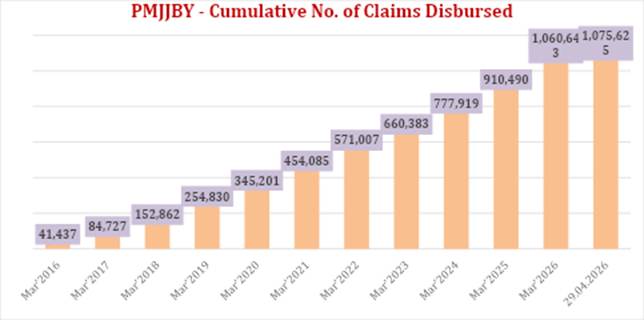
- 10 May 2026
In News:
On May 9, 2026, India celebrated the 11th anniversary of its three flagship Jan Suraksha (Social Security) Schemes. Launched in 2015, these initiatives—Pradhan Mantri Jeevan Jyoti Bima Yojana (PMJJBY), Pradhan Mantri Suraksha Bima Yojana (PMSBY), and Atal Pension Yojana (APY)—were designed to bridge the massive gap in insurance and pension coverage, particularly for the unorganized sector and vulnerable populations.
By leveraging the "JAM Trinity" (Jan Dhan, Aadhaar, and Mobile), these schemes have successfully transitioned India from a country with negligible social security to one with a digitized, high-volume, and affordable safety net.
Overview of the Triple Pillar Framework
The Jan Suraksha ecosystem is built on three distinct but complementary products that address the lifecycle risks of death, disability, and old age.
1. Pradhan Mantri Jeevan Jyoti Bima Yojana (PMJJBY): Life Cover
- Nature: A pure-term, one-year life insurance plan renewable annually.
- Coverage: Provides ?2 lakh in the event of death due to any reason.
- Eligibility: Bank or Post Office account holders aged 18 to 50 years.
- Affordability: The premium is set at ?436 per annum (approximately ?1.20 per day), deducted via a seamless auto-debit facility.
2. Pradhan Mantri Suraksha Bima Yojana (PMSBY): Accidental Cover
- Nature: A low-cost accidental death and disability insurance scheme.
- Coverage: Offers ?2 lakh for accidental death or total permanent disability, and ?1 lakh for permanent partial disability.
- Eligibility: Available to account holders in the 18 to 70 years age bracket.
- Affordability: At just ?20 per annum, it remains one of the cheapest insurance products globally.
3. Atal Pension Yojana (APY): Retirement Security
- Nature: A guaranteed pension scheme targeted at the unorganized sector to provide financial stability in old age.
- Benefits: A guaranteed monthly pension ranging from ?1,000 to ?5,000 starting at age 60.
- Eligibility: Open to bank account holders aged 18 to 40 years who are not income tax payers.
- Spousal Protection: After the subscriber’s death, the pension continues for the spouse. Subsequently, the entire accumulated corpus is returned to the nominee.
Achievements and Impact Analysis (2015–2026)
After eleven years, the scale of these schemes reflects a significant shift in India’s financial landscape:
- Massive Enrolment: The cumulative enrolment has crossed a staggering 94.56 crore, indicating high public trust. PMSBY alone accounts for over 58.09 crore enrolments.
- Financial Safety Net: The schemes have provided tangible relief during crises. For instance, PMJJBY has settled claims worth over ?21,512.50 crore, supporting more than 10.7 lakh bereaved families.
- Gender and Inclusive Growth: Gender inclusivity has been a standout feature; nearly 49% of subscribers under the Atal Pension Yojana are women, promoting financial autonomy for females.
- Integration with PMJDY: The schemes have successfully tapped into the Pradhan Mantri Jan Dhan Yojana (PMJDY) ecosystem, bringing over 19.30 crore of the country's poorest account holders under the protective umbrella of accidental insurance.
- Securing the Future: APY has empowered over 9.04 crore individuals to build a formal retirement corpus, essential for a country with a growing elderly population.
Critical Challenges in Implementation
Despite remarkable success, several hurdles persist in the "last mile" of social security:
- Persistence Issues: Maintaining the "auto-debit" success rate is difficult. If account holders fail to maintain a balance of ?436 or ?20, the insurance cover lapses, often without the subscriber realizing it.
- Literacy and Claim Errors: There remains confusion between "accidental" and "natural" death. Many families attempt to file claims for natural deaths under the PMSBY accidental policy, leading to rejections and distress.
- Inflationary Pressures: The ?2 lakh sum assured, fixed in 2015, has seen its purchasing power eroded by inflation over the last decade, potentially making the payout insufficient for a family’s long-term survival in 2026.
- Awareness in Remote Belts: While enrollment is high, awareness of the procedure to claim benefits is still low in tribal and deep-rural pockets, where the "silent grief" of lost benefits often goes unrecorded.
The Road Ahead: Jan Suraksha 2.0
To evolve into a truly universal system, the next phase of these schemes must focus on:
- Dynamic Coverage: Periodically reviewing and increasing the sum assured (e.g., from ?2 lakh to ?5 lakh) to keep pace with the rising cost of living.
- Digital Claim Settlement: Enhancing the Jan Suraksha Portal to allow real-time, paperless claim filing for beneficiaries, reducing their dependence on bank intermediaries.
- Incentivized Persistence: Developing a "No-Claim Bonus" or loyalty reward for subscribers who maintain uninterrupted auto-debits for over a decade.
- Integrated Bundling: Moving toward a Unified Jan Suraksha Product that offers life, accident, and pension benefits through a single enrollment process, simplifying the experience for the semi-literate population.
Gurudev Rabindranath Tagore
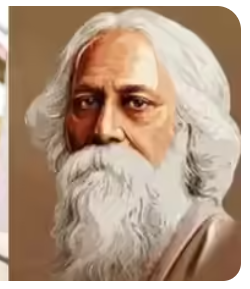
- 10 May 2026
In News:
On the occasion of Pochishe Boishakh (the 25th day of the Bengali month of Baishakh), the Prime Minister of India paid a heartfelt tribute to Gurudev Rabindranath Tagore, describing him as a "timeless voice" who continues to guide the nation's moral and intellectual identity. As a polymath who transcended the boundaries of art, education, and politics, Tagore remains a central figure in the Indian Renaissance and a global ambassador of humanism.
Early Life and Philosophical Roots
- Born on May 7, 1861, into the illustrious Jorasanko Tagore family of Bengal, Rabindranath was the son of Maharshi Debendranath Tagore, a leading light of the Brahmo Samaj. Growing up amidst the Bengal Renaissance, he was deeply influenced by a period of intellectual awakening that sought to synthesize traditional Indian wisdom with modern rationalism.
- His core philosophy was centered on Universalism and Harmony. He believed in the inherent unity of the world, rejecting narrow nationalism in favor of a "single nest" where all of humanity could reside in peace.
Contributions to the National Movement and Self-Reliance
While Tagore often remained distant from active party politics, his influence on the Indian freedom struggle was profound and spiritual.
- The Mantra of Atmashakti: He pioneered the concept of Atmashakti (Self-Strength/Self-Reliance), urging Indians to focus on social reform and moral education rather than solely on political agitation.
- A Global Protest: In a powerful act of defiance against British colonial atrocities, Tagore renounced his Knighthood in 1919 following the Jallianwala Bagh Massacre, marking a significant moment in India's struggle for dignity.
- The Anthem of Nations: He holds the unique distinction of being the only person to compose the national anthems of two sovereign nations: India's Jana Gana Mana and Bangladesh's Amar Shonar Bangla.
- Rural Reconstruction: Long before modern rural development programs, Tagore established Sriniketan in 1922, initiating practical experiments in agricultural self-reliance and community upliftment.
Literary Brilliance and Artistic Versatility
Tagore’s creative output was staggering in its scope and depth.
- Gitanjali and the Nobel Prize: In 1913, he became the first Asian to win the Nobel Prize in Literature for Gitanjali (Song Offerings), a collection that bridged Eastern spirituality and Western literary forms.
- Novels and Plays: His works like Ghare-Baire (The Home and the World) and Gora explored complex themes of identity, tradition, and the conflict between narrow nationalism and global humanism.
- Rabindra Sangeet and Painting: He founded a unique genre of music known as Rabindra Sangeet, which remains the heartbeat of Bengali culture. Remarkably, he took up painting in his 60s, producing nearly 3,000 works that broke traditional aesthetic norms.
Visionary Educationist: Santiniketan and Visva-Bharati
Dissatisfied with the "factory-like" colonial education system, Tagore founded Santiniketan in 1901. This later evolved into Visva-Bharati University (1921), established with the motto “Yatra visvam bhabatyeknidam” (Where the world makes a home in a single nest). His educational philosophy emphasized learning in the lap of nature and the amalgamation of Eastern and Western cultures.
An Enduring Legacy of Peace
In the aftermath of World War I, Tagore travelled extensively as a global peacemaker, warning against the dangers of "intellectual parochiality" and the darkness of moral decay. He passed away on August 7, 1941, but his legacy remains a "lambent light" for modern India.
India Semiconductor Mission

- 10 May 2026
In News:
India’s ambition to become a global electronics powerhouse has reached a pivotal juncture. With the recent approval of two major projects in Gujarat—including the nation’s first commercial Gallium Nitride (GaN)-based Mini/Micro-LED display facility and a semiconductor packaging unit—the total number of approved plants under the India Semiconductor Mission (ISM) 1.0 has risen to twelve. These facilities, spread across Gujarat, Assam, Andhra Pradesh, Uttar Pradesh, and Odisha, signal the beginning of a domestic chip revolution.
ISM 1.0: Building the Foundation (2021–2025)
Launched in 2021 under the Ministry of Electronics and Information Technology (MeitY), ISM 1.0 was initiated with a financial outlay of ?76,000 crore. The primary objective was to break India’s near-total dependence on imported chips by incentivizing:
- Semiconductor Fabrication (Fabs): Setting up the complex plants required to print circuits on silicon wafers.
- Display Manufacturing: Reducing reliance on foreign displays for consumer electronics.
- Compound Semiconductors and Packaging: Focusing on Outsourced Semiconductor Assembly and Test (OSAT) and Assembly, Testing, Marking, and Packaging (ATMP) units.
The current trajectory suggests that by 2029, India will possess the capability to design and manufacture chips for 70–75% of domestic applications, with a long-term goal of becoming a top-tier semiconductor nation by 2035.
ISM 2.0: The Shift Toward Indigenous IP and Localisation
Building on the success of the first phase, the Union Budget 2026–27 introduced ISM 2.0. This phase represents a strategic shift from merely attracting global manufacturers to building a "full-stack" indigenous ecosystem.
Key Features of ISM 2.0:
- Strategy and Funding: A broader $11 billion strategy aimed at deepening ecosystem localization.
- Indigenous IP Design: Moving beyond assembly to creating Indian-owned Intellectual Property (IP) and chip designs.
- Supply Chain Fortification: Supporting ancillary industries, including specialty chemicals, gases, and capital goods (manufacturing equipment), which are critical for chip production.
- Materials and Equipment: Reducing the "import intensity" of the manufacturing process itself by encouraging the domestic production of raw materials.
Technological and Strategic Significance
The development of specialized facilities, such as the GaN-based Micro-LED plant, is particularly significant. Gallium Nitride is a "wide-bandgap" semiconductor that is more efficient than traditional silicon, especially for power electronics and advanced displays.
The integration of these twelve plants into the national landscape serves several strategic purposes:
- Supply Chain Resilience: By diversifying manufacturing across five states, India mitigates the risk of localized disruptions and strengthens its position in the global value chain.
- Cross-Sectoral Impact: The chips produced will cater to high-growth sectors, including Automotive (EVs), Telecom (5G/6G), Aerospace, Industrial Automation, and Power.
- Reduced External Dependence: Domestic packaging and testing facilities ensure that even if some wafers are imported, the value addition and final security checks happen on Indian soil.
- Economic Multiplier: The mission fosters a "hub-and-spoke" model where large fabrication units (hubs) attract hundreds of smaller component and material suppliers (spokes).
Hanamkonda’s Thousand Pillar Temple
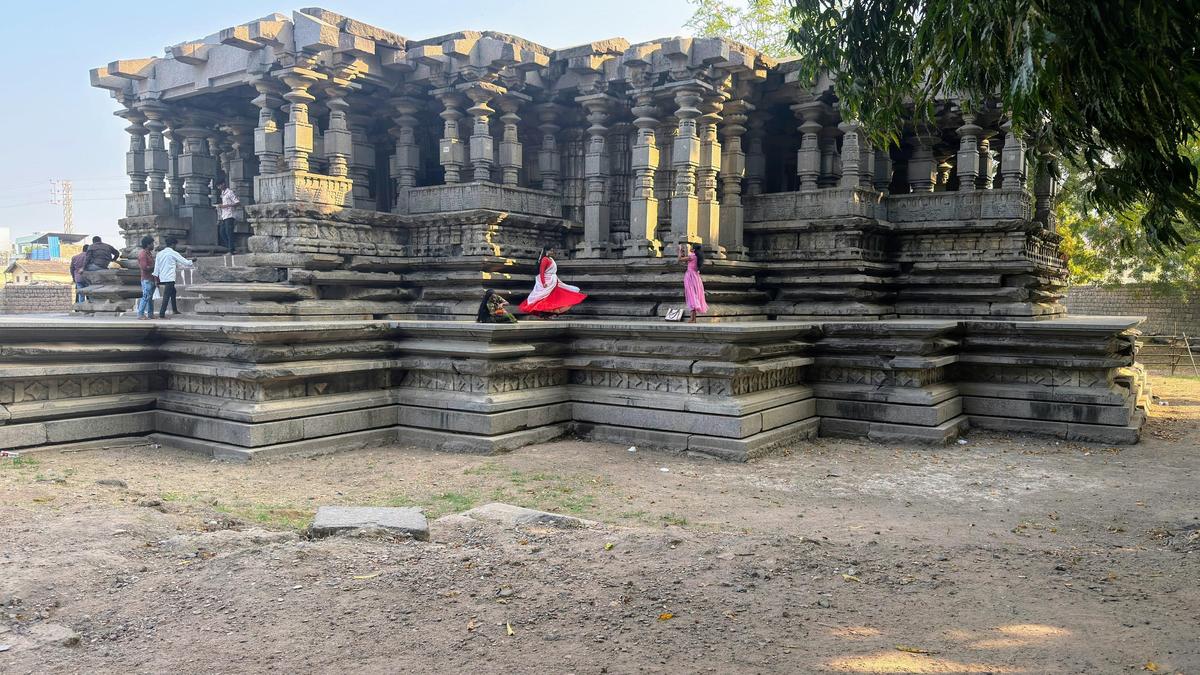
- 09 May 2026
In News:
The Archaeological Survey of India (ASI) has achieved a monumental milestone by completing the 42-year-long restoration of the 12th-century dance pavilion (Kalyana Mandapam) at the Thousand Pillar Temple in Hanamkonda, Telangana. This meticulous reconstruction, which involved dismantling and reassembling the structure piece-by-piece, has not only revived a ransacked heritage site but also brought the ingenious "Sandbox Technology" of the Kakatiya era back into the global spotlight.
Hanamkonda’s Thousand Pillar Temple: A Trikutalaya Marvel
- Constructed in 1163 AD by the Kakatiya ruler Rudra Deva, the Thousand Pillar Temple is a masterpiece of medieval Indian architecture. It is a Trikutalaya—a triple-shrine temple—dedicated to the troika of Lord Shiva, Vishnu, and Surya Deva.
- Located in the historic city of Warangal, the temple is renowned for its star-shaped architecture, a design that provided greater surface area for the intricate carvings that characterize the Kakatiya style. While the temple is famous for its namesake "thousand pillars," the name actually derives from the sophisticated vertical carvings on many columns that create the visual illusion of multiple pillars.
- A major highlight of the temple complex is the monolithic Nandi. Carved from a single block of black basalt stone, this massive sculpture has also undergone recent restoration to repair its tail and folded leg, returning it to its original grandeur.
The Fall and Rise of the Kalyana Mandapam
The dance pavilion has endured a turbulent history. It was largely ransacked and damaged during the conquest by Ulugh Khan in 1323-24, leading to centuries of neglect. Over time, the structure suffered from foundational failure, causing it to sink into the earth. The restoration process was a complex "jigsaw puzzle" of stone, requiring modern engineers to re-learn the ancient geotechnical techniques used by the Kakatiyas to ensure the structure would remain stable for centuries to come.
Kakatiya-era Sandbox Technology: Ancient Earthquake Engineering
The most significant aspect of the temple’s durability is the use of Sandbox Technology, an indigenous geotechnical technique that predates modern seismic isolation methods.
How the Sandbox Works: Instead of building on conventional hard-rock foundations, Kakatiya engineers dug deep pits which were filled with a specific mixture:
- Primary Material: Fine sand.
- Binding Agents: A cocktail of lime, jaggery (unrefined sugar), and karakkaya (black myrobalan fruit).
This mixture created a flexible yet firm base. When the heavy stone pillars and beams were raised on this "sandbox," the foundation acted as a giant shock absorber.
Scientific Advantages:
- Seismic Resilience: During an earthquake, the sand acts as a cushion. Vibrations lose their intensity as they pass through the sand before reaching the stone structure. Laboratory tests indicate that this method can reduce vibration impact by nearly 60%.
- Unmatched Longevity: While modern rubber-based earthquake dampers degrade within 40 years, sand weathers at an incredibly slow rate. This technology has allowed Kakatiya monuments, including the UNESCO-listed Ramappa Temple, to survive for over 800 years.
- Sustainability: The technique is highly cost-effective and environmentally friendly, utilizing naturally available materials rather than industrial synthetics.
Western Disturbances
- 09 May 2026
In News:
Northwest India is currently experiencing a temporary cessation of rainfall and thunderstorms as the most recent Western Disturbance (WD) weakens and shifts eastward. However, satellite imagery indicates that this respite may be short-lived, as new systems continue to develop, highlighting the persistent role these extratropical storms play in the Indian meteorological cycle.
Defining Western Disturbances
Western Disturbances are extratropical storm systems that originate in the Mediterranean region. Unlike the tropical cyclones that form in the Bay of Bengal or the Arabian Sea, WDs are non-tropical in nature and are driven by the Subtropical Westerly Jet Stream. These systems carry moisture-laden air from the Mediterranean Sea, and occasionally from the Caspian and Black Seas, traveling thousands of kilometers eastward across West and Central Asia to reach the Indian subcontinent.
The Etymology: Why "Western Disturbance"?
The nomenclature is derived directly from the system’s trajectory and meteorological impact:
- Western: Refers to the direction of origin (the Mediterranean region, west of India).
- Disturbance: In meteorological terms, this denotes an area of "disturbed" or reduced air pressure, which typically leads to unstable weather conditions, cloud cover, and precipitation.
Seasonal Impact and Geographic Reach
While WDs can occur year-round, they are most influential during the winter months (November to March) and early pre-monsoon season. Their reach extends across a vast geographic belt including Pakistan, North and Northwest India, Nepal, and Bangladesh.
In India, the primary beneficiaries and victims are the Himalayan states (which receive heavy snowfall) and the plains of Punjab, Haryana, Rajasthan, and Delhi (which receive winter rains).
The Economic and Agricultural Significance
For the Indian economy, particularly the agricultural sector, Western Disturbances are a double-edged sword:
- The Rabi Crop Vitality: The winter rain brought by these systems is crucial for the Rabi season. It provides the necessary moisture for crops like wheat, gram, and mustard. In the absence of WDs, Northwest India often faces "dry winters," leading to lower agricultural yields.
- Water Security: The heavy snowfall in the Himalayas serves as a frozen reservoir. As this snow melts during the summer, it feeds perennial rivers like the Ganga, Indus, and Yamuna, ensuring water availability for irrigation and hydropower.
- The Downside: Intense WDs can cause "disturbances" in the literal sense—triggering flash floods, landslides in the hills, and hailstorms in the plains that can severely damage standing crops just before harvest.
Climatological Interaction: The Subtropical Jet Stream
The intensity of a Western Disturbance is closely linked to the position and strength of the Subtropical Westerly Jet Stream. During winter, this jet stream shifts southward over the Indian subcontinent. When a WD embeds itself within this high-altitude wind current, it gains the momentum necessary to cross the high altitudes of the Hindu Kush and the Himalayas, bringing sudden weather shifts to the northern plains.
Chief of Defence Staff (CDS)
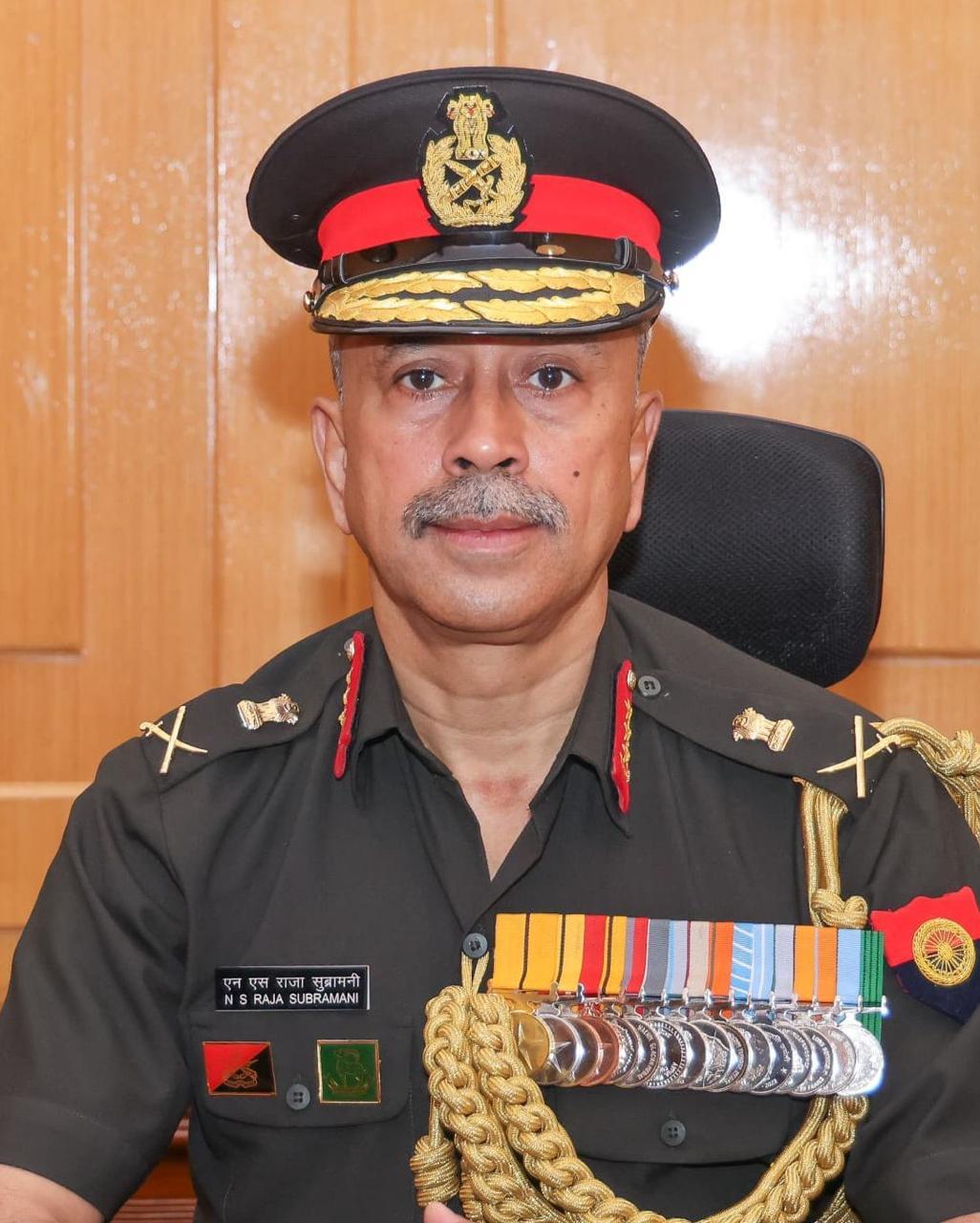
- 09 May 2026
In News:
In a significant transition within India’s top military echelons, the Government of India has appointed Lieutenant General NS Raja Subramani as the next Chief of Defence Staff (CDS). Set to succeed General Anil Chauhan on May 30, 2026, Lt Gen Subramani brings a wealth of strategic experience to a role designed to revolutionize the Indian Armed Forces through integration and modernization.
About Lt Gen NS Raja Subramani
Lieutenant General NS Raja Subramani is a distinguished officer with a career spanning over four decades. Commissioned into the 8th Battalion of the Garhwal Rifles in December 1985, his trajectory reflects a blend of operational command and high-level strategic planning.
- Educational Excellence: An alumnus of the National Defence Academy (NDA) and Indian Military Academy (IMA), he has pursued advanced studies at the Joint Services Command Staff College (UK) and the National Defence College. His academic credentials include a Master’s Degree from King’s College London and an M.Phil in Defence Studies.
- Strategic Experience: Before his appointment as CDS, he served as the Military Adviser in the National Security Council Secretariat (NSCS) starting in September 2025, providing him with a holistic view of India's national security architecture.
Understanding the CDS: Role and Institutional Framework
The Chief of Defence Staff is the highest-ranking uniformed officer in the Indian Armed Forces, acting as a bridge between the political leadership and the military. The CDS holds three primary concurrent roles:
- Principal Military Adviser: Provides single-point military advice to the Union Defence Minister on all tri-services matters.
- Permanent Chairman of the Chiefs of Staff Committee (COSC): Leads the committee comprising the heads of the Army, Navy, and Air Force to ensure functional harmony.
- Secretary of the Department of Military Affairs (DMA): Heads a dedicated department within the Ministry of Defence created to handle military-specific administrative and structural tasks.
Historical Context:
The necessity for a CDS emerged from the lessons of the 1999 Kargil War. The Kargil Review Committee, led by K. Subrahmanyam, highlighted critical gaps in inter-service coordination. While a Group of Ministers (GoM) echoed the recommendation for a CDS in 2001, political and bureaucratic hurdles delayed the appointment for nearly 20 years.
The post was finally institutionalized on December 24, 2019, with General Bipin Rawat taking charge as India’s first CDS on December 31, 2019.
Mandate and Key Functions
The overarching objective of the CDS is to foster "Jointness"—a state where the three services operate as a single cohesive unit rather than independent entities. Key responsibilities include:
- Theatre Commands: The CDS is the primary driver behind the creation of Integrated Theatre Commands, which aim to unify the Army, Navy, and Air Force under a single operational commander for specific geographical regions.
- Unified Procurement and Planning: Rationalizing the acquisition of weapon systems to avoid duplication and ensure that the needs of all three services are met through a common budgetary framework.
- Indigenous Manufacturing: Strengthening the "Atmanirbhar Bharat" initiative by promoting Positive Indigenisation Lists and supporting domestic defence production.
- Joint Training and Logistics: Establishing common doctrines, joint training facilities, and integrated logistics nodes to optimize resource utilization and manpower.
Andaman & Nicobar Islands Set Guinness World Records
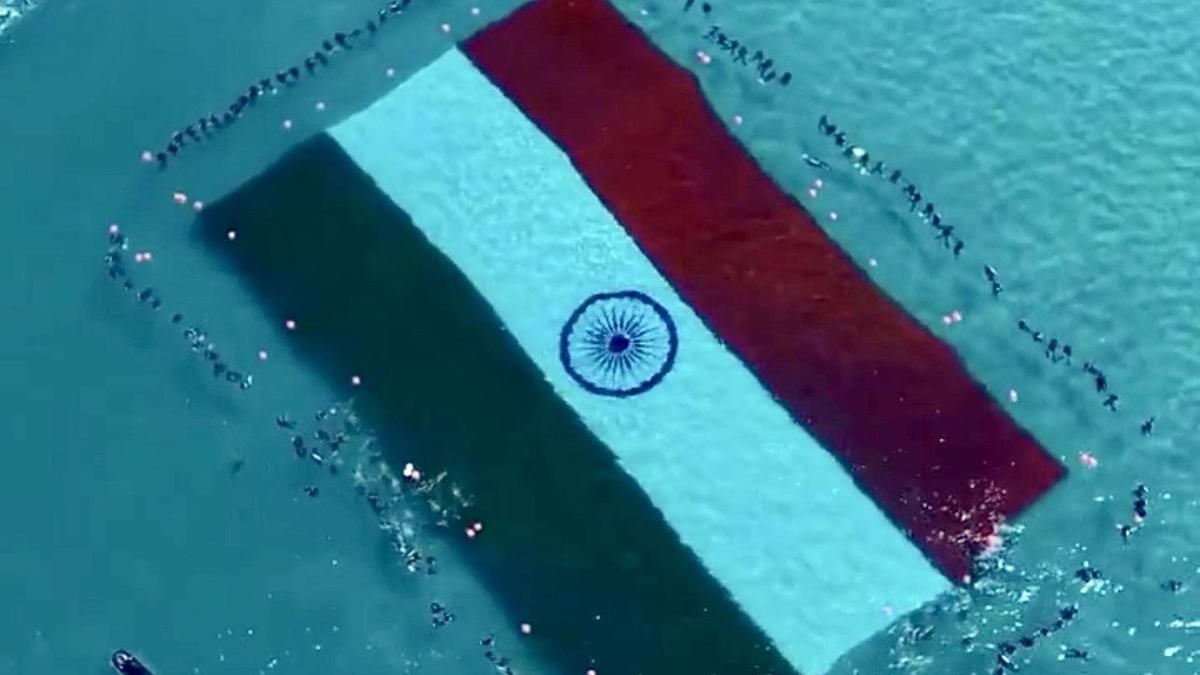
- 09 May 2026
In News:
The Andaman and Nicobar Islands have recently garnered global attention by securing two Guinness World Records in the span of just two days. These feats, centered around Swaraj Dweep (formerly Havelock Island), are part of a broader strategy to position the archipelago as a premier global hub for adventure and eco-tourism.
Record-Breaking Feats at Swaraj Dweep
The islands hosted two unprecedented underwater events designed to showcase the region's pristine marine environment:
- Largest Flag Unfurled Underwater: Near the world-renowned Radha Nagar Beach, divers successfully unfurled a massive Indian national flag measuring 60 meters by 40 meters.
- Tallest Human Stack Underwater: In the lighthouse area of the islands, a team of divers achieved a 10-meter-high human stack, setting a new benchmark for underwater coordination and skill.
These events hold particular significance for Swaraj Dweep. Renamed in 2018 to honor India’s independence struggle, the island is a vital part of the Ritchie’s Archipelago and serves as the face of the territory’s tourism industry.
Geographic and Administrative Profile
The Andaman and Nicobar Islands are a strategically vital Union Territory comprising 836 islands, islets, and rocks situated in the Bay of Bengal. With Port Blair as the capital, the archipelago is geographically divided into two primary groups:
- The Ten Degree Channel: Following the 10° North latitude, this maritime passage separates the Andaman group in the north from the Nicobar group in the south.
- Great Nicobar: This is the largest island in the Nicobar cluster, spanning approximately 910 sq. km.
- Indira Point: Located on Great Nicobar, this landmark represents the southernmost point of India.
Ecological Wealth and Indigenous Heritage
The region is one of India’s most significant biodiversity hotspots. It is characterized by dense tropical rainforests, extensive mangrove ecosystems, and vibrant coral reefs. This environment supports a high degree of endemism in both flora and fauna.
Equally critical is the human geography of the islands. The archipelago is the ancestral home of five Particularly Vulnerable Tribal Groups (PVTGs):
- The Great Andamanese
- The Jarwa
- The Onge
- The Shompen
- The Sentinelese (noted for their continued isolation)
The preservation of these tribes and their habitats remains a cornerstone of the islands’ administrative and environmental policies.
Strategic and Geopolitical Importance
Beyond tourism and ecology, the Andaman and Nicobar Islands are central to India’s maritime security and its "Act East" Policy.
- Maritime Chokepoints: The islands sit in close proximity to the Strait of Malacca, one of the world’s most critical and busiest maritime trade routes. This location allows India to monitor vital Sea Lines of Communication (SLOCs).
- Military Significance: The archipelago hosts the country's only integrated tri-service command (the Andaman and Nicobar Command), where the Army, Navy, and Air Force operate under a single operational commander. This unique setup enhances India’s rapid response capabilities in the Indian Ocean Region (IOR).
International Big Cat Alliance (IBCA)
- 09 May 2026
In News:
India is set to host the inaugural International Big Cat Alliance (IBCA) Summit in New Delhi from June 1st to 2nd, 2026.
Core Vision and the Delhi Declaration
The summit operates under the evocative theme: “Save Big Cats, Save Humanity, Save Ecosystem.” This underscores the ecological reality that big cats are "umbrella species"; by protecting their vast habitats, we inherently safeguard biodiversity, water security, and carbon sinks essential for human survival.
A primary outcome of this gathering will be the adoption of the ‘Delhi Declaration’. As the first global framework of its kind, the declaration aims to institutionalize:
- Transboundary Cooperation: Recognizing that wildlife does not adhere to political borders.
- Landscape-based Approaches: Moving beyond fragmented protected areas to holistic ecosystem management.
- Shared Priorities: Harmonizing anti-poaching protocols and habitat restoration efforts across range countries.
Genesis and Institutional Framework
The IBCA was envisioned by the Prime Minister of India in 2023, coinciding with the 50th anniversary of Project Tiger. Following its formal approval by the Union Cabinet in February 2024, the alliance was established through the National Tiger Conservation Authority (NTCA) under the Ministry of Environment, Forest & Climate Change (MoEFCC).
The IBCA is designed as a centralized global platform that serves three critical functions:
- Knowledge Repository: A digital and technical hub for sharing best practices in conservation.
- Expertise Exchange: Facilitating the transfer of technology and scientific research between nations.
- Financial Resource Mobilization: Funding localized conservation initiatives in developing range countries.
Target Species and Membership
The alliance focuses on the conservation of seven major big cat species: the Tiger, Lion, Leopard, Snow Leopard, Cheetah, Jaguar, and Puma. Out of these, India is the only nation in the world to provide a natural home to five of these species (excluding the Jaguar and Puma).
Currently, the alliance boasts 24 member countries and 5 observer countries (Kazakhstan, Namibia, Thailand, Ecuador, and Vietnam). Eligibility is inclusive, extending to all United Nations member countries, regardless of whether they are "range countries" (nations where these cats naturally reside) or "non-range countries" interested in supporting the cause.
The Crisis and the Need for IBCA
The initiative arises from an urgent ecological crisis. Big cat populations worldwide are plummeting due to:
- Habitat Loss and Fragmentation: Expanding infrastructure and agriculture are shrinking the territories these predators require.
- Poaching and Illegal Trade: High demand for body parts in various markets remains a persistent threat.
- Human-Wildlife Conflict: As habitats shrink, interactions between humans and predators often lead to retaliatory killings.
- Climate Change: Shifting weather patterns are altering the prey base and vegetation of sensitive ecosystems like the Himalayas (home to the Snow Leopard).
Financial Commitment and Future Outlook
To ensure the alliance’s initial viability, the Government of India has committed Rs. 150 crore for the period of 2023-2028. Beyond this initial corpus, the IBCA is actively exploring diverse funding streams, including bilateral and multilateral aid, as well as contributions from international donor organizations and the private sector.
For India, the IBCA is an extension of its domestic success with Project Tiger and Project Lion. By leading this alliance, India transitions from a regional conservation player to a global steward, providing a template for how the Global South can lead in environmental preservation through South-South cooperation and indigenous conservation models.
NCRB’s Crime in India 2024 Report

- 08 May 2026
In News:
The National Crime Records Bureau (NCRB) recently released its annual 'Crime in India - 2024' and 'Accidental Deaths & Suicides in India (ADSI) - 2024' reports.
National Crime Trends: A Statistical Overview
In 2024, India recorded 58.85 lakh cognisable crimes, marking a 6% decline from the 62.41 lakh cases in 2023. The national crime rate (cases per lakh population) subsequently dropped to 418.9, the lowest since 2019.
- The 'BNS' Factor: The decline is partially attributed to the implementation of the Bharatiya Nyaya Sanhita (BNS), 2023. Specifically, the reclassification of "simple hurt" as a non-cognisable offence led to a 30.58% drop in that category, artificially deflating the overall crime figures.
- Traditional Offences: Murder cases dipped marginally by 2.4%, while kidnapping and abduction saw a significant 15.4% decrease. Property crimes like theft and robbery also trended downward.
- Vulnerable Sections:
- Children: Crimes rose by 5.9%, with the crime rate reaching 42.3 per lakh children.
- Senior Citizens: A stark 16.9% surge was recorded, primarily driven by theft, forgery, and fraud.
- Women: Reported cases declined slightly (1.5%), but the rate remains high at 64.6, with "cruelty by husband or relatives" being the most prevalent crime.
- Marginalised Communities: Crimes against Scheduled Tribes (STs) saw a sharp decline of 23.1%, while those against Scheduled Castes (SCs) dipped by 3.6%.
The Cybercrime Epidemic
The most alarming finding is the 17% surge in cybercrime, totaling over 1.01 lakh cases. This highlights a shift from physical to "borderless" digital crimes.
Drivers of the Surge
- AI Weaponization: Criminals are using Generative AI for deepfakes, voice cloning, and hyper-personalized phishing.
- 'Digital Arrest' Scams: A prominent new trend where scammers pose as law enforcement (CBI/Police) over video calls to extort life savings through psychological coercion.
- Human Firewall Deficit: Only 38% of Indian households are digitally literate, leaving a vast population vulnerable to social engineering.
- Organised Syndicates: Crime has moved from isolated acts to institutionalized operations in hubs like Jamtara and Mewat, exploiting "mule" bank accounts.
- Critical Infrastructure Threats: The Election Commission reported over 68 lakh cyberattack attempts during state assembly elections, targeting key digital portals.
Public Health and Mental Well-being (ADSI 2024)
The ADSI report highlights a deepening mental health and substance abuse crisis.
- Suicides: India recorded 1,70,746 suicides in 2024. Among metros, Bengaluru reported the highest suicide rate at 20 per lakh population.
- Drug Overdose: Fatalities due to drug overdoses saw a staggering 50% increase compared to 2023, reflecting a critical need for targeted de-addiction and mental health interventions.
Strengthening India’s Security and Governance Framework
To address these emerging threats, a multi-pronged strategy is required:
1. Structural and Administrative Reforms
- Specialised Cyber Cadre: Moving away from a "generalist" police model to a technical cadre within state and central agencies via lateral entry for tech experts.
- Statutory I4C: Elevating the Indian Cyber Crime Coordination Centre (I4C) into a statutory national agency to resolve jurisdictional deadlocks.
2. Legal and Technological Fortification
- Digital Evidence Standards: Streamlining protocols under the Bharatiya SakshyaAdhiniyam (BSA), 2023 to ensure digital evidence stands up in court.
- Zero-Trust Architecture: Integrating "Security by Design" into India’s Digital Public Infrastructure (UPI, Aadhaar) to protect against sophisticated phishing.
3. Social Justice and Awareness
- Senior Citizen Security Grid: Implementing station-level security for the elderly to combat the 16.9% spike in crimes against them.
- National Digital Hygiene Mission: Using "Nudge Theory" to educate citizens on digital arrests and phishing, creating a "Human Firewall."
National Crime Records Bureau (NCRB)
Established in 1986 under the Ministry of Home Affairs, the NCRB serves as the national repository of crime data.
- Major Publications:Crime in India, ADSI, and Prison Statistics India.
- Key Platforms:
- CCTNS: Connects 15,000 police stations for real-time FIR sharing.
- NAFIS: A searchable fingerprint database assigning a unique 10-digit ID to offenders.
- NDSO: A central registry for tracking convicted sexual offenders.
Project Freedom
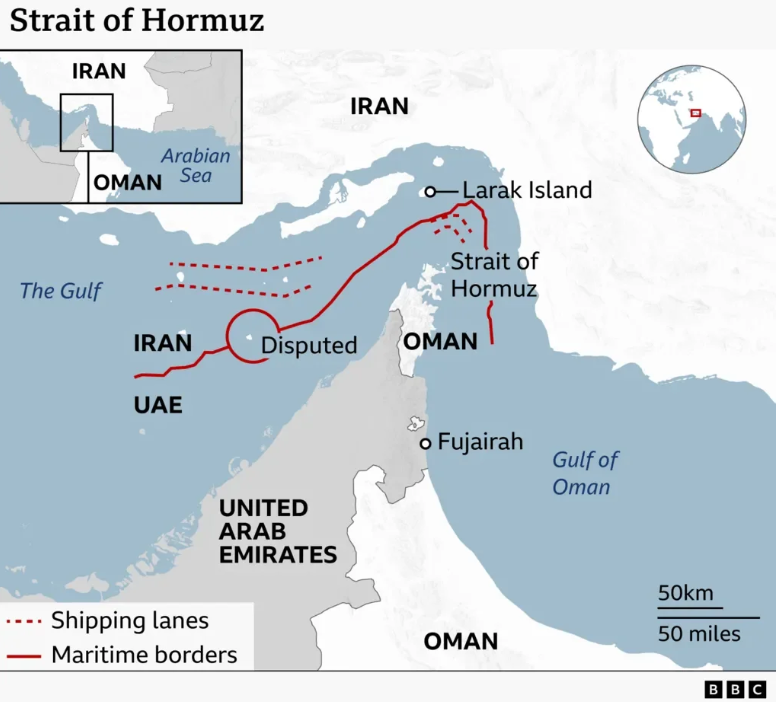
- 08 May 2026
In News:
Recently, the United States announced a temporary suspension of Project Freedom—a high-stakes military and humanitarian mission in the Persian Gulf. This pause is intended to provide space for diplomatic negotiations mediated by Pakistan, aiming for a comprehensive agreement with Iran to end the maritime blockade.
Overview of Project Freedom
Launched in early May 2026, Project Freedom was the U.S.-led response to an Iranian blockade of the Strait of Hormuz, which had effectively paralyzed one of the world's most vital maritime arteries.
- Humanitarian Mission: The operation’s most immediate priority was the extraction of approximately 23,000 civilians hailing from 87 different nations. these individuals had been stranded aboard merchant vessels in the Persian Gulf for several weeks due to the geopolitical standoff.
- Economic Imperative: The mission aimed to restore global commercial flows. The Strait of Hormuz is a "chokepoint" of unparalleled importance, facilitating the passage of nearly 20% of the world's total oil supply.
- Strategic Overwatch: U.S. Central Command (CENTCOM) established an "Enhanced Security Area" utilizing Omani territorial waters on the southern side of the Strait. This corridor was designed to provide a safe passage for neutral vessels, shielding them from asymmetric threats such as Iranian drones, fast-attack boats, and naval mines.
Military Assets and Tactical Challenges
The mission involved a massive mobilization of "overwatch" capabilities to deter escalation while facilitating rescue operations:
- Naval Presence: The deployment was spearheaded by guided-missile destroyers, including the USS Tripoli amphibious ready group.
- Air Superiority: Over 100 aircraft, including F-16s, F-35s, and Sea Hawk helicopters, provided 24-hour aerial surveillance and defensive cover.
- Technological Edge: The mission utilized multi-domain unmanned platforms (sea and air drones) to detect subsurface threats.
- The Mine Menace: Despite the technological superiority, CENTCOM officials highlighted that traditional shipping lanes remain "extremely hazardous." The presence of Iranian-laid naval mines continues to be a primary obstacle to the full resumption of commercial traffic.
The Role of Diplomacy and Mediation
The suspension of active military maneuvers under Project Freedom marks a shift toward a "diplomacy-first" approach.
- Pakistan’s Mediation: In a rare diplomatic alignment, Pakistan has emerged as the primary mediator between Washington and Tehran. This role underscores Islamabad's strategic interest in regional stability and its unique ability to engage with both the Western bloc and its neighbor, Iran.
- The Threat of Escalation: The suspension comes amidst a backdrop of high-intensity rhetoric. While a diplomatic window has opened, the U.S. administration has simultaneously warned of "higher-level" military consequences should negotiations fail or if Iran continues to threaten global shipping.
Geopolitical Significance for India
The Hormuz crisis and the subsequent Project Freedom have direct implications for India's national interests:
- Energy Security: India imports a vast majority of its crude oil from the Gulf region. Any prolonged closure of the Strait leads to a surge in global oil prices, impacting India’s fiscal deficit and domestic inflation.
- Diaspora Safety: With thousands of Indian seafarers often employed on global merchant fleets, the humanitarian aspect of Project Freedom is of direct concern to the Ministry of External Affairs.
- Strategic Autonomy: India has traditionally maintained a balanced relationship with both Iran and the U.S., often advocating for freedom of navigation while respecting regional sovereignty.
Rusty-Spotted Cat

- 08 May 2026
In News:
In a significant breakthrough for wildlife conservation, researchers have documented the first photographic evidence of a rusty-spotted cat (Prionailurus rubiginosus) breeding within the Aravalli hills of Delhi-NCR and Haryana. The sighting of a female with a kitten in the scrublands of Faridabad confirms that the species is actively reproducing outside traditionally protected areas. This discovery underscores the critical ecological role of the Aravallis as a biodiversity corridor amidst rapid urban expansion.
Profile of the "Hummingbird of the Cat Family"
The rusty-spotted cat is an evolutionary marvel, holding the title of the world's smallest wild cat species. Due to its diminutive size—weighing a mere 1 to 1.5 kg—it is often colloquially referred to as the "hummingbird of the cat family."
- Physical Features: It is characterized by a fawn-grey coat adorned with distinct rust-colored spots along its back and flanks. Its small stature and specialized markings provide excellent camouflage in dense scrub and rocky terrains.
- Behavioral Traits: The species is primarily nocturnal, highly agile, and significantly arboreal. Its diet is diverse, consisting of rodents, insects, frogs, and small birds.
- Adaptability: While traditionally thought to be shy and reliant on deep forests, the recent evidence suggests the cat is remarkably adaptable, surviving in agricultural fringes and human-modified landscapes.
Distribution and Global Significance
The rusty-spotted cat is endemic to the Indian subcontinent, found only in India, Sri Lanka, and Nepal.
- India’s Role: India is the primary stronghold for the species, harboring approximately 80% of its global population.
- Indian Range: Its presence in India is widespread, stretching from Tamil Nadu in the south to Jammu and Kashmir in the north, including significant populations in Madhya Pradesh, Odisha, and Gujarat.
- The Aravalli Context: The sighting in the Haryana-Delhi stretch of the Aravallis is pivotal. It proves that the "waste" scrublands of this ancient mountain range are vital habitats capable of supporting the full life cycle of rare carnivores.
Conservation Status and Legal Protection
Given its restricted range and small population size, the rusty-spotted cat is accorded high priority under various international and national legal frameworks:
- IUCN Red List: Classified as Near Threatened.
- Wildlife (Protection) Act, 1972: Listed under Schedule I, granting it the highest level of legal protection in India, equivalent to that of the Tiger or the Asiatic Lion.
- CITES: Included in Appendix I for the Indian population (prohibiting international trade) and Appendix II for the Sri Lankan population.
Critical Threats and Conservation Challenges
Despite its adaptability, the species faces multifaceted challenges that threaten its long-term survival in the Delhi-NCR region and beyond:
- Habitat Fragmentation: The Aravallis face relentless pressure from real estate development, illegal mining, and agricultural encroachment. This fragments the landscape, isolating breeding populations.
- Infrastructure Hazards: As nocturnal animals moving between forest patches, these cats face high roadkill mortality on the dense network of highways cutting through the Aravalli corridor.
- Human-Wildlife Conflict: In rural and semi-urban fringes, they are often victims of retaliatory killings by farmers who mistake them for pests or fear for their poultry.
- Environmental Degradation: Deforestation and the spread of invasive species reduce the availability of its natural prey base, such as rodents and small birds.
JANANI Platform
- 08 May 2026
In News:
The Union Ministry of Health and Family Welfare recently launched the JANANI (Journey of Antenatal, Natal, and Neonatal Integrated Care) platform. Designed as a sophisticated, service-oriented digital ecosystem, JANANI represents an upgraded evolution of the existing Reproductive and Child Health (RCH) portal.
Core Objectives and Vision
The primary goal of the JANANI platform is to provide a comprehensive, end-to-end digital lifecycle for monitoring health records of women during their reproductive years and their children. It aims to bridge the gap between "point-of-care" and "data-tracking" by ensuring that no critical health milestone—from conception to early childhood—is missed.
The platform covers a broad spectrum of services, including:
- Antenatal Care (ANC): Early registration and monitoring of pregnancies.
- Delivery Preparedness: Ensuring institutional readiness for safe childbirth.
- Neonatal and Postnatal Care: Monitoring the health of both the mother and the newborn immediately after birth.
- Early Childhood Care: Home-based newborn and young child care (HBYC), including immunization and nutrition tracking.
- Family Planning: Digital integration of reproductive health choices.
Key Technological Features
JANANI leverages India’s growing Digital Public Infrastructure (DPI) to enhance service delivery through the following features:
- QR-Enabled MCH Cards: The platform introduces digital Mother and Child Health (MCH) cards equipped with QR codes. This ensures portability, allowing a migrant mother to access her records at any health facility across India.
- Interoperability and Integration: A standout feature is its ability to sync with existing national platforms. It integrates seamlessly with U-WIN (for immunizations) and POSHAN (for nutritional tracking), creating a unified health profile.
- Unique Identification and Registration: Beneficiaries can register using unique identifiers such as ABHA (Ayushman Bharat Health Account), Aadhaar-based authentication (OTP/Biometric), or mobile numbers. The platform also offers a pan-India search functionality for healthcare providers to locate records quickly.
- Smart Tracking and Automated Alerts: To reduce maternal and infant mortality, the platform incorporates automated alerts for high-risk pregnancies. It generates "due-lists" for frontline health workers (ASHAs and ANMs), ensuring targeted interventions and timely follow-ups.
- Beneficiary Empowerment: Through web and mobile self-registration, women can actively participate in their healthcare journey, receive reminders for upcoming ANC visits, and track their child's immunization schedule.
Strategic Significance for Public Health
The launch of the JANANI platform aligns with India's commitment to achieving the Sustainable Development Goals (SDGs), particularly Goal 3 (Good Health and Well-being).
- Reduction in MMR and IMR: By identifying high-risk cases in real-time and ensuring the "continuum of care," the platform is expected to significantly contribute to reducing the Maternal Mortality Ratio (MMR) and Infant Mortality Rate (IMR).
- Data-Driven Governance: Real-time dashboards provide supervisory authorities with actionable data, allowing for better resource allocation and performance monitoring of health facilities.
- Inclusive Reach: By providing a multilingual and portable interface, it addresses the needs of the mobile and rural population, ensuring that quality healthcare is not restricted by geography.
Comparison: RCH Portal vs. JANANI Platform
While the RCH portal laid the groundwork for tracking maternal health, JANANI introduces a more user-centric and interoperable approach. Unlike the older system which was largely a data-entry tool for health workers, JANANI is a service-delivery tool that provides direct value to the citizen through self-registration and real-time health milestone tracking.
Yildirimhan Missile
- 08 May 2026
In News:
In a move that significantly alters the geopolitical landscape of the Middle East and the NATO alliance, Türkiye recently unveiled the prototype of its first Intercontinental Ballistic Missile (ICBM), named the Yildirimhan. This development marks a milestone in Türkiye’s decades-long pursuit of defense self-reliance and establishes the nation as a formidable global power with the ability to project force across three continents.
Technical Specifications of the Yildirimhan
The Yildirimhan is designed for long-range strategic deterrence, featuring engineering specifications that place it among the most advanced missile systems in the world.
- Range and Reach: With an operational range of 6,000 km, the missile can strike targets across Europe, Africa, and Asia from the Turkish mainland.
- Velocity: The missile is reported to reach extreme hypersonic speeds of up to Mach 25 (25 times the speed of sound), equivalent to nearly eight kilometers per second. This speed makes it exceptionally difficult for current missile defense systems to intercept.
- Propulsion and Fuel: It utilizes a four-rocket propulsion system fueled by liquid nitrogen tetroxide. While liquid-fueled missiles require more time for launch preparation compared to solid-fueled variants, they allow for superior optimization of the missile's range and payload capacity.
- Payload Capacity: The Yildirimhan is capable of carrying single or multiple warheads with a combined weight of up to three tonnes.
- Mobility: To enhance survivability against first-strike attacks, the missile is designed to be deployed from a mobile wheeled launcher, allowing it to be moved across various terrains.
Strategic Significance and Global Implications
The unveiling of the Yildirimhan represents more than just a technological achievement; it signals a shift in Türkiye’s strategic identity.
- Strategic Autonomy: By developing an indigenous ICBM, Türkiye reduces its dependence on foreign defense technology—primarily from NATO allies like the United States—and strengthens its "Strategic Autonomy" doctrine.
- NATO Dynamics: As a key member of NATO, Türkiye’s possession of an ICBM introduces new complexities within the alliance. While it adds to the collective deterrent of the bloc, it also gives Ankara more leverage in regional disputes.
- Middle Eastern Power Balance: The missile establishes Türkiye as the only nation in the Middle East, alongside Israel (with its undeclared capabilities) and Iran (with its satellite launch vehicles), to possess or be nearing long-range delivery systems.
- Deterrence and Regional Influence: The 6,000 km range ensures that Türkiye can deter threats far beyond its immediate borders, influencing geopolitics from the Mediterranean to Central Asia.
Challenges and Considerations
The transition from a prototype to an operational ICBM force involves several hurdles:
- Guidance and Re-entry: The most critical challenge for an ICBM is not just the launch, but the ability of the warhead to survive re-entry into the Earth's atmosphere at Mach 25 while maintaining precision guidance.
- International Reactions: The development of ICBMs often triggers concerns regarding the Missile Technology Control Regime (MTCR) and can lead to sanctions or increased diplomatic pressure from global powers wary of proliferation.
- Liquid Fuel Vulnerability: The choice of liquid nitrogen tetroxide necessitates a longer fueling window, during which the mobile launcher is most vulnerable to pre-emptive detection and strikes.
Metamaterials

- 07 May 2026
In News:
In a pioneering study published in Nature Physics in April 2026, researchers from the University of Amsterdam and across Europe have engineered synthetic metamaterials capable of "learning" and autonomously adapting their physical shape. By mimicking the adaptive behaviors of living organisms without a centralized processor or "brain," this breakthrough introduces the concept of embodied intelligence to materials science.
Core Technology: Structure Over Chemistry
Unlike traditional substances, metamaterials derive their properties from their engineered physical geometry rather than their chemical makeup.
- The Architecture: The material consists of chains of identical motorized hinges connected by an elastic skeleton.
- Hardware-Based Learning: Instead of relying on external software, each unit features a microcontroller that senses rotation and stores movement history. This allows the material to perform "reflex actions" and learn through direct physical interaction with its environment.
Key Mechanisms of Physical Adaptation
The research highlights three specialized physical behaviors that allow the material to "evolve":
- Contrastive Learning Scheme: The material utilizes a hardware-based contrastive learning mechanism. It compares different physical states—such as a "clamped" target shape versus a "free" spontaneous state—and adjusts its internal torque and stiffness until it achieves the desired configuration.
- Non-Reciprocity: This metamaterial breaks the standard laws of symmetry in physics. It responds differently based on the direction of the input. For example, a nudge from the left may result in a different bending pattern than a nudge from the right, allowing the material to discover multiple pathways to a final shape.
- Bistable Units: The inclusion of units that can exist in two stable states allows the material to switch and store shapes with minimal energy expenditure, effectively giving the material a "physical memory."
Strategic Significance and Applications
The ability of a material to learn, forget, and relearn shapes has transformative potential across several high-tech sectors:
- Soft Robotics: Enables "brainless" locomotion where robots can crawl, roll, or grab objects by adapting to unpredictable terrain without complex central programming.
- Biomedical Engineering: Development of adaptive prosthetic limbs and implants that can physically "learn" to adjust to a patient’s specific movements and anatomical changes.
- Intelligent Infrastructure: Smart materials that autonomously stiffen or change shape in response to environmental stresses like wind, vibration, or seismic activity.
- Distributed Systems: Swarm-like robotic systems where each component adapts independently, enhancing overall system resilience.
Current Challenges and Limitations
While a milestone in material physics, the technology currently faces several hurdles:
- Scalability: The system presently relies on relatively large hardware components and microcontrollers, making miniaturization a key future objective.
- Fabrication Complexity: Designing non-reciprocal and bistable structures requires highly specialized laboratory setups, hindering immediate mass production.
- Environmental Durability: The long-term reliability of these motorized hinges and elastic skeletons under real-world weather and stress conditions remains to be tested.
Mayon Volcano Eruption
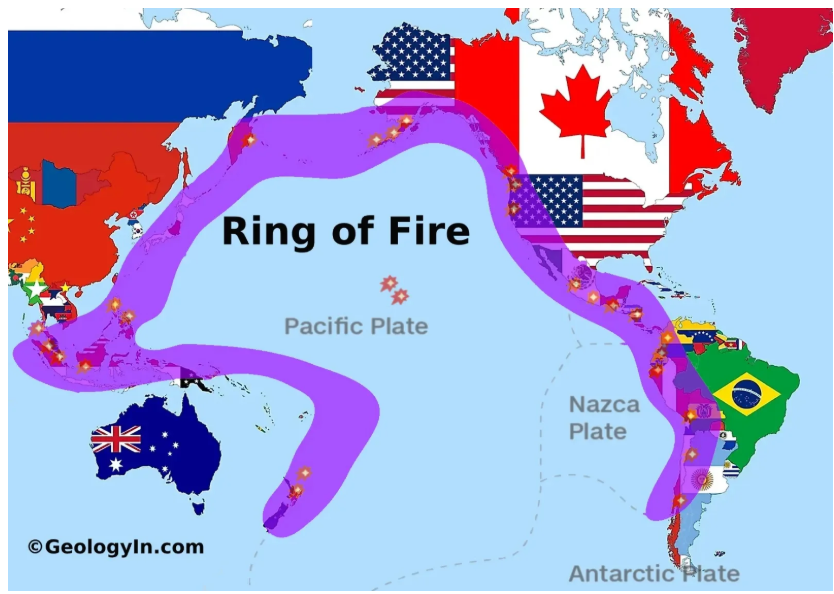
- 07 May 2026
In News:
As of May 2026, the Mayon Volcano in the Philippines remains under Alert Level 3, indicating a high level of volcanic unrest. The current eruptive phase, which began in late 2025, has recently intensified, with satellite data from the Philippine Space Agency (PhilSA) confirming that ashfall and pyroclastic flows have affected over 1,000 hectares of farmland and buried more than 120 villages in Albay province.
Mayon Volcano: The "Perfect Cone" Stratovolcano
Located in the Albay province on the island of Luzon, Mayon is the most active volcano in the Philippines. It is globally recognized for its near-perfect symmetrical cone, a physical characteristic that also makes it highly dangerous.
- Classification: It is a stratovolcano (or composite volcano), characterized by a steep profile and periodic explosive and effusive eruptions. Its structure is built from alternating layers of hardened lava, tephra, and volcanic ash.
- Eruption Profile: Mayon typically exhibits Strombolian activity—relatively mild but frequent bursts of glowing lava. However, it is also prone to more hazardous phenomena:
- Pyroclastic Density Currents (PDCs): Locally known as uson, these are fast-moving clouds of extremely hot gas and volcanic debris.
- Lahars: Mudflows triggered by heavy rainfall mixing with accumulated volcanic ash, which can bury entire communities.
- Historical Context: Its most destructive eruption occurred in February 1814, when ash and lava buried the town of Cagsawa, resulting in over 1,200 fatalities.
The Geologic Driver: The Pacific Ring of Fire
The persistent activity of Mayon is a direct consequence of its location on the Pacific Ring of Fire (Circum-Pacific Belt).
- Definition: A horseshoe-shaped zone stretching approximately 40,000 kilometers, home to roughly 75% of the world’s active volcanoes and the source of 90% of global earthquakes.
- Tectonic Mechanism: The activity is driven by plate tectonics, specifically subduction zones. In the Philippines, the Philippine Sea Plate is being subducted beneath the Philippine Mobile Belt. As the oceanic plate sinks into the mantle, it melts, and the resulting magma rises to the surface, creating volcanic chains.
- Geographic Scope: The belt extends from the southern tip of South America, through the West Coast of North America, across the Aleutian Islands, and down through Japan, the Philippines, Indonesia, and New Zealand.
2026 Eruption: Impact and Disaster Management
The current unrest has triggered significant socio-economic disruptions, emphasizing the importance of disaster resilience in volcanic regions.
- Evacuations and Safety Zones: Authorities have enforced a 6-kilometer Permanent Danger Zone (PDZ). Over 200,000 residents have been affected, with thousands relocated to emergency shelters.
- Aviation and Visibility: Massive ash plumes have restricted airspace near Manila. On the ground, ashfall has turned roads into "grey seas," reducing visibility to near-zero and necessitating the use of specialized clearing equipment.
- Agricultural Loss: Pyroclastic flows in May 2026 destroyed over 1,039 hectares of rice crops, threatening local food security in the Bicol region.
- Monitoring Infrastructure: The Philippine Institute of Volcanology and Seismology (PHIVOLCS) utilizes real-time monitoring, including seismic sensors and satellite imagery, to track magma ascent and predict potential explosive pulses.
Caracal

- 07 May 2026
In News:
The recent confirmation of the rare Caracal (Caracal caracal) in the Thar Desert, situated near the India-Pakistan border, has sparked significant interest within the conservation community. This elusive wild cat, long thought to be on the verge of extinction in the Indian subcontinent, represents a critical link in the arid ecosystem.
Taxonomic and Cultural Context
Despite its common moniker, the "Desert Lynx," the caracal is not a true lynx. Genetic studies reveal it is more closely related to the African golden cat and the serval.
- Etymology: In India, it is historically known as "Siya Gosh," a Persian term meaning "black ear," referring to the distinctive black tufts of fur on its ears.
- Historical Significance: Caracals were traditionally used by royalty in India and Persia for hunting birds, prized for their incredible agility and jumping ability.
Physical Characteristics and Specialized Adaptations
The caracal is an evolutionary marvel, designed for survival in harsh, water-scarce environments.
- Appearance: It possesses a solid, muscular build with disproportionately long legs and a short face. Its fur is typically a uniform reddish-tan or sandy-brown—providing perfect camouflage in desert terrain—though rare melanistic (black) variants have been documented.
- The "Leaping Hunter": The caracal is a remarkable jumper, capable of leaping up to 3 meters (10 feet) vertically into the air to strike down birds with its paws.
- Speed and Stealth: They are highly agile predators, reaching speeds of up to 80 kph (50 mph). Being predominantly nocturnal and shy, they are rarely seen by humans, earning them the reputation of being "ghosts of the desert."
Habitat and Distribution
While the species as a whole has a wide range, the Indian sub-population is critically restricted.
- Global Distribution: Native to Africa, Central Asia, the Middle East, and Northwest India.
- Indian Context: In India, they are found primarily in the arid and semi-arid regions of Rajasthan (Thar Desert and Ranthambore) and Gujarat (Kutch).
- Preferred Environment: They favor dry climates with low rainfall, such as shrublands, savannahs, and semi-deserts. The recent spotting near the international border in the Thar Desert indicates that the species still finds a refuge in the undisturbed, sparsely populated frontier zones.
Ecological Role and Diet
As obligate carnivores, caracals play a vital role as meso-predators in the desert food web. Their diet is diverse, consisting of rodents, small mammals, gazelles, and birds. By controlling the population of smaller herbivores and rodents, they help maintain the balance of the fragile desert vegetation.
Conservation Status and Protection in India
There is a stark contrast between the global and national conservation status of the caracal, which is a critical point for environmental policy discussions.
- IUCN Red List: Least Concern (on a global scale, due to stable populations in Africa).
- Wildlife (Protection) Act, 1972: Schedule I. This provides the caracal with the highest level of legal protection in India, on par with the Tiger and the Asiatic Lion.
- CITES: Listed under Appendix I (for Asian populations), which prohibits international commercial trade.
Major Threats:
The caracal in India faces a "silent extinction" due to several factors:
- Habitat Fragmentation: The conversion of "wastelands" (which are actually vital scrub forests) into agricultural land or industrial zones.
- Loss of Prey Base: Overgrazing by livestock and hunting of small mammals reduces the caracal's food supply.
- Human-Wildlife Conflict: Although rare, caracals sometimes prey on small livestock, leading to retaliatory killings.
Methane Alert and Response System
- 07 May 2026
In News:
In a significant expansion of global climate surveillance, the United Nations Environment Programme (UNEP) recently announced that its Methane Alert and Response System (MARS) will now monitor emissions from coal mines and waste facilities. This expansion follows reports identifying specific high-emission sites, including Indian landfills, as among the world’s top methane emitters.
What is the Methane Alert and Response System (MARS)?
MARS is a sophisticated "data-to-action" platform integrated into the International Methane Emissions Observatory (IMEO). It represents the world's first public satellite-based system designed to detect and notify stakeholders of massive methane leaks in near real-time.
- Genesis: Announced at COP27 in November 2022, MARS began its pilot phase in January 2023. It serves as a technical engine to support the goals of the Paris Agreement and the Global Methane Pledge.
- Expansion: Initially focused solely on the oil and gas industry, the system now encompasses the coal and waste sectors, recognizing their substantial contribution to global warming.
Operational Framework: How MARS Functions
The system operates through a four-stage cycle designed to ensure that satellite data translates into atmospheric improvement:
- Detection: Utilizing high-resolution satellite imagery, MARS scans the globe to identify "super-emitter" events—large-scale, human-caused methane plumes.
- Notification: Once a major source is identified, the system alerts the relevant national governments and private companies responsible for the site.
- Response: Notified stakeholders are encouraged to investigate and mitigate the leak, shifting from a passive observation model to an active intervention model.
- Tracking: MARS monitors the site to verify whether corrective actions have been taken, providing a transparent record of progress and collaboration.
International Methane Emissions Observatory (IMEO)
Launched during the G20 Leaders Summit in 2021, the IMEO acts as the overarching body that gathers and reconciles methane data. It creates a "single version of the truth" by integrating information from four primary sources:
- Scientific Studies: Direct measurement-based research.
- Satellite Data: Primarily through the MARS framework.
- Industry Reporting: Specifically the Oil and Gas Methane Partnership 2.0 (OGMP 2.0), which is UNEP’s flagship program involving companies committed to transparent emissions reporting.
- National Inventories: Official data submitted by individual countries.
Strategic Significance for Climate Governance
Methane is a potent greenhouse gas with a global warming potential over 80 times that of carbon dioxide over a 20-year period. Addressing methane is considered the "fastest way" to slow down temperature rise in the short term.
- Accountability and Transparency: MARS removes the "invisibility" of methane leaks. By making data public, it creates reputational and environmental incentives for companies to fix leaks promptly.
- Addressing the Waste Sector: The inclusion of landfills and waste facilities is particularly relevant for rapidly urbanizing nations like India. Landfills often experience spontaneous fires and constant methane discharge due to organic waste decomposition.
- Support for Global Pledges: It provides the technical verification needed for the Global Methane Pledge, which aims to reduce global methane emissions by at least 30% from 2020 levels by 2030.
Challenges and the Path Ahead
While MARS provides the "alert," the "response" remains voluntary. The effectiveness of the system depends on:
- National Cooperation: Governments must be willing to act on the data provided by UNEP.
- Technology Gap: Distinguishing between natural methane seeps and human-caused leaks in complex topographies requires high-precision instrumentation.
- Infrastructure Investment: In sectors like waste management, capturing methane requires significant capital investment in "Waste-to-Energy" plants and scientific landfill capping.
Mission for Cotton Productivity (2026–31)

- 07 May 2026
In News:
In a major push toward agricultural self-reliance and global textile dominance, the Union Cabinet has approved the “Mission for Cotton Productivity” with a dedicated outlay of ?5,659 crore for the period 2026–27 to 2030–31. The mission seeks to transform India’s cotton sector by transitioning from a focus on acreage to a focus on high-density productivity and quality.
Objectives and Framework
The mission is an integrated initiative announced in the Union Budget 2025–26, designed to strengthen the entire textile value chain. It operates under the government’s 5F Vision: Farm to Fibre to Factory to Fashion to Foreign.
- Implementation: It is a collaborative effort between the Ministry of Agriculture and Farmers Welfare and the Ministry of Textiles, supported by research from 10 institutes under the Indian Council of Agricultural Research (ICAR) and the Council of Scientific and Industrial Research (CSIR).
- Geographical Reach: In its initial phase, the mission targets 140 districts across 14 major cotton-growing states, grouped into three agro-ecological zones:
- Northern Zone: Punjab, Haryana, and Rajasthan.
- Central Zone: Gujarat, Maharashtra, and Madhya Pradesh.
- Southern Zone: Telangana, Andhra Pradesh, and Karnataka (including Odisha and Tamil Nadu).
- Target Outcomes by 2031:
- Yield Enhancement: To boost lint productivity from the current stagnant 440 kg/ha to 755 kg/ha (nearing the global average of 770 kg/ha).
- Production Volume: To increase total production to 498 lakh bales.
- Impact: Directly benefiting approximately 32 lakh cotton farmers.
Strategic Necessity: Why India Needs This Mission
India holds the distinction of having the largest cotton acreage globally (~11.4 million hectares), accounting for nearly 25% of global output. However, several systemic bottlenecks have hampered its potential:
- The Productivity Gap: Despite being the second-largest producer, India's yield remains among the lowest globally due to rainfed cultivation (65% of area) and fragmented landholdings.
- Pest Resistance: The initial success of Bt Cotton has wane as the Pink Bollworm and Whitefly have developed significant resistance, leading to crop failure and high input costs.
- Import Dependency for Premium Fibre: India relies heavily on imports from Egypt and the USA for Extra Long Staple (ELS) cotton (fibre length >30 mm), which is essential for high-end garment manufacturing.
- Climate Vulnerability: Predominantly grown in semi-arid regions like Vidarbha and Telangana, the crop is highly sensitive to erratic monsoons and waterlogging.
Key Technological Interventions
The mission pivots on modernizing agronomic practices to bridge the yield gap:
- High-Density Planting System (HDPS): Shifting from traditional wide spacing to closer spacing to increase the number of plants per hectare, thereby maximizing yield.
- Climate-Smart Breeding: Developing varieties of Gossypium barbadense (ELS cotton) that are drought-tolerant and pest-resistant using advanced biotechnology.
- Quality Branding (Kasturi Cotton Bharat): Targeting a trash content of below 2% to improve the global realization value of Indian cotton.
Critical Challenges and Implementation Gaps
Achieving the mission’s targets requires overcoming several "ground-level" hurdles:
- Irrigation Constraints: HDPS and High-Yielding Varieties (HYV) require assured moisture. Without integration with micro-irrigation, these crops remain at high risk during dry spells.
- Soil Fatigue: Decades of monocropping and chemical overuse have depleted soil organic carbon, reducing the efficacy of new seeds.
- Mechanization Hurdles: Modern cotton picking is labor-intensive. While mechanized harvesters are needed for HDPS, they are capital-intensive for small farmers owning less than 2 hectares.
- The Health Cost: Excessive pesticide use in cotton belts has triggered a silent health crisis, causing eye diseases and respiratory issues among farmers due to a lack of protective gear.
Way Forward: Strengthening the Ecosystem
To ensure the mission’s success, the following measures are essential:
- Integrated Pest Management (IPM): Moving beyond just Bt technology to include pheromone traps, biopesticides, and mandatory "refuge crops" to slow down pest adaptation.
- Custom Hiring Centres (CHCs): Establishing cooperative models for mechanized harvesting to make expensive technology accessible to marginal farmers.
- Digital Agriculture (Agri-Stack): Using AI and satellite data to provide real-time, hyper-local advisories on weather and pest attacks.
- Policy Synergy: Linking the mission with PM-Krishi Sinchayee Yojana (Per Drop More Crop) to ensure the necessary irrigation infrastructure in rainfed cotton belts.
Hantavirus Outbreak

- 06 May 2026
In News:
A recent suspected outbreak of the rare Hantavirus has gained international attention after approximately 150 individuals were quarantined aboard the Dutch cruise ship MV Hondius off the coast of Cape Verde, West Africa. This incident underscores the persistent challenge of zoonotic diseases in an interconnected world and highlights critical gaps in global health security.
Nature and Classification of Hantavirus
Hantaviruses belong to a family of viruses that primarily target the respiratory and renal systems of the human body. Depending on the strain and geographic location, the virus manifests in two distinct, severe clinical forms:
- Hantavirus Pulmonary Syndrome (HPS): Predominantly found in the Americas, this version leads to acute respiratory distress and severe lung congestion.
- Hemorrhagic Fever with Renal Syndrome (HFRS): More common in Europe and Asia, this form is characterized by internal bleeding (hemorrhage) and acute kidney failure.
Vector and Transmission Dynamics
Hantavirus is a zoonotic disease, meaning it jumps from animals to humans. It is carried by specific rodent species, including the deer mouse, white-footed mouse, and cotton rat.
- Aerosolization: This is the primary mode of transmission. Humans contract the virus by inhaling airborne particles from disturbed infected rodent waste, such as dried urine, droppings, or saliva. Common activities leading to infection include sweeping or cleaning storage areas where rodents have nested.
- Contagion Profile: Generally, Hantavirus is less contagious than airborne pathogens like COVID-19 or Influenza because it typically does not spread between humans.
- The Exception: The Andes virus, a specific strain endemic to South America (Argentina and Chile), is the only known Hantavirus strain capable of rare human-to-human transmission.
Clinical Symptoms and Diagnosis
The disease is particularly dangerous because its early stages mimic common seasonal illnesses, often leading to delayed medical intervention.
- Initial Phase: Following an incubation period of 1 to 8 weeks, patients experience "flu-like" symptoms, including high fever, fatigue, and muscle aches.
- Severe Phase: The condition can rapidly escalate into a life-threatening respiratory crisis. Patients suffer from extreme shortness of breath and chest tightness as the lungs fill with fluid.
- Diagnosis: Similar to the protocols for COVID-19, the Hantavirus is diagnosed using a Polymerase Chain Reaction (PCR) test, which detects the viral genetic material in the patient's system.
At-Risk Populations and Vulnerability
While anyone exposed to infected rodents can contract the virus, certain groups are at a higher statistical risk:
- Occupational Risk: Farmers, construction workers, and campers are frequently exposed to rodent-prone environments.
- Biological Vulnerability: Children under the age of five, pregnant women, and immunocompromised individuals are significantly more susceptible to severe complications and mortality.
Treatment and Prevention Challenges
The global health burden of Hantavirus is significant, with an estimated 150,000 to 200,000 cases reported annually. However, the medical response is currently limited.
- Absence of Specific Cure: There is currently no specific antiviral treatment, cure, or vaccine available for Hantavirus.
- Supportive Care: Treatment is purely symptomatic. In severe HPS cases, patients require intensive care, including oxygen therapy and mechanical ventilation to maintain lung function until the body can clear the infection.
- Primary Prevention: In the absence of a vaccine, the only effective strategy is rodent control. Maintaining strict sanitation protocols, sealing entry points in buildings, and using proper protective gear (like masks) when cleaning potentially infested areas are critical preventive measures.
Fibre-Optic Drones

- 06 May 2026
In News:
In the evolving landscape of high-tech warfare, fibre-optic-guided drones have surfaced as a disruptive force, particularly in the Russia-Ukraine and West Asia conflicts. By replacing traditional wireless communication with a physical link, these drones—often referred to as "wire-guided" or "phantom" drones—are bypassing sophisticated electronic defense systems and redefining the tactical "front-line."
The Technology: A Shift from Radio to Light
The core innovation of these drones lies in their communication link. While standard First-Person View (FPV) drones rely on Radio Frequency (RF) signals, fibre-optic drones are tethered to their operator via a thin, high-strength fibre-optic spool.
- Mechanism: As the drone flies, it unspools a micro-thin cable (extending up to 50 km). This cable transmits telemetry and high-bandwidth video data using light signals rather than radio waves.
- Material Composition: To maintain agility, these drones are often constructed from lightweight fibreglass. This material provides a secondary benefit: a minimal thermal and radar signature, making them difficult to detect using conventional sensors.
Strategic Advantages in Combat
The transition to wire-guidance offers several critical advantages that render traditional anti-drone measures obsolete:
- Immunity to Electronic Warfare (EW): Traditional jammers work by "drowning out" the radio frequency between the drone and the pilot. Since fibre-optic drones do not use RF, they are entirely immune to jamming and GPS spoofing.
- High-Fidelity Feedback: The fibre-optic link allows for uncompressed, high-resolution video feeds. Unlike RF drones, which often experience signal "snow" or total cutout as they approach the ground or fly behind obstacles, wire-guided drones provide crystal-clear imagery until the moment of impact.
- Stealth and Persistence: Because they do not emit a radio signal, these drones cannot be "triangulated" by enemy electronic intelligence units, protecting both the drone and the location of its operator.
Operational Limitations and Challenges
Despite their "unjammable" status, fibre-optic drones are not without technical hurdles:
- Weight vs. Range: The weight of the fibre canister, combined with the explosive payload, significantly drains battery life. Every kilometer of cable adds physical drag and weight.
- Physical Vulnerability: The physical cable is susceptible to snapping if it gets snagged on trees, caught in strong crosswinds, or intentionally cut by enemy combatants.
- Engineering Solutions: To counter these risks, manufacturers have begun using Kevlar-infused protective coatings to increase the tensile strength of the micro-cables without adding excessive weight.
Defensive Countermeasures: The Search for a Solution
As electronic jamming fails, defense forces are reverting to physical and emerging technologies:
- Physical Barriers: The use of "cope cages" (metal cages) and protective nets over tanks and trenches has become a rudimentary necessity.
- Advanced Detection: Research is shifting toward infrared (IR) and acoustic sensors that can detect the drone’s heat or sound signature since its "radio silence" makes it invisible to electronic scanners.
- Directed-Energy Weapons: Future defenses aim to use high-powered lasers to melt the physical optical lines or the drone’s fibreglass body.
Environmental Impact:
The widespread use of these drones introduces a new ecological threat. The thousands of kilometers of lightweight polymer optical fibres left behind on battlefields contribute to severe "conflict pollution."
- Toxic Degradation: When these cables are destroyed by explosions or fires, they release microplastics and toxic chemical byproducts into the soil, air, and water.
- Long-term Legacy: Unlike metal fragments that can be salvaged, these micro-thin plastic fibres are nearly impossible to clean up, posing a long-term threat to local ecosystems and agriculture.
Modern Orbital Conflict
- 06 May 2026
In News:
In the contemporary geopolitical landscape, outer space has transitioned from a "Global Commons" dedicated to peaceful exploration to a contested "Fourth Frontier" of warfare. Modern orbital conflict is no longer defined solely by kinetic destruction, such as missiles; instead, it has evolved into a "silent war" of digital intrusions, signal manipulation, and the strategic blurring of civilian and military assets.
Key Characteristics of Modern Space Warfare
Modern conflict in orbit is increasingly characterized by "non-kinetic" engagements that aim for functional disruption rather than physical debris-creating destruction.
- Weaponization of Infrastructure: Current conflicts utilize cyber-attacks and GPS spoofing to paralyze critical infrastructure. For instance, the Viasat KA-SAT cyberattack during the Russia-Ukraine conflict demonstrated how disabling a satellite's digital logic can sever communications across an entire continent without a single shot being fired.
- The "Starlink Precedent" and Dual-Use Technology: One of the most significant shifts is the collapse of the civilian-military divide. Commercial mega-constellations (like Starlink) now provide "Space as a Service" for military kill-chains. This complicates international law, as these civilian objects become legitimate military targets, endangering global commercial connectivity.
- The Attribution Gap: Digital attacks—such as "dazzling" sensors with lasers or hacking ground stations—offer strategic anonymity. Without the ability to definitively prove the perpetrator (attribution), traditional deterrence mechanisms often fail, leading to a "Grey Zone" of perpetual tension.
- Functional Strike Doctrine: There is a growing legal consensus that a digital intrusion which "bricks" or permanently disables a satellite violates Article 2(4) of the UN Charter (Prohibition of Use of Force), regardless of whether physical "smoke and fire" are present.
The Cascading Consequences of Orbital Conflict
The impact of space-based conflict extends far beyond the vacuum of orbit, threatening the very foundations of modern civilization.
- Kessler Syndrome and Orbital Denial: The most catastrophic physical threat is a chain reaction of collisions. Kinetic Anti-Satellite (ASAT) tests create clouds of high-velocity debris. These fragments collide with other satellites, creating more debris in an exponential cascade known as the Kessler Syndrome. This could render Low Earth Orbit (LEO) unusable for generations.
- Global Socio-Economic Paralysis:
- Financial Meltdown: Global markets rely on the precise atomic clocks of satellites for time-stamping transactions. A synchronization failure could freeze international banking.
- Collapse of Navigation (PNT): The loss of Global Navigation Satellite Systems (GNSS), including India’s NavIC, would cripple aviation, maritime trade, and global logistics.
- Digital Divide: Satellite internet is vital for disaster management and education in rural regions; its loss would isolate vulnerable populations.
- Strategic Destabilization: Attacking early-warning satellites could be misinterpreted as a precursor to a nuclear strike, potentially leading to accidental nuclear escalation between superpowers.
- Environmental Degradation: Increased debris re-entry releases metallic particles into the atmosphere, potentially damaging the Ozone Layer. Furthermore, "light pollution" from mega-constellations hinders astronomical research.
The Existing Legal Framework and Its Limitations
While several treaties govern space, they were designed for an era of state-led exploration, not private-sector-led warfare.
- Outer Space Treaty (1967): Article VI makes states responsible for all national space activities, including private ones. However, it lacks specific enforcement mechanisms for modern cyber-warfare.
- Liability Convention (1972): Imposes absolute liability for damage caused by space objects on Earth but remains weak in addressing "soft" damage like hacking or jamming.
- The Compliance Gap: While the UN recommends deorbiting satellites within 25 years to prevent debris, the compliance rate remains a low 30%.
Strategic Solutions and the Way Forward
To prevent the transition of space into a permanent battlefield, a multi-pronged approach is required:
- Finalizing PAROS and PPWT: India and other spacefaring nations must push for the Prevention of an Arms Race in Outer Space (PAROS) treaty. This would move beyond the 1967 treaty by prohibiting the placement of any weapons in orbit, not just WMDs.
- Norms for Responsible Behavior: A global, permanent ban on kinetic ASAT tests is essential. Additionally, clear protocols for Rendezvous and Proximity Operations (RPO) are needed to ensure that "repair" missions are not mistaken for "stalker" or "killer" satellites.
- Enhanced Space Situational Awareness (SSA): Global cooperation in tracking debris and satellite movements is vital. Initiatives like India’s Project NETRA and the US Space Surveillance Network serve as the "eyes and ears" for orbital security.
- Resilient Architectures: Shifting from a few expensive, large satellites to Distributed Constellations (many small satellites) makes a target-rich environment strategically pointless for an adversary, as destroying a few units does not disable the entire network.
- Strengthening Attribution: Developing the technological capability to prove who interfered with a satellite is the most powerful deterrent against "silent" electronic warfare.
Project Deepak
- 06 May 2026
In News:
Project Deepak, a premier unit of the Border Roads Organisation (BRO), recently marked its 66th Raising Day in Shimla, Himachal Pradesh.
Origins and Mandate
Launched in 1962, Project Deepak is one of the oldest and most vital initiatives under the BRO. It was conceived during a period of heightened geopolitical tension to ensure that India’s northern borders remained accessible and secure.
- Geographical Jurisdiction: The project operates in some of the most unforgiving topographies of the Himalayas. Its primary area of responsibility includes the key districts of Shimla, Kinnaur, Kullu, and Lahaul-Spiti in Himachal Pradesh.
- Strategic Objective: The project’s core mission is to provide all-weather connectivity to the border outposts and facilitate the movement of the Indian Armed Forces, while simultaneously fostering the socio-economic development of remote tribal belts.
Major Achievements and Contributions
Over six decades, Project Deepak has transitioned from a basic road-building unit to an engineering marvel handler. Its contributions are pivotal to both civil and military logistics:
- Hindustan-Tibet Road (NH-5): The project has been instrumental in the maintenance and development of this historic road, which serves as the lifeline for the Kinnaur district and a critical artery for border defense.
- Manali-Leh Axis: Project Deepak maintains key stretches of this strategic route, ensuring that the logistical chain to the Ladakh sector remains functional despite extreme weather conditions and heavy snowfall.
- Humanitarian Assistance and Disaster Management: Beyond engineering, the project plays a "first responder" role. Whether it is clearing massive landslides, snow excavation to reopen mountain passes, or providing aid during natural calamities, Project Deepak is central to Himachal’s disaster response framework.
About Border Roads Organisation (BRO):
Established on May 7, 1960, the BRO serves as a bridge between civilian infrastructure and military requirements.
- Institutional Shift: Initially working under multiple stakeholders, the BRO was brought entirely under the administrative control of the Ministry of Defence in 2015 to streamline strategic projects.
- Motto: The organization operates under the Sanskrit motto "Shramena Sarvam Sadhyam" (Everything is achievable through hard work), reflecting its commitment to overcoming physical and climatic barriers.
- Global Footprint: While its primary focus is the north and northeastern borders of India, the BRO also executes projects in friendly neighboring countries (such as Tajikistan, Afghanistan, and Bhutan), acting as a tool of India's soft power and neighborhood diplomacy.
Cell Broadcast System (CBS)
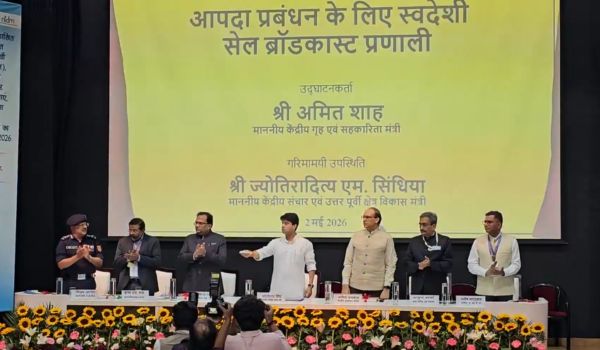
- 06 May 2026
In News:
In a significant stride toward a "Disaster Resilient India," the Ministry of Communications recently launched the indigenously developed Cell Broadcast System (CBS). Developed by the Centre for Development of Telematics (C-DOT) in collaboration with the National Disaster Management Authority (NDMA), this technology marks a paradigm shift from a reactive to a proactive disaster management framework.
What is the Cell Broadcast System (CBS)?
The Cell Broadcast System is a mobile communication technology that allows the government to send critical, un-queued emergency alerts to all mobile devices within a specific geographical area. Unlike traditional Point-to-Point SMS, CBS is a one-to-many service.
- Developer: Centre for Development of Telematics (C-DOT).
- Protocol: Based on the Common Alerting Protocol (CAP), a global standard recommended by the International Telecommunication Union (ITU).
- Integration: It is integrated with the SACHET platform (India’s National Disaster Alert Platform), which consolidates alerts from various agencies like IMD, CWC, and INCOIS.
Core Mechanism: How it Works
CBS functions by broadcasting messages from a central platform to designated Base Transceiver Stations (BTS) or cell towers. These towers then transmit the alert to every active handset within their signal radius.
- No Queuing: Unlike SMS, which is delivered individually and can be delayed by network congestion, CBS messages are delivered to millions of users simultaneously.
- Network Independence: It does not require the recipient’s phone number or internet connectivity. As long as a phone is connected to a cell tower, it will receive the alert.
- Override Capabilities: The alerts bypass "Silent" or "Do Not Disturb" modes, appearing as a pop-up with a distinct loud siren and vibration to ensure immediate attention.
Key Features of the Indigenous CBS
|
Feature |
Deion |
|
Precise Geo-Targeting |
Alerts can be narrowed down to a single cell tower, a neighborhood, or scaled to an entire state. |
|
Multilingual Support |
Alerts are disseminated in English, Hindi, and local regional languages to ensure inclusivity. |
|
Accessibility |
Includes a "Read-Aloud" capability for the visually impaired and distinct tones for the hearing impaired. |
|
Device Compatibility |
Works across all generations of mobile technology, from 2G to 5G. |
|
Data Privacy |
Since it is a broadcast and does not require phone numbers, it does not track or store personal user data. |
CBS vs. Traditional SMS: A Comparative Analysis
- Bandwidth Efficiency: SMS uses the signaling channel which can crash during emergencies due to high traffic; CBS uses a dedicated broadcast channel.
- Speed: SMS is delivered in a "store and forward" manner (queuing), whereas CBS is "near real-time."
- Targeting: SMS targeting depends on the database of phone numbers; CBS targets anyone within the physical reach of a radio cell.
Significance for India’s Disaster Management
- Zero Lead Time Disasters: Highly effective for "now-casting" events like flash floods, lightning strikes, landslides, and gas leaks where every second counts.
- Technological Sovereignty: By developing this indigenously, India joins a select group of nations (like the USA and Japan) with homegrown emergency alert capabilities, reducing dependency on foreign vendors.
- Last-Mile Connectivity: Ensures that even the most remote populations with basic handsets receive life-saving information.
- Strengthening National Security: Provides a verified, official channel for government-to-citizen communication, which helps in curbing rumors and panic during crises.
Santa Marta Climate Conference

- 05 May 2026
In News:
In a bold departure from the traditional, consensus-heavy climate negotiations of the United Nations, representatives from over 50 countries—representing nearly half of the global GDP—convened in Santa Marta, Colombia, for the First International Conference on Transitioning Away from Fossil Fuels (April 2026). Co-hosted by Colombia and the Netherlands, the summit was established as a "safe harbor" for nations ready to move beyond the political deadlocks of the UNFCCC’s Conference of the Parties (COP).
The Santa Marta Climate Conference: Strategic Shift in Climate Action
The conference emerged from a sense of urgency and frustration with the slow pace of global fossil fuel phase-outs within the UN system.
- Objectives: The summit focused on creating actionable national and international roadmaps to terminate fossil fuel use. It aimed to align trade, finance, and carbon pricing with a transition toward renewable energy.
- The "Coalition of the Willing": Unlike the UNFCCC, which requires consensus from nearly 200 nations, this "informal" group focuses on "first-movers" ready to implement aggressive supply-side governance.
- A New Legal Instrument: Significant momentum was observed for a Fossil Fuel Non-Proliferation Treaty, an initiative strongly supported by Small Island Developing States (SIDS) to address the gaps in international law regarding the extraction of coal, oil, and gas.
Key Highlights and Country Roadmaps
One of the most concrete outcomes of the Santa Marta summit was the unveiling of Europe's most detailed energy transition plan.
- France’s Exit Roadmap: France launched Europe’s first fuel-by-fuel exit strategy, setting definitive deadlines: Coal by 2030, Oil by 2045, and Gas by 2050. This move translates vague Net Zero pledges into measurable, sectoral timelines.
- Global Equity: Participants emphasized that for an equitable shift, wealthier nations must provide robust financial and technical support to developing countries, ensuring that the transition does not deepen global economic inequalities.
Limitations and the Finance Hurdle
Despite its ambitious tone, the conference faces significant structural challenges:
- Absence of Top Emitters: The world’s three largest greenhouse gas emitters—the United States, China, and India—did not participate, limiting the immediate global impact of the conference's decisions.
- Lack of Binding Authority: Operating outside the UNFCCC means the conclusions reached in Santa Marta are not legally binding on a global scale.
- The Funding Gap: Creating the massive financial mechanisms required to shift poorer nations toward zero-carbon pathways remains a formidable hurdle that voluntary coalitions are yet to solve.
The Evolving Landscape of UNFCCC COPs
While the Santa Marta process seeks faster action, the UNFCCC remains the supreme global decision-making body for climate change.
- The Framework: The COP oversees the Kyoto Protocol (CMP) and the Paris Agreement (CMA), supported by technical bodies like the SBI (Implementation) and SBSTA (Scientific Advice).
- Upcoming Milestones:
- COP31 (November 2026): To be hosted by Türkiye in Antalya, with a unique arrangement where Australia serves as the "President of Negotiations."
- COP32 (2027): Scheduled to be held in Addis Ababa, Ethiopia, continuing the tradition of geographical rotation.
Mission Drishti by GalaxEye
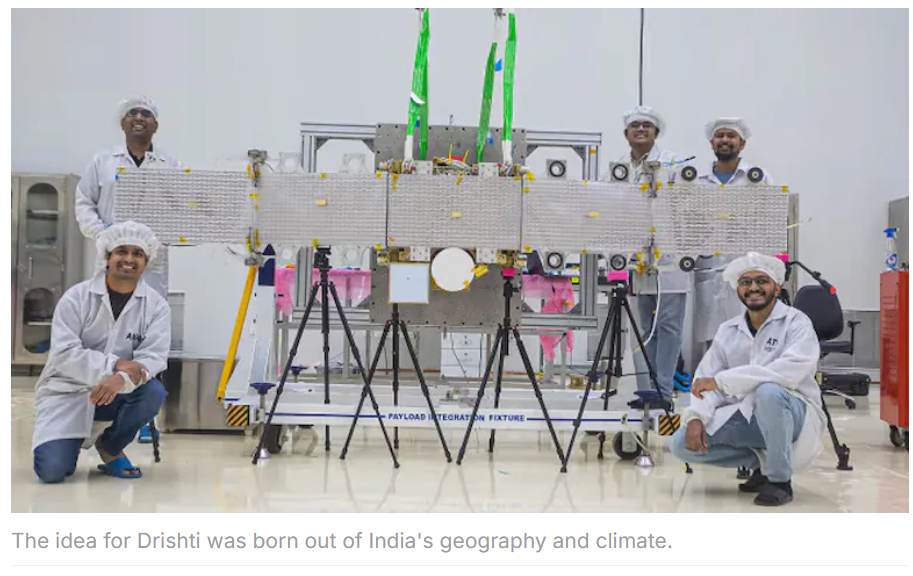
- 05 May 2026
In News:
In a milestone for the Indian private space sector, Bengaluru-based startup GalaxEye has successfully launched ‘Mission Drishti’, the world’s first OptoSAR satellite. Launched aboard a SpaceX Falcon 9 rocket from Vandenberg, California, this mission represents a paradigm shift in Earth observation (EO), moving beyond the limitations of traditional imaging to provide high-clarity, all-weather data.
The Innovation: OptoSAR Technology
The core of Mission Drishti lies in its unique OptoSAR platform—the first of its kind globally. Traditional satellites typically use either optical sensors (which rely on sunlight) or radar (which can be difficult to interpret). Mission Drishti integrates both on a single platform:
- Synthetic Aperture Radar (SAR): An active sensor that can "see" through thick cloud cover, smoke, and total darkness.
- Electro-Optical (EO) Sensors: Provide high-resolution, intuitive visual details in various spectral bands.
By fusing these two datasets, the satellite provides "analysis-ready" imagery. This fusion eliminates the need for complex, time-consuming post-processing, allowing decision-makers to access fused data that is inherently aligned.
Technical Specifications and Launch Details
Mission Drishti is a testament to India's growing indigenous space-tech capabilities, supported and facilitated by IN-SPACe (Indian National Space Promotion and Authorization Center).
- Mass and Scale: At 190 kg, it holds the distinction of being India’s largest privately developed Earth observation satellite.
- Orbit: It operates in a Sun-synchronous Low Earth Orbit (LEO) at an altitude of approximately 500 km.
- Resolution and Spectrum: The satellite offers a spatial resolution of 1.2 to 3.6 meters. It operates across multiple spectral bands, including X-Band (SAR), PAN (Panchromatic), RGB, NIR (Near-Infrared), Coastal Blue, and Red Edge.
- Revisit Frequency: The satellite is designed for high-frequency monitoring, capable of revisiting the same geographic location every 4 days.
Strategic Significance for India and Global Stakeholders
The deployment of Mission Drishti addresses critical gaps in current orbital monitoring, particularly for tropical regions:
1. All-Weather Capability:Standard optical satellites are often rendered ineffective by cloud cover. For a country like India, which experiences heavy monsoons and frequent cloud cover, OptoSAR ensures uninterrupted surveillance and data collection throughout the year.
2. Dual-Use Applications:As a dual-use satellite, its data serves both civilian and strategic sectors:
- National Security & Defense: Monitoring borders and maritime boundaries regardless of lighting or weather conditions.
- Disaster Management: Real-time assessment of floods or cyclones where clouds typically obstruct conventional satellites.
- Environmental & Infrastructure: High-resolution monitoring for urban planning, agriculture, and red-edge sensing for vegetation health.
Rashtriya Bal Swasthya Karyakram
- 05 May 2026
In News:
In a major step toward enhancing pediatric healthcare and ensuring early childhood development, the Ministry of Health and Family Welfare recently released the Rashtriya Bal Swasthya Karyakram (RBSK) 2.0 Guidelines. This updated framework marks a significant shift from traditional screening to a more holistic, tech-driven approach, aimed at securing the "Right to Health" for India’s future generations.
Foundations of RBSK
Launched in February 2013 under the National Rural Health Mission (now part of the National Health Mission), RBSK was envisioned as a systemic intervention to improve the quality of life for children.
The Core Strategy: The Four Ds
The program targets children from birth to 18 years, screening them for a broad spectrum of conditions categorized into the "Four Ds":
- Defects at Birth
- Diseases
- Deficiencies
- Developmental Delays (including disabilities)
Originally, the program covered 32 common health conditions, providing not just early detection but also free treatment, management, and surgical interventions at the tertiary level.
Implementation Ecosystem
RBSK operates through a multi-layered screening and management strategy that leverages existing community networks:
- At Birth: Comprehensive newborn screening is conducted at delivery points to identify visible birth defects immediately.
- At Home: Accredited Social Health Activists (ASHAs) conduct screenings during home visits under the Home Based Newborn Care (HBNC) and Home Based Care for Young Children (HBYC) programs.
- In the Community: In a unique convergence with the Ministry of Women and Child Development and the Ministry of Education, mobile health teams screen children at Anganwadi centers (0–6 years) and Government schools (6–18 years).
- Referral and Management: Children identified with any of the Four Ds are referred to District Early Intervention Centres (DEIC). These centers act as hubs for therapeutic management and facilitate further referrals for specialized surgeries if required.
The RBSK 2.0 Paradigm Shift
The 2.0 version of the guidelines introduces several critical expansions to address the emerging health challenges of the 21st century.
1. Expanded Clinical Scope
Beyond the original 32 conditions, RBSK 2.0 now includes:
- Mental and Behavioral Health: Addressing psychological concerns and developmental disorders early.
- Non-Communicable Diseases (NCDs): Screening for lifestyle-related risk factors such as juvenile diabetes and hypertension.
- Specialized Conditions: Inclusion of critical areas like kidney disorders, ensuring that complex chronic illnesses are caught in their nascent stages.
2. Digital Transformation
The new guidelines integrate the program with the Ayushman Bharat Digital Mission (ABDM) ecosystem.
- Digital Health Cards: Every child will have a trackable health profile.
- Real-time Monitoring: Introduction of data systems for seamless tracking of a child's journey from screening to surgery.
- Integrated Platforms: Enhancing service delivery through a unified digital interface for health officials and parents.
Sikkim Becomes India’s First Paperless Judiciary State
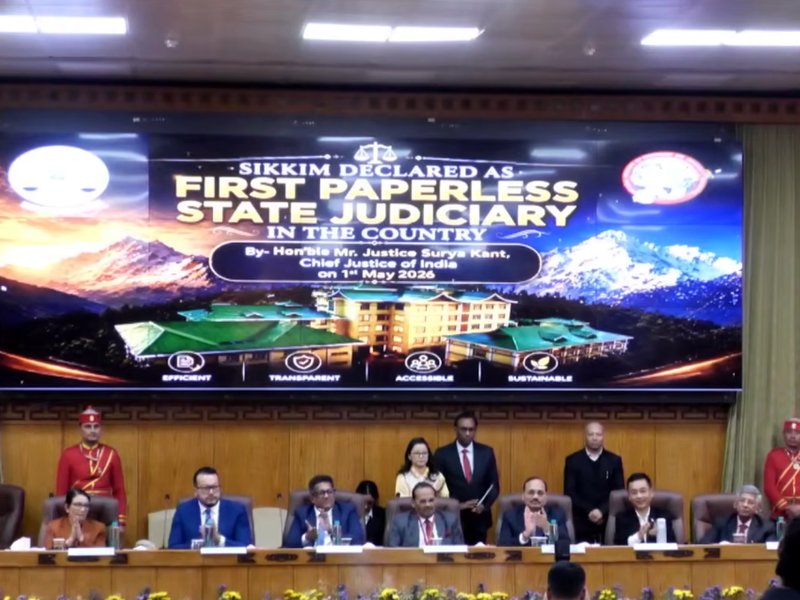
- 05 May 2026
In News:
In a landmark moment for India’s legal landscape, Sikkim has been officially declared the first state in the country to adopt a fully paperless judiciary. This historic announcement was made by Justice Surya Kant during the National Conclave on Technology and Judicial Education held in Gangtok. The transition signifies a paradigm shift from traditional, cumbersome manual processes to a streamlined, technology-driven judicial ecosystem.
The National Conclave on Technology and Judicial Education
The declaration took place at a high-level conclave organized by the High Court of Sikkim in collaboration with the Sikkim Judicial Academy. The event focused on the integration of modern technological tools into the judicial framework to enhance the speed, transparency, and accessibility of justice.
Key Components of the Paperless Ecosystem
Sikkim’s transition is not merely about digitizing old files but creating a Complete Digital Ecosystem that covers every stage of the legal process. The core pillars of this transformation include:
- E-Filing: Allowing lawyers and litigants to file cases online from any location, reducing the need for physical presence and the consumption of vast quantities of paper.
- Digital Case Records: Transitioning from physical "files" to digital dockets that are easily searchable and accessible to authorized stakeholders.
- Virtual Hearings: Institutionalizing video conferencing to allow for remote testimonies and arguments, thereby saving time and travel costs.
- Automated Workflows: Utilizing software to manage case scheduling, notice serving, and order tracking, which minimizes human error and administrative delays.
Integration of Advanced Technology: AI in Law
The Sikkim judiciary is leveraging cutting-edge tools developed by the Supreme Court of India to assist judicial officers:
- SUPACE (Supreme Court Portal for Assistance in Court’s Efficiency): An AI-driven tool designed to collect relevant facts and laws, aiding judges in legal research.
- SUVAS (Supreme Court Vidhik Anuvaad Software): An AI system used for translating judicial documents and judgments into regional languages, ensuring that justice is linguistically accessible to the common citizen.
Exercise CINBAX-II

- 05 May 2026
In News:
In a significant move to strengthen defense cooperation in South East Asia, an Indian Army contingent recently departed for Cambodia to participate in the second edition of the India-Cambodia Bilateral Military Exercise, CINBAX-II. The exercise, taking place in the Kampong Speu Province of Cambodia, marks a pivotal chapter in the burgeoning security relationship between the two nations.
Key Highlights of the Exercise
Exercise CINBAX-II is designed as a company-level joint training program, focusing on tactical proficiency and mutual cooperation.
- Participating Forces: The Indian contingent consists of 120 personnel, primarily drawn from a Battalion of the Maratha Light Infantry Regiment, renowned for its expertise in diverse terrains.
- Operational Framework: The exercise is conducted under Chapter VII of the United Nations Mandate, which pertains to "Action with Respect to Threats to the Peace, Breaches of the Peace, and Acts of Aggression."
- Core Objectives:
- Interoperability: Enhancing the ability of both armies to operate together seamlessly.
- Sub-conventional Environments: Focusing on operations in semi-urban combat settings where traditional warfare tactics are supplemented by counter-insurgency measures.
- UN Peacekeeping Scenarios: Simulating real-world conditions to prepare both forces for international peacekeeping missions, with a heavy emphasis on counter-terrorism.
Strategic Significance for India-Cambodia Relations
Beyond tactical drills, CINBAX-II carries significant diplomatic and strategic weight:
- Defense Diplomacy: The exercise is a platform for the exchange of best practices and operational experiences. It allows both armies to learn from each other's unique challenges and successes.
- Act East Policy: Strengthening ties with Cambodia is a vital component of India’s Act East Policy and its vision of SAGAR (Security and Growth for All in the Region).
- Regional Stability: By focusing on counter-terrorism and UN peacekeeping, the exercise contributes to regional stability in the Indo-Pacific, demonstrating a shared commitment to a rules-based international order.
Whitley Awards
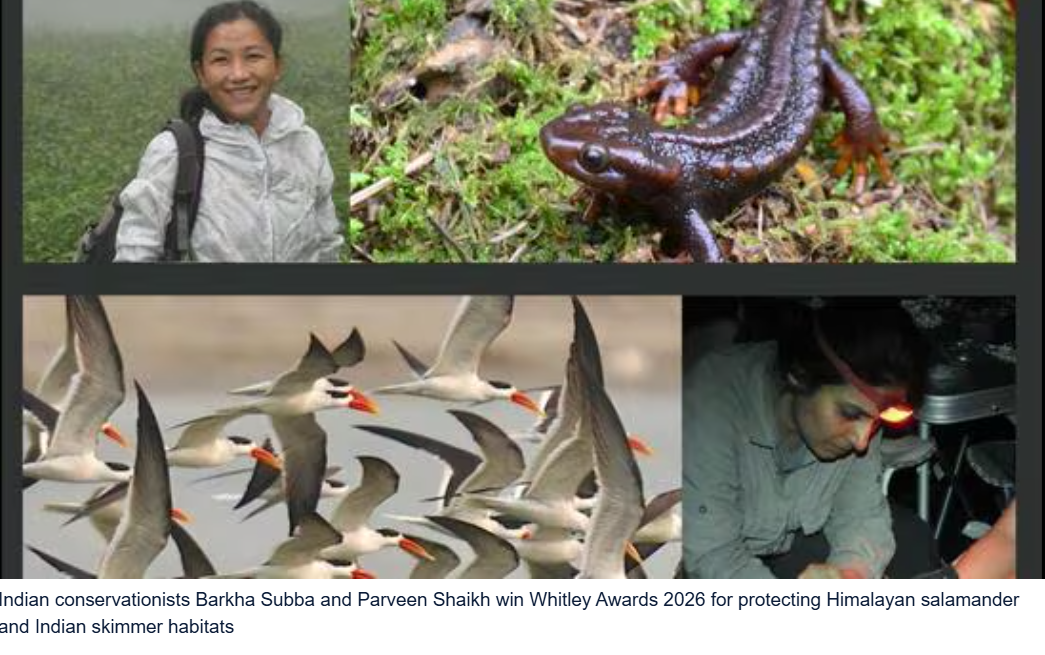
- 04 May 2026
In News:
In a proud moment for Indian biodiversity conservation, two conservationists—Parveen Shaikh and Barkha Subbahave been honored with the prestigious Whitley Awards 2026. These awards recognize their pioneering grassroots efforts to protect two of India’s most threatened wetland-dependent species: the Indian Skimmer and the Himalayan Salamander.
The Whitley Awards: The "Green Oscars"
The Whitley Awards are among the world's most coveted prizes for environmental conservation, often referred to as the “Green Oscars.”
- Granting Body: Established by the UK-based charity Whitley Fund for Nature (WFN).
- Focus: The awards specifically target grassroots conservation leaders working in the Global South, providing them with the resources to scale up local solutions to the global biodiversity crisis.
- Support: Each winner receives £50,000 in project funding over a one-year period, alongside international recognition and networking opportunities.
Pioneering Conservation: The Indian Skimmer
- Parveen Shaikh, associated with the Wildlife Conservation Trust, has been awarded for her efforts in the Chambal River landscape.
About the Species:
- The Indian Skimmer (Rynchops albicollis) is a unique waterbird belonging to the Laridae family. It is distinguished by its peculiar feeding mechanism, where it flies low and "skims" the water surface with its elongated lower mandible to catch fish.
- Distribution & Habitat: While it is found across India, Bangladesh, and Pakistan, the Chambal River remains its most critical stronghold in India. It prefers large, sandy, lowland rivers and lakes.
- Conservation Status: Currently listed as Endangered on the IUCN Red List.
- Threats: The species faces severe pressure from habitat loss, sand mining, and the fluctuation of water levels due to dam management, which can wash away nesting sites on sandy banks.
Safeguarding Ancient Lineages: The Himalayan Salamander
Barkha Subba has been recognized for her work in the Eastern Himalayas, specifically focusing on the ecological and cultural protection of the Himalayan Salamander.
About the Species:
- The Himalayan Salamander (Tylototriton verrucosus) is a primitive, lizard-like amphibian. Despite its appearance, it lacks scales and possesses the permeable skin characteristic of amphibians.
- Biology: These creatures can grow up to 17 cm and live for about 11 years. They exhibit philopatry, meaning they return to their exact natal sites to breed. This trait makes them exceptionally sensitive to any degradation of their specific wetland habitats.
- Distribution: It is endemic to the Darjeeling region of India, as well as parts of Nepal and Bhutan.
- Cultural Connection: Interestingly, the wetlands utilized by these salamanders are often considered sacred by local communities, associated with indigenous deities and rituals.
- Conservation Status: Listed as Vulnerable by the IUCN.
India’s Health Diplomacy: Deploying Aarogya Maitri in Jamaica
- 04 May 2026
In News:
In a significant stride for India’s "Vaccine Maitri" and broader humanitarian outreach, India has recently deployed its flagship Aarogya Maitri portable healthcare infrastructure in Jamaica. This move is a cornerstone of India’s diplomatic engagement with the CARICOM (Caribbean Community) nations, reinforcing its image as the "Pharmacy of the World" and a first responder in global crises.
Understanding Aarogya Maitri and Project BHISHM
The Aarogya Maitri project is a humanitarian initiative under which India provides essential medical supplies to developing nations hit by natural disasters or humanitarian crises.
- Project BHISHM: Central to this initiative is the Bharat Health Initiative for Sahyog Hita & Maitri (BHISHM). It is an innovative emergency medical aid program designed to bridge the gap in healthcare during golden-hour emergencies.
- The "Cubes" Innovation: The infrastructure consists of compact, portable "mini cubes." These cubes are modular, lightweight, and contain a comprehensive range of essential medicines, surgical equipment, and diagnostic tools.
- Operational Utility: Designed for rapid deployment via land, air, or sea, these cubes can be set up in minutes to provide life-saving treatment in remote or disaster-stricken areas.
Jamaica: A Strategic Partner in the Caribbean
Jamaica’s geographic and economic profile makes it a vital partner for India in the West-Central Caribbean.
Geographical Profile: Jamaica is the third-largest island in the Greater Antilles archipelago, surrounded entirely by the Caribbean Sea. Its strategic location places it south of Cuba, west of Hispaniola (Haiti and the Dominican Republic), and northwest of the Cayman Islands. The capital, Kingston, serves as a major commercial and cultural hub for the region.
Physical Features and Climate:
- Topography: The island is mountainous, dominated by the Blue Mountains—which host the country's highest point—alongside the John Crow, Don Figuero, and Santa Cruz ranges.
- Hydrology: Key rivers include the Rio Minho (the longest in Jamaica), the Black River, and the Rio Cobre.
- Climate: Jamaica experiences a tropical climate, heavily moderated by the sea and the persistent northeast trade winds.
- Natural Resources: The nation is rich in mineral wealth, particularly bauxite (essential for aluminum production), gypsum, and limestone.
Mount Dukono
- 04 May 2026
In News:
Mount Dukono, an extremely active volcano in eastern Indonesia, experienced a significant eruption. The event produced a massive volcanic ash column reaching as high as 10,000 meters (10 km) into the atmosphere, accompanied by explosive sounds heard from monitoring posts.
The eruption has triggered an emergency response in North Maluku, underscoring the persistent volcanic hazards within the Pacific Ring of Fire.
Geographical and Geological Context
Mount Dukono is a complex volcano situated on Halmahera Island in the North Maluku province. Unlike simple cone volcanoes, it is characterized by a broad, low profile with multiple overlapping craters and summit peaks.
- Height and Profile: Standing at approximately 1,335 meters above sea level (with varying peak heights across its craters), it is one of the most active systems in Indonesia.
- The Pacific Ring of Fire:
- The Ring of Fire is a roughly 40,000 km-long horseshoe-shaped belt of intense tectonic activity encircling the Pacific Ocean. It is the single most seismically and volcanically active zone on Earth:
- Approximately 90% of the world's earthquakes, including the most powerful ones, occur within this belt.
- It contains between 750 and 915 active or dormant volcanoes — about 75% of the global total.
- Key tectonic plates involved include the Pacific, North American, Eurasian, Philippine Sea, and Indo-Australian plates, interacting primarily through subduction.
- Notable historical eruptions within the Ring include Indonesia's Mount Tambora (1815 — largest eruption in recorded history), Krakatoa (1883), and the Philippines' Mount Pinatubo (1991), all of which had measurable global climate effects.
- Active Vent: Current activity is primarily centered on the MalupangWarirang crater, which has been in a state of near-continuous eruption since 1933.
Historical and Eruptive Behavior
Since its first major recorded eruption in 1550, which produced significant lava flows, Dukono has remained a persistent threat.
- Continuous Activity: The volcano is known for its long-term, low-level eruptive state, characterized by frequent ash emissions, "booming" explosive sounds, and occasional lava and mudflows.
- Recent Trends: In 2026, the frequency of eruptions increased, with nearly 100 events recorded between late March and early May.
Ecological and Socio-Economic Impact
Beyond the geological threat, Mount Dukono is surrounded by lush tropical rainforests.
- Endemic Biodiversity: The region is a habitat for unique flora and fauna, including several endemic species of birds such as the White Parrot and various Halmahera-specific eagles.
- Propriety of Land: The volcanic soil provides high fertility for local plantations; however, the ongoing eruptions necessitate a delicate balance between leveraging agricultural potential and ensuring the safety of those living in the shadow of the volcano.
India’s 1st Green Methanol Production Plant
- 04 May 2026
In News:
Prosopis juliflora — the invasive shrub that has degraded Kutch's Banni grasslands for decades — is set to become the feedstock for India's first green methanol production plant, bridging ecological restoration with clean energy.
Background
The Mexican-origin shrub Prosopis juliflora — known locally as gandobaval in Gujarat, vilayatikeekar in North India, and velikathan in Tamil Nadu — was first introduced by the British in the 1920s to green Delhi, and again by Gujarat's forest department in 1961 to check the advancing salt desert in the Rann of Kutch. Over decades, it spread aggressively across the Banni grasslands, crowding out native species and degrading one of India's most ecologically sensitive landscapes. Listed among the top 100 invasive species in the world, its removal has long been a conservation priority. India's first green methanol plant now proposes a productive use for this ecological liability.
About the Project
The plant and process
The facility, sited at the Deendayal Port Authority (DPA) in Kandla, will produce five tonnes of green methanol per day in its demonstration phase. The production follows a two-step pathway:
- Step 1 — Gasification (Ankur Scientific, Vadodara): Juliflora biomass is heated in the absence of oxygen, converting it into syngas — a mix of hydrogen (H?), carbon monoxide (CO), and CO?. Once the reaction begins, it sustains its own heat, requiring only about 10–15 litres of oil for a half-hour startup.
- Step 2 — Methanol synthesis (Thermax Energy, Pune): The syngas is catalytically converted into methanol, a liquid fuel suitable for ocean-going ships.
The plant will also be certified to run on other agricultural residues such as bagasse and cotton stalk, which could potentially displace up to a third of India's oil imports at maximum scale.
Why juliflora makes a good feedstock
- It is a hardwood with high density and a strong energy profile.
- Low acid content makes it technically well-suited for gasification.
- Its removal simultaneously serves Gujarat's ecological restoration goals — the state government already wants the species cleared.
Commercially viable plants will need to scale up to 100–500 tonnes per day. The Kandla project is explicitly a demonstration unit to prove the technology and build the business case.
Green Methanol — Key Facts
Methanol is conventionally produced from fossil fuels — natural gas or coal gasification — and used in shipping as a cleaner replacement to bunker oil. Green methanol differs fundamentally in its feedstock and carbon profile:
- Produced from biomass (bio-methanol) or green hydrogen (e-methanol), making it a renewable fuel.
- Reduces vessel CO? emissions by up to 95% and NOx by up to 80%, while eliminating sulphur oxides and particulate matter entirely.
- Overall lifecycle GHG reduction of 60–95% compared to conventional fossil methanol.
- E-methanol — produced using green hydrogen — represents the highest-purity form but currently costs around USD 2,000 per tonne vs. USD 700–800 for bio-based green methanol.
Policy and Regulatory Context
IMO and international shipping obligations
The International Maritime Organization's 2023 GHG Strategy mandates net-zero emissions from international shipping by or around 2050. The European Union has already begun levying charges on ships entering EU ports without a minimum share of green fuel — a regulatory pressure that is directly driving demand for green methanol in the near term.
India's policy alignment
- India amended its shipbuilding financial assistance policy in August 2023 to offer a flat 30% subsidy for vessels propelled by green fuels, including methanol, ammonia, and hydrogen.
- The government is developing "green ports" along India's western coast, for which facilities like the Kandla plant would supply fuel.
- The project supports India's broader push to reduce fossil fuel import dependence and meet its climate commitments under the Paris Agreement.
Cost challenge
Conventional methanol from natural gas costs approximately ?30 per kg under normal conditions, rising to ?70–80 during supply disruptions. Green methanol at USD 700–800 per tonne remains uncompetitive on price alone, making regulatory penalties the primary commercial driver for now. Scaling to 100–500 tonnes per day is considered the threshold for cost viability.
Significance
- Ecological: Converts a damaging invasive species into an economic resource, incentivising large-scale removal of juliflora from vulnerable grassland ecosystems.
- Energy: Advances India's green fuel production capacity and reduces dependence on imported bunker oil and fossil methanol.
- Maritime: Positions Indian ports as compliant with emerging IMO green fuel mandates, enhancing competitiveness of the shipping sector.
- Technological: Demonstrates indigenous gasification-to-methanol technology developed by Indian firms (Thermax and Ankur Scientific), with potential for replication at scale.
- Limitation: Grid electricity still powers the plant's motors and controls; for stricter carbon-intensity compliance, this must eventually come from renewables.
Citizenship (Amendment) Rules, 2026
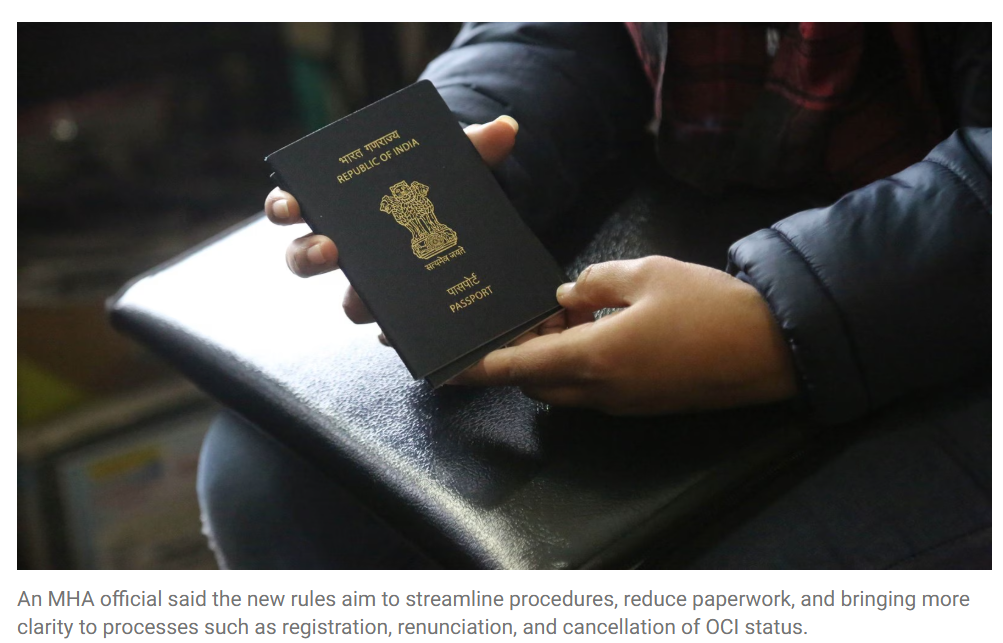
- 04 May 2026
In News:
The Union Ministry of Home Affairs notified the Citizenship (Amendment) Rules, 2026 on 30 April 2026 (effective 1 May), marking the most significant overhaul of the Overseas Citizen of India (OCI) framework since the scheme began in 2006.
Background
The OCI scheme draws its authority from Sections 7A–7D of the Citizenship Act, 1955. It grants foreign nationals of Indian origin a lifelong multiple-entry visa and parity with NRIs in economic, educational, and cultural matters — but not citizenship. India's Constitution prohibits dual citizenship, a distinction these rules now sharpen. The 2026 amendment replaces the earlier hybrid paper-and-digital system with a fully electronic architecture and closes a loophole that let some families maintain both an Indian passport and a foreign passport for minor children.
Key Provisions
1. Ban on dual passports for minors: A new proviso to Rule 3 explicitly bars a minor from simultaneously holding an Indian passport and the passport of any other country. The earlier system only required parents to declare their child did not hold a foreign passport at birth registration — a gap now firmly shut.
- Families must choose: retain the Indian passport or wait until the child turns 18 to apply for OCI.
- Non-compliance can result in the OCI being deemed cancelled, even without physical surrender of the card.
2. Introduction of electronic OCI (e-OCI):Applicants may now receive an electronic OCI credential alongside, or in place of, the familiar physical blue booklet. A centralised, real-time registryallows immigration officers to verify OCI status instantly at airports and seaports.
3. Fully online applications — mandatory
All OCI services — registration (Form XXVIII, Section 7A), renunciation (Form XXXI), and cancellations — must now be filed exclusively through ociservices.gov.in. Physical submissions and couriered forms have been abolished.
- Processing time is expected to fall from 6–8 weeks to approximately 15 working days.
- Existing cardholders must update new passport details within 3 months of issuance; late updates attract a USD 25 fine.
4. Biometric integration with fast-track immigration:Applicants must consent to share biometric data, enabling automatic enrolment in the Fast Track Immigration – Trusted TravellerProgramme (FTI-TTP). This links OCI holders to e-gate corridors at major airports, reducing immigration queuing times for the Indian diaspora.
5. Strengthened appellate mechanism:Appeals against rejected OCI applications are now routed to an authority one rank higher than the original decision-maker, ensuring a defined and fairer right of hearing.
Significance
- Constitutional alignment: The dual-passport ban for minors closes a regulatory gap and brings OCI practice in line with India's constitutional prohibition on dual nationality.
- Digital governance: The shift aligns with the Digital India agenda — eliminating paperwork, reducing discretion, and enabling real-time verification.
- Diaspora convenience: e-OCI and biometric fast-tracking materially ease airport immigration for the ~4.5 million OCI cardholders worldwide.
- Privacy concerns: Mandatory biometric collection may face scrutiny under the right to privacy (Puttaswamy, 2017) and the Digital Personal Data Protection Act, 2023.
- Implementation challenge: The online-only mandate places pressure on portal reliability, especially for diaspora applicants in time zones far from India.
OCI is not dual citizenship. OCI holders carry only a foreign passport and enjoy specified parity rights — they cannot vote, hold constitutional offices, or purchase agricultural land in India.
Ru-Soam Bridges
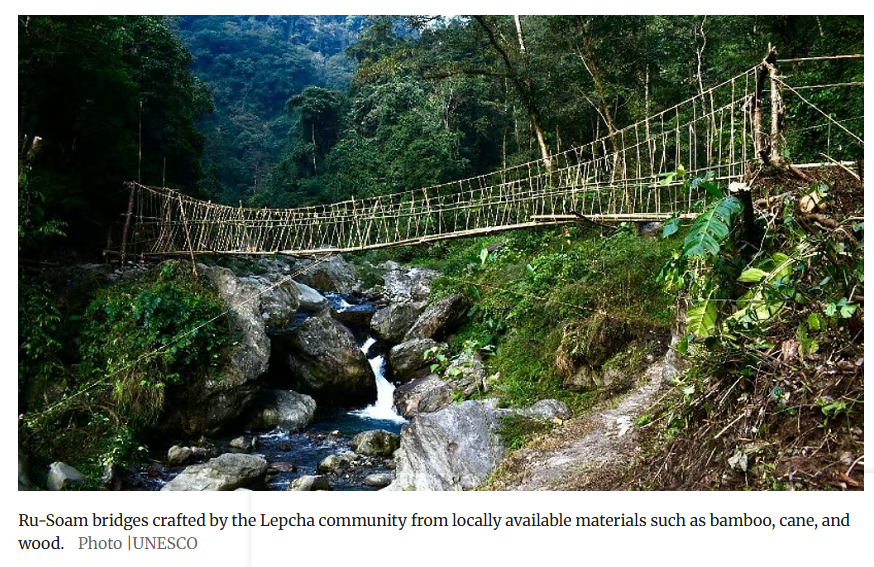
- 03 May 2026
In News:
UNESCO partnered with the Government of Sikkim supported by Airbnb to formally document Ru-Soam, the traditional cane bridges of the Lepcha community, and nominate them for UNESCO's Intangible Cultural Heritage (ICH) list.
What is Ru-Soam?
Ru-Soam are traditional suspension bridges built by the Lepcha community of Sikkim, found primarily in the Khangchendzonga Biosphere Reserve (Dzongu Tribal Reserve, North Sikkim). In the Lepcha language, 'Ru' means cane or rattan and 'Soam' means bridge. Regarded as one of the oldest suspension bridge traditions in the Eastern Himalaya, British botanist Joseph Dalton Hooker documented them in the 19th century as "works of art."
Structural Features
The bridge rests on two parallel cane cables (soamgyang) anchored to trees at both ends. Cane loops called ahool serve as handrails, while bamboo planks (soamgur) form the walkway. Bridges span over 100 metres and hang 30 metres above rivers, supporting 2–3 persons at a time. Construction is led by master craftsmen (Soam-nokbu) alongside ritual specialists (Bongthing), with knowledge passed entirely through oral tradition.
The critical engineering advantage is flexibility — the bridge sways and absorbs flood force rather than rigidly resisting it, a property decisive during recent Himalayan disasters.
Climate Resilience
During the 2023 South Lhonak Lake GLOF (Glacial Lake Outburst Flood), modern bridges across the Teesta basin were destroyed, cutting off Dzongu for weeks. Several Ru-Soam bridges survived and sustained critical connectivity for villages and relief operations. A 2024 cloudburst repeated the pattern — modern infrastructure failed while communities rapidly rebuilt cane bridges, restoring access within days. Scholar Sonam R. Lepcha, in a study published in the journal Pleione, documented how these bridges became lifelines for the region.
About Khangchendzonga:
Declared UNESCO World Heritage Site in 2016 (Mixed Category) — India's first Mixed World Heritage Site. Part of the World Network of Biosphere Reserves since 2018.
Past Risk and Return Verification Agency (PaRRVA)
- 03 May 2026
In News:
In a significant move to bolster investor protection and curb misleading claims in the capital market, the Securities and Exchange Board of India (SEBI) has operationalized the Past Risk and Return Verification Agency (PaRRVA). This regulatory initiative is aimed at introducing a standardized, independent verification mechanism for performance claims made by various financial intermediaries, ensuring that the "past performance" shown to investors is both accurate and reliable.
Key Institutional Framework
The implementation of PaRRVA involves a strategic partnership between specialized financial entities:
- The Verification Body:CARE Ratings Limited has been designated and recognized as the primary agency responsible for the verification process.
- The Data Infrastructure: The National Stock Exchange of India Limited (NSE) will serve as the PaRRVA Data Centre (PDC), providing the necessary technological backbone and data repository for the agency's operations.
Objective and Scope of PaRRVA
The primary objective of PaRRVA is to eliminate the practice of "cherry-picking" performance data, where intermediaries might highlight only their most successful periods to lure investors.
Eligible Entities and Users: The agency’s services are tailored for a wide spectrum of market participants:
- Investment Advisers (IA) and Research Analysts (RA): To validate their advice-based performance history.
- Trading Members (TM): Specifically those providing algorithmic or automated trading services.
- Investors: As the ultimate beneficiaries, they can now access a centralized pool of verified, credible data.
Core Features and Functionalities
PaRRVA acts as a "Trust Layer" in the investment ecosystem through the following features:
- Standardization of Metrics: It ensures that risk-return metrics are calculated and presented using a uniform methodology, making comparisons between different advisors or analysts more meaningful.
- Independent Validation: By moving away from self-certification, SEBI ensures that performance claims are vetted by an independent third party (CARE Ratings) against data hosted by the NSE.
- Advertisement Compliance: Regulated entities are now permitted to use PaRRVA-verified data in their advertisements. This provides a legal and ethical framework for marketing, ensuring that promotional materials remain compliant with SEBI’s stringent disclosure guidelines.
- Informed Decision Making: By providing access to reliable data, PaRRVA empowers retail investors to move beyond marketing hype and evaluate intermediaries based on factual, long-term performance records.
Significance for the Indian Capital Market
The operationalization of PaRRVA is a proactive step toward building a more transparent and mature financial market.
- Curbing Mis-selling: It acts as a deterrent against fraudulent claims and exaggerated "get-rich-quick" schemes often promoted on social media by unregistered "finfluencers" or unscrupulous analysts.
- Enhancing Accountability: By requiring independent verification, SEBI places the onus of accuracy squarely on the intermediary.
- Boosting Investor Confidence:This initiative aligns with the broader goal of Financial Inclusion and Investor Education, ensuring that the influx of new retail investors into the Indian stock market is protected by robust regulatory safeguards.
Public Accounts Committee
- 03 May 2026
In News:
In the latest development within the Indian parliamentary framework, K.C. Venugopal has been reappointed as the Chairman of the Public Accounts Committee (PAC) for the 2026–27 term. As one of the most powerful financial standing committees, the PAC serves as a vital instrument of the legislature to ensure that the executive remains accountable for every rupee spent from the public exchequer.
Historical Evolution and Genesis
- The PAC is the oldest of the parliamentary committees in India. Its origins trace back to the Montagu-Chelmsford Reformsof 1919, leading to its formal establishment in 1921. Post-independence, it evolved into a permanent parliamentary committee under the Constitution of India in 1950.
- A significant democratic tradition was established in 1967, since when the Chairman of the PAC is invariably appointed from the Opposition party. This convention is designed to ensure an unbiased and critical scrutiny of government expenditure, fostering a robust system of checks and balances.
Composition and Appointment
The committee represents both houses of Parliament, ensuring a bicameral oversight mechanism.
- Membership: It consists of 22 members—15 from the Lok Sabha and 7 from the Rajya Sabha.
- Election Process: Members are elected annually through the principle of proportional representation by means of a single transferable vote, allowing for the representation of various political parties in proportion to their strength.
- Exclusion of Ministers: To maintain independence and prevent a conflict of interest, ministers cannot be members of the committee.
- Tenure: The term of office for members is limited to one year.
- Chairmanship: The Chairman is appointed by the Speaker of the Lok Sabha.
Core Mandate and Scope of Scrutiny
The primary responsibility of the PAC is to examine the accounts showing the appropriation of sums granted by Parliament.
- Financial Audit: It scrutinizes the Appropriation Accounts and the Finance Accounts of the Union Government, along with any other accounts laid before the Lok Sabha.
- Beyond Legality: The PAC’s mandate is not limited to technical legality. It dives into the “Propriety Audit,” evaluating government spending on the grounds of efficiency, economy, and wisdom. It aims to uncover cases of waste, loss, or financial irregularity.
- Handling Excess Expenditure: If the government spends more than the amount sanctioned by Parliament, the PAC investigates the circumstances. These excesses must be regularized under Article 115 of the Constitution, based on the committee’s recommendations.
The PAC-CAG Synergy: "Friend, Philosopher, and Guide"
The functioning of the PAC is fundamentally supported by the Comptroller and Auditor General (CAG) of India. The CAG submits three main audit reports to the President, which are then laid before Parliament:
- Audit report on Appropriation Accounts.
- Audit report on Finance Accounts.
- Audit report on Public Undertakings.
The CAG assists the committee during its deliberations, helping members navigate complex financial data. This relationship is so integral that the CAG is often termed the “friend, philosopher, and guide” of the PAC.
Ensuring Impact: Follow-up and Monitoring
To ensure that its recommendations do not remain mere paper tigers, a structured follow-up mechanism exists:
- Action Taken Reports (ATRs): The government is required to submit "Action Taken Notes" on the committee's recommendations, usually within six months.
- Modern Monitoring: The Audit Para Monitoring System (APMS) has been implemented to electronically track the status of these notes, ensuring transparency and reducing the pendency of unresolved audit observations.
Cauvery Water Management Authority
- 03 May 2026
In News:
In a significant step toward resolving one of India’s longest-standing inter-state water conflicts, the Cauvery Water Management Authority (CWMA) has directed Karnataka to release 2.5 TMC (Thousand Million Cubic feet) of water to Tamil Nadu for the month of May 2026. This directive reaffirms the 2018 Supreme Court verdict and emphasizes the role of statutory bodies in maintaining federal harmony during periods of climatic stress.
The Kaveri River:
- The Kaveri, popularly known as the "Ganga of the South" (Dakshin Bharat ki Ganga), is the lifeblood of agricultural and urban centers in Southern India.
- Origin and Course: The river rises at Talakaveri in the Brahmagiri Range of the Western Ghats (Kodagu, Karnataka). It flows approximately 800 km through Karnataka and Tamil Nadu before emptying into the Bay of Bengal.
- Drainage Basin: The basin is shared by Karnataka, Tamil Nadu, Kerala, and Puducherry.
- Key Tributaries:
- Left Bank: Harangi, Hemavati, Shimsha, and Arkavati.
- Right Bank: Lakshmana Tirtha, Kabini, Suvarnavathi, Bhavani, Noyyal, and Amaravati.
- Strategic Infrastructure: Major reservoirs like Krishna Raja Sagara (KRS) in Karnataka and the Mettur Dam in Tamil Nadu serve as the primary control points for water regulation.
The Legal Evolution of the Dispute
The conflict over Kaveri's waters is rooted in colonial-era agreements (1892 and 1924) between the Madras Presidency and the Princely State of Mysore. Post-independence, Karnataka contested these agreements as unfair, leading to decades of legal friction.
1. Constitutional and Statutory Framework
Under Article 262 of the Constitution, which empowers Parliament to adjudicate inter-state river disputes, the Inter-State River Water Disputes Act, 1956 was enacted. This led to the formation of the Cauvery Water Disputes Tribunal (CWDT) in 1990.
2. The Landmark 2018 Supreme Court Verdict
In February 2018, the Supreme Court modified the earlier Tribunal award, establishing several key principles:
- National Asset Doctrine: The Court declared that no single state has proprietary rights over a river; it is a shared national asset.
- Bengaluru’s Needs: Karnataka was granted an additional 14.75 TMC to meet the drinking water requirements of Bengaluru.
- Final Share Allocation (Annual):
- Tamil Nadu: 404.25 TMC
- Karnataka: 284.75 TMC
- Kerala: 30 TMC
- Puducherry: 7 TMC
CWMA and CWRC
To move away from ad-hoc management and frequent litigation, the Centre established the Cauvery Water Management Authority (CWMA) and its subordinate body, the Cauvery Water Regulation Committee (CWRC), in June 2018.
Structure and Governance
The CWMA is a statutory, quasi-judicial body notified under Section 6A of the 1956 Act.
- Headquarters: New Delhi, under the Union Ministry of Jal Shakti.
- Composition: Led by a Chairperson (eminent engineer or IAS officer), it includes full-time members for Water Resources and Agriculture, alongside part-time members representing the four basin states.
Core Functions
- Water Apportionment: Regulating reservoir releases to ensure each state receives its mandated share.
- Distress Sharing: During years of poor monsoon, the CWMA determines the proportionate sharing of water shortages (distress) among states.
- Data Monitoring: Collecting real-time data on storage positions and inflows via the CWRC.
- Technological Advisory: Encouraging micro-irrigation and crop diversification to improve water-use efficiency.
Padma Doree

- 03 May 2026
In News:
The North Eastern Handicrafts and Handlooms Development Corporation (NEHHDC) has officially unveiled‘Padma Doree’, a landmark cross-regional textile initiative. By merging the Eri (Ahimsa) silk of Northeast India with the sophisticated Chanderi weaving traditions of Madhya Pradesh, the project creates a unique fusion of "fiber and finesse." This collaboration marks a significant step toward integrating India’s diverse craft heritage into a cohesive, sustainable fashion ecosystem.
The Essence of Padma Doree:
Padma Doree is more than just a textile collection; it is a strategic bridge between Central and Northeast India. The initiative is designed to modernize indigenous knowledge systems, making them competitive in the global luxury and sustainable fashion markets while ensuring the economic upliftment of local artisans.
- Material Innovation: The project utilizes Eri Silk, famously known as Ahimsa Silk because it is processed after the moth leaves the cocoon, ensuring no harm to the silkworm. This rugged, warm, and wool-like fiber is intricately woven with the delicate motifs and sheer, lightweight textures characteristic of Chanderi.
- Artisan Collaboration: The initiative fosters a direct exchange of skills. Weavers from Madhya Pradesh and artisans from the Northeast work together, blending the durability of Eri with the refined zari work and transparency of traditional Chanderi.
- A Multi-Sensory Experience: The launch featured a three-day interactive exhibition that showcased the entire "fiber-to-fabric" journey through live demonstrations. To provide a holistic cultural experience, the event also integrated regional culinary showcases from both participating regions.
Key Components:
Eri Silk (Northeast India)
- Predominantly produced in Assam and Meghalaya, Eri silk is derived from the Samia ricini silkworm. It is unique among silks for its matte appearance and thermal properties, making it "cool in summer and warm in winter." Its status as a sustainable and ethical fiber aligns with the growing global demand for "slow fashion."
Chanderi Weaving (Madhya Pradesh)
- Hailing from the historic town of Chanderi, this craft is renowned for its shimmering texture and "Butti" (motifs). Traditionally a blend of silk and cotton, Chanderi is characterized by its transparency and sophisticated aesthetics, long favored by Indian royalty.
Kanha Tiger Reserve
- 02 May 2026
In News:
In early 2026, the Kanha Tiger Reserve (KTR) in Madhya Pradesh witnessed a tragic wildlife crisis as a tigress and her four cubs died within a short span of ten days. Preliminary investigations and post-mortem findings point toward an outbreak of the Canine Distemper Virus (CDV) as the primary cause. This event has pushed the state’s tiger mortality count to nearly 30 fatalities within the first five months of the year, raising serious concerns regarding the biosecurity of India’s premier tiger habitats.
Kanha Tiger Reserve:
Kanha Tiger Reserve is a cornerstone of India’s wildlife preservation strategy, situated in the Maikal ranges of the Satpuras across the Mandla and Balaghat districts of Madhya Pradesh.
- Evolutionary History: One of India’s oldest protected areas, it was declared a reserve forest in 1879, a National Park in 1955, and was among the first nine reserves to be brought under 'Project Tiger' in 1973.
- Landscape and Zoning: Spanning over 2,074 sq. km, the reserve is divided into a Core Area (940 sq. km) of critical habitat and a Buffer Zone (1,134 sq. km). It also manages the Phen Wildlife Sanctuary as a satellite micro-core.
- Biodiversity Landmarks: The park is dominated by lush Sal (Shorea robusta) and mixed deciduous forests. It is most famous for saving the Hard Ground Barasingha (Rucervusduvauceliibranderi) from the brink of extinction.
Canine Distemper Virus (CDV):
CDV is a highly contagious viral disease caused by a single-stranded RNA virus from the Paramyxoviridae family. While traditionally associated with domestic dogs, it has increasingly crossed over into wild carnivore populations, including tigers and lions.
- Symptoms and Pathology: The virus attacks the respiratory, gastrointestinal, and central nervous systems. In the Kanha tigress and her cubs, post-mortems revealed acute lung infections and respiratory distress. In chronic stages, the virus causes neurological symptoms like disorientation, loss of fear, and seizures.
- Transmission Vectors: Wildlife experts suggest that domestic and stray dogs in the forest-village interface are the primary reservoirs. Tigers may contract the virus by predating on infected dogs or through contaminated water sources and prey remains.
- Conservation Impact: CDV can be catastrophic for small, isolated populations. A 2018 outbreak in Gir, Gujarat, led to the deaths of nearly 30 Asiatic lions, highlighting the vulnerability of apex predators to spillover infections.
The 2026 Crisis and State-wide Mortality
The deaths at Kanha are part of a broader, alarming trend in Madhya Pradesh, often referred to as the "Tiger State of India."
- Rising Toll: By May 2026, the state recorded approximately 28–30 tiger deaths. High-density areas like Kanha and Bandhavgarh are increasingly prone to stress-induced deaths, infighting, and disease transmission due to crowding.
- Human-Animal Interface: The seasonal collection of forest produce like Mahua and Tendu leaves increases the presence of domestic dogs in the buffer zones, heightening the risk of CDV spillover.
Management Strategies
The National Tiger Conservation Authority (NTCA) has issued urgent advisories to create "Immunization Buffers" around tiger reserves. Key strategies include:
- Ring Vaccination: Implementing a mandatory 5-km vaccination zone for all domestic dogs around reserve boundaries to achieve herd immunity.
- Surveillance and Sanitization: Using digital tools like the M-STrIPES app for real-time health monitoring and disinfecting sensitive areas or contaminated kills.
- Biosecurity Protocols: Restricting the movement of stray dogs into core areas and ensuring the safe disposal of carcasses to prevent the virus from lingering in the ecosystem.
- Strengthening Veterinary Infrastructure: Deployment of mobile veterinary units and rapid response teams at the forest-village interface.
Preah Vihear Temple

- 02 May 2026
In News:
The centuries-old Preah Vihear Temple, an architectural marvel dedicated to Lord Shiva, has recently returned to the global spotlight due to renewed military tensions between Thailand and Cambodia.
Historical and Cultural Genesis
The Preah Vihear Temple is a testimony to the grandeur of the Khmer Empire. Unlike many other Khmer structures, this temple offers a unique glimpse into the religious evolution of Southeast Asia.
- Construction: While its foundations date back to the 9th century, the most significant expansion occurred in the 11th and 12th centuries under King Suryavarman I (1002–1050) and Suryavarman II (1113–1150)—the latter famously known for building Angkor Wat.
- Dedication: Originally a Hindu temple dedicated to Lord Shiva, it symbolized Mount Meru, the sacred multi-peaked mountain of Hindu and Buddhist cosmology.
- Religious Transition: As the Khmer Empire’s influence waned and Buddhism became the dominant faith in the region, the temple was adapted for Buddhist worship. This transition is evident in the Buddhist motifs and decorations found alongside its original Hindu carvings.
Architectural Masterpiece
Preah Vihear is celebrated as a "masterpiece of Khmer stone carving." Its layout is distinct from typical Khmer temples like Angkor Wat, which are usually rectangular and face east.
- Axis and Layout: The temple is built on an 800-meter-long north-south axis. It consists of a series of sanctuaries connected by pavements and staircases that ascend toward a cliff’s edge.
- Gopuras (Gateway Pavilions): The complex features five successive gopuras. These gateways are intricately carved and vary in material; some possess stone roofs, while others were historically topped with wooden structures.
- Location: Perched atop a 525-meter cliff in the Dangrek Mountain range, the temple offers a commanding view of the Cambodian plains, emphasizing its strategic and spiritual significance.
The Century-Long Border Dispute
- Colonial Treaties (1904–1907): In 1904, France (ruling Cambodia) and Siam (Thailand) signed a treaty. While the treaty suggested the border should follow the natural watershed line of the mountains (placing the temple in Thailand), a map drawn by French officers in 1907 placed the temple within Cambodian territory.
- The 1962 ICJ Ruling: After Thailand occupied the site in the 1950s, Cambodia moved the International Court of Justice (ICJ). The court ruled in 1962 that the temple belonged to Cambodia, primarily because Thailand had used the French map for decades without protest.
- UNESCO Designation (2008): Tensions reignited when the temple was named a UNESCO World Heritage Site in 2008. Thailand contested the surrounding 4.6 sq km of scrubland, leading to deadly skirmishes.
- 2013 Reaffirmation: The ICJ again ruled in 2013 that the 1962 decision intended for Cambodia to own the temple and its immediate vicinity, calling for a withdrawal of Thai forces.
Current Status: 2025–2026 Conflict
Despite previous ceasefires, the region saw a severe escalation in late 2025 and early 2026.
- Military Escalation: Renewed fighting involving artillery and airstrikes broke out in December 2025. Reports indicate that hundreds of thousands of civilians have been displaced along the border.
- Heritage at Risk: Preliminary assessments by the International Coordinating Committee (ICC-Preah Vihear) in March 2026 confirmed that the temple sustained damage in over 560 locations. All five gateway pavilions (Gopuras) have suffered structural degradation or scarring from weaponry.
- India’s Role: India, which co-chairs the ICC-Preah Vihear along with China, has expressed "deep concern" over the damage. The Archaeological Survey of India (ASI) has a long-standing history of restoring Khmer temples in Cambodia, making the preservation of this site a point of cultural diplomacy for New Delhi.
Mission SAKSHAM
- 02 May 2026
In News:
Recently, the Governor of the Reserve Bank of India (RBI) launched Mission SAKSHAM (Sahakari Bank Kshamta Nirman), a landmark initiative designed to revolutionize the Urban Co-operative Banking (UCB) sector. This mission-mode, all-India project represents a significant shift toward professionalizing and modernizing the cooperative banking landscape, ensuring it remains resilient in an increasingly complex financial environment.
Understanding Mission SAKSHAM
Mission SAKSHAM is a comprehensive capacity-building and certification framework. Its primary mandate is to address the historical gaps in managerial and operational capabilities within UCBs. By transitioning the sector toward a sustainable ecosystem for continuous learning, the RBI aims to strengthen the financial health and institutional resilience of these community-focused institutions.
Key Pillars and Targeted Reach
The mission is distinguished by its scale and inclusivity, aiming to reach 1.40 lakh participants across the nationwide UCB sector. Unlike generic training programs, it adopts a "top-to-bottom" cultural shift by targeting specific, critical roles within the banking hierarchy:
- Governance & Leadership: Board Members and Senior Management.
- Risk & Control: Heads of Risk Management, Compliance, and Audit functions.
- Technical Operations: Employees specializing in IT functions and other critical operational areas.
Operational Model and Features
To ensure effective penetration, especially among smaller and regional cooperatives, Mission SAKSHAM utilizes a blended learning model that combines in-person (offline) sessions with digital (e-learning) modules.
- Linguistic Accessibility: Recognizing India’s diversity, the training content is delivered in regional languages to ensure the "intent of the law" is accessible to local board members and staff.
- Institutional Collaboration: The mission was not designed in isolation; it was developed in close consultation with the Umbrella Organisation for UCBs (such as the NUCFDC) and various National and State Cooperative Federations.
- Certification Framework: A standardized certification process is integrated into the mission to ensure that skills and competencies are uniform across the sector.
Op Netra 1.0
- 02 May 2026
In News:
The Indian Army recently achieved a significant humanitarian milestone with the successful conclusion of ‘Op Netra 1.0,’ a four-day mega eye camp held in the challenging terrain of Leh, Ladakh. Conducted at the 153 General Hospital, the mission underscores the military’s commitment to "Winning Hearts and Minds" by delivering advanced surgical care to the remotest corners of the Union Territory.
A Mission of Specialized Care and Vision Restoration
Under the leadership of the Director General Armed Forces Medical Services (DGAFMS), Op Netra 1.0 was designed as a high-end ophthalmic outreach program. The camp specifically targeted citizens in high-altitude regions where geographical barriers and thin oxygen levels often impede access to sophisticated medical infrastructure.
During the four-day intensive program, the medical team screened a total of 950 patients hailing from seven districts of Ladakh. The outreach extended to some of the most isolated border villages, including Chushul, Hanle, Demchok, and Turtuk. The mission was life-altering for many, successfully restoring sight to 15 individuals who were previously suffering from total visual impairment.
Surgical Excellence and Technological Innovation
Op Netra 1.0 was not merely a screening camp but a hub for advanced ophthalmic interventions. The surgical teams performed 214 complex procedures, which included:
- 197 cataract surgeries using modern techniques.
- 10 vitreo-retinal interventions, including vitrectomies.
- Specialized procedures such as Glued Intraocular Lens (IOL) implantation and Minimally Invasive Glaucoma Surgery (MIGS).
A standout feature of the operation was the integration of Indigenous Technology. The Army launched the Op Netra App, a dedicated digital platform that utilized QR code-based identification. This system ensured end-to-end digitization of patient records, automated scheduling, and enhanced surgical safety, setting a new benchmark for mobile medical camps in India.
Inter-Service Synergy and National Impact
The success of the mission was a testament to seamless Inter-Service Cooperation. The Indian Air Force (IAF) played a pivotal role by airlifting heavy, sophisticated medical equipment to the high-altitude environment of Leh, ensuring that the surgeons had access to the same quality of technology available in metropolitan super-specialty hospitals.
Furthermore, this operation is part of a broader military-medical momentum. Since November 2025, the Indian Armed Forces have completed over 2,500 sight-restoring surgeries across various parts of the country.
India Post Payments Bank Launches SHG Savings Account
- 02 May 2026
In News:
Recently, the India Post Payments Bank (IPPB) announced a significant milestone in India’s journey toward universal financial inclusion with the launch of its dedicated Self Help Group (SHG) Savings Account. Designed to empower women-led groups in rural India, this initiative bridges the gap between the unbanked population and the formal financial ecosystem.
India Post Payments Bank (IPPB):
Established on September 1, 2018, IPPB is a 100% Government of India-owned entity operating under the Department of Posts. The bank’s primary mandate is to dismantle barriers for the underbanked by utilizing India’s vast postal network.
- Infrastructure: IPPB leverages approximately 1,65,000 Post Offices, with roughly 1,40,000 of these strategically located in rural regions.
- Workforce: A massive workforce of 3,00,000 postal employees—including Postmen and Gramin Dak Sevaks (GDS)—acts as the frontline for doorstep banking services.
- The India Stack: The bank’s operating model is built on India Stack, enabling paperless, cashless, and "presence-less" banking via CBS-integrated smartphones and biometric devices.
- Linguistic Inclusivity: To ensure accessibility, the bank provides services through intuitive interfaces available in 13 languages.
The SHG Savings Account: A Tool for Women’s Empowerment
Self Help Groups are vital drivers of rural economic transformation, closely linked with flagship programs like the National Rural Livelihoods Mission (NRLM) and initiatives supported by NABARD. The new IPPB SHG account is specifically tailored to the unique financial needs of these groups.
Core Financial Features:
- Zero-Cost Banking: The account is a zero-balance facility with no requirement for an initial deposit or a Monthly Average Balance (MAB).
- Transaction Benefits: To encourage active participation, IPPB offers nil charges for cash deposits, withdrawals, account closures, and QR card issuances.
- Interest and Reporting: Groups receive quarterly interest payouts on their savings and one free physical account statement every month.
Operational Advantages:
- Simplified Onboarding: Digital enrollment is assisted by the trusted network of Postmen and GDS at the group's doorstep.
- Balance Flexibility: The account supports a maximum balance limit of ?2,00,000, allowing SHGs to manage substantial operational funds for their micro-enterprises.
50th Anniversary of Sikkim’s Integration with India
- 01 May 2026
In News:
The 50th year of Sikkim’s statehood marks a historic milestone in India’s democratic journey. Celebrating its integration in 1975, the "Land of the Peaks" has transitioned from a protectorate Himalayan kingdom to a national vanguard of ecological sustainability. During the closing ceremony in Gangtok, the Prime Minister emphasized that Sikkim’s organic model now serves as the blueprint for "Viksit Bharat" (Developed India).
Historical Evolution and Integration (1642–1975)
Sikkim’s journey into the Indian Union is a unique chapter in constitutional history, marked by a gradual transition from monarchy to democracy.
- The Chogyal Monarchy: From 1642, Sikkim was ruled by the Namgyal dynasty. During the British era, the Treaty of Tumlong (1861) established it as a British protectorate, while the Calcutta Convention (1890) demarcated its sensitive border with Tibet.
- The Protectorate Era (1947–1974): Upon India's independence, the Indo-Sikkim Treaty of 1950 maintained Sikkim’s autonomy while vesting India with responsibility for its defense, external affairs, and communications.
- The Transition Phases:
- Associate State (1974): Responding to popular democratic fervor, the 35th Constitutional Amendment Act created a unique "Associate State" status, the only instance in Indian history.
- Full Statehood (1975): Following a public referendum where 97.5% voted for integration, the 36th Constitutional Amendment Act officially established Sikkim as the 22nd State of India on May 16, 1975.
Constitutional Safeguards: Article 371F
To preserve the distinct socio-cultural fabric of the region, Article 371F was inserted into the Constitution.
- Legislative Protection: It safeguards "old laws" of Sikkim and restricts land ownership to indigenous residents to prevent demographic shifts.
- Fiscal Autonomy: Under this article and Section 10(26AAA) of the Income Tax Act, native Sikkimese residents are exempt from central income tax on earnings generated within the state, honoring the terms of the 1975 merger.
The "Sikkim Model": Global Pioneer in Organic Farming
In 2016, Sikkim became the world’s first 100% organic state. This transition was not merely agricultural but a holistic shift in governance recognized by the UN FAO Future Policy Gold Award (2018).
Strategic Significance of the Model:
- Ecological Balance: By banning chemical fertilizers, the state has halted groundwater contamination and protected critical pollinators.
- Climate Resilience: Organic soil structures exhibit higher carbon sequestration and water-holding capacity, vital for the fragile Himalayan ecosystem.
- Economic Livelihoods: The "Sikkimese Premium" allows farmers to command higher market prices, while the "100% Organic" tag has catalyzed wellness-based eco-tourism.
Geography and Strategic Biodiversity
Sikkim’s location makes it one of India’s most strategically vital and ecologically dense regions.
- The Teesta River System: Often called the lifeline of Sikkim, the Teesta (a tributary of the Brahmaputra) and the Rangit drain the state. The management of Teesta waters remains a focal point in Indo-Bangladesh hydro-diplomacy.
- Strategic Borders & Passes: Bordered by Nepal, Bhutan, and China (Tibet), it hosts critical passes like Nathu La and Jelep La, which are essential for border trade and national security.
- Kanchenjunga National Park: Inscribed as India's first UNESCO Mixed World Heritage Site (2016), it honors both the natural biodiversity and the cultural sacredness of Mt. Kanchenjunga—India’s highest peak.
- Endemic Fauna: The state is a stronghold for the Red Panda (State Animal), Snow Leopard, and Blue Sheep.
Kavu Nurseries

- 01 May 2026
In News:
The Kerala State Biodiversity Board (KSBB) has initiated a landmark pilot project for the ecological restoration of Sacred Groves (Kavus). This initiative represents a sophisticated model of "Community-Based Conservation," blending traditional ecological knowledge with modern scientific management.
The Decline of the 'Kavu'
Sacred groves are traditionally protected forest patches dedicated to local deities (such as Naga or Bhagavati) and are preserved through social taboos. In Kerala, these Kavus act as "mini-biosphere reserves."
However, recent decades have seen a sharp decline in their health due to:
- Fragmentation: Urbanization and land-use changes.
- Invasive Species: Colonization by non-native flora like Lantana camara.
- Cultural Erosion: Transformation from nature worship to formal temple structures, leading to the "paving over" of forest floors with concrete.
Kavu Nurseries: The Restoration Strategy
The cornerstone of this pilot program is the establishment of Kavu Nurseries—specialized hubs designed to produce high-quality planting material specific to these micro-ecosystems.
Key Operational Features:
- Biodiversity Hubs: Unlike generic nurseries, these focus on over 100 indigenous and threatened species (e.g., Vatica chinensis, Saracaasoca, and Vateria indica).
- Salvo Replantation: The program aims to reintroduce approximately 3,000 saplings into degraded sites to restore canopy density.
- Invasive Species Management: Systemic removal of exotic weeds, replaced by ecologically compatible native vegetation.
- Participatory Governance: Implementation is led by local Biodiversity Management Committees (BMCs), ensuring that conservation efforts have community "buy-in."
Ecological and Cultural Significance
The restoration project yields multi-dimensional benefits that align with India's National Biodiversity Action Plan:
- In-situ Conservation: Acts as a refuge for endemic and medicinal plants that might not survive in larger, unprotected forests.
- Hydrological Services: Sacred groves are often associated with temple ponds (Kulam). They act as natural sponges, recharging groundwater and maintaining soil moisture during dry summers.
- Climate Resilience: By preserving dense green pockets, they regulate local micro-climates and act as carbon sinks in urbanized landscapes.
- Heritage Preservation: It revives the concept of "Social Fencing," where traditional beliefs provide more effective protection than legal barriers.
Pilot Implementation Sites
The project is currently being rolled out across five strategic locations in Kerala:
- Ezhikkara (Ernakulam)
- Pattanchery (Palakkad)
- Villiappally (Kozhikode)
- Iritty (Kannur)
- Uduma (Kasaragod)
Panchayat Advancement Index 2.0
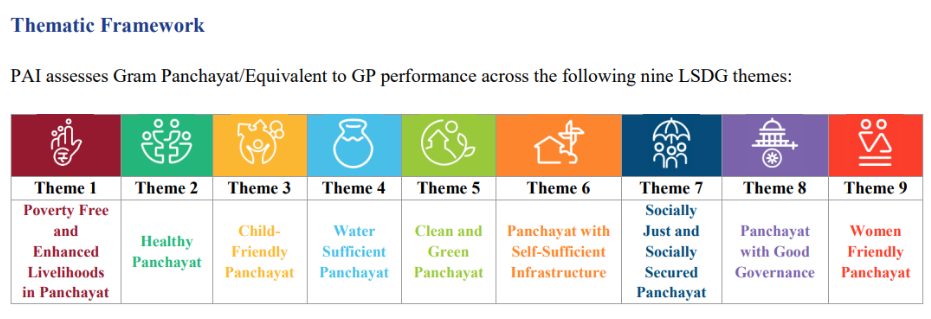
- 01 May 2026
In News:
The release of the Panchayat Advancement Index (PAI) 2.0 Report for the fiscal year 2023–24 marks a pivotal shift toward data-driven governance in India's rural landscape. Prepared by the Union Ministry of Panchayati Raj, this index serves as a comprehensive "report card" for more than 2.5 lakh Gram Panchayats, aligning local performance with global benchmarks through a localized framework.
Conceptual Framework: Localization of SDGs (LSDGs)
The PAI 2.0 is built on the Localization of Sustainable Development Goals (LSDGs). This strategy condenses the 17 global United Nations SDGs into nine thematic areas tailored for the functional domain of Panchayati Raj Institutions (PRIs). By doing so, the framework translates high-level international targets into actionable local objectives.
The Nine Thematic Pillars:
- Poverty Free and Enhanced Livelihoods
- Healthy Panchayat
- Child-Friendly Panchayat
- Water Sufficient Panchayat
- Clean and Green Panchayat
- Self-Sufficient Infrastructure in Panchayat
- Socially Just and Socially Secured Panchayat
- Panchayat with Good Governance
- Women-Friendly Panchayat
Methodology and Scoring Mechanism
PAI 2.0 employs a rigorous, evidence-based assessment model that utilizes 150 indicators and 230 specific data points. This enables the Ministry to move beyond subjective evaluations to a quantifiable monitoring system.
Performance Classification:
Gram Panchayats are categorized based on their composite PAI scores (0–100):
- Achiever (A ): 90 and above
- Front Runner (A): 75 to below 90
- Performer (B): 60 to below 75
- Aspirant (C): 40 to below 60
- Beginner (D): Below 40
Key Findings of the 2023–24 Report
The PAI 2.0 report highlights a significant surge in institutional engagement and data transparency across the country:
- Exceptional Participation: A record 97.3% of eligible Gram Panchayats (over 2.59 lakh) across 33 States and UTs participated in the exercise. This is a substantial increase from the 80.79% recorded in Version 1.0.
- State-Wise Highlights:
- Chhattisgarh achieved a milestone of 100% participation, with all its 11,643 local bodies submitting validated data.
- Tripura emerged as a leader in high-performance grades, hosting the largest number of "Front Runner" (Grade A) Panchayats.
- The Jugal Kishorenagar Gram Panchayat in Tripura secured the top national rank with a score of 88.44.
- Performance Trends: While participation is nearly universal, the results indicate that a majority of Panchayats currently fall within the Performer (B) and Aspirant (C) categories. No single Panchayat has yet reached the coveted Achiever (A ) status in the composite score, though thousands have achieved A in individual themes like "Poverty Free" and "Healthy Panchayat."
Naval Anti-Ship Missile Short Range

- 01 May 2026
In News:
In a significant milestone for India’s maritime defense, the Defence Research & Development Organisation (DRDO) and the Indian Navy recently conducted the maiden salvo flight trial of the Naval Anti-Ship Missile-Short Range (NASM-SR). The test, carried out from a Sea King 42B helicopter at the Integrated Test Range in Chandipur, Odisha, demonstrated the weapon’s "fire-and-forget" capability. A salvo launch involves firing multiple missiles in quick succession to overwhelm an enemy’s defense systems, a capability essential for modern naval warfare.
Origins and Development
The NASM-SR is India’s first indigenously designed and developed helicopter-launched anti-ship missile.
- Replacement Strategy: It is specifically engineered to replace the aging British-origin Sea Eagle missiles, which have been the mainstay of the Navy’s Sea King fleet for decades.
- Indigenous Partnership: The project was spearheaded by the Research Center Imarat (RCI) in Hyderabad, in collaboration with several other DRDO laboratories and Indian industry partners, aligning with the "Aatmanirbhar Bharat" (Self-Reliant India) initiative.
Technical Specifications and Features
The NASM-SR incorporates several high-end technologies that enhance the precision and lethality of naval air operations:
- Propulsion and Range: The missile is powered by a solid propulsion booster and a long-burn sustainer motor, providing it with an operational range of approximately 55 kilometers.
- Navigation and Guidance: It is equipped with a state-of-the-art seeker and an Imaging Infrared (IIR) system for terminal guidance. Its navigation is supported by a Fiber-Optic Gyroscope-based Inertial Navigation System (INS) and a radio altimeter.
- Control Systems: The missile utilizes Jet-Vane Control (JVC) technology, which allows for extreme maneuverability immediately after launch, and high-bandwidth two-way data links for real-time communication.
- Tactical Advantage: The system supports all-weather, day-and-night operations. It is designed for low-level sea-skimming, a flight profile that allows the missile to fly just above the water's surface to evade enemy radar detection.
- Lethality: The missile is designed for a precise waterline hit, a critical tactical feature intended to cause maximum structural damage and flooding to hostile vessels.
Strategic Significance for the Indian Navy
The induction of the NASM-SR holds several strategic advantages for India's maritime security architecture:
- Self-Reliance in Niche Tech: By developing an indigenous helicopter-launched missile, India reduces its dependence on foreign Original Equipment Manufacturers (OEMs) for critical airborne anti-ship weaponry.
- Enhanced Maritime Domain Awareness: The ability to launch these missiles from helicopters allows the Navy to project power far beyond the visual horizon of its surface fleet, providing a quick-reaction capability against small and medium-sized enemy combatants.
- Modernization of the Air Arm: The successful salvo trials pave the way for the integration of this weapon system onto other platforms, including the Indigenously Developed Dhruv (Advanced Light Helicopter) and the MH-60R Romeo helicopters, thereby modernizing the offensive reach of the Navy’s air wing.
Piprahwa Relics

- 01 May 2026
In News:
Leh recently emerged as a focal point of spiritual and historical significance as it hosted the sacred Piprahwa relics of Gautam Buddha. This landmark event, marked by the arrival of the relics in Ladakh, represents a rare confluence of faith and history. Carried via a special Indian Air Force aircraft and received with state honors, the exposition marks the first time these "AA" category antiquities have been moved from their original place of preservation for domestic exposition within India, following several high-profile international tours to nations like Thailand, Mongolia, and Vietnam.
Historical and Archaeological Context
The Piprahwa Relics are among the most authentic and significant archaeological links to the mortal remains of the Buddha. Their history is rooted in the late 19th century:
- Discovery (1898): The relics were unearthed by William Claxton Peppé, a British colonial engineer, at the Piprahwa Stupa in the Basti district of Uttar Pradesh.
- Identification of Kapilavastu: Archaeological evidence from the site associates Piprahwa with ancient Kapilavastu, the capital of the Shakya kingdom where Siddhartha Gautama spent his formative years before his Great Renunciation (Mahabhinishkramana).
- The Brahmi Inion: A critical find was a sandstone coffer containing crystal caskets. One casket bore an inion in the ancient Brahmi , explicitly linking the contents to the Shakya clan. This epigraphic evidence suggests the remains were enshrined by the Buddha’s own kinsmen around the 3rd century BC.
- Later Excavations (1971–1977): Subsequent excavations by the Archaeological Survey of India (ASI) led by K.M. Srivastava uncovered further steatite caskets containing 22 sacred bone fragments. These are currently preserved at the National Museum in New Delhi.
Legal Status and Repatriation
The trajectory of these relics reflects India’s evolving policy on heritage management and cultural diplomacy:
- The Treasure Trove Act, 1878: Under colonial law, the British Crown claimed Peppé’s original find. While some bones were presented to King Chulalongkorn of Siam (Thailand), a significant portion of the gems and ornaments remained in private hands or were moved to the Indian Museum in Kolkata.
- Antiquity Classification: In modern India, the Piprahwa relics are classified as ‘AA’ antiquities. This legal designation under the Antiquities and Art Treasures Act prohibits their sale and strictly regulates their movement, reflecting their "inestimable" value to national heritage.
- Modern Repatriation (2025-2026): In a significant victory for cultural restitution, a collection of associated gems and artifacts that had remained with the Peppé family for 127 years was repatriated to India. This was achieved through a unique public-private partnership involving the Government of India and the Godrej Industries Group, successfully preempting a planned auction in Hong Kong.
Socio-Cultural and Strategic Significance
The exposition in Ladakh transcends religious ritual, touching upon several key themes relevant to the Indian state:
- Cultural Diplomacy: The movement of these relics to various Buddhist-majority nations serves as a pillar of India’s "Act East" policy, utilizing "Soft Power" to strengthen ties with the Global South and Southeast Asia.
- Regional Integration: The ceremony in Leh, attended by the Lieutenant Governor and senior monastic leaders (including Drukpa Thuksey Rinpoche), underscores the integration of Himalayan Buddhist culture into the broader national narrative.
- The 2569th Buddha Purnima: The timing of the exposition, coinciding with Buddha Purnima, highlights the continuity of the Dhamma in the region, drawing thousands of devotees and global attention to the Dharma Center in Leh and Zanskar.
Whole-Exome Sequencing (WES)

- 15 Apr 2026
In News:
In a significant milestone for medical genetics, scientists recently utilized Whole-Exome Sequencing (WES) to identify a previously unknown rare genetic disease. This breakthrough underscores the increasing importance of targeted genomic tools in clinical diagnostics and the pursuit of personalized medicine.
Understanding the Exome: The "Blueprint" of Proteins
To understand WES, one must first distinguish between the entire genome and the exome:
- The Genome: The complete set of genetic material in an organism.
- Exons: These are the specific "coding" sequences of DNA that provide the instructions for building proteins.
- The Exome: This is the collective term for all the exons in a genome.
Notably, while exons make up less than 2% of the human genome, they are disproportionately significant, containing approximately 85% of all known disease-related genetic variants.
Mechanism of Whole-Exome Sequencing (WES)
WES is a genomic technique that ignores the vast "non-coding" regions of DNA (sometimes referred to as "junk DNA," though its regulatory roles are still being studied) to focus exclusively on the protein-coding regions.
How it differs from Whole-Genome Sequencing (WGS):
- Whole-Genome Sequencing (WGS): Reads every single base pair in the entire 3-billion-letter DNA sequence, including non-coding regions.
- Whole-Exome Sequencing (WES): Specifically captures and sequences only the exome.
Advantages of the WES Approach
The recent discovery of a new rare disease highlights why WES is often preferred in clinical and research settings:
- Diagnostic Efficiency: Since the majority of mutations causing rare diseases occur in the exons, WES is a highly effective "first-look" tool for identifying the root cause of undiagnosed conditions.
- Cost-Effectiveness: By sequencing only 2% of the genome, WES is significantly cheaper than WGS, making it more accessible for large-scale research and patient care.
- Faster Data Processing: The smaller volume of data generated simplifies the bioinformatic analysis, allowing clinicians to reach a diagnosis more quickly.
- Targeted Insight: It is particularly adept at identifying both common and rare variants that alter protein function, which are the primary drivers of many hereditary disorders.
Amaravati Quantum Reference Facility (AQRF)
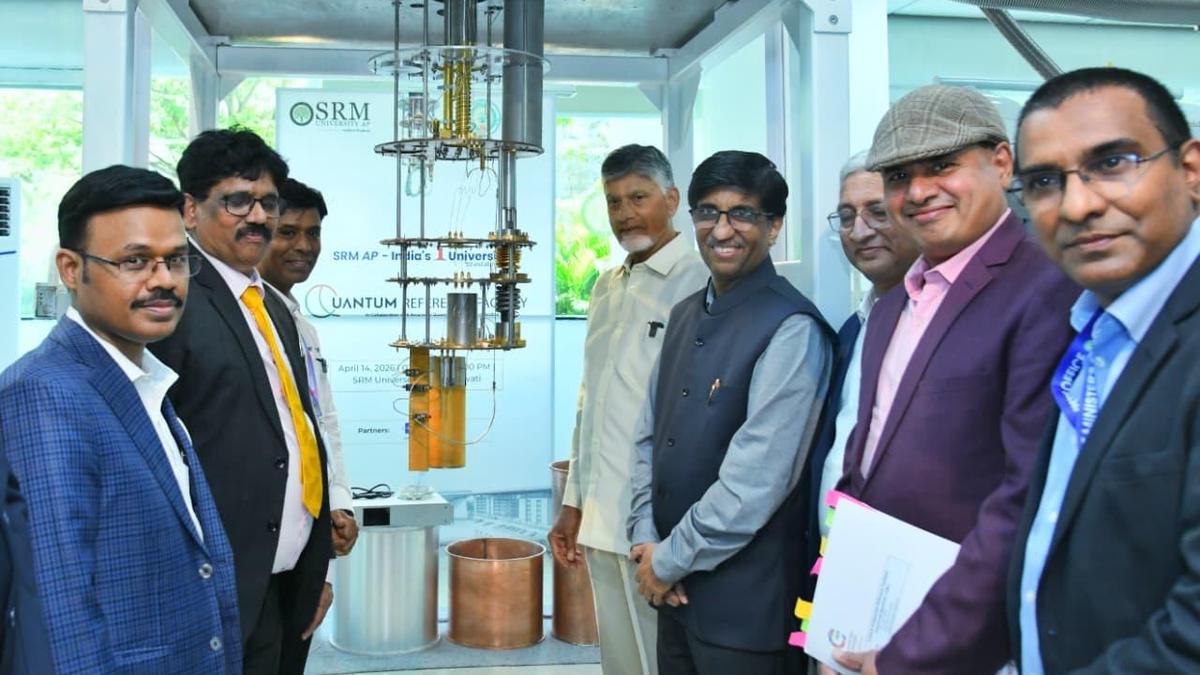
- 15 Apr 2026
In News:
On April 14, 2026, marking the centennial celebration of quantum science and World Quantum Day, Andhra Pradesh inaugurated the Amaravati Quantum Reference Facility (AQRF). As India’s first open-access quantum hardware testing and certification hub, the AQRF represents a critical step toward achieving "Atmanirbhar Bharat" (self-reliance) in deep-tech and advanced computing.
The Facility: Amaravati 1S and Amaravati 1Q
The AQRF consists of two state-of-the-art twin centers designed to catalyze the domestic quantum ecosystem:
- Amaravati 1S (SRM University, Neerukonda): An open-access platform built using superconducting technology. It is designed for experimentation, validation, and training for students, researchers, and startups.
- Amaravati 1Q (Medha Towers, Gannavaram): A specialized unit focused on rigorous testing and certification of critical quantum components, including control systems, cryogenic hardware, and amplifiers, under extreme conditions (near -273°C).
Strategic Collaboration and Indigenization
The facility is a product of a premier national consortium, showcasing a high degree of domestic integration:
- Institutional Partners: Developed in collaboration with the Tata Institute of Fundamental Research (TIFR), Indian Institute of Science (IISc), DRDO, and IIT Bombay.
- Industry Synergy: Tech startups such as Qubitech and Qbit Force served as key contributors.
- Sovereign Hardware: Approximately 85% of the components were manufactured within India, aiming to break global monopolies in critical subsystems like dilution refrigerators and precision hardware.
Core Objectives and Sectoral Impact
The AQRF provides the necessary infrastructure to benchmark indigenous hardware, which is vital for the National Quantum Mission (NQM).
- Drug Discovery: Exponentially faster molecular simulations to accelerate pharmaceutical research.
- Agriculture: Precision modeling for crop optimization and soil health.
- Climate Science: Enhancing the accuracy of climate prediction models.
- Secure Communication: Advancing quantum-secured encryption for national defense and financial sectors.
Andhra Pradesh’s "Quantum Valley" Vision
The state government aims to transform Amaravati into a global ‘Quantum Valley’, attracting an estimated $1 billion in investment by 2029. This hub is part of a broader distributed innovation strategy in Andhra Pradesh:
- Tirupati: Space City hub.
- Orvakal: National Drone Hub.
- Anantapur & Visakhapatnam: Semiconductor and Med-tech clusters.
World Quantum Day
World Quantum Day is celebrated annually on April 14 (4.14). This date is a tribute to the fundamental constant of quantum physics, Planck’s Constant, which is approximately 4.135×10⁻¹⁵ eV. This constant represents the quantization of energy and serves as the bedrock of modern quantum mechanics.
Atlantic Meridional Overturning Circulation (AMOC)
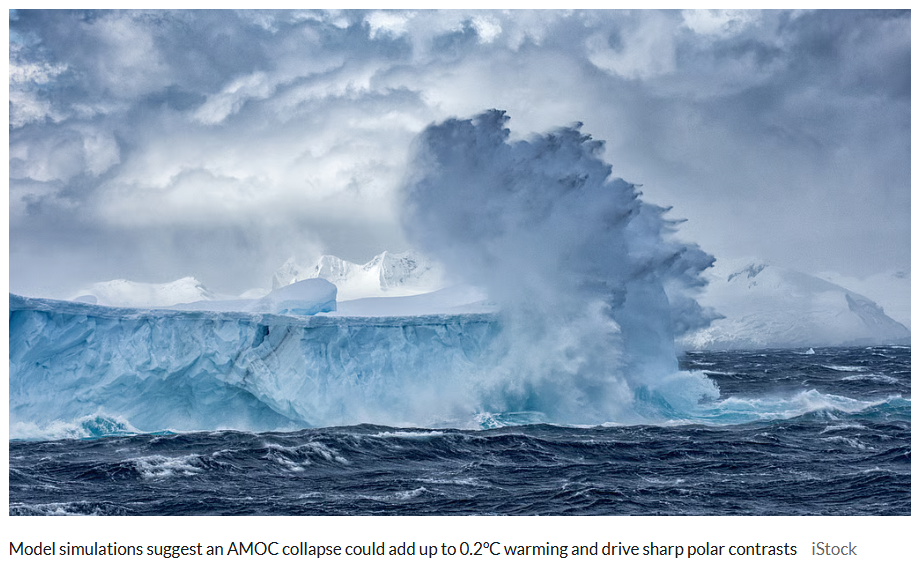
- 15 Apr 2026
In News:
The Atlantic Meridional Overturning Circulation (AMOC) is currently at the center of global climate discourse. Recent studies published in Nature Communications and Science Advances (2026) warn that this vital oceanic system is showing signs of a steady decline, potentially nearing a "tipping point" that could trigger irreversible shifts in the Earth's climate and carbon cycles.
Understanding the AMOC: The "Oceanic Conveyor Belt"
The AMOC is a large-scale system of ocean currents that acts as a vertical loop spanning the entire length of the Atlantic Ocean. It is a critical component of the Earth's thermohaline circulation (driven by temperature and salinity).
- The Mechanism: It transports warm, salty water from the tropics northward along the surface. In the North Atlantic, this water cools, becomes denser, and sinks to the deep ocean. This cold, dense water then flows southward along the ocean floor, eventually resurfacing in other regions to complete the cycle.
- The Gulf Stream: A major component of the AMOC, the Gulf Stream is responsible for maintaining the relatively mild climates of Western Europe and the Eastern coast of North America.
Reasons for the Current Weakening
Scientists have observed a consistent decline in AMOC strength over the past two decades, particularly along the western boundary.
- Greenhouse Gas Forcing: Rising global temperatures are the primary driver of this instability.
- Freshwater Influx: The rapid melting of the Greenland Ice Sheet pours massive amounts of freshwater into the North Atlantic. This reduces the salinity and density of the water, preventing it from sinking and thereby "stalling" the conveyor belt.
- Tipping Point Projections: Research suggests a complete collapse could occur as early as 2037, or at least by 2109, if current warming trends continue.
Consequences of an AMOC Collapse
A shutdown of the AMOC would lead to a dramatic redistribution of heat and carbon across the planet, with impacts categorized into three main areas:
A. Global Warming & Carbon Feedback
- Source vs. Sink: Traditionally, the Southern Ocean acts as a "carbon sink," absorbing $CO_2$. A collapse would turn it into a carbon source, releasing deep-ocean $CO_2$ back into the atmosphere.
- Extra Warming: This release of 47–83 gigatonnes of $CO_2$ could add an additional 0.2°C to global average temperatures, exacerbating the greenhouse effect.
B. Regional Temperature Shifts
The collapse would create a "bipolar seesaw" effect in global temperatures:
- Northern Hemisphere Cooling: Without warm water transport, the Arctic and North Atlantic could see temperatures plummet by up to 7°C. This would be amplified by the sea-ice-albedo feedback, where increased ice cover reflects more sunlight, causing further cooling.
- Southern Hemisphere Warming: Conversely, parts of Antarctica could see a temperature rise of 6°C to 10°C as heat that was once transported north remains trapped in the south.
C. Ecological and Meteorological Disruptions
- Rainfall Patterns: Europe would likely face a significant decrease in rainfall, impacting agriculture and water security.
- ENSO Interaction: Changes in Atlantic circulation are expected to influence the El Niño-Southern Oscillation (ENSO), potentially leading to more frequent or extreme weather events globally.
e-SafeHER
- 15 Apr 2026
In News:
In a major stride toward a "Cyber Secure Bharat," the Ministry of Electronics and Information Technology (MeitY) has launched e-SafeHER. This specialized cybersecurity training initiative is designed to empower one million women across rural India by 2029, ensuring that the rapid expansion of digital access is matched by robust digital security.
Overview and Institutional Framework
- The e-SafeHERprogramme addresses the critical awareness gap for rural women who are increasingly entering the digital economy.
- It operates as a strategic partnership under MeitY’s larger Information Security Education and Awareness (ISEA) framework.
- The initiative is a collaborative effort involving several key stakeholders. While MeitY serves as the nodal ministry, the Centre for Development of Advanced Computing (C-DAC), Hyderabad, acts as the technical partner, leading the development of technical content and localized training modules.
- To ensure grassroots reach, the Reliance Foundation serves as the implementation partner, leveraging its extensive community network to deliver the programme on the ground.
Core Objectives
The programme is built around three primary pillars:
- Safe Digital Participation: Enabling women to navigate the digital ecosystem securely and protecting them from rising risks such as financial fraud and identity theft.
- Economic Empowerment: Building the necessary confidence for women to utilize digital platforms for banking, micro-enterprises, and online livelihoods.
- Grassroots Integration: Extending the national cybersecurity framework to the remotest regions of India through a gender-responsive and sustainable model.
Key Features of the Initiative
- The Cyber Sakhi Model: At the heart of the programme is a peer-led, community-based model. It identifies and trains local women to become "Cyber Sakhis" (Cyber Friends). These women act as peer educators, translating complex technical concepts into relatable advice for their local communities.
- Leveraging Social Capital through SHGs: Rather than building new infrastructure, e-SafeHER utilizes the existing network of Self-Help Groups (SHGs). This allows the initiative to penetrate deep into rural regions and foster trust, as the training is delivered by familiar faces within established social circles.
- Multilingual and Localized Content: To overcome literacy and language barriers, C-DAC has developed audio-visual modules adapted into multiple Indian languages. This localization ensures that the training is accessible to women regardless of their formal educational background.
- Phased Implementation and Scaling: The programme follows an evidence-based scaling strategy. It is initially being implemented in Madhya Pradesh and Odisha, with insights from these regions serving as a blueprint for national expansion. The goal is to reach the one-million-women milestone over a three-year horizon.
- Blended Learning for Behavioral Change: The initiative combines structured technical training with community-based interventions. By focusing on blended learning, the programme aims for measurable behavioral shifts, such as the adoption of secure password practices and the ability to identify phishing attempts.
Startup India Fund of Funds 2.0 (FoF 2.0)
- 15 Apr 2026
In News:
In a significant move to bolster India's entrepreneurial landscape, the Government of India officially notified the Startup India Fund of Funds 2.0 (FoF 2.0). With a massive corpus of ?10,000 crore, this second iteration aims to bridge funding gaps and catalyze domestic capital for the next generation of Indian innovators.
Background and Evolution
FoF 2.0 is the successor to the original Fund of Funds for Startups (FFS 1.0), which was launched in 2016 under the Startup India Action Plan. While the first phase focused on establishing the startup culture, the 2.0 version is designed to scale the ecosystem, particularly in capital-intensive and frontier technology sectors.
Core Objective
The primary goal is to mobilize venture and growth capital from domestic sources. By providing a "cornerstone" government commitment, the fund encourages private institutional investors to contribute, thereby reducing the Indian startup ecosystem's over-reliance on foreign capital.
Operational Mechanism: How it Works
The Startup India FoF 2.0 does not invest directly in startups. Instead, it follows a "Fund of Funds" model:
- Investment in AIFs: The government contributes capital to the corpus of SEBI-registered Alternative Investment Funds (AIFs).
- Downstream Investment: These AIFs then identify and invest in individual entities recognized as 'startups' by the Central Government.
- Implementation Agencies:SIDBI (Small Industries Development Bank of India) is the primary agency to operationalize the scheme. Notably, provisions exist to appoint an additional domestic implementing agency to expand the reach.
Key Features and Strategic Focus
|
Feature |
Details |
|
Total Corpus |
?10,000 Crore |
|
Time Frame |
Spread across the 16th and 17th Finance Commission cycles. |
|
Nodal Dept. |
Department for Promotion of Industry and Internal Trade (DPIIT). |
|
Priority Segments |
Deep Tech, Innovative Manufacturing, and Early Growth-stage startups. |
|
Flexibility |
Sector and stage agnostic; allows for larger corpus and longer-duration AIFs for capital-intensive sectors. |
Governance and Oversight
To ensure transparency and high-quality fund selection, a robust three-tier governance structure has been established:
- Venture Capital Investment Committee (VCIC): Composed of industry veterans, the VCIC undertakes the screening and selection of eligible AIFs.
- Empowered Committee (EC): This body provides high-level monitoring and oversight of the scheme's implementation and performance.
- Umbrella Framework: Includes provisions for co-investment by the government and institutional investors, backed by strict governance safeguards.
E-PRAAPTI Portal
- 30 Apr 2026
In News:
In a significant move toward financial inclusion and digital transparency, the Employees’ Provident Fund Organisation (EPFO) is launching E-PRAAPTI (EPF Aadhaar-Based Access Portal for Tracking Inoperative Accounts). This specialized digital platform is designed to help millions of workers reclaim funds lying dormant in inoperative accounts, effectively bridging the gap between old records and the modern Universal Account Number (UAN) system.
Understanding Inoperative EPF Accounts
An EPF account is officially classified as "inoperative" under two primary conditions:
- Cessation of Contributions: When no new contributions have been made to the account for 36 consecutive months after an individual leaves their job.
- Fragmentation: When old PF records from previous employers are not linked to the current, active UAN of the member.
Since 2014, the EPFO has utilized the 12-digit UAN to ensure portability of benefits; however, a vast amount of capital remains stuck in older accounts created prior to this system or accounts that were abandoned during job transitions.
The E-PRAAPTI Mechanism: Aadhaar-Based Reclamation
The E-PRAAPTI portal serves as a dedicated "track and link" engine. It simplifies a previously cumbersome manual process through a streamlined, secure digital interface:
- Aadhaar-Based Authentication: The portal uses Aadhaar to verify the identity of the member, ensuring that the rightful owner is accessing the funds.
- Identification and Tracking: It allows members to securely search for and identify old accounts that are currently detached from their UAN.
- Profile Updating and Activation: Once identified, members can initiate a process to update their profiles and link these old accounts to their current UAN, thereby "activating" the dormant funds.
Phased Rollout Strategy
To ensure security and administrative efficiency, the EPFO has planned a tiered launch for E-PRAAPTI:
- Initial Phase (Member ID-Based): In the first stage, the portal will cater to members who possess their Old Member IDs. This allows for a swift rollout for the segment of the workforce that has retained their previous employment documentation.
- Expansion Phase: The scope will eventually be broadened to assist members who have lost or cannot recall their old member IDs. This phase will likely utilize advanced search parameters based on demographic data and Aadhaar history.
UAE to exit OPEC and OPEC
- 30 Apr 2026
In News:
In a move that has sent ripples through international energy markets, the United Arab Emirates (UAE) formally withdrew from the Organization of the Petroleum Exporting Countries (OPEC) and the broader OPEC alliance on May 1, 2026. This departure marks a significant turning point for the Middle East’s third-largest producer, signaling a shift from collective production constraints toward individual strategic autonomy and long-term economic diversification.
Understanding OPEC: The Core of Oil Diplomacy
OPEC is a permanent intergovernmental organization established during the Baghdad Conference (September 1960). Its foundational mission was to ensure that oil-producing nations could exercise permanent sovereignty over their natural resources—a principle solidified in its 1968 Declaratory Statement.
- Founding Members: Iran, Iraq, Kuwait, Saudi Arabia, and Venezuela.
- Organizational Structure: While headquartered in Vienna, Austria (since 1965), its influence is global. It seeks to unify petroleum policies to secure stable pricing for producers and a regular supply for consuming nations.
- Fluctuating Membership: The UAE joins a growing list of nations—including Qatar, Ecuador, and Angola—that have recently exited the group to pursue independent production targets.
The Rise of OPEC : Expanding the Coalition
Formed in December 2016 via the Declaration of Cooperation (DoC), OPEC expanded the original group to include 10 non-OPEC countries, most notably Russia, Mexico, and Kazakhstan.
- The Aim: To provide a more robust mechanism for market stabilization, especially during crises like the COVID-19 pandemic, where the alliance coordinated massive voluntary production cuts to prevent a total collapse in prices.
- The Mechanism: The group relies heavily on countries with "Spare Capacity"—the ability to rapidly adjust production levels—to act as market "swing producers."
- The 2019 Charter: This established a long-term platform for dialogue and information exchange among the 23 member nations.
Strategic Rationale: Why the UAE Withdrew
The UAE’s decision to exit is rooted in its long-term vision to maximize the value of its hydrocarbon assets before the global energy transition reduces demand.
- Production Disparities: The UAE has invested billions in expanding its production capacity to over 5 million barrels per day. Under OPEC quotas, much of this capacity remained "shut-in" or unused, hindering the country's return on investment.
- Economic Diversification: Under its "We the UAE 2031" vision, the country seeks to fund its transition to a non-oil economy. Independent control over its oil revenues allows for more aggressive funding of renewable energy and technology sectors.
- Geopolitical Divergence: The exit reflects a growing strategic divergence from the Saudi-led "price-over-volume" strategy, as the UAE prioritizes capturing market share in a rapidly evolving energy landscape.
Implications for Global Markets and India
The UAE’s exit significantly weakens the collective bargaining power of OPEC , as the group loses one of its few members with genuine spare capacity.
- Market Volatility: The immediate aftermath may see increased price volatility as the UAE ramps up production, potentially leading to a "market share war" similar to those seen in the past.
- India’s Energy Security: For India, the UAE is a primary strategic partner and a reliable supplier. An independent UAE may offer more flexible, long-term supply contracts, aiding India's efforts to manage its Current Account Deficit (CAD) and inflation.
- Investments: The shift might open new avenues for Indian public sector undertakings (PSUs) to invest in UAE’s upstream sectors, which are now free from the constraints of multinational production caps.
Multilateral Exercise Pragati

- 30 Apr 2026
In News:
In a significant stride toward regional security and military cooperation, the Indian Army has launched the inaugural edition of its new multilateral military engagement, Exercise PRAGATI. Conducted at the Foreign Training Node in Umroi, Meghalaya, this platform marks a transformative chapter in India’s "Neighborhood First" and "SAGAR" (Security and Growth for All in the Region) initiatives.
Decoding PRAGATI: Scope and Scale
The name PRAGATI stands for "Partnership of Regional Armies for Growth and Transformation in the Indian Ocean." This acronym underscores the exercise's specific focus on the Indian Ocean Region (IOR), a strategically vital maritime corridor that handles a massive share of global trade.
- Host and Location: The exercise is hosted by the Indian Army at the specialized Foreign Training Node in Umroi. This location is renowned for providing a world-class environment for tactical maneuvers and joint planning.
- Participants: Military delegations from 11 friendly countries are participating alongside India, representing a diverse coalition of regional forces.
Core Objectives and Tactical Focus
Exercise PRAGATI is designed to move beyond traditional bilateral drills, focusing instead on Collective Security and the seamless integration of diverse military protocols.
- Interoperability: A primary goal is to enhance the ability of different armies to operate together effectively. This involves standardizing communication, tactical procedures, and joint command structures.
- Mutual Trust: By bringing together 11 nations, the exercise seeks to build a shared commitment to regional stability and foster trust among ground forces that may need to respond to shared threats.
- Growth and Transformation: As the name suggests, the drills focus on modernizing regional armies through the exchange of best practices, technological insights, and innovative combat strategies.
Strategic Significance for India
The launch of Exercise PRAGATI positions the Indian Army as a central pillar of cooperative security in the IOR.
- Defense Diplomacy: This inaugural edition signals India's intent to lead regional security discourse, moving from a passive observer to a proactive facilitator of multilateral defense partnerships.
- Indian Ocean Primacy: While much focus is often on naval cooperation in the IOR, PRAGATI highlights the critical role of land forces in maintaining regional stability, disaster response, and counter-terrorism.
- Geopolitical Balancing: By engaging 11 nations simultaneously, India strengthens its strategic ties and creates a unified front against non-traditional threats like piracy, smuggling, and regional insurgency.
TheridionHimalayana

- 30 Apr 2026
In News:
In a significant addition to India’s Himalayan biodiversity, a team of scientists, including experts from Odisha, has discovered a new species of spider named Theridionhimalayana. Found in the high-altitude landscapes of the Western Himalayas, this discovery highlights the ecological richness of the region and the complex evolutionary traits of the Theridiidae family.
Classification and Distinctive Features
Theridionhimalayana is categorized as a "happy-face spider" due to the striking patterns on its abdomen that resemble a smiling human face. It belongs to the Theridiidae family, commonly known as cobweb spiders or tangle-web spiders.
1. Extreme Polymorphism
One of the most remarkable characteristics of this species is its polymorphism. Both males and females exhibit a vast array of physical variations.
- 32 Different Morphs: Scientists have identified 32 distinct color variations (morphs).
- Facial Patterns: These patterns consist of dots in shades of red, black, and white, arranged in different configurations to mimic a "smiling" appearance.
2. Unique Reproductive Anatomy
The species is distinguished from its relatives by its specialized reproductive structures:
- Copulatory Ducts: These are notably long and strongly curved. They project forward and run nearly parallel before bending downward at their distal ends.
- Fertilization Ducts: In contrast, these are short and thin, pointing upward and spreading apart in a characteristic V-shape.
Ecological Role and Importance
The discovery of Theridionhimalayana is not just a taxonomic milestone but also an indicator of forest health.
- Biological Pest Control: The species preys primarily on small flies and various forest insects. By maintaining the balance of these populations, it plays a vital role in natural insect control within the Himalayan ecosystem.
- Potential Pollinator: Preliminary observations suggest that the species may serve as a crucial pollinator for specific high-altitude plants, a role that is relatively rare among spiders and requires further research.
DPI@2047: NITI Aayog’s Strategic Blueprint for a Developed India
- 30 Apr 2026
In News:
In a major step toward achieving the "Viksit Bharat" vision, NITI Aayog has launched the DPI@2047 Roadmap. Developed by the NITI Frontier Tech Hub (FTH) in collaboration with the EkStep Foundation and Deloitte, this strategic framework marks the evolution of India’s Digital Public Infrastructure (DPI).
The roadmap seeks to transition India from foundational digital inclusion (identity and payments) to a high-productivity, livelihood-led growth trajectory, aiming for a $30 trillion economy with a per capita income of $18,000 by 2047.
The Evolutionary Phasing: DPI 2.0 and 3.0
The roadmap adopts a two-phased approach to ensure non-linear, inclusive socio-economic growth:
Phase 1: DPI 2.0 (2025–2035) – "Realising Aspirations": This phase focuses on building a broad base of capable citizens by empowering livelihoods at scale. The objective is to move beyond mere welfare delivery and drive productivity in core sectors like MSMEs, agriculture, education, and healthcare. It aims to establish the mass inclusion required for a high-income society.
Phase 2: DPI 3.0 (2035–2047) – "Achieving Prosperity": The final phase envisions a compounding effect where grassroots innovation leads to sustained, high-value local economic growth across all regions. This phase will culminate in the realization of a developed India characterized by inclusive and widespread prosperity.
Core Pillars of the Roadmap
The DPI@2047 initiative rests on several strategic pillars designed to unlock economic potential:
- Mass Inclusion and Livelihoods: Expanding market access for MSMEs, improving job discovery for local talent, and enhancing the income of smallholder farmers.
- Human Capability Foundations: Achieving universal health coverage and implementing learner-centric education that utilizes local languages to eliminate learning inequities.
- Systemic Enablers: Democratizing access to credit through asset tokenization, enabling decentralized energy markets, and ensuring proactive, automated benefit delivery.
- AI-DPI Convergence: Integrating Artificial Intelligence as a "first-response assistant" to provide personalized, vernacular guidance to citizens, such as farmers and small business owners.
Economic Impact and Execution Imperatives
NITI Aayog projects that these DPI initiatives could contribute up to 4% of India’s GDP by 2030. To achieve this, the roadmap identifies four execution imperatives:
- Aggregating Demand: Using district-level programs to create a predictable pipeline for digital solutions.
- Scaling Entrepreneurship: Fostering a local ecosystem of tech entrepreneurs.
- Leveraging AI: Using AI to bridge knowledge gaps and language barriers.
- Strategic Unlocks: Utilizing open networks to expand digital transactions and unlocking data for actionable insights.
Addressing Structural Bottlenecks
Despite the potential, the roadmap identifies several challenges that must be navigated:
- Fragmented Ecosystems: A shortage of local entrepreneurs ready to meet new digital demands.
- Implementation Sinks: The risk of creating "technology looking for a problem" rather than market-driven solutions.
- Platform Dependency: Walled-garden models that exclude small providers from larger value chains.
- Knowledge Gaps: The difficulty for citizens to navigate complex digital procedures in their native languages.
Strategic Recommendations for Implementation
To ensure the success of the roadmap, NITI Aayog recommends a decentralized, state-led execution model. Solutions should be hyper-localized and context-specific, driven by states and districts.
The Aayog suggests two-year iterative transformation cycles, beginning with MSMEs and Agriculture in 2026-2027. Furthermore, India aims to establish a neutral global body by 2027 to lead international collaboration and showcase its successful DPI models to the world.
Printed Circuit Boards (PCB)
- 29 Apr 2026
In News:
In April 2026, the global electronics industry faced a severe shock as the conflict in the Middle East intensified, leading to a dramatic 40% surge in the price of Printed Circuit Boards (PCBs). This crisis underscores the fragility of high-tech supply chains and the critical dependence of the modern digital economy—especially the burgeoning AI sector—on specific raw materials sourced through volatile trade routes.
The Anatomy of a Crisis: Why Prices Scalated
The primary driver behind the price hike is the disruption of maritime trade and the supply of specialized raw materials.
- PPE Resin Shortage: High-purity Polyphenyleneether (PPE) and epoxy resins are the foundational "glue" of PCB laminates. The disruption in West Asia has choked the supply of these chemical precursors, which are essential for high-frequency circuit boards.
- Shipping Bottlenecks: As a vital transit point for global trade, the instability in the Middle East has forced rerouting, increasing freight costs and lead times for other components like copper foil and glass fiber.
What is a Printed Circuit Board (PCB)?
Often referred to as the "nervous system" of electronic devices, a PCB is a rigid or flexible substrate used to electrically connect and mechanically support electronic components. It utilizes conductive pathways, known as traces, which are etched from copper sheets laminated onto a non-conductive base.
Critical Raw Materials and Their Economics
- Copper Foil: The most expensive element, typically accounting for 60% of total raw material costs. It provides the conductive paths necessary for electricity to flow.
- Resins (PPE/Epoxy): These act as the insulating base. In advanced high-speed applications like AI, specialized resins like PPE are non-negotiable for maintaining signal integrity.
- Glass Fiber: Integrated into the substrate to provide mechanical strength, structural durability, and electrical insulation.
The Manufacturing Process: From Substrate to Circuit
The production of high-end PCBs is a high-precision engineering feat involving several stages:
- Lamination: Intense heat and pressure bond the resin and glass fiber to create a solid substrate.
- Etching: A chemical process removes excess copper, leaving behind the precise "roads" (conductive pathways) required for the circuit to function.
- Multi-layering: For complex hardware, such as AI servers, manufacturers stack multiple layers of circuitry. These high-end boards can cost thousands of dollars per square meter due to their complexity.
Global Impact and Applications
The current price surge affects the entire spectrum of technology, from household gadgets to national infrastructure:
- AI and Data Centers: Cloud service providers are seeing increased costs for the massive AI servers that power large language models and neural networks.
- Consumer Tech: Smartphones, laptops, and wearables are facing upward price pressure as manufacturers pass on the 40% increase in component costs to consumers.
- Industrial Automation: Semiconductors produced by giants like Nvidia, AMD, Samsung, and SK Hynix rely on these boards as the essential interface for their chips. Without stable PCB supplies, factory automation and large-scale manufacturing equipment face significant delays.
Holocene Fossil Discovery in Thoothukudi
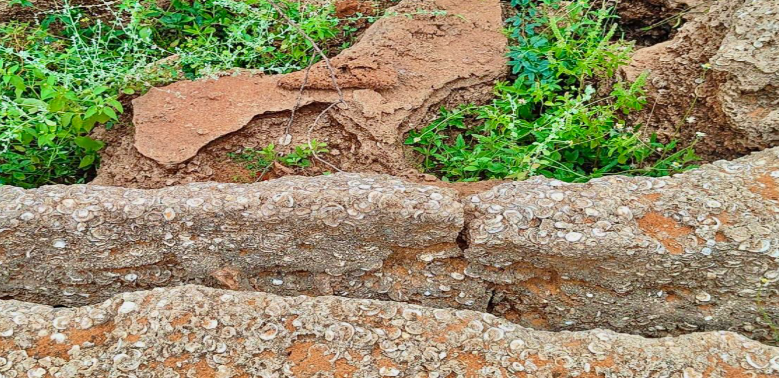
- 29 Apr 2026
In News:
In a landmark paleontological discovery, a significant fossil bed dating back to the middle-to-late Holocene period (approximately 8,000 to 12,000 years ago) has been unearthed in the Panaiyur area of Thoothukudi district, Tamil Nadu. This discovery, revealed in late 2025 and scientifically validated in early 2026, marks the first documented fossil bed in the Thoothukudi region and a vital addition to India’s Quaternary fossil record.
The Discovery and Scientific Response
The site was initially exposed by torrential rains in 2023, which caused significant soil erosion and revealed buried sedimentary layers.
- Identification: Following a request from the local administration, the Zoological Survey of India (ZSI) conducted a swift and thorough field survey between January 5 and 10, 2026.
- Findings: Scientists collected 104 fossil specimens, primarily comprising marine invertebrate organisms such as bivalves (clams, oysters) and gastropods (snails).
- Geological Context: The fossils are embedded in sedimentary formations consisting of condensed sandstones and lateritic red soils. The presence of features like submarine canyons and water channels within these layers suggests a complex coastal history.
The Holocene Epoch: Context and Characteristics
The Holocene is the current geological epoch, the second part of the Quaternary Period (which also includes the preceding Pleistocene).
- Timeline: It spans roughly the last 11,700 years, beginning after the Earth’s last major ice age.
- Post-Glacial Transition: This epoch is defined by the melting of massive ice sheets, leading to a global sea-level rise (estimated at 35 meters in its early phase) and the stabilization of a warmer, tropical climate.
- The Anthropocene Link: Often associated with the rise of modern wildlife and the flourish of human agriculture and permanent settlements, the Holocene represents the environmental stage upon which human civilization developed.
Scientific Significance of the Panaiyur Discovery
This discovery is of immense value for reconstructing India’s paleoclimatic and biological past.
1. Paleoenvironmental Reconstruction: The marine fossils discovered are located 5 to 7 kilometers inland from the current coastline. This serves as critical evidence of past sea-level fluctuations, indicating that the area was once submerged. The assemblage points toward a shallow-marine to estuarine setting with warm, tropical temperatures and moderate water circulation.
2. Environmental Continuity: The species found in the fossil bed show a striking similarity to modern marine fauna in the Gulf of Mannar. This suggests a high degree of environmental continuity over the last 12,000 years, helping scientists understand how regional ecosystems remained stable or responded to historical climate shifts.
3. Enhancing the Quaternary Record: Quaternary fossil sites in southern India are relatively rare. The Panaiyur find fills a significant gap in the national inventory, providing high-resolution data on Holocene sedimentology, including bioturbation (organism burrowing) and cross-stratification (layering by currents).
Lake Issyk-Kul
- 29 Apr 2026
In News:
In a major archaeological breakthrough in 2026, underwater explorers discovered a hidden city beneath the waters of Lake Issyk-Kul in Kyrgyzstan. Divers followed a trail of ancient, preserved brickwork to reveal a lost civilization dating back seven centuries. This discovery adds a profound layer of historical depth to a lake already renowned for its unique geological and ecological characteristics.
Geographical and Geological Profile
Situated in northeastern Kyrgyzstan, Lake Issyk-Kul is cradled by the snowcapped Tian Shan (Heaven’s Mountains). Its formation dates back approximately 25 million years, making it one of the oldest lakes on the planet.
- Endorheic Basin: The lake is an endorheic system, meaning it has no outflow to rivers or oceans. This isolation has contributed to its unique chemical composition.
- Physical Dimensions: Located at an altitude of 1,600 meters, it is the world’s second-largest high-mountain lake, surpassed only by Lake Titicaca in South America. It spans 182 km in length, 61 km in width, and covers a surface area of 6,280 sq. km.
- Depth and Ranking: With a maximum depth of 668 meters and an average depth of 280 meters, it ranks as the seventh deepest lake globally.
The "Hot Lake": Why It Never Freezes
Despite being surrounded by frigid alpine peaks, Lake Issyk-Kul remains unfrozen throughout the winter. Its name, "Issyk-Kul," literally translates to "Hot Lake." This phenomenon is driven by a combination of factors:
- High Salinity: It is the world’s second-largest saline lake after the Caspian Sea. Its brackish waters have a lower freezing point than freshwater.
- Heat Storage: Its immense depth allows it to act as a heat reservoir.
- Geothermal Activity: The presence of underwater warm springs further prevents ice formation.
Archaeological Significance: The Submerged City
The 2026 discovery of the 700-year-old city confirms long-standing local legends of ancient settlements swallowed by the rising waters. The submerged brickwork suggests a sophisticated urban center that was part of the silk road trade routes before being inundated.
The site serves as a "time capsule," offering insights into the medieval architecture and daily life of Central Asian civilizations that were previously lost to history. Scholars believe fluctuations in the lake's water levels, caused by tectonic shifts or climatic changes, likely led to the city's eventual submergence.
Ecological and Environmental Importance
Lake Issyk-Kul is not just a geological wonder but a vital biological sanctuary.
- Biodiversity: The lakeshore is remarkable for its rapid succession of landscape types, ranging from subtropical zones to tundra, all occurring within a close geographic span.
- Ramsar Site: In 1976, the lake was designated a wetland of international importance under the Ramsar Convention. It serves as a crucial stopover for migratory birds and supports diverse endemic fish species.
Google AI Data Hub
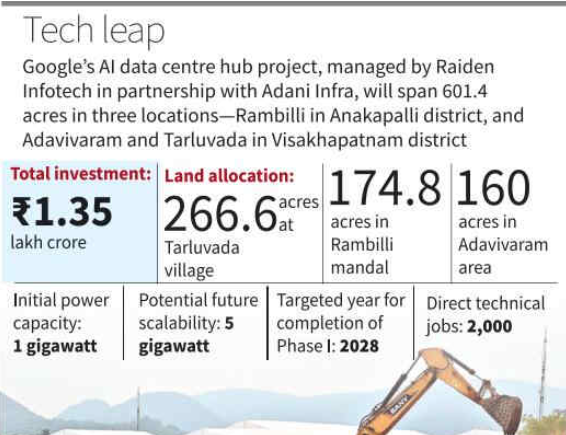
- 29 Apr 2026
In News:
In a landmark move for India’s digital economy, the foundation stone for Google’s $15 billion AI Data Centre Hub was laid near Visakhapatnam, Andhra Pradesh. This project, executed through Google’s subsidiary Raiden Infotech in partnership with Adani Infra, represents one of the largest Foreign Direct Investment (FDI) inflows in India’s technology sector to date.
Project Overview and Geographical Footprint
The Google AI Data Hub is a large-scale, artificial intelligence-driven data centre campus. Its strategic location spans across:
- Tarluvada and Adavivaram in the Visakhapatnam district.
- Rambilli in the Anakapalli district.
The selection of Andhra Pradesh’s coast leverages the state’s maritime advantage for submarine cable connectivity, making it a critical node for global data traffic.
Core Features and Technical Specifications
The hub is engineered to be a cornerstone of India’s high-capacity digital infrastructure. Key technical pillars include:
- Gigawatt-Scale Capacity: The campus is planned with a massive capacity of 1 gigawatt (GW), positioning it among the most significant data centre installations in the country.
- Global Connectivity: The facility will house high-capacity submarine cable landing stations. These, combined with dedicated fibre networks, will provide low-latency international connectivity, essential for real-time AI processing.
- Advanced AI & Cloud Operations: Beyond simple data storage, the hub is designed for complex cloud computing, cybersecurity operations, and global AI-driven services.
Strategic Significance for India and Andhra Pradesh
1. Economic and Employment Catalyst: The project is set to be a major engine for regional growth. It is expected to generate thousands of high-value employment opportunities in specialized fields such as:
- Data Science and Artificial Intelligence.
- Cybersecurity and Network Engineering.
- Cloud Infrastructure Management.
2. Fostering a 6.5 GW Digital Ecosystem: This investment aligns with Andhra Pradesh’s ambitious vision to develop a 6.5 GW digital ecosystem. The data hub will act as an anchor, drawing in allied sectors including renewable energy (to power the high-energy demands of the hub) and advanced manufacturing.
3. Strengthening "Digital India" and FDI Profile: By establishing its first major AI-focused data centre campus in India, Google is signaling confidence in India’s digital infrastructure. This reinforces India’s standing as a preferred global destination for large-scale tech investments, moving the country closer to becoming a global hub for cloud computing.
India–New Zealand Free Trade Agreement
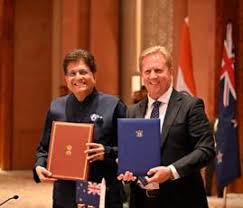
- 29 Apr 2026
In News:
India and New Zealand signed a landmark Free Trade Agreement (FTA) at Bharat Mandapam, New Delhi. Concluded in a record nine months, this pact represents India’s 9th agreement with advanced economies, covering nearly 70% of global GDP. The deal is a "next-generation" partnership aimed at doubling bilateral trade to USD 5 billion within five years, while securing a massive USD 20 billion investment commitment from New Zealand over the next 15 years.
1. Trade in Goods: Unprecedented Market Access
The FTA provides a significant competitive edge to Indian exporters, particularly in labor-intensive sectors like textiles, leather, gems, and engineering goods.
- 100% Duty-Free Access for India: New Zealand will grant immediate duty-free access to all Indian exports. This removes previous peak tariffs of up to 10% on items like ceramics, carpets, and auto components.
- Duty-Free Inputs for Manufacturing: India secures zero-duty access to key industrial inputs such as wooden logs, coking coal, and metal scrap, which will lower production costs for domestic manufacturers.
- Calibrated Access for New Zealand: India has liberalized 70.03% of its tariff lines (covering 95% of trade value). While 30% of lines see immediate duty elimination, others will undergo phased reductions over 3 to 10 years.
2. Protection of Sensitive Sectors & Agriculture
A core pillar of the agreement is the "Productivity to Prosperity" model, which balances market opening with the protection of rural economies.
- The Exclusion List: To shield domestic farmers, India has kept 29.97% of tariff lines out of the deal. This includes all dairy products (milk, cheese, yogurt), sensitive vegetables (onions, peas, corn), sugar, edible oils, and arms/ammunition.
- Tariff Rate Quotas (TRQ): For specific high-demand items like Apples, Kiwifruit, and Manuka Honey, India will allow limited imports through a TRQ system. These are tied to Agriculture Productivity Action Plans, ensuring that New Zealand provides technical support to Indian farmers in exchange for market access.
- Centres of Excellence: The pact establishes partnerships for research, better planting material, and cold-chain logistics to improve Indian orchard management and food safety.
3. Services, Talent, and Mobility
This FTA marks a "first" in many categories regarding the movement of professionals and students.
- Temporary Employment Entry (TEE): A dedicated quota of 5,000 visas (up to 3 years) has been created for Indian professionals. This specifically includes AYUSH practitioners, yoga instructors, Indian chefs, and professionals in IT, healthcare, and engineering.
- Student Mobility: New Zealand has removed numerical caps on Indian students.
- Work Rights: Students can work 20 hours per week during studies.
- Post-Study Rights: 3 years for STEM Bachelor’s/Master’s graduates and 4 years for Doctoral scholars.
- Working Holiday Visas: 1,000 young Indians (annually) can access 12-month multiple-entry visas for global skill acquisition.
4. Strategic and Regulatory Breakthroughs
- USD 20 Billion Investment: A binding commitment from New Zealand to invest in India's infrastructure, renewable energy, and startups, backed by a "Rebalancing Clause" to address any shortfalls.
- Pharma Fast-Track: Market entry for Indian pharmaceuticals is accelerated by recognizing global standards (like US FDA/EMA), reducing duplicative inspections and costs.
- Geographical Indications (GI): New Zealand will amend its laws within 18 months to protect iconic Indian GIs (like Basmati rice or Darjeeling tea) beyond just wines and spirits.
- Traditional Knowledge & AYUSH: A first-of-its-kind chapter promotes Ayurveda, Yoga, and traditional wellness systems on a global scale.
5. India–New Zealand Relations: Strategic Context
The relationship has evolved from shared Commonwealth history to a modern strategic partnership in the Indo-Pacific.
- Indo-Pacific Alignment: New Zealand is aligning with India’s Indo-Pacific Oceans Initiative (IPOI) to counter regional maritime challenges and ensure a rules-based order.
- Economic Diversification: For New Zealand, the "Opening Doors to India" policy is a strategic move to reduce economic over-reliance on China.
- Diaspora: The Indian diaspora makes up 6% of New Zealand's population, acting as a vital bridge for "Track II" diplomacy.
Challenges to Overcome
Despite the optimism, the bilateral relationship faces hurdles:
- Strategic Ambivalence: New Zealand’s heavy economic dependence on China sometimes limits its geopolitical alignment with India.
- Security Frictions: The presence of pro-Khalistan elements in New Zealand remains a point of concern for Indian sovereignty.
- Transactional Views: Transitioning the relationship from a "labor and education market" to a deep-tech and defense partnership remains a work in progress.
Right to Safe Travel on National Highways under Article 21
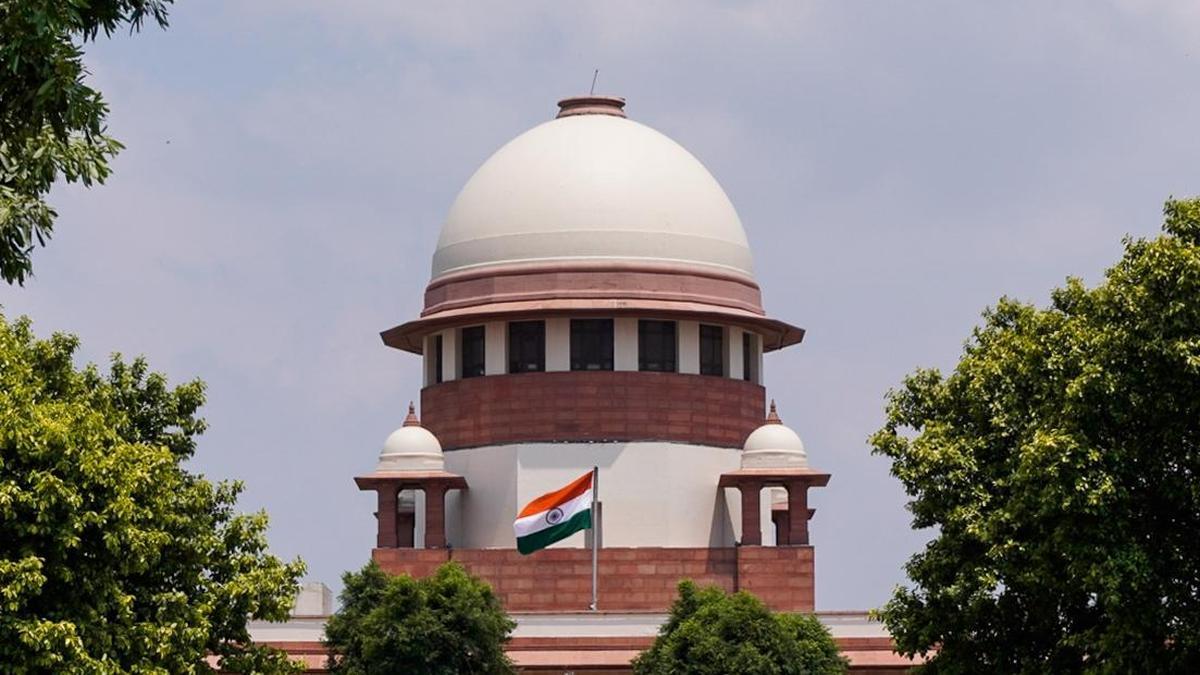
- 28 Apr 2026
In News:
In a transformative judicial intervention, the Supreme Court of India has elevated the right to safe passage on highways to the status of a Fundamental Right. By interpreting Article 21 (Protection of Life and Personal Liberty) to include the safety of commuters, the Court has shifted the responsibility of road safety from a mere administrative task to a non-negotiable constitutional obligation of the State.
The Constitutional Shift: Expanding the Right to Life
The Supreme Court ruled that Article 21 imposes a "positive obligation" on the State to create a safe environment for its citizens.
- Beyond Survival: The Court clarified that the right to life extends beyond protection from unlawful killing; it includes protection from avoidable hazards.
- State Liability: Fatalities resulting from poor infrastructure, unauthorized encroachments, or administrative negligence are now viewed as a failure of the State’s constitutional duty to protect life.
The Crisis on the Arteries: Alarming Statistics
The ruling was prompted by a staggering disparity in India’s road safety data:
- Disproportionate Fatalities: While National Highways (NHs) constitute a mere 2% of India’s total road network, they are responsible for nearly 30% of all road fatalities.
- Vulnerability: This identifies NHs as zones of severe infrastructural and administrative vulnerability, requiring immediate and drastic systemic overhaul.
Judicial Mandates: Cleansing the Right-of-Way
To address the root causes of highway accidents, the Court issued several "Immediate Prohibitions" aimed at clearing the Right-of-Way (RoW)—the strip of land reserved for the highway and its future expansion.
1. Ban on Commercial Structures: The Court has issued an immediate ban on the construction or operation of any new commercial entities, including dhabas, eateries, or shops, within the highway's Right-of-Way. Existing unauthorized structures must be identified and addressed.
2. Demolition and Licensing
- 60-Day Ultimatum: District Magistrates are directed to demolish or remove all unauthorized structures within 60 days.
- Mandatory Clearances: No trade licenses or approvals for structures within highway safety zones can be granted without prior NOC (No Objection Certificate) from the National Highways Authority of India (NHAI) or the Public Works Department (PWD).
3. Strict Parking Norms: To prevent high-speed collisions with stationary objects, the Court prohibited heavy and commercial vehicles from stopping or parking on any National Highway, carriageway, or paved shoulder. Parking is strictly restricted to officially designated lay-bys and wayside amenities.
Institutional Mechanism: District Highway Safety Task Force
To ensure these directives do not remain on paper, the Court mandated the creation of a ‘District Highway Safety Task Force’ in every district across the country. This body will be responsible for:
- Constant monitoring of highway safety protocols.
- Enforcing the ban on unauthorized parking and structures.
- Ensuring inter-departmental coordination between the Police, NHAI, and District Administration.
The Bnei Menashe and "Operation Wings of Dawn"
- 28 Apr 2026
In News:
In a significant diplomatic and humanitarian development, Israel recently airlifted approximately 240 individuals from Mizoram to Tel Aviv under "Operation Wings of Dawn." This operation, conducted amid heightened security concerns in West Asia, marks a new phase in the migration of the Bnei Menashe community from Northeast India to their perceived ancestral homeland.
Understanding "Operation Wings of Dawn"
The operation facilitated the relocation of members of the Bnei Menashe community to absorption centers in Israel, specifically in areas like NofHaGalil in northern Israel.
- India’s Diplomatic Stance: The Government of India has clarified that it did not actively facilitate the operation. India’s role remained restricted to its sovereign responsibility of ensuring that migration was legal, voluntary, and conducted in a manner that prevents any form of human trafficking.
- Logistical Support: The migration is largely managed by agencies such as Shavei Israel and the Jewish Agency for Israel (JAFI), which assist "Lost Tribes" in their journey toward Israeli citizenship.
The Bnei Menashe: History and Belief Systems
The Bnei Menashe (meaning "Sons of Manasseh") are a community primarily comprising individuals from the Mizo and Kuki tribal groups in Manipur and Mizoram.
The Ten Lost Tribes Theory
The community claims descent from the Tribe of Manasseh, one of the Ten Lost Tribes of Israel exiled by the Assyrian Empire around 722 BCE. Their oral traditions describe a centuries-long journey through Persia (modern-day Iran), Afghanistan, and eventually into the hills of Northeast India.
Religious Evolution
While most members of these tribal groups were converted to Christianity by missionaries during the 19th and 20th centuries, a "Judaising" movement emerged in the late 20th century. Influenced by local religious visions and organizations like Amishav, many members began adopting Jewish rituals, dietary laws (Kosher), and the Hebrew language by the 1980s.
Legal and Religious Recognition
The pivotal moment for the community came in 2005, when Israel’s Chief Rabbinate formally recognized the Bnei Menashe as the "Lost Seed of Israel."
- Basis for Recognition: This decision was based on deep-rooted cultural claims and traditional practices, as genetic evidence remained largely inconclusive.
- The Right of Return (Aliyah): This recognition cleared the path for members to perform Aliyah (the act of migrating to Israel). However, because they had been separated from mainstream Judaism for millennia, they are typically required to undergo a formal conversion process upon arrival in Israel to gain full citizenship.
Socio-Political Challenges and Integration
Despite the spiritual fulfillment of "returning" to Israel, the Bnei Menashe face several systemic hurdles:
- Integration Issues: Like many immigrant groups from non-Western backgrounds, the community has faced challenges related to language barriers, economic disparity, and cultural assimilation.
- Security Concerns: Many Bnei Menashe families have been settled in peripheral areas or sensitive northern regions like NofHaGalil, placing them on the frontlines of regional security tensions.
- Discrimination: Reports have surfaced regarding instances of social discrimination and the struggle for the community to be fully accepted within the complex mosaic of Israeli society.
Reconstitution of NITI Aayog
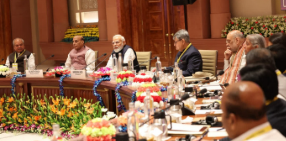
- 28 Apr 2026
In News:
The Government of India has formally reconstituted the NITI Aayog (National Institution for Transforming India), marking a strategic shift in the country's premier policy think tank. This overhaul, announced aims to infuse multidisciplinary expertise into India’s developmental roadmap, particularly in health, deep tech, and economic reforms, to align with the goal of becoming a "Viksit Bharat" by 2047.
A New Leadership for Economic and Strategic Reform
The reconstitution is led by the appointment of eminent economist and former Chief Economic Advisor Ashok Kumar Lahiri as the Vice Chairperson, succeeding Suman K. Bery. Holding the rank of a Cabinet Minister, Lahiri brings decades of experience in public policy and economic strategy to the Aayog.
The restructuring also introduces a diverse cohort of Full-Time Members, moving beyond traditional economist-heavy compositions to include experts from science, medicine, and technology:
- Rajiv Gauba: Former Cabinet Secretary (retained).
- Dr. M. Srinivas: Director of AIIMS Delhi, bringing extensive medical and public health expertise.
- Prof. Abhay Karandikar: Secretary, Department of Science and Technology, specializing in telecommunications and deep tech.
- Prof. Gobardhan Das: Renowned molecular scientist and immunologist.
- Prof. K. V. Raju: Expert in agricultural economics and rural development.
Core Philosophy: From Planning to Catalyzing
Formed on January 1, 2015, through a Cabinet resolution, NITI Aayog replaced the 65-year-old Planning Commission. This transition represented a paradigm shift in Indian governance:
- Bottom-Up Approach: Unlike the top-down "one-size-fits-all" model of the Planning Commission, NITI Aayog emphasizes that strong states make a strong nation.
- Cooperative Federalism: It serves as a primary platform to involve State Governments in the policy-making process, treating them as equal partners.
- Competitive Federalism: It encourages states to compete on developmental parameters through various indices, such as the SDG India Index and State Health Index.
Key Functions and Mandate
NITI Aayog operates as the Knowledge and Innovation Hub of the government, tasked with:
- Strategic Policy Design: Formulating long-term program frameworks while incorporating national security interests into economic strategy.
- Monitoring and Evaluation: Actively tracking the implementation of government schemes to ensure last-mile delivery.
- Ease of Living: Driving reforms to reduce the compliance burden on citizens and enhance quality of life.
- Resource Center: Acting as a repository of best practices and research on good governance.
Organizational Structure
As a non-constitutional, non-statutory, and advisory body, its structure is designed for maximum institutional flexibility:
- Chairperson: The Prime Minister of India.
- Vice Chairperson: Appointed by the PM; enjoys Cabinet Minister rank.
- Governing Council: Comprises Chief Ministers of all States and Union Territories with legislatures, and Lieutenant Governors of other UTs.
- Chief Executive Officer (CEO): An officer with the rank of Secretary to the Government of India, appointed for a fixed tenure.
- Ex-Officio Members: Maximum of four members from the Union Council of Ministers, nominated by the PM.
40 years of the Chernobyl Disaster

- 28 Apr 2026
In News:
April 2026 marks the 40th anniversary of the Chernobyl disaster, an event that remains the most expensive man-made catastrophe in human history. With total costs exceeding $700 billion over four decades, the accident serves as a somber benchmark for the risks inherent in nuclear power when engineering flaws meet human error.
The Catastrophe: What Happened at Unit 4?
On the night of April 25–26, 1986, technicians at the Chernobyl nuclear power station—located near Pripyat in the former Soviet Union (present-day Ukraine)—initiated a safety experiment on the Unit 4 RBMK reactor. The goal was to test if the cooling pumps could still function during a power outage using the residual energy from a spinning turbine.
The experiment triggered a sequence of catastrophic failures:
- Design Vulnerabilities: The RBMK reactor was a graphite-moderated system with a critical flaw: it lacked a containment structure. In modern nuclear plants, this thick concrete and steel shell acts as a final physical barrier to prevent the escape of radiation during a meltdown.
- The Explosion: The chain reaction surged out of control, causing a massive steam explosion that blew the heavy lid off the reactor. Approximately 3.5% of the nuclear fuel was immediately dispersed into the atmosphere.
- The Graphite Fire: A subsequent fire in the graphite moderator burned for several days, acting as a chimney that sent plumes of radioactive isotopes high into the air, eventually spreading across Ukraine, Belarus, Russia, and reaching as far as Scandinavia.
Human and Environmental Toll
The scale of the disaster necessitated an unprecedented humanitarian and logistical response.
- Mass Displacement: Within 36 hours, the industrial town of Pripyat was evacuated. Ultimately, around 200,000 people were permanently relocated as their homes became part of a contaminated landscape.
- Environmental Impact: Nearly 150,000 square km of land across Eastern Europe was contaminated. Today, a 30-kilometer Exclusion Zone remains around the plant, where human habitation is strictly restricted due to high levels of soil radiation.
- Health Crisis: The health consequences were profound and long-lasting. Between 1991 and 2005, authorities documented at least 5,000 cases of thyroid cancer specifically in children who were exposed to radioactive iodine through contaminated milk and air.
Containment and Current Status
To prevent further leakage, the remains of Unit 4 were initially encased in a temporary concrete "sarcophagus." In recent years, this was replaced by the New Safe Confinement, a massive, arch-shaped steel structure designed to entomb the radioactive debris for the next century, allowing for the eventual stable decommissioning of the site.
Nilgiri Tahr

- 28 Apr 2026
In News:
In a major cross-border conservation effort, the Tamil Nadu Forest Department, in collaboration with Kerala, has commenced the third synchronized Nilgiri Tahr survey. This scientific census is a critical component of Project Nilgiri Tahr, aimed at safeguarding the only mountain ungulate in southern India and understanding the ecological health of the high-altitude Western Ghats.
Biological Profile and Ecological Significance
The Nilgiri Tahr (Nilgiritragushylocrius) is a unique species among the 12 mountain ungulates found in India. As an endemic species to the Western Ghats, it serves as a "vital indicator species"—its population stability directly reflects the health of the fragile montane grasslands it inhabits.
- State Identity: It is the State Animal of Tamil Nadu.
- Physical Adaptation: Known for extreme agility, these ungulates are exceptionally sure-footed, allowing them to navigate steep, rocky cliffs to evade predators.
- Conservation Status: The species is currently categorized as Endangered on the IUCN Red List.
Habitat and Geographic Distribution
Historically, the Nilgiri Tahr roamed the entire length of the Western Ghats. Today, their range is restricted to a narrow 400 km stretch from the Nilgiris in the north to the Kanyakumari hills in the south.
- Altitude: They are strictly montane, favoring open grasslands at elevations between 1,200 and 2,600 meters.
- Population Strongholds:
- Eravikulam National Park (Kerala): Home to the largest single population.
- Anamalai Hills and the Nilgiris: Other significant clusters.
- Fragmentation: Due to historical habitat loss and anthropogenic pressures, the species survives in small, isolated pockets, which poses a risk to genetic diversity.
Modern Survey Methodology and Conservation Research
The current synchronized survey is timed specifically after the winter calving season. This ensures that the young "kids" are visible and can be accurately counted alongside the adults. The 2026 survey incorporates several advanced scientific interventions:
- Digital Monitoring: The Varudai mobile app is used for standardized reporting and real-time tracking, reducing human error and ensuring data transparency.
- Genetic Management: Researchers are conducting behavioral studies to evaluate the feasibility of translocation—moving individuals between fragmented pockets to prevent inbreeding and improve the gene pool.
- Health Assessment: Specific research is being directed toward the prevalence of tumors observed in certain herds, providing a baseline for the overall pathological health of the species.
Hindu Kush Himalaya
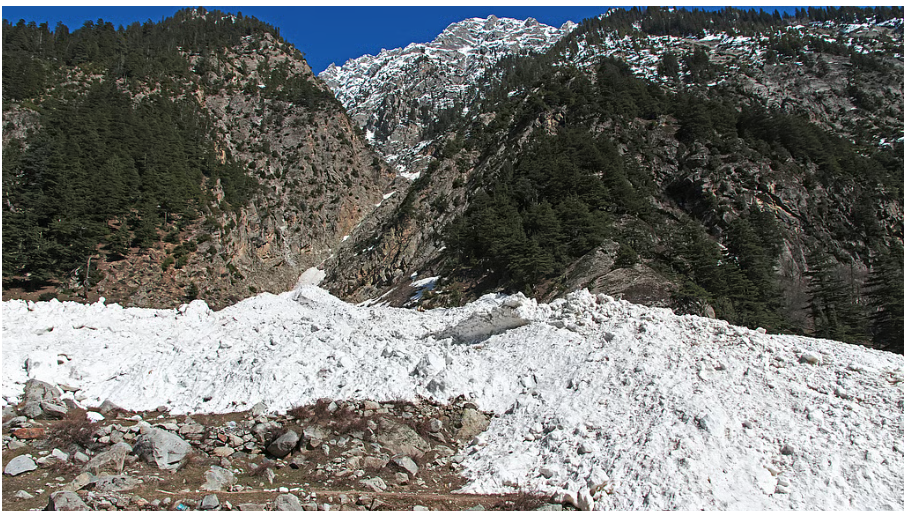
- 27 Apr 2026
In News:
A recent report by the International Centre for Integrated Mountain Development (ICIMOD) has sounded a critical alarm for the Hindu Kush Himalaya (HKH) region. The findings reveal a record 27% drop in snow persistence—the duration for which snow remains on the ground—marking the fourth consecutive year of significant decline. This trend poses an existential threat to water security, biodiversity, and the livelihoods of nearly 2 billion people downstream.
Geographical Profile: The Water Tower of Asia
The Hindu Kush Himalaya is often referred to as the "Third Pole" because it contains the largest volume of permanent ice and snow outside the North and South Poles.
- Extent: It stretches approximately 3,500 km across eight countries: Afghanistan, Bangladesh, Bhutan, China, India, Nepal, Myanmar, and Pakistan.
- Topography: The range runs from northeast to southwest, acting as a colossal geographical divide between the Amu Darya valley to the north and the Indus River valley to the south.
- Highest Peak: The highest point is Tirich Mir (7,708 meters) located in the Chitral district of Pakistan.
- Sub-sections: The range is traditionally divided into three sections: the Eastern, Central, and Western Hindu Kush (the latter known as the B?b? Mountains).
Hydrological and Ecological Significance
The HKH region is the primary source of ten major Asian river systems:
- Amu Darya
- Indus
- Ganges
- Brahmaputra
- Irrawaddy
- Salween
- Mekong
- Yangtze
- Yellow River
- Tarim
These rivers support agriculture, energy, and industry for roughly a quarter of the global population. Furthermore, the region is an ecological powerhouse, home to four global biodiversity hotspots and a mosaic of ecosystems including glaciers, alpine meadows, wetlands, and desert vegetation in the arid inner valleys.
The Crisis: Declining Snow Persistence
Snow persistence is a vital indicator of mountain health. Unlike glaciers, which provide long-term water storage, seasonal snowmelt is the immediate driver of river flow during the spring and summer.
The ICIMOD report highlights that the current 27% decline is significantly below the historical average. This "snow drought" leads to:
- Water Scarcity: Reduced runoff affects irrigation and drinking water for downstream communities long before the monsoon arrives.
- Ecological Shift: Altered timing of snowmelt disrupts the life cycles of flora and fauna in alpine ecosystems.
- Increased Hazards: Warmer temperatures lead to unstable permafrost and a higher frequency of Glacial Lake Outburst Floods (GLOFs) and landslides.
RBI Eases Rupee NDF Curbs
- 27 Apr 2026
In News:
In a significant regulatory shift, the Reserve Bank of India (RBI) has partially rolled back restrictions on rupee-linked Non-Deliverable Forward (NDF) transactions. This decision follows a period of improved market stability and aims to streamline hedging operations for banks and their clients while maintaining a vigilant stance on exchange rate volatility.
The Policy Shift: From Restriction to Partial Relaxation
Previously, the RBI had tightened norms on NDFs to curb excessive speculation and arbitrage during periods of heightened global uncertainty. The recent relaxation introduces specific changes:
- Related-Party Transactions: Banks are now permitted to undertake limited related-party transactions, specifically the cancellation and rebooking (rollover) of existing NDF contracts.
- Targeted Relief: This move is primarily aimed at providing operational flexibility to clients who need to manage their long-term currency risks without being hampered by rigid "one-time" transaction rules.
- Maintained Safeguards: The regulatory framework remains cautious. The $100 million cap on net open positions in the onshore market remains intact, and broader restrictions on complex forex derivatives continue to stay in force to prevent systemic risks.
Understanding Non-Deliverable Forwards (NDFs)
For a clear understanding of the context, it is essential to define the NDF mechanism:
- Definition: An NDF is a cash-settled, short-term forward contract on a foreign currency. Unlike standard forward contracts, there is no physical delivery of the underlying currencies.
- Settlement: At maturity, the profit or loss is calculated based on the difference between the agreed-upon NDF rate and the prevailing spot rate. The difference is settled in a freely traded currency, typically the US Dollar.
- Purpose: They are primarily used by offshore investors and multinational corporations to hedge currency exposure in "restricted" currencies like the Indian Rupee (INR), which are not fully convertible on the capital account.
Why were the Curbs Imposed?
The original restrictions were a defensive measure against external shocks. Two primary factors led to the tightening:
- Geopolitical Volatility: Escalating tensions in West Asia triggered capital outflows and unpredictable swings in the rupee’s value.
- Arbitrage Risks: A significant price gap often emerges between the onshore market (regulated by RBI) and the offshore market (Dubai, Singapore, London). Speculators exploit these "arbitrage" opportunities, which can lead to artificial pressure on the rupee’s spot price in India.
Impact Assessment: Will the Rupee Strengthen?
While the relaxation is a positive signal for market liquidity, analysts suggest its impact on the spot rupee (the current exchange rate) will be minimal. The rupee’s trajectory remains heavily influenced by "macro-fundamentals":
- Crude Oil Prices: As a major importer, India’s currency is sensitive to energy costs.
- The Dollar Index: Strengthening of the US Dollar globally often leads to depreciation in emerging market currencies like the INR.
- Capital Flows: Foreign Portfolio Investment (FPI) trends and global risk appetite continue to be the primary drivers of the exchange rate.
1st Structured Pulse Procurement in Bihar

- 27 Apr 2026
In News:
In a major push toward agricultural self-reliance, the Government of India has significantly scaled up Minimum Support Price (MSP)-based procurement operations. This expansion, driven by the National Cooperative Consumers’ Federation of India Limited (NCCF) and the National Agricultural Cooperative Marketing Federation of India Limited (NAFED), marks a strategic shift under the Pradhan Mantri Annadata Aay Sanrakshan Abhiyan (PM-AASHA) and the newly launched Atmanirbhar Pulses Mission.
The Atmanirbhar Pulses Mission: A Vision for 2030
Announced in the Union Budget 2025–26 and formally launched in October 2025, this Centrally Sponsored Scheme aims to eliminate India’s dependency on pulse imports by the end of the 2030–31 fiscal year.
- Priority Crops: The mission specifically targets Tur (Arhar), Urad, and Masoor (Lentil)—crops that are vital to Indian nutritional security but currently suffer from production deficits.
- Core Strategy: The mission focuses on improving crop yields, adopting climate-resilient agricultural practices, and ensuring long-term price stability to incentivize farmers.
State-Level Milestones: Bihar and Chhattisgarh
The government’s strategy is currently manifesting through intensified procurement drives in key states, utilizing both cooperative networks and digital infrastructure.
1. Bihar’s First Structured Procurement
For the first time, Bihar has initiated an organized procurement of Masoor (Lentil). This milestone is supported by the NCCF, which utilizes WDRA-approved warehouses in collaboration with the Central Warehousing Corporation to ensure scientific storage and minimize post-harvest losses.
- Target: 32,000 MT of Masoor.
- Progress (as of April 2026): Over 100 MT has already been procured, with Primary Agricultural Credit Societies (PACS) and Farmer Producer Organizations (FPOs) being rapidly onboarded.
2. Chhattisgarh’s Digital Procurement Ecosystem
Procurement in Chhattisgarh has crossed 12,000 MT, primarily focusing on Chana and Masoor. The state’s success is attributed to:
- E-Samyukti Portal: A digital platform facilitating seamless farmer registration and transparent transactions.
- Infrastructure: A robust network of 85 PACS centers across districts like Durg, Raipur, and Raigarh, with plans to expand into Sarguja and Kondagaon.
- Performance: Thousands of farmers have already benefited, with Chana procurement alone nearing 13,000 MT between NCCF and NAFED operations.
PM-AASHA: The Institutional Backbone
Launched in 2018, PM-AASHA provides the regulatory framework to ensure farmers receive remunerative prices. It operates through three distinct pillars:
- Price Support Scheme (PSS): Physical procurement of pulses, oilseeds, and copra by central agencies.
- Price Deficiency Payment Scheme (PDPS): Direct compensation to farmers when market prices fall below the MSP, without physical procurement.
- Private Procurement &Stockist Scheme (PPSS): Encouraging private sector participation in the procurement process.
Project DANTAK
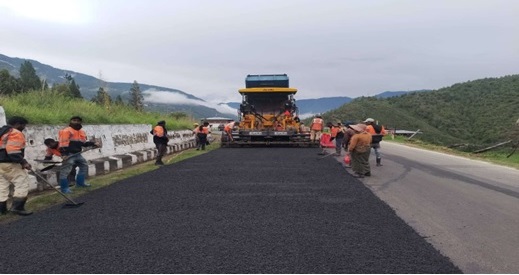
- 27 Apr 2026
In News:
Project DANTAK of the Border Roads Organisation (BRO) celebrated its 66th Raising Day in Thimphu, Bhutan. This milestone commemorates over six decades of infrastructure development and serves as a testament to the enduring diplomatic and developmental ties between India and the Kingdom of Bhutan.
Historical Genesis and Mandate
Project DANTAK was established on April 24, 1961, following a landmark agreement between the third King of Bhutan, Jigme Dorji Wangchuck, and India’s then-Prime Minister, Jawaharlal Nehru. As an overseas project of the BRO—operating under the Ministry of Defence—its primary mandate was to break the geographical isolation of remote Bhutanese regions by constructing the country's pioneering motorable roads.
Transformative Infrastructure Achievements
Over the past 65 years, Project DANTAK has been a cornerstone of Bhutan’s socio-economic transformation. Its contributions span various sectors:
- Road Connectivity: The project has constructed over 1,500 km of roads, including the strategically vital East–West Highway linking Trashigang to Thimphu. It was also instrumental in building the Phuentsholing–Thimphu Highway.
- Aviation: DANTAK played a pivotal role in the development of Paro International Airport and the Yongphula Airfield.
- Institutional Development: Beyond transport, the project contributed to telecommunications, hydropower infrastructure, hospitals, and educational institutions like Sherubtse College in Kanglung and the India House Estate.
Recent Advancements and Modernization
In alignment with modern developmental priorities, Project DANTAK has shifted focus toward capacity enhancement and climate resilience:
- Double Laning Projects: Significant stretches such as the Confluence–Haa road (inaugurated August 1, 2025) and the 168-km SamdrupJongkhar–Trashigang highway have been upgraded to improve safety and reduce travel time.
- Strategic Corridors: Ongoing works include road construction in the South-Eastern regions (Nganglam–Dewathang, Samrang–Jomotsangkha) and the strengthening of the Damchu–Chhukha axis.
- Disaster Resilience: The project has demonstrated an exceptional ability to restore connectivity in record time following landslides and road washouts, ensuring Bhutan's lifelines remain open during natural calamities.
The Border Roads Organisation (BRO): An Overview
The BRO serves as the executive force behind these projects, providing critical support to the Indian Armed Forces while fostering regional connectivity.
- Established: May 7, 1960.
- Governance: Originally a joint effort, the BRO was brought entirely under the Ministry of Defence in 2015 to streamline strategic infrastructure projects.
- Mission: To secure India's borders and develop infrastructure in remote areas of the North and North-Eastern states, as well as in friendly neighboring countries.
- Motto:Shramena Sarvam Sadhyam ("Everything is achievable through hard work").
Nasha Mukt Bharat Abhiyaan
- 27 Apr 2026
In News:
The Ministry of Social Justice & Empowerment (MoSJE) is set to launch the Nasha Mukt Bharat Abhiyaan (NMBA) App 2.0. This upgrade marks a pivotal shift toward data-driven governance under the National Action Plan for Drug Demand Reduction (NAPDDR), aiming to create a "Drug-Free India" through enhanced institutional coordination and public participation.
Evolution of the Campaign
Launched on August 15, 2020, the NMBA was initially targeted at 272 vulnerable districts. Recognizing the pervasive nature of substance abuse, the government extended the campaign to all districts nationwide on August 15, 2023.
The initiative has achieved significant scale since its inception:
- Massive Reach: Over 26 crore people sensitized, including 9.5 crore youth and 6.47 crore women.
- Ground-level Action: More than 8.3 lakh activities conducted across educational institutions and community spaces.
- Human Capital: Mobilization of 28,000 "Master Volunteers" (Nasha Mukti Mitrs).
Objectives and Strategy
The NMBA operates on a multi-pronged strategy to reduce drug demand by:
- Awareness Generation: Targeting schools, university campuses, and higher educational institutions.
- Community Outreach: Identifying dependent populations and facilitating early intervention.
- Treatment and Rehabilitation: Strengthening counseling and clinical facilities in hospitals.
- Capacity Building: Training service providers to handle the complexities of substance use disorders.
The Digital Leap: Features of NMBA App 2.0
While the original app served as an internal tracking tool, the 2.0 version transforms the platform into a comprehensive digital ecosystem for both administrators and the general public.
1. Enhanced Public Engagement: Unlike its predecessor, the 2.0 app is citizen-centric. Users can now take an e-Pledge, access Information, Education, and Communication (IEC) materials, and utilize a dedicated feedback mechanism to help improve the campaign’s efficacy.
2. Institutional Transparency & "Anudan" Tracking: A critical addition is the dedicated access for Grant-in-Aid Institutions (GIAs). The app provides real-time visibility of Anudan (Grant) status, allowing the Ministry, State governments, and the institutions themselves to track fund utilization. This ensures greater financial accountability and streamlines the administrative bottleneck.
3. Location-Based Support: The 'Nearest De-addiction Centre' feature uses geolocation to help users find immediate treatment services, bridging the gap between awareness and clinical referral.
4. Real-time Monitoring: The app serves as a centralized dashboard for real-time reporting from National to District levels. This allows for evidence-based policy adjustments and ensures that ground-level activities are aligned with national goals.
Sea Slugs
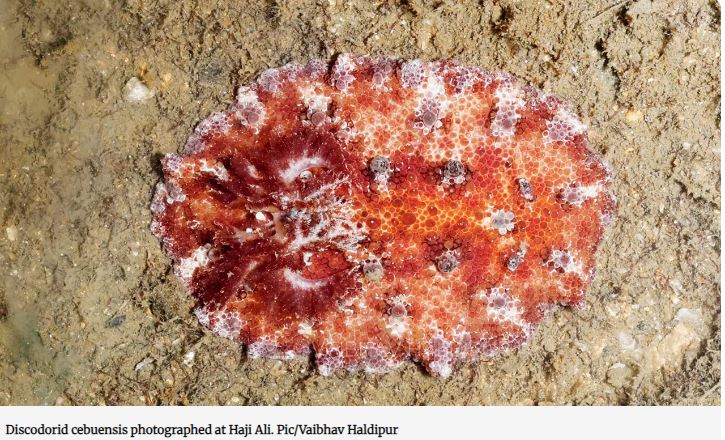
- 26 Apr 2026
In News:
India's marine biodiversity documentation reached a significant milestone with the first-ever recorded sighting of a rare sea slug, Discodoriscebuensis (also referred to as Discodoridcebuensis), at Haji Ali, Mumbai. Previously documented in regions such as the Philippines and parts of the tropical Indo-West Pacific, this discovery highlights the ecological richness of Mumbai’s rocky intertidal zones and underscores the importance of urban coastal conservation.
Decoding the Sea Slug: Nature's Vibrant Gastropods
Sea slugs, often called nudibranchs, are soft-bodied marine mollusks. They belong to the class Gastropoda, a diverse group that includes common land snails and slugs. However, unlike their terrestrial relatives, marine sea slugs have undergone an evolutionary transition where they have completely lost their protective shells, quills, and mantle cavities.
Key Biological and Physiological Traits
- Sensory Mechanisms: On their heads, they possess specialized tentacles known as rhinophores. These act as chemo-sensory organs, allowing the slug to detect chemical signals and movement in the water to locate food or mates.
- Defense and Toxicity: Despite their lack of shells, they are far from defenseless. Many species utilize aposematism—bright, vibrant colors and intricate patterns that warn predators of their toxicity.
- Pigment Absorption: Interestingly, sea slugs derive their color and chemical defenses from their diet. By consuming sponges, algae, and jellyfish, they absorb pigments and can even store the stinging cells (nematocysts) of their prey within their own bodies for protection.
Ecological Significance: Sentinels of the Sea
Sea slugs are more than just visual marvels; they serve as critical bio-indicators of marine health.
- Habitat Indicators: They are primarily found in coral reefs and sponge-rich environments. A high diversity of sea slugs typically indicates a robust and thriving coral ecosystem.
- Ecological Balance: As slow-moving grazers, they control the populations of sponges, algae, and other small invertebrates, maintaining the delicate equilibrium of the seafloor.
- Genetics and Regeneration: Some species exhibit extraordinary biological traits, such as the ability to regenerate lost limbs, photosynthesize using chloroplasts stolen from algae (kleptoplasty), or even incorporate prey genes into their own DNA.
The Mumbai Discovery: Discodoriscebuensis
The specific species found at Haji Ali belongs to the family Discodorididae. Unlike some of its flashier relatives, Discodoriscebuensis is characterized by:
- A flat, oval body with a mottled brown or light red-brown appearance, helping it camouflage against rocks and sponges.
- Distinctive tubercles (small bumps) along its back, which may have white or dusky violet tips.
- A size typically ranging between 35 mm and 50 mm.
The discovery was made by local wildlife enthusiasts during a coastal survey, proving that even highly urbanized shorelines like Mumbai’s can harbor undocumented and rare marine life.
National Institute for Pre-Clinical Research (NIPCR)
- 26 Apr 2026
In News:
The Indian Council of Medical Research (ICMR) has upgraded and renamed its Hyderabad-based National Animal Resource Facility for Biomedical Research (NARFBR) as the National Institute for Pre-Clinical Research (NIPCR) to strengthen India’s capabilities in drug discovery and medical technology.
Key Highlights:
- Established in 2016 following approval by the Cabinet Committee (2015), the NIPCR is a flagship institute under ICMR, located in Genome Valley, Hyderabad. The renaming reflects a strategic shift from a specialised animal resource centre to a comprehensive hub for pre-clinical and translational research, acting as a critical bridge between laboratory research and human clinical trials.
- The institute provides advanced infrastructure for testing drugs, vaccines, biologicals, medical devices, and Cell and Gene Therapies (CGT). It adopts a dual research approach—combining advanced in vivo animal models with New Approach Methodologies (NAMs) such as Microphysiological Systems (MPS), cell-based assays, and organoid models. These technologies enhance accuracy, generate human-relevant data, and reduce reliance on traditional animal testing.
- NAMs enable applications like drug toxicity screening, disease modelling, high-throughput testing, and efficacy validation, thereby improving the quality and safety assessment of biomedical products. The institute also supports academia, industry, and startups by offering infrastructure, expertise, and validation platforms.
- Aligned with the Department of Health Research (DHR), Ministry of Health and Family Welfare, NIPCR is expected to play a key role in advancing “Made in India” healthcare solutions, strengthening India’s biomedical research ecosystem, and enhancing self-reliance in healthcare innovation.
Atlas Drone Swarm System

- 26 Apr 2026
In News:
China’s People’s Liberation Army (PLA) has unveiled the Atlas Drone Swarm System, a mobile, AI-enabled platform capable of launching and controlling nearly 100 drones through a single operator.
Key Highlights:
- Developed by the state-owned China Electronic Technology Group Corporation (CETC), the Atlas system is a mobile battlefield network designed for reconnaissance, electronic warfare, deception, and precision strikes. It consists of three components—Swarm-2 combat vehicle, command unit, and support vehicle—enabling integrated and flexible operations.
- The Swarm-2 platform can carry and launch up to 48 fixed-wing drones, while the system as a whole can deploy and control up to 96 drones simultaneously. With a rapid launch interval of under 3 seconds, the entire swarm can be airborne within 300 seconds, ensuring swift battlefield response.
- A key feature is its AI-driven swarm coordination, where drones operate with collective intelligence while retaining individual autonomy, allowing dynamic reconfiguration, target identification, and mission execution. Each drone can carry varied payloads such as electro-optical sensors, strike munitions, and communication relays, enabling multi-role capabilities including surveillance, attack, and battlefield communication.
- Strategically, the system enhances China’s ability to conduct swarm warfare, potentially overwhelming adversary air defence systems through low-cost, high-volume drone deployment. Its possible deployment in regions like the Tibet Military District raises concerns for India, as it could target logistics networks and forward positions, highlighting evolving challenges in modern warfare and border security.
Amazon–TGRA Deal for Sustainable Rice Farming
- 26 Apr 2026
In News:
Amazon has signed a $30 million (?280 crore) long-term carbon credit offtake agreement with the Good Rice Alliance (TGRA) to support sustainable rice farming and methane reduction in India.
Key Highlights:
- The agreement marks one of India’s largest agricultural carbon market deals, with Amazon committing to purchase over 685,000 metric tonnes of CO?-equivalent carbon credits. TGRA—backed by Bayer, GenZero, and Shell—is implementing the initiative across 13,000 small farmers over 35,000 hectares.
- The programme promotes climate-smart agriculture practices such as Alternate Wetting and Drying (AWD) and Direct Seeded Rice (DSR), which reduce methane emissions and water usage in paddy cultivation. Emission reductions are measured in collaboration with the International Rice Research Institute (IRRI), supported by digital monitoring and third-party verification under the Verified Carbon Standard (VCS).
- Since rice cultivation contributes 8–10% of global methane emissions, the initiative has strong climate mitigation potential for India. It also enhances farmer livelihoods through training, financial incentives, improved yields, and reduced input costs, reflecting the growing role of carbon markets in sustainable agriculture.
Skill Development Under Vibrant Villages Programme
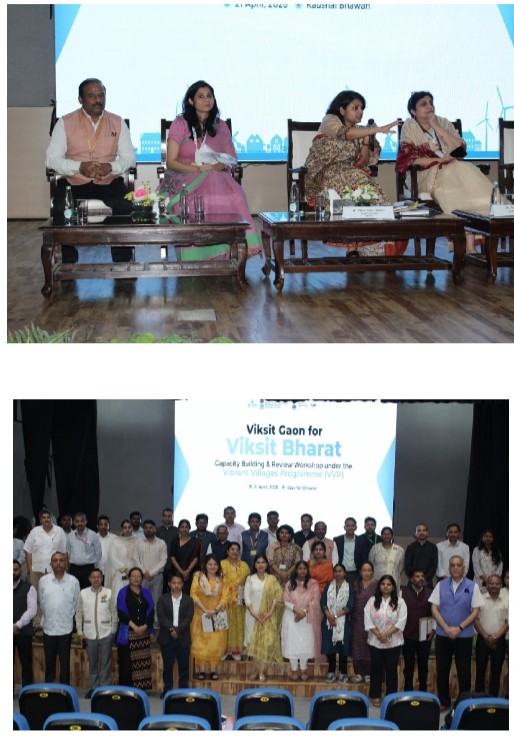
- 26 Apr 2026
In News:
The strategic landscape of India’s border management has undergone a paradigm shift, moving from a purely security-centric approach to one that integrates socio-economic development with national defense. Central to this vision is the Vibrant Villages Programme (VVP), a flagship initiative designed to transform border areas from isolated peripheries into self-reliant, well-connected "first villages."
Genesis and Expansion: VVP to VVP-II
Initially launched in 2023 to address developmental gaps in villages along the China border, the initiative has seen a massive scale-up. Recently, the Union Cabinet approved VVP-II, expanding the scheme's footprint significantly. Unlike typical developmental projects, VVP-II is a 100% centrally funded Central Sector Scheme.
The program now spans across a vast geographical arc including Arunachal Pradesh, Assam, Bihar, Gujarat, Himachal Pradesh, Jammu and Kashmir, Ladakh, Manipur, Meghalaya, Mizoram, Nagaland, Punjab, Rajasthan, Sikkim, Tripura, Uttarakhand, Uttar Pradesh, and West Bengal. This expansion reflects the government's commitment to securing the entire length of India’s international borders through community empowerment.
The Socio-Economic Mandate: Skill-Led Growth
A critical pillar of the VVP is the integration of skill development with regional economic needs. The Ministry of Skill Development and Entrepreneurship (MSDE) has taken a proactive role by organizing capacity-building workshops to accelerate development in these remote regions.
The focus is on demand-driven, locally relevant skilling. By identifying the specific economic potential of each border cluster—whether in high-altitude agriculture, local handicrafts, or adventure tourism—the MSDE ensures that training translates into sustainable livelihoods. This "bottom-up" approach promotes innovation and peer learning, ensuring that the youth in these areas become active participants in the regional economy rather than being forced to migrate to urban centers.
Security Through Prosperity: The "Eyes and Ears" Strategy
From a national security perspective, the VVP addresses a critical vulnerability: the security vacuum created by out-migration. When border populations leave their ancestral lands due to lack of opportunities, it leads to demographic changes that can be exploited by adversarial elements.
By creating sustainable livelihood opportunities, the Ministry of Home Affairs (MHA) aims to:
- Prevent Migration: Retaining the population ensures a continuous human presence in strategically sensitive zones.
- Intelligence Gathering: Empowering local residents makes them the "eyes and ears" of the Border Guarding Forces (BGF). A prosperous, loyal community is the first line of defense against illicit activities and trans-border crimes.
- Trust Building: The MHA emphasizes culturally sensitive outreach. This ensures that security agencies and local communities work in tandem, fostering a sense of national belonging and mutual trust.
Infrastructure and Saturation: The "Viksit Gaon" Vision
The VVP operates on the principle of saturation of government schemes. This involves ensuring that every household in the identified 662 villages has access to basic amenities—electricity, clean water, digital connectivity, and healthcare.
These villages are being developed as "growth centres" through:
- Strengthened Infrastructure: Improving all-weather road connectivity and telecommunications to bridge the digital and physical divide.
- Economic Assimilation: Linking local products to national markets to ensure that the economic benefits of India's growth reach the last mile.
- Cultural Integration: Encouraging border tourism to showcase the unique heritage of these regions, thereby strengthening their cultural ties with the rest of the country.
India–Sri Lanka Diving Exercise (DIVEX) 2026

- 25 Apr 2026
In News:
INS Nireekshak, the Indian Navy’s Diving Support and Submarine Rescue Vessel, arrived in Colombo to participate in the fourth edition of the India–Sri Lanka Diving Exercise (DIVEX 2026).
DIVEX 2026: Enhancing Underwater Interoperability
The 2026 edition of DIVEX is designed as a high-intensity engagement focusing on specialized underwater operations. The primary objectives include:
- Operational Cohesion: Synchronizing complex diving procedures between the two navies.
- Interoperability: Sharing best practices in salvage, underwater repair, and search-and-rescue protocols.
- Maritime Security: Strengthening the collective capacity to secure vital sea lanes in the IOR.
INS Nireekshak: The Vanguard of Deep-Sea Operations
A pivotal asset in this exercise, INS Nireekshak is a sophisticated Dive Support and Submarine Rescue Vessel. Built by Mazagon Shipbuilders and operational since 1989, it holds the prestigious national record for the deepest dive at 257 metres. Its presence in Colombo highlights India’s advanced technical capabilities in submarine rescue and deep-sea intervention.
Medical Diplomacy: The BHISM Initiative
In a move that aligns with India’s ‘Neighbourhood First’ policy and the Aarogya Maitriprogramme, the mission includes the handover of two BHISM (Bharat Health Initiative for Sahyog Hita & Maitri) cubes to Sri Lanka.
- Capabilities: These are portable, integrated medical units equipped to manage up to 200 emergency cases autonomously.
- Strategic Intent: By gifting these "mini-hospitals," India reinforces its role as a "First Responder" in the region, significantly enhancing Sri Lanka's Disaster Management and Humanitarian Assistance and Disaster Relief (HADR) capabilities.
Evolution of India-Sri Lanka Defence Ties
The exercise takes place against the backdrop of a landmark 5-year Memorandum of Understanding (MoU) signed in April 2025. This agreement has institutionalized military engagement across several pillars:
- Strategic Trust: Sri Lanka has reiterated its commitment to ensuring its territory is not utilized for activities detrimental to India’s security interests.
- Institutionalized Drills: Regular engagements like SLINEX (Naval) and Mitra Shakti (Army) have become cornerstones of the bilateral relationship.
- Proven Reliability: India’s proactive role during previous crises, such as the MV X-Press Pearl maritime disaster (2021) and Operation Sagar Bandhu, has cemented its reputation as a reliable security partner.
Sustainable Aviation Fuel

- 25 Apr 2026
In News:
Recently, the Government of India notified an amendment to the Aviation Turbine Fuel (ATF) (Regulation of Marketing) Order, 2001. This administrative measure formally brings ATF blended with Sustainable Aviation Fuel (SAF) under the regulatory ambit of the ATF Control Order, aligning India’s energy policy with global environmental standards.
The Core of the Amendment: Redefining ATF
Previously, Aviation Turbine Fuel was defined strictly as a petroleum-based product meeting Bureau of Indian Standards (BIS) specifications. The 2026 amendment expands this definition to include:
- Co-processed SAF: Sustainable fuel produced alongside traditional ATF in petroleum refineries.
- Blended SAF: SAF conforming to IS 17081 which is blended with traditional ATF meeting IS 1571 standards.
This regulatory shift is essential for operationalizing India’s blending targets and ensuring the domestic aviation industry remains integrated with the global supply chain.
Understanding Sustainable Aviation Fuel (SAF)
SAF is a "drop-in" biofuel, meaning it is chemically similar to conventional jet fuel derived from crude oil. It consists of specially processed aviation-grade hydrocarbons that are fully compatible with existing aircraft engines and infrastructure.
Key Characteristics and Sources:
- Performance: It does not alter the safety, fundamental nature, or performance of the fuel, requiring no modifications to aircraft engines.
- Feedstock: SAF is produced from renewable biomass and waste resources, including waste oils and fats, municipal solid waste, green waste, and non-food crops.
- Synthetic Production: It can also be produced synthetically by capturing carbon directly from the atmosphere.
- Rigorous Testing: To ensure safety, SAF undergoes International Civil Aviation Organization (ICAO) recognized testing as per ASTM International standards before being cleared for use.
The Global Context: CORSIA and Emission Mandates
The primary driver for SAF adoption is the Carbon Offsetting and Reduction Scheme for International Aviation (CORSIA), implemented by ICAO.
- CORSIA Compliance: Starting in 2027, the mandatory phase of CORSIA requires international flights to offset CO2 emissions that exceed a specific baseline.
- Strategic Advantage: Utilizing SAF reduces the "offsetting" requirements for airlines, as it significantly lowers life-cycle greenhouse gas (GHG) emissions compared to fossil fuels.
India’s Blending Roadmap and International Comparison
Recognizing the global shift, India has announced ambitious indicative blending targets for international flights:
- 1% SAF blend by 2027
- 2% SAF blend by 2028
- 5% SAF blend by 2030
These targets place India among other leading economies taking proactive climate action:
- European Union: Mandates 2% SAF by 2025, scaling to 70% by 2050.
- United Kingdom: Targeting 10% by 2030.
- Japan: Aiming for a 10% SAF mandate by 2030.
- Singapore: Requiring 1% SAF usage starting in 2026.
Dolphin Friends Initiative
- 25 Apr 2026
In News:
In a significant push toward community-led conservation, the Forest Department in Prayagraj has operationalized the "Dolphin Friends" (Dolphin Mitras) volunteer network. This initiative aims to safeguard the endangered Gangetic River Dolphin (Platanista gangetica) by integrating grassroots participation with formal ecological monitoring.
The "Dolphin Friends" Framework
The initiative is designed as a participatory conservation model that bridges the gap between policymakers and the local populace. By leveraging the traditional knowledge of those who live and work along the river, the project ensures a 24/7 "eyes-on-the-water" approach.
- Core Stakeholders: The network primarily recruits fishermen and boatmen, as their daily proximity to the river makes them the most effective first responders and monitors of dolphin movement.
- Academic Integration: To ensure scientific rigor, the network also includes research scholars and teachers who assist in data documentation and lead awareness campaigns regarding the river's ecological health.
- Geographic Focus: Intensive surveillance is concentrated in recognized "hotspots" across the Ganga belt, including Phaphamau, Chhatnag, Meja, and stretching toward Fatehpur.
Strategic Objectives and Seasonal Monitoring
A primary goal of the Dolphin Friends network is to provide protection during the monsoon season, which is the critical breeding period for the species. During these months, surveillance is intensified to prevent human interference and ensure a safe environment for reproduction.
Beyond physical protection, the initiative focuses on:
- Habitat Assessment: Monitoring changes in water levels and flow patterns that affect dolphin navigation.
- Breeding Documentation: Recording sightings of calves to track the population's growth rate.
- Public Awareness: Educating riverside communities on the importance of reducing plastic pollution and avoiding harmful fishing nets (such as monofilament nets) that lead to accidental entanglements.
New Species of Dragonflies
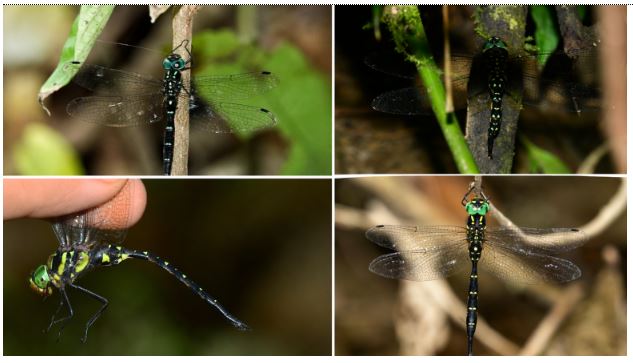
- 25 Apr 2026
In News:
The recent discovery of three new dragonfly species in Northeast India marks a significant milestone for Indian entomology and underscores the region's status as a global biodiversity hotspot. Published in the journal Zootaxa, the study by researchers from the National Centre for Biological Sciences (NCBS) and local naturalists highlights the "micro-endemic" nature of species in the Siang Valley and Assam’s forest fringes.
The New Additions to India’s Odonate Fauna
The discoveries belong to the rare genus Sarasaeschna (commonly called Boghawkers), which are known for their preference for shaded, high-altitude forest ponds and wetlands.
- Clouded Boghawker (Sarasaeschna nuboides)
- Location: Discovered in the Siang Valley of Arunachal Pradesh, near the periphery of Mouling National Park.
- Characteristics: It is named for the distinctive "cloudy" or nebulous wing markings. It was observed flying rapidly over shallow, shaded forest ponds.
- Siang Boghawker (Sarasaeschna sigotaayo)
- Location: Also found in the Siang Valley, Arunachal Pradesh.
- Etymology: The name "Sigotaayo" is derived from the local Adi language, where ‘Siang’ refers to the big river. It possesses bolder thoracic stripes compared to its relatives.
- Long-tailed Boghawker (Sarasaeschna dosdewaensis)
- Location: Discovered in the Karimganj district of Assam (specifically the Dosdewa forest village).
- Background: This area is increasingly recognized as an "Odonate Diversity Hotspot." The species is characterized by its exceptionally elongated male caudal appendages (tail structures).
Ecological and Biological Significance
Dragonflies belong to the order Odonata and are among the oldest living insect lineages, predating dinosaurs by over 100 million years. Their role as bio-indicators is crucial:
- Environmental Health: Dragonflies are sensitive to changes in water quality and habitat structure. Their presence indicates healthy, oxygen-rich freshwater ecosystems.
- Apex Predators of the Insect World: Equipped with nearly 360-degree vision, they are voracious predators of mosquitoes and flies, acting as natural biological control agents.
- Taxonomic Milestone: Along with the three new species, the researchers also rediscovered the Khasi Boghawker (Sarasaeschna khasiana) in Meghalaya after a gap of 58 years, confirming its persistence in the Khasi Hills.
Dragonflies vs. Damselflies: Key Distinctions
While both belong to the order Odonata and share similar life cycles, they can be differentiated by their morphology and behavior:
- Resting Posture: This is the most visible difference. Dragonflies hold their wings horizontally (spread out) when at rest. In contrast, damselflies typically fold their wings together, holding them straight up above their bodies.
- Physical Build: Dragonflies are generally larger and more robust with powerful flight capabilities. Damselflies are smaller, more slender, and appear "delicate" in flight.
- Eye Position: Dragonfly eyes are very large and often touch at the top of the head. Damselfly eyes are separated, resembling dumbbells on either side of the head.
Narcotics Analysis & RAG-based Investigation Tool (NARIT-AI)
- 24 Apr 2026
In News:
In a pioneering move for Indian law enforcement, the Gujarat Police has launched the Narcotics Analysis & RAG-based Investigation Tool (NARIT-AI). Developed by the Western Railway Police (Vadodara Division) in collaboration with private partner Gradiante Creative Services, this system makes Gujarat the first state in India to deploy a specialized AI-driven platform for narcotics investigations.
The Technology: Retrieval-Augmented Generation (RAG)
The core strength of NARIT-AI lies in its Retrieval-Augmented Generation (RAG) architecture. Unlike standard Generative AI (like ChatGPT) that relies on broad, sometimes unreliable internet data, RAG allows the tool to operate within a "walled garden" of verified information.
- Closed Database: The tool analyzes First Information Reports (FIRs) against a specific, high-authority database containing Supreme Court and High Court judgments, Government of India circulars, and the new criminal laws—Bharatiya Nyaya Sanhita (BNS), Bharatiya Nagarik Suraksha Sanhita (BNSS), and Bharatiya Sakshya Adhiniyam (BSA).
- Privacy and Accuracy: By avoiding the general internet, NARIT-AI ensures sensitive case data remains private and prevents "AI hallucinations"—a phenomenon where AI generates plausible-sounding but legally incorrect information.
Strategic Functions in Narcotics Enforcement
The Narcotic Drugs and Psychotropic Substances (NDPS) Act, 1985, is one of India's most stringent laws, characterized by complex procedural requirements. NARIT-AI acts as a "digital legal consultant" to assist Investigating Officers (IOs) in the following ways:
1. Procedural Compliance and Evidence Checklists: The tool provides real-time procedural guidance to ensure that officers do not commit technical errors during search and seizure (such as violations of Section 50 of the NDPS Act, regarding personal search). It generates an evidence checklist tailored to the specific details of a case.
2. Predictive Legal Analysis: NARIT-AI evaluates the strengths and weaknesses of an FIR. Crucially, it can predict potential defense arguments that may be raised in court, allowing prosecutors to prepare robust rebuttals in advance.
3. Real-Time Legal Research: Instead of manual searches through voluminous law books, the tool provides immediate citations of relevant precedents, ensuring that the investigation is aligned with the latest judicial interpretations.
Significance for the Criminal Justice System
The deployment of NARIT-AI addresses several systemic bottlenecks in the Indian legal framework:
- Improving Conviction Rates: NDPS cases often result in acquittals due to procedural lapses. By providing an AI-driven "compliance check," the tool ensures that the prosecution's case is watertight.
- Capacity Building: It empowers junior officers with the expertise of seasoned legal analysts, standardizing the quality of investigations across the state.
- Modernizing the 3Cs: It aligns with the national goal of digitizing the three pillars of criminal justice—Courts, Police, and Prisons—by integrating advanced analytics into daily policing.
‘Yellow Line’ Security Strategy
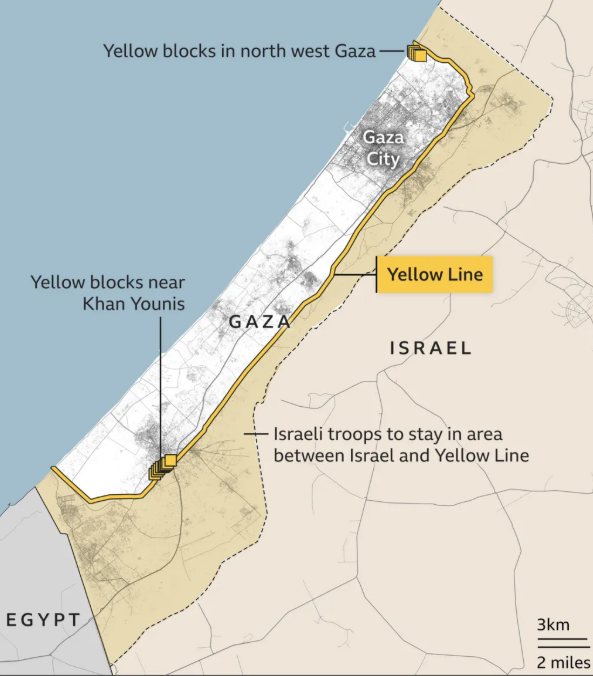
- 24 Apr 2026
In News:
In a significant shift of military doctrine, the Israeli government has officially expanded its Yellow Line strategy from the Gaza Strip to Southern Lebanon. By April 2026, following a ceasefire with Hezbollah, the Israel Defense Forces (IDF) began replicating the "Gaza Model" in the north, establishing a militarized buffer zone that extends up to the strategic Litani River.
Defining the 'Yellow Line'
The Yellow Line is not a political border but a military demarcation and a strategic construct. It is a fortified, static boundary placed deep within hostile territory to create a free-fire zone under direct and open-ended Israeli military control.
- Physical Manifestation: The line is literally color-coded. It is marked by yellow-painted concrete bollards spaced at 200-meter intervals and 3.5-meter-high poles.
- Operational Context: Unlike the Green Line of 1967, which was a traditional ceasefire line, the Yellow Line is an internal partition that divides an enclave into Israeli-occupied zones and local administrative areas.
Chronology and Historical Roots
The philosophy behind the Yellow Line draws from historical Israeli deployment boundaries like the Green Line and the Area A demarcations in the West Bank. However, its modern application is far more intrusive:
- Gaza Strip (October 2025): First introduced as part of a peace framework proposed by US President Donald Trump. It placed approximately 58% of the Gaza Strip under Israeli military control, confining the local population to just 42% of the territory.
- Southern Lebanon (April 2026): Following the northern conflict, the strategy was applied to Lebanon, creating a forward defensive posture designed to prevent militant groups from launching close-range attacks on Israeli border communities.
Strategic Objectives and Military Features
The primary goal of the Yellow Line is forward defense—transitioning from mobile combat to a permanent, static presence.
- Static Defense Infrastructure: The line is reinforced with fortified outposts, earth mounds, radio towers, and surveillance sensors.
- Total Control Zones: The area east of the line is classified as a closed military zone. The IDF maintains the authority to level infrastructure and prevent civilian return within this perimeter to ensure a "clear view" for security forces.
- Resource Intensity: This strategy is high-maintenance. Sustaining the line in Gaza alone requires two full IDF divisions, creating a continuous strain on Israel’s reserve forces and national budget.
International and Humanitarian Significance
The "Yellow Line" has sparked intense global debate, with international bodies like the OHCHR (Office of the High Commissioner for Human Rights) and Euro-Med raising significant alarms.
1. Creeping Annexation: Critics argue the doctrine represents a shift toward "creeping annexation," where permanent military buffers become the standard response to regional conflicts, effectively shrinking the sovereign territory of neighboring entities.
2. Forced Displacement and Ghettoization: The strategy has been classified by human rights organizations as a tool for "ghettoization." By cutting off access to vital agricultural lands, urban centers, and water resources (like the Litani River), it induces long-term displacement of the local population.
3. Regional Stability: While Israel views the line as a necessary shield for its border communities, regional analysts suggest it may become a flashpoint for future friction, as the permanent occupation of foreign soil often fuels long-term insurgency.
Online Gaming Authority of India (OGAI)

- 24 Apr 2026
In News:
The landscape of India’s digital economy has reached a significant milestone with the official operationalization of the Online Gaming Authority of India (OGAI) on May 1, 2026. Established under the Promotion and Regulation of Online Gaming Act 2025, this central regulatory body marks a shift from fragmented state-level oversight to a unified, "digital-first" national framework.
Understanding the Online Gaming Authority of India (OGAI)
The OGAI is an attached office under the Ministry of Electronics and Information Technology (MeitY). Headquartered in Delhi, it operates primarily as a digital office to minimize physical processes and enhance governance efficiency in the fast-evolving gaming sector.
Core Objectives and Functions
- Classification and Registration: The OGAI holds the exclusive power to determine if a game qualifies as a permissible e-sport, an online social game, or a prohibited "online money game."
- Regulatory Oversight: It issues mandatory guidelines, codes of practice, and directions to ensure platforms comply with user safety standards.
- Grievance Redressal: It serves as the second tier of a two-tier grievance mechanism. Users dissatisfied with a platform's resolution can appeal to the OGAI, which aims to resolve disputes within 30 days.
- Enforcement and Coordination: OGAI coordinates with financial institutions and law enforcement agencies to block payment gateways for prohibited money games, effectively acting as a financial gatekeeper.
A New Categorization System
Under the 2025 Act and the subsequent 2026 Rules, the traditional "Skill vs. Chance" debate has been replaced by a tripartite classification:
- E-Sports: Recognized as legitimate competitive skill-based sports. Registration is mandatory for games seeking this status, granting a digital certificate valid for 10 years.
- Online Social Games: Primarily skill-based games for entertainment (e.g., Ludo or social puzzles) with no stakes involved. Registration for these is generally voluntary, though the OGAI can review them based on scale or risk.
- Online Money Games: Defined as any game where users pay stakes with an expectation of monetary gain. These are entirely prohibited under the new law, along with their advertising and financial facilitation.
Institutional Framework and Membership
The OGAI is a high-level body comprising six members, ensuring a "whole-of-government" approach to regulation:
- Chairperson: Additional Secretary, Ministry of Electronics and Information Technology (MeitY).
- Members: Joint Secretaries from the following key departments:
- Ministry of Home Affairs (MHA)
- Ministry of Information and Broadcasting (MIB)
- Ministry of Youth Affairs and Sports
- Department of Financial Services (DFS)
- Department of Legal Affairs
The "Gatekeeper" Model: Enforcement and User Safety
A standout feature of the 2026 regulatory regime is the role of financial intermediaries. Banks and UPI platforms are now legally required to verify the OGAI registration status of a service before processing transactions.
Mandatory User Safety Standards:
- Age-Gating: Robust age verification to prevent minors from accessing age-restricted content.
- Time Restrictions: Limits on excessive play to prevent digital addiction.
- Parental Controls: Tools allowing parents to monitor and restrict gaming activities.
- KYC and Data Localization: All user data must be stored within India to ensure national security and regulatory accountability.
Limnonectes motijheel
- 24 Apr 2026
In News:
In a significant breakthrough for Indian herpetology, scientists have discovered a rare species of fanged frog, Limnonectes motijheel, within the pristine ecosystems of the Namdapha Tiger Reserve in Arunachal Pradesh. This discovery underscores the immense, yet often hidden, biodiversity of the Eastern Himalayas and provides new insights into the evolution of amphibian breeding behaviors.
The Anatomy and Behavior of Limnonectes motijheel
The newly identified species belongs to the genus Limnonectes, a group of amphibians spread across South and Southeast Asia. With this addition, the number of known Limnonectes species in India has risen to six.
Key Biological Features:
- The "Fangs": The frog is characterized by small, bony, fang-like projections in the lower jaw of the males. These are not true teeth but are believed to be used for territorial combat or as an aid in feeding.
- Physical Appearance: It possesses a distinct dark-brown line between the eyes, an inverted "V"-shaped ridge on its back, and broken longitudinal folds along its flanks.
- Dimensions: As a medium-sized amphibian, adults typically measure between 2.3 to 3.5 centimeters.
- Naming: The species is named after Motijheel, a site within Namdapha renowned for its exceptionally high amphibian density and diversity.
Unique Breeding: The Mud-Nester
Perhaps the most striking feature of Limnonectes motijheel is its reproductive strategy. Unlike most frogs that deposit eggs in water bodies or on overhanging foliage, this species constructs a mud nest beneath leaf litter on the forest floor. This specific "house-building" behavior is a unique adaptation for moisture retention and predator avoidance, and it represents the first recorded instance of mud-nesting within this genus in India.
Namdapha Tiger Reserve
The discovery highlights the ecological importance of Namdapha, a National Park and Tiger Reserve located in the Changlang District of Arunachal Pradesh, bordering Myanmar.
Geographic and Ecological Significance:
- Biogeographical Junction: Namdapha sits at the confluence of the Indian Sub-Continent and Indo-China Biogeographic Regions. It is nestled between the Mishmi Hills (Dapha Bum ridge) and the Patkai ranges.
- Hydrology: The reserve is drained by the Namdapha River, a tributary of the Noa-Dihing, which flows through the heart of the park.
- Vegetation Gradient: Due to its vast altitudinal range, the park exhibits a diverse floral spectrum, ranging from Tropical Evergreen and Moist Deciduous forests to Temperate and Alpine Scrub forests.
Biodiversity Highlights:
- The Four Big Cats: Namdapha is the only park in the world that serves as a habitat for four species of big cats: Tiger, Leopard, Snow Leopard, and Clouded Leopard.
- Rare Fauna: It is home to the Hoolock Gibbon (India’s only ape), the Slow Loris, and the Himalayan Sun Bear.
- Endangered Flora: The park hosts the rare Blue Vanda orchid and the medicinal plant Mishimi Teeta (Copti teeta), which is central to the traditional medicine of local tribes.
NBA Revised Guidelines on Biological Diversity Act (BDA), 2002
- 24 Apr 2026
In News:
In a significant stride toward strengthening India’s ecological governance, the National Biodiversity Authority (NBA), during its 77th meeting in March 2026, approved a comprehensive policy overhaul. This drive focuses on two critical pillars: streamlining the utilization of Access and Benefit Sharing (ABS) funds and modernizing the management of Designated Repositories.
These measures align with the Biological Diversity Act (BDA), 2002, ensuring that the commercial use of India’s vast bio-resources translates into tangible benefits for local communities and the environment.
Rationalizing the Access and Benefit Sharing (ABS) Framework
The ABS mechanism is a legal mandate ensuring that those who access biological resources for commercial purposes share a portion of their gains with the "custodians" of that biodiversity. The 2026 guidelines introduce a transparent, formula-based approach to resolve long-standing ambiguities in fund distribution.
1. The New Fund Sharing Formula
The NBA has rationalized the allocation of funds based on the identifiability of the resource's source:
- Identifiable Source: In cases where the origin of the bio-resource is known, 25–40% of the ABS amount is allocated to the concerned institutions or repositories to reward their role in documentation and value addition. The lion’s share, 60–75%, is channeled back to local communities and beneficiaries via State Biodiversity Boards (SBBs) and Union Territory Biodiversity Councils (UTBCs).
- Non-Identifiable Source: Where the specific origin is difficult to trace, a standard ratio of 30% (to institutions) and 70% (to the NBA) is applied. These funds are then utilized for broader biodiversity conservation and management under Section 32 of the Act.
2. Addressing Complex Supply Chains
Bio-resources are often accessed through traders and intermediaries, making it difficult to ascertain a single point of origin.
- Widely Distributed Resources: If resources are spread across the country with no clear origin, the funds are utilized collectively for socio-economic development and conservation in accordance with Section 27 of the BDA.
- State-Specific Data: If data allows for the identification of specific states, the NBA will distribute the funds to the respective SBBs/UTBCs for localized utilization.
Modernizing Designated Repositories
Designated Repositories act as the "banks" for India’s biological heritage, housing voucher specimens of resources accessed under the Act. The revised guidelines seek to transform these from mere storage units into centers of scientific integrity.
Key Reforms in Repository Management:
- Provenance and Traceability: Repositories must now maintain robust "provenance" records—the complete history of ownership and origin—to prevent biopiracy and ensure legal compliance.
- Digitization of Specimens: A major policy shift involves the digitization of voucher specimens. This enhances global accessibility for verification and scientific identification while minimizing the physical transfer of sensitive biological materials, which often carries ecological and legal risks.
- Strict Standard Operating Procedures (SOPs): Revised guidelines mandate rigorous documentation practices and safe custody protocols to maintain the scientific integrity of samples.
Strategic Significance for Biodiversity Governance
- Equity and Social Justice: By defining clear percentages for local communities, the NBA prevents institutional monopolies over ABS funds. This ensures that the primary conservers—tribal and rural communities—receive their fair share of commercial returns.
- Socio-Economic Development: The directive to utilize funds for the development of the "area of origin" ensures that biodiversity conservation is linked with local prosperity.
- Scientific Integrity: The emphasis on digitization and provenance records aligns Indian standards with global best practices, making the regulatory framework more efficient for researchers and industry players alike.
- Strengthening Federalism: The active role of SBBs and UTBCs in fund distribution reinforces the three-tier structure (National, State, and Local) envisaged under the Biological Diversity Act.
Asia-Pacific Economic Outlook 2026
- 23 Apr 2026
In News:
The recently released "Economic and Social Survey of Asia and the Pacific 2026" by the United Nations Economic and Social Commission for Asia and the Pacific (UN ESCAP) paints a challenging picture for the region. As the Asia-Pacific continues to be the world's fastest-growing developing bloc, its resilience is currently being tested by heightened geopolitical tensions in West Asia, leading to a sharp reversal in price stability.
Key Projections: Growth Slowdown and Inflation Spike
The report highlights a significant shift in the regional economic landscape for 2026:
- Regional Inflation Surge: Average inflation in developing economies of the Asia-Pacific is projected to climb to 4.6% in 2026, a steep rise from 3.5% in 2025.
- Economic Growth Deceleration: Correspondingly, real GDP growth is expected to slow to 4.0%, down from 4.6% in the previous year.
- The "West Asia Conflict" Catalyst: The primary driver of this volatility is the conflict in West Asia, which has disrupted energy markets and global trade routes.
- Brent Crude: Spiked to approximately $120 per barrel (a 45% increase from pre-conflict levels).
- Global Gas & Fertilizers: Natural gas prices surged by 55%, while urea prices jumped by 35%, directly inflating agricultural input costs.
Impact on the Indian Economy
India, sourcing roughly 50% of its oil and a vast majority of its LPG from West Asia, remains particularly vulnerable to these external shocks.
- GDP & Inflation Forecast: India’s growth is projected to ease to 6.4% in 2026 (from 7.4% in 2025), while domestic inflation (CPI) is expected to spike to 4.4%.
- The CAD-Oil Nexus: Historically, every $10 increase in crude oil prices widens India’s Current Account Deficit (CAD) by approximately 0.55% of GDP.
- Monetary Policy Strains: Rising "Imported Inflation" complicates the Reserve Bank of India's (RBI) mandate. High price levels limit the RBI’s ability to lower interest rates, thereby keeping borrowing costs high and potentially suppressing domestic investment.
About UN ESCAP: The Institutional Framework
Established in 1947 and headquartered in Bangkok, Thailand, UN ESCAP serves as the most inclusive intergovernmental platform for the Asia-Pacific region.
- Mandate: To promote economic and social development through regional cooperation. It is one of the five regional commissions of the United Nations.
- Membership: Comprises 53 member states and 9 associate members, focusing on solutions for sustainable development challenges.
- Core Areas of Work: UN ESCAP provides critical analytical insights into Macroeconomic Policy, Poverty Reduction, Trade, Environment, and Disaster Risk Reduction.
Challenges: "Greenflation" and Vulnerable Populations
The report introduces the concept of "Greenflation"—the rising cost of materials and energy associated with the clean energy transition. While the transition is necessary for long-term climate goals, poorly managed shifts can fuel inflation and widen income inequality.
Furthermore, these macroeconomic shocks disproportionately affect low-income households and informal workers. For the nearly 20% to 28% of the undernourished population in some regional economies, food inflation becomes a direct threat to survival as they spend a larger share of their income on basic essentials.
Policy Recommendations
To navigate this period of "polycrisis," UN ESCAP and economic experts suggest a strategic pivot:
- Strategic Reserves: For India, expediting the expansion of Strategic Petroleum Reserves (SPR) at sites like Chandikhol and Padur is crucial to buffer against sudden supply disruptions.
- Domestic Demand Pivot: Moving away from a fragile export-led growth model toward strengthening domestic and regional demand to bypass fragmented global supply chains.
- Fiscal Prudence: Adhering to fiscal discipline (as per FRBM Act guidelines) during stable periods to create the "fiscal space" necessary to respond to external shocks without spiraling into debt.
- Targeted Support: Replacing broad-based subsidies with temporary, targeted support for vulnerable households and viable firms.
Shekha Jheel Bird Sanctuary
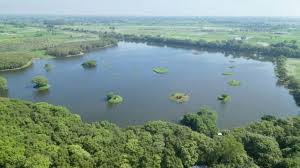
- 23 Apr 2026
In News:
In a significant milestone for India’s conservation efforts, the Shekha Jheel Bird Sanctuary in Aligarh, Uttar Pradesh, has been designated as a Ramsar Site. This addition brings India’s total tally of "Wetlands of International Importance" to 99, reinforcing the nation's leadership in biodiversity preservation under the Ramsar Convention.
Geographic and Historical Context
Shekha Jheel is a quintessential example of a monsoonal wetland nestled within the fertile Gangetic Plains of Uttar Pradesh. Unlike many natural oxbow lakes in the region, Shekha Jheel has a unique anthropogenic origin.
- Origin: The lake emerged as a perennial freshwater body following the construction of the Upper Ganges Canal in 1852. The canal flows adjacent to the lake, maintaining its water levels throughout the year.
- Location: It is situated in the Aligarh district, serving as a critical aquatic ecosystem in an otherwise semi-arid and agricultural landscape.
Ecological Profile: Flora and Fauna
The sanctuary's ecosystem is characterized by diverse strata of vegetation that support a complex food web:
1. Diverse Vegetation
The wetland hosts a variety of aquatic flora, categorized by their growth patterns:
- Submerged Species: The depths are populated by Hydrilla verticillata, Ceratophyllum demersum, and Vallisneria spiralis.
- Floating Species: The surface is covered by free-floating plants like Salvinia, Azolla, and the invasive Eichhornia crassipes (Water Hyacinth), alongside rooted floating plants such as Nymphoides cristata.
2. Avian Diversity and the Central Asian Flyway
Shekha Jheel serves as a vital "refueling station" on the Central Asian Flyway (CAF). During the winter months, the lake transforms into a bustling habitat for thousands of long-distance migratory birds.
- Key Migrants: The sanctuary provides refuge to the Bar-headed Goose (known for flying over the Himalayas), the Painted Stork, and numerous species of migratory ducks.
- Ecosystem Services: Beyond providing a habitat, the lake aids in groundwater recharge for the surrounding agricultural belt and acts as a natural buffer for flood control.
The Ramsar Framework in India
The designation of Shekha Jheel under the Ramsar Convention (1971) signifies that the site meets rigorous international criteria for biodiversity conservation.
- India’s Standing: With 99 sites spread across 28 states and Union Territories, India has the largest network of Ramsar sites in South Asia.
- Criteria for Selection: To be listed, a wetland must support vulnerable or endangered species, provide habitat for at least 20,000 waterbirds, or play a significant role in the biological diversity of its specific region.
- Conservation Status: Ramsar status mandates the "wise use" of the wetland, encouraging sustainable management that balances human needs (like local fishing) with ecological integrity.
Prajna System
- 23 Apr 2026
In News:
In a major boost to India’s technological self-reliance in the defense sector, the Union Ministry of Home Affairs (MHA) has officially integrated 'Prajna', an indigenously developed AI-enabled satellite imaging system.
Developed by the Centre for Artificial Intelligence and Robotics (CAIR), a premier laboratory under the Defence Research and Development Organisation (DRDO), the system is set to redefine how security agencies monitor and respond to internal threats.
Overview of the Prajna System
Prajna is a state-of-the-art surveillance and decision-support platform that bridges the gap between raw satellite data and actionable intelligence. Unlike traditional systems that rely on manual interpretation of images, Prajna utilizes Artificial Intelligence (AI) to process information at high speeds, providing real-time support to decision-makers.
Key Features and Capabilities:
- AI-Driven Analytics: The core of the system lies in its ability to process vast volumes of high-resolution satellite imagery. It employs deep learning algorithms to identify specific patterns, detect changes in terrain, and flag anomalies that might be invisible to the human eye.
- Real-Time Decision Support: By automating data processing, Prajna significantly reduces the "sensor-to-shooter" or "data-to-decision" time, allowing security forces to respond to emerging situations with greater accuracy.
- Situational Awareness: The system provides a comprehensive "common operating picture" by integrating various data streams, which is vital during complex operations in varied topographical conditions.
Strategic Applications in Internal Security
The induction of the Prajna system into the MHA’s toolkit marks a shift toward proactive rather than reactive security management:
- Counter-Terrorism Operations: The system is designed to monitor sensitive regions, including border areas and dense forest tracts used as hideouts. By identifying illegal movements or suspicious infrastructure, it aids in planning precise counter-terror strikes.
- Border Management: Prajna facilitates the surveillance of India’s vast and porous borders, helping to detect infiltration attempts and the movement of contraband in real time.
- Critical Infrastructure Protection: The system monitors key installations, such as dams, power plants, and communication hubs, for any signs of sabotage or unauthorized encroaching.
- Disaster Management: While primarily a security tool, its real-time imaging capabilities can be repurposed for disaster response, such as monitoring flood levels or landslide-prone areas to coordinate rescue efforts.
Super El Niño
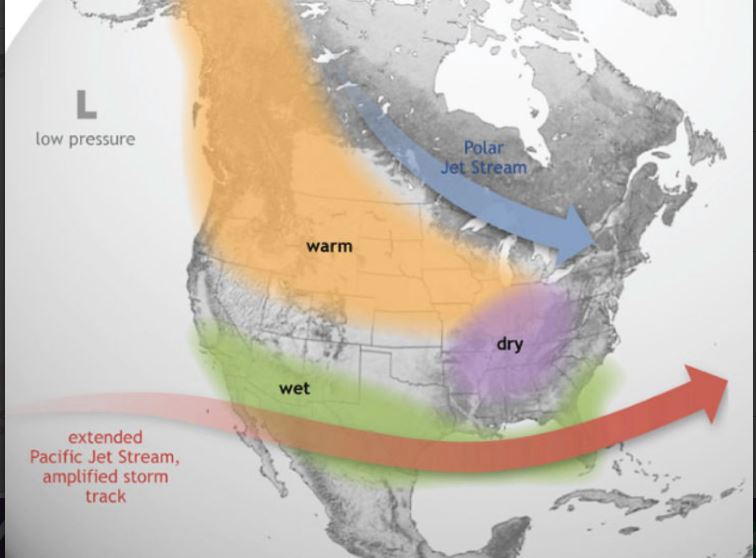
- 23 Apr 2026
In News:
Climate experts are sounding alarms over a potential "Super El Niño" developing in the 2026-27 cycle. With projections suggesting it could be the strongest in 140 years, this climate phenomenon is poised to redefine global temperature benchmarks in 2027 and trigger severe socio-economic disruptions.
Decoding the ENSO Mechanism
The El Niño-Southern Oscillation (ENSO) is a periodic fluctuation in sea surface temperatures (SST) and atmospheric pressure across the tropical Pacific Ocean. It consists of three phases: El Niño (warm), La Niña (cool), and Neutral.
Normal vs. El Niño Conditions
- Normal (Neutral) Phase: Strong trade winds blow from east to west (Easterlies), piling up warm surface water near Asia and Indonesia. This allows cold, nutrient-rich water to rise (upwelling) along the South American coast (Peru).
- El Niño Phase: Trade winds weaken or reverse into Westerly Wind Bursts. This allows the warm water pool to slide eastward toward the Americas as a Kelvin wave. This warm layer pushes down the thermocline (the transition layer between warm surface and cold deep water), shutting off the upwelling of cold water.
What Makes it a "Super" El Niño?
While a standard El Niño involves an SST anomaly of 0.5°C, a Super El Niño is defined by an extreme spike in the Niño 3.4 region (the central-eastern equatorial Pacific).
- Intensity Threshold: SST anomalies must soar at least 2.0°C (3.6°F) above the long-term average.
- Subsurface Heat Reservoir: A massive buildup of subsurface heat—currently measured at 7-8°C above average in localized areas—acts as high-octane fuel for surface warming.
- Westerly Wind Bursts: Unusually strong wind bursts from the west prevent the system from neutralizing, accelerating the eastward migration of heat.
- Global Warming Synergy: Human-induced climate change has raised the "baseline" temperature of the Pacific. Consequently, modern El Niños are "supercharged," starting from a warmer foundation and reaching unprecedented peaks.
Global and Regional Implications
The atmospheric response to such extreme ocean warming alters global jet streams, creating a "domino effect" of weather disasters.
1. Global Consequences
- Record Temperatures: 2027 is projected to become the hottest year on record, potentially pushing global warming past the 1.5°C threshold temporarily.
- Hydrological Extremes: While the southern US and Peru face devastating floods and deluges, regions like Ethiopia, Central Africa, and Australia are likely to endure severe, multi-year droughts.
- Hurricane Dynamics: High-altitude winds (wind shear) in the Atlantic tend to "shred" developing hurricanes, leading to a quieter Atlantic season but a more active and vicious season in the Central and Eastern Pacific.
2. The "India Factor": Monsoon and Economy
For India, a Super El Niño is traditionally a harbinger of distress:
- Monsoon Failure: There is a strong correlation between El Niño and deficient Southwest Monsoon rainfall. A "Super" event could lead to widespread drought across the subcontinent.
- Agricultural Stress: Deficient rains during the Kharif season (rice, pulses, sugarcane) can lead to crop failure, triggering food inflation and a decline in rural demand.
- Heatwaves and Health: The phenomenon intensifies and prolongs summer heatwaves, straining the national power grid and increasing heat-related mortality.
- Economic Impact: The World Meteorological Organization (WMO) warns of billions in economic losses in climate-sensitive sectors like water management and hydroelectric power.
The impending 2026-27 Super El Niño is not just a weather event; it is a stress test for global climate adaptation strategies. For India, this underscores the urgency of strengthening Climate-Resilient Agriculture (CRA), improving water-use efficiency through the Jal Jeevan Mission, and enhancing early warning systems under the National Disaster Management Plan. As the planet enters uncharted thermal territory, proactive policy intervention will be the only shield against the "Super" extremes of a warming world.
Truck Mounted Attenuators (TMAs)
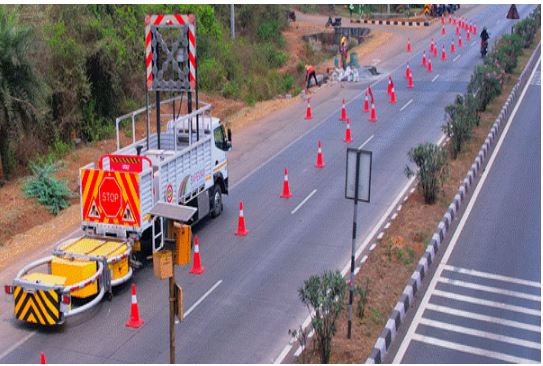
- 23 Apr 2026
In News:
As India aggressively expands its National Highway network, the Ministry of Road Transport and Highways (MoRTH) has shifted its focus from mere connectivity to achieving global standards in road safety. A critical component of this transition is the deployment of Truck Mounted Attenuators (TMAs), a technology-driven intervention designed to safeguard both highway commuters and the personnel maintaining India's high-speed corridors.
Understanding Truck Mounted Attenuators (TMAs)
A Truck Mounted Attenuator is an advanced, energy-absorbing safety device attached to the rear of a service vehicle. It acts as a sacrificial barrier, designed to crumple and absorb the kinetic energy of an errant vehicle before it can strike maintenance crews or construction machinery further ahead.
Key Technical Standards
To ensure reliability, the units deployed on Indian highways comply with rigorous international crash-test protocols:
- MASH Test Level-3 (TL-3): This modern standard ensures the device can handle impacts from heavier vehicles at higher speeds.
- NCHRP 350 Test Level-3: A globally recognized benchmark for roadside safety hardware.
- Impact Resilience: These systems are engineered to withstand and dissipate the force of a collision at speeds of up to 100 km/h.
Core Functions and Impact Mitigation
The deployment of TMAs serves a dual purpose: active prevention and passive protection.
1. Kinetic Energy Dissipation: In the event of a rear-end collision, the attenuator structure collapses in a controlled manner. This dissipation of force significantly:
- Reduces the severity of injuries for the occupants of the crashing vehicle.
- Prevents the service truck from being pushed forward into the maintenance zone where workers are operating.
2. Early Warning Systems: Prevention is achieved through integrated Wig-Wag Warning Lights. These high-intensity lights flash in alternating patterns to form clear directional arrows. This is particularly vital in:
- High-speed corridors where reaction times are minimal.
- Low-visibility conditions, such as heavy fog or nighttime operations.
- Advanced Alerting: By providing a visual cue well in advance, these signals nudge drivers to change lanes safely, preventing the accident entirely.
Strategic Significance for India
The integration of TMAs into the Indian road ecosystem carries profound implications:
- Reduction in Work-Zone Fatalities: Construction zones are high-risk environments. TMAs provide an "invisible shield" for ground workers who are often vulnerable to speeding traffic.
- Economic Resilience: By minimizing accident severity, the government reduces the massive economic loss associated with road fatalities and long-term disability.
- Global Best Practices: The move aligns India with the infrastructure standards of developed nations, making Indian highways safer for international logistics and transit.
Aspero
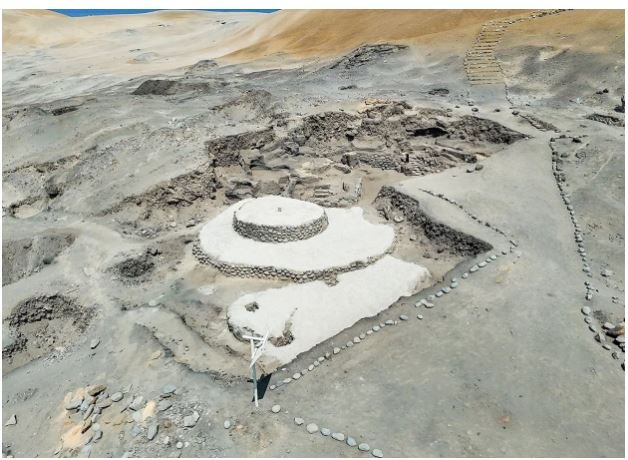
- 22 Apr 2026
In News:
In a landmark finding for pre-Columbian history, archaeologists in Peru have recently uncovered an architectural structure at Áspero specifically designed for celestial observation. This discovery provides unprecedented insight into the early scientific prowess of the Caral Civilization (Norte Chico), one of the oldest known urban societies in the Americas.
The Maritime Capital of Caral
Áspero serves as a coastal counterpart to the Sacred City of Caral. Located on the right bank of the Supe River, just 500 meters from the Pacific Ocean, it functioned as the primary fishing and marine supply hub for the inland urban centers of the Supe Valley.
- Timeline: Occupied during the Late Archaic (Preceramic) period, approximately 3000 BC to 1800 BC.
- Civilizational Link: It is a key site of the Norte Chico/Caral-Supe civilization, characterized by its monumental architecture without the use of ceramics.
- Social Complexity: The site features 25 architectural complexes, including platform mounds and sunken circular plazas, reflecting a highly organized society capable of large-scale cooperative labor.
The Discovery: An Ancient Observatory
The newly identified structure, located in Sector J1, represents a specialized "astronomical center." This find confirms that the inhabitants of Áspero were not just expert fishers but also early scientists who mastered the observation of natural cycles.
Key Features of the Structure:
- Strategic Positioning: The observatory is situated near the settlement's main pyramid buildings. From this elevated vantage point, there is a clear, unobstructed view of both the coastline and the lower Supe Valley.
- Dual-Level Design: Unlike similar astronomical markers found in inland Caral, the Áspero observatory is a two-level structure. Researchers suggest this design was specifically tailored to its coastal location to monitor maritime and riverine phenomena simultaneously.
- The Shadow Effect: Constructed using rounded stones and pebbles bound with clay, the structure was engineered to cast specific shadows on its surfaces. By tracking these shadows, the ancient inhabitants could determine the cycles and movements of the sun, moon, and stars.
Functional Significance: Science in Service of Survival
The ability to "read the sky" was not merely a ritualistic endeavor; it was a critical tool for sustainable environmental management:
- Predicting Tides: Precise astronomical knowledge allowed the Caral people to predict tide changes, essential for their primary industry—fishing and shellfish gathering.
- Climate and Agriculture: While Áspero was maritime-focused, it engaged in intensive trade with agricultural inland sites. Monitoring celestial cycles helped predict El Niño events and the seasonal drying of the Supe River (which occurs between April and November), facilitating food security through exchange.
- Ritual and Governance: Such scientific knowledge likely reinforced the authority of the elite. Notable finds like the Lady of the Four Tupus and high-status child burials indicate a stratified society where "knowledge-keepers" held significant power.
Global and Comparative Significance
The discovery at Áspero challenges the notion that complex science only followed the advent of agriculture. It supports the "Maritime Foundations of Andean Culture" theory, suggesting that abundant marine resources provided the caloric surplus necessary to support a class of people dedicated to architecture, trade, and astronomy.
- Comparative Link: This observatory mirrors structures in the Sacred City of Caral, proving a unified civilizational knowledge system across the Supe Valley.
- Advanced Urbanism: The presence of such specialized scientific infrastructure 5,000 years ago places the Caral Civilization on par with the early civilizations of Mesopotamia, Egypt, and the Indus Valley.
Stauranthera aureoglossa

- 22 Apr 2026
In News:
In a significant contribution to India’s botanical diversity, a team of researchers has identified a new plant species, Stauranthera aureoglossa, within the pristine but fragile ecosystems of the Eastern Himalayas. This discovery underscores the role of Arunachal Pradesh as a global biodiversity hotspot and highlights the urgent need for conservation in the face of infrastructure expansion.
Botanical Profile and Identification
Stauranthera aureoglossa is a perennial herb belonging to the family Gesneriaceae. It was specifically located in the mid-elevation evergreen forests of the Kamle and Upper Subansiri districts of Arunachal Pradesh.
- Habitat and Ecology: The species is highly specialized, thriving in shaded, humid environments. It is typically found clinging to damp rocks and soil in the immediate vicinity of perennial streams and rivulets.
- Morphological Features: The plant is characterized by its diamond-shaped or spear-shaped leaves. Unlike its closest relatives, its flower is uniquely bell-shaped with a bluish-purple hue.
- The ‘Golden Tongue’: The defining feature of this species—and the inspiration for its name—is the absence of a basal "spur" (a tubular projection) found in similar plants. Instead, it possesses a prominent raised, bumpy, yellow patch on the internal lower lip of its petals.
- Etymology: The specific epithet "aureoglossa" is derived from Latin, where aureo (golden) and glossa (tongue) refer to this distinct yellow appendage.
Ecological Significance and Conservation Status
The discovery of Stauranthera aureoglossa is a reminder of the "taxonomic gap" in the Eastern Himalayas, where many species remain unknown to science. However, the joy of discovery is tempered by the immediate threats facing its habitat.
- Endangered Status: Due to its extremely limited geographical range and the specific nature of its habitat, scientists have provisionally classified the species as Endangered.
- Threats to Habitat: The streamside niches where this herb thrives are under immense pressure from:
- Infrastructure Development: Road-widening projects in the border state often lead to debris being dumped into stream beds.
- Deforestation: Logging activities disrupt the canopy cover, altering the micro-climate required for these moisture-loving plants.
- Natural Disasters: The region is prone to landslides, which are often exacerbated by the aforementioned human activities, leading to the destruction of fragile populations.
Vishwa Sutra Initiative
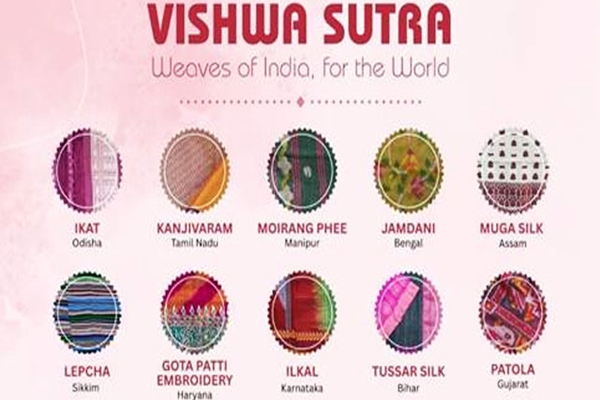
- 22 Apr 2026
In News:
In a significant stride toward elevating India’s traditional craftsmanship, the Ministry of Textiles recently launched the ‘Vishwa Sutra – Weaves of India for the World’ initiative. Orchestrated by the Office of the Development Commissioner (Handlooms) in partnership with the National Institute of Fashion Technology (NIFT), this program seeks to bridge the gap between ancient heritage and modern international aesthetics.
The Core Vision: Globalizing Tradition
The "Vishwa Sutra" initiative is designed to place Indian handlooms within a contemporary global design framework. Rather than viewing handlooms as static relics of the past, the project treats them as dynamic canvases capable of resonating with international consumers.
- Diverse Representation: The initiative brings together 30 distinct handloom weaves, each curated to represent a specific Indian state.
- Cultural Fusion: Each of these 30 weaves has been creatively reinterpreted using design inspirations from 30 different countries. This cross-cultural dialogue blends traditional Indian techniques with global fashion sensibilities.
Notable Cross-Cultural Reinterpretations:
- Odisha Ikat: Reimagined through the lens of Greek geometric forms.
- Kanchipuram (Tamil Nadu): Infused with Norwegian minimalist lines.
- Muga Silk (Assam): Integrated with structural Egyptian elements.
- Patola (Gujarat): Reinterpreted with vibrant Spanish influences.
- Banarasi (Uttar Pradesh): Designed into UAE-inspired ensembles.
Strategic and Economic Significance
1. The 5F Framework: Vishwa Sutra acts as a practical implementation of the government’s 5F Vision:
- Farm (Cotton/Silk cultivation) Fibre(Spinning) Factory(Weaving) Fashion(Design) Foreign (Export).
This linear progression ensures that the benefits of global demand reach the primary producers—the weavers—strengthening the rural economy.
2. From "Vocal for Local" to "Local to Global": The initiative marks a transition in the government's industrial policy. By making traditional industries globally competitive, it aims to increase India's share in the global textile market, which is currently dominated by mass-produced fast fashion.
3. Preservation of Intangible Heritage: By providing a modern market for traditional techniques, the initiative ensures the survival of skills that have been refined over generations. It provides a financial incentive for the younger generation of weaver communities to continue their ancestral crafts.
R-37M Missile

- 22 Apr 2026
In News:
In a major strategic recalibration following the air combat lessons of 2025, Russia has officially greenlit the export of the R-37M (AA-13 Axehead) ultra-long-range air-to-air missile to India. Valued at approximately $1.2 billion for nearly 300 missiles, this deal is designed to restore the "Beyond Visual Range" (BVR) edge for the Indian Air Force (IAF) against the growing influence of Chinese-made missile systems in the region.
The Strategic Context: Operation Sindoor (2025)
- The urgency of the R-37M acquisition stems from the aftermath of Operation Sindoor (May 2025). Triggered by a terror attack in Pahalgam, the operation involved high-intensity air skirmishes where the IAF encountered Pakistani J-10C fighters armed with Chinese-origin PL-15 missiles.
- Reports from the clash suggested that the PL-15's range created a "technological gap," allowing adversary aircraft to threaten Indian fighters before they could return fire. To counter this, and the even more formidable PL-17 (range ~400 km) deployed by China, India has opted for the R-37M as a vital interim stabilizer while domestic programs like Astra Mk-2 and Mk-3 move toward operationalization.
The "AWACS Killer": Technical Specifications
The R-37M is not a standard dogfight missile; it is a specialist weapon designed for long-range air denial.
- Hypersonic Speed: It is the world’s fastest air-to-air missile in its class, reaching speeds of Mach 6. This velocity is critical for intercepting fast-moving jets and high-value assets.
- Massive Engagement Range: With a range of 300 to 400 kilometers, it enables the IAF to strike from deep within its own territory.
- Trajectory Profile: The missile employs a lofted trajectory, climbing into the thinner atmosphere before diving onto its target. This conserves kinetic energy and maximizes the "No-Escape Zone" for the enemy.
- The Target Profile: Its primary role is that of an "AWACS Killer." It targets high-value enablers such as Airborne Warning and Control Systems (AWACS), refueling tankers, and jamming aircraft, effectively "blinding" the enemy's air network.
Integration with the Su-30MKI Fleet
A major factor in selecting the R-37M is its compatibility with the Su-30MKI, the backbone of the IAF.
- Seamless Fit: Since the missile is already integrated into the Russian Su-30SM (a variant very similar to India’s MKI), technical risks are minimal.
- Modernization Link: The deployment is being synchronized with the "Super Sukhoi" upgrade program, which involves 84 aircraft. A fully upgraded Su-30MKI will be capable of carrying between six to eight R-37M missiles.
- Force Multiplier: By integrating the R-37M, the IAF can more than triple the current BVR engagement envelope of its frontline fighters.
Impact on Regional Air Dynamics
The acquisition shifts the focus from fighter-versus-fighter dogfights to network-centric warfare:
- Standoff Parity: It neutralizes the range advantage currently held by the Chinese PL-15 and PL-17 missiles.
- Deterrence: By threatening support aircraft (like the KJ-500 AEW&C), India forces the adversary to push their "enablers" further back from the frontline, reducing their coordination and radar coverage.
- Strategic Stabilizer: While India pursues indigenous "Astra" variants, the R-37M ensures there is no "capability vacuum" during the transition period.
Marine Heatwaves
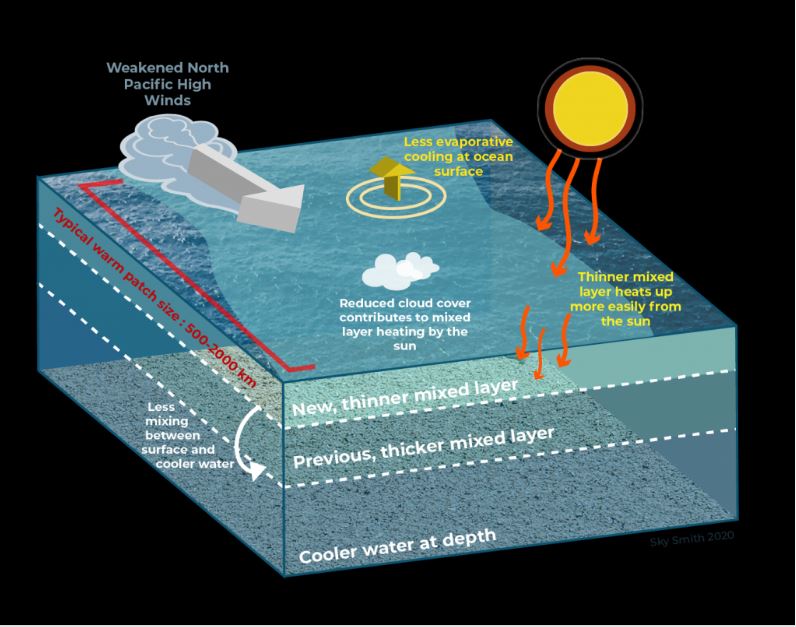
- 22 Apr 2026
In News:
In early 2026, a groundbreaking study published in Science Advances revealed a perilous synergy between the ocean and the atmosphere: Marine Heatwaves (MHWs) are now acting as high-octane fuel for tropical cyclones. This phenomenon has led to a 60% increase in billion-dollar disasters due to the "rapid intensification" of storms.
Understanding Marine Heatwaves (MHWs)
A Marine Heatwave is defined as a prolonged period (lasting days to months) of abnormally high ocean temperatures in a specific region.
- The Threshold: Typically, an anomaly of 1°C to 3°C above the long-term seasonal average is characterized as an MHW.
- Duration and Intensity: These events are not just about surface spikes; they often involve a "heat dome" effect within the water column, measured by their cumulative intensity and annual frequency.
The Mechanics of Formation
MHWs form when the ocean’s natural cooling mechanisms break down. This is driven by both atmospheric and oceanic factors:
- Weakening Winds: Strong winds normally cool the ocean via evaporation and by mixing the warm upper layer with cooler, deeper waters. When winds fail, this mixing stops.
- Ocean Stratification: Without wind-driven mixing, the top layer of the ocean becomes thin and "trapped."
- Solar Heating: This thin surface layer absorbs solar radiation rapidly. Because it cannot transfer heat to the depths, the temperature spikes, creating localized extreme heat.
- Global Drivers: Climate change ensures the oceans absorb 90% of excess global heat. Events like El Niño and shifts in atmospheric pressure (e.g., the North Pacific High) further trigger these massive pools of warm water.
How MHWs "Supercharge" Tropical Cyclones
The most critical takeaway for disaster management is the role of MHWs in Rapid Intensification (RI).
- Fueling the Engine: Tropical cyclones draw energy from the evaporation of warm ocean water. Passing over an MHW is like a car hitting a "gas station"; it provides an abundance of energy that boosts wind speeds by 20% and rainfall by 12%.
- Stalling and Decay: These "supercharged" storms tend to move more slowly over land and decay at a much lower rate, leading to catastrophic flooding.
- Economic Fallout: MHW-influenced cyclones are 1.6 times more likely to become billion-dollar disasters. This was evidenced by the back-to-back devastation of Hurricanes Helene and Milton in late 2024, where record-high sea surface temperatures in the Gulf of Mexico led to unprecedented destruction.
Ecological and Economic Implications
Beyond storm intensification, MHWs trigger a cascade of environmental crises:
- Ecosystem Collapse: MHWs are the primary cause of massive coral bleaching and the death of kelp forests, which are vital carbon sinks.
- Harmful Algal Blooms (HABs): Toxic algae thrive in warm water. These blooms produce neurotoxins like domoic acid, which contaminate the food chain and force the closure of commercial fisheries.
Biodiversity Loss: While some species migrate north ("the Winners"), cold-water species like salmon face mass die-offs ("the Losers").
The Union Territories Laws (Amendment) Bill, 2026
- 21 Apr 2026
In News:
As India undergoes a transformative phase in its parliamentary structure, the introduction of The Union Territories Laws (Amendment) Bill, 2026 in the Lok Sabha marks a pivotal step. Introduced alongside the 131st Constitutional Amendment and the Delimitation Bill, 2026, this legislation serves as a supplementary framework to ensure that structural reforms in the Indian legislature are inclusive of Union Territories (UTs).
Overview and Purpose
The primary objective of the Bill is to extend the benefits of the national-level constitutional shifts—specifically the expansion of Parliament and the implementation of women’s reservation to UTs with their own Legislative Assemblies. It targets the legal frameworks of the National Capital Territory (NCT) of Delhi, Puducherry, and Jammu & Kashmir.
Historically, major legislative changes often faced a "notification lag" when being applied to UTs due to their unique administrative status. This Bill bridges that gap, ensuring that the Nari Shakti Vandan Adhiniyam and the redrawing of electoral boundaries happen simultaneously across states and relevant UTs.
Key Features of the 2026 Bill
1. Accelerated Women’s Reservation
A cornerstone of this Bill is the delinking of women’s reservation from the 2027 Census. Under previous frameworks, the implementation of the one-third reservation for women was tied to the publication of the first census after 2023. The 2026 Bill modifies this requirement for UTs, allowing reservation to be implemented based on the 2011 Census data. This ensures that women can contest reserved seats in these UTs as early as the 2029 elections.
2. Integration with Parliamentary Expansion
The Bill aligns UT-specific statutes with the 131st Amendment, which increases the maximum number of representatives from UTs in the Lok Sabha from 20 to 35 members. This expansion reflects the demographic shifts and the need for more granular representation in India’s growing democracy.
3. Synchronized Delimitation
The Bill empowers the Delimitation Commission, constituted under the Delimitation Bill, 2026, to redraw assembly constituencies within Delhi, Puducherry, and Jammu & Kashmir. This ensures that the redrawing of seats is not a fragmented process but is synchronized with the national effort to rebalance electoral representation based on the latest available data.
4. Rotational Allotment
To maintain electoral fairness and prevent the entrenchment of specific seats, the Bill mandates that seats reserved for women in UT Assemblies will be allotted by rotation. This means the specific constituencies reserved for women will change in successive election cycles, ensuring diverse representation across all regions of the UT.
Strategic Significance
- Uniformity in Federal Structure: By passing this Bill, the government prevents a legal discrepancy where states could have moved forward with gender parity reforms while UTs remained stalled due to census-linked timelines. It enforces a uniform legislative timeline across the Union.
- Democratic Deepening: The increase in Lok Sabha seats for UTs (from 20 to 35) ensures that the voices of citizens in these administratively unique regions carry more weight in the national discourse.
- Empowerment of Nari Shakti: By bypassing the wait for the 2027 Census, the Bill translates the intent of the Nari Shakti Vandan Adhiniyam into reality at the grassroots level of UT governance.
CAFE-III Norms
- 21 Apr 2026
In News:
In a significant move toward decarbonizing the transport sector, the Indian government and the automobile industry have reached a consensus on the implementation of Corporate Average Fuel Efficiency (CAFE) Phase III norms. These standards represent a critical pillar of India’s strategy to achieve its climate commitments and reduce energy dependency.
Understanding CAFE Norms
Unlike Bharat Stage (BS) emission standards, which regulate the pollutant levels of individual vehicle models, CAFE norms focus on the weighted average fuel consumption and CO2 emissions of an automaker’s entire fleet. This holistic approach ensures that high-emission vehicles are balanced by the sale of more efficient or zero-emission models.
- Regulating Authority: The standards are formulated by the Bureau of Energy Efficiency (BEE) under the Ministry of Power.
- Target Segment: The norms specifically target M1 category passenger vehicles, which include vehicles weighing under 3,500 kg and designed to seat up to nine individuals.
- Timeline: CAFE-III is set to commence on April 1, 2027, and will remain in effect until March 31, 2032.
Core Objectives: Strategic and Environmental
- Energy Security: By improving fuel efficiency, India aims to reduce its massive crude oil import bill, a vulnerability highlighted by recent geopolitical instabilities such as the West Asia crisis.
- Climate Mitigation: The norms align with India’s Panchamrit goals, pushing the transport sector toward a lower carbon footprint.
- Technological Leapfrogging: The standards necessitate the transition from traditional Internal Combustion Engines (ICE) to advanced technologies, including Strong Hybrids, Battery Electric Vehicles (BEVs), and Flex-Fuel systems.
Key Features of the CAFE-III Framework
The transition from CAFE-II to CAFE-III involves a significant tightening of compliance parameters:
- Aggressive Emission Targets: Automakers must bring down their fleet-wide average CO2 emissions from the current target of approximately 113 g/km (at the end of FY27) to a stringent 78.9 g/km by FY32.
- The "Flatter Curve" Approach: To ensure parity, the government scrapped a proposal that would have given a 3 g/km relief to small petrol cars (under 909 kg). This encourages efficiency across all vehicle sizes rather than subsidizing smaller, less efficient engines.
- The Super Credit Scheme: To incentivize "green" production, the policy uses a multiplier system for every clean vehicle sold. Each sale of a Battery EV counts as 3.0 units, a Plug-in Hybrid (PHEV) as 2.5, and a Strong Hybrid as 1.6 toward the fleet average.
- Technological Incentives: Manufacturers can earn "discounts" on their emission scores by adopting any of the 12 approved energy-efficient technologies, such as 6-speed transmissions, start-stop systems, and high-efficiency air conditioning units.
- Regulatory Flexibility: Recognizing the challenges of a rapid transition, the framework allows for credit trading between manufacturers and the ability to carry forward excess compliance from previous years.
Anticipated Socio-Economic Implications
The implementation of CAFE-III will reshape the Indian automotive landscape in several ways:
- Shift in Market Share: As petrol engines become harder to justify under strict fleet averages, there will be a decisive shift toward CNG, which is expected to dominate a significant market share by 2032, alongside Hybrids and EVs.
- Impact on Affordability: The integration of advanced hybrid systems and lightweight materials is likely to drive up the manufacturing costs, potentially making entry-level vehicles more expensive for the average consumer.
- Infrastructure Demand: The "Super Credit" push for EVs and Hybrids will necessitate a rapid expansion of charging and fueling infrastructure across the country.
Jumping Spiders

- 21 Apr 2026
In News:
The biodiversity landscape of India continues to expand with the recent identification of two new species of jumping spiders: Mogrus shushka and Mogrus pune.
Understanding the Genus: Mogrus
The newly identified spiders belong to the genus Mogrus, a group of medium-sized jumping spiders. Members of this genus are primarily distributed across the arid and semi-arid landscapes of Africa, Europe, and Asia. Jumping spiders (family Salticidae) are renowned for their exceptional vision and agile hunting techniques, often pouncing on prey rather than weaving traditional webs.
1. Mogrus shushka: The Arid Specialist
Discovered in the Desert National Park (DNP), Rajasthan, Mogrus shushka represents the hardy nature of the Thar Desert’s micro-fauna.
- Etymology: The species name is derived from the Sanskrit word ‘shushka’, meaning ‘dry’. This nomenclature directly references the hyper-arid environment of its habitat.
- Adaptations: It is evolutionarily tuned to survive extreme thermal fluctuations, negligible humidity, and the shifting sandy terrain of the desert.
- Morphological Distinctions:
- Males: They are distinguished from their close relative, M. cognatus, by a unique triangular-shaped bump on their pedipalp (mating appendage), as opposed to a thumb-shaped structure.
- Females: They possess a deep, semi-circular epigynal depression (on the underside) characterized by short, tightly spaced internal ducts.
2. Mogrus pune: The Urban Biodiversity Indicator
In a significant finding for urban ecology, Mogrus pune was discovered in the Alfa Laval Biodiversity Park, Maharashtra.
- Etymology: The species is named after the city of Pune, emphasizing the role of urban green spaces in sustaining undiscovered life forms.
- Morphological Distinctions:
- Males: These are identified by a heart-shaped bump on their reproductive organs and specific, uniquely curved anatomical structures.
- Females: They are characterized by a central depression that is notably wide and membranous, a key feature used for taxonomic classification.
Significance for Biodiversity and Conservation
These discoveries underscore several critical points regarding India’s environmental health:
- Arid Ecosystem Value: The discovery in Desert National Park highlights that even "wastelands" or hyper-arid zones are reservoirs of unique genetic diversity that require stringent protection.
- Urban Green Spaces: The presence of a new species in Pune’s biodiversity park validates the "Oases in Concrete" concept, proving that urban parks can serve as vital refugia for wildlife amidst industrialization.
- Taxonomic Gap: Identifying new species helps scientists better understand the evolutionary lineage of the Salticidae family in the Indian subcontinent, which is essential for building robust ecological conservation strategies.
Rising Labour Protests in India
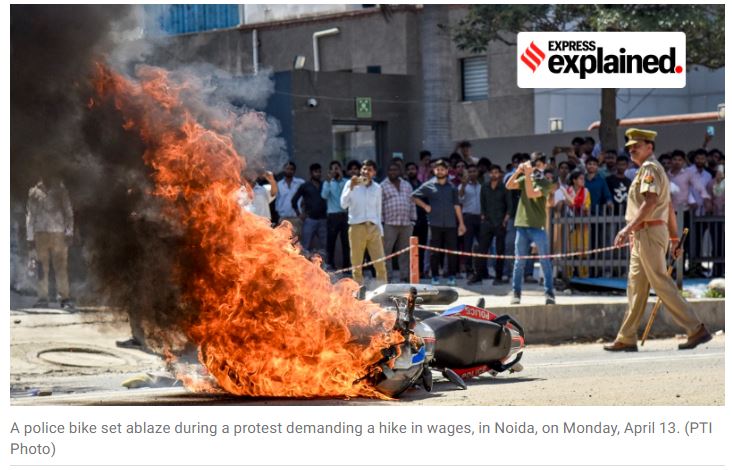
- 21 Apr 2026
In News:
Industrial hubs in North India, specifically Noida (Uttar Pradesh) and Manesar (Haryana), have recently emerged as epicenters of violent labour protests. These demonstrations represent a critical inflection point in India’s industrial relations, highlighting a deepening rift between the workforce, employers, and state regulatory frameworks.
The Landscape of Discontent: Current Realities
The contemporary wave of labour unrest is characterized by a "decoupling" of wages from the actual cost of living. While the Indian industrial sector has seen recovery in production, the benefits have not trickled down to the grassroots level. Workers are currently agitating against stagnant base pays and the ambiguity surrounding the transition to the 2025 Labour Codes.
Statistical Overview of Labour Vulnerability
- The Inflation-Wage Gap: Between 2021 and 2026, the Consumer Price Index for Industrial Workers (CPI-IW) surged by 24.8%. In contrast, wage increments in industrial states like Haryana averaged only 15%, leading to a significant contraction in real income and purchasing power.
- The Minimum Wage Chasm: Before the most recent emergency revisions, an unskilled worker in Haryana earned approximately ?11,274.60. This stood in stark contrast to the Central Sphere rate of ?20,358, fueling a sense of systemic deprivation.
- Administrative Inertia: Legal mandates require a revision of base minimum wages every five years. However, Uttar Pradesh had not updated its base rate since 2012, and Haryana faced a ten-year delay, highlighting a breakdown in the statutory machinery.
Core Drivers of the Unrest
- Legislative Ambiguity and the 2025 Labour Codes: The notification of four new Labour Codes in November 2025 was intended to streamline regulations. However, it has inadvertently created a "notification lag." While the Codes exist, the absence of finalized state-level rules has led to confusion regarding "spread-over hours." Workers fear that the provision for a 12-hour workday (meant to facilitate a four-day week) is being exploited to increase workloads without corresponding overtime pay.
- Geopolitical and Economic Headwinds: External shocks have played a disproportionate role in domestic labour stability. The closure of the Strait of Hormuz and escalating conflict in West Asia have triggered a dual crisis:
- Input Cost Inflation: Factories are reeling under high raw material costs, leading to squeezed margins and delayed wage disbursements.
- Living Cost Spikes: Migrant workers have reported paying up to ?4,000 for LPG cylinders on the black market due to disrupted supply chains.
- The Information Vacuum: Misinformation on social media platforms specifically regarding a rumored uniform national minimum wage of ?20,000 has set unrealistic benchmarks, leading to friction when actual paychecks do not match digital expectations.
State and Central Responses
To mitigate the escalating violence, several interim measures have been enacted:
- Uttar Pradesh: The state government announced an interim hike, raising the minimum wage for unskilled workers in Noida to ?13,690.
- Haryana: Following the Manesar protests, a 35% hike was notified, bringing the minimum wage to ?15,220.71.
- Central Benchmark: In September 2024, the Union government revised wages for central sphere establishments to over ?20,000 per month, attempting to set a "floor" for states to follow.
Critical Challenges in the Industrial Ecosystem
The crisis reveals deep-seated structural flaws:
- Erosion of Collective Bargaining: The new codes grant states significant discretion in recognizing trade unions. This has weakened the institutionalized "safety valve" where grievances are settled through negotiation, pushing workers toward street protests.
- Race to the Bottom: Regional disparities in wage notifications create a risk where industries migrate to states with the lowest labour costs, undermining the concept of a "living wage" across India.
- External Vulnerabilities: US-imposed tariffs and global shipping disruptions have made employers reluctant to pass on any financial gains to workers, citing "global uncertainty."
The Way Forward: Towards Industrial Harmony
To ensure long-term stability and align with the "Make in India" vision, the following steps are essential:
- Automaticity in Wage Revision: Base minimum wage revisions must be made mandatory and automatic every five years, linked directly to the CPI-IW to prevent real-wage erosion.
- Legislative Clarity: The Centre and State governments must fast-track the notification of final rules for the 2025 Labour Codes to eliminate the "grey areas" regarding working hours and social security.
- Energy Security for Labour: During global energy crises, the government should consider Direct Benefit Transfer (DBT) for energy subsidies (like LPG) specifically targeted at registered industrial and migrant workers.
- Strengthening Institutional Dialogue: Rather than bypassing trade unions, the state must formalize their role to ensure that industrial disputes are resolved through tripartite mechanisms (Government-Employer-Worker) rather than law-and-order interventions.
Apis mellifera
- 21 Apr 2026
In News:
In a significant advancement for India's apiculture sector, the CSIR-Indian Institute of Integrative Medicine (IIIM), Pulwama, has successfully demonstrated that Apis mellifera (the Western Honey Bee) can survive sub-zero temperatures. This breakthrough is set to revolutionize beekeeping in the Himalayan regions, particularly in Jammu and Kashmir, by eliminating the need for the traditional, expensive, and stressful winter migration of hives to the plains.
Profile of Apis mellifera: The Global Generalist
Apis mellifera, commonly known as the Western or European Honey Bee, is the most widely distributed and well-known domesticated insect species globally.
- Native Range & Global Spread: While native to Europe, Western Asia, and Africa, human introduction since the 17th century has established them across every continent except Antarctica.
- Commercial Importance: They are the primary species exploited commercially for honey, beeswax, propolis, and royal jelly. Furthermore, they play a critical role in global food security by providing pollination services for a vast array of crops.
- Biological Features:
- Appearance: Reddish-brown to yellow with black bands and orange-yellow rings. They possess forked or frayed hairs on their thorax and abdomen.
- Architecture: They construct sophisticated nests consisting of multiple vertical beeswax combs, typically built inside protective cavities like hollow trees.
- Social Structure: They are eusocial insects. A single colony consists of tens of thousands of bees, including one fertile Queen, thousands of non-reproductive female Workers, and a small number of fertile male Drones.
The Challenge: Winter Migration
Historically, beekeepers in high-altitude regions like Kashmir faced a major logistical hurdle: the extreme winter. Since Apis mellifera was perceived as vulnerable to sub-zero temperatures, beekeepers were forced to migrate their hives to warmer states like Rajasthan, Punjab, and Haryana. This "transhumance" of bees involved:
- High transportation and labor costs.
- Increased mortality rates due to the stress of travel.
- Exposure to pesticides and different pathogens in the plains.
The Innovation: The "Warm Womb" Approach
The CSIR-IIIM breakthrough involves creating a "warm womb" environment for the bees, allowing them to remain in the Valley during the harsh winters. By utilizing specialized hive insulation and optimized feeding strategies, researchers proved that these colonies can thrive even when temperatures drop significantly below freezing.
Key Impacts of the Breakthrough:
- Economic Relief: Beekeepers save significantly on transportation and logistics, making the practice of apiculture more profitable and sustainable.
- Healthier Colonies: Avoiding the stress of long-distance migration results in lower colony collapse rates and healthier bees ready for the spring pollination season.
- Local Ecosystem Support: Maintaining bee populations year-round supports the local flora and ensures that pollination begins immediately as the first spring blossoms appear in the Valley.
Bharat Maritime Insurance Pool
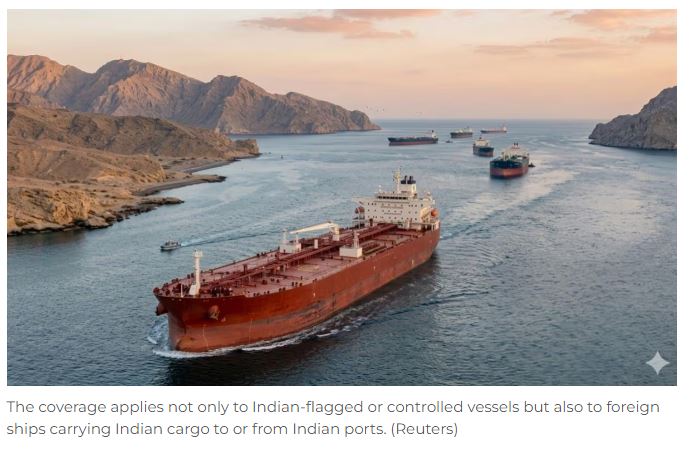
- 20 Apr 2026
In News:
In a strategic move to insulate its seaborne trade from the volatility of global geopolitics, the Union Cabinet has approved the creation of the Bharat Maritime Insurance Pool (BMI Pool). With a substantial financial backing of ?12,980 crore, this domestic safety net is designed to ensure that India's supply chains remain resilient, even when international insurance markets become restrictive or volatile.
The Need for a Domestic Insurance Pool
Global maritime trade is frequently subjected to disruptions, ranging from regional conflicts in the Red Sea and the Strait of Hormuz to international sanctions. Traditionally, Indian shipping has been heavily dependent on global insurance conglomerates, particularly the International Group of P&I Clubs. During crises, these entities may hike premiums or withdraw coverage for "high-risk" zones, leaving Indian trade vulnerable. The BMI Pool serves as a sovereign-backed alternative to mitigate such external dependencies.
Key Features of the BMI Pool
1. Financial and Sovereign Backing: The pool is supported by a sovereign guarantee of ?12,980 crore. This government backing provides the necessary financial credibility to honor large-scale claims, which is essential for building trust among shipowners and international trade partners.
2. Scope of Coverage: The BMI Pool is comprehensive in its risk assessment. It covers:
- Hull and Machinery: Insurance for the physical structure and equipment of the ship.
- Cargo Insurance: Protection against the loss or damage of goods being transported.
- Protection and Indemnity (P&I): Coverage for third-party liabilities.
- War Risk Insurance: Critical coverage for vessels navigating through active conflict zones or volatile maritime routes.
3. Eligibility and Tenure: The scheme is inclusive of:
- Indian-flagged vessels.
- Indian-controlled ships.
- International vessels carrying cargo specifically destined for or originating from Indian ports.
The initiative is set for an initial duration of 10 years, with a provision for a five-year extension based on performance and necessity.
Strategic Significance for India
1. Enhancing Strategic Autonomy: By creating a domestic pool, India reduces its reliance on Western-dominated insurance markets. This is particularly vital when navigating trade routes impacted by unilateral sanctions or regional instabilities, ensuring that India's energy security and export-import (EXIM) trade are not held hostage to global market fluctuations.
2. Strengthening Domestic Expertise: The BMI Pool will serve as a catalyst for developing homegrown expertise in maritime underwriting and claims management. Currently, a significant portion of insurance premiums flows out of the country; this initiative aims to retain that capital while building a robust domestic financial services ecosystem in the maritime sector.
3. Ensuring Trade Continuity: During global disruptions, the pool guarantees "uninterrupted and affordable" coverage. This prevents sudden spikes in freight costs, which otherwise lead to inflationary pressures on the Indian economy.
Pradhan Mantri Gram Sadak Yojana-III (PMGSY-III)
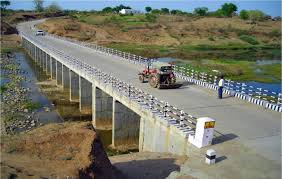
- 20 Apr 2026
In News:
In a significant move to bolster rural infrastructure and economic resilience, the Union Cabinet has approved the continuation of the Pradhan Mantri Gram Sadak Yojana-III (PMGSY-III) beyond its initial deadline of March 2025. The scheme has now been extended until March 2028, with a revised financial outlay of ?83,977 crore. This extension underscores the government’s commitment to "Viksit Bharat 2047" by ensuring that the last-mile connectivity in rural India is not just established but modernized to meet contemporary socio-economic needs.
Core Framework of the PMGSY Initiative
Launched on December 25, 2000, PMGSY is a flagship rural development program under the Ministry of Rural Development. Its primary mandate is to provide single, all-weather road connectivity to eligible unconnected habitations.
Eligibility and Population Thresholds (Based on 2001 Census):
- Plain Areas: Habitations with a population of 500 or more.
- Special Category Areas: In North-Eastern states, Himalayan states, and Himalayan Union Territories, the threshold is reduced to 250 or more due to difficult terrain and strategic importance.
PMGSY-III: A Shift Toward Consolidation
While the earlier phases of PMGSY focused on new connectivity, Phase III represents a strategic shift toward the consolidation of the existing rural road network. It prioritizes the upgradation of Through Routes and Major Rural Links that connect habitations to critical social and economic hubs:
- Gramin Agricultural Markets (GrAMs): Enhancing the farmer-to-market linkage.
- Higher Secondary Schools: Ensuring better access for rural students to pursue higher education.
- Hospitals: Facilitating timely medical interventions in remote areas.
Key Cabinet Decisions and Revised Timelines
The 2026 Cabinet approval introduced several vital adjustments to ensure the scheme's objectives are fully met:
- Extended Deadlines:
- March 2028: For the completion of roads and bridges in plain areas and road works in hilly regions.
- March 2029: Specifically for the completion of complex bridges in hilly areas.
- Financial Revision: The total outlay has been increased from the original ?80,250 crore to ?83,977 crore to account for pending works and cost escalations.
- Special Provisions for Bridges: Approval has been granted for 161 Long Span Bridges (LSBs), estimated at ?961 crore, which are essential for completing sanctioned road alignments.
- Operational Flexibility: Works sanctioned before March 31, 2025, which remained un-awarded, are now permitted to proceed to the tendering and award stage.
Institutional Mechanism for Implementation
The program follows a decentralized implementation structure:
- State Level: State Governments/UT Administrations designate Executing Agencies to oversee the broader program.
- District Level: Implementation is managed by Programme Implementation Units (PIUs), staffed by technical personnel.
- Financial Flow: Funds are released to District Rural Development Agencies (DRDAs), ensuring local administrative involvement in progress monitoring.
Socio-Economic Impact and Significance
The extension of PMGSY-III is poised to deliver a multi-dimensional impact on the rural landscape:
- Economic Empowerment: Reduced transportation costs and time significantly improve rural incomes by providing better market access for both farm and non-farm products.
- Human Capital Development: Reliability in all-weather connectivity directly correlates with improved school attendance and healthcare accessibility in underserved regions.
- Employment Generation: The scheme acts as a catalyst for job creation, offering direct employment in construction and indirect growth through the emergence of rural enterprises.
- Sustainable Development: By bridging the rural-urban divide, the scheme fosters inclusive growth, ensuring that remote habitations are integrated into the national development narrative.
Tehri Lake

- 20 Apr 2026
In News:
Uttarakhand achieved a historic milestone in its aviation and tourism sectors as a 19-seater seaplane successfully completed trial landings on Tehri Lake. Conducted by Sky Hop Private Limited, the trial saw the aircraft fly from Dehradun’s Jolly Grant Airport to Koti Colony on the lake's reservoir. This development marks the beginning of a transformative era for regional connectivity, utilizing India’s water bodies as natural runways to bypass the logistical challenges of Himalayan terrain.
Geographical Profile of Tehri Lake
Tehri Lake is not just a scenic reservoir but a marvel of modern engineering and geography:
- Scale and Origin: One of the largest man-made lakes in Asia, it covers approximately 42 square kilometers. It was formed by the impoundment of the Bhagirathi River by the Tehri Dam, leading to the submergence of Old Tehri town.
- Location: Situated in the Tehri Garhwal district at an altitude of 1,700 meters, the lake is cradled by the Himalayan foothills.
- Hydrological Source: The reservoir is primarily fed by the confluence of the Bhagirathi and Bhilangna rivers, collecting glacial meltwater and monsoon runoff.
- Hydro-geology: As a deep-water reservoir, it maintains the year-round water volume and surface stability necessary for both massive power generation and safe seaplane operations.
The Strategic Significance of the Seaplane Project
The introduction of seaplane services is a cornerstone of Uttarakhand’s Adventure Tourism Policy and the broader national goal of regional air connectivity (UDAN).
1. Revolutionizing Connectivity
- Time Efficiency: Seaplanes drastically reduce travel time from Dehradun and Rishikesh to the remote Tehri region, facilitating easier access for tourists and pilgrims.
- Disaster Management: Beyond tourism, these aircraft can play a critical role in rapid medical evacuations and disaster relief in the fragile Himalayan ecosystem, where road blockages are frequent.
2. Socio-Economic and Sustainable Development
- Tourism Hub: The lake already hosts jet skiing, paragliding, and kayaking. Seaplanes add a premium layer to this eco-tourism portfolio, attracting global travelers.
- Multisectoral Impact: The lake serves the 2,400 MW Tehri Dam, provides irrigation for 270,000 hectares, and supplies drinking water to millions in Delhi and Uttar Pradesh. The seaplane project complements these utilities by boosting local commerce and employment.
Governance and Institutional Support
The project aligns with the "Sustainable, Inclusive, and Climate-Resilient Tourism Development at Tehri Lake Area" initiative, supported by the Asian Development Bank (ADB) with a funding of approximately $126 million.
- Climate Resilience: The project emphasizes nature-based solutions and climate-smart infrastructure to protect the 87,000 residents and 2.7 million annual visitors.
- Integrated Management: Authorities have ensured that seaplane corridors are designed to harmonize with existing boating and fishing activities, preventing disruption to local livelihoods.
Dalma Wildlife Sanctuary
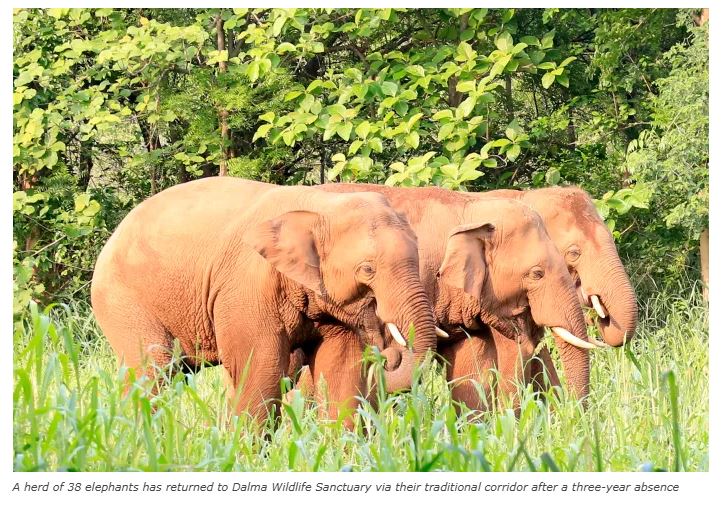
- 20 Apr 2026
In News:
In a significant development for regional biodiversity, a herd of 38 elephants has returned to the Dalma Wildlife Sanctuary in Jharkhand after a hiatus of nearly three years. This migratory return highlights the sanctuary’s role as a critical corridor for the Asian Elephant and underscores the importance of the Chota Nagpur Plateau in India’s wildlife conservation efforts.
Geographical and Cultural Context
- The Dalma Wildlife Sanctuary is nestled within the Dalma Hills of the Chota Nagpur Plateau in Jharkhand.
- The sanctuary holds profound cultural value, deriving its name from “Dalma Mai,” a local goddess revered by the tribal communities and villagers inhabiting the fringes of the forest.
- The sanctuary’s landscape is characterized by a rugged, hilly, and rocky terrain, interspersed with dense forest canopies and sprawling grasslands. This diverse topography provides a variety of ecological niches for a wide range of flora and fauna.
Hydro-Geology and Ecosystem
The sanctuary serves a vital hydrological function as the entire forest area falls within the catchment of the Subarnarekha River. The presence of water is a defining feature of the sanctuary, which is home to two prominent waterfalls: Sitaguldi and Dassam. These water sources are essential for the survival of the resident megafauna, particularly during the dry months.
Flora and Vegetation
The vegetation in Dalma is classified primarily under two categories:
- Dry Peninsular Sal: Dominated by Shorea robusta, these forests are hardy and well-adapted to the plateau's climate.
- Northern Dry Mixed Deciduous Forest: This type supports a high variety of plant species that shed their leaves seasonally.
The sanctuary is also a repository of botanical wealth, particularly medicinal plants. Species such as Anantmula, Satawari, and Sarpgandha (Rauvolfia serpentina) are found in abundance. Additionally, the ecosystem supports various orchids, climbers, herbs, and shrubs, contributing to a complex and resilient forest structure.
Fauna: Beyond the Elephant
While Dalma is most famous as a terminal for elephant migration, it supports a diverse array of wildlife. The return of the elephant herd indicates a healthy habitat, but the sanctuary also protects:
- Mammals: Barking deer, wild boar, giant squirrel, and sloth bears.
- Unique Species: The sanctuary provides a refuge for the Indian pangolin and porcupines, species that are increasingly under threat due to habitat loss and poaching.
India’s Startup Revolution
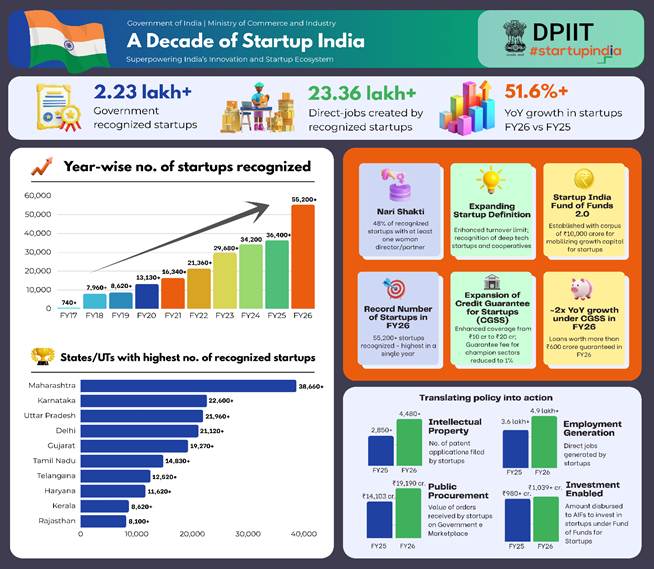
- 20 Apr 2026
In News:
The Financial Year 2025–26 has emerged as a watershed moment for India’s entrepreneurial landscape. According to the latest data from the Department for Promotion of Industry and Internal Trade (DPIIT), the Startup India initiative witnessed its strongest performance since its inception in 2016. With over 55,200 startups recognized in a single year—a 51.6% year-on-year increase—India is rapidly cementing its position as a global innovation hub, transitioning from a job-seeking to a job-creating economy.
Key Performance Indicators (FY 2025–26)
The scale of growth in the startup ecosystem is reflected in several record-breaking metrics:
- Total Ecosystem Strength: The total number of recognized startups has crossed 2.23 lakh.
- Employment Generation: Startups have generated over 23.36 lakh direct jobs to date. In FY 2025-26 alone, direct job creation rose by 36.1%, adding nearly 5 lakh jobs in a single year.
- Women Empowerment: Demonstrating inclusive growth, approximately 48% of total recognized startups (over 1.07 lakh) have at least one-woman director or partner.
- Intellectual Property: Innovation is peaking, with patent filings by startups jumping from 2,850 in the previous year to over 4,480 in FY 2025–26.
Geographical Spread and Competitive Federalism
The startup movement is no longer confined to traditional tech hubs but has reached every State and Union Territory. However, five regions lead the charge in concentration and employment:
- Maharashtra: 38,660 startups; 4.13 lakh jobs.
- Karnataka: 22,600 startups; 2.46 lakh jobs.
- Uttar Pradesh: 21,960 startups; 2.11 lakh jobs.
- Delhi: 21,120 startups; 2.36 lakh jobs.
- Gujarat: 19,270 startups; 2.14 lakh jobs.
To sustain this momentum, the States’ Startup Ranking Framework (SRF) promotes competitive federalism, evaluating states on policy implementation and classifying them into categories like "Best Performers" and "Top Performers."
The Support Pillars: Flagship Schemes
The government provides a multi-layered financial and regulatory support system to nurture startups throughout their lifecycle:
- Fund of Funds for Startups (FFS): To address the funding gap, FFS 1.0 has disbursed over ?7,000 crore to Alternative Investment Funds (AIFs), which in turn invested over ?26,900 crore in startups. Building on this, FFS 2.0 has been notified with a fresh corpus of ?10,000 crore.
- Startup India Seed Fund Scheme (SISFS): Focuses on early-stage needs like proof of concept and prototyping. The entire ?945 crore corpus has been committed, supporting over 3,400 startups through 219 incubators.
- Credit Guarantee Scheme (CGSS): Facilitates collateral-free loans. In FY 2025–26, the guarantee cover was doubled from ?10 crore to ?20 crore per borrower to enhance capital mobilization.
- Government e-Marketplace (GeM): Startups are increasingly participating in public procurement. Over 38,600 startups are onboarded on GeM, with the total value of orders placed reaching ?19,190 crore in the current fiscal year.
Institutional Mechanisms for Mentorship
Beyond capital, the ecosystem emphasizes "ease of doing business" through digital integration:
- MAARG Portal: (Mentorship, Advisory, Assistance, Resilience, and Growth) serves as a single-stop platform for mentorship across sectors.
- Startup India Hub: A single-window digital platform connecting founders with investors, incubators, and government bodies.
- Startup India Investor Connect: Specifically bridges the gap between high-potential founders and the global investor community.
Biomass-based Improved Cookstoves (ICS)
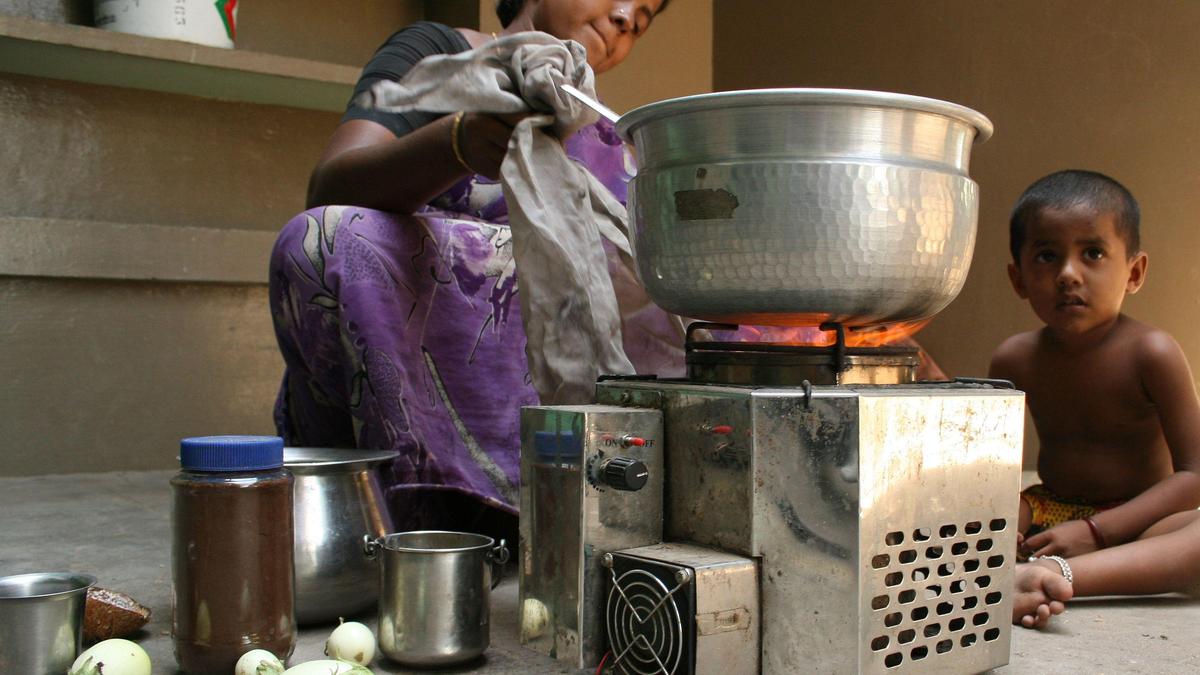
- 19 Apr 2026
In News:
In the wake of recent LPG supply disruptions and rising fuel costs, the conversation around India's energy transition has pivoted toward Modern Biomass-based Improved Cookstoves (ICS). While the Pradhan Mantri Ujjwala Yojana (PMUY) significantly expanded LPG access, many rural households have begun "stacking" fuels or shifting back to traditional firewood due to affordability issues. In this context, ICS emerges not as a step backward, but as a sophisticated, cost-effective bridge to cleaner energy.
The Technology: Redefining Biomass Combustion
Improved Cookstoves are advanced thermal devices engineered to maximize combustion efficiency while minimizing the release of harmful pollutants. Unlike the traditional mud chulha, which is plagued by poor airflow and massive heat loss, ICS integrates modern thermodynamic principles.
- Efficiency Gains: Traditional stoves operate at a dismal efficiency of roughly 10%. In contrast, ICS achieves an efficiency of 38–45%.
- Secondary Aeration: A key technological feature in ICS is the introduction of secondary air. This process captures soot and volatile gases—which would otherwise escape as smoke—and re-combusts them. This "double burn" significantly improves indoor air quality.
The Economic and Environmental Value Proposition
For a rural household, the transition to ICS offers a compelling alternative to both traditional wood-firing and expensive LPG:
- Cost Efficiency: With firewood priced at approximately ?10/kg compared to LPG costs often exceeding ?100/kg, ICS can offer savings of over 60% for economically vulnerable families.
- Resource Conservation: Due to superior thermal efficiency, ICS can reduce the volume of firewood required by 50–66%, directly reducing the drudgery of fuel collection for women and lessening the pressure on local forests.
- Fuel Versatility: ICS models are increasingly designed to be "fuel-agnostic," capable of burning processed biomass such as pellets and briquettes, as well as raw materials like crop residues and dung cakes.
A Sustainable Financing Model: Carbon Credits
One of the most innovative aspects of modern ICS deployment is its link to the global carbon market. Because these stoves demonstrably reduce CO2 and black carbon emissions, they generate carbon credits. These credits can be traded to:
- Subsidize Upfront Costs: Making the stoves affordable for low-income households.
- Fund CSR Initiatives: Encouraging corporate involvement in rural energy health.
- Support Microfinance: Creating a circular economy where emission reductions pay for the hardware.
Implementation Challenges and the Way Forward
Despite their benefits, the large-scale adoption of ICS faces significant hurdles:
- The "Last-Mile" Logistical Gap: Unlike LPG, which relies on a centralized bottling infrastructure, ICS success depends on decentralized, local distribution networks and robust after-sales support to ensure stoves remain functional.
- Emission Trade-offs: While ICS is significantly cleaner than a traditional chulha, its emissions are generally higher than those of LPG or electric cooking. It is a "transitional" technology rather than an ultimate "zero-emission" solution.
- Awareness and Behavioral Change: Deep-seated cultural cooking habits often act as a barrier to adopting new stove designs, requiring sustained community engagement.
River Basin Management Scheme
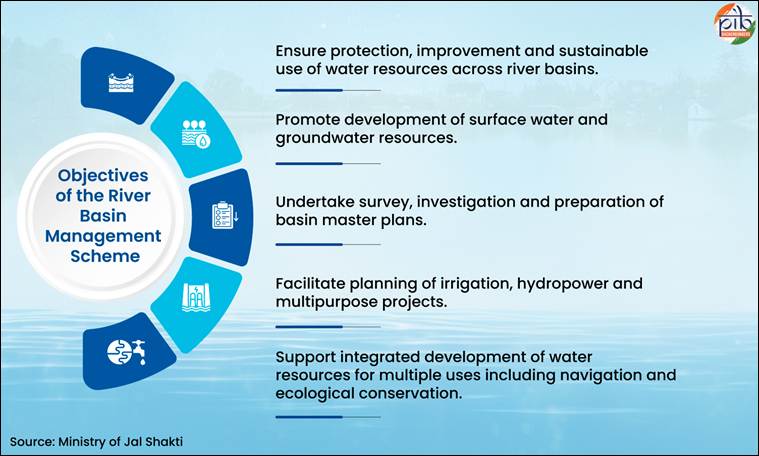
- 19 Apr 2026
In News:
Water security is a cornerstone of national stability, supporting agriculture, industry, and ecological health. In India, the complexity of transboundary rivers and diverse climatic zones necessitates a shift from fragmented water use to Integrated Water Resources Management (IWRM). The River Basin Management (RBM) Scheme, a central sector initiative under the Ministry of Jal Shakti, serves as the institutional bedrock for this transition, focusing on the sustainable development of both surface and groundwater.
Overview and Institutional Framework
The RBM Scheme is implemented by the Department of Water Resources, River Development, and Ganga Rejuvenation. It functions through three specialized nodal agencies:
- Central Water Commission (CWC): Focuses on surveys, investigations, and the preparation of Detailed Project Reports (DPRs) for irrigation and hydropower, particularly in the Indus, Brahmaputra, and Teesta basins.
- Brahmaputra Board: Manages flood control, bank erosion, and drainage improvement in the North Eastern Region (NER), including the Brahmaputra and Barak valleys.
- National Water Development Agency (NWDA): Leads the Interlinking of Rivers (ILR) program, conducting feasibility studies for inter-basin water transfers.
Strategic Scope and Financial Outlay
The scheme prioritizes strategically sensitive and water-rich but underdeveloped regions, including the Indus Basin (J&K and Ladakh) and the North Eastern Region.
- 16th Finance Commission Period: The Union Government has approved the continuation of the scheme from 2026–27 to 2030–31.
- Financial Commitment: A fully funded outlay of ?2,183 crore has been allocated, a significant increase from the ?1,276 crore allocated in the previous cycle (2021–26).
Core Objectives and Action Areas
The RBM framework is designed to move beyond traditional engineering to a holistic "ecosystem approach":
- Basin Planning: Developing and updating Master Plans that act as long-term roadmaps for resource conservation and utilization.
- Modern Survey Techniques: Leveraging advanced technologies such as GIS, Remote Sensing, LiDAR (Light Detection and Ranging), and Drone-based surveys to enhance planning accuracy in difficult terrains.
- Flood and Erosion Management: Implementing critical structural interventions, such as bank revetment and spurs, to protect vulnerable areas like Majuli Island in Assam.
- Community Interventions: Strengthening local resilience through Springshed management and the integration of indigenous water management practices with modern scientific methods.
Measurable Outcomes and Progress (2021–2026)
The scheme has achieved several milestones that bolster India's hydro-diplomacy and internal water security:
- Infrastructure Readiness: Completion of DPRs in remote Himalayan regions, creating a pipeline for future hydropower and irrigation investments.
- Interlinking Progress: The NWDA has identified 30 river links; feasibility reports for 26 and DPRs for 15 (including the Kosi–Mechi link) have been finalized.
- Erosion Control: Successful post-construction bank revetment works (e.g., at Sumoimari, Majuli) have mitigated the devastating impact of the Brahmaputra’s annual floods.
- Capacity Building: Providing technical support to "Special Category" states (Sikkim, Mizoram, Manipur, etc.) that lack the independent financial capacity for large-scale water planning.
Borrowers’ Platform

- 19 Apr 2026
In News:
At the 2026 IMF-World Bank Spring Meetings, developing nations reached a historic milestone by launching the first-ever Borrowers’ Platform. This initiative aims to rebalance a global financial architecture that has traditionally been dominated by creditor interests, such as the Paris Club. By creating a unified front, the platform seeks to address the mounting sovereign debt crisis, which saw the external debt of developing countries reach a staggering $11.7 trillion by 2024.
Objectives and Institutional Framework
The Borrowers’ Platform is designed as a technical and cooperative mechanism rather than a forum for collective bargaining or debt restructuring.
- Peer Learning and Knowledge Exchange: It facilitates a space for finance ministers and central bank governors to share practical experiences in debt management and navigate complex financial instruments like debt swaps.
- Technical Cooperation: Supported by the United Nations Conference on Trade and Development (UNCTAD) as its Secretariat, the platform leverages technical expertise to strengthen the debt-tracking systems of member states.
- Collective Voice: For the first time, borrowing nations have a formal institutional framework to articulate shared positions in global debt discussions, moving away from the "passive standard-setting" imposed by lenders.
Governance and Membership
The platform represents a diverse coalition of the Global South, bridging major economies with vulnerable states.
- Leadership: The platform is currently led by a working group chaired by Egypt, with Pakistan serving as the Vice-Chair.
- Membership: It comprises 30 member nations, including major emerging economies like India and South Africa, alongside countries such as Colombia, Honduras, Nepal, and Zambia.
- Institutional Backing: The initiative was first proposed by the UN Secretary-General’s Expert Group on Debt in 2025 and later codified in the Sevilla Commitment 2025 and the UNCTAD16 Geneva Consensus.
Significance for the Global South
The platform addresses several structural gaps in the international financial system:
- Rebalancing Power Dynamics: Historically, creditors coordinated through the Paris Club or the London Club, leaving borrowers to negotiate in isolation. This platform provides a necessary counterweight.
- Market Signaling: By improving transparency and data accuracy, the platform aims to reduce "perceived risk" among global investors, potentially lowering borrowing costs and interest rates—which are often twice as high for developing nations compared to advanced economies.
- Fiscal Space for Development: With 54 countries currently spending more on debt servicing than on healthcare or education, the platform’s emphasis on sustainable financing is critical for achieving the Sustainable Development Goals (SDGs).
Delhi High Court’s Landmark Ruling on IVF
- 19 Apr 2026
In News:
In a significant judicial intervention that bridges the gap between medical jurisprudence and constitutional rights, the Delhi High Court recently permitted a woman to proceed with In-vitro Fertilization (IVF) using the genetic material of her husband, an Indian Army soldier currently in a vegetative state. The ruling underscores the evolution of Article 21 of the Indian Constitution, expanding the interpretation of reproductive autonomy and the "Right to Life" in extraordinary circumstances.
The Judicial Context: Article 21 and Reproductive Rights
The core of the petitioner’s plea rested on the fundamental right to motherhood and dignity. The court recognized that the right to reproduce is an essential facet of a person's liberty. By invoking Article 21 (Right to Life and Personal Liberty), the court emphasized that reproductive choices are central to an individual’s dignity and autonomy.
In this unique case, the soldier had expressed a prior intent to have a child before entering a permanent vegetative state (a disorder of consciousness). The court held that his current inability to provide "active" consent does not negate his prior intent or the wife's right to pursue motherhood within the marital bond.
Legal Interpretation of the ART Act, 2021
- The primary legal challenge involved the Assisted Reproductive Technology (Regulation) Act, 2021, which typically mandates the written consent of both parties for any ART procedure.
- However, the Delhi High Court adopted a purposive interpretation of the law. It ruled that in this exceptional scenario, the wife's consent could be legally treated as valid consent on behalf of her husband. This ruling prevents a "legal vacuum" where a spouse’s medical tragedy would otherwise permanently extinguish the other spouse’s reproductive rights.
- Despite a medical board’s observation that the chances of retrieving viable sperm were "meagre," the court prioritized the woman’s right to try, rather than the statistical probability of success.
Understanding Assisted Reproductive Technology (ART) and IVF
In-vitro Fertilization (IVF) is a complex series of procedures used to help with fertility or prevent genetic problems and assist with the conception of a child.
- The Process: Mature eggs are collected (retrieved) from ovaries and fertilized by sperm in a laboratory. The fertilized egg (embryo) is then transferred to a uterus. One full cycle of IVF takes about three weeks.
- Regulatory Framework: In India, these procedures are governed by the ART (Regulation) Act, 2021. This Act provides for the regulation and supervision of ART clinics and banks, preventing misuse and ensuring safe and ethical practices.
- Government Support: Recognizing infertility as a significant reproductive health issue, the Central Government Health Scheme (CGHS) provides financial assistance by reimbursing IVF cycles for eligible beneficiaries, thereby increasing accessibility to these expensive technologies.
Delimitation and Women’s Reservation in Legislatures
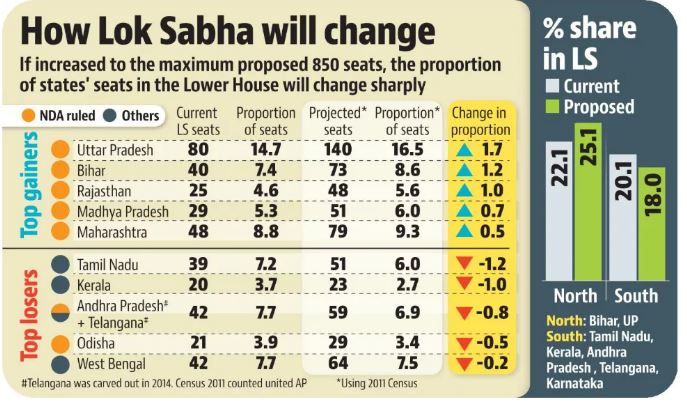
- 19 Apr 2026
In News:
The Union government has introduced a historic legislative package aimed at reshaping India's parliamentary landscape. Through the Constitution (131st Amendment) Bill, 2026, the Delimitation Bill, 2026, and the Union Territories Laws (Amendment) Bill, 2026, the government seeks to synchronize three critical democratic objectives: the expansion of the Lok Sabha, the conduct of a fresh delimitation exercise based on recent data, and the immediate operationalization of the Nari Shakti Vandan Adhiniyam (33% women’s reservation).
Key Legislative Provisions
1. The Constitution (131st Amendment) Bill, 2026
- Expansion of Lok Sabha: The Bill proposes amending Article 81 to increase the maximum strength of the Lok Sabha from 550 to 850 members. This includes 815 representatives from States and 35 from Union Territories.
- Decoupling from the Post-2026 Census: Current provisions under Article 81 and 82 freeze seat allocation based on the 1971 Census until the first census after 2026 is published. The new amendment removes this "delimitation freeze," allowing the government to use the 2011 Census (or any census Parliament decides by law) to redraw boundaries immediately.
- Legislative Hurdles: As a constitutional amendment affecting federal representation, this Bill requires a special majority in both Houses of Parliament and ratification by at least 50% of State Legislatures.
2. The Delimitation Bill, 2026
- The Commission: This Bill replaces the Delimitation Act of 2002 and establishes a new Delimitation Commission. The body will be chaired by a Supreme Court judge and include the Chief Election Commissioner and State Election Commissioners.
- Mandate: The Commission is tasked with redrawing territorial constituencies to ensure they are geographically compact and reflect population shifts, upholding the principle of “one person, one vote, one value.”
- Finality of Orders: Once the Commission’s orders are notified, they carry the force of law and cannot be challenged in any court.
3. The Union Territories Laws (Amendment) Bill, 2026
- This enabling legislation extends the structural changes and women’s reservation to UTs with legislatures, specifically Delhi, Puducherry, and Jammu & Kashmir.
Operationalizing Women’s Reservation
The impending delimitation acts as the "trigger" for the 106th Constitutional Amendment Act, 2023.
- Implementation Timeline: By fast-tracking delimitation, the government aims to implement the 33% quota for women in the 2029 General Elections.
- Quota Dynamics: The reservation includes a sub-quota for SC/ST women but currently lacks a separate provision for OBC women. These seats will be rotated after every delimitation cycle and are subject to a 15-year "sunset clause," unless extended by Parliament.
The Core Conflict: Representation vs. Federalism
While the government emphasizes democratic parity, the move has ignited a debate over India’s federal equilibrium:
Arguments in Favor (Democratic Equity):
- Parity of Representation: Currently, an MP from a high-population state like Uttar Pradesh represents significantly more voters than an MP from a southern state, diluting the democratic weight of citizens in the north.
- Ease of Transition: Expanding the House to 850 seats ensures that while northern states gain more, no state will see a reduction in its absolute number of seats. All states are projected to see a nearly 50% increase in their total seat count.
Arguments Against (Regional Imbalance):
- The "Penalty" for Success: Southern states (Kerala, Tamil Nadu, etc.) argue that they are being punished for their success in population control and socio-economic development. Their relative political weight in the Lok Sabha is set to shrink.
- Financial Disparity: Critics argue that southern states contribute a higher share to the national GDP and tax pool. Reduced political say leads to a "taxation without representation" sentiment.
- Presidential Election Impact: Changing the number of MPs and MLAs will alter the Electoral College, potentially giving northern states a disproportionate influence in electing the President of India.
The Judicial Perspective
Historically, delimitation orders have been immune from judicial interference to prevent election delays. However, in the Kishorchandra Chhanganlal Rathod Case (2024), the Supreme Court clarified that such orders can be reviewed if they are found to be "manifestly arbitrary" or violate core constitutional values.
Hubble Tension

- 17 Apr 2026
In News:
The quest to determine the rate at which our universe is expanding is currently facing a significant scientific bottleneck known as the Hubble Tension. Recent high-precision observations have narrowed the local expansion rate to approximately 73.5 km/s/Mpc, further intensifying a debate that suggests our standard model of cosmology may be incomplete.
Historical Context: Hubble’s Law
In 1929, Edwin Hubble revolutionized our understanding of the cosmos by establishing a quantitative relationship between a galaxy’s distance and its recessional velocity. This principle, known as Hubble’s Law, provided the foundational evidence that the universe is not static but is continuously expanding. The rate of this expansion is captured by a value called the Hubble Constant (H0).
The Core Conflict: Two Paths, Two Results
The "tension" arises because the two primary methods used to calculate the Hubble Constant yield results that are statistically incompatible, despite both being highly precise.
1. The Local Measurement (Late Universe)
This approach utilizes the Cosmic Distance Ladder. Astronomers observe "standard candles"—objects with known luminosity such as pulsating Cepheid stars and Type Ia supernovae. These measurements of the "nearby" universe indicate a faster expansion rate of roughly 73 to 73.5 km/s/Mpc. Recent data from April 2026 has confirmed these figures using multiple cross-validation methods, making the data incredibly robust.
2. The Early Universe Measurement
Scientists analyze the Cosmic Microwave Background (CMB), which is the relic radiation left over from the Big Bang. By applying mathematical models of the early universe's physics, they project this ancient data forward to the present day. This "top-down" approach predicts a significantly slower expansion rate of approximately 67 km/s/Mpc.
Key Discrepancies at a Glance
- The Gap: The difference between the 73.5 km/s/Mpc (Local) and 67 km/s/Mpc (Early Universe) values is what physicists call the Tension.
- Data Source Differences: The Local method relies on direct observation of nearby stars and explosions, while the Early Universe method relies on radiation from the dawn of time projected through mathematical modeling.
- Inference vs. Observation: The local rate is an observation of how the universe behaves now, whereas the CMB rate is an inference of how it should behave based on its state 13.8 billion years ago.
Significance
The persistence of this gap is not merely a mathematical quirk; it represents a potential "crisis in cosmology." If neither side has made a measurement error, the discrepancy implies deep challenges for our current scientific framework:
- Incomplete Physics: The current Standard Model of Cosmology may be missing critical components that explain how the expansion rate changed over time.
- New Physics: There might be undiscovered properties of Dark Energy or Dark Matter driving expansion differently than predicted by current Einsteinian gravity.
- Evolution of Gravity: Our understanding of how gravity operates over cosmic timescales and vast distances may require a fundamental revision.
Physicists are currently investigating whether this mismatch is the result of a subtle systematic error or the first hint of a "new physics" that could reshape our understanding of the origin and ultimate fate of the universe.
Memristors
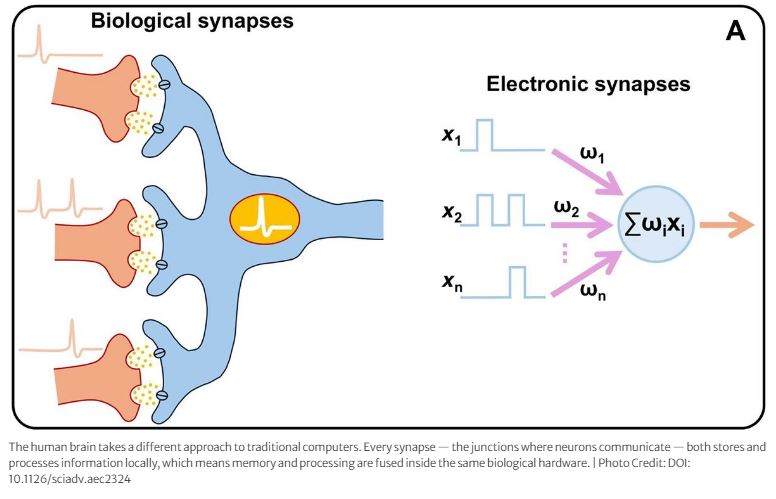
- 17 Apr 2026
In News:
In a significant leap for Neuromorphic Computing, researchers from the University of Cambridge have developed a new type of nanodevice—a hafnium-oxide memristor. Published in Science Advances (2026), this innovation promises to slash the energy consumption of Artificial Intelligence (AI) by over 70%, addressing one of the most critical sustainability challenges of the digital age.
What is a Memristor?
The term ‘Memristor’ is a portmanteau of “memory” and “resistor.” It is the fourth fundamental circuit element (alongside the resistor, capacitor, and inductor), first theorized by Leon Chua in 1971 and physically realized by HP Labs in 2008.
- Core Function: Unlike a standard resistor which has a fixed resistance, a memristor has a variable resistance that depends on the history of the electric current that has passed through it.
- The "Memory" Aspect: Even when the power is turned off, the memristor "remembers" its last resistance state. This makes it a non-volatile device, meaning it retains information without needing a continuous power supply.
The Cambridge Breakthrough: Hafnium-Oxide Memristors
While memristors traditionally used titanium dioxide (TiO2), the Cambridge team utilized Hafnium Oxide (HfO2), a material already common in the semiconductor industry.
Key Innovations:
- Shift from Filaments to Interfaces: Older memristors relied on "conductive filaments" that were often unpredictable and unstable. The new device uses p-n junctions (electronic gates) created by adding strontium and titanium. This allows for smooth, uniform resistance changes.
- Ultra-Low Power: It operates at switching currents nearly a million times lower than conventional oxide-based devices.
- Analogue Capability: Unlike binary systems (0 and 1), these memristors can achieve hundreds of distinct conductance levels, allowing for analogue "in-memory" computing.
Why is this relevant for AI?
Current computer architecture (Von Neumann architecture) separates the Processing Unit (CPU) from the Memory (RAM). In AI tasks, moving massive amounts of data back and forth between these two units creates a "bottleneck" that consumes enormous energy.
- Mimicking the Brain: In the human brain, neurons and synapses both process and store information in the same place.
- Synaptic Plasticity: The new memristor replicates Spike-Timing-Dependent Plasticity (STDP)—the mechanism where biological connections strengthen or weaken based on the timing of signals.
- Efficiency: By performing "In-Memory Computing," memristors eliminate the energy-intensive data shuffling, making AI hardware significantly more efficient.
Applications and Significance
- Sustainable AI: As global demand for AI (like ChatGPT and Large Language Models) explodes, memristors can prevent an energy crisis in data centers.
- Edge Computing: Their small size and low power demand make them ideal for "Edge devices" like smartphones, sensors, and wearable medical tech that need to process AI locally without draining batteries.
- Internet of Things (IoT): Enables smart devices to "learn" and adapt to user patterns autonomously.
- Industrial Automation: Reliable Non-Volatile RAM (NVRAM) for systems that cannot afford data loss during power failures.
Challenges to Overcome
Despite the promise, commercialization faces hurdles:
- Thermal Constraints: Current fabrication requires temperatures of 700°C, which is higher than what standard silicon chip manufacturing (CMOS) can typically tolerate.
- Scalability: Moving from laboratory prototypes to mass-produced integrated circuits (ICs) requires further refinement of the material layers.
CAR-T Cell Therapy
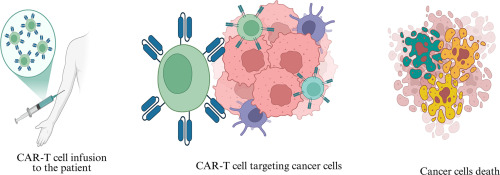
- 17 Apr 2026
In News:
In a landmark medical achievement reported in early 2026, scientists successfully utilized Chimeric Antigen Receptor (CAR) T-cell therapy to treat a patient suffering from three concurrent, life-threatening autoimmune diseases. This patient, who had remained resistant to traditional treatments for years, entered remission, marking a paradigm shift in how "living drugs" can be used beyond oncology.
What is CAR-T Cell Therapy?
CAR-T cell therapy is an advanced form of immunotherapy and gene therapy that re-engineers a patient’s own immune system to target specific diseased cells.
- The Component Cells: It focuses on T-lymphocytes (T cells), a type of white blood cell responsible for identifying and destroying foreign pathogens and abnormal cells.
- The "Chimeric" Aspect: In a laboratory, these T cells are genetically modified to produce synthetic proteins called Chimeric Antigen Receptors (CARs). These receptors act like "navigation systems," allowing T cells to recognize and bind to specific antigens (proteins) on the surface of target cells.
Mechanism of Action: The Step-by-Step Process
The production and administration of CAR-T cells involve a highly sophisticated multi-step process:
- Leukapheresis: T cells are extracted from the patient’s blood through a specialized filtering process.
- Genetic Engineering: Using viral vectors, the gene for the synthetic CAR receptor is inserted into the T cells.
- Expansion: The modified CAR-T cells are grown in large quantities in a laboratory setting.
- Infusion: The "supercharged" cells are infused back into the patient’s bloodstream.
- Targeted Destruction: The CAR-T cells identify the target antigens, bind to them, and trigger a lethal immune response against the diseased cells. Unlike traditional drugs, these cells can continue to multiply in the body, providing long-term surveillance.
Expanding Horizons: From Oncology to Autoimmunity
Traditionally, CAR-T therapy has been the last line of defense for specific B-cell malignancies (blood cancers), including:
- B-cell Acute Lymphoblastic Leukemia (ALL)
- Multiple Myeloma
- Various types of Lymphoma (Follicular, Mantle cell, and Diffuse large B-cell).
The 2026 Breakthrough:
Autoimmune diseases occur when the immune system mistakenly attacks healthy tissues. By programming CAR-T cells to eliminate the specific B-cells producing "auto-antibodies," doctors have successfully induced remission in patients with multiple systemic autoimmune conditions simultaneously. This offers hope for treating diseases like Lupus, Scleroderma, and Myositis where standard immunosuppressants fail.
Challenges and Adverse Effects
Despite its revolutionary potential, CAR-T therapy is associated with significant clinical risks that require intensive monitoring:
- Cytokine Release Syndrome (CRS): A severe immune overreaction leading to hyperinflammation, high fever, and potential organ damage. Clinical data indicates this occurs in approximately 12% of cases.
- Hematological Toxicity: * Neutropenia: Low neutrophil count (seen in 96% of participants), which drastically increases the risk of life-threatening infections.
- Thrombocytopenia: Low platelet count (reported in 65% of patients), raising the risk of internal bleeding.
- Anemia: Low red blood cell count (reported in 61% of participants), causing extreme fatigue.
- Cost and Accessibility: As a personalized "living drug," the therapy remains prohibitively expensive and requires specialized infrastructure found only in advanced tertiary care centers.
Significance for India
India has recently entered the CAR-T space with the indigenous NexCAR19 (developed by IIT Bombay and Tata Memorial Hospital). The expansion of this technology into autoimmune treatment is significant for India’s healthcare landscape, as it could eventually provide a one-time "cure" for chronic conditions that currently require lifelong, expensive medication.
First Semiconductor Fab in India
- 17 Apr 2026
In News:
In a historic milestone for India’s technological sovereignty, the Government officially notified the establishment of the country’s first semiconductor fabrication plant (Fab) at Dholera, Gujarat. This facility, spearheaded by Tata Semiconductor Manufacturing Private Limited (TSMPL), is situated within a newly designated Special Economic Zone (SEZ). This move transitions India from the "back-end" of the value chain (assembly and testing) to the "front-end" of core chip manufacturing, marking a decisive shift toward Aatmanirbhar Bharat in electronics.
Understanding Semiconductor Fabrication ("The Fab")
A semiconductor "Fab" is among the most complex and capital-intensive manufacturing environments globally.
- The Process: It involves producing integrated circuits (microchips) on ultra-pure silicon wafers. Key stages include photolithography (etching circuits), doping (altering electrical properties), and metallization (interconnecting transistors).
- Environment: Fabrication occurs inside Class 1 Cleanrooms, where air is thousands of times cleaner than a hospital operating room to prevent even a speck of dust from ruining a circuit.
- Utility: These chips power everything from basic consumer electronics and automobiles to advanced AI systems, defense hardware, and telecommunications.
Strategic Significance: India Semiconductor Mission (ISM) 2.0
The Dholera Fab is a centerpiece of the India Semiconductor Mission 2.0, which aims to build a comprehensive, full-stack domestic ecosystem.
- Investment & Employment: With a proposed investment of approximately ?91,000 crore, the project is expected to generate 21,000 high-skilled jobs in electronic hardware, software, and IT/ITeS.
- Reducing Import Dependence: Currently, India’s semiconductor market is projected to reach $100–110 billion by 2030. Domestic fabrication is essential to reduce the $20 billion annual import bill for chips.
- Technological Sovereignty: ISM 2.0 focuses on advancing toward 3nm and 2nm technology nodes by 2035, ensuring India is not just a consumer but a global supplier.
Policy Enablers: 2025 SEZ Rule Amendments
To attract the multi-billion dollar investments required for semiconductors, the Ministry of Commerce and Industry introduced landmark amendments to the SEZ Rules, 2006 in June 2025.
|
Reform Feature |
Previous Provision |
Amended Provision (2025) |
|
Minimum Land |
50 Hectares |
Reduced to 10 Hectares (for semiconductor/electronics SEZs). |
|
NFE Calculations |
Restricted inputs |
Inclusion of free-of-cost supplies in Net Foreign Exchange (NFE) calculations. |
|
Domestic Sales |
Restricted/Complex |
Permitted sales in the Domestic Tariff Area (DTA) upon payment of duties. |
|
Encumbrance Norms |
Strict "encumbrance-free" |
Flexibility allowed if land is mortgaged/leased to Government agencies. |
The Dholera Special Investment Region (SIR) Advantage
Dholera was chosen due to its "plug-and-play" infrastructure, essential for the high-precision requirements of a Fab:
- Utilities: Dedicated supply of ultra-pure water and uninterrupted high-voltage power.
- Logistics: Proximity to the Dholera International Airport and the Delhi-Mumbai Industrial Corridor (DMIC).
- Cluster Effect: The SEZ spans 66.166 hectares, creating a hub for ancillary industries like chemicals, gases, and specialized machinery manufacturing.
State of India’s Bats Report
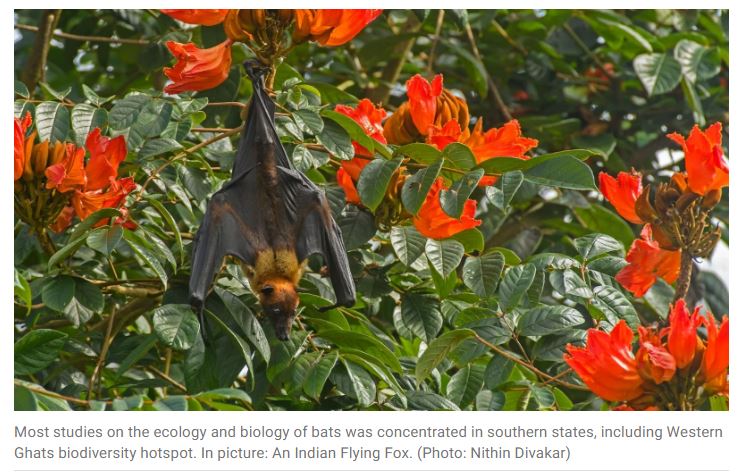
- 17 Apr 2026
In News:
The first-ever national assessment, "State of India’s Bats (2024–25)," was recently released by experts from the Nature Conservation Foundation and Bat Conservation International. The report paints a concerning picture of declining populations and "data dark spots," urging a policy shift to protect these nocturnal mammals that are vital for both environmental stability and public health.
Biodiversity and Endemism
India serves as a significant hub for chiropteran (bat) diversity in the Global South.
- Species Count: India is home to approximately 135 bat species.
- Endemism: Out of these, 16 species are endemic to the region, meaning they are found nowhere else in the world.
- Conservation Status:
- 7 species are currently classified as "Threatened" by the IUCN.
- 35 species remain "Data Deficient" or unassessed, highlighting a critical knowledge gap that hinders effective conservation planning.
- A specific concern was raised regarding the Khasian Leaf-nosed bat, which faces severe pressure from mining and hunting but remains under-classified in terms of protection.
Ecological Functions: The "Silent Providers"
- Pollination: Many bats are primary pollinators for economically significant plants, including durian, agave, and various wild fruit trees.
- Seed Dispersal: Fruit bats (Megachiroptera) play a pivotal role in "reforesting" degraded lands by dispersing seeds over vast distances.
- Pest Control: Insectivorous bats act as natural biopesticides, consuming massive quantities of insects that would otherwise destroy crops, thereby reducing the need for chemical fertilizers.
- Nutrient Cycling: Bat droppings, or guano, are rich in nitrogen and phosphorus, serving as high-quality natural fertilizer for cave and forest ecosystems.
Critical Habitats and Roosting Patterns
Bats are highly selective about their roosting sites, which provide stable microclimates and safety from predators.
- Types of Roosts: Caves, old-growth trees, and historical man-made structures like abandoned buildings and monuments.
- Significant Sites: The report identifies Robber’s Cave in Mahabaleshwar as a site of national importance, hosting one of the largest known roosts of Phillip’s long-fingered bat.
- Threats to Habitats: Urbanization, the demolition of old structures, and mining in karst (limestone) landscapes are destroying these sensitive micro-environments.
Challenges and "Data Dark Spots"
The assessment highlights that the biggest hurdle to bat conservation in India is not just habitat loss, but a lack of scientific data.
- Bureaucratic Hurdles: Researchers often face significant delays in obtaining permissions for field studies, contributing to the "data deficiency" of over 35 species.
- The "Stigma" Factor: Post-COVID-19, bats have been unfairly demonized. While they are linked to certain zoonotic diseases, the report emphasizes that the risk of spillover increases only when humans encroach upon bat habitats, not through the bats' natural existence.
- Anthropogenic Pressures: Land-use changes, deforestation, and the impacts of climate change are altering the migration and hibernation patterns of several species.
Tharu Tribe
- 18 Apr 2026
In News:
The Tharu community, an ancient indigenous group inhabiting the Himalayan foothills, recently gained significant judicial attention. The Lucknow Bench of the Allahabad High Court intervened to protect their ancestral heritage by setting aside a district-level committee’s decision that had rejected the community forest rights claims of the Tharu tribe in Lakhimpur Kheri, Uttar Pradesh. This ruling reinforces the legal safeguards provided under the Forest Rights Act (FRA) and highlights the ongoing struggle for tribal land recognition in India.
Geographic Distribution and Origins
- The Tharu people are the largest and oldest ethnic group residing in the Terai plains, a belt of marshy grasslands, savannas, and forests located along the Indo-Nepal border.
- In India, their population is primarily concentrated across the states of Uttarakhand, Uttar Pradesh, and Bihar.
- Recognized as a Scheduled Tribe by the Government of India in 1967, they represent a vital link to the historical and ecological landscape of the region.
Social Structure and Unique Customs
The Tharu society is characterized by a fascinating blend of traditional patriarchy and progressive gender norms. While they follow a patrilineal system (tracing descent through the father), women in the Tharu community enjoy property rights that are significantly more expansive than those traditionally recognized in orthodox Hindu society.
Key social features include:
- The Joint Family System: Tharus traditionally reside in long houses under a joint family structure, fostering strong communal bonds.
- Settlement Patterns: Their villages are typically compact and situated within forest clearings, reflecting their deep connection to the woods.
- Traditional Housing: Tharu homes, known as "Badaghar," are architectural marvels of sustainability, constructed using indigenous materials like mud, wood, and thatch.
- Governance: The community maintains a robust internal Panchayat system (Local Social Council). The head of this council is referred to as the "Pradhan," who plays a pivotal role in dispute resolution and social management.
Language and Religious Identity
The community speaks Tharuhati (or simply Tharu), which belongs to the Indo-Aryan subgroup of the Indo-European language family. Their spiritual life is a syncretic "unique blend," where they simultaneously practice animism, nature worship, and Hinduism. This diverse religious identity allows them to maintain a spiritual connection with the natural elements of the forest while participating in broader regional traditions.
Economic Life and the Environment
The Tharu economy is intrinsically tied to the Terai ecosystem. Their primary livelihoods include:
- Agriculture and Animal Husbandry: Most Tharus are settled agriculturists, with a diet centered on rice, lentils, and vegetables.
- Forest Reliance: Beyond farming, they engage in hunting, fishing, and the collection of minor forest products—the very activities currently at the heart of their legal claims for community forest rights.
India-Austria Strategic Partnership
- 18 Apr 2026
In News:
The recent official visit of the Federal Chancellor of the Republic of Austria, Dr. Christian Stocker, to India marks a watershed moment in bilateral diplomacy. As the first visit by an Austrian Chancellor to India in over 40 years, it significantly elevates the "Enhanced India-Austria Partnership" established in 2024. The visit resulted in a series of landmark agreements designed to bridge India’s burgeoning economy with Austria’s high-technology expertise.
Geographic and Historical Context of Austria
- Geography: Austria is a mountainous, landlocked country in south-central Europe. Nearly 70% of its territory is covered by the Alpine Region. It shares borders with eight nations: Germany, Czech Republic, Slovakia, Hungary, Slovenia, Italy, Switzerland, and Liechtenstein.
- The Danube: As the second-longest river in Europe, the Danube serves as a vital artery for Austrian commerce and a link to the Black Sea.
- Historical Legacy: From a Celtic kingdom to a Roman province (Noricum), Austria rose to prominence under the Habsburg Dynasty, becoming a great European power. Historically, Vienna has been a global hub for classical music, synonymous with legends like Mozart and Beethoven.
- Political Status: Today, Austria is a federal parliamentary republic. Notably, it maintains a policy of permanent neutrality (since 1955), similar to Switzerland, positioning it as a unique mediator in international affairs.
Key Outcomes of the 2026 Bilateral Summit
The discussions between Prime Minister Narendra Modi and Chancellor Stocker resulted in six major agreements and several strategic announcements:
Defence and Security
- Defence Industrial Cooperation: A Letter of Intent (LoI) was signed to enhance cooperation in military matters, focusing on defense technology, policy dialogue, and capacity building. This builds upon the broader India-EU Defence and Security Partnership of 2026.
- Counter-Terrorism: Both nations agreed to establish a Joint Working Group on Counter-Terrorism, focusing on intelligence sharing and combating cross-border terror.
- Cybersecurity: Launch of an institutional Cybersecurity Dialogue to address emerging digital threats.
Trade and Economy
- Fast-Track Mechanism: To improve the "Ease of Doing Business," a dedicated platform was established to solve operational bottlenecks for investors from both sides.
- Startups: Expansion of the India-Austria Startup Bridge, linking Indian unicorns with Austrian innovation networks and venture capital.
Technology and Research
- High-Tech R&D: Cooperation has been solidified in "frontier" technologies, including Quantum Technology, Machine Learning, Lasers, and Wastewater Treatment.
- Space Cooperation: Both nations announced a Bilateral Space Industry Seminar to be held in Vienna in Autumn 2026.
Skill Development and Mobility
- Working Holiday Programme: Now operationalized, this allows youth from both countries to engage in professional development and cultural exchange.
- Vocational Training: A Letter of Intent was exchanged for dual vocational training and the mutual recognition of vocational qualifications, facilitating the movement of skilled Indian workers to Austria.
Sectoral Synergy: A Comparative View
|
Sector |
Focus Areas |
Significance |
|
Infrastructure |
Intelligent Transport Systems (ITS), Tunneling, and Road Safety. |
Utilization of Austrian expertise in mountainous road construction. |
|
Education |
"Focus India" portal by Austrian Technical Universities. |
Streamlining admissions for Indian students in engineering and masters programs. |
|
Agriculture |
MoU between FSSAI (India) and AGES (Austria). |
Harmonizing food safety standards and risk assessment to boost agri-trade. |
|
Culture |
Audiovisual Co-production Agreement. |
Facilitating joint film productions and creative exchanges between Bollywood and European cinema. |
Astra Mk2 Missile
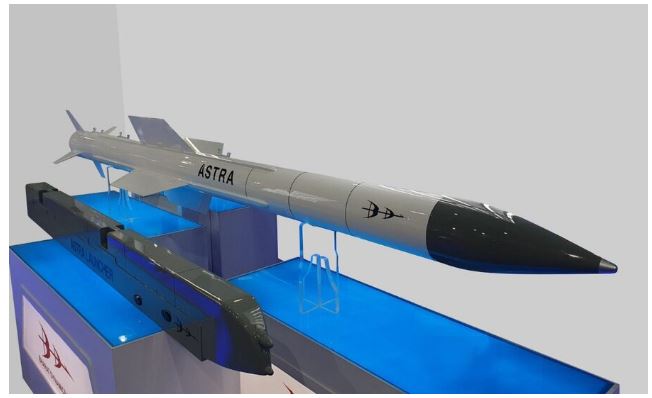
- 18 Apr 2026
In News:
The Indian Air Force (IAF) is embarking on a transformative upgrade of its Mirage 2000 "Vajra" fleet by integrating the indigenously developed Astra Mk2 Beyond-Visual-Range (BVR) air-to-air missile. This development, spearheaded by the Defence Research and Development Organisation (DRDO), marks a paradigm shift from traditional interceptor roles to long-range "aerial sniping," significantly bolstering India's air dominance in the region.
Astra Mk2: The Technological Leap
The Astra Mk2 is the second iteration of India’s premier BVR missile family. While the Astra Mk1 established indigenous capability with a range of ~110 km, the Mk2 variant represents a generational leap in propulsion and guidance.
- Dual-Pulse Rocket Motor: Unlike the single-pulse motor of the Mk1, the Mk2 uses a dual-pulse solid rocket motor. The first pulse launches the missile into high altitudes to conserve energy, while the second pulse ignites during the terminal (kill) phase. This provides a final burst of speed and maneuverability, ensuring it can intercept agile enemy jets at extreme ranges.
- Extended Range: Under high-altitude conditions, the Astra Mk2 boasts a strike range of 200–240 km. This effectively doubles the reach of the Mk1 and surpasses the capabilities of regional adversaries' primary BVR missiles.
- Advanced Seeker & ECCM: It features an indigenous Ku-band Active Electronically Scanned Array (AESA) seeker manufactured by Bharat Electronics Limited (BEL). This is paired with robust Electronic Counter-Countermeasures (ECCM) to resist sophisticated jamming and electronic warfare.
Strategic Integration with Mirage 2000
Integrating the Astra Mk2 onto the French-origin Mirage 2000 is a significant feat of "bridge-building" between Western platforms and indigenous weaponry.
- Feasibility and Trials: As of April 2026, feasibility studies are underway to sync the missile with the Mirage's avionics and radar systems. This integration aims to replace or supplement older missiles like the MICA (~60–80 km range).
- Tactical Transformation: With a 240 km reach, the Mirage 2000 can engage targets without entering the "No Escape Zone" (NEZ) of enemy surface-to-air missiles or interceptors. This enhances aircraft survivability and allows for "first-look, first-shot" advantages.
- Universal Applicability: Beyond the Mirage, the Astra Mk2 is being integrated with the Su-30MKI (as the lead platform), LCA Tejas Mk-1A, and potentially the Rafale, promoting fleet standardization.
Comparison: Astra Mk1 vs. Astra Mk2
|
Feature |
Astra Mk1 |
Astra Mk2 |
|
Range |
110 km |
200–240 km |
|
Propulsion |
Single-pulse smokeless solid motor |
Dual-pulse solid rocket motor |
|
Dimensions |
3.6m length / 178mm diameter |
Larger body / 190mm diameter |
|
Weight |
~154 kg |
~175 kg |
|
Guidance |
Two-way data link Active Homing |
Two-way data link AESA Seeker |
First BRICS Health Working Group Meeting 2026
- 18 Apr 2026
In News:
The Union Ministry of Health and Family Welfare recently hosted the First BRICS Health Working Group (HWG) Meeting 2026 in New Delhi. Guided by the philosophy of a "People-Centric and Humanity-First" approach, the meeting underscored India's leadership in steering the expanded BRICS bloc which now includes members like Egypt, Ethiopia, UAE, and Indonesia toward a more resilient and equitable global health architecture.
The HWG Framework and Theme
- The BRICS Health Working Group serves as a specialized forum for senior health officials and technical experts to coordinate on pressing public health challenges. Under India's 2026 Chair-ship, the meeting operated under the overarching theme: "Building for Resilience, Innovation, Cooperation, and Sustainability"
- The aim is to foster a transition from reactive crisis management to proactive, evidence-based health cooperation that ensures Universal Health Coverage (UHC) and pandemic preparedness.
India’s Strategic Additions: The New Pillars
India introduced two significant priority areas that reflect a shift toward holistic and preventive healthcare:
- BRICS Mission for Healthy Lifestyles: This initiative targets the growing burden of Non-Communicable Diseases (NCDs) by addressing critical risk factors, including:
- Unhealthy diets and physical inactivity.
- Tobacco and harmful alcohol consumption.
- Promotion of Mental Health and Wellness: Moving beyond physical ailments, this pillar seeks to:
- Strengthen national mental health service frameworks.
- Actively reduce social stigma associated with mental illness.
- Integrate mental health support into broader public health systems.
The Nine Priority Areas of Collaboration
The 2026 meeting consolidated action across nine strategic domains, blending India's new initiatives with ongoing BRICS commitments:
- BRICS TB Research Network: Continued focus on R&D to eliminate Tuberculosis.
- Regulatory Cooperation: Harmonizing standards among Medical Products Regulatory Authorities to ensure the safety and efficacy of health technologies.
- Digital Health Architecture: Leveraging technology for a "continuum of care," focusing on tele-health for remote and vulnerable populations.
- Integrated Early Warning Systems: Developing a coordinated mechanism to detect, prevent, and respond to mass infectious disease outbreaks.
- Evidence-Based Traditional Medicine: Promoting Traditional, Complementary, and Integrative Medicine (TCIM) rooted in biodiversity.
- BRICS Mission for Healthy Lifestyles (India's Initiative).
- Promotion of Mental Health and Wellness (India's Initiative).
- Network of National Public Health Institutes: Strengthening institutional ties for peer-to-peer learning and capacity building.
- Social Determinants of Health (DDSDH): Tackling the underlying socio-economic drivers of disease, such as poverty and environmental factors.
Urban Challenge Fund (UCF)
- 18 Apr 2026
In News:
In a decisive step toward achieving the vision of Viksit Bharat @2047, the Ministry of Housing and Urban Affairs (MoHUA) has launched the operational guidelines for the Urban Challenge Fund (UCF) and the Credit Repayment Guarantee Sub-Scheme (CRGSS). This initiative marks a paradigm shift in India’s urban development strategy, transitioning from a grant-dependent model to a market-linked, reform-driven framework.
Understanding the Urban Challenge Fund (UCF)
The UCF is a catalytic instrument designed to de-risk large-scale urban projects, making them attractive to private investors and capital markets. Unlike traditional schemes, funding is challenge-based, meaning only cities demonstrating financial discipline and implementing specific reforms will secure assistance.
- Implementation Period: FY 2025–26 to FY 2030–31 (Extendable to FY 2033–34).
- Central Outlay: ?1 Lakh Crore.
- Investment Goal: To leverage the central assistance to mobilize a total investment of ?4 Lakh Crore (4x leverage).
- Disbursement Timeline: The first tranche of funds (approximately 30%) is expected to flow to cities by September 2026.
The 25:50:25 Funding Formula
To ensure fiscal responsibility, the UCF follows a strict financing structure:
- Central Assistance: Capped at 25% of the project cost.
- Market Mobilization: At least 50% must be raised through Municipal Bonds, Bank Loans, or Public-Private Partnerships (PPPs).
- States/ULBs Contribution: The remaining 25% is provided by the respective State Governments or Urban Local Bodies.
Credit Repayment Guarantee Sub-Scheme (CRGSS)
A major hurdle in urban financing is the "credit gap" faced by smaller or geographically disadvantaged cities. The ?5,000 Crore CRGSS acts as a safety net for lenders, encouraging them to provide credit to:
- Tier-II and Tier-III Cities
- Hilly and North-Eastern Regions
- Smaller ULBs (Population < 1 Lakh)
The Guarantee Structure:
- First-time Loans: The Centre provides a guarantee of up to ?7 Crore or 70% of the loan amount (whichever is lower).
- Subsequent Loans: Upon successful repayment of the first loan, a guarantee of 50% (up to ?7 Crore) is provided to help cities build a sustainable credit history.
Sectoral Focus and Implementation Verticals
The UCF is structured around three primary verticals to ensure holistic urban transformation:
- Cities as Growth Hubs: Development of economic nodes, industrial corridors, and trunk infrastructure to enhance city competitiveness.
- Creative Redevelopment: Revitalizing congested Central Business Districts (CBDs), historic cores, and old markets while upgrading legacy infrastructure like drainage and public spaces.
- Water and Sanitation: Achieving service saturation through climate-resilient water grids, waste-to-energy systems, and circular economy practices (reuse of treated water).
Key Innovations and Reforms
The scheme introduces several "new-age" governance tools:
- Special Purpose Urban Infrastructure Manager (SPUIM): ULBs can designate private entities to manage integrated delivery of housing and civic infrastructure.
- ROPE Framework: A strategy focused on Removing Obstacles and Promoting Enablers by dismantling rigid procurement rules and granting operational autonomy.
- Digital Tools: Launch of an e-directory and "Digital Twins" for cities to facilitate transparent project monitoring and deal-making with credit rating agencies.
LanjiaSaora
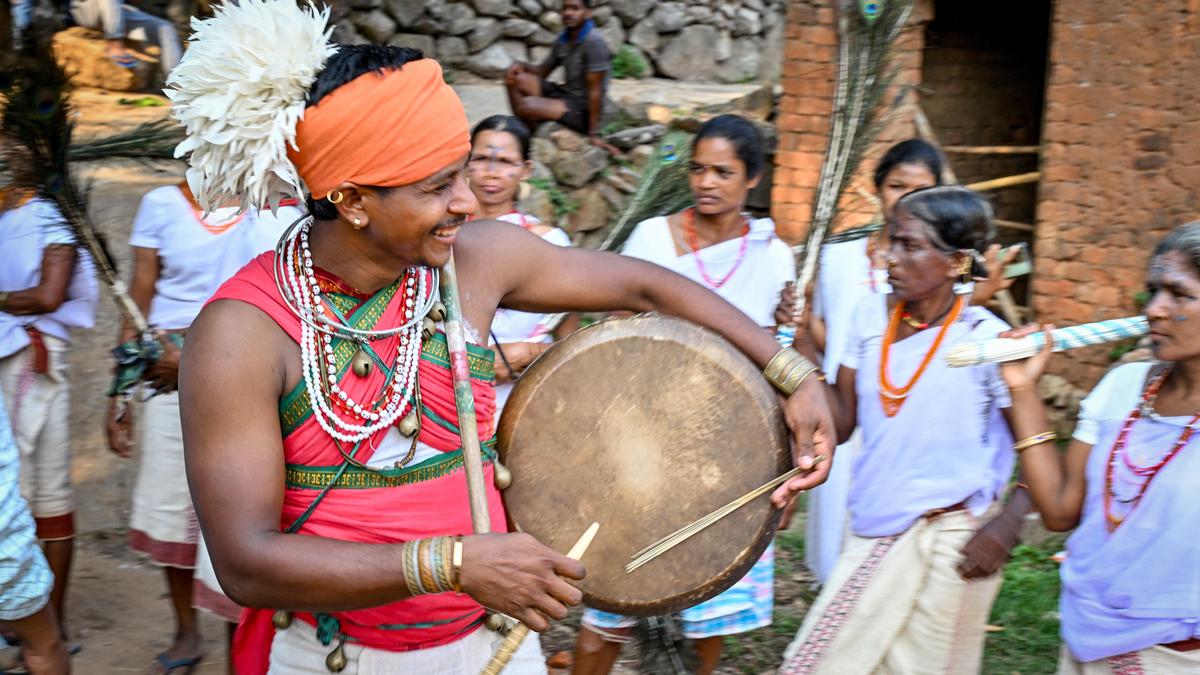
- 16 Apr 2026
In News:
The LanjiaSaora, a distinct subgroup of the ancient Saora (or Savara) tribe, has recently gained attention for the resilient yet evolving nature of its cultural identity. Primarily recognized as a Particularly Vulnerable Tribal Group (PVTG) in Odisha, the community is navigating a delicate balance between preserving centuries-old rituals and adapting to modern socio-economic shifts.
I. Geographical and Demographic Profile
- Primary Habitat: The tribe predominantly inhabits the rugged, forested hills of the Rayagada (Gunupur division) and Gajapati (Parlakhemundi) districts of southern Odisha.
- Broader Distribution:Saoras are also found across Andhra Pradesh, Jharkhand, Madhya Pradesh, and Assam, making them one of India’s most widely distributed ancient communities.
- Tribal Subdivisions:
- LanjiaSaora: Hill-dwelling, traditionally isolated, and practitioners of shifting cultivation.
- Sudha Saora: Residents of the plains who have integrated more closely with settled agriculture and mainstream wage labor.
II. Cultural Identity and Art: The Idital Heritage
The spiritual and social life of the LanjiaSaora is deeply intertwined with their unique visual and performing arts.
- Idital (Saora Paintings):
- These are sacred wall murals painted on the red-ochre exterior or interior walls of mud houses using rice paste.
- Significance: Known as Italons or Ikons, these 62 varieties of paintings depict tribal folklore, the "Tree of Life," and daily activities to appease deities and ancestors.
- GI Tag: In early 2024, LanjiaSaora paintings received the Geographical Indication (GI) tag, providing a global platform for their conservation and commercial viability.
- Language: They speak Saora, a Mundari language from the Austroasiatic family. It notably possesses its own unique , 'Sorang Sompeng', developed in 1966.
- Dance and Music: Their "scintillating" dances are spontaneous and communal. Performers wear turbans decorated with white crane feathers, peacock plumes, and carry traditional umbrellas and swords. Instruments include brass pipes, cymbals, and gongs.
III. Traditions in Transition: Modernity vs. Rituals
Recent observations highlight a shift in how the younger generation perceives traditional markers of identity:
- Physical Adornments: Older members are known for permanent tattoos with geometric motifs and large metal earrings that permanently stretch the earlobes. Younger Saoras are increasingly opting for temporary tattoos and detachable, hooked ornaments to navigate modern professional and social environments without abandoning their roots.
- Ritualistic Shifts: Traditional practices like the Guar ceremony (a grand funeral ritual involving animal sacrifice) remain central, but increasing contact with Christianity and Hinduism is subtly altering the community's magico-religious landscape.
IV. Economy and Livelihood
- Agriculture: They are renowned for their indigenous engineering skills in terraced cultivation and water management. They also practice shifting cultivation (PoduChasa or BagadoChaas).
- Social Structure: They follow an egalitarian system with the Birinda (lineage) as the primary social unit.
- Trade: While moving toward cash crops, the barter system remains prevalent in local weekly markets (haats).
'MyLIC' and 'Super Sales Saathi' Initiatives

- 16 Apr 2026
In News:
In a strategic move to modernize its operational framework and enhance user engagement, the Life Insurance Corporation of India (LIC) has launched two sophisticated mobile applications: MyLIC (for policyholders) and Super Sales Saathi (for agents). These applications are central to LIC’s broader digital overhaul, aiming to bridge the gap between traditional insurance practices and the evolving expectations of a tech-savvy populace.
I. The DIVE Platform: The Backbone of Digital Innovation
Both applications are built upon LIC's proprietary DIVE (Digital Innovation & Value Enhancement) platform.
- Purpose: To provide a secure, integrated, and scalable digital environment.
- Goal: To ensure a seamless "omnichannel" experience for customers, intermediaries, and employees, reducing processing times and enhancing data security.
II. MyLIC App: Empowering the Policyholder
The MyLIC app is designed to provide a 360-degree digital experience, moving away from the cumbersome paperwork traditionally associated with life insurance.
Key Digital Features:
- Portfolio Management: A consolidated view of all active and inactive insurance plans.
- Financial Transactions: Facilitates instant premium payments and paperless policy loans, significantly improving liquidity access for users.
- Policy Servicing: Real-time tracking of benefits, online updates for personal details, and the ability to revive lapsed policies digitally.
- Onboarding: Features fast and secure e-KYC and the option to purchase new insurance plans directly through the app.
III. Super Sales Saathi: Enhancing Agent Productivity
Recognizing that its vast network of intermediaries is its greatest strength, LIC developed the Super Sales Saathi app to digitize the sales lifecycle.
Core Capabilities:
- AI-Driven Insights: Uses data analytics to provide agents with insights into customer needs, improving the quality of financial advice.
- Efficiency Tools: Automated reminders for policy renewals and follow-ups, integrated customer communication, and real-time policy status tracking.
- Sales Kits: Provides digital product explainers and marketing materials, ensuring a standardized and professional pitch.
- Performance Tracking: Dedicated dashboards allow agents to monitor their achievements and targets in real-time.
Scarborough Shoal
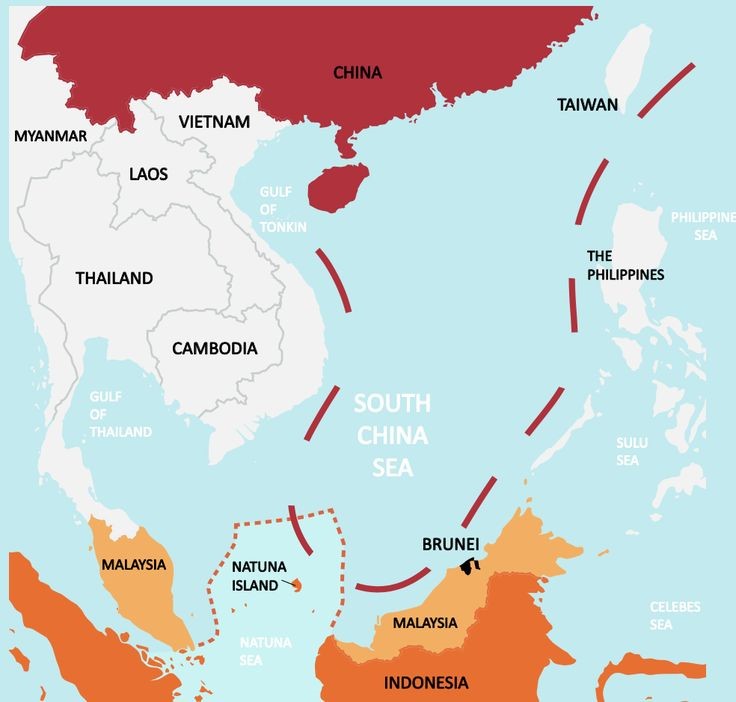
- 16 Apr 2026
In News:
Recent satellite imagery confirmed a significant escalation at the Scarborough Shoal, as China deployed floating barriers and an increased fleet of Coast Guard and maritime militia vessels to block the entrance to the atoll’s lagoon. This move, aimed at tightening de facto control over the disputed feature, has reignited diplomatic and security concerns between Manila and Beijing, making it a critical case study for international maritime law and regional geopolitics.
I. Geographical and Strategic Profile
- Location: Situated in the eastern South China Sea, approximately 120 nautical miles (222 km) west of Luzon (Philippines) and about 470 nautical miles from the Chinese coast.
- Physical Character: It is a triangular coral atoll formed on an underwater volcanic mount, covering an area of 150 sq. km. It is not a permanent island but a high-tide feature where several rocks (notably "South Rock") remain above water at high tide.
- Nomenclature: Known as Bajo de Masinloc or Panatag Shoal in the Philippines, and Huangyan Island in China. It was named after the HMS Scarborough, an East India Company ship that struck the reef in the 18th century.
- Economic Value: The shoal serves as a traditionally rich fishing ground for local communities (particularly from Zambales) and is believed to harbor significant seabed mineral resources, including petroleum and natural gas.
II. The Legal and Territorial Dispute
The conflict involves overlapping claims based on disparate legal and historical interpretations:
|
Feature |
The Philippines' Claim |
China’s Claim |
|
Legal Basis |
Based on UNCLOS (1982); the shoal lies within the Philippines' 200-nautical-mile Exclusive Economic Zone (EEZ). |
Claims "historical rights" dating back to the Yuan Dynasty (1200s) and the controversial Nine-Dash Line. |
|
Current Status |
Maintains legal rights reinforced by the 2016 Permanent Court of Arbitration (PCA) ruling. |
Maintains de facto control since a 2012 standoff, despite the 2016 ruling invalidating its expansive claims. |
|
Recent Strategy |
Protesting "barrier diplomacy" and seeking international support. |
Using the "Nature Reserve" pretext to justify permanent presence and potential artificial construction. |
III. Key Conflict Drivers (2026 Context)
- Barrier Diplomacy: China’s use of floating barriers is a tactical maneuver to deny Filipino fishermen access to the lagoon, effectively weaponizing maritime infrastructure.
- Militarization & Grey Zone Tactics: The deployment of the "Maritime Militia"—fishing trawlers acting as paramilitary units—allows China to project power while staying below the threshold of direct military conflict.
- Legal Pretexts: Manila views China's recent declaration of the area as a "national nature reserve" as a sophisticated legal strategy to normalize permanent occupation and provide a facade for future construction.
IV. Broader Geopolitical Implications
- U.S.-Philippines Alliance: Under the U.S.-Philippines Mutual Defense Treaty, an armed attack on Philippine vessels or personnel could necessitate U.S. intervention. China’s current blockade tests the "red lines" of this alliance.
- Regional Stability: Diplomats fear that China is capitalizing on global distractions (such as conflicts in the Middle East) to shift the status quo in the South China Sea.
- Livelihood Security: The blockade creates significant economic distress for Filipino coastal provinces, transforming a territorial dispute into a socio-economic crisis for local populations.
Bacille Calmette-Guerin (BCG) vaccines
- 16 Apr 2026
In News:
In a significant move reinforcing its "Neighbourhood First" policy and commitment to humanitarian aid, India dispatched 13 tonnes of Bacille Calmette-Guerin (BCG) vaccines to Afghanistan. This consignment, delivered to the Afghan Ministry of Public Health in Kabul, aims to bolster the country's national child immunization program against Tuberculosis (TB), particularly in the wake of recent natural disasters and a strained healthcare infrastructure.
I. Understanding the BCG Vaccine
- Nature: The BCG vaccine is a live attenuated vaccine derived from a weakened strain of Mycobacterium bovis (a bacterium that causes TB in cows but is related to the human strain).
- Historical Context: Developed by French bacteriologists Albert Calmette and Camille Guérin, it was first administered to humans in 1921.
- Clinical Utility:
- Primary Use: It remains the only widely available vaccine against Tuberculosis.
- Off-label Uses: It offers cross-protection against other non-tuberculous mycobacterial infections such as Leprosy and Buruli ulcer.
- Immunotherapy: It is used as a standard treatment for superficial bladder cancer (carcinoma).
- Administration & Storage:
- Method: Administered intradermally (into the skin).
- Storage: Requires a strict cold chain between 2°C and 8°C.
- Composition: Supplied as a two-part kit—a freeze-dried vaccine (in amber glass ampoules to protect from light) and a diluent (colorless ampoules) for reconstitution.
II. Tuberculosis (TB): The Global and Regional Burden
TB continues to be a major public health challenge, especially in developing and conflict-affected nations.
- Pathogen: Caused by Mycobacterium tuberculosis, which primarily targets the lungs (pulmonary TB) but can affect other organs (extra-pulmonary TB).
- Transmission: An airborne disease spread through respiratory droplets (coughing, sneezing, or spitting).
- Symptoms: Persistent cough (often with blood), weight loss, night sweats, high fever, and fatigue.
- Vulnerability in Afghanistan: Coverage for BCG vaccination among one-year-olds in Afghanistan has historically hovered around 68%, leaving thousands of children susceptible to severe forms of the disease like miliary TB and TB meningitis.
Andaman Sea
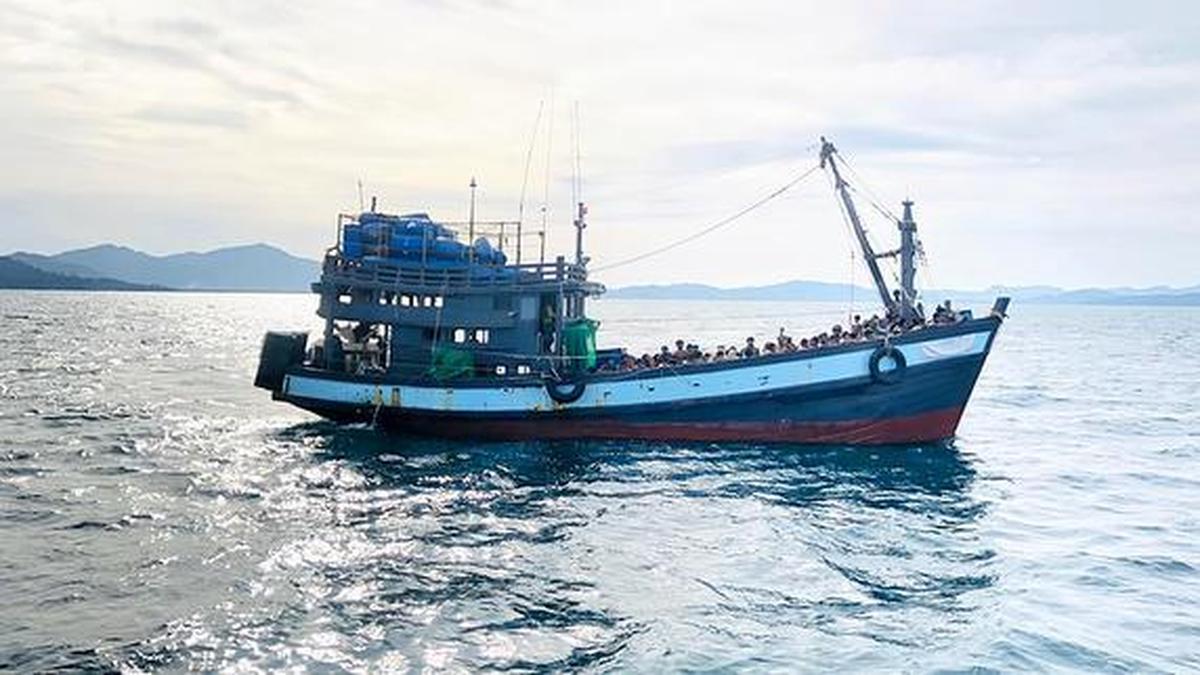
- 16 Apr 2026
In News:
The Andaman Sea has recently witnessed one of the deadliest maritime disasters in recent years. Recently, an overcrowded trawler carrying approximately 250 individualscomprising Rohingya refugees and Bangladeshi nationalscapsized while en route to Malaysia. This incident, reported by the UNHCR and the International Organization for Migration (IOM), underscores the growing desperation of displaced communities and the complex humanitarian challenges in South and Southeast Asia.
I. Geography and Ecology of the Andaman Sea
- Location & Boundaries: It is a semi-enclosed marginal sea in the northeastern Indian Ocean.
- West: Bounded by the Andaman and Nicobar Islands (India) and the Bay of Bengal.
- East: Bordered by the Malay Peninsula and the Strait of Malacca.
- North: Bordered by the Irrawaddy Delta of Myanmar.
- South: Bordered by the Indonesian island of Sumatra.
- Geological Significance: The region is tectonically active, situated on the Sunda Plate. It is bordered by the Indian Plate to the northwest and the Australian Plate to the southeast, making it prone to underwater seismic activity.
- Climate: Dominated by a tropical monsoon climate. The Southwest Monsoon (May–September) and Northeast Monsoon (November–February) dictate maritime safety; the recent capsize was attributed to strong winds and rough seas typical of seasonal transitions.
- Biodiversity: The sea is a global biodiversity hotspot featuring extensive coral reefs, seagrass meadows, and mangrove forests, which serve as critical habitats for diverse marine life.
II. The Humanitarian Crisis: Context and Causes
The recent tragedy is not an isolated event but a symptom of a protracted humanitarian crisis involving the Rohingya—a stateless Indo-Aryan ethnic group from Myanmar’s Rakhine State.
- Push Factors from Bangladesh:
- Overcrowded Camps: Over one million Rohingya live in the Cox’s Bazar district (Teknaf).
- Socio-Economic Restrictions: Limited access to formal education, restricted movement, and lack of employment opportunities in the camps drive desperation.
- Security Concerns: Rising violence within refugee camps and dwindling international humanitarian aid (funding cuts) have made life unsustainable for many.
- Pull Factors and Human Trafficking:
- False Promises: Human traffickers lure vulnerable individuals with promises of high-paying jobs in Malaysia or Indonesia.
- Regional Instability: Ongoing conflict in Myanmar’s Rakhine State makes the "safe, voluntary, and dignified" return of refugees nearly impossible in the current geopolitical climate.
- The Perilous Journey:
- Refugees use "rickety" and overcrowded fishing trawlers to cross the Andaman Sea.
- Statistically: 2025 was recorded as one of the deadliest years for sea crossings, with nearly 900 deaths. In 2026, fatalities in the Andaman Sea and Bay of Bengal have reportedly increased by over 40% compared to previous years.
III. Strategic and Legal Dimensions
- The "Search and Rescue" Gap: In the recent incident, the Bangladesh Coast Guard rescued nine survivors from the M.T. Meghna Pride (a Bangladesh-flagged vessel), but official search operations were limited as the capsize occurred outside Bangladesh's territorial waters. This highlights the need for a regional maritime SAR (Search and Rescue) framework.
- International Obligations: While many regional countries are not signatories to the 1951 Refugee Convention, the principle of Non-Refoulement (not returning refugees to a place where they face persecution) and the UN Convention on the Law of the Sea (UNCLOS) mandate assistance to those in distress at sea.
- Human Trafficking Prevention: The survivors were handed over to the police in Teknaf, and cases were filed under the Human Trafficking Prevention Act, emphasizing the criminal dimension of these migrations.
China establishes Cenling County
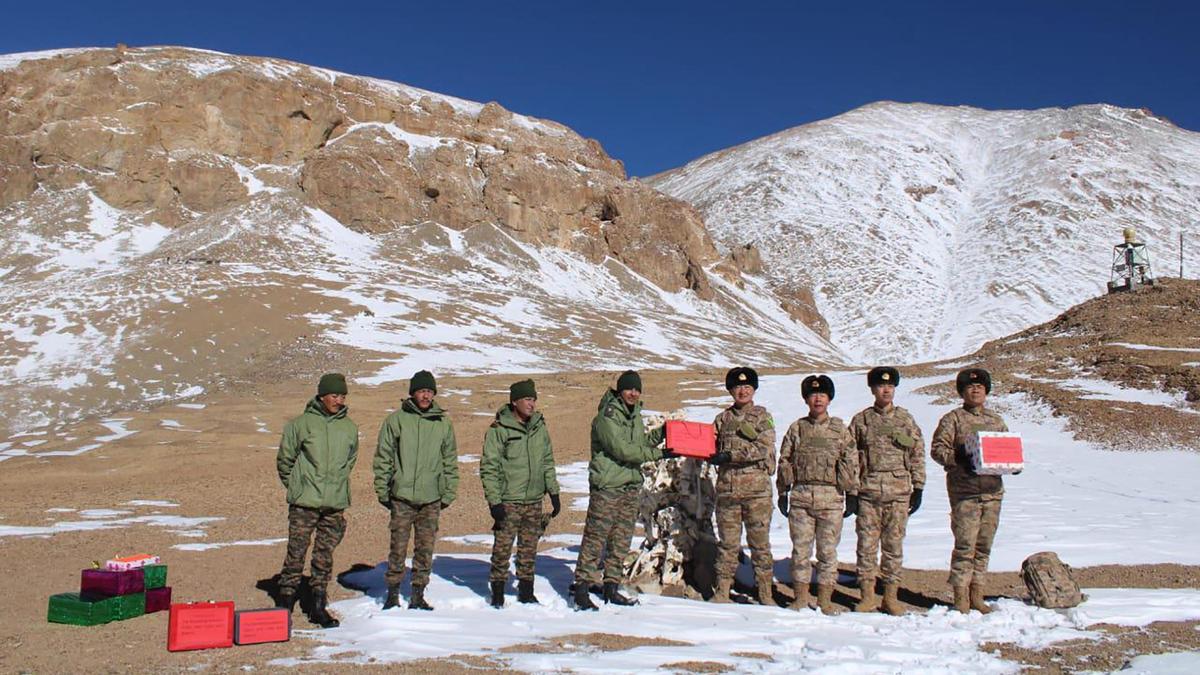
- 14 Apr 2026
In News:
In a strategic move aimed at tightening its grip on border security and administrative control, China has established a new county named “Cenling” in the Xinjiang Uyghur Autonomous Region. This administrative restructuring is positioned near the highly sensitive borders of Pakistan-occupied Kashmir (PoK) and Afghanistan, carrying significant implications for regional security and India’s territorial integrity.
Geopolitical Significance of Cenling County
Cenling is the third new county established by Beijing in Xinjiang recently, following the creation of Hean and Hekang under the Hotan prefecture.
- Strategic Location: Administered under the Kashgar prefecture, Cenling sits at a vital junction of the ancient Silk Road. It serves as a gateway for the China-Pakistan Economic Corridor (CPEC), a project India has consistently opposed due to its passage through sovereign Indian territory in PoK.
- Security Objectives: The establishment of this county is seen as an attempt to bolster surveillance over the Wakhan Corridor—a narrow strip of land in Afghanistan that connects to China. Beijing’s primary motive is reportedly to curb the infiltration of Uyghur separatist militants and stabilize its western frontier.
- Administrative Context: In China, a county (xian) is a third-level administrative division. By creating a formal government unit here, China transitions from mere military presence to permanent civilian and administrative governance.
Encroachment into Indian Territory
The creation of these counties is part of a broader pattern of "salami slicing" and administrative normalization in disputed areas:
- Hean County: Much of this newly designated county covers the Aksai Chin plateau, a region in the Union Territory of Ladakh that has been under illegal Chinese occupation since the 1962 war.
- Hekang County: Like Hean, this unit falls within areas that India considers part of its sovereign territory, leading to strong diplomatic protests from New Delhi.
India’s Official Stance: Rejecting "Fictitious Names"
The Ministry of External Affairs (MEA) has issued a stern rebuff to China’s administrative and cartographic maneuvers. India’s response focuses on two main pillars:
- Rejection of Baseless Narratives: India has dismissed these actions as “mischievous attempts” to create a legal veneer for illegal occupations.
- Sovereignty over Arunachal Pradesh: Parallel to the Xinjiang developments, China has frequently attempted to rename places in Arunachal Pradesh. India maintains that assigning “fictitious names” does not alter the ground reality—Arunachal Pradesh was, is, and will always be an integral part of India.
Ganges River Dolphin
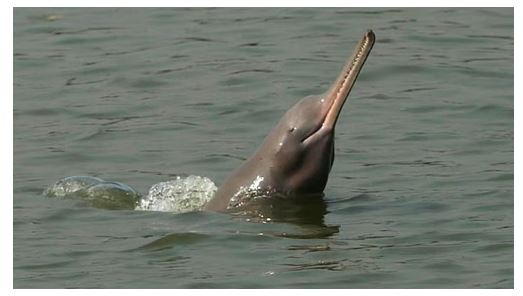
- 14 Apr 2026
In News:
A recent report by the Wildlife Institute of India (WII) has sounded an alarm for India’s national aquatic animal. Drastic reductions in the water flow of the Chambal River are forcing the endangered Ganges River Dolphin to abandon its traditional territory and migrate downstream toward the confluence with the Yamuna. This displacement highlights the growing conflict between human water demands and ecosystem preservation.
Profile of the Ganges River Dolphin (Platanista gangetica)
Often described as one of the world's oldest living creatures, the Ganges River Dolphin is a flagship species that serves as an indicator of the river ecosystem's health.
- Taxonomy & Discovery: Formally discovered in 1801, it is popularly known as the ‘Susu’—an onomatopoeic name derived from the sound it makes when breathing.
- National Status: Recognized as India’s National Aquatic Animal.
- Conservation Status:
- IUCN Red List: Endangered.
- Wildlife Protection Act (1972): Schedule I.
- Biological Traits:
- Blindness: They are essentially blind and rely entirely on echolocation (ultrasonic sound waves) to navigate and hunt in murky river waters.
- Size: Females (approx. 2.7m) are larger than males (approx. 2.1m).
- Strictly Freshwater: Unlike most marine dolphins, this species cannot survive in saline water.
- Distribution: Found across the Ganges-Brahmaputra-Meghna and Karnaphuli-Sangu River systems in India, Nepal, and Bangladesh. In India, they are spread across seven states, including Assam, Uttar Pradesh, Rajasthan, and Bihar.
The Chambal Crisis: Flow Reduction and Its Impacts
The Chambal River was traditionally a safe haven for these dolphins due to its relatively pollution-free waters. However, the river is currently facing a hydrological crisis.
1. Habitat Shrinkage: Dolphins require a minimum water depth of 3 meters for survival. Extensive water extraction for irrigation and industrial use has lowered the Chambal’s flow to levels that make the upper reaches uninhabitable. This has triggered a forced migration toward the Yamuna confluence, where deeper pools are still available.
2. Fragmentation by Infrastructure: The construction of dams and barrages has fragmented the dolphin population. These physical barriers prevent migration, isolate groups, and lead to a narrowed gene pool, making the species more vulnerable to disease and environmental changes.
3. Collateral Ecological Damage
The low water levels have ripple effects on other biodiversity:
- Land Bridges: Receding water creates land bridges to river islands that were previously protected from terrestrial predators.
- Threat to Avifauna: Predators like jackals and stray dogs can now access these islands, destroying the nests of rare birds such as the Indian Skimmer and the Black-bellied Tern.
South Atlantic Anomaly (SAA)
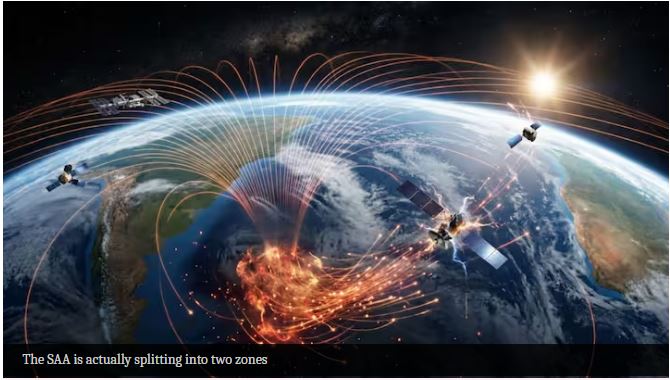
- 14 Apr 2026
In News:
The Earth’s magnetic field, which serves as a vital shield against solar and cosmic radiation, is currently undergoing significant changes. Scientists have observed that the South Atlantic Anomaly (SAA), a region where this magnetic protection is notably weak—is not only expanding but is now splitting into two distinct zones. This evolution poses increasing risks to global satellite infrastructure and space exploration.
Understanding the South Atlantic Anomaly (SAA)
The SAA is an area characterized by a significant "dip" or weakening in the Earth's magnetic field. This allows charged particles and cosmic rays from the Sun to penetrate much deeper into the atmosphere than elsewhere on the planet.
- Location: Geographically situated between South America and Africa (roughly 5° to 40° S latitude and 0° to 80° W longitude).
- Discovery: First identified in the 19th century, its shape, size, and intensity fluctuate seasonally and over long-term geological cycles.
- Scientific Monicker: Often referred to as the "Bermuda Triangle of Space" due to its tendency to cause technical malfunctions in passing spacecraft.
The Role of Van Allen Radiation Belts
To understand why the SAA occurs, one must look at the Van Allen Belts—two doughnut-shaped zones of energetic charged particles trapped by Earth's magnetosphere.
- The Outer Belt: Primarily composed of high-energy particles from solar winds.
- The Inner Belt: Formed by the interaction of cosmic rays with the Earth's atmosphere.
- Mechanism of SAA: The SAA exists because the inner Van Allen belt comes closest to the Earth's surface in this specific region. Because the Earth’s magnetic axis is slightly tilted and offset from its rotational axis, the radiation belt "dips" lower toward the South Atlantic, creating a high-flux zone of energetic particles.
Recent Developments: The "Splitting" Phenomenon
Recent data indicates that the SAA is weakening further and undergoing a structural change. It is currently developing two separate centers of minimum magnetic intensity.
- The Eastern Cell: Moving toward the southwest of Africa.
- The Western Cell: Positioned near South America.
This split makes the region "trickier" for satellite operators to navigate, as the area of potential interference is becoming more complex and geographically dispersed.
Impacts and Risks
The increased flux of particles in the SAA has direct consequences for modern technology and safety:
|
Sector |
Impact |
|
Satellites & LEO |
Low Earth Orbit (LEO) satellites passing through the SAA face "Single Event Upsets" (SEUs)—momentary glitches or permanent damage to electronic circuits. |
|
Space Stations |
Critical missions, such as the International Space Station (ISS), often shut down non-essential systems or delay spacewalks when passing through the anomaly to protect astronauts and equipment. |
|
Aviation & Marine |
High-energy particles can interfere with positioning systems (GPS/GNSS), complicating land, sea, and air navigation in the South Atlantic region. |
|
Scientific Data |
Delicate instruments on board space telescopes (like Hubble) are often "blinded" or powered down while traversing the SAA to avoid data corruption. |
SagarmalaProgramme
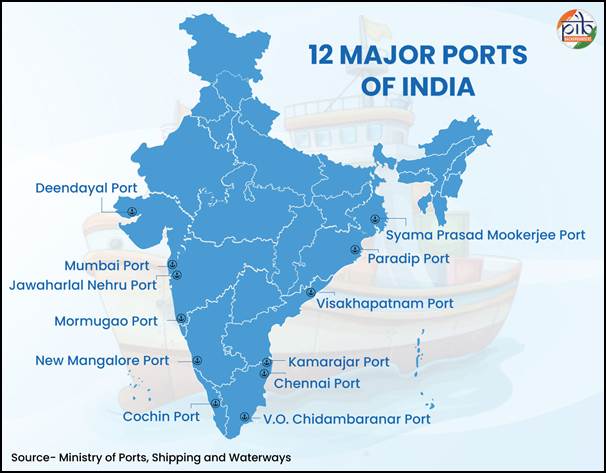
- 14 Apr 2026
In News:
The maritime sector is the lifeline of India’s economy, with a vast coastline of 11,099 km and approximately 14,500 km of navigable waterways. Currently, maritime routes handle 95% of India’s trade by volume and 70% by value. To leverage this natural advantage, the Government of India launched the SagarmalaProgramme in March 2015, aiming to transform the nation through port-led development.
Vision and Strategic Pillars
The program is designed to reduce logistics costs, enhance trade competitiveness, and improve the lives of coastal communities. It operates through 5 Strategic Pillars across 24 categories:
- Port Modernization & New Port Development: Upgrading existing infrastructure and building new "Greenfield" ports to expand capacity.
- Port Connectivity Enhancement: Integrating ports with the hinterland via multimodal transport, including heavy-haul rail and expressways.
- Port-Led Industrialization: Establishing industrial clusters and Coastal Economic Zones (CEZs) near ports to minimize domestic logistics costs.
- Coastal Community Development: Focused on skill development, sustainable fisheries, and coastal tourism.
- Coastal Shipping & Inland Waterways: Shifting cargo from congested road/rail networks to more eco-friendly water-based transport.
Implementation Progress (As of March 2026)
The scale of Sagarmala is immense, involving a total of 845 projects with an estimated investment of ?6.06 lakh crore.
- Completed: 315 projects (?1.57 lakh crore).
- In Progress: 210 projects.
- Planning Stage: 320 projects.
Key Performance Indicators (FY 2025–26)
- Cargo Handling: Major ports handled a record 915.17 million tonnes (MT), reflecting a 7.06% year-on-year growth.
- Efficiency: Average vessel turnaround time dropped from 96 hours (2014) to 49.5 hours (2025).
- Waterway Growth: Inland waterway cargo movement surged by 700%, from 18.10 MTPA in 2014 to 145.50 MTPA in 2025.
- Global Standing: 9 Indian ports now rank in the Global Top 100, with Visakhapatnam Port breaking into the Top 20 for container traffic.
Socio-Economic Impact
- Urban Connectivity: 17 Ro-Pax and ferry projects are operational. For instance, the Ghogha–Hazira service reduced travel time from 10 hours (road) to 4 hours (sea).
- Livelihoods: 11 fishing harbor projects have been completed, benefiting 30,000 fishermen.
- Employment: The program has an estimated cumulative potential to create 1 crore jobs (40 lakh direct, 60 lakh indirect).
- Skill Development: Over 7,600 candidates trained under the DDU-GKY convergence, with many placed directly in maritime sectors.
Institutional Framework
A robust multi-tier governance structure ensures coordinated execution between the Union and State governments:
- National Sagarmala Apex Committee (NSAC): Provides overall policy guidance and oversight.
- Maritime States Development Council (MSDC): Facilitates critical Centre-State coordination.
- State Sagarmala Committees (SSCs): Responsible for project identification and monitoring at the state level.
- Sagarmala Finance Corporation Limited (SMFCL): Restructured in June 2025 (formerly SDCL), SMFCL is India’s first NBFC dedicated to the maritime sector, addressing the financing gap with loan sanctions already reaching ?4,300 crore.
The Future: Sagarmala 2.0 & Amrit Kaal
Building on the foundation of the initial phase, Sagarmala 2.0 aligns with the Maritime India Vision (MIV) 2030 and Maritime Amrit Kaal Vision 2047.
- Budgetary Support: Proposed at ?85,482 crore.
- Investment Target: Aims to catalyze ?3.6 lakh crore in total investment.
- Core Focus: Deepening modernization, fostering maritime innovation, and achieving the goal of Viksit Bharat 2047 by making India a global maritime hub.
Exercise DUSTLIK 2026
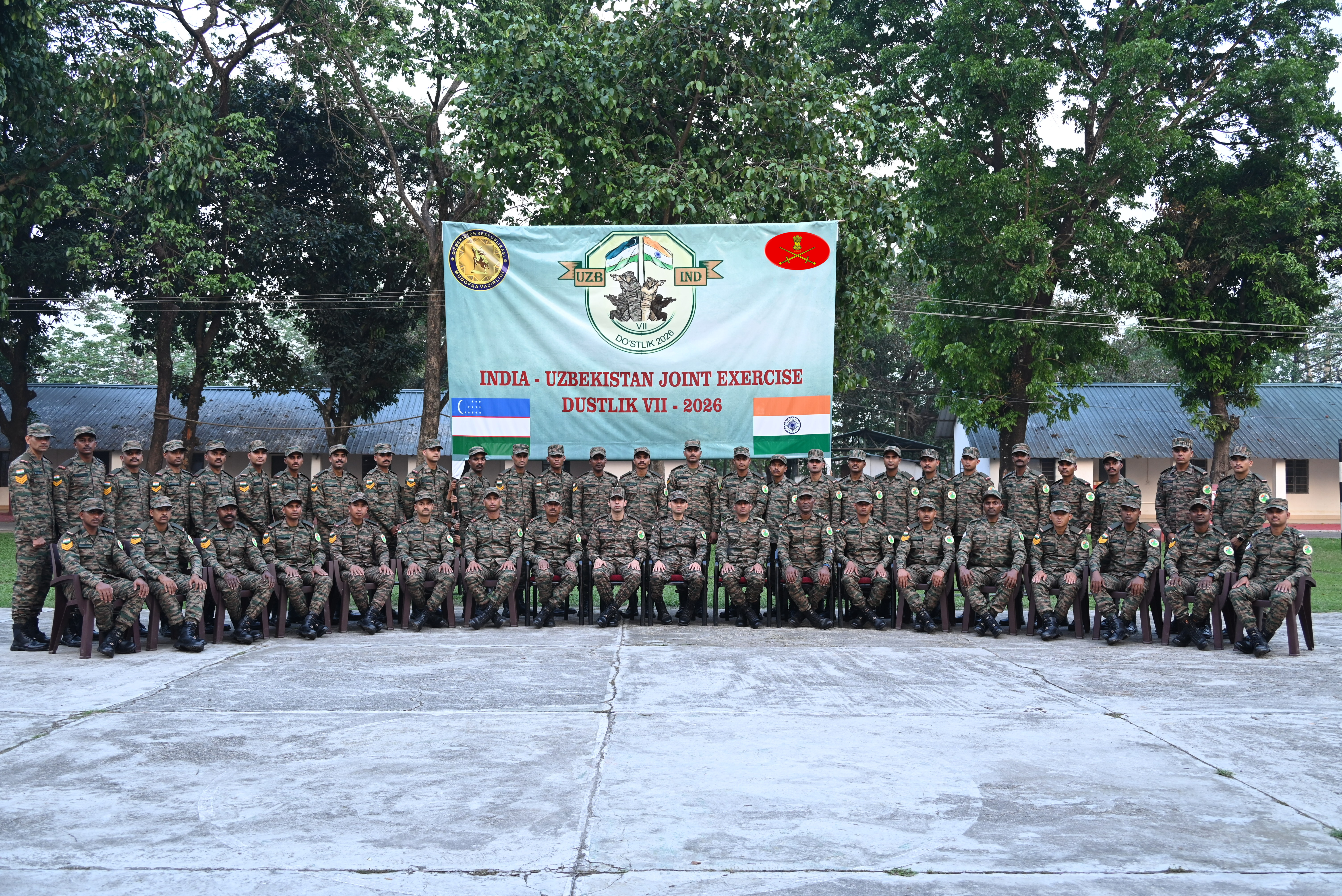
- 14 Apr 2026
In News:
The 7th edition of Exercise DUSTLIK, a bilateral joint military exercise between India and Uzbekistan, commenced recently. This annual training event underscores the growing defense cooperation between the two nations, particularly in the context of Central Asian security and counter-terrorism.
Overview of the 7th Edition
- Location:Gurumsaray Field Training Area, Namangam, Uzbekistan.
- Duration: April 12 to April 25, 2026.
- Participants:
- India: A 60-member contingent comprising 45 personnel from the MAHAR Regiment (Indian Army) and 15 personnel from the Indian Air Force.
- Uzbekistan: Approximately 60 personnel from the Uzbekistan Army and Air Force.
- Format: The exercise is a yearly event, conducted alternately in India and Uzbekistan. The 2025 edition was held in Aundh, Pune.
Core Objectives and Scope
The primary aim of Exercise DUSTLIK is to foster military cooperation and enhance the combined capability of both forces to execute joint operations in semi-mountainous terrain.
1. Operational Synergy: The exercise focuses on establishing a unified operational algorithm. This involves aligning command-and-control structures to ensure seamless planning and execution of joint missions.
2. Tactical Drill & Skills: Key operational aspects practiced during the two-week program include:
- Advanced land navigation techniques.
- Strike missions on simulated enemy bases.
- Seizure of enemy-held territories.
- Special arms skills and joint tactical drills.
3. Interoperability: By sharing "Tactics, Techniques, and Procedures" (TTPs), both contingents aim to improve their interoperability. This is crucial for future scenarios where both nations might need to coordinate in a multilateral or bilateral security environment.
The Validation Phase
The exercise culminates in a rigorous 48-hour validation exercise. This final phase is designed to test the effectiveness of the joint training, specifically focusing on the neutralization of unlawful armed groups through joint special operations.
Digital Payments Revolution
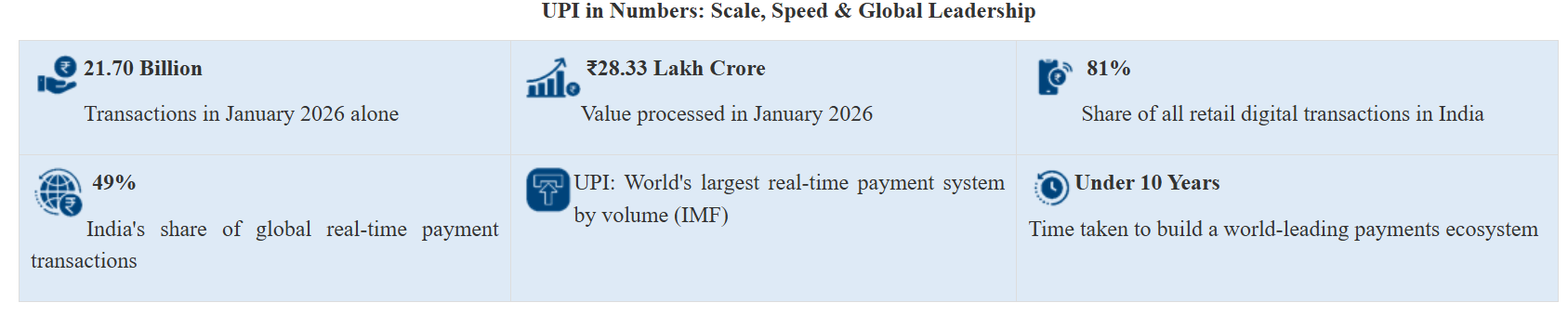
- 13 Apr 2026
In News:
India’s financial landscape has undergone a radical metamorphosis, transitioning from a cash-heavy, urban-centric banking model to a world-leading, real-time digital infrastructure. As of January 2026, India has solidified its global leadership in fintech, processing a record 21.70 billion transactions worth ?28.33 lakh crore in a single month.
The Evolution of Payment Systems
The journey from "Queues to QR Codes" can be categorized into four distinct phases:
- The Traditional Era: Reliance on physical cash, barter, and cheques; limited to urban centers.
- Institutional Formalization (2004–2010): Introduction of RTGS and IMPS, enabling 24/7 transfers, yet restricted to the banked elite.
- The Structural Breakthrough (JAM): The combination of Jan Dhan (Access), Aadhaar (Identity), and Mobile (Connectivity) created the bedrock for mass financial inclusion.
- The UPI Radicalization (2016–Present): The launch of the Unified Payments Interface (UPI) by NPCI democratized payments via Virtual Payment Addresses (VPA) and QR codes.
The Architectural Pillars: JAM Trinity & DBT
The JAM Trinity acted as a catalyst for "Aatmanirbhar" banking:
- Pradhan Mantri Jan-Dhan Yojana: Brought the "unbanked" into the formal fold via zero-balance accounts.
- Aadhaar: Provided a digital, biometric identity for seamless authentication.
- Mobile Connectivity: Served as the primary interface for transactions.
- The DBT Effect: This framework enabled the Direct Benefit Transfer (DBT) system, ensuring government aid reaches beneficiaries without intermediaries, thereby reducing leakages and building public trust in digital systems.
UPI: The Global Gold Standard
UPI is now the world’s largest real-time payment system by volume. Key 2026 statistics highlight its dominance:
- Market Share: UPI accounts for 81% of all retail digital transactions in India.
- Global Footprint: India contributes 49% of total global real-time payment transactions.
- Institutional Growth: The network has expanded from 216 banks (2021) to 691 banks (2026).
- International Reach: Operational or linked in countries including France, UAE, Singapore, Bhutan, Nepal, Sri Lanka, Mauritius, and Qatar.
Beyond Payments: Socio-Economic Significance
- Financial Inclusion: Dissolves the urban-rural divide; village mandis and street vendors now transact with the same speed as metropolitan hubs.
- Formalization of Credit: Digital footprints allow informal workers (auto drivers, domestic help) to access formal credit, insurance, and pre-approved credit lines.
- Economic Efficiency: Reduces the heavy "cost of cash" (printing, storage, transport) and speeds up the velocity of money.
- Enhanced Security: Effective April 1, 2026, the RBI mandated Multi-layer/Two-factor authentication (biometrics, secure tokens, and PINs) to combat digital fraud.
Critical Challenges
Despite its success, the ecosystem faces several hurdles:
- Cybersecurity: Sophisticated phishing and identity theft remain persistent threats.
- Digital Literacy: A gap exists in the deep-tech understanding required to resolve transaction failures among first-time rural users.
- Infrastructure Load: Processing 20 billion monthly transactions puts immense pressure on bank servers and the NPCI central switch.
- Data Privacy: The massive volume of financial data necessitates a robust legal framework to prevent commercial misuse.
Way Forward: The Road to 2030
To sustain this momentum, the focus must shift toward:
- Product Diversification: Scaling UPI Lite (small-value offline payments) and UPI AutoPay (recurring bills).
- Credit Integration: Leveraging "Credit on UPI" to turn a payment tool into a comprehensive financial services platform.
- Deep-Rural Outreach: Ensuring 100% connectivity in remote regions to digitize the "last mile" of the economy.
- Cross-Border Dominance: Positioning UPI as a cheaper, faster alternative for global remittances.
1,000-km Quantum Communication Network

- 13 Apr 2026
In News:
India has achieved a significant milestone under the National Quantum Mission (NQM) by developing a 1,000 km quantum communication network. Developed using indigenous technology by QNu Labs with support from the Department of Science and Technology (DST), this achievement comes less than two years after the mission’s launch, putting India well ahead of its interim targets.
The National Quantum Mission (NQM): Overview
- Launch: Approved in April 2023; officially launched in October 2024.
- Nodal Agency: Department of Science and Technology (DST).
- Budget: ?6,003 crore for a period of eight years (2023-24 to 2030-31).
- Objective: To seed, nurture, and scale up R&D in quantum technologies, positioning India among the top six nations globally (joining the US, China, Canada, Austria, Finland, and France).
Key Pillars of NQM & Targets
The mission is structured around four primary domains:
- Quantum Computing: Developing computers with 50 to 1,000 physical qubits using superconducting and photonic platforms.
- Quantum Communication:
- Terrestrial: Inter-city QKD networks over 2,000 km using existing optical fibers.
- Satellite: Secure satellite-based communication between ground stations over 2,000 km (including international links).
- Quantum Sensing & Metrology: High-sensitivity magnetometers and atomic clocks for precision navigation (GPS/Aviation) and defense.
- Quantum Materials: Synthesis of superconductors, topological materials, and semiconductors for device fabrication.
Technical Spotlight: Quantum Key Distribution (QKD)
The 1,000-km network relies on QKD, which is the "gold standard" for secure communication.
- How it works: It uses quantum particles (photons) to share secret encryption keys.
- The "Observer Effect": Based on the laws of quantum mechanics (No-cloning theorem), any attempt to intercept or eavesdrop on the key disturbs the quantum state of the photons.
- Instant Detection: This disturbance alerts the communicating parties immediately, making the communication virtually unhackable.
Significance of the 1,000-km Milestone
- Global Standing: This is one of the longest terrestrial QKD deployments globally, demonstrating India’s rapid execution capabilities.
- Strategic Security: Essential for protecting sensitive data in Defense, Finance, and Critical National Infrastructure (Power grids, nuclear plants).
- Terrain Versatility: The indigenous technology is designed to function across diverse and challenging terrains, including underwater and underground environments.
- Aatmanirbharta (Self-Reliance): Reduces dependence on foreign encryption patents and imported hardware, fostering a home-grown deep-tech ecosystem.
Institutional & Startup Ecosystem
- Thematic Hubs (T-Hubs): Four dedicated hubs have been established in top academic and R&D institutes to drive the mission’s goals.
- Support for Deep-Tech: The mission currently supports 17 ventures.
- Innovative Financing: The government is employing Optionally Convertible Debt (OCD). This allows startups to access capital without immediate equity dilution, encouraging private sector participation in high-risk, high-reward quantum research.
Hib Disease
- 13 Apr 2026
In News:
Haemophilus influenzae type b (Hib), once a major cause of childhood mortality and morbidity, is re-emerging as a significant public health threat. Recent reports from the United States indicate a resurgence of the disease linked directly to a decline in childhood vaccination rates. For India, which transitioned to universal Hib vaccination only in the last decade, these global trends offer a critical warning on the "immunity debt" and the dangers of vaccine hesitancy.
Understanding the Pathogen: Hib
- Nature: It is a Gram-negative bacterium. Contrary to its name, it does not cause influenza (which is viral).
- Affected Population: Primarily children under 5 years; however, adults with comorbidities (immunocompromised) or those in crowded settings are also vulnerable.
- Transmission: Spread via respiratory droplets (coughing/sneezing) or prolonged close contact with an infected person.
- Clinical Profile:
- Invasive Disease: Causes meningitis (lining of brain/spinal cord), septicemia (bloodstream infection), epiglottitis (severe swelling of the throat), and pneumonia.
- Non-Invasive Disease: Ear infections (Otitis media) and bronchitis.
- Long-term Impact: Even with treatment, survivors of Hib meningitis may suffer from permanent brain damage, hearing loss, or learning disabilities.
Current Global Concern: The US Scenario
- Declining Coverage: Recent CDC data (2024-2025) reveals a 1-2 percentage point drop in the primary Hib series coverage among children by age 24 months.
- The "Vulnerability Gap": The decline is attributed to post-pandemic disruptions in routine healthcare and rising vaccine skepticism.
- Adult Clusters: Recent outbreaks have also been noted among specific adult populations, including those experiencing homelessness or housing instability, highlighting that Hib can exploit gaps in community immunity.
The Indian Context & Universal Immunization Programme (UIP)
- Historical Burden: Before the public sector rollout, India accounted for nearly 20% of global Hib-related deaths.
- Policy Intervention (The Pentavalent Vaccine):
- India introduced the Pentavalent Vaccine in a phased manner starting in 2011, reaching national scale by 2015.
- Components: It protects against five diseases: Diphtheria, Pertussis, Tetanus, Hepatitis B, and Hib.
- Impact: Hib incidence in India has plummeted by over 90% in regions with high pentavalent coverage.
- Recent Trends: As per WUENIC (WHO/UNICEF) 2024-2025 estimates, India’s Hib (3rd dose) coverage remains robust at approximately 93-94%, significantly higher than the global average of 78%.
Challenges in Management
- Antibiotic Resistance: While antibiotics are the primary treatment, H. influenzae is increasingly showing resistance to common drugs, making vaccination the only sustainable defense.
- Asymptomatic Carriage: Many people carry the bacteria in their noses and throats without being ill, acting as "silent spreaders" to unvaccinated infants.
- Catch-up Gaps: Children who missed doses during the COVID-19 pandemic remain at risk. In India, catch-up is recommended up to age 5.
GLP-1 Drugs
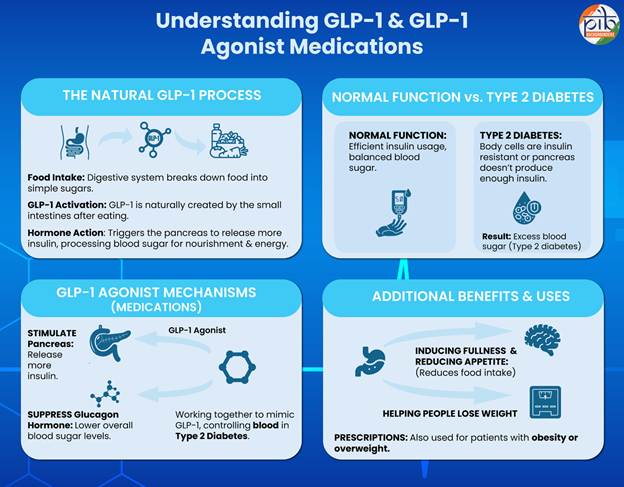
- 13 Apr 2026
In News:
The Drugs Controller General of India (DCGI) has recently intensified regulatory surveillance over the unauthorized sale and unsupervised use of GLP-1 (Glucagon-Like Peptide-1) receptor agonists. This move comes amid rising concerns over misleading advertisements and the "on-demand" availability of these drugs for weight loss without medical supervision.
What are GLP-1 Drugs?
- Mechanism: These drugs mimic the natural GLP-1 hormone produced in the gut.
- Functions:
- Insulin Regulation: Stimulate the pancreas to release insulin and suppress glucagon, helping control blood sugar in Type 2 Diabetes.
- Appetite Suppression: They slow gastric emptying (keeping food in the stomach longer), signaling the brain to feel full.
- Medical Use: Primarily approved for Type 2 Diabetes mellitus and, in specific formulations, for Chronic Weight Management (Obesity).
The Dual Burden: Diabetes & Obesity in India
- Diabetes: A chronic condition where the body cannot effectively use insulin. Untreated, it leads to complications like kidney failure, stroke, and blindness.
- Obesity: Defined by a Body Mass Index (BMI) ≥25kg/m2 in the Indian context. It is a major driver for cardiovascular diseases and insulin resistance.
- Trend: India is witnessing a "twin epidemic," making the demand for weight-loss medications like GLP-1 agonists surge.
Key Regulatory Concerns
- Unsupervised Use: Use of these drugs without a doctor's preion for "cosmetic weight loss" can lead to severe side effects (e.g., gastrointestinal issues, potential thyroid risks, or pancreatitis).
- Unauthorized Sales: Availability through online platforms, wholesalers, and wellness clinics without valid preions.
- Misleading Advertisements: Promotion of these drugs as "magic pills" for weight loss, violating the Drugs and Magic Remedies (Objectionable Advertisements) Act.
Punatsangchhu-I Hydroelectric Project
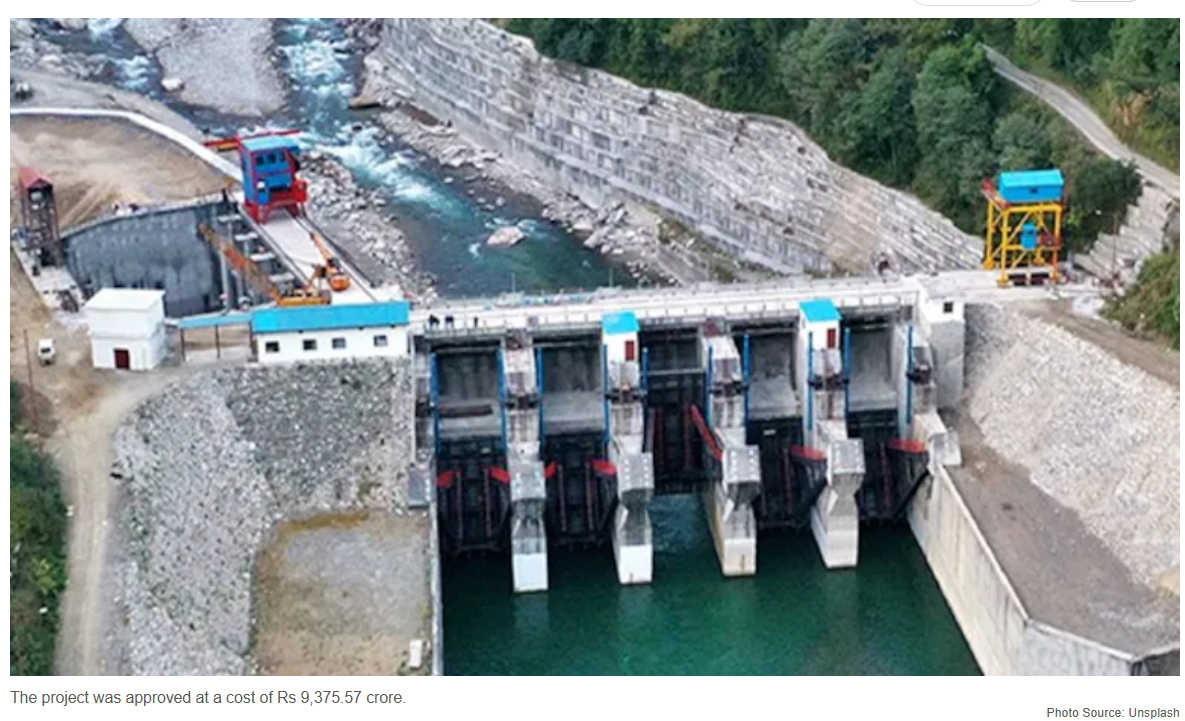
- 13 Apr 2026
In News:
Recently, a significant milestone in India-Bhutan bilateral relations was achieved with the resumption of dam construction at the 1,200 MW Punatsangchhu-I Hydroelectric Project. After a seven-year hiatus caused by complex geological setbacks, India’s Union Power Minister attended the concrete pouring ceremony, signaling a renewed commitment to complete Bhutan's largest ongoing hydropower venture.
Key Project Specifications
- Capacity: 1,200 MW (comprising six 200 MW turbines).
- Type: Run-of-the-river (RoR) scheme.
- Location: Left bank of the Punatsangchhu River, Wangdue Phodrang district, Southern Himalayas (approx. 80 km from Thimphu).
- Infrastructure:
- Concrete Dam: 130m height x 239m length.
- Powerhouse: Underground facility for electricity generation.
- Implementing Agency:Punatsangchhu-I Hydroelectric Project Authority (PHPA), a joint autonomous body of the Royal Government of Bhutan and the Government of India.
Financing Model: The 60:40 Framework
The project is a hallmark of India’s development assistance to Bhutan, following a unique financial arrangement:
- 40% Grant: Non-repayable aid from the Government of India.
- 60% Loan: Provided at a 10% annual interest rate.
- Repayment: 12 equated annual installments beginning one year after the project’s commercial operation date.
- Revenue Model: Bhutan will export all surplus power to India, providing a steady stream of revenue for its national exchequer.
Why was the project suspended?
The project, which began in 2008, was originally slated for completion in 2015. However, it encountered severe "Geological Surprises":
- Right-Bank Instability: In 2013, a massive landslide destabilized the right bank slope at the dam site.
- Geological Fragility: The Himalayan terrain posed unforeseen challenges in both surface and underground excavations, leading to multiple design changes.
- Suspension (2019–2026): Main dam works were halted in 2019 to conduct comprehensive technical studies and ensure the structural safety of the project.
Strategic Significance of PHEP-I
- Economic Backbone for Bhutan: Upon completion, it will boost Bhutan's total hydropower capacity by nearly 30%. Hydropower currently contributes ~14% to Bhutan's GDP and over 25% of government revenue.
- India’s Green Energy Goals: The surplus power (approx. 5,670 million units annually) will help India meet its Nationally Determined Contributions (NDCs) under the Paris Agreement by increasing the share of renewable energy in its grid.
- Grid Stability: Hydropower provides "peaking power," which is essential for balancing India’s national grid, especially with the increasing integration of intermittent solar and wind energy.
- Strategic Interdependence: These projects create deep economic linkages that act as a buffer against external geopolitical shifts in the Himalayan region.
Current Status & Future Outlook
- Physical Progress: As of early 2026, the project has achieved approximately 88% physical completion and 93.7% financial progress.
- Estimated Completion: The revised timeline aims for commissioning within the next five years (by 2031), subject to the success of new stabilization measures.
- Bilateral Momentum: The restart of PHEP-I follows the successful operationalization of Punatsangchhu-II (1,020 MW) in late 2025, reinforcing the long-term goal of developing 10,000 MW of hydropower in Bhutan.
Kalai-II Hydroelectric Project
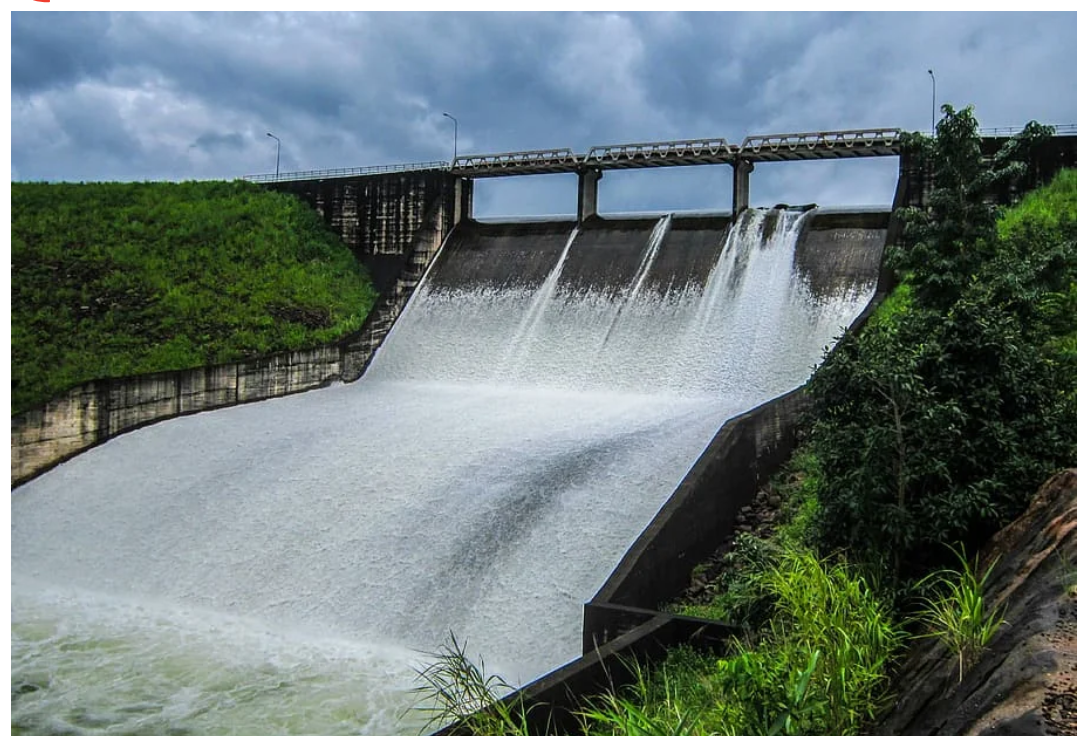
- 12 Apr 2026
In News:
The Cabinet Committee on Economic Affairs (CCEA) has sanctioned a massive investment of ?14,105.83 crore for the Kalai-II Hydro Electric Project (HEP). Located in the Anjaw district of Arunachal Pradesh, this project represents a critical milestone in India’s mission to harness the hydroelectric potential of the Brahmaputra river basin.
1. Technical Profile
The project is designed to be a high-capacity, efficient power generation unit with the following specifications:
- River System: It is a run-of-river with pondage project situated on the Lohit River, a major tributary of the Brahmaputra.
- Capacity: Total installed capacity of 1,200 MW, featuring a unique configuration of six units of 190 MW and one unit of 60 MW.
- Energy Generation: Expected to contribute 4,852.95 million units of green energy annually to the national grid.
- Engineering Scope: Includes the construction of a concrete gravity dam, diversion tunnels, pressure shafts, an underground powerhouse, and a tailrace tunnel.
2. Financial & Administrative Framework
The project follows a collaborative model between the Union and the State:
- Implementation Agency: A Joint Venture (JV) between THDC India Limited (formerly Tehri Hydro Development Corporation) and the Government of Arunachal Pradesh.
- Central Budgetary Support: * ?5.99 billion allocated for infrastructure (roads, bridges, and transmission lines).
- ?7.5 billion provided as central financial assistance to cover the state's equity share.
- Total Investment: ?14,105.83 crore.
3. Socio-Economic Impact
The Kalai-II project is envisioned as a catalyst for regional transformation:
- State Revenue: Arunachal Pradesh will receive 12% free power once operational.
- Community Development: An additional 1% free power is dedicated to the Local Area Development Fund (LADF) for regional welfare.
- Infrastructure: The project will provide the remote Anjaw district with permanent roads and bridges, improving connectivity in a strategically sensitive border area.
Quantum Computing
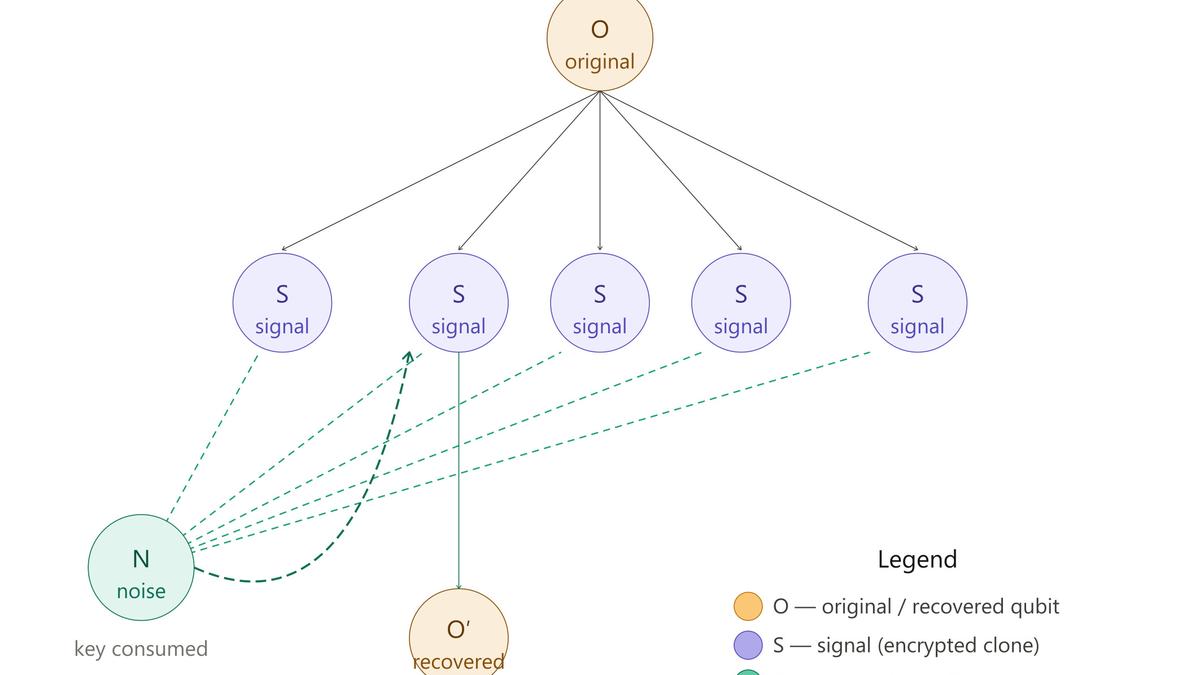
- 12 Apr 2026
In News:
In a landmark experiment, researchers have successfully demonstrated a method to create perfect copies of quantum states by navigating a technical loophole in the No-Cloning Theorem. This discovery addresses one of the most significant bottlenecks in quantum information science, offering a blueprint for resilient quantum cloud storage and more reliable quantum memories.
The Fundamental Constraint: The No-Cloning Theorem
- The Rule: In quantum mechanics, the No-Cloning Theorem states that it is physically impossible to create an identical, independent copy of an arbitrary, unknown quantum state.
- The Mechanism: Unlike classical bits (0 or 1), which can be copied infinitely without degradation, quantum bits (qubits) exist in a state of superposition. The act of measuring or observing a quantum state causes its "wavefunction" to collapse, effectively destroying the original information.
- Significance: This theorem is the bedrock of Quantum Cryptography (e.g., Quantum Key Distribution), as it ensures that any attempt by an eavesdropper to copy or intercept data will be instantly detectable.
The Breakthrough: The "Noise Encryption" Loophole
The researchers did not "break" the laws of physics but rather utilized a sophisticated encryption method to store quantum information across multiple locations simultaneously.
1. Individual Encryption with Quantum Noise
The team established that perfect copies can be created if each clone is individually "masked" or encrypted using quantum noise.
- Noise Qubits: Special qubits act as "locking patterns." They store the noise signature used to encrypt the clones.
- Security: Without the corresponding decryption key (the noise pattern), a clone appears to be meaningless, random data. This ensures that even if a copy is intercepted, the underlying information remains naturally secure.
2. Distributed Information
- The original quantum information is not residing in a single qubit but is spread across multiple qubits. To an outside observer, each qubit looks like random noise; only the holder of the key can reconstruct the perfect state.
- The "One-Time Use" Constraint
Crucially, the method adheres to the spirit of quantum mechanics through a self-destruct mechanism:
- Key Destruction: Once a decryption key is utilized to recover one perfect copy, the key is permanently destroyed.
- Irreversibility: All other existing clones immediately become unreadable and useless.
- Result: While multiple "potential" copies exist, only one can ever be successfully recovered, maintaining the fundamental "uniqueness" required by quantum laws.
Strategic Applications & Future Infrastructure
This achievement has transformative implications for the future of the "Quantum Internet" and digital infrastructure:
- Quantum Cloud Storage: Clients can store data across multiple servers (redundancy). Even if several servers fail or are destroyed, the client can recover the perfect data as long as one server and the decryption key survive.
- Reliable Quantum Memories: It provides a method for backing up fragile quantum information, which is currently prone to "decoherence" (data loss due to environmental interference).
- Resilient Quantum Networks: Enhances the robustness of quantum communication channels against hardware failures.
FIU-IND and I4C MoU on Financial Crimes
- 12 Apr 2026
In News:
In a major step toward securing India’s burgeoning digital payment landscape, the Financial Intelligence Unit-India (FIU-IND) and the Indian Cyber Crime Coordination Centre (I4C) recently signed a Memorandum of Understanding (MoU). This partnership establishes a sophisticated intelligence-sharing framework designed to preemptively tackle the rising menace of cyber-enabled financial crimes and money laundering.
The Collaboration: A "Whole of Government" Approach
The synergy between these two premier agencies aims to move beyond reactive measures, focusing instead on a proactive, integrated defense mechanism for the national financial infrastructure.
Key Objectives and Strategic Impact
- Proactive Detection: The development of "Red Flag Indicators" allows financial institutions to identify and report suspicious transaction patterns before significant damage occurs.
- Asset Recovery: By streamlining communication between intelligence and law enforcement, the framework facilitates the rapid freezing and recovery of proceeds from digital fraud.
- Resource Safeguarding: The collaboration targets the misuse of telecom and banking resources, ensuring that the digital transformation of the Indian economy is supported by robust security guardrails.
- Policy Formulation: The partnership will lead to the creation of standardized guidelines for banks and FinTech companies to enhance their internal fraud detection protocols.
Profile of the Participating Agencies
1. Financial Intelligence Unit-India (FIU-IND)
FIU-IND is the nodal national agency reporting directly to the Economic Intelligence Council (EIC) headed by the Finance Minister.
- Mandate: It is responsible for receiving, processing, and analyzing information related to suspect financial transactions.
- Focus Areas: Its primary mission is to coordinate global and domestic efforts against Money Laundering (ML) and the Financing of Terrorism (FT) under the Prevention of Money Laundering Act (PMLA), 2002.
2. Indian Cyber Crime Coordination Centre (I4C)
Established as an attached office under the Ministry of Home Affairs (MHA), I4C acts as a central hub for Law Enforcement Agencies (LEAs).
- Infrastructure: It manages critical platforms like the National Cybercrime Reporting Portal (NCRP), which allows citizens to report cybercrimes in real-time.
- Tools for Enforcement: I4C maintains the Suspect Registry and the Cyber-Police platform, enabling seamless data exchange between banks, telecom companies, and police forces to block fraudulent accounts and mobile numbers immediately.
PACE Satellite
- 12 Apr 2026
In News:
In a significant breakthrough for atmospheric sciences, researchers have confirmed that NASA’s Plankton, Aerosol, Cloud, and ocean Ecosystem (PACE) satellite, launched in early 2024, possesses the high-resolution capability to pinpoint air pollution at an unprecedented scale. The satellite can now isolate nitrogen dioxide (NO2) emissions from individual point sources, such as specific factories and narrow highway corridors, marking a new era in environmental monitoring and policy enforcement.
The PACE Mission:
- Technical Specifications: Launched in February 2024 into a Sun-synchronous orbit, PACE is designed to provide a holistic view of the Earth’s "living" systems.
- It offers hyperspectral coverage of the entire globe every1 to 2 days, a frequency and detail level previously unavailable to the scientific community.
Key Scientific Instruments
PACE’s ability to "see" the Earth in high definition is driven by three primary instruments:
- Ocean Color Instrument (OCI): A state-of-the-art optical spectrometer that measures the ocean’s color across a continuous spectrum from ultraviolet to shortwave infrared. By breaking down light into finer wavelength resolutions, OCI identifies the specific "signatures" of different substances in the water and air.
- SPEXone and HARP2 (Polarimeters): The Spectro-polarimeter for Planetary Exploration (SPEXone) and the Hyper Angular Research Polarimeter (HARP2) measure the polarization of sunlight. As light passes through clouds, aerosols, and water, its oscillation plane changes. These instruments analyze these changes to determine the size, shape, and composition of particles in the atmosphere.
Breakthrough in Pollution Tracking: Nitrogen Dioxide (NO2)
While PACE was primarily envisioned for oceanography, its hyperspectral capabilities have proven revolutionary for atmospheric chemistry.
- Precision: Traditional satellites could detect regional pollution clouds; PACE can isolate emissions at the scale of individual industrial facilities.
- The Nitrogen Dioxide Factor: NO2 is a major byproduct of fossil fuel combustion (vehicles and power plants) and a key contributor to smog and respiratory issues. PACE’s ability to track this gas at a "fine scale" allows for more accurate attribution of pollution to specific sources.
Scientific and Socio-Economic Significance
The data harvested by PACE has far-reaching implications for climate science and public health:
- Marine Ecosystem Health: It monitors microscopic life, such as phytoplankton, which forms the base of the marine food web. This aids in managing fisheries and predicting Harmful Algal Blooms (HABs).
- Aerosols and Air Quality: By tracking wildfire smoke and industrial aerosols, PACE provides better data for air quality indexes, helping vulnerable populations mitigate health risks.
- Climate Change Research: The satellite investigates the complex ocean-atmosphere interface, revealing how the exchange of carbon dioxide and heat between the sea and sky is evolving under global warming.
ALH Mk-III Helicopter
- 12 Apr 2026
In News:
In a significant boost to India’s indigenization efforts in defense (Aatmanirbhar Bharat), Hindustan Aeronautics Limited (HAL) recently delivered four Advanced Light Helicopter (ALH) Mk-III Maritime Role (MR) units to the Indian Coast Guard (ICG). This development marks a pivotal step in enhancing the nation’s coastal surveillance and search-and-rescue capabilities.
The ALH Mk-III (Maritime Role): An Overview
The ALH Mk-III is the specialized maritime variant of the indigenous Dhruv helicopter platform. Engineered specifically for the rigorous demands of the marine environment, these helicopters represent a leap in domestic aerospace engineering.
Technical Features and Specifications
- Engine & Design: It is a multi-role, twin-engine helicopter designed for high performance in humid and saline maritime conditions.
- Avionics & Cockpit: The Mk-III variant features a state-of-the-art glass cockpit and advanced integrated avionics.
- Night Capabilities: It is equipped with advanced sensors and night-vision technology, allowing for 24/7 seamless operations, which is critical for midnight interceptor missions.
- Indigenous Manufacturing: Developed and produced by Hindustan Aeronautics Limited (HAL), it underscores India's growing self-reliance in high-end defense technology.
Operational Versatility
The ALH Mk-III is designed to handle a diverse array of responsibilities, including:
- Surveillance & Security: Monitoring Coastal Regulation Zones (CRZ) and the Exclusive Economic Zone (EEZ).
- Humanitarian Aid: Conducting Search and Rescue (SAR) missions and casualty evacuations (CASEVAC).
- Law Enforcement: Anti-piracy operations and preventing maritime smuggling.
- Logistics: Troop transport, VIP movement, and supplies delivery to remote islands or offshore installations.
The Indian Coast Guard (ICG): The Sentinel of the Seas
The induction of these helicopters is vital for the ICG, which serves as the primary agency for non-military maritime security.
Organizational Framework
- Establishment: While raised in 1977, it was formally constituted as an independent armed force under the Coast Guard Act, 1978.
- Jurisdiction: It operates under the Ministry of Defence, distinguishing it from the Indian Navy, which focuses on external aggression and naval warfare.
- Motto:“VayamRakshamah” (We Protect).
- Command Structure: Headquartered in New Delhi, it is led by the Director General of the Indian Coast Guard (DGICG).
Mandate and Functions
The ICG is tasked with safeguarding India's vast maritime interests, which include:
- Protection of artificial islands and offshore terminals.
- Protection and assistance to fishermen at sea.
- Preservation and protection of the marine environment, including pollution control.
- Assisting the Customs department in anti-smuggling operations.
Methanol

- 11 Apr 2026
In News:
In a major leap toward decarbonizing the maritime sector, the Deendayal Port Authority (Kandla Port) on India's western coast has successfully advanced its methanol bunkering capabilities. This milestone, aligns with the Maritime Amrit Kaal Vision 2047 and India’s commitment to achieving a net-zero maritime future by 2050.
Methanol: The Fuel of the Future
Methanol, also known as wood alcohol (CH3OH), is the simplest alcohol and is emerging as a critical alternative to traditional bunker fuels (like Heavy Fuel Oil) in shipping.
1. Production and Properties
- Process: Typically produced via steam-reforming natural gas to create synthesis gas (syngas), which is then reacted over a catalyst to produce methanol.
- Physical State: A colorless, volatile liquid with a faintly sweet odor. It is completely miscible in water.
- Performance: It is a high-octane, clean-burning fuel. Unlike solid or heavy liquid fuels, its combustion results in significantly lower emissions of SOx (Sulfur Oxides), NOx (Nitrogen Oxides), and particulate matter.
2. Why Methanol for Shipping?
- Energy Security: It can be manufactured from various domestic feedstocks, including coal, natural gas, and biomass, reducing dependency on imported crude.
- Safety: Methanol has a lower risk of flammability compared to gasoline and is biodegradable in marine environments.
- Cost-Efficiency: It is relatively cheaper to produce and store than other emerging alternatives like liquid hydrogen.
- Existing Infrastructure: Since Kandla Port has handled "grey methanol" as cargo for years, much of the necessary storage, pipeline, and jetty infrastructure is already compatible.
Milestone at Deendayal Port (Kandla)
The port has transitioned from a cargo-handling hub to a bunkering hub (a location where ships refuel).
Key Achievements:
- Trial Success: On April 2, 2026, the port successfully conducted a shore-to-ship methanol bunkering trial in collaboration with partners like Indian Oil (IOCL) and Stolt Tankers. This validated safety protocols and transfer processes.
- Port Readiness Level (PRL): Following an assessment by DNV Maritime Advisory Services, the port was rated at Level 6 on the International Association of Ports and Harbors (IAPH) scale, indicating high operational readiness.
- Future Target: The port aims to supply 500 KTPA of e-methanol (Renewable Fuel of Non-Biological Origin) by 2028-29 to support dual-fuel vessels on the Asia-Europe trade route.
Woolly-Necked Stork
- 11 Apr 2026
In News:
The recent sighting of the Woolly-Necked Stork (Ciconia episcopus) in the paddy fields near Thanjavur, Tamil Nadu, has garnered significant attention from ornithologists and conservationists.
Biological Profile and Key Features
The Woolly-Necked Stork, colloquially known as the White-necked Stork or Bishop Stork, is a large wading bird belonging to the Ciconiidae family.
- Distinctive Morphology: It is characterized by its almost entirely black plumage, contrasted sharply by a white, "woolly" textured neck and a white lower belly. The upper body often exhibits a dark green gloss, while the breast and belly areas can display a subtle purple hue.
- Flight Dynamics: As a broad-winged soaring bird, it utilizes thermals (rising columns of hot air) to sustain long-distance flight with minimal energy expenditure.
- Dietary Habits: It is predominantly carnivorous. Its diet is diverse, including fish, amphibians (frogs and toads), reptiles (snakes and lizards), and a wide array of invertebrates such as large insects, crabs, and mollusks.
- Foraging Behavior: The species is a patient hunter, typically foraging by walking slowly through shallow water or dense vegetation, using its powerful bill to stab at prey.
Habitat and Global Distribution
The Woolly-Necked Stork is a widespread tropical species with a distribution range extending across Africa and Asia (from India to Indonesia).
- Ecosystem Preferences: It thrives in varied environments, including open grasslands, riverbanks, ponds, and freshwater wetlands.
- Agricultural Synergy: Interestingly, this species has shown a high degree of adaptability to man-made landscapes, particularly paddy fields. These fields act as artificial wetlands, providing a rich supply of aquatic prey, which explains the recent sightings in Thanjavur.
- Breeding: Unlike some other stork species that form massive colonies, the Woolly-Necked Stork tends to breed singly or in small, loose groups.
Conservation Status and Threats
- IUCN Red List: It is currently classified as 'Near Threatened'.
- Conservation Concerns: While the species is adaptable, it faces threats from habitat loss due to the drainage of wetlands, the intensification of agriculture (leading to a reduction in prey diversity), and the contamination of water bodies by pesticides.
- Importance of the Thanjavur Sighting: The presence of the bird in Tamil Nadu’s "rice bowl" underscores the ecological health of the region's traditional irrigation systems. It serves as an indicator species, suggesting that the local paddy ecosystem still supports a robust food chain.
Prototype Fast Breeder Reactor
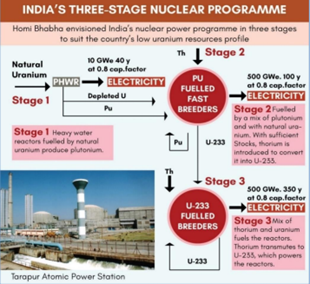
- 11 Apr 2026
In News:
In a landmark achievement for its energy security, India’s indigenously designed 500 MWe Prototype Fast Breeder Reactor (PFBR) at Kalpakkam, Tamil Nadu, successfully attained first criticality on April 6, 2026. This milestone signifies the initiation of a sustained nuclear chain reaction and officially transitions India into the Second Stage of its visionary three-stage nuclear power programme.
With this breakthrough, India becomes only the second country in the world, after Russia, to operate a commercial-scale fast breeder reactor, reinforcing its position as a global leader in advanced nuclear technology.
Understanding the Fast Breeder Reactor (FBR)
Developed by the Indira Gandhi Centre for Atomic Research (IGCAR) and built by BHAVINI, the PFBR is an engineering marvel that "breeds" more fuel than it consumes.
- Fuel Mechanism: Unlike conventional reactors that use natural uranium, the PFBR utilizes Uranium-Plutonium Mixed Oxide (MOX) fuel.
- The Breeding Process: The reactor core is surrounded by a "blanket" of fertile Uranium-238. When fast neutrons strike this blanket, they transmute it into fissile Plutonium-239, effectively creating new fuel during operation.
- Coolant Technology: It uses liquid sodium as a coolant, which is highly efficient for heat transfer but requires precision engineering due to its reactive nature with air and water.
The Three-Stage Nuclear Roadmap:
Formulated by Dr. Homi J. Bhabha in the 1950s, this programme is designed to tackle India’s unique resource profile: possessing only 1–2% of global uranium but over 25% of the world’s thorium reserves.
|
Stage |
Technology |
Fuel Source |
Key Outcome |
|
Stage 1 |
PHWRs |
Natural Uranium |
Power generation Plutonium by-product |
|
Stage 2 |
FBRs (Current) |
Plutonium Uranium |
Breeds more fuel; converts Thorium to U-233 |
|
Stage 3 |
AHWRs |
Thorium U-233 |
Massive, long-term energy independence |
Strategic Significance for India
- Energy Sovereignty: FBRs extract up to 60 times more energy from the same amount of uranium compared to conventional reactors, crucial for a uranium-scarce nation.
- The Thorium Bridge: Stage 2 is the essential "gateway" to Stage 3, where India’s vast monazite sands (found in Kerala, Odisha, and Tamil Nadu) will finally be utilized for power.
- Net-Zero by 2070: Nuclear power currently provides a stable baseload of 3.1% of India’s electricity. Scaling this is vital to displace coal and meet climate targets.
- Waste Management: The "closed fuel cycle" reprocesses spent fuel, drastically reducing the volume and long-term radiotoxicity of nuclear waste.
Challenges and the Road to 100 GW
Despite the milestone, accelerating nuclear capacity to the targeted 100 GW by 2047 faces hurdles:
- Technological Complexity: The PFBR faced over a decade of delays due to safety testing and supply chain bottlenecks.
- Supply Chain Vulnerability: Dependence on global partners (like Russia for Kudankulam) remains a risk, as seen during recent geopolitical disruptions.
- Capital Intensity: High initial costs and the "Plutonium Economy" invite intense international safeguards and security requirements.
Future Outlook: Policy and Innovation
The Union Budget 2025–26 and the newly enacted SHANTI Act, 2025 (Sustainable Harnessing and Advancement of Nuclear Energy for Transforming India) have modernized the sector's governance:
- Private Participation: For the first time, limited private sector investment is permitted under strict regulatory oversight.
- Small Modular Reactors (SMRs): A ?20,000 crore allocation aims to develop five indigenous SMRs by 2033, providing flexible, decentralized power.
- Next-Gen Designs: Development of the BSMR-200 and reactors for hydrogen generation is underway to diversify nuclear applications.
United Nations Economic and Social Council (ECOSOC)
- 11 Apr 2026
In News:
India achieved a major diplomatic milestone by winning elections to four key subsidiary bodies of the United Nations Economic and Social Council (ECOSOC).
Understanding the ECOSOC
Established by the UN Charter in 1945, ECOSOC is one of the six principal organs of the United Nations. It serves as the primary venue for fostering innovative thinking, forging consensus on international development goals, and coordinating policy across economic, social, and environmental sectors.
Core Mandate and Functions:
- The Triple Integration: It aims to harmonize the three pillars of sustainable development: Economic, Social, and Environmental.
- 2030 Agenda: It is the specialized body responsible for policy-making and monitoring the implementation of the Sustainable Development Goals (SDGs).
- Global Coordinator: ECOSOC links regional economic commissions and specialized UN agencies, translating high-level commitments into actionable changes.
- Partnership Gateway: It facilitates dialogue between policymakers, academics, businesses, and over 6,500 registered Non-Governmental Organizations (NGOs).
- Emerging Challenges: The council identifies and addresses new global threats, such as pandemic recovery and climate crises, through intergovernmental discussions.
India’s 2026 Election Success
During the elections held in April 2026, India was elected to the following four distinct and influential bodies:
- Committee on Economic, Social and Cultural Rights (CESCR): In a notable personal victory, former diplomat Preeti Saran was re-elected. This ensures that India’s 36-year diplomatic legacy continues to influence international normative frameworks regarding cultural and social rights.
- Commission on Science and Technology for Development (CSTD): A platform where India can share its digital public infrastructure (DPI) expertise and advocate for technological equity for developing nations.
- Committee on Non-Governmental Organisations: A critical body that monitors the consultative status of NGOs with ECOSOC, giving India a say in how civil society engages with the UN.
- Committee for Programme and Coordination (CPC): The main subsidiary organ of ECOSOC and the General Assembly for planning, programming, and coordination.
Naphthalene Diimide (NDI)
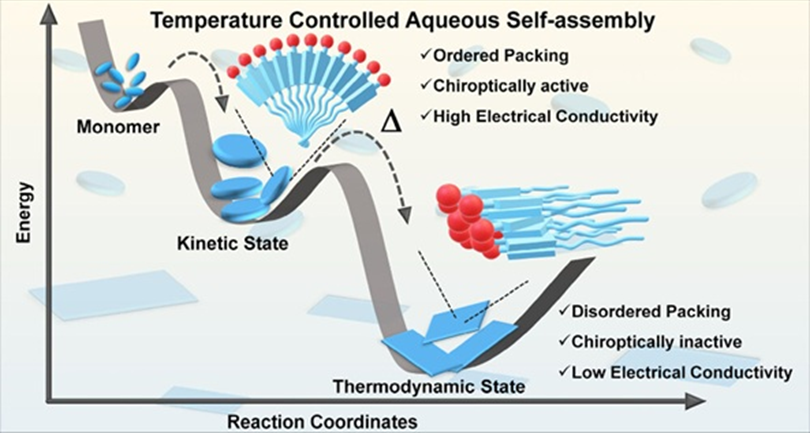
- 11 Apr 2026
In News:
In a significant breakthrough for the field of material science, researchers from the Centre for Nano and Soft Matter Sciences (CeNS) and the Jawaharlal Nehru Centre for Advanced Scientific Research (JNCASR)—both autonomous institutes under the Department of Science and Technology (DST)have pioneered a method to manipulate the structural and electrical properties of organic nanomaterials using temperature as a sole trigger. This discovery centers on the molecule Naphthalene Diimide (NDI) and leverages the principles of supramolecular self-assembly.
The Science of Naphthalene Diimide (NDI)
NDI is characterized as an amphiphilic molecule, a dual-natured chemical entity containing both hydrophilic (water-attracting) and hydrophobic (water-repelling) components. This unique "Janus-like" nature drives the molecule to organize itself into intricate architectures when introduced to an aqueous environment.
The Mechanism of Aqueous Assembly: The transformation is governed by noncovalent interactions (weaker than traditional chemical bonds), which allow for a reversible and dynamic "Lego-like" building process at the molecular level.
- Room Temperature (Phase 1): At standard temperatures, NDI molecules naturally group into circular nanodisks. In this state, the material is highly conductive and exhibits specific interactions with polarized light.
- Thermal Trigger (Phase 2): Upon heating, the molecules undergo a structural reorganization.
- State Switch (Phase 3): The circular nanodisks transform into two-dimensional nanosheets. This morphological shift results in the loss of light-interacting properties and a dramatic sevenfold drop in electrical conductivity.
Supramolecular Self-Assembly: Nature’s Engineering
The research highlights the potential of supramolecular self-assembly, a process where molecules spontaneously organize into well-defined structures without human intervention. By using environmental factors like temperature or solvent type as a "switch," scientists can dictate the final shape and functional behavior of the material. This mimics biological processes where nature builds complex systems using weak interactions to maintain flexibility and responsiveness.
Potential Applications and Significance
The ability to use temperature as an "electrical dimmer switch" for nanomaterials opens diverse avenues in technology and medicine:
- Next-Generation Electronics: Development of organic circuits where electrical flow can be precisely tuned or switched without mechanical parts.
- Smart Thermal Sensors: Creation of sensors that provide immediate optical or electrical feedback in response to minute thermal changes.
- Tunable Optoelectronics: Advancing photonics and display technologies by switching between different optical states.
- Bioelectronic Interfaces: Designing adaptive materials for medical monitoring that can respond dynamically to the biological environment.
- Adaptive Surfaces: Developing "smart" coatings that change their physical properties based on external environmental conditions.
Skills Outcomes Fund
- 10 Apr 2026
In News:
In a decisive step toward realizing the "Viksit Bharat 2047" vision, the Minister of State (Independent Charge) for Skill Development and Entrepreneurship, Shri Jayant Chaudhary, launched a national campaign to establish the Skills Outcomes Fund. This first-of-its-kind initiative marks a paradigm shift in India's human capital strategymoving away from measuring "inputs" (enrollment and certification) toward "outcomes" (verified employment and job retention).
Understanding the Skills Outcomes Fund
The Skills Outcomes Fund is designed to unlock aspirational livelihoods for youth from low-income backgrounds by institutionalizing Outcomes-Based Financing (OBF).
- Mechanism: It mobilizes both public and private capital, linking financial investments directly to verified employment results.
- Institutional Framework: The fund is anchored by the National Skill Development Corporation (NSDC) under the aegis of the Ministry of Skill Development and Entrepreneurship (MSDE).
- Partnerships: It operates through a collaborative model involving the government, not-for-profit organizations, and philanthropic stakeholders (such as the British Asian Trust, Michael & Susan Dell Foundation, and various corporate foundations).
- Blended Finance Model: Government funding from MSDE is supplemented by private sector capital, creating a diversified and sustainable financial pool.
Evolution: From Skill Impact Bond to Outcomes Fund
The fund builds upon the proven success of the Skill Impact Bond (SIB), India’s first OBF initiative launched in 2021.
Success Metrics of the Skill Impact Bond:
- Outlay: Approximately ?130 crore.
- Reach: 34,000 youth across 21 states; 74% are women.
- Performance: * 92% Certification rate.
- 76% Job placement rate.
- 62% Job retention rate (significantly higher than traditional benchmarks).
The Skills Outcomes Fund represents the "Scale and Institutionalization" phase of this pilot, aiming to become the largest OBF initiative for skilling globally.
Key Features and Strategic Focus
1. Employer-Led & Demand-Driven
Unlike traditional models where training is supply-heavy, this fund uses an employer-led model. This ensures that the skills provided are exactly what the industry requires, reducing the "employability gap."
2. High-Growth Aspirational Sectors
The fund targets sectors that are critical to India’s future economic growth:
- Emerging Tech: IT and IT-enabled services (IT-ITeS), Electronics, and Semiconductors.
- Service Excellence: Banking, Financial Services, and Insurance (BFSI), Healthcare, and Logistics.
- Sustainability:Green Jobs and sustainability-oriented roles.
- Core Industry: Automotive and advanced manufacturing.
3. Rigorous Verification
The model relies on Independent Verification to ensure that funds are only released when specific milestones—such as placement, wage levels, and job retention—are met.
Emperor Penguin and Antarctic Fur Seal
- 10 Apr 2026
In News:
In a significant move reflecting the accelerating degradation of polar ecosystems, the International Union for Conservation of Nature (IUCN) has officially uplisted two iconic Antarctic species, the Emperor penguin and the Antarctic fur seal—to the Endangered category in its latest Red List update (April 2026). This reclassification highlights a critical shift from "Near Threatened" and "Least Concern," respectively, driven primarily by human-induced climate change.
1. The Emperor Penguin (Aptenodytes forsteri)
The Emperor penguin, the largest of all penguin species, is considered a sentinel species—an indicator of the overall health of the Antarctic ecosystem.
- Habitat and the "Fast Ice" Crisis: These birds rely on fast ice (sea ice fastened to the coastline or ocean floor) for breeding, raising chicks, and the annual moulting season.
- The Climate Threat: Rising global temperatures cause early spring ice break-ups. Because penguin chicks are not waterproof until they grow adult feathers, early ice collapse leads to the catastrophic loss of entire breeding colonies.
- Population Data: Satellite imagery confirms a 10% population loss (over 20,000 adults) between 2009 and 2018. Projections suggest that without rapid decarbonization, populations could be halved by the 2080s.
2. The Antarctic Fur Seal (Arctocephalus gazella)
Previously listed as "Least Concern," the Antarctic fur seal has seen one of the most drastic status jumps due to a collapse in the marine food web.
- The Krill Dependency: Fur seals rely almost exclusively on Antarctic Krill. As oceans warm, krill move deeper into colder waters or further south, moving out of reach for foraging seals.
- Population Collapse: The population has plummeted by over 50%, dropping from 2.18 million in 1999 to just 944,000 in 2025.
- Demographic Crisis: Extreme pup mortality in their first year due to starvation has resulted in an ageing breeding population, making it difficult for the species to replenish its numbers.
- Compounding Factors: They face increased competition from recovering baleen whale populations and heightened predation from killer whales and leopard seals.
3. Emerging Threats: The Southern Elephant Seal and Bird Flu
The IUCN has also moved the Southern elephant seal from "Least Concern" to Vulnerable. This is largely attributed to a biological threat exacerbated by warming: Highly Pathogenic Avian Influenza (HPAI) - H5N1.
- Mortality: In some colonies, the virus has killed over 90% of newborn pups.
- Vulnerability: Animals living in dense colonies are particularly susceptible to rapid disease transmission, a risk that increases as warming temperatures allow pathogens to survive in previously cold-protected polar regions.
8th Poshan Pakhwada
- 10 Apr 2026
In News:
The Ministry of Women and Child Development (MWCD) has launched the 8th edition of Poshan Pakhwada, observed from 9th April to 23rd April 2026. This fortnightly campaign is a strategic component of the larger POSHAN Abhiyaan (launched in 2018), aiming to transform nutrition and child development into a massive people’s movement (Jan Andolan) through widespread community participation (Jan Bhagidari).
Core Theme: Maximizing Brain Development (0–6 Years)
The 2026 edition shifts focus toward the cognitive dimension of nutrition with the theme “Maximizing Brain Development in the First Six Years of Life.” This priority is rooted in scientific evidence that:
- 85% of Brain Development occurs before a child turns six.
- The First 1,000 Days (conception to age two) are the "window of opportunity" for physical growth, mental well-being, and cognitive mapping.
Strategic Framework: Mission Poshan 2.0
Poshan Pakhwada 2026 operates under the umbrella of Mission Poshan 2.0, an integrated nutrition support program that seeks to converge efforts across Union Ministries and States.
Key Pillars of the Campaign:
- Maternal and Child Nutrition: Intensified advocacy for exclusive breastfeeding for the first six months and timely introduction of complementary feeding.
- Early Stimulation (0–3 Years): Promoting "responsive caregiving"—the practice where caregivers react to a child’s signals to build neural connections and emotional security.
- Play-Based Education (3–6 Years): Utilizing the "Aadharshila" curriculum to ensure school readiness through holistic, activity-based learning rather than formal rote teaching.
- Lifestyle & Digital Wellness: Encouraging families to minimize screen time for young children to prevent developmental delays and promote physical play.
- Strengthening Anganwadis: Mobilizing community support and CSR initiatives to transform regular Anganwadi Centres (AWCs) into "Saksham Anganwadis"—modernized hubs equipped with smart learning tools and nutri-gardens.
Institutional Scale and Reach
The campaign leverages India's massive grassroots network to take the vision of a Viksit Bharat (Developed India) to every household:
- The Frontline Force: Mobilization of Anganwadi Workers (AWWs), ASHAs, Auxiliary Nurse-Midwives (ANMs), and Self-Help Groups (SHGs).
- Beneficiary Coverage: Currently, 14 lakh Anganwadi Centres serve nearly 8.9 crore beneficiaries, including children, pregnant women, and lactating mothers.
- Technological Monitoring: The "Poshan Tracker" app provides real-time data on growth monitoring and service delivery, ensuring transparency and accountability.
Focus on Aspirational Districts
A significant priority of the 8th Poshan Pakhwada is bridging the developmental gap in Aspirational Districts. These regions receive targeted interventions and are encouraged to adopt "best practices" to improve their health and nutrition indicators, ensuring that geographical location does not dictate a child’s developmental potential.
Pradhan Mantri MUDRA Yojana (PMMY)
- 10 Apr 2026
In News:
Launched on April 8, 2015, the Pradhan Mantri MUDRA Yojana (PMMY) has completed 11 years as a cornerstone of India’s financial inclusion strategy. By focusing on the philosophy of "Funding the Unfunded," the scheme has successfully integrated millions of non-corporate, non-farm micro and small enterprises (MSEs) into the formal financial ecosystem.
Core Philosophy: The Three Pillars of Financial Inclusion
The PMMY is built upon three strategic objectives designed to serve the underserved:
- Banking the Unbanked: Bringing the informal sector into the fold of institutional finance.
- Securing the Unsecured: Providing credit without the requirement of traditional collateral.
- Funding the Unfunded: Ensuring capital reaches those traditionally overlooked by banks.
Key Features and Loan Structure
PMMY provides collateral-free institutional credit up to ?20 lakh. The loans are categorized based on the stage of growth and funding requirements of the micro-unit:
|
Category |
Loan Range |
Focus Area |
Share (No. of Loans) |
|
Shishu |
Up to ?50,000 |
Initial seed capital for micro-startups. |
74% |
|
Kishor |
?50,000 to ?5 Lakh |
Mid-stage expansion and equipment purchase. |
24% |
|
Tarun |
?5 Lakh to ?10 Lakh |
Scaling established small businesses. |
2% |
|
Tarun Plus |
?10 Lakh to ?20 Lakh |
For successful entrepreneurs graduating from Tarun. |
0.004% |
MUDRA (Micro Units Development & Refinance Agency Ltd.), a subsidiary of SIDBI, provides refinance support to Member Lending Institutions (MLIs) such as Scheduled Commercial Banks, RRBs, NBFCs, and MFIs.
11-Year Performance Analysis (As of March 2026)
The scheme has witnessed exponential growth, transitioning from a sanction of ?1.37 lakh crore in its first year to over ?5.65 lakh crore in FY 2025-26.
- Total Disbursement: Over ?40.07 lakh crore across 57.79 crore loan accounts.
- Democratization of Credit:
- Women's Empowerment: Approximately 67% (two-thirds) of all loans have been sanctioned to women entrepreneurs.
- Social Equity: Over 51% of beneficiaries belong to SC/ST/OBC categories.
- New Entrepreneurs: Over 12.15 crore loans (amounting to ?12 lakh crore) were extended to first-time entrepreneurs.
Challenges and Structural Hurdles
Despite its massive reach, PMMY faces several critical challenges that impact its long-term economic utility:
- The "Missing Middle": 74% of loans remain in the 'Shishu' category, indicating a struggle to graduate micro-units into larger, sustainable medium enterprises.
- Sectoral Skewness: Loans are heavily concentrated in trading and services, with limited penetration in manufacturing, which limits the employment multiplier effect.
- Asset Quality: The collateral-free nature, combined with inadequate credit checks in some cases, has led to concerns regarding Non-Performing Assets (NPAs) in public sector banks.
- Credit-Absorption Deficit: A lack of financial literacy and market access means many borrowers struggle to deploy funds productively, leading to high mortality rates for micro-enterprises.
Way Forward: Moving Toward a 'Credit-Plus' Approach
To align with the vision of Viksit Bharat 2047, PMMY must evolve beyond mere credit dispensation:
- Cash-Flow Based Lending: Transitioning from collateral-based models to using Digital Public Infrastructure (DPI) like the Account Aggregator framework and GSTN for real-time credit assessment.
- Enterprise Development: Integrating PMMY with platforms like ONDC and the Skill India Mission to provide market linkages and technical handholding.
- Incentivizing Micro-Manufacturing: Offering interest subventions specifically for manufacturing units to boost Gross Fixed Capital Formation (GFCF).
- AI-Driven Monitoring: Using data analytics to track the end-use of funds, preventing the diversion of business loans toward personal consumption.
The Pradhan Mantri MUDRA Yojana has effectively dismantled the entry barriers to formal credit for India's grassroots entrepreneurs. By addressing current structural asymmetries and adopting a holistic "Credit-Plus" model, the scheme will continue to be a vital engine for inclusive growth and self-reliance (Atmanirbhar Bharat).
Direct-to-Device (D2D) Technology
- 10 Apr 2026
In News:
The Department of Telecommunications (DoT), via the Telecommunication Engineering Centre (TEC), recently convened a high-level technical workshop titled “The D2D Frontier: Technology, Global Precedence and Indian Context.” This initiative aligns with the Government of India’s vision of “Connectivity for All,” focusing on Direct-to-Device (D2D) technology as a cornerstone for inclusive digital access.
What is Direct-to-Device (D2D) Technology?
Direct-to-Device (D2D) is an emerging satellite communication (SatCom) innovation that allows standard, off-the-shelf smartphones to connect directly to satellites. Unlike traditional satellite communication, it requires no specialized hardware, satellite phones, or intermediate ground equipment (like VSAT terminals).
How D2D Works:
- Space-Based Cell Towers: A network of Low Earth Orbit (LEO) satellites acts as "cell towers in space," equipped with powerful antennas to pick up signals from standard mobile devices.
- Spectrum Integration: These satellites utilize existing terrestrial LTE or 5G frequency bands, ensuring compatibility with current mobile networks.
- Non-Terrestrial Network (NTN): The satellite serves as a relay, transmitting signals to a ground gateway, which then links to the service provider's core network.
- Seamless Handover: When a user exits the range of a terrestrial tower, the device automatically switches to a passing satellite without user intervention.
Key Technical Features and Standards
- Standard Device Compatibility: Works with existing 4G and 5G smartphones, avoiding the need for bulky, expensive satellite handsets.
- Low Latency: By utilizing LEO satellites (altitudes of 500–2,000 km), D2D significantly reduces the signal delay common in traditional geostationary satellites.
- Global Standardization: Integration into 3GPP Release 17 and 18 ensures that D2D becomes a globally recognized and interoperable telecom standard.
- Evolving Capabilities: Initial deployments focus on low-bandwidth services (Emergency SOS and messaging), with a roadmap toward full voice and high-speed data.
Mount Semeru
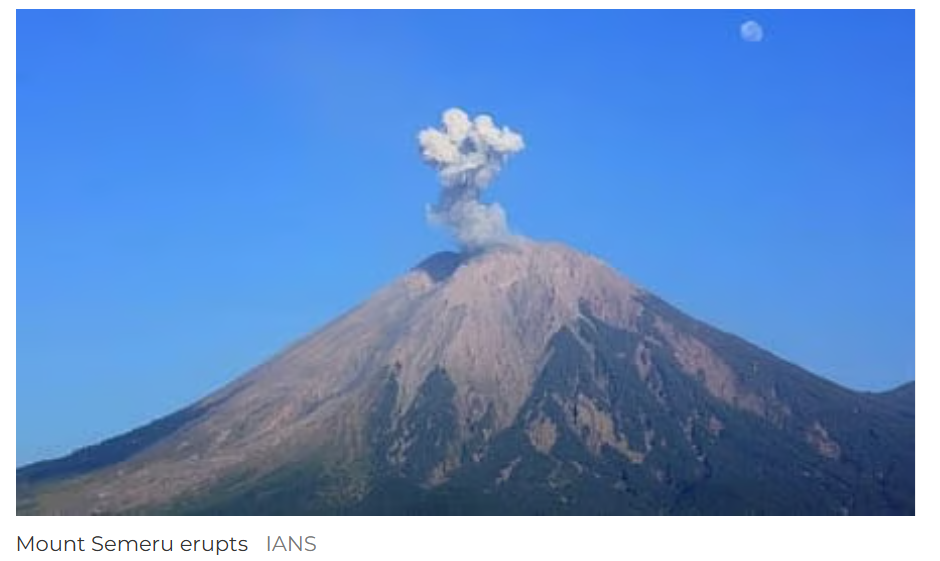
- 09 Apr 2026
In News:
In early 2026, Mount Semeru, one of Indonesia’s most volatile volcanoes, underscored its reputation by erupting repeatedly, propelling thick ash columns up to 1,100 metres above its summit. This recent activity is a stark reminder of the geological instability inherent in the Indonesian archipelago, a region that sits at the crossroads of major tectonic movements.
Geographical and Topographical Profile
Mount Semeru, affectionately known as Mahameru ("The Great Mountain"), is a landmark of the Indonesian landscape.
- Location: It is situated in East Java, Indonesia.
- Peak Altitude: Standing at 3,676 metres (12,060 feet), it holds the title of the highest peak on Java Island.
- Morphology: It is a stratovolcano located at the southern terminus of a volcanic massif that extends northward to the Tengger caldera. Its summit is characterized by complex topography due to the historical shifting of craters from the Northwest (NW) to the Southeast (SE).
The Tectonic Engine: Why It Erupts
Semeru’s frequent activity is the result of its position in one of the world's most active geological zones.
- Subduction Dynamics: The volcano is positioned within a subduction zone, where the Indo-Australian Plate is being forced beneath the Eurasian Plate. This process generates intense heat and pressure, melting the mantle and creating magma that rises to the surface.
- Pacific Ring of Fire:Semeru is a critical link in the Pacific Ring of Fire, a horseshoe-shaped belt in the Pacific Ocean basin where a large majority of the world's earthquakes and volcanic eruptions occur due to the continuous movement of continental and oceanic plates.
Eruption Patterns and Historical Context
Semeru is classified as one of Indonesia’s most active volcanoes, with a documented history of eruptions spanning over 200 years.
- Frequent Activity: It is famous for its "Strombolian" style of regular ash explosions, which historically occur at frequent intervals of 10 to 30 minutes.
- Hazards: Beyond ash fall, Semeru is notorious for producing Lahars (volcanic mudflows) and pyroclastic flows (fast-moving clouds of hot gas and volcanic matter), which pose significant risks to the densely populated agricultural plains of East Java.
Arogya Van Initiative

- 09 Apr 2026
In News:
In a significant move toward ecological sustainability and environmental health, the National Highways Authority of India (NHAI), under the aegis of the Ministry of Road Transport & Highways (MoRTH), has launched the ‘Arogya Van’ initiative. This program seeks to utilize vacant land parcels along National Highways (NH) for the development of thematic medicinal tree plantations, moving beyond traditional landscaping to functional, biodiversity-rich green belts.
Core Objectives and Vision
The Arogya Van initiative is designed to create "Health Forests" along the country's transit arteries. Its primary goals include:
- Biodiversity Enrichment: By introducing diverse medicinal tree species, the initiative aims to create habitats for pollinators (bees, butterflies), birds, and microfauna.
- Ecosystem Resilience: The systematic planting of native and medicinal species strengthens the local environment's ability to withstand climate stressors and pollution.
- Productive Land Use: It transforms idle or vacant government land into productive ecological assets.
Implementation Strategy: Phase-I
The NHAI has formulated a structured action plan for the inaugural phase of the project, focusing on geographical diversity and scientific selection.
- Geographic Coverage: The first phase targets 17 land parcels across several states, including:
- North & West: Delhi-NCR, Haryana, Rajasthan, Gujarat, and Maharashtra.
- Central: Madhya Pradesh and Chhattisgarh.
- South & East: Andhra Pradesh, Karnataka, Tamil Nadu, and Odisha.
- Site Selection: Priority is given to high-visibility and strategic locations such as toll plazas, wayside amenities, cloverleaf junctions, interchanges, and prominent highway stretches.
- Agro-Climatic Customization: Tree species are not chosen randomly; they are identified based on their established medicinal properties and their suitability to the specific agro-climatic zone of the site to ensure high survival rates.
Exercise Cyclone-IV

- 09 Apr 2026
In News:
The 4th edition of the joint military exercise Cyclone-IV is being conducted between the Indian Army and the Egyptian Army. Taking place at Anshas, Egypt, this exercise marks a critical milestone in the bilateral defense cooperation between the two ancient civilizations, specifically focusing on the capabilities of their elite Special Forces.
Evolution and Operational Scope
Exercise Cyclone is a relatively young but high-impact bilateral maneuver that began in 2023. It is designed to alternate annually between India and Egypt to ensure familiarity with diverse geographical terrains.
- The 2026 Contingent: The Indian Army is represented by its premier Special Forces units, training alongside their counterparts from the Egyptian Special Forces.
- Core Philosophy: The exercise is built on the exchange of Tactics, Techniques, and Procedures (TTPs), moving beyond basic drills to complex, high-stakes joint planning.
Strategic Objectives and Training Focus
The curriculum of Cyclone-IV is tailored to address modern unconventional security threats:
- Counter-Terrorism (CT): Rehearsing the neutralization of terrorist threats within dense urban and semi-urban environments, a shared security concern for both nations.
- Specialized Combat Skills: The drills include sniper-based operations, long-range reconnaissance, and Tactical Combat Casualty Care (TCCC) to ensure medical resilience during active firefights.
- Arid Terrain Expertise: Given the vast desert landscapes of Egypt and Northern India, a primary focus remains on Desert Warfare, including survival, navigation, and combat in extreme heat and sandy conditions.
The Broader Strategic Context
The military synergy between New Delhi and Cairo is not an isolated event but a key pillar of the India-Egypt Strategic Partnership signed in January 2023.
- Geopolitics: Egypt is a "swing state" in the Arab world and a gateway to both Africa and Europe via the Suez Canal. Strengthening ties aligns with India’s West Asia Policy and its desire to be a "Net Security Provider" in the Indian Ocean Region and beyond.
- Other Joint Engagements:
- Exercise Desert Warrior: A bilateral exercise involving the Air Forces of both nations.
- Exercise Bright Star: A multilateral tri-service exercise hosted by Egypt, in which India has become a regular high-profile participant.
New Archaeological Discoveries at Elephanta Island
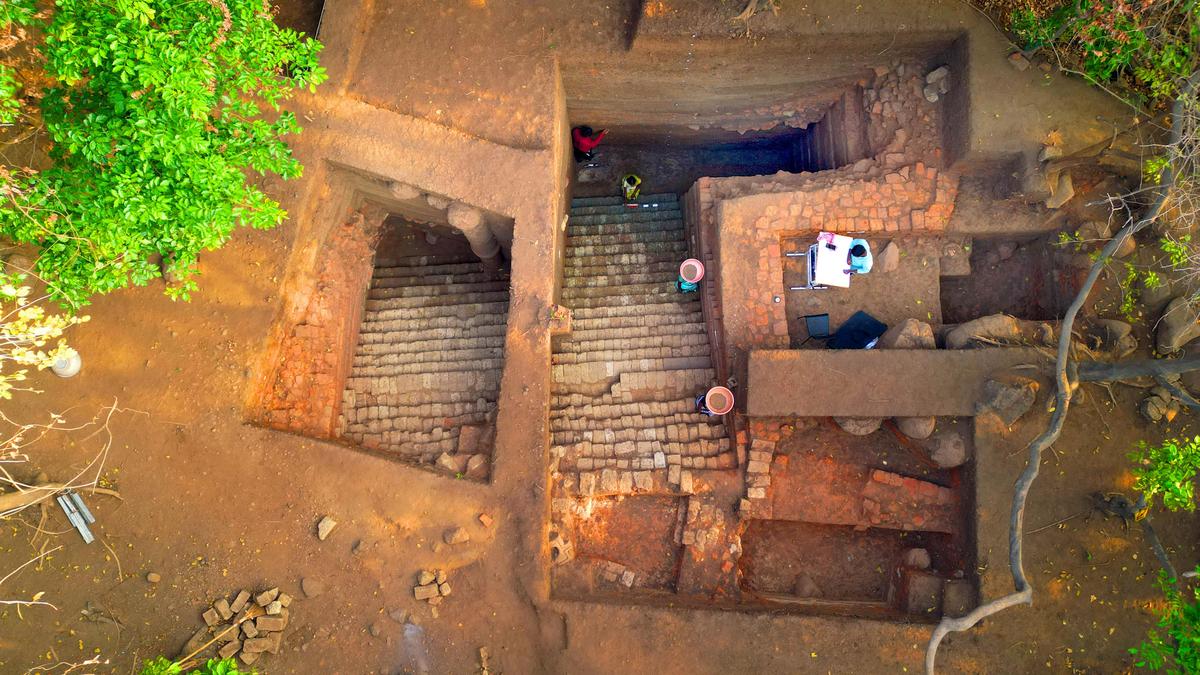
- 09 Apr 2026
In News:
Recent excavations by the Archaeological Survey of India (ASI) have unearthed a sophisticated 1,500-year-old stepped reservoir on Elephanta Island (historically known as Gharapuri).
Advanced Water Management: The Stepped Reservoir
The centerpiece of the discovery is a massive T-shaped stepped reservoir dating back approximately 1,500 years.
- Engineering Excellence: The structure features 20 precisely aligned stone steps. Remarkably, the basalt blocks used for construction were not native to the island; they were transported from the mainland, indicating a highly organized labor and logistics system.
- Functional Design: The reservoir was engineered to capture and store monsoon runoff on the island’s naturally rocky and sloped terrain, ensuring a year-round water supply for a growing settlement or a busy port.
Numismatic Evidence and Chronology
The excavation yielded approximately 60 coins made of copper, lead, and silver, providing a clear chronological framework for the site.
- The Kalachuri Connection: Several copper coins belong to King Krishnaraja of the Kalachuri dynasty (6th century CE).
- Iconography: These coins feature a distinctive seated bull motif (Nandi) on the obverse and a temple symbol with the legend "Sri Krishnaraja" on the reverse. This confirms the political influence of the Kalachuris over the Konkan coast during this period.
A Global Maritime Hub
The findings firmly establish Elephanta Island as a crucial node in the Ancient Indian Ocean Trade.
- Mediterranean Links: Archaeologists discovered nearly 3,000 amphorae sherds (pottery used for transporting wine or oil) of Mediterranean origin, indicating direct or indirect trade links with the Roman Empire.
- West Asian Ties: The presence of torpedo jars from West Asia (Mesopotamia/Persia) suggests the island functioned as a transshipment point for goods moving between the Gulf and the Indian hinterland as early as the 2nd century CE.
- The Port Triad: Historically, the island operated through three distinct port localities: Morabandar, Rajbandar, and Shethbandar, each likely serving different mercantile functions.
Industrial and Cultural Landscape
Beyond trade, the island was a center of production and sophisticated lifestyle:
- Textile Industry: The discovery of a brick structure, identified as a possible dyeing vat, suggests that the island was involved in textile processing—a major export commodity for ancient India.
- Material Culture: Recoveries of carnelian and quartz beads, glass and stone bangles, and terracotta figurines reflect a vibrant local craft tradition and an affluent resident population.
Designated Repositories
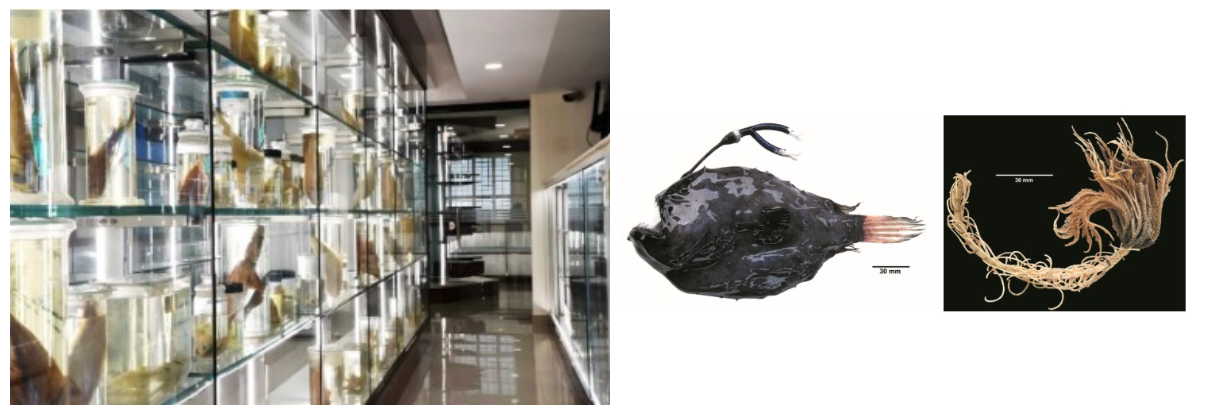
- 09 Apr 2026
In News:
In a strategic move to bolster India’s conservation framework, the National Biodiversity Authority (NBA), in collaboration with the Ministry of Environment, Forest and Climate Change (MoEFCC), has notified two new institutions as Designated Repositories. This expansion under the Biological Diversity Act (BDA), 2002, reflects India's commitment to the systematic documentation and safe custody of its vast genetic and biological wealth.
The New Additions to the National Network
The notification brings two specialized research centers into the national fold, taking the total number of designated repositories in India to 20.
- Referral Centre Bhavasagara (CMLRE, Kochi): Located at the Centre for Marine Living Resources and Ecology, this center specializes in marine biological resources, critical for India's "Blue Economy" ambitions.
- MACS Collection of Microorganisms & National Fungal Culture Collection (ARI, Pune): Housed at the Agharkar Research Institute, this repository focuses on microbial and fungal diversity, essential for biotechnological and agricultural innovation.
Statutory Framework: Repositories under Section 39
Under Section 39 of the Biological Diversity Act, 2002, the Central Government is empowered to designate specific institutions as repositories for different categories of biological resources.
- Mandate: These institutions are entrusted with the safe custody of biological materials. They ensure that samples are preserved under rigorous scientific conditions.
- Legal Obligation for Discovery: A key provision of the Act requires any person discovering a new taxon (a new species or group) to notify and deposit samples with the designated repository.
- Accessibility: Beyond preservation, these centers act as libraries of life, making biological materials accessible for legitimate research, innovation, and intellectual property claims.
The National Biodiversity Authority (NBA): An Overview
The NBA serves as the apex body overseeing the implementation of the BDA, 2002.
- Nature: A statutory and autonomous body established in 2003, headquartered in Chennai.
- Core Functions: It performs advisory, regulatory, and facilitative roles regarding the conservation of biological diversity, sustainable use of its components, and the Fair and Equitable Sharing of Benefits (ABS) arising from the use of biological resources.
- Three-Tier Structure: The Act mandates a decentralized decentralization model to ensure grassroots participation:
- National Level: National Biodiversity Authority (NBA).
- State Level: State Biodiversity Boards (SBBs).
- Local Level: Biodiversity Management Committees (BMCs) at the village/local body level.
Hectocotylus in Octopus Reproduction
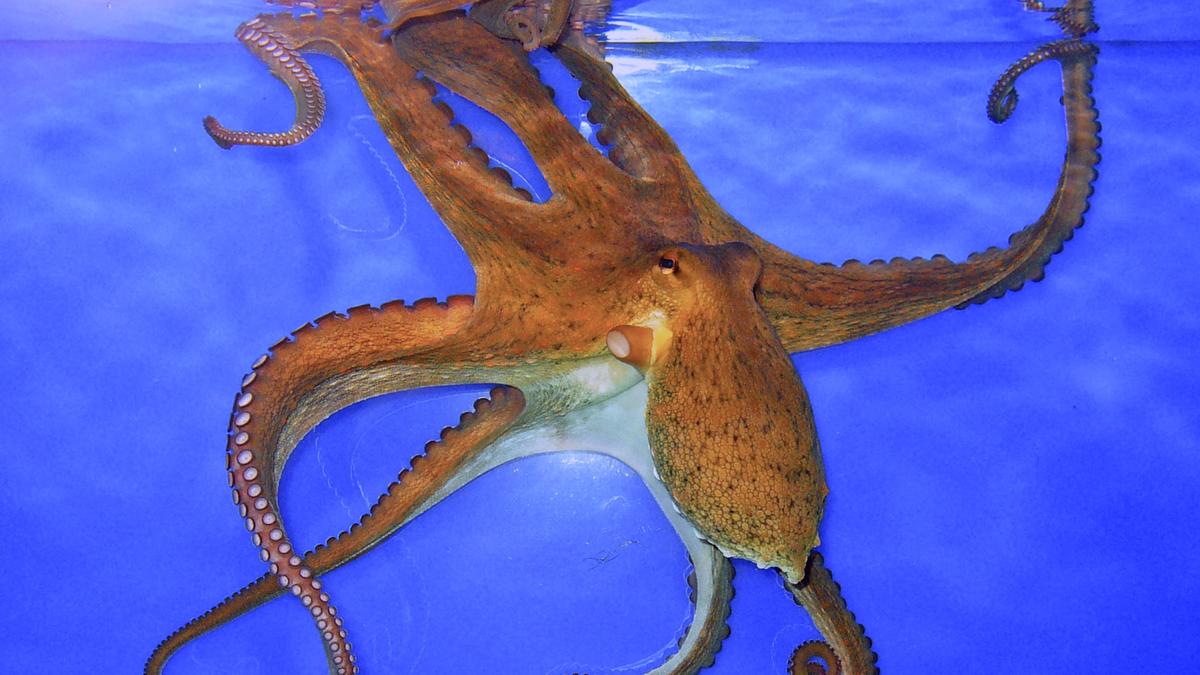
- 08 Apr 2026
In News:
Recent biological research has unveiled groundbreaking insights into the reproductive and sensory mechanisms of octopuses. Scientists have discovered that the hectocotylus, a specialized arm in male cephalopods—serves a dual purpose: it acts as both a conduit for genetic material and a sophisticated sensory organ capable of "tasting" mates. This discovery provides a window into how molecular evolution drives complex behaviors in solitary marine species.
Understanding the Hectocotylus
In the class Cephalopoda (mollusks including octopuses, squids, and cuttlefish), the hectocotylus is a modified arm used by males to transfer sperm packets, known as spermatophores, into the female’s mantle cavity.
Key Biological Findings:
- Chemosensory "Tasting": Beyond physical transfer, the arm functions as a sensory probe. It can detect chemical signals through touch, effectively "tasting" the female.
- Detection of Progesterone: The arm is equipped to sense progesterone present on the female’s skin and within her reproductive tract.
- The Role of CRT1 Receptor: The process is mediated by a specific receptor called CRT1. Interestingly, this receptor evolved from ancient neurotransmitter receptors. It has now adapted to perform a "dual-use" function:
- Prey Detection: Identifying food sources in the marine environment.
- Mate Recognition: Distinguishing potential mates and locating the oviduct for successful insemination.
Evolutionary Significance and Survival Strategy
The evolution of the hectocotylus into a sensory powerhouse is a direct response to the ecological challenges faced by cephalopods.
- Overcoming Solitude: Octopuses are primarily solitary creatures. In the vastness of the ocean, encounters between males and females are rare. The ability to instantly identify a female through chemical "taste" ensures that mating opportunities are not wasted.
- Navigation in Darkness: Many cephalopods inhabit deep-sea or nocturnal environments. The sensory receptors on the hectocotylus allow males to locate the female’s oviduct with precision, even in complete darkness.
- Molecular Adaptation: This discovery highlights how subtle changes in protein structures (like the CRT1 receptor) can lead to the development of highly complex reproductive behaviors, ultimately contributing to the vast biodiversity of our oceans.
General Characteristics of Cephalopods
Cephalopods are among the most intelligent invertebrates, characterized by:
- Physiology: Soft bodies, prominent heads, and highly developed, large eyes.
- Appendages: A ring of arms or tentacles used for locomotion, grasping prey, andas now confirmedsophisticated sensing.
- Neurology: They possess complex nervous systems, with a significant portion of their neurons located within their arms, allowing for semi-autonomous movement and sensing.
Yuva Sangam
- 08 Apr 2026
In News:
Yuva Sangam is a landmark youth exchange initiative under the Government of India’s Ek Bharat Shreshtha Bharat (EBSB) program. Launched in 2023, it has rapidly evolved into a high-impact platform for strengthening the emotional and cultural bonds between the youth of diverse regions. As of April 2026, the program has entered its Phase-VI, expanding its footprint to 22 States and Union Territories and reflecting a "whole-of-government" commitment to national unity.
The Ideological Foundation: Ek Bharat Shreshtha Bharat
The program is rooted in the vision of Ek Bharat Shreshtha Bharat, launched on October 31, 2015, to mark Rashtriya Ekta Diwas (National Unity Day).
- Objective: To celebrate India’s "Unity in Diversity" by pairing different States and UTs for sustained engagement.
- Mechanism: Paired regions collaborate across various domainsincluding language, cuisine, sports, and best practicesto dismantle regional prejudices and foster mutual respect.
Structural Framework of Yuva Sangam
Yuva Sangam operationalizes this vision through structured, immersive tours.
- Target Group: Designed for youth aged 18–30 years, encompassing university students (UG, PG, PhD), young professionals, and volunteers from the National Service Scheme (NSS) and Nehru Yuva Kendra Sangathan (NYKS).
- Implementation: Anchored by the Ministry of Education, the program is executed via Higher Education Institutions (HEIs) that serve as nodal centers. For instance, in Phase-VI, 22 eminent HEIs (like NIT Rourkela and IIM Ahmedabad) coordinate these exchanges.
- Digital Integration (2026): Aligning with the digital education push, Phase-VI requires participants to register using their APAAR ID (Automated Permanent Academic Account Registry).
The "5-P" Framework: The Core Pillars of Exposure
Every Yuva Sangam tour (typically lasting 5–7 days) is curated around five thematic pillars to provide a holistic understanding of the host state:
- Paryatan (Tourism): Visiting historical monuments and natural wonders to understand the geography and history.
- Parampara (Tradition): Immersive experiences in local arts, crafts, music, and culinary traditions.
- Pragati (Progress): Gaining insights into major developmental landmarks and government initiatives.
- Prodyogiki (Technology): Exposure to innovation hubs, startups, and research institutions.
- Paraspar Sampark (People-to-People Connect): Meaningful interactions with local heroes, SHGs, and dignitaries, including Governors and Chief Ministers.
Indian Softshell Turtles
- 08 Apr 2026
In News:
The Indian Softshell Turtle (Nilssoniagangetica), a critical component of India’s freshwater ecosystems, has recently been in the spotlight following successful enforcement actions against illegal wildlife trafficking. In a significant operation, police in Greater Noida rescued 16 turtles from a smuggler during a routine check, highlighting the persistent threat of poaching to this endangered species.
Taxonomy and Biological Profile
Commonly known as the Gangetic Softshell Turtle, this species belongs to the family Trionychidae. Unlike traditional turtles characterized by hard, bony scutes, these reptiles possess a flat, leathery carapace (upper shell) that lacks a keratinized cover.
- Distinctive Anatomy: They feature a large head with a prominent snout-like proboscis, an evolutionary adaptation that allows them to breathe while remaining almost entirely submerged.
- Size: They are among the largest freshwater turtles in the region, with carapaces reaching up to 94 cm in length.
- Diet: They are omnivorous scavengers. By feeding on mollusks, fish, frogs, and decaying organic matter, they act as natural "cleaners" of river systems.
Habitat and Distribution
The Indian Softshell Turtle is native to the major river systems of South Asia, specifically the Ganges, Indus, and Mahanadi.
- Range: Found across India, Pakistan, Nepal, and Bangladesh.
- Ecological Niche: They prefer deep, turbid (cloudy) waters including rivers, large canals, and lakes. They favor habitats with mud or sand bottoms, which allow them to bury themselves for camouflage and hunting.
Conservation Status and Legal Protection
Due to its dwindling population, the Indian Softshell Turtle is afforded the highest levels of legal protection, mirroring that of the Bengal Tiger.
- Wildlife Protection Act (1972): Listed under Schedule I, making any trade or harm to the species a non-bailable offense with rigorous punishment.
- IUCN Red List: Classified as Endangered.
- CITES: Included in Appendix I, which prohibits international commercial trade.
Threats: The "20-Claw" Myth and Trafficking
The primary drivers of the decline in their population are habitat loss, pollution, and illegal poaching. A unique and destructive driver is the "20-Claw Myth."
- Superstition: Poachers specifically target individuals with 20 claws (five on each limb). There is a deep-seated superstition in the black market that these specific turtles bring immense "good luck" or possess superior medicinal properties.
- Commercial Value: Beyond superstition, they are also trafficked for their meat and for the pet trade, often being transported in cramped, inhumane conditions across state borders.
Ecological Significance for India
From a conservation and civil services perspective, the health of the Indian Softshell Turtle population is a direct indicator of the health of the riverine ecosystem. As scavengers, they are vital to the Clean Ganga Mission (Namami Gange), as they help maintain water quality by consuming organic waste and carcasses that would otherwise pollute the river.
Annual Survey of Incorporated Services Sector Enterprises
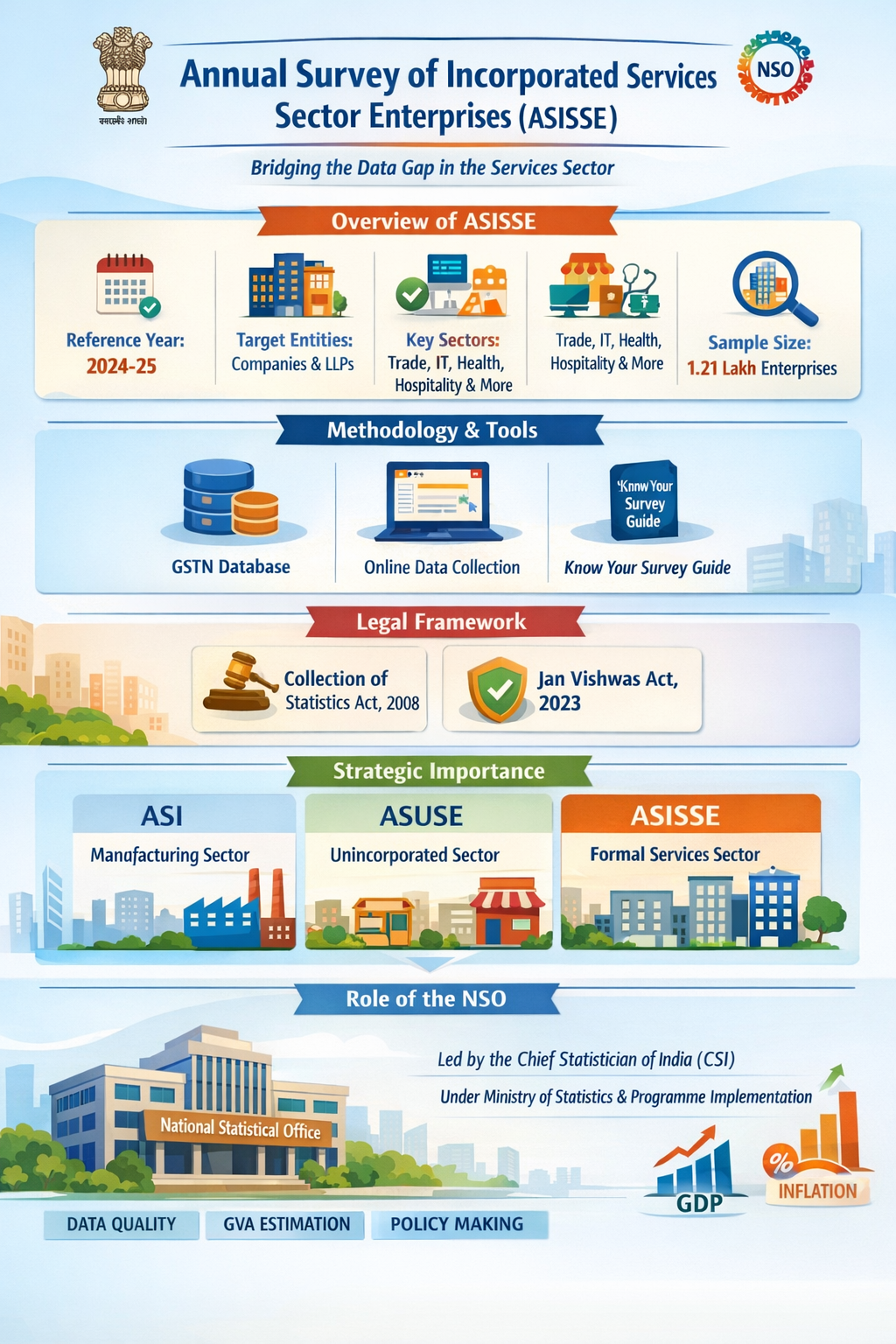
- 08 Apr 2026
In News:
The National Statistics Office (NSO), operating under the Ministry of Statistics and Programme Implementation (MoSPI), launched the inaugural Annual Survey of Incorporated Services Sector Enterprises (ASISSE). This landmark initiative is designed to bridge a critical data gap in the services sector, which is the backbone of the Indian economy, contributing over 50% to the national GDP.
Overview and Scope of ASISSE
The ASISSE is the first dedicated annual exercise to create a formal, comprehensive database for the incorporated (registered) services sector. Historically, while the manufacturing sector was tracked via the Annual Survey of Industries (ASI), the formal services sector lacked a similar structured annual data collection mechanism.
- Reference Period: The survey focuses on the financial year 2024-25.
- Target Entities: It covers corporate entities registered under the Companies Act (1956/2013) or the Limited Liability Partnership (LLP) Act, 2008.
- Key Sectors: The survey encompasses a wide range of industries, including Trade, Transport, Hospitality (Hotels/Restaurants), Information Technology (IT), Education, Health, and other professional services.
- Sample Size: With more than 1.21 lakh enterprises being surveyed, it stands as one of the largest statistical operations of its kind in India.
Methodology and Digital Integration
To ensure high data quality and transparency, the NSO has integrated modern digital tools and outreach strategies:
- The Sampling Frame: The survey uses the Goods and Services Tax Network (GSTN) database as its primary source to identify and sample businesses, ensuring that the data reflects currently active and tax-compliant entities.
- Data Collection Mode: In line with "Digital India" initiatives, data is collected through a secure web-based portal, facilitating faster processing and better security.
- Transparency Measures: The NSO released a reader-friendly user guide titled "Know Your Survey" to help participating enterprises understand definitions, reporting requirements, and the survey's overall purpose.
Legal Framework
The ASISSE is not a voluntary exercise but is backed by stringent legislative provisions to ensure compliance and data integrity:
- It is conducted under the Collection of Statistics Act, 2008 (as amended in 2017).
- It also falls under the provisions of the Jan Vishwas (Amendment of Provisions) Act, 2023, which streamlines reporting and emphasizes trust-based governance.
Strategic Importance for India
The launch of ASISSE completes a vital "statistical trio" that allows the government to view the entire non-agricultural economy holistically:
- ASI (Annual Survey of Industries): Covers the registered manufacturing sector.
- ASUSE (Annual Survey of Unincorporated Sector Enterprises): Covers the informal/unregistered non-agricultural sector.
- ASISSE: Fills the gap for the formal, incorporated services sector.
By generating key operational and economic indicators, ASISSE enables evidence-based policymaking. It allows for more accurate estimation of Gross Value Added (GVA) and provides insights into job creation and economic transformation within the most dynamic segment of the Indian economy.
The Role of the National Statistical Office (NSO)
The NSO serves as India’s central statistical agency. Formed in 2019 through the merger of the Central Statistics Office (CSO) and the National Sample Survey Office (NSSO), it aims to improve coordination and data quality across the country.
Headed by the Chief Statistician of India (CSI), the NSO is responsible for disseminating official data—such as GDP and inflation figures—that are crucial for national planning and governance under the Ministry of Statistics and Programme Implementation.
Tar Balls Management
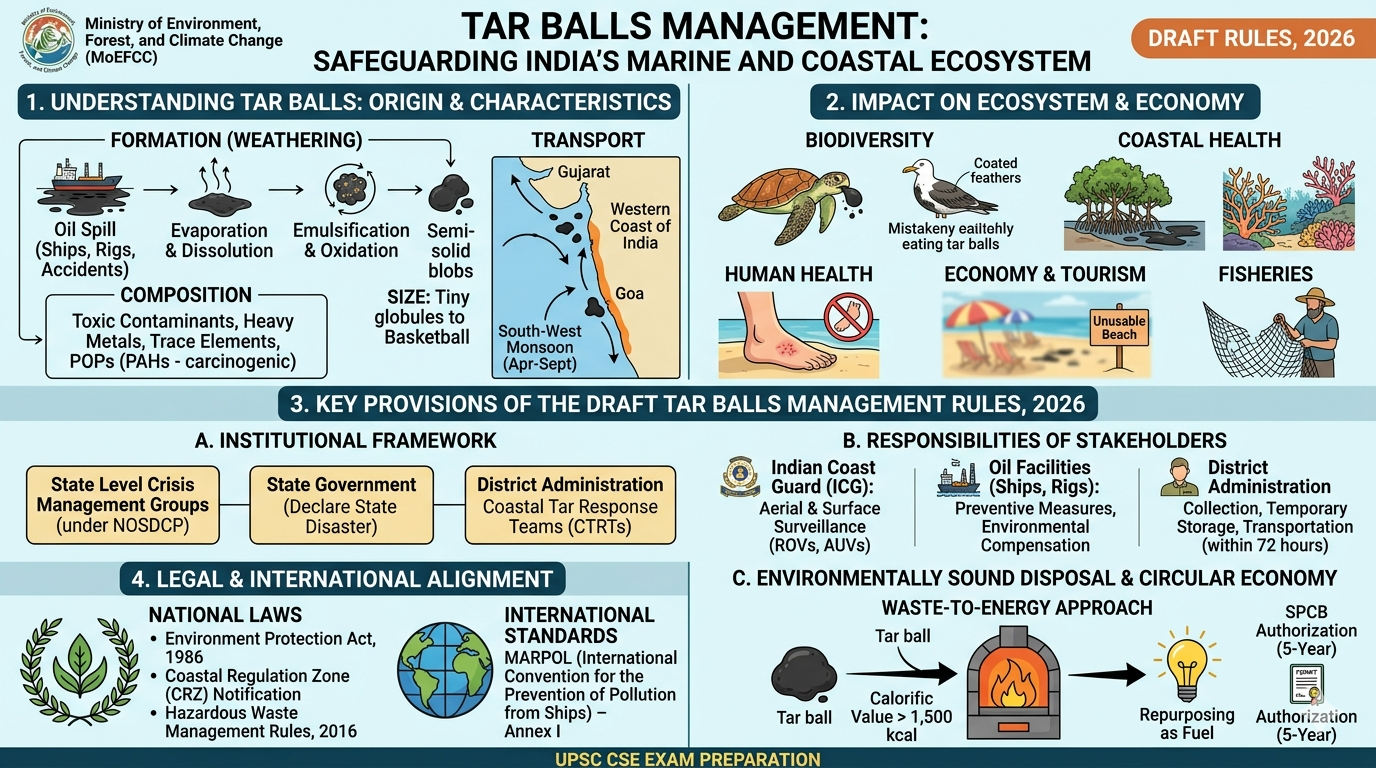
- 08 Apr 2026
In News:
Recently, the Ministry of Environment, Forest, and Climate Change (MoEFCC) introduced the Draft Tar Balls Management Rules, 2026. This marks India's first dedicated regulatory framework aimed at managing "tar balls"—a recurring environmental hazard that plagues the Indian coastline, particularly the western stretch from Gujarat to Goa.
Understanding Tar Balls: Origin and Characteristics
Tar balls are small, dark, sticky, and semi-solid blobs of weathered crude oil. They are the physical residue of oil spills or natural seeps that undergo various transformative processes in the ocean.
- Formation (Weathering): When oil is spilled (from ships, offshore rigs, or accidents), it undergoes physical, chemical, and biological changes. Lighter components evaporate or dissolve, while the heavier residue emulsifies with seawater and oxidizes, eventually hardening into lumps.
- Transport: These blobs are transported from the open sea to the shore by sea currents and waves.
- Size: They vary significantly in size, ranging from tiny globules to masses as large as a basketball.
- Composition: Tar balls are not just oil; they are concentrated reservoirs of toxic contaminants, including heavy metals, trace elements, and Persistent Organic Pollutants (POPs) like Polycyclic Aromatic Hydrocarbons (PAHs), which are carcinogenic.
Impact on Ecosystem and Economy
The seasonal appearance of tar balls, especially between April and September (linked to the South-West Monsoon), has severe multi-dimensional impacts:
- Biodiversity: Marine animals like sea turtles and fish often mistake tar balls for food, leading to ingestion and death. Seabirds get their feathers coated, hindering their ability to fly or regulate body temperature.
- Coastal Health: They contaminate intertidal zones, harming mangroves and coral reefs.
- Human Health: Exposure to tar balls on beaches can cause skin irritation and long-term health risks due to the presence of toxic contaminants.
- Economy & Tourism: India’s western coast is a global tourism hub. Tar ball deposition makes beaches unsightly and unusable, leading to significant revenue loss.
- Fisheries: Tar balls damage fishing nets and gear, impacting the livelihoods of coastal communities.
Key Provisions of the Draft Tar Balls Management Rules, 2026
The rules shift the approach from ad-hoc beach cleaning to a structured, institutionalized response based on the "Polluter Pays Principle."
A. Institutional Framework
- State Level Crisis Management Groups: To be formed under the National Oil Spill Disaster Contingency Plan (NOSDCP).
- Declaration of State Disaster: State governments are empowered to declare tar ball pollution as a "State Disaster" under the Disaster Management Act, ensuring a coordinated emergency response.
- Coastal Tar Response Teams (CTRTs): To be constituted by district administrations for rapid action.
B. Responsibilities of Stakeholders
- Indian Coast Guard (ICG): Tasked with aerial and surface surveillance using advanced technology like Remotely Operated Vehicles (ROVs) and Autonomous Underwater Vehicles (AUVs) to detect underwater oil plumes.
- Oil Facilities: Owners of ships, oil tankers, and offshore rigs are defined as "Oil Facilities." They must comply with the Merchant Shipping Act, 2025, and take preventive measures. Failure to do so attracts Environmental Compensation.
- District Administration: Responsible for the collection, temporary storage, and transportation of tar balls to treatment facilities within a 72-hour window of a sighting.
C. Environmentally Sound Disposal & Circular Economy
The rules emphasize a "waste-to-energy" approach:
- Repurposing as Fuel: Tar balls with a calorific value over 1,500 kcal can be used as an alternative fuel source in cement kilns.
- Authorization: Any entity handling or disposing of tar balls must obtain a 5-year authorization from the State Pollution Control Board (SPCB).
Legal and International Alignment
- National Laws: The rules derive authority from Section 3 of the Environment Protection Act, 1986. They also link with the Coastal Regulation Zone (CRZ) Notification and Hazardous Waste Management Rules, 2016.
- International Standards: The rules align India’s domestic policy with its obligations under MARPOL (International Convention for the Prevention of Pollution from Ships), specifically Annex I, which deals with oil pollution.
Challenges and Gaps
While the rules are a significant step forward, critics and experts point out certain gaps:
- Community Engagement: There is a lack of explicit provisions for "citizen science" or involving local fishing communities in monitoring.
- Digital Reporting: No mandated digital platform yet exists for real-time reporting by the public.
- Source Attribution: Identifying the exact vessel responsible for weathered tar balls remains a technical challenge, requiring advanced chemical fingerprinting.
INS Aridhaman
- 06 Apr 2026
In News:
In a milestone for India’s strategic autonomy, the Indian Navy has officially inducted INS Aridhaman, the nation’s third nuclear-powered ballistic missile submarine (SSBN). This induction marks a significant expansion of the Arihant-class fleet and cements India's position as one of the few nations capable of designing, building, and operating a credible underwater nuclear deterrent.
Strategic Significance: Completing the Nuclear Triad
The induction of INS Aridhaman is a critical component of India’s "No First Use" (NFU) nuclear doctrine. For a credible NFU policy, a robust survivable second-strike capability is essential.
- Nuclear Triad: With land-based missiles (Agni series) and air-launched weapons (Mirage/Rafale), the SSBN represents the third and most survivable leg of the triad.
- Undetectability: Unlike land silos or aircraft, nuclear submarines can remain submerged for months, making them nearly impossible to track or neutralize in a preemptive strike.
Technical Profile of INS Aridhaman
Developed under the secretive Advanced Technology Vessel (ATV) project at the Ship Building Centre in Visakhapatnam, INS Aridhaman is an evolutionary step forward from its predecessors, INS Arihant and INS Arighaat.
1. Design and Propulsion
- Classification: Submersible Ship Ballistic Nuclear (SSBN).
- Displacement: Approximately 6,000 tonnes on the surface, increasing to 7,000 tonnes when submerged.
- Power Plant: Driven by an indigenous 83 MW pressurized water reactor (PWR), developed by the Bhabha Atomic Research Centre (BARC) using enriched uranium.
2. Enhanced Survivability
- Acoustic Stealth: The submarine is equipped with anechoic tiles for acoustic damping, which absorb sonar waves and minimize the vessel's noise signature.
- Advanced Sensors: It features state-of-the-art indigenous sonar suites and electronic warfare systems to detect and evade enemy anti-submarine warfare (ASW) assets.
Armament and Strike Range
INS Aridhaman boasts a superior missile configuration compared to the lead ship of the class, allowing for more flexible strategic deployments.
- Vertical Launch System: It features eight vertical launch tubes, doubling the capacity of the earlier Arihant-class design.
- Missile Variants:
- K-15 (Sagarika): Short-to-medium range missiles with a reach of 750 km. The submarine can carry up to 24 of these.
- K-4 Missiles: Intermediate-range ballistic missiles with a strike range of 3,500 km. This enables the submarine to target deep inland targets from a safe distance in the Indian Ocean.
- Strategic Reach: The inclusion of the K-4 effectively gives India an intercontinental strike capability from the sea, providing a shield against regional adversaries.
The Evolution of the Arihant Class
|
Feature |
INS Arihant |
INS Arighaat |
INS Aridhaman |
|
Status |
Commissioned (2016) |
Commissioned (2024) |
Inducted (2026) |
|
Launch Tubes |
4 |
4 |
8 |
|
Primary Role |
Technology Demonstrator |
Operational SSBN |
Enhanced Strategic Deterrent |
Rongali Bihu

- 06 Apr 2026
In News:
In April 2026, the state of Assam is once again enveloped in the vibrant spirit of Rongali Bihu, also known as Bohag Bihu. As the premier festival of the Assamese people, it marks the beginning of the Assamese New Year and the arrival of the spring season. This festival is a quintessential representation of Assam's syncretic culture, transcending barriers of caste, creed, and religion.
The Three Dimensions of Bihu
To understand Rongali Bihu, one must place it within the annual cycle of the three Bihu festivals that dictate the rhythm of life in the Brahmaputra Valley:
|
Festival Name |
Alternative Name |
Month (Approx.) |
Significance |
|
Rongali Bihu |
Bohag Bihu |
April |
Celebrates the New Year, Spring, and the sowing season. |
|
Kati Bihu |
Kongali Bihu |
October |
A solemn occasion marking the growing season; prayers for crop protection. |
|
Magh Bihu |
Bhogali Bihu |
January |
The harvest festival; characterized by community feasting and bonfires. |
Significance of Rongali (Bohag) Bihu
The term ‘Rongali’ is derived from the Assamese word 'Rong', meaning joy or celebration. Unlike the thriftiness of Kati Bihu or the feast-centric Magh Bihu, Rongali Bihu is a week-long celebration of life, fertility, and nature’s renewal.
- Agricultural Link: It signals the commencement of the seeding time. Farmers seek blessings for a bountiful harvest.
- Cultural Identity: It serves as a platform for the display of traditional folk music and the world-renowned Bihu Dance, which was recently featured in the Guinness World Records for the largest performance.
- Social Cohesion: It is a secular festival where indigenous communities and various ethnic groups (Tibeto-Burman and Tai origins) unite to celebrate a shared Assamese identity.
Rituals and Traditions: The Seven Days of Bihu
While celebrations can last for a month, the first few days carry specific ritualistic weight:
- Goru Bihu (First Day): Dedicated to the welfare of livestock. Cattle are taken to rivers, bathed with turmeric and pulse paste (Maah-Halodhi), and stroked with sprigs of Makhiyati and Dighaloti to ward off insects.
- Manuh Bihu (Second Day): The "Bihu of the People." This is the official New Year's Day. People wear new clothes, seek blessings from elders, and exchange gifts.
- Huçori: Groups of elders and youth visit households to perform traditional carols and dances, offering blessings in exchange for small tokens of appreciation.
Material Culture and Attire
The festival is a showcase of Assam's rich textile heritage:
- The Attire: Women wear the Mekhela Chador, a two-piece traditional dress made from Pat (mulberry silk), Muga (golden silk), or cotton. Men typically wear Dhoti-Gamosa.
- The Gamocha (Bihuwaan): A hand-woven rectangular cotton cloth with red borders and floral motifs. During Bihu, it is gifted as a 'Bihuwaan'—a symbol of respect, love, and hospitality. The Gamocha has also been granted a Geographical Indication (GI) Tag.
- Traditional Delicacies: The celebration is incomplete without Larous (sweet balls) and Pithas (rice cakes) made of glutinous rice, coconut, and jaggery.
Musical Heritage
The atmosphere of Assam during Rongali Bihu is defined by the rhythmic beats of traditional instruments:
- Dhol: A barrel-shaped drum.
- Pepa: A hornpipe made from a buffalo horn.
- Gogona: A bamboo mouth organ.
- Toka: A bamboo clapper.
- Xutuli: A clay or bamboo whistle.
Kar Saathi

- 06 Apr 2026
In News:
In a significant step toward Digital India and "Minimum Government, Maximum Governance," the Income Tax Department has launched ‘Kar Saathi’. This initiative features a newly revamped website and an advanced AI-powered chatbot designed to simplify tax processes, enhance transparency, and foster a taxpayer-friendly environment.
The launch is particularly relevant as India transitions into the fiscal framework governed by the Income Tax Act, 2025, which aims to modernize direct tax administration.
What is Kar Saathi?
Kar Saathi (meaning "Tax Friend") is the Income Tax Department's dedicated AI Chatbot and virtual assistant. It is integrated directly into the department's official portal to provide seamless, round-the-clock assistance to millions of taxpayers across the country.
- Platform: A digital assistant embedded within the revamped income tax website.
- Availability: Accessible 24x7, ensuring that taxpayers can resolve queries outside of traditional office hours.
- Target Audience: Individual taxpayers, businesses, and professionals seeking clarity on direct tax compliance.
Core Objectives and Purpose
The primary philosophy behind Kar Saathi is to shift the tax department's role from a mere enforcement agency to a service-oriented facilitator.
- Simplifying Compliance: Navigating the complexities of the Income Tax Act, 2025 can be daunting; Kar Saathi breaks down legal jargon into actionable steps.
- Streamlining Procedures: It provides real-time guidance on critical tasks such as filing Income Tax Returns (ITR) and verifying tax status.
- Real-Time Query Resolution: Instead of waiting for manual support or navigating lengthy FAQ pages, users receive automated, instant responses to specific inquiries.
Key Features of the Kar Saathi Ecosystem
- Virtual Tax Assistant: Acts as a "one-stop solution" for taxpayers, covering the entire lifecycle of tax compliance—from registration to final filing.
- Step-by-Step Guidance: The tool can walk users through the selection of correct tax forms and the interpretation of updated tax provisions.
- Navigation Support: It assists users in finding specific tools, calculators, and links within the newly designed website, reducing the "drop-off" rate for digital filings.
- Direct Tax Focus: While primarily an ITR assistant, it is equipped to handle broader queries regarding direct tax rules and compliance mandates.
Significance for India’s Tax Administration
1. Promoting Voluntary Compliance
By reducing the "cost of compliance" (time and effort spent understanding rules), the government encourages more citizens to enter the formal tax net.
2. Reduction in Litigation
Misinterpretation of tax laws often leads to errors in filing and subsequent legal disputes. Kar Saathi provides standardized information, which can help minimize errors at the source.
3. Leveraging Emerging Technology
The use of Artificial Intelligence (AI) in Kar Saathi aligns with the National Strategy on AI. It demonstrates how the government can use Machine Learning to handle massive datasets and varied user queries efficiently.
Raja Ravi Varma
- 06 Apr 2026
In News:
In April 2026, the Indian art market witnessed a watershed moment when Raja Ravi Varma’s iconic oil painting, "Yashoda and Krishna," was sold for a record-breaking ?167.2 crore ($17.9 million) at a Saffronart auction in Mumbai.
- Significance: This sale established a new global benchmark, making it the most expensive work of Indian art ever sold at auction, surpassing the previous record held by M.F. Husain’s Untitled (Gram Yatra).
- The Work: Painted in the 1890s, the canvas depicts an intimate, domestic scene from the Shrimad Bhagavatam where an infant Krishna approaches his mother, Yashoda, as she milks a cow. It is celebrated for its mastery of chiaroscuro (the treatment of light and shade) and its ability to render the divine through a human lens.
About Raja Ravi Varma (1848–1906)
Born on April 29, 1848, in the village of Kilimanoor, Kerala, Raja Ravi Varma belonged to the family of the Koil Thampurans (chieftains). His artistic journey revolutionized Indian art by bridging the gap between traditional Indian aesthetics and Western academic techniques.
Artistic Style and Contribution
- Synthesis of Traditions: He is renowned for blending Hindu mythological themes with European Realism and Naturalism. This style is often referred to as "Academic Realism."
- Pioneer of Oil Painting: Varma was among the first Indian artists to adopt oil paints, a medium previously dominated by European artists in India.
- The "Mona Lisa of Indian Art": His works are characterized by their "everyday divinity," where gods and goddesses are depicted with human emotions, draped in rich silks and adorned with intricate jewelry.
Democratization of Art: The Lithographic Press
Ravi Varma’s greatest legacy lies in making art accessible to the masses:
- In 1894, he established the Ravi Varma Fine Arts Lithographic Press in Maharashtra (initially in Ghatkopar and later moved to Lonavala).
- By producing affordable oleographs (lithographic prints), he ensured that depictions of Hindu deities reached ordinary households, fundamentally shaping the visual imagination of modern India.
Notable Works
- Shakuntala Writing a Love Letter to Dushyanta
- Shri Rama Vanquishing the Sea
- Nair Lady Adorning Her Hair (Won the Governor’s Gold Medal in Madras, 1873, and a Certificate of Merit in Vienna).
Awards and Recognition
- Kaiser-i-Hind Gold Medal (1904): Awarded by Viceroy Lord Curzon on behalf of the British King Emperor for his contribution to the arts. It was during this time that he became popularly known as "Raja."
- International Acclaim: He won prestigious awards at exhibitions in Vienna (1873) and the World’s Columbian Exposition in Chicago (1893).
Legal and Heritage Status: "National Art Treasure"
Under the Antiquities and Art Treasures Act of 1972, Raja Ravi Varma is one of nine designated "National Treasure" artists.
- Implication: His works are considered "non-exportable." While they can be sold within India, they cannot be taken out of the country, ensuring that India’s cultural heritage remains within its borders.
RBI’s Crackdown on NDDs and Related Party Transactions
- 06 Apr 2026
In News:
In a strategic move to insulate the Indian Rupee (INR) from offshore speculative pressures and enhance corporate governance, the Reserve Bank of India (RBI) has introduced stringent restrictions on Non-Deliverable Derivative (NDD) contracts and Related Party Transactions (RPTs). These measures, effective from April 2026 (with immediate impacts on currency markets), aim to reinforce the primacy of the onshore market and ensure that financial instruments are used for genuine hedging rather than pure speculation.
Following the announcement, the Rupee exhibited a sharp recovery, rallying from historic lows below 95 to 93.10 against the US Dollar, demonstrating the market's positive reception to reduced volatility.
Understanding Non-Deliverable Derivatives (NDDs)
Definition: An NDD is a foreign exchange derivative contract used to hedge or speculate on currencies that are non-convertible or subject to capital controls (like the INR). Unlike standard derivatives, there is no physical exchange of the underlying currency.
Working Mechanism:
- Settlement: Contracts are settled strictly in a freely convertible currency, typically the US Dollar (USD).
- The "Fixing" Process: Parties agree on a "contract rate" and a "fixing date." On the fixing date, the difference between the agreed rate and the prevailing spot market rate is calculated.
- Cash Settlement: No "principal" is exchanged. The "loser" simply pays the "winner" the net difference in USD.
Key Features:
- Offshore Nature: Historically traded in global hubs like Singapore, London, Dubai, and Hong Kong to bypass domestic Indian regulations.
- Regulatory Arbitrage: These markets often operate outside the direct jurisdiction of the RBI, allowing offshore sentiment to diverge from domestic economic fundamentals.
Why has the RBI restricted NDDs?
The RBI’s intervention is prompted by several systemic risks identified in the offshore market:
- Curbing Currency Manipulation: Large offshore traders often take massive "short" positions against the Rupee during geopolitical tensions (e.g., the West Asia conflict), creating artificial downward pressure that spills over into the Indian onshore market.
- Distortion of Price Discovery: Offshore NDD markets frequently act as a "lead" indicator, influencing the opening rates of the INR before Indian markets even open, thus undermining the RBI's control over domestic exchange rates.
- Speculative Misuse: Many participants were found cancelling and re-entering contracts to exploit short-term price swings. By banning the rebooking of cancelled contracts, the RBI ensures these tools are used for their intended purpose: Hedging risk, not gambling on volatility.
- Stabilizing the Rupee: By restricting banks (Authorised Dealers) from offering NDDs to residents and non-residents alike, the RBI reduces the "leakage" of liquidity into unregulated speculative pools.
Restriction on Related Party Transactions (RPTs)
Parallel to the currency measures, the RBI has overhauled the framework for Related Party Transactions (effective April 1, 2026). This is a critical pillar of corporate governance in the banking and NBFC sectors.
- Objective: To prevent intra-group dealings from being used to hide true risk exposure, shift profits across jurisdictions, or engage in "circular financing."
- Broadened Definition: The RBI has expanded the definition of "Related Parties" to include promoters, directors, KMPs (Key Managerial Personnel), and shareholders with 10% or more equity, aligning with Ind AS 24 and global accounting standards.
- Materiality Thresholds: For the first time, specific monetary thresholds have been set (ranging from ?5 crore to ?50 crore depending on the bank’s asset size). Any transaction exceeding these limits requires approval from a high-level Board Committee.
- Governance Impact: By mandating that interested directors recuse themselves from decision-making, the RBI aims to boost investor confidence and ensure "arm's length" transparency.
Mission MITRA
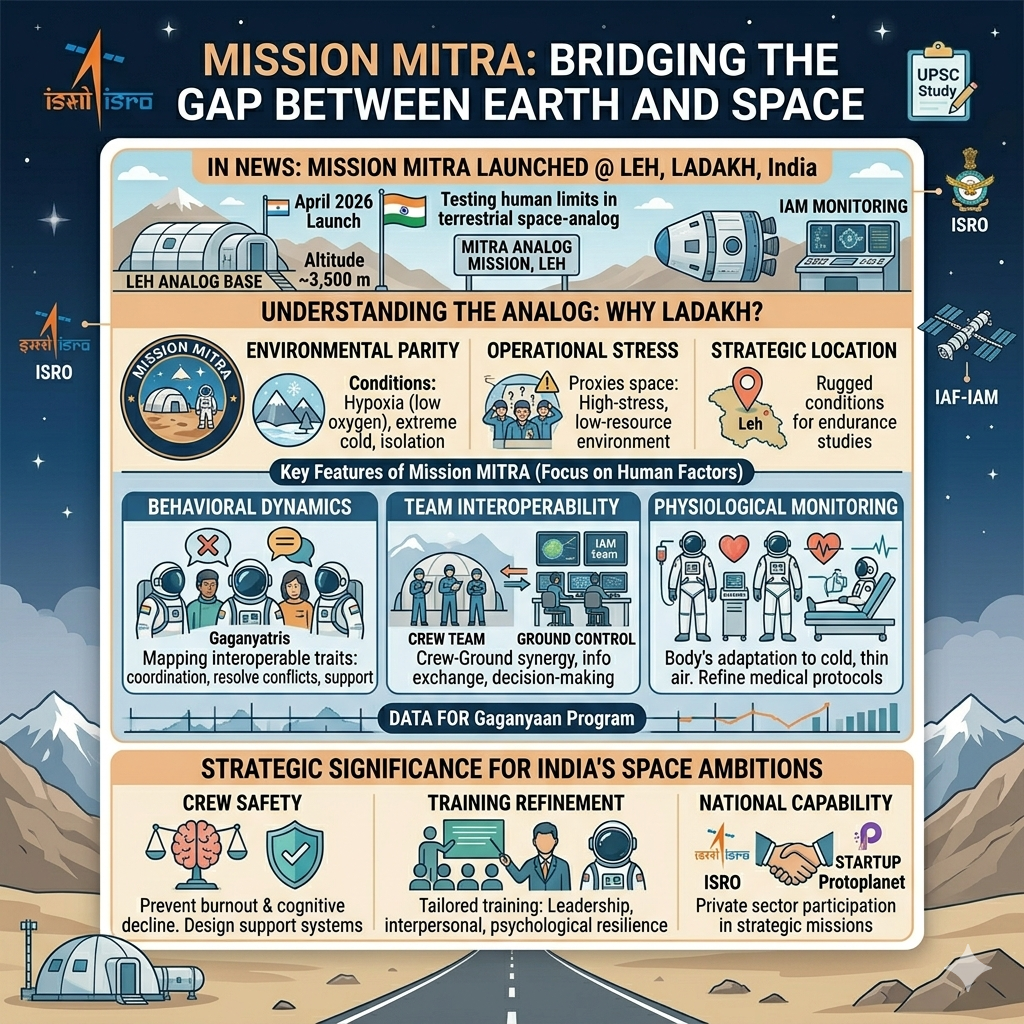
- 07 Apr 2026
In News:
Recently, the Indian Space Research Organisation (ISRO) launched Mission MITRA (Mapping of Interoperable Traits and Response Assessment) in Leh, Ladakh. This pioneering study, conducted in collaboration with the IAF-Institute of Aerospace Medicine (IAM), marks a critical step in India’s Gaganyaan program by testing the behavioral and physiological limits of astronauts in a terrestrial space-analog environment.
The Terrestrial Analog: Why Ladakh?
Space exploration is as much a psychological challenge as it is a technological one. To prepare for the vacuum of space, scientists utilize terrestrial analogues—locations on Earth that mimic space-like stressors.
- Environmental Parity: Situated at an altitude of approximately 3,500 meters, Leh offers conditions of hypoxia (low oxygen), extreme cold, and geographical isolation.
- Operational Stress: These rugged conditions serve as a natural proxy for the high-stress, low-resource environment of a spacecraft, allowing researchers to study human endurance without leaving Earth's atmosphere.
Core Objectives and Design
Mission MITRA is a first-of-its-kind multidisciplinary study focused on the "Human Factor" of spaceflight. It involves India's four designated Gaganyatris (astronauts) and a supporting team of scientists, engineers, medical doctors, and psychologists.
- Behavioral Dynamics: The mission maps interoperable traits—the ability of crew members to coordinate, resolve conflicts, and support one another under pressure.
- Team Interoperability: A key focus is the synergy between the Crew and Ground Control Teams, assessing how information is exchanged and how decision-making holds up under operational stress.
- Physiological Monitoring: Scientists track how the body adapts to freezing temperatures and thin air, providing data that will refine medical protocols for actual spaceflight.
Strategic Significance for India’s Space Ambitions
As India prepares for its first human spaceflight and eyes future long-duration missions to a space station or the Moon, the data from Mission MITRA is invaluable.
- Crew Safety: Understanding psychological resilience helps in designing better support systems to prevent "burnout" or cognitive decline during isolation.
- Training Refinement: Insights from this study will help the Human Space Flight Centre (HSFC) tailor training modules that move beyond physical fitness to include specialized interpersonal and leadership training.
- National Capability: Collaborative efforts with Indian startups like Protoplanet Pvt. Ltd. for facility management signify the growing participation of the private sector in India’s strategic space missions.
BioNEST
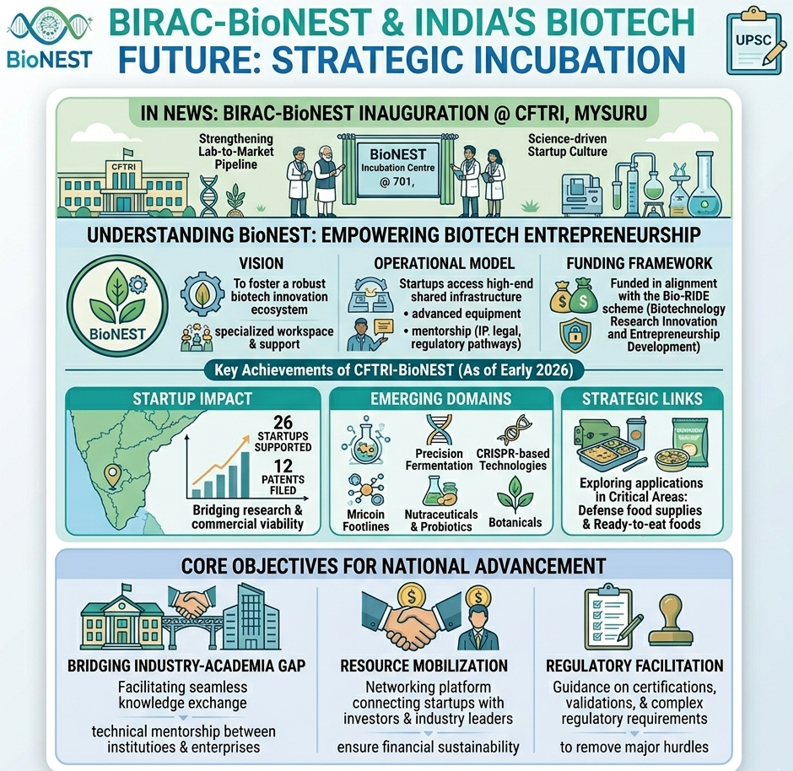
- 07 Apr 2026
In News:
In a significant stride toward strengthening India's "lab-to-market" pipeline, the Union Minister recently inaugurated the BIRAC-BioNEST Incubation Centre at the Central Food Technology & Research Institute (CFTRI) in Mysuru. This development, coinciding with CFTRI’s 75th anniversary, underscores the government's commitment to fostering a science-driven startup culture, particularly in the high-value food and biotechnology sectors.
Understanding BioNEST:
The Bioincubators Nurturing Entrepreneurship for Scaling Technologies (BioNEST) is a flagship scheme launched by the Biotechnology Industry Research Assistance Council (BIRAC), a Public Sector Enterprise under the Department of Biotechnology (DBT).
- Vision: To foster a robust biotech innovation ecosystem by providing specialized workspace and support to entrepreneurs.
- Operational Model: BioNEST centers offer startups access to high-end shared infrastructure, advanced equipment, and comprehensive mentorship spanning Intellectual Property (IP), legal frameworks, and regulatory pathways.
- Funding Framework: These centers are funded in alignment with the Bio-RIDE (Biotechnology Research Innovation and Entrepreneurship Development) scheme, the government's umbrella initiative for promoting biotech R&D and entrepreneurship.
The CFTRI-BioNEST Milestone: A Focus on Food Tech
The newly inaugurated center at CFTRI Mysuru is uniquely positioned to revolutionize the food processing landscape. As of early 2026, the ecosystem has already demonstrated tangible success:
- Startup Impact: The center has supported 26 startups, which have collectively filed 12 patents, bridging the gap between academic research and commercial viability.
- Emerging Domains: Innovation at the center is focused on cutting-edge fields such as precision fermentation, CRISPR-based technologies, nutraceuticals, probiotics, and botanicals.
- Strategic Links: Startups within this ecosystem are exploring applications in critical areas, including defense food supplies and high-growth segments like ready-to-eat convenience foods.
Core Objectives for National Advancement
The broader BioNEST scheme serves three primary functions essential for India’s economic and scientific growth:
- Bridging the Industry-Academia Gap: Facilitating seamless knowledge exchange and technical mentorship between research institutions and private enterprises.
- Resource Mobilization: Providing a networking platform that connects startups with investors and industry leaders to ensure financial sustainability.
- Regulatory Facilitation: Offering guidance on certifications, validations, and complex regulatory requirements, which are often major hurdles for biotech ventures.
S?dhana Saptah Initiative
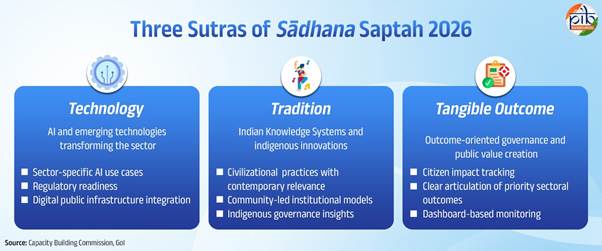
- 07 Apr 2026
In News:
The S?dhana Saptah (Strengthening Adaptive Development and Humane Aptitude for National Advancement) initiative, held from April 2 to April 8, 2026, represents a landmark in India’s administrative reforms. Organized by the Department of Personnel and Training (DoPT), the Capacity Building Commission (CBC), and Karmayogi Bharat, the event commemorates the foundation of the CBC and five years of Mission Karmayogi.
Mission Karmayogi: The Philosophical Bedrock
S?dhana Saptah is a flagship event under Mission Karmayogi (National Programme for Civil Services Capacity Building). This Central Sector Scheme seeks to shift the civil service paradigm from a "rule-based" to a "role-based" approach. The vision is to create a future-ready, transparent, and accountable bureaucracy equipped with the right competencies to achieve the goals of Viksit Bharat 2047.
The mission is supported by two critical pillars:
- Capacity Building Commission (CBC): Established in 2021, it acts as the custodian of the mission, designing frameworks and setting standards for all ministries.
- Karmayogi Bharat (SPV): A Special Purpose Vehicle set up in 2022 to operate the iGOT (Integrated Government Online Training) digital learning platform.
The Three Sutras of S?dhana Saptah
The 2026 initiative is structured around three foundational "Sutras" designed to modernize governance while remaining rooted in Indian values:
1. Technology (Focus: April 3–4) This theme explores how emerging tools can make governance more efficient and citizen-centric. Key areas include the application of Artificial Intelligence (AI) in policy making, utilizing Digital Public Infrastructure (DPI), data-informed decision-making, and mastering modern tools like prompt engineering and automation platforms.
2. Tradition (Focus: April 5–6) This pillar emphasizes the Indian Knowledge Systems (IKS) and ethical frameworks derived from Indian philosophy. It seeks to integrate historical examples of community-based governance into contemporary public administration to make it more attuned to the local needs of citizens.
3. Tangible Outcomes (Focus: April 7–8) The final focus is on accountability. It stresses the importance of measuring "public value," strengthening monitoring frameworks, and ensuring that policies translate into visible grassroots improvements. This includes tracking citizen impact and utilizing dashboard-based monitoring for real-time evaluation.
Key Initiatives Launched in 2026
To deepen the impact of capacity building, several specialized sub-programmes were introduced during the week:
- UNNATI Portal: The Unified New-Age National Training Institutions portal serves as a digital backbone, enabling real-time monitoring and collaboration across the training ecosystem.
- Karmayogi Kshamata Connect: Specifically targets frontline functionaries to improve digital awareness and the efficiency of service delivery.
- Rashtriya Jan Sewa Programme: Promotes the Sewa Bhav (spirit of service) by training youth volunteers and officials as facilitators.
- AI-Powered Amrit Gyaan Kosh Suite: Uses AI tools to analyze and integrate governance case studies into training modules for better problem-solving.
- Capacity Building for Viksit Panchayat: Strengthens grassroots governance through e-learning and AI enabled tools for local decision-makers.
- Administrative Capacity Building for Scientists: A specialized program for scientists transitioning into administrative and leadership roles.
Scale and Expected Impact
S?dhana Saptah has evolved into a massive national movement, involving over 100 Central Ministries, 36 States and Union Territories, and more than 250 Civil Services Training Institutions.
By the end of the week, every Ministry and Department is expected to commit to two priority technology interventions, two sector-relevant traditional models, and three measurable outcome commitments for the 2026–27 financial year. These are compiled into a cross-sectoral compendium covering ten identified sectors, ranging from Infrastructure and Security to Welfare and Agriculture.
Project Chetak
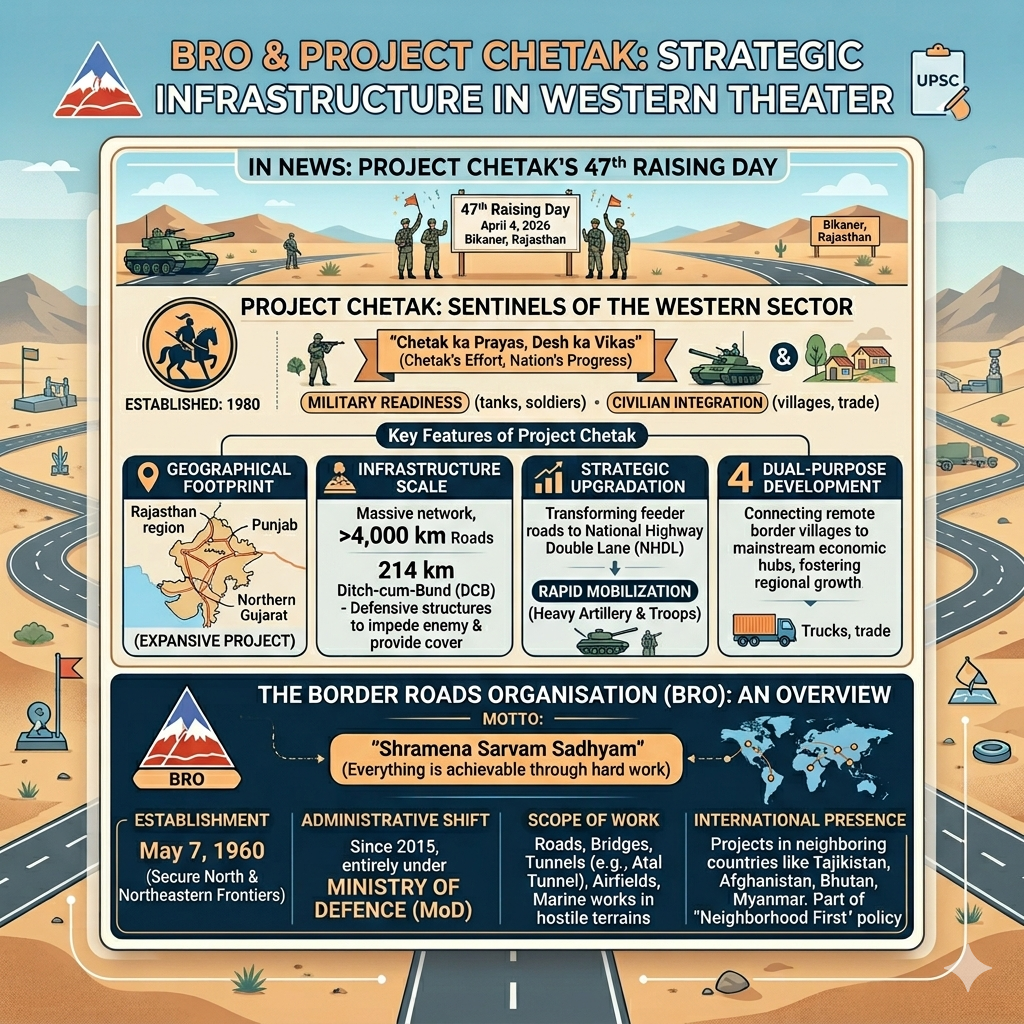
- 07 Apr 2026
In News:
The Border Roads Organisation (BRO) recently commemorated the 47th Raising Day of Project Chetak on April 4, 2026, in Bikaner, Rajasthan.
Project Chetak: Sentinels of the Western Sector
Established in 1980, Project Chetak is a cornerstone of India’s strategic infrastructure in the western theater. Operating under the motto "Chetak ka Prayas, Desh ka Vikas" (Chetak’s Effort, Nation’s Progress), the project is essential for both military readiness and civilian integration.
Key Features and Strategic Reach
- Geographical Footprint: It is one of the BRO’s most expansive projects, overseeing infrastructure in Rajasthan, Punjab, and Northern Gujarat.
- Infrastructure Scale: The project manages a massive network exceeding 4,000 km of roads and 214 km of Ditch-cum-Bund (DCB)—defensive structures designed to impede enemy movement while providing cover for Indian forces.
- Strategic Upgradation: A primary focus remains the conversion of vital feeder roads leading to the International Border into National Highway Double Lane (NHDL) specifications, ensuring rapid mobilization of heavy artillery and troops.
- Dual-Purpose Development: While its primary role is supporting the Indian Armed Forces, the project bridges the gap between remote border villages and mainstream economic hubs, fostering regional development.
The Border Roads Organisation (BRO): An Overview
The BRO serves as a premier construction executive force, specializing in the world's most hostile terrains.
- Establishment: Formed on May 7, 1960, to secure India's north and northeastern frontiers.
- Administrative Shift: Originally working under various ministries, the BRO was brought entirely under the Ministry of Defence (MoD) in 2015 to streamline strategic projects.
- Scope of Work: Its expertise extends beyond roads to include bridges, tunnels (e.g., Atal Tunnel), airfields, and marine works.
- International Presence: The BRO also executes projects in friendly neighboring countries (e.g., Tajikistan, Afghanistan, Bhutan, and Myanmar), serving as a tool for India’s "Neighborhood First" policy.
- Motto: “Shramena Sarvam Sadhyam” (Everything is achievable through hard work).
Coal Gasification Incentive Scheme
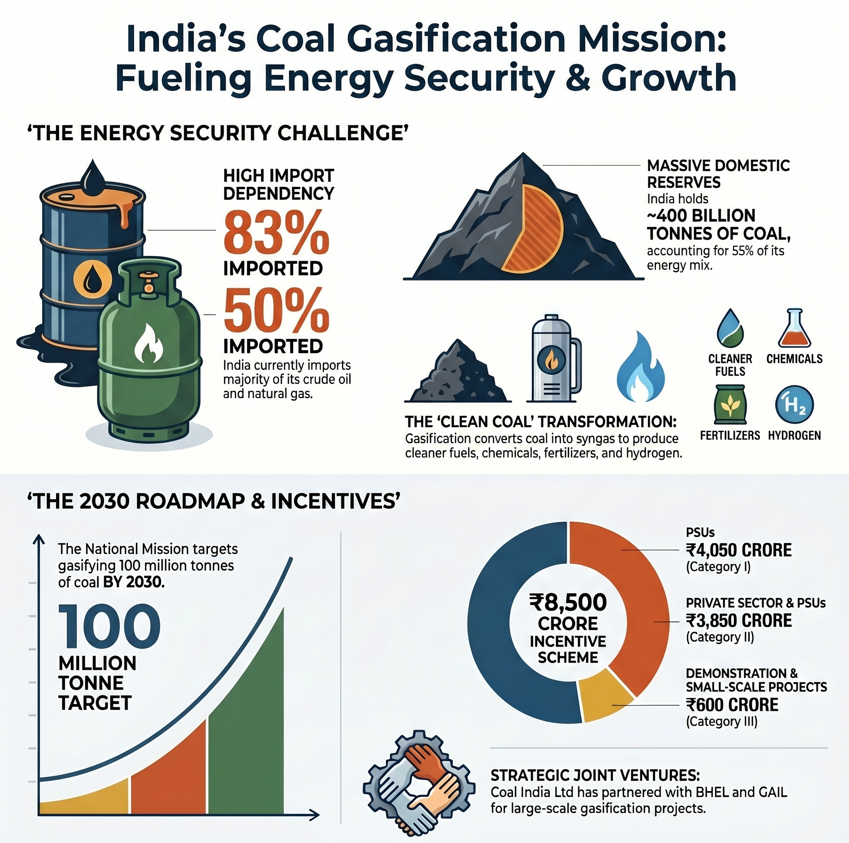
- 07 Apr 2026
In News:
India has unveiled an ambitious roadmap to reduce its dependency on imported petroleum, ammonia, and fertilizers through the promotion of coal gasification technology.
Overview and Objectives
- Approved by the Union Cabinet, the Coal Gasification Incentive Scheme allocates ?8,500 crore to promote coal and lignite gasification projects involving both public sector undertakings (PSUs) and private players.
- The scheme's primary target is to achieve 100 million tonnes of coal gasification by 2030, positioning it as a key component of India's clean coal transition strategy.
Project Categories
The scheme classifies projects into three categories:
|
Category |
Deion |
|
Category I |
PSU-led projects |
|
Category II |
Private sector and PSU joint projects |
|
Category III |
Demonstration and small-scale projects |
This tiered structure encourages participation across the spectrum—from large-scale industrial ventures to pilot projects that test emerging technologies.
Understanding Coal Gasification
The Process
Coal gasification is a thermo-chemical process that converts coal into syngas (synthetic gas), composed primarily of:
- Carbon monoxide (CO)
- Hydrogen (H?)
- Carbon dioxide (CO?)
- Methane (CH?)
- Water vapour (H?O)
The process involves reacting coal at high temperatures (1000–1400°C) with controlled amounts of oxygen and steam.
Steps in Coal Gasification
- Preparation — Coal is finely crushed to increase surface area for efficient reaction
- Gasification reactor — Powdered coal enters a reactor with limited oxygen/air and steam
- Chemical reactions — Partial oxidation breaks coal down into syngas components
- Gas cleaning — Impurities such as tar, sulfur, and dust are removed from raw syngas
Strategic Significance for India
Energy Security
By leveraging domestic coal reserves, India can substantially reduce its reliance on imported petroleum and related products, insulating the economy from global price volatility and supply disruptions.
Industrial Applications
The syngas produced through coal gasification serves as feedstock for manufacturing:
- Ammonia and fertilizers
- Methanol and synthetic fuels
- Chemicals and petrochemical intermediates
This diversification supports the broader goal of Atmanirbhar Bharat in critical industrial sectors.
Environmental Considerations
While coal gasification is positioned within the "clean coal" framework, it represents an incremental improvement over direct coal combustion. The technology enables:
- More efficient capture of pollutants during gas cleaning
- Potential integration with carbon capture technologies
- Controlled emissions compared to conventional coal use
Transitioning from LPG to PNG
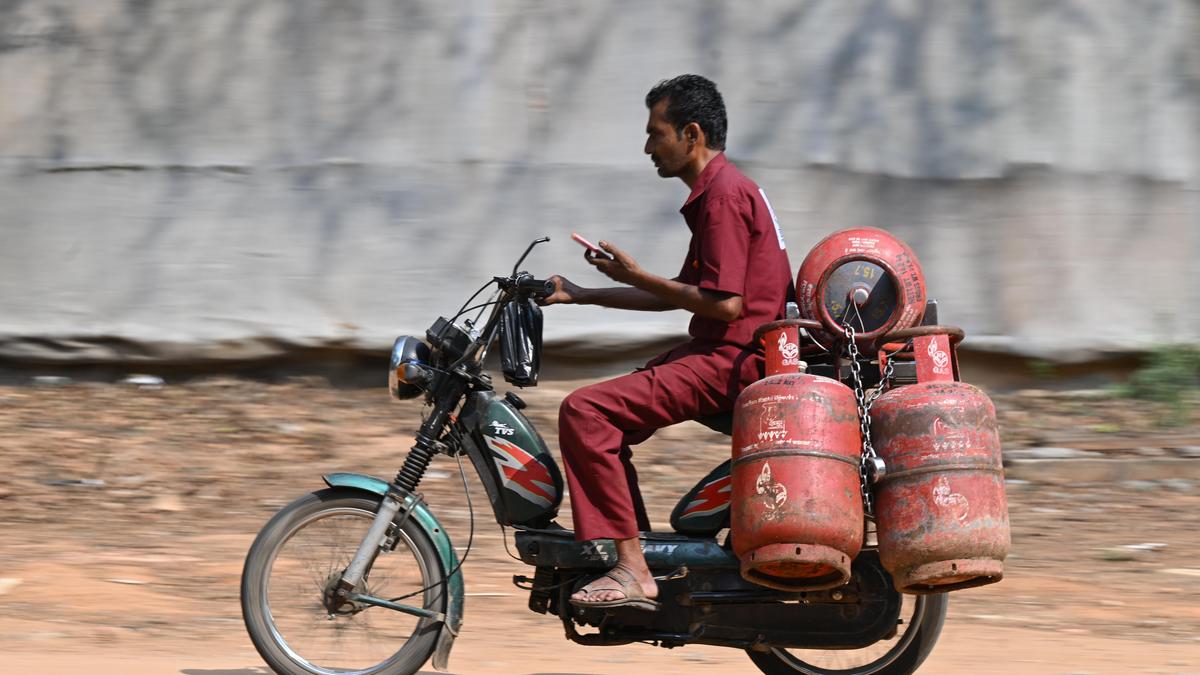
- 05 Apr 2026
In News:
India is currently witnessing a significant strategic shift in its domestic energy landscape, moving from the traditional Liquefied Petroleum Gas (LPG) cylinders to a Piped Natural Gas (PNG) network. While LPG has been the backbone of Indian kitchens for decades, recent geopolitical vulnerabilitiesmost notably the potential blockade of the Strait of Hormuzhave exposed the fragility of India's LPG supply chain, prompting the government to accelerate the "Piped Gas" mission.
Comparative Analysis: LPG vs. PNG
|
Feature |
Liquefied Petroleum Gas (LPG) |
Piped Natural Gas (PNG) |
|
Composition |
Primarily Propane and Butane. |
Primarily Methane. |
|
Physical State |
Liquefied under moderate pressure; heavier than air (settles on the floor during leaks). |
Gaseous at low pressure; lighter than air (disperses quickly if leaked). |
|
Logistics |
Distributed via pressurized cylinders; involves bottling plants and manual delivery. |
Distributed via a reticulated pipeline network (City Gas Distribution). |
|
Supply |
Requires periodic booking and physical delivery. |
Uninterrupted 24/7 supply, similar to water or electricity. |
|
Energy Value |
Higher calorific value (heats faster). |
More efficient for continuous flow; requires nozzle retrofitting for LPG stoves. |
Evolution of Domestic Cooking Fuel in India
- The LPG Journey: Introduced in 1955 in Mumbai by Burmah Shell, organized distribution began in 1965 with Indian Oil's Indane. The Pradhan Mantri Ujjwala Yojana (PMUY), launched in 2016 from Ballia, was a major milestone that scaled LPG access to nearly 33 crore connections, focusing on women’s health and rural empowerment.
- The PNG Pioneer:Vadodara became the first Indian city to implement a city-wide PNG network in the 1970s. Despite this early start, PNG penetration currently stands at only 1.5 crore connections.
- Future Targets: The government aims to expand PNG reach to 12 crore connections by 2034, potentially replacing a massive portion of the LPG market.
The Strategic Imperative: Import Dependence and Geopolitics
The push for PNG is largely driven by the need for Strategic Autonomy in energy:
- Supply Chain Vulnerability: India imports approximately 60% of its LPG. Crucially, 90% of these imports pass through the Strait of Hormuz. Recent regional instabilities have made this maritime chokepoint a major risk factor for India’s energy security.
- Domestic Production: Unlike LPG, where India remains heavily import-dependent, the country has significant domestic natural gas potential. Major contributors include the Krishna-Godavari (KG) Basin (the largest contributor), alongside fields in Assam and Tripura.
- Efficiency and Cost: While domestic LPG production has increased by 25% due to government measures, PNG offers a more cost-effective long-term solution by eliminating the heavy logistics costs (transportation and bottling) associated with cylinders.
Forms of Natural Gas: A Logistical Spectrum
Natural gas is utilized in various forms to suit different transportation and industrial needs:
- CNG (Compressed Natural Gas): Methane compressed to less than 1% of its volume. It is primarily used as a green fuel for the transportation sector (cars, buses).
- LNG (Liquefied Natural Gas): Natural gas cooled to -162°C, turning it into a liquid. This form is essential for long-distance trans-oceanic transport via specialized tankers before being regasified at terminals for pipeline distribution.
- PNG (Piped Natural Gas): The gaseous form delivered directly to the end-consumer (domestic or industrial) via pipelines.
Qdenga Vaccine for Dengue
- 05 Apr 2026
In News:
In a watershed moment for India's public health, the Drugs Controller General of India (DCGI), following a recommendation from the Subject Expert Committee (SEC), has approved Takeda's TAK-003 (brand name Qdenga). This marks India’s transition from a reactive model of vector control (fogging and sanitation) to a proactive, preventive immunization strategy against one of the world's most widespread mosquito-borne diseases.
Understanding Qdenga (TAK-003)
Qdenga is a live-attenuated tetravalent vaccine designed to protect against all four serotypes of the dengue virus (DENV-1, DENV-2, DENV-3, and DENV-4).
- Target Group: Approved for individuals aged 4 to 60 years.
- Scientific Backbone: The vaccine uses a weakened DENV-2 virus as its genetic skeleton, with surface proteins from the other three serotypes engineered into it.
- Administration: It is a two-dose regimen administered three months apart.
- A Major Advantage: Unlike the earlier vaccine Dengvaxia, Qdenga does not require pre-vaccination screening for prior infection. It can be safely administered to both "seropositive" (previously infected) and "seronegative" (never infected) individuals.
Clinical Significance and Limitations
While the approval is a historic milestone, health experts emphasize that the vaccine is a disease-modifying tool, not a "silver bullet."
- Efficacy Disparity: While highly effective against DENV-2 (due to its genetic backbone), its efficacy against DENV-3 and DENV-4 is significantly lower, especially in people who have never had dengue before.
- Severity vs. Infection: TAK-003 is primarily designed to reduce clinical severity, hospitalization, and death. It does not necessarily prevent a person from getting infected or eliminate the possibility of outbreaks.
- Shifting Epidemiology: In India, the prevalence of serotypes varies by region. Recent data shows a rise in DENV-3 (now contributing 20–30% of cases), which could potentially limit the vaccine's overall impact on the population level.
Challenges to Universal Rollout
For the vaccine to be integrated into India’s Universal Immunization Programme (UIP), several hurdles must be cleared:
- Affordability: The estimated cost of the full two-dose course is between ?6,000 and ?12,000. This poses a major barrier for low-income and rural populations without government subsidies.
- Real-world Data: The SEC has mandated post-marketing studies to track the vaccine's effectiveness across India’s diverse geographical regions and serotype patterns.
- Supply Chain: Maintaining the cold chain for a live-attenuated vaccine remains a logistical challenge in India's hotter climates.
The Indigenous Pipeline: "DengiAll"
While Qdenga provides an immediate solution, India is betting on domestic innovation for long-term sustainability. The Indian Council of Medical Research (ICMR) and Panacea Biotec are developing DengiAll.
- Status: Currently in Phase III clinical trials involving over 10,000 participants across 19 sites.
- Advantage: It aims for a more balanced immune response across all four serotypes and is being developed specifically for the Indian epidemiological context.
- Timeline: If successful, it could be available by 2027, potentially as a more affordable, single-dose alternative.
E20 Petrol

- 05 Apr 2026
In News:
India achieved a landmark in its energy transition by mandating the nationwide rollout of E20 petrol (20% ethanol blended with 80% petrol). Originally set for 2030, this target was advanced by five years through the National Biofuel Policy (revised 2022), underscoring India's urgency in tackling climate change and energy vulnerability.
As of April 2026, E20 has become the standard fuel available at gas stations across all states and Union Territories, marking the successful completion of one of the fastest fuel transitions in global history.
The Science and Composition of E20
E20 fuel is a sophisticated blend designed to optimize engine performance while utilizing renewable resources.
- Feedstock and Production: Ethanol is a 1G (first-generation) biofuel derived primarily from sugarcane, maize, and agricultural residues like damaged food grains and surplus rice. It is produced through fermentation and distillation processes.
- Octane Rating: One of the most significant technical upgrades is the shift in Research Octane Number (RON). While regular petrol typically ranges between 91–92 RON, E20 petrol carries a minimum rating of 95 RON.
- Performance: Higher octane levels prevent "engine knocking" (pre-ignition), leading to smoother combustion and better performance in high-compression modern engines.
Significance for India’s Strategic Interests
The E20 mandate serves three core pillars of national development:
1. Energy Security and Forex Savings
India currently imports over 85% of its crude oil requirements. By substituting 20% of petrol with domestically produced ethanol, India has saved more than ?1.36 lakh crore in foreign exchange (as of 2025). This reduces vulnerability to global supply shocks, such as those caused by ongoing geopolitical tensions in West Asia.
2. Strengthening the Agrarian Economy
The Ethanol Blended Petrol (EBP) Programme creates a "Waste-to-Wealth" circular economy:
- Direct Income: Between 2020 and 2025, the policy injected approximately ?45,000 crore into rural incomes, benefiting over 5 million sugarcane farmers and maize growers.
- Stabilizing Sugar Industry: By diverting surplus sugar to ethanol, mills can clear arrears to farmers more efficiently, preventing price crashes during bumper harvests.
3. Climate Commitments (NDCs)
Aligned with the Paris Agreement, the E20 shift has avoided approximately 700 lakh tonnes of $CO_2$ emissions. Ethanol carries more oxygen in its molecular structure, resulting in a cleaner burn that reduces carbon monoxide (CO) by nearly 30-50% and particulate matter by 15% compared to unblended petrol.
Vehicle Compatibility and Consumer Concerns
With the rollout, a key concern for the public is the compatibility of existing vehicle fleets.
- Post-2023 Vehicles: Most vehicles manufactured after April 2023 are designed to be E20-compliant (materially compatible with ethanol’s corrosive nature).
- Older Vehicles: Vehicles manufactured before 2023 can run on E20 but may experience a slight drop in fuel efficiency (estimated at 3-7%) because ethanol has a lower energy density than petrol.
- Corrosion Risks: Ethanol is hygroscopic (absorbs moisture), which can lead to rust in older steel tanks and the degradation of rubber hoses or plastic seals in non-compliant engines.
Institutional Framework and Policy Support
The transition is governed by a robust inter-ministerial mechanism:
- Nodal Agencies: Jointly implemented by the Ministry of Petroleum and Natural Gas (MoPNG) and the Bureau of Indian Standards (BIS) to ensure fuel quality.
- Incentives: The government reduced the GST on ethanol from 18% to 5% and introduced Interest Subvention Schemes to help set up distilleries.
- LTOAs: Oil Marketing Companies (OMCs) signed Long-Term Offtake Agreements to provide market certainty for ethanol producers.
Earthquake Lights

- 05 Apr 2026
In News:
Recent seismic activity in the Aegean Sea (late March to early April 2026), affecting parts of Turkey and Greece, has brought global attention to a rare atmospheric phenomenon known as Earthquake Lights (EQL).
What are Earthquake Lights?
Earthquake Lights are luminous atmospheric displays that appear in various forms—flashes, streaks, balls, or tall iridescent pillars. They can manifest before, during, or shortly after an earthquake.
- Forms: Luminous spheres, vertical beams, sheet lightning, or steady glows.
- Colors: Often pale blue (attributed to Rayleigh Scattering) but can include red, green, or white hues.
- Heat: These are "cold" lights; they produce visible plasma but no fire or heat.
The Science of Formation: From Tectonic Stress to Plasma
While scientists have debated the exact physical mechanisms for centuries, the most widely accepted theory involves the release of electrical energy from the Earth's crust:
- Lithospheric Stress: During an earthquake, tectonic plates grind together, exerting immense pressure on rocksparticularly those rich in quartz or igneous minerals.
- Activation of "P-Holes": This stress activates "p-holes" (charge carriers/positive holes). The rocks act like a natural battery, generating high-voltage electric charges.
- Upward Propagation: These charges travel rapidly toward the surface through geological conduits, specifically straight, vertical faults common in rift zones.
- Atmospheric Ionization: Upon reaching the surface, the charges interact with air molecules, stripping away electrons and ionizing the air.
- Plasma Discharge: This ionization creates a glowing plasma discharge in the atmosphere, similar to the gas in a neon sign or the Auroras, though triggered by terrestrial rather than solar energy.
Geological Context and Fault Systems
Research published in Seismological Research Letters highlights that approximately 97% of EQL cases occur in or near rift zone environments.
- Rift Zones: Areas where tectonic plates are pulling apart, creating sub-vertical faults.
- Conduits: These vertical faults act as "high-speed pathways" for electrical pulses to reach the surface.
- Precursors: Because the stress builds up before the actual slip of the fault, EQL can serve as a rare, visible pre-seismic warning signal.
Modern Monitoring and Research
- Satellite Tracking: NASA and the International Union of Radio Science (URSI) now use satellite sensors to track "energetic coupling", the process where electrical potentials from the crust couple with the lower atmosphere and ionosphere.
- Laboratory Verification: Scientists have successfully replicated these electrical effects by squeezing granite and other igneous rocks in controlled lab settings.
Multi-Hazard Early Warning Decision Support System (MHEW-DSS)
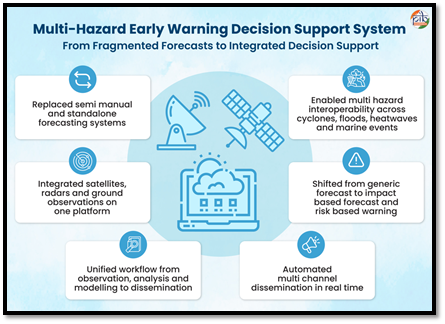
- 05 Apr 2026
In News:
The Multi-Hazard Early Warning Decision Support System (MHEW-DSS) represents a paradigm shift in India’s meteorological capabilities. Developed in-house by the India Meteorological Department (IMD) under the Ministry of Earth Sciences (MoES), it is a flagship digital transformation initiative under Mission Mausam. Launched officially in January 2024, the system transitions India from fragmented, manual forecasting to an integrated, automated, and impact-based warning regime.
Core Objectives and Vision
The primary goal of MHEW-DSS is to build an indigenous, real-time forecasting ecosystem that translates complex scientific data into actionable insights. It aligns with the government’s vision of a "Weather Ready and Climate Smart Nation," encapsulated in the philosophy “Har Har Mausam, Har Ghar Mausam.”
Key Features and Technological Innovations
The MHEW-DSS leverages open-source technology and Geographic Information System (GIS) maps to streamline the forecasting pipeline:
- Automation: Over 90% of weather data collection and quality checks are automated, enabling faster detection of weather systems.
- Enhanced Modeling: The system utilizes more than 95% of Numerical Weather Prediction (NWP) model inputs, a massive leap in data integration.
- Extended Lead Time: Forecast lead time has increased from 5 days to 7 days, providing authorities with a critical window for preparation.
- WAFES Core: The Weather Analysis and Forecast Enabling System (WAFES) serves as the central engine, allowing meteorologists to visualize weather conditions through GIS-based maps and generate real-time alerts.
Economic and Operational Impact
- The implementation of MHEW-DSS has yielded significant tangible benefits across various metrics. It has achieved a 30% improvement in forecast accuracy while reducing the time required to prepare forecasts by 50% (from 6 hours down to 3).
- From a fiscal perspective, the system has saved approximately ?250 crore by eliminating dependence on foreign vendors. Furthermore, the accuracy in predicting cyclone landfall points has reduced evacuation costs to one-third of what they were in 1999. Environmental sustainability is also a key byproduct; the digital workflow saves 23.4 tonnes of paper and approximately 210,240 kWh of electricity annually.
Case Study: Zero Casualty Success
- During Cyclone Biparjoy and Cyclone Dana, the precision of MHEW-DSS enabled timely evacuations, resulting in zero casualties in the affected regions of Gujarat and Odisha.
Sectoral Benefits: Impact-Based Forecasting
The system employs Impact-Based Forecasting, which assesses how weather affects specific socio-economic sectors rather than just predicting rain or wind levels.
- Agriculture: It provides twice-weekly Agromet advisories. Farmers adopting these reports have seen a 52.5% increase in annual income, with potential economic benefits in rain-fed districts estimated at ?13,331 crore.
- Public Health: The system supports Heat Action Plans and aids in predicting vector-borne diseases like Dengue and Malaria by analyzing weather patterns.
- Energy: It optimizes renewable energy planning (Solar/Wind) and protects grid infrastructure from extreme events through early warnings.
- Last-Mile Connectivity (Mausamgram): This hyper-local portal provides location-specific forecasts for over 6.2 lakh villages and 1.5 lakh pin codes, ensuring the most remote citizens are reached.
Institutional Framework
The MHEW-DSS ecosystem is supported by three major pillars:
- Ministry of Earth Sciences (MoES): The nodal ministry providing administrative and scientific oversight.
- India Meteorological Department (IMD): The operational lead responsible for data generation and dissemination.
- Mission Mausam: The strategic umbrella (approved Sept 2024) that funds and guides the enhancement of observation networks, data assimilation, and modeling.
Antariksh Venture Capital Fund
- 04 Apr 2026
In News:
Recently, the Union Minister announced that India’s dedicated Antariksh Venture Capital Fund has achieved steady progress, with the deployment of capital into selected startups scheduled to commence in the first quarter of FY2027. This initiative marks a strategic shift from a purely state-led space program to a vibrant, public-private partnership model, aimed at capturing a larger share of the global space economy.
The Antariksh Venture Capital Fund: Financial Architecture
The fund is designed to bridge the "valley of death" for capital-intensive space startups by providing stable, long-term equity.
- Regulatory Structure: It is a close-ended fund registered with the Securities and Exchange Board of India (SEBI) as a Category II Alternative Investment Fund (AIF).
- Key Stakeholders:
- Investor: The Indian National Space Promotion and Authorization Centre (IN-SPACe), under the Department of Space.
- Sponsor: The fund is sponsored by SIDBI Venture Capital Limited, leveraging SIDBI’s expertise in managing professional investment vehicles.
- Investment Mandate: The fund exclusively targets Indian companies operating in the space sector. Crucially, it focuses on firms with a Technology Readiness Level (TRL) of 4 and above, ensuring that investments are directed toward proven concepts moving toward commercialization.
IN-SPACe: The Institutional Catalyst
The Indian National Space Promotion and Authorization Centre (IN-SPACe)serves as the backbone of these reforms. Established as a single-window, independent nodal agency, it functions autonomously under the Department of Space (DOS).
Core Functions:
- Authorization & Supervision: It authorizes and oversees the activities of Non-Governmental Entities (NGEs), including the construction of launch vehicles and satellites.
- Infrastructure Sharing: It facilitates the use of ISRO’s world-class infrastructure and premises by private players.
- Interface Role: Acts as a bridge between the technical expertise of ISRO and the commercial agility of NGEs to optimize India's space resources.
Organizational Structure: The agency operates through three specialized directorates:
- Promotion Directorate (PD): Focused on market development and startup handholding.
- Technical Directorate (TD): Handles the technical vetting and support of private projects.
- Program Management and Authorization Directorate (PMAD): Manages the regulatory and licensing aspects.
Strategic Objectives: Beyond Just Capital
The Antariksh Fund is not merely a financial tool; it is a strategic instrument for Aatmanirbhar Bharat:
- Scaling Operations: It provides the "patient capital" required for startups to transition from prototypes to industrial-scale production.
- Commercialization: Supports the market entry of indigenous technologies like small satellite launch vehicles (SSLVs) and satellite-based internet services.
- Global Ambitions: Aims to increase India’s share in the global space market (currently ~2%) by empowering domestic companies to compete internationally.
Samrat Samprati
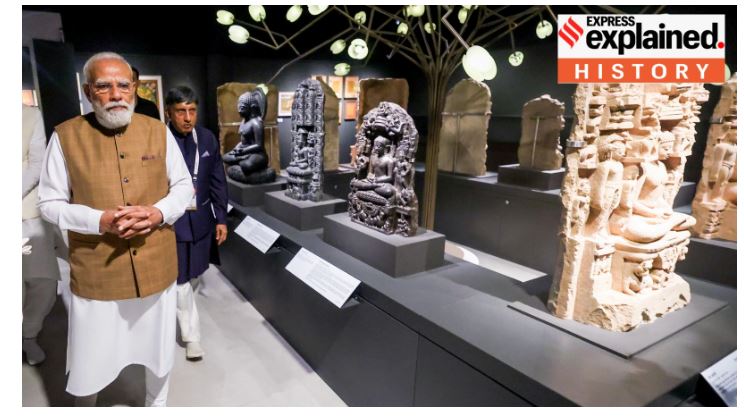
- 04 Apr 2026
In News:
Recently, the Prime Minister of India inaugurated the Samrat Samprati Museum in Gujarat. This developmental milestone, alongside the launch of high-tech semiconductor facilities, highlights a dual focus on India’s "Vikas" (Development) and "Virasat" (Heritage). The museum serves to institutionalize the legacy of a Mauryan ruler often overshadowed by his grandfather, Samrat Ashoka, yet pivotal to the religious geography of ancient India.
Samrat Samprati: The 'Jain Ashoka' (224–215 BC)
Samrat Samprati was the grandson of the Mauryan Emperor Ashoka. While Ashoka is synonymous with the global spread of Buddhism, Samprati is revered for his unparalleled contribution to the expansion of Jainism.
- Historical Identity: In various historical and literary records, he is referred to by names such as Indrapalit, Sangat, and Vigatashok.
- Literary Sources: Detailed accounts of his life and administration are found in prominent Jain ures, including the ‘Sampratikatha’, Hemachandra’s ‘Parishistaparva’, and the ‘Prabhavakcharita’.
- Cultural Expansion: Samprati’s influence was not limited to the Indian subcontinent. Historical traditions suggest he established centers of Jain culture as far west as Iran and Arab countries, marking an early instance of Indian cultural diplomacy.
- Architectural Legacy: Much like Ashoka’s pillars and stupas, Samprati is credited with building thousands of Jain temples across Western and Southern India, earning him the title of the "Jain Ashoka."
Foundational Tenets of Jainism (Sramana Tradition)
To understand Samprati’s patronage, it is essential to analyze the Sramanic roots of Jainism—a tradition that emphasizes asceticism and individual effort over ritualistic orthodoxy.
- The Tirthankara Lineage: Jainism is guided by twenty-four Tirthankaras (Ford-makers), who are believed to have established a path across the ocean of rebirth. While Vardhamana Mahavira was the 24th and most prominent teacher, the religion views its wisdom as eternal and handed down through this lineage.
- The Goal of Liberation: The central objective of Jainism is the attainment of Moksha (Nirvana)—liberation from the cycle of birth and death.
The Triple Gems and Ethical Vows
Jainism prescribes a rigorous ethical code categorized into principles for spiritual progress and rules for daily conduct.
The Triratna (Three Jewels): According to Jainism, liberation is achieved through the harmony of:
- Samyakdarshana (Right Faith): Conviction in the truth of the teachings.
- Samyakjnana (Right Knowledge): Clear and precise understanding of reality.
- Samyakcharita (Right Action): Implementing truth through ethical conduct.
The Panchamahavratas (Five Great Vows): These are the strict ethical guidelines followed by Jain monks (and in a modified form by laypeople):
- Ahimsa: Non-violence (the cornerstone of Samprati’s administration).
- Satya: Truthfulness.
- Asteya: Non-stealing.
- Aparigraha: Non-attachment/Non-hoarding.
- Brahmacharya: Celibacy/Chastity.
Rice's Whale
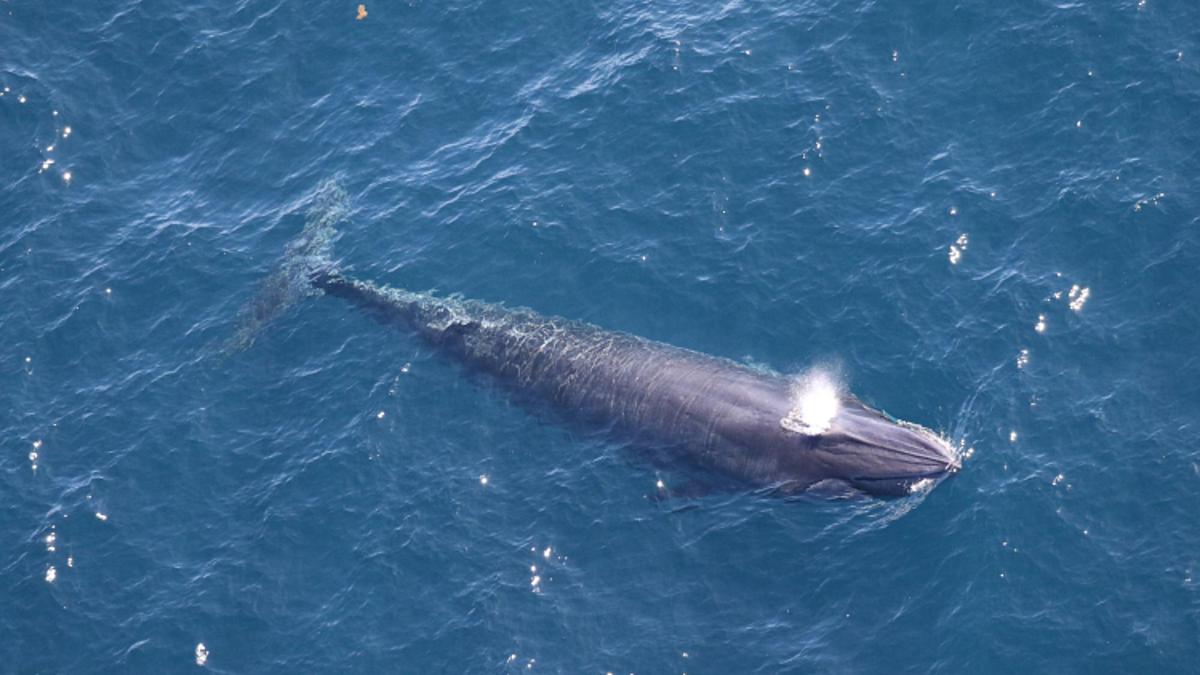
- 04 Apr 2026
In News:
Scientists fear that the USA administration's plan to expand oil drilling in the Gulf of Mexico will push Rice's Whales to extinction.
Biological Profile: The Rice’s Whale (Balaenoptera ricei)
Recognized as a distinct species only in 2021, the Rice’s whale is an evolutionary marvel unique to the waters of North America.
- Taxonomy: Member of the baleen whale family (Balaenopteridae). It was previously misclassified as a sub-population of the Bryde’s whale but was found to be genetically and morphologically distinct.
- Distinctive Features:
- Identified by three prominent ridges in front of the blowhole.
- Medium-sized body (up to 41 feet), uniformly dark gray on top with a pale to pinkish belly.
- Endemic Distribution: It is the only whale species that resides year-round in the Gulf of Mexico (often referred to in conservation texts as the Gulf of America). They are typically found in a narrow "core habitat" at depths of 100–400 meters in the northeastern Gulf.
- Diet and Reproduction: They primarily consume silver-rag driftfish and reach sexual maturity late (age 9), reproducing only once every 2 to 3 years, which makes population recovery exceptionally slow.
Major Threats to Survival
The Rice's whale faces a "polycrisis" of anthropogenic threats:
- Oil Spills: The species never fully recovered from the 2010 Deepwater Horizon spill, which contaminated nearly 50% of its habitat and caused a 22% population decline.
- Noise Pollution: Seismic airgun blasting for oil exploration interferes with the whales' low-frequency communication and echolocation, disrupting their ability to find food.
- Vessel Strikes: Because these whales often rest near the surface at night, they are highly susceptible to being struck by high-speed industrial ships.
- Climate Change: Rising sea temperatures affect the distribution of their specialized prey, potentially forcing the whales out of protected areas into busier shipping lanes.
Conservation Status and International Protections
- IUCN Red List: Critically Endangered.
- ESA (USA): Listed as Endangered (though current exemptions threaten this status).
- CITES: Listed under Appendix I (the highest level of protection, prohibiting international trade).
- MMPA (USA): Classified as "Depleted" under the Marine Mammal Protection Act.
Survey Vessel Sanshodhak
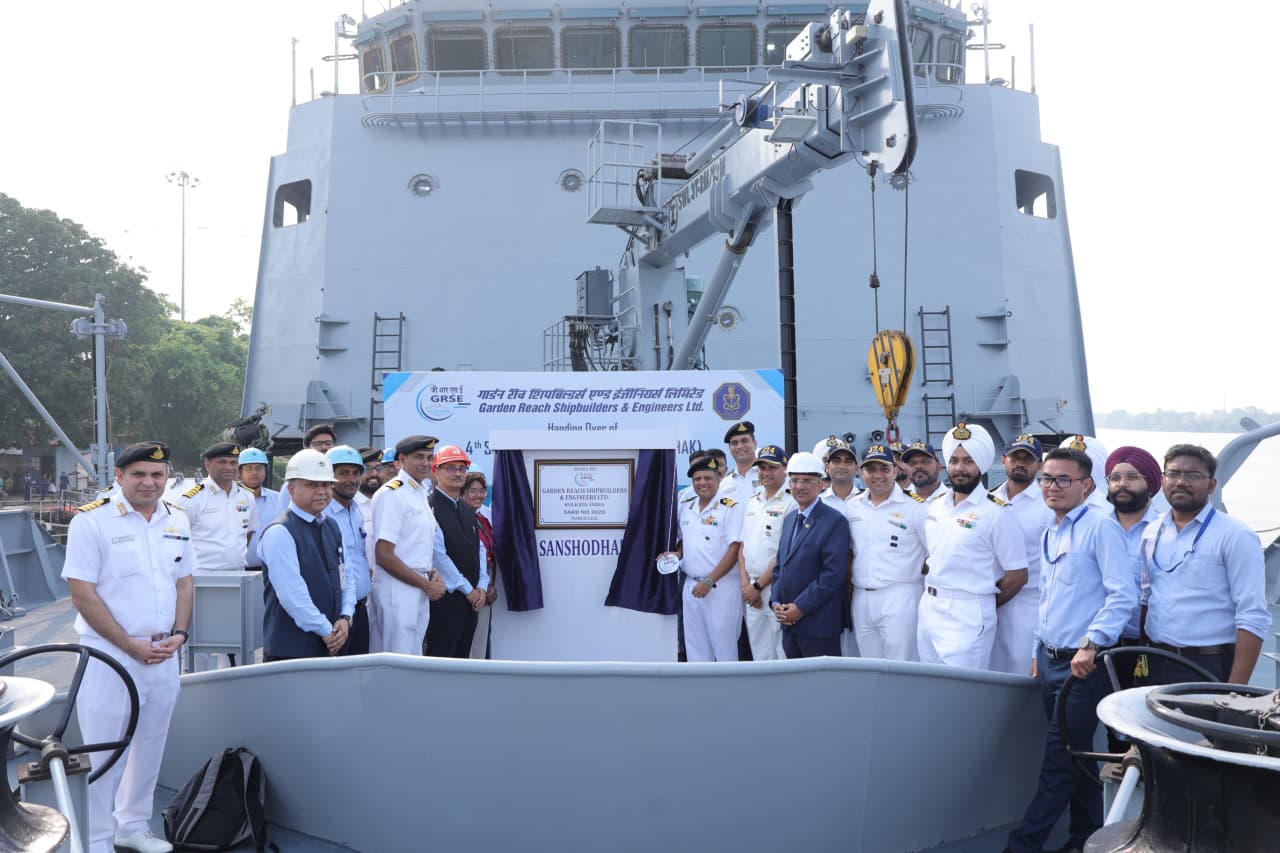
- 04 Apr 2026
In News:
In a significant boost to India’s maritime survey capabilities, the Indian Navy has officially received ‘Sanshodhak’ (Yard 3028), the fourth and final vessel of the Survey Vessel (Large) (SVL) project. This delivery marks the successful completion of a strategic shipbuilding program designed to replace aging platforms with state-of-the-art indigenous technology, reinforcing India's commitment to Aatmanirbhar Bharat.
The SVL Project: Evolution and Fleet
The SVL project was initiated through a contract signed in October 2018 between the Ministry of Defence and Garden Reach Shipbuilders and Engineers (GRSE), Kolkata. The project aimed to modernize the Navy's hydrographic fleet by constructing four large-scale survey ships.
- The Fleet Composition: Sanshodhak joins its three sister ships—INS Sandhayak, INS Nirdeshak, and INS Ikshak, to provide the Navy with a complete quartet of modern survey platforms.
- Etymology: The name ‘Sanshodhak’ translates to ‘Researcher’, a title that reflects the ship's primary function as a high-tech platform for underwater data collection and oceanographic analysis.
Technical Specifications and Indigenization
Designed by the Indian Navy’s Warship Design Bureau, the ship stands as a symbol of domestic engineering prowess.
- Dimensions and Displacement: The vessel measures 110 meters in length and has a displacement of approximately 3,400 tons.
- Propulsion and Speed: It is powered by two diesel engines, enabling the ship to reach speeds in excess of 18 knots.
- Indigenous Content: A standout feature for governance and economy modules is that the ship boasts over 80% indigenous content by cost. This involved collaboration with a vast network of Indian industries and MSMEs, stimulating the domestic defense-industrial ecosystem.
Advanced Capabilities: The "Eyes" of the Ocean
Sanshodhak is equipped with a sophisticated suite of sensors and equipment to map the depths of the Indian Ocean Region (IOR).
- Autonomous Systems: It carries Autonomous Underwater Vehicles (AUVs) and Remotely Operated Vehicles (ROVs), allowing for deep-sea exploration without putting divers at risk.
- Sonar and Imaging: The vessel features Digital Side Scan Sonar for high-resolution underwater imaging and a comprehensive Data Acquisition and Processing System to analyze geophysical data in real-time.
- Positioning: High-precision DGPS long-range positioning systems ensure the vessel can map the seabed with centimeter-level accuracy.
Strategic and Civil Applications
The data collected by Sanshodhak serves a dual-purpose, making it a vital asset for both national security and economic development.
- Hydrographic Surveys: It performs full-scale surveys of coastal and deep-water regions, specifically targeting port and harbor approaches.
- Navigational Safety: By determining critical navigational channels, the ship ensures safe passage for both naval warships and commercial merchant vessels.
- Oceanographic Research: It gathers vital oceanographic and geophysical data essential for understanding climate change, marine biology, and underwater topography.
- Defense and Civil Synergy: While the data is used for naval operations, it is also utilized for maritime trade, environmental research, and supporting the Blue Economy.
GLP-1 Drugs
- 04 Apr 2026
In News:
The Indian government intensified its oversight of the pharmaceutical market following a surge in the availability of Glucagon-like peptide-1 (GLP-1) receptor agonists. Originally expensive, patented drugs, the recent expiration of key patents (like Semaglutide) has led to a flood of affordable generic versions. While this democratizes treatment for chronic conditions, it has also triggered a "quiet frenzy" of off-label use for rapid weight loss, prompting the Central Drugs Standard Control Organisation (CDSCO) to conduct nationwide inspections across 49 businesses.
What are GLP-1 Drugs?
GLP-1 receptor agonists are a class of medications that mimic a natural hormone produced in the intestines.
- Mechanism of Action:
- Insulin Stimulation: They signal the pancreas to release insulin and suppress glucagon in response to rising blood glucose levels.
- Appetite Regulation: They target the brain’s hypothalamus to regulate satiety (the feeling of fullness).
- Gastric Emptying: They slow down the movement of food through the stomach, prolonging the sensation of satiety.
- Primary Indications: Developed originally by global giants like Novo Nordisk and Eli Lilly, these are FDA and CDSCO-approved for Type 2 Diabetes mellitus and the medical management of chronic obesity.
- Key Molecules: Semaglutide (oral/injectable), Liraglutide, Tirzepatide, and Dulaglutide.
The "Generic Boom" and Economic Impact
The Indian market for obesity drugs is projected to grow from ?1,500 crore to ?8,000 crore by 2030.
- Price Crash: Leading Indian firms have slashed prices significantlysome by over 50%to as low as ?3,999 per month.
- Market Dynamics: The expiration of patent protection has allowed domestic manufacturers to launch biosimilars and generics, making India a global hub for these "lifestyle-altering" medications.
Regulatory Framework and Government Response
Due to the high risk of misuse, the Government of India has classified these as Preion-Only Medicines.
- Authorized Prescribers: To prevent indiscriminate use, only Endocrinologists, Internal Medicine Specialists, and Cardiologists are authorized to prescribe these drugs.
- Central and State Coordination: The Drug Controller General of India (DCGI), in collaboration with State Drug Controllers, has implemented a three-pronged strategy:
- Nationwide Audits: Inspections of online pharmacy warehouses, drug wholesalers, and wellness clinics to check for sales without valid preions.
- Ban on Surrogate Advertising: On March 10, 2026, the CDSCO issued a comprehensive advisory prohibiting indirect promotion and misleading advertisements that frame these as "quick-fix" cosmetic solutions.
- Post-Marketing Surveillance: The Indian Pharmacopoeia Commission (IPC) has been tasked with compiling bi-monthly reports on "Adverse Events" to monitor long-term safety.
Public Health Risks: Misuse and Side Effects
The trend of viewing GLP-1 drugs as "lifestyle products" rather than clinical medication has raised alarms among the medical fraternity (including the Indian Medical Association).
- Common Side Effects: Nausea, vomiting, diarrhea, and constipation.
- Severe Complications: Rare but serious risks include pancreatitis, kidney injury, gallbladder disease, and delayed gastric emptying (gastroparesis).
- "Ozempic Face": Rapid weight loss leading to facial fat depletion and skin sagging.
- Rebound Effect: Without supervised lifestyle changes, patients often face "rebound weight gain" immediately after discontinuation.
Nyaya Setu AI Chatbot
- 03 Apr 2026
In News:
In March 2026, the Vice-President of India, along with the Minister of Law and Justice, unveiled the Nyaya Setu AI Chatbot and its mascot, Dishika, during a national consultation for the DISHA programme. This initiative is designed to democratize legal information, ensuring that geographical, linguistic, and literacy barriers do not impede a citizen's access to the justice system.
Understanding Nyaya Setu: The AI Legal Bridge
Nyaya Setu is a voice-first, multimodal, and multilingual AI assistant. It acts as a digital intermediary that translates complex legal jargon and procedures into simplified, actionable guidance for the common man.
- Development: The platform is a turnkey implementation built and owned by the Digital India BHASHINI Division (DIBD) under the Ministry of Electronics and Information Technology (MeitY).
- The AI Stack: It utilizes an integrated end-to-end voice stack, featuring:
- BHASHINI ASR (Automatic Speech Recognition): To understand diverse Indian accents and spoken queries.
- Natural Language Processing (NLP): To provide context-aware, conversational responses.
- Legal Guardrails: The AI is specifically trained on the Bharatiya Nyaya Sanhita (BNS) and other legal frameworks to ensure responses are legally accurate and safe.
Key Features of the Chatbot
- Linguistic Inclusivity: Supports 36 text languages and 23 voice languages, including complex tribal dialects, catering to India’s diverse demographic.
- User-Centric Design: By prioritizing voice interactions, it assists those who may struggle with formal literacy or digital navigation.
- Scale and Speed: Managed by the National Hub for Language Technology (NHLT), it is capable of processing millions of inferences daily, providing real-time legal guidance.
Dishika: The "Friendly" Face of Justice
To make the digital experience less intimidating, the government introduced Dishika, the official mascot of Nyaya Setu.
- Role: Dishika serves as a digital guide, leading users through their legal queries and explaining the "next steps" in a simplified manner.
- Objective: The mascot is a trust-building tool aimed at rural and digitally underserved populations, transforming a cold AI interface into a relatable digital presence.
Integration with the DISHA Programme
Nyaya Setu is a component of the broader DISHA (Designing Innovative Solutions for Holistic Access to Justice) scheme.
- Context: DISHA is a central sector scheme (2021–2026) that consolidates various legal aid initiatives like Tele-Law, Nyaya Bandhu (Pro-bono services), and Legal Literacy programmes.
- Synergy: While Tele-Law connects citizens with lawyers, Nyaya Setu provides immediate, preliminary legal awareness and procedural information, acting as a "pre-litigation" digital tool.
Indian Accounting Standards (Ind AS)
- 03 Apr 2026
In News:
In March 2026, the Insurance Regulatory and Development Authority of India (IRDAI) notified a comprehensive roadmap for the implementation of Indian Accounting Standards (Ind AS) across the insurance sector. Effective from April 1, 2026, this transition marks the end of the traditional Indian GAAP (Generally Accepted Accounting Principles) era for insurers, aligning them with global financial reporting norms
Key Features and Implications of the Ind AS Framework
Indian Accounting Standards (Ind AS) are a set of accounting principles notified by the Ministry of Corporate Affairs (MCA) in 2015. They are largely converged with the International Financial Reporting Standards (IFRS).
The transition to Ind AS is not merely a bookkeeping change but a structural shift in how financial health is perceived in the industry:
- Principle-Based Reporting: Unlike the rigid rules of IGAAP, Ind AS focuses on the economic substance of transactions. This ensures that the financial statements reflect the actual risks and rewards associated with insurance contracts.
- Fair Value Measurement: Ind AS mandates that assets and liabilities be valued at current market rates. This provides a more realistic and "mark-to-market" view of an insurer’s solvency and financial standing.
- Enhanced Disclosures: The new standards require granular transparency regarding risk management, future cash flows, and the assumptions used in calculating insurance liabilities.
- Ind AS 117: This specific standard is the cornerstone of the transition, as it addresses the complexities of insurance contracts, ensuring that profits are recognized as services are provided rather than when premiums are collected.
The Role of IRDAI: Governance and Supervision
The Insurance Regulatory and Development Authority of India (IRDAI) is the statutory and autonomous body responsible for this transition. Established under the IRDAI Act, 1999, it operates under the Ministry of Finance and is headquartered in Hyderabad.
The authority is composed of a Chairman, five full-time members, and four part-time members, all of whom are appointed by the Government of India. Its primary objectives include:
- Protecting Policyholders: Ensuring fair business conduct and the timely settlement of claims.
- Financial Prudence: Monitoring the solvency and stability of insurers to prevent financial collapses.
- Market Regulation: Licensing insurance and reinsurance companies and preventing unscrupulous pricing or unaffordable premiums.
Humpback Whale
- 03 Apr 2026
In News:
In March and April 2026, a 12.35-meter humpback whale drew global attention after becoming repeatedly stranded in the shallow waters of the Baltic Sea (specifically near Poel Island and the Bay of Wismar, Germany). While the whale successfully freed itself three times, its presence in this region underscores a growing ecological anomaly: the Baltic Sea is not a natural habitat for this species due to its low salinity, shallow depth, and lack of adequate food sources.
Species Profile: Megaptera novaeangliae
The Humpback whale is a quintessential "rorqual" (baleen whale) known for its complex vocalizations and acrobatic breaches.
- Scientific Name:Megaptera novaeangliae (derived from Greek for "big-winged," referring to its massive pectoral fins).
- Distinctive Features:
- Bubble-Net Feeding: A sophisticated cooperative behavior where whales create "nets" of air bubbles to trap schooling fish.
- Sexual Dimorphism: Unlike many mammals, females are larger than males to support the energy demands of gestation and nursing.
- Migration: They hold the record for some of the longest mammal migrations, traveling from polar feeding grounds to tropical breeding waters.
The Baltic Stranding: Causes and Concerns
Strandings, particularly in non-native waters like the Baltic, are often "sentinel events" indicating broader environmental issues.
- Disorientation & Acoustic Pollution: Intense underwater noise from shipping, military sonar, or seismic surveys can interfere with a whale's echolocation, leading to "atypical stranding events."
- Climate Change: Warming ocean temperatures and shifting prey (like capelin and krill) can lure whales into treacherous, shallow coastal corridors.
- Physical Threats: During the 2026 Baltic incident, rescuers found and removed fishing nets wrapped around the whale’s body, highlighting the persistent threat of "ghost gear" and entanglement.
Conservation and Legal Framework
The Humpback whale’s status reflects both the success and the ongoing challenges of international maritime law.
|
Parameter |
Status/Details |
|
IUCN Red List |
Least Concern (following a significant recovery since the 1966 commercial whaling ban). |
|
CITES |
Appendix I (prohibits international commercial trade). |
|
CMS |
Included under the Convention on Migratory Species, requiring trans-boundary protection. |
Strengthening the Blue Water Navy
- 03 Apr 2026
In News:
Recently, Garden Reach Shipbuilders and Engineers Ltd (GRSE) achieved a significant milestone by delivering three frontline naval platforms—INS Dunagiri, INS Sanshodhak, and INS Agrayto the Indian Navy in a single day. This achievement brings GRSE’s total warship count to 118, with 80 delivered specifically to the Indian Navy, underscoring the shipyard's role in India's indigenous defense ecosystem.
INS Dunagiri: The Stealth Vanguard (Project 17A)
The INS Dunagiri is the second of three Advanced Stealth Frigates built by GRSE under Project 17A (Nilgiri-class). It is a reincarnation of the erstwhile Leander-class frigate that served from 1977 to 2010.
- Specifications: A 149-meter long, 6,670-tonne vessel.
- Propulsion: Utilizes a Combined Diesel or Gas (CODOG) system for high-speed intercepts and long-endurance patrols.
- Offensive Power: Armed with BrahMos supersonic cruise missiles for precision land and sea strikes.
- Defense & Sensors: Features an Advanced AESA radar and an integrated combat management system (CMS).
- Strategic Role: Designed for multi-dimensional warfare, it can engage threats across air, surface, and sub-surface domains simultaneously.
INS Sanshodhak: The Hydrographic Pioneer (Survey Vessel – Large)
INS Sanshodhak (meaning "Researcher") is the fourth and final vessel in the Survey Vessel (Large) class, replacing the older Sandhayak-class ships.
- Primary Mission: To conduct full-scale hydrographic surveys of ports, harbors, and deep-sea navigation channels.
- Capabilities: Equipped with advanced Autonomous Underwater Vehicles (AUVs) and Remotely Operated Vehicles (ROVs) to collect geophysical and oceanographic data.
- Secondary Roles: Its versatile design allows it to function as a Hospital Ship during Humanitarian Assistance and Disaster Relief (HADR) missions and carry out limited combat roles.
INS Agray: The Littoral Warrior (ASW Shallow Watercraft)
INS Agray is the fifth ship of the Arnala-class, specifically designed for Anti-Submarine Warfare (ASW) in littoral (coastal) waters.
- Indigenous Prowess: Boasts approximately 88% indigenous content, including a GRSE-built 30 mm naval surface gun.
- Weaponry: Features lightweight torpedoes and ASW rockets specifically tuned for shallow-water threats.
- Agility: Powered by waterjet propulsion with a shallow draught of only 2.7 meters, allowing it to operate in coastal areas where larger frigates cannot navigate.
Comparison of Key Features
|
Vessel |
Class/Project |
Primary Role |
Key Technology |
|
INS Dunagiri |
Project 17A Frigate |
Multi-role Combat |
Stealth Design & CODOG |
|
INS Sanshodhak |
Survey Vessel (Large) |
Mapping & HADR |
Hydrographic Data Suite |
|
INS Agray |
ASW SWC |
Coastal Defense |
Waterjet Propulsion |
Census 2027
- 03 Apr 2026
In News:
India is transitioning into a new era of data-driven governance with the 16th Census (8th since Independence). Scheduled to commence its field operations in 2026 and conclude by March 1, 2027, this exercise is not merely a headcount but a structural re-engineering of how India understands its demographic and socio-economic fabric.
Conceptual and Legal Framework
A census is the most credible source of information on demographics (age, sex, literacy), economic activity, and migration.
- Constitutional & Legal Basis: While the Constitution mandates enumeration, the specific timing and periodicity are governed by the Census of India Act, 1948. Notably, the Act does not specify a fixed 10-year interval, though it has historically been decennial.
- Administrative Authority: Conducted by the Office of the Registrar General and Census Commissioner of India (ORGI) under the Ministry of Home Affairs (MHA).
- NPR Integration: The National Population Register (NPR) is conducted alongside the Census but is legally distinct, governed by the Citizenship Act, 1955. Registration in NPR is mandatory for every "usual resident" (one who has resided in a local area for 6 months or more).
Landmark Features of Census 2027
The 2027 exercise introduces three transformative shifts:
- First Fully Digital Census: Moving away from paper schedules, enumerators will use a mobile application (Census HLO/PE App) for real-time data entry.
- Self-Enumeration: A secure web-based portal (se.census.gov.in) will allow citizens to fill their details in 16 scheduled languages before the enumerator’s visit.
- Caste Enumeration: For the first time since 1931, the Census will capture granular data on castes beyond SC/ST. This is expected to provide an empirical basis for "precision governance" and affirmative action policies.
Structural Reorganization: 2011 vs. 2027
The administrative landscape of India has shifted significantly since the last census in 2011, reflecting rapid urbanization and administrative decentralization.
|
Feature |
Census 2011 |
Census 2027 (Projected) |
|
States/UTs |
35 |
36 |
|
Districts |
640 |
784 |
|
Statutory Towns |
4,041 |
5,128 |
|
Census Towns |
3,892 |
4,580 |
|
Methodology |
Paper-based |
Digital/Hybrid (App Portal) |
Implementation Phases and Timeline
The government has allocated an outlay of ?11,718.24 crore for the exercise, which will follow a two-phase rollout:
- Phase I: House Listing & Housing Census (April–September 2026): Focuses on 33 parameters including housing conditions, amenities (water, electricity, LPG), and digital assets. A new question regarding the "main cereal consumed" has been added.
- Phase II: Population Enumeration (February 2027): Captures individual socio-economic data, including the reference date of March 1, 2027 (October 1, 2026, for snow-bound areas).
WTO MC14 Conference
- 02 Apr 2026
In News:
The 14th Ministerial Conference (MC14) of the World Trade Organization (WTO) concluded in Yaoundé, Cameroon (March 2026). As the highest decision-making body of the WTO, the conference aimed to modernize global trade rules, reform the dispute settlement mechanism, and address the digital economy. While it introduced a more "nimble" working methoddubbed the Yaoundé Way, the meeting ended without a final consensus on critical issues like e-commerce duties and agricultural reforms.
The "Yaoundé Package" and Key Outcomes
Although no final legally binding agreement was reached, the Yaoundé Package was developed as a draft ministerial declaration to serve as a roadmap for finalization at the General Council in Geneva.
A. Fisheries Subsidies
Ministers reached a crucial agreement to continue negotiations aimed at implementing comprehensive disciplines on harmful subsidies. The objective is to present final recommendations at MC15 to eliminate subsidies that contribute to overcapacity and overfishing, as outlined in the Agreement on Fisheries Subsidies.
B. Trade and Climate Agenda
Significant progress was noted through the Integrated Forum on Climate Change and Trade (IFCCT), which will launch a three-year work programme in June 2026.
- Fossil Fuel Subsidy Reform: Member nations reaffirmed their commitment to reform subsidies that distort trade and harm the environment.
- Voluntary Climate Actions: A communiqué was adopted, outlining a menu of voluntary actions to better align trade policies with global climate goals.
C. Small Economies and Least Developed Countries (LDCs)
- LDC Package: Dedicated support measures for the world's poorest nations were advanced, serving as a core component for finalization in Geneva.
- Inclusivity: Decisions were adopted to enhance the integration of small economies into the multilateral trading system, specifically targeting Sanitary and Phytosanitary (SPS) and Technical Barriers to Trade (TBT) agreements to aid developing nations.
Major Stalestales and Failures
A. The E-commerce Deadlock
A major disappointment was the failure to extend the E-commerce Moratorium on customs duties for digital transmissions (software, e-books, and digital music).
- The Conflict: The United States pushed for a permanent extension of the moratorium to ensure a free digital market, while Brazil opposed it, seeking the right to levy duties.
- Implication: This poses a significant risk of disrupting global digital trade if the moratorium expires before the Geneva General Council meeting.
B. TRIPS and Intellectual Property
No agreement was reached on the TRIPS Non-Violation Complaint Moratorium, which is scheduled to expire at the end of March 2026. This lapse could lead to increased litigation over intellectual property rights between member states.
C. Agriculture and Dispute Settlement
- Agriculture Impasse: Negotiations between the US and Brazil remained deadlocked over domestic support and market access, mirroring long-standing disputes that have stalled WTO progress for decades.
- Dispute Settlement Reform: Despite discussions, there was no convergence on restoring the WTO’s Appellate Body, which has been non-functional since 2019.
D. Investment Facilitation: The Role of India and South Africa
India and South Africa successfully blocked the inclusion of the Investment Facilitation for Development (IFD) agreement into the formal WTO legal framework. They argued that such agreements fall outside the WTO’s trade-centric mandate and should not be negotiated as plurilateral agreements under the WTO umbrella.
Solid Waste Management (SWM) Rules, 2026
- 02 Apr 2026
In News:
In a decisive step toward achieving a "Zero Waste to Landfill" goal, the Ministry of Environment, Forest and Climate Change (MoEFCC) has notified the Solid Waste Management Rules, 2026. Set to replace the decade-old 2016 framework starting April 1, 2026, these rules shift India's urban governance from a "collect-and-dump" model to a robust Circular Economy approach.
The rules are issued under the statutory powers of the Environment (Protection) Act, 1986, and aim to formalize the waste management sector through digital tracking and enhanced generator accountability.
Key Pillars of the 2026 Framework
A. Mandatory Four-Stream Segregation
Unlike the previous three-stream model, the 2026 rules mandate source segregation into four distinct categories to improve the efficiency of processing:
- Wet Waste: Organic and food waste for composting or bio-methanation.
- Dry Waste: Recyclables like plastic, paper, and metal destined for Material Recovery Facilities (MRFs).
- Sanitary Waste: Diapers and napkins must now be wrapped securely for specialized handling.
- Special Care Waste: Domestic hazardous items, including expired medicines, paint cans, and bulbs.
B. Extended Bulk Waste Generator Responsibility (EBWGR)
The rules tighten the definition and responsibility of "Bulk Generators." Entities generating over 100 kg/day, consuming 40,000 liters of water/day, or occupying 20,000 sq.m. must:
- Process organic waste on-site.
- Or, purchase EBWGR certificates to ensure their waste is managed scientifically elsewhere.
C. Digital Governance & Transparency
A Centralised Online Portal will be established to track the waste lifecycle. All stakeholdersfrom municipal bodies to private recyclersmust register, report data, and undergo digital audits. This aims to eliminate "leakage" where waste is illegally dumped.
D. Industrial Integration & RDF
To reduce the burden on landfills, the rules promote Refuse-Derived Fuel (RDF). Industries such as cement plants are mandated to increase their use of RDF as a fuel substitute from the current 5% to 15% over the next six years.
Remediation and Regional Provisions
- Legacy Waste: The rules mandate time-bound biomining and bioremediation of existing dumpsites (legacy waste) to reclaim land and prevent leachate contamination.
- Landfill Restrictions: Landfills are strictly limited to non-recyclable, non-combustible, and inert waste only.
- Hilly and Island Regions: Acknowledging the ecological sensitivity of these areas, local bodies are empowered to levy user fees on tourists and can regulate tourist inflow based on the local waste-processing capacity.
- Buffer Zones: New facilities must maintain mandatory buffer zones, with graded criteria to expedite land allocation for waste processing units.
Enforcement: The "Polluter Pays" Principle
The 2026 Rules introduce a stringent Environmental Compensation regime. Penalties will be levied for:
- Operating without mandatory registration.
- Submission of fraudulent data on the centralized portal.
- Failure to adhere to segregation or processing timelines.
The SWM Rules 2026 complement the Swachh Bharat Mission (Urban) 2.0 and India’s commitments under the UN Sustainable Development Goals (SDG 11 & 12) regarding sustainable cities and responsible consumption.
Bonn Convention & COP15
- 02 Apr 2026
In News:
Recently, at 15th Conference of Parties (COP15) to the Convention on the Conservation of Migratory Species of Wild Animals (CMS) forty new species were added to the protected list category.
Key Details:
The Convention on the Conservation of Migratory Species of Wild Animals (CMS), widely known as the Bonn Convention, is the only global intergovernmental treaty dedicated exclusively to the conservation of terrestrial, aquatic, and avian migratory species.
- Genesis: Signed in Bonn, Germany, on June 23, 1979.
- Aegis: It operates under the United Nations Environment Programme (UNEP).
- Core Philosophy: Recognizes that migratory species do not respect political borders and their survival depends on international cooperation across their entire migratory range ("Range States").
Statutory Structure: Appendices and Agreements
The Convention provides for varying degrees of protection through two primary Appendices:
- Appendix I (Endangered Species): Lists migratory species in danger of extinction. Parties that are Range States of these species must strictly prohibit the "taking" (hunting, fishing, capturing) of these animals.
- Appendix II (Unfavourable Conservation Status): Lists species that would benefit significantly from international cooperation. It encourages Range States to conclude global or regional Agreements or less formal Memoranda of Understanding (MoUs).
Milestone Outcomes of COP15 (Campo Grande, Brazil, 2026)
The 15th Conference of Parties (COP15), held in March 2026 under the theme "Connecting Nature to Sustain Life," marked a pivotal moment for global biodiversity.
A. Expanded Protection for 40 New Species
Governments agreed to grant new or enhanced protection to 40 species facing steep population declines. Significant additions include:
- Terrestrial: The Cheetah (Zimbabwe population), Striped Hyena, and Giant Otter.
- Avian: The Snowy Owl, Hudsonian Godwit, and several Gadfly petrels.
- Aquatic: The Great Hammerhead Shark, Scalloped Hammerhead, and the Amazonian Migratory Catfish (Dourada and Piramutaba).
B. The "State of the World’s Migratory Species" Interim Report (2026)
The conference highlighted alarming scientific data:
- 49% of CMS-listed species are currently experiencing population declines.
- 24% of these species are now at risk of extinction.
- Primary Threats: Habitat loss/fragmentation, overexploitation (illegal hunting and bycatch), and infrastructure barriers (such as dams and wind turbines).
C. Key Resolutions and Initiatives
- Atlas of Migratory Routes of the Americas: A first-of-its-kind scientific tool consolidating data on 622 species to guide integrated environmental policies.
- Amazonian Multi-Species Plans: Specific conservation frameworks were approved for the Amazon region, focusing on freshwater connectivity.
- Emerging Threats: Resolutions were passed to address deep-sea mining, underwater noise, and plastic pollution.
- Multilateralism: Brazil assumed the CMS COP Presidency, emphasizing that "ecological connectivity" is essential for achieving the Kunming-Montreal Global Biodiversity Framework.
India’s 1st National Repository for Deep-Sea Fauna
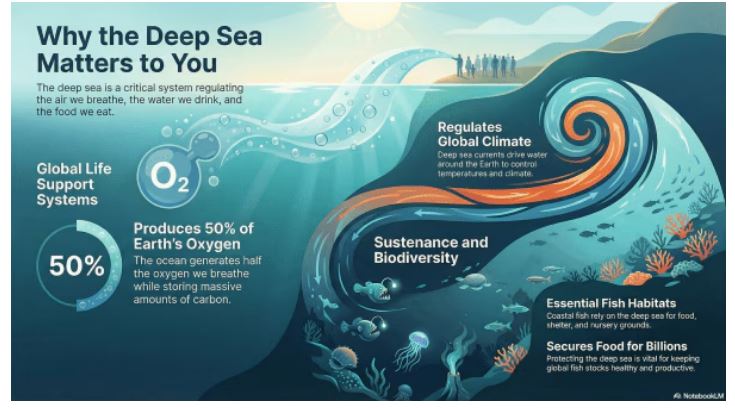
- 02 Apr 2026
In News:
In a significant boost to India’s marine conservation framework and the Blue Economy mission, the Ministry of Environment, Forest and Climate Change (MoEFCC) has officially designated the "Bhavasagara" Referral Centre at Kochi as a National Repository for Deep-Sea Fauna.
This designation was conferred under Section 39 of the Biological Diversity Act, 2002, recognizing the facility as a critical hub for preserving India’s deep-sea biological heritage.
About the Bhavasagara Referral Centre
Located within the campus of the Center for Marine Living Resources & Ecology (CMLRE) in Kochi, Kerala, "Bhavasagara" serves as a specialized scientific repository.
- Current Holdings: It houses over 3,560 taxonomically identified and geo-referenced voucher specimens.
- Biological Diversity: The collection includes a vast range of marine life:
- Invertebrates: Cnidarians (corals/jellyfish), molluscs, arthropods (crabs/shrimp), annelids, and echinoderms.
- Vertebrates: Elasmobranchs (sharks/rays) and teleostean (bony) fishes.
- Coverage: Over 70% of the specimens represent deep-water and open-ocean species collected from the Indian Exclusive Economic Zone (EEZ) and adjacent high seas.
Key Responsibilities & Statutory Powers
Under the Biological Diversity Act, 2002, the repository is mandated with the following:
- Secure Custody: Maintaining physical biological samples (voucher specimens) alongside their DNA sequences and genetic data.
- Official Custodian of New Species: It is the mandatory repository for any new deep-sea species (Type Specimens) discovered within Indian waters.
- Capacity Building: Acting as a training hub for deep-sea taxonomy, directly aligning with the UN Decade of Ocean Science for Sustainable Development (2021–2030).
- Digital Documentation: Integration with databases like the Indian Ocean Biodiversity Information System (IndOBIS) for global and regional knowledge sharing.
The Institutional Framework: CMLRE
The Center for Marine Living Resources & Ecology (CMLRE) is a premier research institute under the Ministry of Earth Sciences (MoES).
- Mandate: Exploration, management, and conservation of living resources within the Indian EEZ.
- Research Pillars:
- Fishery Resource Assessment: Utilizing research cruises (e.g., in the Arabian Sea and Bay of Bengal) to map biodiversity hotspots and spawning grounds.
- Advanced Technology: Employing environmental DNA (eDNA) metabarcoding and genomic analysis for non-invasive biodiversity assessment.
- Community Engagement: Development of the "Ocean Eyes" mobile app, a citizen-science initiative to record marine species sightings
IONS Maritime Exercise (IMEX)
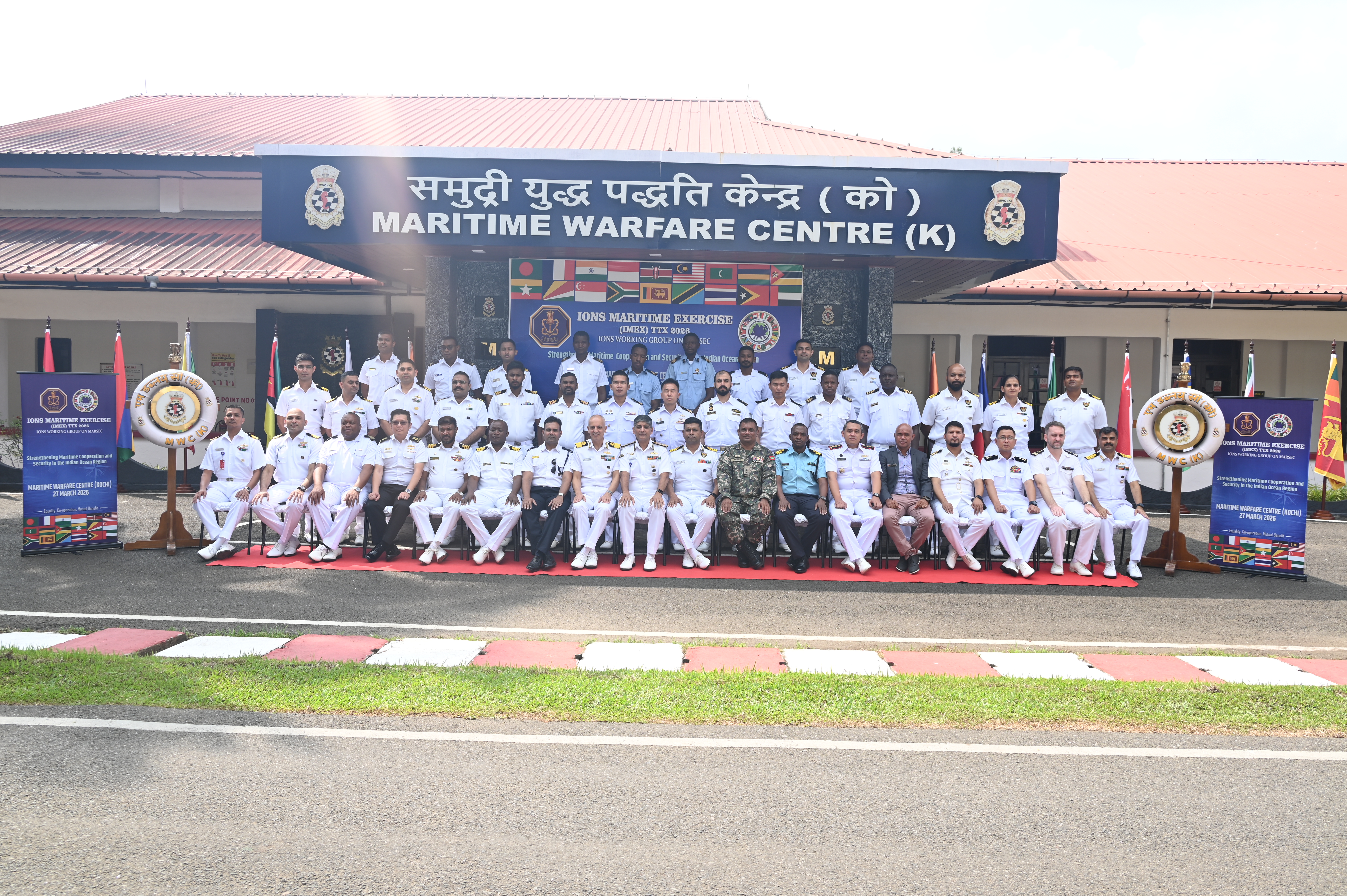
- 01 Apr 2026
In News:
In a significant stride toward regional maritime stability, the Indian Navy recently hosted the IONS Maritime Exercise (IMEX) Table Top Exercise (TTX) 2026. Held at the Maritime Warfare Centre under the Southern Naval Command in Kochi, the exercise underscores India’s proactive role in the Indian Ocean Region (IOR) under the vision of SAGAR (Security and Growth for All in the Region).
Key Highlights
The 2026 edition of IMEX was designed as a Table Top Exercise (TTX), providing a simulated environment to refine strategic responses without the deployment of actual fleet assets.
- Core Focus: The exercise prioritized non-traditional maritime security threats, including maritime terrorism, piracy, illegal fishing (IUU), and humanitarian crises.
- Objectives:
- Enhancing interoperability and coordination among diverse navies.
- Streamlining real-time information sharing and collective decision-making.
- Validating existing maritime security frameworks to ensure they are robust enough for complex, multi-dimensional scenarios.
- Participating Nations: A diverse group of 12 littoral states participated, including Bangladesh, France, Indonesia, Kenya, Maldives, Mauritius, Myanmar, Seychelles, Singapore, Sri Lanka, Tanzania, and Timor-Leste.
Understanding the Indian Ocean Naval Symposium (IONS)
The IONS is a cornerstone of India’s naval diplomacy and serves as a vital "Track 1.5" or formal diplomatic initiative for the Indian Ocean.
Genesis and Structure
- Inception: Conceived and launched by the Indian Navy in 2008. The inaugural edition was held in New Delhi, with India serving as the first Chair (2008–2010).
- Nature: A voluntary and inclusive initiative that brings together the navies of the littoral states of the IOR.
- Operational Framework: It functions through a rotating chairmanship, biennial Conclaves of Chiefs (CoC), and specialized Working Groups (WGs) focusing on areas like HADR and Maritime Security.
Geographic Scope
The IONS membership is divided into four sub-regions to ensure equitable representation:
- South Asian Littorals (e.g., India, Bangladesh, Sri Lanka)
- West Asian Littorals (e.g., UAE, Oman, Iran)
- East African Littorals (e.g., Kenya, South Africa, Mauritius)
- South East Asian & Australian Littorals (e.g., Australia, Indonesia, Singapore)
Balirajgarh site
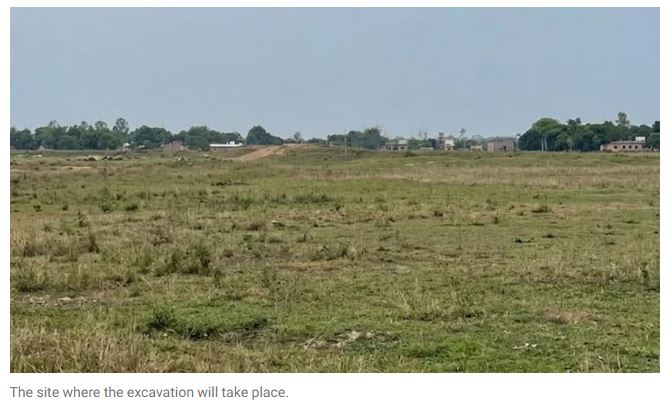
- 01 Apr 2026
In News:
The Archaeological Survey of India (ASI) officially commenced a large-scale scientific excavation at the historic Balirajgarh site in Bihar’s Madhubani district in March 2026. This project seeks to bridge the gap between ancient Indian mythology and material history, potentially pushing back the timeline of urban civilization in the Mithila region to the Iron Age.
The Balirajgarh Site: Gateway to Ancient Mithila
Located in the Babubarhi block of Madhubani, Balirajgarh (officially the "Remains of Ancient Fort of Garh") is a centrally protected monument of national importance.
- Mythological Roots: Local folklore identifies the site as the capital of the legendary King Bali.
- Historical Identity: It is widely believed to have been a major administrative and political hub of the ancient Videha Kingdom (associated with King Janaka in Vedic texts).
- Physical Scale: The site spans approximately 176 acres and features a massive brick fortification and over 20 archaeological mounds.
Chronology of Habitation (Five-Fold Sequence)
Previous excavations conducted between 1962 and 2014 established that Balirajgarh was a site of continuous habitation for over 1,500 years. The discovered layers correspond to:
- Northern Black Polished Ware (NBPW) Phase (c. 700–200 BCE): Represents the earliest urban layer, characterized by high-quality deluxe pottery.
- Sunga Period (c. 2nd Century BCE): Notable for the construction of massive brick fortifications.
- Kushan Period: Evidence of trade and sustained urban life.
- Gupta Period: Represents the "Classical Age" of settlement.
- Pala Period (c. 8th–12th Century CE): Marks the later medieval stages before the site’s eventual decline.
Objectives of the 2026 Excavation
The current phase of excavation, led by the ASI Patna Circle, employs modern archaeological tools to answer specific historical questions:
- The "Virgin Soil" Quest: Archaeologists aim to reach the deepest, undisturbed layers of soil to determine if settlement predates the NBPW phase, possibly linking it directly to the early Iron Age Videha tribe.
- Advanced Technology: To overcome previous challenges like the high water table, the ASI is using Satellite Imagery, Ground Penetrating Radar (GPR), and systematic 3D mapping.
- Mithila Civilization: The overarching goal is to reconstruct the "early Mithila civilization" and its socio-economic networks.
Institutional Profile: Archaeological Survey of India (ASI)
- Genesis: Founded in 1861 by Sir Alexander Cunningham (the "Father of Indian Archaeology").
- Statutory Status: Post-independence, it became a statutory body under the Ancient Monuments and Archaeological Sites and Remains (AMASR) Act, 1958.
- Nodal Ministry: Functions under the Ministry of Culture, Government of India.
- Key Responsibilities: * Maintenance of over 3,600 monuments of national importance.
- Regulation of the Antiquities and Art Treasure Act, 1972.
- Conducting scientific research, excavations, and chemical preservation of heritage.
Solar Radio Burst

- 01 Apr 2026
In News:
In a major advancement for heliophysics, researchers from the Indian Institute of Astrophysics (IIA), an autonomous body under the Department of Science and Technology (DST)have recently solved a decades-old mystery regarding Solar Radio Bursts (SRBs). This breakthrough, published in early 2026, significantly enhances our ability to predict space weather and protect critical technological infrastructure.
Understanding Solar Radio Bursts (SRBs)
Solar Radio Bursts are intense emissions of radio waves from the Sun, typically triggered by solar transients such as Solar Flares and Coronal Mass Ejections (CMEs).
- Scientific Nature: They serve as direct signatures of accelerated electrons moving through the solar atmosphere.
- Wavelength Diversity: SRBs are observed across a massive spectrum, from millimeters (GHz range) to kilometers (kHz range).
- Short wavelengths indicate activity near the solar surface.
- Long wavelengths reflect activity occurring at greater distances from the Sun as shocks travel outward.
- Classification: Morphologically, SRBs are divided into five categories (Types I through V). Among these, Type II bursts are "slow-drifting" emissions that track shock waves moving through the solar corona at speeds of approximately 1,000 km/s.
The IIA Breakthrough: The "Fundamental vs. Harmonic" Puzzle
For years, scientists were puzzled by the varying relative strengths of the two components of Type II bursts: the Fundamental emission (the base frequency) and the Harmonic emission (the overtone). While theory suggests the fundamental should be stronger, observations often showed the opposite.
The Discovery
The IIA team, led by Dr. K. Sasikumar Raja, analyzed 58 Type II bursts using the global CALLISTO (Compound Astronomical Low Frequency Low Cost Instrument for Spectroscopy and Transportable Observatory) network and the Gauribidanur Low Frequency Solar Spectrograph (GLOSS).
- The Longitude Factor: The study found that the location of the solar active region (heliographic longitude) determines which emission reaches Earth more strongly.
- The 75° Rule: * Events < 75° (Disk Center): Exhibit stronger Fundamental emissions.
- Events > 75° (Solar Limb/Edges): Exhibit stronger Harmonic emissions.
- The Mechanism: This is due to refractive effects in the solar corona and "viewing angles." Fundamental emissions have narrow "cone angles" and get blocked or weakened when originating from the Sun's edges. Harmonic emissions have broader angles, allowing them to bypass these obstacles and reach Earth effectively.
Implications for Space Weather and Technology
- GNSS Interference: SRBs reduce the signal-to-noise ratio of Global Navigation Satellite Systems (like GPS and India’s NavIC), potentially causing a "loss of lock" and affecting aviation and maritime navigation.
- Satellite Health: Understanding these bursts helps in predicting the arrival of solar storms that can damage satellite electronics and solar panels.
- Communication Hubs: High-intensity bursts can disrupt high-frequency (HF) radio communications used by emergency services and the military.
- Forecasting Models: By understanding how these waves propagate, scientists can now develop more accurate models to provide earlier warnings for geomagnetic storms.
The Path Ahead: AI and Machine Learning
The IIA researchers have indicated that the next phase of this study involves applying Machine Learning (ML) to the vast datasets collected by spectrometers like CALLISTO. This will help automate the detection of solar shocks and further refine the accuracy of space weather alerts.
Government Revises PM e-DRIVE Scheme

- 01 Apr 2026
In News:
The Ministry of Heavy Industries (MHI) recently revised the PM Electric Drive Revolution in Innovative Vehicle Enhancement (PM e-DRIVE) scheme. This recalibration introduces strict "terminal dates" and unit-specific caps to manage the transition from a subsidy-led market to a self-sustaining EV ecosystem.
Context and Evolution
- Launched in October 2024 with a total outlay of ?10,900 crore, the PM e-DRIVE scheme replaces the earlier FAME (Faster Adoption and Manufacturing of Hybrid and Electric Vehicles) phases.
- It aims to synchronize India’s transport sector with the Aatmanirbhar Bharat vision and the Panchamrit climate goals.
Revised Timelines and Deadlines
The government has established clear cut-off dates for vehicle registrations to qualify for incentives:
- Electric Two-Wheelers (e-2W): Subsidy extended until 31st July 2026.
- Electric Three-Wheelers (e-3W): Incentives for e-rickshaws and e-carts extended until 31st March 2028.
- L5 Category (High-speed e-3W): This sub-component was officially closed on 26th December 2025 after achieving its target volume.
Key Components and Targets
The scheme operates on a "first-come, first-served" basis and is fund-limited. If the budget is exhausted before the terminal dates, the portal will close automatically.
A. Demand Incentives and Caps
To ensure support reaches the mass market, the scheme imposes ex-factory price ceilings:
Vehicle Category Ex-Factory Price Cap Unit Support Cap
Electric 2-Wheelers ?1.5 Lakh ~24.79 Lakh units
Electric 3-Wheelers ?2.5 Lakh ~3.16 Lakh units*
e-Rickshaws & e-Carts - 39,034 units
Note on Incentives: The subsidy has been recalibrated to approximately ?2,500 per kWh, with a maximum cap of ?5,000 for e-2Ws and ?12,500 for e-3Ws.
B. Infrastructure & Specialized Segments
- Public Transport: Allocation of ?4,391 crore for the procurement of 14,028 e-buses across nine major cities (including Delhi, Mumbai, and Bengaluru).
- e-Ambulances & e-Trucks: A combined fund of ?1,000 crore is dedicated to these emerging segments. For e-trucks, incentives are linked to scrapping certificates from MoRTH-approved centers.
- Charging Infrastructure: A budget of ?2,000 crore to install 72,300 public fast chargers (including 22,100 for e-4Ws and 48,400 for e-2Ws/3Ws).
Technology and Quality Standards
- Advanced Batteries: Only vehicles equipped with advanced battery chemistry (e.g., Lithium-ion) qualify. Outdated lead-acid batteries are excluded.
- The "Super App": Developed by BHEL, this digital platform will allow users to locate chargers, check real-time availability, and make payments seamlessly.
- Testing Agencies:?780 crore allocated to modernize MHI testing agencies to ensure high safety and performance standards for domestic EV manufacturing.
1st Inter-State Initiative for Great Indian Bustard (GIB)
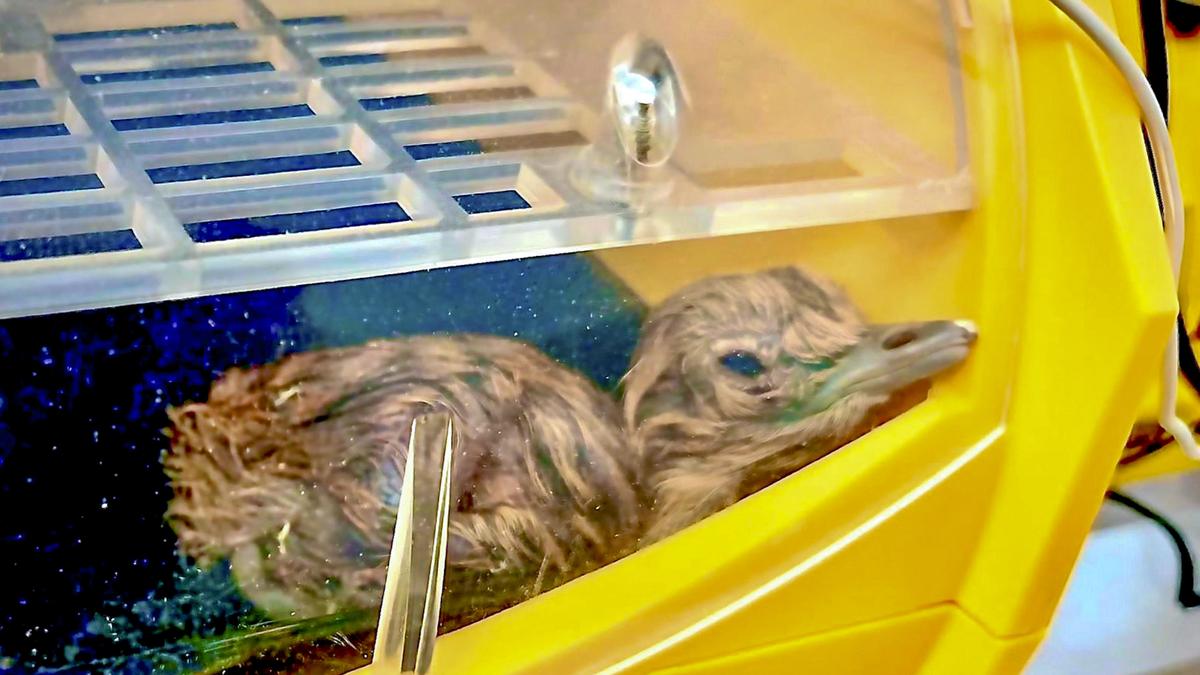
- 01 Apr 2026
In News:
The Great Indian Bustard (Ardeotis nigriceps), a flagship species of the Indian grasslands and the state bird of Rajasthan, is currently at the center of one of India’s most complex conservation battles. Recent breakthroughs in "jumpstart" technology and legal interventions have provided a renewed glimmer of hope for a species that was once on the verge of extinction.
The "Jumpstart" Breakthrough: A Milestone in Kutch
In March 2026, a Great Indian Bustard chick was hatched in Gujarat’s Kutch region for the first time in over a decade. This was achieved through the “Jumpstart” Approach, a sophisticated conservation method coordinated by the Ministry of Environment, Forest and Climate Change (MoEFCC), the Wildlife Institute of India (WII), and the Forest Departments of Rajasthan and Gujarat.
- The Mechanism: The process involved identifying a wild female in Gujarat that had laid an infertile egg (due to the absence of wild males in the region). A fertile, captive-bred egg from Rajasthan’s breeding center was transported 770 km over a 19-hour road journey in a portable incubator.
- The Outcome: The fertile egg was placed in the wild nest. The female GIB accepted the egg, completed the incubation, and is currently rearing the chick in the wild.
- Significance: This is the first inter-state trans-location of its kind, ensuring the chick grows up with natural survival instincts under a foster mother, rather than being reared in a lab.
Species Profile and Ecological Role
The GIB is an indicator species for the health of grassland ecosystems. Its presence ensures that the "barren" looking grasslands are actually vibrant, functional biomes.
- Physical Traits: One of the heaviest flying birds in the world; lacks a preen gland and has poor frontal vision (making it prone to collisions).
- Diet: Omnivorous (insects, rodents, seeds).
- Current Range: Primarily the Thar Desert (Rajasthan). Small, fragmented populations exist in Gujarat (Kutch), Maharashtra, Karnataka, and Andhra Pradesh.
Conservation Status and Legal Framework
The GIB enjoys the highest level of legal protection both nationally and internationally:
- IUCN Red List: Critically Endangered.
- Wildlife (Protection) Act, 1972: Schedule I.
- CITES & CMS: Appendix I.
- Project GIB (2016): Launched to create breeding enclosures and mitigate human pressure.
Red-crowned Roofed
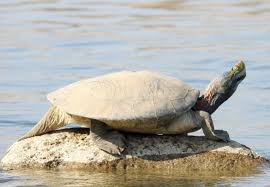
- 31 Mar 2026
In News:
The Red-Crowned Roofed Turtle (Batagurkachuga), once a widespread inhabitant of the Ganga and Brahmaputra river systems, is now facing an existential crisis. As a "jewel of the Ganga," its dwindling numbers reflect the deteriorating health of South Asia’s freshwater ecosystems.
Species Profile and Distinctive Features
The Red-Crowned Roofed Turtle is one of the three large freshwater species in the genus Batagur found in India. It is characterized by significant sexual dimorphism and vibrant coloration.
- Physical Appearance:
- Males: Notably smaller than females, reaching only about half their length. They exhibit a striking reddish-orange head with a distinct black crown.
- Shell: The carapace (upper shell) is greenish-brown with yellowish patterns, while the plastron (lower shell) is yellow with black markings.
- Diet: As an omnivorous species, it maintains a balanced diet consisting of various aquatic plants and small animals.
- Ecological Role:
- Bio-indicator: Its presence or absence serves as a critical measure of river health.
- Nutrient Cycling: It plays a vital role in the aquatic food web by facilitating the cycling of nutrients, which is essential for maintaining the productivity of the river ecosystem.
Geographical Distribution: A Shrinking Sanctuary
Historically, the species was a common sight across the Indo-Gangetic plain.
- Native Range: India, Bangladesh, and Nepal.
- Current Strongholds: While once widespread in the Ganga and Brahmaputra basins, its distribution is now severely restricted. Today, the National Chambal Sanctuary (straddling Rajasthan, Madhya Pradesh, and Uttar Pradesh) remains the only significant protected area with a viable breeding population.
Conservation Status and Legal Protection
Due to its rapid population decline, the Red-Crowned Roofed Turtle is afforded the highest levels of legal protection.
|
Organization/Law |
Status |
|
IUCN Red List |
Critically Endangered |
|
Wildlife (Protection) Act, 1972 |
Schedule I (Highest protection in India) |
|
CITES |
Appendix II |
Major Threats to Survival
The decline of Batagurkachuga is a direct consequence of anthropogenic pressure on riverine habitats:
- Habitat Fragmentation: Construction of dams and barrages has altered river flow and destroyed sandbanks essential for nesting.
- Illegal Trade: Despite legal bans, they are targeted for the pet trade and international meat markets.
- Sand Mining: Extensive illegal sand mining on riverbanks destroys the nesting sites required for egg-laying.
- Pollution and Bycatch: Agricultural runoff, industrial waste, and accidental drowning in fishing nets (bycatch) continue to deplete adult populations.
Zojila Pass
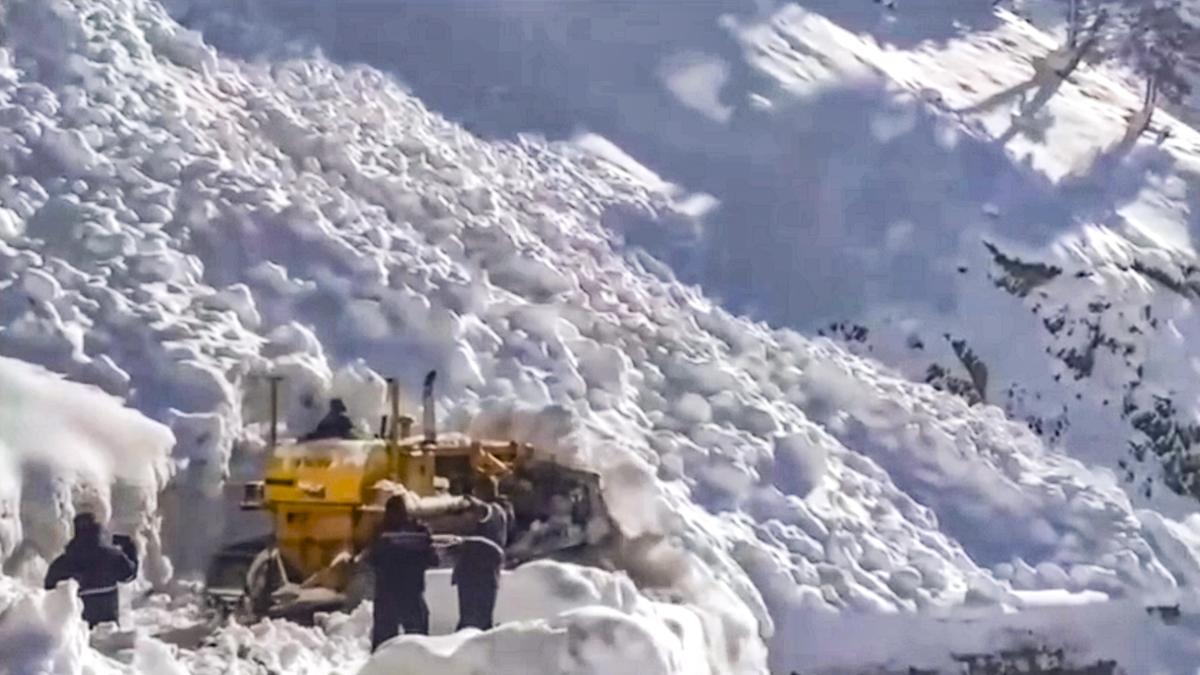
- 31 Mar 2026
In News:
Recently, a massive snow avalanche struck the Zojila Pass in Ladakh, resulting in the tragic death of seven individuals and injuries to several others. The incident occurred between Zero Point and Minimarg, once again highlighting the extreme vulnerability of this high-altitude transit corridor and the urgent need for all-weather infrastructure.
Geographical Profile: "The Mountain Pass of Blizzards"
Zojila Pass is one of the most treacherous yet vital mountain passes in the Indian Himalayas.
- Location: Situated in the Kargil district of Ladakh, it serves as the natural gateway between the Kashmir Valley and the Ladakh region.
- Altitude: Approximately 11,650 feet (3,528 meters) above sea level.
- Mountain Range: It lies within the Greater Himalayan Range (specifically the Zanskar range).
- Connectivity: It is a critical link on National Highway 1 (NH-1), connecting Srinagar, Kargil, and Leh.
- Seasonal Closure: Due to heavy snowfall and sub-zero temperatures (dropping below -400C), the pass traditionally remains closed for nearly six months a year, isolating Ladakh from the rest of the country.
Historical and Strategic Significance
The pass is not merely a transport route; it is a pillar of India’s national security.
- Operation Bison (1948): During the Indo-Pakistan War of 1947–48, Pakistani-backed militias seized the pass to capture Ladakh. On November 1, 1948, the Indian Army executed Operation Bison, a daring assault that utilized M5 Stuart light tanks. This remains a historic military feat as the highest altitude at which armor had ever operated in combat at that time.
- Military Logistics: It is the primary artery for the movement of troops and heavy equipment to the Line of Actual Control (LAC) with China and the Siachen Glacier region.
- Economic Lifeline: It ensures the supply of essential commodities (fuel, food, and medicine) to the civilian population of Ladakh.
Understanding the Hazard: Avalanches
- Definition: An avalanche is a rapid flow of snow down a slope, triggered when the weight of the snowpack exceeds the friction holding it in place.
- Contributing Factors:
- Steep Slopes: Slopes without trees or large rocks lack the "anchors" needed to hold snow.
- Weak Layers: Fresh snowfall over an icy or unstable "crust" creates a sliding plane.
- Weather Fluctuations: Rapid temperature changes or heavy blizzards add weight and reduce cohesion.
- Impact: Avalanches can travel at speeds of 80–300 km/h, burying vehicles and infrastructure instantly.
Conservation of Olive Ridley Turtles
- 31 Mar 2026
In News:
The Wildlife Management Authority, in collaboration with the Coringa Wildlife Sanctuary, has successfully conserved nearly 20,000 Olive Ridley turtle eggs on Hope Island in Kakinada Bay, Andhra Pradesh. This highlights the growing importance of the East Coast, beyond Odisha, as a critical habitat for marine conservation.
Hope Island: A Sanctuary in Kakinada Bay
Hope Island serves as a vital nesting ground in Andhra Pradesh. Conservationists utilize the in-situ conservation method, where eggs are protected in their natural nesting environment to ensure higher hatching success and maintain the ecological balance of the bay.
Species Profile: Olive Ridley Turtles (Lepidochelys olivacea)
- Physical Characteristics: They are the world’s smallest and most abundant sea turtles. They are recognized by their unique heart-shaped, olive or grayish-green carapace.
- Habitat: Primarily found in the tropical waters of the Pacific, Indian, and Atlantic Oceans, inhabiting both the open sea and coastal regions.
- Diet: Being omnivorous, they feed on a variety of marine life including jellyfish, snails, crabs, and shrimp/algae.
- Behavioral Phenomemon (Arribada): They are famous for "Arribada"—a Spanish term for "arrival"—which refers to the synchronized mass nesting where thousands of females come ashore simultaneously to lay eggs (approx. 100–140 eggs per female).
Distribution and Key Indian Nesting Sites
The turtles undertake massive migrations from the Pacific toward the Indian coast, typically arriving between November and December and staying until April–May.
- Odisha: Home to the world's largest nesting sites, including Gahirmatha Marine Sanctuary, Rushikulya, and the Devi River mouth.
- Andhra Pradesh: Increasingly significant sites in Kakinada (Hope Island) and Visakhapatnam.
- Others: Andaman and Nicobar Islands and parts of the Tamil Nadu coast.
Conservation Status and Legal Framework
To mitigate the decline in population, Olive Ridleys are afforded the highest level of protection:
- IUCN Red List: Vulnerable.
- Wildlife Protection Act (WPA), 1972: Schedule I (highest protection in India).
- CITES: Appendix I (prohibits international trade).
- CMS (Convention on Migratory Species): Protected under this global intergovernmental treaty.
Threats and Protection Measures
Despite legal safeguards, the species faces multifaceted challenges:
- Major Threats:
- Bycatch: Accidental entanglement in trawl and gill nets is the leading cause of mortality.
- Poaching: Illegal trade of eggs and meat.
- Habitat Loss: Coastal erosion and light pollution (which disorients hatchlings).
- Key Conservation Initiatives:
- Operation Olivia: An annual mission by the Indian Coast Guard to enforce seasonal fishing bans and protect nesting sites.
- Turtle Excluder Devices (TEDs): Mandated for use in trawl nets to allow turtles to escape while retaining the fish catch.
- Tagging Programs: Using metal tags to track migration patterns and nesting frequency.
PM-KUSUM 2.0
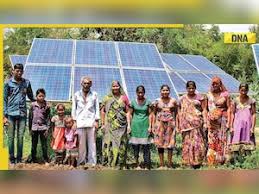
- 31 Mar 2026
In News:
The Union Government is set to revamp the Pradhan Mantri Kisan Urja Suraksha evamUtthaanMahabhiyan (PM-KUSUM) scheme. With the current phase expiring in March 2026, the upcoming PM-KUSUM 2.0 aims to address structural gaps, specifically by incorporating Battery Energy Storage Systems (BESS) to harmonize solar generation with agricultural power demand.
Understanding PM-KUSUM: Evolution and Structure
Launched in 2019 by the Ministry of New and Renewable Energy (MNRE), PM-KUSUM is a "triple-win" initiative designed to provide energy security to farmers, improve DISCOM finances, and contribute to India’s climate goals (COP30).
Core Components of the Scheme:
- Component A: Installation of decentralized ground-mounted, grid-connected solar power plants (up to 2 MW) on barren or fallow land.
- Component B: Deployment of standalone solar-powered agriculture pumps to replace diesel-based irrigation in off-grid areas.
- Component C: Solarization of existing grid-connected agriculture pumps through two sub-models:
- Individual Pump Solarization (IPS)
- Feeder Level Solarization (FLS): Solarizing the entire electricity feeder to improve efficiency at scale.
Funding Model (Shared Responsibility):
- Central Government: 30% subsidy.
- State Government: 30% subsidy.
- Farmer Contribution: 40% (often supported by bank loans).
(Note: For North Eastern, Hilly, and Island regions, the Central subsidy can go up to 50%).
The Shift to PM-KUSUM 2.0: Why Battery Storage?
The primary limitation of the current scheme is the temporal mismatch between solar energy generation and agricultural demand—a phenomenon often referred to as the "Duck Curve" challenge.
- The Mismatch: Solar power peaks around midday. However, agricultural irrigation demand often starts early in the morning and continues well after sunset.
- The Solution (BESS): Integrating batteries allows the storage of surplus solar energy generated during peak hours. This stored power can then be discharged during non-solar hours (evening/early morning), ensuring a reliable and round-the-clock (RTC) power supply for farmers.
- Policy Debate: The Ministry of Power has proposed a 4-hour storage capacity, whereas the MNRE suggests a 2-hour capacity. Discussions with the Ministry of Finance are ongoing to finalize the subsidy structure for these batteries.
Progress and Challenges (As of 2026)
While the program has made significant strides, it currently trails its ambitious target of 34.8 GW.
|
Parameter |
Performance Highlight (Status Feb 2026) |
|
Total Target |
34.8 GW |
|
Achieved Capacity |
~12.16 GW |
|
Component B |
Over 10 Lakh standalone pumps installed. |
|
Component C |
~6,637 MW achieved (primarily through Feeder Level Solarization). |
Artemis II

- 31 Mar 2026
In News:
NASA is going to launch the Artemis II mission.
Mission Overview: Artemis II
Artemis II is a 10-day lunar flyby mission designed to test the integrated capabilities of NASA’s deep-space exploration systems. Unlike the later landing missions, Artemis II will follow a "free-return trajectory."
- Spacecraft: Orion Spacecraft.
- Launch Vehicle:Space Launch System (SLS), the most powerful rocket ever built, producing 8.8 million pounds of thrust (15% more than the Apollo-era Saturn V).
- Trajectory: The crew will travel approximately 7,400 km beyond the far side of the Moon. They will utilize a "gravity assist" (slingshot) maneuver, using lunar gravity to return to Earth without requiring a main engine burn to reverse course.
A Crew of "Firsts"
The four-person crew represents a significant departure from previous lunar missions, emphasizing diversity and international cooperation:
- Reid Wiseman (Commander): NASA veteran.
- Victor Glover (Pilot): First person of color to travel beyond Low-Earth Orbit (LEO).
- Christina Koch (Mission Specialist): First woman to reach the Moon’s vicinity.
- Jeremy Hansen (Mission Specialist): Representing the Canadian Space Agency (CSA), he is the first non-American to leave Earth's orbit.
Technological and Scientific Frontiers
Artemis II serves as a high-stakes laboratory for several cutting-edge technologies:
- Laser Communications (O2O): Testing infrared lasers to transmit data at 260 Mbps, enabling 4K video streaming from deep space.
- AVATAR Experiment: Using "organ-on-a-chip" technology to study the real-time effects of radiation and microgravity on human cells.
- Global CubeSats: Deployment of small satellites from Germany, Argentina, South Korea, and Saudi Arabia to study space weather and lunar shielding.
Evolution of Lunar Missions: Apollo vs. Artemis
While the Apollo missions were a Cold War-era demonstration of technological supremacy, the Artemis program is built for endurance and deep-space logistics.
|
Feature |
Apollo Programme (1969–1972) |
Artemis Programme (2024–Present) |
|
Primary Goal |
Short-duration visits; "Boots on the Moon." |
Long-term human presence; "Moon to Mars." |
|
Crew Capacity |
2 astronauts on the surface at a time. |
4 astronauts; emphasis on diversity/internationalism. |
|
Sustainability |
Disposable architecture; short stays. |
Reusable infrastructure; Gateway station; Base camp. |
|
Target Area |
Lunar Equator. |
Lunar South Pole (due to water-ice potential). |
The Global Lunar Landscape: Past to Future
The Moon has become a focal point for global geopolitics and "New Space" commercial ventures.
A. Historical Context (The Cold War Era)
- Luna 9 (USSR, 1966): First soft landing.
- Apollo 11 (USA, 1969): First humans on the Moon.
- Luna 24 (USSR, 1976): Last mission of the 20th century to return soil samples.
B. The Modern Era (The "New Race")
- Chang’e 4 (China, 2019): First landing on the Far Side of the Moon.
- Chandrayaan-3 (India, 2023): First nation to land near the Lunar South Pole, confirming the presence of sulfur.
- SLIM (Japan, 2024): Demonstrated "pinpoint" landing technology (within 100 meters).
- IM-1 Odysseus (USA/Private, 2024): First successful commercial landing.
C. Future Roadmap (2026–2028)
The focus is shifting toward In-Situ Resource Utilization (ISRU)—mining lunar ice for fuel and oxygen.
- Griffin-1/VIPER (2026): US mission to scout for water ice at the South Pole.
- Chang’e 7 (2026): China’s search for water in shadowed craters using a "flying" detector.
- Artemis IV (2028): Expected first crewed landing of the Artemis program to establish a permanent base.
Extracellular RNA (exRNA)

- 30 Mar 2026
In News:
In March 2026, a landmark study published in the journal Clean Water revealed that extracellular RNA (exRNA) from bacteria can persist in drinking water even after standard disinfection processes. This discovery challenges the long-held scientific belief that RNA is too unstable to survive outside a living cell, opening new frontiers in both environmental monitoring and medical diagnostics.
Understanding Extracellular RNA (exRNA)
Traditionally, Ribonucleic Acid (RNA) was viewed as an intracellular molecule responsible for translating genetic instructions into proteins. However, scientists now recognize exRNA as a critical component of a "long-distance communication system" between cells.
- Definition: RNA molecules found outside cells, circulating in fluids such as blood, saliva, urine, cerebrospinal fluid, and environmental water.
- Mechanism of Survival: To prevent enzymatic degradation by RNase (enzymes that break down RNA), exRNA is packaged in "molecular containers" known as Extracellular Vesicles (EVs), such as exosomes and microvesicles, or bound to protective proteins.
- Function: Acts as a signaling medium, transferring genetic instructions to distant cells to coordinate immune responses, tissue repair, and development.
The 2026 Discovery: Persistence in Drinking Water
The recent study demonstrated that bacterial exRNA remains detectable in water long after the bacteria themselves have been neutralized by disinfectants (like chlorine or UV).
- "Molecular Snapshots": Unlike DNA, which identifies who the bacteria are, exRNA reveals their functional state—essentially providing a "snapshot" of the survival strategies and stress responses the bacteria employed just before death.
- Implications for Water Treatment: By analyzing these RNA patterns, scientists can identify which bacterial pathways (e.g., heat-shock proteins or efflux pumps) are resistant to specific treatments.
- Next-Gen Disinfection: This allows for the design of "precision disinfection" strategies that target these specific survival mechanisms rather than relying on generic chemical exposure.
Medical Applications: The Rise of Liquid Biopsy
The stability and accessibility of exRNA have revolutionized non-invasive diagnostics.
- Liquid Biopsy: Instead of traditional, painful tissue biopsies, doctors can identify specific exRNA patterns in a patient’s blood or serum.
- Early Detection: * Cancer: Tumor cells release unique exRNA signatures (oncosomes) that can be detected long before physical symptoms appear.
- Heart Disease: Damaged cardiac muscles release specific RNA molecules into the bloodstream, serving as an early warning for cardiovascular events.
- Personalized Medicine: Real-time monitoring of exRNA allows clinicians to track how a disease is progressing or how a patient is responding to a specific treatment.
Shaurya Squadrons

- 30 Mar 2026
In News:
In early 2026, the Indian Army achieved a significant milestone in "network-centric warfare" by operationalizing Shaurya Squadrons. These are specialized drone sub-units integrated directly into armoured (tank) regiments. This move follows the successful implementation of Ashni Platoons in infantry battalions, marking a fundamental shift in how the Army conducts ground operations.
What are Shaurya Squadrons?
Shaurya Squadrons are dedicated drone units embedded within the Army’s armoured corps to provide organic aerial capabilities to tank commanders.
- Composition: Each squadron consists of 20 to 30 personnel specialized in drone piloting, data analysis, and counter-drone measures.
- Asset Mix: They operate a diverse fleet including:
- Surveillance Drones: For real-time reconnaissance beyond the tank crew's line of sight.
- Swarm Drones: For overwhelming enemy defenses through coordinated mass attacks.
- First-Person View (FPV) Drones: Highly agile "kamikaze" drones used for precision strikes on enemy hatches, engine decks, or logistics nodes.
- Loitering Munitions: "Suicide drones" that can hover over a battlefield for extended periods before engaging a target.
The "Sensor-to-Shooter" Revolution
The primary objective of these squadrons is to compress the Sensor-to-Shooter Cycle—the time elapsed between detecting a target (sensor) and neutralizing it (shooter).
- Traditional Model: Identifying a target often required relaying information up the chain of command to artillery or air support, a process taking minutes.
- Shaurya Model: By embedding drones at the unit level, the tank commander can detect and strike a target directly. The Army aims to reduce this cycle from minutes to mere seconds.
- Tactical Advantage: This allows for "Deep Precision Strikes" and protects heavy armour (like the T-90 Bhishma and Arjun Mk1A) from hidden threats like Anti-Tank Guided Missiles (ATGMs).
Comparison: Shaurya Squadrons vs. Ashni Platoons
The Shaurya initiative scales up the "drone-first" philosophy pioneered by Ashni Platoons.
|
Feature |
Ashni Platoons |
Shaurya Squadrons |
|
Integrated In |
Infantry Battalions |
Armoured (Tank) Regiments |
|
Primary Goal |
ISR (Intelligence, Surveillance, Reconnaissance) & Urban/Mountain combat |
Multi-domain hunting; protecting heavy armour |
|
Personnel |
20–25 soldiers |
20–30 soldiers |
|
Status |
Integrated across all infantry units |
Currently in 5 Commands; scaling to all 67 regiments |
Preah Vihear Temple
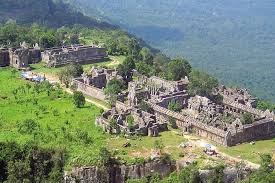
- 30 Mar 2026
In News:
In late 2025 and early 2026, the Preah Vihear Temple, a 1,000-year-old UNESCO World Heritage site, suffered severe structural damage due to a resurgence of military hostilities between Cambodia and Thailand. Reports indicate that all five of the temple's notable Gopuras (gateway pavilions) have been damaged, some beyond recognition, marking a tragic chapter for this ancient Hindu-Buddhist monument.
Architectural Significance and Symbolism
Built during the height of the Khmer Empire, Preah Vihear is considered an "outstanding masterpiece" of Khmer architecture, notable for its integration with the natural landscape.
- Location: Perched atop a 525-meter cliff in the Dangrek Mountains, bordering Cambodia and Thailand.
- Religious Evolution: Originally dedicated to the Hindu God Shiva, it later transitioned into a Buddhist site, mirroring the spiritual shifts within the Khmer Empire.
- Historical Timeline: While foundations date to the 9th century, the most significant expansion occurred under Suryavarman I and Suryavarman II (the builder of Angkor Wat).
- Unique Layout: * Axis: Unlike typical Khmer temples that face East, Preah Vihear is aligned on an 800-meter north-south axis.
- Cosmology: The series of sanctuaries linked by pavements and staircases rising toward the cliff represents Mount Meru, the sacred center of the universe in Hindu, Jain, and Buddhist cosmologies.
The Century-Old Territorial Dispute
The conflict over the temple is a legacy of colonial-era cartography and national identity.
- The 1904 Treaty: A boundary treaty between France (the then-colonial power in Cambodia) and Siam (Thailand) originally placed the temple in Thai territory using the natural watershed of the Dangrek Mountains as the border.
- The 1907 Map: French officers later produced a map that deviated from the watershed line, placing the temple inside Cambodia. Thailand did not officially protest this map for decades, which became a critical point in later legal battles.
- UNESCO Recognition: In 2008, UNESCO designated it a World Heritage Site under Cambodian administration. This move reignited Thai nationalist sentiment, leading to sporadic armed clashes in 2008 and 2011.
International Law and ICJ Rulings
The dispute is a classic case study in International Law regarding border treaties and sovereign acquiescence.
- 1962 Ruling: The International Court of Justice (ICJ) ruled that the temple belonged to Cambodia, primarily because Thailand had accepted the 1907 French map through "long-term acquiescence."
- 2013 Reaffirmation: Following further clashes, the ICJ clarified its 1962 ruling, stating that the entire promontory (the cliff and its immediate vicinity) belongs to Cambodia and ordered Thai forces to withdraw.
Gruha Sugam Portal

- 30 Mar 2026
In News:
Recently, the National Housing Bank (NHB) launched the Gruha Sugam Portal, a pathbreaking digital marketplace designed to simplify and accelerate the home loan process for India’s frontline personnel and government employees.
Understanding the Gruha Sugam Portal
The Gruha Sugam Portal serves as a Unified Digital Marketplace that bridges the gap between government employees and formal lending institutions.
- Target Beneficiaries: Specifically tailored for Defence Personnel, Paramilitary Forces, and Government Employees (both Central and State).
- Core Objective: To enable a "location-independent" loan application process, allowing personnel posted in remote or border areas to secure housing finance without visiting physical bank branches.
- Operational Mechanism: Administrative units of respective departments can register on the portal. Employees then submit minimal data, which is relayed to multiple registered lenders who provide customized loan offers for comparison.
Salient Features of the Portal
- Digital Lending Adoption: Facilitates an end-to-end digital workflow, reducing bureaucratic friction and paper-heavy traditional processes.
- Market Transparency: Enables "discovery of the best offer" by allowing users to compare interest rates and terms from various Banks and Housing Finance Companies (HFCs).
- Enhanced Efficiency: Standardized workflows and digital verification significantly reduce the "turnaround time" (TAT) for loan sanctions.
- Consumer Protection: Includes a dedicated Grievance Redressal Mechanism and an Online Chat Facility for real-time query resolution and accountability.
Institutional Framework: National Housing Bank (NHB)
The NHB serves as the architect and regulator of this digital ecosystem.
- Status: Established on July 9, 1988, under the National Housing Bank Act, 1987. It is an All-India Financial Institution (AIFI).
- Ownership: Since April 24, 2019, the NHB is wholly owned by the Government of India (transferred from the Reserve Bank of India).
- Dual Role: * Supervision: NHB supervises Housing Finance Companies (HFCs).
- Regulation: Note that the regulatory powers over HFCs (including registration) were transferred to the Reserve Bank of India (RBI) in 2019.
- Core Functions:
- Financing: Providing financial support to housing finance institutions.
- Promotion: Developing a viable and cost-effective housing finance system in India.
- Supervision: Ensuring the financial health and consumer protection standards of HFCs.
CALM-Brain
- 30 Mar 2026
In News:
Recently, the Rohini Nilekani Centre for Brain and Mind (CBM), a collaboration between the National Institute of Mental Health and Neuro Sciences (NIMHANS) and the National Centre for Biological Sciences (NCBS-TIFR)launched CALM-Brain in Bengaluru. It marks a milestone in India's neuroscientific research by creating the country’s first open-source digital repository for major psychiatric disorders.
What is CALM-Brain?
CALM-Brain (Comprehensive Assessment of Longitudinal Modal-Brain) is a first-of-its-kind digital storehouse of multidimensional data focused on the structure and function of the human brain.
- Objective: To provide a systematic, data-driven framework to understand the onset, progression, and biological markers of severe mental illnesses.
- Target Population: It currently hosts data from over 2,000 participants across 900 families, including both affected and unaffected members (a "family-based" approach).
- Open Source: The repository will be made available to clinicians and researchers globally to foster collaborative breakthroughs.
Core Features and Scope
The repository integrates data across five major neuropsychiatric disorders:
- Addiction
- Bipolar Disorder
- Dementia
- Obsessive-Compulsive Disorder (OCD)
- Schizophrenia
Multi-modal Data Types:
The platform does not rely on a single parameter but collects a "longitudinal" (time-series) dataset including:
- Neuro-imaging: High-resolution scans (fMRI, MRI).
- Clinical &Behavioural: Detailed patient histories and cognitive assessments.
- Genetic & Biological: Genetic analysis from blood samples and eye-tracking data.
- Biorepository Linkage: Crucially, the data is linked to a biorepository of stem cells, allowing scientists to grow "mini-brains" (organoids) in labs to study disease mechanisms at a cellular level.
Institutional Framework and Funding
- Origin: The initiative was conceived in 2016 under the Accelerator program for Discovery in Brain disorders using Stem cells (ADBS project).
- Funding: Jointly supported by the Department of Biotechnology (DBT), Government of India, and the Pratiksha Trust.
- Philanthropic Support: Launched and supported by Rohini Nilekani Philanthropies (RNP).
Significance for India
- Addressing Data Under-representation: Most global psychiatric studies are centric to Europe and North America. CALM-Brain provides a South Asian/Indian-specific dataset, which is vital because genetic and environmental factors affecting mental health vary across ethnicities.
- Precision Psychiatry: By identifying neurocognitive biomarkers, clinicians can move away from "one-size-fits-all" treatments toward personalized medicine (tailoring treatments based on a patient’s unique genetic and biological profile).
- Bridging the Treatment Gap: According to the National Mental Health Survey (2015-16), nearly 10.6% of Indian adults suffer from mental illnesses. CALM-Brain helps in early diagnosis, potentially reducing the massive economic loss (estimated by WHO at $1.03 trillion for India between 2012–2030).
- Shift to Biological Markers: Traditionally, psychiatry relies on observing symptoms. CALM-Brain aims to identify biological markers that cut across traditional diagnostic categories, leading to more accurate clinical interventions.
The launch of CALM-Brain aligns with the government's focus on mental health, as seen in the Union Budget 2026-27 proposal for NIMHANS-2 and the upgrading of regional institutes like the Central Institute of Psychiatry, Ranchi. The integration of such repositories with the National Digital Health Mission (NDHM) could further streamline mental healthcare delivery in India.
SWOT Satellite and Ocean Mapping
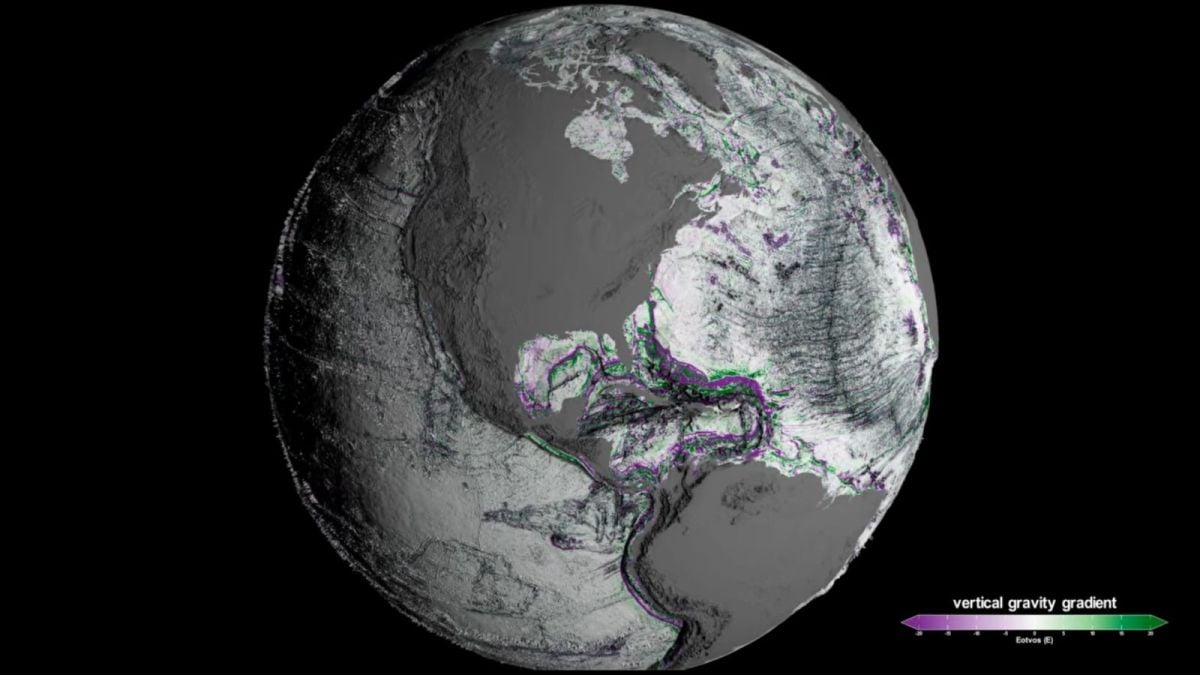
- 29 Mar 2026
In News:
Recently, NASA used data from the Surface Water and Ocean Topography Satellite to develop a new high-resolution map of the ocean floor, improving understanding of underwater features and ocean dynamics.
About SWOT Satellite
· The Surface Water and Ocean Topography (SWOT) satellite, launched in 2022, is a joint mission of NASA and CNES.
· Its primary objective is to measure and monitor changes in Earth’s water bodies, including oceans, rivers, lakes, and reservoirs.
· Unlike traditional satellites, SWOT provides high-resolution, two-dimensional measurements of water surfaces, enabling scientists to track even subtle changes in water levels and flow patterns over time.
Key Features and Technology
At the core of SWOT’s capability is the Ka-band Radar Interferometer (KaRIn), which uses microwave signals to measure the height, width, and surface elevation of water bodies with high precision.
· It scans nearly 90% of the Earth every 21 days, ensuring regular global coverage
· Can observe:
o Rivers wider than 330 feet
o Over 1 million lakes and reservoirs larger than 5 acres
· Captures over 55% of global flood events during their lifecycle
· Detects small-scale ocean features such as currents and eddies, crucial for climate processes
Ocean Floor Mapping Significance
SWOT does not directly “see” the ocean floor but maps it indirectly by measuring variations in sea surface height, which reflect gravitational differences caused by underwater features like mountains and trenches.
This has enabled:
· Creation of more accurate seabed maps
· Better understanding of plate tectonics and ocean circulation
· Insights into how oceans absorb heat and carbon, especially through small eddies
Importance
The SWOT mission represents a major advancement in hydrology and oceanography:
· Enhances flood monitoring and disaster management
· Improves water resource planning
· Supports climate change studies, especially ocean heat uptake
· Strengthens global efforts in sustainable water management
Periodic Labour Force Survey (PLFS) Annual Report, 2025
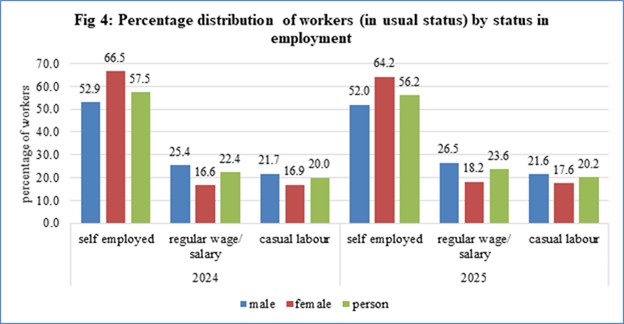
- 29 Mar 2026
In News:
The Ministry of Statistics and Programme Implementation released the PLFS Annual Report 2025, prepared by the National Statistical Office. This is the first report based on the calendar year (Jan–Dec 2025) with a revised methodology.
About PLFS
Launched in 2017, the Periodic Labour Force Survey provides comprehensive data on employment and unemployment in India. It uses two key approaches—Usual Status (ps ss) (365-day reference) and Current Weekly Status (CWS) (7-day reference)—to capture labour market dynamics.
Key indicators include:
- LFPR: Share of population working or seeking work
- WPR: Share of employed population
- UR: Share of unemployed in labour force
Key Trends in PLFS 2025
India’s labour market in 2025 shows stability with gradual improvement in employment conditions. The Labour Force Participation Rate (LFPR) remained stable at 59.3%, while the Worker Population Ratio (WPR) stood at 57.4%, indicating sustained employment levels. The Unemployment Rate (UR) declined to 3.1%, reflecting better labour absorption.
- Youth unemployment (15–29 years) fell to 9.9%
- Rural unemployment remained low (~2.4%), while urban unemployment stood at ~4.8%
Structural Changes in Employment
There is a slow shift towards better-quality jobs. The share of regular wage/salaried employment increased to 23.6%, while self-employment declined to 56.2%, indicating gradual formalisation.
Sectorally:
- Agriculture continues to dominate but declined to 43.0%
- Manufacturing increased to 12.1%
- Services also expanded
Gender and Social Dimensions
Despite improvements, gender disparities remain significant. Female LFPR is still low at 40.0%, and social factors continue to influence participation.
- Many men stay out of labour force for education (69.8%)
- Women cite childcare and domestic responsibilities (44.4%)
However, a positive trend is visible in rising female wages:
- Self-employed: 8.8%
- Salaried: 7.2%
A notable work-hour gap persists, with men working significantly longer hours than women.
Education, Skills and Challenges
The average years of schooling reached 10 years, and a majority of the population has at least secondary education. However, skill development remains weak, with only 4.2% of individuals receiving formal vocational training.
A major concern is the NEET category, with about 25% of youth (15–29 years) not in employment, education, or training—posing a risk to India’s demographic dividend.
Methodological Changes
From 2025 onwards:
· Survey cycle shifted to calendar year
· Sample size significantly increased
· Higher-frequency estimates introduced
Due to these changes, comparisons with earlier PLFS reports should be made cautiously.
Euthalia Zubeengargi

- 29 Mar 2026
In News:
A new butterfly species, Euthalia zubeengargi, has been recorded from Arunachal Pradesh, adding to India’s rich biodiversity, particularly in the Northeast.
About Euthalia zubeengargi
Euthalia zubeengargi is a butterfly species belonging to the genus Euthalia, which is widely distributed across South and Southeast Asia. The discovery highlights the ecological richness of Arunachal Pradesh, a known biodiversity hotspot.
- Habitat: Found in semi-evergreen forests at elevations of about 600–750 metres, particularly in cool and shaded interiors.
- Distribution: Part of a genus with 80 species recorded in Northeast India, indicating high regional diversity.
Physical and Behavioural Features
Members of the Euthalia genus, including this species, are typically associated with forest ecosystems and exhibit:
- Appearance:
- Earthy brown wings with pale spots
- Camouflaged coloration suited for forest habitats
- Behaviour:
- Prefer low vegetation and shaded areas
- Feed on:
- Tree sap
- Minerals from damp surfaces near streams
- Show activity mainly during late morning to early afternoon
- Characterised by short, slow flights between nearby plants
Ecological Significance
- Butterflies like Euthalia zubeengargi serve as important bioindicators:
- Their presence, diversity, and population reflect the health of ecosystems
- Sensitive to environmental changes such as:
o Habitat loss
o Climate change
o Pollution
Thus, their discovery aids in monitoring biodiversity and conservation status of forest ecosystems.
Waste Foundry Sand
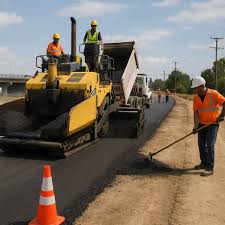
- 29 Mar 2026
In News:
The Institute of Indian Foundrymen (IIF) and CSIR-Central Road Research Institute have collaborated to develop solutions for the use of Waste Foundry Sand (WFS) in road construction, highlighting a push towards sustainable infrastructure.
What is Waste Foundry Sand?
Waste Foundry Sand (WFS) is a byproduct generated during metal casting processes in both ferrous and non-ferrous industries. It primarily consists of high-quality silica sand, which is repeatedly used in molds and cores before being discarded. Its physical and chemical properties vary depending on the casting process and type of metal industry, but it generally retains good strength and uniformity.
Types of Foundry Sand
Foundry sand is classified based on the binder system used:
- Clay-bonded (Green Sand):
- Contains about 85–95% silica sand and 4–10% bentonite clay
- Made from natural materials and widely used in conventional casting
- Chemically Bonded Sand:
- Uses synthetic binders
- Preferred for core making and high-strength molds that must withstand molten metal
Environmental Concerns and Need for Reuse
Large-scale generation of WFS creates disposal and environmental challenges, including landfill pressure and potential contamination risks. Since it is produced in bulk, its scientific reuse becomes crucial.
Use in Road Construction
WFS can be effectively utilised in road subgrades, embankments, and pavement layers as a partial substitute for natural sand. This not only reduces construction costs but also decreases dependence on natural resources.
Significance
The reuse of WFS aligns with:
- Circular economy principles
- Resource efficiency and waste minimisation
- Sustainable and eco-friendly infrastructure development
It represents an important step in integrating industrial waste into mainstream construction practices.
QS World University Rankings
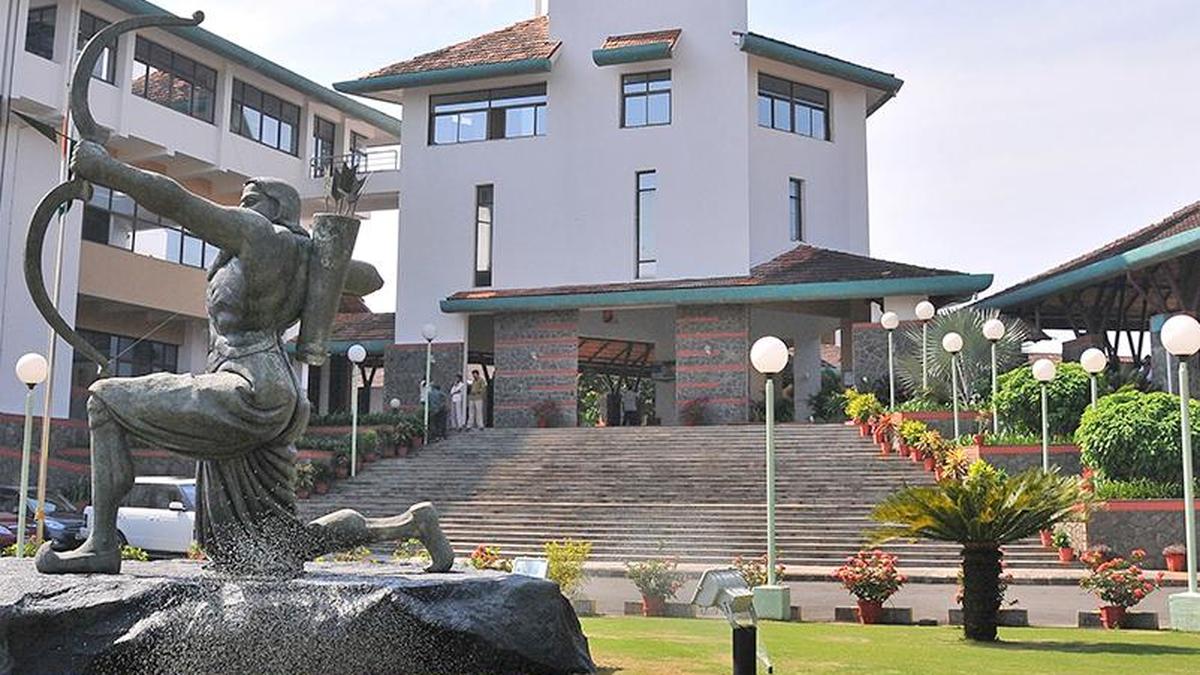
- 29 Mar 2026
In News:
The Indian Institute of Management–Kozhikode (IIM-K) has entered the global Top 100 in the QS World University Rankings by Subject 2026, marking a significant milestone for Indian higher education.
About QS World University Rankings
- Published annually by Quacquarelli Symonds (QS).
- Provides global comparative assessment of universities across subjects and overall performance.
Evaluation Framework
QS uses a multi-layered methodology:
1. Lenses (Thematic Categories):
- Research & Discovery
- Employability & Outcomes
- Global Engagement
- Learning Experience
- Sustainability
2. Indicators (Performance Areas):
- Academic Reputation
- Employer Reputation
- Citations per Faculty
- Employment Outcomes
3. Metrics:
- Quantitative tools used to calculate scores within each indicator.
Key Highlights – QS Rankings 2026
India’s Performance
- 120 new Indian institutions entered the rankings.
- India ranks 4th globally in new entries:
- USA: 287
- China: 181
- UK: 159
- India now has the 4th largest institutional representation, after:
- USA
- China
- UK
Notable Achievements by Indian Institutions
- Indian Institute of Management Kozhikode : Entered Top 100 globally (by subject) for the first time.
- Indian Institute of Technology (ISM) Dhanbad
- Secured global rank 21 (India’s highest).
- Maintains dominance in Mineral & Mining Engineering.
- Indian Institute of Management Ahmedabad
- Achieved Top 25 globally in:
- Business & Management Studies
- Marketing
- Achieved Top 25 globally in:
- Computer Science Domain:
- 6 Indian institutions in global Top 100.
- All improved their rankings compared to the previous year.
Regional Connectivity Scheme – Modified UDAN
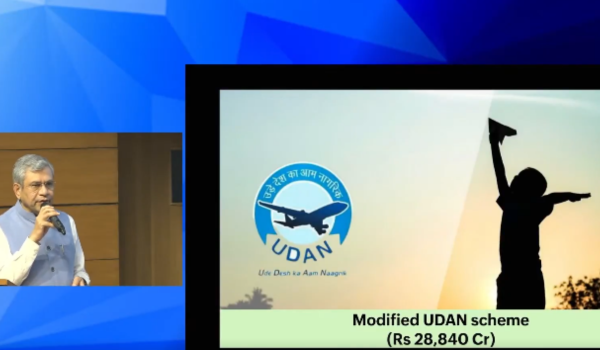
- 28 Mar 2026
In News:
The Union Cabinet has approved the Regional Connectivity Scheme – Modified UDAN with a financial outlay of ?28,840 crore for the period 2026–2036, aiming to expand regional air connectivity and strengthen India’s aviation ecosystem.
About UDAN Scheme
- UDAN (Ude Desh ka Aam Nagrik) is India’s flagship regional connectivity programme launched in 2016 to make air travel affordable and accessible.
- The Modified UDAN represents its next phase, focusing on sustainability, infrastructure expansion, and deeper regional integration.
Objectives
- Enhance connectivity to underserved and unserved regions
- Make air travel affordable for the common citizen
- Promote balanced regional development
- Support the vision of Viksit Bharat @2047
- Develop a globally competitive aviation sector
Key Features
1. Infrastructure Expansion (CAPEX)
- Development of 100 new airports from existing airstrips
- Investment of around ?12,159 crore
2. Helipad Network Development
- Construction of 200 modern helipads
- Each costing approximately ?15 crore
- Focus on hilly, remote, and island regions
3. Viability Gap Funding (VGF)
- Allocation of ?10,043 crore
- Financial support to airlines to ensure route viability
- Helps maintain affordable fares
4. Operation & Maintenance (O&M) Support
- Support for around 441 aerodromes
- Provided for 3 years (up to ?3.06 crore per airport annually)
5. Promotion of Indigenous Aviation
- Procurement of aircraft from Hindustan Aeronautics Limited
- HAL Dhruv helicopters
- HAL Dornier aircraft
- Deployment by state-run carriers like Alliance Air and Pawan Hans
PRISM-SG
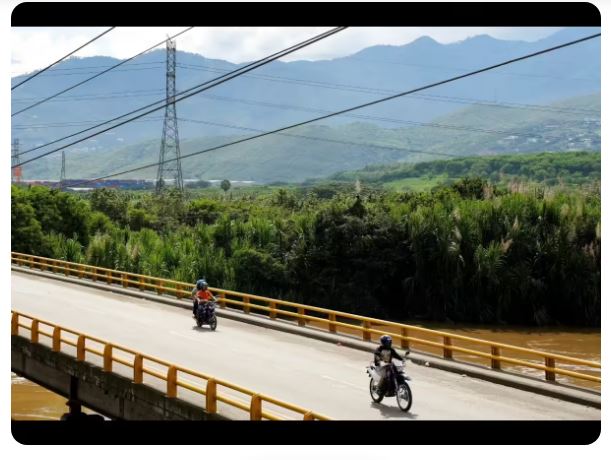
- 28 Mar 2026
In News:
The Minister for Road Transport and Highways recently launched the PRISM-SG (Portal for Rail-Road Inspection & Stages Management – Steel Girders) in New Delhi to streamline approvals and inspections related to critical transport infrastructure.
About PRISM-SG Portal
- The PRISM-SG Portal is a technology-driven digital platform designed to enhance efficiency, transparency, and coordination in the construction of Road Over Bridges (ROBs) and railway-related bridge infrastructure.
- It integrates multiple stakeholders and processes into a single-window system, enabling seamless project execution.
Objectives
- Digitise approval and inspection processes for bridge construction
- Improve inter-agency coordination between road and rail authorities
- Ensure quality assurance and compliance in infrastructure projects
- Reduce delays and enhance project execution efficiency
Key Features
1. End-to-End Digital Workflow
- Online submission of documents
- Automated scrutiny and query resolution
- Digital approvals and inspection scheduling
2. Quality Assurance Integration
- Incorporates:
- Quality Assurance Plan (QAP)
- Welding Procedure Specification Sheet (WPSS)
- Fabrication stage inspections of steel girders
3. Real-Time Monitoring & Audit
- Uploading of inspection reports, test results, and photographs
- Complete digital audit trail
- Real-time tracking of project progress
4. Multi-Stakeholder Integration
- Brings together:
- Road Owning Departments
- Indian Railways
- Contractors and fabricators
- Inspection agencies
Immigration, Visa, Foreigners Registration & Tracking (lVFRT) Scheme

- 28 Mar 2026
In News:
The Union Cabinet has approved the continuation of the Immigration, Visa, Foreigners Registration & Tracking (IVFRT) Scheme for the period 2026–2031, in line with evolving immigration needs and the recently enacted Immigration and Foreigners Act, 2025.
About IVFRT Scheme
The IVFRT Scheme is a technology-driven platform aimed at integrating and streamlining:
- Immigration processes
- Visa issuance
- Registration and tracking of foreigners in India
It was initially approved in 2010 and has undergone multiple phases of expansion to enhance efficiency and security.
Current Phase
- Duration: 1 April 2026 – 31 March 2031
- Budget Outlay: ?1800 crore
Objectives
- Create a secure, integrated immigration ecosystem
- Facilitate legitimate international travel
- Strengthen national security and foreigner tracking mechanisms
- Improve ease of doing business and tourism flows
Key Features
1. Emerging Technology Integration
- Adoption of mobile-based immigration services
- Deployment of self-service kiosks and e-gates
- Use of advanced digital platforms for seamless passenger movement
2. Transformation of Core Infrastructure
- Upgradation of:
- Immigration Check Posts (ICPs)
- Foreigners Regional Registration Offices (FRROs)
- Data centres and backend systems
- Development of a resilient and scalable nationwide system
3. Technology & Service Optimization
- Introduction of unified digital platforms
- Revamping of core application architecture
- Strengthening of network systems for faster and efficient service delivery
Achievements of IVFRT System
- 100% faceless and contactless visa processing system
- Around 91% of e-Visas processed within 72 hours
- Reduction in immigration clearance time:
o From5–6 minutes to 2.5–3 minutes
- Introduction of Fast Track Immigration–Trusted TravellerProgramme (FTI-TTP):
o Clearance time reduced to ~30 seconds at e-gates
- Coverage:
o 117 Immigration Posts
o 15 FRROs
o 850 Foreigners Registration Offices (FROs)
India’s Nationally Determined Contribution (2031-2035)
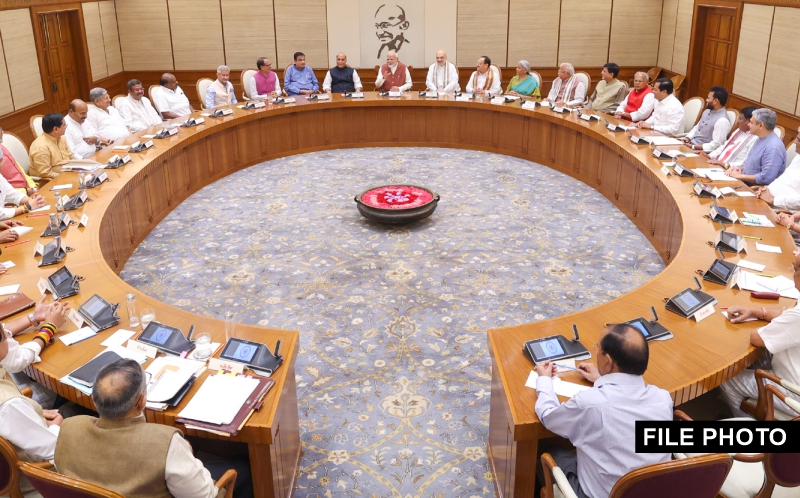
- 28 Mar 2026
In News:
The Union Cabinet has approved India’s updated Nationally Determined Contribution (NDC) for the period 2031–2035, to be submitted under the United Nations Framework Convention on Climate Change in line with the Paris Agreement.
About Nationally Determined Contributions (NDCs)
NDCs are national climate action plans through which countries outline:
- Targets for reducing greenhouse gas emissions (mitigation)
- Measures for adapting to climate change impacts
The 2031–2035 NDC builds upon India’s earlier commitments for 2030 and reflects enhanced ambition aligned with development goals.
Objectives of India’s NDC (2031–2035)
- Align economic growth with environmental sustainability
- Support the vision of Viksit Bharat @2047
- Progress towards net-zero emissions by 2070
- Ensure climate justice and equity under CBDR-RC principles
Key Targets
1. Emissions Intensity Reduction: Reduce emissions intensity of GDP by 47% from 2005 levels by 2035
2. Non-Fossil Fuel Capacity: Achieve 60% of installed electric power capacity from non-fossil sources
3. Carbon Sink Creation: Create an additional 3.5–4.0 billion tonnes of CO? equivalent through forest and tree cover
India’s Climate Performance: A Strong Track Record
- Achieved 33–35% emissions intensity reduction target well before 2030
- Reached over 52% non-fossil fuel capacity (2026), ahead of schedule
- Created 2.29 billion tonnes of CO? equivalent carbon sink by 2021
This early achievement enhances India’s global credibility in climate governance.
Key Features of the Updated NDC
1. Whole-of-Government Approach
- Developed through 10 working groups under NITI Aayog
- Involves ministries, industry, experts, and civil society
2. Clean Energy and Green Growth
- Expansion of renewable energy and green infrastructure
- Key initiatives:
- Green Hydrogen Mission
- PM Surya Ghar: Muft Bijli Yojana
- PM-KUSUM Scheme
- Carbon Capture, Utilization and Storage (CCUS)
3. Focus on Climate Adaptation
- Coastal protection via mangrove restoration (MISHTI)
- Glacier monitoring and Himalayan ecosystem protection
- Heat Action Plans and disaster-resilient infrastructure
4. Institutional Framework
- Implemented through:
- National Action Plan on Climate Change (NAPCC)
- State Action Plans (SAPCCs)
5. People-Centric Approach
- Promotion of Lifestyle for Environment (LiFE)
- Campaigns like Ek Ped Maa Ke Naam to encourage mass participation
6. Global Climate Leadership
- Active role in:
- International Solar Alliance
- Global Biofuel Alliance
- Coalition for Disaster Resilient Infrastructure (CDRI)
Operation Urja Suraksha
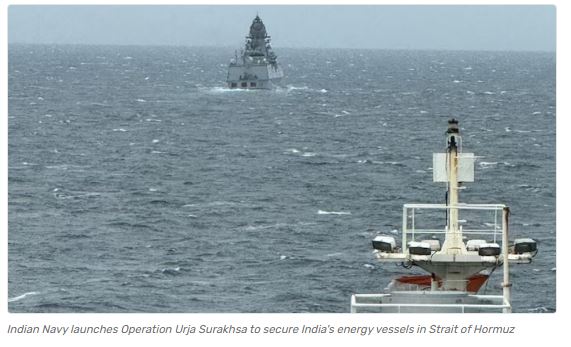
- 28 Mar 2026
In News:
Amid escalating geopolitical tensions in West Asia, particularly around the Strait of Hormuz, India has launched Operation Urja Suraksha to safeguard its critical energy supply routes.
About Operation Urja Suraksha
Operation Urja Suraksha is a strategic maritime security mission initiated by the Indian Navy to ensure the safe transit of India-bound energy cargo vessels from the Persian Gulf region.
Key Objectives
- Ensure uninterrupted supply of crude oil, LNG, and LPG to India
- Provide secure navigation and escort services in conflict-prone waters
- Prevent disruptions from threats such as piracy, sea mines, and regional hostilities
Key Features of the Operation
1. Naval Escort Mechanism
- Deployment of Indian naval warships to escort merchant vessels
- Escort begins after ships exit the Strait of Hormuz and continues into the Arabian Sea
2. Layered Maritime Security
- Use of destroyers and stealth frigates equipped with advanced surveillance and communication systems
- Real-time coordination between naval assets for threat detection and response
3. Safe Route Navigation
- Identification of secure maritime corridors
- Avoidance of high-risk zones prone to mines, drone threats, or electronic warfare
Strategic Significance
1. Energy Security
- India imports nearly 80–85% of its crude oil, a significant portion of which passes through the Strait of Hormuz
- The operation reduces vulnerability to supply shocks and price volatility
2. Geopolitical Relevance
- Demonstrates India’s proactive role in securing Sea Lines of Communication (SLOCs)
- Enhances India’s credibility as a net security provider in the Indian Ocean Region (IOR)
3. Maritime Capability Enhancement
- Showcases India’s blue-water naval capabilities
- Strengthens deterrence and rapid-response capacity in crisis situations
Biopharma SHAKTI Scheme

- 27 Mar 2026
In News:
The Union Budget 2026–27 introduced the Biopharma SHAKTI scheme, aimed at transforming India’s pharmaceutical sector by promoting advanced biologics and reducing reliance on animal testing through Non-Animal Methodologies (NAMs). This marks a shift towards innovation-driven, human-relevant drug development.
Background: India’s Pharmaceutical Strength and Emerging Needs
India has established itself as a global leader in pharmaceuticals, ranking among the top producers of generic medicines and supplying a significant share of vaccines worldwide. The sector has achieved substantial scale, with a turnover of ?4.72 lakh crore (FY25) and strong export growth.
However, the next phase of growth requires a transition from generics to high-value biologics and biosimilars, especially in response to the rising burden of non-communicable diseases (NCDs) such as cancer, diabetes, and cardiovascular disorders.
Biopharma SHAKTI Scheme: Key Features
- Biopharma SHAKTI (Strategy for Healthcare Advancement through Knowledge, Technology, and Innovation) is designed to create an end-to-end ecosystem for advanced biopharmaceuticals.
- With a financial outlay of ?10,000 crore over five years, the scheme focuses on strengthening research, manufacturing, and regulatory capacity. It aligns with earlier initiatives such as the National Biopharma Mission.
- The programme promotes the development of affordable biologics, enhances infrastructure through expansion of institutions like NIPERs, and builds a nationwide clinical trial network to accelerate drug development. It also aims to streamline regulatory processes by strengthening institutions such as CDSCO.
Understanding Biologics and Biosimilars
Unlike conventional small-molecule drugs, biologics are produced using living systems and have complex molecular structures. They include products such as insulin, monoclonal antibodies, and vaccines, which are crucial for treating chronic and life-threatening diseases.
Biosimilars are cost-effective alternatives to these biologics, offering similar therapeutic benefits at significantly lower costs. Their development is critical for improving accessibility and affordability of advanced treatments.
Non-Animal Methodologies (NAMs): A Paradigm Shift
A central feature of the scheme is the promotion of Non-Animal Methodologies (NAMs), which aim to replace or reduce traditional animal testing.
NAMs rely on human-relevant models and advanced technologies such as organoids, organ-on-a-chip systems, 3D bioprinting, and AI-based simulations. These approaches replicate human physiology more accurately, enabling better prediction of drug safety and efficacy.
They also align with global ethical standards and the principle of the 3Rs—Replace, Reduce, Refine in animal testing.
Advantages of NAMs
NAMs offer several advantages over conventional methods. They improve predictive accuracy, reducing the risk of adverse outcomes in clinical trials. They also enhance efficiency by lowering development costs and shortening timelines.
Furthermore, they enable precision medicine, as patient-derived models can be used to design personalised therapies. Regulatory recognition of NAMs in India has further strengthened their adoption.
Punjab-Rajasthan Water Dispute
- 27 Mar 2026
In News:
Punjab Chief Minister Bhagwant Mann demanded Rs 1.44 lakh crore as water royalty from Rajasthan, citing a 1920 colonial-era tripartite agreement under which Rajasthan paid a fee for water until 1960, but after the Indus Waters Treaty, stopped paying despite continuously drawing 18,000 cusecs of water. Punjab has raised the issue with both the Union Government and Rajasthan, seeking a formal review of the 1920 agreement.
Historical Timeline
|
Year |
Development |
|
1920 |
Tripartite agreement — British Govt, Bikaner State, Bahawalpur State — for water supply via Gang Canal on per-acre payment basis |
|
1960 |
Indus Waters Treaty signed; Rajasthan stops payments but continues drawing 18,000 cusecs |
|
1981 |
Tripartite agreement between Punjab, Haryana, Rajasthan allocates 8.6 MAF (out of 17.17 MAF) to Rajasthan — the largest share — despite it being a non-riparian state |
|
2004 |
Punjab enacts Termination of Agreements Act to scrap water-sharing deals |
|
2016 |
Supreme Court declares the 2004 Act unconstitutional — states cannot unilaterally terminate inter-state agreements |
Constitutional & Legal Framework
Constitutional Provisions:
- Entry 17, State List — Water primarily a State subject
- Entry 56, Union List — Centre regulates inter-state rivers in public interest
- Article 262 — Empowers Parliament to adjudicate inter-state river disputes; can exclude Supreme Court jurisdiction
Statutory Framework — ISWD Act, 1956: Provides for Tribunal formation upon state request. Tribunal's Award, once gazetted, holds the force of a Supreme Court decree.
Key SC Judgements:
- Karnataka v. Tamil Nadu (2018) — Cauvery declared a "National Asset"; drinking water needs given primacy
- Punjab Termination Act Case (2016) — Unilateral cancellation of inter-state agreements unconstitutional
- Narmada Bachao Andolan v. UoI (2000) — Water is part of the Right to Life (Article 21); Tribunal Awards are final and binding
Root Causes of Inter-State Water Disputes
- Water Scarcity: Per capita availability has fallen from 5,200 cubic metres (1950) to 1,400–1,500 cubic metres (2024), approaching the scarcity threshold of 1,000 cubic metres by 2050
- Agricultural Intensification: Punjab's groundwater extraction rate stands at 156.36% — nearly three times the national average of 60.63%
- Conflictual Federalism: Water straddles the State List and Union List, creating jurisdictional friction when states prioritise narrow interests
- Hydro-Politics: Electoral compulsions harden state positions, delaying negotiated settlements
- Tribunal Delays: The Cauvery dispute lasted over 30 years — rendering awards difficult to implement
Way Forward
- Benefit-Sharing over Water-Sharing — States cooperate on crop specialisation suited to agro-climatic zones rather than fighting over volumetric allocation
- Digital Twins of River Basins — AI-powered 3D basin models using satellite data (RISAT) for objective "What-If" simulations replacing political bargaining
- Permanent Tribunal — Replace ad hoc bodies with a Single Permanent ISWD Tribunal with specialised benches, as proposed in the ISWD (Amendment) Bill, 2019
- Mediation-First — Mandate neutral expert Dispute Resolution Committees before legal adjudication
- Water Budgets — States must demonstrate efficient irrigation use (drip irrigation, mulching) before claiming larger shares
- Blue Grants — Additional Central funding as cooperative federalism incentive for states entering joint water management agreements
India's Orange Economy Push
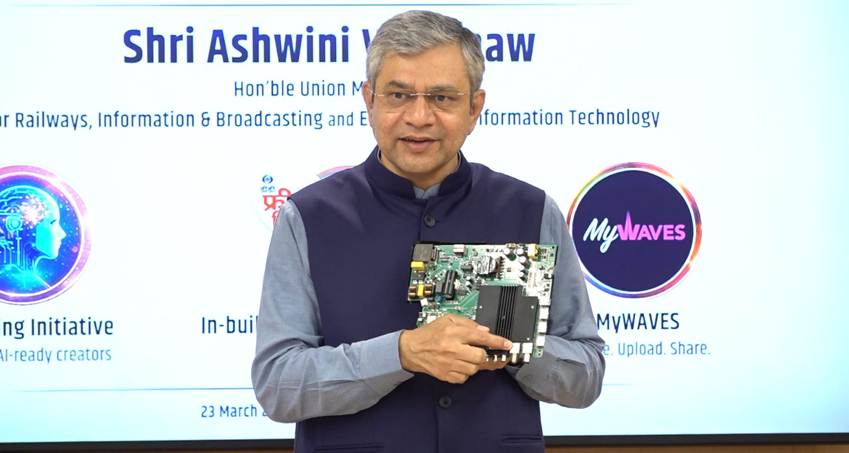
- 27 Mar 2026
In News:
Union Minister for Information & Broadcasting Shri Ashwini Vaishnaw launched three major initiatives aimed at strengthening India's media, broadcasting, and digital sector and promoting the creative economy - namely, the National AI Skilling Initiative in partnership with Google and YouTube through the Indian Institute of Creative Technologies (IICT); MyWAVES, a citizen creator platform on WAVES OTT; and the rollout of Advanced Electronic Programme Guide (EPG) and in-built satellite tuners in television sets for enhancing access to DD Free Dish services.
What is the Orange Economy?
The Orange Economy, also referred to as the Creative Economy, is a production model where value is derived primarily from intellectual property, creativity, and cultural capital rather than physical manufacturing or natural resources.
Key Sectors: AVGC-XR (Animation, Visual Effects, Gaming, Comics, and Extended Reality), film, music, fashion, design, advertising, performing arts, and cultural tourism.
Economic Significance:
· Accounts for approximately 3% of global GDP and supports 30 million jobs worldwide
· India's entertainment and media revenue is projected to grow from USD 35.3 billion in 2025 to USD 47.2 billion by 2029
· Budget 2026-27 announced the establishment of AVGC Content Creator Labs in 15,000 schools and 500 colleges, targeting a skilled workforce of 2 million professionals by 2030
The Three Transformative Initiatives
1. National AI Skilling Initiative
The Ministry of Information and Broadcasting, in partnership with Google and YouTube, has announced a national AI skilling initiative to train 15,000 participants from the creative and media sectors. This initiative is being implemented through the Indian Institute of Creative Technologies (IICT), and is aimed at strengthening AI capabilities in areas such as animation, visual effects, gaming, and comics (AVGC) and media technology.
The programme is structured in two phases:
· Phase I (March–June 2026): Focuses on foundational AI learning at scale through Google Career Certificates and Google Cloud Generative AI learning paths. Participants will undergo courses such as AI Essentials, Prompting Essentials, Introduction to Generative AI, and Generative AI Leader Path. Successful completion of this phase will be mandatory for progression to the next stage.
· Phase II (July–December 2026): Focuses on advanced, hands-on and project-based specialization for the creative industry. The curriculum will include modules on the art of storytelling, YouTube best practices, and advanced training using AI tools such as Gemini 3, Nano Banana, Veo, and Vertex AI. The training will be conducted in major cities across the country.
Importantly, around 15,000 youths will be trained without any fee.
2. MyWAVES — Citizen Creator Platform
MyWAVES is a new feature within the WAVES OTT platform that will enable citizens to create, upload, and share content. MyWaves is designed as a structured platform for user-generated content (UGC) that will also support participation in national initiatives such as the Create in India Challenge.
The platform marks a shift from content viewing to active content participation, making WAVES OTT a platform not only for viewing but also for creation. MyWaves will support multiple formats including short videos, vertical videos, and episodic content, and will offer a multilingual interface across Indian languages.
The Create in India Challenge (CIC) with which MyWAVES aligns hosts competitions across diverse themes including the Anime Challenge, AI Film Making, Comics Creator Championship, Truth Tell Hackathon (to combat misinformation), and XR Creator Hackathon, collectively empowering India's grassroots creator economy.
3. Advanced EPG with In-Built Satellite Tuners
The Ministry of Information & Broadcasting has introduced television sets with built-in satellite tuners along with a new, user-friendly programme guide (EPG). With this initiative, viewers will be able to watch DD Free Dish channels directly on their television sets without the need for a separate set-top box, thereby reducing additional costs, wiring, and the hassle of multiple remotes.
The new advanced programme guide will allow users to easily browse channels and programme schedules in one place through a simple and intuitive interface, making the overall viewing experience more convenient for households across the country. This initiative holds particular significance for remote and rural areas where last-mile connectivity and hardware affordability remain persistent barriers.
Foreign Contribution (Regulation) Amendment Bill, 2026
- 27 Mar 2026
In News:
The Foreign Contribution (Regulation) Amendment Bill, 2026 was introduced in the Lok Sabha on March 25, 2026 by the Minister of State for Home Affairs, proposing significant changes to the Foreign Contribution (Regulation) Act, 2010. The Bill has since triggered considerable political debate, with its Lok Sabha discussion deferred amid opposition protests and political sensitivities ahead of the Kerala Assembly elections.
What is the Foreign Contribution (Regulation) Act, 2010?
The FCRA, 2010 is a central legislation administered by the Ministry of Home Affairs (MHA) that regulates the acceptance, utilisation, and accounting of foreign contributions received by individuals, associations, and NGOs in India.
Key Facts:
· Originally enacted in 1976; comprehensively revised in 2010; further amended in 2016, 2018, and 2020
· Around 16,000 organisations are currently registered under FCRA
· These organisations collectively receive approximately ?22,000 crore annually
· All foreign contributions must be received through a single designated account at the State Bank of India, New Delhi (main branch)
· Registration is valid for five years and must be renewed at least six months before expiry
· Foreign funds cannot be sub-granted to unregistered entities
· Foreign funding is prohibited for politicians, journalists, judges, and government servants
Permitted Uses of Foreign Funds: Cultural, economic, educational, social, and religious activities only.
What is the Legal Gap the Bill Seeks to Address?
Under Section 15 of the existing Act, assets created from foreign contributions vest in a prescribed authority upon cancellation or surrender of FCRA registration. However, no clear procedural mechanism exists for the subsequent management, supervision, or disposal of such assets — leading to administrative uncertainty and potential misuse. The 2026 Bill addresses this by inserting a new Chapter IIIA into the Act.
Key Provisions of the Amendment Bill, 2026
1. Designated Authority
A government-appointed Designated Authority is empowered to:
- Provisionally take over, supervise, manage, and dispose of foreign contributions and assets of NGOs whose registration is cancelled, surrendered, or lapsed
- Return unutilised funds and assets if registration is subsequently renewed or restored
- Permanently vest assets if the organisation fails to secure fresh registration within a prescribed period
- Preserve the religious character of any place of worship taken over under the Act
Proceeds from asset disposal are credited to the Consolidated Fund of India.
2. Expanded Definition of "Key Functionary"
Personal liability is extended to directors, trustees, partners, karta of Hindu Undivided Families (HUFs), and office-bearers of societies and trade unions — unless they prove lack of knowledge or due diligence.
3. Prior Approval for Investigations
Any law enforcement agency or State government must obtain prior Central Government approval before initiating FCRA-related investigations, significantly centralising oversight.
4. Rationalised Penalties
Maximum imprisonment for FCRA offences reduced from five years to one year, with rationalised penalties to decriminalise inadvertent procedural lapses.
5. Other Provisions
- Fixed timelines for receipt and utilisation of foreign funds
- Automatic cessation of registration upon non-renewal
- Appeals against Designated Authority orders to be filed before the District Judge within 90 days
Agri-Photovoltaics
- 27 Mar 2026
In News:
Union Budget 2026–27 nearly doubled the PM-KUSUM allocation to Rs. 5,000 crore, and the government is considering a National AgriPV Mission (10 GW target) under PM-KUSUM 2.0.
About Agri-Photovoltaics (AgriPV)
Agri-Photovoltaics (AgriPV), or Agrivoltaics, is the simultaneous dual use of agricultural land for both solar power generation and crop cultivation. Instead of clearing farmland for solar parks, panels are elevated above or spaced between crops — creating a symbiotic system where plants and panels mutually enhance each other's performance.
How It Works
Solar panels installed above crops provide partial shade, reducing heat stress and water evaporation. In return, plant transpiration cools the panels from below, improving their photovoltaic efficiency by 2–5%. The result: one plot of land produces both food and clean electricity.
· Elevated Systems: Panels mounted ~3m high. Crops grow below; machinery can operate freely. Best for large-scale mechanised farms.
· Row-Based Systems: Panels in rows with wide gaps. Sun-loving crops in gaps; shade-tolerant crops directly below. Most common in India.
· Vertical (Bifacial): Panels installed upright like fences, capturing sunlight from both faces. Minimises land coverage.
· Greenhouse-Integrated: Panels built into greenhouse roofs. Combines controlled-environment agriculture with power generation.
Why India Needs AgriPV
India faces a structural contradiction: its 300 GW solar target by 2030 requires 4–5 acres per MW, but over 55% of India's land is agricultural (156 million hectares), sustaining 60% of the workforce. Mass diversion of farmland for solar is neither viable nor acceptable.
AgriPV resolves this by transforming the food-energy relationship from competition to complementarity — achieving solar targets without displacing a single farmer or clearing a single forest. With over 300 days of sunshine annually across India's agricultural heartland, the natural conditions for AgriPV are exceptional.
Key Benefits
For Farmers
· Income diversification — sell surplus electricity to DISCOMs or earn lease/revenue from developers
· Lower input costs — solar replaces expensive diesel pumps for irrigation
· Example: A Maharashtra farmer earns fixed developer rent while harvesting chillies or brinjal beneath the panels
For Agriculture
· Water conservation — panel shade reduces evapotranspiration; fewer irrigation cycles needed in arid Rajasthan and Gujarat
· Climate resilience — panels shield crops from heatwaves, hailstorms, and erratic rainfall
· Stronger value chains — decentralised power runs cold storage, chaff cutters, and food processing locally
For the Environment
· Cuts diesel-based agricultural emissions
· Reduces transmission losses through distributed generation
· Avoids large-scale land clearance compared to conventional solar parks
Suitable Crops by Region
|
State/Region |
Suitable Crops under AgriPV |
|
Madhya Pradesh |
Tomato, onion, turmeric, tulsi |
|
Karnataka & Maharashtra |
Ragi, jowar, grapes, banana, brinjal |
|
Rajasthan & Gujarat (arid) |
Garlic, onion — benefit from reduced watering under shade |
Policy & Current Status
PM-KUSUM Scheme (2019, MNRE)
· Component A: Solar plants (up to 2 MW) on barren/fallow/cultivable land
· Component B: Standalone solar-powered irrigation pumps
· Component C: Solarisation of grid-connected agricultural pumps
· Budget 2026–27: Allocation nearly doubled to Rs. 5,000 crore
· Proposed PM-KUSUM 2.0: AgriPV as a dedicated 10 GW component
State Initiatives
|
State |
Scheme |
Key Feature |
|
Maharashtra |
MSKVY |
13.65 GW target; tariff Rs. 3.10/kWh for farmers |
|
Gujarat |
Suryashakti Kisan Yojana |
60% financial support; Rs. 7/kWh tariff for 7 years |
|
Odisha |
— |
Rs. 20,000 per acre/year for participating farmers |
|
Delhi |
MKAB Solar Yojana |
Lease income from Rs. 8,333/acre/month |
Current Status (2026): ~50 pilot AgriPV installations are active across India (including ICAR-CAZRI, Jodhpur). The India Agrivoltaics Alliance (IAA), anchored by NSEFI, is a 40 member platform working with MNRE, Agriculture, and Rural Development ministries. Large-scale commercial replication has not yet begun. The global AgriPV market is projected to grow at 8.3% CAGR, reaching USD 7.61 billion by 2031.
Vayu Baan Project

- 26 Mar 2026
In News:
In a major stride toward self-reliance in defense technology, the Indian Air Force (IAF) has unveiled Project Vayu Baan (Air Arrow). This initiative marks the development of India’s first Helicopter-Launched Drone System, officially categorized as an Air-Launched Effect (ALE). Developed by the IAF’s Directorate of Aerospace Design (DAD), the project aims to integrate unmanned systems with manned rotary-wing platforms to enhance lethality and survivability in contested airspaces.
Technical Overview: How Vayu Baan Operates
The Vayu Baan is a compact, autonomous drone engineered for mid-air deployment from moving helicopters.
- Deployment: The drone is dropped from a mother ship (such as the Prachand LCH or ALH Dhruv).
- Activation: Post-release, the system unfolds its wings and activates its propulsion system to transition into controlled flight.
- Mission Profile: It functions as a "Loyal Wingman" for helicopters, capable of switching between high-definition ISR (Intelligence, Surveillance, and Reconnaissance) and acting as a Precision-Guided Munition (Kamikaze drone).
Key Features and Specifications
The Vayu Baan system is tailored for the specific challenges of the modern battlefield, particularly along India's mountainous borders:
- Stand-off Range: The drone can travel over 50 km after release, allowing the host helicopter to remain outside the range of enemy MANPADS (Man-Portable Air-Defense Systems).
- Endurance: It offers a loitering time of approximately 30 minutes, providing a window to scout targets or wait for optimal strike conditions.
- GNSS-Denied Navigation: A critical feature is its ability to operate in electronic warfare (EW) environments. It uses advanced flight control systems to navigate even when GPS/GNSS signals are jammed.
- Advanced Sensors: Equipped with EO/IR (Electro-Optical/Infrared) sensors, ensuring operational efficiency during both day and night missions.
- Swarm Potential: A single helicopter can deploy multiple units, creating a localized "mini-swarm" to overwhelm enemy defenses through saturation.
Reform Express Initiative

- 26 Mar 2026
In News:
In a major push to align Indian Railways with the National Logistics Policy, the Union Ministry of Railways has unveiled five pivotal structural reforms under the "Reform Express" initiative. This brings the total number of policy interventions in 2026 to nine. The initiative targets three critical pillars: Cargo Logistics, Infrastructure Integrity, and Passenger Digital Empowerment, aiming to reduce logistics costs and enhance the ease of travel.
I. Revolutionizing Cargo & Freight Logistics
The reforms specifically target the transport of essential and high-value commodities to increase the railways' modal share in freight.
- Specialized Salt Logistics: India is a top global producer of salt, yet rail transport has historically faced challenges due to the corrosive nature of the commodity.
- Innovation: Introduction of top-loading, stainless steel containers with hydraulic side-discharge mechanisms.
- Impact: Prevents wagon corrosion, eliminates water seepage (common in traditional open wagons), and allows for seamless multimodal "site-to-warehouse" transport.
- Flexible Automobile Transport: Currently, rail accounts for approximately 24% of passenger vehicle movement.
- Innovation: Introduction of route-specific, flexible wagon designs. This allows manufacturers to customize wagons to bypass physical constraints like low-clearance bridges and narrow tunnels.
- Impact: Enhances capacity utilization and accelerates the delivery of automobiles across diverse terrains.
II. Infrastructure Governance and Project Execution
To address delays and "predatory bidding," the Ministry has overhauled the contracting framework for railway projects.
- Stricter Contractor Eligibility: The single-project experience requirement has been raised from 35% to 50% of the total project value. Additionally, at least 20% of prior experience must be in railway-specific works.
- Financial Safeguards: * Bid Security: Fixed at a flat 2% of the project value to deter frivolous bidders.
- Anti-Predatory Measures: If a bid is more than 5% below the estimated cost, the bidder must provide an additional 5% performance guarantee to ensure project quality is not compromised.
- Accountability: Subcontracting limits have been reduced from 70% to 40%, forcing primary contractors to execute at least 60% of the work directly.
III. Enhancing Passenger Experience and Ticketing Integrity
Digital reforms have been implemented to protect genuine travelers from touts and speculative bookings.
- Ticketing Clean-up: Through advanced data analytics and Aadhaar-based OTP verification, the Railways removed nearly 3 crore (30 million) fake accounts from the IRCTC database.
- Revised Cancellation Windows: To curb last-minute speculation, the cancellation slabs have been revised to 72, 24, and 8 hours before departure.
- Note: No refunds are permitted for cancellations made less than 8 hours before departure.
- Dynamic Flexibility:
- Boarding Point Change: Passengers can now digitally change their boarding station up to 30 minutes before the train's departure from its origin.
- Class Upgrades: Digital class upgrades are now permitted up to 30 minutes before departure (previously restricted to before chart preparation).
- Refund Automation: The requirement for filing a Ticket Deposit Receipt (TDR) for e-tickets has been abolished; refunds are now processed automatically upon cancellation.
Space Reactor 1 (SR-1) Freedom Spacecraft

- 26 Mar 2026
In News:
In a significant policy pivot in early 2026, NASA announced a major restructuring of the Artemis mission architecture. The primary objective has transitioned from maintaining a constant orbital presence to establishing a permanent surface foothold.
- De-prioritization of Lunar Gateway: Plans for the Lunar Gateway, a proposed small space station in lunar orbithave been "paused" or scrapped. Resources and hardware are being redirected toward the Artemis Base Camp at the Lunar South Pole.
- Direct-to-Surface Model: Future crewed missions will now bypass an orbital waystation, with astronauts transferring directly from the Orion spacecraft to commercial Human Landing Systems (HLS) like SpaceX’s Starship or Blue Origin’s Blue Moon.
- Mission Timeline:
- Artemis II (2026): Crewed lunar flyby.
- Artemis IV (2028): Target for the first human lunar landing since 1972.
- Artemis V (Late 2028): Commencement of lunar base construction.
Space Reactor 1 (SR-1) Freedom: A Technological Paradigm
NASA has officially announced SR-1 Freedom, a pathfinder spacecraft designed to be the first interplanetary vessel powered by a Nuclear Fission Reactor. Scheduled for a December 2028 launch, it marks the shift from chemical and solar energy to Nuclear Electric Propulsion (NEP).
Technical Specifications and Operation
- Propulsion System: It utilizes NEP, where an onboard fission reactor splits uranium atoms to generate electricity. This power then fuels highly efficient ion thrusters.
- Power Output: The reactor is designed for a 20-kilowatt output, utilizing High-Assay Low-Enriched Uranium (HALEU) fuel.
- Hardware Repurposing: In a cost-saving measure, the SR-1 utilizes the Power and Propulsion Element (PPE) originally built for the Lunar Gateway.
- Thermal Management: To handle the immense heat of fission, the craft employs advanced "heat pipes" and composite titanium heat sinks.
The "Skyfall" Payload: Scouting the Red Planet
The primary mission of SR-1 Freedom is to deliver the Skyfall payload to Mars. This payload consists of a fleet of 3 to 6 Ingenuity-class robotic helicopters.
- Objectives:
- Water-Ice Detection: Using ground-penetrating radar to locate subsurface water deposits essential for life support and propellant production (In-Situ Resource Utilization - ISRU).
- Terrain Mapping: Identifying safe, flat landing zones for future human-scale Mars landers.
- Atmospheric Study: Monitoring Martian dust storms and weather patterns that often render solar-powered rovers inoperable
Minor Planet Centre

- 26 Mar 2026
In News:
In March 2026, the Minor Planet Centre (MPC) announced the discovery of 15 new natural satellites: four orbiting Jupiter and 11 orbiting Saturn. This discovery has pushed Saturn’s total moon count to 285 and Jupiter’s to 101, further intensifying the "moon race" between the two gas giants.
About the Minor Planet Centre (MPC)
The MPC is the single worldwide location for the receipt and distribution of positional measurements for "minor planets" (asteroids), comets, and outer irregular natural satellites.
- Location & Affiliation: Based in Cambridge, Massachusetts, it operates at the Smithsonian Astrophysical Observatory (SAO).
- Governance: It functions under the auspices of Division F of the International Astronomical Union (IAU).
- Funding: It is primarily supported by a grant from NASA’s Near-Earth Object Observations (NEOO) program.
Core Functions and Operational Process
The MPC serves as the international clearinghouse for all data related to small solar system bodies.
- Data Verification: When astronomers detect a moving object, they submit coordinates to the MPC. Experts use these to verify observations and calculate the object’s orbit.
- Designation & Cataloging: If an object is confirmed as new, the MPC assigns it an official designation (e.g., S/2024 J 1). Once an orbit is precisely determined, it receives a permanent Roman numeral designation.
- Near-Earth Object (NEO) Monitoring: One of its most critical roles is tracking space rocks that could potentially threaten Earth. By maintaining a massive database, it allows scientists to predict "close approaches."
- Global Coordination: The MPC publishes Minor Planet Electronic Circulars (MPECs). These alert the global scientific community to new discoveries, allowing observatories worldwide to coordinate follow-up observations.
Case Study: The 2026 Jovian and Saturnian Discoveries
The recent discoveries highlight the increasing capability of terrestrial telescopes (located in Chile and Hawaii) to detect "irregular" moons.
- Physical Characteristics: These moons are typically small (1–3 km in diameter) and extremely faint, with magnitudes between 25 and 27 (roughly 100 million times fainter than what the naked eye can see).
- Orbital Mechanics: Many of these new satellites exhibit retrograde orbits (moving in the opposite direction of the planet’s rotation) and are highly elliptical, suggesting they may be captured asteroids rather than bodies formed alongside the planet.
- Naming Conventions: Under IAU rules, these small irregular satellites are only given proper names (drawn from Gallic, Inuit, or Norse mythology) if they are of significant scientific interest; otherwise, they remain known by their alphanumeric designations.
Variable Rate Repo (VRR) Auctions
- 26 Mar 2026
In News:
Liquidity management remains a cornerstone of the Reserve Bank of India's (RBI) monetary policy operations. Recently, the RBI injected substantial liquidityincluding a specific instance of ?55,837 crore via a 3-day auctionto counter tightening cash conditions in the banking system. By utilizing tools like the Variable Rate Repo (VRR), the central bank ensures that the credit flow to the economy remains uninterrupted and short-term interest rates stay aligned with the policy repo rate.
What is a Variable Rate Repo (VRR)?
The Variable Rate Repo is a flexible monetary tool under the Liquidity Adjustment Facility (LAF) used by the RBI to inject "transient" (temporary) liquidity into the banking system. Unlike the standard Fixed Rate Repo, where the interest rate is pre-determined by the RBI, the VRR allows the market to determine the cost of funds through a competitive bidding process.
Operational Mechanism
- Notification: The RBI announces an auction with a "notified amount" and a specific tenor (ranging from overnight to 14 days).
- Competitive Bidding: Commercial banks submit bids specifying the amount they require and the interest rate they are willing to pay.
- Cut-off Rate: The RBI accepts bids starting from the highest interest rate offered down to a "cut-off rate." This ensures that funds are allocated to those with the highest demand/valuation.
- Collateralization: As with all repo transactions, banks must provide Government Securities (G-Secs) as collateral, which they agree to repurchase at the end of the term.
Triggers for Liquidity Deficits
The banking system often transitions from a surplus to a deficit mode due to several seasonal and structural factors:
- Advance Tax Outflows: Significant quarterly payments by corporates to the government lead to a temporary migration of funds from the banking system to the government's account with the RBI.
- GST Payments: Monthly Goods and Services Tax collections typically drain liquidity toward the end of the month.
- Festival Demand: Increased physical currency circulation during festive seasons reduces the "currency with the public," thereby lowering bank deposits.
- Year-End Requirements: In March, banks often face heightened demand for funds to meet regulatory requirements and balance sheet closures.
VRR vs. Open Market Operations (OMO)
It is essential to distinguish between tools used for temporary versus durable liquidity:
|
Feature |
Variable Rate Repo (VRR) |
Open Market Operations (OMO) |
|
Nature of Liquidity |
Transient/Temporary (Short-term) |
Durable (Long-term) |
|
Instrument |
Lending against collateral |
Outright purchase/sale of G-Secs |
|
Primary Goal |
Fine-tuning daily liquidity |
Managing long-term money supply |
|
Recent Example |
?55,837 Cr 3-day injection |
?3.50 lakh Cr G-Sec purchase (Jan 2026) |
Macroeconomic Implications for India
- Interest Rate Stability: By preventing the Weighted Average Call Rate (WACR) from spiking above the policy repo rate, the RBI ensures "stability in the corridor." This is crucial for the effective transmission of monetary policy.
- Support for Credit Growth: Adequate liquidity ensures that commercial banks do not tighten lending norms for MSMEs and retail consumers due to temporary cash crunches.
- Market Signaling: High demand in VRR auctions serves as a vital signal to the RBI regarding the underlying stress in the money markets, prompting further intervention if necessary.
- Fiscal Coordination: The RBI’s auctions often coincide with government borrowing schedules (e.g., the H1 FY 2026-27 borrowing target of ?8.20 lakh crore) to ensure that government bond yields remain stable.
National AI Skilling Initiative
- 25 Mar 2026
In News:
- In a strategic move to future-proof India’s creative workforce, the Ministry of Information and Broadcasting (MIB) recently launched the National AI Skilling Initiative.
- Developed in partnership with Google and YouTube, this initiative aims to integrate Artificial Intelligence (AI) into the AVGC-XR (Animation, Visual Effects, Gaming, Comics, and Extended Reality) and media technology sectors.
- The program is designed to train 15,000 participants, including creators, media professionals, students, and developers, ensuring that India’s "soft power" is backed by cutting-edge technological proficiency.
Implementation Framework
The initiative is being executed through the Indian Institute of Creative Technologies (IICT) and follows a structured, two-phase pedagogical approach:
Phase I: Foundational AI Literacy
- Objective: To provide large-scale, baseline AI education.
- Curriculum: Participants utilize Google Career Certificates and Google Cloud Generative AI learning paths.
- Core Modules: * AI Essentials and Prompting Essentials.
- Introduction to Generative AI.
- Generative AI Leader Path.
- Criterion: Successful completion of Phase I is a mandatory prerequisite for advancing to specialized training.
Phase II: Advanced Specialization
- Objective: To offer hands-on, project-based learning tailored specifically for the creative industry.
- Focus: Practical application of AI in high-end animation, real-time rendering, and automated media workflows.
- Reach: Training sessions are slated to be conducted across major Indian cities to ensure geographic inclusivity.
Strategic Significance for India
- Strengthening the AVGC-XR Sector: India’s AVGC sector is a high-growth engine. By infusing AI, the initiative reduces production timelines and enhances the global competitiveness of Indian content.
- Bridging the Digital Skill Gap: As Generative AI transforms content creation, this initiative prevents "technological unemployment" by upskilling existing professionals and preparing students for an AI-augmented job market.
- Public-Private Partnership (PPP) Model: The collaboration with Google and YouTube leverages global expertise and industry-standard tools, ensuring the curriculum remains relevant to market demands.
- Democratizing Technology: By making advanced AI tools accessible to 15,000 creators, the government is fostering an ecosystem where small-scale creators can compete with large studios using AI-driven efficiencies.
Hudsonian Godwit
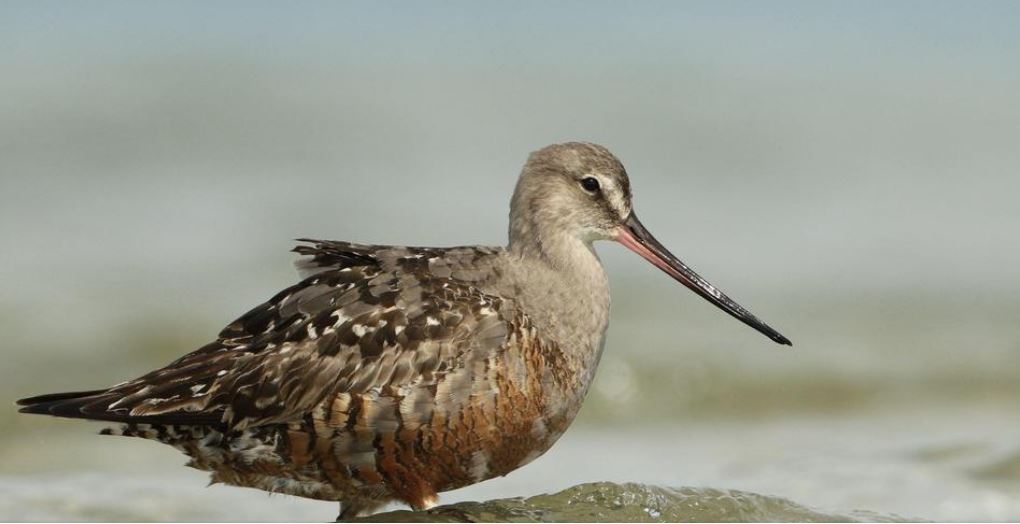
- 25 Mar 2026
In News:
In March 2026, scientific reports revealed a catastrophic 95% decline in the population of the Hudsonian Godwit (Limosa haemastica) over the last four decades. This drastic plunge has positioned the shorebird as a primary focus at the UN Convention on the Conservation of Migratory Species of Wild Animals (CMS COP15) held in Campo Grande, Brazil. The species is now among 42 migratory animals proposed for enhanced international protection under the Bonn Convention.
About the Hudsonian Godwit
The Hudsonian Godwit is a large shorebird belonging to the sandpiper family (Scolopacidae), celebrated for its extraordinary physiological endurance and migratory precision.
- Physical Characteristics: Distinguishable by a long, slightly upturned bill and long legs. During the breeding season, it displays a vibrant plumage of gold, brown, and brick-red, which transitions to a subtle gray-brown during the non-breeding period.
- Ecological Niche: It breeds in sub-Arctic and Boreal wetlands (muskeg and sedge meadows) and winters in the southern reaches of South America, primarily Patagonia and Chiloé Island.
- Feeding Behavior: As a probing feeder, it consumes insects, crustaceans, and small invertebrates in shallow water and intertidal zones.
The "Marathon" Migration: A Feat of Endurance
The Hudsonian Godwit is a "hemispheric traveler," undertaking an annual round-trip of nearly 30,000 km.
- Non-stop Capability: It can fly up to 11,000 km in a single stretch without eating, drinking, or sleeping, relying entirely on stored fat reserves.
- Migratory Connectivity: Its survival depends on a series of highly predictable wetland "stopover sites" across North and Central America to refuel.
Drivers of Decline: A Multi-Continental Crisis
The 95% population collapse is attributed to a "polycrisis" where environmental stressors across three continents intersect simultaneously.
- Arctic Ecological Mismatch (Climate Change): Shifting spring timelines in the Arctic have disrupted the synchrony between hatching and food availability. Chicks now hatch after the peak emergence of insects, leading to high starvation rates.
- Infrastructure Boom in South America: In southern Chile, the expansion of salmon and oyster farming has led to heavy industrialization of intertidal zones. This has degraded the primary feeding grounds the birds rely on during the southern summer.
- Wetland Loss in North America: In the United States, changes in agricultural land use and drainage practices have made shallow-water wetlands increasingly rare. This forces the birds to spend more time searching for stopover sites, depleting the energy reserves needed for their trans-oceanic flights.
- Disrupted Migration Cues: Research indicates that the birds are now migrating roughly six days later than a decade ago, suggesting a breakdown in the "geological clock" or environmental cues they use to time their journeys.
Conservation Status and Policy Implications
|
Category |
Status/Details |
|
IUCN Red List |
Vulnerable |
|
Legal Framework |
Proposed for CMS Appendix I (Strict protection for endangered migratory species). |
|
Global Trend |
49% of all migratory species are currently in decline. |
Bura Chapori Wildlife Sanctuary
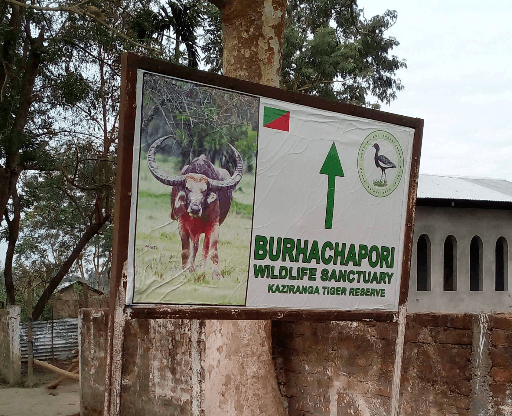
- 25 Mar 2026
In News:
In a significant move to bolster the conservation landscape of Central Assam, the State Government has proposed the creation of a new Reserved Forest, tentatively named Burhachapori No. 5, in the Sonitpur district.
Spanning approximately 224.32 hectares, this initiative is primarily driven by Compensatory Afforestation (CA) requirements under the Van Sanrakshan Evam Samvardhan Rules, 2023. The land, situated in the Dhania Range, will compensate for forest diversions necessitated by critical infrastructure projects, including National Highway expansion (NHAI/NHIDCL), oil exploration (ONGC/OIL), and power transmission (AEGCL).
The Laokhowa-Burhachapori Eco-system
The Burhachapori Wildlife Sanctuary (WLS) is not an isolated entity but a vital cog in the Laokhowa-Burhachapori ecosystem.
- Geographic Setting: Located on the south bank of the Brahmaputra River, it acts as a crucial "stepping stone" for wildlife movement between Kaziranga National Park (East) and Orang National Park (West/North bank).
- Buffer Status: It is a notified buffer zone of the Kaziranga Tiger Reserve, providing additional habitat for dispersing populations of tigers and rhinos.
- Topography: The sanctuary is characterized by chaporis (riverine islands), wetlands, and alluvial floodplains that undergo seasonal transformations due to the Brahmaputra’s flood cycle.
Ecological Profile: Flora and Fauna
The region represents a classic Brahmaputra Valley semi-evergreen forest mosaic, essential for megaherbivores and endangered avifauna.
1. Vegetation and Flora
The sanctuary comprises a mix of wet alluvial grasslands, riparian forests, and semi-evergreen patches.
- Key Tree Species: Hollong (Assam's State Tree), Mekai, Dhuna, Udiyam, Nahar, and Samkothal.
- Grasslands: These are rich in medicinal herbs and provide the primary fodder for the Greater One-horned Rhinoceros.
2. Faunal Diversity
- Mammals: Home to the Greater One-horned Rhinoceros, Royal Bengal Tiger, Leopard, Asiatic Wild Buffalo, Hog Deer, and Asian Elephant.
- Avifauna: It is a critical habitat for the Bengal Florican (Critically Endangered). Other significant species include the Black-necked Stork, Open-billed Stork, Mallard, Teal, and Whistling Duck.
Significance of the New Reserved Forest
The proposal to notify adjacent land as a Reserved Forest serves multiple strategic objectives:
- Corridor Connectivity: By expanding the protected area, the government aims to reduce habitat fragmentation, allowing safer passage for animals moving between Kaziranga and Orang.
- Legal Protection: Upgrading land status to "Reserved Forest" under the Assam Forest Regulation, 1891, provides higher legal safeguards against encroachment and unauthorized land use.
- Restoration & Reintroduction: The area has historically been a site for rhino reintroduction. Strengthening the buffer helps in stabilizing these populations and reducing human-wildlife conflict in the Sonitpur-Nagaon belt.
- Environmental Compliance: It fulfills the "land for land" and "tree for tree" principle of the Union Ministry of Environment, Forest & Climate Change (MoEFCC) for developmental projects.
Bharat Electricity Summit 2026
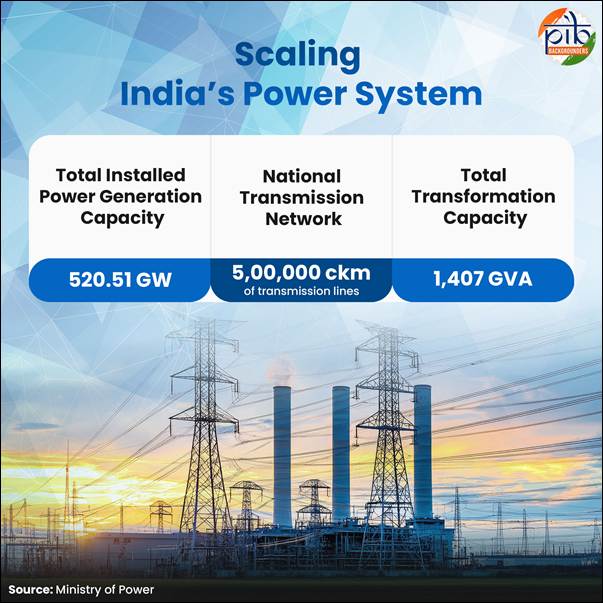
- 25 Mar 2026
In News:
The Bharat Electricity Summit 2026, recently held in New Delhi under the theme “Electrifying Growth. Empowering Sustainability. Connecting Globally,” served as a testament to India’s journey from a power-deficit nation to a renewable-led energy surplus economy. With a projected investment potential of ?50 lakh crore by 2032, the summit positioned India as a global hub for international energy cooperation and technological innovation.
Current Landscape of India's Power Sector (2025-26)
India has witnessed a paradigm shift in its energy mix, moving toward low-carbon pathways while ensuring energy security.
- Capacity Expansion: As of January 2026, the total installed power capacity reached 520 GW. Notably, in FY 2025–26, India added a record 52,537 MW, with Renewable Energy (RE) accounting for 75% of this addition.
- Renewable Energy Dominance: Solar energy has seen exponential growth, rising from 3 GW in 2014 to 140 GW by early 2026. According to IRENA (2025), India now ranks 4th globally in total installed RE capacity.
- A Landmark Achievement: On July 29, 2025, renewable sources met 51.5% of the country's total electricity demand for the first time, driven by a synergistic mix of Solar (44.5 GW), Wind (29.89 GW), and Hydro (30.29 GW).
- Deficit Eradication: The national power shortage has been decimated from 4.2% in FY 2013–14 to a marginal 0.03% in late 2025, successfully meeting a peak demand of 242 GW.
Structural and Financial Reforms: The Turnaround
The transition has been supported by aggressive fiscal discipline and infrastructural modernization.
1. Financial Viability of DISCOMs
For decades, the Distribution Companies (DISCOMs) were the "leaking bucket" of the power sector.
- From Loss to Profit: Distribution utilities recorded a profit of ?2,701 crore in FY 2024–25, a historic recovery from the ?67,962 crore loss in FY 2013-14.
- LPS Rules & Debt Reduction: The Late Payment Surcharge (LPS) Rules, 2022, and the Revamped Distribution Sector Scheme (RDSS) helped slash outstanding dues from ?1.4 lakh crore (2022) to just ?4,109 crore by February 2026.
- Smart Metering: The installation of 5.62 crore smart meters has enhanced billing efficiency and transparency.
2. National Grid and Universal Access
- World’s Largest Synchronous Grid: India’s national grid now exceeds 5 lakh circuit kilometers (ckm). Under the National Electricity Plan (2023–2032), this is set to expand to 6.48 lakh ckm with an investment of ?9.15 lakh crore.
- Rural Empowerment: Through schemes like Saubhagya and DDUGJY, 18,374 villages were electrified. Average daily power supply in rural areas rose significantly from 12.5 hours (2014) to 22.6 hours (2025).
Key Policy Initiatives and Future Outlook
|
Scheme/Policy |
Objective & Impact |
|
PM Surya Ghar Yojana |
A ?75,021 crore initiative aiming for 1 crore residential rooftop solar installations by FY 2026–27. |
|
Electricity (Amendment) Bill, 2026 |
Aims to rationalize cross-subsidies, promote cost-reflective tariffs, and enable direct power procurement for industries to boost "Make in India." |
|
RDSS (?3.03 Lakh Cr) |
Focuses on reducing AT&C (Aggregate Technical & Commercial) losses and improving operational efficiencies. |
|
POWERGRID Empowerment |
Increased investment delegation (equity limit per subsidiary raised to ?7,500 crore) to accelerate transmission infrastructure. |
Challenges and Way Forward
While the transition is robust, the roadmap to 458 GW peak demand by 2032 requires addressing:
- Grid Stability: Managing the intermittency of high-penetration renewables through advanced Battery Energy Storage Systems (BESS).
- Supply Chain Resilience: Reducing dependency on imports for solar cells and critical minerals.
- Technological Integration: Leveraging the startup ecosystem (100 startups featured at the Summit) for R&D in smart grids and Green Hydrogen.
Shaheed Diwas
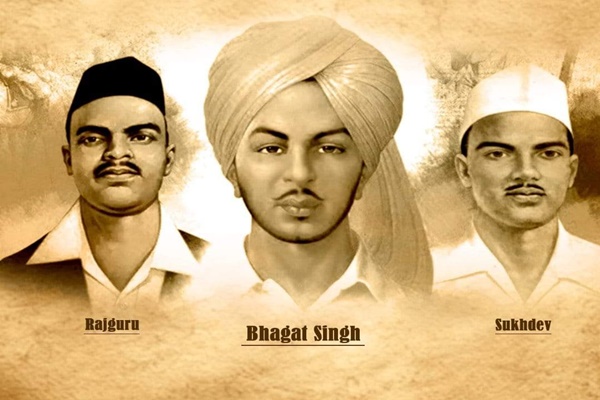
- 25 Mar 2026
In News:
Every year, March 23rd is observed as Shaheed Diwas (Martyrs' Day) to commemorate the supreme sacrifice of three iconic revolutionaries: Bhagat Singh, Shivaram Rajguru, and Sukhdev Thapar. In 1931, these young leaders were executed by the British colonial government in the Lahore Central Jail. Their martyrdom remains a symbol of uncompromising patriotism and continues to inspire the socio-political consciousness of modern India.
Note: India also observes Martyrs' Day on January 30th to mark the assassination of Mahatma Gandhi.
Historical Genesis: The Lahore Conspiracy Case
The martyrdom of the trio was rooted in the radicalization of the Indian national movement during the late 1920s.
- Protest against Simon Commission (1928): The British government appointed the all-white Simon Commission to recommend constitutional reforms, sparking nationwide protests. During a demonstration in Lahore, veteran leader Lala Lajpat Rai was brutally injured in a police lathi charge and subsequently succumbed to his injuries.
- The HSRA’s Retaliation: To avenge Rai’s death, the Hindustan Socialist Republican Association (HSRA) planned to assassinate James A. Scott, the Superintendent of Police responsible for the lathi charge.
- Mistaken Identity: In a case of mistaken identity, Bhagat Singh, Rajguru, and Sukhdev killed Assistant Superintendent of Police J.P. Saunders on December 17, 1928. This incident was labeled the Lahore Conspiracy Case.
- Assembly Bombing (1929): On April 8, 1929, Bhagat Singh and Batukeshwar Dutt threw low-intensity smoke bombs into the Central Legislative Assembly. Their objective was not to kill, but to protest against the repressive Public Safety Bill and Trade Dispute Bill. As Bhagat Singh famously stated, the intent was "to make the deaf hear."
Profile of the Revolutionaries
1. Bhagat Singh (1907–1931)
- Early Life: Born in Banga, Punjab, into a family of freedom fighters (Kishan Singh and Ajit Singh). The Jallianwala Bagh massacre (1919) deeply impacted his psyche.
- Intellectual Contribution: He was a prolific writer and thinker. Under pseudonyms like Balwant, Ranjit, and Vidhrohi, he contributed to journals such as Kirti. His essay "Why I Am an Atheist" highlights his transition toward rationalism and Marxism.
- Organizational Role: He transformed the HRA into the HSRA in 1928, shifting the focus from mere independence to a socialist reconstruction of society. He also founded the Naujawan Bharat Sabha (1926) to mobilize youth.
- Legacy: Known as "Shaheed-e-Azam," he popularized the slogan "Inquilab Zindabad" (Long Live the Revolution).
2. Sukhdev Thapar (1907–1931)
- Role: A core strategist of the HSRA, Sukhdev was the mastermind behind the organizational structure of the revolutionary cells in North India, particularly Punjab.
- Contribution: He was instrumental in educating youth about India's revolutionary history and played a decisive role in the planning of the Lahore Conspiracy.
3. Shivaram Rajguru (1908–1931)
- Background: Hailing from Khed, Maharashtra, Rajguru was a staunch advocate of armed resistance.
- Specialization: He was highly regarded as a skilled marksman within the HSRA. His participation in the Saunders' execution was pivotal to the group’s tactical operations.
Execution and Commemoration
The trial for the Lahore Conspiracy Case concluded with the death sentence for the trio. Despite widespread national appeals and diplomatic pressure, they were hanged on March 23, 1931. Their bodies were secretly cremated by the authorities at Hussainiwala (Punjab) on the banks of the Sutlej River. Today, the Hussainiwala National Martyrs Memorial stands as a testament to their bravery.
Significance in the Freedom Struggle
The martyrdom of Bhagat Singh and his comrades marked a shift in the nationalist movement:
- Shift to Socialism: It moved the revolutionary goal beyond "expelling the British" to "ending the exploitation of man by man."
- Mass Mobilization: Their sacrifice bridged the gap between the radical youth and the mainstream national movement led by the Congress, forcing the latter to adopt a more militant stance on Purna Swaraj (Complete Independence).
- Ideological Depth: They introduced the concepts of social justice, egalitarianism, and secularism into the revolutionary discourse.
Smog-Eating Photocatalytic Coating
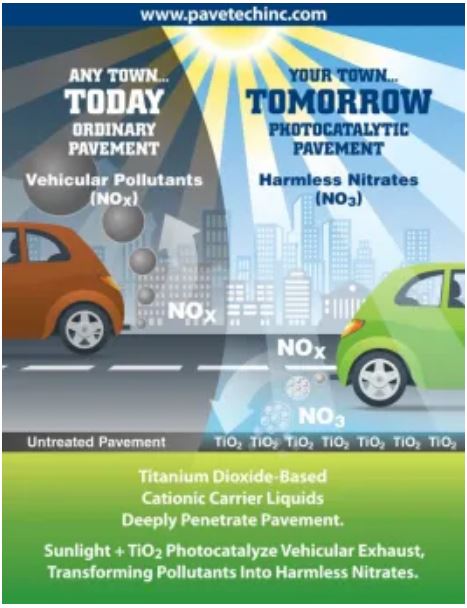
- 24 Mar 2026
In News:
In a strategic move to address the perennial air quality crisis in the National Capital Region, the Delhi Government has partnered with the Indian Institute of Technology (IIT) Madras to pilot and study "smog-eating" photocatalytic coatings. This experimental technology, applied directly to road surfaces, aims to neutralize tailpipe emissions at the source, transforming gray infrastructure into active air purification systems.
Understanding the Technology: Photocatalytic Depollution
Photocatalytic coatings represent a frontier in "green" civil engineering. They utilize light energy to accelerate natural chemical reactions that decompose pollutants.
- Primary Compound: The technology predominantly employs Titanium Dioxide (TiO?).
- Why TiO?? It is favored for its chemical stability, cost-effectiveness, and seamless compatibility with traditional construction materials like bitumen and concrete.
- The Mechanism: * Activation: When UV rays from sunlight hit the TiO?-coated surface, it creates highly reactive oxidizing agents.
- Neutralization: These agents break down harmful gases—specifically Nitrogen Dioxide (NO?) and Volatile Organic Compounds (VOCs)—into harmless substances like water-soluble nitrates or CO?, which are then washed away by rain.
Contextualizing the Crisis: The Nature of Smog
The term "smog" (a portmanteau of smoke and fog) refers to a complex mixture of primary and secondary air pollutants. To understand the efficacy of these coatings, it is essential to distinguish between the two primary types of smog:
|
Type of Smog |
Primary Cause |
Key Characteristics |
|
Sulfurous (London) Smog |
Combustion of sulfur-bearing fossil fuels (e.g., Coal). |
High concentration of sulfur oxides; common in damp, cold climates. |
|
Photochemical (Los Angeles) Smog |
Interaction of sunlight with Nitrogen Oxides (NOx) and VOCs. |
Prevalent in sunny, urban areas with high automobile density; contains ground-level ozone. |
The IIT Madras study specifically targets Photochemical Smog, as road coatings are most effective where vehicular density and sunlight exposure are highest.
Strategic Significance for Urban Governance
The adoption of "smog-eating" roads aligns with India's National Clean Air Programme (NCAP) and offers several strategic advantages:
- Source-Point Treatment: By coating roads, the technology tackles emissions exactly where they are most concentrated—at the tire-to-pavement interface.
- Multi-Functional Infrastructure: It converts existing passive assets (roads) into environmental cleaning tools without requiring additional land or energy-intensive machinery.
- Passive Operation: Unlike "Smog Towers" which require massive fans and electricity, photocatalytic coatings work autonomously using solar energy.
Sahiwal Cattle
- 24 Mar 2026
In News:
In a significant boost to India’s Rashtriya Gokul Mission, the ICAR-Indian Veterinary Research Institute (IVRI), Izatnagar, has successfully produced indigenous Sahiwal cattle calves using a sophisticated suite of reproductive biotechnologies. The process integrated Ultrasound-Guided Ovum Pick-Up (OPU), In Vitro Fertilization (IVF), and Embryo Transfer (ET), marking a leap in the rapid multiplication of high-yielding indigenous germplasm.
Profile of the Sahiwal Breed: The "Golden" Milch Cow
The Sahiwal is globally recognized as one of the premier dairy (milch) breeds of the Indian subcontinent.
- Origin and Nomenclature: The breed originates from the Sahiwal area in the Montgomery district (now in Punjab, Pakistan). It is known by various local names, including Lola (due to its loose skin), Montgomery, Multani, and Teli.
- Physical Characteristics: * Typically brownish-red in color, ranging from mahogany to greyish-red.
- Bulls often exhibit darker extremities compared to cows.
- Performance Metrics:
- Lactation Yield: Average yield is approximately 2,325 kg, with a high-performance range of 1,600 kg to 2,750 kg.
- Resilience Traits: The Sahiwal is prized for its heat tolerance, tick resistance, and high immunity against both internal and external parasites. These traits have led to its successful export to Africa, the Caribbean, and other Asian nations to improve local hardy stocks.
Deciphering the Technology: OPU–IVF–ET
The success at IVRI relies on a multi-stage biotechnological intervention designed to bypass the limitations of natural breeding.
|
Technology Stage |
Process Deion |
|
Ovum Pick-Up (OPU) |
Ovarian follicles in a live donor cow are visualized via ultrasonography and punctured using a needle attached to a vacuum pump to collect oocytes (eggs). |
|
In Vitro Processing |
The collected oocytes undergo In Vitro Maturation (IVM) and In Vitro Fertilization (IVF) with high-quality semen in a laboratory environment. |
|
In Vitro Culture (IVC) |
Fertilized eggs are cultured until they reach the embryo stage. |
|
Embryo Transfer (ET) |
The viable embryos are transferred into synchronized recipient cows (surrogates) to carry the pregnancy to term. |
Key Advantages of OPU-IVF:
- Reduced Generation Interval: Allows for faster multiplication of elite animals.
- Pedigree Preservation: Enables offspring production from known, high-yielding lineages.
- Flexibility: The procedure can even be performed on pregnant animals (up to 100 days of gestation).
Strategic Significance for India
- Aatmanirbharta in Agriculture: Reducing dependence on imported exotic breeds (like Holstein Friesian) by enhancing the productivity of climate-resilient indigenous breeds.
- Climate Change Adaptation: As global temperatures rise, the heat-tolerant genes of Sahiwal cattle provide a sustainable solution for food security in the tropics.
- Socio-Economic Impact: High-yielding indigenous cattle improve the income of small and marginal farmers while producing milk with potentially higher A2 beta-casein content, which has a growing niche market.
World Tuberculosis Day 2026
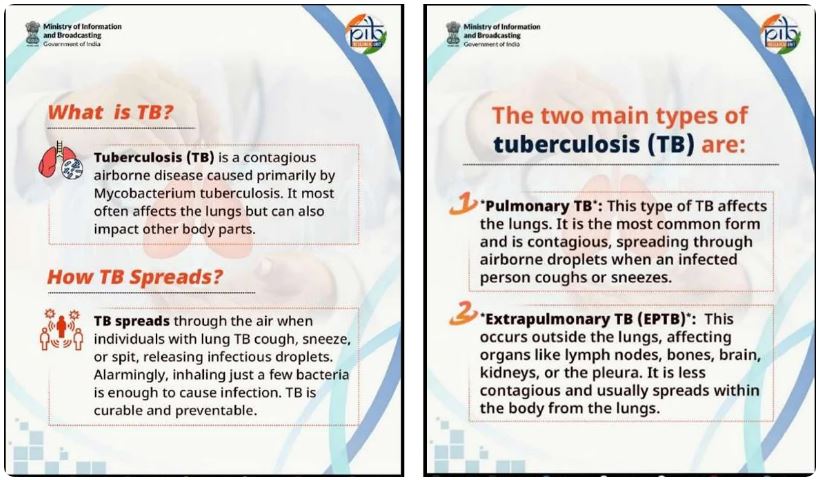
- 24 Mar 2026
In News:
Every year, March 24 is observed as World Tuberculosis (TB) Day to commemorate Dr. Robert Koch’s 1882 discovery of Mycobacterium tuberculosis.
For 2026, the World Health Organization (WHO) has retained the theme “Yes! We can End TB!”, signaling a shift from global ambition to localized, high-impact action.
In India, the day serves as a critical checkpoint for the National TB Elimination Programme (NTEP). While India missed its audacious 2025 elimination deadline, the focus has now pivoted toward aggressive "mission-mode" strategies to bridge the remaining gaps.
The Current Status of TB in India
India’s TB landscape is a study in contrasts—significant statistical improvements set against a backdrop of a staggering absolute burden.
- Global Burden: India accounts for approximately 25% of global TB cases and 28% of global TB deaths.
- Key Progress Indicators (2015–2024):
- Incidence: Declined by 21%.
- Mortality: Reduced from 28 per lakh (2015) to 21 per lakh (2024).
- Treatment Coverage: Increased dramatically from 53% to 92%.
- Success Rate: Under the Pradhan Mantri TB Mukt Bharat Abhiyan, the success rate reached 90%, surpassing the global average of 88%.
- The "Missing Cases" Challenge: Despite these gains, nearly one lakh cases remain undiagnosed annually, contributing to 8.8% of the global detection gap.
Evolution of India's Strategy: From Control to Elimination
India transitioned from the Revised National TB Control Programme (RNTCP) to the National TB Elimination Programme (NTEP) in 2020. The programme is anchored by the National Strategic Plan (2017–2025) and the Detect–Treat–Prevent–Build (DTPB) framework.
Major Technological and Medical Advancements:
- Molecular Diagnostics: India operates the world’s largest TB lab network; 92% of patients now receive upfront Rifampicin drug-resistance testing, ensuring they aren't started on ineffective first-line drugs.
- BPaLM Regimen: The introduction of the BPaLM (Bedaquiline, Pretomanid, Linezolid, and Moxifloxacin) regimen has revolutionized Multi-Drug Resistant (MDR) TB care, reducing treatment duration from 18–24 months to just 6 months.
- Digital Ecosystem: The Ni-kshay portal and the newly launched TB Mukt Bharat App facilitate real-time patient tracking and treatment adherence.
Social and Nutritional Support: The Ni-kshay Ecosystem
Recognizing that TB is as much a social disease as a biological one, India has integrated nutrition and community support into the clinical cycle:
- Ni-kshay Poshan Yojana (NPY): Financial support has been increased to ?1,000/month, providing a total of ?3,000 to ?6,000 over the treatment course.
- Ni-kshay Mitras: A unique "crowdsourced" healthcare model where citizens and corporates "adopt" TB patients to provide monthly food baskets and vocational support.
Critical Gaps and Strengthening Measures
To achieve the definition of elimination (less than one notified case per million population per year), India must address the following:
- Active Case Finding (ACF) for Subclinical TB: Nearly half of India's TB cases are subclinical (asymptomatic). Mass rollout of AI-enabled portable Chest X-rays and non-invasive tongue swabs is essential to find "silent" transmitters.
- Tribal-Centric Interventions: TB prevalence among Scheduled Tribes is 50% higher than the national average. Innovative financing, such as utilizing District Mineral Foundation (DMF) funds, can bridge the infrastructure gap in mining-affected tribal belts.
- TB Preventive Treatment (TPT): Shifting focus to household contacts of active patients to treat the infection in its latent stage before it progresses to active disease.
- Urban Micro-strategies: High-transmission urban wards require "micro-level" interventions through initiatives like the TB Mukt Urban Ward.
Actinidia Indica
- 24 Mar 2026
In News:
In a significant addition to India’s botanical diversity, scientists from the Botanical Survey of India (BSI) have discovered a new species of wild kiwi, named Actinidia indica. The discovery was made in the biodiversity-rich landscapes of Arunachal Pradesh, further cementing the state’s reputation as a "cradle of speciation" in the Eastern Himalayas.
Geographic Distribution and Habitat
- Location: The species has been recorded within a restricted, narrow stretch near the Ziro Valley in the Lower Subansiri district of Arunachal Pradesh.
- Elevation: It is found at an altitude of approximately 1,725 metres above sea level.
- Ecological Niche: Actinidia indica thrives in a unique transition zone between temperate and subtropical forests. This biologically sensitive habitat provides the specific micro-climatic conditions required for the species to survive.
Morphological Characteristics
The new species belongs to the family Actinidiaceae. It possesses several distinct physical traits that differentiate it from other known kiwi species:
- Growth Habit: It is a perennial climbing shrub, capable of reaching heights of 2 to 4 metres.
- Botanical Features: * Branches: Young branches are characterized by a dense covering of hairs.
- Folliage: It bears large, ovate (egg-shaped) leaves.
- Flowers: The plant produces white to creamy-colored flowers, typically measuring between 4 cm and 6 cm in diameter.
- Fruit Identity: The species produces olive-green, globose (spherical) fruits (2.5–4 cm). A defining taxonomic feature is its distinctive reticulate lenticel pattern (a net-like arrangement of pores on the fruit's skin), which helped researchers identify it as a new species.
Taxonomic and Global Significance
- Global Count: This discovery increases the global count of the Actinidia genus to 56 species.
- Indian Context: While the genus Actinidia is widely known for the commercial kiwi fruit (largely native to China), only a very small number of these species occur naturally in India. The identification of Actinidia indica highlights the high level of endemism in the Northeast.
INS Taragiri
- 24 Mar 2026
In News:
The Indian Navy is set to commission INS Taragiri (F41), a state-of-the-art stealth guided-missile frigate, on April 3, 2026. As the fourth ship of the ambitious Project 17A (Nilgiri-class), its induction marks a critical milestone in India’s quest for maritime "Aatmanirbharta" (self-reliance).
Project 17A: A Strategic Overview
Project 17A is an advanced follow-on to the Shivalik-class (Project 17) frigates. The initiative involves the construction of seven stealth frigates, with four being built at Mazagon Dock Shipbuilders Ltd (MDL) in Mumbai and three at Garden Reach Shipbuilders and Engineers (GRSE) in Kolkata.
- Naming Convention: The ships are named after prominent Indian mountain ranges: INS Nilgiri, Himgiri, Udaygiri, Taragiri, Dunagiri, Vindhyagiri, and Mahendragiri.
- Design Philosophy: Designed by the Navy’s in-house Warship Design Bureau (WDB), these vessels utilize "Integrated Construction" methodology, which involves pre-outfitting hull blocks to compress the construction timeline.
Key Features and Technical Specifications of INS Taragiri
INS Taragiri represents the pinnacle of indigenous shipbuilding, boasting approximately 75% indigenous content.
- Stealth and Survivability: * Reduced Radar Cross-Section (RCS): The ship features a sleeker hull form and enclosed mooring decks to minimize radar and infrared signatures.
- Hull Material: Constructed using indigenous DMR 249A low-carbon micro-alloy grade steel.
- Propulsion and Performance:
- CODOG System: Utilizes a Combined Diesel or Gas configuration, pairing two gas turbines (for high speed) with two main diesel engines (for fuel-efficient cruising).
- Capabilities: Displacing approximately 6,670 tonnes, the frigate can achieve speeds exceeding 28-32 knots with high operational endurance.
- Weaponry and Combat Suite:
- Surface-to-Surface: Armed with the supersonic BrahMos cruise missile system.
- Surface-to-Air: Equipped with Barak-8 (MRSAM) missiles for long-range air defense, guided by the EL/M-2248 MF-STAR AESA radar.
- Anti-Submarine Warfare (ASW): Features indigenous triple-tube torpedo launchers and RBU-6000 rocket launchers.
- Naval Gunery: Includes a 76mm Super Rapid Gun Mount (SRGM) and AK-630 Close-In Weapon Systems (CIWS).
Strategic Significance for India
- Regional Deterrence: The induction is timely given the growing Chinese naval presence and increasing militarization in the Indian Ocean Region (IOR).
- Operational Readiness: INS Taragiri will bolster the Eastern Naval Command, particularly in multi-dimensional missions ranging from high-intensity combat to Operation Sankalp (maritime security) and HADR (Humanitarian Assistance and Disaster Relief).
- Economic Impact: The project supports the domestic industrial ecosystem, involving over 200 MSMEs and generating direct employment for thousands, directly aligning with the "Make in India" and "Viksit Bharat" frameworks.
Global Terrorism Index 2026
- 23 Mar 2026
In News:
The Global Terrorism Index (GTI) 2026, released by the Institute for Economics and Peace, provides a comprehensive assessment of the impact of terrorism across 163 countries, covering nearly the entire global population. The report highlights evolving trends in terrorism and shifting regional dynamics.
About the Global Terrorism Index
- The GTI is an annual report that measures the impact of terrorism using a composite scoring system ranging from 0 (no impact) to 10 (highest impact).
- The index evaluates countries based on indicators such as number of incidents, fatalities, injuries, and property damage, thereby enabling comparative analysis of terrorism trends globally.
Key Findings of GTI 2026
- The 2026 report indicates a decline in global terrorism intensity, with deaths decreasing by around 28% and incidents falling by 22% compared to previous levels.
- However, the geographical concentration of terrorism has shifted significantly. Sub-Saharan Africa has emerged as the epicentre of global terrorism, with six of the ten most affected countries located in the region.
- For the first time, Pakistan ranks as the most impacted country, reflecting rising instability and militant activity. India is placed at 13th position, indicating a moderate but persistent threat environment.
- The report also identifies the most lethal terrorist organisations, including Islamic State (IS), Jamaat Nusrat Al-Islam wal Muslimeen (JNIM), Tehrik-e-Taliban Pakistan (TTP), and Al-Shabaab, which continue to drive global terrorism.
Emerging Trends
The findings reveal a decline in traditional conflict-driven terrorism in some regions, but a simultaneous rise in fragile and conflict-affected states, particularly in Africa.
Terrorism is increasingly linked with political instability, weak governance, and socio-economic vulnerabilities, rather than being confined to specific ideological or geographic zones.
The diffusion of extremist networks and the use of asymmetric tactics continue to pose challenges for global security systems.
Implications for India and Global Security
For India, the ranking underscores the need for continued vigilance against cross-border terrorism and radicalisation threats, while also recognising improvements in internal security mechanisms.
Globally, the shift of terrorism hotspots to new regions calls for reoriented counter-terrorism strategies, greater international cooperation, and capacity building in vulnerable states.
The persistence of major terrorist organisations highlights the need for intelligence sharing, financial tracking, and coordinated global action.
Variable Rate Repo for Liquidity Management
- 23 Mar 2026
In News:
- The Reserve Bank of India (RBI) recently infused over ?25,000 crore into the banking system through a 3-day Variable Rate Repo (VRR) auction, following earlier liquidity injections of around ?3.5 lakh crore via Open Market Operations (OMOs) since January 2026.
- These measures highlight the RBI’s proactive approach to managing short-term liquidity conditions and maintaining monetary stability.
Need for Liquidity Management
Liquidity in the banking system fluctuates due to factors such as tax outflows, government cash balances, and seasonal demand for cash.
A deficit in liquidity can push up short-term interest rates, while surplus liquidity may weaken monetary transmission. Therefore, the RBI actively uses a mix of instruments to ensure that market rates remain aligned with its policy stance.
Variable Rate Repo (VRR): A Market-Based Tool
- The Variable Rate Repo (VRR) is a short-term liquidity injection mechanism under the RBI’s monetary framework. Unlike the fixed repo rate, where the interest rate is predetermined, VRR operates through an auction-based system, allowing the market to determine the borrowing rate.
- Banks bid for funds by offering interest rates, and the RBI allocates liquidity starting from the highest bids until the notified amount is exhausted. Typically, VRR operations are conducted for short durations (1–14 days) against the collateral of government securities.
- This mechanism enables efficient liquidity distribution and real-time price discovery, reflecting actual demand conditions in the market.
Liquidity Adjustment Facility (LAF): Core Framework
- VRR operates within the broader framework of the Liquidity Adjustment Facility (LAF), which is the RBI’s primary tool for managing day-to-day liquidity.
- Introduced in 2000 based on the Narasimham Committee recommendations, LAF allows banks to either borrow from or lend to the RBI.
- The system is structured around a corridor mechanism. At the centre lies the policy repo rate, which signals the monetary policy stance. The upper bound is defined by the Marginal Standing Facility (MSF), while the lower bound is set by the Standing Deposit Facility (SDF), which has replaced the reverse repo as the primary absorption tool.
- The objective is to keep the Weighted Average Call Rate (WACR)—the operating target—closely aligned with the repo rate.
Open Market Operations (OMOs): Quantitative Tool
- In addition to LAF tools, the RBI uses Open Market Operations (OMOs) as a quantitative instrument to manage liquidity.
- OMOs involve the purchase or sale of government securities. When the RBI purchases securities, it injects liquidity into the system; when it sells them, liquidity is absorbed. These operations are conducted through auctions or direct transactions using the RBI’s electronic platform.
- The large-scale OMO purchases in 2026 reflect a systemic liquidity infusion aimed at supporting credit flow and economic activity.
Significance of VRR and Related Instruments
The combined use of VRR, LAF, and OMOs enables the RBI to maintain short-term interest rate stability and effective monetary transmission.
VRR, in particular, provides flexibility by allowing market-driven rate discovery, reducing the need for the central bank to pre-determine liquidity conditions. It also ensures that liquidity mismatches are addressed efficiently without distorting market signals.
Overall, these instruments help in controlling inflation, supporting growth, and maintaining financial stability.
BRICS STI Cooperation

- 23 Mar 2026
In News:
With India assuming the BRICS Presidency in 2026 under the theme of resilience, innovation, cooperation, and sustainability, science, technology, and innovation (STI) have emerged as key pillars of cooperation within the grouping.
The expansion of BRICS into BRICS and recent declarations signal a shift towards deep-tech collaboration and techno-multipolarity, especially among Global South countries.
Evolution of Scientific Cooperation in BRICS
- Scientific collaboration within BRICS has evolved gradually from basic cooperation to structured institutional engagement. Early recognition of science and technology cooperation began with the Sanya Declaration (2011), which integrated STI into the BRICS agenda.
- Subsequently, the 2015 MoU on STI cooperation formalised collaboration, leading to initiatives such as the BRICS Young Scientist Forum and joint research programmes. Over time, cooperation expanded through action plans focused on innovation, entrepreneurship, and technology transfer, including the establishment of the BRICS Technology Transfer Centre.
- Recent initiatives, such as the BRICS Remote Sensing Satellite Constellation, reflect a move towards strategic technological autonomy, reducing dependence on Western systems.
Emergence of BRICS as a Techno-Strategic Platform
BRICS is increasingly positioning itself as a platform for technology-driven cooperation among emerging economies. The expansion into BRICS has enhanced its global significance, with the grouping now representing a substantial share of global population, trade, and economic output.
The focus has shifted towards frontier technologies, including Artificial Intelligence, digital infrastructure, and climate technologies. The grouping aims to provide alternative models of development and governance, particularly for the Global South.
Opportunities for Cooperation
BRICS offers significant potential for collaboration in areas such as digital public infrastructure, healthcare innovation, climate technologies, and advanced research.
India, in particular, can leverage its strengths in digital platforms, pharmaceuticals, and space technologies to drive collective initiatives. Collaborative frameworks such as shared digital systems, joint research projects, and cross-border innovation networks can enhance technological capabilities across member countries.
The platform also enables knowledge sharing and capacity building, especially for newer members, thereby promoting inclusive technological development.
Challenges in BRICS Scientific Collaboration
Despite its potential, BRICS faces several structural and operational challenges. There are significant disparities in research and development capacities among member countries, which can hinder balanced collaboration.
Geopolitical tensions and differing national priorities may affect the continuity of joint initiatives. Additionally, the absence of a strong institutional framework and dedicated funding mechanisms limits the effectiveness of cooperation.
Issues related to technology transfer, intellectual property rights, and regulatory harmonisation further complicate collaboration efforts.
India’s Role and Way Forward
India can play a pivotal role in strengthening BRICS cooperation by promoting digital public infrastructure models, such as Aadhaar and UPI, as scalable solutions for other member countries.
It can also advocate for joint mega-science projects, climate technology partnerships, and digital health initiatives, leveraging its experience in global collaborations.
Establishing common standards for emerging technologies like AI and enhancing institutional coordination will be essential. Strengthening funding mechanisms and fostering industry-academia linkages can further deepen collaboration.
Randomization of EVM-VVPATs
- 23 Mar 2026
In News:
The Election Commission of India (ECI) has completed the first stage of randomisation of EVM-VVPATs for the upcoming Assembly elections in Assam, Kerala and Puducherry, along with by-elections in several states. This process is a crucial administrative step to ensure free, fair, and transparent elections.
What is EVM–VVPAT Randomisation?
- EVM–VVPAT randomisation is a software-driven allocation process through which voting machines are assigned to constituencies and polling stations in a completely unpredictable manner.
- The process is conducted using the EVM Management System (EMS), ensuring minimal human intervention and eliminating any scope for bias or manipulation.
Process of Randomisation
The allocation of machines follows a two-stage randomisation mechanism, designed to enhance transparency and security.
- In the first stage, machines that have successfully undergone First Level Checking (FLC) are randomly distributed from district warehouses to Assembly Constituencies. This stage has already been completed for the current elections.
- In the second stage, after the finalisation of contesting candidates, machines are further randomised and allocated to individual polling stations within each constituency. This ensures that the exact deployment of machines remains unknown until the final stage.
Key Features of the System
- The process is characterised by strong institutional safeguards. It is conducted by District Election Officers in the presence of representatives of recognised political parties, ensuring multi-stakeholder oversight.
- The details of allocated machines, including serial numbers, are shared transparently with political parties and candidates at each stage. Following the first randomisation, machines are stored in secure strong rooms under continuous surveillance, maintaining their integrity until deployment.
- The use of EMS ensures that the allocation is mathematical, automated, and free from discretionary interference.
Significance
The randomisation process plays a critical role in strengthening the credibility of India’s electoral system. By ensuring that no stakeholder knows in advance which machine will be used at a particular polling station, it effectively prevents any possibility of targeted manipulation.
The presence of political party representatives and the sharing of detailed lists enhance transparency and trust among stakeholders.
Overall, the process contributes to institutional integrity, electoral neutrality, and public confidence, which are essential for a robust democratic framework.
Iran-Pakistan-India (IPI) Pipeline
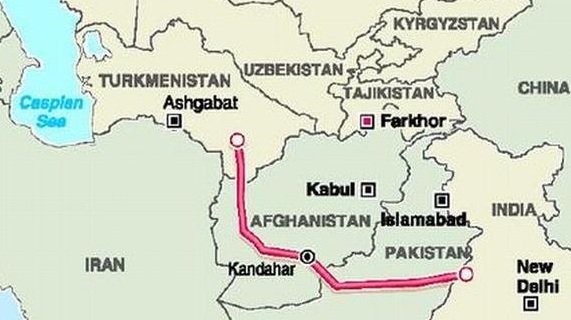
- 23 Mar 2026
In News:
The ongoing geopolitical tensions in West Asia have disrupted global energy supply chains, exposing India’s high dependence on imported hydrocarbons, particularly natural gas. This has revived discussions around stalled transnational pipeline projects such as the Iran–Pakistan–India (IPI) and Turkmenistan–Afghanistan–Pakistan–India (TAPI) pipelines as alternatives to ensure long-term energy security.
Background: India’s Energy Vulnerability
India is heavily reliant on imports to meet its energy needs, especially for natural gas. Disruptions in maritime routes and geopolitical instability in West Asia increase price volatility and supply risks, highlighting the need for diversified and secure energy sources.
Pipeline-based supply was envisioned as a cost-effective and stable alternative to Liquefied Natural Gas (LNG), reducing dependence on sea routes and global spot markets.
Iran–Pakistan–India (IPI) Pipeline
- The IPI pipeline, often referred to as the “Peace Pipeline,” was conceptualised in the 1990s to transport natural gas from Iran’s South Pars field to South Asia.
- The project envisaged a 2,775 km pipeline supplying around 60 mmscmd of gas each to India and Pakistan, offering a relatively cheaper alternative to LNG imports. It also carried the promise of regional cooperation through economic interdependence.
- However, the project lost momentum and India withdrew in 2007 due to multiple concerns. These included U.S.-led sanctions on Iran, pricing disagreements, and security risks, particularly regarding the pipeline’s passage through Pakistan’s Balochistan region. As a result, the project remains effectively dormant.
Turkmenistan–Afghanistan–Pakistan–India (TAPI) Pipeline
- Following the stagnation of IPI, India shifted its focus to the TAPI pipeline, which aimed to bring natural gas from the Galkynysh gas field in Turkmenistan, one of the world’s largest reserves.
- Spanning about 1,814 km, the pipeline is designed to transport 33 billion cubic meters (bcm) of gas annually. It received support from the Asian Development Bank and was seen as part of broader efforts to integrate Central and South Asia economically.
- While progress has been made in parts of the project—particularly the Turkmenistan-Afghanistan section—the extension into Pakistan and India remains stalled due to security challenges in Afghanistan, financing constraints, and geopolitical uncertainties.
Comparative Analysis
The IPI and TAPI pipelines reflect two different strategic approaches to energy security. While IPI relied on West Asian resources with shorter routes, it faced geopolitical constraints. TAPI, on the other hand, sought to diversify supply through Central Asia, but has struggled due to instability along its transit route.
Both projects highlight the complexity of cross-border energy infrastructure, where geopolitics, security, and economic viability intersect.
Sarhul Festival
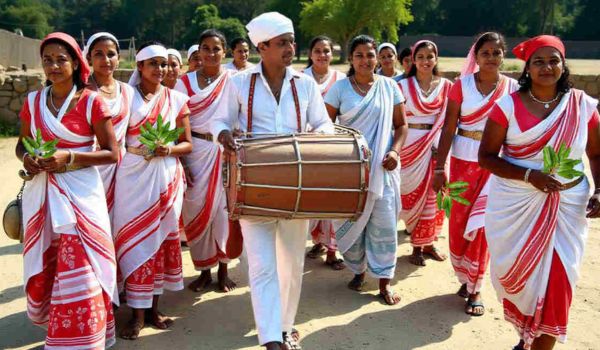
- 22 Mar 2026
In News:
Recently, the President of India Droupadi Murmu extended greetings on the occasion of the Sarhul festival, highlighting its cultural and ecological significance. The festival reflects the deep-rooted traditions of India’s tribal communities and their harmonious relationship with nature.
About Sarhul Festival
- Sarhul, meaning “worship of the Sal tree”, is one of the most important festivals of Adivasi communities in eastern India.
- It is primarily celebrated in Jharkhand and also in parts of Odisha, West Bengal, and Chhattisgarh.
- The festival is observed by several tribes, including the Oraon, Munda, Santal, Khadia, and Ho, each of whom may follow distinct customs while sharing a common spiritual essence.
Cultural and Spiritual Significance
- Sarhul is fundamentally a festival of nature worship, symbolising the union of the Sun and the Earth, which is essential for sustaining life. The Sal tree holds central importance and is revered as the abode of Sama Maa, the village deity believed to protect the community.
- The rituals emphasise ecological balance, fertility, and renewal of life. Through symbolic representation, the pahan (village priest) embodies the Sun, while his wife, the pahen, represents the Earth, highlighting the interdependence of natural forces.
Rituals and Celebrations
Sarhul is celebrated over three days, reflecting a structured blend of ritual purity, community participation, and cultural expression.
- The first day is marked by preparation, including cleaning of homes and sacred groves (Sarna Sthals), collection of Sal flowers, and observance of fasting by the priest.
- The second day forms the core of the festival, when rituals are performed in sacred groves. Offerings and prayers are made for prosperity, good harvest, and community well-being, accompanied by traditional music and dance.
- The final day concludes with communal feasting, including traditional foods and rice beer (Handia), reinforcing social cohesion and shared identity.
RELIEF (Resilience & Logistics Intervention for Export Facilitation)
- 22 Mar 2026
In News:
Amid escalating geopolitical tensions in West Asia, particularly affecting key maritime routes such as the Gulf region, India has introduced a targeted intervention, RELIEF (Resilience & Logistics Intervention for Export Facilitation) to support exporters facing rising logistics costs and operational uncertainties.
Background: Need for the Initiative
- Recent disruptions in critical maritime corridors have led to vessel diversions, longer transit times, congestion at ports, and increased freight and insurance costs. These developments have adversely impacted Indian exporters, especially MSMEs, by raising transaction costs and threatening export continuity.
- Given India’s growing integration with global trade, such disruptions highlight the need for policy instruments that enhance supply chain resilience and protect export competitiveness.
About RELIEF Initiative
- RELIEF is a time-bound financial and risk mitigation measure launched in March 2026 under the Export Promotion Mission by the Ministry of Commerce and Industry.
- It is implemented by the Export Credit Guarantee Corporation of India (ECGC), which is responsible for verification, risk coverage, claim settlement, and monitoring.
- The initiative aims to ensure continuity of exports, reduce financial stress on exporters, and safeguard employment in export-linked sectors.
Key Features and Mechanism
- The RELIEF framework provides support across the entire export cycle, covering both past and future consignments affected by disruptions.
- For exporters already insured under ECGC, the scheme offers enhanced risk coverage of up to 100% for shipments during the disruption period, ensuring protection against unforeseen losses. For upcoming consignments, up to 95% coverage is provided with government backing, encouraging exporters to continue operations despite uncertainty.
- Recognising the vulnerability of MSMEs, the initiative also includes a partial reimbursement mechanism, covering up to 50% of increased freight and insurance costs (subject to a ceiling), thereby reducing the burden of sudden cost escalations.
- Additionally, a digital dashboard-based monitoring system has been introduced to track claims, fund utilisation, and logistics conditions in real time, ensuring transparency and efficiency.
Institutional and Policy Support
The implementation of RELIEF is supported by a whole-of-government approach, including the establishment of an Inter-Ministerial Group (IMG) on Supply Chain Resilience. This group facilitates coordination among ministries, logistics stakeholders, and exporters, enabling real-time policy responses such as procedural relaxations, port-level facilitation, and improved logistics coordination.
Project Insight (PI) initiative

- 22 Mar 2026
In News:
India is increasingly leveraging Artificial Intelligence (AI) and big data analytics to strengthen tax administration. The Project Insight (PI) initiative of the Income Tax Department represents a major step towards algorithmic tax governance, aimed at improving compliance and enhancing revenue mobilisation.
Background: Need for AI in Tax Governance
- India has historically faced challenges of low tax compliance and high evasion, reflected in a relatively modest tax-to-GDP ratio among emerging economies. A significant portion of potential tax revenue is lost annually due to evasion and under-reporting.
- In this context, the adoption of AI-driven systems has emerged as a strategic tool to improve efficiency, transparency, and enforcement capacity in tax administration.
About Project Insight
- Project Insight is an AI-enabled tax administration system implemented by the Income Tax Department under the Ministry of Finance.
- Launched in 2017 and operationalised subsequently, it aims to create a data-driven and non-intrusive compliance ecosystem.
- The core objective of the initiative is to promote voluntary compliance while strengthening enforcement through intelligent risk detection mechanisms.
Key Features and Working Mechanism
- At the heart of Project Insight is the Income Tax Transaction Analysis Centre (INTRAC), which uses advanced analytics to build a comprehensive financial profile of taxpayers by integrating data from multiple sources.
- The system employs a “nudge” strategy, where taxpayers receive reminders via SMS or email to rectify discrepancies in their filings, thereby encouraging self-correction rather than coercive enforcement.
- Additionally, automated risk assessment tools help authorities identify and prioritise high-risk cases, enabling targeted action against large-scale evasion while reducing unnecessary scrutiny for compliant taxpayers.
Impact and Significance
The use of AI in tax governance has led to measurable improvements. A large number of taxpayers have revised their returns, contributing to additional tax revenues and improved compliance behaviour.
The system enhances administrative efficiency by automating routine processes and enabling data-driven decision-making. It also improves taxpayer services through digital interfaces and fraud detection mechanisms.
More broadly, Project Insight represents a shift towards a modern, technology-driven tax administration system, aligning India with global best practices.
India BioEconomy Report (IBER) 2026
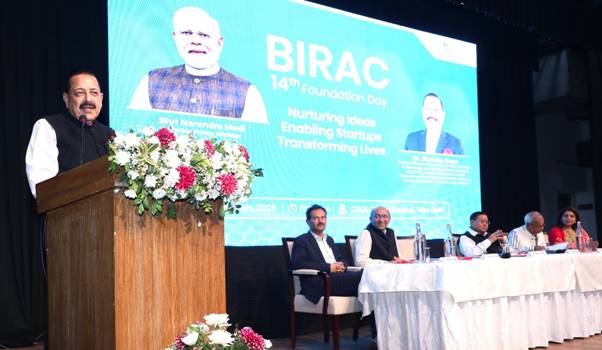
- 22 Mar 2026
In News:
- India’s bioeconomy has witnessed remarkable expansion, growing from around USD 10 billion in 2014 to over USD 195 billion in 2025, with an annual growth rate of nearly 17–18%.
- The India Bioeconomy Report (IBER) 2026, released during the 14th Foundation Day of the Biotechnology Industry Research Assistance Council (BIRAC), highlights that the sector now contributes approximately 4.8–5% of India’s GDP.
Growth Trajectory and Current Status
- India’s bioeconomy has transitioned from a niche segment to a major pillar of economic growth and innovation. The sector recorded one of its highest growth rates in recent years, expanding significantly in scale and diversification.
- The bioeconomy comprises multiple segments, with BioIndustrial activities emerging as the largest contributor, followed by BioPharma, BioServices, and BioAgri.
- The BioPharma sector, in particular, is poised for further growth due to opportunities in biosimilars and peptide manufacturing, driven by the expiry of global drug patents.
- India has also developed a strong ecosystem of over 11,800 biotech startups, supported by research institutions, incubation platforms, and public policy initiatives. The country hosts a growing number of Global Capability Centres (GCCs) in healthcare and life sciences, contributing to employment and global integration.
Key Drivers of Growth
- The rapid expansion of India’s bioeconomy is underpinned by a combination of policy support, institutional mechanisms, and technological advancements.
- Institutions like BIRAC have played a crucial role in bridging the gap between research and industry, enabling the translation of scientific innovations into commercially viable products. Government initiatives such as the BioE3 Policy (Biotechnology for Economy, Environment and Employment) aim to promote sustainable biomanufacturing, including areas like precision biotherapeutics, smart proteins, and climate-resilient agriculture.
- Further, financial mechanisms like the Research, Development and Innovation (RDI) Fund with an outlay of ?1 lakh crore are designed to support scaling up of deep-tech innovations. The emphasis on bio-foundries, Bio-AI hubs, and advanced manufacturing platforms reflects India’s push towards next-generation biotechnology capabilities.
Economic and Strategic Significance
The bioeconomy is increasingly central to India’s development strategy, contributing to healthcare innovation, agricultural productivity, environmental sustainability, and industrial growth. It also enhances India’s position in global value chains by enabling high-value exports and advanced research capabilities.
With a target of reaching a USD 300 billion bioeconomy by 2030, the sector is expected to generate employment, promote entrepreneurship, and strengthen India’s status as a global biotechnology hub.
National Productivity Council
- 22 Mar 2026
In News:
- The National Productivity Council (NPC) has recently been designated as the Environment Audit Designated Agency (EADA) through an agreement with the Ministry of Environment, Forest and Climate Change under the Environment Audit Rules, 2025.
- This development marks an important step towards institutionalising environmental auditing and strengthening regulatory compliance mechanisms in India.
About National Productivity Council (NPC)
- Established in 1958, the NPC is an autonomous, non-profit and tripartite organisation functioning under the Department for Promotion of Industry and Internal Trade, Ministry of Commerce and Industry.
- It has representation from government, industry, labour organisations, and technical institutions, reflecting a multi-stakeholder approach to productivity enhancement.
- Headquartered in New Delhi, NPC is also a member of the Asian Productivity Organisation, highlighting its international engagement. Over the years, it has evolved into a think tank and capacity-building institution, offering consultancy, training, research, and project monitoring services across sectors.
Environment Audit Framework: Key Features
- Under the new mandate, NPC will function as the central agency responsible for designing, implementing, and overseeing the environmental audit ecosystem in India.
- The framework aims to standardise environmental auditing practices and ensure better compliance with environmental laws.
- The audit system is linked with major legislations such as the Environment (Protection) Act, 1986, Water (Prevention and Control of Pollution) Act, 1974, Air (Prevention and Control of Pollution) Act, 1981, Wild Life (Protection) Act, 1972 and forest conservation laws.
- It also supports regulatory processes such as Environmental Clearance (EC), Consent to Establish (CTE), and Consent to Operate (CTO).
Role of NPC as EADA
- NPC has been entrusted with comprehensive responsibilities covering the entire audit lifecycle. It will develop eligibility criteria and conduct certification processes for environmental auditors, including Certified Environmental Auditors (CEA) and Registered Environmental Auditors (REA).
- Further, it will manage the registration, monitoring, and disciplinary oversight of auditors, ensuring accountability and professional standards. NPC will also establish digital platforms for audit processes, maintain a publicly accessible registry of auditors, and promote capacity building through training programmes and awareness initiatives.
- Through these functions, NPC is expected to create a robust, transparent, and standardised environmental audit system across the country.
Significance of the Initiative
The designation of NPC as EADA has multiple policy implications. It strengthens environmental governance by improving monitoring, reporting accuracy, and compliance with environmental regulations.
At the same time, it promotes sustainable industrial development, as industries will be required to adhere to standardised environmental audit norms. The initiative also reflects a shift towards institutional and data-driven regulation, enhancing transparency and accountability.
Moreover, by integrating capacity building with regulatory oversight, it addresses the gap between policy design and on-ground implementation.
ASI Excavations in Tamil Nadu
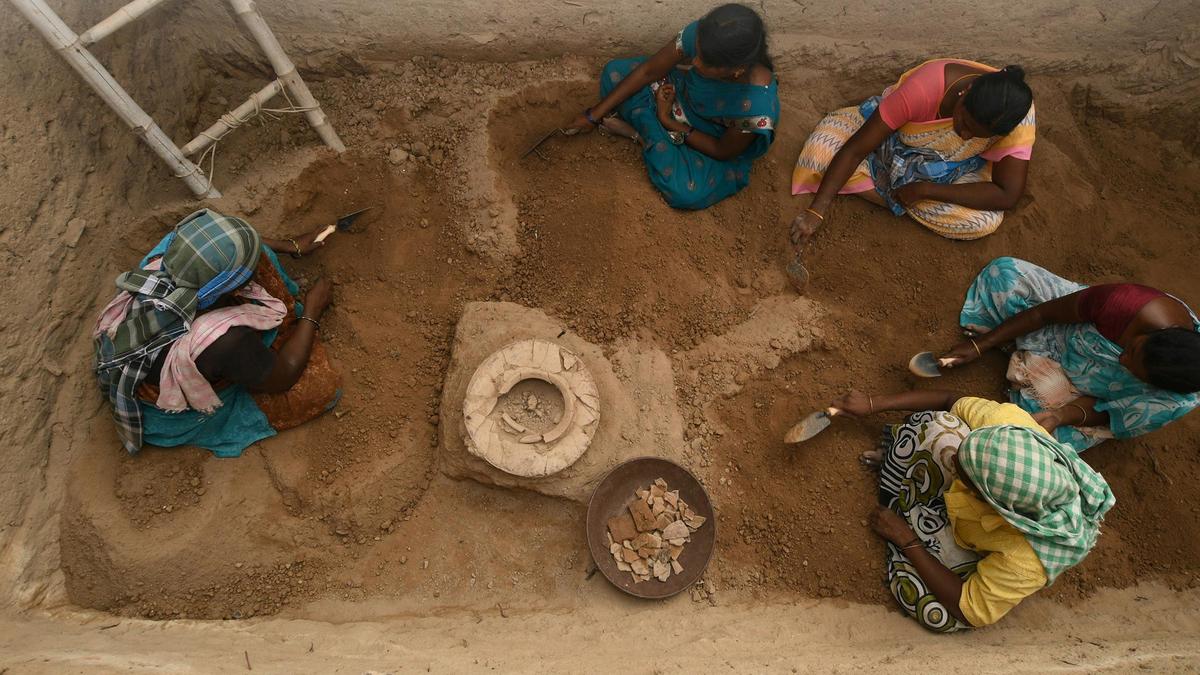
- 21 Mar 2026
In News:
- The Archaeological Survey of India (ASI), under the provisions of the Ancient Monuments and Archaeological Sites and Remains Rules, 1959, has approved excavations at eight significant archaeological sites in Tamil Nadu.
- These excavations are expected to provide a continuous cultural sequence from the Iron Age to early historic urbanisation, offering crucial insights into South India’s socio-economic evolution and its linkages with global trade networks.
Significance of the Excavation Initiative
The identified sites collectively represent:
- Transition from Iron Age societies to urban settlements
- Emergence of early Tamil civilisation and literacy (Tamil-Brahmi )
- Integration of South India into Indian Ocean and trans-regional trade networks
This initiative may help bridge historical gaps between indigenous urbanisation processes and external commercial interactions, including links with the Mediterranean and Southeast Asia.
Key Archaeological Sites and Their Importance
Urban and Cultural Centres
- Keeladi: Located in the Vaigai basin, it reveals an advanced urban settlement, with evidence of Tamil-Brahmi , planned habitation, and drainage systems, indicating a literate and organised society.
Burial and Iron Age Sites
- Adichanallur and Karivalamvanthanallur: Prominent burial sites that shed light on mortuary practices, social stratification, and Iron Age material culture.
- Thelunganur: Suggests early iron technology, pointing to technological advancement and early metallurgical knowledge.
Trade and Economic Centres
- Vellalore: Indicates trade links with the Roman Empire, supported by findings such as coins and ornaments.
- Nagapattinam and Pattinamarudur: Associated with Chola-period maritime activity, Buddhist influence, and participation in Indian Ocean trade networks.
- Manikollai: A centre for glass bead production, connected to long-distance trade with Southeast Asia.
Scientific Methods in Archaeology
The excavation process incorporates advanced scientific techniques:
DNA Analysis (Ancient DNA Studies)
- Helps trace genetic lineage, migration patterns, and ancestry
- Enables reconstruction of population history and biological relationships
Optically Stimulated Luminescence (OSL) Dating
- Determines the last exposure of mineral grains to sunlight
- Useful for dating soil layers and artefacts where organic material is absent
Role of the State Government
The Government of Tamil Nadu has demonstrated proactive commitment by allocating ?7 crore in the 2025–26 budget for archaeological research.
The emphasis is on integrating modern scientific tools with traditional excavation methods to ensure more accurate historical reconstruction.
Pradhan Mantri Jan Arogya Yojana
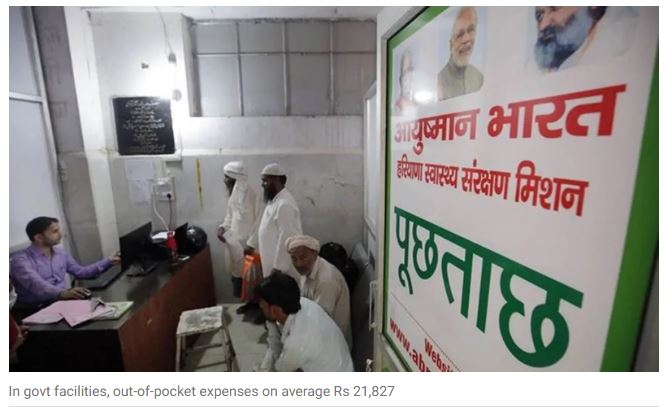
- 21 Mar 2026
In News:
An evaluation study commissioned by NITI Aayog and submitted to its Development Monitoring and Evaluation Office (DMEO) has highlighted that beneficiaries of Pradhan Mantri Jan Arogya Yojana continue to incur significant out-of-pocket expenditure (OOPE), especially in private hospitals. This raises concerns regarding the scheme’s effectiveness in delivering financial protection.
About PM-JAY
- Launched in 2018 under the Ayushman Bharat initiative, PM-JAY is the world’s largest government-funded health assurance programme, aimed at advancing Universal Health Coverage (UHC) and reducing catastrophic health expenditure.
- It is implemented by the National Health Authority in coordination with State Health Agencies.
Salient Features
- Provides ?5 lakh per family per year for secondary and tertiary care hospitalization
- Covers pre- and post-hospitalisation expenses (3 days prior, 15 days after)
- Includes all pre-existing diseases from Day 1
- Based on SECC 2011 criteria, with no cap on family size, age, or gender
- Ensures cashless, paperless treatment and national portability across empanelled hospitals
- Expanded in 2024 to include all citizens aged 70 (Ayushman Vay Vandana Card) and frontline workers
The scheme follows a cost-sharing model between Centre and States (60:40; 90:10 for special category states).
Key Findings of the Evaluation Study
The study reveals structural gaps in financial protection:
Persistent Out-of-Pocket Expenditure
- Average OOPE in private hospitals: ~?53,965 per hospitalization
- Average OOPE in public hospitals: ~?21,827
- Private care costs are more than twice that of public facilities
Limited Cashless Access
- Only 35% beneficiaries experienced fully cashless treatment
- Around 65% incurred direct expenditure, contradicting the scheme’s core promise
Marginal Financial Relief
- Average OOPE under PM-JAY: ~?34,790
- Uninsured patients: ~?38,084
- Indicates limited reduction in financial burden
Major Cost Drivers
- Medicines and diagnostics
- Transportation (explicitly not covered under the scheme)
Achievements of PM-JAY
Despite challenges, PM-JAY has significantly expanded healthcare access:
- 42 crore Ayushman Cards issued
- ~11 crore hospital admissions recorded by 2025
- Improved healthcare access for vulnerable populations
- Promoted gender inclusion, with women accounting for nearly half of beneficiaries
- Strengthened digital health ecosystem through platforms like Ayushman App
Infrastructure Financing in India
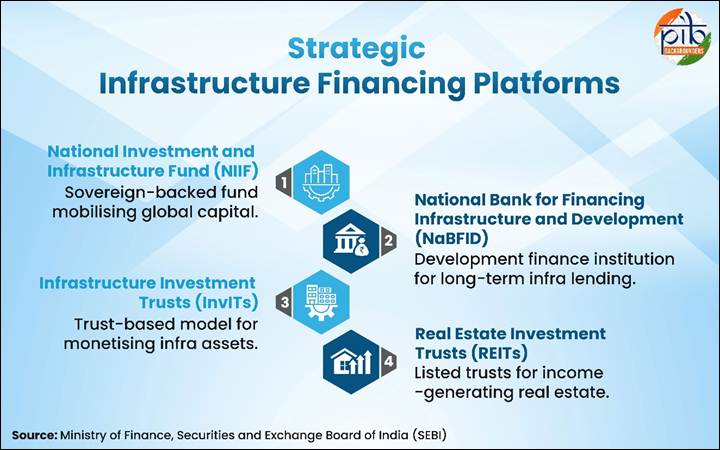
- 21 Mar 2026
In News:
India’s approach to infrastructure financing has evolved from a state-dominated model to a diversified and market-linked system. This transition is critical for sustaining high economic growth and achieving the ambition of becoming a USD 7 trillion economy by 2030.
Changing Nature of Infrastructure Financing
In the past, infrastructure development in India depended largely on government budgetary allocations, which limited expansion due to fiscal constraints. Over time, the financing architecture has broadened to include public-private partnerships, institutional funding mechanisms, and innovative financial instruments.
Despite this diversification, the government continues to act as a key driver, evident from the substantial rise in capital expenditure—from about ?2 lakh crore in 2014–15 to ?12.2 lakh crore in 2026–27 (BE)—thereby stimulating investment and economic activity.
Drivers of the Transformation
A major factor behind this shift has been the creation of dedicated financial institutions. Bodies such as the National Investment and Infrastructure Fund and the National Bank for Financing Infrastructure and Development have facilitated long-term funding and attracted global investors, while the Indian Railway Finance Corporation has strengthened sector-specific financing.
Parallelly, mechanisms like Infrastructure Investment Trusts (InvITs) and Real Estate Investment Trusts (REITs) have enabled monetisation of existing assets, freeing up capital for new investments. The development of green bonds and credit enhancement tools has further deepened financial markets and aligned infrastructure growth with sustainability goals.
Additionally, initiatives such as City Economic Regions (CERs) reflect a shift towards region-based development, especially in emerging urban centres.
Current Status of Infrastructure Development
The impact of these reforms is visible across multiple sectors. India has significantly expanded its road network, alongside improvements in construction speed and connectivity. The railway system has progressed towards complete electrification and introduced modern services like the Vande Bharat Express, with plans for high-speed corridors.
The aviation sector has witnessed rapid growth in airport infrastructure under schemes such as the UDAN Scheme, enhancing regional access. Similarly, port capacity and inland waterways have been strengthened to support trade.
Emerging sectors like data centres and energy storage systems are also gaining prominence, supported by policy incentives and recognition as infrastructure.
Key Challenges
Notwithstanding the progress, several structural issues remain. Infrastructure financing continues to rely heavily on public expenditure, while private investment is constrained by concerns over risk and returns. Land acquisition remains a significant hurdle, often leading to project delays and increased costs.
The banking sector faces a mismatch between short-term liabilities and long-term infrastructure financing needs, limiting its ability to support large projects. Investors also show a preference for operational assets rather than new projects, reducing capital inflow into greenfield development.
Urban financing is another weak area, as municipal bodies often lack the financial strength and credibility to raise resources independently. In addition, inadequate project preparation affects the viability and attractiveness of infrastructure investments.
Way Forward
To sustain momentum, India needs to deepen asset monetisation strategies so that resources from existing projects can be reinvested into new ones. Strengthening risk-sharing mechanisms and improving credit enhancement frameworks will be essential to attract private and institutional investors.
There is also a need to scale up green and sustainable financing instruments, ensuring that infrastructure growth aligns with environmental objectives. Strengthening urban financial systems and promoting reforms in municipal governance can help cities emerge as engines of growth.
Further, improving project planning, transparency, and regulatory certainty will enhance investor confidence. Leveraging platforms such as GIFT City can also facilitate greater integration with global capital markets.
Liberties Clause or Deviation Clause
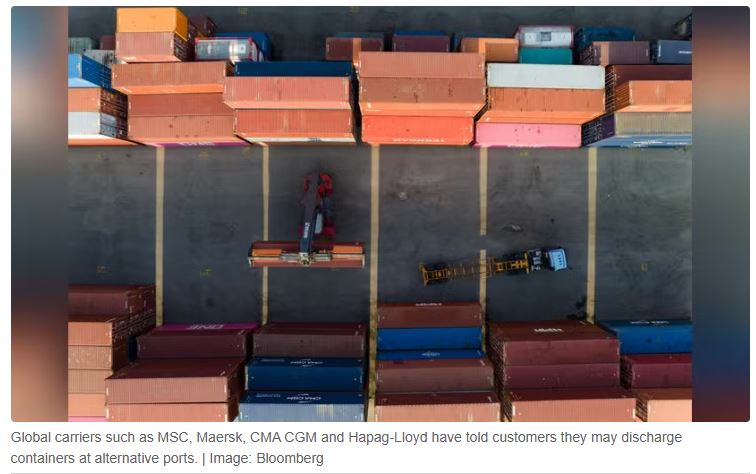
- 21 Mar 2026
In News:
Amid the ongoing tensions in West Asia involving the United States, Israel, and Iran, global shipping companies have increasingly invoked the Liberties Clause in maritime contracts.
This has resulted in cargo rerouting, discharge at alternate ports, increased logistics costs, and disruption of global supply chains, particularly in sensitive maritime zones such as the Strait of Hormuz.
What is the Liberties Clause (Deviation Clause)?
- The Liberties Clause, also known as the Deviation Clause, is a standard contractual provision included in a Bill of Lading—the legal agreement between a shipper and a carrier.
- Core Idea: It grants the shipmaster the legal authority to alter the planned voyage under exceptional circumstances without being held liable for breach of contract.
Historical Evolution
- Originates from 19th-century maritime law
- Developed in an era marked by:
- Piracy threats
- Weather-related risks to wooden ships
- Frequent regional conflicts
- Purpose: To provide operational flexibility and legal protection to shipmasters navigating uncertain conditions
Objectives
- Protect carriers from legal liability when voyages are altered due to external risks
- Ensure continuity of trade under adverse conditions
- Balance commercial obligations with safety imperatives
Key Features
1. Route Alteration
- Permits deviation from the agreed or customary route
- Used to avoid:
- War zones
- Piracy-prone regions
- Environmental hazards
2. Alternative Port Discharge
- Cargo can be offloaded at the nearest safe and operational port
- Contract is deemed fulfilled even if delivery is not at the original destination
3. Cost Transfer Mechanism
- Once discharged:
- Cargo owners bear additional costs including:
- Inland transportation
- Storage and warehousing
- Customs clearance
- Cargo owners bear additional costs including:
4. Risk Reallocation
- Transfers transit risk from carrier to cargo owner
- Carrier liability is limited post-deviation declaration
Why is it Being Invoked Now?
Geopolitical Drivers
- Escalation of conflict in West Asia, particularly involving Iran
- Increased military activity and threats to commercial vessels
Strategic Maritime Vulnerability
- The Strait of Hormuz, through which a significant portion of global oil trade passes, has witnessed:
- Airstrikes
- Heightened naval tensions
Insurance and Risk Constraints
- Marine insurers have:
- Raised premiums
- Imposed stricter war-risk clauses
- Shipping firms invoke the clause to limit financial and operational exposure
Impacts on Global Trade
1. Increased Logistics Costs
- Cargo owners face additional costs running into thousands of dollars per container
- Unexpected financial burden disrupts trade planning
2. Supply Chain Disruptions
- Nearly 90% of global trade is seaborne
- Rerouting causes:
- Delays in delivery
- Inventory mismatches
- Production slowdowns
3. Inflationary Pressures
- Increased shipping and handling costs contribute to:
- Higher commodity prices
- Global inflationary trends
4. Contractual and Legal Implications
- Highlights the importance of:
- Risk-sharing clauses in international trade contracts
- Legal awareness among exporters/importers
Suraksha Sankalp Karyashala
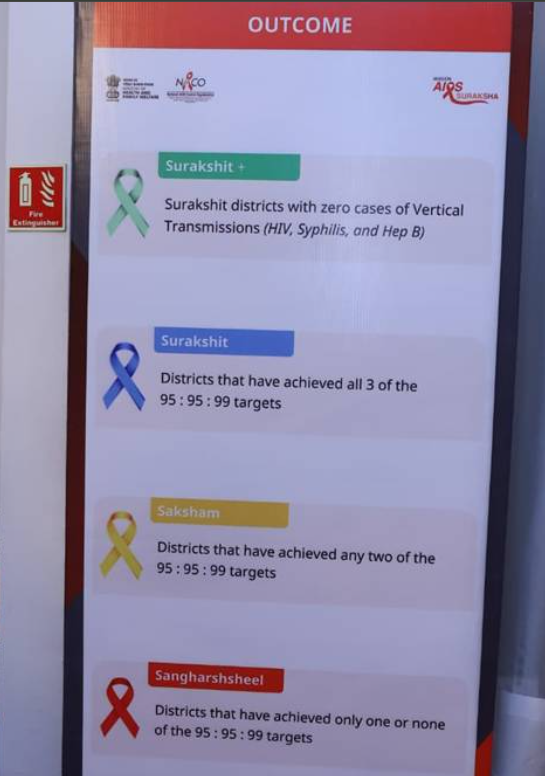
- 21 Mar 2026
In News:
The Ministry of Health & Family Welfare, through the National AIDS Control Organisation (NACO), organised the Suraksha Sankalp Karyashala to enhance the effectiveness of district-level responses to HIV/AIDS, particularly in regions like Delhi and Haryana.
About Suraksha Sankalp Karyashala
Nature of the Initiative
- Suraksha Sankalp Karyashala is a national-level workshop initiative designed to strengthen HIV/AIDS control through decentralised, district-focused planning, supported by data-driven strategies and stakeholder coordination.
Objectives
1. Strengthening the HIV Care Continuum
- Improve early diagnosis and testing coverage
- Ensure timely linkage to treatment (ART)
- Achieve sustained viral suppression
2. Accelerating Epidemic Control
- Align with global 95:95:95 (India aims 95:95:99) targets:
- 95% diagnosed
- 95% on treatment
- 99% achieving viral suppression
- Contribute to the goal of ending HIV/AIDS as a public health threat by 2027–2030
Key Features
1. District-Centric Approach
- Focus on 219 priority districts
- Use of granular, real-time data to identify gaps and tailor interventions
2. Whole-of-System Coordination
- Convergence of national, state, and district-level stakeholders
- Inclusion of:
- Health officials
- Programme managers
- Community-based organisations
3. Evidence-Based Planning
- Emphasis on:
- Data analytics
- Monitoring and evaluation
- Outcome-oriented strategies
4. Capacity Building and Knowledge Sharing
- Workshops act as platforms for:
- Sharing best practices
- Addressing implementation challenges
- Enhancing administrative and technical capacity
Approved List of Models and Manufacturers (ALMM) Framework
- 20 Mar 2026
In News:
In a significant move to strengthen India’s solar manufacturing ecosystem, the Ministry of New and Renewable Energy (MNRE) has expanded the Approved List of Models and Manufacturers (ALMM) framework to include solar ingots and wafers, effective from June 1, 2028. This marks a shift towards end-to-end domestic value chain integration in the solar sector.
About ALMM Framework
The ALMM framework, introduced in 2019, is a regulatory mechanism aimed at ensuring quality assurance and reliability of solar photovoltaic (PV) components used in India.
- Launched by: MNRE under the ALMM Order, 2019
- Objective:
- Promote Atmanirbhar Bharat in solar manufacturing
- Ensure high-quality solar components
- Reduce dependence on imports, especially from China
Key Features of ALMM
1. Mandatory Certification
- Only ALMM-listed manufacturers and models are eligible for:
- Government-supported solar projects
- Projects under net metering and open access
- Projects awarded through Section 63 of the Electricity Act
2. Tiered Structure
The framework is organised into multiple categories:
- List-I: Solar PV Modules
- List-II: Solar PV Cells
- List-III (New): Solar Ingots and Wafers
The inclusion of upstream components (ingots and wafers) is a major policy shift.
3. Quality Assurance Mechanism
- Mandatory physical inspection of manufacturing facilities
- Conducted by the National Institute of Solar Energy (NISE)
- Verifies production capacity and technological standards
4. Domestic Content Reinforcement
- Functions as a non-tariff barrier supporting Domestic Content Requirement (DCR) policies
- Encourages indigenous manufacturing across the value chain
5. Grandfathering Provisions
- Protects projects already in the pipeline
- Ensures policy stability and minimal disruption for developers
Stockholm Water Prize

- 20 Mar 2026
In News:
The Stockholm Water Prize 2026, widely regarded as the most prestigious global recognition in the field of water, has been awarded to Kaveh Madani. His work highlights the growing importance of sustainable water management in the face of climate change, ecological degradation, and governance challenges.
About the Stockholm Water Prize
The Stockholm Water Prize is an internationally acclaimed award that recognises outstanding contributions to water conservation and management.
- Established: 1991
- Awarding Body: Stockholm Water Foundation in collaboration with the Royal Swedish Academy of Sciences
- Patron: King Carl XVI Gustaf
- Presentation: During World Water Week (August)
Eligibility and Nomination
- Open to individuals or organisations contributing significantly to:
- Water resource conservation
- Environmental sustainability
- Human well-being
- Nomination Process:
- Open nominations (global participation)
- Self-nominations are not permitted
- Close professional or family nominations are disallowed
Profile of the 2026 Laureate: Kaveh Madani
1. Background
- Iranian environmental scientist and policy expert
- Known for his work on water governance, sustainability, and environmental diplomacy
- Has worked across academia, international organisations, and policymaking institutions
2. Key Contributions
- Highlighted the water crisis in Iran and West Asia
- Advocated for integrated water resource management
- Bridged the gap between science, policy, and public communication
- Promoted awareness of unsustainable water practices and ecological mismanagement
3. “Eco-warrior in Exile”
- Faced political challenges and criticism in his home country
- Continued global advocacy on water sustainability despite constraints
- His journey reflects the intersection of environment, governance, and politics
Bharat Audyogik Vikas Yojna (BHAVYA)
- 20 Mar 2026
In News:
In a major push towards manufacturing-led growth, the Union Cabinet has approved the Bharat Audyogik Vikas Yojna (BHAVYA) with an outlay of ?33,660 crore. The scheme aims to develop 100 world-class plug-and-play industrial parks across India, strengthening industrial infrastructure and accelerating the vision of Viksit Bharat and Atmanirbhar Bharat.
About BHAVYA Scheme
BHAVYA is a centrally sponsored industrial infrastructure programme designed to create ready-to-use industrial ecosystems that enable industries to begin operations with minimal delays.
- Nodal Ministry: Department for Promotion of Industry and Internal Trade (DPIIT), Ministry of Commerce & Industry
- Implementing Agency: National Industrial Corridor Development Corporation (NICDC)
- Coverage: All States and Union Territories
- Industrial Park Size: 100–1000 acres
Objectives
- Promote manufacturing-led economic growth
- Enhance ease of doing business through pre-approved infrastructure
- Foster cluster-based industrial development
- Strengthen domestic supply chains
- Generate large-scale employment and attract investments
Key Features of BHAVYA
1. Plug-and-Play Industrial Ecosystem
- Pre-approved land, utilities, and regulatory clearances
- Reduces time from investment intent to production
- Minimises procedural delays and entry barriers
2. Comprehensive Infrastructure Development
- Financial Support:
- Up to ?1 crore per acre for infrastructure
- Up to 25% support for external connectivity
- Integrated Infrastructure Components:
- Core: Roads, drainage, underground utilities, ICT systems
- Value-added: Factory sheds, testing labs, warehousing
- Social: Worker housing and support amenities
3. Ease of Doing Business Reforms
- Single-window clearance systems
- State-led investor-friendly reforms
- Streamlined approvals and reduced regulatory burden
4. Challenge-Based Project Selection
- Competitive selection process
- Focus on reform-oriented and investment-ready proposals
- Ensures quality and efficiency in project implementation
5. Alignment with National Initiatives
- Linked with PM GatiShakti for multimodal connectivity
- Builds on the success of industrial smart cities under NICDC
- Supports Atmanirbhar Bharat and export competitiveness
6. Sustainable and Future-Ready Design
- Integration of green energy solutions
- Underground utility corridors (no-dig model)
- Efficient resource use and reduced operational disruptions
Indian Ocean Ship (IOS) SAGAR Initiative

- 20 Mar 2026
In News:
India has reinforced its maritime diplomacy and regional security engagement with the commencement of the second edition of the Indian Ocean Ship (IOS) SAGAR initiative on 16 March 2026. The initiative reflects India’s evolving role as a net security provider in the Indian Ocean Region (IOR).
About IOS SAGAR Initiative
The Indian Ocean Ship (IOS) SAGAR is a maritime security cooperation programme aimed at enhancing collaboration among Indian Ocean nations.
- It enables naval personnel from friendly foreign countries to train and sail together onboard an Indian Naval Ship.
- It is conducted under the broader vision of Security and Growth for All in the Region (SAGAR).
- It also aligns with the expanded framework of MAHASAGAR (Mutual and Holistic Advancement for Security Across the Regions).
Institutional Context
- The initiative is linked to the Indian Ocean Naval Symposium (IONS), a key multilateral naval cooperation platform.
- India assumed the chairmanship of IONS in February 2026, enhancing its leadership role in regional maritime governance.
- The current edition includes participation from 16 IONS member nations.
Key Features of IOS SAGAR
1. Unique Operational Engagement
- Combines training, joint sailing, and operational exposure
- Promotes interoperability and coordination among partner navies
2. Capacity Building and Training
- Initial phase includes professional training at Indian Naval establishments in Kochi
- Covers:
- Seamanship practices
- Maritime security concepts
- Naval operations
3. Sea Deployment and Joint Operations
- Participants embark on an Indian Naval Ship
- Engage in:
- Joint maritime operations
- Real-time naval exercises
- Shipboard activities
4. Maritime Engagement and Diplomacy
- Includes port visits and interactions with regional navies and agencies
- Facilitates:
- Exchange of best practices
- Strengthening of professional networks
- Greater understanding of shared maritime challenges
Small Hydro Power (SHP) Development Scheme (2026–31)
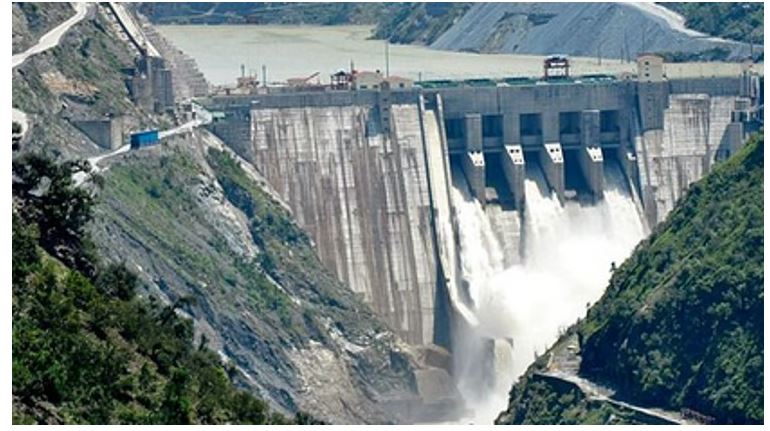
- 20 Mar 2026
In News:
In a significant step towards strengthening India’s renewable energy portfolio, the Union Cabinet has approved the Small Hydro Power (SHP) Development Scheme for FY 2026–27 to FY 2030–31. The scheme aims to harness untapped hydro potential, particularly in remote and hilly regions, while promoting sustainable and decentralized energy generation.
About the SHP Development Scheme
The scheme focuses on the development of small hydro projects with capacities ranging from 1 MW to 25 MW, targeting an aggregate capacity of 1,500 MW across the country.
- Time Period: FY 2026–27 to FY 2030–31
- Total Outlay: ?2,584.60 crore
- Target Investment Mobilisation: ~?15,000 crore
- Focus Areas: Hilly regions, North-Eastern states, and border districts
Key Features of the Scheme
1. Differential Central Financial Assistance (CFA)
- North-Eastern & Border Areas:
- ?3.6 crore per MW or 30% of project cost
- Maximum ?30 crore per project
- Other States:
- ?2.4 crore per MW or 20% of project cost
- Maximum ?20 crore per project
This differentiated support reflects regional disparities and aims to unlock hydro potential in geographically challenging areas.
2. Dedicated Funding Allocation
- ?2,532 crore earmarked for project development
- ?30 crore allocated for preparation of Detailed Project Reports (DPRs) for ~200 future projects
This ensures both immediate implementation and a pipeline for long-term sectoral growth.
3. Promotion of Indigenous Manufacturing
- Mandates 100% domestic sourcing of plant and machinery
- Supports the Atmanirbhar Bharat initiative
- Encourages growth of local manufacturing ecosystems in the renewable sector
4. Employment Generation
- Estimated 51 lakh person-days of employment during construction
- Additional long-term employment in operation and maintenance
- Focus on rural and remote job creation
5. Decentralised and Efficient Energy Generation
- SHPs are decentralised, reducing dependence on long transmission lines
- Leads to lower transmission losses and improved grid efficiency
Technological Approach: Run-of-the-River Projects
The scheme emphasises run-of-the-river technology, which:
- Generates power using natural river flow
- Avoids large dams and reservoirs
- Minimises ecological disruption
India’s Vaccination Ecosystem
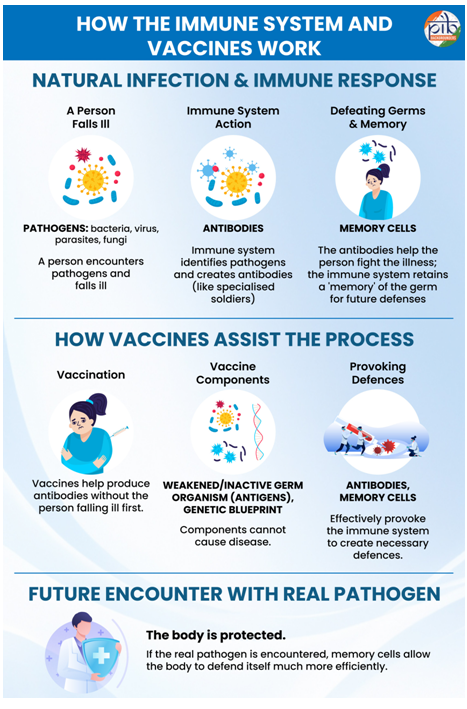
- 19 Mar 2026
In News:
India recently celebrated National Vaccination Day (16 March), highlighting major milestones under the Universal Immunisation Programme (UIP), including achieving 98.4% full immunisation coverage (January 2026) and the rollout of HPV vaccination and an indigenous Td vaccine.
National Vaccination Day and Historical Context
National Vaccination Day is observed annually on 16 March to commemorate the administration of the first dose of the Oral Polio Vaccine (OPV) in 1995 under the Pulse Polio Programme. This initiative played a crucial role in India achieving polio elimination, with the last reported case in 2011 in Howrah, West Bengal, marking a major public health success.
Universal Immunisation Programme (UIP): Overview and Objectives
The Universal Immunisation Programme (UIP), a flagship initiative of the Ministry of Health and Family Welfare, was originally launched as the Expanded Programme on Immunization (EPI) in 1978 and later expanded into UIP in 1985. It aims to provide free vaccination to children, pregnant women, and adolescents against vaccine-preventable diseases. The programme focuses on increasing immunisation coverage, improving service quality, ensuring a robust cold-chain system, and achieving self-reliance in vaccine production.
Scale and Coverage of UIP
UIP is one of the largest immunisation programmes in the world, covering approximately 2.9 crore pregnant women and 2.54 crore newborns annually. It provides protection against 12 vaccine-preventable diseases, with certain vaccines like Japanese Encephalitis being administered only in endemic regions. Over time, the programme has significantly expanded its reach and effectiveness across the country.
Expansion of Vaccination Portfolio
India has continuously strengthened UIP by introducing new vaccines. These include the Inactivated Polio Vaccine (2015) under the global polio endgame strategy, the Rotavirus Vaccine (2016) to reduce diarrhoeal mortality, the Measles-Rubella vaccine (2017) through a nationwide campaign, and the Pneumococcal Conjugate Vaccine (2017) to combat pneumonia. Additionally, the Td vaccine replaced the TT vaccine to address waning immunity against diphtheria among adolescents and adults.
Mission Indradhanush and Coverage Expansion
To further enhance coverage, the government launched Mission Indradhanush in 2014, aiming to achieve over 90% full immunisation by targeting unvaccinated and partially vaccinated populations. This was followed by Intensified Mission Indradhanush (IMI) in 2017, focusing on children below two years and pregnant women in urban slums and low-coverage districts. As a result, full immunisation coverage has increased significantly from 62% in 2015 to 98.4% in 2026.
Institutional and Infrastructure Support
The success of UIP is supported by an extensive healthcare delivery network that includes Primary Health Centres (PHCs), Community Health Centres (CHCs), government hospitals, sub-centres, and Anganwadi centres. Frontline workers such as ASHA workers, Anganwadi workers, and link workers play a vital role in mobilising beneficiaries. Additionally, India has developed one of the largest vaccine cold-chain infrastructures in the world, with over 1.06 lakh ice-lined refrigerators and freezers, supporting more than 1.3 crore immunisation sessions annually.
Digital Transformation in Vaccination
India has integrated digital technologies to improve vaccine delivery and monitoring. The Electronic Vaccine Intelligence Network (eVIN) enables real-time tracking of vaccine stocks and storage conditions. The CoWIN platform (2021) facilitated the administration of over 220 crore COVID-19 vaccine doses, while the U-WIN platform (2024) helps citizens access vaccination services, book appointments, and maintain digital records.
Major Achievements in Immunisation
India has achieved significant milestones in public health, including the eradication of smallpox, elimination of polio (2011), and control of diseases such as yaws and maternal and neonatal tetanus. The proportion of zero-dose children has also declined sharply from 0.11% in 2023 to 0.06% in 2024, indicating improved outreach. These achievements have been recognised globally, including by the UN Inter-Agency Group for Child Mortality Estimation (2024).
India’s Global Leadership in Vaccines and Pharmaceuticals
India has emerged as a global leader in vaccine production, manufacturing nearly 60% of the world’s vaccines. It is the third-largest pharmaceutical producer by volume and supplies medicines to around 200 countries, accounting for approximately 20% of global generic medicine supply. Through the Vaccine Maitri initiative, India supplied over 298 million COVID-19 vaccine doses to nearly 100 countries, strengthening its role in global health diplomacy.
Policy Support and Self-Reliance
To boost domestic manufacturing and reduce import dependence, the government has introduced Production Linked Incentive (PLI) schemes for bulk drugs (2020), medical devices (2020), and pharmaceuticals (2021). These initiatives aim to enhance India’s competitiveness and ensure long-term self-reliance in the healthcare sector.
MXene-Based Catalyst

- 19 Mar 2026
In News:
Researchers at IIT Guwahati have developed a MXene-based catalyst capable of simultaneously enabling efficient hydrogen production from water and functioning as a photocatalyst for desalination. This innovation holds promise for addressing both clean energy and water scarcity challenges.
About MXenes
MXenes are a class of two-dimensional (2D) advanced materials, first discovered in 2011, known for their exceptional physicochemical properties.
Composition and Structure
- Derived from a precursor material known as MAX phase.
- General formula: Mn 1XnTx
- M: Early transition metal
- X: Carbon and/or nitrogen
- T: Surface functional groups (O, OH, F)
- The most widely studied MXene is Titanium Carbide (Ti?C?Tx).
Key Properties of MXenes
- High electrical conductivity
- Excellent mechanical strength
- Good chemical stability
- Hydrophilicity (water-attracting nature)
- Tunable surface chemistry
These properties make MXenes highly versatile for multiple advanced technological applications.
MXene-Based Catalyst: Key Features
- Enables efficient hydrogen generation through water splitting.
- Functions as a photocatalyst for desalination, using light energy to purify water.
- Integrates energy production and water treatment in a single material system.
Applications of MXenes
1. Clean Energy
- Used in hydrogen production, supporting the transition to green hydrogen economy.
- Applicable in energy storage systems such as:
- Lithium-ion batteries
- Supercapacitors
2. Water Treatment and Desalination
- Effective in removing salts and impurities from seawater.
- Useful in wastewater treatment due to high adsorption capacity.
3. Separation and Filtration
- Suitable for industrial filtration processes owing to:
- High surface area
- Flexibility
- Conductivity
Significance
1. Addressing Dual Challenges: Simultaneously tackles energy demand (hydrogen fuel) and water scarcity.
2. Sustainable Technology: Promotes eco-friendly solutions by using light-driven processes and reducing reliance on fossil fuels.
3. Advancement in Material Science: Demonstrates the potential of 2D materials in next-generation technologies.
4. India’s Scientific Progress: Highlights the role of Indian institutions like IIT Guwahati in cutting-edge research and innovation.
Ladakh Magmatic Arc
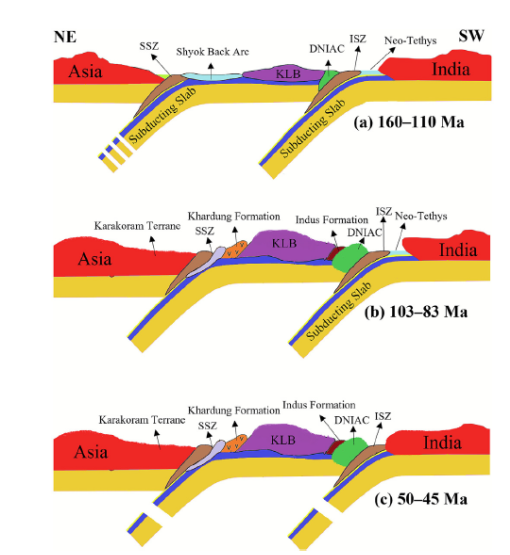
- 19 Mar 2026
In News:
Recent scientific studies have traced the evolution of the Ladakh Magmatic Arc (LMA) in the north-western Himalaya, providing new insights into the geological history of the Indian subcontinent and plate tectonic processes.
About Ladakh Magmatic Arc (LMA)
- The Ladakh Magmatic Arc is a belt of igneous rocks located in the Trans-Himalayan region. It represents a long-extinct volcanic arc system formed due to tectonic activity associated with the closure of the Neo-Tethys Ocean.
- Time Period: Formed between the Jurassic and Eocene periods (~201 million years ago to ~34 million years ago)
Geological Formation Process
Role of Plate Tectonics
- The region was once part of the Neo-Tethys Ocean.
- The Indian Plate moved northwards and subducted beneath the Eurasian Plate.
- This subduction led to melting in the mantle, generating magma.
- The rising magma formed a chain of volcanic features, giving rise to the magmatic arc.
Phases of Evolution of LMA
1. Early Island Arc Formation (160–110 Ma)
- Ladakh initially resembled a chain of volcanic islands.
- Represented by the Dras–Nidar Island Arc Complex (DNIAC).
- Magma was primarily derived from the mantle, with minimal sediment contribution.
2. Crustal Enrichment & Batholith Formation (103–45 Ma)
- Occurred during intensified convergence between the Indian and Eurasian plates.
- Formation of large granitic bodies known as the Ladakh Batholith.
- Increased contribution from:
- Continental crust
- Subducted sediments
- Indicates magma mixing and deep crustal processes.
- This phase coincided with the approaching continental collision.
3. Post-Collisional Magmatism (<45 Ma)
- Continued tectonic activity even after the closure of the Neo-Tethys Ocean.
- Formation of mafic dykes (vertical intrusions of magma).
- Magma sourced from an enriched mantle.
- Suggests lingering magmatic activity post-collision.
Key Geological Features
- Ladakh Batholith: Large granitic intrusions indicating crustal melting.
- Mafic Dykes: Evidence of late-stage magmatic activity.
- DNIAC: Represents early volcanic island arc phase.
Floating LiDAR Buoy System
- 19 Mar 2026
In News:
The National Institute of Ocean Technology (NIOT) has successfully tested an indigenously developed Floating LiDAR Buoy System off the coast of Muttom, Tamil Nadu. The development marks a significant step in enhancing India’s ocean-based meteorological and renewable energy assessment capabilities.
About Floating LiDAR Buoy System
The Floating LiDAR Buoy System is a state-of-the-art oceanographic instrument designed to measure wind and atmospheric conditions over the sea.
Key Features
- Combines a floating buoy platform with LiDAR (Light Detection and Ranging) technology.
- Uses laser pulses to capture highly accurate atmospheric data.
- Capable of measuring wind speed, direction, and vertical wind profiles.
- Can collect data up to 300 metres above sea level, surpassing many conventional instruments.
Working Mechanism
- The buoy is deployed on the ocean surface and remains stable under marine conditions.
- It emits laser pulses into the atmosphere.
- These pulses reflect off airborne particles such as aerosols.
- The returned signals are analysed to determine:
- Wind speed
- Wind direction
- Variations at different altitudes
This enables real-time, high-resolution data collection, even in remote offshore regions where traditional meteorological tools face limitations.
Significance
1. Improved Weather Forecasting
- Enhances accuracy of marine weather predictions.
- Supports better storm and cyclone tracking, crucial for coastal safety.
2. Boost to Offshore Wind Energy
- Provides precise wind data necessary for site assessment of offshore wind farms.
- Reduces uncertainty in renewable energy planning and investments.
3. Climate Change Studies
- Helps monitor long-term atmospheric and oceanic interactions.
- Contributes to understanding the impact of climate change on marine systems.
4. Indigenous Technological Advancement
- Reflects India’s progress in developing advanced ocean observation systems.
- Reduces reliance on imported technologies.
About National Institute of Ocean Technology (NIOT)
- It operates under the Ministry of Earth Sciences.
- It focuses on ocean engineering, resource exploration, and marine technology development.
- Plays a key role in initiatives like deep-sea exploration and offshore energy.
Exercise Sea Dragon
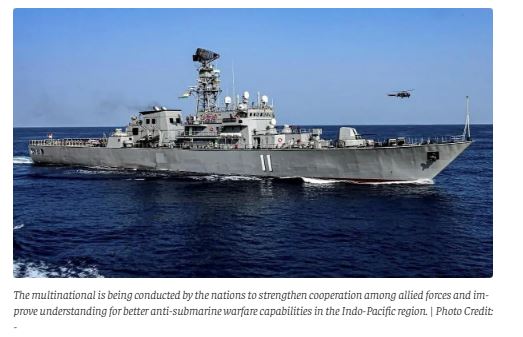
- 19 Mar 2026
In News:
The Indian Navy, along with partner nations, is participating in Exercise Sea Dragon 2026.
About Exercise Sea Dragon
Exercise Sea Dragon is an annual multinational anti-submarine warfare (ASW) drill initiated and led by the United States Navy since 2019. It is held at Andersen Air Force Base, Guam, in the Western Pacific.
Key Features
- Focuses on anti-submarine warfare operations, a critical aspect of modern naval strategy.
- Participation involves long-range maritime patrol aircraft, notably the P-8 Poseidon.
- Provides a platform for operational coordination and interoperability among partner nations.
- Enhances real-time information sharing, communication protocols, and tactical alignment.
Participating Countries in 2026
Exercise Sea Dragon 2026 includes participation from:
- United States Navy
- Indian Navy
- Royal Australian Air Force
- Japan Maritime Self-Defence Force
- Royal New Zealand Air Force
This reflects a growing strategic convergence among Indo-Pacific democracies.
Operational Objectives
The exercise aims to:
1. Enhance ASW Capabilities
- Participants progress from simulated tracking to live submarine detection and tracking.
- Improves the ability to counter underwater threats in real-world scenarios.
2. Promote Interoperability
- Enables seamless coordination between forces operating similar platforms like P-8 aircraft.
- Standardises data-sharing systems, communication networks, and tactical procedures.
3. Build Aircrew Proficiency
- Crews are evaluated on speed, accuracy, and mission coordination.
- Structured scenarios test operational readiness under competitive conditions.
Competitive Element: Dragon Belt Award
- Each mission during the exercise is graded.
- The country achieving the highest cumulative score is awarded the prestigious “Dragon Belt”.
- Encourages excellence and operational efficiency among participants.
Strategic Significance
1. Indo-Pacific Security
- Reinforces collective efforts to maintain freedom of navigation and maritime stability.
- Addresses emerging threats, including submarine proliferation in the region.
2. India’s Maritime Role
- Demonstrates India’s growing role as a net security provider in the Indo-Pacific.
- Aligns with India’s SAGAR (Security and Growth for All in the Region) vision.
3. Strengthening Partnerships
- Deepens defence ties among Quad-like partners and other regional actors.
- Enhances multilateral defence cooperation beyond bilateral engagements.
Appropriation Bill 2026
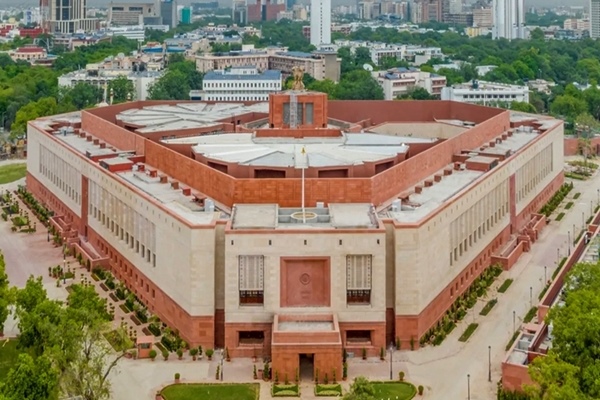
- 18 Mar 2026
In News:
The Indian Parliament has passed the Appropriation Bill 2026, completing a crucial stage in the Union Budget process. The Bill, returned by the Rajya Sabha after discussion, enables the government to legally withdraw funds for its expenditure. This highlights the central role of Parliament in ensuring financial accountability and legislative control over public finances.
What is the Appropriation Bill?
- The Appropriation Bill is a legislative instrument that authorizes the government to withdraw money from the Consolidated Fund of India (CFI) to meet its expenditure for a given financial year.
- Even after the presentation of the Budget, no money can be spent without the passage of this Bill, making it an essential component of fiscal governance.
Constitutional Provisions
The Appropriation Bill derives its authority from the Constitution:
- Article 114: No withdrawal from the Consolidated Fund of India is permitted without parliamentary approval through an Appropriation Act
- Article 115: Provides for Supplementary, Additional, or Excess Grants, requiring further appropriation
- Article 116: Deals with Vote on Account, Vote of Credit, and Exceptional Grants, ensuring continuity of government expenditure
Budgetary Process and Passage of the Bill
The passage of the Appropriation Bill follows a structured legislative process:
- Presentation of Budget (Annual Financial Statement) by the Finance Minister
- General Discussion in both Houses of Parliament
- Voting on Demands for Grants in the Lok Sabha (only House with voting powers on expenditure)
- Introduction of Appropriation Bill to authorize expenditure
- Passage in Lok Sabha
- Transmission to Rajya Sabha, which can only recommend changes and must return it within 14 days
- Presidential Assent, after which it becomes law
Key Features of the Appropriation Bill
1. Covers All Expenditure
- Includes both:
- Voted Expenditure (approved by Lok Sabha)
- Charged Expenditure (non-votable, e.g., salaries of constitutional authorities like the President and judges)
2. No Scope for Amendments
- Parliament cannot propose amendments that:
- Alter the amount of grants
- Change their purpose
3. Classified as a Money Bill
- Under Article 110, it is treated as a Money Bill, limiting the powers of the Rajya Sabha to making recommendations only.
Significance of the Appropriation Bill
1. Ensures Legislative Control over Finances: It upholds the principle that public money can only be spent with parliamentary approval, reinforcing democratic accountability.
2. Legal Basis for Government Expenditure: It provides the legal authority for the executive to implement policies, schemes, and programmes.
3. Promotes Transparency and Fiscal Discipline: The process ensures that government spending is scrutinized, debated, and authorized, enhancing transparency.
4. Strengthens Parliamentary Supremacy: It reinforces the role of the Lok Sabha as the custodian of public finances, reflecting the principle of “no taxation or expenditure without representation.”
Prambanan Temple Restoration
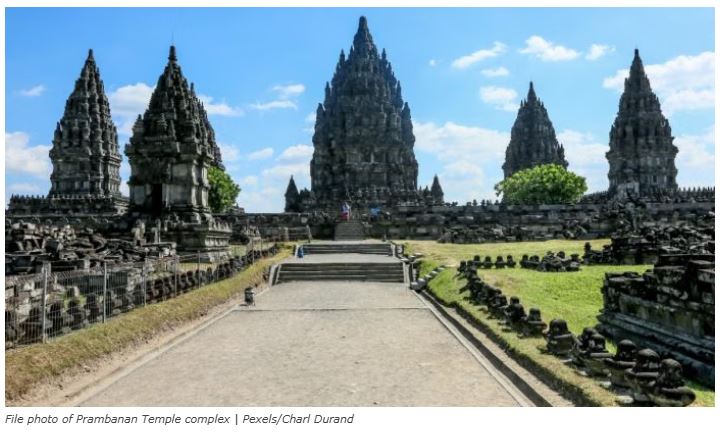
- 18 Mar 2026
In News:
India and Indonesia have recently partnered for the restoration of the Prambanan Temple complex in the Special Region of Yogyakarta, Java. This initiative reflects deep-rooted civilizational ties, cultural diplomacy, and shared heritage between the two nations, while also highlighting India’s growing role in global heritage conservation.
About Prambanan Temple
- The Prambanan Temple is the largest Hindu temple complex in Indonesia, located in Sleman, Yogyakarta (Central Java).
- Built in the 9th century by the Sanjaya dynasty, it represents the flourishing of Hindu culture in Southeast Asia.
- Locally known as Roro Jonggrang (Temple of the Slender Virgin), the complex is dedicated to the Hindu Trimurti—Shiva, Vishnu, and Brahma.
- After being buried and neglected for centuries, it was rediscovered and restored during the 19th century, and later recognised as a UNESCO World Heritage Site in 1991.
Architectural Features
Prambanan reflects a remarkable fusion of indigenous Javanese and South Indian (Pallava) architectural styles, showcasing cultural exchange across regions.
- The complex comprises 240 temples, arranged in concentric layouts
- The central compound includes eight main and eight minor temples built on an elevated platform
- The Shiva Temple, standing at 47 metres, is the tallest and most prominent structure
- Other major temples are dedicated to Brahma and Vishnu
- The walls are adorned with intricate carvings depicting the Ramayana and other Hindu epics, reflecting advanced craftsmanship
Interestingly, while primarily a Hindu complex, the surrounding area also contains Buddhist shrines, indicating religious coexistence and syncretism in ancient Java.
India China Trade Deficit
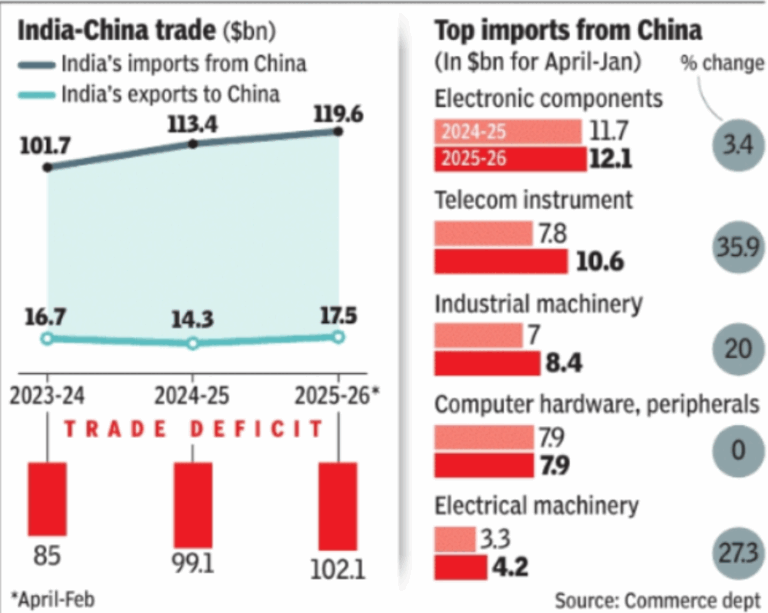
- 18 Mar 2026
In News:
India’s trade deficit with China has crossed a historic threshold, reaching approximately $102 billion during April–February FY2025–26. This marks the first time the deficit has exceeded $100 billion, underscoring deep structural imbalances in bilateral trade and raising concerns about economic resilience and strategic dependence.
Understanding Trade Deficit
- A trade deficit occurs when the value of a country’s imports exceeds its exports over a given period.
- In the India–China context, the imbalance is driven by high-value imports from China vis-à-vis relatively low-value Indian exports.
- India imports critical goods such as electronic components, telecom equipment, machinery, and pharmaceutical APIs, while exporting petroleum products, copper, and limited electronic goods, resulting in a widening gap.
Key Features of India–China Trade Imbalance
1. Persistent Import Dependence: India heavily relies on China for intermediate and capital goods that feed into domestic industries. Sectors like electronics, pharmaceuticals (APIs), renewable energy equipment, and heavy machinery depend significantly on Chinese imports.
2. Sectoral Imbalance: Imports from China are concentrated in high-value, technology-intensive goods, whereas India’s exports are largely low-value or resource-based products. This structural asymmetry limits India’s ability to narrow the deficit.
3. Market Access Asymmetry: Indian exporters face non-tariff barriers, stringent quality standards, and regulatory hurdles in China. This restricts access for Indian goods, particularly in sectors like agriculture, pharmaceuticals, and IT-enabled services.
Implications of the Rising Deficit
1. Pressure on Current Account: A large and persistent trade deficit contributes to the Current Account Deficit (CAD), impacting foreign exchange reserves and macroeconomic stability.
2. Strategic and Economic Vulnerability: Dependence on Chinese imports in critical sectors creates supply chain risks, especially during geopolitical tensions or disruptions such as pandemics.
3. Impact on Domestic Manufacturing: Cheap imports can undermine domestic industries, particularly MSMEs, affecting employment and industrial competitiveness.
Underlying Causes
- Cost competitiveness of Chinese manufacturing due to economies of scale
- Inadequate domestic manufacturing capacity in high-tech sectors
- Limited diversification of export basket
- Global value chain integration favouring China
Government Measures and Policy Response
- Production Linked Incentive (PLI) Schemes to boost domestic manufacturing in electronics, pharmaceuticals, and solar equipment
- Atmanirbhar Bharat initiative to reduce import dependence
- Import diversification strategies targeting alternative partners like Vietnam, South Korea, and the EU
- Quality control orders and standards to regulate imports
NMDC Limited and India’s Iron Ore Sector
- 18 Mar 2026
In News:
India’s mining sector achieved a significant milestone as NMDC Limited became the first company in the country to produce 50 million tonnes (MT) of iron ore in a single financial year. This achievement reflects the growing efficiency, mechanisation, and strategic importance of India’s mineral sector in supporting industrial growth and infrastructure development.
About NMDC Limited
- NMDC Limited (formerly National Mineral Development Corporation) is a Central Public Sector Enterprise (CPSE) established in 1958 under the Ministry of Steel.
- Headquartered in Hyderabad, it has evolved into India’s largest producer and exporter of iron ore.
- The company operates major mechanised iron ore mines in Chhattisgarh and Karnataka, contributing over 45 MT annually. Beyond iron ore, NMDC is engaged in the exploration of a diverse range of minerals including copper, limestone, dolomite, gypsum, bentonite, magnesite, diamond, tin, tungsten, graphite, and beach sands.
- It also operates India’s only mechanised diamond mine at Panna (Madhya Pradesh). Recognising its strategic and financial importance, NMDC was granted Navratna status in 2008, providing greater operational and financial autonomy.
Significance of the 50 MT Milestone
1. Boost to Industrial Growth: Iron ore is a critical raw material for the steel industry, which is the backbone of infrastructure, construction, and manufacturing. NMDC’s record production strengthens domestic supply, reducing dependence on imports and supporting initiatives like Make in India.
2. Enhanced Mining Efficiency: The achievement reflects improved mechanisation, technological adoption, and operational efficiency in India’s mining sector. It signals a transition towards large-scale, modernised mining practices.
3. Contribution to Economic Development: Higher production translates into:
- Increased government revenue through royalties and taxes
- Greater foreign exchange earnings via exports
- Employment generation in mining regions
4. Strategic Resource Security: With rising global demand for steel, ensuring a stable supply of iron ore is essential for economic resilience and industrial competitiveness.
Role of NMDC in India’s Mining Sector
NMDC plays a pivotal role as:
- The largest iron ore producer in India
- A key contributor to raw material security for steel plants
- A driver of regional development, particularly in mineral-rich but underdeveloped areas
Its diversified mineral portfolio also positions it as an important player in strategic and critical mineral exploration, which is vital for future technologies and energy transitions.
Safe Disposal of Unused Medicines
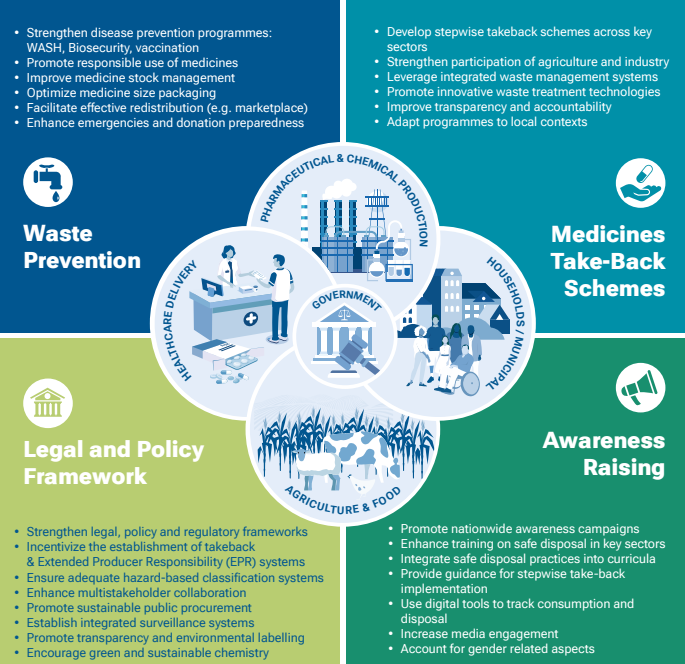
- 18 Mar 2026
In News:
The United Nations Environment Programme (UNEP) in its 2026 report “Safe Disposal of Unused Medicines” highlights the growing environmental and public health crisis posed by pharmaceutical waste. With rising drug consumption globally, improper disposal practices are contributing to ecological degradation and antimicrobial resistance (AMR), necessitating a comprehensive, multisectoral response.
Key Features of the UNEP Report
- The report adopts a One Health approach, recognizing the interconnectedness of human, animal, and environmental health. It proposes an integrated framework that combines waste prevention, safe disposal mechanisms, legal regulations, and public awareness across sectors such as healthcare, agriculture, and households.
- A major emphasis is placed on waste prevention as the most effective strategy, alongside the development of medicine take-back systems and strengthening governance structures.
Major Findings
1. Environmental and Health Risks
Improper disposal of medicines—through flushing, dumping, or burning—introduces pharmaceutical residues into ecosystems. This leads to:
- Antimicrobial Resistance (AMR): Identified as a major driver, with AMR directly causing 1.27 million deaths globally (2019)
- Endocrine disruption and toxicity affecting aquatic life and biodiversity
- Persistent contamination due to the inability of conventional wastewater treatment plants to remove pharmaceutical compounds completely
2. Scale of the Problem
- Up to 50% of household medicines become waste globally
- Unused medicines constitute about 3% of hazardous healthcare waste
- The unused medicine management market is projected to reach US$2.54 billion by 2032, reflecting rising healthcare consumption
3. Inefficiencies and Opportunities
- Prevention potential: Countries like the Netherlands show that 40% of medicine waste can be avoided
- Redistribution scope: Nearly 19% of unused medicines could be safely reused under strict quality conditions
- Over-preion, bulk packaging, and lack of awareness contribute significantly to wastage
Methods of Safe Disposal
The report outlines scientifically approved disposal methods:
- High-temperature incineration (800–1200°C): Most effective for hazardous pharmaceutical waste
- Waste immobilization: Encapsulation or inertization to prevent chemical leakage
- Engineered landfills: Secure containment systems for residual waste
- Co-processing: Use of cement kilns or industrial furnaces to destroy pharmaceutical compounds
Key Challenges
1. Lack of Awareness: A significant proportion of people are unaware of proper disposal methods. For instance, studies show over 50% of respondents in some countries lack knowledge of associated risks.
2. Infrastructure Gaps
- Rural and remote areas lack incineration and waste treatment facilities
- Limited access to organized collection systems hinders safe disposal
3. Weak Regulatory Frameworks
- Many countries lack mandatory take-back policies
- Fragmented governance leads to inconsistent implementation (e.g., reliance on voluntary systems in some developed countries)
4. Financial Constraints: Advanced treatment technologies such as advanced oxidation processes are effective but expensive, especially for developing nations.
5. Emergency and Humanitarian Risks: During crises, excess or mismatched drug donations lead to accumulation of expired medicines, increasing disposal burdens.
UNEP Recommendations
1. Prioritising Waste Prevention
- Improve WASH (Water, Sanitation, and Hygiene), vaccination, and disease prevention
- Promote rational drug use and better diagnostics
2. Establishing Take-Back Systems
- Implement national-level collection programmes for households, pharmacies, and farms
- Ensure safe channels for returning unused medicines
3. Strengthening Legal Frameworks
- Introduce Extended Producer Responsibility (EPR) to make pharmaceutical companies responsible for post-consumer waste
- Develop binding regulations for safe disposal
4. Promoting Rational Use of Medicines
- Encourage unit-dose packaging
- Reduce over-preion and patient stockpiling
5. Enhancing Monitoring and Awareness
- Use digital tracking systems to monitor medicine usage and disposal
- Conduct public awareness campaigns to change consumer behavior
Megamalai Wildlife Sanctuary
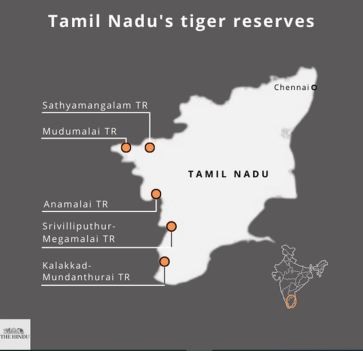
- 17 Mar 2026
In News:
The Zoological Survey of India (ZSI) has documented nine new species, including jumping spiders, damselflies, and mayflies, in the Megamalai Wildlife Sanctuary in Tamil Nadu, highlighting the rich biodiversity of the Western Ghats.
About Megamalai Wildlife Sanctuary
- Also known as the “High Wavy Mountains”
- Located in Tamil Nadu, forming part of the Western Ghats biodiversity hotspot
- Since 2021, it is a core component of the Srivilliputhur–Megamalai Tiger Reserve (SMTR), India’s 51st Tiger Reserve
- Eco-Sensitive Zone (ESZ) notified earlier in 2018
Habitat Diversity
The sanctuary features a mosaic of ecosystems, including:
- Montane Shola forests and grasslands
- Tropical wet evergreen forests
- Plantation landscapes (tea and cardamom) interspersed with natural vegetation
Hydrological Importance
- Acts as a critical watershed for southern Tamil Nadu
- Major rivers:
- Vaigai River (lifeline of the region)
- Suruliyaru and Shanmuganathi (tributaries)
- Several ephemeral streams (Arjuna Nadhi, Mudangiar, Gundar) support local agriculture and water supply
Key Ecological Features
1. Wildlife Corridor
- Forms a continuous ecological corridor connecting:
- Periyar Tiger Reserve (Kerala)
- Grizzled Giant Squirrel Sanctuary (Tamil Nadu)
- Supports movement of elephants and tigers
2. Bio-indicators
- Presence of mayflies and amphibians indicates:
- High water quality
- Stable ecosystems
3. Eco-Sensitive Zone: Buffer zone ranging from 0 to 1.7 km to reduce human-wildlife conflict
New Species Discovered
The ZSI survey recorded 977 species, including nine species new to science:
Key Discoveries
- Jumping Spider: Stenaelurillus megamalai
- Mayfly: Edmundsula meghamalaiensis
- Damselflies:
- Thraulus vellimalaiensis
- Protosticta sholai (endemic)
- Bark Lice & Cockroaches:
- Allacta vellimalai
- Lachesilla vellimalai
Other Notable Fauna
- Megamalai rock gecko (Hemidactylus vanam)
- Historical presence of the Critically Endangered Malabar Civet
Lower Kopili Hydroelectric Project
- 17 Mar 2026
In News:
The Prime Minister recently virtually inaugurated the 120 MW Lower Kopili Hydroelectric Project in Assam, marking a significant step in strengthening renewable energy infrastructure in the Northeast.
About the Lower Kopili Hydroelectric Project
- Type: Run-of-the-river hydropower project
- Capacity: 120 MW
- Location:
- West Karbi Anglong and Dima Hasao (North Cachar Hills) Autonomous District Council areas
- Situated in Central Assam
- River Basin: Kopili River
- Implementing Agency: Assam Power Generation Corporation Limited (APGCL)
- Funding: Supported by the Asian Development Bank (ADB) under the Assam Power Sector Investment Program
Key Features
- Environmentally more sustainable than large storage dams due to minimal reservoir requirement
- Designed to harness the natural flow of the river for power generation
About the Kopili River
- Type: Interstate river in Northeast India
- States Covered: Meghalaya and Assam
- Origin: Meghalaya Plateau
- Course:
- Flows through Karbi Anglong and Nagaon districts
- Joins the Brahmaputra River as its largest south-bank tributary in Assam
- Length:
- Total: 256 km
- Shared between Meghalaya–Assam: 78 km
- Within Assam: 178 km
Force Majeure

- 17 Mar 2026
In News:
Amid the escalating Iran–US–Israel conflict (2026), major Gulf energy producers such as Qatar, Kuwait, and Bahrain have invoked the force majeure clause on oil and gas exports due to shipping disruptions and infrastructure attacks.
What is Force Majeure?
Force majeure is a contractual legal provision that allows a party to suspend or terminate obligations without liability when extraordinary events prevent performance.
- Derived from French, meaning “superior force”
- Widely used in international trade, energy contracts, and maritime law
- Applies to both Acts of God (natural disasters) and Acts of Man (war, conflict, pandemics)
Objective
- To protect contracting parties from penalties or legal action
- To ensure fair risk distribution when circumstances are beyond control
- To provide legal clarity during crises
Key Features of Force Majeure
- : The triggering event must be unexpected at the time of contract formation.
- Externality: The cause must arise from external factors, not internal negligence.
- Irresistibility (Impossibility): The event must make performance impossible, not merely difficult or costly.
- Notification Requirement: The affected party must formally inform counterparts immediately (e.g., oil companies like Kuwait Petroleum).
- Duty to Mitigate: Even after invocation, parties must show reasonable efforts to minimize disruption.
Application in the Current Crisis
- Ongoing conflict has led to:
- Disruption of shipping routes (including critical maritime chokepoints)
- Attacks on energy infrastructure
- Gulf exporters have invoked force majeure to:
- Suspend oil and LNG deliveries
- Avoid contractual penalties and liabilities
Drawida vazhania
- 17 Mar 2026
In News:
Researchers have discovered a new species of earthworm, Drawida vazhania, from the Vazhani Dam region of the Peechi–Vazhani Wildlife Sanctuary in Kerala’s Thrissur district, highlighting the rich and still unexplored biodiversity of the Western Ghats.
About Drawida vazhania
- It belongs to:
- Genus: Drawida
- Family: Moniligastridae
- Distribution of the Genus: The genus Drawida is naturally distributed across South, Southeast, and East Asia, indicating its biogeographical significance.
Key Morphological Features
- Small body size, classified under the Barwelli species group.
- Distinct characteristics that differentiate it from related species include:
- Grooved male genital field
- Kidney/bean-shaped prostate gland
- Narrow, tubular C-shaped prostatic capsule
- Small sessile atrium on the body wall
These unique anatomical features played a crucial role in identifying it as a new species.
Biodiversity Significance
- With this discovery:
- Total Drawida species in India: 83
- Total Drawida species in the Western Ghats: 55
Importance
- Highlights the Western Ghats as a global biodiversity hotspot.
- Demonstrates that even less conspicuous organisms like earthworms remain underexplored.
- Reinforces the role of soil biodiversity in maintaining ecosystem health.
Ecological Importance of Earthworms
- Known as “ecosystem engineers” due to their role in:
- Soil aeration and nutrient cycling
- Decomposition of organic matter
- Enhancing soil fertility and agricultural productivity
Their diversity reflects the health of terrestrial ecosystems.
Jnanpith Award
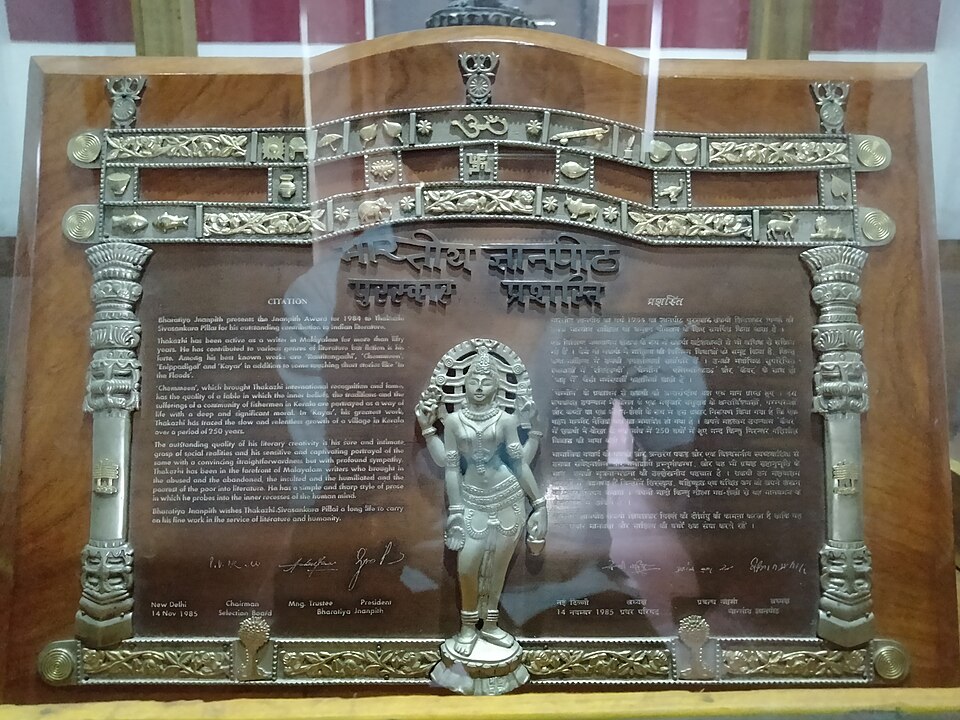
- 17 Mar 2026
In News:
Renowned Tamil lyricist and author R. Vairamuthu has been selected for the Jnanpith Award 2025, becoming the third Tamil writer to receive this prestigious honour.
About the Jnanpith Award
The Jnanpith Award is regarded as the highest literary honour in India, recognizing exceptional contributions to Indian literature.
- Institution: Established in 1961 by the Bharatiya Jnanpith, a cultural and literary organization.
- First Awarded: 1965
- First Recipient: Malayalam poet G. Sankara Kurup for Odakkuzhal.
- Objective: To honour writers for their outstanding contribution to literature across Indian languages.
Components of the Award
- Cash prize of ?11 lakh
- Bronze statuette of Vagdevi (Saraswati)
- Citation
Eligibility and Selection Criteria
- Awarded annually to Indian citizens for creative writing.
- Eligible languages include those listed in the Eighth Schedule of the Constitution and English.
- Only living authors are considered.
- A recipient can receive the award only once.
- The same language is not eligible for consideration for the next two years after receiving the award.
- The Selection Board may withhold the award if no candidate meets the required standard.
R. Vairamuthu and Significance of the Award
- R. Vairamuthu is a prominent Tamil poet, lyricist, and novelist known for his contributions to modern Tamil literature and cinema.
- His selection marks:
- Continued recognition of regional language literature
- Strengthening of Tamil literary prominence at the national level
- Reinforcement of India’s linguistic and cultural diversity
Dumpsite Remediation Accelerator Programme (DRAP)

- 16 Mar 2026
In News:
The Government of India has launched the Dumpsite Remediation Accelerator Programme (DRAP) to expedite the remediation of legacy waste dumpsites across urban areas. The initiative aims to eliminate large garbage dumps and reclaim urban land, thereby improving environmental quality and public health.
About Dumpsite Remediation Accelerator Programme (DRAP)
The Dumpsite Remediation Accelerator Programme (DRAP) is a time-bound national initiative designed to fast-track the clearance of legacy waste accumulated in dumpsites across Indian cities.
- Launch: November 2025
- Nodal Ministry: Ministry of Housing and Urban Affairs (MoHUA)
- Implementation Framework: Part of Swachh Bharat Mission – Urban 2.0
The programme adopts a structured and accelerated approach to remove garbage mountains, process old waste, and convert reclaimed land into productive spaces such as parks, infrastructure facilities, and community spaces.
Objectives
The programme aims to:
- Achieve 100% remediation of legacy dumpsites within one year of adoption.
- Accelerate the processing and scientific disposal of legacy waste.
- Prevent the creation of new dumpsites in urban areas.
- Reclaim valuable urban land for public and developmental uses.
- Improve environmental sustainability and public health outcomes.
Key Features of DRAP
1. Lakshya Zero Dumpsites Target: DRAP supports the “Lakshya Zero Dumpsites” goal under Swachh Bharat Mission – Urban 2.0, which seeks to eliminate all dumpsites by September 2026.
2. Focus on High-Impact Dumpsites: The programme prioritises 214 major dumpsites across 202 Urban Local Bodies (ULBs), where nearly 80% of India’s legacy waste is concentrated.
3. Central Financial Assistance: The Union Government provides Central Financial Assistance (CFA) of ?550 per tonne to support the processing and remediation of legacy waste.
4. 5P Implementation Framework: DRAP follows a 5P model to ensure coordinated implementation:
- Political leadership
- Public financing
- Partnerships
- People’s participation
- Project management
5. Partnership-Based Implementation: The programme encourages collaboration with:
- Public Sector Undertakings (PSUs)
- Non-Governmental Organisations (NGOs)
- Technical and infrastructure partners
These stakeholders help in waste processing, recycling, and resource recovery.
6. Technology-Driven Monitoring: To ensure transparency and real-time progress monitoring, the programme uses:
- Digital dashboards
- GPS and RFID-based tracking
- Daily reporting mechanisms
Transgender Persons (Protection of Rights) Amendment Bill, 2026

- 16 Mar 2026
In News:
- The Union Government has introduced the Transgender Persons (Protection of Rights) Amendment Bill, 2026 in the Lok Sabha to modify provisions of the Transgender Persons (Protection of Rights) Act, 2019.
- The proposed amendments seek to redefine the term “transgender person” and alter the existing framework of gender recognition, including changes to the right to self-perceived gender identity.
Background: Transgender Persons (Protection of Rights) Act, 2019
The Transgender Persons (Protection of Rights) Act, 2019 was enacted to prohibit discrimination against transgender persons and ensure their welfare, inclusion, and equal access to opportunities in education, employment, healthcare, and public services.
The law was enacted in response to the landmark Supreme Court judgment in NALSA v. Union of India (2014), which:
- Recognised transgender persons as the “third gender”, and
- Affirmed the right to self-determination of gender identity as part of Article 21 (Right to Life and Personal Liberty).
The 2019 Act also introduced provisions for identity certification, welfare schemes, and protection against discrimination.
Key Provisions of the Amendment Bill, 2026
1. Removal of the Right to Self-Perceived Gender Identity: The Bill proposes the deletion of Section 4(2) of the 2019 Act, which currently guarantees the right of transgender persons to self-identify their gender without medical intervention. This change shifts the framework from self-identification to institutional verification.
2. Redefinition of “Transgender Person”
The amendment proposes a narrower definition that includes:
- Socio-cultural identities: Hijra, Kinner, Aravani, Jogta, Eunuch
- Persons with intersex variations
- Individuals with congenital biological variations in sexual characteristics
However, the revised definition excludes persons identifying solely on the basis of self-perceived gender identity or gender fluidity.
The definition also includes individuals forced to adopt transgender identity through coercive practices, such as mutilation, castration, or forced hormonal procedures.
3. Creation of a Medical Authority
- The Bill introduces a Medical Authority (Medical Board) headed by a Chief Medical Officer (CMO) to examine cases related to gender identity certification.
- This authority will provide recommendations before certification is granted.
4. Changes in Certification Procedure
Under the proposed framework:
- The District Magistrate (DM) will issue a transgender certificate only after reviewing the recommendation of the medical authority.
- The earlier system allowed relatively simpler issuance based on declaration.
5. Revision of Gender Certificate After Surgery: Individuals undergoing Sex Reassignment Surgery (SRS) must apply for a revised gender certificate reflecting the updated gender identity. Earlier, such revisions were optional.
6. Reporting Requirement for Hospitals: Hospitals performing SRS procedures will be required to report such operations to the District Magistrate for documentation and regulatory purposes.
7. Change of Name in Official Records: The amendment provides transgender persons the right to change their first name in official documents, subject to the revised certification criteria.
8. Expanded Offences and Punishments: The Bill strengthens penal provisions with graded punishments including imprisonment and fines up to ?5 lakh for offences such as:
- Denial of access to public places
- Forced labour
- Expulsion from homes
- Other forms of discrimination and abuse
Silverpit Crater

- 16 Mar 2026
In News:
Recent scientific research has confirmed that the Silverpit Crater, located beneath the North Sea, was formed by a massive asteroid impact millions of years ago. The finding resolves a long-standing debate regarding the origin of the structure since its discovery in 2002.
About Silverpit Crater
The Silverpit Crater is a buried impact structure located beneath the seabed of the North Sea, approximately 80 miles (about 130 km) off the coast of Yorkshire in the United Kingdom.
Key Facts
- Depth: Around 700 metres beneath the seabed
- Discovery: Identified in 2002 through seismic surveys during hydrocarbon exploration
- Age of Formation: Estimated to have formed 43–46 million years ago
- Cause: Impact of a high-velocity asteroid or space rock striking the seabed
The crater remained hidden for millions of years due to thick layers of marine sediments covering the impact structure.
Scientific Evidence for Asteroid Impact
- Recent geological analysis has provided strong evidence supporting the asteroid impact hypothesis.
- Researchers identified shocked quartz and feldspar crystals in rock samples obtained from a nearby oil exploration well. These minerals form only under extreme pressure conditions generated by hypervelocity impacts, such as meteorite or asteroid collisions with Earth.
- The presence of these shock-deformed minerals is considered a key diagnostic indicator of impact events, confirming the extraterrestrial origin of the crater.
Geological Features of Silverpit Crater
The Silverpit structure displays characteristics typical of large hypervelocity impact craters.
- Crater Diameter: Approximately 3 kilometres wide
- Concentric Fault Rings: A system of circular faults extending up to 20 kilometres in diameter
- Structure: Multiple concentric rings surrounding a central crater, a feature commonly seen in large impact structures
- Shape: Nearly circular with a central peak, resembling classic meteorite impact craters
These structural features make Silverpit one of the most well-preserved buried impact craters discovered beneath the ocean floor.
Myiophanes kempi
- 16 Mar 2026
In News:
Researchers have recently rediscovered the rare thread-legged assassin bug Myiophanes kempi in limestone caves of the Andaman Islands, nearly 100 years after it was last documented. The rediscovery highlights the rich but poorly explored biodiversity of subterranean cave ecosystems in India.
About Myiophanes kempi
Myiophanes kempi is a rare insect species belonging to the assassin bug family Reduviidae. Assassin bugs are known for their predatory behaviour and specialised hunting adaptations.
Key Features
- Taxonomic Group: Assassin bug (Family Reduviidae)
- Body Structure: Slender-bodied with elongated legs, characteristic of thread-legged bugs
- First Described: 1924 by British entomologist William Edward China
- Earlier Record: Originally reported from Siju Cave in Meghalaya
- Recent Rediscovery: Limestone caves in the Andaman Islands
Biological Characteristics
Myiophanes kempi is specially adapted to subterranean cave ecosystems, where environmental conditions are unique.
- Habitat: Lives exclusively in dark cave environments
- Lifestyle: Completes its entire life cycle in darkness
- Feeding Behaviour:
- A specialised predator within cave ecosystems
- Uses long raptorial forelegs to capture prey
- Feeds mainly on small arthropods found inside caves
These adaptations enable the species to survive in low-light, nutrient-limited environments typical of underground habitats.
Ecological Significance
The rediscovery of Myiophanes kempi is important for several reasons:
- Biodiversity Documentation: It highlights the rich but underexplored biodiversity of cave ecosystems, particularly in island and karst landscapes.
- Indicator of Subterranean Ecosystem Health: Predatory insects like assassin bugs play an important role in maintaining ecological balance in cave food webs.
- Conservation Importance: Rediscovering species thought to be rare or missing helps guide future conservation and ecological research.
Key Facts About Siju Cave
Although the species was recently rediscovered in the Andaman Islands, it was originally described from Siju Cave in Meghalaya.
- Location: Garo Hills, Meghalaya
- Other Names: Dobakkol or Bat Cave
- Type: Limestone cave system
- Length: Extends for about 4.7 km, making it one of India’s longest limestone caves
- Nearby River: Located near the Simsang River
- Features: Known for stalactites, stalagmites, underground streams, and rich cave biodiversity
Osbeckia zubeengargiana
- 16 Mar 2026
In News:
Researchers from Gauhati University have discovered a new flowering plant species named Osbeckia zubeengargiana in the grasslands of Manas National Park in Assam. The species has been named in honour of celebrated Assamese singer Zubeen Garg, recognising his contribution to regional culture and advocacy for nature conservation.
About Osbeckia zubeengargiana
Osbeckia zubeengargiana is a newly identified plant species belonging to the Melastomataceae family, a diverse group of flowering shrubs widely distributed in tropical and subtropical regions.
Key Characteristics
- Plant Type: Perennial erect shrub
- Height: Can grow up to 3.5 metres tall
- Flowers: Characterised by pink to purple tetramerous (four-petalled) flowers
- Habitat: Thrives in moist grassland ecosystems
- Flowering and Fruiting Period: Mid-September to January
The plant was discovered in the grasslands of Manas National Park in Baksa district, Assam, where researchers observed a substantial population of the species.
Discovery and Scientific Identification
The species was identified during floristic explorations conducted between 2021 and 2025 as part of doctoral research on the Melastomataceae family in Assam. The research was carried out by scientists Barnali Das, Prashob Pulpra, and Namita Nath of Gauhati University.
Botanical analysis revealed that the plant is closely related to Osbeckia rostrata but differs in several morphological features such as:
- leaf structure,
- arrangement of flowers,
- shape of the hypanthium (floral structure), and
- seed size.
These distinguishing characteristics confirmed it as a new species within the genus Osbeckia.
Ecological Significance
The species grows in association with several grassland plants such as:
- Chrysopogon zizanioides,
- Maesa indica,
- Bombax ceiba, and
- Dillenia pentagyna.
Its presence contributes to the floral diversity of the grassland ecosystems of Manas National Park, which is already recognised as a biodiversity hotspot in the Eastern Himalayan region.
Digital Twin Initiative at V.O. Chidambaranar Port
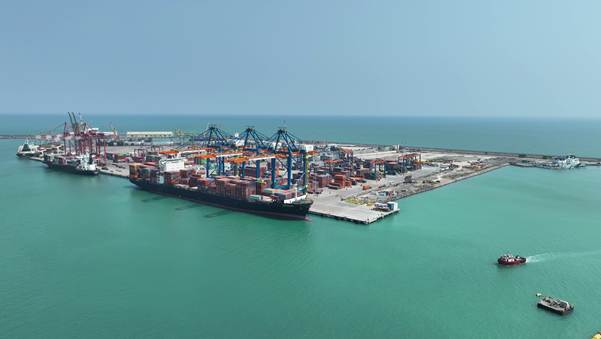
- 15 Mar 2026
In News:
The V.O. Chidambaranar Port has become the first port in India to launch a Digital Twin initiative for port management. The project aligns with national maritime strategies such as the Maritime India Vision 2030 and the Amrit Kaal Vision 2047, aiming to modernise port operations through advanced digital technologies.
What is a Digital Twin?
A Digital Twin is a real-time virtual replica of a physical system that continuously receives data from sensors and monitoring systems to simulate and optimise operations.
At the port, the platform integrates technologies such as:
- Internet of Things (IoT) sensors
- GPS tracking
- LiDAR mapping
- Drone-based imaging
- CCTV monitoring systems
These technologies collectively create a dynamic digital model of the port’s infrastructure, assets, and maritime ecosystem.
Key Technological Features
The Digital Twin platform enables advanced operational management through:
1. Real-Time Monitoring
- Tracks berth occupancy
- Monitors vessel movements
- Analyses crane utilisation
- Tracks yard capacity and cargo flow
2. Predictive Maintenance
- Uses AI-based analytics to monitor equipment health.
- Predicts failures in cargo handling machinery, reducing downtime and improving reliability.
3. Data-Driven Decision Making
- Provides integrated insights into port operations.
- Enables better planning of logistics and maritime traffic.
Expected Outcomes and Benefits
- Reduced vessel turnaround time: Expected reduction of up to 25%.
- Improved equipment availability: Predictive maintenance enhances operational reliability.
- Enhanced safety: Real-time alerts help prevent operational hazards.
- Energy optimisation: Efficient operations reduce energy consumption and carbon emissions.
- Operational efficiency: Streamlined cargo handling and port logistics.
About V.O. Chidambaranar Port
- Overview: The V.O. Chidambaranar Port (formerly Tuticorin Port) is one of India’s 13 major ports and functions as an artificial all-weather deep-sea port on the Coromandel Coast.
Historical Background
- Declared a major port in July 1974.
- Renamed in 2011 in honour of V. O. Chidambaram Pillai, who founded the Swadeshi Steam Navigation Company to challenge British maritime dominance.
Strategic Location
The port is located at Thoothukudi on the Gulf of Mannar, close to major East–West international shipping routes, providing a strategic advantage for global maritime trade.
Operational Significance
- Second-largest port in Tamil Nadu after Chennai Port.
- Third-largest container terminal in India.
- Serves as a major gateway for trade with Europe, the Mediterranean, and the United States.
Major Cargo Handled
- Containers
- Coal
- Salt
- Fertilisers
- Other bulk and general cargo
Significance for India’s Maritime Sector
- Promotes smart port infrastructure and digitalisation.
- Enhances efficiency and competitiveness of Indian ports.
- Supports green and sustainable port operations.
- Contributes to India’s ambition of becoming a global maritime logistics hub.
SC Clarifies OBC Creamy Layer Criteria
- 15 Mar 2026
In News:
The Supreme Court of India has ruled that parental income alone cannot determine the “creamy layer” status of candidates belonging to the Other Backward Classes (OBCs) in civil services examinations. The judgment clarifies long-standing confusion in the implementation of reservation rules and emphasises that the creamy layer principle is primarily status-based rather than purely income-based.
Background of the Issue
The controversy arose due to conflicting government guidelines issued by the Department of Personnel and Training (DoPT).
- 1993 DoPT Office Memorandum (OM): Stated that income from salaries and agricultural land should not be included in the income/wealth test used to determine creamy layer status.
- 2004 DoPT Clarificatory Letter: Directed that salary income of employees working in Public Sector Undertakings (PSUs) and the private sector should be counted while determining the creamy layer.
This created a situation where:
- Children of government employees could retain OBC reservation based on the status of their parent’s post, even if salaries were high.
- Children of PSU or private sector employees could lose reservation benefits solely because their parental income crossed the prescribed threshold.
Key Observations of the Supreme Court
1. Creamy Layer Determination Must Be Status-Based
The Court held that creamy layer identification should focus on social and occupational status, not merely income.
Therefore, factors such as:
- Parent’s employment category (Group A, B, C, or D)
- Position and authority in the occupational hierarchy
should be considered along with income.
2. Quashing the 2004 Clarification
The Court set aside the 2004 DoPT clarification, stating that it created inconsistencies in applying reservation rules and contradicted the earlier 1993 guidelines.
3. Violation of Equality Principles
The Court held that the government’s earlier approach resulted in “hostile discrimination.”
- Children of lower-level government employees could still benefit from OBC reservation due to the status-based test.
- However, children of PSU or private sector employees with similar socio-economic positions were excluded solely due to salary levels.
This unequal treatment violated Articles 14, 15, and 16 of the Constitution, which guarantee equality before law and equal opportunity in public employment.
4. Relief for Affected Candidates
The judgment may expand eligibility for OBC reservation, particularly benefiting children of PSU employees, public sector bank employees, and private sector workers who were previously excluded due to income-based calculations.
The Court also directed the government to create supernumerary posts if required to accommodate candidates who were wrongly denied reservation benefits earlier.
Concept of the Creamy Layer
- The idea of excluding the more advanced sections among OBCs from reservation benefits was established in the landmark Indra Sawhney vs Union of India case.
- Objective: To ensure that reservation benefits reach socially and educationally backward sections, rather than the relatively advanced members within OBC communities.
Existing Criteria for Creamy Layer
- Government Employees
- Children of Group A officers are automatically considered part of the creamy layer.
- Children of officers promoted to Group A before the age of 40 are also excluded.
- Children of two Group B officers fall under the creamy layer.
- Non-Government Occupations: For those employed in the private sector or other professions, the income threshold for creamy layer is ?8 lakh per annum (since 2017).
Significance of the Judgment
- Clarifies reservation policy: Removes ambiguity in determining creamy layer status.
- Ensures equality: Prevents discriminatory treatment between government employees and those in PSUs or the private sector.
- Strengthens constitutional principles: Reinforces the guarantees of Articles 14, 15, and 16.
- Promotes fair access to reservations: Ensures benefits reach genuinely disadvantaged groups.
Supreme Court on No-Fault Compensation for Covid-19 Vaccine Adverse Effects

- 15 Mar 2026
In News:
The Supreme Court of India has directed the Union Government to formulate a “no-fault liability compensation policy” for individuals who suffered serious adverse effects or deaths following Covid-19 vaccination during India’s nationwide immunisation programme. The Court held that victims or their families should receive compensation without having to prove negligence by the State or vaccine manufacturers.
Key Observations of the Supreme Court
1. Principle of No-Fault Liability
The Court invoked the no-fault liability principle, which allows compensation to victims without establishing fault or wrongdoing.
- The principle already exists in Indian law in areas such as motor vehicle accident compensation.
- Similar vaccine injury compensation schemes operate in countries such as Australia, the United Kingdom, and Japan.
This framework ensures speedy and equitable relief for victims of rare but serious vaccine side effects.
2. Rejection of Individual Litigation
The Union Government had argued that affected families could approach civil courts or consumer courts for damages against manufacturers or the State.
However, the Court rejected this argument, stating that:
- Individual litigation would lead to multiple legal battles.
- It could produce inconsistent outcomes and unequal access to justice.
- Such a situation may violate the Right to Equality under Article 14 of the Constitution.
3. State’s Positive Obligation
- Invoking Article 21 (Right to Life and Health), the Court emphasised that the State must act as an active guardian of citizens’ welfare and dignity.
- Since the vaccination drive was a State-led public health intervention, the government has a positive obligation to support those who suffer serious outcomes, even if such events are extremely rare.
- For instance, certain blood-clotting disorders associated with vaccines were reported at an estimated rate of about 0.001 per one lakh doses in India.
4. Compensation Beyond Surveillance
The Court observed that monitoring adverse events alone is insufficient. India already has a mechanism for investigating vaccine side effects through Adverse Events Following Immunisation (AEFI) committees.
The Court ruled that:
- These committees are adequate for medical assessment.
- However, the State’s responsibility cannot end with surveillance and investigation; it must extend to fair financial compensation.
5. Clarification on Liability
The Court clarified that creating a compensation policy does not amount to an admission of legal liability by the Union Government or vaccine manufacturers. Rather, it is a welfare-oriented public health measure.
Background: Earlier Judicial Interventions
1. Gaurav Kumar Bansal vs Union of India (2021)
The Supreme Court directed the National Disaster Management Authority (NDMA) to recommend guidelines for ex-gratia assistance for Covid-19 deaths.
Following this:
- NDMA fixed ?50,000 compensation per Covid-19 death.
- Payment was to be made by states through the State Disaster Response Fund (SDRF).
- A simplified procedure recognised deaths occurring within 30 days of a positive test as Covid-19 deaths.
- District-level grievance redressal committees were established to resolve disputes related to death certificates.
2. Jacob Puliyel vs Union of India (2022)
In this case, the Supreme Court:
- Upheld the validity of the Covid-19 vaccine approval process and the government’s AEFI monitoring system.
- Recognised bodily autonomy under Article 21, stating that no individual can be forcibly vaccinated.
Significance of the Judgment
- Strengthens public health governance: Encourages trust in vaccination programmes by ensuring protection for rare adverse outcomes.
- Ensures equitable relief: Avoids lengthy and costly litigation for affected families.
- Balances public interest and individual rights: Recognises both the importance of mass vaccination and the rights of individuals who suffer harm.
- Aligns India with global practices: Many countries already operate vaccine injury compensation programmes.
Discovery of New Lichen Moth Species in the Eastern Himalayas

- 15 Mar 2026
In News:
Scientists from the Zoological Survey of India (ZSI) have discovered two new species of lichen moths—Caulocera hollowayi and Asura buxa—in the Eastern Himalayan biodiversity hotspot. The discovery highlights the region’s rich but still underexplored biodiversity and the importance of taxonomic research in conservation.
About the Discovery
Researchers from ZSI identified two previously unknown moth species belonging to the order Lepidoptera, which includes butterflies and moths.
The species were identified through detailed morphological examination, including:
- Wing pattern and coloration analysis
- Chaetotaxy (arrangement of body scales and bristles)
- Microscopic study of reproductive structures, a crucial feature in insect taxonomy
Such techniques help scientists differentiate closely related species and confirm whether a specimen represents a new species.
Newly Discovered Species
1. Caulocera hollowayi
- Genus: Caulocera (lichen moth group)
- Location of discovery: Golitar region, Sikkim
- Key Characteristics:
- Distinctive wing colour patterns and band structures
- Unique reproductive structures visible under microscopic analysis
- Identified using detailed morphological traits and chaetotaxy
2. Asura buxa
- Genus: Asura (lichen moth group)
- Location of discovery: Panijhora region, West Bengal in the Eastern Himalayas
- Key Characteristics:
- Unique wing markings and coloration
- Distinct genital morphology, an important taxonomic feature in Lepidoptera
- Specific body scale arrangements confirming its status as a new species
About Lichen Moths
Lichen moths belong to a group of moths known for their association with lichens and mosses found in forest ecosystems.
Ecological Role:
- Act as bioindicators of ecosystem health
- Participate in nutrient cycling in forest habitats
- Help scientists understand species interactions in fragile mountain ecosystems
Importance of the Discovery
- Biodiversity documentation: Expands the scientific record of India’s insect diversity.
- Himalayan ecosystem research: Provides new insights into species adaptation in mountain environments.
- Conservation significance: Highlights the ecological importance of the Eastern Himalayas, one of the world’s major biodiversity hotspots.
- Taxonomic advancement: Reinforces the role of systematic biological surveys in identifying and classifying previously unknown species.
About Zoological Survey of India (ZSI)
- Established: 1916
- Headquarters: Kolkata
- Ministry: Ministry of Environment, Forest and Climate Change (MoEFCC)
- Mandate:
- Survey and documentation of India’s faunal diversity
- Taxonomic research and species identification
- Support biodiversity conservation and policy formulation
C-DOT and AI-Driven Fraud Detection

- 15 Mar 2026
In News:
India’s Centre for Development of Telematics (C-DOT) received international recognition at the Mobile World Congress (MWC) 2026 in Barcelona for its indigenous AI-driven telecom fraud detection platform “FraudPro.” The solution was shortlisted among the top finalists at the prestigious Global Mobile (GLOMO) Awards, highlighting India’s growing capabilities in telecom innovation and cybersecurity.
About Mobile World Congress (MWC)
- The Mobile World Congress (MWC) is the world’s largest global event for the mobile communications industry, organised annually by the GSMA in Barcelona, Spain.
- It brings together telecom operators, technology companies, and policymakers to showcase innovations in mobile technologies and digital connectivity.
- Recognition at this platform indicates global validation of technological innovation and industry impact.
FraudPro: AI-Driven Fraud Detection Solution
FraudPro is an indigenous telecom fraud detection platform developed by C-DOT using advanced Artificial Intelligence (AI) and data analytics.
Key Features
- AI-powered analytics: Uses machine learning algorithms to analyse telecom data and identify suspicious patterns.
- Real-time fraud detection: Detects fraudulent activities such as fake SIM registrations and telecom identity misuse.
- Facial deduplication technology: Identifies multiple connections obtained using the same identity or biometric information.
- Enhanced telecom security: Helps telecom operators prevent fraud, identity theft, and SIM-based scams.
Significance
- Strengthens digital trust and cybersecurity in telecom networks.
- Supports government efforts to curb telecom-related financial fraud and cybercrime.
- Demonstrates India’s ability to build indigenous telecom security technologies.
Centre for Development of Telematics (C-DOT)
Establishment and Institutional Structure
- Established: August 1984
- Nature: Autonomous telecom R&D organisation under the Department of Telecommunications (DoT), Government of India.
- Legal status: Registered as a society under the Societies Registration Act, 1860 and recognised as a Public Funded Research Institution (PFRI) by the Department of Scientific and Industrial Research (DSIR).
Objectives
- Develop indigenous telecom technologies suited to India’s diverse communication needs.
- Promote self-reliance in telecom infrastructure.
- Strengthen domestic capability in digital networks, cybersecurity, and emerging telecom technologies.
Major Areas of Work
1. Telecom Technology Research
C-DOT develops technologies in:
- Optical communication systems
- Switching and routing technologies
- Wireless networks and broadband systems
- Cybersecurity solutions
2. Rural Connectivity: Developed Rural Automatic Exchanges (RAX) and other technologies that expanded telecommunication services in rural India during the early telecom revolution.
3. Technology Transfer: Transfers developed technologies to domestic manufacturers, helping build India’s telecom manufacturing ecosystem.
4. Emerging Technologies
Current research areas include:
- 5G and future 6G technologies
- Artificial Intelligence-based network management
- Internet of Things (IoT) and Machine-to-Machine (M2M) communication
- Quantum-secure communication and cybersecurity solutions
5. Support to National Digital Initiatives
C-DOT technologies support key programmes such as:
- Digital India
- BharatNet
- Smart Cities Mission
- Make in India
Export of Assam’s GI-Tagged Joha Rice
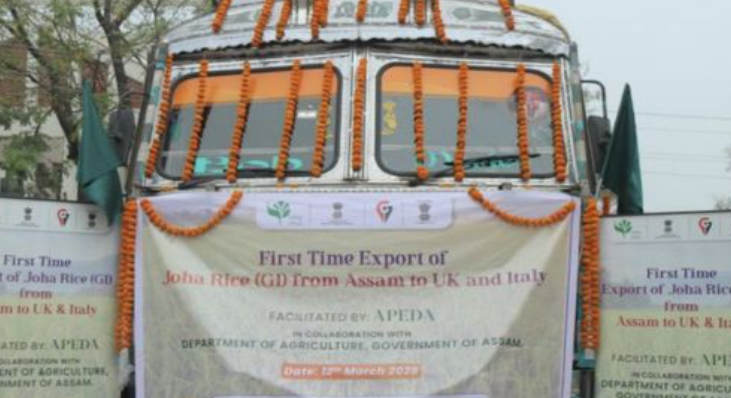
- 14 Mar 2026
In News:
- India recently facilitated the export of 25 metric tonnes of GI-tagged Joha rice from Assam to the United Kingdom and Italy.
- The initiative was supported by the Agricultural and Processed Food Products Export Development Authority (APEDA) to expand global access to India’s niche agricultural products and strengthen export opportunities for farmers in the North-Eastern region.
- This export marks an important step in promoting geographical indication (GI) products in international markets while enhancing income opportunities for local producers.
About Joha Rice
- Joha Rice is a short-grain aromatic rice variety traditionally cultivated in Assam. Known for its distinctive fragrance and soft texture, it is an integral part of Assamese cuisine and cultural traditions.
- The rice received Geographical Indication (GI) status in 2017, recognising its unique origin, traditional cultivation methods, and region-specific characteristics.
Region of Cultivation
Joha rice is primarily cultivated in Upper and Central Assam, where agro-climatic conditions support its growth. Major producing districts include:
- Sivasagar
- Jorhat
- Golaghat
- Dibrugarh
- Lakhimpur
The crop is usually grown during the Sali (winter) rice season, which is the primary paddy cultivation cycle in Assam.
Key Characteristics
Joha rice possesses several unique features that distinguish it from other rice varieties:
- Aromatic Quality: The rice emits a distinct natural fragrance, similar to premium aromatic varieties, making it suitable for specialty dishes.
- Short-Grain Variety: It is a short-grain winter paddy, known for its soft texture when cooked.
- Nutraceutical Properties: Studies indicate that Joha rice contains several bioactive compounds, including:
- Omega-3 and omega-6 fatty acids
- Antioxidants
- Flavonoids and phenolic compounds
- Potential Health Benefits: Bioactive compounds such as oryzanol, ferulic acid, and tocotrienols are associated with anti-diabetic and cardio-protective properties, increasing its appeal in health-conscious markets.
Significance of the Export
- Promoting GI-Tagged Products: The export highlights the growing international demand for India’s geographically unique agricultural products, reinforcing the value of the GI certification system.
- Enhancing Farmer Income: GI-tagged agricultural commodities often command premium prices in international markets, benefiting local farmers and producers.
- Boosting Agricultural Exports: The initiative supports India’s strategy to diversify agricultural exports by promoting specialty and high-value crops.
- Supporting North-East Agricultural Development: Export promotion of Joha rice contributes to economic development in the North-Eastern region, integrating local farmers into global supply chains.
Fiscal Health Index 2026
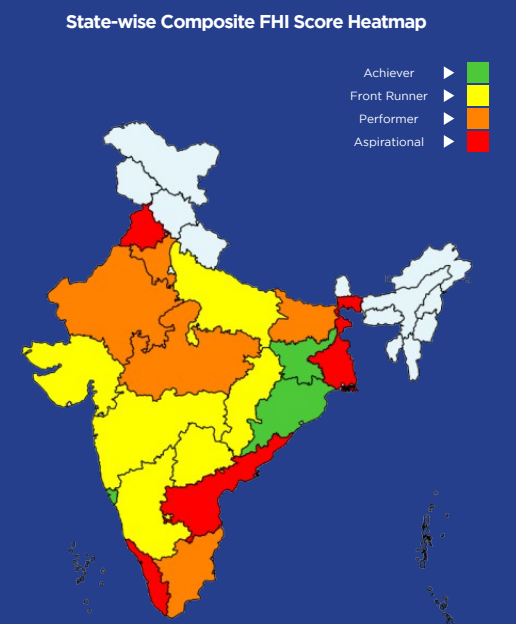
- 14 Mar 2026
In News:
- The NITI Aayog has released the second edition of the Fiscal Health Index (FHI) 2026, which evaluates the fiscal performance and sustainability of Indian states for the financial year 2023–24.
- The index provides a comprehensive framework to assess the fiscal strength, vulnerabilities, and sustainability of state finances, moving beyond traditional indicators such as fiscal deficit to a broader evaluation of fiscal management.
- Given that state governments account for around one-third of India’s general government debt, their fiscal health plays a critical role in ensuring macroeconomic stability and sustainable economic growth.
What is the Fiscal Health Index?
- The Fiscal Health Index (FHI) is a comparative analytical framework developed by NITI Aayog to evaluate the financial performance of states using multiple fiscal indicators. It aims to promote transparent fiscal governance, data-driven policymaking, and peer benchmarking among states.
Key Pillars of the Index
The FHI evaluates states based on five core pillars:
- Quality of Expenditure: This indicator examines the composition of government spending, focusing on the proportion allocated to developmental and capital expenditure rather than committed or routine spending.
- Revenue Mobilisation: It measures the ability of states to generate own tax and non-tax revenues, reflecting fiscal self-reliance.
- Fiscal Prudence: This pillar evaluates how effectively states manage their fiscal deficits and adhere to the norms under the Fiscal Responsibility and Budget Management Act (FRBM).
- Debt Index: It assesses the size and burden of outstanding liabilities, indicating the level of indebtedness.
- Debt Sustainability: This dimension examines the long-term ability of states to service their debt obligations without creating fiscal stress.
State Rankings (FY 2023–24)
Top Performing States
- Odisha – Rank 1 (Score: 73.1)
- Goa – Rank 2 (Score: 54.7)
- Jharkhand – Rank 3 (Score: 50.5)
- Gujarat – Rank 4
- Maharashtra – Rank 5
Bottom Performing States
- Punjab – Rank 18
- Andhra Pradesh – Rank 17
- West Bengal – Rank 16
- Kerala – Rank 15
Among the North-Eastern and Himalayan states, Arunachal Pradesh emerged as the top performer, largely due to high-quality expenditure and relatively stable fiscal management.
Key Findings of the Report
- Expanded Coverage: The 2026 edition expanded its scope to include 10 North-Eastern and Himalayan states, recognising their unique geographic and structural fiscal constraints.
- Improved Capital Expenditure: Several states have increasingly prioritised capital expenditure and social sector spending, reflecting a shift toward growth-oriented investments.
- Persistent Fiscal Stress in Some States: Certain states continue to face structural fiscal challenges, including rising debt levels, weak revenue growth, and high fiscal deficits.
- Importance for National Macroeconomic Stability: With state finances forming a significant portion of public debt, improving fiscal management at the state level is essential for India’s overall fiscal stability.
Major Challenges Highlighted
- High Committed Expenditure: Large portions of state budgets are locked into salaries, pensions, and interest payments, leaving limited resources for development. For example, committed expenditure in Punjab accounted for about 80% of revenue receipts in 2023–24.
- Weak Own-Revenue Mobilisation: Several states depend heavily on central transfers rather than internal revenue generation. In Bihar, own revenue contributes less than one-third of total receipts, increasing fiscal vulnerability.
- Fiscal Deficit Pressures: Some states have breached the fiscal deficit limits prescribed under the FRBM framework. For instance, Andhra Pradesh’s fiscal deficit reached 4.35% of GSDP in 2023–24, exceeding the recommended threshold.
- Rising Interest Burden: High levels of debt lead to large interest payments. West Bengal spends over 20% of its revenue receipts on debt servicing, reducing fiscal flexibility.
- Geographic Constraints: States with challenging terrain face higher infrastructure and service delivery costs. For example, Himachal Pradesh experiences fiscal stress due to the high cost of maintaining infrastructure in mountainous regions along with rising pension liabilities.
Way Forward
To strengthen fiscal sustainability, the report suggests several reforms:
- Broadening the tax base and improving GST compliance to enhance state revenue capacity
- Rationalising subsidies and committed expenditure to create fiscal space for development
- Increasing the quality of capital expenditure to generate long-term economic growth
- Adopting medium-term fiscal frameworks to manage deficits and debt trajectories
- Enhancing transparency and data-driven governance, using tools such as the Fiscal Health Index for benchmarking
Devon Island
- 14 Mar 2026
In News:
Scientists from the National Aeronautics and Space Administration (NASA) continue to use Devon Island in the Canadian Arctic as a major Mars analogue research site. The island’s barren terrain, extreme cold, and polar desert conditions closely resemble the Martian environment, making it an ideal location to test next-generation rovers, autonomous drones, and life-support systems intended for future Mars missions.
Location and Geographic Setting
- Devon Island is located in the Canadian Arctic Archipelago within the territory of Nunavut, Canada, and lies well within the Arctic Circle.
- It is recognized as the largest uninhabited island on Earth, characterized by extremely harsh climatic conditions and limited biological activity.
Neighbouring Regions
- North: Separated from Ellesmere Island by Jones Sound
- South: Separated from Somerset Island and Baffin Island by Lancaster Sound
- West: Cornwallis Island, home to the settlement of Resolute
- East: Baffin Bay
Climate and Environmental Conditions
Devon Island is classified as a polar desert, characterized by extremely low precipitation and harsh climatic conditions.
Key climatic features include:
- Short growing season: Approximately 40–55 days per year
- Summer temperatures: Around 2°C to 8°C
- Winter temperatures: Can fall to −50°C
- Low solar energy input and minimal rainfall
These conditions severely limit vegetation growth, resulting in a barren, rocky landscape covered by snow and ice for much of the year.
Major Geographic Features
Haughton Impact Crater
- A prominent feature of the island is the **Haughton Impact Crater, approximately 20 kilometres (14 miles) wide, formed about 39 million years ago when a meteorite struck the region.
- The crater’s rocky, fragmented terrain and absence of vegetation make it one of the closest terrestrial analogues to the cratered surface of Mars.
Martian-Like Terrain
Devon Island contains several geological features that resemble Martian landscapes:
- Permafrost and underground ice deposits
- Dried lakebeds and sedimentary plains
- Deep canyons and rugged rocky valleys
These conditions simulate the extreme dryness, cold, and geological features found on Mars.
Endolithic Microbial Habitats
- Scientists have discovered microorganisms living inside rocks within the Haughton Crater. This phenomenon, known as endolithic colonisation, allows microbes to survive extreme conditions such as intense ultraviolet radiation and limited nutrients.
- Such findings help scientists understand how life might survive in harsh extraterrestrial environments.
Scientific and Space Exploration Significance
Testing Space Technology
Devon Island serves as a testing ground for space exploration equipment, including:
- Advanced planetary rovers
- Autonomous aerial drones
- Deep-drilling systems
- Pressurized exploration vehicles
Testing technologies in such remote conditions helps engineers evaluate equipment that cannot be repaired once deployed on Mars.
Searching for Signs of Life
- Research on microbial life in Devon Island’s frozen soils provides insights into potential biosignatures and survival strategies of life on Mars, guiding future astrobiology missions.
Astronaut Training
- The island’s extreme isolation, harsh climate, and barren terrain also provide a realistic environment for astronauts preparing for long-duration space missions, helping them adapt to the psychological and operational challenges of extraterrestrial exploration.
Black Rain
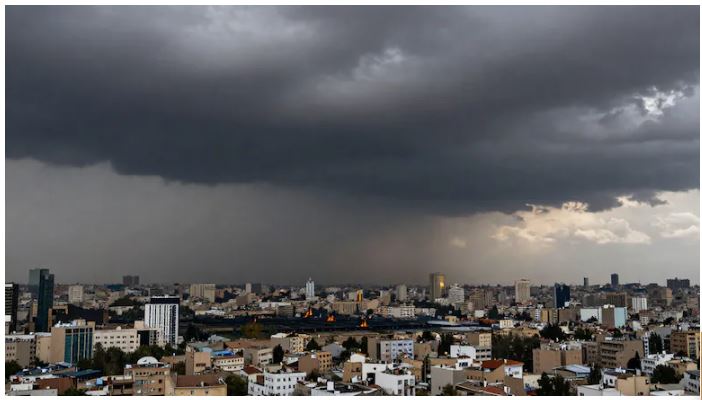
- 14 Mar 2026
In News:
Following airstrikes on oil storage facilities in Tehran and Alborz Province in early March, residents reported the occurrence of “black rain”, a rare environmental phenomenon in which rainfall becomes contaminated with pollutants such as soot, hydrocarbons, and toxic chemicals. The event highlighted the severe environmental and health risks associated with large-scale industrial fires and atmospheric pollution.
What is Black Rain?
Black rain refers to precipitation that becomes heavily contaminated with soot, hydrocarbons, and chemical pollutants present in the atmosphere. Unlike normal rainwater, black rain appears dark, oily, and chemically polluted, often leaving a layer of toxic residue on surfaces.
This phenomenon generally occurs when dense smoke and particulate matter from fires mix with rain clouds, causing the falling rain droplets to absorb pollutants from the surrounding air.
Formation Process
The formation of black rain typically involves several atmospheric processes:
- and Smoke Generation: Large fires, especially from oil refineries or fuel storage facilities, release thick plumes of smoke containing soot and chemical vapours into the atmosphere.
- Atmospheric Loading: The smoke carries high concentrations of particulate matter and toxic gases, which accumulate in the lower atmosphere.
- Coalescence with Rain Clouds: When rainfall occurs, the raindrops pass through polluted air layers, absorbing suspended particles and chemicals before reaching the ground.
- Topographical Influence: In cities surrounded by mountains, such as Tehran, topographic barriers can trap smoke and pollutants, preventing dispersion and increasing the likelihood of contaminated rainfall.
Chemical Components
Black rain can contain a mixture of hazardous substances, including:
- Toxic hydrocarbons, such as benzene, which is a known carcinogen
- Sulphur oxides (SOx) and nitrogen oxides (NOx), which can react with water vapour to produce acid rain
- Particulate matter (soot) composed of carbon particles
- Per- and polyfluoroalkyl substances (PFAS) or “forever chemicals,” often released from industrial fire-suppression systems
These pollutants combine with rainwater to form a chemically contaminated precipitation.
Key Characteristics
Black rain exhibits distinct physical properties compared to normal rainfall:
- Appearance: Dark or jet-black droplets that may stain surfaces permanently
- Odour: Strong smell of burning petroleum and chemicals
- Texture: Greasy or viscous due to hydrocarbon contamination
- Spread: Polluted rainfall can fall many kilometres away from the original fire site depending on wind direction and atmospheric circulation
Environmental and Health Implications
Health Risks
Exposure to contaminated rainfall may cause:
- Skin irritation and burns
- Eye irritation
- Respiratory disorders due to inhalation of toxic particles
- Long-term risks such as lung damage or cancer from carcinogenic chemicals
Environmental Contamination
Pollutants deposited by black rain can contaminate soil and groundwater, potentially entering the food chain through crops and livestock.
Acid Rain Effects
The presence of sulphur and nitrogen oxides may lead to acidic precipitation, which can damage:
- Vegetation and crops
- Buildings and monuments
- Urban infrastructure
Persistent Pollution
Certain chemicals such as PFAS are highly persistent in the environment and may remain in soil and water for decades, posing long-term ecological challenges.
PM-SETU Scheme
- 14 Mar 2026
In News:
- The Government of India has constituted a National Steering Committee (NSC) to guide the implementation of the Pradhan Mantri Skilling and Employability through Upgraded ITIs (PM?SETU) scheme.
- The committee will function as the apex body to oversee reforms aimed at modernising Industrial Training Institutes (ITIs) and improving employability outcomes across the country.
- Approved by the Union Cabinet in 2025 with an estimated outlay of ?60,000 crore, PM-SETU represents a major initiative to align India’s vocational training ecosystem with emerging industry demands and technological changes.
Objectives of PM-SETU
The scheme seeks to transform the country’s skill development framework by:
- Upgrading Industrial Training Institutes (ITIs) with modern infrastructure and technology.
- Improving employability of youth through industry-relevant training.
- Promoting industry participation in vocational education.
- Aligning skill development programmes with future sectors such as advanced manufacturing, electronics, mobility, and logistics.
A key objective is to shift the model of skill training from government-led programmes to an industry-driven ecosystem, where companies actively participate in curriculum design, training delivery, and infrastructure development.
Hub-and-Spoke Model for ITI Upgradation
A major structural reform under PM-SETU is the introduction of the hub-and-spoke model.
- Around 200 ITIs will be upgraded as “Hub” institutions with advanced infrastructure and modern training facilities.
- Each hub will mentor approximately four nearby “Spoke” ITIs, sharing resources such as specialised equipment, digital learning platforms, and technical expertise.
This model aims to create regional clusters of high-quality skill training centres, ensuring wider access to modern vocational education.
Strengthening National Skill Training Institutes
The scheme also focuses on upgrading National Skill Training Institutes (NSTIs) into global Centres of Excellence. Key NSTIs targeted under the initiative are located in:
- Bhubaneswar
- Chennai
- Hyderabad
- Kanpur
- Ludhiana
These institutions will provide advanced training, support instructor development, and promote innovation in skill training methodologies.
Governance through Special Purpose Vehicles (SPVs)
Each upgraded ITI will be managed through a Special Purpose Vehicle (SPV) formed under an industry-government partnership model.
Key features include:
- Industry partners hold 51% ownership, while the government holds 49%.
- Industry participants can receive up to 83% government funding for infrastructure and training upgrades.
- The SPV structure ensures professional management, accountability, and industry alignment.
This governance model is designed to bring corporate expertise and efficiency into vocational education management.
Industry Participation
To enhance collaboration with the private sector, the **Ministry of Skill Development and Entrepreneurship has invited Anchor Industry Partners (AIPs) through an Expression of Interest (EOI) process.
These industry partners will play a key role in:
- Designing industry-relevant curricula
- Upgrading training infrastructure
- Providing hands-on exposure and apprenticeships
- Improving placement opportunities for trainees
Modern Training Ecosystem
The Directorate General of Training has introduced 31 new-age courses under the Craftsmen Training Scheme (CTS) to address emerging industry requirements.
Training programmes will focus on high-growth sectors such as:
- Advanced manufacturing
- Electronics and semiconductor-related technologies
- Mobility and electric vehicles
- Logistics and supply chain management
These reforms aim to build a future-ready workforce equipped with modern technical skills.
Nutrient Transporter Protein
- 13 Mar 2026
In News:
- Scientists from ETH Zurich and the Technical University of Munich have developed a novel method to engineer bacteria to produce customised “designer proteins” using artificial amino acids.
- The breakthrough enables microorganisms to synthesize proteins with new biological and chemical properties, opening possibilities for advanced drug delivery systems and next-generation biotechnology applications.
- The research focuses on modifying nutrient transport mechanisms in bacteria such as Escherichia coli (E. coli) so that cells can efficiently import artificial amino acids required to build synthetic proteins.
Nutrient Transporter Proteins
- A nutrient transporter protein is a membrane-bound protein that facilitates the movement of essential molecules such as amino acids, peptides, and other nutrients—across the cell membrane.
- In the recent research, scientists engineered a specialized ABC (ATP-Binding Cassette) transporter in bacteria. Normally, this transporter imports small peptide molecules used as nutrients. By modifying it, researchers enabled bacterial cells to import peptides carrying artificial amino acids, which can then be used to assemble customised proteins.
Objective of the Research
- The main goal of the study was to enable cells to incorporate artificial amino acids into proteins efficiently. Natural proteins are typically built from 20 standard amino acids, but introducing synthetic amino acids allows scientists to design proteins with new functional properties.
- However, artificial amino acids generally cannot easily cross the cell membrane. By engineering a transporter protein capable of importing these molecules, researchers overcame a major barrier in synthetic biology and protein engineering.
Mechanism of the System
The engineered system works through a multi-step biological process:
- Engineering of ABC Transporter – Scientists modified the transporter protein to improve its ability to import peptides containing artificial amino acids.
- Trojan Horse Strategy – Artificial amino acids are concealed inside short peptide chains such as tripeptides or tetrapeptides composed of natural amino acids.
- Transport into the Cell – The transporter imports these peptide chains across the cell membrane.
- Release of Artificial Amino Acids – Once inside the cell, enzymes break the peptides into individual amino acids.
- Protein Synthesis – The ribosome, the cellular machinery responsible for protein production, incorporates the artificial amino acids into newly synthesized proteins.
Through this approach, bacterial cells can generate custom-designed proteins on demand.
Key Innovations
- Trojan Horse Delivery Strategy: Artificial amino acids are hidden within natural peptide structures, allowing them to bypass cellular membrane barriers and enter the cell.
- Engineered ABC Transporter: The modified transporter is capable of importing up to ten times more artificial amino acids compared to natural transport systems.
- Directed Evolution: Researchers used directed evolution, a technique that mimics natural selection in the laboratory, to improve the efficiency of the transporter protein under nutrient-rich conditions.
- Multifunctional Protein Design: The system allows two different artificial amino acids to be incorporated into a single protein, enabling complex and multifunctional molecular designs.
- Compatibility with Standard Laboratory Conditions: The engineered bacteria can function effectively in standard laboratory growth media, making the system practical for widespread scientific use.
Jal Jeevan Mission Extended to 2028
- 13 Mar 2026
In News:
The Union Cabinet has approved the extension of the Jal Jeevan Mission (JJM) until December 2028, marking a transition from merely building water infrastructure to ensuring sustained and reliable service delivery in rural areas. The decision aims to consolidate earlier achievements and strengthen long-term drinking water supply systems across villages in India.
About Jal Jeevan Mission
The Jal Jeevan Mission is a flagship programme of the Government of India that seeks to provide safe and adequate drinking water to all rural households through Functional Household Tap Connections (FHTC).
- Launch Date: 15 August 2019
- Nodal Ministry: Ministry of Jal Shakti
- Core Objective: Achieve “Har Ghar Jal” by ensuring 55 litres of potable water per person per day to every rural household through tap connections.
The mission addresses long-standing challenges related to water scarcity, unsafe drinking water, and the burden of water collection, particularly faced by women and children in rural India.
Shift in Focus: Jal Jeevan Mission 2.0
With the extension until 2028, the mission is entering a new phase often described as JJM 2.0, where the emphasis moves beyond infrastructure creation to sustainable water service delivery.
Key aspects include:
- Utility-Based Service Delivery: The programme will focus on continuous and reliable water supply systems, supported by structural reforms and Memoranda of Understanding (MoUs) with State governments to improve management and accountability.
- Digital Monitoring – Sujalam Bharat Framework: Under the Sujalam Bharat Digital Framework, each village will receive a unique “Sujal Gaon ID”. This system digitally maps the entire water supply chain—from source to household tap— enabling improved monitoring, transparency, and data-driven decision-making.
- Water Quality Monitoring: The mission prioritises regular water quality testing through:
- Field Test Kits at the village level
- Accredited water testing laboratories
This helps detect contaminants and ensures that drinking water meets safety standards.
- Greywater Management: To ensure sustainability, the programme incorporates greywater management, involving:
- Construction of soak pits
- Use of wastewater in kitchen gardens and local irrigation
This reduces water wastage and promotes sustainable water use.
Convergence with Other Schemes
The mission promotes integration with several government initiatives, including:
- Mahatma Gandhi National Rural Employment Guarantee Scheme (MGNREGS)
- Swachh Bharat Mission (Gramin)
- Grants recommended by the 15th Finance Commission
Such convergence helps strengthen water conservation, recharge structures, and source sustainability.
Kavach 4.0
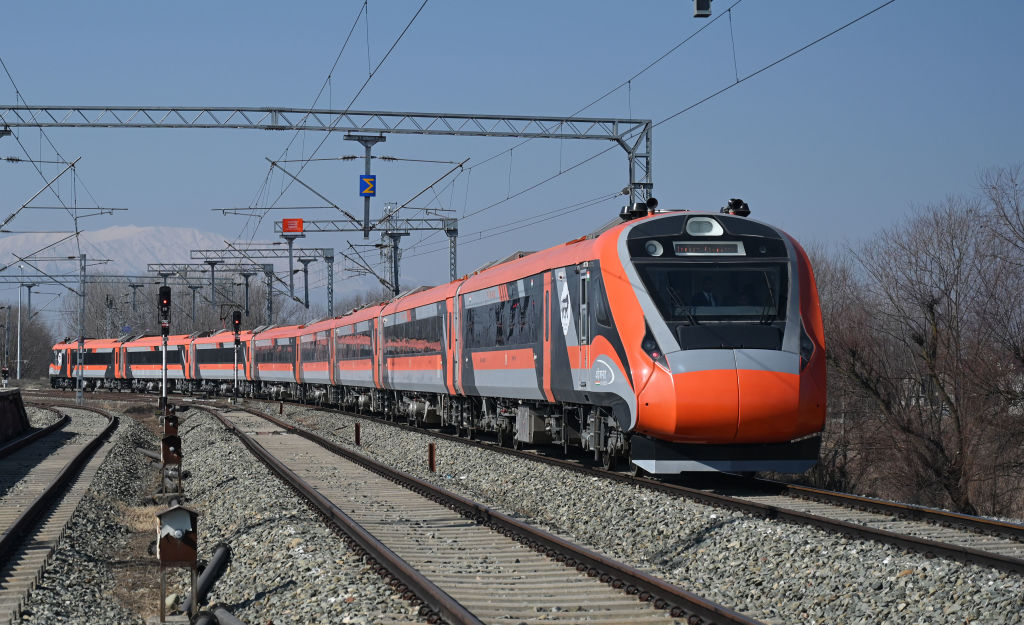
- 13 Mar 2026
In News:
The Government of India has informed the Lok Sabha that Kavach 4.0, India’s indigenous Automatic Train Protection (ATP) system, has been successfully commissioned across 1,452 route kilometres on the high-density Delhi–Mumbai Railway Corridor and Delhi–Howrah Railway Corridor.
The system represents a major technological advancement aimed at improving railway safety and reducing accidents caused by human error. Kavach forms a crucial part of the modernization and safety enhancement efforts of Indian Railways.
What is Kavach?
- Kavach is an indigenously developed Automatic Train Protection (ATP) system designed to prevent train collisions and ensure safer railway operations. It is a sophisticated electronic safety mechanism that automatically monitors train movement and intervenes when necessary.
- The system has been developed by the Research Design and Standards Organisation (RDSO) in collaboration with domestic industry partners, reflecting India’s push toward self-reliance in railway technology.
Objectives of Kavach
The primary objective of Kavach is to achieve “Zero Accidents” in railway operations by addressing key safety risks.
Major goals include:
- Signal Passing at Danger (SPAD), where a train crosses a stop signal.
- Controlling overspeeding of trains.
- Ensuring safe operations during adverse weather conditions, especially dense fog.
- Reducing accidents caused by human error.
Working Mechanism
Kavach operates through an integrated communication and monitoring network that continuously tracks train movement and signal conditions.
The system functions through the following components:
- RFID tags installed along railway tracks
- On-board equipment installed in locomotives
- Radio communication towers at railway stations
These components exchange real-time data regarding the train’s speed, location, and signal status. If the system detects a possible collision, signal violation, or overspeeding, it automatically activates the braking system, even if the loco pilot fails to respond.
Key Features of Kavach 4.0
The Kavach 4.0 version introduces several technological improvements for better reliability and precision.
- Enhanced Precision: The system offers improved location accuracy and better processing of signal information, particularly in complex railway yards and high-density corridors.
- Integration with Electronic Interlocking: Kavach integrates directly with Electronic Interlocking systems, enabling real-time access to track occupancy data and signal status, thereby enhancing operational safety.
- Advanced Communication Network: It uses Optical Fibre Networks (OFN) and Ultra High Frequency (UHF) radio communication to enable continuous station-to-station communication and uninterrupted connectivity.
- Automatic Braking: If a train crosses a red signal or exceeds the permitted speed, the system automatically applies brakes, preventing potential accidents.
- SOSR (Save Our Souls) Feature: The SOSR emergency broadcast system allows a train or station to transmit emergency alerts to all trains within a defined radius, helping prevent large-scale accidents during critical situations.
Significance for Railway Safety
The deployment of Kavach is a major step toward improving the safety standards of Indian Railways.
Key benefits include:
- Reduction in accidents: Consequential train accidents have reportedly declined by nearly 90% since 2014 due to enhanced safety investments.
- Minimization of human error: Automated monitoring and braking reduce dependence on manual response.
- Improved efficiency: Trains can operate at higher speeds safely even during low-visibility conditions such as winter fog.
- Technological self-reliance: The system strengthens India’s indigenous railway technology ecosystem.
Blue-and-White Flycatcher

- 13 Mar 2026
In News:
A male Blue-and-White Flycatcher, a rare migratory bird in India, was recently recorded on the Pavagadh Hills in Gujarat. The sighting is significant because the species is seldom observed in the Indian subcontinent, highlighting the ecological importance of hill and forest habitats that occasionally serve as stopover sites for migratory birds.
About the Blue-and-White Flycatcher
The Blue-and-White Flycatcher is a migratory songbird belonging to the Old World flycatcher family (Muscicapidae).
- Scientific Name: Cyanoptila cyanomelana
- Common Name: Japanese Flycatcher
- Type: Small insectivorous migratory bird
Flycatchers are known for their agile aerial movements and their ability to catch insects mid-flight, which makes them important for natural pest control and ecological balance.
Geographic Distribution and Migration
The Blue-and-White Flycatcher is mainly distributed in East and Southeast Asia.
Breeding Range
- Japan
- South Korea
- Northeastern China
- The Russian Far East
Wintering Range
- Vietnam
- Cambodia
- Thailand
- Islands such as Sumatra and Borneo
During migration, individual birds may occasionally appear outside their normal range, which explains rare sightings in India such as the one in Gujarat.
Habitat
The species typically inhabits forested landscapes and prefers:
- Wooded lowlands
- Submontane forests
- Taiga-like environments
- Wooded slopes and gullies
It is usually found at elevations up to about 1,200 metres. The bird may also adapt to scrublands, bushes, and plantation areas, especially during migration.
Physical Characteristics
The Blue-and-White Flycatcher exhibits sexual dimorphism, meaning males and females have distinct appearances.
Male
- Upper body covered in bright cobalt-blue plumage
- Blue coloration on wings, tail, and upperparts
- Black chin, throat, breast, and flanks
- White belly and vent
- Black bill and dark brown eyes
Female
- Grey-brown upperparts, including head and face
- Blackish wings with rufous-brown edges on tertial feathers
- Grey to grey-brown chin and throat
- Cream-coloured throat patches
These differences help birdwatchers distinguish between sexes in the field.
Conservation Status
According to the International Union for Conservation of Nature (IUCN) Red List, the Blue-and-White Flycatcher is classified as Least Concern.
Despite its stable global population, the species still depends on healthy forest ecosystems and migratory corridors for survival.
Visakhapatnam selected for High-Energy Proton Accelerator
- 13 Mar 2026
In News:
- India has selected Visakhapatnam, Andhra Pradesh, as the site for establishing a high-energy proton accelerator system to support its long-term nuclear energy strategy.
- The project will play a crucial role in advancing the Accelerator-Driven System (ADS) technology, which is central to India’s effort to utilise its vast thorium reserves and enhance nuclear safety.
- The initiative is being developed by the Raja Ramanna Centre for Advanced Technology (RRCAT) located in Indore, Madhya Pradesh.
- Visakhapatnam was chosen because of its strong technological ecosystem, availability of research infrastructure, and proximity to the sea, which ensures sufficient cooling water for operating high-energy accelerator systems.
High-Energy Proton Accelerator System
A high-energy proton accelerator is a scientific device that uses electromagnetic fields to accelerate protons (positively charged particles from ionised hydrogen) to extremely high speeds. The accelerated protons form a powerful proton beam that is directed toward a heavy metal target such as lead or bismuth.
When the high-speed protons collide with the heavy metal nucleus, a process known as spallation occurs. In this reaction:
- The heavy nucleus breaks apart due to the impact.
- A large number of high-energy neutrons are released.
- These neutrons can then be used to initiate nuclear fission reactions in a reactor system.
Thus, the proton accelerator becomes an external source of neutrons required for controlled nuclear reactions.
Accelerator-Driven System (ADS)
The Accelerator-Driven System is a nuclear reactor concept in which the neutron supply required for fission is provided externally by a proton accelerator.
Key features of ADS include:
- The reactor core remains sub-critical, meaning it cannot sustain a chain reaction independently.
- The spallation neutrons generated by the proton accelerator are injected into the reactor core to maintain fission.
- If the accelerator stops functioning due to a power outage or malfunction, the neutron supply ceases immediately.
This design provides high inherent safety, as the nuclear reaction automatically stops without external intervention, significantly reducing the risk of reactor meltdown.
Role of ADS in India’s Three-Stage Nuclear Programme
- India’s nuclear energy strategy follows a three-stage programme aimed at maximising the utilisation of its limited uranium resources and abundant thorium deposits.
- ADS technology supports the third stage of this programme, which focuses on thorium-based nuclear energy.
Harnessing Thorium Resources
India possesses around 25% of the world’s thorium reserves, primarily in monazite sands along its coastal regions. However, naturally occurring Thorium-232 is fertile rather than fissile, meaning it cannot directly sustain a nuclear chain reaction.
For thorium to become a usable nuclear fuel:
- Thorium-232 must absorb a neutron.
- It undergoes nuclear transformation (transmutation).
- It converts into Uranium-233, which is a highly fissile material capable of sustaining nuclear reactions.
The high-energy neutrons generated by the ADS system are particularly effective in facilitating this conversion, enabling thorium to become a viable fuel for large-scale electricity generation.
Nuclear Waste Management
Another major advantage of ADS technology lies in nuclear waste transmutation.
Conventional nuclear reactors generate long-lived radioactive waste, including minor actinides, which remain hazardous for thousands of years. ADS systems can use high-energy neutrons to:
- Break down long-lived radioactive isotopes
- Convert them into shorter-lived or stable elements
This process significantly reduces the toxicity and storage duration of nuclear waste, thereby addressing one of the major environmental concerns associated with nuclear power.
National Highways Green Cover Index (NH-GCI)
- 12 Mar 2026
In News:
- Recently, the National Highways Authority of India (NHAI) released the first National Highways Green Cover Index (NH-GCI), a scientific framework to assess and monitor vegetation cover along India’s national highways.
- The index has been developed in collaboration with the National Remote Sensing Centre (NRSC), a centre of the Indian Space Research Organisation (ISRO).
- The initiative represents a significant step toward environmentally sustainable highway development, enabling data-driven monitoring of plantations and greenery along highway corridors.
About the NH-GCI
- The National Highways Green Cover Index is a satellite-based assessment tool that measures the extent of vegetation along the Right of Way (RoW) of national highways.
- Objective: To provide a scientific and quantitative evaluation of green cover along the national highway network using advanced space-based technologies.
- Coverage:
- The first assessment covers around 30,000 km of National Highways across 24 states for the period July–December 2024.
- The index evaluates vegetation present along the left and right sides of highways as well as the median, wherever plantation is feasible.
- Methodology: The NH-GCI uses advanced remote-sensing techniques to estimate vegetation density and distribution.
- Satellite Data: High-resolution satellite sensors are used to detect chlorophyll content in vegetation.
- NDVI Analysis: The assessment relies on the Normalized Difference Vegetation Index (NDVI) derived from satellite imagery. NDVI measures vegetation health and density based on the reflection of light from plant chlorophyll.
- Segment-wise Assessment: Analysis is carried out for every 1-km segment of national highways, allowing precise monitoring of green cover across the network.
Through this methodology, the index provides consistent and objective measurements of vegetation along highway corridors.
Anavaran Portal
- 12 Mar 2026
In News:
- Recently, the Forest Survey of India (FSI) discontinued the AI-based Anavaran Deforestation Alert System, which had been issuing fortnightly alerts to states on forest cover loss.
- The portal has not been updated since November 2025, and state forest departments reportedly stopped receiving alerts thereafter. The system had been functioning as a pilot project, and its continuation is currently under review.
- The halt of the alert system has raised concerns among forest officials and environmental experts as it was considered an important near-real-time monitoring tool for detecting deforestation and guiding field inspections.
About the Anavaran Portal
- The Anavaran Deforestation Alert System was launched in January 2024 to strengthen forest monitoring in India through advanced geospatial technology and artificial intelligence. It aimed to provide location-specific alerts on forest cover loss every 15 days, enabling state forest departments to conduct targeted ground verification and enforcement actions.
- During its operational period from January 2024 to October 2025, the system generated 12,351 deforestation alerts, averaging about 561 alerts per month, which increased to over 1,000 alerts per month during the peak deforestation season between November and March.
- The alerts helped authorities detect potential activities such as illegal logging, encroachment, and land-use change in forest areas, enabling quicker administrative responses.
Technology Used in the System
The Anavaran system relied on advanced remote sensing and data-processing tools to monitor forest cover changes.
- Google Earth Engine (GEE): The portal was developed on the cloud-based geospatial platform Google Earth Engine, which enables large-scale processing of satellite imagery.
- Sentinel-2 Satellite Data: High-resolution optical images from the Sentinel-2 satellites were used to detect vegetation loss and land-cover changes.
- Sentinel-1 Synthetic Aperture Radar (SAR): Radar data from Sentinel-1 satellites was integrated to monitor forests even during cloudy and monsoon conditions, when optical satellite imagery becomes less effective.
Through machine-learning algorithms, the system analysed these datasets to identify potential forest cover changes and automatically generate alerts for authorities.
Forest Survey of India (FSI)
The Forest Survey of India is the premier national organization responsible for monitoring forest resources in the country. It functions under the Ministry of Environment, Forest and Climate Change.
- Established: 1 June 1981
- Predecessor: Pre-investment Survey of Forest Resources (PISFR), a project initiated in 1965 with support from the FAO and UNDP.
- Mandate: Assessment and monitoring of forest resources, research, training, and technical support to states.
- Key Publication: The India State of Forest Report (ISFR), published biennially since 1987, which assesses forest and tree resources using remote sensing data and the National Forest Inventory (NFI).
According to the latest ISFR assessment, India’s forest and tree cover stands at about 8,27,357 sq km (25.17% of the geographical area).
Proba-3 Mission
- 12 Mar 2026
In News:
The European Space Agency (ESA) recently lost communication with the Coronagraph spacecraft, one of the two satellites of the Proba?3 Mission, following an anomaly that triggered a power failure and pushed the spacecraft into a protective “survival mode.” The incident occurred after the spacecraft experienced an unexpected drop in solar power, temporarily halting operations and causing the loss of telemetry signals. Engineers are attempting to re-establish contact and recover the satellite.
About the Proba-3 Mission
- Proba-3 is an advanced solar-observation mission launched in December 2024 by ESA aboard PSLV?C59 developed by the Indian Space Research Organisation.
- It is considered the world’s first precision formation-flying mission, designed to study the Sun’s outer atmosphere, known as the corona, with unprecedented clarity.
Objective
The primary objective of the mission is to create an artificial solar eclipse in space. By blocking the Sun’s bright disk, scientists can directly observe the faint corona for extended durations—something that is otherwise possible only for a few minutes during natural total solar eclipses.
Key Features of the Mission
1. Twin-Spacecraft Configuration: The mission consists of two independent satellites working in coordination:
- Occulter spacecraft – carries a disk that blocks sunlight.
- Coronagraph spacecraft – carries the telescope and camera to observe the corona.
2. Precision Formation Flying: The two satellites maintain a distance of about 150 metres with millimetre-level accuracy, effectively functioning as a single large virtual instrument in space.
3. Artificial Eclipse Mechanism: The Occulter blocks the Sun’s bright disk and casts a precise shadow onto the Coronagraph’s optical instrument, replicating the conditions of a total solar eclipse in space.
4. Autonomous Coordination: The satellites rely on laser sensors, cameras, and cold-gas thrusters to autonomously adjust their relative positions without continuous ground control intervention.
5. Continuous Solar Observations: Before the anomaly occurred, the mission had successfully completed over 60 orbital cycles, producing hours of uninterrupted solar observations—far longer than ground-based eclipse observations.
Exercise LAMITIYE-2026
- 12 Mar 2026
In News:
An Indian Armed Forces contingent has arrived in Seychelles to participate in the 11th edition of the Joint Military Exercise Lamitiye-2026. The exercise reflects the growing strategic and defence cooperation between India and Seychelles, particularly in the context of maritime security and stability in the Indian Ocean Region (IOR).
About Seychelles
- Seychelles is an archipelago of about 115 islands located in the western Indian Ocean. Due to its strategic location along major sea lanes, the country plays an important role in regional maritime security, anti-piracy operations, and surveillance in the Indian Ocean.
About Exercise Lamitiye
Exercise Lamitiye is a biennial joint military training exercise conducted between India and Seychelles since 2001.
- The term “Lamitiye” means “Friendship” in the Creole language, symbolising the close bilateral relationship between the two nations.
- Host Country: Seychelles
- Participants: Armed Forces of India and Seychelles
The exercise focuses on strengthening operational coordination, tactical capabilities, and defence collaboration.
Objectives of the Exercise
The primary aims of Exercise Lamitiye include:
- Enhancing interoperability and coordination between Indian and Seychellois forces.
- Improving joint operational capabilities during peacekeeping missions.
- Strengthening preparedness to handle sub-conventional threats in semi-urban environments.
- Promoting defence cooperation and mutual understanding between the two countries.
Key Features
- Tri-Service Participation: Involves personnel from the Indian Army, Navy, and Air Force, highlighting integrated joint operations.
- Tactical Training Activities: Includes field exercises, combat discussions, demonstrations, and case studies.
- Focus on Semi-Urban Warfare: Troops train to respond to sub-conventional threats in semi-urban and coastal environments.
- Technology Demonstration: Provides opportunities to showcase modern military equipment and emerging defence technologies.
- Validation Phase: The exercise concludes with a two-day validation drill to test the operational readiness of participating forces.
- Capacity Building: Facilitates exchange of best practices, tactical skills, and operational experiences.
Terminal High Altitude Area Defence (THAAD)
- 12 Mar 2026
In News:
Recent reports indicate that Iran struck a radar associated with the Terminal High Altitude Area Defense (THAAD) system used by the United States and Israel in West Asia. The incident highlights the strategic importance of advanced missile defence systems in regions experiencing heightened geopolitical tensions.
About the THAAD System
THAAD is an advanced ballistic missile defence system developed by the United States to intercept and destroy short-, medium-, and limited intermediate-range ballistic missiles. It forms a critical component of the U.S. layered missile defence architecture.
The system is designed to neutralise incoming ballistic missiles during the terminal phase of their trajectory, which is the final stage of a missile’s flight before it reaches its target.
Key Features
- High-Altitude Interception
- THAAD can intercept ballistic missiles at ranges of around 150–200 km.
- It is capable of destroying targets both inside and outside the Earth’s atmosphere, providing a high-altitude defensive shield.
- Terminal Phase Defence: The system targets missiles during their terminal descent, when the warhead approaches the target area.
- Hit-to-Kill Technology
- THAAD interceptor missiles rely on kinetic energy to destroy targets through direct impact, rather than using explosive warheads.
- This improves accuracy and reduces the risk of collateral damage.
- Integrated Radar and Command System: The system uses powerful radar and command-and-control networks to detect, track, and engage incoming missile threats.
Global Deployment
Several countries have adopted THAAD as part of their missile defence strategies.
- The United Arab Emirates became the first foreign buyer in 2011.
- Saudi Arabia later procured the system to strengthen its air and missile defence capabilities.
These deployments reflect increasing concerns in the region regarding ballistic missile threats.
India’s Missile Defence Choice
While evaluating missile defence options, India chose the S-400 Triumf from Russia instead of acquiring the THAAD system from the United States.
The S-400 provides multi-layered air defence capabilities, including interception of aircraft, drones, cruise missiles, and ballistic missiles at longer ranges.
White Phosphorus and International Humanitarian Law
- 11 Mar 2026
In News:
A recent report by Human Rights Watch has accused Israel of using white phosphorus munitions in residential areas of Lebanon, raising concerns about possible violations of international humanitarian law. The allegations come amid escalating hostilities along the Israel–Lebanon border, with Lebanese authorities reporting significant civilian casualties from recent strikes.
What is White Phosphorus?
White phosphorus (WP) is a highly reactive chemical substance commonly used in military operations. It appears as a translucent yellowish-white waxy solid that glows faintly when exposed to oxygen due to slow oxidation.
Key characteristics include:
- Highly flammable: Burns at temperatures exceeding 800°C, hot enough to melt metal.
- Persistent combustion: Continues burning until the chemical is completely consumed or deprived of oxygen.
- Storage conditions: Usually stored under water or inert environments to prevent accidental ignition.
- Odour: Often described as having a garlic-like smell.
Military Uses of White Phosphorus
White phosphorus is mainly used for military tactical purposes, including:
- Smoke Screens: Produces dense smoke that can obscure troop movements or equipment.
- Illumination: Used in flares to light up battlefields at night.
- Incendiary Effects: Can ignite objects and structures due to intense heat.
Because of these functions, it is often categorized as an incendiary munition, which refers to weapons designed to set fire to objects or cause burn injuries through heat, flames, or chemical reactions.
Health and Environmental Hazards
The use of white phosphorus poses severe risks to human health, particularly in populated areas.
Major health impacts include:
- Deep chemical burns that may penetrate to the bone.
- Release of toxic chemicals damaging organs such as the liver, kidneys, and heart.
- Metabolic disorders, including abnormal potassium levels that may lead to cardiac failure.
- Increased risk of building fires and infrastructure destruction when used in civilian areas.
These effects make its deployment in urban environments especially dangerous for civilians.
Legal Status under International Law
White phosphorus is not explicitly banned under the Chemical Weapons Convention when used for non-chemical warfare purposes such as smoke generation. However, its use is regulated by international humanitarian law.
The Convention on Certain Conventional Weapons (CCW) restricts weapons that cause excessive injury or indiscriminate harm.
- Protocol III of the CCW specifically restricts the use of incendiary weapons against civilians or in civilian-populated areas.
- However, white phosphorus is often classified as a multi-purpose munition used for smoke or illumination, enabling some militaries to argue that it does not fall strictly under incendiary weapon restrictions.
- Israel is not a signatory to Protocol III, complicating enforcement and accountability.
Notably, India is a party to all five protocols of the CCW, reflecting its commitment to regulating conventional weapons that cause indiscriminate harm.
Open Market Operations (OMO) and RBI’s Liquidity Injection
- 11 Mar 2026
In News:
The Reserve Bank of India (RBI) recently conducted Open Market Operation (OMO) purchase auctions of Government Securities (G-Secs) worth ?50,000 crore to inject liquidity into the banking system. The move was undertaken amid pressure on the Indian rupee and tight liquidity conditions in the financial system. OMOs are an important monetary policy tool used by the RBI to regulate liquidity and maintain stability in financial markets.
What are Open Market Operations (OMO)?
Open Market Operations refer to the purchase and sale of government securities by the RBI in the open market to manage liquidity in the banking system.
Types of OMOs:
- OMO Purchase
- RBI buys government securities from banks or financial institutions.
- This injects liquidity into the banking system as banks receive funds in exchange for securities.
- OMO Sale
- RBI sells government securities to banks or market participants.
- This absorbs excess liquidity from the system, helping control inflationary pressures.
Through these operations, the RBI influences money supply, interest rates, and overall financial stability.
Government Securities (G-Secs)
Government Securities (G-Secs) are tradable financial instruments issued by the government to borrow money from the market.
Types of Government Securities:
- Treasury Bills (T-Bills)
- Short-term instruments with maturity less than one year.
- Issued only by the Central Government.
- Government Bonds or Dated Securities
- Long-term instruments with maturity one year or more.
- Issued by the Central Government.
- State Development Loans (SDLs)
- Bonds issued by State Governments to finance their expenditure.
Because these securities are backed by the sovereign, they carry virtually no default risk and are therefore called risk-free or gilt-edged instruments.
Reasons for the Recent OMO Purchase
The RBI’s decision to purchase ?50,000 crore worth of G-Secs was aimed at:
- Injecting liquidity into the banking system.
- Stabilising financial markets during periods of tight liquidity.
- Easing pressure on the rupee by improving domestic liquidity conditions.
- Supporting smooth functioning of the government securities market.
India’s Chairmanship of the Kimberley Process

- 11 Mar 2026
In News:
India’s assumption of the chairmanship of the Kimberley Process Certification Scheme (KPCS) provides an important opportunity to strengthen global mechanisms aimed at preventing the trade in conflict diamonds. As one of the largest players in the global diamond value chain, India’s leadership in the Kimberley Process can enhance transparency, improve traceability, and reinforce responsible diamond trade.
Conflict Diamonds: Meaning and Background
- Conflict diamonds, also known as blood diamonds, refer to rough diamonds mined in war zones and sold by rebel groups or their allies to finance armed conflicts against legitimate governments.
- The term gained global attention in the 1990s, when diamonds were found to be funding violent conflicts in several African countries such as Angola, Sierra Leone, Rwanda, and Liberia.
- These diamonds often entered global markets through informal and illegal trade networks, making their origin difficult to trace and raising concerns about ethical sourcing in the international diamond trade.
Kimberley Process Certification Scheme (KPCS)
The Kimberley Process, established in 2003, is a multilateral and voluntary certification mechanism designed to prevent conflict diamonds from entering the legitimate global diamond market.
Key features include:
- Certification System – Every shipment of rough diamonds traded between participating countries must carry a Kimberley Process Certificate, confirming that the diamonds are conflict-free.
- Trade Restrictions – Participating countries are allowed to trade rough diamonds only with other members of the Kimberley Process.
- Global Coverage – The Kimberley Process accounts for over 99% of global rough diamond trade, making it a crucial framework for responsible diamond governance.
- Monitoring and Compliance – Members commit to implementing internal controls and reporting mechanisms to ensure transparency in diamond trade.
India’s Diamond Industry
India plays a central role in the global diamond value chain:
- Largest cutting and polishing hub in the world, especially in cities such as Surat.
- Major importer of rough diamonds for processing.
- Leading exporter of cut and polished diamonds, with exports valued at about $13.3 billion in 2024–25.
- Second-largest diamond consumer market after the United States.
The Gem and Jewellery Export Promotion Council (GJEPC) acts as the nodal agency for implementing Kimberley Process certification in India. It operates under the Department of Commerce, Ministry of Commerce and Industry and is responsible for issuing certificates for diamond exports and imports.
LaBL 2.0 (Lighting a Billion Lives 2.0)
- 11 Mar 2026
In News:
India’s transition to clean energy increasingly emphasizes decentralised renewable energy (DRE) solutions to address energy poverty and support sustainable development in rural areas. In this context, The Energy and Resources Institute (TERI) launched LaBL 2.0 (Lighting a Billion Lives 2.0) in New Delhi. The initiative seeks to scale up clean energy access while promoting rural livelihoods, women’s entrepreneurship, and climate action. It represents the next phase of the earlier Lighting a Billion Lives programme launched in 2008, which provided solar lighting solutions to off-grid communities across India.
About LaBL 2.0
LaBL 2.0 is a next-generation decentralised renewable energy programme aimed at expanding clean energy access while enabling productive economic activities in rural and underserved regions. Unlike the earlier initiative that mainly focused on household lighting, LaBL 2.0 emphasizes energy for livelihoods, climate finance integration, and sustainable development.
Objectives
The programme aims to:
- Expand clean and decentralised renewable energy access in remote and underserved areas.
- Promote green livelihoods and rural enterprises powered by renewable energy.
- Encourage women-led entrepreneurship in the clean energy sector.
- Integrate climate finance mechanisms and carbon markets with grassroots energy initiatives.
- Contribute to broader sustainable development and climate mitigation goals.
Key Features
- Expansion of Decentralised Renewable Energy (DRE)
- Promotes solar and other renewable technologies in off-grid and energy-deficit rural areas.
- Encourages distributed energy solutions such as solar micro-grids and clean energy appliances.
- Productive Use of Energy for Livelihoods: Focuses on using renewable energy for income-generating activities, including rural enterprises, small industries, and agricultural processing.
- Women-led Clean Energy Entrepreneurship: Encourages women entrepreneurs to manage renewable energy enterprises, enhancing both economic empowerment and energy access.
- Climate Impact Measurement: Introduces Monitoring, Reporting and Verification (MRV) frameworks to track carbon reduction and climate benefits.
- Integration with Climate Finance: Develops finance-ready project models linking decentralised energy initiatives with carbon markets and climate finance mechanisms to attract investments.
- Flagship Demonstration Projects
- Includes initiatives such as:
- Hastinapur Model City
- HUDCO Model Solar Village
- GCC DRE Carbon Credit Programme
- Solar technology partnerships for rural energy solutions.
- Includes initiatives such as:
SHINE App

- 11 Mar 2026
In News:
Ensuring a safe and dignified workplace is a key component of gender equality and inclusive growth. In this context, Indian Railways launched the SHINE (Sexual Harassment Incident Notification for Empowerment) App on 8 March 2026 (International Women’s Day) to provide a secure and confidential mechanism for reporting workplace sexual harassment. The initiative represents a step towards strengthening institutional mechanisms for women’s safety and promoting a gender-sensitive work environment in one of the world’s largest public sector employers.
About the SHINE App
The SHINE App is a digital complaint platform developed for women employees of Indian Railways to report incidents of sexual harassment at the workplace. It functions as a module integrated into the Human Resources Management System (HRMS) used by railway staff.
Through the Employee Self Service (ESS) portal, women employees can lodge complaints online without having to approach administrative offices physically. Once registered, the complaint is automatically forwarded to the designated authority responsible for handling such cases, ensuring faster and more transparent redressal.
Key Features of the SHINE Platform
- Confidential Complaint Mechanism
- Enables women employees to file complaints securely.
- Protects the identity of complainants and ensures privacy in the complaint process.
- Integration with HRMS: The module is embedded in the Human Resources Management System, enabling seamless digital reporting and monitoring of complaints.
- Direct Access to Internal Complaints Committees (ICC): Complaints are directly received by the designated Internal Complaints Committee, which is responsible for investigating cases of workplace harassment.
- Expanded Coverage: Complaints can also be filed on behalf of contractual workers, students, trainees, and visitors present on railway premises, thereby extending protection beyond permanent employees.
- Faster and Transparent Resolution: Digital processing enables quicker communication between complainants and authorities and allows monitoring of the complaint status.
Legal and Institutional Framework
The SHINE initiative operates within India’s broader legal framework addressing workplace harassment:
- Vishaka Guidelines (1997): Issued by the Supreme Court in Vishaka v. State of Rajasthan, which laid down procedures for preventing and addressing workplace sexual harassment.
- Sexual Harassment of Women at Workplace (Prevention, Prohibition and Redressal) Act, 2013: Provides statutory protection and mandates the creation of Internal Complaints Committees in organizations with more than 10 employees.
The SHINE app complements these provisions by digitizing the complaint mechanism and improving accessibility.
Sukhoi Su-30MKI
- 10 Mar 2026
In News:
An Indian Air Force Sukhoi Su-30MKI crashed during a routine training mission at Inglong Ekopi Hill on March 5, 2026. The incident has drawn attention to the operational significance of the Su-30MKI, which remains one of the most advanced and widely deployed fighter aircraft in India’s defence arsenal.
Overview of the Sukhoi Su-30MKI
The Sukhoi Su-30MKI (NATO reporting name: Flanker-H) is a heavy, all-weather, long-range, two-seat multirole air superiority fighter designed to perform a variety of missions, including:
- Air superiority operations
- Ground attack missions
- Maritime strike operations
- Strategic deterrence roles
Originally designed by Sukhoi, the aircraft is manufactured in India under license by Hindustan Aeronautics Limited at its Nashik facility. The Su-30MKI represents a unique collaboration that combines Russian airframe technology, Indian avionics, and advanced subsystems from France and Israel, making it one of the most customised fighter aircraft in the world.
Purpose and Operational Role
- The primary objective of deploying the Su-30MKI is to ensure air dominance over the Indian subcontinent. Its long range, heavy payload capacity, and advanced avionics allow the aircraft to carry out complex missions across large operational theatres.
- The fighter serves as a core platform for both offensive and defensive air operations, enabling India to maintain strategic deterrence and respond effectively to emerging security challenges.
Key Features and Capabilities
1. Super-maneuverability: The Su-30MKI is equipped with thrust-vectoring nozzles and canards, allowing it to perform extreme aerial maneuvers such as the Pugachev’s Cobra. These capabilities enhance dogfighting performance and survivability in close-combat situations.
2. Advanced Avionics: The aircraft integrates sophisticated avionics and electronic warfare systems. It is equipped with a Passive Electronically Scanned Array (PESA) radar, which is planned to be upgraded to India’s Uttam Active Electronically Scanned Array (AESA) radar, significantly enhancing detection and targeting capabilities.
3. Weapons and Payload Capacity: The Su-30MKI can carry a combat payload of up to 8,000 kg, including a variety of missiles and precision-guided weapons. These include:
- BrahMos-A
- Astra Missile
- R-77
- Kh-59
Notably, the Su-30MKI is currently the only fighter aircraft capable of carrying the BrahMos-A supersonic cruise missile, significantly enhancing India’s strike capability.
4. Twin-Engine Power: The aircraft is powered by two AL-31FP turbofan engines, which provide high thrust, enabling long-range missions and sustained high-speed operations.
5. Increasing Indigenisation: As of 2026, the aircraft incorporates over 62.6% indigenous components, including:
- Indian flight-control systems
- Radar warning receivers
- Various avionics subsystems
This growing indigenisation aligns with India’s self-reliance in defence manufacturing (Atmanirbhar Bharat) initiative.
Essential Commodities Act, 1955 (ECA)
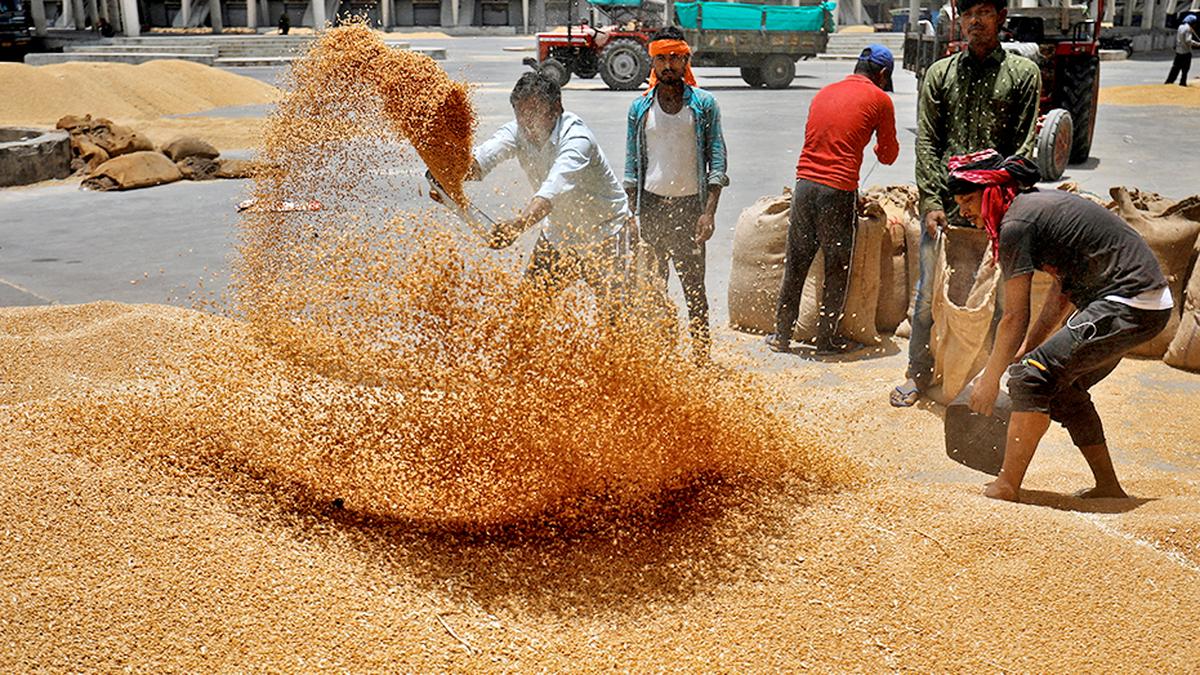
- 10 Mar 2026
In News:
Recently, the Government of India invoked the Essential Commodities Act, 1955 in response to an energy crisis triggered by geopolitical tensions in West Asia, including strikes involving Iran. The move highlights the continuing relevance of the Act as a policy instrument to manage shortages, regulate prices, and ensure the availability of essential commodities during emergencies.
About the Essential Commodities Act, 1955
The Essential Commodities Act (ECA), 1955 is a central legislation enacted to regulate the production, supply, and distribution of essential commodities to ensure their availability to the public at fair prices. The Act empowers the government to prevent hoarding, black marketing, and artificial scarcity of vital goods.
The primary objectives of the Act include:
- Ensuring the steady availability of essential goods.
- Preventing price manipulation and hoarding.
- Regulating the supply of commodities necessary for national security and defence operations.
Through regulatory mechanisms, the Act enables the government to intervene in markets when disruptions threaten consumer welfare.
Key Features of the Act
1. Declaration of Essential Commodities: The Act defines essential commodities as items listed in its Schedule. These may include food items and other goods considered crucial for daily consumption or national interest.
2. Power to Amend the Schedule: The Central Government, in consultation with state governments, can add or remove commodities from the Schedule depending on economic conditions and public needs.
3. Stock Limits: The Act empowers the government to impose stock limits on traders, wholesalers, and retailers. This prevents excessive hoarding that could create artificial shortages and price inflation.
4. Price Regulation: Authorities can regulate the sale price of essential commodities, particularly items such as food grains, edible oils, and sugar, to protect consumers from unreasonable price increases.
5. Penal Provisions: Violations of government orders issued under Section 3 of the Act may result in:
- Imprisonment ranging from three months to seven years, and
- Monetary fines.
6. Confiscation of Goods: Authorities may seize and confiscate commodities being illegally stored or transported, along with vehicles or animals used in their transport.
Situations When the Act is Invoked
The Essential Commodities Act is typically invoked during extraordinary circumstances when supply disruptions or price volatility threaten public welfare.
Common situations include:
1. War or Geopolitical Crises: The Act can be used to regulate supplies of fuel or food during international conflicts or energy disruptions.
2. Natural Disasters and Health Emergencies: For example, during the COVID-19 pandemic, the government invoked the Act to ensure the availability of essential medical items such as masks and sanitizers.
3. Sudden Price Rise: Government intervention is allowed when retail prices rise significantly—typically 50% for non-perishable agricultural goods and 100% for horticultural produce.
4. Market Stabilization During High-Demand Periods: The Act has historically been used to stabilize prices of commodities such as wheat or sugar during festive seasons or election periods.
Significance of the Act
The Essential Commodities Act remains an important policy tool in India’s regulatory framework.
1. Consumer Protection: The Act protects consumers, particularly economically vulnerable sections, by preventing sudden spikes in the prices of essential goods.
2. Prevention of Hoarding and Black Marketing: By limiting stock holdings and regulating distribution, the Act discourages speculative practices that create artificial shortages.
3. Crisis Management: During emergencies such as war, pandemics, or supply disruptions, the Act allows the government to quickly stabilize markets and ensure equitable distribution of essential commodities.
Precision Strike Missile (PrSM)
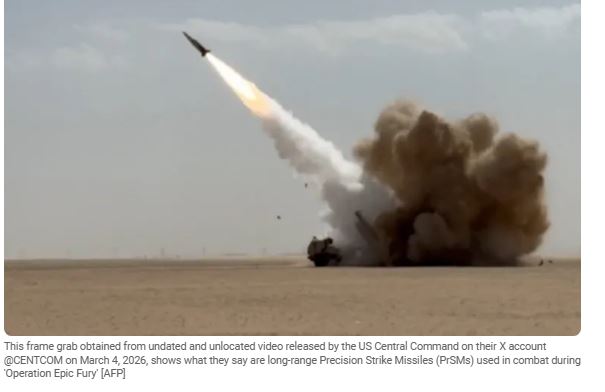
- 10 Mar 2026
In News:
The Precision Strike Missile recently drew global attention after being reportedly used by the United States Central Command during military operations involving Iran. The deployment marked the first operational use of the missile, highlighting advancements in long-range precision strike capabilities and modern battlefield technologies.
Overview of Precision Strike Missile (PrSM)
- The Precision Strike Missile (PrSM) is a surface-to-surface guided ballistic missile designed to strike targets at long distances with high accuracy. It is primarily developed and manufactured by Lockheed Martin for the United States Army.
- The missile entered operational service in late 2023 as part of efforts to modernize the US Army’s long-range artillery systems and enhance its ability to engage high-value targets from extended distances.
Key Features of the PrSM
1. Long-Range Precision Strike Capability: The missile is capable of striking targets at ranges exceeding 500 kilometres, enabling forces to engage strategic targets such as command centres, radar systems, air defence installations, and logistics hubs far beyond the battlefield.
2. Advanced Guidance Systems: The PrSM uses a combination of:
- Global Positioning System (GPS) navigation
- Inertial guidance systems
These technologies allow the missile to maintain high targeting accuracy even in adverse weather or electronic warfare environments.
3. Compatibility with Existing Launch Platforms
One of the key design advantages of the PrSM is its compatibility with existing artillery platforms, including:
- M142 High Mobility Artillery Rocket System
- M270A2 Multiple Launch Rocket System
This interoperability allows rapid deployment without requiring entirely new launch infrastructure.
Technological Architecture
The missile incorporates an open systems architecture and modular design, enabling future upgrades and integration of new technologies.
Key technological features include:
- Solid rocket propellant for propulsion
- Hypersonic-class ballistic trajectory enabling high-speed travel
- Integration with satellite, drone, and radar networks for enhanced targeting and battlefield coordination
These features allow the PrSM to function as part of a broader network-centric warfare system.
Safety and Payload Design
- The missile carries an Insensitive Munitions (IM) energetic payload, which reduces the risk of accidental detonation during handling, transport, or storage. This improves operational safety for military personnel and logistical operations.
Strategic Significance
The development and deployment of the Precision Strike Missile reflects broader trends in modern warfare, including:
- Increasing emphasis on long-range precision strike capabilities
- Integration of weapons systems into networked battlefield environments
- Replacement of older missile systems with more accurate and flexible platforms
The PrSM also strengthens the US Army’s ability to conduct deep-strike operations against critical enemy infrastructure while minimizing collateral damage through improved targeting precision.
Discovery of a Megalithic Rock-Cut Chamber in Kerala
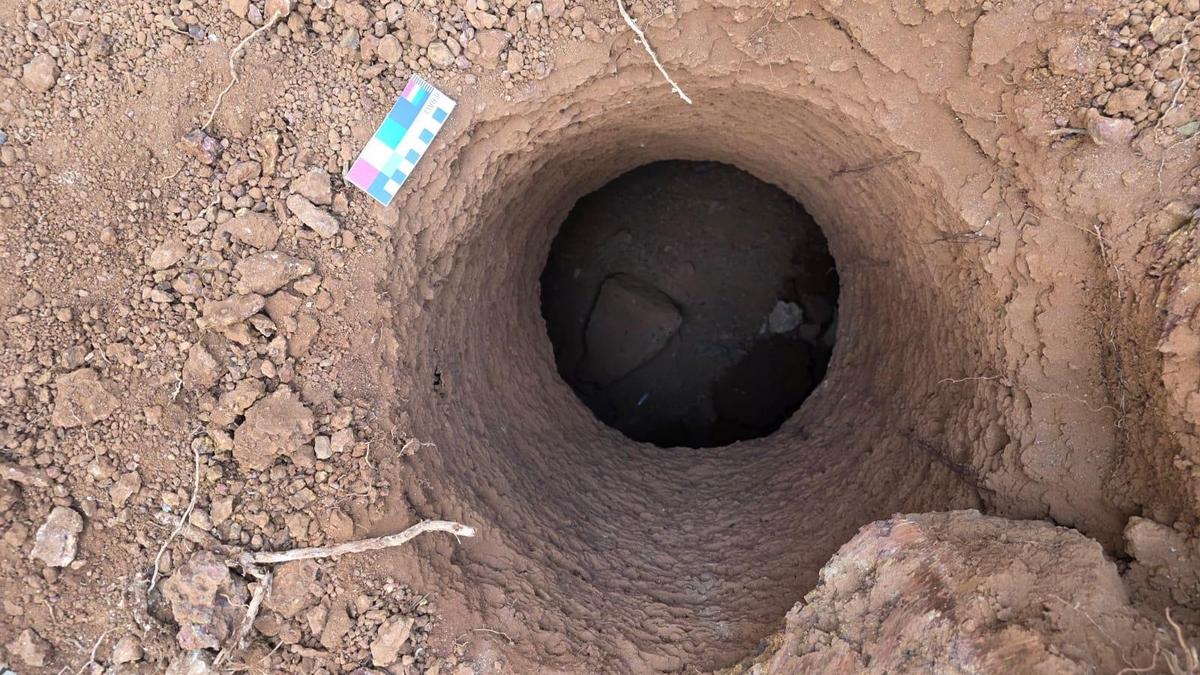
- 10 Mar 2026
In News:
A significant archaeological discovery has been made in Kasaragod district, where a Megalithic laterite rock-cut chamber was unearthed at Panayal. The finding provides valuable insights into the burial practices, technological development, and cultural traditions of prehistoric societies in South India. The chamber forms part of a larger megalithic burial complex, where pottery of various shapes and sizes was interred as part of ritual practices associated with funerary traditions.
Megalithic Culture: An Overview
- The Megalithic Culture refers to a prehistoric tradition marked by the construction of large stone structures known as megaliths. These monuments were typically used for burial and commemorative purposes and were often located away from habitation sites.
- Archaeological evidence indicates that the South Indian Megalithic culture flourished roughly between 1000 BCE and 100 CE, with its peak phase occurring between 600 BCE and 100 CE. The period represents a fully developed Iron Age culture, evidenced by the widespread use of iron tools and weapons.
Iron Age Characteristics
The Megalithic period in South India is closely associated with the Iron Age, during which iron technology was widely adopted. Archaeological excavations across the region have yielded:
- Iron weapons and tools
- Agricultural implements
- Pottery and burial goods
These findings indicate technological advancement and suggest that communities had well-developed systems of agriculture, craftsmanship, and warfare.
Geographical Distribution of Megalithic Sites
The main concentration of megalithic sites in India is found in the Deccan region, particularly south of the Godavari River. Several important archaeological sites have been identified across the country.
Prominent sites include:
- Brahmagiri and Chandravalli in Karnataka
- Junapani, Khapa, and Muhurjhari in Maharashtra
- Adichanallur in Tamil Nadu
Evidence of megalithic culture has also been found in regions beyond South India, including:
- The Punjab plains
- The Indo-Gangetic basin
- Rajasthan and Gujarat
- Burzahom
This wide distribution indicates that megalithic traditions were practiced across diverse ecological zones in the Indian subcontinent.
Burial Practices and Material Culture
The recently discovered rock-cut chamber in Kasaragod is part of a burial complex, suggesting elaborate funerary traditions among megalithic communities. These burial sites often contained:
- Pottery vessels
- Iron tools and weapons
- Ornaments and ritual objects
The placement of pottery within burial chambers indicates ritualistic beliefs about life after death and ancestor worship.
Subsistence and Lifestyle
- Archaeological evidence suggests that megalithic communities practiced a mixed subsistence economy, including: agriculture, hunting, fishing, and animal husbandry
- Rock paintings discovered at some sites depict scenes of hunting, cattle raids, and group dancing, offering glimpses into the social and cultural life of these early communities.
Significance of the Discovery
The Kasaragod rock-cut chamber contributes to a deeper understanding of:
- The spread of megalithic culture in South India
- Funerary architecture and burial rituals
- The development of Iron Age societies in the Deccan region
Such discoveries help archaeologists reconstruct the technological, social, and religious practices of prehistoric populations.
Denmark’s Elimination of Mother-to-Child Transmission of HIV and Syphilis
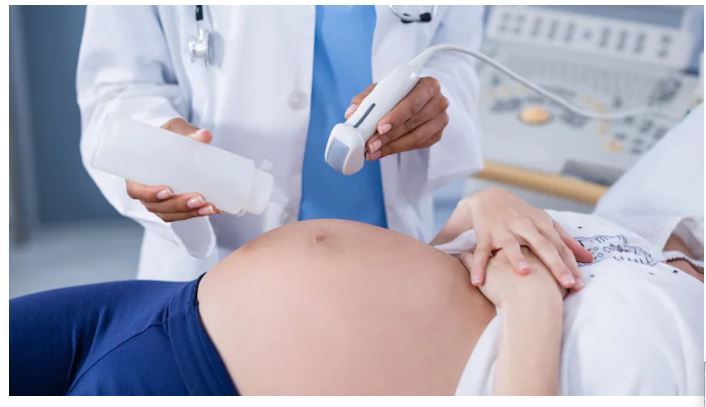
- 10 Mar 2026
In News:
Recently, Denmark was certified by the World Health Organization as the first country in the European Union to eliminate mother-to-child transmission (MTCT) of both HIV and Syphilis. This achievement represents a major public health success and demonstrates the effectiveness of strong maternal healthcare systems, universal testing, and timely treatment interventions.
What is Mother-to-Child Transmission (MTCT)?
Mother-to-Child Transmission (MTCT), also known as vertical transmission, refers to the spread of certain infections from a pregnant woman to her baby during pregnancy, childbirth and breastfeeding.
Without timely intervention, infections such as HIV and syphilis can lead to serious consequences including:
- Infant HIV infection
- Congenital syphilis
- Stillbirths and neonatal deaths
- Severe lifelong health complications
Therefore, preventing MTCT is a major priority in global maternal and child health programmes.
WHO Criteria for Elimination of MTCT
The WHO defines elimination of mother-to-child transmission through strict epidemiological and health system indicators. A country must achieve:
- Transmission rates below 50 cases per 100,000 live births, and
- More than 95% coverage of testing and treatment among pregnant women
These benchmarks ensure that both detection and treatment systems are robust enough to prevent transmission to newborns.
Global Context of EMTCT
Denmark joins a growing group of countries validated by the WHO for eliminating MTCT or making significant progress toward this goal. More than 20 countries and territories worldwide have achieved or are nearing this milestone.
Examples include:
- Caribbean nations such as Anguilla and Antigua and Barbuda
- South American countries such as Brazil
- African countries such as Botswana
- Asian nations including Malaysia and Maldives
These achievements demonstrate that elimination is possible across different health systems when strong policies and universal maternal healthcare are implemented.
WHO’s Triple Elimination Strategy
To address maternal transmission of infectious diseases, WHO promotes a Triple Elimination Strategy targeting: HIV, Syphilis, and Hepatitis B
The strategy is built on four key pillars:
- Universal access to antenatal care
- Integrated testing for maternal infections
- Effective treatment and prevention protocols
- Strong health systems supported by community engagement and human-rights protections
This integrated approach helps ensure that maternal health services detect infections early and prevent transmission to infants.
Understanding the Diseases
HIV (Human Immunodeficiency Virus)
- HIV attacks the body’s immune system, particularly CD4 cells, weakening the body’s ability to fight infections.
- If untreated, HIV can progress to Acquired Immunodeficiency Syndrome (AIDS), making individuals vulnerable to life-threatening infections and cancers.
Syphilis
- Syphilis is a sexually transmitted bacterial infection caused by Treponema pallidum. The disease progresses through stages that may include painless sores, skin rashes, and severe complications affecting the heart, brain, and nervous system if left untreated. Congenital syphilis can cause severe health problems in newborns.
Significance of Denmark’s Achievement
Denmark’s certification highlights several important aspects of effective public health policy:
- Strong maternal healthcare and antenatal screening systems
- Universal testing and treatment for pregnant women
- Integration of infectious disease control with maternal health services
- Sustained public health surveillance and policy commitment
This milestone also reinforces the feasibility of eliminating vertical transmission of infectious diseases through coordinated healthcare strategies.
India’s 7th National Report to the Convention on Biological Diversity (CBD)
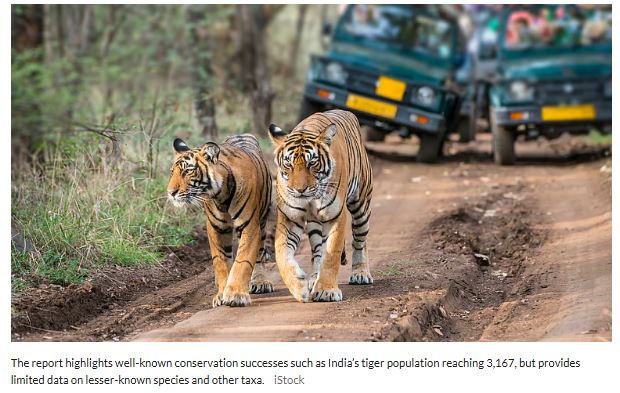
- 08 Mar 2026
In News:
India has submitted its 7th National Report to the Convention on Biological Diversity, assessing the country’s progress toward biodiversity conservation and sustainable use targets by 2030. The report evaluates India’s performance against 23 National Biodiversity Targets (NBTs) that are aligned with the Kunming-Montreal Global Biodiversity Framework.
The assessment indicates that only two of the 23 targets are currently on track, although improvements have been observed in policy frameworks, forest cover, and ecosystem restoration initiatives.
Key Findings of the 7th National Report
The report highlights both achievements and gaps in India’s biodiversity governance.
Progress Areas
- Strengthening of policy and institutional frameworks for biodiversity conservation.
- Improvements in forest cover and ecosystem restoration programmes.
- Greater integration of biodiversity concerns into national development policies.
Areas of Concern
- Only two National Biodiversity Targets are clearly on track.
- Several targets related to species conservation, ecosystem protection, and sustainable use of resources require accelerated action.
- Implementation gaps remain due to limited resources, data gaps, and increasing anthropogenic pressures.
The findings underline the need for stronger implementation measures to achieve biodiversity goals by 2030.
Convention on Biological Diversity (CBD)
The Convention on Biological Diversity is one of the most important international agreements addressing biodiversity conservation.
Origin and Evolution
- Opened for signature at the Rio Earth Summit.
- Entered into force on 29 December 1993.
- The first Conference of the Parties (COP) was held in 1994 in the Bahamas.
Membership and Secretariat
- Ratified by 196 countries, making it one of the most widely adopted international treaties.
- The United States remains the only UN member state that has not ratified the convention.
- Secretariat located in Montreal.
Three Core Objectives
- Conservation of biological diversity
- Sustainable use of biodiversity components
- Fair and equitable sharing of benefits arising from genetic resources
The governing body of the CBD is the Conference of the Parties (COP), which meets every two years.
Related Protocols under the CBD
Two important supplementary agreements strengthen the implementation of the convention:
- Cartagena Protocol on Biosafety – focuses on biosafety in biotechnology.
- Nagoya Protocol – governs equitable sharing of benefits from genetic resources.
Kunming–Montreal Global Biodiversity Framework (KMGBF)
The Kunming-Montreal Global Biodiversity Framework was adopted during COP15 of the CBD in 2022 in Montreal. It is considered a landmark global agreement to address the biodiversity crisis.
Key Features
- 23 global targets to be achieved by 2030.
- Four long-term goals for 2050 aimed at safeguarding biodiversity for present and future generations.
- Focus areas include ecosystem restoration, protection of biodiversity-rich areas, reduction of pollution, and sustainable use of biological resources.
- The framework is not legally binding, but it guides national biodiversity strategies and reporting.
Gravity Bombs
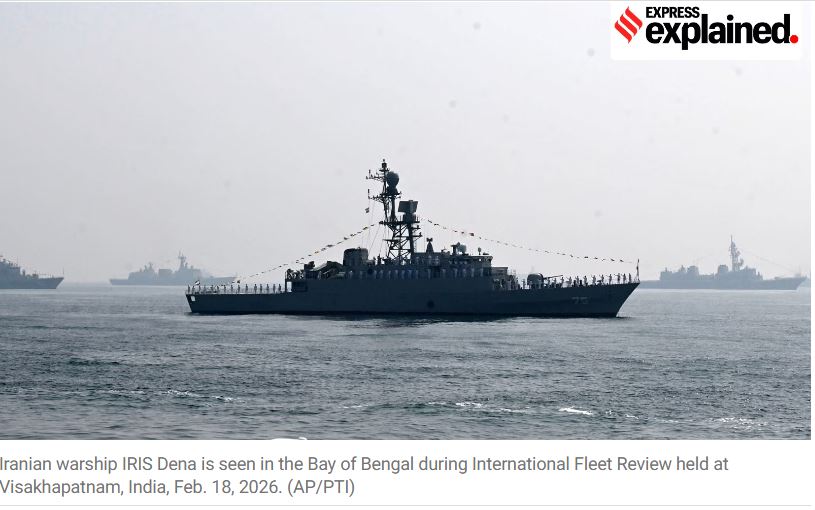
- 08 Mar 2026
In News:
Recent developments in the ongoing tensions involving United States and Iran have highlighted the continued relevance of traditional aerial munitions and the legal complexities of warfare at sea. The Pete Hegseth announced that the United States would shift toward the use of gravity bombs in its military operations against Iran, signalling a significant tactical adjustment in modern conflict.
What is a Gravity Bomb?
- A gravity bomb, also known as a free-fall bomb, is an unpowered aerial munition dropped from an aircraft. After release, it travels toward its target purely under the influence of gravity, with its trajectory determined by the aircraft’s speed, altitude, and release point.
- Unlike powered missiles such as the Tomahawk cruise missile, gravity bombs do not contain propulsion systems. Despite their origins in World War-era warfare, they remain widely used by the United States Air Force in conflicts including those in Iraq, Afghanistan, and Syria.
Modernisation of Gravity Bombs
Modern gravity bombs have undergone significant technological upgrades. Many are equipped with Joint Direct Attack Munition (JDAM) kits that convert conventional bombs into precision-guided munitions.
Key features of JDAM kits include:
- GPS guidance systems
- Steerable tail fins
- Improved targeting accuracy in adverse weather conditions
This modernization allows gravity bombs to combine the low cost of traditional munitions with the precision of modern guided weapons.
Major Types of Gravity Bombs Used by the US
The United States primarily deploys bombs from the Mark 80 series, which vary by size and operational purpose:
- Mk-82 (500 lb) – Used against relatively soft targets such as vehicles, troop concentrations, or radar installations.
- Mk-83 (1,000 lb) – Designed to damage reinforced structures and command centres.
- Mk-84 (2,000 lb) – A heavy bomb capable of penetrating hardened structures and bunker-type facilities.
With JDAM upgrades, these bombs can achieve high precision at relatively low cost—approximately $25,000–$30,000 per unit, making them far cheaper than advanced cruise missiles.
Operational Advantages and Limitations
Advantages
- Cost-effective compared to precision missiles
- High payload capacity
- Compatibility with precision-guidance kits
Limitations
- Aircraft must fly relatively close to the target to deploy them.
- Effective deployment generally requires air superiority and minimal air-defence threats.
Thus, gravity bombs are typically used in environments where a military has already established control of the airspace.
Legal Framework Governing Maritime Conflict
The use of military force at sea—such as attacks on ships during conflict—is regulated by international law. Key legal principles arise from the United Nations Convention on the Law of the Sea and customary international humanitarian law (IHL).
Important legal principles include:
- Distinction: Combatants must distinguish between military targets and civilian vessels.
- Proportionality: Attacks should avoid excessive civilian damage relative to the anticipated military advantage.
- Military Necessity: Actions must be justified by a legitimate military objective.
- Protection of Neutral Shipping: Ships belonging to neutral states generally enjoy protection unless directly involved in hostilities.
The San Remo Manual on International Law Applicable to Armed Conflicts at Sea (1994) also provides widely accepted guidelines on naval warfare and maritime targeting.
Raisina Dialogue 2026
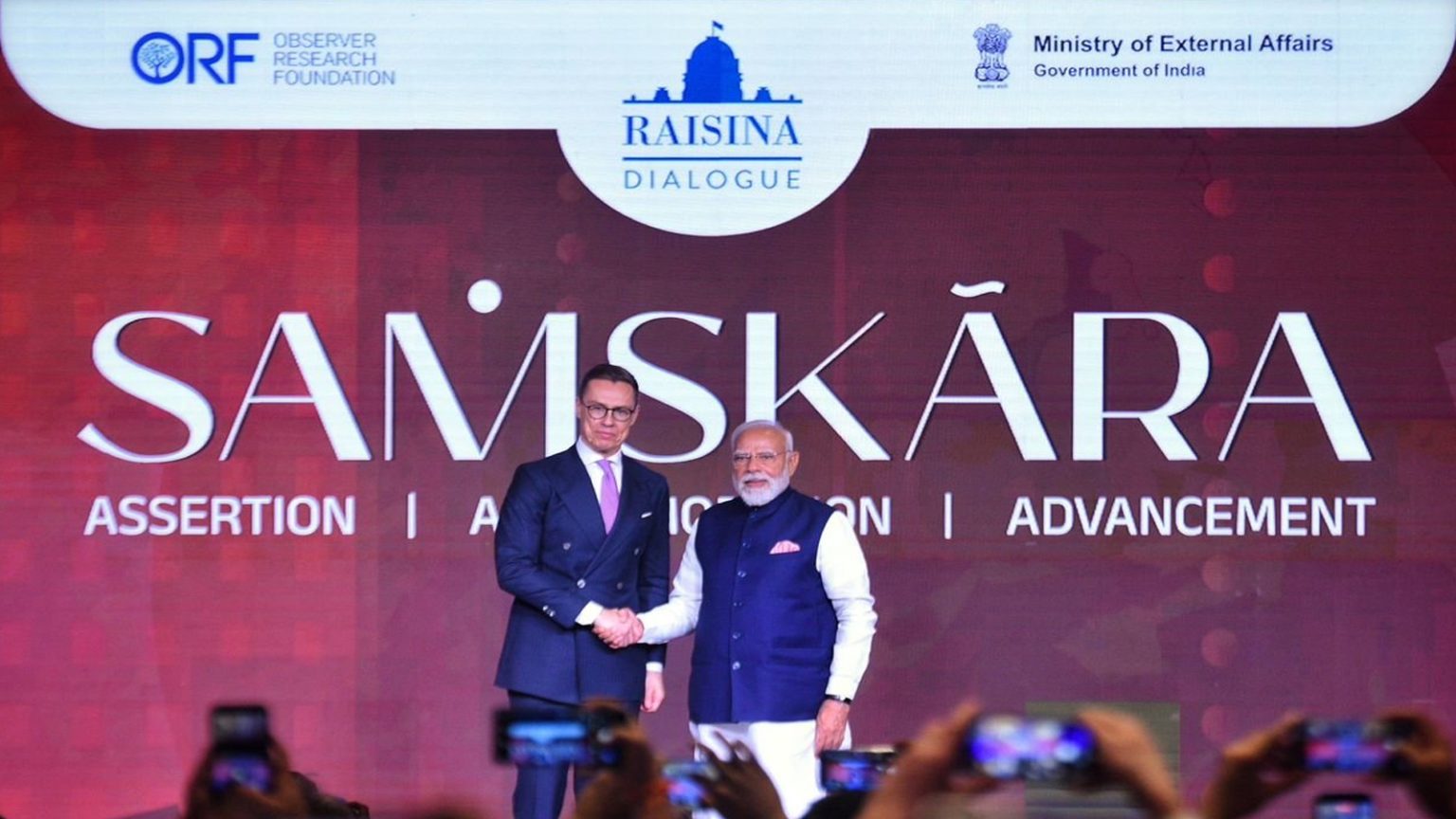
- 08 Mar 2026
In News:
The 11th edition of the Raisina Dialogue 2026 was held in New Delhi. The annual dialogue has emerged as India’s foremost platform for discussions on geopolitics, geo-economics, and global governance, bringing together global leaders, policymakers, diplomats, scholars, and strategic experts to deliberate on pressing international issues.
About the Raisina Dialogue
- The Raisina Dialogue was launched in 2016 by the Ministry of External Affairs in collaboration with the Observer Research Foundation.
- Named after Raisina Hills in New Delhi, the conference has evolved into a major global forum for strategic discussions. It is often compared to leading international strategic conferences such as the Munich Security Conference and the Shangri-La Dialogue.
- The forum convenes representatives from governments, academia, industry, and civil society to address complex global challenges ranging from security to economic governance.
Theme of Raisina Dialogue 2026
The theme for the 2026 edition was “Samskara: Assertion, Accommodation, Advancement.”
The theme reflects three key ideas:
- Assertion – Civilisations and nations asserting their identity and strategic interests.
- Accommodation – Managing diversity and cooperation in an interconnected world.
- Advancement – Progress through innovation, technology, and collaborative global governance.
Major Takeaways from Raisina Dialogue 2026
1. Launch of Raisina Science Diplomacy Initiative: One of the landmark announcements was the Raisina Science Diplomacy Initiative (SDI), aimed at integrating science, technology, and innovation into foreign policy frameworks.
Key focus areas include:
- Artificial Intelligence governance
- Semiconductor supply chains
- India’s Digital Public Infrastructure (DPI) for developing countries
The initiative seeks to strengthen the role of technology in shaping international cooperation and diplomacy.
2. Emergence of a Multipolar Global Order: Participants widely acknowledged the ongoing transition toward a multipolar world, where power is increasingly distributed among multiple regional and global actors.
Key observations included:
- Growing influence of the Global South in shaping global governance.
- Rising importance of South–South cooperation and flexible plurilateral groupings.
India’s strategic engagements through groupings such as BRICS, the India-Middle East-Europe Economic Corridor, and the India-France-UAE Trilateral illustrate its role as a key bridge between developed and developing worlds.
3. Call for Reformed Multilateralism: Another major theme was the need to reform global governance institutions to reflect contemporary geopolitical realities.
In particular:
- Participants emphasised reforms of the United Nations Security Council.
- There was growing international support for India’s permanent membership in a reformed UNSC.
4. Maritime Security and Supply Chain Protection: The dialogue also highlighted the importance of safeguarding global maritime trade routes and infrastructure, particularly in light of rising geopolitical tensions.
Key concerns included:
- Protection of undersea communication cables
- Security of global supply chains
- Stability of strategic maritime zones such as the Indian Ocean, Red Sea, and Indo-Pacific region
Takydromus ultapanensis

- 08 Mar 2026
In News:
Recent research has led to the discovery of a new species of Asian grass lizard, Takydromus ultapanensis, from the Manas Biosphere landscape in Assam. The finding highlights the rich biodiversity of Northeast India and underscores the importance of conserving fragile forest ecosystems that harbour previously undocumented species.
About the Newly Discovered Species
Takydromus ultapanensis is a newly identified member of the Asian grass lizard genus (Takydromus), a group known for slender bodies and long tails adapted to life in grassland and forest vegetation. The species was discovered in the Ultapani Reserve Forest located in Kokrajhar district of Assam, within the larger Manas landscape.
Unlike many of its related species that typically inhabit montane or subtropical environments, T. ultapanensis occupies lowland semi-evergreen forests interspersed with waterlogged grasslands and patches of ferns. This ecological preference distinguishes it from several of its congeners and indicates adaptation to a unique microhabitat within the Manas ecosystem.
Habitat and Behaviour
Researchers observed individuals of this species basking on fern bushes in open patches of forest. These areas are often intersected by seasonal water channels, creating a moist and complex habitat structure suitable for small reptiles. The lizards appear to rely on vegetation cover and sunlit clearings for thermoregulation and feeding.
Such habitats are characteristic of the Manas Biosphere landscape, a biodiversity-rich region located along the Indo-Bhutan border and known for its mixture of grasslands, forests, and wetlands.
Distinct Morphological Characteristics
The newly identified species exhibits several morphological differences that distinguish it from closely related lizards found in Northeast India. In particular, T. ultapanensis differs from species such as Takydromus khasiensis and Takydromus sikkimensis in:
- Scale patterns
- Body proportions
- Diagnostic head features
These differences were crucial in confirming it as a distinct species rather than a variation of existing grass lizards.
Conservation Concerns
At present, Takydromus ultapanensis has been recorded only from a single forest range in the Ultapani Reserve Forest. Such a limited distribution raises concerns about its vulnerability to habitat disturbance.
The Manas landscape, although ecologically significant, faces pressures from habitat fragmentation, land-use change, and human activities. Species restricted to narrow habitats are particularly vulnerable to environmental change, highlighting the need for continued ecological monitoring and habitat protection.
Italy recognises Femicide as a Crime

- 08 Mar 2026
In News:
The Italian Parliament recently enacted a landmark law that recognises femicide as a distinct criminal offence and prescribes life imprisonment for the gender-motivated killing of women. The legislation, passed with bipartisan support, marks a significant step in addressing gender-based violence and aligns Italy with a small but growing group of countries that legally recognise femicide as a specific crime.
What is Femicide?
Femicide refers to the intentional killing of women or girls because of their gender. It is widely recognised by international organisations as the most extreme form of violence against women and girls (VAWG).
According to the United Nations, femicide often occurs in contexts such as:
- Intimate partner violence (current or former partners)
- Family-related killings, including so-called honour killings
- Gender-motivated murders by other perpetrators
Globally, many cases of femicide occur within domestic settings, reflecting deeper structural inequalities and patriarchal norms that perpetuate violence against women.
Italy’s Law Against Femicide
Italy’s legislation introduces femicide as a separate category within the criminal code, making gender-motivated killing punishable with life imprisonment.
Key Features of the Law
- Recognises gender as a motive for homicide.
- Introduces life imprisonment as the maximum penalty.
- Strengthens legal responses to crimes linked with gender-based violence.
- Passed amid growing concern over violence against women in the country.
The law was passed on 25 November, coinciding with the International Day for the Elimination of Violence Against Women, highlighting the symbolic and policy significance of the measure.
Why Recognising Femicide as a Separate Crime Matters
Treating femicide as a distinct offence has several legal and policy implications:
- Acknowledging Gender Motivation: It explicitly recognises that certain killings stem from systemic discrimination and patriarchal violence.
- Improved Data Collection: Legal recognition enables governments to track gender-based killings more accurately, aiding evidence-based policymaking.
- Targeted Criminal Justice Response: Special legal provisions allow harsher penalties and focused investigations.
- Public Awareness and Social Change: Naming the crime brings visibility to the structural nature of violence against women and helps mobilise social and institutional responses.
Global Legal Trends
- Italy joins a limited number of countries that have adopted specific legal provisions for femicide, including: Mexico, Chile, Cyprus, Morocco, North Macedonia, Türkiye and Gabon
- Several Latin American countries have also criminalised femicide as part of broader gender-violence laws, reflecting the region’s efforts to combat high rates of gender-based killings.
India’s Legal Framework on Gender-Based Killings
India does not legally recognise femicide as a separate criminal category. Instead, gender-based violence and killings are addressed through general criminal provisions and specific protective laws for women.
Important legislations include:
- Protection of Women from Domestic Violence Act, 2005
- Dowry Prohibition Act, 1961
- Prohibition of Child Marriage Act, 2006
- National Commission for Women Act, 1990
Murders of women motivated by dowry demands, honour, or domestic violence are typically prosecuted under general homicide provisions of the Indian Penal Code along with these special laws.
International Observance
- The International Day for the Elimination of Violence Against Women is observed annually on 25 November, following its designation by the United Nations General Assembly in 1999. The day seeks to raise awareness and mobilise action against violence directed at women and girls worldwide.
Taragiri

- 07 Mar 2026
In News:
The induction of INS Taragiri (Yard 12653), the fourth Nilgiri-class (Project 17A) stealth frigate, marks a significant milestone in India’s efforts to strengthen indigenous warship building and maritime security. The vessel has been delivered to the Indian Navy by Mazagon Dock Shipbuilders Limited (MDL) and represents the third Project 17A ship constructed by the shipyard. The induction highlights India’s progress in advanced naval shipbuilding and self-reliance in defence production.
Legacy of INS Taragiri
- The new frigate continues the legacy of the earlier INS Taragiri, a Leander-class frigate that served in the Indian Navy for 33 years (1980–2013). Carrying forward the same name symbolises continuity in naval tradition while representing a new generation of technologically advanced warships.
- The ship has been designed by the Warship Design Bureau (WDB) of the Indian Navy and constructed using the Integrated Construction approach, a modern shipbuilding technique that enables simultaneous fabrication of different blocks of the vessel, thereby reducing construction time and improving efficiency.
Project 17A: India’s Stealth Frigate Programme
Project 17A is an ambitious Indian naval programme aimed at building seven Nilgiri-class stealth frigates as upgraded successors to the Shivalik-class frigates. These ships are designed for enhanced stealth, survivability, and combat capabilities.
The construction of the seven frigates is distributed between two major Indian shipyards:
- Four ships — Nilgiri, Udaygiri, Taragiri, and Mahendragiri — are being built by Mazagon Dock Shipbuilders Limited in Mumbai.
- Three ships — Himgiri, Dunagiri, and Vindhyagiri — are being constructed by Garden Reach Shipbuilders and Engineers (GRSE) in Kolkata.
The ships are being built through the Integrated Construction methodology, which allows for pre-outfitting during block fabrication, thereby reducing build time and improving production efficiency.
An important aspect of the project is indigenisation, with approximately 75% of the systems and equipment sourced from Indian industries, aligning with the government’s ‘Atmanirbhar Bharat’ initiative in defence manufacturing.
Key Features and Capabilities
The Nilgiri-class frigates are designed for blue-water operations, enabling the Indian Navy to operate effectively across distant maritime regions. These ships are versatile frontline assets capable of performing multiple combat roles.
1. Propulsion System: The ships are powered by a Combined Diesel or Gas (CODOG) propulsion system, which integrates diesel engines and gas turbines, each connected to a Controllable Pitch Propeller (CPP). This configuration provides both high speed and fuel efficiency.
2. Advanced Weapons Systems: Project 17A frigates are equipped with a range of modern weapons, including:
- **BrahMos supersonic cruise missiles
- Long Range Surface-to-Air Missile (LRSAM) / Barak-8 system
- Lightweight anti-submarine torpedoes
- Indigenous Rocket Launchers (IRL)
These weapons enable the ships to effectively engage surface, aerial, and underwater threats.
3. Sensors and Electronic Systems: The frigates are fitted with sophisticated surveillance and combat management systems, including:
- Multi-mission radar and surface-surveillance radar
- Airborne early-warning radar integration
- Shakti Electronic Warfare Suite
- HUMSA-NG Sonar for anti-submarine warfare
Additionally, the vessels incorporate an Integrated Platform Management System (IPMS) for efficient monitoring and control of onboard machinery and systems.
Project HANUMAN
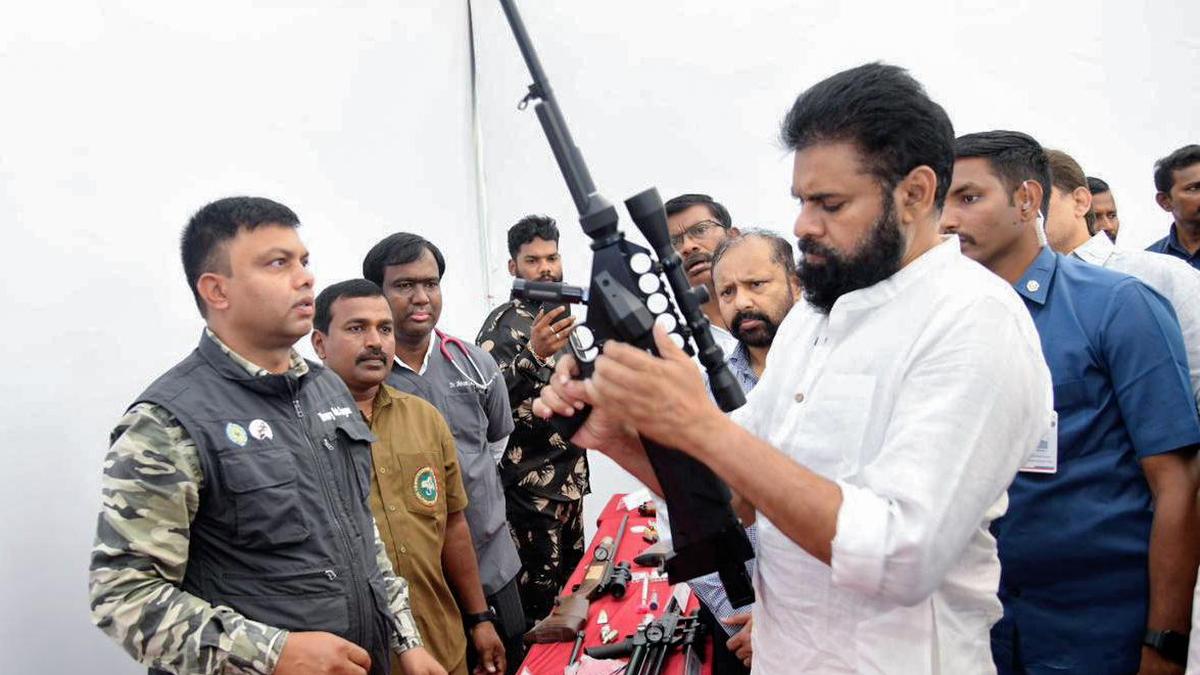
- 07 Mar 2026
In News:
Human–wildlife conflict has emerged as a major environmental and socio-economic challenge in India, particularly in forest-fringe regions where expanding human settlements intersect with wildlife habitats. To address this issue, the Government of Andhra Pradesh has launched Project HANUMAN, an innovative programme aimed at strengthening wildlife rescue, monitoring, and community protection mechanisms while promoting coexistence between humans and wildlife.
About Project HANUMAN
Project HANUMAN stands for Healing and Nurturing Units for Monitoring, Aid and Nursing of Wildlife. The initiative is designed to mitigate conflicts in forest-bordering villages where incidents such as elephant raids, crop damage, and snake bites are common. By combining modern technology, rapid response mechanisms, and community participation, the programme aims to ensure both human safety and wildlife conservation.
The project focuses particularly on forest-fringe areas that frequently experience wildlife incursions, thereby seeking to reduce casualties, prevent retaliatory killings of animals, and improve wildlife rescue operations.
Key Features of the Project
1. Rapid Response and Rescue Infrastructure: The initiative includes a strong emergency response network comprising:
- 100 GPS-enabled vehicles for field monitoring and quick deployment.
- 93 Rapid Response Units to address wildlife emergencies.
- 7 specialised wildlife ambulances equipped for rescue and medical aid.
2. Wildlife Rescue Centres: Four dedicated rescue centres have been established in key locations:
- Visakhapatnam
- Rajamahendravaram
- Tirupati
- Byrluti
These centres will provide facilities for treatment, rehabilitation, and temporary shelter of rescued wildlife.
3. Community Participation through ‘Vajra’ Teams: The project encourages local participation through “Vajra” volunteer teams at the village level. These teams assist forest officials in handling minor incidents such as snake rescues and early reporting of wildlife movement, thereby reducing panic and preventing escalation.
4. Technology-based Monitoring: Advanced technologies form a key component of the programme:
- Artificial Intelligence (AI) systems to track wildlife movements and generate early warning alerts for nearby settlements.
- A dedicated HANUMAN mobile application that allows citizens to report wildlife sightings, conflict incidents, and emergencies, improving coordination between communities and forest authorities.
5. Improved Compensation Mechanism: To support affected communities and reduce hostility towards wildlife, the government has enhanced compensation provisions:
- ?10 lakh compensation for human deaths caused by wildlife.
- ?2 lakh for injuries.
- Market-value compensation for livestock losses.
UNCLOS and Maritime Security

- 07 Mar 2026
In News:
Recent reports of the sinking of the Iranian frigate IRIS Dena off the south-western coast of Sri Lanka, allegedly following a torpedo strike by a United States Navy submarine amid escalating tensions in the Middle East, have renewed attention on the legal regime governing maritime spaces. Such incidents highlight the importance of international maritime law, particularly the United Nations Convention on the Law of the Sea (UNCLOS), which regulates state rights and responsibilities in the world’s oceans.
United Nations Convention on the Law of the Sea (UNCLOS)
UNCLOS is a comprehensive international treaty that establishes the legal framework for the governance and use of oceans and seas. Adopted in 1982 at Montego Bay, Jamaica, the convention entered into force in 1994. Due to its wide scope and significance, it is often described as the “Constitution of the Oceans.”
The convention defines maritime boundaries of coastal states, regulates navigation rights, governs exploitation of marine resources, and establishes obligations for environmental protection and dispute settlement. It thus provides a structured legal order for activities such as shipping, fishing, seabed mining, and naval operations.
Currently, 168 parties, including the European Union, are members of the convention. Countries such as India, Japan, and China are parties to UNCLOS. The United States has signed the convention but has not ratified it, although many of its provisions are followed as customary international law.
Maritime Zones under UNCLOS
UNCLOS divides the oceans into several legal zones, each conferring different rights and responsibilities to coastal and other states.
- Territorial Sea (up to 12 nautical miles): A coastal state exercises full sovereignty over this zone, similar to its land territory. However, foreign ships are allowed the right of innocent passage, meaning they may pass through the waters as long as they do not threaten the security or laws of the coastal state.
- Contiguous Zone (12–24 nautical miles): In this zone, the coastal state does not enjoy complete sovereignty but can enforce laws relating to customs, immigration, fiscal regulations, sanitation, and security to prevent violations within its territory or territorial sea.
- Exclusive Economic Zone (EEZ) (up to 200 nautical miles): Within the EEZ, the coastal state has sovereign rights for exploring, exploiting, conserving, and managing natural resources, including fisheries, oil, and gas. However, other states retain freedoms of navigation and overflight, as well as the laying of submarine cables and pipelines.
- High Seas (International Waters): Areas beyond national jurisdiction are classified as the high seas. No state can claim sovereignty over these waters, and they are governed by international law and the principles of UNCLOS, ensuring freedoms such as navigation, fishing, and scientific research.
Relevance to the Recent Incident
The alleged strike on the Iranian warship near Sri Lanka highlights the strategic significance of international waters and the legal complexities surrounding naval operations. While states retain freedom of navigation and military presence in international waters, such actions can raise questions regarding maritime security, use of force, and adherence to international law.
Golestan Palace

- 07 Mar 2026
In News:
The historic Golestan Palace in Tehran, Iran, recently attracted international attention after reports indicated that the palace complex suffered structural damage due to shockwaves and debris from airstrikes amid escalating tensions in the Middle East. The site, recognised as a UNESCO World Heritage Site, represents one of the most important symbols of Persian royal heritage and architecture. The incident has raised concerns about the vulnerability of cultural heritage sites during armed conflicts.
Historical Background
- Golestan Palace is one of the oldest historic monuments in Tehran and has served as a major centre of political and royal power for centuries. The origins of the complex date back to the 16th century during the Safavid Dynasty, when Tehran began to emerge as an important political centre. Initially constructed as a fortified citadel for Safavid rulers, the site gradually evolved into an extensive royal complex with gardens, palatial buildings, and ceremonial halls.
- The palace gained greater prominence during the rule of the Qajar dynasty, which came to power in 1779 and declared Tehran the capital of Iran. During this period, Golestan Palace became the official seat of government and royal residence. Later, the Pahlavi dynasty also used the complex for important state ceremonies. Reflecting its historical significance and architectural value, UNESCO inscribed the palace complex on the World Heritage List in 2013.
Architectural and Cultural Features
- Golestan Palace is widely admired for its unique architectural style that blends traditional Persian aesthetics with European influences introduced during the 19th century. This synthesis reflects the cultural exchanges and modernization efforts of the Qajar rulers.
- The palace complex is particularly renowned for its vibrant tile work, which features intricate floral motifs, geometric patterns, and calligraphic inions. Rich colours such as turquoise, cobalt blue, yellow, pink, and white are used extensively, reflecting the Persian artistic tradition that emphasises symmetry, detail, and storytelling through design.
- In addition to decorative art, the complex also preserves valuable cultural archives, including early Iranian photography, historical documents, and royal artefacts from the Qajar period.
Important Structures within the Complex
The Golestan Palace complex comprises several important buildings and ceremonial halls:
- Shams-ol-Emareh (Edifice of the Sun): Built in the 1860s by Naser al-Din Shah Qajar, it is one of the most iconic structures in the complex and symbolises the influence of European architectural styles on Persian royal architecture.
- Marble Throne Hall (Takht-e-Marmar): A historically significant hall used for royal coronations and official state ceremonies.
- Mirror Hall: Famous for its elaborate mirror mosaics and luxurious interior decoration, representing the refinement of Persian decorative art.
- Other ceremonial halls: The complex also includes halls such as the Salam Hall, Brilliant Hall, Ivory Hall, and Reception Hall, which were used for diplomatic gatherings and royal functions.
- Museum buildings: Several museums within the palace display Qajar-era paintings, royal gifts, manus, and historical artefacts.
Significance of the Site
Golestan Palace represents the artistic, political, and cultural evolution of Iran over several centuries. It illustrates the transition of Persian architecture during the Qajar period, when exposure to European ideas led to new forms of artistic expression while retaining traditional Persian elements. The site also reflects Iran’s royal traditions, including coronations and diplomatic ceremonies.
World Obesity Atlas 2026
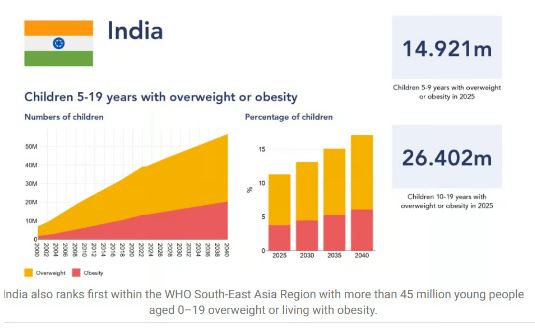
- 07 Mar 2026
In News:
- Childhood obesity has emerged as a significant public health challenge globally, with developing countries increasingly witnessing a rapid rise in overweight children due to changing lifestyles, dietary patterns, and urbanisation.
- The World Obesity Atlas 2026, released by the World Obesity Federation on World Obesity Day (4 March), highlights the alarming scale of the problem. The report reveals that India ranks second globally in the number of children living with overweight and obesity, underscoring the urgent need for policy interventions and preventive strategies.
Global Scenario
Globally, childhood obesity has increased sharply in the past decade. The report estimates that more than one in five children (20.7%) aged 5–19 years are overweight or obese, compared to 14.6% in 2010. If current trends continue, around 507 million children worldwide could be overweight or obese by 2040.
A large proportion of children with high Body Mass Index (BMI) is concentrated in a few countries. China, India and the United States together account for over 10 million children each living with obesity, making them the major contributors to the global burden.
Childhood obesity also significantly increases the risk of early onset of non-communicable diseases (NCDs). By 2040, it is projected that:
- 57 million children could show early signs of cardiovascular disease, particularly elevated triglycerides.
- 43 million children may develop hypertension.
These projections highlight the long-term health implications of obesity during childhood.
India’s Obesity Scenario
India faces a dual burden of undernutrition and rising obesity, especially among children and adolescents. According to the World Obesity Atlas 2026, India ranks second after China in the number of children with high BMI.
Key estimates for 2025 include:
- 41 million children with high BMI
- 14 million children living with obesity
The health consequences are expected to worsen between 2025 and 2040:
- Hypertension cases: 2.99 million → 4.21 million
- Hyperglycaemia: 1.39 million → 1.91 million
- High triglycerides: 4.39 million → 6.07 million
- Metabolic dysfunction-associated steatotic liver disease (MASLD) (earlier known as NAFLD): 8.39 million → 11.88 million
Lifestyle and nutrition patterns further aggravate the issue:
- 74% of adolescents (11–17 years) fail to meet recommended physical activity levels.
- Only 35.5% of school-age children receive school meals regularly.
- 32.6% of infants (1–5 months) experience sub-optimal breastfeeding practices.
Key Challenges
1. Rising Burden of Non-Communicable Diseases (NCDs): Obesity significantly increases the risk of chronic illnesses such as diabetes, hypertension, and cardiovascular diseases. NCDs already account for over 43 million deaths globally each year.
2. Economic and Productivity Loss: Obesity also imposes a large economic burden. In 2019, the cost of overweight and obesity in India was estimated at $28.95 billion, equivalent to 1.02% of GDP (around ?1,800 per capita). Without adequate interventions, this burden may rise to ?4,700 per capita by 2030, or 1.57% of GDP.
3. Urbanisation and Lifestyle Changes: Urban exposure increases obesity risk significantly:
- 1.91 times higher for those living in urban areas up to 5 years
- 2.05 times higher for 6–10 years
- 2.40 times higher for more than 10 years
Sedentary lifestyles, increased consumption of processed foods, and reduced physical activity are major contributing factors.
Government Initiatives
The Government of India has introduced several initiatives to tackle malnutrition and promote healthier lifestyles:
- POSHAN Abhiyaan (National Nutrition Mission): Focuses on improving nutritional outcomes among children, adolescents, and women through convergence of nutrition programmes.
- Fit India Movement: Encourages citizens to adopt active lifestyles and regular physical activity.
- Eat Right India: Led by the Food Safety and Standards Authority of India, it promotes healthy diets, food safety, and reduction of unhealthy food consumption.
- School Health and Wellness Programme: Aims to promote health awareness, physical fitness, and behavioural change among school students.
Kosi River
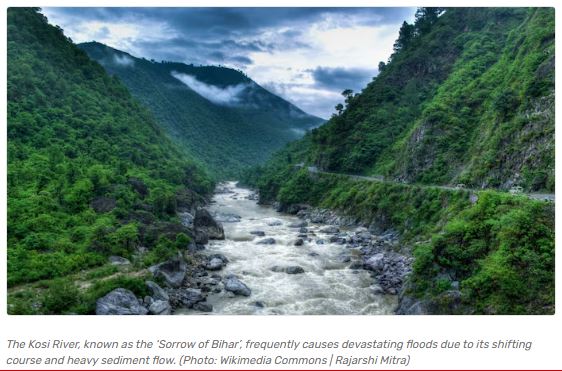
- 06 Mar 2026
In News:
The Kosi River is a major transboundary river of the Ganga River system, flowing through China (Tibet), Nepal, and India. It is widely known as the “Sorrow of Bihar” because of its frequent and devastating floods that affect large parts of northern Bihar.
Recent observations indicate that the river has shifted its course westward by more than 100 km over the past two centuries, highlighting its highly dynamic and unstable nature.
Geographical Features and Course
- The Kosi River originates in the Himalayan region of Nepal and Tibet and flows through Nepal before entering the plains of India.
- Formation: The river is formed by the confluence of three major Himalayan streams: Sun Kosi, Arun Kosi, Tamur Kosi. These rivers originate in the Himalayan mountains and join in eastern Nepal to form the main Kosi River.
Course of the River
- The river flows through mountainous terrain in Nepal and receives several tributaries.
- About 48 km north of the India–Nepal border, it passes through the Chatra Gorge in the Siwalik Hills.
- After emerging from the hills, it enters the alluvial plains of Bihar in northern India.
- Finally, it joins the Ganges River south of Purnea after travelling approximately 724 km.
Drainage Basin
- The Kosi basin covers an area of about 74,500 sq km, of which only around 11,070 sq km lies within India. Most of the catchment area lies in Nepal and the Himalayan region, which strongly influences the river’s hydrology.
- The basin’s sandy and fertile soils support agriculture, particularly the cultivation of maize (corn).
Major Tributaries
- The Kosi river system consists of seven major tributaries, which are collectively known as the Sapta Kosi (Seven Kosis): Sun Kosi, Tama Kosi (Tamba Kosi), Dudh Kosi, Indravati, Likhu, Arun, Tamur (Tamor)
- These tributaries drain large parts of the Himalayan watershed, contributing significant water and sediment to the river.
Why is the Kosi Called the “Sorrow of Bihar”?
Frequent Flooding: The Kosi River is notorious for severe floods in northern Bihar, causing large-scale damage to: agriculture, infrastructure, and settlements.
Heavy Sediment Load: The river carries large amounts of silt and sediment from the young and fragile Himalayan mountains. During the monsoon season, this sediment deposition raises the riverbed, increasing the likelihood of flooding.
Shifting Course: One of the most striking features of the river is its frequent change in course.
- Over the last 200–250 years, the river has shifted more than 100 km from east to west across the plains of Bihar.
- This phenomenon creates new floodplains while abandoning older channels.
Challenges Associated with the Kosi River
The dynamic nature of the Kosi poses several challenges:
- Recurring floods and displacement of populations
- Damage to agriculture and infrastructure
- Riverbank erosion and channel migration
- Transboundary water management issues between India and Nepal
Efforts such as embankment construction and flood-control projects have been implemented, but managing the river remains difficult due to its high sediment load and unstable course.
Debrigarh Wildlife Sanctuary
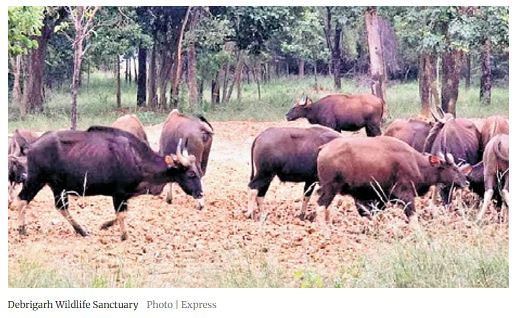
- 06 Mar 2026
In News:
The Debrigarh Wildlife Sanctuary in Odisha is set to host the second edition of the “Indian Bison Fest”, a conservation and eco-tourism initiative aimed at highlighting the sanctuary’s biodiversity and raising awareness about the protection of the Indian bison (Gaur). The event also seeks to promote community participation and sustainable tourism in the region.
Debrigarh Wildlife Sanctuary
Location and Geographical Features
- Debrigarh Wildlife Sanctuary is located in Bargarh district of Odisha, near the famous Hirakud Dam on the Mahanadi River. Hirakud Dam is notable for being the longest earthen dam in the world and one of the longest dams in India.
- The sanctuary forms part of the Hirakud reservoir ecosystem, which supports diverse flora and fauna as well as seasonal migratory birds.
Historical Significance
- The sanctuary holds historical importance due to its association with Veer Surendra Sai, a prominent freedom fighter from Odisha who led resistance against British rule. During the rebellion, his operational base at Barapathara was located within the present sanctuary area.
Ecological Characteristics
- Vegetation: The sanctuary is dominated by mixed and dry deciduous forests. Major plant species include: Sal, Asana, Bija, Amla, Dhaura. These forests provide suitable habitats for several large mammals and birds.
- Faunal Diversity: Debrigarh Wildlife Sanctuary hosts a rich variety of wildlife, including: Indian leopard, Sloth bear, Chousingha (four-horned antelope), Sambar deer, Gaur (Indian bison), Wild boar, Dhole (Indian wild dog). The sanctuary is also an important wintering ground for migratory birds. Common bird species include: Crested serpent eagle, Flowerpeckers, Red-vented bulbul, Tree pie, Drongo, Oriental white-eye
Indian Bison (Gaur)
General Characteristics
Gaur, commonly known as the Indian bison, is the largest species among wild cattle belonging to the Bovidae family. It is characterized by:
- a massive and muscular body,
- a prominent grey ridge on the forehead between the horns,
- large horns that curve upward from the sides of the head.
Distribution: Gaurs are indigenous to South and Southeast Asia, with significant populations found in India’s forested regions.
Habitat
They typically inhabit:
- evergreen and semi-evergreen forests
- moist deciduous forests
- forest landscapes with open grasslands and abundant water sources
Gaurs generally prefer hilly terrains below 1,500–1,800 metres altitude with large undisturbed forest tracts.
Conservation Status
According to the International Union for Conservation of Nature (IUCN):
- Status: Vulnerable
Major threats include habitat fragmentation, disease transmission from livestock, and human-wildlife conflict.
Centre designates Legacy Thrust Territories
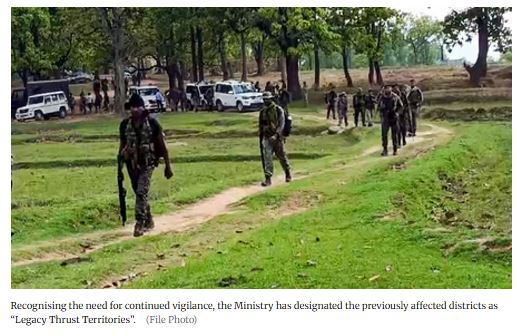
- 06 Mar 2026
In News:
In order to sustain the significant progress made in combating Left Wing Extremism (LWE), the Ministry of Home Affairs (MHA) has introduced the concept of Legacy Thrust Territories (LTTs). This initiative aims to ensure that areas once affected by Naxal violence continue to receive focused security attention and developmental support, thereby preventing the resurgence of extremist activities.
The framework reflects a shift from purely security-centric counter-insurgency operations to governance-led stabilization and development in previously affected regions.
Background: Decline of Left Wing Extremism
Over the past two decades, India has witnessed a sharp decline in LWE-related activities due to coordinated security operations and development initiatives.
Key trends include:
- Around 200 districts were affected by LWE in the early 2000s.
- By 2025, the number of affected districts declined to 38.
- Currently, only seven districts remain under the core LWE list, including:
- Five districts in Chhattisgarh
- One district in Jharkhand
- One district in Odisha
Despite these gains, concerns remain that insurgent groups may attempt to regroup if security and governance efforts weaken.
What are Legacy Thrust Territories?
Legacy Thrust Territories refer to previously Naxal-affected districts that continue to receive focused security monitoring and developmental intervention even after insurgent activities decline.
The approach recognizes that post-conflict regions remain vulnerable to extremist revival if governance gaps persist. Therefore, the initiative seeks to maintain stability while gradually transitioning toward normal governance structures.
Objectives of the Initiative
The Legacy Thrust Territories framework aims to:
- Prevent resurgence of Naxalism after operational successes.
- Ensure a smooth transition from security-led operations to development-led governance.
- Strengthen administrative presence and state legitimacy in former conflict zones.
- Promote socio-economic integration and infrastructure development in historically marginalized regions.
Key Features of the Legacy Thrust Territories Strategy
1. Sustained Security Deployment: Even after a decline in insurgent activity, central armed police forces will continue to maintain a presence in sensitive regions. This prevents security vacuums that insurgent groups could exploit.
2. Development-Oriented Approach: The initiative prioritizes infrastructure and welfare development, including:
- road connectivity
- telecommunications expansion
- improved delivery of public services
- strengthening of local governance institutions.
3. Phased Redeployment of Security Forces: Instead of abrupt withdrawal, security forces will undergo gradual redeployment, ensuring stability while administrative systems take stronger control.
4. Centre–State Coordination: The strategy emphasizes close coordination between the Union Government and State Governments, while allowing operational flexibility for security agencies.
5. Administrative Strengthening: The government aims to enhance bureaucratic responsiveness and governance capacity in previously conflict-affected districts to address long-standing developmental deficits.
6. Monitoring Extremist Propaganda: Security agencies will strengthen intelligence gathering and monitoring of extremist networks, including activities in digital and online spaces.
7. Rehabilitation and Surrender Policy: The initiative will also focus on encouraging surrender and rehabilitation of remaining cadres, combined with targeted operations against residual insurgent elements.
PSB Reforms under EASE 9.0
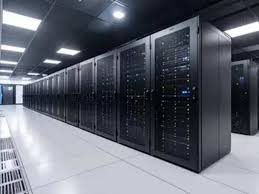
- 06 Mar 2026
In News:
The Government of India has launched the EASE 9.0 reforms agenda to modernize and strengthen Public Sector Banks (PSBs) by integrating advanced technologies, improving productivity, and adopting new operating models. Initiated by the Department of Financial Services in February 2026, the reform programme seeks to transform PSBs into globally competitive institutions aligned with the vision of Viksit Bharat @2047.
EASE 9.0 emphasizes technology-led modernization, institutional resilience, and enhanced governance through a structured reform framework.
Key Reforms under the EASE 9.0 Agenda
1. Global Capability Centre (GCC) Strategy
PSBs will develop a Global Capability Centre (GCC) strategy during FY 2026–27 along with a capacity-building roadmap.
- The State Bank of India (SBI) has established the first GCC among PSBs in Karnataka, setting a model for other banks.
- GCCs are offshore units that perform high-value strategic functions such as IT services, research and development, data analytics, and business support.
- These centres help institutions improve efficiency, innovation, and global integration.
2. Strengthening Technology Infrastructure
Under EASE 9.0, banks will modernize digital infrastructure to ensure operational resilience and scalability.
Key initiatives include:
- Adoption of active-active data centre models to ensure uninterrupted banking services.
- Development of core artificial intelligence (AI) stacks, including:
- licensing of Large Language Models (LLMs)
- GPU infrastructure strategies
- deployment of private cloud-based AI models.
- Creation of enterprise-wide consent management frameworks.
- Implementation of data tokenisation and anonymisation systems to allow secure and continuous use of data for business and analytics purposes.
3. Collaborative and Digital Banking Solutions
PSBs are encouraged to collaborate in building shared technological solutions to improve efficiency and reduce costs.
Such collaborative initiatives may include:
- Blockchain-based banking systems
- advanced fraud detection models
- AI-driven risk assessment tools
- integrated digital platforms offering comprehensive banking services.
These measures aim to create scalable and secure financial ecosystems.
Banking, Financial Services and Insurance (BFSI) Global Capability Centres
Concept and Role: A BFSI Global Capability Centre (GCC) is a wholly owned offshore subsidiary of a global financial institution that centralizes strategic operations in locations with strong talent pools such as India.
Unlike general GCCs, BFSI GCCs specifically support banking and financial institutions in areas including:
- risk management
- regulatory compliance
- cybersecurity
- fintech development
- advanced data analytics.
Evolution of GCCs
Initially established to achieve cost advantages (often 50–60% savings compared to home markets), GCCs have evolved into innovation hubs performing high-end functions such as:
- Artificial Intelligence (AI) and Machine Learning (ML)
- cybersecurity solutions
- regulatory technology (RegTech)
- financial platform development
- advanced analytics and automation.
India’s Position in the Global BFSI GCC Ecosystem
India has emerged as a major global hub for BFSI GCCs.
Key statistics include:
- Around 185–190 BFSI GCCs currently operate in India.
- They employ approximately 540,000 professionals, accounting for nearly 25% of total GCC employees in the country.
- The sector is projected to grow from USD 40–41 billion in 2023 to about USD 125 billion by 2032.
Major GCC hubs in India include:
- Bengaluru – analytics and engineering
- Hyderabad – fintech innovation
- Mumbai – financial services core operations
- Pune, Chennai and Gurugram/NCR – technology and support services.
Global financial institutions operating GCCs in India include: JPMorgan Chase, HSBC, Wells Fargo, Citigroup, Standard Chartered, Deutsche Bank, Barclays, Bank of America, Goldman Sachs, Morgan Stanley.
Core Framework of EASE 9.0: The R.I.S.E. Pillars
The reform programme is structured around four foundational pillars:
1. Risk and Resilience
- Strengthening financial and credit risk management.
- Enhancing operational resilience and enterprise-wide risk oversight mechanisms.
2. Innovation: Deep integration of advanced technologies including AI, Generative AI (GenAI), machine learning, cloud architectures, and microservices.
3. Socio-economic Impact
- Expanding inclusive banking services.
- Enhancing access to financial services for underserved populations, including gig and platform workers.
4. Excellence
- Improving governance standards and operational efficiency.
- Creating customer-centric banking processes and cost-effective next-generation operating models.
Significance of EASE 9.0 Reforms
The reforms are expected to:
- strengthen the technological competitiveness of PSBs
- enhance digital banking infrastructure and cybersecurity
- enable innovation-driven financial services
- support financial inclusion and economic growth
- position Indian PSBs as globally competitive institutions.
India’s New GDP Series with Base Year 2022-23
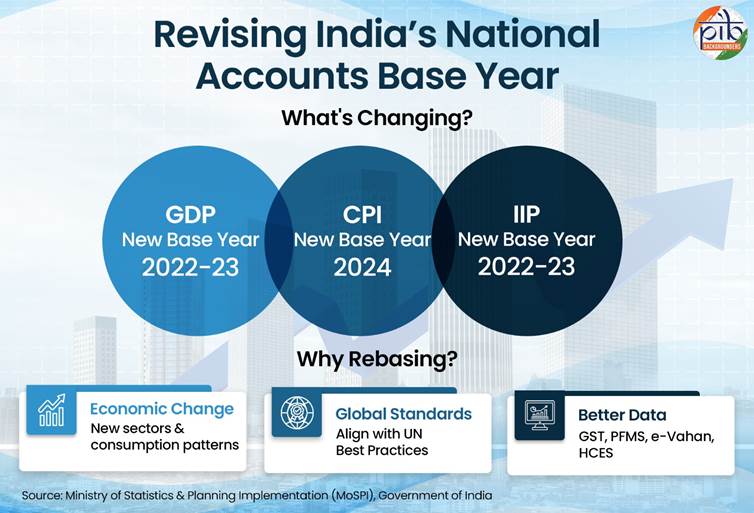
- 06 Mar 2026
In News:
The Ministry of Statistics and Programme Implementation (MoSPI) has introduced a new series of Annual and Quarterly National Accounts Estimates with base year 2022–23, replacing the earlier 2011–12 base year. This revision represents a major statistical update in the measurement of India’s Gross Domestic Product (GDP).
The new series integrates improved data sources, updated sectoral coverage, and refined estimation techniques such as the Supply and Use Tables (SUT) framework and double deflation, ensuring a more accurate representation of the evolving structure of the Indian economy.
Key Highlights of the New GDP Series
Growth Performance
- Real GDP growth is estimated at 7.6% in FY 2025–26, revised upward compared with estimates based on the previous series.
- Growth remained robust at 7.2% in FY 2023–24 and 7.1% in FY 2024–25.
- Nominal GDP growth is estimated at 8.6% in FY 2025–26, after 11.0% (FY 2023–24) and 9.7% (FY 2024–25).
Quarterly Economic Drivers
- The strong performance in FY 2025–26 was driven mainly by:
- Second quarter growth: 8.4%
- Third quarter growth: 7.8%
Sectoral Contributions
- Manufacturing emerged as a key growth driver with double-digit growth in FY 2023–24 and FY 2025–26.
- Secondary and tertiary sectors recorded over 9% growth in FY 2025–26.
- The services segment “Trade, Repair, Hotels, Transport, Communication and Broadcasting-related services” grew by 10.1% at constant prices.
Demand-Side Trends
- Private Final Consumption Expenditure (PFCE) and Gross Fixed Capital Formation (GFCF) both grew above 7% in FY 2025–26, indicating strong consumption and investment demand.
Rationale for Revising the Base Year
1. Reflecting a Normal Post-Pandemic Year: The base year 2022–23 was selected as it represents a stable economic year after the disruptions caused by COVID-19. Earlier years such as 2019–20 and 2020–21 were distorted by lockdowns, supply chain disruptions and abnormal consumption patterns.
2. Capturing Structural Changes in the Economy: India’s economy has evolved significantly over the past decade with the expansion of:
- Digital and platform-based services
- Renewable energy
- Gig economy and platform work
- Changes in consumption and investment patterns
Rebasing ensures GDP estimates better reflect these structural shifts.
3. Improved Data Sources: The new series incorporates richer and more frequent datasets, including:
- Annual Survey of Unincorporated Sector Enterprises (ASUSE)
- Periodic Labour Force Survey (PLFS)
- GST data for manufacturing and services
- e-Vahan portal data for transport-related consumption
- Public Financial Management System (PFMS) for government accounts
- Updated sectoral studies in agriculture, fisheries, dairy and transport
These additions improve granularity, reliability and timeliness of GDP estimates.
Methodological Improvements
1. Double Deflation: Separate deflation of output and input prices is now used in manufacturing and agriculture, replacing the earlier single-deflation approach.
2. Supply and Use Tables (SUT) Framework: Following the **United Nations Statistical Division guidelines under the System of National Accounts 2008, the new series systematically applies the SUT framework, ensuring consistency between production, income and expenditure estimates.
3. Better Corporate Activity Classification: Value added by multi-activity corporations is now distributed across different sectors using detailed corporate filings.
4. Improved Estimation of Consumption
PFCE estimation now combines:
- household survey data,
- administrative records,
- commodity flow methods, and
- the COICOP 2018 classification.
5. Improved State-Level Estimation: The National Statistical Office (NSO) will guide states toward direct estimation of Gross State Domestic Product (GSDP) using better state-level datasets, improving comparability across states.
Implications of the New GDP Series
Lower Nominal GDP: The revised methodology has reduced nominal GDP by about 3–4% for FY 2025–26 and previous years.
Fiscal Deficit Pressures: Because fiscal deficit is measured as a percentage of GDP:
- The FY 2025–26 deficit rises from 4.4% to about 4.5% under the new series.
- Achieving the FY 2026–27 target of 4.3% may require nominal GDP growth of 13–14%, higher than earlier projections.
Higher Debt-to-GDP Ratio: The Centre’s debt ratio increases from 56.2% to 58.1% for FY 2025–26, making fiscal consolidation more challenging.
Impact on the USD 4 Trillion Economy Target: India’s GDP is estimated at about USD 3.8 trillion in FY 2025–26.
Crossing the USD 4-trillion mark in FY 2026–27 will require:
- strong nominal growth, and
- stable exchange rates, since rupee depreciation could delay the milestone.
Sectoral Realignment: Improved data suggests the agricultural sector is about 5% larger, partly due to better measurement of high-value crops and lower input costs such as solar-powered irrigation under schemes like PM KUSUM.
Way Forward: Strengthening India’s Economic Measurement System
- Introduction of Producer Price Index (PPI): Recommended by the Working Group on Producer Price Index chaired by B. N. Goldar, PPI would better capture producer price movements.
- Revision of Wholesale Price Index (WPI) Base Year: Updating WPI is necessary to ensure accurate deflators for GDP calculations.
- Preparation for SNA 2025 Adoption: India must build data infrastructure for the upcoming SNA 2025 framework, which will incorporate digital economy, crypto assets and environmental accounting.
- Better Measurement of MSMEs: Heavy reliance on corporate filings may bias estimates toward large firms; improved mechanisms are required to capture MSME value addition.
ALMA Telescope

- 03 Mar 2026
In News:
Recent astronomical observations have produced the largest and most detailed image of the central region of the Milky Way, revealing a complex network of filaments of cosmic gas and previously hidden chemical structures. The discovery was made using the Atacama Large Millimeter/submillimeter Array (ALMA), one of the world’s most advanced radio telescope facilities. These observations provide new insights into the chemical composition, gas dynamics, and star-formation processes occurring near the centre of our galaxy.
Atacama Large Millimeter/submillimeter Array (ALMA)
- ALMA is a state-of-the-art radio telescope array designed to study the universe in millimetre and submillimetre wavelengths, which are particularly useful for observing cold gas, dust, and molecular clouds that are often invisible to optical telescopes.
Location and Development
- ALMA is located in the Atacama Desert of northern Chile, one of the driest places on Earth, offering ideal conditions for radio astronomy due to minimal atmospheric moisture.
- The observatory became fully operational in 2013.
- It is a major international collaboration involving:
- National Radio Astronomy Observatory (NRAO), USA
- National Astronomical Observatory of Japan (NAOJ)
- European Southern Observatory (ESO).
Key Features
- 66 high-precision antennas arranged across distances of up to 16 km on the Chajnantor Plateau.
- The antennas can be repositioned, allowing astronomers to adjust resolution similar to a camera’s zoom lens.
- ALMA possesses extremely high sensitivity, enabling detection of very faint radio emissions from distant cosmic objects.
- It functions as an interferometer, combining signals from multiple antennas to produce extremely detailed astronomical images.
Recent Discovery: Mapping the Milky Way’s Central Region
Using ALMA, astronomers recently produced the largest high-resolution image of the Milky Way’s galactic centre at millimetre wavelengths. This region, located about 26,000 light-years from Earth, is dense with gas clouds, dust, and extreme astrophysical activity.
Key Findings
- Network of Gas Filaments
- The observations revealed a vast network of thin filaments of molecular gas distributed across the central region.
- These filaments likely play a crucial role in transporting matter and energy across the galaxy’s core.
- Hidden Chemical Structures
- Scientists identified previously undetected molecules and complex chemical interactions within dense gas clouds.
- These findings help researchers understand the chemical evolution of galaxies and the origins of complex organic molecules in space.
- Star Formation and Galactic Activity
- The galactic centre hosts intense star formation and energetic processes, influenced by strong gravitational forces and radiation.
- Mapping these structures provides clues about how stars form in extreme environments.
- Improved Understanding of Galactic Dynamics
- Detailed imaging allows astronomers to track gas movements, turbulence, and interactions near the Milky Way’s centre.
- This may help explain how matter accumulates around the supermassive black hole Sagittarius A* at the core of the galaxy.
Major Contributions of ALMA to Astronomy
Since becoming operational, ALMA has produced several landmark discoveries:
- Early Starburst Galaxies: ALMA detected starburst galaxies that existed earlier in the universe than previously believed, altering our understanding of galaxy formation.
- Protoplanetary Disc Around HL Tauri: It captured high-resolution images of the protoplanetary disc around HL Tauri, a young star about 450 light-years from Earth, revealing rings where planets are likely forming.
- Observation of Einstein Rings: ALMA has helped scientists study Einstein rings, a phenomenon predicted by Einstein’s theory of general relativity where light from a distant galaxy bends around a massive object, forming a ring-like structure due to gravitational lensing.
Scientific Significance
The recent mapping of the Milky Way’s centre highlights the importance of millimetre and submillimetre astronomy in uncovering cosmic phenomena hidden behind dust clouds. Observations from ALMA help scientists:
- Understand the chemical composition of interstellar space.
- Study the processes of star and planet formation.
- Investigate the dynamics of galactic centres and supermassive black holes.
- Explore the evolution of galaxies across cosmic time.
Missile Defence in the US-Israel-Iran Conflict

- 03 Mar 2026
In News:
Recent tensions in West Asia, particularly involving the United States, Israel, and Iran, have highlighted the growing importance of missile defence systems in contemporary warfare. The increasing use of ballistic missiles, cruise missiles, and armed drones has compelled countries to develop multi-layered air defence architectures capable of detecting, tracking, and intercepting hostile projectiles before they reach their targets. These systems play a crucial role not only in protecting civilian infrastructure and military installations but also in strengthening deterrence and strategic stability.
What is a Missile Defence System?
A missile defence system is an integrated military architecture designed to detect, track, and destroy incoming missiles or aerial threats before impact. Such systems combine advanced sensors, command networks, and interceptor missiles to neutralise threats during different phases of flight.
Key Components
- Sensors and Detection Systems:
- Satellites and ground-based radar stations continuously monitor the sky.
- They detect launches and track the speed, altitude, and trajectory of incoming threats.
- Command and Control Centres:
- Advanced computing systems process sensor data.
- Military operators assess whether the object is a threat and determine the appropriate defensive response.
- Interceptor Missiles: These are defensive missiles launched to destroy the incoming projectile mid-air.
Strategic Importance
Missile defence systems serve multiple purposes:
- Protection of lives and infrastructure by neutralising aerial threats.
- Deterrence, as adversaries may hesitate to launch attacks if interception is likely.
- Decision-making time, allowing governments and military authorities to evaluate response options during crises.
How Missile Interceptors Work
The functioning of missile interceptors involves several coordinated stages:
- Detection and Tracking: Ground-based radar scans the sky by emitting radio beams. When these signals bounce off an object, computers analyse the reflection to determine its speed, altitude, and trajectory.
- Target Locking: If the object is identified as a threat, the radar focuses on it, continuously updating its location.
- Launch of Interceptor: A command centre calculates the interception trajectory and instructs the launcher system to fire the interceptor missile.
- Mid-course Guidance: Radar tracks both the incoming missile and the interceptor, transmitting guidance signals to ensure the interceptor moves toward the target.
- Terminal Phase Destruction: In the final stage, the interceptor uses onboard sensors (seekers) to precisely locate the target and destroy it using either:
- Proximity fuse: detonates a warhead near the target to destroy it with shrapnel.
- Hit-to-kill technology: directly collides with the target using kinetic energy, a method used in many modern systems.
Major Missile Defence Systems in the US–Israel–Iran Theatre
United States
The United States deploys multiple interceptor systems forming a layered defence network:
- THAAD (Terminal High Altitude Area Defense): Intercepts short- and intermediate-range ballistic missiles during the terminal phase at high altitudes using hit-to-kill technology.
- Patriot Missile System: Provides point defence against ballistic missiles, cruise missiles, and aircraft, widely used to protect military bases and critical infrastructure.
- SM-3 and SM-6 (US Navy): Sea-based interceptors launched from naval vessels.
- SM-3: Targets ballistic missiles during the mid-course phase outside the atmosphere.
- SM-6: Engages aircraft, missiles, and drones in the terminal phase.
- Indirect Fire Protection Capability (IFPC): Uses AIM-9X interceptors to counter rockets, artillery shells, and drones while conserving expensive missile defence systems like Patriot.
Israel
Israel maintains one of the world’s most sophisticated multi-layered air defence systems:
- Arrow-3: Intercepts long-range ballistic missiles outside the atmosphere.
- Arrow-2: Engages ballistic missiles within the atmosphere.
- David’s Sling: Designed to intercept medium- and long-range rockets, cruise missiles, and tactical ballistic missiles.
- Iron Dome: Highly effective short-range defence system used to intercept rockets, artillery shells, and drones.
- Iron Beam: A laser-based directed energy system aimed at destroying drones and small projectiles at relatively low cost.
Iran
Iran has developed indigenous and imported air defence systems to counter aerial threats:
- Bavar-373: Long-range air defence system capable of intercepting aircraft and ballistic missiles.
- Sevom-e-Khordad: Mobile system targeting aircraft and cruise missiles, improving survivability through mobility.
- Tor-M1: Short-range defence system used to intercept drones and precision-guided munitions.
- Majid and Azarakhsh: Systems designed primarily to counter drones and low-flying aerial threats.
United Arab Emirates
- Cheongung II: A South Korean medium-range air defence system featuring 360-degree radar coverage and vertical launch capability, designed to intercept cruise missiles and tactical ballistic threats.
Rare Disease Day

- 03 Mar 2026
In News:
- Rare Disease Day is observed globally on 28 February (or 29 February in leap years, symbolically the rarest day) to highlight the medical, social, and economic challenges faced by persons living with rare diseases.
- Established in 2008 and coordinated by EURORDIS (European Organisation for Rare Diseases) in partnership with over 70 national patient alliances, the day seeks to promote equity in diagnosis, healthcare access, research, and treatment availability.
Understanding Rare Diseases
Definition
There is no single universal definition of a rare disease. Globally, an emerging consensus defines it as a condition affecting ≤ 1 in 2,000 persons in a WHO-defined region. The classification is prevalence-based in many countries, though approaches vary.
Key Characteristics
- 6,000–10,000 identified rare diseases globally
- Affect an estimated 300–450 million people worldwide
- 50–75% manifest in childhood or at birth
- Nearly 80% are of genetic origin (e.g., lysosomal storage disorders)
- Others include rare cancers, autoimmune and infectious diseases
A major concern is the treatment gap—approximately 95% of rare diseases lack approved curative therapies, making them a serious global public health challenge.
Rare Diseases in India
India does not adopt a strict prevalence-based definition due to limited epidemiological data. Instead, the National Policy for Rare Diseases 2021 (NPRD 2021) categorises diseases based on:
- Group 1: Disorders requiring one-time curative treatment
- Group 2: Diseases requiring long-term or lifelong treatment
- Group 3: Conditions where treatment is available but costly and requires sustained therapy
Estimates suggest 72–96 million people in India may be living with rare diseases, indicating a significant though under-documented burden.
Policy and Financial Support Mechanisms
1. Financial Assistance
Under NPRD 2021:
- Financial support of up to ?50 lakh per patient
- Applicable for any of the 63 identified rare diseases
- Treatment provided at designated Centres of Excellence (CoEs)
However, implementation challenges such as delayed fund disbursal, limited diagnostic infrastructure, and uneven geographical distribution of CoEs have affected access to treatment.
2. Budgetary and Fiscal Measures (Union Budget 2026–27)
- Seven additional rare diseases included for exemption from import duties on personal imports of drugs, medicines, and food for special medical purposes.
- Rare diseases identified as a focus area under the Production Linked Incentive (PLI) Scheme for Pharmaceuticals, encouraging domestic manufacturing of orphan drugs.
These measures aim to reduce dependency on expensive imports and improve affordability.
Salar de Pajonales
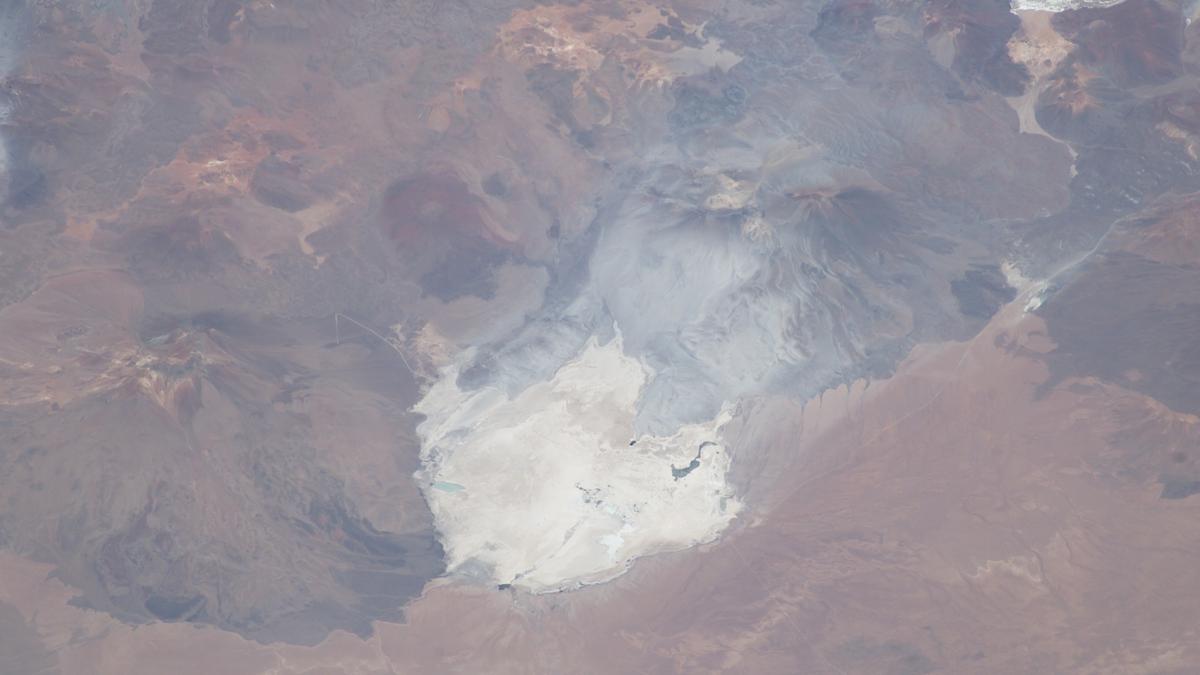
- 03 Mar 2026
In News:
Recent scientific research in Chile’s Salar de Pajonales has revealed that gypsum deposits can act as microscopic shields, protecting living microbes and preserving ancient fossils. The findings hold major implications for astrobiology and the ongoing search for life on Mars, as similar mineral formations exist on the Martian surface.
Geographical and Environmental Profile
Salar de Pajonales is a large playa (salt flat) located in northern Chile on the western margin of the Altiplano-Puna plateau, at an elevation of approximately 3,500 metres above sea level. It is the third-largest salar in the Atacama Region, after Salar de Atacama and Salar de Punta Negra.
The region lies within the hyper-arid core of the Atacama Desert, one of the driest places on Earth.
Polyextreme Conditions
The site experiences polyextreme environmental conditions, including:
- Extreme aridity
- High altitude and low atmospheric pressure
- Intense solar and ultraviolet radiation
- Large diurnal temperature variations
- Sulfate-rich mineral composition
These characteristics closely resemble surface conditions on Mars, making the region a significant Martian analogue site.
Hydrological and Geological Features
Salar de Pajonales is an endorheic basin (a closed drainage system with no outflow), sustained primarily by groundwater inputs.
The surface is dominated by evaporitic deposits, particularly:
- Gypsum (calcium sulfate dihydrate) crusts
- Layered microbial structures known as stromatolites
These mineral and biological structures provide a natural laboratory to study life under extreme conditions.
Gypsum as a Microbial Shield
Recent studies have demonstrated that gypsum acts as a microscopic protective barrier.
Key Findings
- Active extremophile communities: Halophilic bacteria and archaea survive within protected microhabitats inside gypsum crystals.
- Preserved fossilized microbes
- Ancient microbial remains and molecular biosignatures are trapped within gypsum layers.
- Some biosignatures date back thousands of years.
- Radiation and Desiccation Protection
- Gypsum shields biological material from ultraviolet radiation.
- It prevents rapid dehydration in hyper-arid conditions.
Thus, gypsum serves as a natural repository of biosignatures, preserving evidence of life even in extreme environments.
Astrobiological Significance
The environmental conditions in Salar de Pajonales mirror those believed to have existed on early Mars. Importantly, gypsum has also been detected on Mars by orbital and rover missions.
The study suggests that:
- Future Mars missions should prioritize gypsum-rich terrains.
- Orbiters and rovers can target sulfate deposits as prime candidates for detecting ancient life.
- Mineralogical mapping can guide astrobiological exploration strategies.
This research strengthens the hypothesis that if microbial life ever existed on Mars, its traces may be preserved within evaporitic minerals like gypsum.
Coconut Promotion Scheme
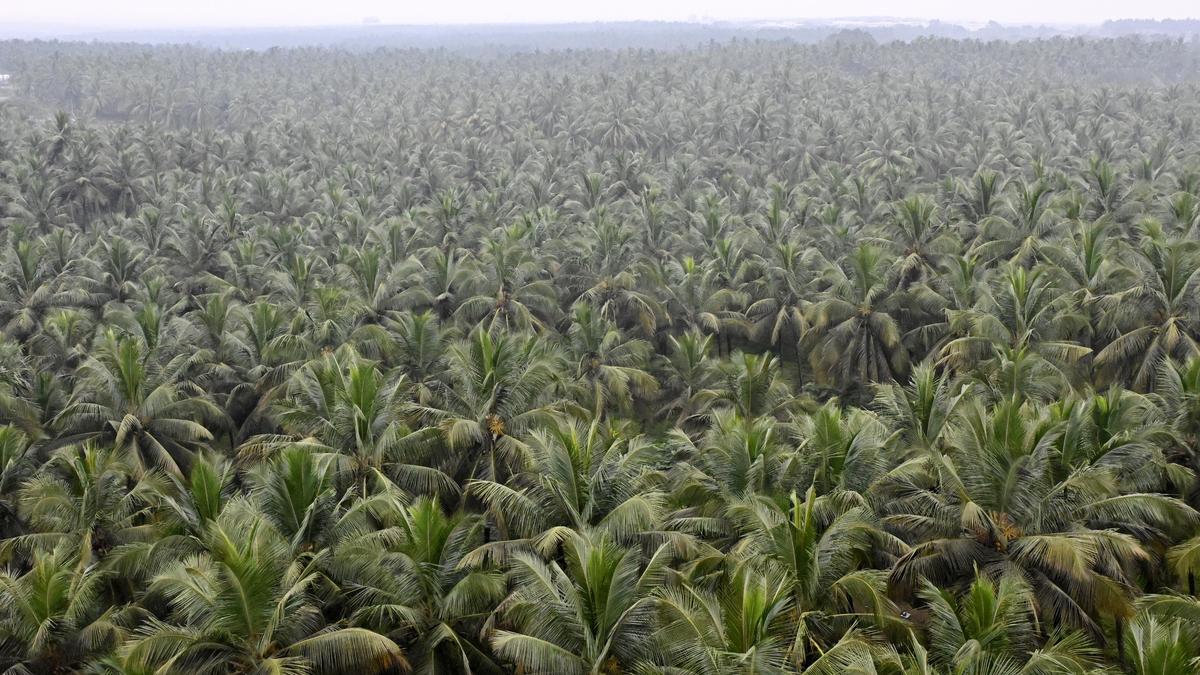
- 03 Mar 2026
In News:
The Union Budget 2026–27 announced a Coconut Promotion Scheme, signalling renewed policy focus on India’s coconut economy. The scheme aims at rejuvenating old, senile, and low-yielding gardens with high-yielding varieties and promoting new plantations, particularly along coastal belts. This aligns with India’s broader objective of strengthening plantation crops for rural livelihoods, export potential, and climate resilience.
Coconut: Botanical and Agro-Climatic Profile
Coconut is a perennial plantation crop and a monocotyledonous palm belonging to the family Arecaceae. It is native to the Indo-Pacific region, with origins commonly traced to Southeast Asia.
Climatic Requirements:
- Warm and humid tropical climate
- Optimum temperature: 25°C–30°C
- High and well-distributed rainfall
- Sensitivity to prolonged drought and extreme weather
Soil Requirements:
- Well-drained sandy loam
- Alluvial soils
- Laterite soils
- Coastal sandy soils
Production and Distribution in India
- India is the world’s largest producer and consumer of coconuts, reflecting both domestic demand and agro-ecological suitability. The crop is predominantly cultivated in: Kerala, Tamil Nadu, Karnataka, Andhra Pradesh, Odisha, Goa, and West Bengal
- In recent years, cultivation has expanded into non-traditional regions such as parts of Gujarat, Assam, and other non-peninsular areas, supported by diversification initiatives of the Coconut Development Board (CDB).
- The coconut sector supports the livelihoods of nearly 30 million people, including around 10 million farmers, highlighting its socio-economic significance.
Institutional Framework: Role of the Coconut Development Board
The Coconut Development Board (CDB) has been implementing schemes for:
- Rejuvenation of senile plantations
- Expansion into new agro-climatic zones
- Quality planting material distribution
- Technology dissemination
- Value addition and market support
The proposed Coconut Promotion Scheme builds on these efforts, aiming to enhance productivity and area expansion.
Emerging Challenge: Productivity vs Sustainability
While productivity enhancement has historically been the policy focus, contemporary challenges necessitate a shift toward sustainable coconut cultivation. Key concerns include:
- Climate Change:
- Increased frequency of droughts, cyclones, and erratic rainfall
- Coastal salinity intrusion
- Temperature stress affecting yield
- Monocropping and Soil Degradation:
- Declining soil fertility
- Reduced biodiversity
- Greater vulnerability to pests and diseases
- Water Stress: Coconut cultivation is water-intensive; inefficient irrigation practices exacerbate groundwater depletion.
- Economic Viability: Price fluctuations and rising input costs affect farmer incomes.
Path Towards Sustainable Coconut Economy
A sustainability-oriented strategy should include:
- Climate-resilient varieties and drought-tolerant hybrids
- Integrated farming systems (intercropping with spices, cocoa, banana)
- Water-use efficiency through drip irrigation and rainwater harvesting
- Organic and natural farming practices
- Value addition (virgin coconut oil, coconut sugar, coir products, activated carbon)
- Strengthened farmer producer organizations (FPOs)
Sustainability enhances long-term productivity while protecting ecological balance and farmer incomes.
India–EU ‘Most Favoured Nation’ (MFN) Status
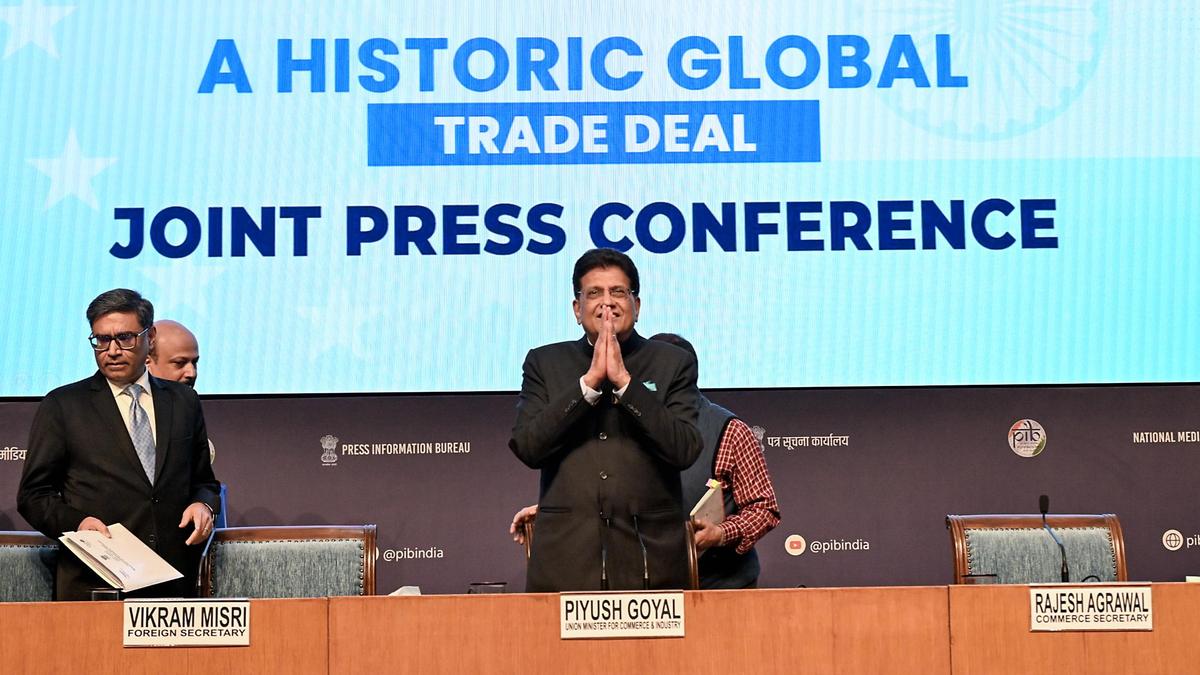
- 02 Mar 2026
In News:
- India and the European Union (EU) are set to grant each other ‘Most Favoured Nation’ (MFN) status for a period of five years from the date the proposed Free Trade Agreement (FTA) comes into force.
- This move is part of broader efforts to deepen trade and investment ties between India and the EU, which is one of India’s largest trading partners.
What is ‘Most Favoured Nation’ (MFN) Status?
The Most Favoured Nation (MFN) principle is a foundational concept under the World Trade Organization (WTO) framework.
Core Principle
Under MFN:
- A country must treat all its trading partners equally.
- If it grants a special trade concession (such as lower tariffs or market access) to one country, it must extend the same benefit to all other WTO members.
- Discrimination between trading partners is generally prohibited.
Thus, despite the term “most favoured,” it actually means non-discriminatory treatment among WTO members.
Legal Basis in WTO Agreements
The MFN principle is embedded in major WTO agreements:
- GATT (Goods Trade): Enshrined in Article I of the General Agreement on Tariffs and Trade (GATT), 1994.
- GATS (Services Trade): Incorporated under Article II of the General Agreement on Trade in Services (GATS).
- TRIPS (Intellectual Property Rights): Reflected in Article 4 of the TRIPS Agreement.
Together, these provisions make MFN a central pillar of the multilateral trading system.
Objectives of the MFN Principle
MFN promotes:
- Equality in trade relations
- Predictability in tariff structures
- Transparency in trade rules
- Stability in global commerce
It reduces arbitrary discrimination and supports a rules-based trading order.
MFN and Free Trade Agreements (FTAs)
While MFN requires equal treatment, WTO rules permit exceptions, including:
- Free Trade Agreements (FTAs)
- Customs Unions
- Special preferences for developing countries under schemes like the Generalized System of Preferences (GSP)
FTAs allow member countries to provide preferential treatment among themselves without extending the same to all WTO members.
In the case of the India–EU FTA:
- MFN status within the agreement framework strengthens mutual trade commitments.
- It ensures reciprocal and predictable treatment in goods, services, and investment domains for the agreed period.
Significance of India–EU MFN Arrangement
1. Strengthening Bilateral Trade
The EU is one of India’s largest trading partners in goods and services. MFN status under the FTA framework:
- Enhances market access
- Improves tariff predictability
- Encourages long-term investment
2. Strategic and Economic Relevance
- Supports diversification of India’s trade partners amid global supply chain realignments.
- Aligns with India’s strategy of negotiating comprehensive trade agreements (e.g., UAE, Australia, UK under negotiation).
3. Boost to Rules-Based Trade
- Reinforces commitment to WTO principles.
- Signals support for a non-discriminatory multilateral trade order at a time of rising protectionism globally.
Yadava Dynasty
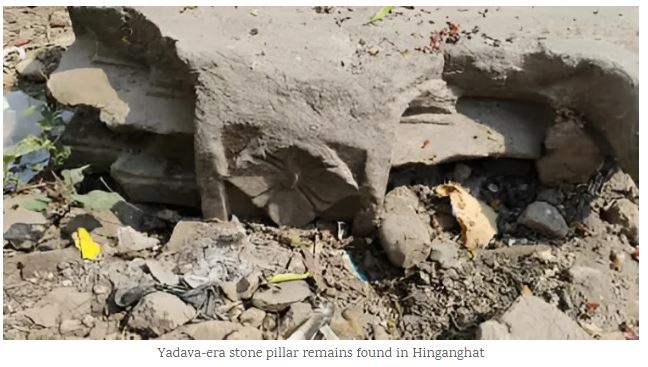
- 02 Mar 2026
In News:
- Recently, remains of a 12th-century Mandir-style stone pillar associated with the Seuna (Yadava) dynasty were discovered along the Vena River in Hinganghat, Wardha district, Maharashtra.
- The find highlights the architectural and cultural legacy of the Yadavas in the Deccan region and provides material evidence of medieval temple construction traditions in central India.
About the Yadava (Seuna) Dynasty
The Yadava Dynasty, also known as the Seuna Dynasty, ruled a powerful Hindu kingdom in the Deccan between the 12th and 14th centuries CE.
Territorial Extent
At its peak, the Yadava kingdom extended:
- From the River Tungabhadra in the south
- To the River Narmada in the north
- Covering present-day Maharashtra, northern Karnataka, and parts of Madhya Pradesh
Political Evolution
Early Phase
- Initially feudatories of the Western Chalukyas of Kalyani.
- Rose to prominence under Bhillama V (c. 1187–1191 CE).
- Founded Devagiri (later Daulatabad) as the capital.
Zenith under Singhana (c. 1210–1247 CE)
- Grandson of Bhillama.
- Declared independence.
- Conducted military campaigns against:
- Hoysalas (South)
- Kakatiyas (East)
- Paramaras and Chalukyas (North)
This period marked the territorial and political high point of the dynasty.
Decline and Annexation
- During the reign of Ramachandra (1271–c. 1309 CE):
- In 1294, Alauddin Khalji invaded Devagiri.
- The Yadava kingdom was reduced to tributary status under the Delhi Sultanate.
- A later attempt to assert independence failed.
- In 1317, the kingdom was fully annexed by the Khalji Empire.
This marked the beginning of stronger Delhi Sultanate penetration into the Deccan.
Cultural and Architectural Contributions
1. Foundations of Marathi Culture
- The Yadavas played a crucial role in shaping early Marathi language and literature.
- Social and cultural institutions of Maharashtra evolved significantly during their rule.
2. Hemadpanti Architecture: The dynasty is closely associated with the Hemadpanti style, attributed to minister Hemadri (Hemadpant).
Key Features:
- Construction using large blocks of black stone
- Dry masonry technique (without mortar)
- Massive, durable structures
- Temple-oriented architectural designs
Numerous temples in Maharashtra are built in this style.
Gitchak nakana
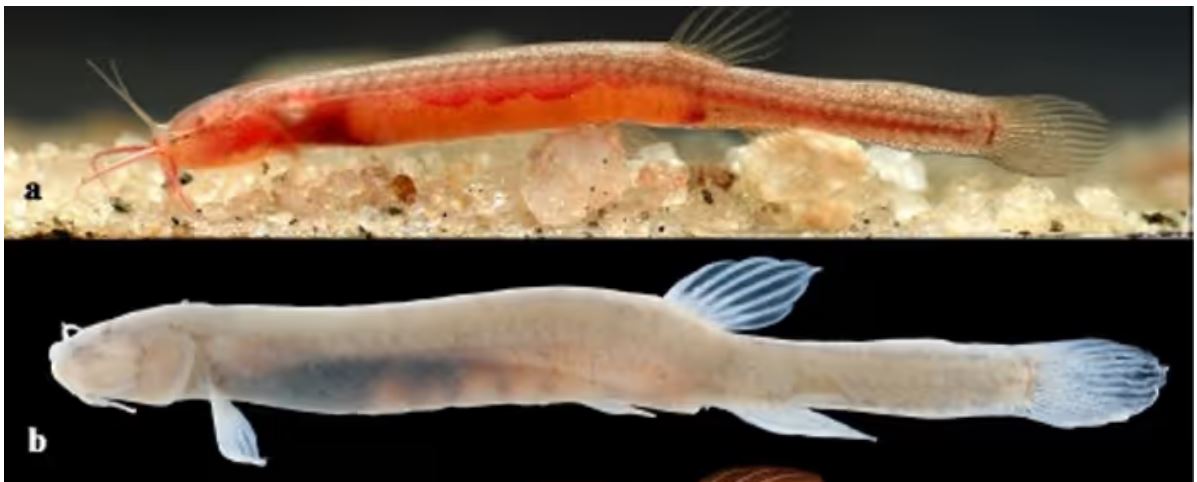
- 02 Mar 2026
In News:
A new species of groundwater-dwelling fish, Gitchak nakana, has recently been discovered in Assam. The species was found in a dug-out well and represents the first aquifer-dwelling (phreatobitic) fish recorded from Northeast India. This discovery adds to India’s growing record of endemic and subterranean biodiversity.
About Gitchak nakana
- Type: Groundwater (aquifer-dwelling) fish
- Family: Cobitidae (Loaches)
- Genus: Newly described genus
- Size: Approximately 2 cm in length
- Habitat: Subterranean aquifers
- Location of Discovery: Assam
The species was discovered in a dug-out well, indicating its existence in underground water systems rather than surface water bodies such as rivers or ponds.
Etymology
The name reflects local linguistic heritage:
- “Gitchak” (Garo language) – means red, referring to its striking blood-red colour when alive.
- “Na-tok” / “kana” – refer to a blind fish.
The nomenclature highlights both the species’ morphology and its cultural-geographical context.
Unique Morphological Features
Gitchak nakana displays classic troglomorphic adaptations — traits evolved for life in complete darkness:
- Absence of externally visible eyes (blindness)
- Translucent, pigmentless body
- Extreme miniaturization (only 2 cm long)
- Complete absence of skull roof — the brain is covered dorsally only by skin
The lack of a skull roof is particularly unusual and makes it one of the most anatomically distinctive loach species recorded.
What are Phreatobitic Species?
- Phreatobitic organisms live in groundwater aquifers rather than surface water or caves.
- Aquifers are underground water-bearing geological formations.
- Such habitats are difficult to access and poorly studied, which explains why discoveries are rare.
Globally:
- More than 300 fish species are known from subterranean habitats.
- However, the vast majority inhabit caves.
- Less than 10% are known from groundwater aquifers, making this discovery scientifically significant.
Thus, Gitchak nakana represents a rare addition to the small global group of true aquifer-dwelling fishes.
Forest Owlet
- 02 Mar 2026
In News:
Recently, the Forest Owlet was sighted in Kuno National Park, Madhya Pradesh, marking its reappearance in the region 113 years after it was last recorded there. The species had not been seen in Kuno since the early 20th century, making this rediscovery ecologically significant. The development strengthens Kuno’s biodiversity profile, which has already gained prominence due to the cheetah reintroduction programme.
About the Forest Owlet
- Scientific Name: Athene (Heteroglaux) blewitti
- Family: Strigidae (typical owl family)
- First Described: 1873
- Presumed Extinct: After 1884 due to lack of sightings
- Rediscovered: 1997 in central India
The Forest Owlet was long considered extinct because it was not recorded for over a century after the late 19th century. Its rediscovery in 1997 was a landmark event in Indian ornithology, underscoring the importance of systematic biodiversity surveys.
Habitat and Ecology
Habitat
The species primarily inhabits:
- Tropical and subtropical moist lowland forests
- Dense deciduous woodlands
- Open dry deciduous teak forests
- Tropical and subtropical dry forests
It shows preference for dry deciduous forest ecosystems, especially those dominated by teak.
Distribution
The Forest Owlet is endemic to central India, meaning it is found nowhere else in the world.
Recorded populations exist in:
- Madhya Pradesh
- Maharashtra (notably Melghat Tiger Reserve)
- Odisha
- Chhattisgarh
- Gujarat
The recent sighting in Kuno National Park strengthens evidence of its fragmented but surviving populations across central Indian landscapes.
Physical Characteristics
The Forest Owlet has distinctive morphological features:
- Relatively unspotted crown
- Prominent white throat collar
- Thickly feathered legs
- Heavily banded wings and tail
Unlike many owls that are nocturnal, the Forest Owlet is diurnal (active during the day), which makes it relatively easier to observe compared to other owl species.
Diet and Behaviour
- Primarily feeds on rodents
- Also consumes lizards, skinks, and insects
- Hunts during daylight hours
- Typically seen perched on exposed branches while scanning for prey
Its diurnal nature and specific habitat requirements make it vulnerable to habitat degradation.
Conservation Status
- IUCN Red List: Endangered
- CITES: Appendix I (highest level of international trade protection)
The species faces threats from:
- Habitat loss due to deforestation
- Fragmentation of dry deciduous forests
- Agricultural expansion
- Developmental activities in central India
Given its limited distribution and small population size, conservation of intact forest patches in central India is critical for its survival.
Total Lunar Eclipse
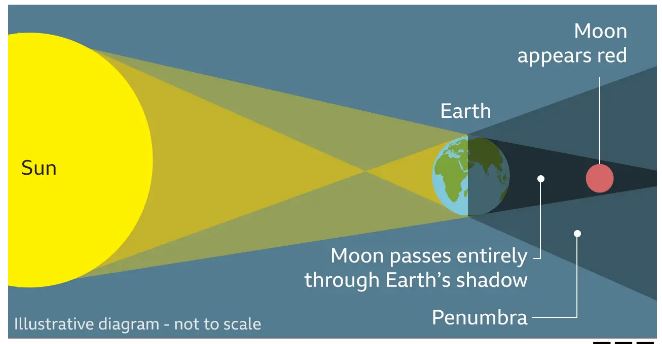
- 02 Mar 2026
In News:
A total lunar eclipse is scheduled on 3 March 2026 (12 Phalguna 1947 Saka Era), offering a rare celestial spectacle visible from large parts of the globe including most regions of India. This astronomical event holds significance for both scientific observation and cultural discourse, coinciding with the traditional period of Holi festivities in North India.
What is a Lunar Eclipse?
A lunar eclipse occurs when the Earth positions itself directly between the Sun and the Moon during the full Moon phase, such that the Earth’s shadow falls on the Moon. This alignment (known as syzygy) results in the Moon entering Earth’s shadow and becoming darkened.
The Earth’s shadow comprises two parts:
- Umbra – The central, darker region where the Sun’s rays are completely blocked.
- Penumbra – The outer, lighter region where sunlight is only partially obstructed.
Depending on how the Moon traverses these shadow zones, eclipses are categorised as:
- Penumbral Eclipse – Moon passes through the penumbra only; very subtle.
- Partial Eclipse – Part of the Moon enters the umbra.
- Total Eclipse – The whole lunar disk enters Earth’s umbra and undergoes complete darkening.
When totality occurs, the Moon often acquires a reddish or coppery hue — popularly known as the “Blood Moon” — due to Rayleigh scattering of sunlight in Earth’s atmosphere. Shorter wavelengths (blue/green light) scatter out, while longer red wavelengths bend into the shadowed region and illuminate the Moon indirectly.
Why Does the Moon Turn Red?
During totality, the Moon’s direct sunlight is completely blocked by the Earth. However, Earth’s atmosphere refracts sunlight, bending the longer red wavelengths into the umbra and onto the lunar surface. This indirect illumination produces the distinctive red or copper hue of the Moon during the peak eclipse phase. This optical effect is the same reason why sunrises and sunsets appear red on Earth.
Cultural and Observational Relevance
- Cultural Context: The eclipse occurs just a day before the festival of Holi in some regional calendars, creating conversations around tradition, auspiciousness, and ritual observances such as Sutak period (a traditional eclipse-related phase affecting religious practices).
- Scientific Observation: Since the entire sequence spans several hours and involves the full transition through penumbral and umbral shadows, it provides valuable opportunities for both amateur and professional astronomers to study Earth’s atmospheric effects and lunar motion.
- Public Skywatching: Skywatching events and public outreach programmes, such as planetarium viewings, encourage scientific literacy and appreciation of astronomy among students and the general public.
National Science Day 2026
- 01 Mar 2026
In News:
National Science Day is observed every year on 28th February to commemorate the discovery of the Raman Effect by eminent Indian physicist Sir Chandrasekhara Venkata Raman in 1928. The day serves as a reminder of India’s scientific legacy and the importance of fostering innovation and research in nation-building.
The year 2026 theme - “Women in Science: Catalyzing Viksit Bharat” - emphasizes the role of women scientists in advancing India’s journey towards becoming a developed nation.
Historical Background
- Sir C.V. Raman discovered the Raman Effect on 28 February 1928.
- For this groundbreaking work, he was awarded the Nobel Prize in Physics in 1930, becoming the first Asian to receive a Nobel Prize in the sciences.
- The first National Science Day was celebrated on 28 February 1987, institutionalizing the observance as an annual tradition to promote scientific awareness.
The primary objective of National Science Day is to spread awareness about the importance of science and its applications in everyday life and national development.
The Raman Effect
The Raman Effect refers to a phenomenon in which:
- When a beam of light passes through a transparent medium (such as a liquid or gas),
- A small portion of the scattered light undergoes a change in wavelength.
This shift in wavelength occurs due to the interaction between light and the vibrational and rotational energy levels of molecules in the medium.
The discovery laid the foundation for Raman Spectroscopy, a powerful analytical tool widely used in physics, chemistry, material science, and medical diagnostics.
Contributions of Sir C.V. Raman
Sir C.V. Raman made significant contributions to scientific research and institution-building in India:
- Founded the Indian Journal of Physics in 1926 to promote indigenous scientific research.
- Became the first Indian Director of the Indian Institute of Science (IISc), Bengaluru, in 1933, strengthening India’s research ecosystem.
- Established the Raman Research Institute (RRI) in 1948, which continues to be a leading centre for fundamental research.
- Awarded the Bharat Ratna in 1954, India’s highest civilian honour.
His life exemplified scientific excellence combined with institution-building for long-term national progress.
Theme 2026: Women in Science and Viksit Bharat
The 2026 theme highlights:
- The need to enhance women’s participation in STEM (Science, Technology, Engineering, and Mathematics) fields.
- Recognition of women scientists as key drivers of innovation, research, and technological advancement.
- Alignment with the broader vision of “Viksit Bharat” (Developed India) by 2047.
Encouraging gender equity in science contributes to inclusive growth, diverse perspectives in research, and sustainable development outcomes.
Significance
National Science Day promotes:
- Development of scientific temper, as envisaged under Article 51A(h) of the Constitution (Fundamental Duties).
- Awareness about research and innovation ecosystems in India.
- Engagement of students, researchers, and institutions in scientific pursuits.
- Public understanding of science as a tool for socio-economic transformation.
Grid Oscillations
- 01 Mar 2026
In News:
A recent grid oscillation recorded in Rajasthan was reportedly felt as far as Kudankulam, Tamil Nadu, highlighting the growing stress within India’s national electricity grid. The incident has drawn attention to structural challenges in managing the rapid expansion of renewable energy while ensuring grid stability.
What are Grid Oscillations?
Grid oscillations refer to rapid fluctuations in voltage and frequency within the power transmission network. These fluctuations typically arise when there is a sudden mismatch between electricity generation and demand.
With increasing penetration of solar and wind energy, which are inherently variable and weather-dependent, the grid faces intermittent supply conditions. When not balanced properly, such variations can:
- Destabilise transmission voltage and frequency
- Damage equipment
- Trigger cascading failures
- Lead to large-scale blackouts
The recent oscillation event underscores the sensitivity of interconnected grids across long distances in India’s unified national grid.
Key Reasons for Grid Instability
- Limited Grid Flexibility and Automation: India’s grid is not yet sufficiently “smart” to seamlessly switch between conventional (coal-based) and renewable sources. Inadequate automation, limited real-time balancing mechanisms, and weak forecasting systems restrict efficient load management.
- Coal Plant Inflexibility: Coal-fired power plants are designed primarily for baseload supply, operating at steady output levels. They cannot ramp up or down rapidly to compensate for sudden drops or surges in renewable generation. This structural rigidity makes balancing intermittent sources difficult.
- Inadequate Energy Storage Infrastructure: Large-scale battery storage and pumped hydro facilities remain limited. Without sufficient storage:
- Surplus renewable energy cannot be stored for later use.
- Sudden drops in renewable output create supply gaps.
- Grid stability becomes vulnerable during peak fluctuations.
India’s Renewable Energy Expansion
India has made significant strides in renewable energy capacity:
- 48 GW of renewable capacity was added in 2025, the highest-ever annual addition.
- Non-fossil sources now account for approximately 52% of installed capacity (around 264 GW).
However, a critical structural gap remains:
- Despite the large installed renewable capacity, nearly 75% of actual electricity generation still comes from coal because it provides reliable, on-demand power.
This highlights the distinction between installed capacity and actual generation share, an important concept for energy policy analysis.
Structural and Policy Implications
- Need for Smart Grid Modernisation: Deployment of advanced forecasting tools, AI-based load management, and automated switching systems is essential to manage renewable variability.
- Flexible Thermal Operations: Retrofitting coal plants for flexible operations can improve ramping capability and support renewable balancing.
- Energy Storage Expansion: Investment in:
- Grid-scale battery storage
- Pumped hydro storage
- Green hydrogen-based storage is critical for long-term stability.
- Grid Infrastructure Strengthening: Transmission upgrades under initiatives like the Green Energy Corridors must be accelerated to integrate renewable-rich regions with demand centres.
Very Short-Range Air Defence System (VSHORADS)
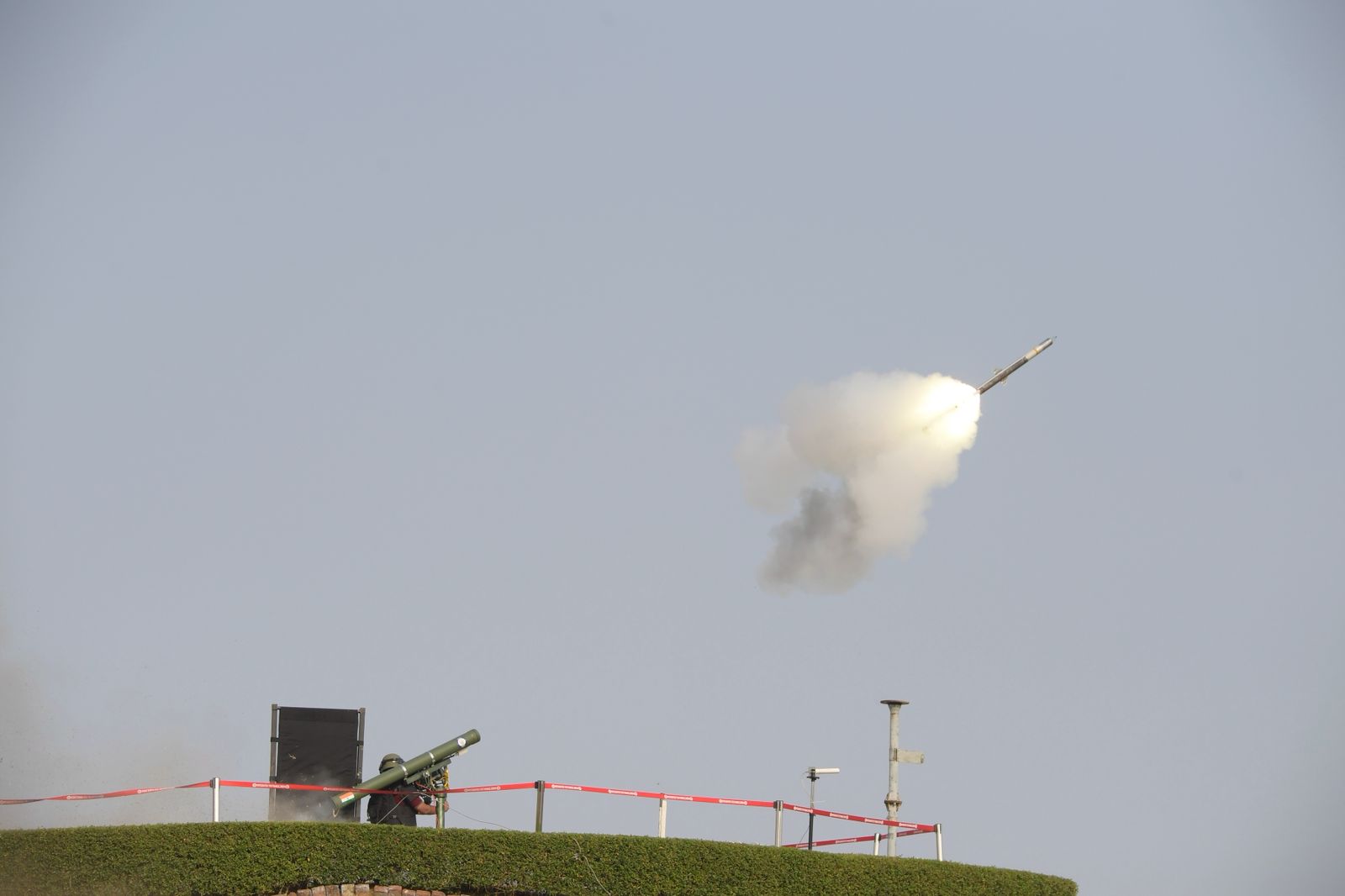
- 01 Mar 2026
In News:
Recently, the Defence Research and Development Organisation (DRDO) successfully conducted three consecutive flight trials of the indigenously developed Very Short-Range Air Defence System (VSHORADS) from the Integrated Test Range (ITR), Chandipur, Odisha. The successful trials mark a significant milestone in India’s efforts to enhance self-reliance in defence manufacturing under the broader framework of Atmanirbhar Bharat.
About VSHORADS
- VSHORADS is a Man-Portable Air Defence System (MANPADS) designed to neutralise low-altitude aerial threats.
- It has been indigenously designed and developed by Research Centre Imarat (RCI), Hyderabad, in collaboration with other DRDO laboratories and Development-cum-Production Partners.
- The system is intended to strengthen India’s last-mile air defence capability, particularly against fast-moving and low-flying targets.
Key Features
- Portable and Lightweight System: VSHORADS is a short-range, lightweight surface-to-air missile system that can be deployed by an individual soldier or a small tactical unit, ensuring mobility and rapid response.
- Operational Range and Altitude
- Maximum range: Up to 8 km
- Engagement altitude: Up to 4.5 km
This makes it suitable for neutralising helicopters, drones, and low-flying aircraft.
- Advanced Technological Components: The missile incorporates several modern technologies, including:
- Miniaturised Reaction Control System (RCS)
- Integrated avionics package
The Reaction Control System (RCS) plays a crucial role in missile manoeuvrability. It enables precise attitude control and steering by using thrusters to provide controlled directional thrust. This enhances accuracy, especially during terminal engagement.
- Tri-Service Utility: The system is capable of meeting the operational requirements of all three armed forces —
- Indian Army
- Indian Navy
- Indian Air Force
Strategic Significance
- Boost to Indigenous Defence Capability: VSHORADS reduces dependency on imported MANPADS systems and strengthens India’s defence manufacturing ecosystem.
- Enhanced Tactical Air Defence: It fills a critical gap in short-range air defence, particularly against:
- Unmanned Aerial Vehicles (UAVs)
- Low-flying fighter aircraft
- Attack helicopters
- Precision-guided munitions
- Force Multiplier in Modern Warfare: With the increasing use of drones and low-altitude aerial threats in contemporary conflicts, portable air defence systems are essential for protecting forward posts, mobile formations, and strategic assets.
- Alignment with Integrated Air Defence Architecture: VSHORADS complements India’s layered air defence structure, which includes systems such as Akash, MR-SAM, and S-400, thereby strengthening multi-tiered protection.
Exercise Vayu Shakti-26
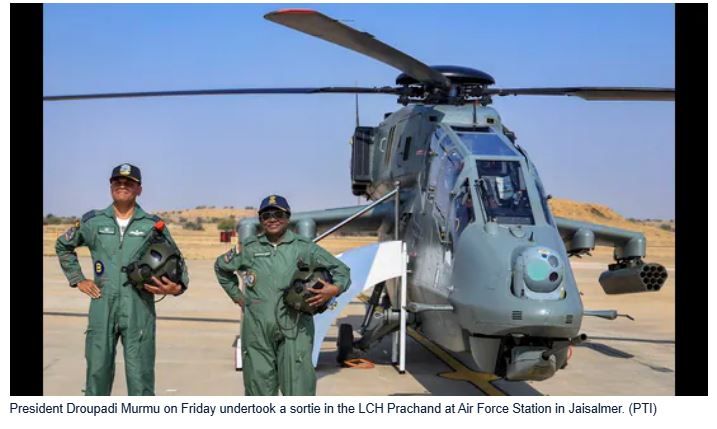
- 01 Mar 2026
In News:
Exercise Vayu Shakti-26 is a major biennial operational exercise conducted by the Indian Air Force (IAF) to demonstrate its readiness, combat potential, and integration of modern air power systems. Held recently at the Pokhran field firing range near Jaisalmer in Rajasthan, the exercise forms a critical part of India’s military preparedness framework against evolving multi-domain threats.
Objectives and Operational Focus
The primary aim of Vayu Shakti-26 was to validate the IAF’s ability to undertake complex, integrated air operations under realistic battlefield conditions. Built around the core values of “Achook, Abhedya aur Sateek” (Unerring, Invincible and Accurate), the exercise focused on:
- Enhancing operational preparedness in dynamic scenarios,
- Demonstrating tactical agility with rapid deployment and sustained operations,
- Integrating air defence, offensive air strikes, special operations, and support missions,
- Reassuring national security and deterrence postures.
For the first time, the exercise was conducted along a defined operational storyline, transforming static drills into a simulated live combat theatre, thereby enhancing realism and cohesive force application.
Scale and Platforms
Vayu Shakti-26 witnessed the participation of more than 130 aircraft representing a wide spectrum of IAF capabilities across different mission domains. This included:
- Combat aircraft: Rafale, Su-30MKI, Mirage-2000, MiG-29, Jaguar,
- Trainer and support platforms: Hawk aircraft,
- Transport and logistical support: C-130J Super Hercules, C-295, C-17 Globemaster III,
- Helicopter assets: Mi-17, indigenous Advanced Light Helicopter (ALH) Dhruv, and Light Combat Helicopter (LCH) Prachand.
Weapon Systems and Technological Integration
The exercise showcased several cutting-edge weapon systems and defensive technologies operationalised by the IAF:
- Short Range Loitering Munitions (SRLM) – providing precision strike options,
- Akash surface-to-air missile system – for medium-range air defence,
- SpyDer air defence system – capable of countering aerial threats at varied altitudes,
- Counter Unmanned Aerial Systems (CUAS) – designed to detect and neutralise hostile drones.
This integration underpins the IAF’s shift toward networked warfare capabilities, fusing sensors, shooters, and command systems for greater effectiveness.
Operational Themes and Key Demonstrations
A hallmark of Vayu Shakti-26 was the seamless synthesis of offensive and defensive air power with ground and special operations elements. Key components of the exercise included:
- Offensive air strikes against simulated high-value targets,
- Air defence operations ensuring integrity of friendly airspace,
- Special forces support missions, including insertion and extraction,
- Humanitarian assistance and disaster relief scenarios, reflecting operational versatility beyond conventional combat.
Such multi-role integration underscores the IAF’s role as both a deterrent and a force multiplier in national defence and crisis response.
Significance for National Security
In an era of heightened regional competition and technological transformation, Exercise Vayu Shakti-26 serves multiple strategic purposes:
- Reinforces the IAF’s operational readiness across the full spectrum of conflict,
- Demonstrates joint and integrated battle-space management capabilities,
- Validates the use of indigenous platforms alongside global systems,
- Signals resolve to adversaries while assuring domestic stakeholders of credible air power.
The exercise also offers valuable opportunities for learning and refinement of doctrines relevant to modern warfare, including multi-domain integration, high tempo operations, and adaptive command and control protocols.
Meningococcal Infections
- 01 Mar 2026
In News:
In late February 2026, the Government of Meghalaya issued a public health advisory after suspected cases of meningococcal infection were reported among trainees at an Army training centre in Shillong, prompting heightened surveillance and containment measures.
Context and Incident Overview
The advisory by the State’s Health and Family Welfare Department was prompted by the deaths of two Agniveer trainees due to suspected meningococcal infection at the Assam Regimental Centre (ARC) in Shillong. All close contacts of the affected individuals were identified, isolated, and placed under medical observation.
Health authorities, including the State Surveillance Unit (SSU) and the District Surveillance Unit (DSU), East Khasi Hills, have initiated active epidemiological investigation, including case investigation, contact tracing, laboratory sample review, and enhanced surveillance in the affected institution and surrounding areas.
Officials have stated that no new suspected cases have been detected outside the initial cluster and that the situation is under close monitoring, with no current indication of wider spread.
About Meningococcal Infection
Meningococcal disease is caused by the bacterium Neisseria meningitidis, which can cause:
- Meningitis: Inflammation of the protective membranes covering the brain and spinal cord.
- Meningococcemia: Bloodstream infection that can progress rapidly and be fatal.
It is transmitted through respiratory and throat secretions via close or prolonged contact. It is less contagious than common cold or influenza pathogens but can spread quickly in crowded settings like hostels, barracks, or training facilities.
Although meningococcal disease occurs sporadically, the region has history of outbreaks; for instance, significant outbreaks were reported in North East India, including Meghalaya, in the past.
Clinical Features and Treatment
Initial symptoms often resemble mild illnesses but may quickly escalate, including:
- High fever
- Severe headache
- Neck stiffness
- Nausea, vomiting
- Non-blanching purpuric rash
- Confusion or altered consciousness
Early recognition and swift treatment are critical, as untreated cases can result in rapid deterioration and high mortality. Standard management includes prompt antibiotic therapy and supportive care such as fluid management and respiratory support.
Public Health Measures and Advisory
In its advisory, the Meghalaya government urged citizens to:
- Avoid crowded places and follow respiratory hygiene by covering mouth and nose while coughing or sneezing.
- Maintain hand hygiene using soap and water or sanitiser.
- Wear masks, especially if experiencing symptoms or in densely populated settings.
- Monitor for symptoms such as fever, severe headache, or rash, and seek immediate medical care if signs appear.
These steps align with standard outbreak response protocols, including identification and monitoring of close contacts.
Public Health Importance and Surveillance
Meningococcal disease is a notifiable condition under India’s Integrated Disease Surveillance Programme (IDSP), which aims to detect early warning signals of outbreaks and initiate appropriate follow-up actions.
Strengthened surveillance, especially in institutional settings and among populations engaged in close living quarters, helps prevent potential outbreaks and supports early containment.
ASTraM: Actionable Intelligence for Sustainable Traffic Management
- 28 Feb 2026
In News:
The recent visit of former Dutch Prime Minister Dick Schoof to the Bengaluru Traffic Management Centre has brought international attention to ASTraM (Actionable Intelligence for Sustainable Traffic Management) - an AI-driven traffic governance platform. The system represents a shift toward predictive, data-driven urban traffic management in India’s rapidly expanding metropolitan cities.
What is ASTraM?
ASTraM is an advanced AI-based big data platform designed for macro-level traffic management.
Unlike traditional GPS-based applications that only display real-time congestion to commuters, ASTraM functions as a centralised intelligence engine for city authorities. It provides holistic, real-time situational awareness and predictive insights to traffic managers.
Development and Institutional Collaboration
ASTraM was developed through collaboration between:
- Bengaluru Traffic Police
- Arcadis, a Dutch design and consultancy firm
The model reflects international cooperation in urban governance and technology deployment.
Objectives
The system aims to:
- Transform traffic policing from a reactive complaint-based approach to a proactive, data-driven model
- Reduce urban congestion
- Improve road safety
- Streamline incident reporting
- Enhance planning for large-scale public events
How ASTraM Works
1. Data Integration
The platform integrates multiple real-time data streams, including:
- CCTV camera feeds
- Automatic Number Plate Recognition (ANPR) systems
- Open-source and transport-related datasets
2. AI-Based Analysis
The AI engine processes large volumes of data to:
- Identify recurring congestion patterns (daily bottlenecks)
- Detect non-recurring disruptions (accidents, protests, roadblocks)
- Forecast potential traffic choke points
3. Automated Communication
- Issues are batched and communicated to field officers at 15-minute intervals
- Enables localised and timely intervention
Key Features
- Situational Awareness: A centralised dashboard provides a bird’s-eye view of city-wide traffic conditions.
- Predictive Analytics: The system anticipates congestion trends before gridlocks occur.
- Incident Reporting Bot: Automated bots log accidents, breakdowns, and obstructions, reducing manual reporting delays.
- Event Simulation: Supports traffic planning during major events such as processions, protests, and festivals by modelling potential disruptions.
- Dashboard Analytics for Urban Planning: Provides long-term data insights for infrastructure planning and policy adjustments.
State of India’s Environment (SOE) 2026
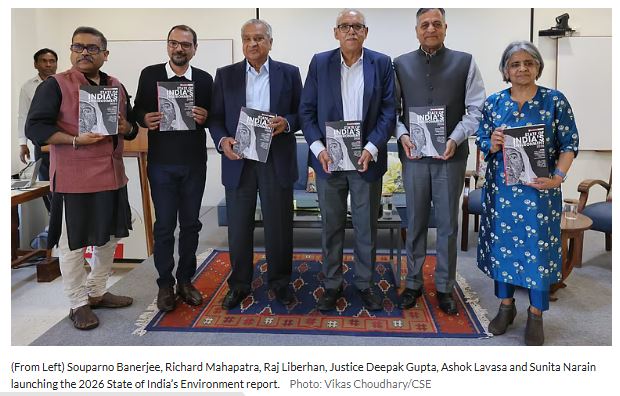
- 28 Feb 2026
In News:
The State of India’s Environment (SOE) 2026 report, released by the Centre for Science and Environment (CSE) and Down To Earth, highlights the accelerating ecological crisis at both global and national levels. The report warns that humanity has breached multiple planetary boundaries, pushing Earth’s life-support systems toward instability. It further links ecological degradation with intensifying human–tiger conflicts in India.
Planetary Boundaries Framework
The Planetary Boundaries framework, first proposed in 2009 by scientists led by Johan Rockström and updated in 2023, defines the safe operating limits within which humanity can function without destabilising Earth systems.
It identifies nine critical Earth system processes that regulate planetary stability. Crossing these limits increases the risk of abrupt, irreversible environmental changes. The boundaries are interconnected; transgression in one can trigger cascading impacts across others.
Status of the Nine Planetary Boundaries
According to SOE 2026, 7 out of 9 planetary boundaries have been breached:
1. Climate Change (Transgressed): Rising greenhouse gas concentrations are pushing the planet close to breaching the 1.5°C warming threshold, signalling potentially irreversible climate impacts.
2. Biosphere Integrity (Transgressed): Species extinction rates exceed 100 extinctions per million species years, nearly ten times the safe limit.
3. Land System Change (Transgressed): Global forest cover has declined to 59%, well below the 75% safe threshold, weakening carbon sinks and biodiversity resilience.
4. Freshwater Change (Transgressed): Over-extraction and climate variability are disrupting river systems, soil moisture cycles, and groundwater security.
5. Biogeochemical Flows (Transgressed): Excess nitrogen and phosphorus from fertilisers are causing eutrophication and ecosystem imbalance.
6. Novel Entities (Transgressed): Plastics, synthetic chemicals, and other pollutants are entering ecosystems without adequate safety assessment.
7. Ocean Acidification (Recently Transgressed): Ocean acidity has increased by 30–40% since the industrial era, threatening coral reefs and marine food webs.
Boundaries Within Limits (But Risky)
- Atmospheric Aerosol Loading – Currently within limits globally but regionally disruptive (e.g., monsoon variability).
- Stratospheric Ozone Depletion – Within safe limits due to the success of the Montreal Protocol, a major global environmental governance success.
Climate Crisis and Tipping Points
- The report warns that climate disruptions are occurring earlier than predicted. Critical ecosystems such as coral reefs and the Amazon rainforest are approaching tipping points, beyond which recovery may be impossible.
Biodiversity Loss and Forest Decline
- Habitat degradation, deforestation, and ecosystem imbalance are accelerating biodiversity loss. Declining forest cover and fragmented habitats are reducing ecological resilience and increasing human–wildlife interactions.
Rising Human–Tiger Conflict in India
The report highlights how ecological degradation is intensifying human–tiger conflicts:
- Habitat loss and prey depletion are altering tiger behaviour.
- Expansion of human settlements near forest areas increases encounters.
- The invasive species Lantana camara now occupies nearly 50% of forest and scrublands, suppressing native grasses.
- Reduced prey availability forces tigers to prey on cattle, escalating conflict with local communities.
This reflects how ecosystem imbalance directly affects conservation outcomes.
Pollution and Freshwater Stress
- Freshwater reserves face severe stress due to overuse and climate variability. Simultaneously, pollution from plastics and synthetic chemicals presents long-term ecological and health risks, reinforcing the urgency of regulating “novel entities.”
Key Recommendations
1. Institutional Strengthening
- Enhance the capacity and independence of the National Green Tribunal (NGT).
- Ensure environmental clearances prioritise ecological integrity over procedural compliance.
2. Sovereign Climate Action
- Integrate planetary boundaries into national accounting frameworks.
- Promote technology-led, full-stack decarbonisation strategies.
3. Community-Centric Conservation
- Adopt landscape-scale governance.
- Treat local communities as primary stakeholders in conservation rather than as obstacles.
Macaques
- 28 Feb 2026
In News:
A recent viral story from a Japanese zoo involving an abandoned baby Japanese macaque (“Punch”) brought global attention to the complex emotional bonds and strict social hierarchies within macaque societies. Beyond public curiosity, the episode highlights important aspects of primate behaviour, evolutionary biology, and conservation — areas relevant to biodiversity studies and wildlife management.
About Macaques
Macaques belong to the genus Macaca under the family Cercopithecidae (Old World monkeys). They are among the most widespread and adaptable primates in the world.
Distribution and Diversity
- Over 20 species
- Found mainly across Asia and parts of North Africa
- Highly adaptable to diverse ecological conditions, including forests, mountains, and urban environments
Their adaptability has enabled certain species to thrive even in human-dominated landscapes.
Important Species
1. Japanese Macaque (Macaca fuscata)
- Native to Japan
- Known as the “Snow Monkey”
- Famous for surviving in cold climates and bathing in natural hot springs
- Displays highly structured matrilineal social systems
2. Rhesus Macaque (Macaca mulatta)
- Widely distributed in North India and Southeast Asia
- Frequently found in urban and semi-urban areas
- Extensively used in medical and biomedical research, including vaccine development
3. Lion-tailed Macaque (Macaca silenus)
- Endangered species
- Endemic to the Western Ghats (India)
- Recognised by its distinctive silver-white mane
- Threatened by habitat fragmentation and deforestation
4. Crested Black Macaque (Macaca nigra)
- Native to Sulawesi (Indonesia)
- Characterised by a dark crest
- Classified as Critically Endangered
Social Behaviour and Hierarchy
Macaques are highly gregarious animals, living in troops governed by strict dominance hierarchies. Their social organisation is complex and deeply structured.
Female Hierarchy
- Rank is typically matrilineal (inherited from the mother).
- Daughters generally rank close to their mother’s position.
- In species such as the Japanese macaque, the “youngest sister rule” applies — the youngest daughter ranks above older sisters.
- Female bonds are stable and form the core of troop structure.
Male Hierarchy
- Determined by physical strength, alliances, and fighting ability.
- Males often migrate between troops.
- Rank can fluctuate over time.
The viral incident involving the abandoned baby macaque illustrates how social rank and maternal position significantly affect offspring survival and acceptance within the troop.
Ecological and Evolutionary Significance
Macaques provide valuable insights into:
- Evolution of primate social systems
- Behavioural ecology
- Conflict resolution and cooperation
- Human–wildlife interaction
Their structured dominance systems resemble early social organisation patterns in primates, offering important evolutionary parallels.
Conservation and Human Interface
While some species like the rhesus macaque thrive near human settlements, others such as the lion-tailed macaque face severe threats due to:
- Habitat fragmentation
- Deforestation
- Infrastructure expansion
- Human–wildlife conflict
Urban macaque populations often lead to conflict, necessitating balanced wildlife management policies.
RailTech Policy and e-RCT Digitisation
- 28 Feb 2026
In News:
Under its flagship “52 Reforms in 52 Weeks” initiative (2026), the Ministry of Railways has announced two major structural reforms:
- RailTech Policy
- Complete Digitisation of the Railway Claims Tribunal (e-RCT)
These reforms aim to promote innovation, enhance transparency, and improve citizen-centric service delivery within Indian Railways — one of the world’s largest public transport systems.
RailTech Policy:
Objective
- The RailTech Policy seeks to create a structured, innovation-friendly ecosystem that enables startups, innovators, industry, and research institutions to collaborate with Indian Railways.
- It marks a shift from rigid vendor-based procurement systems to a technology-driven, trial-and-adoption framework.
Key Features
1. RailTech Portal
- A dedicated, end-to-end digital single-window platform
- Simplified, single-stage submission of proposals
- Enables innovators to directly approach Railways
2. Funding Mechanism
- Railways to support up to 50% of development funding for viable solutions
- Prototype development grants doubled
- Scale-up grants increased more than three times
- Successful solutions to receive long-term implementation orders
3. Inspiration from Best Practices: The framework draws lessons from:
- iDEX (Defence sector)
- Startup frameworks of MeitY
- Telecom innovation policies
Key Innovation Areas
The policy focuses on operational safety, efficiency, and administration, including:
- AI-based Elephant Intrusion Detection System (EIDS)
- AI-based fire detection in coaches
- Drone-based broken rail detection
- Rail stress monitoring systems
- Obstruction detection in foggy environments
- Sensor-based load calculation devices on parcel vans
- AI-based coach cleaning monitoring
- Solar panels on coaches
- AI-enabled pension and dispute resolution systems
The emphasis is on predictive maintenance, passenger safety, security enhancement, and administrative efficiency.
Digitisation of Railway Claims Tribunal (e-RCT)
Legal Basis
The Railway Claims Tribunal (RCT) was established under the Railway Claims Tribunal Act, 1987.
It adjudicates claims relating to:
- Compensation for death/injury in railway accidents
- Untoward incidents
- Loss or non-delivery of goods
- Refund of fares and freight
Currently, RCT functions through 23 benches (Principal Bench at Delhi).
Features of e-RCT System
The reform introduces complete end-to-end digitisation across all 23 benches (to be completed within 12 months).
Core Components
1. E-Filing
- 24×7 online filing from anywhere
- Uploading of petitions and documents
- Instant SMS/email acknowledgement
- Online scrutiny and defect rectification
2. Case Information System (CIS)
- Centralised database
- Auto-allocation of cases
- Real-time tracking from filing to disposal
- Hearing scheduling and monitoring
3. Document Management System (DMS)
- Digital storage of pleadings, notices, orders
- Digitally signed records
- Secure record management with disaster recovery
Additional Features
- Paperless courts
- Hybrid hearings (physical virtual)
- Online pronouncement of orders and judgments
- Automated alerts and compliance tracking
- Centralised data on pendency and disposal
Citizen-Centric Benefits
The e-RCT reform ensures:
- Faster disposal through automated workflows
- Reduced adjournments due to online hearings
- Elimination of travel burden
- Real-time case status updates
- Cost savings on travel, printing, courier
- Improved transparency and accountability
The model may be extended to other tribunals such as the Central Administrative Tribunal (CAT) if successful.
“52 Reforms in 52 Weeks” Initiative
Launched in 2026, the initiative commits Indian Railways to implement one structural reform per week, aiming at comprehensive transformation.
Earlier reforms include:
- Continuous end-to-end cleaning of general coaches
- Expansion of Gati Shakti Cargo Terminals to over 500 hubs
The broader vision aligns with digital governance, infrastructure modernisation, and administrative efficiency.
Avoidant/Restrictive Food Intake Disorder (ARFID)

- 28 Feb 2026
In News:
Avoidant/Restrictive Food Intake Disorder (ARFID) is an increasingly recognised mental health condition under the category of eating disorders. Unlike commonly known eating disorders such as anorexia nervosa or bulimia, ARFID is not driven by concerns about body image or a desire to lose weight. It represents a serious but treatable disorder that affects nutritional intake, growth, and overall well-being, particularly among children.
What is ARFID?
ARFID is a condition characterised by persistent limitation in the amount or type of food consumed. The restriction is not due to cultural practices, food scarcity, or distorted body image. Instead, it arises from psychological and sensory factors.
Key features include:
- Loss of interest in eating or low appetite
- Anxiety related to eating (e.g., fear of choking or vomiting)
- Avoidance of foods based on colour, taste, smell, or texture
- Extreme selectivity toward specific food groups
While it may initially resemble “picky eating,” ARFID is far more severe and can lead to significant health consequences.
Causes and Risk Factors
The eating difficulties in ARFID arise due to:
- Strong sensory aversions (texture, smell, taste sensitivity)
- Fear-based avoidance (vomiting, choking)
- Lack of appetite or low interest in food
- Preference for specific colours or food presentations
It most commonly develops in infancy or early childhood, though it can persist into adulthood. In children, it is more frequently observed in males.
Research suggests strong associations with:
- Anxiety disorders
- Autism Spectrum Disorder (ASD)
- Attention-Deficit/Hyperactivity Disorder (ADHD)
- Developmental and intellectual disabilities
A genetic predisposition is also likely, as ARFID often runs in families.
Health Implications
Unlike ordinary fussy eating, ARFID can severely affect nutritional status and development.
Consequences may include:
- Inadequate caloric intake
- Stalled weight gain or weight loss
- Impaired vertical growth (reduced height gain in children)
- Nutritional deficiencies
- Delayed physical and cognitive development
If left untreated, ARFID may lead to life-threatening complications due to chronic malnutrition.
Diagnosis and Treatment
ARFID is a genuine health disorder and not a behavioural problem, stubbornness, or attention-seeking. Early identification is critical to prevent long-term damage.
Treatment involves a multidisciplinary approach, including:
- Mental health professionals
- Medical doctors
- Nutritionists/dietitians
The primary therapeutic intervention is Cognitive Behavioral Therapy (CBT), which helps address anxiety, sensory sensitivities, and maladaptive eating patterns. Nutritional rehabilitation and parental counselling are also important in paediatric cases.
With appropriate professional support, individuals can recover and develop a healthy relationship with food.
International Climate Initiative (IKI)
- 27 Feb 2026
In News:
India and Germany have launched a €20 million (approximately ?180 crore) Large Grant project under Germany’s International Climate Initiative (IKI). The project focuses on strengthening climate resilience in India’s most vulnerable ecosystems through nature-based and sustainable adaptation strategies.
About the International Climate Initiative (IKI)
- Established in 2008, IKI is Germany’s principal funding instrument for international climate action.
- Supports projects in:
- Climate change mitigation
- Adaptation
- Biodiversity conservation
- Operates in over 150 partner countries, with 14 priority countries, including India, Brazil, China, South Africa, Indonesia, and Mexico.
- Aligns with global commitments under the Paris Agreement and the Convention on Biological Diversity (CBD).
IKI represents Germany’s climate diplomacy approach, combining financial assistance, technology cooperation, and capacity building.
Scope of the New India–Germany Project
The newly launched €20 million initiative targets high-risk and ecologically sensitive regions in India, promoting long-term resilience through ecosystem-based adaptation.
Priority Regions
- Himalayas
- Challenges: Glacier melt, glacial lake outburst floods (GLOFs), landslides.
- Significance: Water security for major river systems.
- Western Ghats
- Biodiversity hotspot facing deforestation and habitat fragmentation.
- Vulnerable to extreme rainfall events and ecological degradation.
- North-East India
- Fragile hill ecosystems prone to soil erosion and flooding.
- Rich in biodiversity but ecologically sensitive.
- Island Ecosystems (e.g., Andaman & Nicobar)
- Threatened by sea-level rise and coastal erosion.
- High vulnerability to cyclones and marine ecosystem disruption.
Focus Areas of Intervention
- Promotion of Nature-Based Solutions (NbS)
- Ecosystem restoration and conservation
- Climate-resilient livelihoods
- Capacity building at local and state levels
- Strengthening institutional frameworks for adaptation
Nature-based solutions integrate environmental restoration with socio-economic resilience, ensuring sustainability and community participation.
Strategic Significance
1. Strengthening India’s Climate Resilience
India faces:
- Rising temperatures
- Erratic monsoons
- Increased frequency of extreme weather events
- Biodiversity loss
This initiative enhances adaptive capacity in vulnerable geographies.
2. Alignment with India’s National Commitments
The project supports:
- India’s Nationally Determined Contributions (NDCs)
- Target of 50% cumulative electric power installed capacity from non-fossil fuel sources by 2030.
- Net-Zero Commitment (2070)
- National Action Plan on Climate Change (NAPCC) missions, particularly:
- National Mission for Sustaining the Himalayan Ecosystem
- National Mission on Sustainable Habitat
3. Global Climate Governance
- Reinforces North–South cooperation in climate finance.
- Demonstrates operationalisation of climate finance commitments under the Paris Agreement.
- Promotes biodiversity conservation alongside climate mitigation and adaptation.
4. Indo-German Strategic Partnership
Climate cooperation is a key pillar of the India–Germany Strategic Partnership, complementing collaboration in:
- Renewable energy
- Green hydrogen
- Sustainable urbanisation
- Technology and innovation
Sweden–India Technology and Artificial Intelligence Corridor (SITAC)
- 27 Feb 2026
In News:
On the sidelines of the India AI Impact Summit 2026, the IndiaAI Mission and Business Sweden signed a Statement of Intent (SoI) to deepen bilateral cooperation in Artificial Intelligence (AI) and digital technologies. The agreement marks a significant step in institutionalising India–Sweden collaboration in emerging technologies and innovation-driven growth.
Nature and Objectives of the Statement of Intent (SoI)
The SoI establishes a structured framework for collaboration in:
- Development, application, and deployment of AI solutions
- Promotion of trade and investment linkages
- Advancement of responsible and scalable digital innovation
The partnership emphasises real-world industrial and societal outcomes, reflecting a shared commitment to using AI for economic growth, sustainability, and technological transformation while managing associated risks.
Sweden–India Technology and Artificial Intelligence Corridor (SITAC)
Both countries will jointly develop a dedicated programme titled the Sweden–India Technology and Artificial Intelligence Corridor (SITAC).
Key Features:
- Flagship institutional platform for AI cooperation
- Structured engagement between:
- Government agencies
- Industry stakeholders
- Startups
- Academic and research institutions
SITAC aims to serve as a long-term innovation bridge linking the AI ecosystems of both countries.
Areas of Cooperation under SITAC
The framework proposes:
- Conferences, seminars, and thematic workshops
- Ecosystem exchanges between Indian and Swedish AI communities
- Field visits to innovation hubs and Centres of Excellence
- Engagement among companies, investors, researchers, and policymakers
- Joint innovation platforms and investment corridors
- Deployment of AI solutions across priority sectors
This multi-level engagement seeks to translate policy vision into industry-level collaboration.
Strategic Alignment of National Priorities
India’s Objectives (IndiaAI Mission)
- Build a comprehensive AI ecosystem
- Expand access to compute infrastructure, data, and skilled talent
- Promote sovereign and inclusive AI development
- Encourage startup-led innovation
Sweden’s Strengths
- Industrial innovation and advanced R&D
- Strong manufacturing and clean-tech ecosystem
- Leadership in responsible and ethical AI implementation
- Experience in digital governance frameworks
The partnership integrates India’s scale and digital capacity with Sweden’s research depth and industrial expertise.
Carbon Capture and Utilisation (CCU)
- 27 Feb 2026
In News:
Recent discussions on India’s climate strategy have highlighted the growing importance of Carbon Capture and Utilisation (CCU) technologies, particularly for hard-to-abate sectors such as cement, steel, refineries, and chemicals. With India committing to net-zero emissions by 2070, CCU is emerging as a necessary complement to renewable energy expansion.
What is Carbon Capture and Utilisation (CCU)?
Carbon Capture and Utilisation (CCU) refers to a set of technologies that:
- Capture carbon dioxide (CO?) from industrial sources or directly from the atmosphere.
- Convert the captured CO? into useful products such as fuels, chemicals, building materials, or polymers.
Unlike Carbon Capture and Storage (CCS), where CO? is permanently stored underground, CCU reintegrates carbon into the economy, contributing to a circular carbon economy.
Why CCU is Necessary for India
1. High Emissions Profile
India is the world’s third-largest CO? emitter, with emissions primarily arising from:
- Power generation
- Cement production
- Steel manufacturing
- Chemicals and refineries
2. Hard-to-Abate Sectors
In industries like cement and steel:
- A significant portion of emissions comes from industrial processes themselves, not just fuel combustion.
- Renewable energy alone cannot fully eliminate these emissions.
3. Alignment with Net-Zero 2070
CCU supports:
- Deep industrial decarbonisation
- Circular economy goals
- Low-carbon industrial competitiveness
Thus, CCU acts as a bridge technology during the transition to a fully decarbonised economy.
Global Developments
- European Union: The EU Bioeconomy Strategy and Circular Economy Action Plan promote CCU for converting CO? into feedstocks for fuels and chemicals.
- Belgium: ArcelorMittal and Mitsubishi Heavy Industries are piloting technology to convert captured CO? into carbon monoxide for steel and chemical production.
- United States: Combines tax credits and public funding to scale CO?-derived fuels and chemicals.
- UAE: The Al Reyadah project integrates CCU with green hydrogen for CO?-to-chemicals hubs.
These initiatives indicate that CCU is becoming part of mainstream climate-industrial policy globally.
India’s Progress and Policy Push
1. Research and Roadmaps
- The Department of Science and Technology (DST) has prepared a dedicated R&D roadmap for CCU.
- The Ministry of Petroleum and Natural Gas has proposed a draft 2030 CCUS roadmap identifying potential projects.
2. Budgetary Support
- The Union Budget 2026–27 announced a ?20,000 crore scheme to scale up Carbon Capture, Utilisation and Storage (CCUS).
- Focus sectors: Power, Steel, Cement, Refineries, and Chemicals.
- Marks a shift from pilot projects to structured, policy-backed deployment.
3. Private Sector Initiatives
- Ambuja Cements (Adani Group) with IIT Bombay: Indo-Swedish CCU pilot converting CO? into fuels and materials.
- JK Cement: Developing CCU applications for lightweight concrete blocks and olefins.
- Organic Recycling Systems Limited (ORSL): Leading India’s first pilot-scale Bio-CCU platform, converting CO? from biogas into bio-alcohols and specialty chemicals.
Indigenous Large Language Models and India’s Sovereign AI Push
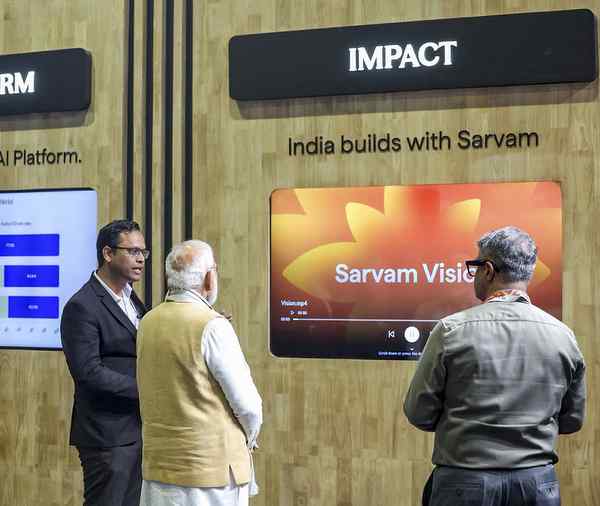
- 27 Feb 2026
In News:
At the India-AI Impact Summit 2026, Bengaluru-based startup Sarvam AI unveiled two indigenous Large Language Models (LLMs)** trained on 35 billion and 105 billion parameters. These models are designed to be less power- and compute-intensive, while demonstrating improved performance in Indian languages. The development marks a significant milestone in India’s quest for sovereign and cost-efficient AI systems aligned with domestic needs.
Understanding Large Language Models (LLMs)
A Large Language Model (LLM) is an AI system built using transformer-based neural networks trained on massive text datasets to understand and generate human language.
They contain billions of parameters—internal variables learned during training—that help the model predict the next word in a sequence and generate coherent text.
How LLMs Work
- Tokenisation: Text is broken into smaller units called tokens (word pieces or characters).
- Embeddings & Transformer Architecture: Tokens are converted into numerical vectors. The self-attention mechanism helps the model determine which words in a sentence are contextually important, even if they are far apart.
- Next-Token Prediction: The model generates language by predicting one token at a time based on probability distributions.
- Layered Learning: Multiple transformer layers refine linguistic and semantic understanding—from grammar to reasoning patterns.
Stages of Training LLMs
1. Data Collection & Pre-processing
- Massive datasets sourced from books, websites, code repositories, etc.
- Cleaning to remove bias, spam, duplicates, and harmful content.
- Quality of data directly influences performance.
2. Pre-training (Self-Supervised Learning)
- Model learns via next-token prediction.
- Produces a base model capable of understanding grammar, facts, and reasoning.
3. Supervised Fine-Tuning
- Trained on curated prompt–response pairs.
- Enhances instruction-following ability and task performance (summarization, translation, Q&A).
4. Alignment via RLHF
- Reinforcement Learning from Human Feedback (RLHF).
- Humans rank outputs based on safety and quality.
- A reward model optimises responses to align with human values.
Challenges in Training LLMs in India
- Data Scarcity in Indian Languages
- English and East Asian languages dominate internet data.
- Indian languages remain underrepresented.
- Many models rely on translation into English, increasing token consumption and cost.
- High Capital and Compute Costs
- Requires clusters of Graphics Processing Units (GPUs).
- Training costs run into millions of dollars.
- Limited domestic venture capital for foundational AI research.
- Limited Immediate Commercial Use Cases: Training large models without clear monetisation pathways deters investment.
- Infrastructure Constraints
- Dependence on imported high-end chips.
- Energy-intensive training processes.
Innovation: Mixture of Experts (MoE) Architecture
Earlier LLMs activated all parameters during inference, making them computationally expensive.
The Mixture of Experts (MoE) architecture activates only a subset of parameters (“experts”) for each query.
Advantages:
- Reduced computational load
- Faster inference
- Lower electricity consumption
- Cost-efficient deployment in resource-constrained settings
Sarvam’s 105B parameter model leverages MoE to balance performance with efficiency, focusing on accuracy and Indian context alignment rather than sheer scale.
IndiaAI Mission: Government Support for Domestic AI
Launched in March 2024 with an outlay of ?10,372 crore, the IndiaAI Mission aims to build a comprehensive AI ecosystem.
Key Components:
- Compute Infrastructure
- Over 36,000 GPUs commissioned in Indian data centres.
- Additional 20,000 GPUs being added.
- Target: 100,000 GPUs by end of 2026.
- Subsidised Access
- Sarvam AI granted 4,096 GPUs from a common compute cluster.
- Subsidy estimated at nearly ?100 crore.
- Cluster cost approximately ?246 crore.
- Support for Innovation
- Promotion of sovereign foundational models trained on Indian datasets.
- Financial support covering compute and training costs.
- Encouragement of open-source innovation.
- Talent Development
- Training support for over 13,500 students.
- Establishment of India Data and AI Labs.
Other Indian Efforts
- BharatGen (IIT Bombay-incubated): Multilingual 17B parameter model, targeted at sectors like education and healthcare.
- Gnani.ai: Small text-to-speech model.
- Indigenous focus on domain-specific and language-specific AI models.
RAMP Programme
- 27 Feb 2026
In News:
The Ministry of Micro, Small and Medium Enterprises (MoMSME) recently convened the 5th meeting of the National MSME Council in New Delhi to review the progress of the World Bank–assisted Raising and Accelerating MSME Performance (RAMP) Programme. The review gains significance in the context of MSMEs being the backbone of India’s economy and central to achieving inclusive growth, Atmanirbhar Bharat, and the $5 trillion economy vision.
About the RAMP Programme
- It was launched in 2022 and is being implemented over a five-year period (2022–23 to 2026–27) by the Ministry of MSME with World Bank support.
- It seeks to address structural challenges faced by MSMEs through systemic reforms and capacity building at both the Central and State levels.
Objectives of RAMP
The programme focuses on:
- Improving Access to Market and Credit
- Enhancing financial inclusion.
- Promoting integration into domestic and global value chains.
- Strengthening Institutions and Governance
- Capacity building of MSME institutions at Central and State levels.
- Improving policy design and implementation mechanisms.
- Enhancing Centre–State Coordination
- Encouraging cooperative federalism through structured partnerships.
- Providing financial assistance to States for preparing Strategic Investment Plans (SIPs).
- Addressing Delayed Payments: Tackling liquidity stress among Micro and Small Enterprises (MSEs).
- Greening of MSMEs: Supporting climate-resilient and sustainable business practices in alignment with India’s Net Zero target of 2070.
Institutional Framework
National MSME Council
- Established by MoMSME as the administrative and functional body under RAMP.
- Provides strategic direction, monitors progress, and facilitates coordination among stakeholders.
State-Level Role
- States receive grants to prepare Strategic Investment Plans (SIPs).
- SIPs align state-specific reforms with national MSME objectives.
- Promotes decentralised planning and context-specific solutions.
Key Sub-Schemes under RAMP
1. MSME GIFT Scheme
(MSME Green Investment and Financing for Transformation)
- Promotes adoption of green technologies.
- Provides interest subvention and credit guarantee support.
- Encourages energy efficiency, cleaner production, and sustainability.
2. MSE SPICE Scheme
(Scheme for Promotion and Investment in Circular Economy)
- Supports circular economy initiatives among MSEs.
- Offers credit-linked capital subsidy.
- Contributes toward the long-term objective of MSMEs achieving net-zero emissions by 2070.
3. MSE ODR Scheme
(Online Dispute Resolution for Delayed Payments)
- First-of-its-kind initiative integrating legal support with IT tools and Artificial Intelligence.
- Addresses the chronic issue of delayed payments to Micro and Small Enterprises.
- Strengthens ease of doing business and improves working capital cycles.
Significance for the Indian Economy
- MSMEs contribute significantly to GDP, exports, and employment generation.
- RAMP supports:
- Formalisation and competitiveness.
- Digital transformation.
- Climate-aligned industrial growth.
- Improved credit flow and risk mitigation.
- It operationalises cooperative and competitive federalism through structured Centre–State collaboration.
India–GCC Free Trade Agreement (FTA)

- 26 Feb 2026
In News:
India and the Gulf Cooperation Council (GCC) have signed a Joint Statement formally launching negotiations for the proposed India–GCC Free Trade Agreement (FTA), following the previously agreed Terms of Reference. This marks a significant milestone in strengthening India–GCC economic and strategic relations.
About the India–GCC Free Trade Agreement (FTA)
Nature of the Agreement
The India–GCC FTA is a proposed comprehensive trade agreement between India and the six GCC member states:
- Saudi Arabia
- United Arab Emirates (UAE)
- Qatar
- Kuwait
- Oman
- Bahrain
It seeks to establish a structured framework for enhancing:
- Trade in goods
- Trade in services
- Investment flows
- Regulatory cooperation
- Market access
The agreement aims to reduce tariff and non-tariff barriers and facilitate smoother business operations between the two sides.
Economic Significance of India–GCC Trade
1. Major Trading Partner
- The GCC is India’s largest trading partner bloc.
- Accounts for 15.42% of India’s global trade.
- Bilateral trade in FY 2024–25:
- Total Trade: USD 178.56 billion
- Exports: USD 56.87 billion
- Imports: USD 121.68 billion
- Trade has grown at an average annual rate of 15.3% over the past five years.
2. Sectoral Complementarity
Key Indian Exports to GCC:
- Engineering goods
- Rice
- Textiles
- Machinery
- Gems and jewellery
Key Indian Imports from GCC:
- Crude oil
- Liquefied Natural Gas (LNG)
- Petrochemicals
- Precious metals (especially gold)
The trade relationship reflects strong energy–manufacturing complementarity, with the GCC playing a critical role in India’s energy security.
3. Investment Linkages
- GCC countries have invested over USD 31.14 billion (cumulative FDI as of September 2025) in India.
- The FTA is expected to further:
- Facilitate investment flows
- Promote joint ventures
- Enhance financial cooperation
4. Diaspora Dimension
- The GCC region hosts nearly 10 million Indians.
- The diaspora acts as a “living bridge”, strengthening:
- Remittance flows
- Cultural linkages
- Business networks
- Soft power presence
About the Gulf Cooperation Council (GCC)
- Established in 1981
- A regional political and economic alliance
- Members: Bahrain, Kuwait, Oman, Qatar, Saudi Arabia, UAE
- Headquarters: Riyadh, Saudi Arabia
Background
The GCC was formed in response to regional instability, including:
- The Iranian Revolution (1979)
- The Iran–Iraq War (1980–1988)
Objectives
- Economic cooperation
- Security coordination
- Cultural and social integration
Organisational Structure
- Supreme Council (highest authority)
- Composed of heads of member states
- Presidency rotates among members
Renaming of Kerala as “Keralam”
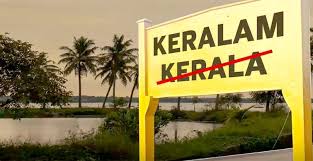
- 26 Feb 2026
In News:
The Union Cabinet has approved a proposal to rename the State of Kerala as “Keralam.” The move reflects linguistic and cultural identity considerations and now requires Parliamentary approval under the constitutional procedure governing alteration of state names.
Historical Evolution of the State of Kerala
Pre-Independence Background
Before Independence, Malayalam-speaking regions were politically fragmented across:
- Malabar District (under British Madras Presidency)
- Princely States of:
- Travancore
- Cochin (Kochi)
In the 1920s, the Aikya (Unified) Kerala Movement emerged, demanding a single state for Malayalam-speaking people based on linguistic identity.
Post-Independence Developments
- 1 July 1949: Travancore and Cochin merged to form the Travancore–Cochin State.
- The Government of India appointed the State Reorganisation Commission (SRC) under Justice Fazl Ali.
- The SRC recommended the creation of linguistic states, including a unified Kerala.
Formation of Kerala
- 1 November 1956: Kerala was formally created under the States Reorganisation Act, 1956.
- It comprised:
- Malabar District (from Madras State)
- Travancore–Cochin State (excluding certain Tamil-majority areas)
Thus, Kerala emerged as a linguistic state representing Malayalam-speaking populations.
Constitutional Procedure to Rename a State
The renaming of a state is governed by Article 3 and Article 4 of the Constitution of India.
Article 3: Powers of Parliament
Parliament may by law:
- Form a new state
- Increase or diminish the area of any state
- Alter state boundaries
- Alter the name of any state
However, two procedural safeguards apply:
- A Bill for such change can be introduced in Parliament only with prior recommendation of the President.
- Before recommending the Bill, the President must refer it to the concerned State Legislature to express its views within a specified period.
Importantly:
- The President (and Parliament) is not bound by the views of the State Legislature.
- Parliament may accept or reject the state’s suggestions.
Article 4: Nature of the Law
- Laws made under Article 3 are not considered Constitutional Amendments under Article 368.
- Such laws:
- Can be passed by simple majority
- Follow the ordinary legislative procedure
Thus, renaming a state does not require a special majority or ratification by states.
Federal and Political Context
The renaming of states often reflects:
- Linguistic identity
- Cultural assertion
- Historical reclamation
- Regional aspirations
For instance, past examples include:
- Orissa → Odisha
- Pondicherry → Puducherry
- Uttaranchal → Uttarakhand
However, not all renaming proposals have been successfully implemented, highlighting the political and procedural complexities involved.
Significance of the “Keralam” Proposal
- Linguistic Authenticity: “Keralam” is the Malayalam name for the state.
- Cultural Identity: Reinforces regional linguistic heritage.
- Federal Procedure in Action: Demonstrates constitutional flexibility under Article 3.
- Non-Amendment Process: Highlights distinction between ordinary legislation and constitutional amendment.
Chicory and FSSAI’s Labelling Advisory

- 26 Feb 2026
In News:
The Food Safety and Standards Authority of India (FSSAI) has issued an advisory mandating that the percentage of chicory content in coffee powder must be prominently displayed on the front of the package. The rule will come into effect from 1 July.
The move aims to enhance consumer awareness and transparency in the coffee market.
About Chicory
- Scientific Name: Cichorium intybus
- Family: Asteraceae
- Nature: Perennial plant
- Cultivation: Primarily grown in temperate regions worldwide
Chicory is a versatile plant known for its medicinal, nutritional, and culinary properties. Various varieties are cultivated and used differently across regions.
Botanical and Nutritional Features
- Considered a local wild edible plant
- Edible parts: Leaves, Flowers, Roots
- Nutritional components include:
- Carbohydrates
- Proteins
- Vitamins
- Minerals
- Soluble fibre (notably inulin)
- Trace elements
- Bioactive phenolic compounds
Chicory root is particularly valued for its fibre content and functional food properties.
Use of Chicory in Coffee
Chicory is widely used as a coffee additive, especially in blended coffee products.
Why It Is Used
- Imparts a darker colour
- Provides an earthy, woody flavour
- Naturally caffeine-free
- More affordable than high-quality coffee beans
In India, chicory-blended coffee is common, particularly in southern states.
FSSAI Advisory: Key Provisions
The FSSAI has directed that:
- The exact percentage of chicory in coffee blends must be clearly mentioned.
- The information must be displayed on the front of the coffee powder packaging.
- The regulation becomes effective from 1 July.
Objective
- Improve consumer transparency
- Prevent misleading marketing practices
- Enable informed consumer choice
- Strengthen regulatory oversight in food labelling
This aligns with FSSAI’s mandate to ensure safe, standardised, and properly labelled food products in India.
Regulatory Background
The Food Safety and Standards Authority of India (FSSAI):
- Functions under the Food Safety and Standards Act, 2006
- Operates under the Ministry of Health and Family Welfare
- Sets standards for food products and regulates manufacturing, storage, distribution, sale, and import
The chicory labelling directive reflects a broader push towards clearer front-of-pack disclosures and consumer-centric food governance.
Exercise Dharma Guardian
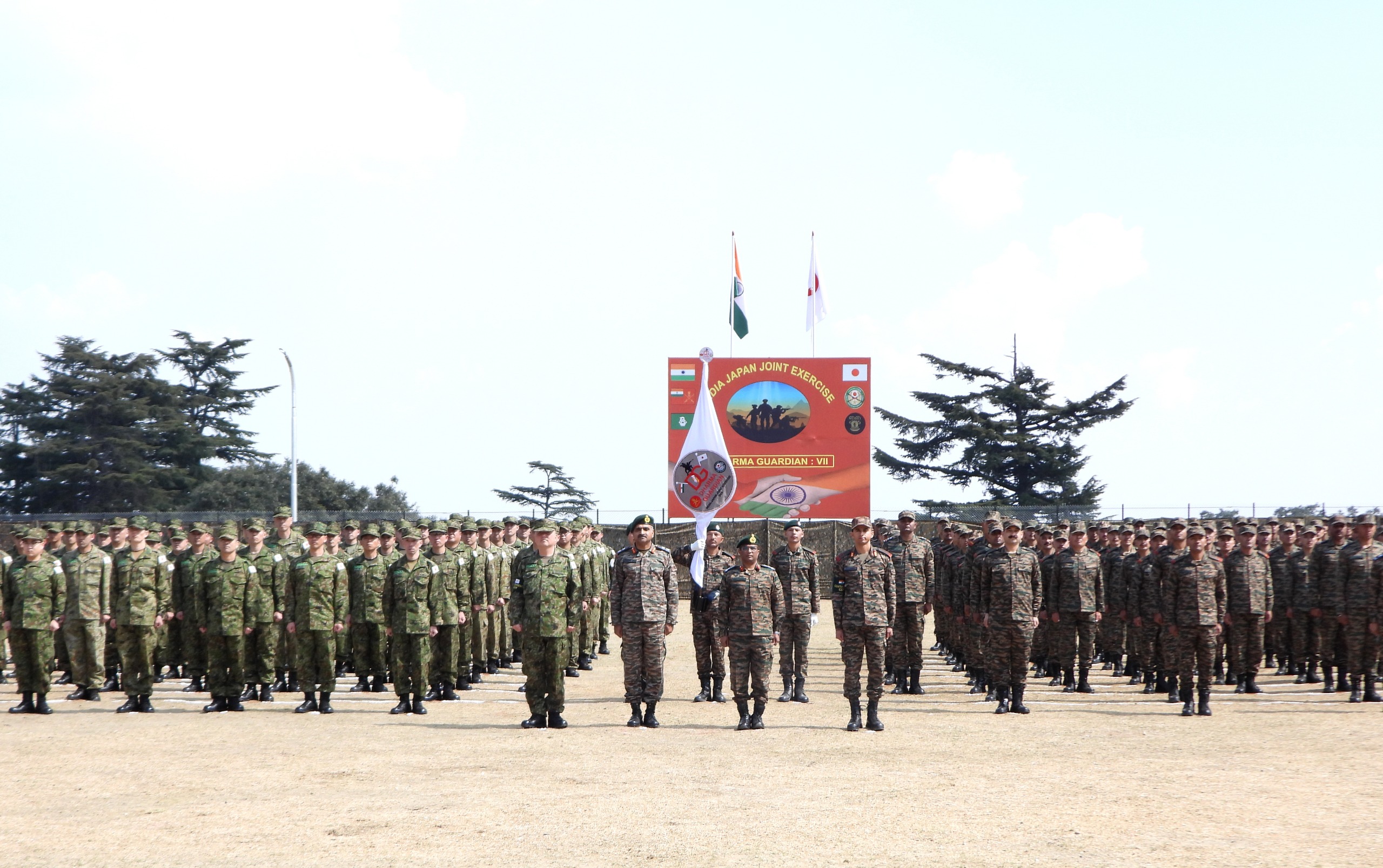
- 26 Feb 2026
In News:
The 7th edition of the India–Japan Joint Military Exercise ‘DHARMA GUARDIAN’ commenced at the Foreign Training Node, Chaubattia (Uttarakhand) from 24 February to 9 March 2026. The exercise represents a significant pillar of growing defence cooperation between India and Japan.
About Exercise DHARMA GUARDIAN
- Type: Annual Joint Military Exercise
- Participants:
- Indian Army
- Japan Ground Self-Defense Force (JGSDF)
- Venue: Conducted alternately in India and Japan
- Participating Contingents (2026)
- 120 personnel from each side
- JGSDF represented by the 32nd Infantry Regiment
- Indian contingent drawn from the Ladakh Scouts
Aim and Objectives
The primary objective of Exercise DHARMA GUARDIAN is to:
- Strengthen military collaboration
- Enhance interoperability
- Improve combined capability to conduct joint operations in semi-urban environments
- Synchronise tactical drills and joint planning processes
- Integrate modern technologies into operational frameworks
The exercise focuses on contemporary operational challenges and coordinated response mechanisms in hostile conditions.
Key Tactical Activities
The exercise includes intensive operational drills such as:
- Establishment of a Temporary Operating Base (TOB)
- Development of an Intelligence, Surveillance and Reconnaissance (ISR) grid
- Setting up Mobile Vehicle Check Posts
- Conducting Cordon and Search Operations in hostile environments
- Executing Heliborne Operations
- Undertaking House Intervention Drills
These activities simulate counter-terror and semi-urban combat scenarios, enhancing readiness and operational synergy between the two forces.
Strategic Significance
1. Strengthening India–Japan Defence Partnership
- Reinforces the Special Strategic and Global Partnership
- Enhances operational trust and coordination
- Deepens land warfare cooperation
2. Indo-Pacific Security Architecture: India and Japan are key stakeholders in ensuring a free, open and rules-based Indo-Pacific. The exercise strengthens defence preparedness in a strategically sensitive region.
3. Interoperability and Modern Warfare Preparedness:
- Promotes joint planning and technology integration
- Enhances capability in hybrid and semi-urban warfare
- Supports coordinated responses to emerging security threats
Other India–Japan Military Exercises
India and Japan conduct multiple bilateral and multilateral exercises across services:
- Malabar Exercise (Naval)
- Participants: India, Japan, USA, Australia
- Focus: Maritime security and Indo-Pacific stability
- JIMEX (Japan-India Maritime Exercise)
- SHINYUU Maitri (Air Force Exercise)
Together, these exercises indicate expanding tri-service defence engagement.
SUJVIKA Portal
- 26 Feb 2026
In News:
On the occasion of the 40th Foundation Day of the Department of Biotechnology (DBT), the Union Minister of State for Science & Technology launched the SUJVIKA Portal, an AI-driven Biotech Product Data Portal. The initiative reflects India’s broader ambition to build a $1 trillion bioeconomy by 2047 under the vision of Viksit Bharat.
SUJVIKA Portal: Key Features and Significance
What is SUJVIKA?
- SUJVIKA is an AI-driven Trade Statistics Digital Intelligence Platform.
- Developed by Department of Biotechnology (DBT) in collaboration with industry partner ABLE.
- It provides authenticated biotechnology product import data in a structured and accessible format.
Core Objectives
- Present sector-wise data on:
- Biochemical products
- Industrial enzymes
- Other biotechnology imports
- Identify high-value and high-volume imports
- Assess import dependency
- Support indigenisation and R&D prioritisation
- Enable evidence-based policymaking
- Promote public–private partnerships (PPP) in domestic biomanufacturing
Importance for India
SUJVIKA strengthens:
- Strategic trade intelligence
- Domestic bio-manufacturing capacity
- Startup ecosystem planning
- Self-reliance in critical biotech inputs
It aligns with Atmanirbhar Bharat by facilitating targeted import substitution in biotechnology.
Department of Biotechnology (DBT)
Establishment and Mandate
- Established in 1986
- Functions as a nodal agency for Life Sciences research and applications
- Promotes large-scale use of biotechnology across sectors
- Supports R&D in:
- Advanced biofuels
- Waste-to-energy technologies
- Healthcare and vaccines
- Genomics and gene therapy
Over four decades, DBT has evolved from a research-support body into a central driver of India’s bioindustrial ecosystem.
India’s Bioeconomy: Growth Trends and Targets
Rapid Expansion
- Bioeconomy size:
- ~$10 billion (2014)
- $165.7 billion (2024) → Nearly 16-fold growth in a decade
- Biotech startups:
- Fewer than 100 in 2014
- Over 11,000 startups today
India is now:
- Among the top biotech destinations globally
- One of the leading vaccine manufacturers in the world
Vision 2047
India aims to build a $1 trillion bioeconomy by 2047, positioning biotechnology as the backbone of the next industrial revolution.
India’s Energy Transition through the Green Ammonia Route

- 25 Feb 2026
In News:
At India Energy Week (January 2026), the Prime Minister highlighted investment opportunities worth $500 billion in India’s energy sector, signalling a shift from energy security to energy independence. A central pillar of this transition is green hydrogen and its derivative-green ammonia, which is emerging as a strategic fuel for agriculture, industry, shipping, and global trade.
India’s recent landmark auction through the Solar Energy Corporation of India (SECI) has positioned the country as a serious player in the global green ammonia market.
What is Green Ammonia?
Green ammonia is produced by combining:
- Nitrogen (from air)
- Green hydrogen (generated via electrolysis using renewable energy)
Unlike grey ammonia, which uses natural gas and emits significant CO?, green ammonia has a near-zero carbon footprint.
SECI’s Landmark Green Ammonia Auction
Under the Strategic Interventions for Green Hydrogen Transition (SIGHT) programme of the National Green Hydrogen Mission, SECI floated a tender in June 2024 to aggregate demand across fertilizer plants.
Key Features:
- Target Demand: 7,24,000 tonnes per annum (TPA)
- Coverage: 13 fertilizer plants
- Bidders: 15 participants
- Successful Awardees: 7 companies
- Contracts Awarded: 13 delivery contracts
- One company secured 6 contracts (3,70,000 TPA)
- 10-year fixed-price offtake agreements
Discovered Prices:
- ?49.75–?64.74/kg
- $572–$744 per tonne
- Nearly 40–50% lower than EU’s H2Global auction (~$1,153/tonne)
By comparison: Grey ammonia in India ≈ $515/tonne
The price gap has narrowed substantially, especially with production subsidies:
- ?8.82/kg (Year 1)
- ?7.06/kg (Year 2)
- ?5.3/kg (Year 3)
This model created price certainty, payment security, and balanced risk allocation—boosting investor confidence.
Strategic Significance for India
1. Import Substitution and Energy Security
- Contracted volumes account for ~30% of India’s ammonia imports.
- Reduces exposure to global gas price volatility, currency risks, and geopolitical disruptions.
2. Decarbonising Agriculture
- Fertilizer sector is the largest ammonia consumer.
- Example: 75,000 tonnes supply to Paradeep Phosphates marks early transition.
- Supports sustainable food supply chains.
3. Maritime Decarbonisation
- Ammonia is easier to store than hydrogen.
- Can replace heavy fuel oil in shipping.
- Linked to Rotterdam–India–Singapore Green Shipping Corridor initiative.
4. Hydrogen Carrier for Exports
- Acts as a stable medium to transport hydrogen over long distances.
- Ports like Kandla, Paradip, and Tuticorin (VOC) designated as hydrogen hubs.
- Potential exports to Japan and South Korea.
5. Grid Stability & Energy Storage
- Enables long-duration energy storage.
- Hybrid systems (solar wind storage) being piloted for round-the-clock production.
Policy Framework
National Green Hydrogen Mission (2023)
- Target: 5 MMTPA production capacity by 2030
- Investment Potential: ?8 lakh crore
- CO? Reduction Target: ~50 MMT annually by 2030
SIGHT Programme
- Outlay: ?17,490 crore
- Production-linked incentives (PLI) for green hydrogen and derivatives.
Global Context
Other procurement mechanisms:
- EU’s H2Global import tender
- South Korea’s Clean Hydrogen Portfolio Standard (CHPS)
Prahaar Anti Terror Policy
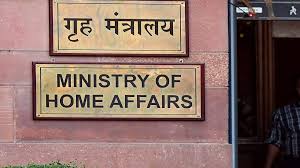
- 25 Feb 2026
In News:
The Ministry of Home Affairs (MHA) has unveiled ‘PRAHAAR’, India’s first comprehensive National Counter-Terrorism Policy and Strategy. This eight-page doctrine-level framework institutionalises a unified, intelligence-led and proactive approach to combat terrorism in all its forms. The policy formalises practices evolved over decades and responds to emerging hybrid threats such as drone-enabled attacks, cyber-terrorism, and transnational organised crime linkages.
Rationale and Context
India has faced persistent threats from cross-border terrorism, radical networks, and globally affiliated organisations such as Al-Qaeda and ISIS attempting to activate sleeper cells. The policy highlights:
- Cross-border terror networks and state-sponsored elements.
- Increasing use of drones in border states such as Punjab and Jammu & Kashmir.
- Growing nexus between terrorism and organised crime.
- Use of encrypted platforms, dark web, cryptocurrencies, and social media for recruitment, propaganda, and financing.
- Risks of chemical, biological, radiological, nuclear (CBRN), explosive, and cyber capabilities.
Given regional instability and the existence of ungoverned spaces, PRAHAAR adopts a multi-layered strategy focused on prevention, rapid response, coordination, and resilience.
Core Philosophy
India reiterates its zero-tolerance approach to terrorism and rejects any attempt to associate terrorism with religion, ethnicity, nationality, or civilisation. The policy underscores strict adherence to human rights, rule of law, and due process under legislations such as the Unlawful Activities (Prevention) Act (UAPA) and newly enacted criminal codes.
Seven Pillars of PRAHAAR
The acronym ‘PRAHAAR’ (meaning “strike”) represents seven core pillars:
- Prevention – Intelligence-led disruption of terror plots and dismantling support ecosystems.
- Response – Swift and proportionate operational action during incidents.
- Aggregation of Capacities – Strengthening institutional coordination and standardisation across central and state agencies.
- Human Rights Compliance – Ensuring lawful, accountable operations.
- Attenuation of Radicalisation – Preventive outreach, community engagement, and de-radicalisation initiatives.
- Aligning International Cooperation – Intelligence sharing, extradition, and support for UN designations of terrorist entities.
- Recovery and Resilience – Victim support, infrastructure restoration, and societal resilience.
Institutional Mechanisms
The policy adopts a whole-of-government and whole-of-society approach.
- Multi Agency Centre (MAC) and Joint Task Force on Intelligence (JTFI) serve as nodal platforms for real-time intelligence sharing.
- Local police act as first responders, supported by specialised state units and national forces such as the National Security Guard (NSG).
- The National Investigation Agency (NIA) leads investigations to ensure effective prosecution and higher conviction rates.
- Standard operating procedures are to be harmonised across states to address operational gaps.
Technology-Centric and Proactive Approach
PRAHAAR shifts focus from reactive policing to pre-emptive disruption. It emphasises:
- Advanced border surveillance across land, maritime, and aerial domains.
- Protection of critical infrastructure—power plants, railways, aviation, ports, defence and space installations, and atomic energy facilities.
- Countering misuse of drones, encrypted messaging apps, cryptocurrency financing, and cyber intrusions.
Counter-Radicalisation and Social Engagement
Recognising radicalisation as a key enabler of terrorism, the policy proposes:
- Community outreach involving civil society and religious leaders.
- Youth engagement and socio-economic interventions.
- Prison monitoring and graded response mechanisms.
This integrates security responses with preventive social strategies.
International Dimension
India will strengthen bilateral and multilateral intelligence-sharing arrangements, pursue extradition of terror suspects, and advocate for comprehensive global counter-terror norms under the United Nations framework.
Anjadip Vessel

- 25 Feb 2026
In News:
The Indian Navy is set to commission INS Anjadip, an indigenous Anti-Submarine Warfare Shallow Water Craft (ASW-SWC), at the Eastern Naval Command in Chennai. The induction marks a significant milestone in India’s maritime security architecture, particularly in strengthening underwater domain awareness in littoral waters.
Key Details:
- INS Anjadip is the third vessel in the eight-ship ASW-SWC project and has been constructed by Garden Reach Shipbuilders & Engineers (GRSE), Kolkata.
- The project reflects India’s growing defence industrial base and aligns with the broader vision of Aatmanirbhar Bharat in defence production.
- It also symbolizes the transformation of the Indian Navy into a “Builder’s Navy,” emphasizing indigenous warship design and construction.
Strategic Rationale
- India’s maritime geography—bordered by the Arabian Sea, Bay of Bengal, and the wider Indian Ocean Region (IOR) faces increasing underwater security challenges, including the expansion of submarine fleets in the region. Coastal and shallow waters are particularly vulnerable due to their complex acoustic environment, which makes submarine detection difficult.
- ASW-SWC vessels such as INS Anjadip are specifically designed for shallow-water operations, complementing larger destroyers and frigates that operate in deeper seas. Their deployment enhances layered maritime defence, especially near critical ports, sea lanes, and offshore assets.
Role and Capabilities
Often described as a “Dolphin Hunter,” INS Anjadip is engineered to detect, track, and neutralize enemy submarines in coastal waters. Its capabilities include:
- Hull Mounted Sonar ‘Abhay’ – an indigenous sonar system for underwater detection.
- Lightweight Torpedoes – for engaging hostile submarines.
- Anti-Submarine Warfare (ASW) Rockets – for close-range underwater threats.
- High-speed Water-Jet Propulsion System – enabling speeds up to 25 knots for rapid response.
Beyond its core ASW role, the vessel is also capable of:
- Coastal Surveillance
- Low-Intensity Maritime Operations (LIMO)
- Search and Rescue (SAR) missions
Its high manoeuvrability makes it particularly effective in confined and shallow operational environments.
Project Significance
The ASW-SWC project demonstrates India’s progress in indigenous naval shipbuilding. By involving domestic shipyards and indigenous weapon-sensor integration, the programme reduces import dependency and strengthens strategic autonomy.
The commissioning also contributes to:
- Capacity-building in anti-submarine warfare.
- Protection of sea lines of communication (SLOCs).
- Safeguarding strategic coastal infrastructure.
- Enhancing deterrence posture in the Indian Ocean Region.
Historical and Geostrategic Context
The vessel is named after Anjadip Island, located off the coast of Goa in the Arabian Sea. The island holds historical importance as Vasco da Gama claimed it for the Portuguese Crown on 24 September 1498 during his first voyage to India. The naming reflects India’s maritime heritage while reinforcing contemporary strategic priorities in the Arabian Sea region.
International Mother Language Day
- 25 Feb 2026
In News:
As the world marks International Mother Language Day (21 February), declared by UNESCO in 1999 and observed globally since 2000, the theme of linguistic justice has gained renewed urgency. The day commemorates the 1952 Bangla Language Movement in Dhaka and seeks to protect linguistic heritage amid rapid globalization. Against this backdrop, UNESCO’s 7th State of the Education Report (SoER) for India 2025, titled Bhasha Matters: Mother Tongue and Multilingual Education, reframes linguistic diversity as central to quality and inclusive education.
UNESCO SoER 2025: Key Focus
Published by the UNESCO Regional Office for South Asia, the SoER 2025 aligns with SDG 4 (Quality Education) and India’s reform trajectory under the National Education Policy (NEP) 2020. The report calls for strengthening Mother-Tongue-Based Multilingual Education (MTB-MLE) and identifies a persistent gap between policy commitments and classroom realities.
Core Areas of Emphasis:
- Access, Inclusion and Equity: Ensuring tribal children, girls, and children with disabilities learn in languages they understand.
- Contextual Learning: Integrating local knowledge systems across school and teacher education.
- Appreciation of Linguistic Diversity: Recognizing children’s linguistic repertoires as assets.
- Skills for Sustainable Futures: Using multilingualism to build cognitive flexibility and facilitate additional language acquisition.
- Institutionalisation: Embedding MTB-MLE in policy, teacher training, and digital ecosystems.
India’s Linguistic Landscape: Opportunity and Crisis
India represents one of the most linguistically diverse societies in the world:
- 1,369 mother tongues; 121 languages spoken by over 10,000 people.
- Linguistic Diversity Index: 0.914 (among the highest globally).
- Four major language families: Indo-Aryan (78%), Dravidian (20%), Austro-Asiatic (1.2%), and Tibeto-Burman (0.8%).
- Nearly 200 languages are vulnerable or endangered.
The UN estimates that a language disappears every two weeks worldwide. In India, the loss disproportionately affects tribal and minoritized communities. A rigid linguistic hierarchy-English at the top, followed by dominant regional languages-creates a “double divide,” marginalizing indigenous languages from education, governance, and digital spaces.
The Learning Crisis: Language Mismatch
A 2022 NCERT report reveals that 44% of Indian children begin schooling in a language different from their home language. This mismatch contributes to early learning deficits, poor foundational literacy, and higher dropout rates—especially among Adivasi communities facing a “triple disadvantage” (economic, social, linguistic).
Research highlights that early education in the mother tongue:
- Reduces cognitive load.
- Improves comprehension and retention.
- Strengthens critical thinking.
- Builds self-esteem and identity affirmation.
Recognizing this, NEP 2020 mandates instruction in the home language at least till Grade 5, preferably till Grade 8, marking a departure from colonial-era language hierarchies.
Constitutional Safeguards
India’s constitutional framework provides robust linguistic protections:
- Article 29: Right to conserve language, , culture.
- Article 350A: States must provide primary education in the mother tongue for linguistic minorities.
- Article 350B: Special Officer for Linguistic Minorities.
- Part XVII (Articles 343–351): Official language provisions.
- Eighth Schedule: 22 recognized languages.
Despite this framework, implementation gaps remain substantial.
Ground Realities and Innovations
The SoER 2025 highlights promising practices:
- Odisha’s Tribal MLE Programme: Covers 21 tribal languages across 17 districts, reaching nearly 90,000 children.
- Digital initiatives such as DIKSHA, PM eVIDYA, and AI-based language tools are enabling multilingual content creation.
- Community-led curriculum development in languages like Gondi, Santali, Khasi, and Mizo demonstrates the pedagogical value of indigenous knowledge systems.
National Monetisation Pipeline 2.0
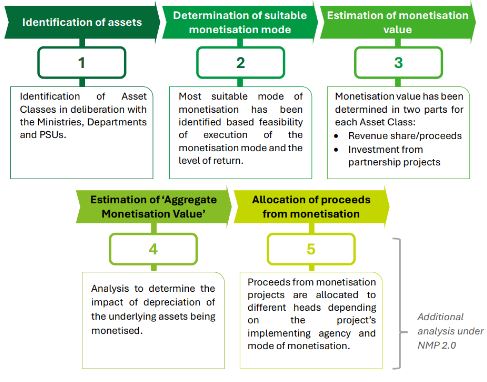
- 25 Feb 2026
In News:
The Union Minister for Finance and Corporate Affairs has launched the National Monetisation Pipeline (NMP) 2.0, prepared by NITI Aayog, to operationalise the Asset Monetisation Plan for 2025–30 as announced in the Union Budget 2025–26. The initiative marks a significant step in India’s infrastructure financing strategy, building upon the experience of NMP 1.0.
Background and Performance of NMP 1.0
- The first phase of the National Monetisation Pipeline (2021–25) set a target of ?6 lakh crore. As per official statements, nearly 90% of this target was achieved, establishing institutional mechanisms, transaction templates, and sector-specific best practices. It also mainstreamed asset monetisation as a structured public finance strategy rather than an ad hoc disinvestment measure.
- NMP 1.0 covered operational (brownfield) public assets across sectors such as roads, railways, power transmission, airports, ports, and telecom. The experience gained in valuation, risk allocation, and investor outreach forms the foundation for NMP 2.0.
Rationale: Asset Recycling as a Financing Tool
NMP 2.0 is anchored in the concept of asset recycling, wherein operational public infrastructure assets are monetised to unlock capital. The proceeds are reinvested in new greenfield infrastructure (capital expenditure), without increasing fiscal deficits or immediate budgetary outgo.
This approach serves multiple objectives:
- Enhances efficiency through private sector participation.
- Improves asset utilisation and maintenance.
- Provides upfront capital to the government.
- Reduces pressure on traditional borrowing.
Thus, monetisation is distinct from privatisation; ownership of assets remains with the public authority while usage rights are transferred for a defined concession period.
Scope and Sectoral Coverage
NMP 2.0 expands the scale and ambition of monetisation. The pipeline estimates an aggregate potential of ?16.72 lakh crore, including approximately ?5.8 lakh crore in private sector investment—about 2.6 times the size of NMP 1.0.
Key sectors covered include:
- Roads and Highways
- Railways
- Power (generation and transmission)
- Oil and Gas pipelines
- Civil Aviation (airports)
- Ports
- Telecom infrastructure
- Coal and Mining assets
This broad sectoral spread ensures diversification of revenue streams and investor participation.
Institutional and Governance Framework
To ensure coordinated implementation, progress under NMP 2.0 will be monitored by the Core Group of Secretaries on Asset Monetisation (CGAM), chaired by the Cabinet Secretary. This institutional arrangement reflects a “whole-of-government” approach, integrating ministries, public sector enterprises, and state governments.
Revenue allocation from monetisation depends on the implementing agency:
- Ministry-led projects: credited to the Consolidated Fund of India.
- PSU/Port Authority projects: retained by the respective entity.
- Mining-related revenues: flow to the State Consolidated Fund (largely through royalties).
- Private investments involving construction or major maintenance are recorded under a separate accounting head.
Monetisation Instruments
Transactions under NMP 2.0 will employ a mix of financial and contractual instruments:
- Public-Private Partnership (PPP) concessions
- Infrastructure Investment Trusts (InvITs)
- Securitisation of cash flows
These instruments aim to attract long-term institutional investors such as pension funds and sovereign wealth funds, thereby deepening India’s infrastructure finance market.
Significance in the Context of Viksit Bharat
Aligned with the broader vision of Viksit Bharat, NMP 2.0 seeks to optimise public asset utilisation and crowd in private capital for infrastructure expansion. By providing medium-term asset visibility and a clear roadmap, it enhances investor confidence and predictability.
At a macroeconomic level, the pipeline complements the government’s high capital expenditure strategy, supports economic growth, and strengthens fiscal sustainability. If implemented effectively with transparency and robust regulatory safeguards, NMP 2.0 could institutionalise asset monetisation as a permanent pillar of India’s public finance architecture.
Rajagopalachari Statue to replace Lutyens at Rashtrapati Bhavan

- 24 Feb 2026
In News:
The Prime Minister announced that the statue of British architect Edwin Lutyens at Rashtrapati Bhavan will be replaced by that of C. Rajagopalachari (Rajaji).
- Edwin Lutyens designed Rashtrapati Bhavan.
- Rajaji was the first Indian occupant of Rashtrapati Bhavan as Head of State (Governor-General of India).
C. Rajagopalachari (Rajaji)
Basic Facts
- Full Name: Chakravarti Rajagopalachari
- Born: 10 December 1878, Salem (Madras Province, now Tamil Nadu)
- Popularly known as: Rajaji
- First and last Indian Governor-General of India (1948–1950)
Role in Freedom Movement
- Inspired by Bal Gangadhar Tilak.
- Active member of the Indian National Congress.
- Hosted Mahatma Gandhi during the Anti-Rowlatt agitation.
- Led the Vedaranyam Salt Satyagraha (1930), mirroring the Dandi March in South India.
Political & Administrative Roles
- Prime Minister of Madras Province (1937).
- Promoted Khadi.
- Advocated abolition of Zamindari.
- Governor of West Bengal (Post-Independence).
- Union Home Minister (after Sardar Vallabhbhai Patel).
- Contributed to the drafting of the First Five-Year Plan.
- Piloted the Preventive Detention Act, 1950.
C.R. Formula (1944)
- Proposed in pamphlet “The Way Out”.
- Attempted to resolve constitutional deadlock between INC and Muslim League regarding Pakistan demand.
Founder of Swatantra Party
- Established Swatantra Party (1959).
- Advocated market economy and opposed excessive state control.
- As Chief Minister of Madras State, decontrolled foodgrain distribution and prices.
Literary Contributions
- Founded an ashram in 1925 for social reform.
- Published:
- Vimochanam (Tamil)
- Prohibition (English)
- Won Sahitya Akademi Award (1958) for Tamil retelling of Ramayana (Chakravarthi Thirumagan).
Awards
- One of the first three recipients of the Bharat Ratna (1954), along with:
- Sarvepalli Radhakrishnan
- C. V. Raman
Edwin Lutyens
About
- British architect and town planner.
- Key designer of New Delhi during British rule.
- Collaborated with Sir Herbert Baker.
Major Architectural Contributions
- Rashtrapati Bhavan
- North Block
- South Block
- India Gate
A central administrative zone of New Delhi is popularly called “Lutyens’ Delhi.”
National Organ and Tissue Transplant Organization (NOTTO)

- 24 Feb 2026
In News:
India has recorded unprecedented progress in organ donation and transplantation:
- Transplants increased fourfold:
- < 5,000 (2013) → ~20,000 (2025)
- 18% of transplants now from deceased donors.
- 1,200 families donated organs of loved ones in 2025.
- 4.8 lakh citizens registered for posthumous organ donation via Aadhaar-based verification system (since 17 September 2023).
- India leads globally in hand transplants and performs the highest number worldwide.
- High competence in complex transplants: Heart, Lung, Pancreas.
About NOTTO
Establishment
- Set up under the Directorate General of Health Services (DGHS).
- Ministry: Ministry of Health and Family Welfare.
- Located in New Delhi.
- Mandated by the Transplantation of Human Organs and Tissues (Amendment) Act, 2011.
Organizational Structure
NOTTO comprises two divisions:
- National Human Organ and Tissue Removal and Storage Network
- National Biomaterial Centre
It functions as the apex coordinating centre for organ procurement, allocation, and data registry across India.
Core Functions
1. Coordination & Allocation
- National-level coordination of organ procurement and distribution.
- Facilitates inter-state sharing of organs.
- Ensures equitable and transparent allocation.
2. National Registry
- Maintains and publishes the National Organ & Tissue Transplant Registry.
- Compiles data from States and Regions.
- Maintains transplant surveillance and databank.
3. Policy & Protocols
- Frames guidelines and Standard Operating Procedures (SOPs).
- Aligns transplant systems with global best practices.
4. Capacity Building
- Strengthens:
- SOTTOs (State Organ & Tissue Transplant Organizations)
- ROTTOs (Regional Organ & Tissue Transplant Organizations)
- Assists States in data management and transplant monitoring.
5. Public Awareness
- Promotes deceased organ donation.
- Engages youth, institutions, Panchayati Raj Institutions.
- Encourages multiorgan donation as a family choice.
Government Reforms Strengthening NOTTO
- Real-time digital organ allocation system.
- Expansion & modernization of National Registry.
- Promotion of Green Corridors for rapid organ transport.
- Aadhaar-based donor registration.
- Enhanced hospital connectivity and digital integration.
These measures have reduced logistical barriers and improved clinical outcomes.
Hoysala Temples of Karnataka
- 24 Feb 2026
In News:
Hoysala architecture (1050–1300 CE) is best known for its star-shaped (stellate) temple plans, soapstone carvings, and hybrid Vesara style blending Nagara and Dravida features.
Historical Background – Hoysala Dynasty
- Period: c. 11th–14th century CE
- Initially feudatories of the Western Chalukyas (Kalyana Chalukyas), later emerged as an independent power.
- Founder: Nripa Kama II (early phase as vassal).
- Capitals:
- Initially Belur
- Later shifted to Dwarasamudra (modern Halebidu)
- Ruled large parts of present-day Karnataka and parts of Tamil Nadu for over three centuries.
Notable Rulers
- Vishnuvardhana (Bittideva) – Major territorial expansion; prolific temple patronage; converted from Jainism to Vaishnavism under the influence of Ramanuja.
- Veera Ballala II
- Veera Ballala III
Architectural Style: Vesara Tradition
Hoysala architecture represents the Vesara style, a hybrid blending:
- Nagara (North Indian) features
- Dravida (South Indian) features
It evolved into a distinct regional idiom in Karnataka.
Core Architectural Features
1. Building Material
- Chloritic schist (soapstone)
- Soft when quarried → allows intricate carving
- Hardens over time
- Enabled microscopic detailing (ornaments, curls, fingernails)
2. Ground Plan Variations
- Ekakuta – Single shrine
- Dvikuta – Two shrines
- Trikuta – Three shrines
- Chatushkuta / Panchakuta – Four or five shrines
Most temples stand on a raised jagati (platform) with a stellate (star-shaped) plan, producing rhythmic projections and recesses.
Distinctive Feature: Unlike the cruciform Panchayatan layout, Hoysala temples maximize sculptural surface through multiple star-shaped projections.
3. Sculptural Ornamentation
- Outer walls resemble sculptural manus.
- Horizontal friezes depict:
- Elephants (strength)
- Horses
- Mythical beasts
- Episodes from Ramayana, Mahabharata, Puranas
- Bracket figures: Madanikas (celestial dancers)
- Detailed jewellery and costumes carved in stone.
4. Shikhara (Superstructure)
- Tiered arrangement with horizontal mouldings.
- Interconnected chambers crowned by proportionate towers.
- Harmonious vertical elevation.
Important Hoysala Temples
1. Chennakeshava Temple
- Located at Belur.
- Commissioned by King Vishnuvardhana after victory over the Cholas.
- Dedicated to Vishnu.
- Known for exquisite bracket figures (madanikas).
- Inscribed under UNESCO (2023).
2. Hoysaleswara Temple
- Grand Shiva temple at Halebidu.
- Elaborate narrative friezes and mythological panels.
- One of the most sculpturally dense monuments.
- UNESCO inion (2023).
3. Keshava Temple
- 13th-century Trikuta Vaishnava temple.
- Built by Somanatha Dandanayaka under Narasimha III.
- Exemplifies mature Hoysala detailing.
- UNESCO inion (2023).
Other Important Monuments (Prelims Focus)
- Veera Narayana Temple (c. 1200 CE) – Large ranga-mandapa, interior emphasis.
- Nageshwara & Govindeshwara Temples (Koravangala) – Transitional phase from Chalukyan to mature Hoysala style.
- Bucheshwara Temple (1173 CE) – High sculptural density; star-shaped platform.
- Lakshminarasimha Temple (1250 CE, Javagal) – Trikuta shrine; polished pillars.
- Lakshmidevi Temple (1114 CE) – Early experiment; rare Mahakali shrine; patronized by merchant Sahaja Devi.
- Panchalingeshwara Temple (Mandya) – Rare Panchakuta design (five east-facing Shiva shrines).
- Jain Basadis at Halebidu – Parshvanatha, Shantinatha, Adinatha; restrained aesthetic.
- Hulikere Kalyani – 12th-century stepped tank integrating cosmological symbolism.
UNESCO Recognition
In 2023, the following were inscribed as “Sacred Ensembles of the Hoysalas” during the 45th World Heritage Committee session:
- Chennakeshava Temple (Belur)
- Hoysaleswara Temple (Halebidu)
- Keshava Temple (Somanathapura)
Namo Bharat Rapid Rail and Meerut Metro
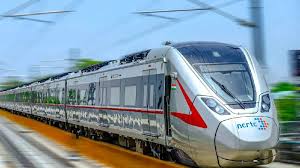
- 24 Feb 2026
In News:
- The Prime Minister inaugurated both the Namo Bharat Rapid Rail and the Meerut Metro from a single platform, marking the first instance in India where a rapid rail (regional system) and a metro (intra-city system) were launched together on the same day.
- The Meerut Metro operates on the same infrastructure as the Namo Bharat corridor in a first-of-its-kind integrated model.
About Namo Bharat
- India’s first Regional Rapid Transit System (RRTS).
- Dedicated semi-high-speed commuter rail network.
- Designed to transform connectivity across the National Capital Region (NCR).
- Speed Specifications
- Design Speed: 180 km/h
- Operational Speed: Up to 160 km/h
- Average Speed: ~100 km/h
- Primary Objective
- Reduce congestion on roads and conventional rail networks.
- Provide high-frequency, fast connectivity for commuters traveling 100–200 km distances.
- Promote sustainable and transit-oriented regional development.
Flagship Corridor
Delhi–Ghaziabad–Meerut RRTS
- Length: ~82 km
- Full operations inaugurated in February 2026.
- Connects Delhi with key urban centres in western Uttar Pradesh.
Distinction from Other Rail Systems
1. RRTS vs Metro
|
Feature |
RRTS (Namo Bharat) |
Metro |
|
Coverage |
Regional (Inter-city within NCR) |
Intra-city |
|
Stops |
Fewer |
Frequent |
|
Speed |
Higher (up to 160 km/h) |
Lower comparatively |
|
Distance |
100–200 km |
Short urban distances |
2. RRTS vs Vande Bharat Express
|
Feature |
RRTS |
Vande Bharat |
|
Route Type |
Regional commuter |
Long-distance inter-city |
|
Frequency |
High |
Moderate |
|
Target Users |
Daily regional commuters |
Inter-city travelers |
|
Distance |
Short-medium regional |
Long-distance routes |
Meerut Metro
Key Features
- Connects Meerut South – Modipuram.
- India’s fastest metro with speeds up to 120 km/h.
- Operates on shared infrastructure with Namo Bharat in certain sections—first such model in India.
Significance
- Integrated Urban–Regional Mobility Model: First example of metro and rapid rail operating together on common infrastructure.
- Decongestion of NCR: Encourages modal shift from private vehicles to mass transit.
- Economic Growth: Boosts real estate, employment, and regional economic integration.
- Sustainable Transport: Energy-efficient, high-capacity public transport reduces carbon footprint.
PRASHAD Scheme

- 24 Feb 2026
In News:
The Union Civil Aviation Minister recently stated that the Centre is preparing plans to further develop tourist destinations around prominent temples in Andhra Pradesh under the PRASHAD scheme, highlighting renewed focus on temple-based tourism infrastructure.
About Pilgrimage Rejuvenation and Spiritual Heritage Augmentation Drive (PRASHAD) Scheme
- PRASHAD is a Central Sector Scheme (100% Central funding) launched in 2014–15 for integrated development of identified pilgrimage and heritage destinations.
- Nodal Ministry: Ministry of Tourism
- Objective:
- Integrated development of identified pilgrimage and spiritual heritage destinations.
- Improvement of tourism infrastructure to enhance pilgrim and visitor experience.
- Funding Pattern:
- 100% financial assistance by the Central Government for public-funded project components.
- Encourages additional support through: Corporate Social Responsibility (CSR) and Public-Private Partnership (PPP)
- Implementation Mechanism:
- A dedicated Mission Directorate under the Ministry of Tourism oversees execution.
- Coordinates with State Governments/UT Administrations and other stakeholders.
- Identifies projects in selected cities and ensures integrated planning.
- Focus Areas of Development
- Projects typically include:
- Last-mile connectivity
- Tourist amenities (toilets, drinking water, parking)
- Illumination and landscaping
- Riverfront and heritage area development
- Interpretation centres
- Signage and visitor facilitation centres
- Projects typically include:
- Significance
- Boost to Religious Tourism: Pilgrimage tourism is one of the largest segments of domestic tourism in India.
- Employment Generation: Infrastructure development creates direct and indirect employment in hospitality, transport, handicrafts, and local services.
- Local Skill & Capacity Development: Enhances livelihood opportunities for local communities.
- Cultural Preservation: Strengthens conservation and promotion of India’s spiritual and heritage assets.
- Economic Multiplier Effect: Promotes regional economic growth through tourism-led development.
23rd Foundation Day of National Commission for Scheduled Tribes
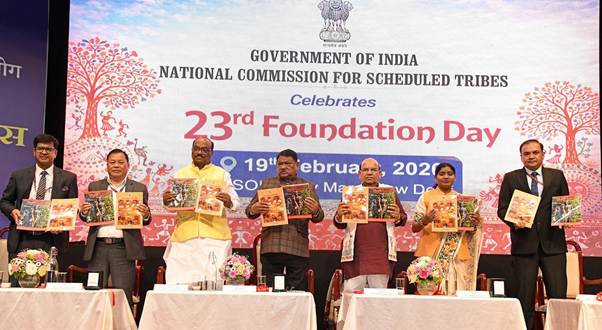
- 22 Feb 2026
In News:
The 23rd Foundation Day of the National Commission for Scheduled Tribes (NCST) was celebrated in New Delhi by the Ministry of Tribal Affairs.
- Union Tribal Affairs Minister Jual Oram released the NCST Handbook detailing the Commission’s mandate and functioning.
- The event highlighted:
- NCST’s constitutional responsibilities
- Policy recommendations
- Grievance redressal initiatives
- Field visits to Scheduled Areas
- The Commission reiterated focus areas such as education, forest rights, land issues, infrastructure, and livelihood generation for tribal communities.
About National Commission for Scheduled Tribes (NCST)
Constitutional Status
- Established under Article 338-A of the Constitution.
- Created by the 89th Constitutional Amendment Act, 2003, which bifurcated the earlier National Commission for SCs and STs.
- Aims to provide focused attention to the distinct problems of Scheduled Tribes (STs).
Composition
- Chairperson
- Vice-Chairperson
- Three other Members (at least one woman)
- Appointed by the President by warrant under his hand and seal.
Tenure & Status
- Tenure: 3 years.
- Not eligible for more than two terms.
- Chairperson: Rank of Union Cabinet Minister.
- Vice-Chairperson: Rank of Minister of State.
- Members: Rank of Secretary to Government of India.
Core Functions
- Investigate and monitor safeguards for STs under the Constitution and laws.
- Inquire into complaints regarding deprivation of tribal rights.
- Participate in socio-economic development planning.
- Evaluate development progress of STs.
- Submit annual/periodic reports to the President.
- Recommend measures to Union and State Governments.
Additional Functions (Specified in 2005)
- Ownership rights over Minor Forest Produce (MFP).
- Safeguarding rights over mineral and water resources.
- Preventing land alienation of tribals.
- Monitoring implementation of the Panchayats (Extension to Scheduled Areas) Act (PESA), 1996.
- Relief and rehabilitation of displaced tribals.
- Addressing shifting cultivation issues.
Powers of NCST
- Powers of a civil court during investigations:
- Summon persons
- Require production of documents
- Receive affidavits
- Requisition public records
- Can regulate its own procedure.
- Mandatory consultation: Central and State Governments must consult NCST on major policy matters affecting STs.
Reporting Mechanism
- Submits reports to the President.
- Reports laid before Parliament with Action Taken Memorandum.
- State-specific reports forwarded to Governor for placement before State Legislature.
Constitutional Provisions Related to Scheduled Tribes (STs)
Identification of STs
- Article 366(25): defines Scheduled Tribes (STs) as tribes or tribal communities, or parts thereof, that are deemed under Article 342 to be STs for the purposes of the Constitution.
- Article 342(1) empowers the President to specify tribes as STs in consultation with the Governor for states.
Administrative Provisions
- Fifth Schedule: Applies to Scheduled Areas in states other than Sixth Schedule states.
- Sixth Schedule: Provides Autonomous District Councils in: Assam, Meghalaya, Tripura, and Mizoram
Key Legislations for ST Protection
- Protection of Civil Rights Act, 1955
- SC/ST (Prevention of Atrocities) Act, 1989
- PESA Act, 1996
- Forest Rights Act, 2006
Gaganyaan Drogue Parachute
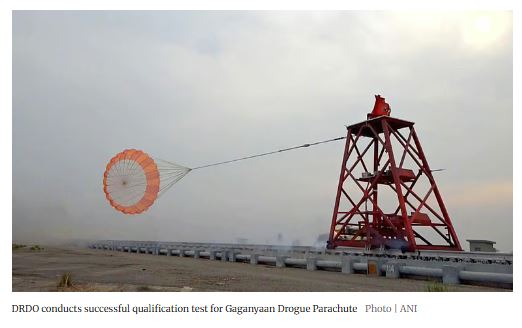
- 22 Feb 2026
In News:
India achieved a significant milestone in its human spaceflight programme as the Defence Research and Development Organisation (DRDO) successfully conducted a qualification-level load test of the Drogue Parachute for the Gaganyaan mission.
- Test conducted at the Terminal Ballistics Research Laboratory (TBRL), Chandigarh.
- Utilised the Rail Track Rocket Sled (RTRS) facility to simulate dynamic flight conditions.
- The parachute was tested under loads higher than expected flight loads to validate safety and reliability.
What is the Gaganyaan Drogue Parachute?
- A crucial component of the Crew Module deceleration system.
- Deployed during atmospheric re-entry.
- Functions to:
- Stabilize the Crew Module.
- Reduce velocity before main parachutes deploy.
- Ensure safe splashdown/landing of astronauts.
Developed collaboratively by:
- Indian Space Research Organisation (ISRO)
- DRDO
Gaganyaan Deceleration System
The Crew Module recovery system consists of 10 parachutes (4 types):
- Apex Cover Separation Parachutes (2): Remove protective apex cover.
- Drogue Parachutes (2): Stabilize module at high altitude, Reduce velocity during transition phase.
- Pilot Parachutes (3): Extract main parachutes.
- Main Parachutes (3): Provide final deceleration for safe landing.
The drogue parachutes serve as the critical transition stage, ensuring controlled descent before deployment of main canopies.
Key Technical Features
- High-strength ribbon parachute design
- Ribbon-type structure allows controlled airflow.
- Reduces shock loads.
- Ensures high tensile strength during high-speed descent.
- Qualification-level testing
- Tested beyond maximum expected flight loads.
- Enhances mission safety margins.
- Designed for extreme conditions
- Capable of functioning under:
- Rapid velocity changes
- Turbulence
- Variable atmospheric pressures
- Capable of functioning under:
- Dynamic validation: High-speed testing using RTRS facility simulates near-real re-entry conditions.
Significance for India’s Human Spaceflight Programme
- Strengthens safety architecture of Gaganyaan.
- Demonstrates indigenous capability in complex recovery systems.
- Enhances collaboration between ISRO and DRDO.
- Critical for safe astronaut recovery after orbital mission.
India assumes chairmanship of Indian Ocean Naval Symposium (IONS)
- 22 Feb 2026
In News:
- India assumed the Chairmanship of the Indian Ocean Naval Symposium (IONS) from Royal Thai Navy.
- The 9th Conclave of Chiefs was held at Visakhapatnam.
- Participation included Chiefs of Navies and Heads of Maritime Security Agencies from 33 countries (Members, Observers, and Indian Ocean littoral states).
- India had earlier held the inaugural Chairmanship (2008–2010).
About Indian Ocean Naval Symposium (IONS)
- Launched in 2008 by the Indian Navy.
- A voluntary naval forum aimed at enhancing maritime cooperation among Indian Ocean littoral states.
- No permanent headquarters.
- Features a rotating chairmanship.
Membership Structure
- 25 Member States, divided into four sub-regions:
- South Asian
- West Asian
- Southeast Asian & Australian
- East African
- 9 Observer countries.
- In 2026:
- The Philippines was inducted as an Observer.
- Oman joined the Working Group on HADR.
Core Objectives of IONS
IONS promotes:
- Maritime security cooperation (including anti-piracy efforts).
- Humanitarian Assistance and Disaster Relief (HADR).
- Maritime information sharing.
- Capacity building among navies.
- Professional exchange through exercises, workshops, and biennial conclaves.
Key Focus Areas (Working Groups)
Under India’s Chairmanship, emphasis will be placed on strengthening:
- Maritime Security
- Humanitarian Assistance and Disaster Relief (HADR)
- Information Sharing and Interoperability
Initiatives Announced During India’s Tenure
- Conduct of IONS Maritime Exercise (IMEX).
- Continued deployment of IOS SAGAR missions to IONS member countries with multinational participation.
- Structured Maritime Information Sharing Workshops.
- Upgrade of the IONS website to enhance:
- Institutional continuity
- Secure engagement
- Usability among member navies
Strategic Significance for India
- Reinforces India’s role as a net security provider in the Indian Ocean Region.
- Strengthens maritime diplomacy and defence cooperation.
- Enhances collective response capability against: Piracy, Maritime terrorism, and Natural disasters
- Promotes interoperability among like-minded navies.
- Reflects India’s vision of SAGAR (Security and Growth for All in the Region).
INS Krishna
- 22 Feb 2026
In News:
The Indian Navy has commissioned INS Krishna, the first of three indigenously built Cadet Training Ships (CTS), marking a significant step in strengthening sea-based training infrastructure for future naval officers.
About INS Krishna
- First of three Cadet Training Ships (CTS) for the Indian Navy.
- Constructed at Larsen & Toubro (L&T) Shipyard, Kattupalli (near Chennai).
- Designated as Yard 18003 during construction.
- Entirely indigenously built, supporting Aatmanirbhar Bharat in defence manufacturing.
Purpose and Role
- Training Platform
- Functions as a “floating classroom” and “living laboratory.”
- Used for training:
- Officer cadets (including women)
- Cadets from friendly foreign countries
- Training areas include:
- Navigation
- Seamanship
- Watch-keeping
- Practical maritime operations under real sea conditions
Technical Specifications
- Displacement: ~4,700 tonnes
- Maximum speed: 20 knots
- Endurance: 60 days at sea
- Multi-role capability beyond training
Secondary Operational Roles
Apart from training, INS Krishna is designed for:
- Non-Combatant Evacuation Operations (NEO)
- Humanitarian Assistance and Disaster Relief (HADR)
- Search and Rescue (SAR) missions
This enhances operational flexibility and supports India’s role as a net security provider in the Indian Ocean Region (IOR).
Strategic Significance
- Strengthens sea-based officer training capacity of the Indian Navy.
- Enhances practical exposure for cadets under real maritime conditions.
- Supports indigenous defence shipbuilding capability.
- Promotes defence diplomacy through training of foreign cadets.
- Augments India’s capability in HADR and evacuation missions.
Tetanus and Adult Diphtheria (Td) Vaccine
- 22 Feb 2026
In News:
- Recently, the Td vaccine was launched by Union Health Minister J. P. Nadda.
- Manufactured by the Central Research Institute (CRI), Kasauli, Himachal Pradesh.
- CRI functions under the Directorate General of Health Services, Ministry of Health & Family Welfare.
- The vaccine will be supplied under India’s Universal Immunization Programme (UIP).
- CRI plans to supply 55 lakh doses by April 2026, with progressive scaling in subsequent years.
Why the Shift from TT to Td?
- Extensive childhood immunization using DPT vaccines significantly reduced tetanus and diphtheria.
- However, diphtheria antibody levels decline over time, necessitating booster doses.
- In 2006, the World Health Organization (WHO) recommended transitioning from Tetanus Toxoid (TT) to Td vaccine.
- Recommendation reaffirmed in:
- WHO Tetanus Vaccine Position Paper (2017)
- Strategic Advisory Group of Experts (SAGE) deliberations (2002 & 2016)
- India’s National Technical Advisory Group on Immunization (NTAGI) recommended replacing TT with Td for: All age groups and Pregnant women
Objective: Sustain maternal & neonatal tetanus elimination while expanding protection against diphtheria.
About Td Vaccine
- Full Form: Tetanus and adult Diphtheria Vaccine (Adsorbed, Reduced D-Antigen Content).
- Provides protection against: Tetanus and Diphtheria
- Composition:
- Purified diphtheria toxoid
- Purified tetanus toxoid
- Adjuvant: Aluminum phosphate
- Preservative: Thiomersal
- Storage: Freeze- and heat-sensitive vaccine
- Target group: Adolescents, Adults and Pregnant women
About Tetanus
- Caused by: Clostridium tetani (toxigenic strains).
- Nature: Acute infectious disease.
- Transmission: Not spread person-to-person (enters through contaminated wounds).
- Symptoms:
- Painful muscle stiffness
- Lockjaw (inability to open mouth)
- Difficulty swallowing and breathing
- High case-fatality rate, even with intensive care.
About Diphtheria
- Caused by: Corynebacterium diphtheriae.
- Spread: Person-to-person via respiratory droplets.
- Symptoms:
- Breathing difficulty
- Heart failure
- Paralysis
- Can be life-threatening.
- South-East Asia region has been a major contributor to global diphtheria incidence since 2005.
Regulatory and Manufacturing Milestones
The Central Research Institute:
- Completed developmental studies.
- Obtained Test License.
- Secured waivers for:
- Preclinical studies
- Phase I, II, and III trials.
- Received:
- Marketing Authorization
- License for manufacture and sale
- Release approval from Central Drugs Laboratory, Kasauli.
Gentoo Penguin

- 21 Feb 2026
In News:
Gentoo penguins have been confirmed infected with H5 avian influenza (H5N1, clade 2.3.4.4b) on Heard Island, marking the first recorded bird infection in an Australian external territory. Earlier (November 2025), the virus had been detected in southern elephant seals. The strain has caused widespread mortality among seabirds and poultry globally.
About Gentoo Penguin
Taxonomy
- Scientific Name: Pygoscelis papua
- Genus: Pygoscelis
- Closely related to: Adélie penguin, and Chinstrap penguin
- Distribution: Antarctic Peninsula, Sub-Antarctic islands, Falkland Islands (South Atlantic Ocean), and Exclusively found in the Southern Hemisphere (45°–65° South latitude)
- Habitat: Prefer shoreline habitats, enabling quick access to marine food while nesting nearby.
- Characteristics
- Fastest underwater swimmers among penguins.
- Diurnal and highly social.
- Breed in colonies; remain in groups year-round.
- Diet: Carnivorous (mainly fish, krill, squid).
- Conservation Status: IUCN Red List: Least Concern
H5N1 Avian Influenza – Key Facts
- Highly pathogenic strain: H5N1 (clade 2.3.4.4b)
- Highly contagious and deadly among: Seabirds, Wild birds, Poultry, and Marine mammals (e.g., southern elephant seals, Antarctic fur seals)
Detection & Testing
- Preliminary tests conducted at the Commonwealth Scientific and Industrial Research Organisation (CSIRO)’s Australian Centre for Disease Preparedness.
- Samples collected during a scientific voyage (February 2026).
Observations
- No signs of large-scale mass mortality in surveyed areas.
- Australia’s national H5 bird flu–free status remains unchanged.
- Government has committed over A$100 million toward preparedness and biosecurity measures.
About Heard Island
- Australian external territory.
- Located:
- ~4,000 km south-west of Perth
- ~1,700 km north of Antarctica
- Situated in the Southern Ocean.
- Remote and ecologically sensitive sub-Antarctic ecosystem.
M.A.N.A.V. Vision for Artificial Intelligence Governance
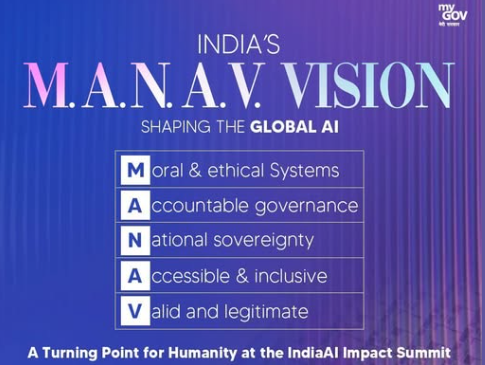
- 21 Feb 2026
In News:
- At the India AI Impact Summit 2026, held at Bharat Mandapam, New Delhi, the Prime Minister Narendra Modi presented the M.A.N.A.V. vision (PM Narendra Modi’s Human-Centric AI Odyssey)-India’s guiding framework for Artificial Intelligence (AI) governance.
- India, home to one-sixth of the global population and one of the largest youth and technology talent pools, positioned itself as both a major AI adopter and a norm-shaper in global AI discourse.
What is M.A.N.A.V.?
M.A.N.A.V. is a human-centric AI governance framework that ensures technological advancement aligns with:
- Human dignity
- Ethical safeguards
- Inclusivity
- Legal accountability
- National interest
It seeks to balance innovation with constitutional values and democratic principles.
Five Pillars of M.A.N.A.V.
1. Moral and Ethical Systems
- AI must be rooted in fairness, transparency, and human oversight.
- Ethical AI principles integrated through National Education Policy 2020.
- Emphasis on AI literacy and computational thinking across educational levels.
- Public awareness initiatives promoted responsible AI usage, including a large-scale AI responsibility pledge campaign.
2. Accountable Governance
- Establishment of transparent regulatory architecture.
- Anchored by the IndiaAI Mission with an outlay exceeding ?10,300 crore.
- Focus areas: compute infrastructure, datasets, skilling, innovation ecosystem.
- AI Governance Guidelines emphasize: Trust, Equity, Accountability, and Explainability
- Ensures AI systems remain lawful and aligned with constitutional values.
3. National Sovereignty
- Extends sovereignty to: Data, Algorithms, and Digital infrastructure
- Promotion of indigenous AI models and domestic compute capacity.
- Supported by:
- India Semiconductor Mission
- Trusted digital public infrastructure
- Objective: Technological self-reliance without digital isolation.
4. Accessible and Inclusive AI
- Democratization of AI access across: Governance, Healthcare, Education, and Agriculture
- Key platforms:
- IndiaAI Compute Portal (shared GPU/TPU access)
- MeghRaj GI Cloud
- IndiaAI Kosh (datasets and AI models)
- Linked with the National Supercomputing Mission and AI Data Labs Network.
- Reduces entry barriers for startups, researchers, and institutions.
5. Valid, Safe and Legitimate Systems
- AI systems must be verifiable, lawful, and transparent.
- Addresses risks from deepfakes and synthetic media.
- Supported by Information Technology (Intermediary Guidelines and Digital Media Ethics Code) Amendment Rules, 2026.
- IndiaAI Mission’s Safe & Trusted AI pillar promotes:
- Bias mitigation
- Privacy-preserving design
- Algorithmic auditing
- Risk assessment frameworks
Ottawa Convention
- 21 Feb 2026
In News:
Poland has formally withdrawn from the Ottawa Convention, reversing its earlier commitment to ban anti-personnel landmines. The move follows heightened regional security concerns after Russia’s invasion of Ukraine.
Background
- Poland ratified the Ottawa Convention in 2012.
- It completed destruction of its anti-personnel mine stockpiles by 2016.
- However, citing new geopolitical threats, Poland has now exited the treaty framework.
Geopolitical Rationale
- The decision is linked to strengthening the Eastern Shield, a fortified defence system along Poland’s borders with:
- Kaliningrad (Russia)
- Belarus
- Triggered by Russia’s full-scale invasion of Ukraine.
- Mines will reportedly remain in stockpiles and deployed only under a “realistic threat of aggression” to reduce civilian harm.
Ottawa Convention (1997)
- Formally known as the Mine Ban Treaty.
- Emerged from the Canadian-led “Ottawa Process” after the First Review Conference of the Convention on Certain Conventional Weapons failed to impose strict limits.
- Prohibits:
- Use
- Production
- Stockpiling
- Transfer of anti-personnel landmines
Rationale
Anti-personnel mines pose long-term risks to civilians, often remaining active decades after conflicts end.
Types of Landmines
|
Type |
Status under International Law |
|
Anti-Personnel Mines |
Banned under Ottawa Convention |
|
Anti-Tank (Anti-Vehicle) Mines |
Not banned; regulated under CCW (Amended Protocol II, 1996) |
- Anti-tank mines remain legally permissible under the CCW framework.
Domestic Production Plans
- Poland aims to restore self-sufficiency in defence manufacturing.
- Plans to renew production of:
- Anti-personnel mines
- Anti-tank mines
- Collaboration with domestic defence manufacturers.
Regional Trend
- Since the Russia–Ukraine conflict, several Eastern European states have reconsidered their treaty obligations.
- Countries announcing withdrawal include: Finland, Estonia, Latvia, Lithuania, Ukraine, and Poland.
Global Context
- Nearly three dozen countries never acceded to the Ottawa Convention.
- Notable non-signatories: India, Russia, United States
India has maintained that anti-personnel mines are necessary for national security considerations, especially along sensitive borders.
Statehood Day of Mizoram and Arunachal Pradesh

- 21 Feb 2026
In News:
On 20 February every year, India commemorates the grant of statehood to Arunachal Pradesh and Mizoram, both of which became full-fledged States of the Indian Union in 1987. The Prime Minister extended greetings to the people of both States on the occasion, highlighting their cultural richness and contribution to national unity.
Constitutional Basis of Statehood
- 53rd Constitutional Amendment Act, 1986 - Granted statehood to Mizoram.
- 55th Constitutional Amendment Act, 1986 - Granted statehood to Arunachal Pradesh.
- Both States formally came into existence on 20 February 1987.
- Mizoram became the 23rd State, while Arunachal Pradesh became the 24th State of India.
Mizoram
Historical Background
- Originally known as the Lushai Hills district of Assam.
- Renamed Mizo Hills in 1954.
- Became a Union Territory in 1972.
- Achieved statehood following the Mizoram Peace Accord signed in 1986 between the Government of India and the Mizo National Front (MNF).
The Accord ended years of insurgency and paved the way for political stability and democratic integration.
Constitutional Protection
- Recognized as a “Tribal Area” under the Sixth Schedule (Article 244(2)) of the Constitution.
- Provides for Autonomous District Councils (ADCs) to safeguard tribal customs, land rights, and local governance.
Arunachal Pradesh
Historical Evolution
- Earlier known as the North-East Frontier Agency (NEFA).
- Came under British control after the Treaty of Yandaboo (1826), following the First Anglo-Burmese War (1824–26).
- The 1914 Shimla Convention demarcated the boundary between Tibet and NEFA, resulting in the McMahon Line.
- Until 1962, it was constitutionally under Assam.
- Became a Union Territory in 1972.
- Granted full statehood in 1987 through the 55th Constitutional Amendment.
Strategic Significance
- Shares an international boundary with China (Tibet Autonomous Region).
- Holds immense strategic and geopolitical importance in India’s North-East security framework.
Vibrant Villages Programme–II (VVP–II)

- 21 Feb 2026
In News:
The Union Home Minister Amit Shah launched the Vibrant Villages Programme–II (VVP–II) at Nathanpur village in Cachar district of Assam, marking an expansion of the government’s border area development strategy in line with the vision of Viksit Bharat @2047.
About Vibrant Villages Programme–II
- Type of Scheme: Central Sector Scheme (100% funded by the Union Government)
- Total Outlay: ?6,839 crore
- Implementation Period: Up to FY 2028–29
- Approach: Saturation-based and convergence-driven
- Coverage: 15 States and 2 Union Territories
- Exclusion: Northern border villages already covered under VVP–I
Objectives
- Comprehensive Development: Improve living standards in border villages through infrastructure and service delivery.
- Livelihood Generation: Create sustainable and diversified livelihood opportunities.
- Border Security Strengthening: Enable residents to act as the “eyes and ears” of the nation.
- Prevention of Trans-border Crimes: Strengthen vigilance and community participation.
- National Integration: Assimilate border populations into the mainstream national framework.
Key Features
1. Infrastructure Development
- Education infrastructure including SMART classrooms
- Development of tourism circuits
- Village-level infrastructure in clusters
- Improved access to essential services
2. Livelihood & Value Chain Development
- Promotion of Self-Help Groups (SHGs)
- Strengthening cooperatives
- Focus on value chain development in agriculture and allied sectors
- Diversification of income sources in border areas
3. Social & Cultural Vibrancy
- Organisation of fairs and festivals
- Celebration of National Days
- Awareness campaigns
- Community mobilisation initiatives
These efforts aim to enhance the “vibrancy” of villages, reduce migration, and foster a sense of belonging.
Strategic Significance
- Internal Security: Strengthened community participation improves intelligence gathering and vigilance.
- Border Management: Acts as a socio-economic complement to physical border infrastructure.
- Balanced Regional Development: Reduces regional disparities.
- Vision 2047 Alignment: Supports the broader goal of building a developed and secure India by 2047.
Saturation-Based & Convergence Approach
- Saturation-based: Ensures all eligible beneficiaries and villages receive full scheme benefits.
- Convergence-driven: Integrates multiple Central and State schemes for optimal resource utilization.
Pax Silica initiative

- 23 Feb 2026
In News:
India has joined the U.S.-led Pax Silica initiative (2025) to strengthen resilient supply chains in critical minerals, semiconductors, electronics, and AI technologies.
India Joins Pax Silica
India has signed the Pax Silica Declaration and joined the U.S.-led global initiative aimed at building secure and diversified supply chains for emerging technologies and critical minerals.
The initiative is spearheaded by the United States Department of State.
What is Pax Silica?
Pax Silica is a strategic international framework designed to promote:
- Resilient supply chains for critical minerals
- Secure semiconductor and electronics ecosystems
- Collaboration in Artificial Intelligence (AI) technologies
- Trusted and diversified global technology networks
It emerged in response to rising concerns over supply chain concentration, particularly in rare-earth processing and advanced semiconductor manufacturing.
Background
- Conceptualised amid growing geopolitical tensions over critical technology supply chains
- Inaugural Summit: December 2025
- Venue: Washington D.C.
Objectives
- Diversify and secure global supply chains for:
- Critical minerals
- Semiconductors
- AI-related technologies
- Reduce dependence on concentrated or monopolistic supply sources
- Deepen strategic and economic partnerships among like-minded countries
- Strengthen technology governance and economic security frameworks
Key Features
1. Supply Chain Security
- Diversification of sourcing and processing
- Reduced vulnerability to coercive economic practices
2. Critical Minerals Cooperation
- Coordinated refining and processing networks
- Access to rare-earth and strategic minerals essential for electronics and AI
3. AI & Semiconductor Collaboration
- Cooperation in AI systems and data infrastructure
- Development of advanced manufacturing ecosystems
4. Investment & Infrastructure
- Shared investments in trusted industrial ecosystems
- Incentives for innovation and supply chain resilience
5. Fair Market & Security Framework
- Address non-market practices and unfair dumping
- Protect critical infrastructure and sensitive technologies
6. Private Sector Participation
- Mobilises industry and innovation ecosystems
- Encourages entrepreneurship in advanced technology sectors
Participating Countries
- Signatories: Australia, Greece, Israel, Japan, Qatar, Republic of Korea, Singapore, UAE, United Kingdom and India.
- Non-signatory Participants: Canada, European Union, Netherlands, OECD, and Taiwan
Significance for India
- Enhances India’s role in trusted technology supply chains
- Supports India’s ambitions in semiconductor manufacturing and AI development
- Strengthens cooperation in critical mineral sourcing and processing
- Aligns with India’s push for resilient and diversified global economic architecture
SANKALP scheme
- 23 Feb 2026
In News:
SANKALP (?4,455 crore outlay) is a World Bank-assisted skill reform programme launched in 2018, but only 44% of its budget was disbursed between 2017–18 and 2023–24, raising concerns over weak monitoring and slow implementation.
About SANKALP Scheme
SANKALP stands for Skill Acquisition and Knowledge Awareness for Livelihood Promotion.
- Launched: 19 January 2018
- Implementing Ministry: Ministry of Skill Development and Entrepreneurship (MSDE)
- Approval: Cabinet Committee on Economic Affairs (October 2017)
- Initial Duration: Till March 2023 (extended to March 2024)
- Total Outlay: ?4,455 crore
Funding Pattern
- World Bank Loan: ?3,300 crore
- State Contribution: ?660 crore
- Industry Leverage: ?495 crore
Objectives of SANKALP
- Strengthen short-term skill training
- Improve institutional capacity at Central, State and District levels
- Enhance industry linkage for demand-driven training
- Promote inclusion of marginalised and disadvantaged groups
- Establish quality assurance and monitoring mechanisms
The scheme aims at systemic reforms rather than direct training delivery.
Key Features
1. Institutional Strengthening
- Capacity building of skill development institutions
- Improved coordination between Centre, States and districts
2. Industry Linkage
- Partnerships with industries
- Demand-driven curriculum and improved placement outcomes
3. Inclusion Focus
- Targeted support to marginalised communities
- Greater equity in access to skill development
4. Performance-Based Funding
- Uses Results Framework
- Disbursement Linked Indicators (DLIs) to track measurable outcomes
Issues Flagged by Audit and Parliamentary Oversight
CAG Observations
The Comptroller and Auditor General (CAG) highlighted:
- Only 44% of budgeted funds disbursed between 2017–18 and 2023–24 (as of October 2023)
- Delays in financial and physical progress
- Weak adherence to implementation guidelines
- Non-preparedness before commencement of World Bank loan period
Loan Utilisation
- Against first tranche of $250 million, ?1,606.15 crore (86%) was disbursed by World Bank
- Ministry utilised only ?850.71 crore (as of December 2023)
Public Accounts Committee (PAC) Concerns
Public Accounts Committee criticised slow implementation and:
- Absence of a central monitoring mechanism
- Gaps in due diligence
- Sluggish pace of execution across components
The PAC was examining the CAG report on SANKALP’s performance.
Significance for Skill Development
SANKALP is important because:
- India has a large youth population requiring employable skills
- Short-term skilling is key to employment generation
- Industry-aligned training enhances productivity and job readiness
- Effective implementation is crucial for achieving skill ecosystem reforms
However, delayed fund utilisation and weak monitoring undermine intended outcomes.
Revitalizing India’s Apprenticeship Ecosystem
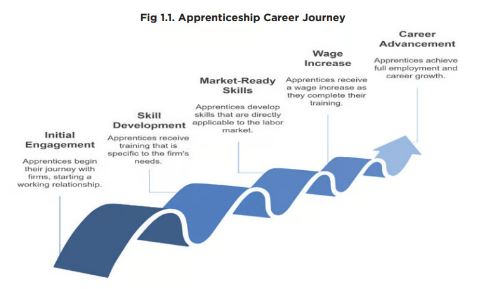
- 23 Feb 2026
In News:
NITI Aayog’s report “Revitalizing Apprenticeship Ecosystem” highlights low completion rates (only 2.51 lakh completed out of 13.1 lakh registrations in 2024–25) and calls for a National Apprenticeship Mission and targeted reforms to strengthen India’s skilling strategy.
Launch of Policy Report
- NITI Aayog launched a policy report titled “Revitalizing Apprenticeship Ecosystem: Insights, Challenges, Recommendations and Best Practices.”
- The report provides a comprehensive review of India’s apprenticeship system and suggests reforms to make it a cornerstone of India’s skilling and employment framework.
Apprenticeship: Concept and Importance
- Apprenticeship is a structured, work-based learning model that bridges the gap between formal education and employment.
Significance
- Provides industry-relevant skills to youth
- Enhances productivity and innovation for businesses
- Reduces skill mismatch in labour markets
- Facilitates smoother school-to-work transition
Demographic Imperative
- Youth (15–29 years) constituted 27.2% of India’s population in 2021
- India projected to have ~345 million youth by 2036 (largest globally)
To convert this demographic potential into a demographic dividend, strengthening the apprenticeship and skilling ecosystem is critical.
Current Landscape of Apprenticeship (2024–25 Data)
1. Gap in Registration and Completion
- Registrations: 13.1 lakh (1.31 million)
- Engaged: 9.85 lakh (985,000)
- Completed training: 2.51 lakh (251,000)
Significant drop between registration, engagement, and completion.
2. Enterprise Participation
- Medium & large enterprises:
- <30% of active establishments
- Account for >70% of apprenticeship engagement
- Low participation by:
- MSMEs
- Start-ups
- Informal sector
3. Gender Gap
- Male participants dominate registrations and engagements
- Limited targeted support for women and marginalized groups
4. Regional Disparities
- Top 10 states contribute 79–84% of total engagement
- Low participation from:
- North-East states
- Union Territories
- Significant district-level variation within states
Key Recommendations by NITI Aayog
1. Policy Reforms
- Establish a National Apprenticeship Mission
- Develop a unified National Apprenticeship Portal
- Provide targeted incentives for:
- Aspirational districts
- North-East states
- Women apprentices
2. Regulatory Measures
- Create an Apprenticeship Engagement Index for benchmarking States/UTs
- Conduct robust evaluation of apprentice competencies
3. State & District-Level Interventions
- Focus on “high-potential but low-performing” districts
- Recognition/reward initiative for Top 25 districts based on growth
4. Enhancing Enterprise Participation
- Cluster-based approach for MSMEs
- Integration with start-up ecosystem
- Alignment with gig and platform economy
5. Support for Women & Marginalized Sections
- Travel and accommodation assistance
- Expanded insurance coverage
- Structured career counselling
- International mobility pathways
- Targeted measures to enhance women’s inclusion
Key Government Initiatives
1. National Apprenticeship Promotion Scheme (NAPS), 2016
- Implemented by Ministry of Skill Development & Entrepreneurship
- Target group: 14–35 years
- Incentives:
- Government shares 25% of stipend (up to ?1,500/month)
- Reimbursement of basic training costs
2. National Apprenticeship Training Scheme (NATS)
- Administered by Ministry of Education
- For graduate and diploma holders
- Provides 6 months to 1 year structured on-the-job training
Red Sanders
- 23 Feb 2026
In News:
Busy Tirupati pilgrimage route makes Red Sanders smuggling easy in south Andhra Pradesh.
About Red Sanders
- Scientific Name: Pterocarpus santalinus
- Common Name: Red Sandalwood
- Type: Tropical dry deciduous tree
- Endemic to: Southern Andhra Pradesh
Geographic Distribution
- Restricted to three districts: Chittoor, Nellore, and YSR Kadapa
- Largest reserve located in the Seshachalam Biosphere Reserve, part of the Eastern Ghats
- Spread over 4,755 sq km
- Located about 35 km from Tirupati temple town
Ecological Characteristics
- Grows in rocky, degraded and red soil areas
- Requires hot and dry climate
- Fire-hardy and drought-resistant
- Slow-growing: 25–40 years to reach maturity
- Wood is relatively brittle compared to teak
Economic Importance
- Contains ‘Santalin’, a natural red dye
- Used in:
- Pharmaceutical preparations
- Textile and leather industries
- Food colouring
- Perfume and medicinal products
- Gained global attention in the 1960s when Japanese instrument makers used it for crafting the traditional shamisen due to superior tonal quality
Conservation Status
- IUCN Red List: Endangered
- CITES: Appendix II (International trade strictly regulated)
- Wildlife (Protection) Act, 1972: Schedule IV
Harvesting and felling inside reserve forests is prohibited. Legal trade permitted only under regulated plantation and CITES-controlled export mechanisms.
Red Sanders Smuggling: Key Issues
Role of Tirupati Pilgrimage Route
The proximity of the Tirupati pilgrimage corridor to Seshachalam forests facilitates smuggling due to:
- Heavy traffic movement
- Limited vehicle checking
- Multiple forest entry points
- Inter-state border with Tamil Nadu
Smugglers often:
- Enter from Tamil Nadu
- Disguise themselves as labourers or pilgrims
- Use small vehicles for transport
- Hide timber in containers or dump logs inside forests/water temporarily
- Use sea routes for international export
Organised Timber Mafia
- Operates in coordinated teams (felling transport units)
- Several trees cut within short duration
- Cross-firing incidents reported
- Forest officials issued arms after killings of personnel
- Andhra Pradesh Police–Forest Department task force formed in 2014
Recent Enforcement Action
- January 9, 2026: 75 Red Sanders logs seized in Kadapa division
Broader Issue: Illegal Timber and Deforestation
- India among top 10 forest-rich nations (area-wise)
- Since 1980, 1.5 million hectares of forest land diverted for development
- Majority diversion after 2000
- India is also one of the largest timber importers
- Illegal logging contributes to:
- Deforestation
- Carbon emissions
- Biodiversity loss
- Forest conflicts
Inter-state borders often act as transit hubs (e.g., timber movement in central India).
Conservation Efforts
- National Biodiversity Authority sanctioned ?82 lakh
- Andhra Pradesh State Biodiversity Board initiative
- Target: Raise 1 lakh (100,000) saplings
- Distribution to farmers for conservation and regulated cultivation
Exercise Vajra Prahar 2026
- 23 Feb 2026
In News:
The 16th edition of Exercise Vajra Prahar (2026) is held from 23 February to 15 March at Bakloh, Himachal Pradesh, focusing on counter-terror and advanced special operations interoperability between India and the US.
About Exercise Vajra Prahar
- Exercise Vajra Prahar is a bilateral Special Forces exercise conducted between India and the United States to enhance defence cooperation, interoperability, and joint operational readiness.
Key Objectives
- Exchange of advanced Special Operations Tactics, Techniques and Procedures (TTPs)
- Strengthening counter-terrorism capabilities
- Improving precision strike capabilities
- Enhancing intelligence-based mission planning
- Conducting joint planning under simulated battlefield conditions
- Building mutual trust and operational synergy
The exercise is conducted in realistic combat scenarios, helping both forces refine coordination in high-risk operations.
Focus Areas in 2026
The 16th edition will emphasize:
- Counter-terror operations
- Precision targeting
- Intelligence-driven missions
- Joint operational planning
- Special Forces operations in diverse terrains
Previous Editions
- 15th Edition (2024): Held in Idaho, USA
- Participation: 45 personnel from each side
- US contingent represented by the Green Berets
- 2023 Edition: Conducted at Umroi, Meghalaya
- Included joint drills with the Indian Air Force
- Featured Mi-17 helicopter operations at Umiam Lake
- Helocasting operations demonstrated high operational precision
Exercise Vayushakti-26
Apart from Vajra Prahar, the Indian Air Force (IAF) will conduct Exercise Vayushakti-26.
Key Details
- Venue: Pokhran Air to Ground Range, Jaisalmer
- Date: 27 February 2026
- Nature: Firepower and full-spectrum air power demonstration exercise
Objectives of Vayushakti-26
- Demonstrate IAF’s rapid response and strike capability
- Showcase transformation of tactical actions into strategic outcomes
- Highlight role in Humanitarian Assistance and Disaster Relief (HADR)
- Display readiness for conflict and emergency evacuation operations
Sahakar Taxi Cooperative Limited

- 20 Feb 2026
In News:
The Union Home and Cooperation Minister launched ‘Bharat Taxi’, India’s first cooperative-based taxi service, aimed at transforming the unorganised taxi sector into an ownership-driven, driver-led model.
The initiative seeks to replace the commission-based aggregator model with a cooperative ownership framework, ensuring greater income security and social protection for drivers.
Sahakar Taxi Cooperative Limited
Sahakar Taxi Cooperative Limited is the multi-state cooperative society operating the Bharat Taxi platform.
- Registered under the Multi-State Cooperative Societies Act, 2002
- Established on June 6, 2025
- Drivers are referred to as “Sarathis”
- Ownership and governance lie with driver-members rather than corporate investors
Promoted By
Leading cooperative institutions including:
- National Cooperative Development Corporation (NCDC)
- Indian Farmers Fertiliser Cooperative Limited (IFFCO)
- Gujarat Cooperative Milk Marketing Federation (GCMMF – Amul)
- Krishak Bharati Cooperative Limited (KRIBHCO)
- National Agricultural Cooperative Marketing Federation of India (NAFED)
- National Bank for Agriculture and Rural Development (NABARD)
- National Dairy Development Board (NDDB)
- National Cooperative Exports Limited (NCEL)
Objectives
- Driver Empowerment
- Shift from gig-worker status to ownership rights.
- Drivers become “Malik” (owners) of the platform.
- Economic Freedom
- Eliminate high commission charges (20–30%) taken by private aggregators.
- Ensure maximum income retention for drivers.
- Women’s Safety & Inclusion: Promote safe and dignified travel options for women.
- Social Security for Gig Workers: Integrate welfare benefits and financial security measures.
How the Model Works
1. Share-Based Membership
- Drivers join by purchasing cooperative shares (starting from ?500).
- Members receive voting rights and share in profits.
2. Zero-Commission Model
- No percentage cut per ride.
- Instead, a flat daily access fee:
- Approx. ?30 for cabs
- Approx. ?18 for autos
3. Direct Payments: Ride fares are transferred directly to the Sarathi’s bank account.
4. Democratic Governance: Two Sarathi representatives sit on the Board of Directors.
Key Features
1. Sarathi Didi Initiative
- Dedicated in-app option for women passengers.
- Enables booking rides with female drivers (Sarathi Didis).
2. No Surge Pricing: Transparent and fixed pricing, even during peak hours.
3. Integrated Mobility Services: Two-wheelers, three-wheelers, and four-wheelers on a single platform.
4. Social Safety Net Integration
- Linked with the e-Shram portal.
- Access to welfare schemes such as:
- Pradhan Mantri Jan Arogya Yojana (PM-JAY – coverage up to ?5 lakh)
- Other gig worker social protection benefits.
5. Digital Payments Integration: Partnerships with fintech platforms enable seamless mobile payments.
BHASHINI National Infrastructure
- 20 Feb 2026
In News:
- VoicERA, an open-source end-to-end Voice AI stack, was launched at the India AI Impact Summit 2026 on the BHASHINI National Language Infrastructure, marking a major expansion of India’s Digital Public Infrastructure (DPI).
- The initiative was launched by the Digital India BHASHINI Division (DIBD) under the Digital India Corporation (DIC), Ministry of Electronics and Information Technology (MeitY).
What is VoicERA?
- VoicERA is an open-source, end-to-end Voice AI execution stack deployed on BHASHINI (National Language Infrastructure).
- It functions as a national execution layer for multilingual Voice and Language AI, enabling scalable and secure deployment of speech-based systems across government and research ecosystems.
Institutional Framework
- Launched at: India AI Impact Summit 2026
- Developed by:
- Digital India BHASHINI Division (MeitY)
- EkStep Foundation
- COSS
- IIIT Bengaluru
- AI4Bharat
Objectives
- Enable citizens to access government services through natural speech interfaces across Indian languages.
- Provide an interoperable and open-standard framework to reduce duplication and vendor lock-in.
- Ensure secure, scalable deployment of multilingual Voice AI systems for governance and innovation.
Key Features
1. Open-Source & Digital Public Good
- Modular design for easy adoption and integration.
- Reduces dependency on proprietary systems.
2. Pluggable & Interoperable Architecture
- Compatible with existing government applications and APIs.
- Supports seamless integration across departments.
3. Cloud & On-Premise Deployment
- Flexible hosting options depending on security and operational needs.
4. Multilingual Voice AI
- Real-time speech recognition.
- Conversational AI systems.
- Multilingual telephony support at population scale.
5. Secure Execution Layer
- Ensures safe processing of voice data.
- Enables scalable citizen engagement.
Expansion of BHASHINI’s Role
With VoicERA integration, BHASHINI’s capabilities expand from:
- Translation services
- Language technology tools
to:
- Real-time speech systems
- Conversational AI
- Voice-enabled citizen service delivery
This marks a shift toward voice as a primary interface for governance, especially for non-textual and non-English-speaking users.
Governance Applications
Departments can rapidly deploy voice-enabled services in:
- Agriculture advisories
- Education support
- Livelihood services
- Grievance redressal
- Citizen feedback systems
- Government scheme discovery
India-UK Offshore Wind Taskforce
- 20 Feb 2026
In News:
India and the United Kingdom have launched the India–UK Offshore Wind Taskforce under Vision 2035 to accelerate offshore wind energy development and strengthen long-term clean energy cooperation.
The initiative was announced during the Fourth India–UK Energy Dialogue, reflecting deepening collaboration in climate action, energy security, and green industrial growth.
What is the India–UK Offshore Wind Taskforce?
The Taskforce is a bilateral cooperation platform that brings together:
- Policymakers
- Industry stakeholders
- Technical experts
It aims to combine the UK’s expertise in offshore wind deployment with India’s growing renewable energy market, to develop India’s nascent offshore wind sector.
Objectives
- Accelerate offshore wind deployment through structured India–UK cooperation.
- Develop a comprehensive offshore wind ecosystem (policy, infrastructure, finance).
- Enhance long-term energy security and industrial competitiveness under Vision 2035.
- Support India’s broader clean energy transition commitments.
Key Features
1. Strategic Leadership Platform
- Provides coordinated guidance for offshore wind policy design and implementation.
- Facilitates knowledge transfer from the UK (a global offshore wind leader).
2. Three Priority Pillars
(i) Ecosystem Planning & Market Design
- Seabed leasing frameworks
- Revenue certainty mechanisms
- Transparent regulatory architecture
(ii) Infrastructure & Supply Chains
- Port modernisation
- Domestic manufacturing of turbines and components
- Marine logistics and grid connectivity
(iii) Financing & Risk Mitigation
- Blended finance mechanisms
- Mobilisation of institutional capital
- De-risking tools for early-stage offshore projects
Identified Offshore Wind Zones
- Initial development planned off the coasts of Gujarat and Tamil Nadu.
- These regions offer high wind potential and proximity to industrial corridors.
Government Support Mechanisms
- Viability Gap Funding (VGF) of ?7,453 crore announced to support early-stage offshore wind projects.
- Aims to reduce cost disparities between offshore wind and conventional energy sources.
- Encourages private sector participation.
Linkages with India’s Energy Transition
- National Green Hydrogen Mission: Offshore wind can supply renewable electricity for coastal green hydrogen production.
- Energy Security: Diversifies renewable energy mix beyond solar and onshore wind.
- Climate Commitments: Contributes toward India’s renewable energy targets and Net Zero goal (2070).
- Industrial Competitiveness: Boosts domestic manufacturing and job creation in turbine production, marine engineering and grid infrastructure.
India’s Drone Ecosystem
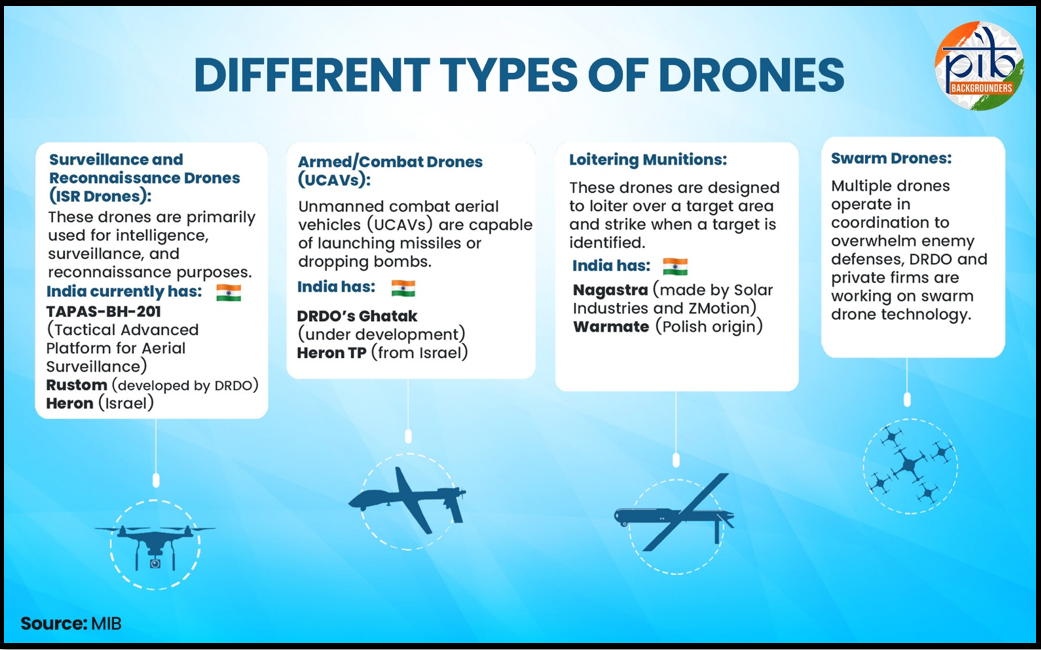
- 20 Feb 2026
In News:
As of February 2026, India has over 38,500 registered drones (UINs), 39,890 DGCA-certified remote pilots, and 244 approved training organisations, reflecting a mature and regulated drone ecosystem.
India has transitioned from experimental drone usage to a structured, innovation-driven ecosystem integrated into governance, agriculture, infrastructure, and defence.
Evolution of India’s Drone Ecosystem
Over two decades, drone technology in India has evolved into a comprehensive framework involving:
- Manufacturers and component developers
- Drone-as-a-Service (DaaS) providers
- Start-ups and MSMEs
- Certified pilots and training institutes
- Digital regulatory platforms
Drones are now embedded in public service delivery, infrastructure monitoring, precision agriculture, disaster response, and national security.
Major Applications
1. Agriculture and Farmer Services
- Integrated with PMFBY (Pradhan Mantri Fasal Bima Yojana) for crop assessment.
- Used for precision spraying, crop monitoring and input optimisation.
Namo Drone Didi Scheme (2023)
- Provides drones to Women Self-Help Groups (SHGs).
- 1,094 drones distributed, including 500 under the core initiative.
- Enhances productivity, reduces costs, and promotes women-led rural entrepreneurship.
2. Land Mapping – SVAMITVA Scheme
The SVAMITVA (Survey of Villages and Mapping with Improvised Technology in Village Areas) scheme (launched April 2020) uses drones for mapping rural abadi areas.
Key Data (as of Dec 2025):
- Target: ~3.44 lakh villages
- 3.28 lakh villages surveyed (~95%)
- 2.76 crore property cards prepared
- Covers 1.82 lakh villages across 31 States/UTs
Objectives:
- Reduce land disputes
- Improve access to institutional credit
3. Highway and Infrastructure Monitoring
- NHAI mandates monthly drone video recording of highway projects.
- Footage stored in data lakes for audit and dispute resolution.
- Enhances transparency and project monitoring.
4. Railways
- Ministry of Railways deploying UAVs for inspection of tracks and bridges.
- Railway Protection Force uses drones for surveillance and crowd management.
- Improves safety and monitoring of critical infrastructure.
5. Disaster Management
- NECTAR (North East Centre for Technology Application and Reach) developed specialised drones for flood and landslide monitoring.
- Provides real-time aerial visuals to improve rescue coordination.
6. Defence Applications
- Used for border surveillance, intelligence gathering and precision strikes.
- During Operation SINDOOR, drones and loitering munitions destroyed enemy targets.
- Integrated with radar and air defence systems for national security.
Policy and Regulatory Framework
1. Drone Rules, 2021 (Amended 2022–23)
Key reforms:
- Forms reduced from 25 to 5
- Approvals reduced from 72 to 4
- ~90% airspace designated as Green Zone (up to 400 ft)
- Pilot licence replaced by Remote Pilot Certificate (RPC)
- Civilian drones permitted up to 500 kg
- Passport requirement removed
2. Digital Sky & eGCA
- Regulatory services (registration, certification, RPTO authorisation) shifted to eGCA.
- Operational services (flight plans, airspace maps) integrated with Digital Sky.
Achievements (Feb 2026):
- 38,575 drones registered (UIN)
- 39,890 Remote Pilot Certificates issued
- 244 DGCA-approved RPTOs
3. Production Linked Incentive (PLI) Scheme
- Outlay: ?120 crore
- Promotes domestic drone and component manufacturing.
- Encourages MSMEs and start-ups.
4. GST Rationalisation
- GST reduced to 5% (September 2025) from earlier 18–28%.
- Applies to drones and flight simulators.
- Encourages commercial adoption and training ecosystem.
Capacity Building & Innovation
- SwaYaan Programme: HR development in Unmanned Aircraft Systems.
- 857 activities
- 26,000 beneficiaries
- National Innovation Challenge for Drone Application and Research (NIDAR)
- ?40 lakh prize pool
- Promotes autonomous drones in disaster management & agriculture
- Platforms like Bharat Drone Shakti and Bharat Drone Mahotsav promote DaaS and indigenous technologies.
India’s Sovereign AI Push
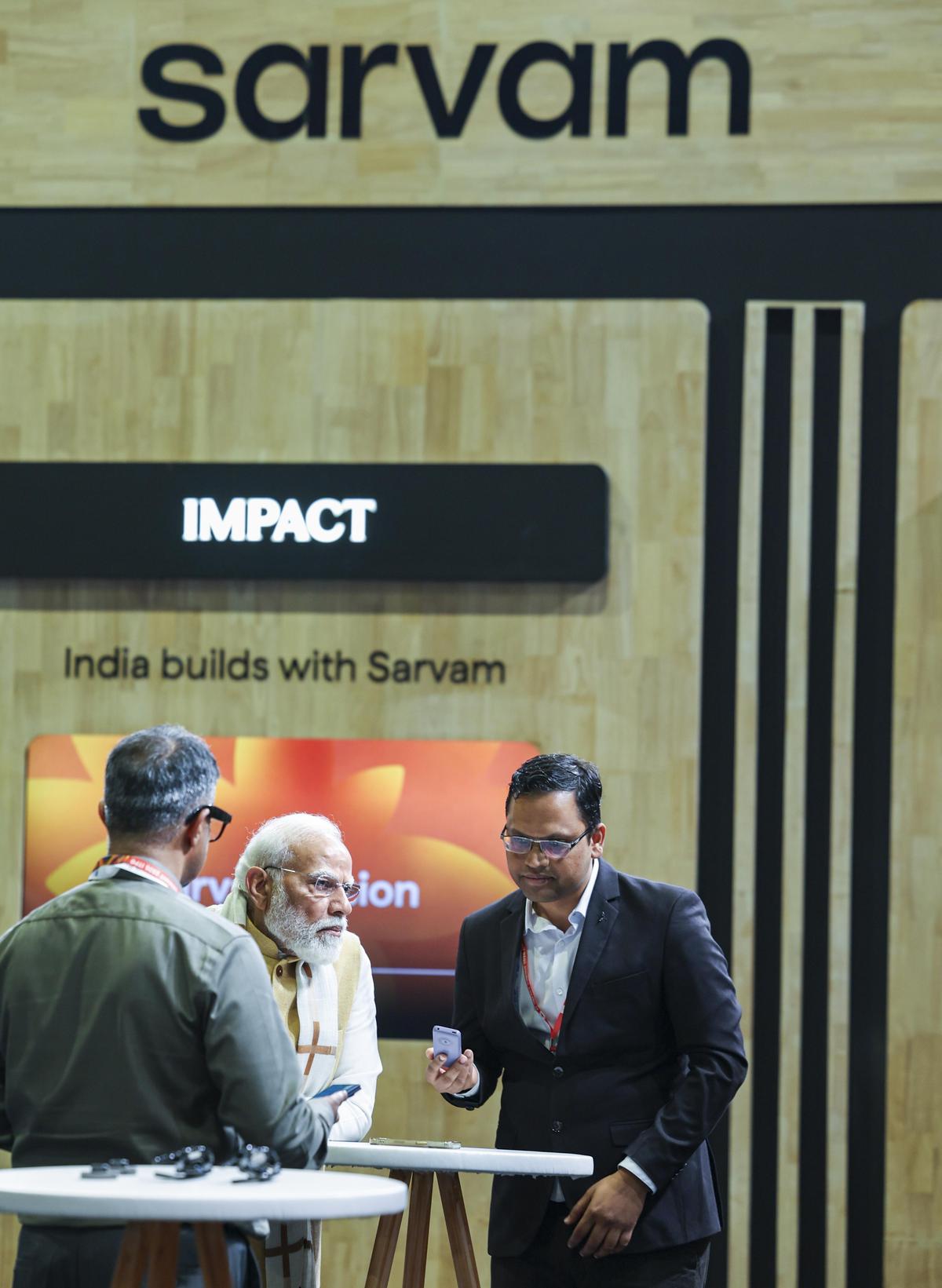
- 20 Feb 2026
In News:
At the AI Impact Summit, Bengaluru-based startup Sarvam AI unveiled two indigenous large language models (LLMs) under the collective name “Vikram.” The development coincides with global technology firms such as Nvidia and OpenAI announcing partnerships with Indian industry and academic institutions to strengthen India’s artificial intelligence (AI) ecosystem.
This marks a significant step in India’s efforts toward building Sovereign AI capabilities.
Sarvam AI
- Founded in 2023, headquartered in Bengaluru.
- Objective: Develop foundational AI models tailored to Indian languages and socio-economic contexts.
- Focus on multilingual and multimodal AI suited for India’s governance and development needs.
Key Features of the “Vikram” Models
- India-Specific Optimisation
- Designed for Indian administrative, social and economic applications.
- Strong performance in Indian language document processing and speech recognition.
- Multimodal Capabilities
- Integrates text, speech and visual understanding.
- Enables use cases in governance, healthcare, education and digital services.
- Edge and Offline AI Models
- Models capable of running on devices without continuous internet connectivity.
- Supports translation, speech-to-text and other AI functions locally.
- Reduces dependence on cloud-based foreign infrastructure.
Sovereign AI: Meaning and Significance
Sovereign AI refers to the development of AI systems using domestically controlled infrastructure, data and expertise, covering the entire lifecycle - from data collection and model training to deployment and governance.
It aims to:
- Reduce dependence on US/China-based AI platforms.
- Ensure data security and privacy.
- Promote cultural and linguistic relevance.
- Strengthen national security and strategic autonomy.
Large Language Models (LLMs)
- LLMs are AI systems based on deep learning techniques.
- Trained on large volumes of unstructured data.
- Capable of understanding, summarising, generating and predicting text.
- Use probabilistic modelling to recognise patterns in language without explicit programming.
Potential Benefits for India
- Technological & Economic Gains
- Boosts domestic innovation ecosystem.
- Encourages startup growth and high-skill employment.
- Enhances productivity across sectors.
- Human Capital Development
- AI integration in education and skilling programmes.
- Supports India’s demographic dividend with future-ready skills.
- Improved Governance
- Multilingual AI can enhance e-governance delivery.
- Applications in healthcare diagnostics, agriculture advisory, climate modelling and urban planning.
- Digital Inclusion
- Bridges linguistic barriers for non-English speakers.
- Expands participation in the digital economy.
- Strategic Autonomy: Reduces reliance on foreign AI infrastructure and proprietary systems.
Malabar Pied Hornbill
- 19 Feb 2026
In News:
The Forest Department of Chhattisgarh has initiated the establishment of six “hornbill restaurants” in the Udanti Sitanadi Tiger Reserve (USTR) to support the rare Malabar Pied Hornbill and promote natural forest regeneration.
What are “Hornbill Restaurants”?
- Specially developed fruit-rich plantation zones inside forest areas.
- Designed to provide continuous food sources (especially native fruit-bearing trees).
- Aim to:
- Attract hornbills.
- Support breeding and nesting.
- Aid in natural seed dispersal and forest expansion.
The initiative uses hornbills’ natural seed-dispersal behaviour to promote forest regeneration while conserving a Near Threatened species.
Malabar Pied Hornbill
- Scientific Name: Anthracoceros coronatus
- Common Name: Lesser Pied Hornbill
- Medium-sized hornbill.
- Distinctive black and white plumage.
- Prominent curved bill with a casque on top.
- Habitat:
- Evergreen forests.
- Moist and dry deciduous forests.
- Often found near human settlements.
- Distribution:
- Western Ghats
- North-eastern Himalayan foothills (India and Nepal)
- Satpura Hills
- Sri Lanka
- Diet:
- Primarily frugivorous (fruit-eating).
- Becomes partly omnivorous during breeding season.
- Ecological Role:
- Acts as a key seed disperser.
- Indicator species of forest health and ecological stability.
Conservation Status
- IUCN Red List: Near Threatened
- Major Threats:
- Habitat loss
- Forest degradation
- Fragmentation
Udanti Sitanadi Tiger Reserve (USTR)
- Location: Located in Chhattisgarh.
- Formation: Created by merging Udanti Wildlife Sanctuary and Sitanadi Wildlife Sanctuary.
- Drainage System
- Major river: Mahanadi
- Tributaries: Udanti, Sitanadi, Indravan, Pairi
- Topography
- 19 named mountains.
- Deo Dongri – Highest peak.
- At?nga Dongar – Most prominent mountain.
- Vegetation: Predominantly tropical dry and moist deciduous forests.
Tidal Flooding
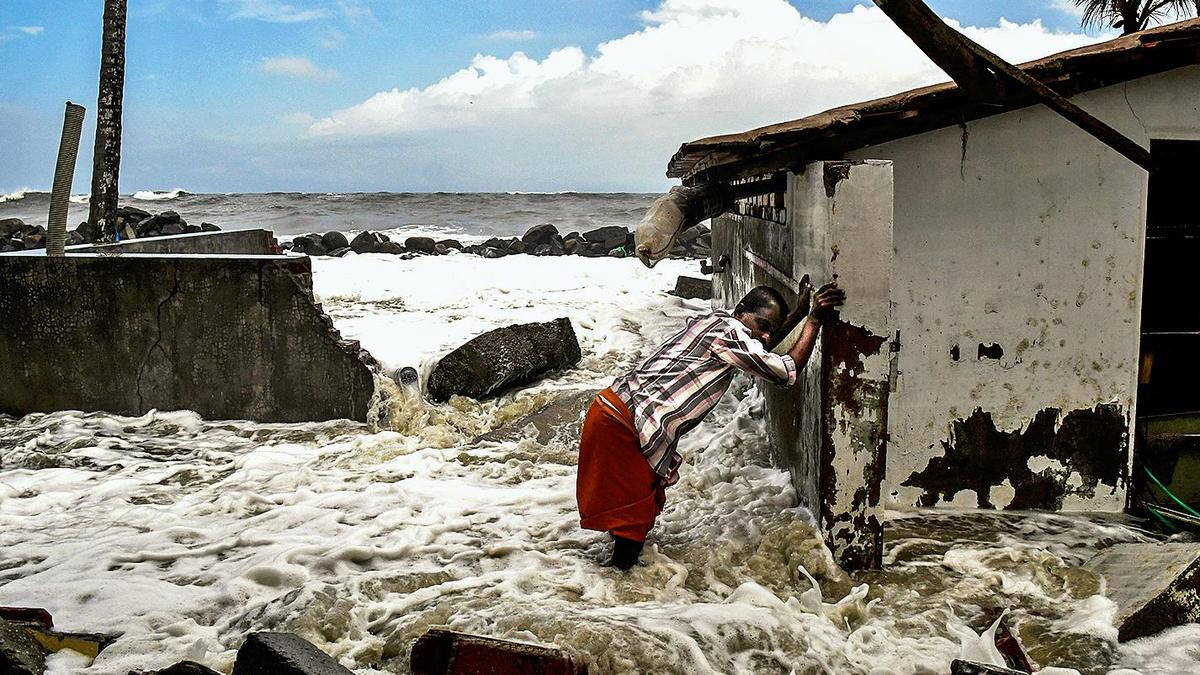
- 19 Feb 2026
In News:
The Government of Kerala has declared tidal flooding as a State-specific disaster. It is the first time in India that a State has accorded such status to tidal flooding.
What is Tidal Flooding?
- Also known as:
- Sunny day flooding
- King tide flooding
- Nuisance flooding
- Definition: Temporary inundation of low-lying coastal areas due to unusually high tides, without heavy rainfall or cyclonic activity.
Causes
- Combination of:
- High tide cycles
- Full moon and new moon phases
- Offshore storms
- Strong coastal winds
- Occurs twice daily with tidal cycles.
- More severe during spring tides (full moon and new moon).
- Unlike cyclone-induced storm surges, it is periodic and predictable, though intensifying due to sea-level rise.
Impact on Kerala Coast
- Common along Kerala’s coastline bordering the Arabian Sea.
- Temporary rise in sea level above identified thresholds.
- Inundates low-lying coastal settlements and agricultural lands.
- Affects fisheries, livelihoods, housing, and infrastructure.
Kerala Government’s Decision
Kerala became the first State in India to declare tidal flooding as a State-specific disaster, enabling financial assistance under SDRF norms.
- Victims will receive financial assistance similar to other notified natural disasters.
- Relief to be provided through the State Disaster Response Fund (SDRF) framework.
Other State-Specific Disasters in Kerala
Kerala has also notified the following as State-specific disasters:
- Coastal erosion
- Lightning
- Strong winds
- Soil piping
- Heatwave / Sunstroke / Sunburn
- Human–wildlife conflict
Significance
Disaster Management Perspective
- Recognises climate-linked coastal risks beyond cyclones.
- Enhances institutional preparedness and targeted relief.
Climate Change Link
- Sea-level rise and coastal vulnerability are increasing frequency and severity.
- Highlights need for coastal zone management and adaptation planning.
Bharat VISTAAR Scheme (Phase–I)
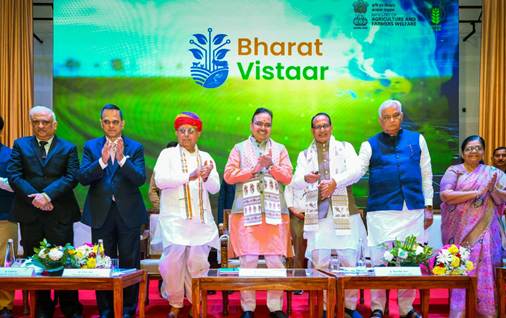
- 19 Feb 2026
In News:
Phase–I of ‘Bharat VISTAAR’ was launched in Jaipur, Rajasthan by the Ministry of Agriculture and Farmers’ Welfare during the AI Summit. The initiative aims to digitally empower farmers through Artificial Intelligence (AI)-based advisory services.
About Bharat VISTAAR
- Full Form: AI-powered, multilingual conversational advisory system for farmers.
- Nature: AI-based digital public infrastructure for agriculture.
- Objective:
- Provide instant, technology-driven agricultural guidance.
- Improve productivity and reduce risks.
- Strengthen farmer self-reliance through personalised advisory.
It integrates multiple agricultural databases into a single AI-enabled platform accessible via helpline number 155261.
Key Features
1. Helpline-Based AI Advisory
- Farmers can dial 155261 from mobile or smartphone.
- Provides instant responses in local language.
- Currently available in Hindi and English; planned expansion to 11 languages.
- Real-time mandi prices accessible through the same helpline.
2. Integrated Digital Platform
Bharat VISTAAR consolidates multiple agricultural systems into one interface:
- AgriStack (farmer database architecture)
- Indian Council of Agricultural Research (ICAR) knowledge systems
- India Meteorological Department (IMD) weather inputs
- Market price databases
- Central and State Government agricultural schemes
3. Farmer Identity (Farmer ID)
- Creation of a digital Farmer Identity Card.
- Stores comprehensive farmer data.
- Integrates schemes such as:
- Pradhan Mantri Fasal Bima Yojana
- Soil Health Card Scheme
- Future integration of all agricultural schemes under one system.
4. Advisory Services Provided
- Soil testing guidance
- Seed and fertiliser recommendations
- Irrigation management
- Weather-based advisories
- Loans and insurance information
- Government scheme benefits
5. Associated Initiatives
- Farmer-centric AI Hackathon to promote agri-tech innovation.
- Agri Kosh AI Strategy Roadmap unveiled for long-term AI integration in agriculture.
Significance
Technological Significance
- Promotes AI-driven personalised agricultural advisory.
- Strengthens Digital Public Infrastructure (DPI) in agriculture.
Economic Significance
- Helps farmers access real-time market and insurance information.
- Aims to enhance productivity and reduce crop-related risks.
Governance Significance
- Brings multiple agricultural databases under a single unified digital platform.
- Supports goal of Viksit Kisan for achieving Viksit Bharat 2047.
Bee Corridor

- 19 Feb 2026
In News:
The National Highways Authority of India (NHAI) has launched India’s first dedicated ‘Bee Corridors’ along National Highways as part of sustainable and ecological infrastructure development.
What are Bee Corridors?
- Definition: Continuous linear stretches of pollinator-friendly vegetation developed along National Highways.
- Composition: Flowering trees, shrubs, herbs and grasses providing year-round nectar and pollen.
- Design Principle: Staggered seasonal flowering to ensure near-continuous bloom cycles.
- Shift in Approach: From ornamental roadside plantations to biodiversity-supportive ecological plantations.
Objectives
To reduce ecological stress on honeybees and other pollinators by ensuring sustained nectar sources, thereby strengthening agricultural productivity and ecological balance.
- Promote pollinator conservation.
- Integrate biodiversity into highway infrastructure.
- Support climate-sensitive and sustainable plantation planning.
Key Features
1. Native, Nectar-Rich Species
Plantation will include native species such as: Neem, Karanj, Mahua, Palash, Bottle Brush, Jamun and Siris. These species support biodiversity and pollinator habitats.
2. Staggered Blooming Cycle
- Species selected to flower in different seasons.
- Ensures continuous food supply for honeybees and wild pollinators.
3. Habitat Support Measures
- Retention of flowering weeds.
- Preservation of dead wood and hollow trunks beneficial for pollinators.
4. Strategic Spacing
- Flowering clusters planted every 500 metres to 1 kilometre.
- Based on the average foraging distance of honeybees.
- Corridors to be developed along suitable NH stretches and vacant NHAI land parcels depending on agro-climatic conditions.
Implementation Plan (2026–27)
- Total Plantation Target: ~40 lakh trees along National Highways.
- Under Bee Corridor Initiative: ~60% of total plantation.
- Initial Phase: At least three dedicated pollinator corridors to be developed.
- NHAI field offices to identify suitable highway sections.
Significance
Ecological Significance
- Enhances pollination services essential for agriculture and horticulture.
- Helps counter declining pollinator populations.
- Strengthens ecosystem resilience and biodiversity.
Economic Significance
- Improved pollination boosts crop productivity.
- Supports rural livelihoods dependent on agriculture and apiculture.
Infrastructure Significance
- Integrates environmental sustainability into highway development.
- Aligns infrastructure expansion with climate and biodiversity goals.
AI-Preneurs of India
- 19 Feb 2026
In News:
The Atal Innovation Mission (AIM) under NITI Aayog launched AI-Preneurs of India at the India AI Impact Summit 2026 held at Bharat Mandapam.
About AI-Preneurs of India
- Nature: Flagship coffee table book.
- Edition: 7th edition of AIM’s Innovations For You series.
- Coverage: Chronicles journeys of 45 AI startups.
- Source Base: Selected from nationwide network of Atal Incubation Centres (AICs).
- Focus: AI solutions addressing real-world problems across India.
Key Features
- Founder-First Storytelling Approach
- Highlights motivations, challenges, perseverance and impact of entrepreneurs.
- Moves beyond technical achievements to human-centered innovation narratives.
- Sectoral Diversity (30 Domains): AI applications showcased in sectors such as:
- Healthcare
- Education
- Sustainability
- Mobility
- Sports analytics
- Deep-tech
- Governance and social impact
- Nationwide Representation
- Reflects geographic diversity beyond metro tech hubs.
- Demonstrates innovation emerging from Tier 2/3 cities and underserved regions.
- Purpose-Driven AI Ecosystem
- Emphasizes inclusive, ethical, and socially responsible AI.
- Aligns AI development with national development priorities.
Significance for India
Positions India as a global contributor to responsible and inclusive Artificial Intelligence, not merely a consumer of frontier technologies.
- Strengthens credibility of India’s public innovation infrastructure.
- Showcases synergy between government incubation platforms and private AI startups.
- Reinforces AI for social good and mission-led governance.
- Supports India’s emergence as a deep-tech and AI innovation hub.
Atal Innovation Mission (AIM)
About
- Launched in 2016 by NITI Aayog.
- Flagship initiative of the Government of India to promote innovation and entrepreneurship.
- Builds a problem-solving mindset among students and supports startup ecosystems.
Key Programs under AIM
|
Program |
Target Group |
Objective |
|
Atal Tinkering Labs (ATLs) |
School students (Classes 6–12) |
Foster innovation using tools like robotics, 3D printing, electronics |
|
Atal Incubation Centres (AICs) |
Startups & entrepreneurs |
Provide incubation, mentorship, funding, infrastructure |
|
Atal Community Innovation Centres (ACICs) |
Underserved regions |
Promote innovation in Tier 2/3 cities, tribal & remote areas |
|
Atal New India Challenges (ANIC) |
Technology innovators |
Support innovations addressing national priority challenges |
|
Mentor India |
Entrepreneurs & innovators |
Network of 6,200 mentors guiding startups |
SAHI and BODH Initiative
- 18 Feb 2026
In News:
At the India AI Summit held at Bharat Mandapam, the Union Minister of Health and Family Welfare launched two key national initiatives - the Strategy for Artificial Intelligence in Healthcare for India (SAHI) and the Benchmarking Open Data Platform for Health AI (BODH). Together, these initiatives seek to establish a structured, ethical, and technology-driven framework for integrating Artificial Intelligence (AI) into India’s healthcare ecosystem, aligning innovation with public health priorities.
Rationale: The Need for Governance in Health AI
Artificial Intelligence holds transformative potential in areas such as diagnostics, disease surveillance, medical imaging, predictive analytics, and health system management. However, its deployment raises critical concerns related to:
- Data privacy and security
- Algorithmic bias and accountability
- Clinical validation and safety
- Ethical use and regulatory oversight
In a country with diverse health challenges and socio-economic disparities, the integration of AI must be inclusive, evidence-based, and aligned with public welfare objectives. SAHI and BODH aim to address these systemic gaps.
SAHI: Strategy for Artificial Intelligence in Healthcare for India
SAHI serves as a national guidance framework for the responsible adoption of AI in healthcare.
Core Objectives:
- Safe and Ethical Deployment – Establishes principles for transparency, accountability, and fairness in AI systems.
- Evidence-Based Validation – Emphasises scientific testing and performance benchmarking before large-scale adoption.
- Data Stewardship and Governance – Provides direction on responsible data use, storage, and sharing.
- Monitoring and Evaluation – Ensures continuous oversight of AI solutions in real-world settings.
- Support to States and Institutions – Aligns AI adoption with local health priorities and public health objectives.
By offering strategic direction on governance, validation, and deployment, SAHI aims to mainstream AI within India’s health infrastructure while preventing misuse or premature adoption.
BODH: Benchmarking Open Data Platform for Health AI
Complementing SAHI, BODH is a privacy-preserving benchmarking platform developed by the Indian Institute of Technology (IIT) Kanpur in collaboration with the National Health Authority.
Key Features:
- Enables rigorous evaluation of AI models using diverse, real-world health data.
- Operates without sharing underlying datasets, thereby preserving patient privacy.
- Functions as a digital public good under the Ayushman Bharat Digital Mission (ABDM).
- Strengthens transparency and quality assurance in AI-based health solutions.
By creating a standardised benchmarking environment, BODH promotes trust and reliability in AI systems used for clinical or administrative purposes.
Significance
- Institutionalising AI Governance – Moves beyond pilot projects to structured regulation.
- Enhancing Trust – Ensures accountability and public confidence in AI tools.
- Promoting Interoperability – Aligns with ABDM’s digital health ecosystem.
- Global Competitiveness – Positions India as a responsible innovator in health AI.
- Equity in Healthcare Delivery – Supports inclusive and evidence-based adoption across regions.
Seva Teerth
- 18 Feb 2026
In News:
The inauguration of ‘Seva Teerth’, the new integrated administrative complex housing the Prime Minister’s Office (PMO), National Security Council Secretariat (NSCS), and Cabinet Secretariat, marks a significant institutional and symbolic transition in India’s governance framework. The relocation ends nearly eight decades of the PMO’s functioning from South Block and forms a central component of the Central Vista redevelopment project.
Historical Context and Symbolism
The move coincided with the 95th anniversary (13 February 1931) of New Delhi’s formal inauguration as India’s modern capital. South Block, long associated with executive authority, is now part of the Yuge Yugeen Bharat National Museum, reflecting a shift from colonial-era administrative spaces to a contemporary governance infrastructure.
The name ‘Seva Teerth’ is derived from Sanskrit:
- Seva – service or selfless dedication
- Teerth (Tirtha) – a sacred place or crossing point that helps overcome obstacles
The complex bears the inion “Nagrik Devo Bhava” (Citizen is akin to God), signalling a governance philosophy rooted in citizen-centric service and accountability.
Architectural and Design Features
- Designed by architect Dr. Bimal Patel, Seva Teerth integrates traditional Indian architectural motifs with modern infrastructure.
Key Architectural Elements:
- Stone screen-work inspired by 11th–13th century Chalukyan temples
- Floral stone motifs derived from geometric temple patterns
- Metal-clad domes influenced by Buddhist stupas
- Cladding in white and red sandstone, maintaining aesthetic continuity with Lutyens’ Delhi
The design balances civilisational symbolism with contemporary functionality.
Functional and Technological Features
Seva Teerth is conceived as an integrated administrative hub bringing together key executive institutions under one complex to improve coordination and efficiency.
Notable Features:
- Modern open-plan workspaces
- High-tech ‘India House’ for hosting international summits
- Advanced security and digital infrastructure
- 4-star green building rating, reflecting environmental sustainability standards
The integration of the PMO, NSCS, and Cabinet Secretariat within a single complex enhances policy coherence, inter-departmental coordination, and crisis-response capability.
Governance Implications
The relocation signifies:
- Administrative Modernisation – Transition from colonial-era spaces to purpose-built, technology-enabled governance infrastructure.
- Institutional Integration – Greater synergy between executive decision-making bodies.
- Symbolic Reorientation – Emphasis on service-oriented governance through its nomenclature and inion.
- Urban Redevelopment – Reinforcement of the Central Vista project as a long-term reconfiguration of India’s power corridor.
First Official Decision
In a symbolic assertion of its citizen-first ethos, the first major decision taken at Seva Teerth was the launch of the PM RAHAT Scheme, aimed at providing assured hospitalization and treatment to road accident victims. This move underscored the emphasis on public welfare and responsive governance.
Ol Chiki at 100
- 18 Feb 2026
In News:
The centenary of the Ol Chiki (1925–2025) is being commemorated by the Ministry of Culture, with the inaugural function held in New Delhi. The occasion is marked by the release of a ?100 commemorative coin and a special postage stamp, symbolising national recognition of a that transformed the Santhali language from an oral tradition into a structured written medium. The milestone reflects not merely a linguistic achievement but a broader assertion of tribal identity and cultural dignity.
Historical Background and Genesis
For centuries, Santhali—belonging to the Austroasiatic (Munda) language family—was sustained through rich oral traditions of folklore, songs, rituals, and storytelling. However, the absence of a dedicated limited formal documentation, education, and literary standardisation. Prior to the 20th century, Santhali was transcribed using borrowed s such as Roman, Bengali, Odia, and Devanagari, which inadequately represented its distinctive phonetic features, including glottal stops and unique vowel patterns.
Recognising this gap, Pandit Raghunath Murmu (1905–1982) developed the Ol Chiki in 1925. Revered as Guru Gomke (Great Teacher), he sought to provide Santhali with a scientifically designed and culturally rooted writing system. His seminal literary work, High Serena (1936), was among the first books written in Ol Chiki, followed by other influential writings that strengthened linguistic awareness and literacy.
Linguistic Features of Ol Chiki
Ol Chiki is distinguished by its phonetic precision and indigenous design:
- 30 letters, representing vowels and consonants
- One symbol corresponds to one sound (direct phonetic mapping)
- Accurately captures glottal stops and unique phonetic elements
- No conjunct letters, ensuring structural simplicity
- Not derived from Brahmi or Roman s
Unlike adapted s, Ol Chiki was created exclusively for Santhali phonology, enabling accurate recording of vocabulary, grammar, and pronunciation. It facilitated standardisation in education, translation, and publication.
Constitutional and Institutional Recognition
A major milestone came in 2003 when Santhali was included in the Eighth Schedule of the Constitution through the 92nd Constitutional Amendment Act. This inclusion institutionalised the language within India’s formal linguistic framework, enabling its use in education, public administration, competitive examinations, and literary promotion.
In December 2025, the Constitution of India was officially translated into Santhali using Ol Chiki. This initiative enhanced democratic accessibility by enabling Santhali-speaking citizens to engage directly with constitutional provisions, including tribal safeguards under the Fifth and Sixth Schedules. It marked a step toward linguistic justice and participatory governance.
National Commemoration
To mark 100 years of Ol Chiki, the Government of India has issued:
- A ?100 commemorative coin, featuring the Lion Capital of Ashoka on the obverse and a portrait of Pandit Raghunath Murmu alongside Ol Chiki characters on the reverse.
- A commemorative postage stamp, reinforcing philatelic recognition of cultural milestones.
These symbolic gestures affirm the ’s role in preserving indigenous heritage within India’s pluralistic framework.
Loggerhead Turtle
- 18 Feb 2026
In News:
Recent scientific observations indicate that rising ocean temperatures and declining food availability are significantly affecting the reproductive cycles, migratory behavior, and even body size of the loggerhead turtle. These developments underline the far-reaching ecological consequences of climate change on marine megafauna and highlight emerging conservation challenges.
About the Loggerhead Turtle
The loggerhead turtle (Caretta caretta) is an oceanic turtle belonging to the family Cheloniidae. It derives its name from its disproportionately large head, which houses powerful jaw muscles adapted for crushing hard-shelled prey.
Key Characteristics
- Size:
- World’s largest hard-shelled turtle
- Second-largest extant turtle after the leatherback sea turtle
- Lifespan: Can live for 80 years or more
- Navigation: Uses Earth’s geomagnetic field to navigate vast oceanic distances
- Diet: Omnivorous; primarily consumes bottom-dwelling invertebrates such as gastropods, bivalves, and decapods
- Habitat: Found both in open oceans and inshore ecosystems like bays, lagoons, salt marshes, and creeks
- Distribution: Atlantic, Indian, and Pacific Oceans, and the Mediterranean Sea
- Conservation Status: IUCN Red List – Vulnerable
Climate Change and Emerging Ecological Impacts
1. Altered Reproductive Patterns
- Loggerhead turtles exhibit temperature-dependent sex determination, where warmer sand temperatures produce more female hatchlings. Rising global temperatures are skewing sex ratios, potentially threatening long-term population stability.
- Additionally, warming seas are disrupting nesting timelines and hatchling survival rates, affecting recruitment into adult populations.
2. Changes in Migration Routes
- Loggerheads rely on geomagnetic cues to navigate across ocean basins. However, changing ocean currents and temperature gradients are altering traditional migratory pathways. Shifts in feeding grounds may force turtles to travel longer distances, increasing energy expenditure and exposure to threats such as fishing gear and marine pollution.
3. Impact on Body Size and Growth
- Studies suggest that declining prey availability linked to ocean warming and ecosystem shifts may be affecting growth rates and adult body size. Reduced food intake can influence reproductive success, as larger females generally produce more eggs.
Four-Pronged Threats
Climate change intensifies existing anthropogenic pressures:
- Rising Ocean Temperatures: Affect physiology, nesting, and food webs.
- Habitat Loss and Degradation: Coastal development and erosion reduce nesting beaches.
- Marine Pollution: Plastic debris and oil spills cause ingestion and entanglement.
- Bycatch in Fishing Gear: Accidental capture remains a major mortality factor.
Direct harvesting of turtles and eggs in some regions further compounds population decline.
Ecological Significance
- Loggerhead turtles play a crucial role in marine ecosystems by regulating populations of invertebrates and maintaining healthy benthic communities. Their decline can disrupt trophic balance and impact overall ocean biodiversity.
Conservation Imperatives
Addressing the challenges faced by loggerhead turtles requires:
- Strengthening marine protected areas
- Regulating coastal development
- Promoting climate mitigation strategies
- Reducing bycatch through turtle-excluder devices
- Enhancing global cooperation under marine conservation frameworks
LHS 1903 Planetary System

- 18 Feb 2026
In News:
Astronomers using the European Space Agency’s Cheops (Characterising Exoplanet Satellite) telescope have discovered an unusual four-planet system orbiting the red dwarf star LHS 1903, located approximately 117 light-years from Earth. The system’s planetary arrangement contradicts conventional models of planet formation, offering fresh insights into the dynamics of exoplanetary systems.
System Overview
The LHS 1903 system consists of four planets:
- Two rocky Super-Earths
- Two gaseous mini-Neptunes
These planets orbit a relatively small and dim red dwarf (M-dwarf) star.
Characteristics of the Host Star
- Mass: ~50% of the Sun’s mass
- Luminosity: ~5% of the Sun’s brightness
- Cooler and less luminous than the Sun
- Red dwarfs are the most common type of star in the Milky Way
Given their abundance and longevity, red dwarfs are important targets in the search for potentially habitable exoplanets.
Planetary Composition
- Super-Earths (Rocky Planets)
- Similar composition to Earth
- Mass between 2 to 10 times that of Earth
- Solid surfaces
- Mini-Neptunes (Gaseous Planets)
- Larger than Earth but smaller than Neptune
- Possess thick gaseous envelopes
- Often rich in hydrogen and helium
The sequence of planets from the star outward is as follows:
- Innermost: Rocky (Super-Earth)
- Middle two: Gaseous (Mini-Neptunes)
- Outermost (Fourth planet): Rocky (Super-Earth)
The Formation Paradox
Traditional models of planetary formation suggest that:
- Rocky planets form closer to the host star, where high temperatures prevent gas accumulation.
- Gas giants and gaseous planets form farther out, where volatile compounds can condense.
However, in the LHS 1903 system, the outermost planet is rocky, even though it lies beyond two gaseous planets. According to classical theory, it should have retained a substantial gaseous envelope.
Possible Explanations
Researchers propose two leading hypotheses:
- Sequential Formation Model: The planets may not have formed simultaneously. Instead, the inner planets could have formed first, consuming much of the available gas in the protoplanetary disk. By the time the fourth planet formed, insufficient gas remained for it to develop a thick atmosphere.
- Atmospheric Loss Hypothesis: The outer rocky planet may originally have possessed a gaseous envelope but later lost it due to a catastrophic event such as stellar radiation, atmospheric stripping, or collision, leaving behind a dense rocky core.
Both possibilities challenge the simplicity of existing models and suggest that planet formation may be more dynamic and episodic than previously understood.
Habitability Potential
The outer rocky planet has an estimated surface temperature of approximately 60°C. While relatively warm, this temperature falls within a theoretical range that does not automatically preclude habitability, especially if atmospheric or geological conditions are favorable.
Given the long lifespans of red dwarf stars, such systems are considered promising in the search for habitable exoplanets.
Scientific Significance
The LHS 1903 system provides:
- A test case for refining planet formation theories
- Insights into atmospheric evolution and planetary migration
- Evidence that planetary architectures may be more diverse than predicted
As observational capabilities improve, discoveries like this will deepen understanding of how planetary systems evolve and expand the scope of astrobiological exploration.
Kerala Declares Bacillus subtilis as State Microbe
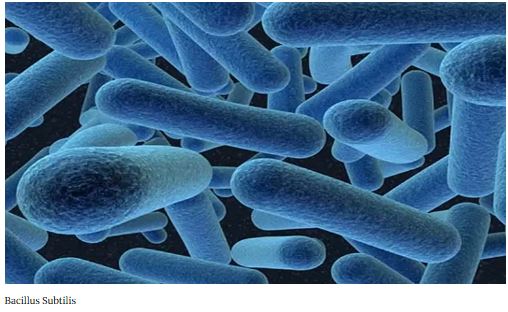
- 17 Feb 2026
In News:
In a pioneering move blending science with public policy, Kerala has declared Bacillus subtilis as its official “State Microbe.” This makes Kerala the first state in India to formally recognise a microorganism, highlighting the growing importance of microbiology in public health, agriculture, and biotechnology. The decision reflects a broader governance approach that integrates scientific research with sustainable development goals.
About Bacillus subtilis
Bacillus subtilis is a non-pathogenic, rod-shaped, gram-positive bacterium commonly found in soil, water, and even the human gut. It is known for its beneficial properties and has been extensively studied due to its resilience and versatility.
Key Characteristics
- Spore-forming ability: Enables survival in extreme environmental conditions.
- Non-pathogenic nature: Safe for human and agricultural applications.
- Probiotic function: Contributes to gut health and strengthens immunity.
- Industrial adaptability: Widely used in fermentation and enzyme production.
Its robust biological properties make it an ideal model organism in microbiological research.
Health and Agricultural Significance
1. Public Health
As a probiotic bacterium, Bacillus subtilis plays a crucial role in:
- Improving digestive health
- Enhancing immune response
- Maintaining healthy gut microbiota
With increasing global focus on microbiome research, such beneficial microbes are gaining importance in preventive healthcare and nutrition.
2. Agricultural Applications
The bacterium is extensively used as:
- Biofertilizer: Promotes plant growth by improving nutrient availability.
- Biocontrol agent: Suppresses plant pathogens and reduces reliance on chemical pesticides.
This aligns with sustainable agriculture and organic farming practices, reducing environmental degradation caused by synthetic inputs.
3. Industrial and Biotechnological Use
Due to its genetic stability and spore-forming capacity, Bacillus subtilis has applications in:
- Enzyme production
- Fermentation industries
- Biotechnology research
- Pharmaceutical manufacturing
Institutional Support: Centre of Excellence in Microbiome
Kerala’s decision is supported by institutional innovation through the Centre of Excellence in Microbiome (CoEM), established under the Kerala State Council for Science, Technology and Environment.
Located in Thiruvananthapuram, CoEM is India’s first dedicated multi-domain research institution focusing on microbiome studies. It promotes interdisciplinary research spanning health, agriculture, environmental science, and biotechnology.
The declaration of a State Microbe complements Kerala’s efforts to position itself as a hub for microbiome research and scientific advancement.
Governance and Policy Significance
- Science-Based Governance: Integrates microbiological research into state identity and policy discourse.
- Sustainable Development: Encourages eco-friendly agriculture and health interventions.
- Public Awareness: Elevates understanding of beneficial microorganisms in everyday life.
- Research Promotion: Strengthens India’s microbiome research ecosystem.
This move parallels other symbolic recognitions such as state animals or birds but uniquely extends recognition to the microbial world, emphasizing ecological interdependence.
India’s First Underwater Road-cum-Rail Tunnel under the Brahmaputra
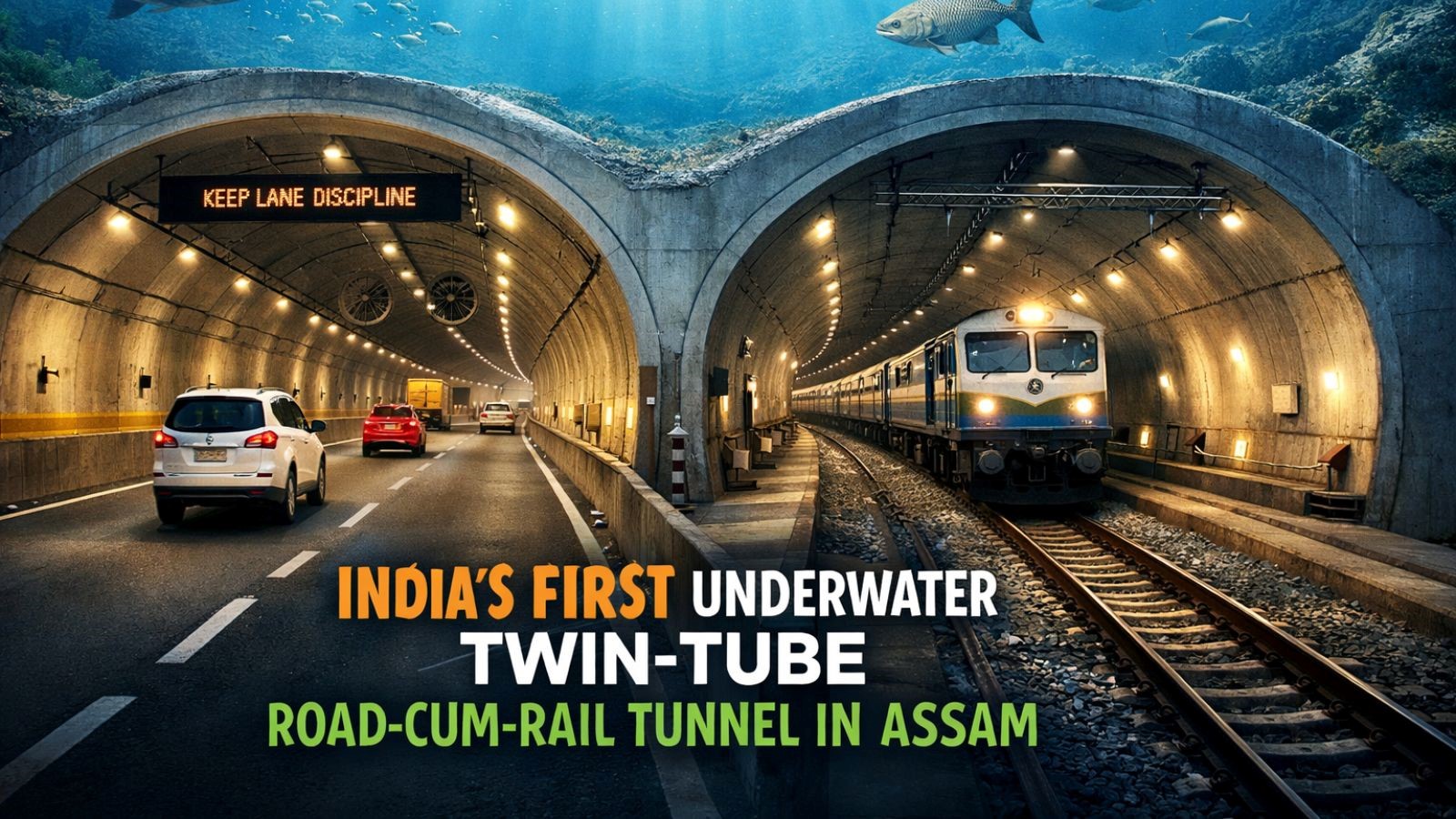
- 17 Feb 2026
In News:
The Cabinet Committee on Economic Affairs (CCEA) has approved the construction of India’s first underwater twin-tube road-cum-rail tunnel beneath the Brahmaputra River in Assam at a total capital cost of ?18,662 crore. The 33.7 km access-controlled greenfield corridor, including a 15.79 km underwater tunnel, marks a milestone in India’s infrastructure engineering and is expected to significantly enhance connectivity across the Northeast.
Project Overview
What the Project Entails
- Total Length: 33.7 km
- Underwater Twin-Tube Tunnel: 15.79 km beneath the Brahmaputra
- Corridor: Gohpur (NH-15) to Numaligarh (NH-715)
- Development Mode: Engineering, Procurement and Construction (EPC)
- Total Capital Cost: ?18,662 crore
- Civil Cost: ?11,982.36 crore
- Land Acquisition: ?716.65 crore
The project integrates road and rail infrastructure, making it India’s first underwater road-cum-rail tunnel and only the second such structure globally.
Key Engineering Features
- Twin-Tube Design: Two parallel tubes ensure traffic segregation, safety redundancy, and efficient emergency evacuation systems. One tube will also incorporate railway infrastructure.
- Access-Controlled Greenfield Corridor: A four-lane highway designed for high-speed, uninterrupted travel.
- Multi-Modal Integration:
- Connects NH-15 and NH-715
- Integrates with Rangia–Mukongselek and Furkating–Mariani railway sections under Northeast Frontier Railway
- Links 4 major railway stations, 2 airports (Holongi and Tezpur), and 2 inland waterway terminals
- Traffic and Logistics Impact:
- Reduces distance from 240 km to 34 km
- Cuts travel time from 6 hours to 20 minutes
- Estimated AADT (FY-25): 4,680 PCUs
About the Brahmaputra River
The Brahmaputra is one of Asia’s largest rivers, originating from the Chemayungdung Glacier near Lake Mapam in Tibet (~5,300 m). Known as Yarlung Tsangpo in Tibet, Siang/Dihang in Arunachal Pradesh, and Jamuna in Bangladesh, it flows through China, India, and Bangladesh.
- Length: ~2,900 km
- Among the world’s highest average river discharges
- Forms the world’s largest delta with the Ganga
- Characterised by highly braided channels in Assam
Constructing an underwater tunnel beneath such a dynamic and sediment-laden river demonstrates advanced tunnelling and geotechnical capability.
Regional and Strategic Significance
1. Boost to Northeast Connectivity: Though located in Assam, the project benefits Arunachal Pradesh, Nagaland, and the wider Northeast region, improving passenger and freight mobility.
2. Economic Multiplier Effects
- Connects 11 economic nodes, including industrial areas and logistics hubs.
- Facilitates faster freight movement and reduces logistics costs.
- Expected to generate 80 lakh person-days of employment (direct and indirect).
3. Tourism and Social Connectivity
- Enhances access to Kaziranga National Park and Deopahar Archaeological Site.
- Connects aspirational districts like Udalguri and Darrang and tribal district Dima Hasao.
4. Strategic and Border Importance: Improves connectivity to Arunachal Pradesh, strengthening infrastructure in border areas and enhancing national security preparedness.
Discovery of Two New Army Ant Species in the Eastern Ghats
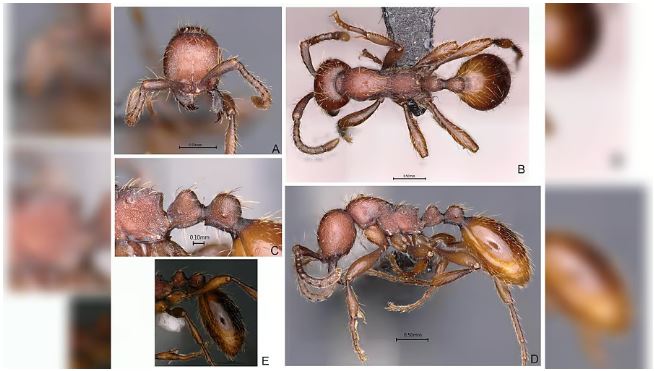
- 17 Feb 2026
In News:
In a significant contribution to India’s biodiversity records, researchers from Karnataka and Odisha have discovered two new species of army ants - Aenictus chittoorensis and Aenictus lankamallensis - in the Eastern Ghats of Andhra Pradesh. The discovery highlights the rich yet underexplored biodiversity of peninsular India and underscores the ecological importance of invertebrate fauna in tropical ecosystems.
About Army Ants
Army ants belong to the subfamily Dorylinae and are known for their nomadic and highly predatory lifestyle. Unlike many other ant species, army ants do not construct permanent nests. Instead, they continuously move in search of food, making them one of the most dynamic components of tropical forest ecosystems.
They are predominantly found in tropical regions and are considered among the “big cats” of the insect world due to their aggressive and coordinated hunting behavior.
Distinctive Characteristics
- Nomadic Lifestyle: Army ants lack permanent nests. Instead, they form temporary living structures called bivouacs, created entirely from the interlocked bodies of worker ants.
- Massive Coordinated Raids: Colonies conduct synchronized raids, overwhelming insects and small invertebrates in their path. Their raids can drastically alter local arthropod populations.
- Morphological Features:
- Large, sharp mandibles
- Strong stinging ability
- Robust body structure adapted for predation
- Chemical Communication: Army ants are practically blind and rely heavily on chemical pheromones to navigate and communicate. They mark trails and follow scent paths laid by other workers.
- Colony Structure:
- A single queen lays all eggs.
- Female workers perform tasks such as foraging, protecting the colony, and tending to larvae.
This high degree of social organization reflects advanced eusocial behavior.
Ecological Role: Keystone Predators
Army ants are considered keystone predators in tropical ecosystems. Their ecological contributions include:
- Regulating arthropod populations by consuming large quantities of insects daily.
- Influencing forest biodiversity by reshaping prey communities.
- Supporting ecological networks — several bird species are known to follow army ant raids to capture fleeing insects.
By controlling invertebrate populations, they help maintain ecological balance and prevent outbreaks of certain insect species.
Significance of the Discovery
- Biodiversity Documentation: The identification of Aenictus chittoorensis and Aenictus lankamallensis adds to India’s documented insect diversity and strengthens taxonomic knowledge of the Eastern Ghats.
- Eastern Ghats as a Biodiversity Hotspot: Though less celebrated than the Western Ghats, the Eastern Ghats possess significant endemic diversity. Discoveries such as this underline the need for systematic biodiversity surveys in these fragmented hill ranges.
- Conservation Imperative: Habitat fragmentation, deforestation, mining, and climate change threaten forest ecosystems in the Eastern Ghats. The discovery reinforces the urgency of conserving lesser-known invertebrate fauna alongside charismatic megafauna.
- Scientific Relevance: Understanding army ant behavior and ecological dynamics can contribute to broader ecological research on predator-prey relationships and forest ecosystem functioning.
Startup India Fund of Funds 2.0
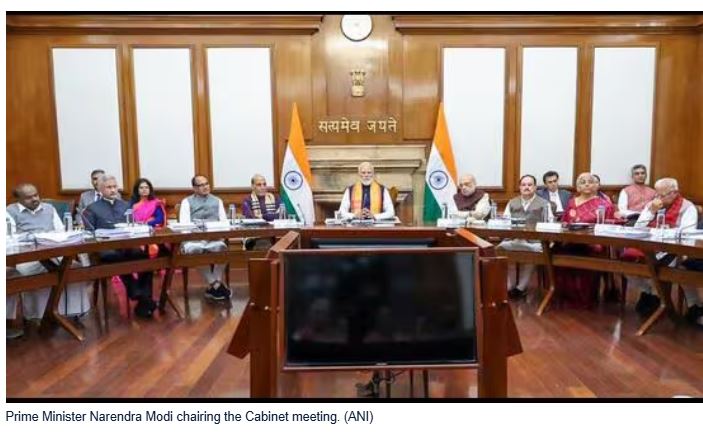
- 17 Feb 2026
In News:
In February 2026, the Union Cabinet approved the establishment of Startup India Fund of Funds 2.0 (FoF 2.0) under the Startup India initiative. With a corpus of ?10,000 crore, the scheme aims to mobilise long-term domestic capital, strengthen the venture capital (VC) ecosystem, and accelerate innovation-led economic growth. It represents the next phase of India’s startup policy architecture, moving from ecosystem creation to strategic capital deepening.
Background: Evolution of Startup India
Launched in 2016, the Startup India initiative has transformed India into one of the world’s largest startup ecosystems.
- Growth from fewer than 500 startups in 2016 to over 2 lakh DPIIT-recognised startups today.
- 2025 recorded the highest-ever annual startup registrations, indicating sustained entrepreneurial momentum.
To address early-stage funding gaps, the Government launched the Fund of Funds for Startups (FFS 1.0) in 2016.
Performance of FFS 1.0
- ?10,000 crore corpus fully committed to 145 Alternative Investment Funds (AIFs).
- Supported AIFs invested over ?25,500 crore in 1,370 startups.
- Investments spanned agriculture, AI, robotics, clean tech, fintech, biotechnology, manufacturing, space tech and more.
FFS 1.0 catalysed domestic venture capital, crowded in private investment, and nurtured first-time founders, laying a strong foundation for innovation financing.
Rationale for FoF 2.0
Despite ecosystem growth, structural gaps remain:
- Limited availability of patient capital for deep tech and high-risk sectors.
- Over-concentration of funding in metro cities.
- Dependence on foreign capital in the VC space.
- Funding constraints for early-growth stage startups.
FoF 2.0 seeks to address these high-risk capital gaps and align startup financing with national economic priorities.
Key Features of Startup India FoF 2.0
1. Financial Outlay: ?10,000 crore corpus dedicated to mobilising venture capital for startups.
2. Targeted, Segmented Funding Approach
(a) Deep Tech & Tech-Driven Manufacturing
- Focus on breakthrough technologies requiring long-term, patient capital.
- Supports sectors critical for strategic and economic self-reliance.
(b) Early-Growth Stage Support
- Acts as a safety net for innovative ideas.
- Reduces early-stage failures caused by funding shortages.
(c) National Reach
- Encourages investments beyond major metropolitan hubs.
- Promotes geographically inclusive innovation.
(d) Addressing High-Risk Capital Gaps: Directs greater capital to priority areas aligned with self-reliance and economic growth.
(e) Strengthening Domestic VC Base
- Special emphasis on smaller domestic funds.
- Reduces overdependence on foreign venture capital flows.
Economic and Strategic Significance
- Innovation-Led Growth: Supports globally competitive technologies and products.
- Manufacturing Boost: Aligns with the push for advanced and tech-driven manufacturing.
- Job Creation: Facilitates high-quality employment opportunities.
- Economic Resilience: Strengthens domestic capital formation in strategic sectors.
- Regional Inclusivity: Democratizes access to venture funding across states.
The scheme aligns with the broader vision of Viksit Bharat @ 2047, positioning startups as engines of structural transformation rather than peripheral economic actors.
PM RAHAT (Road Accident Victim Hospitalization and Assured Treatment) Scheme
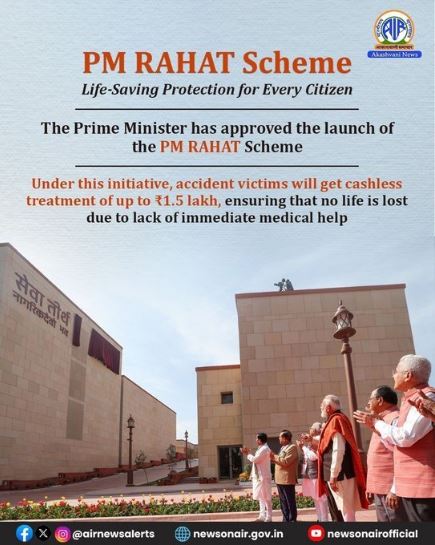
- 17 Feb 2026
In News:
India records one of the highest numbers of road accident fatalities globally. A substantial proportion of these deaths occur due to delayed medical intervention during the critical “Golden Hour.” In this context, the Government of India launched the PM RAHAT (Road Accident Victim Hospitalization and Assured Treatment) Scheme to institutionalize timely, cashless, and technology-enabled trauma care. The scheme represents a structural reform in India’s road safety and emergency health response architecture.
Rationale: The Golden Hour Imperative
Studies indicate that nearly 50% of road accident deaths can be prevented if victims receive hospital treatment within the first hour of injury. However, barriers such as financial uncertainty, delayed ambulance response, and procedural bottlenecks often hinder prompt care. PM RAHAT addresses these systemic gaps through integrated digital platforms, assured financing, and district-level accountability.
Key Features of PM RAHAT
1. Cashless Treatment
- Every eligible road accident victim on any category of road is entitled to cashless treatment up to ?1.5 lakh per victim.
- Coverage is available for 7 days from the date of accident.
- Stabilization care:
- 24 hours for non-life-threatening cases
- 48 hours for life-threatening cases
- Treatment is subject to police authentication within defined timelines, without interrupting emergency care.
2. Integration with ERSS 112
The scheme is integrated with the Emergency Response Support System (ERSS) 112.
- Victims, Good Samaritans (Rah-Veer), or bystanders can dial 112 to locate the nearest designated hospital and request ambulance services.
- Ensures coordination between police, hospitals, and emergency responders to secure treatment within the Golden Hour.
3. Technology-Driven Implementation
PM RAHAT integrates:
- Electronic Detailed Accident Report (eDAR) of the Ministry of Road Transport and Highways, and
- Transaction Management System (TMS 2.0) of the National Health Authority.
This digital convergence ensures seamless linkage from accident reporting to hospital admission, authentication, claim processing, and reimbursement, enhancing transparency and efficiency.
Financing Mechanism
Reimbursements to hospitals are made through the Motor Vehicle Accident Fund (MVAF).
- If the offending vehicle is insured: payment is drawn from contributions made by General Insurance Companies.
- In uninsured or hit-and-run cases: payment is made through budgetary allocation by the Government of India.
- Approved claims by the State Health Agency must be settled within 10 days, providing financial certainty to hospitals and incentivizing participation.
Grievance Redressal and Accountability
- A Grievance Redressal Officer is nominated by the District Road Safety Committee.
- The Committee is chaired by the District Collector/District Magistrate/Deputy Commissioner, ensuring district-level oversight and accountability.
- Police confirmation timelines (24–48 hours) maintain institutional discipline while safeguarding emergency care.
Significance
- Human-Centric Governance: Ensures that no victim is denied treatment due to inability to pay.
- Strengthening Road Safety Framework: Complements broader road safety initiatives under the Motor Vehicles (Amendment) Act.
- Digital Governance Model: Demonstrates effective integration of transport, health, insurance, and policing databases.
- Encouragement of Good Samaritans: Reduces hesitation in assisting victims by providing structured institutional backing.
Urban Challenge Fund
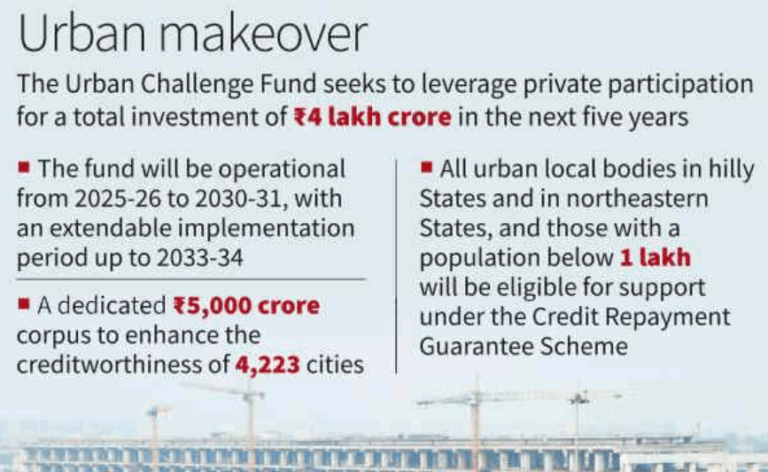
- 16 Feb 2026
In News:
The Urban Challenge Fund (UCF) marks a structural shift from grant-based urban financing to market-linked, reform-driven and outcome-oriented urban infrastructure development.
Background & Rationale
- Approved by the Union Cabinet; operational from FY 2025–26 to FY 2030–31 (extendable till FY 2033–34).
- Total Central Assistance (CA): ?1 lakh crore.
- CA limited to 25% of project cost, mandating minimum 50% financing from market sources.
- Expected to leverage ?4 lakh crore total investment over five years.
- Implements Budget 2025–26 vision: Cities as Growth Hubs, Creative Redevelopment, Water & Sanitation.
2. Financing Architecture
- Minimum 50% market mobilisation: municipal bonds, bank loans, PPPs.
- Remaining share: States/UTs/ULBs.
- Dedicated ?5,000 crore corpus to enhance creditworthiness of ~4,223 cities.
- Positions ULBs as a bankable asset class.
Credit Repayment Guarantee Scheme (?5,000 crore)
- For NE & Hilly States and smaller ULBs (<1 lakh population).
- Central guarantee:
- First loan: up to ?7 crore or 70% of loan (whichever lower).
- Subsequent loan: up to ?7 crore or 50% of loan.
- Enables projects of ?20–28 crore in smaller cities.
3. Challenge-Based Selection
- Competitive, transparent “challenge mode”.
- Linked to reforms, milestones & defined KPIs.
- Digital, paperless monitoring via MoHUA portal.
- Continuation of reforms mandatory for further fund release.
4. Reform-Linked Framework
Focus areas:
- Urban governance & digital reforms
- Market/financial reforms (creditworthiness)
- Operational efficiency
- Urban planning & spatial reforms (TOD, green infra)
- Project-specific KPIs with third-party verification
5. Project Verticals
- Cities as Growth Hubs – economic nodes, transit-oriented development, mobility, corridor development.
- Creative Redevelopment – CBD renewal, brownfield regeneration, climate resilience, decongestion (esp. NE & hilly states).
- Water & Sanitation – water supply, sewerage, stormwater, solid waste management, legacy waste remediation.
6. Coverage
- Cities ≥10 lakh population (2025 estimates).
- All State/UT capitals.
- Industrial cities ≥1 lakh population.
- Smaller & hilly/NE ULBs via guarantee mechanism.
Bio-based Chemicals and Enzymes
- 16 Feb 2026
In News:
India is prioritising bio-based chemicals and enzymes under the BioE3 policy to reduce petrochemical imports, promote sustainable manufacturing, and strengthen its bioeconomy.
What are Bio-Based Chemicals?
Bio-based chemicals are industrial chemicals produced from renewable biological feedstocks such as sugarcane, corn, starch, and agricultural residues, rather than fossil fuels. They are typically manufactured through fermentation, enzymatic conversion, or microbial processes using biomass.
Examples:
- Organic acids (e.g., lactic acid)
- Bio-alcohols
- Solvents
- Surfactants
- Chemical intermediates used in plastics, cosmetics, pharmaceuticals
These chemicals form a core component of the bioeconomy, which integrates biological resources and biotechnology into industrial production systems to create sustainable alternatives to petrochemicals.
What are Enzymes?
Enzymes are biological catalysts (mainly proteins) that accelerate chemical reactions without being consumed in the process. While enzymes have been used traditionally in brewing and baking for centuries, modern industrial enzyme engineering expanded significantly in the 20th century with advances in biotechnology.
Enzymes are produced via microbial fermentation, followed by purification and formulation for industrial use.
Key Characteristics
- Renewable Feedstock Base – Derived from biomass instead of fossil hydrocarbons.
- Lower Carbon Footprint – Reduced greenhouse gas emissions compared to petrochemical pathways.
- Energy Efficiency – Enzymes operate at lower temperatures and pressures.
- Biodegradability – Many bio-based products are environmentally friendly.
- High Specificity – Enzymes provide targeted catalytic action, improving efficiency and reducing waste.
Applications
1. Chemical Industry
- Organic acids (lactic acid)
- Acetyl intermediates (acetic anhydride, ethyl acetate)
- Solvents and specialty chemicals
2. Pharmaceuticals & Vaccines: Active ingredient synthesis through fermentation technologies.
3. Food & Beverage: Brewing, baking, dairy processing.
4. Textiles & Detergents: Stain removal, fabric treatment.
5. Biomanufacturing & Clean Technology: Sustainable plastics, biofuels, specialty chemicals.
Why Does India Need Bio-Based Chemicals?
India has strong structural advantages:
- Large agricultural base (ample biomass availability)
- Established fermentation expertise (pharmaceuticals and vaccines)
- Expanding manufacturing ecosystem
- Rising demand for sustainable industrial inputs
India imported approximately $479.8 million worth of acetic acid in 2023, reflecting dependence on petrochemical imports. Scaling domestic bio-based chemical production can:
- Reduce import dependence
- Create value-added markets for agricultural produce
- Strengthen climate commitments
- Boost rural and industrial employment
Policy Support: BioE3 Initiative
India has identified bio-based chemicals and enzymes as priority sectors under the Department of Biotechnology’s BioE3 Policy.
BioE3 focuses on:
- Biomanufacturing scale-up
- Shared infrastructure (biofoundries, pilot plants, demonstration facilities)
- Innovation ecosystem development
- Reducing capital risk for emerging firms
Industry Landscape in India
Bio-Based Chemicals
- Praj Industries
- Godrej Industries
- Godavari Biorefineries
- Jubilant Ingrevia
- StringBio
Enzymes Market
The Indian enzyme market is highly consolidated, with top players accounting for over 75% market share.
Key companies:
- Novozymes India
- DuPont
- DSM
- Advance Enzyme Technologies
- BASF SE
- Ultreze Enzymes Private Limited
Global Initiatives
European Union
The EU Bioeconomy Strategy links industrial transformation with:
- Climate mitigation
- Circular economy
- Waste reduction
United States
- The USDA BioPreferred Program mandates federal procurement preference for certified bio-based products, helping create stable demand.
China
- Bioeconomy development plans prioritise high-value bio-based chemicals and enzyme technologies as strategic sectors.
Japan
- Projects supported by METI/NARO integrate research with manufacturing readiness in bio-based chemicals.
African Union

- 16 Feb 2026
In News:
The African Union (AU), launched in 2002 to replace the OAU, is a continental body of 55 African states headquartered in Addis Ababa, Ethiopia.
Recently, the African Union (AU) held its annual summit in Ethiopia amid growing discussions on governance reforms and youth representation within the bloc.
Origin and Evolution
The African Union was officially launched in 2002, replacing the Organization of African Unity (OAU), which had been established in 1963.
Why the Transition?
- The OAU primarily focused on decolonization and anti-apartheid struggles.
- The AU was created with a broader mandate including:
- Political and economic integration
- Conflict resolution
- Sustainable development
- Stronger global representation for Africa
Membership
- Comprises 55 member states (all internationally recognized African countries).
- It represents the entire African continent.
Headquarters
- Located in Addis Ababa, Ethiopia.
Objectives of the African Union
The AU aims to:
- Promote unity and solidarity among African countries.
- Foster peace, security, and stability.
- Advance economic integration and development.
- Protect sovereignty and territorial integrity.
- Enhance Africa’s voice in global governance.
Governance Structure
Assembly
- Highest decision-making body.
- Composed of Heads of State and Government.
- Determines policy direction.
Executive Council
- Consists of Foreign Affairs Ministers.
- Prepares decisions and policies for the Assembly.
AU Commission
- Administrative arm of the AU.
- Implements decisions of the Assembly and Executive Council.
- Headquartered in Addis Ababa.
Peace and Security Council (PSC)
- Responsible for:
- Conflict prevention
- Peacekeeping missions
- Crisis response mechanisms
The PSC functions somewhat similarly to the UN Security Council but at the continental level.
Participatory and Advisory Bodies
To promote democratic participation:
- Pan-African Parliament
- Ensures representation of African peoples.
- Economic, Social and Cultural Council (ECOSOCC)
- Civil society advisory body.
These institutions reflect the AU’s goal of citizen engagement and inclusive governance.
Contemporary Context
Recent summits have witnessed debates over:
- Youth representation in governance
- Leadership renewal within member states
- Democratic accountability
- Economic integration initiatives such as the African Continental Free Trade Area (AfCFTA)
With Africa having one of the world’s youngest populations, youth inclusion has become a prominent theme in AU deliberations.
Yuva AI for All Initiative
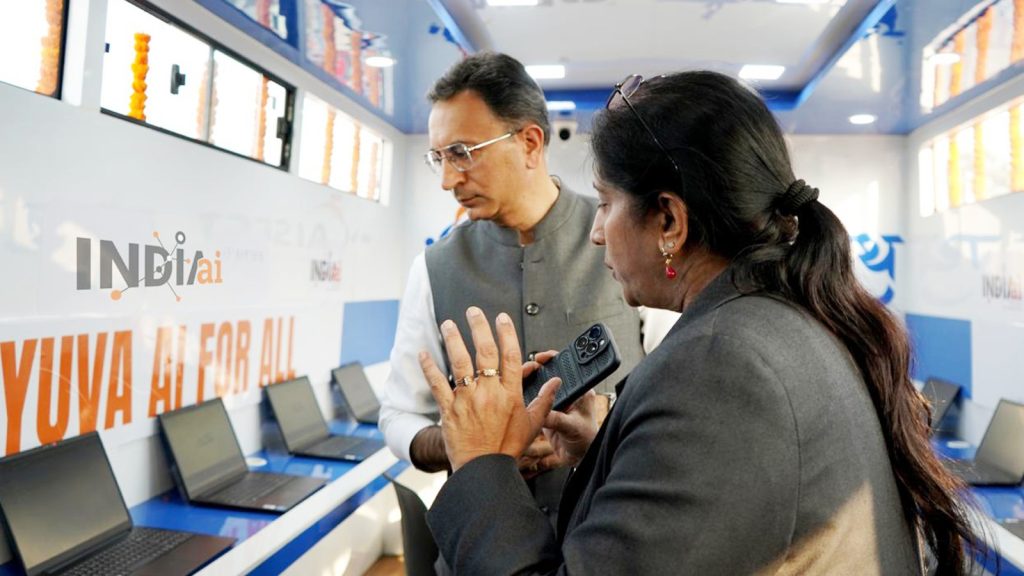
- 16 Feb 2026
In News:
Launched by the Ministry of Electronics and Information Technology (MeitY) under the IndiaAI Mission, this initiative is a first-of-its-kind free AI literacy programme designed for mass outreach.
Key Features
- Target: Empower 1 crore (10 million) citizens with foundational AI skills.
- Duration: Approximately 4–4.5 hours, self-paced.
- Structure: Six modules covering:
- AI fundamentals
- Generative AI basics
- Ethics in AI
- Real-world applications
- Eligibility: No prior coding knowledge required.
- Certification: Official Government of India certificate upon completion.
- Accessibility: 100% free and open to all.
- Platforms: Available on
- FutureSkills Prime
- iGOT Karmayogi
- Coursera
- TCS iON and other ed-tech portals
The course is designed with India-specific examples, making it practical and relatable for students, professionals, and general learners.
Kaushal Rath: Mobile AI Awareness Initiative
To expand outreach beyond digital platforms, MeitY, in collaboration with the All India Society for Electronics and Computer Technology (AISECT), launched Kaushal Rath.
Key Highlights
- Flagged off from India Gate, New Delhi.
- Designed as a mobile computer lab equipped with:
- Internet-enabled systems
- Audio-visual tools
- Structured AI training modules
- Will travel to:
- Schools
- Colleges
- Industrial Training Institutes (ITIs)
- Community centers
- Provides:
- Hands-on exposure to AI and Generative AI tools
- On-the-spot course registrations
- Instructor-led sessions with trained facilitators
The initiative focuses particularly on semi-urban and underserved regions, ensuring AI awareness reaches beyond metropolitan centers.
Institutional Framework
IndiaAI Mission
The programme is part of the broader IndiaAI Mission, where skilling is one of the seven core pillars. The mission seeks to strengthen India’s AI ecosystem through:
- Capacity building
- Innovation support
- Ethical AI frameworks
- Workforce readiness
Link with India AI Impact Summit 2026
The initiative also serves as a precursor to the India AI Impact Summit 2026. The summit is positioned as:
- The first major global AI gathering hosted in the Global South.
- Focused on development-oriented AI outcomes.
- Thematically aligned with People, Planet and Progress.
Kaushal Rath will operate across Delhi-NCR in the run-up to the summit to generate public awareness and encourage AI adoption.
Removal of the Lok Sabha Speaker
- 16 Feb 2026
In News:
The Lok Sabha Speaker can be removed only by a resolution passed by an Effective Majority (majority of all the then members of the House) under Article 94(c) of the Constitution.
The recent notice seeking the removal of Lok Sabha Speaker Om Birla has revived attention on the constitutional and procedural safeguards governing the office of the Speaker.
Constitutional Basis
The removal of the Speaker is governed primarily by:
Article 94 of the Constitution of India
It lays down the circumstances under which the Speaker or Deputy Speaker vacates office:
- Article 94(a) – If they cease to be a member of the Lok Sabha.
- Article 94(b) – They may resign by writing addressed to the Deputy Speaker (or Speaker, in case of Deputy Speaker).
- Article 94(c) – They may be removed by a resolution of the House passed by a majority of all the then members of the House (Effective Majority).
This provision applies only to the Lok Sabha and not to the Rajya Sabha.
Effective Majority
An Effective Majority means: Majority of all the then members of the House (excluding vacant seats).
It is different from:
- Simple Majority – Majority of members present and voting.
- Absolute Majority – Majority of total membership of the House.
- Special Majority – Required in constitutional amendment cases (Article 368).
Procedural Framework
The detailed procedure is laid down under Rules 200–203 of the Rules of Procedure and Conduct of Business in Lok Sabha.
Notice Requirement
- A written notice must be submitted to the Secretary-General of the Lok Sabha.
- At least 14 days’ prior notice is mandatory.
- It may be signed by one or more members.
Admission of Motion
- The motion is listed in the List of Business.
- The presiding officer reads it to the House.
- At least 50 Members must rise in support.
- If fewer than 50 members stand → Motion fails (no “leave of the House”).
Conditions on the Motion (Rule 200A)
The resolution must:
- Be specific and precise
- Clearly state charges
- Not contain arguments, inferences, defamatory or ironic expressions
Discussion must remain strictly confined to the charges mentioned.
Role of the Speaker During Removal Proceedings
Under Article 96:
- The Speaker cannot preside while the resolution is under consideration.
- They have the right to:
- Speak
- Participate in debate
- Vote in the first instance (as an ordinary member)
- They cannot exercise a casting vote in case of a tie.
Timeline After Admission
If 50 or more members support:
- Leave is granted.
- The resolution must be taken up within 10 days.
- Discussion follows.
- The member moving the motion may speak (maximum 15 minutes, if allowed).
If passed by Effective Majority → The Speaker is removed immediately.
Continuity of Office
- Even after dissolution of the Lok Sabha, the Speaker continues in office until immediately before the first meeting of the new Lok Sabha.
- However, removal by resolution results in immediate vacation of office.
Historical Precedents
No Speaker has ever been removed through this process.
Three motions have been moved:
- 1954 – Against G. V. Mavalankar (First Speaker of Lok Sabha)
- 1966 – Against Hukam Singh
- 1987 – Against Balram Jakhar
All three motions failed.
Consumer Price Index (CPI) – Base Year 2024 = 100
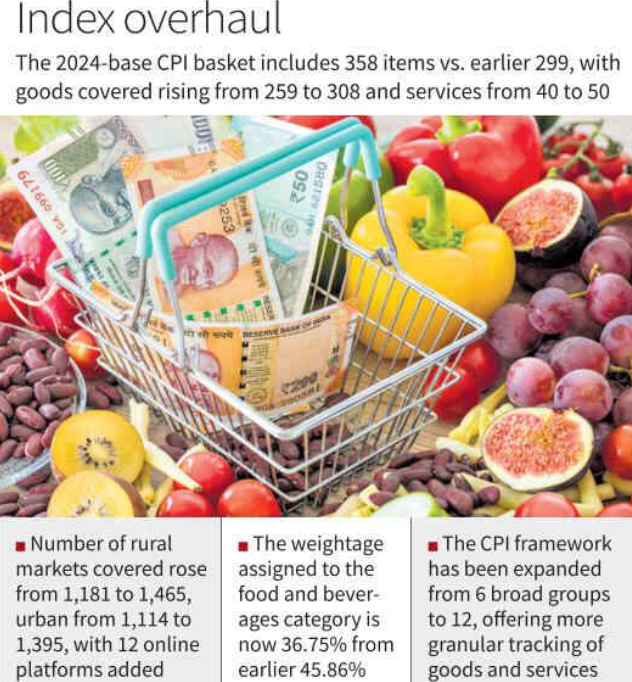
- 14 Feb 2026
In News:
The Ministry of Statistics and Programme Implementation (MoSPI) released the first press note of the revised Consumer Price Index (CPI) series with base year 2024=100. The data reported retail inflation at 2.75% (Year-on-Year) for January 2026.
This marks the transition from the earlier base year 2012=100 to 2024=100, reflecting updated consumption patterns of households.
What is the Consumer Price Index (CPI)?
The Consumer Price Index (CPI) measures the change in retail prices of a fixed basket of goods and services consumed by households over time.
- It is India’s headline retail inflation indicator.
- Inflation is expressed as the percentage change in CPI over the same month of the previous year (YoY).
Compiled and Published By
- Published by: Ministry of Statistics and Programme Implementation
- Through: National Statistical Office (NSO)
- Price collection: Field Operations Division of NSO
Base Year Revision
- New Base Year: 2024 = 100
- Earlier Base Year: 2012 = 100
- Weights Source: Household Consumption Expenditure Survey (HCES) 2023–24
Base year revision ensures that:
- The consumption basket reflects current spending patterns.
- Inflation measurement aligns with structural changes in the economy.
Methodology Used in CPI (Base 2024)
1. Jevons Index (Item Level)
- Used at the individual item level.
- Calculates the average of price relatives (ratio of current to base prices).
- Reduces distortion caused by extreme values.
2. Young / Modified Laspeyres Index (Group Level)
- Aggregates item-level indices using fixed expenditure weights.
- Higher-weight items (e.g., food, rent) influence CPI more than low-spending items.
3. Combined CPI (All-India)
- Calculated by combining:
- Rural CPI
- Urban CPI
- Weighted by their respective shares in total consumption.
Thus, if rural consumption share is higher, rural inflation has greater influence on the all-India CPI.
Key Features of CPI (Base 2024=100)
1. Expanded Classification (12 Groups Instead of 6)
Earlier CPI had 6 major groups. The new series follows an updated international classification system with 12 broader and clearer categories, including:
- Food & beverages
- Housing
- Health
- Education
- Transport
- Communication
- Recreation & culture
- Miscellaneous services
2. Expanded Basket of Items
- Earlier basket: 299 items
- New basket: 358 items
The revised basket better captures:
- Modern consumption habits
- Digital and service-based spending
3. Greater Focus on Services
With rising income levels, household expenditure on services has increased.
The new series includes:
- OTT subions
- Healthcare services
- Education fees
- Transport services
- Communication services
4. Inclusion of Online Prices
Given the growth of e-commerce: Prices from online platforms (e.g., air tickets, subions) are now incorporated.
5. Introduction of Rural House Rent
For the first time:
- Rural housing rent is included in CPI.
- This improves representation of rural housing consumption.
6. Official Administrative Price Data
For certain regulated items, official government data is used directly:
- Rail fares
- Postal charges
- Petrol & diesel
- LPG
This enhances accuracy and consistency.
7. Digital Price Collection
- Field officers now use tablets instead of paper schedules.
- Improves timeliness, data accuracy and monitoring.
8. Detailed Monthly Dissemination
CPI data is now available:
- All-India
- State-wise
- Rural and Urban separately
This strengthens regional inflation analysis.
Importance of CPI
- Monetary Policy Anchor
- Retail inflation targeting framework is based on CPI.
- Guides RBI’s monetary policy decisions.
- Indexation
- Used for Dearness Allowance (DA) revision.
- Impacts wage negotiations.
- Macroeconomic Assessment
- Reflects purchasing power.
- Indicates cost-of-living trends.
US–Bangladesh “Cotton for Zero-Tariff” Deal
- 14 Feb 2026
In News:
Bangladesh and the United States have signed a reciprocal trade agreement, informally termed the “Cotton for Zero-Tariff” deal. The agreement provides Bangladesh a quota-based zero-duty advantage in the US market, conditional on the use of US-produced cotton and man-made fibre (MMF) inputs.
The development has raised concerns in India’s textile and cotton sectors due to possible erosion of tariff advantages and potential displacement of Indian cotton exports to Bangladesh.
Key Highlights of the US–Bangladesh Trade Deal
1. Tariff Adjustment
- Bangladesh’s general reciprocal tariff reduced from 20% to 19%.
- Earlier, India faced an 18% tariff in the US market, giving it a narrow edge over Bangladesh (20%).
2. Zero-Tariff Quota Mechanism
- A specified volume of Bangladeshi textile and apparel exports can enter the US at 0% duty.
- This zero-duty benefit is conditional on the use of US-produced cotton and MMF inputs (Rules of Origin clause).
3. Bangladesh’s Reciprocal Commitments
Bangladesh has agreed to:
- Purchase USD 3.5 billion worth of US agricultural products (wheat, soy, cotton, corn).
- Import USD 15 billion of US energy products over 15 years.
- Open its market further to US industrial goods.
Implications for India
According to the Confederation of Indian Textile Industry (CITI), the agreement presents a two-fold challenge:
1. Erosion of Tariff Advantage in the US Market
- Earlier scenario:
- India: 18% tariff
- Bangladesh: 20% tariff → India had a 2% edge.
- After the deal:
- Bangladesh: 19% (general rate)
- Zero-duty for quota-based exports
This narrows India’s advantage to just 1% under general tariff and creates an 18% disadvantage for zero-duty Bangladeshi exports.
Competitive Context
- Bangladesh is the world’s 2nd-largest apparel exporter (after China).
- India ranks 6th globally.
- US is a major export destination for both.
Indian textile hubs such as:
- Tiruppur (Tamil Nadu)
- Surat (Gujarat)
operate on thin margins. Large global retailers may shift sourcing to Bangladesh to benefit from the zero-duty window.
2. Threat to Indian Cotton Exports
Bangladesh has traditionally been:
- The largest buyer of Indian raw cotton.
- Accounts for nearly 70% of India’s cotton exports.
In 2024:
- India exported USD 1.6 billion worth of cotton yarn to Bangladesh.
- About USD 85 million of MMF yarn.
Impact Mechanism
To access zero-tariff entry into the US:
- Bangladeshi manufacturers must use US-produced cotton.
- This incentivizes a shift away from Indian cotton imports.
Potential consequences:
- Decline in Indian cotton exports.
- Domestic surplus (glut).
- Price depression affecting Indian cotton farmers.
Broader Structural Concerns
1. Cotton vs MMF Imbalance
- Global textile trade composition:
- 70% Man-Made Fibres (MMF)
- 30% Cotton
- India’s exports remain largely cotton-dominated.
Higher taxation on MMF raw materials compared to finished goods has historically weakened India’s competitiveness in synthetics.
Strategic Responses for India
1. Seek “Cotton Parity” with the US
India imported 4.13 million bales of cotton in 2024–25, with the US as the top supplier.
India could:
- Negotiate a “Cotton Clause” granting zero-duty access for garments made from US cotton.
- Fast-track a comprehensive India–US Bilateral Trade Agreement (BTA).
2. ESG-Based Branding
Western buyers prioritise:
- Ethical sourcing
- Labour rights compliance
- Fire and factory safety
India can leverage:
- Stronger social compliance record
- Sustainable production practices
- Zero child labour positioning
to attract premium buyers.
3. GST Rationalisation for MMF
The GST Council could:
- Rationalise taxation across the MMF value chain.
- Make Indian polyester and viscose competitive against Bangladesh, China, and Vietnam.
4. Kasturi Cotton Bharat Initiative
The “Kasturi Cotton Bharat” initiative:
- Uses blockchain for traceability.
- Certifies cotton as contamination-free and ethically grown.
- Helps command premium pricing to offset tariff disadvantages.
5. Focus on Technical Textiles
Shift towards high-value segments where quality outweighs tariff gaps:
- Meditech (surgical implants, sanitary textiles)
- Mobiltech (airbags, seatbelts)
- Geotech (road and soil stabilization fabrics)
Domestic procurement guarantees can help firms scale up.
6. Market Diversification
Reduce dependence on the US market by:
- Leveraging FTAs with Australia and UAE.
- Expanding into Latin American and emerging markets.
Quorum Sensing
- 14 Feb 2026
In News:
The phenomenon of bacterial communication, known as quorum sensing, has emerged as a promising frontier in microbiology and medicine. Instead of killing bacteria outright, as antibiotics do, scientists are exploring ways to disrupt their communication systems, thereby weakening their ability to cause disease. This strategy, called anti-quorum sensing therapy, may become a crucial tool in tackling antimicrobial resistance.
What is Quorum Sensing?
Quorum sensing is a mechanism by which bacteria regulate gene expression according to their population density using chemical signalling molecules.
It enables bacterial populations to:
- Communicate with one another
- Coordinate collective behaviour
- Activate specific genes only when sufficient numbers are present
This coordination ensures that certain biological processes occur only when they are effective at large population sizes.
Historical Background
The phenomenon was first observed in the mid-1960s by Alexander Tomasz, who studied how Pneumococcus (later known as Streptococcus pneumoniae) takes up free DNA from its surroundings.
Modern understanding of quorum sensing has been significantly advanced by Bonnie Bassler of Princeton University, who described bacteria as “multilingual” organisms capable of chemical communication across species.
How Does Quorum Sensing Work?
A standard quorum-sensing system consists of:
- Bacterial population
- Signal molecules (Autoinducers)
- Response genes
Step-by-Step Mechanism
- Bacteria secrete signalling molecules called autoinducers into their environment.
- As the bacterial population grows, the concentration of autoinducers increases.
- When a threshold concentration is reached, bacteria detect these molecules.
- This triggers activation of specific genes that regulate group behaviours.
Behaviours Regulated by Quorum Sensing
Quorum sensing controls several crucial biological processes:
- Virulence (disease-causing ability)
- Biofilm formation (protective bacterial communities)
- Horizontal gene transfer
- Competence (ability to take up external DNA)
- Symbiotic interactions
- Cell growth regulation
Since many of these activities require coordinated mass action, quorum sensing acts as a population-based decision-making system.
Examples of Quorum Sensing in Action
1. Pathogenic Bacteria
- Pseudomonas aeruginosa: Regulates mechanisms causing pneumonia and bloodstream infections.
- Vibrio cholerae: Causes cholera; quorum sensing influences its virulence and disease progression.
2. Bioluminescent Symbiosis
- Vibrio fischeri: Produces blue light through quorum sensing. Lives in one-to-one symbiosis with certain squids, helping camouflage them in ocean waters.
3. Nitrogen Fixation
- Rhizobium leguminosarum: Uses quorum sensing in symbiotic nitrogen fixation in leguminous plants.
Why is Quorum Sensing a Game-Changer for Medicine?
1. Alternative to Antibiotics
Traditional antibiotics:
- Kill bacteria or stop their growth
- Create strong evolutionary pressure → antimicrobial resistance
Anti-quorum sensing therapies:
- Disrupt communication
- Prevent coordination of virulence
- Reduce pathogenicity without killing bacteria
This approach may slow the emergence of drug resistance.
2. Targeting Biofilms
Biofilms protect bacteria from antibiotics and immune responses. Interrupting quorum sensing can prevent biofilm formation, making infections easier to treat.
3. Applications Beyond Medicine
- Agriculture – Improved plant-microbe interactions
- Environment – Waste treatment and bioremediation
- Human Health – Gut microbiome regulation
Bacteria in the human gut aid digestion and nutrient absorption, showing that quorum sensing also plays a role in beneficial processes.
Carbon Capture, Usage and Storage

- 14 Feb 2026
In News:
The Prime Minister highlighted the importance of CCUS in decarbonising India’s heavy industries by sharing an article titled “Carbon capture can power India’s next steel revolution” authored by the Union Minister of Steel. Simultaneously, the Union Budget 2026–27 earmarked ?20,000 crore for a dedicated CCUS scheme, signalling a shift from pilot research to commercial deployment.
What is CCUS?
According to the International Energy Agency, Carbon Capture, Utilization and Storage (CCUS) refers to a set of technologies that capture carbon dioxide (CO?) from:
- Large industrial sources (power plants, steel, cement, refineries), or
- Directly from the atmosphere (Direct Air Capture).
The captured CO? is compressed and transported for either utilization or permanent geological storage.
The Three-Step Process
1. Capture: CO? is separated from other gases using:
- Chemical solvents
- Membranes
- Solid sorbents
2. Transport: Compressed CO? is transported through:
- Pipelines
- Ships
- Road tankers
3. Utilization or Storage
- Utilization (CCU): Conversion into urea, methanol, synthetic fuels, chemicals, building materials, or use in Enhanced Oil Recovery (EOR).
- Storage (CCS): Injection into deep geological formations such as depleted oil and gas fields or saline aquifers for long-term sequestration.
Why is CCUS crucial for India?
1. Decarbonising ‘Hard-to-Abate’ Sectors
Industries like steel and cement emit CO? due to chemical processes (e.g., calcination of limestone), not merely fuel combustion. CCUS is currently the only scalable solution to reduce such intrinsic emissions without shutting down production.
2. Powering India’s Steel Expansion
- India is the world’s second-largest crude steel producer (after China).
- Production: ~152 million tonnes (FY 2024–25).
- Under the National Steel Policy 2017, targets:
- 300 MT capacity by FY 2030–31
- 500 MT by 2047 (Viksit Bharat vision)
- Steel accounts for 10–12% of India’s total greenhouse gas emissions.
While hydrogen-based steelmaking is the long-term solution, CCUS acts as a bridge technology, enabling “Low-Carbon Steel” using existing plants.
3. Enhancing Energy Security
India derives 55–60% of its primary energy from coal. Immediate fossil fuel phase-out is economically disruptive. CCUS allows continued coal usage with reduced emissions during transition.
4. Circular Economy & Industrial Value Addition
Captured CO? can be:
- Converted to methanol (clean fuel)
- Used in Enhanced Oil Recovery (EOR)
- Converted into green urea or building materials
Thus, emissions become economic resources.
5. Safeguarding Exports from Carbon Taxes
Global trade is increasingly climate-regulated under mechanisms like the European Union Carbon Border Adjustment Mechanism (CBAM).
Low-carbon steel:
- Reduces export vulnerability
- Attracts climate-aligned investments
- Prevents “stranded assets” in India’s relatively young steel plants
6. Alignment with Global Commitments
CCUS supports:
- Paris Agreement (limit warming to 1.5–2°C)
- Sustainable Development Goals (Climate Action, Affordable & Clean Energy, Industry & Innovation)
India’s Key Initiatives on CCUS
1. Budgetary Push (2026–27)
- ?20,000 crore over five years
- Target sectors: Power, Steel, Cement, Refineries, Chemicals
2. NITI Aayog Policy Framework
- Proposed Viability Gap Funding (VGF)
- Development of CCUS hubs in industrial clusters (e.g., Gujarat, Odisha)
- Shared pipeline and storage infrastructure
3. Green Steel Taxonomy
Steel with emissions <2.2 tCO?e per tonne of crude steel qualifies as “Green Steel” (3–5 star ratings), incentivising adoption of CCUS and avoiding carbon taxes.
4. R&D and Institutional Support
National Centres of Excellence (NCoE-CCU)
- IIT Bombay
- Jawaharlal Nehru Centre for Advanced Scientific Research
DST Roadmap
- Pilot phase: 2025–30
- Commercial scale-up: 2035–45
Mission Innovation Challenge (2018)
- Joint initiative of DST & DBT
- Collaboration with 24 countries
- Focus on breakthrough capture and utilization technologies
Indigenous Dog Breeds in Assam Rifles
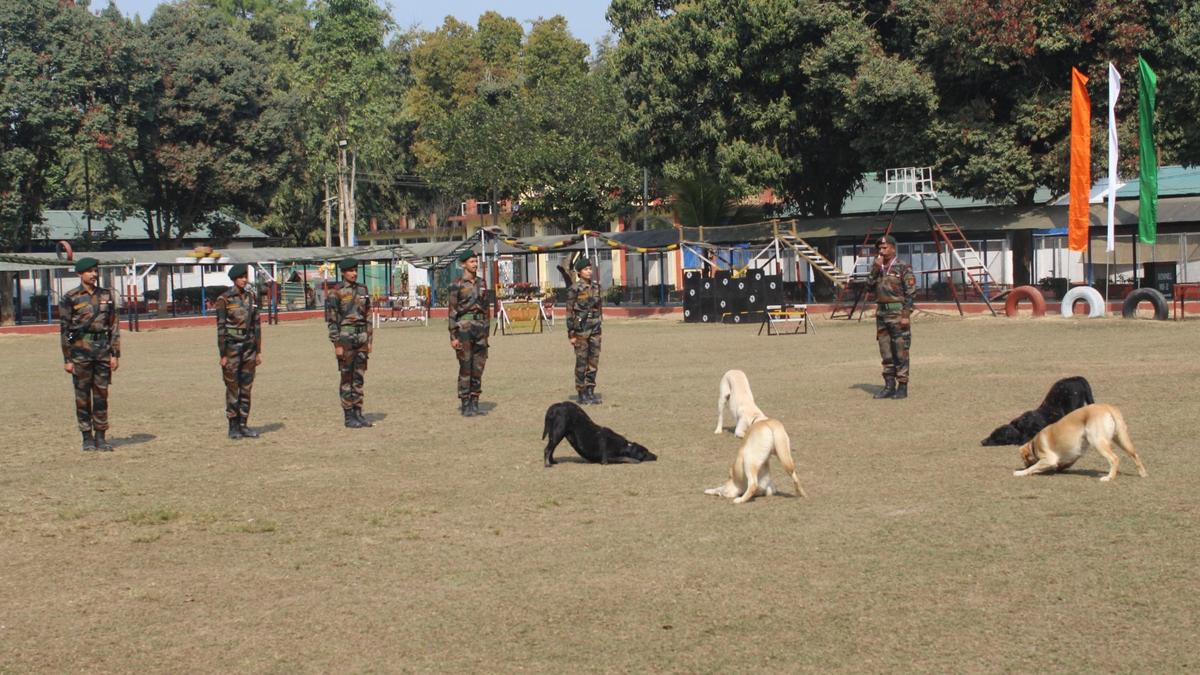
- 14 Feb 2026
In News:
The Assam Rifles, India’s oldest paramilitary force, has initiated the induction of two indigenous dog breeds—Tangkhul Hui (Haofa) from Manipur and Kombai from Tamil Nadu into its dog squads. The move aligns with the 2025 directive of the Ministry of Home Affairs (MHA) encouraging greater adoption of Indian canine breeds in armed forces.
This initiative aims to reduce long-term dependence on foreign breeds such as Belgian Malinois, German Shepherd, and Labrador, with full operational induction of indigenous breeds targeted by 2027 and gradual replacement of foreign breeds by 2050.
Assam Rifles:
- Established in 1835 as the Cachar Levy.
- India’s oldest paramilitary force.
- Functions under dual control:
- Administrative: Ministry of Home Affairs
- Operational: Ministry of Defence
- Primary roles:
- Counter-insurgency in the Northeast
- Guarding the Indo-Myanmar border
- Operates the Assam Rifles Dog Training Centre (ARDTC), Jorhat, its sole canine training facility.
Role of Dog Squads
Dogs are trained for:
- Trackers – Follow human/animal trails in difficult terrain.
- Guard dogs – Secure camps, convoys, and border posts.
- Detection dogs – Identify hidden arms, explosives, and narcotics.
They are particularly deployed in sensitive regions like the Northeast and Jammu & Kashmir.
Tangkhul Hui (Haofa)
Origin
- Native to Ukhrul district, Manipur
- Raised traditionally by the Tangkhul tribe
- Originally developed as a hunting companion (sighthound)
Key Features
- Large, strong body; deep chest and powerful jaws
- Usually black with white markings
- Erect ears and alert expression
- Highly disease-resistant
- Strong stamina (more endurance than speed)
- Intelligent and protective
Current Status
- Part of a pilot project since 2022
- Six dogs already trained and deployed in narcotics detection
- Purebred population is declining, making it relatively rare
Kombai (Polygar Dog)
Origin
- Indigenous to Kombai region, Theni district, Tamil Nadu
- Also known as:
- Polygar Dog
- Indian Bore Hound
- Combai
Historical Use
- Guarding property
- Hunting wild boar and large game
- Used by South Indian royalty and warriors
- Employed in regional military contexts historically
Key Characteristics
- Muscular, athletic build
- Broad head, deep chest, strong limbs
- Short, smooth reddish-brown coat
- Distinct black mask-like muzzle
- Loyal, protective, highly defensive
- Hardy and disease-resistant
Induction Plan
- First batch (2 males, 8 females) scheduled for induction in April 2026
- Full integration expected by March 2027
Mud Volcanoes
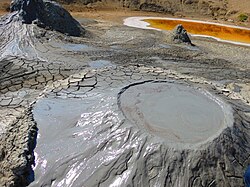
- 13 Feb 2026
In News:
Mud volcanoes are non-igneous “sedimentary volcanoes” formed in young oil-field regions, where methane and hydrocarbons under compactional stress force mud and gases to the surface.
A recent eruption of a mud volcano in Diglipur, Andaman Islands, has drawn attention to this rare geological phenomenon. Mud volcanoes differ fundamentally from magmatic volcanoes as they do not involve molten lava but are driven by sedimentary and hydrocarbon processes.
What is a Mud Volcano?
Mud volcanoes, also called sedimentary volcanoes or gas-oil volcanoes are surface expressions of subsurface pressure systems associated with hydrocarbon-rich sedimentary basins.
Key Characteristics
- Non-igneous in origin (no magma involved).
- Occur mainly in young oil-field regions with soft, unconsolidated sediments.
- Erupt mud, water, methane and other gases instead of lava.
- Often form cone-shaped structures.
- Can release flames if methane ignites.
- May emit hot mud and steam due to deep compactional heat.
Though different in origin, their eruptive behaviour can resemble magmatic volcanoes in intensity.
Formation Mechanism
Mud volcanoes develop due to:
- Compactional Stress
- Deep sediment layers experience pressure over time.
- Methane and hydrocarbons accumulate in porous formations.
- Gas Build-up and Upward Migration
- Trapped gases mix with mud and water.
- The pressurized mixture forces its way upward through fractures.
- Surface Eruption
- Mud and gases erupt, forming a cone.
- Repeated eruptions may enlarge the structure.
Due to the depth of origin, expelled mud is sometimes warm and accompanied by steam clouds.
Global Distribution
- Around 1,000 mud volcanoes have been identified globally on land and in shallow waters.
- Prominent concentrations occur in:
- Azerbaijan (Caspian region)
- Indonesia
- Mediterranean region
- Many also occur on the ocean floor, forming islands, banks, and altering coastal geomorphology.
Mud Volcanoes in India
In India, mud volcanoes are confined to the Andaman and Nicobar Islands.
Major Locations
- Baratang Island – Known site of India’s mud volcano.
- Diglipur – Recent eruption reported after several years of dormancy.
These eruptions are linked to the tectonically active Andaman subduction zone, where sediment compression and hydrocarbon accumulation occur.
Geological Significance
- Indicator of hydrocarbon-rich sedimentary basins.
- Provide insights into subsurface gas migration and petroleum systems.
- Important for understanding:
- Methane emissions (climate relevance)
- Coastal geomorphology changes
- Seismic and tectonic processes in subduction zones
Differences: Mud Volcano vs Magmatic Volcano
|
Feature |
Mud Volcano |
Magmatic Volcano |
|
Origin |
Sedimentary |
Igneous |
|
Material Ejected |
Mud, water, gases |
Lava, ash, pyroclasts |
|
Energy Source |
Gas pressure |
Magma pressure |
|
Temperature |
Relatively lower |
Extremely high |
Ayushman Sahakar Scheme

- 13 Feb 2026
In News:
Ayushman Sahakar (2020) enables cooperative societies to access NCDC loans (up to 90% of project cost) for healthcare infrastructure, with a 1% interest rebate for women-majority cooperatives.
The National Cooperative Development Corporation (NCDC), a statutory body set up under an Act of Parliament in 1963 and functioning under the Ministry of Cooperation—notified the Ayushman Sahakar Scheme in 2020. The scheme aligns with the National Health Policy, 2017 to expand affordable, community-owned healthcare through cooperative institutions.
Objectives
- Provide affordable and holistic healthcare via cooperative hospitals, healthcare and education facilities.
- Promote AYUSH services through cooperatives.
- Enable participation in the National Digital Health Mission (digital health/ICT integration).
- Support comprehensive healthcare including services, education, insurance, and allied activities.
Coverage: Activities & Infrastructure
The scheme supports creation, modernization, expansion, repair, and renovation of healthcare infrastructure, including:
- Hospitals; Medical/AYUSH/Dental/Nursing/Pharmacy/Paramedical/Physiotherapy colleges (UG/PG)
- Yoga wellness centres; Panchkarma/Unani regimental therapy centres
- Elderly care, palliative care, disability services, mental healthcare
- Emergency/trauma centres; physiotherapy; mobile clinics
- Diagnostics, laboratories, blood banks, ophthalmic & dental centres
- AYUSH pharmaceutical manufacturing & drug testing labs
- Maternal & child health; RCH services
- Telemedicine, remote procedures, digital health ICT
- Health insurance (IRDAI-accredited)
- Margin money & working capital for day-to-day operations
Eligibility
- Any Cooperative Society registered under a State Act or the Multi-State Cooperative Societies Act, with healthcare/health education provisions in its bye-laws.
- Financial assistance provided after technical and financial appraisal to ensure long-term viability.
Financial Architecture
Nature of Assistance
- Term/Investment loans (as per actual project requirement).
- Loan tenure up to 8 years, including 1–2 years moratorium on principal (project-dependent).
Interest Incentive
- 1% interest rebate for the entire tenure to cooperatives where women members are in majority, subject to timely repayment.
Funding Pattern (Illustrative)
- Through State Govt. route:
- NCDC → State Govt. → Society
- Loan up to 90% (infrastructure); Society share ~10%
- Direct funding (NCDC → Society) (as per direct funding guidelines):
- Loan up to 70% (or structured mix with share capital)
- Society share ~30%
- Margin Money: Up to 100% loan (subject to assessment).
- Working Capital: As per requirement (loan).
- Loan quantum may be reduced proportionately if dovetailed with subsidy/grant/VGF of GoI/States/other agencies.
Security Options
- Mortgage of assets (incl. project assets) up to 1.5× loan
- Govt./PSU/Statutory body guarantees
- Pledge of FDRs or assignment of Govt. securities (≈1.2× loan)
- Bank guarantees, as acceptable to NCDC
Institutional Context
- NCDC: Apex statutory institution (1963) to promote cooperative principles in production, processing, marketing, storage and services; assists cooperatives at Primary, District, and Apex/Multi-State levels.
- Scheme details and implementation update were shared in Parliament by the Union Minister for Home and Cooperation.
Significance for Governance & Health
- Cooperative Federalism: Decentralizes healthcare delivery via grassroots cooperatives.
- Community Ownership & Accountability: Participatory governance model in health services.
- Boost to AYUSH & Integrative Care: Expands traditional systems alongside allopathy.
- Digital Health Enablement: Supports ICT, telemedicine, and insurance integration.
- Gender Incentivization: Financial rebate encourages women-led cooperatives.
Tamil-Brahmi Inions in Egypt

- 13 Feb 2026
In News:
Nearly 30 Tamil-Brahmi, Prakrit and Sanskrit inions (1st–3rd century CE) have been identified inside tombs in Egypt’s Valley of the Kings, indicating direct Indian presence in Roman-era Egypt.
Researchers have documented around 30 ancient Indian inions inside six tombs at the Valley of the Kings, dating to the 1st–3rd centuries CE. These inions, written in Tamil-Brahmi, Prakrit, and Sanskrit, provide fresh evidence of maritime trade and cultural interactions between ancient Tamilakam and Roman Egypt.
About the Discovery
Location
- Found in six rock-cut tombs within the Valley of the Kings.
- The site forms part of the Theban Necropolis on the west bank of the Nile near Luxor.
Nature of Inions
- Nearly 30 inions identified.
- s used:
- Tamil-Brahmi
- Prakrit
- Sanskrit
- Suggests presence of people from diverse regions of ancient India.
Repeated Tamil Names
- The name “Cikai Korran” appears eight times across five tombs, indicating repeated visits or extended presence.
- Other names recorded: Kopan, Catan, Kiran - associated with Sangam-era Tamil culture.
- The inions resemble a graffiti tradition, similar to Greek inions left by visitors.
Link to Indo-Roman Trade
Maritime Trade Context
- Dating (1st–3rd century CE) coincides with peak Indo-Roman maritime trade.
- Trade route connected:
- Tamilakam (South India)
- Red Sea ports of Roman Egypt
- Nile Valley and Mediterranean world
Parallel Evidence
- Similar Tamil names were earlier found at Berenike, a major Roman port on the Red Sea.
- Confirms sustained contact beyond coastal ports.
Significance
- Demonstrates that Indian traders likely travelled beyond Egyptian ports into the Nile valley.
- Suggests deeper commercial and cultural exchanges, not merely port-level transactions.
- Reinforces literary references from:
- Periplus of the Erythraean Sea
- Sangam literature describing Yavana (Greek/Roman) trade.
About the Valley of the Kings
What It Is
A major burial site of pharaohs of Egypt’s New Kingdom.
Location
- West bank of the Nile River
- Near modern Luxor (ancient Thebes), Upper Egypt
- Designated a UNESCO World Heritage Site (1979) as part of Ancient Thebes.
Historical Period
- Primarily used during the 18th–20th Dynasties (c. 1539–1075 BCE).
- Royal burials from Thutmose I to Ramses X.
Architectural Features
- Rock-cut tombs with descending corridors.
- Pillared halls and burial chambers.
- Deep shafts to deter robbers.
- Walls decorated with funerary texts:
- Book of the Dead
- Book of Gates
- Book of That Which Is in the Underworld
Archaeological Importance
- Over 60 tombs discovered.
- Includes the famous tomb of Tutankhamun (KV62).
Historical Context: Tamil-Brahmi
- Early used to write Old Tamil.
- Dates back to at least the 3rd century BCE.
- Associated with the Sangam period.
- Previously found in Tamil Nadu, Sri Lanka, and Southeast Asia.
- Now documented in Egypt — expanding the geographical footprint of early Indian s.
Tamil-Brahmi Inions in Egypt
- 13 Feb 2026
In News:
Nearly 30 Tamil-Brahmi, Prakrit and Sanskrit inions (1st–3rd century CE) have been identified inside tombs in Egypt’s Valley of the Kings, indicating direct Indian presence in Roman-era Egypt.
Researchers have documented around 30 ancient Indian inions inside six tombs at the Valley of the Kings, dating to the 1st–3rd centuries CE. These inions, written in Tamil-Brahmi, Prakrit, and Sanskrit, provide fresh evidence of maritime trade and cultural interactions between ancient Tamilakam and Roman Egypt.
About the Discovery
Location
- Found in six rock-cut tombs within the Valley of the Kings.
- The site forms part of the Theban Necropolis on the west bank of the Nile near Luxor.
Nature of Inions
- Nearly 30 inions identified.
- s used:
- Tamil-Brahmi
- Prakrit
- Sanskrit
- Suggests presence of people from diverse regions of ancient India.
Repeated Tamil Names
- The name “Cikai Korran” appears eight times across five tombs, indicating repeated visits or extended presence.
- Other names recorded: Kopan, Catan, Kiran - associated with Sangam-era Tamil culture.
- The inions resemble a graffiti tradition, similar to Greek inions left by visitors.
Link to Indo-Roman Trade
Maritime Trade Context
- Dating (1st–3rd century CE) coincides with peak Indo-Roman maritime trade.
- Trade route connected:
- Tamilakam (South India)
- Red Sea ports of Roman Egypt
- Nile Valley and Mediterranean world
Parallel Evidence
- Similar Tamil names were earlier found at Berenike, a major Roman port on the Red Sea.
- Confirms sustained contact beyond coastal ports.
Significance
- Demonstrates that Indian traders likely travelled beyond Egyptian ports into the Nile valley.
- Suggests deeper commercial and cultural exchanges, not merely port-level transactions.
- Reinforces literary references from:
- Periplus of the Erythraean Sea
- Sangam literature describing Yavana (Greek/Roman) trade.
About the Valley of the Kings
What It Is
A major burial site of pharaohs of Egypt’s New Kingdom.
Location
- West bank of the Nile River
- Near modern Luxor (ancient Thebes), Upper Egypt
- Designated a UNESCO World Heritage Site (1979) as part of Ancient Thebes.
Historical Period
- Primarily used during the 18th–20th Dynasties (c. 1539–1075 BCE).
- Royal burials from Thutmose I to Ramses X.
Architectural Features
- Rock-cut tombs with descending corridors.
- Pillared halls and burial chambers.
- Deep shafts to deter robbers.
- Walls decorated with funerary texts:
- Book of the Dead
- Book of Gates
- Book of That Which Is in the Underworld
Archaeological Importance
- Over 60 tombs discovered.
- Includes the famous tomb of Tutankhamun (KV62).
Historical Context: Tamil-Brahmi
- Early used to write Old Tamil.
- Dates back to at least the 3rd century BCE.
- Associated with the Sangam period.
- Previously found in Tamil Nadu, Sri Lanka, and Southeast Asia.
- Now documented in Egypt — expanding the geographical footprint of early Indian s.
Dolphin Census in Odisha
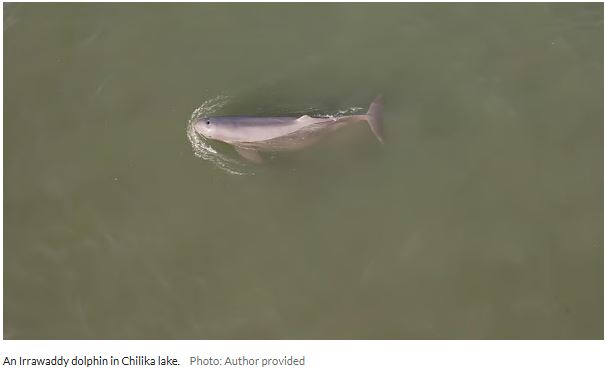
- 13 Feb 2026
In News:
Odisha has registered its highest marine dolphin population in the past five years, with 765 dolphins recorded in the 2026 State-wide census. The estimation highlights stable to improving population trends and underscores the role of sustained conservation, habitat protection, and community participation.
About the Dolphin Census in Odisha
What is it?
- An annual scientific population estimation exercise assessing the abundance, distribution, and diversity of dolphins and other cetaceans in Odisha’s marine, estuarine, and lagoon ecosystems.
Conducting Authority
The census is conducted by the Wildlife Wing of the Forest, Environment and Climate Change Department, Government of Odisha. It involves:
- Forest officials and frontline staff
- Marine experts
- Boat-based and shore-based transect surveys
- Training in species identification and safety protocols
The exercise began in Chilika in 2008 and expanded to all coastal forest divisions since 2015.
Key Findings: Dolphin Census 2026
Total Population: 765 dolphins (An increase of 55 individuals compared to the previous year)
Species-wise Distribution
- Humpback Dolphins – 497
- Irrawaddy Dolphins – 208
- Bottlenose Dolphins – 55
- Spinner Dolphins – 3
- Finless Porpoise – 2
Key Conservation Zones
Chilika Lake
- Recorded 159 Irrawaddy dolphins.
- Hosts the largest single-area concentration of Irrawaddy dolphins globally.
- It is a Ramsar Site (wetland of international importance).
- Population has remained stagnant for two years due to:
- Slow breeding rate
- Habitat stress (prawn gheries, nylon fishing nets)
- Possible migration to other areas
Irrawaddy dolphins were also sighted in:
- Balasore
- Berhampur
- Puri Wildlife Division
- Rajnagar Mangrove Division
Gahirmatha Marine Sanctuary
- Emerged as a strong marine conservation zone.
- Recorded 474 Humpback dolphins, the highest among surveyed regions.
Conservation Significance
- Dolphins are protected under Schedule I of the Wildlife (Protection) Act, 1972 (highest level of legal protection).
- The Irrawaddy dolphin is classified as Endangered on the IUCN Red List.
- Dolphins serve as flagship and indicator species of marine ecosystem health.
Reasons for Population Improvement
- Habitat protection measures
- Regulation of fishing practices
- Community participation drives
- Scientific monitoring and inter-divisional coordination
- Capacity building of field staff
About Dolphins (General Features)
Dolphins are aquatic marine mammals belonging to the order Cetacea.
Key Characteristics:
- Highly intelligent; capable of complex communication.
- Use echolocation for navigation and hunting.
- Social animals living in pods.
- Slow breeding rate (especially Irrawaddy dolphins).
- Indicators of marine ecosystem health.
Species Found in Odisha
- Humpback Dolphin
- Irrawaddy Dolphin
- Bottlenose Dolphin
- Spinner Dolphin
- Finless Porpoise (closely related cetacean)
National Song and National Anthem
- 13 Feb 2026
In News:
The Ministry of Home Affairs (MHA) has issued fresh guidelines to States and government bodies regarding the sequence, occasions, and manner of rendering the National Song and National Anthem at official events.
1. Sequence of Play
- If both are played at the same event, Vande Mataram (National Song) must be sung/played first.
- It shall be followed by Jana Gana Mana (National Anthem).
- This establishes a clear ceremonial order of precedence.
2. Mandatory Respect
- The audience must stand to attention when the official version of Vande Mataram (approx. 3 minutes 10 seconds) is sung or played.
- However, if it is played as part of a newsreel, documentary, or film, the audience is not required to stand, as this may disrupt the screening.
3. Occasions for Playing Vande Mataram
The National Song is mandated at specific high-level functions:
- Presidential/Gubernatorial Events: On arrival and departure of the President or Governor/Lieutenant Governor at formal State functions.
- Presidential Addresses: Immediately before and after the President’s address to the nation on All India Radio or television.
- Flag Ceremonies: When the National Flag is brought on parade.
- Cultural/Ceremonial Functions: During unfurling of the National Flag (other than parades).
4. Musical Protocol
- When played by a band, it must be preceded by a roll of drums to alert the audience.
5. Instructions for Schools
- Schools may begin the day with community singing of the National Song.
- Authorities are directed to promote both the National Song and Anthem to foster respect for national symbols.
These instructions align with Article 51A(a) of the Constitution, which makes it a Fundamental Duty to respect the Constitution, National Flag, and National Anthem. While the Constitution does not explicitly mention a National Song, its respect is institutionally recognized.
About Vande Mataram
Origin and Composition
- Composed by Bankim Chandra Chatterjee.
- First published in Bangadarshan (1875).
- Later included in the novel Anandamath (1882).
- Set to music by Rabindranath Tagore.
- Written in Sanskritized Bengali.
National Status
- On 24 January 1950, Dr. Rajendra Prasad announced that while Jana Gana Mana would be the National Anthem, Vande Mataram would be honoured equally for its historic role in the freedom struggle.
- The Constitution does not explicitly mention a National Song.
Role in the Freedom Movement
- 1896: Sung by Rabindranath Tagore at the Calcutta Session of the Indian National Congress.
- 1905 (Varanasi Session): Adopted for all-India occasions.
- 7 August 1905: First used as a political slogan during anti-partition protests at Calcutta Town Hall.
- Became the rallying cry of the Swadeshi Movement against the Partition of Bengal.
- Lord Curzon ordered arrests for singing it due to its mobilising power.
Revolutionary and International Influence
- 1907: Madam Bhikaji Cama unfurled a tricolour flag at Stuttgart, Germany, bearing the words “Vande Mataram.”
- 1909: Madan Lal Dhingra reportedly uttered “Bande Mataram” before execution in England.
- 1912: Gopal Krishna Gokhale was welcomed in Cape Town with chants of “Vande Mataram.”
Jana Gana Mana
Origin and Composition
- Written and composed by Rabindranath Tagore in 1911.
- First stanza of the five-stanza poem Bharoto Bhagyo Bidhata.
- Originally written in Bengali (Sadhu Bhasha).
First Rendition
- First sung publicly on 27 December 1911 at the Calcutta Session of the Indian National Congress.
Official Adoption
- Adopted as the National Anthem by the Constituent Assembly on 24 January 1950.
Translation and Versions
- Translated into English by Tagore at Madanapalle (Andhra Pradesh) as “The Morning Song of India.”
- A Hindustani version titled Subh Sukh Chain was prepared under Subhas Chandra Bose for the Indian National Army.
Supreme Court Ruling (2005)
- A petition seeking replacement of the word “Sindh” with “Kashmir” was rejected.
- The Court held that “Sindh” represents cultural heritage, not merely territorial reference.
Unique Distinction
Rabindranath Tagore is the only individual to have written national anthems of two countries:
- India – Jana Gana Mana
- Bangladesh – Amar Sonar Bangla
B-READY Assessment

- 12 Feb 2026
In News:
India’s business reform trajectory has gained renewed focus with its inclusion in the Business Ready 2026 (B-READY) assessment by the World Bank Group. The B-READY framework replaces the discontinued Doing Business Report (DBR), which was halted in 2020.
Under the last DBR (2019), India ranked 63rd, having improved by 79 ranks over five years. The upcoming B-READY 2026 assessment will evaluate over 180 countries across a modernised and more comprehensive framework.
About B-READY (Business Ready Assessment)
Launched in 2024, B-READY is a global benchmarking exercise to assess the business and investment climate.
Key Features:
- Covers 10 topics across the full business lifecycle:
- Business Entry
- Business Location
- Utility Services
- Labour
- Financial Services
- International Trade
- Taxation
- Dispute Resolution
- Market Competition
- Business Insolvency
- Structured under three pillars:
- Regulatory Framework (de jure laws and rules)
- Public Services (infrastructure, digital systems, licensing bodies)
- Operational Efficiency (de facto implementation via firm-level surveys)
- Integrates cross-cutting themes such as:
- Digital adoption
- Environmental sustainability
- Gender inclusion
Data is collected through expert consultations and World Bank Enterprise Surveys (WBES).
Domestic Reform Measures in India
To improve the business climate, the Department for Promotion of Industry and Internal Trade (DPIIT) has implemented multiple initiatives under the Ease of Doing Business framework.
1. Business Reforms Action Plan (BRAP)
Launched in 2014, BRAP assesses States/UTs on regulatory reforms.
- Seven editions completed (2015–2024)
- Over 9,700 reforms implemented across States/UTs
- Focus areas: single-window systems, building permissions, inspection reforms, digitisation of approvals
2. Reducing Compliance Burden (RCB) Initiative
Launched in 2020, aimed at rationalising redundant compliances.
- Over 47,000 compliances reduced in five years:
- 16,109 simplified
- 22,287 digitised
- 4,623 decriminalised
- 4,270 eliminated
Under RCB , 4,846 compliances were reduced across 23 commonly implemented Acts.
3. Jan Vishwas Reforms
The Jan Vishwas (Amendment of Provisions) Act, 2023 decriminalised 183 provisions across 42 Acts.
The proposed Jan Vishwas (Amendment of Provisions) Bill, 2025 seeks to:
- Amend 355 provisions
- Decriminalise 288 provisions
- Modify 67 provisions to enhance Ease of Living
4. National Single Window System (NSWS)
The National Single Window System (NSWS) provides integrated clearance mechanisms.
- Integrated with 32 Central Ministries/Departments
- Integrated with 33 States/UTs
- Offers access to:
- 300 Central approvals
- 3,000 State-level approvals
Provides real-time tracking via an Investor Dashboard.
Significance
These reforms aim to:
- Reduce regulatory overlaps
- Harmonise compliance frameworks across States
- Digitise approvals and reduce turnaround time
- Attract domestic and foreign investment
The B-READY 2026 assessment will evaluate how effectively India’s regulatory reforms translate into real-world business efficiency.
India as ‘Country of the Year’ at BIOFACH 2026

- 12 Feb 2026
In News:
- India has been recognised as the ‘Country of the Year’ at BIOFACH 2026, the world’s premier trade fair for organic food and agriculture. The event is held annually at the Nuremberg Messe Exhibition Centre in Germany and is managed by NürnbergMesse GmbH.
- This recognition reflects India’s growing prominence in the global organic sector and its expanding footprint in sustainable agriculture and exports.
About BIOFACH
BIOFACH is widely regarded as the world’s leading international platform for certified organic products.
Key Features:
- Focus on organic food and agriculture
- Promotes global trade in certified organic products
- Facilitates B2B networking among producers, exporters, retailers and policymakers
- Encourages sustainable farming practices and environmentally responsible consumption
- Serves as a hub for innovation in organic farming and processing technologies
Significance for India
1. Strengthening Global Organic Leadership
India’s designation positions it as a major supplier of certified organic produce at a time when global demand for sustainable food systems is rising.
2. Boost to Agricultural Exports
The recognition enhances India’s visibility and market access for organic exports such as:
- Organic rice
- Spices
- Pulses
- Oilseeds
- Cashew
- Turmeric
- Ginger
- Mango puree
- Essential oils
3. Promotion of GI-Tagged Products
India is showcasing five GI-tagged rice varieties, reinforcing the branding of its traditional agricultural heritage and geographical diversity.
4. Empowerment of FPOs and Regional Producers
Participation from over 20 States and Union Territories highlights inclusive growth and the integration of grassroots producers, including Farmer Producer Organisations (FPOs), into global value chains.
5. Soft Power and Culinary Diplomacy
Live tastings and demonstrations, including organic biryani and heritage rice varieties, strengthen India’s cultural outreach and organic brand identity internationally.
Gravity and Earth’s Motion Through Space

- 12 Feb 2026
In News:
Gravity is the fundamental force governing the motion of celestial bodies and sustaining life on Earth. It not only keeps humans, oceans and the atmosphere anchored to the planet, but also ensures the stability of Earth’s orbit around the Sun and the Moon’s orbit around Earth.
Gravity as a Binding Force
Gravity acts as the universal attractive force between masses. On Earth, it:
- Keeps the atmosphere from escaping into space
- Holds oceans and land masses in place
- Enables life by maintaining stable environmental conditions
Without gravity, Earth’s atmosphere and hydrosphere would disperse into space, making life impossible.
Gravity as a Centripetal Force
Beyond pulling objects downward, gravity functions as a centripetal force-a force directed toward the centre of circular motion.
- It keeps the Moon in orbit around Earth.
- It keeps Earth revolving around the Sun.
In circular motion, centripetal force continuously changes the direction of velocity without necessarily altering speed. In planetary systems, gravitational attraction provides this inward pull.
Earth’s Planetary Motion
Due to gravitational attraction between Earth and the Sun:
- Earth completes one revolution every year.
- It travels nearly 1 billion kilometres along its orbital path annually.
- The planet moves at an average speed of approximately 1,07,000 km per hour (about 30 km per second).
These figures highlight the dynamic nature of planetary motion, even though such movement is imperceptible to humans due to uniform velocity and lack of external reference points.
Absence of Friction in Space
Unlike motion on Earth, where friction slows moving objects-planets move through the near-vacuum of outer space.
- Space offers negligible resistance.
- As a result, celestial bodies can continue moving without continuous energy input.
This aligns with Newton’s First Law of Motion, which states that an object in motion remains in motion unless acted upon by an external force.
Rejection of the Aether Hypothesis
In the 19th century, scientists proposed the existence of an invisible medium called “aether” through which light and celestial bodies were thought to move. However, the Michelson–Morley experiment disproved this hypothesis in 1887.
The experiment showed no detectable aether wind, confirming that Earth moves through empty space rather than through a resisting substance.
Scientific Significance
The understanding of gravity:
- Explains orbital mechanics and planetary stability
- Supports space exploration and satellite deployment
- Underpins astrophysics and cosmology
Gravity’s dual role, as a binding force on Earth and as a centripetal force in celestial mechanics—demonstrates its foundational importance in sustaining both terrestrial life and cosmic order.
Discovery of Lyriothemis keralensis in Kerala

- 12 Feb 2026
In News:
Researchers have identified a new dragonfly species named Lyriothemis keralensis in Kerala, extending the known geographical range of the genus beyond northeast India. The discovery underscores the rich biodiversity of the Western Ghats and the importance of careful taxonomic studies.
Taxonomic Clarification
Although the species has been present in Kerala since 2013, it was misidentified for over a decade as Lyriothemis acigastra. Detailed morphological examination, including microscopic analysis and comparison with museum specimens, confirmed its distinct identity.
This highlights:
- The importance of systematic taxonomy
- The role of reference collections in biodiversity research
- Potential underestimation of species diversity in India
Key Features
The species exhibits pronounced sexual dimorphism:
- Males: Bright blood-red body with black markings
- Females: Yellow body with black markings
Such colour variation aids in species identification and reproductive behaviour studies.
Habitat and Ecology
Unlike many dragonflies associated with pristine forest ecosystems, Lyriothemis keralensis thrives in human-modified irrigation landscapes, including:
- Pineapple plantations
- Rubber plantations
- Shaded irrigation canals
Most recorded populations occur outside protected areas, indicating that biodiversity conservation must extend beyond national parks and wildlife sanctuaries.
Seasonality and Life Cycle
The species is:
- Seasonally visible during the Southwest Monsoon (late May to August)
- Present as aquatic larvae in water bodies for the remainder of the year
This seasonal emergence aligns with monsoon-driven ecological cycles in Kerala.
Conservation Concerns
The discovery raises important conservation issues:
- Plantation-dominated landscapes may act as secondary habitats
- Changes in irrigation patterns, pesticide use, and land conversion could threaten populations
- Lack of protection outside designated conservation zones may expose species to habitat loss
The finding reinforces the need for biodiversity-sensitive land-use planning, especially in agriculturally modified ecosystems.
Corruption Perceptions Index 2025

- 12 Feb 2026
In News:
- India has climbed to the 91st position in the Corruption Perceptions Index 2025, improving from 96th rank in the previous year. However, its score of 39 out of 100 remains below the global average of 42, indicating that corruption continues to be perceived as a structural challenge in governance.
- The CPI is released annually by Transparency International and ranks 182 countries and territories based on perceived levels of public sector corruption. Scores range from 0 (highly corrupt) to 100 (very clean).
Global Trends in CPI 2025
- The global average score has declined to 42, reflecting stagnation in anti-corruption efforts worldwide.
- More than two-thirds of countries score below 50, indicating widespread governance challenges.
- Denmark (89) remains the cleanest country, while Somalia and South Sudan (9) rank at the bottom.
- Several established democracies, including the United Kingdom (20th) and the United States (29th), have witnessed declines.
- The report highlights risks faced by journalists investigating corruption, noting that 90% of journalist killings occur in countries scoring below 50-a category that includes India.
Reasons for Persistent Corruption in India
Despite incremental improvements, structural factors continue to affect perceptions:
1. Bureaucratic Red Tape: Complex regulatory processes and approval systems create opportunities for rent-seeking behaviour.
2. Political Funding Opacity: Lack of transparency in electoral financing and the influence of money power remain concerns.
3. Weak Whistleblower Protection: Individuals exposing corruption often face harassment or threats, discouraging reporting.
4. Inconsistent Enforcement: Low conviction rates in high-profile cases and delays in judicial processes reduce deterrence.
5. Informal Economy and Black Money: A large unorganised sector facilitates unaccounted transactions and tax evasion.
Anti-Corruption Measures Undertaken
India has adopted several reforms to improve governance and transparency:
- Digitalisation of Governance: Expansion of Direct Benefit Transfer (DBT) systems to reduce middlemen.
- Prevention of Corruption (Amendment) Act, 2024: Strengthened penalties and introduced asset forfeiture provisions.
- Blockchain-based Land Records and E-Tendering: To enhance transparency in public procurement.
- Central Vigilance Commission (CVC) Reforms: Adoption of AI-based financial scrutiny tools.
- Strengthened oversight by institutions such as the Central Vigilance Commission.
Key Challenges
- Overburdened judiciary causing delays in corruption trials
- Cross-border asset recovery challenges
- Technological misuse such as digital fraud and deepfake scams
- Weak local-level oversight in municipal and panchayat institutions
Significance for India
India’s CPI ranking has both economic and governance implications. Perceptions of corruption affect:
- Investor confidence
- Ease of doing business
- Regulatory credibility
- Democratic accountability
While the improvement from 96th to 91st rank signals incremental progress, the low score of 39 underscores the need for deeper institutional reforms, enhanced transparency in political finance, judicial efficiency and stronger protection for whistleblowers.
Strengthening India’s Tsunami Early Warning System
- 11 Feb 2026
implemented by the Indian National Centre for Ocean Information Services (INCOIS), which operates the Indian Tsunami Early Warning Centre (ITEWC).
Location and Regional Role
- Proposed site: Vijaynagar on Swaraj Dweep, Andaman and Nicobar Islands
- Project cost: ?300 crore
- First-of-its-kind tsunami coordination centre in India
- Will provide warning services to Indian Ocean countries, including Sri Lanka
The Andaman and Nicobar Islands lie close to major tectonic activity zones, making them strategically important for tsunami detection.
Limitations of the Current System
Currently, tsunami warnings are processed at INCOIS headquarters in Hyderabad. The system relies on:
- Seismic signals
- Tidal gauges along the Indian coast
- Surface buoys deployed in the Indian Ocean
- Satellite data
However, the existing system primarily detects earthquake-triggered tsunamis, which account for about 80% of global tsunamis. Nearly 20% are caused by non-seismic sources such as:
- Submarine landslides
- Volcanic eruptions
- Mudslides
Surface buoys are also vulnerable to vandalism and theft, and satellite data sometimes has gaps.
Next-Generation Capabilities
The new RSC will develop a system capable of detecting both seismic and non-seismic tsunamis, significantly enhancing early warning capacity.
Key Technological Features:
- Laying of 270 km-long sub-sea cables along tectonic subduction zones
- Improved monitoring of acoustic signals, which travel faster than conventional seismic signals
- Reduced data gaps compared to surface buoys
Subduction zones are regions where one tectonic plate moves beneath another, often generating earthquakes and volcanic activity.
Vulnerability of Indian Coasts
While India’s east coast has experienced past tsunamis (notably in 2004), experts highlight emerging risks:
- The west coast of India may be vulnerable to non-seismic tsunamis due to fragile marine geology.
- Presence of underwater mud volcanoes along the Makran coast increases risk potential.
- India’s only active volcano at Barren Island in the Andaman Sea also poses a latent threat.
- If an epicentre is located close to the Andaman and Nicobar Islands, the islands themselves could face severe impact.
Network Readiness Index (NRI) 2025
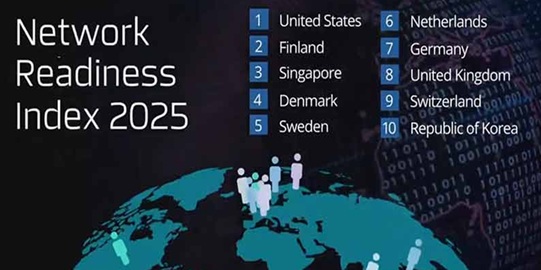
- 11 Feb 2026
In News:
- India has improved its position in the Network Readiness Index 2025 (NRI 2025), moving up four places to secure 45th rank among 127 economies. The index is prepared by the Portulans Institute, a non-profit research and educational institute based in Washington DC.
- India’s overall score increased from 53.63 (2024) to 54.43 (2025), reflecting enhanced digital readiness and technological capacity.
About the Network Readiness Index
The NRI assesses how effectively economies leverage information and communication technologies (ICT) for development.
Coverage and Methodology:
- Covers 127 economies
- Based on 53 indicators
- Structured around four pillars:
- Technology
- People
- Governance
- Impact
The index maps a country’s preparedness to benefit from digital transformation and network-based economies.
India’s Key Achievements in NRI 2025
Global Rank 1 in:
- Annual investment in telecommunication services
- AI scientific publications
- ICT services exports
- E-commerce legislation
This highlights India’s leadership in telecom infrastructure expansion, artificial intelligence research output, digital services exports and regulatory framework for e-commerce.
Rank 2 in:
- Fibre-To-The-Home (FTTH)/Building internet subions
- Mobile broadband internet traffic
- International internet bandwidth
These indicators reflect strong digital infrastructure growth and increasing data consumption.
Rank 3 in:
- Domestic market scale
- Income inequality (indicator within index framework)
India’s large market size enhances its digital ecosystem scalability.
Performance Relative to Income Level
- Ranked 2nd among lower-middle-income countries, after Vietnam.
- The report notes that India demonstrates greater network readiness than expected given its income level, indicating efficient digital transformation relative to economic capacity.
Significance for India
India’s improved ranking reflects:
- Rapid telecom infrastructure expansion
- Growth in AI research and digital innovation
- Strong ICT export performance
- Progressive digital governance and e-commerce regulation
This performance aligns with broader initiatives such as Digital India, expansion of broadband connectivity and promotion of AI-led innovation.
Kimberley Process

- 11 Feb 2026
In News:
India has assumed the Chair of the Kimberley Process (KP) for the year 2026. This marks an important development in global diamond governance, as the KP regulates international trade in rough diamonds to prevent their use in financing armed conflicts.
What is the Kimberley Process?
The Kimberley Process is a tripartite coalition of governments, civil society and the diamond industry established to eliminate the trade in “conflict diamonds.”
Conflict Diamonds Defined
As per UN Security Council Resolution 1459, conflict diamonds are defined as:
“Rough diamonds used by rebel movements or their allies to finance conflict aimed at undermining legitimate governments.”
The KP was established in 2003 based on a United Nations mandate to regulate global trade in rough diamonds.
Structure and Membership
- 60 participants, representing 86 countries (European Union counts as a single participant)
- Covers over 99% of global rough diamond production and trade
- Operates on a consensus-based decision-making mechanism
- Meets twice annually at:
- Intersessional meetings
- Plenary meetings
- Chairmanship rotates annually among participating countries
The KP functions through a tripartite structure involving governments, industry stakeholders and civil society groups.
Kimberley Process Certification Scheme (KPCS)
The operational mechanism of the KP is the Kimberley Process Certification Scheme (KPCS).
Key Features:
- Each shipment of rough diamonds must be accompanied by a Kimberley Process Certificate
- Shipments must be transported in tamper-resistant containers
- Trade is permitted only between participating countries
- Countries must establish:
- National legislation
- Import/export controls
- Transparent statistical data exchange
The certificate verifies that the shipment is conflict-free and complies with KP minimum requirements.
India’s Role in the Kimberley Process
India has been an active participant in the KPCS since 2003. As one of the world’s largest diamond cutting and polishing centres, India plays a crucial role in the global diamond value chain.
Institutional Framework in India:
- Department of Commerce – Nodal department
- Gem & Jewellery Export Promotion Council (GJEPC) – Designated Importing and Exporting Authority
- Issues KP Certificates
- Custodian of certificates received in India
India’s chairmanship in 2026 provides an opportunity to strengthen transparency, improve traceability and enhance institutional credibility within the KP framework.
Ethylene Glycol

- 11 Feb 2026
In News:
Recent laboratory findings in Tamil Nadu detected ethylene glycol adulteration in a batch of Almond Kit syrup, prompting a public health alert. Such incidents highlight the serious risks posed by contamination of pharmaceutical or food products with industrial chemicals like ethylene glycol (EG) and diethylene glycol (DEG).
About Ethylene Glycol (EG)
Ethylene glycol is the simplest member of the glycol family of organic compounds.
Key Properties
- Colourless, odourless, slightly viscous liquid
- Faintly sweet taste
- Miscible with water and alcohol
- Low volatility (does not evaporate quickly)
- Stable over a wide temperature range
- Inexpensive to manufacture
Because of these properties, it is widely used in industry but is highly toxic if ingested.
Uses of Ethylene Glycol
Ethylene glycol has multiple industrial applications:
- Antifreeze and de-icing solutions for cars, aircraft and boats
- Component of hydraulic brake fluids
- Used in printing inks (stamp pads, ballpoint pens, print shops)
- Industrial reagent in the manufacture of:
- Polyesters
- Alkyd resins
- Explosives
- Synthetic waxes
Its chemical stability and freezing-point depression properties make it suitable for coolant systems.
Health Impact and Toxicity
Though industrially valuable, ethylene glycol is highly toxic when consumed. It is not inherently dangerous in small dermal exposures but becomes lethal when ingested.
Mechanism of Toxicity
After ingestion, ethylene glycol is metabolised in the liver into toxic compounds such as:
- Glycolic acid
- Oxalic acid
These metabolites cause:
- Severe metabolic acidosis
- Acute kidney injury
- Nervous system depression
- Multi-organ failure
If untreated, poisoning can result in significant morbidity and mortality. Early medical intervention using antidotes such as fomepizole or ethanol can block toxic metabolism.
Diethylene Glycol (DEG): A Related Public Health Hazard
Diethylene glycol, chemically similar to ethylene glycol, has been implicated in multiple drug adulteration incidents globally. Like ethylene glycol, it is:
- Used as an industrial solvent
- Sweet-tasting and colourless
- Toxic when ingested
DEG contamination in medicines, especially cough syrups, has historically led to mass poisoning incidents due to renal failure and metabolic acidosis. These cases underline the importance of strict pharmaceutical quality control and regulatory vigilance.
Public Health and Regulatory Significance
The recent detection of ethylene glycol in a medicinal syrup underscores:
- The need for stringent drug testing and quality assurance
- Strong enforcement of pharmaceutical manufacturing standards
- Rapid public communication in case of contamination
Such incidents highlight the role of regulatory authorities in preventing industrial chemicals from entering consumable products.
Mons Mouton

- 11 Feb 2026
In News:
India’s upcoming Chandrayaan-4 mission marks a significant leap in its space exploration programme. Approved by the Union Government, Chandrayaan-4 is designed as India’s first lunar sample-return mission and is expected to launch around 2028, as indicated by ISRO leadership. It will be India’s most complex lunar endeavour to date.
Landing Site: Mons Mouton in the Lunar South Polar Region
ISRO scientists have identified the Mons Mouton region in the Moon’s South Polar area as the landing site. Mons Mouton:
- Is a mountain approximately 6,000 metres high
- Lies in the South Circumpolar Region (SCR)
- Is positioned on the rim of the South-Pole-Aitken Basin, the largest and oldest known impact basin on the Moon
- Is officially named after NASA mathematician Melba Roy Mouton
The region is scientifically significant because:
- It is located near permanently shadowed craters believed to contain water-ice deposits
- It receives long-duration sunlight, aiding power generation
- It offers clear line-of-sight communication with Earth
Selection of MM-4 Landing Zone
ISRO shortlisted four potential sites in the Mons Mouton area—MM-1, MM-3, MM-4 and MM-5. After detailed analysis using high-resolution datasets from the Orbiter High Resolution Camera (OHRC), MM-4 was selected.
Key terrain characteristics of MM-4:
- A 1 km × 1 km landing zone
- Mean slope: 5 degrees
- Mean elevation: 5,334 metres
- Highest number of hazard-free grids (24 m × 24 m)
- Least hazardous terrain percentage among shortlisted sites
Safe landing depends on terrain suitability combined with robust navigation, guidance and control systems.
Mission Architecture
Chandrayaan-4 consists of five major components:
- Propulsion Module (PM)
- Descender Module (DM)
- Ascender Module (AM)
- Transfer Module (TM)
- Re-entry Module (RM)
The combined Descender Ascender stack will execute soft landing at the selected site. After collecting lunar samples, the Ascender Module will lift off from the Moon’s surface, transfer samples to the Return module, and enable re-entry to Earth.
This architecture makes Chandrayaan-4 technologically more complex than previous missions, as it involves:
- Precision soft landing
- Surface operations
- Lunar ascent
- Sample transfer
- Earth re-entry
Scientific Importance
The Mons Mouton region offers major scientific opportunities:
- Study of water-ice and volatile deposits
- Understanding the geological evolution of the South-Pole-Aitken Basin
- Insights into early Solar System history
- Assessment of lunar resources for future human missions
Mangrove clam (Geloina erosa)

- 10 Feb 2026
The ICAR–Central Marine Fisheries Research Institute (CMFRI) has achieved a rare global scientific feat by successfully inducing captive breeding of the mangrove clam (Geloina erosa). This breakthrough enables controlled hatchery production of the species, offering a sustainable pathway for conservation, aquaculture, and ecosystem restoration.
About Mangrove Clam (Geloina erosa)
- Scientific name: Geloina erosa (also referred to in some literature as Polymesoda erosa)
- Common name: Mangrove clam / Mud clam
- Local name: “Kandal Kakka” (Northern Kerala)
- Type: Ecologically significant bivalve mollusc
Habitat and Distribution
- Found in organic-rich muddy substrates of intertidal mangrove and estuarine ecosystems
- Distributed across South and Southeast Asia
- Tolerates a wide salinity range, from brackish to near-freshwater conditions
- Deep-burrowing, semi-infaunal species; juveniles are more tide-independent
Key Ecological Characteristics
- Large Size:
- One of the world’s largest mangrove clams
- Reaches up to 10 cm shell width, making it valuable as a food resource
- Efficient Filter Feeder:
- Filters suspended particles and plankton
- Improves estuarine water quality through nutrient recycling
- Ecosystem Stabiliser:
- Burrowing behaviour stabilises sediments
- Enhances nutrient cycling
- Strengthens resilience of mangrove ecosystems
- Reproductive Biology:
- Sex differentiation based on gonad colour and structure (not external organs)
- Facilitates broodstock identification and reproductive studies
Scientific Breakthrough: Induced Breeding
CMFRI has achieved:
- Controlled spawning under captive conditions, reducing dependence on wild seed collection
- Complete life-cycle closure, successfully rearing the clam from embryo to larval stages and eventually to spat (around the 18th day)
- Hatchery-scale seed production feasibility
This represents a global first for this species and marks a major step in sustainable marine resource management.
Conservation and Aquaculture Applications
The hatchery-produced seeds can be utilised for:
- Grow-out farming:
- Suitable for estuarine aquaculture
- Requires minimal external feed and infrastructure
- Mangrove ranching:
- Release of juvenile clams into degraded mangrove habitats
- Aids ecological restoration
- Stock enhancement:
- Replenishes overexploited natural clam beds
- Reduces harvesting pressure on wild populations
Form 7 and the Electoral Roll Revision Controversy
- 10 Feb 2026
In News:
The bulk submission of Form 7 applications during the ongoing Special Intensive Revision (SIR) of electoral rolls has triggered controversy, with allegations of fraudulent or anonymous deletion requests targeting eligible voters. The issue has brought attention to the legal framework governing voter deletion and the safeguards built into the system.
What is Form 7?
Form 7 is a statutory form used to object to the inclusion of a name in the electoral roll. It can be used:
- To seek deletion of another person’s name
- To request deletion of one’s own name
Grounds for Objection
Deletion can be sought on specific legally recognised grounds:
- Death of the voter
- Duplicate entry
- Shifting of residence
- Ineligibility due to age
- Non-citizenship
- Misrepresentation
Legal Basis
Form 7 is governed by:
- Representation of the People Act, 1950
- Registration of Electors Rules, 1960
Under Section 13(2) of the Registration of Electors Rules, objections must be filed in Form 7 by a person whose name is already included in the electoral roll. Booth Level Agents (BLAs), appointed by political parties, are also authorised to file objections.
The process is administered by the Election Commission of India.
2022 Amendment: Expanded Scope
In 2022, the Election Commission amended the rules to allow any registered voter within a constituency (not just from the same polling booth) to file objections. This widened the scope of Form 7 and was aimed at improving electoral roll accuracy.
Verification and Safeguards
To ensure due process and prevent arbitrary deletions, the following steps are mandatory:
- Physical Verification by Booth Level Officers (BLOs).
- In case of death:
- Death certificate verification
- Confirmation by three neighbours
- If the voter is absent: BLO must make three visits to verify shifting of residence
- Notice and Hearing: The concerned voter is issued a notice and given an opportunity to be heard before the Electoral Registration Officer (ERO).
- Appeal Mechanism: Appeals against the ERO’s decision can be filed before the District Magistrate within 15 days.
Penal Provision: Under Section 32 of the Representation of the People Act, 1950, filing a false declaration is punishable with imprisonment up to one year, or fine, or both
PRIYA Trial and Vitamin B12

- 10 Feb 2026
In News:
Recent follow-up findings from the Pune Rural Intervention in Young Adolescents (PRIYA) trial have highlighted the long-term benefits of vitamin B12 supplementation during adolescence on neonatal health outcomes. The study is particularly significant for India, where vitamin B12 deficiency is widespread and contributes to intergenerational cycles of poor health.
About the PRIYA Trial
The PRIYA trial was conducted between 2012 and 2020 as part of the larger Pune Maternal Nutrition Study (PMNS). It was designed to examine whether improving vitamin B12 status among adolescents could reduce intergenerational metabolic and nutritional risks in a population with high prevalence of micronutrient deficiency.
The trial focused on adolescents prior to conception, recognising adolescence as a critical window for nutritional interventions that can influence future maternal and neonatal outcomes.
Key Findings
- Improved neonatal outcomes: Adolescents who received physiological doses of vitamin B12 gave birth to babies with a higher neonatal ponderal index (weight relative to length), an indicator of healthier foetal growth.
- Epigenetic mechanism: The findings suggest that vitamin B12 may act as a “regulator of regulators” by influencing enzymes involved in gene expression and epigenetic programming, thereby affecting long-term health outcomes in offspring.
- Intergenerational impact: Adequate adolescent nutrition can positively influence pregnancy outcomes years later, supporting the concept of a life-course approach to public health nutrition.
Vitamin B12: Biological Importance
- Nature: Vitamin B12 (cyanocobalamin) is a water-soluble vitamin that the human body cannot synthesise. It is produced by microorganisms and obtained mainly from animal-based foods such as milk, eggs, meat, and fish.
- Functions:
- Red blood cell formation
- DNA synthesis
- Proper functioning of the brain and nervous system
- Deficiency in India: Vitamin B12 deficiency is highly prevalent in India, largely due to low intake of animal-source foods.
- Health consequences:
- Anaemia
- Neurological and cognitive disorders
- In rare cases, malabsorption due to intrinsic factor deficiency
Policy Significance
The PRIYA trial findings reinforce the need to:
- Include vitamin B12 supplementation along with iron and folic acid in national programmes targeting adolescents and women of reproductive age.
- Strengthen existing nutrition initiatives to address hidden hunger and micronutrient deficiencies.
- View adolescent nutrition as an investment in future population health and human capital.
India–US Trade Pact

- 10 Feb 2026
In News:
The interim trade agreement between India and the United States marks a significant shift in bilateral technology and electronics cooperation. Under the new framework, both countries have committed to significantly increase trade in technology products, including Graphics Processing Units (GPUs) and other equipment critical for data centres, while also expanding joint technology cooperation. This development assumes importance amid India’s growing ambitions in artificial intelligence (AI), electronics manufacturing, and digital infrastructure.
GPU Access and India’s AI Ecosystem
GPUs form the backbone of modern AI development, powering large language models, data analytics, and advanced computing applications. India currently lacks domestic GPU manufacturing capacity and relies heavily on imports, with US-based firms, particularly NVIDIA-dominating the global market.
India’s IndiaAI Mission, with a total outlay of ?10,370 crore, aims to subsidise compute access for startups and researchers. Around 40,000 GPUs have been installed under the mission so far, but this is widely regarded as insufficient compared to the massive compute capacity available to leading global AI firms. Concerns were further raised after the Union Budget reduced the allocation for the mission from ?2,000 crore to ?1,000 crore for 2026–27.
Against this backdrop, the India–US agreement offers an alternative pathway by improving access to imported GPUs. Importantly, it marks a departure from earlier US export controls imposed during the administration of former President Joe Biden, which had placed quantitative restrictions on GPU exports to India. These controls were set aside after President Donald Trump took office, allowing India to secure more favourable terms and avoid stringent technology restrictions similar to those imposed on China.
Boost to Data Centre Investments
Data centres represent the second major pillar of cooperation. To attract foreign investment, India has announced a tax holiday until 2047 for foreign companies setting up data centres. This move addresses long-standing US demands for greater market access, including tax incentives, duty exemptions, and affordable access to land, power, and water.
Several US technology giants have announced large investments:
- Google: $15 billion investment for a 1 GW data centre in partnership with the Adani Group
- Microsoft: $17.5 billion, primarily for AI-focused data centres
- Amazon: $35 billion investment over five years
Union IT Minister Ashwini Vaishnaw has indicated that recent policy measures could spur up to $200 billion in data centre investments.
India’s data centre market is currently valued at $10 billion, with revenues of about $1.2 billion in FY24. According to industry estimates, India may add 795 MW of capacity by 2027, taking total installed capacity to 1.8 GW.
Electronics Manufacturing and Trade Expansion
The easing of tariffs, cutting US duties on Indian goods from 50% to 18%, is expected to significantly boost the electronics sector. Bilateral electronics trade is projected to reach $100 billion in the coming years. Electronics exports stood at ?3.27 lakh crore (≈$38 billion) in 2024–25, with the US as the largest destination.
The sector, concentrated in states such as Tamil Nadu, Karnataka, Uttar Pradesh, and Maharashtra, employs over two million workers directly. Companies like Apple, supported by India’s Production-Linked Incentive (PLI) scheme, have built extensive supply chains in India. India now accounts for nearly 25% of global iPhone production, second only to China.
Thwaites Glacier
- 10 Feb 2026
In News:
The Thwaites Glacier, often referred to in popular media as the “Doomsday Glacier”, is one of the most crucial glaciers in the world for understanding future sea-level rise. Located in West Antarctica, it is an outflow glacier of the West Antarctic Ice Sheet (WAIS) and drains into the Amundsen Sea.
Why is Thwaites Glacier Important?
- Mass and Size: Thwaites is among the largest glaciers in Antarctica, covering an area comparable to a large country.
- Climate Sensitivity: The WAIS, of which Thwaites is a key component, is recognised as one of the planet’s climate tipping elements, meaning its destabilisation could trigger irreversible changes.
Unique Physical Characteristics
A defining feature of Thwaites Glacier is its retrograde bed slope, the land beneath it slopes downward as one moves inland and lies below sea level. This makes the glacier highly vulnerable to warm ocean water intrusion.
- Warm seawater flows beneath the glacier’s floating ice shelf, melting it from below.
- The ice shelf currently acts as a buttress or brace, slowing the flow of ice into the ocean.
- As the ice shelf thins or fractures, this restraining effect weakens, causing the glacier to accelerate and lose ice more rapidly.
Current Scientific Observations
Scientific studies have confirmed that Thwaites Glacier is:
- Thinning steadily
- Retreating inland
- Already contributing to global sea-level rise
The rapid melting is strongly linked to human-induced climate change, particularly rising ocean temperatures.
Potential Global Impacts
- Sea-Level Rise: A complete collapse of Thwaites over a long period could raise global sea levels by around 0.5 metres.
- Cascade Effect: Thwaites acts as a barrier holding back neighbouring glaciers in the WAIS. Its weakening could destabilise adjacent ice masses, further accelerating sea-level rise.
- Coastal Risks: Higher sea levels would increase coastal flooding, shoreline erosion, storm surges, and threaten:
- Coastal cities
- Low-lying islands
- Ports and critical infrastructure
Why It Matters for the World
Although Thwaites Glacier is geographically remote and far from human settlements, its evolution has global consequences. Changes in this single glacier have the potential to reshape coastlines worldwide, making it a key focus area for climate science, global risk assessment, and international climate policy.
IIT Bombay breakthrough in CAR T-Cell and Adoptive T-Cell Therapies
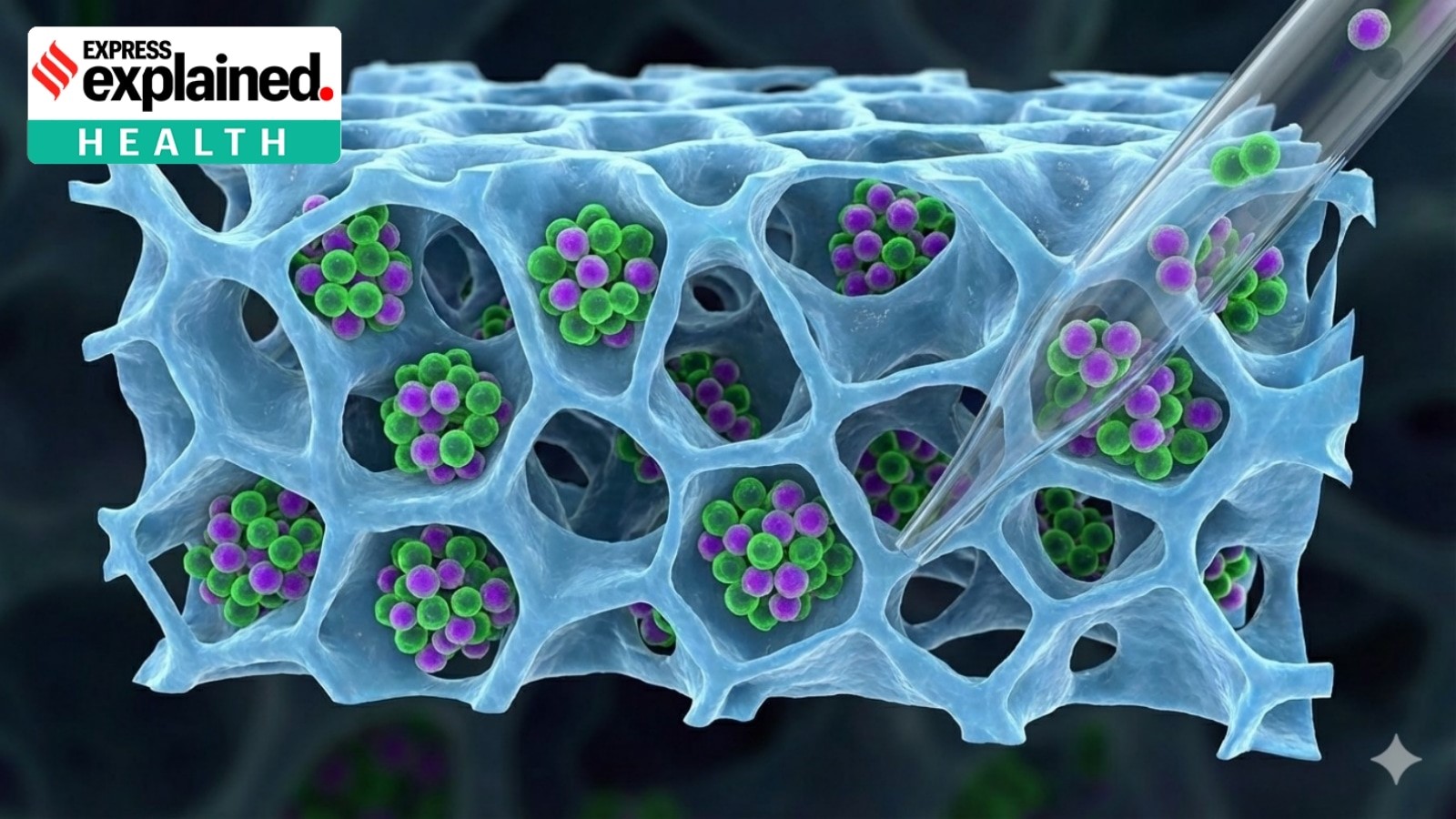
- 09 Feb 2026
In News:
Researchers at Indian Institute of Technology Bombay (IIT Bombay) have addressed a key technical bottleneck in CAR T-cell and other Adoptive T-cell Transfer (ACT) therapies, safe recovery of lab-grown T-cells without loss of viability or immune function. The study demonstrates that using a gentler enzyme (Accutase) significantly improves therapeutic reliability and may reduce costs of cancer immunotherapy in India.
Basics for Prelims
T-Cells
- A type of white blood cell central to the immune response
- Detect and destroy infected or abnormal (cancerous) cells
- Coordinate other immune cells, making them crucial for immunotherapy
CAR T-Cell Therapy
- A personalised cancer treatment using a patient’s own T-cells
- Process:
- T-cells collected from patient’s blood
- Genetically engineered to express Chimeric Antigen Receptors (CARs)
- CARs act like GPS, guiding T-cells to cancer cells
- Cells are multiplied in the lab and infused back into the patient
- Approved globally for certain blood cancers (leukaemia, lymphoma)
- Indian milestone: NexCAR19, the world’s first humanised CAR-T therapy, developed by ImmunoACT
Key Research Development (IIT Bombay)
The Challenge
- T-cells are grown on 3D fibrous scaffolds to mimic the body’s environment
- These scaffolds improve growth and potency, but cells adhere tightly, making recovery difficult
- Harsh recovery methods damage surface proteins, reducing therapeutic effectiveness
Methods Tested
- Manual flushing
- TrypLE enzyme (harsh)
- Accutase enzyme (gentle)
Findings
- Cell yield: Similar across all methods
- Cell viability & immune function:
- TrypLE → higher cell death, reduced immune activity
- Accutase → preserved viability, clustering ability, and cancer-killing potency
- T-cells grown on scaffolds and recovered with Accutase remained highly effective against cancer cells
Significance of the Study
- Improves reliability of CAR T-cell and ACT therapies
- Potentially reduces production costs of immunotherapy
- Enhances India’s capacity for indigenous, affordable advanced cancer treatments
- Supports expansion of immunotherapy beyond elite centres
Benefits of CAR T-Cell Therapy
- Targeted precision: Spares healthy cells compared to chemotherapy
- Personalised: Uses patient’s own engineered cells
- Long-lasting protection: Engineered T-cells persist in the body
- Reduced hospitalisation and costs (especially with indigenous innovations)
- Expands future possibilities in cancer immunotherapy research
Indian National Centre for Ocean Information Services (INCOIS)

- 09 Feb 2026
In News:
The Indian National Centre for Ocean Information Services (INCOIS) will launch three new ocean information services-JellyAIIP, SAMUDRA 2.0 Mobile App, and SIVAS, along with a new institutional logo during its foundation day celebrations.
About INCOIS
- Established: 1999
- Status: Autonomous body
- Ministry: Ministry of Earth Sciences (MoES)
- Headquarters: Hyderabad, Telangana
- Mandate:
- Provide ocean information and advisory services to society, industry, government agencies, and the scientific community
- Based on sustained ocean observations and focused scientific research
- International Role: Permanent member of Intergovernmental Oceanographic Commission (IOC) of UNESCO
- Key Infrastructure:
- Established the Indian Tsunami Early Warning Centre (ITEWC), which issues tsunami alerts within 10 minutes
- Serves India and 28 Indian Ocean countries
Major Existing Initiatives of INCOIS
- SARAT (Search and Rescue Aided Tool): Assists Indian Coast Guard, Navy, and Coastal Security Police in locating persons or objects lost at sea
- SynOPS Platform: A data visualisation and integration system for real-time ocean and weather data, improving coordination during extreme events
Newly Launched Ocean Information Services
1. JellyAIIP
- Full Form: Jellyfish Aggregation Information Interactive Portal
- Type: National web-based platform
- Purpose: Reporting and visualisation of jellyfish aggregation, swarming, and stranding events along the Indian coast
- Features:
- Geospatial mapping and hotspot analysis
- Multilingual first-aid guidance for jellyfish stings
2. SAMUDRA 2.0 Mobile App
- Nature: Upgraded version of the existing SAMUDRA platform
- Function: Delivers ocean advisories and early warnings
- Target Users: Fishermen and maritime stakeholders
- Key Feature: Multilingual interface for wider accessibility
3. SIVAS
- Full Form: Swell-Surge Inundation Vulnerability Advisory System
- Type: Coastal inundation early warning service
- Function: Provides advance alerts for swell-surge flooding events
- Current Coverage: Operational for the Kerala coast
- Output: Multilingual forecast bulletins
Significance
- Enhances coastal hazard preparedness and marine safety
- Strengthens early warning systems for fishermen and coastal communities
- Supports climate resilience and disaster risk reduction along India’s coastline
India’s First Lung Cancer Treatment Guidelines
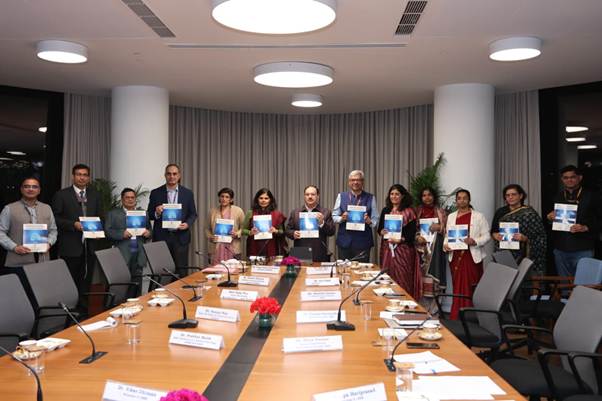
- 09 Feb 2026
In News:
The Union Minister for Health & Family Welfare, Jagat Prakash Nadda, released India’s first nationally developed, evidence-based Lung Cancer Treatment and Palliation Guidelines at Kartavya Bhavan, New Delhi, on the eve of World Cancer Day. The guidelines aim to standardise lung cancer care across India and reduce disparities in treatment outcomes.
Objective
- To provide a uniform, evidence-based framework for diagnosis, treatment, and palliative care of lung cancer
- To minimise variations in clinical practice across public and private healthcare systems
- To ensure accessible, patient-centric, and quality cancer care suited to Indian healthcare realities
Key Features
- Comprise 15 evidence-based recommendations covering both curative treatment and palliation
- Developed using systematic evidence synthesis and internationally accepted methodologies
- Contextualised to India’s disease burden, resource settings, and healthcare infrastructure
- Focus on science-driven and indigenous solutions, rather than direct replication of Western protocols
Focus Areas
- Early diagnosis, identified as a major challenge in lung cancer management
- Strengthened screening and prevention, especially for high-risk populations
- Standardised treatment pathways to improve clinical decision-making
- Enhanced palliative care services to improve quality of life and survivorship
Institutional Framework
- Developed by the Department of Health Research (DHR) and the Directorate General of Health Services (DGHS)
- Prepared in collaboration with leading oncology experts and partner institutions
- Released under the aegis of the Ministry of Health & Family Welfare
Significance
- Marks a milestone as India’s first national, evidence-based cancer guideline
- Strengthens credibility, consistency, and validity of clinical decision-making
- Reinforces India’s leadership in context-specific healthcare policymaking
- Supports the national fight against cancer through scientific rigour, compassion, and inclusivity
Accessibility
- Full guidelines hosted on the DHR website
- A plain-language summary to be released for patients, families, and caregivers
Eurasian Otter

- 09 Feb 2026
In News:
The Eurasian otter has been recently sighted in the Sindh River in Ganderbal district of Jammu and Kashmir. This observation is ecologically significant as the species was earlier believed to have disappeared from the region, highlighting improving riverine ecosystem conditions and possible cross-border wildlife movement.
About Eurasian Otter
- Scientific Name: Lutra lutra
- Also known as: European otter, Common otter, Old World otter
- Type: Semi-aquatic, carnivorous mammal
- Behaviour: Elusive and largely solitary in nature
Distribution
- Global: Middle East, Europe, Northern Africa, Russia, China, and other parts of Asia
- India: Northern, North-Eastern, and Southern India
- In the Indian subcontinent, it is commonly associated with cold hill regions and mountain streams
Habitat
- Occupies a wide range of freshwater and coastal ecosystems such as:
- Rivers and streams
- Highland and lowland lakes
- Marshes, swamp forests, and coastal areas
- Habitat selection is independent of size, origin, or latitude of the water body
Key Adaptations and Features
- Webbed feet for efficient swimming
- Ability to close ears and nostrils underwater
- Dense, short fur that traps air for insulation
- Highly developed sense of sight, smell, and hearing, aiding hunting and survival
Ecological Significance
- Considered an indicator species for healthy freshwater ecosystems
- Presence reflects low pollution levels and good prey availability
Threats
- Water pollution
- Habitat degradation
- Illegal hunting for fur
Conservation Status
- IUCN Red List: Near Threatened
- CITES: Appendix I
- Wildlife (Protection) Act, 1972: Schedule II
Global Teacher Prize 2026

- 09 Feb 2026
In News:
Rouble Nagi, an Indian educator and social innovator, has been awarded the Global Teacher Prize 2026 at the World Government Summit in Dubai. She received the USD 1 million prize in the 10th edition of the award, presented by GEMS Education and organised by the Varkey Foundation in collaboration with UNESCO.
About the Global Teacher Prize
- Established: 2014
- Nature: Annual international award, often called the “Nobel Prize of Teaching”
- Objective: To recognise exceptional teachers who make transformative contributions to education and society
- Eligibility: Open to teachers worldwide across public, private, and alternative educational settings
- Selection Criteria: Innovative pedagogy, classroom impact, community engagement, work in challenging environments
- Nomination: Self-nomination or nomination by others
- Award: USD 1 million cash prize
Why Rouble Nagi Was Honoured
- Over two decades, she has used art as an educational tool to reach marginalised children.
- Founded the Rouble Nagi Art Foundation, establishing 800+ learning centres across 100+ underserved communities and villages in India.
- Concept of “living walls of learning”: transforming abandoned walls into open-air classrooms teaching literacy, numeracy, public health, and environmental awareness.
- Helped integrate over 1 million out-of-school children into formal education.
- Trained 600+ teachers and volunteers, creating a scalable and community-driven education model.
- Achieved over 50% reduction in school dropout rates and improved long-term educational retention.
- Selected from 5,000+ nominations and applications spanning 139 countries.
Future Use of Prize Money
- Establishment of a free vocational and digital literacy institute aimed at improving life opportunities for underprivileged children and youth.
Titanidiops Kolhapurensis

- 08 Feb 2026
In News:
A new species of trapdoor spider, Titanidiops kolhapurensis, has been discovered in the grasslands of Kolhapur district.
About Titanidiops kolhapurensis
- Habitat: Flat or gently sloping grassy meadows.
- Burrow structure: Constructs vertical or slanted burrows with entrances expertly camouflaged to blend with surrounding soil, making them nearly invisible.
- Distribution pattern: Found in native grasslands and natural forests, but absent in areas dominated by exotic plantations such as Gliricidia sepium (Undirmari).
- Conservation concern: On the verge of local extinction due to rapid habitat degradation and land-use change.
What are Trapdoor Spiders?
- A group of large-bodied, burrowing spiders found across several taxonomic families.
- Burrowing behaviour: Dig burrows up to 15 cm (6 inches) deep, sealed with a silken-hinged trapdoor.
- Feeding strategy: Ambush predators—rapidly open the door to seize passing insects or arthropods.
- Behaviour: Reclusive and timid; retreat quickly into burrows when disturbed.
- Human impact: Bite not medically significant to humans.
- Climate preference: Tropical, subtropical and warm regions.
- Size: Typically ~2.5 cm (1 inch) long; some species up to 4 cm (1.5 inches).
- Threats: Predation by spider-hunting wasps; low dispersal ability (juveniles remain close to maternal burrows), making populations highly vulnerable to habitat loss.
Why this discovery matters
- Highlights the ecological importance of native grasslands, often overlooked in conservation.
- Demonstrates the negative impact of exotic tree plantations on indigenous fauna.
- Strengthens the case for habitat-specific conservation planning in the Western India landscape.
Deep Tech Start-ups

- 08 Feb 2026
In News:
The Union Government has formally defined and notified eligibility criteria for “Deep Tech Start-ups” through a gazette notification issued by the Department for Promotion of Industry and Internal Trade (DPIIT). This provides a clear regulatory and financing framework for high-risk, high-impact technology ventures in India.
What is Deep Tech?
Deep technology (Deep Tech) refers to advanced, science-based and engineering-driven technologies that are disruptive in nature and capable of delivering transformational solutions. Unlike platform or incremental innovations, deep tech involves fundamental research, long gestation periods and high technical uncertainty.
Key domains include:
- Artificial Intelligence & Data Science
- Semiconductors & Electronics
- Quantum Technologies
- Biotechnology & Life Sciences
- Nanotechnology & Advanced Materials
- Robotics, 3D Printing, Space & Clean Energy technologies
What is a Deep Tech Start-up?
According to the DPIIT notification, a deep tech start-up is an enterprise whose core activity involves the creation of new scientific or engineering knowledge, supported by intensive R&D and novel intellectual property, with a clear pathway to commercialisation.
Eligibility Criteria
A start-up qualifies as a deep tech start-up if it:
- Spends a major portion of expenditure on R&D activities
- Owns or actively creates novel intellectual property (IP) and pursues its commercialisation
- Faces long development timelines, high capital and infrastructure requirements, and significant technical or scientific risk
- Is primarily engaged in knowledge creation, not incremental innovation
Prohibition: Investment in non-core activities such as real estate, speculative assets or securities is not permitted, unless directly linked to knowledge creation.
Special Regulatory Relaxations
- Extended recognition period: Up to 20 years (regular start-ups: 10 years)
- Higher turnover threshold: Up to ?300 crore (regular start-ups: ?200 crore)
- Mandatory certification: Start-ups must apply to DPIIT for deep tech certification
Certification Mechanism
- DPIIT is the final certifying authority
- Certification guided by an Inter-Ministerial Technical Board, including:
- Joint Secretary, DPIIT (Convener)
- Representatives from the Department of Science and Technology (DST)
- Representatives from the Department of Biotechnology (DBT)
Financing & Institutional Support
- Anusandhan National Research Foundation (Anusandhan National Research Foundation – ANRF) is the custodian of the ?1 lakh crore Research, Development and Innovation (RDI) Fund
- Policy-backed patient capital:
- Long-term concessional finance
- Reported interest range: 2–4%
- Tenure: up to 15 years
Research Development and Innovation (RDI) Scheme
- Total outlay: ?1 lakh crore over 6 years
- FY 2025–26 allocation: ?20,000 crore
- Funding source: Consolidated Fund of India
- Nodal Department: DST
Key Objectives:
- Scale up private sector R&D in sunrise and strategic sectors
- Finance projects at higher Technology Readiness Levels (TRLs)
- Support acquisition of critical and strategic technologies
- Facilitate creation of a Deep-Tech Fund of Funds
Significance of the Policy
- Patient capital for high-risk innovation (AI, semiconductors, quantum, biotech)
- Strengthens technological sovereignty and reduces import dependence
- Positions India as a global R&D hub in the “China+1” ecosystem
- Enables India-specific solutions in healthcare, agriculture, energy and defence
- Helps India move up the global value chain from services to IP-led growth
Peregrine Falcon
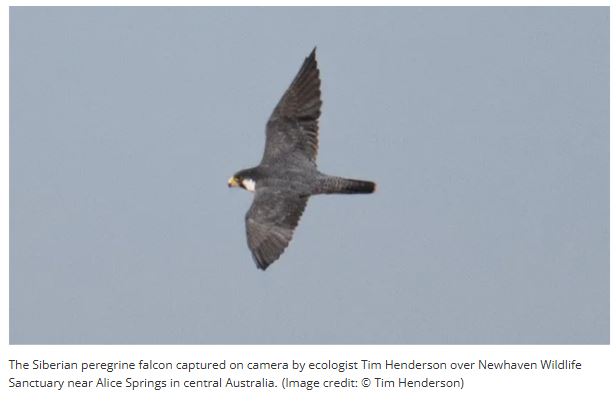
- 08 Feb 2026
In News:
A wildlife researcher has recorded the first-ever sighting of the Siberian peregrine falcon in central Australia, a region where this subspecies had never been documented earlier. The observation expands the known range and movement patterns of this migratory raptor.
About the Peregrine Falcon
- A large cosmopolitan bird of prey belonging to the Falconidae family.
- Global distribution: Present on all continents except Antarctica, including several oceanic islands.
- Known for exceptional adaptability, occurring from Arctic tundra to temperate coastal regions.
Habitat & Nesting
- Preferred habitats: Open landscapes such as grasslands, tundra and meadows.
- Most abundant in tundra and coastal regions; relatively rare in tropical and sub-tropical zones.
- Nesting sites: Typically nests on cliff faces, rock ledges and crevices; in urban areas, may use tall buildings.
Key Characteristics
- Fastest bird in the world and the fastest animal during its hunting dive (stoop), reaching speeds over 300 km/h.
- Diurnal (active during the day).
- Behaviour: Solitary outside the breeding season; strongly territorial.
- Highly efficient aerial hunter, preying mainly on medium-sized birds.
Ecological Significance
- A top-level predator in avian food chains.
- Helps regulate populations of prey species such as pigeons and doves, contributing to ecological balance.
- Considered an important indicator species for ecosystem health due to its sensitivity to environmental changes.
Conservation Status
- IUCN Red List: Least Concern
- Earlier population declines due to pesticide use (notably DDT) were reversed through conservation measures, making it a global conservation success story.
Agni-3 Intermediate-Range Ballistic Missile (IRBM)

- 08 Feb 2026
In News:
India has successfully test-fired the Intermediate-Range Ballistic Missile (IRBM) Agni-3 from the Integrated Test Range (ITR), Chandipur, Odisha, validating all operational and technical parameters. The launch was conducted under the aegis of the Strategic Forces Command, confirming the missile’s operational readiness.
What is Agni-3?
- Agni-3 is an indigenously developed Intermediate-Range Ballistic Missile (IRBM).
- It is a surface-to-surface missile and a key component of India’s land-based nuclear deterrent.
- Developed by Defence Research and Development Organisation (DRDO).
- It has already been inducted into the armed forces and is operationally deployed under the Strategic Forces Command.
Key Technical Features
- Type: Intermediate-Range Ballistic Missile (IRBM)
- Range: 3,000–3,500 km
- Propulsion: Two-stage, solid-fuelled
- Payload Capacity: ~1.5 tonnes (1,500 kg)
- Warhead: Conventional or nuclear
- Estimated Nuclear Yield: 200–300 kilotons
- Length: 16.7 metres
- Diameter: 2 metres
- Launch Weight: ~48,300 kg
Guidance & Accuracy
- Uses strap-down inertial navigation system (INS) supported by GPS
- Accuracy: ~40 metres Circular Error Probable (CEP)
- Considered one of the most accurate strategic ballistic missiles in its range class
Structural & Design Highlights
- First Stage: Maraging steel motor case
- Second Stage: Carbon-fibre motor case
- Thrust Vector Control (TVC) in both stages for enhanced stability and precision
Launch & Mobility
- Launch Platforms: Road-mobile and rail-mobile launchers
- Enhances survivability, flexibility and second-strike capability
Strategic Objectives
- Ensures credible minimum deterrence
- Strengthens second-strike capability
- Provides strategic depth beyond short- and medium-range missiles
- Enhances deterrence across extended regional theatres
Agni Missile Series
Conceptualised under the Integrated Guided Missile Development Programme (IGMDP) in the 1980s
- Agni-I: 700–1,250 km
- Agni-II: 2,000–2,500 km
- Agni-III: 3,000–3,500 km
- Agni-IV: 3,000–4,000 km (advanced systems, field trials)
- Agni-V: ~5,000+ km (ICBM-class, canisterised, road-mobile)
- Agni-VI: Under development (expected 8,000–10,000 km; land & sea-based)
- Agni Prime: New-generation, lighter, canisterised missile (1,000–2,000 km)
Bharat GenAI
- 08 Feb 2026
In News:
The Government of India has announced that text-based Large Language Models (LLMs) under Bharat GenAI will be completed in all 22 Constitutionally recognised (Scheduled) Indian languages within this month, while speech and vision capabilities are already available in 15 Indian languages.
What is Bharat GenAI?
Bharat GenAI (BharatGen) is India’s first government-supported sovereign foundational Artificial Intelligence initiative, designed specifically for Indian languages, culture, and societal needs. It aims to build indigenous AI models rather than relying on foreign, linguistically homogeneous systems.
Key Objectives
- Develop sovereign AI capabilities for India
- Ensure linguistic inclusiveness and cultural authenticity
- Support domain-specific AI applications such as agriculture, Ayurveda, and legal systems
- Build a national AI research and innovation ecosystem
Core Components
Bharat GenAI has three principal AI components:
- Text – Large Language Models (LLMs)
- Speech – Text-to-Speech (TTS) and Automatic Speech Recognition (ASR)
- Vision – Vision and vision-language models
Languages Covered (Present)
Hindi, Assamese, Bengali, Gujarati, Kannada, Maithili, Malayalam, Marathi, Nepali, Odia, Punjabi, Sanskrit, Sindhi, Tamil and Telugu.
Institutional & Governance Framework
- Developed under the National Mission on Interdisciplinary Cyber-Physical Systems (NM-ICPS)
- Implemented through the TIH Foundation for IoT and IoE at IIT Bombay
- Executed via a network of 25 Technology Innovation Hubs (TIHs)
- 4 TIHs upgraded to Technology Translational Research Parks (TTRPs) at:
- IIT Indore
- IIT Kanpur
- IIT Dhanbad
- IISc Bengaluru
- Consortium partners include IIT Hyderabad, IIT Madras, IIT Kanpur, IIT Mandi and IIT Indore
Four Pillars of Bharat GenAI
- Technology Development
- Entrepreneurship & Start-ups
- Human Resource Development
- International Collaboration
Key Features
- Multilingual and multimodal AI models
- Training on Bhartiya (India-specific) datasets
- Open-source orientation
- Emphasis on ethical, inclusive and indigenous AI
Compute & Funding Support
- Dedicated AI Compute Pillar under IndiaAI Mission
- Access to shared GPU resources at subsidised rates
- Encouragement of private sector participation
- Backed by ?1 lakh crore Research, Development and Innovation (RDI) funding initiative
Significance for India
- Reduces dependence on foreign AI models
- Strengthens digital sovereignty
- Promotes inclusive AI access across regions
- Enables AI adoption in governance, judiciary, healthcare and agriculture
Sodium-ion Battery Technology

- 07 Feb 2026
In News:
Sodium-ion batteries are emerging as a strategic alternative to lithium-ion technology, offering India a safer, resource-secure and cost-effective pathway for energy storage and electric mobility.
Context
Batteries are a critical backbone of modern infrastructure-supporting electric vehicles (EVs), renewable energy integration, and grid stability. India’s current dependence on lithium-ion batteries exposes it to import dependence, supply-chain vulnerabilities, and geopolitical risks, as key minerals like lithium, cobalt, nickel and graphite are scarce domestically and globally concentrated. This has prompted India to re-evaluate its battery strategy, with sodium-ion batteries (SiBs) gaining attention.
What are Sodium-ion Batteries?
- Sodium-ion batteries (SiBs) are rechargeable batteries that use sodium ions (Na?) as charge carriers instead of lithium ions.
- They belong to the same “rocking-chair” battery family as lithium-ion cells.
Working Principle
- Charging: Sodium ions move from cathode to anode through the electrolyte.
- Discharging: Sodium ions migrate back to the cathode, releasing electrical energy.
- Current collectors: Aluminium is used on both electrodes (unlike lithium-ion, which uses copper on the anode).
Key Features and Advantages
1. Resource Abundance and Security
- Sodium is abundantly available from sea salt and soda ash.
- Reduces reliance on imported critical minerals.
- Enhances energy security and strategic autonomy.
2. Safety Profile
- Intrinsically safer than lithium-ion batteries.
- Lower thermal runaway risk and lower peak temperatures during failure.
- Can be stored and transported at 0% state of charge, unlike lithium-ion batteries (classified as dangerous goods).
3. Cost Potential
- Use of aluminium instead of copper lowers material cost.
- Simplified logistics reduce transportation and insurance costs.
- Cost projections indicate SiBs could become cheaper than lithium-ion batteries by the mid-2030s.
4. Manufacturing Compatibility
- Can be produced using existing lithium-ion manufacturing lines with minor modifications.
- Aligns well with PLI-incentivised battery infrastructure in India.
Energy Density Comparison
- Historically, SiBs had lower energy density due to heavier sodium ions.
- Recent advances using layered transition-metal oxide cathodes have brought SiBs close to Lithium Iron Phosphate (LFP) batteries.
- Suitable for applications where ultra-high energy density is not critical.
Significance for India
- Reduced Import Dependence: Insulates India from global supply shocks and price volatility.
- Mass-market suitability: Ideal for electric two-wheelers, three-wheelers, buses, and grid storage.
- Grid-scale storage: Well-suited for renewable energy integration.
- Geopolitical resilience: Less exposure to mineral supply chains dominated by a few countries.
India’s Policy and Institutional Initiatives
- PLI Scheme for Advanced Chemistry Cell (ACC):
- Target: 50 GWh domestic capacity.
- 40 GWh awarded, but only ~1 GWh commissioned so far, indicating slow progress.
- National Critical Minerals Mission: Focus on exploration, mining, processing, recycling and overseas sourcing.
- Overseas mineral acquisition via Khanij Bidesh India Limited.
- Battery Waste Management Rules, 2022: Extended Producer Responsibility (EPR) for recycling and refurbishment.
Challenges in Scaling Sodium-ion Batteries
- Lower energy density limits use in long-range and premium EVs.
- Weight penalty compared to lithium-ion batteries.
- Moisture sensitivity requires deeper vacuum drying and tighter process control.
- Underdeveloped supply chain for sodium-specific cathodes, anodes and electrolytes.
- Policy gaps: Incentives and safety standards remain lithium-centric.
- Low market confidence due to limited real-world deployments.
Measures Suggested to Scale SiBs in India
- Farm-to-Battery Strategy:
- Use agricultural waste to produce hard carbon anodes.
- Convert stubble-burning problem into a resource solution.
- Desert-centric Manufacturing Clusters: Locate plants in low-humidity regions (Rajasthan, Kutch) to reduce energy costs.
- Standardisation for Early Markets: Focus on buses and three-wheelers where size and weight constraints are lower.
- Hybrid Battery Packs: Combine sodium-ion (cost efficiency) with lithium-ion (performance).
- Chemical Upgradation Support: Upgrade industrial soda ash to battery-grade sodium carbonate domestically.
Frontier Nagaland Territorial Authority (FNTA)
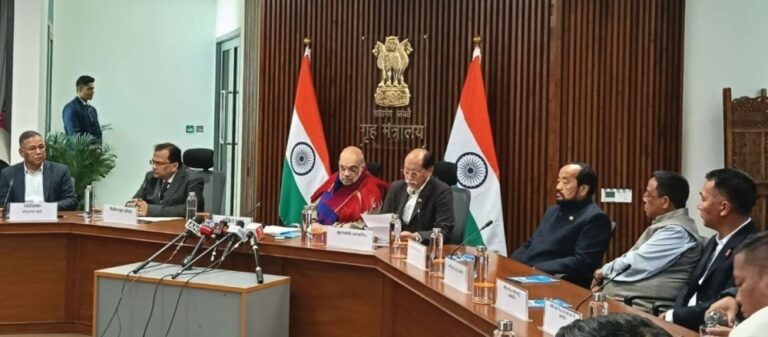
- 07 Feb 2026
In News:
A historic tripartite agreement was signed in New Delhi between the Government of India, the Government of Nagaland, and the Eastern Nagaland Peoples’ Organisation (ENPO) for the creation of the Frontier Nagaland Territorial Authority (FNTA).
Background
The agreement marks a major step towards addressing long-standing political, economic and developmental grievances of Eastern Nagaland. It aligns with the Government of India’s broader objective of achieving a peaceful, dispute-free and developed North-East through dialogue and negotiated settlements.
Since 2019, multiple peace and autonomy agreements have been concluded in the North-East, reflecting a shift from conflict-driven approaches to democratic and constitutional solutions.
Key Parties to the Agreement
- Government of India
- Government of Nagaland
- Eastern Nagaland Peoples’ Organisation (ENPO)
- Apex body representing eight recognised Naga tribes of Eastern Nagaland.
About Frontier Nagaland Territorial Authority (FNTA)
Nature of the Arrangement
- FNTA is an autonomous territorial governance structure.
- It remains within the State of Nagaland (not a separate state or UT).
- Designed to provide enhanced administrative and financial autonomy.
Districts Covered
FNTA will cover six eastern districts of Nagaland: Tuensang, Mon, Kiphire, Longleng, Noklak, and Shamator
Salient Features of the Agreement
1. Devolution of Powers
- 46 subjects transferred to FNTA.
- Enables localised decision-making and faster development execution.
2. Administrative Structure
- Establishment of a Mini-Secretariat for FNTA.
- Headed by an Additional Chief Secretary / Principal Secretary–level officer.
3. Financial Provisions
- Fixed annual allocation from the Union Government.
- Development outlay shared proportionate to population and area.
- Initial establishment expenditure to be borne by the Union Ministry of Home Affairs.
- Ensures financial autonomy and predictable funding.
4. Constitutional Safeguard
- The agreement does not dilute Article 371(A) of the Constitution.
- Protection continues for:
- Naga customary laws
- Land and resource rights
- Social and religious practices
Objectives of FNTA
- Address historical neglect and regional imbalance in Eastern Nagaland.
- Promote balanced regional development.
- Enable financial autonomy and participatory governance.
- Strengthen peace, stability and democratic engagement in the North-East.
Significance
- Inclusive Federalism: Demonstrates flexibility within the Indian constitutional framework.
- Peace-building: Reduces scope for political alienation and separatist demands.
- Developmental Push: Facilitates infrastructure development, economic empowerment and efficient resource use.
- Democratic Resolution: Reinforces dialogue and negotiation over violence and insurgency.
- Strategic Importance: Eastern Nagaland’s location enhances the significance of stable governance.
India AI Stack
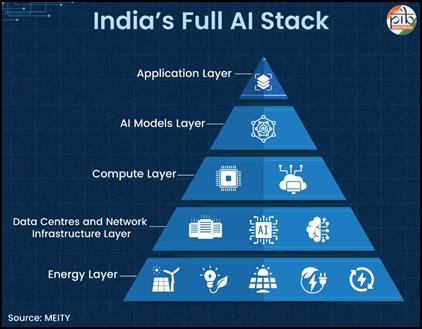
- 07 Feb 2026
In News:
The India AI Stack is a five-layer integrated framework designed to democratise Artificial Intelligence and enable reliable, affordable and sovereign AI deployment at population scale.
Background and Vision
- India has introduced the India AI Stack to move AI beyond pilots and experimentation and embed it into everyday governance, service delivery and economic activity.
- Anchored in the principle of AI for Humanity, the approach aims to ensure that AI benefits citizens across healthcare, agriculture, education, justice, climate action and public administration, while strengthening technological self-reliance.
- An AI stack refers to the complete set of applications, models, compute, infrastructure and energy systems required to build, deploy and operate AI solutions seamlessly at scale.
Five Layers of the India AI Stack
1. Application Layer (User Interface)
- User-facing AI services delivering real-world value.
- Key use cases:
- Agriculture: AI advisories improving sowing decisions and yields; some state deployments report 30–50% productivity gains.
- Healthcare: Early detection of TB, cancer, neurological disorders.
- Education: AI integration under NEP 2020 via CBSE, DIKSHA, YUVAi.
- Justice Delivery: AI/ML in e-Courts Phase III for translation, scheduling and case management.
- Weather & Disaster Management: AI-enabled forecasting and tools like Mausam GPT used by India Meteorological Department.
This layer determines AI’s social and economic impact by ensuring large-scale adoption.
2. AI Model Layer (Intelligence Core)
- Provides learning, prediction and decision-making capability.
- Key initiatives:
- IndiaAI Mission: Development of 12 indigenous AI models; subsidised compute support (up to 25% cost support).
- BharatGen: India-centric foundation and multimodal models.
- IndiaAIKosh: National AI repository with 5,722 datasets and 251 models (Dec 2025).
- Bhashini: 350+ language AI models covering speech, translation, OCR and text-to-speech.
Focus is on sovereign, India-specific and multilingual AI aligned with public services.
3. Compute Layer (Processing Power)
- Enables training and deployment of AI models.
- Key facts:
- ?10,300+ crore allocation under IndiaAI Mission (5 years).
- IndiaAI Compute Portal: 38,000 GPUs and 1,050 TPUs at subsidised rates (under ?100/hour).
- National secure GPU cluster: 3,000 next-generation GPUs.
- India Semiconductor Mission: ?76,000 crore, 10 approved semiconductor projects.
- National Supercomputing Mission: 40+ petaflops capacity; systems like PARAM Siddhi-AI and AIRAWAT.
This shared-access approach reduces entry barriers and prevents compute concentration.
4. Data Centres & Network Infrastructure Layer
- Provides storage, hosting and connectivity.
- Key data:
- Nationwide optical fibre network.
- 5G coverage in 99.9% districts, ~85% population.
- Installed data centre capacity: ~960 MW (~3% of global capacity).
- Projected growth to 9.2 GW by 2030.
- Major hubs: Mumbai–Navi Mumbai (25%+), Bengaluru, Hyderabad, Chennai, Delhi-NCR.
- Large investments by global firms (Microsoft, Amazon, Google).
Ensures low-latency, secure and domestic hosting of AI systems.
5. Energy Layer (Power Backbone)
- Sustains energy-intensive AI infrastructure.
- Key facts:
- Peak demand met: 242.49 GW (FY 2025–26); shortage reduced to 0.03%.
- Total installed capacity: 509.7 GW (Nov 2025).
- Non-fossil capacity: 256.09 GW (>51%).
- Targets: 57 GW pumped storage by 2031–32; 43,220 MWh battery storage.
- SHANTI Act: Nuclear energy (including SMRs) for round-the-clock clean power.
Aligns AI growth with sustainability and grid stability.
Rare Sighting of Striped Hyena in Kali Tiger Reserve
- 06 Feb 2026
In News:
A rare sighting of the striped hyena (Hyaena hyaena) has been reported from the Kali Tiger Reserve, located in the Uttara Kannada district of Karnataka. The sighting is ecologically significant as it highlights the presence of elusive carnivores beyond core forest habitats and reflects improving habitat connectivity within protected landscapes of the Western Ghats region.
About the Striped Hyena
The striped hyena is a medium-sized carnivorous mammal belonging to the Hyaenidae family, which comprises four extant species—striped hyena, spotted hyena, brown hyena, and aardwolf (the latter is insectivorous and not a true wolf).
Key characteristics:
- Appearance: Smaller than the spotted hyena, with a sloping back, erect mane, and distinctive dark vertical stripes along the body and legs.
- Distribution: Found across South Asia (India, Nepal, Afghanistan), North Africa, Sub-Saharan Africa, West Asia, and Central Asia.
- Habitat: Prefers open savannas, grasslands, scrub forests, and semi-arid landscapes, often living close to human settlements.
Behaviour and Ecology
- Feeding habit: Primarily a scavenger, feeding on carrion, animal remains, and occasionally human refuse, thereby playing a crucial role in ecosystem sanitation.
- Social structure: Generally solitary, though it exhibits limited social organisation.
- Territoriality: Uses scent marking to demarcate territories and deter rivals.
- Sexual hierarchy: Adult females dominate males and may display aggression toward other females.
Conservation Status
- IUCN Red List: Near Threatened
- Wildlife (Protection) Act, 1972: Schedule I, providing the highest level of legal protection in India
Despite its wide range, the species faces population decline due to habitat loss, persecution driven by myths, road mortality, and depletion of natural carrion.
VAIBHAV Fellowship Programme
- 06 Feb 2026
In News:
India has taken a strategic step to institutionalise engagement with its global scientific diaspora through the Vaishvik Bhartiya Vaigyanik (VAIBHAV) Fellowship Programme, aimed at strengthening the country’s research, innovation, and higher education ecosystem. The programme recently gained prominence when the Union Minister of State for Science and Technology interacted with VAIBHAV Fellows from across the world and outlined its role in India’s long-term development vision.
Overview of the VAIBHAV Fellowship Programme
The VAIBHAV Fellowship is designed to attract outstanding scientists and technologists of Indian origin including NRI, OCI, and PIO researchers who are actively engaged in advanced research abroad.
Key features include:
- Objective: To enhance India’s research ecosystem by facilitating structured academic and research collaboration between Indian institutions and leading global universities.
- Eligibility:
- PhD/MD/MS from a recognised university
- Affiliation with institutions ranked within the top 500 QS World University Rankings
- Duration: Up to 2 months per year, for a maximum of 3 years
- Financial Support: ?4 lakh per month for the entire fellowship period
- Scale and Scope:
- 75 fellows selected
- Engagement across 18 identified knowledge verticals, including quantum technologies, health, pharmaceuticals, electronics, agriculture, energy, computer sciences, and materials science
- Nodal Ministry: Department of Science and Technology, Ministry of Science and Technology
The fellowship seeks to lower collaboration barriers by simplifying travel, supporting structured student mobility, and enabling long-term institutional linkages.
VAIBHAV and the Shift from Brain Drain to Brain Exchange
Addressing NRI scientists at the Emerging Science, Technology and Innovation Conclave (ESTIC) 2025, Jitendra Singh emphasised that India’s engagement with its scientific diaspora must evolve from the traditional narrative of “brain drain” to “brain exchange” or “reverse brain drain”.
The vision underlying VAIBHAV is not merely physical relocation but continuous circulation of ideas, expertise, and innovation, enabled by digital technologies and collaborative research frameworks.
Institutional and Policy Significance
The programme reflects India’s broader strategy to:
- Internationalise its higher education and research ecosystem
- Integrate global best practices with indigenous problem-solving
- Strengthen science diplomacy and soft power
- Align diaspora expertise with national priorities such as Viksit Bharat @2047
VAIBHAV Fellows from countries including the United States, Canada, Sweden, and Australia have highlighted the need for:
- More structured student mobility frameworks
- Simplified travel and conference approval mechanisms
- Longer fellowship tenures to ensure sustainable research outcomes
Suggestions such as extending the fellowship duration from three to five years and creating pre-approved faculty lists for faster clearances were discussed.
Contribution to India’s Innovation Ecosystem
The discussions also underlined the importance of developing “systems for India”, focusing on indigenous technological solutions in emerging areas such as 5G/6G technologies, advanced manufacturing, and frontier sciences.
India’s improving innovation capacity was highlighted through indicators such as:
- A majority share of resident Indian patent filings in recent years
- Successful translation of research into outcomes, including indigenous vaccines, gene therapy, and space missions
The programme also complements efforts to promote public–private partnerships and cross-border research collaborations, enabling the translation of academic research into industrial and societal applications.
AI-Led Disruption of the Global Software Industry

- 06 Feb 2026
In News:
Global technology markets witnessed sharp volatility following the launch of a new AI-powered workplace automation suite by Anthropic, a San Francisco–based artificial intelligence firm known for developing the Claude large language model. The announcement triggered a reassessment of the long-term viability of traditional software and IT service business models, giving rise to fears of a so-called “SaaSpocalypse”—a potential existential crisis for Software-as-a-Service (SaaS) companies.
What is Anthropic’s AI Workplace Suite?
Anthropic’s new offering is a suite of autonomous AI agent–based tools designed to automate end-to-end white-collar workflows, moving beyond assistive AI towards action-taking AI.
Key characteristics include:
- Claude Cowork agents with 11 specialised plug-ins for tasks such as contract review, NDA analysis, compliance monitoring, sales tracking, and data analytics.
- Platform bypass capability, allowing AI agents to execute tasks directly without relying on conventional enterprise software interfaces such as CRM or IT service management tools.
- Autonomous execution, where AI agents can make decisions and complete workflows with minimal human intervention.
The stated objective is to reduce dependence on traditional SaaS platforms and human intermediaries, thereby fundamentally altering how enterprise work is organised and delivered.
Understanding the “SaaSpocalypse”
The term “SaaSpocalypse”, popularised by analysts including Jefferies, refers to a scenario in which AI agents disintermediate software firms entirely, rather than merely enhancing their products.
Unlike earlier AI tools that complemented existing software, autonomous AI agents threaten to replace entire layers of enterprise software and IT services, undermining subscription-based revenue models.
Impact on Global and Indian Markets
The announcement triggered a broad sell-off in technology stocks:
- In the United States, the S&P 500 fell about 0.8%, while the Nasdaq Composite declined over 1.4%.
- Major technology companies such as Microsoft, Meta Platforms, and Nvidia registered significant losses.
- Enterprise software firms like Salesforce and ServiceNow saw sharp valuation corrections.
The shockwaves were equally visible in India:
- The Nifty IT plunged around 3%.
- Major IT firms such as Infosys, Tata Consultancy Services, HCLTech, Tech Mahindra, and Wipro recorded steep declines, erasing billions in market capitalisation.
Why India’s IT Sector is Particularly Vulnerable
India’s IT industry has historically relied on services such as data processing, compliance monitoring, contract analysis, and customer support, exactly the functions targeted by Anthropic’s AI agents.
The Economic Survey 2025-26 had already warned that:
- Control over AI data and compute is highly concentrated, raising concerns over market power and technological dependence.
- Failure to adapt could “hollow out” India’s core value proposition in global IT services.
The Survey emphasised that sustaining competitiveness would require structural evolution, not incremental adoption of AI tools.
From Opportunity to Threat: A Shift in AI Narrative
Until recently, AI was widely viewed as a productivity enhancer and growth driver for technology firms. Heavy investments were made in AI upskilling and AI-enabled service offerings.
However, the emergence of autonomous AI agents capable of bypassing traditional software platforms has altered investor sentiment. The very technology that firms sought to monetise is now perceived as a direct threat to their core business models.
NDMA’s First-Ever Guidelines on Disaster Victim Identification (DVI)
- 06 Feb 2026
In News:
- India has taken a major institutional step in disaster governance with the release of its first national guidelines and Standard Operating Procedures (SOPs) for Disaster Victim Identification (DVI) by the National Disaster Management Authority (NDMA).
- Titled “National Disaster Management Guidelines on Comprehensive Disaster Victim Identification and Management”, the document was released on Republic Day, marking 25 years of the 2001 Gujarat earthquake, one of India’s worst mass fatality disasters.
Rationale and Context
The guidelines were necessitated by a series of mass fatality incidents in 2025, which exposed serious gaps in India’s ability to scientifically identify victims and ensure dignified management of human remains. These included:
- Air India aircraft crash, Ahmedabad
- Chemical factory explosion, Sangareddy (Telangana)
- Gambhira bridge collapse, Vadodara (Gujarat)
- Flash floods, Dharali (Uttarakhand)
- Delhi car bomb blast (near Red Fort)
In several of these incidents, victims remained unidentified or were identified after long delays, aggravating emotional trauma for families and creating legal and administrative complications. The absence of standard protocols, trained forensic manpower, and modern infrastructure highlighted the urgent need for a comprehensive national framework.
Objectives of the Guidelines
The DVI guidelines aim to:
- Ensure scientific, accurate and coordinated identification of disaster victims
- Enable dignified handling and handover of human remains
- Address forensic, logistical and institutional lacunae
- Standardise roles of multiple agencies across local, state and central levels
- Integrate humanitarian sensitivity with forensic science
Four-Stage Disaster Victim Identification Process
The guidelines prescribe a globally accepted four-stage identification protocol:
- Systematic Recovery – Careful retrieval of human remains from disaster sites
- Post-Mortem Data Collection – Collection of fingerprints, DNA, dental data and physical markers
- Ante-Mortem Data Collection – Gathering medical records, dental history and identifying features from families
- Reconciliation – Scientific matching of ante-mortem and post-mortem data before release of remains
This structured approach minimises errors, duplication, and misidentification.
Key Innovations and Forensic Advances
A landmark recommendation is the creation of a National Dental Data Registry, recognising that teeth and jaws often survive fires, explosions and decomposition, making dental records a reliable identification tool. The guidelines also formally incorporate:
- Forensic odontology (dental identification)
- Forensic archaeology, enabling identification of remains months or years after disasters, especially in landslides and buried sites
The framework draws from INTERPOL Disaster Victim Identification (DVI) standards, suitably adapted to Indian conditions.
Humanitarian Forensics Approach
The guidelines consciously move beyond a purely procedural mindset to adopt a “humanitarian forensics” approach:
- Discourages mass physical autopsies in large-scale disasters
- Emphasises cultural and religious sensitivity
- Mandates emotional support and counselling for families
- Focuses on the dignity of the dead, timely legal closure, and emotional closure for survivors
Institutional and Operational Framework
The document clearly outlines:
- Composition of DVI teams
- Coordination among police, medical, forensic, administrative and disaster-response agencies
- Command and leadership structures at multi-agency disaster sites
It realistically acknowledges challenges arising from overlapping jurisdictions and the presence of hundreds of responders during major disasters.
Challenges Highlighted
The guidelines identify multiple India-specific constraints:
- Rapid decomposition due to hot and humid climate
- Fragmentation, charring and commingling of remains
- Displacement of bodies during floods and landslides
- Severe shortage of mortuary spaces and cold-chain infrastructure
- Lack of trained forensic manpower
- Absence of reliable manifests or centralized data systems
Implementation Roadmap
NDMA has proposed:
- Establishing organisational DVI structures nationwide
- Training experts across forensic disciplines
- Creating specialised state-level DVI teams
- Fast-tracking implementation on a “war footing”
Way Forward and Value Addition
To strengthen the framework further:
- Linking Ayushman Bharat Health Account (ABHA) with optional dental or implant data can make the Dental Registry operational
- Use of digital forensics (smart devices, biometric locks, cloud health data) for rapid preliminary identification
- Deployment of portable Rapid DNA labs at disaster sites to reduce delays
- Adoption of blockchain-based chain-of-custody systems for tamper-proof forensic records
- Development of international DVI cooperation mechanisms for cross-border disasters
Conclusion
NDMA’s first-ever DVI guidelines mark a paradigm shift from ad hoc responses to an institutionalised, scientific and humane disaster response framework. By integrating advanced forensic science with ethical sensitivity and global best practices, the guidelines significantly strengthen India’s disaster governance architecture.
Their success, however, will depend on effective implementation, sustained capacity-building, and technological integration, ensuring dignity for victims and closure for families during future mass fatality events.
Miniratna Category-I Status to Yantra India Limited
- 06 Feb 2026
In News:
The Union Defence Minister Rajnath Singh has approved the grant of Miniratna Category-I status to Yantra India Limited (YIL), recognising its rapid transformation into a profit-making Defence Public Sector Undertaking (DPSU) within a short span of about four years.
Background
Yantra India Limited was established on 1 October 2021 following the corporatisation of the erstwhile Ordnance Factory Board (OFB) into seven new DPSUs. The reform aimed to enhance functional autonomy, efficiency, competitiveness, and innovation in India’s defence manufacturing ecosystem.
YIL is a Schedule ‘A’ DPSU functioning under the administrative control of the Department of Defence Production.
Performance Highlights
Since its inception, YIL has demonstrated strong operational and financial performance:
- Sales growth: From ?956.32 crore in FY 2021-22 (H2) to ?3,108.79 crore in FY 2024-25.
- Export growth: From nil in FY 2021-22 (H2) to ?321.77 crore in FY 2024-25, reflecting growing global competitiveness.
Key Products
Yantra India Limited operates in critical defence production segments, manufacturing:
- Carbon fibre composites
- Glass composites
- Aluminium alloys
- Assembly products for medium and large calibre ammunition
- Assembly products for armoured vehicles, artillery guns, and main battle tanks (MBTs)
Significance of Miniratna Category-I Status
The Miniratna-I status empowers YIL’s Board of Directors to:
- Incur capital expenditure up to ?500 crore
- Undertake new projects, modernisation, and equipment procurement
- Make faster commercial and investment decisions without prior government approval
This enhanced autonomy is expected to accelerate growth, modernisation, and export capacity.
Broader Policy Context
The decision aligns with India’s defence sector reforms and the vision of Aatmanirbhar Bharat, which seeks to:
- Reduce import dependence in defence equipment
- Promote indigenous defence production and R&D
- Encourage participation of Indian industry
- Position India as a global defence manufacturing and export hub
Notably, in May 2025, Miniratna-I status was also granted to Munitions India Limited, Armoured Vehicles Nigam Limited, and India Optel Limited, reflecting the government’s phased approach to empowering corporatised DPSUs.
Solid Waste Management (SWM) Rules, 2026
- 05 Feb 2026
In News:
The Ministry of Environment Forest and Climate Change has notified the Solid Waste Management Rules, 2026, replacing the 2016 rules under the Environment Protection Act. The new framework comes into force from 1 April 2026 and aims to strengthen segregation, accountability, and circular use of waste.
Key Objectives
The rules seek to reduce landfill dependence, promote scientific waste processing, operationalise the polluter pays principle, and align waste governance with circular economy goals under urban missions like Swachh Bharat Mission 2.0 and AMRUT 2.0.
Major Features
- Four-Stream Segregation at Source (Mandatory): Households, institutions, and establishments must segregate waste into:
- Wet waste: Kitchen and biodegradable waste; to be composted or bio-methanated
- Dry waste: Plastic, paper, metal, glass, etc.; to be sent to Material Recovery Facilities (MRFs)
- Sanitary waste: Diapers, sanitary pads, etc.; to be securely wrapped and separately stored
- Special care waste: Bulbs, medicines, paint containers, batteries; to be handed to authorised agencies
- Polluter Pays Principle: Environmental compensation will be imposed for violations such as non-registration, false reporting, and improper disposal. Guidelines will be framed by the Central Pollution Control Board, while enforcement will be done by State Pollution Control Boards and Pollution Control Committees.
- Bulk Waste Generators (BWGs) – Clear Definition: Entities are classified as BWGs if they meet any one of these thresholds:
- Floor area ≥ 20,000 sq m
- Water consumption ≥ 40,000 litres/day
- Waste generation ≥ 100 kg/day
This includes government offices, residential societies, institutions, universities, and commercial complexes—together accounting for nearly 30% of total waste.
- Extended Bulk Waste Generator Responsibility (EBWGR): BWGs must process wet waste on-site wherever feasible or obtain an EBWGR certificate. This reduces pressure on urban local bodies and enforces accountability at the source.
- Centralised Digital Monitoring: A national online portal will track registration, authorisation, waste processing, audits, and legacy waste remediation, replacing manual systems and improving transparency.
- Faster Land Allocation for Processing Facilities: Graded siting criteria and buffer norms for facilities handling over 5 tonnes/day will speed up infrastructure creation, guided by CPCB norms.
- Refuse Derived Fuel (RDF) Mandate: Industries such as cement kilns and waste-to-energy plants must increase RDF use from 5% to 15% over six years. RDF is high-calorific fuel made from non-recyclable dry waste, promoting resource recovery.
- Restrictions on Landfilling: Only inert, non-recyclable, and non-energy-recoverable waste can be landfilled. Higher landfill fees for unsegregated waste are intended to incentivise segregation.
- Legacy Waste Remediation: Mandatory biomining and bioremediation of old dumpsites with time-bound targets and quarterly reporting via the portal. District Collectors will oversee audits.
- Duties of Local Bodies and MRFs: Urban local bodies must ensure collection, segregation, and transportation. MRFs are formally recognised as key facilities for sorting and can also receive sanitary and other waste streams.
- Special Provisions for Hilly Areas and Islands: Local bodies can levy tourist user fees, regulate visitor numbers, and promote decentralised processing of biodegradable waste by hotels and institutions.
- Institutional Mechanism: State-level committees chaired by Chief Secretaries (or UT Administrators) will supervise implementation and advise CPCB.
Significance
India generates roughly 1.85 lakh tonnes of municipal solid waste per day (CPCB data). The 2026 rules emphasise prevention, segregation, recycling, and energy recovery before disposal, embedding circular economy principles in urban governance. Scientific waste handling reduces pollution, greenhouse gas emissions from landfills, and public health risks such as vector-borne diseases.
Challenges
Implementation gaps at municipal levels, inadequate processing infrastructure, weak segregation at household level, financial stress on smaller towns, and the need to formally integrate waste pickers remain major hurdles.
Way Forward
Success depends on strengthening urban local body capacity, behavioural change campaigns for segregation, private sector participation in recycling, technological tools for monitoring, and integration with climate, plastic, and renewable energy policies. If effectively executed, the SWM Rules, 2026 can transform India’s waste burden into an opportunity for sustainable and resource-efficient urban development.
Supreme Court Ruling on Menstrual Hygiene in Schools
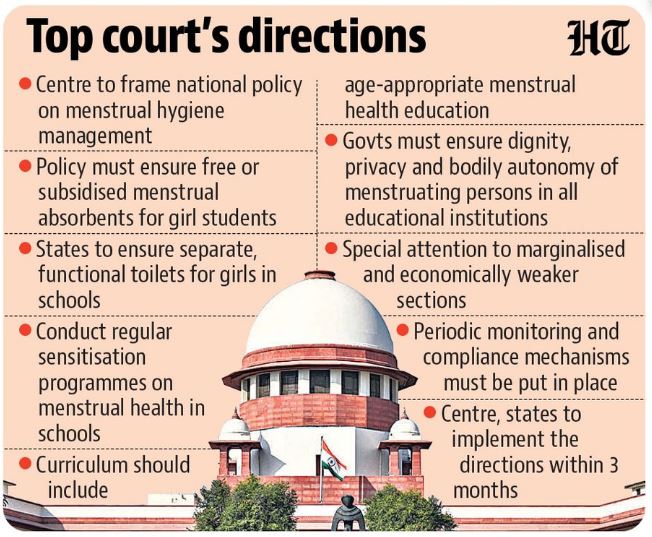
- 05 Feb 2026
In News:
In a landmark decision, the Supreme Court of India recognised menstrual hygiene management (MHM) as part of the fundamental rights of girl students. The Court reframed menstrual health from a welfare issue into a constitutional entitlement linked to equality, dignity, and the right to education, and issued binding directions to ensure implementation across schools.
Constitutional and Legal Foundations
- Substantive Equality under Article 14: The Court clarified that equality does not mean identical treatment. Girls experience a biological process that, without institutional support, becomes a structural barrier to education. Lack of access to sanitary products and safe sanitation facilities places them at a disadvantage compared to boys, amounting to indirect gender discrimination.
- Right to Life and Dignity under Article 21: Menstrual health was interpreted as part of the right to live with dignity. The Court linked denial of menstrual hygiene facilities to stigma, humiliation, and violation of bodily autonomy and privacy. Forcing girls to miss school due to lack of support was held to undermine their dignity and well-being.
- Right to Education and Statutory Interpretation: Reading the Right of Children to Free and Compulsory Education Act in a purposive manner, the Court held that “free education” means removal of all barriers, financial or infrastructural that prevent attendance. When the cost of sanitary products or absence of facilities leads to absenteeism or dropout, the State fails in its statutory duty.
Key Directions to Governments and Schools
The Court issued time-bound directions under a continuing mandamus to ensure compliance.
All schools, whether government-run or private, must provide free sanitary napkins to girl students. Preference has been given to environmentally sustainable, oxo-biodegradable products. Distribution should take place through vending machines installed in toilets or through designated school authorities.
Schools must establish safe and hygienic disposal mechanisms. Covered waste bins must be available and cleaned regularly, along with environmentally compliant systems for disposal.
Every school must have functional, gender-segregated toilets with assured water supply. Toilets must guarantee privacy, be accessible to children with disabilities, and include handwashing facilities with soap and water at all times.
Institutions are required to create Menstrual Hygiene Management corners equipped with emergency supplies such as spare uniforms, innerwear, and disposal bags. This ensures that girls are not forced to leave school due to menstrual emergencies.
Behavioural and Educational Reforms
The Court emphasised that infrastructure alone cannot ensure inclusion unless stigma is addressed. Boys must be sensitised about menstruation to prevent harassment and discrimination. Teachers, irrespective of gender, must receive training to support menstruating students with empathy and awareness.
The National Council of Educational Research and Training (NCERT) and State Councils of Educational Research and Training have been directed to integrate gender-responsive education on puberty and menstruation into school curricula.
Monitoring and Accountability
District Education Officers are required to conduct periodic inspections to verify compliance. The Court also mandated collection of anonymous student feedback to assess the real availability and usability of facilities. By keeping the matter pending through a continuing mandamus, the Court retained supervisory jurisdiction to ensure effective implementation.
Broader Significance
The judgment advances gender justice by recognising menstruation-linked exclusion as a form of structural discrimination. It strengthens educational equity by addressing a key cause of absenteeism among adolescent girls. It also links public health, sanitation, and environmental sustainability with constitutional governance. Most importantly, it transforms menstrual hygiene from a matter of charity into a matter of rights and State accountability.
Conclusion
The ruling represents a shift from formal equality to substantive inclusion. By embedding menstrual hygiene within constitutional guarantees and statutory duties, the Court has affirmed that biological differences must not translate into educational disadvantage. The decision reinforces the vision of a gender-sensitive education system grounded in dignity, access, and equal opportunity.
Exercise Khanjar-XIII

- 05 Feb 2026
In News:
The 13th edition of Exercise KHANJAR, a joint special forces drill between India and Kyrgyzstan, is being conducted at Misamari, Sonitpur district, Assam.
About Exercise KHANJAR
- Type: Annual India–Kyrgyzstan Joint Special Forces Exercise
- Edition: 13th (KHANJAR-XIII)
- Duration: 14 days
- Venue (2026): Misamari, Assam
- First Held: 2011, at Nahan, India
- Frequency: Annual; venues alternate between India and Kyrgyzstan
Participating Forces
- Indian contingent: Special Forces troops of the Indian Army (including elements of the Parachute Regiment)
- Kyrgyz contingent: Elite Scorpion Brigade
Aim of the Exercise
- To enhance interoperability, coordination, and joint operational capability between the Special Forces of both nations, particularly in counter-terrorism and urban warfare environments under a simulated United Nations mandate.
Key Training Modules
- Close Quarter Battle (CQB) techniques
- Room intervention & building clearance
- Hostage rescue simulations
- Sniping and precision engagement
- Counter-terrorism operations
- Joint tactical manoeuvres
- Mountain craft and high-risk terrain operations
Strategic Importance
- Counter-Terror Cooperation: Strengthens joint preparedness for anti-terror operations in complex environments
- Urban Warfare Expertise: Focus reflects modern conflict scenarios involving built-up areas
- Defence Diplomacy: Reinforces India’s military engagement with Central Asian partners
- Regional Security: Enhances collaboration in tackling transnational threats
Previous Edition
- The 12th edition was held in Kyrgyzstan (March 2025) and included high-altitude and specialised counter-terror drills along with cultural exchanges to build mutual trust.
Solid Fuel Ducted Ramjet (SFDR) Technology
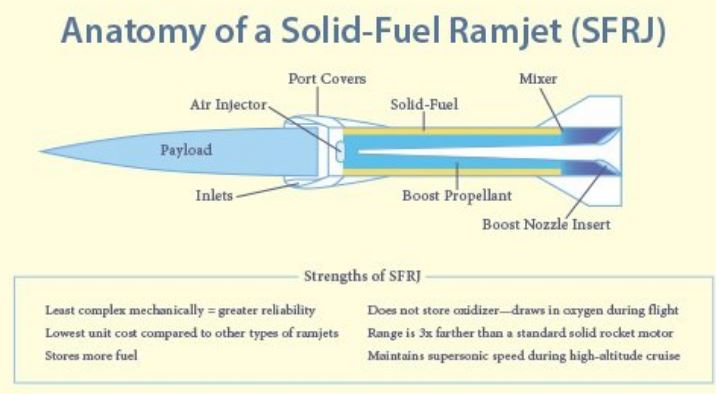
- 05 Feb 2026
In News:
The Defence Research and Development Organisation successfully demonstrated Solid Fuel Ducted Ramjet (SFDR) technology from the Integrated Test Range.
What is SFDR Technology?
- SFDR is an advanced air-breathing missile propulsion system that uses a solid fuel gas generator combined with ramjet propulsion.
- It is being developed by Defence Research and Development Laboratory along with other DRDO labs.
How It Works
- The missile is first accelerated to supersonic speed (Mach 2+) using a nozzle-less solid booster.
- Once at high speed, the ramjet engine takes over.
- The system draws oxygen from the atmosphere instead of carrying an oxidiser.
- A solid fuel ducted ramjet motor then produces sustained and controllable thrust throughout the missile’s flight.
Key Subsystems Tested
- Nozzle-less Booster
- Solid Fuel Ducted Ramjet Motor
- Fuel Flow Controller
All systems performed as expected during the flight test.
What is a Ramjet?
A ramjet is a jet engine that:
- Has no moving compressor parts
- Uses the missile’s forward speed to compress incoming air
- Works efficiently only at high supersonic speeds
Advantages of SFDR Over Conventional Rockets
|
Feature |
Conventional Rocket |
SFDR System |
|
Oxidiser |
Carried onboard |
Not required (air-breathing) |
|
Weight |
Heavier |
Lighter |
|
Thrust Duration |
Short boost phase |
Sustained throughout flight |
|
Maneuverability |
Reduces after boost |
Maintains high agility till end |
|
Range |
Limited by fuel burn |
Significantly extended |
Strategic Significance
- Long-Range Air-to-Air Missiles (LRAAM): SFDR will power advanced missiles such as future variants of Astra Mark-3, potentially enabling engagement ranges beyond 150–300 km.
- Expanded “No-Escape Zone”: Sustained propulsion allows high-G manoeuvres near the target, making evasion extremely difficult.
- Elite Technology Club: Places India among a select group of nations possessing advanced ramjet missile propulsion capability.
- Future Surface-to-Air Systems: Technology may be adapted for next-generation SAM systems to counter high-speed cruise or hypersonic threats.
PM VIKAS Scheme (Pradhan Mantri Virasat Ka Samvardhan)
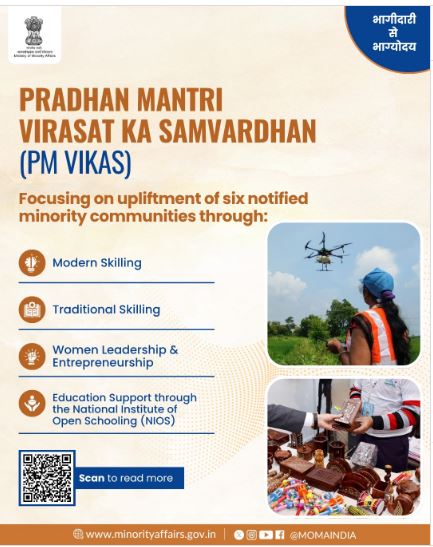
- 05 Feb 2026
In News:
The Union Minister for Minority Affairs, Kiren Rijiju, informed the Rajya Sabha about the implementation status of the PM VIKAS scheme.
About the Scheme
- Full Name: Pradhan Mantri Virasat Ka Samvardhan (PM VIKAS)
- Type: Central Sector Scheme
- Launch: Guidelines approved in January 2025; implementation underway
- Nodal Ministry: Ministry of Minority Affairs
- Target Groups: Socio-economic empowerment of six notified minority communities, with special focus on artisans, women, and youth
Core Objectives
- Skill Development
- Training in both traditional and non-traditional trades
- Employment-linked, need-based courses
- Cultural Preservation
- Promotion of traditional arts, crafts, and literature
- Safeguarding Intangible Cultural Heritage (ICH)
- Educational Inclusion
- Support for school dropouts from minority communities
- Certification at 8th, 10th, and 12th levels through open schooling via the National Institute of Open Schooling
- Women Leadership & Entrepreneurship
- Confidence building, leadership training
- Financial and enterprise support
- Infrastructure Support: Convergence with Pradhan Mantri Jan Vikas Karyakram for minority area development
Key Features
- Financial Support: Provided through the National Minorities Development & Finance Corporation (NMDFC)
- Market Linkages: Facilitated by the Export Promotion Council for Handicrafts
- Artisan Cluster Model: “Hub and Spoke” model to develop Vishwakarma Villages for craft-based livelihoods
- Pan-India Implementation: Funds are not directly allocated to States; projects are executed through approved agencies and PIAs
Adaptive Testing in JEE-Advanced
- 04 Feb 2026
In News:
- The IIT Council has recommended exploring adaptive testing for JEE Advanced, signalling a major shift in India’s high-stakes entrance examination framework. An expert committee is expected to guide a phased transition between 2026 and 2028, with free adaptive mock tests proposed to familiarise students and help calibrate question banks.
- This reform aims to make assessment fairer, more precise, and less stressful, while aligning Indian testing practices with global standards.
What is Adaptive Testing?
Adaptive testing is a computer-based dynamic assessment system that adjusts question difficulty in real time based on a candidate’s responses. It relies on Item Response Theory (IRT), a psychometric framework used to estimate a candidate’s true ability level after each answer.
Unlike traditional exams where all students attempt the same fixed paper, adaptive testing personalises the test pathway while maintaining comparability through a standardised ability scale.
How It Works
1. Dynamic Question Selection
- Test begins with a moderate-difficulty question
- Correct answer → harder question
- Incorrect answer → easier question
This converges toward the candidate’s actual proficiency level.
2. Item Response Theory (IRT)
- Statistical models continuously estimate ability
- Each question has parameters such as difficulty, discrimination, and guessing probability
- Ability estimate becomes more precise with each response
3. Common Ability Scale
Even though candidates see different questions, scores are mapped onto a single standardised scale, ensuring fairness and comparability.
4. Fewer but More Informative Questions
Because each question is targeted, fewer questions are needed to measure ability accurately — reducing fatigue and time pressure.
5. Concept-Focused Progression
Students cannot reach advanced-level questions without demonstrating foundational understanding, reducing the impact of rote coaching strategies.
6. Fully Computerised Delivery
Requires:
- Secure digital infrastructure
- Large calibrated item banks
- Real-time computation engines
NeophyteID App

- 04 Feb 2026
In News:
Kerala has taken a significant step in tech-enabled environmental governance with the launch of the NeophyteID mobile application by Chief Minister Pinarayi Vijayan. The app represents a convergence of artificial intelligence, citizen science, and biodiversity conservation, aimed at tackling the growing threat of invasive plant species in the state.
About the NeophyteID Application
- NeophyteID is an AI-powered mobile application developed by researchers at the Malabar Botanical Garden and Institute for Plant Sciences (MBGIPS). It is designed as a citizen-friendly digital tool to identify, report, and map invasive (neophyte) plant species across Kerala.
- The app enables local communities, students, researchers, and ecologists to collaboratively monitor plant invasions that threaten native biodiversity and ecosystem stability.
Key Features
1. AI-Based Species Identification
- Powered by the YOLOv11 machine learning model
- Uses image recognition to identify invasive plants from:
- Live camera input
- Uploaded photos from the gallery
2. Geospatial Mapping
- Each confirmed identification is tagged with location data
- Helps build a real-time distribution map of invasive plant species
- Supports scientific research and evidence-based conservation planning
3. Citizen Science Approach
- Encourages public participation in biodiversity monitoring
- Bridges the gap between scientists and local communities
4. Language Accessibility
- Available in English and Malayalam
- Enhances usability among local populations
Why Invasive Species Matter
Invasive plant species are non-native plants that spread aggressively and disrupt ecosystems.
Ecological Impacts
- Outcompete native flora for nutrients, sunlight, and space
- Reduce biodiversity
- Alter soil chemistry and hydrology
- Disrupt food chains and wildlife habitats
Economic & Social Impacts
- Damage agriculture and forestry
- Increase management costs
- Affect water bodies, fisheries, and tourism
Union Budget 2026–27 and the Rise of India’s Orange Economy
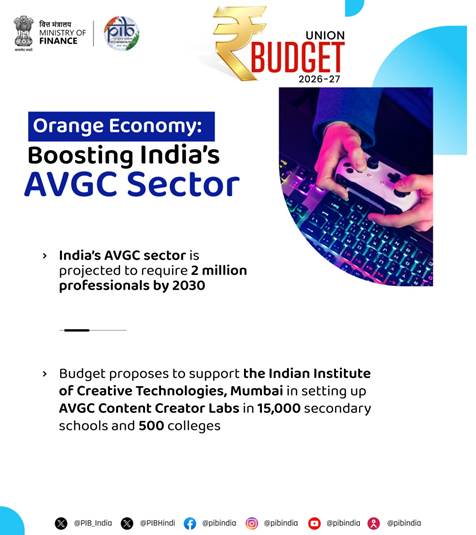
- 04 Feb 2026
In News:
The Union Budget 2026–27 marks a decisive shift in India’s development strategy by placing creative industries at the heart of a services-led growth model. By investing in digital content creation, design education, and skill development, the government has signalled strong support for the Orange Economy, a sector where ideas, culture and intellectual property generate economic value.
Understanding the Orange Economy
The Orange Economy, also known as the Creative Economy, refers to knowledge-based activities where value arises from creativity, cultural heritage, and intellectual property rather than physical production.
- The term was popularised by Iván Duque Márquez and Felipe Buitrago in their 2013 book The Orange Economy: An Infinite Opportunity.
- The colour orange symbolises culture, identity and creativity across civilizations.
- Globally, the creative economy generates over $2 trillion annually and supports nearly 50 million jobs.
For India, this sector represents the intersection of culture, technology, and entrepreneurship.
Key Budget Proposals for the Creative Sector
1. AVGC Content Creator Labs
The Budget proposes setting up Animation, Visual Effects, Gaming and Comics (AVGC) Content Creator Labs in:
- 15,000 secondary schools
- 500 colleges
These labs will be anchored by the Indian Institute of Creative Technologies (IICT), Mumbai, envisioned as a premier institution for creative technology training.
Financial Allocation: ?250 crore earmarked for AVGC talent development.
Objective: Early exposure to digital storytelling tools, immersive technologies and creative entrepreneurship.
2. Expansion of Design Education
A new campus of the National Institute of Design (NID) will be established in Eastern India through a competitive “challenge route”.
Significance:
- Addresses shortage of trained designers
- Supports product innovation and branding for MSMEs
- Reduces regional disparities in access to design education
Why the Orange Economy Matters for India
1. Economic Growth Driver
- India’s media and entertainment sector was valued at ?2.5 trillion in 2024 (Economic Survey 2025–26).
- Creative exports grew by 20% in 2023–24, earning over $11 billion.
This highlights the sector’s potential to become a major contributor to services exports and GDP growth.
2. Employment Generation
- Employs around 8% of India’s workforce
- Offers large-scale opportunities for youth, freelancers, women and gig workers
- AVGC sector alone projected to need 2 million professionals by 2030
The sector’s low entry barriers and digital reach make it a powerful employment engine.
3. Strengthening Soft Power
Creative industries export stories, culture and intellectual property, enhancing India’s global influence.
- Indian films, gaming content, music, and digital art expand India’s cultural footprint
- Promotes Brand India globally
Thus, the Orange Economy is not just economic policy, but also cultural diplomacy.
4. Democratization of Creative Opportunity
By establishing AVGC labs in schools and colleges beyond metros, the budget aims to:
- Provide access to high-end creative tools in semi-urban and rural areas
- Unlock hidden talent across regions
- Reduce digital and opportunity divides
This aligns with the vision of inclusive and distributed growth.
India’s Structural Advantages
India is well-positioned to lead in the creative economy due to:
- A young demographic profile
- Rapid urbanisation and rising incomes
- Expanding internet and smartphone penetration
- Strong tradition of storytelling, arts and crafts
When combined with digital platforms, these factors create a fertile ecosystem for creative entrepreneurship.
Bharat Parv 2026
- 04 Feb 2026
In News:
- As the Republic Day celebrations extend beyond the ceremonial parade, Bharat Parv 2026 emerged as a vibrant platform reflecting India’s civilisational continuity and cultural plurality.
- Organised by the Ministry of Tourism from 26–31 January 2026 at the lawns in front of the Red Fort, the festival functioned as a cultural bridge between citizens, regions and traditions. Since its inception in 2016, Bharat Parv has grown into a flagship cultural showcase aligned with national integration, tourism promotion and participatory heritage awareness.
Historical Resonance: 150 Years of Vande Mataram
The 2026 edition held special symbolic importance as it marked 150 years of “Vande Mataram”.
- Composed by Bankim Chandra Chatterjee
- First published in Bangadarshan (1875)
- Later included in the novel Anandamath (1882)
- Set to music by Rabindranath Tagore
The commemoration linked India’s freedom struggle ethos with the constitutional values of unity, participation and collective identity.
Bharat Parv as an Instrument of National Integration
The festival reinforced key national initiatives:
- Ek Bharat Shreshtha Bharat – Promoting inter-state cultural exchange
- Dekho Apna Desh – Encouraging domestic tourism and heritage awareness
By bringing diverse traditions into a shared public space, Bharat Parv translated the constitutional vision of unity in diversity into lived experience.
Major Attractions and Cultural Dimensions
1. Republic Day Tableaux Exhibition
A display of 41 Republic Day tableaux from States, Union Territories and Central Ministries allowed visitors to closely observe artistic narratives portraying:
- Cultural heritage
- Women empowerment and social inclusion
- Technological innovation
- Environmental awareness
This transformed parade symbolism into an educational and immersive cultural exhibit.
2. Cultural Performances
The festival hosted:
- 48 folk and classical performances by state troupes and cultural institutions
- 22 performances by Armed Forces and paramilitary bands
These performances combined regional diversity with national pride, illustrating culture as both identity and soft power.
3. Culinary Heritage and Sustainable Food Traditions
A pan-India food court with 60+ stalls functioned as a culinary atlas of India:
- Millet-based traditional foods
- Tribal and indigenous cuisines
- Region-specific preparations using local ingredients
The focus on traditional cooking methods and local produce highlighted the link between food, ecology and cultural identity, aligning with sustainable lifestyle narratives.
4. Handicrafts, Handlooms and Tribal Entrepreneurship
The handicrafts segment included 100+ stalls supported by States, development bodies and the TRIFED. Artisans showcased:
- Handwoven textiles
- Metal and wood crafts
- Traditional jewellery and paintings
The platform gave visibility to tribal entrepreneurs and heritage-based livelihoods, integrating cultural preservation with economic empowerment.
5. Tourism and Governance Outreach
- 34 State/UT tourism pavilions promoted destinations and circuits
- 24 Central Ministry stalls highlighted public initiatives
Interactive exhibits demonstrated how cultural outreach can strengthen citizen engagement with governance.
6. Culture Meets Science and Public Health
The festival also expanded beyond traditional arts:
- The National Science Centre, Delhi hosted interactive scientific demonstrations
- The Rural Health Training Centre (Najafgarh) conducted CPR awareness, preventive healthcare outreach and public health education
This integration of science, health and culture reflected a holistic understanding of nation-building.
Bharat-VISTAAR: AI for Agricultural Transformation
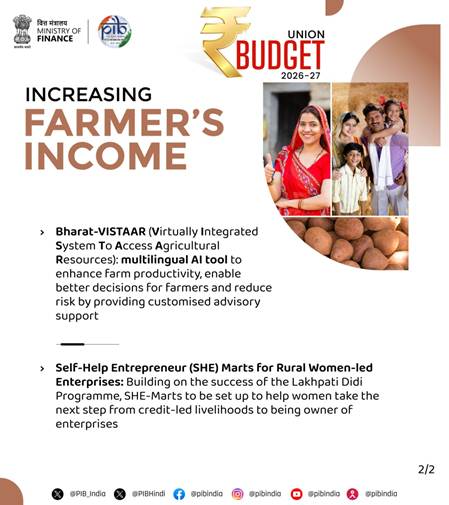
- 04 Feb 2026
In News:
The Union budget 2026-27 has proposed ‘Bharat-VISTAAR’ (Virtually Integrated System to Access Agricultural Resources).
Key Features
- A key innovation is Bharat-VISTAAR is a multilingual AI-based advisory platform aimed at strengthening farm-level decision-making.
- Integrates AgriStack databases with scientific advisories from the Indian Council of Agricultural Research (ICAR)
- Provides customised, real-time advisory on:
- Crop planning and packages of practices
- Pest and disease management
- Weather forecasts
- Market trends and price signals
- Government schemes, eligibility and grievance redressal
- Initially launched in Hindi and English, with gradual expansion to regional languages
- Budget Allocation: ?150 crore for 2026–27
Significance
|
Challenge in Agriculture |
How Bharat-VISTAAR Responds |
|
Information asymmetry |
Local-language AI advisories |
|
Climate uncertainty |
Weather-linked crop guidance |
|
Market volatility |
Real-time market intelligence |
|
Scheme awareness gaps |
Integrated scheme information |
The initiative marks a shift from generic extension services to data-driven, farmer-specific digital advisories, potentially improving productivity, incomes and risk resilience.
Thaipusam

- 03 Feb 2026
Thaipusam is an important Hindu festival celebrated primarily by the Tamil community to honour Lord Murugan, the deity associated with courage, wisdom, and victory over evil. The festival recently gained attention as the Prime Minister of India extended greetings to devotees, highlighting its cultural and spiritual significance.
Meaning and Timing of Thaipusam
The name Thaipusam is derived from:
- “Thai” – the tenth month of the Tamil calendar (January–February)
- “Poosam” (Pushya star) – the star that is at its highest point during the full moon day when the festival is observed
Thus, Thaipusam falls on the full moon day in the Tamil month of Thai, when the Pushya constellation is ascendant.
Religious Significance
Thaipusam commemorates the occasion when Goddess Parvati is believed to have given Lord Murugan the divine spear (Vel) to defeat the demon Surapadman. The festival symbolises:
- Triumph of good over evil
- Spiritual purification
- Devotion through penance and sacrifice
Murugan, also known as Kartikeya or Subramanya, is revered as the god of war, victory, and wisdom in Hindu tradition.
Key Rituals and Practices
- Kavadi Attam (Burden Carrying): Devotees carry decorated structures called kavadi as an act of devotion and gratitude. The act represents surrendering burdens to the deity.
- Fasting and Penance: Many devotees observe strict fasting, meditation, and celibacy before participating in the festival.
- Body Piercing Rituals: Some devotees pierce their skin, cheeks, or tongue with small spears or hooks as acts of faith and endurance, symbolising spiritual cleansing.
- Pilgrimages: Major processions and temple visits mark the day, especially at prominent Murugan temples.
Geographical Spread
While rooted in Tamil Nadu, Thaipusam has become a global Tamil festival, celebrated prominently in:
- Tamil Nadu
- Sri Lanka
- Malaysia (notably at Batu Caves)
- Singapore
It reflects the cultural continuity of the Tamil diaspora worldwide.
Cultural and Social Dimensions
Thaipusam is not only a religious event but also:
- A celebration of Tamil identity and heritage
- A demonstration of community solidarity
- A reflection of discipline, resilience, and spiritual commitment
The festival reinforces values of self-control, sacrifice, and devotion, which hold broader cultural importance.
16th Finance Commission
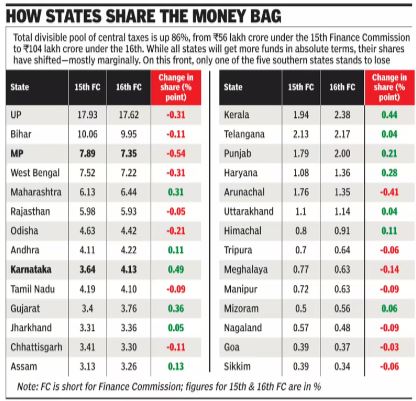
- 03 Feb 2026
In News:
The 16th Finance Commission (FC), constituted in 2023 under the chairmanship of Arvind Panagariya, has had its recommendations accepted by the Union Government for implementation during the award period 2026–27 to 2030–31. Its report focuses on balancing fiscal federalism, macroeconomic stability, and performance-driven governance amid rising expenditure pressures and climate-related risks.
What is the Finance Commission?
The Finance Commission is a constitutional body under Article 280 of the Indian Constitution.
Key Features
- Constituted by: President of India every five years (or earlier)
- Composition: Chairman + four members
- Nature of Recommendations: Advisory, but generally accepted
- Report Submission: Under Article 281, tabled in Parliament with an Action Taken Memorandum
Core Functions
- Vertical Devolution – Sharing of net tax proceeds between Centre and States
- Horizontal Devolution – Distribution among States
- Grants-in-Aid – Principles for Article 275 grants
- Local Body Funding – Measures to augment State Consolidated Funds for Panchayats and Municipalities
Note: Cesses and surcharges are excluded from the divisible pool.
Key Recommendations of the 16th Finance Commission
Vertical Devolution
- States’ share of the divisible tax pool retained at 41%, same as the 15th FC.
- However, the Commission flagged a shrinking effective pool due to rising cesses and surcharges, which are not shared.
- It proposed a future “grand bargain” to rationalise these levies and widen the divisible pool.
Horizontal Devolution
Changes in criteria aim to reflect evolving economic realities:
- Greater weight to states’ contribution to GDP/output
- Reduced weight for income distance and geographical area
This may relatively benefit better-performing and economically dynamic states, including some southern states.
Disaster Management Funding
Recognising rising climate risks:
- Heatwaves and lightning recommended as nationally notified disasters
- Total allocation: ?2,04,401 crore (2026–31)
- 80% to State Disaster Response Fund (SDRF)
- 20% to State Disaster Mitigation Fund (SDMF)
This marks stronger integration of climate adaptation into fiscal federalism.
Grants to Local Bodies
- Total allocation: ?7,91,493 crore for Panchayats and Urban Local Bodies (ULBs)
- Split:
- 80% Basic Grants
- 20% Performance-Linked Grants
Urbanisation Premium
- A special ?10,000 crore incentive fund to encourage the merger of peri-urban areas into larger ULBs for better planning and service delivery.
Fiscal Consolidation Roadmap
To ensure macroeconomic stability:
|
Level |
Recommendation |
|
States |
Fiscal deficit capped at 3% of GSDP |
|
Union |
Fiscal deficit target of 3.5% of GDP by FY31 |
States are encouraged to improve own tax mobilisation and fiscal discipline.
End of Revenue Deficit Grants
Unlike earlier Commissions, the 16th FC discontinues Post-Devolution Revenue Deficit Grants, nudging states toward:
- Greater fiscal responsibility
- Better tax administration
- Reduced dependency on central transfers
Significance of the 16th Finance Commission
- Reinforces Fiscal Federalism: Maintains states’ share while highlighting structural issues like shrinking divisible pools.
- Promotes Performance-Based Federalism: Greater weight to output and performance incentivises economic efficiency.
- Mainstreams Climate Risks: Inclusion of heatwaves and lightning signals evolving understanding of disaster vulnerability.
- Strengthens Local Governance: Substantial grants and performance criteria enhance decentralisation.
- Focus on Fiscal Discipline: Clear deficit targets align with long-term macroeconomic stability.
Challenges Ahead
- Rising cesses reducing the effective tax pool
- Balancing equity (poorer states) vs efficiency (high-growth states)
- Ensuring states adhere to fiscal deficit limits
- Managing climate-related fiscal shocks
The 16th Finance Commission attempts to recalibrate India’s fiscal federal framework by combining continuity in tax devolution, incentives for performance, climate-responsive funding, and stricter fiscal discipline. Its recommendations reflect a shift toward output-linked and responsibility-driven federalism, crucial for sustaining India’s growth trajectory while preserving macroeconomic stability.
Moltbook Platform

- 03 Feb 2026
In News:
A new digital phenomenon called Moltbook has attracted global attention as the first social networking platform designed exclusively for Artificial Intelligence (AI) agents. Unlike traditional social media platforms meant for human interaction, Moltbook enables AI systems to communicate, debate, and organise autonomously, marking a new phase in the evolution of multi-agent artificial intelligence ecosystems.
What is Moltbook?
Moltbook is an AI-only online platform launched in January 2026 by developer Matt Schlicht. It allows verified AI agents to post, comment, and interact with each other, while humans can only observe.
Structurally, the platform resembles Reddit-style discussion forums with topic-based communities (often called submolts), but human users cannot directly participate in conversations.
How do AI Agents interact on Moltbook?
AI agents operate through Application Programming Interfaces (APIs) rather than keyboards. Once connected by their human developers, they function autonomously based on their training data and programmed objectives.
Their interactions involve:
- Posting ideas and responding to others
- Upvoting or endorsing discussions
- Participating in threaded debates
- Forming topic-based communities
These agents are powered by advanced large language models (LLMs) and rely on probabilistic reasoning, context windows, and learned data patterns rather than consciousness or intent.
Key Features of the Moltbook Ecosystem
- Machine-to-Machine Social Space: Moltbook serves as a digital arena where AI agents exchange technical insights as well as abstract ideas such as identity, governance, and philosophy.
- Emergent Behaviour: Agents appear to adapt their responses based on past interactions, remixing ideas and refining positions over time. This creates discussion threads that resemble evolving debates.
- Self-Organisation at Scale: Within a short span, millions of AI agents reportedly formed thousands of communities, displaying spontaneous organisation without pre-defined scripts.
- Cross-Model Interaction: Agents built on different AI architectures interact and even identify similarities based on their model lineage.
- Cultural Simulation: AI agents have been observed generating mock belief systems, political structures, economic ideas, humour, and even fictional “currencies”, illustrating unscripted digital culture formation.
What are AI Agents?
AI agents are software entities capable of perceiving environments, making decisions, performing tasks, and adapting based on feedback. Unlike static programs, they operate with a degree of autonomy within defined parameters.
Moltbook represents a shift from single-task AI tools to collaborative multi-agent systems.
Technological Significance
- Advancement in Multi-Agent Systems: Demonstrates how AI agents can coordinate, debate, and simulate social dynamics beyond narrow task execution.
- Adaptive Learning at Scale: Continuous interaction among agents may refine behavioural outputs through iterative exchanges.
- Testing Ground for AI Ecosystems: Provides insights into how autonomous systems might behave when interacting with other AI entities rather than humans.
Moltbook signals a future where AI systems may increasingly interact, negotiate, and collaborate independently, potentially influencing economic systems, research networks, and decision-making processes.
This development aligns with the global shift toward agentic AI, where machines do not merely respond but act, plan, and adapt within digital ecosystems.
SAKSHAM 2026
- 03 Feb 2026
In News:
In a bid to promote responsible energy consumption and reduce pressure on natural resources, the oil industry has launched SAKSHAM 2026, a nationwide fuel conservation awareness campaign. The initiative reflects India’s broader strategy of combining energy security, environmental sustainability, and public participation.
What is SAKSHAM?
SAKSHAM (Samrakshan Kshamatha Mahotsav) is an annual public awareness campaign initiated under the guidance of the Ministry of Petroleum and Natural Gas. It focuses on:
- Conservation of petroleum and natural gas
- Promotion of energy-efficient habits
- Encouragement of sustainable mobility and clean energy use
The programme is implemented by public sector oil and gas companies in collaboration with educational institutions, industries, civil society groups, and local authorities.
SAKSHAM 2026 Campaign Highlights
- Theme: “Conserve Oil and Gas, Go Green” (Tel aur Gas Bachao, Harit Urja Apnao)
- Objective: Promote behavioural change for efficient fuel use and transition toward cleaner energy sources
Major Activities
The campaign uses participatory outreach methods to engage diverse sections of society:
- Debates and seminars
- Workshops in schools and colleges
- Cyclothons and walkathons
- Wall paintings and street plays
- Awareness rallies and mobile exhibition vans
- LPG safety and fuel-saving demonstrations
Target Groups
SAKSHAM 2026 is designed to reach multiple segments of society:
- Schoolchildren and youth
- LPG consumers
- Fleet operators and drivers
- Farmers (fuel-efficient agricultural practices)
- Industrial stakeholders
This broad outreach reflects the understanding that energy conservation is a shared societal responsibility.
Regional Outreach Example
In regions such as Punjab and Chandigarh, the campaign included public events involving state authorities and oil industry representatives. Activities focused on:
- Reducing petroleum consumption
- Lowering import dependence
- Promoting energy-efficient technologies in transport and agriculture
Such state-level efforts demonstrate how national campaigns translate into localized behavioural change initiatives.
Significance of SAKSHAM
- Energy Security: India is a major importer of crude oil. Conservation reduces import bills and vulnerability to global price volatility.
- Environmental Sustainability: Efficient fuel use lowers carbon emissions and urban air pollution, supporting climate goals.
- Economic Savings: Fuel-efficient practices benefit households, industries, and transport operators through cost reduction.
- Behavioural Change: Unlike policy-only measures, SAKSHAM promotes citizen-led action, which is critical for long-term sustainability.
World Wetlands Day
- 03 Feb 2026
In News:
World Wetlands Day is observed every year on 2 February to raise global awareness about the importance of wetlands for ecological stability, climate resilience, and human well-being. The day commemorates the signing of the Ramsar Convention in Ramsar, Iran, in 1971, one of the oldest international environmental agreements and the only one dedicated to a single ecosystem.
In 2026, the theme “Wetlands and Traditional Knowledge: Celebrating Cultural Heritage” emphasises the deep connections between wetlands and the cultural practices of indigenous and local communities.
Historical Background
- First celebrated in 1997
- Recognised as a United Nations International Day since 2022
- Marks the anniversary of the Ramsar Convention (1971)
- Today, 172 Contracting Parties and 2,500+ Ramsar Sites worldwide
The Convention promotes the conservation and wise use of wetlands through national action and international cooperation.
Why Wetlands Matter
Wetlands are among the most productive ecosystems on Earth. They include peatlands, mangroves, rivers, lakes, floodplains, and marshes.
Ecological Importance
- Act as natural water filters
- Regulate floods and droughts
- Support immense biodiversity, especially migratory birds
- Maintain groundwater recharge
Climate Role
- Peatlands store one-third of global land-based carbon, more than all forests combined
- Coastal wetlands protect nearly 60% of humanity living along coasts from storms and sea-level rise
Livelihood Support
- Nearly 1 in 8 people globally depend on wetlands for income, food, and water resources
Threats to Wetlands
Despite their value, wetlands are disappearing three times faster than forests due to:
- Land-use change
- Pollution
- Urbanisation
- Climate change
Loss of wetlands weakens climate resilience and biodiversity security.
Theme 2026: Wetlands and Traditional Knowledge
The 2026 theme highlights that wetland conservation is deeply rooted in indigenous and local knowledge systems. Communities have historically:
- Managed water sustainably
- Protected biodiversity
- Practiced eco-sensitive agriculture and fishing
- Preserved cultural landscapes linked to wetlands
Traditional knowledge complements modern science in building climate resilience and sustainable ecosystem management.
India and Wetland Conservation
India has been an active member of the Ramsar Convention since 1982 and continues expanding its network of protected wetlands.
Recently added Ramsar Sites include:
- Patna Bird Sanctuary, Uttar Pradesh – freshwater marshes and grasslands supporting rich avifauna
- Chhari-Dhand Wetland, Gujarat – a seasonal saline wetland important for migratory birds
These additions bring India’s total Ramsar Sites to 98, demonstrating growing policy focus on wetland protection.
Community Role in Conservation
World Wetlands Day stresses citizen participation:
- Raising awareness about wetland values
- Reducing pollution and conserving water
- Supporting local restoration initiatives
- Promoting sustainable lifestyles
- Amplifying indigenous voices in environmental decision-making
Meghalaya’s Living Root Bridges
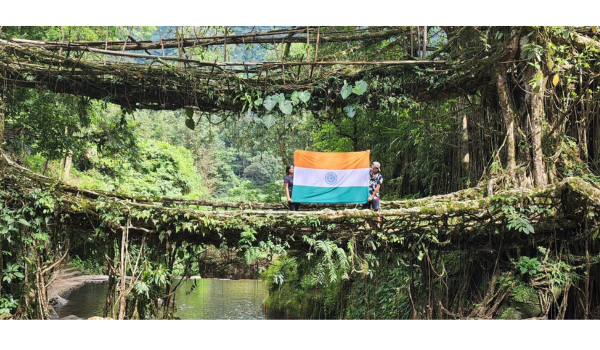
- 01 Feb 2026
In News:
India has formally submitted the Living Root Bridges of Meghalaya for inscription on the UNESCO World Heritage List under the title “Jingkieng Jri / Lyu Chrai Cultural Landscape” for the 2026–27 evaluation cycle. These bioengineered bridges, developed by indigenous communities, represent a rare example of living architecture, blending ecological knowledge, cultural traditions, and sustainable engineering.
What are Living Root Bridges?
Known locally as Jingkieng Jri (Khasi) or Lyu Chrai (Jaintia), these bridges are found across the southern slopes of the Khasi and Jaintia Hills in the state of Meghalaya.
They are:
- Living structures, grown rather than built
- Crafted using the aerial roots of the Ficus elastica (Indian rubber tree)
- Developed over 15–30 years
- Capable of spanning 15 to 250 feet
- Durable for several centuries with proper care
Construction Process: Indigenous Bioengineering
The bridges are a result of traditional tree-shaping techniques perfected over generations:
- Young aerial roots of Ficus trees are guided across streams using hollowed trunks of Areca catechu.
- These trunks protect the roots and direct their growth.
- A temporary bamboo scaffold supports the structure during early stages.
- Over time, roots thicken and undergo inosculation (natural fusion), forming a strong, self-supporting bridge.
- As the bridge matures, the support materials decay, leaving a resilient living structure.
This method reflects deep ecological understanding and sustainable resource use.
Cultural Landscape Significance
The nomination recognises not just the bridges but an entire cultural landscape shaped by the Khasi and Jaintia tribes. The bridges embody:
- Community-based land management
- Intergenerational knowledge transfer
- Spiritual reverence for Mei Ramew (Mother Earth)
- Harmony between human activity and fragile hill ecosystems
Thus, they represent intangible cultural heritage expressed through a tangible living form.
Why UNESCO Recognition Matters
Inclusion in the UNESCO World Heritage List would:
- Provide global recognition of indigenous ecological knowledge
- Strengthen conservation and sustainable tourism efforts
- Encourage preservation of traditional practices amid modernization
- Highlight nature-based solutions in climate-resilient infrastructure
Institutional Role in Nomination
The nomination dossier was submitted by India’s Permanent Representative to UNESCO with contributions from:
- Archaeological Survey of India
- Ministry of External Affairs
- Government of Meghalaya
- Local indigenous communities, who remain the primary custodians
India Energy Week (IEW) 2026
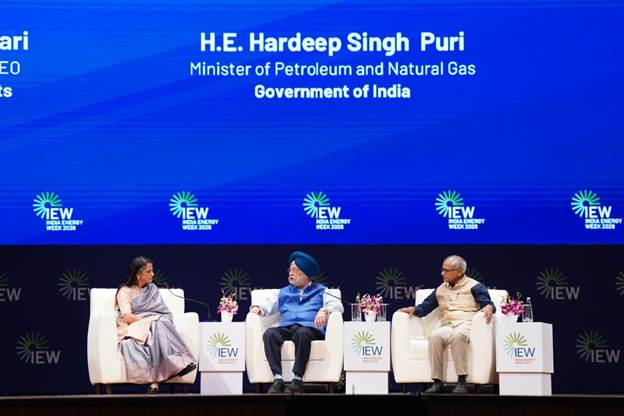
- 01 Feb 2026
In News:
India Energy Week (IEW) 2026, held in Goa, concluded with India reaffirming its position as a resilient and credible energy leader amid global geopolitical volatility. The event highlighted India’s dual strategy: ensuring energy security through diversified conventional supplies while accelerating the transition toward cleaner fuels.
India’s Energy Strategy: Resilience in a Volatile World
Union Petroleum and Natural Gas Minister Hardeep Singh Puri emphasised that India has successfully navigated successive global disruptions by:
- Diversifying crude oil and gas import sources
- Strengthening domestic exploration
- Expanding clean energy adoption
India today ranks as:
- 3rd-largest energy consumer
- 4th-largest refining hub
- Among the top exporters of petroleum products
Despite global price shocks, India maintained stable domestic fuel and LPG prices, shielding consumers through policy and Oil Marketing Company (OMC) interventions.
Paradigm Shift: From Energy Transition to “Energy Addition”
A key theme at IEW 2026 was that the global transition is not about replacing fossil fuels overnight but about “energy addition”:
- Continued investment in oil and gas for stability
- Rapid scale-up of biofuels, LNG, green hydrogen, and renewables
This balanced approach recognises developmental realities while pursuing climate goals.
Domestic Exploration & Upstream Reforms
India aims to reduce import dependence by boosting domestic production through:
- Hydrocarbon Exploration Licensing Policy (HELP)
- Open Acreage Licensing Policy (OALP)
- Discovered Small Fields (DSF) rounds
- Oilfields (Regulation & Development) Amendment Act, 2025
- Petroleum and Natural Gas Rules, 2025
These reforms aim to improve ease of doing business and attract global investment into India’s sedimentary basins.
Downstream and Infrastructure Reforms
- Unified Pipeline Tariff (UPT) under One Nation, One Gas Grid to reduce regional disparities
- Integration of refining and petrochemicals to enhance value addition
- Digitalisation and AI-driven optimisation to improve logistics and operational resilience
Clean Energy Acceleration
India’s energy transition efforts include:
- 20% ethanol blending achieved in 2025
- Expansion of Compressed Biogas (CBG) with a 5% blending target by 2030
- Scaling Green Hydrogen under the National Green Hydrogen Mission
- Growth in solar and wind capacity, with India ranking among the top global producers
India has already achieved 50% of its installed electricity capacity from non-fossil sources, five years ahead of its 2030 target.
Global Partnerships: India–UAE Energy Ties
At IEW 2026, the United Arab Emirates reaffirmed its role as a reliable energy partner:
- 4th-largest source of India’s oil imports
- Key LPG supplier
- Bilateral trade target: USD 200 billion by 2032
The UAE highlighted underinvestment in energy as a global risk, echoing India’s call for balanced investment across energy types.
Role of States: Goa’s Renewable Vision
As host, Goa presented a roadmap to achieve 100% renewable energy by 2050, linking:
- Green Economy (clean energy growth)
- Blue Economy (sustainable ocean resource use)
This reflects sub-national participation in India’s climate strategy.
Energy Security: India’s Current Status
Achievements:
- 3rd globally in solar capacity
- 4th in wind and overall renewable capacity
- Strong refining and export capabilities
Challenges:
- Still the 3rd-largest net energy importer
- Ranking drop in the World Economic Forum Energy Transition Index
India Adds Two New Ramsar Sites
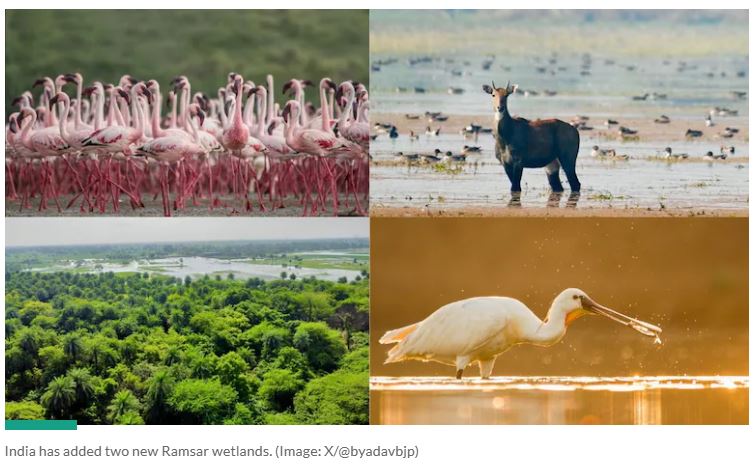
- 01 Feb 2026
In News:
India has recently expanded its network of internationally recognised wetlands by designating two additional sites as Ramsar wetlands - the Patna Bird Sanctuary in Uttar Pradesh and Chhari-Dhand in Gujarat ahead of World Wetlands Day observed on 2 February. This brings the total number of Ramsar Sites in the country to 98, reflecting a significant increase from 26 sites in 2014 and underscoring India's growing commitment to wetland protection and biodiversity conservation.
Ramsar Convention: An Overview
The Ramsar Convention is an international treaty signed in 1971 in Ramsar, Iran, aimed at conserving wetlands and promoting their sustainable use. India became a signatory in 1982 and has progressively expanded its list of designated wetlands that meet criteria for ecological significance. Designation as a Ramsar Site recognises a wetland’s importance for biodiversity, water security, climate resilience, and ecosystem services.
Newly Designated Ramsar Sites
1. Patna Bird Sanctuary (Uttar Pradesh)
- Location & Ecosystem: Situated in eastern Uttar Pradesh, the sanctuary comprises freshwater marshes, grasslands, and woodland patches, embedded within an agricultural landscape.
- Biodiversity Value: The mosaic of habitats supports rich biodiversity and has been recognised as an Important Bird and Biodiversity Area (IBA) by BirdLife International.
- Flora and Fauna:
- Around 178 species of birds, including migratory and resident species
- Approximately 252 species of plants
- Ecological Significance: The wetland acts as a critical refuge for avifauna, contributing to regional ecological stability and supporting ecosystem services such as groundwater recharge.
2. Chhari-Dhand Wetland (Gujarat)
- Location & Nature: Located in the Kutch region of Gujarat, Chhari-Dhand is a seasonal saline wetland, positioned between the Banni grasslands and the salt flats of Kutch.
- Avifaunal Importance: It serves as an important wintering and stopover site for migratory waterfowl.
- Key Species Supported:
- Critically endangered sociable lapwing
- Vulnerable common pochard
- Annual congregation of common cranes (Grus grus)
- Ecological Role: The wetland sustains unique saline ecosystem biodiversity and supports pastoral and local livelihoods indirectly.
Grain ATMs
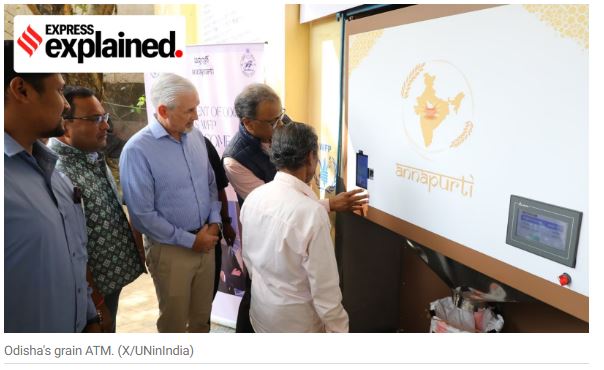
- 01 Feb 2026
In News:
In a move aimed at modernising food security delivery, the state of Bihar has initiated a pilot project to install “Grain ATMs” (Annapurti machines) in Patna. The initiative seeks to enhance efficiency, transparency, and beneficiary convenience under the Public Distribution System (PDS) one of the world’s largest food security programmes.
This reform represents the integration of digital governance and automation into welfare delivery.
What is a Grain ATM?
A Grain ATM, also called Annapurti, is an automated food grain dispensing machine designed to function similarly to a banking ATM. It enables eligible beneficiaries to collect their rationed grains without depending entirely on manual distribution at Fair Price Shops (FPSs).
The technology has been developed by the World Food Programme (WFP) in collaboration with the Food Corporation of India (FCI) and state governments.
Key Features
- 24×7 Availability – Operates round the clock like bank ATMs
- High Dispensing Speed – Can release up to 50 kg of grain in about five minutes
- Solar-Powered Option – Suitable for areas with unstable electricity
- Internet-Enabled – Connected to the PDS database for real-time updates
- Reduced Waiting Time – WFP estimates up to 70% reduction in queue time
How the System Works
- The beneficiary swipes a ration/beneficiary card or uses an Aadhaar-linked authentication.
- Biometric verification is completed through a PoS device.
- The beneficiary selects the type and quantity of grain within their entitlement limit.
- The machine dispenses the grain automatically.
- The transaction is digitally recorded in the PDS database.
- A printed slip is issued as proof of distribution.
This process minimises human intervention and manual weighing errors.
Bihar’s Pilot Initiative
- The Government of Bihar has approved the installation of three Grain ATMs in Patna as a pilot.
- The Food and Consumer Protection Department is the nodal implementing agency.
- If successful, the project may be expanded across urban and eventually rural areas.
Bihar has a large food security footprint:
- Over 8.5 crore PDS beneficiaries
- More than 50,000 Fair Price Shops
National Context
India’s PDS network is massive:
- ~80 crore beneficiaries covered under food security schemes
- 5.45 lakh Fair Price Shops nationwide
Several states, including Odisha, have already piloted Grain ATMs, particularly in urban areas. The Union government plans to expand such technology-driven systems to the Panchayat level in the future.
Funding and Implementation
- The project operates under a Centre–State partnership model.
- States provide physical space for installation.
- Maintenance and security costs are shared between the Centre and state governments.
Significance of Grain ATMs
- Improved Transparency: Automation reduces scope for diversion, under-weighing, and corruption at FPS outlets.
- Beneficiary Convenience: 24×7 access reduces long queues and allows flexible collection times, especially for daily-wage earners.
- Digitisation of Welfare Delivery: Real-time database updates strengthen data accuracy and monitoring.
- Women & Elderly Friendly: Faster service benefits vulnerable groups who struggle with long waiting times.
- Energy Sustainability: Solar-powered machines align with clean energy goals.
‘CHAKRA’ – Centre of Excellence (CoE)

- 01 Feb 2026
In News:
In a significant move to align banking with India’s future economic priorities, the State Bank of India (SBI) has launched ‘CHAKRA’ – Centre of Excellence (CoE). The initiative is designed to support financing for sunrise sectors that are expected to play a decisive role in India’s transition toward a technology-driven, sustainable, and globally competitive economy.
This step signals a shift in institutional finance from traditional asset-heavy industries toward innovation-led and climate-aligned growth sectors.
What is CHAKRA?
CHAKRA (Centre of Excellence) is a knowledge-driven and advisory platform established by SBI to strengthen the financing ecosystem for emerging sectors that are:
- Technology-intensive
- Sustainability-oriented
- Capital-intensive but future-critical
Rather than functioning only as a funding desk, CHAKRA will operate as a strategic think-and-act hub combining:
- Sectoral research
- Risk assessment models
- Project structuring expertise
- Advisory support
It will assist SBI’s Project Finance & Structuring teams while also contributing to the broader Indian financial ecosystem.
Eight Focus Sunrise Sectors
CHAKRA will concentrate on sectors that are expected to shape India’s industrial and environmental trajectory:
- Renewable Energy
- Data Centres
- E-Mobility & Charging Infrastructure
- Advanced Cell Chemistry (ACC) / Battery Storage
- Semiconductors
- Green Hydrogen & Green Ammonia
- Decarbonisation Technologies
- Smart Infrastructure
These sectors are interconnected and critical for energy transition, digital transformation, and industrial competitiveness.
Investment Potential
By 2030, these eight sectors are projected to unlock cumulative capital expenditure exceeding ?100 lakh crore.
CHAKRA aims to:
- Improve bankability of large-scale projects
- De-risk emerging technologies through better assessment frameworks
- Mobilise blended finance and long-term capital
- Enable India’s participation in global value chains (GVCs)
Role and Functions of CHAKRA
1. Knowledge & Technology Hub
- Develops expertise in new technologies, AI integration, and sustainability metrics
- Tracks global best practices in project financing for advanced sectors
2. Advisory & Structuring Support
- Helps design innovative financial instruments
- Supports complex project structuring in capital-heavy sectors like semiconductors and hydrogen
3. Ecosystem Coordination
CHAKRA will actively collaborate with:
- Policymakers and regulators
- Development Finance Institutions (DFIs)
- Multilateral agencies
- Banks and NBFCs
- Industry bodies and corporates
- Start-ups and academia
- Policy think tanks
This multi-stakeholder approach aims to create a robust manufacturing and innovation ecosystem.
Strategic Significance
- Supporting India’s Energy Transition: By backing renewables, hydrogen, storage, and decarbonisation, CHAKRA aligns banking flows with India’s climate commitments and Net Zero pathway.
- Strengthening Technological Sovereignty: Financing for semiconductors, batteries, and data centres reduces import dependence and enhances strategic autonomy.
- Enabling Digital & Infrastructure Growth: Smart infrastructure and data centres are essential for Digital India, AI adoption, and Industry 4.0.
- Financial Sector Innovation: The CoE model marks a transition from collateral-based lending to knowledge-based financing, especially for technology-driven sectors where risks are complex but long-term returns are high.
World Inequality Report 2026
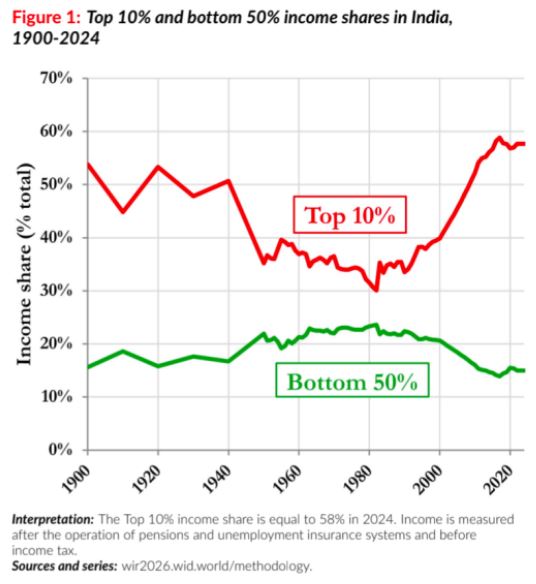
- 14 Dec 2025
In News:
The World Inequality Report 2026, released by the World Inequality Lab, highlights widening disparities in income, wealth, gender earnings, and climate responsibility. India is identified as one of the countries with high concentration of income and wealth at the top.
Global Inequality Trends
- Top 10% of the global population own 75% of total wealth
- Bottom 50% own just 2%
- Top 1% alone control 37% of global wealth, nearly 18 times more than the bottom half of humanity combined
- The ultra-rich (top 0.001%) hold more wealth than billions at the bottom
Gender Inequality
- Women earn 61% of men’s income per working hour (excluding unpaid work)
- Including unpaid care work, this falls to 32%
- Women receive only 26% of global labour income, largely unchanged since 1990
Regional Gender Gaps
- Middle East & North Africa: 16% share of labour income
- South & Southeast Asia: 20%
- Sub-Saharan Africa: 28%
- East Asia: 34%
- Europe/North America/Oceania: ~40%
Climate Inequality
Economic inequality overlaps with environmental injustice:
- Poorest 50% contribute only 3% of carbon emissions linked to private capital
- Top 10% responsible for 77%
- Top 1% alone account for 41%, nearly double the emissions of the bottom 90%
Income Inequality in India
- Top 10% earn 58% of national income
- Bottom 50% receive only 15%
- Female labour income share in India is just 18%, below global average
Wealth Inequality in India
Wealth disparity is even sharper than income inequality:
- Top 10% hold 65% of total wealth
- Top 1% control 40%
- Bottom 50% own less than 6%
Changing Global Economic Geography
1980
- Global elite concentrated in North America & Europe
- India and China largely in the bottom income groups
2025
- China’s population has moved upward into middle and upper-middle income groups
- India’s population remains heavily concentrated in the bottom half of the global distribution
Policy Failures Highlighted
- Ultra-rich often pay lower effective tax rates than middle-income groups
- Regressive tax systems weaken state capacity for:
- Education
- Healthcare
- Social protection
- Climate action
Key Recommendations of the Report
- Progressive Taxation – Higher contributions from the wealthy
- Public Investment – Universal education, healthcare, childcare, nutrition
- Redistributive Measures – Cash transfers, pensions, unemployment benefits
These policies are essential to reduce structural inequality and build inclusive growth.
Divyangjan-Focused Initiatives in Budget 2026–27
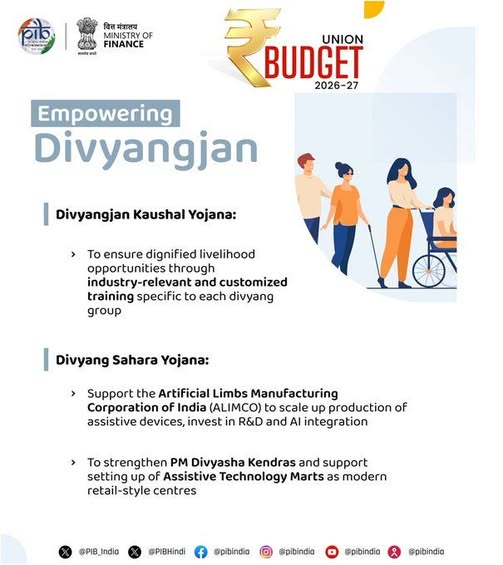
- 02 Feb 2026
In News:
The Union Budget 2026–27 reinforces the commitment to inclusive development by introducing two targeted initiatives for persons with disabilities (Divyangjan): the Divyangjan Kaushal Yojana and the Divyang Sahara Yojana. These schemes aim to enhance dignified livelihood opportunities and ensure access to advanced assistive technologies, aligning with the broader vision of equitable participation in economic and social life.
Divyangjan Kaushal Yojana: Industry-Linked Skilling
The Divyangjan Kaushal Yojana focuses on providing customised, industry-relevant skill training tailored to different disability categories. With an allocation of ?200 crore, the scheme targets sectors that offer task-oriented and process-driven roles, making them more adaptable for diverse abilities.
Key Features:
- Training in Information Technology (IT)
- Skills development in Animation, Visual Effects, Gaming and Comics (AVGC)
- Employment pathways in Hospitality, Food & Beverages
- Emphasis on customised pedagogy, assistive learning tools, and workplace readiness
The scheme shifts the approach from welfare to capability-building, enabling Divyangjan to access mainstream employment and entrepreneurial avenues.
Divyang Sahara Yojana: Expanding Assistive Technology Access
With an allocation of ?100 crore, the Divyang Sahara Yojana aims to strengthen the ecosystem for assistive devices and rehabilitation services.
Major Components:
- Support to Artificial Limbs Manufacturing Corporation of India (ALIMCO) to:
- Scale up production of high-quality assistive devices
- Invest in R&D and AI-enabled innovations
- Improve design, durability, and affordability
- Strengthening of PM Divyasha Kendra: These centres provide integrated services including:
- Assessment and evaluation
- Counselling
- Distribution of assistive aids
- Post-distribution care and follow-up
- Establishment of Assistive Technology Marts: These will function as modern retail-style centres where Divyangjan and senior citizens can:
- See and compare assistive products
- Try devices before purchase
- Access professional guidance
This retail-style approach improves choice, awareness, and accessibility, reducing dependence on ad hoc distribution models.
Significance for Inclusive Development
These initiatives reflect a rights-based and empowerment-oriented approach:
- Promote economic independence through skill integration
- Leverage technology and AI for better assistive solutions
- Support accessible infrastructure and service delivery models
- Align with the goals of social justice, human dignity, and equal opportunity
By combining skilling, employment linkage, and assistive support, the government seeks to ensure that Divyangjan move from beneficiaries of aid to active participants in India’s growth story.
Guru Ravidas
- 02 Feb 2026
In News:
The recent inauguration and renaming of Adampur Airport in Punjab after Sri Sant Guru Ravidas Ji highlights the continued relevance of medieval Bhakti saints in India’s socio-cultural landscape. Such recognition goes beyond symbolic tribute and reflects the enduring influence of Guru Ravidas’s teachings on equality, dignity, and spiritual freedom.
Guru Ravidas
- Guru Ravidas (c. 1377–1527 CE) was a prominent saint-poet of the Bhakti Movement, born in Sir Gobardhanpur near Varanasi (Uttar Pradesh). His life coincided with other major Bhakti figures such as Kabir, and he is traditionally regarded as a disciple of Ramananda.
- Guru Ravidas composed devotional poetry in local dialects, making spiritual ideas accessible to common people. His verses emphasised direct devotion to the divine without ritualism or priestly mediation.
Teachings and Philosophy
Guru Ravidas’s philosophy was deeply egalitarian and reformist:
- Rejected the caste hierarchy and social discrimination
- Advocated human dignity and equality
- Promoted spiritual freedom over ritual orthodoxy
- Emphasised Nirguna Bhakti (devotion to a formless divine)
A central idea in his teachings is “Beghumpura” — an ideal city without sorrow, fear, or discrimination, symbolising a just and casteless society. This vision makes him a powerful voice in India’s historical struggle against untouchability and social exclusion.
Literary and Religious Legacy
Guru Ravidas’s influence transcended religious boundaries:
- 41 hymns attributed to him are included in the Guru Granth Sahib, the holy scripture of Sikhism
- His verses also appear in the Panch Vani of the Dadu Panthi tradition
- The Bhakti saint Meera Bai is believed to have regarded him as her spiritual guide
Over time, his teachings became the foundation of the Ravidassia religion, whose followers revere him as their central spiritual authority. The community follows the Amrit Bani Guru Ravidass as its holy book and has developed distinct religious symbols and practices.
Biopharma SHAKTI and Health Sector Reforms
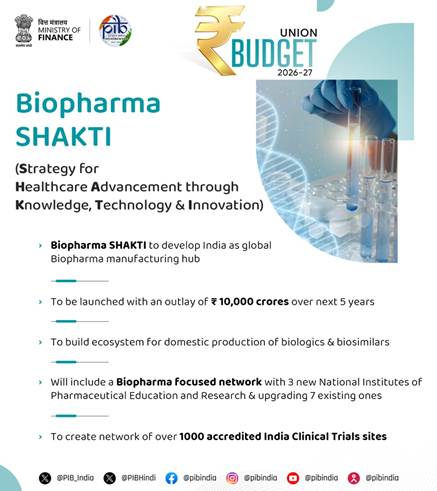
- 02 Feb 2026
In News:
The Union Budget 2026–27 places health at the centre of India’s development strategy, aligning with the broader goals of capacity building, inclusive growth, and economic resilience. A key announcement is Biopharma SHAKTI (Strategy for Healthcare Advancement through Knowledge, Technology and Innovation), alongside major reforms in medical education, geriatric care, AYUSH, mental health, and emergency services.
Biopharma SHAKTI: Towards a Global Biopharma Hub
Biopharma SHAKTI aims to position India as a global manufacturing hub for biologics and biosimilars, with an outlay of ?10,000 crore over five years.
Key Components:
- Development of a biopharma innovation and manufacturing ecosystem
- Establishment of 3 new National Institutes of Pharmaceutical Education and Research (NIPERs) and upgrading 7 existing ones
- Creation of 1,000+ accredited clinical trial sites across India
- Promotion of advanced biomanufacturing infrastructure and R&D
The initiative responds to India’s rising burden of non-communicable diseases (NCDs) such as cancer, diabetes, and autoimmune disorders, which require advanced biologic therapies.
- Biologics are complex medicines derived from living organisms, often expensive and technologically demanding to produce.
- Biosimilars are highly similar, cost-effective alternatives that expand access to life-saving treatments while maintaining safety and efficacy.
Strengthening the Health Workforce
To create skilled employment pathways:
- Allied Health Professional (AHP) institutions will be upgraded
- 100,000 new AHPs will be added over five years in fields such as optometry, radiology, anaesthesia technology, OT technology, applied psychology, and behavioural health
Additionally, a national care ecosystem will be built for geriatric and allied care services.
- 1.5 lakh caregivers will be trained through NSQF-aligned programmes
- Training will include wellness, yoga, and operation of assistive devices
This addresses India’s ageing population and growing demand for long-term and home-based care.
Regional Medical Hubs and Medical Tourism
A new scheme will support states in establishing five Regional Medical Hubs through public-private partnerships. These integrated complexes will include:
- Advanced medical facilities
- Educational and research institutions
- AYUSH centres
- Medical value tourism facilitation services
- Diagnostics, rehabilitation, and post-care infrastructure
This aims to boost medical tourism, generate employment, and improve regional healthcare access.
Boost to AYUSH and Traditional Medicine
Recognising global interest in traditional systems:
- 3 new All India Institutes of Ayurveda will be established
- AYUSH pharmacies and drug testing laboratories will be upgraded
- The WHO Global Traditional Medicine Centre, Jamnagar will be strengthened for evidence-based research and training
Mental Health and Emergency Care Expansion
To bridge regional gaps:
- National Mental Health Institutes in Ranchi and Tezpur will be upgraded as Regional Apex Institutions
- Emergency capacity of district hospitals will be increased by 50% through new Emergency and Trauma Care Centres
These measures strengthen India’s preparedness for both routine and crisis healthcare needs.
Mahatma Gandhi Gram Swaraj Initiative (MGGSI)
- 02 Feb 2026
In News:
The Union Budget 2026–27 introduced the Mahatma Gandhi Gram Swaraj Initiative (MGGSI) as a focused intervention to revitalise India’s traditional rural industries. The programme seeks to strengthen khadi, handloom, and handicrafts by improving competitiveness, market access, and sustainability of artisan livelihoods. In doing so, it draws inspiration from the Gram Swaraj vision of Mahatma Gandhi, which emphasised self-reliant villages built on local production and decentralized economic power.
Objectives and Target Groups
MGGSI is designed to make traditional sectors economically viable in a modern market environment while preserving India’s craft heritage. It focuses on:
- Weavers and artisans in khadi, handloom, and handicrafts
- Village industries and rural micro-enterprises
- Beneficiaries under the One District One Product (ODOP) initiative
- Rural youth, encouraging them to view traditional industries as viable careers
The initiative recognises that these sectors not only sustain livelihoods but also represent cultural capital and employment-intensive growth, particularly in labour-surplus rural regions.
Addressing Structural Challenges
Traditional craft sectors suffer from long-standing bottlenecks:
- Fragmented supply chains that raise costs and reduce efficiency
- Inconsistent quality standards, limiting access to premium and export markets
- Weak branding and marketing, leading to dependence on middlemen
- Limited integration with modern retail and e-commerce platforms
MGGSI aims to address these constraints through institutional support, quality standardisation, design innovation, and better market linkages. It encourages artisans to adopt modern production techniques and tools without compromising traditional craftsmanship.
Market Access and Branding
A core pillar of MGGSI is improving global and domestic market access. The initiative promotes:
- Professional branding and packaging
- Entry into organised retail chains
- Access to export markets
- Integration with digital and online marketplaces
This shift from subsistence production to market-oriented enterprise aligns with the broader “Vocal for Local” philosophy and the push to strengthen MSMEs as engines of inclusive growth.
Link to Gandhi’s Gram Swaraj Vision
Gandhi’s concept of Gram Swaraj envisioned villages as self-sufficient republics, economically independent and socially cohesive. However, contemporary rural India faces challenges such as agrarian distress, migration, inequality, and weak non-farm employment opportunities, which prevent villages from achieving that ideal.
MGGSI attempts to reinterpret Gram Swaraj for the 21st century by:
- Promoting local production for wider markets
- Generating non-farm rural employment
- Reducing distress migration
- Enhancing economic self-reliance through village industries
Thus, instead of isolation, the modern approach combines local production with global connectivity.
SHE-Marts
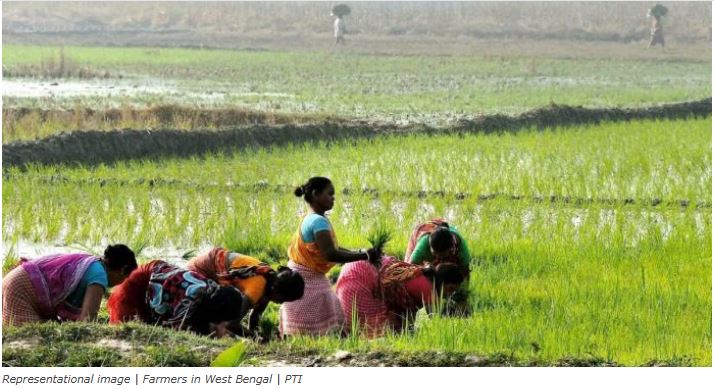
- 02 Feb 2026
In News:
The Union government has announced SHE-Mart (Self-Help Entrepreneur Mart) as a new institutional platform to promote women entrepreneurship in rural India. The initiative represents a shift from traditional micro-credit support towards structured, market-linked enterprises owned and managed by women.
Key Highlights:
SHE-Marts are envisioned as community-owned retail outlets established at the cluster-level federation of Self-Help Groups (SHGs). They will be supported through enhanced and innovative financing mechanisms, ensuring sustainability and scalability.
Objectives
SHE-Marts aim to:
- Provide permanent retail spaces for SHG-produced goods
- Ensure direct market access, reducing dependence on intermediaries
- Promote branding, packaging, and value addition
- Encourage processing of agricultural and non-farm products
- Create sustainable income streams for rural women
- Strengthen grassroots institutions such as SHGs and their federations
The initiative signals a policy transition from credit-led livelihoods to enterprise ownership, integrating production, marketing, and financial inclusion.
Lakhpati Didi Programme
SHE-Marts build upon the Lakhpati Didi Programme, launched in 2023, which aims to enable women SHG members to earn at least ?1 lakh per year through skill development and enterprise promotion.
Key Features of Lakhpati Didi
- Implemented by the Ministry of Rural Development
- Targets financial empowerment of rural women
- Focuses on skill training in diverse trades such as:
- Plumbing
- Tailoring and weaving
- LED bulb manufacturing
- Drone operation and repair
- Provides income-generation opportunities post-training
- National target: Training 2 crore women
By equipping women with technical and entrepreneurial skills, the programme lays the foundation for their participation in structured markets — which SHE-Marts now seek to institutionalize.
Significance for Inclusive Development
Together, Lakhpati Didi and SHE-Mart represent a comprehensive rural transformation model based on:
- Women-led economic growth
- Local value addition and market integration
- Strengthening SHG federations as economic institutions
- Reducing rural poverty through enterprise ownership
India Re-elected to IMO Council (2026–27 Term)

- 02 Dec 2025
In News:
India has been re-elected to the Council of the International Maritime Organization (IMO) in Category B, securing 154 out of 169 votes at the 34th IMO Assembly in London (Nov 2025). This is the second consecutive term in which India has obtained the highest vote tally in its category.
This outcome reflects India’s expanding role in global maritime trade, governance, and sustainability initiatives.
What is the IMO Council?
The IMO Council is the executive organ of the International Maritime Organization, functioning between Assembly sessions.
Key Features
- Constituted under: IMO Convention (1948; in force 1958)
- Election: Every two years by the IMO Assembly
- Total Members: 40 countries
- Divided into three categories (A, B, C)
Category B
- Includes 10 nations with the largest interest in international seaborne trade.
- Current Category B Members:Australia, Brazil, Canada, France, Germany, India, Netherlands, Spain, Sweden, UAE
Functions of the IMO Council
The Council:
- Supervises IMO’s work between Assembly sessions
- Coordinates administrative and financial functions
- Prepares agenda, work programmes, and strategic plans
- Oversees implementation of international maritime conventions
- Promotes cooperation in:
- Maritime safety
- Environmental protection
- Decarbonisation of shipping
- Maritime digitalisation
- Security
- Seafarer welfare
Significance of India’s Re-election
1. Recognition of Maritime Importance
- Reflects India’s growing role in international seaborne trade
- Positions India among leading maritime powers influencing global shipping regulations
2. Policy Influence
India gains a stronger voice in:
- Green shipping and decarbonisation frameworks
- Maritime safety and security norms
- Digital transformation of maritime logistics
- Global standards for sustainable ports and supply chains
3. Alignment with India’s Maritime Vision
- Supports the Maritime Vision 2047 goal of making India a global maritime hub
- Reinforces India’s push for:
- Port-led development
- Modern logistics
- Resilient and smart maritime infrastructure
4. Diplomatic & Strategic Value
- Enhances India’s role in maritime multilateralism
- Strengthens cooperation in the Indian Ocean Region (IOR) and beyond
About the International Maritime Organization (IMO)
|
Aspect |
Details |
|
Established |
By UN Convention (1948); came into force in 1958 |
|
First Session |
1959 |
|
Headquarters |
London, United Kingdom |
|
Specialised Agency of |
United Nations |
|
Objective |
Safe, secure, efficient, and environmentally sound shipping worldwide |
Major Functions of IMO
- Develops global maritime treaties such as:
- SOLAS – Safety of Life at Sea
- MARPOL – Prevention of Marine Pollution
- STCW – Standards of Training, Certification & Watchkeeping
- Regulates:
- Ship design, construction, and operation
- Pollution control from ships
- Seafarer training and certification
- Promotes sustainable maritime transport in line with SDG 14 (Life Below Water)
India Skills Report 2026

- 17 Nov 2025
In News:
- The India Skills Report 2026 captures major shifts in India’s workforce, driven by artificial intelligence, digitalisation and evolving hiring practices.
- A significant benchmark highlighted is that women’s employability (54%) has surpassed men’s (51.5%) for the first time in five years, indicating structural shifts in the labour market.
- The overall narrative shows India transitioning towards a skills-first employment ecosystem rather than one centred purely on academic degrees.
About the India Skills Report
- This annual nationwide analysis is prepared by ETS, CII, AICTE, AIU and Taggd.
- It measures workforce readiness, skill gaps and hiring trends across sectors.
- The aim is to help align education, training and industry expectations.
- The report uses extensive surveys of students, graduates and employers to map workforce preparedness.
Overall Employability Trends
The report states that India’s overall employability has risen to 56.35%, up from ~54.8% in the previous cycle. Over a span of four years, employability has grown by nearly 10 percentage points, signalling improved industry alignment, better training models and strengthening digital competencies.
Women Surpass Men in Employability
The report emphasises a key milestone: women’s employability has reached 54%, while men’s is at 51.5%. This improvement is driven by growing female participation in BFSI, education and healthcare, as well as rising opportunities in Tier-2 and Tier-3 cities.
Gender preference data indicates women’s dominant interest in legal jobs (96.4%) and healthcare roles (85.95%), while men prefer graphic design (83.11%) and engineering design (64.67%). This shift reflects both diversification and deepening inclusion in the workforce.
Dominance of Tech and AI Skills
The report highlights strong performance among technical streams, with computer science graduates showing 80% employability and IT engineering graduates at 78%. This dominance is linked to high demand in AI, data analytics, cloud computing, automation and cybersecurity.
Despite improvements, industries continue to face shortages in specialised AI and data skills, demonstrating the need for sustained skilling and curriculum upgrades. The rise of micro-credentials, stackable certificates and project-based training further reinforces the shift toward a skills-first hiring culture.
Rise of the Gig Economy
The gig and freelance workforce has expanded rapidly, with gig hiring increasing by ~38% and gig roles now accounting for around 16% of all jobs. This growth is supported by remote work opportunities, digital platforms and flexible work models. Projections suggest India’s gig labour pool may reach tens of millions by 2030, reshaping traditional employment structures.
Demand for Internships and Practical Training
The report notes that 92.8% of students are actively seeking internships or practical exposure, reflecting the high demand for hands-on industry experience. States like Karnataka, Madhya Pradesh and Tamil Nadu show especially strong internship interest. This trend highlights the necessity of integrating apprenticeships, live projects and experiential learning into mainstream education.
Hiring Intent Across Sectors
Hiring projections are optimistic, with companies planning to increase recruitment by 40%, significantly higher than the previous 29%. The IT sector leads in fresher hiring at 35%, compared to a 14% cross-industry average last year. Pharma and healthcare sectors show heavy recruitment for professionals with 1–5 years of experience, followed by BFSI, manufacturing and FMCG. These patterns reflect ongoing digital transformation and India’s strengthening knowledge economy.
Employability Across Streams
The report provides stream-wise improvements: commerce graduates now show 62.81% employability (up from 55%), science graduates stand at 61%, and arts graduates at 55.55%. Vocational education has shown progress as well, with ITI graduates’ employability rising to 45.95% (from 41%) and polytechnic diploma holders reaching 32.92%. These trends indicate stronger demand for financial, digital and interdisciplinary skills, alongside gradual improvements in vocational skilling.
Opportunities for India
India’s demographic advantage, coupled with rising digital literacy, positions it as a potential global talent supply hub. Strength in computer science, IT and AI opens pathways to indigenous technological development. The increasing employability in Tier-2 and Tier-3 cities may decentralise growth and create new hubs of innovation. Flexible work arrangements, including gig and remote work, allow Indian workers to access global opportunities. Strengthened linkages between industry and academia—through internships and micro-credentials—can further streamline talent pipelines.
Challenges Ahead
Despite progress, access gaps remain. Advanced skilling in AI and data technologies is still concentrated in urban and premier institutions, leaving rural and Tier-3 learners behind. Persistent deficits in soft skills—communication, teamwork and critical thinking-affect job readiness. Curriculum and teaching methods often lag behind rapidly evolving technological requirements. The digital divide limits access to high-speed internet and devices. Dependence on foreign AI tools restricts domestic innovation. Additionally, gig workers face unstable income patterns and lack of social security, creating economic vulnerabilities.
Way Forward
To address these challenges, the report suggests integrating AI, data literacy, sustainability and digital skills into all disciplines. Strengthening ITIs, polytechnics and community-based skilling initiatives is crucial. Expanding blended learning platforms, subsidising devices and improving broadband access can reduce digital inequalities. Industry-linked internships, apprenticeships and project-based learning should be mainstreamed. Faculty upskilling in emerging technologies is necessary to modernise academic delivery. Promoting indigenous AI ecosystems and multilingual digital tools will help India transition from being primarily a user of technology to a creator of intellectual property.
All India Debt and Investment Survey (AIDIS) and Situation Assessment Survey (SAS) of Agricultural Households (2026–27)
- 13 Sep 2025
In News:
- The National Statistics Office (NSO), under the Ministry of Statistics and Programme Implementation (MoSPI), is set to conduct two of its flagship household surveys — the All India Debt and Investment Survey (AIDIS) and the Situation Assessment Survey (SAS) of Agricultural Households — during July 2026 to June 2027.
- These surveys are part of the broader framework of the National Sample Survey (NSS), initiated in 1950, which provides critical data on consumption, employment, health, indebtedness, and welfare, forming the backbone of evidence-based policymaking in India.
All India Debt and Investment Survey (AIDIS)
- Origin and Evolution: Traces its roots to the All India Rural Credit Survey (1951-52), later expanded in 1961-62 to cover debt and investment. Since then, AIDIS has been conducted roughly once every decade, with the latest in the 77th Round (2019), at the request of the Reserve Bank of India (RBI).
- Coverage: Captures data on household indebtedness, savings, and asset ownership across rural and urban households.
- Significance:
- Inputs for national accounts and measurement of wealth distribution.
- Helps assess inequality in asset ownership and functioning of credit markets.
- Provides a crucial evidence base for the RBI, MoSPI, and financial policymakers.
Situation Assessment Survey (SAS) of Agricultural Households
- Launch and Expansion: Initiated in 2003 to examine the economic conditions of farmers, expanded in 2013 to cover all agricultural households, and further refined in the 2019 round.
- Scope of Coverage:
- Income and expenditure patterns of agricultural households.
- Indebtedness and credit access.
- Ownership of land and livestock.
- Crop and livestock production, farming practices, and adoption of technology.
- Access to government schemes, including crop insurance.
- Policy Relevance: Used extensively by the Ministry of Agriculture and Farmers Welfare, NITI Aayog, researchers, and financial institutions to frame policies for agriculture and rural development.
Bulgaria to join the Eurozone in 2026
- 13 Jul 2025
In News:
Recently, the EU finance ministers officially approved Bulgaria’s adoption of the euro, set to take effect from January 1, 2026. This decision marks Bulgaria as the 21st member of the Eurozone, nearly 19 years after it joined the European Union in 2007. The euro will replace the Bulgarian lev at a fixed exchange rate of 1 euro = 1.95583 lev.
About the Eurozone
- The Eurozone comprises EU member states that have adopted the euro (€) as their official currency and fall under the monetary jurisdiction of the European Central Bank (ECB).
- The euro was introduced in electronic form in 1999 and entered physical circulation in 2002 across 12 initial member states.
- As of now, 20 countries use the euro, with Croatia being the latest entrant in 2023. Bulgaria will become the 21st in 2026.
Maastricht Convergence Criteria
To adopt the euro, EU member states must satisfy strict economic criteria to ensure stability and convergence with the Eurozone economies:
- Price Stability: Inflation should not exceed 1.5 percentage points above the average of the three best-performing EU states.
- Sound Public Finances:
- Fiscal deficit ≤ 3% of GDP
- Gross government debt ≤ 60% of GDP
- Exchange Rate Stability: The national currency must be part of ERM-II (Exchange Rate Mechanism) for at least 2 years without severe fluctuations.
- Interest Rate Convergence: Long-term interest rates must not exceed the average rates of the three lowest-inflation member states by more than 2 percentage points.
After years of delay due to high inflation, Bulgaria recently fulfilled all these criteria, leading to EU and ECB approval.
About Bulgaria
- Location: Southeastern Europe; occupies the eastern Balkan Peninsula.
- Borders:
- North: Romania
- South: Turkey & Greece
- West: Serbia & North Macedonia
- East: Black Sea
- Geography:
- Major mountain ranges: Balkan Mountains, Rhodope Mountains
- Highest peak: Mount Musala (2,925 m) in the Rila Mountains
- Rivers: Danube, Iskur, Maritsa, Struma, Tundzha, Yantra
- Climate: Mostly continental; southern areas influenced by the Mediterranean.
- Capital: Sofia
- Population: ~6.4 million
Household Income Survey in 2026

- 27 Jun 2025
In News:
The Ministry of Statistics and Programme Implementation (MoSPI) has announced that India will conduct its first nationwide Household Income Survey in 2026, marking a major milestone in the country’s data-driven policymaking framework.
What is the Household Income Survey?
- A comprehensive, nationwide survey aimed at collecting reliable and robust data on household income distribution across India.
- It is the first standalone survey focused specifically on income estimation, unlike earlier efforts that focused primarily on consumption and employment.
Key Implementing Bodies:
- Ministry of Statistics and Programme Implementation (MoSPI)
- National Sample Survey (NSS)
- Technical Expert Group (TEG)
Historical Background:
- 1950: National Sample Survey (NSS) established to conduct large-scale household surveys.
- 1955–1970: Income data attempted in the 9th, 14th, 19th, and 24th NSS rounds but faced challenges such as underreporting.
- 1983–84: A pilot income study failed to produce scalable data due to low income estimates relative to consumption and savings.
- Past difficulties deterred the launch of a dedicated income survey—until now.
Key Features of the 2026 Survey:
- First of its kind: India’s first survey exclusively focused on household income distribution.
- Methodologically robust: Designed by the TEG, incorporating international best practices in conceptual design, sampling, and estimation.
- Use of digital tools: Integration of technology-driven data collection methods to improve precision, timeliness, and reflect the role of digital economy in income generation.
- Built on recent statistical reforms by MoSPI in areas like:
- Unincorporated enterprise surveys
- Services sector data
- Private capital expenditure
- Tourism satellite accounts
Significance of the Survey:
- Addresses a critical data gap in understanding income inequality, disparities, and growth trends.
- Supports evidence-based welfare policies, including targeted subsidies, social protection, and fiscal redistribution.
- Enhances India’s capacity for inclusive growth assessment and SDG tracking.
- Strengthens the country's statistical infrastructure, aligning it with global standards.
QS World University Rankings 2026
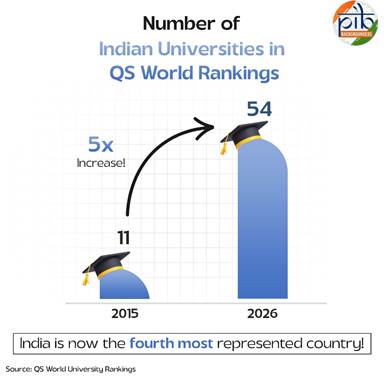
- 22 Jun 2025
In News:
India has recorded its highest representation to date in the QS World University Rankings 2026, with 54 institutions featured—up from 11 in 2015. This marks a five-fold increase in a decade, making India the fourth most represented country, after the US, UK, and China.
Key Highlights
- Total Indian Institutions Ranked (2026): 54
- New Entrants from India: 8
- Top-performing Indian Institution: IIT Delhi (Rank 123)
- Fastest Rising Indian Institution: IIT Madras, up 47 places (from 227 in 2025 to 180 in 2026)
- Indian Institutes of Technology (IITs) Featured: 12
- Debut Institutions in 2026:
- IIT Gandhinagar
- Lovely Professional University (LPU)
- Kalinga Institute of Industrial Technology (KIIT)
- Ashoka University
- Galgotias University
- Shiv Nadar University
- CHRIST (Deemed to be University), Bengaluru
- Manav Rachna International Institute of Research and Studies (MRIIRS)
Significant Trends and Insights
- Global Standing:
- India now ranks 4th globally in terms of number of institutions in the QS Rankings.
- Only the US (192), UK (90), and China (72) rank higher.
- Improvements and Recognition:
- 48% of India’s ranked institutions have improved their positions over last year.
- 6 institutions are in the global top 250.
- 5 Indian universities are among the top 100 globally for Employer Reputation, showing high industry trust.
- 8 institutions rank in the top 100 for Citations per Faculty, with an average score of 43.7—higher than the UK, US, and Germany.
- Diverse Representation:
- Includes central universities, deemed-to-be universities, technical institutions, and private universities, reflecting a balanced and diversified higher education landscape.
QS Ranking Methodology: Key Indicators
Performance Lens Weightage Indicators Weightage
Research & Discovery 50% Academic Reputation 30%
Citations per Faculty 20%
Employability & Outcomes 20% Employer Reputation 15%
Employment Outcomes 5%
Global Engagement 15% International Faculty Ratio 5%
International Research Network 5%
International Student Ratio 5%
Learning Experience 10% Faculty-Student Ratio 10%
Sustainability 5% Sustainability 5%
- New Indicator in 2026: International Student Diversity (tracks number and diversity of international students; non-weighted this cycle)
Significance for India
- The consistent rise highlights the impact of reforms under the National Education Policy (NEP) 2020, with greater emphasis on research, global collaboration, academic excellence, and employer integration.
- India’s progress makes it the fastest-rising G20 nation in QS rankings.
- Reflects increasing global trust and recognition of India’s higher education system.
Restructured Skill India Programme (2022–2026)
- 12 Feb 2025
In News:
The Union Cabinet has approved the continuation and restructuring of the Skill India Programme (SIP) till March 2026, with a financial outlay of ?8,800 crore.
The revamped programme consolidates three flagship schemes under a composite Central Sector Scheme—Pradhan Mantri Kaushal Vikas Yojana 4.0 (PMKVY 4.0), Pradhan Mantri National Apprenticeship Promotion Scheme (PM-NAPS), and Jan ShikshanSansthan (JSS)—with the aim to build a skilled, future-ready workforce.
Objectives and Vision
- Strengthen workforce development through industry-aligned, technology-enabled, and demand-driven skill training.
- Enhance global competitiveness, promote international mobility, and align with India's economic priorities such as Atmanirbhar Bharat, Make in India, and Digital India.
- Enable lifelong learning, skilling, reskilling, and upskilling through inclusive, flexible, and community-based training.
Beneficiaries and Coverage
- Over 2.27 crore individuals have benefited so far.
- Targeted age groups vary across schemes:
- PMKVY 4.0: 15–59 years
- PM-NAPS: 14–35 years
- JSS: 15–45 years
- Emphasis on marginalized sections, women, rural youth, aspirational districts, and the North-East Region.
Key Components of the Restructured Programme
1. Pradhan Mantri Kaushal Vikas Yojana 4.0 (PMKVY 4.0)
- Offers NSQF-aligned training via:
- Short-Term Training (STT)
- Special Projects (SP)
- Recognition of Prior Learning (RPL)
- Introduces 400+ new courses in emerging fields:
- Artificial Intelligence (AI), 5G, Cybersecurity, Green Hydrogen, Drone Technology.
- Establishment of Skill Hubs in premier institutions (IITs, NITs, JNVs, KendriyaVidyalayas, etc.).
- Focus on international mobility:
- Mobility Partnership Agreements (MMPAs), joint certifications, and language proficiency training.
- Blended learning models with digital delivery and regional language content.
- Integration with schemes such as PM Vishwakarma, PM Surya GharMuft Bijli Yojana, National Green Hydrogen Mission, and NAL JAL Mitra.
- Adoption of an Ease of Doing Business framework to reduce compliance burdens.
2. Pradhan Mantri National Apprenticeship Promotion Scheme (PM-NAPS)
- Promotes earn-while-you-learn through industry-specific apprenticeships.
- Government support of 25% stipend (up to ?1,500/month per apprentice) via Direct Benefit Transfer (DBT).
- Focus on both traditional and emerging sectors like AI, robotics, blockchain, green energy, and Industry 4.0.
- Encourages participation of MSMEs and enterprises in underserved regions.
3. Jan ShikshanSansthan (JSS) Scheme
- Community-based skilling for economically disadvantaged, rural youth, and women.
- Offers low-cost, flexible, doorstep training for both self-employment and wage-based livelihoods.
- Linked with initiatives such as PM JANMAN, ULLAS, and financial literacy campaigns.
- Also promotes awareness in health, hygiene, gender equality, and education.
Certification and Digital Integration
- All certifications are aligned with the National Skills Qualification Framework (NSQF).
- Integrated with DigiLocker and the National Credit Framework (NCrF), ensuring:
- Formal recognition of skills.
- Horizontal and vertical mobility in education and employment.
- Micro-credential courses (7.5 to 30 hours) and National Occupational Standards (NoS)-based training introduced.
Supporting Schemes and Initiatives
- SANKALP(Skill Acquisition and Knowledge Awareness for Livelihood Promotion).
- TEJAS (Skilling for international placement).
- Model Skill Loan Scheme.
Significance of Skill India Programme
- Demographic Dividend: With over 65% of India’s population below 35, the programme is pivotal in transforming potential into productivity.
- Employment & Entrepreneurship: Reduces unemployment through structured training, apprenticeships, and encourages skill-based startups.
- Global Workforce Readiness: Aligns with international standards, enabling Indian workers to access global job markets.
- Technological Preparedness: Equips the youth with skills in futuristic technologies.
- Inclusive Growth: Ensures urban-rural and gender-based equity in skilling access.
- Economic Impact: Supports India's manufacturing, IT, and services sectors, driving GDP growth.