
Santa Marta Climate Conference

- 05 May 2026
In News:
In a bold departure from the traditional, consensus-heavy climate negotiations of the United Nations, representatives from over 50 countries—representing nearly half of the global GDP—convened in Santa Marta, Colombia, for the First International Conference on Transitioning Away from Fossil Fuels (April 2026). Co-hosted by Colombia and the Netherlands, the summit was established as a "safe harbor" for nations ready to move beyond the political deadlocks of the UNFCCC’s Conference of the Parties (COP).
The Santa Marta Climate Conference: Strategic Shift in Climate Action
The conference emerged from a sense of urgency and frustration with the slow pace of global fossil fuel phase-outs within the UN system.
- Objectives: The summit focused on creating actionable national and international roadmaps to terminate fossil fuel use. It aimed to align trade, finance, and carbon pricing with a transition toward renewable energy.
- The "Coalition of the Willing": Unlike the UNFCCC, which requires consensus from nearly 200 nations, this "informal" group focuses on "first-movers" ready to implement aggressive supply-side governance.
- A New Legal Instrument: Significant momentum was observed for a Fossil Fuel Non-Proliferation Treaty, an initiative strongly supported by Small Island Developing States (SIDS) to address the gaps in international law regarding the extraction of coal, oil, and gas.
Key Highlights and Country Roadmaps
One of the most concrete outcomes of the Santa Marta summit was the unveiling of Europe's most detailed energy transition plan.
- France’s Exit Roadmap: France launched Europe’s first fuel-by-fuel exit strategy, setting definitive deadlines: Coal by 2030, Oil by 2045, and Gas by 2050. This move translates vague Net Zero pledges into measurable, sectoral timelines.
- Global Equity: Participants emphasized that for an equitable shift, wealthier nations must provide robust financial and technical support to developing countries, ensuring that the transition does not deepen global economic inequalities.
Limitations and the Finance Hurdle
Despite its ambitious tone, the conference faces significant structural challenges:
- Absence of Top Emitters: The world’s three largest greenhouse gas emitters—the United States, China, and India—did not participate, limiting the immediate global impact of the conference's decisions.
- Lack of Binding Authority: Operating outside the UNFCCC means the conclusions reached in Santa Marta are not legally binding on a global scale.
- The Funding Gap: Creating the massive financial mechanisms required to shift poorer nations toward zero-carbon pathways remains a formidable hurdle that voluntary coalitions are yet to solve.
The Evolving Landscape of UNFCCC COPs
While the Santa Marta process seeks faster action, the UNFCCC remains the supreme global decision-making body for climate change.
- The Framework: The COP oversees the Kyoto Protocol (CMP) and the Paris Agreement (CMA), supported by technical bodies like the SBI (Implementation) and SBSTA (Scientific Advice).
- Upcoming Milestones:
- COP31 (November 2026): To be hosted by Türkiye in Antalya, with a unique arrangement where Australia serves as the "President of Negotiations."
- COP32 (2027): Scheduled to be held in Addis Ababa, Ethiopia, continuing the tradition of geographical rotation.
Mission Drishti by GalaxEye
- 05 May 2026
In News:
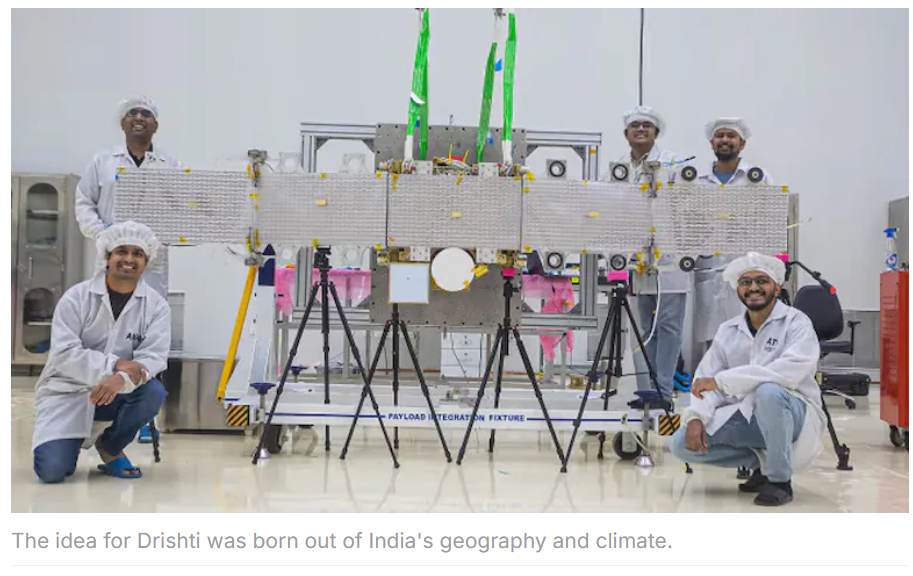
In a milestone for the Indian private space sector, Bengaluru-based startup GalaxEye has successfully launched ‘Mission Drishti’, the world’s first OptoSAR satellite. Launched aboard a SpaceX Falcon 9 rocket from Vandenberg, California, this mission represents a paradigm shift in Earth observation (EO), moving beyond the limitations of traditional imaging to provide high-clarity, all-weather data.
The Innovation: OptoSAR Technology
The core of Mission Drishti lies in its unique OptoSAR platform—the first of its kind globally. Traditional satellites typically use either optical sensors (which rely on sunlight) or radar (which can be difficult to interpret). Mission Drishti integrates both on a single platform:
- Synthetic Aperture Radar (SAR): An active sensor that can "see" through thick cloud cover, smoke, and total darkness.
- Electro-Optical (EO) Sensors: Provide high-resolution, intuitive visual details in various spectral bands.
By fusing these two datasets, the satellite provides "analysis-ready" imagery. This fusion eliminates the need for complex, time-consuming post-processing, allowing decision-makers to access fused data that is inherently aligned.
Technical Specifications and Launch Details
Mission Drishti is a testament to India's growing indigenous space-tech capabilities, supported and facilitated by IN-SPACe (Indian National Space Promotion and Authorization Center).
- Mass and Scale: At 190 kg, it holds the distinction of being India’s largest privately developed Earth observation satellite.
- Orbit: It operates in a Sun-synchronous Low Earth Orbit (LEO) at an altitude of approximately 500 km.
- Resolution and Spectrum: The satellite offers a spatial resolution of 1.2 to 3.6 meters. It operates across multiple spectral bands, including X-Band (SAR), PAN (Panchromatic), RGB, NIR (Near-Infrared), Coastal Blue, and Red Edge.
- Revisit Frequency: The satellite is designed for high-frequency monitoring, capable of revisiting the same geographic location every 4 days.
Strategic Significance for India and Global Stakeholders
The deployment of Mission Drishti addresses critical gaps in current orbital monitoring, particularly for tropical regions:
1. All-Weather Capability:Standard optical satellites are often rendered ineffective by cloud cover. For a country like India, which experiences heavy monsoons and frequent cloud cover, OptoSAR ensures uninterrupted surveillance and data collection throughout the year.
2. Dual-Use Applications:As a dual-use satellite, its data serves both civilian and strategic sectors:
- National Security & Defense: Monitoring borders and maritime boundaries regardless of lighting or weather conditions.
- Disaster Management: Real-time assessment of floods or cyclones where clouds typically obstruct conventional satellites.
- Environmental & Infrastructure: High-resolution monitoring for urban planning, agriculture, and red-edge sensing for vegetation health.
Rashtriya Bal Swasthya Karyakram
- 05 May 2026
In News:
In a major step toward enhancing pediatric healthcare and ensuring early childhood development, the Ministry of Health and Family Welfare recently released the Rashtriya Bal Swasthya Karyakram (RBSK) 2.0 Guidelines. This updated framework marks a significant shift from traditional screening to a more holistic, tech-driven approach, aimed at securing the "Right to Health" for India’s future generations.
Foundations of RBSK
Launched in February 2013 under the National Rural Health Mission (now part of the National Health Mission), RBSK was envisioned as a systemic intervention to improve the quality of life for children.
The Core Strategy: The Four Ds
The program targets children from birth to 18 years, screening them for a broad spectrum of conditions categorized into the "Four Ds":
- Defects at Birth
- Diseases
- Deficiencies
- Developmental Delays (including disabilities)
Originally, the program covered 32 common health conditions, providing not just early detection but also free treatment, management, and surgical interventions at the tertiary level.
Implementation Ecosystem
RBSK operates through a multi-layered screening and management strategy that leverages existing community networks:
- At Birth: Comprehensive newborn screening is conducted at delivery points to identify visible birth defects immediately.
- At Home: Accredited Social Health Activists (ASHAs) conduct screenings during home visits under the Home Based Newborn Care (HBNC) and Home Based Care for Young Children (HBYC) programs.
- In the Community: In a unique convergence with the Ministry of Women and Child Development and the Ministry of Education, mobile health teams screen children at Anganwadi centers (0–6 years) and Government schools (6–18 years).
- Referral and Management: Children identified with any of the Four Ds are referred to District Early Intervention Centres (DEIC). These centers act as hubs for therapeutic management and facilitate further referrals for specialized surgeries if required.
The RBSK 2.0 Paradigm Shift
The 2.0 version of the guidelines introduces several critical expansions to address the emerging health challenges of the 21st century.
1. Expanded Clinical Scope
Beyond the original 32 conditions, RBSK 2.0 now includes:
- Mental and Behavioral Health: Addressing psychological concerns and developmental disorders early.
- Non-Communicable Diseases (NCDs): Screening for lifestyle-related risk factors such as juvenile diabetes and hypertension.
- Specialized Conditions: Inclusion of critical areas like kidney disorders, ensuring that complex chronic illnesses are caught in their nascent stages.
2. Digital Transformation
The new guidelines integrate the program with the Ayushman Bharat Digital Mission (ABDM) ecosystem.
- Digital Health Cards: Every child will have a trackable health profile.
- Real-time Monitoring: Introduction of data systems for seamless tracking of a child's journey from screening to surgery.
- Integrated Platforms: Enhancing service delivery through a unified digital interface for health officials and parents.
Sikkim Becomes India’s First Paperless Judiciary State
- 05 May 2026
In News:
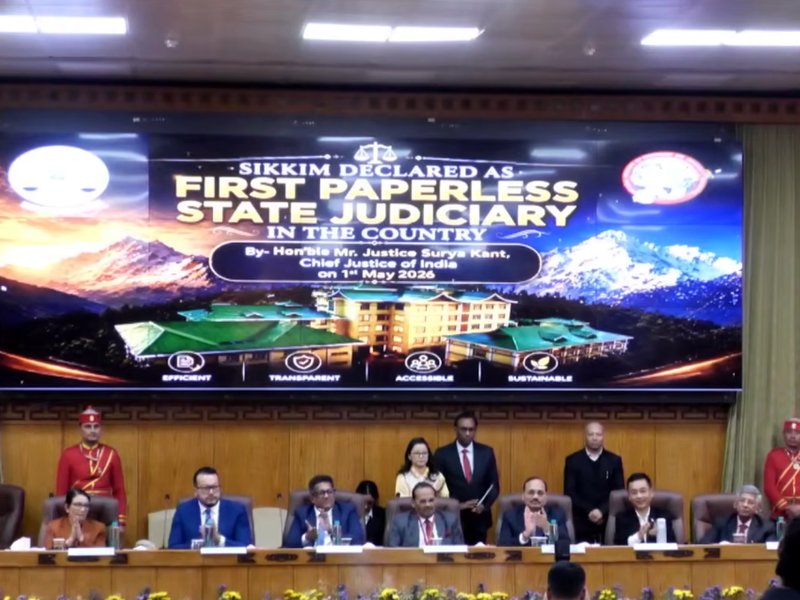
In a landmark moment for India’s legal landscape, Sikkim has been officially declared the first state in the country to adopt a fully paperless judiciary. This historic announcement was made by Justice Surya Kant during the National Conclave on Technology and Judicial Education held in Gangtok. The transition signifies a paradigm shift from traditional, cumbersome manual processes to a streamlined, technology-driven judicial ecosystem.
The National Conclave on Technology and Judicial Education
The declaration took place at a high-level conclave organized by the High Court of Sikkim in collaboration with the Sikkim Judicial Academy. The event focused on the integration of modern technological tools into the judicial framework to enhance the speed, transparency, and accessibility of justice.
Key Components of the Paperless Ecosystem
Sikkim’s transition is not merely about digitizing old files but creating a Complete Digital Ecosystem that covers every stage of the legal process. The core pillars of this transformation include:
- E-Filing: Allowing lawyers and litigants to file cases online from any location, reducing the need for physical presence and the consumption of vast quantities of paper.
- Digital Case Records: Transitioning from physical "files" to digital dockets that are easily searchable and accessible to authorized stakeholders.
- Virtual Hearings: Institutionalizing video conferencing to allow for remote testimonies and arguments, thereby saving time and travel costs.
- Automated Workflows: Utilizing software to manage case scheduling, notice serving, and order tracking, which minimizes human error and administrative delays.
Integration of Advanced Technology: AI in Law
The Sikkim judiciary is leveraging cutting-edge tools developed by the Supreme Court of India to assist judicial officers:
- SUPACE (Supreme Court Portal for Assistance in Court’s Efficiency): An AI-driven tool designed to collect relevant facts and laws, aiding judges in legal research.
- SUVAS (Supreme Court Vidhik Anuvaad Software): An AI system used for translating judicial documents and judgments into regional languages, ensuring that justice is linguistically accessible to the common citizen.
Exercise CINBAX-II
- 05 May 2026
In News:
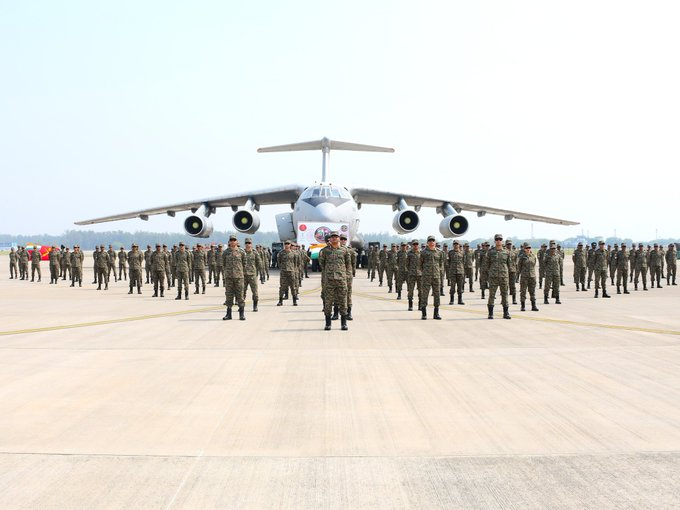
In a significant move to strengthen defense cooperation in South East Asia, an Indian Army contingent recently departed for Cambodia to participate in the second edition of the India-Cambodia Bilateral Military Exercise, CINBAX-II. The exercise, taking place in the Kampong Speu Province of Cambodia, marks a pivotal chapter in the burgeoning security relationship between the two nations.
Key Highlights of the Exercise
Exercise CINBAX-II is designed as a company-level joint training program, focusing on tactical proficiency and mutual cooperation.
- Participating Forces: The Indian contingent consists of 120 personnel, primarily drawn from a Battalion of the Maratha Light Infantry Regiment, renowned for its expertise in diverse terrains.
- Operational Framework: The exercise is conducted under Chapter VII of the United Nations Mandate, which pertains to "Action with Respect to Threats to the Peace, Breaches of the Peace, and Acts of Aggression."
- Core Objectives:
- Interoperability: Enhancing the ability of both armies to operate together seamlessly.
- Sub-conventional Environments: Focusing on operations in semi-urban combat settings where traditional warfare tactics are supplemented by counter-insurgency measures.
- UN Peacekeeping Scenarios: Simulating real-world conditions to prepare both forces for international peacekeeping missions, with a heavy emphasis on counter-terrorism.
Strategic Significance for India-Cambodia Relations
Beyond tactical drills, CINBAX-II carries significant diplomatic and strategic weight:
- Defense Diplomacy: The exercise is a platform for the exchange of best practices and operational experiences. It allows both armies to learn from each other's unique challenges and successes.
- Act East Policy: Strengthening ties with Cambodia is a vital component of India’s Act East Policy and its vision of SAGAR (Security and Growth for All in the Region).
- Regional Stability: By focusing on counter-terrorism and UN peacekeeping, the exercise contributes to regional stability in the Indo-Pacific, demonstrating a shared commitment to a rules-based international order.