
UNESCO List of World Heritage in Danger
- 28 Jul 2026
In News:
At the 48th Session of the World Heritage Committee held in Busan, South Korea, UNESCO inscribed several new cultural and natural properties on the World Heritage List and added six sites to the List of World Heritage in Danger.
About the List of World Heritage in Danger
The List of World Heritage in Danger is a conservation mechanism established under the 1972 UNESCO World Heritage Convention. It identifies World Heritage Sites facing serious threats such as armed conflict, natural disasters, uncontrolled urbanisation, pollution, poaching, climate change, or inadequate management.
The objective is to draw international attention to these sites, mobilise financial and technical assistance, and encourage corrective measures by the concerned State Parties to safeguard their Outstanding Universal Value.
Six New Sites Added (2026)
Three sites were inscribed on an emergency basis:
- Boma–Badingilo Migratory Landscape (South Sudan): A vast East African savanna supporting one of the world's largest terrestrial mammal migrations. It faces threats from poaching, wildlife trafficking, infrastructure development and insecurity.
- Mount Amel Castles (Lebanon): A network of medieval hilltop fortresses reflecting Crusader and Islamic military architecture. The monuments have suffered severe damage due to ongoing armed conflict.
- Sebastia (State of Palestine): An important archaeological site with remains from the Kingdom of Israel, Hellenistic, Roman, Byzantine, Crusader and Ottoman periods. It is threatened by conflict, land development and erosion.
Following recommendations of the Committee, three additional sites were placed on the Danger List:
- Ancient City of Tauric Chersonese and its Chora (Crimea, Ukraine): Threatened by lack of conservation oversight, unauthorised construction and unmonitored excavations.
- Historic Inner City of Paramaribo (Suriname): Facing pressure from modern construction projects affecting its historic urban landscape.
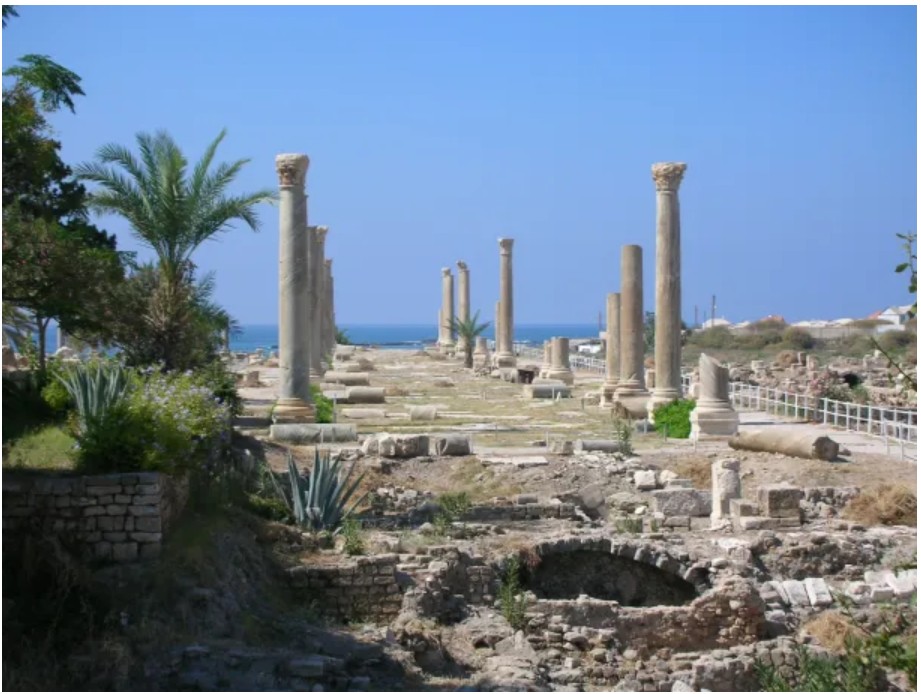
- Tyre (Lebanon): The ancient Phoenician city is under threat from ongoing regional armed hostilities.
National Biodiversity Authority
- 28 Jul 2026
In News:
Following directions issued by the National Green Tribunal (NGT) in a suo motu case, the National Biodiversity Authority (NBA) constituted a multi-disciplinary Expert Committee on Invasive Alien Species.
About the National Biodiversity Authority (NBA)
- The National Biodiversity Authority (NBA) is an autonomous statutory body under the Ministry of Environment, Forest and Climate Change (MoEFCC).
- It was established on 1 October 2003 under the Biological Diversity Act, 2002, enacted to implement India's commitments under the Convention on Biological Diversity (CBD), 1992.
- The Authority is responsible for conserving India's biological diversity, promoting its sustainable use, and ensuring the fair and equitable sharing of benefits (Access and Benefit Sharing – ABS) arising from the use of biological resources and associated traditional knowledge.
Key Functions
- The NBA advises the Central Government on biodiversity conservation policies and sustainable utilization of biological resources. It also recommends the notification of Biodiversity Heritage Sites under the Biological Diversity Act.
- The Authority regulates access by foreign individuals, companies, and institutions to India's biological resources and grants approvals for research, commercial use, transfer of research results, and Intellectual Property Rights (IPRs) based on Indian biological resources.
- It coordinates with State Biodiversity Boards (SBBs) for regulating commercial use of biological resources by Indian entities and oversees Biodiversity Management Committees (BMCs) constituted at the local level. These committees prepare People's Biodiversity Registers (PBRs) documenting local biodiversity and traditional knowledge.
- The NBA is also empowered to constitute expert committees to address emerging biodiversity issues, such as the recently formed committee on Invasive Alien Species.
Kimi K3 AI Model

- 28 Jul 2026
In News:
Chinese AI startup Moonshot AI unveiled Kimi K3, the world's first open-source AI model in the 3-trillion-parameter class, marking a major advancement in open-source Artificial Intelligence.
About Kimi K3
- Kimi K3 is a multimodal, open-weight Large Language Model (LLM) designed for advanced reasoning, software engineering, coding, visual understanding, and enterprise applications.
- Developed by Moonshot AI, a Beijing-based AI startup backed by Alibaba, Tencent, and Meituan, it is among the largest open-source AI models released so far.
- The model adopts a Mixture-of-Experts (MoE) architecture, where only a small subset of experts is activated for each task, enabling high computational efficiency despite its enormous size.
- It also incorporates Kimi Delta Attention (KDA) and Attention Residuals (AttnRes) to improve long-context processing and multi-step reasoning.
Key Features
- One of Kimi K3's biggest strengths is its one-million-token context window, allowing it to process extensive documents, software repositories, or technical manuals in a single prompt.
- The model supports multimodal capabilities, combining text and image understanding for applications such as software development, computer-aided design (CAD), game development, and visual reasoning.
- It has also been released as an open-weight model, enabling researchers and developers worldwide to access, fine-tune, and self-host the model.
BitChat Repositories

- 28 Jul 2026
In News:
The Indian Cyber Crime Coordination Centre (I4C) under the Ministry of Home Affairs directed GitHub to remove three repositories hosting BitChat, citing concerns over law enforcement and cyber security.
About BitChat
- BitChat is an open-source, decentralized peer-to-peer (P2P) messaging application that enables communication without internet connectivity, mobile networks, or central servers.
- The project, conceived by Doris Lima and developed by Jack Dorsey, has its source code and Android installation files hosted on GitHub.
- Unlike conventional messaging platforms, BitChat uses Bluetooth Low Energy (BLE) to create a mesh network, allowing nearby devices to relay encrypted messages from one phone to another until they reach the intended recipient. When internet connectivity is available, it can also integrate with the decentralized Nostr protocol.
Key Features
BitChat operates without requiring phone numbers, email addresses, or user accounts, ensuring complete anonymity. It employs end-to-end encryption using the Noise Protocol Framework, preventing intermediary devices from accessing message content.
The application also supports ephemeral messaging, automatic deletion of chats, and a panic mode that enables rapid deletion of stored data. Since there are no central servers, it does not maintain centralized communication logs or subscriber databases.
Concerns
The absence of centralized infrastructure and user verification makes it difficult for law enforcement agencies to identify users or intercept communications during criminal investigations.
Authorities have also expressed concerns that such mesh-based communication platforms could be used to coordinate activities during internet shutdowns, bypass lawful surveillance, or evade public order restrictions.
Additionally, legal experts have raised concerns that the government's action under Section 79(3)(b) of the Information Technology Act, instead of Section 69A, may bypass procedural safeguards recognised in the Shreya Singhal and Anuradha Bhasin judgments.
Corporate Mitra Scheme

- 28 Jul 2026
In News:
The Indian Institute of Corporate Affairs (IICA), Shillong, under the Ministry of Corporate Affairs (MCA), organised an awareness webinar on the Corporate Mitra Scheme for youth, students and MSMEs in Arunachal Pradesh.
About the Corporate Mitra Scheme
The Corporate Mitra Scheme is a Ministry of Corporate Affairs (MCA) initiative aimed at creating a network of trained and accredited para-professionals ("Corporate Mitras") to provide affordable compliance and business support services to Micro, Small and Medium Enterprises (MSMEs).
The scheme primarily targets Tier-II and Tier-III cities, helping MSMEs reduce regulatory and compliance burdens while enabling young graduates to acquire industry-relevant skills and employment opportunities. It supports the vision of Ease of Doing Business (EoDB) and Viksit Bharat @2047.
Key Features
The scheme aims to train 2,000 participants across India in its initial phase, including 200 candidates from the North Eastern Region (NER). To encourage participation from the region, NER candidates are eligible for a 50% concession in course fees.
Accredited Corporate Mitras will assist MSMEs in non-core business functions such as:
- Regulatory and statutory compliance
- Secretarial services
- Accounting and bookkeeping
- Taxation support
- Financial documentation
- Corporate governance-related activities
The training programme is offered through the SWAYAM Plus digital learning platform, bridging the gap between academic education and industry requirements.
For the Northeast, IICA Shillong has been designated as the nodal agency to coordinate implementation and promote the scheme in collaboration with State Governments, universities and industry bodies.