
UAE to exit OPEC and OPEC

- 30 Apr 2026
In News:
In a move that has sent ripples through international energy markets, the United Arab Emirates (UAE) formally withdrew from the Organization of the Petroleum Exporting Countries (OPEC) and the broader OPEC alliance on May 1, 2026. This departure marks a significant turning point for the Middle East’s third-largest producer, signaling a shift from collective production constraints toward individual strategic autonomy and long-term economic diversification.
Understanding OPEC: The Core of Oil Diplomacy
OPEC is a permanent intergovernmental organization established during the Baghdad Conference (September 1960). Its foundational mission was to ensure that oil-producing nations could exercise permanent sovereignty over their natural resources—a principle solidified in its 1968 Declaratory Statement.
- Founding Members: Iran, Iraq, Kuwait, Saudi Arabia, and Venezuela.
- Organizational Structure: While headquartered in Vienna, Austria (since 1965), its influence is global. It seeks to unify petroleum policies to secure stable pricing for producers and a regular supply for consuming nations.
- Fluctuating Membership: The UAE joins a growing list of nations—including Qatar, Ecuador, and Angola—that have recently exited the group to pursue independent production targets.
The Rise of OPEC : Expanding the Coalition
Formed in December 2016 via the Declaration of Cooperation (DoC), OPEC expanded the original group to include 10 non-OPEC countries, most notably Russia, Mexico, and Kazakhstan.
- The Aim: To provide a more robust mechanism for market stabilization, especially during crises like the COVID-19 pandemic, where the alliance coordinated massive voluntary production cuts to prevent a total collapse in prices.
- The Mechanism: The group relies heavily on countries with "Spare Capacity"—the ability to rapidly adjust production levels—to act as market "swing producers."
- The 2019 Charter: This established a long-term platform for dialogue and information exchange among the 23 member nations.
Strategic Rationale: Why the UAE Withdrew
The UAE’s decision to exit is rooted in its long-term vision to maximize the value of its hydrocarbon assets before the global energy transition reduces demand.
- Production Disparities: The UAE has invested billions in expanding its production capacity to over 5 million barrels per day. Under OPEC quotas, much of this capacity remained "shut-in" or unused, hindering the country's return on investment.
- Economic Diversification: Under its "We the UAE 2031" vision, the country seeks to fund its transition to a non-oil economy. Independent control over its oil revenues allows for more aggressive funding of renewable energy and technology sectors.
- Geopolitical Divergence: The exit reflects a growing strategic divergence from the Saudi-led "price-over-volume" strategy, as the UAE prioritizes capturing market share in a rapidly evolving energy landscape.
Implications for Global Markets and India
The UAE’s exit significantly weakens the collective bargaining power of OPEC , as the group loses one of its few members with genuine spare capacity.
- Market Volatility: The immediate aftermath may see increased price volatility as the UAE ramps up production, potentially leading to a "market share war" similar to those seen in the past.
- India’s Energy Security: For India, the UAE is a primary strategic partner and a reliable supplier. An independent UAE may offer more flexible, long-term supply contracts, aiding India's efforts to manage its Current Account Deficit (CAD) and inflation.
- Investments: The shift might open new avenues for Indian public sector undertakings (PSUs) to invest in UAE’s upstream sectors, which are now free from the constraints of multinational production caps.
40 years of the Chernobyl Disaster
- 28 Apr 2026
In News:
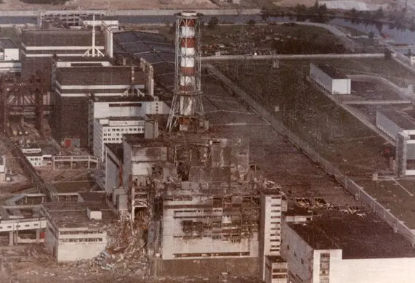
April 2026 marks the 40th anniversary of the Chernobyl disaster, an event that remains the most expensive man-made catastrophe in human history. With total costs exceeding $700 billion over four decades, the accident serves as a somber benchmark for the risks inherent in nuclear power when engineering flaws meet human error.
The Catastrophe: What Happened at Unit 4?
On the night of April 25–26, 1986, technicians at the Chernobyl nuclear power station—located near Pripyat in the former Soviet Union (present-day Ukraine)—initiated a safety experiment on the Unit 4 RBMK reactor. The goal was to test if the cooling pumps could still function during a power outage using the residual energy from a spinning turbine.
The experiment triggered a sequence of catastrophic failures:
- Design Vulnerabilities: The RBMK reactor was a graphite-moderated system with a critical flaw: it lacked a containment structure. In modern nuclear plants, this thick concrete and steel shell acts as a final physical barrier to prevent the escape of radiation during a meltdown.
- The Explosion: The chain reaction surged out of control, causing a massive steam explosion that blew the heavy lid off the reactor. Approximately 3.5% of the nuclear fuel was immediately dispersed into the atmosphere.
- The Graphite Fire: A subsequent fire in the graphite moderator burned for several days, acting as a chimney that sent plumes of radioactive isotopes high into the air, eventually spreading across Ukraine, Belarus, Russia, and reaching as far as Scandinavia.
Human and Environmental Toll
The scale of the disaster necessitated an unprecedented humanitarian and logistical response.
- Mass Displacement: Within 36 hours, the industrial town of Pripyat was evacuated. Ultimately, around 200,000 people were permanently relocated as their homes became part of a contaminated landscape.
- Environmental Impact: Nearly 150,000 square km of land across Eastern Europe was contaminated. Today, a 30-kilometer Exclusion Zone remains around the plant, where human habitation is strictly restricted due to high levels of soil radiation.
- Health Crisis: The health consequences were profound and long-lasting. Between 1991 and 2005, authorities documented at least 5,000 cases of thyroid cancer specifically in children who were exposed to radioactive iodine through contaminated milk and air.
Containment and Current Status
To prevent further leakage, the remains of Unit 4 were initially encased in a temporary concrete "sarcophagus." In recent years, this was replaced by the New Safe Confinement, a massive, arch-shaped steel structure designed to entomb the radioactive debris for the next century, allowing for the eventual stable decommissioning of the site.
Noctilucent Clouds
- 17 Jul 2025
In News:
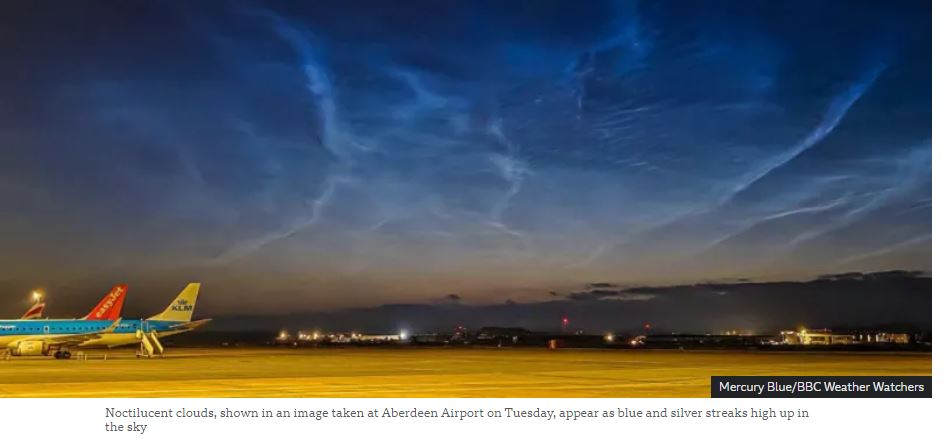
Recently, rare noctilucent clouds were sighted over parts of Scotland, drawing attention due to their unique shimmering appearance in the night sky. These occurrences are significant in the context of climate studies and upper atmospheric science.
What are Noctilucent Clouds?
- Definition: Noctilucent clouds (NLCs), also known as polar mesospheric clouds, are high-altitude ice crystal clouds that appear thin, wispy, and glow with a blue or silvery hue after sunset.
- Etymology: The term “noctilucent” is derived from Latin—"nocto" (night) and "lucent" (shining)—meaning "night shining."
Atmospheric Location
- These are the highest clouds in Earth’s atmosphere, found in the mesosphere, around 76–85 km above the Earth's surface.
- In contrast, most other cloud types form in the troposphere, the lowest atmospheric layer.
Seasonal and Geographical Occurrence
- Seasonality:
- Northern Hemisphere: Visible from late May to early August, peaking during June and July.
- Southern Hemisphere: Much rarer; may appear from late November to early February, most commonly in December and January.
- Latitude Range: Typically occur between 45° and 80° latitude, both north and south of the equator.
- Visibility Conditions:
- Seen only during summer months, shortly after sunset or just before sunrise.
- The Sun remains just below the horizon, illuminating these high clouds from below, creating a glowing effect while the lower atmosphere is in darkness.
Formation Mechanism
- Composition: Made up of tiny ice crystals.
- Temperature Conditions: The mesosphere becomes extremely cold during summer, enabling the formation of ice on fine particles.
- Sources of Dust Nuclei:
- Natural: Micrometeorites, volcanic dust.
- Anthropogenic: Rocket exhaust particles and other upper-atmospheric pollutants.
- Optical Phenomenon: These ice crystals reflect sunlight even when the lower atmosphere is dark, giving them their luminous appearance.
Significance
- Serve as indicators of mesospheric conditions, especially temperature and humidity.
- Their increasing frequency and intensity in recent decades may be linked to climate change and human activities, including space exploration.
- Valuable for understanding upper atmospheric dynamics, particularly in the context of atmospheric chemistry and space weather.
Discovery of Penico
- 09 Jul 2025
In News:
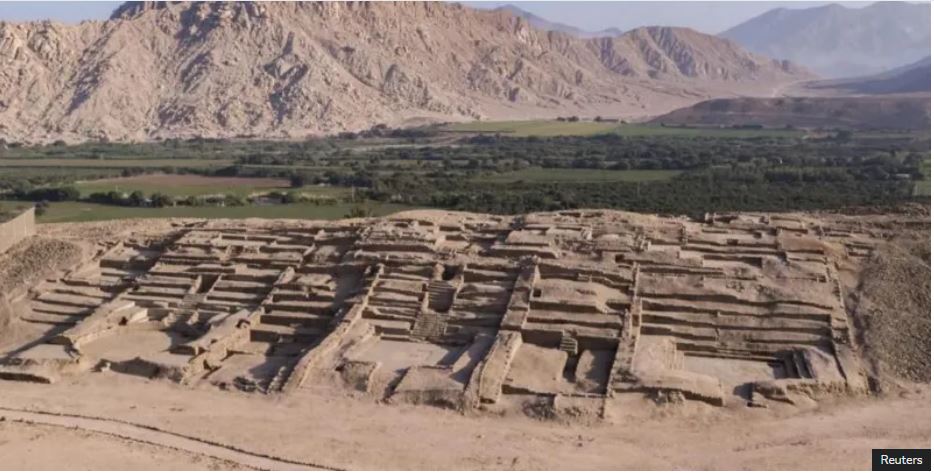
Archaeologists have recently uncovered a significant archaeological site in northern Peru—an ancient city named Penico, estimated to be around 3,500 years old. The discovery sheds new light on early urban development, trade networks, and cultural evolution in pre-Inca South America.
Location and Time Period
- Geographic Location: Penico is located in the Barranca Province of northern Peru, approximately 200 km north of Lima, the capital.
- Altitude: The site is situated on a hillside terrace, around 600 metres above sea level.
- Estimated Age: The city is believed to have been founded between 1800 BCE and 1500 BCE, roughly during the same period as early civilizations in Egypt, Sumeria, and the Indus Valley.
Key Features of the Site
Urban and Architectural Highlights:
- The city is laid out around a central circular plaza, encircled by at least 18 identified stone-and-mud structures.
- Structures include:
- Ceremonial temples
- Residential complexes
- Public gathering areas with sculpted wall reliefs
Notable Artifacts:
- Clay figurines depicting human and animal forms
- Pututus (conch shell trumpets), traditionally used for long-distance communication
- Beaded necklaces and ceremonial artifacts crafted from shells and stones
Cultural and Historical Significance
Strategic Importance:
- Penico’s elevated location likely served both practical and symbolic purposes—protecting against natural disasters such as floods or landslides, while also enhancing the visibility and monumentality of its structures.
- The city’s placement made it a vital trading nexus, linking communities across the Pacific coast, Andean highlands, and the Amazon basin.
Link to the Caral Civilization:
- Penico is situated near the ancient city of Caral, considered the oldest known civilization in the Americas (dating back to 3000 BCE in the Supe Valley).
- Researchers suggest that Penico represents a cultural continuation or evolution of the Caral society, which declined due to climatic disruptions.
- The discovery of Penico offers valuable insight into how civilizations adapted and transitioned post-Caral, particularly in terms of urban planning, trade, and ceremonial practices.
Comparative Civilizational Context:
- Despite emerging in geographic isolation, Penico developed contemporaneously with Bronze Age civilizations of Mesopotamia, the Nile Valley, and South Asia, showcasing parallel patterns in complex societal development.
ESA Biomass Satellite Mission
- 09 Apr 2025
In News:
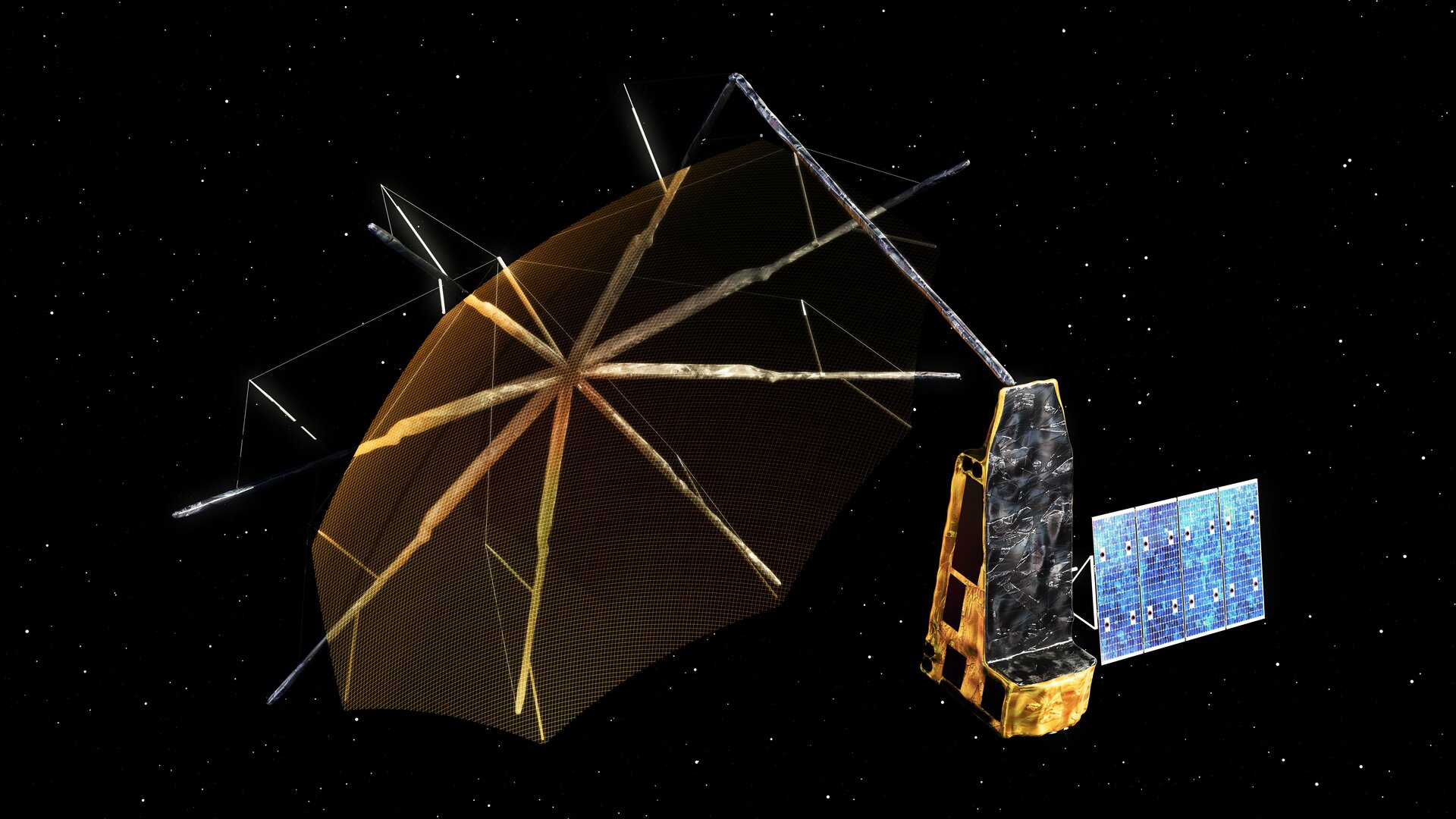
The Biomass Mission is a new Earth observation mission by the European Space Agency (ESA) aimed at enhancing our understanding of the global carbon cycle through accurate forest biomass measurements.
Launch Details:
- Rocket: Vega-C
- Launch Site: Europe’s Spaceport, French Guiana
- Orbit: Sun-Synchronous Orbit (SSO) at an altitude of ~666 km
- Scheduled Launch Date: 29 April 2025 (subject to final checks)
Key Features:
- First satellite to use P-band radar (long-wavelength synthetic aperture radar).
- Capable of penetrating dense forest canopies to scan tree trunks, branches, and stems — where most of a tree’s carbon is stored.
- Will generate 3D maps of the world’s tropical forests.
Mission Objectives:
- Measure above-ground forest biomass and forest height.
- Create five global biomass maps over its five-year mission.
- Monitor changes in forests to assess their role in carbon sequestration and climate regulation.
Scientific Importance:
- Forests absorb ~8 billion tonnes of CO? annually and are often referred to as "Earth’s green lungs."
- By analyzing forest carbon storage and changes, the mission will contribute significantly to:
- Monitoring climate change
- Supporting carbon accounting
- Improving air quality assessments
Phases of the Mission:
- Initial Phase: Produces detailed 3D forest maps globally.
- Second Phase: Generates global estimates of forest height and biomass.
Relevance to Climate Action:
- Helps in quantifying carbon uptake and release.
- Supports global climate models and carbon budgeting.
- Aids in policy-making for sustainable forest management.
Mount Marapi Eruption

- 06 Apr 2025
In News:
In May 2025, Mount Marapi, one of Indonesia’s most active volcanoes, erupted, spewing a column of volcanic ash 1.5 km into the sky. The event has once again highlighted the seismic vulnerability of the Pacific Ring of Fire, where tectonic activity frequently triggers volcanic eruptions and earthquakes.
About Mount Marapi
- Location: Situated in the Padang Highlands of western Sumatra, Indonesia.
- Type: A stratovolcano (composite volcano), consisting of successive layers of lava, ash, and pyroclastic material.
- Elevation: Rises to 2,891 meters (9,485 feet) above sea level, making it the highest peak in the region.
- Summit Feature: Contains the Bancah caldera (approx. 1.4 km wide), with multiple overlapping craters.
- Tectonic Setting: Lies on the Pacific Ring of Fire, a highly seismically active zone encircling the Pacific Ocean.
- Notable Eruption: In 1979, a deadly eruption-induced lahar (volcanic mudflow) caused by intense rainfall resulted in 60 fatalities.
Dark Oxygen
- 20 Jan 2025
In News:
Scientists who recently discovered that metal lumps on the dark seabed make oxygen, have announced plans to study the deepest parts of Earth's oceans in order to understand the strange phenomenon.
What is Dark Oxygen?
Dark Oxygen refers to oxygen produced deep under the ocean without sunlight or photosynthesis.
Discovered in July 2024, this challenges the long-standing belief that photosynthesis is the sole natural source of oxygen.
Where was it discovered?
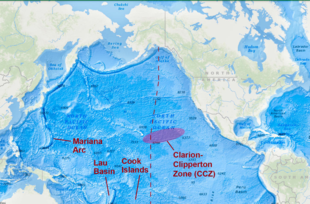
- Location: Clarion-Clipperton Zone (CCZ), 13,100 feet deep in the North Pacific Ocean, between Hawaii and Mexico.
- Zone Significance: Rich in polymetallic nodules containing manganese, iron, cobalt, nickel, copper, and lithium — crucial for green technologies.
Mechanism of Oxygen Production
- Polymetallic nodules on the seafloor generate oxygen via electrochemical reactions.
- These nodules split seawater (H?O) molecules into hydrogen and oxygen, without any light.
- This process is non-biological and independent of photosynthesis.
Why is this Discovery Important?
- Scientific Paradigm Shift: Challenges the idea that photosynthesis is the only natural pathway for oxygen generation.
- Origins of Life: Suggests that oxygen production may have existed before photosynthetic organisms, reshaping theories of early Earth’s evolution.
- Astrobiological Implications: Indicates the possibility of oxygen-rich environments on other planets, even without sunlight — enhancing the search for extraterrestrial life.
- Environmental Tech Potential: Could lead to innovations in renewable energy and carbon-neutral technologies, using metal-based catalysis.
About the Clarion-Clipperton Zone (CCZ)
- Geographic span: Between Hawaii and Mexico in the North Pacific Ocean.
- Resources: Contains vast reserves of critical minerals like manganese, nickel, cobalt — essential for electric vehicles and solar technology.
- A focus area for deep-sea mining and sustainability studies.