
Nausena Shaurya Vatika

- 03 Jun 2026
In News:
Union Defence Minister, along with the Uttar Pradesh Chief Minister, recently inaugurated Nausena Shaurya Vatika in Lucknow. The museum has been established to showcase the legacy, operational achievements, and maritime capabilities of the Indian Navy while fostering maritime awareness among citizens.
About Nausena Shaurya Vatika
Nausena Shaurya Vatika is an open-air naval museum and interpretation centre developed jointly by the Indian Navy and the Government of Uttar Pradesh.
- Location: Lucknow
- Cost: ?19 crore
- Area: More than 2 acres
- Developed as: Phase-II of the Nausena Shaurya Sangrahalaya (Naval Memorial Museum)
The museum seeks to educate the public about India's maritime history, naval warfare capabilities, and the strategic importance of sea power in national security.
Major Attractions
INS Gomati Exhibit
The museum prominently displays artefacts and weapon systems from INS Gomati, which was decommissioned on 29 May 2022 after 34 years of distinguished service.
Key exhibits include:AK-726 Naval Gun, ZIF-101 Surface-to-Air Missile Launcher ,Surface-to-Surface Anti-Ship Missiles, Surface-to-Air Missiles, Shipborne Radar Systems, Torpedo Launchers, Anchors and Ship Masts, Other operational naval equipment.
TU-142M Walkthrough Museum
Another major attraction is the walkthrough exhibit of the TU-142M, a retired long-range maritime reconnaissance aircraft that played a crucial role in surveillance, anti-submarine warfare, and maritime security.
Strategic Significance
The museum serves as a platform to enhance public understanding of:
- India's maritime heritage.
- The role of the Indian Navy in safeguarding national interests.
- Naval modernization and maritime security.
- India's growing strategic role in the Indian Ocean Region (IOR).
During the inauguration, the Defence Minister highlighted the Navy's operational effectiveness, noting that during Operation Sindoor, the Indian Navy effectively confined the Pakistani Navy to its ports, underscoring India's maritime strength and deterrence capabilities.
Samadhan Didi
- 03 Jun 2026
In News:
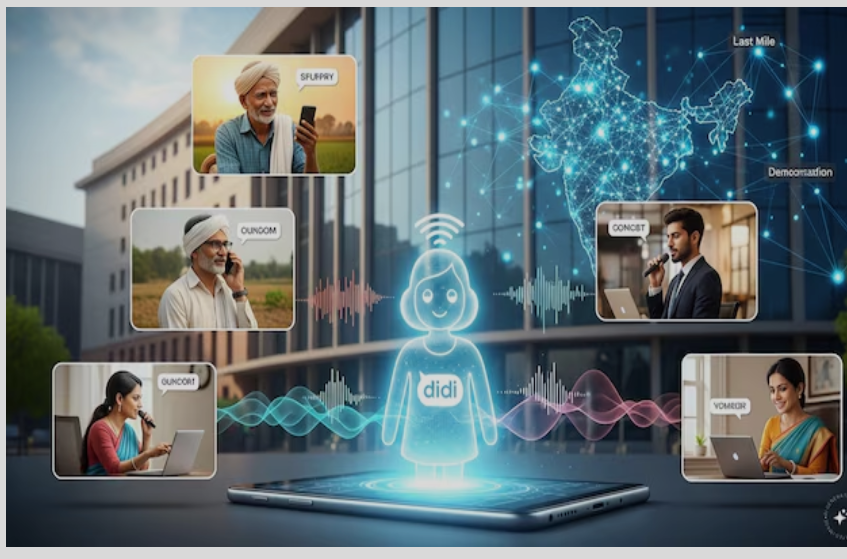
- In a major step towards strengthening digital governance, ease of access to public services, and citizen-centric administration, the Government of India has launched Samadhan Didi, an Artificial Intelligence (AI)-enabled chatbot designed to simplify the process of lodging grievances against government departments.
- Developed by the Department of Administrative Reforms and Public Grievances (DARPG) in collaboration with Bhashini, the initiative seeks to make grievance redressal more accessible, inclusive, and efficient, particularly for citizens who face language, literacy, or procedural barriers.
What is Samadhan Didi?
- Samadhan Didi is a voice-based, multilingual grievance registration assistant powered by Artificial Intelligence. Unlike conventional grievance portals that require citizens to identify the correct ministry, department, category, or sub-category before filing a complaint, Samadhan Didi enables users to simply describe their issue in everyday language.
- The chatbot analyses the grievance, seeks clarifications when necessary, automatically categorises the complaint, identifies the appropriate authority, and forwards it to the concerned department. This significantly reduces procedural complexity and ensures that complaints reach the correct government agency without requiring citizens to understand bureaucratic structures.
- A notable feature of the platform is its ability to accept voice-based complaints in all 22 Scheduled Languages of India, with efforts underway to expand support to additional regional and local languages. The platform has been developed within secure government infrastructure, ensuring data privacy and protection.
Integration with CPGRAMS
- Samadhan Didi has been integrated with the Centralized Public Grievance Redress and Monitoring System (CPGRAMS), India's flagship online grievance redressal platform.
About CPGRAMS
- CPGRAMS is a 24×7 online platform that enables citizens to lodge complaints relating to public service delivery and governance issues. It is developed and monitored by DARPG under the Ministry of Personnel, Public Grievances and Pensions.
- Key features include:
- A single-window grievance portal connected to all Union Ministries, Departments, and State Governments.
- Role-based access for government officials to process and resolve grievances.
- Availability through a dedicated mobile application and integration with the UMANG platform.
- Facility to track complaints using a unique registration number.
- Mandatory resolution of grievances within a maximum period of 21 days.
- Provision for citizens to file an appeal if dissatisfied with the response of the Grievance Officer.
Zero Coupon Zero Principal Instrument

- 03 Jun 2026
In News:
In a significant move to deepen social finance and strengthen the social sector ecosystem, the Ministry of Corporate Affairs (MCA) has permitted eligible companies to channel a portion of their Corporate Social Responsibility (CSR) expenditure through Zero Coupon Zero Principal (ZCZP) Instruments. The decision creates a new market-based mechanism for directing CSR funds towards social development projects while enhancing transparency and accountability in philanthropic financing.
What are Zero Coupon Zero Principal (ZCZP) Instruments?
A Zero Coupon Zero Principal (ZCZP) Instrument is a unique financial instrument issued by a Not-for-Profit Organisation (NPO) that carries:
- No interest payments (zero coupon)
- No repayment of principal (zero principal)
Unlike conventional bonds or debentures, investors or subscribers do not receive any financial return. Instead, the instrument functions as a structured philanthropic contribution routed through a regulated market framework.
ZCZP instruments are listed on the Social Stock Exchange (SSE) and enable NPOs to mobilise resources for specific social projects and developmental activities.
Key Features of ZCZP Instruments
- Issued exclusively by eligible Not-for-Profit Organisations (NPOs).
- Listed on the Social Stock Exchange (SSE) to facilitate transparent fundraising.
- Funds are raised for clearly defined projects or activities.
- Projects must be completed within the timeframe specified in the fundraising documents.
- Issued only in dematerialised (electronic) form.
- Non-transferable and cannot be traded by the original subscriber during the tenure of the instrument.
- Designed as a philanthropic rather than investment-oriented financial product.
The instrument thus combines the transparency and governance standards of capital markets with the objectives of social development and charitable funding.
Link with Corporate Social Responsibility (CSR)
- The MCA's recent decision allows companies to deploy part of their mandatory CSR obligations through ZCZP instruments, creating a new avenue for corporate participation in social development.
What is Corporate Social Responsibility (CSR)?
Corporate Social Responsibility refers to a business approach through which companies voluntarily or mandatorily contributes towards social welfare, environmental sustainability, and community development.
CSR seeks to ensure that businesses operate in ways that generate positive societal outcomes while maintaining ethical and sustainable practices.
Legal Framework
- CSR is governed under Section 135 of the Companies Act, 2013.
- Eligible companies are required to spend: 0RAt least 2% of the average net profits of the preceding three financial years on CSR activities.
- The permissible CSR activities are specified under Schedule VII of the Companies Act, 2013, covering areas such as: education, healthcare, rural development, environmental sustainability, skill development, gender equality, disaster management, social welfare initiatives.
5G Network Slicing

- 03 Jun 2026
In News:
Bharti Airtel launched "Priority Postpaid" — India's first commercial deployment of a consumer-facing 5G network slicing service — sparking a regulatory debate on net neutrality and prompting scrutiny from TRAI, the Department of Telecommunications (DoT), and Parliament.
What is 5G Network Slicing?
- 5G network slicing is an architecture that divides a single physical standalone 5G network into multiple isolated virtual networks ("slices"), each delivering customised Quality of Service (QoS) including guaranteed speeds, latency, and processing power — to specific user groups.
- It uses Software-Defined Networking (SDN) and Network Functions Virtualization (NFV) to achieve this without building separate physical infrastructure. Crucially, slices are content-agnostic — they do not prioritise specific apps or websites; they prioritise the overall connection quality of designated users. Network slicing is already deployed in markets such as Singapore, the US, the UK, and Malaysia.
Airtel's Priority Postpaid: How It Works
- At congested locations like concerts, railway stations, and busy urban areas, a Priority Postpaid subscriber gets a reserved bandwidth slice while all other users compete for what remains.
- Airtel argues the service is content-neutral — involving no blocking, throttling, content-specific prioritisation, zero-rating, or preferential treatment of any application.
- On current network load, 5G utilisation during busy hours sits at approximately 38%, with postpaid traffic at 4% — expected to rise only to 6% after Priority Postpaid is introduced.
Significance and Policy Implications
Network slicing enables telecom operators to generate premium revenue from postpaid subscribers while potentially improving overall network efficiency. However, the risk of a two-tier internet — where high-paying users enjoy consistent speeds while prepaid users (the majority of India's telecom subscribers) face degraded experience during congestion — raises fundamental equity concerns. India's net neutrality framework may require formal updating to explicitly address service-level differentiation enabled by 5G architecture.
Sakura Science Programme 2026
- 03 Jun 2026
In News:
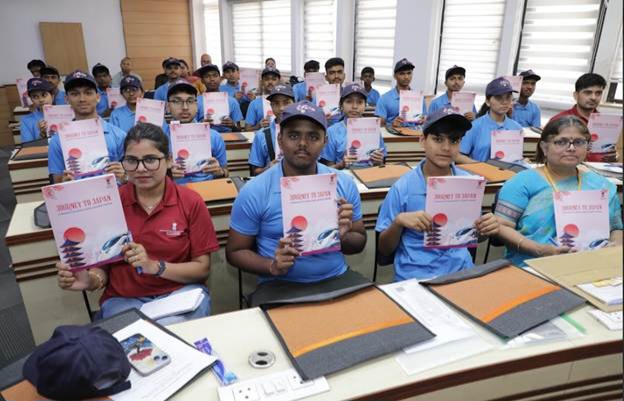
The Department of School Education & Literacy (DoSEL), Ministry of Education, recently flagged off a contingent of 56 Indian school students for a week-long visit to Japan under the Sakura Science Programme 2026. The initiative seeks to expose talented young students to Japan’s advanced scientific ecosystem, promote international academic exchange, and strengthen educational and cultural ties between India and Japan.
About the Sakura Science Programme
- The Sakura Science Programme is an international youth exchange initiative funded and implemented by the Japan Science and Technology Agency. Originally launched as the Japan-Asia Youth Exchange Program in Science, it invites promising young students from different countries to Japan for short-term educational visits focused on science, technology, innovation, and cultural understanding.
- Participating Countries (May 2026 Batch)
- The 2026 programme includes students from:India, Ghana, Nigeria, and South Africawith Japan serving as the host nation.
Objectives of the Programme
The programme aims to:
- Broaden the intellectual horizons of young learners.
- Encourage scientific curiosity and innovation.
- Provide exposure to cutting-edge science and technology.
- Promote international cooperation and people-to-people connections.
- Strengthen bilateral relations between participating countries and Japan.
- Foster appreciation of Japan’s cultural heritage and social systems.
Key Features
Experiential Scientific Learning
- Students spend approximately one week in Japan, where they gain hands-on exposure to:Advanced laboratories, Research institutions, Universities, Technology and innovation hubs
- The programme emphasizes experiential learning rather than classroom-based instruction, allowing students to directly interact with scientific infrastructure and researchers.
Merit-Based Selection
- In India, participants are selected from government schools and are primarily meritorious students who have qualified under the National Means-cum-Merit Scholarship Scheme (NMMS).
- The programme thus provides international opportunities to talented students from relatively under-resourced backgrounds.
India’s Participation
Since India joined the programme in 2016, it has developed into an important avenue of educational cooperation between India and Japan.