
Mobile Phone Manufacturing Scheme (MPMS)

- 17 Jul 2026
In News:
The Union Cabinet, chaired by the Prime Minister, has approved the Mobile Phone Manufacturing Scheme (MPMS) with a budgetary outlay of ?62,500 crore to strengthen India's position as a global mobile manufacturing hub.
About the Mobile Phone Manufacturing Scheme (MPMS)
- The Mobile Phone Manufacturing Scheme (MPMS) is a Central Sector Scheme aimed at scaling up mobile phone manufacturing, increasing domestic value addition, strengthening supply chain resilience, and enhancing India's global competitiveness in electronics manufacturing.
- The scheme seeks to promote technological self-reliance by encouraging the development of Indian brands, expanding design and research & development (R&D) capabilities, and generating indigenous intellectual property.
- The scheme will be implemented for five years, from FY 2026–27 to FY 2030–31.
Key Features
- The scheme provides performance-linked incentives on eligible sales of mobile phones manufactured in India at differentiated rates ranging from 2.25% to 5%.
- To promote localisation, it offers an additional incentive of up to 1.5% for manufacturers sourcing key components and sub-assemblies domestically, thereby encouraging the development of a robust domestic supply chain.
- To strengthen indigenous innovation, the scheme also provides an additional 3% incentive on eligible sales for Indian brands undertaking product design and R&D activities in India.
Objectives
The scheme aims to:
- Scale up mobile phone manufacturing in India.
- Increase domestic value addition and localisation.
- Build resilient domestic electronics supply chains.
- Promote Indian brands and indigenous innovation.
- Strengthen design, R&D and patent creation.
- Enhance India's global competitiveness in the electronics sector.
- Advance the vision of Atmanirbhar Bharat and technological sovereignty.
Korku Tribe
- 17 Jul 2026
In News:
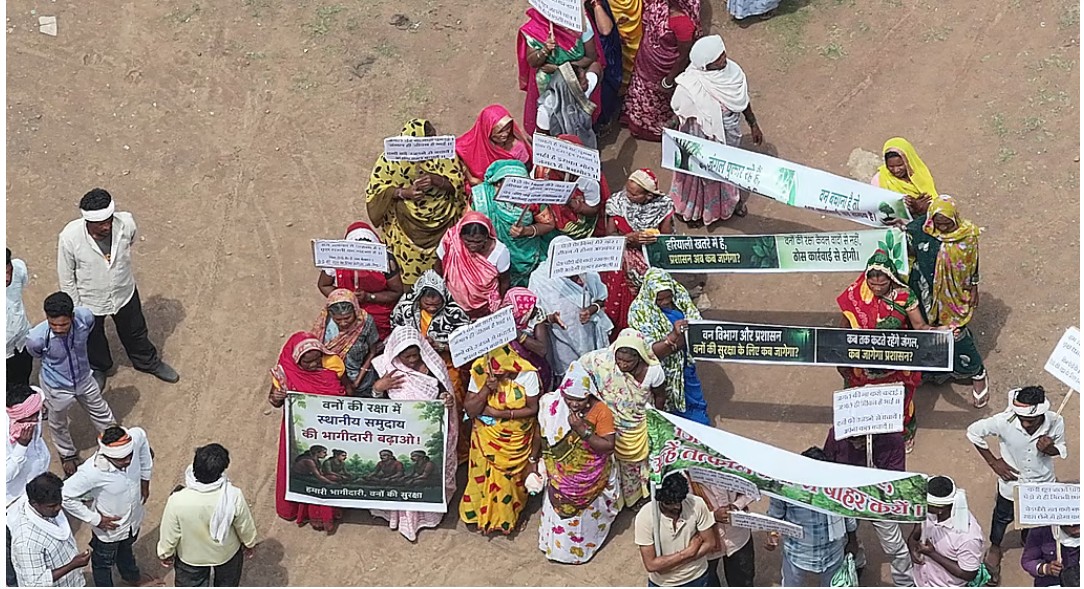
Members of the Korku tribe in Madhya Pradesh have demanded the Forest Department and district administration remove illegal encroachments from forest land, stating that the degradation of forests is affecting their livelihoods, customary access to minor forest produce and traditional way of life.
About the Korku Tribe
The Korku are a Scheduled Tribe belonging to the Munda (Kolarian) linguistic group. They are primarily distributed across Madhya Pradesh, Chhattisgarh, and the Melghat region of Maharashtra.
The community largely depends on agriculture and forest resources for its livelihood and has traditionally maintained a close relationship with forest ecosystems.
According to UNESCO, the Korku language is among the 196 endangered languages. The Potharia Korku, inhabiting the Vindhya region, have been relatively successful in preserving their native language.
Culture and Society
The Korku community possesses a rich cultural heritage rooted in nature and ancestor worship.
They traditionally practice indigenous healing systems and regard their ancestors as divine. To honour the deceased, they erect a memorial pillar known as "Munda."
Their traditional dance, Gadli, is performed during festivals and community gatherings. During the dance:
- Men wear white attire with pagdis.
- Women wear colourfulkinari sarees and use a traditional percussion instrument called the Chitkola.
Tattooing is an important cultural tradition among Korku women. The distinctive tattoo pattern known as "Kapar-Godai" consists of two dots placed above and below the letter "S" on the forehead.
Traditional Governance
The Korku have a well-established indigenous system of community self-governance known as "ChavadiSwashasan." This traditional institution resolves community disputes and manages local affairs through collective decision-making.
Livelihood and Forest Dependence
The Korku are primarily cultivators, but forests remain central to their economy and culture. They depend on forests for:
- Minor Forest Produce (MFP) such as mahua, chironji, tendu leaves, gums and medicinal plants.
- Fuelwood.
- Grazing of livestock.
The community has expressed concern that illegal encroachments and forest degradation have reduced forest cover, disturbed wildlife habitats and restricted customary access to these resources. It has also demanded stronger implementation of the Forest Rights Act (FRA), 2006, continued removal of illegal encroachments, and strengthened Joint Forest Management (JFM) institutions to safeguard forest resources.
Indian Grey Hornbill

- 17 Jul 2026
In News:
After an absence of more than six decades from Gujarat's Gir forests, the Indian Grey Hornbill has successfully re-established its population through a landmark reintroduction programme undertaken by the Gujarat Forest Department.
About the Indian Grey Hornbill
- The Indian Grey Hornbill (Ocycerosbirostris) is a medium-sized arboreal bird belonging to the family Bucerotidae. It is one of the most widespread hornbill species of the Indian subcontinent, known for its distinctive calls, large curved bill and unique nesting behaviour.
- Unlike many hornbill species that inhabit dense forests, the Indian Grey Hornbill is highly adaptable and thrives in open deciduous forests, thorn scrublands, riparian forests, agricultural landscapes and even urban parks containing mature fruit-bearing trees.
- It is endemic to the Indian subcontinent and is distributed across India, Pakistan, Nepal and Bangladesh.
- According to the IUCN Red List, the species is classified as Least Concern (LC).
Key Features
The Indian Grey Hornbill measures about 24 inches in length and has grey-brown plumage, a long white-tipped tail, and a large curved bill topped by a prominent casque. The casque is generally smaller and more pointed in females.
One of its most remarkable adaptations is its mud-sealing nesting behaviour. During the breeding season, the female seals herself inside a tree cavity using mud, fruit pulp and droppings, leaving only a narrow slit through which the male supplies food until the chicks are ready to emerge.
The species is monogamous, usually found in pairs or small family groups, and is recognised by its loud, harsh calls and characteristic flight pattern of alternating wing beats and glides.
Ecological Importance
The Indian Grey Hornbill plays a significant ecological role as an important seed disperser. By consuming fruits and dispersing seeds over long distances, it contributes to forest regeneration and enhances plant diversity.
It also serves as a natural pest controller, feeding on insects, lizards, scorpions and other small animals, thereby helping maintain ecological balance in forests and nearby agricultural ecosystems.
Ravidassia Community and Guru Ravidas
- 17 Jul 2026
In News:
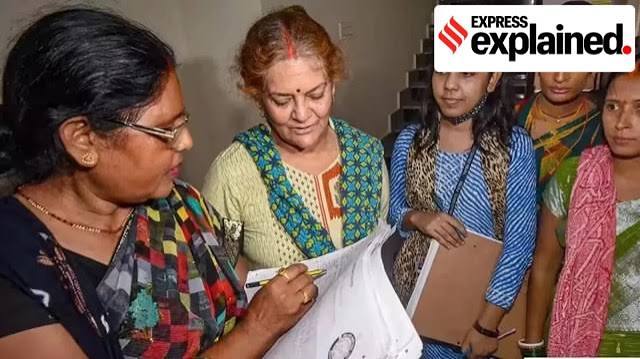
Members of the Ravidassia community recently renewed their demand for a separate "Ravidassia religion" category in the Census, highlighting their distinct religious identity based on the teachings of Guru Ravidas.
Who are the Ravidassias?
The Ravidassias are a Dalit community whose spiritual beliefs are centred on the teachings of Guru Ravidas, a prominent saint of the Bhakti Movement.
The community is predominantly concentrated in the Doaba region of Punjab, covering districts such as Jalandhar, Hoshiarpur, Kapurthala and Shaheed Bhagat Singh Nagar (Nawanshahr).
Key Features of the Ravidassia Tradition
The Ravidassia faith is founded on the principles of social equality, dignity and spiritual liberation, as propounded by Guru Ravidas.
Its distinctive features include:
- Holy Book:Amrit Bani Guru Ravidas Ji, comprising 200 hymns attributed to Guru Ravidas.
- Concept of Begampura: An ideal society envisioned by Guru Ravidas, free from sorrow, fear, inequality and discrimination.
- Major Pilgrimage Centre:Seer Goverdhanpur, Varanasi (Uttar Pradesh), regarded as the birthplace of Guru Ravidas and the holiest site of the Ravidassia tradition.
Guru Ravidas
Guru Ravidas (1377–1527 CE) was one of the foremost saints of the Bhakti Movement. He is also known by the names Raidas, Rohidas and Ruhidas.
Traditionally regarded as a disciple of Sant Ramananda, Guru Ravidas was also a contemporary of Sant Kabir.
His teachings emphasised:
- Equality of all human beings.
- Rejection of the caste system and untouchability.
- Human dignity and social justice.
- Spiritual freedom through devotion.
- Worship of the Nirguna (formless) Supreme Being rather than Saguna (idol-based) forms.
His vision of Begampurasymbolised an egalitarian society free from oppression, injustice and social hierarchy.
Codex Alimentarius Commission (CAC)
- 17 Jul 2026
In News:
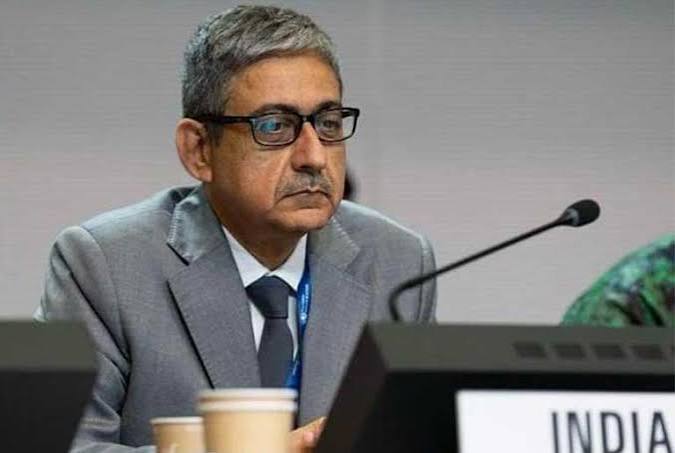
India achieved significant milestones during the 49th Session of the Codex Alimentarius Commission (CAC49) held in Geneva, Switzerland, reaffirming its active role in shaping global food standards and promoting safe, science-based international food trade.
About the Codex Alimentarius Commission (CAC)
The Codex Alimentarius Commission (CAC) is the international food standards-setting body, jointly established by the Food and Agriculture Organization (FAO) and the World Health Organization (WHO) in May 1963.
Its primary objective is to protect consumer health and ensure fair practices in international food trade by developing harmonised, science-based food standards, guidelines and codes of practice.
The Commission is headquartered in Rome, Italy, and holds its annual sessions alternately in Geneva and Rome.
Membership and Governance
Membership is open to all Member Nations and Associate Members of FAO and WHO interested in international food standards.
At present, the Commission comprises:
- 189 Codex Members
- 188 Member Countries
- 1 Member Organization – European Union (EU)
India became a member in 1964.
The Commission functions through:
- Codex Alimentarius Commission
- Executive Committee
- Codex Secretariat
- Codex Subsidiary Bodies (Committees and Task Forces)
Funding
The activities of the Commission are financed through the regular budgets of FAO and WHO, with the programme of work approved by the governing bodies of both organisations.