
Mission Queen Pineapple
- 29 May 2026
In News:
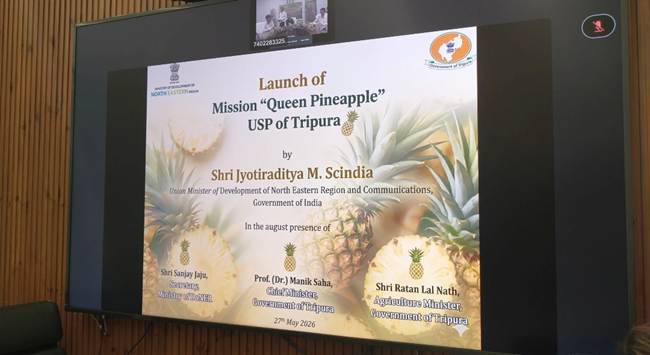
Recently, the Ministry of Development of North Eastern Region (MDoNER) has launched Mission Queen Pineapple.
The mission aims to transform Tripura’s Geographical Indication (GI)-tagged Queen Pineapple into a globally competitive horticultural brand by developing an integrated value chain encompassing production, processing, value addition, marketing, and waste utilisation.
About Mission Queen Pineapple
Mission Queen Pineapple is a flagship initiative of the Ministry for Development of North Eastern Region (MDoNER) designed to promote Tripura’s Unique Selling Proposition (USP)—the renowned Queen Pineapple.
The mission has been conceived as a three-year implementation roadmap covering the period from Q2 FY 2026 to Q4 FY 2028. Its primary objective is to establish a comprehensive and integrated pineapple value-chain ecosystem that connects farmers with processing industries, logistics networks, domestic markets, and export opportunities.
A distinguishing feature of the mission is its emphasis on circular economy principles, where agricultural waste, particularly discarded pineapple leaves, will be converted into commercially valuable products such as natural fibres, handicrafts, textiles, biodegradable products, and other value-added materials. This approach seeks to minimise waste while creating additional income opportunities for farmers and rural entrepreneurs.
Objectives of the Mission
The mission seeks to address structural bottlenecks that have limited the commercial potential of Tripura’s pineapple industry. Its major objectives include:
- Developing an integrated farm-to-market value chain.
- Improving post-harvest handling, storage, and transportation.
- Promoting food processing and value addition.
- Enhancing domestic and international market access.
- Encouraging entrepreneurship and agro-based industries.
- Generating additional livelihoods through utilisation of pineapple biomass.
- Increasing farmers' income through better price realisation.
By integrating production with processing and marketing, the mission aims to transform pineapple cultivation into a sustainable engine of rural economic growth.
Queen Pineapple: Tripura’s Signature Fruit
The Queen Pineapple is one of India's finest pineapple varieties and is widely recognised for its superior quality. It is a spiny, golden-yellow variety distinguished by its:
- Sweet taste.
- Pleasant aroma.
- Juicy flesh.
- Low fibre content.
- Rich nutritional value.
It contains essential Vitamins A, B, and C, along with minerals such as calcium, magnesium, potassium, and iron, making it nutritionally rich.
The fruit possesses Total Soluble Solids (TSS) ranging between 13 and 17.2° Brix, indicating high sweetness, while its acidity ranges between 0.6–0.8%, providing a balanced sweet-tart flavour that makes it highly suitable for fresh consumption as well as processing.
Recognising its unique geographical characteristics and reputation, the Queen Pineapple received the Geographical Indication (GI) Tag in 2015. It is also the State Fruit of Tripura, symbolising the state's horticultural identity.
Sanchi Stupa

- 29 May 2026
In News:
- India has decided to send the sacred relics of Lord Buddha's two foremost disciples—Sariputra and Maudgalyayana—from the Sanchi Stupa to Mongolia.
- The initiative aims to strengthen India's civilizational ties with Mongolia, promote Buddhist heritage, and reinforce cultural diplomacy under the shared legacy of Buddhism.
- The relics, revered by Buddhists across the world, symbolize India's role as the birthplace of Buddhism and underscore the country's efforts to preserve and globally showcase its rich cultural heritage.
Sanchi Stupa: A Symbol of India's Buddhist Heritage
The Sanchi Stupa, located in Madhya Pradesh, is one of the oldest and best-preserved Buddhist monuments in the world. It was originally commissioned by Emperor Ashoka in the 3rd century BCE following his conversion to Buddhism after the Kalinga War.
The construction of the Great Stupa is believed to have been supervised by Ashoka's wife, Devi, who hailed from nearby Vidisha. The expansion and embellishment of the Sanchi complex in subsequent centuries received considerable patronage from the prosperous mercantile community of Vidisha, contributing to its development as a major centre of Buddhist learning and pilgrimage.
Unlike many other Buddhist monuments, Sanchi remained an important religious site for several centuries, preserving valuable evidence of the evolution of Buddhist architecture and art from the Mauryan period to the Gupta era.
Sacred Relics of Sariputra and Maudgalyayana
The Sanchi Stupa enshrines the sacred relics of Sariputra and Maudgalyayana, two of the closest and most revered disciples of Lord Buddha.
- Sariputra is regarded as the foremost disciple renowned for his profound wisdom (Prajna).
- Maudgalyayana (Mahamoggallana) is remembered for his exceptional spiritual attainments and mastery of supernatural powers.
These relics are among the most sacred objects in Buddhist tradition and attract immense reverence from Buddhist communities across Asia.
The decision to temporarily send these relics to Mongolia reflects India's commitment to promoting international Buddhist cooperation and strengthening people-to-people ties with Buddhist-majority nations.
Architectural Features of the Sanchi Stupa
The Great Stupa at Sanchi represents one of the finest examples of early Buddhist architecture.
The monument is enclosed by a massive stone railing with four elaborately carved gateways (Toranas) facing the cardinal directions. These gateways are adorned with intricate sculptures depicting scenes from the life of the Buddha, Jataka tales, symbols of Buddhism, and contemporary social life. Since the Buddha was initially represented through symbols rather than human form, the carvings prominently feature motifs such as the Bodhi Tree, empty throne, footprints, wheel (Dharmachakra), and stupa.
The structural components of the stupa carry deep symbolic significance:
- Anda (Hemispherical Dome): Represents the cosmic mound and symbolizes the universe as well as the Parinirvana of the Buddha.
- Harmika: A square railing placed above the dome representing the sacred world mountain (Mount Meru).
- Yashti: The central mast symbolizing the cosmic axis connecting heaven and earth.
- Chatras (Umbrellas): Multiple umbrella discs mounted on the mast symbolize spiritual sovereignty, protection, and the various heavenly realms (Devaloka).
Together, these architectural elements reflect Buddhist cosmology and spiritual philosophy.
Rediscovery and Conservation
Following the decline of Buddhism in India, the Sanchi complex gradually fell into neglect. It remained largely abandoned until it was rediscovered by British officer Henry Taylor in 1818.
Later, Alexander Cunningham, often regarded as the father of Indian archaeology, conducted the first systematic survey and excavations at Sanchi in 1851, laying the foundation for its scientific conservation.
Today, the monument is one of India's most important archaeological sites and has been recognized as a UNESCO World Heritage Site since 1989.
Humboldtianairiana
- 29 May 2026
In News:
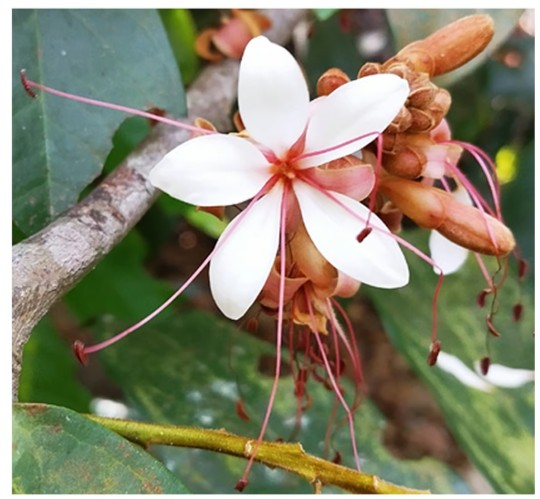
In a significant contribution to India's biodiversity documentation, researchers have discovered a new evergreen tree species in the southern Western Ghats of Kerala and named it Humboldtianairiana in honour of noted scientist Prof. G. Madhavan Nair.
The discovery highlights the immense biological richness of the Western Ghats, one of the world's eight “hottest hotspots” of biodiversity, and reinforces the need for continued taxonomic research and conservation of endemic flora.
About Humboldtianairiana
Humboldtianairiana belongs to the genus Humboldtia, a group of flowering plants largely restricted to the Western Ghats and known for their high levels of endemism. The newly discovered species is a medium-sized evergreen tree growing between 5 and 8 metres in height.
Researchers identified several distinctive morphological features that differentiate it from other members of the genus. These include:
- A unique warty pale-brown bark with a creamy-white blaze.
- Angled and glabrous branchlets.
- Distinctly shorter and sparsely hairy stipules and appendages.
- Larger flowers with comparatively longer pedicels.
- Elliptic-oblong fruits possessing a shorter beak.
These stable and distinguishing characteristics enabled scientists to classify it as a new species.
Endemism and Conservation Significance
One of the most important aspects of Humboldtianairiana is its highly restricted distribution. The species is strictly endemic to Kerala and is currently known only from the Agasthyamala Biosphere Reserve, where it occurs at an elevation of approximately 300 metres.
Such narrow endemism makes newly discovered species particularly vulnerable to habitat degradation, climate change, invasive species, and anthropogenic disturbances. The discovery therefore highlights the need for detailed population assessments, ecological studies, and conservation planning to ensure the long-term survival of the species.
The finding also underscores the importance of taxonomic research in identifying and documenting India's biological wealth, which forms the basis for effective conservation policies.
Shendurney Wildlife Sanctuary: A Biodiversity Hotspot
The discovery site, Shendurney Wildlife Sanctuary, is located in the southern part of the Western Ghats in Kerala and forms an integral component of the Agasthyamala Biosphere Reserve, recognized for its exceptional levels of biodiversity and endemism.
The sanctuary is characterized by rugged hilly terrain interspersed with ravines and supports diverse ecosystems. Its major rivers include the Shendurney, Kazhuthuruthy, and Kulathupuzha, which eventually merge to form the Kallada River.
The region supports a variety of vegetation types, including:
- Tropical evergreen forests
- Semi-evergreen forests
- Moist deciduous forests
These ecosystems provide habitat for numerous endemic and threatened plant and animal species, making the sanctuary an important centre for conservation and ecological research.
National Health Accounts (NHA) Estimates for India 2022-23
- 29 May 2026
In News:
The Ministry of Health and Family Welfare recently released the National Health Accounts (NHA) Estimates for India 2022–23, highlighting significant improvements in public health financing, increased government investment in healthcare, and a decline in the financial burden borne by households. The report reflects India's sustained efforts to strengthen its health system and move towards the goals of Universal Health Coverage (UHC) envisaged under the National Health Policy, 2017 and the Sustainable Development Goals (SDGs).
What are National Health Accounts?
The National Health Accounts (NHA) provide a comprehensive and systematic assessment of health expenditures incurred by the government, households, private sector, insurance providers, and external agencies. Released annually, the estimates offer a time-series analysis of healthcare financing patterns in the country.
The NHA Estimates 2022–23 represent the 10th edition of the series that began in 2013–14. They are prepared by the National Health Accounts Technical Secretariat (NHATS) under the National Health Systems Resource Centre (NHSRC), Ministry of Health and Family Welfare, using the internationally accepted System of Health Accounts (SHA) 2011 framework developed by international organizations such as the OECD, WHO, and Eurostat.
Rising Public Investment in Healthcare
One of the most significant findings of the report is the steady increase in government expenditure on healthcare over the past decade.
Government Health Expenditure (GHE) increased from ?1.30 lakh crore in 2013–14 to ?3.85 lakh crore in 2022–23, reflecting a nearly three-fold rise in public spending. The share of government health expenditure in GDP also increased from 1.15% in 2013–14 to 1.43% in 2022–23, which stands at 1.48% according to the revised GDP series with base year 2022–23.
Similarly, the share of health expenditure in total government expenditure rose from 3.78% to 4.89% during the same period, indicating greater prioritization of healthcare within public budgets.
Increased Per Capita Health Spending
The report reveals a substantial rise in per capita government health expenditure. Between 2013–14 and 2022–23, per capita spending increased from ?1,042 to ?2,786, representing a nearly 2.7-fold increase.
This increase reflects expanded investments in health infrastructure, primary healthcare services, disease control programmes, insurance coverage, and public health interventions across the country.
Declining Out-of-Pocket Expenditure
A major achievement highlighted in the report is the decline in Out-of-Pocket Expenditure (OOPE) by households, which remains a key indicator of financial protection in healthcare.
OOPE as a share of total health expenditure declined significantly from 64.2% in 2013–14 to 43.4% in 2022–23. This reduction suggests that government-funded schemes and insurance mechanisms are increasingly protecting citizens from catastrophic health expenditures.
The decline is particularly important in a country where healthcare-related expenses have historically pushed millions of households into poverty.
Expansion of Social Security and Health Insurance
The report also records a significant increase in Social Security Expenditure (SSE), which includes government-funded health insurance programmes such as Ayushman Bharat–Pradhan Mantri Jan Arogya Yojana (AB PM-JAY), social health insurance schemes, and medical reimbursements for government employees.
The share of SSE in total health expenditure increased from 6% in 2013–14 to 9.9% in 2022–23.
At the same time, the contribution of private health insurance rose from 3.4% to 9.2%, indicating increasing insurance penetration and risk pooling in the healthcare sector.
Strengthening Primary Healthcare
The report highlights a major increase in spending on primary healthcare, which forms the foundation of an effective health system. Government expenditure on primary healthcare increased from ?0.5 lakh crore in 2013–14 to ?1.4 lakh crore in 2022–23, more than doubling over the decade.
This reflects the government's focus on preventive, promotive, and community-based healthcare through initiatives such as Ayushman Arogya Mandirs (formerly Health and Wellness Centres), maternal and child health programmes, immunisation drives, and disease prevention strategies.
SARTHAK Public Distribution System (PDS) Scheme
- 29 May 2026
In News:
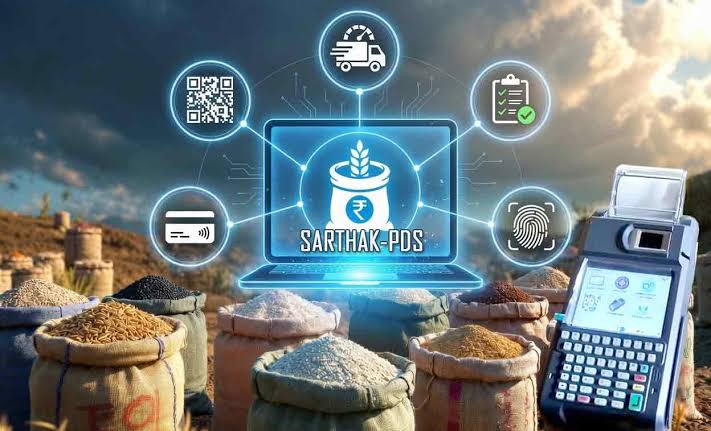
In a major step towards strengthening food security and improving the efficiency of welfare delivery, the Cabinet Committee on Economic Affairs (CCEA), chaired by the Prime Minister, has approved the SARTHAK Public Distribution System (PDS) Scheme.
The scheme seeks to modernise India's Public Distribution System by integrating technology, streamlining administrative processes, and enhancing transparency in the implementation of the National Food Security Act (NFSA), 2013.
What is SARTHAK PDS?
SARTHAK PDS stands for Scheme for Assistance in Ration Transport and Handling-Income with Automation in Public Distribution System. It has been conceived as an umbrella programme that consolidates two existing schemes into a unified framework:
- Assistance to State Agencies for Intra-State Movement of Foodgrains and Fair Price Shop (FPS) Dealers' Margin under NFSA, and
- Scheme for Modernization and Reforms through Technology in Public Distribution System (SMART-PDS).
By merging these initiatives, the government aims to create a single administrative and financial structure that supports both the physical movement of food grains and the technological transformation of the PDS ecosystem. The scheme is approved to continue until March 2031, ensuring long-term institutional support for food security reforms.
Strengthening the National Food Security Architecture
India's Public Distribution System is one of the world's largest food security programmes, serving millions of beneficiaries through an extensive network of Fair Price Shops. However, challenges such as leakages, delays, duplication of records, and monitoring inefficiencies have historically affected its effectiveness.
SARTHAK PDS seeks to address these concerns by creating a digitally integrated, transparent, and data-driven system that can facilitate efficient distribution, improve accountability, and strengthen implementation of the National Food Security Act.
Technology-Driven Transformation
A key feature of SARTHAK PDS is the extensive use of emerging technologies to modernise food grain distribution.
The scheme proposes the adoption of:
- Artificial Intelligence (AI)
- Machine Learning (ML)
- Natural Language Processing (NLP)
- Blockchain Technology
These technologies will be used to optimise supply chain management, improve beneficiary authentication, detect anomalies, minimise leakages, and enhance operational efficiency across the PDS network.
The use of AI-enabled analytics can help identify distribution gaps, forecast demand patterns, and improve decision-making, while blockchain-based systems can enhance transparency and traceability in food grain movement.
Unified Data Architecture and Real-Time Monitoring
One of the most significant reforms under SARTHAK PDS is the creation of unified databases and standardised digital architecture across states and Union Territories.
This integrated platform will enable:
- Real-time monitoring of food grain movement.
- Better coordination among stakeholders.
- Seamless data sharing across agencies.
- Improved beneficiary management.
- Enhanced transparency and accountability.
The scheme also envisages the establishment of State Command and Control Centres, which will use data-based oversight mechanisms to monitor operations and improve responsiveness.
Improved Governance and Grievance Redressal
To make the system more citizen-centric, SARTHAK PDS will incorporate AI-enabled grievance redressal mechanisms capable of processing complaints more efficiently and identifying recurring issues. This is expected to reduce delays in service delivery and improve beneficiary satisfaction.
Further, the introduction of ISO-certified process frameworks aims to strengthen transparency, operational security, quality assurance, and sustainability of PDS operations. Standardised procedures across states will help ensure uniform service delivery and reduce administrative inconsistencies.