
Ayush Anudan Portal
- 21 May 2026
In News:
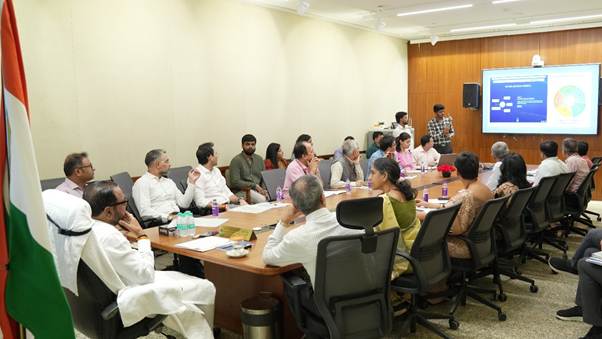
Union Minister of State (IC) for Ayushlaunched the Ayush Anudan Portal at Kartavya Bhawan, New Delhi, a significant step towards strengthening digital governance and enhancing transparency in the Ayush sector. The portal is developed under the Ayush Grid initiative, the Ministry's overarching digital transformation framework.
What is the Ayush Anudan Portal?
The portal is developed by the Ministry of Ayush under the Ayush Grid initiative, marking a major milestone in streamlining the submission, processing, approval, and monitoring of funding proposals under various Central Sector Schemes of the Ministry.
The Central Sector Schemes covered under this portal include:
- Ayurgyan (research and innovation in Ayush systems)
- Ayurswasthya (health promotion through Ayush)
- Conservation, Development and Sustainable Management of Medicinal Plants
- International Co-operation
- Promotion of Information, Education and Communication (IEC)
The primary objective of this portal is to ensure 100% transparency, efficiency, accountability and easy accessibility in the grant management process.
Key Features
- Paperless Governance: The portal enables organisations and institutions to submit funding proposals entirely through an online process, eliminating dependency on manual and paper-based systems.
- Scheme-Wise Application Management: The platform categorises, processes, and monitors proposals according to the specific requirements of each Central Sector Scheme — ensuring targeted and structured grant disbursement.
- Real-Time Tracking: A real-time application tracking mechanism allows both applicants and officials to monitor proposal status at every stage of processing — bringing process visibility that was previously absent in grant administration.
- NGO Darpan Integration: Integration with the NGO Darpan Portal facilitates seamless authentication and verification of applicant organisations, making the validation process faster, automated, credible, and error-free. NGO Darpan, managed by NITI Aayog, is the central government's registry of civil society organisations.
- Single-Window Access: The portal is accessible through the My Ayush Integrated Services Portal (MAISP) — the Ministry's single-window digital platform — ensuring integration with the broader Ayush digital ecosystem.
Ayush Grid: The Broader Digital Framework
- Ayush Grid is a visionary digital initiative of the Government of India aimed at establishing an integrated, transparent, and citizen-centric digital ecosystem for the Ayush sector through modern technology.
- It is compliant with the Ayushman Bharat Digital Mission (ABDM) architecture and has already produced digital platforms across education, research, healthcare services, medicinal plant administration, drug regulation, capacity building, and global outreach.
- The Anudan Portal represents the grant management pillar of this ecosystem — a critical component since much of Ayush sector R&D, institution-building, and medicinal plant conservation is funded through central grants to universities, hospitals, research bodies, and NGOs.
Significance
The launch reflects a broader policy shift in governance: moving from discretionary and opaque grant allocation toward rules-based, technology-mediated, and auditable fund flows. For the Ayush sector — which encompasses Ayurveda, Yoga, Naturopathy, Unani, Siddha, and Homoeopathy — this is particularly significant given the sector's expanded role post-COVID and its growing international visibility through initiatives like the WHO Global Centre for Traditional Medicine (GCTM) in Jamnagar, Gujarat
MAVEN Discovers Zwan-Wolf Effect on Mars

- 21 May 2026
In News:
In December 2023, scientists examining data from NASA's MAVEN (Mars Atmosphere and Volatile Evolution) mission stumbled upon something completely unexpected — observations of an atmospheric effect never before seen in Mars' atmosphere. A new study published in Nature Communications now provides the first comprehensive observations of the Zwan-Wolf effect in Mars' atmosphere — a phenomenon previously believed exclusive to planetary magnetospheres like Earth's.
What is the Zwan-Wolf Effect?
Discovered in 1976, the Zwan-Wolf effect describes a process in which charged particles are squeezed and redistributed along magnetic structures called flux tubes — much like toothpaste being pressed through a tube. When the solar wind — a continuous stream of charged particles emanating from the Sun — approaches a planet's magnetic boundary, it becomes compressed near those boundaries. This creates a pressure gradient that pushes charged particles along magnetic field lines, leaving a region of lower particle density near the stream.
On Earth, this mechanism plays a crucial role in deflecting solar wind and protecting the planet's surface. Until now, it had only been documented within planetary magnetospheres, never in an atmosphere.
The Discovery: Why Mars Makes It Surprising
Unlike Earth, Mars lacks a global magnetic field, which significantly impacts how it interacts with solar wind and space weather. Instead, Mars possesses only an induced magnetosphere — generated by the interaction of solar wind with its ionosphere — that can vary dramatically in size and shape during large solar weather events.
MAVEN detected the Zwan-Wolf effect within Mars' ionosphere — less than 200 km above the surface — where a substantial number of electrically charged particles reside. The detection occurred during a powerful solar storm in December 2023, which appears to have amplified the effect to detectable levels.
Based on their findings, the Zwan-Wolf effect may be occurring constantly in the Martian ionosphere but at levels undetectable by MAVEN's instrumentation — the solar storm effectively made the invisible visible.
Scientific Significance
The discovery carries multiple implications.
- First, it demonstrates that solar wind interactions in unmagnetised planetary atmospheres are far more complex than previously modelled.
- Second, understanding the Zwan-Wolf effect at Mars offers new insight into how this phenomenon might occur at similarly unmagnetised bodies such as Venus and Saturn's moon Titan.
- Third, it advances understanding of Mars' atmospheric loss — MAVEN has already established that Mars lost approximately two-thirds of its early atmosphere to space, a process central to why the planet transitioned from a potentially habitable, water-bearing world to the cold desert observed today.
About MAVEN
Launched in November 2013 and arriving at Mars in September 2014, MAVEN is the first spacecraft mission dedicated to surveying Mars' upper atmosphere. It carries three instrument packages — studying solar wind impacts on the ionosphere, ultraviolet activity in the upper atmosphere, and atmospheric composition through mass spectrometry. Notably, MAVEN lost contact with ground stations on 6 December 2025, and NASA launched an anomaly review board in February 2026 to assess its condition and likelihood of recovery — making this discovery among its potentially final scientific contributions.
SHE-MART Initiative
- 21 May 2026
In News:
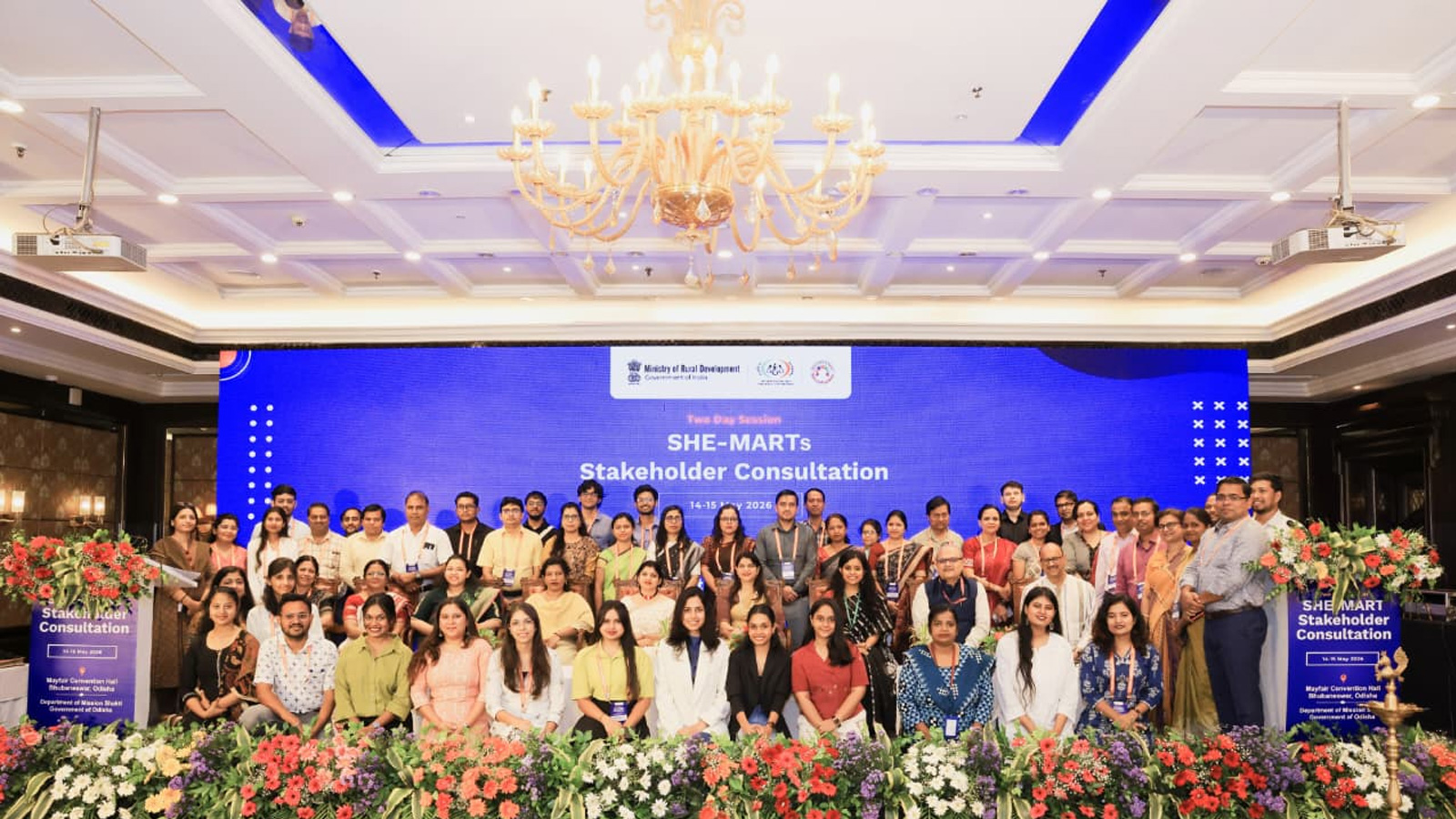
The Ministry of Rural Development (MoRD) has initiated a nationwide roadmap for women-led rural marketing ecosystems through the SHE-MART (Self Help Entrepreneurs–Marketing Avenues for Rural Transformation) initiative announced in the Union Budget 2026. A two-day National Consultationorganised by Deendayal Antyodaya Yojana–National Rural Livelihoods Mission (DAY-NRLM) was held in Bhubaneswar, hosted by the Odisha Livelihoods Mission under the state's Mission Shakti Department, to finalise operational guidelines for national rollout.
What is SHE-MART?
SHE-MART is a Government of India initiative under DAY-NRLM to create community-owned, women-led retail and aggregation platforms at the cluster-level federation of Self-Help Groups (SHGs). Unlike conventional subsidy-driven retail outlets, SHE-MARTs are envisioned as decentralised, professionally managed enterprise ecosystems that provide SHG members direct, structured access to formal markets — without intermediaries.
Products supported under SHE-MARTs include SHG-made goods across sectors: handicrafts, textiles, food products, agricultural produce, and value-added processed items.
Key Features
- Community Ownership: Retail outlets are owned and managed by women's collectives within cluster-level federations — ensuring governance remains with the community rather than external agencies.
- Market Integration: SHE-MARTs provide permanent retail infrastructure and aggregation points, reducing dependence on informal and exploitative marketing channels.
- Economic Value Chain Progression: The initiative explicitly aims to shift women from income generation to enterprise ownership — transforming SHG members from earners to business owners with control over branding, pricing, and distribution.
- Convergence with VB-GRAM-G: The consultation highlighted significant convergence opportunities between SHE-MARTs and the VB-GRAM-G initiative — particularly in women-centric infrastructure development, demand generation, and market support systems.
- Technology Integration: Discussions covered technology-enabled business processes, monitoring mechanisms, and professional retail management systems while preserving community governance.
Institutional Context and Strategic Vision
The consultation brought together Senior officials from State Rural Livelihoods Missions (SRLMs), NABARD, financial institutions, development practitioners, and sector experts. The MoRD Additional Secretary emphasised that SHE-MARTs must evolve as community-owned platforms rather than subsidy-dependent structures — a critical design principle distinguishing this initiative from earlier rural retail schemes.
Odisha's experience through Mission Shakti in building decentralised women-led enterprise ecosystems was highlighted as a replicable model for other states.
The Ministry reaffirmed its overarching target of creating three crore additional LakhpatiDidis by 2029 — women SHG members earning over ?1 lakh annually — with SHE-MARTs serving as a critical vehicle for scaling enterprise incomes beyond basic livelihood support.
Genomic Mapping of Pangolin Trafficking

- 21 May 2026
In News:
A landmark study published in the journal PLOS Biology has developed a DNA-based genomic reference map capable of tracing the geographic origin and trafficking routes of illegally traded pangolins with remarkable precision. The findings have significant implications for wildlife crime enforcement, including in India.
The Scientific Breakthrough
Pangolins account for nearly a third of all recorded international wildlife seizures in recent years, making them the world's most heavily trafficked mammals. Despite this, forensic tracing has long been hampered by the difficulty of extracting usable DNA from degraded pangolin samples confiscated at borders.
The research team overcame this barrier by employing a gene-capture method to recover usable genomic information from degraded samples. The team sequenced DNA from more than 700 samples — drawn from museum collections, field sites, bushmeat markets, and international trade seizures — covering Sunda, Chinese, and white-bellied pangolins. Using genetic data from specimens of known geographic origin, they constructed a genomic reference map capable of tracing each trafficked individual back to its source population.
A key innovation was the development of a single gene-capture kit that works across all eight pangolin species and on degraded museum specimens, making genomic tracing more accessible, scalable, and practical for real-world conservation and forensic use.
Global Poaching Hotspots Identified
The data revealed several hotspots of illegal pangolin collection, including southwestern Cameroon, Myanmar, and multiple locations across Africa. The genetic record also tracks major trade routes across the borders of China and between Indonesian islands.
A particularly significant finding for India: the genomic data exposed an active illicit wildlife network originating from northeastern India — around Arunachal Pradesh and Assam — and potentially Bhutan, directly supplying Yunnan province in China. This makes India's northeastern biodiversity corridor a critical front in the global battle against wildlife trafficking.
Dismantling the Domestic-International Divide
One of the study's most consequential revelations is that domestic pangolin trade is largely local but overlaps with the same sourcing regions that supply international trafficking — revealing a connected supply chain rather than separate markets. This disproves the earlier assumption that local and global pangolin trafficking operate independently.
About Pangolins: Conservation Context
There are eight pangolin species globally — four African (Black-bellied, White-bellied, Giant Ground, Temminck's Ground) and four Asian (Indian, Philippine, Sunda, Chinese). All eight are listed under Appendix I of CITES, prohibiting commercial trade. On the IUCN Red List, the Indian Pangolin (Manis crassicaudata) is Endangered, while the Chinese Pangolin (Manis pentadactyla) — found in India's Northeast — is Critically Endangered. Both species receive the highest domestic legal protection under Schedule I of the Wildlife (Protection) Act, 1972.
Pangolins are ecologically vital — their digging aerates soil and controls ant and termite populations — but biologically vulnerable. Females produce only a single offspring at a time, meaning population recovery after depletion is extremely slow. Their defensive instinct of rolling into a ball, effective against natural predators, makes them trivially easy for poachers to collect by hand.
ULPGM-V3
- 21 May 2026
In News:
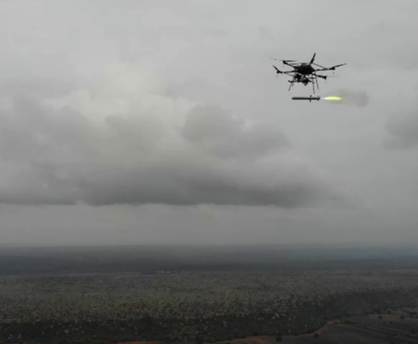
The Defence Research and Development Organisation (DRDO) successfully conducted flight trials of the Unmanned Aerial Vehicle Launched Precision Guided Missile Version 3 (ULPGM-V3) at the National Open Area Range (NOAR), Kurnool, Andhra Pradesh. The trials were carried out in the Anti-armour configuration, marking a significant milestone in India's indigenous drone-based precision strike capability.
About ULPGM-V3
ULPGM-V3 is an advanced drone-launched precision guided missile capable of engaging both surface and aerial targets. It is an upgraded version of the earlier ULPGM-V2, developed and delivered by DRDO. The missile was tested in two operational modes:
- Air-to-Ground mode — primarily for destroying tanks and armoured vehicles, as well as fortified bunkers.
- Air-to-Air mode — for targeting hostile drones, helicopters, and other airborne threats.
The missile was launched from an indigenously developed UAV built by NewSpace Research Technologies, Bengaluru — a domestic start-up — underscoring India's growing defence-industrial ecosystem. Development-cum-Production Partners (DcPPs) Adani Defence and Bharat Dynamics Limited (BDL), Hyderabad, along with 30 MSMEs and start-ups, contributed to the project.
Key Technical Features
- Precision Targeting: Equipped with a high-definition dual-channel seeker, the missile can engage a wide range of targets with high accuracy across varying terrain types.
- All-Weather Operations: ULPGM-V3 possesses full day-and-night operational capability, ensuring reliability under adverse visibility conditions.
- Terrain Versatility: Deployable in both plain terrains and high-altitude regions — a critical requirement given India's operational theatres in Ladakh and the northeastern highlands.
- Real-Time Guidance: A two-way data link enables post-launch target updates and mid-course aim-point corrections, making the missile highly responsive to dynamic battlefield conditions.
Three Modular Warhead Options
One of ULPGM-V3's defining features is its modular warhead architecture, offering mission-specific lethality:
- Anti-armour warhead — designed to neutralise modern armoured vehicles protected by Rolled Homogeneous Armour (RHA) combined with Explosive Reactive Armour (ERA), the two principal passive protection systems on contemporary main battle tanks.
- Penetration-cum-Blast warhead — optimised for destroying fortified structures and underground bunkers.
- Pre-fragmentation warhead — designed for area suppression and high-lethality anti-personnel effects.
Collaborative Development
The missile was jointly developed by six DRDO laboratories: Research Centre Imarat (RCI), Defence Research and Development Laboratory (DRDL), Terminal Ballistics Research Laboratory (TBRL), High-Energy Materials Research Laboratory (HEMRL), Integrated Test Range (ITR), and Defence Electronics Research Laboratory (DLRL). DRDO is actively pursuing integration of ULPGM weapons with long-range, high-endurance UAVs from multiple Indian companies.
Strategic Significance
The ULPGM-V3 trial is significant across several dimensions. First, it advances India's loitering and precision strike from unmanned platforms, a defining feature of modern warfare demonstrated in conflicts in Ukraine, Nagorno-Karabakh, and West Asia. Second, it reflects the maturation of India's defence start-up ecosystem — a UAV built by a private Indian start-up launching a DRDO missile represents genuine civil-military industrial integration. Third, the modular warhead design offers the Indian Army and Air Force operational flexibility across counter-armour, counter-infrastructure, and counter-drone missions.