
Public Accounts Committee
- 26 May 2026
In News:
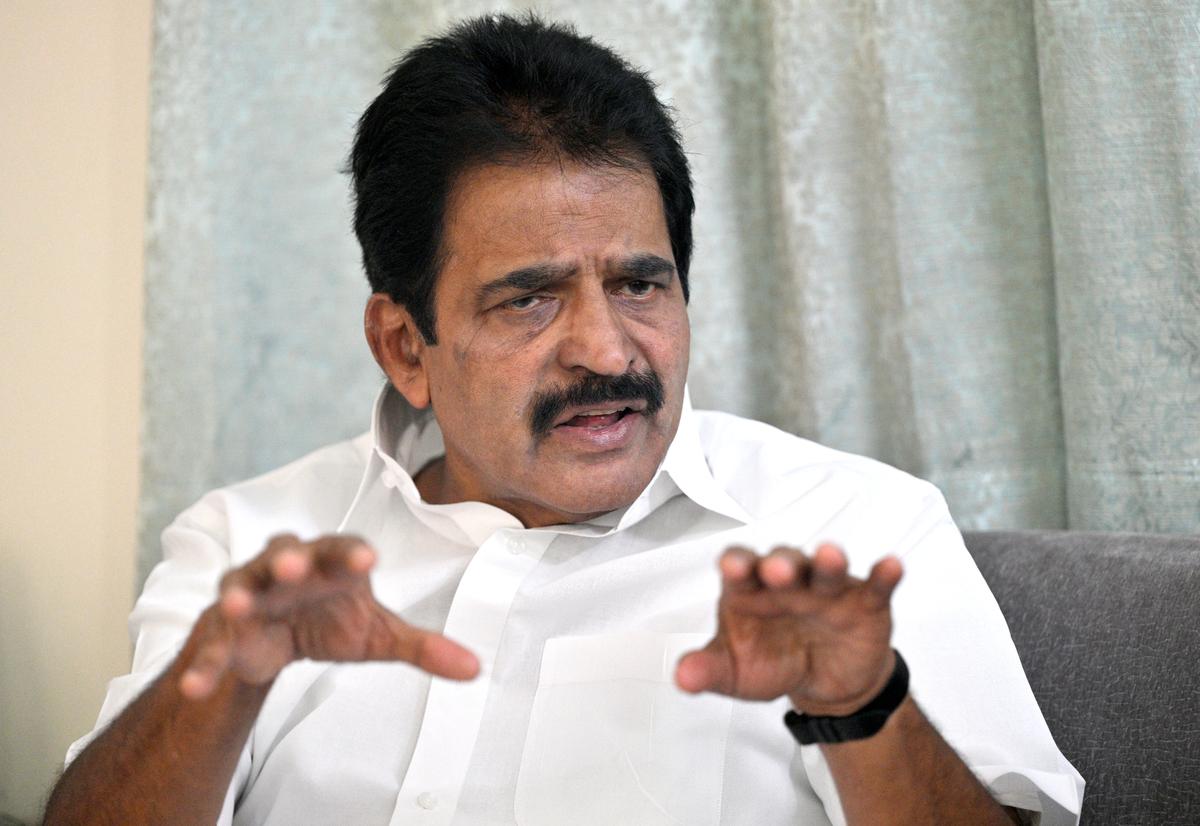
Lok Sabha Speaker Om Birla formally reconstituted four parliamentary committees for the 2026–27 financial year, with terms expiring on April 30, 2027. Congress leader KC Venugopal was reappointed as Chairperson of the Public Accounts Committee (PAC).
- The BJP raised objections regarding the committee's perceived inclination to take up issues suo motu — on its own initiative — without prior referral, highlighting a potential divergence in understanding the scope and operational autonomy of the PAC.
- The panel also expressed concern over pending Action Taken Notes and a heavy backlog in the Audit Para Monitoring System.
What is the PAC?
- The Public Accounts Committee is the oldest parliamentary committee in India, established in 1921 under British rule.
- It is constituted every year and serves as Parliament's primary instrument for scrutinising government finances after funds have been spent.
- Its core purpose is to audit the revenue and expenditure of the Government of India, ensuring that public funds are spent efficiently, legally, and in accordance with Parliamentary intent.
Composition and Membership
- The PAC consists of 22 members — 15 from Lok Sabha and 7 from Rajya Sabha. The Chairperson is appointed by the Speaker from amongst Lok Sabha members and is, by convention, drawn from the principal Opposition party. This tradition was formally established in 1967–68, when the Speaker for the first time appointed a member of the Opposition as Chairperson.
- Importantly, ministers cannot be members of the PAC, preserving the committee's independence from the executive. Each member serves a term of one year.
Functions of the PAC
- Examining CAG Reports — The PAC scrutinises the reports of the Comptroller and Auditor General (CAG) of India on government expenditure. The CAG acts as the eyes and ears of Parliament, and the PAC acts as the enforcement arm that follows up on audit findings.
- Ensuring Proper Utilisation of Funds — It verifies that money sanctioned by Parliament has been spent for the purposes for which it was granted — no more, no less.
- Investigating Irregularities — The committee investigates financial irregularities, losses, and inefficiencies in government spending, and can call senior government officials and even heads of regulatory bodies to depose before it.
- Action Taken Notes (ATNs) — Ministries and departments are required to submit ATNs explaining what action they have taken on the PAC's recommendations. Pending ATNs represent a significant accountability gap, which the reconstituted committee has flagged as a priority concern.
Information Agents

- 26 May 2026
In News:
At its annual developer conference (Google I/O 2026), Google unveiled Information Agents, a feature built into Search that monitors the web on behalf of users. It represents one of the most significant shifts in how search engines interact with information since Google's founding.
What is an Information Agent?
An information agent is a computational software entity, a type of intelligent agent — that may access one or multiple, distributed, and heterogeneous information sources and proactively acquires, mediates, and maintains relevant information on behalf of its users.
The core purpose of information agents is to cope with the difficulties associated with information overload — the problem of too much data being available for a user to process and monitor manually.
How Information Agents Work — Key Capabilities
- Semantic Brokering of Information: Information agents go beyond simple retrieval. They semantically broker information by providing pro-active resource discovery, resolving the information impedance between information consumers and providers, and offering value-added information services and products to the user or other agents.
- Continuous Background Monitoring: Unlike traditional search tools that respond only when prompted, Google's information agents operate continuously — 24/7 — tracking topics a user has expressed interest in and pushing relevant updates proactively.
- Multi-Source Synthesis: The information sources accessible to agents may be of many types, including traditional databases, websites, and even other information agents — enabling a layered, interconnected web of intelligence gathering.
Illustrative Example
A user who has heard about a researcher proposing something called "agent-oriented programming" asks the agent to investigate. After carefully searching various sources, the agent returns not just with a relevant technical report, but also the name and contact details of the researcher involved — without the user having to visit a single website manually.
In Google's current implementation, similar scenarios play out in everyday life: a user tracking housing markets, flight prices, stock movements, or sports events simply sets a goal, and the agent does the continuous monitoring, notifying the user only when something relevant occurs.
Google's Implementation at I/O 2026
- How to Use It: Users open AI Mode in Google Search, enter a natural language prompt describing what they want to track, and the agent begins monitoring. Push notifications are sent when relevant updates are found. Active agents are visible in the AI Mode history, where users can manage, refine, or deactivate them.
- Rollout: Information agents will first be available to Google AI Pro and Ultra subscribers in the US during summer 2026, before expanding to additional markets.
- Beyond Google Alerts: The feature is considered the next evolution of Google Alerts (launched in 2003), but goes significantly further — rather than merely flagging keyword mentions, it synthesises information, explains context, compares perspectives, and offers actionable insights.
Concerns Raised
- Privacy: Always-on AI monitoring means users must share deeply personal data — budgets, schedules, preferences, locations — to get relevant results. This creates large pools of sensitive information concentrated within a single platform, raising serious data sovereignty concerns.
- Web Infrastructure: Since AI agents retrieve and summarise content without users visiting source websites, independent publishers and smaller platforms stand to lose significant web traffic — threatening the advertising-based economic model that sustains most of the open web.
- Centralisation: Critics warn that if a single platform becomes the primary gateway through which users access and filter online information, it could lead to dangerous centralisation of the internet — with Google acting as both the librarian and the library.
Significance
Information agents represent a paradigm shift from reactive search (user asks → engine responds) to proactive intelligence (agent monitors → agent informs). While they promise to dramatically reduce information overload, they simultaneously raise profound questions about privacy, the sustainability of independent web publishing, and the concentration of power in the hands of a few Big Tech platforms.
Padma Awards 2026
- 26 May 2026
In News:
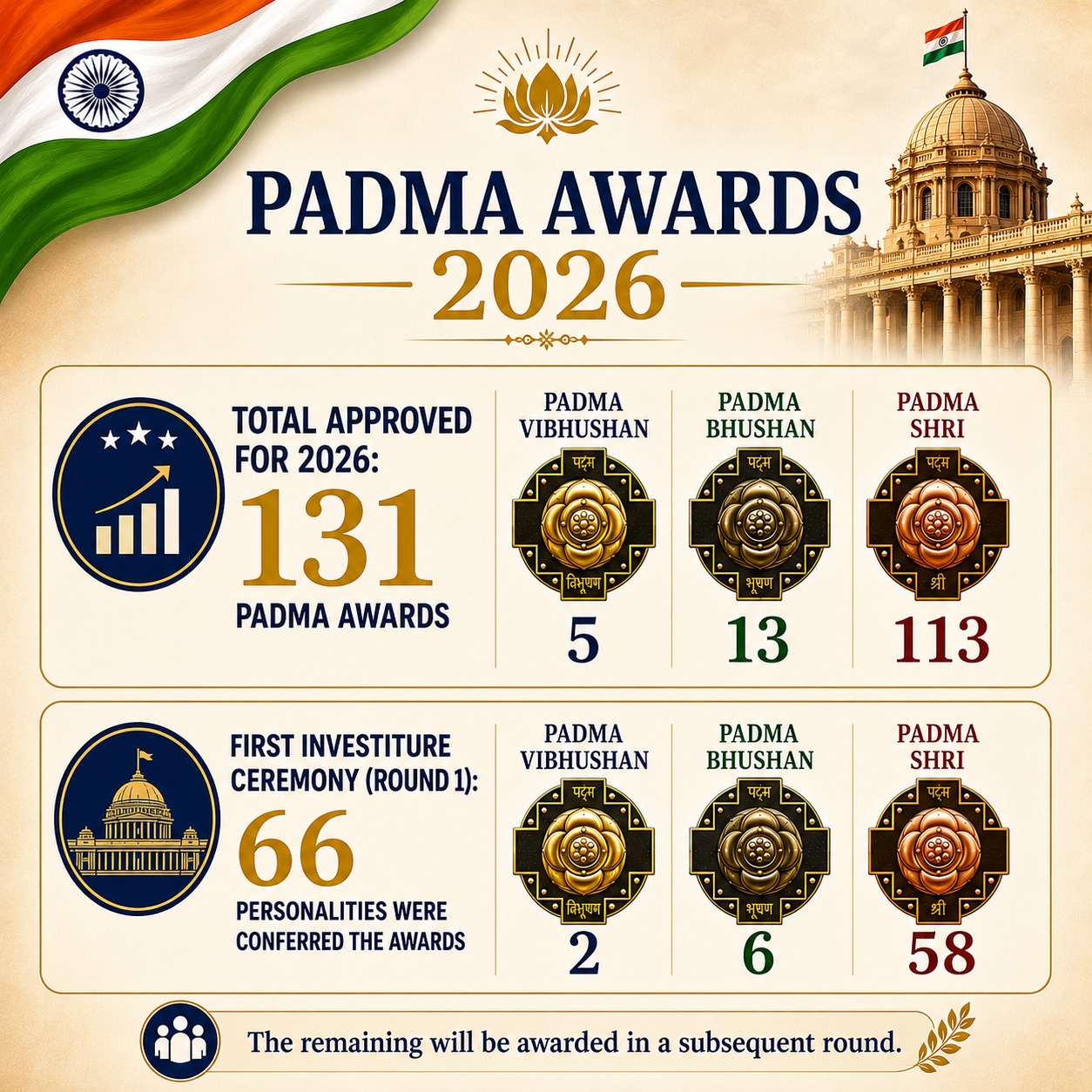
President Droupadi Murmu today conferred Padma Awards to 66 eminent personalities for the year 2026 at the first Civil Investiture Ceremony held at Rashtrapati Bhavan.
About Padma Awards:
The Padma Awards are among the highest civilian honours of India, announced annually on the eve of Republic Day. They are designed to recognise works of distinction and celebrate exceptional achievements or service where an element of public service is involved. The awards are structured into three distinct tiers:
- Padma Vibhushan is conferred for exceptional and distinguished service — the highest of the three tiers.
- Padma Bhushan is conferred for distinguished service of a high order.
- Padma Shri is conferred for distinguished service in any specific field.
History
- The Government of India instituted two civilian awards in 1954 — the Bharat Ratna and the Padma Vibhushan. Originally, the Padma Vibhushan was classified into three tiers: Pahela Varg (First Class), Dusra Varg (Second Class), and Tisra Varg (Third Class). These were subsequently renamed as the Padma Vibhushan, Padma Bhushan, and Padma Shri via a Presidential Notification issued on January 8, 1955.
- The awards have been announced every year since their inception, except for brief suspensions during 1978–1979 and 1993–1997.
Process of Selection
- Open Nominations — The nomination process is heavily democratised and open to the general public. Citizens can nominate inspiring individuals, and self-nomination is also explicitly permitted.
- The Evaluating Committee — All entries are screened by the Padma Awards Committee, which is constituted by the Prime Minister every year. The panel is headed by the Cabinet Secretary and includes the Union Home Secretary, the Secretary to the President, and four to six eminent public personalities.
- Final Approval — The committee's recommendations are submitted directly to the Prime Minister and the President of India for final executive clearance.
Eligibility Criteria
- All individuals, without any distinction of race, occupation, position, or sex, are fully eligible for these awards. However, government servants — including professionals working with Public Sector Undertakings (PSUs) — are generally not eligible. Notably, doctors and scientists are completely exempt from this restriction and remain eligible based on their research, advancements, or clinical service.
Key Features
- Disciplines Covered — Awards are distributed across fields including Art, Social Work, Public Affairs, Science & Engineering, Trade & Industry, Medicine, Literature & Education, Civil Service, and Sports.
- Annual Cap — The maximum number of awards in a single year cannot exceed 120. This cap, however, excludes posthumous awards and those presented to NRIs, Foreigners, or Overseas Citizens of India (OCIs).
- Posthumous Clause — The award is normally not conferred posthumously. However, in highly deserving or exceptional cases, the government can break this convention.
- Five-Year Elapsing Rule — A recipient can only be upgraded to a higher tier if at least five years have elapsed since the conferment of their earlier category. The Awards Committee may relax this rule in extraordinary circumstances.
- Not a Title — In accordance with Article 18 of the Constitution of India, these awards do not amount to a title and cannot be used as a prefix or suffix to the awardee's name. Any commercial or public misuse forfeits the honour.
- Presentation Insignia — Recipients receive a Sanad (a formal certificate) signed directly by the President of India, along with a primary medallion and a small wearable replica for ceremonial state functions.
Oreshnik — Russia's Hypersonic Ballistic Missile
- 26 May 2026
In News:
The Ukrainian President recently confirmed that Russia used the Oreshnik missile during a mass drone and missile attack on Kyiv. This marks the third reported use of the weapon in the Russia-Ukraine war. It was first deployed in November 2024 to strike the Ukrainian city of Dnipro.
What is the Oreshnik?
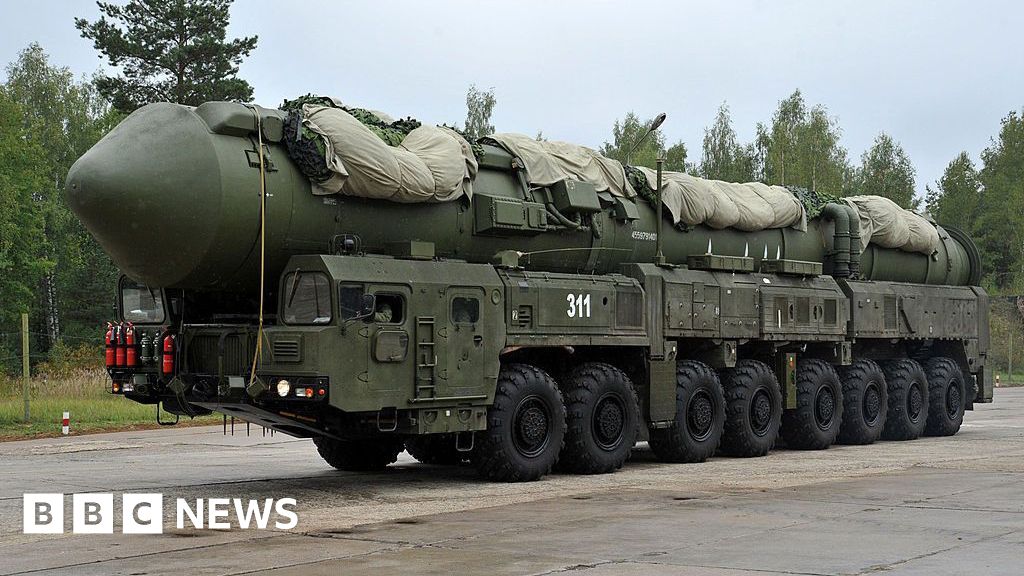
- It is a Russian-made intermediate-range hypersonic ballistic missile, believed to be derived from the RS-26 Rubezh ballistic missile system. Its name means "hazel tree" or "hazelnut tree" in Russian. It is capable of carrying both nuclear and conventional warheads.
Key Technical Specifications
- The missile is estimated to be 15 to 18.5 metres long with a diameter of approximately 1.9 metres. It travels at Mach 10 — roughly 2.5 to 3 kilometres per second — and has a reported range of 5,000 kilometres. It is launched from a mobile transporter-launcher and carries 6 to 8 warheads via MIRV technology.
Defining Features
- Multiple Independently Targetable Re-entry Vehicles (MIRVs): The Oreshnik carries 6 to 8 warheads, each capable of being directed at a different target simultaneously. This multi-warhead capability complicates air defence interception and is typically associated with longer-range intercontinental ballistic missiles — making it unusual for an intermediate-range system.
- Hypersonic Speed: Travelling at Mach 10 — approximately ten times the speed of sound — the missile is extremely difficult to intercept using existing air defence systems.
- Mobile Launch Platform: Being mounted on a mobile transporter and launcher enables rapid deployment and concealment, making it harder to detect and neutralise before launch.
Strategic Range & Reach
- With a reported range of 5,000 km, the Oreshnik can strike targets across all of Europe and potentially reach the west coast of the United States — giving it significant strategic depth well beyond the immediate theatre of the Russia-Ukraine conflict.
BHAVYA Scheme
- 26 May 2026
In News:
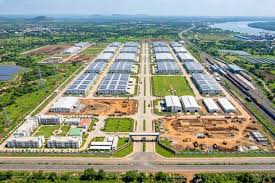
Union Commerce Minister Piyush Goyal recently announced the launch of guidelines for the BHAVYA Scheme under which the Centre plans to develop 100 industrial parks across the country.
The scheme carries a financial outlay of ?33,660 crore and aims to create manufacturing and investment hubs through plug-and-play industrial parks in partnership with state governments.
Key Objectives
- Develop 100 investment-ready, world-class industrial parks over six years (2026–27 to 2031–32)
- Support Make in India and PM GatiShakti by creating integrated manufacturing zones
- Promote cluster-based industrial development, enabling manufacturers, suppliers, and service providers to operate in proximity — strengthening domestic supply chains and employment
Rollout Plan
- Applications for 20 parks will be invited in the first two months, followed by another 30 parks in the next two months, while the remaining 50 parks will be taken up in a subsequent phase. Goyal expects 50 parks to be operationalised within three years.
Financial Support
- Industrial parks will range from 100 to 1,000 acres, with financial assistance of up to ?1 crore per acre for infrastructure development. Support will cover internal roads, underground utilities, drainage systems, common treatment facilities, warehousing, testing labs, and worker housing.
- For proposals involving private sector partnerships, the Centre would provide assistance of ?50 lakh per acre. External infrastructure support of up to 25% of the project cost has also been proposed to improve connectivity with transport and logistics networks.
Implementation Framework
- The parks will be developed under the National Industrial Corridor Development Programme (NICDP) framework in partnership with states and private sector players. The National Industrial Corridor Development Corporation (NICDC), under DPIIT, will anchor implementation.
- States are required to set up Special Purpose Vehicles (SPVs) under the Companies Act, 2013, notify planning authorities, and establish single-window clearance systems for faster approvals.
Project Selection
Project selection will be carried out through a challenge-based process focused on investment-ready and reform-oriented proposals. States offering better facilities such as land, water, and power are likely to attract more investors. Rajasthan, Maharashtra, West Bengal, and Haryana have already shown interest.
Special Provisions
- Hilly states, NE states, UTs, and smaller states: Minimum land requirement reduced to 25 acres (vs. 100 acres for other states)
- Eligible for both greenfield and brownfield industrial parks
- Parks aligned with PM GatiShakti National Master Plan for multimodal connectivity and last-mile access
- Provisions for green energy and sustainable resource use
Significance
The BHAVYA Scheme is positioned as a major ease-of-doing-business initiative, providing pre-approved land, ready infrastructure, and integrated services to help industries begin operations faster — directly boosting India's manufacturing competitiveness and investment attractiveness.