
Ammonia (NH?)
- 24 Jun 2026
In News:
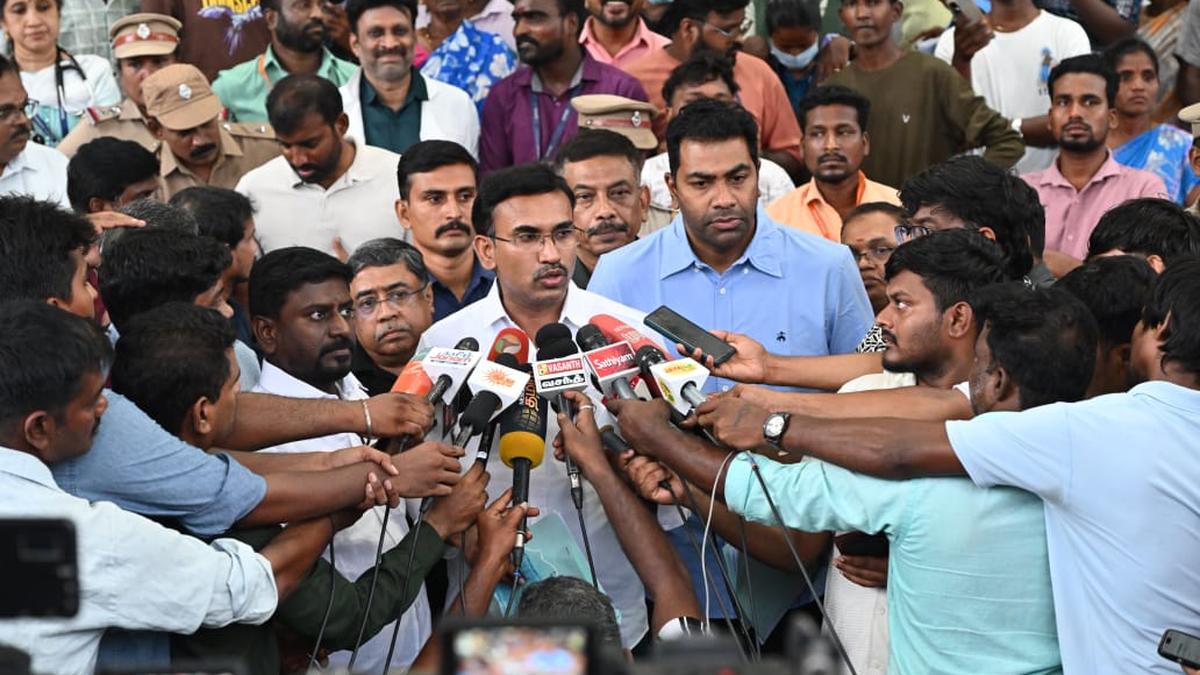
An ammonia gas leak at a seafood processing and export unit in Tiruvallur district, Tamil Nadu, affected several people, highlighting concerns regarding industrial safety and hazardous chemical handling.
About Ammonia
Ammonia (NH?) is a colourless, pungent-smelling gas composed of one nitrogen atom and three hydrogen atoms. It is an important industrial chemical and a naturally occurring compound in the environment.
Ammonia is highly soluble in water, forming aqueous (liquid) ammonia. When exposed to air, liquid ammonia rapidly vaporizes back into a gas.
Occurrence
Ammonia occurs naturally in:
- The nitrogen cycle, where it is produced by soil microorganisms.
- The decomposition of plants, animals, and organic matter.
- Small quantities within the human body as a product of normal metabolic processes.
Industrial Production
Commercial ammonia is primarily manufactured through the Haber–Bosch Process, in which nitrogen (N?) from air reacts with hydrogen (H?) under high temperature and pressure in the presence of an iron catalyst.
Uses
Ammonia has diverse industrial applications:
- Agriculture: Primary raw material for nitrogenous fertilizers such as ammonium nitrate and urea.
- Refrigeration: Widely used as an industrial refrigerant, especially in cold storage and food processing industries.
- Water Treatment: Used as a purifier and pH regulator.
- Chemical Industry: Manufacture of plastics, explosives, synthetic fibres, dyes, pharmaceuticals, and cleaning agents.
- Food Industry: Used in refrigeration systems for seafood and food storage facilities.
Health Effects
Exposure to high concentrations of ammonia can cause:
- Irritation of the eyes, skin, nose, and throat.
- Coughing, breathing difficulty, and lung irritation.
- Chemical burns upon prolonged exposure.
- Severe exposure may lead to respiratory distress and pulmonary damage.
Biochar
- 24 Jun 2026
In News:
Recent studies have shown that Biochar can increase crop productivity by 10–30% and improve soil water-holding capacity by 10–25%, particularly in nutrient-deficient and semi-arid soils, highlighting its potential for sustainable agriculture and carbon sequestration.
What is Biochar?
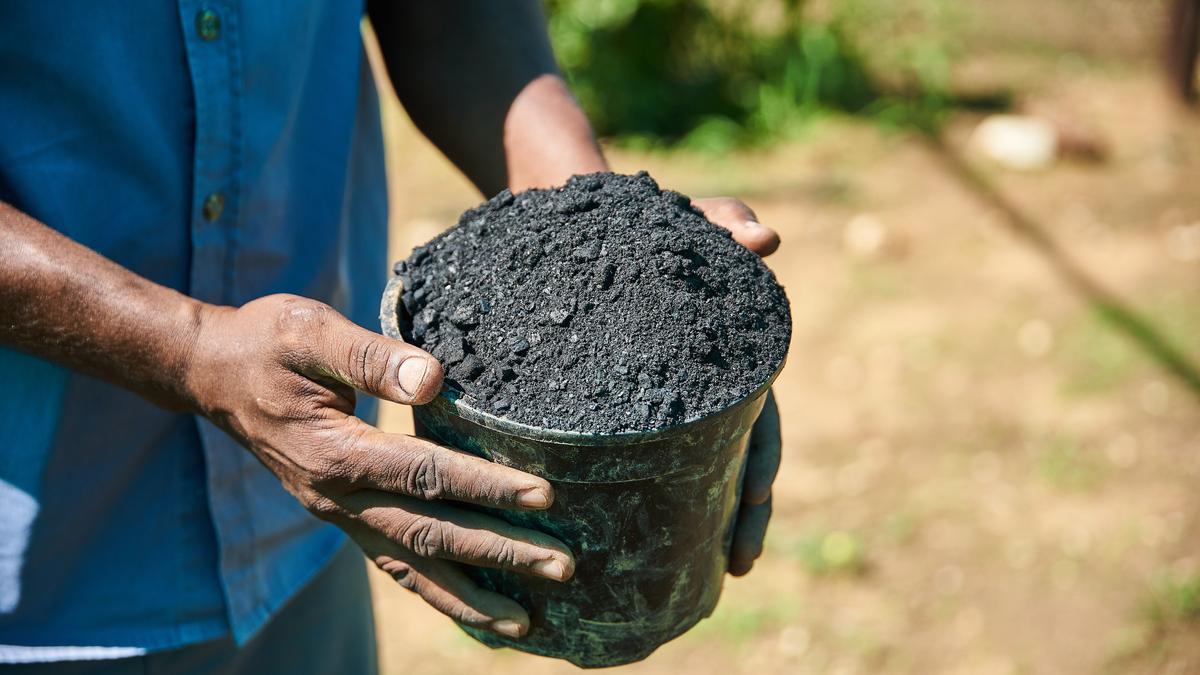
Biochar is a carbon-rich, porous material produced by heating biomass or agricultural residues under low-oxygen (oxygen-limited) conditions, a process known as pyrolysis.
It is generally prepared by heating crop residues at 400°C–600°C in a kiln or similar structure in the absence of oxygen, converting agricultural waste into a stable form of carbon while minimizing emissions.
Key Characteristics
- Produced through pyrolysis (low or no oxygen).
- Derived from agricultural residues, forestry waste, and other biomass.
- Highly porous with a large surface area.
- Rich in stable carbon, making it resistant to decomposition.
- Can retain carbon in soil for 100–1,000 years, making it an effective long-term carbon sink.
Applications of Biochar
1. Agriculture: Biochar improves soil fertility, enhances water retention, increases nutrient availability, promotes beneficial microbial activity, and improves soil structure. It is particularly effective in rainfed, semi-arid, and nutrient-poor soils, leading to higher crop productivity.
2. Climate Change Mitigation: By storing stable carbon in soils for centuries, biochar serves as a carbon sequestration technology, reducing atmospheric carbon dioxide and supporting climate change mitigation.
3. Industrial Applications: Modified biochar can adsorb carbon dioxide (CO?) from industrial exhaust gases and is being explored for carbon capture applications, although its efficiency is currently lower than conventional carbon capture technologies.
4. Construction Sector: Biochar can be incorporated into construction materials such as concrete and bricks, reducing their carbon footprint while acting as a stable carbon sink.
5. Wastewater Treatment: Due to its high porosity and adsorption capacity, biochar can remove pollutants, heavy metals, dyes, and organic contaminants from wastewater, providing a low-cost treatment option.
Advantages
- Converts agricultural waste into a value-added product.
- Reduces crop residue burning and associated air pollution.
- Improves crop yield by 10–30%.
- Enhances soil water-holding capacity by 10–25%.
- Supports soil biodiversity and microbial activity.
- Sequesters carbon for 100–1,000 years.
- Promotes sustainable and climate-resilient agriculture.
Sarvam AI & India's Sovereign AI Ecosystem
- 24 Jun 2026
In News:
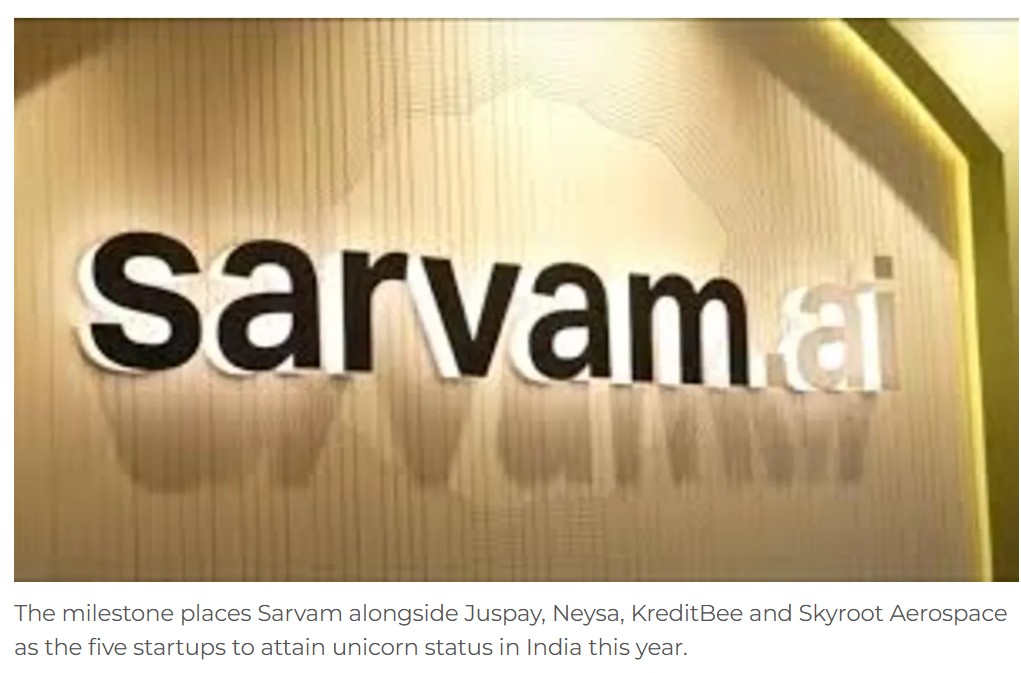
Bengaluru-based Sarvam AI became India's first dedicated full-stack Artificial Intelligence (AI) startup to achieve unicorn status (valuation exceeding USD 1 billion), marking a major milestone for India's deep-tech ecosystem and indigenous AI capabilities.
What is a Unicorn?
- A Unicorn is a privately held startup valued at more than USD 1 billion.
- As of June 2026, India has 131 unicorns, making it the third-largest unicorn ecosystem globally after the United States and China.
- Recent unicorns such as Sarvam AI, Neysa, Skyroot, KreditBee, and Porter reflect India's growing strength in deep-tech sectors, particularly Artificial Intelligence and Space Technology.
About Sarvam AI
Sarvam AI is an Indian AI startup focused on building a sovereign AI ecosystem, aiming to reduce India's dependence on foreign AI platforms and develop indigenous AI technologies suited to Indian languages and use cases.
Key Initiatives
1. India's Indigenous Large Language Model (LLM)
Under the IndiaAI Mission, Sarvam AI has been selected to develop India's first indigenous Large Language Model (LLM).
The company is developing three models:
- Sarvam-Large – Advanced reasoning and complex AI tasks.
- Sarvam-Small – Optimized for real-time applications.
- Sarvam-Edge – Designed for on-device AI applications.
These models are expected to scale up to 70 billion parameters.
2. Frontier AI Models
At the IndiaAI Impact Summit 2026, Sarvam AI introduced:
- Sarvam-30B
- 30-billion parameter model.
- Optimized for conversational AI.
- 32,000-token context window.
- Sarvam-105B
- 105-billion parameter model.
- Designed for advanced reasoning and multi-step problem-solving.
- 128,000-token context window.
3. Enterprise AI Platforms
- Sarvam Samvaad
- Enterprise conversational AI platform.
- Integrates with organizational data and business tools to generate insights and automate workflows.
- Sarvam Dub
- AI-powered multilingual dubbing platform.
- Supports zero-shot voice cloning and cross-lingual speech generation.
4. Population-Scale AI Applications
Sarvam AI developed "Vikram", a multilingual AI chatbot named after Vikram Sarabhai.
Its AI voice agents have been deployed by the Ministry of Agriculture & Farmers Welfare to collect high-quality agricultural data from approximately 17 million farmers, demonstrating AI applications at population scale.
Sickle Cell Disease (SCD) & National Sickle Cell Anaemia Elimination Mission (NSCEM)
- 24 Jun 2026
In News:
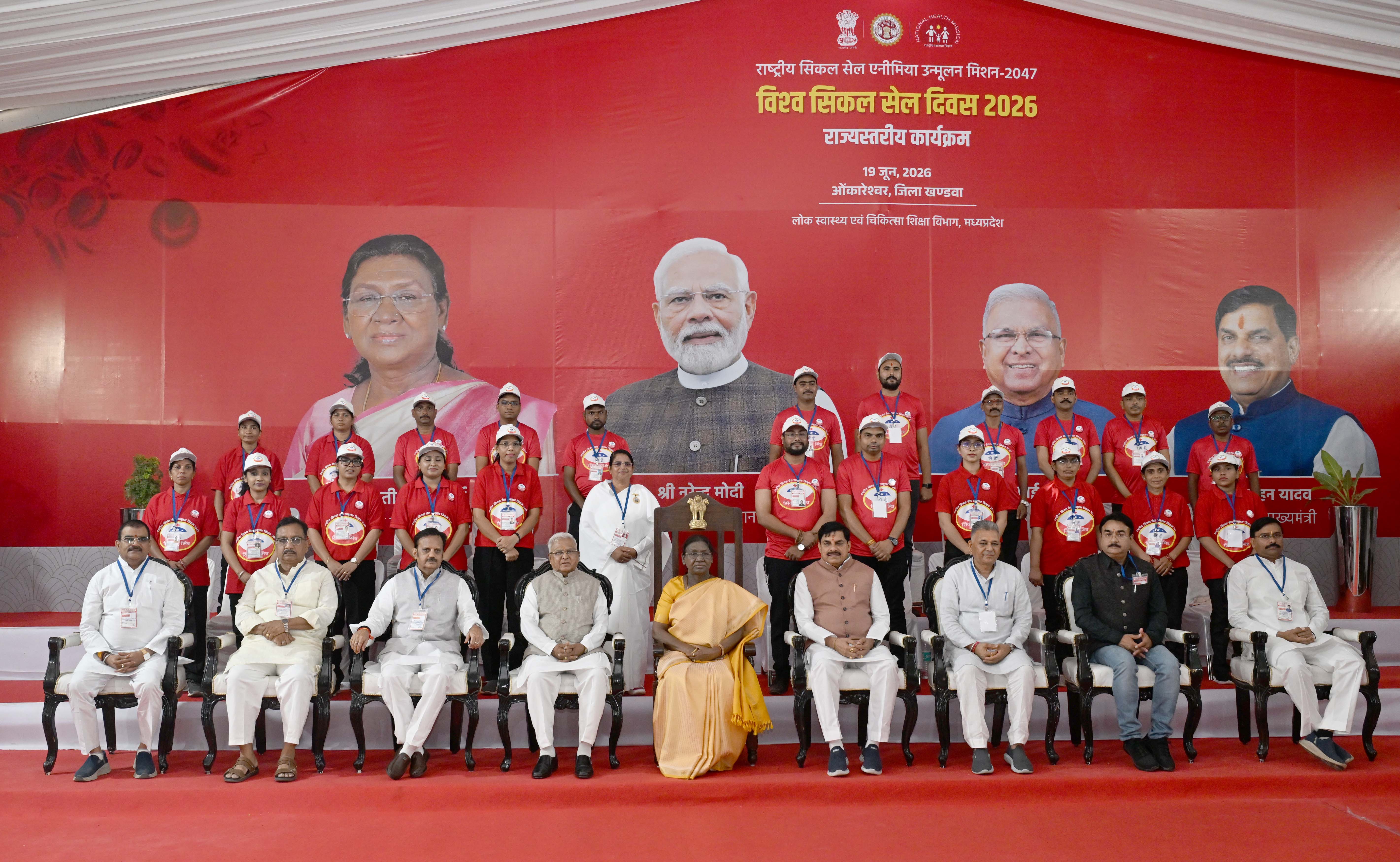
On International Sickle Cell Day (19 June) 2026, the President of India reaffirmed the country's commitment to eliminate Sickle Cell Disease (SCD) by 2047 under the National Sickle Cell Anaemia Elimination Mission (NSCEM).
International Sickle Cell Day
- International Sickle Cell Day is observed annually on 19 June to raise awareness about Sickle Cell Disease (SCD) and promote early diagnosis, treatment, prevention, and equitable healthcare access.
- The United Nations General Assembly (UNGA) designated 19 June as International Sickle Cell Day through a resolution adopted on 22 December 2008, recognizing SCD as a major global public health challenge and one of the world's most significant inherited genetic disorders.
- Theme (2026):"Closing the Survival Gap: Equity in Sickle Cell Disease."
What is Sickle Cell Disease (SCD)?
Sickle Cell Disease (SCD) is a hereditary genetic blood disorder caused by a mutation in the HBB (beta-globin) gene, resulting in the production of abnormal haemoglobin (Haemoglobin S). Instead of their normal biconcave shape, red blood cells become rigid, sticky, and sickle (crescent)-shaped, impairing blood flow and oxygen delivery.
The disease follows an autosomal recessive inheritance pattern, meaning an individual develops SCD only after inheriting two defective genes (one from each parent). Individuals carrying only one mutated gene possess the Sickle Cell Trait and are generally asymptomatic but can transmit the gene to their offspring.
Health Impact
Abnormally shaped red blood cells obstruct small blood vessels, leading to vaso-occlusive crises, severe pain episodes, chronic anaemia, organ damage, recurrent infections due to splenic dysfunction, and reduced life expectancy. Symptoms generally begin at 5–6 months of age as fetal haemoglobin declines.
Treatment
Management focuses on reducing complications through:
- Hydroxyurea therapy (increases fetal haemoglobin production).
- Pain management and adequate hydration.
- Blood transfusions for severe complications.
- Vaccination and antibiotics to prevent infections.
National Sickle Cell Anaemia Elimination Mission (NSCEM)
Launched in 2023, the National Sickle Cell Anaemia Elimination Mission aims to eliminate Sickle Cell Disease as a public health problem in India by 2047, with a special focus on tribal populations, where disease prevalence is highest.
The Mission is implemented jointly by the Ministry of Health & Family Welfare and the Ministry of Tribal Affairs under the National Health Mission (NHM) across 17 high-focus States.
Key Features
- Mission period: 2023–2026 (screening phase).
- Screening target: Approximately 7 crore individuals aged 0–40 years.
- Focus areas include:
- Universal screening and early diagnosis.
- Genetic counselling.
- Timely treatment and follow-up.
- Public awareness and prevention.
- Strengthening healthcare infrastructure.
Green Hydrogen Certification Portal (GHCI)
- 24 Jun 2026
In News:
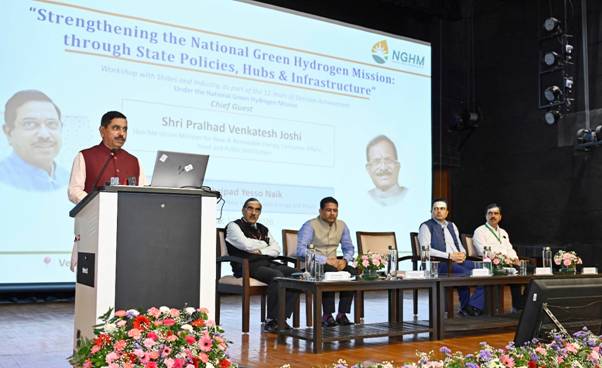
The Union Ministry of New and Renewable Energy (MNRE) launched the Green Hydrogen Certification Portal of India (GHCI) during a national workshop on the National Green Hydrogen Mission (NGHM). The portal will facilitate transparent certification and regulatory compliance under the Green Hydrogen Certification Scheme of India (GHCI Scheme).
Green Hydrogen Certification Portal (GHCI)
The Green Hydrogen Certification Portal is a digital platform developed by the Ministry of New and Renewable Energy (MNRE) to implement the Green Hydrogen Certification Scheme of India.
The portal aims to:
- Ensure transparent certification of Green Hydrogen.
- Facilitate regulatory compliance for producers.
- Standardize certification to build domestic and international market confidence.
- Promote traceability and credibility of India's green hydrogen ecosystem.
National Green Hydrogen Mission (NGHM)
Launched in January 2023, the National Green Hydrogen Mission seeks to establish India as a global hub for the production, utilization, and export of Green Hydrogen and its derivatives. The mission aims to reduce dependence on fossil fuels, strengthen energy security, promote indigenous manufacturing, and accelerate India's transition towards a low-carbon economy.
Three Pillars of the Mission
The mission is built around three strategic pillars:
- Demand Creation: Development of domestic and export markets for green hydrogen.
- Supply-side Incentives: Incentives for green hydrogen production and electrolyser manufacturing.
- Enabling Ecosystem: Development of infrastructure, R&D, standards, certification, and supportive policy frameworks.
Targets by 2030
|
Target |
Details |
|
Green Hydrogen Production |
5 Million Metric Tonnes (MMT) annually |
|
Renewable Energy Capacity |
125 GW |
|
Investment Mobilisation |
?8 lakh crore |
|
CO? Emission Reduction |
50 MMT annually |
|
Objective |
Enhance energy security and reduce fossil fuel imports |
Major Components
Key initiatives under the mission include:
- Strategic Interventions for Green Hydrogen Transition (SIGHT) Programme
- Incentives for electrolyser manufacturing and hydrogen production
- Green Hydrogen Certification Framework
- Research & Development (R&D) Roadmap
- Development of standards, testing and certification infrastructure
- Creation of hydrogen hubs and supporting infrastructure
State-Level Progress
To support implementation:
- 6 States have notified dedicated Green Hydrogen Policies.
- 7 States have incorporated hydrogen into existing energy/industrial policies.
- 4 States are in the process of formulating dedicated policies.