
Sulphur Dioxide (SO?) Emissions from Coal-Based Power Plants
- 15 Jul 2026
In News:
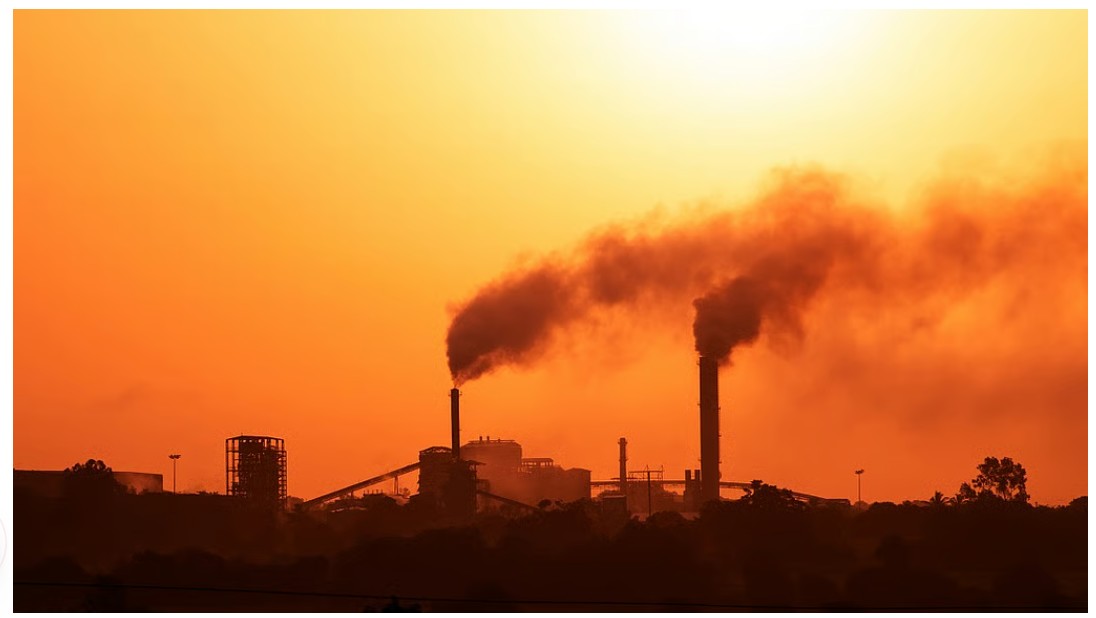
A recent analysis by the Centre for Research on Energy and Clean Air (CREA) found that around 81% of sulphur dioxide (SO?) emissions from coal-fired power plants within a 300-km radius of Delhi-NCR originate from Category C plants, which were exempted from mandatory installation of Flue Gas Desulphurisation (FGD) systems under the July 2025 notification.
About Sulphur Dioxide (SO?)
Sulphur dioxide (SO?) is a colourless, toxic and highly reactive gas with a pungent odour. It is one of the major criteria air pollutants regulated under ambient air quality standards due to its adverse effects on human health and the environment.
Major Sources
The largest source of SO? emissions is the combustion of sulphur-containing fossil fuels, particularly coal in thermal power plants.
Other important sources include:
- Petroleum refining
- Metal smelting (e.g., copper, zinc and iron ores)
- Natural sources such as volcanic eruptions, geothermal activity and decomposition of organic matter in wetlands.
Atmospheric Transformation
After being released into the atmosphere, SO? can travel hundreds of kilometres before undergoing chemical reactions.
It is converted into:
- Sulphate aerosols, a major component of PM?.? (fine particulate matter).
- Sulphuric acid (H?SO?), which contributes to acid rain, damaging forests, soils, crops and aquatic ecosystems.
Health and Environmental Impacts
SO? poses serious risks to both human health and the environment.
Health impacts
- Irritates the respiratory tract.
- Aggravates asthma, bronchitis and other respiratory diseases.
- Through PM?.? formation, increases the risk of cardiovascular diseases, stroke and premature deaths.
Environmental impacts
- Causes acid rain, leading to soil acidification and freshwater degradation.
- Damages vegetation by reducing photosynthesis.
- Contributes significantly to regional air pollution.
Concerns Highlighted by the CREA Analysis
The study found that about 90% of estimated SO? emissions from assessed coal-fired power plants around Delhi-NCR originated from units without operational FGD systems.
The findings are particularly significant because:
- FGD systems can reduce SO? emissions by up to 95%.
- Higher coal-based power generation, particularly during strong El Niño conditions, could further increase SO? emissions.
- Since SO? can travel long distances before forming PM?.?, exemptions based solely on a plant's proximity to urban areas may not adequately protect regional air quality.
Key Mitigation Measures
Reducing SO? emissions requires a combination of technological and policy interventions:
- Mandatory installation of Flue Gas Desulphurisation (FGD) systems in coal-fired power plants.
- Public disclosure of Continuous Emission Monitoring Systems (CEMS) data to improve transparency and compliance.
- Regular reporting on the operational status of pollution-control equipment.
- Accelerating the transition towards renewable energy sources to reduce dependence on coal.
National Innovation Challenge for Drone Application and Research (NIDAR 2.0)
- 15 Jul 2026
In News:
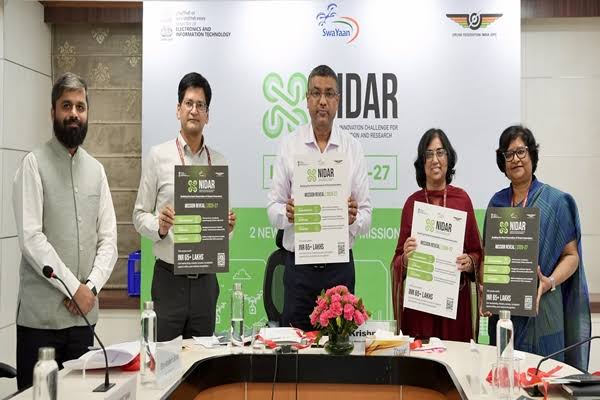
The Ministry of Electronics and Information Technology (MeitY), in collaboration with the Drone Federation of India (DFI), has launched the second edition of the National Innovation Challenge for Drone Application and Research (NIDAR 2.0) under the SwaYaan Initiative. The challenge aims to develop indigenous autonomous drone technologies powered by India's own VEGA microprocessor, strengthening the vision of Atmanirbhar Bharat.
About NIDAR 2.0
NIDAR 2.0 (2026–27) is a national-level innovation challenge that encourages engineering students to design, prototype and build next-generation autonomous drones and indigenous drone components. Unlike the previous edition, which focused on drone applications, NIDAR 2.0 shifts emphasis towards autonomous systems, indigenous avionics, flight controllers and onboard intelligence, enabling students to build the "brain" of the drone rather than merely assembling airframes.
The programme functions as the flagship innovation platform under MeitY'sSwaYaan Capacity Building Initiative.
Key Features
The challenge is organised under two innovation tracks.
Track 1: Drone Innovation
Student teams are required to develop autonomous drone solutions for:
- Swarm drones capable of locating disaster survivors and delivering medical supplies without external communication networks.
- GPS-denied drones capable of navigating confined indoor environments for industrial inspection.
Track 2: Component Innovation
- Teams will develop an indigenous flight controller and autopilot system using the VEGA microprocessor and domestic electronic components.
- Following technical evaluation, the top 100 teams will receive two VEGA processor development kits each for testing and integration.
- To promote innovation and entrepreneurship, the challenge offers a prize pool exceeding ?65 lakh, along with startup incubation, cloud computing credits, software support and industry internships.
VEGA Processor
The VEGA processor is a family of indigenously developed microprocessors designed by the Centre for Development of Advanced Computing (C-DAC) under MeitY'sMicroprocessor Development Programme. It is based on the open-standard RISC-V architecture, which aims to reduce India's dependence on proprietary foreign chip designs and licensing costs while strengthening indigenous semiconductor capabilities.
About SwaYaan Initiative
The SwaYaan (Capacity Building for Human Resource Development in Unmanned Aircraft Systems) initiative was approved by MeitY in July 2022 with an outlay of ?89.87 crore for five years.
It seeks to build a skilled workforce for India's drone ecosystem through a Hub-and-Spoke model involving 30 premier institutions, including IISc, IITs, IIITs, NITs, C-DAC and NIELIT.
The programme focuses on five core domains:
- Aeromechanics
- Drone Electronics
- Guidance, Navigation and Control (GNC) Algorithms & Simulation
- Drone Applications
- Allied Unmanned Aircraft System (UAS) Technologies
So far, the initiative has trained over 51,000 individuals while supporting specialised academic programmes, online courses, research publications and patents in drone technology.
Maori Tribe and the Concept of ‘Waka’
- 15 Jul 2026
In News:
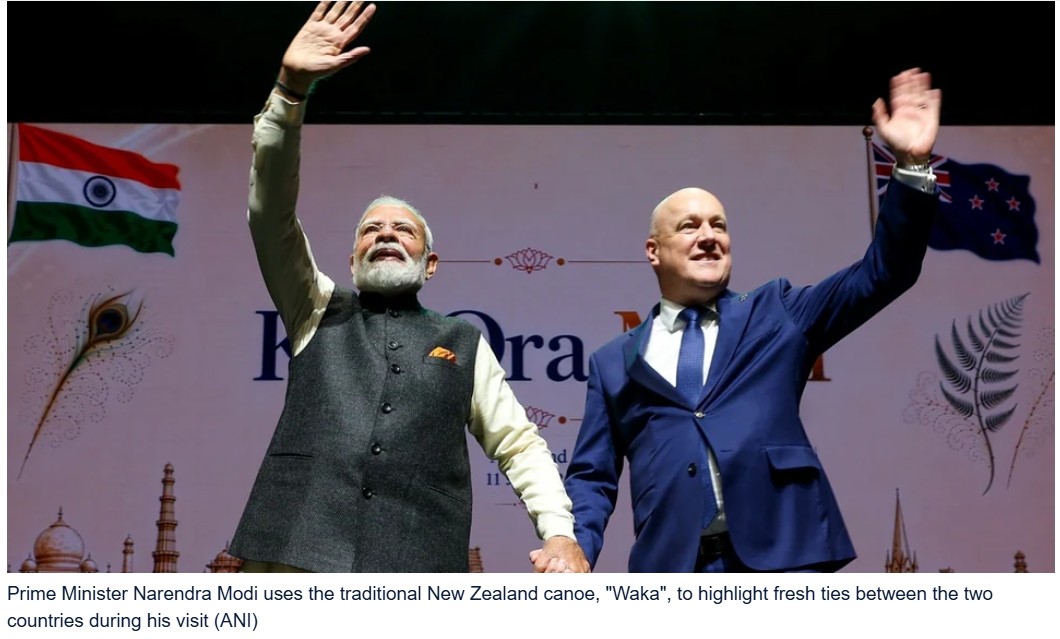
During his address to the Indian community in Auckland, the Prime Minister of India invoked the M?ori concept of "Waka" to symbolise the growing partnership between India and New Zealand, emphasising a shared journey based on trust, cooperation and common values.
Who are the M?ori?
- The M?ori are the indigenous people of New Zealand, who first settled on the islands in the early 13th century. They belong to the Polynesian ethnic group and are most closely related to the Eastern Polynesians.
- Today, M?ori constitute about one-sixth of New Zealand's population, with nearly 86% residing on the North Island.
- Despite centuries of colonial rule and displacement, the M?ori have preserved their language, traditions and cultural identity, and have witnessed a significant cultural revival in recent decades.
Language and Cultural Heritage
- The M?ori language (Te Reo M?ori) belongs to the Polynesian group of the Eastern Oceanic branch of the Austronesian language family and is one of the official languages of New Zealand. While most M?ori are fluent in English, nearly one-third continue to speak their ancestral language.
- At the heart of M?ori society is the Marae, a sacred communal space comprising meeting houses and open grounds where communities gather for ceremonies, discussions, cultural performances and social events.
- The M?ori are globally recognised for the Haka, a traditional ceremonial dance characterised by rhythmic chanting, vigorous movements and expressive facial gestures. Another distinctive cultural tradition is Ta Moko, the sacred art of facial and body tattooing, which reflects an individual's genealogy, social status, achievements and identity.
Cultural Revival
A renewed assertion of M?ori identity emerged during the civil rights movements of the 1960s. This was further strengthened by the Treaty of Waitangi Act, 1975, which enabled M?ori communities to pursue claims relating to historical injustices and reinforced efforts to preserve their language and cultural heritage.
What is ‘Waka’?
In the M?ori language, "Waka" literally means a canoe or vessel. Beyond its physical meaning, it represents a shared journey, unity, collective purpose and cooperation. Traditionally, waka symbolisedthe voyages undertaken by the ancestors of the M?ori to reach New Zealand and continues to represent solidarity and common destiny in M?ori culture.
By invoking the concept of Waka, the Prime Minister highlighted the shared aspirations of India and New Zealand to move forward together through mutual trust, partnership and collaboration.
Eärendil-1: Satellite-Based Sunlight Reflection Mission
- 15 Jul 2026
In News:
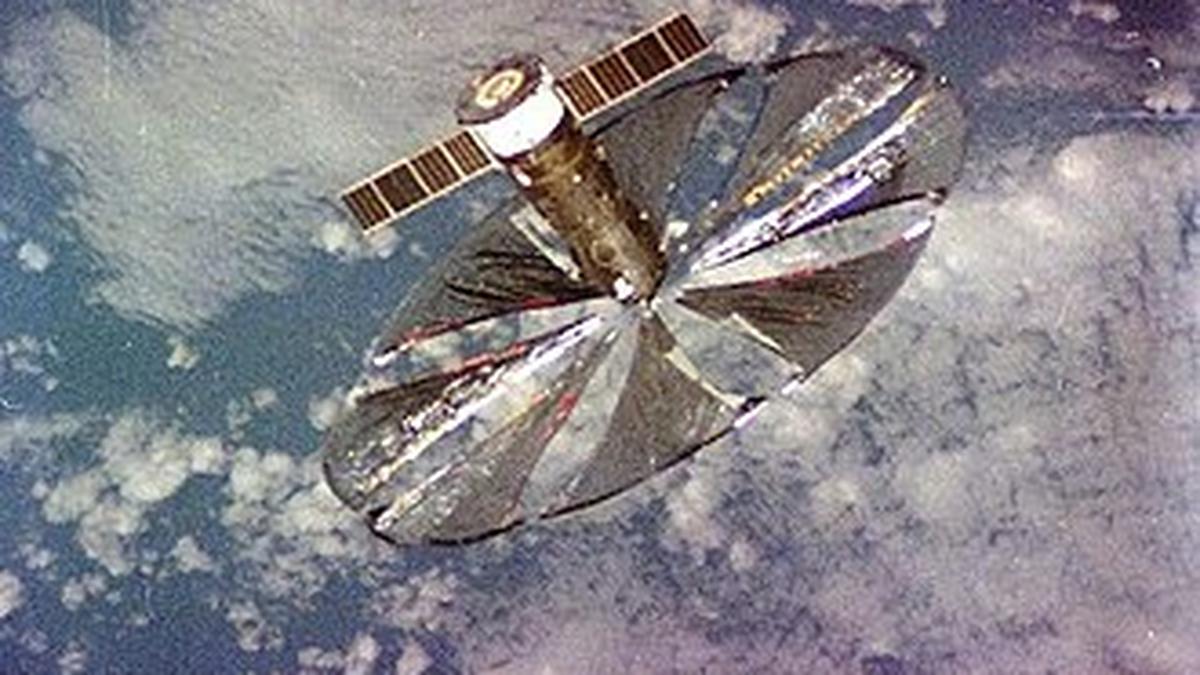
The U.S. Federal Communications Commission (FCC) has authorisedReflect Orbital, a U.S.-based startup, to launch Eärendil-1, an experimental satellite designed to deploy a large orbital mirror that can reflect sunlight onto selected locations on Earth during nighttime.
About Eärendil-1
Eärendil-1 is the first satellite mission planned by Reflect Orbital to demonstrate the feasibility of space-based sunlight reflection. The project seeks to provide artificial illumination after sunset by redirecting sunlight from orbit to designated locations on Earth.
The satellite is intended to support applications such as extending solar power generation, providing emergency lighting during disasters and humanitarian operations, and supporting industrial and agricultural activities requiring additional illumination.
How Does it Work?
Eärendil-1 will operate in a Low Earth Orbit (LEO) at an altitude of 600–650 km. It will carry a deployable, highly specular (mirror-like) thin-film reflector capable of reflecting sunlight towards specific regions on Earth.
The reflector is motorised and steerable, allowing it to change orientation and direct reflected sunlight to selected locations during nighttime.
Potential Significance
If successfully demonstrated, the technology could:
- Extend the operating hours of solar panels by providing additional sunlight after sunset.
- Support disaster response and humanitarian relief operations where conventional lighting infrastructure is unavailable.
- Improve productivity in sectors such as agriculture, construction and industrial operations.
- Contribute to greater energy availability by supplementing renewable energy systems.
India's First Made-in-India EXIM Shipping Container
- 15 Jul 2026
In News:
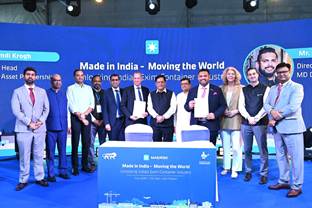
India unveiled its first indigenously manufactured Export-Import (EXIM) shipping container for global shipping company A.P. Moller–Maersk at the Maersk–CONCOR Inland Container Depot, Dadri (Uttar Pradesh). The milestone marks a significant step towards maritime self-reliance under Atmanirbhar Bharat, Make in India, and the Maritime Amrit Kaal Vision 2047.
About the Initiative
- The initiative aims to establish India as a global hub for shipping container manufacturing, reducing dependence on imports while strengthening the country's position in the international maritime supply chain.
- The unveiling was accompanied by Maersk's order for 1,000 additional Made-in-India containers, signalling confidence in India's emerging maritime manufacturing ecosystem and the beginning of a long-term commercial partnership.
- The container has been manufactured in accordance with International Organization for Standardization (ISO) specifications and the International Convention for Safe Containers (CSC), making it suitable for deployment in global shipping operations.
Container Manufacturing Promotion Scheme (CMPS)
The initiative is supported by the proposed ?10,000-crore Container Manufacturing Promotion Scheme (CMPS) announced in the Union Budget 2026.
The scheme seeks to:
- Increase India's annual container manufacturing capacity nearly tenfold to about 7.5 lakh TEUs (Twenty-foot Equivalent Units).
- Provide capital expenditure (CapEx) support for new (Greenfield) and existing (Brownfield) manufacturing units.
- Offer operational incentives (OpEx support) to improve global competitiveness.
- Promote Research & Development (R&D), testing, skilling and technology development.
The broader objective is to develop a globally competitive domestic container manufacturing ecosystem, while generating employment, encouraging technology transfer and improving supply-chain resilience.