
Malvan – Anti-Submarine Warfare Shallow Water Craft (ASW-SWC)

- 18 Jul 2026
In News:
The Indian Navy is set to commission INS Malvan, the second Mahe-class Anti-Submarine Warfare Shallow Water Craft (ASW-SWC), further strengthening India's coastal defence and anti-submarine warfare capabilities.
About INS Malvan
INS Malvan is the second vessel of the Mahe-class Anti-Submarine Warfare Shallow Water Craft (ASW-SWC) being inducted into the Indian Navy. It has been indigenously designed and built by Cochin Shipyard Limited (CSL) under the Government's Aatmanirbhar Bharat initiative.
The ship is named after the historic coastal town of Malvan in Maharashtra and also commemorates the legacy of the erstwhile INS Malwan, an Indian Navy minesweeper that served until 2003.
Key Features
INS Malvan has a displacement of about 1,100 tonnes and is powered by an advanced waterjet propulsion system, providing superior manoeuvrability in shallow coastal waters.
The warship is equipped with:
- Torpedoes
- Multi-functional anti-submarine rockets
- Advanced sonar systems
- Modern radar and surveillance sensors
It is designed to undertake:
- Anti-Submarine Warfare (ASW) operations in coastal and shallow waters.
- Underwater surveillance.
- Low Intensity Maritime Operations (LIMO).
- Mine warfare operations.
The vessel incorporates over 80% indigenous content, reflecting India's growing capability in indigenous warship design and construction.
Cyclosporiasis

- 18 Jul 2026
In News:
A widespread outbreak of cyclosporiasis has been reported in the United States, prompting health authorities to issue advisories regarding the consumption of contaminated food and water.
About Cyclosporiasis
Cyclosporiasis is a foodborne intestinal disease caused by the microscopic parasite Cyclospora cayetanensis. The infection primarily spreads through the consumption of food or water contaminated with faeces containing the parasite and does not spread directly from person to person.
Transmission and Symptoms
The disease is transmitted through the faeco-oral route, most commonly by consuming contaminated raw fresh produce or unsafe drinking water.
The hallmark symptom is prolonged watery diarrhoea, which may be accompanied by:
- Fatigue
- Stomach cramps
- Loss of appetite
- Weight loss
- Nausea
The infection can be particularly severe in children, the elderly and immunocompromised individuals.
Complications
If left untreated, cyclosporiasis may lead to:
- Malabsorption (poor absorption of nutrients)
- Cholecystitis (inflammation of the gallbladder)
- Reactive arthritis
Diagnosis and Treatment
Diagnosis is often challenging because the parasite is shed intermittently in stool. Confirmation generally requires:
- Stool PCR (Polymerase Chain Reaction) testing, or
- Microscopic examination of stool samples, often collected over multiple days.
The standard treatment is a 7–10 day course of the antibiotic Trimethoprim-Sulfamethoxazole (TMP-SMX), along with adequate hydration.
Prevention
Most outbreaks have been linked to contaminated raw fruits and vegetables, particularly:
- Leafy greens
- Lettuce
- Spinach
- Basil
- Cilantro
Since routine chemical disinfectants may not completely eliminate the parasite, prevention relies on:
- Thorough washing of fruits and vegetables under clean running water.
- Safe drinking water.
- Proper hand hygiene and sanitation.
Gandak River
- 18 Jul 2026
In News:
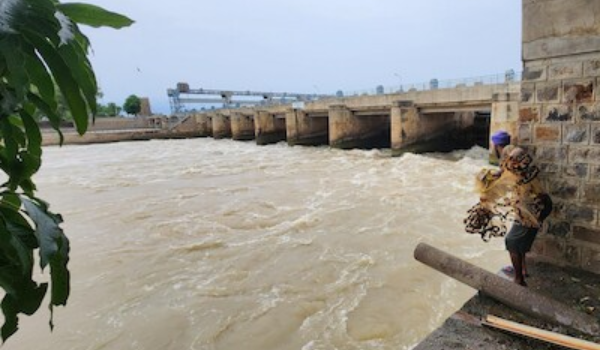
Heavy rainfall in the catchment areas of Nepal has caused the Gandak River to rise above the danger level in parts of Bihar, increasing the risk of floods in several districts.
About the Gandak River
- The Gandak River is one of the major rivers of northern India and an important left-bank tributary of the Ganga. It finds mention in the Mahabharata and is known by different names along its course.
- The river originates at an altitude of about 7,620 metres north of Dhaulagiri Mountain in Tibet near the Nepal border. It is formed by the confluence of the Kali and Trisuli rivers, which rise in the Great Himalayas of Nepal. In Nepal, it is known as the Kali Gandaki and later as the Narayani.
- The river enters India at Triveni (Valmikinagar), Bihar, near the Indo–Nepal border. After briefly touching Uttar Pradesh, it flows mainly through West Champaran, East Champaran, Gopalganj and Saran districts of Bihar before joining the Ganga near Hajipur (Vaishali district), opposite Patna.
- The river is approximately 630 km long, of which about 185 km flows through Nepal and 445 km through India.
Basin Characteristics
The Gandak basin is bounded by the Himalayas in the north and the Ganga in the south. It lies between the Kosi basin in the east and the Karnali (Ghaghara) basin in the west.
The upper catchment contains around 1,710 glaciers and over 300 lakes, including three Himalayan peaks above 8,000 metres—Dhaulagiri, Manaslu and the Annapurna Massif.
Due to its steep Himalayan gradient and fragile geology, the river carries a heavy sediment load, resulting in frequent channel shifting and flooding in the plains of Bihar.
While flowing through Nepal, the river forms the Kali Gandaki Gorge, regarded as one of the deepest river gorges in the world.
Ecological Significance
The Gandak basin supports rich biodiversity and includes two important protected areas:
- Chitwan National Park (Nepal)
- Valmiki Tiger Reserve (Bihar, India)
Major Tributaries
The important tributaries of the Gandak River include:
- Daraudi
- Seti
- Madi
- Marsyandi
- Budhi Gandaki
National Investment Policy for Urea-2026 (NIPU-2026)
- 18 Jul 2026
In News:
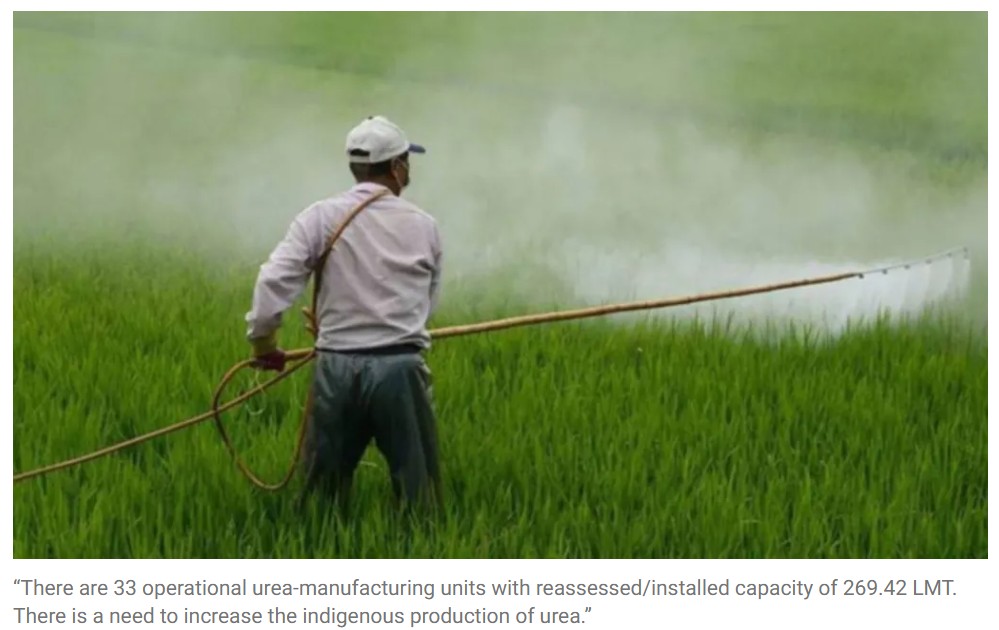
The Cabinet Committee on Economic Affairs (CCEA) has approved the National Investment Policy for Urea-2026 for Atmanirbhar Bharat (NIPU-2026) to promote domestic urea production, reduce import dependence and strengthen India's fertilizer security.
About NIPU-2026
The National Investment Policy for Urea-2026 (NIPU-2026) is a sector-specific investment policy designed to promote the setting up of new natural gas-based urea manufacturing plants in India. It succeeds the New Investment Policy (NIP), 2012, whose investment window expired in October 2019.
The policy seeks to bridge India's growing demand-supply gap in urea by encouraging fresh investments through a transparent and investor-friendly framework, thereby advancing the vision of Atmanirbhar Bharat in the fertilizer sector.
Key Features
- NIPU-2026 aims to create 10 million tonnes (MT) of additional domestic urea production capacity through the establishment of 8–9 new natural gas-based fertilizer plants.
- To improve transparency and efficiency, the policy separates fixed and variable costs while calculating government support, replacing the earlier cost structure under NIP-2012.
- The policy also introduces an assured Return on Equity (RoE) ranging from 12% to 16%, providing greater investment certainty and encouraging both public and private sector participation.
- To protect investors from currency volatility, fixed costs can be converted into Indian Rupees (INR) after four years based on prevailing exchange rates, thereby reducing foreign exchange risk.
- The revised framework is also expected to generate savings of over ?250 crore per plant compared to the earlier policy by improving cost efficiency and transparency.
- Additionally, the policy provides a single-window mechanism for evaluating pending investment proposals received by the Department of Fertilizers, facilitating faster project implementation.
Significance
India continues to face a urea production deficit of nearly 10 million tonnes, resulting in significant import dependence. NIPU-2026 aims to bridge this gap by expanding domestic manufacturing capacity, strengthening fertilizer security and reducing the import bill.
By promoting modern natural gas-based plants, the policy is expected to improve production efficiency while encouraging long-term investments through a stable policy framework and assured returns. This will contribute to Atmanirbhar Bharat, enhance farmers' access to fertilizers and strengthen India's food security.
Semicon 2.0
- 18 Jul 2026
In News:
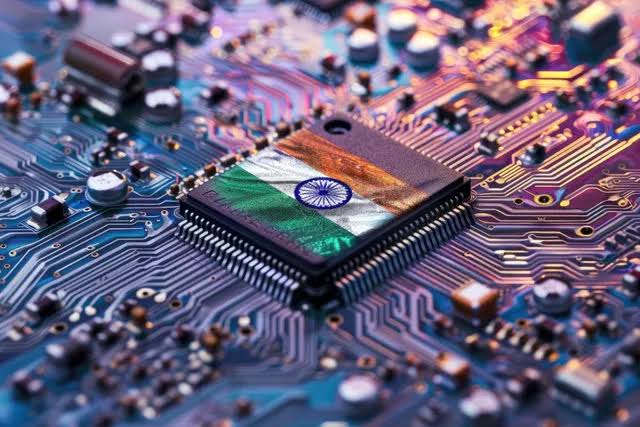
The Union Cabinet has approved Semicon 2.0 with a budgetary outlay of ?1,27,500 crore to accelerate India's semiconductor design and manufacturing ecosystem and strengthen the India Semiconductor Mission (ISM).
About Semicon 2.0
Semicon 2.0 is a long-term policy initiative aimed at developing a complete semiconductor ecosystem in India. Building on the progress achieved under Semicon 1.0, the scheme seeks to strengthen the country's capabilities across the semiconductor value chain—from chip design and fabrication to packaging, research, materials and skilled manpower. The broader objective is to position India as a globally competitive semiconductor hub, reduce import dependence, and enhance technological self-reliance.
Key Features
The scheme adopts a six-pillar approach to build a robust semiconductor ecosystem:
- Design Ecosystem: Promote indigenous semiconductor chip design, intellectual property (IP) and system development, building upon the work of over 105 chip-design startups.
- Machines & Materials:Incentivise manufacturing of semiconductor fabrication equipment, precision machinery, specialty chemicals, materials and gases, thereby strengthening domestic supply chains.
- Semiconductor Fabs: Encourage the establishment of additional silicon fabs, compound semiconductor fabs, discrete component fabs and display fabs. India's first silicon fab is expected to become operational in 2028.
- ATMP/OSAT Facilities: Expand Assembly, Testing, Marking & Packaging (ATMP) and Outsourced Semiconductor Assembly & Test (OSAT) units to make India a preferred destination for advanced semiconductor packaging.
- Research & Development: Promote development of advanced semiconductor nodes, moving beyond the present 28 nm–110 nm technologies through collaboration with leading research institutions.
- Talent Development: Strengthen semiconductor education by expanding training in chip design, clean-room operations, fabrication and ecosystem management, building on the training of 68,000 students across 315 universities.
Progress under Semicon 1.0
Semicon 1.0 has laid the foundation for India's semiconductor ecosystem. So far, 12 manufacturing projects involving an investment of over ?1.64 lakh crore have been approved, including one silicon fab, one silicon carbide fab, one Gallium Nitride (GaN) Micro-LED display fab and nine packaging units. Commercial production has already commenced at Micron, Kaynes and CG Semi.
On the design front, 24 semiconductor design projects have received financial assistance, while 105 startups and MSMEs have been provided access to industry-standard Electronic Design Automation (EDA) tools for developing chips used in sectors such as AI, IoT, drones, satellite communication, telecom and smart devices.