
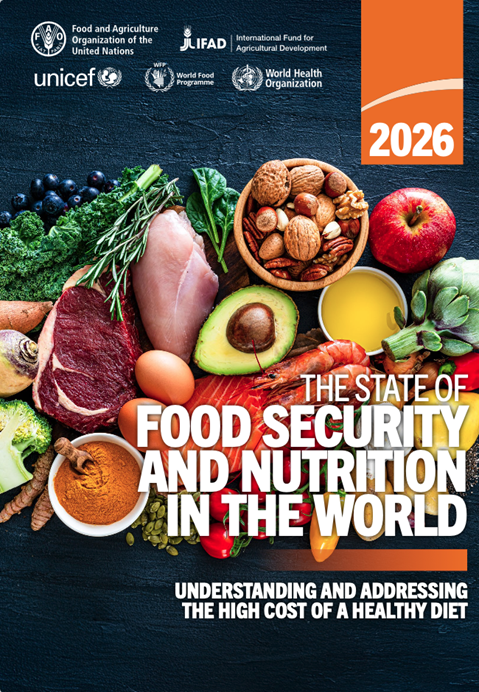
The State of Food Security and Nutrition in the World (SOFI) 2026
- 07 Aug 2026
In News:
The State of Food Security and Nutrition in the World (SOFI) 2026 report highlighted that global hunger declined for the third consecutive year, but 645 million people remain undernourished. For the first time, Africa surpassed Asia as the region with the highest number of people facing hunger.
About SOFI
The State of Food Security and Nutrition in the World (SOFI) is the annual flagship report jointly published by the FAO, IFAD, UNICEF, WFP, and WHO. It monitors global progress towards SDG 2 (Zero Hunger) by assessing food security, hunger, malnutrition, and the affordability of healthy diets.
Key Findings
- Global hunger declined to 7.8% in 2025, down from 8.6% in 2022, though 645 million people remain undernourished.
- Africa became the global hunger hotspot, with 309 million people (20% of its population) facing hunger, compared to 292 million (6%) in Asia.
- Around 2.1 billion people (25.8%) experienced moderate or severe food insecurity in 2025.
- The Cost of a Healthy Diet (CoHD) increased to 4.28 PPP dollars per person per day, leaving 2.69 billion people (32.7%) unable to afford a healthy diet.
- Progress towards SDG 2.2 (ending all forms of malnutrition) remains slow, with inadequate improvement in dietary diversity, child nutrition, and maternal health indicators.
India in SOFI 2026
India played a major role in improving food security in Southern Asia, with undernourishment declining from 13.9% in 2021 to 9.3% in 2025. The report also notes that India significantly improves the affordability of healthy diets in lower-middle-income countries. However, maternal anaemia and the rising cost of fruits and vegetables remain major concerns.
Cost of a Healthy Diet (CoHD)
The Cost of a Healthy Diet (CoHD) is an indicator developed by the FAO and World Bank that estimates the minimum daily cost of a nutritionally adequate diet. It is based on a basket of six food groups providing around 2,330 kcal per day and is calculated using Purchasing Power Parity (PPP) prices.
Significance
The report highlights that ensuring food availability alone is insufficient. Achieving Zero Hunger requires shifting from calorie-centric food systems to nutrition-sensitive agriculture, improving dietary diversity, strengthening value chains and post-harvest infrastructure, and making nutritious foods more affordable through targeted policy interventions.
Closing Auction Session (CAS)

- 07 Aug 2026
In News:
Indian stock exchanges introduced the Closing Auction Session (CAS) from 3 August 2026 for cash market stocks with derivatives (F&O), following a SEBI directive issued in January 2026.
About Closing Auction Session (CAS)
The Closing Auction Session (CAS) is a 20-minute auction mechanism introduced to determine a single fair closing price for eligible stocks. Instead of using the average of the last traded prices, CAS aggregates buy and sell orders to discover an equilibrium closing price, improving price discovery and reducing end-of-day price manipulation.
It has been implemented simultaneously by the National Stock Exchange (NSE) and the BSE.
How it Works
The auction is conducted in three phases:
- Reference Price (3:15 PM–3:20 PM): Continuous trading ends and a reference price is calculated using the Volume Weighted Average Price (VWAP) of trades between 3:00 PM and 3:15 PM, with a ±3% price band.
- Order Entry (3:20 PM–3:30 PM): Investors can place, modify, or cancel orders during the initial period, while only limit orders are permitted in the final minutes. The session closes at a random time between 3:28 PM and 3:30 PM to discourage manipulation.
- Price Discovery (3:30 PM–3:35 PM): The system matches buy and sell orders at a single equilibrium price that maximizes executable volume.
Key Features
- Applicable only to cash market stocks having active F&O contracts.
- Uses separate order books on NSE and BSE, which may result in temporary differences in closing prices.
- Stop-loss, iceberg, and revealed quantity orders are not permitted during the auction.
- Eligible pending limit orders from the regular trading session are automatically carried forward if they fall within the prescribed price band.
Vehicle-to-Vehicle (V2V) Technology
- 07 Aug 2026
In News:
The Ministry of Road Transport and Highways (MoRTH) has issued a draft notification proposing amendments to the Central Motor Vehicles Rules, 1989, introducing Vehicle-to-Vehicle (V2V) communication standards (AIS-230) to enhance road safety.
About Vehicle-to-Vehicle (V2V) Technology
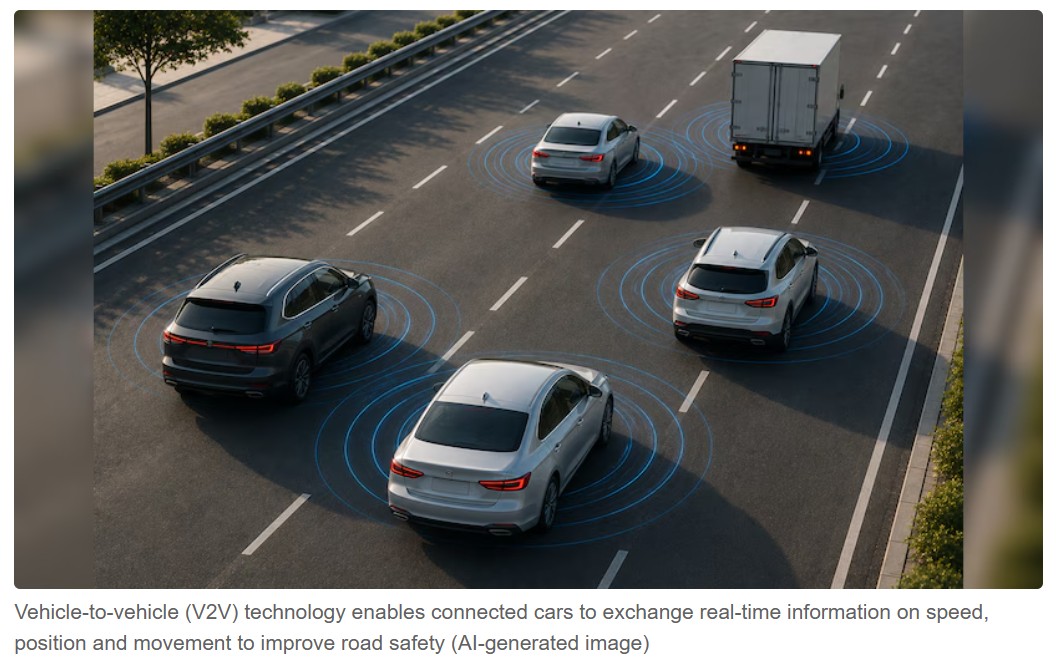
Vehicle-to-Vehicle (V2V) technology is a wireless communication system that enables vehicles to exchange real-time information such as speed, location, direction, acceleration, and braking status. By sharing this data directly with nearby vehicles, V2V helps drivers detect hazards even when they are not visible, thereby preventing collisions and improving overall road safety.
Key Features
- Operates using Cellular Vehicle-to-Everything (C-V2X) technology on the 5.875–5.925 GHz license-exempt spectrum.
- Functions through On-Board Units (OBUs) installed in vehicles that continuously exchange low-latency data.
- Supports 360-degree, non-line-of-sight communication, making it effective around blind curves, junctions, and adverse weather conditions.
- Incorporates encrypted communication protocols to safeguard against spoofing, message tampering, and cyberattacks.
Implementation Timeline
- AIS-230 will serve as the national technical standard.
- Voluntary compliance: From 1 October 2027.
- Mandatory implementation: For all newly manufactured L, M, and N category vehicles from 1 October 2028.
Applications
V2V technology supports several advanced safety functions, including:
- Emergency Electronic Brake Light (EEBL).
- Forward Collision Warning (FCW).
- Blind Spot and Lane Change Alerts.
- Wrong-Way Driving Detection.
- Emergency Vehicle Approaching Alerts.
African Swine Fever (ASF)
- 07 Aug 2026
In News:
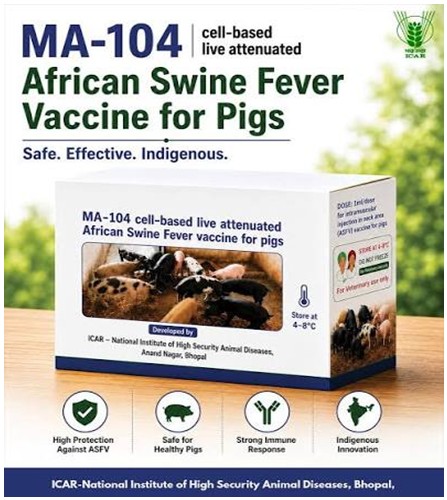
Scientists at ICAR–National Institute of High Security Animal Diseases (ICAR-NIHSAD), Bhopal have developed India's first indigenous MA-104 Cell Line-Based Live Attenuated African Swine Fever (ASF) vaccine for pigs.
About African Swine Fever (ASF)
African Swine Fever (ASF) is a highly contagious viral disease affecting domestic pigs and wild boars. It is caused by the African Swine Fever Virus (ASFV), a DNA virus belonging to the Asfarviridae family.
The disease is characterised by high fever, haemorrhages, and mortality rates that can reach nearly 100%, causing major economic losses to the pig farming sector. ASF is not zoonotic, meaning it does not infect humans or other livestock.
Distribution and Transmission
Originally confined to sub-Saharan Africa, ASF has spread across Europe, Asia, and Africa. India reported its first outbreak in January 2020 in Assam and Arunachal Pradesh, and the disease has since spread to several States and Union Territories.
The virus is highly resilient and can survive for long periods in the environment, contaminated equipment, clothing, vehicles, and processed pork products. It spreads through:
- Direct contact with infected pigs or wild boars.
- Soft ticks in tropical and subtropical regions.
- Contaminated feed, equipment, vehicles, and other fomites.
Symptoms
Clinical signs generally appear 3–15 days after infection and include:
- High fever, lethargy, and loss of appetite.
- Skin reddening, especially on the ears, tail, feet, chest, and abdomen.
- Diarrhoea, vomiting, breathing difficulty, swollen eyes, abortions, and sudden death in severe cases.
Treatment and Prevention
There is no specific treatment for ASF. Disease control relies primarily on strict biosecurity measures, surveillance, movement restrictions, and culling of infected animals.
While a few commercial ASF vaccines are available in Vietnam, India has now developed its first indigenous MA-104 Cell Line-Based Live Attenuated ASF vaccine, marking a significant step towards strengthening the country's preparedness against the disease.
Clouded Leopard Conservation Action Plan (CAP)
- 07 Aug 2026
In News:
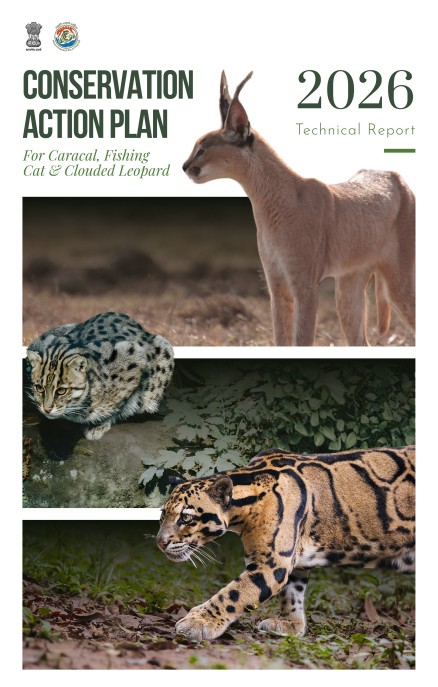
On the occasion of International Clouded Leopard Day, India launched the Clouded Leopard Conservation Action Plan (CAP) to strengthen conservation of one of Asia's most elusive wild cat species.
About Clouded Leopard
The Clouded Leopard (Neofelis nebulosa) is a medium-sized wild cat inhabiting dense forests from the Himalayas through Southeast Asia to southern China. The Sunda Clouded Leopard (Neofelis diardi) is found only in Sumatra and Borneo.
In India, the species is distributed across the Northeast, including Arunachal Pradesh, Assam, Nagaland, Manipur, Mizoram, Tripura, Meghalaya, Sikkim, and northern West Bengal.
It primarily inhabits tropical rainforests, though it also occurs in dry woodlands and secondary forests. It is an arboreal, nocturnal predator, recognised by its distinctive cloud-shaped markings and exceptionally long tail that aids balance while moving through trees.
Conservation Status:IUCN Red List – Vulnerable
Clouded Leopard Conservation Action Plan (CAP)
Prepared under the Government of India–GEF–UNDP initiative, the Action Plan provides a long-term framework for conserving the species through habitat protection, scientific research, and community participation.
Key features include:
- Identification of 14 priority conservation landscapes across Northeast India.
- Habitat restoration and corridor conservation to improve connectivity between fragmented forests.
- Standardised scientific monitoring using camera traps, occupancy surveys, genetic analysis, and environmental DNA (eDNA).
- Greater involvement of local communities in conservation and habitat management.
- Promotion of transboundary cooperation with neighbouring range countries for coordinated conservation efforts.