
UN Global Dialogue on AI Governance

- 14 Jul 2026
In News:
The inaugural UN Global Dialogue on AI Governance was held in Geneva, bringing together governments, industry, academia and civil society to develop a common global approach for governing Artificial Intelligence (AI). The second session is scheduled to be held in New York in May 2027.
About the UN Global Dialogue on AI Governance
The Dialogue was established under United Nations General Assembly (UNGA) Resolution 79/325, following the adoption of the Global Digital Compact (2024). It serves as a multilateral platform to strengthen international cooperation, promote scientific understanding, enhance accountability, and build institutional capacity for responsible AI governance.
The initiative seeks to evolve a globally coordinated framework that balances technological innovation with safety, human rights and sustainable development.
India's Position
India advocated a human-centric, inclusive, safe, secure and trustworthy AI ecosystem, emphasising that AI systems should always remain under meaningful human oversight.
According to India, an effective global AI framework must:
- Protect human rights and fundamental freedoms.
- Prevent misuse, discrimination and algorithmic bias.
- Ensure transparency and accountability in AI-driven decisions.
- Preserve human control in critical sectors such as healthcare, policing and the justice system.
India also highlighted that AI governance should encourage innovation while ensuring that technology remains aligned with societal and ethical values.
Focus on the Global South
India underlined that developing countries should not be excluded from shaping global AI norms. It called for greater technology transfer, financial assistance, institutional capacity-building and knowledge sharing to bridge the widening AI divide and enable equitable access to AI-driven development.
India's domestic AI policy reflects this philosophy through its "AI for All" approach under the National Strategy for Artificial Intelligence and the National AI Governance Guidelines, which promote responsible innovation without imposing unnecessary regulatory barriers.
Major Global Concerns
The Dialogue identified several emerging risks associated with AI, including:
- Spread of deepfakes and misinformation.
- Online sexual exploitation and threats to children.
- Development of autonomous weapons systems.
- Deceptive and opaque AI systems.
- Rising energy consumption and environmental footprint of AI infrastructure.
- Unequal access to AI technologies, potentially widening economic, technological and sovereignty gaps between nations.
NeoSep1 Clinical Trial

- 14 Jul 2026
In News:
The Jawaharlal Institute of Postgraduate Medical Education and Research (JIPMER), Puducherry, has become the first centre in India to enrol a newborn in the NeoSep1 international clinical trial. The study seeks to identify safe and effective antibiotic combinations for treating antimicrobial-resistant neonatal sepsis, a major cause of newborn deaths in low- and middle-income countries.
What is the NeoSep1 Clinical Trial?
- The NeoSep1 Clinical Trial is a multicentre international study sponsored by the Global Antibiotic Research and Development Partnership (GARDP), a not-for-profit organisation working to combat drug-resistant infections.
- The trial plans to enrol3,000 newborns across Asia and Africa by 2028. It is currently underway in India, Vietnam and Pakistan, following enrolment in Ghana, Kenya and South Africa, and is expected to expand to Bangladesh, Malaysia and Uganda.
- Its primary objective is to generate evidence-based antibiotic treatment strategies for neonatal sepsis, particularly suited to the pathogen profile of Low- and Middle-Income Countries (LMICs).
- A key innovation of the study is its PRACTical (PersonalisedRandomised Controlled Trial) design, which allows clinicians to first identify appropriate treatment options for each newborn before random allocation. This approach improves real-world applicability while promoting responsible antimicrobial stewardship.
- India's participation is particularly significant because neonatal sepsis in Indian hospitals is predominantly caused by multidrug-resistant Gram-negative bacteria, unlike the pathogen profile observed in many high-income countries.
What is Neonatal Sepsis?
Neonatal sepsis is a life-threatening bloodstream infection occurring in infants below 90 days of age. Due to their immature immune systems, infections can spread rapidly, leading to septicaemia, pneumonia, meningitis, septic shock, multi-organ failure and death.
It is classified into:
- Early-Onset Sepsis (EOS): Occurs within the first 72 hours of life, usually due to infections transmitted from the mother during pregnancy or childbirth.
- Late-Onset Sepsis (LOS): Occurs between 72 hours and 90 days, generally acquired from the hospital environment or the community.
Causes and Risk Factors
The causative organisms vary across regions. In high-income countries, Group B Streptococcus (GBS) and E. coli are the predominant pathogens. In contrast, India's neonatal sepsis burden is largely driven by multidrug-resistant Gram-negative bacteria, particularly Klebsiella pneumoniae, E. coli, Acinetobacter spp. and Pseudomonas aeruginosa.
The risk is further increased by prematurity, low birth weight (LBW), maternal infections, prolonged rupture of membranes, unhygienic delivery practices, infected amniotic fluid, prolonged hospitalisation and invasive procedures such as ventilators and central venous catheters.
Burden in India
Neonatal sepsis remains the second leading cause of neonatal mortality and accounts for an estimated 30–40% of neonatal deaths in India, translating into nearly 2–2.5 lakh preventable deaths annually.
The growing challenge of antimicrobial resistance (AMR) has reduced the effectiveness of commonly used antibiotics, while blood culture-based diagnosis often requires 48–72 hours, delaying targeted therapy. These factors underscore the need for India-specific clinical evidence, making the NeoSep1 trial a crucial step towards developing effective and affordable treatment strategies.
Secondary Infertility in India

- 14 Jul 2026
In News:
Secondary infertility is becoming an important public health concern in India. Analysis of National Family Health Survey (NFHS) data indicates that its prevalence increased from 19.5% in the early 1990s to 28.6% during 2015–16, highlighting the need for greater policy attention to reproductive healthcare.
Understanding Infertility
The World Health Organization (WHO) defines infertility as a disease of the male or female reproductive system in which pregnancy is not achieved after 12 months or more of regular, unprotected sexual intercourse. Globally, one in every six individuals of reproductive age experiences infertility during their lifetime.
Infertility is classified into two types:
- Primary Infertility: The individual or couple has never achieved pregnancy.
- Secondary Infertility: Pregnancy was achieved previously, but conception does not occur subsequently despite regular unprotected intercourse.
Why is Secondary Infertility Increasing?
The rise in secondary infertility reflects the interaction of demographic, biological and environmental factors rather than a single medical cause.
Increasingly, couples are delaying family completion because of career aspirations, urbanisation and financial considerations. As many women attempt a second pregnancy after the age of 35 years, declining ovarian reserve and egg quality reduce fertility, while advancing paternal age also affects sperm quality.
Complications following the first pregnancy further contribute to infertility. Rising caesarean deliveries may result in pelvic adhesions or isthmocele, while untreated postpartum infections can lead to Pelvic Inflammatory Disease (PID) and tubal blockage. Disorders such as endometriosis, uterine fibroids, PCOS and thyroid dysfunction may also progress over time, reducing reproductive potential.
Lifestyle changes, including obesity, sedentary habits, smoking, alcohol consumption and chronic stress, alongside exposure to air pollution, microplastics and endocrine-disrupting chemicals (EDCs), are increasingly affecting fertility in both men and women. Notably, male infertility remains an under-recognised contributor despite declining sperm quality being a major cause of secondary infertility.
Challenges
India's response remains constrained by high treatment costs, inadequate public fertility services, concentration of ART facilities in private urban hospitals, and limited insurance coverage under AB-PMJAY. The Surrogacy (Regulation) Act, 2021 further restricts options for couples already having a surviving child. Social stigma surrounding infertility—particularly male infertility—and misinformation regarding fertility treatments continue to delay timely diagnosis and evidence-based care.
Government Initiatives
Key initiatives include:
- Assisted Reproductive Technology (Regulation) Act, 2021
- Surrogacy (Regulation) Act, 2021
- Jiyo Parsi Scheme
- ESIC IVF Scheme
- CGHS IVF Reimbursement
- State-supported ART/IVF programmes in Goa, Tamil Nadu and Rajasthan
Way Forward
Addressing secondary infertility requires integrating infertility care into RMNCH A and AB-PMJAY, strengthening ART services in public hospitals, promoting early screening for both partners, regulating fertility clinics effectively, and reducing stigma through awareness campaigns. A rights-based approach that protects reproductive autonomy under Article 21 will be essential to ensuring equitable access to fertility care.
India's First Hydrogen-Powered Passenger Train
- 14 Jul 2026
In News:
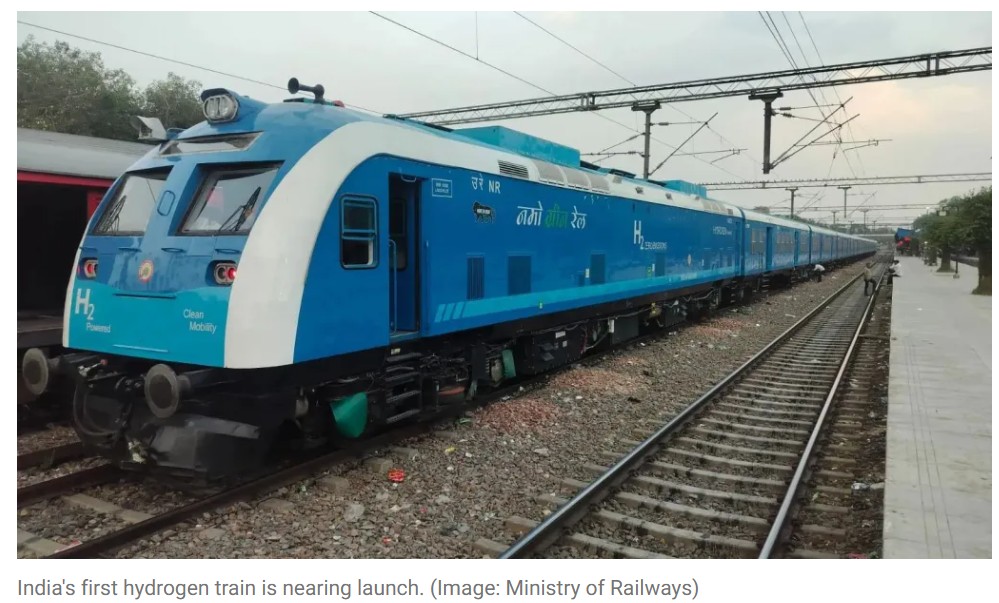
The Prime Minister of IndiaflaggedIndia's first hydrogen-powered passenger train at Jind, Haryana. The project marks a significant step towards decarbonising the railway sector and promoting green mobility through hydrogen-based transportation.
About India's First Hydrogen Train
India's first hydrogen train is a Hydrogen-Electric Multiple Unit (HEMU) developed by retrofitting old Diesel Electric Multiple Unit (DEMU) rakes with hydrogen fuel cells and a Lithium Ferro Phosphate (LFP) battery propulsion system. The train operates without overhead electric lines or fossil fuels, emitting only water vapour and heat, making it a zero-emission mode of transport.
The ?136-crore pilot project has been executed by Northern Railway. The overall system integration was carried out by Medha Servo Drives (Hyderabad), while the onboard hydrogen fuel cells were supplied by Ballard Power Systems (Canada).
How Does the Hydrogen Train Work?
The train generates electricity through an electrochemical reaction inside hydrogen fuel cells, where compressed hydrogen reacts with oxygen from the atmosphere. This process produces electricity to power the train, with water vapour and heat as the only by-products.
To improve efficiency, the train uses a hybrid propulsion system. The fuel cell provides continuous power, while the LFP battery supplies additional energy during acceleration. During braking or low-speed operation, regenerative braking recharges the battery, improving energy efficiency.
Key Features
- India's first Hydrogen-Electric Multiple Unit (HEMU).
- One of the world's longest and most powerful hydrogen trainsets.
- Consists of 8 passenger coaches and 2 driving power cars.
- Power Output:2400 kW (3200 hp).
- Route:Jind–Sonipat (89 km), Haryana.
- Passenger Capacity:682 passengers.
- Maximum Speed:75 km/h.
- Hydrogen Consumption: Approximately 300 kg per day (as per source).
- Each power car stores 440 kg of hydrogen at 200–500 bar pressure.
- A dedicated 3,000-kg hydrogen fuelling station has been established at Jind, equipped with a cooling system that chills hydrogen to –15°C for faster and safer refuelling.
Parrot bornavirus 4 (PaBV-4)

- 14 Jul 2026
In News:
For the first time in India, scientists have identified and genetically characterised Parrot Bornavirus 4 (PaBV-4), a virus responsible for causing Proventricular Dilatation Disease (PDD)—a severe and often fatal disease affecting captive parrots and other psittacine birds.
About Parrot Bornavirus 4 (PaBV-4)
Parrot Bornavirus 4 (PaBV-4) is an enveloped, single-stranded RNA virus belonging to the genus Orthobornavirus under the family Bornaviridae. It infects psittacine birds, including parrots, macaws, cockatoos, parakeets and conures, and is among the most commonly detected parrot bornaviruses in captive birds worldwide.
The virus causes Proventricular Dilatation Disease (PDD), a progressive and largely fatal disease that affects both the digestive and nervous systems of infected birds.
Clinical Manifestations
Affected birds may exhibit both gastrointestinal and neurological symptoms, including:
- Weight loss despite a normal appetite.
- Regurgitation or vomiting.
- Passage of undigested seeds in droppings.
- Enlargement (dilatation) of the proventriculus (glandular stomach).
- Neurological signs such as tremors, ataxia (loss of coordination), seizures and paralysis.
Transmission
The virus is believed to spread primarily through direct contact with infected birds, their droppings, and feather dust, although the exact transmission route remains unclear.
A major challenge is that infected birds can remain asymptomatic while continuously shedding the virus, facilitating silent transmission within captive bird populations.
Treatment and Prevention
At present, no specific antiviral treatment or vaccine is available for PaBV-4. Management is limited to supportive care, including reducing inflammation and maintaining adequate nutrition.
Preventive measures include:
- Strict biosecurity practices.
- Quarantine of newly acquired birds.
- Routine health screening.
- Minimising contact between infected and healthy birds.