
Favara–UPI Cross-Border Payment Corridor
- 03 Aug 2026
In News:
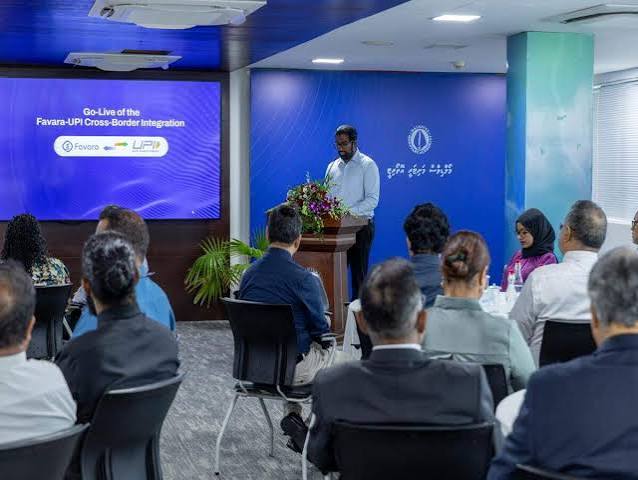
The Maldives Monetary Authority (MMA) has launched the Favara–UPI Cross-Border Payment Corridor, enabling real-time remittances from the Maldives to India by integrating the Maldives' Favara Instant Payment System with India's Unified Payments Interface (UPI).
About the Favara–UPI Cross-Border Payment Corridor
The Favara–UPI Cross-Border Payment Corridor is a real-time digital payment linkage that connects the Maldives' Favara Instant Payment System with India's Unified Payments Interface (UPI). It facilitates seamless person-to-person (P2P) cross-border fund transfers between the two countries.
Key Features
- Countries Involved: India and the Maldives.
- Implementing Institutions: Maldives Monetary Authority (MMA), Reserve Bank of India (RBI), NPCI International Payments Limited (NIPL), and participating banks.
- Objective: To enable secure, instant, and low-cost cross-border digital payments, strengthen financial connectivity, and deepen bilateral economic cooperation.
Operational Features
- Real-Time Remittances: Enables instant transfer of funds from Maldivian Rufiyaa (MVR) accounts to UPI-enabled Indian Rupee (INR) bank accounts.
- Initial Banking Partners: Bank of Maldives Plc and Maldives Islamic Bank Plc through their mobile banking applications.
- Permitted Transactions: Supports family maintenance and gift-related remittances under the Maldives' foreign remittance regulations.
- Future Expansion: Planned introduction of QR-code-based merchant payments and additional cross-border digital payment services.
Exercise ROTOR CLAP III
- 03 Aug 2026
In News:
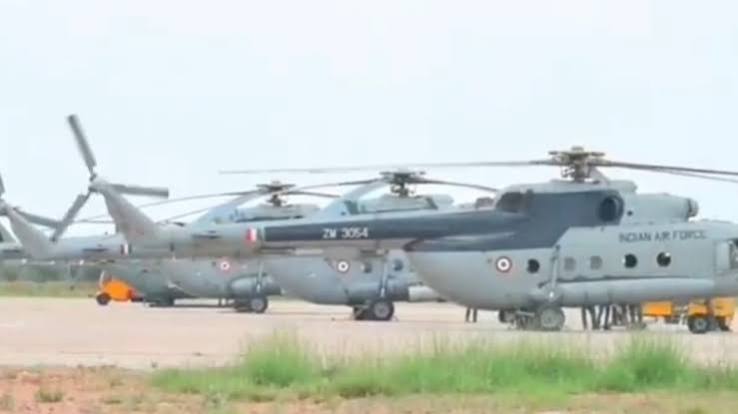
The Indian Air Force (IAF) recently concluded the week-long Exercise ROTOR CLAP III at the Pokhran Field Firing Range, Rajasthan, focusing on countering emerging drone threats.
About Exercise ROTOR CLAP III
Exercise ROTOR CLAP III is a specialized Indian Air Force (IAF) helicopter exercise centred on Counter-Unmanned Aerial Systems (Counter-UAS) operations. It is the third edition of the IAF's rotary-wing exercise series aimed at enhancing helicopter capabilities against evolving aerial threats.
Key Features
- Theme: Counter-Unmanned Aerial Systems (Counter-UAS).
- Venue: Pokhran Field Firing Range, Jaisalmer district, Rajasthan.
- Organised by: Indian Air Force (IAF).
- Objective: To validate operational concepts against emerging drone threats, enhance combat preparedness, and improve coordination among rotary-wing platforms in dynamic battlefield scenarios.
Participating Platforms
The exercise involved a wide range of IAF helicopters, including:
- AH-64 Apache attack helicopter
- Mi-25/35 attack helicopters
- LCH Prachand (indigenous light combat helicopter)
- CH-47F(I) Chinook heavy-lift helicopter
- Mi-17 utility helicopter
- Advanced Light Helicopter (ALH) Dhruv
Operational Activities
The participating helicopters carried out multiple tactical missions, including:
- Precision strike operations
- Counter-UAS missions
- Battlefield support
- Reconnaissance and surveillance
- Troop insertion
- Casualty evacuation (CASEVAC)
- Coordinated operations against aerial and ground-based threats
Suspension Polyvinyl Chloride (S-PVC) Resin
- 03 Aug 2026
In News:
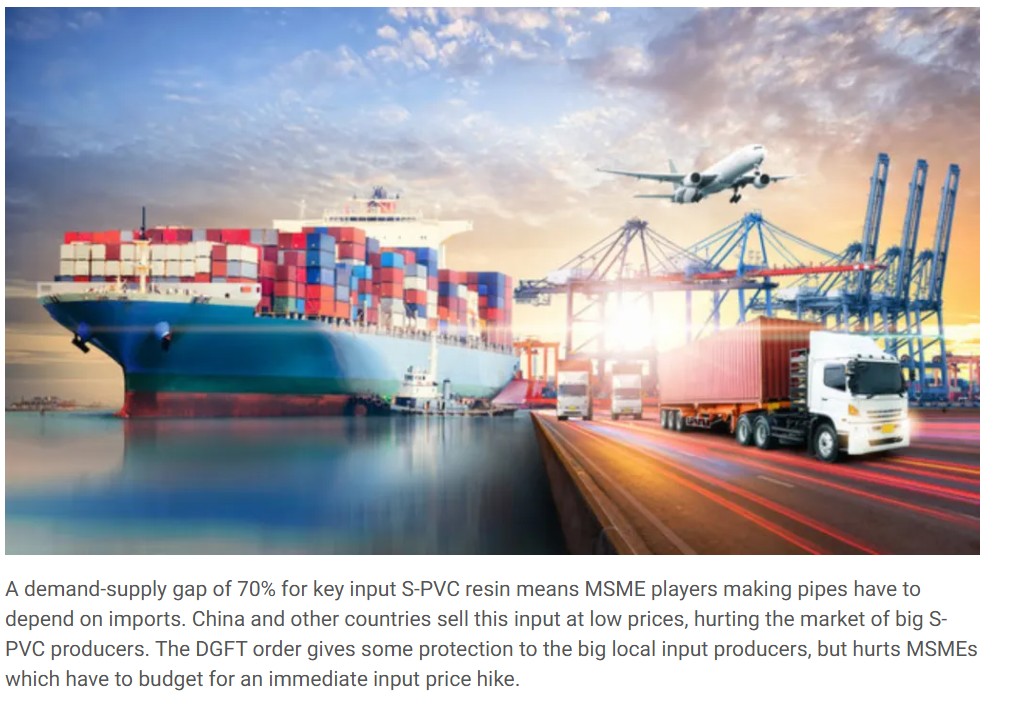
The Directorate General of Foreign Trade (DGFT) has imposed a six-month restriction on the import of Suspension Polyvinyl Chloride (S-PVC) resin, a key raw material used in manufacturing PVC pipes and other infrastructure products.
What is Suspension Polyvinyl Chloride (S-PVC) Resin?
Suspension Polyvinyl Chloride (S-PVC) is the most widely used form of Polyvinyl Chloride (PVC), a synthetic polymer produced from Vinyl Chloride Monomer (VCM). It is manufactured through the suspension polymerisation process, in which VCM is polymerised in an aqueous medium using initiators and additives to achieve the desired molecular weight and particle characteristics.
PVC resins are commercially produced through four polymerisation processes:
- Suspension polymerisation
- Emulsion polymerisation
- Bulk polymerisation
- Solution polymerisation
Among these, S-PVC is the dominant grade owing to its versatility and ease of processing.
Types of PVC Resins
- Suspension PVC (S-PVC): Granular, relatively dust-free resin with controlled particle porosity; most widely used for rigid PVC products.
- Emulsion PVC (E-PVC): Fine powder with very small particles and minimal free monomer; suitable for flexible PVC applications.
- Bulk PVC: Similar to S-PVC but with more porous particles.
- Solution PVC: Smaller particle size with high porosity and virtually no free monomer.
Applications
S-PVC resin is extensively used in the manufacture of:
- PVC pipes and irrigation systems
- Electrical conduits and cable insulation
- Electrical wires
- Construction materials
- Plumbing and sanitation products
Revamped Khelo India Scheme
- 03 Aug 2026
In News:
The Union Cabinet approved the revamped Khelo India Scheme along with an enhanced Assistance to National Sports Federations (ANSFs) scheme, with a total outlay of ?36,441 crore for FY 2026–27 to FY 2030–31.
What is the Revamped Khelo India Scheme?
The Khelo India Scheme is the flagship programme of the Ministry of Youth Affairs and Sports aimed at promoting sports culture, identifying grassroots talent, developing world-class sports infrastructure, and creating a structured pathway from grassroots to elite-level sports.
Originally launched in 2016–17 and restructured in 2017–18, the scheme consolidated earlier initiatives such as the Rajiv Gandhi Khel Abhiyan, Urban Sports Infrastructure Scheme, and National Sports Talent Search Scheme.
Aligned with the Khelo Bharat Niti, 2025 and the National Education Policy (NEP), 2020, the revamped scheme seeks to integrate sports with education and strengthen India's preparations for future international sporting events.
Key Features
- Implementation Period: FY 2026–27 to FY 2030–31.
- Financial Outlay:?36,441 crore, nearly eight times higher than the previous phase.
- Emerging Khelo India Athletes (E-KIAs): Introduces a new athlete category to significantly expand the talent development ecosystem alongside existing Khelo India Athletes (KIAs).
- School-Level Sports Development: Launches Khelo India Feeder Schools (KIFS) and Khelo India Utkrishta Vidyalayas (KIUV) to integrate sports into school education and identify talent at an early stage.
- Integrated Training Network: Strengthens a nationwide ecosystem comprising:
- National Centres of Excellence (NCOEs)
- Khelo India State Centres of Excellence (KISCEs)
- SAI Training Centres (STCs)
- Youth Sports Companies (YSCs) of the Armed Forces.
- National Coach Accreditation Board (NCAB): Establishes a national framework for standardising coaching qualifications and promoting sports science.
- Unified Digital Sports Platform: Creates an integrated digital platform for athlete databases, talent identification, funding, and performance monitoring while expanding the Fit India Movement to remote and border areas.
Significance
The revamped scheme creates a seamless pathway from schools to Khelo India Centres, National Centres of Excellence, and the Target Olympic Podium Scheme (TOPS), ensuring continuous athlete development. Enhanced support to National Sports Federations (NSFs) will strengthen coaching, scientific training, and India's competitiveness in international sporting events.
Samudra Manthan – National Offshore Exploration

- 03 Aug 2026
In News:
The Union Cabinet approved Samudra Manthan – National Offshore Exploration Scheme, a Central Sector Scheme of the Ministry of Petroleum & Natural Gas, with an outlay of ?84,084 crore for implementation up to FY 2030–31.
What is Samudra Manthan?
- Samudra Manthan is a flagship initiative to accelerate offshore oil and gas exploration by supporting the entire upstream exploration value chain through public investment, advanced technologies, and common infrastructure.
- The scheme aims to unlock India's offshore hydrocarbon potential, strengthen energy security, increase domestic oil and gas production, reduce import dependence, and build a globally competitive offshore energy ecosystem under Make in India and Atmanirbhar Bharat.
Key Features
- Total Outlay:?84,084 crore (100% Central Sector Scheme).
- Implementation Period: Up to FY 2030–31.
- Deepwater & Ultra-Deepwater Exploration:?43,200 crore allocated to support high-risk exploratory drilling, covering up to 50% of drilling costs (up to ?650–675 crore per well).
- Seismic Data Acquisition:?28,534 crore for acquisition, processing, and interpretation of high-quality seismic data in frontier and previously unexplored offshore basins.
- Common Offshore Infrastructure:?10,000 crore for shared offshore production facilities and evacuation infrastructure, including pipeline networks.
- Oil & Gas Manufacturing and Services Zones:?2,000 crore to establish dedicated manufacturing and services hubs for indigenous offshore equipment and technologies.
- Digital Programme Management: Strengthens the National Data Repository (NDR), capacity building, technology adoption, and stakeholder engagement.
Significance
The scheme is expected to:
- Add over 600 Million Metric Tons of Oil Equivalent (MMTOE) to India's hydrocarbon reserves.
- Increase domestic offshore oil and natural gas production.
- Reduce dependence on imported crude oil.
- Attract investments in offshore exploration and production.
- Promote indigenous manufacturing and offshore technology development.
- Generate large-scale employment and strengthen long-term energy security.