
Sonerilaroxburghii
- 18 May 2026
In News:
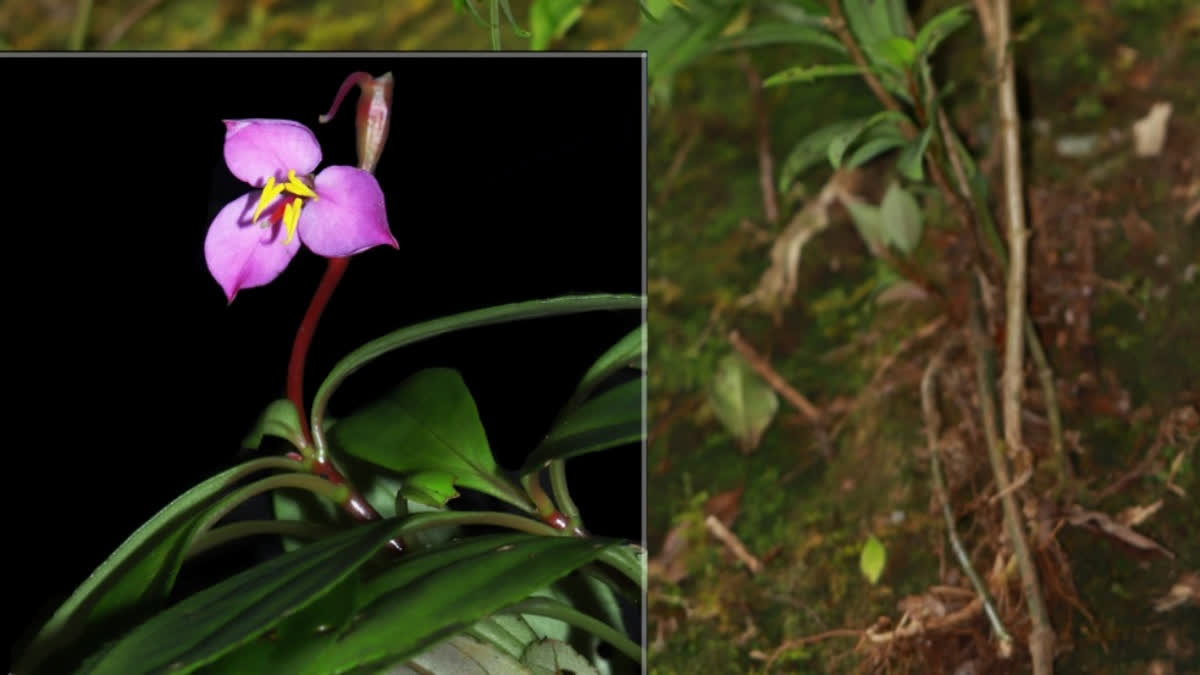
Joint research teams from the Botanical Survey of India (BSI) and the University of Calicut have discovered a new species of flowering plant named Sonerilaroxburghii from the southern Western Ghats of Kerala. The discovery, published in the peer-reviewed international journal Annales Botanici Fennici, highlights the high level of hidden endemism that characterizes this global biodiversity hotspot.
Botanical Profile and Taxonomy
- Scientific Classification: Belongs to the highly diverse Sonerila genus, nested within the Melastomataceae (flowering plant) family.
- Etymology: Named in honor of the legendary Scottish botanist William Roxburgh (1751–1815), widely revered as the "Father of Indian Botany" and one of the earliest pioneering scientists to systematically document the Sonerila genus during his tenure at the Royal Botanic Garden, Calcutta.
Morphological Characteristics
The plant can be distinguished from allied taxa (such as S. grandiflora and S. sadasivanii) by several distinct physical characteristics:
- Growth Form: It is a delicate tropical herb with straight, terete (rounded/smooth) stems growing up to 60 cm in height.
- Floral Architecture: Produces distinct light pink flowers arranged in terminal 3-to-10-flowered scorpioid cymes, featuring obscurely 6-ribbed hypanthia and acuminate-to-rostrate anthers.
- Foliage Structure: Possesses smooth, flattened lanceolate-to-elliptic leaf surfaces that show a cuneate (wedge-shaped) and attenuate base, gradually tapering directly toward the stem.
Geographical Distribution and Specialized Habitat
- Geographical Location: Discovered exclusively within the Mankulam (Mankulam Reserve Forest) and Kallar areas of the Idukki district in Kerala.
- Altitudinal Zonation: Restricted to high-altitude ecosystems, thriving at elevations ranging strictly between 1,380 and 1,480 meters above mean sea level.
- Micro-Climate Niches: Highly adapted to moist, high-altitude rocky surfaces, dripping cliffs, and shola-grassland ecotones where micro-climatic humidity remains constantly high.
Conservation Status and Ecological Vulnerabilities
IUCN Red List Classification: Critically Endangered (CR)
- Due to its highly localized geographical distribution and exceptionally small, fragmented wild populations, researchers have categorized the species as Critically Endangered.
Primary Ecological Threats
The discovery underscores an alarming trend of environmental degradation within the Western Ghats:
- Habitat Fragmentation: Severe encroachment driven by commercial cash-crop plantations, land-use conversion, and expanding unregulated infrastructure.
- Anthropogenic Pressures: Growing tourism footprints and illegal soil/rock quarrying activities within laterite-rich, ecologically fragile hill systems.
- Climate Change Multipliers: Highly localized, ephemeral herbs like Sonerila are acutely vulnerable to rainfall shifts and flash droughts, which disrupt their specialized moisture-reliant life cycles.