
ULLAS (Understanding Lifelong Learning for All in Society) Initiative
- 11 Jul 2026
In News:
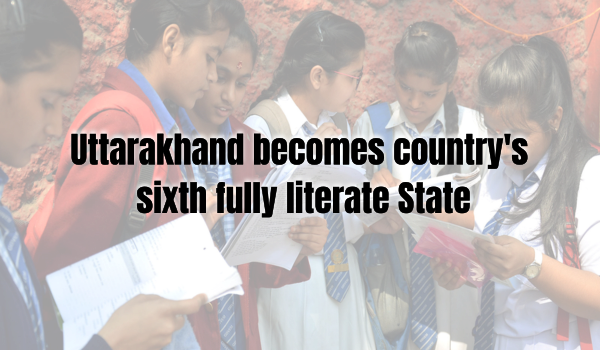
Uttarakhand has been declared India's sixth fully literate State under the National Education Policy (NEP) 2020 through the ULLAS (Understanding Lifelong Learning for All in Society)programme. The achievement reflects India's continued efforts to promote adult literacy and lifelong learning.
About ULLAS Programme
ULLAS (Understanding Lifelong Learning for All in Society), also known as the Nav Bharat SaakshartaKaryakram (New India Literacy Programme), is a Centrally Sponsored Scheme launched by the Ministry of Education. It aligns with the vision of NEP 2020 by transforming adult education into a lifelong learning movement.
Implemented during 2022–2027, the programme aims to educate non-literate adults aged 15 years and above who could not complete formal schooling. Moving beyond conventional literacy, ULLAS focuses on developing functional literacy, numeracy and essential life skills required for active participation in society.
Objectives
The programme seeks to provide Foundational Literacy and Numeracy (FLN) to 5 crore adult learners over five years, targeting 1 crore learners annually through the Online Teaching, Learning and Assessment System (OTLAS).
It also promotes community participation and volunteerism, encouraging citizens to contribute towards building a literate society while fostering the spirit of Kartavya Bodh (sense of civic duty).
Key Features
ULLAS provides learning through both physical and digital modes. Learners can access educational content in regional languages through the DIKSHA Portal, the ULLAS Mobile App, and other digital platforms.
The programme establishes Samajik Chetna Kendras (Social Awareness Centres) by utilizing schools, village libraries and Panchayat buildings as community learning centres.
To ensure inclusivity, learning materials are available in 27 languages and local dialects, enabling wider participation across the country.
Progress is assessed through the Foundational Literacy and Numeracy Assessment Test (FLNAT), conducted twice annually. Successful learners receive literacy certificates jointly issued by the National Institute of Open Schooling (NIOS) and the Department of School Education and Literacy (DoSEL).
The programme also connects newly literate adults with Jan Shikshan Sansthans (JSS) to facilitate vocational training and improve local employment opportunities.
Components of ULLAS
ULLAS is built around five major components:
- Foundational Literacy and Numeracy (FLN) to develop reading, writing and numeracy skills.
- Critical Life Skills, including digital literacy, financial literacy, legal awareness, healthcare, family welfare and childcare.
- Basic Education, providing equivalency with formal school education.
- Vocational Skills to improve employability and livelihood opportunities.
- Continuing Education, covering subjects such as arts, science, technology, culture, sports and lifelong learning.
States/UTs Achieving 95% or More Literacy under ULLAS
As of 2026, the States and Union Territories declared fully literate under ULLAS include:
- Ladakh (UT) – 2024
- Mizoram – 2025
- Goa – 2025
- Tripura – 2025
- Himachal Pradesh – 2025
- Chandigarh (UT) – 2025
- Andaman & Nicobar Islands (UT) – 2026
- Sikkim – 2026
- Uttarakhand – 2026
World Population Day 2026

- 11 Jul 2026
In News:
World Population Day was observed on 11 July 2026 with the theme "Realizing the hopes and aspirations of young people – today and for the future." The observance highlights the importance of empowering young people to make informed choices regarding education, employment, relationships and parenthood while addressing global demographic challenges.
About World Population Day
World Population Day is observed every year on 11 July to raise awareness about population-related issues and their implications for sustainable development, health, gender equality and economic growth.
The observance traces its origin to 11 July 1987, when the world's population reached approximately five billion, drawing global attention to the consequences of rapid population growth. Recognising the growing significance of demographic issues, the United Nations Development Programme (UNDP) established World Population Day in 1989.
The day encourages dialogue on critical issues such as maternal health, reproductive rights, gender equality, poverty, migration, unemployment, education and access to essential public services.
Theme for 2026
The 2026 theme is "Realizing the hopes and aspirations of young people – today and for the future."
The theme is based on the report "Lives, Choices and Futures: What Young People Want and What Shapes Their Decisions About Relationships and Parenthood." The report draws upon the views of more than 108,000 internet-connected adults aged 18–39 across 73 countries, highlighting the aspirations and challenges faced by young people while making decisions about family life and parenthood.
Global Population Trends
Global population growth has accelerated rapidly over the past two centuries. While humanity took thousands of years to reach one billion, the global population expanded nearly sevenfold thereafter.
The world population crossed seven billion in 2011 and is projected to reach approximately 8.5 billion by 2030 and 9.7 billion by 2050, reflecting continued demographic expansion, particularly in developing regions.
India's Population Scenario
With a population of around 1.4 billion, India remains one of the world's most populous countries, accounting for nearly 17% of the global population.
According to demographic projections, India's population is expected to peak at around 1.7–1.9 billion between the 2060s and 2080s, after which it is likely to stabilise and gradually decline as fertility rates continue to fall.
India's youthful population presents a significant demographic dividend, but realizing this opportunity requires sustained investment in education, healthcare, skill development, employment generation and gender equality.
Australia–India Partnership on Cyber, Critical Technologies and Supply Chains (PACTS)
- 11 Jul 2026
In News:
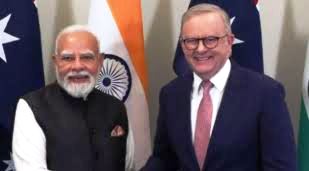
India and Australia have launched the Australia–India Partnership on Cyber, Critical Technologies and Supply Chains (PACTS) to deepen bilateral cooperation in cyber security, critical technologies, resilient supply chains, digital resilience and defence research.
The partnership replaces the 2020 Framework Arrangement on Cyber and Cyber Enabled Critical Technology Cooperation, reflecting the expanding strategic relationship between the two countries.
What is PACTS?
The Partnership on Cyber, Critical Technologies and Supply Chains (PACTS) is a comprehensive bilateral framework designed to strengthen cooperation in emerging technologies, cyber resilience, trusted supply chains and defence innovation. It seeks to enhance both countries' capacity to address evolving geopolitical, technological and economic challenges while contributing to a secure and resilient Indo-Pacific.
The partnership will be jointly overseen by India's Deputy National Security Advisor and Australia's Deputy Secretary of the International and Security Group in the Department of the Prime Minister and Cabinet.
Key Pillars of PACTS
1. Supply Chain Resilience and Diversification:
The partnership seeks to build secure, trusted and diversified supply chains for critical technologies and strategic sectors. Both countries will also strengthen cooperation on undersea cable security through the Quad Partnership for Cable Connectivity and Resilience, recognising the strategic importance of submarine communication infrastructure.
The National Security Council Secretariat (NSCS) is the lead agency on the Indian side.
2. Critical Technologies:
India and Australia will deepen collaboration in emerging technologies, including Artificial Intelligence (AI), space technologies, telecommunications, biotechnology and advanced materials. The objective is to promote innovation, technological self-reliance and trusted technology ecosystems.
The Indian lead agency is the National Security Council Secretariat (NSCS).
3. Cyber Security:
The cyber pillar focuses on enhancing cooperation against cybercrime, improving cyber resilience and protecting critical infrastructure. The two countries will establish a streamlined bilateral cyber cooperation mechanism, expand dialogue on cybersecurity and data governance, and develop a Cyber Technology Skill Incubator to build skilled human resources.
The Cyber Diplomacy Division of the Ministry of External Affairs (MEA) is the nodal agency for India.
4. Digital Resilience:
The partnership promotes cooperation in Digital Public Infrastructure (DPI) across the Indo-Pacific region. It aims to support partner countries through capacity-building programmes and pilot projects based on India's successful DPI model, while also encouraging resilient digital infrastructure and clean technology solutions.
The Oceania Division of the Ministry of External Affairs leads this pillar.
5. Defence Research Collaboration:
India and Australia will strengthen cooperation between Australia's Defence Science and Technology Group (DSTG) and India's Defence Research and Development Organisation (DRDO). The partnership also encourages collaboration between defence start-ups and joint research in areas such as maritime surveillance, advanced materials and emerging defence technologies.
The Ministry of Defence is the lead agency from India.
Pinaka Long Range Guided Rocket (LRGR)
- 11 Jul 2026
In News:
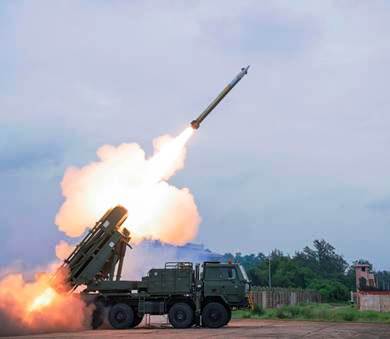
The Defence Research and Development Organisation (DRDO) successfully conducted a test of the Pinaka Long Range Guided Rocket (LRGR) at the Integrated Test Range (ITR), Chandipur, Odisha, validating its minimum strike range of 60 km with high precision. Earlier trials had already demonstrated its maximum strike range of 120 km.
What is the Pinaka Long Range Guided Rocket (LRGR)?
The Pinaka LRGR is an indigenously developed precision-guided artillery rocket designed to engage enemy positions, artillery batteries, bunkers, logistics hubs and other high-value targets deep inside hostile territory from a stand-off distance. It is the latest guided variant of the Pinaka Multi-Barrel Rocket Launcher (MBRL) system, significantly enhancing the Indian Army's long-range precision strike capability.
The rocket has an operational strike range of 60–120 km, providing flexibility to accurately engage targets at varying distances.
Key Features
A major achievement of the recent test was the successful engagement of a target at the minimum operational range of 60 km. Unlike long-range firing, striking closer targets requires the rocket to shed excess energy and execute steep in-flight manoeuvres, demonstrating the system's precision and confirming the absence of any significant dead zone within its operational envelope.
The Pinaka LRGR was launched from an existing in-service Pinaka launcher, proving that the same launcher platform can deploy different variants of the Pinaka rocket family without requiring separate launch systems. This enhances operational flexibility and reduces logistics requirements.
The truck-mounted launcher offers excellent battlefield mobility and employs the "shoot-and-scoot" concept, enabling rapid firing followed by immediate relocation to avoid enemy counter-battery fire.
Each Pinaka launcher can fire 12 rockets in about 44 seconds, while a battery of six launchers can launch 72 rockets, saturating nearly one square kilometre with concentrated firepower.
Development
The Pinaka LRGR has been designed by the Armament Research and Development Establishment (ARDE), Pune, in collaboration with the High Energy Materials Research Laboratory (HEMRL). Technical support was also provided by the Defence Research and Development Laboratory (DRDL) and the Research Centre Imarat (RCI), all laboratories under the DRDO.
Geneva Conventions & the "Hummus Trail" Controversy
- 11 Jul 2026
In News:
The Geneva Conventions of 1949 have come into focus following the "Hummus Trail" controversy, after the Hind Rajab Foundation (HRF) filed a legal petition seeking the arrest of an Israeli soldier vacationing in Himachal Pradesh over alleged war crimes committed in Gaza. The incident has raised questions regarding India's obligations under International Humanitarian Law (IHL) and the principle of universal jurisdiction.
What is the Hummus Trail?
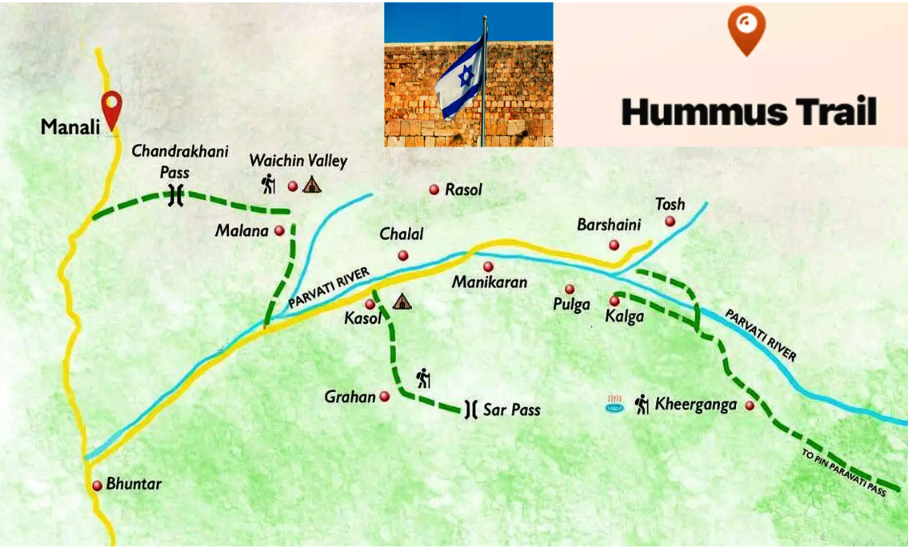
The Hummus Trail is an informal term describing a network of Indian destinations that are popular among young Israeli travellers, particularly those who have recently completed their mandatory military service. Inspired by the earlier Hippie (Hashish) Trail, it includes destinations such as Kasol, Dharamkot, Rishikesh, Pushkar, Goa, Hampi, Gokarna, Kodaikanal, and the Andaman & Nicobar Islands.
Many of these visitors undertake the Tiul Gadol ("Big Trip"), a traditional post-military journey lasting from six months to a year, often supported by post-service financial benefits. India receives nearly 80,000 Israeli tourists annually, and in 2026, Israel allocated 4 million New Israeli Shekels (NIS) to strengthen tourism cooperation with India.
Geneva Conventions, 1949
The Four Geneva Conventions of 1949, together with their Additional Protocols, form the foundation of International Humanitarian Law (IHL). They establish humanitarian rules applicable during armed conflicts by protecting persons who are not, or are no longer, participating in hostilities.
- First Geneva Convention: Protects wounded and sick members of armed forces on land.
- Second Geneva Convention: Protects wounded, sick and shipwrecked military personnel at sea.
- Third Geneva Convention: Protects prisoners of war.
- Fourth Geneva Convention: Protects civilians during armed conflict and defines grave breaches, including wilful killing, torture, unlawful deportation and extensive destruction of property not justified by military necessity.
Universal Jurisdiction
One of the most significant features of the Geneva Conventions is the principle of universal jurisdiction. It obligates every State Party to search for, prosecute or extradite persons accused of committing grave breaches, irrespective of the nationality of the accused or the victims, and regardless of where the alleged offence occurred.
This principle seeks to ensure that perpetrators of serious violations of international humanitarian law do not escape accountability by crossing national borders.
India's Legal Framework
India incorporated its obligations under the Geneva Conventions through the Geneva Conventions Act, 1960.
The Act criminalises acts classified as grave breaches under the Geneva Conventions and empowers Indian authorities to prosecute individuals accused of such offences if they are found within Indian territory, irrespective of their nationality or the place where the alleged crime was committed.
Apart from criminal prosecution, the Government of India also retains sovereign powers under immigration laws to deport foreign nationals when considered necessary in the national interest.
Significance
The controversy highlights the increasing importance of international humanitarian law in domestic legal systems. It also underscores the practical relevance of universal jurisdiction, which allows national courts to deal with certain international crimes irrespective of territorial or nationality links.
For India, the issue presents a delicate diplomatic challenge. While maintaining strong strategic relations with Israel, India must also uphold its international legal commitments under the Geneva Conventions and navigate evolving global legal proceedings, including the ongoing case instituted by South Africa against Israel before the International Court of Justice (ICJ).