
Taal Volcano Produces Brief Phreatomagmatic Eruption
- 03 Jul 2026
In News:
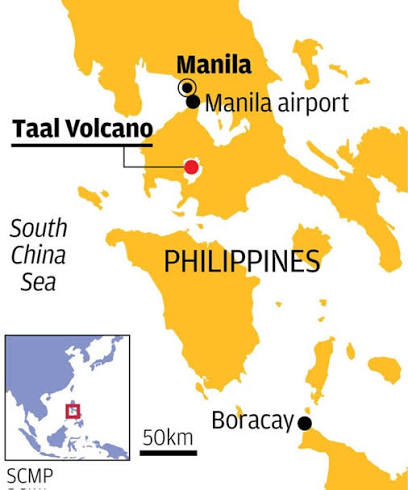
The Taal Volcano in the Philippines recently witnessed a four-minute phreatomagmatic eruption, producing a 450-metre-high ash-and-steam plume. The eruption was triggered by the interaction of rising magma with water and was accompanied by volcanic tremors and gas emissions, prompting authorities to maintain close surveillance.
About Taal Volcano
Taal Volcano is located in Batangas Province, about 70 km south of Manila, and is among the most active volcanoes in the Philippines. It forms part of the Pacific Ring of Fire, one of the world's most tectonically active regions, and has recorded at least 38 eruptions over the last 450 years.
It is classified as a complex volcano by the Philippine Institute of Volcanology and Seismology (PHIVOLCS) because it consists of multiple volcanic centres, craters, cones, and stratovolcanoes, rather than a single volcanic cone.
Geological Features
Taal's present landscape is the result of repeated volcanic activity over thousands of years.
- A large caldera was formed by massive eruptions between 140,000 and 5,380 BCE.
- The caldera is now occupied by Taal Lake, covering nearly 265 sq. km.
- At the centre of the lake lies Volcano Island (about 24 sq. km).
- The island contains the Main Crater, within which lies Crater Lake.
- Inside Crater Lake is Vulcan Point, a rare geological feature—a rocky islet inside a lake, which itself lies on an island within another lake.
What is a Stratovolcano?
A stratovolcano (composite volcano) is a steep-sided volcano formed by successive layers of lava flows, volcanic ash, pyroclastic material, and rock fragments.
Key characteristics include:
- Highly viscous magma.
- Predominantly explosive eruptions.
- Commonly associated with subduction zones.
Examples: Taal, Mount Fuji, Mount St. Helens, and Mount Vesuvius.
What is a Phreatomagmatic Eruption?
A phreatomagmatic eruption occurs when magma comes into direct contact with water, such as groundwater, crater lakes, seawater, or water-rich rocks.
The sudden conversion of water into steam generates powerful explosions, fragmenting both magma and surrounding rocks and ejecting ash, steam, volcanic gases, and pyroclastic materials.
Key features include:
- Highly explosive despite relatively small magma volumes.
- Dense ash plumes and base surges.
- Associated with volcanic lightning, ballistic projectiles, and ashfall.
- Common in volcanoes containing crater lakes or abundant groundwater.
Types of Volcanic Eruptions
|
Type |
Primary Cause |
Main Products |
|
Magmatic |
Gas pressure within magma |
Lava, ash, volcanic gases |
|
Phreatic |
Heating of groundwater without fresh magma |
Steam and rock fragments |
|
Phreatomagmatic |
Direct interaction of magma with water |
Steam, ash, fragmented magma and pyroclastic materials |
Pacific Ring of Fire
The Pacific Ring of Fire is a horseshoe-shaped tectonic belt surrounding the Pacific Ocean.
- Contains nearly 75% of the world's active volcanoes.
- Accounts for about 90% of global earthquakes.
- Formed mainly due to plate subduction along convergent plate boundaries.
Countries located along the Ring of Fire include Japan, the Philippines, Indonesia, New Zealand, Chile, Peru, Mexico, and the western coast of the United States.
Why is Taal Volcano Highly Hazardous?
Taal is considered one of the world's most dangerous volcanoes because of its frequent explosive eruptions, crater lake, and dense human settlements surrounding Taal Lake.
Major hazards include:
- Ashfall.
- Pyroclastic density currents.
- Volcanic gases.
- Ballistic projectiles.
- Earthquakes and ground deformation.
- Lahars during heavy rainfall.
Transcaspian Marinka (Schizothorax pelzami)
- 03 Jul 2026
In News:
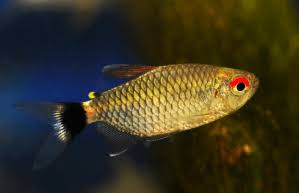
The Sangon clan of Arunachal Pradesh has launched a community-led initiative to conserve the Transcaspian Marinka (Schizothorax pelzami), a Himalayan ray-finned fish that holds ecological as well as cultural significance. The initiative aims to protect the species while preserving traditional conservation practices.
About Transcaspian Marinka
- The Transcaspian Marinka (Schizothorax pelzami) is a freshwater ray-finned fish belonging to the genus Schizothorax under the family Cyprinidae (carps and minnows).
- It is locally known as 'Ngarsing' in the Nyishi language of Arunachal Pradesh.
- The species inhabits freshwater rivers, streams, springs, and qanats (traditional underground water channels), where it occupies a benthopelagic niche, living and feeding close to the riverbed as well as in the water column.
- Although primarily distributed in Afghanistan, Turkmenistan, and Iran, populations are also reported from parts of the eastern Himalayas.
- Conservation Status: IUCN Red List: Least Concern (LC)
About Ray-Finned Fishes (Actinopterygii)
- The ray-finned fishes (Actinopterygii) constitute the largest and most diverse class of fishes, accounting for nearly half of all living vertebrate species.
- Their fins are supported by slender bony rays rather than fleshy lobes, enabling remarkable adaptability across diverse aquatic habitats.
- They inhabit a wide range of ecosystems, including high-altitude lakes and rivers, desert springs, subterranean caves, and coastal waters. Many species undertake long-distance migrations, while others possess specialised sensory systems such as vision, mechanoreception, chemoreception, electroreception, and magnetic reception, allowing them to navigate and respond effectively to their environment.
PaleoIndia Portal
- 03 Jul 2026
In News:
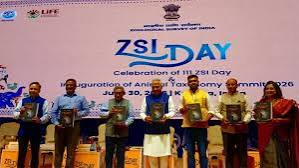
The Union Minister of Environment, Forest and Climate Change recently launched the PaleoIndia Portal, a first-of-its-kind national digital platform for documenting and preserving India's fossil heritage.
About PaleoIndia Portal
- The PaleoIndia Portal is a national digital repository developed jointly by the Zoological Survey of India (ZSI) and the National Centre for Sustainable Coastal Management (NCSCM), Chennai, using dynamic geological maps provided by the Geological Survey of India (GSI).
- The portal aims to create a comprehensive database of India's paleontological wealth by documenting fossil records from all 28 States and 8 Union Territories.
- It currently hosts information on more than 5,000 fossil specimens, covering a wide range of extinct organisms, including mammals, reptiles, birds, fishes, amphibians, molluscs, arthropods, echinoderms, foraminifera, and ichnofossils (trace fossils).
- A notable feature of the portal is its real-time data upload system, which enables researchers, field scientists, and citizen scientists to contribute fossil discoveries, thereby strengthening the documentation and conservation of India's paleontological heritage.
National Centre for Sustainable Coastal Management (NCSCM)
- The National Centre for Sustainable Coastal Management (NCSCM) is an autonomous institution established by the Ministry of Environment, Forest and Climate Change (MoEF&CC) in 2011 to support the conservation, protection, rehabilitation, and sustainable management of India's coastal ecosystems.
- Headquartered in Chennai, Tamil Nadu, the Centre provides scientific and policy support to the Union and State Governments on matters relating to Integrated Coastal Zone Management (ICZM).
- Its work includes coastal vulnerability assessments, environmental impact assessments, mapping of Ecologically Sensitive Areas (ESAs), and preparation of Integrated Coastal Zone Management plans.
- The Centre functions through six specialised research divisions covering Geospatial Sciences and GIS, Integrated Social Sciences and Economics, Coastal Environmental Impact Assessment, Conservation of Coastal and Marine Resources, Knowledge, Governance and Policy, and Futuristic Research & Integrated Island Management.
UNICORN (Unified Complex Radio Antenna) Mast
- 03 Jul 2026
In News:
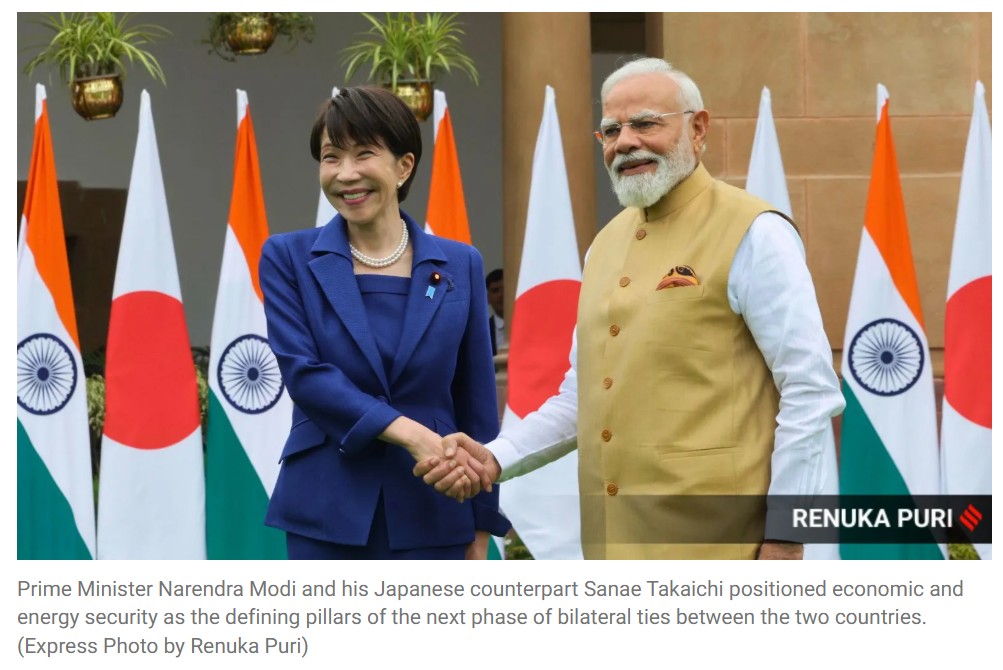
At the 16th India–Japan Annual Summit held in New Delhi (July 2026), India and Japan announced their first-ever joint defence co-development project to manufacture the UNICORN (Unified Complex Radio Antenna) Mast for the Indian Navy. The project follows the Memorandum of Implementation (MoI) signed between the two countries in 2024 for the co-development of the system.
About UNICORN Mast
The UNICORN (Unified Complex Radio Antenna) Mast, also known as NORA-50, is a next-generation integrated communication and radar mast designed for modern naval warships. Developed by Japan, it combines multiple communication systems and radar antennas into a single integrated mast, replacing the conventional arrangement of several externally mounted antennas.
This integrated design significantly reduces the Radar Cross Section (RCS) of a warship, thereby improving its stealth capabilities, survivability, and operational effectiveness in modern maritime warfare. The system also provides secure, high-performance communication and supports network-centric naval operations in electronically contested environments.
Key Features
The UNICORN mast incorporates advanced stealth antenna technology and offers several operational advantages:
- Integrates multiple communication and radar antennas into a single mast.
- Reduces the Radar Cross Section (RCS), enhancing stealth.
- Improves secure voice and data communication.
- Minimises electromagnetic interference between communication systems.
- Enhances survivability and tactical evasion capabilities during naval operations.
- Supports advanced network-centric and digitally integrated warfare.
India–Japan Defence Collaboration
The project marks a major milestone in India–Japan defence cooperation, as it is the first joint defence manufacturing initiative between the two countries. Under the collaboration:
- Bharat Electronics Limited (BEL) will manufacture the UNICORN mast in India.
- Japanese partners will provide advanced design and technological expertise.
- India will undertake system integration, production, and installation on future Indian Navy warships.
The initiative also makes India the second Asian country, after the Philippines, to receive Japanese defence technology.
Significance for India
The project aligns closely with the 'Make in India' and Atmanirbhar Bharat initiatives by strengthening indigenous defence manufacturing and promoting technology transfer. The UNICORN mast is expected to gradually replace the Indian Navy's existing Advanced Composite Communication System (ACCS)-based external communication infrastructure with a more secure and stealth-oriented integrated system.
Strategically, the project enhances India's maritime domain awareness, strengthens naval operational capability, and deepens defence-industrial cooperation with Japan. It also reflects the growing strategic convergence between the two countries in promoting a free, open, inclusive, and rules-based Indo-Pacific, while contributing to regional maritime security and technological self-reliance.
UN Sustainable Development Report 2026
- 03 Jul 2026
In News:
India ranked 94th out of 167 countries in the 2026 Sustainable Development Goals (SDG) Index, achieving its highest-ever position with a score of 68.3/100, according to the Sustainable Development Report (SDR) 2026 released by the UN Sustainable Development Solutions Network (SDSN) during the Hamburg Sustainability Conference 2026.
About the Sustainable Development Report (SDR)
- The Sustainable Development Report (SDR) is an annual global assessment published by the United Nations Sustainable Development Solutions Network (SDSN).
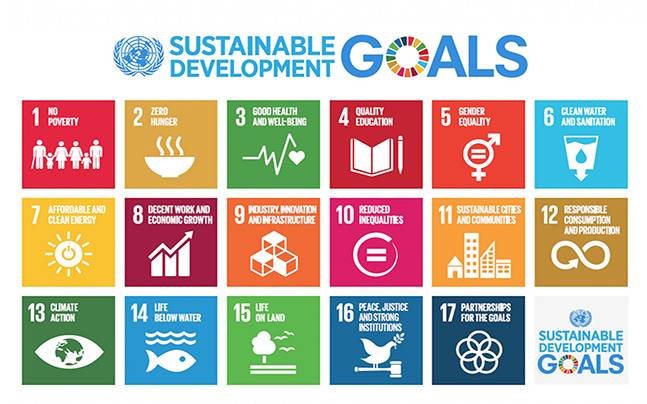
- It evaluates countries' progress towards achieving the 17 Sustainable Development Goals (SDGs) adopted under the 2030 Agenda for Sustainable Development.
- The report uses the SDG Index to measure national performance based on a wide range of social, economic, environmental, and governance indicators.
Key Global Findings
- The report highlights that none of the 17 Sustainable Development Goals are currently on track to be achieved globally by 2030. Only 16.5% of SDG targets are progressing as required, while nearly half show only marginal progress and several have regressed since 2015.
- The Nordic countries continue to dominate the rankings, with Finland securing the first position, followed by Sweden and Denmark. At the other end of the index, South Sudan, the Central African Republic, and Chad occupy the lowest ranks due to prolonged conflict, political instability, and weak institutions.
- Globally, the greatest challenges remain in Zero Hunger (SDG 2), Sustainable Cities (SDG 11), Life Below Water (SDG 14), Life on Land (SDG 15), and Peace, Justice and Strong Institutions (SDG 16).
India's Performance
- India has emerged as one of the fastest-improving major economies, climbing 18 positions since the adoption of the SDGs in 2015—from 112th to 94th. However, it continues to rank behind several South Asian neighbours, including Bhutan, Nepal, Maldives, and Sri Lanka.
- The report projects that only 33.3% of India's SDG targets are likely to be achieved by 2030, while progress on many indicators remains slow.
- The most significant challenge continues to be SDG 2 (Zero Hunger). India continues to record high levels of child wasting (19%), child stunting (29.3%), and undernourishment (12%), indicating persistent nutritional concerns.
- The report also identifies major challenges in Good Health and Well-being (SDG 3), Gender Equality (SDG 5), Sustainable Cities (SDG 11), Life Below Water (SDG 14), Life on Land (SDG 15), and Peace, Justice and Strong Institutions (SDG 16).
- On the environmental front, India has shown deterioration in Responsible Consumption and Production (SDG 12) and Climate Action (SDG 13), largely due to increasing carbon emissions from fossil fuel use and cement production.
- Despite these challenges, the report acknowledges India's notable achievements in expanding electricity access (SDG 7) and improving mobile broadband and internet connectivity (SDG 9), reflecting significant progress in infrastructure and digital inclusion.
Sustainable Development Goals (SDGs)
The Sustainable Development Goals (SDGs) comprise 17 global goals and 169 targets, adopted by all 193 United Nations Member States in 2015 under the 2030 Agenda for Sustainable Development. The goals seek to eradicate poverty, reduce inequality, protect the environment, and promote inclusive and sustainable development through the guiding principle of "Leave No One Behind."
The SDGs evolved from earlier international initiatives, including the Brundtland Commission Report (1987), the Millennium Development Goals (2000), the Johannesburg Declaration (2002), and the Rio 20 Conference (2012).
India's Institutional Framework for SDG Implementation
India has established a comprehensive institutional mechanism for monitoring SDG progress.
- NITI Aayog serves as the nodal agency for SDG implementation and publishes the SDG India Index, encouraging cooperative and competitive federalism among States and Union Territories.
- The Ministry of Statistics and Programme Implementation (MoSPI) monitors progress through the National Indicator Framework (NIF) comprising 277 indicators.
- The Ministry of Panchayati Raj promotes localisation of SDGs through the Local Indicator Framework (LIF) and the Panchayat Advancement Index (PAI), which evaluates over 2.5 lakh Gram Panchayats across nine thematic areas.