
e-Zero FIR System

- 31 Jul 2026
In News:
The Ministry of Home Affairs (MHA) informed Parliament that the e-Zero FIR system for cybercrime cases has been operationalised across 18 States and Union Territories, with over 12,000 e-Zero FIRs already registered.
What is the e-Zero FIR System?
- The e-Zero FIR system is a digital, jurisdiction-free mechanism for registering cyber financial crime complaints. It enables the automatic registration of an FIR irrespective of the victim's location or the territorial jurisdiction of the police station, allowing quicker legal action against cyber fraud.
- Developed by the Indian Cyber Crime Coordination Centre (I4C) under the Ministry of Home Affairs (MHA), the system is based on Section 173(1) of the Bharatiya Nagarik Suraksha Sanhita (BNSS), 2023, which permits electronic reporting of cognizable offences.
- The system integrates the National Cyber Crime Reporting Portal (NCRP)/Helpline 1930, State/UT e-Crime Police Stations, and the Crime and Criminal Tracking Network & Systems (CCTNS) managed by the National Crime Records Bureau (NCRB).
How Does It Work?
- When a cyber financial fraud complaint is lodged through the 1930 helpline or the National Cyber Crime Reporting Portal, complaints crossing the prescribed financial threshold automatically generate an e-Zero FIR.
- The FIR is initially registered at a central e-Crime Police Station and is electronically transferred to the police station having territorial jurisdiction. The complainant must complete verification at the concerned police station within three days, after which the e-Zero FIR is converted into a regular FIR.
- The immediate registration of the FIR enables law enforcement agencies and banks to quickly freeze suspected bank accounts and prevent the transfer of fraudulently siphoned funds.
Fields Medal 2026

- 31 Jul 2026
In News:
The Fields Medal 2026, regarded as the highest honour in mathematics, was awarded to Yu Deng, John Pardon, Jacob Tsimerman, and Hong Wang for their outstanding contributions to mathematical research.
About the Fields Medal
- The Fields Medal is the world's most prestigious award in mathematics, often referred to as the "Nobel Prize of Mathematics."
- It was established in 1936 through the efforts of John Charles Fields, a Canadian mathematician, and is awarded by the International Mathematical Union (IMU) once every four years.
- Unlike lifetime achievement awards, the medal recognizes both exceptional mathematical accomplishments and the recipient's potential for future contributions.
Eligibility & Funding
- The award is presented to mathematicians below 40 years of age, with two to four recipients selected in each award cycle.
- The medals and prize money are financed through a trust created by J.C. Fields at the University of Toronto. In 2026, the prize fund also received support from the Fields Institute.
Highlights of the 2026 Awards
The 2026 edition honouredYu Deng, John Pardon, Jacob Tsimerman, and Hong Wang.
- Hong Wang became only the third woman to receive the Fields Medal, following Maryam Mirzakhani (2014) and Maryna Viazovska (2022).
- Yu Deng and Hong Wang became the first Chinese nationals to receive the award since Shing-Tung Yau (1982).
India and the Fields Medal
Indian-origin mathematicians have made significant contributions in recent years.
- Manjul Bhargava – Fields Medal 2014
- Akshay Venkatesh – Fields Medal 2018
Western Ghats Eco-Sensitive Area (ESA)
- 31 Jul 2026
In News:
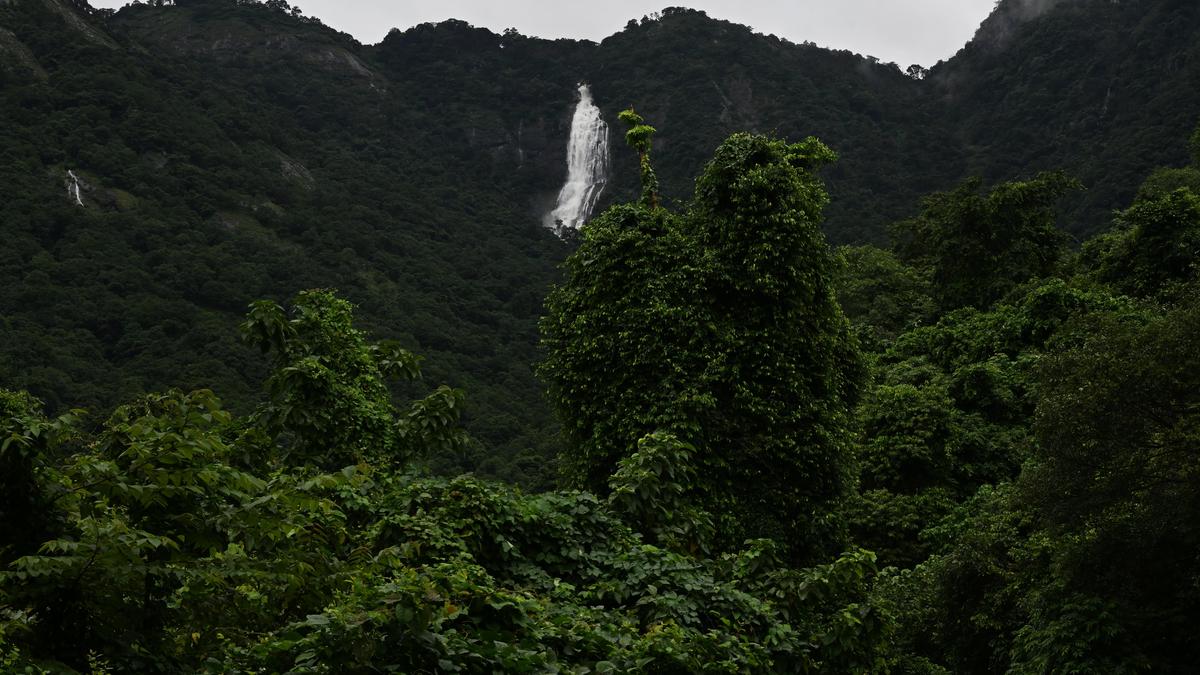
The Ministry of Environment, Forest and Climate Change (MoEFCC) has reissued the 7th draft notification proposing an Eco-Sensitive Area (ESA) in the Western Ghats. The notification remains open for public objections for 60 days, while differences persist between the Centre and the six Western Ghats States over the extent of the notified area.
7th Draft Notification on Western Ghats ESA
- The proposed Eco-Sensitive Area (ESA) covers 56,825.7 sq. km across Gujarat, Maharashtra, Goa, Karnataka, Kerala, and Tamil Nadu, with Karnataka accounting for the largest share and Gujarat the smallest.
- The draft proposes a ban on commercial mining, quarrying, sand mining, new thermal power plants, red-category industries, and large-scale construction projects. Hydropower projects will be permitted only under strict regulation, while agriculture, plantation activities, and the livelihoods of local communities remain exempt.
- It also allows phased implementation of the ESA without waiting for consensus from all six states. The tenure of the Sanjay Kumar Committee (2022), constituted to examine state objections and boundary-related issues, has been extended until July 2027.
Evolution of the ESA Proposal
The proposal to notify the Western Ghats as an ESA has remained under consideration since 2011.
- The Gadgil Committee (Western Ghats Ecology Expert Panel, 2011) recommended declaring the entire Western Ghats as an Eco-Sensitive Area and dividing it into ESZ-I, ESZ-II and ESZ-III based on ecological sensitivity. However, states opposed the recommendations as being too restrictive.
- The Kasturirangan Committee (2013) adopted a more balanced approach by recommending that only about 37% of the Western Ghats (around 60,000 sq. km) be notified as an ESA while permitting sustainable development in other areas.
Challenges
The notification has remained pending due to disagreements between the Centre and States over balancing conservation with development.
Boundary demarcation disputes, disagreements over village inclusion, lack of adequate financial incentives for conservation, and repeated draft notifications without finalisation have created regulatory uncertainty, allowing environmentally damaging activities in ecologically fragile regions.
Western Ghats
- The Western Ghats (Sahyadris) extend for about 1,490 km from Gujarat to Kerala and Tamil Nadu, covering nearly 1.4 lakh sq. km across six states. They are older than the Himalayas, having formed from the faulted edge of the Deccan Plateau following the breakup of Gondwanaland.
- The mountain chain is interrupted by three important gaps—Goa Gap, Palghat Gap, and Shencottah Gap—which divide it into the Northern, Central, and Southern Western Ghats.
- The region was designated a UNESCO World Heritage Site (2012) as a serial property comprising 39 protected areas grouped into seven sub-clusters: Sahyadri, Kudremukh, Talacauvery, Nilgiri, Anamalai, Periyar, and Agasthyamalai.
- The Southern Western Ghats contain Anamudi (2,695 m), the highest peak of the Western Ghats and the highest mountain in India outside the Himalayas.
Ecological Importance
- The Western Ghats are one of the world's eight hottest biodiversity hotspots and function as the water tower of Peninsular India. They intercept the southwest monsoon, regulate regional climate, and give rise to major east- and west-flowing rivers.
- The region supports over 5,000 flowering plant species, with around 65% of amphibians and 53% of freshwater fishes being endemic. It is home to flagship species such as the Lion-tailed Macaque, Nilgiri Tahr, Nilgiri Langur, Tiger, Asian Elephant, and Gaur.
- Besides biodiversity conservation, the Western Ghats contribute significantly to carbon sequestration, provide valuable non-timber forest products, support agriculture and hydropower, and sustain the livelihoods of forest-dependent communities.
India’s Campaign for Permanent UNSC Membership
- 31 Jul 2026
In News:
External Affairs Minister S. Jaishankar launched SHANTI (Securing Holistic Advancement through Norms, Trust and Integrity), India's campaign for a non-permanent seat in the UN Security Council (2028–2029). The initiative also reiterates India's long-standing demand for permanent membership and comprehensive UNSC reforms.
India's Bid for Permanent UNSC Membership
India seeks a permanent seat in the UN Security Council (UNSC) to make global governance more representative of present-day geopolitical and economic realities. While non-permanent membership allows India to influence the Council's agenda, permanent membership would provide a lasting role in decisions relating to international peace, security, sanctions, and conflict resolution.
Evolution of the UNSC
- The UN Security Council was established in 1945 under the UN Charter with five permanent members (P5)—the United States, United Kingdom, France, Russia (formerly USSR), and China—holding veto powers.
- In 1965, the Council expanded its non-permanent seats from six to ten, increasing total membership to 15, while leaving the permanent membership unchanged.
- In 2005, India, Brazil, Germany, and Japan formed the G4 to jointly advocate expansion of permanent membership. Frequent deadlocks caused by the veto have strengthened demands for comprehensive UNSC reforms.
Why India Deserves Permanent Membership
India presents a strong case based on its demographic, economic, and diplomatic stature.
- Represents over 18% of the world's population.
- Among the world's largest and fastest-growing economies.
- One of the largest contributors to UN Peacekeeping Operations, deploying nearly 3 lakh personnel across around 50 missions since 1948.
- Has served eight terms as a non-permanent UNSC member.
- Recognised as a leading voice of the Global South, guided by the principle of Vasudhaiva Kutumbakam.
Challenges
India's bid faces several institutional and political obstacles.
Amending the UN Charter (Article 108) requires approval by two-thirds of the UN General Assembly and ratification by all five permanent members, giving every P5 nation an effective veto over reform.
China continues to oppose India's candidature, while the Uniting for Consensus (Coffee Club) group opposes the creation of new permanent seats. Existing permanent members are also reluctant to dilute their exclusive privileges, and disagreements persist regarding regional representation.
Way Forward
India is strengthening support through initiatives such as the SHANTI campaign, while building wider diplomatic coalitions in the UN General Assembly.
It continues to advocate text-based Intergovernmental Negotiations (IGN) on UNSC reforms, deepen cooperation through forums such as the G20, BRICS, Quad, and International Solar Alliance, strengthen coordination between the G4 and the African Union's Ezulwini Consensus, and remains open to a phased approach to permanent membership if it facilitates broader consensus.
INS NIPUN
- 31 Jul 2026
In News:
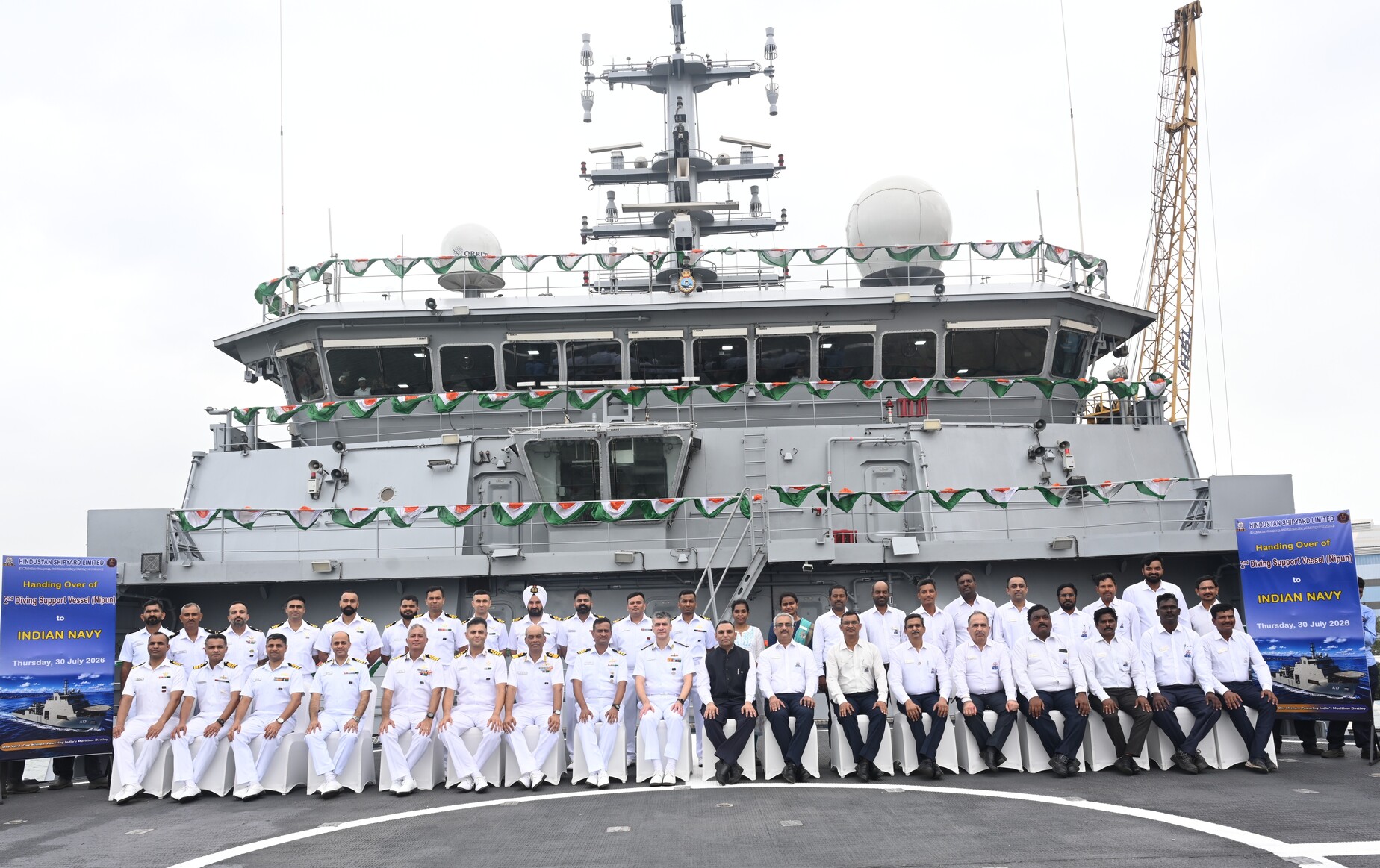
Recently, INS NIPUN, the second Diving Support Vessel (DSV) built by Hindustan Shipyard Limited (HSL), was delivered to the Indian Navy at Visakhapatnam.
About INS NIPUN
- INS NIPUN is a highly specialisedDiving Support Vessel (DSV) designed for deep-sea diving, submarine rescue, and underwater intervention operations.
- The vessel has been designed and constructed by Hindustan Shipyard Limited (HSL) in accordance with the Classification Rules of the Indian Register of Shipping (IRS).
- The name 'NIPUN', derived from Sanskrit, means "one who is adept, capable, and well-versed in a particular discipline."
Key Features
The vessel is equipped with state-of-the-art diving equipment capable of undertaking Deep Sea Saturation Diving operations.
It features:
- Advanced Dynamic Positioning System (DPS) for maintaining precise position at sea.
- Saturation diving system for prolonged deep-sea underwater missions.
- Submarine rescue machinery.
- Deep-sea intervention and salvage equipment.
INS NIPUN will also function as the Mother Ship for the Deep Submergence Rescue Vessel (DSRV), enabling rescue and evacuation of personnel trapped inside distressed submarines.
The vessel has nearly 75% indigenous content, reflecting India's emphasis on Aatmanirbhar Bharat in defence shipbuilding.