
Samriddh Gram
- 12 Jul 2026
In News:
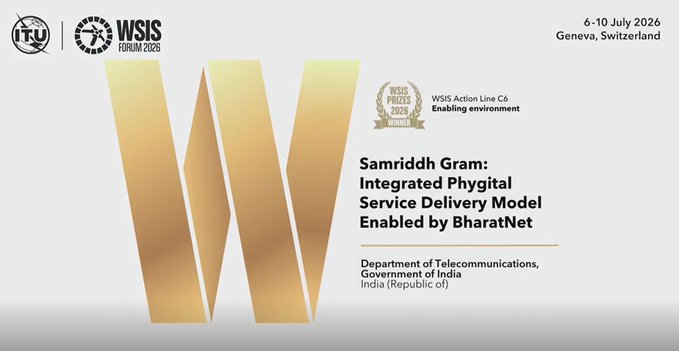
The Department of Telecommunications (DoT) has won the World Summit on the Information Society (WSIS) Prizes 2026 under Action Line C6 – Enabling Environment for its flagship Samriddh Gram initiative, recognising India's efforts in promoting inclusive rural digital transformation.
What is Samriddh Gram?
Samriddh Gram is a flagship rural digital transformation initiative of the Department of Telecommunications (DoT) built on the BharatNet network. It adopts a "phygital" (physical digital) service delivery model that combines robust digital infrastructure with on-ground service centres to improve access to essential public and commercial services in rural areas.
The initiative seeks to transform villages into digitally empowered communities by integrating connectivity, technology and assisted service delivery.
Objectives
The primary objective of Samriddh Gram is to bridge the rural digital divide by providing seamless access to education, healthcare, agriculture, financial services, e-governance and entrepreneurship opportunities through a unified digital ecosystem.
The initiative also supports the broader goals of Digital India, inclusive growth and last-mile service delivery.
Key Features
At the core of the programme are Samriddhi Kendras, which function as village-level one-stop service centres delivering integrated phygital services. These centres combine reliable telecom connectivity, digital platforms and assisted physical support to ensure that citizens can easily access government and private services.
The initiative provides a comprehensive range of services across multiple sectors:
- Education & Skill Development: Smart classrooms, AR/VR-enabled learning and digital skill training aligned with government programmes.
- Agriculture: IoT-based soil testing, drone-assisted farming and smart irrigation solutions.
- Healthcare: Telemedicine, Health ATMs and emergency healthcare support.
- e-Governance: Assisted access to government services, documentation and grievance redressal.
- E-Commerce: Integration with the Open Network for Digital Commerce (ONDC) and digital marketplaces to promote rural entrepreneurship.
- Financial Inclusion: Digital banking services and digital payment facilities.
The digital backbone of the programme is provided through BharatNetFibre-to-the-Home (FTTH) connectivity, supported by Village Area Networks (VANs) and public Wi-Fi hotspots.
Navi Mumbai Airport Notified as an Authorised Drug Import Entry Point
- 12 Jul 2026
In News:
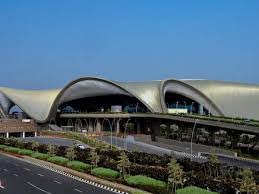
The Union Ministry of Health and Family Welfare has notified Navi Mumbai International Airport as an authorised entry point for the import of drugs into India. The move aims to strengthen pharmaceutical logistics, improve supply chain efficiency and facilitate trade while ensuring regulatory oversight.
What is the Recent Notification?
The notification has been issued under the Drugs and Cosmetics Act, 1940, after consultation with the Drugs Technical Advisory Board (DTAB).
To operationalise the decision, the Central Government amended Rule 43A of the Drugs Rules, 1945, adding Navi Mumbai International Airport to the list of approved locations through which pharmaceutical products can be imported into India.
With this amendment, the number of authorisedroad, rail, sea and air entry points for drug imports has increased to 42.
Key Features
The inclusion of Navi Mumbai Airport is expected to improve the movement of imported pharmaceutical consignments by providing an additional logistics gateway. It will reduce congestion at existing entry points, diversify import routes and enhance supply-chain resilience.
The new facility is expected to facilitate quicker customs clearance, improve transportation efficiency and strengthen pharmaceutical distribution networks across western India.
Drugs Technical Advisory Board (DTAB)
The Drugs Technical Advisory Board (DTAB) is a statutory body constituted under the Drugs and Cosmetics Act, 1940.
It serves as the highest technical advisory body on matters relating to the regulation of drugs and cosmetics in India. The Board advises the Central and State Governments on technical issues concerning the administration and implementation of the Act and the Rules framed thereunder.
IMAT-05: Fifth Integrated Main Parachute Airdrop Test for Gaganyaan Mission
- 12 Jul 2026
In News:
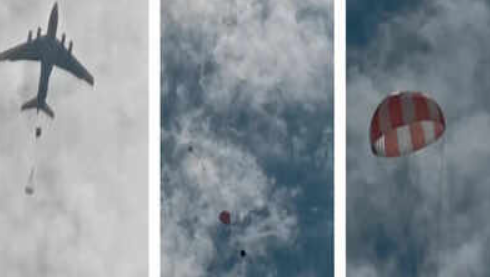
The Indian Space Research Organisation (ISRO) successfully conducted the fifth Integrated Main Parachute Airdrop Test (IMAT-05) for the Gaganyaan Mission at the Aerial Delivery Research and Development Establishment (ADRDE) drop zone in Sheopur, Madhya Pradesh. The test marks another significant milestone in validating the crew module's safe recovery system ahead of the upcoming uncrewed G1 mission.
What is IMAT-05?
The Integrated Main Parachute Airdrop Test (IMAT-05) is a high-altitude structural qualification test designed to validate the main parachute system of the Gaganyaan Crew Module under the most demanding re-entry conditions. It simulates the extreme aerodynamic forces experienced by the crew capsule during atmospheric re-entry before its splashdown in the sea.
The test was jointly planned and executed by the Indian Space Research Organisation (ISRO) and the Aerial Delivery Research and Development Establishment (ADRDE), a laboratory under the Defence Research and Development Organisation (DRDO).
Objective
The primary objective of IMAT-05 was to verify the structural integrity, deployment sequence, aerodynamic performance and safety margins of the main parachute system under maximum design loads expected during the Gaganyaan G1 uncrewed demonstration mission.
Key Features of the Test
The test involved dropping a dummy payload, equivalent in mass to the actual crew module, from an altitude of 2.5 km using an Indian Air Force IL-76 heavy transport aircraft.
The Gaganyaan Crew Module uses an integrated 10-parachute deceleration system, designed to gradually reduce the capsule's velocity before ocean landing.
The system comprises:
- 2 Apex Cover Separation Parachutes to jettison the protective cover over the parachute compartment.
- 2 Drogue Parachutes to stabilize the descending capsule and reduce its initial speed.
- 3 Pilot Parachutes to extract the main parachutes from the capsule.
- 3 Main Parachutes that sequentially deploy to reduce the crew module to a safe splashdown velocity.
A major highlight of IMAT-05 was the successful validation of the disreefing sequence, a controlled deployment mechanism in which the main parachutes inflate in stages rather than opening instantaneously. This significantly reduces structural stress on the parachute canopy and suspension lines under extreme aerodynamic loads.
Cyanobacteria: Nature's Ancient Microbes for Sustainable Water Purification
- 12 Jul 2026
In News:
Researchers from IIT Guwahati have demonstrated that cyanobacteria (blue-green algae) can effectively remove lead from contaminated water, highlighting their potential as an eco-friendly and cost-effective solution for heavy metal remediation.
What are Cyanobacteria?
Cyanobacteria, commonly known as blue-green algae, are microscopic photosynthetic prokaryotic organisms found naturally in aquatic environments. They are among the oldest known life forms on Earth, with fossil records dating back more than 3.5 billion years, and are believed to have played a crucial role in oxygenating the Earth's atmosphere.
These organisms occur in freshwater, brackish water and marine ecosystems, where they contribute significantly to primary productivity.
Characteristics of Cyanobacteria
Cyanobacteria are autotrophic organisms, producing their own food through photosynthesis using sunlight. Unlike algae, they possess a prokaryotic cell structure, lacking a true nucleus and membrane-bound organelles.
They reproduce asexually, primarily through transverse binary fission. While some species occur as solitary cells, others form colonies or filamentous structures.
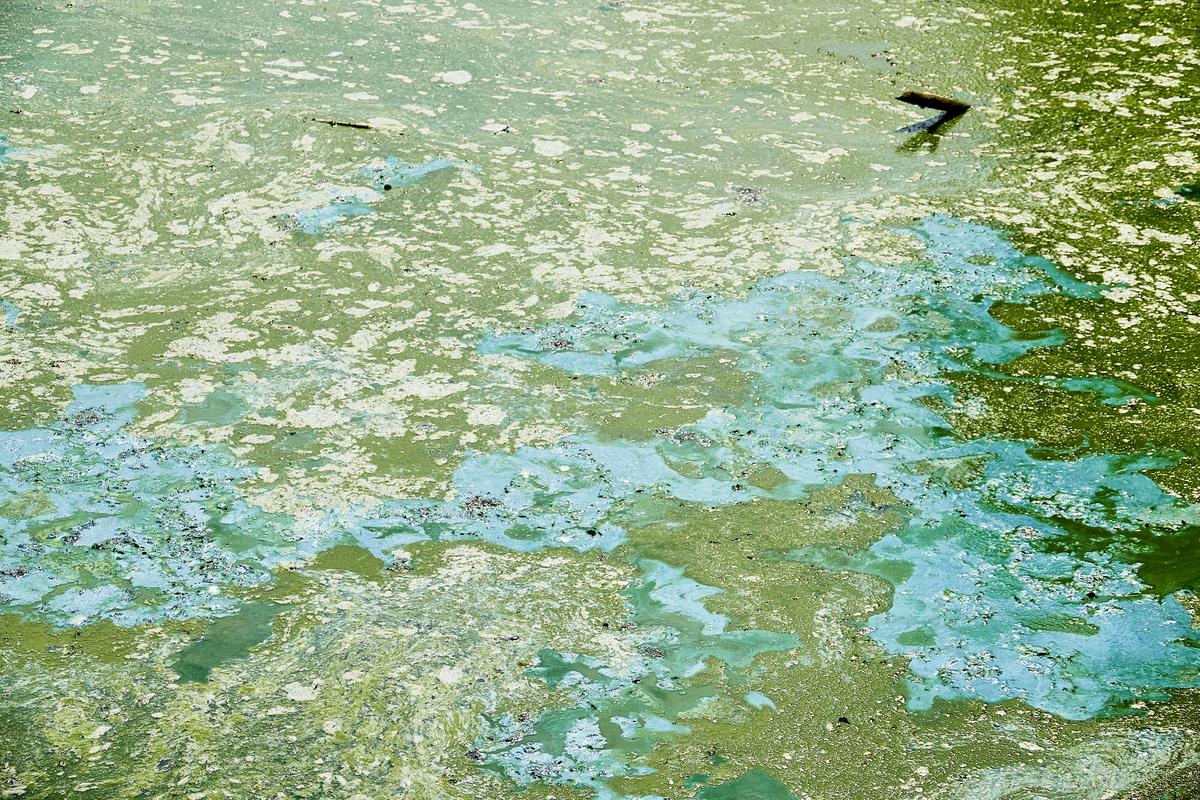
Under warm, nutrient-rich conditions, cyanobacteria multiply rapidly and form cyanobacterial blooms, particularly in slow-moving water bodies enriched with nutrients from agricultural runoff or sewage. Certain species produce cyanotoxins, which can adversely affect aquatic ecosystems, livestock and human health.
Role in Water Purification
The recent study demonstrates that cyanobacteria can absorb and accumulate lead, a toxic heavy metal, from contaminated water through the process of biosorption. This makes them promising candidates for bioremediation, an environmentally sustainable approach that uses living organisms to remove pollutants from the environment.
Compared to conventional chemical treatment methods, cyanobacteria-based remediation is relatively inexpensive, eco-friendly and suitable for treating industrial wastewater contaminated with heavy metals.
Astra Mk 1 Missile
- 12 Jul 2026
In News:
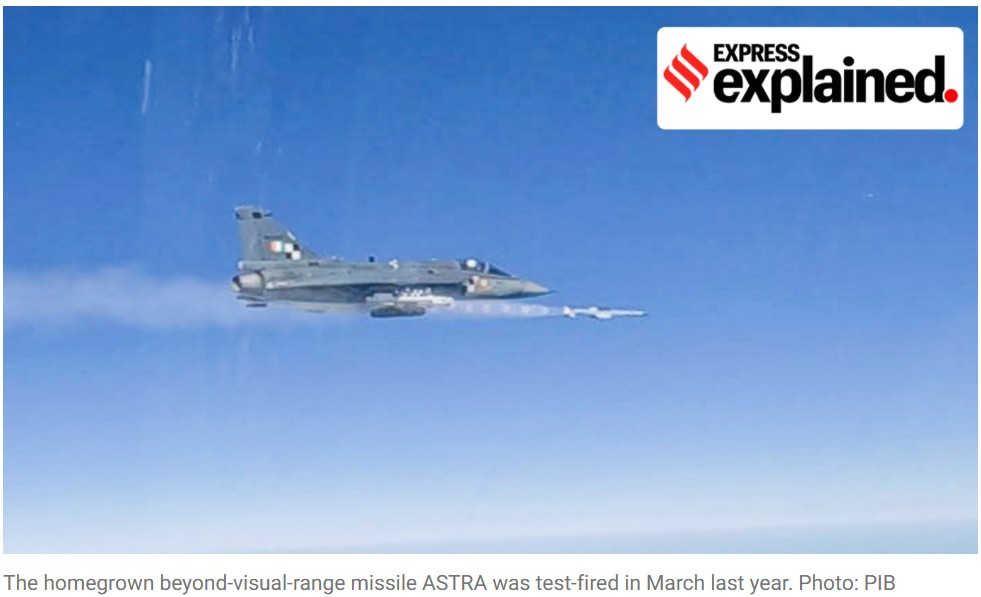
During the India–Indonesia Bilateral Summit in Jakarta, the two countries signed a landmark defence agreement for the supply of the indigenously developed Astra Mk 1 Beyond-Visual-Range Air-to-Air Missile (BVRAAM). The deal marks a significant milestone in India's growing defence exports and strengthens strategic defence cooperation between the two countries.
What is the Astra Mk 1 Missile?
The Astra Mk 1 is India's first indigenously developed Beyond-Visual-Range Air-to-Air Missile (BVRAAM), designed to engage and destroy highly manoeuvrable enemy aircraft before they enter visual combat range. Developed by the Defence Research and Development Organisation (DRDO) in partnership with Bharat Dynamics Limited (BDL), the missile significantly enhances the long-range air combat capability of the Indian Air Force.
Its primary objective is to provide fighter aircraft with stand-off strike superiority, enabling pilots to neutralize hostile aerial targets from safe distances.
Key Features
- The Astra Mk 1 is an all-weather, supersonic missile capable of intercepting highly agile aircraft at speeds of up to Mach 4.5.
- It operates across a wide altitude envelope ranging from sea level to 20 km and has an effective engagement range of approximately 80–110 km, depending on launch conditions.
- The missile employs a three-stage guidance system for enhanced accuracy. During the initial phase, it navigates using an inertial navigation system. In the mid-course phase, it receives continuous radio frequency updates from the launch aircraft, enabling course corrections against manoeuvring targets. In the terminal phase, an Active Radio Frequency (RF) seeker autonomously locks onto the target, maintaining effectiveness even in electronic warfare environments.
- Powered by a single-pulse smokeless solid-fuel rocket motor, Astra leaves minimal visible smoke, thereby reducing the chances of revealing the launch aircraft's position.
Platform Integration
The Astra Mk 1 is fully operational on the Sukhoi Su-30 MKI fleet of the Indian Air Force. Integration is currently underway with India's indigenous LCA Tejas Mk 1A and the Rafale fighter aircraft, expanding its operational versatility across multiple combat platforms.
Evolution of the Astra Missile Family
Building upon the success of the Mk 1, DRDO is developing advanced variants to further strengthen India's aerial strike capability.
The Astra Mk 2 is expected to have an engagement range of around 200 km and will employ a dual-pulse solid rocket motor, enabling the missile to regain energy during the terminal phase and improve interception capability against highly manoeuvrable targets.
The Astra Mk 3, also known as Gandiva, is currently under development and will incorporate Solid Fuel Ducted Ramjet (SFDR) technology. This propulsion system will provide sustained thrust throughout flight, extending the missile's interception range to over 350 km, placing it among the world's longest-range air-to-air missiles.