
Narcotics Analysis & RAG-based Investigation Tool (NARIT-AI)
- 24 Apr 2026
In News:
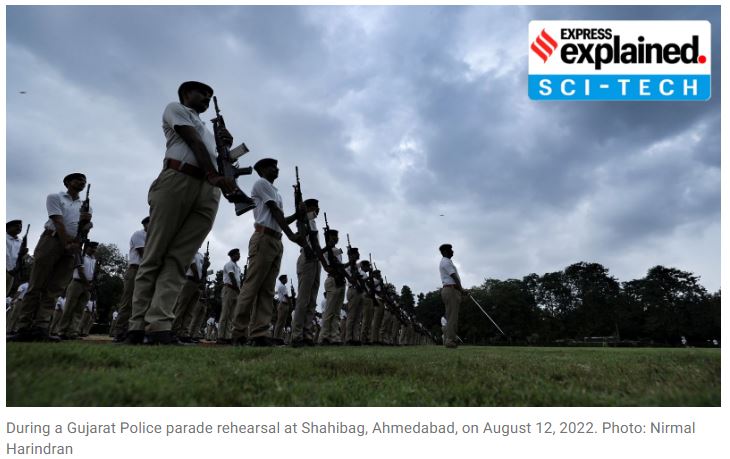
In a pioneering move for Indian law enforcement, the Gujarat Police has launched the Narcotics Analysis & RAG-based Investigation Tool (NARIT-AI). Developed by the Western Railway Police (Vadodara Division) in collaboration with private partner Gradiante Creative Services, this system makes Gujarat the first state in India to deploy a specialized AI-driven platform for narcotics investigations.
The Technology: Retrieval-Augmented Generation (RAG)
The core strength of NARIT-AI lies in its Retrieval-Augmented Generation (RAG) architecture. Unlike standard Generative AI (like ChatGPT) that relies on broad, sometimes unreliable internet data, RAG allows the tool to operate within a "walled garden" of verified information.
- Closed Database: The tool analyzes First Information Reports (FIRs) against a specific, high-authority database containing Supreme Court and High Court judgments, Government of India circulars, and the new criminal laws—Bharatiya Nyaya Sanhita (BNS), Bharatiya Nagarik Suraksha Sanhita (BNSS), and Bharatiya Sakshya Adhiniyam (BSA).
- Privacy and Accuracy: By avoiding the general internet, NARIT-AI ensures sensitive case data remains private and prevents "AI hallucinations"—a phenomenon where AI generates plausible-sounding but legally incorrect information.
Strategic Functions in Narcotics Enforcement
The Narcotic Drugs and Psychotropic Substances (NDPS) Act, 1985, is one of India's most stringent laws, characterized by complex procedural requirements. NARIT-AI acts as a "digital legal consultant" to assist Investigating Officers (IOs) in the following ways:
1. Procedural Compliance and Evidence Checklists: The tool provides real-time procedural guidance to ensure that officers do not commit technical errors during search and seizure (such as violations of Section 50 of the NDPS Act, regarding personal search). It generates an evidence checklist tailored to the specific details of a case.
2. Predictive Legal Analysis: NARIT-AI evaluates the strengths and weaknesses of an FIR. Crucially, it can predict potential defense arguments that may be raised in court, allowing prosecutors to prepare robust rebuttals in advance.
3. Real-Time Legal Research: Instead of manual searches through voluminous law books, the tool provides immediate citations of relevant precedents, ensuring that the investigation is aligned with the latest judicial interpretations.
Significance for the Criminal Justice System
The deployment of NARIT-AI addresses several systemic bottlenecks in the Indian legal framework:
- Improving Conviction Rates: NDPS cases often result in acquittals due to procedural lapses. By providing an AI-driven "compliance check," the tool ensures that the prosecution's case is watertight.
- Capacity Building: It empowers junior officers with the expertise of seasoned legal analysts, standardizing the quality of investigations across the state.
- Modernizing the 3Cs: It aligns with the national goal of digitizing the three pillars of criminal justice—Courts, Police, and Prisons—by integrating advanced analytics into daily policing.
‘Yellow Line’ Security Strategy
- 24 Apr 2026
In News:
In a significant shift of military doctrine, the Israeli government has officially expanded its Yellow Line strategy from the Gaza Strip to Southern Lebanon. By April 2026, following a ceasefire with Hezbollah, the Israel Defense Forces (IDF) began replicating the "Gaza Model" in the north, establishing a militarized buffer zone that extends up to the strategic Litani River.
Defining the 'Yellow Line'
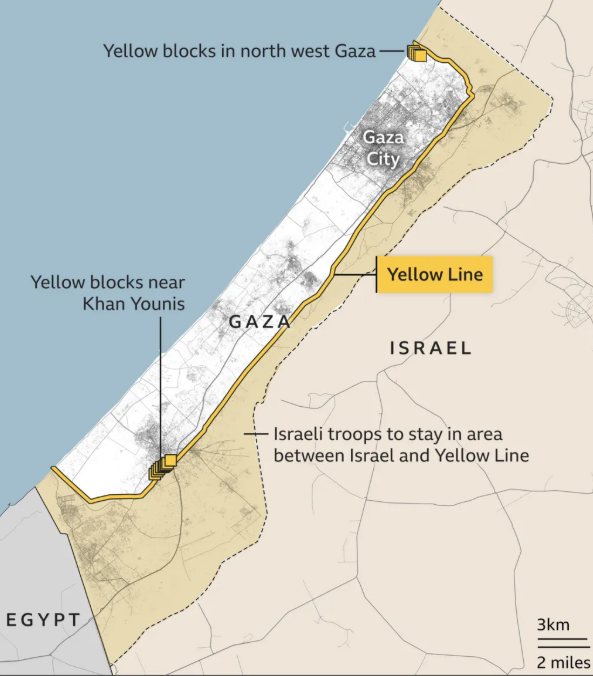
The Yellow Line is not a political border but a military demarcation and a strategic construct. It is a fortified, static boundary placed deep within hostile territory to create a free-fire zone under direct and open-ended Israeli military control.
- Physical Manifestation: The line is literally color-coded. It is marked by yellow-painted concrete bollards spaced at 200-meter intervals and 3.5-meter-high poles.
- Operational Context: Unlike the Green Line of 1967, which was a traditional ceasefire line, the Yellow Line is an internal partition that divides an enclave into Israeli-occupied zones and local administrative areas.
Chronology and Historical Roots
The philosophy behind the Yellow Line draws from historical Israeli deployment boundaries like the Green Line and the Area A demarcations in the West Bank. However, its modern application is far more intrusive:
- Gaza Strip (October 2025): First introduced as part of a peace framework proposed by US President Donald Trump. It placed approximately 58% of the Gaza Strip under Israeli military control, confining the local population to just 42% of the territory.
- Southern Lebanon (April 2026): Following the northern conflict, the strategy was applied to Lebanon, creating a forward defensive posture designed to prevent militant groups from launching close-range attacks on Israeli border communities.
Strategic Objectives and Military Features
The primary goal of the Yellow Line is forward defense—transitioning from mobile combat to a permanent, static presence.
- Static Defense Infrastructure: The line is reinforced with fortified outposts, earth mounds, radio towers, and surveillance sensors.
- Total Control Zones: The area east of the line is classified as a closed military zone. The IDF maintains the authority to level infrastructure and prevent civilian return within this perimeter to ensure a "clear view" for security forces.
- Resource Intensity: This strategy is high-maintenance. Sustaining the line in Gaza alone requires two full IDF divisions, creating a continuous strain on Israel’s reserve forces and national budget.
International and Humanitarian Significance
The "Yellow Line" has sparked intense global debate, with international bodies like the OHCHR (Office of the High Commissioner for Human Rights) and Euro-Med raising significant alarms.
1. Creeping Annexation: Critics argue the doctrine represents a shift toward "creeping annexation," where permanent military buffers become the standard response to regional conflicts, effectively shrinking the sovereign territory of neighboring entities.
2. Forced Displacement and Ghettoization: The strategy has been classified by human rights organizations as a tool for "ghettoization." By cutting off access to vital agricultural lands, urban centers, and water resources (like the Litani River), it induces long-term displacement of the local population.
3. Regional Stability: While Israel views the line as a necessary shield for its border communities, regional analysts suggest it may become a flashpoint for future friction, as the permanent occupation of foreign soil often fuels long-term insurgency.
Online Gaming Authority of India (OGAI)

- 24 Apr 2026
In News:
The landscape of India’s digital economy has reached a significant milestone with the official operationalization of the Online Gaming Authority of India (OGAI) on May 1, 2026. Established under the Promotion and Regulation of Online Gaming Act 2025, this central regulatory body marks a shift from fragmented state-level oversight to a unified, "digital-first" national framework.
Understanding the Online Gaming Authority of India (OGAI)
The OGAI is an attached office under the Ministry of Electronics and Information Technology (MeitY). Headquartered in Delhi, it operates primarily as a digital office to minimize physical processes and enhance governance efficiency in the fast-evolving gaming sector.
Core Objectives and Functions
- Classification and Registration: The OGAI holds the exclusive power to determine if a game qualifies as a permissible e-sport, an online social game, or a prohibited "online money game."
- Regulatory Oversight: It issues mandatory guidelines, codes of practice, and directions to ensure platforms comply with user safety standards.
- Grievance Redressal: It serves as the second tier of a two-tier grievance mechanism. Users dissatisfied with a platform's resolution can appeal to the OGAI, which aims to resolve disputes within 30 days.
- Enforcement and Coordination: OGAI coordinates with financial institutions and law enforcement agencies to block payment gateways for prohibited money games, effectively acting as a financial gatekeeper.
A New Categorization System
Under the 2025 Act and the subsequent 2026 Rules, the traditional "Skill vs. Chance" debate has been replaced by a tripartite classification:
- E-Sports: Recognized as legitimate competitive skill-based sports. Registration is mandatory for games seeking this status, granting a digital certificate valid for 10 years.
- Online Social Games: Primarily skill-based games for entertainment (e.g., Ludo or social puzzles) with no stakes involved. Registration for these is generally voluntary, though the OGAI can review them based on scale or risk.
- Online Money Games: Defined as any game where users pay stakes with an expectation of monetary gain. These are entirely prohibited under the new law, along with their advertising and financial facilitation.
Institutional Framework and Membership
The OGAI is a high-level body comprising six members, ensuring a "whole-of-government" approach to regulation:
- Chairperson: Additional Secretary, Ministry of Electronics and Information Technology (MeitY).
- Members: Joint Secretaries from the following key departments:
- Ministry of Home Affairs (MHA)
- Ministry of Information and Broadcasting (MIB)
- Ministry of Youth Affairs and Sports
- Department of Financial Services (DFS)
- Department of Legal Affairs
The "Gatekeeper" Model: Enforcement and User Safety
A standout feature of the 2026 regulatory regime is the role of financial intermediaries. Banks and UPI platforms are now legally required to verify the OGAI registration status of a service before processing transactions.
Mandatory User Safety Standards:
- Age-Gating: Robust age verification to prevent minors from accessing age-restricted content.
- Time Restrictions: Limits on excessive play to prevent digital addiction.
- Parental Controls: Tools allowing parents to monitor and restrict gaming activities.
- KYC and Data Localization: All user data must be stored within India to ensure national security and regulatory accountability.
Limnonectes motijheel

- 24 Apr 2026
In News:
In a significant breakthrough for Indian herpetology, scientists have discovered a rare species of fanged frog, Limnonectes motijheel, within the pristine ecosystems of the Namdapha Tiger Reserve in Arunachal Pradesh. This discovery underscores the immense, yet often hidden, biodiversity of the Eastern Himalayas and provides new insights into the evolution of amphibian breeding behaviors.
The Anatomy and Behavior of Limnonectes motijheel
The newly identified species belongs to the genus Limnonectes, a group of amphibians spread across South and Southeast Asia. With this addition, the number of known Limnonectes species in India has risen to six.
Key Biological Features:
- The "Fangs": The frog is characterized by small, bony, fang-like projections in the lower jaw of the males. These are not true teeth but are believed to be used for territorial combat or as an aid in feeding.
- Physical Appearance: It possesses a distinct dark-brown line between the eyes, an inverted "V"-shaped ridge on its back, and broken longitudinal folds along its flanks.
- Dimensions: As a medium-sized amphibian, adults typically measure between 2.3 to 3.5 centimeters.
- Naming: The species is named after Motijheel, a site within Namdapha renowned for its exceptionally high amphibian density and diversity.
Unique Breeding: The Mud-Nester
Perhaps the most striking feature of Limnonectes motijheel is its reproductive strategy. Unlike most frogs that deposit eggs in water bodies or on overhanging foliage, this species constructs a mud nest beneath leaf litter on the forest floor. This specific "house-building" behavior is a unique adaptation for moisture retention and predator avoidance, and it represents the first recorded instance of mud-nesting within this genus in India.
Namdapha Tiger Reserve
The discovery highlights the ecological importance of Namdapha, a National Park and Tiger Reserve located in the Changlang District of Arunachal Pradesh, bordering Myanmar.
Geographic and Ecological Significance:
- Biogeographical Junction: Namdapha sits at the confluence of the Indian Sub-Continent and Indo-China Biogeographic Regions. It is nestled between the Mishmi Hills (Dapha Bum ridge) and the Patkai ranges.
- Hydrology: The reserve is drained by the Namdapha River, a tributary of the Noa-Dihing, which flows through the heart of the park.
- Vegetation Gradient: Due to its vast altitudinal range, the park exhibits a diverse floral spectrum, ranging from Tropical Evergreen and Moist Deciduous forests to Temperate and Alpine Scrub forests.
Biodiversity Highlights:
- The Four Big Cats: Namdapha is the only park in the world that serves as a habitat for four species of big cats: Tiger, Leopard, Snow Leopard, and Clouded Leopard.
- Rare Fauna: It is home to the Hoolock Gibbon (India’s only ape), the Slow Loris, and the Himalayan Sun Bear.
- Endangered Flora: The park hosts the rare Blue Vanda orchid and the medicinal plant Mishimi Teeta (Copti teeta), which is central to the traditional medicine of local tribes.
NBA Revised Guidelines on Biological Diversity Act (BDA), 2002
- 24 Apr 2026
In News:
In a significant stride toward strengthening India’s ecological governance, the National Biodiversity Authority (NBA), during its 77th meeting in March 2026, approved a comprehensive policy overhaul. This drive focuses on two critical pillars: streamlining the utilization of Access and Benefit Sharing (ABS) funds and modernizing the management of Designated Repositories.
These measures align with the Biological Diversity Act (BDA), 2002, ensuring that the commercial use of India’s vast bio-resources translates into tangible benefits for local communities and the environment.
Rationalizing the Access and Benefit Sharing (ABS) Framework
The ABS mechanism is a legal mandate ensuring that those who access biological resources for commercial purposes share a portion of their gains with the "custodians" of that biodiversity. The 2026 guidelines introduce a transparent, formula-based approach to resolve long-standing ambiguities in fund distribution.
1. The New Fund Sharing Formula
The NBA has rationalized the allocation of funds based on the identifiability of the resource's source:
- Identifiable Source: In cases where the origin of the bio-resource is known, 25–40% of the ABS amount is allocated to the concerned institutions or repositories to reward their role in documentation and value addition. The lion’s share, 60–75%, is channeled back to local communities and beneficiaries via State Biodiversity Boards (SBBs) and Union Territory Biodiversity Councils (UTBCs).
- Non-Identifiable Source: Where the specific origin is difficult to trace, a standard ratio of 30% (to institutions) and 70% (to the NBA) is applied. These funds are then utilized for broader biodiversity conservation and management under Section 32 of the Act.
2. Addressing Complex Supply Chains
Bio-resources are often accessed through traders and intermediaries, making it difficult to ascertain a single point of origin.
- Widely Distributed Resources: If resources are spread across the country with no clear origin, the funds are utilized collectively for socio-economic development and conservation in accordance with Section 27 of the BDA.
- State-Specific Data: If data allows for the identification of specific states, the NBA will distribute the funds to the respective SBBs/UTBCs for localized utilization.
Modernizing Designated Repositories
Designated Repositories act as the "banks" for India’s biological heritage, housing voucher specimens of resources accessed under the Act. The revised guidelines seek to transform these from mere storage units into centers of scientific integrity.
Key Reforms in Repository Management:
- Provenance and Traceability: Repositories must now maintain robust "provenance" records—the complete history of ownership and origin—to prevent biopiracy and ensure legal compliance.
- Digitization of Specimens: A major policy shift involves the digitization of voucher specimens. This enhances global accessibility for verification and scientific identification while minimizing the physical transfer of sensitive biological materials, which often carries ecological and legal risks.
- Strict Standard Operating Procedures (SOPs): Revised guidelines mandate rigorous documentation practices and safe custody protocols to maintain the scientific integrity of samples.
Strategic Significance for Biodiversity Governance
- Equity and Social Justice: By defining clear percentages for local communities, the NBA prevents institutional monopolies over ABS funds. This ensures that the primary conservers—tribal and rural communities—receive their fair share of commercial returns.
- Socio-Economic Development: The directive to utilize funds for the development of the "area of origin" ensures that biodiversity conservation is linked with local prosperity.
- Scientific Integrity: The emphasis on digitization and provenance records aligns Indian standards with global best practices, making the regulatory framework more efficient for researchers and industry players alike.
- Strengthening Federalism: The active role of SBBs and UTBCs in fund distribution reinforces the three-tier structure (National, State, and Local) envisaged under the Biological Diversity Act.