
Metamaterials
- 07 May 2026
In News:
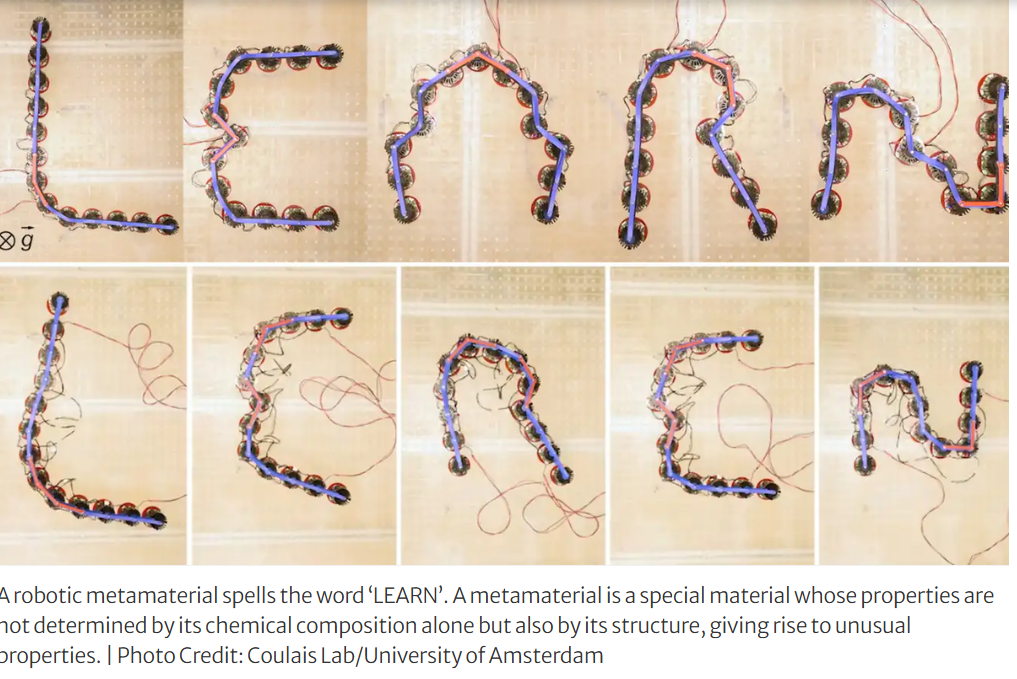
In a pioneering study published in Nature Physics in April 2026, researchers from the University of Amsterdam and across Europe have engineered synthetic metamaterials capable of "learning" and autonomously adapting their physical shape. By mimicking the adaptive behaviors of living organisms without a centralized processor or "brain," this breakthrough introduces the concept of embodied intelligence to materials science.
Core Technology: Structure Over Chemistry
Unlike traditional substances, metamaterials derive their properties from their engineered physical geometry rather than their chemical makeup.
- The Architecture: The material consists of chains of identical motorized hinges connected by an elastic skeleton.
- Hardware-Based Learning: Instead of relying on external software, each unit features a microcontroller that senses rotation and stores movement history. This allows the material to perform "reflex actions" and learn through direct physical interaction with its environment.
Key Mechanisms of Physical Adaptation
The research highlights three specialized physical behaviors that allow the material to "evolve":
- Contrastive Learning Scheme: The material utilizes a hardware-based contrastive learning mechanism. It compares different physical states—such as a "clamped" target shape versus a "free" spontaneous state—and adjusts its internal torque and stiffness until it achieves the desired configuration.
- Non-Reciprocity: This metamaterial breaks the standard laws of symmetry in physics. It responds differently based on the direction of the input. For example, a nudge from the left may result in a different bending pattern than a nudge from the right, allowing the material to discover multiple pathways to a final shape.
- Bistable Units: The inclusion of units that can exist in two stable states allows the material to switch and store shapes with minimal energy expenditure, effectively giving the material a "physical memory."
Strategic Significance and Applications
The ability of a material to learn, forget, and relearn shapes has transformative potential across several high-tech sectors:
- Soft Robotics: Enables "brainless" locomotion where robots can crawl, roll, or grab objects by adapting to unpredictable terrain without complex central programming.
- Biomedical Engineering: Development of adaptive prosthetic limbs and implants that can physically "learn" to adjust to a patient’s specific movements and anatomical changes.
- Intelligent Infrastructure: Smart materials that autonomously stiffen or change shape in response to environmental stresses like wind, vibration, or seismic activity.
- Distributed Systems: Swarm-like robotic systems where each component adapts independently, enhancing overall system resilience.
Current Challenges and Limitations
While a milestone in material physics, the technology currently faces several hurdles:
- Scalability: The system presently relies on relatively large hardware components and microcontrollers, making miniaturization a key future objective.
- Fabrication Complexity: Designing non-reciprocal and bistable structures requires highly specialized laboratory setups, hindering immediate mass production.
- Environmental Durability: The long-term reliability of these motorized hinges and elastic skeletons under real-world weather and stress conditions remains to be tested.
Mayon Volcano Eruption
- 07 May 2026
In News:
As of May 2026, the Mayon Volcano in the Philippines remains under Alert Level 3, indicating a high level of volcanic unrest. The current eruptive phase, which began in late 2025, has recently intensified, with satellite data from the Philippine Space Agency (PhilSA) confirming that ashfall and pyroclastic flows have affected over 1,000 hectares of farmland and buried more than 120 villages in Albay province.
Mayon Volcano: The "Perfect Cone" Stratovolcano
Located in the Albay province on the island of Luzon, Mayon is the most active volcano in the Philippines. It is globally recognized for its near-perfect symmetrical cone, a physical characteristic that also makes it highly dangerous.
- Classification: It is a stratovolcano (or composite volcano), characterized by a steep profile and periodic explosive and effusive eruptions. Its structure is built from alternating layers of hardened lava, tephra, and volcanic ash.
- Eruption Profile: Mayon typically exhibits Strombolian activity—relatively mild but frequent bursts of glowing lava. However, it is also prone to more hazardous phenomena:
- Pyroclastic Density Currents (PDCs): Locally known as uson, these are fast-moving clouds of extremely hot gas and volcanic debris.
- Lahars: Mudflows triggered by heavy rainfall mixing with accumulated volcanic ash, which can bury entire communities.
- Historical Context: Its most destructive eruption occurred in February 1814, when ash and lava buried the town of Cagsawa, resulting in over 1,200 fatalities.
The Geologic Driver: The Pacific Ring of Fire
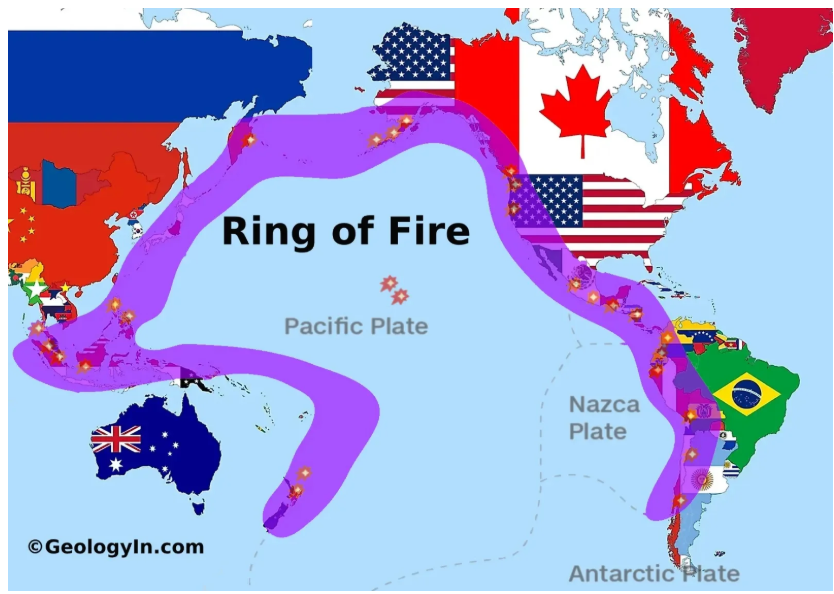
The persistent activity of Mayon is a direct consequence of its location on the Pacific Ring of Fire (Circum-Pacific Belt).
- Definition: A horseshoe-shaped zone stretching approximately 40,000 kilometers, home to roughly 75% of the world’s active volcanoes and the source of 90% of global earthquakes.
- Tectonic Mechanism: The activity is driven by plate tectonics, specifically subduction zones. In the Philippines, the Philippine Sea Plate is being subducted beneath the Philippine Mobile Belt. As the oceanic plate sinks into the mantle, it melts, and the resulting magma rises to the surface, creating volcanic chains.
- Geographic Scope: The belt extends from the southern tip of South America, through the West Coast of North America, across the Aleutian Islands, and down through Japan, the Philippines, Indonesia, and New Zealand.
2026 Eruption: Impact and Disaster Management
The current unrest has triggered significant socio-economic disruptions, emphasizing the importance of disaster resilience in volcanic regions.
- Evacuations and Safety Zones: Authorities have enforced a 6-kilometer Permanent Danger Zone (PDZ). Over 200,000 residents have been affected, with thousands relocated to emergency shelters.
- Aviation and Visibility: Massive ash plumes have restricted airspace near Manila. On the ground, ashfall has turned roads into "grey seas," reducing visibility to near-zero and necessitating the use of specialized clearing equipment.
- Agricultural Loss: Pyroclastic flows in May 2026 destroyed over 1,039 hectares of rice crops, threatening local food security in the Bicol region.
- Monitoring Infrastructure: The Philippine Institute of Volcanology and Seismology (PHIVOLCS) utilizes real-time monitoring, including seismic sensors and satellite imagery, to track magma ascent and predict potential explosive pulses.
Caracal

- 07 May 2026
In News:
The recent confirmation of the rare Caracal (Caracal caracal) in the Thar Desert, situated near the India-Pakistan border, has sparked significant interest within the conservation community. This elusive wild cat, long thought to be on the verge of extinction in the Indian subcontinent, represents a critical link in the arid ecosystem.
Taxonomic and Cultural Context
Despite its common moniker, the "Desert Lynx," the caracal is not a true lynx. Genetic studies reveal it is more closely related to the African golden cat and the serval.
- Etymology: In India, it is historically known as "Siya Gosh," a Persian term meaning "black ear," referring to the distinctive black tufts of fur on its ears.
- Historical Significance: Caracals were traditionally used by royalty in India and Persia for hunting birds, prized for their incredible agility and jumping ability.
Physical Characteristics and Specialized Adaptations
The caracal is an evolutionary marvel, designed for survival in harsh, water-scarce environments.
- Appearance: It possesses a solid, muscular build with disproportionately long legs and a short face. Its fur is typically a uniform reddish-tan or sandy-brown—providing perfect camouflage in desert terrain—though rare melanistic (black) variants have been documented.
- The "Leaping Hunter": The caracal is a remarkable jumper, capable of leaping up to 3 meters (10 feet) vertically into the air to strike down birds with its paws.
- Speed and Stealth: They are highly agile predators, reaching speeds of up to 80 kph (50 mph). Being predominantly nocturnal and shy, they are rarely seen by humans, earning them the reputation of being "ghosts of the desert."
Habitat and Distribution
While the species as a whole has a wide range, the Indian sub-population is critically restricted.
- Global Distribution: Native to Africa, Central Asia, the Middle East, and Northwest India.
- Indian Context: In India, they are found primarily in the arid and semi-arid regions of Rajasthan (Thar Desert and Ranthambore) and Gujarat (Kutch).
- Preferred Environment: They favor dry climates with low rainfall, such as shrublands, savannahs, and semi-deserts. The recent spotting near the international border in the Thar Desert indicates that the species still finds a refuge in the undisturbed, sparsely populated frontier zones.
Ecological Role and Diet
As obligate carnivores, caracals play a vital role as meso-predators in the desert food web. Their diet is diverse, consisting of rodents, small mammals, gazelles, and birds. By controlling the population of smaller herbivores and rodents, they help maintain the balance of the fragile desert vegetation.
Conservation Status and Protection in India
There is a stark contrast between the global and national conservation status of the caracal, which is a critical point for environmental policy discussions.
- IUCN Red List: Least Concern (on a global scale, due to stable populations in Africa).
- Wildlife (Protection) Act, 1972: Schedule I. This provides the caracal with the highest level of legal protection in India, on par with the Tiger and the Asiatic Lion.
- CITES: Listed under Appendix I (for Asian populations), which prohibits international commercial trade.
Major Threats:
The caracal in India faces a "silent extinction" due to several factors:
- Habitat Fragmentation: The conversion of "wastelands" (which are actually vital scrub forests) into agricultural land or industrial zones.
- Loss of Prey Base: Overgrazing by livestock and hunting of small mammals reduces the caracal's food supply.
- Human-Wildlife Conflict: Although rare, caracals sometimes prey on small livestock, leading to retaliatory killings.
Methane Alert and Response System
- 07 May 2026
In News:
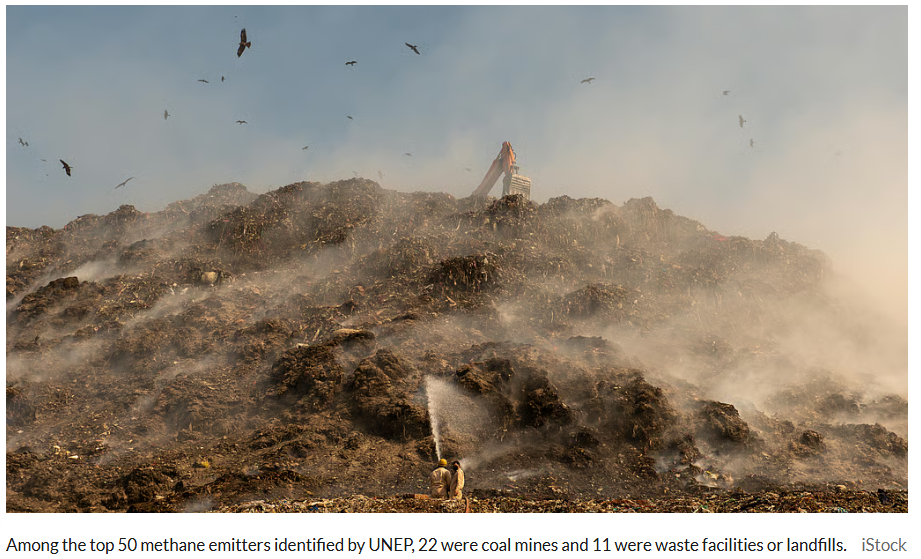
In a significant expansion of global climate surveillance, the United Nations Environment Programme (UNEP) recently announced that its Methane Alert and Response System (MARS) will now monitor emissions from coal mines and waste facilities. This expansion follows reports identifying specific high-emission sites, including Indian landfills, as among the world’s top methane emitters.
What is the Methane Alert and Response System (MARS)?
MARS is a sophisticated "data-to-action" platform integrated into the International Methane Emissions Observatory (IMEO). It represents the world's first public satellite-based system designed to detect and notify stakeholders of massive methane leaks in near real-time.
- Genesis: Announced at COP27 in November 2022, MARS began its pilot phase in January 2023. It serves as a technical engine to support the goals of the Paris Agreement and the Global Methane Pledge.
- Expansion: Initially focused solely on the oil and gas industry, the system now encompasses the coal and waste sectors, recognizing their substantial contribution to global warming.
Operational Framework: How MARS Functions
The system operates through a four-stage cycle designed to ensure that satellite data translates into atmospheric improvement:
- Detection: Utilizing high-resolution satellite imagery, MARS scans the globe to identify "super-emitter" events—large-scale, human-caused methane plumes.
- Notification: Once a major source is identified, the system alerts the relevant national governments and private companies responsible for the site.
- Response: Notified stakeholders are encouraged to investigate and mitigate the leak, shifting from a passive observation model to an active intervention model.
- Tracking: MARS monitors the site to verify whether corrective actions have been taken, providing a transparent record of progress and collaboration.
International Methane Emissions Observatory (IMEO)
Launched during the G20 Leaders Summit in 2021, the IMEO acts as the overarching body that gathers and reconciles methane data. It creates a "single version of the truth" by integrating information from four primary sources:
- Scientific Studies: Direct measurement-based research.
- Satellite Data: Primarily through the MARS framework.
- Industry Reporting: Specifically the Oil and Gas Methane Partnership 2.0 (OGMP 2.0), which is UNEP’s flagship program involving companies committed to transparent emissions reporting.
- National Inventories: Official data submitted by individual countries.
Strategic Significance for Climate Governance
Methane is a potent greenhouse gas with a global warming potential over 80 times that of carbon dioxide over a 20-year period. Addressing methane is considered the "fastest way" to slow down temperature rise in the short term.
- Accountability and Transparency: MARS removes the "invisibility" of methane leaks. By making data public, it creates reputational and environmental incentives for companies to fix leaks promptly.
- Addressing the Waste Sector: The inclusion of landfills and waste facilities is particularly relevant for rapidly urbanizing nations like India. Landfills often experience spontaneous fires and constant methane discharge due to organic waste decomposition.
- Support for Global Pledges: It provides the technical verification needed for the Global Methane Pledge, which aims to reduce global methane emissions by at least 30% from 2020 levels by 2030.
Challenges and the Path Ahead
While MARS provides the "alert," the "response" remains voluntary. The effectiveness of the system depends on:
- National Cooperation: Governments must be willing to act on the data provided by UNEP.
- Technology Gap: Distinguishing between natural methane seeps and human-caused leaks in complex topographies requires high-precision instrumentation.
- Infrastructure Investment: In sectors like waste management, capturing methane requires significant capital investment in "Waste-to-Energy" plants and scientific landfill capping.
Mission for Cotton Productivity (2026–31)

- 07 May 2026
In News:
In a major push toward agricultural self-reliance and global textile dominance, the Union Cabinet has approved the “Mission for Cotton Productivity” with a dedicated outlay of ?5,659 crore for the period 2026–27 to 2030–31. The mission seeks to transform India’s cotton sector by transitioning from a focus on acreage to a focus on high-density productivity and quality.
Objectives and Framework
The mission is an integrated initiative announced in the Union Budget 2025–26, designed to strengthen the entire textile value chain. It operates under the government’s 5F Vision: Farm to Fibre to Factory to Fashion to Foreign.
- Implementation: It is a collaborative effort between the Ministry of Agriculture and Farmers Welfare and the Ministry of Textiles, supported by research from 10 institutes under the Indian Council of Agricultural Research (ICAR) and the Council of Scientific and Industrial Research (CSIR).
- Geographical Reach: In its initial phase, the mission targets 140 districts across 14 major cotton-growing states, grouped into three agro-ecological zones:
- Northern Zone: Punjab, Haryana, and Rajasthan.
- Central Zone: Gujarat, Maharashtra, and Madhya Pradesh.
- Southern Zone: Telangana, Andhra Pradesh, and Karnataka (including Odisha and Tamil Nadu).
- Target Outcomes by 2031:
- Yield Enhancement: To boost lint productivity from the current stagnant 440 kg/ha to 755 kg/ha (nearing the global average of 770 kg/ha).
- Production Volume: To increase total production to 498 lakh bales.
- Impact: Directly benefiting approximately 32 lakh cotton farmers.
Strategic Necessity: Why India Needs This Mission
India holds the distinction of having the largest cotton acreage globally (~11.4 million hectares), accounting for nearly 25% of global output. However, several systemic bottlenecks have hampered its potential:
- The Productivity Gap: Despite being the second-largest producer, India's yield remains among the lowest globally due to rainfed cultivation (65% of area) and fragmented landholdings.
- Pest Resistance: The initial success of Bt Cotton has wane as the Pink Bollworm and Whitefly have developed significant resistance, leading to crop failure and high input costs.
- Import Dependency for Premium Fibre: India relies heavily on imports from Egypt and the USA for Extra Long Staple (ELS) cotton (fibre length >30 mm), which is essential for high-end garment manufacturing.
- Climate Vulnerability: Predominantly grown in semi-arid regions like Vidarbha and Telangana, the crop is highly sensitive to erratic monsoons and waterlogging.
Key Technological Interventions
The mission pivots on modernizing agronomic practices to bridge the yield gap:
- High-Density Planting System (HDPS): Shifting from traditional wide spacing to closer spacing to increase the number of plants per hectare, thereby maximizing yield.
- Climate-Smart Breeding: Developing varieties of Gossypium barbadense (ELS cotton) that are drought-tolerant and pest-resistant using advanced biotechnology.
- Quality Branding (Kasturi Cotton Bharat): Targeting a trash content of below 2% to improve the global realization value of Indian cotton.
Critical Challenges and Implementation Gaps
Achieving the mission’s targets requires overcoming several "ground-level" hurdles:
- Irrigation Constraints: HDPS and High-Yielding Varieties (HYV) require assured moisture. Without integration with micro-irrigation, these crops remain at high risk during dry spells.
- Soil Fatigue: Decades of monocropping and chemical overuse have depleted soil organic carbon, reducing the efficacy of new seeds.
- Mechanization Hurdles: Modern cotton picking is labor-intensive. While mechanized harvesters are needed for HDPS, they are capital-intensive for small farmers owning less than 2 hectares.
- The Health Cost: Excessive pesticide use in cotton belts has triggered a silent health crisis, causing eye diseases and respiratory issues among farmers due to a lack of protective gear.
Way Forward: Strengthening the Ecosystem
To ensure the mission’s success, the following measures are essential:
- Integrated Pest Management (IPM): Moving beyond just Bt technology to include pheromone traps, biopesticides, and mandatory "refuge crops" to slow down pest adaptation.
- Custom Hiring Centres (CHCs): Establishing cooperative models for mechanized harvesting to make expensive technology accessible to marginal farmers.
- Digital Agriculture (Agri-Stack): Using AI and satellite data to provide real-time, hyper-local advisories on weather and pest attacks.
- Policy Synergy: Linking the mission with PM-Krishi Sinchayee Yojana (Per Drop More Crop) to ensure the necessary irrigation infrastructure in rainfed cotton belts.