
Environmental Performance Index 2026
- 02 Aug 2026
In News:
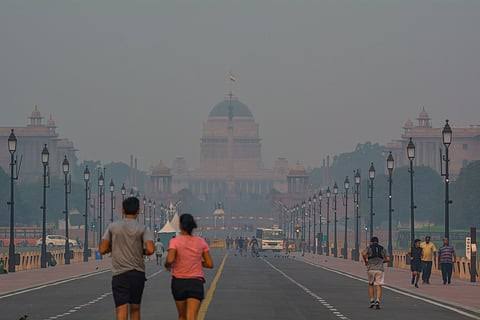
Experts have described India's ranking in the Environmental Performance Index (EPI) 2026 as a wake-up call, highlighting the need to strengthen environmental governance and sustainability efforts.
What is the Environmental Performance Index (EPI)?
The Environmental Performance Index (EPI) is a biennial global index that evaluates and ranks countries based on their environmental performance using a comprehensive set of data-driven indicators.
It is jointly developed by the Yale Center for Environmental Law & Policy (YCELP), Columbia University's Center for International Earth Science Information Network (CIESIN), and the Yale Center for Geospatial Solutions.
The index serves as a global benchmark for assessing countries' progress towards environmental sustainability and international commitments, including the UN Sustainable Development Goals (SDGs) and the Paris Agreement.
Framework
The EPI assesses countries using 47 indicators grouped under 12 issue categories, which are organised into three broad policy objectives:
- Environmental Health
- Ecosystem Vitality
- Climate Change
EPI 2026 Highlights
- Top 5 Countries:
- Estonia
- Luxembourg
- United Kingdom
- Finland
- Netherlands
- Lowest Ranked Country: Laos
- India's Rank: 176th out of 177 countries
- India's Score: 22.46
- Regional Average: 31.81
Broad Peak

- 02 Aug 2026
In News:
A team of mountaineers was caught in an avalanche on the slopes of Broad Peak in the Karakoram Range, drawing attention to one of the world's highest mountains.
About Broad Peak
- Broad Peak is the 12th-highest mountain in the world, with an elevation of 8,051 metres, located in the Karakoram Range.
- In the local Balti language, it is known as Falchan Kangri, meaning "Broad Mountain." The mountain derives its English name from British explorer Sir Martin Conway, who named it in 1892 after its unusually broad summit ridge, resembling the Breithorn in the Swiss Alps.
- Broad Peak lies in the Karakoram Range, spanning Gilgit-Baltistan and China's Xinjiang, approximately 8 km southeast of K2.
Formation and Physical Features
- The mountain was formed by the continuing collision of the Indo-Australian and Eurasian tectonic plates, which gave rise to the Himalaya–Karakoram mountain system.
- Its geology comprises massive plutonic granite blocks and metamorphic rock formations. The mountain's snowfields and ice walls feed the Godwin-Austen Glacier and the Baltoro Glacier systems.
- Broad Peak has a distinctive five-peak structure, with three summits exceeding 8,000 metres:
- Main Summit: 8,051 m
- Rocky Summit: 8,028 m
- Central Peak: 8,011 m
Scheme of Venture Capital Fund for Scheduled Castes (VCF-SC)
- 02 Aug 2026
In News:
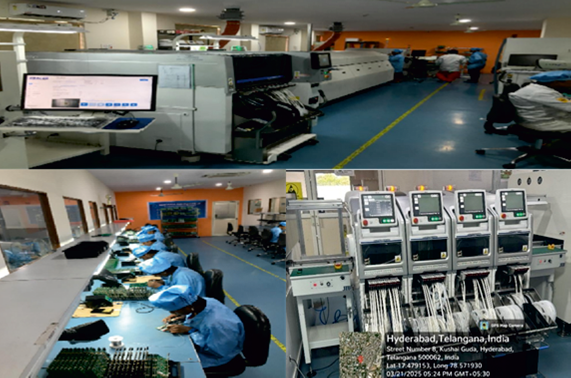
The Scheme of Venture Capital Fund for Scheduled Castes (VCF-SC) is supporting Scheduled Caste (SC) entrepreneurs in establishing technology-driven enterprises, generating employment, and promoting inclusive industrial growth.
What is the Scheme of Venture Capital Fund for Scheduled Castes?
- Launched in 2014–15 by the Ministry of Social Justice and Empowerment, the Venture Capital Fund for Scheduled Castes (VCF-SC) aims to promote entrepreneurship among Scheduled Caste entrepreneurs by providing concessional financial assistance for innovation-driven and growth-oriented enterprises.
- The scheme prioritiseswomen and differently-abled SC entrepreneurs and seeks to enhance financial inclusion, employment generation, and economic empowerment within the SC community.
Institutional Framework
The Fund is registered as an Alternative Investment Fund (AIF) under the SEBI (Alternative Investment Funds) Regulations, 2012.
- Anchor Investor: Government of India
- Sponsor: IFCI Ltd.
- Initial Corpus: ?200 crore, with annual augmentation.
Key Features
- Provides financial assistance ranging from ?10 lakh to ?15 crore.
- Supports technology-driven manufacturing and growth-oriented enterprises.
- Focuses on entrepreneurship, innovation, and wealth creation among Scheduled Castes.
- Gives priority to women and differently-abled SC entrepreneurs.
Funding Pattern
- Projects up to ?5 crore: Financial assistance up to 75% of the project cost, while the remaining 25% is contributed by the promoter.
- Projects above ?5 crore: Assistance up to 50% of the project cost; at least 25% must be financed by banks or other financial institutions, and the remaining 25% by the promoter.
Objectives
The scheme seeks to:
- Promote entrepreneurship among Scheduled Castes.
- Provide concessional finance for innovation and growth-oriented enterprises.
- Improve financial inclusion of SC entrepreneurs.
- Facilitate wealth creation and economic empowerment.
- Generate direct and indirect employment opportunities for the SC community.
Significance
The scheme enables Scheduled Caste entrepreneurs to access institutional finance for technology-driven enterprises, encourages inclusive industrial development, and supports the broader objectives of Atmanirbhar Bharat through entrepreneurship-led economic empowerment.
Clean Slate Doctrine
- 02 Aug 2026
In News:
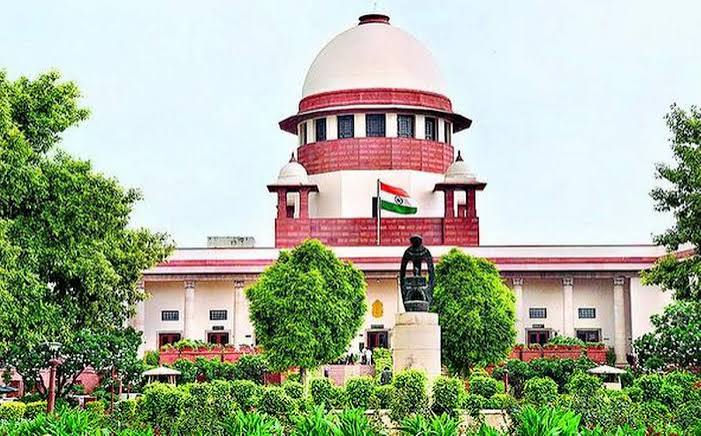
The Supreme Court, in the Ujaas Energy judgment, clarified that the Clean Slate Doctrine under the Insolvency and Bankruptcy Code (IBC), 2016 extinguishes pre-resolution claims but does not necessarily eliminate every legal consequence arising from the underlying facts.
What is the Clean Slate Doctrine?
- The Clean Slate Doctrine is a fundamental principle under the Insolvency and Bankruptcy Code (IBC), 2016, which ensures that once a Corporate Insolvency Resolution Process (CIRP) is successfully completed and a resolution plan is approved, the successful resolution applicant acquires the corporate debtor free from past liabilities that are not included in the approved resolution plan.
- The doctrine aims to provide the company with a fresh start, enabling the new management to revive the business without the burden of unresolved historical claims.
- Its statutory basis lies in Section 31 of the Insolvency and Bankruptcy Code, 2016, which makes an approved resolution plan binding on all stakeholders.
Significance
The doctrine enhances certainty in the insolvency resolution process by assuring prospective investors that undisclosed or unresolved liabilities will not arise after the acquisition. It encourages higher participation in the resolution process, facilitates corporate revival, and supports the objective of value maximisation under the IBC.
Key Supreme Court Judgments
- Committee of Creditors of Essar Steel India Ltd. v. Satish Kumar Gupta (2020): The Supreme Court held that once the National Company Law Tribunal (NCLT) approves a resolution plan, all claims not included in the plan stand extinguished, and no fresh proceedings can be initiated regarding such claims.
- Arun Kumar Jagatramka v. Jindal Steel and Power Ltd. (2021): The Court reaffirmed that an approved resolution plan gives the successful resolution applicant a clean slate, allowing the business to function without past encumbrances.
- Ghanashyam Mishra and Sons Pvt. Ltd. v. Edelweiss Asset Reconstruction Co. Ltd. (2021): The Court clarified that claims omitted from the approved resolution plan cannot be pursued thereafter, including by government authorities.
- Ebix Singapore Pvt. Ltd. v. Committee of Creditors of Educomp Solutions Ltd. (2021): The Supreme Court held that all stakeholders, including those who did not actively participate in the CIRP, are bound by an approved resolution plan.
- Vaibhav Goel v. DCIT (2025): The Court ruled that no belated claims can be introduced after approval of the resolution plan by the NCLT.
- Ujaas Energy Judgment (2026): The Supreme Court clarified that while the doctrine extinguishes claims not forming part of the approved resolution plan, it does not automatically erase every legal consequence arising from the facts underlying those claims.
Protection & Indemnity (P&I) Insurance Product
- 02 Aug 2026
In News:
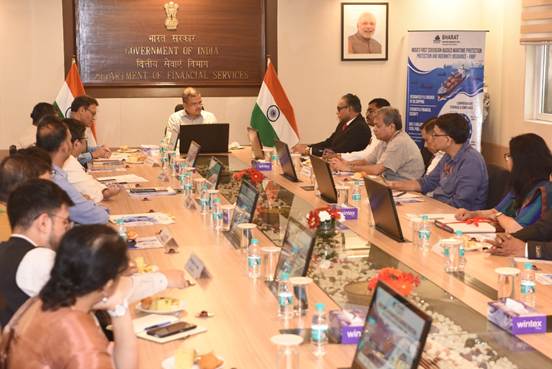
The Department of Financial Services (DFS), Ministry of Finance, launched India's first sovereign-backed Protection & Indemnity (P&I) insurance product under the Bharat Maritime Insurance Pool (BMIP) to strengthen domestic marine insurance and reduce dependence on foreign insurers.
What is the Protection & Indemnity (P&I) Insurance Product?
- The Protection & Indemnity (P&I) Insurance Product is India's first sovereign-backed marine liability insurance designed to provide comprehensive financial protection to shipowners and charterers against third-party liabilities arising during maritime operations.
- It has been designed by The New India Assurance Company Limited and operates under the Bharat Maritime Insurance Pool (BMIP) with sovereign backing.
- The initiative aims to build a self-reliant marine insurance ecosystem, ensure uninterrupted liability coverage for Indian shipping, and reduce dependence on foreign Protection & Indemnity Clubs.
Key Features
- Provides combined indemnity coverage of up to USD 1.5 billion backed by a sovereign guarantee.
- Covers third-party liabilities, including:
- Crew and cargo liabilities
- Marine pollution and oil spill compensation
- Wreck removal expenses
- Supported by a 24×7 global network of port correspondents for legal assistance, emergency response, and claims settlement.
- Expands BMIP coverage beyond Cargo and Hull War Risks to include comprehensive Protection & Indemnity (P&I) liabilities.
About Bharat Maritime Insurance Pool (BMIP)
- The Bharat Maritime Insurance Pool (BMIP) is a sovereign-backed marine insurance mechanism operationalised by the Department of Financial Services (DFS) to provide domestic marine insurance solutions, particularly during periods of geopolitical uncertainty.
- It was initially established to provide Cargo and Hull War Risk Insurance and has now been expanded to include Protection & Indemnity (P&I) Insurance.