
ESIC Launches Centralised Digital Patient Feedback System
- 06 Jun 2026
In News:
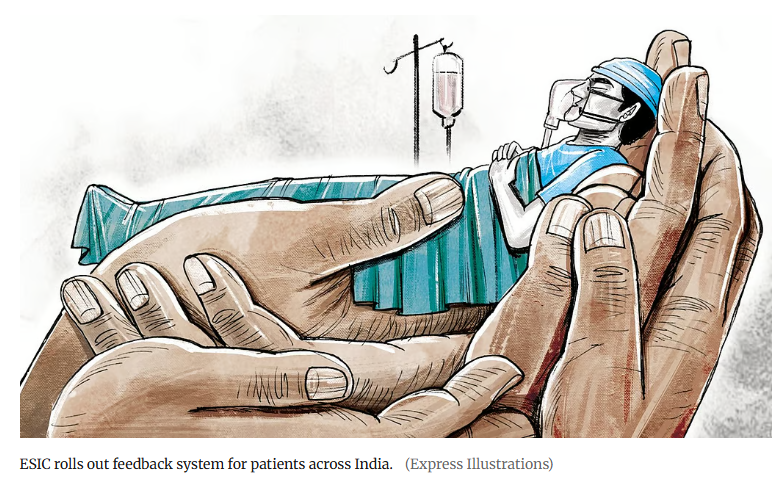
The Employees' State Insurance Corporation (ESIC), under the Ministry of Labour and Employment, has rolled out a nationwide Centralised Online Patient Feedback System across all its hospitals and dispensaries, aimed at improving healthcare quality, transparency, and institutional accountability.
About ESIC
- Established in 1948 under the ESI Act, ESIC is an autonomous body under the Ministry of Labour and Employment.
- It provides comprehensive social security and healthcare coverage to workers in the organised sector and their dependents. Its healthcare network spans hospitals, dispensaries, and outpatient facilities across India, serving crores of insured persons (IPs) and their families.
About the System
- The new platform is an omnichannel digital public grievance and quality-assurance tool that enables ESIC beneficiaries to instantly rate their healthcare experience.
- It helps hospital administration track service benchmarks and address operational deficiencies in real time.
- It empowers insured persons to share healthcare experiences, raise specific concerns, and provide actionable suggestions for institutional improvement across three core parameters: cleanliness of facilities, behaviour of medical staff, and availability of prescribed medicines.
How it Works
The system operates through three feedback channels. First, automated SMS links are sent directly to the insured person's registered mobile number immediately after they avail services through the ESIC Health Information System (Dhanwantri Module). Second, on-site QR codes are displayed on customised multilingual posters at all OPDs and hospital locations, which patients can scan with their mobile devices. Third, feedback can be submitted directly through the official ESIC website.
To ensure data authenticity and prevent duplicate or fraudulent entries, patients enter their IP Number, which triggers an OTP verification process before feedback submission — a process that can be completed within seconds.
Key Features
The system incorporates role-based digital dashboards operating at three administrative tiers: headquarters level, regional offices level, and local ESI health facilities level. This enables continuous, real-time performance monitoring across the entire ESIC network. The platform features full multilingual support to eliminate language barriers and encourage participation among India's diverse working-class beneficiary pool.
A critical automated escalation mechanism ensures that any service rating falling below 3 out of 5 is automatically flagged and routed to local administrative dashboards for immediate corrective action. Additionally, the platform supports performance ranking of all ESIC healthcare facilities, fostering healthy institutional competition and continuous improvement.
Significance
This initiative represents a significant shift from passive grievance redressal to proactive, data-driven quality management in public sector healthcare delivery. By converting patient feedback into instant digital alerts, the system enables swift gap identification and correction. The continuous generation of patient satisfaction data will help rank ESI hospitals, promoting accountability and service improvement. The multilingual, mobile-first design ensures inclusivity for a widely dispersed, multi-lingual workforce.
The launch aligns with the broader Digital India initiative and the government's push to leverage technology for improving public service delivery — particularly for the organised sector workforce that forms the backbone of India's industrial economy.
Blue Micromoon
- 06 Jun 2026
In News:
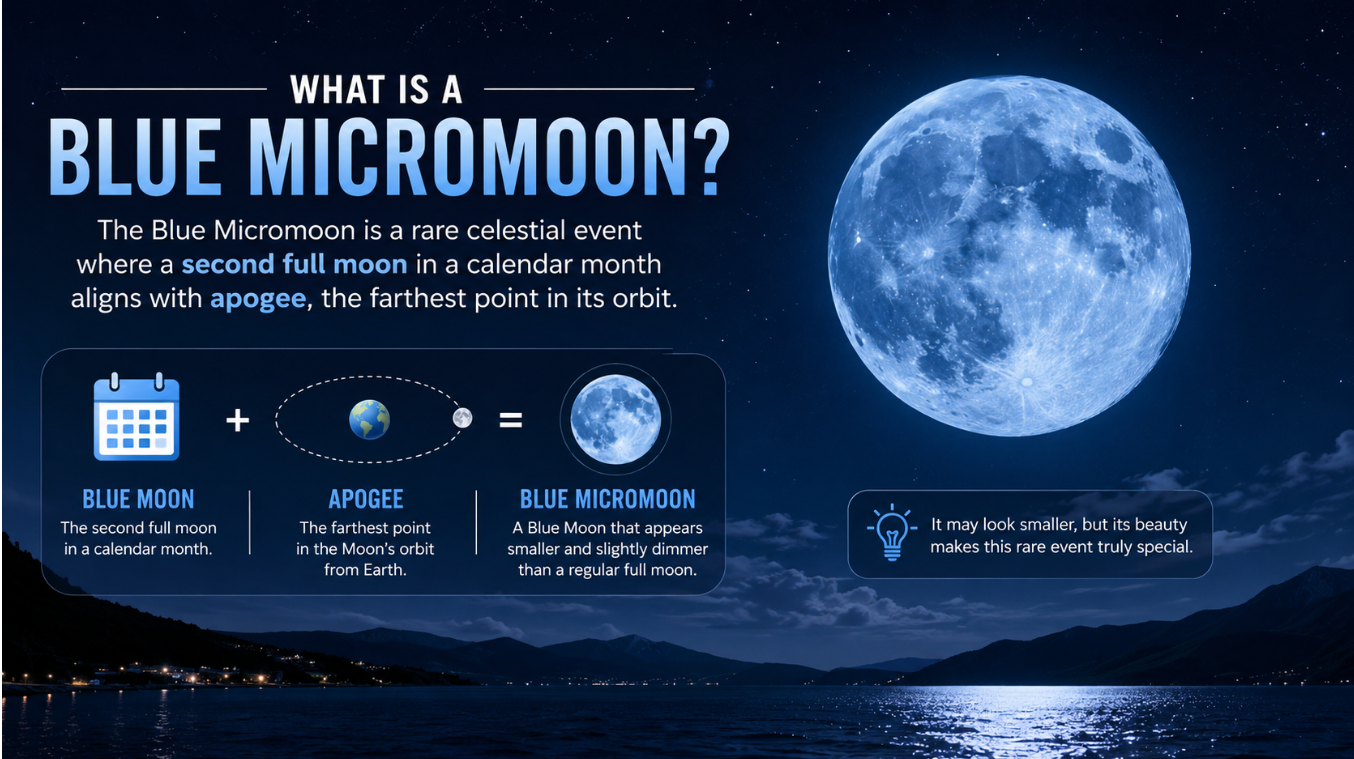
Recently, skywatchers witnessed a rare Blue Micromoon, a simultaneous occurrence of a Blue Moon and a Micromoon. NASA described it as the farthest, smallest, and dimmest full Moon of 2026, with the next Blue Micromoon not expected until 2053.
What Is a Blue Micromoon?
A Blue Micromoon is the rare coincidence of two distinct lunar phenomena:
- A Blue Moon refers to the second full moon occurring within a single calendar month. Because the interval between two full moons averages about 29.5 days — slightly shorter than most calendar months — every two to three years a calendar year includes 13 full moons, producing this "extra" full moon.
- A Micromoon occurs when a full moon coincides with apogee — the farthest point in the Moon's elliptical orbit around Earth. The opposite of a micromoon is a supermoon, which occurs when a full moon reaches perigee, or its closest point to Earth.
Why Doesn't It Look Blue?
Despite the name, the moon does not appear blue. The name has nothing to do with the moon's colour — it appears as a warm orange near the horizon due to atmospheric scattering. A genuinely bluish tint can only appear when rare atmospheric conditions — such as volcanic ash or dense smoke — scatter red wavelengths of light.
Key Orbital Mechanics
The Moon's orbit around Earth is elliptical, completing one cycle every 27.3 days. Because the orbit is not a perfect circle, the Moon's distance from Earth varies continuously. When the fully illuminated phase coincides with the orbital extreme of apogee, the angular diameter of the lunar disk appears compressed — about 7% smaller than an average full moon. The coincidence of this orbital position with the calendar anomaly of a Blue Moon is what makes the Blue Micromoon so rare.
Rarity
The next Blue Micromoon will not be seen until at least July 2053, making this a phenomenon with a gap of approximately 27 years. A standard Blue Moon recurs every 2–3 years; a Micromoon is more common on its own; but their simultaneous alignment is exceedingly infrequent.
Operation Mule Hunt 1.0
- 06 Jun 2026
In News:
Gujarat Police recently concluded Operation Mule Hunt 1.0, a statewide crackdown on cyber fraud that uncovered cyber fraud transactions worth approximately ?2,289 crore, led to 565 FIRs, 638 arrests, and action against 913 mule accounts linked to 4,052 cybercrime cases across India, including 491 cases within Gujarat. Building on this success, Gujarat launched Operation Mule Hunt 2.0 from June 2, 2026, for a more aggressive second phase targeting mule-account networks.
What are Mule Accounts?
A mule account is a bank account used to receive, transfer, and conceal proceeds of cybercrime. The person operating such an account is a "money mule." Transnational cybercriminals exploit accounts of shell companies and individuals as mule accounts, taking advantage of bulk payout facilities provided by banks. Account holders sometimes knowingly rent or sell access to their accounts in exchange for commissions, while others are unwitting participants.
Operation Mule Hunt 1.0: Execution
- The operation was led by Gujarat Police's Cyber Centre of Excellence (CCE), with support from police commissionerates, range offices, Local Crime Branch units, and cyber police stations across the state.
- Intelligence inputs were compiled from the Indian Cyber Crime Coordination Centre (I4C), the National Cyber Crime Reporting Portal (NCRP), the Samanvay coordination portal, and the national cybercrime helpline 1930. District-level nodal officers coordinated field response teams, while banks were brought into a structured framework for real-time sharing of transaction-related alerts.
Impact on Criminal Networks
The operation produced measurable disruption to cybercrime syndicates' financial exit routes. Monthly cheque withdrawals linked to suspicious transactions fell from ?126 crore to ?25 crore — an 80% decline. First-layer mule accounts, where fraudulent funds are initially deposited, fell by 30% between August and December 2025, and ATM-based cash withdrawals saw a 66% reduction. These figures indicate that targeting mule accounts directly weakens the operational infrastructure of cybercrime networks.
Institutional and Technological Response
To build systemic resilience against mule accounts, the Indian Digital Payment Intelligence Corporation (IDPIC) — under RBI guidelines — is implementing an AI-based risk-scoring system through a platform called mulehunter.ai. Under this framework, each banking transaction will be classified as low, medium, or high risk, enabling banks to proactively identify and act on suspicious accounts. IDPIC serves as the nodal agency for sharing intelligence on suspicious accounts across the banking system.
Broader Context
Cyber fraud through mule accounts represents a major threat to India's digital financial ecosystem. The I4C under the Ministry of Home Affairs coordinates national-level cybercrime response, while the 1930 helpline and NCRP serve as citizen-facing reporting mechanisms. The PMLA, 2002 and IT Act, 2000 provide the primary legal framework for prosecution in such cases.
Right to Be Forgotten
- 06 Jun 2026
In News:
Recently, Justice Sachin Datta of the Delhi High Court delivered a landmark 144-page judgment in Laksh Vir Singh Yadav v. Union of India & Connected Matters,recognising the Right to Be Forgotten (RTBF) as an integral facet of the fundamental right to privacy under Article 21 of the Constitution.
Constitutional Basis
The right to privacy was recognised as a fundamental right under Article 21 by the Supreme Court in Justice K.S. Puttaswamy v. Union of India (2017). Building on this, the Delhi HC held that RTBF protects individuals from "perpetual exposure" to past events that no longer serve a legitimate public purpose. Significantly, the court held that this right must be actively protected even in the absence of specific legislation — the Digital Personal Data Protection Act, 2023 touches on related concepts but does not fully codify RTBF.
Global Precedent
The RTBF was first recognised internationally by the Court of Justice of the European Union (CJEU) in the 2014 Google Spain case, which held that search engines must remove information that is no longer relevant upon request. India's Delhi HC has now established a comparable framework through constitutional interpretation.
Key Directions Issued
- The court directed Google LLC and other search engine operators to de-index relevant content, judgments, orders, and associated reportage from name-based search results within two weeks in cases where relief was granted.
- Indian Kanoon was directed to restrict name-based search functionality while continuing to permit access through case numbers, citations, court details, and dates.
- MeitY was directed to ensure compliance by intermediary platforms and file a compliance affidavit before the court.
- On territorial scope, the court held that de-indexing directions shall operate globally across all versions and domains of the search engine concerned, to protect informational privacy rights under Article 21.
Masking vs. De-indexing
- The court recognised masking as a remedy distinct from de-indexing. Personal identifiers may be masked in publicly accessible digital versions of judicial records, but legal reasoning, findings, and conclusions must remain intact, with unredacted records preserved for legitimate legal purposes.
Balancing Open Justice and Dignity
- The court observed that while judicial transparency remains important, the continued association of an individual's name with judicial records online can disproportionately affect privacy, dignity, and reputation once proceedings have concluded. Open justice ensures transparency — not the perpetual commercial amplification of personal legal struggles.
Exemptions and Limits
The right is not absolute. Relief may be denied in cases involving convictions for offences against women or children, breach of public trust by public servants or elected representatives, and matters of continuing public interest. The court also rejected a plea by a public figure seeking removal of content on past misconduct, holding that RTBF cannot be used as a tool for "selective erasure" of a public figure's conduct.
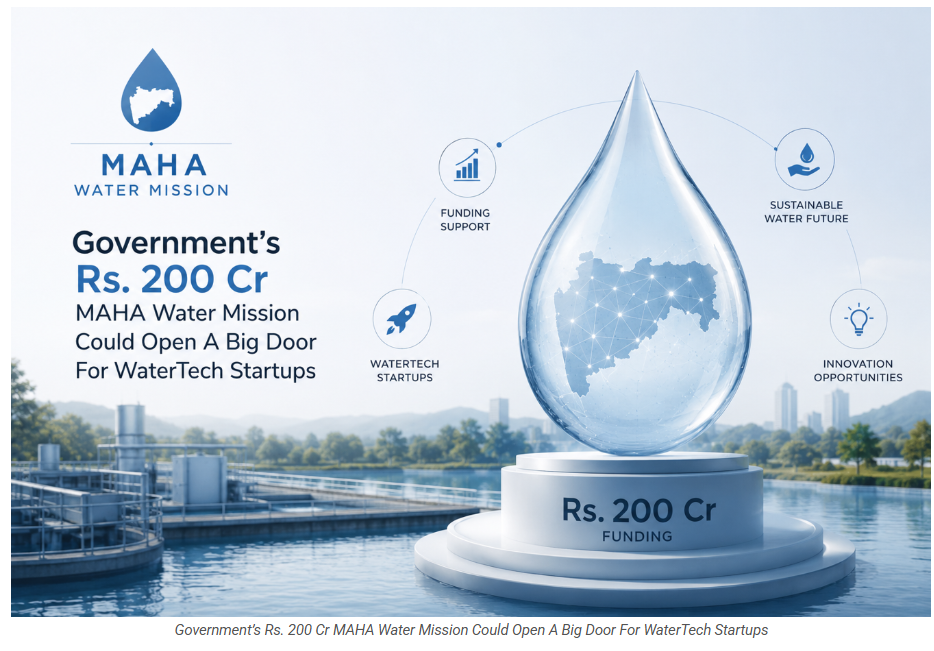
MAHA Water Mission
- 06 Jun 2026
In News:
The Union Minister of Science & Technology recently launched the MAHA Water Mission, a national platform designed to bridge the gap between scientific research and on-ground water solutions across India.
About MAHA Water Mission
- The Mission has been conceived as a national innovation platform to accelerate technology development in the water sector by connecting science, entrepreneurship, industry, academia, and grassroots action.
- Its core objective is to support innovations from laboratory research through to field deployment, generating both scalable and localised solutions to strengthen India's long-term water security.
- The mission will support technology development, field validation, and deployment to address India's most critical water challenges across five priority themes: water resource assessment and sustainable management; drinking water access and quality; water quality and ecological health; water use efficiency and circular economy; and climate resilience and adaptation.
Institutional and Financial Structure
- The mission carries a projected outlay of ?200 crore over five years, jointly contributed by the Anusandhan National Research Foundation (ANRF) and the Ministry of Jal Shakti.
- This joint funding structure is significant as it brings together India's apex research funding body with the nodal ministry for water governance, ensuring both scientific rigour and policy relevance.
- The programme will support multidisciplinary consortia comprising universities, national laboratories, research organisations, startups, MSMEs, and industry partners.
- Selected consortia will be eligible for up to ?20 crore in support to undertake end-to-end activities — from technology development and field assessment to validation and deployment of high-impact water solutions.
Why This Matters
- India faces an acute and compounding water crisis. It is home to 18% of the world's population but holds only 4% of its freshwater resources.
- Groundwater depletion, erratic monsoons due to climate change, industrial and agricultural pollution, and inadequate urban water infrastructure collectively threaten both drinking water access and food security.
- Despite significant policy attention — through schemes like Jal Jeevan Mission and Atal Bhujal Yojana — a dedicated innovation pipeline translating research into field-ready solutions has been largely absent. The MAHA Water Mission addresses this critical gap.
- By bringing together startups and MSMEs alongside established research institutions, the mission also aims to build a domestic water-technology industry, reducing dependence on imported solutions and creating employment in a high-priority sector.
- The circular economy focus within its priority themes signals a shift toward water recycling and reuse — essential for a water-scarce country with a growing urban population.
Alignment with Broader Policy Framework
The mission complements existing government programmes: Jal Jeevan Mission (rural drinking water), AMRUT (urban water infrastructure), Atal Bhujal Yojana (groundwater management), and the National Water Policy. The involvement of ANRF — established under the ANRF Act, 2023 — reflects the government's intent to use its new apex research funding architecture to address strategic national challenges.