
SamagraShishu Bal SwasthyaKaryakram (SSBSK)
- 01 Jul 2026
In News:
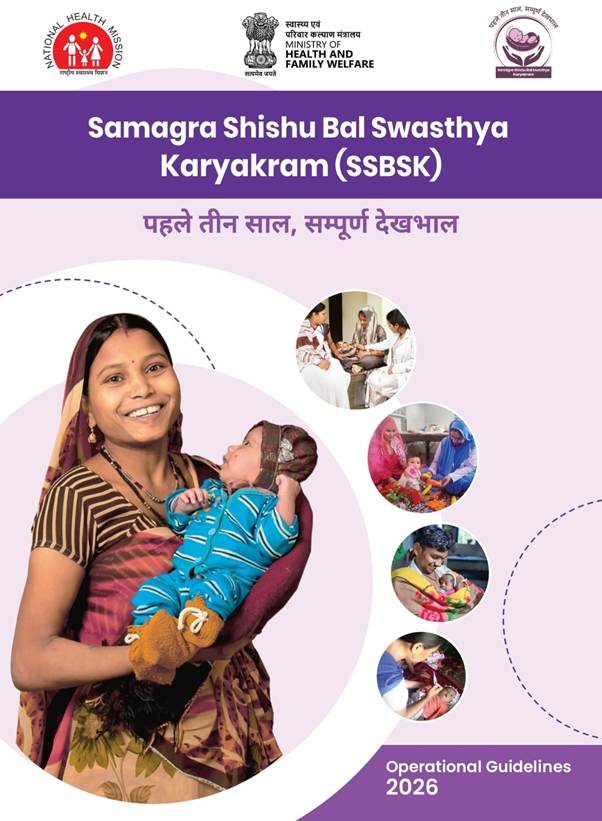
The Union Minister of Health and Family Welfare recently launched the SamagraShishu Bal SwasthyaKaryakram (SSBSK), a comprehensive national programme aimed at providing a seamless continuum of healthcare for children from birth to 36 months of age through integrated home and community-based services.
About SamagraShishu Bal SwasthyaKaryakram (SSBSK)
The SamagraShishu Bal SwasthyaKaryakram (SSBSK) is a unified national programme that seeks to provide comprehensive care during the first three years of a child's life, a period considered critical for survival, growth, and development.
The programme integrates the existing Home-Based Newborn Care (HBNC) and Home-Based Care for Young Child (HBYC) into a single, comprehensive framework, ensuring continuity of care from birth up to 36 months.
By adopting a life-cycle approach, SSBSK strengthens preventive, promotive, curative, and developmental interventions through coordinated efforts at the household, community, and health facility levels.
Key Features
A major feature of SSBSK is its risk-stratified approach, under which newborns and children identified as "at-risk"—such as those with low birth weight, prematurity, delayed initiation of breastfeeding, or other medical vulnerabilities—receive enhanced monitoring and follow-up.
Under the programme:
- At-risk newborns will receive up to nine home visits during the first 42 days of life.
- At-risk children will receive up to eight home visits until they attain 36 months of age.
The programme also strengthens community-based service delivery by introducing:
- Well-Baby Sessions during every Village Health, Sanitation and Nutrition Day (VHSND).
- A monthly ShishuShivir at Ayushman Arogya Mandirs for regular child health assessment and counselling.
Maternal Mental Health
Recognising the importance of maternal well-being in child development, SSBSK incorporates post-partum maternal mental health screening as an integral component of community-based care.
Accredited Social Health Activists (ASHAs) will conduct early screening for mental health concerns among mothers and facilitate timely referral for appropriate assessment, counselling, and treatment whenever required.
Early Childhood Development
The programme mainstreams the concept of Nurturing Care for Early Childhood Development (ECD) by promoting:
- Responsive caregiving.
- Early learning opportunities.
- Age-appropriate play.
- Parent–child interaction to support cognitive, emotional, and social development.
Technology and Digital Integration
SSBSK places significant emphasis on digital health technologies to improve monitoring, follow-up, and continuity of care.
The programme incorporates:
- Decision Support Systems (DSS).
- Child-wise digital tracking.
- Referral and alert mechanisms.
- Risk-based follow-up of vulnerable children.
These digital systems will be integrated with several existing health platforms, including:
- JANANI Portal.
- U-WIN Portal.
- MPCDSR Portal.
- RBSK 2.0 Portal.
- POSHAN Tracker.
The integration will be enabled through Ayushman Bharat Health Account (ABHA) and Baal-ABHA IDs, ensuring seamless exchange of health information across programmes.
Inclusive Strategy
Recognising the challenges of urban healthcare delivery, SSBSK incorporates tailored strategies to strengthen home-based child healthcare services in:
- Urban slums.
- Migrant settlements.
- Other underserved and vulnerable communities.
This approach seeks to ensure equitable access to healthcare irrespective of place of residence.
Unified Health Interface (UHI)
- 01 Jul 2026
In News:
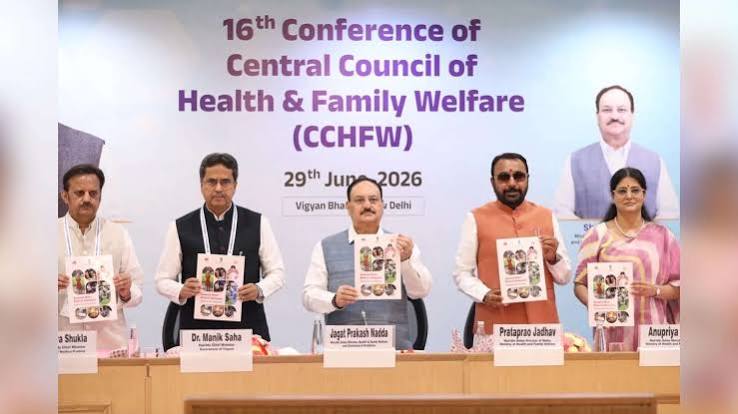
The Union Minister of Health and Family Welfare recently launched the Unified Health Interface (UHI), a key digital platform under the Ayushman Bharat Digital Mission (ABDM) aimed at creating an interoperable, inclusive, and citizen-centric digital healthcare ecosystem.
About Unified Health Interface (UHI)
The Unified Health Interface (UHI) is an interoperable digital network developed under the Ayushman Bharat Digital Mission (ABDM). It serves as the service layer of ABDM, enabling seamless interaction between patients and healthcare providers through multiple digital health applications.
The platform seeks to eliminate information asymmetry, improve access to healthcare services, and provide citizens with a wider choice of verified healthcare providers without restricting them to a single application or platform. By adopting an open-network model, UHI allows different health applications to communicate with one another through common digital protocols.
How Does UHI Work?
UHI functions through open protocols operating on the ABDM Gateway, which has been developed and is maintained by the National Health Authority (NHA).
When a citizen searches for a healthcare service using any UHI-enabled application, the request is transmitted through the ABDM Gateway to all registered healthcare providers on the network. The entire process—from discovering a healthcare provider and booking an appointment to receiving healthcare services—is carried out through a common interoperable framework, irrespective of the application being used.
The platform is integrated with key components of the Ayushman Bharat Digital Mission:
- Ayushman Bharat Health Account (ABHA) serves as the unique patient identifier.
- Healthcare Professionals Registry (HPR) verifies registered healthcare professionals.
- Health Facility Registry (HFR) authenticates healthcare institutions.
- Health Information Exchange (HIE) enables secure, consent-based sharing of health records.
Key Objectives
The Unified Health Interface has been designed with four major objectives:
- Interoperability: Enables patients and healthcare providers to use any UHI-enabled application for accessing or delivering healthcare services without platform dependency.
- Fair Discoverability: Ensures that every verified healthcare provider—irrespective of size, location, or digital platform—has an equal opportunity to be discovered by patients.
- Verification and Trust: Allows participation only by healthcare professionals and facilities verified through the HPR and HFR, thereby ensuring authenticity and trust.
- Open Protocols: Provides publicly accessible technical standards that allow developers to build innovative health applications in multiple languages and across different devices.
PM Family Care Tracker (PM-FCT)
- 01 Jul 2026
In News:
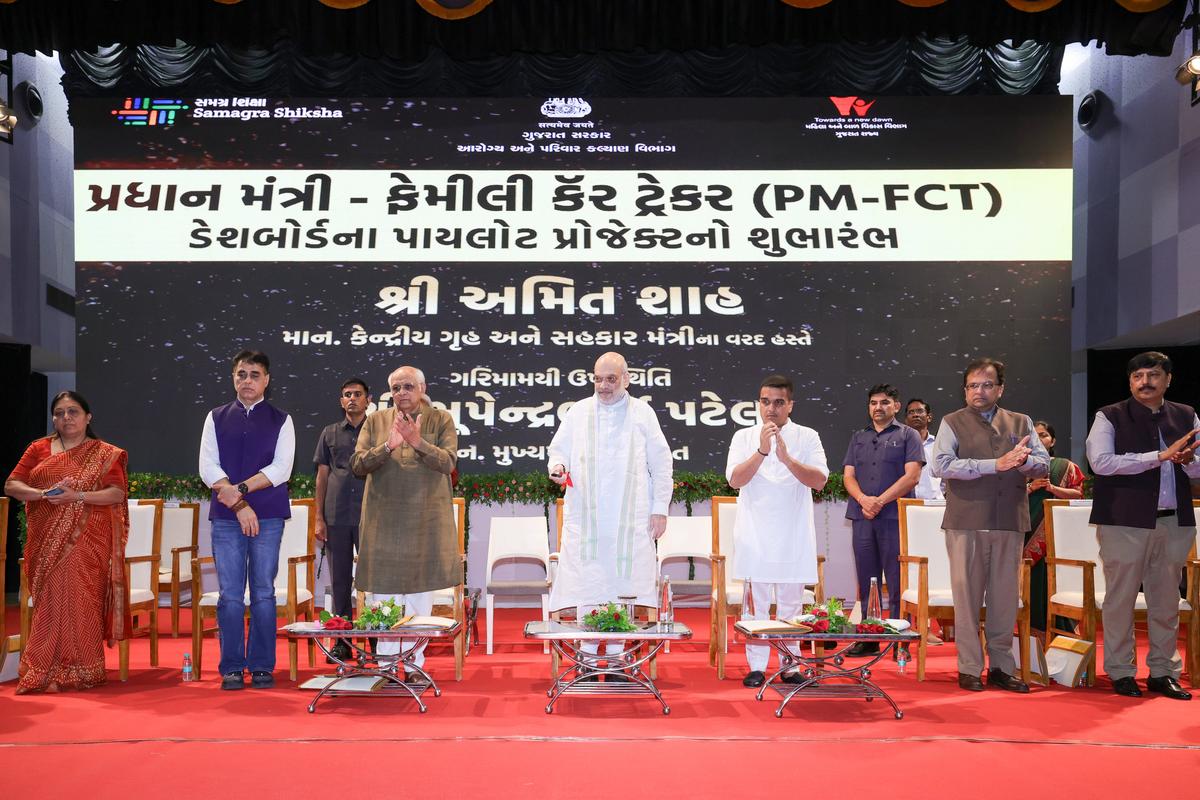
The Union Home and Cooperation Minister recently launched the PM Family Care Tracker (PM-FCT) as a pilot project in Gujarat. The digital platform aims to strengthen maternal and child health, nutrition, and family welfare through integrated monitoring and timely delivery of government welfare services.
About PM Family Care Tracker (PM-FCT)
The PM Family Care Tracker (PM-FCT) is a family-centric digital platform designed to ensure that pregnant women, mothers, children, and adolescents receive all eligible government benefits through continuous monitoring, real-time tracking, and timely intervention.
Unlike existing systems that maintain separate records for different welfare schemes, PM-FCT adopts a single integrated family-based approach, enabling authorities to monitor the health, nutrition, education, and welfare status of every family member through one digital interface.
The platform digitally tracks the complete life cycle of a child—from pregnancy to 18 years of age—while facilitating seamless delivery of health and social welfare services.
Key Features
The platform provides end-to-end digital monitoring of major health and development milestones, including:
- Antenatal and postnatal care.
- Immunisation schedules.
- Nutrition and growth monitoring.
- School enrolment and attendance.
- Adolescent health services.
It also offers Digital Health Passports for individuals and families, integrated dashboards for government departments, and automated alerts to improve service delivery.
For instance, if a child misses a scheduled vaccination or drops out of school, the system automatically generates alerts that are sent to local officials, public representatives, and community volunteers, enabling timely intervention.
Integrated Digital Governance
PM-FCT seeks to improve convergence among multiple government departments by integrating information from:
- Birth and death registration systems.
- Health databases.
- Nutrition programmes.
- Education records.
- Family welfare databases.
This integrated approach is expected to minimise duplication, improve coordination, and ensure that eligible beneficiaries receive services without delay.
Objectives
The initiative aims to:
- Improve maternal and child health outcomes.
- Ensure timely delivery of welfare benefits.
- Reduce Maternal Mortality Ratio (MMR) and Infant Mortality Rate (IMR).
- Address child malnutrition through continuous monitoring.
- Reduce service delivery gaps through real-time digital tracking.
- Promote evidence-based decision-making and targeted interventions.
Pilot Implementation
The pilot phase will initially be implemented in Gandhinagar district, Gujarat. Based on its performance and outcomes, the platform is proposed to be expanded across Gujarat and subsequently replicated in other States.
3D-Printed Artificial Reefs
- 01 Jul 2026
In News:
Tamil Nadu is set to deploy India's first 3D-printed artificial reef modules off the Ramanathapuram coast under the second phase of the Pradhan Mantri Matsya Sampada Yojana (PMMSY).
About India's First 3D-Printed Artificial Reefs
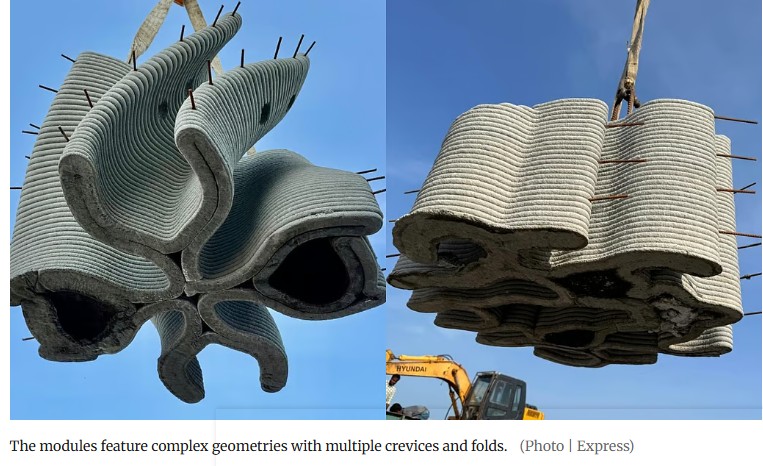
- The pilot project involves the deployment of six newly designed artificial reef modules in coastal waters to evaluate their structural durability and ecological performance under local marine conditions. Based on the results, the technology may be adopted for larger-scale reef restoration programmes.
- The project is being implemented by the Tamil Nadu Department of Fisheries in collaboration with the Visakhapatnam Regional Centre of the ICAR–Central Marine Fisheries Research Institute (CMFRI). The reef modules have been developed by Tvasta, an IIT Madras-incubated startup, with each module weighing approximately one tonne.
- Unlike conventional reinforced concrete reefs, the new modules are manufactured without iron reinforcement using advanced 3D-printing technology. Their intricate design incorporates numerous crevices, folds, cavities, and textured attachment surfaces, increasing porosity and providing ideal habitats for corals, sponges, algae, fish, and other reef-associated organisms.
- The initiative forms part of a broader artificial reef programme covering 213 sites across Tamil Nadu and is jointly funded by the Central and State Governments in a 60:40 ratio.
What are 3D-Printed Artificial Reefs?
- 3D-printed artificial reefs are specially designed underwater structures created to restore marine ecosystems where natural coral reefs have been damaged or degraded.
- They use additive manufacturing (3D printing) techniques to produce highly customised reef structures that closely resemble natural reef habitats.
- Compared to traditional artificial reefs, 3D printing allows greater flexibility in designing species-specific habitats with varying cavity sizes, complex surface textures, and intricate geometries that encourage the settlement and growth of diverse marine organisms.
Ecological Importance
These artificial reefs serve multiple ecological functions:
- Provide shelter, breeding grounds, and nursery habitats for marine organisms.
- Promote colonisation by corals, sponges, algae, crustaceans, molluscs, and reef fishes.
- Enhance marine biodiversity and restore degraded coastal ecosystems.
- Increase fish biomass, thereby supporting sustainable fisheries and improving the livelihoods of fishing communities.
- Reduce ecological pressure on natural coral reef ecosystems.
Challenges
Despite their potential, the long-term success of artificial reefs depends upon several factors, including:
- Structural durability in marine conditions.
- Use of environmentally safe and non-toxic construction materials.
- Appropriate site selection and deployment.
- Continuous ecological monitoring to assess biodiversity recovery and ecosystem functioning.
Artificial reefs may not always achieve the intended ecological outcomes if these factors are not carefully addressed.
Pradhan Mantri Matsya Sampada Yojana (PMMSY)
The Pradhan Mantri Matsya Sampada Yojana (PMMSY) was launched on 10 September 2020 to usher in a Blue Revolution by promoting sustainable, inclusive, and responsible development of India's fisheries sector.
The scheme seeks to increase fish production and productivity, modernise fisheries infrastructure, strengthen post-harvest management, improve quality standards, and enhance the incomes of fishers and fish farmers.
Initially approved with an outlay of ?20,050 crore for the period 2020–21 to 2024–25, the scheme has now been extended until 2025–26.
PMMSY comprises:
- Central Sector Scheme – fully funded by the Central Government.
- Centrally Sponsored Scheme – implemented by States with shared funding.
The programme supports fisheries infrastructure, climate-resilient coastal villages, women-led fisheries enterprises, biofloc technology, digital fisheries platforms, and sustainable aquaculture practices.
Achievements of PMMSY
Since its launch, PMMSY has significantly strengthened India's fisheries sector:
- Fish production increased to 195 lakh tonnes in 2024–25.
- Fisheries exports have expanded substantially.
- Approximately 58 lakh livelihoods have been generated.
- More than 99,000 women have been economically empowered through fisheries-related activities.
Anemia Mukt Bharat (AMB) Abhiyaan
- 01 Jul 2026
In News:
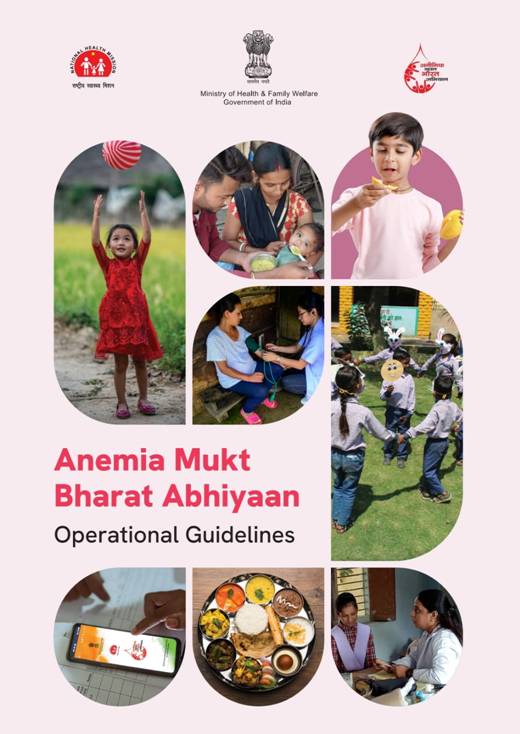
The Ministry of Health and Family Welfare has released the Anemia Mukt Bharat (AMB) Abhiyaan Operational Guidelines, marking eight years of the flagship initiative. The revised guidelines introduce a strengthened strategy aimed at accelerating India's efforts to reduce anemia through improved screening, treatment, digital monitoring, and community participation.
What is Anemia Mukt Bharat (AMB)?
Launched in 2018 under the National Health Mission (NHM), Anemia Mukt Bharat (AMB) is the Government of India's flagship programme to reduce the prevalence of anemia through a life-cycle approach. The programme addresses both nutritional and non-nutritional causes of anemia by targeting vulnerable population groups through preventive, diagnostic, and therapeutic interventions.
Key Highlights of the Revised Operational Guidelines
The revised guidelines mark a significant shift in India's anemia control strategy by moving from prophylactic (preventive) care towards therapeutic care, emphasising early diagnosis, active case management, and continuous follow-up.
A major reform is the expansion of the earlier 6×6×6 strategy into a 7×7×7 framework by introducing:
- 7th Beneficiary Group:Low Birth Weight (LBW) babies (0–6 months) to break the intergenerational cycle of anemia.
- 7th Intervention:"Eating Right", promoting regular consumption of diversified, iron-rich diets.
- 7th Institutional Mechanism: A digitally integrated Monitoring and Evaluation Framework to improve accountability and programme monitoring.
The programme also adopts the T4 Strategy—Test, Treat, Talk and Track—replacing the earlier T3 (Test, Treat, Talk) model. The addition of "Track" ensures systematic referral, follow-up, and continuity of care for beneficiaries.
For severe anemia and cases unresponsive to oral iron therapy, particularly among pregnant and lactating women, the guidelines institutionaliseIntravenous Iron Therapy using Ferric Carboxymaltose (FCM) and Iron Sucrose as standard treatment options.
Digital Integration
To strengthen programme implementation, a centralized Anemia Mukt Bharat Portal will integrate data from multiple health platforms, including:
- JANANI Portal (maternal health screening)
- RBSK Portal (Rashtriya Bal SwasthyaKaryakram)
- U-WIN Portal (Universal Immunization Programme)
This integrated digital architecture will facilitate real-time monitoring, beneficiary tracking, and evidence-based decision-making.
Major Interventions under AMB
The programme adopts a comprehensive strategy to address anemia across different stages of life. Key interventions include:
- Prophylactic Iron-Folic Acid (IFA) supplementation through age-specific, colour-coded tablets and syrups.
- Biannual deworming under the National Deworming Day (NDD) conducted every year on 10 February and 10 August for children and adolescents, while pregnant women receive deworming during the second trimester through antenatal care.
- Food fortification by promoting iron and folic acid-fortified foods in government nutrition programmes.
- Screening and treatment of non-nutritional causes of anemia such as malaria, haemoglobinopathies (including Sickle Cell Disease), and fluorosis.
- Community mobilisation through Jan Bhagidari and Jan Chetna campaigns to promote behavioural change and awareness.
What is Anemia?
Anemia is a condition in which the blood has insufficient healthy red blood cells or haemoglobin to adequately transport oxygen to body tissues. Although iron deficiency is the most common cause, anemia may also result from deficiencies of folate, Vitamin B12, and Vitamin A, as well as chronic diseases and inherited blood disorders.
According to the World Health Organization (WHO):
- Women of reproductive age are considered anaemic when haemoglobin is below 12 g/dL.
- Children below five years are considered anaemic when haemoglobin is below 11 g/dL.
Health Impacts
Anemia has serious consequences across all age groups. It causes fatigue, reduced physical capacity, impaired cognitive development, weakened immunity, and lower productivity.
Among pregnant women, anemia significantly increases the risk of:
- Maternal mortality.
- Premature delivery.
- Low Birth Weight (LBW) babies.
- Perinatal mortality.
The condition disproportionately affects:
- Children below five years.
- Adolescent girls.
- Pregnant and postpartum women.
Extent of the Problem
According to NFHS-5, anemia continues to be a major public health challenge in India:
- 67.1% of children below five years.
- 59.1% of adolescent girls (15–19 years).
- 57.0% of women (15–49 years).
- 52.2% of pregnant women.
Globally, the WHO estimates that anemia affects:
- 40% of children aged 6–59 months.
- 37% of pregnant women.
- 30% of non-pregnant women aged 15–49 years.