
‘Lion’ Species Spotlight Programme
- 16 May 2026
In News:
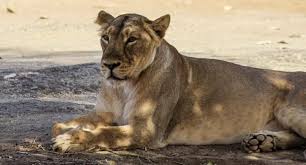
The Union Ministry of Environment, Forest and Climate Change (MoEFCC) inaugurated the ‘Lion’ Species Spotlight Programme at Sasan Gir, Gujarat. Serving as a crucial technical curtain-raiser ahead of the International Big Cat Alliance (IBCA) Summit, this forum highlights India's field leadership in protecting the Asiatic Lion (Panthera leo persica), a critical apex predator.
Biological Profile and Key Distinctive Characteristics
The Asiatic Lion is a genetically distinct subspecies and stands as the only wild lion population existing outside the African continent.
Morpho-Behavioral Distinctions
- Longitudinal Belly Fold: The most definitive physical trait of the Asiatic Lion is a prominent, longitudinal fold of skin running along its abdomen, which is highly rare or absent in African lions.
- Mane Density: Shorter and more moderate compared to African males, leaving the ears of the Asiatic male clearly visible.
- Size and Coloration: Slightly smaller than African lions (males: 160–190 kg; females: 110–120 kg). The fur ranges from ruddy-tawny to sandy or buff-grey, often with a distinctive silvery sheen.
- Social Structure: They live in smaller prides. Males exhibit more solitary or tightly paired bachelor behavior, associating with females primarily for mating or large kills.
Geographic Distribution and Population Dynamics
Spatial Matrix & The Greater Gir Landscape
- Current Abode: The Gir National Park and Wildlife Sanctuary in Gujarat’s Saurashtra region remains its exclusive primary natural habitat globally. The ecosystem consists of dry deciduous forests and open, thorny grassy scrublands.
- Range Expansion: Due to successful conservation and community protection, the population has expanded into the Greater Gir Landscape, covering adjacent human-dominated districts like Amreli, Bhavnagar, and Gir Somnath.
- The "Second Home" Insurance: To safeguard the species against localized, catastrophic threats like forest fires or viral epidemics (e.g., Canine Distemper Virus), the government is developing the Barda Wildlife Sanctuary as a second home for natural dispersal.
Demographic Trends
- According to the 16th Lion Population Estimation, the wild population has successfully grown to 891 individuals, marking a robust 32% population increase over the previous census baseline.
Statutory Protection and Legal Safeguards
The Asiatic Lion is protected under the highest tiers of domestic and international wildlife legislation:
- Wild Life (Protection) Act, 1972: Categorized under Schedule I, granting it maximum statutory protection against hunting, poaching, and habitat alteration.
- IUCN Red List of Threatened Species: Listed globally as Vulnerable, reflecting its status as a single, geographically restricted wild population.
- CITES: Classified under Appendix I, strictly prohibiting any commercial international trade of the species, its body parts, or derivatives.
Strategic Conservation Paradigms: Project Lion
Launched in 2020, ‘Project Lion’ focuses on a landscape-based conservation strategy divided into three core operational areas:
- Habitat Restoration: Systematically clearing invasive alien plant species from the dry deciduous scrublands and managing local water holes to strengthen the wild ungulate prey base.
- Eco-Medicine & Wildlife Health: Establishing state-of-the-art veterinary centers, mobile health vans, and strict disease surveillance networks to prevent epidemiological shocks.
- Community-Led Conservation: Investing in local communities through programs like the Gadhvi network (local wildlife trackers) to foster human-wildlife co-existence, minimize retaliatory conflicts, and secure traditional migratory corridors.
Ecological Significance
As an apex predator, the Asiatic Lion is vital for regulating the population density of large herbivores (nilgai, sambar, chital). By preventing overgrazing, these big cats maintain the health of the Saurashtra dry deciduous forest ecosystem, protect native forest cover, and secure localized soil and water tables.
Mizoram Ginger Mission
- 16 May 2026
In News:
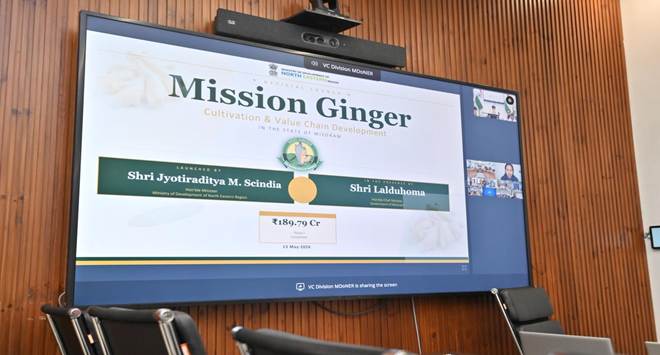
The Ministry of Development of North Eastern Region (MDoNER), along with the Government of Mizoram, has launched the ?189.79 crore Mizoram Ginger Mission (also designated as the Mizoram Ginger Unique Selling Proposition (USP) – Sustainable Cultivation & Value Chain Development Project).
The initiative utilizes a multi-ministerial convergence model to move away from fragmented departmental schemes. It pools the administrative resources of the Ministries of Agriculture & Farmers Welfare, Rural Development, and Food Processing Industries, alongside critical institutional stakeholders like NABARD (rural credit and cooperative development), ICAR (scientific inputs), and APEDA (export protocols and international logistics).
Core Economic Rationale: Quality vs. Value Disparity
The Superior Quality Profile
Mizoram holds a distinct natural edge in ginger cultivation, leading NITI Aayog to designate it as the “Ginger Capital of India.”
- Genetic Advantage: The state grows indigenous, premium varieties—most notably Thingpui and Thinglaidum—both of which secured Geographical Indication (GI) certification.
- Chemical Distinctiveness: Mizo ginger is premium, pharma-grade ginger due to its exceptionally high oleoresin content of 6% to 8% (the concentrated compound responsible for flavor, aroma, and medicinal properties). This is more than double the global baseline average of approximately 3%.
The Price Disparity Paradox
Despite producing world-class agricultural raw materials, local cultivators face severe market exploitation:
- The Valuation Gap: Farmers traditionally receive just ?8 to ?15 per kg at the farm gate. In contrast, the processed commodity commands upwards of ?500 per kg on international retail shelves.
- The Cause: This gap stems from high post-harvest handling losses, a complete lack of regional processing units, and a dependence on long networks of informal middlemen.
Structural Interventions: The Four Strategic Pillars
To build a sustainable agrobusiness ecosystem, the project operates as a structural "movement" built on four functional pillars:
- Convergence: Aligning existing central public funds (such as a dedicated ?30.13 crore allocation via the North Eastern Council’s Focused Development Component) to build infrastructure efficiently.
- Value Addition: Transitioning the local economy from selling raw, perishable ginger to manufacturing high-margin derivatives like dried ginger flakes, fine powders, and distilled pharmaceutical oleoresins.
- Branding: Marketing the product globally based on its certified origin, low fiber content, high chemical potency, and chemical residue-free composition.
- Market Integration: Directly connecting local farmers with institutional pharmaceutical houses, nutraceutical enterprises, and international buyers.
Hub-and-Spoke Infrastructure Layout
To manage logistical challenges in the hilly terrain, the mission deploys a coordinated Hub-and-Spoke model to support nearly 20,000 farming households:
- The Core Processing Hub: Established at Mualkawi in the Champhai District, this central facility handles advanced high-tech processing, mechanized peeling, industrial dehydration, and extraction.
- The Spoke Centers: Three dedicated satellite units are positioned at Tualcheng, Vaphai, and Zotlang to handle initial sorting, cleaning, grading, and slicing. This primary processing reduces transport weight and minimizes post-harvest rot.
- Ancillary Focus Areas: The project integrates more than 30 targeted interventions covering field mechanization, the introduction of solarized storage units, strict food safety controls, and blockchain-backed farm-to-fork traceability.
Macro Policy Implications: "Brand North East"
The mission is an operational component of MDoNER's broader "Brand North East" regional development strategy. This macro policy assigns specific agro-climatic Unique Selling Propositions (USPs) to individual states to foster specialized production:
- Sikkim: India's premier 100% Organic State.
- Meghalaya: Global hub for high-curcumin Lakadong Turmeric.
- Tripura: Mass export center for Queen Pineapple.
- Arunachal Pradesh: Large-scale commercialization of Kiwi fruit.
- Nagaland: High-altitude, specialty Coffee plantations.
- Mizoram: Globally integrated source for premium Pharma-Grade Ginger.
Through this structured value-chain integration, the mission aims to "disintermediate the intermediary" via robust Farmer Producer Organizations (FPOs), targeting a six-fold increase in net income realization for local farmers while exporting directly into quality-sensitive markets across South-East Asia, the Middle East, and Europe.
Coal Gasification Scheme
- 16 May 2026
In News:
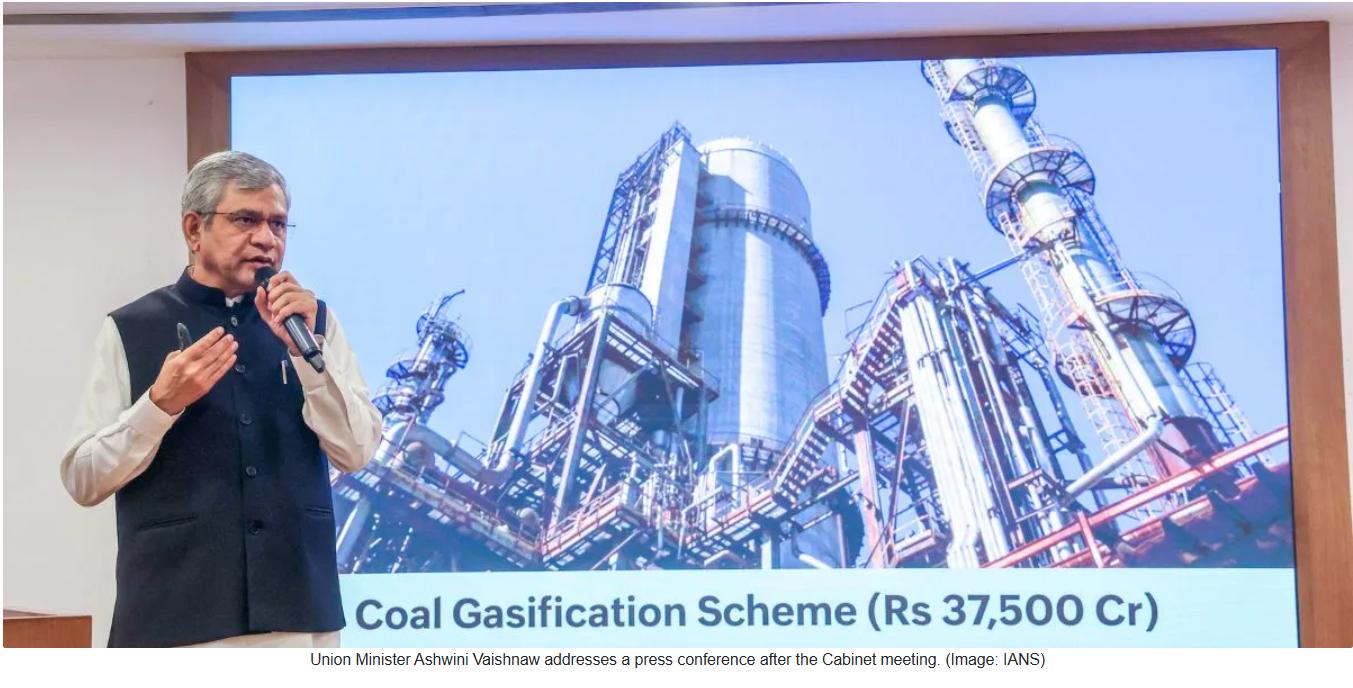
The Union Cabinet approved the “Scheme for Promotion of New Surface Coal/Lignite Gasification Projects for Production of Syngas and Downstream Products” with a financial outlay of Rs. 37,500 crore.
This initiative represents a strategic shift in India’s energy policy: shifting away from the direct combustion of solid fossil fuels toward advanced thermochemical conversion. Amid rising geopolitical supply chain vulnerabilities in West Asia, the scheme aims to reduce India’s high-value hydrocarbon and chemical import bill, which reached approximately Rs. 2.77 lakh crore in FY2025 for substitutable commodities alone.
Understanding the Technology: Coal Gasification and Syngas
- Coal gasification is a high-temperature, high-pressure thermo-chemical process rather than conventional burning.
- Instead of directly combusting coal to generate steam for electricity, gasification subjects coal or lignite to a controlled, oxygen-lean atmosphere with steam. This breaks down the molecular bonds of the hydrocarbon chain, triggering partial oxidation.
- The primary output of this process is Synthesis Gas (Syngas), a gas mixture composed mostly of Carbon Monoxide (CO) and Hydrogen (H2).
The Surface vs. Underground Distinction
- Surface Gasification: The primary focus of this Cabinet-approved scheme. Coal is extracted via traditional mining methods and processed above ground in highly engineered industrial reactors.
- Underground Coal Gasification (UCG): Involves gasifying coal in situ while it is still buried deep within unmined seams by injecting air or oxygen through injection wells and drawing the generated syngas to the surface through production wells.
Industrial Applications of Syngas
Once generated, syngas serves as a versatile chemical feedstock that can be converted into several downstream industrial products:
- Fertilizers: Providing the basic chemical components needed to manufacture Ammonia and Urea.
- Alternative Fuel and Energy: Processing into Synthetic Natural Gas (SNG), Methanol, Ethanol, and Dimethyl Ether (DME).
- Industrial Chemicals: Generating crucial inputs like Ammonium Nitrate (essential for civil explosives and mining infrastructure).
- Hydrogen Economy: Serving as an alternative source for pure industrial Hydrogen extraction.
Salient Features and Financial Architecture of the Scheme
The operational and financial mechanics of the scheme are designed to mitigate risks for private and public sector investments in this capital-intensive sector:
- Target Capacity: The scheme explicitly targets the gasification of approximately 75 MillionTonnes (MT) of coal and lignite. This will serve as a core pillar to achieve the broader national cumulative target of 100 MT by 2030 set under the National Coal Gasification Mission (2021).
- Incentive Outlay and Capital Subsidy: Out of the Rs. 37,500 crore framework, the government provides a fiscal grant capped at a maximum of 20% of the total cost of Plant and Machinery.
- Milestone-Linked De-risking: To prevent capital hoarding and project delays, the financial incentive is disbursed in four equal installments, each tied to the verifiable achievement of specific physical project milestones.
- Equitable Allocation Caps: To prevent market monopolization and encourage diverse participation, the financial guidelines enforce strict upper thresholds:
- Capped at Rs. 5,000 crore for any single gasification project.
- Capped at Rs. 9,000 crore for any single downstream product category (with explicit exemptions granted to Synthetic Natural Gas and Urea).
- Capped at Rs. 12,000 crore for any single corporate entity group across all bids under the scheme.
- Co-existence of Incentives: The policy does not restrict operations; these fiscal benefits are in addition to, and independent of, any incentives gained under the commercial coal mining regime or other state and central line ministries.
- Technology Agnosticism with an Indigenous Focus: While the guidelines remain technology-neutral, the selection framework prioritizes the deployment of domestic engineering capabilities to reduce reliance on foreign Engineering, Procurement, and Construction (EPC) contractors.
- Competitive Bidding Design: Projects will be awarded through a transparent bidding mechanism. Bids will be evaluated using an objective benchmarking framework that evaluates project cost, raw coal input requirements, and net syngas output efficiency.
Policy Reform: Long-Term Fuel Security
A key obstacle for capital-intensive energy projects has been the risk of fuel supply disruptions. To address this, the government introduced a major structural reform alongside the financial package:
- 30-Year Coal Linkage Tenure: Under the "Production of Syngas leading to Coal Gasification" sub-sector within the Non-Regulated Sector (NRS) linkage auction framework, the government extended the guaranteed coal linkage tenure up to 30 years.
- This policy reform aligns fuel availability with the typical operational lifespan of an advanced chemical plant, offering long-term regulatory certainty to de-risk institutional investments.
Strategic, Economic, and Fiscal Benefits
The implementation of the Surface Coal Gasification scheme offers several multi-dimensional benefits for India's macroeconomy:
Macroeconomic and Import Substitution
India holds one of the largest resource bases globally, with 401 billion tonnes of estimated coal reserves and 47 billion tonnes of lignite reserves. Solid coal accounts for over 55% of the country's primary energy mix.
Despite this abundance, India remains highly vulnerable to global supply chain shocks due to its heavy reliance on chemical imports. Surface gasification allows India to utilize its abundant domestic solid fuels to substitute for high-value imported commodities:
- Natural Gas: Substituting for Liquefied Natural Gas (LNG), where India currently imports over 50% of its domestic requirements.
- Industrial Feedstocks: Reducing foreign dependence on Ammonia (nearly 100% imported) and Methanol (extensively imported at 80% to 90% of total consumption).
- Agricultural Security: Boosting self-reliance in Urea, where import dependencies still hover around 20%.
Capital Mobilization and Employment Generation
- The state’s initial Rs. 37,500 crore fiscal layout is projected to function as multiplier seed capital, expected to mobilize private and public investments worth Rs. 2.5 to 3.0 lakh crore across 25 planned industrial projects.
- Furthermore, this industrial shift is expected to generate approximately 50,000 direct and indirect jobs, diversifying employment in India’s underdeveloped, coal-bearing geographic regions.
Fiscal Gains for the State
- Far from being a net drain on the exchequer, the industrial utilization of the targeted 75 MT of coal and lignite is projected to generate Rs. 6,300 crore in annual mineral revenue through standard royalties and mining levies, supplemented by long-term Goods and Services Tax (GST) collections from high-value downstream chemical sales.
Delhi Ridge Ecosystem
- 16 May 2026
In News:
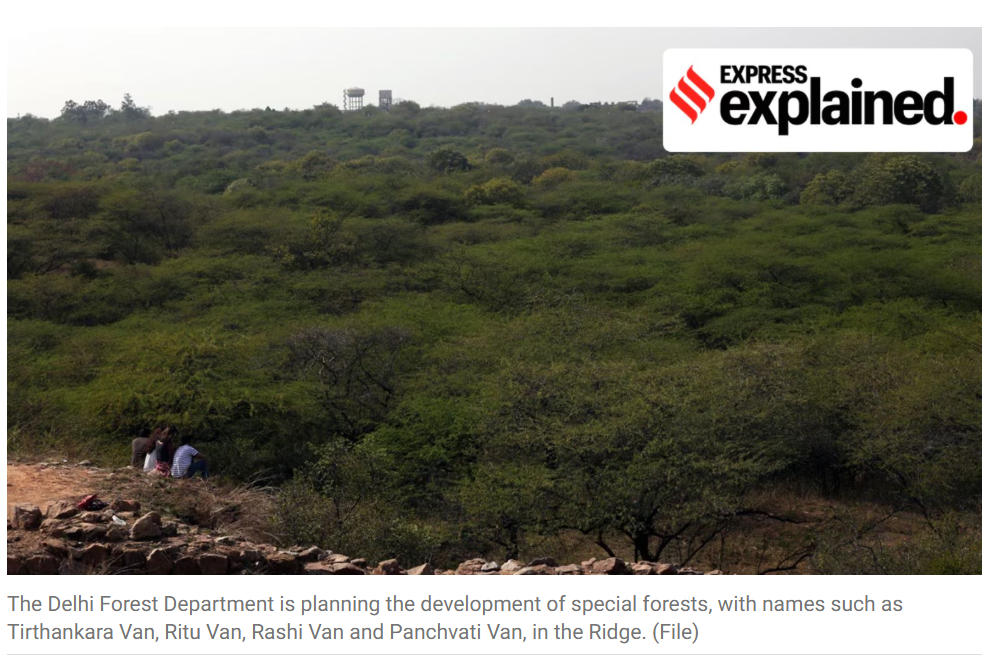
The Delhi government has officially notified approximately 670 hectares of Delhi’s Central Ridge as a "Reserved Forest" under Section 20 of the Indian Forest Act, 1927. This statutory declaration grants this highly fragmented urban eco-sensitive zone the highest tier of domestic legal protection.
Geomorphology and Zonal Classification
Geographical Profile
- Origin: The northernmost extension of the ancient Aravalli Range, which stands as one of the world's oldest fold mountain systems.
- Topography: Spans 35 km across Delhi; characterized by undulating terrain, highly weathered quartzitic rocks, and thin, nutrient-poor topsoil.
- Macro-Climate Function: Acts as a critical natural barrier shielding Delhi from the hot, dry desert winds (Loo) blowing in from Rajasthan.
The Four Distinct Zones
Spread over nearly 8,000 hectares, the ridge is divided into four non-contiguous zones:
- Northern Ridge (Kamla Nehru): The smallest patch; holds immense historical value tied to the 1857 Uprising.
- Central Ridge: Covers ~864 hectares; 670 hectares of this specific zone were recently notified as a Reserved Forest.
- South-Central Ridge (Mehrauli): Contains ecologically vital patches like Sanjay Van.
- Southern Ridge (Asola Bhatti): The largest contiguous section; contains the Asola Bhatti Wildlife Sanctuary and bears deep scars from historic, unregulated quartzite and sand mining.
Ecological Significance: "The Green Lungs"
- Climate Regulation: Functions as Delhi’s primary carbon sink and oxygen provider, mitigating the Urban Heat Island (UHI) effect and absorbing particulate matter PM2.5and PM10.
- Native Vegetation Type: Classified as a Tropical Dry Deciduous and Thorny Scrub Forest. Native, drought-resilient flora includes Dhauk (Anogeissus pendula), Salai, Palash, and native Babul.
- Ecosystem Engineers: Native termites maintain soil health by recycling nutrients and improving moisture retention. Experts strongly oppose chemical anti-termite plans, warning they destroy this crucial "living soil."
Legal Framework: Reserved Forests
Reserved Forests represent the baseline of strict statutory conservation in India's environmental jurisprudence.
- Statutory Standing: Notified under Section 20 of the Indian Forest Act, 1927. They enjoy the highest degree of statutory protection for state-managed forests and account for 55.1% of India's total Recorded Forest Area (RFA).
- The Governance Rule: They operate under a Prohibited-by-Default regime. All human activities (such as cattle grazing, hunting, and timber extraction) are barred unless explicitly permitted through a written order by a designated Forest Officer. This stands in contrast to Protected Forests, where activities are generally permitted unless explicitly banned.
- Settlement of Rights: Before final notification under Section 20, a Forest Settlement Officer must legally investigate, adjust, or extinguish any existing customary or land rights claimed by local communities to ensure undisputed state boundaries.
- Administrative Authority: Reserved Forests are declared and managed exclusively by State and UT Governments. This differentiates them from National Parks and Sanctuaries, which fall under the stricter mandates of the Central Wildlife (Protection) Act, 1972.
Major Threats and Restoration Dilemmas
- Invasive Alien Species: The colonial-era introduction of Vilayati Kikar (Prosopis juliflora) has resulted in a severe ecological crisis. This invasive weed aggressively outcompetes other flora, depletes groundwater reserves with its deep roots, and forms a dense canopy that chokes out native Aravalli flora.
- Urban Encroachment: Infrastructure sprawl, road widening, and illegal settlements cause severe habitat fragmentation, breaking contiguous wildlife corridors into isolated patches.
- The "Native" Plantation Dilemma: Municipal drives frequently plant popular Indian trees like Mango, Jamun, and Shisham. Because these species are water-intensive and unsuited to the rocky, arid terrain, the plantations fail the moment artificial irrigation stops.
- Commercialization Bias: The Forest Research Institute (FRI) Working Plan (2026-27) faces criticism for treating the Ridge as a commercial timber plantation (focusing on timber volume increments) rather than an irreplaceable biodiversity hotspot.
- Artificial Landscaping: Creating themed public parks (Tirthankara Van, Panchvati Van) involving hardscaping violates the Forest (Conservation) Act, 1980. Furthermore, ultra-dense plantation models like the Miyawaki Method are ecologically incompatible with the Ridge's natural dry-scrub ecosystem.
Way Forward
- Scientific Rewilding: Shift focus from commercial silviculture to genuine ecological restoration by systematically clearing Vilayati Kikar and replanting native Dhauk, Salai, and local wild lianas.
- Strict Enforcement: Leverage digital geofencing and zero-tolerance policies to protect the newly notified 670 hectares of Central Ridge from municipal encroachment and hardscape development.
- Soil Conservation: Halt chemical interventions against native termites to preserve the soil microbiome, allowing natural nutrient cycling and moisture retention to continue.
- Trans-boundary Management: Collaborate across state lines with Haryana and Rajasthan to establish a contiguous Aravalli ecological corridor, structurally halting the expansion of the Thar Desert.
Periodic Labour Force Survey 2025
- 16 May 2026
In News:
The National Statistical Office (NSO) under the Ministry of Statistics and Programme Implementation (MoSPI) released the Annual Report of the Periodic Labour Force Survey (PLFS) 2025. This marks a significant methodological transition as the first comprehensive report based on the calendar year (January–December 2025) as the survey period.
Core PLFS Analytical Framework
The health of the labor ecosystem is evaluated using three foundational pillars and two distinct time frameworks:
Key Metrics
Labour Force Participation Rate (LFPR) = Employed Unemployed Total Population × 100
Worker Population Ratio (WPR) = Employed Total Population × 100
Unemployment Rate (UR) = Unemployed Total Population × 100
Time-Tested Frameworks
- Usual Status (ps ss): Based on the activity status over the preceding 365 days. Measures long-term, stable structural trends by combining Principal Status (ps) and Subsidiary Status (ss).
- Current Weekly Status (CWS): Based on a 7-day reference window (employed if worked ≥hour on any day). Key Update: Since January 2025, NSO provides monthly all-India estimates and quarterly bulletins for both rural and urban areas under CWS to track short-term fluctuations.
Key Findings of PLFS 2025: Data and Facts
Headline Employment Data
- Stable LFPR & UR: Overall LFPR stands at 59.3%, while the Unemployment Rate (UR) declined marginally to 3.1%.
- WPR & Total Employed: WPR reached 57.4%, translating into approximately 61.6 crore employed Indians (41.6 crore males and 20.0 crore females).
Structural Fractures & Core Challenges
- The Gender Fault Line: A stark gap persists between Male LFPR (79.1%) and Female LFPR (40.0%).
- Barriers:44.4% of females remain out of the labor force due to childcare and home-making commitments. Conversely, 69.8% of males cite continuing studies.
- Time Deficit: Urban self-employed men log 17.5 more hours weekly than their female counterparts, restricting female income capacity.
- The Youth "NEET" Crisis: While youth unemployment (15–29 years) improved to 9.9%, urban youth face a severe bottleneck at 13.6% (vs. 8.3% in rural areas). Alarmingly, 25.0% of youth fall into the NEET (Not in Employment, Education, or Training) category, highlighting a massive underutilization of the demographic dividend.
- The Technical Skill Void: While 67.8% of the population (aged 15 ) has attained at least a secondary level of education (average formal schooling: 10.0 years), only 4.2% of the workforce (15–59 years) has formal vocational or technical training.
Sectoral Realignment & Earnings
- Shift toward Formalization: Self-employment dropped to 56.2%, while regular wage/salaried employment rose to 23.6%, signaling a modest shift toward formal contracts.
- Sectoral Transitions: Agriculture dependency decreased to 43.0%, with workers transitioning into Manufacturing (12.1%) and Services (13.1%). Young women are increasingly driving this shift away from agriculture.
- Wage Growth & Parity Deficit: Nominal earnings for females grew faster than males (Self-employment: 8.8%; Regular salaried: 7.2%). However, the absolute gap remains high: women in salaried roles still earn only about 76% of male earnings.
Key Structural Bottlenecks Identified
- Low-Quality Female Integration: A significant chunk of rising female participation remains locked in unpaid family labor or low-yield rural activities.
- High Informality: Nearly 85-90% of India's total workforce remains informal, lacking statutory social security (PF/ESI).
- Premature De-industrialization Threat: The slow pace of high-quality manufacturing job creation risks pushing labor back into agriculture during economic shocks.
- Regional Imbalances: Disparities persist between industrialized southern/western states and high-underemployment eastern states (e.g., Bihar, UP).
Way Forward / Policy Imperatives
- De-burdening the Female Workforce: Invest in affordable, high-quality community crèches and elderly care centers (aligned with the Code on Social Security, 2020). Promote remote/hybrid models in formal sectors to prevent female dropout.
- Apprenticeship-Linked Higher Education: Restructure university degrees to make the final year a mandatory, industry-paid internship to eliminate the skill-employment mismatch.
- Overhauling Vocational Infrastructure: Re-align ITIs with Production Linked Incentive (PLI) sectors. Create vocational hubs focused on growing Manufacturing (12.1%) and Service (13.1%) segments.
- SME Formalization Incentives: Provide tax and regulatory fiscal incentives to MSMEs that transition contract workers into regular salaried positions with formal social security covers.
- Agro-Industrialization: Establish Integrated Agro-Processing Clusters locally. Moving rural labor from subsistence farming to sorting, grading, and packaging stabilizes year-round income and checks distress migration.