
Kudankulam Nuclear Power Project (KKNPP)
- 23 Jun 2026
In News:
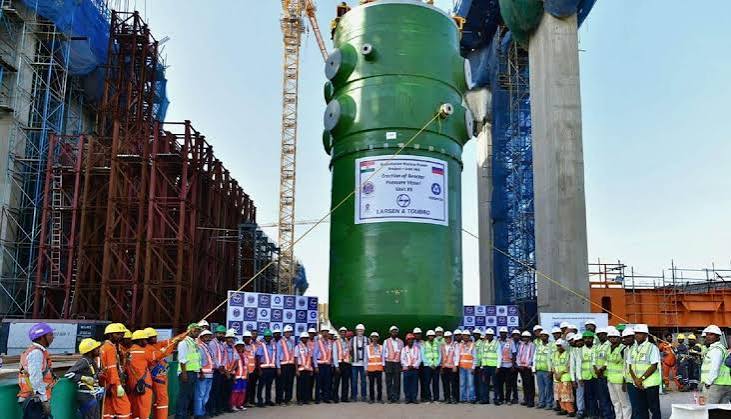
The Nuclear Power Corporation of India Limited (NPCIL) successfully installed the Reactor Pressure Vessel (RPV) at Unit-5 of the Kudankulam Nuclear Power Project (KKNPP) in Tamil Nadu, marking a major milestone in India's nuclear energy expansion. The installation followed clearance from the Atomic Energy Regulatory Board (AERB) and was carried out with technical support from Russia's Rosatom.
About Kudankulam Nuclear Power Project (KKNPP)
- The Kudankulam Nuclear Power Project (KKNPP) is India's largest nuclear power project, located in Tirunelveli district, Tamil Nadu.
- It is being developed by the Nuclear Power Corporation of India Limited (NPCIL) under a long-standing India–Russia Intergovernmental Agreement signed in 1988.
- The project is being constructed in phases with six units, each employing Russian-designed VVER-1000 (Water-Water Energetic Reactor) technology—a type of Pressurized Water Reactor (PWR) that uses light water as both coolant and neutron moderator.
Recent Development
- NPCIL completed the installation of the Reactor Pressure Vessel (RPV) at Unit-5, one of the most critical milestones in reactor construction.
- The installation was executed using the 'open-top' installation method, where heavy reactor equipment is lowered into the reactor building before the containment dome is installed.
- The activity was undertaken with technical assistance from Rosatom and its engineering arm Atomstroyexport (ASE) after obtaining the necessary approvals from the Atomic Energy Regulatory Board (AERB).
Reactor Pressure Vessel (RPV)
- The Reactor Pressure Vessel (RPV) is the core component of a nuclear reactor, often referred to as its "heart." It is a massive steel vessel weighing around 320 tonnes and houses the reactor core, where controlled nuclear fission takes place to generate heat for electricity production.
Significance
The operational Units 1 and 2 of Kudankulam have already generated over 127 billion kWh of electricity, avoiding more than 112 million tonnes of CO? emissions while reducing dependence on coal-based power generation.
Once all six units become operational, the project will achieve a total installed capacity of 6,000 MWe, making Kudankulam one of India's largest nuclear power hubs. The project will play a crucial role in enhancing energy security, expanding the share of clean baseload power, and supporting India's target of achieving 100 GW of nuclear power capacity by 2047 under the Nuclear Energy Mission for Viksit Bharat.
The project also exemplifies the strategic depth of India–Russia cooperation in the field of civilian nuclear energy.
REWARD Programme
- 23 Jun 2026
In News:
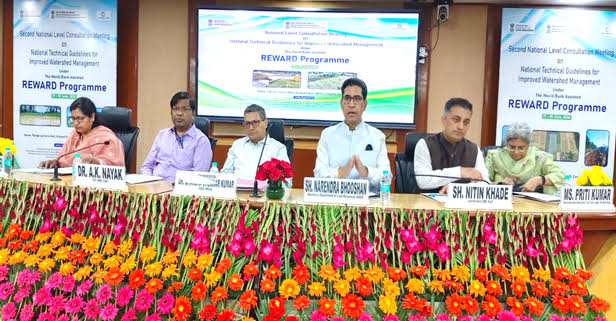
The National Rainfed Area Authority (NRAA) convened a meeting to deliberate on the Draft National Technical Guidelines (NTG) for Improved Watershed Management under the REWARD Programme, aimed at promoting climate-resilient and science-based watershed development.
What is the REWARD Programme?
The REWARD (Rejuvenating Watersheds for Agricultural Resilience through Innovative Development) Programme is a World Bank-assisted watershed development programme implemented by the Department of Land Resources (DoLR), Ministry of Rural Development, in collaboration with the States of Karnataka and Odisha.
Implemented during 2021–2026, the programme seeks to modernize watershed management by integrating scientific approaches, strengthening institutional capacity, and enhancing climate resilience in rainfed agricultural areas.
Objectives
The programme aims to:
- Strengthen the capacity of national and state institutions for improved watershed management.
- Enhance the resilience of farmers to climate change.
- Promote sustainable agricultural practices and support value-chain development in selected watersheds.
- Introduce modern, science-based watershed management techniques.
Implementation Mechanism
The REWARD Programme is financed through the World Bank's Program-for-Results (PforR) financing instrument. Under this model, financial assistance is released based on the achievement of Disbursement Linked Indicators (DLIs), ensuring that funding is directly linked to measurable outcomes and institutional performance.
Key Result Areas
The programme focuses on two major result areas:
- Strengthening institutions and policy frameworks for watershed development.
- Science-based watershed management to improve climate resilience, natural resource conservation, and sustainable livelihoods.
Mombasa Declaration
- 23 Jun 2026
In News:
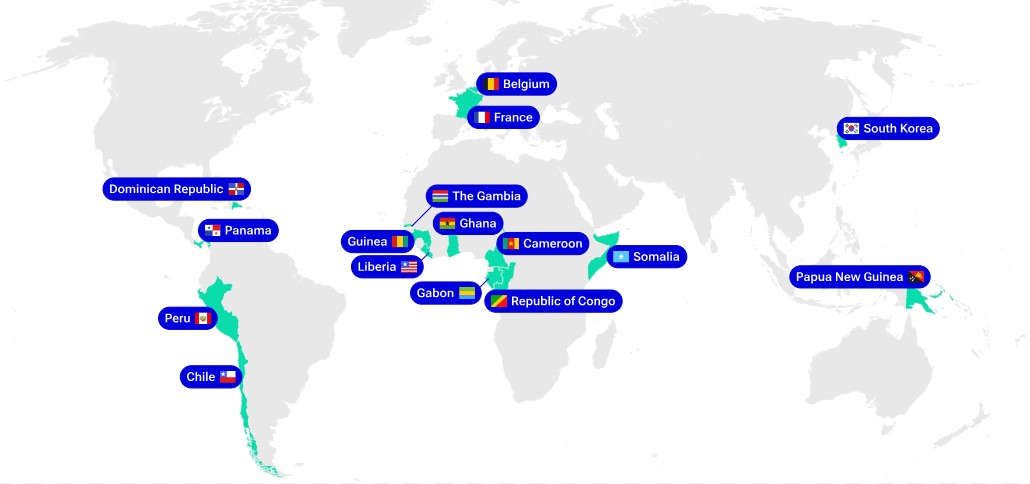
Fifteen countries from Africa, Asia, Europe, the Caribbean, and the Pacific adopted the Mombasa Declaration during the 11th Our Ocean Conference (OOC) 2026 in Mombasa, Kenya, to strengthen global efforts against Illegal, Unreported and Unregulated (IUU) Fishing.
What is the Mombasa Declaration?
The Mombasa Declaration is a multilateral commitment adopted by 15 countries to enhance transparency, strengthen international cooperation, and improve governance in the fisheries sector to combat Illegal, Unreported and Unregulated (IUU) fishing.
Named after the host city of Mombasa (Kenya), the declaration seeks to improve monitoring of fishing activities by promoting greater access to information on fishing vessels, ownership, licensing, and cross-border data sharing.
Objectives
The declaration aims to:
- Combat Illegal, Unreported and Unregulated (IUU) fishing.
- Improve transparency in fisheries governance.
- Strengthen international cooperation and information sharing.
- Enhance monitoring, compliance, and enforcement mechanisms.
- Protect marine ecosystems and ensure sustainable fisheries.
Key Features
The declaration calls upon participating governments to:
- Improve access to information on fishing vessels, ownership, and licensing.
- Strengthen data sharing among countries for better monitoring of fishing activities.
- Modernize vessel registries and publish fishing authorizations.
- Support the Global Charter for Fisheries Transparency, which contains 10 policy principles for improving fisheries governance through low-cost institutional reforms.
The declaration was signed by Belgium, Cameroon, Chile, the Dominican Republic, France, Gambia, Ghana, Guinea, Liberia, Panama, Papua New Guinea, Peru, Republic of the Congo, Somalia, and South Korea.
Why is IUU Fishing a Concern?
Illegal, Unreported and Unregulated (IUU) fishing undermines sustainable fisheries management by depleting fish stocks, damaging marine biodiversity, distorting markets, and threatening the livelihoods and food security of millions of people dependent on fisheries. It also causes significant economic losses and weakens maritime governance.
Our Ocean Conference (OOC)
The Our Ocean Conference (OOC) is a global platform launched in 2014 by the U.S. Department of State under the leadership of former U.S. Secretary of State John Kerry. It brings together governments, international organizations, businesses, civil society, and academia to mobilize commitments for ocean conservation and sustainable use of marine resources.
The conference focuses on six priority areas:
- Marine Protected Areas (MPAs)
- Sustainable Blue Economy
- Climate Change
- Maritime Security
- Sustainable Fisheries
- Marine Pollution
Since its inception, the conference has generated over 2,600 commitments worth more than USD 160 billion.
The 11th Our Ocean Conference (2026) was held in Mombasa, Kenya, marking the first time the conference was hosted on the African continent, under the theme "Our Ocean, Our Heritage, Our Future."
Exercise Pitch Black 2026
- 23 Jun 2026
In News:
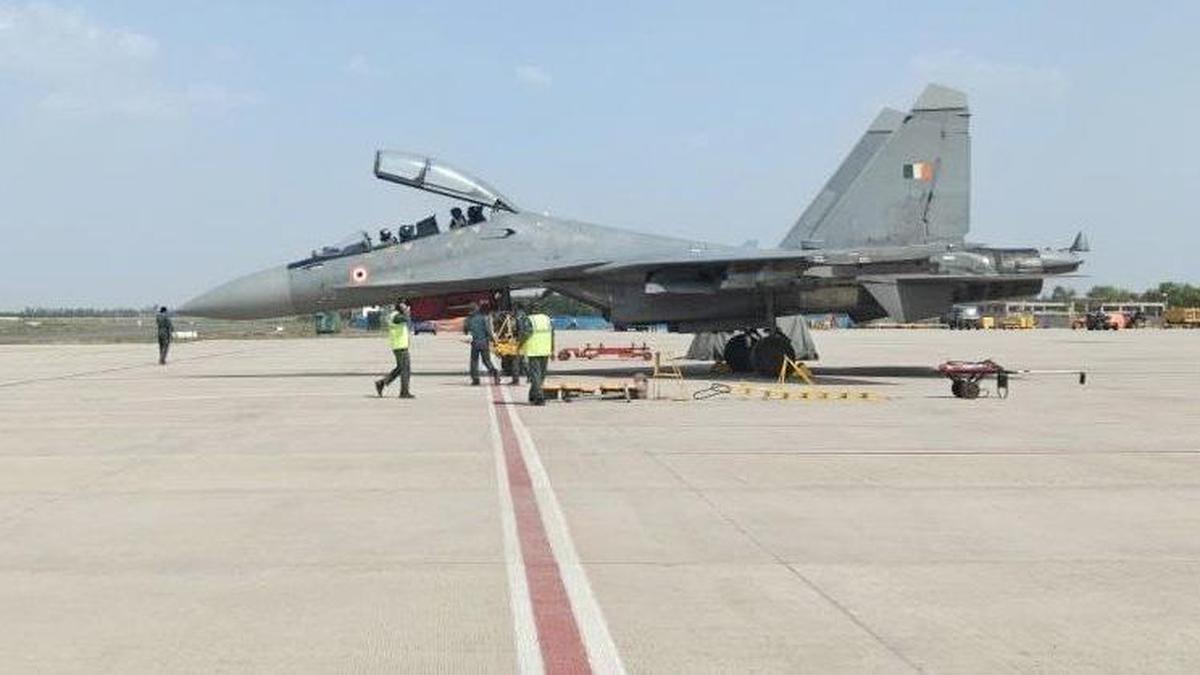
The Indian Air Force (IAF) will participate in Exercise Pitch Black 2026, a major multinational air combat exercise hosted by the Royal Australian Air Force (RAAF) in Australia's Northern Territory.
About Exercise Pitch Black
Exercise Pitch Black is the largest multinational air combat exercise conducted by the Royal Australian Air Force (RAAF). Held biennially, it brings together air forces from across the Indo-Pacific and other partner nations to undertake realistic, high-intensity air warfare training in a complex operational environment.
The 2026 edition is scheduled from 20 July to 7 August 2026 in Australia's Northern Territory.
Objectives
The exercise aims to:
- Enhance operational interoperability among participating air forces.
- Strengthen military cooperation and coordination.
- Improve capabilities in high-intensity air combat operations.
- Promote the exchange of best practices, tactics, techniques, and procedures (TTPs).
Key Features
Exercise Pitch Black 2026 will involve:
- More than 100 aircraft and thousands of military personnel.
- Advanced air combat tactics, mission planning, and integrated operational training.
- Realistic scenarios involving offensive and defensive air operations, multinational coordination, and complex mission execution.
The exercise will witness participation from over 19 countries, including India, Australia, the United States, the United Kingdom, Japan, France, Indonesia, Singapore, South Korea, Canada, and several other Indo-Pacific partners.
India–Australia Defence Exercises
|
Exercise |
Service |
|
Pitch Black |
Air Force |
|
AUSTRA HIND |
Army |
|
AUSINDEX |
Navy |
|
MALABAR |
Multilateral Naval Exercise (India, USA, Japan & Australia) |
Kanchan Devi Committee

- 23 Jun 2026
In News:
The Supreme Court-appointed Kanchan Devi Committee has come under scrutiny after environmental experts and former officials sought its restructuring, citing concerns over its composition and its ability to independently review the protection framework for the Aravalli Range.
What is the Kanchan Devi Committee?
The Kanchan Devi Committee is an expert committee constituted by the Supreme Court on 25 May 2026 to review its earlier judgment concerning the protection and classification of the Aravalli Range. The committee has been tasked with examining the existing legal and administrative framework governing the Aravallis and recommending measures for effective environmental conservation, forest demarcation, and sustainable land-use management.
Objectives
The committee aims to:
- Review the existing framework for Aravalli conservation.
- Recommend measures for forest identification and demarcation.
- Suggest strategies for sustainable land-use planning.
- Balance environmental protection with developmental requirements.
Concerns Raised
Environmental experts and former officials have questioned the present composition of the committee.
Major concerns include:
- Absence of independent experts in ecology, hydrology, wildlife conservation, GIS, and public health.
- Potential conflict of interest, as the committee largely functions within the same administrative framework that earlier determined Aravalli boundaries.
- Overrepresentation of bureaucrats, with limited participation from multidisciplinary scientific experts.
- Insufficient representation of experts familiar with mining and ecological challenges in Haryana and Rajasthan.
- Concern that any reassessment of Aravalli protection should be undertaken only after completing forest identification under the Godavarman framework.
Significance
The committee's recommendations will have significant implications for the future management of the Aravalli Range, one of the world's oldest fold mountain systems. Its findings could shape policies relating to forest conservation, groundwater recharge, biodiversity protection, desertification control, and regulation of mining, quarrying, and urban expansion.
The debate surrounding the committee also highlights the importance of scientific expertise, transparency, and institutional independence in environmental governance and judicially supervised conservation efforts.