
Sea Slugs
- 26 Apr 2026
In News:
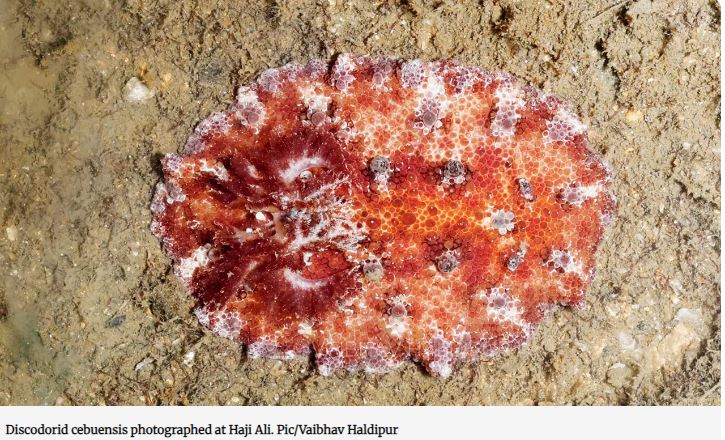
India's marine biodiversity documentation reached a significant milestone with the first-ever recorded sighting of a rare sea slug, Discodoriscebuensis (also referred to as Discodoridcebuensis), at Haji Ali, Mumbai. Previously documented in regions such as the Philippines and parts of the tropical Indo-West Pacific, this discovery highlights the ecological richness of Mumbai’s rocky intertidal zones and underscores the importance of urban coastal conservation.
Decoding the Sea Slug: Nature's Vibrant Gastropods
Sea slugs, often called nudibranchs, are soft-bodied marine mollusks. They belong to the class Gastropoda, a diverse group that includes common land snails and slugs. However, unlike their terrestrial relatives, marine sea slugs have undergone an evolutionary transition where they have completely lost their protective shells, quills, and mantle cavities.
Key Biological and Physiological Traits
- Sensory Mechanisms: On their heads, they possess specialized tentacles known as rhinophores. These act as chemo-sensory organs, allowing the slug to detect chemical signals and movement in the water to locate food or mates.
- Defense and Toxicity: Despite their lack of shells, they are far from defenseless. Many species utilize aposematism—bright, vibrant colors and intricate patterns that warn predators of their toxicity.
- Pigment Absorption: Interestingly, sea slugs derive their color and chemical defenses from their diet. By consuming sponges, algae, and jellyfish, they absorb pigments and can even store the stinging cells (nematocysts) of their prey within their own bodies for protection.
Ecological Significance: Sentinels of the Sea
Sea slugs are more than just visual marvels; they serve as critical bio-indicators of marine health.
- Habitat Indicators: They are primarily found in coral reefs and sponge-rich environments. A high diversity of sea slugs typically indicates a robust and thriving coral ecosystem.
- Ecological Balance: As slow-moving grazers, they control the populations of sponges, algae, and other small invertebrates, maintaining the delicate equilibrium of the seafloor.
- Genetics and Regeneration: Some species exhibit extraordinary biological traits, such as the ability to regenerate lost limbs, photosynthesize using chloroplasts stolen from algae (kleptoplasty), or even incorporate prey genes into their own DNA.
The Mumbai Discovery: Discodoriscebuensis
The specific species found at Haji Ali belongs to the family Discodorididae. Unlike some of its flashier relatives, Discodoriscebuensis is characterized by:
- A flat, oval body with a mottled brown or light red-brown appearance, helping it camouflage against rocks and sponges.
- Distinctive tubercles (small bumps) along its back, which may have white or dusky violet tips.
- A size typically ranging between 35 mm and 50 mm.
The discovery was made by local wildlife enthusiasts during a coastal survey, proving that even highly urbanized shorelines like Mumbai’s can harbor undocumented and rare marine life.
National Institute for Pre-Clinical Research (NIPCR)
- 26 Apr 2026
In News:
The Indian Council of Medical Research (ICMR) has upgraded and renamed its Hyderabad-based National Animal Resource Facility for Biomedical Research (NARFBR) as the National Institute for Pre-Clinical Research (NIPCR) to strengthen India’s capabilities in drug discovery and medical technology.
Key Highlights:
- Established in 2016 following approval by the Cabinet Committee (2015), the NIPCR is a flagship institute under ICMR, located in Genome Valley, Hyderabad. The renaming reflects a strategic shift from a specialised animal resource centre to a comprehensive hub for pre-clinical and translational research, acting as a critical bridge between laboratory research and human clinical trials.
- The institute provides advanced infrastructure for testing drugs, vaccines, biologicals, medical devices, and Cell and Gene Therapies (CGT). It adopts a dual research approach—combining advanced in vivo animal models with New Approach Methodologies (NAMs) such as Microphysiological Systems (MPS), cell-based assays, and organoid models. These technologies enhance accuracy, generate human-relevant data, and reduce reliance on traditional animal testing.
- NAMs enable applications like drug toxicity screening, disease modelling, high-throughput testing, and efficacy validation, thereby improving the quality and safety assessment of biomedical products. The institute also supports academia, industry, and startups by offering infrastructure, expertise, and validation platforms.
- Aligned with the Department of Health Research (DHR), Ministry of Health and Family Welfare, NIPCR is expected to play a key role in advancing “Made in India” healthcare solutions, strengthening India’s biomedical research ecosystem, and enhancing self-reliance in healthcare innovation.
Atlas Drone Swarm System

- 26 Apr 2026
In News:
China’s People’s Liberation Army (PLA) has unveiled the Atlas Drone Swarm System, a mobile, AI-enabled platform capable of launching and controlling nearly 100 drones through a single operator.
Key Highlights:
- Developed by the state-owned China Electronic Technology Group Corporation (CETC), the Atlas system is a mobile battlefield network designed for reconnaissance, electronic warfare, deception, and precision strikes. It consists of three components—Swarm-2 combat vehicle, command unit, and support vehicle—enabling integrated and flexible operations.
- The Swarm-2 platform can carry and launch up to 48 fixed-wing drones, while the system as a whole can deploy and control up to 96 drones simultaneously. With a rapid launch interval of under 3 seconds, the entire swarm can be airborne within 300 seconds, ensuring swift battlefield response.
- A key feature is its AI-driven swarm coordination, where drones operate with collective intelligence while retaining individual autonomy, allowing dynamic reconfiguration, target identification, and mission execution. Each drone can carry varied payloads such as electro-optical sensors, strike munitions, and communication relays, enabling multi-role capabilities including surveillance, attack, and battlefield communication.
- Strategically, the system enhances China’s ability to conduct swarm warfare, potentially overwhelming adversary air defence systems through low-cost, high-volume drone deployment. Its possible deployment in regions like the Tibet Military District raises concerns for India, as it could target logistics networks and forward positions, highlighting evolving challenges in modern warfare and border security.
Amazon–TGRA Deal for Sustainable Rice Farming
- 26 Apr 2026
In News:
Amazon has signed a $30 million (?280 crore) long-term carbon credit offtake agreement with the Good Rice Alliance (TGRA) to support sustainable rice farming and methane reduction in India.
Key Highlights:
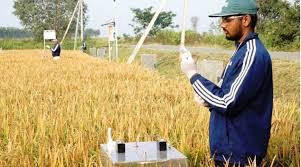
- The agreement marks one of India’s largest agricultural carbon market deals, with Amazon committing to purchase over 685,000 metric tonnes of CO?-equivalent carbon credits. TGRA—backed by Bayer, GenZero, and Shell—is implementing the initiative across 13,000 small farmers over 35,000 hectares.
- The programme promotes climate-smart agriculture practices such as Alternate Wetting and Drying (AWD) and Direct Seeded Rice (DSR), which reduce methane emissions and water usage in paddy cultivation. Emission reductions are measured in collaboration with the International Rice Research Institute (IRRI), supported by digital monitoring and third-party verification under the Verified Carbon Standard (VCS).
- Since rice cultivation contributes 8–10% of global methane emissions, the initiative has strong climate mitigation potential for India. It also enhances farmer livelihoods through training, financial incentives, improved yields, and reduced input costs, reflecting the growing role of carbon markets in sustainable agriculture.
Skill Development Under Vibrant Villages Programme
- 26 Apr 2026
In News:
The strategic landscape of India’s border management has undergone a paradigm shift, moving from a purely security-centric approach to one that integrates socio-economic development with national defense. Central to this vision is the Vibrant Villages Programme (VVP), a flagship initiative designed to transform border areas from isolated peripheries into self-reliant, well-connected "first villages."
Genesis and Expansion: VVP to VVP-II
Initially launched in 2023 to address developmental gaps in villages along the China border, the initiative has seen a massive scale-up. Recently, the Union Cabinet approved VVP-II, expanding the scheme's footprint significantly. Unlike typical developmental projects, VVP-II is a 100% centrally funded Central Sector Scheme.
The program now spans across a vast geographical arc including Arunachal Pradesh, Assam, Bihar, Gujarat, Himachal Pradesh, Jammu and Kashmir, Ladakh, Manipur, Meghalaya, Mizoram, Nagaland, Punjab, Rajasthan, Sikkim, Tripura, Uttarakhand, Uttar Pradesh, and West Bengal. This expansion reflects the government's commitment to securing the entire length of India’s international borders through community empowerment.
The Socio-Economic Mandate: Skill-Led Growth
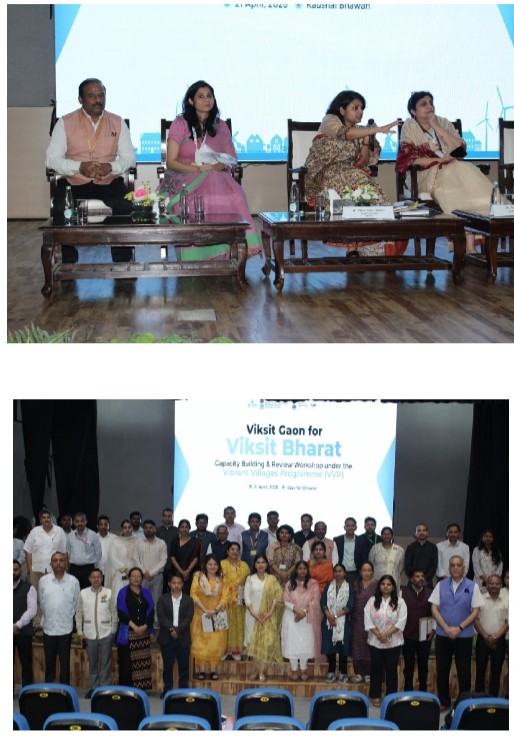
A critical pillar of the VVP is the integration of skill development with regional economic needs. The Ministry of Skill Development and Entrepreneurship (MSDE) has taken a proactive role by organizing capacity-building workshops to accelerate development in these remote regions.
The focus is on demand-driven, locally relevant skilling. By identifying the specific economic potential of each border cluster—whether in high-altitude agriculture, local handicrafts, or adventure tourism—the MSDE ensures that training translates into sustainable livelihoods. This "bottom-up" approach promotes innovation and peer learning, ensuring that the youth in these areas become active participants in the regional economy rather than being forced to migrate to urban centers.
Security Through Prosperity: The "Eyes and Ears" Strategy
From a national security perspective, the VVP addresses a critical vulnerability: the security vacuum created by out-migration. When border populations leave their ancestral lands due to lack of opportunities, it leads to demographic changes that can be exploited by adversarial elements.
By creating sustainable livelihood opportunities, the Ministry of Home Affairs (MHA) aims to:
- Prevent Migration: Retaining the population ensures a continuous human presence in strategically sensitive zones.
- Intelligence Gathering: Empowering local residents makes them the "eyes and ears" of the Border Guarding Forces (BGF). A prosperous, loyal community is the first line of defense against illicit activities and trans-border crimes.
- Trust Building: The MHA emphasizes culturally sensitive outreach. This ensures that security agencies and local communities work in tandem, fostering a sense of national belonging and mutual trust.
Infrastructure and Saturation: The "Viksit Gaon" Vision
The VVP operates on the principle of saturation of government schemes. This involves ensuring that every household in the identified 662 villages has access to basic amenities—electricity, clean water, digital connectivity, and healthcare.
These villages are being developed as "growth centres" through:
- Strengthened Infrastructure: Improving all-weather road connectivity and telecommunications to bridge the digital and physical divide.
- Economic Assimilation: Linking local products to national markets to ensure that the economic benefits of India's growth reach the last mile.
- Cultural Integration: Encouraging border tourism to showcase the unique heritage of these regions, thereby strengthening their cultural ties with the rest of the country.