
Punjab introduces Artificial Intelligence (AI) as a Mainstream School Subject
- 26 Jul 2026
In News:
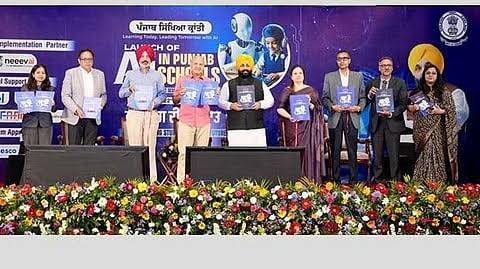
Punjab has become the first Indian State to introduce Artificial Intelligence (AI) as a mainstream subject for Classes I to XII under the Sarbat.AI initiative.
About the Sarbat.AI Initiative
- Sarbat.AI is a statewide programme that integrates Artificial Intelligence (AI) into the school curriculum to equip students with future-ready digital skills and promote AI literacy from the primary level.
- The initiative aims to build an AI-literate, innovation-driven, and ethically responsible student community while ensuring equitable access to AI education across the State.
Key Features
- The programme will be implemented in a phased manner. The first phase covers Classes VIII to XII through the Computer Science curriculum, followed by Classes I to VII with age-appropriate AI education.
- The curriculum is based on global best practices from countries such as Singapore, Finland, the UAE, and the United States, and aligns with UNESCO's Ethical AI Framework.
- Teaching will combine live online classes, recorded lectures, project-based learning, continuous assessments, and a dedicated Learning Management System (LMS).
- The initiative is expected to benefit 25,172 schools and around 31.5 lakh students. Initially, 12,424 Computer Science teachers will be trained, with the long-term objective of upskilling over two lakh teachers.
Significance
The initiative aims to prepare students for the digital economy by developing skills in Artificial Intelligence, innovation, entrepreneurship, and emerging technologies.
It also positions Punjab as a pioneer in AI-enabled school education, promoting inclusive access to advanced technology in both urban and rural schools.
Global Mining and Metals Water Dataset Report
- 26 Jul 2026
In News:
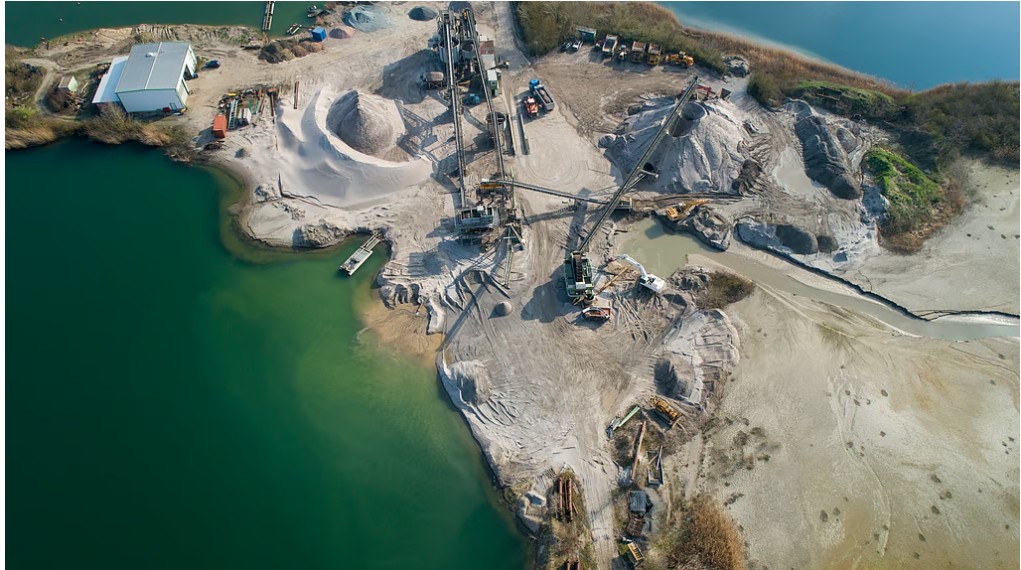
The International Council on Mining and Metals (ICMM) released the Global Mining and Metals Water Dataset, which found that nearly two-thirds of global mining and metals processing facilities face high physical water risk, posing challenges for mining operations and the global clean energy transition.
Key Findings
- The report is the first global assessment of physical water risks across the mining sector, covering 12,000 mining and metals facilities in 148 countries/regions.
- Around 38% of mining facilities operate in areas facing high or extremely high water stress, while 27% are exposed to high drought risk.
- About 14% of facilities face significant flood risk, particularly steel plants, alumina refineries, and aluminium smelters.
- The report identifies compound water-risk hotspots in Chile, Peru, the western United States, southern Africa, northern China, central India, and western Australia, where multiple water-related risks occur simultaneously.
- Critical minerals required for the clean energy transition, such as copper, platinum group elements, and manganese, are increasingly located in water-stressed regions, creating potential supply-chain risks.
How Mining Affects Water Resources
- Mining requires large quantities of water for mineral processing, dust suppression, slurry transport, and equipment cooling.
- Excessive groundwater extraction can lower local water tables, while mine waste and tailings may contaminate rivers and groundwater with heavy metals and chemicals.
- Mining activities can also alter natural drainage patterns, increasing the risks of soil erosion and flash floods.
About ICMM
- The International Council on Mining and Metals (ICMM) is a global industry organisation that promotes safe, responsible, and sustainable mining practices.
- It works with mining companies, commodity associations, and international organisations to improve environmental, social, and governance (ESG) performance in the mining sector.
Amazon Rainforest
- 26 Jul 2026
In News:
Forest fires in Brazil's Amazon Rainforest declined to their lowest level since records began in 1985, reflecting improved forest conservation efforts after the severe fire season of 2024.
Key Highlights
- The decline in forest fires has been attributed to a delayed rainy season, reduced deforestation, and greater community vigilance, which helped prevent the spread of fires and reduced combustible forest fuel.
- Most of the fires recorded in 2024 were human-induced, mainly due to agricultural land clearing, deforestation, and illegal mining.
- Scientists have cautioned that a possible Super El Niño could trigger an extended dry season, increasing the risk of future forest fires.
About the Amazon Rainforest
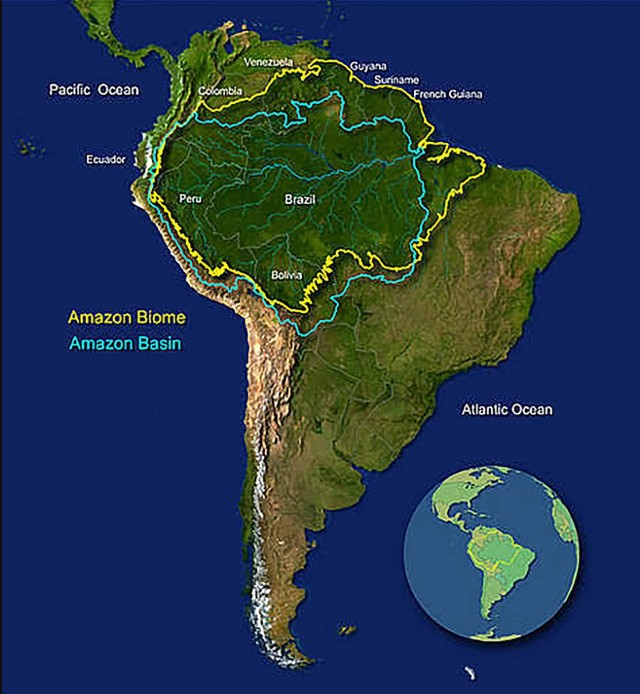
- The Amazon Rainforest is the world's largest tropical rainforest, covering nearly 6 million sq. km across nine South American countries, with about 60% located in Brazil. It lies within the Amazon River Basin, the world's largest river basin.
- It is bounded by the Guiana Highlands in the north, the Andes Mountains in the west, the Brazilian Plateau in the south, and the Atlantic Ocean in the east.
- The region experiences high rainfall, high humidity, and uniformly warm temperatures, supporting dense evergreen forests.
- The Amazon is one of the world's richest biodiversity hotspots, harbouringnearly 10% of the world's known species. It is home to species such as the jaguar, capybara, tapir, sloth, anaconda, caiman, toucan, and macaw, while important plant species include Brazil nut, rubber, mahogany, cedar, and rosewood.
- The rainforest is often called the "Lungs of the Earth" because it functions as a major carbon sink, playing a crucial role in regulating the global climate.
Amazon River
- The Amazon River originates in the Peruvian Andes and is the world's largest river by discharge and the second-longest river after the Nile.
- Its major tributaries include the Rio Negro, Madeira, and Xingu.
India–Romania Relations

- 26 Jul 2026
In News:
President Droupadi Murmu visited Romania, marking the first State Visit by an Indian President in nearly three decades. During the visit, both countries agreed to strengthen cooperation in trade, investment, science & technology, education, and cultural exchanges.
Key Highlights
- India and Romania reaffirmed their 70-year diplomatic partnership and set a target to double bilateral trade within three years. India also emphasized that the proposed India–EU Free Trade Agreement (FTA) would boost trade, investment, and opportunities for skilled professionals.
- Both countries signed three agreements covering education, culture, and people-to-people exchanges. They also agreed to expand joint research and development (R&D) under the Programme of Cooperation in Science and Technology.
- To strengthen cultural ties, an Indian Studies Chair will be established at the University of Bucharest with support from the Indian Council for Cultural Relations (ICCR). India also announced that it would double training opportunities for Romanian officials under the Indian Technical and Economic Cooperation (ITEC) Programme.
- In celebration of 80 years of diplomatic relations, the two countries will observe 2028 as the "India–Romania Year of Innovation."
Romania at a Glance
- Romania is a South-Eastern European country with its capital at Bucharest.
- It is bordered by Ukraine, Moldova, the Black Sea, Bulgaria, Serbia, and Hungary.
- Romania is a member of both the European Union (EU) and NATO.
- Major physical features include the Carpathian Mountains, Transylvanian Basin, and the Danube Delta, a UNESCO World Heritage Site.
- The Port of Constan?a on the Black Sea is one of Europe's major maritime gateways.
NPCI Developing Offline UPI Payment System
- 26 Jul 2026
In News:
The National Payments Corporation of India (NPCI) is developing an offline UPI payment system that will enable Near Field Communication (NFC)-based tap-and-pay transactions without active internet connectivity.
About the Proposed Offline UPI System
The proposed system is an advanced contactless payment mechanism built on the existing Unified Payments Interface (UPI) framework. It enables users to make digital payments at merchant Point-of-Sale (PoS) terminals even when both the customer's smartphone and the merchant's terminal are offline.
The system has been developed by the National Payments Corporation of India (NPCI) with the objective of reducing payment failures caused by poor or absent internet connectivity and expanding UPI usage in remote and low-connectivity areas.
How Does the System Work?
The system operates in three stages:
- Pre-Authorisation: While connected to the internet, the user's bank authorises and stores a set of cryptographic payment tokens or a prepaid balance on the smartphone.
- Offline Payment: The user taps the smartphone on an NFC-enabled PoS terminal, where payment credentials are exchanged through short-range NFC communication without internet access.
- Deferred Settlement: The transaction is stored locally on both devices and is transmitted to NPCI for final bank-to-bank settlement once either device reconnects to the internet.
Key Features
- Enables offline NFC-based tap-and-pay transactions.
- Works even when both customer and merchant are offline.
- Uses cryptographic tokenisation instead of real-time bank balance verification.
- Supports transactions of up to ?2,000.
- Follows a store-and-forward model where settlement occurs after internet connectivity is restored.
- Designed primarily for merchant PoS payments.
Advantages
- Reduces payment failures in areas with poor or no internet connectivity.
- Expands digital payments to remote rural areas, underground metro stations, in-flight services, and locations with network outages.
- Enhances the reliability and resilience of India's digital payment ecosystem.
- Promotes greater financial inclusion and supports the Digital India initiative.
Limitations
- Transaction limit is capped at ?2,000.
- Requires NFC-enabled smartphones and NFC-enabled PoS terminals, limiting usage on older devices.
- Final settlement occurs only after internet connectivity is restored, requiring robust reconciliation mechanisms to manage delayed settlements.
About NPCI
- The National Payments Corporation of India (NPCI) is an umbrella organisation for retail payment systems in India.
- It was established in 2008 under the guidance of the Reserve Bank of India (RBI) and the Indian Banks' Association (IBA).
- NPCI operates key payment platforms including UPI, RuPay, IMPS, BHIM, NACH, AePS, FASTag, and UPI Lite.