
Joint Crediting Mechanism

- 18 Jun 2026
In News:
India and Japan have adopted the Rules of Implementation for the Joint Crediting Mechanism (JCM) under Article 6.2 of the Paris Agreement, operationalising bilateral cooperation on carbon markets and low-carbon technologies.
What is the Joint Crediting Mechanism (JCM)?
- The Joint Crediting Mechanism (JCM) is a bilateral carbon credit mechanism proposed by the Government of Japan and officially launched in 2013.
- It promotes the deployment of advanced decarbonisation technologies, products, systems, and infrastructure in partner countries through Japanese investment, while contributing to sustainable development and greenhouse gas (GHG) emission reductions.
- Implemented in accordance with Article 6 of the Paris Agreement, the mechanism enables participating countries to generate and share carbon credits from verified emission reduction projects, thereby supporting the achievement of their respective Nationally Determined Contributions (NDCs).
- India is among the 31 partner countries participating in the JCM.
How does the JCM Work?
Under the mechanism:
- Japan provides financial support and advanced low-carbon technologies to partner countries.
- Emission reduction projects are jointly implemented and monitored.
- Verified reductions in greenhouse gas emissions generate carbon credits.
- The credits are shared between Japan and the partner country based on agreed rules, helping both countries achieve their NDC commitments under the Paris Agreement.
The JCM functions within the framework of the United Nations Framework Convention on Climate Change (UNFCCC) and complements existing international carbon market mechanisms such as the Clean Development Mechanism (CDM) and Joint Implementation (JI).
Priority Sectors
The India–Japan JCM focuses on sectors with significant decarbonisation potential, including:
- Renewable energy with energy storage
- Sustainable Aviation Fuel (SAF)
- Compressed Biogas (CBG)
- Green Hydrogen
- Green Ammonia
- Hard-to-abate industrial sectors
Wind Turbine Supply Chain Management Portal
- 18 Jun 2026
In News:
The Ministry of New and Renewable Energy (MNRE) has launched India's first Wind Turbine Supply Chain Management Portal to strengthen the domestic wind energy manufacturing ecosystem, improve supply chain transparency, and support India's clean energy transition.
About the Wind Turbine Supply Chain Management Portal
The Wind Turbine Supply Chain Management Portal is India's first dedicated digital platform developed to streamline the wind energy supply chain by connecting manufacturers, suppliers, and other stakeholders on a common platform. It has been developed under the aegis of the Ministry of New and Renewable Energy (MNRE) with the support of the Indian Wind Turbine Manufacturers Association (IWTMA).
The portal aims to improve supply chain efficiency, enhance domestic manufacturing capabilities, reduce import dependence, and strengthen India's position as a global hub for wind energy equipment.
Key Features
- Supply Chain Visibility: Provides end-to-end visibility across the wind energy manufacturing ecosystem.
- ALMM Integration: Facilitates compliance with the Approved List of Models and Manufacturers (ALMM) framework, promoting domestic sourcing.
- Supplier Discovery: Enables identification and qualification of component suppliers.
- Stakeholder Collaboration: Improves coordination among manufacturers, suppliers, developers, and policymakers.
- Export Readiness: Enhances the competitiveness of Indian manufacturers in global markets by strengthening supply chain resilience.
What is Wind Energy?
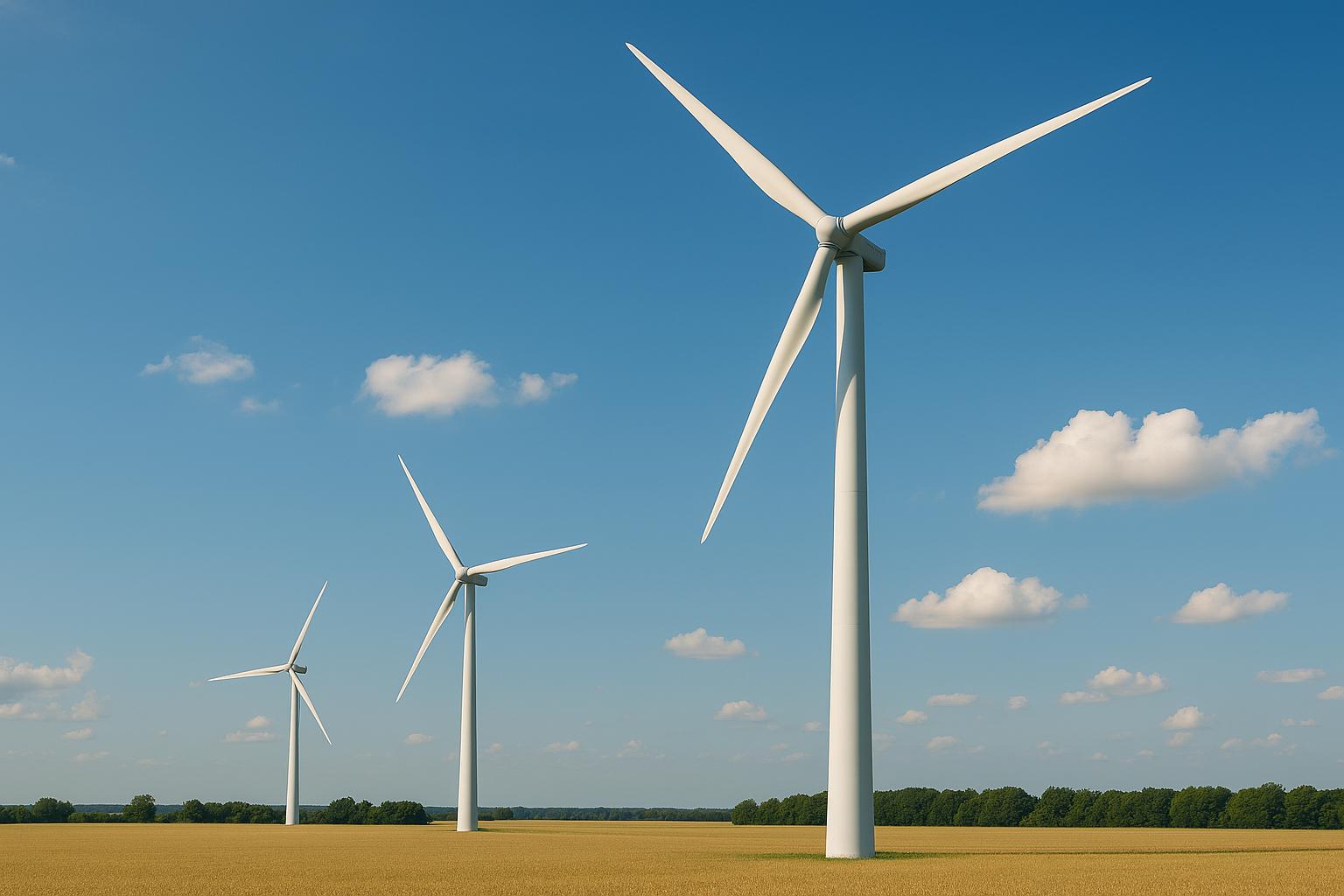
Wind energy is a renewable source of energy that converts the kinetic energy of moving air into electricity using wind turbines. The rotating blades of a wind turbine drive a generator, which produces electrical energy without emitting greenhouse gases during operation.
Wind Energy Potential in India
India possesses significant wind energy potential, particularly along its western and southern coasts.
Major wind energy-producing and high-potential States include:
- Gujarat (highest estimated potential)
- Tamil Nadu
- Karnataka
- Rajasthan
- Maharashtra
- Telangana
- Madhya Pradesh
Artemis III Mission

- 18 Jun 2026
In News:
NASA has announced the four-member crew and revised mission profile for Artemis III, which is now scheduled for 2027 as a Low Earth Orbit (LEO) mission to validate critical technologies required for future human lunar landings. The first crewed lunar landing under the Artemis programme is now planned under Artemis IV (2028).
What is Artemis III?
Artemis III is part of NASA's Artemis Programme, which aims to establish a sustained human presence on the Moon and serve as a stepping stone for future human missions to Mars.
Originally conceived as the mission to return astronauts to the lunar surface, Artemis III has been redesigned into a two-week Low Earth Orbit technology demonstration mission. The mission will test key systems such as rendezvous, docking, life-support systems, software, and spacecraft interoperability, thereby reducing risks before undertaking crewed lunar landings.
Mission Profile
The mission will be launched aboard NASA's Space Launch System (SLS) rocket carrying the Orion spacecraft.
During the mission, Orion will dock with two commercial Human Landing Systems (HLS):
- Blue Moon lander developed by Blue Origin.
- Starship Human Landing System developed by SpaceX.
The mission will validate docking procedures and operational compatibility between these spacecraft before they are deployed for lunar missions.
Crew of Artemis III
The mission will comprise an international crew of four astronauts:
- Commander: Randy Bresnik (NASA)
- Pilot: Luca Parmitano (European Space Agency) – first ESA astronaut assigned to an Artemis mission
- Mission Specialists: Frank Rubio (NASA) and Andre Douglas (NASA)
What is Low Earth Orbit (LEO)?
Low Earth Orbit (LEO) refers to orbits located approximately 500–2,000 km above Earth's surface. Satellites in LEO have shorter orbital periods, lower communication latency, and are widely used for Earth observation, scientific research, navigation, and human spaceflight, including the International Space Station (ISS).
Significance of Artemis III
The revised mission prioritizes the validation of technologies essential for deep-space exploration before attempting a lunar landing. Successful demonstration of spacecraft docking, life-support systems, and commercial lunar landers will enhance mission safety and reduce operational risks.
Strategically, the Artemis Programme reinforces international collaboration through participation by agencies such as the European Space Agency (ESA) while strengthening the role of commercial space companies. It also supports the broader objective of maintaining leadership in human space exploration amid increasing global competition and advancing preparations for future missions to the Moon and eventually Mars.
World Day to Combat Desertification and Drought 2026
- 18 Jun 2026
In News:
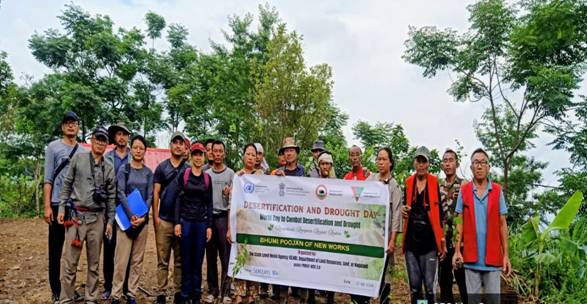
The World Day to Combat Desertification and Drought (17 June)was observed across the project areas of the Watershed Development Component of Pradhan Mantri Krishi Sinchayee Yojana (WDC-PMKSY 2.0) to promote sustainable land management, watershed conservation, and restoration of degraded landscapes.
World Day to Combat Desertification and Drought
- The United Nations General Assembly (UNGA) declared 17 June as the World Day to Combat Desertification and Drought in 1994 to commemorate the adoption of the United Nations Convention to Combat Desertification (UNCCD)—the only legally binding international agreement linking environment, sustainable land management, and development.
- The day seeks to raise awareness about land degradation, promote Land Degradation Neutrality (LDN), and encourage sustainable management of land resources. It emphasizes that desertification, driven by human activities and climate change, is preventable and reversible.
- Theme 2026:"Rangelands: Recognize. Respect. Restore."—aligned with the International Year of Rangelands and Pastoralists (IYRP) 2026, led by the FAO and UNCCD.
What are Rangelands?
Rangelands are extensive natural landscapes comprising grasslands, shrublands, deserts, and tundras, primarily used for livestock grazing.
- Cover 54% of the Earth's land surface.
- Contribute nearly 16% of global food production.
- Support the livelihoods of around 2 billion people, especially pastoralists and indigenous communities.
- In India, they cover about 1.21 million sq. km, with nearly 40% of the country's land used for grazing.
- India's grassland area declined from 18 million hectares (2005) to 12 million hectares (2015), while less than 5% of grasslands are under protected areas.
Besides supporting livestock, rangelands function as carbon sinks, conserve biodiversity, regulate water cycles, and prevent soil erosion.
Watershed Development Component of PMKSY 2.0 (WDC-PMKSY 2.0)
Originally launched as the Integrated Watershed Management Programme (IWMP) in 2009–10, it was integrated with Pradhan Mantri Krishi Sinchayee Yojana (PMKSY) in 2015–16. The present phase, WDC-PMKSY 2.0, covers the period 2021–2026.
Implemented by the Department of Land Resources (DoLR), Ministry of Rural Development, the scheme aims to restore 49.50 lakh hectares of degraded and rainfed land.
Its objectives include:
- Restoration of degraded landscapes and ecological balance.
- Enhancement of groundwater recharge and agricultural productivity.
- Promotion of diversified farming systems and livelihood opportunities.
- Springshed rejuvenation, especially in Himalayan regions.
- Use of GIS and Remote Sensing for scientific watershed planning.
Desertification in India
Desertification refers to land degradation in arid, semi-arid and dry sub-humid regions due to climatic variations and human activities; it does not imply the expansion of existing deserts.
According to the Desertification and Land Degradation Atlas of India (Space Applications Centre, ISRO), about 29.7% of India's Total Geographical Area (TGA) is undergoing land degradation.
Major causes include:
- Water erosion (largest contributor)
- Vegetation degradation
- Wind erosion
- Salinity and alkalinity caused by improper irrigation practices
Major Initiatives
Global: UNCCD, Bonn Challenge, Great Green Wall Initiative, G20 Global Land Initiative, and SDG Target 15.3 (Land Degradation Neutrality by 2030).
India: Commitment to restore 26 million hectares of degraded land by 2030 (UNCCD COP14), Aravalli Green Wall Project, Desert Development Programme (DDP), National Mission for a Green India (GIM), and WDC-PMKSY 2.0.
GRAPES-3 Telescope
- 18 Jun 2026
In News:
Researchers from Mumbai, Kochi, and Japan have used the GRAPES-3 Telescope to study how Earth's upper atmospheric temperature and the Sun's magnetic field influence cosmic ray muons—high-energy subatomic particles produced when cosmic rays interact with Earth's atmosphere. The findings improve understanding of space weather, atmospheric processes, and cosmic ray propagation.
What is GRAPES-3?
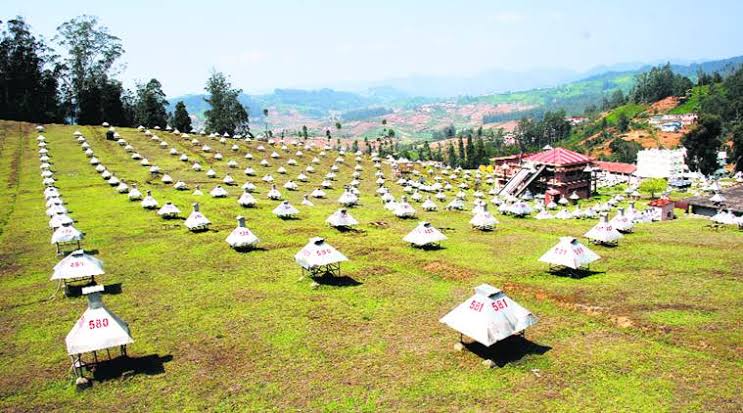
Gamma Ray Astronomy PeVEnergieS phase-3 (GRAPES-3) is a high-energy cosmic ray observatory designed to investigate the origin, acceleration, and propagation of cosmic rays by detecting Extensive Air Showers (EAS) produced when high-energy cosmic rays or gamma rays enter Earth's atmosphere.
Besides cosmic ray studies, the facility also investigates solar activity, space weather, and thunderstorm-related phenomena through the observation of cosmic ray muons.
Key Features of GRAPES-3
- Location: Ooty, Tamil Nadu.
- Operated by: Tata Institute of Fundamental Research (TIFR).
- Detects primary cosmic rays and gamma rays in the tera-electronvolt (TeV) to peta-electronvolt (PeV) energy range.
- Uses an array of plastic scintillator detectors and a large-area muon detector based on proportional counters.
- Measures Extensive Air Showers produced by high-energy particles entering Earth's atmosphere.
What are Cosmic Rays?
- Cosmic rays are high-energy charged particles originating from outer space that continuously bombard the Earth from all directions. They are among the most energetic particles in the Universe and were discovered over a century ago.
- When these primary cosmic rays collide with atmospheric molecules, they generate Extensive Air Showers, producing secondary particles such as:Muons, Electrons, Photons, Protons, and Neutrons
- These secondary particles travel towards Earth's surface at nearly the speed of light.
What are Muons?
Muons are unstable, charged elementary particles belonging to the lepton family, similar to electrons but approximately 200 times heavier. They are produced in large numbers during cosmic ray interactions with the atmosphere and can penetrate deep into matter, making them useful for studying atmospheric changes, solar activity, geological structures, and space weather.
Significance of the Study
The study demonstrates that variations in the Sun's magnetic field and the temperature of the upper atmosphere influence the number of muons reaching Earth. Continuous monitoring of these variations through GRAPES-3 enhances understanding of:
- Space weather and solar storms.
- Solar-terrestrial interactions.
- Atmospheric dynamics.
- Behaviour of high-energy cosmic particles.
- Potential impacts on satellite communication, navigation systems, and power infrastructure.