
SpudCell: A Milestone in Synthetic Biology
- 08 Jul 2026
In News:
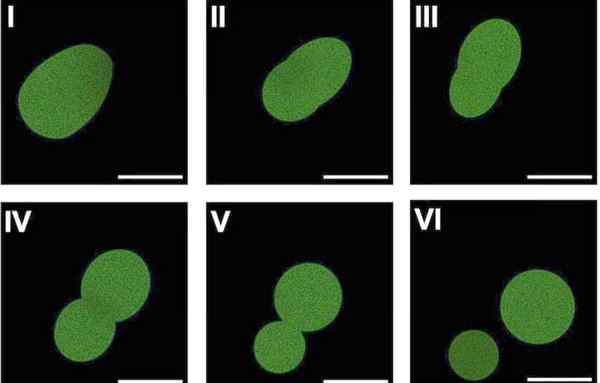
Researchers in the United States have developed SpudCell, a laboratory-made synthetic cell constructed entirely from non-living chemical components. The artificial cell can grow, replicate its DNA, divide and undergo Darwinian evolution, representing a major breakthrough in synthetic biology.
What is SpudCell?
SpudCell is a synthetic (artificial) cell created entirely from non-living chemicals, unlike conventional biotechnology, which modifies existing living organisms.
The artificial cell mimics several essential characteristics of life, including growth, DNA replication, cell division and natural selection. However, it is not a fully living organism, as it depends on externally supplied nutrients and molecular machinery to survive.
Key Features
SpudCell has been designed to imitate fundamental biological processes through engineered chemical systems.
- Constructed from a liposome (artificial lipid membrane) that functions as the cell membrane.
- Contains a cell-free protein synthesis system (PURE system) capable of producing proteins from a synthetic DNA genome.
- Uses a minimal artificial genome of approximately 90,000 base pairs.
- Produces the alpha-hemolysin protein, which forms molecular pores enabling nutrient uptake through fusion with smaller lipid vesicles.
- Replicates its DNA using specialised copying enzymes.
- Divides into daughter cells through physical pressure and mechanical stress, rather than using a natural cytoskeleton.
- Demonstrates Darwinian evolution, where genetically advantageous variants reproduce more efficiently and outcompete others.
How Does SpudCell Function?
The artificial cell follows a simplified life cycle:
- Growth: Absorbs nutrients through membrane pores formed by alpha-hemolysin proteins.
- Protein Synthesis: The PURE system translates genetic information into functional proteins.
- DNA Replication: The synthetic genome is accurately copied before division.
- Cell Division: Mechanical forces generated by protein crowding split the enlarged cell into two daughter cells.
- Evolution: Beneficial genetic mutations improve nutrient uptake, allowing faster reproduction and natural selection.
Why is SpudCell Not Considered Fully Alive?
Although SpudCell exhibits several life-like properties, it lacks complete biological autonomy.
It still depends on:
- External supply of nutrients.
- Externally provided ribosomes and molecular machinery.
- Laboratory-controlled conditions for survival.
Unlike natural cells, it cannot independently maintain metabolism or reproduce indefinitely.
Significance
SpudCell represents a landmark achievement in synthetic biology, demonstrating that fundamental characteristics of life can be recreated from entirely non-living components.
Its potential applications include:
- Development of programmable drug delivery systems.
- Precision medicine and targeted therapeutics.
- Sustainable industrial biomanufacturing.
- Environmental remediation using engineered artificial cells.
- Better understanding of the origin and evolution of life.
- Advancing synthetic biology and bioengineering research.
Viksit UDAN: Next Phase of India's Regional Connectivity Scheme
- 08 Jul 2026
In News:
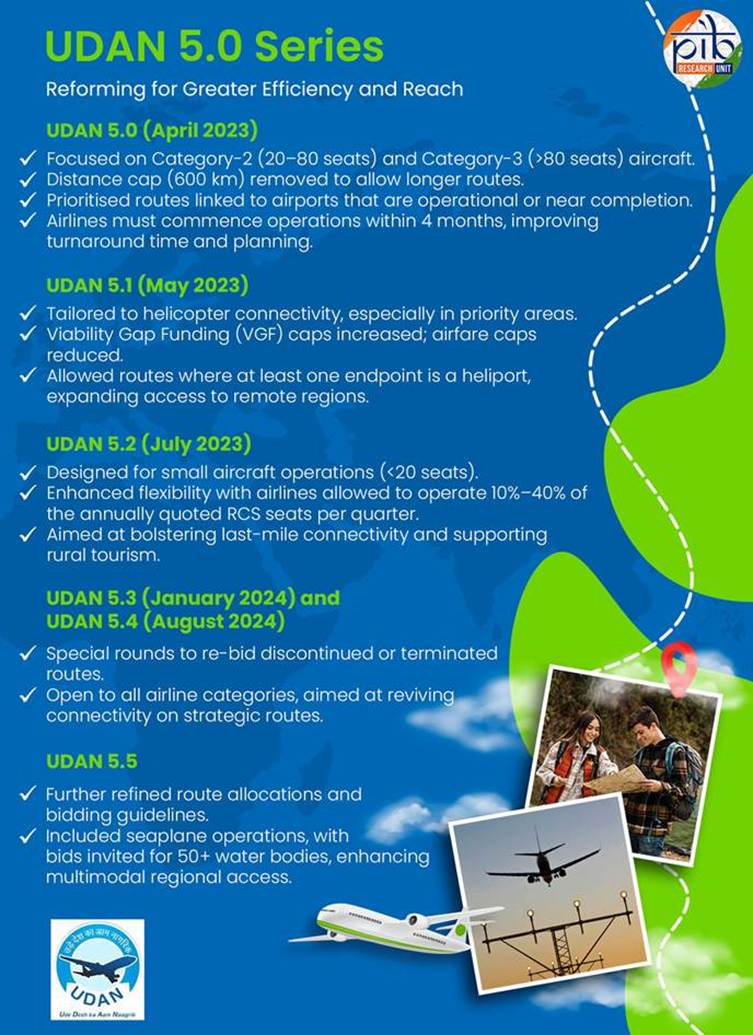
The Prime Minister recently launched Viksit UDAN, the next phase of the Regional Connectivity Scheme (RCS)-UDAN, in Rajasthan. Earlier, in March 2026, the Union Cabinet approved the Modified UDAN Scheme, which serves as the framework for this expanded phase. The initiative aims to strengthen regional air connectivity, develop world-class aviation infrastructure and support the vision of Viksit Bharat 2047.
What is Viksit UDAN?
Viksit UDAN is the modified version of the Regional Connectivity Scheme (UDAN), originally launched in October 2016 under the National Civil Aviation Policy (NCAP), 2016. It seeks to make air travel affordable, accessible and inclusive, while extending aviation services to Tier-2 and Tier-3 cities, hilly regions, islands, remote areas and aspirational districts.
The scheme will be implemented from FY 2026–27 to FY 2035–36 with a total budgetary support of ?28,840 crore.
Key Features
The modified scheme focuses on expanding regional aviation infrastructure while ensuring long-term operational sustainability.
- 100 airports will be developed from existing unserved airstrips with an investment of ?12,159 crore.
- Around 441 aerodromes will receive Operation and Maintenance (O&M) support for three years to ensure viability.
- 200 modern helipads will be developed in hilly, remote, island and aspirational regions to improve connectivity and emergency services.
- Viability Gap Funding (VGF) of ?10,043 crore will be provided to airlines for ten years, with support gradually reduced after the third year.
- Airports will be developed through the Challenge Mode, encouraging timely execution, innovation and quality infrastructure.
- The scheme also promotes indigenous aviation by encouraging the use of HAL Dhruv helicopters and HAL Dornier aircraft for regional operations.
Expected Impact
Viksit UDAN is expected to deepen regional connectivity and stimulate balanced economic development. Improved air connectivity is likely to boost tourism, trade, investment, healthcare access, disaster response and employment generation, particularly in underserved regions. By connecting remote areas with the national aviation network, the scheme seeks to make aviation a catalyst for inclusive growth.
About the UDAN Scheme
UDAN (Ude Desh ka Aam Naagrik) is the flagship regional connectivity programme of the Ministry of Civil Aviation, launched in 2016 under the National Civil Aviation Policy (NCAP), 2016. The Airports Authority of India (AAI) is the nodal implementing agency.
The scheme operates through a market-driven model supported by Viability Gap Funding (VGF), which helps airlines operate on commercially unviable regional routes while maintaining affordable airfares. The scheme is further supported through concessions such as reduced airport charges and lower VAT on Aviation Turbine Fuel (ATF) by participating States.
Since its launch, India's airport network has expanded significantly, increasing from 74 airports in 2014 to 159 airports in 2024. Over successive phases, UDAN has broadened its scope—from connecting underserved airports to including helipads, tourism routes, North-Eastern and island regions, and seaplane operations.
Global Passport Index (GPI)
- 08 Jul 2026
In News:
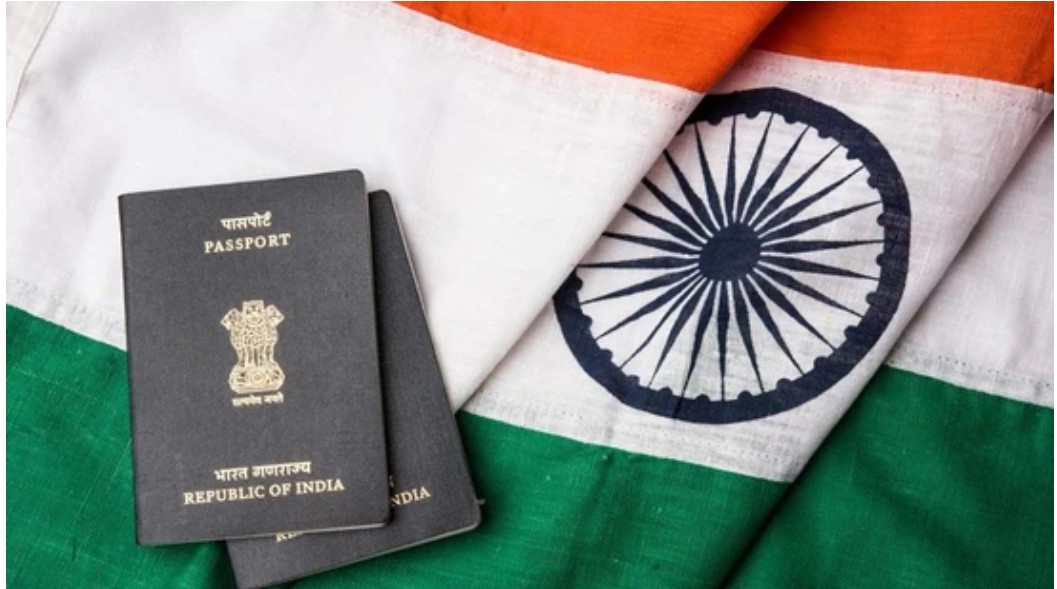
India's ranking in the Global Passport Index (GPI) 2026 has slipped to 125th, down one position from the previous year. The index assesses not only the international travel freedom offered by a passport but also the opportunities it provides for living, working and investing abroad.
What is the Global Passport Index?
The Global Passport Index (GPI) is an annual ranking published by Global Citizen Solutions (GCS), a residency and citizenship advisory firm. Unlike conventional passport rankings that focus mainly on visa-free travel, the GPI provides a broader assessment by evaluating the overall value of a passport in terms of mobility, investment opportunities and quality of life.
The index measures passports across three broad parameters:
- Enhanced Mobility (50%) – Visa-free access, visa-on-arrival and ease of international travel.
- Investment (25%) – Business environment and investment opportunities available to passport holders.
- Quality of Living (25%) – Indicators such as healthcare, education, human development, safety and environmental quality.
The rankings are based on 14 indicators using data from organisations such as the World Bank, World Economic Forum (WEF) and the Sustainable Development Report.
Key Highlights of GPI 2026
The top-ranked passports in 2026 are those of Sweden, Switzerland, Finland, Germany, Denmark and the Netherlands, reflecting their strong performance across all three dimensions.
India is ranked 125th, indicating relatively lower performance not only in international mobility but also in investment opportunities and quality-of-life indicators.
Significance
The Global Passport Index provides a more comprehensive assessment of passport strength than traditional mobility rankings. It highlights that the value of a passport depends not only on visa-free travel but also on the economic opportunities, living standards and global competitiveness associated with the issuing country. For policymakers, the index serves as an indicator of India's progress in areas such as economic development, governance, human capital and international engagement.
eSARAS: Digital Marketplace for Women Self-Help Groups
- 08 Jul 2026
In News:
The eSARAS platform is emerging as a key initiative for promoting women-led rural entrepreneurship, preserving India's traditional crafts and strengthening digital commerce under the Deendayal Antyodaya Yojana–National Rural Livelihood Mission (DAY-NRLM).
What is eSARAS?
eSARAS is the official e-commerce platform developed by the Ministry of Rural Development under the Deendayal Antyodaya Yojana–National Rural Livelihood Mission (DAY-NRLM). It serves as a dedicated online marketplace for products manufactured by Women Self-Help Groups (SHGs) and their federations across India.
The platform connects rural producers directly with consumers, eliminating intermediaries and enabling wider market access for women-led enterprises.
Objectives
The platform aims to:
- Promote women-led rural entrepreneurship.
- Provide nationwide market access to SHG products.
- Increase income opportunities for rural women.
- Preserve India's traditional handicrafts and handloom products.
- Promote digital inclusion and financial empowerment.
- Strengthen sustainable rural livelihoods.
Key Features
eSARAS supports women entrepreneurs by providing end-to-end market linkage services.
Its major features include:
- Exclusive marketplace for Women SHGs and their federations.
- Direct business-to-consumer (B2C) marketing platform.
- Support for branding, packaging, processing, logistics and shipping.
- Digital platform accessible across India.
- Promotes authentic handmade and indigenous products.
The platform caters to a wide range of rural artisans, including:Weavers, Potters, Marble artisans, Pashmina producers, Women-led cooperatives, and Other traditional craft clusters
Product Categories
eSARAS offers a diverse range of products such as:
- Home décor and lifestyle products
- Apparel and fashion accessories
- Personal care products
- Food and processed food items
- Toys and children's products
- Traditional handicrafts and handloom products
Some notable products include:Chanderi sarees, Pashmina products, Marble handicrafts, Handmade rural crafts
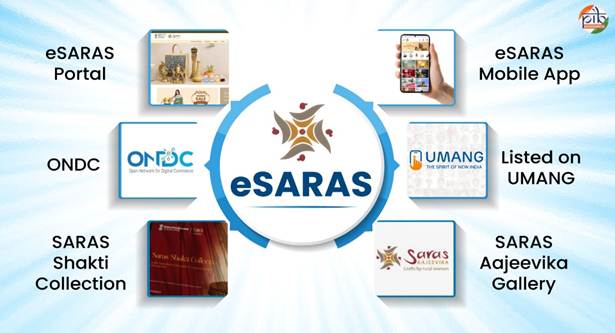
Platform Evolution
|
Platform Evolution |
Detail |
|
eSARAS Portal Launch |
e-Commerce portal https://www.esaras.in/ launched for better and more effective marketing of Saras products |
|
eSARAS Mobile App Launch |
Mobile app launched alongside the eSARAS Fulfilment Centre. It is used for processing, packaging and shipping of products. |
|
ONDC |
SHG products made available across 11 buyer apps (20 crore buyers on ONDC platform) with 800 handcrafted products listed |
|
UMANG |
eSARAS listed on UMANG; platform now serves 2,572 services with 796.69 crore transactions (June 2026) |
|
SARAS Shakti Collection |
Premium curated gift collection launched at Rashtriya Gramin Vikas Sammelan 2026 for institutional and corporate markets |
|
SARAS Aajeevika Gallery |
Permanent retail gallery established at Baba Kharak Singh Marg, New Delhi, showcasing curated SHG products. |
About DAY-NRLM
The Deendayal Antyodaya Yojana–National Rural Livelihood Mission (DAY-NRLM) is the flagship rural poverty alleviation programme of the Ministry of Rural Development.
It seeks to reduce rural poverty by organising poor households into Self-Help Groups (SHGs) and enabling them to access sustainable livelihood opportunities through self-employment, skill development and financial inclusion.
Objectives
- Mobilise poor rural households into SHGs.
- Promote women's financial inclusion.
- Facilitate access to institutional credit.
- Strengthen rural livelihoods through entrepreneurship.
- Enhance household income and reduce poverty.
- Build strong community-based institutions for long-term socio-economic development.
Cancer as a Notifiable Disease
- 08 Jul 2026
In News:
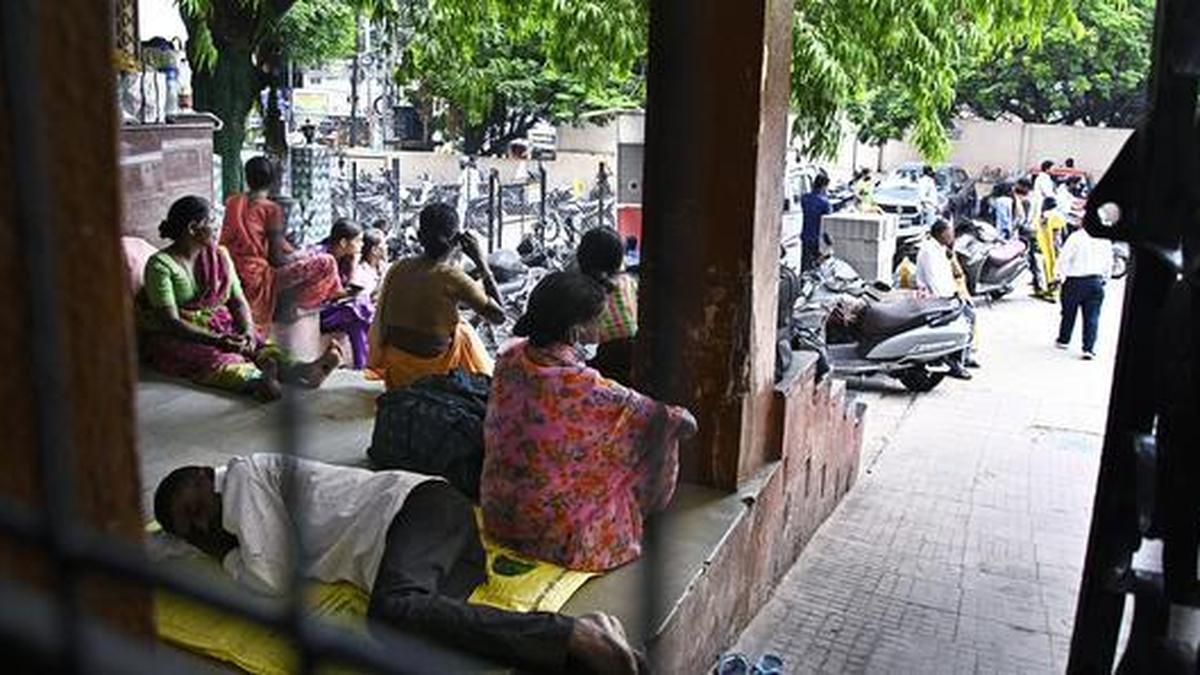
The Government of Telangana has declared cancer a notifiable disease, making it mandatory for all public and private healthcare facilities to report every diagnosed cancer case to a designated state portal within one month. The initiative aims to improve cancer surveillance, generate reliable epidemiological data and strengthen evidence-based public health planning.
What is a Notifiable Disease?
A notifiable disease is a disease that is mandatorily reported by healthcare providers to government authorities under the law. Disease notification enables continuous surveillance, early detection, monitoring of disease trends and timely public health interventions.
In India, the Epidemic Diseases Act, 1897 provides the legal framework for disease notification, while State Governments determine which diseases are notified within their jurisdictions.
Commonly notified diseases include Tuberculosis, Dengue, Malaria, Cholera, Hepatitis, Measles and Polio. During the COVID-19 pandemic, COVID-19 was declared a notifiable disease across the country.
Telangana's New Initiative
Under the new policy:
- Every diagnosed cancer case must be reported within one month.
- Reporting is mandatory for both government and private healthcare institutions.
- The data will be validated by the Centre of Excellence – MNJ Cancer Hospital, Hyderabad.
- Validated information will be integrated with the National Cancer Registry Programme (NCRP) under the Indian Council of Medical Research (ICMR).
- The initiative seeks to accurately map cancer incidence, mortality and geographical distribution across the State.
Why is this Initiative Important?
India currently does not classify cancer as a nationally notifiable disease. Consequently, reliable nationwide cancer surveillance remains limited.
The present system relies primarily on:
- Population-Based Cancer Registries (PBCRs), which estimate cancer incidence within defined populations.
- Hospital-Based Cancer Registries (HBCRs), which collect information from hospitals for clinical and research purposes.
However, these registries collectively cover only 10–16% of India's population and are largely concentrated in urban and public-sector institutions, resulting in significant under-reporting, particularly from the private healthcare sector.
Recognising this gap, 17 States, including Telangana, have independently notified cancer under their respective public health frameworks.
National Cancer Registry Programme (NCRP)
The National Cancer Registry Programme (NCRP) was launched by the Indian Council of Medical Research (ICMR) in 1981 to systematically collect, analyse and disseminate data on cancer incidence, mortality and survival across India.
It functions through two major components:
- Population-Based Cancer Registries (PBCRs) – Monitor cancer occurrence in defined populations.
- Hospital-Based Cancer Registries (HBCRs) – Record detailed clinical information on patients treated in hospitals.
The programme is implemented by the National Centre for Disease Informatics and Research (NCDIR), Bengaluru, under the ICMR.
Concerns with Existing Cancer Surveillance
Despite continuous improvements, several challenges persist:
- Limited population coverage (10–16%).
- Under-reporting from the private healthcare sector.
- Urban-centric registry network with inadequate rural representation.
- Delayed reporting affecting policy formulation.
- Incomplete mortality and survival statistics.
These limitations hinder accurate estimation of India's cancer burden and resource allocation.
Cancer Burden in India
According to the Global Cancer Observatory (GLOBOCAN), affiliated with the World Health Organization (WHO):
- India recorded approximately 1.41 million cancer cases in 2022.
- The number is projected to increase to nearly 2.46 million by 2045, representing a rise of over 74%.
The increase is attributed to:
- Ageing population.
- Rising life expectancy.
- Lifestyle changes.
- Urbanisation.
- Increased prevalence of risk factors such as tobacco use, obesity and physical inactivity.