
Whole-Exome Sequencing (WES)

- 15 Apr 2026
In News:
In a significant milestone for medical genetics, scientists recently utilized Whole-Exome Sequencing (WES) to identify a previously unknown rare genetic disease. This breakthrough underscores the increasing importance of targeted genomic tools in clinical diagnostics and the pursuit of personalized medicine.
Understanding the Exome: The "Blueprint" of Proteins
To understand WES, one must first distinguish between the entire genome and the exome:
- The Genome: The complete set of genetic material in an organism.
- Exons: These are the specific "coding" sequences of DNA that provide the instructions for building proteins.
- The Exome: This is the collective term for all the exons in a genome.
Notably, while exons make up less than 2% of the human genome, they are disproportionately significant, containing approximately 85% of all known disease-related genetic variants.
Mechanism of Whole-Exome Sequencing (WES)
WES is a genomic technique that ignores the vast "non-coding" regions of DNA (sometimes referred to as "junk DNA," though its regulatory roles are still being studied) to focus exclusively on the protein-coding regions.
How it differs from Whole-Genome Sequencing (WGS):
- Whole-Genome Sequencing (WGS): Reads every single base pair in the entire 3-billion-letter DNA sequence, including non-coding regions.
- Whole-Exome Sequencing (WES): Specifically captures and sequences only the exome.
Advantages of the WES Approach
The recent discovery of a new rare disease highlights why WES is often preferred in clinical and research settings:
- Diagnostic Efficiency: Since the majority of mutations causing rare diseases occur in the exons, WES is a highly effective "first-look" tool for identifying the root cause of undiagnosed conditions.
- Cost-Effectiveness: By sequencing only 2% of the genome, WES is significantly cheaper than WGS, making it more accessible for large-scale research and patient care.
- Faster Data Processing: The smaller volume of data generated simplifies the bioinformatic analysis, allowing clinicians to reach a diagnosis more quickly.
- Targeted Insight: It is particularly adept at identifying both common and rare variants that alter protein function, which are the primary drivers of many hereditary disorders.
Amaravati Quantum Reference Facility (AQRF)
- 15 Apr 2026
In News:
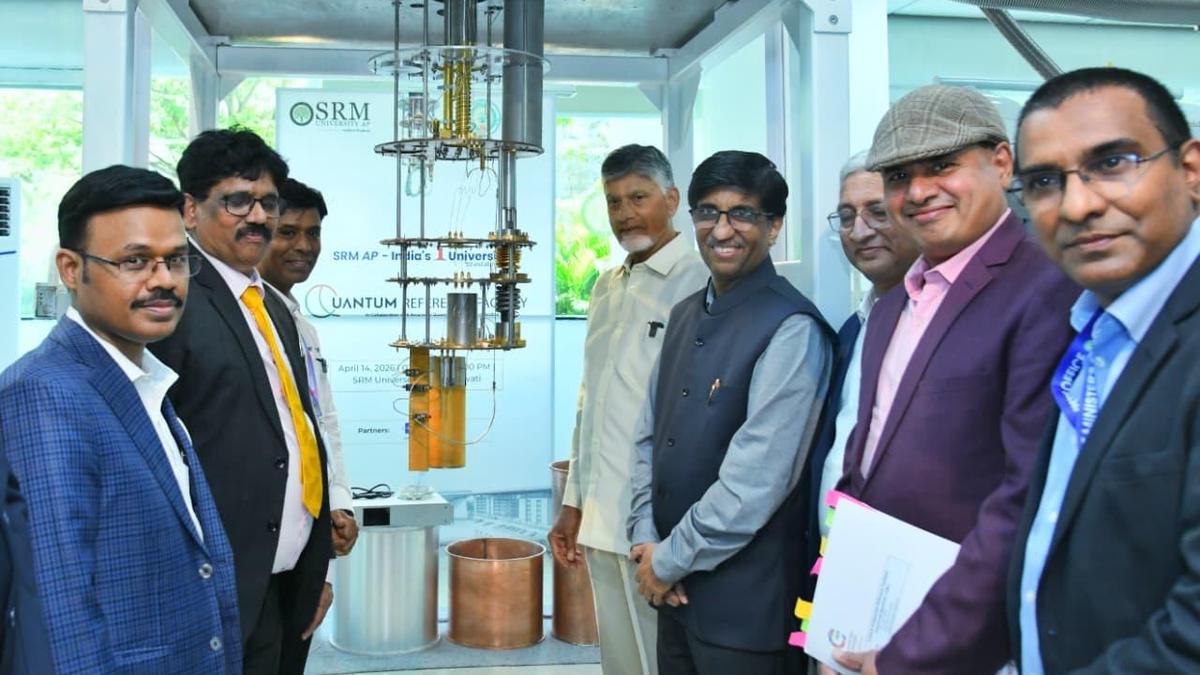
On April 14, 2026, marking the centennial celebration of quantum science and World Quantum Day, Andhra Pradesh inaugurated the Amaravati Quantum Reference Facility (AQRF). As India’s first open-access quantum hardware testing and certification hub, the AQRF represents a critical step toward achieving "Atmanirbhar Bharat" (self-reliance) in deep-tech and advanced computing.
The Facility: Amaravati 1S and Amaravati 1Q
The AQRF consists of two state-of-the-art twin centers designed to catalyze the domestic quantum ecosystem:
- Amaravati 1S (SRM University, Neerukonda): An open-access platform built using superconducting technology. It is designed for experimentation, validation, and training for students, researchers, and startups.
- Amaravati 1Q (Medha Towers, Gannavaram): A specialized unit focused on rigorous testing and certification of critical quantum components, including control systems, cryogenic hardware, and amplifiers, under extreme conditions (near -273°C).
Strategic Collaboration and Indigenization
The facility is a product of a premier national consortium, showcasing a high degree of domestic integration:
- Institutional Partners: Developed in collaboration with the Tata Institute of Fundamental Research (TIFR), Indian Institute of Science (IISc), DRDO, and IIT Bombay.
- Industry Synergy: Tech startups such as Qubitech and Qbit Force served as key contributors.
- Sovereign Hardware: Approximately 85% of the components were manufactured within India, aiming to break global monopolies in critical subsystems like dilution refrigerators and precision hardware.
Core Objectives and Sectoral Impact
The AQRF provides the necessary infrastructure to benchmark indigenous hardware, which is vital for the National Quantum Mission (NQM).
- Drug Discovery: Exponentially faster molecular simulations to accelerate pharmaceutical research.
- Agriculture: Precision modeling for crop optimization and soil health.
- Climate Science: Enhancing the accuracy of climate prediction models.
- Secure Communication: Advancing quantum-secured encryption for national defense and financial sectors.
Andhra Pradesh’s "Quantum Valley" Vision
The state government aims to transform Amaravati into a global ‘Quantum Valley’, attracting an estimated $1 billion in investment by 2029. This hub is part of a broader distributed innovation strategy in Andhra Pradesh:
- Tirupati: Space City hub.
- Orvakal: National Drone Hub.
- Anantapur & Visakhapatnam: Semiconductor and Med-tech clusters.
World Quantum Day
World Quantum Day is celebrated annually on April 14 (4.14). This date is a tribute to the fundamental constant of quantum physics, Planck’s Constant, which is approximately 4.135×10⁻¹⁵ eV. This constant represents the quantization of energy and serves as the bedrock of modern quantum mechanics.
Atlantic Meridional Overturning Circulation (AMOC)
- 15 Apr 2026
In News:
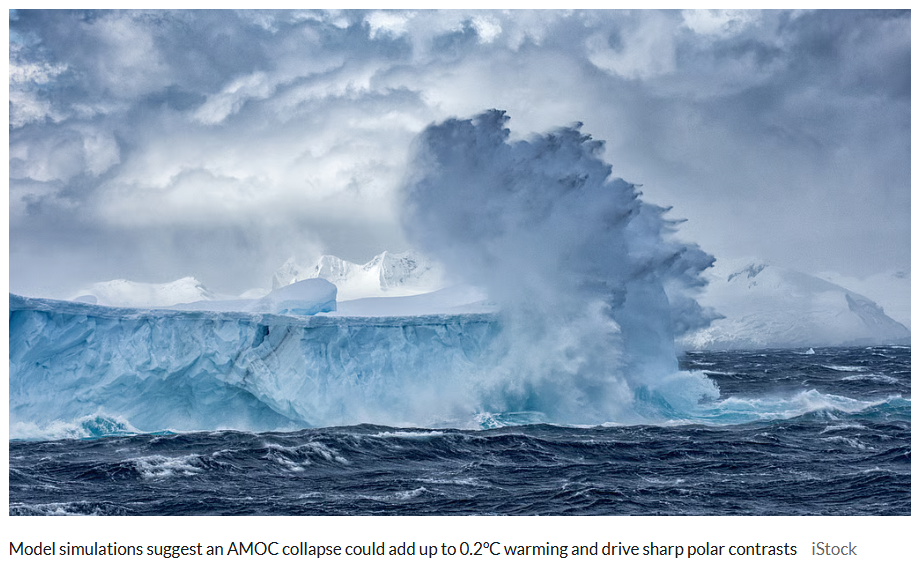
The Atlantic Meridional Overturning Circulation (AMOC) is currently at the center of global climate discourse. Recent studies published in Nature Communications and Science Advances (2026) warn that this vital oceanic system is showing signs of a steady decline, potentially nearing a "tipping point" that could trigger irreversible shifts in the Earth's climate and carbon cycles.
Understanding the AMOC: The "Oceanic Conveyor Belt"
The AMOC is a large-scale system of ocean currents that acts as a vertical loop spanning the entire length of the Atlantic Ocean. It is a critical component of the Earth's thermohaline circulation (driven by temperature and salinity).
- The Mechanism: It transports warm, salty water from the tropics northward along the surface. In the North Atlantic, this water cools, becomes denser, and sinks to the deep ocean. This cold, dense water then flows southward along the ocean floor, eventually resurfacing in other regions to complete the cycle.
- The Gulf Stream: A major component of the AMOC, the Gulf Stream is responsible for maintaining the relatively mild climates of Western Europe and the Eastern coast of North America.
Reasons for the Current Weakening
Scientists have observed a consistent decline in AMOC strength over the past two decades, particularly along the western boundary.
- Greenhouse Gas Forcing: Rising global temperatures are the primary driver of this instability.
- Freshwater Influx: The rapid melting of the Greenland Ice Sheet pours massive amounts of freshwater into the North Atlantic. This reduces the salinity and density of the water, preventing it from sinking and thereby "stalling" the conveyor belt.
- Tipping Point Projections: Research suggests a complete collapse could occur as early as 2037, or at least by 2109, if current warming trends continue.
Consequences of an AMOC Collapse
A shutdown of the AMOC would lead to a dramatic redistribution of heat and carbon across the planet, with impacts categorized into three main areas:
A. Global Warming & Carbon Feedback
- Source vs. Sink: Traditionally, the Southern Ocean acts as a "carbon sink," absorbing $CO_2$. A collapse would turn it into a carbon source, releasing deep-ocean $CO_2$ back into the atmosphere.
- Extra Warming: This release of 47–83 gigatonnes of $CO_2$ could add an additional 0.2°C to global average temperatures, exacerbating the greenhouse effect.
B. Regional Temperature Shifts
The collapse would create a "bipolar seesaw" effect in global temperatures:
- Northern Hemisphere Cooling: Without warm water transport, the Arctic and North Atlantic could see temperatures plummet by up to 7°C. This would be amplified by the sea-ice-albedo feedback, where increased ice cover reflects more sunlight, causing further cooling.
- Southern Hemisphere Warming: Conversely, parts of Antarctica could see a temperature rise of 6°C to 10°C as heat that was once transported north remains trapped in the south.
C. Ecological and Meteorological Disruptions
- Rainfall Patterns: Europe would likely face a significant decrease in rainfall, impacting agriculture and water security.
- ENSO Interaction: Changes in Atlantic circulation are expected to influence the El Niño-Southern Oscillation (ENSO), potentially leading to more frequent or extreme weather events globally.
e-SafeHER
- 15 Apr 2026
In News:
In a major stride toward a "Cyber Secure Bharat," the Ministry of Electronics and Information Technology (MeitY) has launched e-SafeHER. This specialized cybersecurity training initiative is designed to empower one million women across rural India by 2029, ensuring that the rapid expansion of digital access is matched by robust digital security.
Overview and Institutional Framework
- The e-SafeHERprogramme addresses the critical awareness gap for rural women who are increasingly entering the digital economy.
- It operates as a strategic partnership under MeitY’s larger Information Security Education and Awareness (ISEA) framework.
- The initiative is a collaborative effort involving several key stakeholders. While MeitY serves as the nodal ministry, the Centre for Development of Advanced Computing (C-DAC), Hyderabad, acts as the technical partner, leading the development of technical content and localized training modules.
- To ensure grassroots reach, the Reliance Foundation serves as the implementation partner, leveraging its extensive community network to deliver the programme on the ground.
Core Objectives
The programme is built around three primary pillars:
- Safe Digital Participation: Enabling women to navigate the digital ecosystem securely and protecting them from rising risks such as financial fraud and identity theft.
- Economic Empowerment: Building the necessary confidence for women to utilize digital platforms for banking, micro-enterprises, and online livelihoods.
- Grassroots Integration: Extending the national cybersecurity framework to the remotest regions of India through a gender-responsive and sustainable model.
Key Features of the Initiative
- The Cyber Sakhi Model: At the heart of the programme is a peer-led, community-based model. It identifies and trains local women to become "Cyber Sakhis" (Cyber Friends). These women act as peer educators, translating complex technical concepts into relatable advice for their local communities.
- Leveraging Social Capital through SHGs: Rather than building new infrastructure, e-SafeHER utilizes the existing network of Self-Help Groups (SHGs). This allows the initiative to penetrate deep into rural regions and foster trust, as the training is delivered by familiar faces within established social circles.
- Multilingual and Localized Content: To overcome literacy and language barriers, C-DAC has developed audio-visual modules adapted into multiple Indian languages. This localization ensures that the training is accessible to women regardless of their formal educational background.
- Phased Implementation and Scaling: The programme follows an evidence-based scaling strategy. It is initially being implemented in Madhya Pradesh and Odisha, with insights from these regions serving as a blueprint for national expansion. The goal is to reach the one-million-women milestone over a three-year horizon.
- Blended Learning for Behavioral Change: The initiative combines structured technical training with community-based interventions. By focusing on blended learning, the programme aims for measurable behavioral shifts, such as the adoption of secure password practices and the ability to identify phishing attempts.
Startup India Fund of Funds 2.0 (FoF 2.0)
- 15 Apr 2026
In News:
In a significant move to bolster India's entrepreneurial landscape, the Government of India officially notified the Startup India Fund of Funds 2.0 (FoF 2.0). With a massive corpus of ?10,000 crore, this second iteration aims to bridge funding gaps and catalyze domestic capital for the next generation of Indian innovators.
Background and Evolution
FoF 2.0 is the successor to the original Fund of Funds for Startups (FFS 1.0), which was launched in 2016 under the Startup India Action Plan. While the first phase focused on establishing the startup culture, the 2.0 version is designed to scale the ecosystem, particularly in capital-intensive and frontier technology sectors.
Core Objective
The primary goal is to mobilize venture and growth capital from domestic sources. By providing a "cornerstone" government commitment, the fund encourages private institutional investors to contribute, thereby reducing the Indian startup ecosystem's over-reliance on foreign capital.
Operational Mechanism: How it Works
The Startup India FoF 2.0 does not invest directly in startups. Instead, it follows a "Fund of Funds" model:
- Investment in AIFs: The government contributes capital to the corpus of SEBI-registered Alternative Investment Funds (AIFs).
- Downstream Investment: These AIFs then identify and invest in individual entities recognized as 'startups' by the Central Government.
- Implementation Agencies:SIDBI (Small Industries Development Bank of India) is the primary agency to operationalize the scheme. Notably, provisions exist to appoint an additional domestic implementing agency to expand the reach.
Key Features and Strategic Focus
|
Feature |
Details |
|
Total Corpus |
?10,000 Crore |
|
Time Frame |
Spread across the 16th and 17th Finance Commission cycles. |
|
Nodal Dept. |
Department for Promotion of Industry and Internal Trade (DPIIT). |
|
Priority Segments |
Deep Tech, Innovative Manufacturing, and Early Growth-stage startups. |
|
Flexibility |
Sector and stage agnostic; allows for larger corpus and longer-duration AIFs for capital-intensive sectors. |
Governance and Oversight
To ensure transparency and high-quality fund selection, a robust three-tier governance structure has been established:
- Venture Capital Investment Committee (VCIC): Composed of industry veterans, the VCIC undertakes the screening and selection of eligible AIFs.
- Empowered Committee (EC): This body provides high-level monitoring and oversight of the scheme's implementation and performance.
- Umbrella Framework: Includes provisions for co-investment by the government and institutional investors, backed by strict governance safeguards.