
India’s First AI-Enabled Block-Level Monsoon Forecasting System
- 14 May 2026
In News:
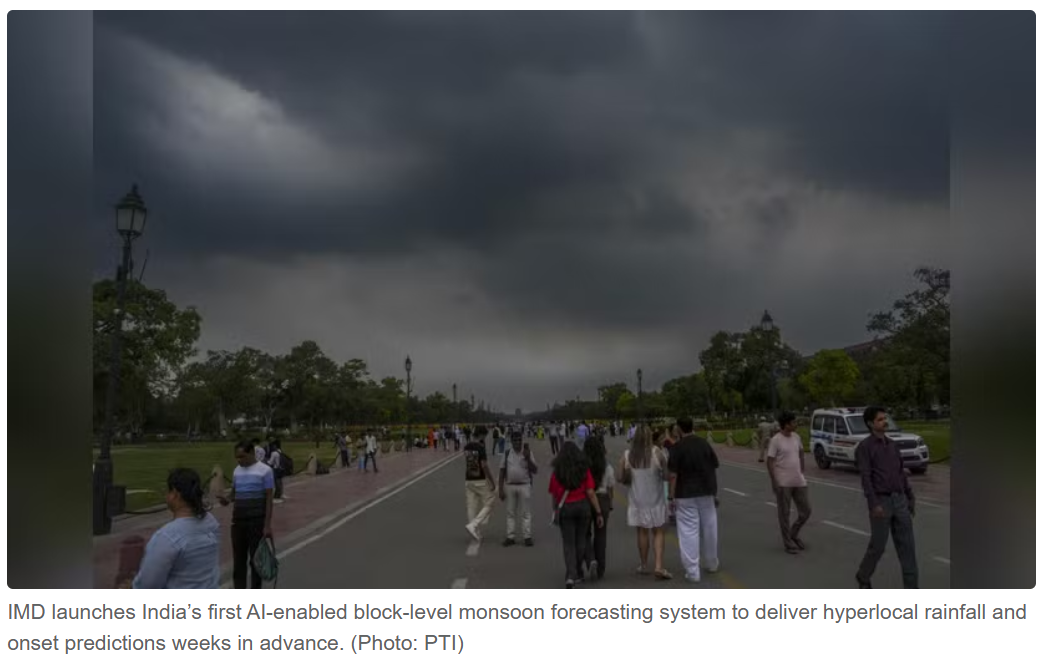
In a landmark shift toward precision meteorology, the India Meteorological Department (IMD) recently launched the country's first Artificial Intelligence (AI)-enabled block-level monsoon forecasting system. This technological leap, aims to transform traditional weather forecasting into hyperlocal, actionable intelligence.
Structural Framework and Collaboration
The system is the result of an inter-institutional synergy between India's premier atmospheric science bodies:
- Lead Agency: India Meteorological Department (IMD).
- Collaborators: The Indian Institute of Tropical Meteorology (IITM), Pune, and the National Centre for Medium Range Weather Forecasting (NCMRWF).
- Methodology: The system utilizes a "Hybrid Approach," integrating traditional Numerical Weather Prediction (NWP) models—which rely on physical atmospheric equations—with advanced Machine Learning algorithms to refine accuracy and reduce computational lag.
Technical Features and Forecasting Logic
The new system departs from broad regional forecasts to provide Hyperlocal Impact-based Services.
- Temporal Precision: The model generates probabilistic forecasts of monsoon progression every Wednesday, providing outlooks up to four weeks in advance.
- Reliability: It maintains a remarkably narrow error margin of approximately four days, allowing for high-confidence planning.
- The "Onset" Criteria: Unlike general rainfall predictions, this model defines a successful monsoon onset based on a specific dual-metric:
- A continuous five-day rainfall spell.
- The absence of any prolonged dry spells within the subsequent 30 days.
Geographic Coverage and Strategic Focus
The initial rollout of the system is strategically targeted to maximize socio-economic impact.
- Current Scope: The system presently covers 3,196 blocks across 15 States and one Union Territory.
- Priority Zones: The coverage is largely concentrated in rainfed agricultural regions. In these areas, the timing of sowing is entirely dependent on the precise onset of the monsoon, making hyperlocal data a life-saving asset for farmers.
- Future Expansion: The IMD plans a phased expansion to eventually cover every administrative block in India, ensuring universal access to AI-driven weather alerts.
Dissemination and Last-Mile Connectivity
Recognizing that data is only useful if it reaches the end-user, the IMD has established a multi-channel dissemination strategy:
- Digital Platforms: Real-time updates via dedicated mobile applications and SMS alerts.
- Human Networks: Integration with local agricultural extension networks and Krishi Vigyan Kendras (KVKs) to interpret data for illiterate or semi-literate farmers.
National Florence Nightingale Awards 2026
- 14 May 2026
In News:
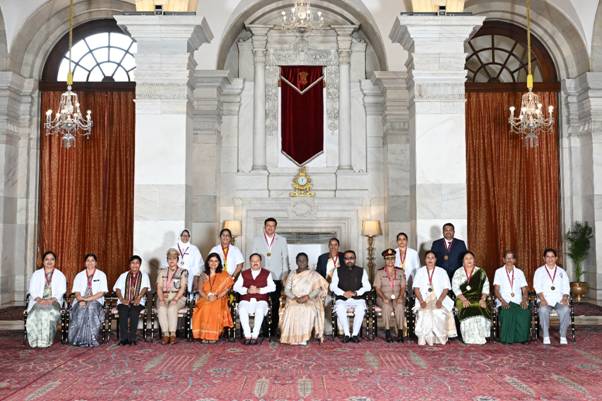
On May 12, 2026, coinciding with International Nurses Day, the President of India, Smt. Droupadi Murmu, conferred the National Florence Nightingale Awards for the year 2026 at a ceremony in Rashtrapati Bhavan. This prestigious recognition serves as a testament to the indispensable role of nursing professionals in India’s healthcare architecture, aligning with the 2026 global theme: "Our Nurses. Our Future. Empowered Nurses Save Lives."
Institutional Framework of the Award
The National Florence Nightingale Award is the highest national honor for nursing professionals in India.
- Genesis: Instituted in 1973 by the Ministry of Health and Family Welfare, the award aims to recognize meritorious services rendered by nursing personnel to society.
- Eligibility: The awards are presented to a wide spectrum of health workers, including Registered Nurses, Midwives, Auxiliary Nurse Midwives (ANMs), and Lady Health Visitors. These professionals serve across Central and State Governments, Union Territories, and voluntary organizations.
- Components of the Award: Each recipient is honored with a Certificate of Merit, a Medal, and a cash prize of ?1,00,000.
Highlights of the 2026 Award Ceremony
A total of 15 nursing professionals were honored this year for their exemplary service, particularly in challenging and remote terrains.
- Geographic Diversity: The awardees represented a broad cross-section of India, including professionals from Ladakh, Lakshadweep, Sikkim, Mizoram, Kerala, and Maharashtra.
- Notable Awardees:
- Ms. Kulwinder Parhi (ANM, Ladakh): Recognized for nearly 30 years of service in high-altitude, extreme-weather regions, providing care to both civilians and troops.
- Ms. Aysha Beebi K (Nurse, Lakshadweep): Honored for conducting a critical, life-saving midnight delivery on a remote island during an emergency.
- Major Gen Lissamma P V (IHQ of MoD, Army): Additional Director General of the Military Nursing Service, recognized for her leadership and distinguished service in military healthcare.
- Dr. Sharwan Kumar Dhaka (Nurse, Delhi): Commended for his outreach in public health services and extensive contribution to vaccination drives in underserved communities.
The Legacy of Florence Nightingale
The award is named after Florence Nightingale (1820–1910), the British social reformer and statistician who is widely regarded as the founder of modern nursing.
- The Crimean War: Nightingale rose to prominence for her management of nurses during the Crimean War, where she organized care for wounded soldiers in Constantinople (Istanbul). Her habit of making rounds at night earned her the moniker "The Lady with the Lamp."
- Scientific Contribution: She was a pioneer in using statistical graphics to demonstrate that most deaths in the war were due to poor sanitation rather than battle wounds.
- Educational Impact: In 1860, she established the Nightingale School of Nursing at St. Thomas’ Hospital in London, the first scientifically based nursing school in the world.
- Historical Milestone: She was the first woman to be awarded the Order of Merit (1907).
Indian Ocean Rim Association

- 14 May 2026
In News:
Recently, the Ministry of External Affairs (MEA), in collaboration with the Indian Council of World Affairs (ICWA) and the Indian Ocean Rim Association (IORA) Secretariat, hosted the 10th Indian Ocean Dialogue (IOD) in New Delhi. Held under the theme "Indian Ocean Region in a Transforming World," the dialogue underscored India's pivotal role as the current IORA Chair (2025–2027).
What is IORA?
Established in 1997 (originally as the Indian Ocean Rim Initiative), IORA is the premier intergovernmental organization for regional cooperation among littoral states of the Indian Ocean.
- Evolution: Formerly known as IOR-ARC, it has evolved into a robust platform for 23 Member States and 12 Dialogue Partners.
- Geographic Breadth: It spans five continents, including members like India, Indonesia, and Thailand (Asia), South Africa and Mauritius (Africa), Australia (Oceania), and France (Europe—via its overseas territories).
- Governance: The Council of Foreign Ministers (COM) serves as the apex decision-making body, meeting annually. The Secretariat is headquartered in Ebène, Mauritius, currently led by Secretary-General Sanjeev Ranjan (appointed in 2025).
The 10th Indian Ocean Dialogue: Key Highlights
The 10th edition focused on India's chairship priority: “Innovation, Openness, Resilience, and Adaptability.” Unlike formal summits, the IOD is a Track 1.5 forum, bringing together government officials, scholars, and policy experts for open, constructive debate.
- Vision MAHASAGAR: India reiterated its commitment to Mutual and Holistic Advancement for Security and Growth Across Regions (MAHASAGAR). This vision expands traditional security to include climate resilience and digital connectivity.
- Economic Integration: Discussions prioritized the Blue Economy, emphasizing sustainable fisheries and marine biotechnology as drivers of GDP for island nations.
- Social Inclusion: A notable highlight from the 2026 session was the focus on Nari Shakti (Women’s Empowerment), with reports indicating a 340% increase in women’s participation in the maritime sector since 2020.
The Six Priority Pillars of Cooperation
To achieve "balanced development," IORA operates through six distinct priority areas, which formed the core agenda of the 10th Dialogue:
- Maritime Safety and Security: Addressing piracy, drug trafficking, and ensuring freedom of navigation.
- Trade and Investment: Reducing barriers to enhance the flow of goods and services.
- Fisheries Management: Promoting sustainable practices to prevent overexploitation.
- Disaster Risk Management: Establishing regional early-warning systems for tsunamis and cyclones.
- Blue Economy: Sustainable use of ocean resources for economic growth.
- Tourism and Cultural Exchanges: Strengthening the "Indian Ocean identity."
Strategic Significance: Why the Indian Ocean Matters
The Indian Ocean is often called the "Global Lifeline," and the 10th Dialogue highlighted several modern realities:
- Energy Security: Approximately 80% of global seaborne oil trade passes through the region's chokepoints (Strait of Hormuz, Malacca, and Bab-el-Mandeb).
- Digital Connectivity: Over 90% of global internet traffic is carried via undersea fiber-optic cables on the Indian Ocean floor.
- Geopolitical Balancing: IORA provides a leadership platform for India that remains distinct from other groupings like the Quad or BRICS, specifically focusing on the unique needs of Global South littoral states.
MelanoserisPendryi
- 14 May 2026
In News:
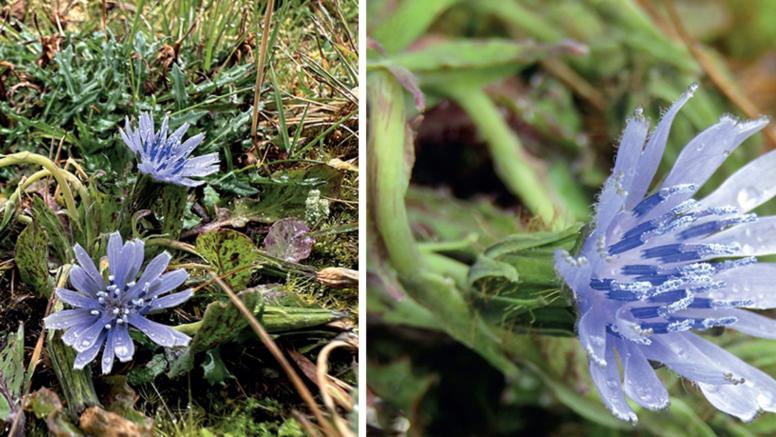
In a significant contribution to India’s botanical diversity, a team of researchers from the University of Calcutta and the University of Kashmir has discovered a new plant species, Melanoserispendryi, in the high-altitude alpine regions of the Sikkim Himalayas. This discovery, published in 2026, highlights the ecological richness of the Eastern Himalayas, a global biodiversity hotspot, and provides critical data for conservation efforts in fragile mountain ecosystems.
Taxonomic Classification and Global Distribution
The newly identified species belongs to the Asteraceae family (commonly known as the daisy or sunflower family), specifically under the genus Melanoseris.
- Genus Characteristics: The genus Melanoseris is distributed across a wide geographical range stretching from Iran to Southern Central China, extending into Northern Central Indo-China and Java.
- Indian Context: In India, approximately 16 species of Melanoseris have been documented, primarily concentrated across the Himalayan belt and the Northeastern states.
- Etymology: The species name pendryi honors David C. Pendry, a renowned botanist noted for his extensive work on the flora of the Himalayas and Nepal.
Habitat and Environmental Adaptation
Melanoserispendryi is uniquely adapted to thrive in the harsh, low-oxygen environments of the Sikkim Himalayas, specifically at altitudes exceeding 4,000 meters above sea level.
- Geographic Niche: It is primarily found in the moist alpine grasslands of Eastern Sikkim, often growing in close proximity to cushionoid shrubs like Rhododendron campanulatum.
- Resilience Mechanisms: To survive extreme cold and high-velocity winds, the plant grows close to the ground (prostrate habit) and utilizes a fleshy, branching root system that stores essential nutrients and moisture.
- Growth Cycle: The plant is a perennial herb that flowers from August to October, producing fruits shortly after in September and October.
Distinctive Morphological Features
What sets M. pendryi apart from its close relatives (such as M. lessertiana) are its unique floral and seed structures, which were previously unknown in this genus.
- The "Bearded" Petals: The species features striking lavender-colored petals (ligules). Uniquely, the undersides (ventral surface) of these petals are covered in long, white ciliate hairs, a feature that has led some to describe it as the "flower with a beard."
- Reproductive Anatomy: It possesses a shorter reproductive tube and a distinctly stout, compressed seed structure (cypsela).
- Physical Stature: The plant is relatively small, reaching a height of only 5–18 cm, including the peduncle. Its stem is often purplish and may be glabrous (smooth) or slightly hairy at the base.
Conservation Status and Ecological Threats
Despite its recent discovery, researchers have raised urgent concerns regarding the survival of Melanoserispendryi. Based on IUCN Red List criteria, scientists have proposed classifying the species as Critically Endangered.
- Tourism Pressure: The high-altitude regions of Sikkim are increasingly accessible to tourists, leading to habitat trampling and soil compaction.
- Grazing Pressure: Competitive land use for livestock grazing in alpine meadows poses a direct threat to the sparse populations of this plant.
- Climate Change: As a high-altitude specialist, M. pendryi is highly vulnerable to "mountain-top extinction," where rising temperatures force species to migrate upward until no suitable habitat remains.
National Panchayat Awards 2025
- 14 May 2026
In News:
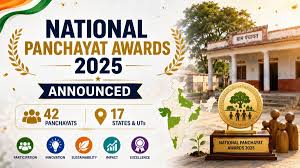
The Ministry of Panchayati Raj recently announced the winners of the National Panchayat Awards (NPA) 2025, a cornerstone initiative designed to recognize and incentivize Panchayati Raj Institutions (PRIs) that have excelled in localizing Sustainable Development Goals (SDGs).
Core Framework and Objectives
The National Panchayat Awards are conferred annually to foster a spirit of healthy competition among PRIs. The primary goal is to promote inclusive, participatory, and sustainable rural development.
- Incentivization Scheme: The awards are implemented under the Incentivization of Panchayats (IoP) scheme, which is a central component of the Rashtriya Gram Swaraj Abhiyan (RGSA)—a Centrally Sponsored Scheme.
- Alignment with Global Goals: Since the 2023 revamp, the framework has been strictly aligned with the nine themes of Localization of Sustainable Development Goals (LSDGs). This shift ensures that the assessment of a Panchayat's performance is holistic, data-driven, and transparent.
Key Award Categories and Winners
A total of 42 Panchayats were selected for the 2025 cycle from 17 States and Union Territories. The awards are broadly divided into two prestigious categories:
A. Deen Dayal Upadhyay Panchayat Satat Vikas Puraskar (DDUPSVP)
This category focuses on Gram Panchayats (GPs) that have shown exceptional performance in specific thematic areas.
- Thematic Focus: It evaluates performance across 9 LSDG themes, including Poverty-free and Enhanced Livelihoods, Healthy Panchayat, Water Sufficient Panchayat, Clean and Green Panchayat, and Women-friendly Governance.
- Selection Mechanism: Winners are determined based on their Panchayat Advancement Index (PAI) 2.0 scores.
- Scale of Recognition: 34 Gram Panchayats were selected in this category for Ranks 1, 2, and 3 across different themes.
B. Nanaji Deshmukh Sarvottam Panchayat Satat Vikas Puraskar (NDSPSVP)
Unlike the thematic focus of DDUPSVP, this award recognizes the best-performing Panchayats overall at all three tiers of the PRIs.
- Distribution: Eight Panchayats were honored, comprising three District Panchayats, two Block Panchayats, and three Gram Panchayats.
- Top Honorees:
- Best District Panchayat:Sepahijala (Tripura) secured the first rank, followed by Ganjam (Odisha) and Coimbatore (Tamil Nadu).
- Best Block Panchayat:Harippad (Kerala) stood first.
- Best Gram Panchayat: New Napam (Assam) was recognized as the top-performing village unit.
State-wise Performance Trends
The 2025 awards highlight the regional excellence in rural administration. Karnataka emerged as the leading state, securing the highest number of awards with 6 winning Panchayats. This was followed closely by Andhra Pradesh and Odisha, each securing 5 awards. Other states like Maharashtra, Tripura, and Kerala also showed strong representation across various thematic rankings.
Financial Incentives and Empowerment
To ensure that recognition translates into further development, the awards carry significant financial incentives. These funds are intended to be utilized by the winning Panchayats for furthering their developmental projects:
- Grant Range: Incentives range from ?50 lakh to ?5 crore per awardee.
- Tier-based Funding: The amount varies depending on the tier (Gram, Block, or District) and the specific category of the award. For instance, the top District Panchayat (Sepahijala) is set to receive ?5 crore, while thematic Gram Panchayat winners typically receive ?1 crore for the first rank.
Special Recognition for Emerging Challenges
In addition to the main categories, the Ministry also utilizes the National Panchayati Raj Day (April 24) to highlight specialized achievements:
- Climate Action Special Panchayat Award (CASPA): Encouraging environmental stewardship.
- Atma Nirbhar Panchayat Special Award (ANPSA): Recognizing self-reliance in local economy and infrastructure.
- Panchayat Kshamta Nirman SarvottamSansthan Puraskar: Awarded to institutions facilitating capacity building for PRIs.