
India’s 1st Satellite-Tagged Ganges Soft-shell Turtle

- 17 May 2026
In News:
In a pioneering move for freshwater conservation, India’s first satellite-tagged Ganges soft-shell turtle (Nilssonia gangetica) was released into the Kaziranga National Park and Tiger Reserve in Assam. This landmark event, which coincided with Endangered Species Day on May 15, 2026, represents a significant technological and scientific leap in monitoring aquatic wildlife within the Brahmaputra river basin.
The project was executed by the Wildlife Institute of India (WII) under the Ministry of Environment, Forest and Climate Change (MoEFCC), in collaboration with the Assam Forest Department and with funding from the National Geographic Society. Under veterinary supervision, a healthy adult turtle was fitted with a satellite transmitter and released along the northern bank of the Brahmaputra River.
The Satellite-Tagging Initiative: Objectives and Significance
Freshwater ecosystems face severe ecological pressures, yet riverine reptiles historically receive less conservation tracking compared to terrestrial megafauna. Satellite telemetry bridges this critical data gap.
- Tracking Spatial Dynamics: The primarily objective of the initiative is to map the turtle's precise seasonal movement patterns and home range within highly dynamic river corridors.
- Identifying Critical Micro-Habitats: The telemetry data will allow scientists to pinpoint essential nesting, breeding, and basking grounds, allowing for targeted spatial protections rather than broad, unmanageable mandates.
- Informed Active Management: In a river basin heavily impacted by shifting sandbanks and seasonal floods, real-time data ensures that habitat management strategies remain adaptive and scientifically robust.
Species Profile:
The Ganges soft-shell turtle is a large, freshwater species native to the northern plains of the Indian subcontinent, distributed across the Indus, Ganga, Brahmaputra, Narmada, and Mahanadi river systems.
Morphological and Behavioral Traits
It is uniquely distinguished from other riverine turtles by prominent, arrowhead-shaped markings on the dorsal surface of its head. It possesses an oval, green carapace with compressed, flexible edges that enable rapid underwater locomotion. It features an elongated neck and a tube-like snout adapted for breathing while remaining submerged or buried in turbid, muddy riverbeds.
Ecological Role
As an omnivorous apex predator and apex scavenger within riverine food webs, the species performs a crucial regulatory role. By feeding on dead, decaying organic matter and carrion, it acts as a natural biological filter, maintaining water quality and preventing the proliferation of pathogens across the aquatic ecosystem.
Threat Matrix
Despite its historical distribution, populations are declining rapidly due to a combination of anthropogenic stressors:
- Habitat Destruction: Severe riverbed degradation caused by commercial sand mining and large-scale bank alterations.
- Exploitation: Persistent illegal poaching for its meat and calipee (the fatty cartilage layer prized in traditional medicine and exotic cuisine markets).
- Bycatch Mortality: Incidental drowning resulting from entanglement in commercial fishing nets.
Legal and Conservation Status
The species is afforded the highest tiers of domestic and international protection:
- Wildlife Protection Act (WPA), 1972: Schedule I (affording it absolute legal protection and the highest penalties for wildlife crimes).
- IUCN Red List Status: Endangered.
- CITES: Appendix I (prohibiting all international commercial trade).
Assam and Kaziranga: A Global Freshwater Turtle Hotspot
The release highlights the unique ecological position of Northeast India. Assam functions as one of Asia's richest turtle habitats, supporting 21 distinct turtle species. This high concentration renders the region a global priority zone for freshwater chelonian conservation.
The Kaziranga landscape alone—a 1,302 square kilometer floodplain ecosystem recognized as a UNESCO World Heritage Site—hosts five of India’s eight known soft-shell turtle species. Its intricate matrix of rivers, wetlands (beels), and seasonal alluvial grasslands offers an ideal sanctuary for testing next-generation wildlife tracking technologies.
India’s Water Scarcity
- 17 May 2026
In News:
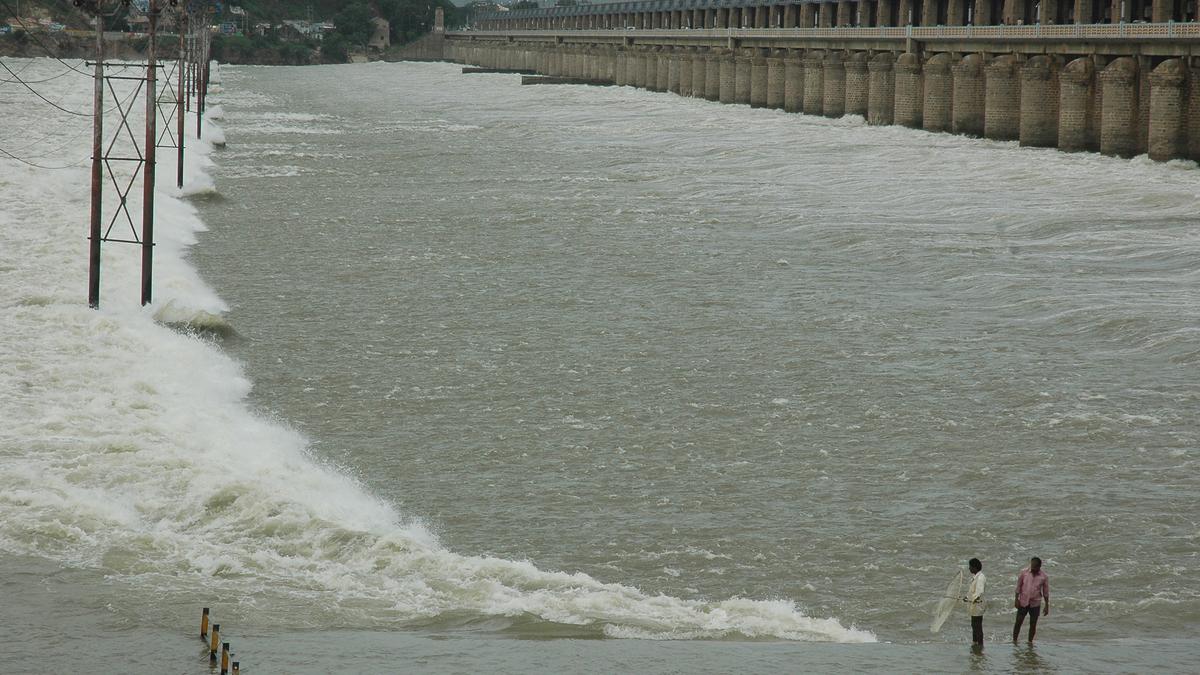
India faces a severe structural challenge: it supports nearly 18% of the global population with only 4% of the world's freshwater resources, leaving over 600 million people under high-to-extreme water stress. Per capita water availability has plummeted from over 5,000 cubic meters in 1947 to nearly 1,400 cubic meters today, dangerously close to the official water-scarcity threshold<1,000m3. Achieving UN Sustainable Development Goal 6 (Clean Water and Sanitation) requires bridging deep institutional gaps and managing a rapidly depleting resource.
Key Drivers of Water Scarcity
- Precipitation and Usability Gaps: India receives nearly 4,000 Billion Cubic Metres (BCM) of annual rainfall, but only 1,123 BCM is utilisable. This is due to highly seasonal monsoons (70% falling in 3–4 months) and inadequate infrastructure. In April 2026, the Central Water Commission (CWC) reported that water levels in 166 major reservoirs dropped below 45% of capacity, with the southern region hit hardest.
- The Groundwater Crisis: India accounts for 25% of global groundwater extraction. The Central Ground Water Board (CGWB) classifies 14% to 17% of assessment units as "over-exploited," particularly in Punjab, Haryana, and Rajasthan.
- Agricultural Dominance: Agriculture consumes 85–90% of freshwater, driven by water-intensive crops like paddy and sugarcane. Free or heavily subsidized electricity encourages unrestricted 24/7 pumping. This inefficient resource use risks causing a 6% loss in India's GDP by 2050.
- Urban Inefficiencies & Pollution: Unplanned urbanization blocks natural aquifer recharge zones, pushing cities toward "Day Zero" scenarios. Concurrently, aging distribution networks lose up to 40% of piped water to leakages. On the quality front, nearly 70% of surface water is contaminated by untreated industrial and domestic waste.
Constitutional and Institutional Architecture
Water governance is shared between the Union and the States under the Indian Constitution:
- State List (Entry 17): Gives states control over water supply, irrigation, and storage.
- Union List (Entry 56): Empowers the Center to regulate inter-state rivers in the public interest.
- Article 262: Authorizes Parliament to adjudicate inter-state river disputes, bypassing court jurisdictions via specialized Tribunals (e.g., Cauvery, Krishna).
- Directives & Duties: Article 48A (State) and Article 51A(g) (Citizens) mandate the protection of rivers and lakes.
- Nodal Agencies: The Ministry of Jal Shakti oversees national missions alongside the CWC (surface water) and CGWB (groundwater). Core initiatives include the National Water Policy (2012), Pradhan Mantri Krishi Sinchayee Yojana (PMKSY), Jal Jeevan Mission (JJM), and the Jal Shakti Abhiyan.
Strategic Roadmap for Sustainable Water Governance
1. Transition to a Circular Water Economy: Deploy Membrane Bioreactors (MBR) in commercial and industrial sectors to treat greywater for non-potable reuse. Municipalities should mandate the sale of treated urban sewage to nearby thermal power plants and industries, preserving freshwater for drinking.
2. Community-Led Groundwater Management: Empower Gram Panchayats to draft localized water budgets that align crop cultivation with annual aquifer recharge cycles. Scale up the Jal Sanchay Jan Bhagidari initiative to build decentralized recharge structures like check dams and recharge shafts.
3. Agricultural Transformation: Accelerate the shift from flood irrigation to micro-irrigation (drip and sprinklers) under PMKSY to improve water efficiency by up to 60%. Provide policy and price incentives for farmers in water-stressed regions to switch from paddy to climate-resilient alternatives like millets and pulses.
4. Deploy Smart Water Infrastructure: Equip major urban areas with SCADA (Supervisory Control and Data Acquisition) systems for real-time flow monitoring and immediate leak detection. Install smart volumetric meters in residential complexes to curb wasteful consumption through usage-based billing.
5. Implement Nature-Based Solutions (NbS): Integrate green infrastructure, such as urban wetlands, permeable pavements, and intensive afforestation catchments, to regulate runoff. Expand Mission Amrit Sarovar to restore traditional water bodies, creating ecological buffers that recharge groundwater tables naturally.
India’s Rising Leadership in Global Telecom Governance and the ITU
- 17 May 2026
In News:
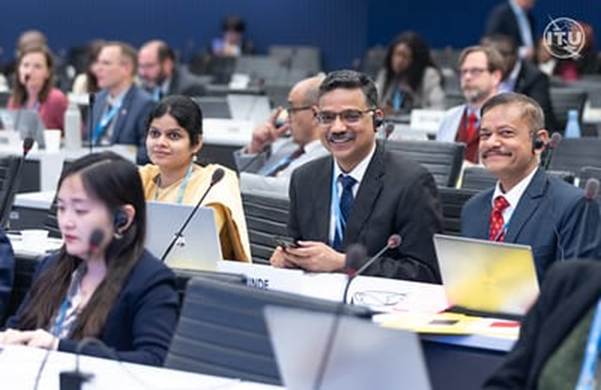
India is rapidly positioning itself as a central pillar in global digital cooperation and telecommunications policy. At the International Telecommunication Union (ITU) Council meeting held in Geneva, Switzerland, an Indian delegation led by the Department of Telecommunications (DoT) actively advanced India's strategic leadership in the global information and communication technology (ICT) ecosystem.
Key Developments in India-ITU Engagements
- Hosting the Plenipotentiary Conference-2030 (PP-2030): The ITU Council accepted India’s formal proposal to host the ITU Plenipotentiary Conference in 2030. This decision marks a significant milestone in India's role in shaping future digital frameworks. The proposal is expected to receive final ratification at the upcoming ITU PP-2026 scheduled for November in Doha, Qatar.
- ITU Council Re-election and Leadership Bids: India is actively seeking re-election to the ITU Council, a body it has served on continuously since 1952. Furthermore, India has strongly canvassed for its candidate, Dr. Revathi Mannepalli, for the post of Director of the Radiocommunication Bureau (BR). If elected, she will be the first woman to lead this bureau, reflecting India's vision of inclusive digital growth and universal spectrum equity.
- Voluntary Strategic Contributions: Underscoring its commitment, India announced voluntary financial contributions aimed at executing World Telecommunication Standardization Assembly (WTSA) resolutions. These funds will target emerging domains like 6G, Artificial Intelligence (AI), Digital Public Infrastructure (DPI), and Sustainable Digital Transformation.
About the ITU
Founded in 1865 originally as the International Telegraph Union, the ITU is the United Nations' specialized agency for ICTs. Headquartered in Geneva, Switzerland, it is the oldest surviving international organization within the UN system.
Membership Structure
The ITU maintains a unique public-private partnership structure comprising:
- 194 Member States possessing treaty-voting powers.
- Over 1,000 Sector Members, including major private technology conglomerates (such as Google, Apple, and Jio), academia, and regional telecom bodies.
Core Governance: The ITU Council
The ITU Council serves as the organization’s primary governing body between Plenipotentiary Conferences. It consists of 48 elected Member States that meet annually in Geneva. The Council is responsible for overseeing the ITU's overarching strategy, policy frameworks, budget allocations, and rigorous financial controls.
The Three Operational Pillars of the ITU
The ITU distributes its functions across three core specialized sectors, each designed to ensure cohesive global connectivity:
- ITU-R (Radiocommunication Sector): Focuses on spectrum and orbits. It manages the international radio-frequency spectrum and satellite orbit resources. This is essential to prevent signal interference across cross-border communication systems, space broadband, aviation, and next-generation mobile technologies.
- ITU-T (Telecommunication Standardization Sector): Focuses on global technical standards. It develops international recommendations to ensure that communication networks and frontier technologies (including 5G/6G, Artificial Intelligence, and the Internet of Things) interconnect seamlessly across boundaries.
- ITU-D (Telecommunication Development Sector): Focuses on bridging the global digital divide. It facilitates equitable digital access by offering technical assistance, capacity building, and digital infrastructure support to developing and least-developed nations.
Common Criteria Development Board (CCDB)

- 17 May 2026
In News:
Recently, India has been nominated as the Chair of the Common Criteria Development Board (CCDB). Confirmed during the first quarter meeting of the Common Criteria Recognition Arrangement (CCRA) in Tokyo, Japan, India's leadership term spans a two-year duration from April 2026 to April 2028. This elevated responsibility reflects global recognition of India's robust digital governance frameworks and technical competence in the information technology (IT) security evaluation domain.
Institutional Framework: CCRA and CCDB
To fully comprehend the mechanism of this global body, it is essential to distinguish between the parent arrangement and its technical wing:
- Common Criteria Recognition Arrangement (CCRA):
- This is a foundational international treaty established to enable cross-border mutual recognition of IT security certificates.
- By standardizing security claims, the CCRA removes the need for redundant, expensive re-certification when a product is traded internationally.
- The arrangement comprises 38 member nations, sub-divided into 20 certificate-authorizing nations (which evaluate and issue certificates) and 18 certificate-consuming nations (which recognize and accept those certificates).
- Common Criteria Development Board (CCDB):
- While other high-level committees within the CCRA framework handle administrative and policy mandates, the CCDB functions as the technical core and engine of the arrangement.
- It is directly tasked with managing the international work program for the development and evolutionary maintenance of the Common Criteria (ISO/IEC 15408) and the Common Methodology for Information Technology Security Evaluation (CEM).
Architecture of Global IT Product Evaluation
The CCDB regulates how global governments and organizations assess cybersecurity protections embedded in software and hardware architectures. Its critical operational components include:
- Standardization: Defining rigorous evaluation methodologies that determine the baseline security parameters of widely used commercial IT products, including firewalls, operating systems, smart cards, and hardware security modules.
- Portal Management: Maintaining the integrity and functional reliability of the Common Criteria Portal. This portal serves as the definitive "single source of truth" and an authoritative global repository for all certified secure IT products.
- Technical Working Groups: Coordinating specialized technical divisions to formulate updated security baselines, ensuring that evaluation methods remain resilient against rapidly evolving and sophisticated cyber threats.
India’s Role and Institutional Nodal Agencies
India’s engagement with this international framework is deep-rooted. The country joined the CCRA on September 16, 2013, as a Certificate Authorizing Nation, empowering it to evaluate IT infrastructure and issue internationally valid certificates.
India participates in this framework through a coordinated approach by two pivotal domestic entities:
- Ministry of Electronics and Information Technology (MeitY): Acting as the apex policy-formulating ministry guiding digital governance, tech regulation, and cyber resilience initiatives.
- Standardisation Testing and Quality Certification (STQC) Directorate: An attached office under MeitY, the STQC acts as the official national Certification Body for IT security evaluations. It underpins India's functional contributions by operating independent, licensed laboratories that evaluate tech assets under the Common Criteria framework.
Under-the-Skin Immunotherapy for Lung Cancer

- 17 May 2026
In News:
- In a major advancement for oncological care, Swiss pharmaceutical company Roche has launched India’s first under-the-skin (subcutaneous) immunotherapy drug, Tecentriq SC (atezolizumab).
- Approved by the Central Drugs Standard Control Organisation (CDSCO), this formulation marks a significant departure from traditional intravenous (IV) cancer treatments.
- Given that lung cancer is among the most prevalent malignancies in India—with approximately 80,000 to 81,000 new cases diagnosed annually, frequently at advanced stages—this clinical innovation is poised to reshape cancer management frameworks.
Mechanism of Action: Re-engineering Immunotherapy
Tecentriq SC functions by targeting and blocking the Programmed Death-Ligand 1 (PD-L1) protein. Cancer cells often express PD-L1 to suppress the host immune response and evade detection by T-cells. By inhibiting this specific interaction, atezolizumab removes the biochemical "off-signal," effectively allowing the body's native immune system to identify, target, and dismantle tumor cells.
To achieve rapid delivery under the skin, Tecentriq SC integrates Halozyme Therapeutics' Enhanze drug delivery technology. This process utilizes recombinant human hyaluronidase PH20 (rHuPH20), an enzyme that temporarily enhances permeability in the subcutaneous tissue, enabling the medication to disperse rapidly into the bloodstream.
Clinical Efficacy, Suitability, and Medical Advantages
The drug is indicated for the treatment of adult patients presenting with:
- Adjuvant Non-Small Cell Lung Cancer (NSCLC) (early-stage post-surgical treatment)
- Metastatic NSCLC (advanced-stage, spreading cancer)
As NSCLC accounts for nearly 80% to 85% of all lung cancer occurrences in India, the therapeutic scope of this innovation is broad. However, treatment suitability requires precise diagnostics. Patients must display high levels of PD-L1 expression on their tumor cells, making approximately half of the diagnosed NSCLC cohort eligible for this targeted, and occasionally chemotherapy-free, monotherapy.
Medical benefits include:
- Drastic Time Reduction: Administration drops from several hours of IV infusion to a localized injection (typically in the thigh) lasting roughly 7 minutes, reducing treatment time by approximately 80%.
- Enhanced Patient Well-being: Subcutaneous administration eliminates the physical distress and pain of finding viable veins in frail individuals. Shorter clinic stays also alleviate travel fatigue and emotional stress for both patients and caregivers.
- Improved Compliance: Streamlined administration enhances adherence to treatment schedules, crucial for positive long-term clinical outcomes.
Socio-Economic Realities and Health Economics
While clinically transformative, the introduction of Tecentriq SC highlights the persistent challenge of affordability in tertiary healthcare.
- Financial Implications: The maximum retail price is set at ?3.7 lakh per vial/dose. With a standard treatment regimen requiring roughly six cycles administered every 21 days, the cumulative expenditure poses a heavy financial burden on the average Indian family.
- Mitigation and Access Pathways: To alleviate this financial strain, Roche has introduced a patient assistance mechanism called the "Blue Tree" program, which offers financial support and Equated Monthly Instalment (EMI) options. Crucially, the drug has been integrated into the Central Government Health Scheme (CGHS), providing substantial relief to eligible public sector beneficiaries. Furthermore, medical experts point out that despite a slightly higher baseline cost for the subcutaneous drug formulation over its IV counterpart, the overall economic impact balances out by eliminating hospital bed charges, prolonged day-care monitoring fees, and ancillary costs.
Significance for India's Healthcare Infrastructure
For a developing nation grappling with an escalating non-communicable disease (NCD) burden, the deployment of subcutaneous immunotherapy has profound systemic implications:
- Optimization of Healthcare Resources: Because Tecentriq SC can be safely administered by trained nursing staff in outpatient departments, one infusion station can treat up to five patients in the time previously occupied by a single IV recipient. This dramatically increases patient throughput.
- Decentralization of Oncology Care: By mitigating the need for specialized, complex intravenous infrastructure, this model facilitates the shift of cancer care from overburdened tertiary hospitals in metropolitan zones to localized daycare centers, advancing the objective of equitable healthcare distribution.