
Order of the White Double Cross, 1st Class

- 20 Jun 2026
In News:
The Prime Minister of India was conferred The Order of the White Double Cross, First Class, the highest civilian state honour of the Slovak Republic, in recognition of his exceptional contribution to strengthening India–Slovakia bilateral relations and promoting mutual cooperation.
About the Order of the White Double Cross
The Order of the White Double Cross (Rad Bielehodvojkríža) is the highest state decoration of the Slovak Republic, awarded primarily to foreign nationals who have rendered outstanding services in strengthening relations between Slovakia and their home country, or who have significantly enhanced the international standing and interests of Slovakia.
The award was instituted on 1 March 1994, shortly after the peaceful dissolution of Czechoslovakia (popularly known as the Velvet Divorce) in 1993, which resulted in the creation of the independent Slovak Republic.
Key Features
- The Order is divided into civil and military divisions and comprises three classes, with the First Class being the highest and most prestigious distinction.
- The decoration is conferred exclusively by the President of the Slovak Republic, generally during state visits or on the recommendation of the Slovak government.
- Its insignia prominently features the White Double Cross, the central symbol of Slovakia's national coat of arms, placed on a red enamel background and encircled by a golden laurel wreath, symbolisinghonour and achievement.
Significance
The conferment of Slovakia's highest state honour reflects the growing strategic partnership between India and Slovakia. It recognizes India's expanding engagement with Central Europe and underscores cooperation in areas such as trade, defence, technology, innovation, and multilateral diplomacy. The award also highlights the importance Slovakia attaches to strengthening bilateral ties with India.
Major State Honours Conferred on the Prime Minister of India (2026)
|
Country |
Highest State Honour |
|
Slovak Republic |
The Order of the White Double Cross, First Class |
|
Dominica |
Dominica Award of Honour |
|
Guyana |
The Order of Excellence |
|
Barbados |
Honorary Freedom of Barbados |
Planetary Climate Vital Signs Report 2026
- 20 Jun 2026
In News:
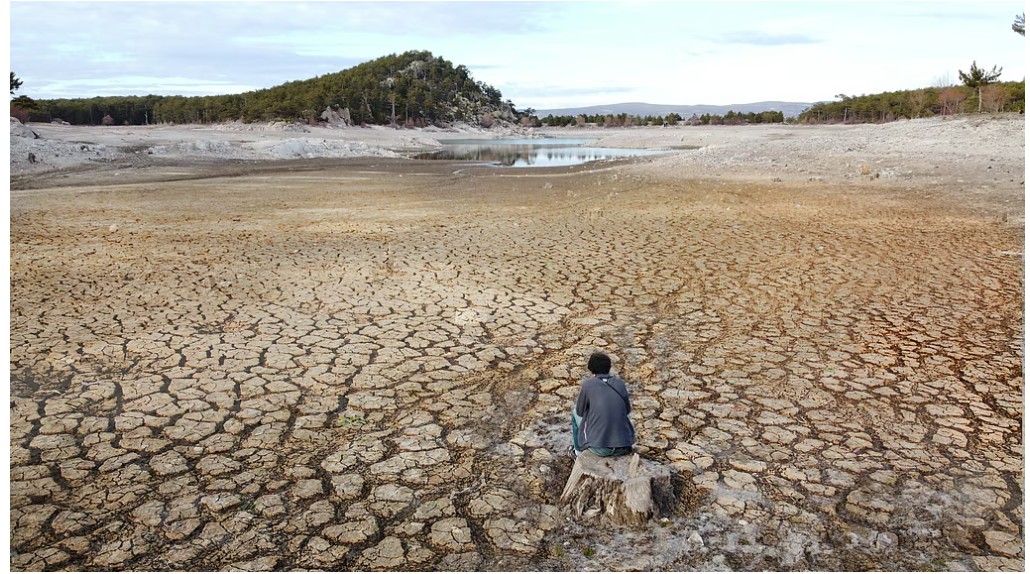
The Planetary Climate Vital Signs Report 2026, released during the Bonn Climate Change Conference (SB64), warns that all major planetary climate indicators have deteriorated since the IPCC Sixth Assessment Report (AR6), indicating an accelerating global climate crisis.
What is the Planetary Climate Vital Signs Report 2026?
- The Planetary Climate Vital Signs Report 2026 is a global scientific assessment published in the journal Earth System Science Data by nearly 70 scientists from 17 countries.
- It provides updated measurements of key climate indicators between successive IPCC assessment cycles, enabling policymakers to monitor real-time changes in global warming, greenhouse gas emissions, ocean warming, and climate extremes.
- Unlike the periodic IPCC assessments, the report serves as an interim scientific update, tracking the changing state of the Earth's climate system.
Key Findings
The report concludes that all 11 major climate indicators assessed have worsened since the IPCC AR6, confirming that climate change is accelerating.
Among the most significant findings:
- Marine heatwaves recorded the fastest deterioration, increasing by 1%, making them the most rapidly worsening climate indicator.
- Earth's Energy Imbalance (EEI) increased by 8%, indicating greater accumulation of heat within the Earth's climate system.
- Human-induced global warming reached 1.37°C above pre-industrial levels in 2025, while maximum daily temperatures continued to rise.
- Global greenhouse gas emissions reached a record 58.8 billion tonnes of CO?-equivalent, driven primarily by fossil fuel combustion.
- At the present rate of warming, the world could breach the Paris Agreement's 1.5°C threshold within approximately four years.
- During 2016–2025, average land temperatures increased by 1.81°C, while ocean temperatures rose by 1.03°C, reflecting the growing influence of anthropogenic climate change.
- The Indian Ocean is projected to experience 220–250 marine heatwave days annually by 2100, compared to about 20 days historically, indicating a profound shift in oceanic conditions.
Implications
The report warns that rising temperatures will intensify heatwaves, droughts, floods, wildfires, and extreme weather events, increasing socio-economic and ecological vulnerabilities worldwide.
Agriculture and food security are expected to face growing challenges due to declining crop productivity, altered rainfall patterns, and increased climate variability. Persistent marine heatwaves threaten coral reefs, fisheries, marine biodiversity, and coastal livelihoods, while the warming Indian Ocean could disrupt the South Asian monsoon, intensify tropical cyclones, reduce water security, and increase heat stress across the Indian subcontinent.
Turquoise Nexus Initiative
- 20 Jun 2026
In News:
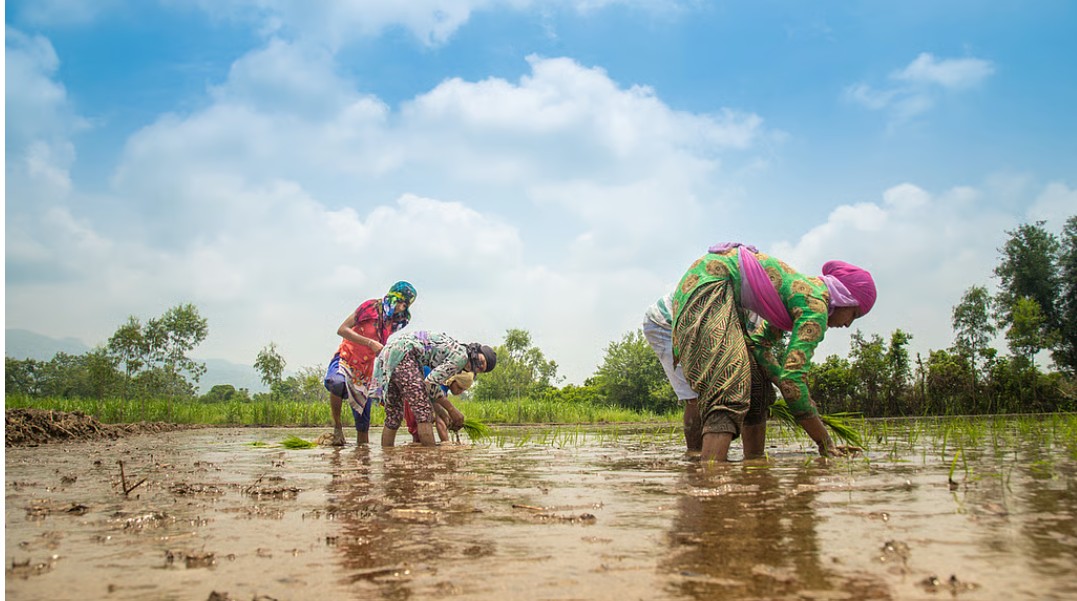
Turkey's COP31 Presidency (2026) and the Food and Agriculture Organization (FAO) have launched the Turquoise Nexus Initiative (TNI) to integrate food security, water management, and climate adaptation into national climate action plans and strengthen climate resilience in the agriculture sector.
What is the Turquoise Nexus Initiative (TNI)?
The Turquoise Nexus Initiative (TNI) is a global initiative aimed at promoting an integrated food–water–climate nexus approach by incorporating food security, sustainable water management, and climate adaptation into countries' Nationally Determined Contributions (NDCs) under the Paris Agreement.
Jointly unveiled by Turkey's COP31 Presidency and the Food and Agriculture Organization (FAO), the initiative seeks to support developing countries in designing farmer-centric climate strategies, mobilizing climate finance, and building resilient agrifood systems.
The initiative has been proposed under the Food and Agriculture for Sustainable Transformation (FAST) Partnership, making it part of the broader global effort to strengthen the role of agriculture in climate action.
Objectives
The initiative seeks to:
- Integrate food security, water resources, and climate adaptation into national climate policies.
- Align Nationally Determined Contributions (NDCs) with sustainable agricultural development.
- Promote farmer-inclusive climate action.
- Improve access to climate finance for agriculture and water resilience.
- Strengthen the resilience of agrifood systems against climate change.
FAST Partnership
The Food and Agriculture for Sustainable Transformation (FAST) Partnership is a multi-stakeholder global initiative launched by the COP27 Presidency in 2022 at Sharm el-Sheikh, Egypt.
It aims to accelerate the transformation of agriculture and food systems by 2030 while contributing to climate mitigation, adaptation, food security, and sustainable development. FAST has emerged as one of the most consistent COP-to-COP mechanisms focusing exclusively on agrifood systems within the UN climate process.
Its work is built around three pillars:
- Access to Finance: Enhancing countries' capacity to mobilize climate finance and investment for agriculture.
- Knowledge and Capacity: Developing analytical tools, voluntary guidelines, and strengthening institutional capacities.
- Policy Support and Dialogue: Mainstreaming agriculture and food systems into national and international climate policies.
Significance
The Turquoise Nexus Initiative recognizes that food security, water security, and climate resilience are deeply interconnected. By integrating these sectors into national climate planning, it seeks to improve policy coherence, enhance adaptation efforts, strengthen farmer livelihoods, and facilitate greater climate finance for developing countries. The initiative also complements global efforts under the Paris Agreement, Sustainable Development Goals (SDGs), and the UNFCCC to build climate-resilient and sustainable agrifood systems.
Commissioning of INS Dunagiri, INS Sanshodhak& INS Agray

- 20 Jun 2026
In News:
The Indian Navy is set to commission three indigenously built frontline platforms—INS Dunagiri, INS Sanshodhak, and INS Agray—at Kolkata, reinforcing India's indigenous defence manufacturing capabilities and strengthening maritime security under the vision of Aatmanirbhar Bharat.
Overview
The commissioning of these three warships marks another milestone in India's indigenous shipbuilding programme. Each platform has been designed for a specialised role, ranging from multi-role combat operations and anti-submarine warfare to hydrographic surveys, thereby enhancing the Navy's operational readiness across the Indian Ocean Region (IOR).
INS Dunagiri
INS Dunagiri is the fifth Project 17A stealth frigate, designed by the Warship Design Bureau (WDB) of the Indian Navy and built by Garden Reach Shipbuilders & Engineers Ltd. (GRSE), Kolkata.
As an advanced multi-role stealth warship, it is equipped with BrahMos supersonic surface-to-surface missiles, the Medium Range Surface-to-Air Missile (MRSAM) system, and modern sensors capable of undertaking anti-air, anti-surface, and anti-submarine warfare. The frigate significantly enhances the Navy's blue-water combat capability and fleet defence.
INS Sanshodhak
INS Sanshodhak is the fourth Survey Vessel (Large) inducted into the Indian Navy. It is designed to conduct coastal and deep-sea hydrographic surveys, besides collecting oceanographic and geophysical data for both defence and civilian purposes.
The vessel is equipped with advanced survey technologies, including Autonomous Underwater Vehicles (AUVs) and Remotely Operated Vehicles (ROVs), enabling accurate seabed mapping, navigation support, and maritime infrastructure planning.
INS Agray
INS Agray is the fourth Arnala-class Anti-Submarine Warfare Shallow Water Craft (ASW-SWC), specifically designed for operations in shallow coastal and littoral waters.
The vessel is equipped with lightweight torpedoes, indigenous anti-submarine rocket launchers, and shallow-water sonar systems to detect and neutralize underwater threats. It will play an important role in coastal defence, maritime surveillance, and anti-submarine operations.
Etalin Hydroelectric Project
- 20 Jun 2026
In News:
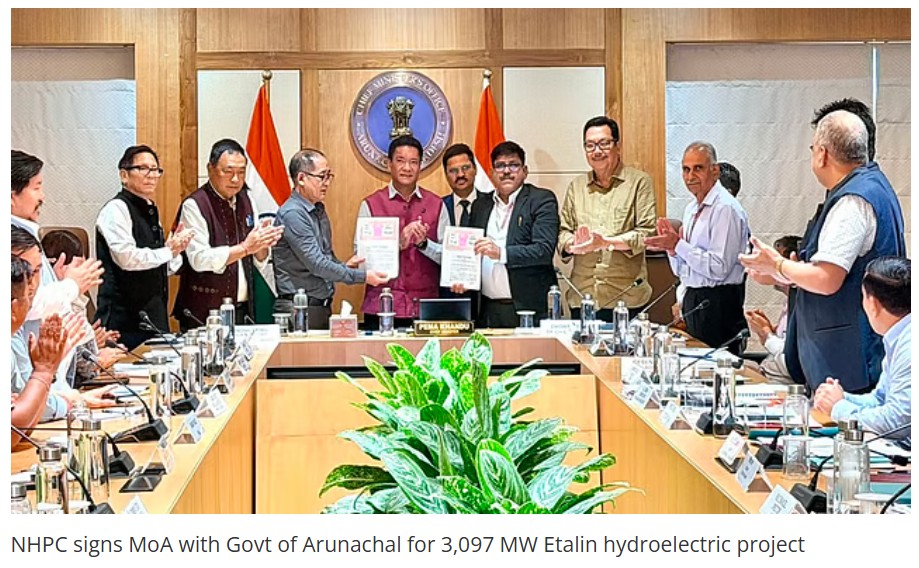
NHPC Limited has signed a Memorandum of Agreement (MoA) with the Government of Arunachal Pradesh for the development of the 3,097 MW Etalin Hydroelectric Project, one of India's largest proposed hydropower projects.
About the Etalin Hydroelectric Project
The Etalin Hydroelectric Project is a 3,097 MW hydropower project proposed in the Dibang Valley district of Arunachal Pradesh. It will be constructed on the Dri and Talo rivers, both tributaries of the Dibang River, and is among the largest hydropower projects in India in terms of installed capacity.
The project will be developed as two run-of-the-river (RoR) hydroelectric schemes, involving the construction of concrete gravity dams on the Dri and Talo rivers. Water from both reservoirs will be diverted to an underground powerhouse located near the confluence of the two rivers, close to Etalin village.
The project is expected to generate approximately 12,752 GWh (12.75 BU) of electricity annually, contributing significantly to India's renewable energy capacity and energy security.
Implementation Framework
The project is being implemented by NHPC Limited (formerly National Hydroelectric Power Corporation) under the Build, Own, Operate and Transfer (BOOT) model.
Under the agreement:
- NHPC will develop, own, and operate the project.
- The lease period will be 40 years from the Commercial Operation Date (COD).
- After completion of the lease period, the project will be transferred to the Government of Arunachal Pradesh.
Environmental and Social Significance
The project is located within the Dibang Valley, one of the richest biogeographical regions of the Himalayan biodiversity zone and part of a globally recognisedmega-biodiversity hotspot. The region supports rich flora and fauna and is ecologically sensitive.
The area is predominantly inhabited by the Idu Mishmi, a Particularly Vulnerable Tribal Group (PVTG) of Arunachal Pradesh, whose traditional livelihoods and cultural practices are closely linked to the surrounding forests and river ecosystems.
Given its ecological sensitivity, the project has attracted attention regarding biodiversity conservation, forest diversion, and sustainable development, highlighting the need to balance renewable energy generation with environmental protection and tribal rights.