
PM-AJAY Portal and AJAY Mobile App

- 28 May 2026
In News:
In a significant step towards strengthening digital governance and improving welfare delivery, the Ministry of Social Justice and Empowerment has launched the PM-AJAY Portal and the AJAY Mobile App under the Pradhan Mantri Anusuchit Jaati Abhyuday Yojana (PM-AJAY). The initiative aims to fully digitise grassroots-level planning, implementation, monitoring, and beneficiary management under the scheme, thereby enhancing transparency, accountability, and efficiency in the socio-economic development of Scheduled Caste (SC) communities.
The launch reflects the government's broader vision of leveraging technology to improve service delivery, ensure real-time monitoring, and promote evidence-based policymaking in social sector programmes.
About PM-AJAY
The Pradhan Mantri Anusuchit Jaati Abhyuday Yojana (PM-AJAY) is a Centrally Sponsored Scheme (CSS) implemented by the Ministry of Social Justice and Empowerment. It was introduced by rationalising and merging earlier schemes aimed at Scheduled Caste development.
The scheme seeks to improve the socio-economic conditions of Scheduled Castes through targeted interventions focused on poverty reduction, livelihood generation, skill development, infrastructure creation, and enhancement of human development indicators in SC-dominated areas.
Its broader objective is to enable inclusive growth by ensuring that historically disadvantaged communities have access to economic opportunities, quality infrastructure, education, and sustainable livelihoods.
PM-AJAY Portal: A Unified Digital Governance Platform
The newly launched PM-AJAY Portal serves as a central digital database and coordination platform integrating all components of the scheme. It aims to replace fragmented and paper-based processes with a transparent, technology-driven ecosystem.
A key feature of the portal is its comprehensive dashboard, which tracks socio-economic progress across more than 47,000 Scheduled Caste-majority villages and monitors the implementation of benefits reaching over 40 lakh beneficiaries. The dashboard provides real-time monitoring at the national, state, district, and local levels, facilitating data-driven decision-making and improved accountability.
Integration of the Three Components of PM-AJAY
The portal brings together all three major components of the scheme under a single digital architecture.
Adarsh Gram Component
Under this component, traditional paper-based planning will be replaced with digital Village Development Plans (VDPs). The progress of villages will be assessed through monitoring of 50 socio-economic indicatorsacross 10 development domains, enabling systematic tracking of development outcomes and identification of gaps.
Grant-in-Aid for Skilling and Employment
The portal functions as a comprehensive Management Information System (MIS) for this component. It tracks financial allocations, livelihood assistance, beneficiary registration, skill training programmes, placement outcomes, and employment generation activities. This will improve transparency in fund utilisation and facilitate better monitoring of livelihood interventions.
Hostel Component
The digital platform also supports the implementation of hostels for Scheduled Caste students in educational institutions. It enables online proposal submission, project monitoring, inspections, and verification through geo-tagged and time-stamped photographs, ensuring transparency in construction, renovation, and maintenance activities.
AJAY Mobile App: Extending Governance to the Last Mile
The AJAY Mobile App has been developed as a unified mobile platform that extends the functionalities of both the earlier PMAGY and PM-AJAY portals. The app enables stakeholders, field officials, and beneficiaries to access scheme-related services through a user-friendly mobile interface.
The app facilitates:
- Real-time reporting from the field.
- Mobile-based monitoring of development projects.
- Beneficiary-centric service delivery.
- Faster data collection and verification.
- Improved transparency and accountability.
- Strengthened digital governance at the grassroots level.
By enabling instant access to information and field-level updates, the app reduces administrative delays and enhances responsiveness.
Significance
The PM-AJAY Portal and AJAY Mobile App represent a major step towards digital inclusion, social justice, and evidence-based governance. By integrating planning, implementation, monitoring, and evaluation onto a single platform, the initiative is expected to improve scheme effectiveness, ensure better targeting of benefits, and strengthen the socio-economic empowerment of Scheduled Castes.
The initiative also aligns with the principles of Digital India, Minimum Government-Maximum Governance, and outcome-based public service delivery.
Sample Registration System (SRS) Statistical Report 2024
- 28 May 2026
In News:
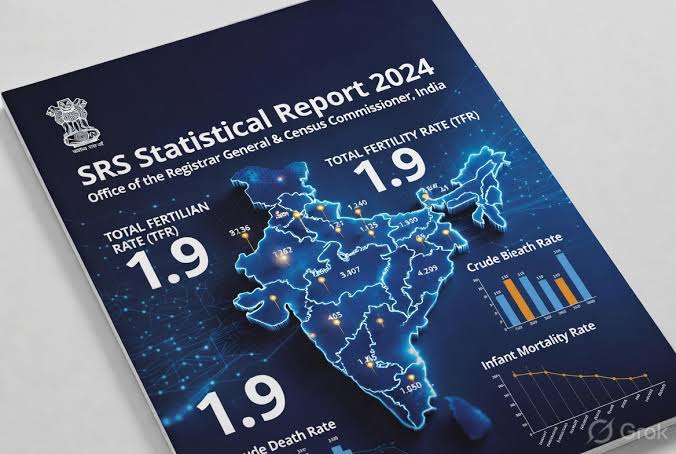
The Sample Registration System (SRS) Statistical Report 2024 highlights a major epidemiological transition in India, with Non-Communicable Diseases (NCDs) accounting for 60% of all deaths during 2022–2024, up from 52.8% during 2015–2017. The findings indicate that chronic diseases have firmly overtaken communicable diseases as the country's principal public health challenge, reflecting patterns increasingly observed in middle- and high-income economies.
India's Epidemiological Transition
The report demonstrates a steady shift from infectious diseases towards chronic and lifestyle-related illnesses. While the combined share of communicable diseases, maternal conditions, perinatal disorders, and nutritional deficiencies declined from 22% in 2015–2017 to 19.7% in 2022–2024, deaths due to NCDs increased significantly.
This transition is driven by rapid urbanisation, changing dietary habits, sedentary lifestyles, population ageing, environmental factors, and improved control over many infectious diseases. However, India continues to face a “double burden of disease”, where communicable diseases persist alongside a rapidly growing NCD burden.
Cardiovascular Diseases: The Biggest Killer
Among all NCDs, cardiovascular diseases (CVDs) emerged as the leading cause of mortality, accounting for 32.1% of all deaths, compared to 27.1% in 2015–2017. The situation is particularly concerning in the economically productive 30–69 years age group, where cardiovascular diseases account for 37.3% of deaths.
Health experts have noted a worrying increase in heart-related illnesses among adults in their thirties and forties. This trend has significant economic implications because it affects a large segment of the workforce, leading to productivity losses, rising healthcare costs, and increased social dependency.
Other major causes of death include:
- Cancer and other neoplasms
- Chronic respiratory diseases
- Digestive diseases
- Respiratory infections
Each of these contributes more than 5% of total mortality.
Demographic Dividend Under Pressure
The report raises concerns about the impact of premature mortality on India's demographic advantage. While 69.3% of deaths occur among individuals aged 55 years and above, the 30–44 years age group accounts for 19.5% of all deaths.
This trend assumes greater significance as India's Total Fertility Rate (TFR) continues to decline, with several states already below the replacement level of 2.1 children per woman. Premature deaths among working-age adults can undermine economic growth and reduce the benefits of the country's demographic dividend.
Rural, Urban and Gender Dimensions
NCDs remain more prevalent in urban areas, where they account for 64.8% of all deaths, compared to 58.8% in rural areas. Similarly, NCDs account for 62.3% of deaths among men and 56.9% among women.
However, the report reveals that NCDs are increasingly becoming the dominant cause of death even among rural populations and women, indicating the deep penetration of lifestyle-related risk factors beyond urban centres.
Mental Health Concerns Among Youth
A particularly alarming finding is that suicide remains the leading cause of death among the 15–29 years age group. Suicides accounted for 19% of deaths in this cohort, up from 16.3% in 2015–2017.
The rise reflects growing mental health challenges linked to unemployment, academic pressure, financial stress, social isolation, and changing societal dynamics. The trend underscores the need for stronger mental health services, awareness campaigns, and community-based interventions.
Regional Variations
The report highlights significant regional disparities. In the Empowered Action Group (EAG) States and Assam—comprising Bihar, Jharkhand, Madhya Pradesh, Chhattisgarh, Odisha, Rajasthan, Uttar Pradesh, Uttarakhand, and Assam—NCDs account for 53.9% of all deaths. In contrast, non-EAG states record a much higher NCD mortality share of 63.5%.
These differences largely reflect varying levels of urbanisation, healthcare access, socioeconomic development, and demographic ageing across regions.
Government Response: National Programme for Prevention and Control of NCDs
Recognising the growing challenge, the Government of India launched the National Programme for Prevention and Control of Non-Communicable Diseases (NP-NCD) in 2010 across 100 districts in 21 states during the Eleventh Five-Year Plan. The programme was subsequently expanded and integrated into the National Health Mission (NHM) in 2013–14.
The programme focuses on:
- Prevention and early detection of NCDs.
- Screening for diabetes, hypertension, and common cancers.
- Health promotion and behavioural change.
- Strengthening healthcare infrastructure and referral systems.
Article 142

- 28 May 2026
In News:
In a landmark judgment in In Re: Phalodi Accident vs National Highways Authority of India & Others (2025), the Supreme Court of India invoked its extraordinary powers under Article 142 of the Constitution to declare the Right to Safe Travel on National Highways as an integral component of the Right to Life under Article 21. Taking suo motu cognisance of two fatal road accidents in November 2025 that claimed 34 lives, the Court held that the maintenance of safe and motorable roads is not merely an administrative responsibility but a constitutional obligation of the State. The ruling marks a significant expansion of the jurisprudence surrounding Article 21 and reinforces the judiciary's role in ensuring “complete justice.”
Article 142: The Constitutional Instrument of Complete Justice
Article 142(1) empowers the Supreme Court to pass any decree or order necessary for doing “complete justice” in any matter before it. Often described as the Constitution's “safety valve,” this provision enables the Court to bridge legislative or procedural gaps when existing laws fail to provide an adequate remedy.
Unlike powers derived from ordinary statutes, Article 142 is an inherent constitutional authority vested exclusively in the apex court. In Delhi Judicial Service Association vs State of Gujarat (1991), the Supreme Court clarified that statutory limitations cannot curtail its powers under Article 142. Similarly, in Canara Bank vs Debasis Das (2003), the Court emphasized that substantive justice and principles of natural justice must prevail where rigid legal procedures prove inadequate.
The Court has also distinguished its powers from those of High Courts. In Anil Kumar Jain vs Maya Jain (2009), it held that the powers of High Courts under Article 226 are not co-extensive with the extraordinary residuary jurisdiction conferred upon the Supreme Court under Article 142. While High Courts operate within defined constitutional and statutory limits, Article 142 allows the Supreme Court to address emerging challenges and evolving societal needs where legal frameworks remain insufficient.
Highway Safety as a Constitutional Mandate
The judgment draws attention to India's alarming road safety crisis. Although National Highways constitute only about 2% of the country's road network, they account for nearly 30% of all road fatalities. Recognising this disproportionate burden, the Court elevated road safety from a policy objective to a justiciable constitutional right under Article 21.
The ruling is expected to strengthen governmental efforts to achieve the target of reducing road accident deaths by 50% by 2030 through the 4Es framework—Education, Engineering, Enforcement, and Emergency Medical Services. It also reinforces the accountability of road-owning agencies, particularly in ensuring timely maintenance, hazard removal, and adherence to safety standards.
Debate on Judicial Activism and Overreach
The expansive use of Article 142 has long generated debate. Critics argue that frequent judicial intervention risks undermining the doctrine of separation of powers by allowing courts to enter domains reserved for the legislature and executive. They contend that broad judicial directives may transform the Court into a de facto law-making body.
Supporters, however, view Article 142 as an essential tool of judicial activism that enables the Constitution to respond to rapidly changing social realities. They argue that when legislative or executive action is inadequate to protect fundamental rights, the judiciary must intervene as the guardian of constitutional values.
Acknowledging these concerns, the Supreme Court itself has repeatedly emphasized restraint. In Hitesh Bhatnagar vs Deepa Bhatnagar (2011), it held that Article 142 should be exercised with extraordinary care and caution due to its exceptional nature.
Vaccinium Piliferum
- 28 May 2026
In News:
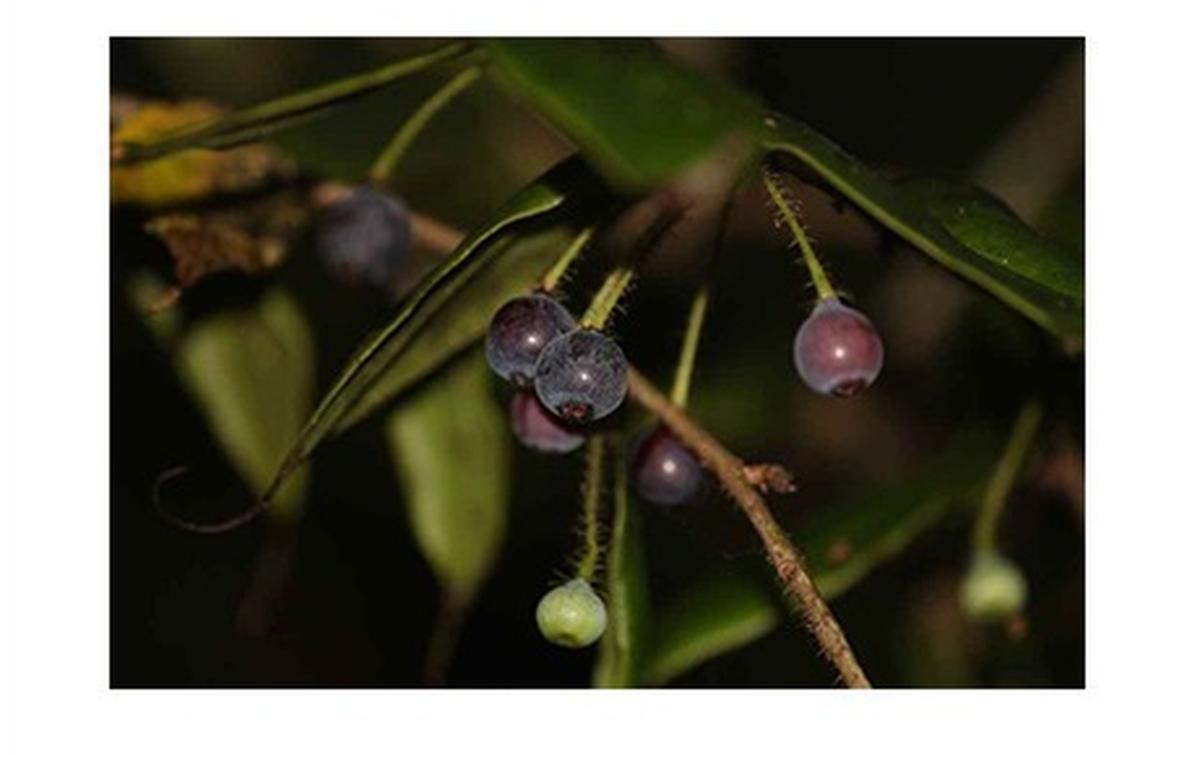
In a significant botanical discovery, researchers have rediscovered Vaccinium piliferum, a rare and endangered wild blueberry species, in the remote forests of Vijoynagar in Arunachal Pradesh's Changlang district after nearly 188 years. The species was last documented in 1836 during the colonial era and had remained unrecorded in scientific literature since then.
About Vaccinium piliferum
Vaccinium piliferum is a rare wild relative of cultivated blueberries and belongs to the Ericaceae family, commonly known as the heath family. This family includes economically and ecologically important plants such as blueberries, cranberries, bilberries, rhododendrons, and heathers.
The genus Vaccinium is globally recognized for its edible berry-producing species and their nutritional as well as medicinal value. Wild relatives such as Vaccinium piliferum are particularly important because they serve as reservoirs of genetic diversity that can help improve cultivated varieties through breeding programmes.
Conservation Status
The species is currently classified as Endangered by the International Union for Conservation of Nature (IUCN).
Its endangered status reflects:
- Restricted geographical distribution.
- Small and fragmented populations.
- Habitat degradation and ecological disturbances.
- Limited scientific documentation and monitoring.
The rediscovery provides an opportunity to undertake detailed population assessments, habitat mapping, and long-term conservation planning to ensure the survival of the species.
Ecological and Scientific Significance
The rediscovery of Vaccinium piliferum has significance beyond taxonomy.
A. Indicator of Eastern Himalayan Biodiversity
The finding reinforces the status of the Eastern Himalayas as a global biodiversity hotspot characterized by:
- High species richness.
- High levels of endemism.
- Diverse climatic and ecological zones.
- Presence of numerous rare and threatened species.
B. Genetic Resource for Agriculture
Wild relatives of crop plants are increasingly recognized as valuable genetic resources. They often possess traits such as:
- Disease resistance.
- Pest tolerance.
- Adaptation to climatic stress.
- Improved nutritional characteristics.
Such traits may become increasingly important for developing climate-resilient agricultural systems.
C. Need for Habitat Conservation
The discovery also highlights the importance of conserving remote forest ecosystems, particularly in northeastern India, where many species remain poorly documented and vulnerable to habitat loss.
Blueberries: An Overview
Blueberries belong to the genus Vaccinium under the Ericaceae family and are among the most economically important berry crops worldwide.
Major Types of Blueberries
- Lowbush Blueberry (Vaccinium angustifolium)
- Highbush Blueberry (Vaccinium corymbosum)
- Bilberry or Forest Blueberry (Vaccinium myrtillus)
These species are widely cultivated in North America and Europe and are increasingly gaining commercial importance globally.
Climatic and Soil Requirements
Blueberries require specific environmental conditions for growth.
Climate
- Prefer relatively cool climates.
- Require 150–1200 chill hours to break dormancy.
- Excessively low temperatures can damage shoots and flower buds.
- Moderate temperatures are essential for flowering and fruit development.
Soil
Blueberries thrive in:
- Well-drained soils.
- Acidic conditions (low pH).
- Sandy loam texture.
- High organic matter content (above 3%).
Their sensitivity to soil and climatic conditions makes them useful indicators of ecosystem health.
Nutritional Importance of Blueberries
Blueberries are widely regarded as a "superfood" because of their rich nutritional profile.
They contain:
- Vitamin C.
- Vitamin K.
- Dietary fiber.
- Manganese.
- Polyphenols and anthocyanins.
These compounds possess strong antioxidant properties that help neutralize free radicals and may contribute to improved cardiovascular, neurological, and metabolic health.
Babesia

- 28 May 2026
In News:
The recent death of lion cubs in the Gir landscape of Gujarat has drawn attention to the growing challenge of wildlife diseases and the need for robust disease surveillance in protected areas. Authorities suspect that the deaths were linked to a Babesia infection, although laboratory confirmation was awaited at the time of reporting. The incident is significant because Gir is the world's only natural habitat of the Asiatic lion, making any disease outbreak a matter of national and global conservation concern.
What is Babesia?
- Babesia is a genus of microscopic protozoan parasites that infect the red blood cells (RBCs) of animals and humans, causing a disease known as babesiosis.
- The parasite is transmitted primarily through the bite of infected ticks, especially ticks belonging to the Ixodes genus (deer ticks), which are also known for spreading Lyme disease.
- Once inside the host, Babesia parasites invade and multiply within red blood cells, leading to their destruction. As a result, infected animals may suffer from anemia, fever, weakness, lethargy, and reduced immunity. The disease is much more common in animals than in humans and frequently affects cattle, dogs, deer, and other mammals.
- The geographical distribution of Babesia extends across the Americas, Europe, and parts of Asia, particularly in regions where tick populations are abundant.
Symptoms and Impact of Babesiosis
The severity of babesiosis varies depending on the host species, age, and immune status. While many infected individuals may remain asymptomatic or show only mild symptoms, severe infections can lead to:
- High fever
- Severe anemia due to destruction of RBCs
- Weakness and fatigue
- Respiratory distress
- Kidney and liver dysfunction
- Cardiac complications
- Blood clotting abnormalities (coagulopathy)
In wildlife populations, young animals and individuals with weakened immunity are particularly vulnerable.
Importantly, babesiosis is generally not contagious from one individual to another. Transmission occurs mainly through infected ticks. Rarely, the parasite may be transmitted from a pregnant mother to her offspring.
Why is the Incident Significant?
The deaths have renewed concerns about disease vulnerability among Asiatic lions. According to the 2025 lion census,Gujarat is home to approximately 891 Asiatic lions, all concentrated within the Gir landscape and adjoining regions. This concentration creates a unique conservation challenge because any major disease outbreak, natural disaster, or ecological disturbance could threaten the entire wild population of the species.
Wildlife experts have emphasized that Babesia is not a new pathogen in the Gir ecosystem and has existed at low levels among livestock and wildlife for years. However, changing environmental conditions, increasing wildlife densities, interactions with domestic animals, and climate-related factors can increase disease risks. Experts have also cautioned against other pathogens such as Canine Distemper Virus (CDV), which previously caused significant lion mortality and, when combined with Babesia infections, can pose a serious threat to lion populations.
Treatment and Management of Babesiosis
Babesiosis is generally treated using antimicrobial and antiparasitic drugs. The most commonly recommended treatment involves a combination of:
- Atovaquone (antiparasitic drug)
- Azithromycin (antibiotic)
In wildlife settings, however, prevention through vector control, surveillance, and early detection remains more effective than treatment after widespread infection.