
Borjuli Wetland
- 05 Jul 2026
In News:
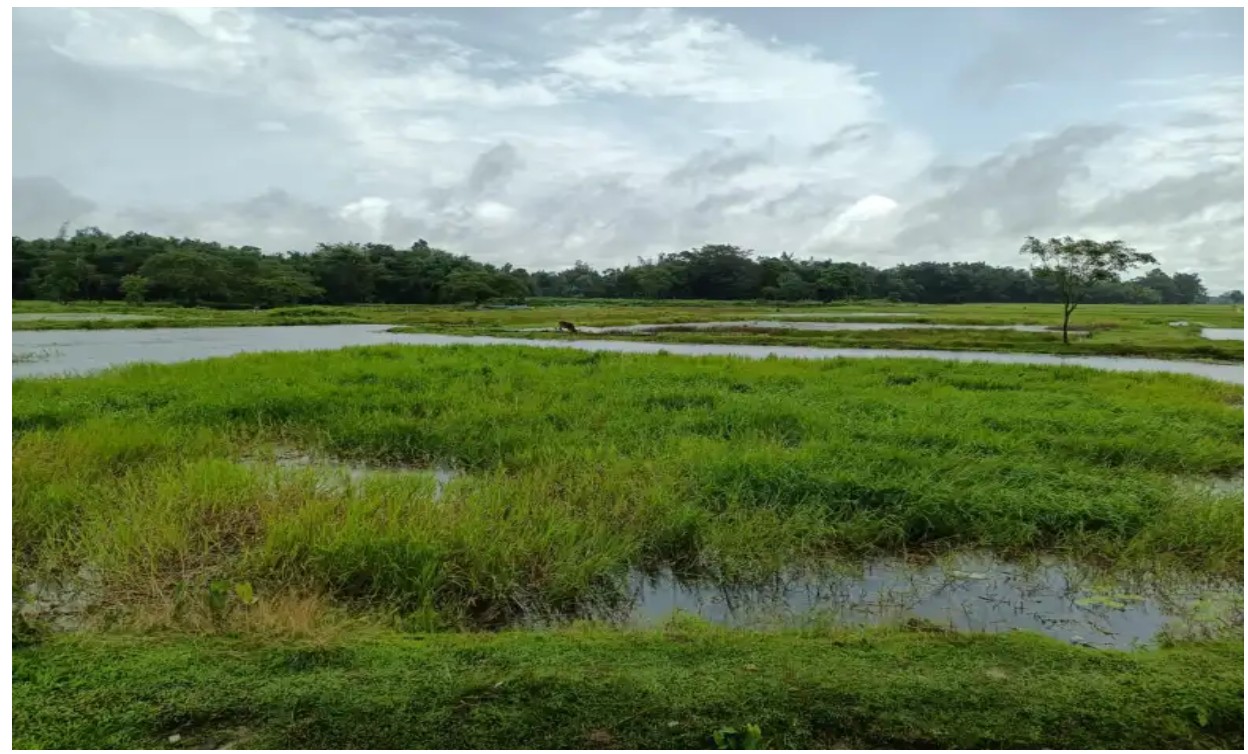
The Borjuli Wetland in Sonitpur district, Assam, has been notified as a Biodiversity Heritage Site (BHS) to conserve Oryza rufipogon, a wild rice species regarded as the evolutionary ancestor of cultivated rice.
Borjuli Wetland
- The Borjuli Wetland is a biologically rich freshwater marsh and swamp ecosystem located in the floodplains of the Brahmaputra River in Sonitpur district, Assam.
- Fed by seasonal monsoon runoff and local water channels, it functions as a natural gene pool for several native plant species, particularly wild rice.
- The wetland is globally significant because it harbours Oryza rufipogon, the wild progenitor of cultivated rice (Oryza sativa). Over centuries, this wild species has naturally evolved resistance to several pests, diseases, flooding and saline conditions, making it an invaluable genetic resource for developing climate-resilient and high-yielding rice varieties.
- The site serves as an in-situ conservation area, where species are protected within their natural habitat. The conservation programme is supported by the ICAR–National Bureau of Plant Genetic Resources (ICAR-NBPGR) and the Assam State Biodiversity Board, enabling long-term preservation of genetic diversity essential for food security and sustainable agriculture.
Biodiversity Heritage Sites (BHS)
A Biodiversity Heritage Site (BHS) is a unique and ecologically important area notified for conserving rich biological diversity, rare species, traditional crop varieties, wild relatives of cultivated plants, sacred groves, wetlands and other ecologically fragile ecosystems.
BHSs are notified by State Governments under Section 37 of the Biological Diversity Act, 2002, in consultation with local bodies and Biodiversity Management Committees (BMCs).
Unlike National Parks or Wildlife Sanctuaries, declaration as a Biodiversity Heritage Site does not extinguish community ownership or traditional livelihood rights. Instead, it promotes conservation through community participation while encouraging the sustainable use of biological resources.
The sites are technically guided by the National Biodiversity Authority (NBA) and managed through local Biodiversity Management Committees to ensure long-term ecological conservation.
Employees' Provident Funds (EPF) Scheme, 2026
- 05 Jul 2026
In News:
The Ministry of Labour and Employment has notified the Employees' Provident Funds (EPF) Scheme, 2026, replacing the EPF Scheme, 1952, under the Code on Social Security, 2020. The new framework seeks to modernise provident fund administration while ensuring continuity of retirement benefits for employees.
About EPF Scheme, 2026
The Employees' Provident Funds (EPF) Scheme, 2026 is India's new statutory retirement savings framework administered by the Employees' Provident Fund Organisation (EPFO) under the Ministry of Labour and Employment. It replaces the seven-decade-old EPF Scheme, 1952, while implementing the provisions of the Code on Social Security, 2020.
The primary objective of the scheme is to provide long-term financial security to employees through compulsory retirement savings, improve ease of compliance, and promote digital governance.
Key Features
The new scheme ensures seamless continuity for existing EPF subscribers. Current members automatically continue under the new framework without requiring fresh registration or transfer of accumulated balances.
The contribution structure largely remains unchanged. Both employer and employee continue to contribute 12% of wages (10% for notified establishments). However, the mandatory contribution is calculated only up to the statutory wage ceiling of ?15,000 per month, limiting compulsory contributions to ?1,800 each from the employer and employee.
Employees may voluntarily contribute beyond the statutory wage ceiling or above the prescribed contribution rate. Employers may also make matching voluntary contributions, which can subsequently be modified or discontinued without affecting the mandatory contribution.
Withdrawal Provisions
The scheme simplifies the earlier 13 withdrawal categories into three broad heads:
- Essential Needs – illness, education and marriage.
- Housing Needs – purchase or construction of a house, home loan repayment and renovation.
- Special Circumstances – specified emergencies.
To preserve retirement security, members must maintain a minimum balance equal to 25% of total contributions as a retirement corpus, while the remaining eligible balance can be withdrawn subject to prescribed conditions.
Some important withdrawal provisions include:
- Illness: Up to 100% of the eligible balance after 12 months of membership.
- Education: Permitted after 12 months, with a maximum of 10 withdrawals.
- Marriage: Up to 100% of the eligible balance, subject to a maximum of five withdrawals.
- Housing: Up to 75% of the accumulated balance after 12 months, with a maximum of five withdrawals.
Digital Governance and Compliance
A major feature of the new framework is the emphasis on digital service delivery. Aadhaar-linked Universal Account Number (UAN), PAN and bank account integration will facilitate faster claim settlement, portability and online services.
EPFO is also expanding digital services through UPI-based withdrawals and WhatsApp-based member services, making provident fund management more accessible.
Employers are required to submit Aadhaar, PAN, UAN, wage details and monthly statutory returns electronically, strengthening transparency and compliance.
Protection for Contract Workers
The scheme introduces the concept of a Principal Employer, making the principal employer ultimately responsible for provident fund contributions if contractors fail to deposit them. This provision strengthens social security coverage for contract workers and improves accountability.
International Workers
Existing provisions relating to international workers continue without change, ensuring uninterrupted provident fund coverage for employees already enrolled under international social security arrangements.
Significance
The EPF Scheme, 2026 modernises India's retirement savings framework by combining continuity of benefits with greater flexibility, digital governance and simplified procedures. It strengthens employee welfare, improves compliance, protects contract workers, and facilitates easier access to provident fund services while safeguarding long-term retirement savings. The scheme also marks an important step towards the comprehensive implementation of the Code on Social Security, 2020.
Vikram-1 Rocket
- 05 Jul 2026
In News:
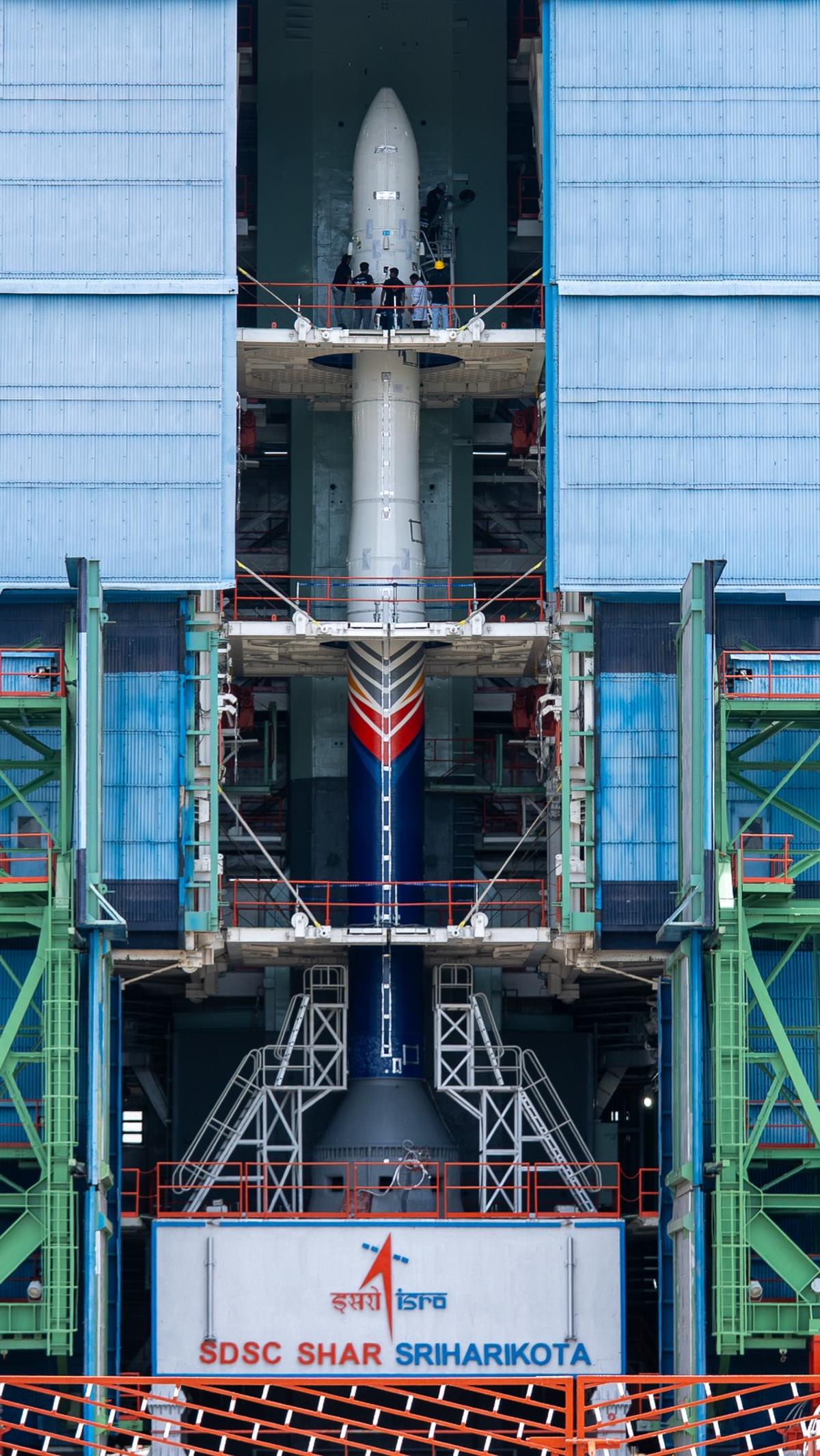
India's first privately developed orbital-class rocket, Vikram-1, is set for its maiden launch, marking a major milestone in the country's expanding private space sector.
About Vikram-1 Rocket
Vikram-1 is India's first privately developed orbital launch vehicle, designed and developed by Skyroot Aerospace, a Hyderabad-based space startup. Named after Dr. Vikram Sarabhai, the father of the Indian space programme, the rocket represents India's growing capabilities in commercial space launch services following the opening of the space sector to private participation.
Key Features
Vikram-1 is a multi-stage orbital launch vehicle standing approximately seven storeys tall. It follows a four-stage configuration, where the first three stages are powered by solid-fuel propulsion to provide the initial thrust required for ascent.
The fourth stage employs a cluster of four Raman engines, which are hypergolic liquid engines. These engines use Monomethyl Hydrazine (MMH) as fuel and Nitrogen Tetroxide (NTO) as the oxidiser, igniting spontaneously upon contact to enable precise orbital insertion and manoeuvring.
The rocket features an all-carbon composite structure, reducing weight while improving strength. It also incorporates 3D-printed rocket engines, high-thrust solid rocket motors, advanced avionics for real-time navigation and guidance, and ultra-low-shock pneumatic stage separation systems.
Payload Capacity
Vikram-1 is specifically designed for the rapidly growing small satellite launch market.
- 350 kg payload to Low Earth Orbit (LEO)
- 260 kg payload to Sun-Synchronous Orbit (SSO)
It is capable of deploying multiple satellites in a single mission, making it suitable for commercial satellite constellations.
Major Innovations
The launch vehicle has been designed with an emphasis on simplicity, reliability and rapid deployment. It is capable of being prepared for launch within 24 hours from different launch locations, offering greater operational flexibility.
Key technological innovations include:
- All-carbon composite airframe
- Indigenous propulsion systems
- 3D-printed engines
- Hypergolic Raman upper-stage engines
- Ultra-low-shock pneumatic separation mechanism
- Advanced onboard guidance, navigation and control systems
Marburg Virus Disease
- 05 Jul 2026
In News:
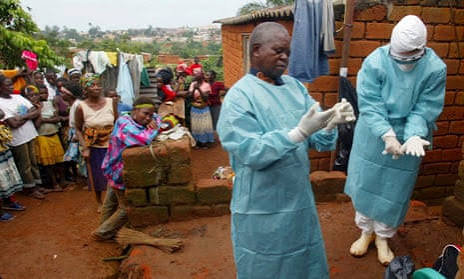
The World Health Organization (WHO) recently confirmed a case of Marburg Virus Disease (MVD) in Uganda, highlighting the continued threat posed by emerging zoonotic diseases in Africa.
About Marburg Virus Disease (MVD)
- Marburg Virus Disease (MVD), formerly known as Marburg haemorrhagic fever, is a severe viral haemorrhagic fever caused by the Marburg virus, a highly virulent zoonotic pathogen belonging to the Filoviridae family—the same family that includes the Ebola virus.
- The disease affects both humans and non-human primates (chimpanzees, gorillas and monkeys). It derives its name from the German city of Marburg, where the first known outbreak occurred in 1967 among laboratory workers handling infected African green monkeys imported from Uganda.
- The virus is primarily found in sub-Saharan Africa, where sporadic outbreaks continue to occur.
Transmission
The natural reservoir of the Marburg virus is the Egyptian fruit bat (Rousettus aegyptiacus). Human infections usually occur following prolonged exposure to bat-inhabited caves or mines.
Once a person becomes infected, the virus spreads through direct contact with infected blood, saliva, vomit, urine, faeces and other bodily fluids. Transmission may also occur through contaminated clothing, bedding, medical equipment or other objects exposed to infectious body fluids.
Importantly, Marburg virus is not airborne and does not spread through casual social contact. Infection requires direct exposure to infected body fluids or contaminated materials.
Clinical Features
The incubation period ranges from 2 to 21 days.
Early symptoms include:
- High fever
- Chills
- Severe headache
- Muscle pain
- Skin rash
- Chest pain and sore throat
- Nausea, vomiting and diarrhoea
As the disease progresses, patients may develop haemorrhage, liver failure, delirium, shock and multi-organ dysfunction. Death, when it occurs, usually results from massive blood loss, circulatory shock and multiple organ failure, generally within 8–9 days after symptom onset.
The average case fatality rate is around 50%, although previous outbreaks have recorded fatality rates ranging from 24% to 88%, depending on the quality of medical care.
Treatment
At present, no licensed vaccine or specific antiviral treatment is available for Marburg Virus Disease.
Management is primarily supportive and includes:
- Intravenous fluids and electrolyte replacement
- Maintenance of oxygenation and blood pressure
- Treatment of secondary infections
- Pain management and intensive supportive care
Early diagnosis, isolation of patients and strict infection prevention and control measures are critical for limiting outbreaks.
Unlocking Growth in Tourism and Hospitality Sector
- 05 Jul 2026
In News:
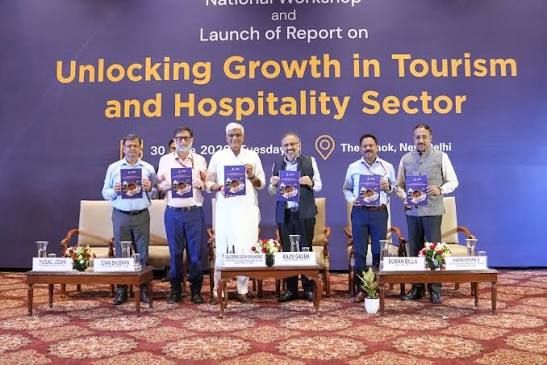
NITI Aayog, in collaboration with the Ministry of Tourism, has released the report "Unlocking Growth in Tourism and Hospitality Sector". The report recommends comprehensive regulatory, infrastructure and policy reforms to transform India from a volume-driven tourism market into a high-value, investment-led global tourism destination.
Current Status of India's Tourism Sector
Tourism has emerged as one of India's fastest-growing service sectors and a significant contributor to economic growth and employment.
Globally, the travel and tourism sector contributed nearly 10% of global GDP in 2024, supporting one in every ten jobs worldwide. By 2035, the sector is projected to contribute USD 16.5 trillion, growing at around 3.5% annually.
In India, the tourism sector contributed ?15.73 lakh crore (5.22% of GDP) during FY 2023-24 and supported nearly 84.6 million jobs, making it one of the country's largest employment generators. Domestic tourism remains the biggest strength, recording nearly 2.9 billion domestic tourist visits in 2024. However, Foreign Tourist Arrivals (FTAs) stood at only 9.95 million, giving India a global market share of less than 1.5%.
According to the World Economic Forum's Travel & Tourism Development Index (TTDI) 2024, India ranks 6th in Natural Resources and 9th in Cultural Resources, but only 39th overall, reflecting significant policy and infrastructure gaps.
Major Challenges
The report identifies both demand-side and supply-side constraints limiting India's tourism potential.
On the demand side, India's restrictive visa regime remains a major obstacle. India scores 38.14 on the UN Tourism Visa Openness Index, below both the global and Asia-Pacific averages. The report also highlights complex e-visa procedures, payment failures, fragmented traveller interfaces and weak destination marketing, which reduce repeat international visits.
Supply-side constraints are equally significant. Hotel projects typically require 36–48 months for completion compared to 12–18 months in many ASEAN countries. Developers often require 50–60 different approvals, increasing project costs and delaying investments. Restrictive building regulations, fragmented interstate transport rules, overlapping taxes, and prolonged environmental and Coastal Regulation Zone (CRZ) clearances further discourage investment.
Key Recommendations
The report recommends a comprehensive package of reforms to improve the Ease of Doing Business in tourism.
Regulatory Reforms
- Integrate approvals through the National Single Window System (NSWS).
- Introduce a single health trade licence and single liquor licence for hotels.
- Eliminate the requirement for police-issued Eating House Licences.
Visa and Travel Reforms
- Introduce a 90-day multiple-entry Visa-on-Arrival for selected countries.
- Simplify the e-Visa system through fewer application fields, improved payment gateways and a unified traveller profile.
- Extend the validity of the All India Tourist Permit (AITP) from 90 days to five years and remove overlapping state entry taxes.
Infrastructure Reforms
- Increase permissible Floor Area Ratio (FAR) and liberalise building byelaws.
- Raise the room limit for registered homestays from 6 to 9 rooms.
- Create dedicated State Expert Appraisal Committees (SEACs) for faster environmental clearances.
- Digitise High Tide Line (HTL) and Low Tide Line (LTL) maps to expedite CRZ approvals.
Government Initiatives
India has already launched several initiatives to promote tourism, including:
- Swadesh Darshan Scheme
- Swadesh Darshan 2.0
- PRASHAD Scheme
- Dekho Apna Desh
- Incredible India Campaign
- National Digital Tourism Mission (NDTM)
- NIDHI Portal
- Utsav Portal
- Ek Bharat Shreshtha Bharat
- Loan Guarantee Scheme for COVID Affected Tourism Service Sector (LGSCATSS)
Significance
Implementing these reforms can significantly enhance India's global competitiveness, attract greater private investment, generate employment, increase foreign exchange earnings and strengthen regional development. Improved connectivity, simplified regulations and faster approvals would particularly benefit hospitality, transport, handicrafts, MSMEs and rural tourism.
With its unmatched cultural heritage, biodiversity and natural resources, India possesses enormous untapped tourism potential that can become a major engine of inclusive economic growth.