
INS Taragiri
- 24 Mar 2026
In News:
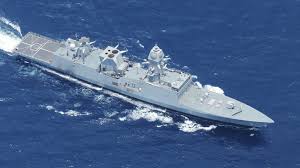
The Indian Navy is set to commission INS Taragiri (F41), a state-of-the-art stealth guided-missile frigate, on April 3, 2026. As the fourth ship of the ambitious Project 17A (Nilgiri-class), its induction marks a critical milestone in India’s quest for maritime "Aatmanirbharta" (self-reliance).
Project 17A: A Strategic Overview
Project 17A is an advanced follow-on to the Shivalik-class (Project 17) frigates. The initiative involves the construction of seven stealth frigates, with four being built at Mazagon Dock Shipbuilders Ltd (MDL) in Mumbai and three at Garden Reach Shipbuilders and Engineers (GRSE) in Kolkata.
- Naming Convention: The ships are named after prominent Indian mountain ranges: INS Nilgiri, Himgiri, Udaygiri, Taragiri, Dunagiri, Vindhyagiri, and Mahendragiri.
- Design Philosophy: Designed by the Navy’s in-house Warship Design Bureau (WDB), these vessels utilize "Integrated Construction" methodology, which involves pre-outfitting hull blocks to compress the construction timeline.
Key Features and Technical Specifications of INS Taragiri
INS Taragiri represents the pinnacle of indigenous shipbuilding, boasting approximately 75% indigenous content.
- Stealth and Survivability: * Reduced Radar Cross-Section (RCS): The ship features a sleeker hull form and enclosed mooring decks to minimize radar and infrared signatures.
- Hull Material: Constructed using indigenous DMR 249A low-carbon micro-alloy grade steel.
- Propulsion and Performance:
- CODOG System: Utilizes a Combined Diesel or Gas configuration, pairing two gas turbines (for high speed) with two main diesel engines (for fuel-efficient cruising).
- Capabilities: Displacing approximately 6,670 tonnes, the frigate can achieve speeds exceeding 28-32 knots with high operational endurance.
- Weaponry and Combat Suite:
- Surface-to-Surface: Armed with the supersonic BrahMos cruise missile system.
- Surface-to-Air: Equipped with Barak-8 (MRSAM) missiles for long-range air defense, guided by the EL/M-2248 MF-STAR AESA radar.
- Anti-Submarine Warfare (ASW): Features indigenous triple-tube torpedo launchers and RBU-6000 rocket launchers.
- Naval Gunery: Includes a 76mm Super Rapid Gun Mount (SRGM) and AK-630 Close-In Weapon Systems (CIWS).
Strategic Significance for India
- Regional Deterrence: The induction is timely given the growing Chinese naval presence and increasing militarization in the Indian Ocean Region (IOR).
- Operational Readiness: INS Taragiri will bolster the Eastern Naval Command, particularly in multi-dimensional missions ranging from high-intensity combat to Operation Sankalp (maritime security) and HADR (Humanitarian Assistance and Disaster Relief).
- Economic Impact: The project supports the domestic industrial ecosystem, involving over 200 MSMEs and generating direct employment for thousands, directly aligning with the "Make in India" and "Viksit Bharat" frameworks.
Taragiri
- 07 Mar 2026
In News:
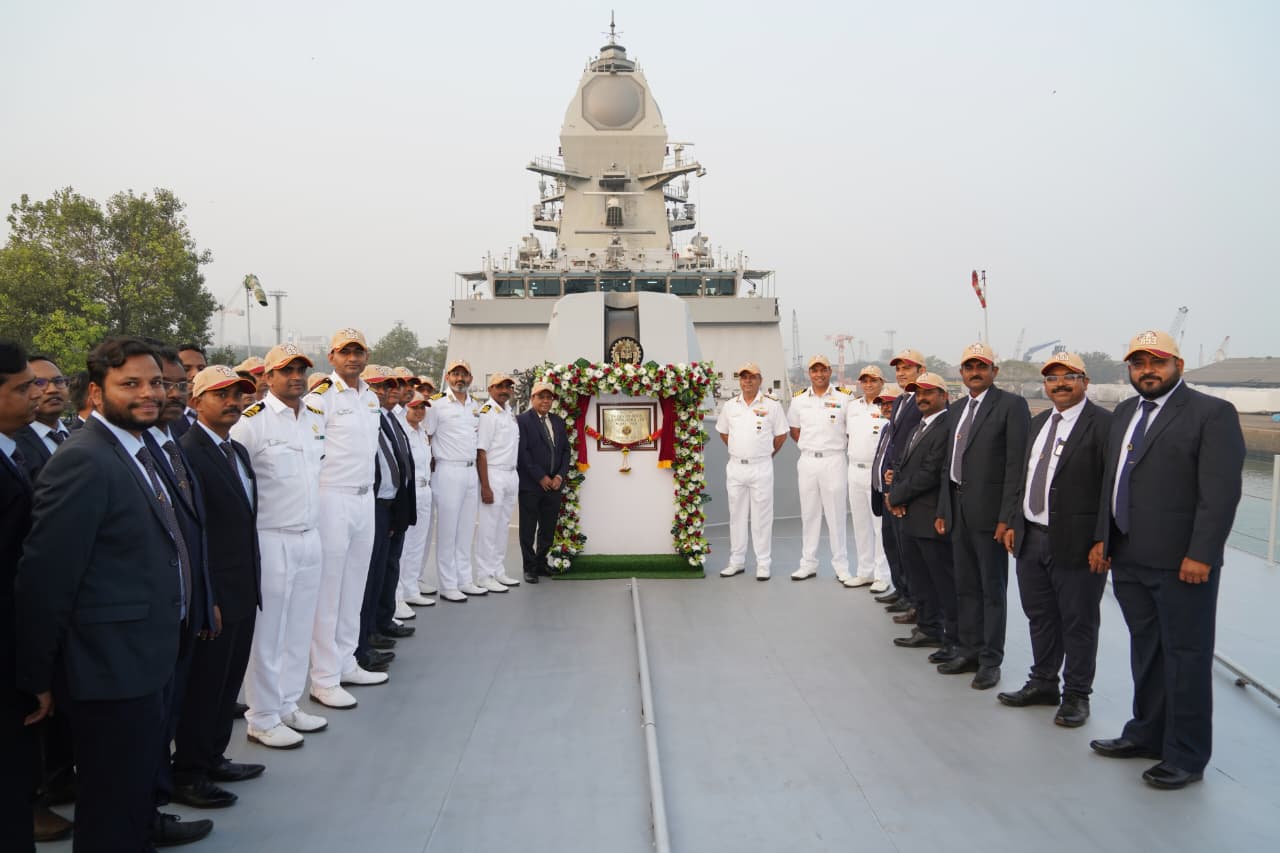
The induction of INS Taragiri (Yard 12653), the fourth Nilgiri-class (Project 17A) stealth frigate, marks a significant milestone in India’s efforts to strengthen indigenous warship building and maritime security. The vessel has been delivered to the Indian Navy by Mazagon Dock Shipbuilders Limited (MDL) and represents the third Project 17A ship constructed by the shipyard. The induction highlights India’s progress in advanced naval shipbuilding and self-reliance in defence production.
Legacy of INS Taragiri
- The new frigate continues the legacy of the earlier INS Taragiri, a Leander-class frigate that served in the Indian Navy for 33 years (1980–2013). Carrying forward the same name symbolises continuity in naval tradition while representing a new generation of technologically advanced warships.
- The ship has been designed by the Warship Design Bureau (WDB) of the Indian Navy and constructed using the Integrated Construction approach, a modern shipbuilding technique that enables simultaneous fabrication of different blocks of the vessel, thereby reducing construction time and improving efficiency.
Project 17A: India’s Stealth Frigate Programme
Project 17A is an ambitious Indian naval programme aimed at building seven Nilgiri-class stealth frigates as upgraded successors to the Shivalik-class frigates. These ships are designed for enhanced stealth, survivability, and combat capabilities.
The construction of the seven frigates is distributed between two major Indian shipyards:
- Four ships — Nilgiri, Udaygiri, Taragiri, and Mahendragiri — are being built by Mazagon Dock Shipbuilders Limited in Mumbai.
- Three ships — Himgiri, Dunagiri, and Vindhyagiri — are being constructed by Garden Reach Shipbuilders and Engineers (GRSE) in Kolkata.
The ships are being built through the Integrated Construction methodology, which allows for pre-outfitting during block fabrication, thereby reducing build time and improving production efficiency.
An important aspect of the project is indigenisation, with approximately 75% of the systems and equipment sourced from Indian industries, aligning with the government’s ‘Atmanirbhar Bharat’ initiative in defence manufacturing.
Key Features and Capabilities
The Nilgiri-class frigates are designed for blue-water operations, enabling the Indian Navy to operate effectively across distant maritime regions. These ships are versatile frontline assets capable of performing multiple combat roles.
1. Propulsion System: The ships are powered by a Combined Diesel or Gas (CODOG) propulsion system, which integrates diesel engines and gas turbines, each connected to a Controllable Pitch Propeller (CPP). This configuration provides both high speed and fuel efficiency.
2. Advanced Weapons Systems: Project 17A frigates are equipped with a range of modern weapons, including:
- **BrahMos supersonic cruise missiles
- Long Range Surface-to-Air Missile (LRSAM) / Barak-8 system
- Lightweight anti-submarine torpedoes
- Indigenous Rocket Launchers (IRL)
These weapons enable the ships to effectively engage surface, aerial, and underwater threats.
3. Sensors and Electronic Systems: The frigates are fitted with sophisticated surveillance and combat management systems, including:
- Multi-mission radar and surface-surveillance radar
- Airborne early-warning radar integration
- Shakti Electronic Warfare Suite
- HUMSA-NG Sonar for anti-submarine warfare
Additionally, the vessels incorporate an Integrated Platform Management System (IPMS) for efficient monitoring and control of onboard machinery and systems.
Taragiri
- 02 Dec 2025
In News:
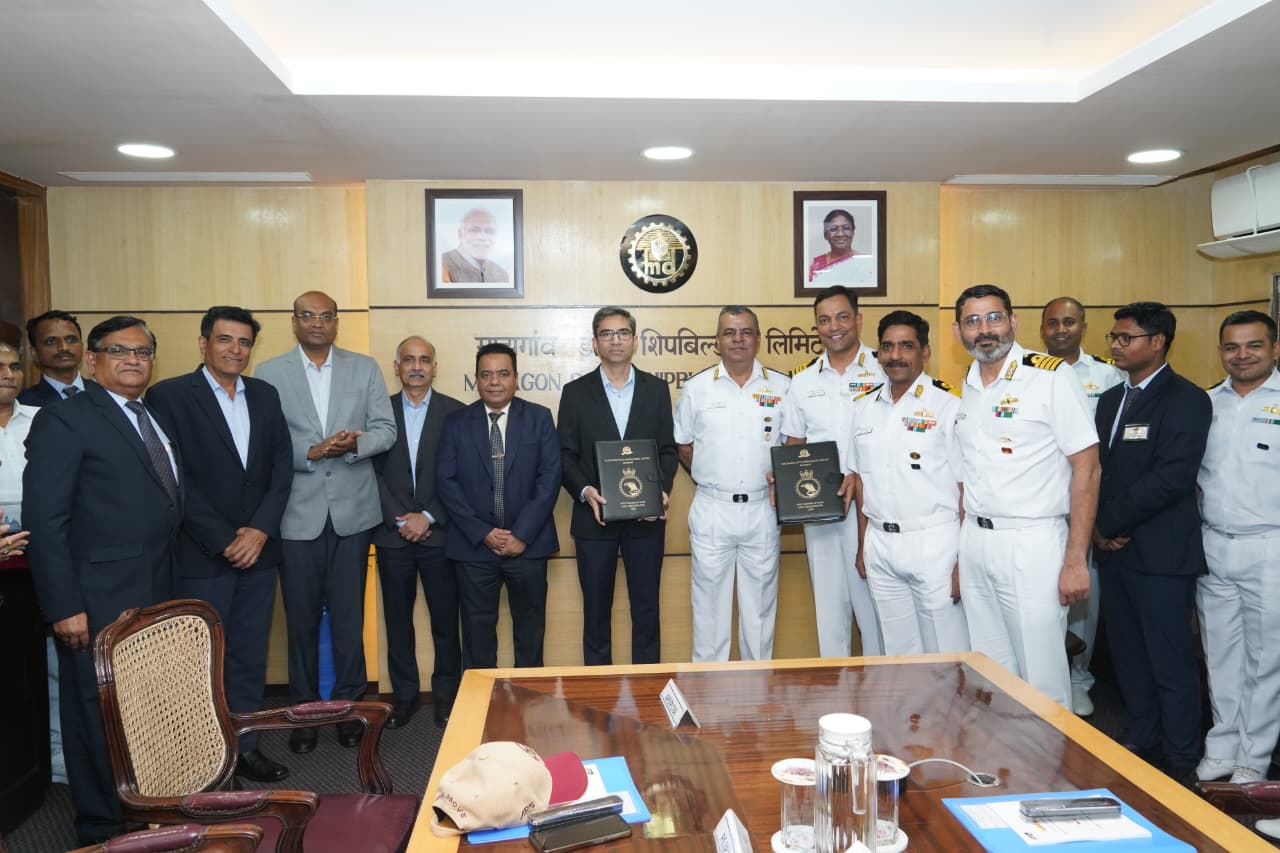
The Indian Navy has received INS Taragiri (Yard 12653), the fourth Nilgiri-class frigate under Project 17A and the third P17A ship built by Mazagon Dock Shipbuilders Ltd (MDL). Delivered in November 2025, the induction of Taragiri marks a major milestone in Aatmanirbhar Bharat and India’s quest for indigenous, advanced warship construction.
INS Taragiri: Key Facts
- Type: Advanced stealth frigate (Nilgiri class)
- Project:Project 17A
- Builder:Mazagon Dock Shipbuilders Limited (MDL)
- Legacy: Reincarnation of the earlier INS Taragiri, a Leander-class frigate that served the Indian Navy from 1980 to 2013 (33 years)
- Designer: Warship Design Bureau (WDB)
Project 17A (Nilgiri Class): Overview
- Programme to build seven advanced stealth frigates as successors to the Shivalik-class (Project 17).
- Shipbuilders:
- MDL:Nilgiri, Udaygiri, Taragiri, Mahendragiri
- **Garden Reach Shipbuilders & Engineers (GRSE): Himgiri, Dunagiri, Vindhyagiri
- Construction philosophy:Integrated Construction Method
- Pre-outfitting of blocks to reduce build time and improve quality.
- Indigenisation: ~75% indigenous content, involving 200+ MSMEs.
- Delivery timeline: Remaining P17A ships to be delivered progressively by August 2026.
Design & Propulsion
- Role: Blue-water, multi-mission frontline combatant
- Propulsion:Combined Diesel or Gas (CODOG) system
- Diesel engine + gas turbine
- Each driving a Controllable Pitch Propeller (CPP)
- Automation: Advanced Integrated Platform Management System (IPMS) for efficient monitoring and control.
Weapons & Sensors Suite
- Missiles:
- BrahMos supersonic surface-to-surface missile
- Long Range Surface-to-Air Missiles (LRSAM) / Barak-8 (MRSAM)
- Guns & CIWS:
- 76 mm Super Rapid Gun Mount
- 30 mm and 12.7 mm close-in weapon systems
- Anti-Submarine Warfare:
- Lightweight torpedoes
- Indigenous Rocket Launchers (IRL)
- Sensors & EW:
- Multi-function radar (MF-STAR)
- Shakti Electronic Warfare Suite
- Airborne early-warning radar
- Surface surveillance radar
- Humsa-NG sonar
Operational Significance
- Capable of anti-surface, anti-air, and anti-submarine warfare.
- Enhanced stealth, survivability, firepower, and automation over earlier frigate classes.
- Reduces dependence on imports and strengthens India’s blue-water naval capabilities.
- Employment generation: ~4,000 direct and 10,000 indirect jobs.