
The Union Territories Laws (Amendment) Bill, 2026
- 21 Apr 2026
In News:
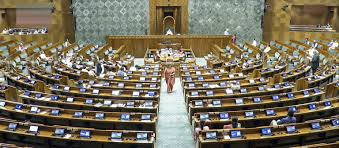
As India undergoes a transformative phase in its parliamentary structure, the introduction of The Union Territories Laws (Amendment) Bill, 2026 in the Lok Sabha marks a pivotal step. Introduced alongside the 131st Constitutional Amendment and the Delimitation Bill, 2026, this legislation serves as a supplementary framework to ensure that structural reforms in the Indian legislature are inclusive of Union Territories (UTs).
Overview and Purpose
The primary objective of the Bill is to extend the benefits of the national-level constitutional shifts—specifically the expansion of Parliament and the implementation of women’s reservation to UTs with their own Legislative Assemblies. It targets the legal frameworks of the National Capital Territory (NCT) of Delhi, Puducherry, and Jammu & Kashmir.
Historically, major legislative changes often faced a "notification lag" when being applied to UTs due to their unique administrative status. This Bill bridges that gap, ensuring that the Nari Shakti Vandan Adhiniyam and the redrawing of electoral boundaries happen simultaneously across states and relevant UTs.
Key Features of the 2026 Bill
1. Accelerated Women’s Reservation
A cornerstone of this Bill is the delinking of women’s reservation from the 2027 Census. Under previous frameworks, the implementation of the one-third reservation for women was tied to the publication of the first census after 2023. The 2026 Bill modifies this requirement for UTs, allowing reservation to be implemented based on the 2011 Census data. This ensures that women can contest reserved seats in these UTs as early as the 2029 elections.
2. Integration with Parliamentary Expansion
The Bill aligns UT-specific statutes with the 131st Amendment, which increases the maximum number of representatives from UTs in the Lok Sabha from 20 to 35 members. This expansion reflects the demographic shifts and the need for more granular representation in India’s growing democracy.
3. Synchronized Delimitation
The Bill empowers the Delimitation Commission, constituted under the Delimitation Bill, 2026, to redraw assembly constituencies within Delhi, Puducherry, and Jammu & Kashmir. This ensures that the redrawing of seats is not a fragmented process but is synchronized with the national effort to rebalance electoral representation based on the latest available data.
4. Rotational Allotment
To maintain electoral fairness and prevent the entrenchment of specific seats, the Bill mandates that seats reserved for women in UT Assemblies will be allotted by rotation. This means the specific constituencies reserved for women will change in successive election cycles, ensuring diverse representation across all regions of the UT.
Strategic Significance
- Uniformity in Federal Structure: By passing this Bill, the government prevents a legal discrepancy where states could have moved forward with gender parity reforms while UTs remained stalled due to census-linked timelines. It enforces a uniform legislative timeline across the Union.
- Democratic Deepening: The increase in Lok Sabha seats for UTs (from 20 to 35) ensures that the voices of citizens in these administratively unique regions carry more weight in the national discourse.
- Empowerment of Nari Shakti: By bypassing the wait for the 2027 Census, the Bill translates the intent of the Nari Shakti Vandan Adhiniyam into reality at the grassroots level of UT governance.
Precision Strike Missile (PrSM)
- 10 Mar 2026
In News:
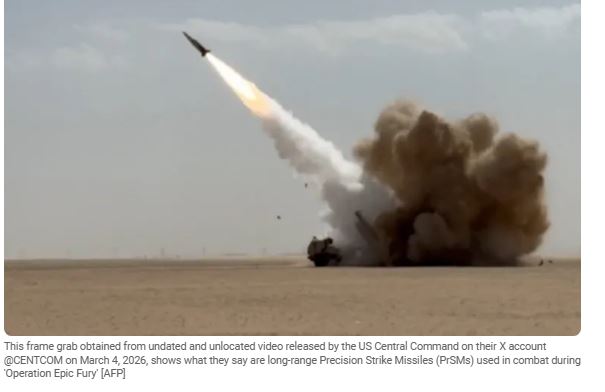
The Precision Strike Missile recently drew global attention after being reportedly used by the United States Central Command during military operations involving Iran. The deployment marked the first operational use of the missile, highlighting advancements in long-range precision strike capabilities and modern battlefield technologies.
Overview of Precision Strike Missile (PrSM)
- The Precision Strike Missile (PrSM) is a surface-to-surface guided ballistic missile designed to strike targets at long distances with high accuracy. It is primarily developed and manufactured by Lockheed Martin for the United States Army.
- The missile entered operational service in late 2023 as part of efforts to modernize the US Army’s long-range artillery systems and enhance its ability to engage high-value targets from extended distances.
Key Features of the PrSM
1. Long-Range Precision Strike Capability: The missile is capable of striking targets at ranges exceeding 500 kilometres, enabling forces to engage strategic targets such as command centres, radar systems, air defence installations, and logistics hubs far beyond the battlefield.
2. Advanced Guidance Systems: The PrSM uses a combination of:
- Global Positioning System (GPS) navigation
- Inertial guidance systems
These technologies allow the missile to maintain high targeting accuracy even in adverse weather or electronic warfare environments.
3. Compatibility with Existing Launch Platforms
One of the key design advantages of the PrSM is its compatibility with existing artillery platforms, including:
- M142 High Mobility Artillery Rocket System
- M270A2 Multiple Launch Rocket System
This interoperability allows rapid deployment without requiring entirely new launch infrastructure.
Technological Architecture
The missile incorporates an open systems architecture and modular design, enabling future upgrades and integration of new technologies.
Key technological features include:
- Solid rocket propellant for propulsion
- Hypersonic-class ballistic trajectory enabling high-speed travel
- Integration with satellite, drone, and radar networks for enhanced targeting and battlefield coordination
These features allow the PrSM to function as part of a broader network-centric warfare system.
Safety and Payload Design
- The missile carries an Insensitive Munitions (IM) energetic payload, which reduces the risk of accidental detonation during handling, transport, or storage. This improves operational safety for military personnel and logistical operations.
Strategic Significance
The development and deployment of the Precision Strike Missile reflects broader trends in modern warfare, including:
- Increasing emphasis on long-range precision strike capabilities
- Integration of weapons systems into networked battlefield environments
- Replacement of older missile systems with more accurate and flexible platforms
The PrSM also strengthens the US Army’s ability to conduct deep-strike operations against critical enemy infrastructure while minimizing collateral damage through improved targeting precision.
National Sports Governance Bill 2025
- 26 Jul 2025
In News:
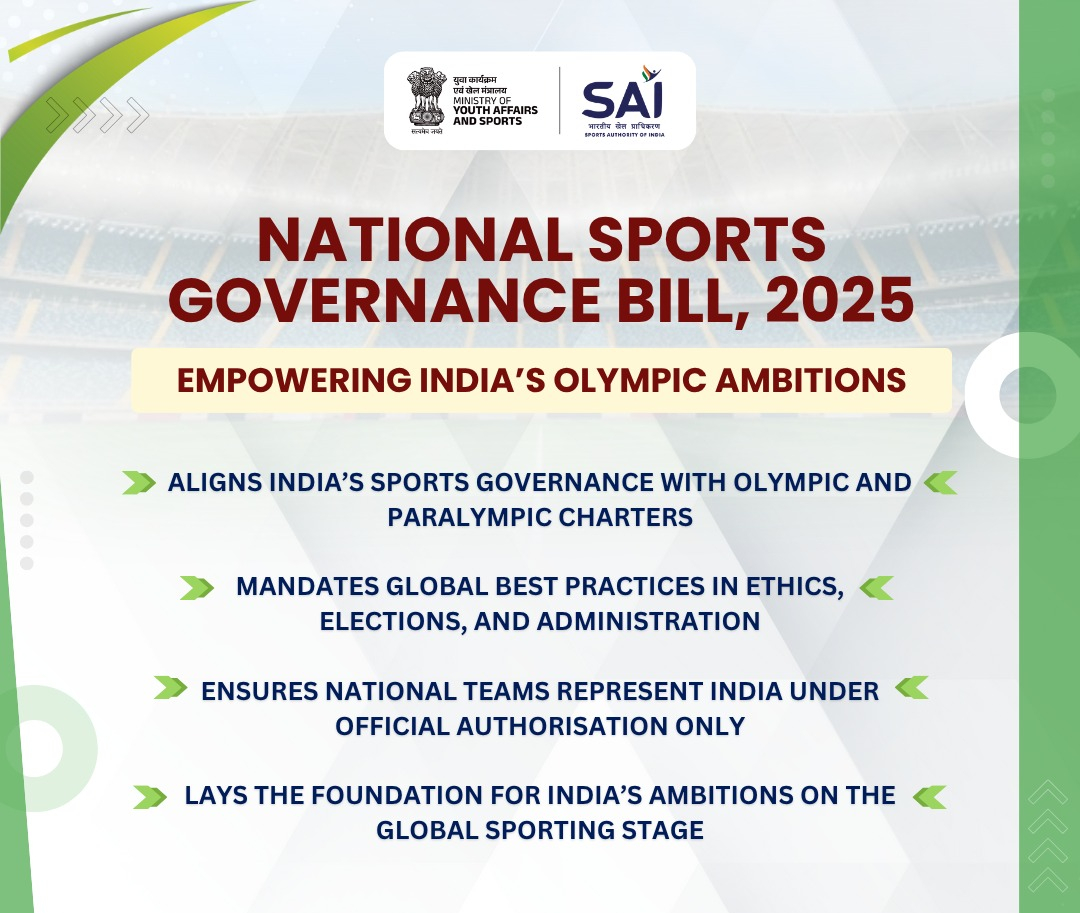
The National Sports Governance Bill, 2025, introduced in the Lok Sabha, marks a significant legislative effort to restructure and reform India's sports administration framework. It seeks to replace the non-binding National Sports Code of 2011 with a statutory, enforceable law that prioritizes transparency, athlete welfare, and institutional accountability.
Key Objectives of the Bill
- Establish a uniform governance system across all sports federations.
- Legally regulate bodies like the Board of Control for Cricket in India (BCCI).
- Align Indian sports governance with international standards, particularly ahead of India’s 2036 Olympic bid.
- Introduce dedicated institutions for oversight, dispute resolution, and electoral transparency.
Major Structural Changes
1. Statutory Institutions Established
|
Institution |
Function |
|
National Sports Board (NSB) |
Recognition, funding eligibility, ethics compliance, and oversight of NSFs. |
|
National Sports Tribunal |
Dispute resolution (e.g., selection, elections, governance conflicts). |
|
National Sports Election Panel |
Ensures free, fair, and independent elections of sports bodies. |
Governance Reforms in National Sports Bodies
- Recognition & Regulation: All National Sports Federations (NSFs), including the BCCI, must seek annual recognition from the NSB.
- Affiliation: National bodies must have aligned state and district units, and comply with international federations' statutes.
- Code of Ethics: Mandatory for members, athletes, coaches, sponsors, and officials.
- Grievance Redressal: Internal mechanisms must be instituted by each federation.
Administrative Structure of National Bodies
- General Body: Equal representation from all affiliates and ex-officio members.
- Executive Committee: Maximum 15 members, mandatory inclusion of at least 4 women and 2 elite athletes.
- Age Limit: Officials must be aged 25–70 years (exceptions up to 75 years if permitted by international rules).
- Term Limit: Max three consecutive terms of four years in the same or different posts, with a cooling-off period.
Role of the National Sports Board (NSB)
The NSB acts as a central regulatory authority, similar to SEBI in financial markets.
Powers and Functions:
- Granting/suspending/canceling recognition of sports bodies.
- Investigating misuse of funds or violation of athlete welfare norms.
- Issuing guidelines for ethics, governance, and international compliance.
- Forming ad-hoc bodies in case of international de-recognition.
Composition: Chairperson and members with expertise in sports governance, law, and public administration. Appointed by the central government through a search-cum-selection committee.
National Sports Tribunal
A quasi-judicial body to resolve disputes involving federations, athletes, and administration.
Composition:
- Chairperson: Sitting/former Supreme Court Judge or Chief Justice of a High Court.
- Two expert members from sports, law, or public administration.
Appointed by: A committee comprising the Chief Justice of India (or nominee), the Law Secretary, and the Sports Secretary.
Appeals: Lie directly to the Supreme Court, except where international regulations mandate the Court of Arbitration for Sport (CAS) in Switzerland.
Jurisdiction Excludes: Disputes related to international sports events and internal matters of global sports bodies.
Electoral Oversight
A National Sports Election Panel will be constituted, comprising:
- Former Election Commissioners of India
- Former Chief Electoral Officers and Deputy Election Commissioners
Purpose:
- Supervise elections of executive committees of national federations.
- Ensure electoral integrity at the state and district levels via affiliate panels.
Legal Enforceability vs. Sports Code 2011
|
Parameter |
Sports Code 2011 |
Governance Bill 2025 |
|
Legal Status |
Advisory guidelines |
Statutory law |
|
Enforceability |
Non-binding |
Legally enforceable |
|
Gender/Athlete Representation |
Not mandated |
4 women & 2 elite athletes required |
|
Dispute Resolution |
Ministry-driven |
National Sports Tribunal |
|
BCCI Regulation |
Outside purview |
Brought under framework |
|
Election Oversight |
Ministry oversight |
Independent election panel |
|
RTI Applicability |
Exempt (BCCI) |
Mandatory for recognized bodies |
Bringing BCCI Under the Legal Framework
Historically resisting regulation, the BCCI will now be required to:
- Register annually with the NSB.
- Submit to the National Sports Tribunal for disputes.
- Comply with RTI Act provisions, if it seeks government recognition and funding.
This change is significant as cricket is now part of the 2028 Los Angeles Olympics, making BCCI subject to international governance norms under the Olympic Charter.
Provision for Exemptions
The central government may exempt specific sports bodies from certain provisions of the Bill, in the public interest or for the promotion of specific sports disciplines.
Parallel Legislation: Anti-Doping Amendment
The National Anti-Doping (Amendment) Bill, 2025 was also introduced, addressing World Anti-Doping Agency (WADA) concerns. It:
- Retains the National Board for Anti-Doping, but strips it of oversight over NADA.
- Restores NADA’s independence, aligning Indian anti-doping efforts with international norms.
Disaster Management (Amendment) Bill, 2024
- 27 Mar 2025
In News:
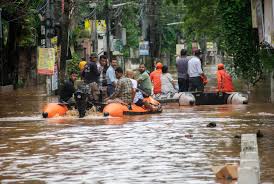
The Parliament has passed the Disaster Management (Amendment) Bill, 2024, aiming to strengthen disaster response mechanisms.
Ministry: Home Affairs
Background
The Disaster Management Act, 2005 established a three-tier structure:
- National Disaster Management Authority (NDMA)
- State Disaster Management Authorities (SDMAs)
- District Disaster Management Authorities (DDMAs)
These bodies were responsible for disaster planning, mitigation, and response at national, state, and district levels respectively.
Key Amendments
1. Preparation of Disaster Management Plans
- Earlier: Executive Committees were responsible for preparing disaster plans.
- Now: NDMA and SDMA will directly prepare and approve national and state disaster management plans.
2. Expanded Functions of NDMA and SDMA
New responsibilities include:
- Periodic risk assessments, including risks from climate-related events.
- Technical guidance to lower-level authorities.
- Minimum standards of relief recommendations.
- Creation of disaster databases containing:
- Disaster risk profiles
- Fund allocations and expenditures
- Preparedness and mitigation strategies
- NDMA-specific roles:
- Assessment of state preparedness
- Post-disaster audits to evaluate response effectiveness
3. Urban Disaster Management Authorities (UDMAs)
- To be established in state capitals and municipal corporation areas.
- Composition:
- Chairperson: Municipal Commissioner
- Vice Chairperson: District Collector
- Additional members as per state government notification
- Responsible for urban disaster planning and implementation.
4. State Disaster Response Force (SDRF)
- States are empowered to establish SDRFs for specialized disaster response.
- Functions and service conditions to be defined by state governments.
5. Statutory Status to Key Committees
- National Crisis Management Committee (NCMC):
- Nodal body for major national disasters
- Chaired by the Cabinet Secretary
- High-Level Committee (HLC):
- Sanctions financial assistance to states
- Chaired by the concerned Union Minister
6. NDMA Staffing and Appointments
- NDMA can determine the number and type of officers and staff.
- Can appoint experts and consultants with prior central government approval.
Rationale Behind the Amendment
- Climate Change: Increased frequency of extreme weather events necessitates proactive strategies.
- Decentralization Gaps: States faced implementation challenges under the 2005 Act.
- Institutional Strengthening: Clearer roles for national and sub-national bodies.
- Technology and Data Integration: Emphasis on real-time data and performance audits.
Key Concerns and Criticism
- Centralization of Power:NDMA’s enhanced role may reduce state autonomy in disaster response.
- Overlap with State Authority:Potential encroachment on state disaster planning and fund utilization.
- Delayed Relief via NDRF:Increased central oversight may slow localized relief efforts.
- Omission of Emerging Threats:Excludes disasters like heatwaves from official definitions.
- Lack of State-Specific Relief Funds:Demand for region-focused financial provisions by states like Bihar.
Way Forward
- Ensure Federal Balance: Maintain cooperation between Centre and states.
- Update Definitions: Include climate-induced disasters like heatwaves.
- Transparent Funding Mechanism: Clear protocols for fund allocation and usage.
- Empower Local Bodies: Strengthen DDMAs and UDMAs through training and resources.
- Institutional Audits: Regular post-disaster audits to enhance future readiness.
Railways (Amendment) Bill, 2024
- 12 Dec 2024
In News:
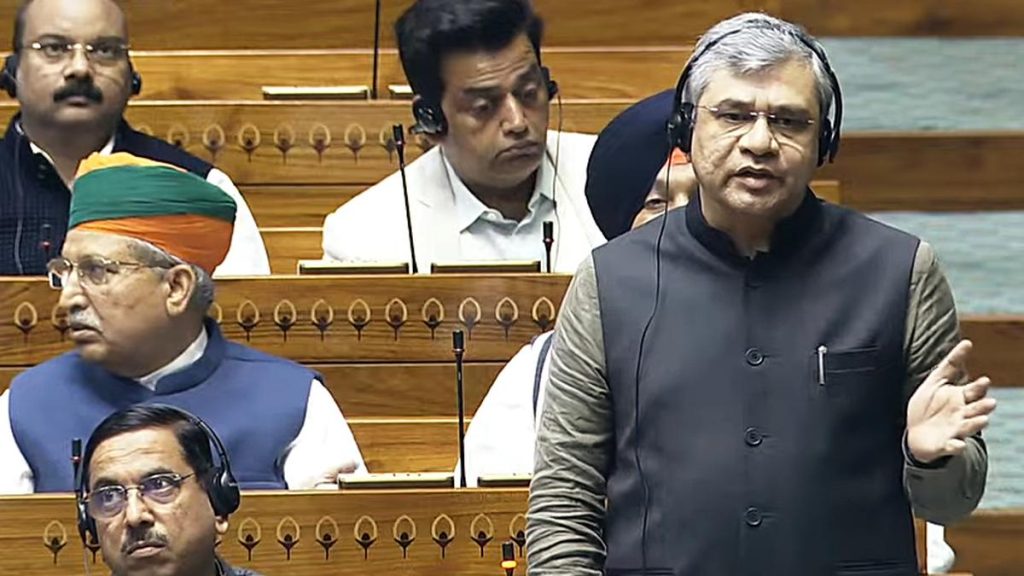
The Railways (Amendment) Bill, 2024 was passed in the Lok Sabha on December 20, 2024, aiming to enhance the functioning and autonomy of Indian Railways.
Key Provisions:
- Repeal of the Indian Railway Board Act, 1905: The Bill repeals the 1905 Act and incorporates its provisions into the Railways Act, 1989, simplifying the legal framework by reducing the need to refer to two separate laws.
- Statutory Backing for Railway Board: The Bill provides statutory backing to the Railway Board, which previously lacked such a legal mandate. It grants the Union government the authority to determine the number of members, their qualifications, terms, and conditions of service.
- Decentralization of Power: The Bill aims to decentralize decision-making, granting greater autonomy to regional railway zones. This shift will allow more independence in budgeting, infrastructure projects, and recruitment, addressing long-standing calls for improved regional empowerment.
- Independent Regulator: The Bill proposes the creation of an independent regulator for overseeing tariffs, safety, and private sector participation. This idea has been supported by previous expert committees to encourage greater competition and transparency in the sector.
- Fast-Tracking Infrastructure and Services: The Bill will streamline approvals for new train services and infrastructure projects, helping meet demands from underserved regions, particularly in states like Bihar.
Objectives:
- Modernization of the Legal Framework: By incorporating the provisions of the 1905 Act into the 1989 Act, the Bill aims to simplify and modernize the legal architecture governing the railways.
- Empowerment of Railway Zones: Autonomy for railway zones is seen as a key step towards improving efficiency and accountability in operations.
- Private Sector Participation: The establishment of an independent regulator is expected to promote private participation in the railway sector, aligning with international standards.
Historical Context:
- The Indian Railways Act, 1890 established the foundations for Indian Railways as a government entity, which was further refined with the Indian Railway Board Act, 1905.
- This Bill aligns with recommendations from previous committees, including the Sreedharan Committee (2014) and the Committee on Restructuring Railways (2015), which have called for greater decentralization and autonomy for railway zones, as well as an independent regulatory body.
Challenges and Proposed Reforms:
- Financial Sustainability: The railways face challenges such as high operating costs, particularly from salaries and pensions, and losses in the passenger segment. Suggestions to improve finances include rationalizing passenger fares, enhancing freight revenue, and attracting private investment in infrastructure.
- Efficient Freight Operations: The Bill also addresses concerns about network congestion, especially for freight operations, and aims to increase the competitiveness of freight transport by improving infrastructure and reducing cross-subsidies from passenger fares.
Recommendations of various Committees on reforming the Railways
Regulatory Structure for Railway Sector
- Set up independent regulator to fix tariffs, promote competition, and protect consumer interests
Organisational structure of Indian Railways
- Corporatisation of Indian Railways
- Reorganise Railway Board to reflect a corporate business structure
- Envision the Railway Board as a policymaker alone
- Provide zones with full financial autonomy
Operations
- Separate core and non-core business (hospitals, schools, catering and security) of the Railways
- Permit private participation in some railway operations
Finances
- Clearly define social obligations and commercial business roles
- Restructure accounting procedure to reflect zone and route-wise profit and loss statements6,7,9
- Develop PPP models to attract private participation in: (i) developing and maintaining stations/ terminals, (ii) leasing of wagons, (iii) freight train operations, (iv) manufacturing of rolling stock, and (v) running non-core business operations
- Monetise railway assets
- Rationalise passenger tariffs
Regulatory Structure for Railway Sector
- Set up independent regulator to fix tariffs, promote competition, and protect consumer interests
Organisational structure of Indian Railways
- Corporatisation of Indian Railways
- Reorganise Railway Board to reflect a corporate business structure
- Envision the Railway Board as a policymaker alone
- Provide zones with full financial autonomy
Operations
- Separate core and non-core business (hospitals, schools, catering and security) of the Railways
- Permit private participation in some railway operations
Finances
- Clearly define social obligations and commercial business roles
- Restructure accounting procedure to reflect zone and route-wise profit and loss statements6,7,9
- Develop PPP models to attract private participation in: (i) developing and maintaining stations/ terminals, (ii) leasing of wagons, (iii) freight train operations, (iv) manufacturing of rolling stock, and (v) running non-core business operations
- Monetise railway assets
- Rationalise passenger tariffs