
Quad Foreign Ministers’ Meeting 2026
- 30 May 2026
In News:
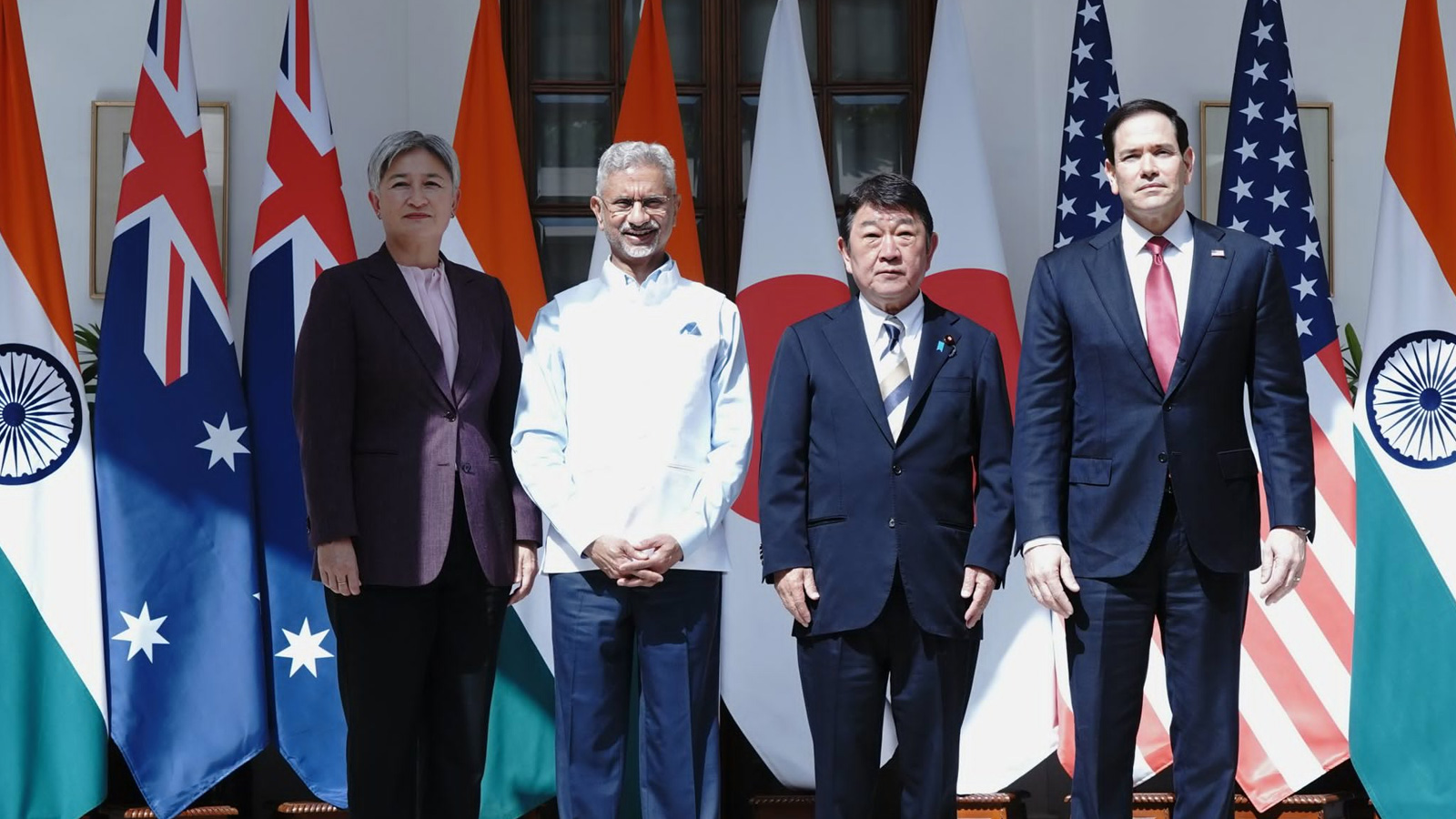
The 11th Quad Foreign Ministers' Meeting was held in New Delhi amid growing geopolitical tensions in the South China Sea, Taiwan Strait, and Strait of Hormuz. The four Quad countries—India, the United States, Japan, and Australia—announced several new initiatives on maritime security, critical minerals, energy security, emerging technologies, and disaster response, reaffirming their commitment to a free, open, inclusive, and rules-based Indo-Pacific.
About the Quad
- The Quadrilateral Security Dialogue (Quad) is an informal strategic partnership comprising India, the United States, Japan, and Australia.
- It aims to promote a free, open, inclusive, prosperous, and resilient Indo-Pacific, based on respect for international law, freedom of navigation, territorial integrity, and peaceful resolution of disputes.
- The grouping originated as a humanitarian coordination mechanism following the 2004 Indian Ocean Tsunami, was first proposed by former Japanese Prime Minister Shinzo Abe in 2007, and was revived in 2017 in response to the changing strategic environment in the Indo-Pacific.
- At the 2021 Leaders' Summit, the Quad adopted the "Spirit of the Quad", reaffirming its commitment to democratic values, rule of law, and a region free from coercion.
- Some of its key initiatives include the Malabar Naval Exercise, Quad-at-Sea Ship Observer Mission, Indo-Pacific Partnership for Maritime Domain Awareness (IPMDA), and growing cooperation through the Quad Plus format with countries such as South Korea, New Zealand, and Vietnam.
Key Outcomes of the 11th Quad Foreign Ministers' Meeting
The meeting significantly expanded cooperation across security, economic resilience, technology, and humanitarian assistance.
Maritime and Security Cooperation
- The Quad launched the Indo-Pacific Maritime Surveillance Collaboration (IPMSC) to improve Maritime Domain Awareness (MDA) through information sharing and coordinated surveillance, with an initial focus on the Indian Ocean Region (IOR).
- It also expanded the Indo-Pacific Partnership for Maritime Domain Awareness (IPMDA) by developing a Common Operating Picture (COP) to integrate real-time maritime information across the Indo-Pacific.
- India will host the next Quad-at-Sea Ship Observer Mission, while Australia will organise the Quad Counterterrorism Tabletop Exercise (2026) focusing on state-sponsored terrorism and the misuse of Unmanned Aerial Vehicles (UAVs).
Economic Security and Supply Chain Resilience
- Recognising the strategic importance of critical minerals and secure supply chains, the Quad adopted the Quad Critical Minerals Initiative Framework to coordinate investments in mining, processing, recycling, and resilient supply chains.
- The partners also launched the Quad Initiative on Indo-Pacific Energy Security, committing over USD 25 million for technology collaboration, energy market analysis, emergency response, and resilient energy supply chains.
- Further, under the Ports of the Future Partnership, the Quad will work with Fiji to upgrade port infrastructure and committed to connecting all Pacific Island Forum countries through resilient undersea cable networks by 2026, strengthening regional digital connectivity.
Critical and Emerging Technologies
Technology cooperation emerged as another major pillar of the Quad.
The members agreed to collaborate on:
- Next-generation (6G) communication standards and Open RAN technologies.
- A Digital Identity Standards "Translation Guide" to enable cross-border interoperability.
- The AI-ENGAGE Initiative, under which over USD 6 million has been allocated for research using Artificial Intelligence, robotics, and remote sensing to improve agricultural productivity, pest management, and food security across the Indo-Pacific.
Humanitarian Assistance and Disaster Relief (HADR)
- Building on lessons from the 2025 Honolulu Tabletop Exercise, the Quad strengthened its disaster response architecture by enhancing coordination mechanisms for emergency response.
- The grouping also committed over USD 50 million to train health professionals, improve preparedness for disease outbreaks, and strengthen humanitarian assistance and disaster relief (HADR) capabilities across the Indo-Pacific.
Significance of the Quad for India
For India, the Quad has evolved into a crucial platform that complements its Act East Policy, Indo-Pacific Oceans Initiative (IPOI), and vision of SAGAR (Security and Growth for All in the Region).
It helps India:
- Counter China's growing strategic presence and the "String of Pearls" strategy in the Indian Ocean.
- Strengthen Maritime Domain Awareness through initiatives like IPMSC and IPMDA.
- Diversify critical mineral and technology supply chains under the global China 1 strategy.
- Enhance cooperation in AI, semiconductors, cyber security, telecommunications, and clean energy.
- Deepen defence interoperability while preserving India's policy of Strategic Autonomy, as the Quad is not a military alliance.
National e-Governance Service Delivery Assessment
- 30 May 2026
In News:
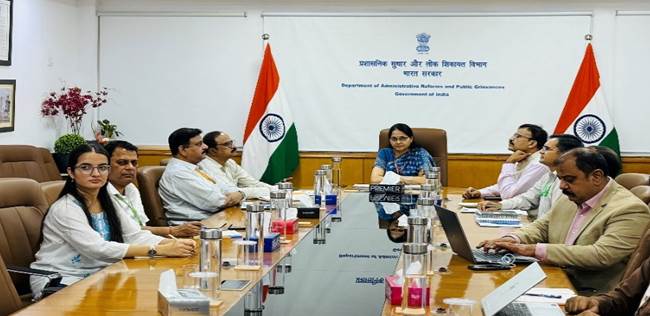
The Department of Administrative Reforms and Public Grievances (DARPG) has launched the National e-Governance Service Delivery Assessment (NeSDA) 2025 Portal to assess the quality and effectiveness of online public service delivery across States, Union Territories (UTs), and selected Central Ministries. The portal aims to strengthen digital governance by enabling standardized assessment, benchmarking, and continuous improvement in service delivery.
What is NeSDA?
- The National e-Governance Service Delivery Assessment (NeSDA) is a biennial assessment framework developed by DARPG to evaluate the maturity and effectiveness of e-governance services from a citizen-centric perspective.
- It is based on the Online Service Index (OSI) of the UN e-Government Survey, but has been adapted to India's federal governance structure.
- Rather than ranking governments solely on the number of services available online, NeSDA assesses how effectively these services are delivered, focusing on their accessibility, usability, transparency, and overall user experience.
- It also serves as a national benchmarking exercise, encouraging States, UTs, and Central Ministries to adopt best practices and bridge gaps in digital governance.
Key Features of NeSDA 2025
- NeSDA 2025 expands both the scope and depth of assessment. It evaluates State, UT, City, and Central Ministry portals, along with dedicated service portals, thereby covering the complete digital service delivery ecosystem.
- The framework assesses Government-to-Citizen (G2C) and Government-to-Business (G2B) services across major sectors such as finance, labour and employment, education, local governance, utility services, social welfare, health, agriculture, home security, environment, tourism, public grievance, and transport.
- A notable addition in NeSDA 2025 is the inclusion of services offered by the Ministry of Corporate Affairs, reflecting the increasing emphasis on digital business governance.
- To ensure uniform evaluation, the framework proposes assessment of 59 mandatory services for every State and Union Territory and 43 mandatory services for Central Ministries and Departments.
Assessment Parameters
The assessment examines the overall maturity of digital governance through multiple dimensions. It evaluates whether online services are accessible, easy to use, secure, and privacy-compliant, while also assessing end-to-end digital service delivery, integrated service delivery, status tracking, Open Government Data (OGD), e-participation, and the adoption of emerging technologies such as Artificial Intelligence. This comprehensive approach ensures that governments focus not only on digitization but also on the quality of citizens' digital experience.
Significance
NeSDA has emerged as an important instrument for promoting good governance and cooperative federalism by enabling evidence-based comparison of digital service delivery across governments.
It helps identify implementation gaps, encourages the adoption of best practices, and improves accountability through measurable performance indicators.
The launch of the NeSDA 2025 Portal will further streamline online data collection, stakeholder consultations, capacity-building programmes, and periodic reviews.
As India expands its Digital Public Infrastructure, NeSDA complements flagship initiatives such as Digital India, Ease of Living, and Minimum Government, Maximum Governance by ensuring that public services are not only digitized but are also citizen-friendly, inclusive, transparent, and efficient.
Memflation

- 30 May 2026
In News:
The global semiconductor industry is witnessing a phenomenon called 'Memflation', resulting in a shortage of conventional memory chips and a sharp rise in their prices. In India, this has led to a shortage of entry-level smartphones (?10,000–?15,000) as semiconductor manufacturers divert production capacity towards High Bandwidth Memory (HBM) required for Artificial Intelligence (AI) infrastructure. At the same time, global semiconductor revenues are projected to cross $1.3 trillion in 2026, a 64% increase over 2025, driven largely by AI-led demand.
What is Memflation?
Memflation is a term coined by Gartner to describe the structural inflation in semiconductor memory prices caused by the rapid expansion of AI infrastructure. The extraordinary demand for AI chips and advanced memory has diverted manufacturing resources away from conventional memory components, creating shortages and driving up prices for consumer electronics.
Unlike temporary supply disruptions, memflation represents a long-term structural shift in the semiconductor industry, where production is increasingly aligned with high-margin AI applications rather than mass-market consumer devices.
What is Driving Memflation?
The primary factor behind memflation is the global AI boom, which has significantly increased demand for High Bandwidth Memory (HBM) used in AI accelerators and data centres. Since manufacturing one HBM chip requires 2–3 times more wafer capacity than conventional memory chips, semiconductor manufacturers are allocating a larger share of fabrication resources to AI-related products.
Other contributing factors include:
- Production Shift: Major companies such as Micron Technology are prioritising high-margin AI memory and enterprise chips over consumer memory.
- Pre-emptive Stockpiling: Fearing tariffs and future price increases, companies accumulated large inventories during 2025–26, further tightening global supplies.
- Limited Manufacturing Capacity: Semiconductor fabrication and advanced packaging require enormous capital investment and years to expand, preventing quick supply-side responses.
Role of DRAM, NAND and HBM
The current shortage primarily affects conventional memory technologies used in consumer electronics.
- DRAM (Dynamic Random Access Memory): Temporary memory used by processors in smartphones, laptops and computers for active operations.
- NAND Flash Memory: Non-volatile storage that retains data even when power is switched off and is widely used in smartphones, SSDs and storage devices.
- High Bandwidth Memory (HBM): Advanced stacked memory offering significantly higher speed and bandwidth, primarily used in AI processors, GPUs and high-performance computing.
The rapid shift towards HBM production has reduced the availability of DRAM and NAND, thereby increasing their prices.
Impact on India
India is among the most vulnerable countries because it depends heavily on imported semiconductor components while having a highly price-sensitive consumer market.
The immediate consequences include:
- Shortage of smartphones priced below ?10,000–?15,000.
- Increase in smartphone prices by 15–20% for several brands.
- Rising production costs for entry-level laptops and consumer electronics.
- Smartphone manufacturers increasingly prioritising premium devices over budget models due to higher profitability.
- Greater dependence on global semiconductor supply chains.
Global Implications
Memflation is affecting both technology producers and consumers across the world.
- DRAM prices are expected to rise by nearly 125%, while NAND flash prices could increase by around 243%.
- The semiconductor industry is projected to expand from over $1.3 trillion in 2026 to nearly $1.6 trillion by 2027, with AI emerging as its principal growth driver.
- Rising memory prices are delaying enterprise IT upgrades, increasing hardware costs, and disrupting non-AI technology markets.
- Analysts expect supply constraints and elevated prices to continue through 2026–27, with gradual normalisation only after new fabrication capacities become operational.
150 Years of the Indian Association for the Cultivation of Science (IACS)

- 30 May 2026
In News:
The Indian Association for the Cultivation of Science (IACS) celebrated 150 years of its establishment. To mark the occasion, the Government inaugurated the Plasma Enhanced Chemical Vapor Deposition (PECVD) system for fabricating India's first amorphous silicon solar cell and launched RETINA (Research Entrepreneurship for Translation, Innovation and NAvigation), a centre dedicated to translating scientific research into innovation, startups, and societal applications.
Indian Association for the Cultivation of Science (IACS)
Founded in 1876 by Dr. Mahendralal Sircar, IACS is recognised as the first research institution in Asia established by Indians for the promotion of modern science through original research. Established during British rule, the institute played a pioneering role in fostering scientific temper and indigenous research at a time when scientific education in India was limited.
Key Features
- Established by Dr. Mahendralal Sircar with the vision of promoting original scientific research in India.
- Pandit Iswar Chandra Vidyasagar and Kesab Chandra Sen were members of its first Board of Trustees.
- Became the workplace of eminent Indian scientists such as: Jagadish Chandra Bose, Meghnad Saha, S.N. Bose, and Sir C.V. Raman
- Today, IACS undertakes cutting-edge research in physics, chemistry, biological sciences, materials science, nanotechnology, quantum materials, artificial intelligence, battery technologies, and environmental science.
IACS and the Raman Effect
One of the institute's greatest contributions to science was the discovery of the Raman Effect by Sir C.V. Raman, for which he received the Nobel Prize in Physics in 1930—the first Nobel Prize in Science awarded to an Indian.
What is the Raman Effect?
The Raman Effect refers to the inelastic scattering of light by molecules.
- When monochromatic light strikes a substance, most photons are scattered without any change in energy (Rayleigh scattering).
- A very small fraction exchanges energy with molecules and emerges with different wavelengths, producing the Raman Effect.
Applications
The discovery laid the foundation for Raman Spectroscopy, which is extensively used in:
- Chemical and pharmaceutical analysis
- Medical diagnostics
- Forensic science
- Materials characterization
- Nanotechnology and semiconductor research
New Initiatives Launched
1. Plasma Enhanced Chemical Vapor Deposition (PECVD) System
The newly inaugurated PECVD system is India's first indigenous facility for fabricating amorphous silicon (a-Si) solar cells.
Significance
- Uses plasma to deposit thin semiconductor films at relatively low temperatures.
- Enables production of lightweight, flexible, and cost-effective solar cells.
- Strengthens India's indigenous capability in renewable energy technologies and advanced semiconductor manufacturing.
- Supports the objectives of Atmanirbhar Bharat and clean energy transition.
2. RETINA (Research Entrepreneurship for Translation, Innovation and NAvigation)
RETINA has been established to bridge the gap between fundamental scientific research and commercial innovation.
It aims to:
- Promote technology transfer from laboratories to industry.
- Support startups and entrepreneurship based on scientific discoveries.
- Encourage industry-academia collaboration.
- Develop solutions for societal challenges in healthcare, clean energy, advanced materials, and sustainability.
Bundibugyo Virus Outbreak

- 30 May 2026
In News:
The World Health Organization (WHO) declared the Bundibugyo Ebola Virus Disease (BVD) outbreak in the Democratic Republic of the Congo (DRC) and Uganda as a Public Health Emergency of International Concern (PHEIC).
The outbreak has drawn global attention because, unlike the Zaire strain of Ebola, there is currently no licensed vaccine or specific treatment for the Bundibugyo virus, exposing serious gaps in global preparedness against emerging infectious diseases.
What is Bundibugyo Virus?
- Bundibugyo virus is one of the six species of the Orthoebolavirus genus that causes Ebola Virus Disease (EVD).
- It is a zoonotic disease, with fruit bats believed to be its natural reservoir. Human infection occurs through contact with infected wildlife such as bats and non-human primates, while subsequent transmission takes place through direct contact with the blood, body fluids, or contaminated objects of infected individuals. Healthcare workers and people participating in unsafe burial practices are particularly vulnerable to infection.
- The virus has an incubation period of 2–21 days, and infected individuals become contagious only after symptoms appear.
- Initial symptoms such as fever, fatigue, headache, muscle pain, and sore throat resemble common febrile illnesses like malaria, making early diagnosis difficult.
- In severe cases, patients develop gastrointestinal complications, multi-organ failure, and haemorrhagic manifestations.
- Previous outbreaks in Uganda and the DRC have reported case fatality rates ranging from 30% to 50%. Diagnosis requires laboratory confirmation through RT-PCR and antigen or antibody-based tests.
Ebola Virus Disease:
- Ebola Virus Disease is a rare but highly fatal viral haemorrhagic fever first identified in 1976 near the Ebola River in the DRC.
- Of the six known Orthoebolavirus species, Ebola virus, Sudan virus, Bundibugyo virus, and Taï Forest virus infect humans, while Reston and Bombali viruses have not caused human disease.
- Although WHO has approved monoclonal antibody therapies such as Ansuvimab and Inmazeb, and vaccines like Ervebo, Zabdeno, and Mvabea, these are effective only against the Zaire Ebola virus.
- No approved vaccine or targeted therapy currently exists for Bundibugyo or Sudan virus disease, making supportive care, rapid case detection, isolation, contact tracing, infection prevention, and safe burial practices the primary means of controlling outbreaks.
Why has vaccine development been delayed?
The Bundibugyo outbreak highlights a classic case of market failure in global health. Vaccine development is scientifically complex, expensive, and requires high-containment Biosafety Level-4 (BSL-4) laboratories and lengthy clinical trials. Since Bundibugyo outbreaks are infrequent and largely confined to low-income African countries with limited purchasing power, pharmaceutical companies have little commercial incentive to invest in vaccine research. Consequently, diseases with high public health risks but limited market demand continue to remain neglected, despite posing significant pandemic threats.