
Right to Safe Travel on National Highways under Article 21
- 28 Apr 2026
In News:
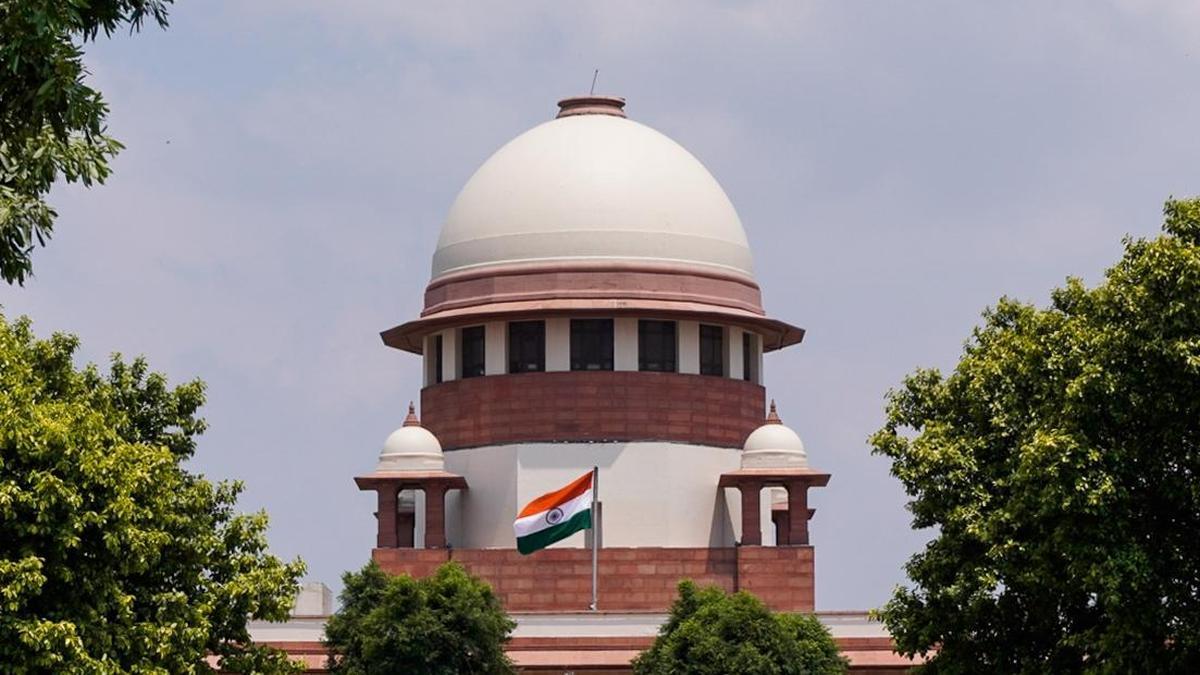
In a transformative judicial intervention, the Supreme Court of India has elevated the right to safe passage on highways to the status of a Fundamental Right. By interpreting Article 21 (Protection of Life and Personal Liberty) to include the safety of commuters, the Court has shifted the responsibility of road safety from a mere administrative task to a non-negotiable constitutional obligation of the State.
The Constitutional Shift: Expanding the Right to Life
The Supreme Court ruled that Article 21 imposes a "positive obligation" on the State to create a safe environment for its citizens.
- Beyond Survival: The Court clarified that the right to life extends beyond protection from unlawful killing; it includes protection from avoidable hazards.
- State Liability: Fatalities resulting from poor infrastructure, unauthorized encroachments, or administrative negligence are now viewed as a failure of the State’s constitutional duty to protect life.
The Crisis on the Arteries: Alarming Statistics
The ruling was prompted by a staggering disparity in India’s road safety data:
- Disproportionate Fatalities: While National Highways (NHs) constitute a mere 2% of India’s total road network, they are responsible for nearly 30% of all road fatalities.
- Vulnerability: This identifies NHs as zones of severe infrastructural and administrative vulnerability, requiring immediate and drastic systemic overhaul.
Judicial Mandates: Cleansing the Right-of-Way
To address the root causes of highway accidents, the Court issued several "Immediate Prohibitions" aimed at clearing the Right-of-Way (RoW)—the strip of land reserved for the highway and its future expansion.
1. Ban on Commercial Structures: The Court has issued an immediate ban on the construction or operation of any new commercial entities, including dhabas, eateries, or shops, within the highway's Right-of-Way. Existing unauthorized structures must be identified and addressed.
2. Demolition and Licensing
- 60-Day Ultimatum: District Magistrates are directed to demolish or remove all unauthorized structures within 60 days.
- Mandatory Clearances: No trade licenses or approvals for structures within highway safety zones can be granted without prior NOC (No Objection Certificate) from the National Highways Authority of India (NHAI) or the Public Works Department (PWD).
3. Strict Parking Norms: To prevent high-speed collisions with stationary objects, the Court prohibited heavy and commercial vehicles from stopping or parking on any National Highway, carriageway, or paved shoulder. Parking is strictly restricted to officially designated lay-bys and wayside amenities.
Institutional Mechanism: District Highway Safety Task Force
To ensure these directives do not remain on paper, the Court mandated the creation of a ‘District Highway Safety Task Force’ in every district across the country. This body will be responsible for:
- Constant monitoring of highway safety protocols.
- Enforcing the ban on unauthorized parking and structures.
- Ensuring inter-departmental coordination between the Police, NHAI, and District Administration.
The Bnei Menashe and "Operation Wings of Dawn"
- 28 Apr 2026
In News:
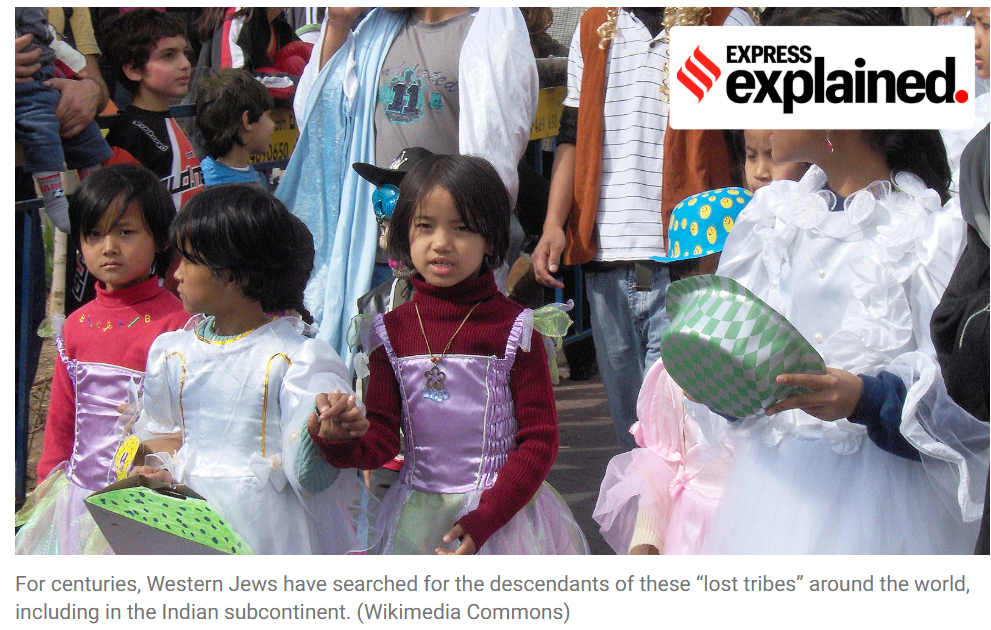
In a significant diplomatic and humanitarian development, Israel recently airlifted approximately 240 individuals from Mizoram to Tel Aviv under "Operation Wings of Dawn." This operation, conducted amid heightened security concerns in West Asia, marks a new phase in the migration of the Bnei Menashe community from Northeast India to their perceived ancestral homeland.
Understanding "Operation Wings of Dawn"
The operation facilitated the relocation of members of the Bnei Menashe community to absorption centers in Israel, specifically in areas like NofHaGalil in northern Israel.
- India’s Diplomatic Stance: The Government of India has clarified that it did not actively facilitate the operation. India’s role remained restricted to its sovereign responsibility of ensuring that migration was legal, voluntary, and conducted in a manner that prevents any form of human trafficking.
- Logistical Support: The migration is largely managed by agencies such as Shavei Israel and the Jewish Agency for Israel (JAFI), which assist "Lost Tribes" in their journey toward Israeli citizenship.
The Bnei Menashe: History and Belief Systems
The Bnei Menashe (meaning "Sons of Manasseh") are a community primarily comprising individuals from the Mizo and Kuki tribal groups in Manipur and Mizoram.
The Ten Lost Tribes Theory
The community claims descent from the Tribe of Manasseh, one of the Ten Lost Tribes of Israel exiled by the Assyrian Empire around 722 BCE. Their oral traditions describe a centuries-long journey through Persia (modern-day Iran), Afghanistan, and eventually into the hills of Northeast India.
Religious Evolution
While most members of these tribal groups were converted to Christianity by missionaries during the 19th and 20th centuries, a "Judaising" movement emerged in the late 20th century. Influenced by local religious visions and organizations like Amishav, many members began adopting Jewish rituals, dietary laws (Kosher), and the Hebrew language by the 1980s.
Legal and Religious Recognition
The pivotal moment for the community came in 2005, when Israel’s Chief Rabbinate formally recognized the Bnei Menashe as the "Lost Seed of Israel."
- Basis for Recognition: This decision was based on deep-rooted cultural claims and traditional practices, as genetic evidence remained largely inconclusive.
- The Right of Return (Aliyah): This recognition cleared the path for members to perform Aliyah (the act of migrating to Israel). However, because they had been separated from mainstream Judaism for millennia, they are typically required to undergo a formal conversion process upon arrival in Israel to gain full citizenship.
Socio-Political Challenges and Integration
Despite the spiritual fulfillment of "returning" to Israel, the Bnei Menashe face several systemic hurdles:
- Integration Issues: Like many immigrant groups from non-Western backgrounds, the community has faced challenges related to language barriers, economic disparity, and cultural assimilation.
- Security Concerns: Many Bnei Menashe families have been settled in peripheral areas or sensitive northern regions like NofHaGalil, placing them on the frontlines of regional security tensions.
- Discrimination: Reports have surfaced regarding instances of social discrimination and the struggle for the community to be fully accepted within the complex mosaic of Israeli society.
Reconstitution of NITI Aayog
- 28 Apr 2026
In News:
The Government of India has formally reconstituted the NITI Aayog (National Institution for Transforming India), marking a strategic shift in the country's premier policy think tank. This overhaul, announced aims to infuse multidisciplinary expertise into India’s developmental roadmap, particularly in health, deep tech, and economic reforms, to align with the goal of becoming a "Viksit Bharat" by 2047.
A New Leadership for Economic and Strategic Reform
The reconstitution is led by the appointment of eminent economist and former Chief Economic Advisor Ashok Kumar Lahiri as the Vice Chairperson, succeeding Suman K. Bery. Holding the rank of a Cabinet Minister, Lahiri brings decades of experience in public policy and economic strategy to the Aayog.
The restructuring also introduces a diverse cohort of Full-Time Members, moving beyond traditional economist-heavy compositions to include experts from science, medicine, and technology:
- Rajiv Gauba: Former Cabinet Secretary (retained).
- Dr. M. Srinivas: Director of AIIMS Delhi, bringing extensive medical and public health expertise.
- Prof. Abhay Karandikar: Secretary, Department of Science and Technology, specializing in telecommunications and deep tech.
- Prof. Gobardhan Das: Renowned molecular scientist and immunologist.
- Prof. K. V. Raju: Expert in agricultural economics and rural development.
Core Philosophy: From Planning to Catalyzing
Formed on January 1, 2015, through a Cabinet resolution, NITI Aayog replaced the 65-year-old Planning Commission. This transition represented a paradigm shift in Indian governance:
- Bottom-Up Approach: Unlike the top-down "one-size-fits-all" model of the Planning Commission, NITI Aayog emphasizes that strong states make a strong nation.
- Cooperative Federalism: It serves as a primary platform to involve State Governments in the policy-making process, treating them as equal partners.
- Competitive Federalism: It encourages states to compete on developmental parameters through various indices, such as the SDG India Index and State Health Index.
Key Functions and Mandate
NITI Aayog operates as the Knowledge and Innovation Hub of the government, tasked with:
- Strategic Policy Design: Formulating long-term program frameworks while incorporating national security interests into economic strategy.
- Monitoring and Evaluation: Actively tracking the implementation of government schemes to ensure last-mile delivery.
- Ease of Living: Driving reforms to reduce the compliance burden on citizens and enhance quality of life.
- Resource Center: Acting as a repository of best practices and research on good governance.
Organizational Structure
As a non-constitutional, non-statutory, and advisory body, its structure is designed for maximum institutional flexibility:
- Chairperson: The Prime Minister of India.
- Vice Chairperson: Appointed by the PM; enjoys Cabinet Minister rank.
- Governing Council: Comprises Chief Ministers of all States and Union Territories with legislatures, and Lieutenant Governors of other UTs.
- Chief Executive Officer (CEO): An officer with the rank of Secretary to the Government of India, appointed for a fixed tenure.
- Ex-Officio Members: Maximum of four members from the Union Council of Ministers, nominated by the PM.
40 years of the Chernobyl Disaster
- 28 Apr 2026
In News:
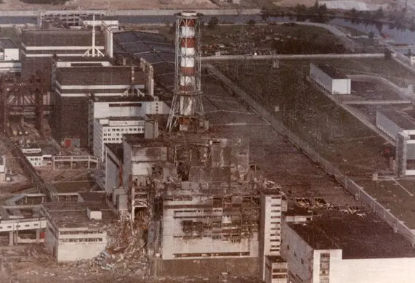
April 2026 marks the 40th anniversary of the Chernobyl disaster, an event that remains the most expensive man-made catastrophe in human history. With total costs exceeding $700 billion over four decades, the accident serves as a somber benchmark for the risks inherent in nuclear power when engineering flaws meet human error.
The Catastrophe: What Happened at Unit 4?
On the night of April 25–26, 1986, technicians at the Chernobyl nuclear power station—located near Pripyat in the former Soviet Union (present-day Ukraine)—initiated a safety experiment on the Unit 4 RBMK reactor. The goal was to test if the cooling pumps could still function during a power outage using the residual energy from a spinning turbine.
The experiment triggered a sequence of catastrophic failures:
- Design Vulnerabilities: The RBMK reactor was a graphite-moderated system with a critical flaw: it lacked a containment structure. In modern nuclear plants, this thick concrete and steel shell acts as a final physical barrier to prevent the escape of radiation during a meltdown.
- The Explosion: The chain reaction surged out of control, causing a massive steam explosion that blew the heavy lid off the reactor. Approximately 3.5% of the nuclear fuel was immediately dispersed into the atmosphere.
- The Graphite Fire: A subsequent fire in the graphite moderator burned for several days, acting as a chimney that sent plumes of radioactive isotopes high into the air, eventually spreading across Ukraine, Belarus, Russia, and reaching as far as Scandinavia.
Human and Environmental Toll
The scale of the disaster necessitated an unprecedented humanitarian and logistical response.
- Mass Displacement: Within 36 hours, the industrial town of Pripyat was evacuated. Ultimately, around 200,000 people were permanently relocated as their homes became part of a contaminated landscape.
- Environmental Impact: Nearly 150,000 square km of land across Eastern Europe was contaminated. Today, a 30-kilometer Exclusion Zone remains around the plant, where human habitation is strictly restricted due to high levels of soil radiation.
- Health Crisis: The health consequences were profound and long-lasting. Between 1991 and 2005, authorities documented at least 5,000 cases of thyroid cancer specifically in children who were exposed to radioactive iodine through contaminated milk and air.
Containment and Current Status
To prevent further leakage, the remains of Unit 4 were initially encased in a temporary concrete "sarcophagus." In recent years, this was replaced by the New Safe Confinement, a massive, arch-shaped steel structure designed to entomb the radioactive debris for the next century, allowing for the eventual stable decommissioning of the site.
Nilgiri Tahr
- 28 Apr 2026
In News:
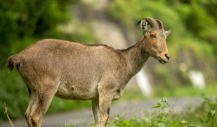
In a major cross-border conservation effort, the Tamil Nadu Forest Department, in collaboration with Kerala, has commenced the third synchronized Nilgiri Tahr survey. This scientific census is a critical component of Project Nilgiri Tahr, aimed at safeguarding the only mountain ungulate in southern India and understanding the ecological health of the high-altitude Western Ghats.
Biological Profile and Ecological Significance
The Nilgiri Tahr (Nilgiritragushylocrius) is a unique species among the 12 mountain ungulates found in India. As an endemic species to the Western Ghats, it serves as a "vital indicator species"—its population stability directly reflects the health of the fragile montane grasslands it inhabits.
- State Identity: It is the State Animal of Tamil Nadu.
- Physical Adaptation: Known for extreme agility, these ungulates are exceptionally sure-footed, allowing them to navigate steep, rocky cliffs to evade predators.
- Conservation Status: The species is currently categorized as Endangered on the IUCN Red List.
Habitat and Geographic Distribution
Historically, the Nilgiri Tahr roamed the entire length of the Western Ghats. Today, their range is restricted to a narrow 400 km stretch from the Nilgiris in the north to the Kanyakumari hills in the south.
- Altitude: They are strictly montane, favoring open grasslands at elevations between 1,200 and 2,600 meters.
- Population Strongholds:
- Eravikulam National Park (Kerala): Home to the largest single population.
- Anamalai Hills and the Nilgiris: Other significant clusters.
- Fragmentation: Due to historical habitat loss and anthropogenic pressures, the species survives in small, isolated pockets, which poses a risk to genetic diversity.
Modern Survey Methodology and Conservation Research
The current synchronized survey is timed specifically after the winter calving season. This ensures that the young "kids" are visible and can be accurately counted alongside the adults. The 2026 survey incorporates several advanced scientific interventions:
- Digital Monitoring: The Varudai mobile app is used for standardized reporting and real-time tracking, reducing human error and ensuring data transparency.
- Genetic Management: Researchers are conducting behavioral studies to evaluate the feasibility of translocation—moving individuals between fragmented pockets to prevent inbreeding and improve the gene pool.
- Health Assessment: Specific research is being directed toward the prevalence of tumors observed in certain herds, providing a baseline for the overall pathological health of the species.