
BHAVYA Portal for Bharat Audyogik Vikas Yojana
- 13 Jun 2026
In News:
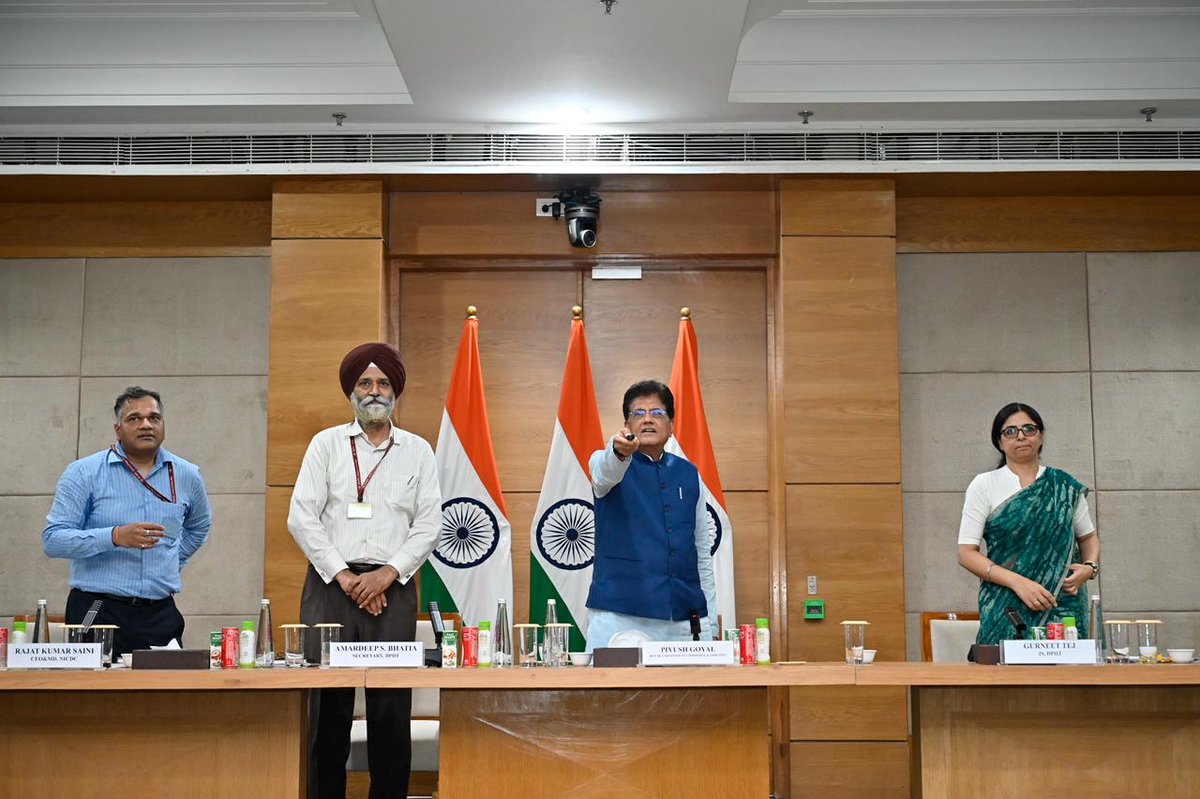
Recently, the Union Minister of Commerce and Industry launched the BHAVYA Portal to facilitate the implementation of the Bharat Audyogik Vikas Yojana (BHAVYA), a flagship programme aimed at creating world-class industrial infrastructure across India.
What is BHAVYA?
The Bharat Audyogik Vikas Yojana (BHAVYA) is a major industrial infrastructure initiative designed to develop 100 investment-ready, plug-and-play industrial parks across the country over a period of six years.
With a total outlay of ?33,660 crore, the scheme seeks to strengthen India's manufacturing ecosystem, attract investments, generate employment, and enhance global competitiveness.
BHAVYA Portal
The newly launched BHAVYA Portal will function as a single digital platform for:
- Submission of Detailed Project Reports (DPRs).
- Project appraisal and evaluation.
- Monitoring and implementation.
- Real-time progress tracking.
It aims to improve transparency, efficiency, and coordination between the Centre, States, and implementing agencies.
Key Features of the Scheme
Implementing Agency
The National Industrial Corridor Development Corporation (NICDC) has been designated as the Project Management Agency for implementation and monitoring.
Competitive Selection Model
States and Union Territories will compete by submitting proposals based on:
- Industrial strengths.
- Availability of land.
- Investor demand.
- Infrastructure readiness.
- Sectoral potential.
Centre–State Partnership
Land will be provided by State Governments, while infrastructure development will be supported through a 51:49 partnership model involving the Government of India and States.
Flexible Park Size
Industrial parks may vary from:
- 25 acres in hilly regions, North-Eastern States and smaller Union Territories.
- Up to 1,000 acres near major urban and industrial centres.
Plug-and-Play Infrastructure
The parks will offer ready-to-use industrial facilities, including:
- Assured water and power supply.
- Road and rail connectivity.
- Clear land titles.
- Digital single-window clearances.
- Air connectivity wherever feasible.
To improve product quality and export competitiveness, testing and certification facilities will be developed in collaboration with:
- Bureau of Indian Standards (BIS)
- Export Inspection Agency (EIA)
- Food Safety and Standards Authority of India (FSSAI)
Significance
BHAVYA is expected to:
- Boost manufacturing and industrialization.
- Attract domestic and foreign investments.
- Generate large-scale employment.
- Improve ease of doing business.
- Strengthen India's position in global value chains.
- Support the vision of Viksit Bharat 2047.
The scheme complements initiatives such as industrial corridors, Make in India, PM Gati Shakti, and logistics modernization by creating integrated industrial ecosystems.
NZP Saathi App
- 13 Jun 2026
In News:
The National Zoological Park has launched the NZP Saathi App along with self-ticketing kiosks as part of its digital transformation initiative aimed at enhancing visitor experience, accessibility, and awareness of wildlife conservation.
What is NZP Saathi?
NZP Saathi is an interactive mobile-based digital zoo guide that acts as a virtual companion for visitors. Developed by the National Zoological Park, New Delhi, the application integrates navigation, visitor services, and educational content into a single platform.
Key Features
The app is available on both Android and iOS platforms and offers:
- Real-time GPS-enabled navigation within the zoo.
- Interactive digital maps showing:
- Animal enclosures
- Drinking water facilities
- Washrooms
- Medical rooms
- Battery-operated buggy stops
- Emergency exits
To cater to different visitor preferences, the app provides four thematic tours:
- Express Tour – Covers major attractions in limited time.
- Family Tour – Child-friendly and relaxed route.
- Grand Zoo Tour – Comprehensive route covering all exhibits.
- My Tour – Personalized itinerary based on visitor preferences.
Integration with Self-Ticketing Kiosks
The app complements newly introduced self-ticketing kiosks that enable:
- Digital ticket booking.
- UPI-based cashless payments.
- Quick entry through automated ticket generation.
- Access through free on-site Wi-Fi connectivity.
Gallantry Awards

- 13 Jun 2026
In News:
Recently, President Droupadi Murmu conferred 51 Gallantry Awards during Phase-I of the Defence Investiture Ceremony 2026 at Rashtrapati Bhavan. Among the recipients of the Kirti Chakra was Prasanth Balakrishnan Nair, an Indian Air Force officer and one of the four astronaut-designates selected for the Gaganyaan mission.
About Gallantry Awards
Gallantry Awards are India's highest civilian military decorations awarded to personnel of the Armed Forces, Central Armed Police Forces (CAPFs), and State/UT Police Forces for exceptional courage, bravery, and sacrifice in the line of duty.
These awards are announced twice annually:
- Republic Day
- Independence Day
Categories of Gallantry Awards
India's gallantry awards are broadly divided into wartime and peacetime categories.
Wartime Gallantry Awards (Instituted in 1950)
- Param Vir Chakra – Highest wartime gallantry award.
- Maha Vir Chakra – Second-highest wartime gallantry award.
- Vir Chakra – Third-highest wartime gallantry award.
These were instituted on 26 January 1950 with retrospective effect from 15 August 1947.
Peacetime Gallantry Awards
Originally instituted in 1952 as Ashoka Chakra Class I, II and III, they were renamed in 1967 as:
- Ashoka Chakra – Highest peacetime gallantry award.
- Kirti Chakra – Second-highest peacetime gallantry award.
- Shaurya Chakra – Third-highest peacetime gallantry award.
Defence Investiture Ceremony 2026 (Phase-I)
A total of 51 Gallantry Awards were presented:
- Kirti Chakra: 7 awards (including 2 posthumous)
- Vir Chakra: 15 awards (including 3 posthumous)
- Shaurya Chakra: 29 awards (including 1 posthumous)
Significance
Gallantry Awards recognize extraordinary courage in combat and non-combat situations and serve as a symbol of national gratitude towards personnel who display exceptional devotion to duty and sacrifice.
The inclusion of a Gaganyaan astronaut-designate among the awardees also highlights the growing integration of India's defence, aviation, and space sectors in advancing national capabilities.
Bonn Climate Conference 2026

- 13 Jun 2026
In News:
The Bonn Climate Conference 2026, officially known as the 64th Sessions of the Subsidiary Bodies (SB64) under the United Nations Framework Convention on Climate Change, is being held in Bonn. As the principal mid-year climate negotiation platform, it serves as a technical and preparatory meeting ahead of the annual COP summit, helping translate political commitments into actionable frameworks.
Key Focus Areas
A major issue at SB64 has been the demand by health advocacy groups, led by the Global Climate and Health Alliance, to increase public adaptation finance from the COP26 goal of $40 billion annually to $120 billion annually by 2035. The demand reflects growing concerns over climate-induced health risks, extreme weather events, and the vulnerability of developing countries.
The conference also witnessed renewed calls for developed countries to publish clear national roadmaps for transitioning away from fossil fuels in line with the 1.5°C temperature goal under the Paris Agreement.
Major Discussions
- Adaptation and Climate Resilience: Negotiations focused on strengthening adaptation efforts, particularly in vulnerable regions facing increasing climate-related disasters, food insecurity, and public health challenges.
- Belém Adaptation Indicators: Technical discussions began on operationalizing the 59 Belém Adaptation Indicators adopted at COP30. These indicators aim to establish measurable benchmarks for assessing global adaptation progress.
- Agriculture and Food Security: Deliberations continued under the Sharm el-Sheikh Joint Work on Agriculture and Food Security, focusing on enhancing climate resilience in agricultural systems and safeguarding food security.
Just Transition
Countries discussed the implementation of the Just Transition Mechanism agreed upon at COP30. The mechanism seeks to facilitate capacity-building, technology transfer, and support for workers and communities affected by the transition to low-carbon economies.
Death Anniversary of Birsa Munda
- 13 Jun 2026
In News:
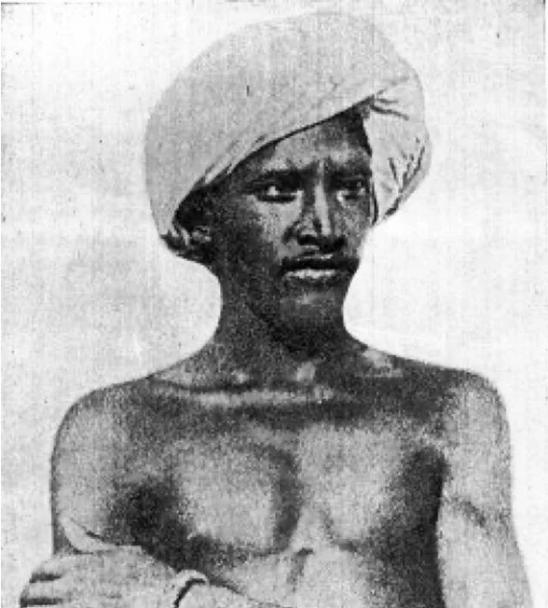
The Prime Minister paid tribute to Birsa Munda on his Martyr's Day (9 June), commemorating one of the most influential tribal leaders of India's anti-colonial struggle.
Early Life
Birsa Munda was born on 15 November 1875 in the Chotanagpur region (present-day Jharkhand) and belonged to the Munda Tribe. He emerged as a tribal freedom fighter, socio-religious reformer and symbol of indigenous resistance against colonial exploitation.
Resistance Against Colonial Rule
Birsa mobilized tribal communities against:
- British colonial administration
- Exploitative landlords and moneylenders
- Forced labour (Beth Begari)
- Missionary influence
- Alienation of tribal lands
His movement drew inspiration from the earlier Sardari Larai (Sardar Movement), which opposed the erosion of tribal land rights in Chotanagpur.
Defence of Tribal Land Rights
A central objective of Birsa's movement was the protection of the traditional Khuntkatti system, a customary tribal land tenure arrangement that recognized collective ownership and hereditary rights of tribal communities over land.
He strongly opposed the transfer of tribal land to outsiders, known as Dikus, and demanded restoration of traditional self-governance.
Ulgulan Movement
Birsa led the famous Ulgulan (Great Tumult) Movement during 1899–1900. The movement sought to:
- End British rule.
- Restore tribal self-rule.
- Protect tribal land rights.
- Resist exploitation by Dikus.
His slogan:
"Abua Raj Ete Jana, Maharani Raj Tundu Jana"(Let our rule be established and the Queen's rule end)
became a powerful expression of tribal assertion and anti-colonial resistance.
Religious and Social Reform
Birsa advocated social reform, moral discipline and cultural revival among tribal communities. His teachings led to the emergence of the Birsait faith community, which emphasized tribal identity, social cohesion and resistance to social evils.
Death and Legacy
Birsa Munda was arrested by the British and died in Ranchi Jail on 9 June 1900 at the age of 25. The official cause of death was recorded as cholera.
His struggle significantly influenced later tribal protection laws, particularly the Chotanagpur Tenancy Act, 1908, which restricted the transfer of tribal land to non-tribals.
Contemporary Recognition
To honour his contributions and the role of tribal communities in India's history, the Government of India observes 15 November as Janjatiya Gaurav Divas.