
Ancient Buddhist Site of Sarnath Inscribed on UNESCO World Heritage List
- 27 Jul 2026
In News:
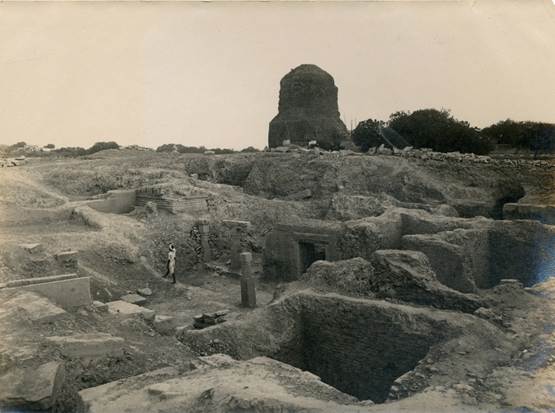
At the 48th Session of the World Heritage Committee in Busan, South Korea, the Ancient Buddhist Site of Sarnath was inscribed on the UNESCO World Heritage List.
With this inion, India now has 45 UNESCO World Heritage Sites, ranking 6th globally and 2nd in the Asia-Pacific region.
About the Ancient Buddhist Site of Sarnath
Sarnath is one of the four principal Buddhist pilgrimage sites, closely associated with the life of Gautama Buddha.
It was inscribed under:
- UNESCO Criterion (iii): Exceptional testimony to the Buddhist spiritual tradition.
- UNESCO Criterion (vi): Direct association with Buddha’s First Sermon (Dharmachakra Pravartana) and the establishment of the Buddhist Sangha.
Location
- Located at Sarnath, near Varanasi, Uttar Pradesh.
- The World Heritage property comprises:
- Chaukhandi Stupa
- Archaeological Remains of Sarnath, including:
- Dhamekh Stupa
- Dharmarajika Stupa
- Mulagandhakuti Vihara
- Ashokan Pillar site
Historical Significance
- Ancient names: Rishipatana, Ishipatana and Mrigadava.
- In the 6th century BCE, Gautama Buddha delivered his First Sermon (Dharmachakra Pravartana) here after attaining enlightenment at Bodh Gaya.
- The sermon introduced the Four Noble Truths, the Noble Eightfold Path, and marked the foundation of the Buddhist Sangha.
- The site flourished under Mauryan, Kushan, and Gupta patronage before declining in the 12th century CE.
- Rediscovered in the 18th century, it has been extensively excavated by the Archaeological Survey of India (ASI).
Major Monuments
- Dhamekh Stupa – Marks the place where Buddha delivered his first sermon.
- Chaukhandi Stupa – Commemorates Buddha's meeting with his first five disciples.
- Dharmarajika Stupa – One of the earliest stupas built by Emperor Ashoka.
- Mulagandhakuti Vihara – Ancient monastery believed to mark Buddha's residence during his stay.
- Ashokan Pillar – Its Lion Capital was adopted as the National Emblem of India.
- Sarnath Site Museum (established in 1904) houses renowned Gupta-period Buddhist sculptures, including the celebrated Dharmachakra Pravartana Buddha.
Public Examinations (Prevention of Unfair Means) Act, 2024

- 27 Jul 2026
In News:
The Union Cabinet approved amendments to the Public Examinations (Prevention of Unfair Means) Act, 2024 to strengthen measures against paper leaks and examination malpractices following incidents such as the NEET-UG paper leak.
About the Act
The Public Examinations (Prevention of Unfair Means) Act, 2024 is a Central law enacted to prevent paper leaks, organised cheating, impersonation, and other unfair practices in public examinations conducted by Central Government agencies.
The Act seeks to ensure fair, transparent, and merit-based recruitment and admission processes.
Coverage
The Act applies to examinations conducted by notified public authorities, including:
- Union Public Service Commission (UPSC)
- Staff Selection Commission (SSC)
- Railway Recruitment Boards (RRBs)
- National Testing Agency (NTA)
- Institute of Banking Personnel Selection (IBPS)
- Central Government Ministries, Departments and their attached offices
Key Features
Definition of Unfair Means
The Act criminalises activities such as:
- Leakage of question papers or answer keys.
- Unauthorized access to examination material.
- Tampering with computer networks or examination systems.
- Manipulation of merit lists or results.
- Impersonation and organised cheating.
- Fake examination websites, admit cards, or recruitment scams.
Penalties
- Individuals involved in unfair means can face 3–5 years imprisonment and a fine up to ?10 lakh.
- Organised paper leak syndicates may face 5–10 years imprisonment and a minimum fine of ?1 crore.
- Offences are cognizable, non-bailable, and non-compoundable.
Liability of Service Providers
Service providers (IT firms, testing agencies, logistics vendors, etc.) found responsible for security lapses may face:
- Fine up to ?1 crore.
- Recovery of the entire examination cost.
- Debarment from conducting public examinations for four years.
Directors and senior management involved in such offences are also personally liable.
Investigation
Investigations must be conducted by police officers not below the rank of Deputy Superintendent of Police (DSP) or Assistant Commissioner of Police (ACP), with provision to transfer cases to agencies such as the CBI.
Significance
- Protects the integrity and credibility of public examinations.
- Acts as a deterrent against organised cheating networks.
- Ensures merit-based recruitment and admissions.
- Strengthens public confidence in national entrance and recruitment examinations.
Chandipura Virus (CHPV)
- 27 Jul 2026
In News:
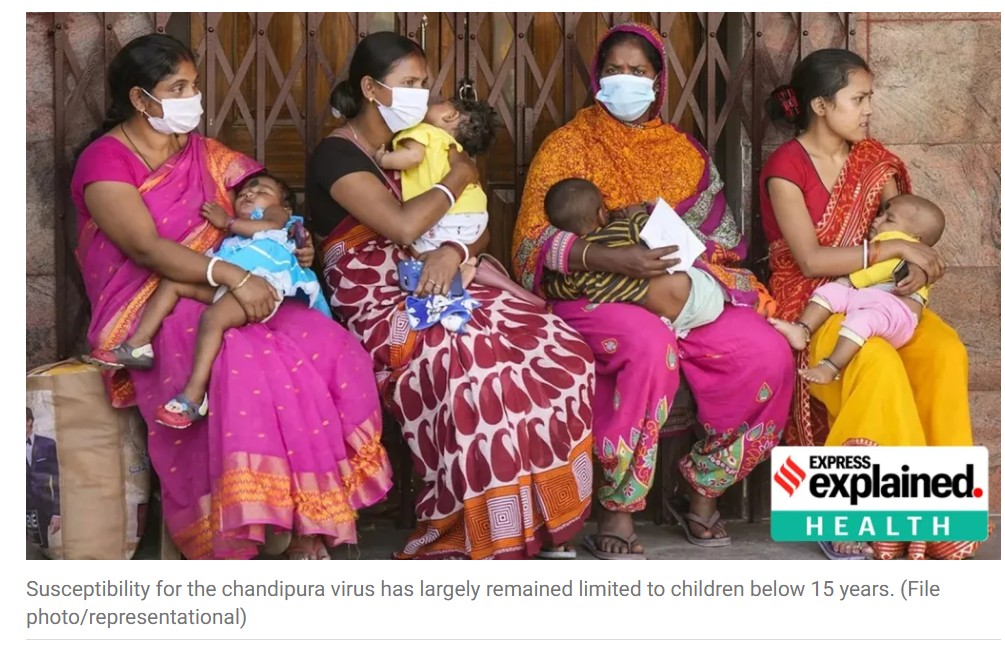
Nine deaths, including two children from Rajasthan undergoing treatment in Gujarat, have been confirmed due to the Chandipura virus (CHPV) outbreak.
About Chandipura Virus (CHPV)
- The Chandipura virus (CHPV) is a vector-borne virus belonging to the Rhabdoviridae family. It causes Acute Encephalitis Syndrome (AES), a severe inflammation of the brain that primarily affects children.
- The virus was first isolated in 1965 from Chandipura village, Maharashtra, during an outbreak of dengue/chikungunya-like fever.
- CHPV is endemic to parts of central and western India, particularly Maharashtra, Gujarat, Rajasthan, and Andhra Pradesh.
Transmission
- The virus is transmitted mainly through the bites of infected female Phlebotomine sandflies (Phlebotomus papatasi). Certain mosquito species, including Aedes aegypti, have also been identified as potential vectors.
- Human-to-human transmission has not been reported.
Clinical Features
- The disease primarily affects children below 15 years of age.
- Symptoms include:Sudden high fever, Severe headache, Vomiting, Body ache, Seizures, Altered consciousness, and Acute encephalitis (brain inflammation)
- The illness progresses rapidly, and severe cases may result in death within 24–48 hours if not treated promptly.
Treatment and Prevention
There is no specific antiviral drug or approved vaccine for Chandipura virus infection.
Treatment is mainly supportive, including intensive care, seizure management, hydration, and monitoring of neurological complications.
Preventive measures focus on:
- Vector control (especially sandflies)
- Maintaining environmental sanitation
- Use of insecticide-treated bed nets and repellents
- Early detection and prompt medical care
Project Kusha (Long-Range Surface-to-Air Missile (LR-SAM))
- 27 Jul 2026
In News:
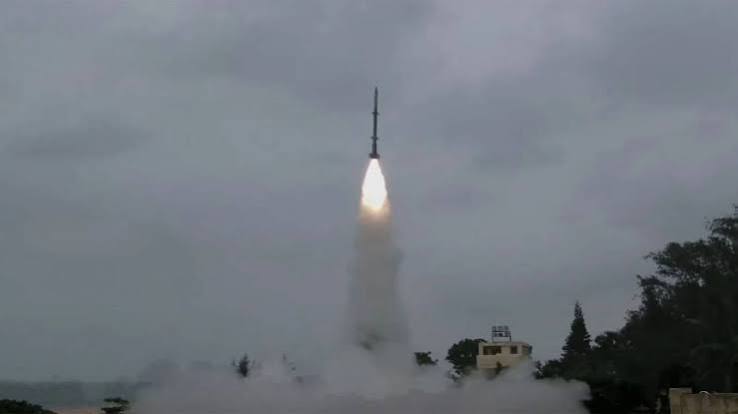
The Defence Research and Development Organisation (DRDO) successfully conducted the maiden flight test of the Kusha Long-Range Surface-to-Air Missile (LR-SAM) from Dr APJ Abdul Kalam Island off the coast of Odisha.
About Project Kusha (LR-SAM)
- Project Kusha is an indigenously developed long-range surface-to-air missile (LR-SAM) system designed to strengthen India's multi-layered air defence capability. It is being developed by the Defence Research and Development Organisation (DRDO) with support from public and private defence industry partners.
- The system aims to provide an indigenous long-range air defence shield capable of intercepting a wide range of aerial threats, thereby reducing dependence on imported air defence systems.
Key Features
Project Kusha comprises a three-tier interceptor family with different engagement ranges:
- M1: Up to 150 km
- M2: Up to 250 km
- M3: Up to 350 km
The system is designed to engage fighter aircraft, unmanned aerial vehicles (UAVs), cruise missiles, and other aerial threats across varying altitudes.
It integrates indigenously developed Active Electronically Scanned Array (AESA) radars, command and control systems, battle management software, and advanced missile seekers to provide automated target detection, tracking, and interception.
The missile system is designed to achieve a high interception success rate against complex aerial threats and saturation attacks.
BHAVYA – Rasayan Scheme
- 27 Jul 2026
In News:
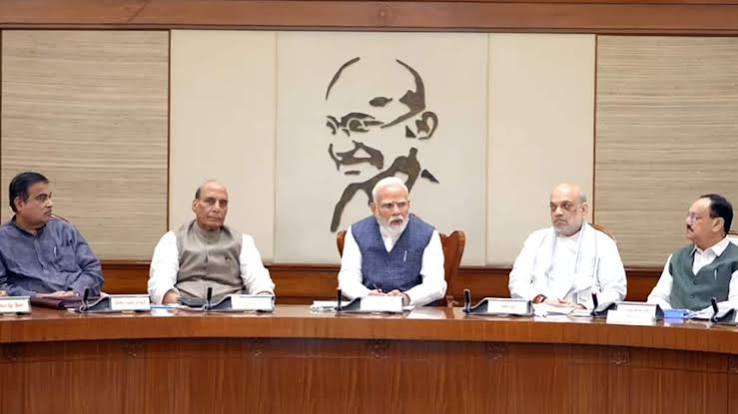
The Union Cabinet has approved the Bharat Audyogik Vikas Yojana Rasayan (BHAVYA–Rasayan) Scheme to establish three dedicated Chemical Parks across the country for strengthening India's chemical and petrochemical manufacturing ecosystem.
About BHAVYA–Rasayan Scheme
- BHAVYA–Rasayan is a Central Sector Scheme launched by the Department of Chemicals and Petrochemicals, Ministry of Chemicals and Fertilizers. It aims to develop integrated chemical parks with modern common infrastructure to enhance the competitiveness of India's chemical industry.
- The scheme will be implemented over five years (FY 2026–27 to FY 2030–31) with a total outlay of ?3,030 crore, including ?3,000 crore for infrastructure development and ?30 crore for administrative expenses.
Key Features
- The scheme envisages the establishment of three dedicated Chemical Parks, each spread over a minimum contiguous area of 8 sq. km. (2,000 acres) of encumbrance-free land.
- The Central Government will provide financial assistance of up to ?1,000 crore per park, subject to a minimum contribution of ?500 crore by the respective State Government. The parks will be selected through a Challenge Route.
- Each park will provide plug-and-play infrastructure with shared facilities such as Common Effluent Treatment Plants (CETP), Treatment, Storage and Disposal Facilities (TSDF), water supply systems, solvent recovery units, steam generation networks, interconnected pipelines, logistics, and warehousing facilities.