
Eublepharisjhuma
- 19 May 2026
In News:
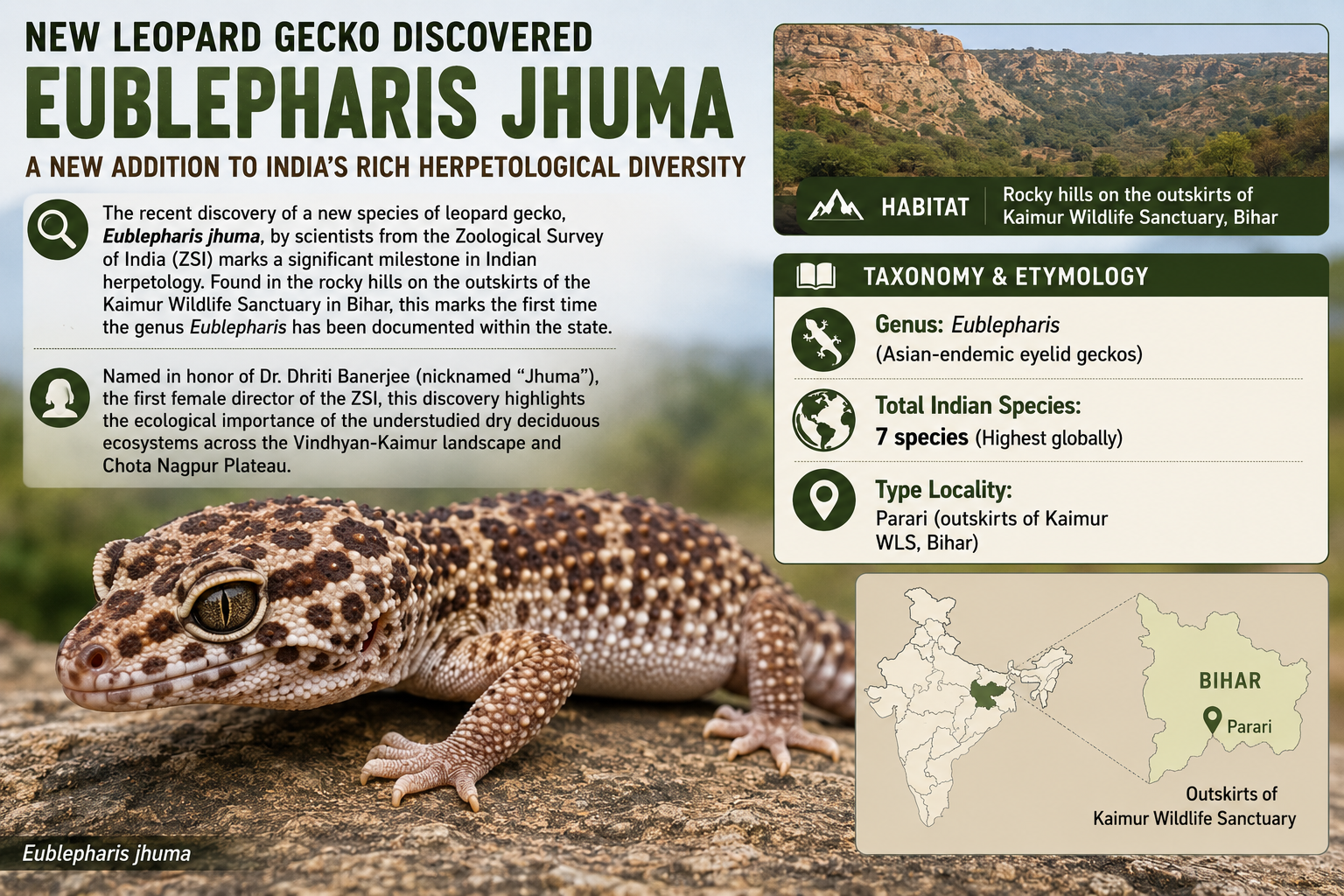
The recent discovery of a new species of leopard gecko, Eublepharisjhuma, by scientists from the Zoological Survey of India (ZSI) marks a significant milestone in Indian herpetology. Found in the rocky hills on the outskirts of the Kaimur Wildlife Sanctuary in Bihar, this marks the first time the genus Eublepharis has been documented within the state.
Named in honor of Dr. Dhriti Banerjee (nicknamed "Jhuma"), the first female director of the ZSI, this discovery highlights the ecological importance of the understudied dry deciduous ecosystems across the Vindhyan-Kaimur landscape and Chota Nagpur Plateau.
Taxonomy & Etymology
- Genus:Eublepharis (Asian-endemic eyelid geckos)
- Total Indian Species: 7 species (Highest globally)
- Type Locality:Parari (outskirts of Kaimur WLS, Bihar)
Morphological and Genetic Distinctiveness
Initially mistaken for its central Indian relative, Eublepharissatpuraensis, comprehensive physical and mitochondrial DNA sequencing confirmed E. jhuma as a phylogenetically independent lineage, showing a 6.9% to 7.8% genetic divergence from its closest relatives. This divergence suggests a history of allopatric speciation (evolution driven by geographic isolation) shaped by deep-time geological forces acting across India's plateau systems.
Unique Physical Adaptations
- Scale Architecture: Reaching up to 14 cm in body length, its dark brown dorsum (back) features large, flat, bumpy, tubercle-like scales with unusually wide gaps between them.
- Locomotive Efficiency: It possesses an elevated number of tiny, textured ridges (lamellae) under its fourth toe, providing crucial gripping power on steep, rocky terrains.
- Tail Regeneration: It features 12 to 13 pre-cloacal pores near its tail. Unique to this species, if its tail drops and regrows, the replacement scales grow back in a flat, rectangular configuration rather than the standard circular layout seen in related species.
Conservation Status and Systemic Threats
While newly discovered and currently marked as Not Assessed (NE) on the IUCN Red List, the species faces immediate anthropogenic pressures:
- Exotic Wildlife Trafficking: Leopard geckos are highly sought after in international and domestic exotic pet markets due to their calm demeanor and unique color patterns.
- Habitat Fragmentation: The unique habitat of the Kaiser range is structurally isolated from the main sanctuary forest by agricultural fields, making the species highly vulnerable to quarrying, forest fires, pollution, and roadkill.
Legal Protection Framework
In India, all leopard gecko species are protected under Schedule I of the Wildlife Protection Act, 1972 (as updated by the Amendment Act of 2022). This legal baseline mandates top-priority protection, making hunting, trade, or domestic captivity strictly illegal.