
National One Health Mission
- 20 May 2026
In News:
The Fifth Meeting of the Scientific Steering Committee (SSC) on the National One Health Mission (NOHM) was held at Kartavya Bhavan, New Delhi, under the chairmanship of Prof. Ajay K. Sood, Principal Scientific Adviser (PSA) to the Government of India.
About the National One Health Mission
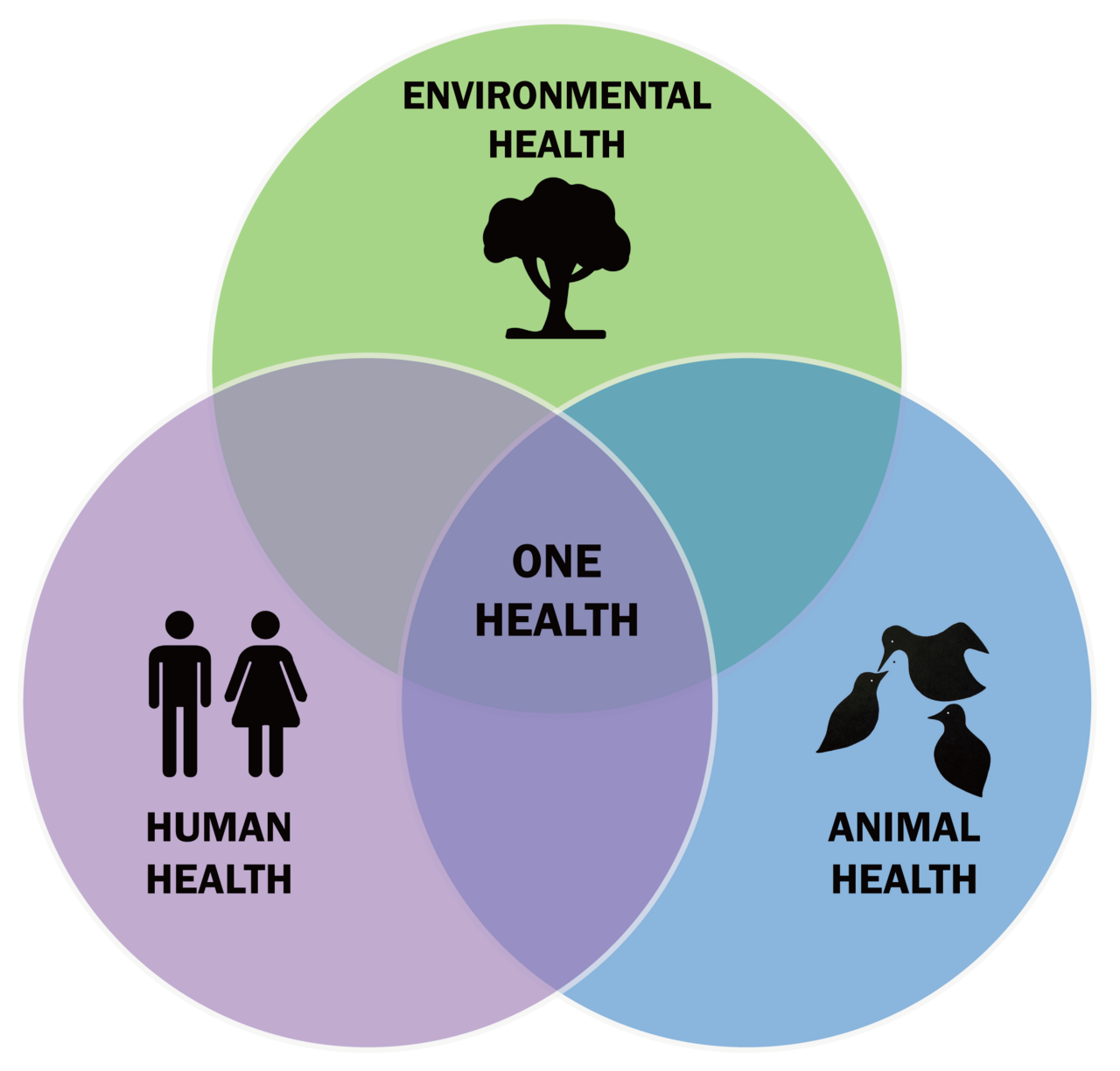
- Established with Cabinet approval in February 2024, following the recommendation of the 21st PM-STIAC (Prime Minister's Science, Technology and Innovation Advisory Council), the NOHM represents India's most ambitious attempt at building an integrated disease control and pandemic preparedness architecture. The mission adopts a collaborative, multidisciplinary approach — uniting human, animal, and environmental health systems under one coordinated framework.
- The nodal implementing agency is the Indian Council of Medical Research (ICMR) under the Department of Health Research (DHR), while strategic oversight rests with the Office of the Principal Scientific Adviser (OPSA). The mission currently engages more than 16 Central Ministries and Departments, including the Ministries of Health, Environment, Earth Sciences, Agriculture, and Ayush.
Governance Structure
The mission operates through a two-tiered governance model:
- The Executive Committee, chaired by the Minister of Health and Family Welfare with the PSA as Vice-Chair, provides overall policy guidance. Member (Health), NITI Aayog serves as a permanent invitee, while secretaries of stakeholder departments and two states (on a rolling basis) are members.
- The Scientific Steering Committee, chaired by the PSA, provides scientific direction and oversight. It includes Secretaries and Directors General of all stakeholder departments alongside two rotating state representatives.
Key Outcomes of the Fifth SSC Meeting
- The Committee released proceedings of two major events: the National One Health Assembly (November 2025) and the Workshop on Operational Frameworks for One Health held at Nagpur, which brought together States and Union Territories to align governance structures with NOHM objectives.
- Discussions covered short-, medium-, and long-term One Health priorities, with emphasis on integrated surveillance, laboratory strengthening, AI-enabled pathogen detection, cross-sectoral data sharing, and development of medical countermeasures.
- Updates were also presented by key advisory work streams, including those on BSL-3/4 Laboratories, Technology-Enhanced Surveillance, Data Integration, and Medical Countermeasures. Notably, India is developing a national network of high-security laboratories — currently 22 BSL-3/4 facilities — with a new BSL-4 facility foundation-laid in Gujarat in January 2026.
Significance and Global Linkages
The mission aligns with the One Health Joint Plan of Action (OH JPA) 2022–2026 of the Quadripartite alliance — FAO, UNEP, WHO, and WOAH — reflecting India's commitment to global health security norms. It also complements the existing National One Health Programme for Prevention and Control of Zoonoses (NOHP-PCZ) under the NCDC umbrella scheme.
India's first State/UT engagement workshop (June 2025, New Delhi) saw participation from 27 States and UTs — underscoring the federal dimension of health governance.
Anaimangalam Copper Plates
- 19 May 2026
In News:
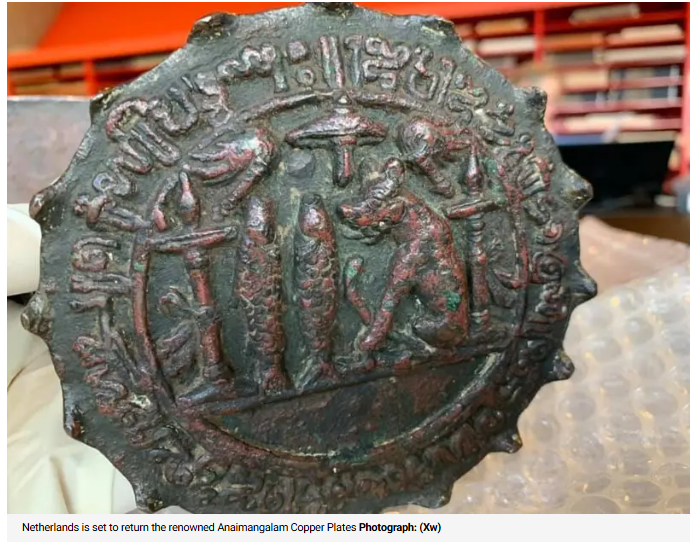
During Prime Minister Narendra Modi's recent visit to the Netherlands, the Dutch government formally returned the Anaimangalam Copper Plates — also called the Leiden Plates — to India. The repatriation marks a significant diplomatic achievement and revives interest in one of South Asia's most powerful medieval empires.
Historical Significance
The Anaimangalam Copper Plates are a set of 21 inscribed copper sheets dating to the reign of Emperor Rajaraja Chola I (985–1014 CE) and his son Rajendra Chola I. Together, they weigh approximately 30 kg and are bound by a bronze ring bearing the royal seal of Rajendra Chola I. The plates are bilingual — early plates carry Sanskrit text tracing the Chola royal genealogy and invoking divine legitimacy, while the majority are in Tamil, recording administrative and grant-related details.
The Tamil section is of particular historical import: it documents Rajaraja Chola I's grant of land revenues from villages near Anaimangalam in Tamil Nadu to the Chudamani Vihara, a Buddhist monastery at the bustling port of Nagapattinam. Crucially, this monastery had been built by Sri Mara Vijayotunga Varman, the ruler of the Srivijaya kingdom — a maritime empire centred in present-day Indonesia. Although the grant was originally a verbal order of Rajaraja, Rajendra later had it formally engraved on copper to ensure its preservation — an act reflecting the period's administrative sophistication.
Why It Matters: Heritage, Trade and Pluralism
The plates offer rare primary evidence of the Chola Empire's cosmopolitan character. At their peak, the Cholas dominated South India, Sri Lanka, and launched naval campaigns across Southeast Asia. Their reign saw flourishing Indian Ocean trade networks, cross-cultural patronage, and — as these plates demonstrate — active religious pluralism, with a Hindu king endowing land revenues for a Buddhist monastery constructed by a foreign ruler.
This makes the Anaimangalam Copper Plates a unique document at the intersection of diplomacy, religion, and commerce across medieval Asia.
Colonial Displacement and Repatriation
The plates' displacement began around 1700 CE when Dutch missionary Florentius Camper acquired them during the Dutch East India Company's (VOC) control of Nagapattinam. They subsequently reached the Leiden University Library in the Netherlands, where they remained for over three centuries — accessible to scholars but not the general public.
India's systematic repatriation drive, strengthened since 2012, received a significant boost when the UNESCO Intergovernmental Committee (2023) validated India's claim as the country of origin and recommended bilateral talks. The Netherlands' decision to return the plates is a direct outcome of this sustained diplomatic engagement.
Bhojshala Temple

- 19 May 2026
In News:
The Indore Bench of the Madhya Pradesh High Court issued a landmark judgment declaring the disputed 11th-century Bhojshala-Kamal Maula Mosque complex in Dhar district fundamentally a Hindu temple dedicated to Goddess Vagdevi (Saraswati). In doing so, the High Court quashed a 2003 Archaeological Survey of India (ASI) arrangement that allowed shared worship (Tuesdays for Hindus, Fridays for Muslims) and transferred administrative stewardship to the ASI.
Core Historical Background of the Complex
The Bhojshala complex represents a critical site of medieval architecture, epigraphy, and educational heritage.
- The Paramara Legacy: The complex is historically tied to Raja Bhoj (1010–1055 CE) of the Paramara dynasty, a celebrated polymath and patron of arts and Sanskrit literature. He established the site as a premier university (Bhojshala) and temple dedicated to Vagdevi.
- Epigraphical Significance: The site houses unique Sarpabandha (serpentine chart) pillar inions containing grammatical tools like the Sanskrit alphabet and tenses. Additionally, walls feature ancient Prakrit odes honoring the Kurma-Avatara (tortoise incarnation of Vishnu) and theatrical dramas composed by the royal tutor Madana.
- The Vagdevi Idol: A highly sophisticated 11th-century white marble sculpture of Goddess Saraswati was excavated from the site in the late 19th/early 20th century and is currently housed in the British Museum, London.
- The Mosque Conversion Claim: The Muslim community identifies the site as the Kamal Maula Mosque, attributing its foundation to Hazrat Maulana Kamaluddin Chishti around 1306–1307 CE. Historical records like the Imperial Gazetteer of India (1908) corroborate that the mosque was built by reusing structural elements (basalt pillars and carved stone slabs) from a pre-existing Hindu temple.
Key Legal and Constitutional Dimensions
The high court's judgment introduces critical interpretations of Indian statutory and constitutional law:
1. Decoupling from the Places of Worship Act, 1991
The primary defense argued that the Places of Worship (Special Provisions) Act, 1991, freezes the religious character of any place of worship as it existed on August 15, 1947.
The High Court rejected this, clarifying that Section 4(3)(a) of the 1991 Act explicitly excludes any ancient and historical monument covered under the Ancient Monuments and Archaeological Sites and Remains (AMASR) Act, 1958. Because the Bhojshala complex had been declared a protected monument since 1904, it is exempt from the 1991 freeze, leaving its religious character open to judicial determination based on historical truth.
2. Application of the "Ayodhya Framework" and Preponderance of Probabilities
Instead of treating this as a property title suit (like the Babri Masjid case), the court addressed it as a Writ Petition under Article 226 seeking the enforcement of the fundamental right to worship (Article 25).
The Bench applied the 10 core judicial principles from the Supreme Court's 2019 Ayodhya Verdict, establishing that:
- The standard of proof is the preponderance of probabilities rather than mathematical certainty.
- Architectural and scientific evidence (like the 2,189-page ASI report detailing 1,700 artifacts and reused temple columns) holds strong evidentiary weight.
- The legal "pious purpose" and continuity of Hindu worship at the core of the deity's endowment are never legally extinguished by the physical destruction of an idol or subsequent architectural modifications.
Public Health Emergency of International Concern
- 19 May 2026
In News:
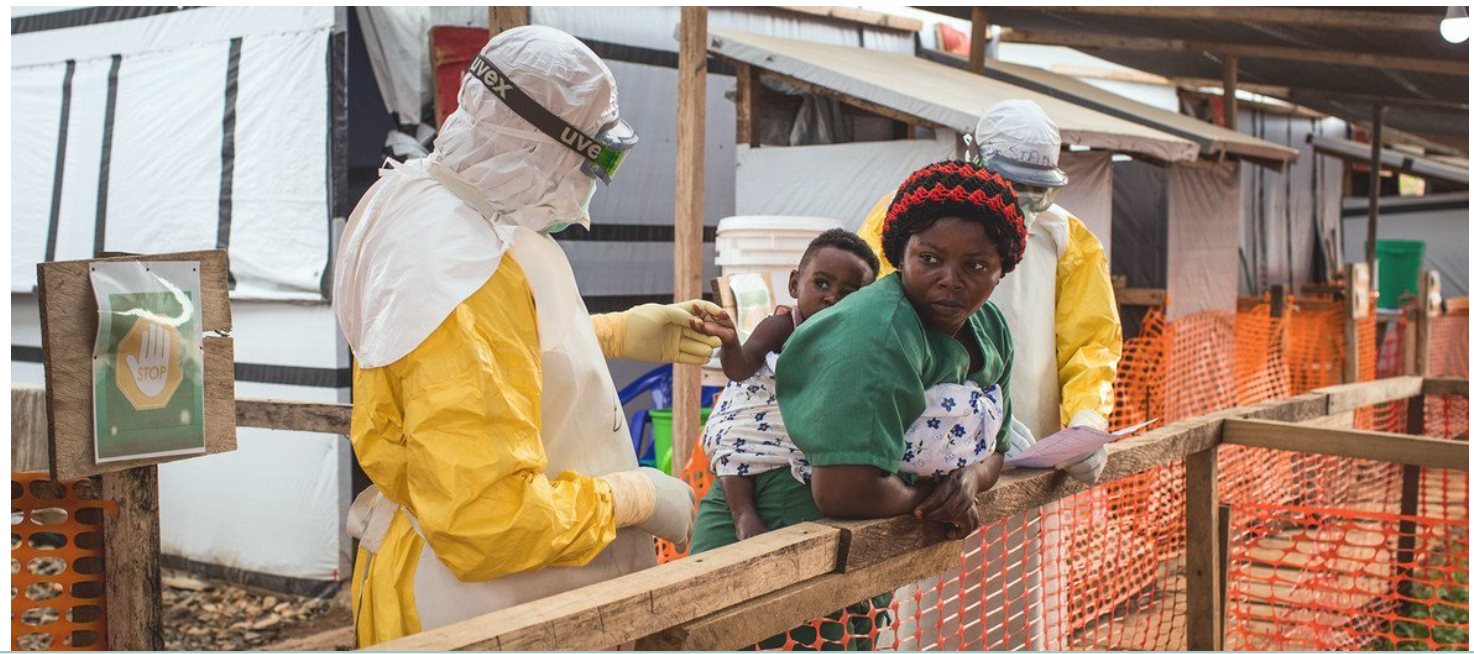
The World Health Organization (WHO) declared the ongoing Ebola outbreak in the Democratic Republic of the Congo (DRC) and Uganda a Public Health Emergency of International Concern (PHEIC). Triggered by rising cases, cross-border transmission, and the specific complexities of the Bundibugyo strain—for which no approved vaccines or specific treatments currently exist—the announcement emphasizes global health vulnerability.
What is a Public Health Emergency of International Concern (PHEIC)?
A PHEIC is a formal declaration by the WHO, representing its highest level of global health alert. It signifies an extraordinary event determined to constitute a public health risk to other states through the international spread of disease, potentially requiring a coordinated international response.
Key Institutional Features:
- Governance and Mandate: It is bound by the International Health Regulations (IHR), legally requiring involved state parties to respond promptly.
- The Decision-Making Body: Declarations are determined by the IHR Emergency Committee, an expert group constituted in the aftermath of the 2002–2004 Severe Acute Respiratory Syndrome (SARS) outbreak.
- Review Cycle: The declaration is reassessed on a tri-monthly (three-month) basis and renewed based on evolving epidemiological data.
- Scope Beyond Infections: Uniquely, a PHEIC can be triggered not just by infectious biological pathogens, but also by public health hazards arising from chemical agents or radioactive materials.
- Exceptional Powers: Certain critical disease outbreaks can be fast-tracked and declared a PHEIC directly by the WHO Director-General without prior consensus or approval from the broader IHR framework.
The International Health Regulations (IHR): Evolution and Mandate
The IHR functions as the governing legal instrument for global epidemiological surveillance and response.
- Origin: The Health Assembly (the apex decision-making organ of the WHO) initially adopted the IHR in 1969 to prevent cross-border disease spread.
- The 2005 Revisions: Following the highly disruptive, chaotic global outbreak of SARS (2002–2004), the framework underwent a massive overhaul. The IHR (2005) was adopted at the 58th World Health Assembly.
- Jurisdiction: It acts as a binding international agreement across 196 signatory countries committed to upholding global health security, with the WHO designated as the central coordinating body.
Eublepharisjhuma
- 19 May 2026
In News:
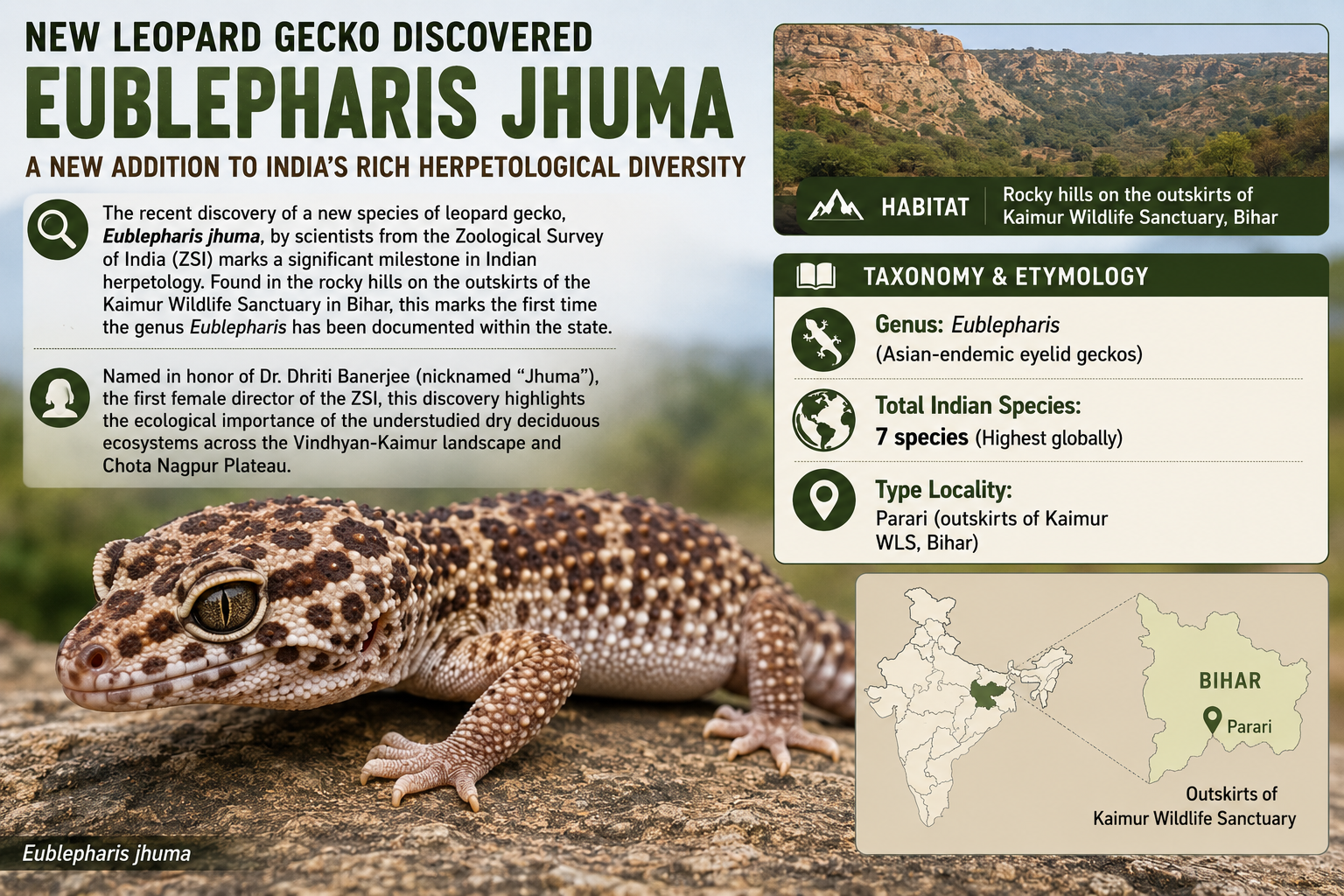
The recent discovery of a new species of leopard gecko, Eublepharisjhuma, by scientists from the Zoological Survey of India (ZSI) marks a significant milestone in Indian herpetology. Found in the rocky hills on the outskirts of the Kaimur Wildlife Sanctuary in Bihar, this marks the first time the genus Eublepharis has been documented within the state.
Named in honor of Dr. Dhriti Banerjee (nicknamed "Jhuma"), the first female director of the ZSI, this discovery highlights the ecological importance of the understudied dry deciduous ecosystems across the Vindhyan-Kaimur landscape and Chota Nagpur Plateau.
Taxonomy & Etymology
- Genus:Eublepharis (Asian-endemic eyelid geckos)
- Total Indian Species: 7 species (Highest globally)
- Type Locality:Parari (outskirts of Kaimur WLS, Bihar)
Morphological and Genetic Distinctiveness
Initially mistaken for its central Indian relative, Eublepharissatpuraensis, comprehensive physical and mitochondrial DNA sequencing confirmed E. jhuma as a phylogenetically independent lineage, showing a 6.9% to 7.8% genetic divergence from its closest relatives. This divergence suggests a history of allopatric speciation (evolution driven by geographic isolation) shaped by deep-time geological forces acting across India's plateau systems.
Unique Physical Adaptations
- Scale Architecture: Reaching up to 14 cm in body length, its dark brown dorsum (back) features large, flat, bumpy, tubercle-like scales with unusually wide gaps between them.
- Locomotive Efficiency: It possesses an elevated number of tiny, textured ridges (lamellae) under its fourth toe, providing crucial gripping power on steep, rocky terrains.
- Tail Regeneration: It features 12 to 13 pre-cloacal pores near its tail. Unique to this species, if its tail drops and regrows, the replacement scales grow back in a flat, rectangular configuration rather than the standard circular layout seen in related species.
Conservation Status and Systemic Threats
While newly discovered and currently marked as Not Assessed (NE) on the IUCN Red List, the species faces immediate anthropogenic pressures:
- Exotic Wildlife Trafficking: Leopard geckos are highly sought after in international and domestic exotic pet markets due to their calm demeanor and unique color patterns.
- Habitat Fragmentation: The unique habitat of the Kaiser range is structurally isolated from the main sanctuary forest by agricultural fields, making the species highly vulnerable to quarrying, forest fires, pollution, and roadkill.
Legal Protection Framework
In India, all leopard gecko species are protected under Schedule I of the Wildlife Protection Act, 1972 (as updated by the Amendment Act of 2022). This legal baseline mandates top-priority protection, making hunting, trade, or domestic captivity strictly illegal.
Singapore Emerges as India’s Second-Largest Export Destination
- 19 May 2026
In News:
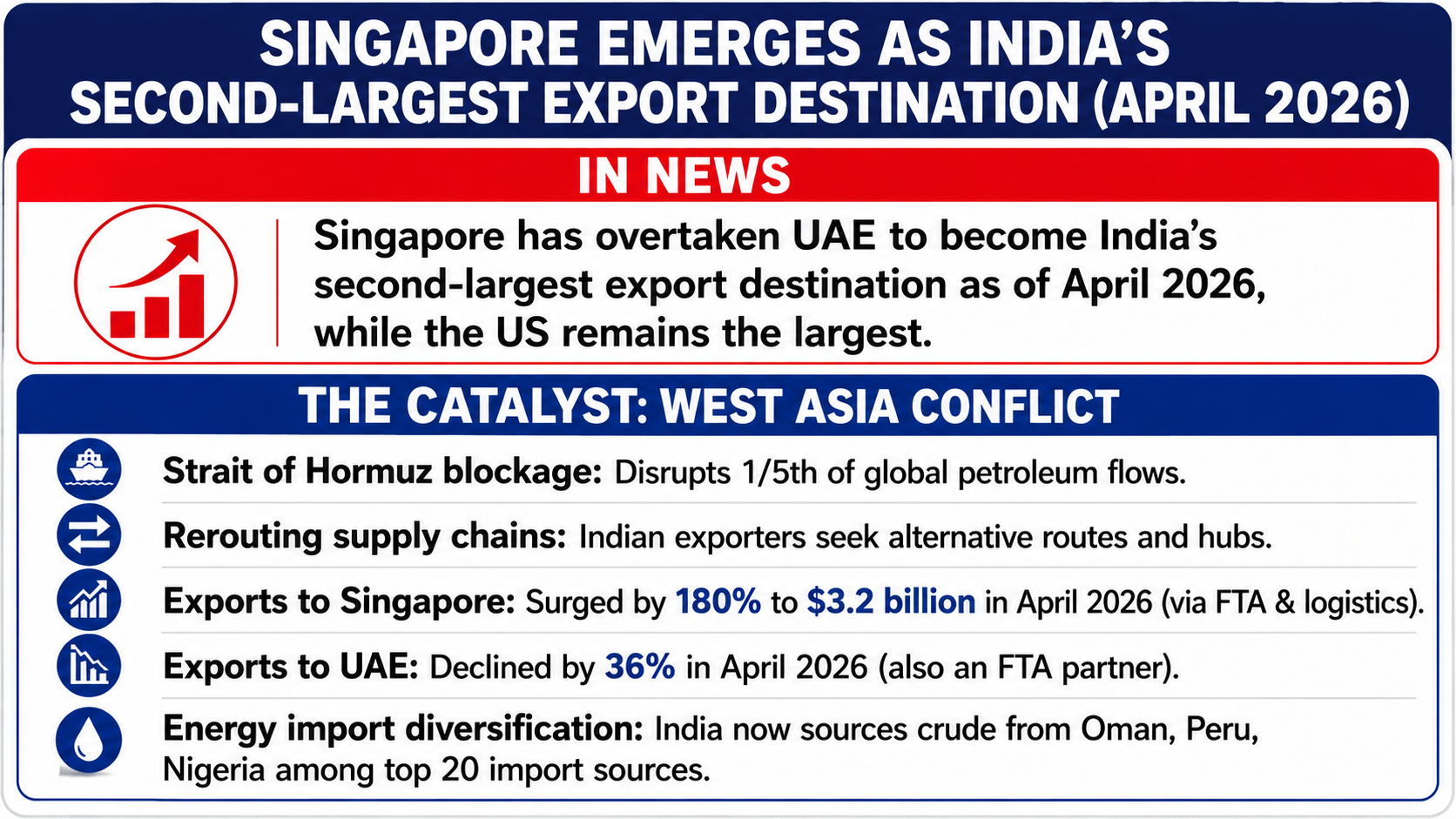
The protracted West Asia conflict has triggered systemic shocks in global supply chains, driving a significant structural shift in India’s external trade dynamics. In an unprecedented realignment, Singapore has overtaken the United Arab Emirates (UAE) to become India’s second-largest export destination as of April 2026, while the United States continues to retain the pole position.
The Catalyst: Geopolitical Disruptions in West Asian Trade
The primary driver behind this shift is the logistical blockage of the Strait of Hormuz—a critical maritime choke point between Iran and Oman that historically facilitates a fifth of global petroleum flows.
- Rerouting Supply Chains: The trade paralysis in the Gulf has forced Indian exporters to aggressively seek alternative routes and transshipment hubs.
- The Contrast in FTA Partners: Leveraging its world-class logistics infrastructure and the bilateral Free Trade Agreement (FTA), India's exports to Singapore surged exponentially by 180% to reach $3.2 billion in April 2026. Conversely, exports to the UAE (another key FTA partner) witnessed a sharp decline of 36%.
- Energy Import Diversification: To insulate itself from Middle Eastern energy shocks, India has altered its crude oil sourcing, integrating non-traditional suppliers like Oman, Peru, and Nigeria into its top 20 import sources.
Macroeconomic Strain on the Indian Economy
The enduring global energy supply crisis has severely impacted India's macroeconomic indicators:
- Currency Depreciation: Widening import bills have drained foreign exchange reserves, causing the Indian rupee to depreciate by 5.2% against the US Dollar since February 2026, touching multiple record lows.
- Fiscal Interventions: To defend the domestic currency and curb non-essential imports, the Government of India has hiked import duties on precious metals. Furthermore, oil marketing companies (OMCs) were permitted to increase retail petrol and diesel prices for the first time in four years to check domestic consumption.
India-Singapore Economic Matrix
- Bilateral Trade Scale: Expanded from USD 6.7 billion (FY 2004-05) to USD 34.3 billion (FY 2024-25) via the Comprehensive Economic Cooperation Agreement (CECA). Singapore is currently India’s 6th largest trading partner.
- FDI Inflows: Singapore stands as India’s largest source of Foreign Direct Investment, bringing in USD 14.94 billion in FY 2024-25.
Deeping Institutional and Fintech Integration
The trade surge is underpinned by a robust framework of institutional mechanisms and digital financial architecture established between the two nations:
- Institutional Presence: Facilitating cross-border capital, Invest India set up a dedicated office in Singapore (September 2024), matched by the Singapore Business Federation opening its debut Indian office in Bengaluru (November 2025).
- Fintech Leadership: The operationalization of the UPI-PayNow Linkage created India's first cross-border Person-to-Person (P2P) payment facility, significantly slashing the cost of remittances.
- Digital Trade Architecture: Bilateral trade finance has been modernized through the GIFT Connect linkage (unifying liquidity between the NSE and SGX for NIFTY products), ONDC-Proxtera connectivity for MSME retail trade, and the TradeTrust framework for interoperable electronic Bills of Lading (eBLs).
Sonerilaroxburghii

- 18 May 2026
In News:
Joint research teams from the Botanical Survey of India (BSI) and the University of Calicut have discovered a new species of flowering plant named Sonerilaroxburghii from the southern Western Ghats of Kerala. The discovery, published in the peer-reviewed international journal Annales Botanici Fennici, highlights the high level of hidden endemism that characterizes this global biodiversity hotspot.
Botanical Profile and Taxonomy
- Scientific Classification: Belongs to the highly diverse Sonerila genus, nested within the Melastomataceae (flowering plant) family.
- Etymology: Named in honor of the legendary Scottish botanist William Roxburgh (1751–1815), widely revered as the "Father of Indian Botany" and one of the earliest pioneering scientists to systematically document the Sonerila genus during his tenure at the Royal Botanic Garden, Calcutta.
Morphological Characteristics
The plant can be distinguished from allied taxa (such as S. grandiflora and S. sadasivanii) by several distinct physical characteristics:
- Growth Form: It is a delicate tropical herb with straight, terete (rounded/smooth) stems growing up to 60 cm in height.
- Floral Architecture: Produces distinct light pink flowers arranged in terminal 3-to-10-flowered scorpioid cymes, featuring obscurely 6-ribbed hypanthia and acuminate-to-rostrate anthers.
- Foliage Structure: Possesses smooth, flattened lanceolate-to-elliptic leaf surfaces that show a cuneate (wedge-shaped) and attenuate base, gradually tapering directly toward the stem.
Geographical Distribution and Specialized Habitat
- Geographical Location: Discovered exclusively within the Mankulam (Mankulam Reserve Forest) and Kallar areas of the Idukki district in Kerala.
- Altitudinal Zonation: Restricted to high-altitude ecosystems, thriving at elevations ranging strictly between 1,380 and 1,480 meters above mean sea level.
- Micro-Climate Niches: Highly adapted to moist, high-altitude rocky surfaces, dripping cliffs, and shola-grassland ecotones where micro-climatic humidity remains constantly high.
Conservation Status and Ecological Vulnerabilities
IUCN Red List Classification: Critically Endangered (CR)
- Due to its highly localized geographical distribution and exceptionally small, fragmented wild populations, researchers have categorized the species as Critically Endangered.
Primary Ecological Threats
The discovery underscores an alarming trend of environmental degradation within the Western Ghats:
- Habitat Fragmentation: Severe encroachment driven by commercial cash-crop plantations, land-use conversion, and expanding unregulated infrastructure.
- Anthropogenic Pressures: Growing tourism footprints and illegal soil/rock quarrying activities within laterite-rich, ecologically fragile hill systems.
- Climate Change Multipliers: Highly localized, ephemeral herbs like Sonerila are acutely vulnerable to rainfall shifts and flash droughts, which disrupt their specialized moisture-reliant life cycles.
Operation RAGEPILL and the Captagon Narcotic Threat
- 18 May 2026
In News:
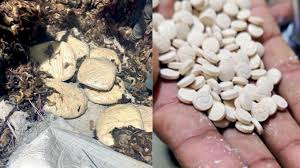
The Narcotics Control Bureau (NCB), in coordination with international enforcement agencies, executed Operation RAGEPILL. This landmark operation resulted in India’s first-ever seizure of Captagon—amounting to 227.7 kg of tablets and powder valued at approximately ?182 crore—effectively busting a sophisticated transnational syndicate attempting to weaponize India as a narco-transit pipeline.
Operation RAGEPILL: Modus Operandi and Seizure Dynamics
The multi-jurisdictional operation exposed a highly organized logistics chain connecting West Asia, India, and the Gulf region:
- The Domestic Nexus: Acting on foreign intelligence, the NCB first raided a residential hideout in Neb Sarai, New Delhi, seizing 31.5 kg of Captagon tablets meticulously hidden inside a commercial chapati-cutting machine. A Syrian national overstaying his tourist visa was arrested as the central logistics coordinator.
- The Domestic Manufacturing Angle: Further investigation revealed that the seized tablets were actively pressed within a leased herbal pharmaceutical facility in Dehradun, Uttarakhand, highlighting attempts by syndicates to exploit local manufacturing setups.
- The Maritime Pipeline: Interrogations led to a secondary breakthrough at Mundra Port, Gujarat, where the NCB intercepted 196.2 kg of high-grade Captagon powder imported directly from Syria, cleverly concealed within a cargo consignment declared as "sheep wool."
- The Intended Destination: The entire contraband chain was slated for onward transshipment to the Gulf region, primarily Jeddah, Saudi Arabia.
Profile of Captagon: Genesis and Chemical Architecture
- Original Formulation: Developed in Germany during the 1960s and 1970s, "Captagon" was the brand name for Fenethylline—a synthetic co-drug linking amphetamine and theophylline. It was initially indicated to treat Attention Deficit Hyperactivity Disorder (ADHD), narcolepsy, and depression.
- Metabolic Function: Once ingested, the human body metabolizes fenethylline into two independent active stimulants: amphetamine (which stimulates central nervous system alertness) and theophylline (a bronchodilator structurally similar to caffeine).
- The Modern Illicit Variant: Due to its highly addictive nature and severe psychological risks, medical production was halted and globally banned in the 1980s. Modern illicit Captagon pills—often stamped with a distinct double crescent moon logo (known in Arabic street slang as Abu Hilalain)—no longer contain pure fenethylline. Instead, they are highly toxic, clandestine cocktails of amphetamines, methamphetamine, caffeine, and industrial chemical fillers.
Socio-Economic Aliases
- "Poor Man's Cocaine": Dubbed so due to its low production cost relative to its immense retail street value, making it highly accessible and widely abused among young adults across the Middle East and North Africa (MENA) region.
Geopolitical and Geostrategic Implications
The Narco-Sovereignty of the Levant
Syria has evolved into the undisputed global epicenter of illicit Captagon manufacturing. The trade has transformed into a multi-billion-dollar shadow economy, generating revenues that outpace legitimate state exports. This narco-capitalism provides a parallel stream of funding for state-aligned entities, militias, and transnational criminal cartels operating in conflict-torn zones.
Containerized Trade as a Transnational Vulnerability
The tactical use of Mundra Port echoes a broader, alarming global trend where syndicates exploit heavy commercial maritime trade to camouflage synthetic narcotics. This pattern was mirrored in another major NCB interdiction involving 349 kg of cocaine routed through commercial cargo from Ecuador into Mumbai, demonstrating the increasing pressure on India's port security architecture.
Internal Security Architecture of India
Statutory and Institutional Framework
- The NDPS Act, 1985: Captagon’s chemical ingredients (Amphetamines and Fenethylline) are classified as strictly prohibited psychotropic substances under the Narcotic Drugs and Psychotropic Substances Act, 1985. It is also globally restricted under Schedule II of the UN Convention on Psychotropic Substances, 1971.
- The Narcotics Control Bureau (NCB): Operating under the Ministry of Home Affairs (MHA), the NCB acts as the apex coordinating and intelligence-gathering nodal agency, working to fulfill the state's vision of a "Drug-Free India" (Nasha Mukt Bharat).
Evolving Law Enforcement Strategies
- The Shift to "Narco-Purging": India's enforcement strategy is pivoting from localized consumer-level drug policing toward dismantling multi-layered transnational cartels, mapping financial hawala trails, and invoking the strict asset-seizure clauses of the PIT-NDPS Act, 1988.
- Collaborative Security: The operation establishes the absolute necessity of real-time, cross-border maritime and intelligence collaboration between the NCB, the Directorate of Revenue Intelligence (DRI), Indian Coast Guard, and foreign drug enforcement directorates.
- Tech-Driven Interdiction: The MHA's deployment of the MANAS Helpline (1933) and integrated data systems are increasingly augmented by AI-driven risk-analysis tools at major container freight stations to red-flag anomalous cargo vectors originating from high-risk geopolitical corridors.
Committee on Empowerment of Women
- 18 May 2026
In News:
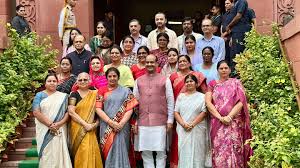
Lok Sabha Speaker Om Birla has reconstituted the Parliamentary Committee on Empowerment of Women for the legislative year 2026–27. Senior leader and Lok Sabha MP Dr. Daggubati Purandeswari has been appointed as the Chairperson of this crucial bicameral panel, which features prominent lawmakers across party lines (including Sudha Murty, P.T. Usha, and Swati Maliwal).
Evolution and Institutional Genesis
- Origin: The committee was established on April 29, 1997, during the 11th Lok Sabha.
- Historical Trigger: Its creation was driven by two identical resolutions moved in both Houses of Parliament on International Women’s Day (March 8, 1996), highlighting a dedicated focus on improving the status of women in India.
Structural Composition and Tenure
- Nature: It is a Joint Parliamentary Committee (JPC), bringing together members from both the Lower and Upper Houses of Parliament.
- Total Membership: It consists of 30 Members.
- Bicameral Breakdown:
- 20 Members are nominated by the Speaker from the Lok Sabha.
- 10 Members are nominated by the Chairman from the Rajya Sabha.
- Tenure: The term of the committee cannot exceed one year. It is reconstituted annually to bring fresh perspectives while maintaining continuous legislative oversight.
- Cross-Party Mandate: Members are expected to operate as a cohesive, non-partisan unit, rising above political affiliations to work collectively toward gender equity.
Core Functions and Statutory Mandate
The committee holds broad investigative and oversight powers under the rules of parliamentary procedure:
- Oversight of the National Commission for Women (NCW): It evaluates the statutory reports submitted by the NCW and suggests legislative and executive measures to improve the status and conditions of women.
- Constitutional Safeguards & Dignity: It reviews measures implemented by the Union Government to guarantee equality, status, and dignity for women in all spheres of public and private life.
- Representation & Affirmative Action: It monitors government initiatives aimed at securing comprehensive education and adequate representation for women in legislative bodies, public services, and other employment sectors.
- Appraisal of Welfare Welfare Schemes: It assesses the efficiency, grass-roots reach, and execution of central welfare programs and gender-responsive budgets dedicated to women.
- Implementation Auditing: It reviews Action Taken Reports (ATRs) from the Union Government and Union Territory administrations concerning prior recommendations made by the committee.
Constitutional and Statutory Alignment
The work of this committee gives functional teeth to several constitutional directives:
- Article 15(3): Enables the State to make special provisions for women.
- Articles 39(a) and 39(d): Mandate equal livelihood opportunities and equal pay for equal work.
- Article 42: Mandates just, humane working conditions and maternity relief.
- Article 51A(e): Enforces the Fundamental Duty to renounce practices derogatory to the dignity of women.
Core Institutional Challenges
While a key driver of policy oversight, the committee encounters structural constraints common to many parliamentary panels:
- Its findings and observations are purely advisory and not legally binding on the executive.
- It depends on administrative ministries to submit timely data and implement its recommendations, which often leads to bureaucratic delays.
- The wide scope of cross-cutting issues (safety, tech-driven economies, digital divide) must be evaluated within a limited one-year operational tenure.
Strategic Link: "Women-Led Development"
During recent national deliberations, the committee's focus has evolved from simple "women's welfare" to driving "Women-Led Development"—a key target for India's Viksit Bharat roadmap. Modern priorities focus heavily on closing the gender digital divide, scaling up women's participation in STEM fields, ensuring digital safety, and optimizing Gender Responsive Budgeting to make economic allocations transparently benefit women.
UNFF 21 and the Global Forest Goals Report 2026
- 18 May 2026
In News:
The Global Forest Goals Report 2026 was launched during the 21st session of the United Nations Forum on Forests (UNFF21) at the UN Headquarters in New York. The report provides a critical stocktake of the world's progress toward implementing the UN Strategic Plan for Forests 2017–2030 and its 6 Global Forest Goals (GFGs), warning that the world remains off-track to reverse forest loss by 2030.
Key Findings: State of Global Forests & Emergence of New Drivers
Sharp Decline in Forest Cover
- Overall Loss: Global forest area shrank from 4.18 billion hectares in 2015 to 4.14 billion hectares in 2025—a net loss of more than 40 million hectares over the decade.
- Annual Net Depletion: The world is losing an average of 4.12 million hectares of forest every year.
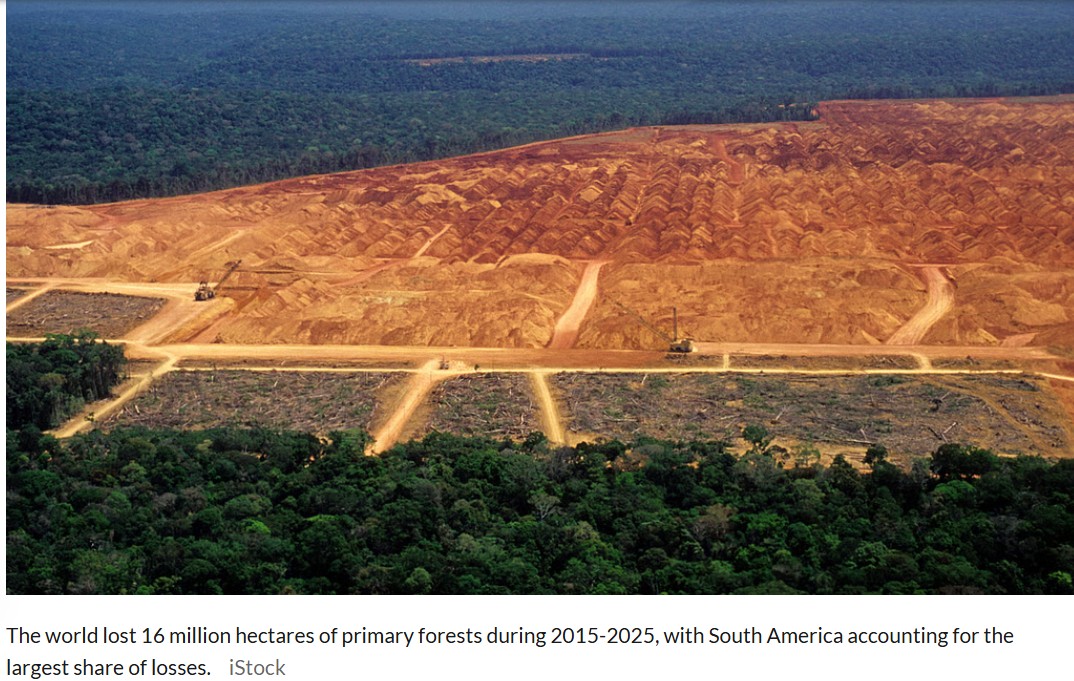
- Primary Forest Crisis: Around 16 million hectares of primary forests (unprecedented reservoirs of biodiversity and carbon storage) were destroyed. South America (particularly the Amazon) and Africa recorded the steepest regional losses.
Primary Drivers of Forest Loss
- Agricultural Expansion: Continues to be the largest absolute driver of global deforestation.
- Fuelwood & Charcoal Demand: The 2026 report specifically flags the surging demand for woodfuel (fuelwood and charcoal) as a major emerging driver of forest degradation, particularly across Sub-Saharan Africa and parts of Asia.
The Poverty-Energy Nexus: The report explicitly links fuelwood dependence to deep-rooted poverty and inadequate access to clean energy alternatives. In low-income regions, communities rely heavily on biomass for basic cooking and heating, compounding structural vulnerabilities like weak land tenure and institutional capacity.
Climate-Linked Multipliers
Forests are trapped in a vicious cycle. Anthropogenic degradation weakens their capacity to act as vital carbon sinks, while climate-induced pressures—including severe droughts, wildfires, heatwaves, pests, and diseases—further accelerate forest mortality.
Progress and Implementation Gaps (The 2030 Targets)
The report evaluates the 26 performance targets nested under the 6 Global Forest Goals, revealing highly uneven progress:
- Status Matrix:7 targets are broadly met, 17 are partially achieved, and 2 targets are completely off-track.
- The Off-Track Targets: Reversing net global forest cover loss (Target 1.1) and eradicating extreme poverty for all forest-dependent people (Target 2.1) have stalled or reversed.
- The Restoration Deficit: While 91 countries pledged to restore nearly 190 million hectares of forest under global pacts, only 44 million hectares had actually been restored by 2025.
- The Bright Spot:Asia has led global restoration initiatives, successfully rehabilitating over 31 million hectares (accounting for 42.2% of its total regional pledged area).
Institutional Framework: United Nations Forum on Forests (UNFF)
- Establishment: Founded in the year 2000 by the UN Economic and Social Council (ECOSOC).
- Type and Headquarters: High-level intergovernmental body headquartered in New York, USA.
- Membership Structure: Universal membership comprising all UN Member States and specialized agencies on an equal basis. India is a founding member and continues to play a proactive role in shaping global forest policy.
- Session Cycle: The forum meets annually, alternating between Technical Discussions in odd years and Policy Dialogue/Decision-making in even years (such as this 2026 session).
- Financial Arm: Operates the Global Forest Financing Facilitation Network (GFFFN), which helps developing nations mobilize resources, secure technical aid, and share best governance practices.
Core Mandate of UNFF
- Political Mobilization: Strengthening long-term global political commitment to sustainable forest management (SFM) and conservation worldwide.
- Policy Dialogue: Facilitating structural policy dialogue among countries, international organizations, and major stakeholder groups.
- International Cooperation: Promoting international, financial, and technical cooperation to bridge implementation gaps in developing nations.
- Legal and Institutional Frameworks: Considering future options for international forest policy, including the development of legally binding frameworks.
Policy Recommendations and Relevance to India
Global Strategic Interventions
- Deforestation-Free Supply Chains: Enforcing strict international standards for key commodities that drive land clearing, such as timber, palm oil, soy, beef, and cocoa.
- Universal Clean Cooking Access: Scaling up cleaner energy alternatives to directly displace rural reliance on woodfuel and charcoal.
- Empowered Forest Governance: Enhancing local community land-tenure security, scaling up community-led forestry, and clamping down on illegal timber trading.
Significance for India
This report highlights the critical friction between development, poverty alleviation, and conservation:
- Clean Energy Mitigation: The report’s focus on replacing fuelwood aligns perfectly with India's domestic success via Pradhan Mantri Ujjwala Yojana (PMUY), showing how socio-economic development directly prevents localized forest degradation.
- Restoration Targets: India's baseline forest and tree cover sits at approximately 25.17% (as per recent state reports), against a national target of 33%. Furthermore, under the international Bonn Challenge, India has committed to restoring 26 million hectares of degraded and deforested land by 2030.
- Institutional Blueprints: India's domestic strategies, including the National Mission for a Green India (GIM), the Compensatory Afforestation Fund (CAMPA), and Joint Forest Management (JFM) committees, serve as real-world examples of the multi-sectoral institutional cooperation urged by UNFF21.
Withholding Tax on FPIs
- 18 May 2026
In News:
The Government of India is considering a sharp reduction in the Withholding Tax (WHT) rate on Foreign Portfolio Investors (FPIs) from 20% back to the previous concessional rate of 5%. This move follows the expiration of the concessional window under Section 194LD of the Income Tax Act in mid-2023, which effectively caused the rate to revert to 20%, positioning India as a high-tax jurisdiction for global bond investors.
The primary trigger for this policy reconsideration is the need to arrest capital outflows that have eroded India’s foreign exchange reserves by nearly USD 38 billion since March 2026, driven by heightened geopolitical uncertainties (such as conflicts in West Asia) and a sharp surge in global crude oil prices.
Understanding Withholding Tax (WHT)
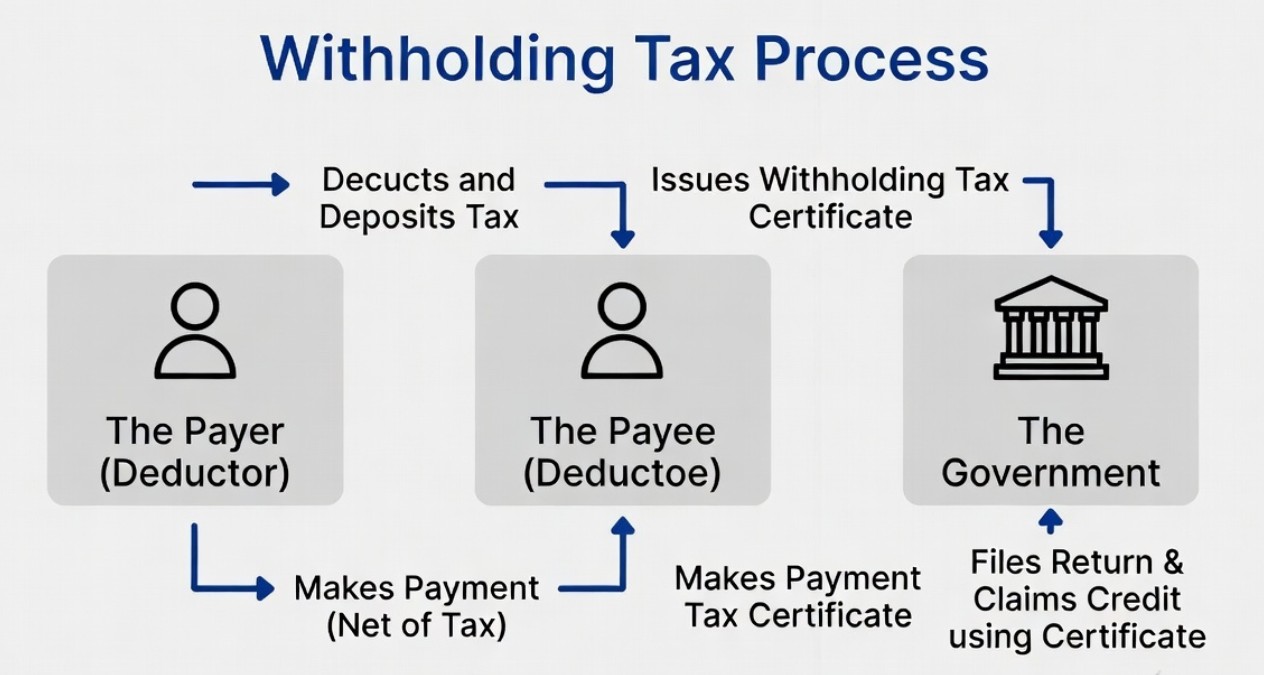
Withholding Tax, analogous to Tax Deducted at Source (TDS) under domestic tax law, is a mechanism where the payer of an income item deducts tax at the source before remitting the remaining net balance to the recipient.
International Withholding Tax
This applies specifically when a payer within one country makes payments (such as interest, dividends, or royalties) to a non-resident recipient in another country. It serves as a vital tool for source-based taxation, ensuring advance revenue collection and reducing the risk of cross-border tax evasion.
The Core Mechanism (As Illustrated Above):
- The Payer (Deductor): Deducts the statutory tax percentage from the gross amount due and deposits this tax directly with the Government.
- The Payee (Deductoe): Receives the net payment (net of tax) alongside a Withholding Tax Certificate issued by the payer.
- The Government: Receives the advance tax collection. The Payee subsequently files a tax return in India and claims tax credits using the issued certificate.
General WHT Classification by Income Type
WHT spans across several distinct asset and income streams, each governed by independent threshold limits and criteria:
- Salaries: Deducted monthly by employers based on progressive annual income tax slabs.
- Interest Income: Banks deduct tax at source on fixed deposits and other debt instruments once earnings cross predefined annual thresholds.
- Professional & Technical Fees: Applied to payments made to freelance contractors, consultants, legal experts, or engineers.
- Rent & Royalties: Imposed on high-value commercial or residential lease payments and intellectual property payouts.
- Dividends: Companies withhold a designated percentage when distributing corporate profits to domestic or foreign shareholders.
Economic Implications: High WHT vs. The Concessional 5% Rate
Challenges of the 20% WHT Regime (Yield Compression & Capital Flight)
- Reduction in Net Yields: A 20% WHT directly reduces the risk-adjusted post-tax returns for FPIs on government securities (G-Secs) and corporate bonds, weakening the power of long-term compounding.
- Liquidity & Transactional Bottlenecks: It locks up foreign investor capital at the source, constraining immediate capital available for reinvestment.
- High Compliance and Regulatory Friction: To mitigate the high 20% rate, FPIs are forced to seek relief via Double Taxation Avoidance Agreements (DTAAs). This process involves complex, paperwork-heavy administrative processes to claim tax credits in their home jurisdictions.
- Delayed Index Integration: Higher interest tax structures act as an operational deterrent, dragging down India's competitive edge just as the nation integrates into major global bond indices.
Macroeconomic Significance of Slashing WHT to 5%
- Boosting Forex Inflows: Restoring the 5% concessional rate is projected to unlock USD 45–50 billion of stable inflows over 2 years from patient, long-term institutional capital, such as global pension funds, sovereign wealth funds, and endowments.
- Stabilizing the Indian Rupee: Enhanced FPI debt inflows will help defend against external vulnerabilities, counter heavy capital flight, and rebuild the USD 38 billion cushion lost from forex reserves.
- Deepening Sovereign Debt Markets: Lowering tax frictions satisfies a long-standing demand of global investors, boosting liquidity in the Indian sovereign debt market and smoothing India’s inclusion and weight scaling in global bond indices.
- Reducing Sovereign Borrowing Costs: Increased foreign demand for Indian government securities compresses domestic bond yields, lowering the cost of borrowing for the government and supporting fiscal management.