
PM-WANI (Prime Minister’s Wi-Fi Access Network Interface)
- 27 May 2026
In News:
The Department of Telecommunications (DoT) has introduced a series of citizen-centric reforms under the PM-WANI (Prime Minister’s Wi-Fi Access Network Interface) framework to make public Wi-Fi access simpler, more affordable, and widely accessible. The upgrades aim to accelerate broadband penetration and strengthen India's digital public infrastructure ecosystem.
What is PM-WANI?
Launched in December 2020, PM-WANI is a nationwide framework designed to expand affordable broadband access through a decentralized network of public Wi-Fi hotspots. It seeks to democratize internet access by enabling small shops, tea stalls, local businesses, and community establishments to act as internet access points without requiring a telecom licence.
The initiative is implemented by the Department of Telecommunications under the Ministry of Communications.
How Does the PM-WANI Ecosystem Function?
The framework operates through a distributed architecture comprising four components:
- Public Data Offices (PDOs) serve as the last-mile Wi-Fi providers that purchase internet bandwidth from telecom or internet service providers and offer Wi-Fi services to users.
- Public Data Office Aggregators (PDOAs) provide backend support such as authentication, accounting, and network management for multiple PDOs.
- App Providers offer mobile applications through which users can discover nearby Wi-Fi hotspots and access services.
- The Central Registry, maintained by Centre for Development of Telematics, ensures interoperability among all stakeholders.
A key feature of the framework is that PDOs require no licence, no registration and no fee, thereby reducing entry barriers and encouraging widespread participation.
Recent Reforms and Upgrades
To improve user experience, the government has introduced several enhancements.
A major upgrade allows users to connect laptops and other devices by simply scanning a QR code through an already authenticated smartphone, eliminating cumbersome login procedures.
The framework also encourages operators to introduce affordable short-duration "sachet" plans of 15, 30 and 60 minutes, making internet access more convenient for travellers, students and occasional users.
Additionally, standardized hotspot naming conventions incorporating PM-WANI branding have been introduced to help users easily identify authentic and secure public Wi-Fi networks.
Quad Critical Minerals Initiative Framework
- 27 May 2026
In News:
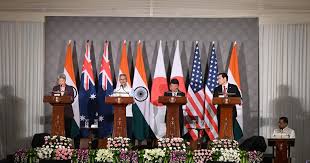
On the sidelines of the 11th Quad Foreign Ministers’ Meeting, the Quad nations—India, the United States, Japan and Australia—unveiled the Quad Critical Minerals Initiative Framework. The initiative, along with a parallel India–US critical minerals partnership, marks a significant step towards securing strategic mineral supply chains and reducing vulnerabilities in emerging technology sectors.
What is the Quad Critical Minerals Initiative?
- The Quad Critical Minerals Initiative is a strategic economic and supply-chain cooperation framework aimed at ensuring reliable access to critical minerals and rare earth elements required for modern industries and national security.
- The initiative reflects the Quad's evolution from a security-focused grouping to a broader platform for economic resilience, technology cooperation and strategic infrastructure development in the Indo-Pacific.
- Its primary objective is to create diversified, secure and resilient supply chains by reducing excessive dependence on any single source, particularly China, which currently dominates the global processing and export of several critical minerals and rare earth elements.
Key Features
- The framework envisages the mobilization of nearly USD 20 billion through public funding, concessional finance and private investment to strengthen critical mineral ecosystems across Quad countries.
- It covers the entire value chain—from mineral exploration and mining to processing, refining, manufacturing inputs and recycling. The initiative also promotes the development of a circular economy through the recovery of strategic minerals from electronic waste and industrial scrap.
- To facilitate seamless cooperation, member countries intend to harmonize regulatory standards, customs procedures and environmental norms. The framework also incorporates national security safeguards through coordinated export controls and monitoring mechanisms to prevent strategic resources from reaching hostile actors.
- Projects supported under the initiative will largely be located within Quad countries and managed by companies based in member states, ensuring strategic ownership and supply security.
Strategic Significance
The initiative is driven by growing concerns regarding China's overwhelming dominance in critical mineral supply chains. China controls a substantial share of global rare earth processing and has increasingly used export restrictions as a strategic tool.
By diversifying supply sources, the Quad seeks to reduce the risk of supply disruptions that could affect key sectors such as electric vehicles, renewable energy, semiconductors, telecommunications and defence manufacturing.
The framework also complements emerging India–US cooperation in critical minerals, leveraging India's growing processing capabilities and manufacturing potential alongside American financing and technological strengths.
CLEAR Technology
- 27 May 2026
In News:
Researchers at the Jawaharlal Nehru Centre for Advanced Scientific Research, Bengaluru, have developed an innovative protein imaging platform called CLEAR (Cleavable Light-Erased Antibody Reporter). The technology enables scientists to visualize and map a large number of proteins within the same biological sample using a single fluorescent marker, overcoming major limitations of conventional imaging techniques.
Why is Protein Imaging Important?
Proteins are the functional molecules that regulate virtually every biological process within cells. Understanding where proteins are located, how they interact, and how their distribution changes during disease is crucial for deciphering cellular behavior.
In diseases such as cancer, the spatial arrangement of proteins within tissues often determines how tumors grow, evade immunity, and respond to treatment. Therefore, high-resolution protein mapping has become an essential tool in modern biomedical research.
What is CLEAR Technology?
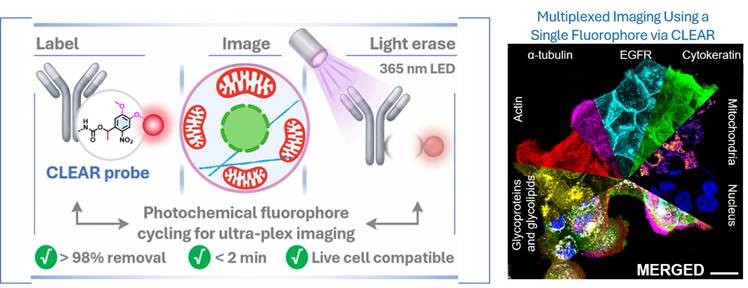
CLEAR (Cleavable Light-Erased Antibody Reporter) is a next-generation multiplex spatial protein imaging platform designed to visualize numerous proteins within the same tissue or cell sample while preserving their spatial organization.
Unlike conventional imaging methods that require multiple fluorescent colours for different proteins, CLEAR repeatedly uses a single fluorescent channel through a unique "erase-and-rewrite" mechanism. This allows scientists to build highly detailed molecular maps without being constrained by the limited number of fluorescent colours detectable by microscopes.
How Does CLEAR Work?
The technology is based on a cyclic imaging process.
Initially, specialized antibodies linked to fluorescent markers through light-sensitive chemical bonds are introduced into a tissue sample. These antibodies bind to specific target proteins, and the sample is imaged under a microscope.
Once imaging is completed, the fluorescent signal is removed by exposing the sample to a gentle pulse of 365 nm LED light. The light breaks the photosensitive linker, effectively erasing the fluorescence without damaging the biological specimen.
The sample then becomes available for a new round of protein labeling and imaging using the same fluorescent channel. By repeating this cycle multiple times, researchers can generate highly detailed spatial maps containing information on numerous proteins within a single specimen.
Key Features
One of the most important strengths of CLEAR is its high-plex multiplexing capability. It allows visualization of a much larger number of proteins than conventional fluorescence microscopy.
The technology is also notable for its live-cell compatibility. Traditional multiplex imaging often requires harsh chemicals or heat treatments to remove fluorescent signals, which can damage tissues and cells. CLEAR relies on gentle light-based erasure, preserving biological integrity.
Another major advantage is its ability to capture the precise spatial distribution of proteins within tissues. Such spatial information is critical for understanding cellular communication, tumor microenvironments, and disease progression.
By repeatedly utilizing a single fluorescent channel, CLEAR also reduces dependence on expensive multi-laser imaging systems, improving cost efficiency and workflow speed.
Significance for Cancer Research
Cancer is not merely a collection of abnormal cells but a complex ecosystem involving tumor cells, immune cells, blood vessels, and surrounding tissues. Understanding this microenvironment requires the simultaneous mapping of multiple proteins.
CLEAR enables researchers to:
- Identify protein interaction networks within tumors.
- Understand mechanisms of cancer progression and metastasis.
- Study immune cell infiltration and tumor immune evasion.
- Discover novel diagnostic biomarkers.
- Improve precision medicine and targeted therapies.
The technology can help researchers develop more personalized treatment approaches based on detailed molecular characteristics of individual tumors.
India’s First National Report on the Nagoya Protocol
- 27 May 2026
In News:
The Ministry of Environment, Forest and Climate Change (MoEFCC) has released insights from India’s First National Report on the Nagoya Protocol on Access and Benefit Sharing (ABS). The report highlights India's progress in implementing a transparent and equitable framework for the utilization of biological resources while ensuring that benefits arising from their use reach local communities and traditional knowledge holders.
Understanding the Nagoya Protocol
- The Nagoya Protocol on Access to Genetic Resources and the Fair and Equitable Sharing of Benefits Arising from their Utilization is a supplementary agreement to the Convention on Biological Diversity. It was adopted in 2010 and came into force in 2014.
- The protocol seeks to ensure that countries and communities providing biological resources receive a fair share of the benefits generated from their commercial or research utilization.
- It aims to balance biodiversity conservation with economic development and scientific innovation.
- The framework rests on three core principles: Prior Informed Consent (PIC), Mutually Agreed Terms (MAT), and Fair and Equitable Benefit Sharing.
- It also protects traditional knowledge associated with biological resources and seeks to prevent biopiracy through international compliance mechanisms.
India's Performance under the Nagoya Protocol
- The report highlights India's robust implementation of the Access and Benefit Sharing framework between 2017 and 2025.
- During this period, India granted more than 12,800 ABS approvals, reflecting the growing use of biological resources for research, pharmaceuticals, agriculture, biotechnology, and industrial applications. The National Biodiversity Authority (NBA) and State Biodiversity Boards have played a central role in processing these approvals.
- A particularly notable achievement is India's dominance in the issuance of Internationally Recognized Certificates of Compliance (IRCCs). With over 3,500 certificates, India accounts for more than 60% of all such certificates issued globally, indicating strong compliance with international biodiversity governance standards.
- The ABS mechanism has also generated substantial economic benefits. Revenue collections exceeding ?216 crore have been realized, with a significant share already transferred to local communities, conservers, and biodiversity stakeholders. These funds support conservation activities, livelihood enhancement, and habitat restoration efforts.
Community-Based Biodiversity Governance
A major strength of India's ABS framework is its decentralized institutional architecture.
- The country has established a vast network comprising the National Biodiversity Authority, State Biodiversity Boards, and more than 2.76 lakh Biodiversity Management Committees (BMCs) functioning at the local level. These institutions play a critical role in documenting biological resources, safeguarding traditional knowledge, and facilitating benefit-sharing arrangements.
- The report also highlights extensive capacity-building efforts, including thousands of training programmes and workshops aimed at strengthening awareness among local communities, government officials, scientists, and biodiversity managers.
High-Level Committee on Demographic Change
- 27 May 2026
In News:
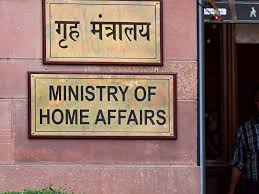
The Union Ministry of Home Affairs (MHA) has constituted a High-Level Committee to examine demographic changes arising from illegal immigration and other abnormal factors. The committee has been tasked with conducting a scientific assessment of demographic shifts and recommending policy measures to address their implications for national security, governance, resource allocation, and socio-cultural stability.
Background
Concerns regarding demographic changes linked to illegal migration have been particularly pronounced in border states such as Assam, West Bengal, Meghalaya, Tripura, and parts of Jharkhand. The issue has long featured in debates relating to border management, indigenous rights, internal security, and electoral integrity.
The committee comes at a time when India is preparing for the 2027 Census, making updated demographic assessment increasingly important.
Composition and Mandate
The committee is chaired by Justice Prakash Prabhakar Navlekar, former Supreme Court judge and former Lokayukta of Madhya Pradesh. It also includes the Census Commissioner and other experts.
The panel has been directed to submit its report within one year (by May 2027), with provision for a six-month extension if required.
Its key responsibilities include:
- Conducting a data-driven assessment of demographic changes linked to illegal immigration and abnormal migration patterns.
- Studying demographic variations across religious and social groups in regions showing unusual population trends.
- Recommending mechanisms for Centre–State coordination on demographic management.
- Suggesting institutional frameworks for identification, detention, and deportation of undocumented migrants.
- Strengthening border management, identity verification systems, and migration-monitoring mechanisms.
Why is the Study Important?
Internal Security and Sovereignty
Illegal migration across porous borders has long been viewed as a security concern. In Sarbananda Sonowal v. Union of India, the Supreme Court observed that large-scale illegal migration into Assam amounted to "external aggression" and invoked Article 355 of the Constitution.
Migration corridors are also vulnerable to exploitation by networks involved in:
- Human trafficking
- Arms smuggling
- Cross-border crime
- Potential infiltration by extremist elements
Protection of Indigenous Communities
Several tribal and indigenous regions, particularly in the Northeast and parts of Jharkhand, have expressed concerns regarding demographic pressures on land ownership, cultural identity, and political representation.
Protective mechanisms such as the Santhal Pargana Tenancy Act, 1876, and constitutional safeguards under the Fifth and Sixth Schedules seek to protect tribal interests. A demographic assessment may help evaluate the effectiveness of these protections.
Socio-Economic Pressures
Population growth beyond natural demographic trends can place pressure on: housing, healthcare, education, employment opportunities, and public infrastructure. Such pressures can contribute to social tensions and competition over limited resources.
Electoral Integrity
Concerns have also been raised regarding the alleged acquisition of identity documents by undocumented migrants. Accurate demographic data is considered essential for maintaining the integrity of electoral rolls and democratic processes.
Constitutional and Legal Framework
- Article 355: Article 355 imposes a duty on the Union to protect States against:External aggression and Internal disturbance. This provision is frequently cited in discussions concerning illegal immigration and border security.
- Citizenship Act, 1955: The Act provides the legal framework for acquisition and termination of Indian citizenship. Section 6A was inserted following the Assam Accord to address citizenship issues specific to Assam.
- Foreigners Act, 1946: The Act empowers the government to identify, regulate, detain, and deport foreigners. It places the burden of proof on the individual to establish Indian citizenship.
- Fifth and Sixth Schedules: These constitutional provisions safeguard tribal autonomy, land rights, and cultural identity in designated tribal regions.
Important Judicial Developments
- Sarbananda Sonowal v. Union of India (2005): The Supreme Court held that unchecked illegal migration into Assam constituted a threat to national security and invoked Article 355.
- Assam SanmilitaMahasangha v. Union of India (2014): The Court directed a time-bound update of the National Register of Citizens (NRC) in Assam to identify undocumented migrants.
Key Committee and Commission Reports
- Lt. Gen. S.K. Sinha Report (1998): Highlighted the security implications of demographic changes in border regions and their impact on national integration.
- Upamanyu Hazarika Commission (2015): Warned about demographic shifts affecting indigenous populations in Assam.
- Madhukar Gupta Committee (2016): Recommended the Comprehensive Integrated Border Management System (CIBMS), emphasizing technology-driven border surveillance through sensors, thermal imagers, and smart monitoring systems.
India's Broader Demographic Context
Declining Fertility
According to recent demographic estimates:
- India's Total Fertility Rate (TFR) has fallen below replacement level.
- NFHS-5 estimates place TFR at approximately 2.0.
- SRS data indicate a further decline to around 1.9.
This suggests long-term population stabilization.
Regional Demographic Divide
A significant North-South demographic divide is emerging:
- Southern states such as Kerala and Tamil Nadu have very low fertility rates and aging populations.
- Northern states such as Bihar and Uttar Pradesh continue to have relatively higher fertility rates and younger populations.
Demographic Dividend Window
India currently enjoys a demographic advantage with a median age of around 28 years. However, this window is expected to narrow as the elderly population grows substantially by 2050.