
GI-Tagged Tezpur Litchi
- 15 Jun 2026
In News:
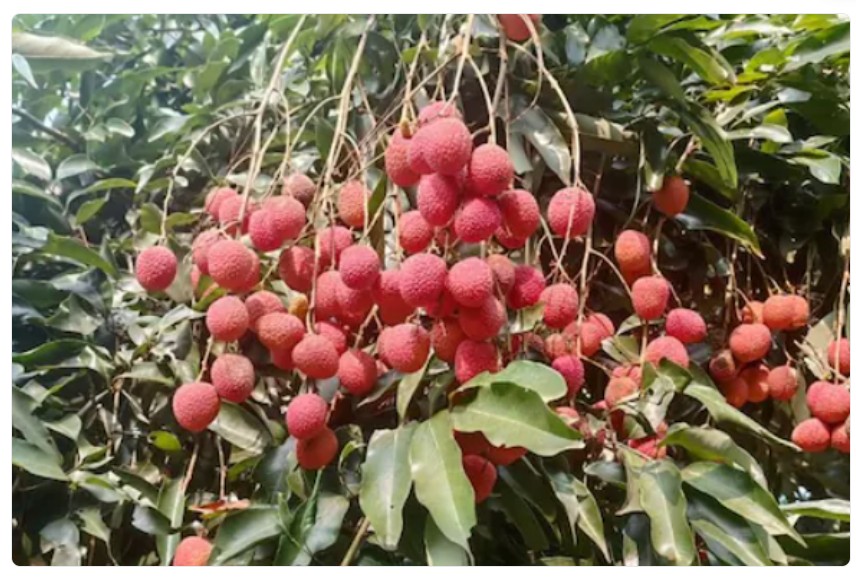
The Agricultural and Processed Food Products Export Development Authority (APEDA) facilitated the first international export consignment of GI-tagged Tezpur Litchi from Assam to Dubai, marking a significant step in promoting agricultural exports from Northeast India.
About Tezpur Litchi
- Tezpur Litchi is a premium variety of Litchi chinensis that received the Geographical Indication (GI) tag for its unique quality and geographical origin.
- It is primarily cultivated in Tezpur and adjoining areas of Sonitpur district, Assam.
- The fruit is known for its bright red rind, translucent juicy pulp, pleasant aroma, high pulp-to-seed ratio, and exceptional sweetness. Major local varieties include Bombaya, Bilati, Elaichi, Piyaji, and Sahi.
Cultivation Conditions
- Tezpur Litchi thrives in the humid subtropical climate of Assam and grows best in deep, well-drained alluvial or loamy soils enriched by the Brahmaputra basin. Frost-free winters and warm, humid summers are ideal for flowering and fruit development.
Significance
The successful export to Dubai opens new international market opportunities for farmers and highlights the export potential of GI-tagged products from Northeast India. It is expected to enhance farmers' incomes through better price realization, encourage quality production, and strengthen India's agricultural exports under the government's 'Vocal for Local' and 'One District One Product (ODOP)' initiatives.
Made in India Airbus C-295

- 15 Jun 2026
In News:
The first Made in India Airbus C-295 military transport aircraft successfully completed its maiden test flight from the Final Assembly Line (FAL) in Vadodara, Gujarat, marking a major milestone in India's defence manufacturing capabilities.
About C-295
The Airbus C-295 is a twin-turboprop tactical military transport aircraft designed to replace the Indian Air Force's ageing Avro HS-748 fleet. It is capable of operating in high-altitude, harsh terrains, and Short Take-Off and Landing (STOL) conditions, making it suitable for border operations and humanitarian missions.
Manufacturing Programme
The aircraft is being procured under a ?21,935 crore contract for 56 aircraft.
- 16 aircraft are being delivered in fly-away condition from Airbus, Spain.
- The remaining 40 aircraft are being manufactured in India through a partnership between Airbus Defence and Space and Tata Advanced Systems Limited (TASL) at Vadodara.
The project is India's first large-scale military aircraft manufacturing programme led by the private sector, supporting the objectives of 'Make in India' and Aatmanirbhar Bharat.
Key Features
- Twin-turboprop tactical transport aircraft with STOL (Short Take-Off and Landing) capability.
- Can operate from short, semi-prepared and unpaved airstrips.
- Suitable for troop transport, cargo movement, medical evacuation (Medevac), disaster relief, paratrooper operations and maritime surveillance.
- Over 85% of the structural components of the 40 Indian-built aircraft will be manufactured domestically, including more than 13,000 parts.
SAPLING Dialogue 2026

- 15 Jun 2026
In News:
The Ministry of Food Processing Industries (MoFPI), in collaboration with the World Bank Group, organised the SAPLING Dialogue 2026 in Ahmedabad, Gujarat, to strengthen food processing and value addition across South Asia.
About SAPLING
- South Asian Policy Leadership for Improved Nutrition and Growth (SAPLING) is a World Bank-led multi-stakeholder platform that promotes policy reforms, investment mobilisation and Agri-Tech adoption to build resilient food systems. It complements the AgriConnect Initiative, which aims to benefit 300 million farmers by 2030 through improved infrastructure and policy support.
- Theme: "Unlocking Value: Advancing Food Processing for Employment Generation and Sustainable Growth in South Asia."
Key Highlights
- The dialogue underscored the need to shift the focus from agricultural production to value addition, recognising food processing, logistics and integrated supply chains as the next engines of agricultural growth.
- A major concern highlighted was post-harvest losses exceeding 30% in South Asia, which can be addressed through Farm-to-Factory integration, expansion of cold-chain infrastructure, improved storage and smart packaging.
- During the event, the report "Assessment of the Level of Food Processing in India" was released.
- It noted that the share of food processing in India increased from 10% in 2016 to nearly 17% in 2023.
- The report also identified substantial untapped potential in processing fruits, vegetables and dairy products, which can enhance farmers' incomes, reduce wastage and boost agricultural exports.
Foreign Currency Non-Resident (Bank)

- 15 Jun 2026
In News:
The RBI has introduced a special FCNR(B) deposit window with a concessional forex swap facility to encourage foreign currency inflows, strengthen foreign exchange reserves, and support rupee stability.
About FCNR(B) Deposits
- FCNR(B) is a fixed-term foreign currency deposit account maintained with Indian banks by:
- Non-Resident Indians (NRIs)
- Overseas Citizens of India (OCIs)
- Persons of Indian Origin (PIOs)
- Deposits are maintained in designated foreign currencies, protecting depositors from exchange rate risk.
- Permitted currencies include:
- US Dollar (USD)
- Pound Sterling (GBP)
- Euro (EUR)
- Japanese Yen (JPY)
- Australian Dollar (AUD)
- Canadian Dollar (CAD)
Objective
- Mobilise stable foreign currency resources for Indian banks.
- Strengthen India's capital account and foreign exchange reserves.
- Offer overseas Indians a tax-efficient investment avenue without rupee depreciation risk.
RBI's Special Forex Swap Facility
- Available for fresh FCNR(B) deposits of 3–5 years.
- Banks sell the foreign currency mobilised through FCNR(B) deposits to the RBI at the prevailing FBIL Reference Rate.
- Simultaneously, the RBI agrees to sell back the same amount of foreign currency to banks at maturity.
- Since the swap is conducted at par, the RBI bears the forward premium, significantly reducing banks' hedging costs.
Key Features
- Tenure: 3–5 years.
- Exchange Rate Risk: Nil for depositors, as deposits are held in foreign currency.
- Tax Benefit: Interest earned is exempt from income tax in India for eligible non-residents.
- CRR & SLR Exemption: Fresh deposits under the special window are exempt from Cash Reserve Ratio (CRR) and Statutory Liquidity Ratio (SLR) requirements, improving banks' lending capacity.
- Interest Rates: Linked to international benchmark rates and generally lower than domestic rupee fixed deposits. Banks may offer higher rates to remain competitive with overseas investment options.
FCNR(B) vs NRE vs NRO Accounts
|
Feature |
FCNR(B) |
NRE |
NRO |
|
Currency |
Foreign Currency |
Indian Rupee |
Indian Rupee |
|
Exchange Rate Risk |
No |
Yes |
Yes |
|
Source of Funds |
Overseas Income |
Overseas Income |
Indian Income & Overseas Income |
|
Repatriability |
Fully Repatriable |
Fully Repatriable |
Limited (subject to RBI rules) |
|
Tax on Interest |
Exempt |
Exempt |
Taxable |
RBI Holds Repo Rate and Lowers GDP Growth Forecast

- 15 Jun 2026
In News:
The RBI's Monetary Policy Committee (MPC) kept the policy repo rate unchanged at 5.25%, retained a Neutral policy stance, revised the FY27 growth and inflation outlook, and announced measures to boost foreign capital inflows and support the rupee.
Key Highlights
- Policy Rates (Unchanged):
- Repo Rate: 5.25%
- Standing Deposit Facility (SDF): 5.00%
- Marginal Standing Facility (MSF): 5.50%
- Bank Rate: 5.50%
- GDP Growth (FY27): Revised down to 6.6% (from 6.9%).
- Inflation (FY27):
- Headline CPI: 5.1% (up by 50 bps).
- Core Inflation: 4.7%.
- Policy Stance: Continued Neutral, enabling a data-driven approach to future rate decisions.
Key Risks Identified
- Global Uncertainty: Geopolitical tensions and crude oil averaging USD 110/barrel (Apr–May 2026) have raised input costs.
- Climate Risks: Forecast of a sub-normal Southwest Monsoon and emerging El Niño pose risks to agriculture and food inflation.
- Second-Round Inflation: RBI cautioned against food and fuel price shocks feeding into wages and inflation expectations.
Measures to Attract Foreign Capital & Stabilise the Rupee
- Tax Relief: Waiver of 12.5% LTCG tax and interest income tax on FPIs investing in Government Securities (effective 1 April 2026).
- Expanded Fully Accessible Route (FAR): Included 15-, 30-, and 40-year G-Secs and Sovereign Green Bonds, allowing unrestricted FPI investment.
- FPI Liberalisation: Removed short-term, concentration, and security-wise limits under the General Route, while retaining overall ceilings (6% for Central G-Secs; 2% for State G-Secs).
- NRI/OCI Reforms: Increased investment limits in listed equities; similar treatment extended to eligible Persons Resident Outside India (PROIs).
- Forex Support: Concessional forex swap facility and FCNR(B) hedging support extended till 30 September 2026.
- Export Realisation: Timeline reduced from 15 months to 9 months to improve forex liquidity.
- Forex Policy: RBI reiterated that it does not target a fixed exchange rate and will use its foreign exchange reserves to curb excessive rupee volatility.