
Whitley Awards
- 04 May 2026
In News:
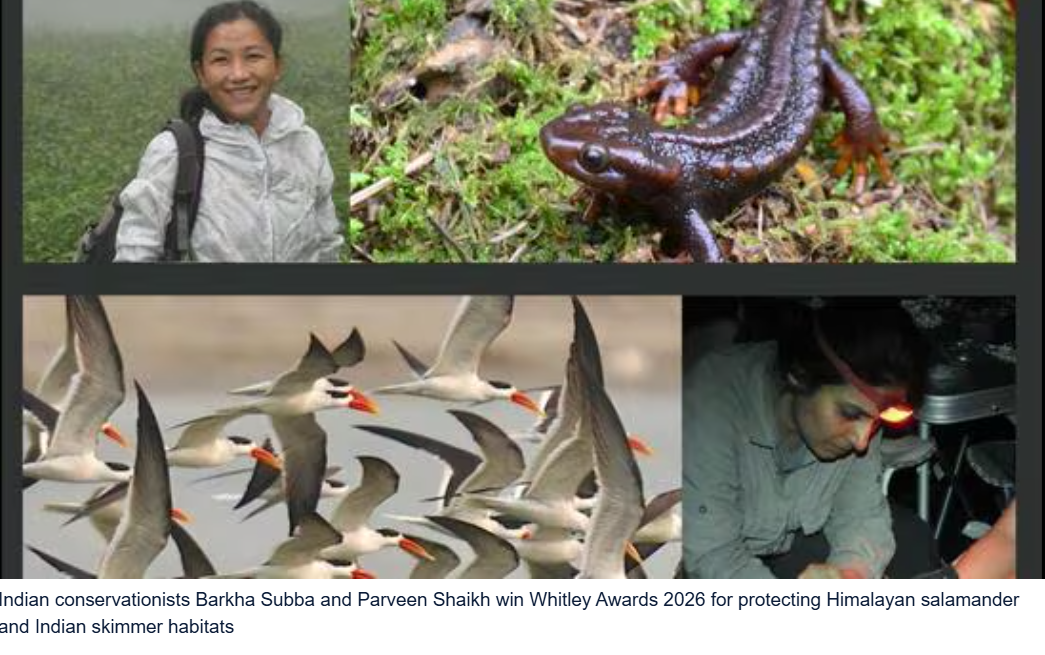
In a proud moment for Indian biodiversity conservation, two conservationists—Parveen Shaikh and Barkha Subbahave been honored with the prestigious Whitley Awards 2026. These awards recognize their pioneering grassroots efforts to protect two of India’s most threatened wetland-dependent species: the Indian Skimmer and the Himalayan Salamander.
The Whitley Awards: The "Green Oscars"
The Whitley Awards are among the world's most coveted prizes for environmental conservation, often referred to as the “Green Oscars.”
- Granting Body: Established by the UK-based charity Whitley Fund for Nature (WFN).
- Focus: The awards specifically target grassroots conservation leaders working in the Global South, providing them with the resources to scale up local solutions to the global biodiversity crisis.
- Support: Each winner receives £50,000 in project funding over a one-year period, alongside international recognition and networking opportunities.
Pioneering Conservation: The Indian Skimmer
- Parveen Shaikh, associated with the Wildlife Conservation Trust, has been awarded for her efforts in the Chambal River landscape.
About the Species:
- The Indian Skimmer (Rynchops albicollis) is a unique waterbird belonging to the Laridae family. It is distinguished by its peculiar feeding mechanism, where it flies low and "skims" the water surface with its elongated lower mandible to catch fish.
- Distribution & Habitat: While it is found across India, Bangladesh, and Pakistan, the Chambal River remains its most critical stronghold in India. It prefers large, sandy, lowland rivers and lakes.
- Conservation Status: Currently listed as Endangered on the IUCN Red List.
- Threats: The species faces severe pressure from habitat loss, sand mining, and the fluctuation of water levels due to dam management, which can wash away nesting sites on sandy banks.
Safeguarding Ancient Lineages: The Himalayan Salamander
Barkha Subba has been recognized for her work in the Eastern Himalayas, specifically focusing on the ecological and cultural protection of the Himalayan Salamander.
About the Species:
- The Himalayan Salamander (Tylototriton verrucosus) is a primitive, lizard-like amphibian. Despite its appearance, it lacks scales and possesses the permeable skin characteristic of amphibians.
- Biology: These creatures can grow up to 17 cm and live for about 11 years. They exhibit philopatry, meaning they return to their exact natal sites to breed. This trait makes them exceptionally sensitive to any degradation of their specific wetland habitats.
- Distribution: It is endemic to the Darjeeling region of India, as well as parts of Nepal and Bhutan.
- Cultural Connection: Interestingly, the wetlands utilized by these salamanders are often considered sacred by local communities, associated with indigenous deities and rituals.
- Conservation Status: Listed as Vulnerable by the IUCN.
India’s Health Diplomacy: Deploying Aarogya Maitri in Jamaica
- 04 May 2026
In News:
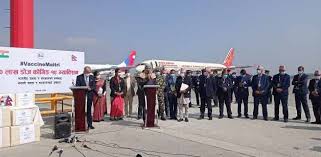
In a significant stride for India’s "Vaccine Maitri" and broader humanitarian outreach, India has recently deployed its flagship Aarogya Maitri portable healthcare infrastructure in Jamaica. This move is a cornerstone of India’s diplomatic engagement with the CARICOM (Caribbean Community) nations, reinforcing its image as the "Pharmacy of the World" and a first responder in global crises.
Understanding Aarogya Maitri and Project BHISHM
The Aarogya Maitri project is a humanitarian initiative under which India provides essential medical supplies to developing nations hit by natural disasters or humanitarian crises.
- Project BHISHM: Central to this initiative is the Bharat Health Initiative for Sahyog Hita & Maitri (BHISHM). It is an innovative emergency medical aid program designed to bridge the gap in healthcare during golden-hour emergencies.
- The "Cubes" Innovation: The infrastructure consists of compact, portable "mini cubes." These cubes are modular, lightweight, and contain a comprehensive range of essential medicines, surgical equipment, and diagnostic tools.
- Operational Utility: Designed for rapid deployment via land, air, or sea, these cubes can be set up in minutes to provide life-saving treatment in remote or disaster-stricken areas.
Jamaica: A Strategic Partner in the Caribbean
Jamaica’s geographic and economic profile makes it a vital partner for India in the West-Central Caribbean.
Geographical Profile: Jamaica is the third-largest island in the Greater Antilles archipelago, surrounded entirely by the Caribbean Sea. Its strategic location places it south of Cuba, west of Hispaniola (Haiti and the Dominican Republic), and northwest of the Cayman Islands. The capital, Kingston, serves as a major commercial and cultural hub for the region.
Physical Features and Climate:
- Topography: The island is mountainous, dominated by the Blue Mountains—which host the country's highest point—alongside the John Crow, Don Figuero, and Santa Cruz ranges.
- Hydrology: Key rivers include the Rio Minho (the longest in Jamaica), the Black River, and the Rio Cobre.
- Climate: Jamaica experiences a tropical climate, heavily moderated by the sea and the persistent northeast trade winds.
- Natural Resources: The nation is rich in mineral wealth, particularly bauxite (essential for aluminum production), gypsum, and limestone.
Mount Dukono
- 04 May 2026
In News:
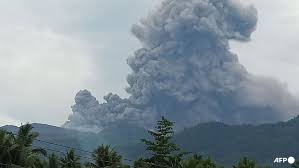
Mount Dukono, an extremely active volcano in eastern Indonesia, experienced a significant eruption. The event produced a massive volcanic ash column reaching as high as 10,000 meters (10 km) into the atmosphere, accompanied by explosive sounds heard from monitoring posts.
The eruption has triggered an emergency response in North Maluku, underscoring the persistent volcanic hazards within the Pacific Ring of Fire.
Geographical and Geological Context
Mount Dukono is a complex volcano situated on Halmahera Island in the North Maluku province. Unlike simple cone volcanoes, it is characterized by a broad, low profile with multiple overlapping craters and summit peaks.
- Height and Profile: Standing at approximately 1,335 meters above sea level (with varying peak heights across its craters), it is one of the most active systems in Indonesia.
- The Pacific Ring of Fire:
- The Ring of Fire is a roughly 40,000 km-long horseshoe-shaped belt of intense tectonic activity encircling the Pacific Ocean. It is the single most seismically and volcanically active zone on Earth:
- Approximately 90% of the world's earthquakes, including the most powerful ones, occur within this belt.
- It contains between 750 and 915 active or dormant volcanoes — about 75% of the global total.
- Key tectonic plates involved include the Pacific, North American, Eurasian, Philippine Sea, and Indo-Australian plates, interacting primarily through subduction.
- Notable historical eruptions within the Ring include Indonesia's Mount Tambora (1815 — largest eruption in recorded history), Krakatoa (1883), and the Philippines' Mount Pinatubo (1991), all of which had measurable global climate effects.
- Active Vent: Current activity is primarily centered on the MalupangWarirang crater, which has been in a state of near-continuous eruption since 1933.
Historical and Eruptive Behavior
Since its first major recorded eruption in 1550, which produced significant lava flows, Dukono has remained a persistent threat.
- Continuous Activity: The volcano is known for its long-term, low-level eruptive state, characterized by frequent ash emissions, "booming" explosive sounds, and occasional lava and mudflows.
- Recent Trends: In 2026, the frequency of eruptions increased, with nearly 100 events recorded between late March and early May.
Ecological and Socio-Economic Impact
Beyond the geological threat, Mount Dukono is surrounded by lush tropical rainforests.
- Endemic Biodiversity: The region is a habitat for unique flora and fauna, including several endemic species of birds such as the White Parrot and various Halmahera-specific eagles.
- Propriety of Land: The volcanic soil provides high fertility for local plantations; however, the ongoing eruptions necessitate a delicate balance between leveraging agricultural potential and ensuring the safety of those living in the shadow of the volcano.
India’s 1st Green Methanol Production Plant
- 04 May 2026
In News:
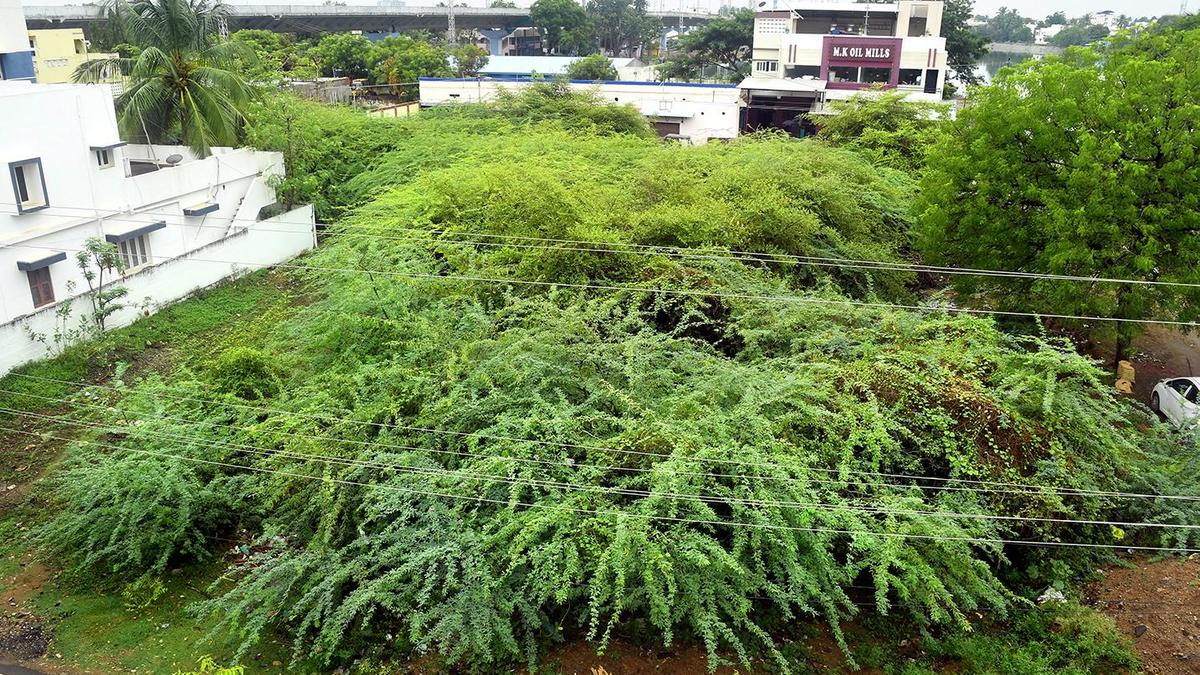
Prosopis juliflora — the invasive shrub that has degraded Kutch's Banni grasslands for decades — is set to become the feedstock for India's first green methanol production plant, bridging ecological restoration with clean energy.
Background
The Mexican-origin shrub Prosopis juliflora — known locally as gandobaval in Gujarat, vilayatikeekar in North India, and velikathan in Tamil Nadu — was first introduced by the British in the 1920s to green Delhi, and again by Gujarat's forest department in 1961 to check the advancing salt desert in the Rann of Kutch. Over decades, it spread aggressively across the Banni grasslands, crowding out native species and degrading one of India's most ecologically sensitive landscapes. Listed among the top 100 invasive species in the world, its removal has long been a conservation priority. India's first green methanol plant now proposes a productive use for this ecological liability.
About the Project
The plant and process
The facility, sited at the Deendayal Port Authority (DPA) in Kandla, will produce five tonnes of green methanol per day in its demonstration phase. The production follows a two-step pathway:
- Step 1 — Gasification (Ankur Scientific, Vadodara): Juliflora biomass is heated in the absence of oxygen, converting it into syngas — a mix of hydrogen (H?), carbon monoxide (CO), and CO?. Once the reaction begins, it sustains its own heat, requiring only about 10–15 litres of oil for a half-hour startup.
- Step 2 — Methanol synthesis (Thermax Energy, Pune): The syngas is catalytically converted into methanol, a liquid fuel suitable for ocean-going ships.
The plant will also be certified to run on other agricultural residues such as bagasse and cotton stalk, which could potentially displace up to a third of India's oil imports at maximum scale.
Why juliflora makes a good feedstock
- It is a hardwood with high density and a strong energy profile.
- Low acid content makes it technically well-suited for gasification.
- Its removal simultaneously serves Gujarat's ecological restoration goals — the state government already wants the species cleared.
Commercially viable plants will need to scale up to 100–500 tonnes per day. The Kandla project is explicitly a demonstration unit to prove the technology and build the business case.
Green Methanol — Key Facts
Methanol is conventionally produced from fossil fuels — natural gas or coal gasification — and used in shipping as a cleaner replacement to bunker oil. Green methanol differs fundamentally in its feedstock and carbon profile:
- Produced from biomass (bio-methanol) or green hydrogen (e-methanol), making it a renewable fuel.
- Reduces vessel CO? emissions by up to 95% and NOx by up to 80%, while eliminating sulphur oxides and particulate matter entirely.
- Overall lifecycle GHG reduction of 60–95% compared to conventional fossil methanol.
- E-methanol — produced using green hydrogen — represents the highest-purity form but currently costs around USD 2,000 per tonne vs. USD 700–800 for bio-based green methanol.
Policy and Regulatory Context
IMO and international shipping obligations
The International Maritime Organization's 2023 GHG Strategy mandates net-zero emissions from international shipping by or around 2050. The European Union has already begun levying charges on ships entering EU ports without a minimum share of green fuel — a regulatory pressure that is directly driving demand for green methanol in the near term.
India's policy alignment
- India amended its shipbuilding financial assistance policy in August 2023 to offer a flat 30% subsidy for vessels propelled by green fuels, including methanol, ammonia, and hydrogen.
- The government is developing "green ports" along India's western coast, for which facilities like the Kandla plant would supply fuel.
- The project supports India's broader push to reduce fossil fuel import dependence and meet its climate commitments under the Paris Agreement.
Cost challenge
Conventional methanol from natural gas costs approximately ?30 per kg under normal conditions, rising to ?70–80 during supply disruptions. Green methanol at USD 700–800 per tonne remains uncompetitive on price alone, making regulatory penalties the primary commercial driver for now. Scaling to 100–500 tonnes per day is considered the threshold for cost viability.
Significance
- Ecological: Converts a damaging invasive species into an economic resource, incentivising large-scale removal of juliflora from vulnerable grassland ecosystems.
- Energy: Advances India's green fuel production capacity and reduces dependence on imported bunker oil and fossil methanol.
- Maritime: Positions Indian ports as compliant with emerging IMO green fuel mandates, enhancing competitiveness of the shipping sector.
- Technological: Demonstrates indigenous gasification-to-methanol technology developed by Indian firms (Thermax and Ankur Scientific), with potential for replication at scale.
- Limitation: Grid electricity still powers the plant's motors and controls; for stricter carbon-intensity compliance, this must eventually come from renewables.
Citizenship (Amendment) Rules, 2026
- 04 May 2026
In News:
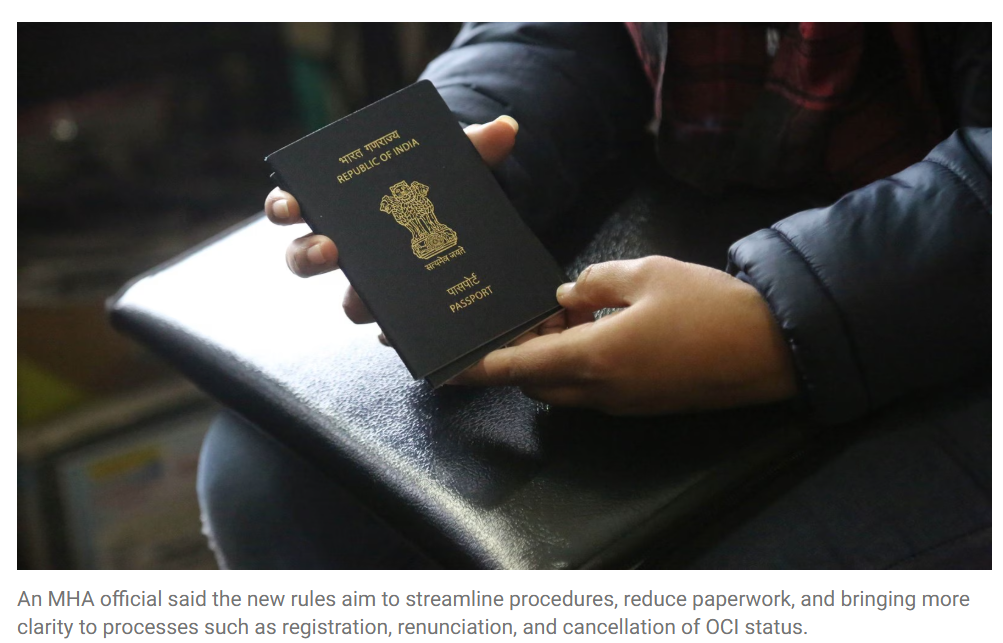
The Union Ministry of Home Affairs notified the Citizenship (Amendment) Rules, 2026 on 30 April 2026 (effective 1 May), marking the most significant overhaul of the Overseas Citizen of India (OCI) framework since the scheme began in 2006.
Background
The OCI scheme draws its authority from Sections 7A–7D of the Citizenship Act, 1955. It grants foreign nationals of Indian origin a lifelong multiple-entry visa and parity with NRIs in economic, educational, and cultural matters — but not citizenship. India's Constitution prohibits dual citizenship, a distinction these rules now sharpen. The 2026 amendment replaces the earlier hybrid paper-and-digital system with a fully electronic architecture and closes a loophole that let some families maintain both an Indian passport and a foreign passport for minor children.
Key Provisions
1. Ban on dual passports for minors: A new proviso to Rule 3 explicitly bars a minor from simultaneously holding an Indian passport and the passport of any other country. The earlier system only required parents to declare their child did not hold a foreign passport at birth registration — a gap now firmly shut.
- Families must choose: retain the Indian passport or wait until the child turns 18 to apply for OCI.
- Non-compliance can result in the OCI being deemed cancelled, even without physical surrender of the card.
2. Introduction of electronic OCI (e-OCI):Applicants may now receive an electronic OCI credential alongside, or in place of, the familiar physical blue booklet. A centralised, real-time registryallows immigration officers to verify OCI status instantly at airports and seaports.
3. Fully online applications — mandatory
All OCI services — registration (Form XXVIII, Section 7A), renunciation (Form XXXI), and cancellations — must now be filed exclusively through ociservices.gov.in. Physical submissions and couriered forms have been abolished.
- Processing time is expected to fall from 6–8 weeks to approximately 15 working days.
- Existing cardholders must update new passport details within 3 months of issuance; late updates attract a USD 25 fine.
4. Biometric integration with fast-track immigration:Applicants must consent to share biometric data, enabling automatic enrolment in the Fast Track Immigration – Trusted TravellerProgramme (FTI-TTP). This links OCI holders to e-gate corridors at major airports, reducing immigration queuing times for the Indian diaspora.
5. Strengthened appellate mechanism:Appeals against rejected OCI applications are now routed to an authority one rank higher than the original decision-maker, ensuring a defined and fairer right of hearing.
Significance
- Constitutional alignment: The dual-passport ban for minors closes a regulatory gap and brings OCI practice in line with India's constitutional prohibition on dual nationality.
- Digital governance: The shift aligns with the Digital India agenda — eliminating paperwork, reducing discretion, and enabling real-time verification.
- Diaspora convenience: e-OCI and biometric fast-tracking materially ease airport immigration for the ~4.5 million OCI cardholders worldwide.
- Privacy concerns: Mandatory biometric collection may face scrutiny under the right to privacy (Puttaswamy, 2017) and the Digital Personal Data Protection Act, 2023.
- Implementation challenge: The online-only mandate places pressure on portal reliability, especially for diaspora applicants in time zones far from India.
OCI is not dual citizenship. OCI holders carry only a foreign passport and enjoy specified parity rights — they cannot vote, hold constitutional offices, or purchase agricultural land in India.