
New Development Bank (NDB)

- 22 Jun 2026
In News:
Uzbekistan has officially joined the New Development Bank (NDB) as its 10th member, becoming the first Central Asian country to join the BRICS-led multilateral development bank.
What is the New Development Bank (NDB)?
The New Development Bank (NDB) is a multilateral development bank established by the BRICS countries—Brazil, Russia, India, China, and South Africa—to mobilize resources for infrastructure and sustainable development projects in BRICS nations and other Emerging Market and Developing Economies (EMDEs).
The decision to establish the bank was taken during the 6th BRICS Summit held in Fortaleza, Brazil (2014), and the bank became operational in 2015. Its headquarters are located in Shanghai, China.
Capital Structure
The NDB has an authorized capital of USD 100 billion, with an initial subscribed capital of USD 50 billion, contributed equally by the five founding BRICS members. The equal contribution reflects the bank's commitment to balanced ownership and governance.
Governance Structure
Unlike traditional multilateral financial institutions such as the World Bank, the NDB follows a more equitable governance model.
- Every member country has one vote, ensuring equal representation.
- No member enjoys veto power, promoting collective decision-making.
- Voting rights are not directly linked to capital contribution.
- However, the combined voting share of the five founding BRICS members must remain above 55%, preserving the institution's original character.
Membership
Membership of the NDB is open to all member states of the United Nations, subject to the provisions of its Articles of Agreement.
Current Members
- Founding Members: Brazil, Russia, India, China, South Africa
- Bangladesh (2021)
- United Arab Emirates (2021)
- Egypt (2023)
- Algeria (2025)
- Uzbekistan (2026)
Additionally, Uruguay, Colombia, and Ethiopia have been approved for membership and will become full members after completing the accession process.
Varya AI Model
- 22 Jun 2026
In News:
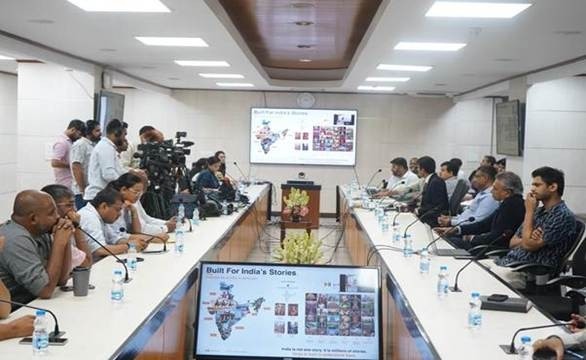
The Ministry of Electronics and Information Technology (MeitY) has unveiled "Varya", India's first indigenous distilled video story-generating Artificial Intelligence (AI) model, aimed at making advanced generative AI affordable, efficient, and culturally relevant.
What is Varya?
Varya is an indigenous foundation AI model designed to generate high-quality videos from text prompts (text-to-video) and images (image-to-video). Developed by Avataar, an AI-native transformation company, the model uses AI model distillation to deliver faster and cost-effective video generation while preserving high-quality outputs.
The platform enables users to transform simple ideas, written prompts, or uploaded images into engaging digital stories, thereby democratizing access to advanced generative AI technologies.
Objective
Varya aims to make high-end generative AI accessible across India by significantly reducing computational costs, hardware requirements, and language barriers. It seeks to promote inclusive AI adoption among educators, students, entrepreneurs, MSMEs, and content creators.
Key Features
A major innovation of Varya is its use of AI model distillation, a technique that compresses a large AI model into a smaller and more efficient version without substantial loss of performance. As a result, the model generates high-quality videos in only four inference steps, compared to nearly fifty steps required by conventional models.
The platform offers:
- Text-to-video and image-to-video generation.
- Low-cost video creation at approximately ?0.48 per second.
- Ability to extend short videos into long-form narratives through an "Idea → Video → Story" workflow.
- Strong Indian cultural contextualization, accurately depicting regional festivals, attire, food habits, languages, and everyday life.
AI Model Distillation
Model Distillation is a machine learning technique in which a large, complex AI model (teacher model) transfers its knowledge to a smaller, lightweight model (student model). The distilled model retains much of the original model's performance while requiring significantly lower computational resources, making deployment faster, cheaper, and more energy-efficient.
Abhigyan App
- 22 Jun 2026
In News:
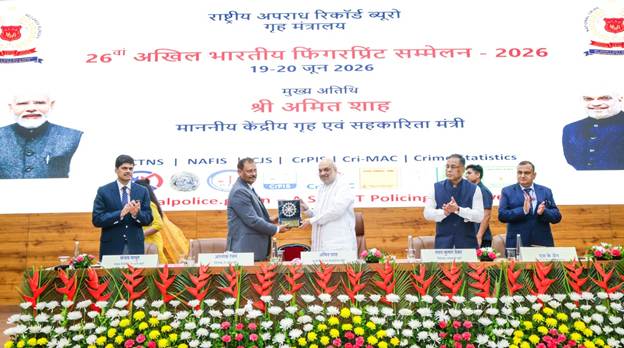
The Union Home Minister launched the Abhigyan App in New Delhi to strengthen technology-driven policing and improve real-time access to criminal records for law enforcement agencies across the country.
What is the Abhigyan App?
The Abhigyan App is a centralized mobile platform developed by the National Crime Records Bureau (NCRB) to enable police personnel to access and utilize crime-related data efficiently in the field. It aims to enhance investigation, identification of criminals, and evidence-based policing by providing instant access to a nationwide database of criminal records.
The application forms part of the Government's broader initiative to modernize policing through digital technologies and integrated criminal information systems.
Key Features
The app enables field-level police personnel to securely access a vast repository of criminal records directly through their smartphones, reducing dependence on manual verification.
Its major features include:
- Real-time fingerprint identification linked to a centralized national database.
- Two-step authentication to ensure secure access.
- Fast identification of suspects with high portability and ease of use.
- Access to millions of criminal records from a single platform.
During the demonstration, fingerprints were successfully matched with the national database in approximately 35 seconds, enabling quicker identification during investigations.
Link with NAFIS
The Abhigyan App is integrated with the National Automated Fingerprint Identification System (NAFIS), India's centralized fingerprint database.
NAFIS stores the fingerprint records of accused persons, convicts, and prison inmates on a unified digital platform, enabling rapid identification and seamless sharing of fingerprint data among law enforcement agencies across the country.
National Crime Records Bureau (NCRB)
The National Crime Records Bureau (NCRB) was established in 1986 as the national repository of crime and criminal-related information. It functions under the Ministry of Home Affairs (MHA) and is headquartered in New Delhi.
The Bureau was established based on the recommendations of:
- Tandon Committee
- National Police Commission (1977–1981)
- Task Force of the Ministry of Home Affairs
NCRB is responsible for maintaining national crime databases, supporting criminal justice administration, and developing technology-driven policing solutions such as NAFIS and the Crime and Criminal Tracking Network & Systems (CCTNS).
BGP Hijacking
- 22 Jun 2026
In News:
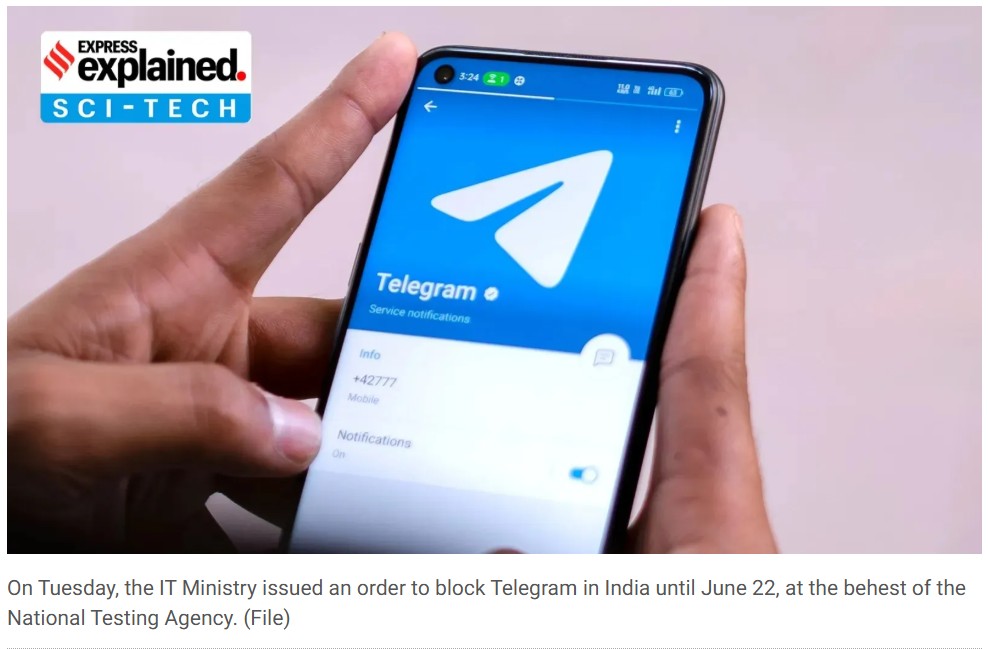
Following the temporary blocking of Telegram in India, the platform's founder Pavel Durov alleged that its global accessibility was being affected through Border Gateway Protocol (BGP) hijacking, bringing renewed attention to one of the Internet's most significant routing vulnerabilities.
What is BGP Hijacking?
Border Gateway Protocol (BGP) Hijacking is a cyber incident in which Internet traffic is maliciously or accidentally redirected by falsely advertising ownership of IP address ranges. It exploits weaknesses in the Border Gateway Protocol (BGP), the protocol responsible for routing data between large networks across the Internet.
The Internet consists of thousands of independent networks called Autonomous Systems (AS), operated by Internet Service Providers (ISPs), telecom companies, cloud providers, and large organizations. These Autonomous Systems exchange routing information through BGP, allowing data to travel efficiently across the global Internet.
How Does BGP Hijacking Work?
BGP operates largely on a system of mutual trust, where Autonomous Systems accept routing announcements made by other networks.
During a BGP hijack, a rogue or misconfigured Autonomous System falsely announces that it has the best route to a particular IP address range. Since BGP generally prefers more specific IP prefixes or shorter routing paths, other networks may begin forwarding traffic through the rogue network instead of the legitimate destination.
As a result, Internet traffic intended for a genuine service is diverted, leading to disruption or unauthorized interception.
Key Features
BGP hijacking exploits several characteristics of Internet routing:
- Route Preference: BGP prioritizes more specific prefixes and shorter paths, making false advertisements highly effective.
- Traffic Blackholing: Diverted traffic may simply be discarded, resulting in denial of service and making websites or applications inaccessible.
- Man-in-the-Middle (MitM) Attacks: Instead of dropping traffic, attackers may intercept, monitor, or manipulate data before forwarding it to its intended destination.
- Rapid Global Propagation: Since Autonomous Systems continuously exchange routing information, a false routing announcement can spread globally within minutes, affecting users across multiple countries.
Implications
BGP hijacking poses a significant threat to the stability and security of the global Internet. It can cause widespread service disruptions, interrupt access to major websites and digital platforms, and create opportunities for cyber espionage and data theft. If intercepted traffic is not encrypted, attackers may obtain sensitive information such as login credentials and confidential communications. Such incidents also have implications for national cybersecurity, critical infrastructure protection, financial systems, and digital sovereignty.
Reciprocal Exchange of Logistics Agreement (RELOS)

- 22 Jun 2026
In News:
The India–Russia Reciprocal Exchange of Logistics Agreement (RELOS), also known as the Logistics Support Agreement (LSA), became operational in January 2026, strengthening defence cooperation by enabling reciprocal logistical support during agreed military activities.
What is RELOS?
The Reciprocal Exchange of Logistics Agreement (RELOS) is a bilateral logistics support agreement between India and Russia that establishes a standardized framework for the reciprocal use of each other's military bases, ports, and airfields for logistical support. It is a non-offensive administrative and technical arrangement intended to facilitate refuelling, replenishment, maintenance, and other logistical services during mutually agreed military engagements.
The agreement was signed on 18 February 2025 in Moscow and entered into force in January 2026.
Objectives
The primary objective of RELOS is to simplify logistical cooperation between the armed forces of both countries by replacing time-consuming case-by-case approvals with a standardized mechanism. This enhances operational efficiency, reduces administrative delays, and extends the operational reach of Indian and Russian naval and air assets.
Key Features
The agreement can be activated only during mutually agreed activities, including:
- Joint military exercises.
- Military training.
- Humanitarian Assistance and Disaster Relief (HADR) operations.
- Official port visits and naval deployments.
Under the agreement, both countries can access a wide range of logistical services such as:
- Fuel, petroleum, oils and lubricants (POL).
- Food, fresh water and accommodation.
- Transport and storage facilities.
- Medical assistance.
- Maintenance, repair, calibration and spare parts support.
A notable provision is the administrative ceiling of 3,000 military personnel, which merely facilitates logistical planning for large temporary deployments during exercises. It does not permit permanent deployment or stationing of troops.
Importantly, the agreement contains a strict non-basing clause, explicitly prohibiting the establishment of permanent military bases or long-term deployment of troops or military assets on each other's territory.
The agreement has an initial validity of five years, after which it may be reviewed or modified by mutual consent.