
Rupee at Historic Lows: RBI's Multi-Pronged Currency Defence in 2026

- 24 May 2026
In News:
The Indian Rupee has faced persistent downward pressure, depreciating significantly against the US Dollar — piercing the 96.86 mark per USD to hit a new historic low, driven by rising crude oil prices, geopolitical strain from the West Asia conflict, and strong foreign fund outflows from Indian equity markets. In response, the RBI has deployed a multi-pronged intervention architecture — combining spot market dollar sales, forex swap auctions, and liquidity management tools.
The Triggers Behind Rupee Depreciation
- Geopolitical shock: Escalation of the US-Iran conflict pushed crude oil prices sharply higher — directly worsening India's import bill, as India imports approximately 87% of its crude requirements.
- Capital outflows: Foreign Portfolio Investors (FPIs) pulled capital from Indian equity markets amid global risk-off sentiment.
- Dollar strength: A stronger US Dollar globally — driven by elevated US Federal Reserve rates — exerted broad emerging market currency pressure.
RBI's Intervention Toolkit: 2026 Deployment
1. Spot Market Dollar Sales: The RBI has been selling dollars at an estimated pace of USD 1 billion per day in recent trading sessions to curb excessive depreciation. However, this drains rupee liquidity from the banking system — a side effect the RBI manages through Sterilised Interventions, using Open Market Operations (OMOs) to simultaneously inject rupees back via government bond purchases.
2. USD 5 Billion Buy-Sell Swap Auction: The RBI announced a USD 5 billion USD/INR buy-sell swap auction for a tenor of three years, aiming to ease prolonged cash tightness within the banking network caused by its heavy forex market interventions.
Mechanics: Banks sell dollars to the RBI now (receiving rupees at spot rate) and agree to buy them back at a pre-determined rate plus premium after three years. This is expected to inject ?42,000–43,000 crore of durable rupee liquidity back into the banking system.
Market participants noted the swap will be good for bonds by maintaining surplus liquidity, and should also cool forward premiums — reducing hedging costs that had been rising for two weeks — though the impact on the INR spot rate is expected to be broadly neutral.
3. Pre-Market Interventions:The RBI recently used off-market mechanics of selling dollars through state-run banks, driving a 70-paise intraday rally that pushed the rupee back from near-97 levels to an opening rate of 96.30.
4. Net Open Position (NOP) Cap: The RBI implemented a strict Capital Flow Management measure — capping banks' Net Open Position in foreign currencies at USD 100 million per day — forcing banks to unwind excess dollar holdings and increasing dollar supply in the forex market.
Historical Parallels: Crisis Playbook
India has navigated severe currency stress before through unconventional tools:
- 1998 (Post-nuclear test sanctions): Issued Resurgent India Bonds (RIBs) — raising ~USD 4.2 billion from NRIs.
- 2013 (Taper Tantrum): RBI Governor Raghuram Rajan opened a special FCNR(B) deposit window with subsidised hedging rates — mobilising USD 26 billion in weeks, instantly stabilising the rupee.
Jeevan App &SHATAYU Dashboard
- 24 May 2026
In News:
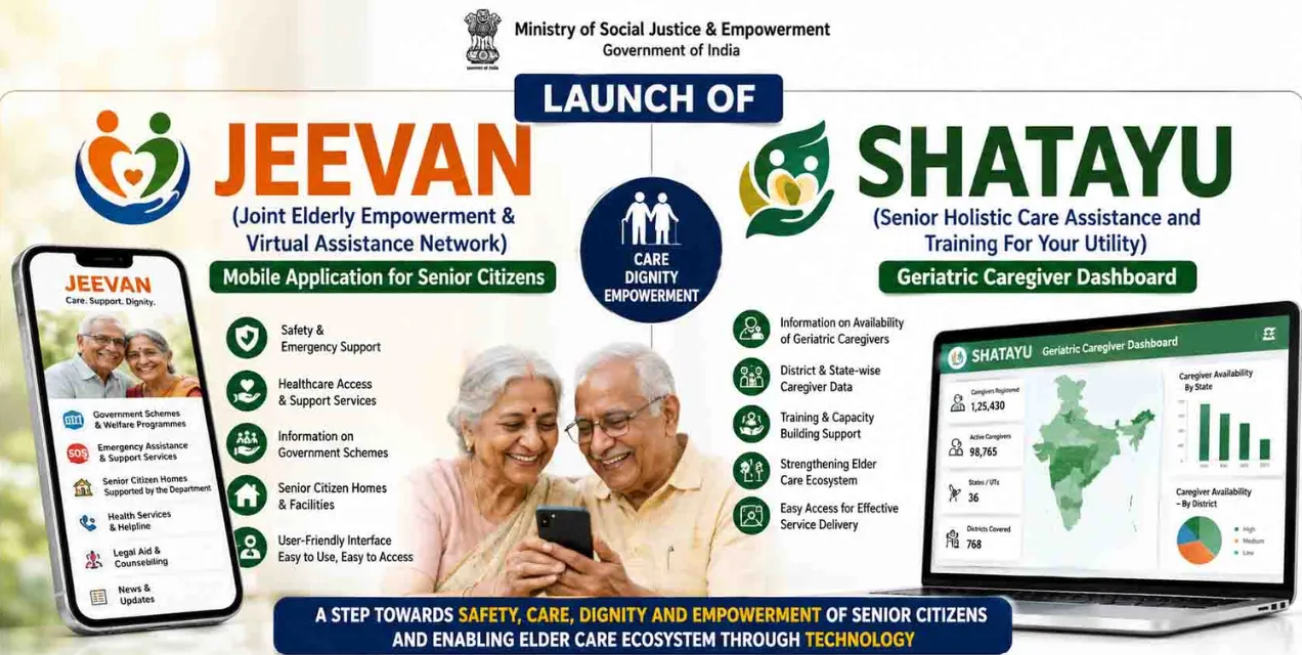
The Ministry of Social Justice and Empowerment (MoSJE) officially launched the JEEVAN mobile application and the SHATAYU geriatric caregiver dashboard during a National Workshop in New Delhi — a significant policy intervention as India confronts the demographic reality of a rapidly ageing population. Both platforms are developed and managed by the Department of Social Justice and Empowerment.
The Demographic Imperative
India's elderly population (60 ) currently stands at approximately 149 million (2024) and is projected to reach 347 million by 2050 — nearly doubling its share of the total population. This demographic shift poses structural challenges: fragmented welfare delivery, an unorganised caregiving sector, social isolation, inadequate healthcare access, and digital exclusion of senior citizens. JEEVAN and SHATAYU are designed as twin digital solutions to these intersecting vulnerabilities.
JEEVAN: Joint Elderly Empowerment & Virtual Assistance Network
JEEVAN is a citizen-facing, single-window mobile application engineered specifically for senior citizens, with four core functions:
- Unified Welfare Gateway: Aggregates all active Central and State Government schemes, pension benefits, and healthcare entitlements for seniors — eliminating the need for elderly users to navigate multiple departmental portals.
- SOS Emergency Matrix: A simplified, high-visibility one-touch panic button that directly connects elderly users to local emergency services, medical networks, and the national elder helpline — critical for seniors living alone or in low-support environments.
- Institutional Home Locator: Provides geo-tagged, verified listings of all MoSJE-supported senior citizen welfare homes and day-care centres — enabling families to make informed placement decisions.
- Elder-Centric Accessibility Design: Built with large text fonts, voice-assisted navigation, and simplified screen interactions — explicitly addressing the sensory and motor limitations of older users, a dimension typically ignored in mainstream app design.
SHATAYU: Senior Holistic Care Assistance and Training For Your Utility
SHATAYU is a centralised, data-driven national dashboard targeting the supply side of India's eldercare ecosystem — the geriatric caregiver workforce:
- District-Level Micro-Mapping: Enables real-time visibility of verified geriatric caregivers available within specific districts and states — allowing both families and state planners to identify and address care-supply gaps geographically.
- Standardised Training Trackers: Monitors caregiver skill progression, certification benchmarks, and training completion — formalising what has historically been an informal, unregulated domain.
- Care-Economy Integration Hub: Aggregates data from NGOs, medical skill councils, and ecosystem partners to balance supply-demand in the eldercare labour market — directly supporting India's emerging care economy framework.
- Verified Service Directory: Maintains a secure backend with validated caregiver credentials, background checks, and legal compliance records — addressing the safety and trust deficit that has long deterred families from accessing formal care services.
Policy Context
Both platforms align with the Maintenance and Welfare of Parents and Senior Citizens (Amendment) Act, 2019, which expanded the state's obligations toward elderly welfare, and the National Policy for Senior Citizens framework. They also complement existing schemes under ATAL VAYO ABHYUDAY YOJANA (AVYAY) — the umbrella scheme for senior citizen welfare under MoSJE.
SHATAYU's data-driven approach is particularly significant for Skill India Mission targeting — by exposing district-level caregiving deficits, it enables the National Skill Development Corporation (NSDC) and healthcare skill councils to direct specialised geriatric care training camps to underserved rural and semi-urban regions.
Multilateral Exercise PRAGATI 2026
- 24 May 2026
In News:
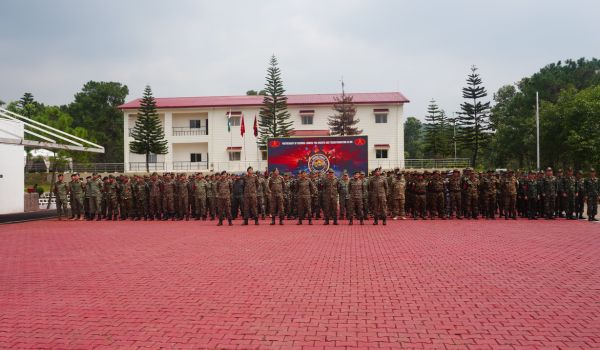
The multilateral military exercise PRAGATI 2026 commenced at Umroi Military Station, Meghalaya, with 12 friendly nations participating alongside India — marking a significant step in India's evolving role as a Preferred Security Partner in the Indian Ocean Region (IOR) and a concrete expression of its Neighbourhood First and Act East foreign policy doctrines.
What is PRAGATI?
- PRAGATI stands for Partnership of Regional Armies for Growth and Transformation in the Indian Ocean Region, a premier multinational military exercise conducted under the core principles of mutual respect, equality, and shared regional security.
- It provides a unified institutional platform for regional armies to exchange battlefield experiences, harmonise tactical doctrines, and establish joint response mechanisms against contemporary security threats.
Participating Nations
- India hosts 12 friendly nations: Bhutan, Cambodia, Indonesia, Laos, Malaysia, Maldives, Myanmar, Nepal, Philippines, Seychelles, Sri Lanka, and Vietnam — a grouping that reflects India's strategic geography, spanning South Asia, Southeast Asia, and the Indian Ocean island states.
Key Features of PRAGATI 2026
- Operational Focus: The two-week exercise concentrates on counter-terrorism (CT) and counter-insurgency (COIN) operations in semi-mountainous and jungle terrain — the precise operational environment that characterises India's northeastern frontier and large parts of Southeast Asia's security landscape.
Training Modules:
- Joint command planning exercises and tactical-level field drills
- Coordinated live-fire simulation operations designed to improve adaptability, endurance, and tactical proficiency
- Intelligence synchronisation — developing real-time, secure intelligence-sharing frameworks in multinational operational environments — a critical capacity gap in regional CT cooperation
Atmanirbhar Bharat Exposition: PRAGATI 2026 uniquely incorporates a defence-tech showcase where Indian domestic companies display indigenous weapons, tactical gear, and military innovations — integrating defence diplomacy with defence export promotion under the Atmanirbhar Bharat framework.
Strategic Significance
- Preferred Security Partner: PRAGATI operationalises India's stated ambition of being the net security provider in the IOR — a role articulated in the SAGAR (Security and Growth for All in the Region) doctrine and the Indo-Pacific Oceans Initiative (IPOI). Training together builds practical interoperability for real-world crisis response, whether counter-terrorism, HADR, or maritime security operations.
- Geopolitical Positioning: The participant list is deliberately IOR-centric — covering India's immediate neighbourhood (Bhutan, Nepal, Maldives, Sri Lanka), ASEAN partners (Cambodia, Indonesia, Laos, Malaysia, Myanmar, Philippines, Vietnam), and strategic island states (Seychelles). This grouping mirrors the geography of China's expanding maritime footprint — making PRAGATI an implicit instrument of India's IOR balancing strategy.
- Northeast India as a Strategic Hub: The choice of Umroi, Meghalaya as the host location is symbolically and operationally significant — it demonstrates India's confidence in its northeastern security infrastructure and reflects the region's growing importance as India's gateway to Southeast Asia under the Act East Policy.
- Doctrine Building: By harmonising tactical doctrines across 13 armies with varying equipment, languages, and command cultures, PRAGATI contributes to building a regional security architecture that is India-led but genuinely multilateral — a format increasingly preferred by smaller IOR states as an alternative to great-power dependency.
Agni-1 Missile
- 24 May 2026
In News:
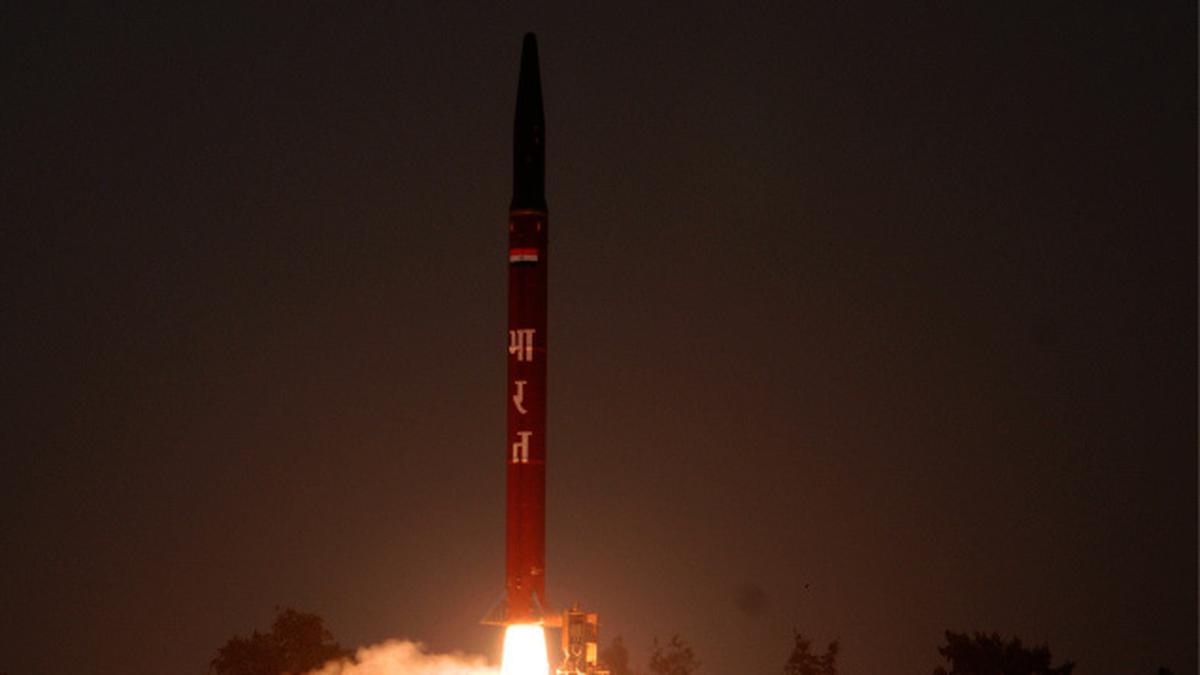
India successfully test-launched the Short Range Ballistic Missile (SRBM) Agni-I from the Integrated Test Range (ITR), Chandipur, Odisha, under the aegis of the Strategic Forces Command (SFC). The Ministry of Defence confirmed that the launch validated all operational and technical parameters. The test was conducted as part of a routine training exercise — signalling operational readiness rather than a developmental milestone.
About Agni-I: Key Features
- Type: Single-stage, solid-fuel Short Range Ballistic Missile (SRBM)
- Range: 700–1,200 km (heavier payload reduces range; lighter payload enables MRBM-class reach)
- Propulsion: Solid-propellant booster derived from ISRO's SLV-3 technology
- Warhead: Nuclear-capable; also carries conventional warheads
- Mobility: Deployable via rail-based platforms and road-mobile Transporter Erector Launchers (TELs) — enabling survivable second-strike positioning
- Induction: First deployed by the Indian Army's Strategic Forces Command in 2007
- Origin: Developed under India's Integrated Guided Missile Development Programme (IGMDP), 1983 — the landmark initiative that also produced Prithvi, Trishul, Akash, and Nag
The Agni Family: India's Strategic Backbone
The Agni series constitutes the core of India's nuclear triad's land-based component, spanning a comprehensive strike envelope:
|
Missile |
Type |
Range |
|
Agni-I |
SRBM/MRBM |
700–1,200 km |
|
Agni-II |
MRBM |
~2,000 km |
|
Agni-III |
IRBM |
~3,000 km |
|
Agni-IV |
IRBM |
~3,500–4,000 km |
|
Agni-V |
ICBM |
>5,000 km |
|
Agni Prime |
MRBM |
~1,000–2,000 km (advanced) |
Critical Context: MIRV Test and Escalating Capability
- The Agni-I test follows another significant achievementwhen India successfully flight-tested an advanced Agni missile fitted with a Multiple Independently Targetable Re-entry Vehicle (MIRV) system from Dr APJ Abdul Kalam Island, Odisha. The missile carried multiple payloads directed at different targets spatially distributed across a large area of the Indian Ocean Region, tracked by multiple ground-based and ship-mounted stations throughout the trajectory.
- MIRV capability i.e. the ability to deliver multiple warheads from a single missile to strike different targets simultaneously, is considered a quantum leap in strategic deterrence, as it exponentially complicates an adversary's missile defence calculations.
Strategic Significance
- Credible Minimum Deterrence: Regular Agni series tests are essential for maintaining operational readiness and validating deterrent credibility — particularly in the context of India's No First Use (NFU) nuclear doctrine, which requires assured second-strike capability. A road-mobile, solid-fuelled missile like Agni-I is ideally suited for survivable second-strike posturing.
- Layered Deterrence: The twin tests — Agni-I (short-range battlefield deterrence) and MIRV-equipped Agni (strategic deterrence at intercontinental scale) — within weeks of each other demonstrate India's full-spectrum deterrence architecture, covering both tactical and strategic nuclear scenarios.
- Geopolitical Signalling: These tests reinforce India's strategic deterrence posture at a time of heightened regional security tensions — including continued Pakistani nuclear modernisation, China's expanding ICBM arsenal, and the post-Pahalgam crisis security environment in South Asia.
Sanghmitra Patrol Vessel

- 24 May 2026
In News:
The Indian Navy's next-generation offshore patrol vessel 'Sanghmitra' was recently launched at Garden Reach Shipbuilders & Engineers (GRSE), Kolkata, marking a significant milestone in India's indigenisation of naval platforms and the country's growing blue-water maritime ambitions.
About the Vessel
- Type: Next Generation Offshore Patrol Vessel (NGOPV)
- Shipyard: Garden Reach Shipbuilders & Engineers (GRSE), Kolkata, a Defence Public Sector Undertaking (DPSU) under the Ministry of Defence.
- Programme Scale: Sanghmitra is part of India's ambitious programme to construct 11 NGOPVs simultaneously across two shipyards — reflecting the Navy's push for large-scale, parallel indigenous naval construction.
- Name: Named after Sanghmitra, the daughter of Emperor Ashoka, who played a pivotal role in spreading Buddhism to Sri Lanka — a name symbolising India's civilisational outreach and maritime heritage in the Indian Ocean Region.
- Crest Design: Features the constellation Ursa Major and a red-and-white lighthouse — symbols of navigation, maritime vigilance, and enduring guidance.
Technical Specifications
- Length: ~113 metres
- Beam (Width): 14.6 metres
- Displacement: 3,000 tonnes
- Endurance: 8,500 nautical miles at a cruising speed of 14 knots
- Maximum Speed: 23 knots
- Crew Accommodation: Designed for extended blue-water patrol operations with modern habitability standards.
Operational Capabilities
The NGOPV platform is designed for a wide spectrum of missions across the full conflict spectrum:
- Maritime Surveillance: Intelligence gathering and domain awareness in India's areas of interest — including the Exclusive Economic Zone (EEZ), which spans over 2.37 million sq km.
- Search and Rescue (SAR): Rapid response to maritime distress situations in the Indian Ocean Region.
- Protection of Offshore Assets: Security of oil rigs, underwater pipelines, and strategic maritime infrastructure.
- Humanitarian Assistance and Disaster Relief (HADR): Rapid deployment during natural disasters — a growing operational priority given India's increasing HADR footprint in the IOR.
- Anti-Piracy Operations: Sustained presence in piracy-prone corridors including the Gulf of Aden and the western Arabian Sea.
Strategic Significance
Atmanirbhar Bharat in Defence: GRSE's construction of Sanghmitra underscores India's accelerating naval indigenisation under the Atmanirbhar Bharat initiative. GRSE has previously built frigates, corvettes, landing craft, and fast attack crafts — establishing itself as a frontline warship builder. India's Defence Acquisition Procedure (DAP) 2020 mandates preference for indigenously designed, developed, and manufactured (IDDM) platforms — the NGOPV programme is a direct expression of this policy.
Indian Ocean Strategy: The 11-vessel NGOPV programme significantly enhances India's persistent maritime presence across the IOR at a time of heightened strategic competition — with China's expanding naval footprint through its String of Pearls strategy placing India's maritime neighbourhood under pressure. OPVs, by virtue of their endurance and multi-role capability, are ideally suited for grey-zone operations — below the threshold of conflict but above mere diplomatic signalling.
Naming Significance: The choice of Sanghmitra — a historical figure who carried India's civilisational influence across the Indian Ocean to Sri Lanka — is symbolically deliberate, reflecting India's conception of the IOR as a historically connected civilisational space rather than a purely contested strategic domain.